
Submitted:
09 July 2026
Posted:
10 July 2026
You are already at the latest version
Abstract
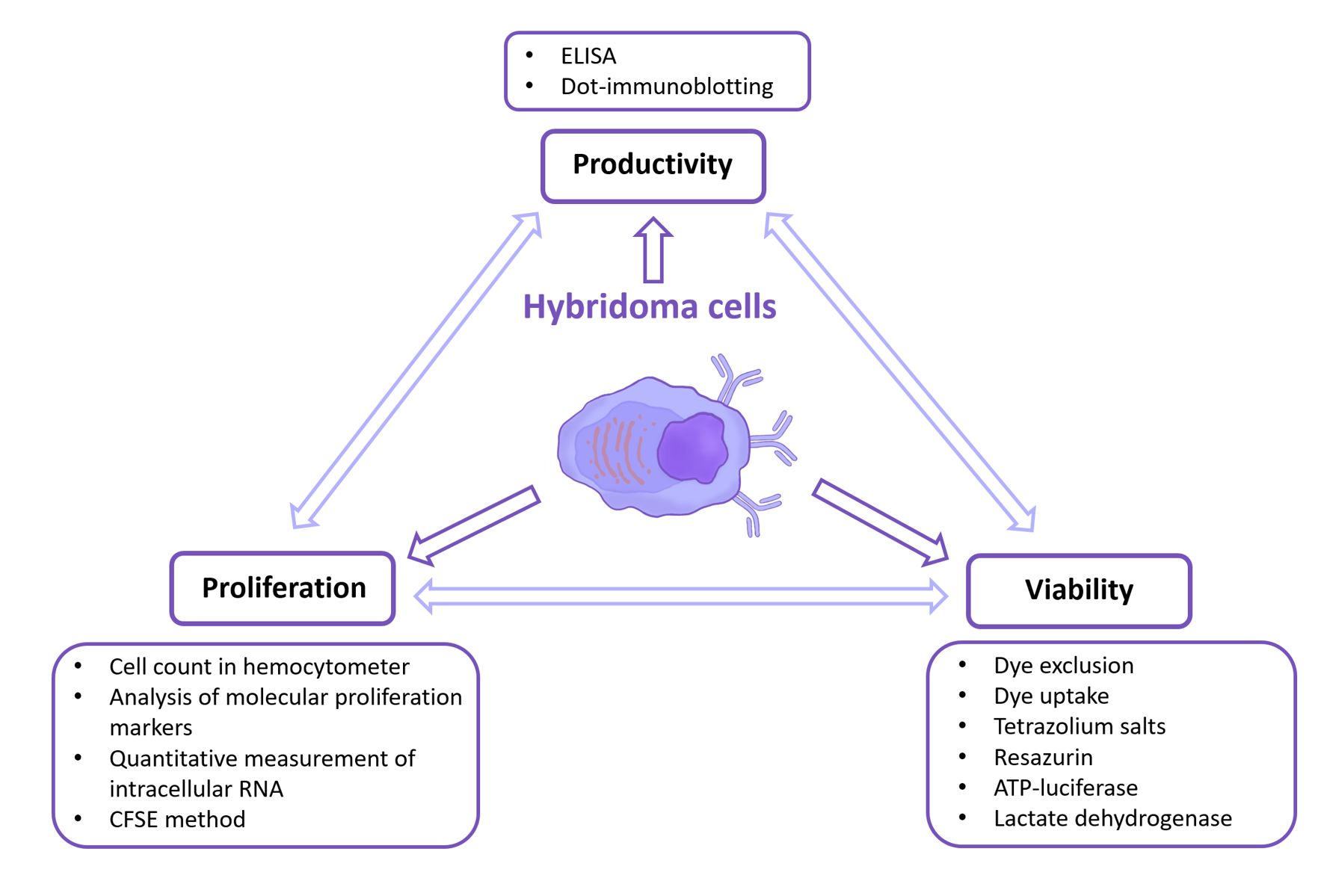
Hybridoma technology remains one of the most reliable and widely used platforms for generating highly specific monoclonal antibodies for use in diagnostics, fundamental research, and clinical practice. Moreover, the combination of unlimited proliferative capacity with the preservation of a key B lymphocyte function, antibody production, enables hybridoma cells to support a comprehensive functional evaluation of cellular responses. Thus, by integrating analysis of proliferation, viability, and productivity, hybridoma-based approaches enable the detection of differential modulatory effects and offer a nuanced assessment of compound bioactivity. This review provides a comprehensive analysis of the functional parameters of hybridoma cells: viability, proliferation, and productivity, as well as the methods used for their evaluation. The main stages of hybridoma cell generation, advances in hybridoma technology, and current applications of hybridoma cells are also reviewed. A key aspect of this review is the differential modulation of functional parameters of hybridoma cells. Modulation of culture conditions and bioactive compounds can differentially influence growth dynamics and specific antibody yield, often revealing an inverse relationship between proliferation and productivity.
Keywords:
hybridoma technology
; viability
; proliferation
; productivity
; monoclonal antibody
; functional parameters
Copyright: This open access article is published under a Creative Commons CC BY 4.0 license, which permit the free download, distribution, and reuse, provided that the author and preprint are cited in any reuse.


