

Submitted:
08 July 2026
Posted:
09 July 2026
You are already at the latest version
Abstract
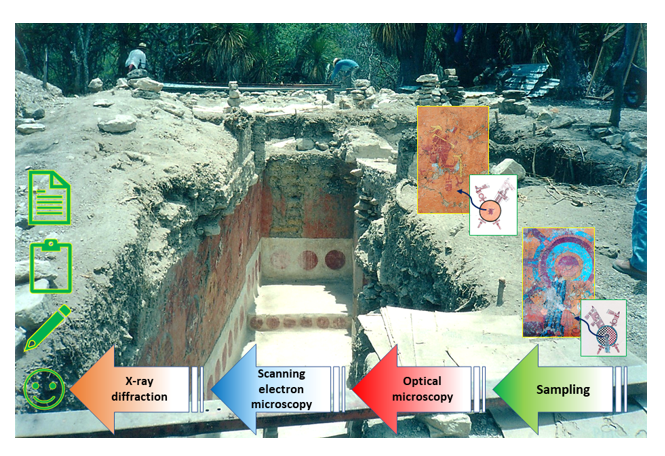
At the Late Postclassic site known as Tehuacán-Ndachjian in Puebla, Mexico, the “Los Escudos” mural remains relatively unknown within Mexico due to limited access to the site, which is situated underground on a mountain. To this day, this study represents the first and unique opportunity to analyse samples of mural painting from this archaeological site. Small pigmented samples were analysed using optical microscopy (OM), scanning electron microscopy (SEM), energy-dispersive X-ray spectroscopy (EDXS), and X-ray diffraction (XRD). The compositional and structural characterisation of the samples revealed the stratigraphic composition without lime plaster layer and the presence of minerals such as hematite, goethite, palygorskite, gypsum and feldspars. These findings support the conclusion that the pictorial technique used to create the mural was “tempera on earth” with mineral pigments. The overall results provide valuable data on the materials and techniques used, serving as a reference for conservators in addressing preservation, conservation, and restoration issues for mural paintings on mud plaster. Furthermore, the study enhances understanding of ancient painting techniques on mud plaster and the technological advances developed by pre-Hispanic cultures in Mexico.
Keywords:
Tehuacán-Ndachjian
; Pre-Hispanic
; mural paintings
; mud plaster
; SEM-EDXS
; XRD
1. Introduction
One of the most important issues in archaeometric science involves characterising ancient objects using modern analytical techniques to understand their structure, processing methods, properties, and performance [1,2]. Major contributions of materials science and engineering to the study of ancient materials include dating, provenance determination, and analysing the operational processes involved in creating works of art [3]. In the case of mural paintings created by various cultures in Europe and Pre-Hispanic societies, these works serve as both technical and artistic testimonies to the development of ancient societies, illustrating specific material usage and pictorial techniques [3,4,5], and providing historical insights into rituals and customs that reflected significant religious or philosophical values [6,7]. Materials used in ancient mural paintings worldwide have been examined using optical microscopy [6,8,9], scanning electron microscopy combined with energy-dispersive X-ray spectroscopy (EDXS) [8,9], X-ray diffraction (XRD) [8,9,10,11,12], transmission electron microscopy (TEM) [6,8,9,10,11,12], ultraviolet–visible and infrared spectroscopy (UV–Vis and FTIR) [9], gas chromatography–mass spectrometry (GC–MS) [10], Raman spectroscopy [13], proton-induced X-ray emission (PIXE) [14,15], neutron nuclear activation (NNA) [16], X-ray fluorescence (XRF) [17], and archaeomagnetic dating [18,19], to address the issues outlined above.
Mexico has a long tradition of Pre-Hispanic mural painting, which has been divided into four study areas: (1) the Central Plateau, (2) the Maya region, (3) Oaxaca, and (4) the Gulf Coast and Huasteca [20]. Tehuacán-Ndachjian, situated in southern Puebla near the present-day city of Tehuacán, was the capital of one of the four Popoloca provinces, or “señoríos”, established in the region since the fourth century CE. Its main development began after the fall of Tula. The occupation of Tehuacán-Ndachjian spans from approximately 1000 to 1456 CE. The Popoloca people occupied territories in southern Puebla, stretching from present-day Tepeaca to Coixtlahuaca in Oaxaca, an area known as the Lower Mixteca [19,21]. They were conquered by the Mexica in 1450 CE, after which the site was abandoned [22].
During archaeological excavations carried out by independent explorers (not affiliated with INAH) in 1991, a wall and columns with traces of colour were uncovered. The mural known as “Los Escudos” belonged to a council hall with an architectural layout similar to a megaron, and the walls were built from mud bricks [23]. The project titled Sur del Estado de Puebla, Área Central Popoloca has been an official INAH research initiative since 1992 and continues to this day. In 2018, several buildings were dated using archaeomagnetic techniques applied to unburnt floor stucco from three different construction phases, providing probable dates between 1385 and 1472 CE; however, it was not possible to date the area where the mural is located [19]. The “Los Escudos” mural painting is divided into two zones. The lower zone features stucco decorated with red circles, while the upper zone is made of mud plaster and is adorned with shields, behind which crossed lances and banners are depicted (Figure 1) [24].
The door jambs and circular columns of the eastern doorway are painted with horizontal bands representing levels of heaven. Nine place names are depicted; the central one appears to correspond to Tehuacán, while the other eight likely represent the noble lineages of Tehuacán during the Pre-Hispanic period: Zapotitlán, Tepeteopan, Cañada Morelos, Chapulco, Coxcatlán, Coyomeapan, Zotitlán, and Eloxochitlán (op. cit., p. 219) (Figure 2).
Most pre-Columbian mural paintings in Mexico were created using either the fresco or a secco technique on stucco [6,7,9,25,26,27,28,29,30]. Only a few mural paintings on mud plaster have been documented, and these shows significant deterioration, mainly due to water infiltration, environmental contamination, and inadequate conservation efforts [31,32,33,34,35]. The most well-known pre-Hispanic murals in Mexico painted on mud plaster include Los Bebedores in Cholula (c. 200 CE) [31,34], which has a rougher surface finish than Los Escudos, which is located 3 metres below ground level beneath earlier construction phases, and El Recinto de los Guerreros Águila from the Templo Mayor (1325–1521 CE) [8,31,33].
The study of the materials used in mural paintings is crucial for understanding their properties and the techniques employed during their creation. Such knowledge serves as a key reference for conservators and restorers when addressing conservation and restoration issues [8,9,25,36], while also enhancing a broader understanding of ancient painting methods and the technological advancements of Pre-Hispanic cultures. Additionally, these data may help identify trade routes among various cultural groups, enrich the historical record of Pre-Hispanic Mexican societies, and deepen our understanding of the durability and preservation of mural paintings to the present day [25,26].
2. Materials and Methods
2.1. Sampling
A rich colour palette was identified in this mural painting, which is divided into two horizontal zones: the lower zone is constructed of stucco, while the upper zone is decorated on mud plaster with an orange background. Only pigments applied to the mud plaster were sampled. Several samples of red, blue, ochre, bright yellow, white, and black pigments, as well as of the mud substrate, were carefully collected in situ using gloves and a small scalpel. Sampling targeted areas displaying representative colours and, where possible, overlapping pigment layers, ideally near fractures or detachment areas, to minimise damage to the painted design and preserve as much visual information as possible.
The main challenge during sampling was the ease with which the mud support detached, as well as the very thin pigment layers. The collected mural painting fragments were placed in individual vials and properly labelled (Table 1).
The entire mural painting was coated with a synthetic polymer during the restoration and consolidation processes carried out after its discovery in 1991. According to the archaeological site records, this coating consisted of an acrylic polymer—either Paraloid B72 or Primal—which was dissolved in acetone to minimise polymer interference during morphological observations, chemical composition analyses, and crystalline phase identification.
In some samples, the polymer was removed by dissolving it in acetone using an ultrasonic bath. The freed polymer powders were then separated by centrifugation and allowed to dry at room temperature, enabling the morphology of each pigment to be observed by scanning electron microscopy (SEM). Larger samples were divided into two parts, and cross-section specimens were prepared by extracting small fragments (2–3 mm) that were embedded in resin and polished.
2.2. Characterisation Techniques
Optical inspection was performed using a Zeiss Axiotech 25HD microscope equipped with a halogen lamp, a collector, and a diaphragm to identify stratigraphic layers under bright-field conditions at magnifications of 20×, 50×, and 100×. Scanning electron microscopy (SEM) analysis was performed with a Philips XL30 microscope fitted with an energy-dispersive X-ray spectrometer (EDXS - EDAX DX-4). X-Ray diffraction (XRD) analyses were conducted using a Siemens D-5000 diffractometer to identify crystalline mineral phases over a range of 5° to 70° (2θ), with a step size of 0.01°, operating at 30 keV and 25 mA, using Cu radiation (λ = 1.54 Å). Crystalline phases were identified through the JCPDF database. In some cases, small sample size and limited powder quantity restricted optical microscopy observations and XRD analyses; however, at least one sample of each colour was examined using stereoscopic microscopy, SEM, EDXS, and XRD.
3. Results
These results provide detailed information on the damage, deterioration, and condition of the pictorial layers, as well as insights into the techniques used to create the mural and the influence of other cultural groups. In some cases, the small sample size and limited amount of powder restricted optical microscopy observations and XRD analyses.
3.1. Optical Microscopy
Based on in-situ observations at the site, no evidence of repainting was found. Stratigraphic observations indicate that the pigment layers were superimposed only in the coats of arms, without any transparency effects, owing to their strong covering power. The cross-sectional views of two samples shown in Figure 3 reveal, at the base, a coarse plaster serving as the main support, composed of clays and white crystalline particles (probably quartz). Over this coarse plaster, a fine mud plaster preparation layer was applied, followed by a thin orange pigment layer at the surface. In both samples, the particle size of the fine mud plaster and the pigments is very small. The thickness of the pigment layers ranges from 30 to 100 micrometers, while the fine mud plaster layer varies from 100 to 300 micrometers.
Notably, no lime plaster layer was found between the fine mud plaster and the pictorial layers. Instead, a thin orange pigment layer served as a background across the mural, with additional layers applied on top. No evidence of cavities caused by erosion or water and humidity infiltration was observed, nor was any saline efflorescence detected on the pictorial surface. Additionally, no cracking, chromatic alteration, or darkening of the pictorial layers was identified. On-site observations revealed that only sample PTE5AZ showed three superimposed pigment layers—orange, black, and blue—with poor adhesion between the black and blue layers. Furthermore, sample PTE6BL contained a white pigment applied over the orange background; however, it was not possible to sample these areas to avoid damaging the designs of the coats of arms 5 and 6.
3.2. SEM-EDS and XRD by Pigment Color
Tables S1 and S2 summarise the results of the EDXS and XRD analyses (Supplementary Materials). SEM micrographs showed micrometric and nanometric particles with distinct morphologies for each pigment colour. Table S1 presents the elemental compositions (wt%) of selected particles, agglomerates, or crystals, obtained through selected-area and point analyses, as well as from analyses of larger observation fields.
The elemental weight percentages in the samples were determined using the semi-quantitative ZAF method. It is important to note that, in point analysis, the elemental information obtained depends on the atomic numbers of the elements present, the accelerating voltage and the lateral resolution of the EDXS detector; however, it provides an acceptable approximation of the bulk composition within the selected area. Furthermore, the EDXS spectra show peaks corresponding to nearly the same elements across all samples, although their intensities vary significantly. Carbon and oxygen were generally present in significant amounts and may be associated with either the polymer coating, which was not entirely dissolved in the samples, or with residues of organic binders used to apply the pigments to the mud plaster.
The XRD results (Table S2) demonstrate how the elements identified by EDXS form different crystalline arrangements in each pigment sample. The detection limit for mixed materials is 2% of the sample; therefore, the identified phases are inferred to be present in proportions of at least 2%. Details are provided for one sample of each colour, along with its corresponding diffractogram, including the identification of crystalline phases using PDF2 card numbers and projections of their unit cells to illustrate the distribution of the elements identified by EDXS, as well as the indexed reflections of the mineral phases responsible for the characteristic colour.
3.2.1. Yellow Samples
The yellow samples exhibit different morphological growths. In sample PTC2OC, spherical agglomerates measuring 1–6 µm in diameter were observed. These agglomerates consist of small nanometric particles containing 59.7 wt% iron (Figure 4a and Figure 4b). Additionally, this sample features elongated agglomerates of short, needle-like fibres approximately 0.1 micrometers long, also containing iron at a concentration of 32.8 wt% (Figure 4c and Figure 4d). Other features include irregular crystals up to 5 µm and flake-like aggregates composed of flakes smaller than 0.5 µm.
In contrast, sample PTE4AMC contains crystals with irregular prismatic morphologies measuring approximately 2–5 µm, as well as areas coated with a polymer layer. In this sample, the iron content is below 5 wt%. The XRD analysis provides information about both the pigment and the substrate it was applied to, given the thinness of the pigment layer and its easy detachment from the mud support. Figure 4e shows the X-ray diffractogram and projections of the unit cells of the identified phases, along with the indexed reflections of goethite, which is the primary contributor to the ochre-yellow hue.
3.2.2. Red Samples
SEM micrographs of sample PTM2RO show agglomerates of small particles, crystals, and flakes (Figure 5a), with the flakes containing 34.2 wt% iron and 0.5 wt% titanium (Figure 5b). In sample PTC2RO, small granular particles forming spherical aggregates ranging from 1 to 6 µm were identified, with an iron content of 66.2 wt% (Table S1). This sample also displays dispersed fibres shorter than 0.5 µm, as well as platy masses approximately 4–5 µm in diameter. Sample PTE1RO shows acicular crystals and sheet-like agglomerates up to 6 µm in size, predominantly containing calcium, with an iron content of 62.2 wt%.
XRD analysis identified three crystalline mineral phases in samples PTM2RO and PTC2RO: calcite (CaCO₃), quartz (SiO₂), and hematite (α-Fe₂O₃). Figure 5c shows the unit cell projections of the identified minerals along with the indexed reflections of hematite. In sample PTE1RO only, disordered albite, or sodium aluminium silicate (Na(Si₃Al)O₈), was identified as part of the mud plaster. XRD analysis of sample PTE4AMC was not performed due to the limited amount of material available.
3.2.3. Blue Samples
Observations of samples PTM2AZ, PTE1AZ, and PTE5AZ revealed crystals with diverse morphologies and abundant needle-like fibres. Bundles of fibres approximately 1–2 µm long and 50–100 nm wide, as shown in the micrographs of sample PTE1AZ (Figure 6a), are typical of the blue samples. These fibres look more rigid, longer, and thicker than those in the ochre pigments. They also show different proportions of the same elements and are linked to palygorskite clay in the Maya Blue pigment [10], which is mainly composed of O, Mg, Al, and Si (Figure 6b). Furthermore, groups of irregular crystals containing K, Ca, and Fe, as well as extensive areas made up of stacked flat sheets, were observed. XRD analysis of sample PTM2AZ identified palygorskite, calcite, and quartz (Figure 6c). The corresponding unit cell projections of these minerals and the indexed reflections of palygorskite, which forms the matrix of the blue pigment, are also presented. XRD was not performed on sample PTE5AZ due to the limited amount of available material.
3.2.4. Black Samples
The black pigment samples (PTE1NE and PTE6LNE) exhibit the highest carbon contents compared to the other analysed pigments. Sample PTE1NE predominantly shows agglomerates of small, irregular crystals situated within large areas coated by a coarse polymer layer (Figure 7a). Elemental analysis indicated carbon (48.0–69.9 wt%), oxygen (13.6–26.6 wt%), and silicon (5.8–11.0 wt%) as the main components, along with magnesium, aluminium, calcium, and iron (1–5 wt%), while the other elements were present in trace amounts below 1 wt%.
In sample PTE6LNE, micrometric crystals with irregular morphologies, large flaky grains measuring between 3 and 10 µm that are uniformly dispersed, and dark, flat areas associated with a relatively coarse polymer coating were observed. This sample has a higher carbon content than PTE1NE. Sodium, magnesium, aluminium, silicon, potassium, calcium, and iron were detected at concentrations ranging from 0.5 to 4.35 wt%, while sulphur and chlorine were present only at trace levels (Table S1; Figure 7b). XRD analysis shows quartz as the main phase, with calcium-iron oxide and magnesian muscovite identified as minor crystalline phases, each with less intense reflections (Figure 8c). None of these minerals causes the black colouration.
3.2.5. White Samples
Two white pigment samples, PTE6BL and PTM2BL, were analysed. In both samples, large faceted crystal growths measuring approximately 2–3 µm were observed. In sample PTE6BL, predominantly prismatic crystal morphologies were identified (Figure 8a). These crystals are composed mainly of sulphur (22.6 wt%), calcium (29.6 wt%), and oxygen (49.8 wt%), with trace amounts of silicon (Table S1; Figure 8b). Figure 8c shows the XRD diffractogram, the characteristic reflections of calcium sulphate hydrate (gypsum) and silicon oxide (quartz), and the projections of the crystalline unit cells of the identified minerals.
3.2.6. Orange Sample
In the orange pigment sample PTE6FN, abundant stacked thin flakes, measuring between 0.5 and 4 µm and forming layered structures, were analysed. The following composition was identified: C (19.7 wt%), O (32.2 wt%), Mg (2.7 wt%), Al (8.0 wt%), Si (20.1 wt%), K (3.9 wt%), Ca (7.8 wt%), and Fe (5.7 wt%). Additionally, some agglomerations of irregular crystals contained P, S, Na, and Ti, detected at levels below 1.28 wt% by SEM and EDXS analyses (Figure 9a and Figure 9b). Mineral identification by XRD was not performed due to insufficient sample quantity. The black pigment was applied over mud plaster in narrow lines to define the outlines of the designs.
3.2.7. Mud Plaster Sample
Finally, the morphologies in the mud plaster sample mainly consisted of irregular aggregates, which are difficult to link to EDXS composition, unlike those in the pigment samples, even though they contain the same elements. In the sample PTM1ADO, the minerals identified by XRD were albite low (Na(AlSi3O8)), quartz syn (SiO2), and calcite (CaCO3), which are common components of various soil types (Figure 10) and are often responsible for the soil’s brown colour.
4. Discussion
Pre-Hispanic mural painting emerged during the Late Pre-Classic period (300 BCE–300 CE) at Calakmul [37] and flourished when Teotihuacán reached its peak and Cholula and Monte Albán developed in the Mixteca region [38]. However, there is evidence that the Olmecs in Guatemala used red, brown, white, and black pigments (with no evidence of blue) in the murals of San Bartolo and in ceramics during the Formative Period (1500 BCE–200 CE) [30,39,40,41]. During the Early Classic period, trade networks spanning regions and cultures strengthened, which enabled the exchange of goods and technical knowledge. It was during this time that murals were painted on mud plaster in Teotihuacán (Mural de las Ofrendas-Templo de la Agricultura/200–600 CE) [42] and Cholula (Mural de los Chapulines and Mural de los Bebedores/200–450 CE).
During the Late Postclassic period (1325–1521 CE), a pictorial technique was identified in mural paintings on mud plaster in the second construction phase of the House of the Eagle Knights. This technique originated in Tula (Toltec culture, 900–1200 CE) and involved applying stucco to the lower third of the wall, followed by mud plaster extending to the ceiling. Grimaldi, Acosta, and Moedano report that an organic binder and lime water were used in the preparation of pigments applied to mud plaster [31,33].
We suggest that to incorporate the orange pictorial layer into the fine mud-plaster preparation, the earth was sieved and mixed with the same binder and lime water used for the pigments. This mixture was then applied to partially dry, compact, and levelled mud as no significant discontinuities in surface planarity have been observed, which would likely be present if the pigment had been applied to a damp substrate. It can be inferred that the chromatic application was carried out delicately using a smooth tool and that the pigment mixture was highly fluid. This would have allowed for layers of only a few tens of micrometres thick to be applied, resulting in opaque colours with high chromatic saturation. This technique has been identified in contemporary sites such as Tlatelolco and Tehuacán [33].
The analytical techniques used in this study provide valuable insights into the materials that ancient Mexican artists used during the Pre-Hispanic period based on analyses of very small samples. The combined use of stratigraphic observations by optical microscopy (OM), scanning electron microscopy (SEM), energy-dispersive X-ray spectroscopy (EDXS), and X-ray diffraction (XRD) proved particularly effective. Most studies on among Pre-Hispanic mural painting have focused on murals created on stucco [29,30] or stone, which are more resistant to adverse environmental conditions; whereas relatively few have examined murals painted on mud plaster [31,32,33,34], because adobe walls are extremely fragile to the action of atmospheric agents, particularly humidity [26].
In the case of the “Los Escudos” mural, most of the decoration was applied to mud plaster. The mural currently remains stable, although it has been stabilised with polymer materials. One of the main challenges of painting on adobe is the poor adhesion between the pigment and the substrate as pigments tend to detach due to the loss of clay particles, which are responsible for plasticity, cohesion, and mechanical behaviour. As a result, the contact between larger crystalline particles increases. Synthetic polymers are used during stabilisation processes to preserve the adhesion of mineral pigments to adobe surfaces but may result in pigment detachment over time in the form of flakes or larger fragments [32,34].
Limestone is plentiful in the Tehuacán region [19], but painters chose to apply a stucco support to the lower quarter of the wall, followed by mud plaster up to the ceiling, as seen in Tula and later at the Templo Mayor [33]. In contrast, murals in Cholula and Teotihuacán lack a stucco layer in the lower wall area. The same pictorial technique of Tehuacán has been documented at both Tula and Templo Mayor, but there is currently no physical evidence of its use at Tula. The main stratigraphic differences between murals made in fresco or secco on stucco (Cacaxtla) [9] and tempera painting on earth (Tehuacán–Ndachjian) can be summarised as follows:
- In Cacaxtla, the coarse plaster is about 1 cm thick and applied to a wall, whereas in Tehuacán, the wall is made of mud blocks that are similar to modern bricks.
- In Cacaxtla, the fine smoothing layer is made of stucco or calcite with a thickness of 500 to 2000 µm, whereas in Tehuacán, the fine surface layer consists of earth and measures between 100 and 300 µm in thickness.
- In Cacaxtla, the pigment layers are approximately 10 µm thick, whereas in Tehuacán, the layers are thicker and range between 30 and 100 µm.
These differences show that the stratigraphic composition and support materials used at Cacaxtla and other murals with stucco supports are important factors for long-term preservation. In the case of the Tehuacán mural, the polymer applied during conservation has provided some protection against humidity while maintaining the material’s permeability for 34 years. Occasional heavy rains have caused water to infiltrate, resulting in erosion below the hill’s floor level. However, the absence of significant airborne pollutants, generally low humidity levels for most of the year, and stable temperatures under the protective roof have prevented the formation of saline efflorescence, fungal growth, and mineral phase changes. This contrasts with murals at Templo Mayor, where pollutants such as sulphur dioxide and sulphur-rich dust have greatly contributed to deterioration [31]. Similarly, the “Los Bebedores” mural at Cholula shows damage caused by the migration, crystallisation, and surface efflorescence of calcium sulphates and carbonates, as well as a loss of adhesion between the pictorial layer and its support.
SEM and EDS results provide evidence of different morphological growths, agglomerates, and crystals that can be attributed to several minerals according their chemical composition. The ageing and deterioration of organic binders and residual polymer coatings complicate their identification because EDXS detects elevated levels of carbon and oxygen. Comparisons with untreated samples [8,9] show substantial differences that are attributable to conservation polymers. Overall, the XRD results support the use of lime water in pigment preparation before application on mud plaster, but an organic binder is essential to ensure proper adhesion at the flattening mud plaster support.
Further mineralogical analysis shows that the mud plasters of Cholula [32], Tula, and Templo Mayor [33] are locally sourced and differ significantly from those of Tehuacán, resulting in distinct material properties and long-term performance. In addition, environmental conditions specific to each archaeological site further affect the preservation outcomes [8,43]. In Tula, the mud plasters are composed of mainly albite, montmorillonite, sauconite, halloysite, and riobequita, which are minerals that were great plasticity and remarkable adhesive power when mixed with sand and lime water as a binder [33]. Regarding Cholula, the plasters show sand, calcite, charcoal, quartz, and gypsum contamination, and more current analyses indicate sodium-calcium aluminosilicates, quartz, opal CT, pyroxene, amphibole, and a significant amorphous phase known as allophane [32].
Qualitative XRD analysis revealed that all samples contained trigonal quartz with slight variations in the lattice parameters according to the JCPDF cards (see Table S2). The same trigonal calcite and trigonal quartz were primarily identified in PTC2OC, PTM2RO, PTC2RO, and PTM2AZ, which suggests either the intentional use of a lime–quartz mixture in pigment preparation to enhance adhesion and stability or a shared mineral source for these components. Conversely, samples lacking calcite (PTE1AZ and PTE6BL) exhibited weaker adhesion to the underlying orange layer. Samples PTM2OC and PTM1ADO showed trigonal calcite and trigonal quartz that corresponded to different JCPDF cards than those mentioned before, and their triclinic albite content was low. In PTE1NE, minerals typical of the soil were identified, but none of them impart black coloration.
Based on SEM, EDXS, and XRD analyses, the PTM2OC and PTC2OC samples can be identified as natural ochres that are mainly composed of calcite and quartz with minor phases such as goethite [6,8,10,30,40] and albite [6,36]. Iron oxides and clay minerals are naturally associated and have been used as pigments since prehistoric times. Their colour depends on their crystallinity and purity, with well-crystallised goethite producing bright yellow hues [44] that are often lightened by the addition of calcite or limewater. Ochre pigment is common in pottery and Pre-Hispanic [6,8,10,27] and Convent murals in México [44]. The red PTM2RO and PTMC2RO samples were composed of quartz and calcite and mainly derived from hematite, which is more commonly used than cinnabar due to its widespread availability [9,10,28,30,33,40,43]. Hematite features stability that is linked to its crystallinity and formation under hot, dry conditions [44], and this mineral was preferentially used as a background colour in pre-Hispanic murals painted on mud plaster in the Mesoamerica [31,32,33] and Columbian period [6,7,8,9,27,28,30].
The PTM2AZ and PTE1AZ samples contain palygorskite and quartz, while calcite was identified only in PTM2AZ, which indicates that only lime water was used in the preparation of this sample. Palygorskite and attapulgite mineral clays are known to be key constituents of Maya blue and Maya green pigments. Pre-Hispanic cultures in the Mexican territory and Guatemala made and used these pigments in mural paintings, ceramics, sculptures, and codices in Mesoamerica [6,8,9,11,40,45,46,47,48,49,50] and they were even used during colonization in churches and convents in Mexico until 1580 [15,30,51]. Technologically, Maya blue paint is one of the most representative developments of the Maya culture because of its high stability under the drastic temperature and humidity conditions of tropical forests. Furthermore, it has been demonstrated to resist concentrated acids, alkalis, and organic solvents [11,15].
This synthetic pigment was produced as an organic-inorganic mixture of añil leaves and palygorskite clay. This ancient artificial pigment has been studied extensively to understand the nature of the colour centres [45]. Their remarkable stability has been investigated in advanced theoretical studies of the structural, energetic, bonding, and electronic properties [46,47,49,50], as well as in-situ studies during thermal treatment for their synthesis [47,48].
In the Maya blue pigment of Templo Mayor, palygorskite is almost always combined with sepiolite, unlike Cacaxtla and Bonampak [33], which are temporally coincident (500–900 CE; Early Classic–Late Classic), and only palygorskite was identified in Maya blue at these locations, indicating different provenance of the clay [52,53]. There are three regions where Mayan blue could be made: in Sierra de Ticul, where palygorskite abounds (Northern Yucatan); in Campeche, where there are deposits of sepiolite and palygorskite-sepiolite mixtures; and in a third region that gave rise to the blue used in Oaxaca [43]. It seems that this pigment was first used in the Late Preclassic in ceremonial artifacts decorated at Chupícuaro (600–100 BCE) [54] and in the murals of Calakmul (300 BCE–300 CE), which present stucco with red and maya blue pigments [30,37], indicating that the centres of Mayan blue production could originate in Chupícuaro, Guanajuato, or Campeche.
Regarding PTE6BL, the white pigment is made up of gypsum with quartz impurities. The use of gypsum was not very common in pre-Hispanic mural paintings. Most white pigments have been reported to be calcite, which is sometimes mixed with white clays such as kaolin or palygorskite [30] from calcite deposits or from ground shells and sea shells (aragonite). In the 1930s, Edward Thompson described the preparation of a white pigment by mixing lime with the juice of a tree called chichebé [30,40]. The gypsum has been identified in some Mesoamerican mural paintings at sites such as Teotihuacan and Ek’Balam [35,49], and now in Tehuacán-Ndachjian.
Charcoal or black carbon pigment was prepared by burning hard woods in a limited supply of air, but it was also sometimes obtained times burning animal bones. The EDXS analysis of PTE1NE showed an absence of P, which indicates that this pigment was produced from burning wood and not burning animal bone. Most of the black pigments used in Maya wall paintings are of vegetal origin [30,40]. The use of charcoal as a black pigment in Pre-Hispanic mural paintings from Teotihuacan [30], Cacaxtla [6,9,10], Xochicalco [27], and Ek’Balam [49] has been reported, and some authors suggest that ancient artists prepared black carbon by mixing charcoal and a fine white clay such as calcite, kaolin, palygorskite, or sepiolite [30]. The Olmecs traded chapopote outside the Gulf region and when they disappeared, the Toltecs and Aztecs used it as pigment in the Classic and Postclassic periods (Sahagún, 1956) [39,55]; there is evidence of the use of chapopote in Palenque and Bonampak as a black pigment [30].
In the case of the orange-coloured PTE6FN sample, XRD could not be used to identify the minerals present due to the small sample size, but EDXS determined that it is probably an iron oxide and not strontium orange. Orange pigments were not as common as red, yellow, black, or white pigments in mural paintings, and usually, there is a mixture of red and yellow pigments in some Pre-Hispanic mural paintings [30,49]. According Vázquez-Agredos, orange pigments of several hues have been identified in Maya lowlands. These mainly contain ilmenite (which can be calcined to change the coloration of its titanium content) [30] or mixtures of maghemite and limonite [39,40]. Recently, strontium orange has been identified in Calakmul in some substructures [40].
Most pre-Columbian mural paintings in Mexico were created on stucco. At Mayan sites (Bonampak, Tulum, Ek’Balam), plasters were manufactured by mixing calcite and dolomite during the Classic and Postclassic periods [10,49], unlike other cultures, which prepared stuccoes with pure calcite or combinations of calcite, albite/anorthite, and quartz [27,35]; while in others calcium carbonate and calcium sulfate [49].
Identification of the minerals that form the earth-wall support is essential for choosing compatible materials to be used in conservation interventions. The continued persistence of ancient Pre-Hispanic mural paintings depends on the quality and mineral composition of stuccoes and mud plasters, as well as the environmental conditions of the site, with water seepage being one of the main hazards, along with the kind of materials used for consolidation processes after mural painting discovery (generally polymers). Particularly, Pre-Hispanic mural paintings on mud plaster are more delicate and susceptible to environmental damage, so they have disappeared over time after being discovered.
5. Conclusions
The results of this study reflect the continuity of pictorial techniques on earth or mud plaster developed by the Teotihuacans (Teotihuacan), Olmeca-Xicalancas (Cacaxtla), Cholultecas (Cholula), and Toltecs (Tula), which spread to the Popolocas (Tehuacán) and finally to the Mexicas (Templo Mayor). These last three cultural groups applied a pictorial technique that originated in Tula and consisted of placing stucco on the lower third of the wall, followed by a mud plaster up to the ceiling. The painters had enough experience and knowledge of the behaviour of the materials used in Tehuacán to apply a thinner layer of earth, which gave a flat finish to the wall and allowed for the application of thicker layers of pigments than those applied on stucco in other Pre-Hispanic wall paintings in Mexico.
The optical microscopy images helped to know the state of preservation and the causes of deterioration of the mural of the “Los Escudos” mural, and the stratigraphic structure of painting layers demonstrated the presence of an organic binding media to prepare the mud plaster and pigments. To keep the pigment adhered to the mud plaster, it is necessary to use a binder, or else the pictorial layer of the mud formed by very small particles would detach. The SEM-EDS analysis is basic to identify the chemical composition and morphology of the minerals used as pigments. The presence of polymer coating prevented the identification of organic binder by spectroscopic techniques.
The XRD results provided evidence of the direct use of lime water in the preparation of the pigments before applying them to the mud plaster. The pictorial technique used to create the mural of “Los Escudos” in Tehuacán is tempera on earth, and mineral pigments of local origin were used, except for Mayan blue, which was sometimes mixed with lime water for application on mud plaster to improve pigment adhesion.
There is a necessity to obtain information about the properties of the materials used to preserve and conserve these types of mural paintings because they suffer damage from various external factors such as mechanical stress, extreme environmental conditions, and biological agents. Thus, the information presented could be a powerful tool for restorers and professionals in materials science, who could propose new restoration methods and appropriate materials for successful interventions for mural paintings on mud plaster. Additionally, it helps explain the mural’s resistance and long-term preservation to the present day. The need to create a record of the use of each pigment in Pre-Hispanic murals was identified in order to establish relationships and exchange between cultural groups in a more precise way. The results provide reference data on materials and pictorial techniques to help conservators address preservation, conservation, and restoration challenges associated with mural paintings on mud plaster.
Supplementary Materials
The following supporting information can be downloaded at the website of this paper posted on Preprints.org. Table S1: Elemental composition by EDXS (% wt).; Table S2: Mineral composition by X-Ray Diffraction.
Author Contributions
Conceptualization, M.O.A. and N.C.T.; methodology, M.O.A.; validation, M.O.A., N.T.C., D.T.C. and J.G.M.H.; formal analysis, M.O.A. and D.T.C.; investigation, M.O.A., N.T.C., D.T.C. and J.G.M.H.; resources, M.O.A. and D.T.C.; writing—original draft preparation, M.O.A. and D.T.C.; writing—review and editing, M.O.A., N.T.C., D.T.C. and J.G.M.H. All authors have read and agreed to the published version of the manuscript.
Funding
This research did not receive any specific grant from funding agencies in the public, commercial, or not-for-profit sectors.
Data Availability Statement
All data in the paper and Supplementary Materials.
Acknowledgments
We thank to the “Consejo de Arqueología del INAH” for permission to analyze pigments from Tehuacán-Ndachjian, Puebla, México. M.O.A acknowledges the CNMN of Instituto Politécnico Nacional for the facilities provided through the project SIP20241424.
Conflicts of Interest
The authors declare no conflicts of interest.
Abbreviations
The following abbreviations are used in this manuscript:
| OM | Optical Microscopy |
| SEM | Scanning Electron Microscopy |
| EDXS | Energy Dispersive X-ray Spectrocopy |
| XRD | X-Ray Diffraction |
| TEM | Transmission Electron Microscopy |
| UV-Vis | Ultraviolet-Visible spectroscopy |
| FTIR | Fourier Transform Infrared Spectroscopy |
| GC-MS | Chromatography-Mass Spectrometry |
| PIXE | Proton Induced X-ray Emission |
| NAA | Nuclear Activation Analysis |
| XRF | X-Ray Fluorescence |
| ZAF | Atomic number, Absorption and Fluorescence correction method |
| PDF2 | Interactive PDF Card |
References
- Tite, M. S. Methods of Physical examination in Archaeology; Seminar Press, London and New York, 1972; pp. 11-74.
- José-Yacamán, M.; Ascencio, J. A. Electron microscopy and its application to the study of archaeological materials and art preservation. In Modern Methods in Art and Archeology; Ciliberto E., Spoto G., Eds.; John Wiley and Son., New York, Chichester, Weinheim,Brisbane, Singapore, Toronto, 1999;Volume 155, pp. 405-443.
- Kingery, W. D. The contribution of materials science to material culture studies. In Proceedings of the Material Research Society Symposium, San Francisco, California, U.S.A., 17-21 april 1995.
- Doerner, M. Los materiales de pintura y su empleo en el arte. 5ª edition, Reverté, España, Barcelona, 1965; pp.176-203.
- Bazzi, M.; Benet R.; Torroella, R. S. Enciclopedia de las Técnicas Pictóricas; 1st edition, Noguer, Barcelona, España,1965; pp. 1-538.
- Magaloni, K. D.; Aguilar, M.; Castaño, V. Electron and Optical Microscopy of Prehispanic Mural Paintings. In Proceedings of the Material Research Society Symposium, San Francisco, California, U.S.A., 16-21 april 1990.
- Piñeirúa M. L. Límites y contornos: ¿entre lo real y lo imaginario?, Bol. Inf. Inst. Inv. Estét. UNAM 2001, Volume 15, pp. 7-11.
- Ortega, M.; Ascencio, J.A.; San-German, C. M.; Fernández, M.E.; López-Lujan, L.; José-Yacamán, M. Analysis of prehispanic pigments from “Templo Mayor” of Mexico City. J. Mater. Sci. 2001, Volume 36, pp. 751-756.
- Ortega-Avilés, M.; San-Germán, C. M.; Mendoza-Anaya, D.; Morales, D.; José-Yacamán, M. Characterization of mural painting from Cacaxtla. J. Mater. Sci. 2001, volume 36, pp. 2227-2236.
- Magaloni, D.; Pancella, R.; Fruh, Y.; Cañetas, J.; Castaño, V. Studies on the Mayan Mortars Technique. In Proceedings of the Material Research Society Symposium, San Francisco, California, U.S.A., 17-21 april 1995.
- José-Yacamán, M.; Rendón, L.; Arenas, J.; Serra Puche M. Carmen. Maya Blue Paint: An Ancient Nanoestructured Material Sci. 1996, 273, pp. 223-225.
- Giovagnoli, R. Provincial roman Wall painting investigated by electron microscopy. Archaeometry 1969, 11, pp. 53-59.
- Vandenabeele, P.; Ortega-Avilés, M.; Tenorio-Castilleros, D.; Moens, L. Raman spectroscopic analysis of Mexican natural artists’ materials. Spectrochim. Acta A Mol. Biomol. Spectrosc. 2007, 68, pp. 1085-1088.
- Peisach, M.; Pineda, C. A; Jacobson, L. Nuclear analytical study of rock painting. J. Radioanal. Nucl. Chem. 1991, 151, pp. 221-227.
- Sánchez del Río, M.; Martinetto, P.; Somogyi, A.; Reyes-Valerio, C.; Dooryhée, E.; Peltier, N.; Alianelli, L.; Moignard, B.; Pichon, L.; Calligaro, T.; Dran, J.-C. Microanalysis study of archaeological mural samples containing Maya blue pigment. Spectrochim. Acta B 2004, 59, pp. 1619-1628.
- Ortega, R. F.; Lee, B. K. Neutron activation study of ancient pigments from murals of Cholula and Teotihuacan. Archaeometry 1970 12, pp. 197-203.
- Liritzis, I.; Polychroniadou, E. Archaeometrical analysis of mural paintings made by Spyros Papaloukas (1892-1957) in Amfissa catedral. J. Archaeol. Sci. 2007, 31, pp. 97-112.
- Straulino M. L.; Sedov, S.; Soler Arechalde A. M.; Pi Puig, T.; Villa, G.; Balanzario Granados, S.; Doménech-Carbó M. T.; Osete-Cortina, L.; Leonard, D. Maya Lime Mortars—Relationship between Archaeomagnetic Dating, Manufacturing Technique, and Architectural Function—The Dzibanché Case. Geosci. 2016, 6, pp. 1-27.
- Osorio Aguillón, M. C. J. Estudio Arqueomagnético de Ndachjian Tehuacán en el Estado de Puebla. Maestría Instituto de Geofísica, UNAM, México, noviembre 2018.
- La Pintura Mural Prehispánica en México UNAM. Available online: https://www.pinturamural.esteticas.unam.mx/areas_culturales (accessed on 26 november 2025).
- Castillo Tejero, N.; Olvera Mancera, A. D. Cartografía de Sitios Mencionados en Fuentes Históricas de Área del Valle de Tehuacán, Puebla. Arqueología 2002, pp. 63-72.
- Castillo T. N. Trabajos Arqueológicos Recientes en Tehuacán Puebla. In Arqueol., Hist. y Antropol. In memoriam José Luis Lorenzo Bautista; Litvak, K.; Mirambell Silva L., Eds.; INAH, México, 2000; 415, pp. 299-318.
- Castillo, T. N.; Olvera A.D. Delimitación del Señorío prehispánico de Tepeteopan In Memorias of the 53º Congreso Internacional de Americanistas, Ciudad de México, México, 19 – 24 julio 2009.
- Sisson, E. B.; Lilly T. G. A codex-style mural from Tehuacan Viejo, Puebla, México, Anc. Mesoam. 1994, 5, pp. 33-44.
- Cabrera Garrido J. M. Informes y Trabajos del Instituto de Conservación y Restauración de Obras de Arte, Arqueología y Etnología, Artes Gráficas Soler, España, 1969; pp. 1-37.
- Ferrer, M. A. La pintura mural, su soporte, conservación, restauración y las técnicas modernas, 2ª ed.; Universidad de Sevilla, España, 1995; pp. 49-54.
- Rodríguez-Lugo, V.; Ortíz-Velázquez, L.; Miranda, J.; Ortiz-Rojas, M.; Castaño, V. M. Study of prehispanic Wall painting from Xochicalco Mexico, using PIXE, XRD, SEM and FTIR. J. Radioanal. Nucl. Chem. 1999, 240, pp. 561-569.
- Mendoza-Anaya, D.; Rodríguez-Lugo, V.; Martínez-Cornejo, G.; José-Yacamán, M. Microstructural studies of paintings from the Totonaca civilization in Tajin. In Proceedings of the 14th International Congress on Electron Microscopy, Cancun, México, august 31 – September 4, 1998.
- Falcón, T.; Magaloni, D. En torno a la conservación de la pintura mural prehispánica, Rev. Univ. Mex. 1992, pp. 16-20.
- Vázquez de Ágredos P. M. L. Los colores y las técnicas de la pintura mural Maya. An. Mus. Am. 2007, 15, pp. 55-66.
- Grimaldi, D. M. Contaminación en la Ciudad de México y el Deterioro de la Pintura Mural de Tenochtitlán. Correo Restaurador 2024, pp. 10-18.
- Grimaldi, D. M.; Pérez, N.; Ortega, J.; Villa, L. A. Conservación del mural sobre adobe Los Bebedores. In Proceedings of the XII Congreso Mundial sobre Arquitecturas de Tierra (Terra 2016), Lyon, France, 10-14 julio 2016.
- López, L. L.; Chiari, G.; López, A. A.; Carrizosa F. Línea y color en Tenochtitlan. Escultura policromada y pintura mural en el recinto sagrado de la capital mexica. Estudios de Cultura Náhuatl 2005, 36, pp. 15-45.
- Ramírez, C.; Grimaldi D. M.; Arciniega, A. Otro uso del Klucel: consolidante para la pintura mural sobre tierra de Los Bebedores. CR. Conserv. Restaur., diciembre 2017-abril 2018, pp. 266-276.
- González, H. A. Técnica y arte en los murales mesoamericanos. Arqueol. Mex. 2020, pp. 45-51.
- The American Heritage Dictionary of the English Language, 5th ed.; Houghton Miffin, Harcourt, Boston New York, U.S.A., 2016.
- Vázquez de Ágredos P. M. L.; Doménech, C. M. T.; Doménech C. A. Characterization of Maya Blue pigment in pre-classic and classic monumental architecture of the ancient pre-Columbian city of Calakmul (Campeche, México) J. Cult. Herit. 2011, 12, pp. 140-148.
- Arqueología Mexicana. Available online: https://arqueologiamexicana.mx/indice-tematico/cronologia-prehispanica (Accessed on 11 november 2025).
- Scribd. Available online: https://es.scribd.com/document/386385023/Pigmentos-Prehispanicos-1 (accessed on 17 august 2025).
- Academia.edu. Available online: https://www.academia.edu/37701140/Pigmentos_colorantes_y_adhesivos_consolidantes (accessed on 31 october 2025).
- Arqueología Mexicana. Available online: https://arqueologiamexicana.mx/mexico-antiguo/la-pintura-mural-en-mesoamerica (accessed on 11 november 2025).
- García, V. C. Pintura Mural Teotihuacana, análisis histórico, estético, iconográfico y técnico. Thesis Conservador y Restaurador de bienes muebles, ENCRyM-INAH, Ciudad de México, 1977.
- Ortega, A. M.; Caracterización de pigmentos prehispánicos por técnicas analíticas modernas. PhD Thesis, UAEMex, México, 5 march 2003.
- Hradil, D.; Grygar, T.; Hradilová, J.; Bezdicka, P. Clay and Iron oxide pigments in the history of painting. Appl. Clay Sci. 2003, 22, pp. 223-236.
- Sánchez, O. F.; Cocoletzi, G. H.; Canto, G. Trapping and difusión of organic dyes inside of palygorskite clay: The ancient Maya Blue pigment. Micropor. Mesopor. Mat. 2017, 249, pp. 111-117.
- Reinen, D., Köhl, P.; Müller, C. Z. The nature of the colour centres in ‘Maya Blue’ the Incorporation of Organic Pigment Molecules into the Palygorskite Lattice. Z. Anorg. Allg. Chem. 2004, 630, pp. 97-103.
- Fois, E., Gamba, A.; Tilocca, A. On the unusual stability of maya blue paint: molecular dynamics simulations. Micropor. Mesopor. Mat. 2003, 57, pp. 263-272.
- Chiari, R. G.; Giustetto, R.; Druzik, J.; Doehne, E.; Ricchiardi, G., 2008. Pre-columbian nanotechnology: reconciling the mysteries of the Maya blue pigment. Appl. Phys. A: Mater. Sci. Process. 2008, 90, pp. 3-7.
- Sánchez del Río, M.; Boccaleri, E.; Milanesio, M.; Croce, G.; Van Beek, W.; Tsiantos, C.; Chyssikos, G. D.; Gionis, V.; Kacandes, G. H.; Suárez, M.; García-Romero, E. A combined synchrotron powder diffraction and vibrational study of the thermal treatment of palygorskite-indigo to produce Maya blue. J. Mater Sci. 2009, 44, pp. 5524-5536.
- Alonso, A.; Pérez, N.A.; Ruvalcaba, Sil J.L.; Casanova, E.; Claes, P.; Aguilar M. V.; Cañetas, J. Comparative Spectroscopic Analysis of Maya Wall Paintings from Ek’Balam, Mexico. In Material Research Society Symposium, San Francisco, California, U.S.A., 21-25 april 2014.
- Ortega-Lazcano, J.B.; Mendoza-Anaya, D.; Salinas, R. E.; Hernández-Avila, J.; Acevedo-Sandoval, O.A.; Rodríguez-Lugo, V. Study of pigments from de Colonial Convent of Actopan, Hidalgo, México, Minerals 2021, 11, pp. 1-17.
- Arnold, D. E. Maya blue and palygorskite. Anc. Mesoam. 2005, 16, pp. 51-62.
- Arnold D. E.; Neff, H.; Glascock M. D.; Speakman R. J. Sourcing the palygorskite used in Maya Blue: a pilot study comparing the results of INAA and LA-ICP-MS. Lat. Am. Antiq. 2017, 18, pp. 44-58.
- Vázquez de Ágredos P. M. L.; Roldán-García C.; Murcia-Mascarós, S.; Juanes B. D.; Jaén S. M. G.; Faugere, B.; Darras, V. Multianalytical characterization of pigments from funerary artefacts belongs to the Chupícuaro Culture (Western Mécixo): Oldest Maya blue and cinnabar identified in Pre-Columbian Mesoamerica, Microchem. J. 2019, 50, pp. 104-101.
- Pedroza, K. Pigmentos colorantes y adhesivos consolidantes. Trabajo de investigación, Universidad San Carlos de Guatemala, Guatemala 31/10/2018.
Figure 1.
Photograph of the Los Escudos mural, (a)depicting the lower and upper zones decorated with stucco and mud plaster; (b) close-up of a lance showing damage; (c) circular column with horizontal bands.
Figure 1.
Photograph of the Los Escudos mural, (a)depicting the lower and upper zones decorated with stucco and mud plaster; (b) close-up of a lance showing damage; (c) circular column with horizontal bands.
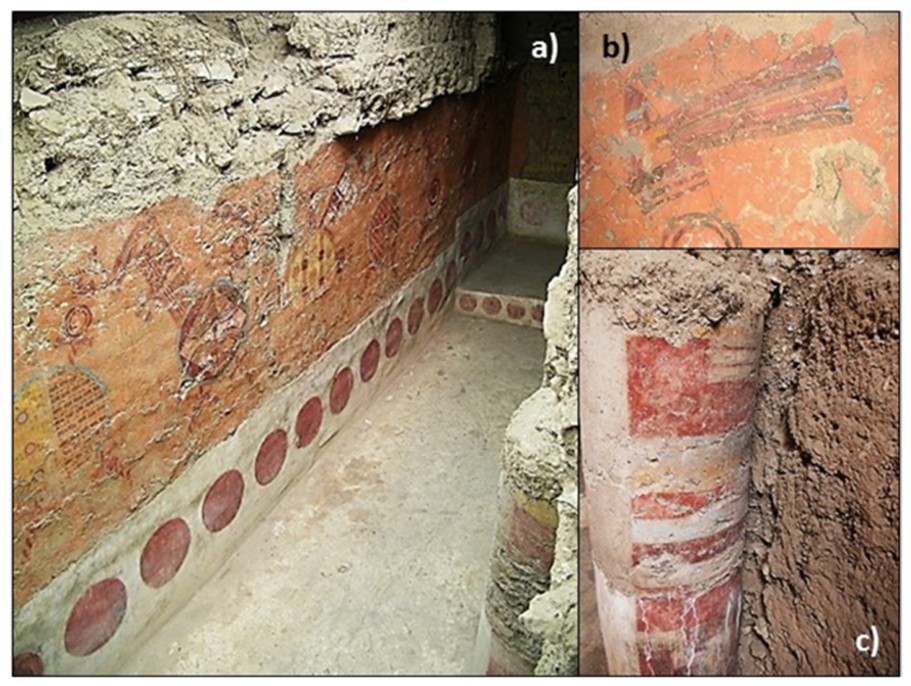
Figure 2.
Photograph of the Los Escudos mural; (a) detail of four shields on mud plaster with an orange background; (b) schematic map showing the place names of eight nobilities from Tehuacán.
Figure 2.
Photograph of the Los Escudos mural; (a) detail of four shields on mud plaster with an orange background; (b) schematic map showing the place names of eight nobilities from Tehuacán.
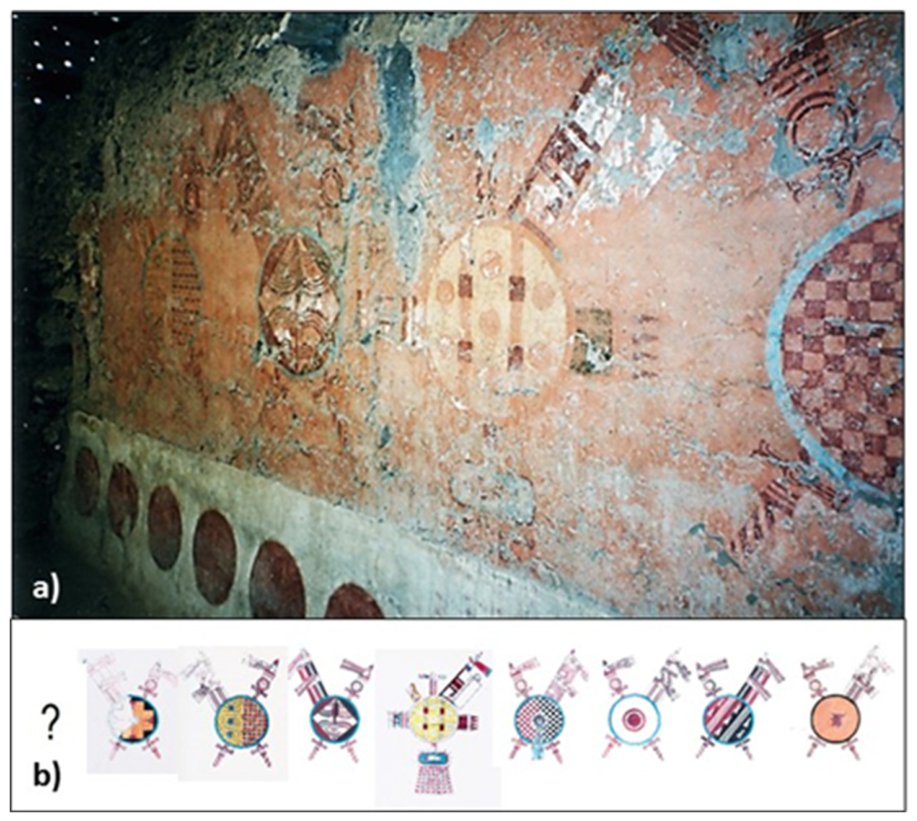
Figure 3.
Optical microscopy images in cross section showing stratigraphic composition of samples: a) PTE6FN and b) PTE4AMC.
Figure 3.
Optical microscopy images in cross section showing stratigraphic composition of samples: a) PTE6FN and b) PTE4AMC.
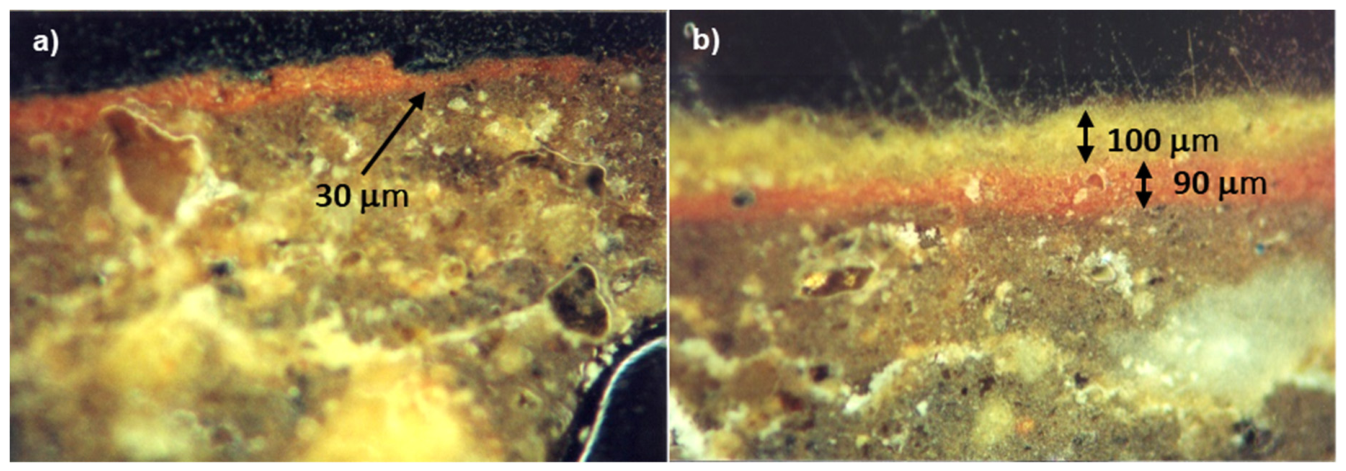
Figure 4.
Sample PTC2OC, a, c) SEM images, b, d) EDXS spectra and e) XRD diffractogram with crystalline unit cells projections.
Figure 4.
Sample PTC2OC, a, c) SEM images, b, d) EDXS spectra and e) XRD diffractogram with crystalline unit cells projections.
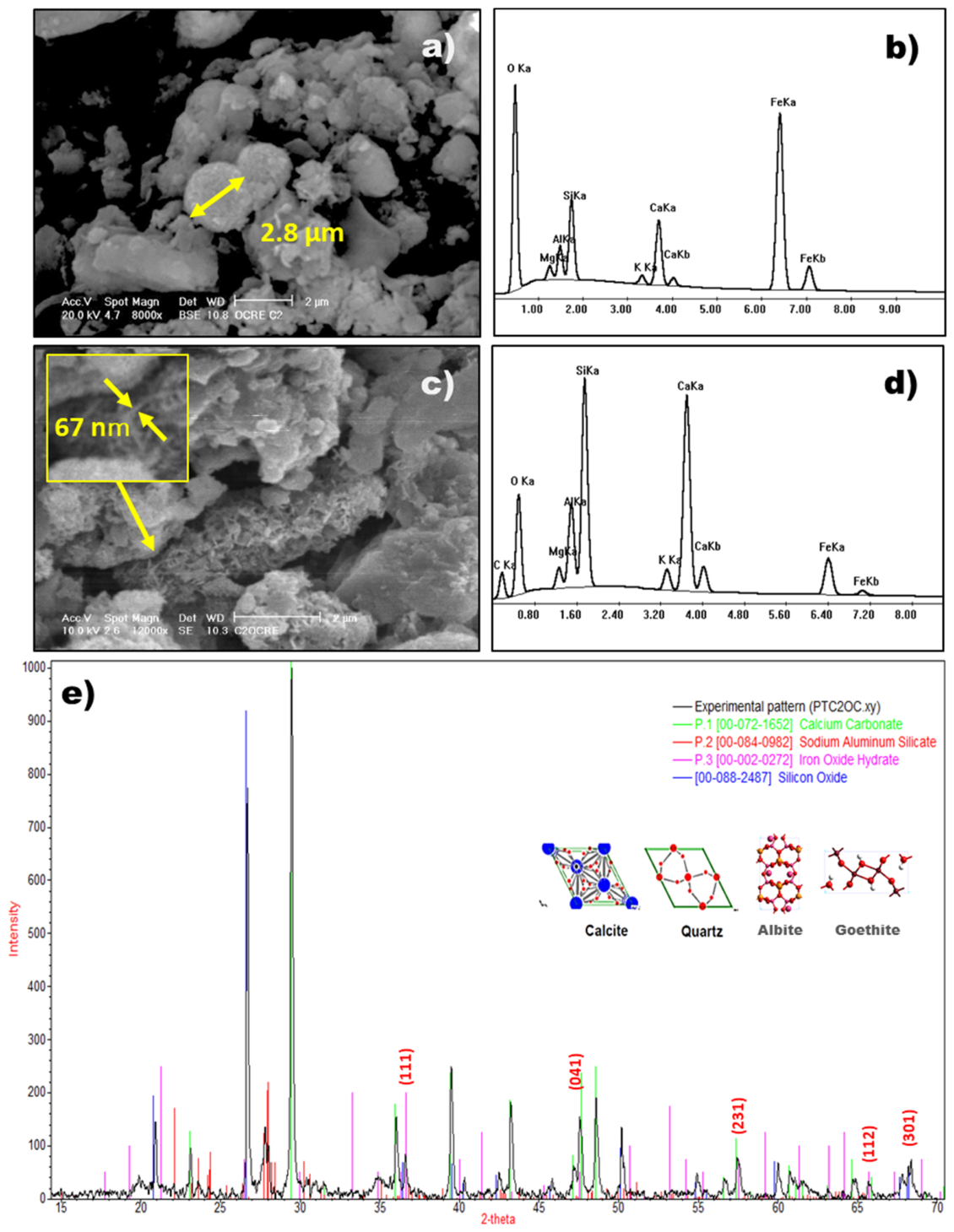
Figure 5.
Sample PTM2RO, a) SEM image, b) EDXS spectrum and c) XRD diffractogram with crystalline unit cell projections.
Figure 5.
Sample PTM2RO, a) SEM image, b) EDXS spectrum and c) XRD diffractogram with crystalline unit cell projections.
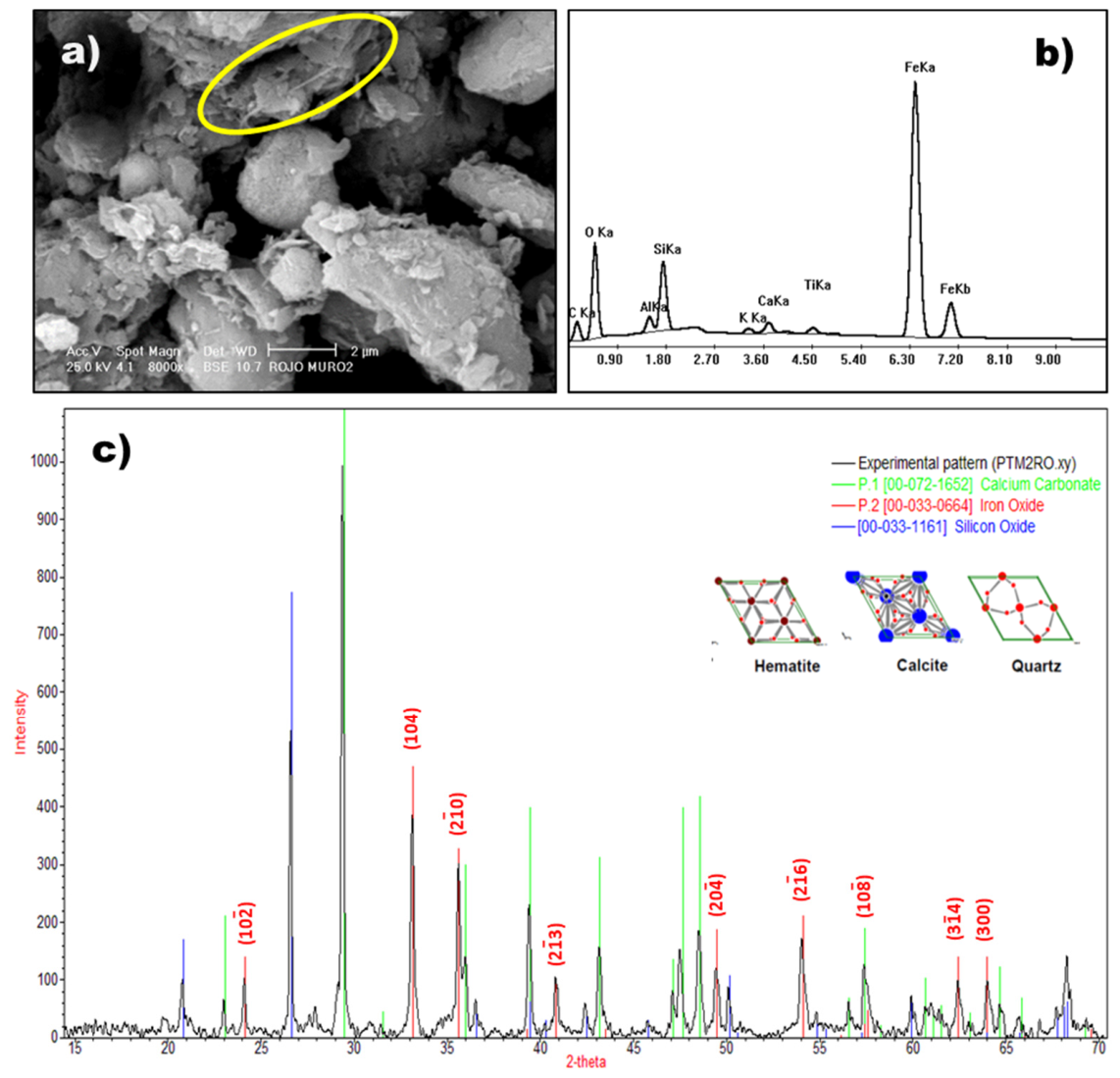
Figure 6.
Blue samples, a, b) PTE1AZ SEM image and EDXS spectrum, c) PTM2AZ diffractogram with crystalline unit cells projections.
Figure 6.
Blue samples, a, b) PTE1AZ SEM image and EDXS spectrum, c) PTM2AZ diffractogram with crystalline unit cells projections.
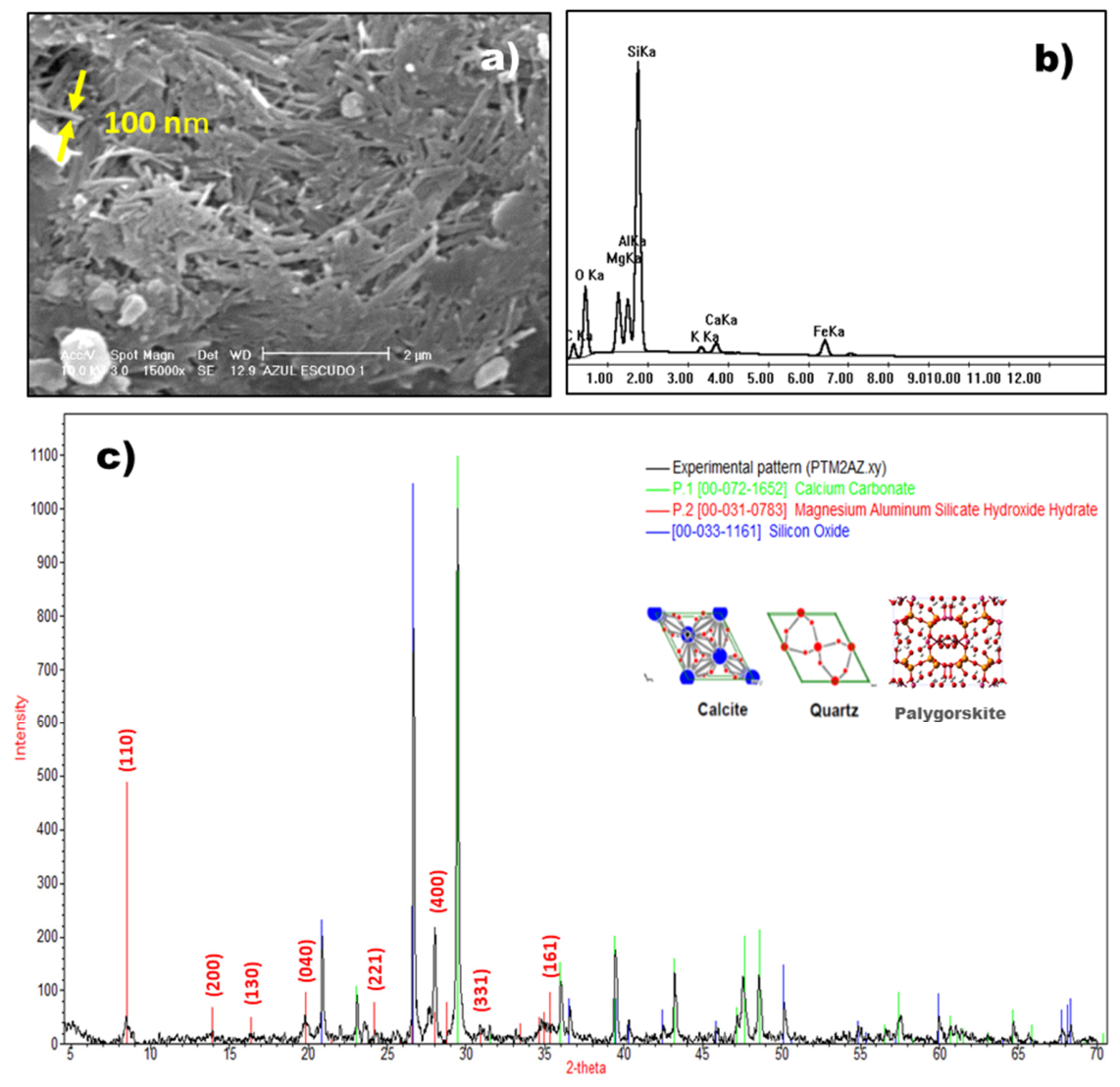
Figure 7.
Sample PTE1NE, a) SEM image, b) EDXS spectrum and c) XRD diffractogram.
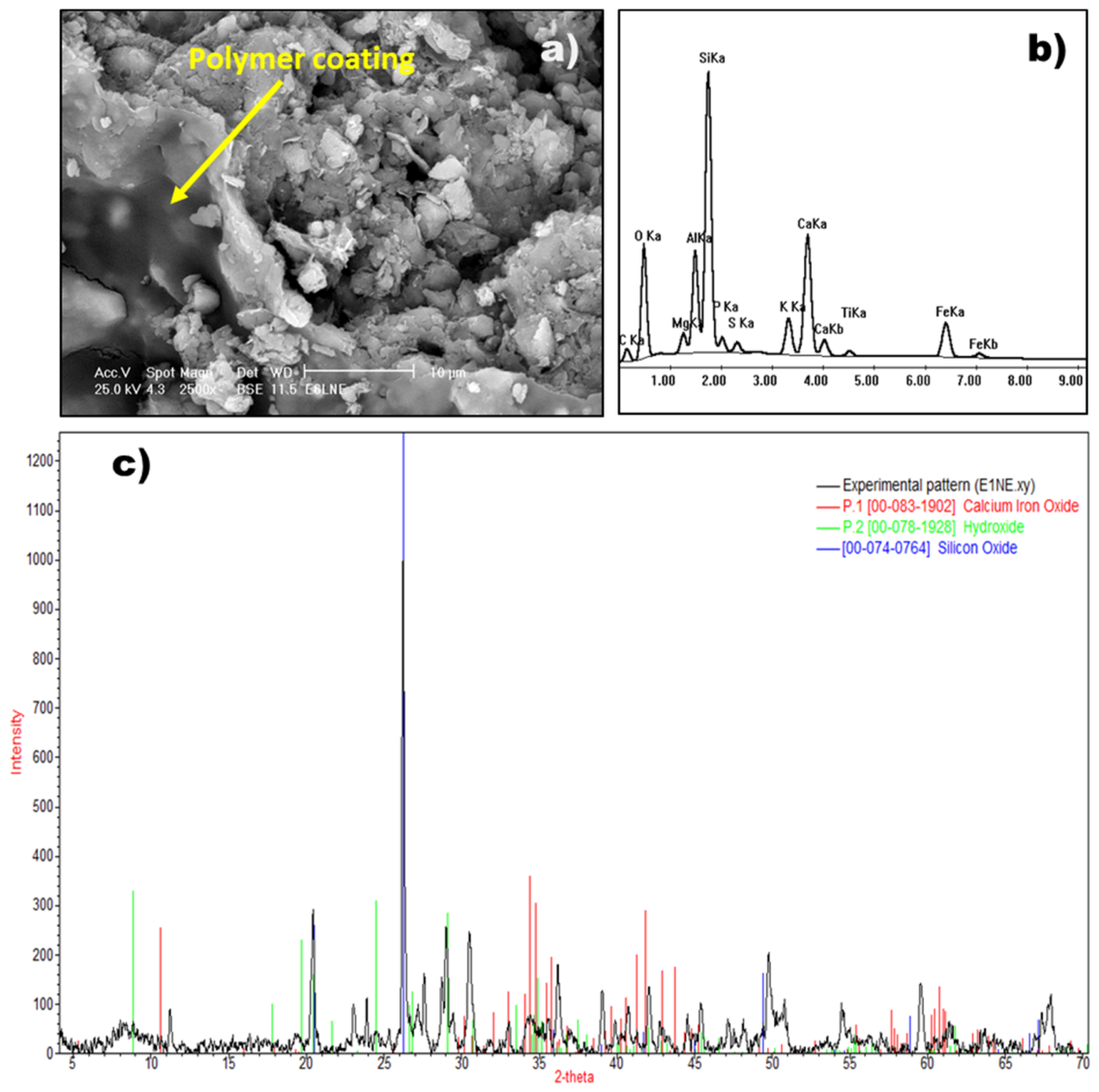
Figure 8.
Sample PTE6BL. a) SEM image, b) EDXS spectrum and c) XRD diffractogram with crystalline unit cells projections.
Figure 8.
Sample PTE6BL. a) SEM image, b) EDXS spectrum and c) XRD diffractogram with crystalline unit cells projections.
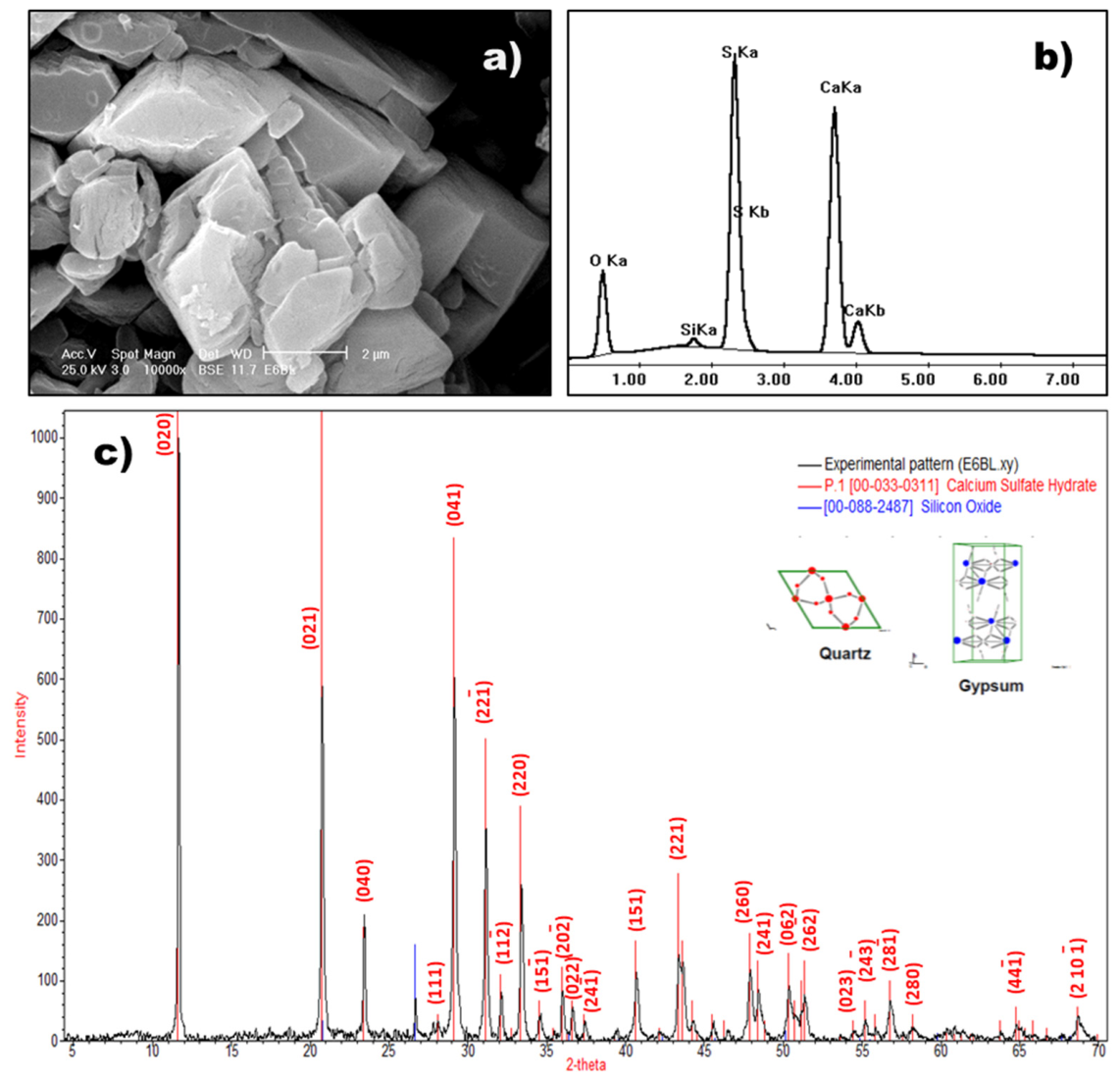
Figure 9.
Sample PTE6FN, a) SEM image and b) EDXS spectrum.
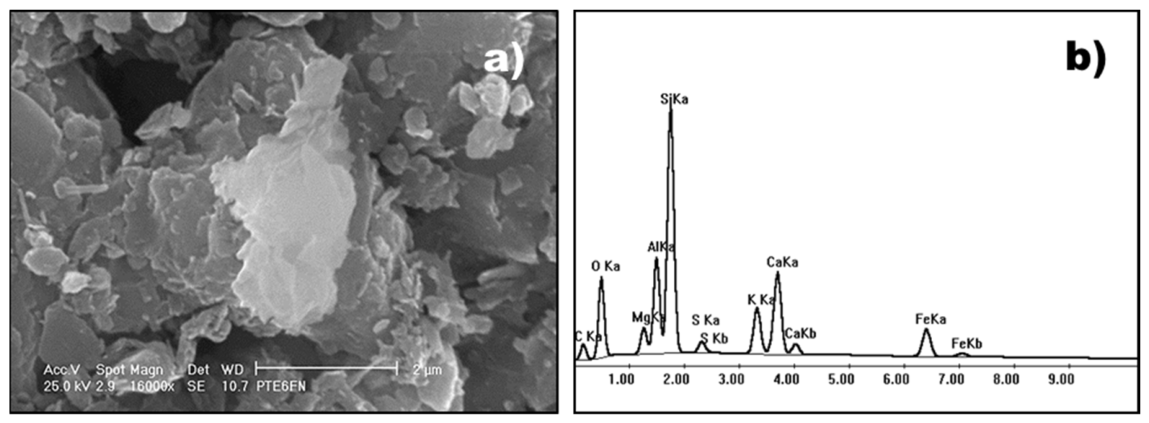
Figure 10.
XRD diffractogram and EDS spectrum of mud plaster.
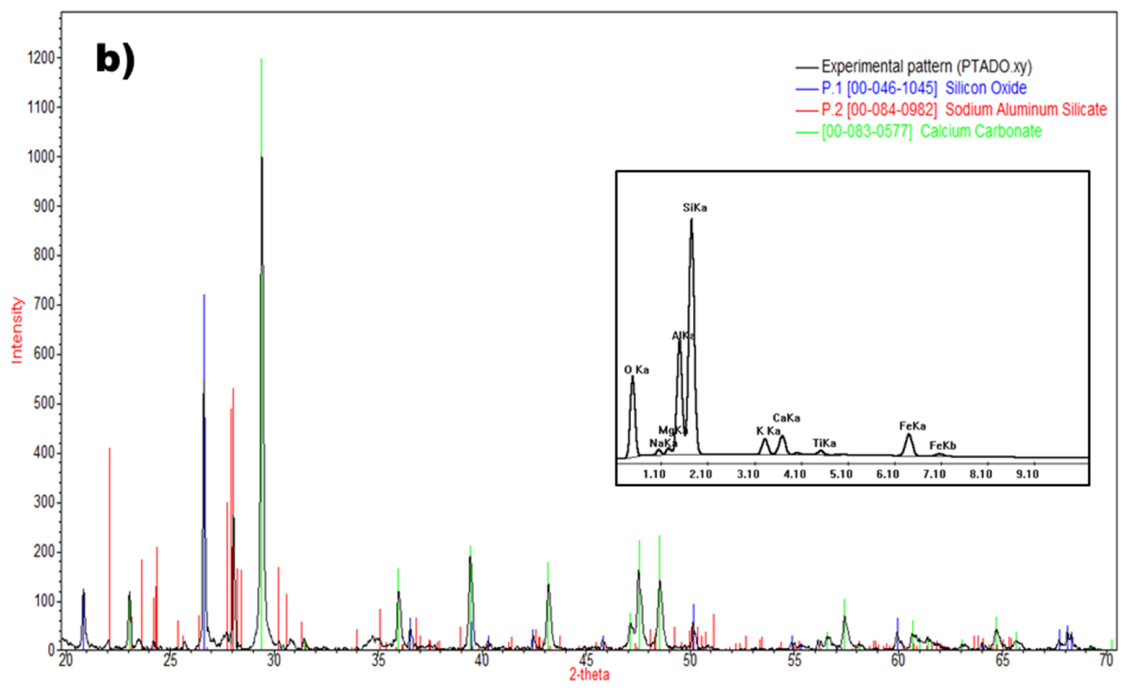

Table 1.
Pigment samples identification and description.
| Colour | Sample label | Description |
| Yellow | PTM2OC | Pigment yellow ochre over mud plaster and consolidated with a synthetic polymer cover. Wall No. 2. |
| PTC2OC | Pigment yellow ochre over mud plaster and consolidated with a synthetic polymer cover. Column No. 2. | |
| PTE4AMC | Pigment light yellow over orange background pigment and mud plaster, consolidated with synthetic polymer cover. Shield No. 4. | |
| Red | PTM2RO | Pigment red over mud plaster and consolidated with a synthetic polymer cover. Wall No. 2. |
| PTC2RO | Pigment red over mud plaster and consolidated with a synthetic polymer cover. Column No. 2. | |
| PTE1RO | Pigment light red over orange background pigment and mud plaster, consolidated with synthetic polymer cover. Shield No. 1. | |
| Blue | PTM2AZ | Pigment blue over mud plaster and consolidated with a synthetic polymer cover. Wall No. 2. |
| PTE1AZ | Pigment blue over orange background pigment and mud plaster, consolidated with a synthetic polymer cover. Shield No. 1. | |
| PTE5AZ | Pigment blue over orange background pigment and mud plaster, consolidated with a synthetic polymer cover. Shield No. 5. | |
| Black | PTE1NE | Pigment black over orange background pigment and mud plaster, consolidated with synthetic polymer cover. Shield No. 1. |
| PTE6LNE | Pigment black over orange background pigment and mud plaster, consolidated with synthetic polymer cover. Shield No. 6. | |
| White | PTE6BL | Pigment white over orange background pigment and mud plaster, consolidated with synthetic polymer cover. Shield No. 6. |
| PTM2BL | Pigment white over mud plaster and consolidated with synthetic polymer cover. Wall No. 2. | |
| Orange | PTE6FN | Pigment applied over mud plaster and consolidated with a synthetic polymer coating. Mural background is orange. Shield No. 6. |
| Mud plaster | PTM1ADO | Mud plaster, consolidated with synthetic polymer cover. Wall No. 1. |
Disclaimer/Publisher’s Note: The statements, opinions and data contained in all publications are solely those of the individual author(s) and contributor(s) and not of MDPI and/or the editor(s). MDPI and/or the editor(s) disclaim responsibility for any injury to people or property resulting from any ideas, methods, instructions or products referred to in the content. |
© 2026 by the authors. Licensee MDPI, Basel, Switzerland. This article is an open access article distributed under the terms and conditions of the Creative Commons Attribution (CC BY) license (http://creativecommons.org/licenses/by/4.0/).
Copyright: This open access article is published under a Creative Commons CC BY 4.0 license, which permit the free download, distribution, and reuse, provided that the author and preprint are cited in any reuse.


