
Submitted:
07 July 2026
Posted:
09 July 2026
You are already at the latest version
Abstract
Background:
Enfortumab vedotin combined with pembrolizumab has emerged as an effective first-line therapy for advanced urothelial carcinoma. While immune checkpoint inhibitors are associated with gastrointestinal toxicities, upper gastrointestinal involvement such as esophagitis remains rare, and its presentation in combination with enfortumab vedotin is not well characterized.
Case Presentation:
A 72-year-old man with metastatic urothelial carcinoma presented with generalized weakness, poor oral intake, odynophagia, dysphagia, anemia, and systemic symptoms following the second cycle of combination therapy of enfortumab vedotin and pembrolizumab. Endoscopic evaluation revealed diffuse circumferential ulcerative esophagitis involving the entire esophagus, with associated duodenitis. Infectious workup, including Clostridioides difficile, cytomegalovirus, and human immunodeficiency virus testing, was negative; HSV-1 IgG was positive, consistent with prior exposure rather than active infection; however, tissue-based testing for active HSV infection was not performed. Lower gastrointestinal evaluation demonstrated nonspecific rectal inflammation. The patient was treated with high-dose intravenous corticosteroids (intravenous methylprednisolone 1 mg/kg/day) with rapid clinical improvement within 48–72 hours, followed by a steroid taper and supportive care.
Discussion:
This case represents a severe and diffuse manifestation of esophagitis associated with enfortumab vedotin and pembrolizumab therapy. While immune-mediated esophagitis is rare, the combination of antibody–drug conjugate therapy with immune checkpoint inhibition may contribute to synergistic mucosal injury. Early recognition and prompt initiation of immunosuppressive therapy are critical for favorable outcomes.
Conclusion:
Clinicians should be aware of severe esophagitis as a potential complication of enfortumab vedotin and pembrolizumab therapy. Timely diagnosis and management with corticosteroids can lead to rapid symptom resolution and may prevent serious complications.
Keywords:
enfortumab vedotin
; pembrolizumab
; immune-related adverse event
; esophagitis
; urothelial carcinoma
1. Introduction and Clinical Significance
Advanced urothelial carcinoma remains a therapeutically challenging malignancy, particularly in patients with metastatic disease. Recent advances in systemic therapy have introduced novel combinations that improve outcomes compared to traditional platinum-based regimens. Among these, the combination of Enfortumab vedotin and Pembrolizumab has emerged as an effective first-line treatment option for patients with locally advanced or metastatic urothelial carcinoma who are ineligible for cisplatin-based chemotherapy [1].
Enfortumab vedotin is an antibody–drug conjugate targeting nectin-4, a protein highly expressed in urothelial carcinoma, delivering the microtubule-disrupting agent monomethyl auristatin E directly to tumor cells. Notably, nectin-4 is also expressed on normal epithelial tissues, including the squamous epithelium of the skin and upper aerodigestive tract, providing a mechanistic basis for on-target, off-tumor mucocutaneous toxicity. Pembrolizumab, a programmed death-1 (PD-1) inhibitor, enhances antitumor immunity by blocking inhibitory signaling pathways that limit T-cell activation. The combination of these agents has demonstrated significant clinical benefit, as evidenced in the EV-103 trial [2] and subsequently confirmed in the phase III EV-302 trial [1], which showed improved overall survival and progression-free survival compared to standard chemotherapy.
Despite its efficacy, this combination therapy is associated with a distinct toxicity profile. Enfortumab vedotin is commonly associated with adverse effects including cutaneous reactions, peripheral neuropathy, and hyperglycemia [2]. In contrast, pembrolizumab is associated with immune-related adverse events affecting multiple organ systems, most commonly involving the gastrointestinal tract, liver, endocrine organs, and skin [3]. Gastrointestinal immune-related toxicities most frequently manifest as colitis, while upper gastrointestinal involvement such as esophagitis is rare but increasingly recognized [3,4].
While esophagitis associated with immune checkpoint inhibitors has been reported in the literature, the occurrence of severe esophageal toxicity in patients receiving combination therapy with enfortumab vedotin and pembrolizumab remains exceedingly uncommon. To our knowledge, only one prior case has described esophagitis specifically in the setting of this combination regimen [5].
Here, we present a case of severe diffuse circumferential ulcerative esophagitis (CTCAE v5.0 Grade 3) in a patient receiving enfortumab vedotin and pembrolizumab for metastatic urothelial carcinoma. This case highlights a rare but potentially life-threatening manifestation of combination therapy–associated gastrointestinal toxicity and underscores the importance of early recognition and management.
2. Case Presentation
A 72-year-old man with stage IV high-grade urothelial carcinoma with pulmonary metastases presented on April 5, 2026, with generalized weakness, poor oral intake, odynophagia, dysphagia, nausea, vomiting, diarrhea, and fevers up to 102 °F at home. His past medical history was significant for chronic kidney disease stage 3b, hypertension, hyperlipidemia, type 2 diabetes mellitus, prior transient ischemic attack, and hyperuricemia.
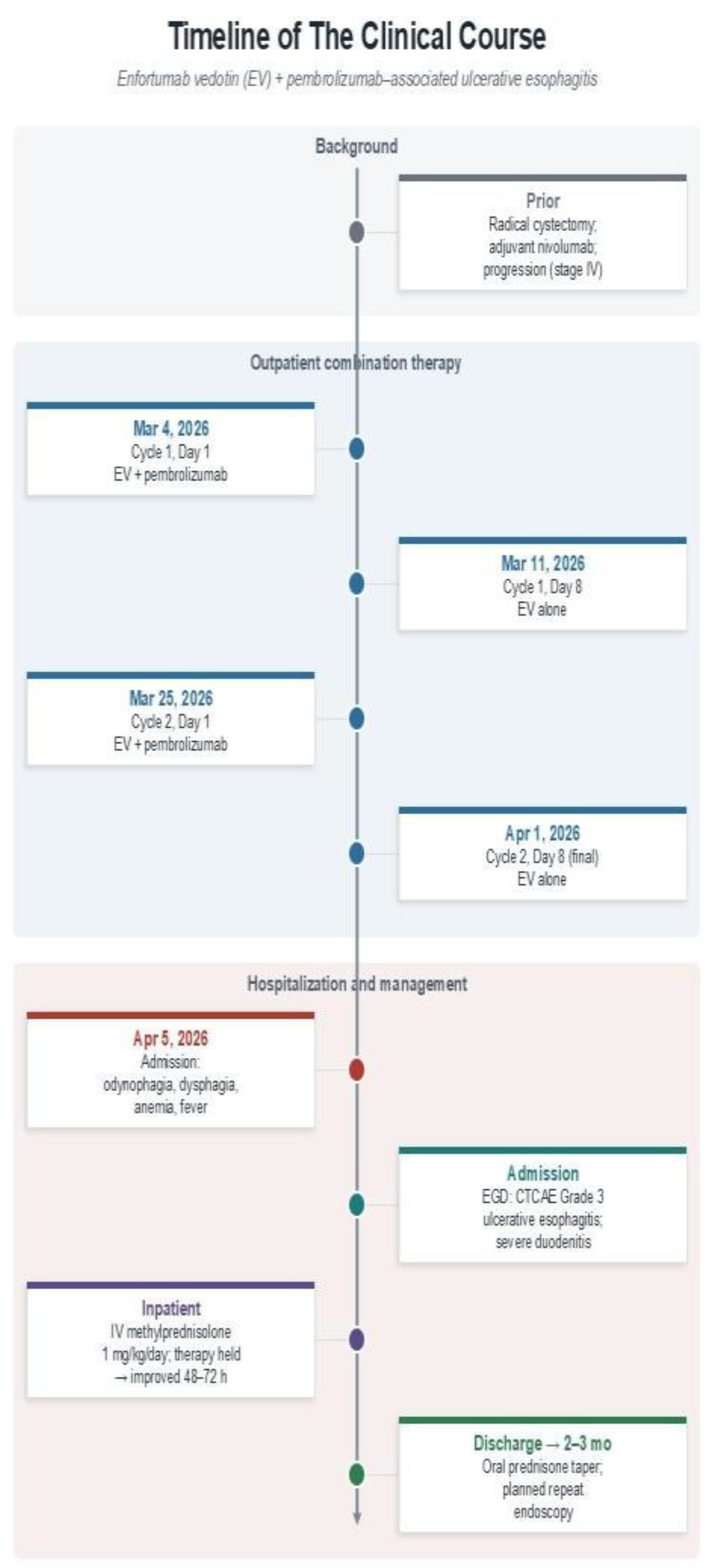
His oncologic history included prior transurethral resection of bladder tumor followed by radical cystectomy (pT3aN0M0), adjuvant nivolumab therapy, and subsequent disease progression with pulmonary metastases. He was recently initiated on combination therapy with enfortumab vedotin and pembrolizumab. Treatment was administered as follows: Cycle 1 Day 1 (March 4, 2026) included enfortumab vedotin and pembrolizumab 200 mg; Cycle 1 Day 8 included enfortumab vedotin alone; Cycle 2 Day 1 (March 25, 2026) included both enfortumab vedotin and pembrolizumab; and Cycle 2 Day 8 (April 1, 2026) included enfortumab vedotin 90 mg alone. Symptom onset occurred approximately 4 days after the most recent enfortumab vedotin infusion and 11 days after the second pembrolizumab dose. He denied use of medications commonly associated with pill esophagitis, including bisphosphonates, doxycycline, potassium chloride, nonsteroidal anti-inflammatory drugs, or oral iron supplementation, and had no history of prior thoracic radiation.
On admission, he was found to have acute anemia with a hemoglobin decline from a baseline of 11–12 g/dL to 7.0–7.6 g/dL, requiring transfusion of one unit of packed red blood cells. His hospital course was complicated by hypotension, acute hypoxic respiratory failure, and new-onset atrial fibrillation with rapid ventricular response requiring transfer to the medical intensive care unit. He was treated with intravenous amiodarone and metoprolol with subsequent stabilization.
Computed tomography of the abdomen and pelvis showed no evidence of active gastrointestinal bleeding. However, given persistent anemia and concern for melena, upper endoscopic evaluation was performed. Esophagogastroduodenoscopy revealed diffuse circumferential ulcerative esophagitis involving the entire length of the esophagus (CTCAE v5.0 Grade 3), with areas concerning for mucosal necrosis (Figure 1). The esophagitis was classified as CTCAE v5.0 Grade 3 based on hospitalization, inability to maintain adequate oral intake, and need for systemic corticosteroid therapy, rather than direct attribution of all ICU-level complications to esophageal injury. Severe duodenitis was also noted without active bleeding lesions. A probable segment of Barrett’s esophagus and a villous-appearing lesion at the gastroesophageal junction within a hiatal hernia were identified. The gastroesophageal junction/hiatal hernia lesion was biopsied and showed a fundic gland polyp without dysplasia; however, biopsies of the diffusely ulcerated esophageal mucosa were deferred because of severe ulceration, mucosal friability, and concern for bleeding or perforation risk.
Given the severity and diffuse nature of the esophageal injury, concern was raised for immune-mediated mucosal toxicity versus treatment-related injury from enfortumab vedotin and/or pembrolizumab. The severe esophageal injury was considered a major contributor to his odynophagia, poor oral intake, and suspected upper gastrointestinal blood loss; however, definitive histopathologic confirmation was not available.
Flexible sigmoidoscopy demonstrated superficial rectal ulcerations without active bleeding and mild sigmoid diverticulosis. Rectal biopsies showed acute cryptitis, crypt abscess formation, ulceration, lamina propria hyalinization, and necrosis (Figure 2). These findings were nonspecific and raised a differential diagnosis including ischemic injury, stercoral colitis, and immune checkpoint inhibitor–associated colitis; however, the limited rectal distribution was not entirely typical for diffuse immune-mediated colitis.
Infectious evaluation was negative, including stool Clostridioides difficile testing and cytomegalovirus and human immunodeficiency virus testing. Stool studies demonstrated positive lactoferrin, consistent with active intestinal inflammation, while fecal calprotectin was negative. HSV-1 IgG was positive (7.96), consistent with prior exposure; however, tissue-based testing for active herpes simplex virus infection was not performed (see Limitations).
Overall, in the absence of an identifiable infectious etiology and in the setting of immune checkpoint inhibitor therapy, the clinical and endoscopic findings were most consistent with severe diffuse ulcerative esophagitis, likely immune-related or drug-induced in etiology, with concurrent but less clearly defined lower gastrointestinal inflammation.
The patient was initiated on high-dose intravenous methylprednisolone at 1 mg/kg/day, and both enfortumab vedotin and pembrolizumab were held. He demonstrated rapid clinical improvement within 48–72 hours, with marked reduction in odynophagia and dysphagia, improved oral intake, stabilization of hemoglobin levels, and resolution of systemic symptoms. He was transitioned to an oral prednisone taper starting at 50 mg daily, with a planned gradual taper over six weeks.
He was maintained on proton pump inhibitor therapy with pantoprazole 40 mg twice daily. A repeat endoscopic evaluation was planned in 2–3 months to assess mucosal healing. At discharge, the patient remained clinically stable without further transfusion requirements, and outpatient oncology follow-up was arranged to determine the feasibility of future systemic therapy. The overall clinical course, from initiation of combination therapy through symptom onset, diagnostic evaluation, management, and planned follow-up, is summarized in Figure 3.
3. Discussion
Immune checkpoint inhibitor (ICI) therapy has transformed the management of advanced malignancies, including urothelial carcinoma, through durable responses and improved survival outcomes. However, ICIs are associated with immune-related adverse events (irAEs) affecting multiple organ systems, most commonly the gastrointestinal tract. While colitis is the predominant manifestation, upper gastrointestinal involvement, including esophagitis, remains uncommon.
ICI-related esophagitis has been described in limited case reports and small institutional series. Reported clinical presentations include odynophagia, dysphagia, and poor oral intake, often associated with endoscopic findings of erosions or ulcerations. Severe immune-mediated mucositis and esophagitis have been reported in patients receiving pembrolizumab, supporting the potential for upper gastrointestinal irAEs, albeit rarely [6,7,8].
In contrast, a large retrospective cohort from a tertiary cancer center demonstrated that immune checkpoint inhibitor–related esophagitis is identified in approximately 3% of patients undergoing endoscopic evaluation, with most cases showing concurrent gastric or duodenal involvement rather than isolated esophageal disease [9]. These findings highlight that true isolated esophageal involvement is uncommon and often occurs in the setting of more diffuse upper gastrointestinal inflammation.
Enfortumab vedotin, an antibody–drug conjugate targeting nectin-4, is associated with a distinct toxicity profile characterized primarily by dermatologic reactions, peripheral neuropathy, and metabolic disturbances, with gastrointestinal mucosal injury being infrequently reported [1,2]. In a FAERS-based post-marketing pharmacovigilance study, Yu et al. identified dermatologic toxicity and peripheral neuropathy as major adverse events associated with enfortumab vedotin, with additional signals for gastrointestinal, hepatic, and pulmonary events [10].
The combination of enfortumab vedotin with pembrolizumab has demonstrated significant clinical efficacy in advanced urothelial carcinoma, as established in clinical trials, and is now considered a standard first-line therapeutic option. However, its toxicity profile in real-world settings is still being defined.
Severe esophageal injury associated with enfortumab vedotin plus pembrolizumab has been reported only in isolated case reports, suggesting a potential but rare association [5]. In the previously published case, severe esophageal ulceration occurred during therapy, and the patient was managed with immunosuppression and treatment interruption, with consideration of rechallenge depending on clinical recovery. In contrast, our patient presented with diffuse circumferential ulcerative esophagitis (CTCAE v5.0 Grade 3) involving the entire esophagus, with concern for mucosal necrosis and associated acute blood loss anemia, representing a more extensive and severe phenotype of upper gastrointestinal injury.
The pathophysiology of severe esophageal injury in this setting is likely multifactorial. Pembrolizumab disrupts peripheral immune tolerance through PD-1 blockade, which can result in T-cell–mediated epithelial injury at mucosal sites [11]. Enfortumab vedotin may exacerbate mucosal vulnerability through cytotoxic payload delivery and epithelial barrier disruption. Co-administration may therefore produce synergistic mucosal injury through complementary mechanisms: ICI-driven loss of tolerance and ADC-mediated epithelial cytotoxicity.
Management of ICI-related esophagitis is primarily based on interruption of the suspected offending therapy, supportive care, and systemic corticosteroids for clinically significant immune-related toxicity. Current ASCO guidelines recommend holding immune checkpoint inhibitor therapy and initiating systemic corticosteroids at 1–2 mg/kg/day prednisone equivalent for grade 3 immune-related adverse events, followed by a gradual taper over at least 4–6 weeks [12]. In more severe or steroid-refractory cases, additional immunosuppressive agents may be required. In our patient, high-dose intravenous corticosteroids resulted in clinical improvement, with stabilization of hemoglobin levels and improvement in oral intake, supporting an immune-mediated component to the injury. Proton pump inhibitor therapy and supportive care were also administered.
A key distinction between our case and the previously reported enfortumab vedotin plus pembrolizumab–associated esophagitis is the absence of follow-up endoscopic reassessment in our patient at the time of reporting. Additionally, the prior case described consideration of treatment rechallenge, whereas in our case, therapy remains on hold pending clinical recovery and multidisciplinary oncologic evaluation. This represents a limitation in assessing mucosal healing and long-term outcomes following severe injury.
4. Limitations
This report has several limitations. First, biopsies of the diffusely ulcerated esophageal mucosa were not performed at the time of initial endoscopy because of concern for procedural bleeding and perforation risk in the setting of severe ulceration and mucosal friability, limiting histopathologic confirmation of the underlying esophagitis. Second, targeted viral evaluation from tissue, including herpes simplex virus and cytomegalovirus testing by immunohistochemistry or polymerase chain reaction, as well as plasma cytomegalovirus PCR, was not obtained, which may limit complete exclusion of viral etiologies. Third, follow-up endoscopic reassessment had not been performed at the time of this report, restricting evaluation of mucosal healing and long-term outcomes. Finally, the decision regarding rechallenge with enfortumab vedotin and/or pembrolizumab remains undetermined.
Overall, this case highlights a rare but clinically significant manifestation of severe diffuse ulcerative esophagitis associated with combination enfortumab vedotin and pembrolizumab therapy. It expands the emerging spectrum of upper gastrointestinal toxicity associated with novel systemic therapies in urothelial carcinoma and underscores the importance of early recognition and prompt immunosuppressive management.
5. Conclusions
This case highlights a rare but severe presentation of diffuse ulcerative esophagitis associated with combination enfortumab vedotin and pembrolizumab therapy. Although upper gastrointestinal immune-related adverse events are uncommon, clinicians should maintain a high index of suspicion in patients presenting with odynophagia, dysphagia, or unexplained anemia while on this regimen. Early endoscopic evaluation and prompt initiation of corticosteroid therapy may lead to rapid clinical improvement and prevent further complications. As the use of this combination continues to expand, recognition of atypical and severe gastrointestinal toxicities is essential to guide timely management and optimize patient outcomes.
Funding
This research received no external funding.
Institutional Review Board Statement
Ethical review and approval were waived for this study because it is a single case report and does not constitute human subject research under institutional policy.
Informed Consent Statement
Written informed consent was obtained from the patient for the publication of this case report and any accompanying images.
Data Availability Statement
Data sharing is not applicable to this article as no new datasets were generated or analyzed during the current study.
Conflicts of Interest
The authors declare no conflict of interest.
References
- Powles, T.; Valderrama, B.P.; Gupta, S.; et al. Enfortumab vedotin and pembrolizumab in untreated advanced urothelial cancer. N. Engl. J. Med. 2024, 390, 875–888. [Google Scholar] [CrossRef] [PubMed]
- Hoimes, C.J.; Flaig, T.W.; Milowsky, M.I.; et al. Enfortumab vedotin plus pembrolizumab in previously untreated advanced urothelial cancer. J. Clin. Oncol. 2023, 41, 22–31. [Google Scholar] [CrossRef] [PubMed]
- Colli Cruz, C.; Santos, M.J.M.N.; Wali, S.; Varatharajalu, K.; Thomas, A.; Wang, Y. Gastrointestinal toxicities associated with immune checkpoint inhibitors therapy: risks and management. Immunotherapy 2025, 17, 293–303. [Google Scholar] [CrossRef] [PubMed]
- Tang, T.; Abu-Sbeih, H.; Luo, W.; et al. Upper gastrointestinal symptoms and associated endoscopic and histological features in patients receiving immune checkpoint inhibitors. Scand. J. Gastroenterol. 2019, 54, 538–545. [Google Scholar] [CrossRef] [PubMed]
- Bamba, H.; Yamamoto, S.; Higa, K.; Kurokawa, K.; Kanaoka, S.; Nakamura, K. Severe esophageal ulceration with enfortumab vedotin plus pembrolizumab therapy in urothelial carcinoma: A case report. Anticancer Res. 2026, 46, 1747–1753. [Google Scholar] [CrossRef] [PubMed]
- Acero Brand, F.Z.; Suter, N.; Adam, J.P.; et al. Severe immune mucositis and esophagitis in metastatic squamous carcinoma of the larynx associated with pembrolizumab. J. Immunother. Cancer 2018, 6, 22. [Google Scholar] [CrossRef] [PubMed]
- Yoshida, S.; Miyamoto, S.; Naruse, H.; et al. Esophagitis in non-small cell lung carcinoma treatment caused by pembrolizumab. Am. J. Gastroenterol. 2020, 115, 13. [Google Scholar] [CrossRef] [PubMed]
- Hoshi, K.; Hirano, K.; Tsukamoto, K.; et al. Pembrolizumab-induced esophagitis dissecans superficialis in a patient with squamous cell lung carcinoma. Ann. Cancer Res. Ther. 2022, 30, 121–124. [Google Scholar] [CrossRef]
- Panneerselvam, K.; Amin, R.N.; Wei, D.; et al. Clinicopathologic features, treatment response, and outcomes of immune checkpoint inhibitor-related esophagitis. J. Natl. Compr. Canc. Netw. 2021, 19, 896–904. [Google Scholar] [CrossRef] [PubMed]
- Yu, M.; Zhou, L.; Cao, M.; Ji, C.; Zheng, Y. Post-marketing drug safety surveillance of enfortumab vedotin: an observational pharmacovigilance study based on a real-world database. Front. Immunol. 2024, 15, 1397692. [Google Scholar] [CrossRef] [PubMed]
- Kwok, G.; Yau, T.C.; Chiu, J.W.; Tse, E.; Kwong, Y.L. Pembrolizumab (Keytruda). Hum. Vaccin. Immunother. 2016, 12, 2777–2789. [Google Scholar] [CrossRef] [PubMed]
- Schneider, B.J.; Naidoo, J.; Santomasso, B.D.; et al. Management of immune-related adverse events in patients treated with immune checkpoint inhibitor therapy: ASCO guideline update. J. Clin. Oncol. 2021, 39, 4073–4126. [Google Scholar] [CrossRef] [PubMed]
Figure 1.
Endoscopic image showing diffuse circumferential ulcerative esophagitis with dark punctate areas concerning for focal mucosal necrosis.
Figure 1.
Endoscopic image showing diffuse circumferential ulcerative esophagitis with dark punctate areas concerning for focal mucosal necrosis.
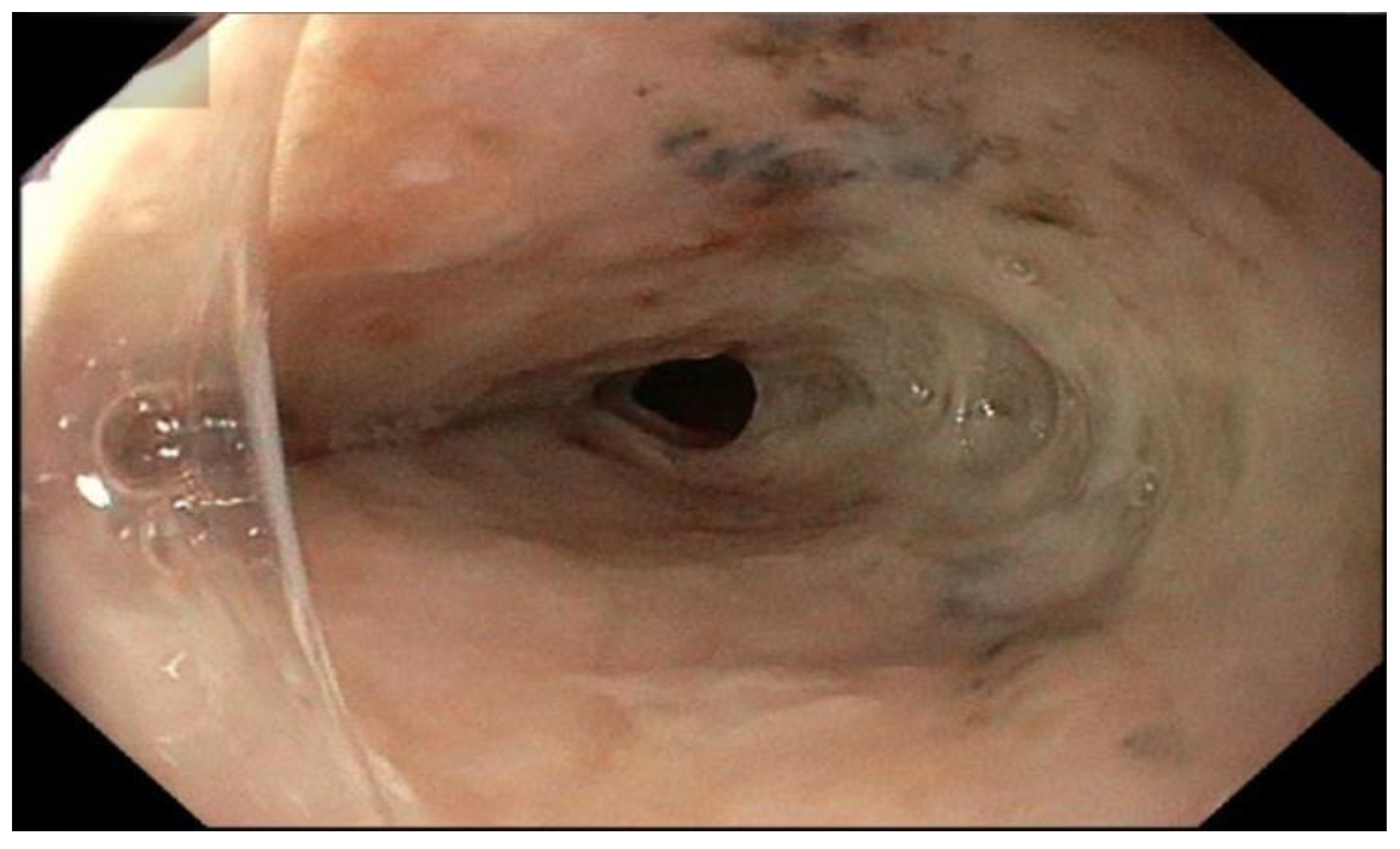
Figure 2.
Low-power photomicrograph of colonic mucosa (hematoxylin and eosin) showing cryptitis and crypt abscesses.
Figure 2.
Low-power photomicrograph of colonic mucosa (hematoxylin and eosin) showing cryptitis and crypt abscesses.
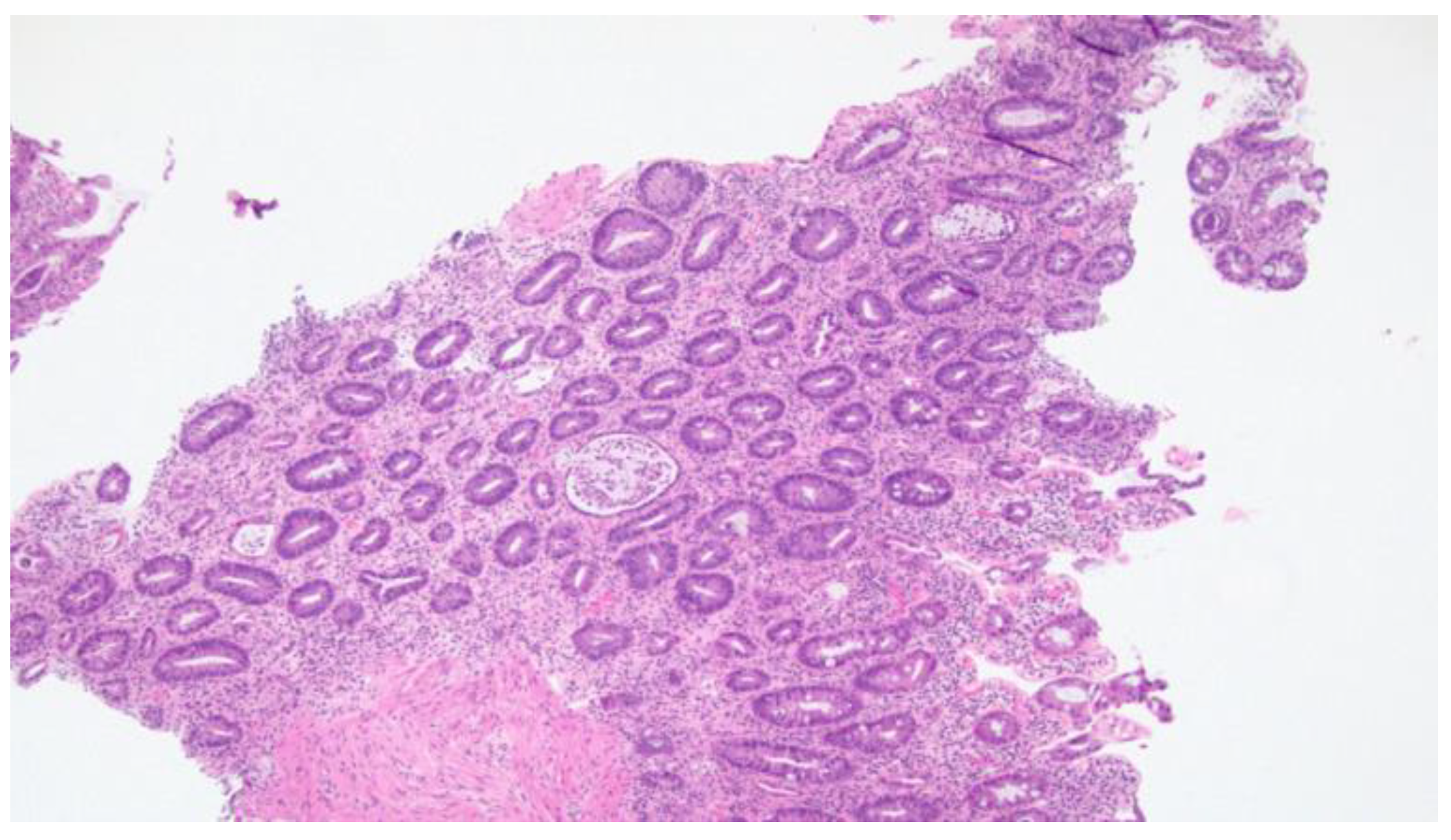
Figure 3.
Timeline summarizing the prior oncologic history, enfortumab vedotin (EV) plus pembrolizumab treatment, symptom onset, diagnostic evaluation, inpatient management, and planned follow-up. Abbreviations: CTCAE, Common Terminology Criteria for Adverse Events; EGD, esophagogastroduodenoscopy.
Figure 3.
Timeline summarizing the prior oncologic history, enfortumab vedotin (EV) plus pembrolizumab treatment, symptom onset, diagnostic evaluation, inpatient management, and planned follow-up. Abbreviations: CTCAE, Common Terminology Criteria for Adverse Events; EGD, esophagogastroduodenoscopy.
Disclaimer/Publisher’s Note: The statements, opinions and data contained in all publications are solely those of the individual author(s) and contributor(s) and not of MDPI and/or the editor(s). MDPI and/or the editor(s) disclaim responsibility for any injury to people or property resulting from any ideas, methods, instructions or products referred to in the content. |
© 2026 by the authors. Licensee MDPI, Basel, Switzerland. This article is an open access article distributed under the terms and conditions of the Creative Commons Attribution (CC BY) license.
Copyright: This open access article is published under a Creative Commons CC BY 4.0 license, which permit the free download, distribution, and reuse, provided that the author and preprint are cited in any reuse.


