

Submitted:
07 July 2026
Posted:
08 July 2026
Read the latest preprint version here
Abstract
Background: The global healthcare landscape is currently facing a dual crisis of economic sustainability and organizational burnout, largely stemming from rigid, fragmented delivery models. Objectives: To evaluate the global organizational and economic outcomes of self-managed nursing teams (SMNTs) using the Relational and Organizational Efficiency Model (ROEM), focusing on system efficiency and workforce well-being. Design: A comparative systematic review following PRISMA guidelines. Data Sources: A systematic search was conducted across PubMed, Scopus, Web of Science and CINAHL for peer-reviewed articles published between 1990 and 2025. Review Methods: The methodological quality of the 32 included studies was appraised using the Mixed Methods Appraisal Tool (MMAT). Data were synthesized across the macro, meso and micro levels of the ROEM framework. Results: SMNT models foster relational efficiency, yielding high patient satisfaction, stronger continuity of care, and up to a 40% reduction in care hours in fully integrated models. However, the ROEM analysis reveals an "autonomy-strain paradox" at the micro-level: without adequate macro-level funding shifts (e.g., transitioning away from Fee-For-Service) and structural support, increased operational autonomy leads to high psychological distress and cognitive overload among nurses. Conclusions: Transitioning to SMNTs is a viable strategy to mitigate professional burnout and improve system efficiency. Successful scaling requires dismantling traditional hierarchies, shifting managers to coaching roles, and implementing value-based health policies.
Keywords:
self-managed nursing teams
; community healthcare
; system efficiency
; workforce well-being
; autonomy-strain paradox
; ROEM framework
1. Introduction
1.1. The Dual Crisis in Global Healthcare and Traditional Delivery Models
The global healthcare landscape is currently facing a dual crisis: an economic sustainability gap driven by rising chronic disease prevalence and an organizational burnout stemming from rigid, fragmented delivery models [1]. Traditional "industrial" healthcare systems, predominantly structured around top-down hierarchies and Fee-For-Service (FFS) incentives, often prioritize the volume of billable tasks over holistic patient outcomes [2]. This approach frequently leads to "siloed" care, high administrative overhead and a documented disconnect between resource expenditure and patient satisfaction [1,2,3]. In this classical framework, the professional is often reduced to a specialized executor, limited by rigid protocols that stifle clinical initiative and organizational agility. This structural rigidity not only increases transaction costs within the care chain but also prevents the optimal allocation of resources, as systems struggle to adapt to the idiosyncratic and evolving needs of aging populations and complex pathologies [3]. For nursing professionals across both educational and clinical settings, these systemic constraints directly undermine the core tenets of their practice. While modern nursing education emphasizes holistic, evidence-based care and advanced clinical reasoning, traditional hierarchical models force these professionals into fragmented, task-driven workflows. This deep structural disconnect effectively strips nurses of their clinical autonomy, relegating them from comprehensive care coordinators to mere executors of rigid protocols. Consequently, exploring and implementing alternative organizational models is not merely an administrative exercise, but a critical necessity for the nursing profession. Decentralizing decision-making and restoring operational autonomy are essential to empower nurses, enabling them to fully leverage their clinical expertise, cultivate meaningful therapeutic relationships with patients, and ultimately mitigate the profound professional burnout endemic to current delivery systems
1.2. Sustainability of Nursing Workforce: The Cost of Burnout and Presenteeism
Over the past decades, the healthcare sector has reached a critical tipping point regarding workforce sustainability [7]. Global data indicates a sharp decline in systemic productivity, exacerbated by an alarming rise in both absenteeism and "presenteeism"—where healthcare professionals are physically present but functionally impaired due to physical or mental exhaustion [7,8]. Reports across OECD countries show that nurse absenteeism rates have surged by nearly 20-30% in several regions since 2020 [8]. Furthermore, the economic cost of presenteeism is now estimated to be significantly higher than that of absenteeism, as it leads to increased medical errors, lower quality of care and a subsequent cycle of professional burnout [9]. This deterioration of the human capital within healthcare organizations represents a massive hidden cost, threatening the financial equilibrium of public and private health systems alike.
1.3. The Emergence of Self-Managed Nursing Teams (SMNTs)
In response, some self-managed nursing team (SMNT) models like SoHu (Soignons Humains) from France [10], PIFU (Patient-Initiated Follow-Up) from UK [11] and Buurtzorg (literally "neighbourhood care") from the Netherlands [12], emerged as a disruptive organizational innovation. By replacing middle management with small autonomous healthcare providers, SMNT models shifts the economic focus from task-efficiency to relational-efficiency. These models posit that empowering frontline professionals to act as both caregivers and case managers can drastically reduce long-term costs by fostering patient independence and reducing institutional reliance.
1.4. Theoretical Framework: The Relational and Organizational Efficiency Model
Figure 1.
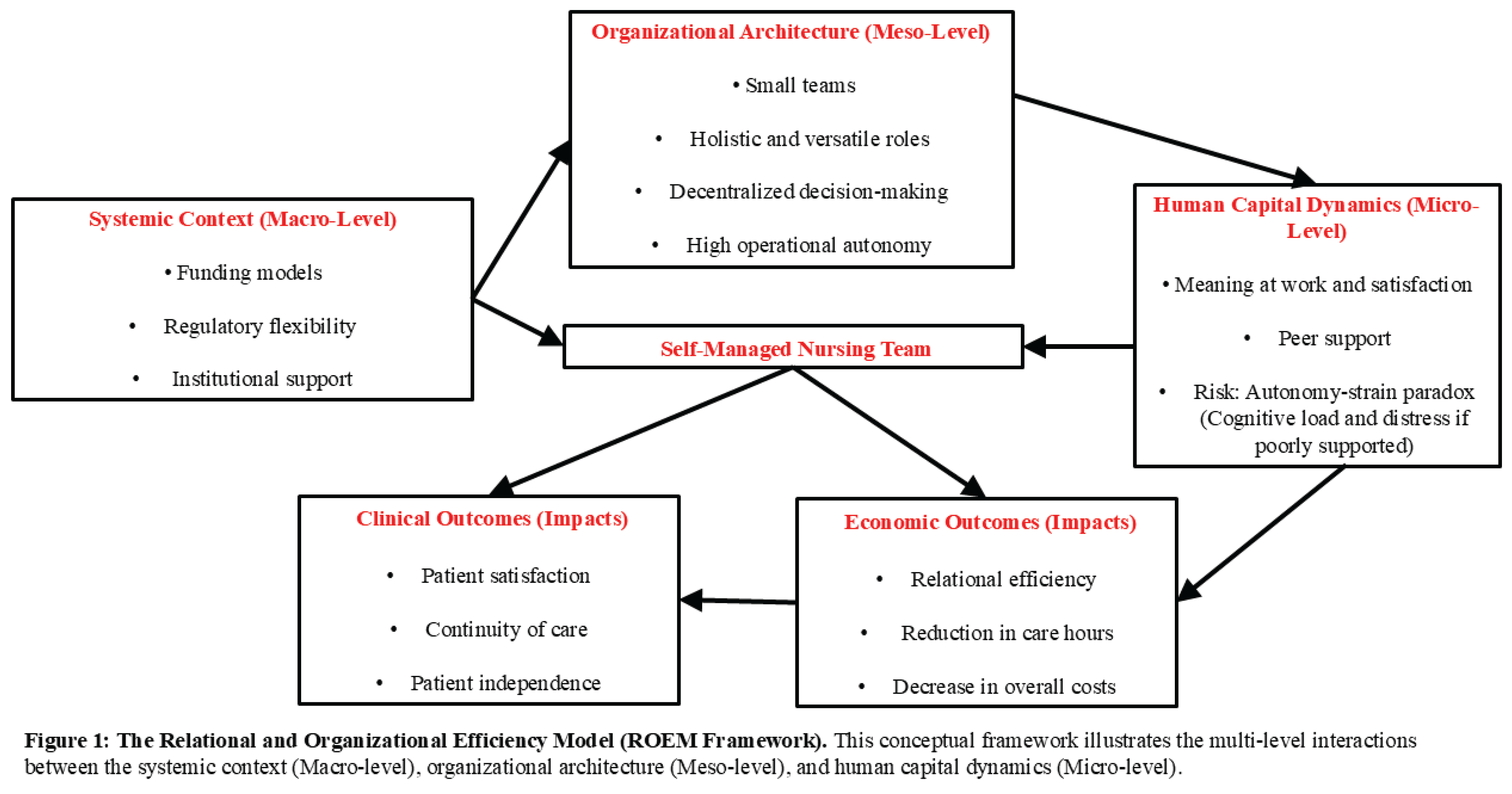
This study is guided by the Relational and Organizational Efficiency Model (ROEM), which synthesizes the complex interactions inherent in the transition toward autonomous community care. The model operates across four interconnected levels: the Systemic Context (Macro), involving funding structures and regulatory flexibility; the Organizational Architecture (Meso), defined by decentralized decision-making and small self-managed teams; the Human Capital Dynamics (Micro), focusing on professional ethics and the "autonomy-strain paradox"; and Clinical and Economic Outcomes. Within this framework, a fundamental pillar of transformation is the transition from traditional hierarchical management, focused on task supervision and control, toward an internal coaching role. This "integrating simplification" aims to dismantle the bureaucratic layers that stifle frontline health professionals' initiative, replacing them with a high-trust environment. In this model, the manager is no longer a direct supervisor but a facilitator who supports team development and collective problem-solving, enabling professionals to fully exercise their clinical autonomy and practice in alignment with their professional ethics.
1.5. Objectives of the Review
The following analysis provides a systematic comparison of few well established SMNT international models—ranging from the French SoHu model to the American PACE program. By examining fifteen core characteristics of these models, this review evaluates how different organizational structures influence cost-effectiveness, operational autonomy and worker well-being: offering critical insights for policymakers and healthcare leaders aiming to transform fragmented systems into resilient, human-centered networks.
2. Methods
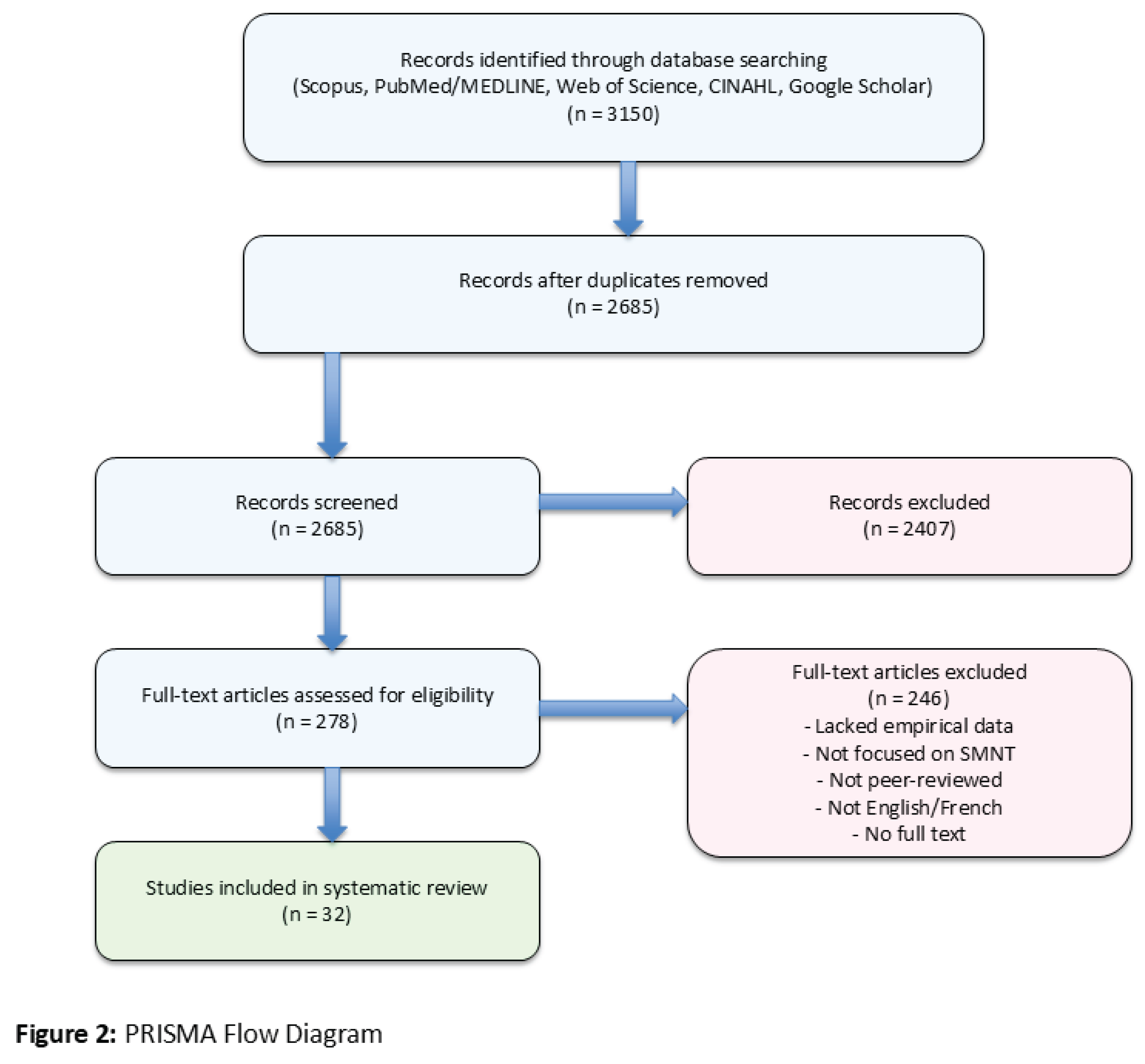
The study selection process is illustrated in a PRISMA flow diagram (Figure 2).
2.1. Design and Registration
This study is a comparative literature review utilizing a systematic design following PRISMA guidelines. The review protocol has been registered in the PROSPERO database (Registration ID: CRD42026XXXXXX) to ensure transparency.
2.2. Review Questions and Framework
The review questions and inclusion/exclusion criteria were formulated using the PCC (Population, Concept, Context) framework:
- Population: Nursing teams, defined as groups of healthcare professionals—predominantly nurse-led—delivering collaborative, community-based care.
- Concept: The organizational structures, System Efficiency (defined as the optimal use of financial resources, reduced care hours, and cost-effectiveness), and Workforce Well-being (defined as staff satisfaction, turnover rates, and psychological distress levels) of SMNTs.
- Context: Global community healthcare delivery models and their transitions from traditional hierarchies.
2.3. Literature Search
In December 2025, a systematic search was conducted across Scopus, PubMed/MEDLINE, Web of Science and CINAHL. The full list of keywords was combined using the Boolean method: ("liberals nurses" OR "community health nursing" OR "home care services" OR "district nursing") AND ("self-managed teams" OR "professional autonomy" OR "organizational transformation") AND ("cost-effectiveness" OR "cost savings" OR "funding structure"). The search period was strictly limited to January 1990 to December 2025 to effectively capture the entire transitional era of community nursing, spanning from the early theoretical propositions of autonomous care to the latest post-pandemic restructuring data.
2.4. Study Selection and Data Extraction
Inclusion criteria targeted original investigations providing empirical data on healthcare delivery models. Criteria were expanded to include quantitative, qualitative, and mixed-methods peer-reviewed studies across global contexts. Studies were excluded if they lacked empirical data, were not published in English or French, were inaccessible in full text, or did not focus on community healthcare. Grey literature and non-peer-reviewed documents were excluded to maintain evidence rigor, though manual backtracking of references from included studies was conducted.
Data extraction was exclusively conducted by one trained individual (FAES) using Covidence, while data analysis, research synthesis, and results presentation were collaboratively performed with a secondary senior researcher and a librarian. The ROEM-SMNT framework directly guided the extraction stage by structuring data collection around fifteen specific characteristics: Team Structure, Professional Roles, Care Philosophy, Operational Autonomy, Decision-making, Funding Structure, Patient Satisfaction, Staff Satisfaction, Cost Savings, Reduced hours of care per client, Continuity of Care, Worker Well-being, Social Support, Psychological Distress and Cost-Effectiveness.
2.5. Ethical Considerations
As a systematic review of published literature, formal ethical approval was not required, though rigorous ethical standards regarding data reporting and methodological transparency were maintained throughout the synthesis.
2.6. Quality Assessment of Studies
The Mixed Methods Appraisal Tool (MMAT) Version 2018 is the definitive instrument selected for this review, owing to its validated capacity to manage the pervasive methodological heterogeneity inherent in systematic mixed studies reviews (MSRs) [13]. It provides a single, coherent framework for appraising the methodological quality of five distinct categories of empirical designs, encompassing Qualitative, Quantitative Descriptive and Mixed Methods studies. The detailed Quality Assessment table has been provided as Supplemental File S1.
3. Results
3.1. Study Characteristics
The study selection process is illustrated in Figure 1. After screening 2685 abstracts for eligibility, 278 full texts were selected for a thorough assessment. Overall, 32 articles were included out of 2685 screened abstracts [3,4,5,10,12,14,15,16,17,18,19,20,21,22,23,24,25,26,27,28,29,30,31,32,33,34,35,36,37,38,39,40,41,42]. The geographical distribution predominantly featured European models (UK, Netherlands, France, Finland, Denmark, Spain), alongside Asian models (Singapore, India) and diverse settings like the USA, Canada and Venezuela. The methodological approaches included RCTs, case-control evaluations, cross-sectional surveys, and qualitative case studies. Participants encompassed frail older adults, super-utilizers, frontline nurses, and internal coaches. Studies characteristics are available as Supplemental File S2.
3.2. Quality Assessment of Studies
The MMAT appraisal of the 32 empirical studies provided in the systematic review revealed a varied yet predominantly moderate quality landscape, typical of literature covering complex organizational healthcare models. The review was dominated by qualitative research (15 studies) and quantitative descriptive or non-randomized approaches (10 studies), alongside mixed methods (5 studies) and randomized controlled trials (2 studies). The highest scores (80%) were achieved by nine studies [10,12,15,23,25,33,34,38,40] indicating a robust application of their stated methodologies across both deeply grounded qualitative case studies and rigorous RCTs. Seventeen studies [4,5,16,17,20,21,27,28,29,30,31,32,35,37,39,41,42] achieved a moderate score of 60%. These evaluations were frequently constrained by limitations such as single-site implementations, cross-sectional designs preventing causal inference, potential unobserved baseline differences, or a heavy reliance on self-reported data susceptible to recall bias. Conversely, six studies [14,18,19,22,26,36] scored 40%, primarily due to critical weaknesses such as very small sample sizes lacking baseline equivalence, blatant inadequacy in sampling methods (e.g., single-interview data collection), or severe contextual incompatibilities when attempting to translate full professional autonomy into highly structured regulatory frameworks like the NHS.
3.3. SMNT Descriptions: A ROEM Typology
The empirical studies included in this review describe a diverse array of community healthcare models where the main leader is nurse. When analyzed through the ROEM framework, these models illustrate varying degrees of maturity across the systemic context (Macro-level), organizational architecture (Meso-level), and human capital dynamics (Micro-level). The following descriptions outline the core characteristics of each model evaluated in this review.
SLEP Model (Canada & USA). This model successfully integrated healthcare services into residential settings, shifting the focus to proactive wellness. By providing on-site support, it facilitated aging in place and successfully delayed the need for nursing home placement for frail seniors [31].
Singaporean Long-Term Care Model (Singapore). By prioritizing family-centric, community-based care supplemented by foreign domestic workers and voluntary organizations, this model successfully maintained a very low institutionalization rate of just 2% [33].
Buurtzorg Model (Netherlands). The original Dutch model serves as a benchmark for nurse-led, integrated care, utilizing small, self-managing teams of no more than 12 neighborhood-based nurses. Its philosophy of "Humanity over bureaucracy" focuses on promoting client independence through a holistic generalist role where nurses act as both caregivers and case managers [6,12,43,44]. The model grants high operational autonomy, allowing teams to manage their own budgets, schedules, and hiring through consensus-based decision-making. This structure has led to the highest national patient satisfaction scores, significantly lower staff turnover (suggested by high well-being), and a 40% reduction in total costs for the Dutch healthcare system.
Buurtzorg adaptations (International). Adaptations of the Buurtzorg model in countries such as India [26], Brazil [28], the UK [21,22,45] and Denmark [14] attempt to retain its core principles while navigating local bureaucratic constraints. These models often utilize interdisciplinary teams, though they frequently face friction with the host organization’s existing hierarchy, which can limit the practical autonomy of the nurses. While patient satisfaction remains high due to improved continuity of care, staff well-being is reported as paradoxical: increased autonomy offers fulfillment, but implementation challenges within rigid systems can lead to higher stress and psychological distress.
SoHu - Soignons Humains Model (France). The French SoHu model focuses on self-organized teams that emphasize collective competence to combat the isolation often felt by "liberal" (independent) nurses [27]. Unlike the FFS model prevalent in France, SoHu utilizes salaried nurses and participated in national pilots for time-based financing to allow for more intensive care of complex patients [10,20]. The model reports high staff satisfaction and a renewed sense of professional purpose, specifically by accepting complex or neglected cases that traditional services might refuse.
PIFU - Patient-Initiated Follow-Up Model (UK). PIFU represents a clinical pathway rather than a team structure, designed to empower patients to self-manage and initiate follow-up care only when needed [40,46]. It is funded through standard NHS commissioning and aims to increase system capacity by eliminating routine, fixed appointments. While highly cost-effective and patient-centric, it relies on clear communication channels and raises some concerns regarding the efficacy of patient self-monitoring. Shared care rheumatoid arthritis patients experienced significantly less pain, demonstrated greater self-efficacy, and reported higher confidence in the system. Furthermore, the model utilized 33.5% fewer resources compared to routine follow-ups.
Danish and Finnish Hybrids models (Denmark & Finland). The traditional Nordic models, while strong in universal access and policy-driven "reablement," are characterized by centralized municipal control and hierarchical management. In Denmark, care is often fragmented into larger, functionally separated units, whereas the Finnish model integrates home help and home nursing under public or outsourced providers [14,16]. While overall system satisfaction is high, these traditional models are often perceived as inflexible, leading to the introduction of self-organizing team pilots to increase worker autonomy and patient-centeredness.
INCA - Integrated Neighbourhood Care Model (European Union & Australia). Inspired by the concept “Integrated Neighbourhood Approach”, the INCA model utilizes a multidisciplinary team coordinated by a central practice nurse to manage chronic diseases [4,5,19]. Its philosophy is deeply rooted in shared decision-making and personalized care plans, supported by funding from the government in Europe or Medicare care plans in Australia. The model aims for high cost-effectiveness by optimizing resource planning and maintaining high continuity of care through an integrated digital platform.
NORC- Naturally Occurring Retirement Community Model (USA). The model successfully reached vulnerable older adults who utilized its services, while also showing that active involvement in program leadership or volunteering was associated with higher self-rated health and community belonging [30].
CECOSESOLA Model (Venezuela). CECOSESOLA (Central Cooperativa de Servicios Sociales del Estado Lara) is a cooperative federation in Venezuela that includes healthcare services as one of its sectors, historically operating health clinics, preventive services and a cooperative health centre within a broader cooperative economic network. This healthcare model use a cooperative approach to primary care in crisis settings where the formal health system has largely collapsed [47]. Utilizing mobile teams of NGO staff and local health promoters, it focuses on delivering essential aid to isolated communities [26]. The model is characterized by high operational autonomy within its mission and is funded primarily through international humanitarian organizations (e.g., MSF).
PACE - Program of All-Inclusive Care for the Elderly Model (USA). PACE model is a managed long-term care system that provides frail elders alternatives to nursing home life [41]. It provides comprehensive, integrated care designed to maintain frail elders in their communities through a centralized interdisciplinary team (IDT). Operating on capitated payments from Medicare and Medicaid, the organization assumes full financial risk, which incentivizes prevention and cost-effectiveness [39]. Decision-making is consensus-based within the IDT, and the model reports high consumer satisfaction and reduced institutionalization of the elderly. This model proved highly cost-effective, leading to significantly lower rates of nursing home use, reduced inpatient hospitalizations, and lower mortality rates, particularly for highly impaired individuals. It fostered higher use of preventative and ambulatory services, resulting in better health status, higher quality of life, and great consumer satisfaction.
The Green House Project Model (USA). The Green House Project focuses on de-institutionalizing elder care by creating small, intentional homes managed by non-hierarchical teams of "Shahbazim" (universal caregivers) [48,49]. This model replaces the traditional nursing home hierarchy with a "Guide" who supports rather than manages the team [37,38,50]. It significantly outperforms traditional facilities in staff retention (33.5% vs. 12.9% turnover) and reduces Medicare/Medicaid costs by $1,300 to $2,300 per resident annually. Residents reported significantly higher scores in quality-of-life domains such as privacy, dignity, and autonomy. Clinical quality improved, evidenced by a significant reduction in pressure ulcers, decreased catheter use, and lower hospital readmission rates compared to traditional settings. Staff members felt empowered and highly satisfied with their roles.
Village to Village Network Model (USA & Europe). This model is a consumer-driven, member-led network designed to promote "aging in place" through social connection and volunteer support [42]. It operates outside traditional health insurance, funded by membership fees and donations (averaging $400/year). While it does not provide billable clinical care, its high autonomy and focus on reducing social isolation make it a highly cost-effective alternative to institutional care.
Camden Coalition Model (USA). The core multidisciplinary model successfully increased ambulatory and primary care visits post-discharge. It’s also provided short-term, data-driven care management for "super-utilizers" of the healthcare system [34,35,36]. The CAMDEN-DSME (for patient with diabetes) model showed promising improvements in clinical indicators (A1c, LDL) but did not reduce short-term hospital costs. Although the model has high autonomy in patient engagement and focuses on connecting complex patients to social services, a notable Randomized Controlled Trial (RCT) showed no significant reduction in hospital costs or readmissions, leading to questions regarding its cost-effectiveness for that specific goal.
3.4. Comparative Analysis Guided by the ROEM Framework
To provide a compact and analytic synthesis, the results demonstrate that shifting to SMNTs drastically redefines the nursing role across all dimensions. At the Meso-level (Organizational Architecture), the nurse's role transitions from a siloed, task-specific executor to a holistic generalist and case manager. This shift allows for decentralized, consensus-based decision-making rather than top-down hierarchical management.
At the Macro-level (Economic and Systemic Context), economic replicability depends entirely on the conceptual funding models applied. Traditional systems rely on Fee-For-Service (FFS) (a model paying providers per individual task, incentivizing volume), whereas successful SMNTs like Buurtzorg and SoHu utilize Salaried models or Capitation (a fixed payment per patient, transferring financial risk and incentivizing preventive care). Analytically, SMNT models achieved significant cost savings: Buurtzorg reduced total healthcare costs by 40% in the Netherlands, and the Green House Project reduced Medicare/Medicaid costs by $1,300 to $2,300 per resident annually. These savings are derived from relational efficiency—using only 40-50% of allocated care hours by fostering patient independence—rather than merely rationing care.
At the Micro-level (Human Capital Dynamics), an analytic paradox emerges. While models like Buurtzorg and Green House report significantly lower turnover (12.9% vs. 33.5% in traditional settings) and high job satisfaction, the implementation of these models in rigid frameworks (e.g., the UK and Denmark) severely impacts nurses. This "autonomy-strain paradox" demonstrates that granting operational autonomy without dismantling the surrounding bureaucracy leads to increased psychological distress and cognitive load for nursing staff.

Table 3.
Comparative Analysis of SMNT worldwide.
| Characteristics | Traditional community healthcare model | Buurtzorg (Original) [Netherlands] | Buurtzorg (Adaptations in various countries) [Worldwide] | SoHu (Soignons Humains) [France] | PIFU (Patient-Initiated Follow-Up) [UK] | Danish Model (Traditional) [Danemark] | Finnish Model (Traditional) [Finland] | INCA (Integrated Neighbourhood Care) [European Union+Australia] | CECOSESOLA (Central Cooperative of Social Services of Lara) [Venezuela] | PACE (Program of All-Inclusive Care for the Elderly) [USA] | The Green House Project [USA] | The Village [UK+USA] | Camden Coalition Model [USA] | SLEP (Senior Living Enhancement Program) [Canada+USA] | Singaporean model of long-term care [Singapore] | NORC (Naturally Occurring Retirement Community) [USA] |
|---|---|---|---|---|---|---|---|---|---|---|---|---|---|---|---|---|
| 1. Team Structure | Large, fragmented departments; hierarchical reporting lines. | Small (≤12), self-managing, neighbourhood-based nurse teams. | Varies: Interdisciplinary teams (Denmark), teamwork-focused (France). Often constrained by host organization's hierarchy (UK). | Self-organized teams with a focus on collective competence, supported by internal coaches. | Not a team model; a pathway managed by existing clinical services. Can be nurse-led or have admin triage. | Larger, functionally separated units managed by the municipality; hierarchical. | Publicly organized units; services may be outsourced to private providers. | Integrated, multidisciplinary team coordinated by a central practice nurse. | Mobile primary care teams from NGOs (e.g., MSF) working with local health promoters. | Large, centralized, interdisciplinary team (IDT) including physicians, nurses, therapists, social workers, etc. | Small, self-managing, non-hierarchical team of universal caregivers ("Shahbazim") supported by a "Guide". | Small core staff with a large network of volunteers. Member-led governance. | Multidisciplinary team (RNs, SWs, LPNs, CHWs) providing short-term care management. | Care delivered mainly within assisted living facilities by structured staff teams coordinated by facility management. | Integrated care teams across hospitals, community services, and long-term care providers coordinated within a national framework. | Community-based teams composed of social workers, nurses, community coordinators, and volunteers supporting older adults living in the same neighborhood |
| 2. Professional Roles | Task-specific, siloed roles (e.g., medication nurse, wound care nurse). Managerial oversight. | Holistic generalist nurse role: nurses are "case managers" and direct caregivers. Peer accountability. | Varies: Nurses feeling "de-skilled" by social care tasks (Scotland); focus on collective competence (France). | Focus on teamwork to combat isolation of already-autonomous "liberal nurses". | Clinicians triage patient requests; admin staff may manage initial contact. | Defined, task-oriented roles within a hierarchical structure. | Integrated home help (social) and home nursing (health) roles. | Practice nurse as case manager; GP, specialists, allied health collaborate. | NGO staff (doctors, nurses) providing essential primary care in crisis settings. | Clearly defined professional roles within the IDT. Physician-led medical decisions. | Universal caregiver ("Shahbaz") role combines personal care, clinical tasks, cooking, activities. Nurse is a clinical support/mentor. | Volunteer roles (transport, companionship); staff roles (coordination); members as governors and service recipients. | Care managers, navigators, coaches. Focus on connecting patients to existing services. | Defined roles for nurses, caregivers, and support staff within the facility; roles are relatively structured. | Multidisciplinary roles including nurses, physicians, allied health professionals, social workers, and community caregivers. | Multidisciplinary roles including nurses, social workers, care coordinators, and community service providers collaborating with local organizations |
| 3. Care Philosophy | System-centered, task-oriented, reactive. Focus on billable activities. | "Humanity over bureaucracy." Client-centered, relationship-based. Focus on promoting client independence. | Principles retained but adapted to local needs (e.g., teamwork over individual autonomy in France). | Teamwork-driven quality of care; deliberately accepts complex/neglected patients. | Patient-centric; empowers patients to self-manage and initiate care when needed. | System-centered, reactive, but with a strong policy of "reablement" and universal access. | Universal, needs-based access with a focus on client-centered services and living at home. | Patient-centered, shared decision-making for integrated chronic disease management. | Providing essential primary care to isolated communities where the formal system has collapsed. | Integrated, comprehensive care to maintain frail elders in the community. Prevention-focused. | "Meaningful Life, Empowered Staff, Real Home." Elder-directed living, de-institutionalization. | Consumer-driven, member-led. Promoting independence, social connection, and aging in place. | Data-driven intervention for "super-utilizers." Connecting complex patients to care to break the cycle of hospitalization. | Focus on improving residents’ quality of life, independence, and well-being within assisted living environments | Emphasis on integrated, person-centered, community-based care supporting aging in place | Aging in place approach that supports older adults to remain in their homes while receiving coordinated health and social services |
| 4. Operational Autonomy | Low. Decisions made by management. Nurses follow prescribed care plans. | High. Teams manage their own caseloads, schedules, budgets, and hiring. | The key point of friction. Limited in practice by host system's bureaucracy (UK, Denmark). | High collective autonomy for the team, enabled by salaried status. | High for patients to initiate contact; staff operate within existing system protocols. | Low. Centralized municipal control over scheduling, resources, and procedures. | Lower in traditional model; self-organizing teams introduced to increase autonomy. | Clinicians operate within a structured framework of care standards and modules. | High for NGO teams within their mission but requires coordination with authorities. | High for the PACE organization as a whole; within the IDT, decisions are team-based but structured. | High. Shahbazim teams manage daily life of the home. Supported by a non-managerial "Guide". | High. Villages are autonomous, grassroots organizations. | Team has autonomy in engaging with patients, but the intervention itself is a defined, short-term program. | Moderate autonomy for staff but largely guided by facility policies and management oversight | Limited to moderate autonomy; care providers operate within strong governmental regulation and national care strategies | Moderate autonomy within community programs, but coordination typically managed by a lead organization or service provider |
| 5. Decision-making | Hierarchical, top-down. | Decentralized to the team level. Consensus-based within the team. | Varies: Team-based where possible but often requires managerial approval (UK). | Team-based, consensus-driven. | Shared decision-making to enter pathway; patient decides when to initiate contact. | Hierarchical, with decisions made by municipal managers and planners. | Traditionally hierarchical; shift towards team-based in new models. | Shared decision-making with the patient is a key principle. | Triage systems used to rationalize resources; clinical decisions made by ground teams. | Consensus-based within the IDT. Key decisions made by the most appropriate team member. | Elder-directed for daily life. Team-based for operational decisions. | Member-driven through committees and boards. | Team-based regarding patient engagement strategies. | Decisions are generally centralized at the facility management level with some input from care teams | Decision-making shared among healthcare providers but aligned with national health system planning and policies | Collaborative decision-making involving care teams, community organizations, and sometimes residents themselves |
| 6. Funding Structure | Fee-For-Service (FFS), creating incentives for volume of tasks. | Salaried nurses, funded through contracts with insurers. Focus on outcomes, not volume. | Varies: Salaried status seen as crucial for holistic care (France). Often embedded in existing public funding (UK). | Salaried nurses; participated in national pilot for time-based financing instead of FFS. | Funded through standard NHS commissioning as part of outpatient services. | Publicly funded through general and local taxes. | Mainly funded by national taxes, with user co-payments (~16%). | Funded by Dutch Ministry of Health; linked to Medicare care plans in Australia. | Funded by international NGOs (MSF, ICRC). | Capitated payments from Medicare & Medicaid. Organization assumes full financial risk. | Typically funded through Medicaid, Medicare, and private pay, similar to traditional nursing homes. | Membership fees, donations, grants. Not typically funded by health insurers. | Grant-funded, often part of hospital or health system budgets aimed at reducing readmissions. | Combination of private payments, insurance, and sometimes public funding depending on the facility | Mixed system including government subsidies, long-term care insurance schemes, and individual contributions | Mixed funding model combining public funding, community organizations, philanthropy, and sometimes resident contributions |
| 7. Patient Satisfaction | Not specified, but generally lower satisfaction is a driver for alternatives. | Consistently the highest in national surveys in the Netherlands. | High. Positive patient experience due to continuity and longer visits reported in UK, Scotland, Denmark pilots. | Informally measured as high; accepts patients refused by other services. | Generally positive, but some concerns about access and self-monitoring. | High coverage and low wait times are goals, but system is seen as inflexible. | High satisfaction rates reported for the overall Finnish healthcare system. | High, due to active patient participation and personalized plans. | High relative to no care; focus is on providing essential services. | High consumer satisfaction reported. | "Significantly better" than traditional nursing homes in family experience and satisfaction. | High. Members experience reduced isolation and increased independence. | Not a primary outcome of the RCT. Focus is on utilization. | Generally positive due to focus on residential comfort and individualized attention | High patient satisfaction reported due to improved access to coordinated community and healthcare services | Generally high due to the ability for older adults to remain in their homes and communities |
| 8. Staff Satisfaction | Not specified, but burnout and turnover are known issues. | High. A key reported outcome due to autonomy and professional fulfilment. | Mixed/Paradoxical. High in some aspects (Finland), but frustration and stress from implementation challenges (UK, Scotland, Spain). | High; renewed sense of professional purpose and collective support. | Not specified but intended to improve workload management. | Not specified, but new models were introduced to address challenges. | High in self-organizing teams due to autonomy and patient relations. | Not specified. | Not specified. | Not specified in provided research. | High job satisfaction scores and dramatically lower turnover (33.5% vs 12.9%). | Not specified in provided research (focus is on members). | Not a primary outcome of the RCT. | Moderate satisfaction: staff benefit from structured work environments but may face workload constraints | Variable but generally positive due to professional collaboration and system support structures | Moderate to high satisfaction due to interdisciplinary collaboration and community engagement |
| 9. Cost Savings | Baseline. High costs are the problem to be solved. | Significant (~40% savings for the Dutch healthcare system). | Not quantified in most pilots, which cite lack of cost data as a limitation. | Not specified, but salaried model intended to be more sustainable than FFS for complex cases. | Yes, a key goal is to reduce unnecessary appointments and free up capacity. | Baseline for comparison. | Not specified. | Aims to support efficient interactions and resource planning. | Not a primary goal; focus is on delivering essential aid. | Yes. Lower costs than traditional Medicare in early demos. Lower institutional use saves money. | Lower Medicare/Medicaid costs per resident ($1300-$2300/year) vs. traditional nursing homes. | Significantly cheaper for members than institutional care (~$400/year vs $80k+/year). | No. The RCT showed no reduction in hospital costs, which was the primary goal. | Limited evidence of major system-level savings due to facility-based model | Potential cost savings through prevention, community care, and reduced hospital utilization | Potential cost savings through prevention, reduced institutionalization, and lower hospital use |
| 10. Reduced hours of care per client | Baseline. FFS can incentivize more hours. | Yes. Use only ~40-50% of allocated care hours by promoting independence. | Not a primary metric in adaptation studies. | Not specified, but salaried model allows for more time with complex patients. | Yes, by eliminating routine, fixed follow-up appointments. | Baseline for comparison. | Not specified. | Not a primary metric. | N/A. | Not directly measured, but reduced hospital/NH use implies more efficient care. | More direct care time per resident (23-31 mins/day) but overall goal is quality of life, not hour reduction. | N/A. Model provides coordination and volunteer support, not billable care hours. | N/A. Short-term intervention, not long-term care provision. | Not a primary objective; care hours depend on residents’ functional needs | Some reduction possible due to preventive care, rehabilitation, and community support services | Possible reduction due to preventive services and community-based support networks |
| 11. Continuity of Care | Often low due to staff rotation and fragmented services. | High. Small, consistent team serves a neighborhood. | High. A consistently reported positive outcome in UK/Scottish pilots. | High, a core principle of the team-based approach. | Can be a concern if patient feels disconnected; relies on clear communication channels. | Potentially fragmented due to task-based delivery. | A goal of the system; high in self-organizing teams. | High, a core goal of the integrated platform. | High during NGO intervention periods. | High. Participants have a consistent IDT for the duration of their enrollment. | High. Consistent assignment of Shahbazim to a single home. | High. Members build long-term relationships with staff, volunteers, and other members. | N/A. The intervention is intentionally short-term and transitional. | Continuity mainly within the facility environment but less integration with external healthcare systems | Strong continuity through integrated care networks linking hospitals, community providers, and long-term care services | Improved continuity through coordinated services and long-term relationships within the community |
| 12. Worker Well-being | Not specified, but burnout is a known issue. | High. Linked to autonomy and job satisfaction. | Paradoxical. Increased autonomy and support can be positive but also lead to higher stress and distress if frameworks are weak (Spain, Scotland). | Positive; renewed purpose and mutual support. | Potentially improved by reducing unnecessary appointments. | Baseline for comparison. | Improved in self-organizing teams. | Not specified. | Not specified. | Not specified in provided research. | High. Reflected in high job satisfaction and low turnover. | Not specified in provided research. | Not specified in provided research. | Moderately supported through structured roles but may be affected by staffing pressures | Increasing policy focus on workforce support and training, though workload challenges remain | Supported through teamwork and community collaboration, though resource limitations may affect workload |
| 13. Social Support | For worker: Hierarchical support. For patient: Can be isolating. | For worker: High peer support within the team. For patient: Nurses connect clients to social networks. | For worker: Increased social support from colleagues was a positive outcome in the Spanish pilot. | For worker: High, due to focus on teamwork and mutual aid. | N/A. | For worker: Hierarchical. | For worker: Hierarchical. | For worker: Team-based. For patient: Integrated with social services. | For worker: Team-based. For patient: Community-based support. | For worker: Team-based support. For patient: Day centers provide socialization. | For worker: High team support. For patient: Intentional community in the home. | For worker & patient: The entire model is built on creating a supportive social network. | For worker: Team-based support. For patient: Connecting to social services is a key goal. | Social activities and peer interaction within residential facilities are emphasized | Strong family involvement and community support networks embedded in the care system | Strong emphasis on social support, community engagement, and peer networks among residents |
| 14. Psychological Distress | For worker: Burnout from lack of autonomy and high workload. | Low. Low absenteeism and turnover rates suggest low distress. | Higher. The Spanish pilot found a statistically significant increase in psychological distress in the intervention group. | Lowered due to peer support and professional fulfillment. | Not specified. | Baseline for comparison. | Not specified. | Not specified. | Not specified. | Not specified in provided research. | Not specified, but high satisfaction suggests low distress. | Not specified, but reduced isolation for members suggests lower distress. | Not specified in provided research. | Not widely measured; residential environments may reduce isolation but evidence is limited | Addressed through integrated health and social services, though empirical evidence varies | Programs often aim to reduce loneliness and isolation, contributing to improved mental well-being |
| 15. Cost-Effectiveness | Low. High cost for often poor outcomes. | High. Achieves better outcomes (health, satisfaction) for significantly lower cost. | A key unanswered question. Most pilots were too small or short-term to assess cost-effectiveness. | Not specified but intended to be more effective for complex cases than FFS. | High; leads to significant reduction in outpatient appointments. | Baseline for comparison. | Not specified. | Aims to be more efficient by optimizing care delivery. | N/A; humanitarian focus. | High. Considered cost-effective due to reduced hospitalizations and institutional care. | High. Achieves better outcomes for residents and staff at a comparable or lower overall public cost. | High. Provides significant support and enables aging in place for very low cost (membership fees). | Low. The RCT found the intervention was not effective in reducing costly readmissions, thus not cost-effective for that goal. | Limited empirical data available on long-term cost-effectiveness | Considered potentially cost-effective due to system integration and preventive care strategies | Considered relatively cost-effective due to reduced reliance on institutional long-term care services |
4. Discussion
4.1. Summary of Findings
This systematic review of 32 included articles examines the global transition from traditional, hierarchical healthcare systems to self-managed nursing teams (SMNT), primarily modelled after the Dutch Buurtzorg initiative. While traditional systems are often fragmented and reactive, the Buurtzorg model emphasizes "humanity over bureaucracy" through small, autonomous teams that have achieved up to 98% patient satisfaction and significant economic benefits. Financially, the model demonstrated substantial savings—up to 40% in the Netherlands—by reducing total care hours through patient empowerment and maintaining extremely low overhead costs, supported by only 49 administrative employees and 14 coaches. These efficiencies of SMNT are mirrored internationally: the Indian model provides care at one-tenth the cost of hospital treatment, while the U.S.-based Green House Project reduces annual costs by $1,300 to $2,300 per resident. Although the model has expanded to countries like France, Spain and Venezuela, its implementation often reveals a "paradox" of well-being; while increased autonomy offers professional fulfillment and lower turnover rates (12.9% vs. 33.5% in traditional settings), navigating rigid bureaucratic environments can lead to psychological distress and cognitive overload. Despite these promising outcomes in cost-effectiveness and patient-centeredness, the current literature is limited by a lack of longitudinal data and small-scale qualitative designs, making the long-term sustainability of such organizational shifts difficult to quantify.
4.2. Relevance for Nursing Practice and Nurse Role
Across the literature reviewed, the traditional, managerially focused home care system is the most frequently cited point of comparison for self-managed nursing teams (SMNT) [17,18,21,22,24,26,27,51]. This classical model—often described as hierarchical, bureaucratic and task-oriented—serves as the primary counterpoint highlighting the innovative nature of SMNT approaches. For example, the Buurtzorg model was explicitly designed to challenge the incumbent healthcare system in the Netherlands and elsewhere [4,5,14,17,18,19,20,21,22,24,27,51]. Similarly, the French SoHu initiative represents a locally adapted SMNT that integrates several Buurtzorg principles within an existing professional context [20]. In the United Kingdom, however, SMNT implementations have often been constrained by the surrounding NHS bureaucracy, limiting the degree of financial and administrative autonomy compared with the Dutch model [17,18,21,22]. A UK-based review also highlights the potential of complementary approaches such as patient-initiated follow-up (PIFU) to support more patient-centred and integrated care pathways [46]. The comparative analysis conducted in this review further demonstrates that organizational structure plays a central role in shaping both workforce experiences and patient outcomes. In contrast to hierarchical healthcare organizations where clinical and administrative decisions are centralized, SMNT models rely on decentralized team structures that promote professional autonomy, shared decision-making and stronger continuity of care relationships with patients. These characteristics have been associated with improved staff engagement and job satisfaction, which are widely recognized determinants of workforce retention in nursing professions.
However, the implementation of SMNT is highly context dependent. Health system governance, regulatory frameworks and funding mechanisms strongly influence the feasibility of adopting such organizational innovations. Consequently, the transferability of models such as Buurtzorg appears to depend less on replicating identical structures than on adapting core principles—such as autonomy, trust and patient-centred care—to local institutional contexts. Another concern is the "hidden cost" of psychological distress and cognitive overload when autonomy is increased without sufficient support frameworks, as seen in Spanish and UK pilots where bureaucratic friction limited financial freedom [22,29]. These findings highlight the need for future research examining not only the outcomes of SMNT models but also the mechanisms through which organizational innovations interact with broader health system structures.
4.3. Relevance for Healthcare Funding
Our findings underscore that the economic viability and operational success of SMNT are intrinsically linked to the healthcare system's underlying funding structure. Transitioning toward autonomy necessitates a departure from rigid Fee-For-Service (FFS) payment models, which often incentivize a high volume of technical tasks at the expense of overall quality and prevention. The economic landscape of SMNT presents a compelling shift from traditional volume-based models to value-oriented and relational efficiency [11,28]. Like the Dutch SMNT model or the SoHu initiative in France, adopting value-based or time-based financing shifts the focus from "industrial" efficiency to "relational" efficiency. Such economic alignment is essential to support holistic care and the promotion of both nurse and patient independence, ensuring that clinical efficiency gains—such as the reduction in care hours per client—translate into long-term systemic financial sustainability. A primary advantage of the SMNT framework is its proven ability to generate substantial cost savings, most notably demonstrated by the original Buurtzorg model, which achieved a 40% reduction in total healthcare costs in the Netherlands [2,28]. These savings are driven by a dual strategy: drastically lowering administrative overhead—using only 49 employees and 14 coaches to support a vast network—and enhancing operational efficiency by reducing care hours per client by 40-50% through the promotion of patient independence [12,26,28]. Internationally, these SMNT benefits are mirrored in models like the U.S.-based Green House Project, which reduces annual Medicare/Medicaid costs by $1,300 to $2,300 per resident, and the Indian adaptation of Buurtzorg, which delivers care at one-tenth the cost of hospital-based treatment [26,43]. Furthermore, SMNTs stabilize human capital costs, reporting significantly lower staff turnover rates (12.9% compared to 33.5% in traditional settings) [2,12].
However, some high-autonomy models such as the Camden Coalition, have failed to show a statistically significant reduction in hospital readmission costs in randomized controlled trials [34,35]. Finally, the current literature's reliance on small-scale qualitative case studies creates a gap in longitudinal, quantifiable data, making the long-term economic sustainability of these organizational shifts difficult for global policymakers to fully guarantee.
4.4. Relevance for the Healthcare System Governance and Its Policymakers
In several healthcare systems, strict administrative structures and hierarchical management frameworks limited the degree of autonomy granted to teams. These factors are particularly relevant in the context of nursing workforce retention, which has become a critical concern in many health systems. From a policy perspective, the evidence indicates that decentralized and autonomous team structures can improve workforce engagement, professional satisfaction and continuity of care. Policy reforms may therefore be necessary to create enabling environments that support innovative workforce models while maintaining appropriate accountability and governance mechanisms. Policymakers may therefore consider supporting organizational reforms that allow greater professional autonomy and local decision-making within community healthcare services. Ultimately, evidence-informed policy decisions will be essential to ensure that organizational innovations contribute to sustainable and high-quality community healthcare systems.
4.5. Strengths and Limitations
By applying a structured analytical framework based on fifteen organizational and performance criteria, a strength of this study is to offers a comprehensive overview of how these models influence workforce organization, care delivery and patient outcomes. In addition, the methodological quality of the included studies was assessed using the Mixed Methods Appraisal Tool (MMAT), which strengthened the transparency of the review process. However, several limitations should be acknowledged. First, the available evidence is largely composed of qualitative case studies and pilot projects, which limits the ability to draw firm conclusions regarding economic outcomes and cost-effectiveness. Second, many studies focus on single-site implementations or small-scale initiatives, reducing the generalizability of the findings. Third, differences in healthcare system structures and regulatory environments complicate direct comparisons between models implemented in different countries. Finally, the heterogeneity of outcome measures across studies limited the possibility of conducting a quantitative synthesis or meta-analysis. Future research should prioritize larger-scale evaluations, longitudinal designs and the use of standardized performance indicators to better assess the long-term impact of these models.
Supplementary Materials
The following supporting information can be downloaded at the website of this paper posted on Preprints.org.
Ethics Statement
Ethical approval was not required for this study because it is based exclusively on the analysis of previously published literature.
Funding
This research received no specific grant from any funding agency in the public, commercial, or not-for-profit sectors.
Conflicts of Interest
The author declares no conflicts of interest.
Data Availability Statement
The data generated and analysed during the performance of this systematic review, including the specific scoring data from the Mixed Methods Appraisal Tool (MMAT), are included in the supplementary files of this submission.
References
- McKee, M. and T. Correia, The Future of the Health Professions: Navigating Shortages, Imbalances, and Automation. The International Journal of Health Planning and Management, 2025. 40(2): p. 289-292. [CrossRef]
- Manole, F., et al., Systematic Review of the Effect of Aging on Health Costs. Archives of Pharmacy Practice, 2023. 14(3): p. 58-61. [CrossRef]
- Kuppen, R., et al., Collective Prevention of Non-Communicable Diseases in an Ageing Population with Community Care. Int J Environ Res Public Health, 2023. 20(4). . [CrossRef]
- Leask, C.F., J. Bell, and F. Murray, Acceptability of delivering an adapted Buurtzorg model in the Scottish care context. Public Health, 2020. 179: p. 111-117. [CrossRef]
- Leask, C.F. and A. Gilmartin, Implementation of a neighbourhood care model in a Scottish integrated context-views from patients. AIMS Public Health, 2019. 6(2): p. 143-153. [CrossRef]
- Monsen, K.A. and J. de Blok, Buurtzorg: Nurse-Led Community Care. Creat Nurs, 2018. 24(1): p. 112-117. [CrossRef]
- Homrich, P.H.P., et al., Presenteeism among health care workers: literature review. Revista Brasileira de Medicina do Trabalho, 2020. 18(1): p. 97.
- Wu, F., et al., Worldwide prevalence and associated factors of nursing staff turnover: A systematic review and meta-analysis. Nurs Open, 2024. 11(1): p. e2097. [CrossRef]
- Freeling, M., J.G. Rainbow, and D. Chamberlain, Painting a picture of nurse presenteeism: A multi-country integrative review. International Journal of Nursing Studies, 2020. 109: p. 103659.
- Cristofalo, P. and O. Dariel, Teamwork and collective autonomy: experience in home care nursing. Sante Publique, 2021. 33(4): p. 527-536. [CrossRef]
- Chhatwal, K. and A.J. Deighton, Patient-initiated follow up as a means of reducing pressures in secondary care. Internal Medicine Journal, 2022. 52(4): p. 683-685.
- Martela, F. and S. Nandram, Buurtzorg: scaling up an organization with hundreds of self-managing teams but no middle managers. Journal of Organization Design, 2025: p. 11. [CrossRef]
- Hong, Q.N., A. Gonzalez-Reyes, and P. Pluye, Improving the usefulness of a tool for appraising the quality of qualitative, quantitative and mixed methods studies, the Mixed Methods Appraisal Tool (MMAT). J Eval Clin Pract, 2018. 24(3): p. 459-467. [CrossRef]
- Olivares Bøgeskov, B. and G. Segoli, Implementing interdisciplinary Buurtzorg derived teams in Danish municipalities – Qualitative descriptive study. Nordic Journal of Nursing Research, 2024. 44: p. 1-13. [CrossRef]
- Nandram, S.S., Humane Organizing in a Post-COVID-19 World: Learning from Buurtzorg's Trust-Based Decentralization. Journal of Management Spirituality & Religion, 2021. 18(5): p. 375-399. [CrossRef]
- Jantunen, S., et al., Self-Organizing Teams in Elderly Care in Finland: Experiences and Opportunities. Creative Nursing, 2020. 26(1): p. 37-42. [CrossRef]
- Lalani, M., et al., Transforming community nursing services in the UK; lessons from a participatory evaluation of the implementation of a new community nursing model in East London based on the principles of the Dutch Buurtzorg model. BMC Health Services Research, 2019. 19(1): p. N.PAG-N.PAG. [CrossRef]
- Hamm, C. and J. Glyn-Jones, Implementing an adapted Buurtzorg model in an inner city NHS trust. British Journal of Community Nursing, 2019. 24(11): p. 534-537. [CrossRef]
- Dobie, L., et al., Improving patient outcomes with neighbourhood care: the Coldstream experience. British Journal of Community Nursing, 2019. 24(10): p. 494-496. [CrossRef]
- Cristofalo, P., O. Dariel, and V. Durand, How Does Social Innovation Cross Borders? Exploring the Diffusion Process of an Alternative Homecare Service in France. Journal of Innovation Economics & Management, 2019(30): p. 59-88. [CrossRef]
- Drennan, V.M., et al., Tackling the workforce crisis in district nursing: can the Dutch Buurtzorg model offer a solution and a better patient experience? A mixed methods case study. BMJ Open, 2018. 8(6): p. e021931. [CrossRef]
- Drennan, V., et al., Learning from an early pilot of the Dutch Buurtzorg model of district nursing in England. Primary Health Care, 2018. 28(6): p. 23-25. [CrossRef]
- Johansen, F. and S. van den Bosch, The scaling-up of Neighbourhood Care: From experiment towards a transformative movement in healthcare. Futures, 2017. 89: p. 60-73. [CrossRef]
- Kurki, S. and M. Wilenius, Trust makes this organisation unique. European Journal of Futures Research, 2016. 4(1): p. 12. [CrossRef]
- Nandram, S. and N. Koster, Organizational innovation and integrated care: lessons from Buurtzorg. Journal of Integrated Care, 2014. 22(4): p. 174-184. [CrossRef]
- Veress, T., Community-based Healthcare Organizations: Ethical Innovation for Accessible Care. Journal of Human Values, 2025: p. 13. [CrossRef]
- Petit Dit Dariel, O. and P. Cristofalo, Time to care: How a homecare model harnesses nurses' professional ethic and cultivates caring. Nurs Ethics, 2025. 32(4): p. 1073-1089. [CrossRef]
- Castro, E.C.S.d., I.C.S.d. Andrade, and F.G.d.M.S. Pinheiro, Compétences des infirmières dans le modèle Buurtzorg: une étude transversale dans le contexte brésilien. Acta Paulista de Enfermagem, 2025. 38: p. e-SPE05p.
- Ollé-Espluga, L., et al., Application of a new municipal management model of home care service in Barcelona: Assessment of workers' labour conditions, health, and well-being. Work, 2024. 79(4): p. 1909-1924. [CrossRef]
- Greenfield, E.A. and J.P. Fedor, Characterizing Older Adults’ Involvement in Naturally Occurring Retirement Community (NORC) Supportive Service Programs. Journal of Gerontological Social Work, 2015. 58(5): p. 449-468. [CrossRef]
- Castle, N.G., Service Enriched Housing and the Senior Living Enhancement Program. Journal of Housing For the Elderly, 2008. 22(3): p. 263-278. [CrossRef]
- Kane, R.A., et al., Resident outcomes in small-house nursing homes: a longitudinal evaluation of the initial green house program. J Am Geriatr Soc, 2007. 55(6): p. 832-9. [CrossRef]
- Mehta, K.K. and S. Vasoo, Organization and Delivery of Long-Term Care in Singapore. Journal of Aging & Social Policy, 2002. 13(2-3): p. 185-201. [CrossRef]
- Finkelstein, A., et al., The Camden coalition care management program improved intermediate care coordination: A randomized controlled trial: Study examines the Camden coalition care management program results. Health Affairs, 2024: p. 10.1377/hlthaff. 2023.01151. [CrossRef]
- Truchil, A., et al., Lessons from the Camden Coalition of healthcare providers' first Medicaid shared savings performance evaluation. Population Health Management, 2018. 21(4): p. 278-284.
- Burton, J., et al., Community-Based Health Education Programs Designed to Improve Clinical Measures Are Unlikely to Reduce Short-Term Costs or Utilization Without Additional Features Targeting These Outcomes. Popul Health Manag, 2017. 20(2): p. 93-98. [CrossRef]
- Afendulis, C.C., et al., Green House Adoption and Nursing Home Quality. Health Services Research, 2016. 51(S1): p. 454-474. [CrossRef]
- Bowers, B.J. and K. Nolet, Developing the Green House Nursing Care Team: Variations on Development and Implementation. The Gerontologist, 2014. 54(Suppl_1): p. S53-S64. [CrossRef]
- Mui, A.C., The Program of All-Inclusive Care for the Elderly (PACE) an innovative long-term care model in the United States. Journal of Aging & Social Policy, 2002. 13(2-3): p. 53-67.
- Hewlett, S., et al., Patient-initiated hospital follow-up for rheumatoid arthritis. Rheumatology, 2000. 39(9): p. 990-997.
- Eng, C., et al., Program of All-inclusive Care for the Elderly (PACE): an innovative model of integrated geriatric care and financing. Journal of the American Geriatrics Society, 1997. 45(2): p. 223-232.
- Scharlach, A., C. Graham, and A. Lehning, The “Village” Model: A Consumer-Driven Approach for Aging in Place. The Gerontologist, 2011. 52(3): p. 418-427. [CrossRef]
- Hegedus, A., A. Schurch, and I. Bischofberger, Implementing Buurtzorg-derived models in the home care setting: a Scoping Review. International Journal of Nursing Studies Advances, 2022. 4: p. 13. [CrossRef]
- Lumillo-Gutiérrez, I. and G.E. Salto, Buurtzorg Nederland, a proposal for nurse-led home care. Enferm Clin (Engl Ed), 2021. 31(5): p. 323-327. [CrossRef]
- Drennan, V., English 'Buurtzorg' pilot impresses patients and nurses. Primary Health Care, 2018. 28(5): p. 11-11. [CrossRef]
- Sheldrick, H., et al., An integrated care systems model approach for speech and language therapy head and neck cancer services in England: service development and re-design in Cheshire and Merseyside. Curr Opin Otolaryngol Head Neck Surg, 2022. 30(3): p. 177-181. [CrossRef]
- Rath, G., A case in the field of care: The Health Centre Cecosesola. Degrowth strategy and how to bring about social-ecological transformation, 2022: p. 311-332.
- Rabig, J., et al., Radical Redesign of Nursing Homes: Applying the Green House Concept in Tupelo, Mississippi. The Gerontologist, 2006. 46(4): p. 533-539. [CrossRef]
- Miller, S.C., V. Mor, and J.F. Burgess Jr, Studying nursing home innovation: The green house model of nursing home care. Health Services Research, 2016. 51(Suppl 1): p. 335.
- Sharkey, S.S., et al., Frontline caregiver daily practices: A comparison study of traditional nursing homes and the Green House project sites. Journal of the American Geriatrics Society, 2011. 59(1): p. 126-131.
- Kreitzer, M.J., et al., Buurtzorg nederland: a global model of social innovation, change, and whole-systems healing. Glob Adv Health Med, 2015. 4(1): p. 40-4. [CrossRef]
Disclaimer/Publisher’s Note: The statements, opinions and data contained in all publications are solely those of the individual author(s) and contributor(s) and not of MDPI and/or the editor(s). MDPI and/or the editor(s) disclaim responsibility for any injury to people or property resulting from any ideas, methods, instructions or products referred to in the content. |
© 2026 by the authors. Licensee MDPI, Basel, Switzerland. This article is an open access article distributed under the terms and conditions of the Creative Commons Attribution (CC BY) license (http://creativecommons.org/licenses/by/4.0/).
Copyright: This open access article is published under a Creative Commons CC BY 4.0 license, which permit the free download, distribution, and reuse, provided that the author and preprint are cited in any reuse.