

Submitted:
07 July 2026
Posted:
07 July 2026
You are already at the latest version
Abstract
Short-form video (SFV) marketing has become a prominent format in digital advertising by combining compressed audiovisual storytelling, feed-based discovery, algorithmic visibility, and rapid audience interaction. This study examines how content- and creator-related factors shape consumers’ value-based responses to short-video marketing and how these responses influence purchase intention. Data were collected through an online survey of 409 respondents in Bulgaria. The analytical design integrates descriptive statistics, clustering, sentiment analysis, partial least squares structural equation modeling (PLS-SEM), and machine learning (ML) prediction to examine both explanatory relationships and predictive performance. From a business intelligence perspective, the proposed workflow transforms structured survey responses and open-ended consumer feedback into actionable insights for audience segmentation, consumer-response prediction, campaign prioritization, and e-commerce decision support. The final structural model treats creating shared values (CSV) as a value-based attitudinal response to SFV marketing. The results show that clarity, willingness to use, similarity, empathy, and likability positively affect CSV, which in turn positively affects purchase intention. The findings indicate that short videos are most persuasive when they communicate clearly, feel relatable, create emotional resonance, and reduce friction in audience engagement. ML models further suggest that the selected perception variables have strong predictive value for consumer responses in this sample. The study contributes to digital persuasion, e-commerce analytics, and business intelligence research by offering an integrated empirical framework for assessing short-video marketing effectiveness.
Keywords:
short-form video marketing
; e-commerce
; digital advertising
; social media marketing
; business intelligence
; creating shared values (CSV)
; consumer perceptions
; purchase intention
; PLS-SEM
; machine learning (ML)
; multi-criteria decision making (MCDM)
1. Introduction
Short-form video (SFV) marketing has become one of the most visible and influential formats in contemporary digital advertising. Unlike conventional video advertising, which often depends on planned viewing, longer narrative structures, and relatively passive exposure, SFV content is designed for fast consumption in mobile-first, algorithmically curated feeds. Short videos combine compressed audiovisual storytelling, platform-based recommendation mechanisms, creator visibility, and immediate interaction features such as likes, comments, shares, saves, and click-through actions. These characteristics make SFV especially suitable for digital environments in which consumer attention is scarce, content competition is intense, and marketing communication must generate rapid cognitive and affective responses [1,2,3].
SFVs are typically brief clips, ranging from a few seconds to several minutes, that deliver product information, entertainment, demonstrations, social proof, or lifestyle narratives within a limited time window. Their persuasive potential is linked not only to brevity but also to multimodal intensity: moving images, captions, music, voice, editing rhythm, product visualization, and creator performance can operate together to simplify information processing and strengthen emotional engagement. Recent research shows that short video content characteristics such as usefulness, ease of use, entertainment, perceived trust, advertising value, and creator-related perceptions can significantly influence brand attitudes and purchase-related outcomes [1,2,3,4]. Therefore, SFV marketing should not be treated merely as a shorter version of traditional video advertising; it represents a distinct form of platform-based, interactive, and creator-mediated persuasion.
The managerial relevance of SFV marketing is reinforced by the growing integration of short videos with social commerce and e-commerce. Platforms such as TikTok, Douyin, Instagram Reels, and YouTube Shorts have made video-based product discovery a routine part of consumer behavior. In these environments, consumers encounter branded content, influencer recommendations, product reviews, tutorials, and user-generated demonstrations within the same scrolling experience. Prior studies indicate that short videos can stimulate purchase intention through multiple mechanisms, including consumer trust, perceived advertising value, brand attitude, video-based electronic word of mouth, product information visualization, social interaction, and perceived relevance [1,3,4,5,6]. This means that SFV marketing operates simultaneously as an advertising channel, an information source, a social influence mechanism, and a conversion-oriented sales support tool.
Existing literature has made important progress in explaining how SFV marketing affects consumer decision-making. Luo et al. [1] show that the usefulness, ease of use, and entertainment of short-video content influence consumer trust and purchase intention. Shen and Wang [2] demonstrate that users’ persona perceptions in short-video social commerce influence purchase intention through shared value creation and are shaped by individual-level factors. Dwinanda et al. [3] apply an extended advertising value model to TikTok short-video ads and show that advertising value and attitude toward advertising are important mediating mechanisms. Zhai et al. [4] examine video-based electronic word of mouth and show that product review videos can affect purchase intention through information quality, visualization, emotional polarity, and source credibility. Ngo et al. [6] find that interesting content, perceived usefulness, scenario-based experience, interaction, enjoyment, and celebrity involvement influence brand attitude and, subsequently, purchase intention among Generation Z consumers. These studies collectively suggest that SFV marketing effectiveness depends on both content-related factors and viewer–creator relationships.
At the same time, several limitations remain in the current research landscape. First, the evidence is fragmented across theoretical perspectives, including advertising value models, stimulus–organism–response logic, technology acceptance, trust-based models, social commerce theory, and electronic word-of-mouth research. Although these perspectives are complementary, fewer studies integrate them into a unified empirical framework focused on consumer perceptions of SFV marketing and value-based responses. Second, many existing studies examine single platforms, single consumer groups, or specific national contexts, with substantial attention to Asian markets. More empirical evidence is needed from European and Central/Eastern European settings, where digital habits, purchasing power, cultural attitudes toward advertising, and levels of trust in influencer communication may differ. Third, prior research frequently focuses on purchase intention as a final outcome but does not always explain how specific content and creator-related perceptions shape value-based responses before purchase intention is formed. Finally, most studies rely mainly on explanatory modeling, while fewer combine structural modeling with predictive and ranking-oriented techniques that can support both theory development and practical campaign optimization.
In this study, the central evaluative mechanism is Creating Shared Values (CSV), conceptualized as a value-based attitudinal response to short-video marketing. The concept of CSV emphasizes the joint production of economic and social value rather than narrow transactional exchange [7]. In short-video social commerce, this logic is particularly relevant because consumers evaluate not only whether content is entertaining or informative but also whether the creator or influencer appears to generate meaningful product, relational, and social value. In behavioral research, intention is commonly treated as the most immediate predictor of behavior [8], although purchase intention should be interpreted as an imperfect proxy for actual behavior because the intention–behavior relationship can be affected by time, context, product category, and situational constraints [9]. In addition, willingness to use short-video content reflects the user’s readiness to engage with the format and is consistent with technology acceptance logic, where perceived usefulness, ease of use, performance expectancy, effort expectancy, and social influence explain adoption-related intentions [10,11]. Accordingly, understanding SFV marketing requires attention to message design, platform-enabled engagement, creator–viewer fit, perceived value creation, and purchase intention.
Against this background, this study examines consumer perceptions of short-video marketing and evaluates how these perceptions influence CSV and purchase intention. The proposed model focuses on five antecedents of CSV: clarity, likability, empathy, similarity, and willingness to use. Clarity captures the extent to which short-video content communicates its message in an understandable and efficient way. Likability reflects the pleasantness and appeal of the content or creator. Empathy refers to the perceived emotional resonance between the content, creator, or brand and the viewer. Similarity reflects the perceived fit between the viewer and the creator, lifestyle, values, or communication style. Willingness to use captures the viewer’s readiness to engage with and act upon short-video content. Together, these constructs provide a parsimonious but theoretically meaningful framework for assessing how SFV marketing shapes perceived value creation and purchase intention.
Specifically, the study addresses the following research questions:
RQ1: Which factors most strongly influence consumer perceptions of short-video marketing?
RQ2: How do short-video characteristics and creator-related attributes, including clarity, likability, empathy, similarity, and willingness to use, affect perceived CSV in short-video marketing?
RQ3: How strongly is perceived CSV associated with purchase intention, and what does this imply for the role of short videos within the broader digital marketing mix?
Methodologically, the study develops and validates complementary explanatory, segmentation, prioritization, and predictive models using survey data from 409 respondents in Bulgaria. The combination of explanatory and predictive techniques follows the view that predictive analytics can complement theory-driven modeling in information systems and marketing research [12]. Descriptive statistics are used to summarize the sample and usage patterns. Clustering is applied to identify groups of consumers with similar response profiles. Sentiment analysis is used to examine open-ended comments and capture qualitative responses toward short videos and creators. Partial least squares structural equation modeling (PLS-SEM) is employed to test the hypothesized relationships among latent constructs and to estimate the strength of the CSV–purchase intention mechanism, following established recommendations for PLS-SEM assessment and reporting [13]. Machine learning (ML) models are then used to improve predictive assessment and capture nonlinear patterns in consumer responses. Finally, multi-criteria decision making (MCDM) logic is used to support factor prioritization and the comparative assessment of short-video campaign attributes.
From a business intelligence perspective, SFV marketing generates multidimensional consumer data that can support evidence-based e-commerce decision-making. Consumer perception scores, open-ended feedback, segmentation patterns, predicted value-based responses, and purchase-intention indicators can be transformed into managerial insights for campaign design, audience targeting, creator selection, content optimization, and conversion-oriented decision support. Therefore, this study treats SFV marketing not only as a persuasion mechanism, but also as a business intelligence problem in which analytical models convert consumer-response data into actionable knowledge for e-commerce managers.
This study makes four main contributions. First, it extends the literature on digital persuasion by examining SFV marketing as a distinct, mobile-first, feed-based advertising format rather than as a simple subtype of online video advertising. Second, it contributes to consumer behavior research by modeling how clarity, likability, empathy, similarity, and willingness to use jointly shape perceived CSV and how it influences purchase intention. Third, it provides empirical evidence from Bulgaria, adding a European perspective to a literature that is still strongly represented by Asian and platform-specific studies. Fourth, it offers a business intelligence contribution by combining PLS-SEM, clustering, sentiment analysis, ML prediction, and MCDM-based responsiveness profiling in one integrated workflow. This workflow supports explanation, segmentation, prediction, and decision support, allowing the study to identify statistically significant relationships while also producing actionable insights for e-commerce campaign targeting, consumer profiling, and short-video content optimization.
From a systems perspective, SFV marketing can be understood as a multi-component socio-technical system in which platform affordances, creator attributes, content perceptions, consumer response mechanisms, and value-creation processes interact to shape purchase intention. Platform affordances, such as algorithmic recommendation, feed-based discovery, interactivity, and embedded commerce functions, define how consumers encounter and engage with short videos. Creator attributes, including clarity, likability, empathy, similarity, and willingness to use, influence how consumers interpret the content and whether they perceive it as credible, relatable, and valuable. These perceptions activate response mechanisms that connect content exposure with CSV and purchase intention. Accordingly, the present study does not examine SFV marketing as a single communication stimulus, but as an interconnected digital marketing system in which behavioral outcomes emerge from interactions among platforms, creators, content, consumers, and decision-support processes. The use of PLS-SEM, clustering, sentiment analysis, machine learning, and MCDM reflects this systems-oriented logic by combining explanation, segmentation, predictive modeling, and practical prioritization.
The remainder of the paper is structured as follows. Section 2 reviews the state of the art in short-video marketing and outlines the key characteristics, classification approaches, assessment metrics, and theoretical models used in the field. Section 3 discusses related work on consumer perceptions, CSV, purchase intention, and the main factors affecting responses to SFV marketing. Section 4 presents the research methodology, including questionnaire design, measurement scales, data collection, and analytical procedures. Section 5 reports the empirical results, including descriptive statistics, clustering, sentiment analysis, structural modeling, ML prediction, and MCDM-based interpretation. Section 6 concludes the paper by summarizing theoretical and managerial implications, discussing limitations, and proposing directions for future research.
2. State-of-the-Art Review in Short Video Marketing
Short-form video marketing has become a central component of digital advertising because it corresponds closely to contemporary patterns of mobile, feed-based, and algorithmically mediated media consumption. Unlike conventional online video formats, SFVs are designed for rapid exposure, repeated viewing, easy sharing, and immediate interaction. Their persuasive potential is supported by the combination of audiovisual compression, platform recommendation systems, creator visibility, and engagement functions such as likes, comments, shares, saves, and embedded shopping links. As a result, SFV marketing operates not only as a communication format but also as a data-rich environment in which consumer attention, affective response, interaction, and purchase-related outcomes can be observed and modeled [1,14].
Recent research shows that SFV effectiveness is shaped by three interrelated groups of factors. The first group concerns content value, including usefulness, entertainment, informativeness, personalization, visualization, and the ability to provide product information in a concise and engaging form [1,3,4,6,15,16]. The second group concerns platform affordances, such as recommendation algorithms, interactivity, social presence, media richness, and feed-based exposure, which influence how users encounter, process, and respond to short-video content [14,17,18]. The third group concerns consumer and creator-related factors, including trust, perceived similarity, persona perception, source credibility, shared values, involvement, and audience characteristics [2,5,15]. Together, these streams indicate that SFV marketing effectiveness cannot be explained by content length alone. Rather, it depends on how message design, platform logic, creator cues, and consumer characteristics interact within a fast-moving digital persuasion environment.
A growing body of empirical evidence supports this view. In social commerce, users’ perceptions of creator personas can strengthen shared value creation, which then mediates the relationship between short-video marketing and purchase intention [2]. In content-based models, usefulness, ease of use, and entertainment have been shown to influence consumer trust and purchase intention [1]. Advertising value studies indicate that personalization, entertainment, credibility, and interactivity can increase attitude toward short-video advertising and indirectly affect purchase intention [3]. Video-based electronic word of mouth further shows that information quality, product visualization, emotional polarity, and source credibility influence consumer purchase intention, while involvement can moderate these relationships [4]. Other studies have demonstrated that content characteristics such as trustworthiness, expertise, attractiveness, authenticity, and brand heritage may influence consumer response to SFV advertising [15]. Overall, the state of the art frames SFV marketing as an attention-, experience-, trust-, and value-driven form of digital persuasion in which consumer responses and purchase-related outcomes are produced through both cognitive and affective mechanisms.
2.1. Key Features and Classification of Short Videos
Several characteristics distinguish SFVs from longer-form video advertising and explain their growing importance in digital marketing.
First, SFVs are highly compatible with fragmented attention. Their short duration and feed-based placement allow consumers to process multiple pieces of content in a short period. This creates an environment in which marketers must capture attention quickly and communicate the core value proposition with minimal cognitive effort. In embedded advertising contexts, algorithmic recommendation and repeated exposure can increase consumer receptivity, but they may also reduce deliberate evaluation and encourage more passive forms of demand formation [14].
Second, SFVs combine informational and entertainment value. Product demonstrations, tutorials, reviews, and lifestyle narratives can provide useful information, while music, humor, editing rhythm, visual effects, and creator performance enhance hedonic engagement. Studies of short-video content and TikTok advertising show that entertainment, personalization, credibility, usefulness, and ease of use are important antecedents of trust, advertising value, attitude, and purchase intention [1,3,6]. This dual informational–hedonic character is especially important because short videos often blur the boundary between advertising, entertainment, and peer recommendation.
Third, SFVs depend strongly on social and relational cues. Viewers often respond not only to the product or brand but also to the perceived credibility, attractiveness, expertise, authenticity, or relatability of the creator. In social-commerce contexts, persona perception and shared value creation help explain how creator–viewer relationships translate into purchase intention [2]. Similarly, source credibility and product review video quality can influence the persuasiveness of video-based electronic word of mouth [4]. These findings suggest that creator-related characteristics are not peripheral but central to how SFV marketing is evaluated.
Fourth, SFVs can create immersive and interactive experiences. Short-video platforms support liking, commenting, sharing, following, direct purchasing, live interaction, and algorithmic personalization. In empirical applications of the Stimulus–Organism–Response framework, flow and telepresence have been shown to increase purchase intention, while social influence, perceived interactivity, entertainment value, media richness, and facilitating conditions contribute to these internal experiences [18]. Therefore, the effectiveness of short videos often depends on whether the content encourages not only viewing but also active engagement and perceived participation.
Fifth, SFVs are increasingly integrated with social commerce and e-commerce. Shopping-oriented short videos, product-detail videos, live clips, and recommendation-based feeds shorten the distance between awareness, evaluation, and action. Studies of mini-detail videos and digital dependency show that multimedia presentation, virtual experience, personalized recommendation, perceived playfulness, perceived usefulness, perceived value, and social presence can shape purchase intention in commerce-oriented short-video environments [16,17]. In this sense, SFVs function as both promotional content and conversion infrastructure.
Building on these features, marketing-oriented SFVs can be classified according to the following criteria:
- Persuasion cues and creative execution: titles, subtitles, visual design, music, live segments, editing rhythm, topic tags, product visualization, and other execution features [19].
This classification helps structure the analysis of SFV marketing by connecting format choices with campaign objectives, audience profiles, and platform contexts. It also provides a basis for selecting measurement indicators in empirical studies, because different SFV types may rely on different persuasion mechanisms.
2.2. Assessing Short Videos
The assessment of SFV marketing effectiveness requires attention to both observable platform behavior and internal consumer responses. In practice and research, short-video performance is usually evaluated through three complementary approaches: marketing metrics, compound indices, and theory-driven models. These approaches differ in purpose. Marketing metrics describe content performance; compound indices summarize multidimensional effectiveness; and theoretical models explain why specific content and platform characteristics influence perceived value, attitudes, intentions, or behavior.
2.2.1. Marketing Metrics
At the platform level, SFV effectiveness is commonly evaluated through exposure, engagement, and retention metrics. Exposure indicators include views, impressions, reach, and frequency. Engagement indicators include likes, comments, shares, saves, follows, click-throughs, and other forms of interaction. Retention indicators include watch time, completion rate, rewatching, and viewing depth. These metrics are valuable because they capture immediate user response and allow marketers to compare alternative videos, creators, campaigns, or audience segments.
At the consumer-outcome level, academic studies most often operationalize SFV effectiveness through attitude, CSV, purchase intention, and, where data are available, purchase behavior [1,2,4,6,14,15,16,17,18]. Purchase intention is useful because it provides an accessible proxy for future consumer behavior, especially when actual sales or clickstream data are unavailable. However, intention should be interpreted with caution because it does not always translate directly into behavior; the intention–behavior relationship can be affected by measurement error, time delay, product category, situational constraints, and market conditions [9]. For this reason, the strongest SFV studies combine perceptual outcomes such as value-based responses and intention with behavioral or quasi-behavioral indicators such as clicks, engagement, conversion proxies, or observed purchase data when these are available [15].
2.2.2. Compound Indices
Because SFV performance is multidimensional, single metrics are often insufficient for evaluating marketing effectiveness. A video may generate many views but few comments, strong engagement but weak conversion, or high completion rates but low purchase intention. Compound indices address this problem by combining several indicators into one overall performance score.
One example is the Communication Effect Index (DCI), which has been used to evaluate short-video communication effects for furniture brands [19]. This type of index can integrate posting activity, interaction, coverage, and other visibility or engagement measures. From a managerial perspective, compound indices are useful because they allow different videos, accounts, creators, or campaigns to be compared using a common evaluation framework. From a research perspective, such indices can support ranking, benchmarking, and multi-criteria evaluation, especially when performance depends on several criteria rather than a single outcome.
For SFV marketing, compound indices may include four categories of indicators: exposure metrics, interaction metrics, retention metrics, and conversion-oriented metrics. Their usefulness depends on transparent weighting, clear operational definitions, and consistency across the videos or campaigns being compared. In empirical research, compound indices can also be connected with structural models or MCDM methods so that statistically estimated factor importance is reflected in practical ranking procedures.
2.2.3. Theoretical Models
Recent SFV marketing research draws on several theoretical frameworks to explain how short videos influence consumer responses and purchase-related outcomes. Each framework emphasizes a different mechanism of persuasion.
The Stimulus–Organism–Response (SOR) model explains how external stimuli affect internal psychological states, which then influence behavioral responses [20]. In SFV marketing, stimuli may include content usefulness, entertainment, interactivity, social influence, creator persona, product visualization, or media richness. Organism-level states may include perceived value, trust, attitude, flow, telepresence, or shared value creation. Responses typically include purchase intention, engagement, or purchase behavior. Recent SFV studies apply SOR logic to explain the mediating role of trust, shared values, flow, and telepresence in the relationship between short-video stimuli and purchase intention [1,2,18].
The Elaboration Likelihood Model (ELM) explains persuasion through central and peripheral routes [21]. In the SFV context, central-route cues include information quality, product details, demonstrations, and argument strength, whereas peripheral-route cues include music, attractiveness, titles, creator appeal, subtitles, visual style, and emotional tone. Video-based electronic word-of-mouth studies use ELM to explain how information quality, product visualization, emotion, and source credibility influence purchase intention [4]. Similarly, studies of furniture-brand short videos show that creative execution features such as subtitles, topic tags, music, title style, and live segments can improve communication effectiveness [19].
Technology acceptance approaches, including the Technology Acceptance Model (TAM) and TAM2, explain how perceived usefulness and ease of use influence users’ acceptance of technologies and digital services [10,22]. In shopping-oriented SFV environments, this logic is useful because users evaluate not only the product but also the ease, usefulness, and enjoyment of the video-mediated shopping process. Research on mini-detail short videos shows that multimedia effects, virtual experience, and personalized recommendations can influence purchase intention through perceived usefulness and perceived playfulness [16]. Related acceptance-based models, such as UTAUT, also help explain the roles of performance expectancy, effort expectancy, social influence, and facilitating conditions in short-video advertising contexts [11,18].
The Uses and Gratifications perspective explains media use by focusing on the gratifications that users seek, such as information, entertainment, social connection, convenience, and identity expression [23]. This perspective is especially relevant for SFVs because consumers often encounter marketing content while pursuing entertainment, social interaction, or information discovery. Combined with Social Presence Theory, it helps explain why perceived human warmth, interaction, and social connection can increase perceived value, attitude, digital dependency, and purchase intention in short-video environments [17,24].
Finally, sociotechnical and platform-affordance perspectives emphasize that SFV marketing occurs within algorithmically structured systems rather than neutral communication channels. Recommendation algorithms, feed design, interaction tools, visibility mechanisms, and platform commerce functions shape what content users see, how long they remain engaged, and whether they move from exposure to action [14,17]. This perspective is important because the effectiveness of SFV marketing depends not only on message quality but also on the distribution and interaction infrastructure of the platform.
Taken together, these theoretical perspectives suggest that SFV marketing outcomes arise through five recurring mechanisms: attention capture, perceived value formation, trust and credibility development, experiential immersion, and social-platform dynamics. This state-of-the-art review therefore supports the selection of clarity, likability, empathy, similarity, willingness to use, CSV, and purchase intention as focal constructs in the empirical model developed in the following sections.
3. Related Work
This section reviews empirical studies on how SFV marketing shapes consumer responses, with particular emphasis on CSV, purchase intention, and the mechanisms through which short-video content influences consumer decision-making. Purchase intention is widely used in consumer-behavior research because it reflects a consumer’s stated readiness to buy and is commonly treated as a proximal antecedent of behavior [8]. However, purchase intention is not equivalent to actual purchase behavior; it is a useful but imperfect forecasting indicator whose predictive strength depends on product type, measurement conditions, time interval, and contextual constraints [9]. In SFV marketing research, purchase intention should therefore be interpreted as an intermediate outcome that captures consumers’ readiness to act after exposure to short-video content, creator recommendations, product demonstrations, product reviews, or platform-based shopping stimuli.
3.1. Consumer Responses to Short Videos and Purchase Intention
Recent research shows that SFV marketing affects purchase intention through multiple cognitive, affective, social, and platform-related mechanisms. In a trust-based SOR model, Luo et al. [1] demonstrate that usefulness, ease of use, and entertainment in short-video content positively influence consumer trust and purchase intention. Their findings position trust as a key psychological mechanism through which short-video stimuli are translated into consumer response.
Shen and Wang [2] extend the SOR framework in a social-commerce context by focusing on users’ persona perceptions of short-video creators. Their study shows that persona-related perceptions positively affect shared value creation, which then mediates the relationship between short-video marketing and purchase intention. They also identify regulatory focus and social presence as moderators of the shared value–purchase intention relationship, indicating that the effectiveness of SFV persuasion depends not only on content characteristics but also on individual and social-contextual conditions.
Dwinanda et al. [3] apply an extended advertising value model to TikTok short-video advertisements. Using PLS-SEM with data from TikTok users, they show that personalization, entertainment, credibility, and interactivity influence purchase intention through perceived advertising value and attitude toward advertising. Their results reinforce the view that consumers’ responses to SFV advertising are rarely direct; instead, they are shaped through perceived value and evaluative responses.
Zhai et al. [4] examine video-based electronic word of mouth and show that product review videos influence purchase intention through information quality, product visualization, emotional polarity, and source credibility. Their findings are especially relevant to SFV marketing because many short videos operate as review-based or demonstration-based content rather than as conventional advertising. This evidence suggests that information quality and creator credibility are important conditions for converting short-video exposure into purchase-related outcomes.
Ngo et al. [6] investigate Generation Z consumers and find that interesting content, perceived usefulness, scenario-based experience, user interaction, perceived enjoyment, and celebrity involvement positively affect brand attitude, which subsequently influences purchase intention. Their study is particularly relevant to young, digitally active audiences because it shows that evaluative responses mediate the effect of SFV stimuli on purchase intention.
Research has also examined specific consumer groups and platform contexts. Yin et al. [5] analyze purchase decisions of silver consumers on SFV platforms and show that social belonging, perceived trust, and product relevance positively influence purchase intention. Their findings suggest that SFV marketing mechanisms may differ by age group and that older consumers may place greater emphasis on trust, relevance, and social belonging than on entertainment alone.
In commerce-oriented short videos, Feng et al. [16] examine “mini-detail” shopping videos on Taobao using a TAM2-based approach. Their results show that multimedia effects, virtual experience, and personalized recommendations influence purchase intention through perceived playfulness and perceived usefulness. This confirms that SFV commerce is driven by both utilitarian and hedonic mechanisms.
Beyond intention-based models, Meng et al. [15] examine observed purchase behavior associated with TikTok SFV advertisements. They identify trustworthiness, expertise, attractiveness, authenticity, and brand heritage as important content characteristics. Trustworthiness, expertise, and attractiveness show positive relationships with purchase behavior, whereas authenticity and brand heritage display nonlinear effects. This study is important because it moves beyond self-reported intention and connects SFV content characteristics to behavioral outcomes.
Yin et al. [14] introduce an “attention marketing” perspective in SFV apps. Drawing on sociotechnical systems theory, they show that platform affordances such as product relevance, social interaction, entertainment affordance, and product visibility influence purchase intention through attention-related mechanisms, including the desire to postpone closure. Their findings highlight the role of platform design and algorithmically structured exposure in shaping consumer receptivity to embedded advertising.
Yu et al. [18] apply the SOR model to short-video advertisements for furniture products. They show that flow and telepresence significantly affect purchase intention, while social influence, perceived entertainment value, perceived interactivity, facilitating conditions, and media richness act as important antecedents. These findings position immersion and experience design as important pathways in SFV persuasion.
Yu and Wu [19] examine the communication effect of furniture-brand short videos using the Elaboration Likelihood Model and regression analysis. Their results show that execution cues such as live segments, graphical presentation, subtitles or topic labels, upbeat music, and title style can improve communication effectiveness. This study is useful for understanding how concrete creative features influence SFV performance.
Finally, Jiang and Chen [17] examine SFV marketing through uses-and-gratifications and social presence theories. They find that gratification and social presence increase perceived value and attitude, which then increase digital dependency and purchase intention. Their results suggest that digital dependency can function as a mediating mechanism connecting perceived value, attitude, and purchase-related outcomes in algorithmically driven short-video environments.
These studies indicate that purchase intention in SFV marketing is shaped by interacting mechanisms: content value, trust, perceived usefulness, enjoyment, creator credibility, persona perception, social presence, flow, telepresence, platform affordances, and product relevance. These mechanisms are often mediated by internal evaluations such as perceived value, trust, attitude, shared value creation, or digital dependency and are sometimes moderated by product involvement, brand familiarity, regulatory focus, social presence, or consumer demographics.
3.2. Comparison of Existing Models of User Responses to Short Videos
Building on the evidence reviewed above, Table 1 summarizes selected recent empirical models that connect short-video marketing, consumer responses, purchase intention, purchase behavior, or communication effectiveness. Most studies use SEM or PLS-SEM to test mediated relationships from SFV stimuli to purchase intention through internal psychological states, such as perceived value, trust, attitude, shared value creation, flow, telepresence, usefulness, playfulness, or digital dependency. A smaller group of studies uses regression-based designs or content-level analysis to examine execution features, communication effectiveness, or observed purchase behavior.
The comparison reveals several important patterns. First, purchase intention remains the dominant dependent variable in SFV marketing research, whereas observed purchase behavior is examined less frequently. This is understandable because intention data are easier to collect through surveys; however, it also limits the ability to infer actual conversion behavior. Second, the influence of SFV marketing is typically indirect. Most models explain purchase intention through mediating constructs such as trust, perceived value, attitude, usefulness, playfulness, shared value creation, flow, telepresence, or digital dependency. Third, recent studies increasingly emphasize the role of platform affordances and creator-related cues rather than focusing only on content characteristics. This shift reflects the fact that SFV marketing occurs in algorithmically curated, socially interactive, and creator-driven environments.
The reviewed models also differ in outcome measurement and reporting. Some studies report global SEM fit indices, some report R² values, some emphasize mediation results, and others use communication or behavioral indicators. This heterogeneity makes direct comparison difficult but also highlights the need for integrated modeling approaches. The present study responds to this need by combining PLS-SEM, clustering, sentiment analysis, ML prediction, and MCDM logic in one empirical workflow.
3.3. Main Factors Affecting Consumer Responses to Short-Video Marketing and Their Impact on Purchase Intention
Prior research suggests that SFV persuasion is driven by a combination of cognitive clarity, affective appeal, social-relational resonance, and users’ readiness to engage with short-video content. In the present study, five antecedents—clarity, likability, empathy, similarity, and willingness to use – shape CSV, interpreted as a value-based attitudinal response to short-video marketing, which in turn predicts purchase intention. This structure is consistent with previous SFV studies showing that short-video stimuli influence purchase intention through trust, perceived value, attitude, shared value creation, or other internal psychological states [1,2,6,16,17]. The questionnaire also supports this structure because Q19 is explicitly defined as “Creating Shared Values (CSV)” and Q20 as “Purchase Intention.”
3.3.1. Clarity
Clarity refers to the extent to which viewers can easily understand the message, purpose, and product-related meaning of a short video. Because SFVs are consumed rapidly in scrolling feeds, consumers have limited time to process information. Clear structure, concise wording, coherent visuals, readable captions, and unambiguous product cues reduce cognitive effort and help viewers understand the intended message. In social-commerce SFV research, clarity is treated as part of users’ persona and content perception and is linked to value-related responses [2]. Similarly, research on short-video content shows that ease of use and understandable presentation contribute to trust and purchase intention [1]. Therefore, clarity is expected to support stronger perceived value creation in short-video marketing.
3.3.2. Likability
Likability captures the extent to which consumers find the short video, creator, or presentation style pleasant, attractive, enjoyable, or appealing. In online video advertising, likeability is a key creative attribute that can increase viewers’ willingness to watch and respond to advertisements; Yoon and Lee [25] identify music, storytelling, influential people, and novel ideas as attributes that can enhance online video advertisement likeability. In SFV marketing, likability is closely related to enjoyment, entertainment, and perceived playfulness, which have been shown to influence attitude and purchase intention in TikTok and shopping-video contexts [3,6,16]. Therefore, likability is expected to act as an affective antecedent of CSV.
3.3.3. Empathy
Empathy reflects the perceived ability of the creator, brand, or short-video message to understand and resonate with viewers’ feelings, needs, and experiences. In conceptual terms, empathy involves perspective-taking and affective responsiveness [26,27]. In SFV influencer advertising, Li et al. [28] show that sensory advertising experience can influence user behavioral responses through empathy and altruistic motive, highlighting empathy as an important mechanism in influencer-generated short-video advertising. In the SFV context, empathy may be created through authentic storytelling, realistic product use, personal experience, emotional tone, and creator effort. When consumers feel that a short video understands their needs or reflects their situation, they are more likely to perceive the creator’s activity as valuable and socially meaningful.
3.3.4. Similarity
Similarity denotes the perceived fit between the viewer and the creator, message, lifestyle, values, or communication style presented in the short video. Perceived similarity can increase identification, relevance, and trust because consumers are more likely to accept messages that appear personally meaningful or socially close to them. Shen and Wang [2] treat similarity as part of users’ persona perception in short-video social commerce. In influencer marketing research, Yuan and Lou [29] show that perceived similarity contributes to parasocial relationships and product interest, suggesting that creator–viewer resemblance can strengthen consumer response. In SFV marketing, similarity is therefore expected to strengthen CSV by making the message feel more relatable and personally relevant.
3.3.5. Willingness to Use
Willingness to use reflects consumers’ readiness to engage with short-video content and act on its recommendations, for example by watching, liking, sharing, following, searching, clicking, or purchasing. This construct is consistent with technology acceptance theory, where perceived usefulness and perceived ease of use explain user acceptance [10], and with broader technology-use models emphasizing performance expectancy, effort expectancy, facilitating conditions, and social influence [11]. In SFV commerce, usefulness, ease of use, playfulness, and gratification are repeatedly associated with trust, attitude, digital dependency, and purchase intention [1,16,17]. Therefore, willingness to use is conceptualized as an antecedent of CSV rather than as an outcome of CSV.
3.3.6. Creating Shared Values as a Value-Based Attitudinal Response
In this study, the central evaluative construct is operationalized as CSV rather than as a conventional global attitude scale. The questionnaire defines Q19 as “Creating Shared Values” and measures respondents’ perceptions of whether the influencer creates economic, social, and relational value through short-video activity, including high-quality product offerings, better product performance, stakeholder interaction, job creation, community welfare, local economic development, social improvement, and stable relationships with viewers. Thus, CSV is treated as a value-based attitudinal response to short-video marketing.
Theoretically, CSV should not be understood as identical to attitude. Attitude usually refers to a consumer’s overall favorable or unfavorable evaluation of a marketing object, whereas CSV captures a more specific evaluative judgment about the value created by the influencer or brand for viewers and the wider community. However, in short-video social commerce, these two concepts are closely connected: when consumers perceive that a creator is clear, likable, empathetic, similar to them, and useful for decision-making, they may evaluate the creator’s activity as more valuable and socially meaningful. This value-based evaluation can then strengthen purchase intention.
This interpretation is consistent with shared-value theory [7] and with short-video social-commerce research showing that users’ persona perceptions influence shared value creation, which subsequently affects purchase intention [2]. It is also aligned with studies showing that attitudes toward short-video marketing are shaped by perceived usefulness, enjoyment, social presence, and perceived value, and that these evaluative responses mediate the effect of short-video stimuli on purchase intention [6,17]. Accordingly, the present study models clarity, likability, empathy, similarity, and willingness to use as antecedents of CSV as a value-based attitudinal response, which then predicts purchase intention.
3.3.7. Purchase Intention
Purchase intention represents a consumer’s stated likelihood or plan to buy a product or service after exposure to marketing stimuli. According to the theory of planned behavior, intention is a proximal predictor of behavior [8]. In marketing research, purchase intention is also widely used for forecasting and campaign evaluation, although it should be interpreted as an imperfect proxy for actual behavior [9]. In SFV marketing, purchase intention is shaped by content characteristics, perceived usefulness, trust, entertainment, perceived value, social presence, creator-related cues, and value-based consumer responses [1,2,6,16,17].
Based on the synthesis of previous studies and the proposed conceptual model, the research hypotheses are formulated as follows:
H1: Clarity has a significant positive effect on CSV in short-video marketing.
H2: Likability has a significant positive effect on CSV in short-video marketing.
H3: Empathy has a significant positive effect on CSV in short-video marketing.
H4: Similarity has a significant positive effect on CSV in short-video marketing.
H5: Willingness to use has a significant positive effect on CSV in short-video marketing.
H6: CSV has a significant positive effect on purchase intention.
H7: Consumer demographic and usage characteristics have statistically significant moderating and/or group-difference effects on CSV and/or purchase intention.
The demographic and usage characteristics considered in this study include gender, age, educational level, place of residence, household income, social-media experience, frequency of social-media use, number of followed influencers, and time spent watching short videos. The proposed hypotheses aim to explain how cognitive, affective, relational, and usage-readiness factors contribute to CSV in short-video marketing and how CSV translates into purchase intention. The following section presents the research methodology used to test these relationships.
Figure 1.
Structural diagram of the research hypotheses.
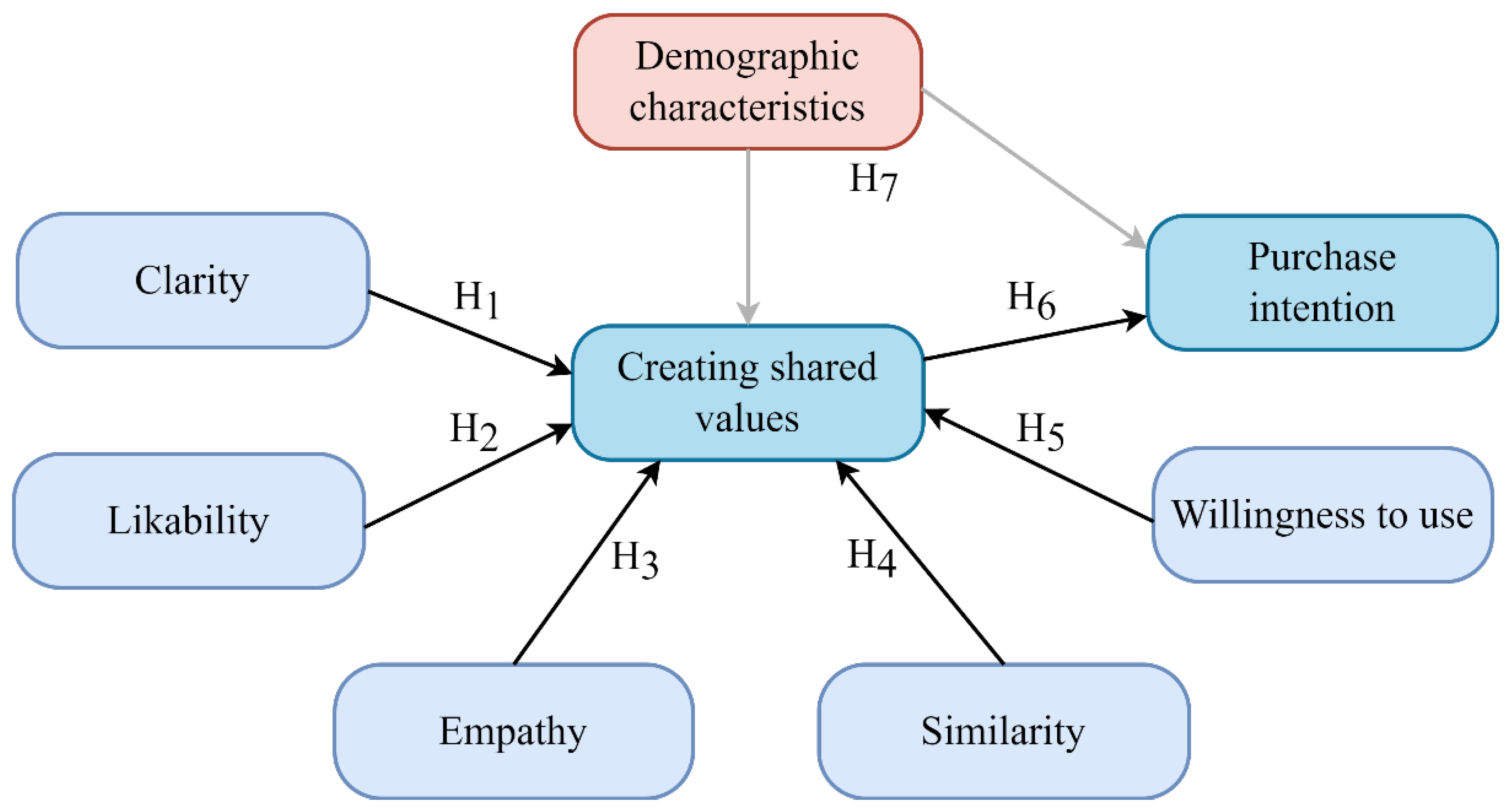
The proposed hypotheses aim to uncover the impact of key factors on various aspects of consumer perceptions toward short video content and its creators. The following section adopts an integrated approach to evaluate how these factors shape customer purchase intention in connection with short video perceptions.
4. Research Methodology
The main objective of this study is to examine consumer perceptions of commercial SFV and to quantify how selected content- and creator-related factors shape CSV and purchase intention. The study follows a cross-sectional survey design, which is appropriate for collecting standardized responses from a relatively large group of participants and for modeling relationships among latent perceptual constructs [30,31]. The empirical strategy combines explanatory and predictive methods. Explanatory analysis is used to test theoretically derived relationships among constructs, whereas predictive analysis is used to evaluate whether the selected perception variables can support accurate modeling of consumer responses and purchase-related outcomes [12].
The methodological workflow consists of six stages. First, an online questionnaire was designed to capture demographic characteristics, social-media usage patterns, perceptions of short-video content and creators, CSV, purchase intention, and open-ended feedback. Second, the collected responses were encoded and prepared for quantitative and qualitative analysis. Third, descriptive statistics were used to summarize respondent profiles and baseline usage behavior. Fourth, PLS-SEM was used to assess the measurement model and test the hypothesized relationships among latent constructs [13]. Fifth, cluster analysis, ML and MCDM models were applied to support segmentation, factor prioritization, and prediction [12,32,33,34,35]. Finally, sentiment analysis was conducted on the open-ended responses to capture additional qualitative evidence regarding consumers’ opinions, concerns, and recommendations [36].
4.1. Questionnaire Design and Data Collection
Primary data were collected through a self-administered online questionnaire. This format was selected because it allows efficient distribution, standardized measurement, respondent anonymity, and rapid data collection from digitally active consumers, which is suitable for a study focused on short-video and social-media behavior [30]. The questionnaire was developed using established principles of survey and scale design, including clear item wording, logically grouped question blocks, and multi-item measurement of latent constructs [30,31].
The questionnaire focused on consumer responses to short videos on social media platforms in Bulgaria. The introductory text explained that the study concerned commercial short-video content, including beauty and makeup tutorials, fashion and styling, cooking and recipes, educational content, life hacks and advice, fitness and workouts, pet and animal videos, travel and adventure, transformation videos, motivational and inspirational content, gaming-related material, unboxing, and reviews. Respondents were informed that the survey was anonymous, that completion would take approximately five minutes, and that participants would receive access to summary results.
The instrument consisted of five main blocks: (1) an introduction and informed-consent statement; (2) demographic and socio-economic characteristics; (3) social-media and short-video usage patterns; (4) multi-item perception measures related to short videos and influencers/creators; and (5) CSV, purchase intention, and open-ended feedback. The survey link and study information were distributed through partner organizations and the authors’ institutional communication channels, including websites, email, and social media. Data collection targeted Bulgarian online consumers and produced 409 valid responses.
The perception block was adapted primarily from the short-video social-commerce measurement framework proposed by Shen and Wang [2], with construct wording adjusted to the present study context. The questionnaire retained several construct groups from the broader source framework, including credibility, consistency, completeness, clarity, likability, empathy, similarity, willingness to use, CSV, and purchase intention. For the final structural model reported in this study, the empirical focus is placed on the 29 indicators from Q14–Q20: clarity, likability, empathy, similarity, willingness to use, CSV, and purchase intention.
4.2. Questionnaire Measurements and Scales
The questionnaire comprised 22 questions. Questions Q1–Q10 collected demographic, socio-economic, and behavioral information. These items covered gender, age group, place of residence, municipality, average monthly income per household member, educational level, social-media experience, frequency of social-media use, number of followed influencers, and daily time spent watching short videos.
Questions Q11–Q20 were implemented as multi-item grid questions using a five-point Likert-type response scale, ranging from 1 (“strongly disagree”) to 5 (“strongly agree”). Likert-type scales are widely used for measuring attitudes and perceptions because they allow respondents to express the degree of agreement with a set of statements representing an underlying construct [37]. The use of multiple indicators per construct also supports reliability and validity assessment in SEM-based analysis [13,31].
The full perception block includes the following construct groups:
- Credibility (Q11; four indicators): perceived authenticity, genuineness, and distinct personality of the influencer.
- Consistency (Q12; four indicators): coherence between the influencer’s profile and the information conveyed in the short videos.
- Completeness (Q13; four indicators): sufficiency and completeness of information provided in the short video.
- Clarity (Q14; three indicators): clarity, understandability, and memorability of the short-video content.
- Likability (Q15; four indicators): perceived likability, interest, and social appeal of the influencer.
- Empathy (Q16; three indicators): perceived emotional connection and understanding of the influencer.
- Similarity (Q17; four indicators): perceived similarity between the respondent and the influencer in views, interests, and agreement.
- Willingness to use (Q18; four indicators): readiness to engage further with the influencer and use the short video for product-related decisions.
- Creating shared values (Q19; eight indicators): perceived economic, social, and relational value created through the influencer’s activity.
- Purchase intention (Q20; three indicators): stated likelihood and willingness to buy an item from a short-video platform within the next six months.
The questionnaire confirms the exact item blocks and item counts for Q14–Q20, including the eight CSV indicators and three purchase-intention indicators. In addition, Q21 and Q22 were open-ended questions. Q21 invited respondents to provide opinions, suggestions, and recommendations, while Q22 asked respondents to name their favorite short-video influencers, identify the social media platform on which they follow them, and explain why these videos impress them, enhance brand engagement, or motivate shopping behavior. These open-ended responses were used to complement the quantitative results through sentiment and thematic interpretation.
Although Q11–Q13 were retained in the broader questionnaire for descriptive and diagnostic purposes, the final PLS-SEM model focuses on Q14–Q20. This choice follows the conceptual model developed in Section 3, where clarity, likability, empathy, similarity, and willingness to use are modeled as antecedents of CSV, while CSV is modeled as an antecedent of purchase intention.
4.3. Data Analysis Methods
The analytical procedure was designed as a business intelligence workflow that converts consumer-response data into explanatory, segmentation, predictive, and decision-support outputs. The data analysis followed a staged procedure designed to combine descriptive, explanatory, segmentation-based, predictive, and qualitative evidence.
First, the dataset was examined for completeness, consistency, and plausibility. Closed-ended questions were encoded numerically according to the predefined questionnaire coding scheme. Open-ended responses were processed separately, including text normalization and preparation for qualitative and sentiment analysis.
Second, descriptive statistics were computed to summarize the sample structure and short-video usage behavior. Frequency distributions and percentages were used for categorical variables, including gender, age group, residence, education, income, social-media experience, frequency of use, number of followed influencers, and time spent watching short videos. These statistics provide the baseline context for interpreting the subsequent modeling results.
Third, PLS-SEM was applied to test the hypothesized relationships among latent constructs. PLS-SEM is suitable for research models that include multiple latent variables, multi-item constructs, prediction-oriented objectives, and exploratory theory development [13]. The measurement model was assessed through indicator reliability, internal consistency reliability, convergent validity, discriminant validity, and multicollinearity diagnostics. Composite reliability, average variance extracted, the Fornell–Larcker criterion, cross-loadings, and the heterotrait–monotrait (HTMT) ratio were used to evaluate construct quality [13,38]. The structural model was then used to estimate the path coefficients linking clarity, likability, empathy, similarity, and willingness to use with CSV and purchase intention. SmartPLS was used for PLS-SEM estimation [39].
Fourth, cluster analysis was conducted to identify homogeneous respondent segments based on similarity in perception profiles. K-means clustering was used to group respondents into alternative solutions with two, three, four, and five clusters [32]. The elbow method and silhouette coefficient were used to support the selection and interpretation of the cluster structure [33]. This segmentation step helps reveal whether consumers form distinct groups with different levels of receptiveness toward short-video marketing.
Fifth, MCDM logic was used to support factor prioritization and comparative evaluation. The structural-model results provide empirically grounded factor weights that can be used to rank content attributes, short-video campaigns, or creator profiles according to multiple criteria [34]. In this study, MCDM is used as a complementary decision-support perspective rather than as a substitute for SEM. Its role is to translate statistically estimated relationships into interpretable prioritization logic for marketing decision-making.
Sixth, ML models were developed to complement SEM with predictive evidence. While SEM explains theoretically specified relationships among constructs, ML can capture nonlinear relationships and interaction patterns that may improve prediction of consumer responses and purchase-related outcomes [12,35]. The predictive models were evaluated using standard performance indicators such as mean squared error, root mean squared error, mean absolute error, and the coefficient of determination.
Finally, sentiment analysis was applied to the open-ended responses. Sentiment analysis is appropriate for identifying polarity and evaluative tone in unstructured text, especially when survey respondents provide opinions, concerns, or recommendations in their own words [36]. The qualitative findings were used to enrich the interpretation of the quantitative results by identifying recurring themes related to usefulness, entertainment, authenticity, credibility, relatability, and purchase motivation.
The questionnaire, response dataset, and supporting documentation are made available through Mendeley Data [40].
5. Data Analysis
The methodology outlined in Section 4 was implemented to address the research objectives and test the proposed hypotheses
5.1. Data Collection, Encoding, and Sample Description
The survey link was distributed through the authors’ institutional websites, email channels, partner organizations, and social media platforms. Participation was voluntary and anonymous. Data collection targeted Bulgarian online consumers and was conducted between 11 January 2025 and 25 February 2025. After removing incomplete entries, the final analytical sample comprised 409 valid responses. The questionnaire, response dataset, and supporting documentation are publicly available through Mendeley Data [40].
All closed-ended questions (Q1–Q3 and Q5–Q20) were encoded using predefined coding rules. The open-ended fields – municipality, opinions/suggestions, and followed/favorite short-video influencers – were processed separately through spelling normalization, text cleaning, and preparation for qualitative and sentiment analysis. Duplicate screening was performed on the full coded response dataset. Repeated response profiles in the 29-item perception matrix were retained because identical Likert-scale patterns can occur naturally in ordinal survey data and do not by themselves indicate invalid responses.
To visualize similarity among respondents, an ordered Euclidean dissimilarity matrix was computed using the 29 standardized Likert-scale indicators from Q14–Q20: clarity, likability, empathy, similarity, willingness to use, CSV, and purchase intention. Rows and columns represent respondents; lighter values indicate more similar response profiles, whereas darker cyan values indicate larger Euclidean distances. The matrix was visualized using the fviz_dist() function from the factoextra package in R [41,42].
Figure 2.
Ordered dissimilarity matrix of respondents’ answers based on 29 standardized perception indicators from Q14–Q20.
Figure 2.
Ordered dissimilarity matrix of respondents’ answers based on 29 standardized perception indicators from Q14–Q20.

To profile the respondents and summarize key patterns, descriptive statistics and distribution analyses were conducted. Table 2 reports the main demographic and usage characteristics. Most respondents were female (70.7%; Q1). Respondents aged 30 or younger accounted for 76.6% of the sample (Q2). Regarding education, 32.3% reported at least a university degree, while 67.7% reported high school education (Q6). The sample is primarily urban: 97.1% of respondents lived in settlements with at least 1,000 inhabitants, including 57.7% in cities with more than 50,000 inhabitants and 39.4% in towns with 1,000–50,000 inhabitants (Q3).
In terms of geographic distribution, municipality names were normalized to correct spelling and capitalization variants before calculating regional distributions. The largest share of respondents was from Plovdiv municipality (204 respondents; 49.9%), followed by Haskovo (19 respondents; 4.6%) and Pazardzhik (13 respondents; 3.2%). Overall, the sample was strongly concentrated in the South Central Region (approximately 350 respondents; 85.6%), followed by the South East Region (30 respondents; 7.3%) and the South West Region (17 respondents; 4.2%).
The high relevance of social-media and short-video consumption in the sample is consistent with broader Bulgarian digital-use patterns. DataReportal reports that Bulgaria had 5.86 million internet users at the start of 2025, with 87.1% internet penetration, and 4.37 million social-media user identities, equivalent to 64.9% of the population. It also reports YouTube advertising reach of 4.37 million users and TikTok advertising reach of 2.28 million adults in Bulgaria in early 2025 [43].
Most respondents reported very frequent social-media use. According to Q8, 95.4% accessed social media at least once per day, including 57.0% who used platforms several times per day and 29.1% who checked them several times per hour. Exposure to creator/influencer content was also substantial: 54.0% of participants reported following 10 or more influencers (Q9). These patterns are consistent with the demographic structure of the sample, which is dominated by younger users and by respondents with long-term platform experience. Short-video consumption was similarly intensive: 63.3% watched short videos for one hour or more per day (Q10), confirming the relevance of SFV marketing for this audience.
5.2. Exploratory Heat-Map Analysis
To illustrate heterogeneity in respondents’ perceptions of short videos, hierarchical clustering was applied to the 29 standardized Likert indicators from Q14–Q20. Figure 3 presents clustering across observations, while Figure 4 presents clustering across attributes. In both figures, cell colors represent standardized scores, ranging from the lowest values (white; approximately −2.31) through pale yellow–green tones to the highest values (blue; approximately 2.75). The dendrogram above the observation heat map summarizes how respondents group into clusters with similar response profiles, whereas the attribute dendrogram in Figure 4 indicates constructs that tend to co-vary. The heat maps and dendrograms were generated using the Heat Map widget in Orange 3.22.0 [44].
To segment consumers based on similar perception profiles, k-means clustering was applied to the same 29 standardized indicators. The number of clusters was examined for k = 2, 3, 4, and 5. The elbow method and silhouette coefficient indicated that the two-cluster solution was the most interpretable and statistically preferable [32,33]. The two clusters comprised 309 and 100 respondents, respectively. As illustrated in Figure 5, the k = 2 solution separates a large favorable segment from a smaller less favorable segment.
Cluster 1 represents a consistently high-rating segment, showing markedly more favorable evaluations across all indicator groups in Table 3. Mean scores for clarity, likability, empathy, similarity, willingness to use, CSV, and purchase intention are mostly in the 3.0–3.9 range. Cluster 2 reports substantially lower values, typically around 1.4–2.5. This pattern indicates that respondents in Cluster 1 perceive SFV marketing more positively and are also more inclined toward purchase-related outcomes.
The largest separations between clusters are observed for similarity, likability, and willingness to use. Differences in clarity are also notable, and purchase-intention items show clear, although slightly smaller, gaps. Overall, Table 3 demonstrates that the two clusters differ primarily in how positively they evaluate the appeal/likability and viewer–creator similarity of short videos, which aligns with higher willingness to use the format, stronger perceived CSV, and higher purchase intention in Cluster 1.
A demographic comparison of the two clusters shows that Cluster 1 is more strongly represented by younger respondents. In Cluster 1, 80.3% of respondents are aged 30 or younger, compared with 65.0% in Cluster 2. Cluster 1 also contains a higher share of respondents following 10 or more influencers (62.8% vs. 27.0%) and watching short videos for at least one hour per day (67.3% vs. 51.0%). Chi-square tests indicate statistically significant differences between clusters for age, education, number of followed influencers, and time spent watching short videos, whereas gender, residence, income, social-media experience, and frequency of use do not show significant differences.
5.3. Sentiment Analysis
The open-ended comments were originally written mainly in Bulgarian. Before sentiment analysis, they were translated into English and manually checked for obvious mistranslations and polarity errors. TextBlob polarity scores were then used as exploratory sentiment indicators, supplemented by manual thematic interpretation. Because the sentiment classification relies on translated open-ended responses and a lexicon-based English-language tool, the polarity results are interpreted as exploratory and are used mainly to support the qualitative thematic interpretation.
Question 21 contained 237 non-empty entries. After removing blank, duplicated, and non-informative responses, 181 usable comments were retained for sentiment analysis. A lexicon-based approach was applied using TextBlob 0.15.3/PatternAnalyzer in Python 3.11.2, with polarity scores ranging from −1 to +1 and a three-class scheme: positive (> 0.05), neutral (−0.05 to 0.05), and negative (< −0.05) [45]. The responses were predominantly positive. The positive group (n = 131; mean polarity = +0.281) emphasized that short videos capture attention quickly, demonstrate products effectively, and support product discovery and purchase decisions, including benefits for small businesses. Neutral comments (n = 39; mean polarity = +0.004) were mainly conditional, stating that short videos are useful when they provide sufficient product details and clearly disclose paid partnerships. Negative comments (n = 11; mean polarity = −0.328) highlighted distraction, reduced attention span, information overload, and distrust in influencer-driven promotions, reinforcing the need for transparency, authenticity, and content credibility.
Question 22 contained 247 non-empty entries. After data cleaning and exclusion of non-informative responses, 168 valid answers were retained for analysis. Respondents’ explanations converge around a clear set of expectations for effective short-video marketing. The most appreciated content is authentic and experience-based: participants prefer creators who have personally tested products, provide balanced views, including drawbacks, and avoid promotions that feel overly forced or purely paid. Videos are also valued when they are clear, concise, and practical, showing products “in action” and delivering essential information quickly. In addition, many respondents highlight relatability, everyday-life storytelling, humor, and entertainment, which strengthen emotional connection and sustain attention. A smaller but visible set of answers emphasizes value-driven content, including sustainability and healthy-living themes, suggesting that short-video marketing is perceived most positively when it combines entertainment with credible, useful information aligned with viewers’ interests.
The same responses also reveal a reach-based visibility effect. The most frequently mentioned influencers were also among highly visible Bulgarian creators on Instagram and TikTok, suggesting that respondent nominations partly reflect platform visibility and perceived reach. Because follower counts change frequently, exact follower numbers are not reported in the final manuscript.
5.4. SEM Model of Creating Shared Values and Purchase Intention
Drawing on the conceptual framework developed in Section 3, PLS-SEM modeling was applied to test the relationships among consumer perceptions of short-video marketing, CSV, and purchase intention. PLS-SEM was selected because it is appropriate for models involving multiple latent constructs, reflective indicators, prediction-oriented objectives, and non-normally distributed survey data [13,46]. The analysis was implemented in SmartPLS 3.2.9 [39].
The model follows the logic of short-video social-commerce research, where users’ perceptions of creators and short-video content influence shared value creation, which subsequently affects purchase intention [2]. In the present study, Q19 is therefore modeled as CSV, interpreted as a value-based attitudinal response to short-video marketing. This interpretation is consistent with the questionnaire, where CSV captures respondents’ perceptions of the economic, social, and relational value created by influencers through short-video activity.
The baseline structural model tests six direct hypotheses: clarity, likability, empathy, similarity, and willingness to use are modeled as antecedents of CSV, while CSV is modeled as an antecedent of purchase intention. The demographic hypothesis is not included in this baseline PLS-SEM model and is tested separately through group-difference, moderation, and indirect-effect analyses.
5.4.1. Model specification
The initial measurement model included seven reflective latent constructs and 29 observed indicators. The exogenous constructs were measured using 18 indicators: clarity (CLA1–CLA3), likability (LIK1–LIK4), empathy (EMP1–EMP3), similarity (SIM1–SIM4), and willingness to use (WTU1–WTU4). The endogenous constructs were Creating Shared Values (CSV1–CSV8) and Purchase Intention (PI1–PI3).
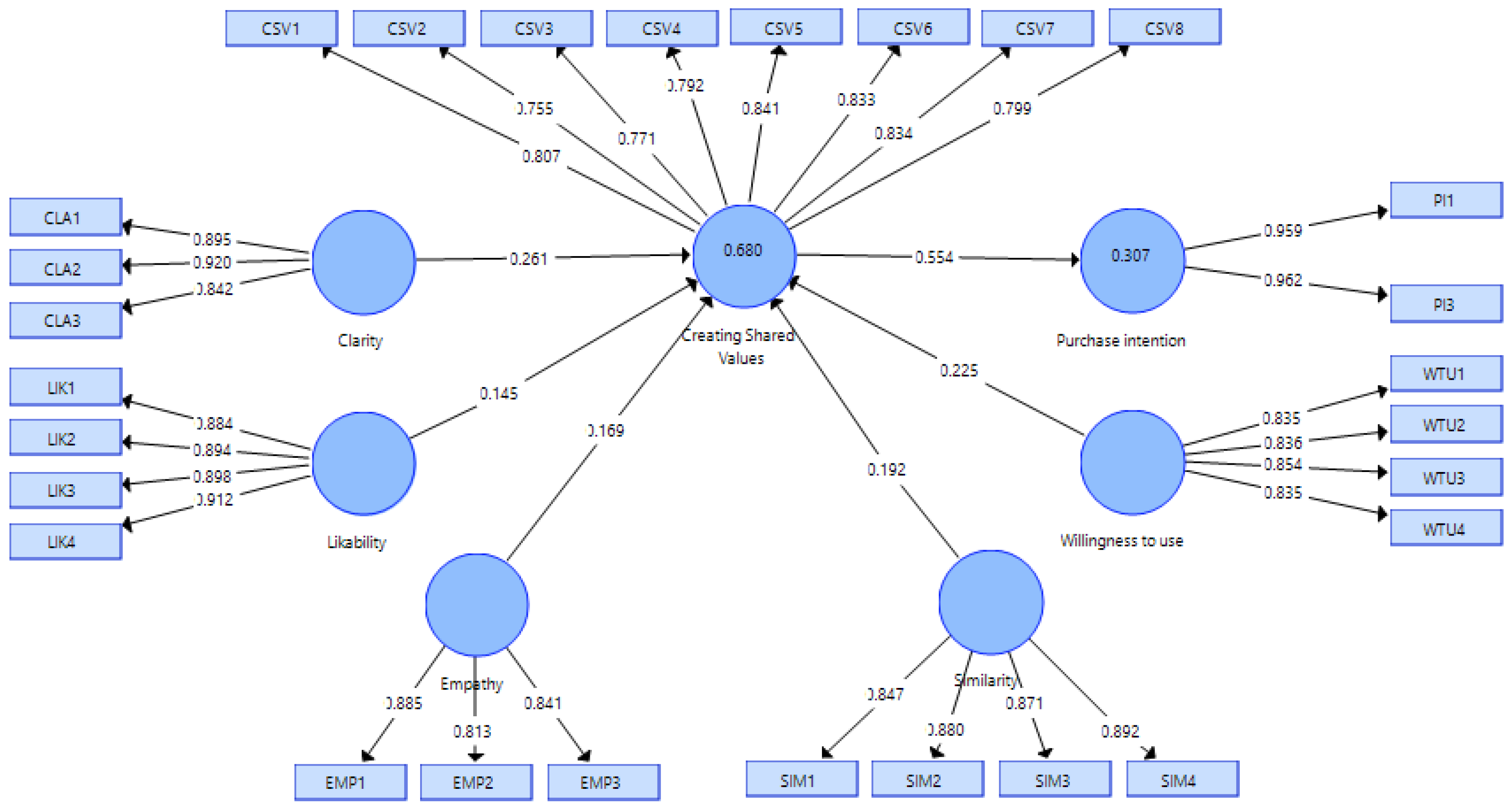
During the initial measurement-model assessment, the purchase-intention block showed excessive indicator collinearity. The outer VIF values for PI1, PI2, and PI3 were 6.416, 11.021, and 6.017, respectively, exceeding the commonly used threshold of 5 [13,46]. PI2 produced the highest VIF and was also semantically redundant with PI1 and PI3. Because purchase intention was modeled as a reflective construct, item removal was not based on collinearity alone. The wording of PI2 was also inspected conceptually and was found to overlap strongly with PI1 and PI3. Therefore, retaining all three items would have increased redundancy without adding substantial conceptual coverage. The final two-item purchase-intention construct retained the core meaning of the construct: likelihood and willingness to purchase through short-video platforms. As a robustness check, the model was also estimated with all three PI indicators, and the direction and statistical significance of the main structural relationships remained unchanged. Therefore, PI2 was removed from the final model. The final PLS-SEM model consequently included seven latent constructs and 28 reflective indicators: 18 indicators for the five antecedent constructs, eight indicators for CSV, and two indicators for purchase intention.
Figure 6.
Initial PLS-SEM measurement model with seven latent constructs and 29 indicators – path coefficients and p-values.
Figure 6.
Initial PLS-SEM measurement model with seven latent constructs and 29 indicators – path coefficients and p-values.
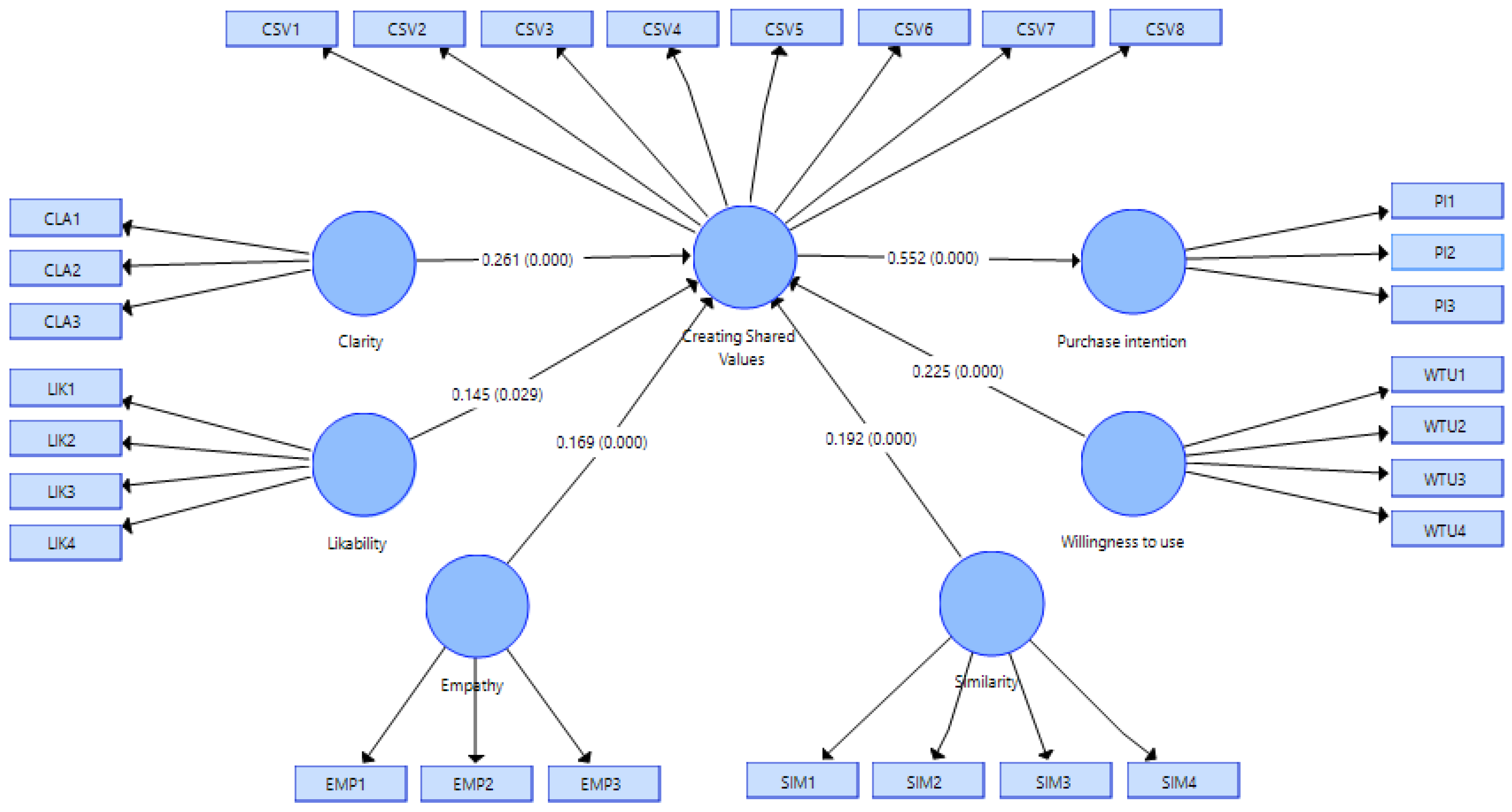
Figure 7.
Final PLS-SEM model after removing PI2, showing outer loadings, path coefficients, and coefficients of determination.
Figure 7.
Final PLS-SEM model after removing PI2, showing outer loadings, path coefficients, and coefficients of determination.
5.4.2. Measurement-Model Assessment
The assessment of the PLS-SEM model was performed in two stages: first, the reflective measurement model was evaluated; second, the structural model was assessed. The measurement-model assessment examined indicator reliability, internal consistency reliability, convergent validity, discriminant validity, and collinearity. These steps follow established recommendations for PLS-SEM evaluation and reporting [13,46].
Reflective indicator loadings show how strongly each observed item is associated with its intended latent construct. Standardized loadings above 0.70 are generally considered satisfactory because they indicate that more than 50% of the indicator variance is explained by the construct [13]. As shown in Table 4, all retained indicators exceed this threshold, with loadings ranging from 0.755 to 0.962. Therefore, the final measurement model demonstrates adequate indicator reliability.
Internal consistency reliability was evaluated using rho-type reliability coefficients and composite reliability (CR). Values above 0.70 indicate acceptable reliability [13,47]. Convergent validity was assessed through the average variance extracted (AVE), where values above 0.50 indicate that the construct explains more than half of the variance in its indicators [13,48]. Structural collinearity was evaluated using the variance inflation factor (VIF), with values below 5 considered acceptable in applied PLS-SEM research [13,46].
As shown in Table 5, all constructs meet the recommended reliability and validity criteria. Reliability coefficients range from 0.821 to 0.922, CR values range from 0.884 to 0.960, and AVE values range from 0.647 to 0.922. The VIF values for the predictors of CSV are below 5, indicating that multicollinearity does not distort the structural-path estimates. The CSV construct has a VIF of 1.000 because it is the single predictor of purchase intention in the final structural model.
5.4.3. Discriminant Validity
Discriminant validity was examined using the Fornell–Larcker criterion, cross-loadings, and the HTMT ratio. According to the Fornell–Larcker criterion, the square root of each construct’s AVE should be greater than its correlations with all other constructs [48]. As shown in Table 6, this condition is satisfied for all constructs.
The cross-loading analysis also supports discriminant validity, because each retained indicator loads more strongly on its assigned construct than on any other construct in the model. This confirms that the indicators are aligned with their intended latent variables and do not show problematic overlap across constructs.
HTMT was additionally used because it is considered a more sensitive criterion for detecting lack of discriminant validity in variance-based SEM [38]. As shown in Table 7, all HTMT values are below 0.90, and the highest value, 0.845 for Empathy–Similarity, remains below the conservative 0.85 threshold. Therefore, the constructs can be considered empirically distinct.
After confirming the reliability and validity of the measurement model, the structural model was evaluated. Bootstrapping was used to test the statistical significance of the hypothesized paths. The results are presented in Figure 8 and Table 8.
The structural model explains a substantial share of variance in CSV (R² = 0.680). This indicates that clarity, likability, empathy, similarity, and willingness to use jointly explain 68.0% of the variance in perceived value creation in short-video marketing. The model also explains 30.7% of the variance in purchase intention (R² = 0.307), indicating a moderate level of explanatory power for the purchase-related outcome. Predictive relevance was assessed using the Stone–Geisser Q² criterion [49,50]. Both endogenous constructs show positive Q² values: Q² = 0.433 for CSV and Q² = 0.279 for purchase intention. These values indicate that the model has predictive relevance for both endogenous variables.
All six hypothesized relationships are positive and statistically significant. Clarity has the strongest effect on CSV (β = 0.261, p < 0.001), followed by willingness to use (β = 0.225, p < 0.001), similarity (β = 0.192, p < 0.001), empathy (β = 0.169, p < 0.001), and likability (β = 0.145, p = 0.029). CSV has a strong positive effect on purchase intention (β = 0.554, p < 0.001). These results support the proposed value-based mechanism: consumers are more likely to perceive short-video marketing as CSV when the content is clear, the influencer is likable and empathetic, the viewer perceives similarity with the influencer, and the viewer is willing to engage further with the content. This perceived value creation then increases purchase intention.
From a practical viewpoint, the model is logical if the central construct is interpreted as CSV rather than as a generic attitude construct. The CSV items measure whether respondents perceive the influencer as generating product, economic, social, and relational value. Therefore, the model indicates that short-video marketing becomes more purchase-relevant when consumers believe that the influencer’s activity creates value for viewers and the wider community. This interpretation is consistent with the CSV logic proposed by Porter and Kramer [7] and with recent short-video social-commerce research showing that shared value creation mediates the effect of persona perceptions on purchase intention [2].
5.5. Demographic and Usage Effects on Creating Shared Values and Purchase Intention
Additional analyses were conducted to test the effects of demographic and usage variables on the endogenous constructs. Demographic variables were treated as control variables, grouping variables, and potential moderators rather than as mediators, because demographic characteristics are antecedent conditions rather than outcomes of the perception constructs. ANOVA and Kruskal–Wallis tests were used to examine group differences, while regression-based control-variable tests, moderation screening, multi-group analysis, and exploratory indirect-effect analysis were used as complementary robustness checks [51,52,53,54].
The results show that age, education, number of followed influencers, and time spent watching short videos are significantly associated with CSV. Age, frequency of social-media use, number of followed influencers, and time spent watching short videos are significantly associated with purchase intention. Control-variable regression indicates that demographic and usage variables add little explanatory power to CSV once the five perception antecedents are included (ΔR² = 0.017, p = 0.533), but they add modest explanatory power to purchase intention beyond CSV (ΔR² = 0.067, p = 0.021). Moderation and multi-group analyses do not reveal systematic demographic moderation of the main PLS-SEM relationships, and the CSV → purchase intention path remains stable across groups. Exploratory indirect-effect analysis shows that age and education negatively influence purchase intention through CSV, whereas social-media frequency and number of followed influencers have positive indirect effects. Overall, the results suggest that short-video involvement and age-related differences are more relevant than gender, residence, or income for explaining heterogeneity in consumer responses.
Thus, H7 is partially supported. Demographic and usage characteristics do not systematically moderate the main PLS-SEM mechanism, but several of them show significant direct or indirect associations with CSV and purchase intention.
5.6. Predictive Machine-Learning and Business Intelligence Responsiveness Profiling
ML models were used as a complementary predictive analysis rather than as a substitute for the PLS-SEM model. The prediction task was defined as follows. The target variable was the respondent-level mean score for CSV, calculated from the retained CSV indicators. The input variables were the antecedent perception indicators measuring clarity, likability, empathy, similarity, and willingness to use. CSV indicators were not used as predictors of CSV in order to avoid data leakage.
The dataset was randomly divided into training and testing subsets using a 70:30 split. The training set was used for model fitting and hyperparameter tuning, while the testing set was used only for final performance evaluation. To reduce sensitivity to one random split, k-fold cross-validation was additionally applied on the training data. The tested algorithms included Decision Tree, Support Vector Machine, Random Forest, and AdaBoost. Predictive performance was evaluated using mean squared error (MSE), root mean squared error (RMSE), mean absolute error (MAE), and the coefficient of determination (R²).
The ML results should be interpreted as predictive evidence for the selected perception variables, not as causal evidence. The purpose of the ML analysis is to assess whether the perception indicators can predict value-based consumer responses with reasonable accuracy.
To complement the explanatory PLS-SEM results, four ML algorithms were used to predict value-based consumer responses toward short videos. The predictive models were evaluated using mean squared error (MSE), root mean squared error (RMSE), mean absolute error (MAE), and R². Whereas PLS-SEM is designed primarily for theory testing and mechanism explanation, ML models are optimized for prediction and can capture nonlinearities and interactions that may be difficult to represent in a structural model [12,35].
Table 9 shows that all tested ML models predict CSV with good accuracy. The ensemble models perform best. AdaBoost achieves the lowest MSE, RMSE, and MAE and the highest R², while Random Forest shows nearly identical performance. Therefore, AdaBoost and Random Forest are interpreted as the strongest predictive models in this analysis. These results should be interpreted as predictive, not causal, evidence.
The PLS-SEM results and ML results should therefore be interpreted as complementary. PLS-SEM explains why consumer responses are formed by estimating interpretable, theory-driven paths among constructs, whereas ML models show that the selected perception variables have strong predictive value. For managerial use, ML models can support targeting and content optimization, while SEM provides theoretical explanation and identifies which constructs should be prioritized in campaign design.
The PLS-SEM path coefficients were used to construct a SEM-weighted respondent responsiveness score. Respondents were treated as anonymous alternatives, while the five significant antecedents of CSV – clarity, likability, empathy, similarity, and willingness to use – were treated as benefit criteria. For each respondent, construct-level scores were calculated as the arithmetic means of the corresponding questionnaire indicators. The standardized PLS-SEM coefficients were normalized and used as data-driven weights.
The SEM-weighted responsiveness score was calculated as:
where and are respondent-level construct averages. Higher values indicate stronger predicted value-based responsiveness to SFV marketing.
For business intelligence use, respondents were not interpreted as individually identifiable targets. Instead, the scores were used to classify anonymous respondents into high-, medium-, and low-responsiveness segments.
6. Discussion
The results provide empirical support for a value-based mechanism through which short-video marketing influences purchase intention. In the final PLS-SEM model, clarity, likability, empathy, similarity, and willingness to use all have positive and statistically significant effects on CSV, while CSV has a strong positive effect on purchase intention. This specification is theoretically preferable to the earlier “attitude toward SVM” wording because the questionnaire measures Q19 as CSV rather than as a general attitude scale. Thus, CSV is interpreted here as a value-based attitudinal response: consumers evaluate whether short-video creators generate product, economic, social, and relational value, and this evaluation subsequently affects purchase intention. This interpretation is consistent with shared-value theory and with recent short-video social-commerce research showing that creator-related perceptions influence purchase intention through shared value creation [2,7].
The findings also support a systems-oriented interpretation of SFV marketing. The results show that purchase intention is not produced by isolated content features alone, but by the interaction of multiple socio-technical components: platform affordances structure exposure and engagement; creator attributes shape perceived clarity, likability, empathy, similarity, and willingness to use; consumer perceptions influence CSV; and value-based responses subsequently affect purchase intention. The clustering results further show that consumers do not respond uniformly, indicating the importance of segmentation within the wider marketing system. In addition, the ML results demonstrate that consumer responses can be predicted with high accuracy from the selected perception variables, while the MCDM interpretation translates structural-model effects into decision-support logic for campaign prioritization. Thus, the study contributes to systems research by treating SFV marketing as an adaptive digital ecosystem in which platform mechanisms, creator–viewer relationships, consumer evaluations, predictive analytics, and managerial decision-making are jointly involved in the formation of marketing outcomes.
The structural results indicate that the five antecedents jointly explain a substantial proportion of variance in CSV (R² = 0.680), while CSV explains a moderate proportion of variance in purchase intention (R² = 0.307). The positive Q² values for CSV (0.433) and purchase intention (0.279) further support the predictive relevance of the model. From a PLS-SEM perspective, these results indicate that the model has both explanatory and predictive value, especially for understanding how consumers form value-based responses to short-video marketing [13].
Among the antecedents, clarity has the strongest effect on CSV (β = 0.261, p < 0.001). This result is practically important because short videos are consumed quickly in scrolling feeds, where consumers have limited time and attention for message processing. Clear content, understandable information, and memorable presentation help viewers evaluate the promoted product and the creator’s activity more positively. This finding is consistent with studies showing that usefulness, ease of understanding, and informative content are important drivers of trust, perceived value, and purchase intention in short-video marketing [1,6].
Willingness to use is the second strongest antecedent of CSV (β = 0.225, p < 0.001). This suggests that consumers who are more ready to engage with short-video content, learn more about creators, or use short videos in decision-making are also more likely to perceive shared value creation. This result is consistent with technology acceptance logic, according to which usefulness, ease of use, performance expectations, and engagement readiness influence consumers’ acceptance of digital formats [10,11]. In practical terms, short videos should not only be entertaining; they should also make the next action easy, such as searching for the product, comparing alternatives, visiting a seller page, or saving the content for later.
The effects of similarity (β = 0.192, p < 0.001) and empathy (β = 0.169, p < 0.001) confirm the importance of relational and social cues in short-video marketing. Consumers are more likely to perceive shared value when the creator feels relatable, emotionally understandable, and close to their own interests or lifestyle. This supports previous evidence that creator persona, parasocial connection, and empathy with influencers can strengthen consumer responses to marketing content [2,28,29]. For brands and creators, this means that audience–creator fit is not a secondary issue; it is part of the value-creation process itself.
Likability has the weakest but still significant effect on CSV (β = 0.145, p = 0.029). This indicates that pleasantness, attractiveness, and interest in the influencer matter, but they are less influential than clarity and willingness to use. This is an important practical finding: enjoyable content can support value perception, but entertainment alone is not enough. Short-video campaigns should combine likability with clear information, credible product presentation, and perceived relevance. This is consistent with research showing that likeability and entertainment improve online video advertising response but operate alongside cognitive and relational mechanisms [6,25].
The positive effect of CSV on purchase intention (β = 0.554, p < 0.001) confirms the core mechanism of the model. Consumers are more likely to intend to purchase when they perceive that the influencer or creator generates meaningful value through short-video activity. However, the R² value for purchase intention (0.307) also indicates that purchase intention is only moderately explained by CSV. This is expected because purchase intention is influenced by additional factors not included in the model, such as product category, price, brand trust, purchasing power, platform design, perceived risk, and availability of alternative purchase channels. Moreover, purchase intention should be treated as a proxy for likely behavior rather than as actual purchasing behavior [8,9].
The cluster analysis further strengthens the interpretation of the PLS-SEM results. The two-cluster solution divided respondents into a larger, more favorable segment (n = 309) and a smaller, less favorable segment (n = 100). Cluster 1 reported consistently higher values across clarity, likability, empathy, similarity, willingness to use, CSV, and purchase intention. The largest cluster differences were observed for likability, willingness to use, and similarity, suggesting that the more favorable segment is characterized not only by stronger purchase intention but also by greater perceived creator appeal, relational fit, and engagement readiness. This confirms that short-video marketing effectiveness differs across consumer segments and that targeting strategies should account for heterogeneity in viewer receptiveness.
The sentiment analysis provides additional qualitative support for these findings. Positive comments emphasized that short videos capture attention quickly, demonstrate products effectively, and support product discovery. Neutral comments indicated that short videos are useful when they provide sufficient product details and clearly disclose paid partnerships. Negative comments focused on distraction, information overload, reduced attention span, and distrust in influencer-driven promotions. These patterns are consistent with the quantitative model: short videos create value when they are clear, useful, relatable, and credible, but they may lose persuasive power when they appear intrusive, excessive, or insufficiently transparent. Sentiment evidence therefore reinforces the need for authenticity, disclosure, and practical product information in creator-driven campaigns [36].
The demographic and usage analyses show that H7 is only partially supported. Demographic variables do not systematically moderate the main PLS-SEM paths, and the relationship between CSV and purchase intention remains stable across tested groups. However, age, education, number of followed influencers, frequency of social-media use, and time spent watching short videos show significant direct or indirect associations with CSV and/or purchase intention. ANOVA and Kruskal–Wallis tests indicate that younger respondents, respondents following more influencers, and respondents spending more time watching short videos generally report higher CSV and purchase intention. Exploratory indirect-effect analysis further shows that age and education have negative indirect effects on purchase intention through CSV, while social-media frequency and number of followed influencers have positive indirect effects. These findings suggest that short-video involvement and age-related differences are more relevant than gender, residence, or income for explaining heterogeneity in consumer responses. This is consistent with the broader view that individual-level characteristics can shape the strength of social-commerce and short-video marketing effects [2,51,53].
From a managerial perspective, the results suggest that effective short-video marketing should prioritize four practical principles. First, videos should communicate the product or message clearly within the first seconds of exposure. Second, creators should be selected not only for popularity but also for audience fit, empathy, and perceived similarity. Third, campaigns should reduce engagement friction by making the next consumer action easy and intuitive. Fourth, brands should emphasize credible value creation rather than relying only on entertainment or influencer attractiveness. The CSV results show that consumers respond more positively when they perceive short-video activity as useful, socially meaningful, and relationship-building.
The results can be translated into a practical business intelligence logic for e-commerce managers. First, the PLS-SEM model identifies the strongest drivers of value-based response, showing that clarity and willingness to use should be prioritized in short-video campaign design. Second, clustering identifies consumer segments with different levels of receptiveness to SFV marketing. Third, sentiment analysis adds qualitative insight into authenticity, transparency, product usefulness, and trust-related concerns. Fourth, ML prediction supports the identification of consumers or audience groups with higher predicted responsiveness. Finally, SEM-weighted responsiveness profiling can help managers prioritize campaign variants, creator partnerships, and targeting strategies. Together, these outputs show how SFV marketing data can be transformed into business intelligence for e-commerce decision support.
Several limitations should be acknowledged. First, the study relies on self-reported survey data, so the findings reflect perceived value and stated purchase intention rather than actual purchase behavior. Second, the sample is concentrated in Bulgaria and includes a high proportion of younger respondents, which limits generalization to other national and demographic contexts. Third, the cross-sectional design does not capture changes in consumer responses over time or repeated exposure to short-video campaigns. Fourth, the purchase-intention construct was measured with PI1 and PI3 after removing PI2 because of excessive indicator collinearity; although reliability and validity remained strong, future studies should refine the wording of purchase-intention items for the Bulgarian platform-commerce context. Finally, future research should combine survey data with behavioral metrics such as clicks, watch time, saves, shares, and actual conversion data to validate whether perceived CSV translates into observable purchasing behavior.
Overall, the discussion confirms that short-video marketing effectiveness is best understood as a value-creation process. Consumers are more likely to intend to purchase when short-video creators are perceived as clear, likable, empathetic, similar to the audience, and useful for decision-making. These factors strengthen perceived shared value creation, which then functions as the main pathway to purchase intention.
7. Conclusions and Future Research
This study examined how SFV marketing shapes consumer value perceptions and purchase intention. Using survey data from 409 respondents in Bulgaria and an integrated analytical workflow, the study modeled how five perception dimensions – clarity, likability, empathy, similarity, and willingness to use – contribute to CSV, conceptualized as a value-based attitudinal response to short-video marketing. The analysis then examined how CSV translates into purchase intention. This formulation is consistent with the questionnaire structure, where Q19 measures CSV and Q20 measures purchase intention.
For the surveyed Bulgarian online consumers, the results suggest that short-video marketing is most effective when it creates perceived value for viewers rather than relying only on entertainment or visibility. In the final PLS-SEM model, all five antecedents have positive and statistically significant effects on CSV. Clarity is the strongest predictor, followed by willingness to use, similarity, empathy, and likability. CSV, in turn, has a strong positive effect on purchase intention. The model explains a substantial share of variance in CSV (R² = 0.680) and a moderate share of variance in purchase intention (R² = 0.307), while positive Q² values confirm predictive relevance. These findings show that consumers are more likely to intend to purchase when short-video creators communicate clearly, appear relatable and empathetic, are perceived as likable, and help viewers engage with product-related decisions.
From a theoretical perspective, the study contributes to digital persuasion and social-commerce research by positioning CSV as the central mechanism linking content- and creator-related cues with purchase intention. This approach refines the earlier attitude-based interpretation by showing that the relevant evaluative response is not only whether consumers “like” short-video marketing, but whether they perceive it as producing product, economic, social, and relational value. The findings therefore support a value-creation view of short-video marketing, where purchase intention emerges from perceived shared value rather than from exposure alone.
The study also demonstrates the usefulness of combining explanatory, predictive, segmentation, and decision-support methods within a business intelligence workflow for e-commerce marketing. PLS-SEM explains the mechanism through which short-video perceptions affect CSV and purchase intention, while clustering, sentiment analysis, ML, and MCDM-based interpretation provide complementary insights. The two-cluster solution identified a large favorable segment and a smaller less favorable segment, showing meaningful heterogeneity in consumer responses. The ML models provide complementary predictive evidence, suggesting that the selected perception variables can predict value-based consumer responses with good accuracy under the reported validation procedure. These results should be interpreted cautiously because the analysis is based on cross-sectional survey data and should be confirmed in future studies using independent samples and behavioral platform data.
The findings have practical implications for brands, marketers, and content creators. Short-video campaigns should prioritize message clarity, concise storytelling, and easy-to-process visuals, because clarity is the strongest driver of perceived shared value. Campaigns should also reduce engagement friction by making the next consumer action simple, whether this involves searching for additional information, saving the video, visiting a product page, or making a purchase. In addition, creators should be selected not only on the basis of follower count, but also on audience fit, empathy, similarity, and perceived authenticity. The results suggest that entertaining content is valuable, but entertainment alone is insufficient; effective short videos should combine affective appeal with credible, useful, and socially meaningful content.
Several limitations should be considered. First, the study relies on self-reported survey data, which may be affected by response bias and cannot fully capture actual purchasing behavior. Second, the cross-sectional design limits causal interpretation and does not show how consumer perceptions develop over time after repeated exposure to short-video content. Third, the sample is concentrated in Bulgaria and includes many younger and digitally active respondents, which may limit generalizability to other national, cultural, and demographic contexts. This limitation is especially relevant because recent European policy debates increasingly focus on age restrictions, parental consent, and age-verification mechanisms for minors’ access to social media. Fourth, the purchase-intention construct was measured using PI1 and PI3 after removing PI2 because of excessive indicator collinearity. Although reliability and validity remained strong, future research should refine the wording of purchase-intention items, especially for contexts where consumers may watch short videos on one platform but complete the purchase elsewhere. Finally, the study does not directly incorporate platform-level behavioral data such as algorithmic exposure, watch time, completion rates, saves, shares, clicks, or actual conversions.
Future research can extend this work in several directions. Larger and more diverse samples would allow cross-cultural comparison and stronger testing of demographic and usage-based differences. Longitudinal studies and field experiments would help clarify causal mechanisms and reveal whether perceived CSV leads to longer-term outcomes such as brand loyalty, repeat purchase, and customer retention. Future studies should also combine survey responses with behavioral platform data, including clickstream metrics, viewing duration, engagement traces, comment-based sentiment, and purchase records. Such data would provide a richer and less self-report-dependent view of how consumers actually engage with SFV marketing and how perceived shared value is converted into observable market behavior.
Author Contributions
Conceptualization, G.I., T.Y., M.R., D.A., S.K.-B., M.B, P.G., and A.D.; modelling, G.I., T.Y., M.R., and S.K.-B.; validation, G.I., T.Y., M.R, and M.B.; formal analysis, T.Y.; resources, G.I., T.Y., M.R., and S.K.-B.; writing—original draft preparation, G.I.; writing—review and editing, G.I., T.Y., and P.G.; visualization, T.Y. and S.K.-B.; supervision, G.I.; project administration, M.R. and A.D.; funding acquisition, G.I., T.Y., and S.K.-B. All authors have read and agreed to the published version of the manuscript.
Funding
This research is supported by the Project BG16RFPR002-1.014-0013-C01 „Digitalization of Economy in Big Data Environment– Second Stage“ (DIGD2) financed by the “Research, Innovation and Digitalization for Smart Transformation” Program 2021-2027 and co-funded by the European Union.
Institutional Review Board Statement
Ethical review and approval were waived for this study because the survey was anonymous, voluntary, non-interventional, and did not collect sensitive personal data.
Informed Consent Statement
Informed consent was obtained from all participants before they completed the online questionnaire.
Data Availability Statement
The data stored as csv and pdf files are publicly available at https://data.mendeley.com/datasets/vhzzfj8hdf/1 (accessed on 1 July 2026).
Acknowledgments
The authors thank the academic editor and anonymous reviewers for their insightful comments and suggestions.
Conflicts of Interest
The authors declare no conflicts of interest.
References
- Luo, C.; Mohd Hasan, N.A.; Zamri bin Ahmad, A.M.; Lei, G. Influence of short video content on consumers purchase intentions on social media platforms with trust as a mediator. Sci. Rep. 2025, 15, 16605. [Google Scholar] [CrossRef] [PubMed]
- Shen, X.; Wang, J. How short video marketing influences purchase intention in social commerce: The role of users’ persona perception, shared values, and individual-level factors. Humanit. Soc. Sci. Commun. 2024, 11, 290. [Google Scholar] [CrossRef]
- Dwinanda, B.; Syaripuddin, F.A.; Hudaifi; Hendriana, E. Examining the extended advertising value model: A case of TikTok short video ads. Mediterr. J. Soc. Behav. Res. 2022, 6, 35–44. [Google Scholar] [CrossRef] [PubMed]
- Zhai, L.; Yin, P.; Li, C.; Wang, J.; Yang, M. Investigating the effects of video-based e-word-of-mouth on consumers’ purchase intention: The moderating role of involvement. Sustainability 2022, 14, 9522. [Google Scholar] [CrossRef]
- Yin, X.; Li, Y.; Gao, R.; Li, J.; Wang, H. Understanding the purchase decisions of silver consumers in short-form video platforms from the perspective of existence, relatedness, and growth needs. Behav. Sci. 2023, 13, 1011. [Google Scholar] [CrossRef] [PubMed]
- Ngo, T.T.A.; Quach, P.; Nguyen, T.V.; Nguyen, A.D.; Nguyen, T.M.N. Short video marketing factors influencing the purchase intention of Generation Z in Vietnam. Innov. Mark. 2023, 19, 34–50. [Google Scholar] [CrossRef]
- Porter, M.E.; Kramer, M.R. Creating shared value. Harv. Bus. Rev. 2011, 89, 62–77. [Google Scholar]
- Ajzen, I. The theory of planned behavior. Organ. Behav. Hum. Decis. Process. 1991, 50, 179–211. [Google Scholar] [CrossRef]
- Morwitz, V. Consumers’ purchase intentions and their behavior. Found. Trends Mark. 2014, 7, 181–230. [Google Scholar] [CrossRef]
- Davis, F.D. Perceived usefulness, perceived ease of use, and user acceptance of information technology. MIS Q. 1989, 13, 319–340. [Google Scholar] [CrossRef] [PubMed]
- Venkatesh, V.; Morris, M.G.; Davis, G.B.; Davis, F.D. User acceptance of information technology: Toward a unified view. MIS Q. 2003, 27, 425–478. [Google Scholar] [CrossRef]
- Shmueli, G.; Koppius, O.R. Predictive analytics in information systems research. MIS Q. 2011, 35, 553–572. [Google Scholar] [CrossRef]
- Hair, J.F.; Hult, G.T.M.; Ringle, C.M.; Sarstedt, M.; Danks, N.P.; Ray, S. A Primer on Partial Least Squares Structural Equation Modeling (PLS-SEM), 3rd ed.; Sage: Thousand Oaks, CA, USA, 2022. [Google Scholar]
- Yin, X.; Li, J.; Si, H.; Wu, P. Attention marketing in fragmented entertainment: How advertising embedding influences purchase decision in short-form video apps. J. Retail. Consum. Serv. 2024, 76, 103572. [Google Scholar] [CrossRef]
- Meng, L.; Kou, S.; Duan, S.; Bie, Y. The impact of content characteristics of short-form video ads on consumer purchase behavior: Evidence from TikTok. J. Bus. Res. 2024, 183, 114874. [Google Scholar] [CrossRef]
- Feng, Y.; Zhai, M.; Du, Y. Impact mechanisms of mini-detail short videos on consumer purchase intention on Taobao: A TAM2-based approach. Entertain. Comput. 2024, 51, 100745. [Google Scholar] [CrossRef]
- Jiang, W.; Chen, H.-L. Can short videos work? The effects of use and gratification and social presence on purchase intention: Examining the mediating role of digital dependency. J. Theor. Appl. Electron. Commer. Res. 2025, 20, 5. [Google Scholar] [CrossRef]
- Yu, S.; Zhang, H.; Zheng, Q.; Chu, D.D.; Chen, T.; Chen, X. Consumer behavior based on the SOR model: How do short video advertisements affect furniture consumers’ purchase intentions? BioResources 2024, 19, 2639–2659. [Google Scholar] [CrossRef]
- Yu, S.; Wu, Z. Research on the influence mechanism of short video communication effect of furniture brand: Based on ELM model and regression analysis. BioResources 2024, 19, 3191–3207. [Google Scholar] [CrossRef]
- Mehrabian, A.; Russell, J.A. An Approach to Environmental Psychology; MIT Press: Cambridge, MA, USA, 1974. [Google Scholar]
- Petty, R.E.; Cacioppo, J.T. Communication and Persuasion: Central and Peripheral Routes to Attitude Change; Springer: New York, NY, USA, 1986. [Google Scholar]
- Venkatesh, V.; Davis, F.D. A theoretical extension of the Technology Acceptance Model: Four longitudinal field studies. Manag. Sci. 2000, 46, 186–204. [Google Scholar] [CrossRef]
- Katz, E.; Blumler, J.G.; Gurevitch, M. Uses and gratifications research. Public Opin. Q. 1973, 37, 509–523. [Google Scholar] [CrossRef]
- Short, J.; Williams, E.; Christie, B. The Social Psychology of Telecommunications; Wiley: London, UK, 1976. [Google Scholar]
- Yoon, S.-H.; Lee, S.-H. What likeability attributes attract people to watch online video advertisements? Electronics 2022, 11, 1960. [Google Scholar] [CrossRef]
- Cuff, B.M.P.; Brown, S.J.; Taylor, L.; Howat, D.J. Empathy: A review of the concept. Emot. Rev. 2016, 8, 144–153. [Google Scholar] [CrossRef]
- Decety, J.; Jackson, P.L. The functional architecture of human empathy. Behav. Cogn. Neurosci. Rev. 2004, 3, 71–100. [Google Scholar] [CrossRef] [PubMed]
- Li, B.; Chen, S.; Zhou, Q. Empathy with influencers? The impact of the sensory advertising experience on user behavioral responses. J. Retail. Consum. Serv. 2023, 72, 103286. [Google Scholar] [CrossRef]
- Yuan, S.; Lou, C. How social media influencers foster relationships with followers: The roles of source credibility and fairness in parasocial relationship and product interest. J. Interact. Advert. 2020, 20, 133–147. [Google Scholar] [CrossRef]
- Dillman, D.A.; Smyth, J.D.; Christian, L.M. Internet, Phone, Mail, and Mixed-Mode Surveys: The Tailored Design Method, 4th ed.; Wiley: Hoboken, NJ, USA, 2014. [Google Scholar]
- DeVellis, R.F.; Thorpe, C.T. Scale Development: Theory and Applications, 5th ed.; Sage: Thousand Oaks, CA, USA, 2022. [Google Scholar]
- MacQueen, J. Some methods for classification and analysis of multivariate observations. In Proceedings of the Fifth Berkeley Symposium on Mathematical Statistics and Probability; University of California Press: Berkeley, CA, USA, 1967; Volume 1, pp. 281–297. [Google Scholar]
- Rousseeuw, P.J. Silhouettes: A graphical aid to the interpretation and validation of cluster analysis. J. Comput. Appl. Math. 1987, 20, 53–65. [Google Scholar] [CrossRef]
- Tzeng, G.-H.; Huang, J.-J. Multiple Attribute Decision Making: Methods and Applications; CRC Press: Boca Raton, FL, USA, 2011. [Google Scholar]
- James, G.; Witten, D.; Hastie, T.; Tibshirani, R. An Introduction to Statistical Learning: With Applications in R, 2nd ed.; Springer: New York, NY, USA, 2021. [Google Scholar] [CrossRef]
- Pang, B.; Lee, L. Opinion mining and sentiment analysis. Found. Trends Inf. Retr. 2008, 2, 1–135. [Google Scholar] [CrossRef]
- Likert, R. A technique for the measurement of attitudes. Arch. Psychol. 1932, 22, 1–55. [Google Scholar]
- Henseler, J.; Ringle, C.M.; Sarstedt, M. A new criterion for assessing discriminant validity in variance-based structural equation modeling. J. Acad. Mark. Sci. 2015, 43, 115–135. [Google Scholar] [CrossRef]
- Ringle, C.M.; Wende, S.; Becker, J.-M. SmartPLS 3; SmartPLS GmbH: Bönningstedt, Germany, 2015. [Google Scholar]
- Ilieva, G.; Yankova, T.; Ruseva, M.; Angelov, D.; Klisarova-Belcheva, S.; Bratkov, M.; Dimitrov, A. Consumer Attitudes towards Short Videos in Social Media Platforms. Mendeley Data, V1, 2025. Available online: https://data.mendeley.com/datasets/vhzzfj8hdf/1 (accessed on 1 July 2026). [CrossRef]
- R Core Team. R: A Language and Environment for Statistical Computing; R Foundation for Statistical Computing: Vienna, Austria, 2025; Available online: https://www.R-project.org/ (accessed on 30 June 2026).
- Kassambara, A.; Mundt, F. factoextra: Extract and Visualize the Results of Multivariate Data Analyses, R package version 1.0.7, 2020. Available online: https://CRAN.R-project.org/package=factoextra (accessed on 30 June 2026).
- DataReportal. Digital 2025: Bulgaria. Available online: https://datareportal.com/reports/digital-2025-bulgaria (accessed on 30 June 2026).
- Demšar, J.; Curk, T.; Erjavec, A.; Gorup, Č.; Hočevar, T.; Milutinovič, M.; Možina, M.; Polajnar, M.; Toplak, M.; Starič, A.; et al. Orange: Data mining toolbox in Python. J. Mach. Learn. Res. 2013, 14, 2349–2353. [Google Scholar]
- Loria, S. TextBlob: Simplified Text Processing . 2018. Available online: https://textblob.readthedocs.io/ (accessed on 30 June 2026).
- Hair, J.F.; Risher, J.J.; Sarstedt, M.; Ringle, C.M. When to use and how to report the results of PLS-SEM. Eur. Bus. Rev. 2019, 31, 2–24. [Google Scholar] [CrossRef]
- Dijkstra, T.K.; Henseler, J. Consistent partial least squares path modeling. MIS Q. 2015, 39, 297–316. [Google Scholar] [CrossRef]
- Fornell, C.; Larcker, D.F. Evaluating structural equation models with unobservable variables and measurement error. J. Mark. Res. 1981, 18, 39–50. [Google Scholar] [CrossRef]
- Stone, M. Cross-validatory choice and assessment of statistical predictions. J. R. Stat. Soc. Ser. B 1974, 36, 111–133. [Google Scholar] [CrossRef]
- Geisser, S. A predictive approach to the random effects model. Biometrika 1974, 61, 101–107. [Google Scholar] [CrossRef]
- Sarstedt, M.; Henseler, J.; Ringle, C.M. Multigroup analysis in partial least squares (PLS) path modeling: Alternative methods and empirical results. Adv. Int. Mark. 2011, 22, 195–218. [Google Scholar] [CrossRef]
- Henseler, J.; Ringle, C.M.; Sarstedt, M. Testing measurement invariance of composites using partial least squares. Int. Mark. Rev. 2016, 33, 405–431. [Google Scholar] [CrossRef]
- Hayes, A.F. Introduction to Mediation, Moderation, and Conditional Process Analysis: A Regression-Based Approach, 2nd ed.; Guilford Press: New York, NY, USA, 2018. [Google Scholar]
- Field, A. Discovering Statistics Using IBM SPSS Statistics, 5th ed.; Sage: London, UK, 2018. [Google Scholar]
- Opricovic, S.; Tzeng, G.-H. Compromise solution by MCDM methods: A comparative analysis of VIKOR and TOPSIS. Eur. J. Oper. Res. 2004, 156, 445–455. [Google Scholar] [CrossRef]
- Brauers, W.K.M.; Zavadskas, E.K. The MOORA method and its application to privatization in a transition economy. Control Cybern. 2006, 35, 445–469. [Google Scholar]
Figure 3.
Hierarchical group heat map using the 29 standardized Likert indicators from Q14–Q20, shown by respondents.
Figure 3.
Hierarchical group heat map using the 29 standardized Likert indicators from Q14–Q20, shown by respondents.

Figure 4.
Hierarchical group heat map using the 29 standardized Likert indicators from Q14–Q20, shown by indicators.
Figure 4.
Hierarchical group heat map using the 29 standardized Likert indicators from Q14–Q20, shown by indicators.

Figure 5.
Respondent clusters created by k-means clustering method for k = 2, 3, 4, and 5, based on the 29 standardized perception indicators from Q14–Q20.
Figure 5.
Respondent clusters created by k-means clustering method for k = 2, 3, 4, and 5, based on the 29 standardized perception indicators from Q14–Q20.
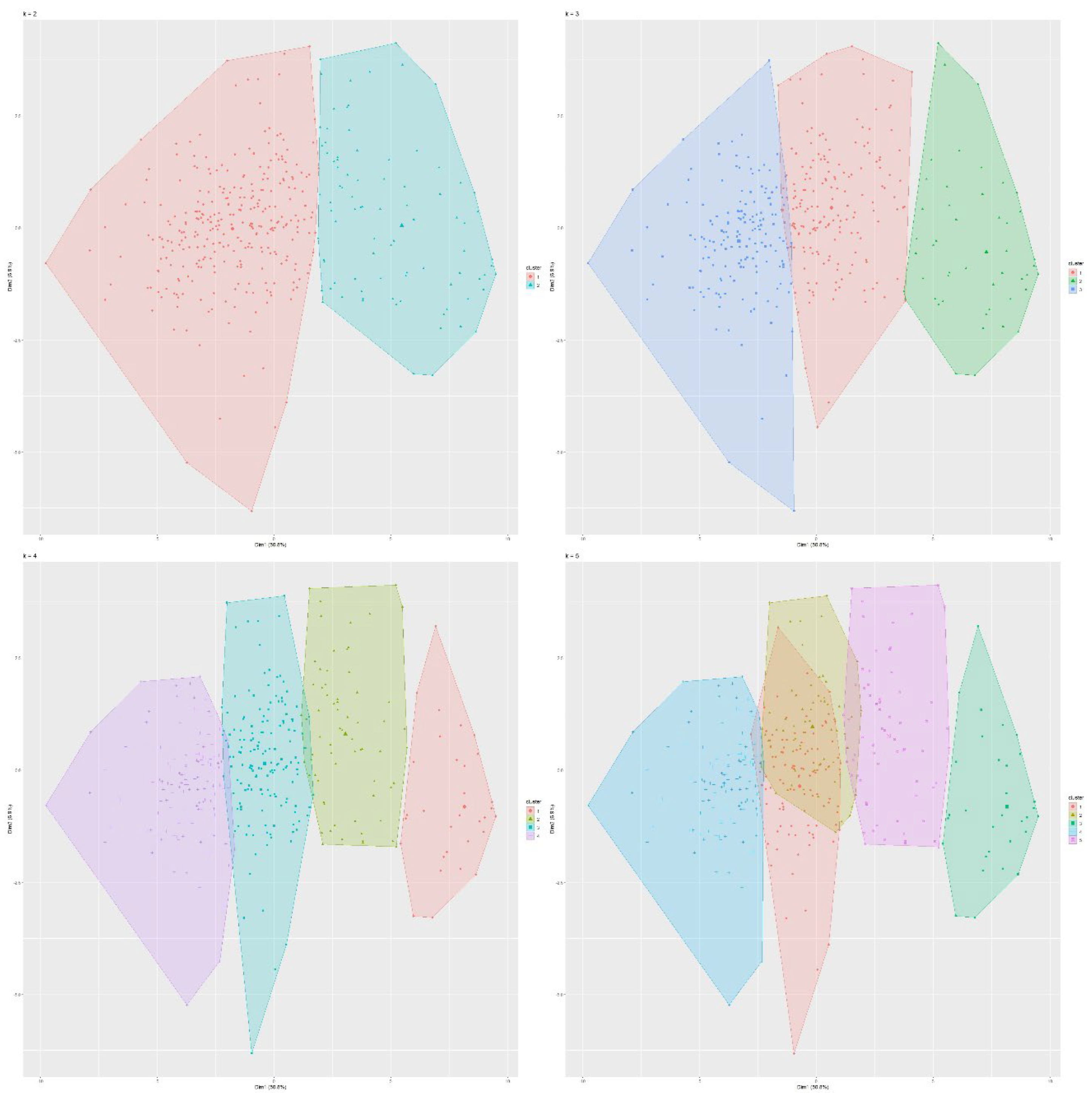
Figure 8.
Final PLS-SEM model with path coefficients and outer loadings.
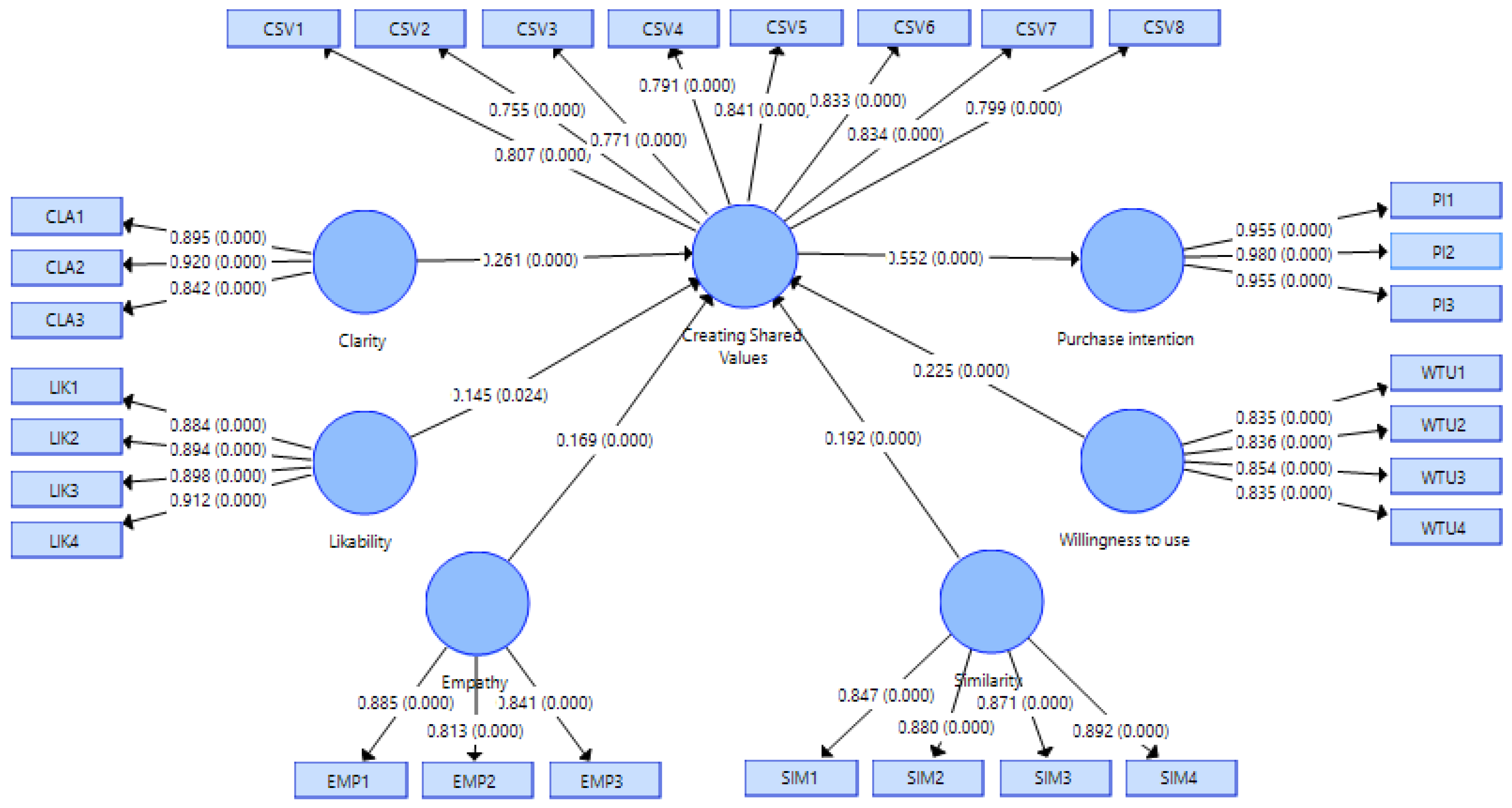

Table 1.
Comparison of selected models of consumer responses and purchase-related outcomes in short-video marketing.
Table 1.
Comparison of selected models of consumer responses and purchase-related outcomes in short-video marketing.
| Reference | Context and Method | Main Mechanism | Statistically Significant Factors | Reported Evaluation / Outcome |
|---|---|---|---|---|
| Luo et al. [1] | Social media short videos; SEM; N = 372 | Usefulness, ease of use, and entertainment → trust → purchase intention | Usefulness, ease of use, entertainment, trust | Short-video content characteristics significantly affect trust and purchase intention |
| Shen and Wang [2] | Short-video social commerce; SEM; N = 350 | Persona perception → shared value creation → purchase intention | Credibility, willingness to use, consistency, completeness, clarity, likability, empathy, similarity; regulatory focus and social presence as moderators | χ²/df = 2.173; CFI = 0.911; TLI = 0.897; RMSEA = 0.058 |
| Dwinanda et al. [3] | TikTok short-video ads; PLS-SEM; N = 486 | Advertising features → advertising value and attitude → purchase intention | Personalization, entertainment, credibility, interactivity | Advertising value and attitude mediate the effects of TikTok ad features on purchase intention |
| Zhai et al. [4] | Video-based eWOM; SEM/regression-based testing | Product review video characteristics → purchase intention; involvement as moderator | Information quality, product visualization, emotional polarity, source credibility | Video-based eWOM affects purchase intention; involvement moderates selected relationships |
| Ngo et al. [6] | Generation Z consumers; SEM; N = 350 | SFV marketing factors → brand attitude → purchase intention | Interesting content, perceived usefulness, scenario-based experience, interaction, enjoyment, celebrity involvement | χ²/df = 1.718; CFI = 0.951; TLI = 0.945; RMSEA = 0.045 |
| Yin et al. [5] | Silver consumers on SFV platforms; SEM; N = 284 | Social and technical platform characteristics → ERG needs → purchase intention | Social belonging, perceived trust, product relevance | R² for purchase intention = 0.460 |
| Feng et al. [16] | Taobao mini-detail short videos; TAM2-based SEM; N = 212 | Multimedia, virtual experience, recommendations → playfulness/usefulness → purchase intention | Multimedia effect, virtual experience, personalized recommendation, perceived playfulness, perceived usefulness | Perceived playfulness and usefulness mediate effects on purchase intention |
| Meng et al. [15] | TikTok SFV ads; grounded theory + OLS regression | Content characteristics → observed purchase behavior | Trustworthiness, expertise, attractiveness; nonlinear effects of authenticity and brand heritage | R² increases across model specifications; study links SFV ad content to observed behavior |
| Yin et al. [14] | SFV apps; PLS-SEM; N = 398 | Platform affordances → desire to postpone closure → purchase intention | Product relevance, social interaction affordance, entertainment affordance, product visibility affordance | Adjusted R²: PI = 0.498; DPC = 0.419; PR = 0.473 |
| Yu et al. [18] | Furniture short-video ads; SOR-based SEM | Platform/content stimuli → flow and telepresence → purchase intention | Social influence, entertainment value, interactivity, facilitating conditions, media richness, flow, telepresence | Flow and telepresence significantly increase purchase intention |
| Yu and Wu [19] | Furniture-brand short videos; ELM + OLS regression | Execution features → communication effect | Live segments, graphics, subtitles/topics, music, title type, video duration, product category | Communication Effect Index used as performance proxy |
| Jiang and Chen [17] | SFV platforms; SEM | Use and gratification + social presence → perceived value and attitude → digital dependency → purchase intention | Gratification, social presence, perceived value, attitude, digital dependency | GFI = 0.925; AGFI = 0.911; NFI = 0.975; NNFI = 0.992; RMSEA = 0.0296 |
| Present study | Bulgarian consumers; PLS-SEM; N = 409 | Clarity, likability, empathy, similarity, willingness to use → CSV → purchase intention | Clarity, likability, empathy, similarity, willingness to use, CSV | R²: CSV = 0.680; purchase intention = 0.307 |
Table 2.
Customer profiles in the sample (n = 409).
| Variables of the Sample | No. of Respondents | Percentage (%) | |
|---|---|---|---|
| 1. Gender | Male | 120 | 29.3 |
| Female | 289 | 70.7 | |
| 2. Age | Under 20 | 186 | 45.5 |
| Between 21 and 30 | 127 | 31.1 | |
| Between 31 and 40 | 32 | 7.8 | |
| Between 41 and 50 | 35 | 8.6 | |
| Over 50 | 29 | 7.1 | |
| 3. Place of residence | City/over 50,000 inhabitants | 236 | 57.7 |
| Town/1,000–50,000 inhabitants | 161 | 39.4 | |
| Village/under 1,000 inhabitants | 12 | 2.9 | |
| 4. Municipality | - | - | |
| 5. Monthly income per household member | Less than BGN 1454 | 170 | 41.6 |
| More than BGN 1454 | 239 | 58.4 | |
| 6. Education | High school | 277 | 67.7 |
| Bachelor | 75 | 18.3 | |
| Master | 49 | 12.0 | |
| PhD | 8 | 2.0 | |
| 7. Experience with social media | Less than 3 years | 23 | 5.6 |
| 3 to 5 years | 54 | 13.2 | |
| More than 5 years | 332 | 81.2 | |
| 8. Frequency of use of social media | Less than once a week | 4 | 1.0 |
| Once or twice a week | 6 | 1.5 | |
| Several times a week | 9 | 2.2 | |
| Once or twice a day | 38 | 9.3 | |
| Several times a day | 233 | 57.0 | |
| Several times an hour | 119 | 29.1 | |
| 9. Number of influencers that you follow on social media | Less than 10 | 188 | 46.0 |
| 10 to 20 | 103 | 25.2 | |
| 20 to 30 | 53 | 13.0 | |
| More than 30 | 65 | 15.8 | |
| 10. Time per day spent watching short videos on social media | Less than an hour | 150 | 36.7 |
| Between 1 and 2 hours | 140 | 34.2 | |
| Between 2 and 3 hours | 76 | 18.6 | |
| More than 3 hours | 43 | 10.5 | |
Table 3.
Average values by cluster and absolute differences between clusters, shown by indicators.
| CLA1 | CLA2 | CLA3 | LIK1 | LIK2 | LIK3 | LIK4 | EMP1 | EMP2 | EMP3 | SIM1 | SIM2 | |
|---|---|---|---|---|---|---|---|---|---|---|---|---|
| Cluster 1 | 3.728 | 3.851 | 3.573 | 3.621 | 3.346 | 3.275 | 3.777 | 3.440 | 2.595 | 3.142 | 2.722 | 2.754 |
| Cluster 2 | 2.510 | 2.530 | 2.230 | 2.050 | 1.810 | 1.650 | 2.070 | 1.830 | 1.550 | 1.610 | 1.450 | 1.440 |
| Difference | 1.218 | 1.321 | 1.343 | 1.571 | 1.536 | 1.625 | 1.707 | 1.610 | 1.045 | 1.532 | 1.272 | 1.314 |
| SIM3 | SIM4 | WTU1 | WTU2 | WTU3 | WTU4 | CSV1 | CSV2 | CSV3 | CSV4 | CSV5 | CSV6 | |
| Cluster 1 | 3.304 | 3.275 | 3.052 | 3.382 | 3.353 | 3.356 | 3.129 | 3.505 | 3.618 | 3.061 | 3.078 | 3.236 |
| Cluster 2 | 1.590 | 1.600 | 1.620 | 1.670 | 1.830 | 1.850 | 1.610 | 2.110 | 2.230 | 1.610 | 1.670 | 1.640 |
| Difference | 1.714 | 1.675 | 1.432 | 1.712 | 1.523 | 1.506 | 1.519 | 1.395 | 1.388 | 1.451 | 1.408 | 1.596 |
| CSV7 | CSV8 | PI1 | PI2 | PI3 | ||||||||
| Cluster 1 | 3.149 | 3.508 | 3.269 | 3.181 | 3.019 | |||||||
| Cluster 2 | 1.680 | 2.090 | 1.830 | 1.820 | 1.690 | |||||||
| Difference | 1.469 | 1.418 | 1.439 | 1.361 | 1.329 |
Table 4.
Factor loadings for retained indicators.
| Indicator Variable |
Factor Loading | Indicator Variable |
Factor Loading | Indicator Variable |
Factor Loading |
|---|---|---|---|---|---|
| CLA1 | 0.895 | SIM1 | 0.847 | CSV3 | 0.771 |
| CLA2 | 0.920 | SIM2 | 0.880 | CSV4 | 0.792 |
| CLA3 | 0.842 | SIM3 | 0.871 | CSV5 | 0.841 |
| LIK1 | 0.884 | SIM4 | 0.892 | CSV6 | 0.833 |
| LIK2 | 0.894 | WTU1 | 0.835 | CSV7 | 0.834 |
| LIK3 | 0.898 | WTU2 | 0.836 | CSV8 | 0.799 |
| LIK4 | 0.912 | WTU3 | 0.854 | PI1 | 0.959 |
| EMP1 | 0.885 | WTU4 | 0.835 | PI3 | 0.962 |
| EMP2 | 0.813 | CSV1 | 0.807 | ||
| EMP3 | 0.841 | CSV2 | 0.755 |
Table 5.
Construct reliability (DG rho and CR), convergent validity (AVE) and structural collinearity (VIF).
Table 5.
Construct reliability (DG rho and CR), convergent validity (AVE) and structural collinearity (VIF).
| Factor | DG rho | CR | AVE | VIF |
|---|---|---|---|---|
| CSV | 0.922 | 0.936 | 0.647 | 1.000 |
| Clarity | 0.863 | 0.916 | 0.785 | 2.118 |
| Empathy | 0.821 | 0.884 | 0.717 | 2.869 |
| Likability | 0.920 | 0.943 | 0.804 | 3.631 |
| Purchase intention | 0.917 | 0.960 | 0.922 | |
| Similarity | 0.907 | 0.928 | 0.762 | 2.490 |
| Willingness to use | 0.866 | 0.905 | 0.705 | 2.259 |
Note: DG rho > 0.70; CR > 0.70; AVE > 0.50; VIF < 5. No inner VIF is reported for Purchase Intention because it is not used as a predictor in the structural model.
Table 6.
Discriminant validity – Fornell–Larcker criterion.
| Creating Shared Values |
Clarity | Empathy | Likability | Purchase intention |
Similarity | Willingness to use | |
|---|---|---|---|---|---|---|---|
| Creating Shared Values |
0.804 | ||||||
| Clarity | 0.652 | 0.886 | |||||
| Empathy | 0.692 | 0.493 | 0.847 | ||||
| Likability | 0.731 | 0.723 | 0.726 | 0.897 | |||
| Purchase intention | 0.554 | 0.420 | 0.527 | 0.461 | 0.960 | ||
| Similarity | 0.682 | 0.464 | 0.722 | 0.658 | 0.518 | 0.873 | |
| Willingness to use | 0.694 | 0.504 | 0.67 | 0.658 | 0.541 | 0.670 | 0.840 |
Note: Diagonal values represent the square root of AVE.
Table 7.
Discriminant validity – HTMT.
| CSV | Clarity | Empathy | Likability | Purchase intention | Similarity | Willingness to use |
|
|---|---|---|---|---|---|---|---|
| CSV | |||||||
| Clarity | 0.729 | ||||||
| Empathy | 0.796 | 0.573 | |||||
| Likability | 0.792 | 0.808 | 0.835 | ||||
| Purchase intention | 0.602 | 0.471 | 0.611 | 0.502 | |||
| Similarity | 0.74 | 0.517 | 0.845 | 0.718 | 0.565 | ||
| Willingness to use | 0.771 | 0.581 | 0.793 | 0.729 | 0.608 | 0.747 |
Table 8.
Final PLS-SEM model with path coefficients, outer loadings, and hypothesis testing.
| Hypothesis | β | Mean | SD | t statistics |
p- values |
R2 | Q2 |
|---|---|---|---|---|---|---|---|
| CSV → Purchase intention | 0.554 | 0.551 | 0.04 | 13.946 | 0.000 | 0.307 | 0.279 |
| Clarity → CSV | 0.261 | 0.262 | 0.048 | 5.403 | 0.000 | 0.680 | 0.433 |
| Empathy → CSV | 0.169 | 0.17 | 0.046 | 3.715 | 0.000 | ||
| Likability → CSV | 0.145 | 0.144 | 0.063 | 2.291 | 0.029 | ||
| Similarity → CSV | 0.192 | 0.192 | 0.043 | 4.473 | 0.000 | ||
| Willingness to use → CSV | 0.225 | 0.223 | 0.05 | 4.476 | 0.000 |
Table 9.
Results of using ML algorithms to model value-based consumer responses toward short videos.
Table 9.
Results of using ML algorithms to model value-based consumer responses toward short videos.
| ML Method | MSE | RMSE | MAE | R2 |
|---|---|---|---|---|
| Decision Tree | 0.101 | 0.318 | 0.219 | 0.868 |
| SVM | 0.058 | 0.240 | 0.144 | 0.925 |
| Random Forest | 0.037 | 0.192 | 0.135 | 0.952 |
| AdaBoost | 0.036 | 0.190 | 0.122 | 0.953 |
Disclaimer/Publisher’s Note: The statements, opinions and data contained in all publications are solely those of the individual author(s) and contributor(s) and not of MDPI and/or the editor(s). MDPI and/or the editor(s) disclaim responsibility for any injury to people or property resulting from any ideas, methods, instructions or products referred to in the content. |
© 2026 by the authors. Licensee MDPI, Basel, Switzerland. This article is an open access article distributed under the terms and conditions of the Creative Commons Attribution (CC BY) license (http://creativecommons.org/licenses/by/4.0/).
Copyright: This open access article is published under a Creative Commons CC BY 4.0 license, which permit the free download, distribution, and reuse, provided that the author and preprint are cited in any reuse.