
Submitted:
04 July 2026
Posted:
06 July 2026
You are already at the latest version
Abstract
(1) Background: Medical cannabis (MC) is attracting attention globally due to its therapeutic potential; however, the preparedness of nursing students in countries where MC remains banned is limited. The convergent parallel mixed-methods study examined the knowledge, attitudes, beliefs, and intention. (2) Methods: A cross-sectional survey was conducted with 422 nursing students selected through simple random sampling at Dong Thap Medical College, Vietnam, and in-depth interviews were conducted with 10 purposefully selected participants. Descriptive statistics, ordinal logistic regression, and thematic analysis were used in the data analysis. (3) Results: Nursing students demonstrated average knowledge and positive attitudes and beliefs toward MC. Over 50% of students were undecided about supporting MC legalization. Deep knowledge and stronger beliefs about therapeutic benefits and safety were independently associated with higher intention to advocate for MC, while attitudes were not statistically significant. Four themes emerging include therapeutic value, safety and ethical concerns, professional readiness, and social, legal, and organizational impacts, providing contextual explanations for the quantitative results. (4) Conclusion: The adoption of MC is dependent not only on knowledge and beliefs but also on confidence in evidence-based practice, professional readiness, and regulatory oversight. Nursing education on MC can enhance future workforce readiness and support evidence-based healthcare policy.
Keywords:
medical cannabis
; nursing students
; nursing education
; Vietnam
; knowledge
; beliefs
; attitudes
1. Introduction
Medical cannabis (MC) has garnered global attention because of its potential to alleviate chronic pain, chemotherapy-induced nausea and vomiting, epilepsy, muscle spasms associated with multiple sclerosis, and certain palliative care needs [1,2,3,4]. As the evidence base supporting MC expands, numerous countries have legalized or regulated its use and integrated it into their medical systems [5,6,7]. Consequently, healthcare professionals require comprehensive, evidence-based knowledge of the appropriate indications for MC, its safety profile, potential adverse effects, ethical issues, and regulatory policies to ensure safe and effective patient care [8,9]. As frontline healthcare providers, nurses are often responsible for counseling patients on the potential benefits and risks of emerging therapies, including MC. Accordingly, nursing students, as the future nursing workforce, require adequate preparation to deliver evidence-based information and participate in multidisciplinary care if MC is introduced into clinical practice. However, many studies in Canada, Israel, Cyprus, and Belarus, etc. consistently indicate that nursing students possess limited knowledge in areas such as clinical indications, dosage, adverse effects, drug interactions, and legal regulations of MC, although they generally maintain positive attitudes toward MC [10,11,12,13] . Many previous studies described knowledge levels and identified factors associated with acceptance of MC but provided limited understanding of why students hold particular beliefs, how legal and cultural contexts influence their perceptions, or what concerns they have regarding future clinical implementation. Consequently, the contextual and experiential factors underlying acceptance of MC remain insufficiently understood, particularly in countries where cannabis remains prohibited.
Vietnam provides a unique context for studying these issues. Under Decree 144/2021/NĐ-CP, cannabis and its derivatives are classified as Category I Narcotics and are prohibited for medical and social [14]. This prohibition contrasts markedly with the growing international acceptance of MC and creates a distinctive legal, educational, and cultural environment for nursing students. Despite the current legal restrictions, future Vietnamese nurses may eventually encounter patients seeking information about cannabis-based therapies or participate in healthcare systems responding to future policy changes. Understanding nursing students’ preparedness under the current prohibition policy is therefore important for anticipating future educational needs and informing evidence-based policy development.
To our knowledge, the existing published literature lacks a comprehensive mixed-methods study examining Vietnamese nursing students’ knowledge, beliefs, attitudes, perceptions, and acceptance of medical cannabis. Previous research has predominantly utilized quantitative cross-sectional designs in countries where medical cannabis is legally available or undergoing policy implementation [10,15,16,17].This is an important literature gap that the mixed-methods approach might provide a more comprehensive knowledge about whether nursing students support MC and why they hold these views within Vietnam’s unique legal and cultural context. Such evidence may assist nursing educators, healthcare institutions, and policymakers in preparing the future nursing workforce should regulatory changes regarding MC occur. Accordingly, this convergent parallel mixed-methods study aimed (i) to examine nursing students’ knowledge, attitudes, beliefs (KAB) and intention to support medical cannabis and its potential use in healthcare settings through quantitative and qualitative approaches;(ii) to identify significant predictors influencing intentions to support medical cannabis use and future legalization among Vietnamese nursing students, and (iii) to integrate quantitative and qualitative findings to obtain a comprehensive understanding of nursing students’ acceptance and perceptions of medical cannabis within the context of Vietnam’s current prohibition policy.
2. Materials and Methods
2.1. Study Design and Settings
This study employed a convergent parallel mixed-methods design and was conducted at Dong Thap Medical College, Dong Thap Province, Vietnam, from May 2024 to February 2025. During the quantitative phase, a structured self-administered questionnaire assessed nursing students’ knowledge, attitudes, beliefs, and intention regarding medical cannabis. Concurrently, the semi-structured in-depth interviews (IDIs) questionnaire explored participants’ perceptions, concerns, beliefs, professional perspectives, and preparedness related to medical cannabis. Integration of quantitative and qualitative findings occurred during the interpretation stage to identify areas of convergence, complementarity, and divergence between the two datasets.
2.2. Sampling and Recruitment
The target population comprised nursing students enrolled at Dong Thap Medical College during the 2024-2025 academic year. For the quantitative study, the sample size was estimated based on recommendations for regression analysis, which suggest a minimum ratio of 10 participants per questionnaire item. Given that the initial questionnaire contained 43 items, this yielded a minimum sample of 430 participants. To account for potential nonresponse and incomplete questionnaires, an additional 10% was added, resulting in a target sample size of 470 participants.
A simple random sampling method was used to select participants from the official list of nursing students. Each eligible student was assigned a unique identification number, and a random number was generated for each student by Microsoft Excel. The list was then sorted according to the generated random numbers, and students were selected sequentially from the top of the randomized list until the required sample size was reached. Inclusion criteria were nursing students currently enrolled at Dong Thap Medical College and willing to participate in the study. Students who were absent during data collection or declined participation were excluded. Following data collection, questionnaire items were screened for completeness and consistency. After excluding incomplete responses and statistical outliers, 422 participants were retained for the final analysis.
For the qualitative study, participants were purposively selected from the quantitative sample to ensure variation in demographic characteristics and levels of intention toward medical cannabis. Students who volunteered for the interviews and met the eligibility criteria were invited to participate. In-depth interviews were conducted until data saturation was achieved, which occurred after interviewing 10 nursing students when no new themes or insights emerged from subsequent interviews.
2.3. Research Instruments
2.3.1. Quantitative Instrument
Questionnaire development
The quantitative questionnaire was developed through a comprehensive review and synthesis of previous studies [10,11,12,13,16,17,18]. The literature synthesis for developing the quantitative questionnaire was summarized in Table B1/Appendix B. Relevant domains and item contents were identified from the literature and adapted to fit the Vietnamese healthcare and educational context, where medical cannabis remains prohibited. The initial item pool (43 items) contained five major components: socio-demographic characteristics (4 items), knowledge (18 items), attitudes (12 items), beliefs (8 items), and intention (1 item) regarding medical cannabis and its details were described in A1. Initial structured self-administered questionnaires/Appendix A. The subthemes of three constructs (K, A, and B) were displayed in Table B2/Appendix B.
Content validation
For ensuring the measurement quality, content validity was evaluated by a panel of three experts in nursing, public health, and substance-use research. Three experts independently evaluated the relevance of each questionnaire item by using a four-point rating scale: 1 = not relevant, 2 = somewhat relevant, 3 = quite relevant, and 4 = highly relevant. The item-level Content Validity Index (I-CVI) was calculated by dividing the number of experts who rated an item as 3 or 4 by the total number of experts [19]. The scale-level CVI average (S-CVI/Ave) was determined by averaging the I-CVI scores across items, while the universal agreement scale-level CVI (S-CVI/UA) reflected the percentage of items rated 3 or 4 by all experts. The S-CVI/Ave and S-CVI/UA of at least 0.80 were considered acceptable [20]. The content validity indices of S-CVI/Ave and S-CVI/UA were calculated at 0.95 and 0.86, respectively, indicating satisfactory content validity (Details provided in Table B.3/Appendix B).
Reliability assessment and item refinement
A pilot study involving 30 nursing students was conducted to evaluate the internal consistency reliability of the attitude and belief domains. Cronbach’s alpha coefficients ≥0.70 were considered indicative of acceptable internal consistency reliability [20]. Items with corrected item-total correlations below 0.30 or those that substantially improved Cronbach’s alpha when deleted were considered for removal [20]. The attitude questionnaire showed acceptable internal consistency, with a Cronbach’s alpha of 0.906, and corrected item-total correlations of items greater than 0.3. For belief questionnaire, two items (B5 and B6) were removed because their corrected item-total correlations were relatively lower than those of the remaining items and their removal improved Cronbach’s alpha from 0.786 to 0.897, and were conceptually distinct from the remaining items, which primarily reflected therapeutic and clinical integration beliefs. Regarding the knowledge domain, it consists of dichotomously scored items (0 = incorrect/”I do not know,” 1 = correct) and was assessed using the Kuder–Richardson Formula 20 (KR-20). For knowledge questionnaire, 2 items (K12 and K17) were removed due to HR-reliability coefficient < 0.7. The final knowledge scale including 16 items demonstrated acceptable reliability (KR-20 = 0.73) (Table B4/Appendix B). After item refinement, the questionnaire remained 39 items and the details were described in A2. Final structured self-administered questionnaire used in the survey/ Appendix A.
2.3.2. Qualitative Instrument
A semi-structured in-depth interview (IDI) guide was developed to explore nursing students’ perceptions, experiences, concerns, ethical viewpoints, preparedness, and acceptance regarding medical cannabis in healthcare settings. The interview guide included 11 open-ended questions focusing on perceived benefits and risks, professional perspectives, educational preparedness, and attitudes toward future legalization and clinical implementation of medical cannabis in Vietnam in section A3. Semi-Structured In-Depth Interview Guide Exploring Nursing Students’ Perceptions and Acceptance of Medical Cannabis and Its Potential Use in Healthcare Settings/Appendix A.
2.4. Data Collection
Data collection was conducted between May and December 2024. After obtaining informed consent, eligible nursing students completed the self-administered questionnaire in classroom settings. Completion required approximately 15–20 minutes. Concurrently, in-depth interviews were conducted, each lasting approximately 45-60 minutes, with purposively selected participants using a semi-structured interview guide.
2.5. Measures
The final self-administered questionnaire after refinement consisted of five major components: socio-demographic characteristics, knowledge, attitudes, beliefs, and intention regarding medical cannabis. Socio-demographic information is used to collect data of age, gender, year of nursing study, ethnicity and religion.
Continuous variables were summarized using means and standard deviations, whereas categorical variables were described using frequencies and percentages.
The knowledge about MC consisted of 16 multiple-choice items. Each correct answer was scored as 1, while incorrect or “I do not know” responses were scored as 0. The average knowledge score ranged from 0 to 1, with higher scores indicating greater knowledge regarding medical cannabis.
The attitude domain included 12 items measured by a 5-point Likert scale ranging from 1 (strongly disagree) to 5 (strongly agree). Negatively worded items (A3, A4, A8 and A11), which expressed concerns, risks, or opposition toward medical cannabis use, were reverse-coded prior to analysis. Next, the beliefs consisted of 6 items, also being measured by a 5-point Likert scale. The average score of attitude and beliefs ranged from 1 to 5, with higher scores indicated more favorable attitudes toward medical cannabis.
The last item includes the intention to support MC that was treated as the dependent variable in ordinal logistic regression analyses. Responses were coded according to their natural ordinal progression as 1 = not accept, 2 = undecided, and 3 = accept, with higher values indicating greater acceptance toward medical cannabis.
2.5. Data Analysis
2.5.1. Quantitative Analysis
Phase 1: Preliminary Analysis
Descriptive statistics were used to summarize nursing students’ characteristics and variables in knowledge, attitudes, and beliefs regarding MC and intention. Continuous variables, such as age, K, A, and B, were presented as means and standard deviations (SDs), whereas categorical variables, such as gender, academic year, religion, and intention to support MC, were summarized using frequencies and percentages.
Phase 2: Screening and analysis
Ordinal logistic regression (OLR) was used to identify factors associated with acceptance of medical cannabis. Univariable OLR analyses were initially performed to screen potential predictors. Variables with p-values <0.20 in the univariable analyses were entered into the multivariable OLR model. Adjusted odds ratios (AORs), 95% confidence intervals (CIs), and p-values were reported. Statistical significance was set at p <0.05. The proportional odds assumption was assessed using the test of parallel lines, with a non-significant result (p >0.05) indicating that the assumption was satisfied. Multicollinearity among predictors was evaluated using variance inflation factors (VIFs) and tolerance statistics. VIF values <5 and tolerance values >0.20 were considered indicative of acceptable multicollinearity. Statistical analyses were performed using SPSS version 20.0 (IBM Corp., Armonk, NY, USA).
2.5.2. Qualitative Analysis
Interview recordings were transcribed verbatim and analyzed by thematic analysis. The transcripts were repeatedly read to achieve familiarity with the data. Initial codes were generated inductively and manually managed using Microsoft Excel. Codes with similar meanings were grouped into categories and subsequently organized into broader themes. The themes were reviewed, refined, and defined through an iterative process to ensure that they accurately reflected nursing students’ perceptions, concerns, preparedness, and acceptance regarding medical cannabis. Representative quotations were selected to illustrate key themes.
2.5.3. Mixed-Methods Integration
Quantitative and qualitative findings were analyzed independently and subsequently integrated using a side-by-side joint display approach. Areas of convergence, complementarity, and discrepancy between the two datasets were identified to provide a comprehensive understanding of nursing students’ knowledge, beliefs, attitudes, and acceptance regarding medical cannabis.
2.6. Ethical Considerarions
The study was conducted in accordance with the ethical principles of the Declaration of Helsinki and was approved by the Ethics Committee of Dong Thap Medical College, Vietnam (Protocol No. 38/10042024-59/QD-CDYT; approved on 15th May 2024). Participation in both the quantitative and qualitative studies was voluntary. Prior to data collection, all participants were informed about the study objectives, procedures, potential benefits and risks, confidentiality of the collected data, and their right to decline participation or withdraw from the study at any time without consequence. All participants received written informed consent before participation. For the qualitative component, participants provided additional consent for audio recording of the interviews. Questionnaire responses and interview transcripts were treated confidentially, de-identified prior to analysis, and stored securely with access restricted to the research team.
3. Results
3.1. Quantitative Findings
3.1.1. Nursing students’socio-demographic characteristics, kowledge, attitudes, beliefs, and intentions to support medical cannabis legalization
In Table 1, the median age of participants was 20 years, and the majority were female (76.3%). Most participants reported no religion (71.6%). The mean knowledge score was 8.34 ± 2.83 out of a maximum score of 16, indicating that they answered approximately 52.1% of the knowledge items correctly. The highest score was observed in the clinical practice considerations subdomain (73.7% of the maximum score), whereas the lowest was observed in the safety and adverse effects subdomain (44.3%).
Overall, participants exhibited a positive attitude towards medical cannabis, with the mean attitude score of 44.11 ± 6.55 out of 60, corresponding to 73.5% of the maximum attainable score. Perceived health risks and misuse (77.5%), education needs and preparedness (76.5%), and professional responsibility (73.3%) demonstrated the highest percentage score. The mean beliefs score was 20.44 ± 3.71 out of 30, indicating generally positive beliefs about medical cannabis, particularly about its therapeutic benefits.
For intentions to support the legalization of medical cannabis, over half of participants remained undecided (56.2%), while approximately one-third expressed support (32.7%) and 11.1% did not support future legalization.
3.1.2. Predictors of Intention To Support Medical Cannabis Use And Future Legalization Among Vietnamese Nursing Students

Table 2.
Univariable and multivariable OLR analyses of factors associated with intention to support MC.
Table 2.
Univariable and multivariable OLR analyses of factors associated with intention to support MC.
| Predictors | Univariable β |
OR1 (95% CI)2 | p-value |
Adjusted β | aOR3 (95%CI)2 | p-value |
|---|---|---|---|---|---|---|
| Age | 0.112 | 1.12 (1.02-1.22) | 0.014 | 0.028 | 1.03 (0.93–1.14) | 0.592 |
| Gender (Female vs Male) | 0.54 | 1.72 (1.10-2.65) | 0.017 | 0.351 | 1.42 (0.85–2.37) | 0.180 |
| Religion (Yes vs No) | 0.29 | 1.33 (0.88-2.10) | 0.17 | 0.324 | 1.38 (0.86–2.22) | 0.178 |
| Knowledge about MC | 0.069 | 1.07 (1.01-1.14) | 0.043 | 0.083 | 1.09 (1.01–1.18) | 0.043 |
| Attitude towards MC | 0.15 | 1.16 (1.12-1.21) | <0.001 | 0.006 | 1.01 (0.96–1.06) | 0.823 |
| Beliefs about MC | 0.402 | 1.5 (1.39-1.61) | <0.001 | 0.39 | 1.48 (1.35 –1.63) | <0.001 |
|
0.187 | 1.21 (1.03–1.41) | 0.021 | |||
|
0.792 | 2.21 (1.68–2.91) | <0.001 |
Notes: 1 OR = crude odds ratio; 2 95% CI = 95% confidence interval; 3 aOR = adjusted odds ratio.
The multivariable OLR model was statistically significant (χ² = 175.161, p < 0.001) and satisfied the proportional odds assumption (Test of Parallel Lines, p = 0.461), indicating the appropriateness of the ordinal logistic regression model. The model demonstrated moderate explanatory power (Nagelkerke pseudo-R² = 0.402) and showed no evidence of problematic multicollinearity (Tolerance = 0.272–0.934, VIF = 1.070–3.679). After adjustment, higher total knowledge scores, stronger beliefs regarding therapeutic benefits, and stronger beliefs regarding safety and clinical integration were independently associated with greater inyention to support the legalization of medical cannabis.
3.2. Qualitative Findings
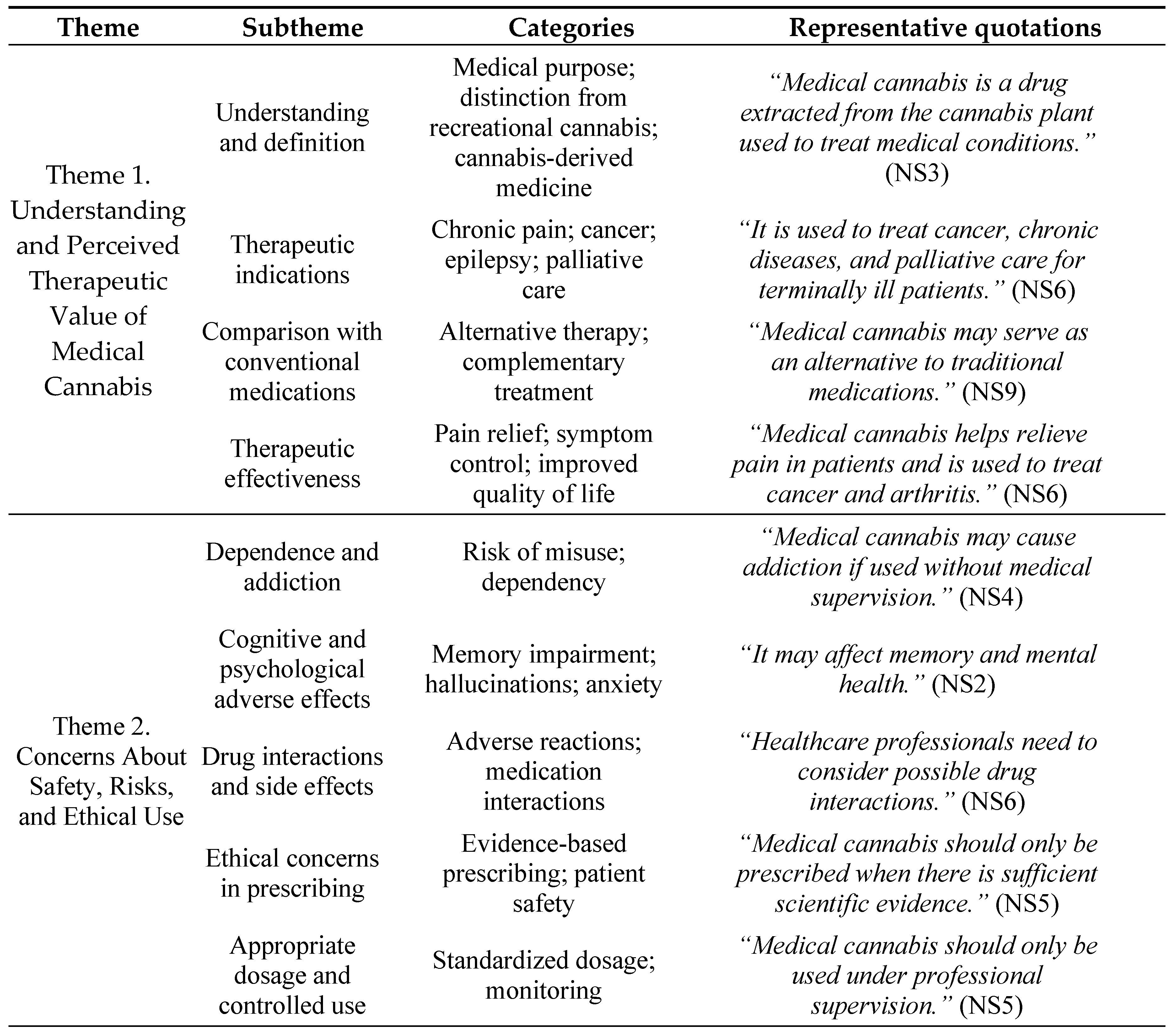
Data collected in in-depth interviews from 10 nursing students were analyzed. Thematic analysis identified four overarching themes that reflected the understanding of medical cannabis, perceived benefits and risks, professional readiness for its clinical implementation, and perspectives on its future legalization and integration into healthcare practice in Vietnam. Each theme comprised several interrelated subthemes and was supported by representative quotations from the nursing students (identified as NS1–NS10).
Theme 1. Understanding and Perceived Therapeutic Value of Medical Cannabis
Nursing students (NS) generally demonstrated a basic understanding of medical cannabis as a therapeutic agent. NS3 explained, “Medical cannabis is a drug extracted from the cannabis plant used to treat medical conditions.” NS viewed medical cannabis as a potential adjunct or alternative to conventional therapies. “Medical cannabis may serve as an alternative to traditional medications,” stated NS9. Some NS further recognized the therapeutic value of medical cannabis, such as chronic pain, cancer, epilepsy, and palliative care. As reflected in NS6’s response, “Medical cannabis helps relieve pain in patients and is used to treat cancer and arthritis.” Overall, NS recognized the potential clinical benefits of medical cannabis, particularly its role in symptom management and improving patients’ quality of life. However, its use should be evidence-based and medically supervised.
Theme 2. Concerns About Safety, Risks, and Ethical Use
NS consistently expressed concerns regarding its safety, potential risks, and ethical use in clinical practice. The biggest concern was the possibility of dependence and addiction due to prolonged or inappropriate use. “Medical cannabis may cause addiction if it is used without appropriate medical supervision.” (NS4). Another similarly stated, “There is a risk that patients may become dependent on medical cannabis if it is overused.” (NS8).
Furthermore, concerns about potential cognitive and psychological side effects, including memory impairment, reduced concentration, hallucinations, anxiety, and other mental health issues, have contributed to uncertainty of MC clinical application. A nursing student commented, “Medical cannabis may affect memory and mental health, especially if patients use it inappropriately.” (NS2). The interactions between prescription of MC with other medications and unwanted side effects may compromise patient safety. “Healthcare professionals need to consider possible drug interactions and monitor patients carefully during treatment.” (NS6). Moreover, the safety of medical cannabis depend on the standardized prescribing guidelines and close medical supervision for minimizing misuse and adverse outcomes. As a NS remarked, “Medical cannabis should only be used at an appropriate dosage under the supervision of qualified healthcare professionals.” (NS5). Thus, MC clinical application should be accompanied by rigorous regulation, professional oversight, and evidence-based practice to ensure patient safety.
Next, an important subtheme was ethical considerations. Prescribing or recommending should be guided by scientific evidence, professional ethics, and patient safety rather than personal opinions or social pressure. “Medical cannabis should only be prescribed when there is sufficient scientific evidence and clear clinical indications.” (NS9). “Healthcare professionals have an ethical responsibility to ensure that patients fully understand both the potential benefits and risks before initiating treatment.” (NS7).
Theme 3. Professional Readiness for Clinical Implementation
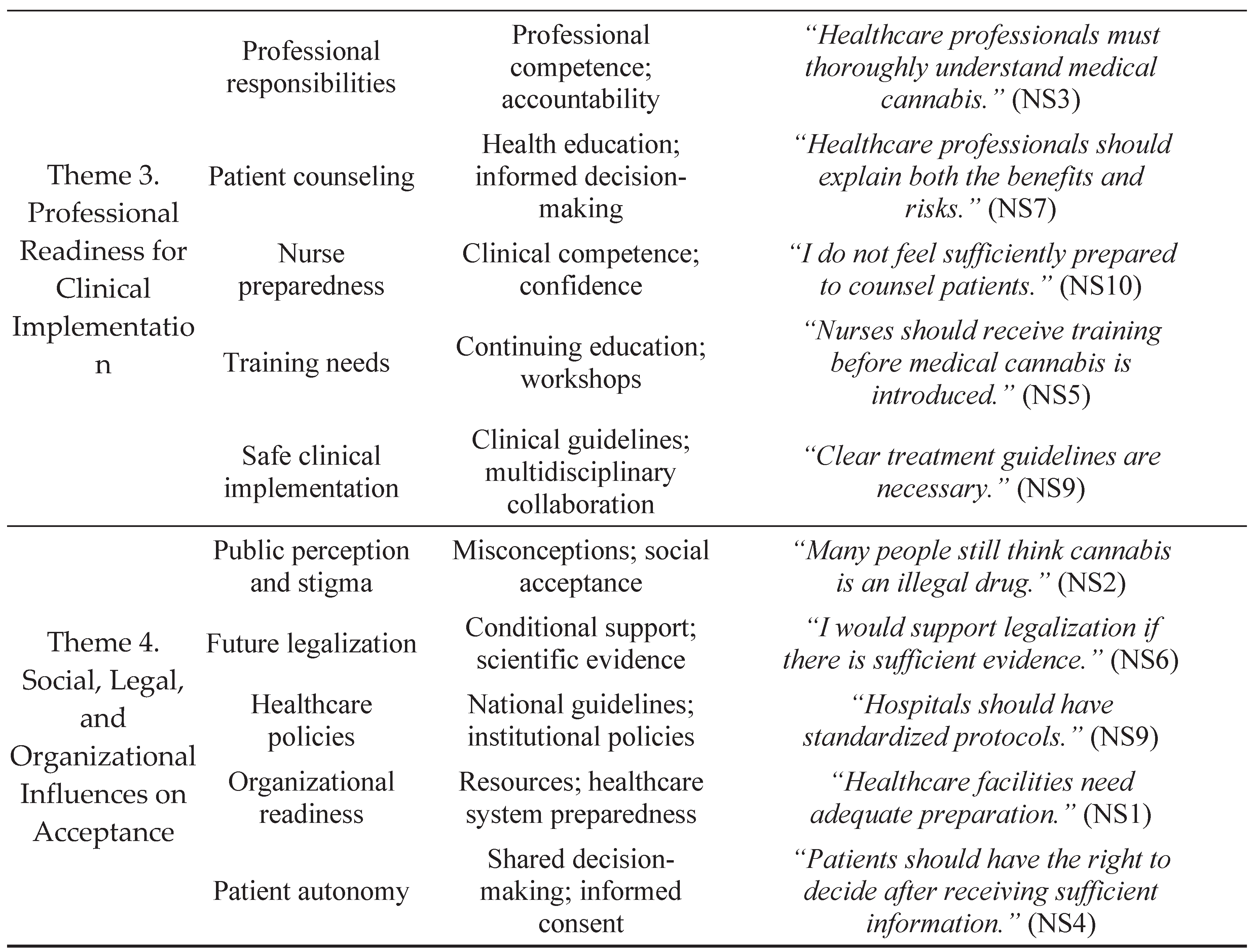
The integration of medical cannabis into healthcare practice would depend on the professional readiness of healthcare providers. Nurses should possess comprehensive knowledge of medical cannabis to support safe patient care and informed clinical decision-making. “Healthcare professionals must thoroughly understand medical cannabis and prepare adequate knowledge to provide proper counseling for patients.” (NS3). Nurses should provide accurate, balanced, and evidence-based information regarding the therapeutic benefits, potential risks, appropriate dosage, and possible adverse effects of medical cannabis. A NS commented, “Healthcare professionals must be honest when counseling patients about medical cannabis and allow patients to make their own decisions regarding its use in their treatment.” (NS7).
Despite recognizing these professional responsibilities, NS acknowledged the inadequate preparation to advise patients about medical cannabis because of limited education and clinical exposure. Consequently, NS identified comprehensive education and professional training as prerequisites for future implementation. They recommended structured educational programs, expert-led workshops, seminars, online learning opportunities, and evidence-based training to improve nurses’ competence and confidence. As a NS explained, “Nurses should receive training and guidance on medical cannabis before it is widely applied in treatment.” (NS5).
The findings suggest that NS are generally open to the future use of medical cannabis; however, they believe that adequate professional preparation, continuing education, and evidence-based clinical guidance are essential before its application in healthcare practice.
Theme 4. Social, Legal, and Organizational Influences on Support.
Nursing students’ support for medical cannabis is strongly influenced by broader social, legal, and organizational factors, not simply its therapeutic potential. Public perception of cannabis in Vietnam remains largely negative because it is commonly associated with illicit drug use and addiction. This stigma could hinder public acceptance of medical cannabis, even if scientific evidence supports its therapeutic use. As a NS remarked, “Many people still think cannabis is an illegal drug, so they may not distinguish medical cannabis from recreational cannabis.” (NS2).
Currently, cannabis remains prohibited under Vietnamese law. It is a major influence on NS’ views. A NS stated, “If medical cannabis is legalized in Vietnam and there is sufficient scientific evidence supporting its effectiveness, I would support its use under strict regulations.” (NS6). NS generally viewed legalization as a gradual process that should be guided by scientific evidence, public health priorities, and careful regulatory oversight. The national clinical guidelines, standardized prescribing protocols, clear regulatory policies, and institutional support systems should be established before medical cannabis is introduced into routine clinical practice. As a NS explained, “Hospitals should have clear treatment guidelines, and healthcare professionals should receive adequate training before medical cannabis is used in clinical practice.” (NS9). Respect for patient autonomy is also an important consideration. The treatment decisions should be made collaboratively between patients and healthcare professionals. As a NS noted, “Patients should have the right to decide whether to use medical cannabis after receiving sufficient information from healthcare professionals.” (NS4).
In conclusion, nursing students’ support was closely linked to the establishment of a robust legal framework, public education to reduce stigma, evidence-based healthcare policies, organizational preparedness, and respect for patient autonomy. These findings suggest that acceptance of medical cannabis extends beyond individual beliefs and professional competence to encompass broader societal and healthcare system readiness for its future implementation in Vietnam.
Table 3.
Summary of Themes, Subthemes, Categories, and Representative Quotations.
3.3. Integration of Quantitative and Qualitative Findings
Table 4.
Joint Display Integrating Quantitative and Qualitative Findings.
| Quantitative Findings | Qualitative Findings | Meta-inference |
|---|---|---|
|
Beliefs towards MC Moderately positive beliefs (68.1% of the maximum score). Beliefs regarding therapeutic benefits and safety/clinical integration were independently associated with greater support for MC legalization |
Theme 2: Concerns About Safety, Risks, and Ethical Use Participants recognized both the therapeutic benefits and potential risks of medical cannabis, including addiction, psychological adverse effects, ethical prescribing, and the need for standardized dosage and monitoring. |
Complementarity: OLR analysis identified beliefs as the strongest predictors of acceptance, whereas qualitative findings explained the specific beliefs influencing acceptance, including confidence in therapeutic effectiveness and concerns regarding safety and ethical use. |
|
Knowledge about MC Overall knowledge regarding medical cannabis (52.1% of the maximum score), with the highest performance in clinical practice considerations and the lowest in safety and adverse effects. |
Theme 1: Understanding and Perceived Therapeutic Value of Medical Cannabis NS demonstrated a basic understanding of medical cannabis, recognized its therapeutic indications, and viewed it as a potential alternative treatment. Limitations in knowledge about clinical use. |
Convergence: Both findings indicate that participants possessed basic but incomplete knowledge regarding medical cannabis, particularly concerning its safe clinical application. |
|
Attitudes towards MC Positive attitudes toward medical cannabis (73.5% of the maximum score), with strong scores for perceived health benefits, professional responsibility, and educational preparedness |
Theme 3: Professional Readiness for Clinical Implementation NS expressed positive professional attitudes toward the future clinical implementation of medical cannabis but emphasized the need for education, professional training, and evidence-based practice before its implementation |
Complementarity: Quantitative findings demonstrated positive attitudes, while qualitative findings explained that these attitudes were conditional upon adequate education, professional competence, and clinical guidelines. |
| Attitude was significant in the univariable analysis but was not independently associated with acceptance after adjustment for other predictors. | NS generally expressed favorable professional attitudes; however, they repeatedly highlighted inadequate preparedness and insufficient education regarding medical cannabis. | Divergence (partial): Although attitudes appeared positive descriptively, they did not independently predict acceptance after adjustment. Qualitative findings suggest that positive attitudes alone were insufficient to support acceptance without adequate knowledge, professional training, and confidence in safe clinical implementation. |
|
Intentions to support legalization of MC 32.7% of nursing students accepted future legalization of medical cannabis, and more than half remained undecided (56.2%). OLR analysis demonstrated that greater knowledge and stronger beliefs regarding therapeutic benefits and safety were associated with greater acceptance. |
Theme 4: Social, Legal, and Organizational Influences on Acceptance Participants expressed conditional support for legalization, emphasizing that legalization should occur only after scientific evidence, regulatory approval, public education, organizational preparedness, and protection of patient autonomy were established. |
Convergence: Both datasets indicate cautious rather than unconditional acceptance of medical cannabis. Acceptance depended on scientific evidence, safety, legal regulation, and healthcare system readiness. |
Integration of the quantitative and qualitative findings resulted in substantial convergence, with only limited divergence. The result consistently revealed that nursing students possessed moderate knowledge about MC and favorable attitudes and beliefs toward its potential therapeutic use. However, nursing students also have concerns about safety, ethical prescribing, and the need for professional training before MC implementation in healthcare practice. The multivariable ordinal logistic regression identified knowledge and beliefs about therapeutic benefits and safety as significant predictors of the intention to support medical cannabis. Qualitative findings additionally clarified these influences by underlining nursing students’ focus on evidence-based practice, standardized clinical guidelines, and professional preparedness.
Although attitudes toward medical cannabis were generally positive in the quantitative descriptive analysis, they were not independently associated with acceptance after adjustment for other predictors. The qualitative findings helped explain this apparent discrepancy by indicating that positive attitudes alone were insufficient to support acceptance without adequate knowledge, professional competence, legal regulation, and organizational readiness. Overall, the two strands of evidence were largely complementary and together suggest that acceptance of medical cannabis among Vietnamese nursing students is not shaped only by individual knowledge and beliefs but also by confidence in safe clinical implementation within an appropriate legal and healthcare framework.
4. Discussion
This convergent parallel mixed-methods study revealed Vietnamese nursing students’ moderate knowledge, positive attitudes and beliefs regarding MC possible therapeutic benefits. Nevertheless, most of them remained uncertain about supporting future legalization, demonstrating a reserved stance rather than full endorsement. The students with greater knowledge and stronger beliefs in the benefits and safety of medical cannabis were more likely to support its use, whereas attitudes alone did not predict support when controlling for other variables. Qualitative results further revealed that acceptance depended on perceived benefits, concerns related to patient safety, ethical prescribing, professional preparedness, legal regulations, and organizational readiness. The integration of quantitative and qualitative data provides a comprehensive understanding of nursing students’ perspectives and the importance of educational, professional, and policy contexts in shaping future acceptance of medical cannabis in Vietnam.
4.1. Nursing Students Demonstrated Moderate Knowledge, Positive Attitudes and Beliefs Toward Medical Cannabis
Vietnamese nursing students demonstrated moderate knowledge and generally positive attitudes toward medical cannabis. This finding is consistent with international research among nursing and medical students. For instance, nursing students in Spain exhibited limited understanding of medical cannabis indications, adverse effects, and legal considerations yet maintained favorable attitudes toward its therapeutic use [17]. Similarly, nursing students in Israel and the United States demonstrated an insufficient grasp but recognized the clinical value of medical cannabis and expressed interest in further education [10]. In Canada, nursing students identified significant instructional gaps regarding medical cannabis, despite positive attitudes and a recognized need for greater curriculum integration [13]. Collectively, these results indicate that insufficient knowledge of medical cannabis continues to be a persistent educational challenge across healthcare settings, irrespective of national cannabis policy differences.
Several contextual factors may account for the moderate level of knowledge. First, medical cannabis remains prohibited under Vietnamese legislation; therefore, students have virtually no opportunity to observe its clinical application or interact with patients receiving cannabis-based therapies. Second, medical cannabis is not currently incorporated into undergraduate nursing curricula, limiting students’ exposure to evidence-based education regarding its pharmacology, therapeutic indications, adverse effects, and legal regulations. Third, because cannabis continues to be socially associated with illicit drug use in Vietnam, public discussion and professional education regarding its medical application are relatively limited compared to countries where medical cannabis has been legalized. As a result, many students rely on international media, online resources, or informal information sources, which vary in scientific quality. These contextual factors likely contribute to the moderate level of knowledge observed in this study and differentiate Vietnam from countries where medical cannabis has been integrated into healthcare education and clinical practice.
Despite their moderate knowledge, participants demonstrated positive attitudes regarding perceived therapeutic benefits, professional responsibility, and educational preparedness. Some studies reported that nursing students often maintain favorable attitudes toward medical cannabis even when their factual knowledge is limited [10,13,17]. The increasing exposure to international scientific evidence on the therapeutic use of medical cannabis might affect students’ recognition of the potential value of emerging therapies, even in settings where such therapies are not yet legally available. This perspective is further reinforced by studies among medical students in Serbia and the United States, which reported generally favorable attitudes toward medical cannabis despite variability in knowledge and previous educational exposure [22,23]. In conclusion, attitudes toward medical cannabis may be influenced not only by formal education but also by increasing global awareness of its therapeutic applications.
Participants also demonstrated moderately positive beliefs about medical cannabis with respect to therapeutic benefits and potential integration into healthcare practice. The results of qualitative study revealed that nursing students consistently recognized the potential of medical cannabis to relieve chronic pain, improve symptom management, and enhance quality of life for patients with selected medical conditions. However, these positive beliefs were accompanied by substantial concerns regarding dependence, cognitive and psychological adverse effects, drug interactions, ethical prescribing, and the need for standardized dosing and close clinical monitoring. Nurses in Cyprus and medical students in Belarus have had similar concerns about the uncertainties regarding its safety profile, adverse effects, and appropriate clinical use [12,15]. The qualitative findings thus complement the quantitative results by illustrating that students’ beliefs were not characterized by unconditional support but instead reflected a balanced, evidence-based perspective that carefully considered both potential benefits and risks.
This cautious stance aligns with the principles of evidence-based nursing practice and indicates that enhancing undergraduate education on medical cannabis may strengthen students’ confidence in evaluating emerging therapies and promote safe, ethical, and scientifically informed clinical decision-making.
4.2. Knowledge and Beliefs: Primary Predictors of Intention to Support Medical Cannabis Use and Future Legalization
Knowledge of medical cannabis and beliefs about therapeutic benefits and safety are independent predictors of nursing students’ intentions to support the future use and legalization of medical cannabis. Similar associations have been reported in previous studies, where more extensive knowledge and more positive beliefs have consistently been associated with higher acceptance of medical cannabis among nursing students, nurses, and medical students [10,11,15,17]. Nursing students with more in-depth knowledge may be better able to critically evaluate the scientific evidence related to therapeutic indications, side effects, contraindications, and legal regulations, thereby reducing uncertainty and misunderstandings surrounding medical cannabis. Qualitative findings also clarified participants consistently stressed that medical cannabis should only be introduced into healthcare practice when supported by solid scientific evidence, standardized clinical guidance, and adequate professional education. Participants also acknowledged that their current educational preparation was insufficient and expressed a strong desire for formal guidance before recommending or using medical cannabis in future clinical practice. These findings reinforce the crucial role of nursing education in promoting evidence-based decision-making regarding emerging therapies.
Beliefs about safety and clinical integration emerged as the strongest predictors in the multivariate model. Nursing students were more likely to advocate for medical cannabis when they believed it could be safely integrated into healthcare practice under professional supervision and appropriate management. This underscores the importance of cognitive assessment in shaping the acceptance of medical cannabis. Similar observations have been reported among nurses in Cyprus and Canada, where beliefs in the therapeutic value and safe clinical use of medical cannabis were strongly correlated with professional acceptance and willingness to recommend cannabis-based therapies [15,16]. Qualitative interviews further clarified these quantitative findings by revealing that participants did not assess therapeutic benefits independently of safety considerations. Instead, they consistently emphasize that patient safety, standardized prescribing protocols, ethical decision-making, rigorous clinical oversight, and professional accountability are essential prerequisites for future deployment. Therefore, the belief in this study reflects not only optimism about treatment efficacy but also a belief that appropriate safeguards can mitigate potential harms.
In the multivariation model, attitude about MC is not statistically significant. A purely positive attitude may simply reflect a general openness to medical innovation without necessarily translating into policy support or clinical implementation. Instead, acceptance appears to depend on whether students have sufficient knowledge and belief that medical cannabis can be used safely, effectively, and ethically within an evidence-based healthcare system. Qualitative findings provide a crucial explanation for this apparent discrepancy. Although participants generally expressed positive attitudes toward the therapeutic potential of medical cannabis, they also acknowledged inadequate professional preparation, uncertainty regarding prescribing practices, and concerns related to legal regulations and patient safety. Therefore, their support for medical cannabis remained conditional. It demonstrates that positive attitudes alone are insufficient to predict acceptance when adequate knowledge, confidence in clinical safety, and organizational readiness are lacking.
In summary, enhancement of nursing students’ intentions to support medical cannabis use should focus on strengthening scientific knowledge and developing balanced beliefs about both therapeutic efficacy and safe clinical implementation. Therefore, educational interventions integrating pharmacological evidence, ethical principles, legal regulations, patient counseling, and case-based learning may be more effective than mere awareness campaigns in preparing future nurses. This approach is particularly relevant in Vietnam, where medical cannabis remains prohibited but future healthcare professionals may encounter policy reforms or increasing patient demand for information regarding cannabis-based therapies.
4.3. Mixed-Methods Integration Providing a More Comprehensive Understanding of Nursing Students’ Intention to Support Medical Cannabis Use and Future Legalization
The integration of quantitative and qualitative findings through a convergent parallel mixed-methods design allows for a more complete interpretation of nursing students’ perspectives within the specific legal and educational context of Vietnam, where medical cannabis remains prohibited.
Overall, both quantitative and qualitative results consistently indicate that nursing students recognized the therapeutic potential of medical cannabis while acknowledging significant limitations in their current knowledge. Quantitatively, students scored only average in knowledge, although attitudes and beliefs were generally positive. Qualitatively, participants demonstrated a basic understanding of medical cannabis and identified several therapeutic applications, such as chronic pain management, cancer care, etc.; however, they consistently acknowledged uncertainty regarding pharmacological mechanisms, side effects, prescribing practices, and regulatory requirements. These converging findings reinforce previous studies. For instance, medical students generally recognized the potential clinical value of medical cannabis but perceived themselves as inadequately prepared for future clinical application due to insufficient education and training [10,16,17].
4.4. Implications for Nursing Education, Clinical Practice, and Healthcare Policy
The average level of knowledge along with the desire for further knowledge suggests that undergraduate nursing training programs need to extend beyond the pharmacological properties of cannabis to include therapeutic indications, contraindications, side effects, drug interactions, ethical and legal considerations, patient counseling, and clinical decision-making. As participants consistently emphasized the importance of professional preparation, nursing education should incorporate active learning methods, including case-based discussions, simulations, and interdisciplinary education, to enhance students’ critical thinking and confidence in addressing emerging therapeutic interventions. Integration of these topics into the nursing curriculum will better prepare future nurses to respond to evolving evidence and potential changes in healthcare practice.
Although medical cannabis is currently banned in Vietnam, participants recognized that nurses play a central role in medication management, patient education, and evidence-based clinical decision-making. Qualitative research results indicated that students considered professional competence, ethical prescribing, standard clinical guidelines, and patient safety as essential prerequisites for the future implementation of medical cannabis. It suggests that, if medical cannabis is legalized in Vietnam, ongoing professional development programs will be necessary to ensure nursing practitioners have the knowledge and competence to counsel patients, recognize potential side effects, monitor treatment outcomes, and collaborate effectively in multidisciplinary healthcare teams. Such preparation would promote safe, ethical, and patient-centered clinical practice while mitigating misinformation about cannabis-based therapies.
Participants consistently emphasized that future implementation needs to be supported by solid scientific evidence, clear legislation, standardized prescribing protocols, institutional policies, and appropriate professional training. Thus, any future consideration of medical cannabis legalization in Vietnam must be accompanied by coordinated policy initiatives involving healthcare educators, professional regulators, clinical professionals, and government agencies. Developing national clinical guidelines, establishing educational standards for healthcare professionals, and implementing evidence-based community education programs could facilitate safe clinical integration while addressing misconceptions and social stigma associated with cannabis. Overall, these measures will contribute to a healthcare system that is better prepared to respond to future developments in policy and practice regarding the use of medical cannabis.
4.5. Strengths and Limitations
This study applied a convergent parallel mixed-methods design to investigate the knowledge, beliefs, attitudes, perceptions, and intentions supporting medical cannabis among Vietnamese nursing students, different from the majority of studies using cross-sectional study. By integrating quantitative and qualitative findings, the study provided a more comprehensive understanding of nursing students’ perspectives compared to using either method alone. The study has a relatively large sample of nursing students selected through simple random sampling, which enhanced the accuracy of estimates and minimized sampling bias in the study context. Next, the research tools were systematically developed through extensive literature review and underwent rigorous content validation and reliability assessment before data collection. Finally, the integration of quantitative and qualitative evidence allows the qualitative data to explain the statistical associations identified in the ordinal logistic regression analyses, increasing the credibility of the overall conclusions.
Several limitations are acknowledged as follows: First, the study was conducted at a single medical college in Vietnam; therefore, these findings may not be generalizable to nursing students from other educational institutions or regions with different educational environments or socio-cultural contexts. Second, the cross-sectional design precludes causal inference about the relationships among knowledge, beliefs, attitudes, and intentions supporting medical cannabis. Longitudinal studies are needed to examine how these relationships develop over time, particularly in response to educational interventions or future policy changes. Third, quantitative data were collected via self-administered questionnaires and may therefore be subject to recall and social desirability biases, despite the survey’s anonymity. Finally, because medical cannabis remains prohibited in Vietnam, participants’ responses reflect assumed viewpoints rather than actual clinical practice experience. Therefore, their perceptions and intentions may change if future legislation, curricula, or clinical guidelines related to medical cannabis are enacted.
Despite these limitations, this study provides important baseline evidence on the preparedness of Vietnamese nursing students for potential future developments in medical cannabis policy and practice and offers a solid foundation for designing educational strategies, informing healthcare policy, and guiding future research on medical cannabis in nursing education and clinical practice
5. Conclusions
The acceptance of medical cannabis among Vietnamese nursing students extends beyond individual knowledge, attitudes, and beliefs to broader educational, occupational, and policy considerations. These findings underscore the need to strengthen undergraduate nursing education through evidence-based instruction on medical cannabis, including its pharmacological properties, therapeutic applications, safety considerations, ethical issues, and legal framework. If future policy changes occur in Vietnam, coordinated efforts among nursing educators, healthcare facilities, professional organizations, and policymakers will be essential to ensure that future nurses are adequately prepared to implement medical cannabis safely, ethically, and evidence-based in clinical practice. Future multicenter, long-term studies are needed to assess the effectiveness of educational interventions and to monitor changes in nursing student preparation and acceptance as scientific evidence and healthcare policies continue to evolve.
Author Contributions
Conceptualization, C.N.L., B.T.V.and U.T.T.N.; methodology,B.T.V. and C.N.L.; software,N.C.C. and T.T.T.L.; validation, C.N.L. and B.T.V.; formal analysis, C.N.L.; investigation, U.T.T.N. and T.T.T.L.; resources, B.T.Y. and N.C.C.; data curation C.N.L., B.T.V. and U.T.T.N., writing—original draft preparation, C.N.L.; writing—review and editing, C.N.L.; visualization, N.C.C.; supervision, U.T.T.N.; project administration, U.T.T.N. All authors have read and agreed to the published version of the manuscript.
Funding
This research was funded by Walailak University International Mobility Fund for Research Collaboration.
Institutional Review Board Statement
This study was conducted in accordance with the Declaration of Helsinki and was approved by the Ethics Committee of the Dong Thap Medical College, Dong Thap, Vietnam (protocol code: 38/5/59/QD-CDYT/2024; approved on 01 May 2024).
Informed Consent Statement
Informed consent was obtained from all subjects involved in the study.
Data Availability Statement
The data presented in this study are available on request from the first or corresponding author.
Acknowledgments
The authors express their gratitude to all the participants for their voluntary participation and cooperation, which made this research possible.
Conflicts of Interest
The authors declare no conflicts of interest.
Appendix A
Appendix A.1 Initial structured self-administered questionnaires
This questionnaire includes items divided into five parts as follows:
Part 1: Socio-demographic characteristics of nursing students (interviewees)
Part 2: Knowledge about medical cannabis related to efficacy, safety, and clinical application.
Part 3: Attitude about MC
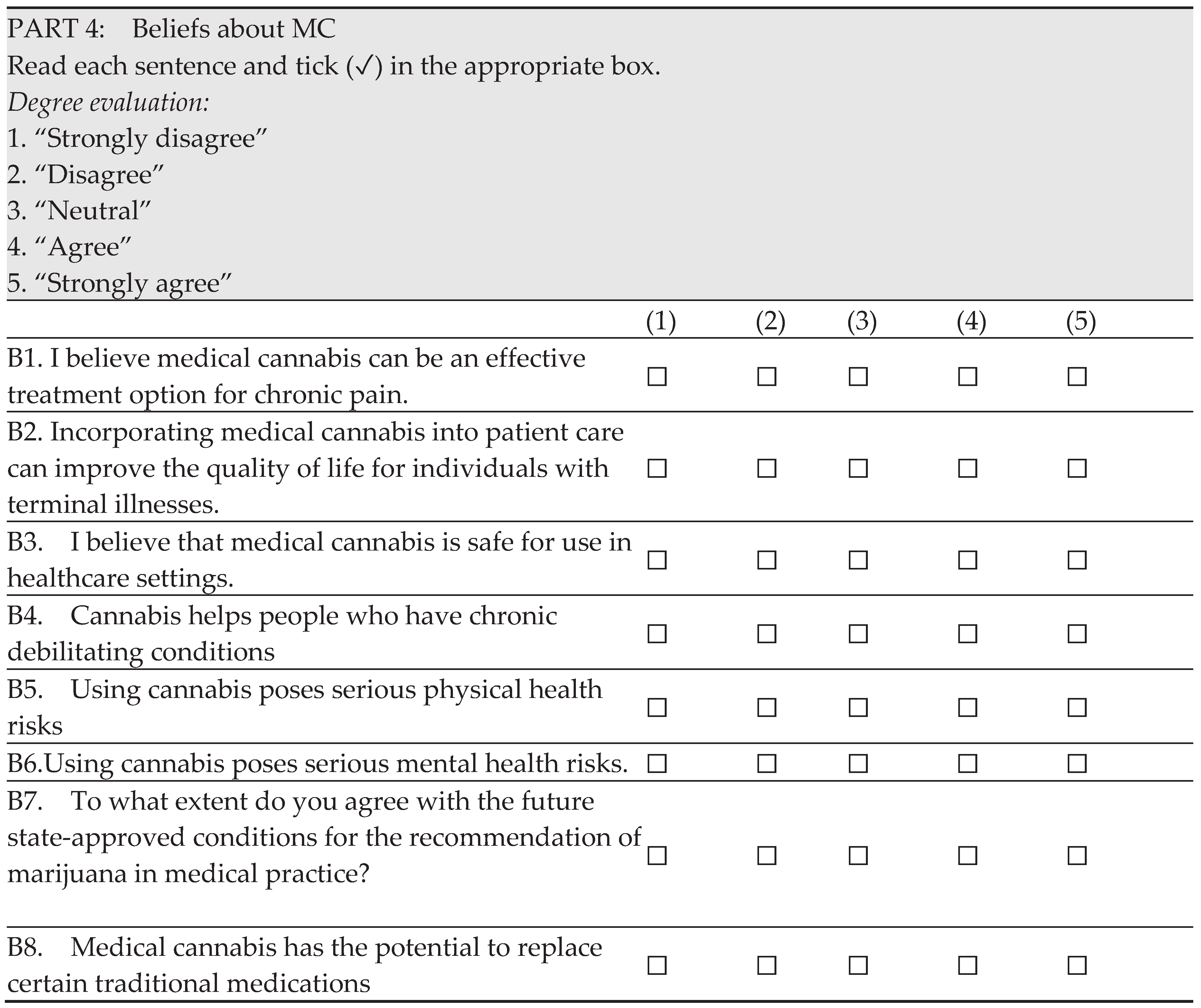
Part 4: Beliefs about MC
Part 5: Intention and support to the legalization of MC
| PART 1: Socio-demographic characteristics of nursing students (Please check (✓) the box) | |
| A1 | Age..................years |
| A2 | Gender ☐ 1. Male ☐ 2. Female |
| A3 | Academic year 1st Year □ 2nd Year □ 3rd Year □ 4th Year □ |
| A4 | Religion 1. Yes □ 2. No □ |
| PART 2: Knowledge about medical cannabis related to efficacy, safety, and clinical application If you circle a correct answer, you get a score of 1 point. “I do not know” responses receive 0 points. The maximum score per question is 1 point. | ||||||
| K1 | What are the primary active compounds found in medical cannabis?” A) CBD (cannabidiol), and THC (tetrahydrocannabinol) B) Nicotine and Alcohol C) Caffeine and Aspirin D) Acetaminophen and Ibuprofen E) I do not know |
|||||
| K2 | Which of the following conditions has medical cannabis been shown to be effective in treating? A) Chronic Pain B) Common cold C) High Blood Pressure D) Diabetes E) Acute appendicitis |
|||||
| K3 | What are common side effects associated with medical cannabis use? A) Dizziness and Dry Mouth B) Blurred Vision and head ache C) Shortness of Breath and Chest Pain D) Increased Appetite and Weight Loss E) I do not know |
|||||
| K4 | Which statement is true regarding the safety of medical cannabis therapy? A) It has no known side effects or contraindications. B) It can be safely used with all other medications. C) It may interact with other medications and has contraindications. D) It is always the first line of treatment for chronic pain. E) I do not know |
|||||
| K5 | How is medical cannabis typically administered in a clinical setting? A) Orally, Inhalation, Topical, Sublingual B) Intravenous Injection only C) Transdermal Patch only D) Orally only E) I do not know |
|||||
| K6 | Which of the following medical conditions is NOT commonly treated with medical cannabis? A) Chronic Pain B) Glaucoma C) Asthma D) Epilepsy E) Multiple Sclerosis |
|||||
| K7 | In what form can medical cannabis NOT be administered? A) Oral (edibles) B) Inhalation (smoking/vaping) C) Transdermal (patches) D) Intravenous injection E) Topical (creams) |
|||||
| K8 | Which is a potential side effect of THC dominant cannabis use? A) Increased lung capacity B) Long-term memory enhancement C) Decreased appetite D) Psychoactive effects E) Decreased heart rate |
|||||
| K9 | Medical cannabis is considered potentially effective in the management of: A) Acute bacterial infections B) Chronic neuropathic pain C) Rapid weight gain D) Hyperactivity disorders E) Bone fractures |
|||||
| K10 | In clinical practice, nursing considerations when administering medical cannabis should include: A) Ignoring patient’s past experience with cannabis. B) Avoiding discussion about potential side effects. C) Administering the highest dose first. D) Monitoring for drug-drug interactions. E) Assuming all forms of cannabis are equal in effectiveness. |
|||||
| K11 | What is a critical consideration for nurses when administering cannabis oil to patients? A) Ensuring it is taken on an empty stomach B) Mixing it with caffeinated beverages for faster absorption C) Monitoring for potential side effects such as drowsiness D) Advising patients to drive immediately after administration to assess alertness E) Recommending it as the first-line treatment for pain |
|||||
| K12 | When educating patients about the use of medical cannabis, What is important to mention? A) It can be prescribed for any type of pain without evaluation B) It does not interact with any other medications C) Safe storage and proper dosing are crucial to prevent misuse D) It is always completely free of side effects E) It is effective as a sole treatment for cancer |
|||||
| K13 | Among the following, which is NOT a recognized potential side effect of medical cannabis? A) Dry mouth B) Increased appetite C) Blurred vision [Correct] D) Dizziness E) Altered mood |
|||||
| K14 | In clinical settings, the decision to use medical cannabis should always consider: A) The patient’s preference alone B) Celebrity endorsements C) The cost of the medication only D) A comprehensive assessment of the patient’s condition and history E) Availability of flavors or types of cannabis |
|||||
| K15 | Medical cannabis used in palliative care aims to: A) Completely cure the underlying condition B) Act as a substitute for all other medications C) Primarily enhance patient mobility D) Provide symptomatic relief and improve quality of life E) Be used as the initial step in diagnosing patients |
|||||
| K16 | Cannabis has been hypothesized to play a role in: A) Cognitive enhancement B) Weight loss C) Sleep regulation D) Blood pressure control E) I don’t know |
|||||
| K17 | For irritable bowel syndrome (IBS), cannabis has been A) Proven effective in numerous trials B) Shown to have a significant impact on symptoms C) Found to have no effect on gastric, small bowel or colonic transit D) Identified as the first-line treatment E) I don’t know |
|||||
| K18 | What type of pain was most commonly studied in trials investigating the effectiveness of cannabis for chronic pain? A. Arthritic pain B. Neuropathic pain C. Post-surgical pain D. Cancer pain E. All is correct |
|||||
| PART 3: Attitudes about medical cannabis. For a survey aimed at gauging attitudes and beliefs towards medical cannabis (MC) in Vietnam, where its legalization might be anticipated in the future, the following items can be developed using a 5-point Likert Scale. Read each sentence and tick (✓) in the appropriate box. There is no right or wrong answer. And don’t dwell too long on any one sentence. Degree evaluation: 1. “Strongly disagree” 2. “Disagree” 3. “Neutral” 4. “Agree” 5. “Strongly agree” | ||||||
| (1) | (2) | (3) | (4) | (5) | ||
| A1 | Medical cannabis has a significant therapeutic potential that is currently underestimated in countries not permitting medical cannabis use | ☐ | ☐ | ☐ | ☐ | ☐ |
| A2 | The benefits of using medical cannabis in treating certain medical conditions outweigh the potential risks. | ☐ | ☐ | ☐ | ☐ | ☐ |
| A3 | I am concerned that the legalization of medical cannabis in Vietnam could lead to increased recreational use among the youth | ☐ | ☐ | ☐ | ☐ | ☐ |
| A4 | The lack of comprehensive research on medical cannabis makes it an unsafe treatment option | ☐ | ☐ | ☐ | ☐ | ☐ |
| A5 | If legalized, physicians in Vietnam should recommend cannabis as a medical therapy. | ☐ | ☐ | ☐ | ☐ | ☐ |
| A6 | Training about medical cannabis should be incorporated into academic curricula of medicine and nursing in Vietnam | ☐ | ☐ | ☐ | ☐ | ☐ |
| A7 | Healthcare professionals should have formal training about medical cannabis before recommending it to patients, if it were legalized in Vietnam. | ☐ | ☐ | ☐ | ☐ | ☐ |
| A8 | The potential side effects of medical cannabis are concerning to me. | ☐ | ☐ | ☐ | ☐ | ☐ |
| A9 | It is ethically acceptable for healthcare professionals to administer medical cannabis if it benefits the patient | ☐ | ☐ | ☐ | ☐ | ☐ |
| A10 | I would feel ethically comfortable recommending medical cannabis to patients if it were legal and supported by scientific evidence. | ☐ | ☐ | ☐ | ☐ | ☐ |
| A11 | I am concerned about the potential for dependency or misuse of medical cannabis by patients. | ☐ | ☐ | ☐ | ☐ | ☐ |
| A12 | Legalizing medical cannabis would have a positive impact on the healthcare system. | ☐ | ☐ | ☐ | ☐ | ☐ |
| PART 5: Intention to support the legalization of medical cannabis (Please check (✓) the box) |
| Do you accept the use and support for legalization of medical cannabis in healthcare settings in the future? ☐ 1. Not accept ☐ 2. Undecided ☐ 3. Accept |
Appendix A.2 Final structured self-administered questionnaire used in the survey
This questionnaire aims to examine nursing students’ knowledge, beliefs, attitudes, perceptions, and acceptance toward medical cannabis (MC). Please answer the following questions by filling out the blanks in the socio-demographic characteristics and circling the most preferred response in the other parts below. Your answer will bring great benefits to understand the levels of knowledge, beliefs, attitudes, perceptions, and acceptance of nursing students toward medical cannabis in Vietnam. The information you answer in this questionnaire will be kept confidential. Your information will not be disclosed. The information will be used for research purposes only. In case you have any questions, please contact:
Name: Uyent TT Nguyen
Address : Dong Thap Medical College, 394 Le Dai Hanh, My Phu Ward, City. Cao Lanh, Dong Thap province. Phone number: 0824143768 Email: uyenttnguyen@cdytdt.edu.vn
| Time | Day …… Month ..…. Year 2024 Collector’s name :…………….. |
Participant ID: …………………………………… |
This questionnaire includes questions divided into five parts as follows:
Part 1: Socio-demographic characteristics of nursing students (interviewees)
Part 2: Knowledge about medical cannabis related to efficacy, safety, and clinical application.
Part 3: Attitude about MC
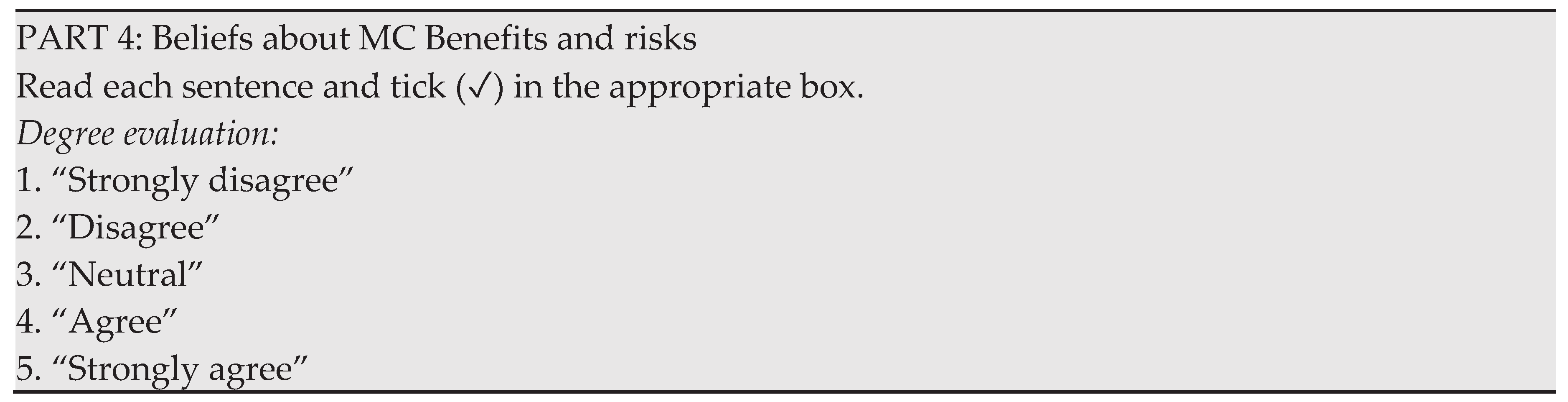
Part 4: Beliefs towards benefits and risks of MC
Part 5: Intention to support the legalization of MC
| PART 1: Socio-demographic characteristics of nursing students (Please check (✓) the box) | ||||||
| A1 | Age..................years | |||||
| A2 | Gender ☐ 1. Male ☐ 2. Female |
|||||
| A3 | Academic year 1st Year □ 2nd Year □ 3rd Year □ 4th Year □ |
|||||
| A4 | Religion 1. Yes □ 2. No □ |
|||||
| PART 2: Knowledge about medical cannabis related to efficacy, safety, and clinical application If you circle a correct answer, you get a score of 1 point. “I do not know” responses receive 0 points. The maximum score per question is 1 point. | ||||||
| K1 | What are the primary active compounds found in medical cannabis?” A) CBD (cannabidiol), and THC (tetrahydrocannabinol) B) Nicotine and Alcohol C) Caffeine and Aspirin D) Acetaminophen and Ibuprofen E) I do not know |
|||||
| K2 | Which of the following conditions has medical cannabis been shown to be effective in treating? A) Chronic Pain B) Common cold C) High Blood Pressure D) Diabetes E) Acute appendicitis |
|||||
| K3 | What are common side effects associated with medical cannabis use? A) Dizziness and Dry Mouth B) Blurred Vision and head ache C) Shortness of Breath and Chest Pain D) Increased Appetite and Weight Loss E) I do not know |
|||||
| K4 | Which statement is true regarding the safety of medical cannabis therapy? A) It has no known side effects or contraindications. B) It can be safely used with all other medications. C) It may interact with other medications and has contraindications. D) It is always the first line of treatment for chronic pain. E) I do not know |
|||||
| K5 | How is medical cannabis typically administered in a clinical setting? A) Orally, Inhalation, Topical, Sublingual B) Intravenous Injection only C) Transdermal Patch only D) Orally only E) I do not know |
|||||
| K6 | Which of the following medical conditions is NOT commonly treated with medical cannabis? A) Chronic Pain B) Glaucoma C) Asthma D) Epilepsy E) Multiple Sclerosis |
|||||
| K7 | In what form can medical cannabis NOT be administered? A) Oral (edibles) B) Inhalation (smoking/vaping) C) Transdermal (patches) D) Intravenous injection E) Topical (creams) |
|||||
| K8 | Which is a potential side effect of THC dominant cannabis use? A) Increased lung capacity B) Long-term memory enhancement C) Decreased appetite D) Psychoactive effects E) Decreased heart rate |
|||||
| K9 | Medical cannabis is considered potentially effective in the management of: A) Acute bacterial infections B) Chronic neuropathic pain C) Rapid weight gain D) Hyperactivity disorders E) Bone fractures |
|||||
| K10 | In clinical practice, nursing considerations when administering medical cannabis should include: A) Ignoring patient’s past experience with cannabis. B) Avoiding discussion about potential side effects. C) Administering the highest dose first. D) Monitoring for drug-drug interactions. E) Assuming all forms of cannabis are equal in effectiveness. |
|||||
| K11 | What is a critical consideration for nurses when administering cannabis oil to patients? A) Ensuring it is taken on an empty stomach B) Mixing it with caffeinated beverages for faster absorption C) Monitoring for potential side effects such as drowsiness D) Advising patients to drive immediately after administration to assess alertness E) Recommending it as the first-line treatment for pain |
|||||
| K12 | Among the following, which is NOT a recognized potential side effect of medical cannabis? A) Dry mouth B) Increased appetite C) Blurred vision [Correct] D) Dizziness E) Altered mood |
|||||
| K13 | In clinical settings, the decision to use medical cannabis should always consider: A) The patient’s preference alone B) Celebrity endorsements C) The cost of the medication only D) A comprehensive assessment of the patient’s condition and history E) Availability of flavors or types of cannabis |
|||||
| K14 | Medical cannabis used in palliative care aims to: A) Completely cure the underlying condition B) Act as a substitute for all other medications C) Primarily enhance patient mobility D) Provide symptomatic relief and improve quality of life E) Be used as the initial step in diagnosing patients |
|||||
| K15 | Cannabis has been hypothesized to play a role in: A) Cognitive enhancement B) Weight loss C) Sleep regulation D) Blood pressure control E) I don’t know |
|||||
| K16 | What type of pain was most commonly studied in trials investigating the effectiveness of cannabis for chronic pain? A. Arthritic pain B. Neuropathic pain C. Post-surgical pain D. Cancer pain E. All is correct |
|||||
| PART 3: Attitudes about medical cannabis. For a survey aimed at gauging attitudes and beliefs towards medical cannabis (MC) in Vietnam, where its legalization might be anticipated in the future, the following items can be developed using a 5-point Likert Scale. Read each sentence and tick (✓) in the appropriate box. There is no right or wrong answer. And don’t dwell too long on any one sentence. Degree evaluation: 1. “Strongly disagree” 2. “Disagree” 3. “Neutral” 4. “Agree” 5. “Strongly agree” | ||||||
| (1) | (2) | (3) | (4) | (5) | ||
| A1 | Medical cannabis has a significant therapeutic potential that is currently underestimated in countries not permitting medical cannabis use | ☐ | ☐ | ☐ | ☐ | ☐ |
| A2 | The benefits of using medical cannabis in treating certain medical conditions outweigh the potential risks. | ☐ | ☐ | ☐ | ☐ | ☐ |
| A3 | I am concerned that the legalization of medical cannabis in Vietnam could lead to increased recreational use among the youth | ☐ | ☐ | ☐ | ☐ | ☐ |
| A4 | The lack of comprehensive research on medical cannabis makes it an unsafe treatment option | ☐ | ☐ | ☐ | ☐ | ☐ |
| A5 | If legalized, physicians in Vietnam should recommend cannabis as a medical therapy. | ☐ | ☐ | ☐ | ☐ | ☐ |
| A6 | Training about medical cannabis should be incorporated into academic curricula of medicine and nursing in Vietnam | ☐ | ☐ | ☐ | ☐ | ☐ |
| A7 | Healthcare professionals should have formal training about medical cannabis before recommending it to patients, if it were legalized in Vietnam. | ☐ | ☐ | ☐ | ☐ | ☐ |
| A8 | The potential side effects of medical cannabis are concerning to me. | ☐ | ☐ | ☐ | ☐ | ☐ |
| A9 | It is ethically acceptable for healthcare professionals to administer medical cannabis if it benefits the patient | ☐ | ☐ | ☐ | ☐ | ☐ |
| A10 | I would feel ethically comfortable recommending medical cannabis to patients if it were legal and supported by scientific evidence. | ☐ | ☐ | ☐ | ☐ | ☐ |
| A11 | I am concerned about the potential for dependency or misuse of medical cannabis by patients. | ☐ | ☐ | ☐ | ☐ | ☐ |
| A12 | Legalizing medical cannabis would have a positive impact on the healthcare system. | ☐ | ☐ | ☐ | ☐ | ☐ |
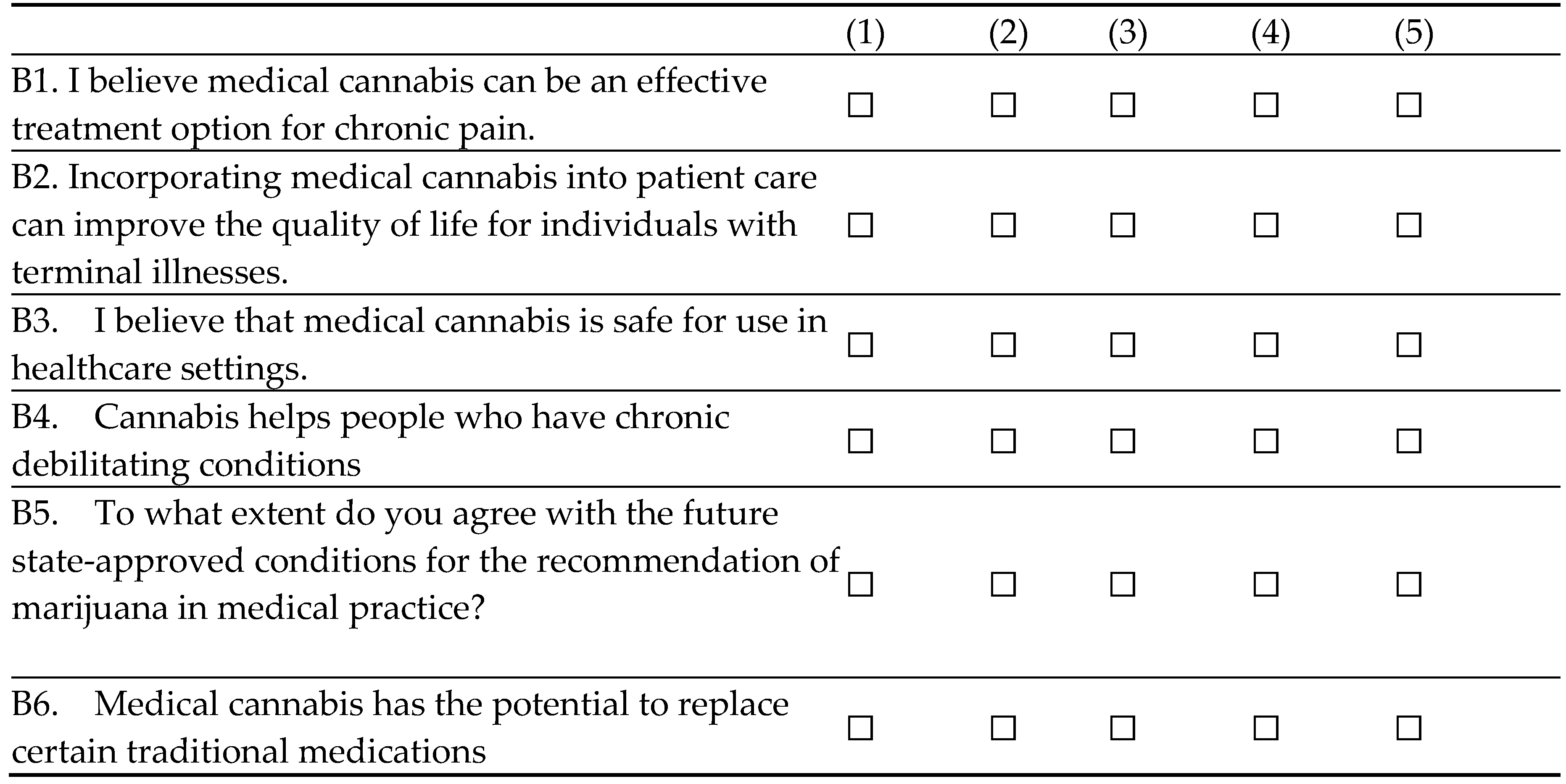
| PART 5: Intention to support the legalization of medical cannabis (Please check (✓) the box) |
| Do you accept the use and support for legalization of medical cannabis in healthcare settings in the future? ☐ 1. Not accept ☐ 2. Undecided ☐ 3. Accept |
A3. Semi-Structured In-Depth Interview Guide Exploring Nursing Students’ Perceptions and Acceptance of Medical Cannabis and Its Potential Use in Healthcare Settings
Introduction
Thank you for agreeing to participate in this interview. The purpose of this interview is to explore your knowledge, perceptions, beliefs, attitudes, and acceptance regarding medical cannabis and its potential use in healthcare settings. We are interested in understanding your personal views, experiences, and opinions; therefore, there are no right or wrong answers. Your responses will be kept confidential and used solely for research purposes. With your permission, this interview will be audio-recorded to ensure the accuracy of data collection. You may decline to answer any question or withdraw from the interview at any time without any consequences. The interview is expected to take approximately 20–30 minutes.
Question 1: What do you understand about medical cannabis and its uses in health care?
Question 2: Do you think medical cannabis has or does not have any medical value? Where did you get information about medical cannabis? What aspects of knowledge do you feel you are lacking?
Question 3: How do you think about the use of medical cannabis in clinical practice?
Question 4: What do you think about the effectiveness of medical cannabis compared to traditional medications?
Question 5: Can you share your concerns or positive perspectives about the use of medical cannabis in healthcare facilities?
Question 6: What are the potential benefits and risks of using medical
Cannabis in nursing practice?
Question 7: How does public perception toward cannabis influence your professional perspective or willingness to use it?
Question 8: Do you think there are any moral concerns related to prescribing or advising on medical cannabis? Can you explain?
Question 9: How do you feel about being prepared to address patient concerns about medical cannabis if it is rolled out in the future?
Question 10: What type of training or information in the future would make you feel better equipped to incorporate medical cannabis into your practice if it is approved?
Question 11: In what ways do healthcare facilities need to change to
accommodate the use of medical cannabis.
Appendix B
Table B1.
Literature synthesis for developing the quantitative questionnaire.
| Authors (Year) | Population/ Setting | Knowledge | Attitude | Belief | Contribution to current instrument |
|---|---|---|---|---|---|
| Balneaves et al. (2023) [13] | Nursing students in Canada | THC/CBD, therapeutic uses, regulations, administration routes, safety precautions, cannabis regulations | Professional preparedness, stigma concerns | Therapeutic benefits for symptom management | Guided development of items related to MC pharmacology, administration methods, safety considerations, and professional competency in nursing practice |
| Sokratous et al. (2022) [11] | Nurses and midwives in Cyprus | Risks and benefits of MC; effectiveness for muscle spasms, insomnia, mental health conditions, and terminal illnesses | Need for formal training before recommending MC | Therapeutic benefits and potential mental/physical health risks; professional preparedness | Items related to therapeutic effectiveness, safety concerns, educational preparedness, and professional training needs |
| Balneaves et al. (2018) [16] | Canadian nurse practitioners | Therapeutic uses, risks and precautions, dosing, administration routes, cannabis products, and legal regulations regarding therapeutic cannabis | Professional comfort and acceptance of authorizing medical cannabis; importance of additional education and training | Uncertainty regarding therapeutic value, benefits, risks, and prescribing liability concerns | items related to MC therapeutic applications, safety considerations, administration methods, legal awareness, professional preparedness, and educational needs among nursing students |
| Zolotov et al. (2021) [10] | Israeli and American nursing students | Effectiveness of MC for chronic pain, cancer-related symptoms, terminal illnesses, arthritis, fibromyalgia, insomnia, epilepsy, multiple sclerosis, and nausea | Attitudes toward therapeutic benefits, addiction concerns, mental and physical health risks, and the importance of further MC research | Not explicitly assessed | Items related to therapeutic effectiveness, perceived addiction and health risks, professional responsibility, and the need for evidence-based clinical monitoring in MC practice |
| Khamenka & Pikirenia (2021) [12] |
Medical students in Belarus | Effectiveness of MC for chronic pain, mental health conditions, insomnia, cancer-related conditions, terminal illnesses, and persistent muscle spasms | Acceptance of MC treatment and recommendation; concerns regarding addiction and physical/mental health risks; professional responsibility and need for further research | Beliefs regarding therapeutic benefits and preparedness to address patient questions despite restrictive cannabis policies | Items related to therapeutic effectiveness, perceived addiction and health risks, professional responsibility, research needs, and preparedness for future MC implementation in restrictive policy settings |
| Felnhofer et al. (2021) [18] | Austrian university students | Differences between CBD and THC; therapeutic indications of MC for chronic pain, oncological diseases, palliative care, and psychiatric conditions | Attitudes toward physician prescribing, mandatory treatment recommendations, recreational legalization, addiction concerns, and inclusion of MC in medical curricula | Not explicitly assessed | items related to MC pharmacological knowledge, therapeutic indications, legalization attitudes, addiction concerns, and educational needs regarding MC training in healthcare curricula |
| Pereira et al. (2020) [17] | Nursing students in Spain | Knowledge regarding therapeutic indications and adverse effects of MC, including cancer, multiple sclerosis, muscle spasms, paranoia, dizziness, hallucinations, nausea, depression, and somnolence | Attitudes toward legalization of medical marijuana and concerns regarding misuse and potential detrimental health effects | Not explicitly assessed | items related to therapeutic indications, adverse effects, legalization attitudes, and perceived risks associated with MC use |
Table B2.
Final conceptual framework of questionnaire.
| Constructs | Subdomains | Item codes |
|---|---|---|
| Knowledge | Basic knowledge (active compound and administrative use) | K1,K5,and K7 |
| Therapeutic uses and effectiveness | K2,K6,K9, K15 , K16, and K18 | |
| Safety considerations and adverse effects | K3, K4, K8, and K13 | |
| Clinical MC practice | K10, K11, and K14 | |
| Attitudes | Perceived health risks and misuse | A3, A4, A8, and A11 |
| Perceived benefit and effectiveness | A1 and A2 | |
| MC legalization perspectives | A5 and A12 | |
| Educational needs and preparedness | A6 and A7 | |
| Professional responsibility | A9 and A10 | |
| Beliefs | Therapeutic benefits | B1, B2, B4, and B8 |
| Safety and clinical integration | B3 and B7 |
Table B3.
Content validity of the initial questionnaire.
| Items/ questionnaire | Expert 1 | Expert 2 | Expert 3 | I-CVI |
|---|---|---|---|---|
| PART 1: Socio-demographic characteristics of nursing student | ||||
| A1 | 4 | 4 | 4 | 1 |
| A2 | 4 | 4 | 4 | 1 |
| A3 | 4 | 4 | 4 | 1 |
| A4 | 4 | 4 | 4 | 1 |
| PART 2: Knowledge about medical cannabis related to efficacy, safety, and clinical application | ||||
| K1 | 4 | 4 | 4 | 1 |
| K2 | 4 | 4 | 4 | 1 |
| K3 | 4 | 4 | 4 | 1 |
| K4 | 4 | 4 | 4 | 1 |
| K5 | 4 | 4 | 4 | 1 |
| K6 | 4 | 4 | 4 | 1 |
| K7 | 4 | 4 | 4 | 1 |
| K8 | 4 | 4 | 4 | 1 |
| K9 | 4 | 4 | 4 | 1 |
| K10 | 4 | 4 | 4 | 1 |
| K11 | 4 | 4 | 4 | 1 |
| K12 | 4 | 4 | 4 | 1 |
| K13 | 4 | 4 | 4 | 1 |
| K14 | 4 | 4 | 4 | 1 |
| K15 | 4 | 4 | 4 | 1 |
| K16 | 4 | 4 | 4 | 1 |
| K17 | 4 | 4 | 4 | 1 |
| K18 | 4 | 4 | 4 | 1 |
| PART 3: Attitudes about medical cannabis. | ||||
| A1 | 3 | 4 | 4 | 1 |
| A2 | 3 | 4 | 4 | 1 |
| A3 | 2 | 4 | 4 | 0.67 |
| A4 | 4 | 4 | 4 | 1 |
| A5 | 4 | 3 | 4 | 1 |
| A6 | 4 | 4 | 4 | 1 |
| A7 | 4 | 3 | 4 | 1 |
| A8 | 4 | 4 | 4 | 1 |
| A9 | 3 | 4 | 4 | 1 |
| A10 | 2 | 4 | 4 | 0.67 |
| A11 | 4 | 4 | 4 | 1 |
| A12 | 4 | 4 | 2 | 0.67 |
| PART 4: Beliefs about MC Benefits and risks | ||||
| B1 | 4 | 4 | 3 | 1 |
| B2 | 3 | 4 | 4 | 1 |
| B3 | 2 | 4 | 4 | 0.67 |
| B4 | 2 | 4 | 4 | 0.67 |
| B5 | 3 | 4 | 4 | 1 |
| B6 | 3 | 4 | 4 | 1 |
| B7 | 4 | 4 | 3 | 1 |
| B8 | 2 | 4 | 4 | 0.67 |
| PART 5: Intention to support the legalization of medical cannabis | 4 | 4 | 4 | 1 |
| S-CVI/Ave = 0.95 S-CVI/UA=0.86 | ||||
Table B4.
Reliability analysis and item refinement of knowledge, attitudes and beliefs about MC.
| Domain | Initial items | Final items | Cronbach’s Alpha (Initial) | Cronbach’s Alpha (Final) | Interpretation | Removed Items | Reason |
|---|---|---|---|---|---|---|---|
| Attitudes | 12 | 12 | 0.906 | 0.906 | Excellent reliability | None | All items retained |
| Beliefs | 8 | 6 | 0.786 | 0.897 | Good reliability | B5, B6 | Improved internal consistency and conceptual refinement of therapeutic and clinical integration beliefs |
| Domain | Initial items | Final items | KR-20 coefficient (Initial) | KR-20 coefficient (Final) | Interpretation | Removed Items | Reason |
| Knowledge | 18 | 16 | 0.708 | 0.734 | Acceptable reliability | K12 and K17 | Improved internal consistency |
References
- Hameed, M.; Prasad, S.; Jain, E.; Dogrul, B.N.; Al-Oleima, A.; Pokhrel, B.; et al. Medical cannabis for chronic nonmalignant pain management. Curr. Pain Headache Rep. 2023, 27(4), 57–63. [Google Scholar] [CrossRef] [PubMed]
- Legare, C.A.; Raup-Konsavage, W.M.; Vrana, K.E. Therapeutic potential of cannabis, cannabidiol, and cannabinoid-based pharmaceuticals. Pharmacol. 2022, 107(3–4), 131–49. [Google Scholar] [CrossRef] [PubMed]
- Singh, K.; Bhushan, B.; Chanchal, D.K.; Sharma, S.K.; Rani, K.; Yadav, M.K.; et al. Emerging therapeutic potential of cannabidiol (CBD) in neurological disorders: a comprehensive review. Behav. Neurol. 2023, 2023, 8825358. [Google Scholar] [CrossRef] [PubMed]
- Abrams, D.I. The therapeutic effects of cannabis and cannabinoids: an update from the National Academies of Sciences, Engineering and Medicine report. Eur. J. Intern Med. 2018, 49, 7–11. [Google Scholar] [CrossRef] [PubMed]
- Hong, G.; Sideris, A.; Waldman, S.; Stauffer, J.; Wu, C.L. Legal and regulatory aspects of medical cannabis in the United States. Anesth. Analg. 2024, 138(1), 31–41. [Google Scholar] [CrossRef] [PubMed]
- Shim, M.; Nguyen, H.; Grootendorst, P. Lessons from 20 years of medical cannabis use in Canada. PLoS ONE 2023, 18(3), e0271079. [Google Scholar] [CrossRef] [PubMed]
- Assanangkornchai, S.; Thaikla, K.; Talek, M.; Saingam, D. Medical cannabis use in Thailand after its legalization: a respondent-driven sample survey. PeerJ. 2022, 10, e12809. [Google Scholar] [CrossRef] [PubMed]
- Szafarski, M.; McGoldrick, P.; Currens, L.; Blodgett, D.; Land, H.; Szafarski, J.P.; Segal, E. Attitudes and knowledge about cannabis and cannabis-based therapies among US neurologists, nurses, and pharmacists. Epilepsy Behav. EB 2020, 109, 107102. [Google Scholar] [CrossRef]
- Ziemianski, D.; Capler, R.; Tekanoff, R.; Lacasse, A.; Luconi, F.; Ware, M.A. Cannabis in medicine: a national educational needs assessment among Canadian physicians. BMC Med. Educ. 2015, 15, 52. [Google Scholar] [CrossRef] [PubMed]
- Zolotov, Y.; Cohen, O.G.; Findley, P.A.; Reznik, A.; Isralowitz, R.; Willard, S. Attitudes and knowledge about medical cannabis among Israeli and American nursing students. Nurse Educ. Today 2021, 99, 104789. [Google Scholar] [CrossRef] [PubMed]
- Sokratous, S.; Mpouzika, M.D.; Kaikoushi, K.; Hatzimilidonis, L.; Koutroubas, V.S.; Karanikola, M.N. Medical cannabis attitudes, beliefs and knowledge among Greek-Cypriot University nursing students. Complement Ther. Med. 2021, 58, 102707. [Google Scholar] [CrossRef] [PubMed]
- Khamenka, N.; Pikirenia, U. Knowledge, attitudes and beliefs about medical cannabis among the medical students of the Belarus State Medical University. Complement Ther. Med. 2021, 57, 102670. [Google Scholar] [CrossRef] [PubMed]
- Balneaves, L.G.; Watling, C.Z.; Strus, J.A.; Boscow, M.; Davis, L.; Graveline, K.; et al. Baccalaureate nursing students’ knowledge, attitudes, educational needs, and use of medical and non-medical cannabis at five institutions in Manitoba, Canada: a cross-sectional analysis. Nurse Educ. Today 2023, 130 105955. [Google Scholar] [CrossRef] [PubMed]
- Government of Vietnam. The Government; Hanoi Decree No. 105/2021/ND-CP: Detailing and guiding the implementation of a number of articles of the Law on Drug Prevention and Control [Internet]. , 4 Dec 2021. Available online: https://english.luatvietnam.vn/decree-no-105-2021-nd-cp-of-the-government-detailing-and-guiding-the-implementation-of-a-number-of-articles-of-the-law-on-dru-213690-doc1.html (accessed on 1 Apr 2025).
- Sokratous, S.; Kaikoush, K.; Mpouzika, M.D.; Alexandrou, G.; Karanikola, N.M. Attitudes, beliefs and knowledge about medical cannabis among nurses and midwives in Cyprus: a cross-sectional descriptive correlational study. BMC Nurs. 2022, 21(1), 120. [Google Scholar] [CrossRef] [PubMed]
- Balneaves, L.G.; Alraja, A.; Ziemianski, D.; McCuaig, F.; Ware, M. A national needs assessment of Canadian nurse practitioners regarding cannabis for therapeutic purposes. Cannabis Cannabinoid Res. 2018, 3(1), 66–73. [Google Scholar] [CrossRef]
- Pereira, L.; Núñez-Iglesias, M.J.; Domínguez-Martís, E.M.; López-Ares, D.; González-Peteiro, M.; Novío, S. Nursing students’ knowledge and attitudes regarding medical marijuana: a descriptive cross-sectional study. Int. J. Env. Res. Public Heal. 2020, 17(7), 2492. [Google Scholar] [CrossRef] [PubMed]
- Felnhofer, A.; Kothgassner, O.D.; Stoll, A.; Klier, C. Knowledge about and attitudes towards medical cannabis among Austrian university students. Complement Ther. Med. 2021, 58, 102700. [Google Scholar] [CrossRef] [PubMed]
- Yusoff, M.S. ABC of content validation and content validity index calculation. Educ. Med. J. 2019, 11, 4954. [Google Scholar] [CrossRef]
- Zamanzadeh, V.; Ghahramanian, A.; Rassouli, M.; Abbaszadeh, A.; Alavi-Majd, H.; Nikanfar, A.R. Design and implementation content validity study: development of an instrument for measuring patient-centered communication. J. Caring Sci. 2015, 4, 165–78. [Google Scholar] [CrossRef] [PubMed]
- George, D.; Mallery, P. IBM SPSS statistics 29 step by step: A simple guide and reference. routledge 2024. [Google Scholar]
- Vujcic, I.; Pavlovic, A.; Dubljanin, E.; Maksimovic, J.; Sipetic-Grujicic, S. Attitudes toward medical cannabis legalization among Serbian medical students. Subst. Use Misuse. 2017, 52(9), 1229–35. [Google Scholar] [CrossRef]
- Jacobs, R.J.; Kane, M.N.; Caballero, J. Predictors of medical students’ perceptions about medical cannabis. Cureus 2022, 14(4). [Google Scholar] [CrossRef] [PubMed]
Table 1.
Socio-demographic characteristics, knowledge, attitudes, beliefs, and intentions to support MC legalization among nursing students (n = 422).
Table 1.
Socio-demographic characteristics, knowledge, attitudes, beliefs, and intentions to support MC legalization among nursing students (n = 422).
| Variables | Values | |
|---|---|---|
| Social-demographic characteristics Age |
Median [Range] or n (%) 20 [18,19,20,21,22,23,24,25] |
|
Gender
|
322 (76.3) 100 (23.7) |
|
Academic year
|
120 (28.4) 114 (27.0) 110 (26.1) 78 (18.5) |
|
Religion
|
120 (28.4) 302 (71.6) |
|
| Knowledge regarding MC | Mean ± SD (Maximum score) | % of Maximum score |
| Total knowledge score | 8.34 ± 2.83 (16) | 52.1% |
|
1.84 ± 1.01 (3) 3.21 ± 1.38 (6) 1.77 ± 1.0 (4) 2.21 ± 0.97 (3) |
61.3% 53.5% 44.3% 73.7% |
| Attitude towards MC | Mean ± SD (Maximum score) | % of Maximum score |
Total attitude score
|
44.11 ± 6.55 (60) 15.50 ± 2.54 (20) 6.86 ± 1.33 (10) 6.79 ± 1.40 (10) 7.65 ± 1.45 (10) 7.33 ± 1.40 (10) |
73.5% 77.5% 68.6% 67.9% 76.5% 73.3% |
| Beliefs regarding MC | Mean ± SD (Maximum score) | % of Maximum score |
Total beliefs score
|
20.44 ± 3.71 (30) 13.69 ± 2.50 (20) 6.74 ± 1.39 (10) |
68.1% 68.5% 67.4% |
| Intentions to support legalization of MC | n (%) | |
|
47 (11.1) 237 (56.2) 138 (32.7) |
Disclaimer/Publisher’s Note: The statements, opinions and data contained in all publications are solely those of the individual author(s) and contributor(s) and not of MDPI and/or the editor(s). MDPI and/or the editor(s) disclaim responsibility for any injury to people or property resulting from any ideas, methods, instructions or products referred to in the content. |
© 2026 by the authors. Licensee MDPI, Basel, Switzerland. This article is an open access article distributed under the terms and conditions of the Creative Commons Attribution (CC BY) license (http://creativecommons.org/licenses/by/4.0/).
Copyright: This open access article is published under a Creative Commons CC BY 4.0 license, which permit the free download, distribution, and reuse, provided that the author and preprint are cited in any reuse.


