

Submitted:
03 July 2026
Posted:
03 July 2026
You are already at the latest version
Abstract
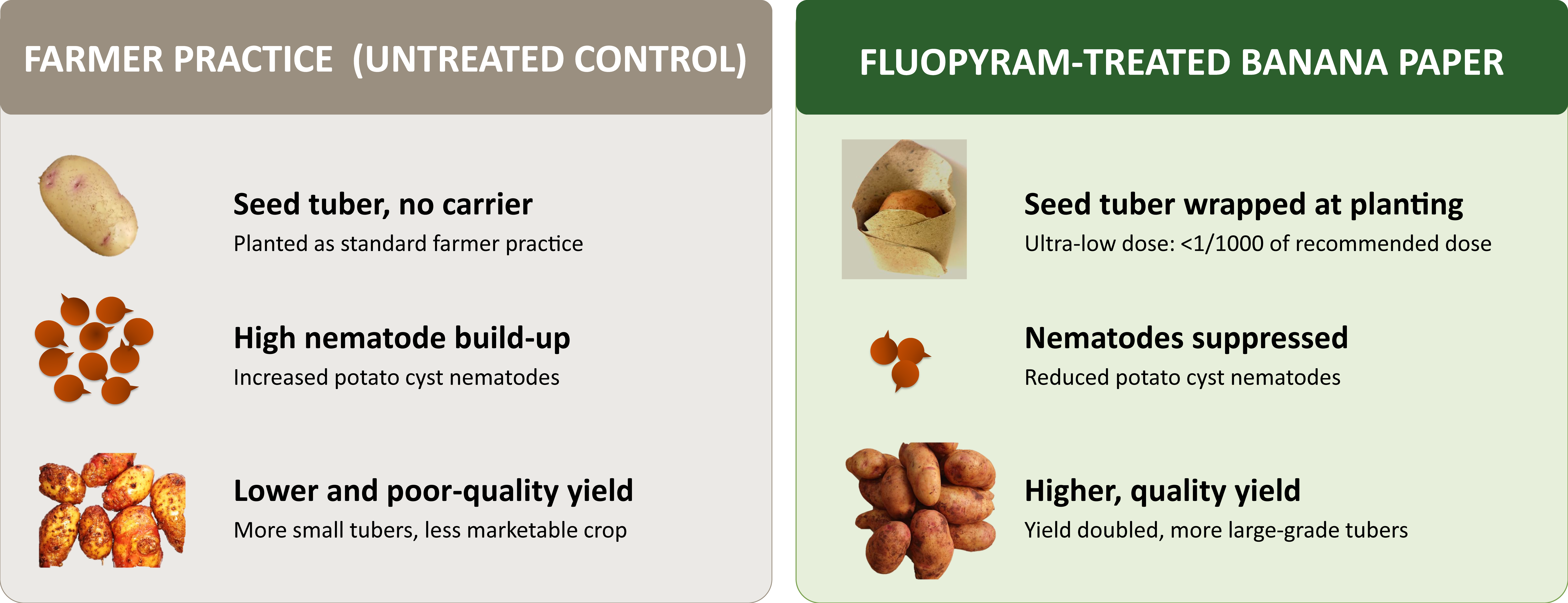
Potato (Solanum tuberosum) is a key staple crop in Kenya, where plant-parasitic nematodes are among the most damaging yield constraints for smallholder farmers. This study evaluated fluopyram-treated banana fibre paper, a biodegradable carrier for targeted delivery of ultra-low nematicide doses, under on-farm conditions in Nyandarua County over three consecutive cropping seasons across properly and poorly managed fields. Seventeen nematode genera were identified, with Helicotylenchus and Globodera (potato cyst nematode, PCN) recording the highest population densities. Fluopyram-treated banana paper significantly suppressed Globodera juvenile densities and reduced total nematode reproductive factors by ≥26% and PCN cyst multiplication factors, effects most pronounced under poor management. No significant nematode suppression was observed under good management. Potato yield and quality responded positively to fluopyram treatment: total yield approximately doubled in well-managed plots and increased by ~50% in poorly managed plots relative to untreated controls. Fluopyram-treated plots also produced a higher proportion of large-grade tubers under proper management, improving marketable yield. These findings demonstrate that banana fibre technology can effectively manage nematode pests under variable real-world smallholder conditions, with yield benefits amplified by good agronomic practices. The technology offers a practical, climate-smart and sustainable nematode management tool, with potential for wide adoption across sub-Saharan Africa.
Keywords:
biodegradable carrier
; potato cyst nematode
; smallholder farming
; tuber yield quality
1. Introduction
Originating from the Andean highlands of South America, potato (Solanum tuberosum) is a starchy tuber crop that has become one of the most important food crops globally [1]. Potato production plays a central role in the livelihoods and diets of many households across East Africa, where it serves as both a staple food and a key source of income. In Kenya, the crop is widely cultivated by smallholder farmers and is particularly important in highland regions, such as Nyandarua and Elgeyo Marakwet [2]. The potato sector has experienced steady growth in recent years, driven in part by increasing urban demand and the expansion of processed potato markets. Despite this, and despite an increasing area of potato cultivation, production has remained limited, with national yields lagging behind global benchmarks; most farmers achieve approximately one third of its biophysical potential [3]. This persistent yield gap stems from numerous constraints that combine to limit crop production, undermining its importance as an economic and food security commodity [4,5,6].
Degraded soils, poor seed quality, suboptimal varieties, and pests are major factors limiting productivity [7,8]. Among these, plant-parasitic nematodes are particularly destructive, causing up to 80% potato yield losses, depending on weather patterns [9]. The impact of nematodes is also expected to intensify as climate change results in warmer soils, accelerating pest multiplication rates, shortening lifecycle duration and expanding host ranges [10]. By damaging root systems and compromising plant nutrient uptake and subsequent yields, nematodes also indirectly degrade soil health, reducing organic matter inputs and carbon sequestration potential, leading to an increased demand for more land cultivation. In turn, this impact on soils exacerbates vulnerability to drought and erosion, creating a self-reinforcing cycle of productivity loss and ecological degradation. Increasing demand and increasing pest impacts will create a multi-factor challenge for farmers and food security across Kenya and Africa.
The use of conventional nematicides has been shown to reduce yield losses through nematode suppression [11,12]. For example, abamectin disrupts the nervous system causing nematode paralysis [13] while fluopyram is a succinate dehydrogenase inhibitor which disrupts nematode mitochondrial respiration and energy metabolism [14]. However, the repeated use of chemical nematicides poses environmental and health risks [15,16]. They can disrupt soil biota, affect carbon turnover, and contaminate water systems [17] and are toxic to humans.
Transitioning towards soil- and climate-smart nematode control methods is therefore critical for achieving sustainable intensification and meeting climate adaptation and mitigation goals, while also protecting human health. The use of banana fibre paper as a biodegradable organic carrier for the sustained release of nematicides presents an integrated climate-smart management technique [18,19]. The high cellulose content of banana fibre contributes to excellent paper-forming properties and liquid-holding capacity, while its lignin component provides structural integrity and influences decomposition rates in soil [20]. The technology entails enclosing seed material with nematicide-treated banana fibre paper at planting [21,22], resulting in enhanced yields through the suppression of nematodes, leading to improved ecosystem functioning [23,24] and reduced nematicide applications, towards improved human health and climate change mitigation [25,26,27,28].
Although banana fibre paper treated with nematicides, including abamectin, fluopyram, and Trichoderma-based formulations, has previously been evaluated on potatoes [20,23,29], this has been reported from activities conducted under researcher-managed and screenhouse conditions. To date, the efficacy and performance of the technology under real smallholder farmer practices, especially across varied levels of farmer management, has yet to be demonstrated. The present study seeks to address this gap by evaluating banana fibre technology in fields managed directly by farmers, comparing properly managed plots with poorly managed plots in Kenya to provide more real-world evidence for its scalability and potential impact. By integrating pest control with soil health preservation, the approach offers potential for climate-smart and resilient pest management systems suited to smallholder agriculture in East Africa, while reducing indirect greenhouse gas emissions.
2. Materials and Methods
2.1. Site Description
The study was conducted in Kinangop sub-county, Nyandarua County, in the upper highland (UH1) agro-ecological zone in the central highlands of Kenya at 2,400 - 3,999 m above sea level. Rainfall is bimodal, averaging 700 - 1,600 mm annually, with mean daily temperatures ranging between 12-25 °C. The temperate climate allows for agricultural activities, such as dairy and crop farming, as the main economic activity [30]. Soils are classified as clay-loam volcanic soils of moderate to high soil fertility level [31].
2.2. Experimental Design and Layout
A factorial experiment was established to examine the combined effects of fluopyram-treated banana fibre paper and farmer management practices on nematode population dynamics and potato performance. The fluopyram paper was pre-treated with a solution containing 10 ng L−1 fluopyram, corresponding to an application rate of approximately 1 × 10⁻¹ g ha−1, which is less than one-thousandth of the standard recommended dose of 250 g ha−1 when not using the paper. The experiment followed a 2 × 2 factorial structure, arranged in a randomised complete block design, with individual farmers serving as replications. Ten smallholder farmers located within a 1 km radius participated in the study. Each farmer hosted two adjacent plots (4 × 5 m each): one plot planted with tubers loosely wrapped in fluopyram-treated banana fibre paper, and a second plot representing the farmer-practice control, without paper. Each plot contained 105 seed tubers of potato cv. Shangi. Within each plot, potato seed tubers, sourced by each farmer, were planted at a spacing of 75 × 30 cm between and within rows, respectively.
Farmers were categorised into two management groups based on their routine agronomic practices. Five farmers were classified as proper-managed fields, while the remaining five operated poorly managed fields. Properly or well-managed fields typically received both organic compost and synthetic fertiliser applications, including di-ammonium phosphate (DAP) applied at planting at 123.6 kg ha−1, followed by a top-dressing of calcium ammonium nitrate (CAN) at the same rate. Weed management in these fields consisted of regular manual weeding supplemented with the selective herbicide, Sencor® 480 SC (Bayer CropScience), for the control of common weeds such as Bidens pilosa, Cynodon dactylon, and Galinsoga parviflora. Farmers additionally applied fungicides Infinito® 687.5 SC (Bayer CropScience) and Revus® 250 SC (Syngenta) in alternation to manage foliar fungal diseases. Insect pests, including Tuta absoluta, Aphis gossypii, and Bemisia tabaci, were managed using Profile® 440 EC (Greenlife Crop Protection Africa) and Tihan® OD 175 (Bayer CropScience).
In contrast, poorly managed fields received no fertiliser inputs, herbicides, or fungicides throughout the season, and weed management limited to a single manual weeding. This arrangement enabled a direct comparison of the performance of banana fibre paper under contrasting farmer-managed agronomic practices, thereby allowing assessment not only of treatment effects but also of the influence of real-world management variability.
The study was conducted over three consecutive cropping seasons during the long (April to July, 2021), intermediate (August to October, 2021) and short (November 2021 to February 2022) rains (Table 1).
2.3. Sample Collection for Nematodes
Soil samples for nematodes were collected from every plot at both the start and end of each trial, using a systematic cross-diagonal sampling approach. From each plot, five soil cores were taken with a hand trowel from depths ranging between 5 - 30 cm, to form a composite sample of ~2 kg.
All samples were processed within 48 hours of collection at the NemAfrica laboratory at icipe, Nairobi, Kenya. For each plot, soil was thoroughly homogenised before subsampling 100 ml of soil and 5 g of roots for the extraction of motile nematode stages using the modified Baermann method [32]. After a 48-hour extraction period, the nematode suspension was concentrated to 50 ml by passing it through a 25 µm sieve. Nematodes were counted from three 2 ml aliquots using a Leica MZ12 stereo microscope (Leica Microsystems, Wetzlar, Germany) at ×20 magnification. Identification was carried out on the first 100 nematodes per sample at ×400 magnification following the process developed by Coyne et al. [32], based on morphological features. Nematode densities and identities were recorded at time of planting (Pi) and at harvest (Pf) for each season. Where applicable, the reproductive factor (RF) was determined following Oostenbrink [33] as: RF = Pf/Pi.
A 200 ml portion of soil was subsampled and used to extract cysts of PCN (Globodera rostochiensis) using the Fenwick can floatation method [34]. The recovered cysts were trapped on milk filters and set aside to air-dry for 24 hours. Under a Leica MZ12 stereo microscope with top illumination, cysts were gently picked with soft forceps, counted, and then transferred into 1.5 ml Eppendorf tubes for storage. The multiplication factor (MF) of cysts, representing the rate of cyst population increase over the cropping season, was calculated following Oostenbrink [33] as: MF = Pf/Pi, where Pf and Pi represent the final and initial cyst densities per 200 ml soil, respectively. An MF value greater than 1 indicates net population increase, while a value below 1 indicates suppression or decline.
2.4. Evaluation of Yield Quantity and Quality
For each season, the trials were terminated at maturity between 90 and 100 days after planting. From each plot, the total number of harvested tubers and their fresh weight (kg) were recorded. Tubers were then sorted and graded into three quality classes following Seid and Tessema [35] using a string and ruler: large (> 60 mm diameter), medium (30–60 mm), and small (< 30 mm). From an economic perspective, two categories were considered i.e., marketable and unmarketable yield. The unmarketable category included disfigured, diseased or otherwise damaged tubers. Weight was measured using a handheld digital weighing balance.
2.5. Data Analyses
All data were first assessed for normality using the Shapiro–Wilk test [36] in GraphPad Prism version 10.4.1 (GraphPad Software Inc., San Diego, CA; accessed 20 October 2025). Homogeneity of variances between treatment groups was evaluated with Levene’s test. Nematode counts, cyst counts and yield data were analysed using generalised linear mixed-effects models (GLMMs) to account for repeated measurements across cropping seasons and blocking at the farmer level. Treatment (fluopyram-treated paper and control), management practice (proper and poor), and their interaction were considered as fixed effects, while farmer and cropping season were included as random effects. Nematode count data were analysed assuming a negative binomial distribution, and yield data were analysed using a Gamma distribution with a log link due to deviation from normality. A constant (x + 0.001) was added to yield data to allow fitting of Gamma-distributed models. Where ANOVA indicated significant effects, means were separated using Tukey’s Honest Significant Difference (Tukey-HSD) test at p ≤ 0.05. Statistical analyses were carried out using R version 4.2.3 [37].
3. Results
3.1. Nematode Characterisation and Population Densities
Seventeen (17) nematode genera were identified across the on-farm trials during the study period (Table 2). Among the most economically important nematodes, Helicotylenchus and Globodera recorded the highest population densities (χ2 ≥ 118.8, p < 0.001). Other key genera affecting potatoes such as Meloidogyne, Hemicycliophora, and Paratrichodorus remained at negligible densities throughout the study period. No significant two- or three-way interaction effects were detected for management practice or season, and data were therefore pooled across these factors for subsequent analyses. However, treatment application had a significant effect on nematode community composition (χ2 = 11.4, p < 0.001). At trial termination, Globodera, Filenchus, and Tylenchus population densities were significantly lower in fluopyram-treated plots compared to control plots, while other genera showed no differences between treatments.
Total nematode population densities at Pi ranged between 469 and 533 nematodes 100 ml−1 soil across sites but did not differ significantly among treatments or management practices (χ2 ≤ 0.2, p > 0.1), confirming comparable baseline conditions prior to treatment application (Figure 1). At Pf, crop management practice had no significant influence on total nematode densities (χ2 = 0.2, p = 0.69), whereas treatment application had a significant effect (χ2 = 6.6, p = 0.01); no treatment × management interaction was detected (χ2 = 0.1, p = 0.75). Under poor management, fluopyram-treated plots recorded a 26.3% reduction in total nematode RF relative to the control, a difference that was statistically significant (χ2 = 19.1, p < 0.001). Under good management, however, no significant difference in RF was observed between fluopyram-treated and control plots (χ2 ≤ 3.87, p ≥ 0.42) (Figure 1).
3.2. Potato Cyst Nematode Cyst Densities
Initial PCN cyst densities (Pi) did not differ significantly between treatments (χ2 = 0.6, p = 0.44) or management practices (χ2 = 1.4, p = 0.24). Furthermore, no interaction was detected (χ2 = 0.4, p = 0.52), indicating similar baseline cyst densities across experimental plots and fields (Figure 2). Similarly, the Pf densities were neither influenced by treatment (χ2 = 2.76, p = 0.1) nor management practices (χ2 = 1.5, p = 0.22), and no interaction effect was observed (χ2 =0.04, p = 0.84). In contrast, the multiplication factor (MF) was significantly affected by treatment (χ2 = 9.30, p = 0.002), with plots planted with tubers wrapped with fluopyram-treated banana papers recording lower MF values than control plots, particularly under poor management practices. Management practices, however, did not influence MF (χ2 = 0.05, p = 0.83), and there was no treatment × management interaction (χ2 = 1.83, p = 0.18).
3.3. Quantity and Quality of Potatoes
Yield was significantly improved when using banana fibre paper, which was much more pronounced under good management than poor management. Overall total yield was greatly affected by treatment (χ2 = 46.40, p < 0.001) and management practices (χ2 = 24.77, p < 0.001), with a significant two-way treatment × management interaction (χ2 = 4.62, p = 0.032). Plots treated with fluopyram-paper yielded at least 100% more in properly than poorly managed farms (Figure 3), with the lowest tuber yield observed under control plots in fields maintained under poor crop management practices. With respect to marketability, while there were no significant variations observed for unmarketable yield (χ2 = 0.21, p = 0.07), significant treatment and crop management effects were observed for marketable yield (χ2 ≥ 24.77, p ≤ 0.03). Similar to total yield, fluopyram-treated plots that were properly managed produced the highest marketable yields among the treatment combinations.
Tuber grade distribution, expressed as a proportion of total tubers harvested, differed significantly (p < 0.05) by treatment and management practice (Figure 4). Poor management practices led to at least 5% more small tubers than properly managed plots while fluopyram-treated plots had a lower (χ2 = 22.09, p < 0.001) proportion of small tubers compared to the control under both management practices, although their interaction remained non-significant (p > 0.05). For medium-sized tubers, both treatment and management practice had a significant influence (χ2 ≥ 9.80, p ≤ 0.002), where the control recorded a higher proportion of medium tubers relative to fluopyram-treated plots, however, their interaction was not significant (χ2 = 0.47, p = 0.49). The proportion of large tubers was significantly influenced by both treatment and management practice, including a significant interaction effect (χ2 ≥ 8.32, p ≤ 0.004); fluopyram-treated plots under proper management practice exceeded control plots by 10% in large tubers.
4. Discussion
Our study, using farmer-managed field plots in Kenya reveals a diverse nematode community in smallholder potato systems, dominated by G. rostochiensis (PCN), which are persistent and economically important parasitic nematodes in solanaceous cropping systems worldwide [8,38]. During our study, a total of seventeen nematode genera were recorded from across the farmer fields. This high diversity highlights the challenge of nematode management in diverse soil ecologies, which reflects other studies of multi-genus infestations in potato fields [39,40].
Fluopyram-treated banana paper significantly suppressed population densities of G. rostochiensis juveniles, resulting in reduced nematode multiplication. Fluopyram’s ability to impair nematode mobility and reproductive capacity is well known [14,41]. Surprisingly, farmer management practices had no effect on nematode densities, nor was there any interaction with the treatments. This indicates that the agronomic variations implemented in farmer practice, such as differences in land maintenance and nutrient management, were unable to impact nematode population densities, even if they had other important impacts. Such limitations may be attributed to the inherent plasticity of nematodes to rhizosphere, environmental, and climatic variability [42], with the agronomic interventions failing to generate soil suppressiveness [43].
For G. rostochiensis cyst nematodes, both initial and final cyst densities were homogeneous across treatments and management groups. This likely reflects an overbearing background noise of cysts that have built up over previous seasons of repeated potato cropping, typical of the area [44]. These findings align with the studies of Sukhanova et al. [11] and Bairwa et al. [45], who suggested that cyst nematode management requires a holistic and integrated approach given their persistence in the soil and ability to survive adverse environmental conditions through long-lived cysts. However, the constant decline in the multiplication of cysts under fluopyram-paper plots under both management regimes indicates the suppressive nature of the technology on PCN. The reduction in active G. rostochiensis juveniles under the same treatment further supports the use of the technology against PCN. Effectively, while actual cyst numbers did not decline, their rate of multiplication and densities of juveniles significantly reduced under fluopyram paper use, reducing population build-up. Since G. rostochiensis cysts are highly persistent in soil, an MF consistently below 1 would progressively deplete the soil cyst bank over successive seasons, reducing inoculum on future crops. By contrast, the unchecked MF observed in control plots allowed populations to accumulate with each cycle. This is particularly relevant in Nyandarua, where continuous potato cropping and poor rotation practices favour uncontrolled PCN build-up [44]. Even doses as low as 1.3 mg/ml of fluopyram have proven effective against the incremental build-up of nematodes in the soil [14]. The dosages used in the current study however, were applied at much lower rates of 1 × 10⁸ mg/ml, highlighting the benefits and effectiveness of using the banana fibre carrier.
Crop performance responded positively to the use of fluopyram-treated banana fibre paper and good crop management practices, with major increases (100%) in total and marketable yield, as well as improvements in tuber size distribution compared with control farmer practice plots. Comparable yield gains following nematode suppression have been documented in smallholder potato systems, where reduced nematode densities significantly improved tuber size distribution and marketable yield [46,47]. Our findings are further supported by local field studies showing that targeted suppression of plant-parasitic nematodes can translate into measurable yield gains in potato and related crops [23,48]. The use of fluopyram and similar nematicides has been shown to reduce nematode reproduction and increase potato yields under field conditions [47], while biodegradable delivery matrices for nematode control in East Africa increased potato yields several-fold relative to farmer practices [20,23]. Improved nematode management is also directly linked to better plant nutrient and water uptake due to healthier root systems [10], which in turn supports greater assimilate allocation to tuber bulking and marketable yield fractions. Although not all nematicide applications yield uniform results across species and environments, integrated approaches that combine chemical nematicides with good agronomic practices consistently show stronger yield responses than single measures alone. When this involves the marked reduction of application rates, there are considerable additional benefits to cost efficiency, as well as environmental and human health.
5. Conclusions
Overall, the results demonstrate that fluopyram-treated banana fibre paper is an effective nematode management tool that translates into improved potato productivity. Our findings reveal that the targeted nematode suppression disrupts pest dynamics, leading to yield benefits, especially when paired with effective on-farm management. The yield benefits were multiplied two-fold under well-managed practices, compared to poor crop management, emphasising the benefits of combining integrated nematode management with optimised agronomy. Furthermore, the simplicity of the banana fibre technology lends itself to smallholder farmer adoption without requiring specialised application tools or high-precision equipment, a common limitation of conventional nematicide treatments. Reducing the amount of pesticides will also significantly reduce the exposure of harmful chemicals on the natural environment, and also greenhouse gas emissions from pesticide production.
Future research integrating organic soil amendments, such as compost and biochar with nematicidal strategies could further enhance soil health and climate resilience. Amendments such as biochar may contribute to soil carbon sequestration and improve climate mitigation outcomes by stabilising soil organic carbon stocks, while enhancing crop performance under biotic stress. To enhance practical applicability, we are exploring the reformulation of banana fibre paper into pellets to reduce labour requirements during field application.
Author Contributions
Conceptualization, J.G.A., J.M.H.C. and D.C.; methodology, J.G.A. and C.O; validation, J.M.H.C. and J.K.; formal analysis, J.G.A. and J.K.; investigation, J.G.A., J.K. and C.O.; data curation, J.K.; writing—original draft preparation, J.G.A.; writing—review and editing, J.G.A., J.M.H.C., J.K., D.O.O., K.S. and D.C.; visualization, J.G.A. and J.K.; supervision, J.M.H.C., D.O.O., K.S., S.H. and D.C.; project administration, D.C.; funding acquisition, D.C. All authors have read and agreed to the published version of the manuscript.
Funding
This research was funded by the CGIAR Research Program on Roots, Tubers and Bananas (RTB) through the International Institute of Tropical Agriculture (IITA). This work was also supported by the Bill & Melinda Gates Foundation under grant numbers OPP1118810 and OPP1196989, and by the BioInnovate Africa project DEFENCE under grant number BA/3/2022/02.
Data Availability Statement
The raw data supporting the conclusions of this article will be made available by the authors on request.
Acknowledgments
The authors appreciate the farmers from Nyandarua who proactively participated in the study.
Conflicts of Interest
The authors declare no existing conflict of interest.
Abbreviations
The following abbreviations are used in this manuscript:
EPPO European and Mediterranean Plant Protection Organization
MF Multiplication factor
NCSU North Carolina State University
PCN Potato cyst nematode
Pf Final nematode population density
Pi Initial nematode population density
PPN Plant-parasitic nematode
RF Reproductive factor
References
- Ames, M.; Spooner, D.M. DNA from herbarium specimens settles a controversy about origins of the European potato. Am. J. Bot. 2008, 95, 252–257. [Google Scholar] [CrossRef]
- Wang’ombe, J.G.; van Dijk, M.P. Low potato yields in Kenya: Do conventional input innovations account for the yield disparity? Agric. Food Secur. 2013, 2, 14. [Google Scholar] [CrossRef]
- VIB. Potato in Africa Fact Sheets. 2022. Available online: http://www.vib.be/ (accessed on 14 June 2022).
- FAOSTAT. FAOSTAT Statistical Database. Available online: https://www.fao.org/faostat/en/#home. (accessed on 9 March 2025).
- International Potato Center (CIP). Potato facts and figures. November 15 2024, 2024. Available online: https://cipotato.org/potato/potato-factsand-figures/.
- Naziri, D.; Devaux, A.; Hareau, G.; Wauters, P. Supply and demand of processed potato products in Kenya, Rwanda, and Uganda: Variety requirements of processing companies and implications for trait prioritization for breeding. Potato Res. 2025, 68, 1915–1939. [Google Scholar] [CrossRef]
- Kaguongo, W.; Maingi, G.; Barker, I.; Nganga, N.; Guenthner, J. The value of seed potatoes from four systems in Kenya. Am. J. Potato Res. 2014, 91, 109–118. [Google Scholar] [CrossRef]
- Lima, F.S.M.; Mattos, V.S.; Silva, E.S.; Carvalho, M.A.S.; Teixeira, R.A.; Silva, J.C.; Correa, V.R. Nematodes affecting potato and sustainable practices for their management. In Potato – From Incas to all over the world, 1st ed.; Kasai, M., Ed.; InTech Open: Rijeka, Croatia, 2018; pp. 107–124. [Google Scholar] [CrossRef]
- Mbiyu, M.W.; Muiru, W.M.; Kimenju, J.W.; Nyongesa, M.W.; Haukeland, S. Reduced egg hatch and increased juvenile mortality of potato cyst nematode (Globodera spp.) post in-vitro treatment with plant extracts. Agric. Sci. Technol. 2022, 14, 1313–1320. [Google Scholar] [CrossRef]
- Dutta, T.K.; Phani, V. The pervasive impact of global climate change on plant nematode interaction continuum. Front. Plant Sci. 2023, 14, 1143889. [Google Scholar] [CrossRef] [PubMed]
- Sukhanova, A.A.; Boyandin, A.N.; Ertiletskaya, N.L. Potato cyst nematode management strategies: current situation and promising approaches. ACS Agric. Sci. Technol. 2022, 2, 415–425. [Google Scholar] [CrossRef]
- Hagan, A.K.; Bowen, K.L.; Strayer-Scherer, A.; Campbell, H.L.; Parker, C. Evaluation of fluopyram for disease and root knot nematode control along with yield response on peanut. Crop Prot. 2024, 175, 106459. [Google Scholar] [CrossRef]
- Sasanelli, N.; Toderas, I.; Veronico, P.; Iurcu-Straistaru, E.; Rusu, S.; Melillo, M.T.; Caboni, P. Abamectin efficacy on the potato cyst nematode Globodera pallida. Plants 2019, 9, 12. [Google Scholar] [CrossRef] [PubMed]
- Faske, T.R.; Hurd, K. Sensitivity of Meloidogyne incognita and Rotylenchulus reniformis to fluopyram. J. Nematol. 2015, 47, 316–321. [Google Scholar] [PubMed]
- Mahmood, I.; Imadi, S.R.; Shazadi, K.; Gul, A.; Hakeem, K.R. Effects of Pesticides on Environment. In Plant, Soil and Microbes; Hakeem, K., Akhtar, M.S., Abdullah, S.N.A., Eds.; Springer: Cham, 2016; Volume 1, pp. 253–269. [Google Scholar] [CrossRef]
- Sikder, M.M.; Vestergård, M. Impacts of root metabolites on soil nematodes. Front. Plant Sci. 2020, 10, 1792. [Google Scholar] [CrossRef] [PubMed]
- Koleva, L.; Dimitrov, G.; Avramov, Z. Identification of alternative measures for the management of root-knot nematodes on solanaceous vegetable crops in southwest Bulgaria. Sci. Pap. Ser. B Hortic. 2023, 67, 1–9. Available online: https://horticulturejournal.usamv.ro/pdf/2023/issue_1/Art84.pdf. [CrossRef]
- Cao, J.; Guenther, R.H.; Sit, T.L.; Lommel, S.A.; Opperman, C.H.; Willoughby, J.A. Development of abamectin loaded plant virus nanoparticles for efficacious plant-parasitic nematode control. ACS Appl. Mater. Interfaces 2015, 7, 95469553. [Google Scholar] [CrossRef] [PubMed]
- Pirzada, T.; Mathew, R.; Guenther, R.H.; Sit, T.L.; Opperman, C.H.; Pal, L.; Khan, S.A. Tailored lignocellulose-based biodegradable matrices with effective cargo delivery for crop protection. ACS Sustain. Chem. Eng. 2020, 8, 6590–6600. [Google Scholar] [CrossRef] [PubMed]
- Ochola, J.; Cortada, L.; Mwaura, O.; Tariku, M.; Christensen, S.A.; Ng’ang’a, M.; Hassanali, A.; Pirzada, T.; Khan, S.; Pal, L.; Mathew, R.; Guenther, D.; Davis, E.; Sit, T.; Coyne, D.; Opperman, C.; Torto, B. Wrap-and-plant technology to manage sustainably potato cyst nematodes in East Africa. Nat. Sustain. 2022, 5, 425–433. [Google Scholar] [CrossRef]
- Dedehouanou, H.; Affokpon, A.; Badou, A.; Guenther, R.H.; Mathew, R.; Sit, T.L.; Byrd, M.V.; Pirzada, T.; Pal, L.; Khan, S.A.; Opperman, C.H. Wrap and plant technology: An innovative and cost-effective method for seed yam treatment for nematode control in fields. Adv. Soc. Sci. Res. J. 2022, 9(5), 39–59. [Google Scholar] [CrossRef]
- Pirzada, T.; Mathew, R.; Guenther, R.H.; Sit, T.L.; Davis, E.L.; Pal, L.; Khan, S.A.; Opperman, C.H. Plant-biomass-based hybrid seed wraps mitigate yield and post-harvest losses among smallholder farmers in sub-Saharan Africa. Nat. Food 2023, 4, 148–159. [Google Scholar] [CrossRef] [PubMed]
- Kamau, D.W.; Waceke, W.; Cortada, L.; Mwaura, O.; Pirzada, T.; Sit, T.; Davis, E.; Guenther, D.; Mathew, R.; Pal, L.; Khan, S.; Haukeland, S.; Kisaakye, J.; Opperman, C.; Coyne, D. Efficacy of banana fibre paper for the management of the root-knot nematode, Meloidogyne incognita, on potato (Solanum tuberosum) in Kenya. Nematology 2024, 27, 25–36. [Google Scholar] [CrossRef]
- Nyaku, S.T.; Attoesi, F.G.; Agamah, B.; Deribaa, N.; Cornelius, E.; Yaakwah-Blay, M.; Ankrah, D.; Asem, F.; Vigbedor, H.; Oti-Kyem, C.A.; Affokpon, A. “Wrap and Plant” Seed Treatment: A Sustainable Management Practice for Yield Improvement and Storability of Yam Against Plant-Parasitic Nematodes in Ghana. Int. J. Agron. 2026, 2026, 5322457. [Google Scholar] [CrossRef]
- Heimpel, G.E.; Yang, Y.; Hill, J.D.; Ragsdale, D.W. Environmental consequences of invasive species: greenhouse gas emissions of insecticide use and the role of biological control in reducing emissions. PLoS ONE 2013, 8, e72293. [Google Scholar] [CrossRef] [PubMed]
- Cech, R.; Leisch, F.; Zaller, J.G. Pesticide Use and Associated Greenhouse Gas Emissions in Sugar Beet, Apples, and Viticulture in Austria from 2000 to 2019. Agriculture 2022, 12, 879. [Google Scholar] [CrossRef]
- Brookes, G.; Barfoot, P. Environmental impacts of genetically modified (GM) crop use 1996–2018: impacts on pesticide use and carbon emissions. GM Crops Food 2020, 11, 215–241. [Google Scholar] [CrossRef] [PubMed]
- Shekhar, C.; Khosya, R.; Thakur, K.; Mahajan, D.; Kumar, R.; Kumar, S.; Sharma, A.K. A systematic review of pesticide exposure, associated risks, and long-term human health impacts. Toxicol. Rep. 2024, 13, 101840. [Google Scholar] [CrossRef] [PubMed]
- Atandi, J.G.; Orage, C.; Nyambura, E.I.; Kiriga, A.W.; Omayio, D.O.; Saikai, K.; Haukeland, S.; Kisaakye, J.; Coyne, D.L. Banana fibre paper technology: impact of repeated use on plant-parasitic nematodes and yield of potatoes and peas. Nematropica 2025, 55, 44–64. [Google Scholar] [CrossRef]
- Ministry of Agriculture; Livestock and Fisheries (MoALF). Climate Risk Profile for Nyandarua County Kenya County Climate Risk Profile Series. The Government of Kenya, Nairobi, Kenya. 2016. Available online: https://cgspace.cgiar.org/items/748adf09-8f2a-4acf-9dd7-7b5836e56b91.
- Nanje, M.M.; Gitau, A.N.; Mbuge, D.O. Drivers for mechanizing potato harvesting in Kenya: Insights from Nyandarua County farming. Acad. Eng. 2024, 1, 1–9. [Google Scholar] [CrossRef]
- Coyne, D.L.; Nicol, J.M.; Claudius-Cole, B. Practical plant nematology: A field and laboratory guide, 3rd ed.; SP-IPM Secretariat, International Institute of Tropical Agriculture (IITA): Cotonou, 2018; Available online: https://cgspace.cgiar.org/handle/10568/97076.
- Oostenbrink, M. Major characteristics of the relation between nematodes and plants. In Proceedings of the 8th International Symposium of Nematology, Antibes, France, 1966; pp. 8–14. [Google Scholar]
- EPPO. PM 7/40(4) Globodera rostochiensis and Globodera pallida. Bull. OEPP 47 2017, 174. [Google Scholar] [CrossRef]
- Seid, E.; Tessema, L. Evaluation of tuber quality, yield and yield related traits of potato (Solanum tuberosum L.) genotypes at Holetta, Central Ethiopia. CABI Agric. Biosci. 2024, 5, 99. [Google Scholar] [CrossRef]
- Shapiro, S.S.; Wilk, M.B. An Analysis of Variance Test for Normality (Complete Samples). Biometrika 1965, 52, 591. [Google Scholar] [CrossRef]
- R Core Team. R: A language and environment for statistical computing; R Foundation for Statistical Computing, 2023; Available online: https://www.R-project.org/.
- Jones, J.T.; Haegeman, A.; Danchin, E.G.; Gaur, H.S.; Helder, J.; Jones, M.G.; Kikuchi, T.; Manzanilla-López, R.; Palomares-Rius, J.E.; Wesemael, W.M.; Perry, R.N. Top 10 plant-parasitic nematodes in molecular plant pathology. Mol. Plant Pathol. 2013, 14, 946–961. [Google Scholar] [CrossRef] [PubMed]
- Orlando, V.; Boa, E. Potato cyst nematodes: A persistent and fearsome foe. Plant Pathol. 2023, 72, 1541–1556. [Google Scholar] [CrossRef]
- Narzikulova, M.F.; Mamarakhimov, O.M.; Mamatov, A.E.; Ziyadullayev, K.O.; Akhmedova, F.T. Phytonematodes found in potato soil and root system. BIO Web of Conferences, 2024; EDP Sciences; Vol. 141, p. 01017. [Google Scholar] [CrossRef]
- Maienfisch, P. IRAC: Nematicide Mode of Action Classification. In Modern Crop Protection Compounds; Jeschke, P., Lamberth, C., Lorsbach, B., Eds.; 2026. [Google Scholar] [CrossRef]
- Pires, D.; Orlando, V.; Collett, R.L.; Moreira, D.; Costa, S.R.; Inácio, M.L. Linking Nematode Communities and Soil Health under Climate Change. Sustainability 2023, 15, 11747. [Google Scholar] [CrossRef]
- Abd-Elgawad, M.M. Optimizing safe approaches to manage plant-parasitic nematodes. Plants 2021, 10, 1911. [Google Scholar] [CrossRef] [PubMed]
- Mburu, H.; Cortada, L.; Haukeland, S.; Ronno, W.; Nyongesa, M.; Kinyua, Z.; Bargul, J.L.; Coyne, D. Potato cyst nematodes: A new threat to potato production in East Africa. Front. Plant Sci. 2020, 11, 1–13. [Google Scholar] [CrossRef] [PubMed]
- Bairwa, A.; Dalamu; Dipta, B.; Naga, K.C.; Singh, B. Potato Cyst Nematode: Resistance, Management, and Quarantine Perspectives Across the Globe. In Approaches for Potato Crop Improvement and Stress Management; Springer Nature Singapore: Singapore, 2024; pp. 233–247. [Google Scholar] [CrossRef]
- Grabau, Z.J.; Noling, J.W.; Gine, P.A.N. Fluensulfone and 1, 3-dichloroprene for plant-parasitic nematode management in potato production. J. Nematol. 2019, 51, e2019-38. [Google Scholar] [CrossRef] [PubMed]
- Saleh, A.; Altas, A.; Evlice, E.; Özer, G.; Imren, M.; Dababat, A.A. The efficacy of fosthiazate, fluopyram, and Paecilomyces lilacinus against field population of Globodera Rostochiensis. Nematropica 2022, 52, 8–18. Available online: https://hdl.handle.net/10568/129100.
- Musango, J.K.; Waceke, J.W.; Kahuthia-Gathu, R. Assessment of potential fungi in the management of potato cyst nematodes Globodera spp. on potato in Nyandarua, Kenya. J. Agric. Res. Adv. 2021, 3 33. [Google Scholar]
Figure 1.
Population densities and reproductive factor of nematodes under potato (cv. Shangi) trials in Nyandarua County, Kenya. A = Initial densities (Pi), B = final densities (Pf), C = reproductive factor (RF). Data are pooled across three cropping seasons. Bars followed by the same letter within each management practice are not significantly different at p ≤ 0.05.
Figure 1.
Population densities and reproductive factor of nematodes under potato (cv. Shangi) trials in Nyandarua County, Kenya. A = Initial densities (Pi), B = final densities (Pf), C = reproductive factor (RF). Data are pooled across three cropping seasons. Bars followed by the same letter within each management practice are not significantly different at p ≤ 0.05.
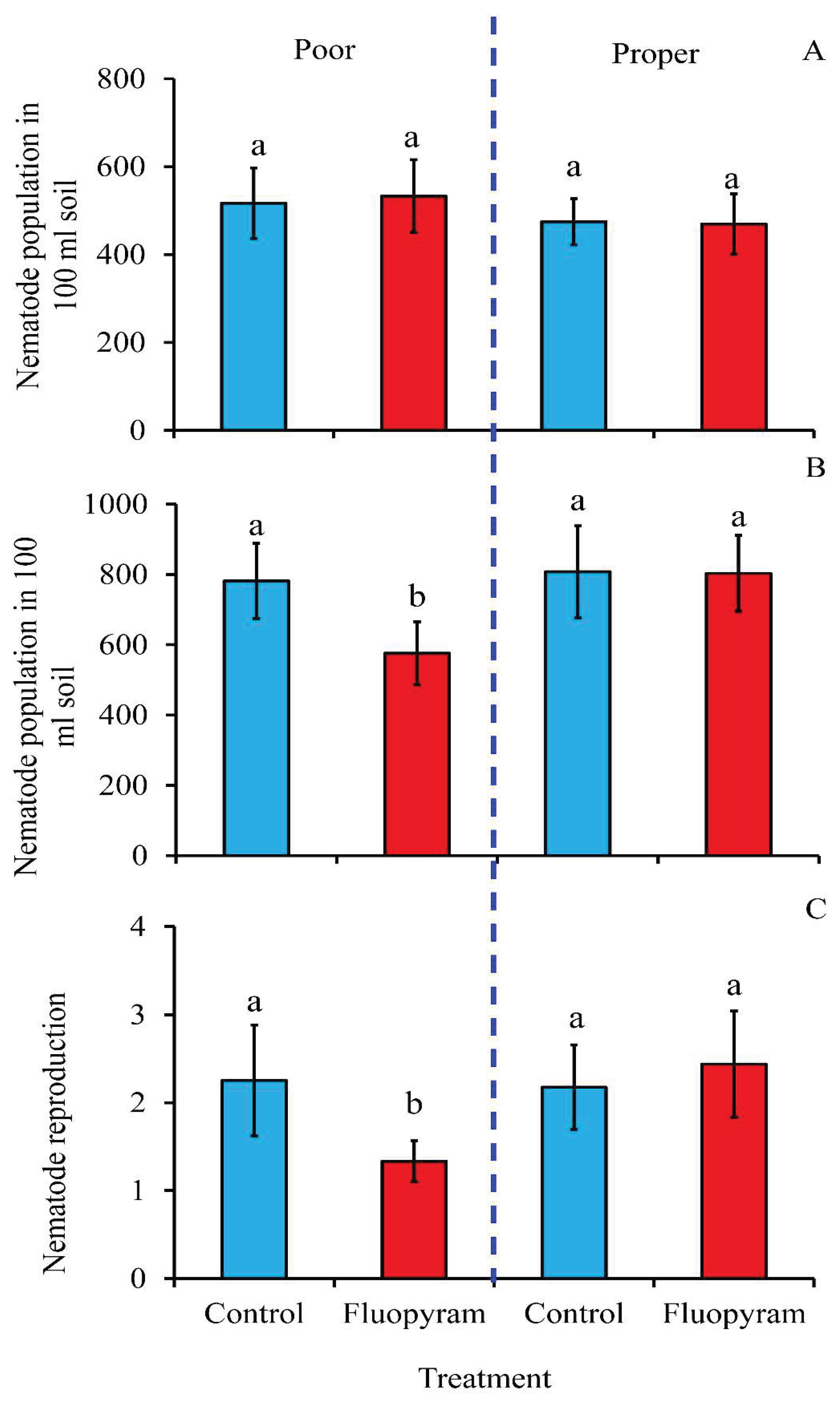
Figure 2.
Initial and final densities of potato cyst nematode (PCN) cysts and their multiplication factor under potato (cv. Shangi) trials in Nyandarua County, Kenya. Data are pooled across three cropping seasons. Within each management practice, ns indicates where means are not significantly different at p ≤ 0.05; * p ≤ 0.05; ** p ≤ 0.01.
Figure 2.
Initial and final densities of potato cyst nematode (PCN) cysts and their multiplication factor under potato (cv. Shangi) trials in Nyandarua County, Kenya. Data are pooled across three cropping seasons. Within each management practice, ns indicates where means are not significantly different at p ≤ 0.05; * p ≤ 0.05; ** p ≤ 0.01.
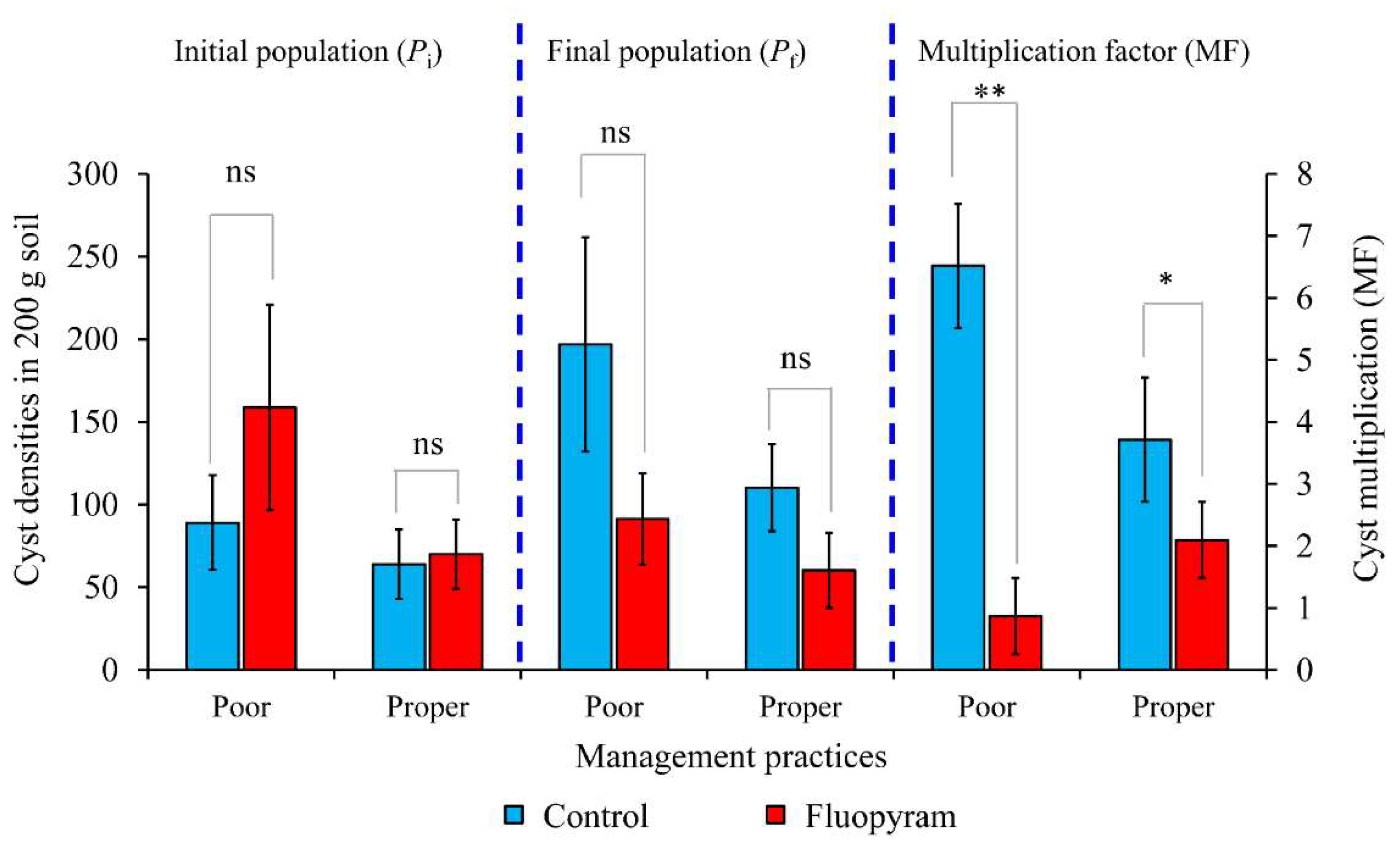
Figure 3.
Marketable and unmarketable yield of potato (cv. Shangi) as influenced by fluopyram treatment and field management practice in Nyandarua County, Kenya. Data are pooled across three cropping seasons. Error bars represent the standard error of the mean. Bars sharing the same letter are not significantly different (p ≤ 0.05); lowercase letters denote comparisons of marketable yield, and uppercase letters denote comparisons of total yield (marketable + unmarketable).
Figure 3.
Marketable and unmarketable yield of potato (cv. Shangi) as influenced by fluopyram treatment and field management practice in Nyandarua County, Kenya. Data are pooled across three cropping seasons. Error bars represent the standard error of the mean. Bars sharing the same letter are not significantly different (p ≤ 0.05); lowercase letters denote comparisons of marketable yield, and uppercase letters denote comparisons of total yield (marketable + unmarketable).
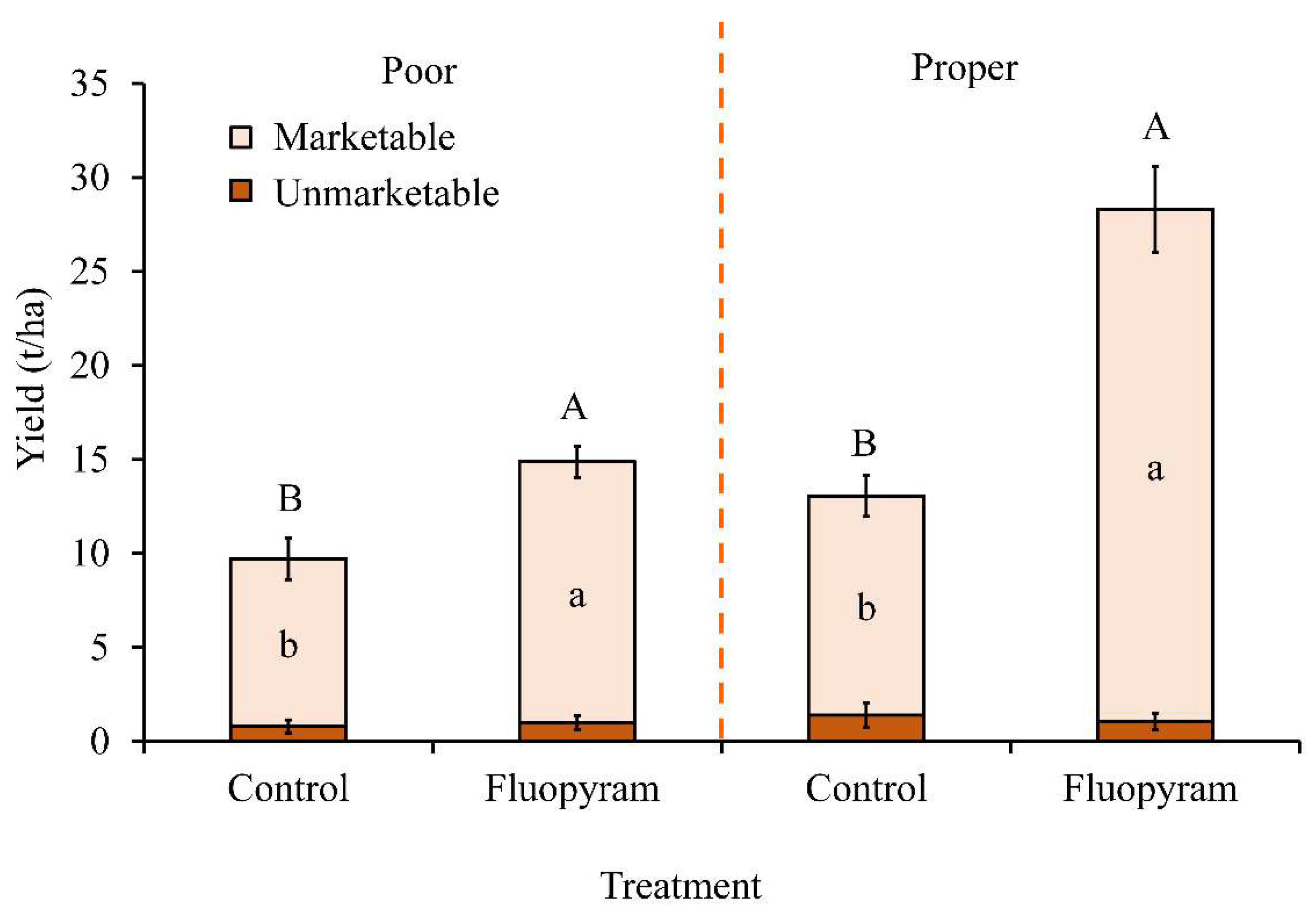
Figure 4.
Tuber grade distribution of potato (cv. Shangi) as influenced by fluopyram treatment and field management practice in Nyandarua County, Kenya. Data are pooled across three cropping seasons. Within each field management practice, bars sharing the same letter are not significantly different (p ≤ 0.05). Italicised lowercase letters denote comparisons among small-sized tubers; regular lowercase letters denote comparisons among medium-sized tubers; uppercase letters denote comparisons among large-sized tubers.
Figure 4.
Tuber grade distribution of potato (cv. Shangi) as influenced by fluopyram treatment and field management practice in Nyandarua County, Kenya. Data are pooled across three cropping seasons. Within each field management practice, bars sharing the same letter are not significantly different (p ≤ 0.05). Italicised lowercase letters denote comparisons among small-sized tubers; regular lowercase letters denote comparisons among medium-sized tubers; uppercase letters denote comparisons among large-sized tubers.
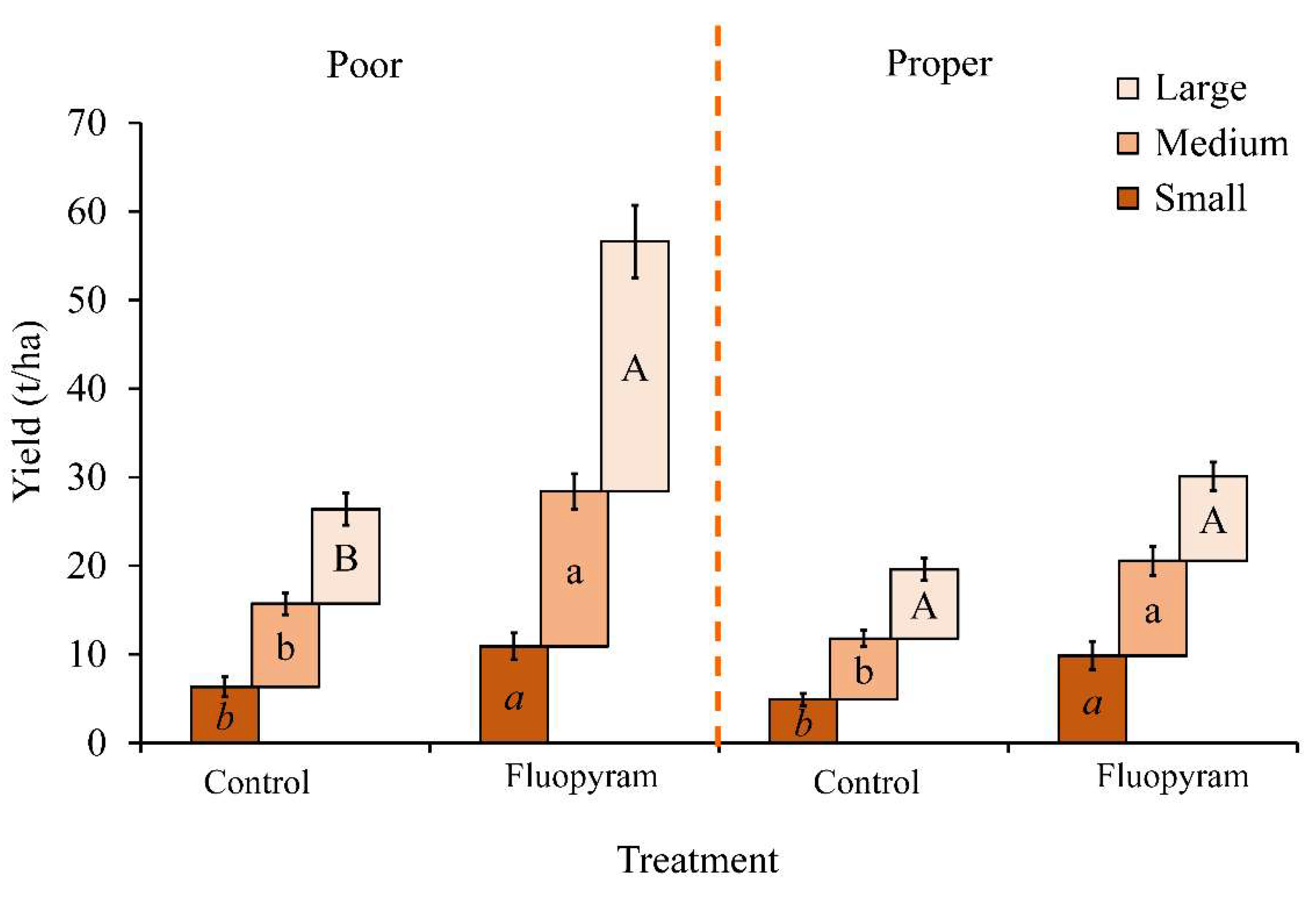

Table 1.
Weather details during the trial period.
| Season | Description | Period | Rainfall (mm)1 | Mean temperature (℃)2 |
| Season 1 | Long rains | Mar - May 2021 | 578.67 | 17.23 |
| Season 2 | Intermediate rains | Jul - Sep 2021 | 169.85 | 16.11 |
| Season 3 | Short rains | Nov 2021 - Jan 2022 | 357.23 | 17.10 |
1Seasonal rainfall collected during the study period. 2Temperature recorded daily and averaged between lowest and highest temperature.
Table 2.
Diversity and density of plant-parasitic nematode genera in potatoes (cv. Shangi) in Nyandarua County, Kenya.
Table 2.
Diversity and density of plant-parasitic nematode genera in potatoes (cv. Shangi) in Nyandarua County, Kenya.
| Baseline data (Pi) | Endline data (Pf) | ||||||
| Genus | Control | Fluopyram | Control | Fluopyram | |||
| Aphelenchoides | 11 ± 3.5 c B | 34 ± 16.6 ab A | 125 ± 34.7 a A | 125 ± 35.6 a A | |||
| Aphelenchus | 30 ± 7.4 b A | 41 ± 13.4 ab A | 47 ± 10.3 c A | 41 ± 8.1 b A | |||
| Criconema | 0 ± 0 f B | 2 ± 1.3 c A | 10 ± 4.0 e A | 7 ± 3.3 d A | |||
| Filenchus | 14 ± 5.6 c A | 15 ± 5.5 b A | 59 ± 16.7 bc A | 26 ± 8.6 c B | |||
| Globodera | 27 ± 11.4 b A | 22 ± 6.4 b A | 62 ± 11.4 bc A | 19 ± 4.9 c B | |||
| Helicotylenchus | 17 ± 4.7 bc B | 57 ± 25.9 a A | 71 ± 12.5 b A | 60 ± 11.8 b A | |||
| Hemicycliophora | 0 ± 0 f | 0 ± 0 d A | 0 ± 0 f A | 1 ± 0.9 e A | |||
| Hoplolaimus | 9 ± 4.7 c A | 15 ± 6.4 b A | 11 ± 3.5 e A | 14 ± 10.5 cd A | |||
| Meloidogyne | 0 ± 0 f | 0 ± 0 d A | 23 ± 5.6 d A | 18 ± 5.6 c A | |||
| Paratrichodorus | 1 ± 1.2 e B | 13 ± 4.6 b A | 1 ± 0.5 f A | 0 ± 0 f A | |||
| Pratylenchus | 27 ± 12.4 b A | 29 ± 13.6 ab A | 9 ± 7.1 e A | 5 ± 2 d A | |||
| Radopholus | 0 ± 0 f A | 0 ± 0 d A | 1 ± 0.6 f A | 0 ± 0 f A | |||
| Rotylenchus | 3 ± 1.6 d B | 13 ± 6.1 b A | 4 ± 2.4 f A | 6 ± 3 d A | |||
| Trichodorus | 1 ± 0.4 e B | 11 ± 6.5 b A | 8 ± 3.7 e A | 8 ± 3.2 d A | |||
| Tylenchorhynchus | 1 ± 0.9 e A | 3 ± 1.3 c A | 5 ± 1.8 f A | 5 ± 2 d A | |||
| Tylenchus | 55 ± 9.8 a A | 36 ± 8.1 ab B | 96 ± 17.3 ab A | 44 ± 9.3 b B | |||
| Xiphinema | 19 ± 15.3 bc A | 18 ± 8.9 b A | 15 ± 5.6 de A | 8 ± 4.4 d a A | |||
Baseline data = initial population density recorded at the first-season planting; Endline data = final population density recorded at the third-season harvest. Mean ± SE represents nematode genera density (count per 100 ml soil) pooled across two management regimes. Means followed by the same lowercase letter(s) along the treatment columns are not statistically different at p ≤ 0.05. Means followed by the same uppercase letter across the treatments for each population are not statistically different at p ≤ 0.05.
Disclaimer/Publisher’s Note: The statements, opinions and data contained in all publications are solely those of the individual author(s) and contributor(s) and not of MDPI and/or the editor(s). MDPI and/or the editor(s) disclaim responsibility for any injury to people or property resulting from any ideas, methods, instructions or products referred to in the content. |
© 2026 by the authors. Licensee MDPI, Basel, Switzerland. This article is an open access article distributed under the terms and conditions of the Creative Commons Attribution (CC BY) license (http://creativecommons.org/licenses/by/4.0/).
Copyright: This open access article is published under a Creative Commons CC BY 4.0 license, which permit the free download, distribution, and reuse, provided that the author and preprint are cited in any reuse.


