

Submitted:
02 July 2026
Posted:
03 July 2026
You are already at the latest version
Abstract
Dengue has emerged as the leading mosquito-borne viral threat in the Americas, with over 13 million cases reported in 2024 alone. This review synthesizes current knowledge on dengue virus biology, epidemiology, and discusses the benefits of a coordinated regional elimination strategy in Latin America. Genetic diversity across the four dengue virus serotypes influences circulation patterns and disease severity. We describe virion structure and host cell interactions and the human immune response, including properties of antibodies correlated with protection and antibody-enhanced severe infections. Surveillance data from the Americas reveal exponential case growth and increasing healthcare costs. Current prevention strategies — two new vaccines and biological vector control including Wolbachia replacement — offer tools not available a decade ago. However, insecticide resistance has rendered conventional chemical control ineffective. Latin America, with established regional coordinating bodies, sustained government commitment and institutional infrastructure, may be uniquely positioned to move from disease control to elimination through a phased, evidence-based regional strategy integrating vaccination, novel vector control strategies, and strengthened clinical management in priority high-burden areas.
Keywords:
dengue
; epidemiology
; diagnosis
; pathogenesis
; clinical manifestations
; management
; vaccines
; treatment
; prevention
; control
Introduction
Ae. aegypti was introduced to the Americas during the transatlantic slave trade in the 1600s and subsequently expanded globally alongside the growth of maritime shipping networks. In Latin America, the vector became highly adapted to urban environments, where it lives in close association with human populations, preferentially feeds on humans, rests indoors, and oviposits in artificial water containers. The average female mosquito lives for approximately 3-4 weeks. [1,2]. DENV-1, 2, 3 and 4 are single-stranded ribonucleic acid viruses in the genus Flavivirus, family Flaviviridae. Flavivirus include other viruses transmitted by mosquitoes and ticks such as Zika, West Nile, Japanese encephalitis, and tick-borne encephalitis viruses. The four dengue viruses are called serotypes because each has different interactions with the antibodies in human blood[3]. They share approximately two thirds of their genomes[3], with different genotypes existing within each serotype, which can vary in disease severity. DENV is primarily transmitted through the bite of an infected mosquito vector, with Aedes aegypti as the most common vector, although other species including Aedes albopictus may also sustain transmission.
Dengue incidence in the Americas has increased more than tenfold in the last two decades. In 1947, the Panamerican Health Organization (PAHO) launched a continental Aedes aegypti elimination program to combat yellow fever. Through coordinated DDT-based spraying campaigns, 21 countries achieved elimination by the early 1970s. Program collapse, driven by loss of local governments commitment, funding and support, allowed Ae. aegypti to reinfest the region, and epidemics followed[4]. These efforts showed that elimination is possible, but it requires sustained and coordinated commitment to maintain mosquito populations under control.
The challenge today is harder than it was in 1947, and the tools that worked are no longer sufficient. Unprecedented urbanization and demographic shifts have created Ae. aegypti habitats that are more complex than those faced in the elimination campaigns[5]. Economic, political, and cultural changes such as declining public trust in vaccines and scientific institutions[6], reduced investment in global health infrastructure[7], conflict and humanitarian emergencies have contributed to the problem. Most importantly, insecticide spraying remains the primary tool of conventional vector control despite widespread insecticide resistance across Latin America, diverting resources from more effective solutions.
A new approach is necessary and for the first time within reach. Two dengue vaccines and biological vector control strategies, including Wolbachia-carrying mosquitoes and sterile insect technique have demonstrated meaningful efficacy in dengue prevention[8,9,10]. Several of these innovations have originated, been tested, and updated in the Americas[11,12].
Latin America may be uniquely suited to demonstrate what a coordinated, evidence-based dengue elimination strategy can achieve. The region has established health coordination mechanisms through PAHO and maintains research, surveillance, and laboratory infrastructure to support a coordinated approach. Several countries have already shown community and government to adopt novel vector control approaches and integrate them into national programs.
This article summarizes the latest evidence on dengue virus biology and epidemiology, virion structure, host cell interactions and the human immune response, including properties of antibodies correlated with protection and antibody-enhanced severe infections, current vector control strategies, and vaccines to support efforts for a coordinated strategy to eliminate dengue from the Americas.
Epidemiology of Dengue in the Americas
Dengue Burden and Recent Trends.Dengue virus (DENV) transmission in the Americas has increased substantially over recent decades, with the region emerging as a major contributor to the global rise in incidence and geographic expansion. This increase reflects the intersection of environmental drivers, rapid urbanization, shifting immunity, and increasing human mobility, which together have created highly favorable conditions for Ae. aegypti abundance and virus spread. Increasing connectivity among densely populated cities further enables frequent viral introductions and lineage mixing across the region. These drivers have not only increased transmission but also shaped spatiotemporal patterns across the Americas[13].
Two complementary data sources help illustrate these patterns. Country surveillance data capture temporal trends and spatial expansion [14,15,16,17,18,19,20,21,22,23,24], while model-based estimates using seroprevalence data provide a more complex picture of total infections and disease burden. Surveillance data reveal an increase in reported dengue cases from 2000–2025, punctuated by progressively larger epidemic years and expanded geographic spread (Figure 1). Reported case incidence has increased across subregions, with areas that historically experienced lower or no transmission now contributing more to the regional burden. Transmission is disproportionately driven by a few high-incidence countries. Brazil dominates regional dynamics (3.8 million reported cases in 2025), while Mexico and Colombia also contribute (145,251 and 125,119 reported cases in 2025, respectively)[25]. Force of infection model-based estimates indicate that the region is estimated to have 16.7 (95% credible interval: 15.6–17.7) million infections, 7.6 (4.8–9.9) million febrile cases, and 556,800 (361,200-702,300) hospitalizations annually[26].
Across the Americas, dengue epidemiology is characterized by multiannual epidemic cycles, typically occurring every 3–5 years, with increasing magnitude and regional synchrony[27,28,29,30,31,32]. These patterns emerge from the interaction of intrinsic host-pathogen dynamics and extrinsic environmental variability, which together drive the timing and intensity of outbreaks.
Intrinsic dynamics are governed by the complex immunological landscape of the four DENV serotypes (DENV 1-4). A first (primary) infection induces long-lasting, serotype-specific immunity, combined with temporary cross-protection against heterotypic serotypes[33]. As cross-protection wanes, individuals become susceptible to heterotypic infection, which can carry a greater risk of progression to severe disease compared to first infections[34,35,36]. These processes generate cyclical patterns in population susceptibility through waning immunity and demographic turnover[30,31]. Concurrently, the co-circulation and replacement of serotypes, along with genotype turnover within serotypes, shape epidemic dynamics[33,37]. Increasing evidence suggests that antigenic evolution contributes to epidemic dynamics, with large epidemics often following the emergence or introduction of antigenically distinct viral lineages[38].
Extrinsic factors, particularly climate and environmental variability, can impact intrinsic dynamics by changing the biology of the vector and transmission potential. Temperature and humidity influence mosquito survival, biting rates, and the extrinsic incubation period (the time between when a mosquito acquires DENV and when it is able to transmit DENV to others), while rainfall determines the availability of breeding sites[39,40,41,42,43,44]. These relationships are nonlinear, with transmission peaking within optimal ranges and declining at extreme temperatures and precipitation. Interannual climate variability, including El Niño-Southern Oscillation (ENSO) events, has also been linked to fluctuations in dengue incidence across the Americas. In metropolitan areas, urban heat islands and increasingly connected megacities further increase transmission potential[45,46].
In 2024, the Americas experienced the largest dengue epidemic on record, with over 13 million reported cases, accounting for more than 90% of reported global cases[47]. This unprecedented epidemic illustrates how these interacting intrinsic and extrinsic drivers can align to produce sustained high-level transmission. Incidence reached record levels across the Americas, accompanied by substantial increases in hospitalizations and severe cases. In some settings, outbreaks coincided with a shift toward older age groups, consistent with changing patterns in population immunity[48]. This surge in dengue cases coincided with extreme climatic conditions: 2023 and 2024 were the two warmest years on record, with strong El Niño-associated anomalies that likely expanded vector suitability and enhanced transmission efficiency[49,50,51]. The epidemic also followed a period of disruption in arboviral transmission during the Zika (2015-2016) and COVID-19 (2020) epidemics [52,53], during which cross-protection from Zika (a closely related flavivirus) and altered human mobility from COVID-19 stay at home orders may have reshaped population immunity and increased susceptibility to DENV. The rapid rebound to record high numbers of international and regional travel by 2024 further facilitated viral movement among highly connected urban centers[54,55]. Additionally, the re-emergence of DENV-3 and co-circulation of multiple serotypes increased both the risk of additional infections and severe disease[56,57].
Taken together, the 2024 epidemic is best understood as a compound event, in which climatic extremes, changing immunity, increased mobility, and viral turnover converged to favor DENV transmission across the region. More broadly, the magnitude and synchrony of recent epidemics emphasize how DENV transmission in the Americas is characterized by cross-region dynamics, highlighting that traditional isolated local interventions may be insufficient for dengue control and underscoring the potential benefit of a coordinated regional strategies to reduce DENV transmission on a larger scale.
Dengue Associated Costs. Dengue imposes a substantial economic burden across the Americas. In 2013, dengue was estimated to cost $2.4 billion (2025 USD) in the region, accounting for 20% of global dengue costs despite representing only 10% of cases[58]. This disproportionate burden suggests that the economic impact of dengue in the Americas is not only driven by transmission intensity, but also by how health systems respond to and manage cases.
The Americas region has the highest per capita and per-case dengue costs globally, even when excluding high income countries like the United States and Argentina. The average dengue case in the region costs $424 (ranging from highs of $2,912–$3,866 in the United States, Puerto Rico, and the Cayman Islands to lows of $35–$85 in Haiti, Nicaragua, and Honduras), compared to the global average of $210[58,59,60]. Aggregate national-level costs are mainly driven by population size and dengue incidence, with Brazil and Mexico accounting for the highest annual costs ($1 billion and $448 million, respectively)[58,59,60]. During epidemic years, costs can be up to 17 times higher than non-epidemic years, placing substantial and unpredictable strain on healthcare systems[59,61,62,63]. This extreme interannual variability in dengue-associated costs complicates health system planning, with resources often directed toward reactive responses rather than sustained investment in prevention. Medical care accounts for a disproportionate share of costs, highlighting the role of clinical management in the economic burden of dengue.
Given the unprecedented size of the 2024 epidemic, current estimates likely substantially underestimate the true economic burden of dengue in the Americas. Existing estimates often exclude informal care, long-term health impacts, and broader societal disruptions. Even so, the high costs suggest that even moderately effective prevention strategies could yield substantial economic returns in the region. Investments in surveillance, vaccination, vector control, and clinical case management can reduce both the economic and health burden of dengue in the Americas. The scale and recurring nature of these costs suggest that dengue should be viewed not only as a public health challenge, but also as a regional economic priority, further strengthening the potential benefit of a coordinated approaches for prevention and control.
Dengue Surveillance in the Americas. New developments in surveillance, laboratory capacity, and reporting have occurred in parallel with the rising incidence of dengue in the Americas. In 2000, 37 countries in the Americas reported dengue cases to PAHO; as of 2026, 46 countries report weekly to PAHO, providing timely, updated, and detailed information. The granularity of data has also increased, with case data available by week, and severe dengue and fatal case numbers captured for 32 countries[25]. Other information captured by PAHO include the DENV serotypes circulating in each country, and subnational case data for 10 countries. (Personal communication, Thais Helena dos Santos, Panamerican Health Organization)
Extensive work has been done to strengthen diagnostic testing capacity across the Americas. In 2008, when the Dengue Laboratory Network of the Americas (RELDA) was launched, 23 countries could perform dengue diagnostic testing by RT-PCR and 6 were able to perform DENV genomic sequencing. By 2026, RELDA (which became the Arbovirus Diagnosis Laboratory Network of the Americas in 2016) had expanded to include national reference laboratories in 34 countries and territories and 5 PAHO/WHO collaborating centers. All countries in the Americas are currently able perform dengue diagnostic testing and serotyping by RT-PCR, and 25 countries have DENV genomic sequencing capacity. (Personal communication, Leonel Gresh, Panamerican Health Organization)
Timely and accurate dengue surveillance and reporting at the subnational and national scales enable strengthened preparedness and dengue response efforts as neighboring areas can better prepare for and respond to dengue cases and outbreaks.
Dengue Virus
Dengue Serotypes.Although all four DENV serotypes are transmitted by Aedes mosquitoes and cause a broadly similar clinical syndrome, there are notable biological and epidemiological differences between them. At the regional level in Latin America, DENV circulation has shifted from periods dominated by a single serotype to a state of hyperendemicity, characterized by the simultaneous circulation of multiple DENV serotypes, leading to record breaking outbreaks. At the patient level, DENV-2 and DENV-4 associated dengue illnesses are more typically identified as secondary DENV infections, whereas DENV-1 and DENV-3 can cause significant illness as primary or secondary infections[64,65]. While all four serotypes frequently cause mild or asymptomatic infections, DENV-4 has been associated with a reduced risk of disease compared to the other serotypes, which is supported by observations of silent DENV-4 epidemics in Thailand[66]. Consistent with these observations, long-term cohort studies in Latin America have provided critical evidence of serotype-specific disease risk. For example, during 2004–2024, an established cohort in Nicaragua has shown that severe disease was more common among primary (26%) and secondary DENV-3 infections (27%) compared to severe dengue among patients with other serotypes (DENV-1: 13%-19%, DENV-2: 9%-15%, and DENV-4: 5%-4%, respectively)[67]. However, this pattern may not be constant as Introduction of new genotypes or lineages within a serotype can dramatically shift serotype-specific risk.
Dengue Evolution Affects Transmission Dynamics. Host factors and immune responses impose evolutionary pressures on DENV, driving the periodic emergence of genetic variants with enhanced infectivity, immune evasion, and transmission[68,69]. Genetic drift in mosquitoes[70] further shapes viral evolution. In Latin America, where large susceptible populations, heterogeneous immunity, and hyperendemic transmission overlap, these evolutionary processes have produced more transmissible or virulent viral lineages, contributing to unexpected epidemics. Choi A. et al. conducted a review of studies linking genetic variation to epidemiological phenotypes[68].
A notable case is the 1997 DENV-2 epidemic in in Santiago de Cuba, which showed higher mortality than a 1981 DENV-2 outbreak. Investigators implicated genetic differences in the NS1 and NS5 proteins[71], and a detailed study pinpointed to a single nucleotide change in NS1: a threonine to isoleucine substitution at position 164 (NS1 T164S)[72]. Experiments showed this mutation increased the levels of secreted NS1 (sNS1) from infected mammalian cells. Secreted NS1 is known to stimulate proinflammatory responses[73]. In an immunocompromised mouse model of dengue, DENV-2 with the NS1 164S mutation caused greater tissue inflammation, complement activation, and mortality compared to DENV-2 without the NS1 164T mutation. The NS1 T164S change also increased Ae. aegypti infection rates, illustrating how a single mutation can boost both human pathogenicity and vector transmission, amplifying outbreak severity[68].
In both Puerto Rico and Nicaragua, specific DENV-2 clades with 3′UTR and NS5 mutations displaced earlier lineages and resulted in large epidemics, with the Puerto Rico PR-2B clade (emerging 1994) [74] and Nicaraguan NI-2B clade (emerging 2006) [75] both showing enhanced Ae. aegypti infection efficiency and higher viremia.[76]. These examples demonstrate that viral evolution directly shapes epidemic size and severity in Latin America, highlighting the critical need for real-time genomic surveillance.
Replication and Virion Structure. As mosquito-borne primate viruses, the survival of the four-dengue virus (DENV) serotypes depends on alternate replication in invertebrate (mosquito) and vertebrate (human) hosts. In both hosts, DENVs bind to receptors on target cells and enter by receptor-mediated endocytosis. The low pH of endosomes alters the conformation of the viral envelope (E) protein triggering membrane fusion, and the release of the viral genome into the cytoplasm. In the cytoplasm, the positive-sense RNA genome serves as a template for translation and production of viral structural and non-structural proteins required for genome replication, evasion of host defenses, and the production of new virus particles. Newly formed virions bud into the lumen of the endoplasmic reticulum and exit the cell through the secretory pathway. The molecular mechanisms by which DENVs enter, replicate and assemble within host cells are active and evolving areas of research, which will not be covered here (Reviewed in [77,78,79]). We focus on DENV receptors and cell tropism in the human and mosquito host and new insights about the structure of DENVs because these topics are directly applicable to human disease and the development of vaccines and other counter measures.
Receptors and Host Cell Tropism in the Human Host. Many studies point to myeloid lineage immune cells being important targets of DENV infection. DENVs rely on C-type lectin receptors (DC-SIGN, L-SIGN, CLEC5A) and TAM family receptors expressed on myeloid cells for cell attachment and entry (Reviewed in [80]) (Figure 2). While C-type lectin receptors localize the virus to the surface of target immune cells, other host proteins, yet to be identified, are required for viral entry via receptor mediated endocytosis[81]. The TIM and TAM families of cell surface receptors expressed by immune cells also serve as dengue attachment factors and/or receptors by binding to phosphatidylserine on the viral lipid envelope [82]. In vitro, TAM-1 is a fully functional receptor by promoting both attachment and endocytosis into cells [83]. The specific interactions between the DENV envelope, attachment factors and entry receptors on myeloid cells have not been fully exploited to develop antivirals and vaccines. While other host proteins (claudin-1, LDL receptor protein 1, HSP90) and carbohydrate moieties expressed by many cell types can promote DENV infections in vitro, these putative “receptors” do not explain the narrow tissue and cell tropism of DENVs in humans that primarily infect immune cells. It is also worth noting that while endothelial barrier in blood vessels and the liver are compromised in severe dengue cases, direct evidence for the virus infecting endothelial cells or hepatocytes in humans is lacking.
Receptors and Cell Tropism in Mosquitoes. In Aedes mosquitoes, DENV replication requires sequential passage through the midgut epithelium, hemocoel, and salivary glands, each step presenting a barrier to infection.[84] While traditionally thought to disseminate as free virions, recent evidence reveals that dengue cannot survive the low pH hemolymph environment and instead depends on exosome-mediated transport of viral nucleocapsids from infected midgut epithelial cells to salivary glands. [85] This process requires direct interaction between the DENV capsid protein and the vector protein VCP (valosin-containing protein). Notably, Aedes VCP, but not Culex VCP, supports production of infectious DENV-carrying exosomes, identifying a molecular determinant of vector competence. [85] This paradigm shift demonstrating that exosomes disseminate as infectious particles independent of the viral envelope changes our understanding of the vector-virus interaction and may offer new targets for mosquito control strategies.
Structure of the Infectious Dengue Virion. The dengue virion consists of the positive-sense RNA genome bound to the viral capsid protein, which is enclosed in a lipid envelope with two integral membrane proteins [Envelope (E) and preMembrane (prM) proteins]. During virus egress from infected cells, prM protein is cut by a host protease to generate mature infectious virions, which have a smooth surface of 90 E protein homodimers that are tightly packed to form a protein coat with icosahedral symmetry [86] (Figure 2). The fully processed smooth, circular and symmetrical virus particle has served as a model for understanding the viral life cycle, the host’s immune response, and for developing vaccines and other counter measures [86]. However, recent studies have demonstrated that dengue virions are structurally heterogenous and demonstrate considerable flexing and “breathing” under different environmental conditions. We next focus on different mechanisms responsible for creating virion structural heterogeneity and dynamics.
In laboratory cell lines commonly used to propagate DENVs, prM processing is inefficient and virions released from cells are a mixture of immature, partially mature, and fully mature virions containing variable amounts of unprocessed prM [86,87] (Figure 2). The maturation state of DENV alters the specific infectivity of the virus to different cell lines and the ability of antibodies to bind and neutralize the virus [88]. For example, the highly conserved fusion peptide on E is exposed in partially mature virions, resulting in increased binding and neutralization by abundant cross-reactive antibodies in immune sera. Raut et al characterized the maturation state of DENV-1 in the plasma from infected patients [89]. They observed that unlike virions produced using laboratory cell lines, the virions circulating in humans were fully mature. The virions in human plasma had a 10 to 100-fold greater specific infectivity compared to DENV-1 virions produced using laboratory cell lines. The virions in plasma were less sensitive to neutralization by heterotypic cross-reactive Ab compared to laboratory produced virions. As discussed in section Immune Correlates for Dengue Vaccine Development, these structural differences between virions in vivo and virions produced for laboratory studies may explain why some antibodies that neutralize DENVs in laboratory assays are not linked to protection in humans.
Beyond structural heterogeneity caused by variable processing of prM protein, studies have demonstrated that under some conditions, E protein flexes in a temperature-dependent manner leading to virions with a “bumpy” surface at human body temperature and the exposure of cryptic Ab epitopes [90,91,92]. This phenomenon, termed virus breathing, is influenced by temperature, DENV strain, and specific E protein mutations, which can have profound global effects on virus breathing and exposure of antibody epitopes. There is an urgent need for more systematic studies to assess how the extent of breathing varies according to serotype, genotype, strain, laboratory adaptation, and attenuation. This information may reveal why some strains of DENVs cause more severe epidemics than other strains and facilitate the development of in vitro models and assays that better capture virus biology in the mosquito and human hosts.
Human Immune Response to Dengue Virus
Primary DENV Infections. The immune response to DENV depends on an individual’s prior DENV infection history [93]. People exposed to their first DENV infection (primary infection) develop B and T cell responses that recognize epitopes that are unique to the infecting serotype (type-specific) and epitopes that are conserved between serotypes (cross-reactive). Despite the presence of cross-reactive B and T cells, primary infections reliably protect against disease caused by the homologous serotype only [1,10]. To better understand homotypic protection, investigators have characterized type-specific neutralizing monoclonal antibodies (MAbs) from individuals exposed to primary infections with each serotype. A common theme emerging from these studies is that people exposed to their first DENV infection develop type-specific neutralizing Abs that bind to quaternary structure epitopes that span more than one protomer [94]. The Abs neutralize the virus by cross-linking surface E proteins and blocking the conformational changes required for entry and low pH triggered membrane fusion [95,96,97,98]. Collectively, these results establish that primary infections stimulate durable type-specific Ab responses that neutralize the homologous serotype and prevent clinically significant repeat infections by the same serotype.
Secondary DENV Infections. Individuals experiencing a second DENV infection with a new serotype develop a neutralizing and protective immune response that is fundamentally different from a primary infection-induced response [99]. Secondary infections induce serotype cross-reactive and cross-neutralizing Abs that are different from the cross-reactive weakly neutralizing Abs observed after a first infection (Figure 3). DENV cross-neutralizing MAbs isolated from secondary cases bind to complex conserved epitopes that span the E protein homodimer, locking the protein and preventing structural changes responsible for cell entry [100,101]. These E protein dimer epitope (EDE) Abs likely explain why people rarely experience clinically significant third or fourth infections. While EDE-like Abs are almost certainly derived from memory B cells stimulated from the first infection, the immune mechanisms responsible for generating these Abs are not well-understood, and currently an active topic of research.
T cells in DENV Infections. T cells play critical roles in the resolution of active infections and the establishment of virus-specific long-term immune memory. While virus-specific T cells do not prevent infection, they can contribute to protection against severe disease by targeting DENV-infected cells or by supporting B cell expansion for the generation of neutralizing Abs [102]. T cell responses to DENV infection are reviewed in detail by de Arruda LB and Marques ETA. [103] We will review here the locations of major T cell epitopes in the viral proteome and how T cells contribute to viral clearance and protection. Most CD8+ T cell epitopes have been mapped to non-structural proteins 3, 4A, 4B, 5 and the viral capsid protein [104]. Virus-specific CD8+ T cells first appear during the early febrile phase supporting an active role for these cells in class I restricted killing of infected cells. HLA class II restricted CD4+ T cell epitopes have been mapped to several non-structural viral proteins and the viral capsid protein [105]. In addition to providing help in generating long-lived Ab responses, a subpopulation of cytotoxic CD4+ T cells have been implicated in the direct DENV clearance [106]. Serotype cross-reactive T cells targeting conserved epitopes are dominant after a primary infection and greatly expand after repeat infections with different serotypes.[105]
Immune Enhanced Dengue Disease. Epidemiological studies have established that a second infection with a new serotype or a first infection in an infant with maternal dengue Ab is more likely to be clinically severe compared to a primary infection. This phenomenon has been attributed to antibody-dependent enhancement (ADE) of DENV, whereby non-neutralizing antibodies to a previous DENV infection bind to the new DENV serotype and facilitate its entry into target Fcg receptor (FcgR)-bearing cells, leading to higher viremia [34,107]. Over the past decade, controlled human infection studies, pediatric prospective cohort studies, and dengue vaccine clinical trials have provided further support for Abs enhancing viral replication and disease severity in humans.[108,109,110] However, the exact mechanisms underlying immune enhanced dengue disease are controversial, and there are no biomarkers or assays for accurately predicting risk of ADE and severe disease in people. In addition to weakly neutralizing Abs, some investigators have proposed a role for dysregulated T cell responses in severe dengue.[111,112]
Immune Correlates for DENV Vaccine Development. Neutralizing Abs have been successfully used as correlate for developing vaccines against YFV and JEV. While dengue vaccine development initially focused on neutralizing Abs, phase 3 trials with leading vaccine candidates indicated that the presence of NAbs alone is not a reliable correlate for DENVs, especially in naïve individuals who are vaccinated [110,113]. Recent studies also indicate that the DENV focus reduction neutralization assay widely used by investigators overestimates the magnitude and durability of neutralizing Abs in human sera [89,114,115]. As described in section Structure of the infectious dengue virion, DENVs used for laboratory neutralization assays are based on laboratory adapted virus strains and produced under conditions that generate a heterogenous population of virions of variable maturation state (Figure 2). Laboratory passaged, partially mature virions are sensitive to neutralization by Abs that are ineffective against mature virions circulating in infected people [89]. More effective serological correlates of protection need to be established that consider the properties of virions transmitted by the vector and virions circulating in human plasma. In this regard, recent studies that have characterized human immune sera from vaccine trials (Dengvaxia and Qdenga) and prospective cohort studies indicate that the presence of type-specific neutralizing Abs to unique epitopes on each serotype and “EDE-like” cross-reactive neutralizing Abs are promising correlates of protection that need further validation [116,117,118,119].
Pathogenesis and Clinical Manifestations
Dengue Symptoms. Approximately 60%–80% of people infected with DENV remain asymptomatic, facilitating silent transmission across endemic regions like Latin America. Symptomatic dengue typically progresses through three phases: febrile, critical, and recovery. The febrile phase begins with abrupt onset of high fever (≥38.5°C), nausea, vomiting, rash, and myalgia, and lasts 2–7 days. Most patients progress directly to the recovery phase; these uncomplicated cases are usually managed in an outpatient setting.[10]
Critical Phase Physiology and Management.A subset of patients enter the critical phase around days 4–6, coinciding with defervescence, when transient but potentially life-threatening vascular leakage can occur. Warning signs, including abdominal pain, persistent vomiting, mucosal bleeding, fluid accumulation, hepatomegaly, and rising hematocrit indicate higher risk for progression to severe dengue and guide triage and hospitalization. About 5% of symptomatic cases progress to severe dengue, defined by severe plasma leakage, severe bleeding, or organ involvement. With appropriate care, case fatality rates are <1% but can reach 15% when timely management is unavailable.
Severe dengue results primarily from functional endothelial dysfunction leading to transient plasma leakage rather than structural vessel damage. Key mechanisms include viral and host immune factors. The DENV NS1 protein disrupts the endothelial glycocalyx and increases permeability. [120,121] Infected immune cells, including monocytes, macrophages, and dendritic cells, release cytokines[122] such as tumour necrosis factor-α (TNF-α) exacerbating leakage[122]. Mast cells mediators (e.g. VEGF, chymase)[123] and platelet derived factors [124] further destabilize endothelial integrity. These pathways also represent potential therapeutic targets, including NS1-directed interventions and inhibitors of inflammatory mediators.
Thrombocytopenia occurs frequently, driven by reduced production and increased destruction of platelets, contributing to bleeding risk[125]. The degree of thrombocytopenia often correlates with clinical severity and complement activation[126]. Coagulopathy arises from inflammatory and fibrinolytic dysregulation, mediated by cytokines including TNF-α, IL-6 and IL-8.[127,128]. Liver injury can happen due to direct viral infection, immune-mediated damage, and hypoxia, with elevated liver enzymes (AST/ALT) peaking in the second week. Severe complications including encephalitis, myocarditis, and acute kidney injury are uncommon but increasingly recognized in hospital-based studies across the region.
During recovery, reabsorption of extravasated fluid leads to rapid clinical improvement, sometimes accompanied by a pruritic rash (“Herman’s rash”).
Dengue Management. Some antivirals, monoclonal antibodies, and other medications have shown promising results in vitro and early clinical trials, but the treatment of dengue remains largely supportive with fluid replacement therapy. [129,130,131,132,133,134] Moreover, the window for using antivirals to prevent severe disease is narrow (1-4 days after fever onset), at the critical stage viremia is low and pathology is due to a poorly controlled immune response. Currently, there are no biomarkers or clinical signs that distinguish the 95% of mild cases from the 5% that progress to severe dengue hemorrhagic fever and shock syndrome. Dengue clinical management centers on early recognition of the critical phase, marked by plasma leakage and hemodynamic instability, and judicious intravenous fluid resuscitation to prevent shock. The success of this approach depends critically on well-trained frontline healthcare workers capable of recognizing warning signs, titrating fluids appropriately to clinical endpoints (urine output, vital signs, hematocrit trends), and escalating care promptly. While there are no randomized controlled trials on the impact of dengue management training on dengue case fatality rate, pre and post comparisons at training sites and observational studies show substantial reductions in dengue deaths after training[135,136]. Strengthening nursing and physician training in dengue-management protocols across the region, particularly in high-burden settings, represents an opportunity to reduce preventable deaths.
Long term effects. Although dengue is usually considered to be an acute disease lasting <2 weeks, multiple studies have found that symptoms can persist beyond this period.[129,130,131,132,133,134] In a meta-analysis, 20% of dengue patients experienced post-infectious fatigue lasting 2 weeks to 6 months or longer after infection.[132] In a separate analysis during the 2 years after acute infection, dengue patients had higher risk for all-cause hospitalization and any sequelae (primarily neuropsychiatric), suggesting that postacute sequelae from dengue may result in substantial population health impacts.[133] Modeling studies indicate that there could be a 13% increase in incremental costs and a 43% increase in disability adjusted life years when persistent symptoms are considered.[134]
Determinants of Disease Severity.Secondary infection is a well-known risk factor for severe dengue,[137,138,139] but only ~12% of secondary infections progress to severe disease[140], highlighting additional host and viral determinants. Tertiary and quaternary infections are usually mild or asymptomatic[141]. Age influences severity: higher case fatality occurs in young children (1–5 years) and the elderly (60+ years)[142]. Some studies report female overrepresentation among severe cases[143]. Evidence suggests people with African ancestry may be less susceptible to severe manifestations[144,145]. Several small regional studies have reported on associations between host genetics, including HLA alleles and various single nucleotide polymorphisms (SNPs) and disease severity [146,147]. However, many of these associations were not confirmed in a large Genome Wide Association Study (GWAS) that analyzed over 7000 dengue exposed individuals from Latin America and Asia[148]. This large study did confirm African Ancestry as being protective against severe dengue. Comorbidities, including diabetes, hypertension, cardiovascular disease, and renal disease, are consistently associated with higher risk of severe dengue in adults[108,149,150]. The growing burden of noncommunicable diseases in Latin America may therefore amplify dengue severity and strain health systems, underscoring the need for integrated, context-specific management and interventions.
Prevention and Control Strategies
Vaccines. The first dengue vaccine licensed and recommended for use was the Dengvaxia dengue vaccine (CYD-TDV) (Figure 4), a 3-dose live attenuated vaccine. While the vaccine was originally approved for use in older children (≥9 years) in high transmission areas, a subsequent analyses demonstrated that the vaccine was only efficacious (~80% efficacy) among children with previous DENV infection.[110,151] In dengue naïve children, the vaccine had no efficacy and increased the risk of severe dengue and hospitalization compared to naïve children who were not vaccinated.[152] Subsequent studies performed by the vaccine developer and academic collaborators have established that in most vaccinated individuals, only the DENV4 vaccine component replicated and stimulated an immune response[116,117,153,154]. The high efficacy observed in baseline seropositive children is consistent with lessons learned from wild type secondary infections, where the DENV4 vaccine component would stimulate a secondary cross-protective immune response. Although licensed in multiple countries for seropositive individuals, programmatic feasibility was limited and in 2024, the manufacturer discontinued production owing to insufficient global demand.[155] While researchers and public health experts were concerned about a theoretical risk of ADE following the use of a vaccine that did not provide protection against all serotypes, the Dengvaxia experience demonstrated that an unbalanced vaccine posed a real risk to seronegative individuals.
Qdenga (TAK-003) is a 2-dose live attenuated vaccine that WHO recommended in 2023 for individuals aged 6–16 years in high transmission settings.[156] Phase 3 trial data at 57 months showed higher efficacy in seropositive vaccinees (64%) than seronegative (54%). Among seronegative vaccinees Qdenga was efficacious against DENV-1 (45.4%), and DENV-2 (88.1%), but not against DENV-3 (-15.5%) or DENV-4 (-105.6%), with negative efficacy estimates suggesting a potential increased risk of disease among vaccinees.[157] Qdenga has been approved in Indonesia, Thailand, several European countries, the United Kingdom, and multiple Latin American countries including Brazil, Argentina, Peru, and Paraguay. Brazil began implementation in 2024, targeting children aged 10–14 years. A test-negative design estimated effectiveness of 50% after dose one and 62% after dose two against symptomatic dengue, consistent with phase 3 trial results.[158]
The US National Institutes of Health (NIH) developed a single dose, live-attenuated tetravalent DENV vaccine and licensed the vaccine to several manufactures, including the Butantan Institute in Brazil. In a phase 3 trial in Brazil, the Butantan dengue vaccine (Butantan-DV) had 73.0% efficacy against DENV-1 and 55.7% against DENV-2 disease 5 years after vaccination. DENV-3 and DENV-4, did not circulate during the trial precluding efficacy results.[11] Overall, higher efficacy was observed among seropositive individuals (77.1%) compared to seronegative (58.9%). While efficacy against both DENV-1 and DENV-2 was high in seropositive individuals (79.4% and 75.2%), in seronegative individuals’ efficacy against DENV-1 (71.4%) was higher than DENV-2 (36.7%). Brazil licensed Butantan-DV for persons aged 12–59 years, with approximately 30 million doses anticipated in 2026.[159] The NIH also licensed their vaccine to Merck. Merck is conducting a phase 3 trial of the V181 vaccine across more than 30 sites in the Asia-Pacific region and the Caribbean.[160]
Other vaccine candidates have been tested or are in development, including purified inactivated virus vaccines, DNA virus vaccines, virus like particle vaccines, and mRNA vaccines, but remain several years away from efficacy trials.[161,162] These may reduce ADE risk by eliciting serotype-specific neutralizing antibodies and reducing cross-reactive antibodies.
Collectively, dengue vaccine development has advanced from clinical trials to real world implementation. Widespread implementation of safe and effective dengue vaccines across the Americas could meaningfully reduce dengue morbidity and mortality and may be feasible in the very near future. However, all three vaccines show lower efficacy in seronegative recipients, serotype specific differences in protection, and a tendency towards reduced efficacy in younger age groups. While robust and validated correlates of vaccine-induced protection remain elusive, as discussed in the section “Immune Response to Dengue Virus”, antibody sub populations such as TS-NAb and EDE-like Abs appear to better predict vaccine performance than total NAb measured with traditional assays. Investigators are actively studying these new antibody populations to establish better correlates and immune assays to guide vaccine developers[115,119,163] Key unanswered questions include the safety of Qdenga in seronegative individuals, efficacy of Butantan-DV against DENV-3 and DENV-4 in seronegative individuals, comparative performance of the Merck V181 vaccine, and long-term safety in post-marketing settings. Programmatic considerations are increasingly prominent, particularly decisions about target age groups, geographic prioritization, and the establishment of robust pharmacovigilance systems. Addressing these implementation barriers will be essential to scaling vaccination programs and achieving reductions in disease burden.
Vector Control. Dengue control has historically focused on suppression of mosquito populations through environmental management, biological control, and the use of larvicides and insecticides. If rigorously applied, these traditional forms of control can temporarily reduce mosquito populations at small spatial scales; however, these methods are ineffective and unsustainable in the long term, with mosquito populations returning to pretreatment levels after control interventions stop. As described in the introduction, Aedes aegypti elimination campaigns in the Americas in the 1960s relied heavily on DDT and were initially successful through much of the region. However, insecticide resistance and reduced funding amid environmental concerns with DDT contributed to the eventual resurgence of Aedes aegypti and DENV transmission. Subsequent use of insecticides in large-scale control programs have led to widespread insecticide resistance. New methods for dengue control have emerged.
Strategies utilizing Wolbachia, an intracellular bacterium found in about 60% of all insects [164] but not commonly found in wild Aedes mosquitos,[165] have been increasingly used for dengue prevention. Wolbachia-mediated suppression refers to a reduction in wild populations of Aedes mosquitoes and is achieved by releasing Wolbachia-infected males into the environment to mate with uninfected wild females, as the resulting eggs do not hatch.[166] A study from Singapore demonstrated an impressive 50% reduction in DENV transmission with Wolbachia suppression[8]. In Wolbachia replacement, both Wolbachia-infected males and female mosquitoes are released, which pass the bacteria to their offspring and gradually replace the wild population.[167,168] In mosquitoes, Wolbachia infection reduces transmission of arboviruses, including dengue, chikungunya, and Zika viruses, when infected female mosquitoes take a bloodmeal. This method has demonstrated reductions of nearly 80% in dengue cases and related hospitalizations in areas where it has been implemented[9] and has been deployed in over 14 sites globally including Mexico, El Salvador, Peru, Colombia, Mexico, and Brazil in Latin America [169].
Passive emanators (PEs, also known as spatial repellants or spatial emanators) are a promising new vector control tool designed to reduce human-mosquito contact indoors through the slow release of low concentrations of an insecticide (e.g., transfluthrin). PEs are inexpensive, can be installed by residents, and may last as long as one year, making this intervention potentially scalable at the community level. The World Health Organization recently pre-qualified PE products for malaria control; however, more studies were needed to make a recommendation for arboviruses. Specifically, information gaps remain regarding real-world effectiveness against arboviral infection, the duration of effectiveness, optimal distribution strategies to reach households with children, and challenges of relying on residents to install PE.
Gene drives are genetic elements engineered to spread through wild populations via biased inheritance, and have shown promising results in laboratory trials with Ae. aegypti, including CRISPR-based systems that can spread through populations while carrying antiviral effectors or suppression constructs[170]. However, no gene drive intervention has yet been released in the field in any species. Progress toward field trials has been slowed by regulatory uncertainty and governance debates at the international level, despite arguments that small-scale contained field trials carry a fundamentally different risk profile from large-scale deployment[171]. Latin America has advanced genomic and computational modelling programs (notably at Fiocruz and UNAM) but is not currently a site for gene drive development.
Towards Regional Elimination, Need for a Coordinated Strategy
The convergence of novel interventions, regional infrastructure, and demonstrated commitment by Ministries of Health creates a unique opportunity for Latin America to move beyond reactive dengue control toward a coordinated elimination strategy (Figure 5). Two vaccines have reached regulatory approval: the TAK-003 vaccine, which WHO recommends for high transmission intensity settings and has high efficacy against DENV-2 and against severe disease, and the Butantan-DV vaccine, which was approved in Brazil following phase 3 trials but not yet available elsewhere in the region. These can be layered with traditional and novel vector control, such as Wolbachia replacement and other effective strategies. None of these tools can currently be deployed countrywide. A coordinated strategy will require action at the regional, national, sub-national and local level (Figure 6). Regionally, there has to be sustained commitment from country governments for a coordinated dengue elimination strategy. At a national level, the regulatory framework needs to be in place for the implementation of novel strategies, appropriate resources allocated and the health care system must be strengthened to reduce preventable deaths. Dengue risk, transmission intensity, and healthcare capacity differ substantially within countries, and sometimes within cities. Countries should consider implementing granular risk stratification at the subnational level, identifying priority areas where the burden is highest and where specific combinations of interventions: vaccination, biological vector control, and strengthened clinical management can be deployed in an integrated and cost-effective manner (Figure 6). We propose a phased approach, with an initial focus on achievable control targets: reductions in severe disease and hospitalizations in highest-burden areas, that simultaneously builds the surveillance infrastructure, regulatory alignment, and institutional trust needed for a subsequent elimination phase. Regional bodies such as PAHO, Council of Ministers of Health of Central America (COMISCA), Southern Common Market (MERCOSUR), Andean Health Organization (ORAS-CONHU), South American Health Council (UNASUR Health), Amazon Cooperation Treaty Organization (ACTO), provide the regional coordination architecture. A recommended first step is an agreement on shared metrics, accountability mechanisms, and commitment from endemic countries.
Conflicts of Interest and Source of Funding
No funding was used for this publication. GPB, LA, MT have no conflict of interest. GPB, MT and LA are employees of the Centers for Disease Control and Prevention. AD reports a relationship with Merck & Co Inc. that includes: board membership as an unpaid member of Merck’s dengue vaccine Scientific Advisory Board. Aravinda deSilva reports a relationship with Moderna Inc. that includes: funding grants. Aravinda deSilva had a recent research partnership (with funding) with Moderna to develop mRNA-based dengue vaccines Aravinda deSilva has patent related to dengue vaccines held by the University of North Carolina and is an inventor on patents related to flavivirus vaccines filed by the University of North Carolina.
Disclaimer
The findings and conclusions in this report are those of the authors and do not necessarily represent the official position of the Centers for Disease Control and Prevention.
Acknowledgments
We would like to thank Claudia Colon, Daniel Higgins and Stephanie Rossow for their assistance preparing the figures.
References
- Guzman, M. G.; Gubler, D. J.; Izquierdo, A.; Martinez, E.; Halstead, S. B. Dengue infection. Nat. Rev. Dis. Prim. 2016, 2, 16055. [Google Scholar] [CrossRef] [PubMed]
- Southwood, T. R.; Murdie, G.; Yasuno, M.; Tonn, R. J.; Reader, P. M. Studies on the life budget of Aedes aegypti in Wat Samphaya, Bangkok, Thailand. Bull. World Health Organ 1972, 46, 211–226. [Google Scholar] [PubMed]
- Education, Nature. Dengue viruses. 2014. Available online: https://www.nature.com/scitable/topicpage/dengue-viruses-22400925/.
- Brathwaite Dick, O.; et al. The history of dengue outbreaks in the Americas. Am. J. Trop. Med. Hyg. 2012, 87, 584–593. [Google Scholar] [CrossRef] [PubMed]
- Xu, Z.; et al. Projecting the future of dengue under climate change scenarios: Progress, uncertainties and research needs. PLoS Negl. Trop. Dis. 2020, 14, e0008118. [Google Scholar] [CrossRef] [PubMed]
- Collaborators, G. B. D. V. C. Global, regional, and national trends in routine childhood vaccination coverage from 1980 to 2023 with forecasts to 2030: a systematic analysis for the Global Burden of Disease Study 2023. Lancet 2025, 406, 235–260. [CrossRef] [PubMed]
- Apeagyei, A. E.; et al. Tracking development assistance for health, 1990-2030: historical trends, recent cuts, and outlook. Lancet 2025, 406, 337–348. [Google Scholar] [CrossRef] [PubMed]
- Lim, J. T.; et al. Dengue Suppression by Male Wolbachia-Infected Mosquitoes. N Engl. J. Med. 2026, 394, 1175–1183. [Google Scholar] [CrossRef] [PubMed]
- Utarini, A.; et al. Efficacy of Wolbachia-Infected Mosquito Deployments for the Control of Dengue. N. Engl. J. Med. 2021, 384, 2177–2186. [Google Scholar] [CrossRef] [PubMed]
- Paz-Bailey, G.; Adams, L. E.; Deen, J.; Anderson, K. B.; Katzelnick, L. C. Dengue. Lancet 2024, 403, 667–682. [Google Scholar] [CrossRef] [PubMed]
- Kallás, E. G.; et al. Long-term efficacy and safety of the single-dose tetravalent Butantan dengue vaccine. Nat. Med. 2026, 32, 1393–1400. [Google Scholar] [CrossRef] [PubMed]
- Paz-Bailey, G.; Jernigan, D. B.; Laserson, K.; Zielinski-Gutierrez, E.; Petersen, L. New solutions against the dengue global threat: opportunities for Wolbachia interventions. Int. J. Infect. Dis. 2025, 157, 107923. [Google Scholar] [CrossRef] [PubMed]
- Messina, J. P.; et al. The current and future global distribution and population at risk of dengue. Nat. Microbiol. 2019, 4, 1508–1515. [Google Scholar] [CrossRef] [PubMed]
- Pan American Health Organization / World Organization of Health. Pan American Health Organization, 2026.
- Clarke, J.; et al. 2025. [CrossRef] [PubMed]
- Clarke, J.; et al. A global dataset of publicly available dengue case count data. Sci. Data 2024, 11, 296. [Google Scholar] [CrossRef] [PubMed]
- Sanchez-Gonzalez, L. A.; Laura, E.; Paz-Bailey, Gabriela. in CDC Yellow Book: Health Information for International Travel; Centers for Disease Control and Prevention, 2026. [Google Scholar]
- U.S. Centers for Disease Control and Prevention. 2026.
- Ministerio de Salúd de Argentina. ed Argentina.gob.ar; 2026.
- Ministério da Saúde. ed Departamento de Informática do SUS – DATASUS; 2026. [Google Scholar]
- Alvarez Rojas, C. A. Chile at risk: the silent spread of Aedes aegypti and the need for proactive research investment. Lancet Reg. Health – Am. 2025, 46. [Google Scholar] [CrossRef] [PubMed]
- Ministero de Salud Publica y Asistencia Social. ed Ministero de Salud Publica; Republica de Guatemala, 2026. [Google Scholar]
- Dirección General de Epidemiología. ed Gobierno de México, 2026.
- Centro Nacional de Epidemiología; Prevención y Control de Enfermedades. ed Viceministerio de Salúd Pública, Ministero de Salud de Perú; 2026. [Google Scholar]
- PAHO. Dengue Analyses by Country. 2008. Available online: https://www.paho.org/en/arbo-portal/dengue-data-and-analysis/dengue-analysis-country.
- Cattarino, L.; Rodriguez-Barraquer, I.; Imai, N.; Cummings, D. A. T.; Ferguson, N. M. Mapping global variation in dengue transmission intensity. Sci. Transl. Med. 2020, 12. [Google Scholar] [CrossRef] [PubMed]
- Porzucek, A. J.; et al. Variations in annual dengue intensities are explained by temperature anomalies. medRxiv 2025, 2025.2012.2019.25342670. [Google Scholar] [CrossRef] [PubMed]
- Johansson, M. A.; Cummings, D. A. T.; Glass, G. E. Multiyear Climate Variability and Dengue—El Niño Southern Oscillation, Weather, and Dengue Incidence in Puerto Rico, Mexico, and Thailand: A Longitudinal Data Analysis. PLoS Med. 2009, 6, e1000168. [Google Scholar] [CrossRef] [PubMed]
- Jones, S. Periodicity of dengue. Nat. Rev. Microbiol. 2004, 2, 182–182. [Google Scholar] [CrossRef]
- Wearing, H. J.; Rohani, P. Ecological and immunological determinants of dengue epidemics. Proc. Natl. Acad. Sci. 2006, 103, 11802–11807. [Google Scholar] [CrossRef] [PubMed]
- Adams, B.; et al. Cross-protective immunity can account for the alternating epidemic pattern of dengue virus serotypes circulating in Bangkok. Proc. Natl. Acad. Sci. 2006, 103, 14234–14239. [Google Scholar] [CrossRef] [PubMed]
- Quandelacy, T. M.; et al. Synchronized dynamics of dengue across the Americas. Sci. Transl. Med. 2025, 17. [Google Scholar] [CrossRef] [PubMed]
- Reich, N. G.; et al. Interactions between serotypes of dengue highlight epidemiological impact of cross-immunity. J. R. Soc. Interface 2013, 10, 20130414. [Google Scholar] [CrossRef] [PubMed]
- Katzelnick, L. C.; et al. Antibody-dependent enhancement of severe dengue disease in humans. Science 2017, 358, 929–932. [Google Scholar] [CrossRef] [PubMed]
- Cummings, D. A.; Schwartz, I. B.; Billings, L.; Shaw, L. B.; Burke, D. S. Dynamic effects of antibody-dependent enhancement on the fitness of viruses. Proc. Natl. Acad. Sci. U S A 2005, 102, 15259–15264. [Google Scholar] [CrossRef] [PubMed]
- Aogo, R.; et al. The role of immune boosting and waning in shaping dengue epidemic dynamics. J. Immunol. 2023, 210, 235.218–235.218. [Google Scholar] [CrossRef]
- Rico-Hesse, R. Microevolution and virulence of dengue viruses. Adv. Virus Res. 2003, 59, 315–341. [Google Scholar] [CrossRef] [PubMed]
- Katzelnick, L. C.; et al. Antigenic evolution of dengue viruses over 20 years. Science 2021, 374, 999–1004. [Google Scholar] [CrossRef] [PubMed]
- Halstead, S. B. Dengue virus-mosquito interactions. Annu Rev. Entomol. 2008, 53, 273–291. [Google Scholar] [CrossRef] [PubMed]
- García-Carreras, B.; et al. Periodic synchronisation of dengue epidemics in Thailand over the last 5 decades driven by temperature and immunity. PLoS Biol. 2022, 20, e3001160. [Google Scholar] [CrossRef] [PubMed]
- Chan, M.; Johansson, M. A. The Incubation Periods of Dengue Viruses. PLoS ONE 2012, 7, e50972. [Google Scholar] [CrossRef] [PubMed]
- Mordecai, E. A.; et al. Detecting the impact of temperature on transmission of Zika, dengue, and chikungunya using mechanistic models. PLoS Neglected Trop. Dis. 2017, 11, e0005568. [Google Scholar] [CrossRef] [PubMed]
- Huber, J. H.; Childs, M. L.; Caldwell, J. M.; Mordecai, E. A. Seasonal temperature variation influences climate suitability for dengue, chikungunya, and Zika transmission. PLoS Neglected Trop. Dis. 2018, 12, e0006451. [Google Scholar] [CrossRef] [PubMed]
- Siraj, A. S.; et al. Temperature modulates dengue virus epidemic growth rates through its effects on reproduction numbers and generation intervals. PLoS Neglected Trop. Dis. 2017, 11, e0005797. [Google Scholar] [CrossRef] [PubMed]
- Sureshkumar, S.; Shekhar, S. Impact of urban heat island effect on dengue incidence: a remote sensing approach using thermal and high-resolution optical imagery. BMC Public Health 2025, 25, 2914. [Google Scholar] [CrossRef] [PubMed]
- Araujo, R. V.; et al. São Paulo urban heat islands have a higher incidence of dengue than other urban areas. Braz. J. Infect. Dis. 2015, 19, 146–155. [Google Scholar] [CrossRef]
- World Health Organization. Dengue: global situation, surveillance and progress – 2024 update. 2025, 665–678. [Google Scholar] [PubMed]
- Rodriguez, D. M.; et al. Epidemiology of Dengue - Puerto Rico, 2010-2024. MMWR Morb. Mortal. Wkly. Rep. 2024, 73, 1112–1117. [Google Scholar] [CrossRef] [PubMed]
- World Meteorological Organization. WMO confirms that 2023 smashes global temperature record. 2024. Available online: https://public.wmo.int/news/media-centre/wmo-confirms-2023-smashes-global-temperature-record.
- World Meteorological Organization. WMO confirms 2024 as warmest year on record at about 1.55°C above pre-industrial level. 2025. Available online: https://public.wmo.int/news/media-centre/wmo-confirms-2024-warmest-year-record-about-155degc-above-pre-industrial-level.
- World Meteorological Organization. Climate change indicators reached record levels in 2023: WMO. 2024. Available online: https://public.wmo.int/news/media-centre/climate-change-indicators-reached-record-levels-2023-wmo.
- Borchering, R. K.; et al. Impacts of Zika emergence in Latin America on endemic dengue transmission. Nat. Commun. 2019, 10, 5730. [Google Scholar] [CrossRef] [PubMed]
- Chen, Y.; et al. Measuring the effects of COVID-19-related disruption on dengue transmission in southeast Asia and Latin America: a statistical modelling study. Lancet Infect. Dis. 2022, 22, 657–667. [Google Scholar] [CrossRef] [PubMed]
- International Air Transport Association. Global Air Passenger Demand Reaches Record High in 2024. 2025. Available online: https://www.iata.org/en/pressroom/2025-releases/2025-01-30-01/#:~:text=Total%20full-year%20traffic%20in,constraints%20that%20limited%20capacity%20growth.
- International Air Transport Association. Air Passenger Market Analysis December 2024: Record-breaking year ends on a strong note; 2024. [Google Scholar]
- Pan American Health Organization / World Organization of Health. Epidemiological Alert: Sustained circulation of dengue in the Region of the Americas; Washington, D.C., 2023. [Google Scholar]
- Pan American Health Organization. Epidemiological Alert: Risk of dengue outbreaks due to increased circulation of DENV-3 in the Americas Region; Pan American Health Organization: Washington, DC, 2025. [Google Scholar]
- Shepard, D. S.; Undurraga, E. A.; Halasa, Y. A.; Stanaway, J. D. The global economic burden of dengue: a systematic analysis. Lancet Infect. Dis. 2016. [Google Scholar] [CrossRef] [PubMed]
- Camprubi-Ferrer, D.; et al. Economic burden of dengue in Puerto Rico, 2010-2023. Infect. Dis. Poverty 2026, 15, 15. [Google Scholar] [CrossRef] [PubMed]
- Castro Rodriguez, R.; Rueda, J. A.; Avella, M. F. Dengue Fever - a Resilient Threat in the Face of Innovation; Falcón-Lezama, Jorge Abelardo, Betancourt-Cravioto, Miguel, Tapia-Conyer, Roberto Constantino, Eds.; IntechOpen, 2018. [Google Scholar]
- Shepard, D. S.; Coudeville, L.; Halasa, Y. A.; Zambrano, B.; Dayan, G. H. Economic impact of dengue illness in the Americas. Am. J. Trop. Med. Hyg. 2011, 84, 200–207. [Google Scholar] [CrossRef] [PubMed]
- Martelli, C. M. T.; et al. Economic Impact of Dengue: Multicenter Study across Four Brazilian Regions. PLoS Neglected Trop. Dis. 2015, 9, e0004042. [Google Scholar] [CrossRef] [PubMed]
- Castro Rodríguez, R.; et al. The Burden of Dengue and the Financial Cost to Colombia, 2010-2012. Am. J. Trop. Med. Hyg. 2016, 94, 1065–1072. [Google Scholar] [CrossRef] [PubMed]
- Nisalak, A.; et al. Forty Years of Dengue Surveillance at a Tertiary Pediatric Hospital in Bangkok, Thailand, 1973-2012. Am. J. Trop. Med. Hyg. 2016, 94, 1342–1347. [Google Scholar] [CrossRef] [PubMed]
- Soo, K. M.; Khalid, B.; Ching, S. M.; Chee, H. Y. Meta-Analysis of Dengue Severity during Infection by Different Dengue Virus Serotypes in Primary and Secondary Infections. PLoS ONE 2016, 11, e0154760. [Google Scholar] [CrossRef] [PubMed]
- Salje, H.; et al. Reconstruction of antibody dynamics and infection histories to evaluate dengue risk. Nature 2018, 557, 719–723. [Google Scholar] [CrossRef] [PubMed]
- Narvaez, F.; et al. Dengue severity by serotype and immune status in 19 years of pediatric clinical studies in Nicaragua. PLoS Negl. Trop. Dis. 2025, 19, e0012811. [Google Scholar] [CrossRef] [PubMed]
- Choi, A. N. X.; Gubler, D. J.; Ooi, E. E. Genetics of dengue epidemics. Trends Microbiol. 2025, 33, 1099–1109. [Google Scholar] [CrossRef] [PubMed]
- Dolan, P. T.; et al. Principles of dengue virus evolvability derived from genotype-fitness maps in human and mosquito cells. Elife 2021, 10. [Google Scholar] [CrossRef] [PubMed]
- Lequime, S.; Fontaine, A.; Ar Gouilh, M.; Moltini-Conclois, I.; Lambrechts, L. Genetic Drift, Purifying Selection and Vector Genotype Shape Dengue Virus Intra-host Genetic Diversity in Mosquitoes. PLoS Genet 2016, 12, e1006111. [Google Scholar] [CrossRef] [PubMed]
- Rodriguez-Roche, R.; et al. Virus evolution during a severe dengue epidemic in Cuba, 1997. Virology 2005, 334, 154–159. [Google Scholar] [CrossRef] [PubMed]
- Chan, K. W. K.; et al. A T164S mutation in the dengue virus NS1 protein is associated with greater disease severity in mice. Sci. Transl. Med. 2019, 11. [Google Scholar] [CrossRef] [PubMed]
- Benfrid, S.; et al. Dengue virus NS1 protein conveys pro-inflammatory signals by docking onto high-density lipoproteins. EMBO Rep. 2022, 23, e53600. [Google Scholar] [CrossRef] [PubMed]
- Bennett, S. N.; et al. Molecular evolution of dengue 2 virus in Puerto Rico: positive selection in the viral envelope accompanies clade reintroduction. J. Gen. Virol. 2006, 87, 885–893. [Google Scholar] [CrossRef] [PubMed]
- OhAinle, M.; et al. Dynamics of dengue disease severity determined by the interplay between viral genetics and serotype-specific immunity. Sci. Transl. Med. 2011, 3, 114ra128. [Google Scholar] [CrossRef] [PubMed]
- Pompon, J.; et al. Dengue subgenomic flaviviral RNA disrupts immunity in mosquito salivary glands to increase virus transmission. PLoS Pathog. 2017, 13, e1006535. [Google Scholar] [CrossRef] [PubMed]
- Singh, A.; et al. Dengue Virus Life Cycle and Host Protein Interactions: Focus on RNA Binding Proteins and Therapeutic Advances. Rev. Med. Virol. 2025, 35, e70025. [Google Scholar] [CrossRef] [PubMed]
- Verhaegen, M.; Vermeire, K. The endoplasmic reticulum (ER): a crucial cellular hub in flavivirus infection and potential target site for antiviral interventions. npj Viruses 2024, 2, 24. [Google Scholar] [CrossRef] [PubMed]
- Xie, Y.; Jiao, L.; Sun, Q. Dengue virus and lipid metabolism: unravelling the interplay for future therapeutic approaches. Emerg. Microbes Infect. 2025, 14, 2477647. [Google Scholar] [CrossRef] [PubMed]
- Manokaran, G.; et al. Dengue subgenomic RNA binds TRIM25 to inhibit interferon expression for epidemiological fitness. Science 2015, 350, 217–221. [Google Scholar] [CrossRef] [PubMed]
- Lozach, P. Y.; et al. Dendritic cell-specific intercellular adhesion molecule 3-grabbing non-integrin (DC-SIGN)-mediated enhancement of dengue virus infection is independent of DC-SIGN internalization signals. J. Biol. Chem. 2005, 280, 23698–23708. [Google Scholar] [CrossRef] [PubMed]
- Meertens, L.; et al. The TIM and TAM families of phosphatidylserine receptors mediate dengue virus entry. Cell Host Microbe 2012, 12, 544–557. [Google Scholar] [CrossRef] [PubMed]
- Dejarnac, O.; et al. TIM-1 Ubiquitination Mediates Dengue Virus Entry. Cell Rep. 2018, 23, 1779–1793. [Google Scholar] [CrossRef] [PubMed]
- Huang, Y. J.; Higgs, S.; Horne, K. M.; Vanlandingham, D. L. Flavivirus-mosquito interactions. Viruses 2014, 6, 4703–4730. [Google Scholar] [CrossRef] [PubMed]
- Niu, J.; et al. Mosquito-capsid interactions contribute to flavivirus vector specificity. Nature 2026, 651, 1039–1050. [Google Scholar] [CrossRef] [PubMed]
- Kuhn, R. J.; et al. Structure of dengue virus: implications for flavivirus organization, maturation, and fusion. Cell 2002, 108, 717–725. [Google Scholar] [CrossRef] [PubMed]
- Rodenhuis-Zybert, I. A.; et al. Immature dengue virus: a veiled pathogen? PLoS Pathog. 2010, 6, e1000718. [Google Scholar] [CrossRef] [PubMed]
- Lok, S. M. The Interplay of Dengue Virus Morphological Diversity and Human Antibodies. Trends Microbiol. 2016, 24, 284–293. [Google Scholar] [CrossRef] [PubMed]
- Raut, R.; et al. Dengue type 1 viruses circulating in humans are highly infectious and poorly neutralized by human antibodies. Proceedings of the National Academy of Sciences of the United States of America 2019, 116, 227–232. [Google Scholar] [CrossRef] [PubMed]
- Fibriansah, G.; Lim, X. N.; Lok, S. M. Morphological Diversity and Dynamics of Dengue Virus Affecting Antigenicity. Viruses 2021, 13. [Google Scholar] [CrossRef] [PubMed]
- Kuhn, R. J.; Dowd, K. A.; Beth Post, C.; Pierson, T. C. Shake, rattle, and roll: Impact of the dynamics of flavivirus particles on their interactions with the host. Virology 2015, 479-480, 508–517. [Google Scholar] [CrossRef] [PubMed]
- Nicholls, C. M. R.; Sevvana, M.; Kuhn, R. J. Structure-guided paradigm shifts in flavivirus assembly and maturation mechanisms. Adv. Virus Res. 2020, 108, 33–83. [Google Scholar] [CrossRef] [PubMed]
- Slon Campos, J. L.; Mongkolsapaya, J.; Screaton, G. R. The immune response against flaviviruses. Nat. Immunol. 2018, 19, 1189–1198. [Google Scholar] [CrossRef] [PubMed]
- Gallichotte, E. N.; Baric, R. S.; de Silva, A. M. The Molecular Specificity of the Human Antibody Response to Dengue Virus Infections. Adv. Exp. Med. Biol. 2018, 1062, 63–76. [Google Scholar] [CrossRef] [PubMed]
- de Alwis, R.; et al. Identification of human neutralizing antibodies that bind to complex epitopes on dengue virions. Proc. Natl. Acad. Sci. USA 2012, 109, 7439–7444. [Google Scholar] [CrossRef] [PubMed]
- Fibriansah, G.; et al. DENGUE VIRUS. Cryo-EM structure of an antibody that neutralizes dengue virus type 2 by locking E protein dimers. Science 2015, 349, 88–91. [Google Scholar] [CrossRef] [PubMed]
- Fibriansah, G.; et al. A potent anti-dengue human antibody preferentially recognizes the conformation of E protein monomers assembled on the virus surface. EMBO Mol. Med. 2014, 6, 358–371. [Google Scholar] [CrossRef] [PubMed]
- Fibriansah, G.; et al. A highly potent human antibody neutralizes dengue virus serotype 3 by binding across three surface proteins. Nat. Commun. 2015, 6, 6341. [Google Scholar] [CrossRef] [PubMed]
- Hurtado-Monzon, A. M.; et al. The role of anti-flavivirus humoral immune response in protection and pathogenesis. Rev. Med. Virol. 2020, 30, e2100. [Google Scholar] [CrossRef] [PubMed]
- Dejnirattisai, W.; et al. A new class of highly potent, broadly neutralizing antibodies isolated from viremic patients infected with dengue virus. Nat. Immunol. 2015, 16, 170–177. [Google Scholar] [CrossRef] [PubMed]
- Rouvinski, A.; et al. Recognition determinants of broadly neutralizing human antibodies against dengue viruses. Nature 2015. [Google Scholar] [CrossRef] [PubMed]
- Ansari, A.; et al. Distinct features of a peripheral T helper subset that drives the B cell response in dengue virus infection. Cell Rep. 2025, 44, 115366. [Google Scholar] [CrossRef] [PubMed]
- de Arruda, L. B.; Marques, E. T. A. T Cell Responses During Dengue Infection. Curr. Top. Microbiol. Immunol. 2026, 447, 121–147. [Google Scholar] [CrossRef] [PubMed]
- Weiskopf, D.; et al. Comprehensive analysis of dengue virus-specific responses supports an HLA-linked protective role for CD8+ T cells. Proceedings of the National Academy of Sciences of the United States of America 2013, 110, E2046-2053. [Google Scholar] [CrossRef] [PubMed]
- Tian, Y.; Grifoni, A.; Sette, A.; Weiskopf, D. Human T Cell Response to Dengue Virus Infection. Front Immunol. 2019, 10, 2125. [Google Scholar] [CrossRef] [PubMed]
- Tian, Y.; Sette, A.; Weiskopf, D. Cytotoxic CD4 T Cells: Differentiation, Function, and Application to Dengue Virus Infection. Front Immunol. 2016, 7, 531. [Google Scholar] [CrossRef] [PubMed]
- Halstead, S. B. Dengue Antibody-Dependent Enhancement: Knowns and Unknowns. Microbiol. Spectr. 2014, 2. [Google Scholar] [CrossRef] [PubMed]
- Tsheten, T.; et al. Clinical predictors of severe dengue: a systematic review and meta-analysis. Infect. Dis. Poverty 2021, 10, 123. [Google Scholar] [CrossRef] [PubMed]
- Kliks, S. C.; Nimmanitya, S.; Nisalak, A.; Burke, D. S. Evidence that maternal dengue antibodies are important in the development of dengue hemorrhagic fever in infants. Am. J. Trop. Med. Hyg. 1988, 38, 411–419. [Google Scholar] [CrossRef] [PubMed]
- Sridhar, S.; et al. Effect of Dengue Serostatus on Dengue Vaccine Safety and Efficacy. N Engl. J. Med. 2018, 379, 327–340. [Google Scholar] [CrossRef] [PubMed]
- Screaton, G.; Mongkolsapaya, J.; Yacoub, S.; Roberts, C. New insights into the immunopathology and control of dengue virus infection. Nat. Rev. Immunol. 2015, 15, 745–759. [Google Scholar] [CrossRef] [PubMed]
- Mongkolsapaya, J.; et al. Original antigenic sin and apoptosis in the pathogenesis of dengue hemorrhagic fever. Nat. Med. 2003, 9, 921–927. [Google Scholar] [CrossRef] [PubMed]
- Moodie, Z.; et al. Neutralizing Antibody Correlates Analysis of Tetravalent Dengue Vaccine Efficacy Trials in Asia and Latin America. J. Infect. Dis. 2018, 217, 742–753. [Google Scholar] [CrossRef] [PubMed]
- Bos, S.; et al. Protection against symptomatic dengue infection by neutralizing antibodies varies by infection history and infecting serotype. Nat. Commun. 2024, 15, 382. [Google Scholar] [CrossRef] [PubMed]
- Odio, C. D.; et al. Dengue virus IgG and neutralizing antibody titers measured with standard and mature viruses are protective. Nat. Commun. 2025, 16, 191. [Google Scholar] [CrossRef] [PubMed]
- Gallichotte, E. N.; et al. Vaccine-induced antibodies to contemporary strains of dengue virus type 4 show a mechanistic correlate of protective immunity. Cell Rep. 2022, 39, 110930. [Google Scholar] [CrossRef] [PubMed]
- Henein, S.; et al. Dengue vaccine breakthrough infections reveal properties of neutralizing antibodies linked to protection. J. Clin. Invest 2021, 131. [Google Scholar] [CrossRef] [PubMed]
- White, L. J.; et al. Defining levels of dengue virus serotype-specific neutralizing antibodies induced by a live attenuated tetravalent dengue vaccine (TAK-003). PLoS Negl. Trop. Dis. 2021, 15, e0009258. [Google Scholar] [CrossRef] [PubMed]
- Mpingabo, P. I.; et al. Protective envelope dimer epitope-like antibodies are elicited against dengue virus in children after infection and vaccination. Sci. Transl. Med. 2025, 17, eadq0571. [Google Scholar] [CrossRef] [PubMed]
- Puerta-Guardo, H.; Glasner, D. R.; Harris, E. Dengue Virus NS1 Disrupts the Endothelial Glycocalyx, Leading to Hyperpermeability. PLoS Pathog. 2016, 12, e1005738. [Google Scholar] [CrossRef] [PubMed]
- Beatty, P. R.; et al. Dengue virus NS1 triggers endothelial permeability and vascular leak that is prevented by NS1 vaccination. Sci. Transl. Med. 2015, 7, 304ra141. [Google Scholar] [CrossRef] [PubMed]
- Malavige, G. N.; Ogg, G. S. Pathogenesis of vascular leak in dengue virus infection. Immunology 2017, 151, 261–269. [Google Scholar] [CrossRef] [PubMed]
- Syenina, A.; Jagaraj, C. J.; Aman, S. A.; Sridharan, A.; St John, A. L. Dengue vascular leakage is augmented by mast cell degranulation mediated by immunoglobulin Fcgamma receptors. Elife 2015, 4. [Google Scholar] [CrossRef] [PubMed]
- Prescott, S. M.; Zimmerman, G. A.; Stafforini, D. M.; McIntyre, T. M. Platelet-activating factor and related lipid mediators. Annu Rev. Biochem 2000, 69, 419–445. [Google Scholar] [CrossRef] [PubMed]
- Whitehorn, J.; Simmons, C. P. The pathogenesis of dengue. Vaccine 2011, 29, 7221–7228. [Google Scholar] [CrossRef] [PubMed]
- Noisakran, S.; et al. A re-evaluation of the mechanisms leading to dengue hemorrhagic fever. Ann. N Y Acad. Sci. 2009, 1171 Suppl 1, E24-35. [Google Scholar] [CrossRef] [PubMed]
- Chen, H. C.; Hofman, F. M.; Kung, J. T.; Lin, Y. D.; Wu-Hsieh, B. A. Both virus and tumor necrosis factor alpha are critical for endothelium damage in a mouse model of dengue virus-induced hemorrhage. J. Virol. 2007, 81, 5518–5526. [Google Scholar] [CrossRef] [PubMed]
- Martina, B. E.; Koraka, P.; Osterhaus, A. D. Dengue virus pathogenesis: an integrated view. Clin. Microbiol. Rev. 2009, 22, 564–581. [Google Scholar] [CrossRef] [PubMed]
- Halsey, E. S.; et al. Occurrence and correlates of symptom persistence following acute dengue fever in Peru. Am. J. Trop. Med. Hyg. 2014, 90, 449–456. [Google Scholar] [CrossRef] [PubMed]
- Kalimuddin, S.; et al. Chronic sequelae complicate convalescence from both dengue and acute viral respiratory illness. PLoS Neglected Trop. Dis. 2022, 16, e0010724. [Google Scholar] [CrossRef]
- Teixeira, L. d. A. S.; Nogueira, F. P. d. S.; Nascentes, G. A. N. Prospective study of patients with persistent symptoms of dengue in Brazil. Rev. Do Inst. De Med. Trop. De São Paulo 2017, 59, e65. [Google Scholar] [CrossRef]
- Hertanti, N. S.; Nguyen, T. V.; Chuang, Y.-H. Global prevalence and risk factors of fatigue and post-infectious fatigue among patients with dengue: a systematic review and meta-analysis. eClinicalMedicine 2025, 80. [Google Scholar] [CrossRef] [PubMed]
- Chow, J. Y.; et al. Complications, Deaths, and Disability Burden in the 2 Years Following Dengue Infection. JAMA Netw. Open 2026, 9, e2559108–e2559108. [Google Scholar] [CrossRef] [PubMed]
- Tiga, D. C.; et al. Persistent Symptoms of Dengue: Estimates of the Incremental Disease and Economic Burden in Mexico. Am. J. Trop. Med. Hyg. 2016, 94, 1085–1089. [Google Scholar] [CrossRef] [PubMed]
- Kalayanarooj, S.; Rothman, A. L.; Srikiatkhachorn, A. Case Management of Dengue: Lessons Learned. J. Infect. Dis. 2017, 215, S79–S88. [Google Scholar] [CrossRef] [PubMed]
- Silva, T.; Peixoto, H. M.; Freitas, L. R. S.; Araujo, E. L. L.; Ramalho, W. M. Trends in dengue incidence and lethality: interrupted time series analysis, Brazil, 2001-2022. Epidemiol. Serv. Saude 2025, 34, e20240424. [Google Scholar] [CrossRef] [PubMed]
- Kouri, G. P.; Guzman, M. G.; Bravo, J. R.; Triana, C. Dengue haemorrhagic fever/dengue shock syndrome: lessons from the Cuban epidemic, 1981. Bull. World Health Organ 1989, 67, 375–380. [Google Scholar] [PubMed]
- Burke, D. S.; Nisalak, A.; Johnson, D. E.; Scott, R. M. A prospective study of dengue infections in Bangkok. Am. J. Trop. Med. Hyg. 1988, 38, 172–180. [Google Scholar] [CrossRef] [PubMed]
- Endy, T. P.; et al. Spatial and temporal circulation of dengue virus serotypes: a prospective study of primary school children in Kamphaeng Phet, Thailand. Am. J. Epidemiol. 2002, 156, 52–59. [Google Scholar] [CrossRef] [PubMed]
- Sangkaew, S.; et al. Risk predictors of progression to severe disease during the febrile phase of dengue: a systematic review and meta-analysis. Lancet Infect. Dis. 2021, 21, 1014–1026. [Google Scholar] [CrossRef] [PubMed]
- Gibbons, R. V.; et al. Analysis of repeat hospital admissions for dengue to estimate the frequency of third or fourth dengue infections resulting in admissions and dengue hemorrhagic fever, and serotype sequences. Am. J. Trop. Med. Hyg. 2007, 77, 910–913. [Google Scholar] [CrossRef] [PubMed]
- Anders, K. L.; et al. Epidemiological factors associated with dengue shock syndrome and mortality in hospitalized dengue patients in Ho Chi Minh City, Vietnam. Am. J. Trop. Med. Hyg. 2011, 84, 127–134. [Google Scholar] [CrossRef] [PubMed]
- Parana, V. C.; Feitosa, C. A.; da Silva, G. C. S.; Gois, L. L.; Santos, L. A. Risk factors associated with severe dengue in Latin America: A systematic review and meta-analysis. Trop. Med. Int. Health 2024, 29, 173–191. [Google Scholar] [CrossRef] [PubMed]
- Guzman, M. G.; Kouri, G. Dengue: an update. Lancet Infect. Dis. 2002, 2, 33–42. [Google Scholar] [CrossRef] [PubMed]
- Halstead, S. B.; et al. Haiti: absence of dengue hemorrhagic fever despite hyperendemic dengue virus transmission. Am. J. Trop. Med. Hyg. 2001, 65, 180–183. [Google Scholar] [CrossRef] [PubMed]
- Ghosh, A. G.; Kim, H. L.; Khor, S. S. HLA alleles and dengue susceptibility across populations in the era of climate change: a comprehensive review. Front Immunol. 2025, 16, 1473475. [Google Scholar] [CrossRef] [PubMed]
- Coffey, L. L.; et al. Human genetic determinants of dengue virus susceptibility. Microbes Infect. 2009, 11, 143–156. [Google Scholar] [CrossRef] [PubMed]
- Pare, G.; et al. Genetic risk for dengue hemorrhagic fever and dengue fever in multiple ancestries. EBioMedicine 2020, 51, 102584. [Google Scholar] [CrossRef] [PubMed]
- Toledo, J.; et al. Relevance of Non-communicable Comorbidities for the Development of the Severe Forms of Dengue: A Systematic Literature Review. PLoS Negl. Trop. Dis. 2016, 10, e0004284. [Google Scholar] [CrossRef] [PubMed]
- Badawi, A.; et al. Prevalence of chronic comorbidities in dengue fever and West Nile virus: A systematic review and meta-analysis. PLoS ONE 2018, 13, e0200200. [Google Scholar] [CrossRef] [PubMed]
- Wilder-Smith, A.; et al. Deliberations of the Strategic Advisory Group of Experts on Immunization on the use of CYD-TDV dengue vaccine. Lancet Infect. Dis. 2019, 19, e31–e38. [Google Scholar] [CrossRef] [PubMed]
- Sridhar, S.; et al. Effect of Dengue Serostatus on Dengue Vaccine Safety and Efficacy. N Engl. J. Med. 2018, 379, 327–340. [Google Scholar] [CrossRef] [PubMed]
- Henein, S.; et al. Dissecting Antibodies Induced by a Chimeric Yellow Fever-Dengue, Live-Attenuated, Tetravalent Dengue Vaccine (CYD-TDV) in Naive and Dengue-Exposed Individuals. J. Infect. Dis. 2017, 215, 351–358. [Google Scholar] [CrossRef] [PubMed]
- Barban, V.; et al. Improvement of the Dengue Virus (DENV) Nonhuman Primate Model via a Reverse Translational Approach Based on Dengue Vaccine Clinical Efficacy Data against DENV-2 and -4. J. Virol. 2018, 92. [Google Scholar] [CrossRef] [PubMed]
- Centers for Disease Control and Prevention. Dengue Vaccine. Available online: https://www.cdc.gov/dengue/hcp/vaccine/index.html.
- World Health Organization. WHO position paper on dengue vaccines – May 2024. 2024, 18, pp. 203–224. Available online: https://iris.who.int/server/api/core/bitstreams/451d6f6a-c534-4969-b67e-b8d92b8d03c4/content.
- Tricou, V.; et al. Long-term efficacy and safety of a tetravalent dengue vaccine (TAK-003): 4·5-year results from a phase 3, randomised, double-blind, placebo-controlled trial. Lancet Glob. Health 2024, 12, e257–e270. [Google Scholar] [CrossRef] [PubMed]
- Ranzani, O. T.; et al. Effectiveness of the TAK-003 dengue vaccine in adolescents during the 2024 outbreak in Sao Paulo, Brazil: a test-negative, case-control study. Lancet Infect. Dis. 2026, 26, 91–100. [Google Scholar] [CrossRef] [PubMed]
- Das, M. Brazil develops and rolls out single-dose dengue vaccine. Lancet Microbe 2026, 101387. [Google Scholar] [CrossRef]
- A Study to Evaluate V181 Dengue Vaccine in Healthy Participants 2 to 17 Years of Age (V181-005/MOBILIZE-1). 2026. Available online: https://clinicaltrials.gov/study/NCT07013487.
- Pintado Silva, J.; Fernandez-Sesma, A. Challenges on the development of a dengue vaccine: a comprehensive review of the state of the art. J. General. Virol. 2023, 104, 001831. [Google Scholar] [CrossRef]
- Liu, X. Opportunities and challenges of mRNA technologies in development of dengue virus vaccine. Frontiers Immunol.> Vol. 2025, 16–2025. [Google Scholar] [CrossRef] [PubMed]
- White, L. J.; et al. Safety of a tetravalent live dengue virus vaccine in children responding to one serotype only. JCI Insight 2026, 11. [Google Scholar] [CrossRef] [PubMed]
- Hilgenboecker, K.; Hammerstein, P.; Schlattmann, P.; Telschow, A.; Werren, J. H. How many species are infected with Wolbachia?--A statistical analysis of current data. FEMS Microbiol. Lett. 2008, 281, 215–220. [Google Scholar] [CrossRef] [PubMed]
- McGraw, E. A.; O'Neill, S. L. Beyond insecticides: new thinking on an ancient problem. Nat. Rev. Microbiol. 2013, 11, 181–193. [Google Scholar] [CrossRef] [PubMed]
- O'Connor, L.; et al. Open release of male mosquitoes infected with a wolbachia biopesticide: field performance and infection containment. PLoS Negl. Trop. Dis. 2012, 6, e1797. [Google Scholar] [CrossRef] [PubMed]
- Hoffmann, A. A.; et al. Successful establishment of Wolbachia in Aedes populations to suppress dengue transmission. Nature 2011, 476, 454–457. [Google Scholar] [CrossRef] [PubMed]
- O'Neill, S. L.; et al. Scaled deployment of Wolbachia to protect the community from dengue and other Aedes transmitted arboviruses. Gates Open Res. 2018, 2, 36. [Google Scholar] [CrossRef] [PubMed]
- World Mosquito Program. 2023. [CrossRef] [PubMed]
- Speth, Z. J.; Rehard, D. G.; Norton, P. J.; Franz, A. W. E. Performance of two low-threshold population replacement gene drives in cage populations of the yellow fever mosquito, Aedes aegypti. PLoS Genet 2025, 21, e1011757. [Google Scholar] [CrossRef] [PubMed]
- Lanzaro, G. C.; Kormos, A. M. Is Gene Drive Research Losing Traction? Am. J. Trop. Med. Hyg. 2025, 113, 728–730. [Google Scholar] [CrossRef] [PubMed]
Figure 1.
Reported dengue cases in the Americas, 2000-2025. The upper panel plot shows the annual number of reported dengue cases in the Americas from 2000–2025, compiled from the Pan American Health Organization (PAHO) surveillance system. Bar colors correspond to the scale of the annual number of reported cases, ranging from light yellow (lower annual case counts) to orange-red (higher annual case counts). The lower panel maps show the mean annual reported dengue incidence per 100,000 population for five-year periods: 2000–2004, 2005–2009, 2010–2014, 2015–2019, and 2020–2024. The five-year mean annual incidence maps were constructed using the highest spatial resolution available for each country and period, incorporating subnational data where available and nation-level estimates otherwise. Lighter yellow colors indicate lower incidence and orange-red colors indicate higher incidence. Grey areas represent locations reporting zero cases. Reported dengue data were compiled from PAHO, national Ministry of Health reports, and OpenDengue. Hawaii is shown as an inset for visualization purposes and is not displayed at geographic scale relative to the rest of the map. When surveillance reports differentiated between locally acquired and imported or travel-associated dengue cases, only locally acquired cases were retained in the maps; otherwise, total reported cases were used.
Figure 1.
Reported dengue cases in the Americas, 2000-2025. The upper panel plot shows the annual number of reported dengue cases in the Americas from 2000–2025, compiled from the Pan American Health Organization (PAHO) surveillance system. Bar colors correspond to the scale of the annual number of reported cases, ranging from light yellow (lower annual case counts) to orange-red (higher annual case counts). The lower panel maps show the mean annual reported dengue incidence per 100,000 population for five-year periods: 2000–2004, 2005–2009, 2010–2014, 2015–2019, and 2020–2024. The five-year mean annual incidence maps were constructed using the highest spatial resolution available for each country and period, incorporating subnational data where available and nation-level estimates otherwise. Lighter yellow colors indicate lower incidence and orange-red colors indicate higher incidence. Grey areas represent locations reporting zero cases. Reported dengue data were compiled from PAHO, national Ministry of Health reports, and OpenDengue. Hawaii is shown as an inset for visualization purposes and is not displayed at geographic scale relative to the rest of the map. When surveillance reports differentiated between locally acquired and imported or travel-associated dengue cases, only locally acquired cases were retained in the maps; otherwise, total reported cases were used.
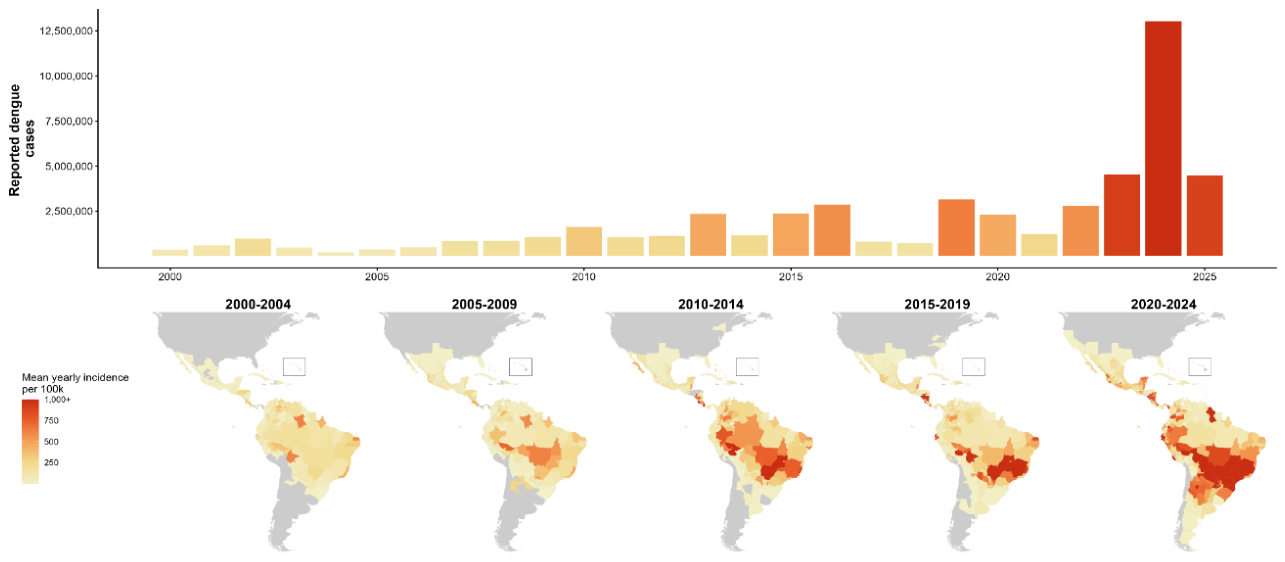
Figure 2.
Dengue virus Replication and Virion Structure. A) Dengue virus infects myeloid immune cells by binding to C-type lectin receptors and TIM/ TAM family of receptors expressed on the surface these cells. C-type lectins mainly serve as attachment factors, while other unidentified co-receptors are likely required for receptor mediated endocytosis and into cells. TAM-1 alone can mediate both attachment and entry into cells. The low pH of early endosomes triggers a conformation change E protein, which leads to membrane fusion and release of the nucleocapsid into the cytoplasm. Viral genome replication and the assembly of new virions occur within specialized membrane organelles in the proximity of the endoplasmic reticulum (ER). New immature virions bud into the lumen of the ER and exit the cell through the secretory pathway. During viral egress, a host furin protease in the trans-golgi network cleaves prM protein, which initiates the maturation process to generate mature infectious virions. Maturation is completed when virions exit the cell, and Pr peptide dissociates from the virion, enabling E proteins to form a smooth surface of 90 homodimers. As depicted in the figure, in laboratory cell lines used to produce infectious virus stocks, furin protease cleave of prM is inefficient, and the released viruses are a heterogenous mix of immature, partially and fully mature virions. B) A cryo-electron micrograph of dengue virus produced using a cell line. The image depicts immature, non-infectious virions with a spiky surface (black arrow), partially mature virions with smooth and spiky surface areas (white arrow), fully mature infectious virions with a smooth surface.
Figure 2.
Dengue virus Replication and Virion Structure. A) Dengue virus infects myeloid immune cells by binding to C-type lectin receptors and TIM/ TAM family of receptors expressed on the surface these cells. C-type lectins mainly serve as attachment factors, while other unidentified co-receptors are likely required for receptor mediated endocytosis and into cells. TAM-1 alone can mediate both attachment and entry into cells. The low pH of early endosomes triggers a conformation change E protein, which leads to membrane fusion and release of the nucleocapsid into the cytoplasm. Viral genome replication and the assembly of new virions occur within specialized membrane organelles in the proximity of the endoplasmic reticulum (ER). New immature virions bud into the lumen of the ER and exit the cell through the secretory pathway. During viral egress, a host furin protease in the trans-golgi network cleaves prM protein, which initiates the maturation process to generate mature infectious virions. Maturation is completed when virions exit the cell, and Pr peptide dissociates from the virion, enabling E proteins to form a smooth surface of 90 homodimers. As depicted in the figure, in laboratory cell lines used to produce infectious virus stocks, furin protease cleave of prM is inefficient, and the released viruses are a heterogenous mix of immature, partially and fully mature virions. B) A cryo-electron micrograph of dengue virus produced using a cell line. The image depicts immature, non-infectious virions with a spiky surface (black arrow), partially mature virions with smooth and spiky surface areas (white arrow), fully mature infectious virions with a smooth surface.
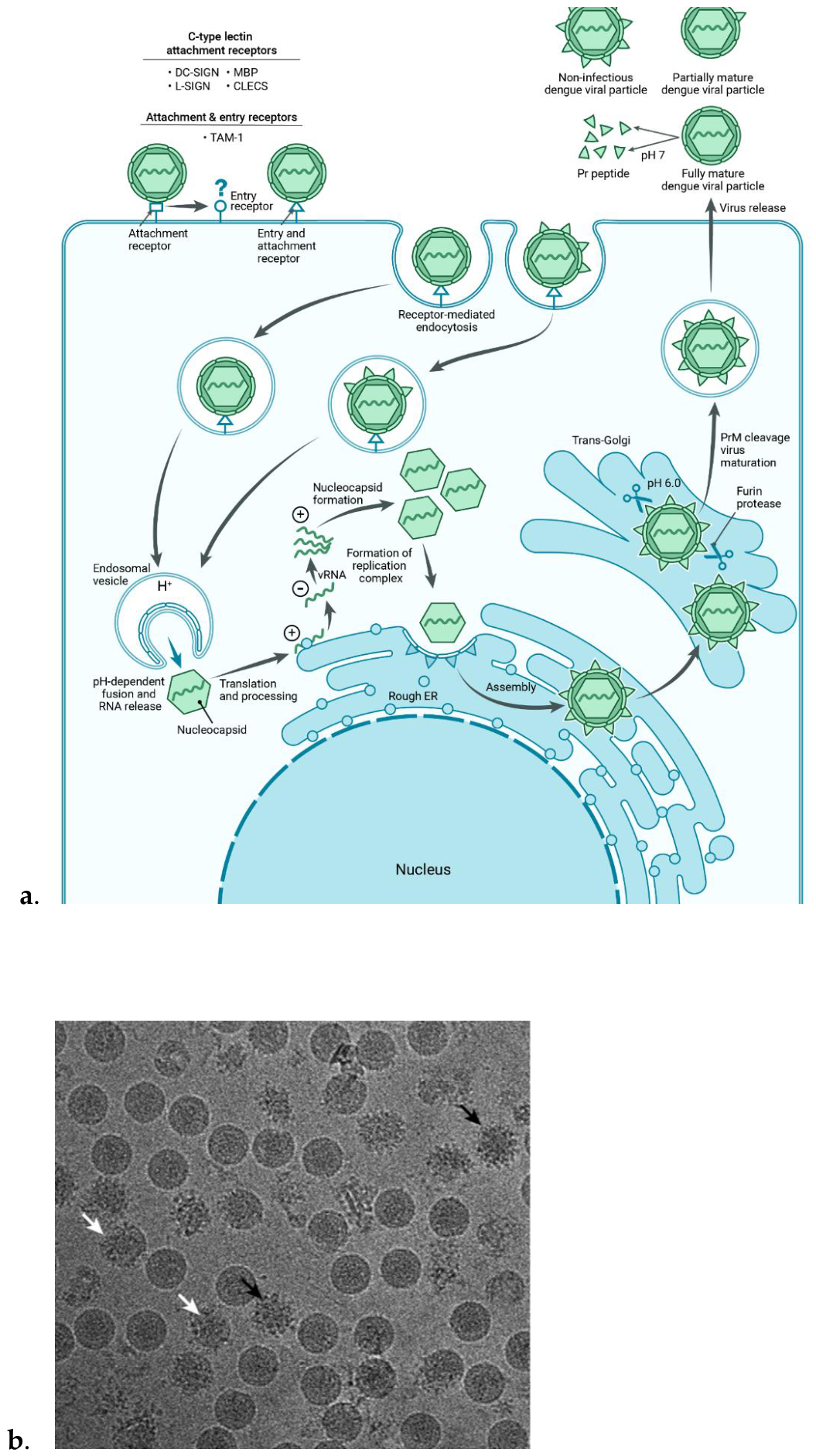
Figure 3.
Human Antibody Response to Dengue Virus. A) Following primary infection (DENV2 in the example used here), there is an IgG response composed of neutralizing serotype-specific antibodies to the infection serotype and cross-reactive weak non-neutralizing antibodies that bind to all serotypes. After a secondary infection (DENV3 in the example used here) with a new serotype, serotype cross-reactive memory B cells from the first infection are activated, which leads to a large anamnestic response composed for serotype cross-reactive and cross-neutralizing antibodies (E protein dimer epitope [EDE] antibodies) that appear to be maintained for years if not longer. The presence of cross-reactive neutralizing protective antibodies may explain why clinically significant 3rd or 4th dengue infections are rare. In addition to the new population of cross-reactive neutralizing antibodies, second infections can also stimulate low levels of type-specific neutralizing antibodies to the second serotype (DENV3 in this example). Type-specific neutralizing antibodies stimulated by the original primary infection are also maintained and measurable after a second infection. B) Individuals experiencing a second infection with a new serotype are at greater risk of developing severe dengue disease compared to those experiencing their first infection. Many studies implicate cross-reactive non-neutralizing antibodies stimulated by the first infection binding to the second infecting serotype and enhancing viral replication and disease severity through the mechanism of Antibody Dependent Enhancement (ADE) of viral replication. As depicted in the figure, mechanistically, ADE occurs when non-neutralizing virus-specific antibodies bind to the dengue surface and serve as a bridging receptor for targeting the virus to the surface of Fc receptor bearing myeloid cells, which are then productively infected by the antibody coated virion. .
Figure 3.
Human Antibody Response to Dengue Virus. A) Following primary infection (DENV2 in the example used here), there is an IgG response composed of neutralizing serotype-specific antibodies to the infection serotype and cross-reactive weak non-neutralizing antibodies that bind to all serotypes. After a secondary infection (DENV3 in the example used here) with a new serotype, serotype cross-reactive memory B cells from the first infection are activated, which leads to a large anamnestic response composed for serotype cross-reactive and cross-neutralizing antibodies (E protein dimer epitope [EDE] antibodies) that appear to be maintained for years if not longer. The presence of cross-reactive neutralizing protective antibodies may explain why clinically significant 3rd or 4th dengue infections are rare. In addition to the new population of cross-reactive neutralizing antibodies, second infections can also stimulate low levels of type-specific neutralizing antibodies to the second serotype (DENV3 in this example). Type-specific neutralizing antibodies stimulated by the original primary infection are also maintained and measurable after a second infection. B) Individuals experiencing a second infection with a new serotype are at greater risk of developing severe dengue disease compared to those experiencing their first infection. Many studies implicate cross-reactive non-neutralizing antibodies stimulated by the first infection binding to the second infecting serotype and enhancing viral replication and disease severity through the mechanism of Antibody Dependent Enhancement (ADE) of viral replication. As depicted in the figure, mechanistically, ADE occurs when non-neutralizing virus-specific antibodies bind to the dengue surface and serve as a bridging receptor for targeting the virus to the surface of Fc receptor bearing myeloid cells, which are then productively infected by the antibody coated virion. .
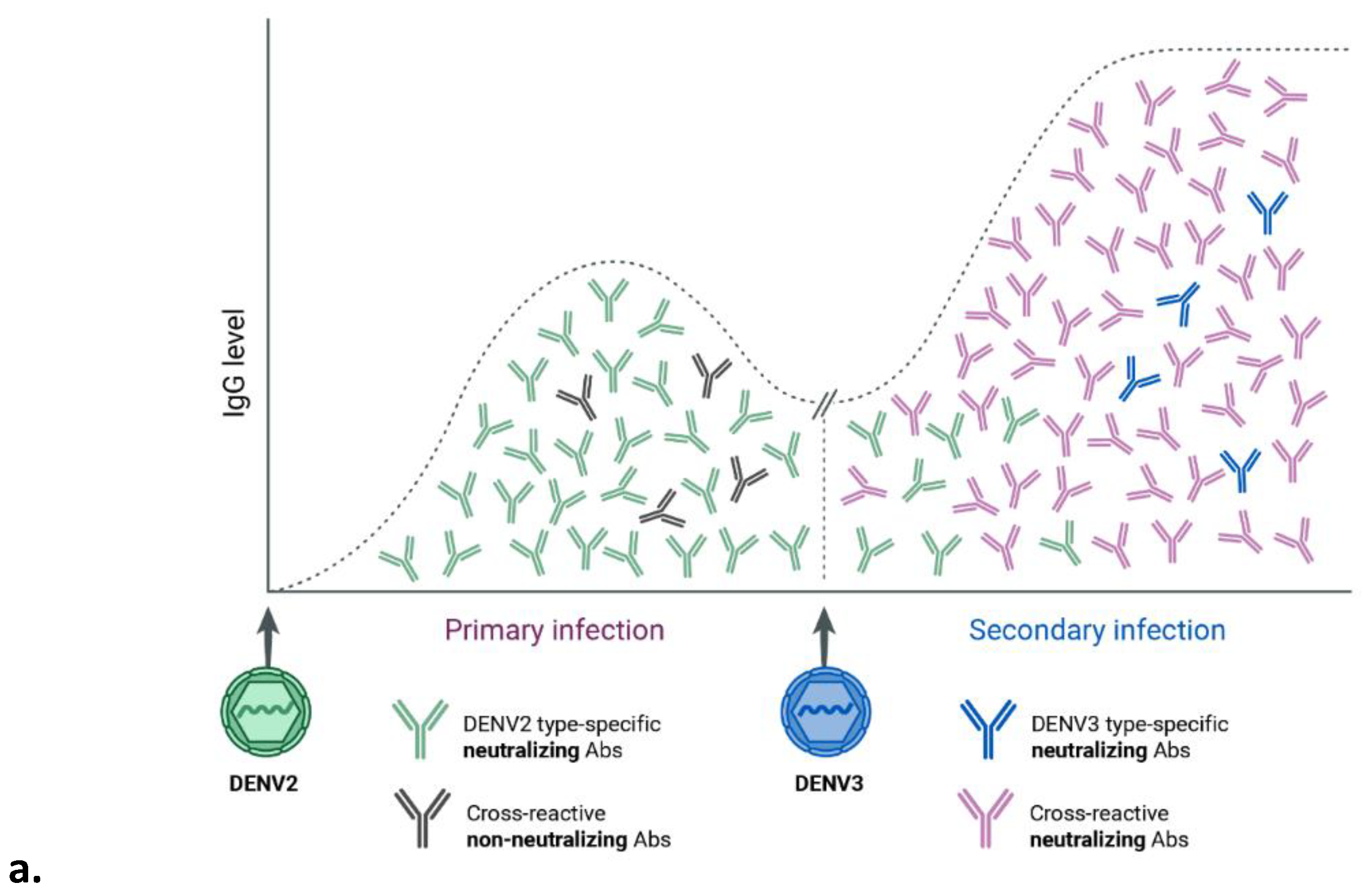
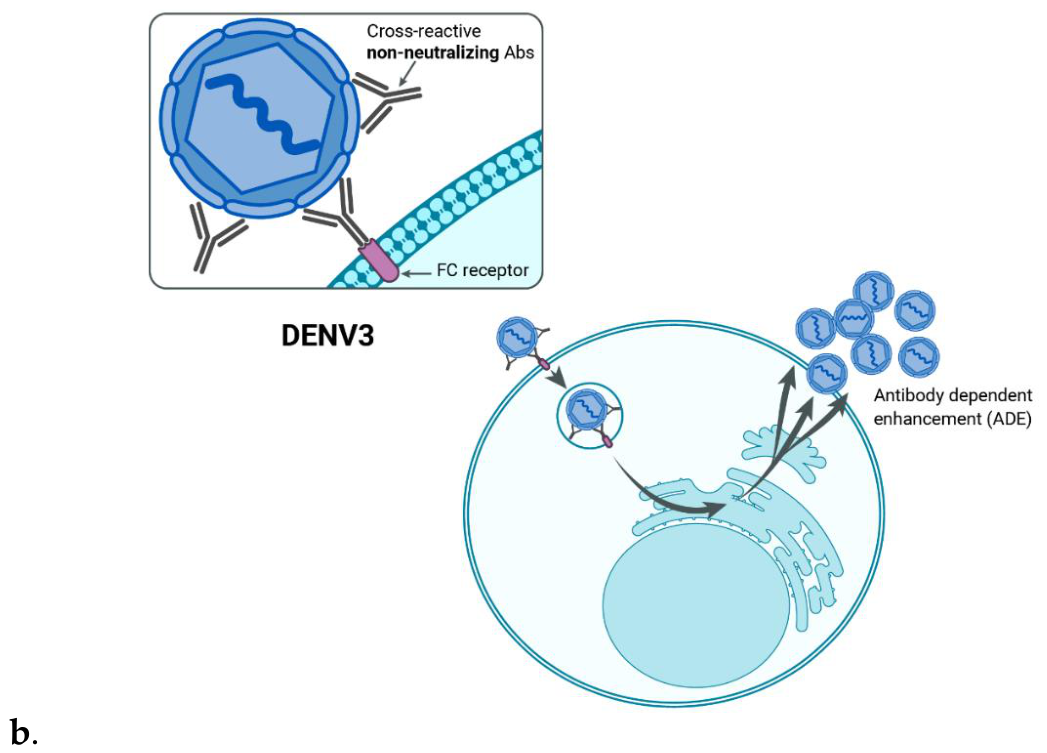
Figure 4.
Key Characteristics of Licensed Dengue Vaccines.
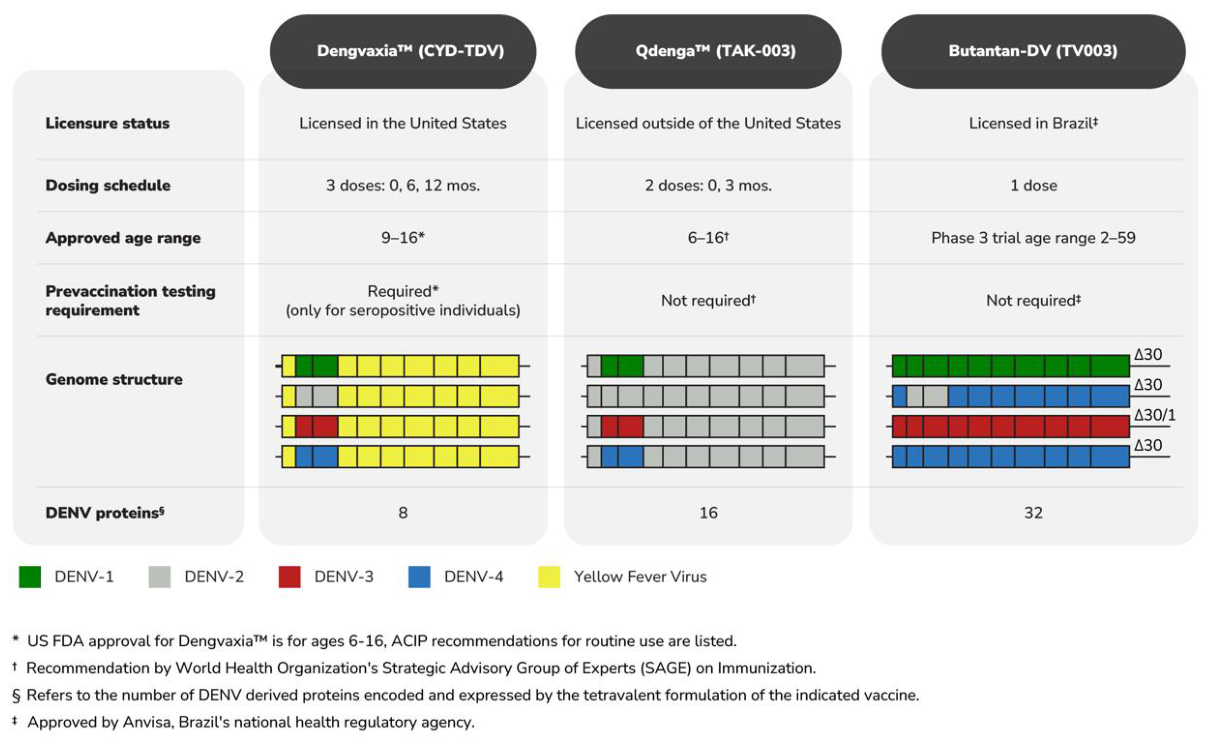
Figure 5.
Components of an Ideal Vector Control Program.

Figure 6.
Tiered plan for dengue elimination in the Americas.
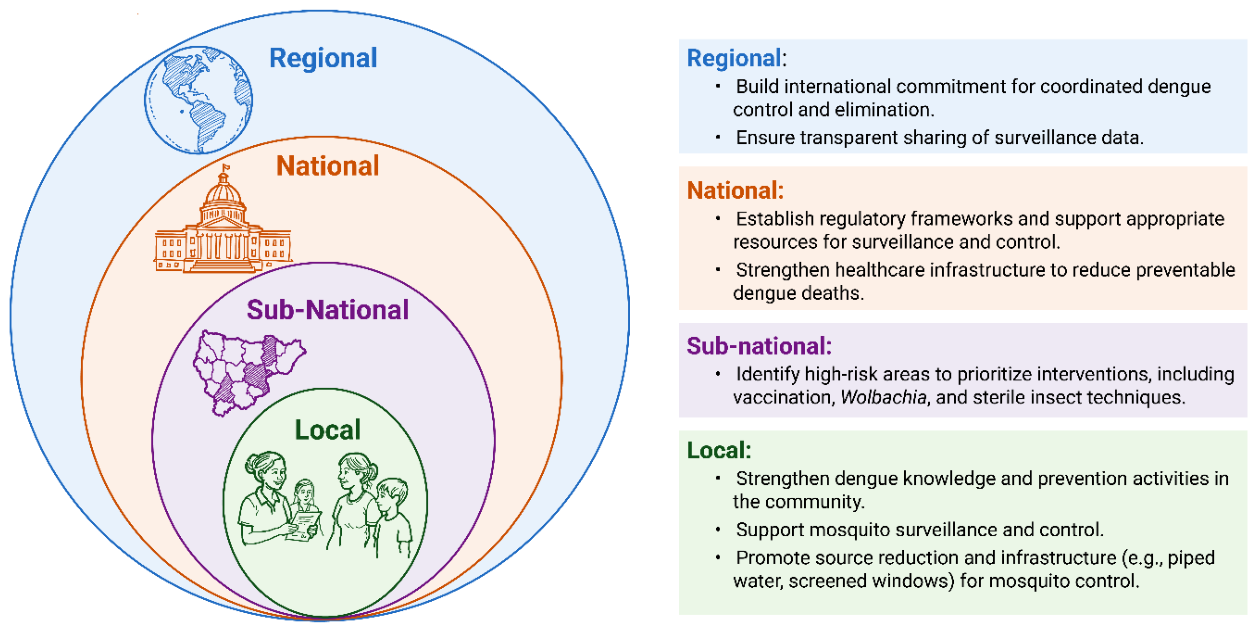
Disclaimer/Publisher’s Note: The statements, opinions and data contained in all publications are solely those of the individual author(s) and contributor(s) and not of MDPI and/or the editor(s). MDPI and/or the editor(s) disclaim responsibility for any injury to people or property resulting from any ideas, methods, instructions or products referred to in the content. |
© 2026 by the authors. Licensee MDPI, Basel, Switzerland. This article is an open access article distributed under the terms and conditions of the Creative Commons Attribution (CC BY) license (http://creativecommons.org/licenses/by/4.0/).
Copyright: This open access article is published under a Creative Commons CC BY 4.0 license, which permit the free download, distribution, and reuse, provided that the author and preprint are cited in any reuse.