
Submitted:
01 July 2026
Posted:
03 July 2026
You are already at the latest version
Abstract
The study described the framework of compiling smart climate agriculture (CSA) technologies in six member countries of South Asia. Set of CSA technologies after initial listing, were prioritized and validated through participatory research action. Climate change for its adverse effects is a serious threat to food security, people’s livelihood and environmental sustainability in South Asia (SA). Climate smart agriculture practices can play a pivotal role in addressing food security issues in climate vulnerable scenario of South Asia. At the first stage a compendium of climate smart technologies was developed with the support of National Agriculture and Extension service of six SAARC member countries i.e. Bangladesh, Bhutan, Nepal, India, Pakistan and Sri Lanka. These technologies were prioritized based on the World bank technology index (CSA-Tech) to evaluate the strength of particularly technology in the context of productivity, resilience and mitigation as shown by chord diagrams, technologies supported by national policies of particular country elaborate the importance of those technologies at country level as shown by heatmap. Selected CSA technologies such as alternate wetting and drying (AWD), and intercropping (IC) were validated in the farmers field through participatory action approach in the context of farmers preexisting knowledge and experiences blended with research framework for that particular technology. Results of such technology has been found encouraging in terms of increased crop productivity, enhance resource use efficiency, reducing Greenhouse gases emission, resilience as well as profitability and farm income.
Keywords:
climate smart agriculture technology
; participatory research
; productivity
; adaptation
; mitigation
; South Asia
1. Introduction
In South Asia, two-thirds of farms are operated by smallholder farmers, cultivating half of the total cropped area contributing to agriculture production [1,2], small landholder farmers due to higher land allocation to cereal crop production contribute more to the food security [3]. Very-small-scale (≤2 ha) and small-scale (>2–20 ha) in low and middle-income regions generally contribute a smaller proportion to regional consumption relative to their share in production [4]. Six countries of South Asia: Bangladesh, Bhutan, India, Nepal, Pakistan and Sri Lanka show that with the exception of Pakistan, smallholder account for about 90% of the holdings and about 50% of the agriculture area. Whereas, Pakistan and Bangladesh provide a contrasting picture in this regard, viz., smallholders have the highest number and area in Bangladesh, and lowest share in Pakistan. During last two decades (2000-2020) with the exception of Bangladesh, a decline in average farm size was observed throughout South Asia [3].
Climate change scenario is steadily redrawing the regional food landscape hence jeopardizing food sovereignty and security as evident from growing heat stress during crop establishment and critical growing period [5,6], causing wheat yield to decrease by 5.2% [7] and rainfed maize yield by 3.3-6.25% by 2030 [8]. Climate change variables like rising temperature [9,10], changing rainfall pattern [11,12], and increasing occurrences of weather extremes events such as floods and droughts [13], could reduce crop production by up to 30% by 2050. Consequent upon climate change, there is expected GDP growth decrease by 1.8% by 2050 is likely to shoot up to 8.8% by the end of the century [14] making the fight against climate change one of the main challenges of 21st century [15].
The IPCC AR4 warns of the adverse impacts of climate change on food security with high confi dance that smallholder and subsistence farmers in developing countries will suffer the most [16] due to poor adaptation strategies.
Amidst these challenges, promising solutions exist in the form of climate smart agriculture (CSA) technologies. Food and Agriculture Organization (FAO) defines climate-smart agriculture (CSA) as a strategy that simultaneously pursues three key objectives: 1) Sustainably increasing agricultural productivity, 2) Adapting and building resilience to climate change, and 3) Reducing GHGs emission where possible [17]. These solutions provide a roadmap for sustainable agricultural and other associated sector development and addressing the interlinked challenges of economic viability, societal changes, food security based on three pillars: productivity, resilience and mitigation.
As “one size fit all” approach does not work in developing adaptation potential, it is therefore extremely important to take a site and context specific strategy. It is therefore extremely important to identify, prioritize and upscale the available CSA interventions suitably fit into the diverse agro-ecosystems [18]. Farmer and gender inclusive CSA technologies facilitate adaptation to climate change [19,20]. The synthesis of knowledge illuminate the status of climate change, strength and magnitude of potential to adopt to these challenges by practicing CSA technologies across the region.
2. Climate Change Vulnerability Profile of SAARC Member Countries
2.1. Bangladesh
Bangladesh is predominantly an agrarian country, 40% of people are linked with agriculture for employment and contributing 11.6% to national GDP where crop sector along share more than two-third (7.25%) [24]. Three types of landforms: floodplains (80%), hills (12%) and terraces (8%) constitute the agriculture landscape of Bangladesh. Out of the total 14.85 Mha, 8.35 Mha land is cultivated intensively in floodplains. Bangladesh has a sub-tropical humid climate, with average summer temperature 25-30 0C, winter 15-20 0C, and average annual rainfall 2200 mm (https://c-sucses.sac.org.bd/paper/accessed on 15 June 2026).
Bangladesh is one of the most vulnerable countries to climate change due to its proximity, coastal areas are prone to salinity intrusion and tropical cyclones, while the floodplains in the central areas are prone to floods, north-western region is prone to drought, while north-eastern region is prone to flash floods and the hilly regions are prone to erosion and landslides. The salinity level of groundwater is rising rapidly due to sea level rise (3 mm per year, NAPA 2005) primarily due to climate change (8th FYP 2021-2025). Five fragile ecosystems: Barind, Char, Coastal, Haor and Hill are considered as hotspots of climate change as evident by reduced cropping intensity and productivity [25], paving the way for food insecurity in the country (https://c-sucses.sac.org.bd/paper/ accessed on 15 June 2026).
2.2. Bhutan
Bhutan is a small mountainous country in the southern slopes of Eastern Himalayas with three climatic zones: sub-tropical zone in the southern foothills, temperate zone in the middle valleys and inner hills, and alpine in the northern mountains. Bhutan is predominantly rainfed mountainous agrarian country where livelihoods to more than half of (57.2%) of its population comes from agriculture. Arable land constitutes only 2.7% of the 38394 Km2 total geographical area where 54,155ha (53.5%) are operational dryland followed by 16,658 ha (16.5%) are wetland and 2,715 ha (2.68%) are orchard land. The major rural non-farm (RNR) activity is crop production (56.4%) followed by livestock and forestry production at 38.5% [26] (https://c-sucses.sac.org.bd/paper/ accessed on 15 June 2026). Monsoon is the main source of rainfall. Bhutan encounters tremendous climate change events by tangible changes such as warming and glaciers recession, frequency and severity of glacial lake outburst floods (GLOFs) resulted in shirting to its agriculture patterns and practices.
2.3. India
India as the largest country of South Asia, where 54.6% of population is agriculture dependent as compared to 75% during the time of independence in 1947. Out of a total of 329 mha geographical area, 42% (139 mha) are cultivated. Two-thirds of India’s population live in rural areas, with landholdings averaging 1.1 ha. Agricultural productivity increased by 3.6% on average annually since 2011, which can be ascribed to improved access to inputs: fertilizer and seed, irrigation and credit facilities coupled with diversification from cereal grains to pulses, fruit, vegetables and livestock products. Other drivers of such diversification are demographics, urbanization and changing consumer demand patterns etc. High cropping intensity of 143%, India stands the 2nd largest producer of wheat and rice in the world (https://c-sucses.sac.org.bd/paper/ accessed on 15 January 2026). Agriculture has around 18% contribution to GDP [27].
Climate change has degraded land and groundwater resources, and the rate of growth of total productivity has fallen (https://c-sucses.sac.org.bd/paper/ accessed on 15 June 2026). As half of the country’s agriculture land comes under rainfed agriculture contributing to 40% of the country’s food production is mostly vulnerable to climate change.
India ranks 4th climate change most affected country in 2015. The country emits 7% of global GHG emissions. Climate change results in temperature rises on the Tibetan Plateau results Himalayan glaciers retreat, jeopardizing flow rate of the Ganges, Brahmaputra, Yamuna and other major rivers and according to WWF (2007) report, the Indus River may run dry for the same reason. Severe landslides and floods are projected to become increasingly common in states of Assam and others. The climate change performance index India ranks 8th out of 63 countries account for 92% of all GHG emissions in 2021 and projected increased in magnitude and severity of droughts in the country.
2.4. Nepal
Nepal is a highly diversified mountainous country located in between India and China, 885 km long from East to west and 193 km wide from North to South. With slight variation in altitude range, Nepal is divided into five physiographic regions: High Mountains (>5000m), Middle Mountains (3000-5000m), Hills (1000-3000 m), Lower hills (Churia/Siwalik 500-1000m) and Terai southern flat plains (below 500 m) (https://c-sucses.sac.org.bd/paper/ accessed on 15 January 2026). Agriculture is practices on about 21% of its total surface area [28] with mainly concentrated in the Terai area, a lower flat landscape zone. Two-thirds of the population are engaged in agriculture. Climate change has undermine sustainability of agriculture productivity is threatened particularly due to the increasing vulnerability of agriculture sector to climate change [29]. Food imports are increasing trend for uncertain food production due to diverse topography, small land holdings, insufficient irrigation facilities and high dependence on climate-sensitive natural resources.
Nepal is 4th most vulnerable country in the Global Climate Risk during 1999-2018 in the 2020 edition of German Watch’s Climate Risk Index. Nepal experienced flash floods and landslides in 2018 and 2024 across the southern border, causing huge damage, and colossal losses. It is predicted that intensity and magnitude of events like drought, heat waves, river flooding, and glacial lake outburst flooding etc. would become more severe, potentially raising the risk of disaster and endangering human lives (WBG and ADB, 2021).
2.5. Pakistan
Pakistan has a long latitudinal width stretching from Arabian Sea in the South to the Himalayan Mountains in the North and located in the sub-tropics and partially in temperate region.
Agriculture is the mainstay of Pakistan’s economy, contributing 19% to GDP and engaging 43% of the national workforce. Pakistan is predominantly arid to semi-arid with significant spatial and temporal variability in climatic parameters. The country is facing different environmental risks such as declining rains in the rainfed ecologies, similarly, water scarcity and less availability or even unavailability of water in the canals at the critical crop growth stages (https://c-sucses.sac.org.bd/paper/ accessed on 15 June 2026), and ranks 3rd most water stress country by 2024 and 3rd most vulnerable country in the world on climate risk Index, 2021 with most water-stressed country in South Asia
Salinity currently affects 4.5 million hectares of land across Pakistan and 54% of the southern Indus Basin. In this region, salinization and sodification of surface soils and waterlogging threaten agricultural production and livelihoods, resulting in high rates of poverty for communities living in affected areas
With the changing climate in South Asia as a whole, the climate of Pakistan has changed over the past several decades, with significant impacts on the environment and demographics. Increased in magnitude and severity of heat waves, recurring drought and extreme weather events in parts of the country, the melting of glaciers in the Himalayas, GLOF activities in high mountain fragile ecosystem would likely to influence water flow through rivers downward to wheat growing area downward. Pakistan stands 5th most affected country by extreme weather events between 1999-2018. The country is prone to a range of natural disasters, including cyclones, floods, drought, intense rainfall, and earthquakes. (
2.6. Sri Lanka
Sri Lanka (SL) is an island country of South Asia, located in the Indian Ocean at the Southern tip of the Indian subcontinent. The country has a wide range of topographical features with three distinguished elevation zones: Central highlands, Plains, and Coastal belt. There are four geographical and topographical features: as an island SL situated in the warm tropical Indian Ocean with associated warm, humid air, its proximity to the equator results in solar radiation rarely being a limitation to crop growth under general weather conditions of the island and the third feature is the existence of a large mass of hills at the center of the island, perpendicular to two approaching monsoon wind streams (Southwest monsoon and Northeast monsoon) and the fourth feature is the presence of a vast landmass of the Indian subcontinent to the immediate North and Northwest of SL. With nearly 27% of the total area SL is predominantly agrarian economy where 54% of the cultivated land is grown with paddy, a crop mainly associated with GHG emission. About 85% of the country’s population are living in rural areas and agriculture provides 28.5% employment. Sri Lanka is irrigated by 103 river basins, covering approximately one-sixth (10,448 km2) of the country the Mahaweli river basin stands to be the largest [30] (https://c-sucses.sac.org.bd/paper/ accessed on 15 January 2026).
As the rest of the SA countries SL is also climate change vulnerable country with reference to rising sea levels, increasing temperatures, changing precipitation patterns and intensifying extreme events such as flooding, storms and droughts. Sri Lanka’s coastal regions, such as the Northern Province and the Northern Western Province, are considered major hotspots and extremely vulnerable to climate change and thickly populated maritime provinces. Sri Lanka is currently experiencing its worst economic crisis since independence in 1948, with high inflation, rising commodity prices, power outages and shortages of fuel and other essential items and services. The crisis is deepened by a serious reduction in agricultural production caused by the initial ban on the import and use of chemical fertilizers without adequate preparation and support to the farmers for the agricultural transition (https://c-sucses.sac.org.bd/paper/ accessed on 15 January 2026).
3. Potential of Climate Smart Agriculture Technologies to Adaptation and Mitigation in South Asia
Climate-Smart Agriculture (CSA) is an approach to changing agricultural production to improve food security while addressing challenges that climate change brings [31], and based on three pillars: (a) increase of agricultural productivity (yields) and incomes, (b) adapt and build resilience to climate change within the agricultural systems, and (c) reduce greenhouse gas emissions [32]. Many countries have embraced the concept of CSA by linking with Intended Nationally Determined Contributions (INDCs).
Climate Smart agriculture technologies identified and prioritized in this study across SAARC member countries fall into following categories.
- Crop tolerance to multiple types of abiotic stress (resilience to drought, heat, flood, pest and diseases and saline-tolerant and/or early maturing crops)
- Climate resilient soil and crop management (to improve water use efficiency through soil and crop management and crop diversification practices).
- Climate resilient irrigation and water management
- Climate resilient farm mechanization
The study summarized the activity of compiling climate smart agriculture technologies to develop a compendium of CSA technologies prioritize, validate and practice in farmers’ fields to promote the dissemination of selected potential CSA technologies through community of practices (CoP).
4. Inventory Development of Climate Smart Agriculture Technologies in South Asia
Inventory of climate smart agriculture (CSA) technologies in six SAARC member countries: Bangladesh, Bhuta, India, Nepal, Pakistan and Sri Lanka was compiled and documented keeping into considerations variables like background information, objectives, principles, synergies and trade-off, acceptability etc. and can be accessed (https://c-sucses.sac.org.bd/book/ accessed on 17 June 2026). The framework followed for the intervention is presented in Figure 1 below.
4.1. Prioritization of Climate Smart Agriculture Technologies
The inventory of CSA technologies documented 248 CSA technologies in six SAARC member countries: Bangladesh, Bhutan, India, Nepal, Pakistan and Sri Lanka under different categories namely climate resilient crop varieties, climate resilient soil & water management, climate resilient irrigation & water management and climate resilient farm mechanization.
Consequent upon inventory development, prioritization of CSA technologies was carried out using one of the three World Bank indices, the CSA-Technology indicator also known as a triple-win approach: Productivity, Resilience, and Mitigation and 27 derivatives [33] were carried out. To customize the technology (s) in context specific a weightage-based scoring in the light of national priorities and stakeholder input was assigned through interaction with farmers and technical experts. The mitigation and adaptation potential of some agriculture practices validated in this study has been reported earlier [34] (Figure 2).
CSA technologies prioritized included bed planting (BP), integrated nutrient management (INM), zero tillage (ZT), intercropping (IC), mulching and residues incorporation (M&RR), agroforestry (AF), Queshungual slash and mulch agroforestry system (QSMAS) for Bangladesh, protected agriculture (PA), sustainable land management (SLM) and smart irrigation system (SIT) for Bhutan, plastic mulching (PM), intercropping Cotton-broad bean (IC), direct seeded rice (DSR), laser land leveling (LLL), alternate wetting and drying (AWD), zero tillage (ZT), broad bed furrow soyabean (BBFSoy), conservation agriculture (CA) for India, direct seeded rice (DSR), laser land leveling (LLL), alternate wetting and drying (AWD), zero tillage (ZT), maize based intercropping (MBIC), drought tolerant varieties (DTV), green manuring in rice (GMIR), flood tolerance (FT) for Nepal; Zero tillage (ZT), direct seeded rice (DSR), alternate wetting and drying (AWD), zero tillage happy seeded (ZTHS), raised bed (RB), resilient cropping system in legume-wheat (RCSLW), resilient cropping system in sesbenia-wheat (RCSLW), drought tolerant varieties (DTV) for Pakistan; crop diversification (CD), multipurpose, protected agriculture (PA) and solar based micro-irrigation (SBMI) for Sri Lanka.
In pursuit of identifying most suitable CSA technologies suited in each of the six-member countries, an harmonized approach involving extensive review of literature followed by consultation with researchers and organizations was carried out and consequently a list of CSA technologies were drafted. Each CSA technology was evaluated in the context of three themes i.e. productivity (crop system, water use efficiency, energy use efficiency; resilience (robustness, self-organization, cropping system and mitigation (emission intensity, carbon sequestration). Each CSA technology was scored following the Likert scoring system where 1=strongly disagree, 2=disagree, 3=neither agree nor disagree, 4=agree and 5=strongly agree [35]. Ultimately technologies with the highest score were prioritized and presented in Table 1.
Climate smart agriculture technologies in SAARC member countries identified in six SAARC member countries can be classified broadly into categories such as (i) climate resilient (CR) crop varieties ii) CR soil and crop management, (iii) CR pest and disease management, (iv) CR irrigation and water management, (v) CR mechanization and vi) CS animal production and management (Table 1; Figure 2).
Country specific inventory of CSA technologies in Table 2 show that Bangladesh is rich in terms of CR crop varieties, soil and crop management and insect pest management, crop varieties and associated plant protection are following each other in CSA (https://www.sac.org.bd/ accessed on 20 June 2026). Out of the total 248 CSA technologies identified, highest number (61) technologies were reported in Bangladesh followed by India (50), and Bhutan (37) respectively. The richness in terms of CSA technologies can provide potential for the exchange of expertise and technologies among member countries in the region.
As depicted, the chord diagrams in Figure 3, Figure 4 and Figure 5 show strength of relationships between various CSA technologies and the priority indicators: Productivity, Resilience and Mitigation. As evident from, prioritized CSA technologies have shown a distinct pattern with performance and trade-offs. Climate smart agriculture technologies prioritized have a strong relationship with Productivity, Resilience and Mitigation.
Supporting policies and institutional framework play a pivotal role in the promotion of CSA technologies. In this regards a heatmaps depict the strength of such policies to streamline CSA technologies in context of particular country (Figure 6).
Heatmap of CSA technologies prioritized by country listed in Figure 6 showed that some of the technologies stand to be highly prioritized at country level. For example AWD, SPWP and ZT in Bangladesh; drip irrigation (DI) technology in India, Nepal and Sri Lanka; sustainable land management (SLM) in Bhutan and Nepal; solar power water pump (SPWP) in Sri Lanka; strip tillage (ST) in Nepal; resilient intercropping (RIC) in India and climate resilient crop varieties (CRCV) in Pakistan are highly prioritized and supported in national policies of respective countries [36].
In South Asia, countries like India and Bangladesh have mature institutional frameworks for disaster risk reduction and adaptation, while Nepal and Bhutan place stronger emphasis on ecosystem-based and community-oriented approaches, at the same time, all countries face persistent challenges related to financing constraints, coordination gaps, and uneven implementation capacity [37].
4.2. Validation of CSA Technologies Through Participatory Action Research
Consequent upon documentation and prioritization, CSA technologies were validated through participatory action research (PAR) (Table 1). Having been prioritized in more than one SAARC member country, some CSA technologies were tested under similar field conditions in multiple countries. Such CSA technologies included direct seeded rice in India, Nepal and Pakistan; alternate wetting and drying in Nepal; Pakistan and Sri Lanka; drip irrigation in Bhutan and Nepal; resilient intercropping, maize based intercropping in Bangladesh, India, Nepal and Pakistan and protected house (Polyhouse, glasshouse) in Bhutan and Sri Lanka.

Table 1.
CSA technologies under participatory research trials in South Asia.
| Technology | Crop | Country (s) |
|---|---|---|
| ||
| Drought tolerant | Pigeon Pea, Setaria, Redgram | India |
| Heat tolerant | Wheat (PBW 826) | Pakistan |
| Submergence tolerant | Rice (Ranjit Sub-1 | India |
| High yielding oilseeds | Toria | |
| ||
| Direct seeded rice (DSR) | Rice | India, Nepal, Pakistan |
| Strip planting (SP) | Maize, Mustard, Lentil, potato | Bangladesh |
| Staggered planting | Rice | India |
| Relay cropping | Rice + Lentil / Pea | Bangladesh |
| Intercropping | Maize + Vegetables | Bangladesh |
| Redgram + Setaria | India | |
| Maize + Soybean | Nepal | |
| Foliar spray of fertilizers | Wheat | India |
| Bench terracing (hills) | Hedgerow plantation, Orchard | Bhutan |
| ||
| AWD | Rice | Nepal, Sri Lanka, Pakistan |
| Solar powered irrigation | Rice, maize, vegetable |
Sri Lanka |
| Micro-irrigation | Vegetables | |
| Check dams | Orchard | Bhutan |
| Drip irrigation | Vegetables, Cereals | Bhutan, Nepal |
| ||
| Raised bed planting (Bed planting) | Lentil, Mustard, Wheat, Maize | Bangladesh |
| Zero tillage | Wheat | Nepal, Pakistan |
| Garlic and potato using mulch | Bangladesh | |
| Seeding with improved seeder (super seeder, surface seeder, happy seeder) |
Wheat | India, Pakistan |
| Protected house | Vegetables, Chili | Bhutan, Sri Lanka |
Based on Synthesis Report “Comparative analysis of smart climate agriculture technologies and practice in South Asia” can be found on https://c-sucses.sac.org.bd/book/.
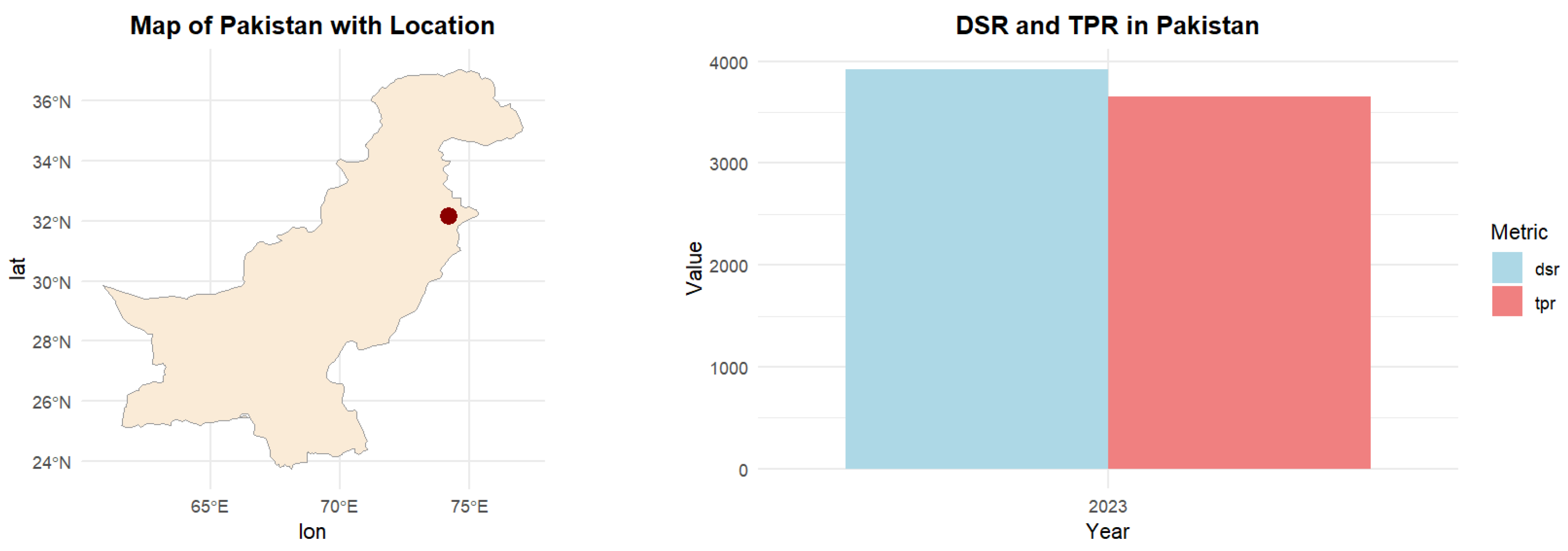
Participatory action research was carried out on farmer field focusing small holder farmers (0.6-1 ha land) across different locations of South Asian countries namely Bangladesh, Bhutan, India, Nepal, Pakistan and Sri Lanka. Some common CSA technologies like direct seeded rice (DSR) were validated in more than one country. For example, in Nepal DSR gave 2.49%, 3.15% and 3.12% more yield were achieved in Nepal as compared to traditional planted rice (TPR) in 2022, 2023 and 2024 (Figure 8). Rice sown by DSR gave 7.3% more yield as compared to TPR in Pakistan (Figure 9).
Figure 7.
Yield response of rice sown by DSR and TPR methods in Nepal.
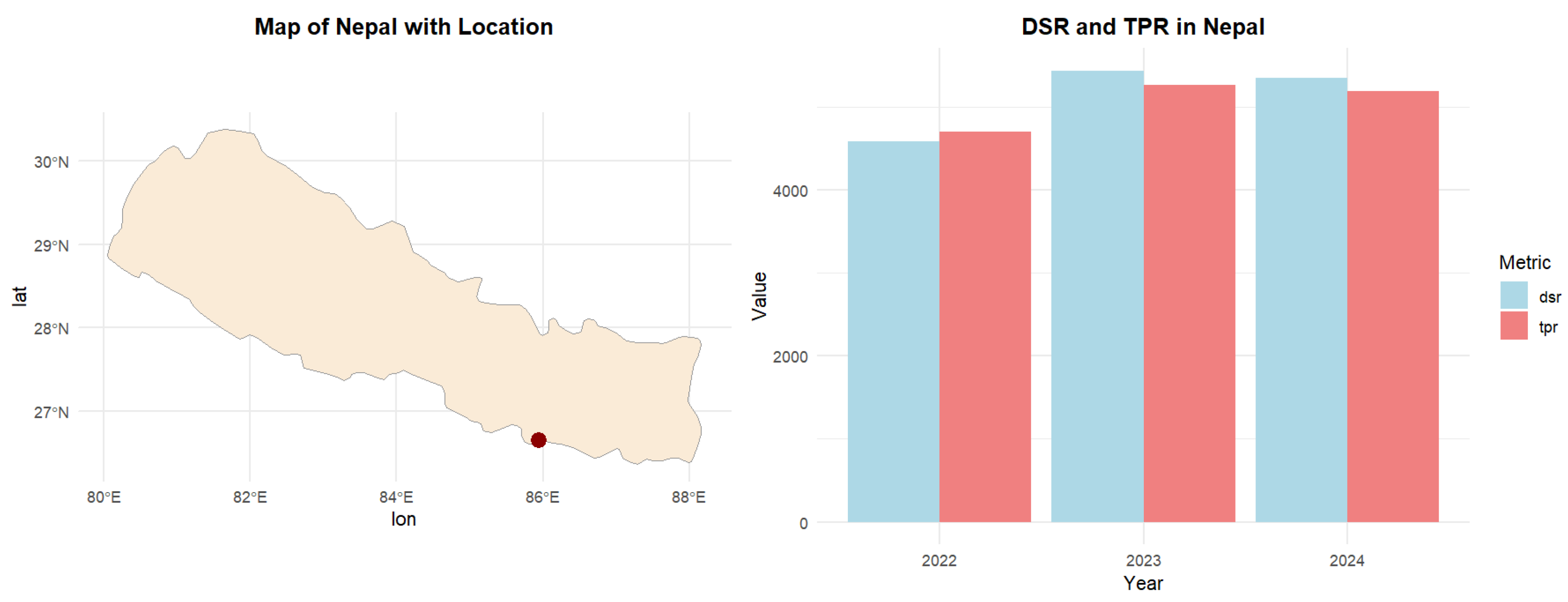
Figure 8.
Yield response of rice sown by DSR and TPR methods in Pakistan.
Conclusions
The research paper provides pathways of listing scoring and documentation of CSA in consultation with various stakeholders and based on literature review (https://c-sucses.sac.org.bd/book/ accessed on 19th June 2025). The inventory of CSA technologies developed and was further prioritized in the context of productivity, resilience and mitigation across six member countries. Validation of CSA technologies were caried out through participatory action research on country specific and prioritized technology.
Some CSA technologies such as alternate wetting and drying in comparison with traditional irrigated rice transplantation were validated in more than single countries and explored for their yield and economic gain. Intercropping technology was also evaluated for yield and economic gains and co-benefits.
This research provides a comprehensive information about CSA technologies and robust evidence on it productivity, resilience and mitigation potential and would serves as benchmark for research initiative on climate resilience in South Asia.
Acknowledgements
This study was done by SAARC member countries with the support of IFAD and SDF funded project, Consortium for Upscaling Climate Smart Agriculture in South Asia (C-SUCSeS) executed by SAARC Agriculture Centre, Dhaka, Bangladesh (https://c-sucses.sac.org.bd/).
References
- Murthy, C.S.; Reddy, M.S. AP land licensed cultivators act in retrospect and prospect. J. Land Rural Stud. 2017, 5, 111. [Google Scholar] [CrossRef]
- Reddy, M.S.; Murthy, C.S. Land lease market under irrigated and rainfed conditions in Andhra Pradesh and Telangana. Indian J. Agric. Econ. 2021, 76, 261–277. [Google Scholar] [CrossRef]
- Reddy, V.R.; Rahut, D.B. Smallholder viability and food security in South Asia: constraints and policy options. Front. Sustain. Food Syst. 2025, 9, 1657409. [Google Scholar] [CrossRef]
- Taherzadeh, O.; Cai, H.; Mogollón, J.M. Small farms contribute a third of the food consumed in high-income nations. Nat. Food 2026, 7, 66–73. [Google Scholar] [CrossRef] [PubMed]
- Porter, J.R.; Semenov, M.A. Crop responses to climatic variation. Philos. Trans. R. Soc. B Biol. Sci.. 2005, 360, 2021–2035. [Google Scholar] [CrossRef] [PubMed]
- Hedley, P.E.; Russell, J.R.; Jorgensen, L.; Gordon, S.; Morris, J.A.; Hackett CAet, a.l. The genetic control of temporal expression of the barley transcriptome under field conditions. Plant Biotechnol. J. 2009, 7, 281–297. [Google Scholar] [CrossRef]
- Gupta, R.; Somanathan, E.; Dey, S. Global warming and local air pollution have reduced wheat yields in India. Clim. Change 2017, 140, 593–604. [Google Scholar]
- Tesfaye, K.; Zaidi, P.; Gbegbelegbe, S.; Boeber, C.; Getaneh, F.; Seetharam, K.; et al. Climate change impacts and potential benefits of heat-tolerant maize in South Asia. Theor. Appl. Climatol. 2017, 130, 959–970. [Google Scholar]
- Lobell, D.; Sibley, A.; Ortiz-Monasterio, J.I. Extreme heat effects on wheat senescence in India. Nat. Clim. Change 2012, 2, 186–189. [Google Scholar] [CrossRef]
- Aggarwal, P.K.; Singh, A.K.; Samra, J.S.; Singh, G.; Gogoi, A.K.; Rao, G.G.S.N.; Ramakrishna, Y.S. Introduction. In Global Climate Change and Indian Agriculture; Aggarwal, P.K., Ed.; Indian Council of Agricultural Research: New Delhi, India, 2009. [Google Scholar]
- Prasanna, V. Impact of monsoon rainfall on the total foodgrain yield over India. J. Earth Syst. Sci. 2014, 123, 1129–1145. [Google Scholar] [CrossRef]
- Mall, R.K.; Gupta, A.; Singh, R.S.; Rathore, L.S. Water resources and climate change: an Indian perspective. Curr. Sci. 2006, 90, 1610–1626. [Google Scholar]
- Singh, G.; Mishra, D.; Singh, K.; Parmar, R. Effect of rainwater harvesting on plant growth, soil water dynamics and herbaceous biomass during rehabilitation of degraded hills in Rajasthan. India For. Ecol. Manag. 2013, 310, 612–622. [Google Scholar] [CrossRef]
- Ahmed, M.; Suphachalasai, S. Assessing the Costs of Climate Change and Adaptation in South Asia; World Bank Publication, 2014. [Google Scholar]
- UN. Cambio climatico | Naciones Unidas. 2019. Available online: https://www.un.org/es/global-issues/climate-change.
- Easterling, W.E.; Aggarwal, P.K.; Batima, P.; Brander KMLet, a.l. Food, fibre and forest products. Climate Change 2007. Impacts, Adaptation and Vulnerability. In Contribution of Working Group II to the Fourth Assessment Report of the Intergovernmental Panel on Climate Change; Parry, M.L., Canziani, O.F., Palutikof, J.P., van der Linden, P.J., Hanson, C.E., Eds.; Cambridge University Press: Cambridge, UK; pp. 273–313. Available online: https://archive.ipcc.ch/publications_and_data/ar4/wg2/en/ch5.html.
- FAO Climate-smart agriculture: Sourcebook; Food and Agriculture Organization of the United Nations: Rome, 2013.
- Das, Usha; Ansari, M.A.; Ghosh, Souvik. Effectiveness and upscaling potential of climate smart agriculture interventions: Farmers’ participatory prioritization and livelihood indicators as its determinants. Agric. Syst. 2022, 203, 103515. [Google Scholar] [CrossRef]
- Andrieu, N.; Sogoba, B.; Zougmore, R.; Howland, F.; Samake, O.; Bonilla-Findji, O.; et al. Prioritizing investments for climate-smart agriculture: Lessons learned from Mali. Agric. Syst. 2017, 154, 13–24. [Google Scholar] [CrossRef]
- Khatri-Chhetri, A.; Aggarwal, P.; Joshi, P.; Vyas, K. Farmers’ prioritization of climate-smart agriculture (CSA) technologies. Agric. Syst. 2017, 151, 184–191. [Google Scholar] [CrossRef]
- R Core Team. A language and environment for statistical computing; R Foundation for Statistical Computing: Vienna, Austria, 2024; Available online: https://www.R-project.org/.
- Gu, Z.; Gu, L.; Eils, R.; Schlesner, M.; Bror, B. circlize implements and enhances circular visualization in R. Bioinformatics 2014, 30, 2811–2812. [Google Scholar] [CrossRef] [PubMed]
- Wickham, H.; Averick, M.; Brya, J.; Chang, W.; McGowan, L.; François, R.; Grolemund, G.; et al. Welcome to the tidyverse. J. Open-Source Softw. 2019, 4, 1686. [Google Scholar] [CrossRef]
- WB (World Bank). Bangladesh Country Climate and Development Report; World Bank: Washington, DC, 2022. [Google Scholar]
- Bokhtiar, S.M.; Samsuzzaman, S.; Kahiruddin, M.; Panaullah, G.M. Agriculture Development of Fragile Ecosystems in Bangladesh; Bangladesh Agriculture Research Council: Farmgate, Dhaka, 2023; p. 1215. [Google Scholar]
- PNR Census Report (Bhutan); Ministry of Agriculture and Forests: Thimphu, 2019; p. 173p.
- Gol. Contribution of agriculture sector in GDP; Press Bureau of India: India, 2023. [Google Scholar]
- MoALD Statistical Information on Nepalese Agriculture 2076/77(2019/20). Ministry of Agriculture and Livestock Development, Government of Nepal: Kathmandu, Nepal, 2020.
- MoFE Vulnerabity and Risk Assessment and Identifying Adaptation Options: Summary for Policy Makers; Ministry of Forests and Environment, Government of Nepal: Kathmandu, Nepal., 2021.
- Shelton, S.; Streamflow, L.Z. Variability in Mahaweli River Basin of Sri Lanka during 1990-2014 and its Possible Mechanisms. Water 2019, 11, 2485. [Google Scholar]
- Lipper, L.; Thornton, P.; Campbell, B.M.; Baedeker, T.; Braimoh, A.; Bwalya, M.; et al. Climate-smart agriculture for food security. Nat. Clim. Change 2014, 4, 1068–1072. [Google Scholar] [CrossRef]
- Rosenstock, T.S.; Lamanna, C.; Richards, M.; Arslan, A.; Chesterman, S.; Bell, P.; et al. What is the scientific basis for climate-smart agriculture? Food Secur. 2015, 7, 9–22. [Google Scholar] [CrossRef]
- World Bank. Climate-smart agriculture indicators; World Bank Group: Washington, DC, 2016; Available online: https://documents1.worldbank.org/curated/en/187151469504088937/pdf/105162-WP-P132359-PUBLIC-CSAIndicatorsReportweb.pdf.
- Intergovernmental Panel on Climate Change (IPCC). Climate Change 2022: Mitigation of Climate Change. Contribution of Working Group III to the Sixth Assessment Report of the Intergovernmental Panel on Climate Change; Cambridge University Press; Available online: https://www.ipcc.ch/report/ar6/wg3/.
- Likert, R.; Roslow, S.G. Murphy: A simple and reliable method of scoring the Thurstone attitude scales. J. Soc. Psychol. 1934, 5, 228–238. [Google Scholar] [CrossRef]
- Sawhney, A. Developing a Regional Cooperation Strategy for Scaling-up Climate Smart Agriculture in South Asia; Centre for International Trade and Development School of International Studies, Jawaharlal Nehru University: India, 2024. [Google Scholar]
- Hossain, M.N.; Mumu, U.H. Evaluating Climate Adaptation Governance in South Asia: A Comparative Assessment of Policies, Institutions, and Regional Cooperation. Environ. Manag. 2026, 76, 152. [Google Scholar] [CrossRef] [PubMed]
Figure 1.
Framework for the Development of Inventory.
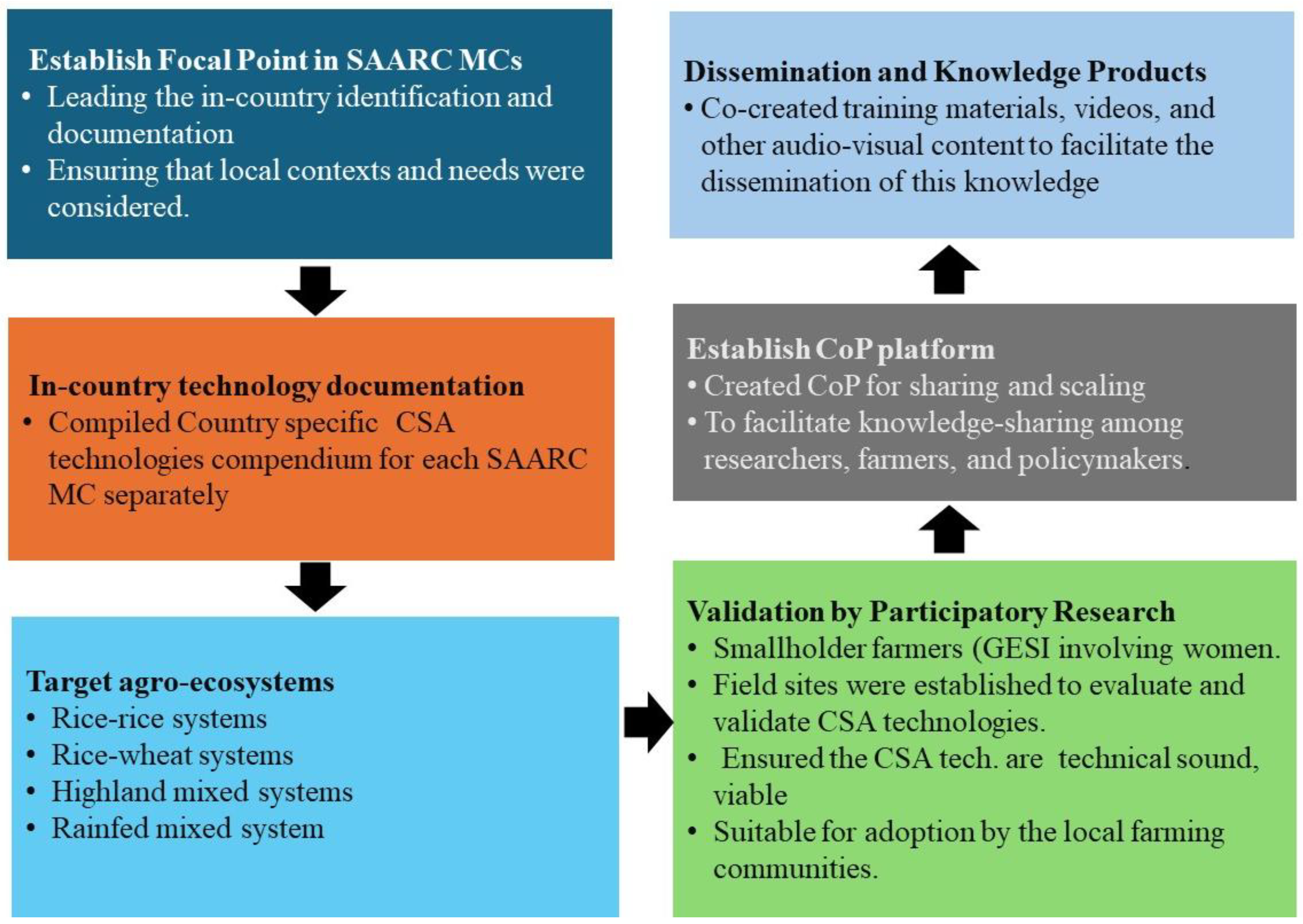
Figure 2.
Mitigation and adaptation potential of agriculture technologies and practices.
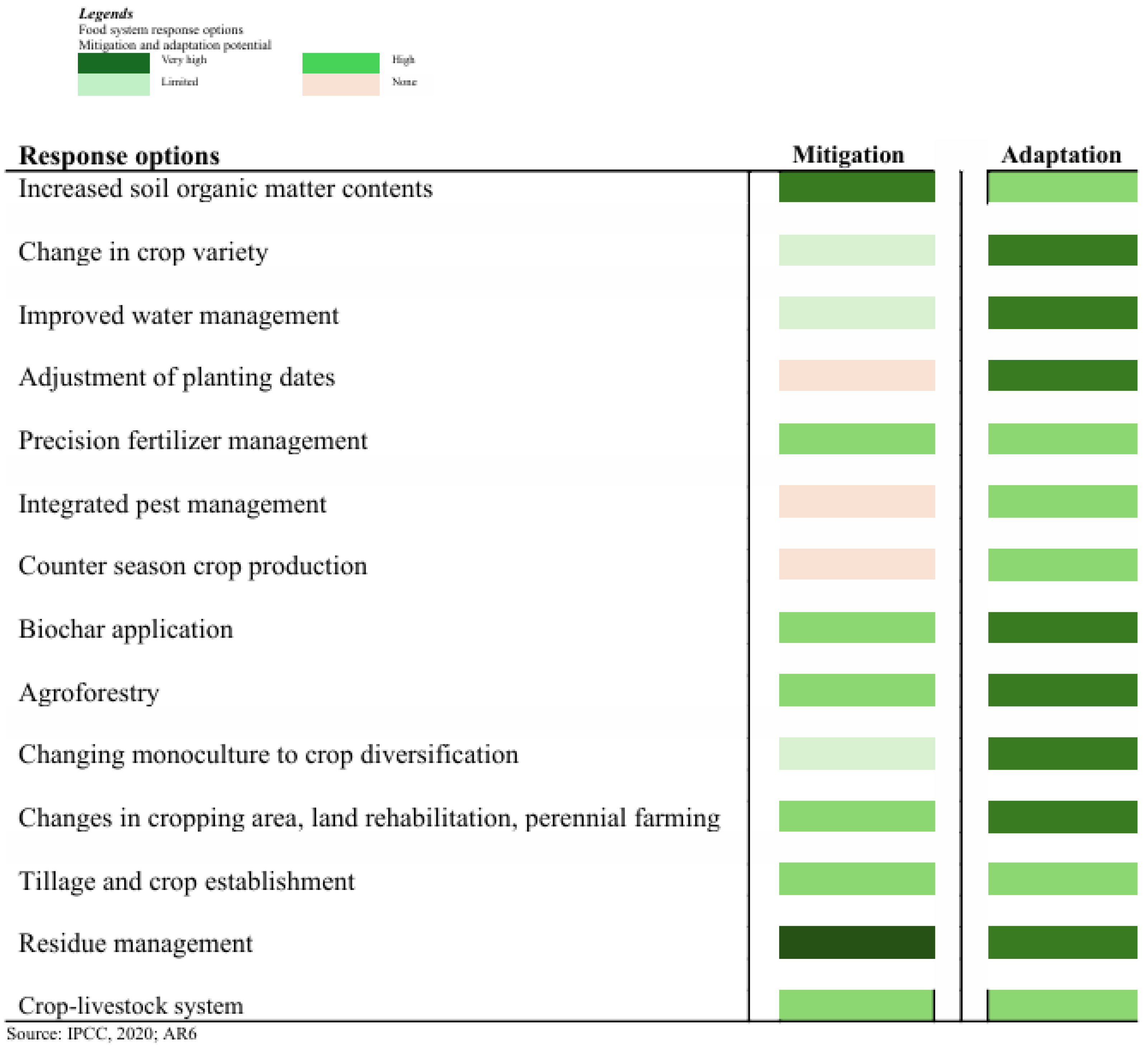
Figure 3.
CSA technologies prioritized by A) Bangladesh and B) Bhutan.
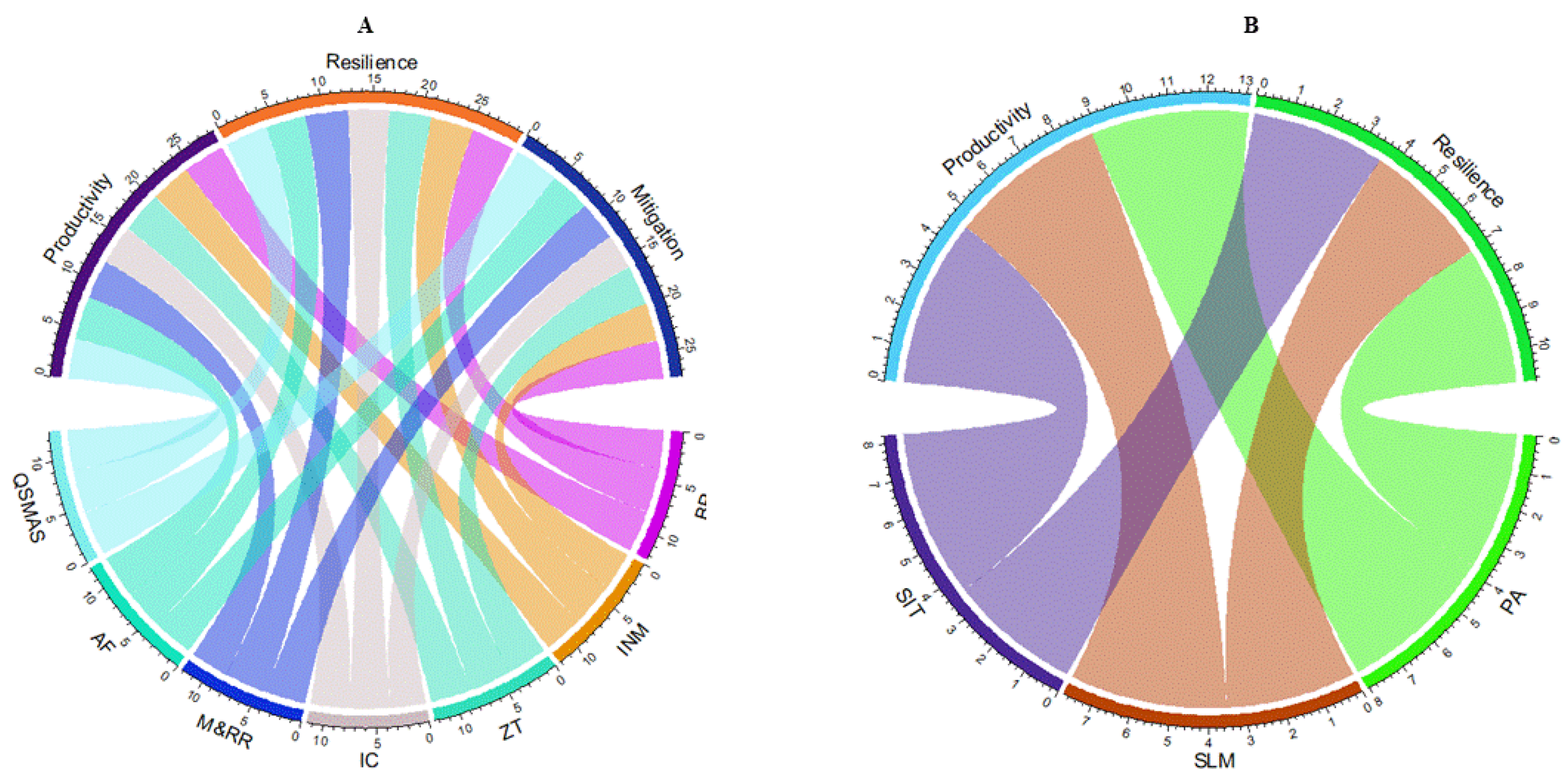
Figure 4.
CSA technologies prioritized by A) India and B) Nepal.
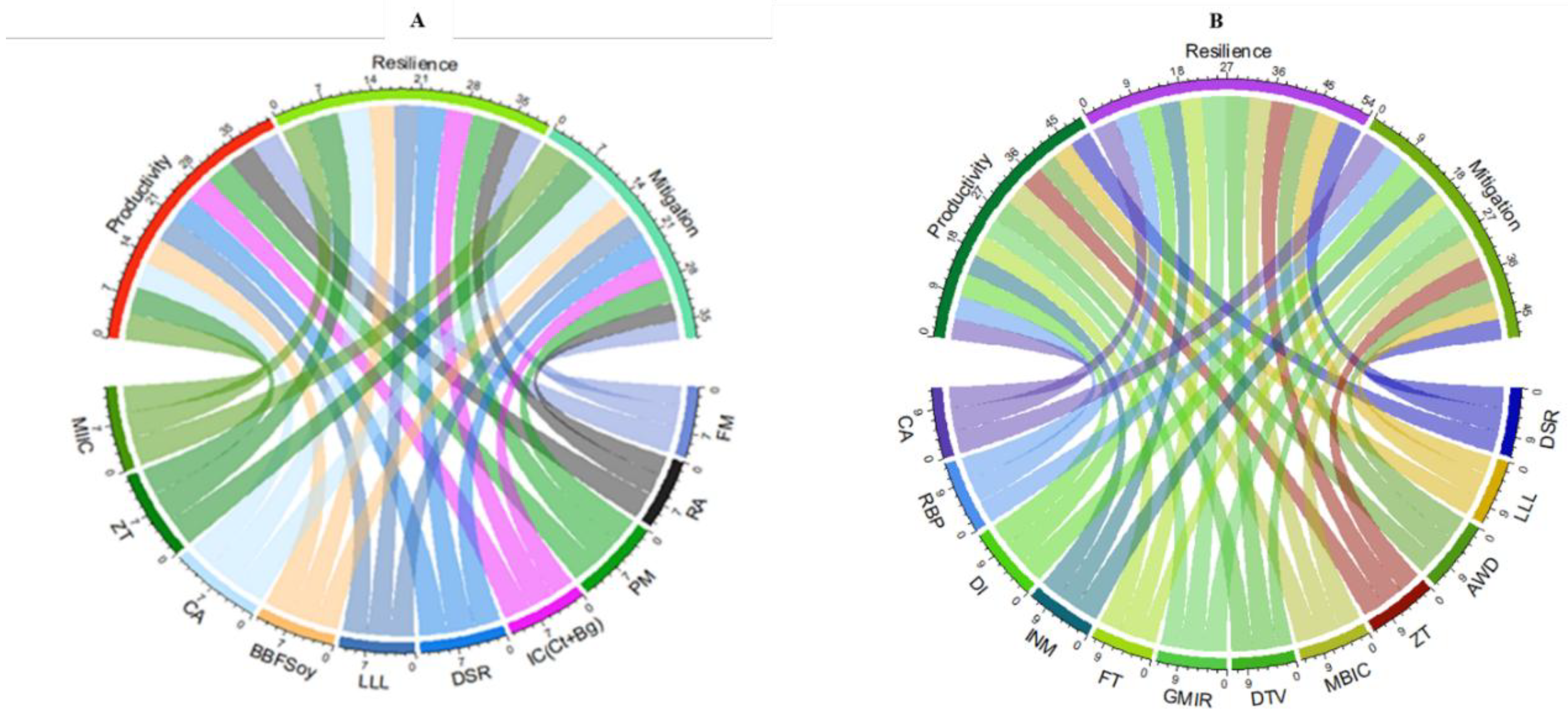
Figure 5.
CSA technologies prioritized by A) Pakistan and B) Sri Lanka.
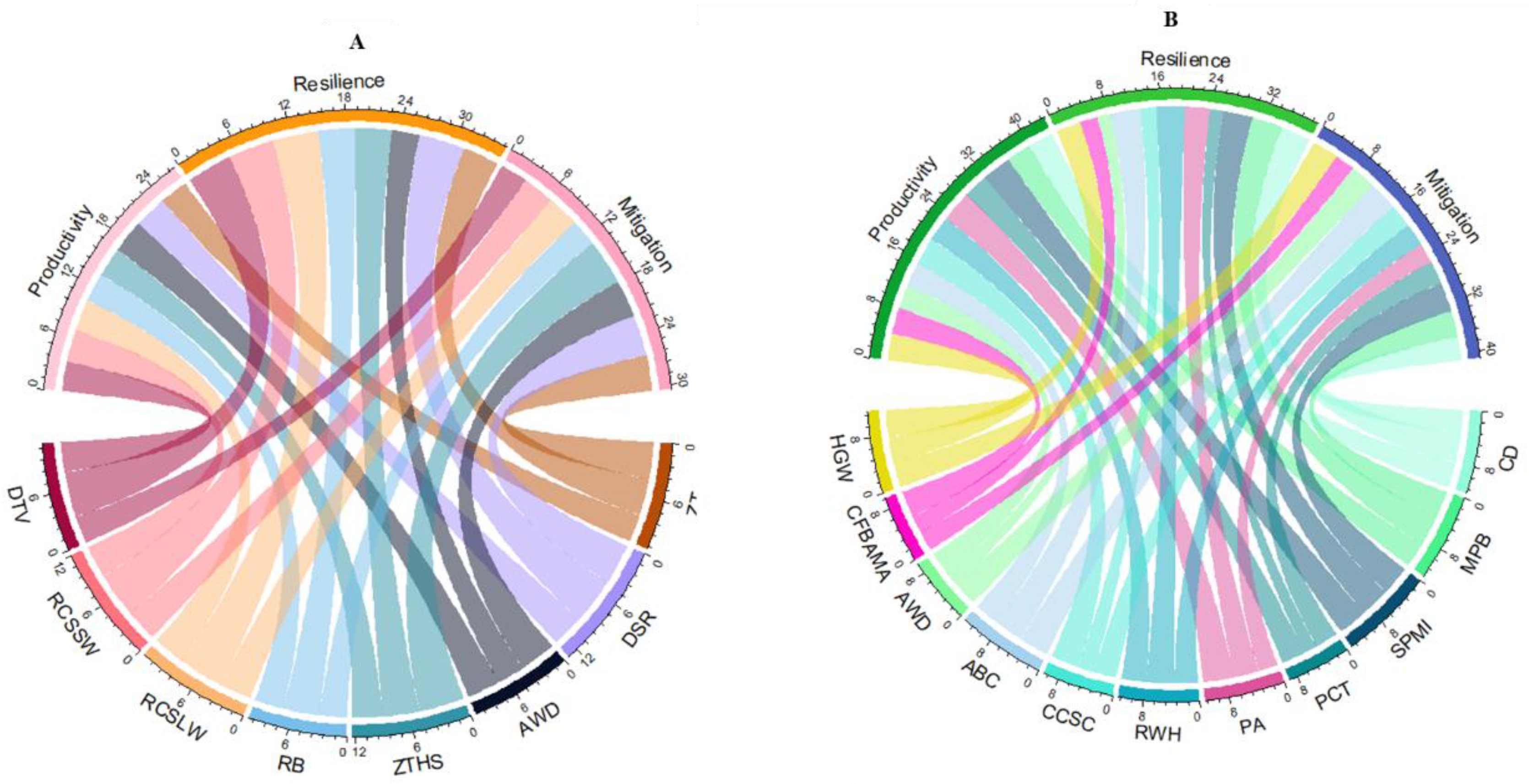
Figure 6.
CSA technologies of SAARC MCs supported by country domestic policies.
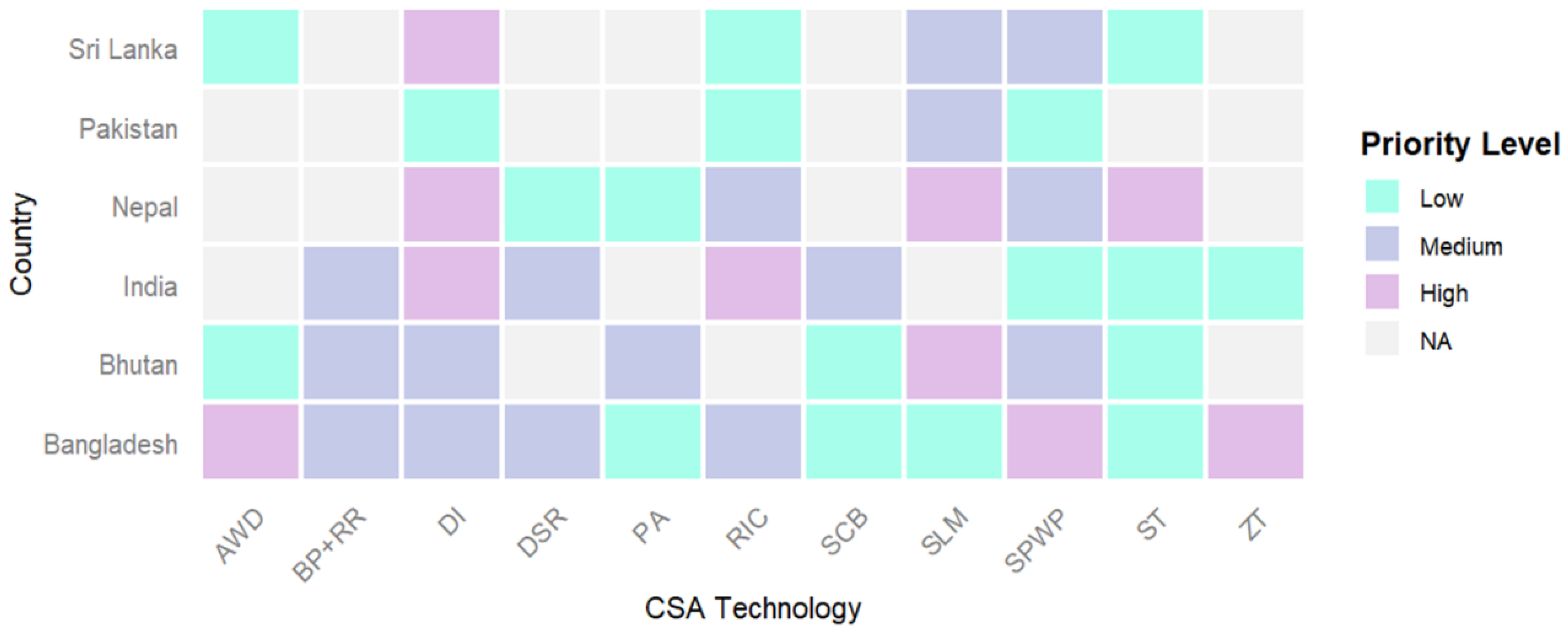
Table 1.
Climate Smart Agriculture Technologies in South Asia.
| Country |
 Crop varieties |
Soil & Crop Management | Pest & disease Management | Irrigation & Water Management | Farm Mechanization | Animal Production & Management |
Total |
|---|---|---|---|---|---|---|---|
| Bangladesh | 15 | 24 | 10 | 7 | 5 | 0 | 61 |
| Bhutan | 4 | 22 | 5 | 3 | 3 | 0 | 37 |
| India | 6 | 8 | 4 | 14 | 7 | 11 | 50 |
| Nepal | 1 | 17 | 1 | 4 | 1 | 6 | 34 |
| Pakistan | 4 | 17 | 2 | 3 | 5 | 3 | 3419 |
| Sri Lanka | 1 | 19 | 3 | 6 | 3 | 4 | 36 |
| Total | 31 | 107 | 25 | 37 | 24 | 24 | 248 |
Based on inventory reports of Climate smart technologies in SAARC member countries (https://c-sucses.sac.org.bd/book/ ).
Disclaimer/Publisher’s Note: The statements, opinions and data contained in all publications are solely those of the individual author(s) and contributor(s) and not of MDPI and/or the editor(s). MDPI and/or the editor(s) disclaim responsibility for any injury to people or property resulting from any ideas, methods, instructions or products referred to in the content. |
© 2026 by the authors. Licensee MDPI, Basel, Switzerland. This article is an open access article distributed under the terms and conditions of the Creative Commons Attribution (CC BY) license (http://creativecommons.org/licenses/by/4.0/).
Copyright: This open access article is published under a Creative Commons CC BY 4.0 license, which permit the free download, distribution, and reuse, provided that the author and preprint are cited in any reuse.


