

Submitted:
02 July 2026
Posted:
02 July 2026
You are already at the latest version
Abstract
This study investigates the impact of selected soil parameters and integrated fertilizer formulations on the productivity of three legume crops – mungbean, soybean, and cowpea – in order to identify the optimal strategies to maximize yields through reduced Nitrogen and bio-augmentation. A five-year experiment composed of 2-year pot trials (2019 – 2020) and 3-year field trials (2022 – 2024) were conducted to assess the changes in some soil parameters (N, P, K, OM, pH) and yield response of the crops with varying amounts (1, 2, 4kg) of Bradyrhizobium-based biofertilizer combined with 25-50% reduction in mineral N fertilizer. The biofertilizer is composed of locally-isolated strains which were genetically identified in our previous reports as B. elkanii NE1-6, NE2-1, B. diazoefficiens NE1-65, Bradyrhizobium sp. NE1-19, NE1-34, and NE2-3. Results indicated that among the soil parameters, the amount of K strongly influenced yield increase for soybean (r = 0.85, p>0.05) and mungbean (r = 0.67, p>0.05) while the amount of N has the highest influence on cowpea (r = 0.60, p=0.05). Soybean yield was maximized with 50% reduction in N fertilizer (20kgN) combined with 2-4kg biofertilizer while cowpea and mungbean achieved increased yields at 25% reduced N fertilizer combined with 2-4kg biofertilizer. This study confirms the viability of integrating Bradyrhizobium-based biofertilizer with 25-50% reduction in mineral N fertilizer without yield loss by harnessing the efficient N-fixation ability of the strains in the consortium.
Keywords:
biofertilizer
; Bradyrhizobium
; INM
; legumes
; Philippines
1. Introduction
Bradyrhizobium has long been used as an effective inoculant for legumes due to its symbiotic relationship with these crops and its high N fixation ability. Its role as plant growth promoting rhizobacteria is extensively studies such that species from this genus are known to be effective microsymbiont of legumes such as different varieties of soybean [1], cowpea [2], and mungbean [3]. These reports presented yield increase on these legume crops by using various species and strains of bradyrhizobia and harnessing its ability for biological N fixation and other plant growth promoting traits.
In the Philippines, legume production is conventionally applied with chemical fertilizers with a common recommended rate of 40-60-60 kg N-P2O5-K2O ha-1. Yet, over-use and continued application of synthetic fertilizers are known to cause soil degradation and environmental pollution. In a review article, the impacts of synthetic N and P showed a significant degradation in soil resources such as acidification, depletion of soil organic matter, nutrient imbalance, and disruption in the communities of beneficial microorganisms [4]. Moreover, the injudicious application of synthetic fertilizers destroys soil biodiversity thus, suppressing the role of N fixing microorganisms [5]. Thus, it is a common strategy that when N-fixing microorganisms are used as inoculants, reduction on N fertilizer is done.
The integrated nutrient management (INM) approach is the utilization of both inorganic and organic inputs to benefit both the plant and the soil. As bradyrhizobia have plant growth promoting traits (PGPTs) with high N fixation ability, they are the best candidate as complementary or alternative to decrease the need for mineral N fertilizer for sustainable agriculture [6,7]. The use of INM was reported by several researchers as viable strategy for sustainable agriculture. In fact, a long-term study reported that the use of INM enhanced soil organic carbon, available NPK, and increased the microbial and enzymatic activities [8]. In a report by Kumar et al. [9], the use of PGPRs with partial replacement on inorganic fertilizer enhance nutrient use efficiency, improved crop growth, and increased the stress tolerance of some vegetable crops. Thus, the INM using reduced synthetic fertilizers and beneficial microorganisms can boost overall crop growth and restore soil health.
However, the Bradyrhizobium-based biofertilizer used in this study was thoroughly tested for soybean under laboratory conditions. It is normal to assume that once used under actual field condition, the effectivity of the biofertilizer may be different. Furthermore, soybean is not a major legume in the Philippines and thus, mungbean and cowpea were used as the most commonly planted food legumes in the country. In this study, the ultimate goal is to address some sustainable development goals particularly on life on land by promoting sustainable agriculture practices and zero hunger by sustaining crop productivity in an agriculture-based country like the Philippines.
2. Materials and Methods
2.1. Soil Sampling and Crop Selection
The soil sample was collected from the common field site of the College of Agriculture, Central Luzon State University (CLSU), Science City of Munoz, Nueva Ecija, Philippines (15.7239ºN, 120.9416ºE). Sampling followed the standard protocol from the Bureau of Soils and Water Management (BSWM) wherein from a 1-ha area, 10 sub-samples were collected at a depth of up to 20cm, air-dried, pulverized, and quartered until a 1kg composite soil was obtained which was sent for analysis to the Regional Soils Laboratory (RSL) in San Fernando, Pampanga. For the soil used on pot experiment, these were obtained from the same field. The first experiment using pots with 10kgs soil was conducted in dry season of 2019 using soybean (PSB-SY2), cowpea (BPI-Cp3), and mungbean (NSIC Mg14). These varieties were chosen for their local supply and commercial availability.
2.2. Information on the Biofertilizer Used
For the biofertilizer, the bacterial isolates used in this study were all isolated and genetically identified previously [10] and deposited at the DNA Databank of Japan (http://www.ddbj.nig.ac.jp/) with accession numbers as follows: B. elkanii NE1-6 (LC367070), NE2-1 (LC367073), B. diazoefficiens NE1-65 (LC367072), Bradyrhizobium sp. NE1-19 (LC415435), NE1-34 (LC367071), and NE2-3 (LC367074). For the purpose of clarity, the biofertilizer used is given the name Brady-fert since all the species belong to Bradyrhizobium. The biofertilizer was packaged into a 250-g pack using a polypropylene plastic bag. It has a soil-like smell with 2mm particle size. The color is black which is a characteristic of a fully-decomposed carbon-rich material. Based on the analysis, the biofertilizer contains 0.93%N, 0.69%P2O5, 0.96%K2O, and 25.01% OM. The pH of the biofertilizer is 9.03. The total microbial count of N-fixers is 1.0 x 10⁸ cfu/g of the biofertilizer. The biofertilizer was applied at three (3) rates as described above.
2.3. Treatment and Experimental Design
The treatments used were as follows: T1 – full recommended rate of inorganic fertilizer based on soil test result (40-40-60 N-P2O5-K2O kg/ha); T2 – 75% T1+1kg biofertilizer, T3 – 75% T1+2kg biofertilizer; T4 – 75% T1+4kg biofertilizer, T5 – 50%T1+1kg biofertilizer, T6 – 50% T1+2kg biofertilizer, T7 – 50% T1+4kg biofertilizer. The inorganic fertilizer used were 46-0-0, 0-18-0, and 0-0-60.
After the first trial, a second trial using the same set of soil samples was conducted on pots wherein the same treatments were employed for the same crop varieties. Due to the pandemic of 2020 – 2021, there was no experiment conducted for 2021. From dry season of 2022 – 2024, field experiments using Randomized Complete Block Design with 7 treatments and 3 replications were conducted using the same crop varieties at the Ramon Magsaysay-Center for Agricultural Resources and Environment Studies (RM-CARES, 15.7364ºN, 120.9261ºE) at CLSU. The soil samples used for field experiments were analyzed for NPK for fertilizer recommendation initially using soil test kit. The same soil sampling procedure was used wherein a portion was sent to the RSL for the analysis of N, P, K, OM, and pH. The soil samples were re-tested in 2023 and 2024 for similar parameters and were analyzed at CLSU.
Harvesting for cowpea and mungbean commenced at 90-95 days after sowing (DAS) when the leaves began to drop and the pods turned brown and dried up. Data gathered include seed yield (t/ha) and soil parameters (N, P, K, pH, OM).
2.4. Data Analysis
All replicated data were subjected to analysis of variance (ANOVA) using R software (version 4.2.3), and mean comparisons were performed using Tukey’s honestly significant difference (HSD) test at a 95% confidence level while correlation test employed Pearson’s.
3. Results
3.1. Crop Response to Combined Fertilizer Application on Pot Experiment
The data below (Figure 1) shows the influence of the integrated nutrient management (INM) on the yield of the 3 legumes. For cowpea, the highest seed yield is attained with the application of 25% reduction in N fertilizer added with 4kg brady-fert which is significantly higher than the full NPK. Meanwhile, the lowest yield is obtained from the 50% reduction in N fertilizer added with 1kg Brady-fert but, significantly increased with the addition of 2 and 4 kg Brady-fert. The same trend is observed with 25% reduction in N fertilizer wherein the lowest yield is found on plots with only 1kg Brady-fert application abd wth significant improvement upon addition of 2 and 4kg Brady-fert. This pattern is observed with both cowpea and soybean, indicating that for this first pot trial, adding 4kg Brday-fert with 50% reduction and 2 – 4kg Brady-fert with 25% reduction in N fertilizer showed increased yield over the full application of NPK.
Meanwhile, Figure 2 shows the results of the second pot trial using the same treatments for verification of the first trial’s result. Across all crops, the full NPK fertilzier application showed the lowest yield than all the INM treatments. Notably, the highest yield is still obtained from the the INM approach using 25% reduced N fertilizer added with 4kg Brady-fert but this yield is comparable with all the other treatments, regardless of the crop, but is significantly higher than the full NPK. Aside from this, all INM combinations showed increased yield from the 1st trial while the full NPK fertilizer application showed a decrease in yield across all crops. This shows that even though the INM treatments obtained only a slight increase in yield from the 1st trial, the decrease in the yield for the full NPK created the yield difference across the crops planted.
3.2. Crop Response to Combined Fertilizer Application on 3-Year Field Experiment
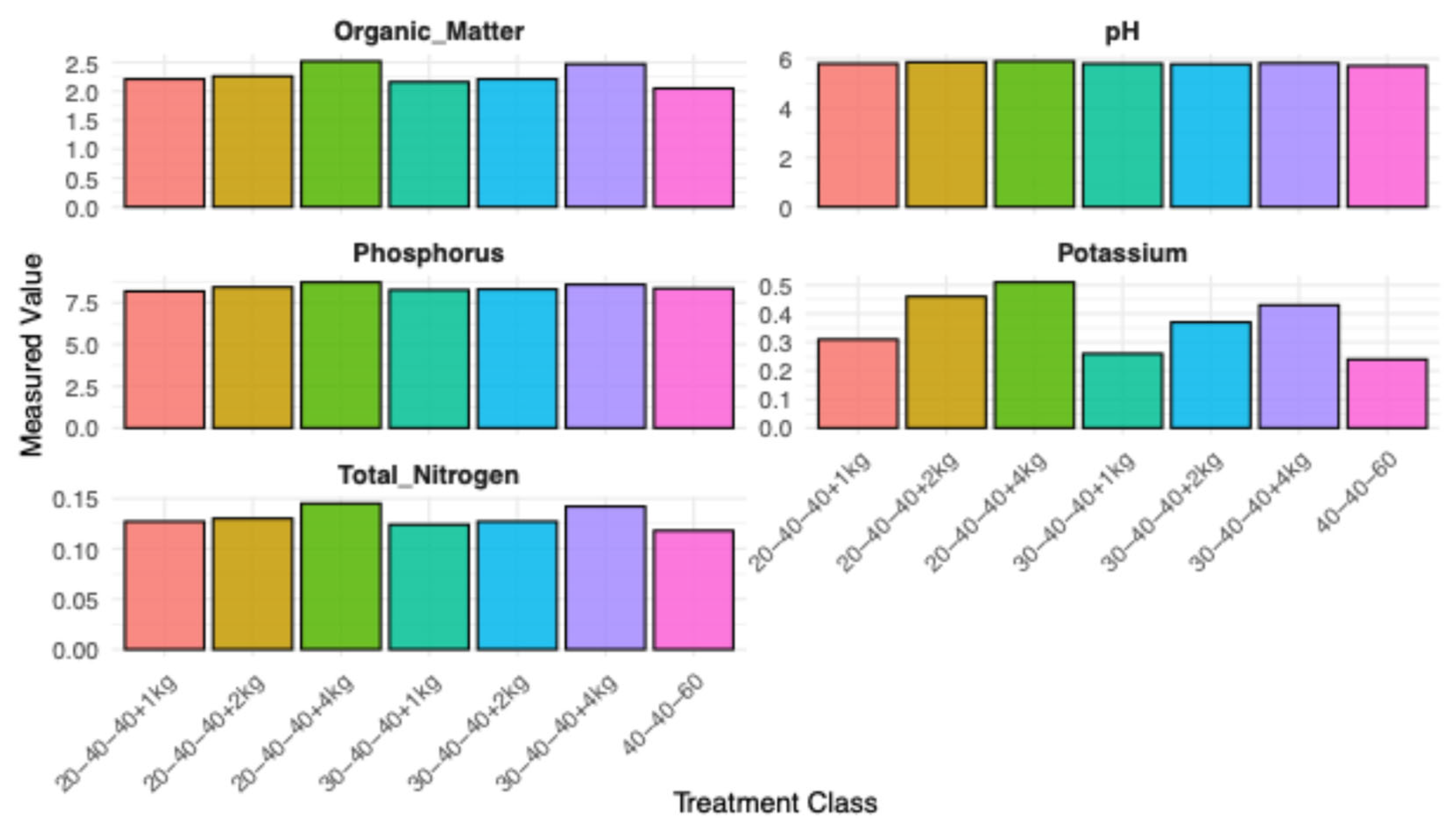
Shown in Figure 3 is the 3 -year field trial using the same treatments as above in order to test the influence of INM approaches compared to the full NPK fertilzier application on the yield of cowpea. Consistent with the result of the pot trials, the combination of 25% reduction in N fertilizer and 2 - 4kg Brady-fert showed the highest yield for 3 consecutive years, which is statistically significant than the full NPK fertilizier application. Through the years, the INM approach with 25% reduction added with 1 – 4kg Brady-fert consistently yielded higher than the INM approach with 50% reduction added with 1 – 4kg Brady-fert. However, it is noticeable that the 50% reduction added with 4kg Brady-fert is comparable with the 25% reduction added with 1kg Brady-fert. It is also observed that over time, an increasing trend in yield is seen for all the INM approaches but a decreasing yield pattern is observed on full NPK fertilzier application through the years.
The yield of mungbean from 2022- 2024 as influenced by the INM treatments compared to the full NPK fertilizer application is presented in Figure 4. Contrary to the effect on cowpea, the 50% reduction in N fertilizer added with 1kg Brady-fert showed a consistently lower yield than the other INM approaches which is comparable with the full NPK treatment. However, the INM appraoch using 25% reduction added with 2 – 4kg Brady-fert consistently produced the highest yield, outperforming the full NPK application significantly, but is comparable with all the other INM treatments.
For soybean, the effect of the INM treatments compared to the full NPK treatment is presented in Figure 5. In contrast to the influence of the treatments to cowpea and mungbean, soybean responded higher with 50% reduction in N fertilizer. The highest yield through the 3-year field experiment is observed on INM approach using 50% reduction in N fertilizer added with 2 – 4kg Brady-fert, which is significantly higher than the full NPK treatment. Meanwhile, the INM approach using 50% reduction in N fertilizer combined with 1kg Brady-fert showed similar yield with all the 25% reduction in N fertilizer with 1 – 4kg Brady-fert.
3.3. Correlation Between Soil Parameters and Yield
In order to determine the influence of INM approach not only on the yield of the 3 legumes but also on some soil parameters, a comparative regression analysis (Figure 6) and a correlation test (Figure 7) were employed including the changes in soil condition over time (Figure 8). Comparing the influence of N, P, K, pH, and organic matter (OM) on the yield of the mungbean, cowpea, and soybean for the 3-year field experiment, the trend showed positive influence in the order of organic matter, pH, P, K, and N. Across the soil gradients, distinct yield results were observed wherein cowpea consistently achieved the highest productivity between 1.1 to 1.3 t/ha. Soybean showed moderate yield with the lowest yield performance observed for mungbean, rarely exceeding 1/1t/ha even with improving soil conditions. This suggests that while an improvement in soil condition plays a vital role in yield increase, the optimal yield is also a function of the genetic potential of the crop.
Meanwhile, the strong correlation between the yields of cowpea and mungbean (r = 0.94) indicates that they behave similarly with the changes in soil conditions. Unlike soybean, the low correlation with mungbean (r = 0.59) and cowpea (r = 0.48) indicates that its yield shifts differently than the two legumes, probably from factors not considered in the study. Among the 3 legumes, soybean showed the highest response to the level of K (r = 0.85) and soil pH (r = 0.84). On the other hand, cowpea and mungbean showed moderate correlation with the soil parameters taken (r = 0.48 – 0.67) that is positively stable. The perfect (r = 1.0) correlation between N and OM indicates multicollinearity and the other soil parameters also showed strong positive relationship with each other (r = 0.69 – 0.90). In terms of yield, soybean and mungbean were mostly linked with K leve while cowpea was mostly influenced by OM and N.
The changes in selected soil parameters on Figure 8 shows that among these attributes, K is the most influenced by the different INM approaches implemented, as shown on the variation. Meanwhile, soil pH remains rather stable notable mirroring between OM and N levels. Another observation is that among the treatments, the 20-40-40 and 30-40-40 kg NPK added with 4kg Brady-fert increased all the soil parameters systematically, indicating that the amendment likely impacted the availability of nutrients in the soil matrix, particularly for K.
4. Discussion
Bradyrhizobium species has long been established as efficient N fixers particularly when under symbiotic relationship with leguminous crops. In this study, we further established that the use of Bradyrhizobium strains in a mixed-inoculant formulation as biofertilizer can decrease the need of crops for mineral N fertilizer. The Brady-fert used in this study is composed of six strains of Bradyrhizobium which are all reported to be indigenous in the Philippines [11]. In the past, these were used individually in single inoculation for different cultivars of soybean and showed efficient N fixation abilities [12]. However, the questions that were addressed in this report are: 1) is the formulated biofertilizer also effective to other legumes?; 2) will the biofertilizer be effective also in the field or only in the lab; and 3) is there any influence on some soil parameters when this biofertilizer is used?
For both the pot and field experiments, it is evident that among the 3 crops, cowpea showed the highest improvement in terms of yield. Meanwhile, soybean responded better when there is higher reduction in the amount of mineral N fertilizer at 50% rather than 25%. Among the 3 crops, mungbean had the least yield increase but it follows the trend with cowpea wherein 25% reduction in the amount of mineral N fertilizer combined with either 2 or 4 kg Brady-fert obtained significant yield compared to the full NPK fertilizer. This indicates that as leguminous crops, the N fixers present in the Brady-fert may have played a big role in supplying the N requirement of the crops despite the 25 – 50% reductions.
In a study by [13], inoculation of different Bradyrhizobium isolates to five cowpea varieties resulted in an overall increase in growth, biomass accumulation, and nodule performance. This report had a follow up study [14] wherein four varieties of cowpea were inoculated with Bradyrhizobium strain CP-24 and the yield increased by 28.47% compared to the uninoculated plant. Aside from this, Bradyrhizobium inoculation also increased the other growth parameters such as nodule number, effective nodules, leaf area, root dry weight, leaf area index, root length, pod length, and aboveground biomass yield, indicating the superior influence of inoculated over the uninoculated plants. Meanwhile, it was reported that in Ethiopia as a tropical country, highly efficient N fixers from the genus of Bradyrhizobium served to be effective symbiont of cowpea [15], supporting our results that cowpea is highly responsive or sensitive to inoculation with Bradyrhizobium-based biofertilizer.
Meanwhile, our results indicate that mungbean is also positively influenced with the application of reduced N fertilizer by 25% added with 2 – 4 kg Brady-fert. Although the effect to mungbean is not as high as with cowpea, the yield increases on both the pot and field experiments over time points to the positive effect of the INM approach. In Southern Ehtiopia, it was found out that the combined application of chemical fertilizer and bio-slurry composed of rhizobia significantly improved the overall growth and yield of mungbean [16]. In support to this, a study revealed that inoculation of Bradyrhizobium on mungbean at different levels of N produced the most significantly highest yield when mineral N fertilizer is only applied at 40kg ha-1 [17]. In our study, 30kg N produced the highest yield for mungbean combined with 2-4 kg Brady-fert. Additionally, it was found out that in tropical soils, Bradyrhizobium genus is the only rhizobial inhabitant of mungbean, suggesting that for inoculation studies, Bradyrhizobium has high compatibility with mungbean in the tropics [18]. This explains the compatibility of adding Brady-fert in combination with reduced N fertilizer for mungbean production.
In the case of soybean, the results in this study showed that with higher reduction in N fertilizer (50%) combined with 2-4kg Brady-fert, a significant increase in yield over time is obtained. This indicated that among the 3 legumes tested, soybean is the most compatible with the biofertilizer used (Brady-fert) and does not need high amounts of mineral N fertilizer to attain optimal yield. A study comparing the inoculation of Bradyrhizobium to soybean under organic and conventional farming system showed increased growth and yield in organic rather than conventional [19], suggesting that bradyrhizbia works well in soil without the application of mineral fertilizers. Similarly, a report stated that Bradyrhizobium inoculation on soybean significantly increased the relative symbiotic effectiveness under controlled condition by at least 80% [20]. Contrary to these results, a study conducted an application of Bradyrhizobium inoculum in different forms on soybean under field condition and found that there is no consistent increase in yield over a 2-year period [21]. The authors suggested that this result may be due to several factors such as the very low N content of the soil, the acidic soil condition (5-9-6.4), the microbial strains used (compatibility), and the presence of excessive moisture during the growing period. It has been reported that too much moisture can significantly affect the nodulation in legumes even with inoculation such that increased moisture stimulates anaerobic processes that may produce phytotoxins, as a by-product from anaerobic microorganisms in the soil which negatively impacts the root system [22]. On the same note, drought can significantly decrease the beneficial effect of Bradyrhizobium inoculation in legumes such that it can inhibit the exchange of signaling molecules that are involved in the communication between the legume host plant and the rhizobia [23]. Thus, the soybean-Bradyrhizobium symbiosis is indeed an interesting and complex relationship and a successful inoculation varied across geographic locations [24] and other soil properties such as flooding which we also reported previously.
Aside from yield improvement, this study also revealed the potential impact of INM approach on some soil parameters. The correlation and regression analysis trends including the observation on soil chemical properties dynamics indicated positive impact of Brady-fert on overall soil conditions. The consistent increase in the levels of soil parameters, particularly for K, can be attributed to the Bradyrhizobium-based biofertilizer applied in addition to the 25 – 50% reduction in N fertilizer. The effect of inoculating Bradyrhizobium in combination with other beneficial mciroorganisms was reported to increase the amount of nitrogenase activity and soil nitrogen content [25]. Another report revealed that while inoculation of soybean with bradyrhizobia did not significantly increase the soil pH, OM, N, and C:N ratio, it was able to significantly influence the increase in total and available P [26]. In contrast, it was recently reported that with the combined application of Bradyrhizobium and biochar, soil parameters significantly improved. For instance, the soil pH increased from 5.77 to 6.20, N rose from 0.12% to 0.19%, available P increased from 32.4 to 45.3 ppm, available K increased by 18.2% and the OM increased by 27.7% [27]. As discussed and cited above, the incorporation of Bradyrhizobium with organic inputs significantly improved the levels of soil OM, N, P, K and even the soil pH. The data obtained in this present study indicated the valuable contribution of reducing inorganic fertilizer application, particularly N, with the addition of efficient bradyrhizobia, to lessen its impact on soil quality.
However, the improvement in soil properties are not solely attributed to the addition of Brady-fert. The reduction in the amounts of chemical fertilizers by 25 to 50% played an important role in the gradual improvement of the soil condition over a span of 3 years. It was observed that with the application of decreased chemical fertilizers combined with organic fertilizer as an INM approach for corn, the soil properties (EC, SOC, Total N, nitrate N, available P, available K) and microbial diversity significantly improved [28]. Another study presented an integration of 90% chemical fertilizer with 100% organic fertilizer and found that the N, P, and K uptake increased significantly by 29.2%, 29.0%, and 56.5%, respectively. Aside from this, the nutrient use efficiency for these primary macroelements increased by 30.4%, 21.1%, and 47.7% for N, P, and K, respectively [29]. This result is somewhat similar with the trend that was observed in our study wherein among the macroelements, K was the most positively influenced with the INM approaches used.
Despite the increasing reports on the positive impact of INM for sustainable crop production not only on improving crop yields but more importantly on soil health restoration, there is still a lacking long-term scientific data across various geographical locations with different farming practices. In this present report, a 2-year pot and a 3-year field experiment using 3 crops consistently and positively provided scientific evidence on the beneficial effects of INM for the soil and for the crop. Reporting the harmful effect of long-term and over-application of N fertilizer, it was found out that it can lead to an overall degradation of soil quality while affecting the adsorption and accumulation of soil pollutants such as polycyclic aromatic hydrocarbons [30]. Aside from this, the over-use of N fertilizer pollutes not only the soil but also the groundwater where potable water is pumped, impacting human health. Therefore, it is necessary that INM approach for food security, environmental protection, and agricultural sustainability be given due recognition in every crop production systems. Not only in crop and soil improvement, the use of INM practices showed a reduction in methane emissions by 1.355% compared to conventional farming systems with crop yields improving from 1.3% to 66.5% to various systems [31]. These scientific evidences merit the wide implementation and policy recommendation on the use of INM for agriculture systems.
In summary, this study demonstrates the strong positive influence of integrating Bradyrhizobium-based biofertilizer at 4kg/ha rate added to 25 – 50% reduction in mineral N application. Since the Brady-fert used in this study ais composed of locally-isolated strains, its application to local condition is optimized. Thus, this report provided additional evidence that reducing the amount of N application by 25 – 50% with the addition of bradyrhizobia as biofertilizer will not cause a decrease in yield rather, a consistent yield increase over time along a consistent improvement in soil condition is observed. Through the utilization of this INM approach, legume production will be aligned with sustainable development goals with focus on environmental protection, food security, and poverty reduction.
5. Conclusions
This study highlights the gradual but consistent positive impact of using INM approach for the improvement of crop yield and soil condition. The synergistic benefits of integrating Bradyrhizobium-based biofertilizer with reduced N mineral fertilizer show it can sustain the yield of the 3 leguminous crops while simultaneously enhancing some soil chemical properties. Future prospects include the potential of this Brady-fert to be used not only for legumes but for non-leguminous crops in an INM strategy. As the world faces challenge on declining crop productivity resulting from soil degradation aggravated by climate change and rising costs of fertilizers, alternative technologies like this is beneficial. With a reduction of N fertilizer by 25 – 50% combined with 2 – 4 kg Brady-fert, we have established that legume production will be sustainable.
Author Contributions
MLT MASON - Conceptualization, Methodology, Investigation, Resources, Writing-original draft preparation, Writing-review and editing. BLT DE GUZMAN – Conceptualization, Methodology, Validation, Investigation, Formal Analysis, Resources, Writing-original draft preparation, Writing-review and editing. AGMACTAL - Conceptualization, Methodology, Resources, Writing-review and editing. AAQUINO - Methodology, Resources, Validation, Writing-review and editing. JMBMERCULIO - Conceptualization, Methodology, Validation, Writing-review and editing. ACTABING - Investigation, Methodology, Resources, Validation, Writing-review and editing.
Funding
This research was funded by the Central Luzon State University Academic Research Council.
Institutional Review Board Statement
Not applicable.
Informed Consent Statement
Not applicable.
Data Availability Statement
All data are available in this manuscript.
Acknowledgments
The authors would like to acknowledge the contribution of the following students: Jayson Puntil, Elyjan Sinuto, Jomari Lagunay, for their assistance during the data gathering on the initial pot experiments. Grateful thanks are also given to Kasetsart University and Central Luzon State University administrators and professors.
Conflicts of Interest
The authors declare no conflicts of interest. The funders had no role in the design of the study; in the collection, analyses, or interpretation of data; in the writing of the manuscript; or in the decision to publish the results.
Abbreviations
The following abbreviations are used in this manuscript:
| PGPR | Plant Growth Promoting Rhizobacteria |
| RM-CARES | Ramon Magsaysay-Center for Agricultural Resources and Environment Studies |
| CLSU | Central Luzon State University |
| DA | Department of Agriculture |
| RSL | Regional Soils Laboratory |
| DDBJ | DNA Databank of Japan |
| PGPT | Plant Growth Promoting Trait |
| INM | Integrated Nutrient Management |
References
- Zimmer, S.; Messmer, M.; Haase, T.; Piepho, H.; Mindermann, A.; Schulz, H.; Habekub, A.; Ordon, F.; Wilbois, K.; Heb, J. Effects of soybean variety and Bradyrhizobium strains on yield, protein content and biological nitrogen fixation under cool growing conditions in Germany. Eur. J. Agron. 2016, 72, 38–46. [Google Scholar] [CrossRef]
- Ulzen, J.; Abaidoo, R.C.; Mensah, N.E.; Masso, C.; AbdelGadir, A.H. Bradyrhizobium inoculants enhance grain yields of soybean and cowpea in Northern Ghana. Front. Plant Sci. 2016, 7, 1770. [Google Scholar] [CrossRef] [PubMed]
- Dos Santos, D.M.; Favero, V.O.; Leite, A.B.C.; da Costa, G.; dos santos, R.; de Almeida, J.C.; Batista, J.N.; Pereira, W.; Zonta, E.; Urquiaga, S.; Rumjanek, N.G.; Xavier, G.R. Harnessing rhizobial inoculation for sustainable nitrogen management in mungbean (Vigna radiata L.). Plants 2025, 14, 3695. [Google Scholar] [CrossRef]
- Singh, B.; Singh, A.K.; Singh, J.; Rani, P. Impact of chemical fertilizers on soil health and environmental quality. Orient. J. Chem. 2025, 42, 762–775. [Google Scholar]
- Tripathi, S.; Srivastava, P.; Devi, R.S.; Bhadouria, R. Influence of synthetic fertilizers and pesticides on soil health and soil microbiology. Agrochem. Detect. Treat. Remed. 2020, 25–54. [Google Scholar] [CrossRef]
- Chandran, H.; Meena, M.; Swapnil, P. Plant growth-promoting rhizobacteria as a green alternative for sustainable agriculture. Sustainability 2021, 13, 10986. [Google Scholar] [CrossRef]
- Mohanty, P.; Singh, P.K.; Chakraborty, D.; Mishra, S.; Pattnaik, R. Insight into the role of PGPR in sustainable agriculture and environment. Front. Sustain. Food Syst. 2021, 5, 667150. [Google Scholar] [CrossRef]
- Datta, S.; Mazumdar, S.P.; Majumdar, B.; Alam, N.M.; Chattopadhyay, L.; Ghosh, S.; Saha, D.; Saha, A.R.; Kar, G. Impact of integrated nutrient management on soil microbiome diversity and health in rice based cropping system: insights from long-term agricultural practices. Rhizosphere 2025, 101048. [Google Scholar] [CrossRef]
- Kumar, M.; Giri, V.P.; Pandey, S.; Gupta, A.; Patel, M.K.; Bajpai, A.B.; Jenkins, S.; Siddique, K.H.M. Plant-Growth-Promoting Rhizobacteria Emerging as an Effective Bioinoculant to Improve the Growth, Production, and Stress Tolerance of Vegetable Crops. Plants 2021, 10, 1224. [Google Scholar] [PubMed]
- Mason, M.L.T.; Saeki, Y. Distribution and characterization of the indigenous soybean-nodulating bradyrhizobia in the Philippines. IntechOpen. 2019, 10, 5772. [Google Scholar]
- Mason, M.L.T.; Tabing, B.L.C.; Yamamoto, A.; Saeki, Y. Influence of flooding and soil properties on the genetic diversity and distribution of indigenous soybean-nodulating bradyrhizobia in the Philippines. Heliyon 2018, 4, e00921. [Google Scholar] [CrossRef] [PubMed]
- Mason, M.L.T.; De Guzman, B.L.T.; Yamamoto, A.; Saeki, Y. Symbiotic performance of indigenous bradyrhizobia from the Philippines with soybean (Glycine max [L.] Merill) cultivars harboring different Rj genotypes. Symbiosis 2021, 83, 55–63. [Google Scholar]
- Ayalew, T.; Yoseph, T. Symbiotic effectiveness of inoculation with Bradyrhizobium isolates on Cowpea (Vigna unguiculata (L.) Walp) varieties. Cogent Food Agri 2020, 6:1, 1845495. [Google Scholar] [CrossRef]
- Yohannes, L.; Yoseph, T.; Ayalew, T. Bradyrhizobium inoculation improved agrosymbiotic performances of cowpea (Vigna unguiculata (L) Walp) varieties at two sites in Ethiopia. Int. J. Agron. 2024, 6582068. [Google Scholar]
- Degefu, T.; Wolde-meskel, E.; Rasche, F. Genetic diversity and symbiotic effectiveness of Bradyrhizobium strains nodualting selected annual grain legumes growing in Ethiopia. Int. J. Syst. Evol. Microbiol. 2018, 68, 449–460. [Google Scholar] [CrossRef] [PubMed]
- Tadewos, T.; Ayalew, T.; Yoseph, T. Growth, nodulation, and yield of mungbean (Vigna radiata (Wilczek) as affected by bio-chemical fertilizers integration at Southern Ethiopia. Ukr. J. Ecol. 2022, 12, 39–49. [Google Scholar]
- Mozumder, S.N.; Salim, M.; Islam, N.; Nazrul, M.I.; Zaman, M.M. Effect of Bradyrhizobium inoculum at different Nitrogen levels on summer mungbean. Asian J. Plant Sci. 2003, 2, 8170822. [Google Scholar] [CrossRef]
- Favero, V.O.; Carvalho, R.H.; Motta, V.M.; Leite, A.B.C.; Coelho, M.R.R.; Xavier, G.R.; Rumjanek, N.G.; Urquiaga, S. Bradyrhizobium as the only rhizobial inhabitant of mungbean (Vigna radiata) nodules in tropical soils: a strategy based on microbiome for improving biological Nitrogen fixation using bio-products. Front. Plant Sci. 2021, 11, 602645. [Google Scholar] [PubMed]
- Gitonga, N.M.; Njeru, E.M.; Cheruiyot, R.; Maingi, J.M. Bradyrhizobium inoculation has a greater effect on soybean growth, production and yield quality in organic than conventional farming systems. Cogent Food Agric. 2021, 7, 1935529. [Google Scholar] [CrossRef]
- Beruk, H.; Yoseph, T.; Ayalew, T. Unlocking the potential of inoculation with Bradyrhizobium for enhanced growth and symbiotic responses in soybean varieties under controlled conditions. Agron. 2024, 14, 1280. [Google Scholar] [CrossRef]
- Irshad, A.; Marshall, M.W.; Greene, J.K.; Farmaha, B.S. Soybean yield response to Bradyrhizobium inoculation on southeastern coastal plain soils. Agron. J. 2023, 11592, 1015–1020. [Google Scholar] [CrossRef]
- Yeremko, L.; Czopek, K.; Staniak, M.; Marenych, M.; Hanhur, V. Role of environmental factors in Legume-Rhizobium symbiosis: a review. Biomolecules. 2025, 15, 118. [Google Scholar] [CrossRef] [PubMed]
- De Freitas, I.C.; Ferreira, E.A.; Alves, M.A.; de Oliveira, J.C.; Frazao, L.A. Growth, nodulation, production, and physiology of leguminous plants in integrated production systems. Agrosyst. Geosci. Environ. 2023, 6, e20343. [Google Scholar] [CrossRef]
- Shiro, S.; Kuranaga, C.; Yamamoto, A.; Sameshima-Saito, R.; Saeki, Y. Temperature-dependent expression of nodC and community structure of soybean-nodulating bradyrhizobia. Microbes Environ. 2016, 3191, 27–32. [Google Scholar] [CrossRef]
- Xing, P.; Zhao, Y.; Guan, D.; Li, L.; Zhao, B.; Jiang, X.; Tian, C.; Cao, F.; Li, J. Effects of Bradyrhizobium co-inoculated with Bacillus and Paenibacillus on the structure and functional genes of soybean rhizobia community. Genes . 2022, 13911, 1922. [Google Scholar]
- Kasu-Bandi, B.T.; Kidinada, L.K.; Kasendue, G.N.; Mukalay, J.B.; Tshibingu, M.I.; Lukangila, A.B.; Longanza, L.B.; Emery, K.L.; Lubobo, A.K. Effects of Bradyrhizobium japonicum on some chemical properties of Ferralsols under soybean (Gylcine max (L.) Merr.) cultivation. Am. J. Agric. Biol. Sci. 2019, 14, 102. [Google Scholar] [CrossRef]
- Aziz, S.; Bi, Y.; Rehman, F.; Ibrahim, M.; Rasheed, S.M.; Khan, S.; Wang, C.; Liu, S. Integration of biochar and Bradyrhizobium japonicum modulates soil physicochemical properties and microbial community in soybean fields. Front. Plant. Sci. 2025, 16. [Google Scholar] [CrossRef] [PubMed]
- Han, J.; Dong, Y.; Zhang, M. Chemical fertilizer reduction with organic fertilizer effectively improve soil fertility and microbial community from newly cultivated land in the Loess Plateau of China. Appl. Soil Ecol. 2021, 165, 103966. [Google Scholar] [CrossRef]
- Bo, P.; He, Q.; Li, J.; Liu, H.; Li, X.; Wang, H. Reducing mineral fertilizer can improve the soil quality and increase the wheat yield and nutrient utilization efficiency: the fertilizing effect of organic-inorganic compound fertilizers. Agriculture 2025, 15, 1294. [Google Scholar] [CrossRef]
- Hui, K.; Xi, B.; Tan, W.; Song, Q. Long-term application of nitrogen fertilizer alters the properties of dissolved soil organic matter and increases the accumulation of polycyclic aromatic hydrocarbons. Environ. Res. 2022, 215, 114267. [Google Scholar] [CrossRef] [PubMed]
- Paramesh, V.; Kumar, R.M.; Rajanna, G.A.; Gowda, S.; nath, A.J.; Madival, Y.; Jinger, D.; Bhat, S.; Toraskar, S. Integrated nutrient management for improving crop yields, soil properties, and reducing greenhouse gas emissions. Front. Sustain. Food Syst. 2023, 7, 3389. [Google Scholar] [CrossRef]
Figure 1.
Influence of integrated nutrient management using 25-50% reduction in N fertilizer and 1 – 4 kg of Bradyrhizobium-based biofertilizer on the seed yield of 3 legumes (cowpea, mungbean, soybean) planted on pots in 2019. Error bars: Mean ± SE; Letters: Tukey HSD (p < 0.05).
Figure 1.
Influence of integrated nutrient management using 25-50% reduction in N fertilizer and 1 – 4 kg of Bradyrhizobium-based biofertilizer on the seed yield of 3 legumes (cowpea, mungbean, soybean) planted on pots in 2019. Error bars: Mean ± SE; Letters: Tukey HSD (p < 0.05).
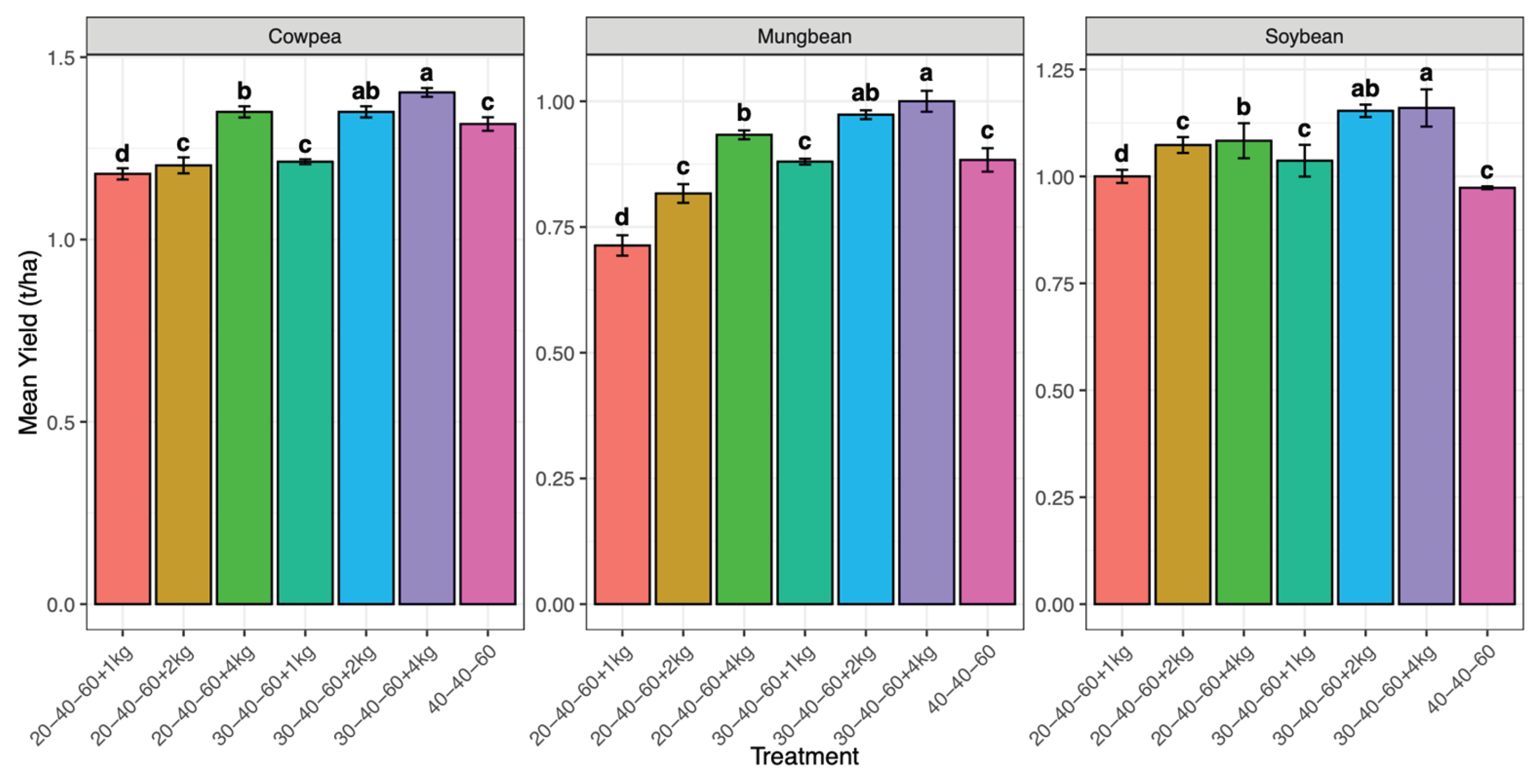
Figure 2.
Influence of integrated nutrient management using 25-50% reduction in N fertilizer and 1 – 4 kg of Bradyrhizobium-based biofertilizer on the seed yield of 3 legumes (cowpea, mungbean, soybean) planted on pots in 2020. Error bars: Mean ± SE; Letters: Tukey HSD (p < 0.05).
Figure 2.
Influence of integrated nutrient management using 25-50% reduction in N fertilizer and 1 – 4 kg of Bradyrhizobium-based biofertilizer on the seed yield of 3 legumes (cowpea, mungbean, soybean) planted on pots in 2020. Error bars: Mean ± SE; Letters: Tukey HSD (p < 0.05).
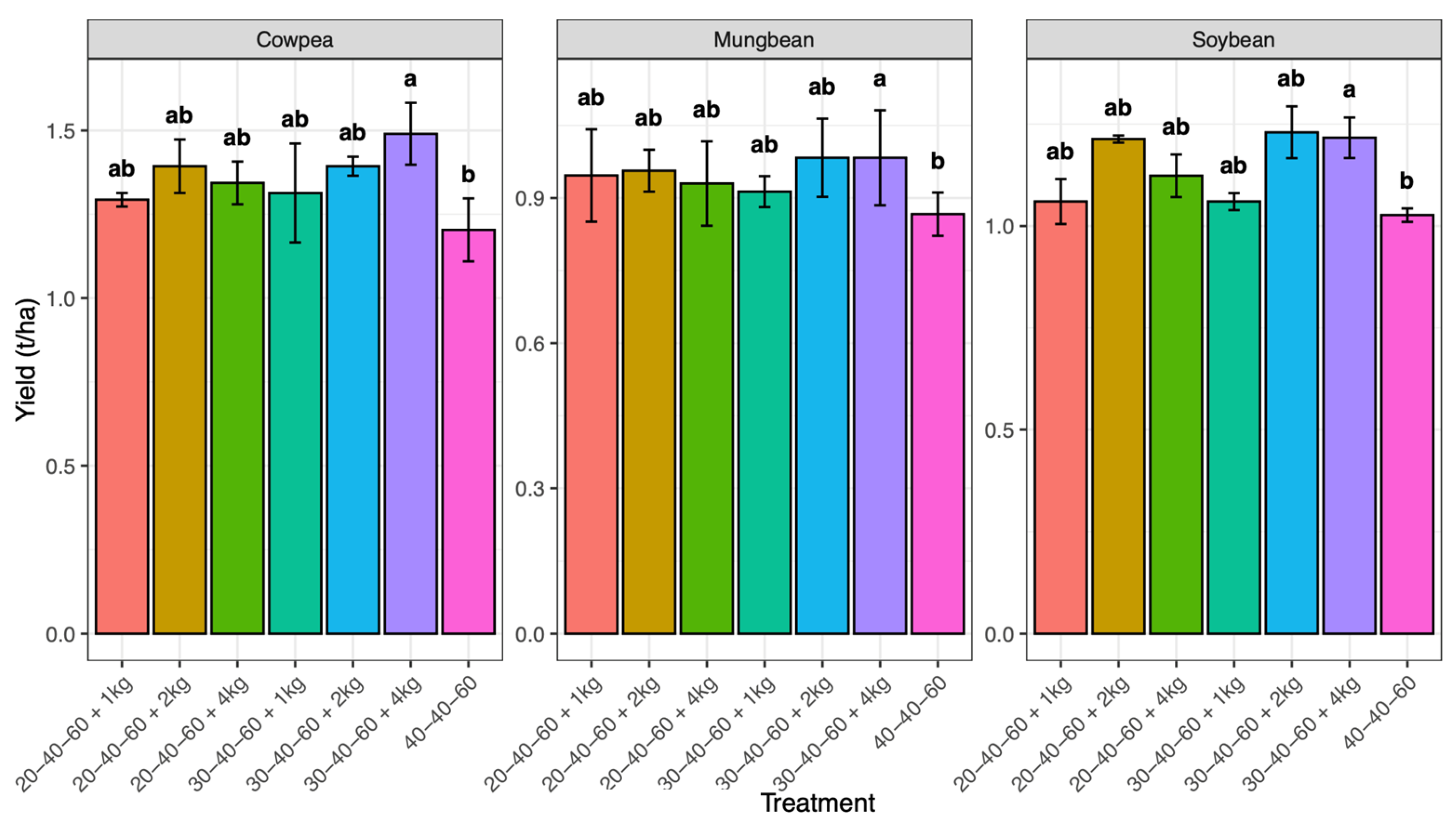
Figure 3.
Influence of integrated nutrient management using 25-50% reduction in N fertilizer and 1 – 4 kg of Bradyrhizobium-based biofertilizer on the seed yield of cowpea (Vigna unguiculata) for 3 consecutive years (2022 – 2024) under actual field condition. Error bars: Mean ± SE; Letters: Tukey HSD (p < 0.05).
Figure 3.
Influence of integrated nutrient management using 25-50% reduction in N fertilizer and 1 – 4 kg of Bradyrhizobium-based biofertilizer on the seed yield of cowpea (Vigna unguiculata) for 3 consecutive years (2022 – 2024) under actual field condition. Error bars: Mean ± SE; Letters: Tukey HSD (p < 0.05).
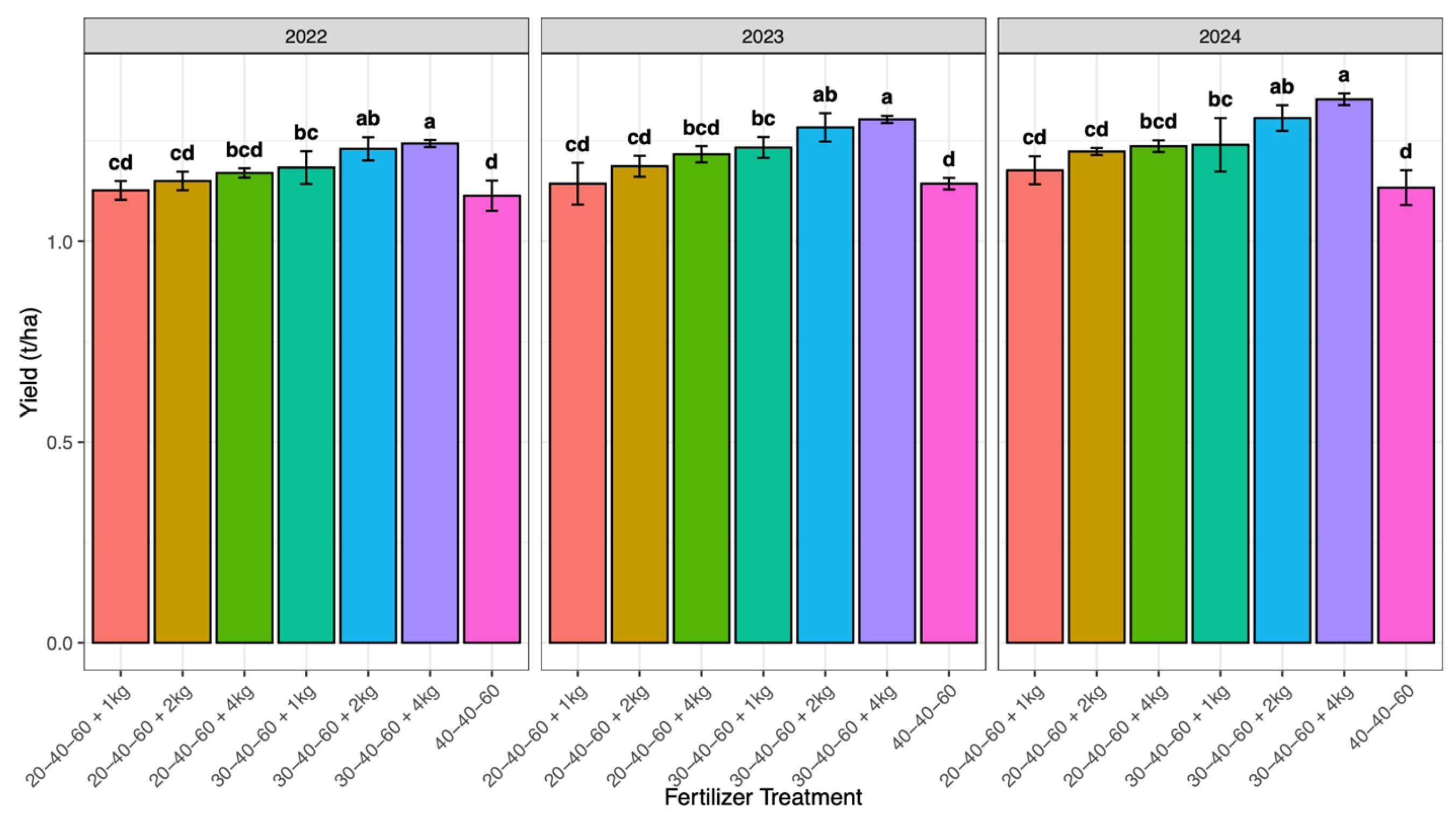
Figure 4.
Influence of integrated nutrient management using 25-50% reduction in N fertilizer and 1 – 4 kg of Bradyrhizobium-based biofertilizer on the seed yield of mungbean (Vigna radiata) for 3 consecutive years (2022 – 2024) under actual field condition. Error bars: Mean ± SE; Letters: Tukey HSD (p < 0.05).
Figure 4.
Influence of integrated nutrient management using 25-50% reduction in N fertilizer and 1 – 4 kg of Bradyrhizobium-based biofertilizer on the seed yield of mungbean (Vigna radiata) for 3 consecutive years (2022 – 2024) under actual field condition. Error bars: Mean ± SE; Letters: Tukey HSD (p < 0.05).
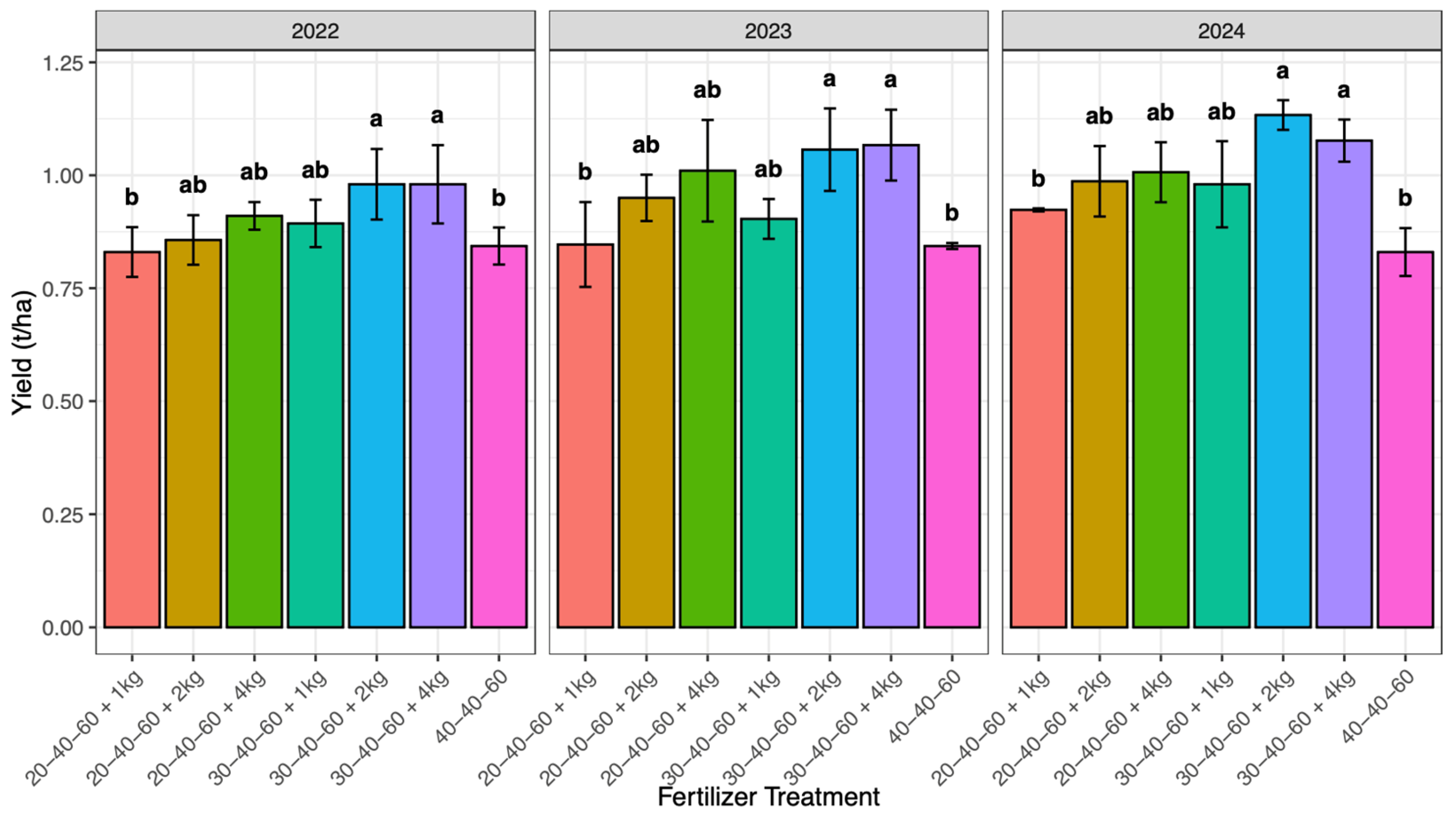
Figure 5.
Influence of integrated nutrient management using 25-50% reduction in N fertilizer and 1 – 4 kg of Bradyrhizobium-based biofertilizer on the seed yield of soybean (Glycine max) for 3 consecutive years (2022 – 2024) under actual field condition. Error bars: Mean ± SE; Letters: Tukey HSD (p < 0.05).
Figure 5.
Influence of integrated nutrient management using 25-50% reduction in N fertilizer and 1 – 4 kg of Bradyrhizobium-based biofertilizer on the seed yield of soybean (Glycine max) for 3 consecutive years (2022 – 2024) under actual field condition. Error bars: Mean ± SE; Letters: Tukey HSD (p < 0.05).
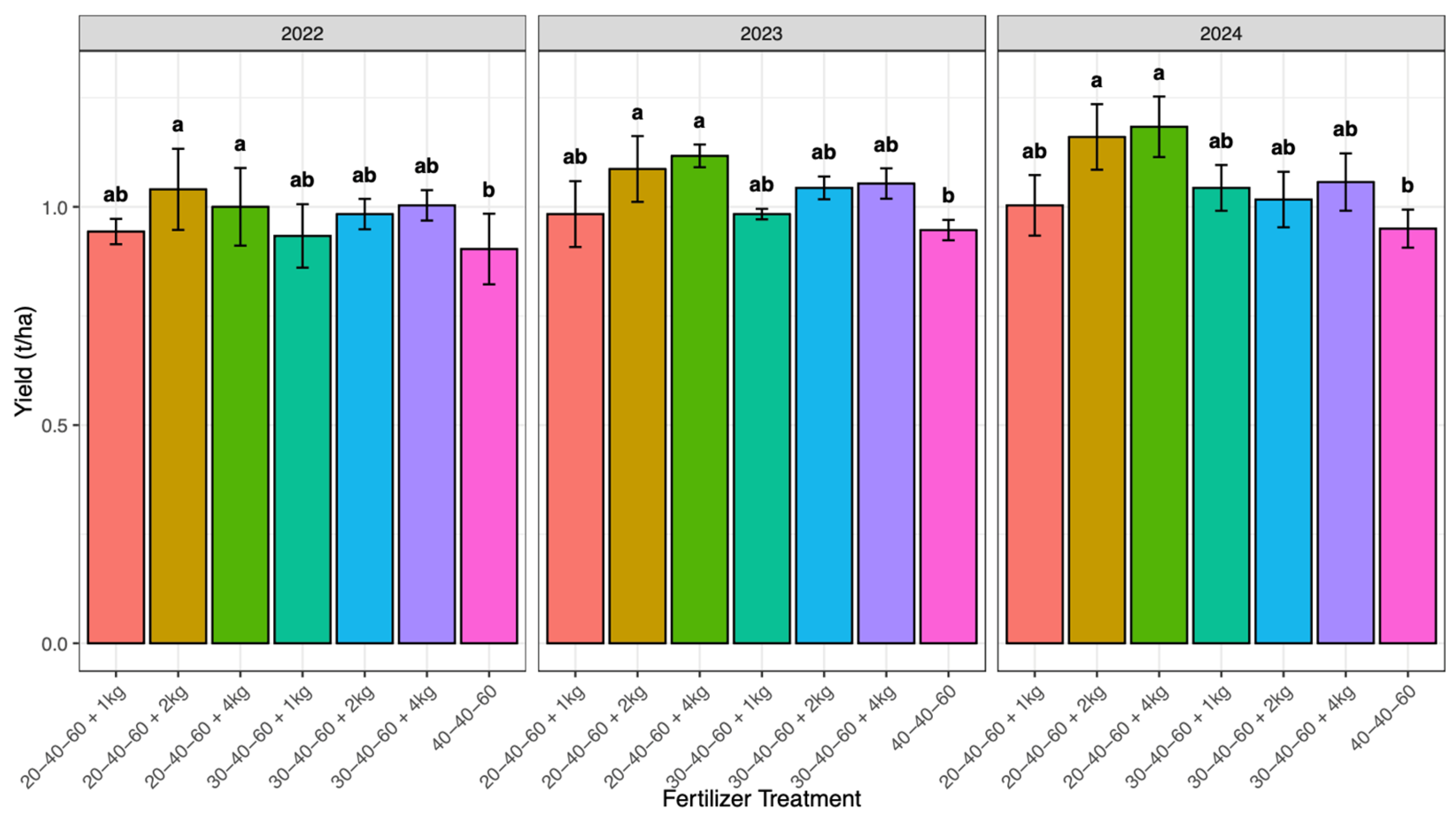
Figure 6.
Comparative regression analysis between yield data and some soil parameters during the 3-year field experiment (2022 - 2024) as influenced by the combined application of reduced inorganic and Bradyhrizobium-based biofertilizer on 3 legume crops.
Figure 6.
Comparative regression analysis between yield data and some soil parameters during the 3-year field experiment (2022 - 2024) as influenced by the combined application of reduced inorganic and Bradyhrizobium-based biofertilizer on 3 legume crops.
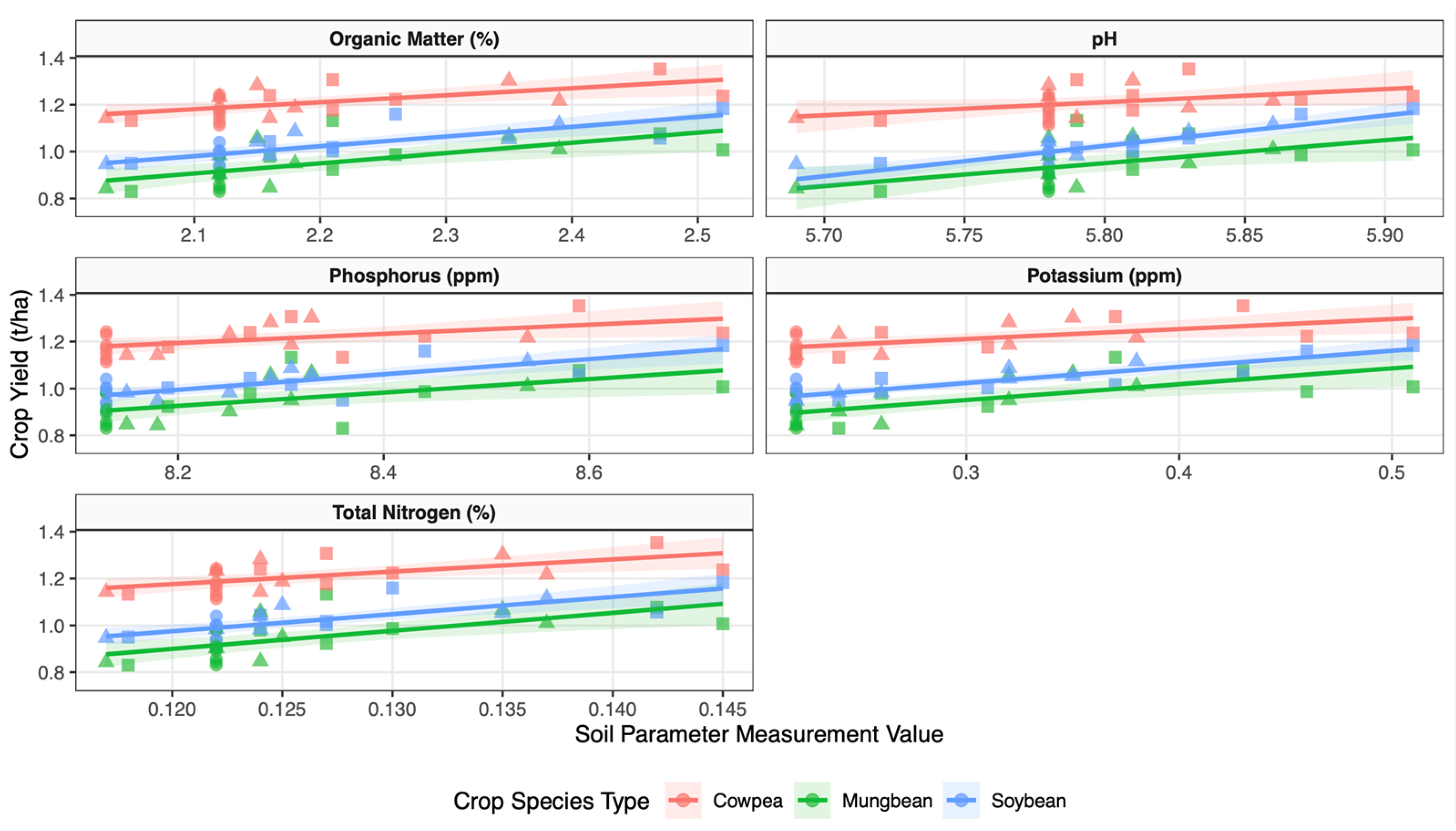
Figure 7.
Pearson’s correlation between yield data and some soil parameters during the 3-year field experiment (2022 - 2024) as influenced by the combined application of reduced inorganic and Bradyhrizobium-based biofertilizer on 3 legume crops.
Figure 7.
Pearson’s correlation between yield data and some soil parameters during the 3-year field experiment (2022 - 2024) as influenced by the combined application of reduced inorganic and Bradyhrizobium-based biofertilizer on 3 legume crops.
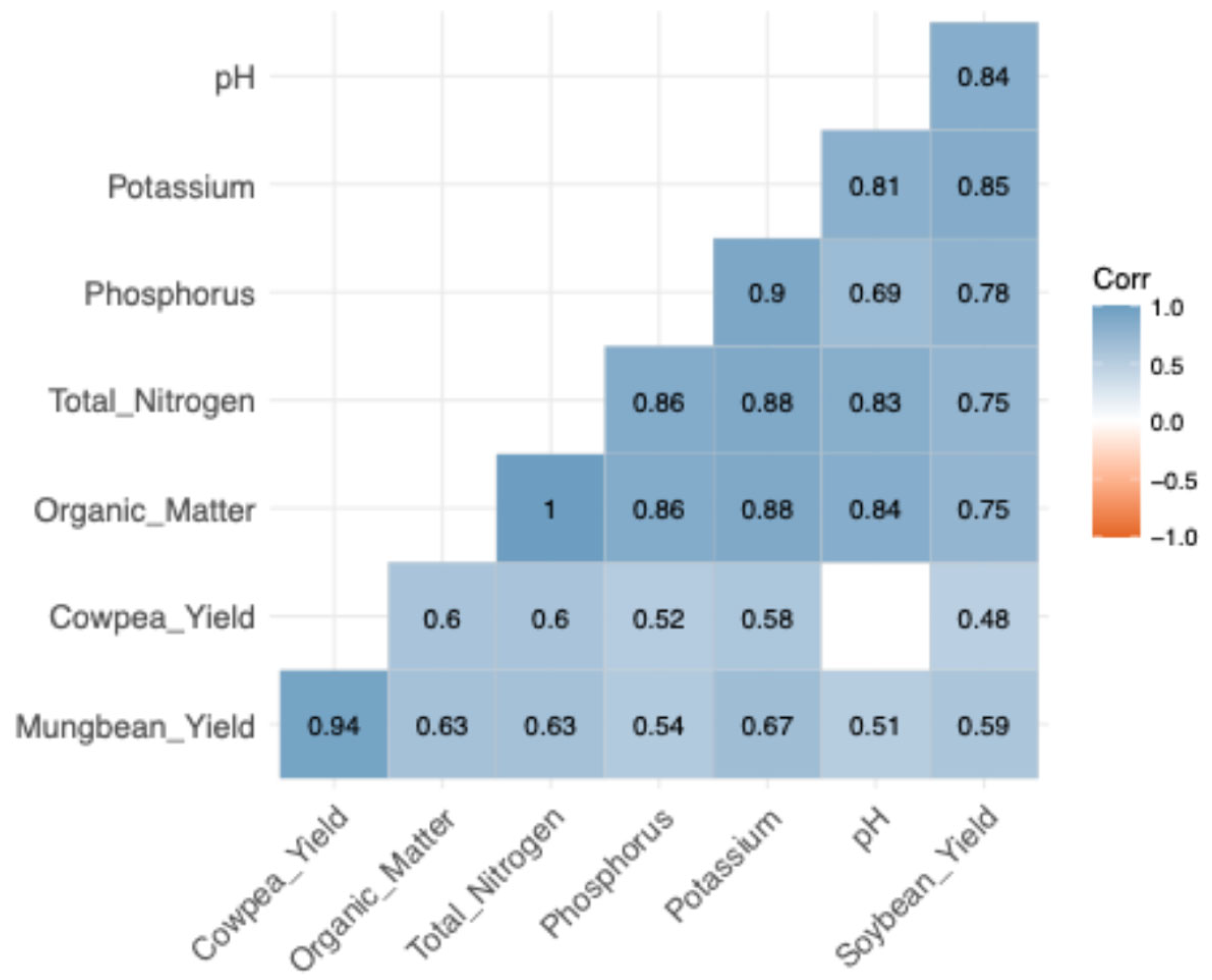
Figure 8.
Dynamics in some soil chemical properties during the 3-year field experiment (2022 - 2024) as influenced by the combined application of reduced inorganic and Bradyhrizobium-based biofertilizer.
Figure 8.
Dynamics in some soil chemical properties during the 3-year field experiment (2022 - 2024) as influenced by the combined application of reduced inorganic and Bradyhrizobium-based biofertilizer.
Disclaimer/Publisher’s Note: The statements, opinions and data contained in all publications are solely those of the individual author(s) and contributor(s) and not of MDPI and/or the editor(s). MDPI and/or the editor(s) disclaim responsibility for any injury to people or property resulting from any ideas, methods, instructions or products referred to in the content. |
© 2026 by the authors. Licensee MDPI, Basel, Switzerland. This article is an open access article distributed under the terms and conditions of the Creative Commons Attribution (CC BY) license (http://creativecommons.org/licenses/by/4.0/).
Copyright: This open access article is published under a Creative Commons CC BY 4.0 license, which permit the free download, distribution, and reuse, provided that the author and preprint are cited in any reuse.


