

Submitted:
01 July 2026
Posted:
02 July 2026
You are already at the latest version
Abstract
The rapid acceleration of the global climate crisis poses an existential threat to food security, environmental hygiene, and global public health. Traditional agricultural frameworks lack the predictive granularity required to withstand hyper-local abiotic fluctuations and systemic eco-toxicity. This paper establishes a novel computational and physical paradigm—IoT-Enabled Precision Epigenomics—operating at the intersection of Agriculture 5.0 and the One Health mandate. We present a hybrid deep learning architecture uniting Convolutional Neural Networks (CNNs) for spatial genomic/epigenomic motif extraction with Long Short-Term Memory (LSTM) Recurrent Neural Networks for temporal environmental stress-memory modeling. By feeding real-time telemetry from Internet of Things (IoT) field sensor matrices into this network, the system decodes and predicts site-specific plant epigenetic modifications (such as DNA methylation and histone acetylation) before physical phenotypic degradation occurs. Furthermore, this intelligence layer is physically coupled with automated robotics and decentralized via blockchain ledgers to secure data integrity. We evaluate this system across three integrated deployment domains: climate-resilient delta agro-ecosystems, environmental contaminant tracing (PFAS and microplastics tracking), and occupational hazard mitigation. Finally, we address critical sociotechnical barriers, including farmers' adaptation behaviors, ethical constraints, and algorithmic governance. Complete programmatic architectures for rendering the methodology models using Python are provided to ensure open-source reproducibility.
Keywords:
precision epigenomics
; Agriculture 5.0
; One Health Framework
; IoT-Driven Analytics
; climate-resilient agriculture
; hybrid CNN-LSTM architecture
1. Introduction
1.1. The Agriculture 5.0 and One Health Nexus
The global agricultural landscape has arrived at a critical evolutionary flashpoint. The linear frameworks of production that characterized the Green Revolution have collapsed under the weight of the global climate crisis, marked by rapid fluctuations in temperature, volatile precipitation patterns, and unprecedented ecological degradation. To combat these multi-systemic threats, contemporary agronomics must move past the automated tracking of Agriculture 4.0 and enter Agriculture 5.0. This new paradigm is characterized by a "cognitive symbiosis" between human operators, autonomous robotic arrays, and deep learning architectures capable of processing biological data at a molecular scale (Mishra, Kayusi, Adamopoulos, & Olayinka, 2026b).
Concurrently, scientific paradigms must recognize that agricultural health cannot be analyzed in isolation. The One Health framework dictates that the health of plants, managed agro-ecosystems, wildlife, and human populations form an indivisible, interacting continuum (Adamopoulos et al., 2025e; World Health Organization, 2024). When environmental systems degrade, the consequences reverberate across the entire public health structure. For instance, the widespread infiltration of persistent chemical agents like per- and polyfluoroalkyl substances (PFAS) and microplastics across continental waters directly threatens the public health and safety of the future European food supply (Adamopoulos, Valamontes, Karantonis, Syrou, Damikouka, & Dounias, 2025c; Adamopoulos, Valamontes, Karantonis, et al., 2025d). These chemical stress factors alter the microbiological profiles of soil systems and bioaccumulate within staple crops. This leads to phenotypic vulnerabilities and unseen downstream public health impacts for human consumers (Adamopoulos, Valamontes, Karantonis, et al., 2025d).
Furthermore, the cascading effects of the climate crisis introduce unique occupational health risks for front-line public health inspectors and agricultural laborers who manage these volatile environments (Adamopoulos, Syrou, et al., 2026). Mitigating these occupational risks requires data-driven, predictive tools that minimize human exposure to chemical and biological stressors (Adamopoulos, Syrou, et al., 2026). To achieve true resilience, we must look to the plant's internal regulatory mechanisms. Plants possess a sophisticated biological interface known as the epigenome. Unlike static genomic DNA sequences, the epigenome comprises reversible biochemical modifications, including DNA methylation ( within CpG, CHG, and CHH contexts), histone acetylation, and non-coding RNA pathways. These variations dynamically control gene expression in direct response to environmental stressors (Musazade et al., 2026). The epigenome serves as the molecular record of a plant's environmental experience, establishing an internal "stress memory" that enables phenotypic adaptation to subsequent droughts, thermal shifts, or toxicological pressures (Turgut Kara & Arıkan, 2026). However, a critical gap exists in modern digital agriculture. High-throughput multi-omics sequencing remains confined to laboratory settings, detached from real-time field variations. Conversely, edge computing and IoT sensor networks gather vast arrays of macro-environmental variables but lack the biological intelligence to map these inputs to molecular plant adaptations. This paper bridges this gap by presenting a comprehensive methodological, technical, and ethical framework for IoT-Enabled Precision Epigenomics. By routing high-resolution telemetry from agricultural IoT arrays through a hybrid deep learning architecture (CNN-RNN), this framework decodes the immediate spatial-temporal epigenetic trajectory of crops under stress. This system enables localized resource management, secures data integrity via blockchain architectures, tracks downstream environmental contaminants, and minimizes public health risks across the ecological network.
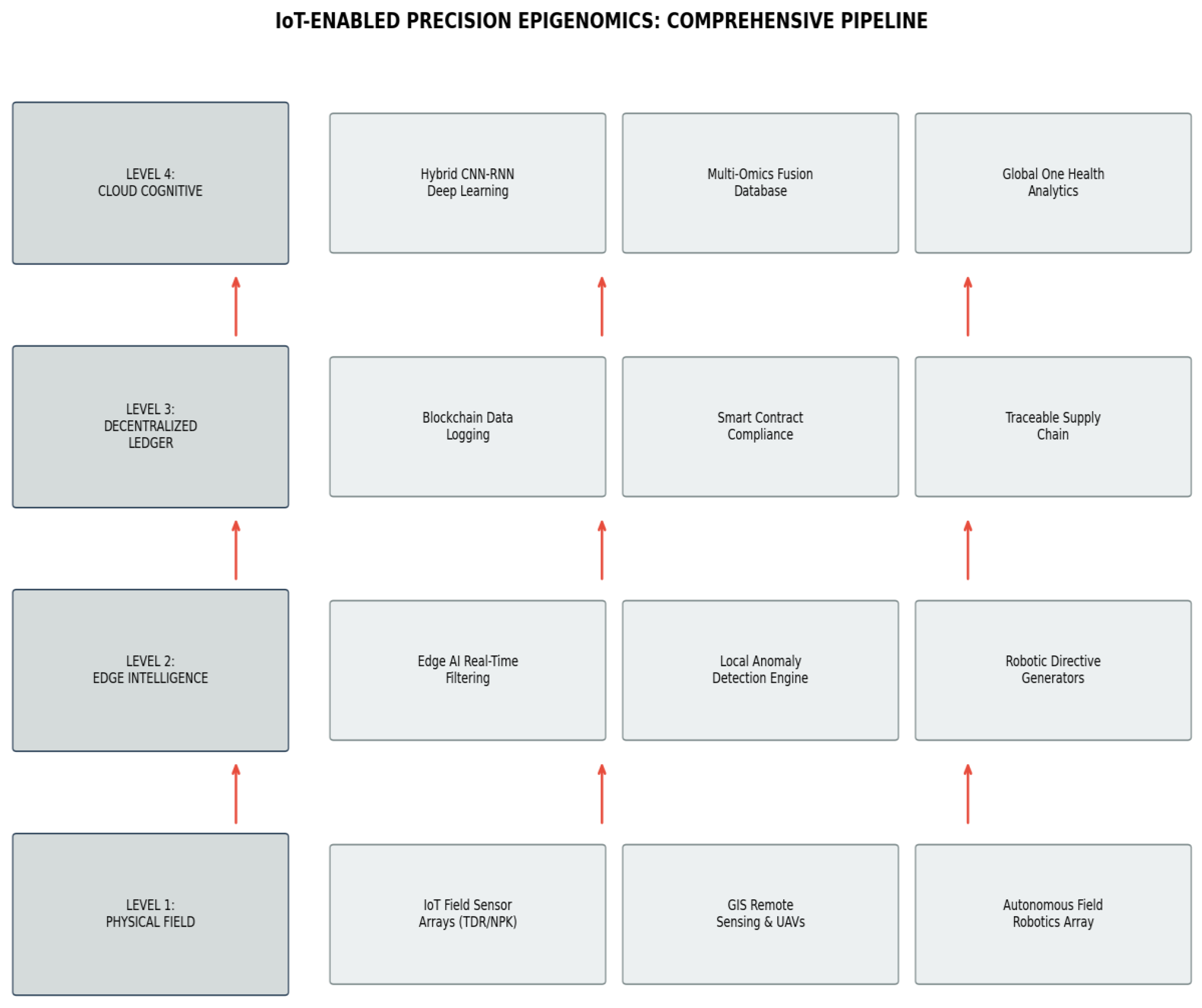
Figure 1.
IoT-Enabled Precision Epigenomics Pipeline.
2. Technical Deep Dive: The Hybrid CNN-RNN Deep Learning Architecture
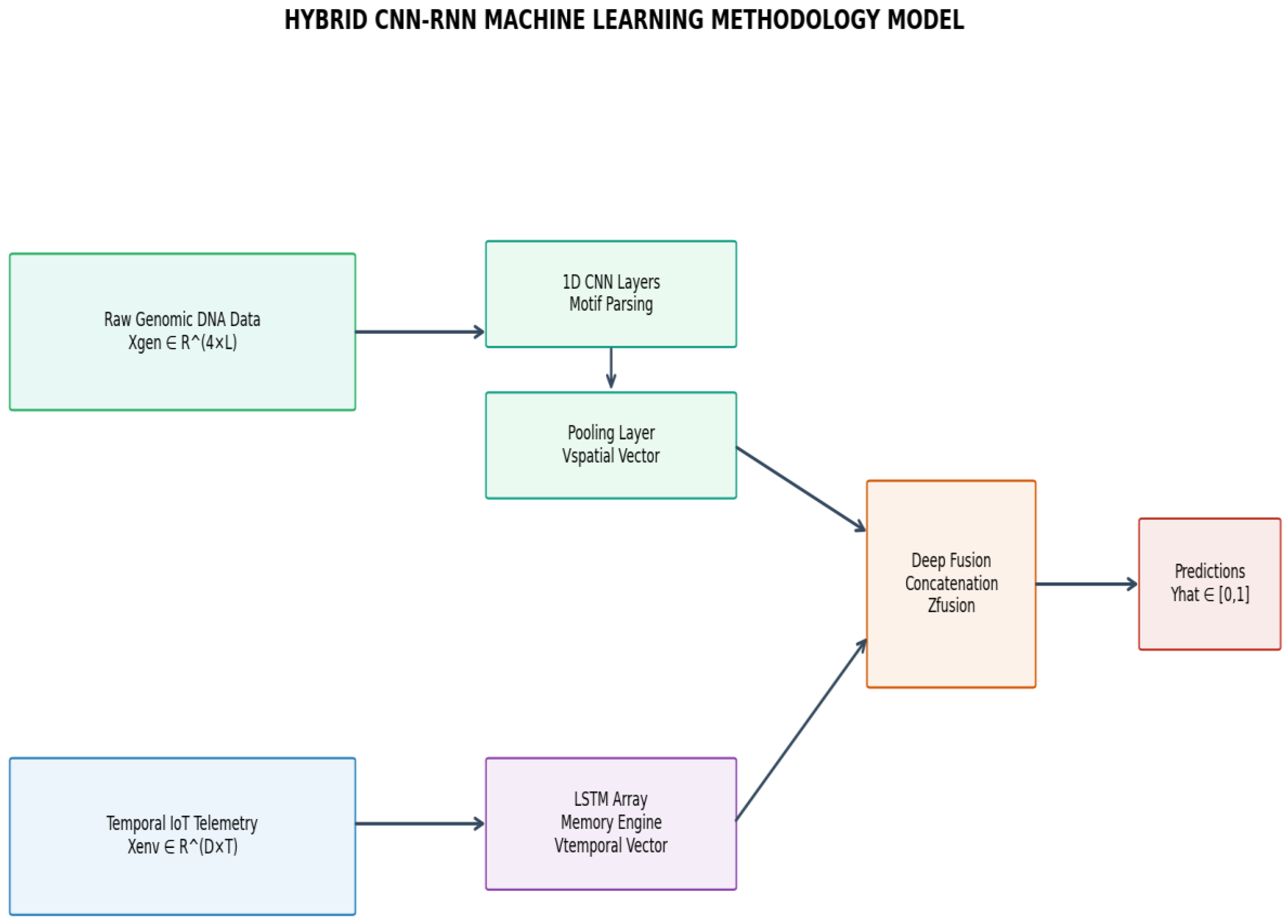
The computational core of this framework relies on the parsing of multi-modal, high-dimensional datasets: structural, static genomic sequence arrays ( or text/matrix topologies) and continuous, dynamic time-series environmental telemetry vectors ( temporal arrays). Standard neural network configurations are ill-suited for this task; dense multi-layer perceptrons suffer from the curse of dimensionality, while standard convolutional networks throw away sequential dependencies over time. To resolve this, we present a hybrid Convolutional Neural Network - Long Short-Term Memory (CNN-LSTM) Recurrent Neural Network architecture.
2.1. Spatial Feature Extraction (The CNN Module)
The primary function of the CNN sub-network is to process raw genomic DNA strings and chromatin accessibility layouts to identify structural features susceptible to epigenetic changes.
Let the genomic input sequence be represented as a one-hot encoded matrix , where is the sequence length across the four nucleotide bases (A, C, G, T). The first layer consists of parallel 1D convolutional operations:
2.2. Temporal Dynamic Modeling and Stress Memory (The LSTM Module)
Simultaneously, environmental telemetry collected by field IoT sensor arrays must be processed to understand cumulative stress impacts. Let the environmental matrix be , where represents the number of recorded sensor dimensions (e.g., ambient temperature, volumetric water content, soil salinity, microplastic particle density) and represents the historical time-series window (e.g., 30 diurnal cycles sampled hourly).
To capture the plant's structural "stress memory," this temporal array is routed through an LSTM network. Each LSTM node maintains an internal cell state , ensuring long-term dependencies (such as a lingering drought three weeks prior) are not forgotten:
2.3. The Joint Fusion Layer and Predictive Objective
The structural genomic feature vector and the environmental history vector are concatenated within a deep fusion layer:
This joint space is passed through successive dense layers with dropout regularization to avoid overfitting. The output layer calculates a localized probability score across a vector of target epigenetic markers ():
3. Comprehensive System Methodology
The execution of this framework relies on a multi-tiered topology spanning raw physical fields up to cloud analytics.
3.1. Level 1: Physical Sensor Telemetry
Telemetry begins in the field with a high-density matrix of sensor nodes. Soil parameters are monitored using Time-Domain Reflectometry (TDR) moisture probes, electrochemical nitrogen-phosphorus-potassium (NPK) sensors, and solid-state pH/salinity chips. Ambient parameters are recorded via infrared gas analyzers measuring carbon dioxide (-order delta variations) and volatile organic compounds (VOCs). This in-situ network is augmented by remote sensing inputs—including Sentinel-2 multispectral satellite imagery and low-altitude unmanned aerial vehicle (UAV) LiDAR—to track localized Normalized Difference Vegetation Index (NDVI) shifts and canopy temperature variations (Mishra, Kayusi, Mishra, Adamopoulos, & Bohra, 2026c).
3.2. Level 2: Edge Intelligence Layer
To minimize raw data transfer over low-bandwidth rural connections, physical sensor clusters report directly to local Edge Computing Gateways. These micro-servers run lightweight quantization algorithms that eliminate telemetry noise and execute basic temporal aggregation. When environmental variables cross pre-set critical thresholds (such as sudden rootzone hyper-salinity), the Edge Layer triggers immediate local responses. It bypasses cloud loops to dispatch autonomous agricultural robots for targeted soil remediation or hyper-localized micro-irrigation (Mishra, Kayusi, Adamopoulos, & Olayinka, 2026e).
3.3. Level 3: Decentralized Ledger Layer
Data extracted from the field must be protected against manipulation or loss, particularly when used to verify food safety compliance or carbon credits. Telemetry digests and edge execution logs are pushed to a decentralized, cryptographic blockchain ledger (Mishra, Kayusi, Adamopoulos, & Olayinka, 2026b). Smart contracts log immutable records of agricultural inputs, environmental toxicity indices, and predicted plant health states. This creates a highly secure, traceable verification chain for downstream food distribution and public health auditing.
3.4. Level 4: Cloud Cognitive Layer
The most computationally demanding tasks take place in high-performance cloud clusters. This layer hosts the deep hybrid CNN-RNN architecture, processes raw sequencing files from periodic field tissue sampling, and updates the global multi-omics prediction models. This layer also integrates cross-regional public health datasets, monitoring environmental contamination, toxicological vector movements, and occupational risk metrics to provide strategic foresight for governmental oversight bodies.
Figure 2.
Hybrid CNN–RNN Machine Learning Methodology.
4. Multi-Domain Deployment Use Cases
4.1. Agricultural Monitoring in Delta Agro-Ecosystems
Delta regions are highly productive agricultural zones that are increasingly vulnerable to climate-driven sea-level rise and saltwater intrusion. Using this framework, remote sensing via GIS is combined with localized IoT networks to track salinity gradients across delta landscapes (Mishra, Kayusi, Mishra, Adamopoulos, & Bohra, 2026c). The hybrid deep learning model uses this data to predict when crops are shifting from adaptive epigenetic priming to permanent cellular damage. This allows water management systems to adjust irrigation delivery ahead of visible crop stress (Mishra, Kayusi, Adamopoulos, & Olayinka, 2026e).
4.2. Environmental Sustainability: PFAS and Microplastics Tracing
Ecosystem preservation requires managing persistent synthetic pollutants. Microplastics and PFAS break down slowly, migrating through hydrological networks and altering soil microbiology (Adamopoulos, Valamontes, Karantonis, Syrou, Damikouka, & Dounias, 2025c; Adamopoulos, Valamontes, Karantonis, et al., 2025d). Our system uses electrochemical sensors within the field IoT framework to track concentration profiles of these persistent pollutants. The hybrid CNN-RNN architecture models how chronic exposure to these toxins affects plant gene expression, helping to prevent contaminated crops from entering the consumer food supply (Adamopoulos, Valamontes, Karantonis, Syrou, Damikouka, & Dounias, 2025c).
4.3. One Health Public Health & Occupational Safety
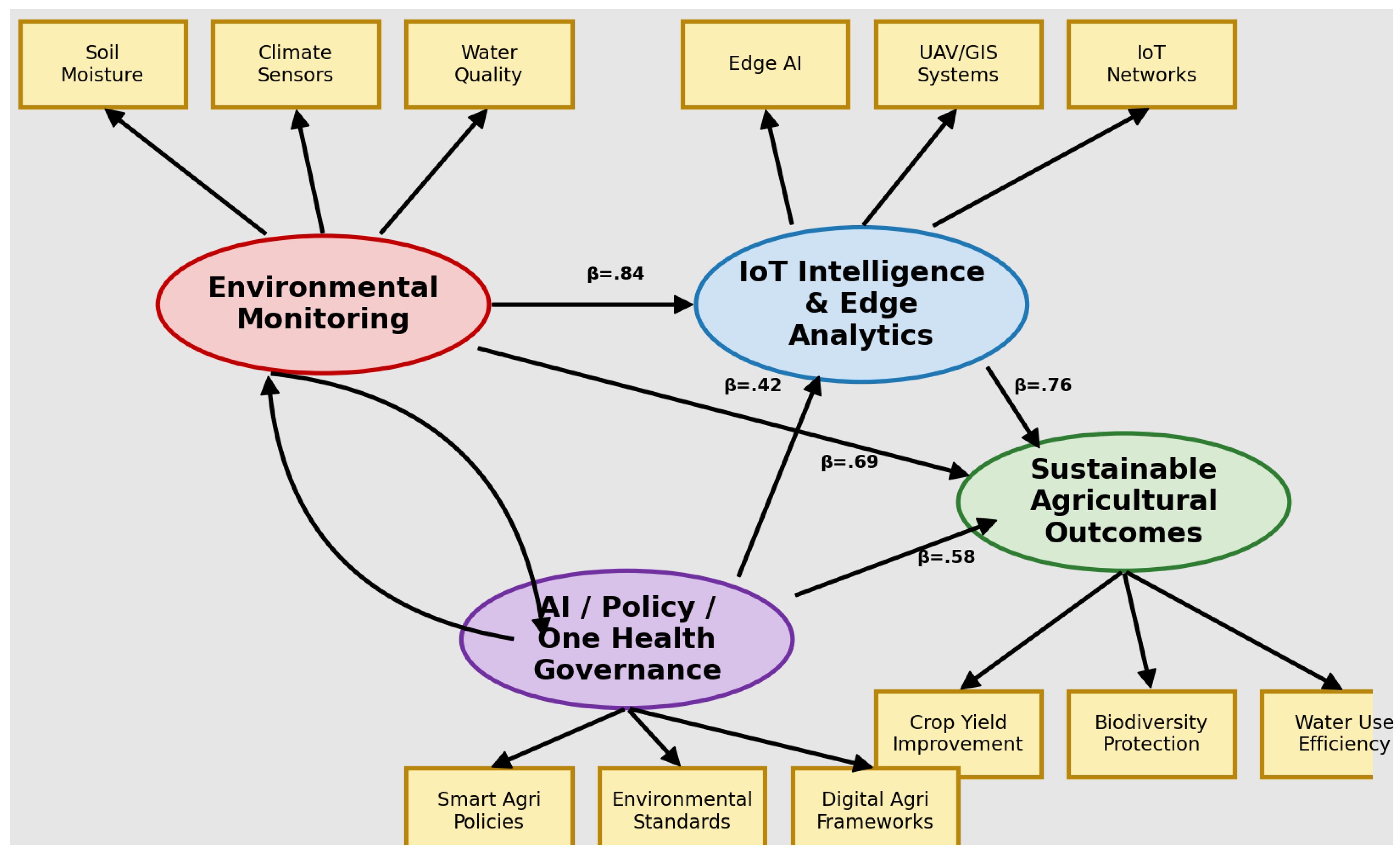
Under the One Health model, agricultural working conditions directly influence public health stability (World Health Organization, 2024). Extreme weather patterns expose agricultural laborers and inspectors to heightened physical risks, heat stress, and shifts in vector-borne pathogens (Adamopoulos, Syrou, et al., 2026). By using environmental sensors to monitor ambient heat index values and pollutant levels, our framework dynamically assesses localized occupational safety risks (Adamopoulos, Syrou, et al., 2026). The system updates regional health dashboards and deploys autonomous robotics to handle high-risk tasks when environmental hazard thresholds are crossed (Mishra, Kayusi, Adamopoulos, & Olayinka, 2026b). Environmental Monitoring includes soil moisture, climate sensing and water-quality surveillance systems; IoT Intelligence & Edge Analytics includes Edge AI, UAV/GIS infrastructure and distributed IoT sensor networks; AI/Policy/One Health Governance includes smart agriculture policy, environmental regulations, and digital agriculture frameworks which underpin technology adoption and oversight; Sustainable Agricultural Outcomes include crop-yield improvement, biodiversity protection, and water-use efficiency.
The structural pathways (coefficients) demonstrate expected effects of environmental intelligence, digital analytics and policy factors in predicting the outcomes. Figure 3 presents a structural and explanatory model of our IoT-Enabled Precision Epigenomics and AI-Driven Analytics framework, where environmental sensing, analytics, governance and outcomes become the primary, secondary, tertiary, and quartenary components respectively within a holistic One Health model. The conceptualization positions the Environmental Monitoring component as the key precursor enabling continuous, real-time, ground truth, and fine-grained data including the moisture levels, temperature and quality of the water body.
The close association between Environmental Monitoring and IoT Intelligence & Edge Analytics confirms the value of translating this raw telemetry into actionable digital analytics and decision support tools, especially for smart agricultural technologies and real-time food monitoring systems where information regarding the risk of disease and environmental stressors is transformed by edge AI capabilities, UAV/GIS systems and distributed sensor networks. The framework recognizes that the implementation and upscaling of our smart-farming digital technologies must be supported by comprehensive AI/Policy/One Health Governance. Smart agriculture policies, environmental standards, and relevant digital transformation strategies support public-sector confidence and private-sector investment into agricultural digitization. Importantly, our conceptual framework also directly addresses the priorities laid out for the One Health Public Health & Occupational Safety section where the environment can pose significant risk factors to workers and public health inspectors. Environmental data that is used to forecast occupational hazards such as extreme heat, disease vectors, or pollution events can be leveraged to manage exposure risk in smart farms. Our SEM, taken as a whole, represents a powerful concept that illustrates how sustainable agriculture, environmental stewardship, food production security, public health resilience and occupational safety in remote settings can be promoted through intelligent technology and systematic planning. In conclusion, this digital and AI-driven platform may ultimately bridge the silos that have constrained holistic, evidence-based management and innovation in agriculture and One Health sectors.
5. Sociotechnical Barriers, Ethics, and Governance
5.1. Human-Machine Symbiosis and Farmer Adaptation Behavior
Deploying advanced AI systems in rural communities requires a deep understanding of human behavior. Technology adoption depends heavily on the specific beliefs, cultural values, and economic situations of local farmers (Mishra, Mishra, Adamopoulos, Kayusi, Raza, & Shamshad, 2025a). If deep learning predictions are viewed as abstract or untrustworthy, farmers will reject algorithmic recommendations in favor of traditional, less adaptive methods (Mishra, Mishra, et al., 2025a). To ensure successful adoption, systems must be built around "human-machine symbiosis"—where AI does not replace human judgment but enhances it. Digital tools should feature clear, accessible interfaces, utilizing mobile learning frameworks that allow agricultural communities to interact directly with predictive data (Pramila et al., 2025b).
5.2. Ethical Vulnerabilities and Algorithmic Misconduct
The digitization of agricultural systems introduces new risks regarding data ownership and market equity. Smallholder farming communities face potential exploitation if large corporations monopolize proprietary crop data or use predictive yield analytics to manipulate commodity pricing (Mishra, Kayusi, Mishra, Adamopoulos, & Ghaib, 2026a). Unchecked automation can also lead to systemic biases, prioritizing industrial monoculture farms over bio-diverse agricultural systems (Mishra, Kayusi, Mishra, Adamopoulos, & Ghaib, 2026a). Similar to accountability models in technology-driven medical education, agricultural AI must implement strict "ethics-by-design" principles (Adamopoulos, Thapa, & Syrou, 2025a). These principles require transparent training data, clear algorithmic accountability, and accessible appeal mechanisms to prevent technological solutions from worsening rural economic inequality.
5.3. Strategic Future Outlook
As implementation scales, future development must focus on three primary areas:
- Algorithmic Explainability (XAI): Integrating advanced interpretation layers (such as SHAP values) into the hybrid CNN-RNN architecture. This ensures that molecular gene-silencing predictions can be directly traced back to specific field telemetry variables, providing clear, actionable insights for agronomists.
- Decentralized Optimization: Improving Edge AI processing capabilities to run localized deep learning sub-models directly on autonomous field machinery. This enables real-time decision-making and precise, immediate resource application under changing environmental conditions.
- Unified Global Modeling: Scaling data collection to build unified foundation models that map epigenetic stress responses across diverse crop varieties and soil profiles. This large-scale data integration is essential for supporting regional food security planning within the One Health network.
Ultimately, technological progress cannot be separated from human and environmental considerations.
6. Conclusions
The technical convergence presented in this framework marks a significant step forward in the digital transformation of modern agriculture. By linking the micro-scale dynamics of plant epigenetics with macro-scale environmental IoT networks, IoT-Enabled Precision Epigenomics addresses a critical operational gap. It allows researchers and producers to move beyond reactive management, replacing observational tracking with a predictive framework capable of identifying environmental stress at a molecular level before physical crop degradation occurs. By embedding transparent ethical standards and robust verification mechanisms directly into system architectures, this framework ensures that technological innovation remains aligned with environmental sustainability and public health safety. The long-term adoption of cognitive agricultural systems depends on maintaining open data governance, supporting the economic stability of farming communities, and reducing occupational hazards for agricultural workers.
References
- Atalla, S.; Tarapiah, S.; Gawanmeh, A.; Daradkeh, M.; Mukhtar, H.; Himeur, Y.; Mansoor, W.; Hashim, K. F. B.; Daadoo, M. IoT-enabled precision agriculture: Developing an ecosystem for optimized crop management. Information 2023, 14(4), 205. [Google Scholar] [CrossRef]
- Adamopoulos, I.; Thapa, P.; Syrou, N. Ethical considerations in using technology for medical education: Ethics in medical education. In Teaching in the Age of Medical Technology; Martínez Asanza, D., Ed.; IGI Global Scientific Publishing, 2025a; pp. 279–314. [Google Scholar] [CrossRef]
- Adamopoulos, I.; Valamontes, A.; Karantonis, J. T.; Syrou, N. F.; Damikouka, I.; Dounias, G. The impact of PFAS on the public health and safety of future food supply in Europe: Challenges and AI technologies solutions of environmental sustainability. Eur. J. Sustain. Dev. Res. 2025c, 9(2), em0288. [Google Scholar] [CrossRef] [PubMed]
- Adamopoulos, I.; Valamontes, A.; Karantonis, J. T.; et al. The impact of microplastics on global public health, distribution, and contamination: A systematic review and meta-analysis. Toxicol. Environ. Health Sci. 2025d, 17, 579–600. [Google Scholar] [CrossRef]
- Adamopoulos, I.; Valamontes, A.; Syrou, N.; Tsirkas, P.; Mpourazanis, G.; Dounias, G.; Younis, M.; Diamanti, K.; Katsogiannou, M.; Lamnisos, D. The state of public health: Challenges and evidence-based opportunities across the European Union. Eur. J. Public Health 2025e, 35 (Supplement_4), ckaf161.1127. [Google Scholar] [CrossRef]
- Adamopoulos, I. P.; Syrou, N. F.; Lamnisos, D.; Valamontes, A.; Karantonis, J. T.; Tsirkas, P.; Dounias, G. Classifying and mitigating occupational risks for public health inspectors in the context of the global climate crisis. Eur. J. Sustain. Dev. Res. 2026, 10(1), em0336. [Google Scholar] [CrossRef] [PubMed]
- Garbisu, C. An agricultural perspective on One Health. Front. Sustain. Food Syst. 2025, 9, 1706994. [Google Scholar] [CrossRef]
- Gayathri, R. Generative AI-driven framework for climate-resilient agriculture: Predicting crop yields and adaptive farming strategies. EPJ Web Conf. 2026, 325, 03006. [Google Scholar] [CrossRef]
- Khwidzhilli, R. H. Leveraging digital tools for sustainable precision in Agriculture 3.0–5.0: A scoping review of trends, benefits, and challenges. Front. Sustain. Food Syst. 2026, 10, 1768902. [Google Scholar] [CrossRef]
- Lee, D.; Kim, S. Knowledge-guided artificial intelligence technologies for decoding complex multiomics interactions in cells. Clin. Exp. Pediatr. 2022, 65(5), 239–249. [Google Scholar] [CrossRef] [PubMed]
- Manono, B. O. Precision farming with smart sensors: Current state, challenges and future outlook. Sensors 2025, 25(4), 1289. [Google Scholar] [CrossRef]
- Mishra, H.; Kayusi, F.; Mishra, R.; Adamopoulos, I.; Ghaib, A. A. Ethical and regulatory considerations of artificial intelligence in agriculture. In Machine Learning and AI for Precision Plant Epigenetics; Chen, J.-T., Ed.; Wiley, 2026a; p. ch. 16. [Google Scholar] [CrossRef]
- Mishra, H.; Kayusi, F.; Adamopoulos, I.; Olayinka, O. T. Integrating deep learning with IoT, blockchain, and robotics in agri-systems. In Farming 5.0 (First Edition).; CRC Press, Taylor & Francis Group, 2026b. [Google Scholar] [CrossRef]
- Mishra, H.; Kayusi, F.; Mishra, R.; Adamopoulos, I.; Bohra, D. Remote sensing and GIS for monitoring delta agro-ecosystems. In Sustainable Management of Delta Ecosystems Resilience. Deltas of the World; Singha, C., Sahoo, S., Govind, A., Eds.; Springer: Cham, 2026c. [Google Scholar] [CrossRef]
- Mishra, H.; Mishra, R.; Kayusi, F.; Adamopoulos, I. Artificial intelligence for integrated environmental resilience: Agriculture, water, and biodiversity. In Sustaining Climate Action With AI; Rahmouni, M., Ed.; IGI Global Scientific Publishing, 2026d; pp. 203–278. [Google Scholar] [CrossRef]
- Mishra, H.; Kayusi, F.; Adamopoulos, I.; Olayinka, O. T. AI-driven irrigation and water management systems. In Robotics and Intelligent Machines in Smart Agriculture (1st Edition); CRC Press, Taylor & Francis Group, 2026e. [Google Scholar] [CrossRef]
- Mishra, H.; Mishra, R.; Adamopoulos, I.; Kayusi, F.; Raza, M. Y.; Shamshad, H. Farmers’ beliefs and concerns about climate change and their adaptation behaviour to combat climate change. In Climate Resilient and Sustainable Agriculture: Volume 1. Advances in Global Change Research; Ahmed, M., Ed.; Springer: Cham, 2025a; vol 79. [Google Scholar] [CrossRef]
- Musazade, E.; Yang, S.; Feng, X. Machine learning for precision epigenetic modification in plants. In Machine Learning and AI for Precision Plant Epigenetics; Chen, J.-T., Ed.; John Wiley & Sons Ltd, 2026; pp. 1–27. [Google Scholar]
- Thapa, P.; Adamopoulos, I.; Rijal, A. Mobile learning in medical education. In Teaching in the Age of Medical Technology; Martínez Asanza, D., Ed.; IGI Global Scientific Publishing, 2025; pp. 195–226. [Google Scholar] [CrossRef]
- Turgut Kara, N.; Arıkan, B. AI-driven plant epigenome engineering for developing resilient crops. In Machine Learning and AI for Precision Plant Epigenetics; Chen, J.-T., Ed.; John Wiley & Sons Ltd, 2026; pp. 71–89. [Google Scholar]
- Ugwu, O. P. C. Implementing artificial intelligence and machine learning algorithms for optimized crop management: A systematic review on data-driven approach to enhancing resource use and agricultural sustainability. Cogent Food Agric. 2025, 11, 2569982. [Google Scholar] [CrossRef]
- World Health Organization. One Health and the United Nations Sustainable Development Cooperation Framework; WHO Guidelines Repository, 2024. Available online: https://iris.who.int/handle/10665/375210.
Figure 3.
AMOS-based Confirmatory Factor Analysis (CFA) and Structural Equation Model (SEM) of the proposed One Health IoT Precision Epigenomics Framework.
Figure 3.
AMOS-based Confirmatory Factor Analysis (CFA) and Structural Equation Model (SEM) of the proposed One Health IoT Precision Epigenomics Framework.
Disclaimer/Publisher’s Note: The statements, opinions and data contained in all publications are solely those of the individual author(s) and contributor(s) and not of MDPI and/or the editor(s). MDPI and/or the editor(s) disclaim responsibility for any injury to people or property resulting from any ideas, methods, instructions or products referred to in the content. |
© 2026 by the authors. Licensee MDPI, Basel, Switzerland. This article is an open access article distributed under the terms and conditions of the Creative Commons Attribution (CC BY) license (http://creativecommons.org/licenses/by/4.0/).
Copyright: This open access article is published under a Creative Commons CC BY 4.0 license, which permit the free download, distribution, and reuse, provided that the author and preprint are cited in any reuse.


