

Submitted:
27 June 2026
Posted:
29 June 2026
You are already at the latest version
Abstract
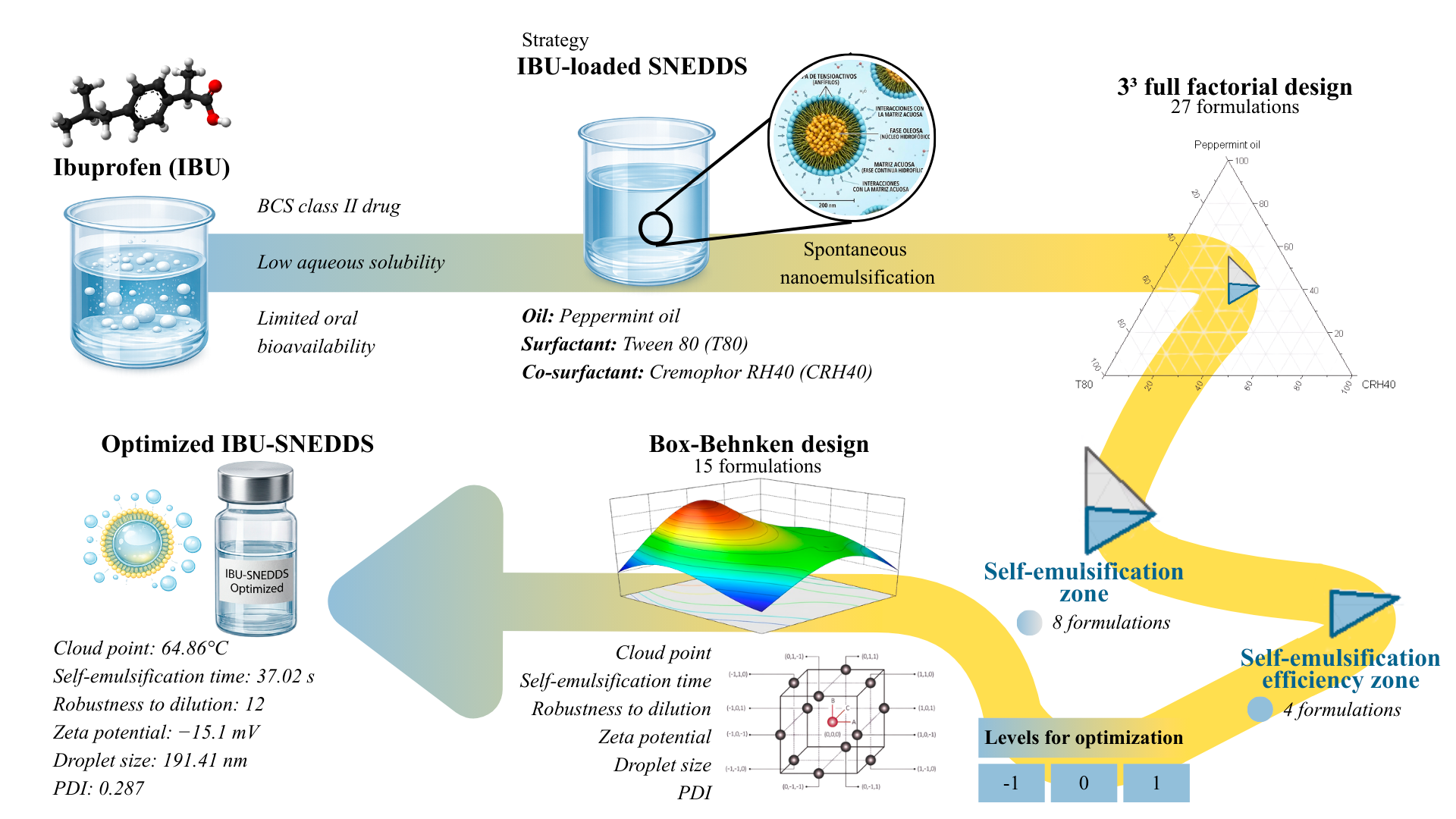
Ibuprofen is a widely used non-steroidal anti-inflammatory drug (NSAID) with antipyretic, analgesic, and anti-inflammatory activity; however, its low aqueous solubility limits its dissolution rate and, consequently, its oral bioavailability. This study aimed to develop and physicochemically characterize an ibuprofen-loaded self-nanoemulsifying drug de-livery system (SNEDDS) using a Box–Behnken experimental design. Fifteen formulations were prepared and evaluated based on CQAs: cloud point, robustness to dilution, self-emulsification time, droplet size, zeta potential, and polydispersity index (PDI). The experimental responses were subjected to statistical analysis; robustness to dilution as the only response yielding a statistically valid and predictive model within the studied design space, which was used as the sole optimization criterion. The optimal formulation was evaluated and characterized according to previously established CQAs and subjected to physical/kinetic stability testing and stress testing over one month. The optimized formulation exhibited rapid self-emulsification, with a self-emulsification time of 37.02 s, a cloud point of 64.87 °C, and high robustness to dilution across different pH conditions and dilution volumes. Moreover, it exhibited a mean droplet size below 157.54 nm, a zeta potential of −15.43 ± 0.58 mV, and a PDI of 0.251, suggesting adequate colloidal stability and uniformity of the dispersed system. These physicochemical attributes support the potential of the developed system as a platform for further biopharmaceutical evaluation of ibuprofen oral delivery.
Keywords:
self-nanoemulsifying drug delivery systems (SNEDDS)
; ibuprofen
; box behnken design
; optimization
1. Introduction
The aqueous solubility of an active ingredient is a critical parameter in the design and performance of pharmaceutical forms, as it determines its dissolution in biological fluids and, consequently, its absorption and systemic bioavailability [1,2]. Currently, low water solubility is a significant challenge in the development of new drugs. This issue arises because medicinal chemistry research often focuses on creating highly lipophilic molecules. Estimates suggest that 70% to 90% of drug candidates in testing and about 40% of approved drugs have poor aqueous solubility [3,4].
Ibuprofen (IBU) serves as a typical example of this problem (BCS II). This nonsteroidal anti-inflammatory drug (NSAID) has high intestinal permeability (log P = 3.68) and a theoretical oral bioavailability nearing 100% after dissolution [5]. However, its solubility depends on pH and is extremely low in acidic environments (≈0.046 mg/mL at pH 1.5 and 25 °C) and improves only in neutral or slightly alkaline conditions (over 0.300 mg/mL at pH 7 and 25 °C) [5,6]. This low intrinsic solubility limits the rate and reproducibility of absorption. It often requires high doses to reach therapeutic plasma concentrations. This excessive dosing increases the risk of gastrointestinal adverse effects and causes unwanted variations in how individuals metabolize the drug, which is particularly important for immediate-release formulations [7].
Given this scenario, various technological strategies have been studied aimed at improving the solubility and dissolution rate of poorly soluble active ingredients [8]. Among these, lipid-based drug delivery systems (LBDDS) have shown remarkable potential. This category includes self-emulsifying drug delivery systems (SEDDS) and their subclasses, such as self-microemulsifying (SMEDDS) and self-nanoemulsifying (SNEDDS), which have become especially relevant for optimizing the biopharmaceutical performance of lipophilic drugs [3,9].
The SNEDDS are defined as isotropic mixtures of oils, high hydrophilic-lipophilic balance (HLB) surfactants and cosurfactants or cosolvents, capable of spontaneously forming, after dilution in the gastrointestinal tract, oil-in-water emulsions with droplet sizes typically less than 200 nm [10]. This reduction in droplet size and the consequent high surface area-to-volume ratio explain its ability to accelerate drug dissolution, improve the stability of the system, and enhance oral absorption, even via the lymphatic route, thereby reducing first-pass hepatic metabolism [11].
However, the development of self-nanoemulsifying drug delivery systems requires appropriate selection and optimization of excipients to ensure nanometric droplet formation, homogeneous distribution, and adequate system stability [12]. To achieve this, tools are needed to understand the relationship between formulation variables and critical quality attributes (CQA) [13]. Designs of experiments (DoE) are one of the most commonly used strategies for this purpose.
In this context, the present research aimed to use a Box-Behnken experimental design as a statistical tool to develop and optimize a formulation that compliance the reference values established for CQAs such as cloud point, emulsification time, Robustness to dilution, droplet size, PDI (polydispersity index) and zeta potential to obtain a robust, stable system with improved performance under simulated gastrointestinal environment conditions. The present study constitutes the physicochemical development and optimization stage of an ongoing research program on ibuprofen lipid-based delivery systems initiated by this group.
2. Materials and Methods
2.1. Materials
Ibuprofen was used as the active pharmaceutical ingredient. Polysorbate 80 (Tween 80) and PEG-40 hydrogenated castor oil (Cremophor® RH 40) were kindly provided by Croda. Peppermint oil was purchased from Handcraft (USA). Monobasic potassium phosphate (KH₂PO₄) was purchased from JT Baker (USA). Hydrochloric acid (HCl), sodium hydroxide (NaOH), and sodium citrate were purchased from Merck (Germany). Citric acid was purchased from Chemí.
2.2. Methods
This research is based on earlier research conducted by the research group [14,15]. In that phase, the selection of the oil phase, surfactant, and co-surfactant was carried out using a Quality by Design (QbD) approach, considering their impact on critical quality attributes (CQAs) and identifying them as critical material attributes (CMAs). Different surfactants were screened based on their pharmaceutical acceptability, safety profile, reported use in self-emulsifying drug delivery systems, compatibility with the intended route of administration, and their ability to provide the required technological functionality. The oil was selected based on solubility studies with ibuprofen and its acceptance by regulatory entities as GRAS status for oral use in humans and is recognized as an inactive ingredient in FDA and EMA-approved pharmaceutical products [16,17]. Its incorporation into SNEDDS for oral NSAIDs has been described in the literature, demonstrating its gastrointestinal safety [18]. Based on these criteria, peppermint essential oil, polysorbate 80 (Tween 80), and PEG-40 hydrogenated castor oil (Cremophor RH 40®) were selected. A 3³ full factorial design was applied to evaluate the influence of the CMA proportions on the system's CQAs. Twenty-seven formulations were prepared and subjected to self-emulsification tests and analysis using pseudo-ternary phase diagrams to delimit the preliminary region of the design space. Based on this analysis, the eight formulations that exhibited adequate emulsification behavior were selected for further characterization.
2.2.1. Initial Characterization
Preparation of SNEDDS
The order in which components are added influences interface formation, system stability, and final droplet size [19]. Therefore, the addition order is a critical formulation variable.
The system load was established based on previous solubility studies carried out in earlier stages of this research program, in which ibuprofen exhibited a solubility of approximately 37 mg/mL in peppermint essential oil at 25°C [14]. The selected drug load of 444.44 mg per 2 g of formulation (22% w/w) remains well below the saturation threshold, ensuring complete dissolution of the drug within the oil phase. Initially, ibuprofen was completely dissolved in the peppermint essential oil by continuous stirring at 20 rpm for 3 min on a magnetic stirring plate (Tecnal, TE-0854-127V). Subsequently, the non-ionic surfactants, Tween 80 ® and Cremophor RH 40®, were added in the order and proportions corresponding to each formulation. The resulting mixture was stirred at 80 rpm for 3.5 min to obtain a homogeneous system. The temperature was maintained at 25°C ± 2°C throughout the preparation procedure.

Table 1.
Quantitative composition of ibuprofen-loaded formulations.
| Formulation | Peppermint oil (mg) | Tween 80 (mg) | Cremophor RH 40® (mg) | Ibuprofen (mg) |
|---|---|---|---|---|
| F1 | 518.46 | 518.46 | 518.46 | 444.44 |
| F2 | 444.42 | 666.70 | 444.42 | 444.44 |
| F3 | 388.88 | 583.33 | 583.33 | 444.44 |
| F4 | 345.64 | 864.25 | 345.64 | 444.44 |
| F5 | 259.31 | 648.19 | 648.19 | 444.44 |
| F6 | 478.64 | 598.26 | 478.64 | 444.44 |
| F7 | 444.42 | 555.48 | 555.48 | 444.44 |
| F8 | 311.11 | 777.77 | 466.66 | 444.44 |
Self-Emulsification Efficiency
The self-emulsification efficiency allows for determining the spontaneity of emulsion formation [20]. One milliliter of each formulation was added to 100 mL of phosphate buffer (pH 6.8) at a constant temperature of 25 ± 0.5 °C. The system was maintained under magnetic stirring at 50 rpm. The time required for complete emulsification, defined as the absence of visible droplets and the formation of a homogeneous system, was recorded in seconds. This parameter was considered critical for selecting formulations with adequate functional performance.
This parameter is primarily assessed through visual inspection; however, to reduce the subjectivity inherent in this method, the percentage of transmittance was determined as a complementary quantitative parameter, which is indirectly associated with droplet size. High transmittance values indicate more transparent systems, associated with smaller droplet size and less light scattering [6,21].
The emulsions obtained in the self-emulsification efficiency test were left to stand for 2 hours at 25 ± 2 °C to allow the dispersed system to stabilize. The measurements were performed in a UV-Visible 1700 spectrophotometer (Shimadzu Corporation), properly calibrated, at a wavelength of 638.2 nm [22], using distilled water as a reference blank. Each determination was performed in triplicate (n=3) to ensure the statistical reproducibility of the results.
2.2.2. Box-Behnken Experimental Design
The formulations that showed optimal performance in the self-emulsification efficiency test were selected as references to establish the levels of each independent variable.
The BBD was constructed using Design-Expert® v.10 software (Stat-Ease Inc., Minneapolis, MN, USA). Three independent factors with three levels each were selected: A: percentage of peppermint oil; B: percentage of Tween 80; and C: Cremophor RH 40®, defined from preliminary results. Ibuprofen was maintained at a constant amount of 444.44 mg in all formulations. The design required 15 experimental runs, including three center points to estimate experimental error and evaluate model adequacy.
The response variables were cloud point (Y1), dilution robustness (Y2), self-emulsification time (Y3), zeta potential (Y4), droplet size (Y5), and polydispersity index (Y6).
Characterization of BBD-SNEDDS
- Cloud point
The cloud point was defined as the temperature at which the formulation loses transparency as a result of surfactant phase separation [23]. For its determination, 200 mg of each formulation was accurately weighed and diluted in 20 mL of phosphate buffer (pH 6.8). The resulting dispersions were transferred into sealed glass tubes and equilibrated in a thermostatically controlled water bath initially set at 25 °C. The temperature was raised by 5°C increments, maintaining an equilibrium period of 3–5 min after each increment [24].
- Robustness to dilution
The stability and self-emulsification capacity of SNEDDS must be evaluated under varying in vitro conditions to predict their behavior in vivo, given the significant changes in volume and pH along the gastrointestinal tract [20].
Different dilution volumes were used to evaluate the effect of each formulation (1:100, 1:250, and 1:1000) in four media: distilled water, phosphate buffer (pH 6.8), 0.1 N HCl, and citrate buffer (pH 4.5). The samples were kept at 25°C for 24 h and subsequently visually evaluated for phase separation, precipitation, crystallization, or increased turbidity [22].
Each condition was assigned a value of 1 when the formulation remained homogeneous and showed no visible signs of instability after 24 h and 0 when precipitation, turbidity, or phase separation was evident. The final score corresponded to the sum of the values obtained, with a maximum possible score of 12 points, representing the optimal performance of the system. This summative score (0–12) was used as an approximation of a quasi-continuous response for the purpose of linear regression analysis.
- Self-emulsification time
Self-emulsification time is the time required for the sample to self-emulsify in distilled water. To determine the emulsification time, 1 mL of BBD-SNEDDS was dissolved in 250 mL of distilled water at 37 ± 0.5°C at 50 rpm. The formulation was assessed visually according to the final appearance of the emulsion and the rate of emulsification [20].
- Droplet size, PDI and Zeta potential
The colloidal properties of the system were evaluated by diluting each BBD-SNEDDS with water and transferring it to an Omega cuvette (Mat. No. 225288) for evaluation. Measurements were performed using dynamic light scattering (DLS) with a particle size analyzer (Anton Paar Litesizer DLS 500). The mean droplet size and PDI were determined at an angle of 175° with a stabilization time of 1 minute. The zeta potential was measured by electrophoretic mobility under an applied voltage of 200 mV, with a stabilization time of 2 minutes [10].
Surface Response Analysis of BBD-SNEDDS
The statistical model for each response variable was selected following the hierarchical approach recommended in response surface methodology. The relationship between the regression models and the experimental data was evaluated using analysis of variance (ANOVA), applying the following acceptance criteria: a statistically significant overall model (p < 0.05), a non-significant lack of fit (p > 0.05), and reasonable agreement between the adjusted R² and predicted R² values. Models were evaluated sequentially, and the one that simultaneously satisfied these criteria was selected, ensuring adequate explanatory and predictive capability within the studied experimental space.
Formulation, Validation, and Point Prediction of Optimized IBU- SNEDDS
Once the statistical validity of the models generated for each response was confirmed, Design-Expert® software proceeded to identify the optimal formulation using the desirability function. This mathematical tool transforms each dependent variable into a dimensionless scale between 0 and 1, where 0 represents a completely undesirable result and 1 represents ideal compliance with the established optimization criterion (maximize, minimize, or maintain within a specific range). Subsequently, an overall desirability is calculated by combining the individual desirabilities, enabling the selection of the formulation that simultaneously maximizes the system's overall performance.
In addition, the software generated point predictions for each response variable corresponding to the proposed optimal formulation, including the estimated values and their associated confidence intervals. The models' predictive ability was validated by experimentally preparing and evaluating the optimized IBU-SNEDDS under the same conditions, and comparing the observed values with the predicted values.
2.2.3. Evaluation of Optimized IBU-SNEDDS
The optimized IBU-SNEDDS, in addition to being tested experimentally in the Characterization of SNEDDS section to validate its predictive capability, was also evaluated for the following parameters.
Effect of pH on Droplet Size
The variation in droplet size of optimized IBU-SNEDDS was evaluated at different pH values. 1 mL of each formulation was diluted in 100 mL of different aqueous media: distilled water, citrate buffer (pH 4.5), phosphate buffer (pH 6.8), and 0.1 N HCl solution [22]. The resulting droplet size was quantified using dynamic light scattering (DLS), following the standardized instrumental parameters described in the section on Droplet size, PDI, and Zeta potential.
Effect of Dilution on Droplet Size
The droplet sizes at different dilution volumes were analyzed by adding 1 mL of the formulation to 100 and 1000 mL of distilled water to determine whether they were comparable, and the variation in droplet size [25], as measured by DLS, was evaluated under the same experimental conditions mentioned in section Droplet size, PDI and Zeta potential.
Physical/Kinetic Stability
The test is used as a parameter to assess kinetic stability and compatibility among the components of a dispersion. Inadequate stability can lead to precipitation or phase separation, affecting drug absorption and therapeutic performance [23].
The optimized formulation was subjected to various stress tests, including centrifugation, heating-cooling cycles, and freezing-thawing cycles.
Centrifugation: High centrifugal forces were applied to identify physical instability events, such as phase separation, coalescence, or flocculation. For this purpose, the formulation was diluted 1:100 (v/v) in distilled water and phosphate buffer at pH 6.8. The procedure was performed in triplicate using a centrifuge Müller Scientific H1850. The samples were centrifuged at 5000 rpm for 30 min at 25 ± 2 °C. Subsequently, signs of physical instability (phase separation, creaming, or system breakdown) were visually assessed [26].
Heating-cooling: The formulation was subjected to controlled temperature variations to assess their stability against potential phase transitions or precipitation induced by thermal changes. They were subjected to alternating cycles of 24 h at 4°C in an ARTIKO LR500 refrigerator, followed by 24 h at 40°C in a MEMMERT IN110 incubator. After the cycles, they were diluted 1:25 in distilled water to form the nanoemulsion, and any changes, such as precipitation, turbidity, or phase separation were evaluated [26,27].
Freeze-thaw cycles: To determine their resistance to extreme thermal stress and potential system incompatibilities, the formulation was subjected to three 24-hour cycles at –20°C in an ARTIKO LF300 freezer, followed by 24 hours at 25°C. After the cycles, the samples were centrifuged at 3000 rpm for 5 minutes and visually inspected for signs of physical instability [26,28].
Stress testing: Accelerated stability was assessed by storing the formulation in sealed glass vials at 40 ± 2°C and 75 ± 5% RH for 4 weeks [26]. According to ICH conditions for climate zone IVb, in a MEMMERT ICH260L climate chamber. Visual changes (precipitation, turbidity, phase separation) and spectrophotometric transmittance at 638.5 nm were evaluated weekly in the emulsion system at a 1:100 ratio as indicators of droplet-size changes.
3. Results and Discussion
3.1. Initial Characterization
Self-Emulsification Efficiency
All eight formulations exhibited optimal self-emulsification behavior, evidenced by the homogeneity, miscibility, and absence of visible particles in the resulting emulsions. The good optical clarity is confirmed by the transmittance values obtained, which exceed 90%. A transmittance close to 100% suggests the formation of systems with reduced droplet size [22]. However, differences were observed in the efficiency of the self-emulsification process, particularly in the time required to achieve complete emulsification (Figure 1). Four formulations (F1, F2, F5, and F7) showed self-emulsification times below 2 minutes, reflecting superior self-emulsification efficiency [29]. Therefore, although all formulations were capable of self-emulsification, only those with emulsification times shorter than 2 minutes (F1, F2, F5, and F7) were selected for defining the concentration limits and for subsequent analyses.
3.2. Box-Behnken Experimental Design
Considering the results obtained in the initial characterization, the levels of each of the independent variables were established (Table 2).
3.2.1. Characterization of BBD-SNEDDS
The experimental values obtained for the six responses evaluated in the 15 formulations developed (Table 3) indicate that the BBD-SNEDDS system exhibited consistent, controlled behavior within the experimental space studied.
Cloud Point
Robustness to Dilution
Robustness to dilution showed greater variability between formulations, with values ranging from 6 to 10, suggesting greater sensitivity of this response to the proportions of the formulation components. From a physicochemical perspective, this behavior can be attributed to the combined roles of the surfactant and the oil phase in stabilizing the emulsion during self-emulsification and subsequent dilution. SNEDDS formulations with appropriate surfactant-to-oil ratios tend to generate more stable systems upon dilution, resulting in more homogeneous emulsions free from visible turbidity or precipitation, as previously reported [31].
Self-Emulsification Time
The self-emulsification time ranged from 38.9 to 65.0 s, reflecting rapid nanoemulsion formation, a desirable characteristic for self-emulsifying orally administered systems [30].
Droplet Size, PDI and Zeta Potential
Regarding colloidal properties, the zeta potential remained within a relatively constant range (−13.7 to −17.0 mV), suggesting moderate and homogeneous electrostatic stability among the formulations [26]. The droplet size was mostly found within the range 127.2–303.3 nm, with the exception of F-14, which exhibited a markedly higher value (548.5 nm), which, characterized by the minimum Tween 80 concentration and maximum Cremophor RH 40 content, represents a boundary condition at the edge of the self-emulsification region.
PDI values ranged from 0.17 to 0.33, indicating generally narrow size distributions, although some formulations approached or slightly exceeded the commonly accepted threshold of 0.30 for highly homogeneous systems [10].
3.2.2. Surface Response Analysis of BBD-SNEDDS
According to the results summarized in Table 4, responses Y1, Y3, Y4, and Y6 did not show statistically significant models, despite exhibiting non-significant lack-of-fit tests. The factor levels in the BBD were constrained to the region of the formulation space previously identified as yielding adequate spontaneous self-emulsification, delimited by pseudo-ternary phase diagrams [14]. This QbD-based constraint is methodologically appropriate for SNEDDS development but inherently limits the variability in most CQA responses within the studied space. Negative predicted R² values observed for Y3, Y4, and Y6 indicate that the mean model predicts better than the fitted model within the studied range, an expected and interpretable result when factors exert negligible influence on a response within the experimental domain [30,32]. Model selection followed the principle of parsimony, retaining only models with p < 0.05 [33]. For Y5 (droplet size), although the linear model did not reach statistical significance (p = 0.1463), the observed range (127.2–548.5 nm) suggests that surfactant concentration may exert an influence on this response at compositional extremes, as evidenced by F-14. A broader experimental domain would likely capture this relationship more completely.
This behavior indicates that, although the models do not exhibit evident structural deficiencies, the evaluated factors exert a limited influence on these responses within the considered experimental range, as reflected by practically flat response surfaces throughout the studied experimental region (Figure 2, Figure 3, Figure 4, Figure 5 and Figure 6). The experimental design focused on a region of the factor space where the SNEDDS system's performance was already favorable. However, the lack of significance should not be interpreted as a deficiency in the design, but rather as an indication of the system's robustness to moderate changes in formulation, as reported in previous studies on the optimization of self-emulsifying systems using response surface methodology [32].
In contrast, only the Y2 response (robustness to dilution) presented a statistically significant and predictive model within the studied experimental space (p < 0.05), with the absence of lack of fit and adjusted R² and predicted R² values (Table 4).ANOVA analysis revealed that both the percentage of peppermint oil (A) and polysorbate 80 (B) exerted positive, significant effects on this response, whereas PEG-40 hydrogenated castor oil (C) did not show a significant influence (Table 5). The response surface and contour plots (Figure 7) showed an increasing linear relationship as a function of A and B, consistent with the fitted model, indicating that increasing both components improves the stability of the system after dilution [34].
3.2.3. Formulation, Validation and Point Prediction of SNEDDS
A two-tier evaluation framework was applied. In Tier 1, mathematical optimization via desirability function was applied exclusively to responses yielding statistically validated predictive models within the studied design space; only Y2 (robustness to dilution) met this criterion (p = 0.0018, adjusted R² = 0.6583). The variables of cloud point, self-emulsification time, zeta potential, droplet size, and PDI all had no statistically valid models from which to calculate a desirability function; thus, these variables were not incorporated [35]. They were removed based on the decision-making principle of parsimony, such that nothing should be added to the model unless there is sufficient statistical support for its inclusion to avoid compromising the model's robustness and/or introducing bias in interpretation. Thus, based on the contemporary model selection criteria, only those models with p < 0.05 were retained for consideration with regard to achieving appropriate relative levels of adequate goodness of fit and structural simplicity [33]. In Tier 2, all remaining CQAs (Y1, Y3, Y4, Y5, Y6) were evaluated as acceptability criteria against pre-established specifications in the predicted optimal formulation, functioning as verification parameters. This approach is statistically rigorous while ensuring that the complete set of CQAs was assessed in the final formulation.
The optimized composition of the IBU-SNEDDS is presented in Table 6 and yielded a global desirability index of 1. Experimental validation at the predicted optimal point demonstrated marked robustness to dilution, with a mean experimental value of 12 (n = 3 independent batches), compared with a theoretical prediction of 10.14. The results obtained with the diluted formulation demonstrate the system's stability across the evaluated dilution conditions, an important factor influencing drug absorption when administered in vivo [21]. Importantly, the observed value remained within the 95% prediction interval (8.90–12.00), supporting both the model's predictive performance and the adequacy of the selected optimum. In addition, the results showed a low standard deviation across experimental trials, indicating that the optimized system can be replicated very well [30,35].
3.3. Evaluation of Optimized Formulation
To confirm that the optimized formulation maximizes robustness to dilution and complies with the established CQAs for SNEDDS systems, its physicochemical characterization was carried out.
3.3.1. Cloud Point
The cloud point reached 64.87 ± 0.15 °C, significantly higher than the physiological temperature, demonstrating the thermal stability of the surfactants used in the system and suggests that phase separation of the surfactants is unlikely to occur at body temperature. A cloud point above 37 °C is generally considered a desirable characteristic for self-emulsifying systems, as it supports the maintenance of their physicochemical properties during dispersion [24].
3.3.2. Self-Emulsification Time
Optimized IBU-SNEDDS exhibited an average self-emulsification time of 37.02 ± 5.65 seconds, resulting in rapid, complete emulsification upon gentle stirring and heating to physiological temperature. This outcome confirms the spontaneous process and anticipates that effective gastrointestinal environment management will occur [36].
3.3.4. Droplet Size
Optimized IBU-SNEDDS exhibited a droplet size of 157.54 ± 8.9 nm, a value within the nanometric range. Scientific literature shows variability in the criteria used to classify a system as SMEDDS or SNEDDS, with no clear uniformity across different authors [19,20,21,37]. Based on a comparative analysis of multiple reported studies, the most widely used criterion was adopted, according to which systems with droplet sizes smaller than 200 nm can be classified as SNEDDS. However, given the discrepancies among the proposed criteria, it is necessary to jointly evaluate other physicochemical properties of the system to comprehensively establish its identity and behavior.
3.3.5. PDI
Optimized IBU-SNEDDS exhibited a PDI of 0.251 ± 0.03, below the commonly accepted reference threshold for auto-nanoemulsifying systems, which states that the PDI should be less than 0.3 [27]. This result suggests adequate homogeneity in the droplet size distribution of the colloidal system.
Additionally, SNEDDS systems are typically characterized by relatively broader peak-size distributions than self-microemulsifying systems (SMEDDS). This behavior is attributed to the nature of SNEDDS, in which surfactant molecules spontaneously reorganize upon contact with the aqueous medium, resulting in a droplet distribution with nanometric sizes [22]. In accordance with the above, the droplet size distribution observed in Figure 8-a shows a broad peak, a characteristic behavior of an SNEDDS system.
3.3.6. Zeta Potential
The zeta potential values generally accepted as indicative of high colloidal stability are around ±30 mV, a threshold associated with systems whose stability depends mainly on electrostatic repulsion mechanisms [26]. In this study, optimized IBU-SNEDDS exhibited a zeta potential of −15.43 mV ± 0.58 (Figure 8-b), which is below the conventional range.
However, the physical stability of non-ionic surfactant-based SNEDDS cannot be explained solely by the magnitude of the zeta potential. In contrast to colloidal systems stabilized predominantly through electrostatic repulsion, SNEDDS containing non-ionic surfactants rely heavily on steric stabilization mechanisms. Surfactants such as Tween 80 and Cremophor RH 40 adsorb at the oil–water interface and form hydrated interfacial layers around the droplets. These layers act as physical barriers that hinder droplet approach, coalescence, and aggregation, thereby contributing significantly to emulsion stability even when the measured zeta potential is relatively low [26,27].
This behavior has been widely reported for SNEDDS formulated with non-ionic surfactants, where zeta potential values of approximately −15 to −20 mV have been associated with satisfactory physical stability. For example, Pawar et al. (2025) described stable SNEDDS systems exhibiting zeta potential values close to −16 mV, attributing their stability to the combined effects of steric hindrance and moderate electrostatic repulsion. Since both the formulations reported by Pawar et al. and the present formulation contain non-ionic surfactants such as Tween 80, a similar stabilization mechanism can reasonably be expected.
These results indicate that the optimized SNEDDS exhibits adequate physical stability, attributable to the combination of electrostatic and steric mechanisms, which supports its performance as an oral delivery system and is discussed in more detail in Section Physical stability and stress testing.
3.3.7. Effect of Dilution on Droplet Size
SNEDDS are characterized by maintaining a relatively constant droplet size despite variations in the dilution medium volume. In contrast, SMEDDS typically exhibit greater sensitivity to variations in the volume of the medium because shifts in phase equilibrium can reduce droplet size via surfactant redistribution or, in cases of saturation, destabilize the system due to loss of the interface's solubilizing capacity. According to the data obtained (Figure 9), the optimized IBU-SNEDDS did not show significant variations in droplet size. The optimized IBU-SNEDDS maintained a nearly constant mean droplet size after dilution, ranging from 157.3 to 163.0 nm. At the 1:100 dilution level, DLS intensity analysis revealed a single droplet population, indicating a homogeneous nanoemulsion system. At the highest dilution level (1:1000), a predominant population centered around 168 nm represented approximately 95% of the total scattering intensity, while two minor secondary populations accounted collectively for less than 5% of the signal. Despite the appearance of these minor populations at extreme dilution, the mean droplet size remained essentially unchanged, and PDI values remained below 0.30 (0.213–0.276), supporting the overall homogeneity and kinetic stability of the formulation. Hereby classifying the formulation as an SNEDDS [22,38].
3.3.8. Effect of pH on Droplet Size
The droplet size of the optimized IBU-SNEDDS was strongly influenced by the dispersion medium. A marked reduction was observed in phosphate buffer pH 6.8, while larger droplets were formed in 0.1 N HCl. Intermediate sizes were obtained in distilled water and citrate buffer pH 4.5.
The cause is likely the pH-dependent solubility of ibuprofen (pKa ≈ 4.5) [5,6]. The properties of the aqueous medium in which dilution will take place will greatly affect the final droplet size of a nanoemulsion, such as pH and ionic strength, particularly for drugs with pH-dependent solubility [39]. When ibuprofen is in a 6.8 pH solution (more than 90% ionized), there is reduced interfacial tension, which will promote the formation of smaller-sized droplets. However, when ibuprofen is in 0.1 N HCl (more than 90% unionized), there will be greater interfacial tension, which will increase the size of the droplet.
The possibility that pH-dependent changes in droplet size and ionization state could influence drug loading capacity or lead to precipitation phenomena during gastrointestinal transit particularly at gastric pH is acknowledged as an important consideration that should be addressed in future in vitro lipolysis and drug precipitation.
Despite the droplet sizes of all systems evaluated differing by pH, they all remained less than 200 nm, making these systems likely to produce stable nanoemulsions and indicating the potential for favourable system performance under different gastrointestinal conditions after oral administration.
3.3.9. Physical/Kinetic Stability and Stress Testing
Optimized IBU-SNEDDS was subjected to various physical stress conditions, including centrifugation, heating, cooling, and freeze-thaw cycles, to evaluate its stability. After these treatments, the system maintained its physical stability, with no signs of instability, such as creaming, emulsion breakdown, or phase separation. This suggests kinetic stability against gravitational separation, temperature-induced phase transitions, and crystallization phenomena.
Stress testing showed that transmittance values remained consistently above 90% in all batches during the four-week study period (Figure 10). Overall averages ranged from 96.51% to 97.67%, with a standard deviation of less than 2.7. Furthermore, relative standard deviation (RSD) values remained below 3%, confirming the high repeatability of the manufacturing process and the accuracy of the analytical method (Table 7).
A two-way ANOVA was performed to evaluate the effects of batch and storage time on transmittance. No statistically significant differences were observed for batch (F = 0.661, p = 0.542) or time (F = 2.595, p = 0.117) at a significance level of 0.05. These results indicate that transmittance did not vary significantly over time or between batches (p > 0.05). Since transmittance serves as an indirect indicator of droplet size in SNEDDS, the absence of significant variation suggests that no appreciable changes in colloidal structure occurred during the storage period. The absence of a statistically significant effect of both batch and storage time on transmittance therefore confirms the physical stability of the optimized IBU-SNEDDS formulation throughout the four-week accelerated stability study.
4. Conclusions
This study demonstrates that the development of an ibuprofen-loaded SNEDDS through a rational design space provides a robust platform for enhancing the delivery of poorly soluble drugs. Beyond the precise optimization achieved, the high physical stability and rapid emulsification properties suggest that this system remains functional under physiological conditions, overcoming common limitations of conventional oral formulations. The findings underscore that a composition-insensitive region was reached, ensuring manufacturing reproducibility. Consequently, this optimized SNEDDS represents a promising platform for improving the therapeutic performance of ibuprofen and similar hydrophobic compounds. Future studies should evaluate its performance in biorelevant dissolution media (FaSSGF, FaSSIF, and FeSSIF) and explore in vivo pharmacokinetic behavior to establish stronger in vitro–in vivo correlations and further substantiate its biopharmaceutical potential.
Author Contributions
Conceptualization, Funding Acquisition, Resources, Supervision and Project administration: [Reinaldo G. Sotomayor]; Methodology and Writing – review & editing: [María José Jiménez], [Keyner De La Cruz], [Reinaldo G. Sotomayor]; Data curation, Formal analysis, Investigation, Visualization, Writing – original draft: [María José Jiménez], [Keyner De La Cruz].
Funding
This study is part of a university-funded research project supported by the Universidad del Atlántico under the Third internal call for proposals for the strengthening of the institutional network of research seedbeds (REDISIA)-2022 (Project: QYF765-CIS2023).
Acknowledgments
The authors would like to thank the Universidad del Atlántico for its technical and institutional support. Special thanks are extended to Anton Paar Colombia for supporting this research by loaning equipment, demonstrating their continued commitment to scientific advancement. Finally, we thank Croda for the donation of excipients.
Conflicts of Interest
The authors report no financial or any other conflicts of interest in this work.
Abbreviations
The following abbreviations are used in this manuscript:
| CQA | Critical quality attributes |
| DoE | Design of Experiments. |
| DLS | Dynamic Light Scattering. |
| QbD | Quality by Design. |
| SNEDDS | Self-Nanoemulsifying Drug Delivery Systems. |
| BBD | Box-Behnken design. |
References
- Alqahtani, M.S.; Kazi, M.; Alsenaidy, M.A.; Ahmad, M.Z. Advances in Oral Drug Delivery. Front Pharmacol. 2021, 12. [Google Scholar] [CrossRef] [PubMed]
- Zaslavsky, J.; Allen, C. A dataset of formulation compositions for self-emulsifying drug delivery systems. Sci. Data 2023, 10(1), 1. [Google Scholar] [CrossRef] [PubMed]
- Kalepu, S.; Nekkanti, V. Insoluble drug delivery strategies: review of recent advances and business prospects. Acta Pharm. Sin. B 2015, 5(5), 442–53. [Google Scholar] [CrossRef] [PubMed]
- Khan, K.U.; Minhas, M.U.; Badshah, S.F.; Suhail, M.; Ahmad, A.; Ijaz, S. Overview of nanoparticulate strategies for solubility enhancement of poorly soluble drugs. Life Sci. 2022, 291, 120301. [Google Scholar] [CrossRef] [PubMed]
- Mihaylov, V.; Tosheva, M.; Petrov, V.; Titeva, S. Technological approaches to increase the bioavailability of Ibuprofen. PHARMACIA 2025, 72, 1–11. [Google Scholar] [CrossRef]
- Ćirić, A.; Medarević, Đ.; Čalija, B.; Dobričić, V.; Rmandić, M.; Barudžija, T.; et al. Effect of ibuprofen entrapment procedure on physicochemical and controlled drug release performances of chitosan/xanthan gum polyelectrolyte complexes. Int. J. Biol. Macromol. 2021, 167, 547–58. [Google Scholar] [CrossRef] [PubMed]
- Irvine, J.; Afrose, A.; Islam, N. Formulation and delivery strategies of ibuprofen: challenges and opportunities [Internet]. 2017. Available online: https://www.tandfonline.com/doi/full/10.1080/03639045.2017.1391838.
- Yahaya, Z.S.; Kurfi, F.S.; Mallam, D.; Oloyede, R.B.; Adeleye, O.A.; Okpanachi, G.O. Preliminary research on ibuprofen self-emulsifying formulation. J. Res. Pharm. 2022, 26(4). [Google Scholar] [CrossRef]
- Nardin, I.; Köllner, S. Successful development of oral SEDDS: screening of excipients from the industrial point of view. Adv. Drug Deliv. Rev.;Self-Emuls. Drug Deliv. Syst. (SEDDS) 2019, 142, 128–40. [Google Scholar] [CrossRef] [PubMed]
- Zafar, A.; Yasir, M.; Alruwaili, N.K.; Imam, S.S.; Alsaidan, O.A.; Alshehri, S.; et al. Formulation of Self-Nanoemulsifying Drug Delivery System of Cephalexin: Physiochemical Characterization and Antibacterial Evaluation. Polymers 2022, 14(5), 5. [Google Scholar] [CrossRef] [PubMed]
- Krstić, M.; Medarević, Đ.; Đuriš, J.; Ibrić, S. Chapter 12 - Self-nanoemulsifying drug delivery systems (SNEDDS) and self-microemulsifying drug delivery systems (SMEDDS) as lipid nanocarriers for improving dissolution rate and bioavailability of poorly soluble drugs. In Lipid Nanocarriers for Drug Targeting [Internet]; Grumezescu, A.M., Ed.; William Andrew Publishing, 2018 [cited 2025 Jun 19; pp. 473–508. Available online: https://www.sciencedirect.com/science/article/pii/B9780128136874000128. [CrossRef]
- Vasconcelos, T.; Marques, S.; Sarmento, B. Measuring the emulsification dynamics and stability of self-emulsifying drug delivery systems. Eur. J. Pharm. Biopharm. Off. J. Arbeitsgemeinschaft Pharm. Verfahrenstechnik EV 2018, 123, 1–8. [Google Scholar] [CrossRef] [PubMed]
- Valicherla, G.R.; Dave, K.M.; Syed, A.A.; Riyazuddin, M.; Gupta, A.P.; Singh, A.; et al. Formulation optimization of Docetaxel loaded self-emulsifying drug delivery system to enhance bioavailability and anti-tumor activity. Sci. Rep. 2016, 6(1), 26895. [Google Scholar] [CrossRef] [PubMed]
- Sotomayor Pino, R.G.; Salas Ospino, S.C.; Ramirez Castillo, L.; Ospina Garcia, D. Diseño y desarrollo de un sistema de entrega de fármaco autoemulsificable (SEDDS) de ibuprofeno en cápsula dura de gelatina. RESCIFAR Rev. Esp. Cienc. Farm. 2021, 2(2), 251–2. [Google Scholar]
- Lopez, A.; Herazo, K.; Sotomayor, R.G. Diseño y desarrollo de un sistema de entrega de fármaco autoemulsificable líquido de ibuprofeno incorporado por el método de adsorción por portador en una forma farmacéutica sólida (comprimidos). Rev. Colomb. Cienc. Quím.-Farm 2019, 48(3). [Google Scholar] [CrossRef]
- Inactive Ingredient Search for Approved Drug Products [Internet]. 3 Jun 2026. Available online: https://www.accessdata.fda.gov/scripts/cder/iig/index.cfm?event=BasicSearch.page.
- Excipients labelling | European Medicines Agency (EMA) [Internet]. 2016. Available online: https://www.ema.europa.eu/en/human-regulatory-overview/marketing-authorisation/product-information-requirements/excipients-labelling.
- Sindi, A.M.; Hosny, K.M.; Alharbi, W.S. Lyophilized Composite Loaded with Meloxicam-Peppermint oil Nanoemulsion for Periodontal Pain. Polymers 2021, 13(14), 2317. [Google Scholar] [CrossRef] [PubMed] [PubMed Central]
- Silberstein, S.; Spierings, E.L.H.; Kunkel, T. Celecoxib Oral Solution and the Benefits of Self-Microemulsifying Drug Delivery Systems (SMEDDS) Technology: A Narrative Review. Pain Ther. 2023, 12(5), 1109–19. [Google Scholar] [CrossRef] [PubMed]
- Usta, D.Y.; Timur, B.; Teksin, Z.S. Formulation development, optimization by Box-Behnken design, characterization, in vitro, ex-vivo, and in vivo evaluation of bosentan-loaded self-nanoemulsifying drug delivery system: A novel alternative dosage form for pulmonary arterial hypertension treatment. Eur. J. Pharm. Sci. 2022, 174, 106159. [Google Scholar] [CrossRef] [PubMed]
- Ali, N.; Ahmed, G.; Hassan, G.; Elsayed, A.; Mamdouh, G. Effect of oils, surfactants and cosurfactants on phase behavior and physicochemical properties of self-nanoemulsifying drug delivery system (Snedds) for irbesartan and olmesartan. Int. J. Appl. Pharm. 2016, 8(1), 13–24. [Google Scholar]
- Rehman, F.U.; Farid, A.; Shah, S.U.; Dar, M.J.; Rehman, A.U.; Ahmed, N.; et al. Self-Emulsifying Drug Delivery Systems (SEDDS): Measuring Energy Dynamics to Determine Thermodynamic and Kinetic Stability. In Pharmaceuticals; PubMed Central, 26 Aug 2022; Volume 15, 9. [Google Scholar] [CrossRef] [PubMed] [PubMed Central]
- Buya, A.B.; Beloqui, A.; Memvanga, P.B.; Préat, V. Self-Nano-Emulsifying Drug-Delivery Systems: From the Development to the Current Applications and Challenges in Oral Drug Delivery. Pharmaceutics 2020, 12(12), 12. [Google Scholar] [CrossRef] [PubMed]
- Goméz Palencia, K.; Goméz de la Cruz, L.; Herrera Marquéz, A.; Sotomayor, R.G.; Goméz Palencia, K.; Goméz de la Cruz, L.; et al. Diseño y caracterización de un sistema de entrega de fármacos autoemulsificable (SEDDS) de estradiol por diagramas de fases pseudoternarios y pruebas fisicoquímicas. Rev. Colomb. Cienc. Quím.-Farm 2022, 51(1), 493–525. [Google Scholar] [CrossRef]
- Jakab, G.; Fülöp, V.; Bozó, T.; Balogh, E.; Kellermayer, M.; Antal, I. Optimization of Quality Attributes and Atomic Force Microscopy Imaging of Reconstituted Nanodroplets in Baicalin Loaded Self-Nanoemulsifying Formulations. Pharmaceutics 2018, 10(4). [Google Scholar] [CrossRef] [PubMed]
- Pawar, A.; Dere, S.; Pandhare, R.; Mohite, P.; Alharbi, H.M.; Subramaniyan, V.; et al. Enhancing solubility and dissolution of felodipine using self-nanoemulsifying drug systems through in vitro evaluation. Sci. Rep. 2025, 15(1), 1. [Google Scholar] [CrossRef] [PubMed]
- Mohite, P.; Sule, S.; Pawar, A.; Alharbi, H.M.; Maitra, S.; Subramaniyan, V.; et al. Development and characterization of a self-nano emulsifying drug delivery system (SNEDDS) for Ornidazole to improve solubility and oral bioavailability of BCS class II drugs. Sci. Rep. 2024, 14(1), 1. [Google Scholar] [CrossRef] [PubMed]
- Jahan, R.N.; Khan, Z.; Akhtar, M.S.; Ansari, M.D.; Solanki, P.; Ahmad, F.J.; et al. Development of Bedaquiline-Loaded SNEDDS Using Quality by Design (QbD) Approach to Improve Biopharmaceutical Attributes for the Management of Multidrug-Resistant Tuberculosis (MDR-TB). Antibiotics 2023, 12(10), 10. [Google Scholar] [CrossRef] [PubMed]
- Penjuri, S.C.B.; Damineni, S.; Ravouru, N.; Poreddy, S.R. Self-emulsifying drug delivery system (SEDDS) of Ibuprofen: formulation, in vitro and in vivo evaluation. ČEs Slov. Farm 2017, 66(1), 23–34. [Google Scholar] [CrossRef]
- Viljoen, J.M.; Cilliers, L.; Plessis, L.H.; du. Developing Self-Nanoemulsifying Drug Delivery Systems Comprising an Artemether–Lumefantrine Fixed-Dose Combination to Treat Malaria. Front Biosci.-Elite 2024, 16(3), 3. [Google Scholar] [CrossRef] [PubMed]
- Syukri, Y.; Fitriani, H.; Pandapotan, H.; Nugroho, B.H. Formulation, Characterization and Stability of Ibuprofen-Loaded Self-Nano Emulsifying Drug Delivery System (SNEDDS). Indones. J. Pharm. 2019, 30(2), 105. [Google Scholar] [CrossRef]
- Shahba, A.A.W.; Sherif, A.Y.; Elzayat, E.M.; Kazi, M. Combined Ramipril and Black Seed Oil Dosage Forms Using Bioactive Self-Nanoemulsifying Drug Delivery Systems (BIO-SNEDDSs). Pharmaceuticals 2022, 15(9), 9. [Google Scholar] [CrossRef] [PubMed]
- Derryberry, D.; Aho, K.; Edwards, J.; Peterson, T. Model Selection and Regression t-Statistics. Am. Stat. 2018, 72(4), 379–81. [Google Scholar] [CrossRef]
- Hsieh, C.M.; Yang, T.L.; Putri, A.D.; Chen, C.T. Application of Design of Experiments in the Development of Self-Microemulsifying Drug Delivery Systems. Pharmaceuticals 2023, 16(2), 2. [Google Scholar] [CrossRef] [PubMed]
- Jha, D.; Sindhu, K.; Kumar, A.; Utwaliya, G.K.; Ranjan, H.; Kumari, N.; et al. Optimization of Advance Novel Oral Self-Emulsifying Drug Delivery System (SEDDs) Involving Box-Behnken Design as Statistical Analysis Approach of Nateglinide Drug. J. Neonatal Surg. 2025, 14(23). [Google Scholar]
- Balata, G.F.; Essa, E.A.; Shamardl, H.A.; Zaidan, S.H.; Abourehab, M.A. Self-emulsifying drug delivery systems as a tool to improve solubility and bioavailability of resveratrol. Drug Des. Devel Ther. 2016, 10, 117–28. [Google Scholar] [CrossRef] [PubMed]
- Cueto, Y.L.; Ortega, W.L.; Sotomayor, R.G.; Cueto, Y.L.; Ortega, W.L.; Sotomayor, R.G. Sistemas de entrega de fármacos autoemulsificables: una plataforma de desarrollo alternativa para la industria farmacéutica colombiana. Rev. Colomb. Cienc. Quím.-Farm 2019, 48(2), 260–313. [Google Scholar] [CrossRef]
- Ezike, T.C.; Okpala, U.S.; Onoja, U.L.; Nwike, C.P.; Ezeako, E.C.; Okpara, O.J.; et al. Advances in drug delivery systems, challenges and future directions. In Heliyon; PubMed Central, Jun 2023; Volume 9, 6, p. e17488. [Google Scholar] [CrossRef] [PubMed] [PubMed Central]
- Meirinho, S.; Rodrigues, M.; Santos, A.O.; Falcão, A.; Alves, G. Self-Emulsifying Drug Delivery Systems: An Alternative Approach to Improve Brain Bioavailability of Poorly Water-Soluble Drugs through Intranasal Administration. In Pharmaceutics; PubMed Central, 18 Jul 2022; Volume 14, 7. [Google Scholar] [CrossRef] [PubMed] [PubMed Central]
Figure 1.
Self-emulsification efficiency of the 8 formulations obtained by previous screening evaluation.
Figure 1.
Self-emulsification efficiency of the 8 formulations obtained by previous screening evaluation.
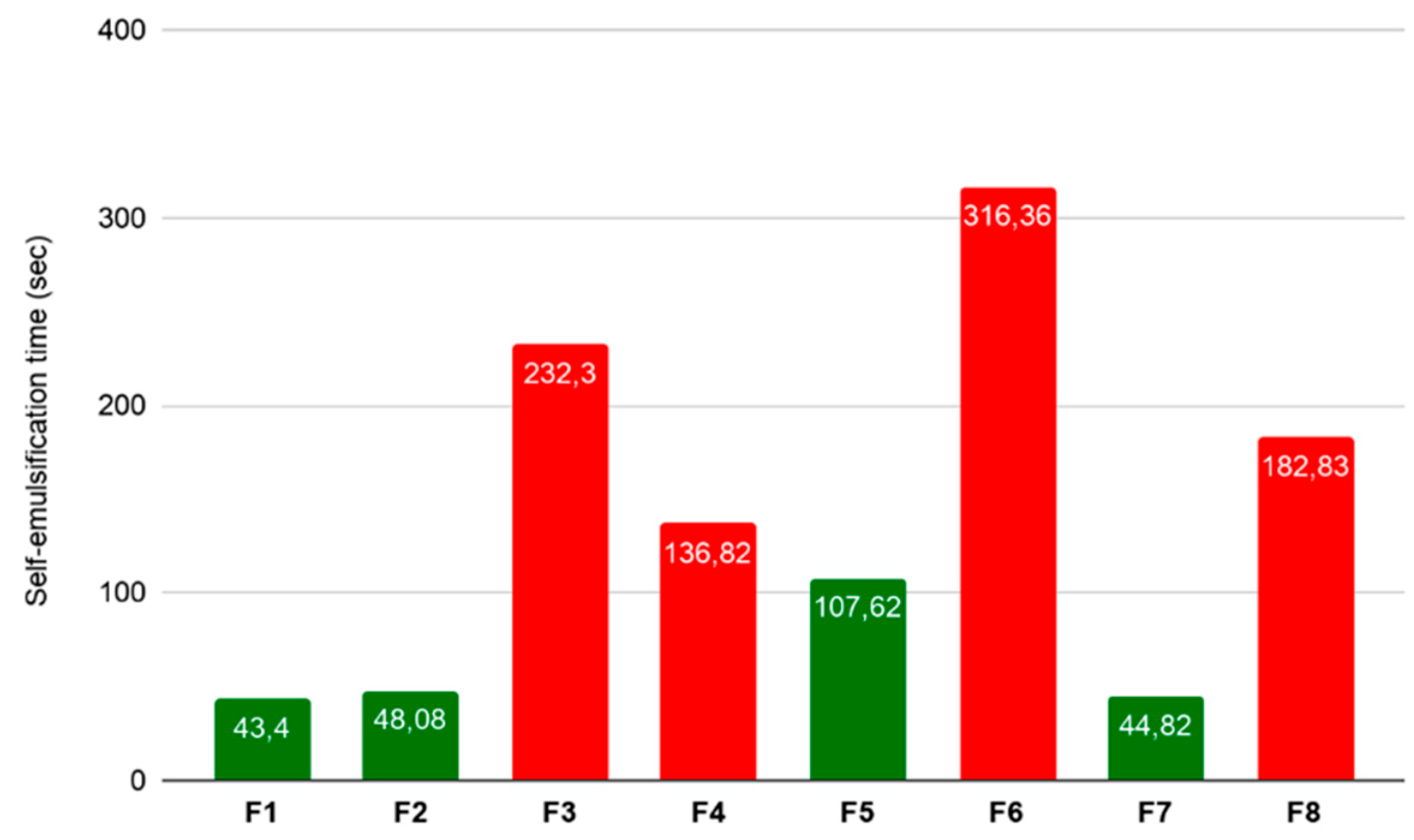
Figure 2.
Response surface and contour plot of the cloud point response.
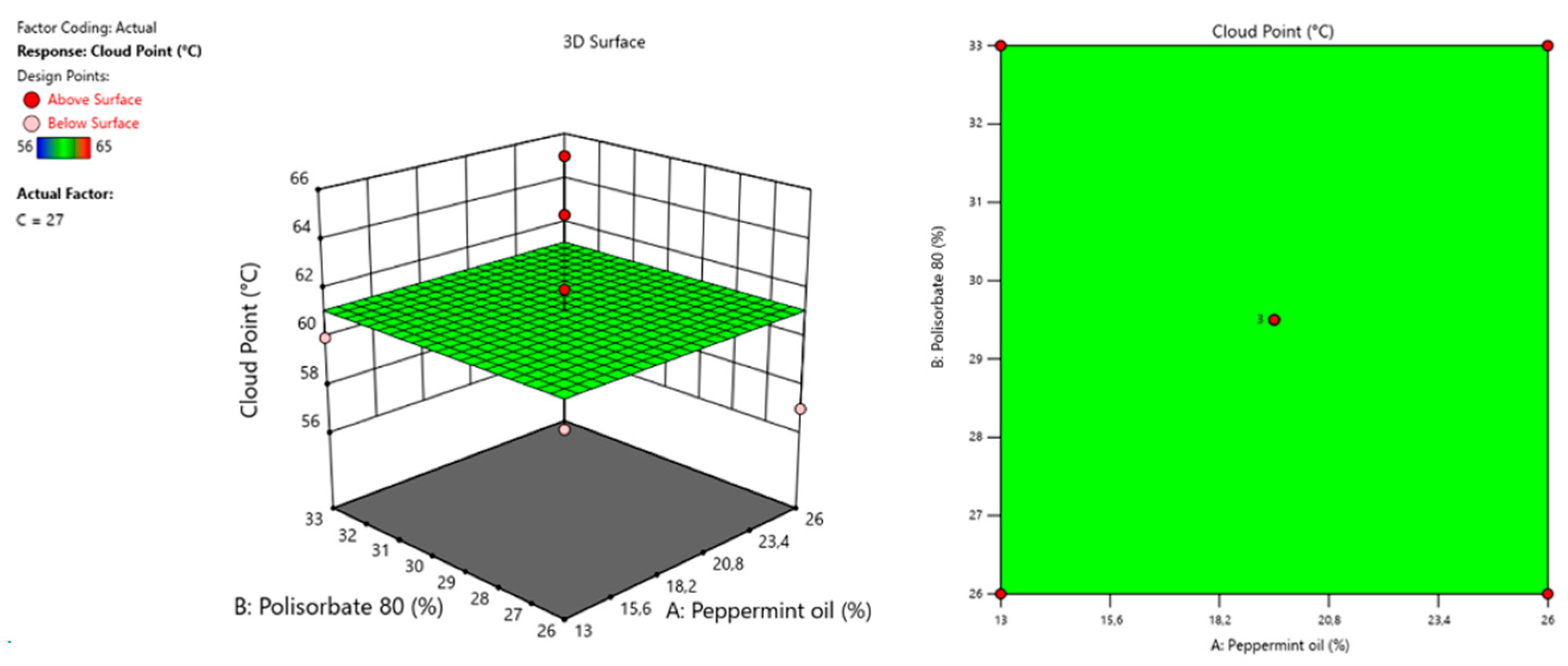
Figure 3.
Response surface and contour plot of the self-emulsification time response.
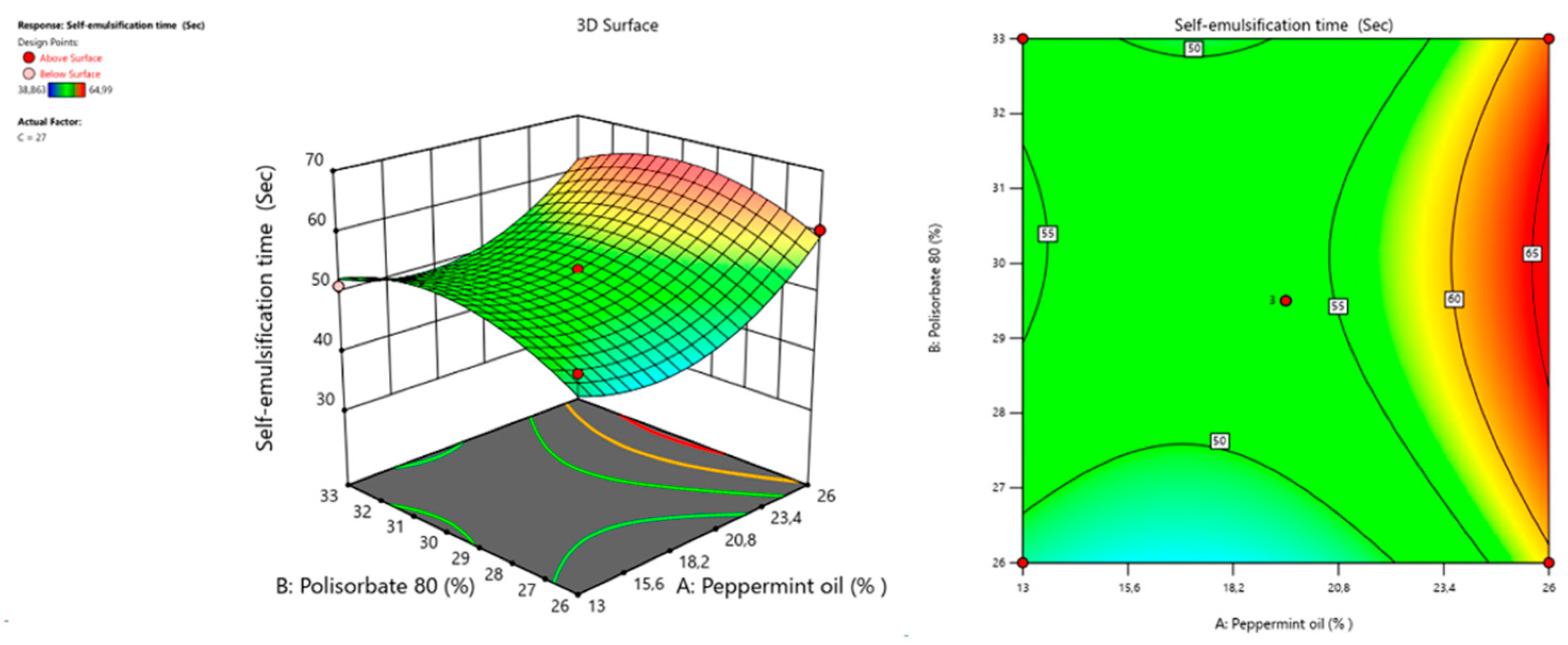
Figure 4.
Response surface and contour plot of the zeta potential response.
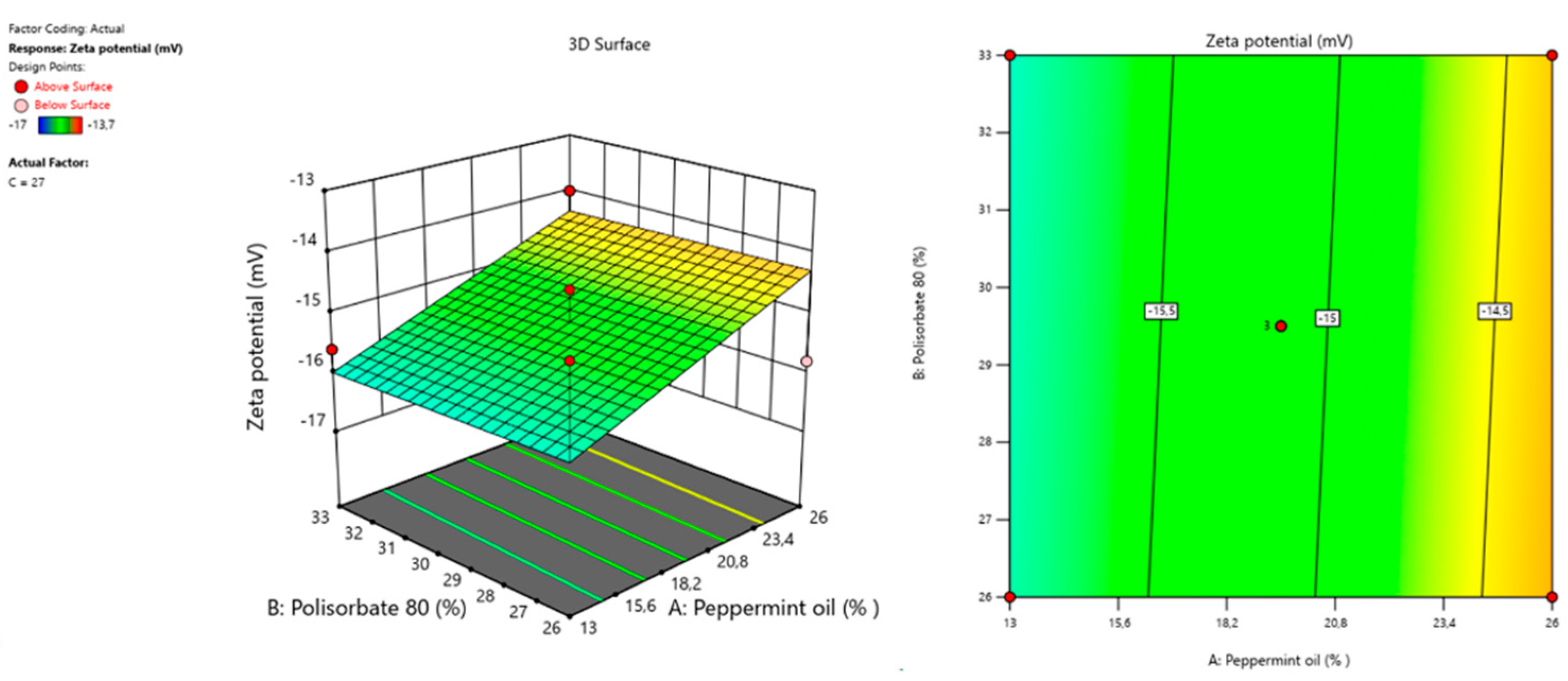
Figure 5.
Response surface and contour plot of the droplet size response.
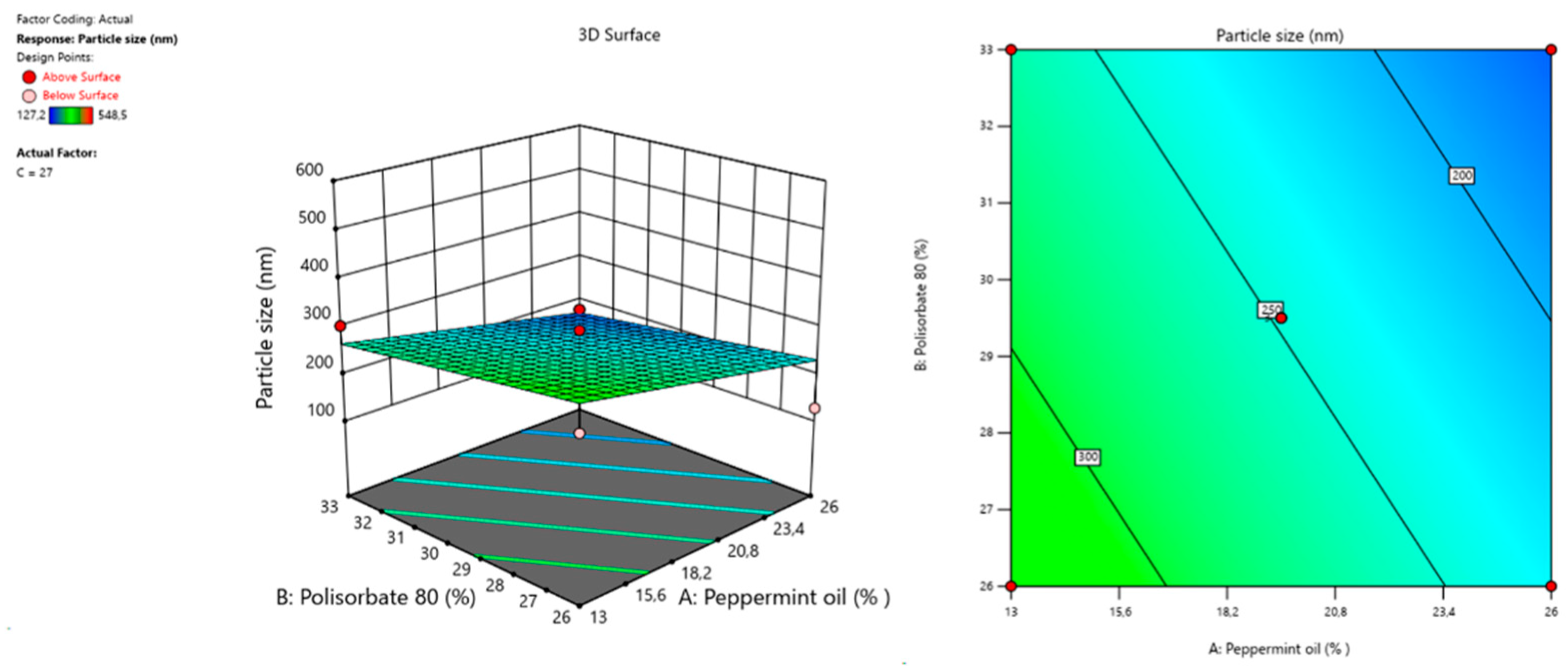
Figure 6.
Response surface and contour plot of the PDI response.
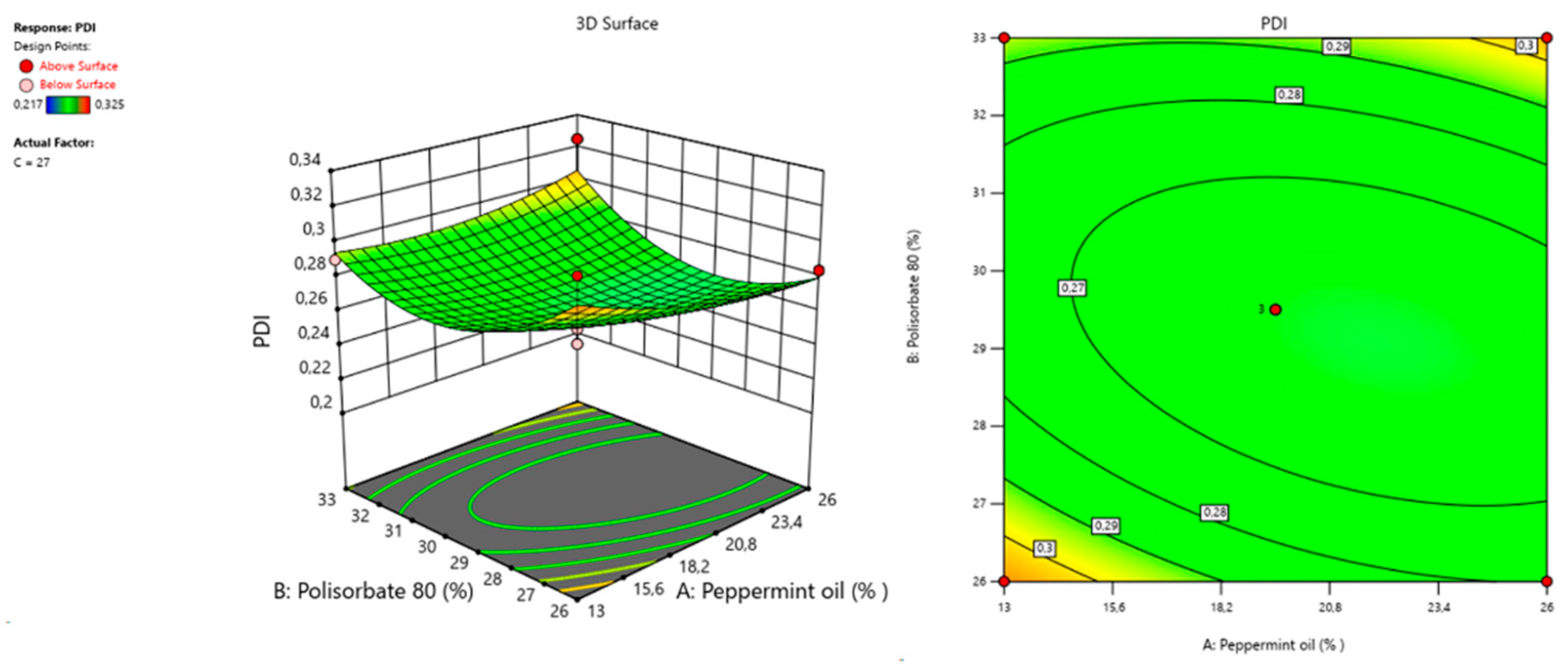
Figure 7.
Response surface and contour plot of the response Robustness to dilution.
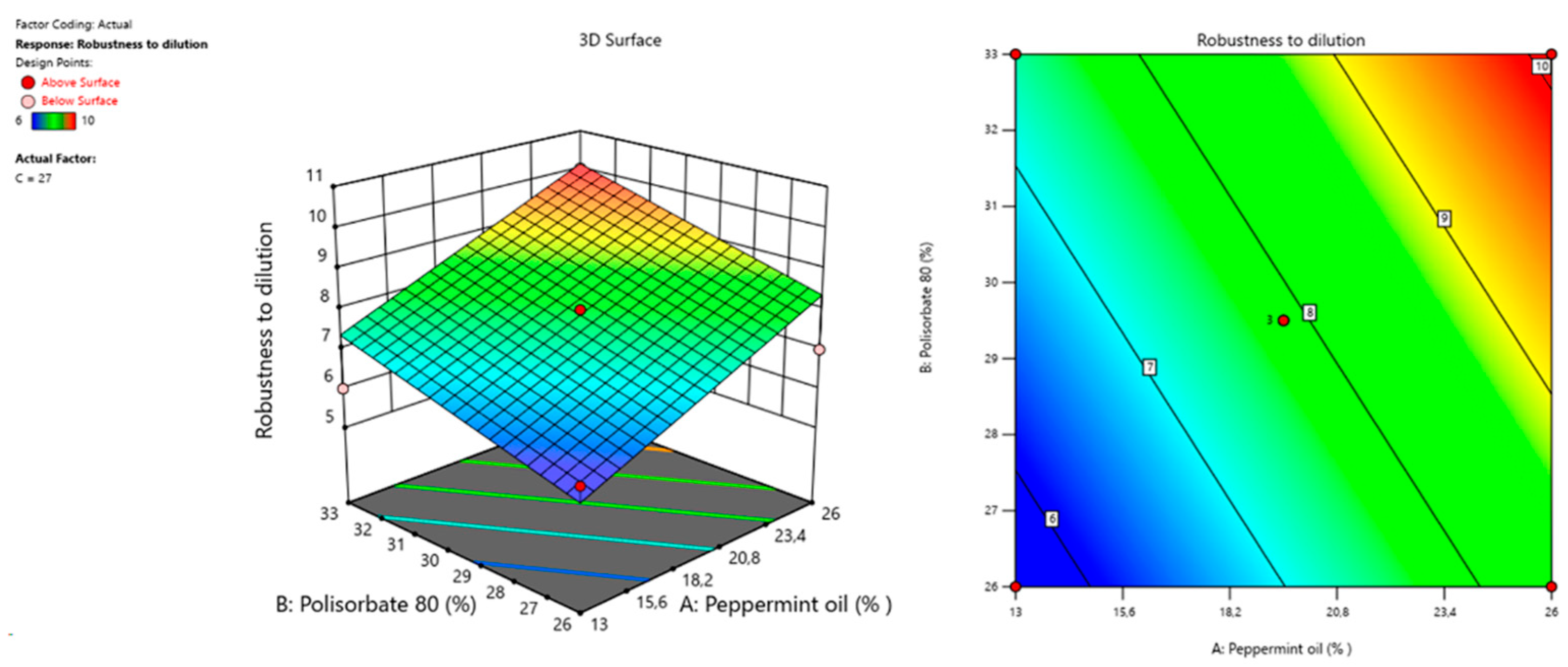
Figure 8.
Droplet size distribution and zeta potential of the optimized SNEDDS formulation of ibuprofen. (a) Droplet size distribution (intensity-weighted and number-weighted) and (b) zeta potential distribution of the optimized IBU-SNEDDS formulation for three independent batches (R1, R2, R3: independent preparation replicates, n = 3).
Figure 8.
Droplet size distribution and zeta potential of the optimized SNEDDS formulation of ibuprofen. (a) Droplet size distribution (intensity-weighted and number-weighted) and (b) zeta potential distribution of the optimized IBU-SNEDDS formulation for three independent batches (R1, R2, R3: independent preparation replicates, n = 3).
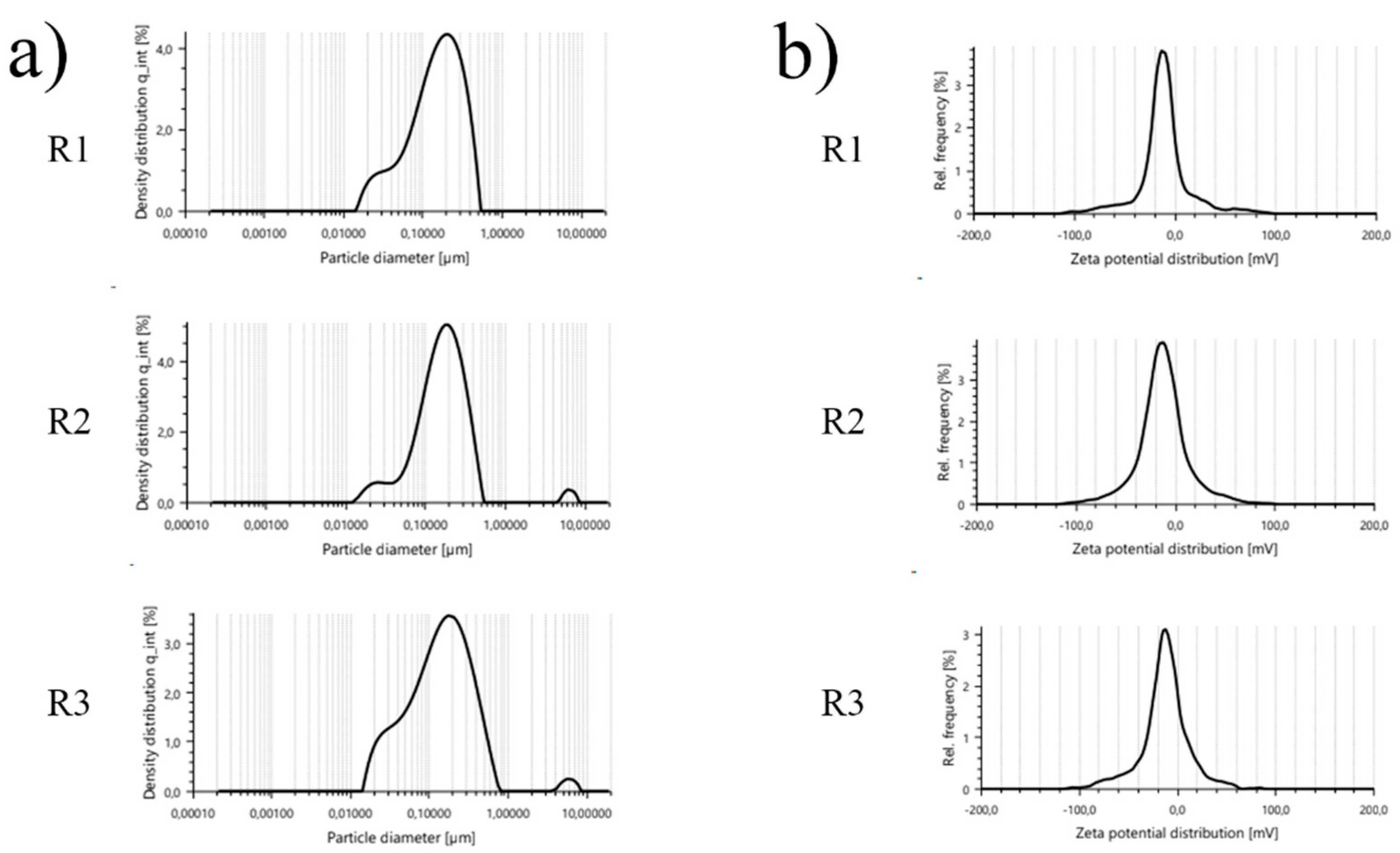
Figure 9.
Effect of dilution and pH on Droplet size. Effect of dilution volume ( lower panel) and dispersion medium pH (upper panel) on droplet size of the optimized IBU-SNEDDS formulation.
Figure 9.
Effect of dilution and pH on Droplet size. Effect of dilution volume ( lower panel) and dispersion medium pH (upper panel) on droplet size of the optimized IBU-SNEDDS formulation.
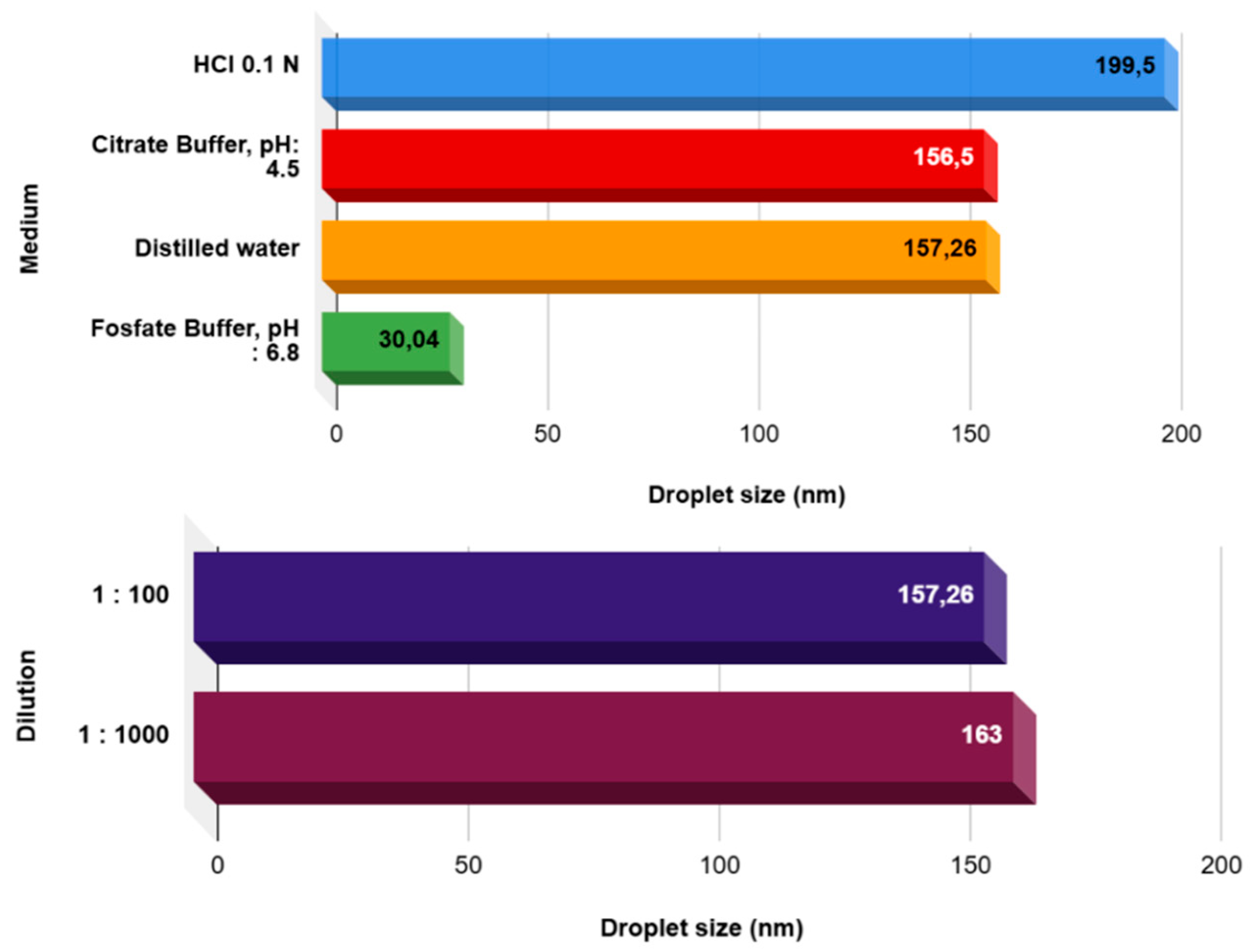
Figure 10.
Transmittance vs. Storage Time plot. Stress testing. Three independent batches of the optimized IBU-SNEDDS (R1, R2, R3: independent preparation replicates, n = 3). Dashed line: specification limit (90%).
Figure 10.
Transmittance vs. Storage Time plot. Stress testing. Three independent batches of the optimized IBU-SNEDDS (R1, R2, R3: independent preparation replicates, n = 3). Dashed line: specification limit (90%).
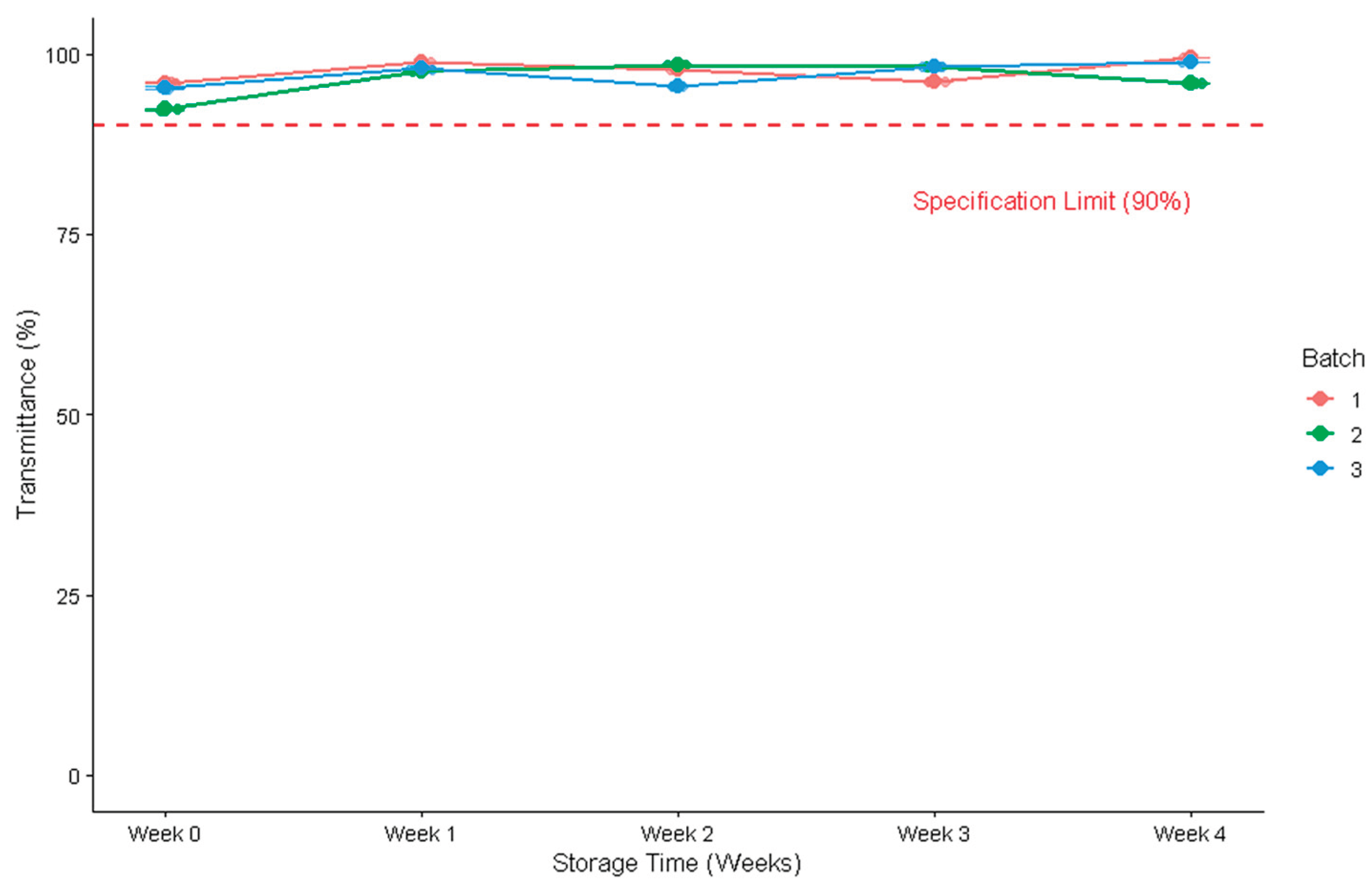
Table 2.
Independent variables and responses used for the optimization of BBD-SNEDDS.
| Independent variables | Levels | ||
|---|---|---|---|
| Low (-1) | Medium (0) | High (+1) | |
| A: Peppermint oil (%w/w) | 13.0 | 19.5 | 26.0 |
| B: Polysorbate 80 (% w/w) | 26.0 | 29.5 | 33.0 |
| C: PEG-40 Hydrogenated Castor Oil (%w/w) | 22.0 | 27.0 | 32.0 |
| Dependent variables | Goals | ||
| Y1: Cloud point (°C) | Maximize | ||
| Y2: Robustness to dilution | Maximize | ||
| Y3: Self-emulsification time (sec) | Minimize | ||
| Y4: Zeta potential (mV) | Minimize | ||
| Y5: Droplet size (nm) | Minimize | ||
| Y6: PDI (%) | Minimize | ||
Table 3.
Responses obtained from the 15 formulations evaluated.
| Formulation | A | B | C | Cloud point (°C) |
Robustness to dilution | Self-emulsification time (sec) | Zeta potential (mV) | Droplet size (nm) | PDI |
|---|---|---|---|---|---|---|---|---|---|
| 1 | 0 | 1 | 1 | 60 | 9 | 61.193 | -15.1 | 232.10 | 0.260 |
| 2 | 0 | -1 | -1 | 64 | 8 | 42.877 | -13.7 | 231.10 | 0.300 |
| 3 | -1 | 0 | 1 | 60 | 6 | 45.303 | -16.9 | 260.60 | 0.289 |
| 4 | 0 | 0 | 0 | 62 | 8 | 53.447 | -16.8 | 294.40 | 0.256 |
| 5 | 1 | 0 | 1 | 65 | 10 | 64.990 | -13.7 | 212.80 | 0.217 |
| 6 | -1 | 1 | 0 | 60 | 6 | 51.187 | -15.6 | 303.30 | 0.290 |
| 7 | -1 | 0 | -1 | 60 | 7 | 58.610 | -17.0 | 231.90 | 0.250 |
| 8 | 1 | 0 | -1 | 56 | 9 | 64.213 | -13.9 | 163.56 | 0.256 |
| 9 | 0 | 0 | 0 | 65 | 7 | 54.027 | -15.7 | 207.30 | 0.250 |
| 10 | 1 | 1 | 0 | 65 | 10 | 58.767 | -14.0 | 176.17 | 0.325 |
| 11 | 1 | -1 | 0 | 57 | 7 | 60.427 | -15.8 | 127.20 | 0.284 |
| 12 | 0 | 1 | -1 | 60 | 10 | 38.863 | -14.7 | 215.50 | 0.274 |
| 13 | -1 | -1 | 0 | 60 | 6 | 51.047 | -14.4 | 271.40 | 0.290 |
| 14 | 0 | -1 | 1 | 61 | 7 | 40.260 | -15.2 | 548.50 | 0.255 |
| 15 | 0 | 0 | 0 | 62 | 8 | 53.833 | -14.6 | 245.10 | 0.281 |
Formulations 4, 9, and 15 are center-point replicates. All other values represent single experimental runs per BBD design. Ibuprofen content: 444.44 mg in all 15 formulations.
Table 4.
Evaluation of the models for each response.
| Independent variable | Suggested model | p (model) | p (Lack-of-fit) | Adjusted R² | Predicted R² |
|---|---|---|---|---|---|
| Cloud Point | Mean | < 0.0001 | — | — | — |
| Robustness to dilution | Lineal | 0.0018 | 0.3246 | 0.6583 | 0.4513 |
| Self-emulsification time | Quadratic | 0.1248 | 0.0014 | 0.4864 | -1.9326 |
| Zeta potential | Lineal | 0.2405 | 0.6143 | 0.1177 | -0.3021 |
| Particle size | Lineal | 0.1463 | 0.1974 | 0.2037 | -0.3102 |
| PDI | Quadratic | 0.1516 | 0.2968 | 0.2537 | -2.4978 |
Table 5.
ANOVA of the fitted equation for robustness to dilution of SNEDDS.
| Source | Sum of Squares | df | Mean Square | F-value | p-value |
|---|---|---|---|---|---|
| Model | 21.75 | 3 | 7.25 | 9.99 | 0.0018 |
| A-Peppermint oil | 15.13 | 1 | 15.13 | 20.84 | 0.0008 |
| B- Tween80 | 6.13 | 1 | 6.13 | 8.44 | 0.0143 |
| C- Cremophor RH 40 | 0.5000 | 1 | 0.5000 | 0.6889 | 0.4242 |
| Residual | 7.98 | 11 | 0.7258 | — | — |
| Lack of Fit | 7.32 | 9 | 0.8130 | 2.44 | 0.3246 |
| Pure Error | 0.6667 | 2 | 0.3333 | — | — |
| Cor Total | 29.73 | 14 | — | — | — |
| Equation | AND2= 7.87 + 1.38A + 0.875B - 0.25C | ||||
Note. p-values less than 0.05 indicate that the terms in the model are significant.
Table 6.
Point prediction optimized composition IBU-SNEDDS.
| % oil | % surfactant | % co-surfactant | Predicted Mean | Observed Mean | Std Dev | n | SE Pred | 95% PI Low | 95% PI High |
|---|---|---|---|---|---|---|---|---|---|
| 25.78% | 32.90% | 25.19% | 10.14 | 12 | 0.852 | 3 | 0.68736 | 8.9012 | 12 |
Ibuprofen content: 444.44 mg.
Table 7.
Statistical analysis of Stress testing.
| Media | SD | RSD (%) | |
|---|---|---|---|
| 1 | 97.674 | 1.550 | 1.587 |
| 2 | 96.506 | 2.642 | 2.738 |
| 3 | 97.200 | 1.617 | 1.664 |
| ANOVA analysis | |||
| Source of Variation | df | F | P-value |
| Batch | 2 | 0.661 | 0.542 |
| Time | 4 | 2.595 | 0.117 |
| Error | 8 | – | – |
| Total | 14 | ||
Disclaimer/Publisher’s Note: The statements, opinions and data contained in all publications are solely those of the individual author(s) and contributor(s) and not of MDPI and/or the editor(s). MDPI and/or the editor(s) disclaim responsibility for any injury to people or property resulting from any ideas, methods, instructions or products referred to in the content. |
© 2026 by the authors. Licensee MDPI, Basel, Switzerland. This article is an open access article distributed under the terms and conditions of the Creative Commons Attribution (CC BY) license (http://creativecommons.org/licenses/by/4.0/).
Copyright: This open access article is published under a Creative Commons CC BY 4.0 license, which permit the free download, distribution, and reuse, provided that the author and preprint are cited in any reuse.


