

Submitted:
25 June 2026
Posted:
26 June 2026
You are already at the latest version
Abstract
The present study investigates the combined influence of nano-ground quartz sand, microsilica, and a polycarboxylate-based modifier on phase evolution, microstructure development, and mechanical properties in low-clinker cement systems. The main objective is to evaluate whether finely dispersed quartz acts as an inert filler or contributes to hydration processes, and to determine the critical clinker threshold governing system performance. A hybrid modifier composed of microsilica and polycarboxylate (4:1) was introduced into a clinker–gypsum system together with varying amounts of nano-ground quartz sand. The mixtures were subjected to mechanical activation in a ball mill. Chemical composition, phase evolution, and microstructure were analyzed using XRF, XRD, and TEM, while mechanical properties were evaluated through standard tests. The results show that grinding duration and modifier dosage significantly influence particle dispersion and water demand. Optimal performance was achieved at 90 minutes of grinding and 6% modifier content. A nonlinear relationship between quartz content and compressive strength was observed, with a maximum value of 57.1 MPa obtained at 30% quartz and 55% clinker content. XRD analysis confirmed partial portlandite consumption and the formation of additional low-crystalline C–S–H gel, indicating a synergistic interaction between nano-quartz and microsilica. The results demonstrate that nano-ground quartz acts not only as a filler but also as a nucleation-active component with limited pozzolanic contribution. A further reduction in clinker content below 55% leads to insufficient formation of hydration products and a decline in mechanical performance, confirming the existence of a critical clinker threshold. These results provide a scientific basis for the design of low-clinker, low-carbon cementitious materials with enhanced performance.
Keywords:
nano-ground quartz sand
; low-clinker cement systems
; phase evolution
; critical clinker threshold
1. Introduction
The cement industry is one of the largest emitters of carbon dioxide in the world, so one of the most effective ways to reduce carbon dioxide emissions in this industry is to reduce the proportion of clinker in cement. This is the reason that in recent years, research on the creation of low-clinker binder systems, additional binder materials and low-carbon cement compositions has become increasingly active [Martín-Rodríguez, at al. 2026., Marandi, N., Shirzad, S., 2025]. In particular, the issue of controlling the composition of hydration products, controlling phase development and maintaining mechanical properties even in conditions of a reduced amount of clinker has become one of the pressing areas (current direction) of modern cement chemistry [Zunino, F., Scrivener, K., 2025].
However, reducing the amount of clinker does not always give a direct positive result. As the percentage of clinker decreases, the formation of primary hydration products, especially calcium hydroxide gel and portlandite, is limited, which directly affects the extent of subsequent pozzolanic reactions and compaction of the microstructure. However, reducing the amount of clinker does not always give a direct positive result. As the percentage of clinker decreases, the formation of primary hydration products, especially calcium hydroxide gel and portlandite, is limited, which directly affects the extent of subsequent pozzolanic reactions and compaction of the microstructure. In low-clinker systems, a decrease in strength is often associated not only with a “lack of cement”, but also with a change in the evolution of the phase composition, sulfate disequilibrium, insufficient filling of the void structure, and incompatibility of reactive components. Therefore, in modern research, special attention is paid to the analysis of the nature of the resulting hydration products and their phase development, and not just the degree of clinker substitution [Song, P., Wang,X.,at al.2026, Korpa, A., Kowald, T., Trettin, R., 2008].
Among active mineral additives, microsilica and nano-sized silicon materials are of particular interest. The reason for this is due to their very large surface area, pozzolanic activity and early stage nucleation effect. The literature shows that microsilica and nanosilica cement accelerate the consumption of portlandite, promote the formation of additional C–S–H gel, shorten the induction period and compact the microstructure. It is for this reason that such additives are considered promising components for compensating mechanical properties in low-clinker systems [Zunino, F., Scrivener, K., 2025, Korpa, A., Kowald, T., Trettin, R., 2008., Berodier, E., Scrivener, K., 2015].
At the same time, the role of all silicon-rich materials is not the same. In many classical works, quartz, especially in its larger or less reactive form, was treated primarily as an inert filler or reference component and was used to isolate the physical and chemical effects of other additives. However, recent research suggests that with increasing levels of quartz dispersion, especially in mixed cementitious systems, its role may not be limited to physical filling. In a number of studies, significant changes in the kinetics of hydration, phase composition and microstructure were observed in mixed systems with quartz; It is also noted that nanoparticles can result from mixing and grinding in quartz-cement systems. This situation forces us to reconsider the traditional interpretation of quartz as a “completely inert component” [Song, P., Wang,X.,at al.2026, Bickbau M.Ya.2023].
The combined synergistic effect of nano-ground quartz sand, microsilica and an organic component based on polycarboxylate in a low-clinker-modified cement system is not sufficiently covered in the literature. In particular, in such a system the question remains open whether nano-ground quartz sand will remain a simple inert filler or become an active component that controls the release of hydration products. In addition, there may be a threshold fraction of clinker substitution above which synergistic pozzolanic and nucleation effects remain stable, and below which primary and secondary reactions do not occur to a sufficient extent. It is the issue of the “limiting clinker fraction” that is of particular importance for the design of low-carbon cement systems on a scientific basis [Lämmlein, T.D., Beuntner, N., Thienel, K.C., 2019; Hu, C.et al.2015, Hamada, H.M., et al., 2023; Siddique, R., Khan, M.I., 2011].
At the same time, an analysis of the existing literature [Althoey, F., et al., 2023; Dong, P., Ng, P.L., 2022; Tavares, L.R.C., et al., 2020; Vandenberg, A., et al., 2021 et al.] shows that the role of silicon-rich components in low-clinker cement systems is still not fully understood. In particular, the question of whether nano-ground quartz sand remains a simple inert filler in a highly dispersed state or becomes a component that actively influences the release of hydration products has not been sufficiently clarified. In addition, due to the decrease in the amount of clinker, the question remains open as to whether there is a threshold fraction (critical clinker limit) at which the mechanical strength in the system is maintained or reaches its maximum value. This issue is important in the scientific design of low-carbon cementitious systems, since reducing the amount of clinker beyond the optimum level can lead to a lack of hydraulically active phases.
One of the main ways to decarbonize the cement industry is to reduce the proportion of clinker. Therefore, in recent years, low-clinker binders and high-performance mixed cement systems have been actively studied [Hu, C.et al.2015, Hamada, H.M., et al., 2023]. However, reducing the amount of clinker limits the formation of primary hydration products, which can negatively affect the development of phase evolution, compaction of the microstructure and strength.
Active silica additives, especially microsilica, are considered important components in compensating the strength of such systems. The literature shows that silica fume reacts with portlandite to form an additional C–S–H gel, softens the porous structure and in many cases increases the compressive strength [Siddique, R., Khan, M.I., 2011, Althoey, F., et al., 2023]. Moreover, its effectiveness depends on the amount of additive, the quality of the dispersion and the composition of the matrix [Siddique, R., Khan, M.I., 2011].
Research into nanoscale silicon materials provides greater insight into the mechanism. It has been established that nanosilica accelerates the early stages of cement hydration, increases the number of nucleation centers, accelerates the consumption of portlandite and promotes the formation of a denser matrix [Dong, P., Ng, P.L., 2022; Tavares, L.R.C., et al., 2020]. Therefore, nanosilica additives are evaluated as promising components that preserve mechanical properties in systems with low clinker content [Dong, P., Ng, P.L., 2022].
However, not all silicon-rich materials play the same role. Quartz powder and quartz sand are often interpreted as inert or semi-inert fillers [Vandenberg, A., et al., 2021]. In particular, studies comparing silica fume with quartz powder have shown that silica fume has clear pozzolanic activity, while quartz has a more physical filling function [Vandenberg, A., et al., 2021]. It was also noted that with increasing quartz size and mixing intensity, its role is not limited to inert filling; it can have a significant impact on the processes of interparticle packing and nucleation [Scrivener, K.L., et al., 2016].
This issue is especially important in systems with low clinker content. As the percentage of clinker decreases, the formation of portlandite also decreases, resulting in a weakening of the necessary chemical environment for further pozzolanic reactions [Vandenberg, A., et al., 2021, Scrivener, K.L., et al., 2016]. Therefore, the beneficial effect of additional components is determined not only by their individual reactivity, but also by the balance of phase evolution and hydration products in the entire system [Hu, C.et al.2015, Scrivener, K.L., et al., 2016].
Although there is sufficient information in the existing literature on the role of silica fume and nanosilica additives, the synergistic effect of nano-ground silica sand, silica fume and polycarboxylate based modification in low clinker cement system has not been well studied. In particular, the question remains open as to whether nano-ground quartz sand remains a simple inert filler or becomes an active component that affects the release of hydration products, as well as the limiting proportion of the amount of clinker that maintains strength [Zhang, Y., et al. 2024, Sha, S., Lei, L. 2025, Gao, Y., et al. 2025].
In this regard, the main objective of this study is to comprehensively evaluate the relationship between phase evolution, formation of hydration products and mechanical properties in a low-clinker cement system with nano-ground quartz sand, microsilica and polycarboxylate-based modifier. As part of the study, the structural and possible pozzolanic role of quartz sand is increased on an experimental basis, and the formation of the effectiveness of the binder system is analyzed under conditions of reducing the amount of clinker.
The scientific novelty of the work is as follows:
1) using nano-ground quartz sand in a low clinker content cement system a critical threshold clinker proportion was determined and it was shown that maximum mechanical efficiency could be achieved at a clinker content of approximately 55%;
2) based on experimental results, the transition of quartz sand from an inert filler to an active structural component in a highly dispersed state is substantiated, i.e., forming nucleation centers and influencing the release of hydration products;
3) as a result of the synergistic action of a modifier based on quartz sand, microsilica and polycarboxylate, the mechanism of partial consumption of portlandite, the formation of an additional low-crystallized C-S-H gel and compaction of the microstructure was found out.
The results obtained provide an important scientific and practical basis for determining the optimal ratio of mineral additives and clinker in low-clinker cement systems, as well as for the development of low-carbon and high-performance cementitious materials.
2. Materials and Methods
The main raw materials used in this study were Portland cement clinker, supplied by AKKERMANN CEMENT (JSC “POP SEMENT”, Republic of Uzbekistan), natural gypsum(from a quarry in Yangiyul district, Republic of Uzbekistan), quartz sand (Chichik-Mayskiy deposits, Republic of Uzbekistan), and modifier based on polycarboxylate and microsilica (by-product of the production of silicon ferroalloys (Uzmetkombinat, Republic of Uzbekistan). For the study, a series of compositions of binder systems (Table 1) were prepared with varying the content of clinker and nano-ground quartz sand at a fixed content of gypsum and modifier. The composition and properties of the main components were selected to evaluate the influence of phase development and mechanical properties in a modified low clinker cement system.
The chemical and mineralogical composition of clinker is presented in Table 1 and Table 2, respectively. The clinker composition has a high CaO content, and in mineralogical terms the main proportion of phases is C3S and C2S. This indicates the high hydraulic activity of clinker.
Natural gypsum was used to control the hardening time and regulate the hydration of the aluminate phases. The main chemical composition of gypsum is presented in Table 3.
Quartz sand was used as an active silicon mineral component. Its chemical and mineralogical composition is given in Table 4 and Table 5. From the chemical and the mineralogical composition of the quartz sand used in the studies, it is clear that it consists predominantly of quartz (83.5%), with small amounts of smectite, orthoclase and iron oxides. The main phase is quartz, and the structural and possible pozzolanic role in the low-clinker system was assessed after high dispersion of this component in a ball mill.

Table 4.
Chemical composition of quartz sand.
| Basic chemical compounds | SiO2 | R2O3(Fe2O3 + Al2O3) | CaO | MgO | SO3 | H2O | loss on ignition |
|---|---|---|---|---|---|---|---|
| Content (% based on absolutely dry matter) | 83,5 | 10,3 | 2,6 | 2,0 | 0,2 | 0,1 | 1,5 |
Table 5.
Mineralogical composition of quartz sand.
| Minerals | Quantity, % |
|---|---|
| Quartz (SiO2) | 83.5 |
| Smectite | 8.0 |
| Orthoclase (KAlSi3O8) | 7.0 |
| Iron oxides | 1.5 |
Table 6.
Granulometric composition of quartz sand from the Chirchik-Maysky deposit.
| Field | Fraction content, %, sieve diameter, mm | Size modulus, mm | Specific surface area, cm2/g | Sorting factor | |||
|---|---|---|---|---|---|---|---|
| 0,5-0,25 | 0,25-0,1 | 0,1-0,05 | <0,05 | ||||
| 1 | 2 | 3 | 4 | 5 | 6 | 7 | 8 |
| Chirchik-Mayskiy | 0,10 | 7,50 | 88,70 | 3,50 | 1,00 | 360 | 2,00 |
Microsilica MK-85 was used in the study as a mineralogical component of the modifier. Its chemical composition is given in Table 7. The presence of a large amount of SiO2 made it possible to use it as an active mineral additive in the cement system.
The PKAN-55 series superplasticizer based on polycarboxylate was used as a chemical component of the modifier. It was synthesized in laboratory conditions, and then was introduced into the composition of a hybrid modifier along with microsilica. The modifier improves the dispersion of cement particles, reduces water demand and ensures effective distribution of highly dispersed mineral additives.
Preparation of a hybrid modifier. The hybrid modifier is prepared on the basis of microsilica and polycarboxylate of the PKAN-55 series. The components were taken in a mass ratio of microsilica: polycarboxylate = 4:1 and intensively mechanically mixed for 15–20 minutes. The resulting mixture was dried for 40-45 minutes; at the same time, the temperature did not rise above 80 °C, and the residual humidity was reduced to approximately 2%. The finished modifier was stored in sealed containers.
Preparation of binding compositions. During the study, binder compositions of several compositions were prepared based on clinker, gypsum, modifier and quartz sand. Initially, the clinker-gypsum system was adopted as a control composition. At the next stage, the optimal amount of modifier was determined. Then, keeping the amount of modifier at a constant level of 6%, the proportion of quartz sand was gradually increased and the proportion of clinker was proportionally reduced. Table 8 lists the ingredients used in the experiment.
All ingredients were ground in a ball mill type MMC-40×28A under laboratory conditions. The duration of grinding varied in the range of 50-110 minutes. During the process, the specific surface area of the mixture, the residue on the sieve, the water-cement ratio and strength parameters were monitored.
To study the strength properties of the binder, standard beam samples 4x4x16 cm were made. The binder mixture was mixed for 3 minutes until a homogeneous consistency was obtained, after which it was poured into prepared molds. Additionally, the samples were compacted for 3 minutes to remove air inclusions. The molded samples were kept under normal hardening conditions (20 0C, relative humidity not less than 50%) for 10 hours. After this, the samples were removed from the molds and placed in a water bath, where they were kept until testing (Test standards GOST 10180, GOST 10178).
Chemical, phase and physical-mechanical methods of analysis. The chemical composition of the compositions, phase composition, and evolution of hydration products were studied using X-ray diffraction analysis (XRD). The phase composition of the samples was determined by X-ray diffractometry. Analyzes were performed using benchtop diffractometers Rigaku MiniFlex 600 and Rigaku MiniFlex 600-C (Rigaku Corporation, Japan). The equipment operated on X-ray radiation of the Cu Kα type (wavelength λ = 1.5406 Å) 16,17.
Microstructure development was analyzed by transmission electron microscopy (TEM), which was performed using a Thermo Scientific Talos F200i operating at an accelerating voltage of 200 kV. TEM and scanning TEM (STEM) modes were used to obtain high-resolution images and structural information. Selected area electron diffraction (SAED) was used to analyze crystallinity 18,19.
Elemental composition and mapping were carried out using an energy-dispersive X-ray spectroscopy (EDS) detector. TEM samples were prepared using a Fischione 1051 TEM Mill ion grinding system. The samples were thinned to electronic transparency by polishing with Ar+ ions under controlled conditions 20,21. Based on the physical properties, density, degree of coarseness and spreadability of the mixture, as well as mechanical properties, the 28-day flexural and compressive strength was determined using standard methods 22.
3. Results and Discussion
During the study, structural changes in cement compositions based on clinker-gypsum-modifier-quartz sand were comprehensively assessed in terms of their degree of grinding, water demand, workability of the mixture, flexural and compressive strength, as well as the effect on the formation of hydration products. The results obtained showed that quartz sand crushed to nanosize, microsilica and a polycarboxylate-based modifier not only increase dispersion in the cement system, but also change the kinetics of hydration, lead to compaction of the microstructure and, as a result, to an improvement in mechanical properties. However, this effect is not linear: high efficiency is achieved only by maintaining a balance between active and relatively inert components in the composition.
The chemical composition of initial clinker and its role in the binder system. The chemical composition of the original clinker is the main source of further hydration processes in the cement system. The high proportion of CaO (Table 1) in clinker indicates that it is the main hydraulic component, and SiO2 serves as a source of silicate phases, which subsequently form the C-S-H gel. This composition (Table 1) means that the clinker has an active mineral base, characteristic of ordinary Portland cement. As a result of the high CaO content, the formation of calcium hydroxide and C-S-H gel, which is a product of crystal hydration, occurs intensively during the clinker hydration process. Therefore, it is natural that the main part of the strength in the control structure is formed due to the hydration of clinker minerals.
Chemical composition and structural rebalancing of cement compositions. XRF results obtained for different compositions (Table 7) showed a significant change in the chemical balance of cement compositions due to changes in the percentage of mineral components.
Based on these results, two main patterns can be identified. First, the amount of SiO2 increases sharply with increasing proportions of quartz sand and microsilica. Secondly, by reducing the percentage of clinker, the amount of CaO is proportionally reduced. This means that the system changes from “clinker based hydraulic binder” to “hybrid hydraulic cementitious binder”.
This shift in chemical composition affects mechanical properties in two ways. On the one hand, components rich in SiO2 increase the number of nuclei and accelerate the hydration of cement, since they are in a very finely dispersed state. On the other hand, it undergoes a secondary reaction with Ca(OH)2 and forms an additional CSH gel. But when the amount of CaO is too low, i.e., when the amount of clinker is insufficient, the content of the binder that forms astringent compounds, the necessary alkaline environment for reactions, and calcium hydroxide, which is a product of crystal hydration, decreases. As a result, even if such compositions have a high SiO2 content, binding phases are formed insufficiently.
The influence of grinding time on the properties of the binder system. First, the optimal grinding duration was determined and the relationship between dispersion and mechanical properties in a clinker-gypsum control system was assessed (Table 9).
The results show (Table 9) that with increasing grinding time, the particle size decreases, the specific surface area increases, and the sieve residue decreases. This results in an increase in the active surface area for hydration. As a result, between 50 and 90 minutes the strength increases significantly. For example, the compressive strength increased from 34.6 MPa to 55.2 MPa. This is a significant difference, which indicates that as clinker particles are crushed, their interaction with water accelerates.
At the same time, although the degree of grinding continues to increase after 90 minutes, the compressive strength practically does not increase and even has a slight decrease. There are several reasons for this. Grinding too much increases the risk of particle agglomeration on the surface, increases energy consumption, and in some cases increases sensitivity to water. In addition, an increase in dispersion beyond a certain limit does not provide a proportional increase in strength, since the mechanical properties depend not only on the degree of grinding, but also on the type, size and location of the resulting hydrate products. Therefore, grinding for 90 minutes was considered optimal from a technological and mechanical point of view.
Figure 1.
Particle size and specific surface area of the binders.
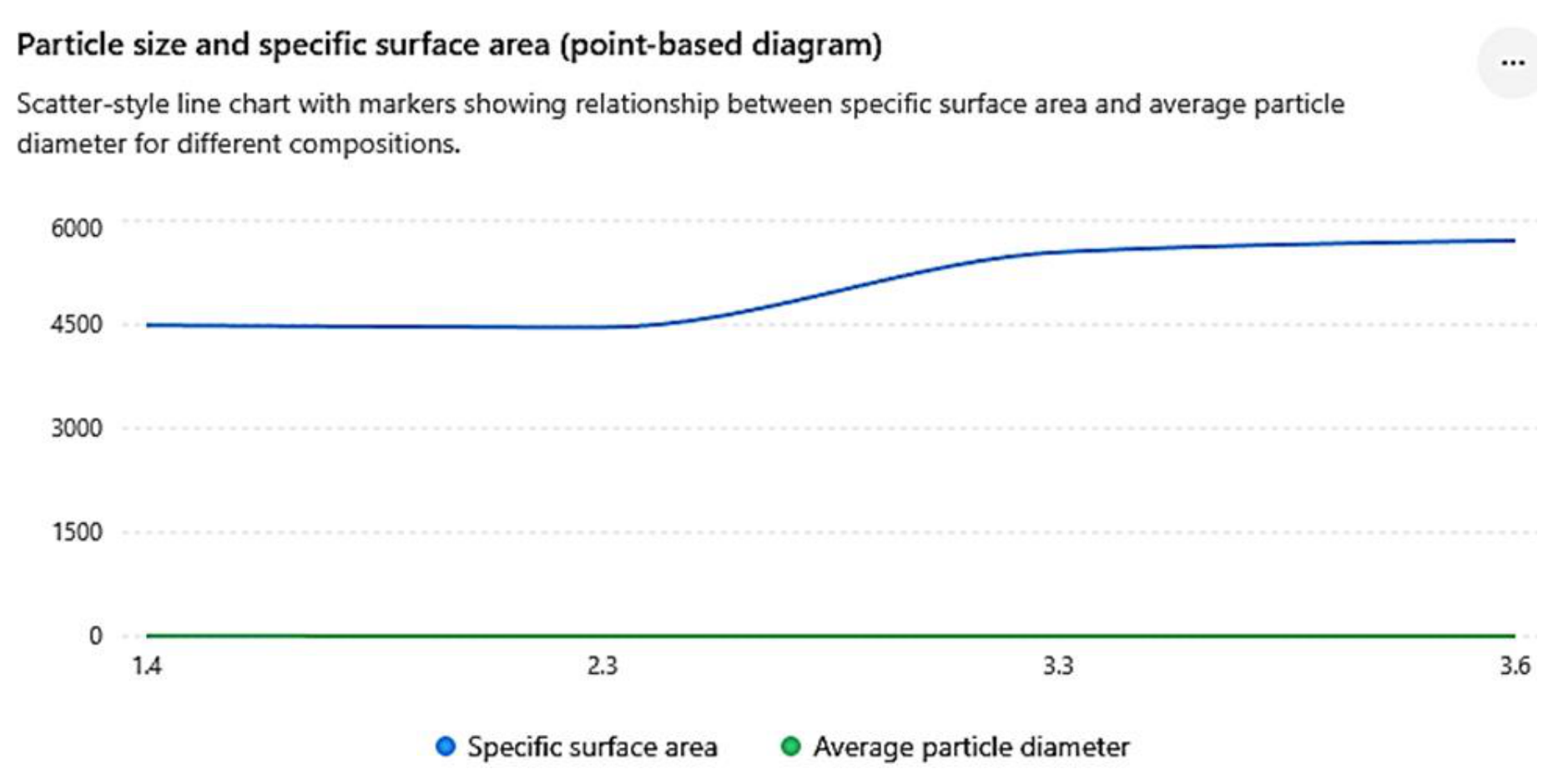
The obtained results demonstrate that the grinding process significantly affects the technological properties of the binder material. An increase in the degree of dispersion contributes to a rise in the specific surface area and a simultaneous decrease in the average particle diameter. The maximum specific surface area was observed for composition 3.6, reaching 5712 cm2/g, while the average particle diameter decreased to 3.1 μm, indicating a higher grinding efficiency and enhanced particle activation. In contrast, composition 1.4 exhibited a lower specific surface area of 4490 cm2/g and a larger average particle diameter of 6.2 μm. The obtained relationship confirms that finer grinding promotes an increase in the reactivity and technological performance of the binder material due to the enlargement of the contact surface between particles.
Influence of the amount of modifier on rheological and mechanical properties. The optimal amount of modifier based on polycarboxylate and microsilica was determined after selecting a grinding time of 90 minutes (Table 10).
These results (Table 11) clearly demonstrate the dual effect of the modifier on the binder system. The polycarboxylate-based component is adsorbed on the surface of binder particles, reduces their adhesion to each other and ensures good dispersion. Due to this, the water-binder ratio is significantly reduced while maintaining a certain level of spreading of the mixture. For example, in the case of a control composition without a modifier, this indicator was 0.40, and in the case of a 6% modifier it decreased to 0.28.
And silica fume, due to its very fine and amorphous nature, creates a void-filling effect and reacts with calcium hydroxide, a product of crystalline hydration, to help form an additional calcium silicate gel. Thus, flexural and compressive strength increases sequentially as the modifier content increases from 2% to 6%.
However, after 6% there is no sharp increase in strength. The compressive strength at 8% is 56.1 MPa, which is almost equal to the value at 6%. And within 10-12% the decline begins. The mechanism behind this is that excess organic additive may cause the effect of “excessive cement particle dispersion” between cement particles and reduce the optimal spatial cohesion of hydration products. In addition, by reducing the percentage of clinker, the amount of hydraulically active phases also decreases. In this regard, the amount of modifier 6% turned out to be optimal from a rheological, physical and economic point of view.
The influence of the amount of quartz sand on strength and the choice of optimal composition. At the next stage, the amount of modifier was kept constant at 6% and the mechanical parameters of the compositions were studied with an increase in the percentage of quartz sand (Table 12).
The results of this table (Table 12) lead to a very important scientific conclusion: increasing the proportion of quartz sand increases the degree of grinding, but this does not mean an infinite increase in mechanical properties. In contrast, with the addition of 30% quartz sand, the maximum compressive strength reached 57.1 MPa, after which it began to decrease.
The mechanism for this is explained as follows. Initially, within the range of 10-30%, quartz sand performs three useful functions, since it is in a very finely dispersed state. Firstly, it fills the space between the binder particles and increases its density. Secondly, it forms nucleation centers for hydrate products on nano- and micron-scale surfaces. Third, it absorbs some of the Ca(OH)2 along with microsilica and promotes the formation of additional C-S-H gel. As a result, despite the decrease in the amount of clinker in composition 3.3, the strength is higher than that of the control sample.
But when the quartz content exceeds 40% the amount of clinker, which is the active hydraulic component of the system, decreases sharply. This leads to a decrease in the amount of primary hydration products, especially portlandite and the main source of CSH. As a result, quartz reacts with calcium hydroxide and water, and the reactive environment is not enough for the activity of substances that form cementitious compounds. Although the partially active role of quartz in this composition remains, it can no longer compensate for the lack of clinker. Therefore, the compressive strength gradually decreased in compositions 3.4, 3.5, 3.6 and 3.7.
Thus, when quartz sand is used in optimal quantities, it is not an inert filler, but a structure sealant, and a component that activates the process of formation of cementitious compounds with the participation of calcium hydroxide and water. But when its proportion is too high, the overall binding capacity is reduced due to the lack of active clinker phases.
Possibility to reduce the grinding time of selected ingredients. Сompositions 3.3 and 3.6 were selected separately and tested to reduce grinding time (Table 13).
The results (Table 13) showed that reducing the grinding time from 90 minutes to 70 minutes for some compositions was favorable in technological terms. In particular, for composition 3.3, when crushed for 90 minutes, the compressive strength was 57.1 MPa, and when crushed for 70 minutes, the compressive strength was 53.6 MPa. Such a decrease in the strength indicator is not critical and, when compared with energy costs, is technologically acceptable.
This phenomenon is especially relevant for composition 3.3, since it provides a stable packing and nucleation effect between the important quartz and modifier particles, allowing for a satisfactory level of mechanical properties to be increased, even if the grinding degree is slightly small. 3.6 has less clinker, which affects the strength and grinding time. Therefore, when optimizing the grinding mode, it is necessary to take into account the mineralogical nature of the composition and the ratio of reactive components.
Change in compressive strength of binder samples of various compositions over time. In the control composition, the strength is formed mainly due to the hydration of clinker, and a significant part of the portlandite remains in a free-crystalline state. In the optimal composition of 3.3 (55% clinker, 30% quartz sand), maximum strength is achieved (57.1 MPa) due to the synergistic effect of dispersion, microfilling, nucleation centers and pozzolanic reactions (Figure 2). On the contrary, in the low clinker composition 3.6 (30% clinker), due to the absence of hydraulically active phases, the strength decreases to 37.5 MPa, despite the high dispersion. These results confirm the existence of a critical limit for clinker (Figure 3).
Conceptual model showing the nonlinear relationship between quartz sand content and compressive strength in a nanoactivated quartz cement system. Maximum strength is observed at ~30% quartz sand (≈55% clinker), and this value represents the critical limit of clinker. Below this limit, reducing the amount of clinker limits the formation of Ca(OH)2 and the primary C–S–H gel, resulting in reduced efficiency of pozzolanic reactions and deterioration of overall mechanical properties.
Determination of hydration products by X-ray diffraction analysis (XRF). The mineral phases formed during hydration in cement compositions were determined using X-ray diffraction analysis (XRF). Analyzes were carried out using a laboratory X-ray diffractometer. To compare and evaluate the hydration process, three compositions were selected: control sample No. 1, as well as binder compositions No. 3.3 and No. 3.6, which, as a result of research, turned out to be optimal.
Samples of binder mixtures that hardened after 1, 3, 7 and 28 days were taken, dried and ground into powder. Measurements were carried out in the angle range 5–75° (2θ), with a step of 0.02° and a scanning speed of 1°/min. The resulting diffraction patterns were compared with a PDF database (Powder Diffraction File) and analyzed.
Analysis of the hydration mechanism based on XRD results clearly showed the phase difference between the control sample and the selected modified compositions. Hydration in control sample No. 1 proceeds typically for a classic Portland cement system. X-ray diffraction studies of 1, 3, 7, 14 and 28 daily hydration periods of the control cement system showed phase hydration characteristic of Portland cement. Reflexes detected during early hydration 3.862; 3.620; 3.340; 3.106; 2.964; 2.685; 2.603; 2.181; 2.164; 1.687; 1.625; 1.540; 1.483 Å proves the simultaneous presence of primary hydrate products and residual clinker minerals. The reflection of 2.603 Å shows the beginning of the formation of portlandite (Ca(OH)2), which means the beginning of the formation of tricalcium silicate (C3S). At the same time, reflexes are 3.862; 3.620 and 2.685 Å belong to the ettringite (AFt) phase, which shows actively occurring sulfoaluminate reactions. Reflexes 3.106; 2.181; 2.164; 1.687 va 1.625 Å correspond to the phases of residual clinker minerals alite and belite.
The high intensity of portlandite reflections after 28 days indicates that a significant part of the Ca(OH)2 formed in the system remains in the form of a free-crystalline phase. This means that in the control composition there are almost no reactions of the formation of cementitious compounds when interacting with calcium hydroxide and water, and the strength is due mainly to the primary C-S-H gel formed as a result of clinker hydration (Figure 4).
Composition 3.3 shows a completely different scene. In the presence of quartz and microsilica, there is a relative decrease in the reflections of substances that react with calcium hydroxide and water and form cementitious compounds, and an increase in the diffusion maximum of C-S-H. This is a very important scientific indicator, meaning that the formed Ca(OH)2 is partially consumed in secondary reactions. That is, calcium hydroxide released as a result of clinker hydration reacts in the presence of water, and binders react with quartz and microsilica to form additional low-crystallized hydrosilicate phases. It is this secondary C-S-H gel that thickens the microstructure, reduces capillary porosity and prevents structural failure under load (Figure 5).
X-ray diffraction analysis of the second cement composition No. 3.3, consisting of 55% clinker, 30% nano-ground quartz sand, gypsum and modifier, shows that the hydration process in it is even more efficient in comparison with the classical control composition of this system. According to the results of phase analysis, in this composition, along with clinker hydration products, secondary pozzolanic reactions are active. It was this situation that formed the microstructure and mechanical properties of the second composition better than the first, that is, the control composition.
At the early stages of hydration 1-7 days, the diffraction pattern of composition No. 3.3 revealed intensive formation of the ettringite phase (AFt) through the reflection d = 14.48 Å and the formation of portlandite through the reflection d = 4.903 Å. At the same time, weak reflections in the range d ≈ 10–11 Å indicate the initial appearance of the AFm phase. This means that the evolution of the sulfoaluminate system is more complex and active compared to the control composition. In the control composition, at the initial stage, predominantly AFt and CH are formed, and the system is limited by the classical hydration of Portland cement.
At the 14-day stage, the distinct expression of AFm reflexes in the second composition and the strengthening of the diffuse maximum in the region of d ≈ 3.025 Å indicate a much greater development of hydration products. Although the portlandite reflex d = 4.903Å is preserved, its relative intensity is limited compared to the control composition. This is a very important scientific marker because it shows that Ca(OH)2 is not just accumulated, but is also consumed in secondary reactions. Since the control composition lacks the pozzolanic component, portlandite accumulates predominantly in the crystalline state. As a result, C–S–H gelation in the first composition is limited only by clinker hydration, while in the second composition clinker hydration and pozzolanic reactions act together.
At the 28-day stage, the difference between the two formulations is most obvious. In the control composition, the portlandite reflections remain high in intensity, and most of the CH is observed to be present as a free crystalline phase. In the second composition, although the portlandite reflection is preserved at d = 4.903 Å, its relative intensity is lower. On the contrary, an increase in the diffuse background and an increase in the C–S–H gel indicate that the binding matrix is more formed in the second composition. . The strong reflection of quartz at d = 3.335 Å indicates the preservation of its crystalline part, but this does not mean that the phase is completely inert. The combined action of high surface area nano-sized quartz and microsilica converts some of the portlandite into a secondary C–S–H gel. Therefore, structural compaction in the second composition is more effective than in the control composition. The mechanical test results also support this conclusion. The compressive strength of the control composition for 28 days was 56.1 MPa, and for the second composition this figure reached 57.1 MPa. Although this difference is numerically small, it is very important from a scientific point of view: despite a significant reduction in the amount of clinker, the strength is not only maintained, but also slightly increased. This indicates that in the second composition, quartz sand crushed to nanoparticles acted as an active mineral component, and not a simple inert filler. That is, it bound the Ca(OH)2 separated from the hydration of the clinker, formed an additional C–S–H gel, and thereby formed a dense, strong and stable microstructure of the cement stone.
In composition 3.6 (Figure 6), although quartz reflections predominate, the overall formation of portlandite is limited due to a sharp decrease in the proportion of clinker. This means that the source of Ca(OH)2 is not enough for the full development of pozzolanic processes. Therefore, a high proportion of quartz in such a system does not lead to an increase in strength, but to a “dilution” of the active binding phases. As a result, even if structural compaction occurs, the overall density and duration of the connective skeleton will be insufficient.
Despite the high proportion of quartz sand in this composition, the results of X-ray diffraction analysis allow it to be interpreted not only as an inert filler, but also as an active silicate component participating in subsequent stages of the hydration process. The diffraction patterns of 1-, 3-, 7-, 14- and 28-day samples reveal phases of quartz, portlandite, ettringite (AFt), sulfoaluminate type AFm, residual clinker silicates and low-crystallized C–S–H gel.
Observed values d = 4.243; 3.335; 2.452; 2.281; 2.124 and 1.815 Å of the main reflections of the quartz phase have high intensity in samples of all ages (stages of hardening), which indicates the presence of a significant proportion of quartz in the composition. At the same time, as the hydration process develops, the relative change in portlandite reflections and the expansion of the diffuse maximum of the C–S–H gel indicate the participation of quartz in pozzolanic reactions.
Based on all the information obtained, the mechanisms of influence of the proposed compositions on mechanical properties are explained as follows. The first mechanism is an increase in dispersion and active surface. Longer grinding times reduce particle size, which increases the active surface area that reacts with water. Increasing the active surface increases the rate of hydration and increases strength, especially in the early stages. The second mechanism is the dispersing effect of polycarboxylate. Polycarboxylate molecules are adsorbed on the surface of cement particles, creating a steric barrier and reducing particle recombination. As a result, less water is required to achieve the same workability. Reducing the water-cement ratio reduces the size of capillary spaces in the hardened cement paste and increases strength.
The third mechanism is the reaction of microsilica with calcium hydroxide and water to form astringent compounds and a microfiller effect. Due to its very fine and amorphous nature, silica fume fills voids, improves particle packing and reacts with calcium hydroxide, a product of crystalline hydration, to form a secondary gel CSH. This makes the structure more compact. The fourth mechanism is the role of nanosized quartz sand as a nucleation site. Fine quartz particles serve as a substrate for the precipitation of hydrate products. In addition, due to its high dispersion, some of it reacts with calcium hydroxide, which is a product of crystal hydration, and supports processes that react with calcium hydroxide (i.e., portlandite, Ca(OH)2) and water to form cementitious compounds. But this factor is effective only with sufficient clinker content. The fifth mechanism is the critical limit on the amount of clinker. When the clinker is too depleted, the system lacks Ca(OH)2 and the source of primary CSH gel formation. In this case, quartz and microsilica alone cannot provide high strength. Therefore, when optimizing the composition, a balance must be maintained between mineral additives and clinker.
The microstructural properties of cement compositions were studied using transmission electron microscopy (TEM). Analyzes were carried out using a laboratory transmission electron microscope. This method makes it possible to observe the nano- and microstructure of materials using high-resolution electron beams.
For microstructural analysis, cement composition 3.3 was selected and studied, which was recognized as optimal as a result of research. For analysis, samples of cement composition 3.3 were dried, ground to a fine powder and dispersed in an alcoholic medium using ultrasound. The prepared suspension was drip-dried on a special carbon-coated copper grid and placed in a microscope chamber.
TEM images were recorded based on the contrast created by the electron beam passing through the sample. Using the obtained images, the morphology of the structure of calcium hydrosilicate gel (C–S–H), portlandite crystals and other hydration products formed during cement hydration was analyzed. Based on the results obtained, the microstructural development of the binder system in different compositions was compared and evaluated.
In this work, the technology for producing composite cement grade 3.3 COMPOSITION has been improved with simultaneous grinding and mixing of Portland cement clinker and gypsum in a ball mill, with the addition of nano-ground quartz sand and a polymer additive(modifier) consisting of microsilica and a polycarboxylate superplasticizer, to the mixture and a stage of mechanical activation for 1.0 hour at a temperature of 21-22 ° C. The degree of grinding of the activated product was controlled through a 0.008 mm sieve and a highly dispersed composite mixture was formed. TEM analyzes (V/1 and V/2) confirm the location and interaction mechanism of micro-nano-sized phases in the composite (Figure 7).
The V/2 image (high magnification) clearly shows the chain/aggregation arrangement of nano-sized spherical particles along the edges of large particles and in the spaces between them. These nanoparticles (silica fume and mechanically activated hydration products) act as fillers and “close cracks” in the matrix, resulting in compaction of the structure (Figure 7).
The polymer component of the composite unites clusters of particles in the form of an elastic connecting network observed in TEM: the polymer film/gel phase binds in the boundary zone with cement hydrates, strengthens the interface (ITZ), redistributes stresses in particle-particle contacts and limits the brittle fracture mechanism.
The polycarboxilate plasticizer increases dispersion and ensures uniform distribution of microsilica; as a result, the local “accumulation” of nanoparticles decreases and a matrix with a homogeneous microstructure is formed. The process of mechanical activation activates the surface of particles, increases the number of reactive centers and creates conditions for the formation of a dense continuous framework of the C–S–H phase by accelerating the pozzolanic reaction of microsilica.
Thus, the V/1 and V/2 TEM results in Figure 7 show that the concept of “multi-scale (micro-nano) reinforcement” is implemented in composite cement 3.3 COMPOSITION: (i) nanoparticles fill voids and increase structural density, (ii) polymer phase strengthens the interface and slows down crack development, (iii) superplasticizer stabilizes dispersion and ensures homogeneity. As a result, the high mechanical properties of composite cement (strength, fracture resistance and deformation stability) have been scientifically substantiated. The uniqueness of this approach is that control of the microstructure is ensured through the synergy of mechanical activation + nanofiller (microsilica) + polymer mesh + highly effective dispersant, compared to a conventional clinker-gypsum system, and a composite cement composition of grade 3.3 COMPOSITION is formed, providing a high level of scientific innovation and practical results.
In this work, TEM micrographs of composite cement grade 3.3 COMPOSITION (Figure 8) at the scales of 500 nm and 200 nm are analyzed and the morphological role of round (spherical) nanostructures and the polymer matrix formed in the composite is scientifically illuminated. The resulting images demonstrate a highly organized nanoarchitecture resulting from mechanical activation and complex modification (silica fume-polymer-superplasticizer).
TEM images at a scale of 500 nm show nanosized particles of predominantly spherical shape, uniformly distributed throughout the composite matrix. Their diameter is approximately 20-60 nm, and it has been established that they form chain-like and clustered aggregates in some places. These spherical nanophases are associated with the high reactivity of silica fume and hydration products formed by mechanical activation and act as nanofillers in the cement matrix. This position reduces the overall porosity of the structure and serves to evenly distribute stresses under load.
And high-resolution TEM images at a scale of 200 nm show a more accurate morphology of spherical nanosized particles. At this level, it is observed that the size of some particles decreases to 10-30 nm and they are surrounded by a polymer matrix. The polymer phase appears in the images as a translucent continuous binding medium that unites nanoparticles into a single structure. As a result, a “synergy of soft and hard phases” arises, the development of microcracks is limited due to the elasticity of the polymer, and the absorption of fracture energy increases.
From a scientific point of view, TEM data confirm the presence of a multi-level strengthening mechanism in composite cement grade 3.3 COMPOSITION: spherical nanophases provide high hardness and density, and the polymer matrix provides deformation flexibility and adhesion. It is this harmony at the micro-nano level that is considered the main factor that dramatically increases the mechanical properties, durability and long-term stability of composite cement.
A unique aspect of this approach is that the synergistic effect of nano-sized spherical particles and polymer matrix compared to a conventional cement system was directly confirmed by TEM, and results of high scientific innovation were presented.
TEM micrographs of composite cement grade 3.3 COMPOSITION clearly demonstrate the presence of spherical nano-sized particles uniformly distributed within the polymer matrix. In Figure 9 shows the agglomerated state of nanoparticles (1a–1c) and their interphase zones bordering the polymer matrix in images on a scale of 500 nm. At this scale, the particles are located close to each other and form a strong physical bond with the matrix, indicating an even distribution of electronic contrast.
In TEM images (2a–2c) in the wavelength range of 200 nm (Figure 9), the morphology of spherical particles is more clearly visible, their smooth boundaries and almost monodisperse size distribution are observed. This situation shows that nanofillers have stable formation during the synthesis process and structural flexibility in a polymer environment. In particular, the absence of a sharp phase boundary at the particle-matrix interface can ensure good dispersion and efficient transfer of mechanical loads in the composite system.
In high-resolution TEM images at a scale of 100 nm (Figure 9) (3a–3c), the internal structure of spherical nanoparticles and their density are more clearly visible. In this range, the formation of a polymer shell layer around the particles is observed, which confirms the presence of strong interfacial interaction between the nanofillers and the polymer matrix. As a result, all analog images in the 500–100 nm range are morphologically consistent with each other, indicating that structural integrity is maintained as size decreases.
Regarding diffusion processes, the system of multiscale spherical nanofillers creates complex tortuous diffusion paths within the polymer matrix. As a result, the rate of penetration of moisture, ions or components of an aggressive environment into the material slows down significantly. Especially particles in the 100–200 nm range act as effective diffusion barriers due to their high surface/volume ratio. This condition increases the long-term stability and corrosion resistance of the composite cement. Overall, in the composite cement system 3.3 COMPOSITION, spherical nano-sized particles exhibiting the same morphological characteristics at different scales prove the high structural stability of the material and effective integration with the polymer matrix. Such multiscale structural harmony plays an important role in increasing the mechanical strength, crack resistance and long-term performance properties of the composite.
Microphotograph of modified cement grade 3.3. COMPOSITION obtained by transmission electron microscope (TEM) at 100 nm scale and corresponding energy dispersive X-ray spectroscopy (EDS) results comprehensively confirm the formation of a stable structure in the composite system (Figure 10). The TEM micrograph shows that the spherical nanosized particles inside the polymer matrix are clearly separated, interconnected and form a strong interface with the matrix. Smooth morphology, dense arrangement and relatively uniform size range of particles indicate the high dispersion of nanofillers in a polymer medium.
The EDS spectrum confirms the chemical nature of the nanostructures observed in the TEM image, and the high intensity of the carbon (C) peaks shows the leading role of the polymer component in the formation of the structure. At the same time, the presence of peaks of oxygen (O), silicon (Si) and calcium (Ca) indicates (Figure 10) that cement-based phases together with nano-sized particles form a single compositional system. The clarity of the silicon and calcium signals indirectly confirms the presence of hydrated cement phases of the C–S–H type integrated with the polymer matrix.
A comparison of the results of TEM and EDS shows that in the modified cement system of grade 3.3 COMPOSITION, nanofillers participate not only as mechanical additives, but also as structurally and chemically interconnected phases. This multicomponent nanostructure creates strong interactions at the cement-polymer interface and effectively fills micro- and nano-sized pores. The resulting structural integrity can significantly increase the mechanical strength, crack resistance and long-term operational stability of the composite material.
The following Table 14 shows the composition of elements determined by EDS analysis of modified cement grade 3.3 COMPOSITION. According to the results, the largest proportion in the composition is Ca (atomic fraction 32.60%, mass fraction 48.58%), which indicates the dominance of the main mineral phases of cement and calcium-rich components. Significant detection of elements O (24.89 at.%, 14.81 wt.%) and C (19.32 at.%, 8.63 wt.%) confirms the presence of oxide/hydrate phases and polymer/organic modifier (or carbonation products), respectively.
Also, the amount of Si (12.75 at.%, 13.31 wt.%) indicates the formation of silicate phases (for example, C–S–H or silicate components) in the material. Elements such as Al (3.26 at.%), Fe (3.78 at.%), S (1.74 at.%), Mg (1.29 at.%) and Na (0.37 at.%) are characteristic of microcomponents in auxiliary mineral additives and cement raw materials. Overall, a combination of elements 3.3 COMPOSITION of cement phases (Ca–Si–O) and modifier (C) are present together in the sample, indicating that structural chemical integration has occurred in the composite system.
4. Conclusions
The results of the present study comprehensively revealed the mechanisms of hydration processes, phase evolution and microstructure development resulting from the combined use of nano-ground quartz sand, microsilica and polycarboxylate-based modifier in a low-clinker cement system. The data obtained prove that quartz sand in a highly dispersed state transforms from the role of a traditional inert filler into a structural component that forms nucleation centers and has partial pozzolanic activity.
The studies revealed that the mechanical properties strongly depend on the balance between the structural components, and a nonlinear change in strength is observed with an increase in the proportion of quartz sand. The highest compressive strength (57.1 MPa) was recorded in the composition of 30% quartz sand and 55% clinker, which experimentally confirms the existence of a critical limit of clinker for a low-clinker system. Below this limit, reducing the amount of clinker leads to limited formation of Ca(OH)2 and primary C–S–H gel, which reduces the efficiency of pozzolanic reactions and, as a result, deteriorates the mechanical properties.
X-ray diffraction analysis confirmed the synergistic effect of microsilica and nanoactivated quartz sand, showing partial consumption of portlandite and the formation of additional low-crystalline C–S–H gel. TEM results showed the formation of a multiscale strengthening mechanism as a result of the combined effects of structural densification at the micro- and nanoscale, spherical nanophases and the polymer matrix. These results indicate that the improvement in mechanical properties is determined by the balance of phase and structural evolution and not just by dispersion.
Thus, it has been scientifically proven that mechanical strength is determined by the balance of the following three factors: (1) the formation of Ca(OH)2 as a result of clinker hydration, (2) its effective consumption due to pozzolanic reactions and (3) the degree of compaction of the microstructure. If this balance is disturbed (lack of clinker or the presence of an excess of inert components), the overall efficiency of the system decreases.
The main scientific novelty of this work lies in determining the presence of a critical clinker limit (~55%) in low-clinker cement systems and experimentally substantiating the role of nano-ground quartz sand as a structurally active component. From a practical point of view, the results obtained provide an important scientific basis for the creation of low-carbon, resource-saving and highly efficient cement compositions. The proposed approach allows reducing CO2 emissions by optimizing the clinker fraction in the cement industry, while maintaining a high level of mechanical properties.
References
- Althoey, F.; et al. Impact of nano-silica on the hydration, strength, durability, and microstructure of concrete: A review. Case Studies in Construction Materials 2023, 18, e01997. [Google Scholar] [CrossRef]
- Barcelo, L.; Kline, J.; Walenta, G.; et al. Cement and carbon emissions. Materials and Structures 2014, 47, 1055–1065. [Google Scholar] [CrossRef]
- Berodier, E.; Scrivener, K. Evolution of pore structure in blended systems. Cement and Concrete Research 2015, 73, 25–35. [Google Scholar] [CrossRef]
- Bickbau, M.; Ya. Possibility of efficient production of nanocement in the Kaliningrad region (Innovations and technologies // Intelligent construction technology // http://raen.info>redactorfiles>St_Bikbau (Jan. 13, 2023).
- De la Torre, A.G.; Bruque, S.; Aranda, M.A.G. Rietveld quantitative amorphous content analysis. Journal of Applied Crystallography 2001, 34, 196–202. [Google Scholar] [CrossRef]
- Diamond, S. The microstructure of cement paste and concrete—A visual primer. Cement and Concrete Composites 2004, 26(8), 919–933. [Google Scholar] [CrossRef]
- Dong, P.; Ng, P.L. The effects of nano-silica on early-age hydration reactions and gel structure of Portland cement systems. Cement and Concrete Composites 2022, 133, 104698. [Google Scholar] [CrossRef]
- Gao, Y.; Liu, Y.; Wang, G.; et al. Interaction between polycarboxylate superplasticizer and clay in cement. Materials 2025, 18(11), 2662. [Google Scholar] [CrossRef] [PubMed]
- Hamada, H.M.; et al. Effect of silica fume on the properties of sustainable cement-based materials: A review. Results in Engineering 2023, 24, 100887. [Google Scholar] [CrossRef]
- Hu, C.; Gao, Y.; Yao, X.; Zhang, Y.; Li, W. A review on the mechanical properties of cement-based materials measured by nanoindentation. Construction and Building Materials 2015, 90, 80–90. [Google Scholar] [CrossRef]
- Jennings, H.M. A model for the microstructure of calcium silicate hydrate in cement paste. Cement and Concrete Research 2000, 30(1), 101–116. [Google Scholar] [CrossRef]
- Korpa, A.; Kowald, T.; Trettin, R. Hydration behaviour, structure and morphology of hydration phases in advanced cement-based systems containing micro and nanoscale pozzolanic additives. Cement and Concrete Research 2008, 38(7), 955–962. [Google Scholar] [CrossRef]
- Lämmlein, T.D.; Beuntner, N.; Thienel, K.C. Low clinker high performance concretes and their potential for the German market. Cement and Concrete Composites 2019, 100, 130–138. [Google Scholar] [CrossRef]
- Li, Z.; Ding, Z.; Zhang, Y. Development of sustainable cementitious materials with silica fume. Construction and Building Materials 2011, 25(5), 2246–2253. [Google Scholar]
- Marandi, N.; Shirzad, S. Sustainable cement and concrete technologies: A review of materials and processes for carbon reduction. Innovative Infrastructure Solutions 2025, 10, 408. [Google Scholar] [CrossRef]
- Martín-Rodríguez, P.; Garcia-Lodeiro, I.; Palomo, A.; Fernandez-Jimenez, A. Sustainable synthetic supplementary cementitious materials to make ultra-low clinker cement. Journal of Building Engineering 2026, 121, 115690. [Google Scholar] [CrossRef]
- Midgley, H.G.; Illston, J.M. The use of TEM in the study of hydrated cement systems. Cement and Concrete Research 1984, 14(5), 707–712. [Google Scholar] [CrossRef]
- Scrivener, K.L.; Nonat, A. Hydration of cementitious materials: Present and future. Cement and Concrete Research 2011, 41(7), 651–665. [Google Scholar] [CrossRef]
- Scrivener, K.L.; Snellings, R.; Lothenbach, B. A practical guide to microstructural analysis of cementitious materials; CRC Press, 2016. [Google Scholar]
- Sha, S.; Lei, L. Effects of polycarboxylate superplasticizers on rheology of cement systems. Journal of Sustainable Cement-Based Materials, 2025.
- Siddique, R.; Khan, M.I. Utilization of silica fume in concrete: Review of hardened properties. Resources, Conservation and Recycling 2011, 55(11), 923–932. [Google Scholar] [CrossRef]
- Snellings, R.; Mertens, G.; Elsen, J. Quantitative X-ray diffraction analysis for hydrated cementitious materials. Cement and Concrete Research 2011, 41(4), 339–358. [Google Scholar]
- Song, P.; Wang, X.; et al. Performance ooptimization of low-cliinker cement using micro-powders. Construction Materials Sciene 2026, vol.49, 102289. [Google Scholar] [CrossRef]
- Tavares, L.R.C.; et al. Influence of quartz powder and silica fume on the properties of cementitious composites. Scientific Reports 2020, 10, 21461. [Google Scholar] [CrossRef] [PubMed]
- Vandenberg, A.; et al. Influence of mixing on the generation of nanoparticles in quartz and cement systems. Cement and Concrete Research 2021, 143, 106379. [Google Scholar] [CrossRef]
- Zhang, Y.; Xiao, Y.; Ma, C. Polycarboxylate superplasticizers: structural design and future directions. Journal of Advanced Cement-Based Materials. 2024.
- Zunino, F.; Scrivener, K. Hydration and strength development of low-clinker (. Construction and Building Materials 2025, 499, 144075. [Google Scholar] [CrossRef]
Figure 2.
Nonlinear development of compressive strength over time and the critical limit of clinker in cement samples of various compositions.
Figure 2.
Nonlinear development of compressive strength over time and the critical limit of clinker in cement samples of various compositions.
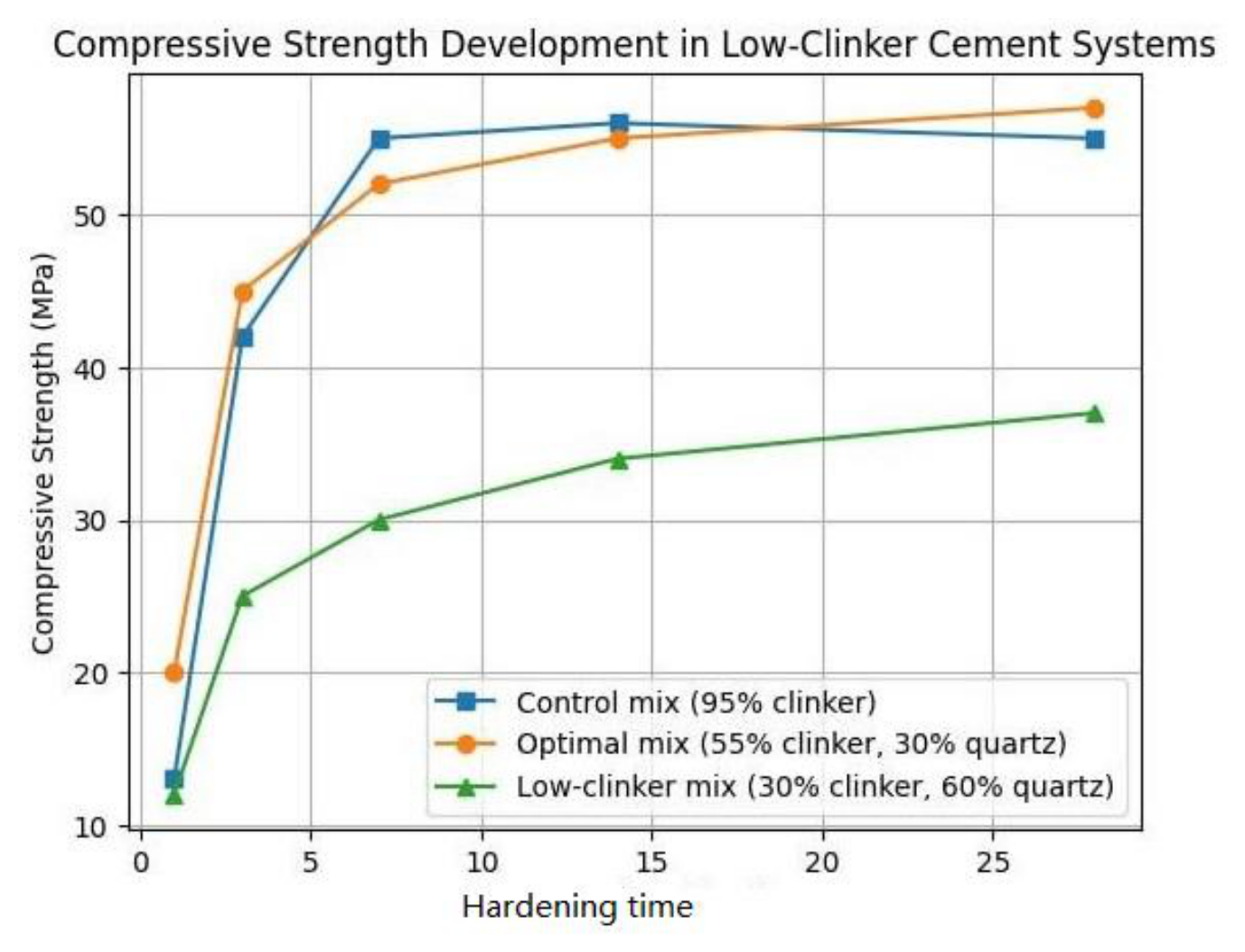
Figure 3.
Nonlinear change in strength in a cement system based on nanoactivated quartz and the critical limit of clinker.
Figure 3.
Nonlinear change in strength in a cement system based on nanoactivated quartz and the critical limit of clinker.
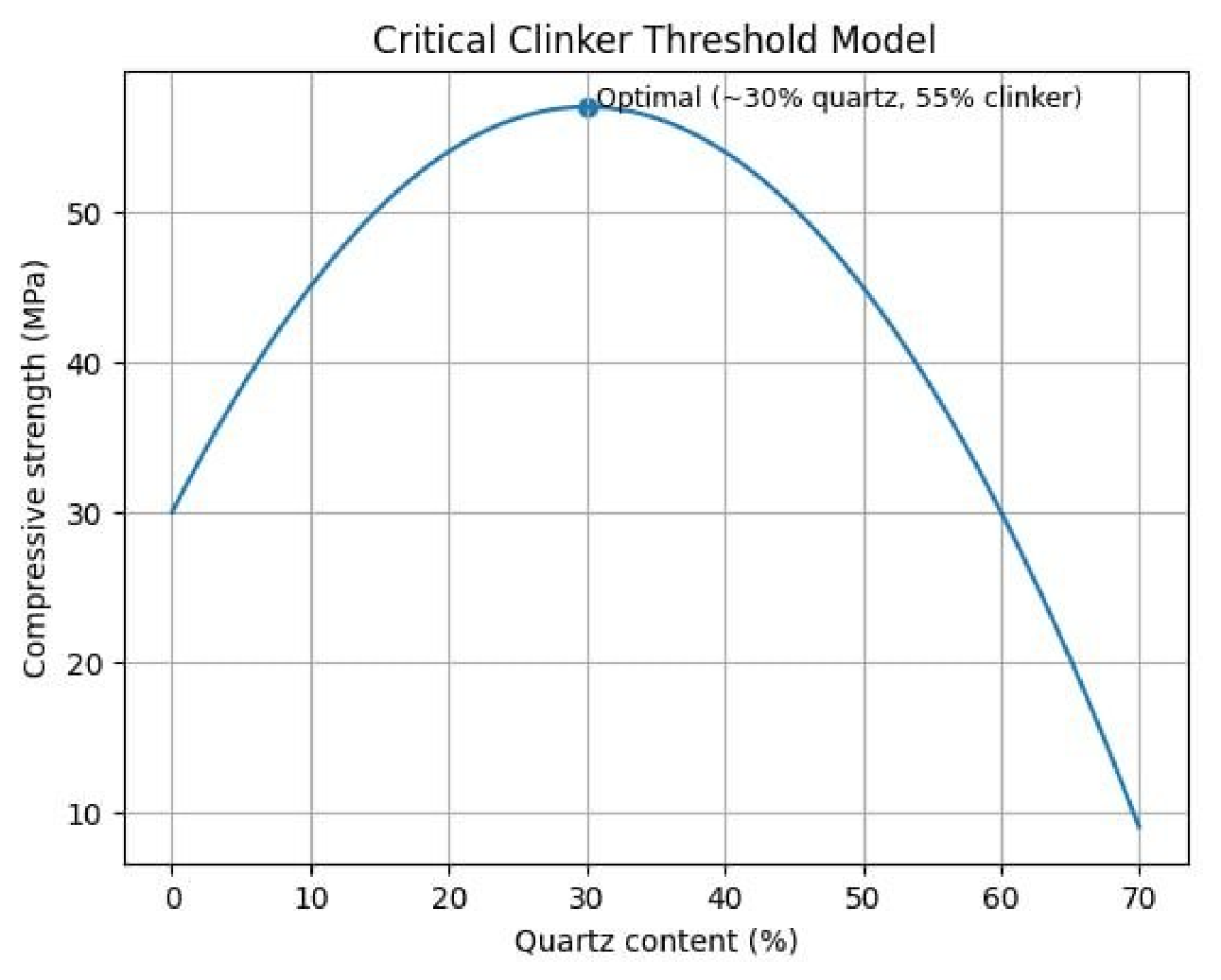
Figure 4.
X-ray diffraction (XRD) analysis of a control cement sample.
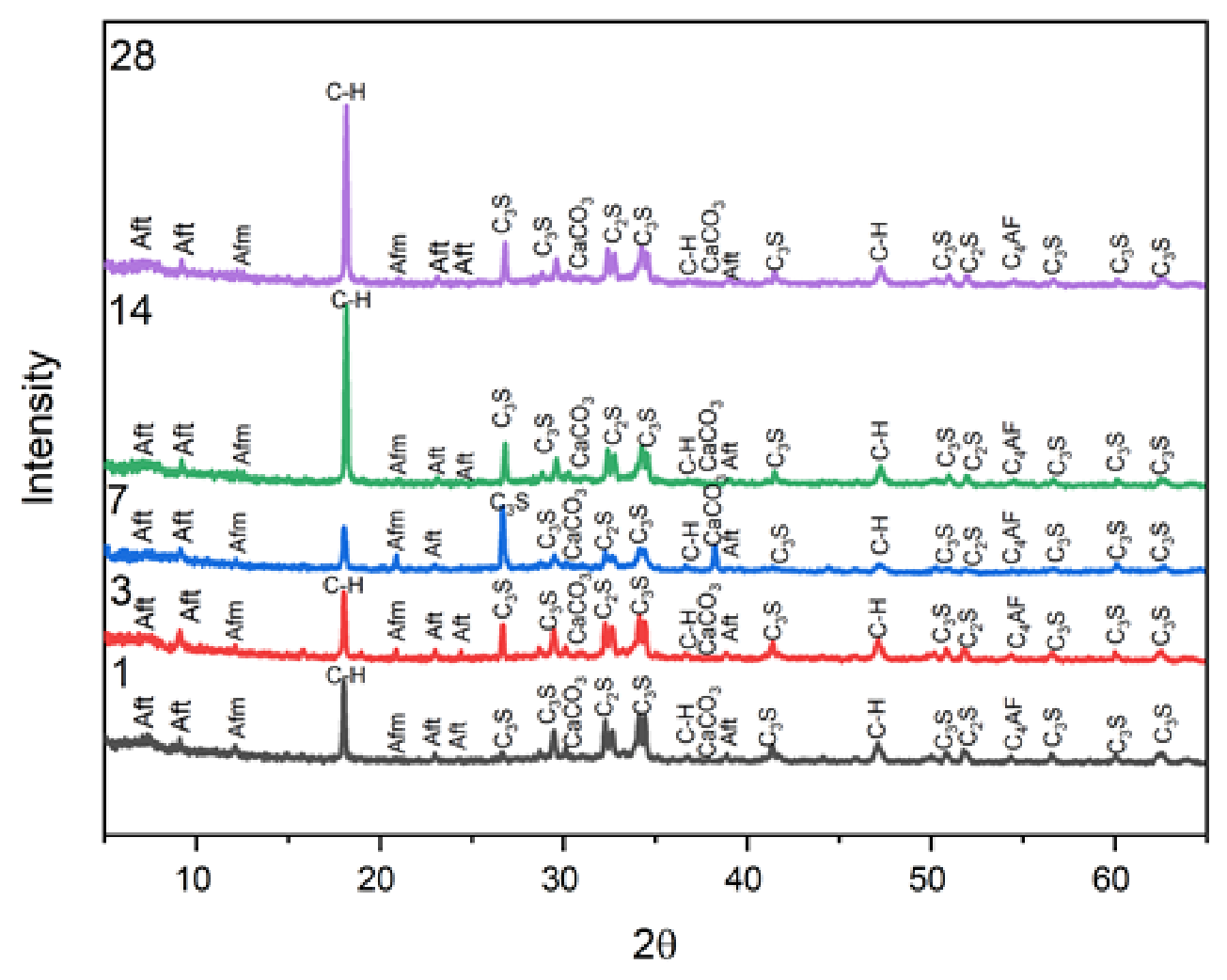
Figure 5.
X-ray diffraction analysis of the second composition (Composition 3.3) with 55% clinker, 30% nano-sized quartz sand, microsilica and polycarboxylate additives.
Figure 5.
X-ray diffraction analysis of the second composition (Composition 3.3) with 55% clinker, 30% nano-sized quartz sand, microsilica and polycarboxylate additives.
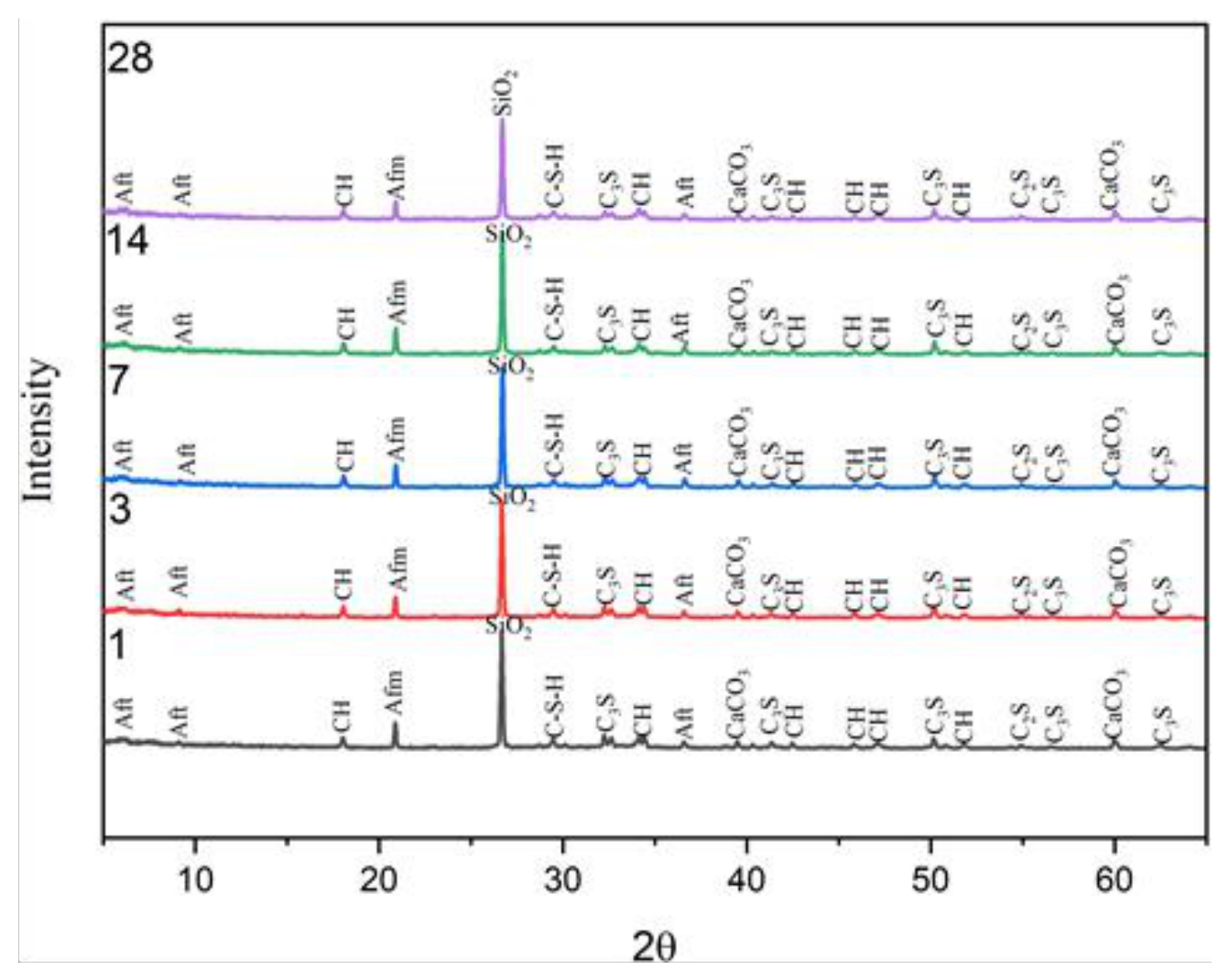
Figure 6.
X-ray analysis of composition 3.6.
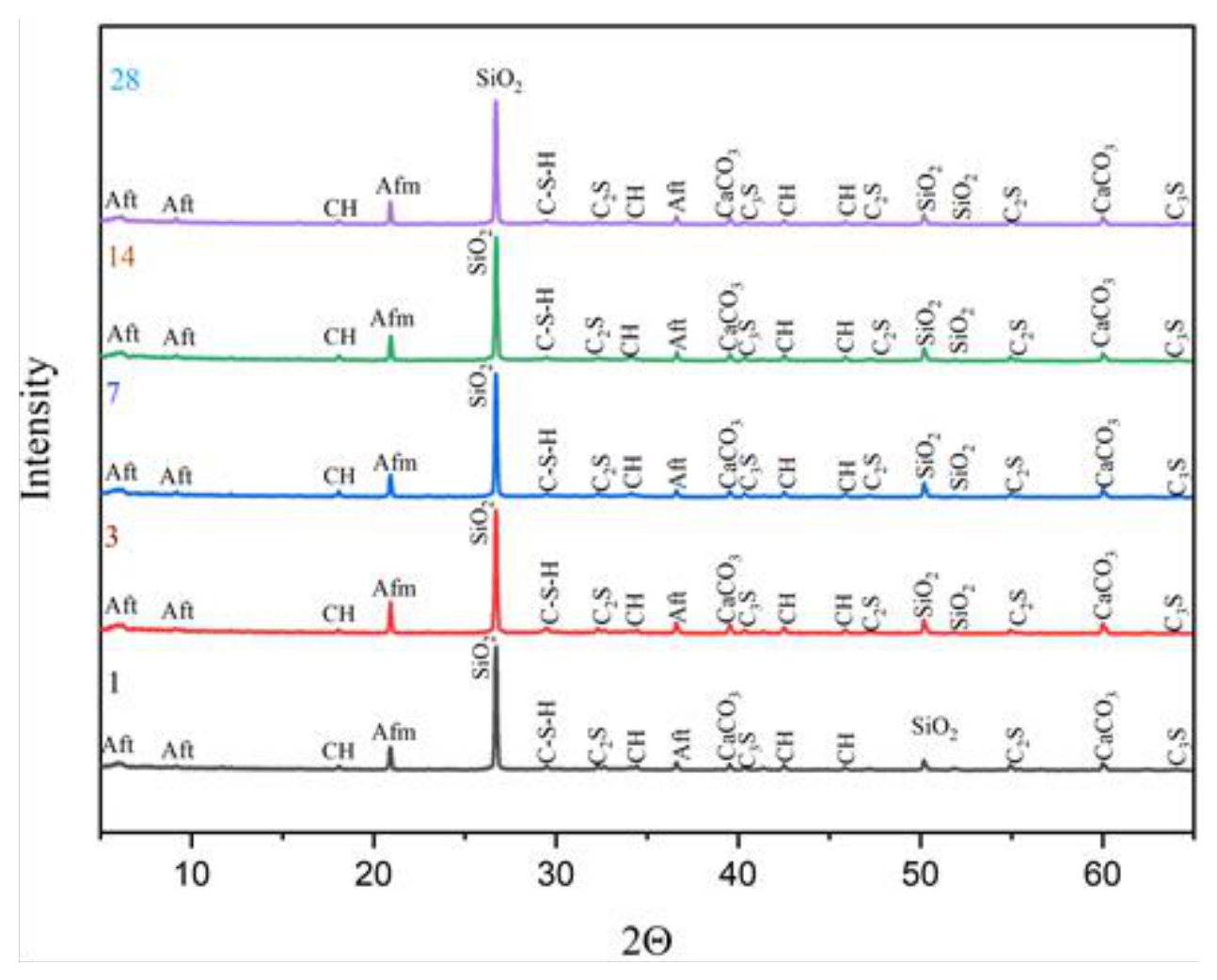
Figure 7.
TEM micrograph of composite cement grade 3.3 COMPOSITION: micro- and nanostructure formed as a result of mechanical activation.
Figure 7.
TEM micrograph of composite cement grade 3.3 COMPOSITION: micro- and nanostructure formed as a result of mechanical activation.
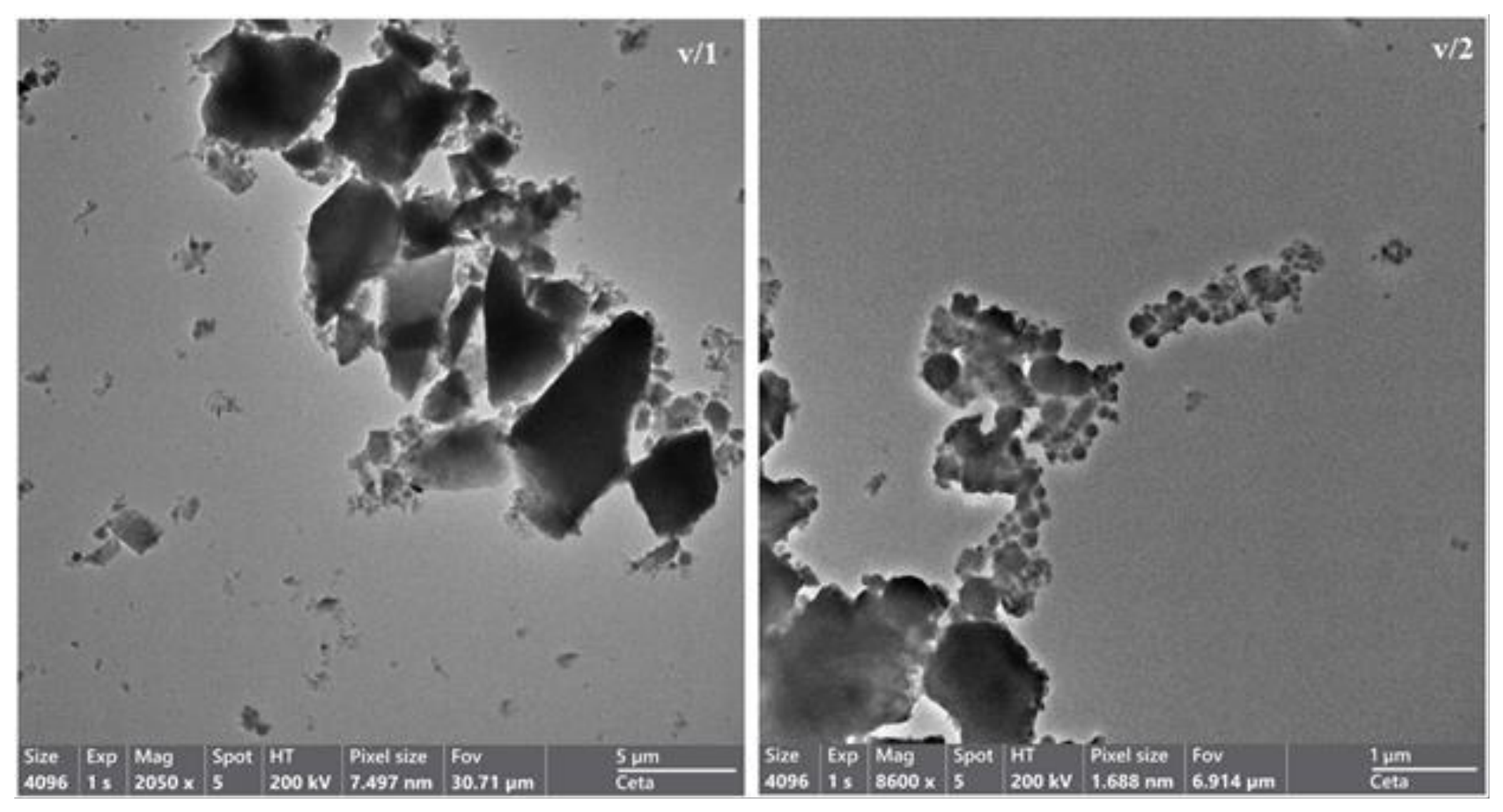
Figure 8.
TEM micrograph of composite cement grade 3.3 COMPOSITION: spherical nano-sized particles (500 nm and 200 nm) in a polymer matrix.
Figure 8.
TEM micrograph of composite cement grade 3.3 COMPOSITION: spherical nano-sized particles (500 nm and 200 nm) in a polymer matrix.
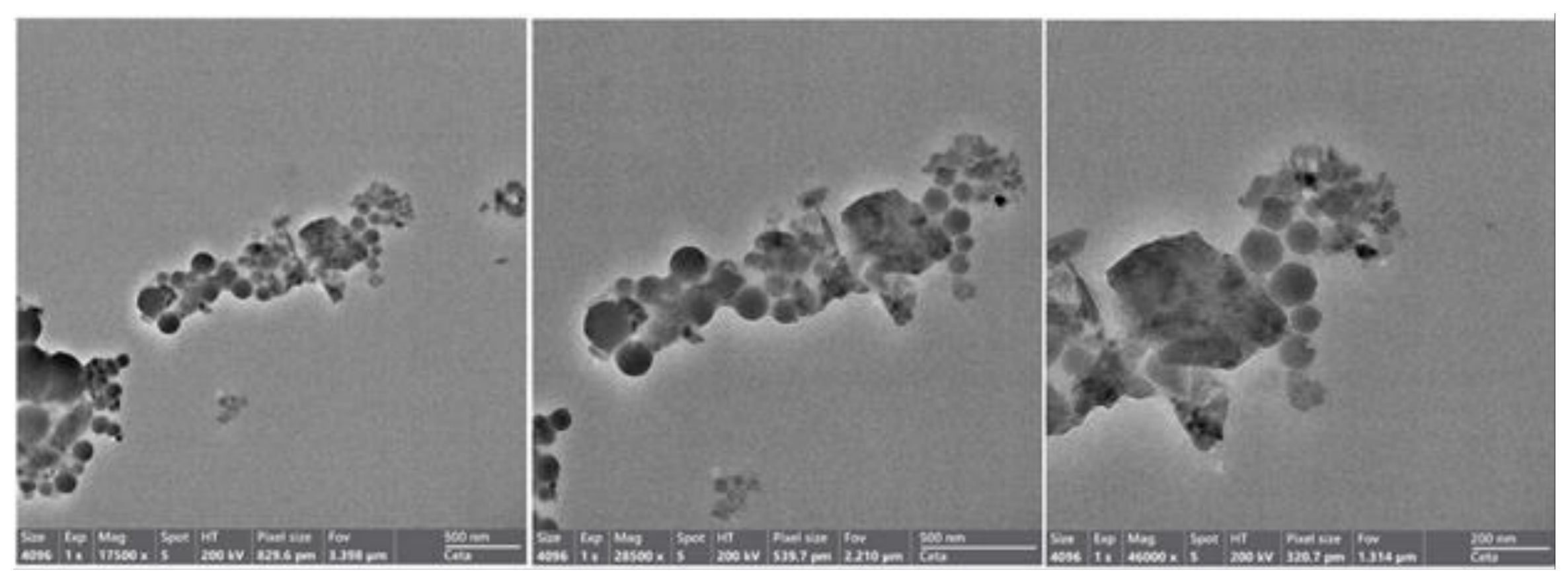
Figure 9.
TEM micrographs in the range of 500-100 nm of spherical nano-sized particles located in the polymer matrix of composite cement grade 3.3 COMPOSITION.
Figure 9.
TEM micrographs in the range of 500-100 nm of spherical nano-sized particles located in the polymer matrix of composite cement grade 3.3 COMPOSITION.
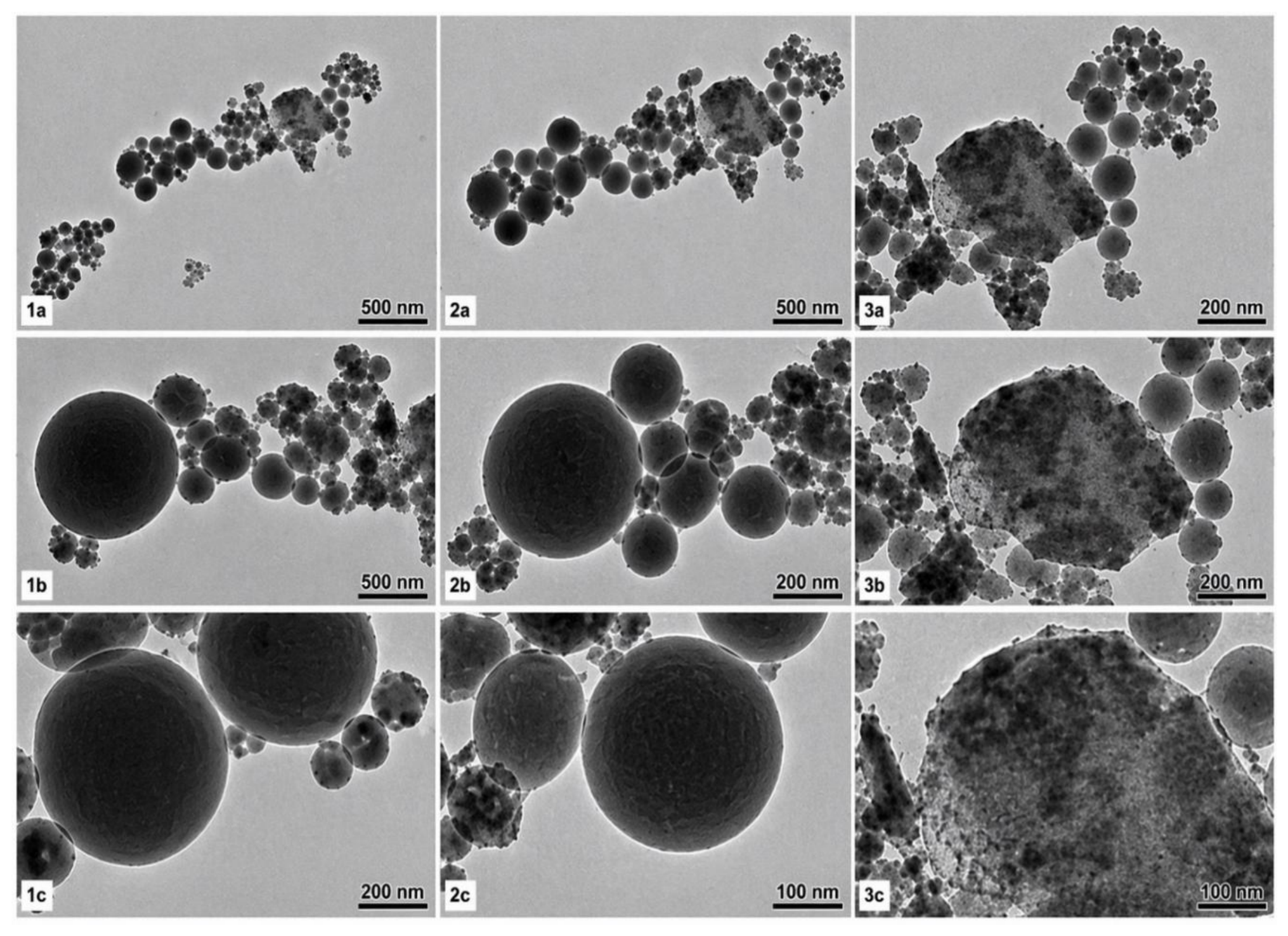
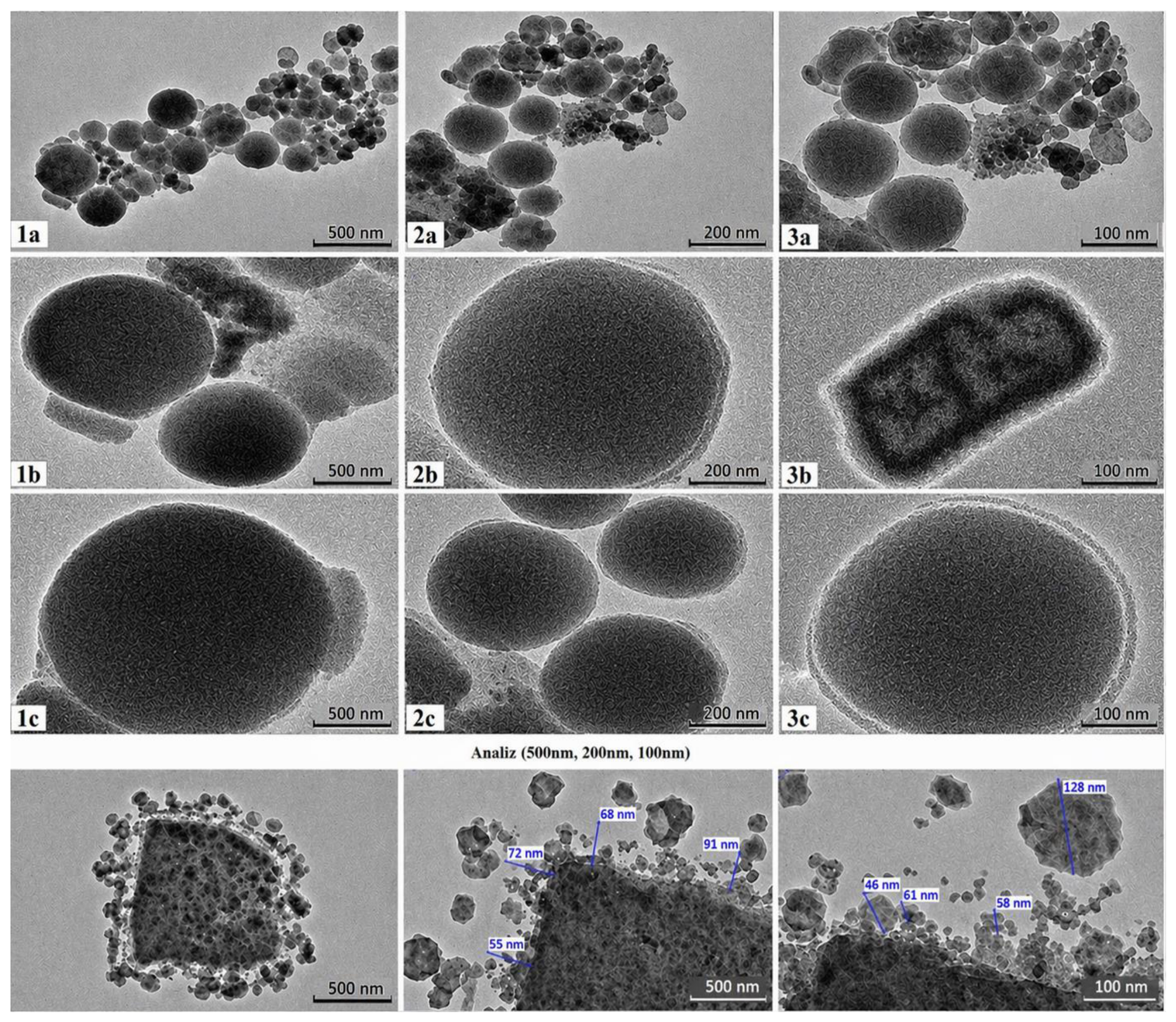
Figure 10.
Structural and chemical integration of modified cement grade 3.3 COMPOSITION based on 100 nm TEM micrograph and EDS analysis results.
Figure 10.
Structural and chemical integration of modified cement grade 3.3 COMPOSITION based on 100 nm TEM micrograph and EDS analysis results.
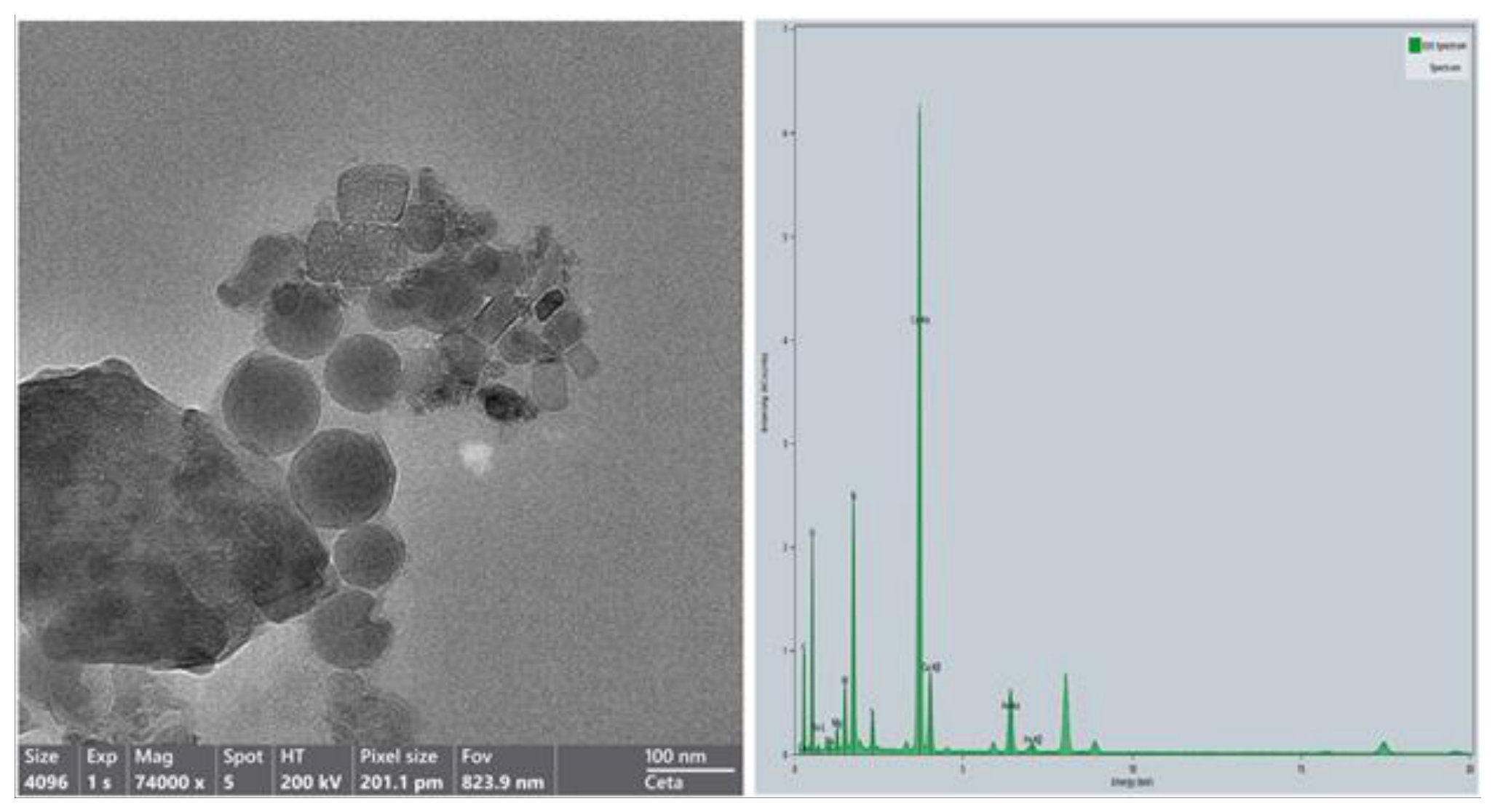
Table 1.
Chemical composition of clinker.
| Component | SiO2 | Al2O3 | Fe2O3 | CaO | CaO free |
MgO | SO3 | Na2O | K2O |
|---|---|---|---|---|---|---|---|---|---|
| Clinker, wt.% | 19.00 | 4.00 | 4.01 | 68.68 | 0.32 | 2.40 | 0.28 | 0.50 | 0.53 |
Table 2.
Mineralogical composition of clinker.
| Minerals | C3S | C2S | C3A | C4AF |
|---|---|---|---|---|
| Clinker, wt.% | 58.8 | 19.1 | 7.8 | 14.3 |
Table 3.
Chemical composition of gypsum.
| Component | quantity, % |
|---|---|
| CaO | 32.6 |
| SO3 | 46.5 |
| H2O | 20.9 |
Table 7.
Chemical composition of microsilica MK-85.
| SiO2 | Al2O3 | Fe2O3 | CaO | MgO | K2O + Na2O |
|---|---|---|---|---|---|
| 95.0 | 0.5 | 0.5 | 2.5 | 0.4 | 1.1 |
Table 8.
Chemical composition of cement compositions (XRF), % by weight.
| Sample | SiO2 | Al2O3 | Fe2O3 | CaO | MgO | free CaO | SO3 | Na2O | K2O |
|---|---|---|---|---|---|---|---|---|---|
| 1 | 18.05 | 4.01 | 4.00 | 66.97 | 2.39 | 0.30 | 2.85 | 0.50 | 0.93 |
| 3.2 | 45.20 | 3.23 | 3.23 | 39.53 | 1.94 | 0.18 | 2.48 | 0.28 | 0.29 |
| 3.6 | 70.45 | 2.29 | 2.23 | 22.36 | 1.34 | 0.10 | 2.41 | 0.15 | 0.16 |
Table 9.
Effect of grinding time on physical and mechanical properties in the clinker-gypsum system.
Table 9.
Effect of grinding time on physical and mechanical properties in the clinker-gypsum system.
| Composition | Cliinker, % | Gypsum, % | Modifier, % | Sand, % | Grinding time, min | Residue on sieve 0,008 mm, % | Grinding degree, sm2/g | water-binder ratio | spreading, mm | Flexural strength, MPa | Compressive strength, MPa |
|---|---|---|---|---|---|---|---|---|---|---|---|
| 1.1. | 95 | 5 | 0 | 0 | 50 | 14.2 | 2750 | 0.40 | 115 | 9.6 | 34.6 |
| 1.2. | 95 | 5 | 0 | 0 | 70 | 9.0 | 2964 | 0.40 | 115 | 10.5 | 38.2 |
| 1.3. | 95 | 5 | 0 | 0 | 80 | 5.0 | 3994 | 0.40 | 114 | 11.2 | 42.4 |
| 1.4. | 95 | 5 | 0 | 0 | 90 | 4.35 | 4490 | 0.40 | 113 | 14.9 | 55.2 |
| 1.5. | 95 | 5 | 0 | 0 | 100 | 3.1 | 4773 | 0.40 | 112 | 15.4 | 55.0 |
| 1.6. | 95 | 5 | 0 | 0 | 110 | 2.28 | 5780 | 0.40 | 112 | 14.6 | 54.7 |
Table 10.
Specific surface area and average particle diameter of binders.
| Mix No. | Grinding time, min | Residue on sieve, % | Density, g/cm3 | Specific surface area, cm2/g | Average particle diameter, µm |
|---|---|---|---|---|---|
| 1.4 | 90 | 4.35 | 3.10 | 4490 | 6.2 |
| 2.3 | 90 | 3.4 | 3.09 | 4460 | 3.9 |
| 3.3 | 90 | 2.91 | 2.91 | 5546 | 3.6 |
| 3.6 | 90 | 2.76 | 2.97 | 5712 | 3.1 |
Table 11.
Effect of the amount of modifier on the properties of binder.
| Sample | Clinker, % | Gipsum % | Modifier, % | Sand, % | Grinding time, min | Residue on sieve 0,008 mm, % | Grinding degree, sm2/g | Water-binder ratio | Spreading, mm | Flexural strength, MPa | Compressive strength, MPa |
|---|---|---|---|---|---|---|---|---|---|---|---|
| 2.1 | 93 | 5 | 2 | 0 | 90 | 3.9 | 4310 | 0.39 | 114 | 13.8 | 55.2 |
| 2.2 | 91 | 5 | 4 | 0 | 90 | 3.6 | 4409 | 0.32 | 113 | 14.9 | 55.5 |
| 2.3 | 89 | 5 | 6 | 0 | 90 | 3.4 | 4460 | 0.28 | 114 | 15.2 | 56.1 |
| 2.4 | 87 | 5 | 8 | 0 | 90 | 3.5 | 4465 | 0.28 | 111 | 15.1 | 56.1 |
| 2.5 | 85 | 5 | 10 | 0 | 90 | 3.7 | 4450 | 0.29 | 111 | 14.9 | 55.3 |
| 2.6 | 83 | 5 | 12 | 0 | 90 | 3.8 | 4490 | 0.30 | 110 | 14.5 | 54.1 |
Table 12.
The effect of changing the amount of quartz sand on the degree of grinding and strength of binder.
Table 12.
The effect of changing the amount of quartz sand on the degree of grinding and strength of binder.
| Sample | Сlinker, % | Gipsum, % | Modifier, % | Sand, % | Grinding time, min | Residue on sieve 0,008 mm, % | Grinding degree, sm2/g | water-binder ratio | spreading, mm | Flexural strength, MPa | Compressive strength, MPa |
|---|---|---|---|---|---|---|---|---|---|---|---|
| 3.1 | 75 | 5 | 6 | 10 | 90 | 3.4 | 4710 | 0.270 | 107 | 12.9 | 56.2 |
| 3.2 | 65 | 5 | 6 | 20 | 90 | 3.20 | 4770 | 0.265 | 107 | 12.3 | 56.2 |
| 3.3 | 55 | 5 | 6 | 30 | 90 | 2.91 | 5546 | 0.260 | 108 | 12.4 | 57.1 |
| 3.4 | 45 | 5 | 6 | 40 | 90 | 2.81 | 5510 | 0.262 | 109 | 10.7 | 51.7 |
| 3.5 | 35 | 5 | 6 | 50 | 90 | 2.79 | 5614 | 0.261 | 112 | 9.7 | 40.6 |
| 3.6 | 30 | 5 | 6 | 60 | 90 | 2.76 | 5712 | 0.261 | 112 | 11.2 | 37.5 |
| 3.7 | 25 | 5 | 6 | 65 | 90 | 2.4 | 5742 | 0.2621 | 111 | 7.8 | 30.8 |
Table 13.
The influence of grinding time on the physical and mechanical properties of compositions 3.3 and 3.6.
Table 13.
The influence of grinding time on the physical and mechanical properties of compositions 3.3 and 3.6.
| Sample | Clnker, % | Gipsum, % | Modifer, % | Sand, % | Grinding time, min | Residue on sieve 0,008 mm, % | Grinding degree, sm2/g | Water/binder ratio | Spreading, mm | Flexural strength, MPa | Compressive strength, MPa |
|---|---|---|---|---|---|---|---|---|---|---|---|
| 3.3 | 55 | 5 | 6 | 30 | 90 | 2.91 | 5546 | 0.260 | 108 | 12.4 | 57.1 |
| 3.3 | 55 | 5 | 6 | 30 | 80 | 3.2 | 5226 | 0.260 | 109 | 11.3 | 54.2 |
| 3.3 | 55 | 5 | 6 | 30 | 70 | 4.1 | 4400 | 0.260 | 109 | 11.2 | 53.6 |
| 3.3 | 55 | 5 | 6 | 30 | 50 | 9.0 | 3800 | 0.260 | 109 | 9.6 | 45.8 |
| 3.6 | 30 | 5 | 6 | 60 | 90 | 2.76 | 5712 | 0.261 | 112 | 7.8 | 37.5 |
| 3.6 | 30 | 5 | 6 | 60 | 80 | 3.2 | 5314 | 0.261 | 113 | 7.5 | 35.4 |
| 3.6 | 30 | 5 | 6 | 60 | 70 | 4.3 | 4612 | 0.261 | 113 | 6.9 | 33.2 |
| 3.6 | 30 | 5 | 6 | 60 | 50 | 9.4 | 3986 | 0.261 | 114 | 6.0 | 28.6 |
Table 14.
Elemental composition, their atomic and mass fractions, determined on the basis of EDS (energy dispersive spectroscopy) analysis of modified cement grade 3.3 COMPOSITION.
Table 14.
Elemental composition, their atomic and mass fractions, determined on the basis of EDS (energy dispersive spectroscopy) analysis of modified cement grade 3.3 COMPOSITION.
| Z (number of protons in an atom of an element) | Element | Spectral line | Atomic fraction (%) | Atomic Fraction Error (%) | Mass fraction (%) | Mass fraction error (%) | Spectrum error (%) |
|---|---|---|---|---|---|---|---|
| 6 | C | K | 19.32 | 1.46 | 8.63 | 0.71 | 3.19 |
| 8 | O | K | 24.89 | 3.95 | 14.81 | 2.73 | 0.43 |
| 11 | Na | K | 0.37 | 0.08 | 0.31 | 0.07 | 1.93 |
| 12 | Mg | K | 1.29 | 0.27 | 1.17 | 0.25 | 0.84 |
| 13 | Al | K | 3.26 | 0.66 | 3.27 | 0.67 | 0.60 |
| 14 | Si | K | 12.75 | 2.30 | 13.31 | 2.42 | 0.37 |
| 16 | S | K | 1.74 | 0.34 | 2.07 | 0.41 | 0.60 |
| 20 | Ca | K | 32.60 | 3.46 | 48.58 | 3.88 | 0.06 |
| 26 | Fe | K | 3.78 | 0.55 | 7.84 | 1.13 | 0.10 |
Disclaimer/Publisher’s Note: The statements, opinions and data contained in all publications are solely those of the individual author(s) and contributor(s) and not of MDPI and/or the editor(s). MDPI and/or the editor(s) disclaim responsibility for any injury to people or property resulting from any ideas, methods, instructions or products referred to in the content. |
© 2026 by the authors. Licensee MDPI, Basel, Switzerland. This article is an open access article distributed under the terms and conditions of the Creative Commons Attribution (CC BY) license (http://creativecommons.org/licenses/by/4.0/).
Copyright: This open access article is published under a Creative Commons CC BY 4.0 license, which permit the free download, distribution, and reuse, provided that the author and preprint are cited in any reuse.


