

Submitted:
24 June 2026
Posted:
26 June 2026
You are already at the latest version
Abstract
Scholarship has noted the ambiguity of new transport modes, such as e-scooters or cargo bikes, that often struggle to fit in within mobility systems organised around established categories of pedestrians, cyclists and motorists. However, this is not a new phenomenon: Dutch mopeds have been persistently framed as ‘not fitting in’ since the 1950s, despite regulatory and technological changes. Drawing on STS and mobilities studies, this paper conceptualises this condition as residuality, to examine how mobility systems position certain modes and practices at the margins of dominant transport categories. The study asks: How has the residuality of mopeds persisted over time and what does this say about mobility systems? We analyse readers’ letters to Dutch newspapers (1950-1975 and 2010-2024) alongside policy documents. Findings indicate that residuality is shaped by institutional, material and cultural elements. Regulatory adaptation around mopeds has not eliminated residuality but contributed to its reconfiguration within the mobility system, displacing it towards fatbikes. Our article contributes to mobilities studies by introducing residuality as a framework for understanding how mobility systems produce and stabilise mobilities that ‘do not fit’. It also shows the value of a long-term perspective to understand contemporary challenges around (micro)mobility modes.
Keywords:
moped
; cycling
; residuality
; fatbikes
; Netherlands
1. Introduction
Recently, scholars have recurrently observed how micromobility modes, such as e-scooters, e-bikes and fatbikes, do not fit easily in existing transport categories, typically organised around walking, cycling, public transport and cars (Bahrami & Rigal, 2022; Gibson et al., 2022; Glachant, 2025; Tuncer et al., 2020). This ambiguity manifests through contested space, regulatory ambiguity and negative perceptions, and is often seen as inherent to the novelty of these modes.
The Dutch moped complicates this assumption. Since their introduction in the 1950s, mopeds have occupied an ambiguous position (Dekker, 2021a), navigating bicycle, motorcycle and car categories, without fitting in any of them. Despite regulatory interventions such as speed limits, infrastructure reallocation and helmet requirements, and technical evolution: from motorised bicycles with pedals to heavier and faster motorcycle-like vehicles, and recently electrified, mopeds remain ambiguous within the Dutch mobility system.
Existing scholarship has studied such ambiguity in different ways. Much of it focuses on regulations and the difficulty of fitting emerging micromobility modes into existing legal frameworks (Pimentel et al., 2020; Sokołowski, 2020). Other work broadens these discussions to examine micromobility practices and contested space (Bahrami & Rigal, 2022; Gibson et al., 2022; Glachant & Behrendt, 2024a; Tuncer et al., 2020). Yet, this literature has mostly treated ambiguity as a problem of novelty, legal fit or spatial conflict. It has paid less attention to why it can persist over long periods and across institutional, material and cultural change.
This paper addresses these gaps through the concept of residuality, developed at the intersection of Science and Technology Studies (STS) and mobilities studies. Residuality is understood here as a systemic condition through which mobility systems position certain mobilities at the margins of dominant categories. We argue that residuality persists because it is reproduced through the interaction of institutional configurations, material arrangements and cultural meanings. To study these dynamics, we draw on STS scholarship on classification and connect these to mobilities studies’ concern with how movement, space and social relations are mutually produced within mobility systems.
We ask: How has the residuality of mopeds persisted over time and what does this say about mobility systems? We document this persistence through the analysis of readers’ letters to newspapers from the 1950s-1970s to the 2010s-2020s.
The study contributes to mobilities studies by introducing residuality as a framework for understanding how mobility systems produce and stabilise marginal mobilities that resist stable classification, with policy implications. Findings are relevant beyond mopeds for other ‘ambiguous’ forms of micromobility such as e-scooters, cargo bikes or fatbikes. Further, this work highlights the long-term reproduction of residuality, challenging the prevailing ‘newness’ discourse around micromobility (Behrendt et al., 2023).
2. Contextual Background
This section details moped regulations in the Netherlands (2.1.) and a timeline of Dutch moped-related policies from the 1950s to the 2020s (2.2.), as contextual background for our analysis.
2.1. Regulations and Use in The Netherlands
A moped (bromfiets) is a motorised two-wheeler with a maximum speed of 45 km/h, equipped with an internal combustion engine (max. 50 cm3) or an electric motor (max. 4 kW). A light moped (snorfiets) has a maximum speed of 25 km/h. Both categories fall under the EU category L1. Figure 1 details where these modes can ride, alongside other two- and three-wheelers that use bicycle paths.
2.2. Policy Timeline
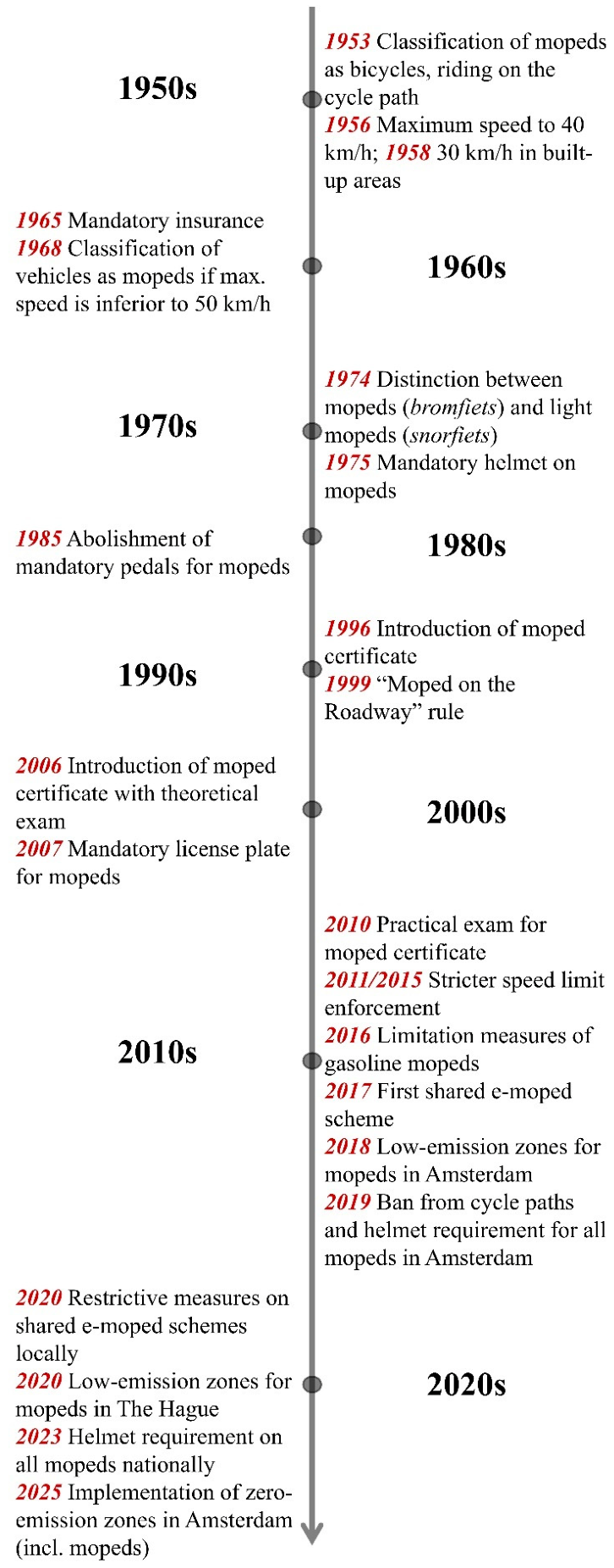
Figure 4 presents a timeline of moped-related policies in the Netherlands, based on policy documents and verified by a Dutch policymaker and transport expert. The constantly changing policies reflect the government’s struggle with the moped’s categorisation. We also include photographs to show mopeds’ evolving design, contributing to their ambivalent nature.
Upon their introduction to the Dutch market in 1948, policymakers classified mopeds as motorised bicycles, partly because early mopeds were bicycles with a small auxiliary engine (Picture 1). Technological innovation quickly changed their design, weight, and speed in the 1960s (Picture 2). Additionally, mopeds were easy to modify beyond factory settings.
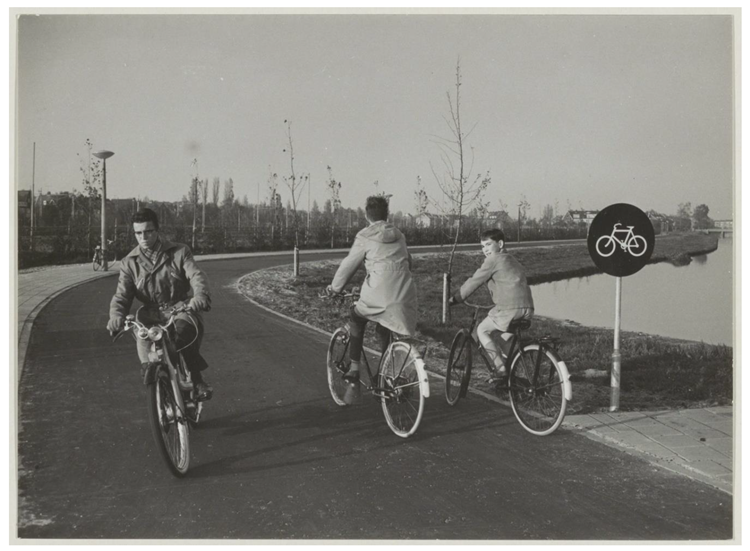
Picture 1. A moped and two cyclists on a bicycle path in Haarlem, c. 1957-1959. Source: Photographer C. de Boer, Archive Noord-Holland, Collection 1478, no. 3743, license CC0 1.0.
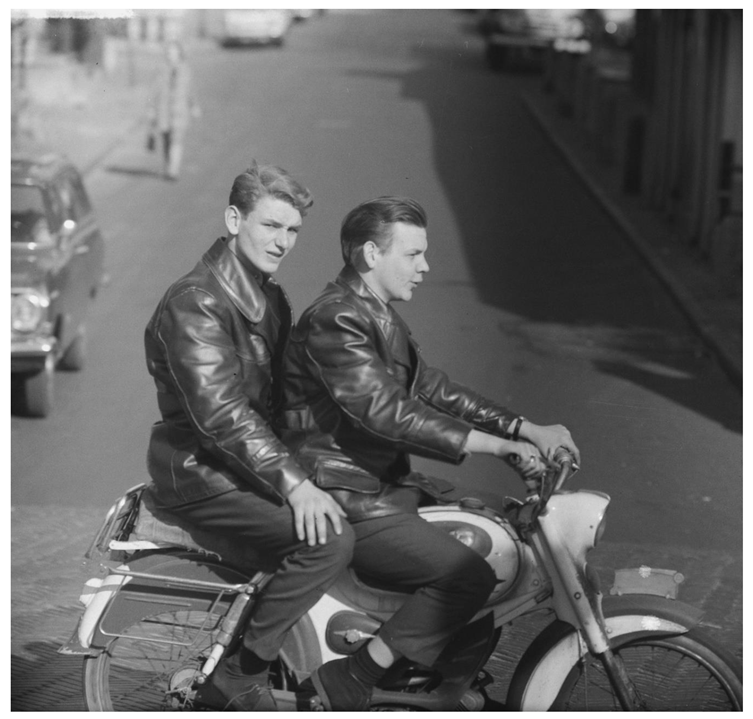
Picture 2. Two young guys, part of the ‘nozem’ subculture, on a moped in 1965. Source: Photographer Jac. de Nijs/Collection Anefo, National Archive The Netherlands, no. 917-6119, License CC0.
After debate about where they should ride, mopeds were referred to the bicycle path in 1953, with speed limits introduced in 1956 – 40 km/h, lowered to 30 km/h in built-up areas in 1958. In 1956, insurance became mandatory, and in 1974, the distinction between light mopeds (snorfietsen) and regular mopeds (bromfietsen) was introduced. For bromfietsen, helmets became mandatory in 1975 (Picture 3).
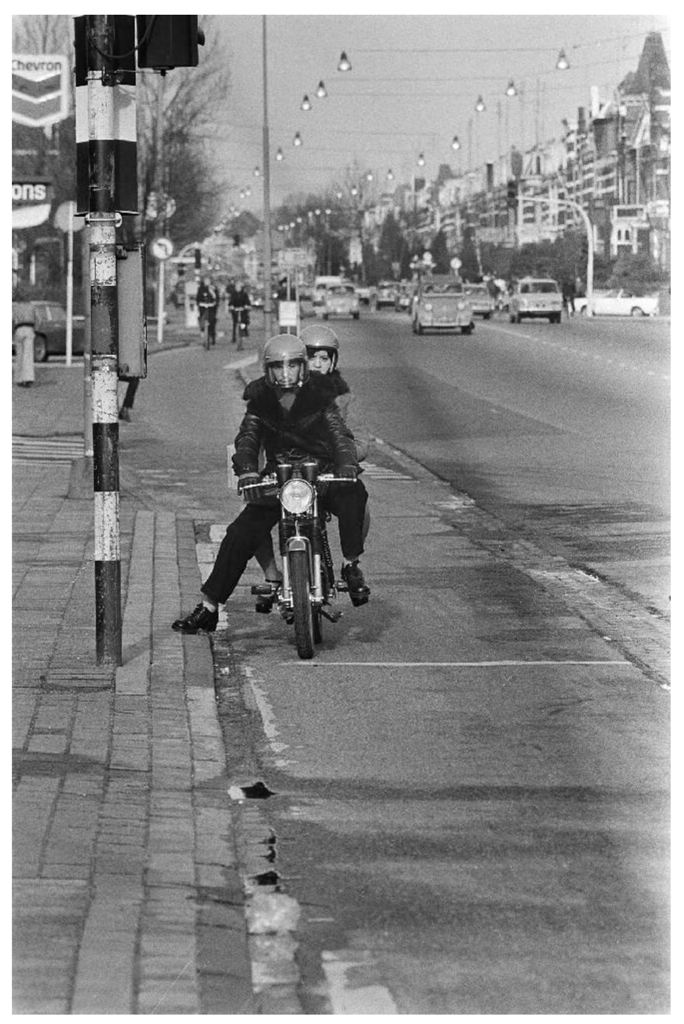
Picture 3. From the late 1970s, moped riders had to wear helmets. Here, one moped rider and passenger with helmets, 1975. Source: Photographer Hans Peters/Collection Anefo, no. 927-7257 National Archives The Netherlands, license CC0.
When pedals were made optional in 1985, mopeds became increasingly viewed as distinct from bicycles in two ways. Road safety regulations were strengthened, with the requirement of a moped certificate (1996) and license plate (2007). Later, the helmet requirement was also extended to light mopeds, in Amsterdam (2019) and nationwide (2023). Mopeds were also progressively moved to the road: in 1999, with the ‘Moped on the Roadway’ rule, and then in 2018, when municipalities gained authority to ban light mopeds from bicycle paths, which Amsterdam enacted in 2019. Picture 4 illustrates how substantially moped design had evolved by this point.
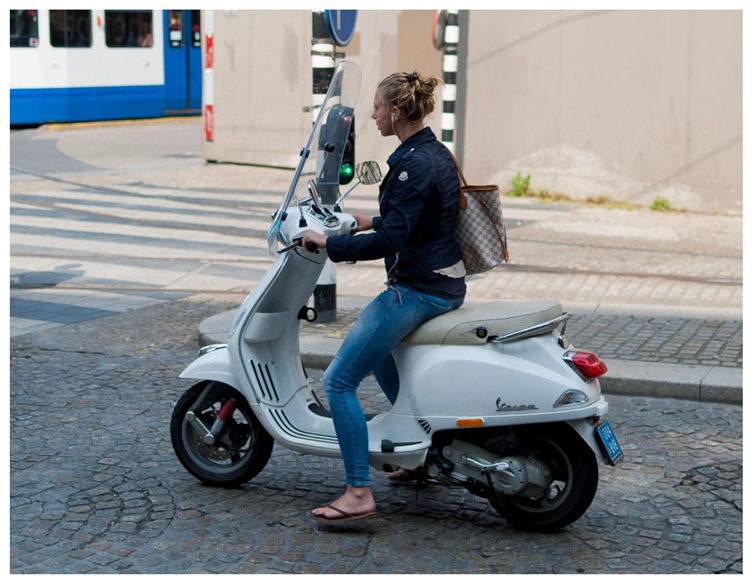
Picture 4. A woman on a Vespa light moped waiting at a traffic light in Amsterdam, 2011. Source: Photographer Sergiy Galyonkin (Flickr, License CC BY-SA 2.0).
Environmental concerns added further pressure from the 2010s. Low-emission zones restricted pre-2011 mopeds in Amsterdam (2018) and The Hague (2020), and a ban on the sale of fuel-based mopeds by 2025 was approved in 2020. Moped rental schemes complicated the situation in the late 2010s (Picture 5). In 2017, the Dutch company Felyx launched a rental moped scheme in Amsterdam before being quickly banned. Throughout 2019, various schemes returned in Dutch cities. Parking concerns prompted local restrictions in 2020. By 2022, some companies had discontinued services due to stronger regulations and operational difficulties.
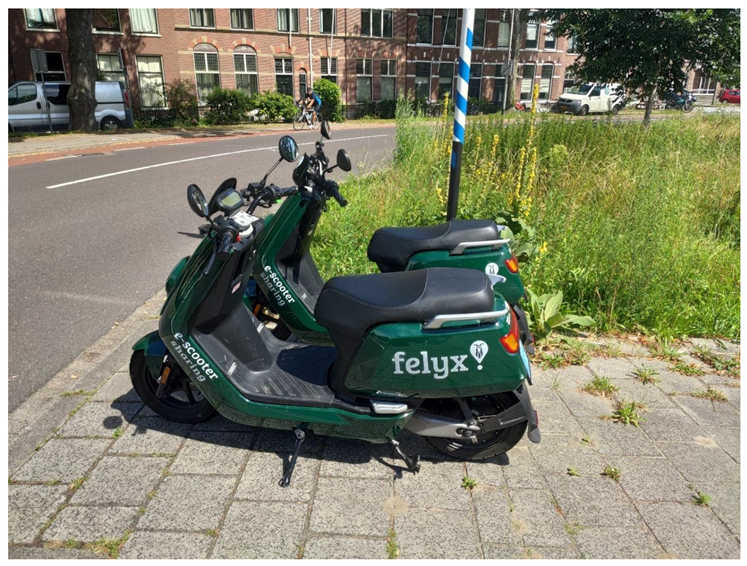
Picture 5. Rental mopeds should be parked in designated areas to avoid obstructing access for pedestrians and other vehicles. Here, two Felyx rental mopeds parked in Delft, 2020. Source: Photographer Tukka (Wikipedia Commons, CC BY-SA 4.0).
The pictures show how the moped evolved from motorised bicycle to motorcycle-like vehicle, to the Vespa-style mode. The policy timeline further illustrates a trajectory of frequent legislative updates addressing mopeds’ speed, infrastructure, safety, insurance status, and so on. Next, we introduce residuality as our theoretical background drawing on STS and mobilities literatures.
Figure 4.
Dutch moped policy timeline 1950s-2020s. Made by authors.
3. Theoretical Background
This section develops the theoretical framework underpinning our analysis of moped residuality. It introduces residuality as a lens to understand how some mobilities remain ambiguous in mobility systems. Starting with STS work on residual categories and extending it to mobilities studies, we argue that residuality is not solely inherent to vehicles or a short-term effect of innovation. It is produced through how mobility systems classify modes, allocate space and recognise legitimate users.
In STS, classification systems are understood as central to the organisation of social life. Bowker & Star define them as “a set of boxes (metaphorical or literal) into which things can be put to then do some kind of work- bureaucratic or knowledge production” (1999, p. 10). These systems are not limited to formal standards, they include tacit classification such as sorting dirty dishes from clean. They are actively mobilised and maintained by institutions and individuals to structure the world (Bowker and Star, 1999).
Within classification systems, some things do not neatly fit: residual categories (Star & Bowker, 2007). These categories are often labelled as ‘none of the above’, ‘not elsewhere classified’ or ‘other’ (Beck, 2002; Star, 2010). Residual categories are inherent in every classification scheme, whether explicitly labelled or not. An object becomes residual when it embodies multiple categories simultaneously, falls between the cracks, or when the framework offers limited categories (Star & Bowker, 2007).
This STS framing can be applied to mobility systems, which also rely on classifications. Vehicles are categorised into types, often deriving from technical characteristics such as speed, weight, size. These formal categories are established at the international or national level and determine how and where vehicles can be used. Urban space is also categorised into roads, bicycle paths, or pavements, tied to regulations and practices of space allocation shaped by historical and cultural processes (Petzer et al., 2021; Prytherch, 2018). Additionally, mobility systems involve social classification through representations of modes, their users and where they belong (Aldred, 2013; Egan, 2021; Glachant & Behrendt, 2024a). Residuality emerges when certain mobilities cannot be accommodated within these classifications. We conceptualise it as the outcome of three interacting elements: institutional, material and cultural.
The institutional dimension is the clearest in micromobility literature. New or hybrid vehicles often fail to fit existing regulatory categories, producing ambiguity about definitions, rights and obligations. For instance, e-scooter regulations are fragmented across European countries, with no consistent classification Sokołowski (2020). This legal ambiguity can prevent implementation, confuse users and limit micromobility’s benefits altogether (Gössling, 2020; Pimentel et al., 2020). Such institutional residuality is often framed as innovation outpacing regulations.
Residuality is also material. This concerns the physical characteristics of vehicles and infrastructure. Material residuality occurs when vehicles combine characteristics of other vehicles, without fitting within a single type: e-scooters combine pedestrian and vehicle features (Tuncer et al., 2020), mopeds are bicycle-motorcycle hybrids (Blomkvist & Emanuel, 2020; Dekker, 2021a), or cargo bikes have features of bicycles and cars (Glachant et al., 2025).
Material residuality can also arise from infrastructure which is usually designed around automobility (Urry, 2004), with non-car spaces more fluidly defined and collecting a wide range of other mobilities (Petzer et al., 2021; Prytherch, 2018). A recent illustration of this is e-scooters being ridden on pavements (Gössling, 2020; Tuncer et al., 2020). This tension is worsened by the rapid emergence of ‘new’ micromobilities lacking dedicated infrastructure (Behrendt et al., 2023).
Third, residuality can be cultural, though this dimension is less explored in transport literature than regulations or technical characteristics. Mobility systems attach meanings to modes and their users. Cyclists for instance have often been treated as conflictual and deviant (Aldred, 2013; Osborne & Grant-Smith, 2017), and similar patterns appear among micromobility users, frequently portrayed as reckless in media (Glachant & Behrendt, 2024b; Travers et al., 2024). These representations shape who is recognised as a legitimate user of public space and help explain why ambiguity may persist even when mobilities are institutionally or materially stabilised.
These three elements are closely interconnected: institutional decisions shape infrastructure design; technical characteristics influence regulations; cultural representations both reflect and reinforce material arrangements and institutional configurations. Residuality therefore emerges through the interactions of institutional frames, material arrangements and cultural meanings within mobility systems, and not from a single dimension.
Figure 5 presents our conceptual framework, which we apply to Dutch mopeds with a qualitative long-term approach.
4. Methodology
Our study combines historical and social science approaches to examine the persistence of mopeds’ residuality, following mobilities research on how contemporary mobilities are historically embedded (Merriman et al., 2013).
4.1. Data Collection
We analysed newspaper articles, specifically readers’ letters to the editor. Letters bring a consistent historical archive and amplifies voices usually overlooked in historical studies (Wahl-Jorgensen, 2019). However, letters are not representative of the general population and the newspaper’s editorial team moderates the letter section (Wahl-Jorgensen, 2007). Also, considering the long-term perspective of our study, the nature of letters and their senders have likely evolved, especially given the prominence of social media and online comment sections as channels to express opinions.
We compared two key periods: 1950-1975 marking mopeds’ emergence and related policies, and 2010-2024 covering the rise of e-bikes, e-cargo bikes and fatbikes, alongside sustainable mobility agendas. For 1950-1975, letters were collected from three sources through a systematic search using keywords designating mopeds in a previous study: the historical newspaper database Delpher, the newspaper database of the Utrecht provincial archive, and the magazine Bromfietskampioen in the ANWB archive (Dekker, 2021a). From these, the letters to the editor were manually selected. For 2010-2024, a Boolean search in Nexis Uni using a combination of keywords designating (a) mopeds and (b) letters to the editor (see Table 1) yielded 308 results. After excluding duplicates, crash reports and letters that just mentioned mopeds, 204 letters remained (110 for the 2010s and 94 for the 2020s), from national and local newspapers. Figure 6 shows their year distribution, Figure 7 their publication source. All letters analysed are listed in the attached dataset.
4.2. Data Analysis
The historical letters were analysed using a systematic coding framework inspired by qualitative content analysis, with categorical codes developed iteratively and applied manually to annotate themes within the texts. Coded data were organised into thematic clusters to identify patterns over time. Contemporary letters were coded on NVivo 14 following a deductive-inductive approach: deductive codes drew on the policy timeline and existing scholarship on mopeds; inductive codes captured issues not yet studied, such as fatbikes or policy elements discussed but not formalised such as age limits for moped riders. An overview of codes is provided in the Appendix.
5. Findings
This section outlines our findings on persistent moped residuality, drawing on our press analysis, against the contextual background (Section 2). We first present the results of the historical analysis from the 1950s to the mid-1970s (5.1.) and then of the contemporary analysis from the 2010s to the mid-2020s (5.2.).
5.1. Historical Analysis
The historical analysis covers 1950-1975, when mopeds and moped policies were introduced in the Dutch mobility system. From the start, mopeds’ residuality was a point of contention: though eventually classified as motorised bicycles, this classification remained contested and was further complicated in the 1970s with the introduction of the light moped category.
5.1.1. 1950s
In the 1950s, the Netherlands still had exceptionally high cycling levels and a network of separate bicycle paths (Dekker, 2021b). This created a debate about the moped’s proper place – road or bicycle path – in which its ambiguous status proved particularly contentious. The Ministry of Public Works decided that mopeds had to use bicycle paths, forcing mopeds into the bicycle category. However, mopeds were heavier, faster, and louder than bicycles, and quick technological development increased the gap between the two modes. This led to conflicts and mutual annoyance: cyclists wanted to ride safely, often two abreast for social reasons. Having to constantly make way for overtaking moped riders was annoying and dangerous. Moped riders wanted to exploit their vehicles’ higher speed and were annoyed at cyclists ‘blocking’ bicycle paths.
In letters from this decade, writers emphasised different aspects of mopeds to argue for their categorisation as either bicycles or cars. A bus driver argued that moped riders lack the reaction speed to safely use roads (L4-1953). Moped riders argued that cyclists were too slow (both in terms of reaction and speed) to safely share bicycle paths, implicitly framing moped riders themselves as fast, experienced, and more competent road users. One moped rider wrote that, as an experienced motorcyclist, it was not dangerous for him to ride on the road. This restriction of moped use was an obstacle to progress and, he warned, having mopeds ‘stuffed away on the bicycle path between honourable fathers and mothers with kids in the front and backseat, it is going to be a mess’ (L1-1951). Moped riders were also depicted as a vocal minority, since their number did not justify how they negatively impacted the much greater population of cyclists. One reader of the Moped Champion journal asked: ‘How would you like it,’ he asked, ‘if the 200.000 moped riders – possibly half a million in two years – would decide where cars had to drive?’ (L2-1951). Both cyclists and at least some moped riders therefore pushed for resolving mopeds’ institutional residuality by classifying them as cars or motorcycles and referring them to roads – a solution car lobbyists opposed.
Material and cultural residuality were equally evident in the shared-path experience. Cyclists stressed enjoying the possibility of socialising with the person riding next to them. To moped riders, this made them ride slower and pay less attention to their surroundings, sparking a debate about whether public road space should accommodate such behaviour, or instead favour maximum efficiency (in terms of throughput of number of people per hour). One letter writer who was both a cyclist and moped rider noted that there was little civility on bicycle paths. Cyclists did not give way to overtaking mopeds, while moped riders act ‘as if the bicycle path belongs to them alone.’ This was a problem since overtaking was hard on bicycle paths: ‘Everyone will admit that even the widest bicycle paths are still too narrow for the continually increasing number of cyclists and moped riders’ (L6-1956). Like many others, he pleaded for wider bicycle paths, but in the meantime, cyclists should ride behind each other, and a maximum speed for moped riders should be introduced. As the newspaper editor replied, however, cycling abreast was more sociable and would not disappear. This social practice belonged to the bicycle category and not to the moped.
Moped riders acknowledged the awkward fit on the bicycle path: one moped rider, claiming he rode 35 km/h on average, said: ‘Concerning the use of the bicycle path: I am aware of being a danger to myself and others’ (L3-1951). Others blamed cyclists for refusing to accept times had changed: they no longer had a ‘monopoly’ on the bicycle path and should stop seeing mopeds as ‘pariahs’. A moped rider wanted a traffic rule which prohibited cycling abreast, believing it would eliminate eighty percent of bicycle path accidents (L5-1955). For him, bicycle paths primarily had to provide ‘flow’, the fastest way from A to B. Socialising and using mobility for other purposes than speed did not fit into this vision.
In short, the debate about assigning mopeds to the road or bicycle path shows how policymakers struggled with the institutional residuality of mopeds, related to space allocation. Once the decision had been made, the co-existence of cyclists and moped riders on bicycles path was anything but seamless, showing that mopeds were in fact not as similar to cyclists as policymakers argued, and showing the otherness and residual nature of mopeds in cultural representations.
5.1.2. 1960s
In the 1960s, newspaper coverage about mopeds was increasingly negative, illustrating mopeds’ cultural residuality. Newer, faster, and noisier types appeared on the market, and increasingly, a culture of tinkering to exceed factory-set speed and sound limits. While many riders were still commuters, the adoption of the moped by emerging youth cultures generated extensive complaints. A rich vocabulary emerged to stereotype a sub-group of moped riders, but most of these vituperative terms were ways of stating that moped riders were young, loud, and annoying. In the late 1950s the word nozem entered the language to denote a particular kind of youth. When combined with the Dutch word for moped, bromfiets, the word bromnozem, or brozem, was formed. Both were commonly used in newspaper articles to describe young moped riders. Other pejorative words used were lawaaimakers (noisemakers) or jeugdige jakkeraars (young speedsters), typically emphasising riders’ youth, or questioning their intelligence and maturity. No comparable rhetoric existed for cyclists, reinforcing the gap between the two modes and making the categorisation of mopeds as bicycles more untenable.
Noise complaints were particularly prevalent. Groups of young riders with modified loud mopeds loitering in city centres or late at night drew widespread complaint. Journalists and citizens argued that police lacked capacity to enforce noise measures effectively, and that legislating on sound levels was complicated by the subjectivity of noise annoyance (L7-1960; L8-1960; L9-1960; L10-1960). Many argued that moped riders intentionally used their vehicles to disturb their fellow citizens.
These negative representations of one sub-group of moped riders produced a more positive evaluation of others. Writers distinguished ‘decent’ (fatsoenlijk) older male commuter-riders from young men using mopeds for leisure with a very different riding style – one of the clearest examples of the inter-generational cultural gap of this decade (Buelens, 2018). The journalist Jan Liber, writing for Het Vrije Volk in 1964, contrasted the older, decent (‘keurige’) commuter with young and annoying noise-producers (‘lawaaischoppers, herriemakers, vervelende jongetjes’) (L11-1964).
While noise complaints were very dominant in the discourse of the time, ultimately it proved hard to address legislatively. However, new accountability measures were introduced, such as obligatory third-party insurance in 1965, with proof required from 1966.
In short, noise complaints and the singling out of moped user groups demonstrate the increasing tension with the moped’s categorisation, demonstrating its residuality in material and cultural terms. New user groups and technological change made it harder to see mopeds as a type of bicycle, as policymakers argued in the 1950s. Some of the new legislation in this decade, which did not apply to cyclists, made the institutional residuality of mopeds starkly visible.
5.1.3. 1970s
In the 1970s, debates about noise complaints continued unabated (see e.g., L13-1970; L14-1970). Several letter writers argued that moped noise was much worse than the more publicly discussed noise pollution generated by Schiphol airport. One newspaper reader argued that in Amstelveen, near the airport, the noise of mopeds was a bigger issue than that of airplanes. Even though he wrote that ‘it is great that a vehicle like the moped exists,’ its many users, young people according to him, produced noise bothersome to many. A generational divide was clearly implied: young moped owners were disregarding their fellow citizens (L19-1972).
The discussion about the helmet requirement was central to the 1970s. The measure was proposed early in the decade, and extensively discussed publicly, before it became mandatory in 1975. Supporters pointed to the personal trauma and healthcare costs of head injuries, with some writing from personal experience (L18-1971; L23-1974). One sixteen-year-old urged peers to wear helmets – calling non-compliance ‘sheer egoism’ (L20-1972). Opponents argued it was illiberal to make helmets mandatory (L16-1971; L17-1971; L22-1974; L24-1974; L25-1975), although they sometimes did so while personally choosing to wear one (e.g., L15-1971). Opponents often used terms like ‘betutteling’ (patronisation, comparable to complaints about the ‘nanny state’).
The helmet discussion directly surfaced the moped’s residuality. An elderly Solex rider, an older model not nearly as noisy or fast as newer mopeds, wondered why he should wear a helmet, when faster racing cyclists did not. He proposed an exemption for mopeds below 30 km/h (L21-1973). Something like this was introduced soon afterwards with the bromfiets/snorfiets distinction. The comparison between fast bicycles and mopeds, and the proposed distinction between two types of moped, are clear expressions of the continuing struggle with the residuality of mopeds in the mid-1970s.
Finally, in this period, the wider politicisation of mobility shaped how letter writers positioned the moped rhetorically. Some moped riders aligned themselves with cyclists and pedestrians against the car: ‘everything is being demolished to facilitate the holy and all-controlling car’ and what little problems other traffic users caused was negligible in comparison (L12-1970). Others did the opposite, with an anti-moped writer who wrote: ‘How he dares to speak of freedom for moped riders, I do not know. Has he ever thought about the “freedom” of cyclists and pedestrians, such as: the “freedom” to wait at the red traffic light with the exhaust fumes freshly slapping in the face, the “freedom” to be startled by the umpteenth passing moped rider with popping exhaust pipe, the “freedom” to be hit by this (both for the driver and others) life-threatening thing’ (L26-1975). These opposing rhetorical strategies, aligning mopeds with cars or with bicycles, are themselves an indication of the vehicle’s persistent residuality.
The residuality of mopeds manifests in the 1970s once again in several ways. The helmet debate shows the institutional ambiguity of the moped: as cyclists were not obliged to wear helmets, but motorcyclists were, what should be done with mopeds? Additionally, it is striking to see how often letter writers compare mopeds to other transport modes (bicycles, cars, even airplanes). Referring to these more established categories was a strategy to position mopeds, deemed necessary due to their ever shifting and residual nature.
In sum, this historical section has shown the moped’s residuality in the first decades after its introduction in the 1950s. While deciding to refer mopeds to bicycle paths suggests a solution, evolving legislation and user complaints illustrate mopeds’ institutional and cultural ambiguity. In the 1960s, it becomes more evident that users resist the conflation of mopeds with bicycles, and the material development of faster, heavier mopeds, makes its classification as bicycles untenable.
5.2. Contemporary Analysis
We present results for the 2010s and 2020s, marked by environmental concerns and diverse forms of shared and electric micromobility.
5.2.1. 2010s: Cycle Path Ban for Light Mopeds
The 2010s saw public debates over banning light mopeds from bicycle paths, moving them onto roads instead. This issue gained traction in 2017 when Amsterdam banned light mopeds from most bicycle paths after a 2014 pilot.
Many letters supported a complete ban due to their unsuitable speed and size for bicycle paths. This debate brings together material concerns about vehicle characteristics, institutional questions about where mopeds legally belong, and cultural ideas about proper users of the bicycle path. Readers argue that mopeds should use the road instead, ‘like abroad’ (L83-2019). An 11-year-old cyclist wrote, ‘Scooters are big, wide and heavy because of the engine and those wide headlights, but cyclists are light, thin and small. That’s why scooters should be separated from cyclists!’ (L78-2018). Notably, one letter encouraged ‘the decent citizens who want to remain motorised on the bicycle path at 25 km/h’ to buy an e-bike (L35-2015) – showing that residuality here extends beyond technical characteristics. Since e-bikes and light mopeds travel at the same speed, this distinction is also cultural: about who belongs on the bicycle path. Letters portrayed moped riders as acting like ‘boss[es]’ (L9-2010) or ‘kings’ of bicycle paths (L100-2019), particularly young people and delivery riders, contrasting them with cyclists cast as virtuous. One moped rider deplored the ‘blind hatred against moped riders’ (L66-2017), as cyclists also disregard traffic rules.
Opponents of the ban argued that light mopeds fit poorly on roads too: at 25 km/h they are slower than cars (50 km/h), making the road dangerous for unmodified vehicles and potentially encouraging modification to match car speeds (L34-2015). One reader captured this ambiguity precisely: ‘totally unsound, for both the cycle path (too wide) and the motorway (too slow)’ (L102-2019). As such, mopeds seem to fail to align with the expectations of established road space: fast, larger vehicles such as cars belong on roads, while slow, narrower bicycles are meant for bicycle paths.
This double exclusion generated debate about whether the light moped should exist as a category at all. An Amsterdam-based moped rider noted that the ban undermines the primary benefit of light mopeds compared to regular mopeds: access to cycling infrastructure (L67-2018). This remark illustrates a key trade-off: although light mopeds are separated – and perhaps protected – from car traffic, they ride at lower speeds than regular mopeds. In contrast, proponents of the ban saw it as an opportunity to eliminate this ‘problematic traffic category’ (L59-2017), with some suggesting users to switch to e-bikes or ‘the real moped’ i.e., the bromfiets (L97-2019). Others proposed reclassifying light mopeds as regular mopeds since many already reach 45 km/h due to modifications. The Dutch term ‘snorfiets’, which includes ‘fiets’ (bicycle), was itself criticised for ‘perpetuating the myth that it is a bicycle’ (L41-2016). Here, disputes over naming show that the legal category itself is unstable. However, no consensus emerged; one reader feared losing ‘the charm of the light moped - freedom and hair in the wind’ (L72-2018).
Implementation of the ban proved difficult. While some readers discuss the costs of enforcement, others highlight the ambiguity surrounding its application, particularly where it applies. One reader characterised the ban as ‘arbitrary and opaque’, frustrated by light-moped riders frequently switching between bicycle paths and roads (L34-2015). This lack of clarity exacerbates the residuality of light mopeds, which lack dedicated spaces and move between spaces dedicated to bicycles and cars. Additionally, the ban’s local scope created ‘a patchwork of local regulations’ (L97-2019). Letters also pointed to institutional politics with a ‘lobby’ opposing the ban, including BOVAG (an automobile lobby organisation) and ANWB (L35-2015). These insights underscore the institutional challenges in regulating for light mopeds, which contribute to their residuality.
5.2.2. 2010s: Low-Emission Zones and Electrification
Low-emission zones for mopeds became a key debate in 2010s letters, driven by complaints about moped exhaust fumes, described by one cyclist as a ‘big smelly toxic cloud’ (L39-2015). When Amsterdam introduced low-emission zones for mopeds in 2018, residuality appeared across institutional arrangements, material characteristics and cultural judgments. Environmentally, mopeds occupied an awkward position: more polluting than bicycles, less so than cars. Some readers noted that historically mopeds had faced fewer environmental regulations than cars despite being motorised vehicles, a looser regulatory position that had benefited their users.
Low-emission zones were experienced by some as exclusion. Letter writers warned that banning older mopeds would punish those ‘economically dependent on their means of transport’ (L26-2014), while the ‘elite, together with the environmental mafia’ could use electric vehicles (L65-2017). Some readers also criticised subsidies for e-mopeds as an ‘elitist subsidy’ that is ‘the antithesis of poverty alleviation’ (L35-2015). In these letters, environmental standards are discussed both in terms of technical rules and as measures sorting who could access urban space.
Meanwhile, the rise of e-mopeds blurred the boundary between mopeds and bicycles that the bicycle path ban had sharpened. E-mopeds were widely compared to e-bikes and seen as a solution to air and noise pollution. Yet, safety concerns persisted, with some claiming e-mopeds were ‘as dangerous as the dirty variety’ (L75-2018). Electrification shifted the terms of classification without resolving the underlying ambiguity.
5.2.3. 2020s: Rental Moped Schemes
The rise of rental moped schemes since 2019 generated negative representations, particularly centred on parking. Pavements are described as ‘parking and dumping locations’ for these mopeds (L158-2021), making them harder to navigate, especially for people with mobility aids or visual impairments. Terms such as ‘pollution’ (L141-2021; L158-2021) or ‘junk’ (L164-2022) show that rental mopeds are framed as materially out of place and culturally unwelcome This mirrors earlier complaints about privately-owned mopeds on bicycle paths: in both cases, mopeds occupied spaces felt to belong to others.
Accountability was a recurring concern. The ‘sharing’ model was seen to encourage neglect, as these mopeds ‘don’t belong to anyone so they are left behind like old rubbish’ (L173-2022). Operators were criticised for ‘abus[ing] public space’ for commercial purposes (L164-2022), while municipalities were portrayed as lenient. Beyond the clutter itself, these letters staged wider disputes over who may use public space, and for whose benefit.
Rental mopeds were also seen as an unnecessary addition to already crowded cities, contributing to ‘the chaos’ (L145-2021) and generating new conflicts on bicycle paths, where they are faster than cyclists and quieter than fuel-based mopeds. Their place in the mobility transition was questioned against bicycles. Here again, mopeds appeared difficult to classify: neither clearly useful, and poorly aligned with dominant ideas of sustainable and active urban mobility. In sum, the rental moped debate shows how residuality persisted in a new form: less through vehicle type, more through conflicts over public space and commercial use.
5.2.4. 2020s: Diversity of Modes on the Bicycle Path
Debates about mopeds increasingly overlapped with concerns about a wider range of light electric modes. As this reader put it;
‘The bicycle path is no longer one. The following cycles tear past you on the bicycle path: e-bikes, e-bikes with large containers on the handlebars (delivery services), e-scooters, mopeds that are also allowed on the road, super-fast pedelecs, people calling with earphones, road cyclists. At high speed and producing little noise. In between, I have to find my way as an ordinary cyclist. Can the bicycle path become a bicycle path again?’ (L166-2022)
Concerns focused on speed differences and noiselessness, with the proliferation of modes seen as dangerous, particularly for elderly cyclists, often contrasted in letters with youthful – and reckless – riders of light electric vehicles. For some readers, these modes also competed for space with pedestrians while parked. Findings indicate that the issue of ‘not fitting in’ expands to other light (electric) modes, beyond mopeds. Material pressures on space paired with cultural judgments about users, while institutional rules appeared increasingly unable to stabilise who belongs on the bicycle path.
Solutions proposed by readers, such as lower speeds, stricter enforcement and in some cases the exclusion of all vehicles other than ‘regular’ bicycles from the bicycle path, echo those from the historical period. Some linked the issue to Amsterdam’s 2023 citywide 30 km/h limit, suggesting urban traffic more broadly needed to slow down. What had been framed as a moped problem had shifted to a broader classification problem, with other residual light electric modes accumulating on the bicycle path.
5.2.5. 2020s: Helmet Requirement
The helmet requirement for light mopeds, long debated and intensified by parliamentary discussion in 2018, became regulation in 2023. The same year fatbikes emerged as a new residual mode on bicycle paths.
Supported cited safety, though some noted the requirement might discourage light moped use, as observed when helmets became mandatory for regular mopeds in 1975. Others contended that e-bike riders travelling at the same speed should also be required to wear them: ‘The solution to Amsterdam’s cycling problem is simply a helmet requirement for e-bikes. Safer and a reward for those with “regular bikes”; the sensible and more environmentally aware road users’ (L184-2023). Concerns once directed at light mopeds were visibly extending to other path users. The helmet debate therefore links institutional classification to material risk and cultural ideas of responsible mobility.
Opponents, most of them being self-identified light moped riders, framed the requirement as patronising and a punishment for careful users. Some stated that they would rather ride a regular moped at 45 km/h than comply. Others warned it would push riders towards cars. These responses suggest that light-moped users had benefitted from regulatory ambiguity, much as they had from the uncertainty over cycling infrastructure.
Fatbikes grew in popularity partly in the space opened by the helmet requirement. These e-bikes with large tyres are described as dangerous because many are modified for high speeds. Fatbikes are especially popular among teenagers younger than sixteen years old, from whom no age limit applied. A reader described fatbikes as status objects: teenagers ‘feel supreme with their fast, cool, expensive bikes which many others do not have’ (L197-2023). Others noted their social function: ‘it’s also really fun to (relaxed) tour the city [on a fatbike], preferably with your sweetheart on the back.’ (L186-2023), recalling the bicycle’s social function in the 1950s. As with mopeds, material features became tied to cultural judgments about youthful and irresponsible users.
Readers drew explicit comparisons with mopeds: ‘[Fatbikes] have reintroduced the moped problem, and this time they are completely uninsured. Life-threatening. And again, no one enforcing’ (L185-2023). Another described them as ‘mopeds with pedals that technically make it a bicycle’ (L189-2023), recalling the pedal requirement dropped in 1985. Some readers proposed reclassifying fatbikes as light mopeds instead of e-bikes. The helmet debate and the comparison with fatbikes show how the residuality attached to mopeds is now displaced towards newer modes, suggesting that the underlying problem lies in the mobility system itself rather than in one vehicle.
In sum, the residuality of mopeds evolved across the 2010s and 2020s. In the 2010s, it centred around debates over bicycle-path access, environmental regulations and the unstable status of the light moped as a vehicle category. In the 2020s, it shifted towards rental schemes, public-space conflicts, helmet regulation, and comparisons with newer modes. What persists is that mopeds remain difficult to place within a mobility system structured around clear distinctions between bicycle and car, bicycle path and road, and legitimate and problematic users.
6. Discussion and Conclusions
Our study shows how moped residuality persisted, despite repeated attempts to (re)categorise them through distinction between regular and light mopeds, bicycle path bans and helmet requirements. In parallel, mopeds evolved materially, becoming heavier and faster (1960s-1970s) before converging with e-bikes (2010s-2020s). Despite these changes, mopeds have remained in-between roads and bicycle paths and contested within regulatory and cultural norms.
The case illustrates how residuality persists via the interaction of institutional, material and cultural processes, summarised in Table 2. Regulatory efforts struggled to accommodate hybrid vehicle characteristics, infrastructure designed primarily for bicycles and cars left limited space for intermediate vehicle types and public debates consistently framed mopeds and their riders as noisy, unsafe or out of place. These dynamics contributed to the continued positioning of mopeds at the margins of dominant mobility categories.
The emergence of fatbikes following efforts to regulate mopeds illustrates how residual categories evolve within mobility systems. This aligns with STS scholarship: when residual categories become standardised, new ones emerge at their margins (Beck, 2002; Star, 2010b). Regulatory adaptation here has not eliminated residuality but reconfigured it, displacing it onto newer modes.
Importantly, residuality is not necessarily negative. For users, it enhances appeal: mopeds offered a faster alternative to bicycles while benefiting from cycling infrastructure and helmet exemptions. When light moped regulation tightened, users moved towards fatbikes, which also ‘fall between the cracks’. This resonates with micromobility studies identifying adaptability or ‘agility’ as a key advantage over cars, due to their ‘capacity to mediate between different spaces and speeds, and to better adapt to the context.’ (Bahrami & Rigal, 2022, p. 14).
Our paper makes two contributions. First, it contributes to mobilities studies by conceptualising residuality as a feature of mobility systems. Residuality is a stabilised condition of mobility systems that develops over time through institutional, material and cultural elements, and not a temporary state due to technological novelty. Analysing residuality therefore helps us to understand why certain mobilities are persistently marginal while others dominate. Second, it shows the value of a long-term perspective for understanding contemporary mobility governance, with new modes triggering debates around safety, infrastructure, and spatial conflicts resonating with the story of Dutch mopeds, such as fatbikes or e-scooters.
Our work has policy implications. Mobility systems will always produce residual modes. Therefore, policymakers should treat residuality as a recurring feature and design more flexible regulatory frameworks capable of accommodating residual modes, for instance related to space allocation. We also invite policymakers to consider a long-term perspective: by examining past decisions rather than treating each mobility innovation as unprecedented, they might better anticipate future conflicts and move beyond the short-term evaluations that typically dominate contemporary policy discussions.
Several limitations need to be considered, which can lead to future research. A methodological limitation is the representational bias of letters to the editor, which skew towards non-users and complainants. Future research could consider other materials such as interviews to study residuality in mobility systems. Also, our work focuses on the Netherlands, renowned for its distinctive cycling and moped culture and well-developed cycling infrastructure. We encourage scholars working in other contexts to examine how residuality operates there and whether the dynamics identified for mopeds hold or take new forms.
Funding
This research did not receive any specific grant from funding agencies in the public, commercial, or not-for-profit sectors.
Data Availability Statement
The data underlying this research article is available on the following data repository: https://data.4tu.nl/datasets/09f3a6d1-ceac-4b09-b0bb-a8fdd9f67a1a.
Acknowledgments
We would like to thank Frauke Behrendt and Hanbit Chang for their feedback on an earlier version of this paper. Many thanks to Jan Ploeger, who kindly reviewed our policy timeline.
Conflicts of Interest
The authors report there are no competing interests to declare.
Declaration of Generative AI Use
During the preparation of this work, the authors used Claude to improve the readability and conciseness of the text. After using this tool, the authors reviewed and edited the content and take full responsibility for the content of the publication.
Appendix A. Codes Used for Analysis Based on Policy Timeline and Literature Review on Mopeds in The Netherlands
| Codes | Sub-codes |
| Issues | Conflicts with other micromobilities |
| Controversial policy | |
| Fatbikes | |
| Modified mopeds | |
| Noise and smell | |
| Parking | |
| Speed difference | |
| Sustainability | |
| User presentations | |
|
Policies and regulations |
Age limit |
| Ban (some) mopeds | |
| Helmet requirement | |
| Cycle path ban | |
| (In)adequacy of policies | |
| Shared mopeds schemes | |
| Speed limit | |
| Enforcement | |
| License | |
| Incentives e-mopeds |
References
- Aldred, R. (2013). Incompetent or Too Competent? Negotiating Everyday Cycling Identities in a Motor Dominated Society. Mobilities , 8(2), 252–271. [CrossRef]
- Bahrami, F., & Rigal, A. (2022). Planning for plurality of streets: a spheric approach to micromobilities. Mobilities, 17(1), 1–18. [CrossRef]
- Beck, E. E. (2002). What Doesn’t Fit: The ‘Residual Category’ as Analytic Resource. In Social Thinking—Software Practice (pp. 161–179). The MIT Press. [CrossRef]
- Behrendt, F., Heinen, E., Brand, C., Cairns, S., Anable, J., Azzouz, L., & Glachant, C. (2023). Conceptualising Micromobility. Preprint. [CrossRef]
- Blomkvist, P., & Emanuel, M. (2020). Regulating innovation utility vs. Leisure in Swedish moped history, 1952–1961. Technology and Culture, 61(3), 815–842. [CrossRef]
- Bowker, G. C., & Star, S. L. (1999). Sorting Things Out: Classification and Its Consequences. The MIT Press. [CrossRef]
- Buelens, G. (2018). De Jaren Zestig. Ambo|Anthos.
- Dekker, H.-J. (2021a). An accident of history? How mopeds boosted Dutch cycling infrastructure (1950–1970). Journal of Transport History, 42(3), 420–443. [CrossRef]
- Dekker, H.-J. (2021b). Cycling Pathways: the Politics and Governance of Dutch Cycling Infrastructure, 1920-2020. Amsterdam University Press.
- Egan, R. (2021). ‘Provoking responsibility’: The struggle for recognition as an everyday cyclist in Dublin City. Geoforum, 127, 23–32. [CrossRef]
- Ewalds, D., Moritz, G., & Sijstermans, M. (2013). Bromfietsen in Nederland. www.cbs.nl.
- Gibson, H., Curl, A., & Thompson, L. (2022). Blurred boundaries: E-scooter riders’ and pedestrians’ experiences of sharing space. Mobilities, 17(1), 69–84. [CrossRef]
- Glachant, C. (2025). A Micromobilities Transition? . Eindhoven University of Technology.
- Glachant, C., & Behrendt, F. (2024a). Negotiating the bicycle path: A study of moped user stereotypes and behaviours in the Netherlands. Transportation Research Part F: Traffic Psychology and Behaviour, 107, 301–320. [CrossRef]
- Glachant, C., & Behrendt, F. (2024b). ‘Social Darwinism has moved to the cycle path’: framings of micromobility in the Dutch and British press. Mobilities, 19(6), 1054–1075. [CrossRef]
- Glachant, C., Cass, N., Marks, N., & Azzouz, L. (2025). Between or Beyond Bicycles and Cars? Navigating E-Cargo Bike Citizenship in the Transition to Sustainable Urban Mobility. Geoforum, 166, 104416. [CrossRef]
- Gössling, S. (2020). Integrating e-scooters in urban transportation: Problems, policies, and the prospect of system change. Transportation Research Part D: Transport and Environment, 79. [CrossRef]
- Merriman, P., Jones, R., Cresswell, T., Divall, C., Mom, G., Sheller, M., & Urry, J. (2013). Mobility: Geographies, Histories, Sociologies. Transfers, 3(1), 147–165. [CrossRef]
- Osborne, N., & Grant-Smith, D. (2017). Constructing the cycling citizen: A critical analysis of policy imagery in Brisbane, Australia. Journal of Transport Geography, 64, 44–53. [CrossRef]
- Petzer, B., Wieczorek, A., & Verbong, G. (2021). The legal street: a scarcity approach to urban open space in mobility transitions. Urban Transformations, 3(1). [CrossRef]
- Pimentel, D., Lowry, M. B., Koglin, T. W., & Pimentel, R. W. (2020). Innovation in a Legal Vacuum: The Uncertain Legal Landscape for Shared Micro-Mobility. Journal of Law and Mobility, 2020(1), 17–40. [CrossRef]
- Prytherch, D. (2018). Law, Engineering, and the American Right-of-Way. Palgrave Macmillan.
- Sokołowski, M. M. (2020). Laws and Policies on Electric Scooters in the European Union: A Ride to the Micromobility Directive? *. European Energy and Environmental Law Review, 127–140. [CrossRef]
- Star, S. L. (2010). Residual Categories: Silence, Absence and Being an Other. ZMK Zeitschrift Für Medien-Und Kulturforschung. Kulturtechnik, Jg, 1(1), 201–219. [CrossRef]
- Star, S. L., & Bowker, G. C. (2007). Enacting silence: Residual categories as a challenge for ethics, information systems, and communication. Ethics and Information Technology, 9, 273–280. [CrossRef]
- Travers, Scott, N., Reed, K. J., Hall, P., Winters, M., Kwan, G., & Park, K. (2024). Moral Panic and Electric Micromobilities: Seeking Space for Mobility Justice. Sociological Perspectives, 67(1–3), 83–108. [CrossRef]
- Tuncer, S., Laurier, E., Brown, B., & Licoppe, C. (2020). Notes on the practices and appearances of e-scooter users in public space. Journal of Transport Geography, 85, 102702. [CrossRef]
- Urry, J. (2004). The ‘System’ of Automobility. Theory, Culture & Society, 21(5), 25–39. [CrossRef]
- Wahl-Jorgensen, K. (2007). Journalists and the public: Newsroom culture, letters to the editor and democracy.
- Wahl-Jorgensen, K. (2019). Foreword. In A. Cavanagh & J. Steel (Eds.), Letters to the Editor: Comparative and Historical Perspectives. Palgrave Macmillan.
Figure 1.
Overview of modes using Dutch bicycle paths. Made by authors.
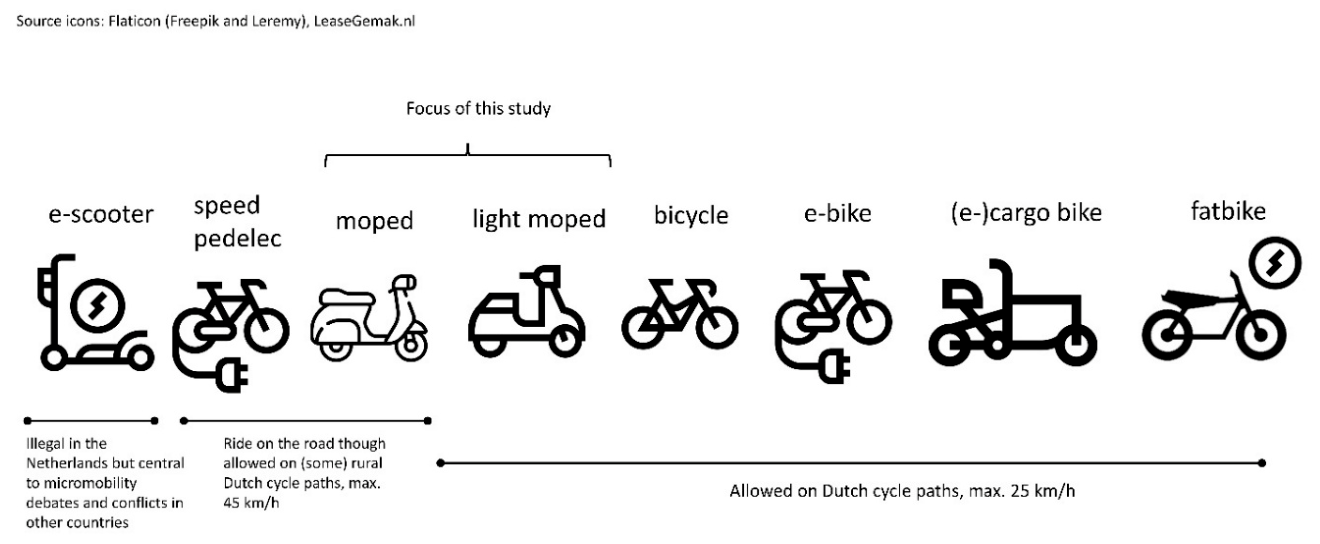
Figure 2.
Mopeds in the Netherlands, 1950-1998. Made by authors, based on CBS data.
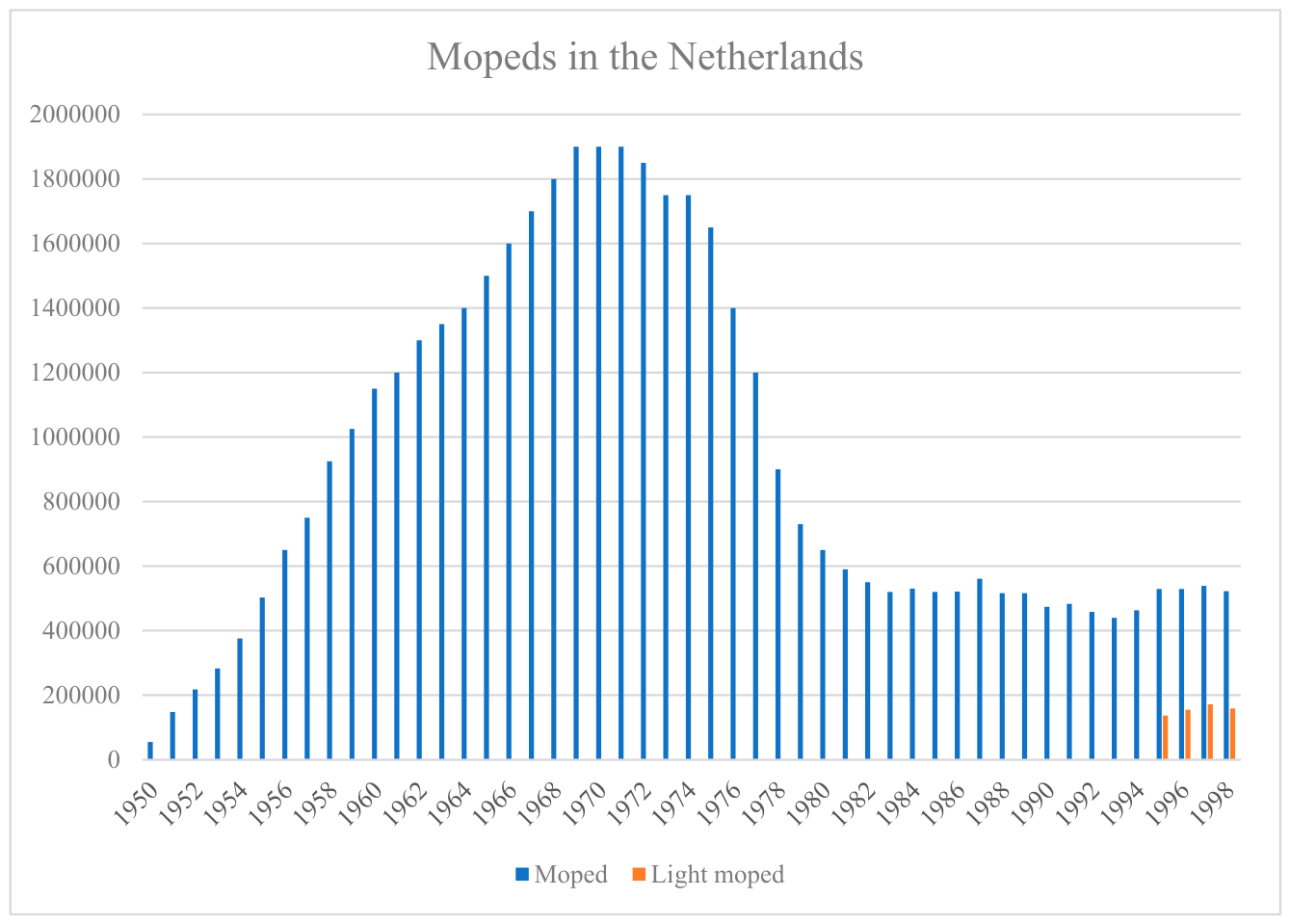
Figure 3.
Moped ownership in the Netherlands, 2007-2022. Made by authors, based on CBS data.
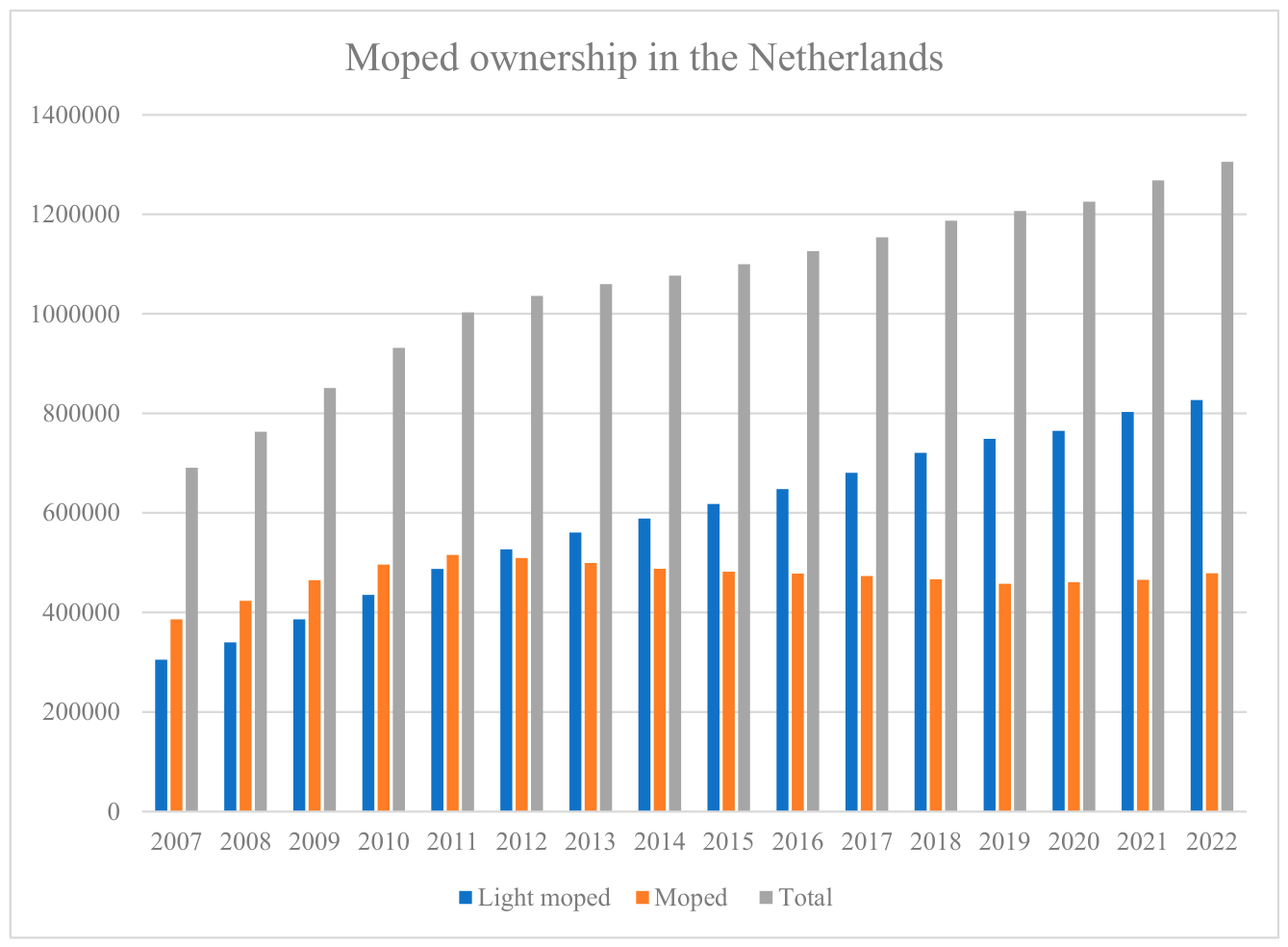
Figure 5.
Conceptual framework: residuality shaped by institutional, material and cultural elements.
Figure 5.
Conceptual framework: residuality shaped by institutional, material and cultural elements.
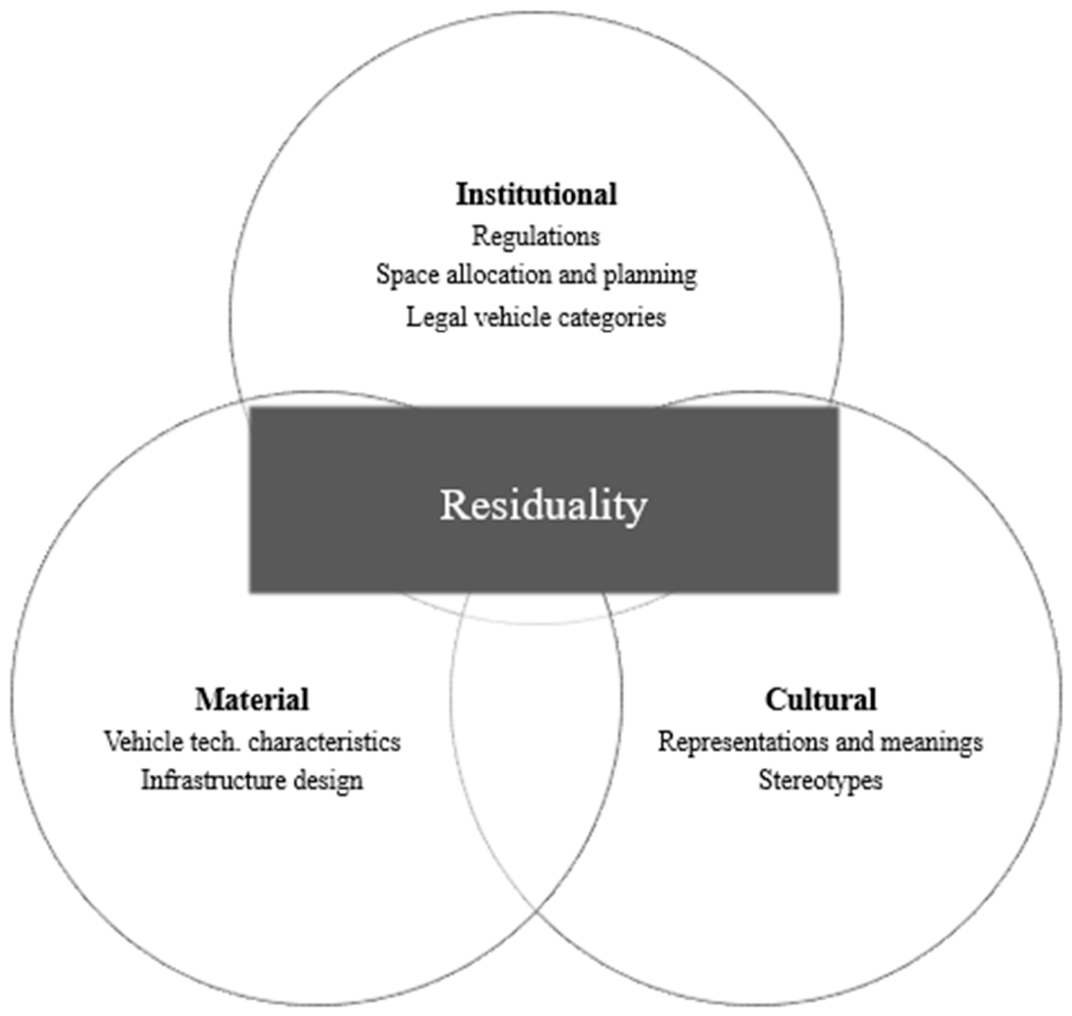
Figure 6.
Year distribution of letters to the editor analysed (2010-2024).
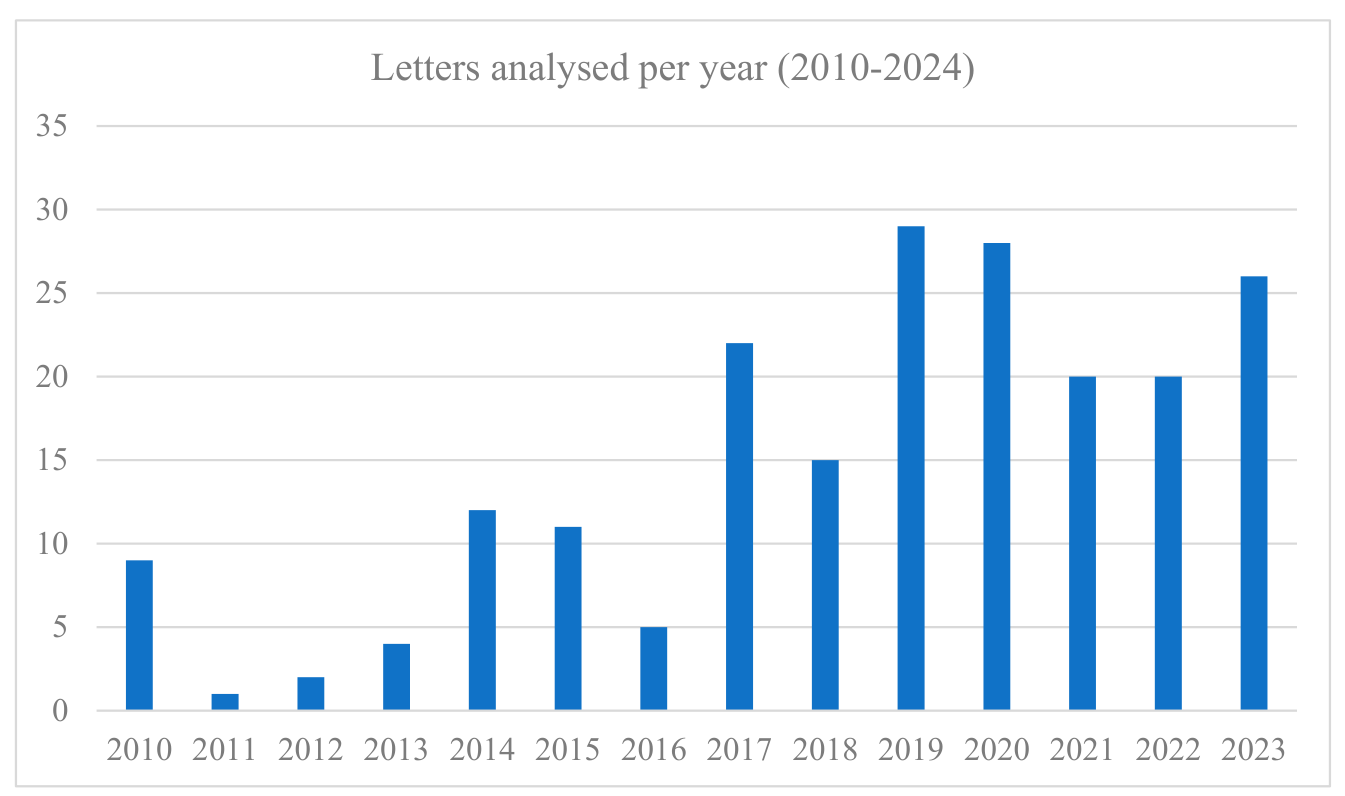
Figure 7.
Publication source of letters to the editor analysed (2010-2024). *Het Parool is a national newspaper focusing mainly on Amsterdam.
Figure 7.
Publication source of letters to the editor analysed (2010-2024). *Het Parool is a national newspaper focusing mainly on Amsterdam.
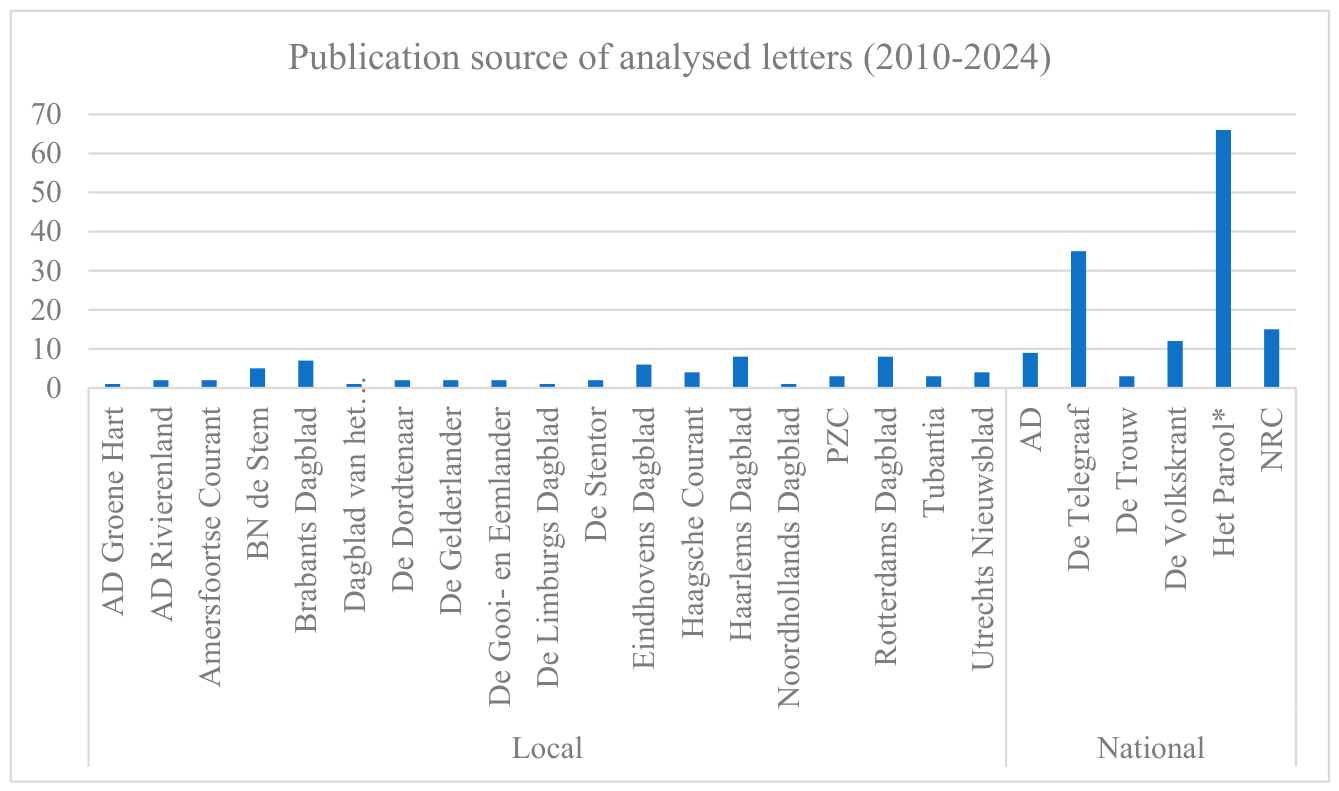

Table 1.
Keywords used for data collection on Nexis Uni (2010-2024).
| Keyword type | Keywords in Dutch |
|---|---|
|
Scooter, bromfiets, snorfiets, deelscooter |
|
Brieven, lezersbrieven |
Table 2.
Summary: findings per decade against residuality framework.
| 1950s | 1960s | 1970s | 2010s | 2020s | |
|---|---|---|---|---|---|
| Institutional | Mopeds categorised as motorised bicycles, can use bicycle path, max. speed introduced | Accountability: mandatory insurance; noise difficult to regulate | Helmet requirement for bromfietsen. New vehicle categories: snorfiets and bromfiets. | Bicycle path ban for light mopeds, unstable light-moped category, low-emission zones, patchwork regulation and call for national regulations | Helmet requirement, municipal governance of rental mopeds, speed limits and enforcement, calls to classify fatbikes and other micromobilities. |
| Material | Bicycle-moped paths lead to conflicts with cyclists. Mopeds are louder, heavier, faster |
Mopeds faster and noisier. Users tinkering with mopeds’ speed | Noise complaints. | Light mopeds too fast for bicycle paths, too slow for roads, modified mopeds, pollution, electrification blurring boundaries with e-bikes | Rental mopeds and pavement clutter, bicycle-path crowding, speed and noise differences, fast (modified) and heavy fatbikes |
| Cultural | Polarisation moped riders vs. cyclists, annoyance, challenging cycling abreast, not quite fitting social aspect of cycling | ‘Nozem’ and youth culture. Riders as nuisance in cities (loitering, noisy). Age-based stereotypes | Comparison with cars, airplanes | Reckless moped rider stereotypes, cyclists as vulnerable, belonging on the bicycle path | Rental mopeds as ‘junk’, reckless young micromobility riders, responsible mobility (helmet), fatbike stigmatisation and status |
Disclaimer/Publisher’s Note: The statements, opinions and data contained in all publications are solely those of the individual author(s) and contributor(s) and not of MDPI and/or the editor(s). MDPI and/or the editor(s) disclaim responsibility for any injury to people or property resulting from any ideas, methods, instructions or products referred to in the content. |
© 2026 by the authors. Licensee MDPI, Basel, Switzerland. This article is an open access article distributed under the terms and conditions of the Creative Commons Attribution (CC BY) license (http://creativecommons.org/licenses/by/4.0/).
Copyright: This open access article is published under a Creative Commons CC BY 4.0 license, which permit the free download, distribution, and reuse, provided that the author and preprint are cited in any reuse.


