

Submitted:
24 June 2026
Posted:
25 June 2026
You are already at the latest version
Abstract
Climate change poses an increasing threat to viticulture sustainability, particularly in tra-ditional wine regions, where varietal regulations restrict the adoption of new cultivars. Leveraging intra-varietal diversity represents a promising, regulation-compatible adapta-tion strategy. We report the first comprehensive monomeric phenolic profiling, by UHPLC-QqQ-MS/MS, of grape berries from eleven Vitis vinifera L. 'Tempranillo Tinto' clones (two seasons) and seven 'Graciano' clones (three seasons), from old vineyards in La Rioja (Spain). Six phenolic classes were quantified: hydroxycinnamic acids, hydroxyben-zoic acids, flavonols, flavanols, stilbenes, and anthocyanins. Multivariate analysis of var-iance, linear mixed-effects models, principal component analysis, and hierarchical cluster analysis were used to characterize clonal diversity. Significant clone effects were detected for all six phenolic classes in 'Graciano' and four in 'Tempranillo Tinto'. In 'Graciano', clone GR_1250 was distinguished by elevated flavonol and anthocyanin levels, whereas GR_1265 showed the highest flavanol and hydroxybenzoic acid content. In 'Tempranillo Tinto', clone TT_1041 stood out for its higher flavanol and hydroxybenzoic acid concen-trations, whereas TT_767 had elevated anthocyanin levels. Two to four distinct phenotyp-ic clusters were identified within each variety. These results confirm substantial in-tra-varietal phenolic diversity in both cultivars and identify clonal selections with differ-ential profiles of value for improving wine quality under climate change.
Keywords:
clonal selection
; grapevine
; intra‐varietal diversity
; phenolic compounds
; anthocyanins
; flavonols
; flavanols
; stilbenes
1. Introduction
Grapevine (Vitis vinifera L.) is one of the most economically significant fruit crops worldwide, with a total vineyard area of 7.1 million hectares and a global production of 71.8 million tons [1], which places grapevine as the third-largest fruit crop in terms of cultivated area and the fourth in terms of production [2]. However, while production has remained relatively stable over the last decade, the global vineyard area has gradually declined since the early 21st century. Among the more than 6,000 grape varieties catalogued, only a limited number dominate global wine production [3]. ‘Tempranillo Tinto’ is one of the most widely cultivated red wine varieties in the world, ranking among the top five wine grape varieties globally according to OIV data, with approximately 231,000 hectares under cultivation, predominantly located in Spain [3]. Indeed, within Spain, it is the most well-known red grape variety and serves as the key cultivar in numerous prestigious wine-producing regions, most notably in the Denominación de Origen Calificada (D.O.Ca.) Rioja, accounts for approximately 90% of the vineyard area and is closely associated with the international recognition of Rioja wines [4]. However, ‘Tempranillo Tinto’ combines low heat tolerance with limited adaptive flexibility, making it particularly vulnerable to ongoing warming conditions, especially in vulnerable regions such as the Mediterranean area [5]. In contrast, ‘Graciano’, also known as ‘Tintilla de Rota’ in southern Spain, ‘Tinta Miúda’ in Portugal, ‘Morrastel’ in France, and ‘Cagnulari’ in Italy, is a minority autochthonous variety with a markedly smaller planted area, concentrated primarily in Navarra and the Rioja wine regions [6,7]. Despite its limited cultivation, ‘Graciano’ is highly valued for its distinctive qualitative contribution to traditional coupages, as it is recognized for its deep color, high acidity, marked aromatic complexity, and elevated phenolic content, particularly with regard to stilbenes and anthocyanins [8]. Its late phenology, small berry size, and high titratable acidity have recently attracted renewed interest as traits of potential agronomic value under projected climate-warming scenarios [9,10].
Phenolic compounds are a structurally diverse group of plant secondary metabolites that play key roles in grapevine biology and wine quality. In grapes, they are distributed across distinct tissues (skin, pulp, and seeds) and can be divided into two broad classes based on their structural backbone: non-flavonoids (including phenolic acids, such as hydroxybenzoic and hydroxycinnamic acids, and stilbenes) and flavonoids (including anthocyanins, flavonols, and flavan-3-ols) [11]. These compounds play a significant role in viticulture and in the wine industry. For example, in red grape berries, anthocyanins are responsible for berry skin color; flavanols (flavan-3-ols and proanthocyanidins), are principal determinants of wine astringency and mouthfeel properties; flavonols, serve as key copigments and they display photoprotection functions; stilbenes, are phytoalexins with prominent health-promoting properties; and phenolic acids (hydroxybenzoic and hydroxycinnamic acids), contribute to both flavor and antioxidant capacity [12]. The biological activities associated with these compounds, including antioxidant, anti-inflammatory, cardioprotective, and anticarcinogenic effects, have been extensively documented in the scientific literature [13,14], conferring substantial nutraceutical value on both grapes and their derived products. From an enological perspective, the phenolic profile of grape berries is a major determinant of wine quality. Anthocyanins define color intensity and hue; flavanols provide structural tannins that govern body and aging potential; flavonols and phenolic acids modulate organoleptic complexity; and stilbenes, particularly resveratrol and its derivatives, are associated with both the health properties of wine and grapevine disease resistance [15]. For all the abovementioned reasons, the monomeric phenolic composition of grapes is of great relevance for viticulture and winemaking.
The phenolic composition of grape berries is the result of complex interactions between genetic (variety, clone, rootstock), agronomic (training system, irrigation, canopy management, soil management), and environmental (climate, vintage, terroir) factors [15,16,17]. At the intra-varietal level, clonal diversity constitutes an underexplored but highly valuable dimension of this variation. Grapevines have been clonally propagated by vegetative means for thousands of years, a practice that, while aimed at preserving the genetic and phenotypic integrity of traditional cultivars, has paradoxically functioned as an engine for intra-varietal diversification [18]. Through successive cycles of vegetative propagation, somatic mutations and epigenetic modifications accumulate in individual plants, giving rise to genetically distinct clonal lineages classified under the same variety name [19,20]. This process has generated a broad spectrum of clonal diversity within major cultivars such as ‘Tempranillo Tinto’, ‘Riesling’, and ‘Pinot Noir’ over centuries [18,21]. Exploiting this intra-varietal diversity through clonal selection offers a uniquely effective strategy for improving key agronomic and quality traits, including phenolic composition, without altering the varietal identity upon which regional wine denominations and market recognition depend [18]. This is particularly relevant in contexts where appellation regulations limit or prohibit the introduction of non-native varieties, such as the D.O.Ca. Rioja, making intra-varietal clonal diversity the primary available lever for adaptation and quality improvement.
Significant intra-varietal phenotypic variation in phenolic composition has been documented in several major Vitis vinifera cultivars. Pantelić et al. [22] demonstrated substantial clone-dependent differences in total phenolic content, individual polyphenol profiles, and radical scavenging activity among recently developed ‘Merlot’ and ‘Cabernet Franc’ clones, using UHPLC coupled to triple-quadrupole mass spectrometry (UHPLC-QqQ-MS/MS), and identified specific clones with particularly favorable profiles for high-quality wine production [22]. Earlier work on ‘Cabernet Franc’ clones similarly documented clone-dependent variation in leaf blade concentration of stilbenes [23]. Within ‘Tempranillo Tinto’, several studies have documented intra-varietal phenolic diversity. Royo et al. [24] characterized the phenolic profile of the spontaneous somatic variant known as ‘Tempranillo negro’ (clone VN_21) using UHPLC-QqQ-MS/MS, finding markedly higher concentrations of anthocyanins, proanthocyanidins, and stilbenes compared to the widely commercialized clone RJ_43, one of the most cultivated clones in D.O.Ca. Rioja [25]. This study exemplifies the potential of targeted chromatographic phenol profiling to reveal compositional diversity among ‘Tempranillo Tinto’ clones arising from somatic variation. Moreover, assessments of quality parameters and phytochemical content in ‘Tempranillo Tinto’ clones prospected in the Douro Valley (Portugal) have revealed significant varietal and clonal polymorphisms in polyphenol profiles, underscoring the broad genetic basis of phenolic diversity in this cultivar [26]. Regarding ‘Graciano’, its reputation as a naturally high-stilbene cultivar has been consistently supported by experimental data: with stilbene concentrations in ‘Graciano’ grapes substantially exceeding those reported for ‘Tempranillo Tinto’ and other common varieties cultivated in D.O.Ca. Rioja [27,28], confirming an inherent cultivar-level predisposition toward elevated phytoalexin accumulation. Nevertheless, systematic clonal comparisons of monomeric phenolic profiles in ‘Graciano’ remain scarce in the literature, representing a significant knowledge gap for a cultivar of growing commercial interest.
In this context, the regional government of La Rioja (Spain) has developed, since 1999, a program for the field prospecting and conservation of grapevine genetic resources in old vineyards of D.O.Ca. Rioja, resulting in a germplasm repository encompassing over 1,600 accessions of the most relevant local varieties of grapevines. From this collection, initial characterization campaigns conducted by our research group over three consecutive seasons (2020–2022) assessed a total of 30 ‘Tempranillo Tinto’ and 13 ‘Graciano’ clonal selections for a broad spectrum of phenological, agronomic, and basic oenological traits [9,29]. Results from these assessments revealed a remarkable level of intra-varietal phenotypic diversity in both varieties, exceeding that observed in currently commercialized clones, and identified several candidate clonal selections with traits of particular interest for adaptation to projected climate scenarios and for high-quality wine production. Therefore, the present study aims to extend this characterization by focusing on the analysis of the monomeric phenolic composition of grapes over three years (2023-2025). To this end, a targeted UHPLC-QqQ-MS/MS approach was employed in order to quantify the main phenolic classes across multiple vintages (i.e., anthocyanins, flavanols, flavonols, stilbenes, and phenolic acids).
2. Materials and Methods
2.1. Plant Material, Meteorological Conditions and Experimental Design
The plant material and experimental site characteristics have been described in detail in previous publications from our research group [9,29]. Briefly, following a preliminary field prospecting of old vineyards within the D.O.Ca. Rioja region (La Rioja, Spain), thirty ‘Tempranillo Tinto’ and thirteen ‘Graciano’ clonal selections showing contrasting phenotypic traits were initially selected. These clones were characterized over three consecutive years (2020, 2021, 2022) for phenology, agronomic performance, and basic physicochemical composition. Based on the results of that preliminary screening, ten ‘Tempranillo Tinto’ and six ‘Graciano’ clonal selections were retained for further detailed characterization, including the determination of grape monomeric phenolic composition (Table 1). In addition, two commercial clones (‘Tempranillo Tinto’ RJ_43 and ‘Graciano’ RJ_117) were included as commercial controls in both sets.
All plant materials were grafted onto 110-Richter rootstock and planted in 2017 at the experimental farm “Finca Valdegón” (Agoncillo, La Rioja, Spain; 42.43° N, 2.51° W; 344 m a.s.l.). The vineyard was arranged in a randomized complete block design with three replicates per clone. Standard viticultural management practices for the region were applied, including vine training as bilateral Royat cordon, pruning system with six two-node spurs, and irrigation regime as described in Portu et al. [9,29]. Soil management was based on cover crop with a mix of the following species: Festuca arundinacea (cespitose), Festuca rubra subsp. trichophylla, cespitose perennial ryegrass (Lolium perenne), Brachypodium distachyon, and Trifolium alexandrinum (Semillas Battle, Barcelona, Spain).
Varietal identity of all clones was confirmed by SSR marker analysis, and all plant material was certified as free of the main grapevine viruses (GFLV, ArMV, GLRaV-1 and GLRaV-3) by ELISA tests, as previously reported [9,29].
Meteorological data for the three study years (2023–2025) were obtained from the Servicio de Información Agroclimática de La Rioja (SIAR) using an agrometeorological station located immediately adjacent to the experimental vineyard (<200 m from the plot) (Supplementary Table S1). Overall, 2023 and 2025 showed higher heat accumulation and atmospheric evaporative demand than 2024 (higher Winkler index and ETo), whereas 2024 was wetter and exhibited lower heat accumulation. In addition, 2023 was characterized by the warmest nights during ripening (highest Cool Night index), indicating a reduced day–night thermal contrast during grape maturation.
2.2. Detailed Analysis of Grape Monomeric Phenolic Composition by UHPLC-QqQ-MS/MS
Phenolic compound analyses were carried out for the eleven Vitis vinifera L. ‘Tempranillo Tinto’ clones over two consecutive vintages (2023 and 2024; the third year, 2025, was excluded from statistical analyses due to sever downy mildew (Plasmopara viticola) incidence), and for the seven ‘Graciano’ clones over three consecutive seasons (2023, 2024, and 2025). Analyses were performed following previously described methodology [30,31], after prior extraction of grape samples.
2.3.1. Berry Sampling and Grape Extract Preparation
At commercial maturity (E-L 38), 200 berries per replicate and clone were randomly collected from ripe bunches. Berries were weighed using a precision balance (ALC-4100, Acculab, Goettingen, Germany). Phenolic extracts were obtained from 50 g of frozen grapes berries per replicate, using a methanol solution acidified with formic acid and assisted by an ultrasonic bath (JP Selecta, Barcelona, Spain). Prior to chromatographic analysis, the grape extracts were filtered through a 0.2 μm nylon filter and diluted to 20% in a 19% ethanol and 1% formic acid solution in water.
2.3.2. Chromatographic Analysis
Chromatographic analyses were performed on a Shimadzu Nexera chromatograph (Shimadzu Corporation, Kyoto Japan), coupled to a 3200QTRAP® triple quadrupole mass spectrometer (AB Sciex, Framingham, MA, USA), equipped with atmospheric pressure ionization (ESI and APCI).
Two different chromatographic methods were employed: one for anthocyanins and the other for non-anthocyanin phenolic compounds (flavanols, flavonols, stilbenes, and phenolic acids). Therefore, each grape extract was injected twice.
2.3.3. Identification and Quantification of Phenolic Compounds
Mass spectrometric acquisition was performed on the 3200QTRAP® in tandem (MS/MS) mode with electrospray ionization: positive mode for anthocyanins and negative mode for non-anthocyanin phenolic compounds. Specific ionization parameters were optimized for each compound class, and Multiple Reaction Monitoring (MRM) mode was used for selective data acquisition and quantification. Data acquisition and processing were performed using Analyst® v.1.7.3 and SCIEX OS MQ 3.0 software (AB Sciex). Results were expressed as mg/kg fresh weight (fw).
2.4. Data Analyses
The results of the phenolic compound analyses were analyzed using a combination of univariate and multivariate statistical approaches. Initially, the effects of clones and years were evaluated by multivariate analysis of variance (MANOVA) with a general linear model. To account for the experimental design and inter-year environmental variability, clone-level adjusted means were subsequently estimated by fitting linear mixed-effects models, with clone specified as a fixed effect and year as random effect. The estimated marginal means (EMMEANS) for each clone were extracted and used as input data for downstream multivariate analyses. Prior to multivariate analysis, pairwise Spearman correlation coefficients were calculated to identify highly correlated variables (|ρ| ≥ 0.75); from each group of correlated traits, a single representative variable was retained to reduce redundancy (highest SD across clones). Correlation heatmaps are provided in Figure A1. Principal component analysis (PCA) was then performed on the reduced dataset using mean-centred and unit-variance-scaled data to explore overall patterns of variability among clones. In parallel, hierarchical cluster analysis (HCA) was conducted using Euclidean distances and Ward’s minimum variance method (Ward.D2) to identify groups of clones with similar phenolic profiles and to assess consistency with the PCA groups.
All statistical analyses were performed in SPSS v.28.0 (IBM Corporation, Armonk, NY, USA) and RStudio (v.2026.04; http://www.r-project.org/).
3. Results
3.1. Effects of Clone and Year on Phenolic Composition in ‘Tempranillo Tinto’
UHPLC–MS/MS analyses of ‘Tempranillo Tinto’ led to the identification of a wide range of phenolic compounds, including five hydroxycinnamic acids, six hydroxybenzoic acids, twenty flavonols, eleven flavanols, seven stilbenes, and twenty-one anthocyanins. Detailed results for each compound across the different study vintages are provided in Supplementary Table S2.
The results of the MANOVA analyses on ‘Tempranillo Tinto’ are presented in Table 2. The analysis revealed that both clone and year significantly influenced the phenolic composition of ‘Tempranillo Tinto’ grapes, although the magnitude of these effects varied among compound groups.
Regarding clonal variability, a significant effect of clone on four of the six major phenolic compound classes quantified was observed. Specifically, significant clone-dependent variations were detected for hydroxycinnamic acids, hydroxybenzoic acids, flavanols, and anthocyanins, indicating that the genetic background of each clonal selection substantially influences berry phenolic composition. In contrast, flavonols and stilbenes did not show statistically significant variation among clones, suggesting that these compound classes may be more strongly modulated by environmental factors.
Among the individual ‘Tempranillo Tinto’ clones, TT_1041 was the most distinctive, as it presented markedly higher flavanol concentrations (194.93 mg/kg) than all other clones tested, which ranged from 85.5 to 113.95 mg/kg. This represents ≈ 2.3-fold higher flavanol content in TT_1041 compared to the commercial clone RJ_43. TT_1041 also showed the highest hydroxybenzoic acid content (35.29 mg/kg), significantly higher than all other clones. Conversely, TT_1041 was the clone with the lowest hydroxycinnamic acid levels. In terms of anthocyanins, TT_767 presented the highest concentration (1261 mg/kg), although not significantly different from RJ_43, whereas TT_56 and TT_1084 exhibited the lowest values.
For year variability, there were significant differences in hydroxycinnamic acids, flavonols, flavanols, and stilbenes, with higher concentrations in 2024 than in 2023 for all groups except stilbenes. There were no significant clone × year interaction effects for any compound class except for flavanols, indicating that, in general, the clonal variability in phenolic composition was broadly consistent across seasons.
3.2. Effects of Clone and Year on Phenolic Composition in ‘Graciano’
In ‘Graciano’, UHPLC–MS/MS analyses revealed an extensive phenolic profile, including six hydroxycinnamic acids, seven hydroxybenzoic acids, twenty flavonols, eleven flavanols, seven stilbenes, and twenty-one anthocyanins (Supplementary Table S3).
A comprehensive overview of the statistical outcomes is given in Table 3, summarizing the MANOVA results across all phenolic compound classes in ‘Graciano’. A highly significant clonal effect was observed on all six major phenolic compound classes. This result indicates considerably greater intra-varietal phenotypic variation in phenolic composition in ‘Graciano’ compared to ‘Tempranillo Tinto’, in which only four compound classes showed significant clone effects. Among the ‘Graciano’ clones, GR_1265 was the most distinctive for non-anthocyanin phenolics. It showed significantly higher flavanol concentrations (166.3 mg/kg) than all other clones tested. GR_1265 also presented the highest hydroxybenzoic acid content (45.07 mg/kg), significantly exceeding all other clones except GR_1250. For stilbenes, GR_181 (78.28 mg/kg), GR_1250 (75.29 mg/kg), GR_1265 (77.63 mg/kg) and GR_941 (73.83 mg/kg) showed significantly higher values than GR_1253 (57.12 mg/kg), the clone with the lowest stilbene content. The mean stilbene concentrations observed in ‘Graciano’ clones (57.12–78.28 mg/kg) were substantially higher than those recorded in ‘Tempranillo Tinto’ clones (3.59–8.97 mg/kg), confirming the previously described potential of ‘Graciano’ as a high-stilbene cultivar [27,28]. GR_1250 showed the highest flavonol (215.26 mg/kg) and anthocyanin (1920 mg/kg) concentrations, the latter being significantly higher than all other clones except GR_941 and GR_1265. Conversely, GR_1253 showed the lowest anthocyanin (1386 mg/kg) and stilbene content among all ‘Graciano’ clones tested. The commercial clone RJ_117 occupied an intermediate-to-low position for most phenolic classes.
Regarding year effects, 2024 was characterized by higher concentrations of hydroxybenzoic acids, flavonols, and flavanols, and the lowest amount of stilbenes and anthocyanins, whereas hydroxycinnamic acid concentrations showed a sharp increase in 2025 compared to previous seasons.
In contrast with ‘Tempranillo Tinto’, a significant clone × year interaction was detected for hydroxybenzoic acids (p < 0.05), hydroxycinnamic acids (p < 0.01), and stilbenes (p < 0.05), indicating a stronger environmental modulation of clonal differences.
3.3. Correlation Analyses
In the correlation analyses (Spearman’s correlation coefficient (ρ)), performed on the clone-level adjusted means (EMMEANS), the phenolic datasets showed a clear block-structured correlation pattern, with the strongest associations typically occurring among compounds within the same chemical family (Supplementary Figures S1). Highly correlated variables (|ρ| ≥ 0.75) were grouped using hierarchical clustering, and one representative variable per cluster was retained to reduce redundancy prior to multivariate analyses. This procedure substantially reduced the dimensionality of each dataset: for ‘Tempranillo Tinto’, anthocyanins (ESI+) were reduced from 23 to 10 variables and non-anthocyanin phenolics (ESI−) from 45 to 32; for ‘Graciano’, anthocyanins (ESI+) were reduced from 23 to 7 variables and non-anthocyanin phenolics (ESI−) from 48 to 21 (Supplementary Tables S2–S5).
3.4. Multivariate Characterization of ‘Tempranillo Tinto’ Clones
Principal component analysis (PCA) and hierarchical cluster analysis (HCA) were performed to discriminate clones based on their phenolic composition (Figure 1, Figure 2, Figure 3 and Figure 4).
Regarding non-anthocyanin phenolics in ‘Tempranillo Tinto’, HCA separated the eleven clones into four groups (Figure 1a). One of these clusters was composed exclusively of the TT_1041 clone, whereas the commercial clone RJ_43 was grouped with TT_767.
The first two principal components of the PCA explained 54.0% of the total variance (Dim1: 37.7%; Dim2: 16.2%) (Figure 1b). The variables contributing most to Dim1 were procyanidin B4, gallic acid glucoside, and epicatechin-3-O-gallate, whereas Dim2 was mainly associated with kaempferol-3-O-glucoside, kaempferol-3-O-glucuronide, and quercetin-3-O-glucoside.
Cluster 1 (containing only TT_1041) was clearly separated along Dim1, mainly driven by its high flavanol and hydroxybenzoic acid concentrations. The remaining clusters were separated by Dim2, which was partially associated with variation in flavonols and hydroxycinnamic acids. In this respect, clones from group 4 were distinguished by higher amounts of these compounds, while clones from group 2 were in the negative extreme of this dimension.
For anthocyanin profiles, HCA identified three main clonal groups, with the commercial clone RJ_43 located in the third cluster (Figure 2a) and with clone TT_767 standing out alone in cluster 2.
In the PCA (Figure 2b), the first two principal components explained 54.2% and 17.2% of the total variance, respectively (71.4% cumulative variance). Dim1 clearly separated the main clusters identified by HCA and was mainly associated with delphinidin-3-O-glucoside, malvidin-3-O-glucoside, and delphinidin-3-O-arabinoside. Dim2, mainly driven by malvidin-3-O-arabinoside, allowed further discrimination of clone TT_767, in the positive extreme, clearly separated from TT_1048, TT_1041, and TT_1371.
3.5. Multivariate Characterization of ‘Graciano’ Clones
PCA and HCA were applied separately to non-anthocyanin phenolic compounds (Figure 3) and anthocyanin profiles (Figure 4) in ‘Graciano’.
For non-anthocyanin phenolics, HCA defined four main clusters, including a group composed of the commercial clone RJ_117 together with GR_1253 (Figure 3a).
The first two principal components of the PCA explained 60.4% of the total variance (Dim1: 36.5%; Dim2: 23.9%) (Figure 3b). The variables contributing most to Dim1 were mainly flavonols, including quercetin-3-O-glucoside, isorhamnetin-3-O-glucoside, and kaempferol-3-O-glucoside, whereas Dim2 was primarily associated with flavanols such as procyanidin B1, catechin, and procyanidin B2.
Clone GR_1250 was clearly separated from the rest along Dim1, mainly due to its high flavonol concentration, in contrast to GR_1253. In turn, GR_1265 was distinctly separated along Dim2, mainly driven by its elevated flavanol content.
For anthocyanin profiles, HCA identified four distinct clonal groups (Figure 4a), with the commercial clone RJ_117 grouped with GR_955 and GR_181.
The PCA confirmed a clear multivariate differentiation. Dim1 alone explained 66.5% of the total variance, while Dim2 accounted for an additional 25.0%, resulting in a cumulative explained variance of 91.5% (Figure 4b).
Dim1 was mainly associated with delphinidin-3-O-coumaroyl-glucoside, malvidin-3-O-caffeoyl-glucoside, and petunidin-3-O-glucoside, separating clones GR_941, GR_1250, and GR_1265 on the positive side from GR_1253 on the negative side. Dim2 was driven by malvidin-3-O-caffeoyl-glucoside and malvidin-3-O-coumaroyl-glucoside (positively), and by delphinidin-3-O-glucoside (negatively), clearly separating GR_1265 at the negative extreme and GR_941 at the positive side. µg/g.
4. Discussion
To the best of our knowledge, this study provides the first comprehensive multi-vintage characterization of monomeric phenolic composition across a broad panel of ‘Tempranillo Tinto’ and ‘Graciano’ clonal selections from old vineyards of the D.O.Ca. Rioja region. The results demonstrate that clonal genotype exerts a significant influence on the phenolic composition of both varieties, which allows a clear identification of individual clonal selections with particularly distinctive and potentially exploitable phenolic profiles.
4.1. Intra-Varietal Diversity in ‘Tempranillo Tinto’ Grape Phenolic Composition
Significant clone-dependent variation was detected in ‘Tempranillo Tinto’ for four of the six major phenolic compound classes assessed (all but flavonols and stilbenes). This finding aligns well with previous reports in different grape varieties and it is consistent with the general observation that centuries of clonal propagation and somatic mutation accumulation generate phenotypic variations among clones of the same variety that can approach the magnitude of inter-varietal differences [24,32]. For example, Ren et al. [33] reported significant clonal variability in anthocyanins, flavanols, flavonols and phenolic acids across 27 clones from eight Vitis vinifera L. varieties, in both grape berries and wine. Similarly, Pantelić et al. [22] observed significant differences in total polyphenols, anthocyanins, and individual phenolic compounds among newly developed ‘Merlot’ and ‘Cabernet Franc’ clones. The absence of significant differences between ‘Tempranillo Tinto’ clones in total flavonols and total stilbenes may be explained by the fact that these compounds are tightly regulated by environmental factors such as light exposure and pathogen pressure in this variety, as they play a key role in protection against UV radiation and biotic stress in grape berries [16].
In our study, the differences in total phenolic content among clones within each variety were substantial in absolute terms. In ‘Tempranillo Tinto’, the most remarkable finding was the behavior of clone TT_1041, which showed the highest hydroxybenzoic acid (35.29 mg/kg) and flavanol (194.93 mg/kg) concentrations, representing approximately 1.2 and 2.0-fold higher levels, respectively, than the commercial clone RJ_43. Flavanols, encompassing flavan-3-ol monomers (catechin, epicatechin, and their galloylated derivatives) and condensed proanthocyanidins, are the principal constituents of grape seed and skin tannins, contributing significantly to wine astringency, body, and aging potential [34]. Therefore, from the winemaking perspective, TT_1041 grapes are expected to produce wines with a markedly richer tannin content and potentially superior aging capacity. In this regard, Royo et al. [24] reported a significant higher concentration of flavan-3-ols concentration for the somatic variant ‘Tempranillo negro’ (VN21) relative to the same commercial clone RJ_43. Interestingly, TT_1041 showed the lowest hydroxycinnamic acid levels (55.38 mg/kg) among all clones, a pattern that may reflect a competitive flux redirection at branch points in the phenylpropanoid pathway, favoring the flavonoid branches (leading to flavanols) over the hydroxycinnamic acid derivatives (such as caftaric and coutaric acids). This trade-off-type relationship between different branches of phenolic metabolism has been discussed in the context of varietal comparisons in Vitis vinifera L. [35].
Notably, clone TT_767 displayed the highest concentrations of hydroxycinnamic acids (73.59 mg/kg) and anthocyanins (1,261 mg/kg), although these differences were not statistically significant compared to the commercial clone RJ_43 (69.32 and 1,210 mg/kg, respectively). The simultaneous elevation of anthocyanins, as the main responsible for red grape and wine colour, and of hydroxycinnamic acids, which are well-established copigments [36], could synergistically enhance colour intensity, particularly in young wines. In addition, the intra-varietal range observed in anthocyanin content (from approximately 975 to 1,261 mg/kg is of practical relevance for winemakers seeking to optimize colour in monovarietal or blended wines. In this respect, clones TT_56 and TT_1084, which showed significantly reduced anthocyanin concentrations compared to the best-performing clones, may limit their suitability for wines in which colour intensity is a priority quality criterion.
4.2. Intra-Varietal Diversity in ‘Graciano’ Grape Phenolic Composition
In ‘Graciano’, the results also provided evidence of significant intra-varietal diversity in grape phenolic composition for all six classes of phenolic compounds. This finding is particularly noteworthy because it indicates that the phenotypic spectrum of intra-varietal phenolic diversity in ‘Graciano’ extends to compound classes, i.e., flavonols and stilbenes, that showed no significant clonal variation in ‘Tempranillo Tinto’. This is of great interest for the wine sector due to the limitation of existing clones in this grape cultivar, as reported by Portu et al. [9] who showed that only 12 commercial clones of ‘Graciano’ are currently certified in Europe, compared to 53 for ‘Tempranillo Tinto’. The limited number of certified ‘Graciano’ clones means that the rich intra-varietal diversity uncovered here, selected from old vineyards across the region, has been largely absent from commercial viticulture, underscoring the value of field prospecting and conservation efforts.
Clone GR_1265 emerged as the most distinctive of the ‘Graciano’ selections for non-anthocyanin phenolics, presenting the highest flavanol concentration (166.3 mg/kg) and hydroxybenzoic acid content (45.07 mg/kg) among all ‘Graciano’ clones evaluated. This is similar to results from TT_1041 in ‘Tempranillo Tinto’, which suggests an elevated potential for wine aging. Clone GR_1250, in turn, showed the highest concentrations of both flavonols (215.26 mg/kg) and anthocyanins (1,920 mg/kg) among all ‘Graciano’ clones. Its anthocyanin levels were significantly higher than most other clones evaluated (except GR_941 and GR_1265), reaching values substantially above the range documented for ‘Tempranillo Tinto’ clones in this study, which is consistent with the well-established superior anthocyanin potential of ‘Graciano’ relative to ‘Tempranillo Tinto’ [8]. The combination of high anthocyanin and flavonol concentrations makes GR_1250 a strong candidate for the production of deeply coloured wines rich in phenolic compounds, and for incorporation into blends where colour intensity and phenolic complexity are primary objectives. By contrast, clone GR_1253 consistently showed the most limited phenolic profile among ‘Graciano’ clones, with the lowest anthocyanin content (1,386 mg/kg) and the lowest stilbene concentrations (5.71 mg/kg).
4.3. ‘Graciano’ as a High-Stilbene Cultivar
Another important finding of this study is the difference in stilbene accumulation between the two varieties. Mean stilbene concentrations in ‘Graciano’ clones ranged from 57.12 to 78.28 mg/kg, compared to only 3.59–8.97 mg/kg in ‘Tempranillo Tinto’ clones, which implies 10-fold difference at equivalent maturity and under identical experimental conditions. This result confirms and extends earlier reports establishing ‘Graciano’ as a cultivar with an intrinsic, genetically determined capacity for high stilbene accumulation [28,37], and represents one of the most clearly defined inter-varietal phenolic contrasts documented in this study. Stilbenes in Vitis vinifera, including resveratrol, piceid, piceatannol, and their oligomers, function as phytoalexins, are associated with a range of health-relevant biological activities, including antioxidant, anti-inflammatory, cardioprotective, and anticancer effects [38]. The high stilbene levels in all ‘Graciano’ clones, including the worst-performing GR_1253, suggest that stilbene accumulation depends greatly on the cultivar rather than on the clone, even if significant clone effects within ‘Graciano’ were detected. This finding has direct implications for the nutraceutical and health-promotion positioning of ‘Graciano’-based wines and for their use as stilbene-rich enological resources [27]. Fernández-Pérez et al. [39] demonstrated that pomace extracts obtained from this cultivar could be a source of biotechnological supplements to help modulate intestinal microbiota and combat bacterial antibiotic resistance.
Moreover, the high stilbene content of ‘Graciano’ may be related to its reported resistance to fungal pathogens (https://riojawine.com/en-us/the-designation/grape-varieties/graciano/), since stilbenes are principal components of the grapevine’s constitutive and inducible defense arsenal [40]. Specifically, in this study, the 2025 vintage was excluded from statistical analyses in ‘Tempranillo Tinto’ due to a severe Plasmopara viticola outbreak that compromised the integrity of the phenolic data in that variety. Notably, ‘Graciano’ data for 2025 were fully usable, further suggesting the greater fungal resistance of this cultivar under field conditions, which is an agronomically relevant trait in the context of reduced fungicide use and climate adaptation.
4.4. Multivariate Phenolic Differentiation of Clones
Multivariate analyses by PCA and HCA confirmed a clear differentiation among clones in both varieties. In ‘Tempranillo Tinto’, the non-anthocyanin PCA identified TT_1041 as a distinct outlier along Dim1, driven by its elevated flavanol and hydroxybenzoic acid concentrations, while the remaining clones were primarily distributed along Dim2, which captured variation in flavonols and hydroxycinnamic acids (Figure 1). This biplot structure highlights TT_1041 as an outstanding clone and supports previous findings by Portu et al. [29], who reported that this clone is characterized by markedly loose bunch architecture and low values for several yield-related traits, likely associated with its male-like flower phenotype and an underdeveloped gynoecium [41].
In contrast, the commercial clone RJ_43 was separated from most clones along the negative axis of Dim2, and grouped only with TT_767. This pattern suggests substantial phenolic diversity among the remaining clones relative to the commercial reference. Furthermore, in the anthocyanin-based PCA for ‘Tempranillo Tinto’, clone TT_767 was clearly isolated (Figure 2a and Figure 2b), primarily driven by its markedly high anthocyanin content. This clone has also been characterized by a lower must pH and higher tartaric acid concentration [29], which, together with its elevated anthocyanin levels, represents a particularly relevant genotype in the context of climate change adaptation.
In ‘Graciano’, multivariate analyses of non-anthocyanin phenolics clearly discriminated clones GR_1265 and GR_1250 (Figure 3a and Figure 3b), which were characterized by elevated concentrations of flavanols and flavonols, respectively. Previous studies on their agronomic performance have identified clone GR_1250 as a genotype with very loose bunch architecture and high oenological potential, leading to its certification by the Government of La Rioja [9]. Similarly, clone GR_1265, also characterized by low cluster compactness, exhibits high vegetative vigor and elevated total acidity [9]. From a qualitative perspective, GR_1265 represents a promising candidate for the production of structured, tannin-rich Graciano wines with potential for extended aging.
Regarding anthocyanins, the PCA performed on ‘Graciano’ was particularly discriminative, with the first two principal components explaining 91.5% of the total variance, a proportion rarely observed in phenolic characterization studies of this type. This high explanatory power reflects the strong genetic control of anthocyanin profiles in ‘Graciano’, together with a reduced environmental noise. In this PCA (Figure 4b), clones GR_1250 and GR_941 were separated from the rest along the positive axes of Dim1 and Dim2, respectively, whereas clones GR_1253 and GR_1265 were positioned on the negative side and formed distinct clusters in the HCA (Figure 4a). Notably, clone GR_1250 again stood out because of its high anthocyanin concentration, which, combined with its elevated flavonol levels, highlights its strong oenological potential. Accordingly, this clone was selected for certification by the Government of La Rioja [9]. Likewise, clone GR_941 has also shown considerable potential and has recently been certified [9].
In both ‘Tempranillo Tinto’ and ‘Graciano’, the commercial reference clones RJ_43 and RJ_117, are widely used standards within the D.O.Ca. Rioja region, occupied an intermediate position in the multivariate phenolic space. This indicates that, while these commercial clones represent stable and well-characterized benchmarks, the set of novel clonal selections evaluated in this study encompasses a substantially broader phenolic diversity. Several of these genotypes exceeded the commercial standards for specific compound classes. This observation is consistent with previous findings by Portu et al. [29], who highlighted that the clonal diversity present in old vineyards of the region is significantly greater than that captured by currently available certified clones.
4.5. Implications for Clonal Selection and Future Research
Taken together, the results of this study have clear practical implications for viticulture and enology in D.O.Ca. Rioja and potentially in other regions where ‘Tempranillo Tinto’ and ‘Graciano’ are cultivated. From a phenolic quality standpoint, clones TT_1041 (high flavanols) and TT_767 (high anthocyanins) in ‘Tempranillo Tinto’, and clones GR_1250 (high anthocyanins and flavonols) and GR_1265 (high flavanols and hydroxybenzoic acids) in ‘Graciano’, represent candidates for targeted clonal selection aimed at specific enological objectives. The identification of such clones with differentiated phenolic profiles complements the previously reported agronomic and phenological characterization of these same selections [29], allowing for a multi-criteria selection approach that integrates phenology, yield, berry size, and must chemistry with the phenolic dimension evaluated here.
The consistent positioning of the commercial clones (RJ_43 for ‘Tempranillo Tinto’ and RJ_117 for ‘Graciano’) at an intermediate-to-low phenolic level for most classes reinforces the case for broadening the commercial clonal portfolio beyond the current offerings. The limited phenolic diversity represented by existing certified clones, which tend to reflect historical selection priorities focused on yield, regularity, and basic must quality rather than secondary metabolite richness, has been a recurrent concern in the scientific and technical literature [42]. The novel clonal selections characterized here, sourced from old vineyards that have accumulated somatic diversity over decades or centuries without the bottleneck imposed by formal selection and certification processes, represent a valuable and currently underutilized resource for the viticulture sector.
Finally, the identification of clonal selections with markedly elevated flavanol and hydroxybenzoic acid concentrations in both ‘Tempranillo Tinto’ (TT_1041) and ‘Graciano’ (GR_1265) opens interesting avenues for investigating the molecular basis of clonal variation in phenylpropanoid metabolism. Comparative transcriptomic and epigenomic analyses between these clones and commercial standards, particularly targeting MYB transcription factors and key biosynthetic enzymes, could help elucidate the somatic mutations or epigenetic modifications responsible for the observed phenotypic differences.
5. Conclusions
The present study demonstrates that clonal genotype is a significant determinant of berry phenolic composition in both ‘Tempranillo Tinto’ and ‘Graciano’, although the extent of this influence differs markedly between cultivars. In ‘Tempranillo Tinto’, significant clone effects were detected for four of the six phenolic classes assessed, with flavonols and stilbenes appearing more strongly governed by environmental factors. In ‘Graciano’, clonal variation was significant across all six compound classes, indicating a broader intra-varietal phenotypic spectrum.
Among individual clones, TT_1041 stood out in ‘Tempranillo Tinto’ for its markedly elevated flavanol content (~2.3-fold above the commercial clone RJ_43) and highest hydroxybenzoic acid levels, with direct implications for wine structure and aging potential. Clone TT_767, in turn, showed the highest anthocyanin concentrations alongside previously reported higher acidity traits, a relevant combination under climate warming scenarios. In ‘Graciano’, GR_1250 accumulated the highest flavonol and anthocyanin levels of any clone evaluated, while GR_1265 presented the richest flavanol and hydroxybenzoic acid profile, thus representing complementary targets for clonal selection toward distinct enological objectives. The ~10-fold higher stilbene concentrations recorded in ‘Graciano’ relative to ‘Tempranillo Tinto’, under identical field conditions, further confirmed the genetically determined nature of this trait at the cultivar level.
Overall, the commercial reference clones RJ_43 and RJ_117 occupied intermediate-to-low positions within the multivariate phenolic space, supporting the view that old-vineyard germplasm harbors a considerably broader phenolic diversity than that currently represented in certified clone portfolios. These findings provide a robust empirical foundation for incorporating detailed phenolic profiling into multi-criteria clonal selection programs, offering practical tools to improve wine quality and enhance vineyard resilience within the regulatory framework of protected designations of origin, where intra-varietal diversity remains the primary lever for adaptation to a changing climate.
In conclusion, this study supports the use of clonal diversity as a practical strategy for improving grape quality and enhancing vineyard resilience under climate change conditions, while preserving varietal identity.
Supplementary Materials
The following supporting information can be downloaded at the website of this paper posted on Preprints.org, Figure S1. Spearman correlation heatmap of non-anthocyanin phenolic variables in cv. ‘Graciano’ (ESI− mode) based on clone-level adjusted means (EMMEANS); Figure S2. Spearman correlation heatmap of anthocyanin phenolic variables in cv. ‘Graciano’ (ESI+ mode) based on clone-level adjusted means (EMMEANS); Figure S3. Spearman correlation heatmap of non-anthocyanin phenolic variables in cv. ‘Tempranillo Tinto’ (ESI- mode) based on clone-level adjusted means (EMMEANS); Figure S4. Spearman correlation heatmap of anthocyanin phenolic variables in cv. ‘Tempranillo Tinto’ (ESI+ mode) based on clone-level adjusted means (EMMEANS); Table S1. Meteorological variables and bioclimatic indices for the study site from April to September (2023-2025); Table S2. Quantitative profile (mg/kg FW) of individual phenolic compounds in cv. Tempranillo grape clones across two vintages; Table S3. Quantitative profile (mg/kg FW) of individual phenolic compounds in cv. Graciano grape clones across three vintages; Table S4. Representative anthocyanin phenolic variables retained for multivariate analyses in cv. ‘Tempranillo Tinto’ (ESI+), after correlation-based redundancy reduction (|ρ| ≥ 0.75); Table S5. Representative non-anthocyanin phenolic variables retained for multivariate analyses in cv. ‘Tempranillo Tinto’ (ESI-), after correlation-based redundancy reduction (|ρ| ≥ 0.75); Table S6. Representative anthocyanin phenolic variables retained for multivariate analyses in cv. ‘Graciano’ (ESI+), after correlation-based redundancy reduction (|ρ| ≥ 0.75); Table S7. Representative non-anthocyanin phenolic variables retained for multivariate analyses in cv. ‘Graciano’ (ESI−), after correlation-based redundancy reduction (|ρ| ≥ 0.75).
Author Contributions
Conceptualization, J.P. and A.P.; methodology, J.P. and A.P.; investigation, J.P., E.H. and D.M-E.; data curation, J.P., E.H. and D.M-E.; writing—original draft preparation, J.P.; writing—review and editing, J.P.; visualization, J.P.; supervision, J.P. and A.P.; project administration, J.P. and A.P.; funding acquisition, J.P. and A.P. All authors have read and agreed to the published version of the manuscript.
Funding
Grant PID2022-138638OB-I00 funded by MICIU/AEI/ 10.13039/501100011033 and by “ERDF/EU”. This work was also co-supported by the European Regional Development Fund (ERDF), granted to the Autonomous Community of La Rioja within the ERDF Operational Programs 2014–2020 and 2021–2027 (project number: PR 04–20; PR-05 21 and PR-03-22).
Data Availability Statement
Data will be made available on request.
Acknowledgments
We would like to thank Miguel Ángel Fernández-Recio technical staff at the ICVV, for his UHPLC-QqQ(MS/MS) technical support and analysis performance in the phenolic compounds analysis. We also thank the field staff of the Government of La Rioja for the maintenance of the crop.
Conflicts of Interest
The authors declare no conflicts of interest.:
Abbreviations
The following abbreviations are used in this manuscript:
| APCI | Atmospheric Pressure Chemical Ionization |
| ArMV | Arabidis mosaic virus |
| Dim1 | Dimension 1 (first principal component, PC1) |
| Dim2 | Dimension 2 (second principal component, PC2) |
| D.O.Ca. | Denominación de Origen Calificada |
| ELISA | Enzyme-Linked Immunosorbent Assay |
| EMMEANS | Estimated Marginal Means |
| ESI | Electrospray Ionization |
| ETo | Reference evapotranspiration |
| fw | Fresh weight |
| GFLV | Grapevine fanleaf virus |
| GLRaV-1 | Grapevine leafroll-associated virus 1 |
| GLRaV-3 | Grapevine leafroll-associated virus 3 |
| GR | ‘Graciano’ |
| HCA | Hierarchical Cluster Analysis |
| UHPLC | Ultra-High-Performance Liquid Chromatography |
| MANOVA | Multivariate Analysis of Variance |
| MRM | Multiple Reaction Monitoring |
| MS/MS | Tandem Mass Spectrometry |
| OIV | International Organisation of Vine and Wine |
| PCA | Principal Component Analysis |
| QqQ | Triple quadrupole |
| SIAR | Servicio de Información Agroclimática de La Rioja |
| SSR | Simple Sequence Repeat |
| TT | ‘Tempranillo Tinto’ |
| UV | Ultraviolet |
References
- International Organisation of Vine and Wine. State of the World Vine and Wine Sector in 2024; OIV: Paris, France, 2025. [Google Scholar]
- FAO. Agricultural Production Statistics 2010-2024; FAOSTAT Analytical Brief No. 121; FAO: Rome, Italy, 2025. [Google Scholar]
- International Organisation of Vine and Wine. OIV Focus 2017: Vine Varieties Distribution in the World; OIV: Paris, France, 2017. [Google Scholar]
- Sáenz-Navajas, M.-P.; Iosifidis, A.; Gonzalez-Hernandez, M.; Fernández-Zurbano, P.; Valentin, D. Identification of Sensory and Voltammetric Markers of Regional Typicality: Tempranillo Rioja Wines as a Case Study. Beverages 2023, 9. [Google Scholar] [CrossRef]
- Espinosa-Roldán, F.E.; Organero, G.M.; Fernández, M.U.; De Santa María, F.C.S.; De Toda, F.M. Minority Grapevine Varieties as Climate Change Adaptation Strategy: Exploring Heat Tolerance Plasticity. BIO Web Conf. 2023, 56, 02010. [Google Scholar] [CrossRef]
- Anderson, K.; Aryal, N.R. Which Winegrape Varieties Are Grown Where?: A Global Empirical Picture; University of Adelaide Press: Adelaide, Australia, 2013; ISBN 9781922064688. [Google Scholar]
- van de Loo, F. Alternative Varieties: Graciano. Wine Vitic. J. 2016, 31, 57–58. [Google Scholar]
- Portu, J.; Rosa Gutiérrez-Viguera, A.; González-Arenzana, L.; Santamaría, P. Characterization of the Color Parameters and Monomeric Phenolic Composition of ‘Tempranillo’ and ‘Graciano’ Wines Made by Carbonic Maceration. Food Chem. 2023, 406. [Google Scholar] [CrossRef] [PubMed]
- Portu, J.; Baroja, E.; Rivacoba, L.; Ibáñez, S.; Tello, J. Exploring the Intra-Varietal Diversity in ‘Graciano’, a Minority Grapevine Cultivar with Adaptive Capacity to Climate Change. J. Agric. Food Res. 2025, 22, 102147. [Google Scholar] [CrossRef]
- Ramos, M.C.; de Toda, F.M. Interannual and Spatial Variability of Grape Composition in the Rioja DOCa Show Better Resilience of cv. Graciano than cv. Tempranillo under a Warming Scenario. OENO One 2021, 55, 85–100. [Google Scholar] [CrossRef]
- Garrido, J.; Borges, F. Wine and Grape Polyphenols - A Chemical Perspective. Food Res. Int. 2013, 54, 1844–1858. [Google Scholar] [CrossRef]
- Allegro, G.; Pastore, C.; Valentini, G.; Filippetti, I. The Evolution of Phenolic Compounds in Vitis Vinifera l. Red Berries during Ripening: Analysis and Role on Wine Sensory—a Review. Agronomy 2021, 11. [Google Scholar] [CrossRef]
- Xia, E.-Q.; Deng, G.-F.; Guo, Y.-J.; Li, H.-B. Biological Activities of Polyphenols from Grapes. Int. J. Mol. Sci. 2010, 11, 622–646. [Google Scholar] [CrossRef] [PubMed]
- Matsumura, Y.; Kitabatake, M.; Kayano, S.; Ito, T. Dietary Phenolic Compounds: Their Health Benefits and Association with the Gut Microbiota. Antioxidants 2023, 12. [Google Scholar] [CrossRef] [PubMed]
- Gutiérrez-Escobar, R.; Aliaño-González, M.J.; Cantos-Villar, E. Wine Polyphenol Content and Its Influence on Wine Quality and Properties: A Review. Molecules 2021, 26. [Google Scholar] [CrossRef] [PubMed]
- Teixeira, A.; Eiras-Dias, J.; Castellarin, S.D.; Gerós, H. Berry Phenolics of Grapevine under Challenging Environments. Int. J. Mol. Sci. 2013, 14, 18711–18739. [Google Scholar] [CrossRef] [PubMed]
- Goufo, P.; Singh, R.K.; Cortez, I. A Reference List of Phenolic Compounds (Including Stilbenes) in Grapevine (Vitis Vinifera L.) Roots, Woods, Canes, Stems, and Leaves. Antioxidants 2020, 9. [Google Scholar] [CrossRef] [PubMed]
- Callipo, P.; Schmidt, M.; Strack, T.; Robinson, H.; Vasudevan, A.; Voss-Fels, K.P. Harnessing Clonal Diversity in Grapevine: From Genomic Insights to Modern Breeding Applications. Theor. Appl. Genet. 2025, 138, 196. [Google Scholar] [CrossRef] [PubMed]
- Vondras, A.M.; Minio, A.; Blanco-Ulate, B.; Figueroa-Balderas, R.; Penn, M.A.; Zhou, Y.; Seymour, D.; Ye, Z.; Liang, D.; Espinoza, L.K.; et al. The Genomic Diversification of Grapevine Clones. BMC Genom. 2019, 20. [Google Scholar] [CrossRef] [PubMed]
- Douhovnikoff, V.; Dodd, R.S. Epigenetics: A Potential Mechanism for Clonal Plant Success. Plant Ecol. 2015, 216, 227–233. [Google Scholar] [CrossRef]
- Robinson, H.; Strack, T.; Schmidt, M.; Callipo, P.; Nsibi, M.; Schmid, J.; Rühl, E.; Piepho, H.-P.; Voss-Fels, K.P. Exploring Intra-Varietal Variation for Complex Traits in Grapevine (Vitis Vinifera L.). Theor. Appl. Genet. 2025, 138, 305. [Google Scholar] [CrossRef] [PubMed]
- Pantelić, M.; Dabić Zagorac, D.; Natić, M.; Gašić, U.; Jović, S.; Vujović, D.; Popović Djordjević, J. Impact of Clonal Variability on Phenolics and Radical Scavenging Activity of Grapes and Wines: A Study on the Recently Developed Merlot and Cabernet Franc Clones (Vitis Vinifera L.). PLoS ONE 2016, 11. [Google Scholar] [CrossRef] [PubMed]
- Van Leeuwen, C.; Roby, J.P.; Alonso-Villaverde, V.; Gindro, K. Impact of Clonal Variability in Vitis Vinifera Cabernet Franc on Grape Composition, Wine Quality, Leaf Blade Stilbene Content, and Downy Mildew Resistance. J. Agric. Food Chem. 2013, 61, 19–24. [Google Scholar] [CrossRef] [PubMed]
- Royo, C.; Ferradás, Y.; Martínez-Zapater, J.M.; Motilva, M.-J. Characterization of Tempranillo Negro (VN21), a High Phenolic Content Grapevine Tempranillo Clone, through UHPLC-QqQ-MS/MS Polyphenol Profiling. Food Chem. 2021, 360. [Google Scholar] [CrossRef] [PubMed]
- Kizildeniz, T.; Pascual, I.; Hilbert, G.; Irigoyen, J.J.; Morales, F. Is Tempranillo Blanco Grapevine Different from Tempranillo Tinto Only in the Color of the Grapes? An Updated Review. Plants 2022, 11. [Google Scholar] [CrossRef] [PubMed]
- Mendes Lemos, A.; Machado, N.; Egea-Cortines, M.; Barros, A.I. Assessment of Quality Parameters and Phytochemical Content of Thirty ‘Tempranillo’ Grape Clones for Varietal Improvement in Two Distinct Sub-Regions of Douro. Sci. Hortic. 2020, 262. [Google Scholar] [CrossRef]
- Mosele, J.; da Costa, B.S.; Bobadilla, S.; Motilva, M.-J. Phenolic Composition of Red and White Wine Byproducts from Different Grapevine Cultivars from La Rioja (Spain) and How This Is Affected by the Winemaking Process. J. Agric. Food Chem. 2023, 71, 18746–18757. [Google Scholar] [CrossRef] [PubMed]
- Portu, J.; López, R.; Ewald, P.; Santamaría, P.; Winterhalter, P.; Garde-Cerdán, T. Evaluation of Grenache, Graciano and Tempranillo Grape Stilbene Content after Field Applications of Elicitors and Nitrogen Compounds. J. Sci. Food Agric. 2018, 98. [Google Scholar] [CrossRef] [PubMed]
- Portu, J.; Baroja, E.; Rivacoba, L.; Martínez, J.; Ibáñez, S.; Tello, J. Evaluation of the Intra-Varietal Diversity of ‘Tempranillo Tinto’ Clones Prospected in the Demarcated Winemaking Region of Rioja (Spain). Sci. Hortic. 2024, 329. [Google Scholar] [CrossRef]
- López, R.; Portu, J.; González-Arenzana, L.; Garijo, P.; Gutiérrez, A.R.; Santamaría, P. Ethephon Foliar Application: Impact on the Phenolic and Technological Tempranillo Grapes Maturity. J. Food Sci. 2021, 86. [Google Scholar] [CrossRef] [PubMed]
- Mairata, A.; Pou, A.; Martínez, J.; Puelles, M.; Labarga, D.; Portu, J. Organic Mulches Slightly Influence the Wine Phenolic Profile and Sensory Evaluation. Food Chem. 2024, 457. [Google Scholar] [CrossRef] [PubMed]
- Muñoz, C.; Gomez-Talquenca, S.; Chialva, C.; Ibáñez, J.; Martinez-Zapater, J.M.; Peña-Neira, Á.; Lijavetzky, D. Relationships among Gene Expression and Anthocyanin Composition of Malbec Grapevine Clones. J. Agric. Food Chem. 2014, 62, 6716–6725. [Google Scholar] [CrossRef] [PubMed]
- Ren, R.; Shi, J.; Zeng, M.; Tang, Z.; Xie, S.; Zhang, Z. Inter- and Intra-Varietal Genetic Variations Co-Shape the Polyphenol Profiles of Vitis Vinifera L. Grapes and Wines. Food Chem. X 2023, 20. [Google Scholar] [CrossRef] [PubMed]
- Cheynier, V.; Dueñas-Paton, M.; Salas, E.; Maury, C.; Souquet, J.-M.; Sarni-Manchado, P.; Fulcrand, H. Structure and Properties of Wine Pigments and Tannins. Am. J. Enol. Vitic. 2006, 57, 298–305. [Google Scholar] [CrossRef]
- Rodríguez-Lorenzo, M.; Mauri, N.; Royo, C.; Rambla, J.L.; Diretto, G.; Demurtas, O.; Hilbert, G.; Renaud, C.; Tobar, V.; Huete, J.; et al. The Flavour of Grape Colour: Anthocyanin Content Tunes Aroma Precursor Composition by Altering the Berry Microenvironment. J. Exp. Bot. 2023, 74, 6369–6390. [Google Scholar] [CrossRef] [PubMed]
- Boulton, R. The Copigmentation of Anthocyanins and Its Role in the Color of Red Wine: A Critical Review. Am. J. Enol. Vitic. 2001, 52, 67–87. [Google Scholar] [CrossRef]
- Portu, J.; López, R.; Santamaría, P.; Garde-Cerdán, T. Methyl Jasmonate Treatment to Increase Grape and Wine Phenolic Content in Tempranillo and Graciano Varieties during Two Growing Seasons. Sci. Hortic. 2018, 240. [Google Scholar] [CrossRef]
- Rudrapal, M.; Khairnar, S.J.; Khan, J.; Dukhyil, A.B.; Ansari, M.A.; Alomary, M.N.; Alshabrmi, F.M.; Palai, S.; Deb, P.K.; Devi, R. Dietary Polyphenols and Their Role in Oxidative Stress-Induced Human Diseases: Insights into Protective Effects, Antioxidant Potentials and Mechanism(s) of Action. Front. Pharmacol. 2022, 13. [Google Scholar] [CrossRef] [PubMed]
- Fernández-Pérez, R.; Ayuso, S.; Moreta, C.; Saiz-Abajo, M.J.; Gastón-Lorente, M.; Ruiz-Larrea, F.; Tenorio, C. Chemical Profile and Antibacterial Activity of Vitis Vinifera L. cv Graciano Pomace Extracts Obtained by Green Supercritical CO2 Extraction Method against Multidrug-Resistant Escherichia Coli Strains. Foods 2025, 14. [Google Scholar] [CrossRef] [PubMed]
- Jeandet, P.; Douillet-Breuil, A.-C.; Bessis, R.; Debord, S.; Sbaghi, M.; Adrian, M. Phytoalexins from the Vitaceae: Biosynthesis, Phytoalexin Gene Expression in Transgenic Plants, Antifungal Activity, and Metabolism. J. Agric. Food Chem. 2002, 50, 2731–2741. [Google Scholar] [CrossRef] [PubMed]
- Alañón, N.; Carbonell-Bejerano, P.; Mauri, N.; Ferradás, Y.; Lijavetzky, D.; Martínez-Zapater, J.M.; Ibáñez, J. Reduced Bunch Compactness in Somatic Variants of “Tempranillo” Relate to Genome Structural Variation and the Sex Locus. In Proceedings of the XIII International Symposium on Grapevine Breeding and Genetics, Siebeldingen, Germany, 2022; Vol. 470, p. 56. [Google Scholar]
- Ibáñez, J.; Carreño, J.; Yuste, J.; Martínez-Zapater, J.M. Grapevine Breeding and Clonal Selection Programmes in Spain; WoodHead Pubishing: Cambridge, UK, 2015; ISBN 9781782420804. [Google Scholar]
Figure 1.
Multivariate characterization of non-anthocyanin phenolic composition in ‘Tempranillo Tinto’ clones based on principal component analysis and hierarchical clustering. (a) Hierarchical cluster analysis of clones performed using Ward’s minimum variance method (Ward.D2) on standardized phenolic variables selected after correlation-based variable reduction; (b) Principal component analysis (PCA) score plot showing the distribution of clones according to the first two principal components, computed from clone-level adjusted mean phenolic values (estimated marginal means, EMMEANS). Clusters identified by hierarchical analysis are indicated by colour.
Figure 1.
Multivariate characterization of non-anthocyanin phenolic composition in ‘Tempranillo Tinto’ clones based on principal component analysis and hierarchical clustering. (a) Hierarchical cluster analysis of clones performed using Ward’s minimum variance method (Ward.D2) on standardized phenolic variables selected after correlation-based variable reduction; (b) Principal component analysis (PCA) score plot showing the distribution of clones according to the first two principal components, computed from clone-level adjusted mean phenolic values (estimated marginal means, EMMEANS). Clusters identified by hierarchical analysis are indicated by colour.
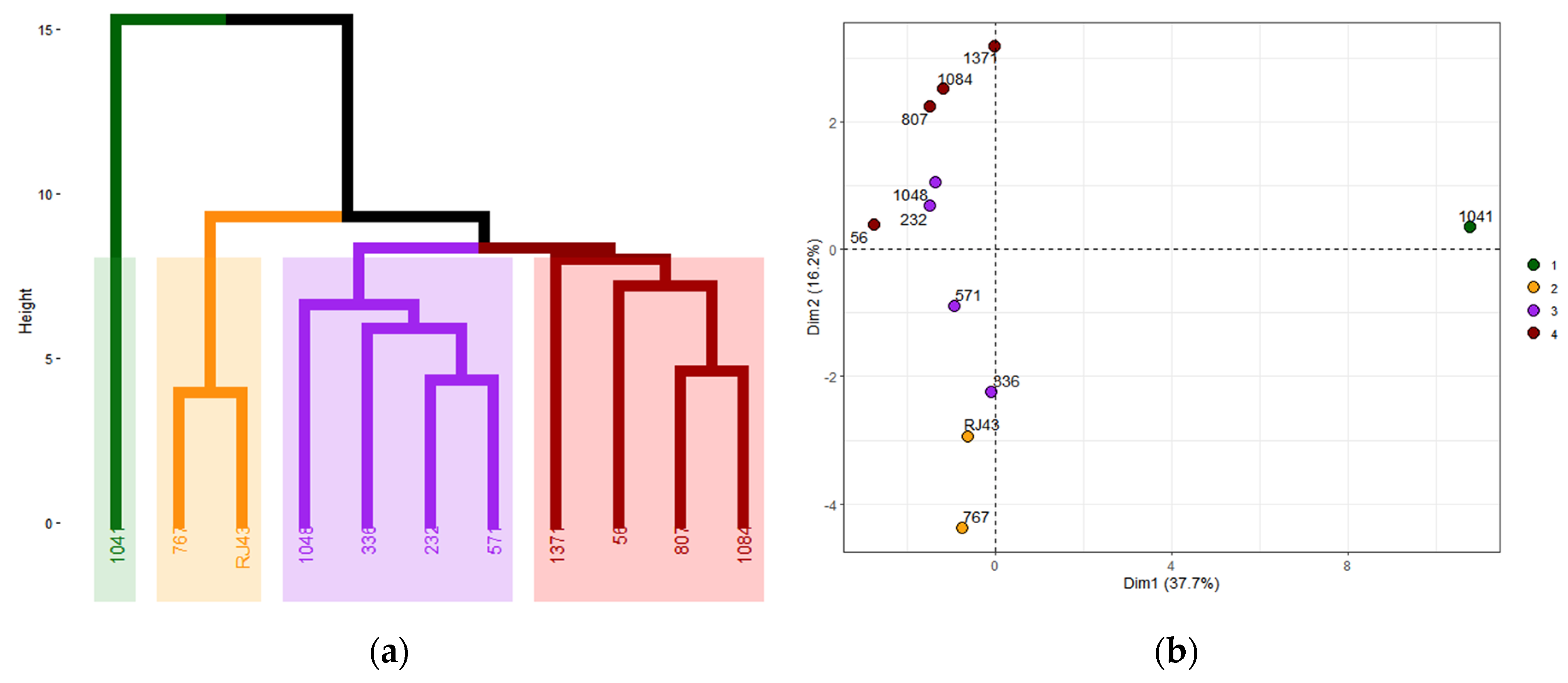
Figure 2.
Multivariate characterization of anthocyanin phenolic composition in ‘Tempranillo Tinto’ clones based on principal component analysis and hierarchical clustering. (a) Hierarchical cluster analysis of clones performed using Ward’s minimum variance method (Ward.D2) on standardized phenolic variables selected after correlation-based variable reduction; (b) Principal component analysis (PCA) score plot showing the distribution of clones according to the first two principal components, computed from clone-level adjusted mean phenolic values (estimated marginal means, EMMEANS). Clusters identified by hierarchical analysis are indicated by colour.
Figure 2.
Multivariate characterization of anthocyanin phenolic composition in ‘Tempranillo Tinto’ clones based on principal component analysis and hierarchical clustering. (a) Hierarchical cluster analysis of clones performed using Ward’s minimum variance method (Ward.D2) on standardized phenolic variables selected after correlation-based variable reduction; (b) Principal component analysis (PCA) score plot showing the distribution of clones according to the first two principal components, computed from clone-level adjusted mean phenolic values (estimated marginal means, EMMEANS). Clusters identified by hierarchical analysis are indicated by colour.
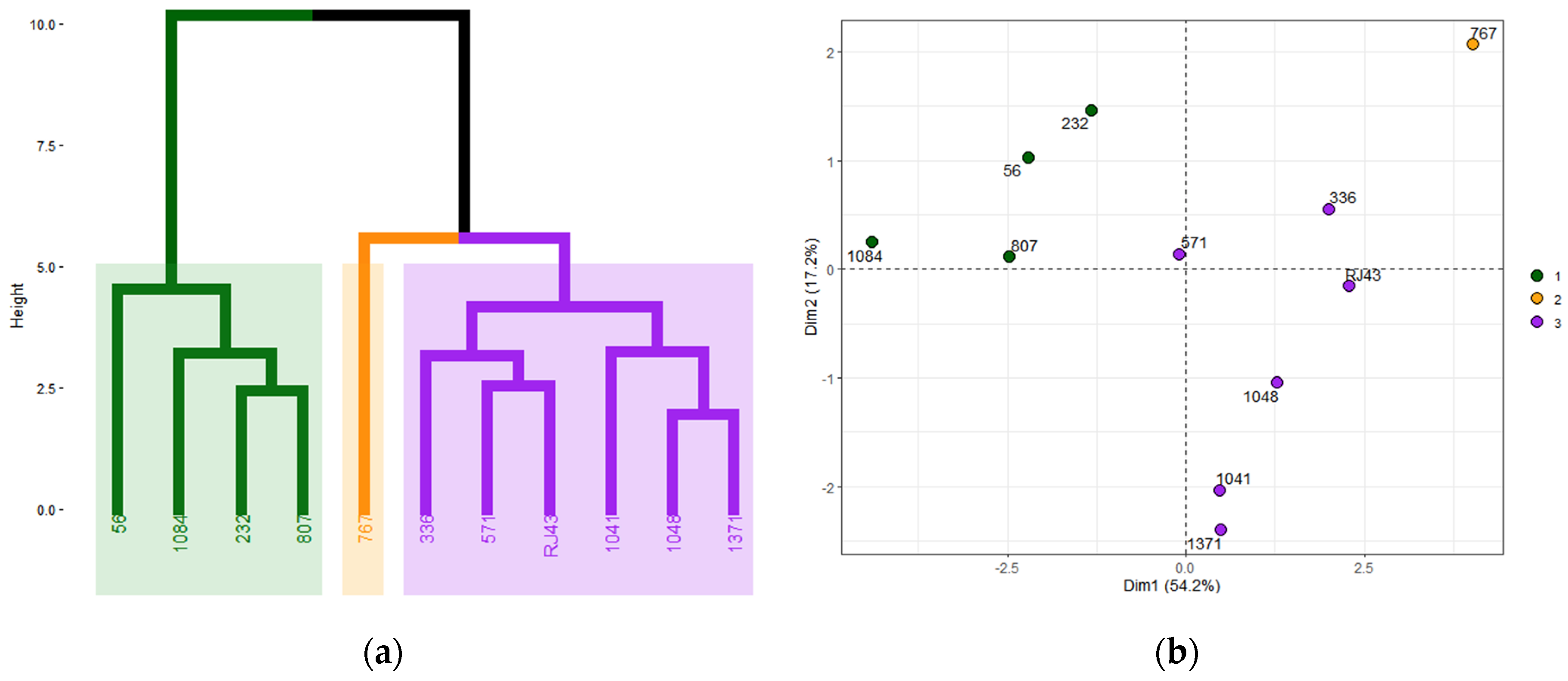
Figure 3.
Multivariate characterization of non-anthocyanin phenolic composition in ‘Graciano’ clones based on principal component analysis and hierarchical clustering. (a) Hierarchical cluster analysis of clones performed using Ward’s minimum variance method (Ward.D2) on standardized phenolic variables selected after correlation-based variable reduction; (b) Principal component analysis (PCA) score plot showing the distribution of clones according to the first two principal components, computed from clone-level adjusted mean phenolic values (estimated marginal means, EMMEANS). Clusters identified by hierarchical analysis are indicated by colour.
Figure 3.
Multivariate characterization of non-anthocyanin phenolic composition in ‘Graciano’ clones based on principal component analysis and hierarchical clustering. (a) Hierarchical cluster analysis of clones performed using Ward’s minimum variance method (Ward.D2) on standardized phenolic variables selected after correlation-based variable reduction; (b) Principal component analysis (PCA) score plot showing the distribution of clones according to the first two principal components, computed from clone-level adjusted mean phenolic values (estimated marginal means, EMMEANS). Clusters identified by hierarchical analysis are indicated by colour.
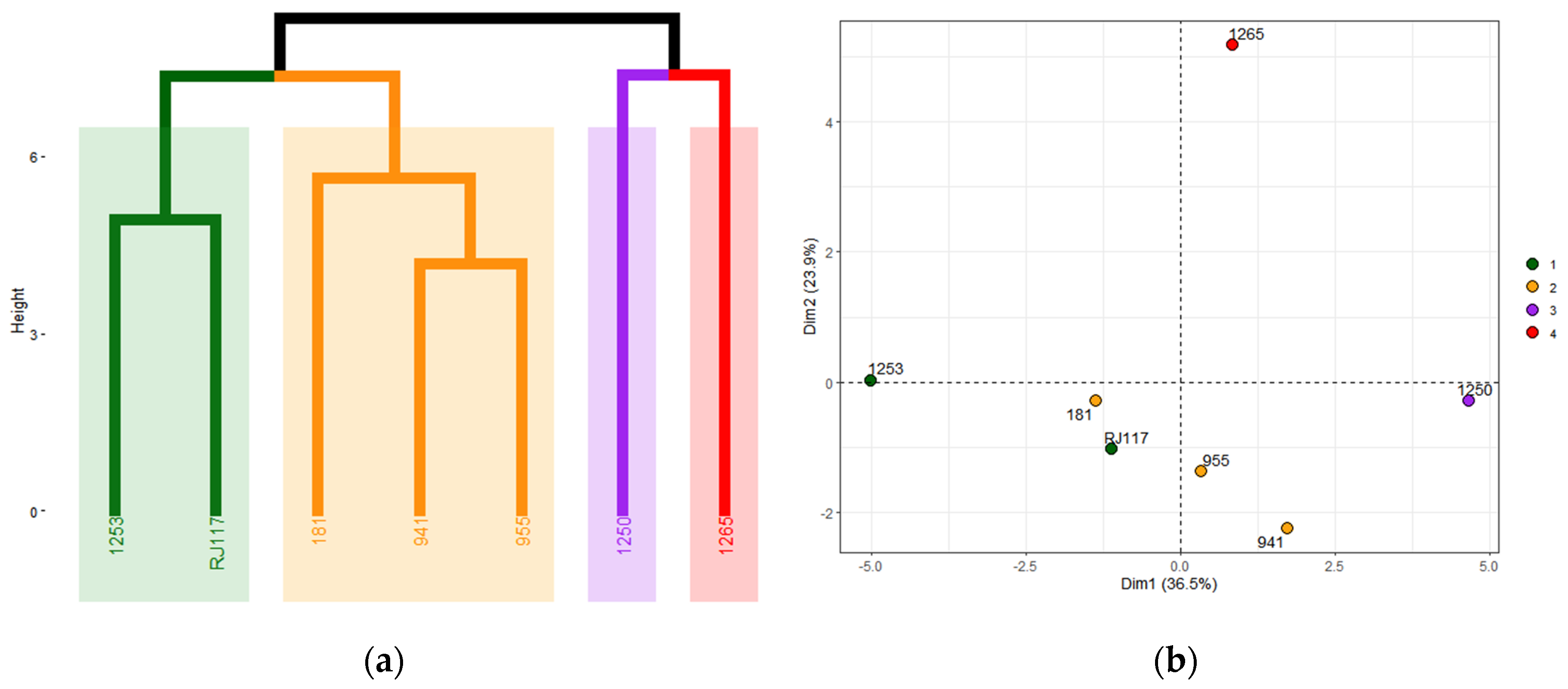
Figure 4.
Multivariate characterization of anthocyanin phenolic composition in ‘Graciano’ clones based on principal component analysis and hierarchical clustering. (a) Hierarchical cluster analysis of clones performed using Ward’s minimum variance method (Ward.D2) on standardized phenolic variables selected after correlation-based variable reduction; (b) Principal component analysis (PCA) score plot showing the distribution of clones according to the first two principal components, computed from clone-level adjusted mean phenolic values (estimated marginal means, EMMEANS). Clusters identified by hierarchical analysis are indicated by colour.
Figure 4.
Multivariate characterization of anthocyanin phenolic composition in ‘Graciano’ clones based on principal component analysis and hierarchical clustering. (a) Hierarchical cluster analysis of clones performed using Ward’s minimum variance method (Ward.D2) on standardized phenolic variables selected after correlation-based variable reduction; (b) Principal component analysis (PCA) score plot showing the distribution of clones according to the first two principal components, computed from clone-level adjusted mean phenolic values (estimated marginal means, EMMEANS). Clusters identified by hierarchical analysis are indicated by colour.
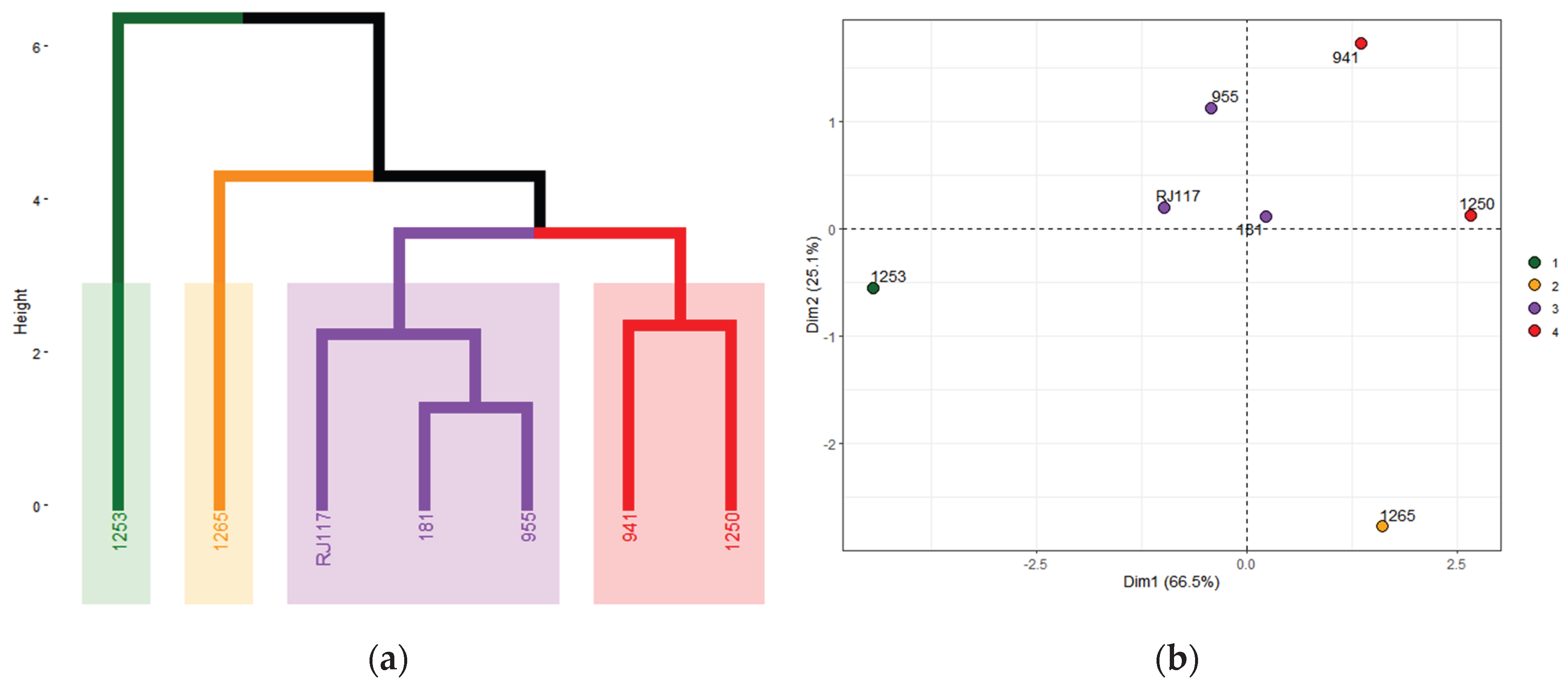

Table 1.
Code and geographical origin of the eleven ‘Tempranillo Tinto’ clones and seven ‘Graciano’ clones evaluated in this study.
Table 1.
Code and geographical origin of the eleven ‘Tempranillo Tinto’ clones and seven ‘Graciano’ clones evaluated in this study.
| Code | Origin | |
| ‘Tempranillo Tinto’ | ||
| TT_56 | Haro (La Rioja, Spain) | |
| TT_232 | Torremontalbo (La Rioja, Spain) | |
| TT_336 | Laguardia (Álava, Spain) | |
| TT_571 | Villalba de Rioja (La Rioja, Spain) | |
| TT_767 | Quel (La Rioja, Spain) | |
| TT_807 | Clavijo (La Rioja, Spain) | |
| TT_1041 | Laguardia (Álava, Spain) | |
| TT_1048 | Laguardia (Álava, Spain) | |
| TT_1084 | Barriobusto (Álava, Spain) | |
| TT_1371 | Lapuebla de Labarca (Álava, Spain) | |
| RJ_43 | Commercial clone selected by CIDA (La Rioja, Spain) | |
| ‘Graciano’ | ||
| GR_181 | Villalba de Rioja (La Rioja, Spain) | |
| GR_941 | Clavijo (La Rioja, Spain) | |
| GR_955 | Oyón (Álava, Spain) | |
| GR_1250 | Laguardia (Álava, Spain) | |
| GR_1253 | Laguardia (Álava, Spain) | |
| GR_1265 | Clavijo (La Rioja, Spain) | |
| RJ_117 | Commercial clone selected by CIDA (La Rioja, Spain) | |
Table 2.
Effects of clone (cv. ‘Tempranillo Tinto’) and year on the concentration (mg/kg fw) of major phenolic compound groups as assessed by MANOVA.
Table 2.
Effects of clone (cv. ‘Tempranillo Tinto’) and year on the concentration (mg/kg fw) of major phenolic compound groups as assessed by MANOVA.
| Variable | Clone | Year |
Clone x Year |
|||||||||||||
| TT_56 | TT_232 | TT_336 | TT_571 | TT_767 | TT_807 | TT_1041 | TT_1048 | TT_1084 | TT_1371 | RJ_43 | 2023 | 2024 | ||||
| Hydroxycinnamic acids |
69.73ab | 66.14ab | 73.49a | 63.66ab | 73.59a | 69.17ab | 55.38b | 65.84ab | 68.05ab | 63.09ab | 69.32ab | 57.16b | 76.93a | n.s. | ||
| Hydroxybenzoic acids |
26.44b | 29.7b | 29.27b | 28.24b | 30.03ab | 29.31b | 35.29a | 27.39b | 28.56b | 29.63b | 28.7b | 29.87 | 28.78 | n.s. | ||
| Flavonols | 132.53 | 153.31 | 164.7 | 151.5 | 137.67 | 158.61 | 173.38 | 157.29 | 154.35 | 160.16 | 140.07 | 109.13b | 196.97a | n.s. | ||
| Flavanols | 94.65b | 85.5b | 87.26 b | 101.61b | 106.07b | 86.02b | 194.93a | 86.97b | 88.47b | 98.27b | 113.95b | 65.92b | 142.03a | < 0.05 | ||
| Stilbenes | 6.8 | 8.97 | 5.79 | 6.89 | 6.09 | 7.43 | 3.59 | 7.63 | 7.28 | 8.43 | 7.04 | 7.83a | 5.98b | n.s. | ||
| Anthocyanins | 976.2c | 1051abc | 1153abc | 1098abc | 1261a | 1019bc | 1161abc | 1183abc | 974.8c | 1162abc | 1210ab | 1087 | 1140 | n.s. | ||
Clone values are means of three replicates per clone and year (n = 6). Year means are shown for comparison. Different letters within a row indicate significant differences among clones or years according to Tukey’s HSD test (p < 0.05). The significance of the clone × year interaction is indicated (n.s., not significant; p < 0.05, significant).
Table 3.
Effects of clone (cv. ‘Graciano’) and year on the concentration (mg/kg fw) of major phenolic compound groups as assessed by MANOVA.
Table 3.
Effects of clone (cv. ‘Graciano’) and year on the concentration (mg/kg fw) of major phenolic compound groups as assessed by MANOVA.
| Variable | Clones | Year |
Clon x Year |
||||||||||
| GR_181 | GR_941 | GR_955 | GR_1250 | GR_1253 | GR_1265 | GR_RJ117 | 2023 | 2024 | 2025 | ||||
| Hydroxybenzoic acids |
33.81bc | 34.38bc | 31.65bc | 41.18ab | 32.24bc | 45.07a | 29.29c | 27.36b | 51.21a | 27.55b | < 0.05 | ||
| Hydroxycinnamic acids |
83.49ab | 86.32a | 85.41a | 84.55a | 70.7c | 78.21abc | 72.5bc | 48.32b | 48.32b | 143.87a | < 0.01 | ||
| Flavonols | 171.55b | 181.96ab | 174.31ab | 215.26a | 139.46b | 178.99ab | 175.15ab | 132.89c | 221.72a | 175.39b | n.s. | ||
| Flavanols | 117.65b | 120.61b | 120.14b | 129.99b | 116.41b | 166.3a | 123.33b | 106.17b | 168.8a | 108.37b | n.s. | ||
| Stilbenes | 78.28a | 73.83ab | 73.59ab | 75.29a | 57.12b | 77.63a | 65.71ab | 77.47a | 62.15b | 75.29a | < 0.05 | ||
| Anthocyanins | 1699b | 1821ab | 1702b | 1920a | 1386c | 1809ab | 1615b | 1938a | 1321b | 1863a | n.s. | ||
Clone values are means of three replicates per clone and year (n = 9). Year means are shown for comparison. Different letters within a row indicate significant differences among clones or years according to Tukey’s HSD test (p < 0.05). The significance of the clone × year interaction is indicated in the last column (n.s., not significant; p < 0.05, significant).
Disclaimer/Publisher’s Note: The statements, opinions and data contained in all publications are solely those of the individual author(s) and contributor(s) and not of MDPI and/or the editor(s). MDPI and/or the editor(s) disclaim responsibility for any injury to people or property resulting from any ideas, methods, instructions or products referred to in the content. |
© 2026 by the authors. Licensee MDPI, Basel, Switzerland. This article is an open access article distributed under the terms and conditions of the Creative Commons Attribution (CC BY) license.
Copyright: This open access article is published under a Creative Commons CC BY 4.0 license, which permit the free download, distribution, and reuse, provided that the author and preprint are cited in any reuse.


