

Submitted:
24 June 2026
Posted:
24 June 2026
You are already at the latest version
Abstract
Severe windthrow events can create highly favorable conditions for bark beetle outbreaks by generating large quantities of weakened breeding material. This study investigated the population response of the Mediterranean pine engraver, Orthotomicus erosus Wollaston, following a microburst windstorm that struck Marjan Forest Park, an urban Mediterranean Aleppo pine (Pinus halepensis Mill.) forest in Split, Croatia, in July 2025. Approximately 2,000 m3 of damaged timber remained in the forest until February 2026, enabling assessment of colonization dynamics and outbreak development. Field inspections, laboratory analyses, and pheromone trap monitoring were conducted between July 2025 and April 2026. Colonization of windthrown material began within two weeks after the disturbance, and infestation rates reached 94% of examined logs by December 2025. Most infested logs (86%) already contained emergence holes, indicating successful completion of beetle development. Pheromone traps captured a total of 131,588 individuals, with more than 88% recorded during spring 2026 and a pronounced peak occurring on 8 April 2026. The appearance of newly attacked standing trees in spring 2026 confirmed rapid population expansion from fallen material to living hosts. Results demonstrate the exceptional outbreak potential of O. erosus following extreme climatic disturbances and emphasize the importance of rapid sanitation measures and continuous monitoring in Mediterranean pine forests under climate change conditions. Delayed salvage logging after severe windthrow can rapidly trigger outbreak development of O. erosus.
Keywords:
bark beetles
; Coleoptera
; Curculionidae
; Scolytinae
; windthrow
; Pinus halepensis
; pheromone traps
; outbreak dynamics
1. Introduction
For the past few years, outbreaks of the Mediterranean pine engraver, Orthotomicus erosus Woll. (Coleoptera, Curculionidae, Scolytinae) on Aleppo pine (Pinus halepensis Mill.) have become a regular threat in Croatia [1]. Climate change and extreme drought along with the secondary attacks of bark beetles, eventually led to enlargement of bark beetles population levels which now started attacking healthy trees. Attacks of O. erosus, as described in Israel, Iran, Morocco, Turkey and Tunis, known as warmer Mediterranean regions [2,3,4,5,6,7], while have never occured in outbreaks since 2018 in Croatia [1]. Such increase of bark beetle population in conifers is very well known and documented in European forestry, most commonly the spruce bark beetle (Ips typographus L.) [8,9,10,11,12,13]. Before that, when it comes to bark beetle attacks in this specific region, only very local outbreaks of Tomicus piniperda L. or T. destruens Woll. have been recorded [14,15]).
O. erosus is naturally distributed in Central Asia, the Middle East, Europe, and China. Although it is widespread throughout Europe, it has so far only caused damage in very warm Mediterranean areas. In France, Morocco, and Turkey, two generations have been identified, three to four in South Africa and Tunisia, and three to five generations in Israel, where adults are active from March to October. Although previous research identified three [16] or four generations [2], more recent studies have shown that there could be even 5 generations in the outbreak site [1]. The reason could be climate changes, primarily aridification, and a significant extension of the vegetation period in this region. O. erosus is also associated with xylophagous fungi which probably play a role in the colonization of the host trees [17].
O. erosus is a reddish-brown beetle, 2.7 to 3.5 mm long. Its tunnels are located in the living part of the bark. The larvae are legless, white, and about 2.7 to 3.5 mm long, and their appearance does not change as they grow. The eggs are white, partly transparent, and about 1 mm long. The behavior of pest insects might change trough by climate change, so in a way that mortality, reproduction, voltinism and spatial distribution may be favorable for the pest insect [1,18]). Due to the extension of the growing season, several generations more than usual per year allowed an exponential growth of the population, an development of an extreme outbreak which in the end destroyed 50% of the trees in the Park-forest Marjan after 4 year of heavy attack (Pernek unpublished).
Pheromone traps in general are used in various designs for insect attraction, mostly for evaluation of population density, i.e. for monitoring, while mass-trapping is rather an exception [19,20,21]. In order to find optimal pheromone traps and lures for O. erosus as a target species, have shown that Erosowit® exhibits significantly higher catches compared to Pheroprax® and is significantly more selective [22]. Although, traps are targeted at specific insects, in which we include also other bark beetle species, many other species are also attracted. Mass trapping can unintentionally remove high numbers of predators that use bark beetle pheromones as kairomones [21], and such negative side effects have negative impacts [23].
Marjan Forest Park, located in the city of Split on the eastern Adriatic coast, represents one of the most important urban Mediterranean forests in Croatia. Aleppo pine dominates the forest vegetation and has experienced repeated disturbances caused by drought, storms, pathogens, and bark beetles during recent decades. Previous outbreaks of O. erosus resulted in significant tree mortality and required extensive management interventions.
On 8 July 2025, Marjan Forest Park was struck by an exceptionally severe windstorm classified as a microburst event. Strong downburst winds caused widespread breakage and uprooting of Aleppo pine trees, creating approximately 5.000 trees or 2,000 m3 of damaged woody material. Because the volume of affected timber exceeded immediate removal capacities, concerns arose regarding the potential development of bark beetle outbreaks.
The objectives of this study were therefore to: (1) establish a monitoring network for O. erosus populations following the windthrow event; (2) assess colonization dynamics within damaged timber; (3) quantify seasonal population trends using pheromone traps; and (4) evaluate the risk of outbreak development and subsequent attacks on standing Aleppo pine trees.
We hypothesized that the large volume of windthrown Aleppo pine material would enable rapid colonization by O. erosus, resulting in substantial population growth and increased attack pressure on standing trees during the subsequent growing season.
2. Materials and Methods
The woody material damaged by the windstorm (Figure 1) remained in the forest until February 2026, and the reason it was not removed lies in the bureaucratic requirements, given that the area is a protected natural site. This made it possible to gain insight into the condition of the forests after the windstorm. In addition, Marjan is located on a peninsula next to the city of Split, so there is no influence of bark beetles coming from surrounding areas.
2.1. Study Area
The study was conducted in Marjan Forest Park (43°31′N, 16°25′E), located on the Marjan Peninsula within the city of Split, Croatia (Figure 2). The area is characterized by a Mediterranean climate with hot dry summers and mild winters. Aleppo pine constitutes the dominant tree species and forms extensive even-aged stands across the peninsula. The visualization of the spatial extent of damage using Sentinel-2 satellite has shown high damage after the windthrow event (Figure 2).
2.2. Field Assessment
Field inspections were conducted repeatedly between July and December 2025, and beetween March and May 2026, to evaluate bark beetle colonization and developmental stages. Bark sections were carefully removed using chisels and knives to expose galleries and immature stages beneath the bark. Observations focused on the presence of: entrance holes, boring dust, maternal galleries, larval galleries, pupal chambers, emergence holes, adults and immature developmental stages.
Particular attention was paid to determining the timing of colonization and the progression of infestation within windthrown material.
During December 2025, fifty randomly selected logs within Marjan were examined to estimate infestation prevalence. Logs were classified into three categories: i) Infested logs with emergence holes; ii) Infested logs containing galleries but few or no emergence holes; iii) Uninfested logs without evidence of bark beetle activity.
2.3. Preliminary Forest Damage Detection Using Sentinel-2 Imagery
The detection and visualization of the spatial extent of damage were carried out using Sentinel-2 satellite imagery. The analysis was based on a change detection methodology, focusing on variations in canopy cover resulting from wind disturbance (Olmo et al., 2021). To compare differences, the NDVI (Normalized Difference Vegetation Index) was used, which is one of the most widely applied indicators in remote sensing for assessing vegetation health and greenness. NDVI is calculated as the ratio of the differences between the near-infrared (B8) and red (B4) spectral bands. NDVI values were computed from cloud-free average Sentinel-2 pixel data for two periods: June 15 – July 7, 2025 (pre-disturbance), and July 8 – August 8, 2025 (post-windthrow) (Figure 2). The same approach was also applied to assess the O. erosus outbreak in the following year, by comparing NDVI differences between the two dates (7 March – 26 May 2026). Areas classified as forest damage were defined using a threshold NDVI difference of −0.2. The applied method represents a rapid, ad hoc approach suitable for the preliminary detection and visualization of forest disturbances, particularly larger-scale events such as windthrows and pest outbreaks.
2.4. Pheromone Trap Network
Ten pheromone traps were installed on 9 September 2025 to establish a monitoring network for O. erosus. Traps were mounted on specially designed metal frames with collection containers positioned approximately 1 m above ground level [24]. Trap locations were selected according to operational forest protection guidelines: minimum distance of 20 m from healthy standing pines; minimum spacing of 50 m between neighboring traps.
Modified trap designs previously developed for conservation of predatory entomofauna were employed. Traps were baited with commercially available Erosowit® pheromone dispensers (Witasek, Austria), previously demonstrated to provide effective attraction of O. erosus populations. Trap contents were collected weekly. Captured insects were preserved in 70% ethanol and transported to the Croatian Forest Research Institute for laboratory processing.
2.5. Laboratory Analyses
Samples were dried, sorted, identified, and counted under stereomicroscopes in the laboratory of the Croatian Forest Research Institute. Since other insect and bark beetle species were also present in the catches, although in small numbers, the identification keys by [25] were used to avoid misidentification of the specimens.
2.6. Data Analysis
Trap catches were analyzed using descriptive and non-parametric statistical methods. For each trap, total catch, mean catch per sampling date, median, standard deviation (SD), coefficient of variation (CV), percentage contribution to the total catch, maximum catch, and date of peak capture were calculated.
To evaluate seasonal differences in beetle activity, total catches recorded during autumn 2025 (September–December) were compared with catches recorded during spring 2026 (April) using the Mann–Whitney U test. This non-parametric approach was selected because trap catches showed strong aggregation, high variance, and deviation from normal distribution. The coefficient of variation was used as an indicator of temporal variability and aggregation of trap catches. All statistical analyses were performed using R statistical software [26]. Statistical significance was assessed at α = 0.05.
3. Results
3.1. Colonization Dynamics
The first inspection conducted on 16 July 2025 revealed that colonization had already begun within two weeks after the windthrow event. Although most examined logs remained unattacked, several exhibited fresh boring dust and newly established maternal galleries containing eggs.
Subsequent inspections demonstrated rapid population development. By early September, larval galleries were fully developed, while pupae, newly emerged adults, and emergence holes were frequently observed. These findings confirmed successful completion of a new generation within windthrown material.
By late October, nearly all suitable breeding material had been colonized. Emergence holes were abundant, indicating extensive adult dispersal. Simultaneously, the first symptoms of attacks on standing trees appeared, including crown discoloration and progressive needle reddening.
During the final inspection in December, virtually all suitable material exhibited emergence holes. Pupae, immature adults, and mature adults ready for overwintering were present beneath the bark, suggesting that infested material represented a substantial source of spring-emerging beetles.
Finally, in December inspection of fifty randomly selected logs revealed extremely high infestation rates. Forty-seven logs (94%) contained evidence of bark beetle colonization. Among these, forty-three logs (86%) already exhibited emergence holes, indicating successful completion of development and dispersal of adult beetles. Only three logs (6%) remained uninfested (Table 1).
3.2. Spatial Distribution of Forest Damages
The ΔNDVI map, derived from pre- and post-windthrow satellite imagery, illustrates the spatial distribution of vegetation changes within Marjan Forest Park following the both disturbance events, windthrow in 2025 (Figure 4). Red areas indicate a decrease in NDVI relative to pre-disturbance conditions, reflecting canopy damage, vegetation loss, and reduced biomass. The largest declines were concentrated in the northwestern part of the forest park and along sections of the northern coast.
3.3. Pheromone Trap Captures
The total number of captured individuals of O. erosus between 16 September 2025 and 8 April 2026 amounted to 131,588, of which 15,713 (11.9%) were captured in 2025 and 115,875 (88.1%) in 2026 (Table 2). The peak occurred on 8 April 2026 (Figure 6). In spring, the catches in the traps increase sharply, and only two catches exceeded the catch recorded in 2025 (Table 2, Figure 5).
Figure 5.
Seasonal flight dynamics expressed as total catch per sampling date. The data show a marked peak on 8 April 2026.
Figure 5.
Seasonal flight dynamics expressed as total catch per sampling date. The data show a marked peak on 8 April 2026.
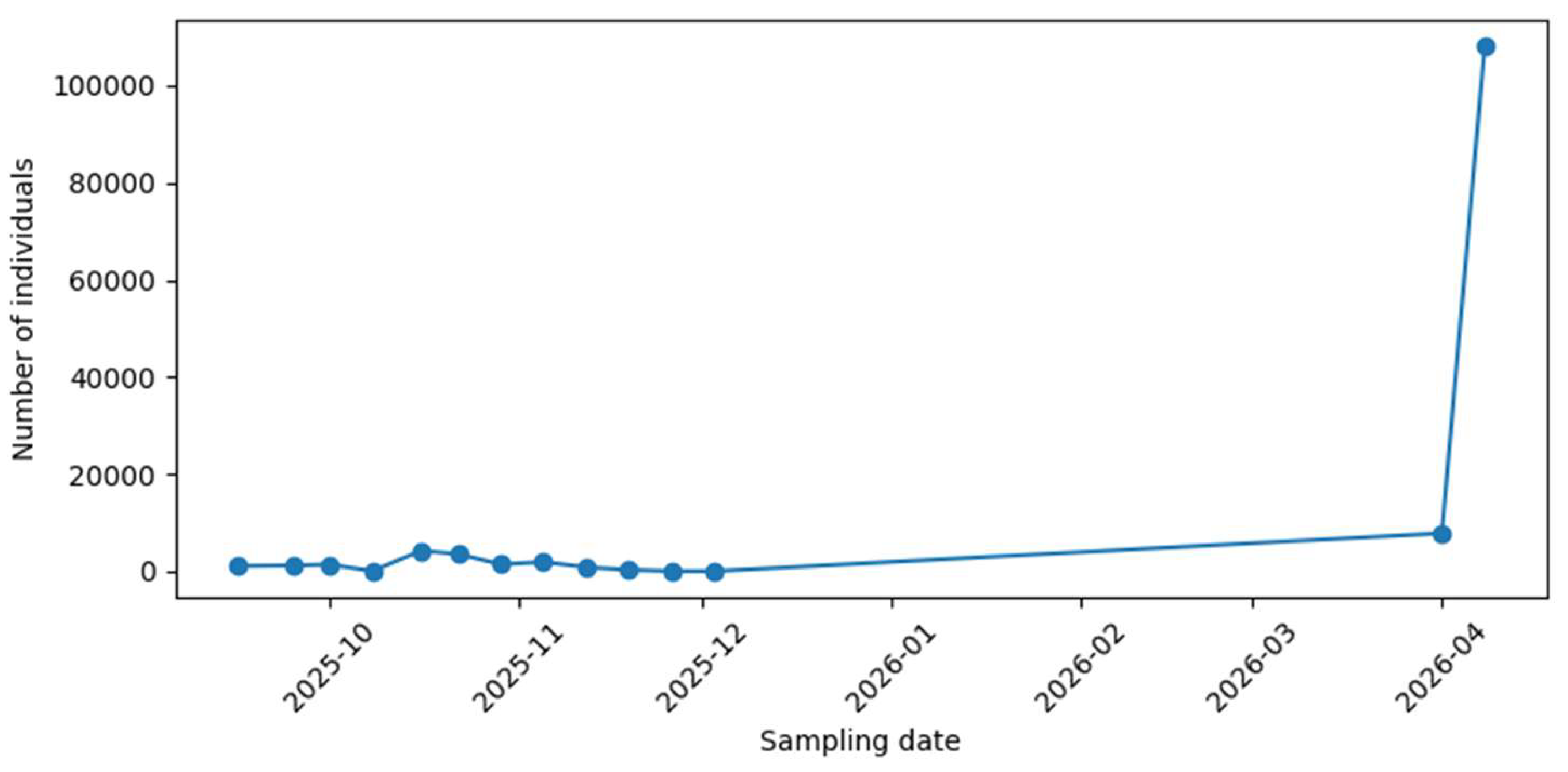
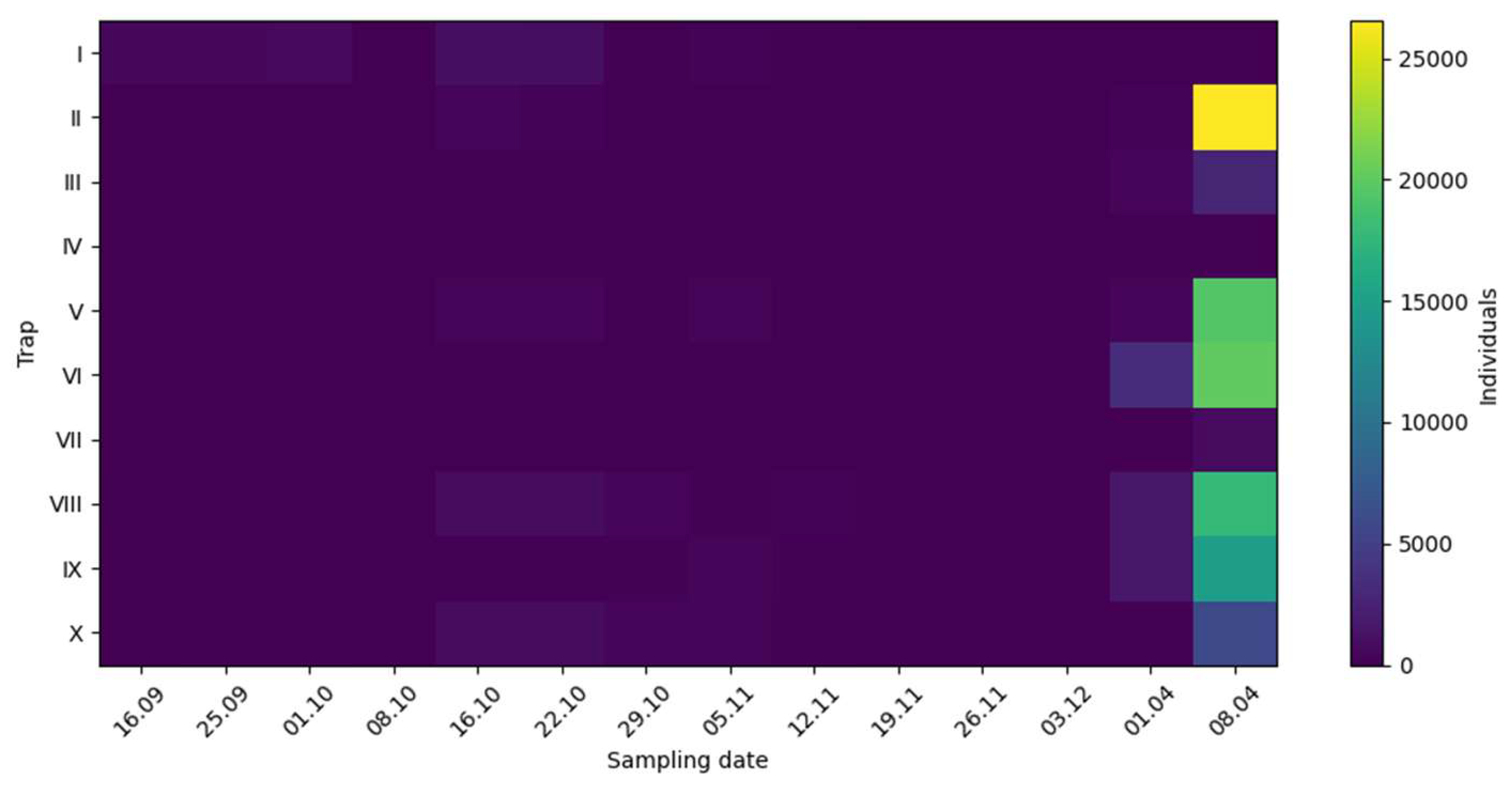
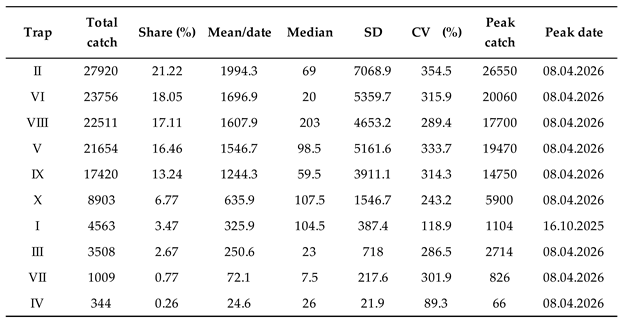
Descriptive statistics revealed pronounced spatial heterogeneity of O. erosus populations within the study area (Table 3). Total catches ranged from only 344 individuals in trap IV to 27,920 individuals in trap II. The five most productive traps (II, V, VI, VIII, and IX) accounted for approximately 86% of all captured beetles, indicating strong spatial aggregation of the population.
Mean catches were substantially higher than median values in most traps, particularly in traps II, V, VI, VIII, and IX. For example, trap II recorded a mean catch of 1,994.3 individuals per sampling date, whereas the median was only 69 individuals. This discrepancy indicates that seasonal totals were largely driven by a few exceptionally large flight events.
Temporal variability was extremely high. Coefficients of variation exceeded 300% in traps II (354.5%), V (333.7%), VI (315.9%), and IX (314.3%), confirming highly aggregated and eruptive population dynamics. Such variability is characteristic of bark beetle populations developing in recently disturbed forest stands.
Comparison of seasonal trap catches showed a significant increase in beetle activity during spring 2026 relative to autumn 2025. The Mann–Whitney U test detected significant differences between the two monitoring periods (U = 0.0, p = 0.036). This result confirms that the major population expansion occurred during spring emergence following successful development within the windthrown material.
The statistical results therefore support field observations indicating that the windthrow event created highly favorable breeding conditions, enabling rapid population growth and resulting in a synchronized mass flight during spring 2026 (Figure 6).
Figure 6.
Heat map of catch intensity by sampling date and trap.
4. Discussion
The present study demonstrates the extraordinary capacity of O. erosus populations to exploit large-scale windthrow disturbances in Mediterranean pine forests. Colonization commenced within only two weeks following tree damage, emphasizing the efficiency with which beetles locate suitable breeding substrates. Population activity increased rapidly following establishment of the monitoring system. Captures peaked on 16 October (5.059 individuals) and remained elevated during late October before gradually declining throughout November and December. A pronounced reduction in captures was recorded during early October, coinciding with a period of strong bora winds, lower temperatures, and rainfall. Following the return of favorable weather conditions, captures increased sharply, indicating continued population growth. The seasonal pattern reflected a strong functional response of the population to the large quantity of freshly available breeding material generated by the windthrow event. The large differences between mean and median catches in pheromone traps indicate strongly aggregated and eruptive population dynamics. For example, trap II had an average catch of nearly 2,000 individuals per sampling date, whereas the median was only 69 individuals, showing that the seasonal total was largely driven by a few extremely high spring catches. Similarly, traps VI, V, and VIII showed CV values above 280%, indicating strong temporal fluctuations in trap activity. Such a pattern is characteristic of bark beetle populations developing in recently disturbed forest stands, where abundant weakened host material enables rapid population growth [8,10,11].
Temporal dynamics also revealed a strong seasonal concentration of catches. The overwhelming majority of individuals were recorded during the spring sampling period, with the dominant peak occurring on 8 April 2026. This pattern indicates that the main dispersal and colonization activity of O. erosus was concentrated within a very narrow time window, emphasizing the importance of timely sanitation measures and monitoring activities before the onset of the spring flight peak. Overall, the results confirm that the windthrow event created highly favorable conditions for the development of O. erosus, while the delayed removal of damaged woody material likely enabled successful reproduction and a strong population increase during 2026. At the same time, the pronounced spatial aggregation of catches suggests that infestation intensity was not uniform throughout the study area, but instead concentrated around specific localities with suitable breeding conditions. Windthrow events eliminate host defensive mechanisms, particularly resin-based defenses, thereby creating highly favorable conditions for bark beetle reproduction. The extensive volume of damaged timber generated by the July 2025 storm provided abundant breeding resources and substantially reduced density-dependent limitations on population growth. This is well known in the spruce bark beetle [10,27]. The observed infestation rate of 94% indicates near-complete utilization of available breeding material. Such levels of colonization are characteristic of rapidly expanding populations and have frequently preceded outbreak development in other bark beetle systems.
The seasonal dynamics observed in pheromone trap captures further support this interpretation. Contrary to normal seasonal declines typically observed toward late autumn, captures remained exceptionally high throughout October and early November. Such trends suggest that population growth was continuing despite progressively cooler conditions. Climate change likely represents an important underlying factor influencing outbreak risk. Rising temperatures have previously been associated with increased voltinism in O. erosus, allowing more generations to develop annually. Simultaneously, increased frequencies of droughts and extreme storms create favorable conditions both for host weakening and for production of large quantities of breeding material. Particularly concerning is the transition from colonization of windthrown material to attacks on standing trees. Evidence of crown discoloration observed during October indicates that populations had already begun exploiting weakened living hosts. If infested material remains within the forest until spring emergence, a substantial increase in attack pressure on standing Aleppo pine trees can be expected.
From a management perspective, sanitation measures remain the most effective strategy for reducing population growth. Removal or destruction of infested material before spring emergence would substantially decrease the number of dispersing adults and reduce the probability of mass attacks on healthy trees. Bark beetles are integral components of forest ecosystems and contribute to nutrient cycling and decomposition processes under endemic population conditions. However, when favorable breeding conditions coincide with suitable climatic conditions, populations may rapidly increase and reach outbreak levels capable of killing physiologically weakened or even healthy trees. Such transitions from endemic to epidemic population phases have been documented worldwide and are increasingly associated with climate change and extreme weather disturbances. As well as the other pine bark beetles, O. erosus is also known to vector a diverse range of associated microorganisms, including bacteria, yeasts, and filamentous fungi, among which ophiostomatoid fungi represent some of the most ecologically significant symbionts due to their frequent occurrence and roles in host colonization [28,29]). In Kovač et al. [17] six ophiostomatoid fungi were identified in association with O. erosus in Croatia: Ophiostoma ips, O. piceae, O. floccosum, Graphilbum cf. rectangulosporium, Sporothrix pseudoabietina, and Ceratocystiopsis cf. minuta. Same as in above mentioned studies, Ophiostoma ips was reported as the most frequently isolated species, indicating it may be the dominant fungal associate of this beetle. The study also notes that, although these fungi are clearly linked to blue-staining of sapwood and are likely involved in weakening host defenses, their exact ecological roles and degree of pathogenicity in the O. erosus–pine interaction still remain insufficiently understood.
The biological potential of O. erosus is strongly influenced by temperature [6]. Depending on climatic conditions, the species may develop between two and seven generations annually [30]. Previous studies in Croatia documented three generations per year during the mid-twentieth century, whereas more recent investigations indicate the occurrence of five or even six generations under contemporary climatic conditions [1,24]. This increase in voltinism is widely attributed to rising temperatures and prolonged vegetation periods. The findings indicate that immediate sanitation measures are required to prevent outbreak development during the 2026 growing season. Priority actions should include removal of all infested windthrown material before spring emergence and early detection and removal of newly attacked standing trees. Given projected increases in storm frequency and drought stress under climate change, bark beetle monitoring should become a permanent component of management strategies in Mediterranean pine forests.
In this study, satellite information, primarily Sentinel-2 multispectral imagery, was efficiently used for geospatially quantifying and visualizing windstorm damage. The spatial layer produced using the simple change detection principle based on Sentinel-2 imagery, before and after the events, not only provided an overview of the damage extent but also confirmed the spatial coincidence between the two events. Specifically, the onset and progression of the O. erosus outburst initially occurred in areas where trees had been damaged by the windstorm, and subsequently expanded into the surrounding forest area. In the case of windthrows, by analysing imagery acquired immediately before and after the events, the focus is on mapping structural changes in the canopy, i.e., the loss of biomass that leads to a decline in the NDVI signal. In this case vegetation indices that highlight damaged-areas differences in the visible and the SWIR (Short Wave Infrared Regions) are strongly recommended for the detection of windthrows [31]. The combination of various indices also provides sufficient sensitivity for the precise quantification of the percentage of structural canopy damage at the Sentinel-2 sub-pixel level [32].
5. Conclusions
The severe windthrow event that occurred in Marjan Forest Park during July 2025 created highly favorable conditions for rapid population growth of Orthotomicus erosus.
Colonization of damaged material began within two weeks following the disturbance, and infestation reached 94% of examined logs by December. Pheromone traps capture demonstrates a strong population response to newly available breeding substrates.
The occurrence of attacks on standing trees, combined with low predator abundance and extensive quantities of infested material, indicates a substantial risk of outbreak development during spring. Without timely sanitation measures, the probability of large-scale attacks on Aleppo pine stands is high.
Delayed salvage logging after severe windthrow can rapidly trigger outbreak development of O. erosus. Continuous monitoring and prompt removal of infested material are therefore essential for preventing further forest decline and maintaining the ecological stability of Mediterranean urban forests under increasing climate-related disturbance pressure.
Author Contributions
Conceptualization, M.P.; methodology, M.P., I.P., M.K.; field investigation, M.P. and collaborators; data analysis, M.P. and I.P. ; writing—original draft preparation, M.P. , M.K., I.P.; writing—review and editing, M.P., M.K.
Funding
This research was financed by Park Forest Marjan under the project: „Establishment of a Monitoring System for the Mediterranean Pine Engraver Beetle (Orthotomicus erosus)“.
Acknowledgments
The author thanks the Forest Park Marjan for logistical support and access to study sites. Special thanks to Blaženka Ercegovac for the field and laboratory work. We gratefully acknowledge Andrija Jukić, Tomislav Krcivoj and Filip Cvjetković for their contribution to the deployment of monitoring traps in the field. Many thanks to Ante Kodžoman and Frane Pletikošić from Forest park Marjan.
Conflicts of Interest
The author declares no conflict of interest.
References
- Pernek, M.; Lacković, N.; Lukić, I.; Zorić, N.; Matošević, D. Outbreak of Orthotomicus erosus on Aleppo pine in the Mediterranean region in Croatia. SEEFOR 2019, 10, 19–27. [Google Scholar] [CrossRef]
- Mendel, Z.; Madar, Z.; Golan, Y. Hymenopterous parasitoids of pine bark beetles in Israel. Hasadeh 1986, 66, 1899–1901. [Google Scholar]
- Mendel, Z. The relation of bast scale and bark beetle outbreaks to management of pine plantations in Israel. In XVII International Congress of Entomology, Proceedings of the IUFRO Working Party; Vancouver, BC, Canada, Payne, T.L., Saarenmaa, H., Eds.; pp. 329–335.
- Sarikaya, O.; Avci, M. Distribution and biology of the Mediterranean pine shoot beetle Tomicus destruens in the western Mediterranean region of Turkey. Turk. Entomol. Derg. 2010, 34, 289–298. [Google Scholar]
- Ben Jamaa, M.L.; Lieutier, F.; Yart, A.; Jerraya, A.; Khouja, M.L. The virulence of phytopathogenic fungi associated with the bark beetles Tomicus piniperda and Orthotomicus erosus in Tunisia. For. Pathol. 2007, 37, 51–63. [Google Scholar] [CrossRef]
- Battisti, A.; Larsson, S. Climate change and insect distribution range. In Climate Change and Insect Pests; Björkman, C., Niemelä, P., Eds.; CABI: Wallingford, UK, 2016; pp. 1–15. [Google Scholar]
- Moumeni, L.; Gastebois, A.; Gillmann, L.; Papon, N.; Benia, F.; Bouchara, J.-P.; Bounechada, M. Investigating the prevalence of bark beetles of Pinus halepensis in the north-east semi-arid region of Algeria. Biodiversitas 2021, 22, 2755–2762. [Google Scholar] [CrossRef]
- Wermelinger, B. Development and distribution of predators and parasitoids during two consecutive years of an Ips typographus infestation. J. Appl. Entomol. 2002, 126, 521–527. [Google Scholar]
- Hlásny, T.; Mátyás, C.; Seidl, R.; Kulla, L.; Merganicová, K.; Trombik, J.; Dobor, L.; Barcza, Z.; Konôpka, B. Climate change increases the drought risk in Central European forests: What are the options for adaptation? For. J. 2014, 60, 5–18. [Google Scholar] [CrossRef]
- Hroššo, B.; Mezei, P.; Potterf, M.; Majdák, A.; Blaženec, M.; Korolyova, N.; Jakuš, R. Drivers of spruce bark beetle (Ips typographus) infestations on downed trees after severe windthrow. Forests 2020, 11, 1290. [Google Scholar] [CrossRef]
- Vilardo, G.; Faccoli, M.; Corley, J.C.; Lantschner, V.M. Factors driving historic intercontinental invasions of European pine bark beetles. Biol. Invasions 2022, 24, 2973–2990. [Google Scholar] [CrossRef]
- Hlásny, T.; Modlinger, R.; Gohli, J.; et al. Divergent trends in insect disturbance across Europe’s temperate and boreal forests. Glob. Change Biol. 2025, 31, e70580. [Google Scholar] [CrossRef] [PubMed]
- Hartmann, H.; Battisti, A.; Brockerhoff, E.G.; Bełka, M.; Hurling, R.; Jactel, H.; Oliva, J.; Rousselet, J.; Terhonen, E.; Ylioja, T.; Melin, M.; Olson, Å.; De Prins, F.; Zhang, K.; Åslund, M.S.; Davydenko, K.; Menkis, A.; Elfstrand, M.; Zúbrik, M.; Kunca, A.; Galko, J.; Paulin, M.; Csóka, G.; Hoch, G.; Pernek, M.; Preid, S.; Fischer, R. European forests are under increasing pressure from global change-driven invasions and accelerating epidemics by insects and diseases. J. Kult. Pflanz. 2025, 77, 6–24. [Google Scholar] [CrossRef]
- Pernek, M.; Hrašovec, B.; Županić, M. Beetle fauna captured in traps baited with Tomicus piniperda pheromone blends in a pine stand in central Croatia. In Ecology, Survey and Management of Forest Insects; McManus, M.L., Liebhold, A.M., Eds.; USDA Forest Service: Newtown Square, PA, USA, 2003; pp. 87–89. [Google Scholar]
- Hrašovec, B.; Harapin, M.; Pernek, M. Entomological complex of Mediterranean forests. In Forests of the Croatian Mediterranean; Matić, S., Ed.; Academy of Forestry Sciences: Zagreb, Croatia, 2011; pp. 556–572. [Google Scholar]
- Lieutier, F.; Ghaioule, D.; Yart, A.; Sauvard, D. Attack behavior of pine bark beetles in Morocco and association with phytopathogenic fungi. Ann. Rech. For. Maroc. 2002, 35, 96–109. [Google Scholar]
- Kovač, M.; Rigling, D.; Pernek, M. Ophiostomatales associated with Mediterranean pine engraver (Orthotomicus erosus) in Dalmatia, Croatia. J. Fungi 2022, 8, 788. [Google Scholar] [CrossRef] [PubMed]
- Lieutier, F.; Paine, T.D. Responses of Mediterranean forest phytophagous insects to climate change. In Insects and Diseases of Mediterranean Forest Systems; Paine, T.D., Lieutier, F., Eds.; Springer: Basel, Switzerland, 2016; pp. 801–858. [Google Scholar]
- Bracalini, M.; Croci, F.; Ciardi, E.; Mannucci, G.; Papucci, E.; Gestri, G.; Tiberi, R.; Panzavolta, T. Ips sexdentatus mass-trapping: Mitigation of its negative effects on saproxylic beetles larger than the target. Forests 2021, 12, 175. [Google Scholar] [CrossRef]
- Faccoli, M.; Stergulc, F. Damage reduction and performance of mass trapping devices for forest protection against the spruce bark beetle, Ips typographus. Ann. For. Sci. 2008, 65, 309. [Google Scholar] [CrossRef]
- Aukema, B.H.; Dahlsten, D.L.; Raffa, K.F. Exploiting behavioral disparities among predators and prey to selectively remove pests: Maximizing the ratio of bark beetles to predators removed during semiochemically based trap-out. Environ. Entomol. 2000, 29, 651–660. [Google Scholar] [CrossRef]
- Pernek, M.; Kovač, M.; Lacković, L. Testing of biological effectiveness of pheromones and traps for catch of Mediterranean bark beetle Orthotomicus erosus. ŠUmarski List 2020, 144, 339–350. [Google Scholar] [CrossRef]
- Pavlin, R. Problem selektivnosti sintetičnih feromonov. Zb. Lesar. 1991, 38, 126–160. [Google Scholar]
- Pernek, M.; Milas, T.; Kovač, M.; Lacković, N.; Koren, M.; Hrašovec, B. Effective reduction in natural enemy catches in pheromone traps intended for monitoring Orthotomicus erosus. Forests 2024, 15, 1298. [Google Scholar] [CrossRef]
- Pfeffer, A. Zentral- und westpaläarktische Borken- und Kernkäfer; Naturhistorisches Museum: Basel, Switzerland, 1995. [Google Scholar]
- R Core Team. R: A language and environment for statistical computing; R Foundation for Statistical Computing: Vienna, Austria, 2021. [Google Scholar]
- Singh, V.V.; Naseer, A.; Mogilicherla, K.; Trubin, A.; Zabihi, K.; Roy, A.; Jakuš, R.; Erbilgin, N. Understanding bark beetle outbreaks: Exploring the impact of changing temperature regimes, droughts, forest structure, and prospects for future forest pest management. Rev. Environ. Sci. Biotechnol. 2024. [Google Scholar] [CrossRef]
- Zhou, X.D.; De Beer, Z.W.; Wingfield, B.; Wingfield, M.J. Ophiostomatoid fungi associated with three pine-infesting bark beetles in South Africa. Sydowia 2001, 53, 290–300. [Google Scholar]
- Dori-Bachash, M.; Avrahami-Moyal, L.; Protasov, A.; Mendel, Z.; Freeman, S. The occurrence and pathogenicity of Geosmithia spp. and common blue-stain fungi associated with pine bark beetles in planted forests in Israel. Eur. J. Plant Pathol. 2015, 143, 627–639. [Google Scholar] [CrossRef]
- Mendel, Z. Seasonal history of Orthotomicus erosus (Coleoptera: Scolytidae) in Israel. Phytoparasitica 1983, 11, 13–24. [Google Scholar] [CrossRef]
- Olmo, V.; Tordoni, E.; Petruzzellis, F.; Bacaro, G.; Altobelli, A. Use of Sentinel-2 satellite data for windthrows monitoring and delimiting: The case of “Vaia” storm in Friuli Venezia Giulia region (north-eastern Italy). Remote Sens. 2021, 13, 1530. [Google Scholar] [CrossRef]
- Pilaš, I.; Gašparović, M.; Novkinić, A.; Klobučar, D. Mapping of the canopy openings in mixed beech–fir forest at Sentinel-2 subpixel level using UAV and machine learning approach. Remote Sens. 2020, 12, 3925. [Google Scholar] [CrossRef]
Figure 1.
Broken Aleppo pine trees after windstorm on 8 July 2025.
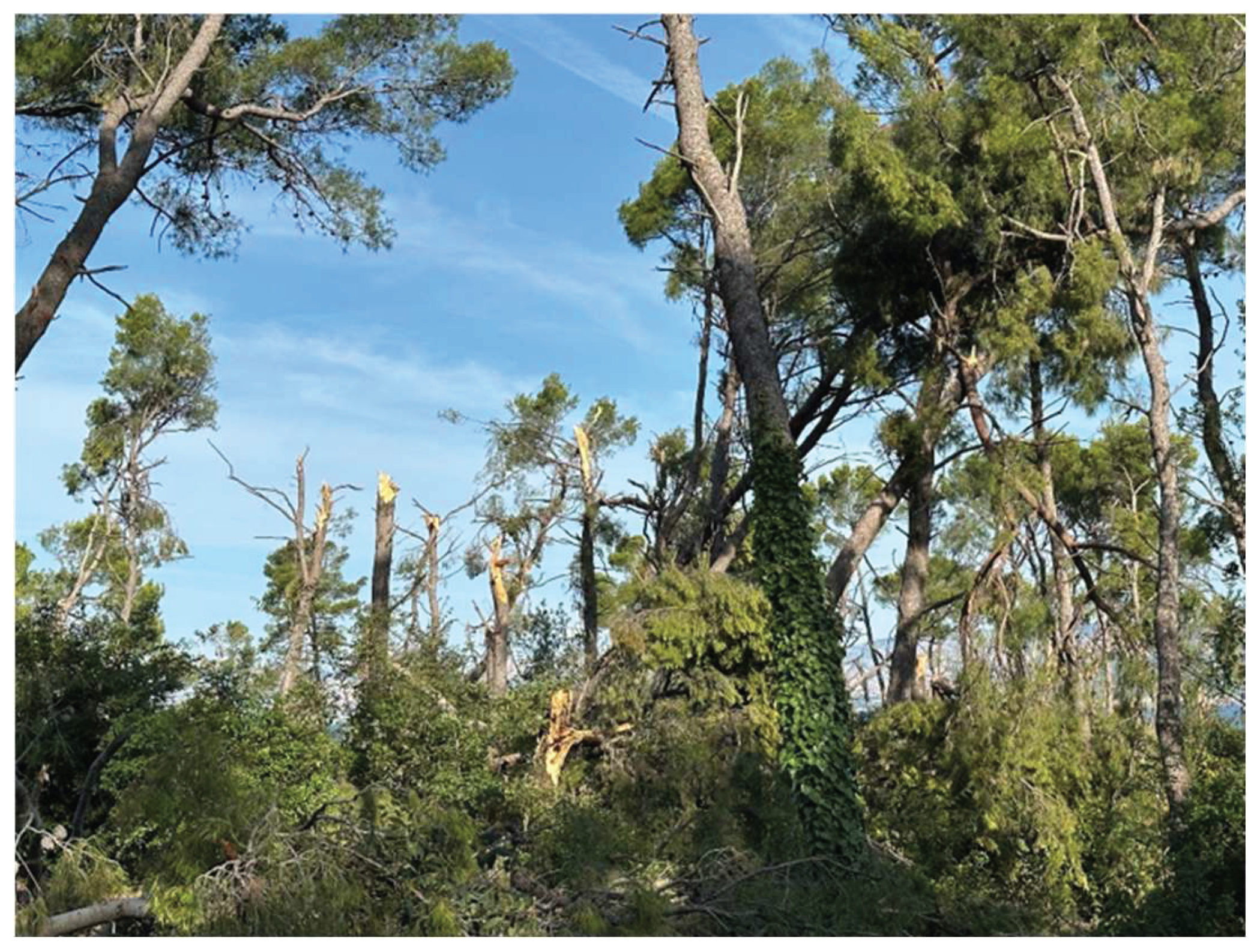
Figure 2.
Position of Marjan Forest Park, city of Split, Croatia (top panel); Forest condition in Marjan Forest Park prior (bottom left) and after (bottom right) the windstorm from the Sentinel-2 images with high impact zone marked in red.
Figure 2.
Position of Marjan Forest Park, city of Split, Croatia (top panel); Forest condition in Marjan Forest Park prior (bottom left) and after (bottom right) the windstorm from the Sentinel-2 images with high impact zone marked in red.
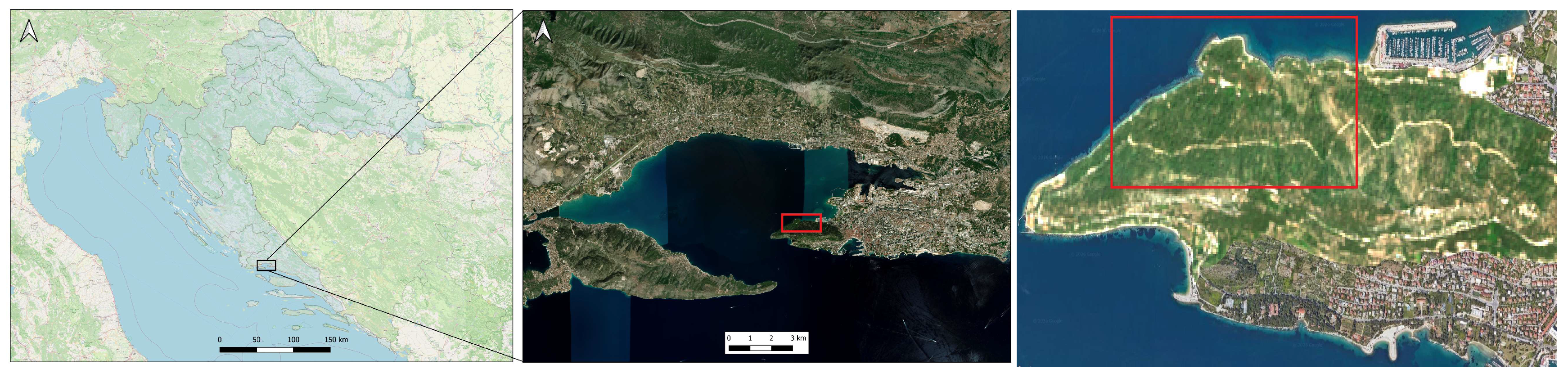
Figure 3.
Occurrence of dead trees within a group infested by Orthotomicus erosus in spring 2026.
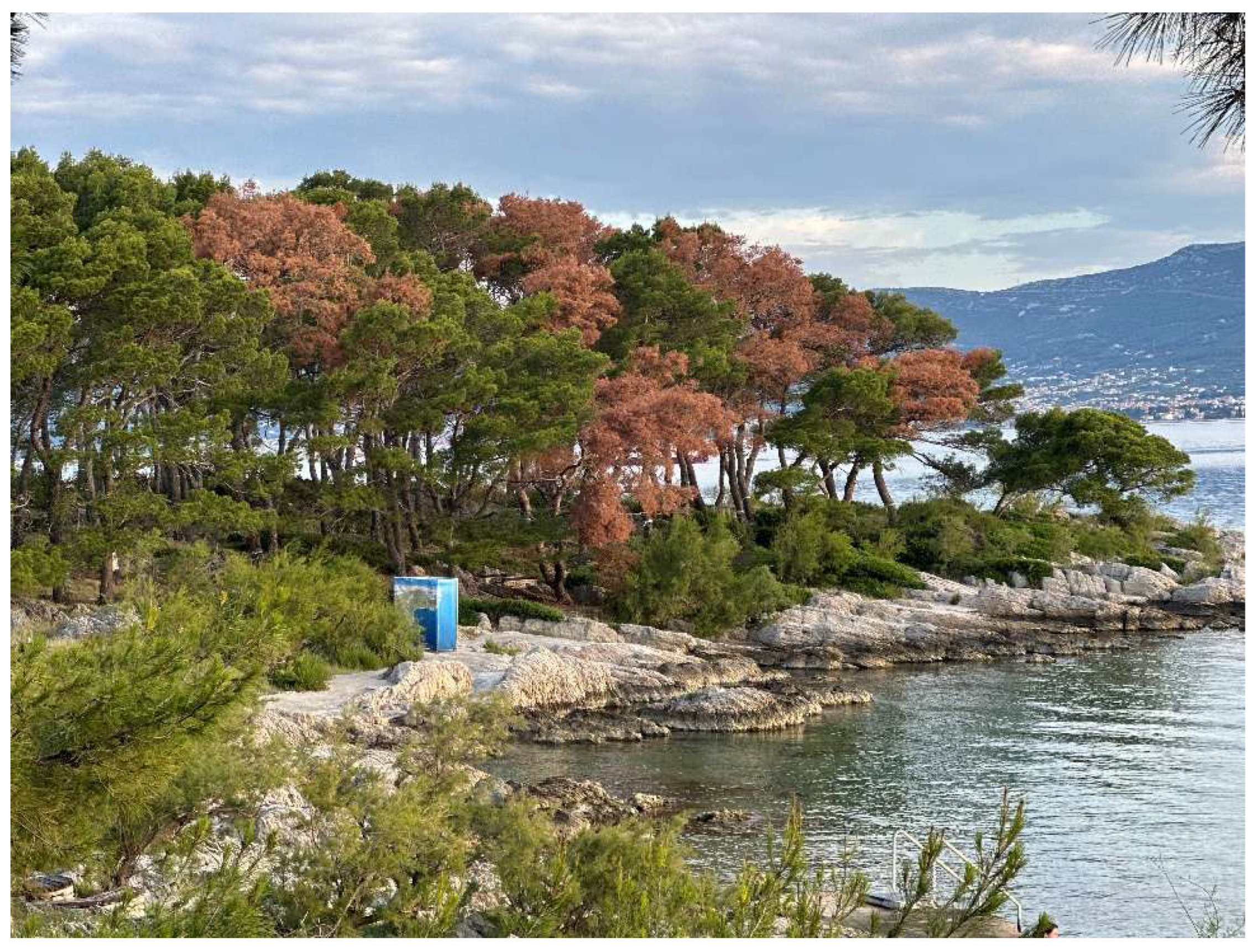
Figure 4.
Spatial distribution of the forest damages caused by wind storm in 2025 detected by Sentinel-2 NDVI change detection in Marjan Forest Park.
Figure 4.
Spatial distribution of the forest damages caused by wind storm in 2025 detected by Sentinel-2 NDVI change detection in Marjan Forest Park.
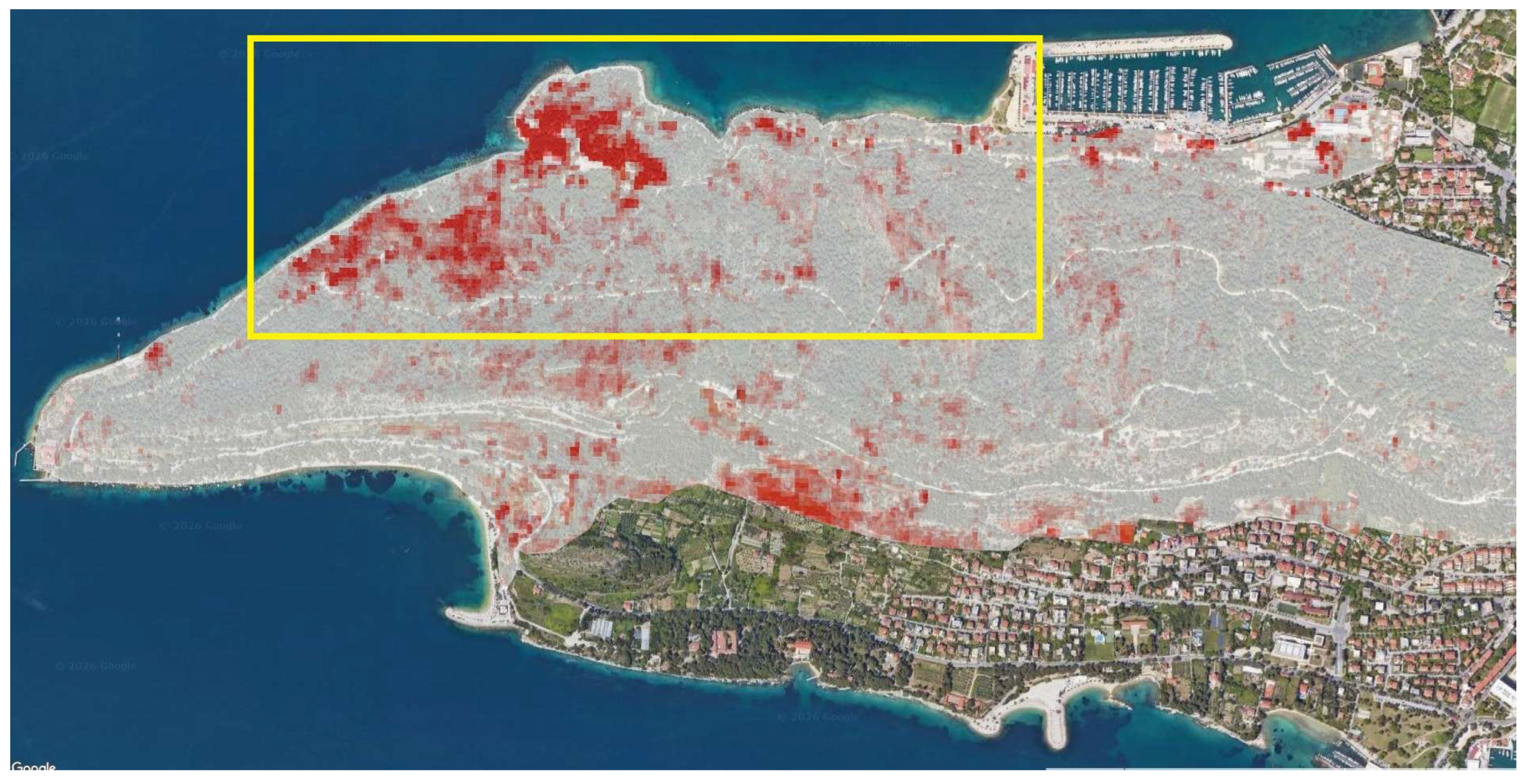

Table 1.
Infestation status of inspected trees by Orthotomicus erosus.
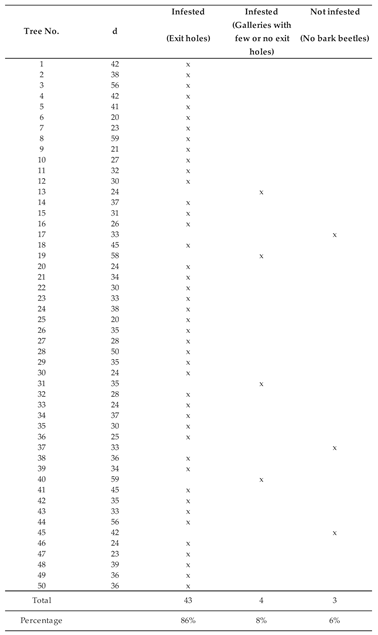 |
Table 2.
Catch of Orthotomicus erosus individuals in pheromone traps by sampling date.
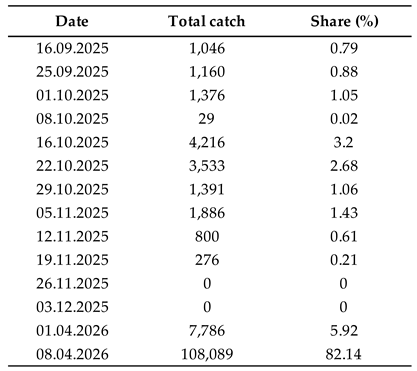 |
Table 3.
Trap performance and spatial pattern.
 |
Disclaimer/Publisher’s Note: The statements, opinions and data contained in all publications are solely those of the individual author(s) and contributor(s) and not of MDPI and/or the editor(s). MDPI and/or the editor(s) disclaim responsibility for any injury to people or property resulting from any ideas, methods, instructions or products referred to in the content. |
© 2026 by the authors. Licensee MDPI, Basel, Switzerland. This article is an open access article distributed under the terms and conditions of the Creative Commons Attribution (CC BY) license (http://creativecommons.org/licenses/by/4.0/).
Copyright: This open access article is published under a Creative Commons CC BY 4.0 license, which permit the free download, distribution, and reuse, provided that the author and preprint are cited in any reuse.