
Submitted:
23 June 2026
Posted:
24 June 2026
You are already at the latest version
Abstract
Mangrove ecosystems are significant blue carbon sinks but can also act as sources of greenhouse gases, particularly carbon dioxide (CO₂) and methane (CH₄), due to complex sediment biogeochemical processes. This study quantified the influence of seasonal and tidal variability on soil–atmosphere CO₂ and CH₄ fluxes in mangrove ecosystems of the Lamu Archipelago, Kenya. Field measurements were conducted across wet and dry seasons and varying tidal heights, alongside key environmental parameters including temperature and humidity. Non-parametric statistical analyses revealed that CH₄ fluxes were significantly influenced by temperature variability (p < 0.05), whereas CO₂ fluxes were significantly associated with humidity (p < 0.05). Both gases exhibited significant seasonal variation (p < 0.05), with elevated CO₂ emissions during the dry season and higher CH₄ emissions during the wet season, reflecting shifts between aerobic and anaerobic sediment conditions. Tidal height exerted a significant effect on both CO₂ and CH₄ fluxes (p < 0.05), underscoring the role of tidal inundation in regulating redox dynamics and gas exchange processes. These findings demonstrate the strong coupling between climatic and meteorological parameters in controlling mangrove GHG fluxes and highlight the importance of incorporating temporal variability into blue carbon assessments. The study provides empirical data to refine greenhouse gas inventories and improve the representation of tropical coastal wetlands in climate models and mitigation frameworks.
Keywords:
mangroves
; greenhouse gas emissions
; carbon dioxide
; methane
; seasonal variability
; tidal dynamics
; Lamu Archipelago
; Kenya
1. Introduction
Mangrove ecosystems are among the most productive and carbon-dense coastal wetlands globally, providing a wide range of ecosystem services including shoreline stabilization, fisheries support, nutrient cycling, and climate regulation [1,2]. Over the past two decades, mangroves have gained attention for their role in climate change mitigation through long-term carbon sequestration, commonly referred to as “blue carbon”[3]. Mangrove forests store large quantities of organic carbon in both above-ground biomass and waterlogged soils, often exceeding those of terrestrial tropical forests on a per-unit-area basis by 44% [2,4,5]. While this carbon storage function is well established, mangroves are also dynamic biogeochemical systems that can act as sources of greenhouse gases, notably carbon dioxide and methane, to the atmosphere [6,7]. Understanding the balance between carbon sequestration and greenhouse gas emissions is therefore important for accurate assessment of the net climate benefits of mangrove ecosystems.
Greenhouse gas emissions from mangroves arise primarily from soil microbial processes associated with organic matter decomposition under variable redox conditions. Carbon dioxide is produced through aerobic and anaerobic respiration, while methane is generated under strictly anaerobic conditions via methanogenesis [4,8]. The magnitude and direction of these fluxes are strongly influenced by environmental drivers such as temperature, salinity, soil moisture, organic matter quality, and hydrological connectivity [9]. In coastal wetlands, tidal inundation and seasonal variability play an important role in regulating these factors, yet their combined effects on CO₂ and CH₄ emissions from mangroves remain insufficiently understood, especially in tropical developing regions [10].
Seasonality exerts a major control on mangrove greenhouse gas dynamics through its influence on rainfall, freshwater input, temperature, humidity and primary productivity [4,11]. In tropical systems, wet and dry seasons alter soil salinity, nutrient availability, and redox potential, thereby affecting microbial activity and gas production pathways [8]. Increased rainfall during wet seasons can enhance organic matter inputs and reduce porewater salinity, potentially stimulating methanogenesis, while dry seasons are often associated with higher salinity and greater soil aeration, favoring CO₂ production over CH₄ emissions [7,12]. However, the direction and magnitude of these seasonal effects vary widely among regions and are strongly modulated by local geomorphology and hydrology.
Tidal variability represents an additional and often interacting control on greenhouse gas emissions from mangroves. Tides regulate the frequency, duration, and depth of inundation, influencing oxygen availability in sediments, the exchange of gases between soils and the atmosphere, and the transport of dissolved carbon [6,11]. Spring–neap tidal cycles, as well as differences between high and low tides, can create short-term but pronounced fluctuations in CO₂ and CH₄ fluxes [13]. Tidal flooding may suppress methane emissions by introducing sulfate-rich seawater that favors sulfate reduction over methanogenesis [14,15], while tidal exposure can enhance soil aeration and increase CO₂ efflux [7,9]. Despite their importance, tidal effects are often overlooked in field studies due to logistical challenges, leading to large uncertainties in regional and global mangrove greenhouse gas budgets.
Recent global syntheses suggest that mangroves are generally weak to moderate sources of methane compared to freshwater wetlands, largely due to saline conditions that inhibit methanogenic activity [4,7]. However, significant spatial heterogeneity exists, particularly in systems influenced by freshwater inputs, restricted tidal exchange, or high organic matter accumulation.
Similarly, CO₂ emissions from mangrove soils can be substantial and highly variable, reflecting differences in productivity, decomposition rates, and hydrological regimes [1]. These uncertainties highlight the need for site-specific studies that capture both seasonal and tidal dynamics, particularly in understudied regions such as the Western Indian Ocean.
The Lamu Archipelago, located along the northern coast of Kenya, hosts one of the most extensive and ecologically important mangrove systems in East Africa [16]. It comprises a network of islands, creeks, and tidal channels that support diverse mangrove species dominated by Rhizophora mucronata, Avicennia marina, Ceriops tagal, and Sonneratia alba [17] which play a great role in ecological and livelihood improvement among the people of Lamu. Despite the ecological and socio-economic importance of the Lamu mangroves, empirical data on greenhouse gas emissions from these systems remain extremely limited. Existing studies in Kenya and the broader Western Indian Ocean have largely focused on mangrove distribution, biomass carbon stocks, and ecosystem services [18,19], with far less attention given to trace gas fluxes. As Kenya increasingly engages in blue carbon initiatives and integrates mangroves into national climate change mitigation strategies, robust estimates of CO₂ and CH₄ emissions are essential to ensure accurate carbon accounting and policy-relevant assessments of net climate benefits [20].
This study examined how meteorological and tidal variability shape greenhouse gas fluxes in mangrove ecosystems of the Lamu Archipelago, Kenya, by quantifying soil–atmosphere CO₂ and CH₄ fluxes across varying levels of temperature, humidity, and contrasting wet and dry seasons, while also assessing how variations in tidal height influence mangrove CO₂ and CH₄ efflux. By integrating these interacting temporal drivers, the study aims to reduce uncertainties in mangrove greenhouse gas flux estimates and promote understanding of the processes influencing greenhouse gas dynamics in tropical coastal systems.
2. Materials and Methods
2.1. Study Area Description
This work was undertaken in the Lamu Archipelago in Lamu County found in the northernmost Kenyan coast along the Indian Ocean. Lamu County lies between latitudes 1o 40’ and 20o 30’ South and longitude 40o 15’ and 40o 38’ East [21]. The area is adjacent to the border with Somalia [22] and has the largest mangroves in Kenya, covering some 30,745 ha [23].
The County is characterized by an extensive hinterland bordering the seascape with 65 islands that constitutes the Lamu archipelago [24]. Mangrove forests in Lamu occur in regions such as; Northern swamps, Northcentral swamps, Lamu, Manda, and Pate Island swamps, Southern swamps, and Mongoni and Dodori creek swamps [25,26,27].This study was undertaken within Pate and Southern Swamps, located south of Lamu County (Figure 1). The region experiences a tropical monsoon climate characterized by distinct wet and dry seasons driven by the southeast and northeast monsoons [16]. Details of the geographical location of the study area are as presented in Figure 1.
Lamu County is characterized by hot and humid climatic conditions with an annual rainfall range of 500 to 900 mm and a mean temperature of 27°C [24,25,27]. The study area experiences long rains from April to July mainly due to the South Eastern Monsoon (SEM) winds, while the short rains (associated with the Northeast Monsoon (NEM) winds) occur from October to November [22,28,29,30].
2.2. Data Collection: Field and Laboratory Protocols
2.2.1. Sampling Design
The nested experimental research design was used to determine the level of carbon dioxide and methane fluxes from the soils as described by [31]. The study established 20 and 11 sample plots measuring 5 metres by 5 metres within Southern and Pate Islands mangrove swamps respectively. In each plot, carbon dioxide and methane fluxes, soil moisture, and soil humidity were measured at two random points in each data collection session. The data collection exercise was carried out in dry and wet seasons. The sampling design used is as shown in Figure 2.
2.2.2. Measurement of Meteorological Conditions, Soil Ch4 and Co2 Effluxes
Sampling was undertaken in May and June 2023 (representing wet season), and November and December 2023 (representing dry season) in both Pate Island and Southern Swamp mangrove forests. For each sampling period, measurements were taken in different tidal heights. A white plastic chamber measuring 0.19 M by 0.13 M by 0.1M were inserted 5 mm into the sediment. The dimensions of the chamber and the sampling procedure used were as described by [12]. The choice of white colour minimized external temperature’s effects on the chamber’s environmental conditions [32]. While the 5mm insertion was meant to avoid interference with natural soil gas flux [33]. Before measuring the efflux levels, the K33-BLG CO2 sensor and CU-1000 Infrared Methane Gas Sensor was calibrated in line with recommendations by [34] and the user manual. The chamber was closed and sealed for precisely 20 minutes; after that, the reading of fluxes was done for 5 minutes at an interval of 30 seconds. The duration of chamber closure was aimed at minimising over-accumulation of GHG within the chamber headspace as the accumulation would reduce GHG flux by altering the GHG concentration gradient [35]. In addition, short deployment periods helped to avoid excessive changes in microclimate (e.g., moisture and temperature) within the chamber headspace, which would affect gas diffusivity [32,36,37]. Thus considering the microclimatic variability within the chamber and the tidal movement, the time frame of 5 minutes at an interval of 30 seconds was also supported by [33] recommendation on the assessment of soil fluxes. The data of fluxes, soil temperature, and soil moisture levels were directed and saved into the laptop in graphs and texts using GasLab software 2.1. Subsequent sampling was done after two weeks, at the same time and location for the entire study period.
2.3. Statistical Analysis
All the data on CO2 and CH4 fluxes were tested for normality before the analysis was done. Both the data sets on CO2 and CH4 fluxes did not pass the normality tests and hence non parametric statistical analyses were used. Spearman’s Correlation was used to show the relationship between both temperature and humidity on CO2 and CH4 efflux, Mann Whitney was used to compare the effects of the two seasons (wet and dry) on the emission of the two gases. Kruskal Wallis on the other hand demonstrated how tidal height affected both CO2 and CH4 fluxes. The probability level used was 0.05.
3. Results
3.1. Effects of Temperature Variability on the Sediment Co2 and Ch4 Fluxes
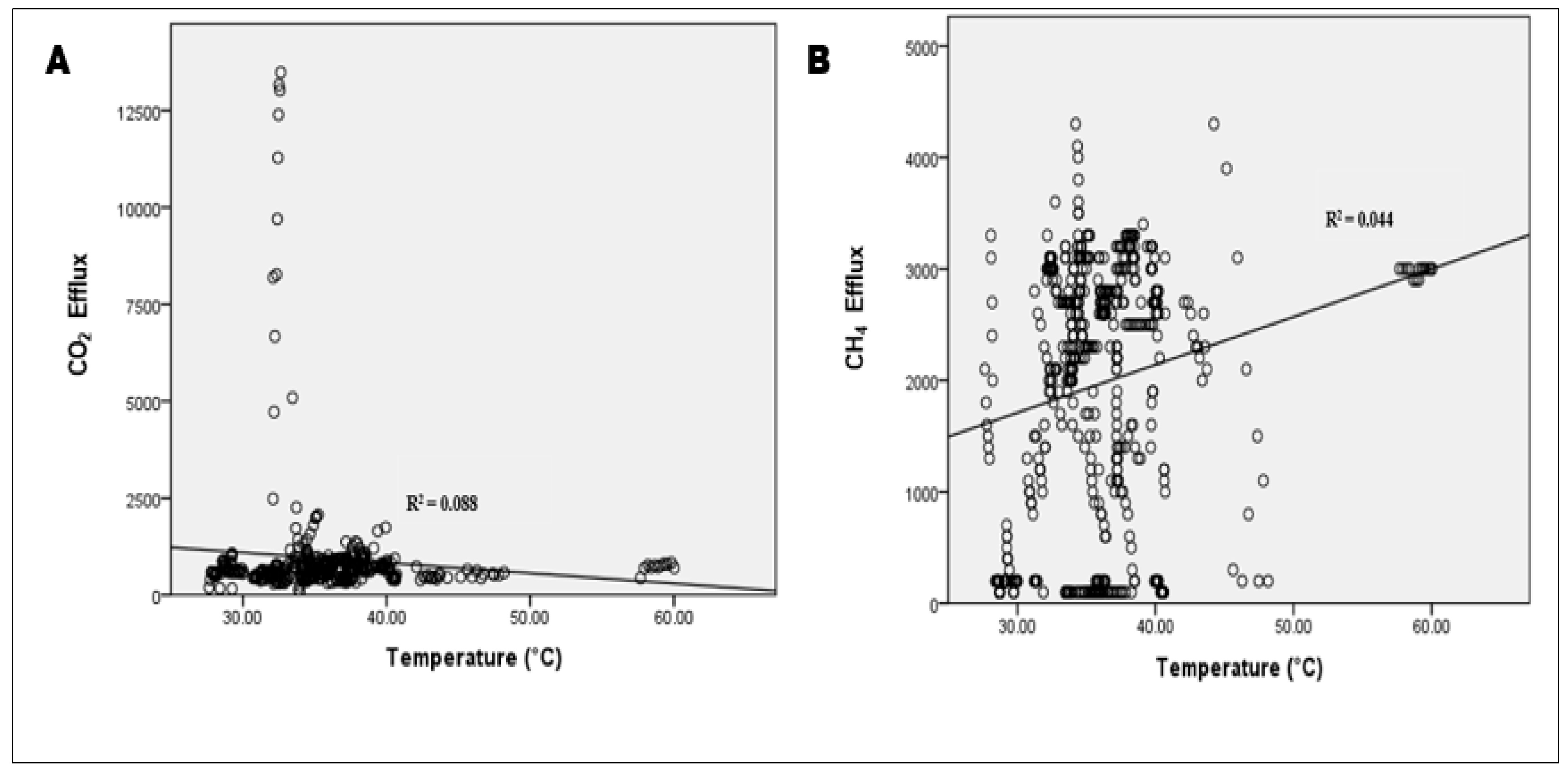
Temperature variability affected sediment CO₂ efflux differently from CH₄. CO₂ efflux did not differ significantly with temperature variability (p ˃ 0.05), whereas CH₄ emissions were significantly affected in the same region (p < 0.05) (Table 1). The relationships between temperature variability and gas fluxes were weak, with r² values of 0.088 for CO₂ (Figure 3A) and 0.044 for CH₄ (Figure 3B).
Figure 3.
Influence of temperature on CO₂ and CH₄ efflux. A) Effects of temperature on CO₂ efflux. B) Effects of temperature on CH₄ efflux.
Figure 3.
Influence of temperature on CO₂ and CH₄ efflux. A) Effects of temperature on CO₂ efflux. B) Effects of temperature on CH₄ efflux.
3.2. Effects of Change in Humidity on the Sediment Co2 and Ch4 Fluxes
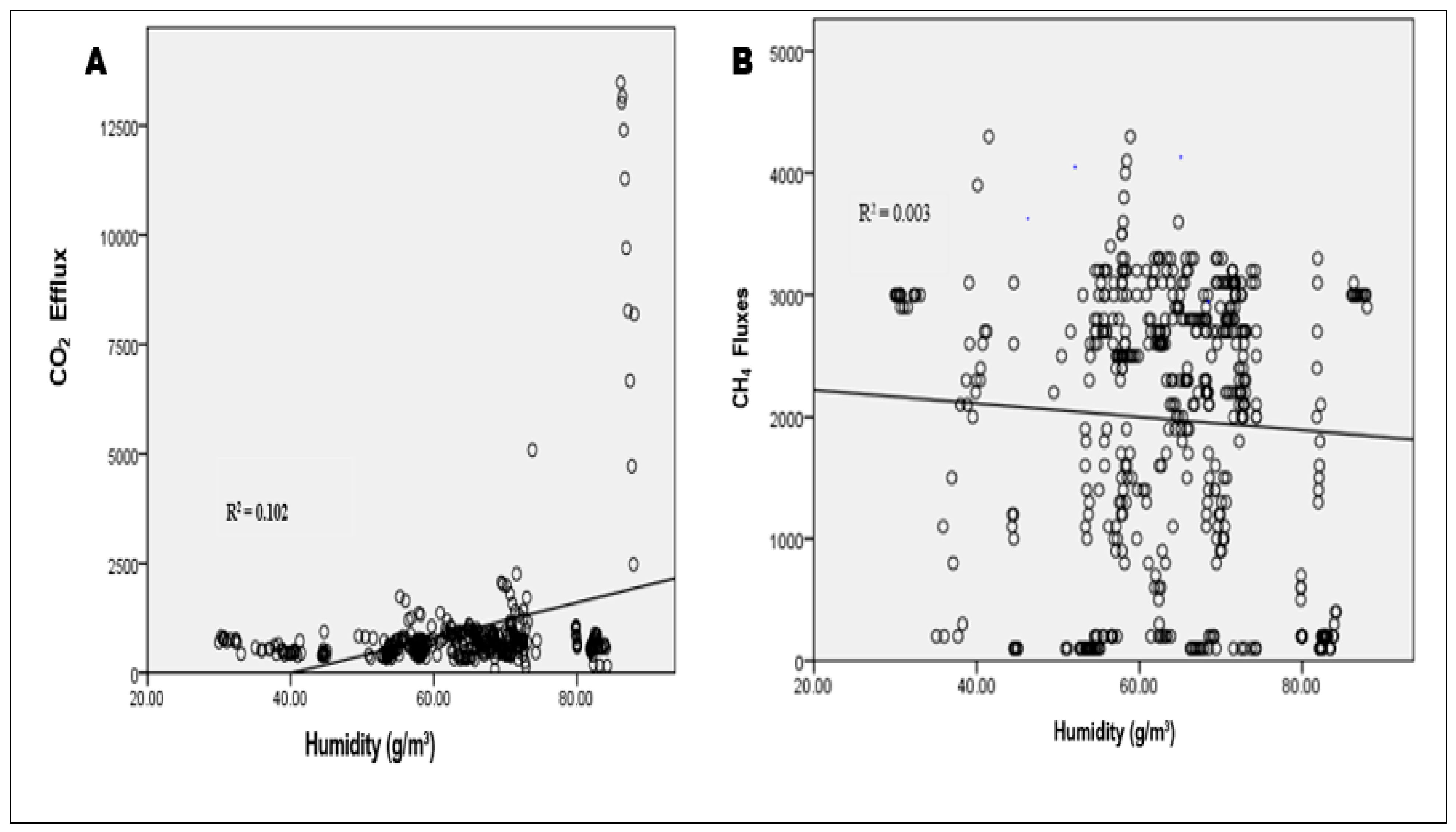
Analysis of humidity variation showed a significant effect on sediment CO₂ efflux (p < 0.05), but no significant effect on CH₄ efflux (p ˃ 0.05) (Table 1). The r² values obtained were 0.102 for CO₂ and 0.003 for CH₄ (Figure 4).
Figure 3.
Influence of humidity on CO₂ and CH₄ efflux. A) Effects of humidity on CO₂ efflux. B) Effects of humidity on CH₄ efflux.
Figure 3.
Influence of humidity on CO₂ and CH₄ efflux. A) Effects of humidity on CO₂ efflux. B) Effects of humidity on CH₄ efflux.
3.3. Change of Seasons
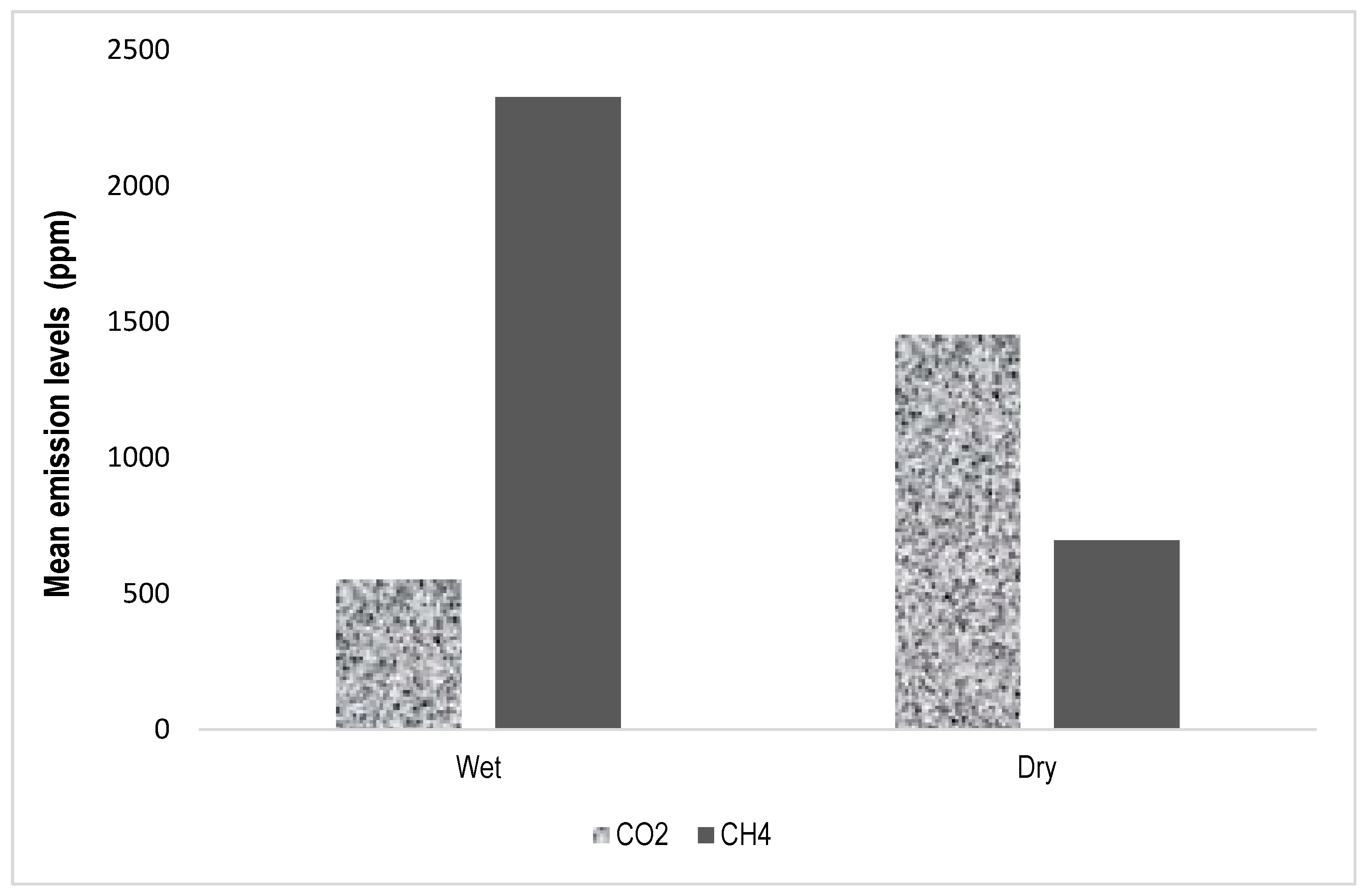
Seasonal variation significantly influenced soil CO₂ efflux (Figure 4), with statistical analysis confirming a significant difference between seasons (p < 0.05), indicating strong seasonal control on soil atmosphere carbon fluxes. A similar pattern was observed for CH₄ efflux, which also showed a statistically significant seasonal effect (p < 0.05), demonstrating that seasonality is an important factor influencing CH₄ emissions within the Lamu Archipelago (Table 2).
Figure 4.
Mean efflux of CO₂ and CH₄ in wet and dry seasons.
3.4. Effects of Tide Height on the Sediment Co2 and Ch4 Fluxes
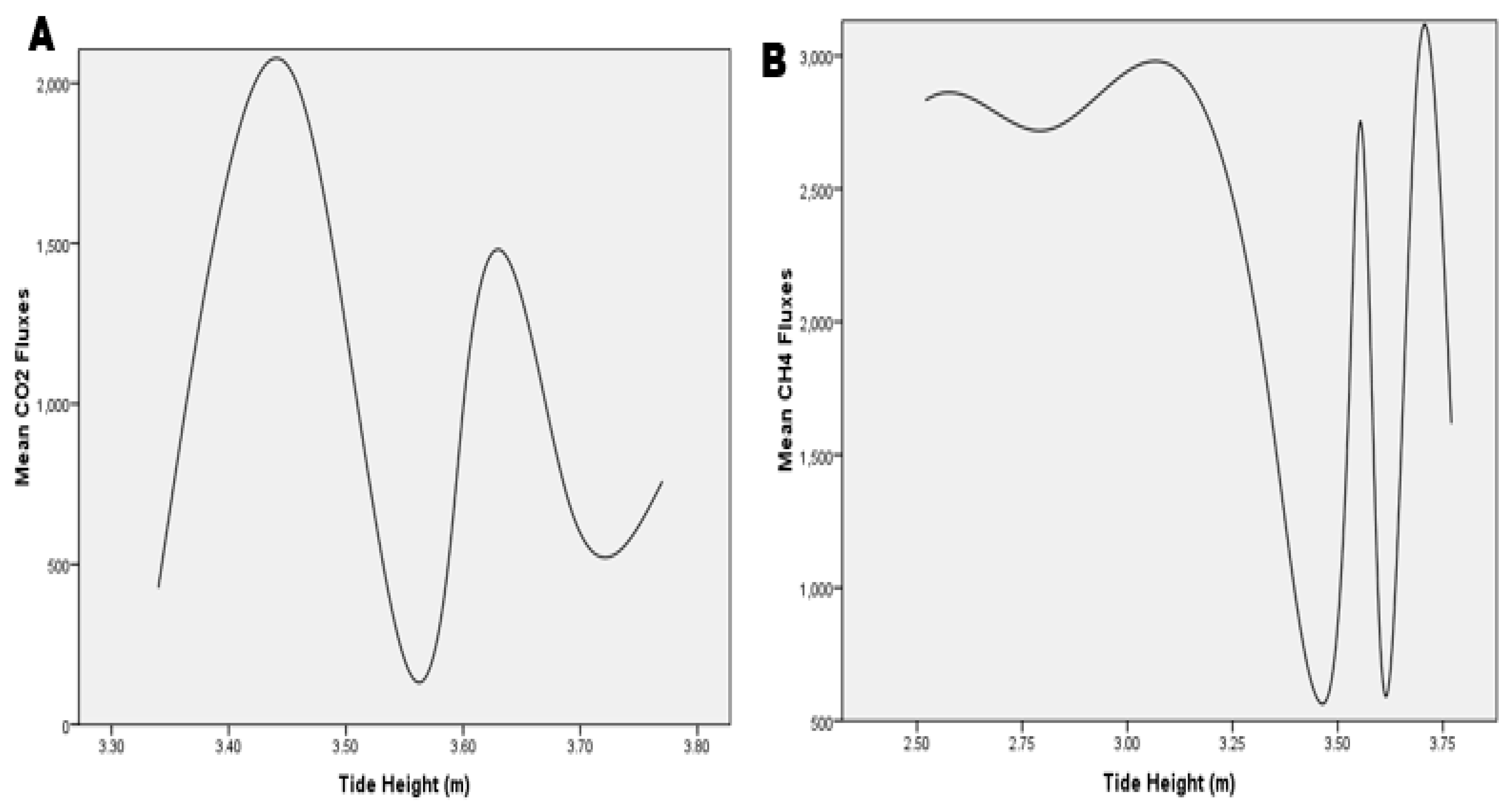
Tide height had a significant statistical effect on the efflux of both CO2 and CH4 (Figure 5) with p <0.05 (Table 3)

Table 3.
Statistical comparison of the effects of tide height on CO2 and CH4 Fluxes.
| Parameter | Tide Height (m) | Mean Rank | Kruskal Wallis H | df | p Value |
|---|---|---|---|---|---|
| CO2 emissions (ppm) | 3.34 | 60.44 | 151.334 | 6 | 0.000 |
| 3.69 | 175.00 | ||||
| 3.77 | 210.32 | ||||
| 3.59 | 158.14 | ||||
| 3.53 | 128.56 | ||||
| 3.6 | 303.13 | ||||
| 3.46 | 265.06 | ||||
| CH4 emissions (ppm) | 3.7 | 394.93 | 250.021 | 7 | 0.000 |
| 3.8 | 194.33 | ||||
| 3.5 | 133.75 | ||||
| 3.6 | 230.68 | ||||
| 3.3 | 180.82 | ||||
| 2.6 | 376.00 | ||||
| 2.5 | 368.75 | ||||
| 2.8 | 355.23 |
Figure 5.
Effects of tide height on the mean CO2 and CH4 emission levels.
4. Discussion
4.1. Effects of Temperature Variability on the Sediment Co2 and Ch4 Fluxes
Temperature is a central control of GHG dynamics in wetland ecosystems because it regulates microbial metabolism, root respiration, and chemical reactions in sediments [1]. In mangrove systems, where redox conditions fluctuate between aerobic and anaerobic states depending on tidal and climatic forcing, temperature variability can differently affect the effluxes of CO₂ and CH₄ [39]. The findings of this study indicate that variability in temperature exerted distinct effects on the efflux of the two gases Figure 3. However, there was no statistically significant relationship between temperature variability and CO₂ emissions, CH₄ fluxes responded more sensitively, showing measurable changes with shifts in temperature. The strength of the associations was relatively weak, with R² values of 0.088 for CO₂ and 0.044 for CH₄, but the contrast in significance between the two gases reveals important differences in their biogeochemical controls.
The lack of a significant effect of temperature variability on CO₂ efflux Table 1 suggests that CO₂ emissions from mangrove sediments are driven more by structural and ecological factors such as root respiration, litter input, and sediment oxygen availability than by short-term temperature changes. Soil respiration, which contributes heavily to CO₂ flux, is influenced by both autotrophic root activity and heterotrophic microbial decomposition [6]. While temperature is known to increase enzymatic activity and microbial metabolism [40], in mangrove sediments the effect may be buffered by tidal inundation and fluctuating redox conditions, which constrain oxygen availability and limit aerobic respiration regardless of temperature.
Previous studies support this interpretation. For example, Cheng et al. [41] observed that mangrove CO₂ efflux did not exhibit strong correlations with temperature on short timescales, because tidal cycles and water saturation had a greater influence on the availability of oxygen for respiration. Similarly, Livesley and Andrusiak [42] reported weak relationship between temperature and CO₂ fluxes in temperate mangroves, attributing this to the overriding control of hydrological conditions. Thus, the low R² value of 0.088 recorded in this study reinforces the perception that CO₂ efflux in mangroves is relatively insensitive to short-term temperature variability, with other environmental drivers exerting stronger control.
In contrast, CH₄ emissions from the same mangrove sediments showed a measurable response to temperature variability Figure 3, even though the relationship explained only a small portion of the variance (R² = 0.044). Unlike CO₂, methane is produced exclusively under anaerobic conditions by methanogenic archaea. Temperature strongly affects the activity and growth rates of these microbes, with higher temperatures accelerating methanogenesis up to an optimum threshold [8,43]. Because mangrove sediments in overwash and fringing systems often remain waterlogged and anoxic, microbial processes rather than oxygen availability dominate CH₄ production, making emissions more directly sensitive to changes in thermal conditions.
Several studies corroborate this pattern. Parvaja and Ramesh [43] found that methane fluxes in Indian mangroves increased markedly during warmer months, coinciding with enhanced microbial activity. Similarly, Rosentreter et al. [7] reported seasonal variability in CH₄ emissions linked to temperature fluctuations in tropical mangroves. While the r² value in this study is medium, the significance of the relationship highlights that methane fluxes respond to thermal variability in ways that CO₂ fluxes do not. This suggests that warming climates may disproportionately enhance methane emissions from mangroves, potentially offsetting their role as carbon sinks.
The contrasting responses of CO₂ and CH₄ effluxes to temperature variability point to fundamental differences in their production pathways. CO₂ efflux reflects a combination of autotrophic respiration, which is relatively stable, and microbial decomposition, which is constrained by oxygen dynamics in mangrove sediments [1]. As such, short-term temperature variability may not translate into significant changes in CO₂ release [4]. In contrast, CH₄ efflux is tightly linked to anaerobic microbial processes, which respond more directly to temperature shifts [44]. Even small fluctuations in temperature can alter methanogenic activity, leading to detectable changes in CH₄ emissions [39]. The relatively low R² values for both gases indicate that temperature is only one of many interacting drivers. Hydrology, salinity, nutrient availability, and vegetation structure are equally important in controlling GHG fluxes [11]. Nevertheless, the results emphasize that methane emissions are more sensitive to thermal variability than CO₂, with implications for how mangroves will respond to future climate warming.
4.2. Effects of Change in Humidity on the Sediment Co2 and Ch4 Fluxes
Humidity is an important climatic driver that influences soil and sediment processes by modifying moisture content, porewater dynamics, and the diffusion of gases from sediments to the atmosphere [40]. In mangrove ecosystems, where sediments are periodically inundated and subjected to fluctuations in salinity and oxygen availability, humidity variability can alter the balance between aerobic and anaerobic processes, thereby shaping the efflux of GHGs [8,41]. The findings of this study reveal a contrasting influence of humidity variability on CO₂ and CH₄ fluxes. The analysis indicated that CO₂ efflux responded significantly to changes in humidity (p = 0.005), whereas CH₄ emissions showed no significant response (p = 0.183) Table 1. This divergence highlights the differential sensitivity of carbon cycling pathways in mangrove sediments to atmospheric moisture variability [11,43].
The significant effect of humidity variability on CO₂ efflux suggests that sediment respiration in mangrove ecosystems is tightly linked to atmospheric moisture conditions. High humidity tends to reduce evapotranspiration rates and maintain higher sediment moisture levels, which can facilitate microbial decomposition and root respiration under aerobic conditions [40]. Conversely, lower humidity often leads to increased evaporative drying of surface sediments, reducing microbial activity and suppressing CO₂ emissions. This strong coupling between humidity and CO₂ flux is consistent with observations from other wetland and forest ecosystems. For instance, Cheng et al. [41] demonstrated that variations in soil moisture, strongly correlated with atmospheric humidity, significantly influenced soil respiration rates in subtropical mangroves. Similarly, Howard et al. [45] found that higher humidity conditions supported sustained CO₂ efflux in mangrove sediments due to enhanced decomposition of organic matter. The significant statistical relationship (p = 0.005) recorded in this study therefore reinforces the role of humidity as a key control on sediment CO₂ dynamics. Given that mangrove sediments are rich in organic carbon inputs from leaf litter and root turnover, moisture conditions maintained by atmospheric humidity are likely to regulate the extent to which these substrates are decomposed. This highlights the vulnerability of mangrove CO₂ fluxes to projected climatic changes, particularly shifts in regional humidity patterns associated with climate change [4].
Conversely, CH₄ emissions from mangrove sediments did not show a significant relationship with humidity variability (p = 0.183). Methane production in mangrove systems is largely governed by anaerobic microbial processes, specifically methanogenesis, which occurs under reducing conditions when alternative electron acceptors such as sulfate are depleted [8]. Since mangrove sediments are frequently waterlogged due to tidal inundation, porewater conditions may already be saturated regardless of atmospheric humidity fluctuations, thereby buffering methane production against external variability in humidity [46]. This could explain the absence of a statistically significant relationship in the present study.
Evidence from other coastal wetlands reports support findings in this study. Purvaja and Ramesh [43] reported that methane emission in Indian mangroves was more strongly correlated with sediment temperature and organic matter availability than with atmospheric humidity. Similarly, Maher et al. [11] highlighted that salinity and tidal hydrology exerted stronger control over CH₄ dynamics in mangroves than did atmospheric moisture conditions. Together, these findings suggest that methane efflux in mangroves is relatively insensitive to short-term variability in humidity, as sediment conditions are primarily controlled by tidal regimes and subsurface microbial processes.
The contrasting responses of CO₂ and CH₄ effluxes to humidity variability reflect fundamental differences in their production pathways and controlling factors. CO₂ efflux arises from both autotrophic root respiration and heterotrophic microbial decomposition, both of which are highly responsive to sediment moisture dynamics modulated by atmospheric humidity [47]. In contrast, CH₄ efflux is driven almost entirely by obligate anaerobes whose activity is determined more by redox potential, organic substrate quality, and tidal saturation than by atmospheric humidity [36]. The statistical outcomes of this study (CO₂ p = 0.005; CH₄ p = 0.183) therefore underscore the importance of distinguishing between aerobic and anaerobic processes when evaluating climatic controls on GHG fluxes in mangrove systems.
4.3. Effects of Change in Seasons on the Sediment Co2 and Ch4 Fluxes
In the present study, seasonal variation had divergent effects on sediment CO₂ and CH₄ effluxes, with CO₂ emissions peaking during the dry season and CH₄ emissions being highest during the wet season. Statistical analysis confirmed these differences, with CO₂ efflux varying significantly between seasons (p = 0.001) and CH₄ emissions also showing a significant seasonal signal (p= 0.008) Table 2. These contrasting patterns highlight the complex interplay of environmental drivers that shape carbon cycling in mangrove ecosystems [1,7].
The significantly higher CO₂ efflux recorded during the dry season compared to the wet season indicates that aerobic respiration is favoured under relatively drier sediment conditions. During dry periods, reduced waterlogging increases sediment aeration, thereby enhancing both autotrophic root respiration and heterotrophic microbial decomposition of organic matter [40,41]. Elevated temperatures often associated with the dry season can further stimulate enzymatic activity and accelerate microbial breakdown of organic substrates, amplifying CO₂ release to the atmosphere [1]. Several studies have documented similar seasonal patterns. For example, Livesley and Andrusiak [42] observed higher CO₂ fluxes in temperate mangroves during drier periods, attributing the increases to improved oxygen penetration in sediments. Likewise, Bouillon et al. [6] reported that seasonal drought conditions enhanced soil respiration in tropical mangroves due to the reduced inhibitory effects of water saturation. The results from the present study (p = 0.001) supports this understanding by showing that sediment aeration and associated microbial processes during the dry season exert strong control on CO₂ emissions.
On the other hand, CH₄ emissions were significantly higher during the wet season compared to the dry season. This pattern reflects the strong dependence of methanogenesis on anaerobic conditions, which are promoted when sediments are waterlogged during rainy periods [8]. High sediment moisture reduces oxygen availability, lowers redox potential, and creates favorable conditions for methanogenic archaea [36]. At the same time, increased organic matter inputs from litter fall and tidal deposition during the wet season provide substrates that fuel methane production [15,48]. Evidence from studies conducted in tropical mangroves elsewhere also points to consistently elevated methane efflux during wet seasons. For example, Purvaja and Ramesh [43] found that CH₄ fluxes in Indian mangroves were nearly double during the wet season compared to the dry season. Similarly, Rosentreter et al. [7] reported pronounced seasonal variability in methane emissions from Australian mangroves, with peaks coinciding with rainfall-driven water saturation.
The contrasting seasonal patterns of CO₂ and CH₄ effluxes highlight the different environmental controls governing their production. CO₂ emissions are primarily driven by aerobic processes that thrive under drier, oxygenated conditions [32,40], while CH₄ emissions depend on anaerobic pathways that dominate under wetter conditions [49]. This dichotomy reflects the trade-off between aerobic respiration and methanogenesis in mangrove sediments, mediated by seasonally varying hydrology and moisture regimes [11]. This seasonal compensation effect may play an important role in stabilizing the overall carbon balance of mangrove ecosystems. Nevertheless, given the higher global warming potential of CH₄ relative to CO₂, increased wet-season methane emissions may offset the perceived climate mitigation benefits of reduced CO₂ efflux [7].
4.4. Effects of Variation in Tide Height on the Sediment Co2 and Ch4 Fluxes
Mangrove ecosystems are uniquely defined by tidal inundation, which regulates hydrology, sediment chemistry, and gas exchange dynamics at the soil–atmosphere interface [50,51]. Tidal height variability determines the frequency, depth, and duration of sediment submersion, thereby shaping the balance between aerobic and anaerobic processes that drive GHG emissions [37]. The findings of this study indicate that tide height exerted a significant effect on both CO₂ and CH₄ effluxes from mangrove sediments, with p-values of 0.017 and 0.030 Table 2, respectively. These results show the importance of tidal forcing as a key biophysical driver of carbon cycling in intertidal ecosystems.
CO₂ efflux from mangrove sediments is largely influenced by sediment oxygen availability, root respiration, and microbial decomposition of organic matter [52,53]. Variability in tide height alters sediment aeration by modulating oxygen diffusion. During low tide, when sediments are exposed, oxygen penetration increases, stimulating aerobic respiration by microbes and roots, which enhances CO₂ release [1]. Conversely, high tide inundation restricts oxygen availability and slows decomposition, reducing CO₂ efflux [6]. The significant statistical relationship recorded in this study (p = 0.017) reflects this dynamic, showing that fluctuations in tidal height drive measurable differences in sediment respiration. Previous research corroborates these findings. Krauss et al. [54] reported that mangrove CO₂ fluxes increased significantly during low-tide exposure compared to periods of inundation. Similarly, Maher et al. [11] observed that the variability in tidal flooding strongly regulated CO₂ dynamics by controlling redox potential and root oxygenation. Together, these studies confirm that tidal regimes play an important role in modulating CO₂ efflux across mangrove systems.
Unlike CO₂, CH₄ efflux is tightly linked to anaerobic processes, particularly methanogenesis, which occurs under reducing conditions in waterlogged sediments [49]. Variability in tide height influences CH₄ dynamics by altering sediment saturation and redox conditions [55]. Higher tide levels extend periods of anoxia, favouring methanogenic activity and methane accumulation in porewaters, which can then be released during tidal drawdown [8]. Conversely, lower tides promote sediment aeration, which stimulates methane oxidation by methanotrophs, thereby reducing net CH₄ emissions [56]. The significant relationship between tide height and CH₄ flux observed in this study (p = 0.030) is consistent with findings from other tropical and subtropical mangroves. For example, Purvaja and Ramesh [43] found that methane emissions increased during periods of prolonged tidal inundation in Indian mangroves. Similarly, Rosentreter et al. [7] demonstrated that methane efflux in Australian mangroves was highly variable with tide height, with peak emissions occurring during transitions between high and low tides when trapped methane escaped from sediments. This highlights the role of tidal variability in both producing and ventilating methane from mangrove soils.
The results of this study reveal that tide height significantly influences both CO₂ and CH₄ effluxes, though through different pathways. CO₂ emissions respond primarily to oxygen availability and aerobic microbial activity during low tides [1,40], whereas CH₄ emissions are enhanced by anaerobic methanogenesis under prolonged inundation [56]. These contrasting but complementary dynamics illustrate the dual role of tides in regulating carbon fluxes alternately stimulating aerobic respiration and anaerobic processes depending on water level. Moreover, the tidal cycle itself can create pulses of GHG emissions. As the tide recedes, gases accumulated during inundation are released, creating episodic flux events [11]. Such dynamics explain the significant relationships observed in this study and emphasize the need for temporal resolution in measuring mangrove GHG emissions.
5. Conclusion
Our findings indicated that temperature significantly affected CH₄ emissions but not CO₂, suggesting that methanogenesis processes in mangrove sediments are highly sensitive to temperature fluctuations. In contrast, humidity had a significant effect on CO₂ efflux but did not show any notable influence on CH₄ fluxes. Seasonal variation also played a crucial role, with CO₂ fluxes being higher during the dry season, while CH₄ emissions peaked in the wet season. This pattern aligns with differences in soil aeration and microbial activity between wet and dry periods. Tide height exerted a significant influence on both CO₂ and CH₄ emissions, highlighting the regulatory role of tidal inundation cycles on gas diffusion and sediment oxygenation.
This study is important both for Kenya and globally as it provides understanding on how seasonal and tidal variations regulate CO₂ and CH₄ production in coastal and mangrove ecosystems, which are key components of the global carbon cycle. At the national level, the findings will support improved accuracy of greenhouse gas inventories, inform Kenya’s blue carbon initiatives, and strengthen evidence-based reporting under international climate frameworks such as the UNFCCC. Globally, the study will contribute to closing knowledge gaps on temporal and hydrological controls of greenhouse gas fluxes in tropical coastal systems, which are often underrepresented in climate models. By enhancing understanding of when and under what conditions emissions are highest or lowest, the research supports better climate change mitigation strategies, ecosystem management, and the integration of coastal wetlands into global efforts to reduce atmospheric greenhouse gas concentrations.
Author Contributions
Conceptualization, G.K.T(George Tarus)., B.K.K(Bernard Kirui). and D.W(David Williamson).; methodology, G.K.T(George Tarus); writing original manuscript, G.K.T. (George Tarus); review and editing, B.K.K.(Bernard Kirui) and D.W. (David Williamson);. All authors have read and agreed to the published version of the manuscript.
Funding
This study was funded by TNC WIO MARINE FISHERIES Program- F106876-EGERTON-20221104.
Data Availability Statement
The data used in this article was part of doctoral studies of George. K. Tarus, within the Natural Resources Department of Egerton University. Access to these data can be requested from the corresponding author, who holds the set of all data used in this paper.
Conflicts of Interest
The authors declare no competing interests. The funders had no role in the design of the study; in the collection, analyses, or interpretation of data; in the writing of the manuscript; or in the decision to publish the results.
References
- Alongi DM. Carbon cycling and storage in mangrove forests. Annu Rev Mar Sci. 2014;6(1):195–219. [CrossRef]
- Donato DC, Kauffman JB, Murdiyarso D, Kurnianto S, Stidham M, Kanninen M. Mangroves among the most carbon-rich forests in the tropics. Nat Geosci. 2011;4(5):293–7. [CrossRef]
- Mcleod E, Chmura GL, Bouillon S, Salm R, Björk M, Duarte CM, et al. A blueprint for blue carbon: toward an improved understanding of the role of vegetated coastal habitats in sequestering CO2. Front Ecol Environ. 2011;9(10):552–60. [CrossRef]
- Alongi DM. Impacts of climate change on blue carbon stocks and fluxes in mangrove forests. Forests. 2022;13(2):149. [CrossRef]
- Lagomasino D, Fatoyinbo T, Lee S, Feliciano E, Trettin C, Shapiro A, et al. Measuring mangrove carbon loss and gain in deltas. Environ Res Lett. 2019;14(2):025002. [CrossRef]
- Bouillon S, Borges AV, Castañeda-Moya E, Diele K, Dittmar T, Duke NC, et al. Mangrove production and carbon sinks: a revision of global budget estimates. Glob Biogeochem Cycles. 2008;22(2). [CrossRef]
- Rosentreter JA, Maher DT, Erler DV, Murray RH, Eyre BD. Methane emissions partially offset “blue carbon” burial in mangroves. Sci Adv. 2018;4(6):eaao4985. [CrossRef]
- Kristensen E, Bouillon S, Dittmar T, Marchand C. Organic carbon dynamics in mangrove ecosystems: a review. Aquat Bot. 2008;89(2):201–19. [CrossRef]
- Poffenbarger HJ, Needelman BA, Megonigal JP. Salinity influence on methane emissions from tidal marshes. Wetlands. 2011;31(5):831–42. [CrossRef]
- Rosentreter JA, Laruelle GG, Bange HW, Bianchi TS, Busecke JJ, Cai WJ, et al. Coastal vegetation and estuaries are collectively a greenhouse gas sink. Nat Clim Change. 2023;13(6):579–87. [CrossRef]
- Maher DT, Santos IR, Schulz KG, Call M, Jacobsen GE, Sanders CJ. Blue carbon oxidation revealed by radiogenic and stable isotopes in a mangrove system. Geophys Res Lett. 2017;44(10):4889–96. [CrossRef]
- Chen GC, Tam NFY, Ye Y. Summer fluxes of atmospheric greenhouse gases N2O, CH4 and CO2 from mangrove soil in South China. Sci Total Environ. 2010;408(13):2761–7. [CrossRef]
- Livesley SJ, Andrusiak SM. Temperate mangrove and salt marsh sediments are a small methane and nitrous oxide source but important carbon store. Estuar Coast Shelf Sci. 2012;97:19–27. [CrossRef]
- Cao M, Wang F, Ma S, Geng H, Sun K. Recent advances on greenhouse gas emissions from wetlands: Mechanism, global warming potential, and environmental drivers. Environ Pollut. 2024;355:124204. [CrossRef]
- Wang H, Liao G, D’Souza M, Yu X, Yang J, Yang X, et al. Temporal and spatial variations of greenhouse gas fluxes from a tidal mangrove wetland in Southeast China. Environ Sci Pollut Res. 2016;23(2):1873–85. [CrossRef]
- Bosire JO, Mangora MM, Bandeira SO, Rajkaran A, Ratsimbazafy R, Appadoo C, et al. Mangroves of the Western Indian Ocean: status and management. 2015.
- Kairo JG, Dahdouh-Guebas F, Gwada PO, Ochieng C, Koedam N. Regeneration status of mangrove forests in Mida Creek, Kenya: a compromised or secured future? AMBIO J Hum Environ. 2002;31(7):562–8. [CrossRef]
- Kairo JG, Bosire J, Langat J, Kirui B, Koedam N. Allometry and biomass distribution in replanted mangrove plantations at Gazi Bay, Kenya. Aquat Conserv Mar Freshw Ecosyst. 2009;19(S1):S63–9. [CrossRef]
- Stringer CE, Trettin CC, Zarnoch SJ, Tang W. Carbon stocks of mangroves within the Zambezi River Delta, Mozambique. For Ecol Manag. 2015;354:139–48. [CrossRef]
- Kairo J, Mbatha A, Murithi MM, Mungai F. Total ecosystem carbon stocks of mangroves in Lamu, Kenya; and their potential contributions to the climate change agenda in the country. Front For Glob Change. 2021;4:709227. [CrossRef]
- County L. First County Integrated Development Plan 2013-2017. Lamu County: Lamu County. 2014;
- Olendo MI, Okemwa GM, Munga CN, Mulupi LK, Mwasi LD, Mohamed HB, et al. The value of long-term, community-based monitoring of marine turtle nesting: a study in the Lamu archipelago, Kenya. Oryx. 2017/08/01 ed. 2019;53(1):71–80. [CrossRef]
- GoK G. National mangrove ecosystem management plan. Nairobi Kenya. 2017;
- Riungu PM, Nyaga JM, Githaiga MN, Kairo JG. Value chain and sustainability of mangrove wood harvesting in Lamu, Kenya. Trees For People. 2022;9:100322. [CrossRef]
- Kairo J, Mbatha A, Murithi MM, Mungai F. Total Ecosystem Carbon Stocks of Mangroves in Lamu, Kenya; and Their Potential Contributions to the Climate Change Agenda in the Country. Front For Glob Change. 2021;4:151. [CrossRef]
- Kairo JG, Kivyatu B, Koedam N. Application of Remote Sensing and GIS in the Management of Mangrove Forests Within and Adjacent to Kiunga Marine Protected Area, Lamu, Kenya. Environ Dev Sustain. 2002 Jun 1;4(2):153–66. [CrossRef]
- Osuka K, Samoilys M, Mbugua J, Leeuw J, Obura D. Marine habitats of the Lamu-Kiunga coast: an assessment of biodiversity value, threats and opportunities. ICRAF Nairobi. 2016;
- McClanahan TR. Seasonality in East Africa’s coastal waters. 1988; [CrossRef]
- Olendo M, Munga CN, Okemwa GM, Ong’anda H, Mulupi L, Mwasi L, et al. Current status of sea turtle protection in Lamu Seascape, Kenya: Trends in nesting, nest predation and stranding levels. West Indian Ocean J Mar Sci. 2016;15(1):1–13.
- Schott FA, McCreary Jr JP. The monsoon circulation of the Indian Ocean. Prog Oceanogr. 2001;51(1):1–123.
- Tarus GK, Kirui BK, Obwoyere G. Impacts of forest management type and season on soil carbon fluxes in Eastern Mau Forest, Kenya. Afr J Ecol. 2019;57(1):113–21. [CrossRef]
- Tarus GK, Kirui BK, Obwoyere G. Impacts of forest management type and season on soil carbon fluxes in Eastern Mau Forest, Kenya. Afr J Ecol. 2019;57(1):113–21. [CrossRef]
- Marchand C, David F, Jacotot A, Leopold A, Ouyang X. CO2 and CH4 emissions from coastal wetland soils. In: Carbon Mineralization in Coastal Wetlands. Elsevier; 2022. p. 55–91.
- Yasuda T, Yonemura S, Tani A. Comparison of the characteristics of small commercial NDIR CO2 sensor models and development of a portable CO2 measurement device. Sensors. 2012;12(3):3641–55. [CrossRef]
- Chanda A, Das S, Bhattacharyya S, Das I, Giri S, Mukhopadhyay A, et al. CO2 fluxes from aquaculture ponds of a tropical wetland: Potential of multiple lime treatment in reduction of CO2 emission. Sci Total Environ. 2019;655:1321–33. [CrossRef]
- Das S, Ganguly D, Chakraborty S, Mukherjee A, Kumar De T. Methane flux dynamics in relation to methanogenic and methanotrophic populations in the soil of Indian Sundarban mangroves. Mar Ecol. 2018;39(2):e12493. [CrossRef]
- Leopold A, Marchand C, Deborde J, Allenbach M. Temporal variability of CO2 fluxes at the sediment-air interface in mangroves (New Caledonia). Sci Total Environ. 2015;502:617–26. [CrossRef]
- Trautmann N, Richards T. Moisture Content. Cornell Composting. Sci Eng Cornell Waste Manag Inst Ithaca NY USA. 1996;
- Gnanamoorthy P, Chakraborty S, Nagarajan R, Ramasubramanian R, Selvam V, Burman PKD, et al. Seasonal variation of methane fluxes in a mangrove ecosystem in south India: An eddy covariance-based approach. Estuaries Coasts. 2022;45(2):551–66. [CrossRef]
- Raich JW, Schlesinger WH. The global carbon dioxide flux in soil respiration and its relationship to vegetation and climate. Tellus B. 1992;44(2):81–99.
- Cheng H, Zhou X, Dong R, Wang X, Liu G, Li Q. Natural vegetation regeneration facilitated soil organic carbon sequestration and microbial community stability in the degraded karst ecosystem. Catena. 2023;222:106856. [CrossRef]
- Livesley SJ, Andrusiak SM. Temperate mangrove and salt marsh sediments are a small methane and nitrous oxide source but important carbon store. Estuar Coast Shelf Sci. 2012;97:19–27. [CrossRef]
- Purvaja R, Ramesh R. Natural and anthropogenic methane emission from coastal wetlands of South India. Environ Manage. 2001;27(4):547–57. [CrossRef]
- Arai H, Inubushi K, Chiu CY. Dynamics of methane in mangrove forest: will it worsen with decreasing mangrove forests? Forests. 2021;12(9):1204. [CrossRef]
- Howard J, Hoyt S, Isensee K, Telszewski M, Pidgeon E. Coastal blue carbon: methods for assessing carbon stocks and emissions factors in mangroves, tidal salt marshes, and seagrasses. 2014;
- Jones JB, Mulholland PJ. Influence of drainage basin topography and elevation on carbon dioxide and methane supersaturation of stream water. Biogeochemistry. 1998;40(1):57–72. [CrossRef]
- Bond-Lamberty B, Wang C, Gower ST. A global relationship between the heterotrophic and autotrophic components of soil respiration? Glob Change Biol. 2004;10(10):1756–66. [CrossRef]
- Hernandez JO, Park BB. Litterfall production and decomposition in tropical and subtropical mangroves: research trends and interacting effects of biophysical, chemical, and anthropogenic factors. Wetlands. 2024;44(2):23. [CrossRef]
- Minderlein S, Blodau C. Humic-rich peat extracts inhibit sulfate reduction, methanogenesis, and anaerobic respiration but not acetogenesis in peat soils of a temperate bog. Soil Biol Biochem. 2010;42(12):2078–86. [CrossRef]
- Call M, Santos IR, Dittmar T, de Rezende CE, Asp NE, Maher DT. High pore-water derived CO2 and CH4 emissions from a macro-tidal mangrove creek in the Amazon region. Geochim Cosmochim Acta. 2019;247:106–20. [CrossRef]
- Adame MF, Neil D, Wright SF, Lovelock CE. Sedimentation within and among mangrove forests along a gradient of geomorphological settings. Estuar Coast Shelf Sci. 2010;86(1):21–30. [CrossRef]
- Bhupinderpal-Singh N. A., Ottosson Löfvenius, M., Högberg, MN, Mellander, P.-E., and Högberg. P.: Tree root and soil heterotrophic respiration as revealed by girdling of boreal Scots pine forest: extending observations beyond the first year. Plant Cell Env. 2003;26:1287–96. [CrossRef]
- Barreto CR. Uncovering the impacts of mangrove encroachment and warming on microbial community composition and function. Villanova University; 2016.
- Krauss KW, McKee KL, Lovelock CE, Cahoon DR, Saintilan N, Reef R, et al. How mangrove forests adjust to rising sea level. New Phytol. 2014;202(1):19–34. [CrossRef]
- Yong ZJ, Lin WJ, Lin CW, Lin HJ. Tidal influence on carbon dioxide and methane fluxes from tree stems and soils in mangrove forests. Biogeosciences. 2024;21(22):5247–60.
- Su G, Guo Z, Hu Y, Zheng Q, Zopfi J, Lehmann MF, et al. Tidal control on aerobic methane oxidation and mitigation of methane emissions from coastal mangrove sediments. Environ Res. 2024;263:120049. [CrossRef]
- Hayne SL. Controls on atmospheric exchanges of carbon dioxide and methane for a variety of Arctic tundra types. Carleton University; 2010.
- Singh LJ. Mangrove plant diversity in Bay Islands, India and its significance. Mar Biodivers. 2012;119–26.
Figure 1.
Geographical location of the study area. A) Kenyan map showing the location of Lamu County, B) Lamu County Map showing the location of study site and C) showing the Southern Swamp and Pate Island Swamps where data collection was done.
Figure 1.
Geographical location of the study area. A) Kenyan map showing the location of Lamu County, B) Lamu County Map showing the location of study site and C) showing the Southern Swamp and Pate Island Swamps where data collection was done.
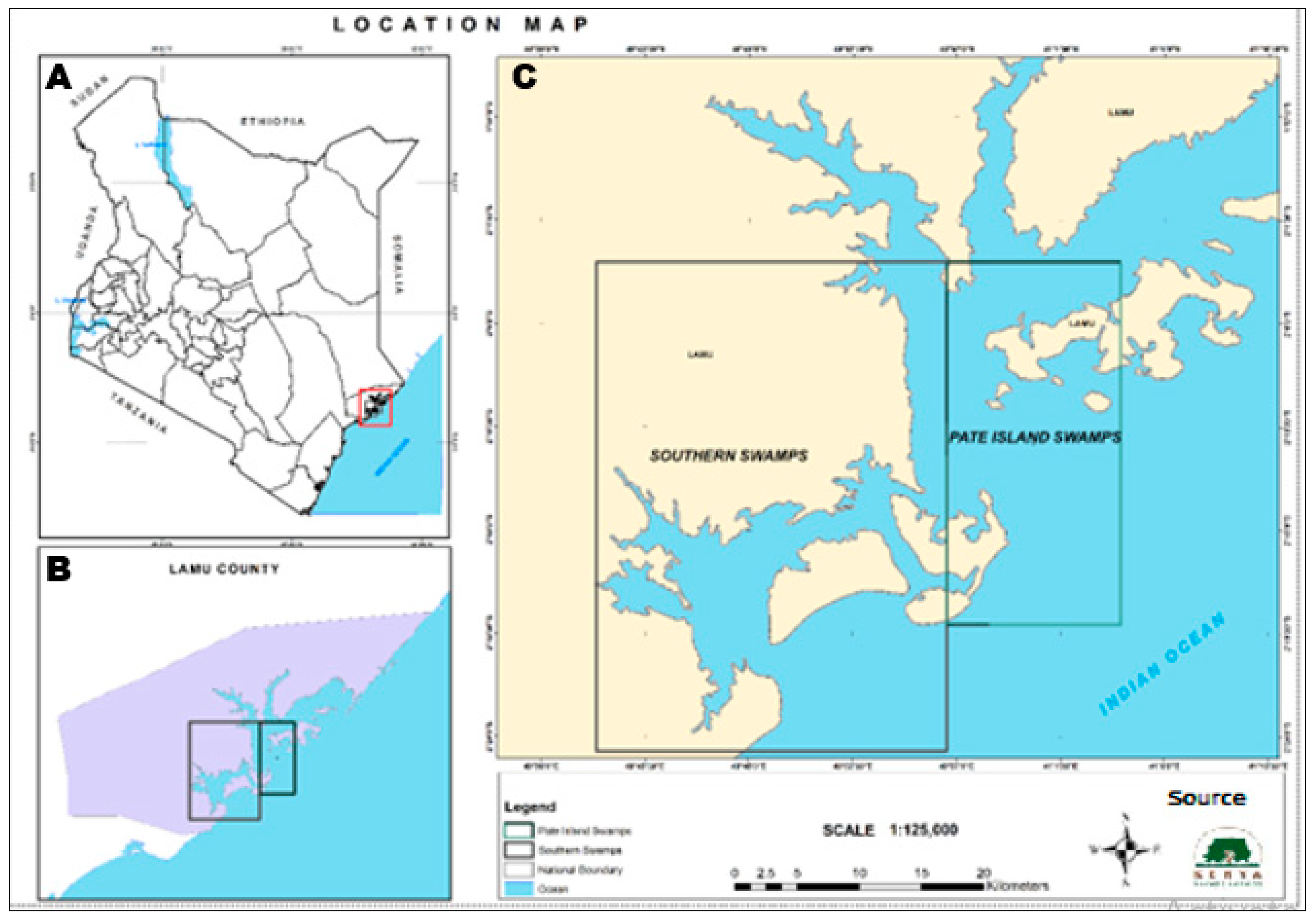
Figure 2.
Sampling design used in the assessment of effects of seasonal and tidal variability on the greenhouse gas fluxes from mangroves in the Lamu Archipelago.
Figure 2.
Sampling design used in the assessment of effects of seasonal and tidal variability on the greenhouse gas fluxes from mangroves in the Lamu Archipelago.
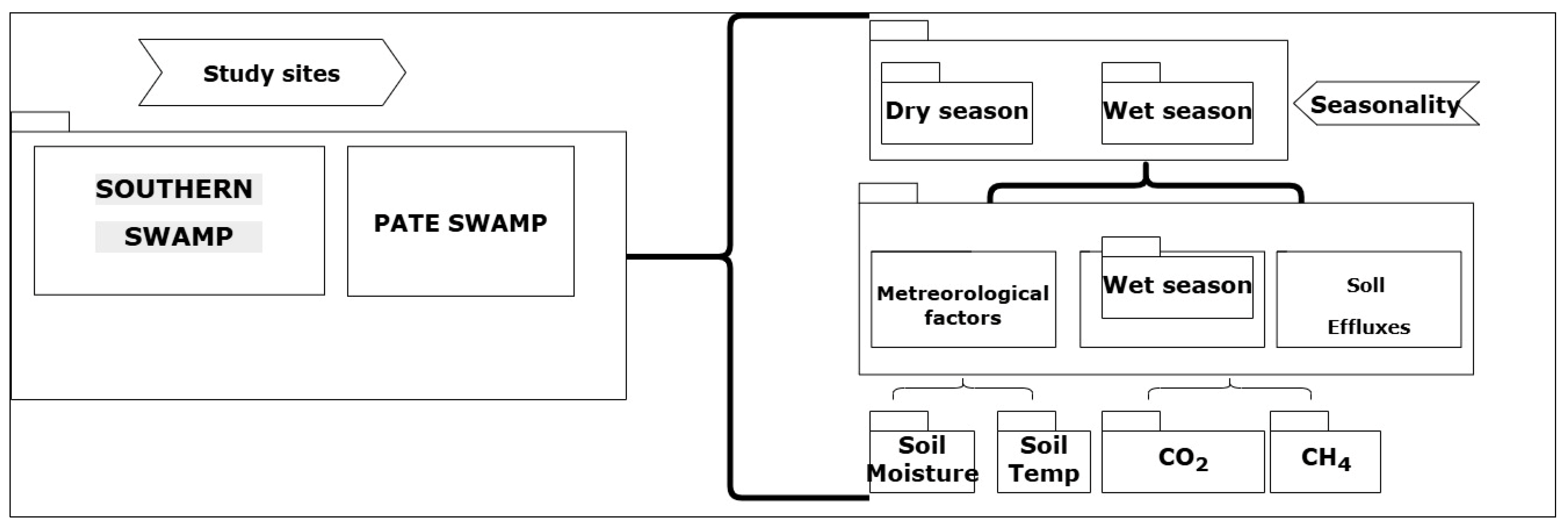
Table 1.
Statistical analysis of temperature and humidity variation on CO2 and CH4 efflux.
| Parameter | Gases | Statistics | Sum of Squares | df | Mean Square | F | p Value |
|---|---|---|---|---|---|---|---|
| Temperature | CO2 Efflux | Regression | 8408787.692 | 1 | 8408787.692 | 3.330 | 0.069 |
| Residual | 9.898E8 | 392 | 2524999.969 | ||||
| CH4 Efflux | Regression | 2.823E7 | 1 | 2.823E7 | 23.659 | 0.003 | |
| Residual | 6.133E8 | 514 | 1193114.877 | ||||
| Humidity | CO2 Efflux | Regression | 1.014E8 | 1 | 1.014E8 | 44.336 | 0.005 |
| Residual | 8.968E8 | 392 | 2287708.778 | ||||
| CH4 Efflux | Regression | 2208622.129 | 1 | 2208622.129 | 1.776 | 0.183 | |
| Residual | 6.393E8 | 514 | 1243735.676 |
Table 2.
Effects of different seasons on CO₂ and CH₄ fluxes.
| Category | Subcategory | Mean Rank | Sum of Ranks | Mann-Whitney U | P Value |
|---|---|---|---|---|---|
| CO₂ | Wet | 132.47 | 29276.50 | 4745.500 | 0.001 |
| Dry | 280.57 | 48538.50 | |||
| CH₄ | Wet | 302.32 | 123045.50 | 4345.500 | 0.008 |
| Dry | 94.87 | 10340.50 |
Disclaimer/Publisher’s Note: The statements, opinions and data contained in all publications are solely those of the individual author(s) and contributor(s) and not of MDPI and/or the editor(s). MDPI and/or the editor(s) disclaim responsibility for any injury to people or property resulting from any ideas, methods, instructions or products referred to in the content. |
© 2026 by the authors. Licensee MDPI, Basel, Switzerland. This article is an open access article distributed under the terms and conditions of the Creative Commons Attribution (CC BY) license (http://creativecommons.org/licenses/by/4.0/).
Copyright: This open access article is published under a Creative Commons CC BY 4.0 license, which permit the free download, distribution, and reuse, provided that the author and preprint are cited in any reuse.


