

Submitted:
23 June 2026
Posted:
24 June 2026
You are already at the latest version
Abstract
Background/Objectives: This study aimed to investigate the effects of different taping techniques commonly used in the management of hallux valgus (HV) on plantar pressure distribution under static and dynamic conditions. Methods: Thirty participants, including 15 individuals with HV and 15 healthy con-trols, were included. Individuals with mild–moderate HV were identified using the Manchester scale, while healthy participants were determined using the Foot Posture Index. Plantar pressure distribution was assessed using the Freemed Maxi pressure platform (Sensor Medica, Italy). Participants were first evaluated without taping. Rig-id taping and dynamic taping with mechanical correction techniques were then ap-plied in a randomized order with a 24-hour interval. Participants rested for 30 minutes after each taping application to evaluate the immediate effect. Static assessments in-cluded total pressure and forefoot and rearfoot loads, while dynamic analyses included forefoot load, rearfoot load, medial load, and lateral load. Conclusions: Data were analyzed using a repeated-measures General Linear Model in SPSS 21.0. No significant differences were observed between groups in static total pressure, forefoot load, or rearfoot load (p=0.965, p=0.928, and p=0.829, respectively). Significant effects were found for dynamic forefoot and rearfoot loads (p=0.036 for both variables). Dynamic medial and lateral loads showed no significant differences (p=0.338). Static forefoot and rearfoot pressure values in both taping conditions were closer to those of healthy individuals. However, dynamic taping resulted in lower forefoot and rearfoot loads during gait compared with healthy values, while dynamic medial and lateral loads approached healthy levels.
Keywords:
hallux valgus
; dynamic taping
; rigid taping
; plantar pressure
; foot deformity
1. Introduction
Hallux valgus (HV) is one of the most common chronic foot deformities and represents the most prevalent pathological condition affecting the great toe [1,2]. HV is a progressive deformity characterized by lateral deviation of the great toe at the first metatarsophalangeal (MTP) joint, pronation and medial deviation of the first metatarsal bone, leading to alterations in the anatomical structure and biomechanical function of the foot [3,4]. If the deformity is allowed to progress without treatment, foot function, daily activities, and health-related quality of life may be negatively affected. HV is associated with symptoms such as pain, balance impairments, walking difficulties, and problems related to footwear selection [5].
The etiology of HV remains partially unclear [1]. Since HV develops gradually over time, it has been suggested that cumulative trauma and repetitive loading may contribute to its development [6]. Ligamentous laxity has also been proposed as a contributing factor, as it may exacerbate instability at the first tarsometatarsal and metatarsophalangeal joints, thereby facilitating the progression of HV [7].
One of the important steps in the management of foot pathologies is the objective analysis of foot mechanics under dynamic conditions. Hallux valgus is a common foot deformity that can alter plantar pressure distribution [8]. Theoretically, due to its structural alterations, HV may modify plantar pressure distribution and load-bearing capacity in the forefoot [9]. Typically, a reduction in loading beneath the hallux occurs, accompanied by compensatory increases in pressure in other regions of the foot, which may contribute to secondary foot problems such as metatarsalgia [10]. Previous studies have indicated that one of the most frequently observed pathomechanical findings is insufficiency during the mid-stance and push-off phases of gait, resulting in increased loading on the central metatarsal bones [11].
Various conservative approaches have been proposed for the management of HV, including exercise [3,12], orthoses (such as toe separators, night splints, and anti-pronation insoles) [13], taping techniques, and manual or manipulative therapy. Among these approaches, rigid and dynamic taping are frequently used in clinical practice. Previous studies have reported that both taping methods may reduce pain, improve function, and help prevent deformity progression [14,15,16].
Dynamic taping is a therapeutic method that aims to produce mechanical effects on the musculoskeletal system through the application of elastic adhesive tapes [17]. The proposed mechanism of action of dynamic taping is related to both mechanical support and neuromuscular stimulation. Mechanically, dynamic taping provides elastic support while allowing the preservation of joint range of motion without completely restricting movement. Furthermore, following application, the tape may generate recoil forces on the underlying tissues, potentially contributing to improved stability in the targeted region. From a neuromuscular perspective, the tension generated by the tape may enhance sensory input and thereby improve proprioceptive awareness.
Rigid taping, on the other hand, is a non-elastic adhesive taping method commonly used in athletes to prevent injuries or reduce the risk of injury [18]. This method is often applied to reduce pain, provide proprioceptive feedback during activity, and limit excessive joint motion. Compared with dynamic tapes, rigid tapes exhibit greater stiffness and limited elasticity, thereby providing stronger mechanical support and more pronounced restriction of joint motion in the applied region.
Although several studies have evaluated the effects of dynamic taping [14,19] and rigid taping [16,20,21] on hallux valgus, the number and scope of these studies remain limited. Existing research has mainly focused on clinical outcomes such as pain and functional improvement,and studies directly comparing these taping techniques using objective biomechanical measurements reflecting foot loading are lacking.
Although several studies have investigated plantar pressure distribution in individuals with HV [11,22], no study has examined the immediate effects of dynamic and rigid taping techniques on plantar pressure distribution while directly comparing these two approaches. Therefore, investigating the effects of these taping techniques on plantar pressure distribution may contribute to a better understanding of the mechanical role of taping interventions in the management of hallux valgus.
Based on the current evidence, the aim of this study was to analyze the effects of dynamic and rigid taping techniques on plantar pressure distribution in individuals with hallux valgus.
2. Materials and Methods
2.1. Study Design
This study was conducted at the Istinye University Physiotherapy and Rehabilitation Application and Research Center. Ethical approval was obtained from the [Anonymized] Human Research Ethics Committee on [Anonymized] (Protocol No: [Anonymized]). Participants were recruited between May and November 2022. All individuals were informed about the study procedures and provided written informed consent before participation. Study flowchart has shown on Figure 1.
The diagnosis of hallux valgus (HV) was established by an orthopedic and traumatology specialist based on clinical evaluation, with particular consideration given to the alignment of the first metatarsophalangeal joint.
2.2. Participants
A total of 30 individuals, including 15 participants diagnosed with hallux valgus and 15 healthy controls, were included in the study. Rigid taping and dynamic taping interventions were applied to the individuals with HV at specified intervals, whereas healthy participants were evaluated as the control group. The sample size was calculated using G*Power software (version 3.1.9.7). Based on the study by Karabicak et al. (2025), which examined the acute effects of taping in individuals with hallux valgus, the effect size was determined as f = 0.30 (moderate–large effect). With an alpha level of 0.05 and a statistical power of 0.80, the required minimum total sample size was calculated as 24 participants [15]. To compensate for possible data loss and to increase statistical power, 30 participants (15 HV and 15 healthy controls) were included, resulting in an estimated statistical power of approximately 0.88.
Participants were included if they had no orthopedic disability, were between 30 and 55 years of age, and had a non-rigid hallux valgus deformity. Individuals with hallux valgus were required to present a deformity classified as grade 2 or higher according to the Manchester scale or a hallux valgus angle greater than 15°. Participants were excluded if they had a history of lower extremity surgery, systemic diseases such as rheumatoid arthritis, neurological disorders, or any skin lesions or allergies that could interfere with the application of taping.
2.3. Outcome Measures
2.3.1. Sociodemographic Data
After signing the informed consent form, participants completed a sociodemographic data form including sex, age, body weight, height and body mass index (BMI).
2.3.2. Manchester Skalası
The Manchester scale is a valid and reliable method used to determine the severity of hallux valgus deformity. The scale consists of standardized images representing normal foot alignment (A) and mild (B), moderate (C), and severe (D) hallux valgus deformities. Participants were evaluated using this scale, and individuals corresponding to images B, C, or D were included in the study [23,24].
2.3.3. Foot and Ankle Assessments
Hallux Valgus Angle
The angle between the long axes of the proximal phalanx and the first metatarsal was measured from the dorsal aspect of the foot using a goniometer and recorded in degrees under both weight-bearing and non-weight-bearing conditions [25].
Assessment of Medial Longitudinal Arch Height
The height of the medial longitudinal arch (MLA) was evaluated using the navicular drop test.
Navicular Drop Test
The navicular drop test was used to assess the degree of foot pronation during weight-bearing. The participant was first seated, and the distance between the navicular tuberosity and the floor was measured. The measurement was repeated when the participant stood and bore weight on the foot. The difference between the two measurements indicated the navicular drop value (mm).
Metatarsal Width Measurement
The widest distance between the medial and lateral concavities at the metatarsal level while the foot was in contact with the ground was measured using a caliper and recorded under both weight-bearing and non-weight-bearing conditions.
Subtalar Joint Angle
While the participant was in the prone position, the angle between the calcaneus and the distal one-third of the lower leg was measured using a goniometer (valgus: –, varus: +). The measurement was repeated when the participant stood and bore full weight on the foot.
Foot Posture Index
The Foot Posture Index was used to assess deviations in foot posture. Reference points specified in the test protocol were identified by palpation and scored between –12 and +10. Scores indicate whether the foot is positioned in varus or valgus alignment. Feet scoring between 0 and +5 are considered normal, and only individuals within this range were included in the study [26].
Plantar Pressure Assessment
Plantar pressure distribution was measured using a pedobarography system, specifically the freeMed Maxi platform (Sensor Medica, Italy). Before the measurements, participants’ body weight and BMI were recorded. During testing, participants stood barefoot on the platform with feet parallel, arms resting alongside the body, and gaze directed forward. Participants maintained this orthostatic position for 5 seconds. Measurements were recorded at a sampling frequency of 50 Hz, and the following parameters were analyzed:
- total plantar pressure (%)
- forefoot pressure (%)
- rearfoot pressure (%)
- dynamic medial pressure (%)
- dynamic lateral pressure (%)
2.4. Intervention Procedures
The study included 15 individuals diagnosed with hallux valgus and 15 healthy controls. Individuals with HV received rigid taping and dynamic taping interventions.
For plantar pressure assessment, each participant was first evaluated without taping while walking on the platform. Subsequently, rigid taping was applied, and participants waited 30 minutes to allow the effect of the tape to occur [27,28]. Participants were then asked to walk on the platform, and the measurements were recorded. To ensure that the effect of the tape had completely dissipated, a 24-hour interval was allowed before the next intervention. On the following day, dynamic taping was applied, participants again waited 30 minutes, and plantar pressure measurements were repeated.
2.4.1. Dynamic Taping Application
Dynamic taping was applied to correct hallux valgus deformity using two Y-strips and one I-strip with a mechanical correction technique. The aim of the taping was to guide the tissue and joint toward a neutral position. Kinesio Tex brand dynamic tape was used (The taping procedure has shown on Figure 2).
2.4.2. Rigid Taping Application
Participants were positioned in long sitting, with the feet relaxed and in a neutral position. The great toe was gently pulled laterally, and circular taping was applied around the toe and along the medial aspect of the foot. Subsequently, the toe was abducted and additional taping was applied toward the medial side of the foot. Finally, circular taping was repeated around the great toe and the medial midfoot to increase the traction effect [30] (The taping procedure has shown on Figure 3).
2.5. Statistical Analysis
Statistical analyses were performed using IBM SPSS Statistics (MacOS). The normality of continuous variables was evaluated using the Shapiro–Wilk test. Some variables met the normality assumption, whereas others did not. However, because the General Linear Model (GLM) for repeated measures is relatively robust to violations of normality and the sample size was considered adequate, parametric analyses were used. The repeated-measures General Linear Model (GLM) was used to evaluate the interaction between groups (rigid taping, dynamic taping, and control) and time (baseline and post-intervention). When significant interactions were detected, Bonferroni-adjusted multiple comparisons were performed to determine between-group differences. Categorical variables were compared using the Chi-square test. The level of statistical significance was set at p < 0.05 for all analyses.
3. Results
Three conditions were included in the study: rigid taping, kinesio taping, and control. As the study was designed as a crossover trial, the rigid taping and kinesio taping conditions were applied to the same group of participants (n=15). Therefore, demographic characteristics were identical for both taping conditions. The mean age of the participants in the taping group was 28.73 ± 13.07 years, mean body weight was 65.93 ± 12.97 kg, mean height was 1.697 ± 0.069 m, and mean body mass index (BMI) was 22.77 ± 3.49 kg/m2. In the control group (n=15), the mean age was 28.87 ± 12.91 years, mean body weight was 66.30 ± 12.15 kg, mean height was 1.705 ± 0.08 m, and mean BMI was 22.23 ± 3.50 kg/m2. Sex distribution consisted of 12 females and 3 males in the taping group and 11 females and 4 males in the control group. No statistically significant differences were observed between groups in terms of demographic variables (p > 0.05) (Table 1).
3.1. Static Plantar Pressure Distribution
Static plantar pressure parameters, including total pressure, forefoot load, and rearfoot load, were analyzed to determine differences between groups (rigid taping, kinesio taping, and control) and time points (baseline and post-intervention). The analysis revealed no statistically significant group × time interaction for total pressure (p = 0.965), forefoot load (p = 0.928), or rearfoot load (p = 0.829). Although minor changes in mean values were observed following the taping applications, these changes were not statistically significant (Table 2).
3.2. Dynamic Plantar Pressure Distribution
When dynamic plantar pressure parameters were examined, a statistically significant interaction between group and time was observed for dynamic forefoot load and dynamic rearfoot load (p = 0.036 for both variables). Dynamic forefoot load decreased from 62.30 ± 4.90 to 60.67 ± 3.99 in the rigid taping group and from 62.27 ± 4.96 to 58.27 ± 5.06 in the kinesio taping group, whereas no change was observed in the control group (63.73 ± 3.65). Similarly, dynamic rearfoot load increased from 37.73 ± 4.96 to 39.33 ± 3.99 in the rigid taping group and from 37.85 ± 4.90 to 41.73 ± 5.06 in the kinesio taping group, while no change was observed in the control group (36.27 ± 3.65). No statistically significant interaction between time and group was found for dynamic medial load and dynamic lateral load (p = 0.338) (Table 3).
4. Discussion
In the present study, the effects of rigid and dynamic taping applications on plantar pressure distribution in individuals with hallux valgus were investigated. The findings indicated that neither taping method produced an immediate and statistically significant effect on static plantar pressure distribution. Under dynamic conditions, however, limited changes were observed, particularly in forefoot and rearfoot loads. Although dynamic taping showed a tendency to produce loading patterns closer to those observed in healthy individuals for certain parameters, this effect did not reach a clinically meaningful level.
Despite inconsistencies in the literature regarding plantar pressure distribution in individuals with hallux valgus, several studies have reported a transfer of load from the painful medial region toward the central and lateral forefoot areas [31]. Dynamic taping has been reported as an effective approach in HV rehabilitation for reducing pain and edema, improving proprioception, and providing joint support [32]. Short-term studies have also demonstrated improvements in the hallux valgus angle (HVA), as well as gait stability and balance parameters following dynamic taping interventions [32]. In our study, dynamic taping brought the mean values of dynamic medial and lateral loads closer to those measured in healthy individuals, suggesting a potential short-term influence on gait and balance parameters. However, most studies on dynamic taping have primarily focused on therapeutic and proprioceptive effects on muscles and joints [14,19], highlighting a gap regarding its influence on motor control mechanisms in individuals with HV. Furthermore, the limited number of studies examining dynamic [14,19] and rigid taping [16,20,21] in HV have generally focused on linear foot posture measurements rather than regional load distribution during standing and gait.
Clinical studies indicate that feet with hallux valgus typically exhibit reduced plantar pressure beneath the hallux, with negative correlations between plantar pressure values and hallux valgus angles [9]. Hutton et al. compared plantar pressures of 65 individuals with HV and 64 healthy participants using a force-transducer plate and reported higher pressures beneath the third to fifth metatarsal heads [22]. In contrast, Mickle et al. observed significantly higher peak pressures beneath the second metatarsal head [33]. These inconsistencies may be explained by differences in HV severity, medial soft tissue alterations associated with bunion formation, hyperkeratosis beneath the second and third metatarsal heads, variations in connective tissue tension around the metatarsal heads, and progressive valgus deviation of the first metatarsal.
Another possible explanation for heterogeneous findings is methodological variation between plantar pressure measurement systems. Many studies have used single pedobarographic plates or in-shoe pressure measurement systems [34]. Pedobarographic plates provide high spatial resolution but may restrict natural gait due to their limited measurement area. In contrast, in-shoe systems allow prolonged activity monitoring but typically have fewer sensors and lower spatial resolution. In the present study, plantar pressure measurements were obtained using the FreeMed Maxi (Sensor Medica) pedobarography system, enabling objective evaluation of both static and dynamic parameters and representing a practical option for clinical and field-based assessments [34].
Previous studies examining taping interventions in HV have reported similar findings. Jeon et al. reported that a four-week rigid taping intervention reduced the hallux valgus angle from 21.95° to 18.73° [14], suggesting that angular correction may contribute to more balanced plantar pressure distribution. In our study, dynamic taping appeared to be more effective than rigid taping in modifying dynamic plantar pressure distribution. Similarly, Żłobiński et al. reported that dynamic taping immediately reduced the hallux valgus angle, improved rearfoot alignment, and normalized foot load distribution [32]. These findings suggest that dynamic taping may contribute to normalization of plantar pressure patterns by modifying load transfer within the foot.
Galica et al., analyzing 6393 feet, reported reduced loading beneath the hallux and a shift of load toward regions outside the hallux during gait in individuals with HV compared with a reference group [10]. In contrast to our findings, no significant difference was observed in medial forefoot loading in their study. Nyska et al. reported lower pressure values in the rearfoot and heel regions in individuals with HV during standing and walking [11]. In the present study, no change was observed in static rearfoot loading, whereas an increase in dynamic rearfoot loading was detected, suggesting that taping applications may influence plantar load distribution.
Martínez-Nova et al. reported that increased dynamic pressure in individuals with HV was mainly localized in the forefoot, particularly at the metatarsal heads, with no significant differences in rearfoot pressure [37]. In contrast, our findings demonstrated increased dynamic rearfoot loading, which may indicate that rigid and kinesio taping increase load transfer toward the rearfoot during the terminal stance and push-off phases of gait.
Other studies provide additional context. Yokozuka et al. reported decreased plantar pressure beneath the second to fifth toes and second to fourth metatarsal heads, with increased lateral foot pressure in individuals with HV [38]. In our study, lateral loading values in the kinesio taping group approached those observed in healthy individuals, suggesting a potential normalization of lateral load distribution. Similarly, Taş et al. reported comparable static pressure distributions in asymptomatic individuals with mild HV and healthy participants [39]. Consistent with this finding, rigid and kinesio taping in our study did not produce statistically significant changes in static loading; however, certain parameters approached values observed in healthy individuals.
To the best of our knowledge, no previous study has directly compared the effects of dynamic and rigid taping on plantar pressure distribution. Therefore, the findings of this study may contribute a novel perspective to the existing literature.
5. Conclusions
This study demonstrated that rigid and dynamic taping applications did not produce an immediate effect on static plantar pressure distribution but resulted in limited changes in dynamic plantar pressure parameters. The findings suggest that dynamic taping may provide a plantar loading profile closer to that observed in healthy individuals, potentially contributing to improved gait comfort. However, given that the observed effects were short-term, further studies investigating the long-term effectiveness and persistence of taping interventions are needed.
Author Contributions
Author Contributions: Conceptualization, B.V. and B.T.; methodology, B.V., B.T. and H.M.G.A.; validation, B.V., B.T., H.M.G.A. and H.K.; formal analysis, B.T. and H.M.G.A.; investigation, B.V., B.T. and H.M.G.A.; resources, H.K.; data curation, B.V.; writing—original draft preparation, B.T.; writing—review and editing, B.V., B.T., H.M.G.A. and H.K.; visualization, B.T.; supervision, B.V. and H.K.; project administration, B.V.; funding acquisition, B.V. All authors have read and agreed to the published version of the manuscript.
Funding
Please add: This research received no external funding.
Institutional Review Board Statement
Institutional Review Board Statement: The study was conducted in accordance with the Declaration of Helsinki and approved by the Istinye University Human Research Ethics Committee (Protocol No. 22-77; approved on 17 May 2022).
Informed Consent Statement
Informed consent was obtained from all subjects involved in the study.
Data Availability Statement
Data Availability Statement: The data presented in this study are available from the corresponding author upon reasonable request. The data are not publicly available due to privacy and ethical restrictions.
Acknowledgments
The authors would like to thank Derya Aydemir and Gözde Teke for their valuable support during the data collection process. We also thank all participants who took part in this study.
Conflicts of Interest
The authors declare no conflicts of interest.:.
Abbreviations
The following abbreviations are used in this manuscript:
| BMI | Body Mass Index |
| GLM | General Linear Model |
| HV | Hallux Valgus |
| HVA | Hallux Valgus Angle |
| MLA | Medial Longitudinal Arch |
| MTP | Metatarsophalangeal |
| SPSS | Statistical Package for the Social Sciences |
References
- Nix, S.; Smith, M.; Vicenzino, B. Prevalence of hallux valgus in the general population: a systematic review and meta-analysis. J. Foot Ankle Res. 2010, 3, 21. [Google Scholar] [CrossRef] [PubMed]
- Coughlin, M.J.; Jones, C.P. Hallux valgus: demographics, etiology, and radiographic assessment. Foot Ankle Int. 2007, 28(7), 759–77. [Google Scholar] [CrossRef] [PubMed]
- Glasoe, W.M. Treatment of progressive first metatarsophalangeal hallux valgus deformity: a biomechanically based muscle-strengthening approach. J. Orthop. Sports Phys. Ther. 2016, 46(7), 596–605. [Google Scholar] [CrossRef] [PubMed]
- Ota, T.; Nagura, T.; Kokubo, T.; Kitashiro, M.; Ogihara, N.; Takeshima, K.; et al. Etiological factors in hallux valgus: a three-dimensional analysis of the first metatarsal. J. Foot Ankle Res. 2017, 10, 43. [Google Scholar] [CrossRef] [PubMed]
- Mutlu, E.K. Halluks valgusda rehabilitasyon. Turk. Klin. J. Physiother. Rehabil. 2016, 2(3), 66–73. [Google Scholar]
- Perera, A.M.; Mason, L.; Stephens, M.M. The pathogenesis of hallux valgus. J. Bone Jt. Surg. Am. 2011, 93(17), 1650–61. [Google Scholar] [CrossRef]
- Toros, T. Halluks valgus: anatomi ve etiyoloji. Turk. Klin. J. Orthop. Traumatol. Spec. Top. 2017, 10(1), 1–7. [Google Scholar] [CrossRef]
- Wong, D.W.-C.; Chow, E.M.-W.; Liyeung, L.L.; Wang, J.; Mak, T.C.-T.; Cheung, J.C.-W.; et al. Does hallux valgus impair medial forefoot loading? A meta-analysis of plantar pressure distribution. J. Foot Ankle Res. 2025, 18(3), e70073. [Google Scholar] [PubMed]
- Koller, U.; Willegger, M.; Windhager, R.; Wanivenhaus, A.; Trnka, H.J.; Schuh, R. Plantar pressure characteristics in hallux valgus feet. J. Orthop. Res. 2014, 32(12), 1688–93. [Google Scholar] [CrossRef] [PubMed]
- Galica, A.M.; Hagedorn, T.J.; Dufour, A.B.; Riskowski, J.L.; Hillstrom, H.J.; Casey, V.A.; et al. Hallux valgus and plantar pressure loading: the Framingham foot study. J. Foot Ankle Res. 2013, 6, 42. [Google Scholar] [CrossRef] [PubMed]
- Nyska, M.; Liberson, A.; McCabe, C.; Linge, K.; Klenerman, L. Plantar foot pressure distribution in patients with hallux valgus treated by distal soft tissue procedure and proximal metatarsal osteotomy. Foot Ankle Surg. 1998, 4(1), 35–41. [Google Scholar] [CrossRef]
- Kim, M.H.; Yi, C.H.; Weon, J.H.; Cynn, H.S.; Jung, D.Y.; Kwon, O.Y. Effect of toe-spread-out exercise on hallux valgus angle and cross-sectional area of abductor hallucis muscle in subjects with hallux valgus. J. Phys. Ther. Sci. 2015, 27(4), 1019–22. [Google Scholar] [PubMed]
- Torkki, M.; Malmivaara, A.; Seitsalo, S.; Hoikka, V.; Laippala, P.; Paavolainen, P. Hallux valgus: immediate operation versus 1 year of waiting with or without orthoses: a randomized controlled trial. Acta Orthop. Scand. 2003, 74(2), 209–15. [Google Scholar] [CrossRef] [PubMed]
- Jeon, M.Y.; Jeong, H.C.; Jeong, M.S.; Lee, Y.J.; Kim, J.O.; Lee, S.T.; et al. Effects of taping therapy on the deformed angle of the foot and pain in hallux valgus patients. Taehan Kanho Hakhoe Chi 2004, 34(5), 685–92. [Google Scholar] [CrossRef] [PubMed]
- Karabicak, G.O.; Bek, N.; Tiftikci, U. Short-term effects of kinesiotaping on pain and joint alignment in conservative treatment of hallux valgus. J. Manip. Physiol. Ther. 2015, 38(8), 564–71. [Google Scholar] [CrossRef]
- Gur, G.; Ozkal, O.; Dilek, B.; Aksoy, S.; Bek, N.; Yakut, Y. Effects of corrective taping on balance and gait in patients with hallux valgus. Foot Ankle Int. 2017, 38(5), 532–40. [Google Scholar] [PubMed]
- McNeill, W.; Pedersen, C. Dynamic tape: is it all about controlling load? J. Bodyw. Mov. Ther. 2016, 20, 179–88. [Google Scholar] [CrossRef] [PubMed]
- Cupler, Z.A.; Alrwaily, M.; Polakowski, E.; Mathers, K.S.; Schneider, M.J. Taping for conditions of the musculoskeletal system: an evidence map review. Chiropr. Man. Ther. 2020, 28, 52. [Google Scholar] [CrossRef]
- Lee, S.M.; Lee, J.H. Effects of balance taping using kinesiology tape in a patient with moderate hallux valgus: a case report. Medicine 2016, 95(46), e5357. [Google Scholar] [CrossRef] [PubMed]
- Formosa, M.P.; Gatt, A.; Formosa, C. Evaluating quality of life in patients with hallux abducto valgus deformity after a taping technique. J. Am. Podiatr. Med. Assoc. 2017, 107(4), 287–91. [Google Scholar] [CrossRef] [PubMed]
- Akaras, E.; Guzel, N.A.; Kafa, N.; Ozdemir, Y.A. The acute effects of two different rigid taping methods in patients with hallux valgus deformity. J. Back. Musculoskelet. Rehabil. 2020, 33(1), 91–8. [Google Scholar] [CrossRef] [PubMed]
- Hutton, W.C.; Dhanendran, M. The mechanics of normal and hallux valgus feet: a quantitative study. Clin. Orthop. Relat. Res. 1981, (157), 7–13. [Google Scholar] [CrossRef]
- Menz, H.B.; Munteanu, S.E. Radiographic validation of the Manchester scale for classification of hallux valgus deformity. Rheumatology 2005, 44(8), 1061–6. [Google Scholar] [CrossRef] [PubMed]
- Garrow, A.P.; Papageorgiou, A.; Silman, A.J.; Thomas, E.; Jayson, M.I.; Macfarlane, G.J. The grading of hallux valgus: the Manchester scale. J. Am. Podiatr. Med. Assoc. 2001, 91(2), 74–8. [Google Scholar] [CrossRef] [PubMed]
- Coughlin, M.J.; Saltzman, C.L.; Nunley, J.A. Angular measurements in the evaluation of hallux valgus deformities. Foot Ankle Int. 2002, 23(1), 68–74. [Google Scholar] [CrossRef] [PubMed]
- Redmond, A.C.; Crosbie, J.; Ouvrier, R.A. Development and validation of the foot posture index. Clin. Biomech. 2006, 21(1), 89–98. [Google Scholar]
- Ergin, M.; Subasi, F. Effects of kinesio tape and rigid tape on vertical jump and dynamic balance. Turk. J. Sports Med. 2017, 52, 23. [Google Scholar]
- Celiker, R.; Guven, Z.; Aydog, S.T.; Bagis, S.; Atalay, A.; Yagci, H.; et al. Kinesiology taping technique and applications. Turk. J. Phys. Med. Rehabil. 2011, 57, 225–35. [Google Scholar]
- Radwan, N.; Mohamed, A.; Ibrahim, A. Conventional tape versus kinesiotape for hallux valgus correction. 2017. [Google Scholar] [CrossRef] [PubMed]
- Albers, D.; Agnone, M.; Isear, J. Rehabilitation and taping techniques in the athlete: hallux and first ray problems. Tech Foot Ankle Surg. 2003, 2, 61–72. [Google Scholar] [CrossRef]
- Hofmann, U.K.; Gotze, M.; Wiesenreiter, K.; Muller, O.; Wunschel, M.; Mittag, F. Transfer of plantar pressure from the medial to the central forefoot in patients with hallux valgus. BMC Musculoskelet. Disord. 2019, 20, 149. [Google Scholar] [CrossRef] [PubMed]
- Zlobinski, T.; Stolecka-Warzecha, A.; Hartman-Petrycka, M.; Blonska-Fajfrowska, B. Influence of short-term kinesiology taping on foot anthropometry and pain in hallux valgus. Medicina 2021, 57(4). [Google Scholar] [PubMed]
- Mickle, K.J.; Munro, B.J.; Lord, S.R.; Menz, H.B.; Steele, J.R. Gait, balance and plantar pressures in older people with toe deformities. Gait Posture 2011, 34(3), 347–51. [Google Scholar] [CrossRef] [PubMed]
- Soylu, C.; Karatas, C.S.; Acar, G. Reliability and validity of analysis system in plantar pressure assessment for unilateral chronic ankle instability. Istanb. Gelisim Univ. J. Health Sci. 2025, 26, 464–76. [Google Scholar]
- Yamamoto, H.; Muneta, T.; Asahina, S.; Furuya, K. Forefoot pressures during walking in feet afflicted with hallux valgus. Clin. Orthop. Relat. Res. 1996, (323), 247–53. [Google Scholar] [CrossRef]
- Sarika, Sadhnani A. Evaluation and comparison of plantar pressure distribution and gait parameters in athletes with and without hallux valgus. Foot (Edinb) 2024, 60, 102120. [Google Scholar] [CrossRef] [PubMed]
- Martinez-Nova, A.; Sanchez-Rodriguez, R.; Perez-Soriano, P.; Llana-Belloch, S.; Leal-Muro, A.; Pedrera-Zamorano, J.D. Plantar pressure determinants in mild hallux valgus. Gait Posture 2010, 32(3), 425–7. [Google Scholar] [CrossRef] [PubMed]
- Yokozuka, M.; Okazaki, K.; Sakamoto, Y.; Takahashi, K. Correlation between functional ability, toe flexor strength, and plantar pressure of hallux valgus in young female adults. J. Foot Ankle Res. 2020, 13, 44. [Google Scholar] [CrossRef] [PubMed]
- Tas, S. Investigation of foot pressure distribution in asymptomatic individuals with mild hallux valgus. Bezmialem Sci. 2019, 7(4), 276–80. [Google Scholar] [CrossRef]
Figure 1.
Study Flowchart.
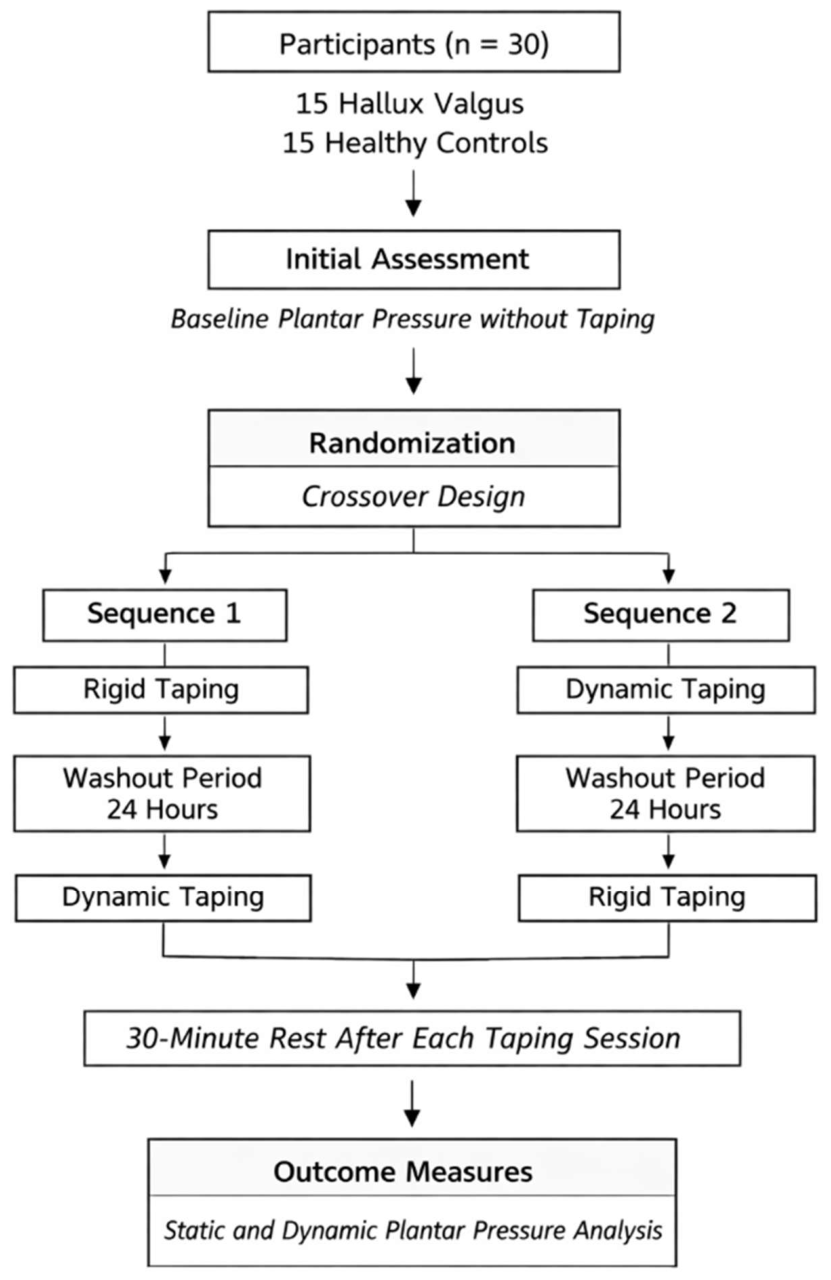
Figure 2.
Steps of Dynamic Taping.
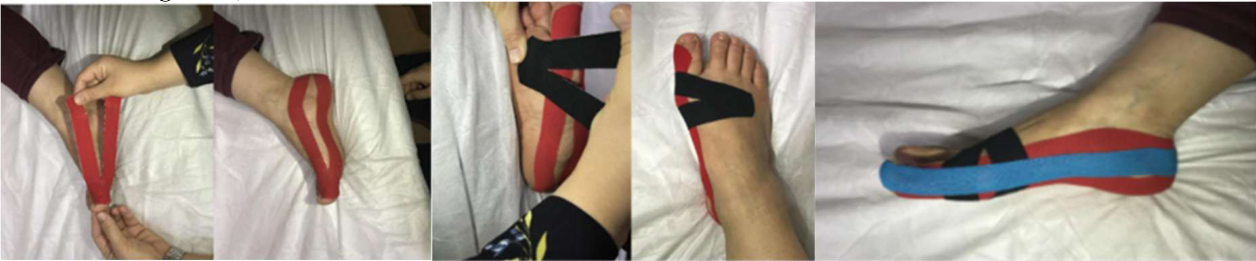
Figure 3.
Rigid Taping.
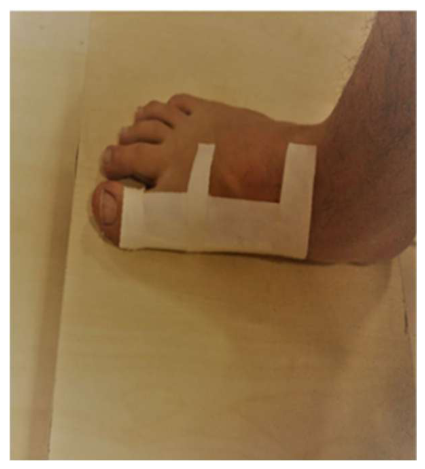

Table 1.
Demographic Values.
| Variable | Rigid Taping (n=15) | Kinesio Taping (n=15) | Control (n=15) | p Value |
|---|---|---|---|---|
| Sex (Female/Male) | 12 / 3 | 12 / 3 | 11 / 4 | 0.892 |
| Age (years) | 28.73 ± 13.07 | 28.73 ± 13.07 | 28.87 ± 12.91 | p>0.999 |
| Body Weight (kg) | 65.93 ± 12.97 | 65.93 ± 12.97 | 66.30 ± 12.15 | p>0.999 |
| Height (m) | 1.697 ± 0.069 | 1.697 ± 0.069 | 1.705 ± 0.08 | p>0.999 |
| BMI (kg/m2) | 22.77 ± 3.49 | 22.77 ± 3.49 | 22.23 ± 3.50 | p>0.999 |
Table 2.
Baseline and Post-intervention Values of Static Plantar Pressure Parameters According to Groups.
Table 2.
Baseline and Post-intervention Values of Static Plantar Pressure Parameters According to Groups.
| Parameter | Group0020(N=45) | Baseline (Mean ± SD) | Post-intervention (Mean ± SD) | Time × Group Interaction (p) |
|---|---|---|---|---|
| Total Pressure | Rigid Taping (n=15) | 49.07 ± 4.53 | 49.25 ± 4.55 | 0.965 |
| Kinesio Taping (n=15) | 49.15 ± 4.50 | 49.33 ± 4.70 | ||
| Control (n=15) | 50.30 ± 4.40 | 50.20 ± 4.33 | ||
| Forefoot Load | Rigid Taping (n=15) | 18.60 ± 6.30 | 19.07 ± 4.85 | 0.928 |
| Kinesio Taping (n=15) | 18.55 ± 6.45 | 18.60 ± 5.44 | ||
| Control (n=15) | 22.20 ± 7.18 | 22.20 ± 7.18 | ||
| Rearfoot Load | Rigid Taping (n=15) | 30.55 ± 5.35 | 30.07 ± 5.20 | 0.829 |
| Kinesio Taping (n=15) | 30.60 ± 5.41 | 30.73 ± 4.54 | ||
| Control (n=15) | 28.00 ± 6.75 | 28.00 ± 6.75 |
Table 3.
Baseline and Post-intervention Values of Dynamic Plantar Pressure Parameters According to Groups.
Table 3.
Baseline and Post-intervention Values of Dynamic Plantar Pressure Parameters According to Groups.
| Parameter | Group (N=45) | Baseline (Mean ± SD) | Post-intervention (Mean ± SD) | Time × Group Interaction (p) |
|---|---|---|---|---|
| Dynamic Forefoot Load | Rigid Taping (n=15) | 62.30 ± 4.90 | 60.67 ± 3.99 | 0.036 |
| Kinesio Taping (n=15) | 62.27 ± 4.96 | 58.27 ± 5.06 | ||
| Control (n=15) | 63.73 ± 3.65 | 63.73 ± 3.65 | ||
| Dynamic Rearfoot Load | Rigid Taping (n=15) | 37.73 ± 4.96 | 39.33 ± 3.99 | 0.036 |
| Kinesio Taping (n=15) | 37.85 ± 4.90 | 41.73 ± 5.06 | ||
| Control (n=15) | 36.27 ± 3.65 | 36.27 ± 3.65 | ||
| Dynamic Lateral Load | Rigid Taping (n=15) | 45.73 ± 12.01 | 46.73 ± 7.00 | 0.338 |
| Kinesio Taping (n=15) | 45.75 ± 12.10 | 50.67 ± 5.33 | ||
| Control (n=15) | 50.33 ± 7.44 | 50.33 ± 7.44 | ||
| Dynamic Medial Load | Rigid Taping (n=15) | 54.27 ± 12.01 | 53.27 ± 7.00 | 0.338 |
| Kinesio Taping (n=15) | 54.27 ± 12.01 | 49.33 ± 5.33 | ||
| Control (n=15) | 50.33 ± 7.54 | 50.33 ± 7.54 |
Disclaimer/Publisher’s Note: The statements, opinions and data contained in all publications are solely those of the individual author(s) and contributor(s) and not of MDPI and/or the editor(s). MDPI and/or the editor(s) disclaim responsibility for any injury to people or property resulting from any ideas, methods, instructions or products referred to in the content. |
© 2026 by the authors. Licensee MDPI, Basel, Switzerland. This article is an open access article distributed under the terms and conditions of the Creative Commons Attribution (CC BY) license (http://creativecommons.org/licenses/by/4.0/).
Copyright: This open access article is published under a Creative Commons CC BY 4.0 license, which permit the free download, distribution, and reuse, provided that the author and preprint are cited in any reuse.


