
Submitted:
21 June 2026
Posted:
23 June 2026
You are already at the latest version
Abstract
Fruit and vegetable wastes are important organic resources that can be recycled into value-added agricultural products through microbial fermentation. However, the characteristics of fermentation broths (FBs) derived from different fruit and vegetable substrates and their effects on soil ecological processes remain insufficiently understood. In this study, FBs were produced from 14 common fruit and vegetable wastes through anaerobic fermentation, whose characteristics were systematically analyzed in terms of nutrient composition, enzyme activities, and microbial community structure. Five representative FBs derived from garlic, tomato, sweet potato, apple, and lettuce were selected for pot experiments to evaluate their effects on soil properties and the growth of Brassica chinensis. The results showed significant differences among the FBs in nutrient contents, enzyme activities, and microbial community composition. The application of garlic FB exhibited the highest concentrations of ammonium nitrogen (309.81 mg/L), total phosphorus (327.73 mg/L), total potassium (1365.8 mg/L), and organic matter (28.99 g/L) in the pot soil, together with significantly higher activities of acid phosphatase, urease, protease, and catalase in the soil than the other treatments (P < 0.05). Metagenomic analysis revealed that the soil treated with garlic FB was dominated by lactic acid bacteria, with Lactiplantibacillus, Lentilactobacillus, and Levilactobacillus accounting for approximately 79% of the microbial community. The application of FBs significantly improved the availability of soil nutrients and the activities of enzymes. Among all the treatments, the application of garlic FB showed the strongest effects, increasing the activities of catalase, urease, acid phosphatase, and β-glucosidase in the soil by 83.34%, 180.72%, 112.34%, and 21.95%, respectively. Furthermore, the application of FBs reduced the incidence of pests and diseases, and promoted the growth of Brassica chinensis. Compared with the other treatments, the garlic FB treatment produced the highest vegetable biomass. It was concluded that the application of the FBs manufactured from fruit and vegetable wastes enhanced soil fertility and crop performance through the regulation of microbial communities, stimulation of soil enzyme activities, and promotion of nutrient cycling. For comparison, the application of Garlic FB exhibited the greatest potential as a sustainable biofertilizer for vegetable production and organic waste recycling.
Keywords:
organic waste
; fermentation broths (FBs)
; soil enzyme activity
; microbial community
; nutrient cycling
1. Introduction
The rapid expansion of fruit and vegetable production has significantly improved global food security; however, it has also generated large quantities of agricultural waste throughout harvesting, transportation, processing, and marketing stages [1]. It is estimated that nearly one-third of fruit and vegetable products are lost or discarded before consumption, resulting in considerable waste of biomass resources and environmental burdens [2]. These residues contain abundant organic carbon, nitrogen, phosphorus, potassium, soluble sugars, phenolic compounds, and other bioactive substances, making them valuable feedstocks for resource recovery and circular agriculture [3].
In recent years, the technology of microbial fermentation-based bioconversion has attracted considerable attention as sustainable approaches for the valorization of agricultural wastes. During anaerobic fermentation, fruit and vegetable residues supplemented with carbon sources can be transformed into liquid products containing organic acids, soluble nutrients, extracellular enzymes, and diverse microbial communities. In China, these fermentation products are commonly referred to as agricultural enzymes (AEs) [4]. The AEs can enhance nutrient uptake, improve crop yield and quality, and increase agricultural productivity [5,6,7]. In addition, phenolic compounds and organic acids present in the AEs may regulate plant redox homeostasis and contribute to improved tolerance to environmental stresses [8]. The AEs are also rich in hydrolytic enzymes, including proteases, cellulases, and phosphatases, which may facilitate organic matter decomposition and nutrient transformation, thereby contributing to soil nutrient cycling processes [9].
The application of AEs increases the content of organic matter in soil, improves soil pH and salinity conditions, and enhances nutrient availability [10]. Furthermore, the AEs may influence soil ecological functions through modifications of microbial community structure and enzyme activity. However, current studies have primarily focused on individual fermentation substrates or specific agronomic responses, while systematic comparisons of the physicochemical properties, enzymatic characteristics, and microbial community structures of fermentation products derived from different fruit and vegetable substrates remain scarce. Moreover, the mechanisms underlying the interactions among the physicochemical properties and microbial communities in soil, and crop growth following AE application are still poorly understood. Variations in substrate composition may lead to substantial differences in microbial succession, metabolic pathways, and functional gene expression during fermentation, ultimately affecting the characteristics of fermentation products and their ecological functions after soil application. Nevertheless, experimental evidence supporting these relationships remains limited.
Understanding how substrate-dependent fermentation characteristics affect soil–microbe–plant interactions is essential for optimizing the agricultural utilization of fruit and vegetable wastes. Therefore, this study selected 14 common fruit and vegetable wastes as fermentation substrates and systematically analyzed the nutrient composition, enzyme activities, and microbial community structures of the resulting FBs. Pot experiments were subsequently conducted to evaluate the effects of applications of FBs on nutrient status, enzyme activities and microbial communities in the soil, growth performance of Brassica chinensis, and disease incidence. The objectives of this study are to compare the physicochemical and microbiological characteristics of FBs derived from different fruit and vegetable substrates; to evaluate their effects on soil fertility, enzyme activities, and microbial community structure; and to elucidate the potential mechanisms linking FB application, soil ecological functions, and crop growth.
2. Materials and Methods
2.1. Preparation of FBs
Fourteen fresh fruit and vegetable substrates, including garlic, onion, ginger, persimmon, apple, chili pepper, banana, pear, dragon fruit, tomato, pumpkin, lettuce, carrot, and sweet potato, were selected for fermentation. After washing, the materials were cut into small pieces several centimeters in diameter and used as fermentation substrates.
A total of 210 g of chopped substrate was placed into a 2 L black fermentation container. Brown sugar, substrate, and water were mixed at a mass ratio of 1:3:10. The mixture was thoroughly stirred and sealed for anaerobic fermentation at room temperature (25 °C) for 90 days. During the first month, the containers were opened every seven days to release accumulated gas. After fermentation, the liquid fractions were filtered through four layers of gauze and collected as FBs.
2.2. Pot Experiments
Based on the comparison of nutrient contents, enzyme activities, and microbial community characteristics among the 14 FBs, five representative FBs derived from garlic, tomato, sweet potato, apple, and lettuce were selected for subsequent pot experiments using Brassica chinensis.
The first pot experiment was conducted from 2 June to 23 July 2024. Owing to prolonged high-temperature conditions and associated heat stress during the summer season, the experiment was suspended earlier than originally planned. The second pot experiment took place from August 12, 2024, to December 2, 2024.
The soil used for the pot experiment was collected from the surface layer (0–20 cm) of an agricultural field located near the Baoshan Campus of Shanghai University, Shanghai, Southeast China. The soil was classified as a fluvo-aquic soil developed from coastal alluvial parent material. The basic physicochemical properties of the soil were as follows: pH 6.92, organic matter 19.95 g/kg, total nitrogen 1.92 g/kg, alkali-hydrolyzable nitrogen 145.16 mg/kg, total phosphorus 1.31 g/kg, available phosphorus 32.52 mg/kg, and available potassium 43.30 mg/kg. The collected soil was air-dried, passed through a 2-mm sieve, thoroughly mixed, and placed into pots at a rate of 4.5 kg dry soil per pot.
Seedling Cultivation and Experimental Treatments:Brassica chinensis was used as the test crop. Seeds were surface-sterilized with 1% sodium hypochlorite solution and germinated in seedling trays. When seedlings reached the four-leaf stage, healthy and uniform plants without visible symptoms were transplanted into pots, with one plant per pot.
Following transplantation, seedlings were allowed to acclimate for five days. Successful establishment was confirmed when new leaves were fully expanded and leaf color returned to normal green. Treatments were applied on the day following acclimation.
Seven treatments were established, including the applications of the FBs derived from garlic (GA), tomato (TO), sweet potato (SP), apple (AP) and lettuce (LE), as well as chemical fertilizer solution (CF) and a deionized water (CK). Each treatment consisted of three replicates, resulting in a total of 21 pots.
The FB solutions for the treatment were prepared by diluting the original fermentation liquid 50-fold with water [11]. For the CF treatment, 1 g of compound fertilizer (N–P₂O₅–K₂O = 20%–20%–20%) was diluted 2000-fold according to the fertilizer requirements of protected vegetable cultivation. The fertilizer application rate was designed based on conventional greenhouse vegetable production practices.
During the growing period, the solutions of all the treatments and the control were sprayed once every four days, with a total application volume of 100 mL per pot each time [9]. A total of 16 applications were performed during the entire growth cycle.
2.3. Plant Growth Assessment and Sample Collection
During the first pot experiment, plant height, tiller number, leaf width, and other growth parameters were recorded on 14 June, 26 June, 8 July, and 21 July 2024. Soil samples were collected at the end of the experiment.
During the second pot experiment, plant growth parameters were recorded on 12 October, 21 October, 29 October, 8 November, 20 November, and 29 November, 2024. After three months of growth, plants were harvested and carefully washed to remove adhering soil. Fresh biomass was measured immediately. Roots and shoots were separated for the determination of biochemical characteristics. Soil samples were collected after harvest for metagenomic analysis. During the cultivation period, the incidence of pests and diseases was monitored. Aphid infestation was assessed by examining the upper three young leaves of each plant and counting both adult and nymph aphids on both leaf surfaces. Plants with ≥10 aphids were considered infested. The incidence of downy mildew was checked and recorded when the lesions covered more than one-third of a leaf area or when at least two diseased leaves were observed per plant. The incidence of Septoria leaf spot was investigated and recorded when at least three characteristic brown circular lesions (>2 mm in diameter) were observed on a single plant.
2.4. Analytical Methods
FB Analysis:Total nitrogen (TN) was determined using the alkaline potassium persulfate digestion–UV spectrophotometric method. pH was measured using a glass electrode. Total phosphorus (TP) was determined using the molybdenum blue colorimetric method after potassium persulfate digestion. Dissolved total phosphorus (DTP) was measured by the molybdenum blue method. Total potassium (TK) was determined by inductively coupled plasma optical emission spectrometry (ICP-OES) following acid digestion. Organic matter (OM) content was measured using the potassium dichromate–sulfuric acid oxidation method [12].
Soil Nutrient Analysis:Total nitrogen (TN) was determined using the sulfuric acid–copper sulfate–selenium digestion and distillation method. Alkali-hydrolyzable nitrogen (AN) was measured by the alkali diffusion method. Total phosphorus (TP) was determined by acid digestion followed by the molybdenum blue method. Available phosphorus (AP) was extracted using sodium bicarbonate and determined colorimetrically. Total potassium (TK) was measured using ICP-OES after acid digestion. Soil organic matter (SOM) was determined using the potassium dichromate–sulfuric acid oxidation method [13].
Enzyme Activity Determination:Acid phosphatase (ACP) activity was determined using disodium p-nitrophenyl phosphate as substrate. Protease (PRT) activity was measured by the Folin–phenol method. Urease (URE) activity was determined using the phenol–sodium hypochlorite colorimetric method. Catalase (CAT) activity was measured by potassium permanganate titration. Amylase (AMY) activity was determined according to the manufacturer’s protocol provided with the commercial assay kit. Cellulase (CEL) activity was measured using the 3,5-dinitrosalicylic acid (DNS) method. β -glucosidase (β -Glu) activity was determined using the p-nitrophenol method. Bacterial and fungal abundances in FBs were quantified by plate counting [14].
Metagenomic Analysis:Fresh soil samples (1.5 g) were transferred into sterile centrifuge tubes and stored at −80 °C until analysis. For FB samples, 20 mL of liquid was filtered to remove large particles and centrifuged at 4000 × g for 15 min at 4 °C. The resulting pellets were collected and stored at −80 °C.
All frozen samples were transported under refrigerated conditions to a commercial sequencing facility. Total DNA was extracted and quantified using a NanoDrop 2000 spectrophotometer. DNA integrity was evaluated by 1% agarose gel electrophoresis. Sequencing libraries were constructed after DNA fragmentation to 300–500 bp and sequenced on the Illumina NovaSeq 6000 platform using the PE150 mode.Raw sequencing reads were quality-filtered before assembly using MEGAHIT. Open reading frames (ORFs) were predicted using Prodigal, and functional annotation was performed against the KEGG database using DIAMOND [15].Biochemical Analysis of Brassica chinensis:Soluble sugar content in leaves was determined using the anthrone colorimetric method. Soluble protein content was measured using the Coomassie Brilliant Blue method, and chlorophyll content was determined spectrophotometrically using acetone extraction[16].Differential microbial taxa among treatments were identified using LEfSe analysis with a significance threshold of P < 0.05 and an LDA score > 3.0 [17].
2.5. Statistical Analysis
Data were analyzed using IBM SPSS Statistics 26.0 (IBM Corp., Armonk, NY, USA). One-way analysis of variance (ANOVA) followed by Duncan’s multiple range test was used to determine significant differences among treatments at P < 0.05.
3. Results
3.1. Characteristics of FBs
After three months of anaerobic fermentation, all the fruit- and vegetable-derived substrates released alcoholic and fermented aroma. The average concentrations of NH₄⁺–N, total phosphorus (TP), dissolved total phosphorus (DTP), and total potassium (TK) in the 14 FBs were 26.23, 98.33, 55.43, and 983.16 mg/L, respectively (Table 1). However, considerable differences in nutrient contents were observed among the substrates. The garlic FB exhibited the highest concentrations of NH₄⁺–N, TP, DTP, and TK, with average values of 309.81, 327.73, 236.34, and 1365.8 mg/L, respectively, all of which were significantly higher than those of the other FBs (P < 0.05). In particular, the NH₄⁺–N concentration in the garlic FB was 1.67–31.41 times higher than in the other FBs.
Substantial differences in enzyme activities were also detected among the FBs derived from different substrates (Table 2). The garlic FB exhibited the highest activities of acid phosphatase (ACP), urease (URE), catalase (CAT), and protease (PRT), reaching 358.38 mg/mL/h, 95.26 U/mL, 5.51 U/mL, and 2.36 U/mL, respectively, which were significantly greater than those of all the other FBs (P < 0.05). In contrast, the sweet potato FB showed the highest amylase (AMY) activity (96.55 U/mL), whereas the apple and persimmon FBs exhibited the highest cellulase (CEL) activities, reaching 89.08 and 86.99 U/mL, respectively.
The abundance of bacteria in all FBs was approximately one order of magnitude greater than that of fungi (Figure 1). Significant differences in microbial abundance were observed among the FBs from the different substrates. The FBs derived from garlic, onion, ginger, and chili contained significantly lower bacterial and fungal populations than the others (P < 0.05).
Metagenomic sequencing revealed that the microbial communities of the FBs were dominated by the domain of bacteria, accounting for 84.18% of the total microbes on average (Figure 2). Eukaryota represented the second most abundant domain, with relative abundances ranging from 6.67% to 21.81%, and differed significantly among the different FBs (P < 0.05). In contrast, Archaea and Viruses were detected only at very low abundances, together accounting for less than 0.1% of the total community. Among all the FBs, the garlic FB contained the highest abundance of bacteria (93.4%) and the lowest of fungi (6.6%).
At the genus level, distinct microbial community structures were observed among the different FBs (Figure 3). The apple FB was characterized by relatively high abundances of the genera Gluconobacter (approximately 26%), Kosakonia (17%), and Pantoea (12%). The tomato FB was dominated by Lactiplantibacillus (43%), followed by Pichia (19%) and Clostridium (12%). The garlic FB was dominated by Lentilactobacillus (35%), Lactiplantibacillus (26%) and Levilactobacillus (18%), forming a complex lactic acid bacterial community. The lettuce FB was strongly dominated by Acetobacter (70%), whereas the sweet potato FB exhibited co-dominance of Lactiplantibacillus (45%) and Pichia (30%). In addition, low-abundance genera, including Lactococcus, Serratia, Enterobacter, Weissella, Wickerhamomyces, Klebsiella, and Hanseniaspora, were detected in most FBs.
The KEGG functional annotation revealed clear differences in the distribution of enzyme-related functional genes among the FBs (Figure 4). Genes associated with translocases, transferases, and isomerases represented the most abundant functional categories. The highest relative abundance of translocase-related genes was observed in the tomato, sweet potato, and lettuce FBs, whereas transferase-related genes were most abundant in the apple, tomato, and garlic FBs. Other major functional categories included oxidoreductases and hydrolases. Notably, the garlic FB exhibited the highest abundance of genes associated with both oxidoreductase and hydrolase functions.
3.2. Soil Nutrients and Enzyme Activities
In the two pot experiments, the CF treatment exhibited the highest content of nutrients in the soil (P < 0.05). The GA treatment showed significantly higher levels of TN, AN, TP, DTP, TK, and AK in the soil compared with the other FB treatments (P < 0.05) (Table 3). Although the improvement in soil nutrients under the FB treatments was lower than that under chemical fertilization, the enhancement effects were still significant (Table 3).
In the second experiment, compared with CK, the GA, TO, LE, SP, and AP treatments increased TN content by 41.32%, 35.54%, 30.58%, 27.27%, and 17.36%; AN by 21.57%, 16.50%, 17.23%, 16.36%, and 13.73%; TK by 73.57%, 57.48%, 62.04%, 60.52%, and 65.08%; AK by 258.55%, 131.82%, 180.13%, 178.18%, and 131.82%; TP by 65.23%, 58.53%, 60.88%, 50.21%, and 55.04%; AP by 119.72%, 77.46%, 71.83%, 83.87%, and 72.25%; and SOM by 37.84%, 13.51%, 22.30%, 22.97%, and 16.22% in the soil, respectively. Due to the superior content of nutrients in the garlic FB (Table 1), the GA treatment showed the most pronounced improvement in soil nutrient levels. In particular, the content of TP in the soil by the GA treatment was significantly higher than that by all the other treatments (P < 0.05).
Both The FB and CF treatments significantly increased soil enzyme activities (Table 3). The GA treatment, in particular, exhibited the strongest enhancement effects on the activities of acid phosphatase (ACP), urease (URE), catalase (CAT), and β -glucosidase (β -Glu) in the soil (P < 0.05). Compared with CK, the SP, LE, TO, AP, CF, the GA treatment increased ACP activity by 112.34%, 66.64%, 52.77%, 35.71%, 51.84%, and 33.80%; URE activity by 180.72%, 42.07%, 33.14%, 33.91%, 30.17%, and 33.91%,; CAT activity by 83.34%, 4.31%, 24.74%, 59.21%, 37.50%, and 53.16%; and β -Glu activity by 22.68%, 27.00%, 14.18%, 18.75%, 15.15%, and 6.18% in the soil, respectively. Overall, the GA treatment consistently produced the greatest improvement in soil fertility and enzyme activities.
3.3. Growth of Brassica Chinensis and Incidence of Disease and Pest
In the two pot experiments, the CF treatment generally produced the highest values of tiller number, plant height, leaf width, and leaf length (P < 0.05). The GA treatment showed significantly higher growth performance than the other FB treatments and CK (P < 0.05) (Table 4).
In the second experiment, compared with CK, TO, LE, SP, and AP, the GA treatment increased tiller number by 43.60%, 27.02%, 37.50%, 37.50%, and 27.02%; plant height by 49.53%, 21.52%, 15.66%, 21.52%, and 15.66%; leaf width by 47.11%, 23.97%, 15.53%, 21.02%, and 23.28%,; and leaf length by 20.63%, 21.08%, 16.23%, 17.75%, and 17.00%, respectively (Table 4).
Across both experiments, the CF treatment significantly increased the total and aboveground biomass compared with the FB treatments and CK (P < 0.05). The GA treatment also significantly outperformed the other FB treatments and CK (P < 0.05). Specifically, the total biomass under the GA treatment was 94.40%, 82.75%, 86.01%, 71.00%, and 98.41% higher than CK, LE, TO, SP, and AP; the aboveground biomass increased by 153.19%, 108.77%, 105.17%, 108.77%, and 95.08%, respectively.
Leaf biochemical indices including soluble protein, soluble sugar, and chlorophyll in the CF-treated plants were the highest in both experiments. These of the GA plants were generally higher than tof the other FB treatments (P > 0.05) (Table 4). In the second experiment, compared with CK, SP, LE, AP, and TO, the GA treatment increased soluble protein content by 32.31%, 6.92%, 4.56%, 7.23%, and 7.85%; soluble sugar content by 33.17%, 3.67%, 0.16%, 3.45%, and 2.65%; and chlorophyll content by 42.52%, 14.20%, 6.78%, 5.85%, and 4.02%, respectively.
The disease incidence in all the FB and CF treatments was significantly lower than that in the CK. (P < 0.01). Among them, the GA-treated plants exhibited the lowest incidence of downy mildew and leaf spot disease (Figure 5).
3.4. Soil Microbial Community
In the second pot experiment, the dominant bacterial groups in the soils across all the treatments included Micrococcaceae, Comamonadaceae, Vicinamibacterales, Pseudomonas, Sphingomonas, Azotobacter, Nitrospira, and Lysobacter (Figure 6). The FB treatments showed varying degrees of promotion on the relative abundance of functional microbial groups.
The LE treatment increased the abundance of Comamonadaceae and Azotobacter compared with CK, indicating that the lettuce FB provided available carbon sources that stimulated heterotrophic and nitrogen-fixing microorganisms. The GA treatment exhibited higher abundances of Micrococcaceae, Sphingomonas, and Azotobacter, suggesting its strong promotion of organic matter decomposition and nitrogen transformation-related microbial processes. Sphingomonas is typically associated with complex organic matter degradation and plant growth promotion, and was also reported to produce phytohormone-like compounds and enhance plant stress tolerance. These taxa are generally associated with nutrient transformation and plant growth promotion. The TO treatment slightly increased Comamonadaceae and Nitrospira, indicating a potential enhancement of nitrogen cycling and nitrification processes. The AP treatment showed higher abundances of Azotobacter, Thauera, and Rhizobiaceae, likely due to its enrichment of soluble sugars and fermentation metabolites. The SP treatment also showed enrichment of functional microbial groups, suggesting regulatory effects on soil micro-ecology.
Alpha diversity indices in the soils were significantly affected by the application of FBs (Table 5). For richness, the LE and SP treatments showed significantly higher ACE, Chao1, and Sobs indices compared with CK and the other FB treatments (P < 0.05), while the AP treatment showed the lowest values. For diversity, the SP treatment showed the highest Shannon index, significantly higher than gthe TO and AP treatments and CK (P < 0.05). The GA, LE, and CF treatments also showed relatively high Shannon values, but differences from CK were not always significant (P > 0.05). The Simpson index was highest in the AP treatment, which was significantly higher than in GA, SP, and CF (P < 0.05). The sequencing coverage exceeded 0.996 across all the treatments, indicating sufficient sequencing depth and reliable community coverage. The enrichment of these taxa suggests that the fruit- and vegetable-derived FBs may selectively stimulate microbial groups involved in nutrient transformation and rhizosphere functioning.
4. Discussion
4.1. Differentiation of Substrate-Dependent FBs
The marked differences in nutrient contents, enzyme activities, and structure of microbial communities among the tested FBs indicate that the substrate composition is a primary determinant of fermentation quality. The GA treatment exhibited the highest concentrations of nutrient elements and hydrolytic enzymes, suggesting a superior nutrient transformation capacity during fermentation. The garlic FB contains abundant proteins, sulfur-containing compounds, and readily degradable organic matter, providing favorable substrates for microbial growth and metabolism [18].
Metagenomic analysis further demonstrated that garlic FB was characterized by a highly dominant Lactobacillus community. Although its overall microbial abundance was not the highest, the concentration of functional microorganisms was substantially greater than that of the other substrates. Such a low-diversity but functionally specialized microbial structure may promote metabolic efficiency and resource utilization. Lactobacillus species are known to produce organic acids through glycolysis, resulting in pH reduction and enhanced solubilization of organic phosphorus and nitrogen-containing compounds [19]. Consequently, the enrichment of hydrolytic enzyme-related functional genes and the elevated activities of ACP, URE, and PRT observed in the garlic FB are likely associated with the dominance of lactic acid bacteria [20].
In contrast, the sweet potato FB was enriched with Pichia species, which preferentially utilize carbohydrates and starch-derived substrates, resulting in higher amylase activity but relatively limited nutrient mineralization [21]. The apple and persimmon FB contained abundant structural polysaccharides, thereby favoring cellulolytic microorganisms and increasing cellulase activity [22]. These findings suggest that the substrate characteristics regulate microbial succession and functional gene expression during fermentation, ultimately leading to differentiated pathways of nutrient transformation and enzyme activity profiles.
4.2. Soil Ecological Responses to FB Application
The application of FBs significantly enhanced soil nutrient availability and enzyme activities, indicating that these products function not only as nutrient sources but also as biological stimulants capable of regulating soil ecological processes. Soil enzymes play critical roles in carbon, nitrogen, and phosphorus cycling, and their activities are widely recognized as sensitive indicators of soil biological functioning [23].
The observed increases in ACP, URE, CAT, and β -Glu activities in the soils following FB application can be attributed to multiple mechanisms. Firstly, the FBs directly introduce extracellular enzymes into the soil. Secondly, they provide readily available carbon sources, organic acids, amino acids, and other labile metabolites that stimulate indigenous microbial growth and metabolism [24]. Thirdly, the shifts in microbial community may further enhance the production of nutrient-transforming enzymes. Overall, these processes accelerate organic matter decomposition and nutrient mineralization [25].
Among all the treatments, the GA treatment induced the strongest improvements in soil nutrient status and enzyme activities. This response may be associated with its higher concentrations of active metabolites and its enrichment in functional microorganisms [26]. Correlation analyses revealed significant positive relationships between soil nutrients and enzyme activities, suggesting that the FB application strengthened the coupling between microbial metabolism and nutrient cycling. Consequently, soil fertility improvement was achieved not only through direct nutrient supplementation but also through the stimulation of biologically mediated nutrient transformation processes [27].
4.3. Effects of FB Application on Soil Microbial Communities
Fruit- and vegetable-derived FBs contained considerable amounts of mineral nutrients (Table 4), as well as diverse bioactive compounds generated during microbial fermentation. The fermentation products may also contain phytohormone-like substances, organic acids, amino acids, and soluble carbohydrates that can contribute to plant growth and physiological performance [28] These compounds may stimulate soil microbial activity and nutrient transformation processes, thereby indirectly enhancing crop productivity [29].
The principal coordinates analysis (PCoA) was performed to evaluate differences in soil microbial community among the treatments (Figure 7). The first two principal coordinates explained 18.90% and 11.02% of the total variation, respectively. The microbial communities of the FB-treated soils were generally separated from that of the CF and CK, suggesting that the FB application altered the overall structure of microbial communities in the soils (Figure 7).
Notably, several beneficial microbial taxa enriched under the FB treatments, including Sphingomonas, Azotobacter, Nitrospira, and Rhizobiaceae, are directly involved in nutrient cycling, organic matter decomposition, and plant growth promotion (Figure 6). Nitrospira plays an important role in nitrification, whereas members of Rhizobiaceae include plant-associated bacteria that may contribute to nitrogen cycling and plant - microbe interactions. These microbial shifts provide a mechanistic explanation for the enhanced soil enzyme activities and nutrient availability observed in the present study. This finding suggests that FB application not only modified soil physicochemical properties but also reshaped the structure of microbial communities in the soils [30] Notably, the LE and SP treatments significantly increased microbial richness, indicating that substrate-derived metabolites may expand ecological niches and support greater microbial diversity [31].While Figure 6 illustrates the overall taxonomic composition of microbial communities, the LEfSe analysis was further employed to identify statistically significant biomarkers responsible for treatment differentiation, which was conducted using an LDA threshold of 3.8 (P < 0.05) (Figure 8). The LEfSe results revealed clear treatment-specific enrichment patterns across multiple taxonomic levels. Among all the treatments, the GA treatment exhibited the greatest number of significantly enriched biomarkers in the soil, including Lysobacter, Azotobacter, and Ensifer (LDA > 3.8). Lysobacter has been widely reported to produce extracellular hydrolytic enzymes and antimicrobial metabolites, which may contribute to pathogen suppression and organic matter turnover in soil ecosystems [32], Azotobacter is a representative free-living nitrogen-fixing bacterium that may enhance nitrogen availability through atmospheric nitrogen fixation [33]. Ensifer (syn. Sinorhizobium) includes symbiotic nitrogen-fixing bacteria that establish mutualistic interactions with plants and contribute to biological nitrogen fixation in soil–plant systems [34]. The TO treatment was characterized by enrichment of Thauera and Stenotrophobacter in the soil, while the SP treatment enriched norank_f_Fodinicurvataceae and norank_f_Oligoflexaceae. In contrast, CK and CF treatments were mainly associated with Desulfotomaculum, norank_f_WD2101_soil_group, and norank_o_Micavibrionales. These findings indicate that FB application selectively recruited treatment-specific microbial guilds and promoted the establishment of distinct microbial assemblages in the soils.
The enrichment of functional microbial groups identified by the LEfSe was consistent with the enhanced soil enzyme activities and nutrient availability observed under the FB treatments. These microbial communities likely contributed to nutrient cycling, organic matter decomposition, and biological activity in the rhizosphere, thereby improving soil ecological functioning [17].
4.4. Effects of FB Application on Plant Growth and Disease Control
Improved soil biological activity was closely associated with enhanced plant growth. The enrichment of functional microorganisms may have strengthened the coupling between microbial metabolism and nutrient transformation. For example, nitrogen-fixing bacteria can increase nitrogen availability, while decomposer taxa accelerate the mineralization of organic substrates, thereby supporting sustained nutrient supply for plant growth [35]. Positive correlations between plant biomass, soil nutrient availability, and enzyme activities indicate that crop productivity was largely driven by biologically mediated nutrient cycling processes [26,27]. The superior performance of the garlic FB may therefore result from an integrated mechanism involving nutrient supply, stimulation of soil enzymatic activities, enhancement of microbial functions, and improved nutrient acquisition by plants.
In this study, the growth indices of Brassica chinensis were significantly and positively correlated with soil nutrient contents and enzyme activities (Figure 9) (r > 0.70; P < 0.05;). In particular, the total plant biomass showed strong positive correlations with soil organic matter (SOM), available nitrogen (AN), and the activities of hydrolytic enzymes, including urease (URE) and acid phosphatase (ACP) (Figure 9) (r > 0.80; P < 0.01). These results suggest that improved crop performance was closely associated with enhanced nutrient availability and nutrient cycling intensity in the soil. Soil organic matter serves as both a nutrient reservoir and a substrate for microbial metabolism, facilitating nitrogen mineralization and phosphorus mobilization and thereby improving nutrient acquisition by plants [27]. Similarly, increased URE and ACP activities indicate accelerated nitrogen and phosphorus turnover, which is consistent with the observed biomass accumulation.
Among all the treatments, the GA exhibited the best growth-promoting effect, the total and shoot biomass of which increased by 94.40% and 153% compared with CK, respectively (Table 4). In addition, the contents of soluble protein, soluble sugar, and chlorophyll in the leaves tended to be higher under the GA treatment than under the other FB treatments, although the differences were not always statistically significant (P > 0.05). The superior growth performance observed under the GA treatment may be related to its greater capacity to improve soil nutrient availability and enzyme activities, thereby promoting nutrient acquisition and photosynthetic performance.
The FB application also reduced the incidence of downy mildew and leaf spot disease, with the GA treatment showing the most pronounced effect. The Garlic FB was characterized by a high relative abundance of lactic acid bacteria and elevated concentrations of organic acids generated during fermentation. Organic acids and antimicrobial metabolites produced during fermentation, together with the enrichment of antagonistic microorganisms such as Lysobacter, may contribute to pathogen suppression [36]. In addition, improved soil fertility and plant nutritional status may enhance plant vigor and resistance to disease [37]. In short, the reduction in disease incidence is likely attributed to the combined effects of improved soil conditions, enhanced plant growth, and potential microbial-mediated suppression of pathogens.
From a sustainability perspective, the conversion of fruit and vegetable wastes into FBs represents an effective strategy for organic waste valorization [38]. By transforming low-value agricultural residues into biologically active soil amendments, the fermentation technology contributes to waste reduction, nutrient recycling, and sustainable crop production [27]. The present study demonstrates that substrate selection is a critical factor influencing fermentation quality and subsequent ecological effects. Among the tested substrates, garlic-derived FB exhibited the strongest integrated effects on nutrient transformation, microbial regulation, plant growth promotion, and disease suppression, highlighting its potential as a sustainable bio-based agricultural input for circular agriculture and environmentally friendly vegetable production.
5. Conclusions
The physicochemical properties, enzyme activities, and microbial community structures of FBs varied substantially among the different fruit and vegetable substrates, indicating that substrate composition is a key factor determining the functional characteristics of agricultural fermentation products. Among the 14 tested substrates, the GA treatment exhibited the highest nutrient concentrations, enzyme activities, and abundance of beneficial microbial taxa.
The application of FBs generally improved soil fertility, enhanced soil enzyme activities, promoted the growth of Brassica chinensis, and reduced the incidence of pests and diseases. For comparison, the application of garlic FB showed the strongest positive effects on soil nutrient availability, microbial activity, plant biomass accumulation, and disease suppression. The beneficial effects of FBs were associated with the coupled processes of organic substrate input, microbial community regulation, stimulation of soil enzymatic activity, and nutrient activation. These processes collectively contributed to improved soil ecological functions and crop performance.
The fruit and vegetable wastes can be effectively converted into value-added bio-based agricultural inputs through microbial fermentation, which provides a new way to support the sustainable utilization of organic wastes and highlight the potential of substrate-targeted fermentation strategies for promoting circular agriculture.
Author Contributions
X.L. conducted the experiments, performed data curation and analysis, and prepared the original manuscript. Z.G. assisted with the experimental work and data collection. X.H. conceived and supervised the study, provided methodological guidance, revised the manuscript, and approved the final version. All authors have read and agreed to the published version of the manuscript.
Funding
Supported by the National Natural Science Foundation of China (No. 42530506) and the Science and Technology Plan Project of Cixi City, Zhejiang Province (No. CN2023001).
Institutional Review Board Statement
Not applicable.
Informed Consent Statement
Not applicable.
Data Availability Statement
The datasets used and analysed during the current study are available from the corresponding author on reasonable request.
Conflicts of Interest
The authors declare no conflict of interest.
References
- Taheri, S.; Hosseini, S.S. Waste Not, Want Not: Comprehensive Valorization of Fruit and Vegetable Waste from Single-Product Recovery to Zero-Waste Strategies. Cleaner Waste Systems 2025, 11, 100300. [CrossRef]
- Food and Agriculture Organization of the United Nations (FAO). Waste Management in Agribusiness: Challenges and Solutions; FAO: Rome, Italy, 2022.
- Roy, P.; Graceffa, V. From waste to therapeutics: Extraction methodologies and biological properties of bioactive compounds from fruit and vegetable waste. Food Bioscience, 2024,62,105389. [CrossRef]
- Pasalari, H.; Moosavi, A.; Kermani, M.; et al. A systematic review on garbage enzymes and their applications in environmental processes. Ecotoxicology and Environmental Safety, 2024, 277, 116369. [CrossRef]
- Qaswar, M.; Huang, J.; Ahmed, W.; Abbas, M.; Li, D.C.; Khan, Z.H.; Gao, J.S.; Liu, S.J.; Zhang, H.M. Linkages between ecoenzymatic stoichiometry and microbial community structure under long-term fertilization in paddy soil: A case study in China. Applied Soil Ecology, 2021, 161, 103860. [CrossRef]
- Zhu, G.; Wang, X.; Chen, R.; et al. Application and exploration of garbage enzymes in soil remediation of multiple heavy metal pollution. Scientific Reports, 2025, 15, 12075. [CrossRef]
- Fan H L, Wang H C, Chen W Y, et al. Effects of Enzymes on the Physicochemical Properties of Soils and Crop Growth in Hotspots [J]. Chinese Journal of Agricultural Meteorology, 2021, 37(22): 76–83. [CrossRef]
- Lu, X.; Huang, N.; Ai, J.; Fan, L.; Chen, L.; Meng, G.; Liu, J. The biological product agricultural jiaosu enhances tomato resistance to Botrytis cinerea. Journal of Fungi, 2025, 11, 873. [CrossRef]
- Wen, T.G.; Guo, X.S.; Wu, C.W.; et al. Effects of enzymatic bacteria on the growth and development of greenhouse bell peppers and the rhizosphere soil environment. Chinese Agricultural Science Bulletin, 2015, 31, 55–60. [CrossRef]
- Han, J.H.; Liu, Z.X.; Zhang, L.K.; Wang, Y.; et al. Effects of garbage enzyme on key chemical properties of saline–alkali soil. Bulletin of Soil and Water Conservation, 2019, 39, 126–131. [CrossRef]
- Gao, T.; Sheng, X.W.; Wu, Q.J.; et al. Effects of apple enzyme application on physiological characteristics and fruit quality of strawberry plants. Hebei Agricultural Sciences, 2023, 27, 44–48.
- State Environmental Protection Administration. Water and Wastewater Monitoring and Analysis Methods, 4th ed.; China Environmental Science Press, 2002; pp. 214–279.
- Zhang G L, Gong Z T. Soil Survey Laboratory Methods [M]. Beijing: Science Press, 2012: 85–130. (in Chinese).
- Li Z G, Luo Y M, Teng Y. Soil and Environmental Microbiology Research Method [M]. Beijing: Science Press, 2008. (in Chinese).
- Li, D.; Liu, C.M.; Luo, R.; Sadakane, K.; Lam, T.W. MEGAHIT: An ultra-fast single-node solution for large and complex metagenomics assembly via succinct de Bruijn graph. Bioinformatics, 2015, 31, 1674–1676. [CrossRef]
- Li L. Experimental Guide for Plant Physiology Modules[M]. Beijing: Science Press, 2009. (in Chinese).
- Segata, N.; Izard, J.; Waldron, L.; Gevers, D.; Miropolsky, L.; Garrett, W.S.; Huttenhower, C. Metagenomic Biomarker Discovery and Explanation. Genome Biol, 2011, 12(6), R60. [CrossRef]
- Ren, X.F.; Wu, D.Q.; Wang, Y.S.; et al. Determination of 11 metal elements in garlic from different regions by flame atomic absorption spectroscopy. Guangdong Trace Elements Science, 2009, 16, 33–38.
- Cardinali, F.; Botta, C.; Harsym, J.; et al. Lacto-fermented garlic from Lower Silesia (Poland): Microbial diversity, texture, and volatile compounds. Food Research International, 2024, 188, 114484. [CrossRef]
- Jankowska, M.; Rejman, K.; Wysocka, K. Lactic acid bacteria in sustainable food production. Sustainability, 2024, 16, 3362. DOI:. [CrossRef]
- Zhao, N.; Wang, Y.C.; Yi, P.; et al. High-efficiency expression of α-amylase from Rhizopus camelinae in Pichia pastoris and its role in maltose syrup production. Food and Fermentation Industries 2019, 45, 1–7.
- Hassan, L.; Reppke, M.J.; Thieme, N.; Schweizer, S.A.; Mueller, C.W.; Benz, J.P. Comparing the physiochemical parameters of three celluloses reveals new insights into substrate suitability for fungal enzyme production. Fungal Biol. Biotechnol, 2017, 4(1), 1–14. [CrossRef]
- Nannipieri, P.; Trasar-Cepeda, C.; Dick, R.P. Soil enzyme activity: A brief history and biochemistry as a basis for appropriate interpretations and meta-analysis. Biology and Fertility of Soils, 2018, 54, 11–19. DOI:. [CrossRef]
- Kuzyakov Y., Blagodatskaya E. Microbial hotspots and hot moments in soil: concept and review. Soil Biology and Biochemistry, 2015. [CrossRef]
- Burns R.G., DeForest J.L., Marxsen J., et al. Soil enzymes in a changing environment: Current knowledge and future directions. Soil Biology & Biochemistry, 2013, 58: 216–234. [CrossRef]
- van der Heijden M.G.A., Bardgett R.D., van Straalen N.M. The unseen majority: soil microbes as drivers of plant diversity and productivity in terrestrial ecosystems. Ecology Letters, 2008. DOI:. [CrossRef]
- Lehmann J., Bossio D.A., Kögel-Knabner I., Rillig M.C. The concept and future prospects of soil health. Nature Reviews Earth & Environment, 2020, 1:544–553. DOI:. [CrossRef]
- Lugtenberg, B. (Ed.) Principles of Plant–Microbe Interactions: Microbes for Sustainable Agriculture [M]. Cham: Springer, 2015: 45–67. [CrossRef]
- Aloo, B.N.; Tripathi, V.; Makumba, B.A.; Mbega, E.R. Plant Growth-Promoting Rhizobacterial Biofertilizers for Crop Production: The Past, Present, and Future. Front. Plant Sci. 2022, 13, 1002448. [CrossRef]
- Fierer N. Embracing the unknown: disentangling the complexities of the soil microbiome. Nature Reviews Microbiology, 2017, 15:579–590. DOI:. [CrossRef]
- Delgado-Baquerizo M., et al. A global atlas of the dominant bacteria found in soil. Science, 2018, 359:320–325. DOI:. [CrossRef]
- Qian, G.; Wang, Y.; Liu, Y.; Xu, F.; He, Y.; Du, L.; Venturi, V.; Fan, J.; Hu, B.; Liu, F. Lysobacter enzymogenesUses Two Distinct Cell-Cell Signaling Systems for Differential Regulation of Secondary-Metabolite Biosynthesis and Colony Morphology.Appl. Environental. Microbiology. 2013, 79, 6604–6616. [CrossRef]
- Vessey, J.K. Plant growth promoting rhizobacteria as biofertilizers.Plant and Soil 2003, 255, 571–586. [CrossRef]
- Torres, M.J., Rubia, M.I., de la Peña, T.C. et al. Genetic basis for denitrification in Ensifer meliloti. BMC Microbiol, 2014, 14, 142. [CrossRef]
- Asaf S., Numan M., Khan A.L., Al-Harrasi A. Sphingomonas: From diversity and genomics to functional role in environmental remediation and plant growth. Critical Reviews in Biotechnology, 2020, 40(2):138–152. [CrossRef]
- Kohanski, M.A.; Dwyer, D.J.; Collins, J.J. How antibiotics kill bacteria: From targets to networks. Nat. Rev. Microbiol. 2010, 8, 423–435. [CrossRef]
- Asghar, W.; Craven, K.D.; Swenson, J.R.; Kataoka, R.; Mahmood, A.; Farias, J.G. Enhancing the resilience of agroecosystems through improved rhizosphere processes: A strategic review. International Journal of Molecular Sciences 2025, 26, 109. [CrossRef]
- Koul B., Yakoob M., Shah M.P. Agricultural waste management strategies for environmental sustainability. Environmental Research, 2022, 206:112285. [CrossRef]
- Compant S., Duffy B., Nowak J., Clément C., Barka E.A. Use of plant growth-promoting bacteria for biocontrol of plant diseases. Applied and Environmental Microbiology, 2005, 71:4951–4959. [CrossRef]
Figure 1.
Bacterial (A) and fungal counts (B) in the FBs from the different fruits and vegetables.
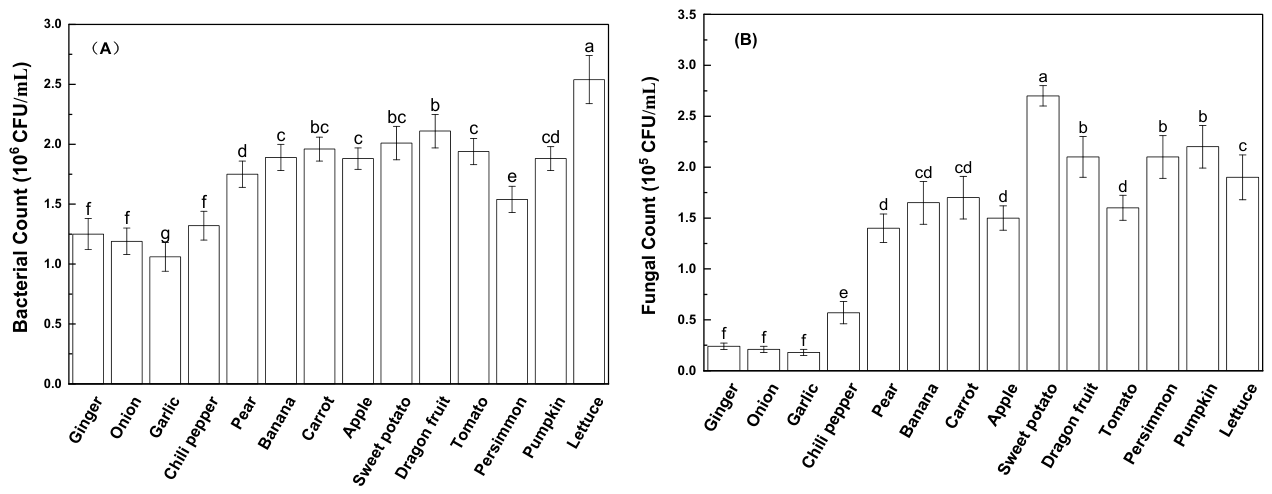
Figure 2.
Percentages of microbial communities in the FB from the different fruits and vegetables on domain level.
Figure 2.
Percentages of microbial communities in the FB from the different fruits and vegetables on domain level.
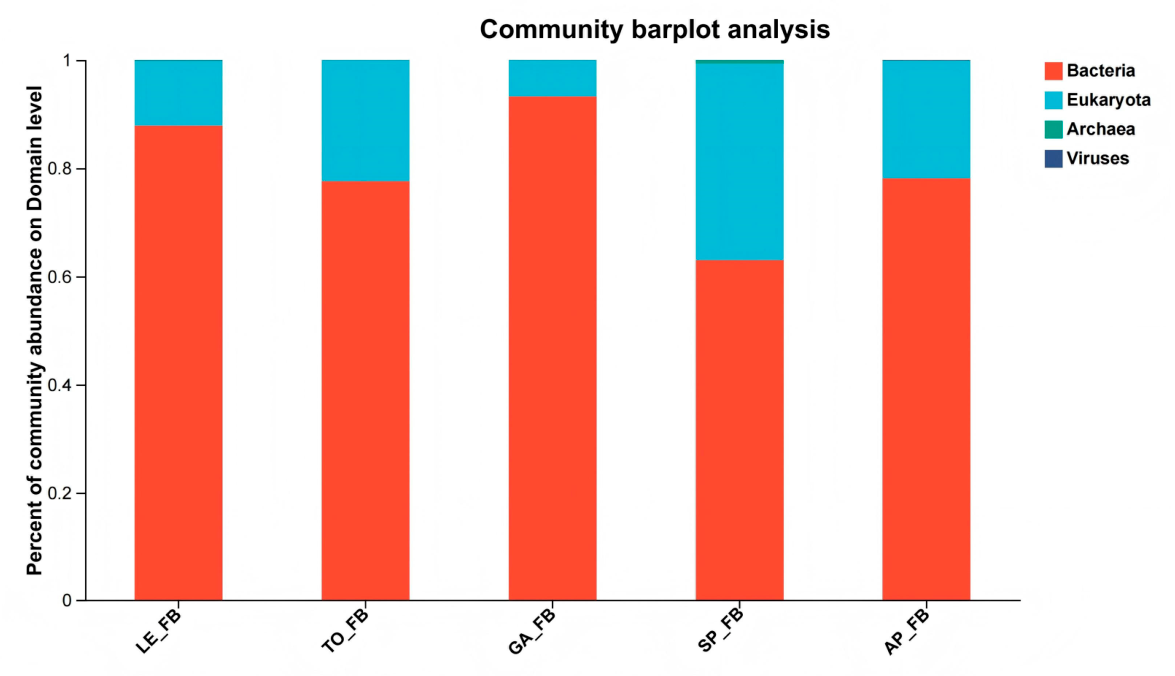
Figure 3.
Percentages of microbial communities in the FBs from the different fruits and vegetables at the genus level.
Figure 3.
Percentages of microbial communities in the FBs from the different fruits and vegetables at the genus level.
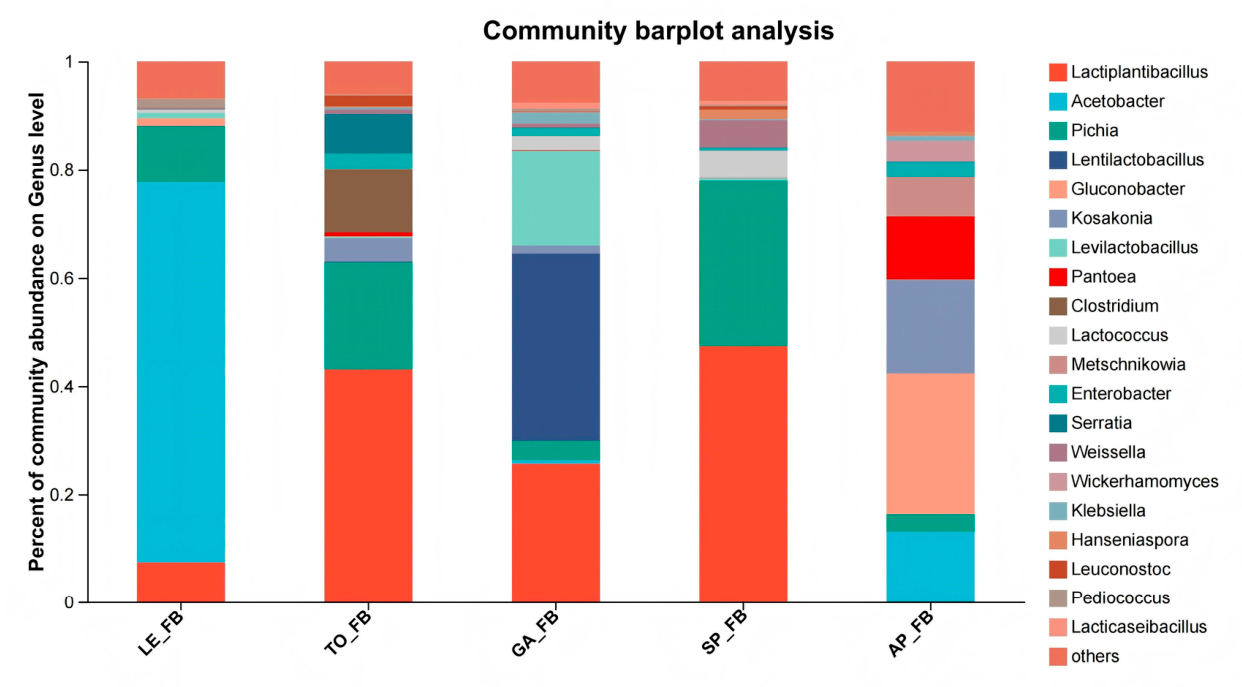
Figure 4.
Relative abundance of the different enzymes in the FBs from the different fruits and vegetables by the Kyoto Encyclopedia of Genes and Genomes (KEGG).
Figure 4.
Relative abundance of the different enzymes in the FBs from the different fruits and vegetables by the Kyoto Encyclopedia of Genes and Genomes (KEGG).
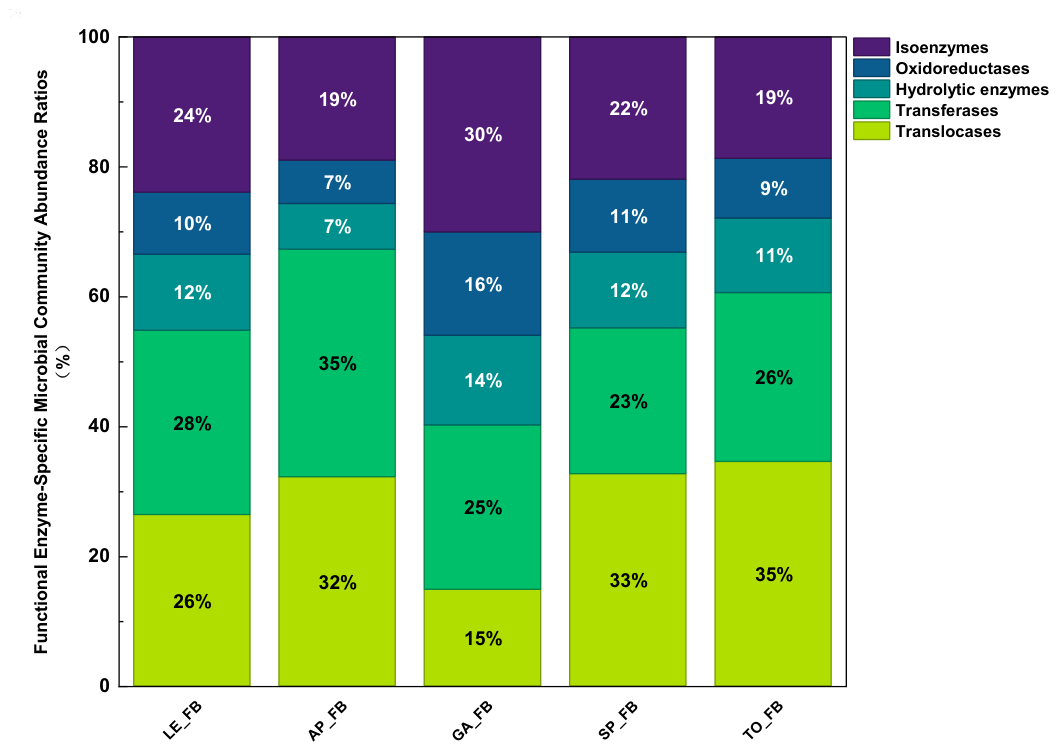
Figure 5.
Incidence of pests and diseases in the leaves of Brassica chinensis by the different treatments on the second pot experiment.
Figure 5.
Incidence of pests and diseases in the leaves of Brassica chinensis by the different treatments on the second pot experiment.
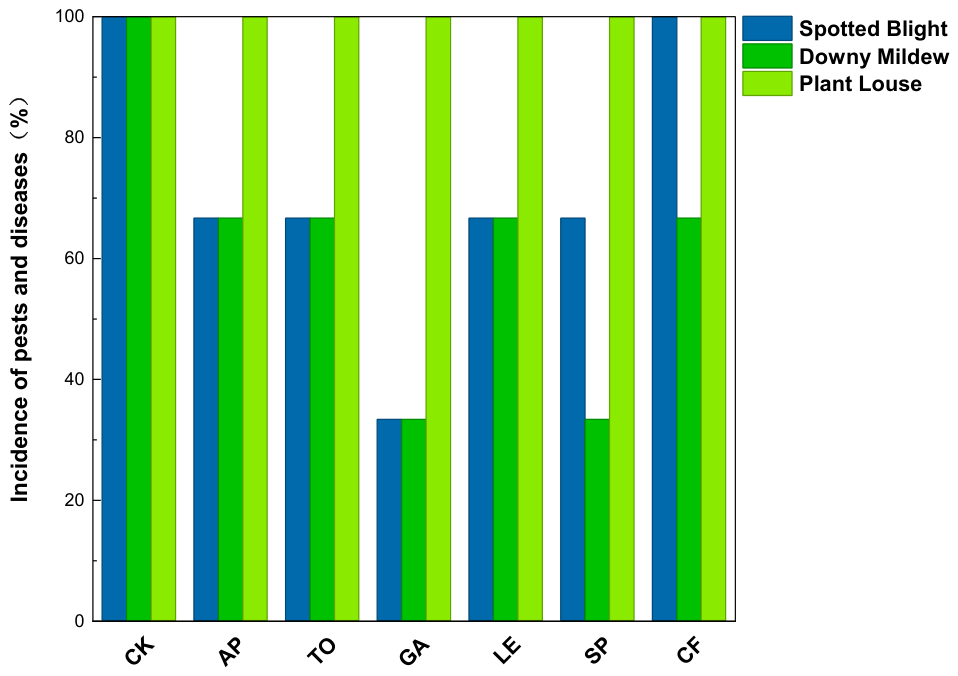
Figure 6.
Relative abundance of microbial communities on genus level in the soils by the different treatments on the second pot experiment.
Figure 6.
Relative abundance of microbial communities on genus level in the soils by the different treatments on the second pot experiment.
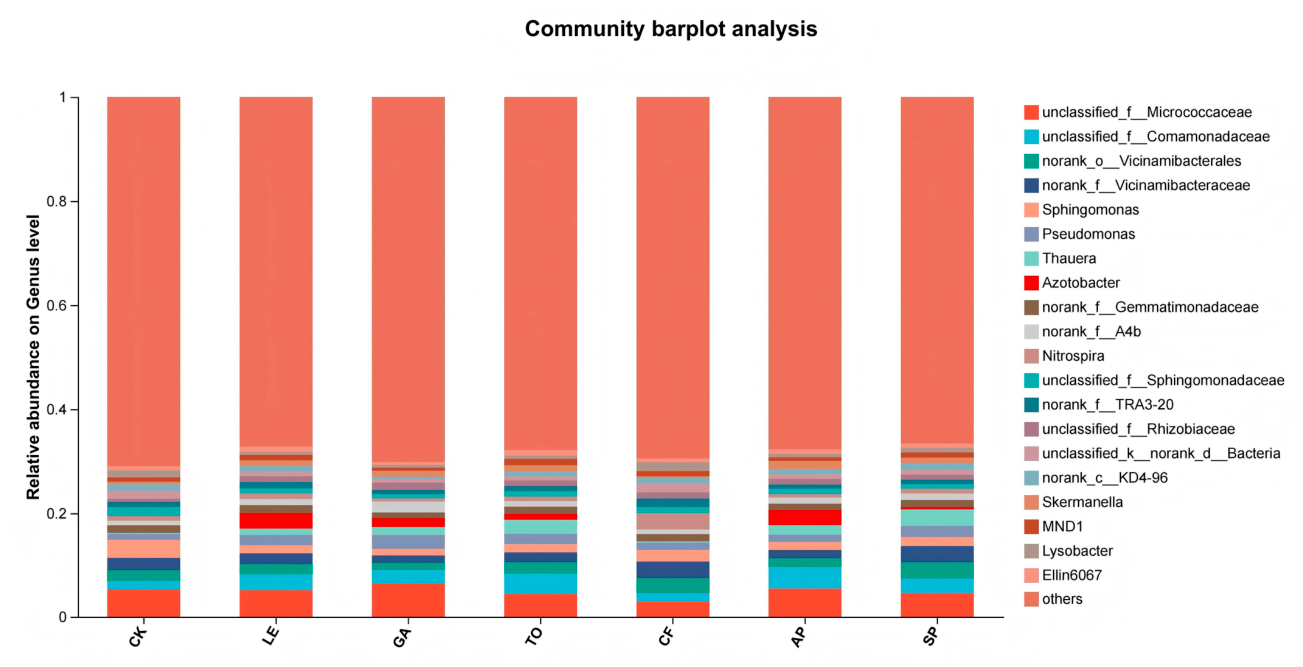
Figure 7.
Principal coordinates analysis (PCoA) of soil microbial communities.
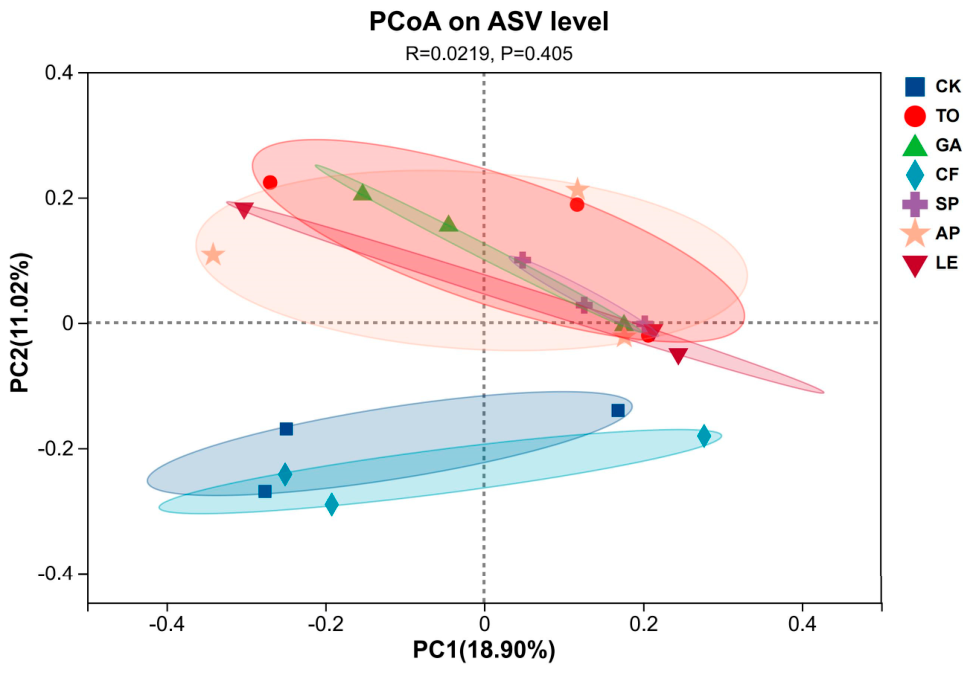
Figure 8.
LEfSe cladogram (A) and LDA score distribution (B) among different FB treatments.
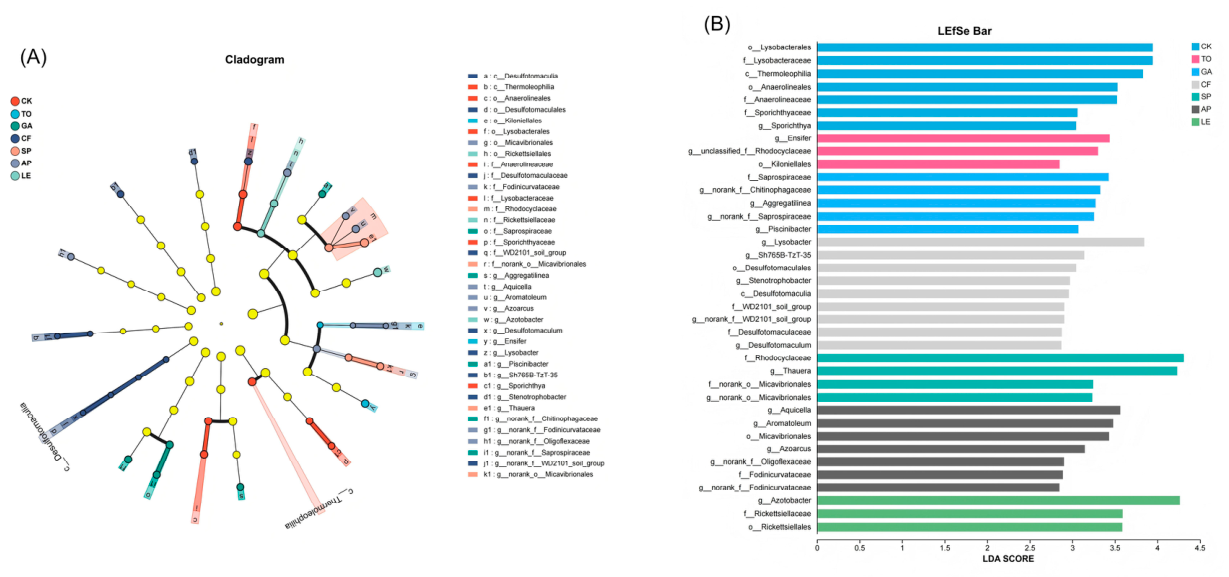
Figure 9.
Bivariate correlation analyses between the nutrient contents and enzyme activities in the soils and the growth indices of Brassica chinensis on the second pot experiment.
Figure 9.
Bivariate correlation analyses between the nutrient contents and enzyme activities in the soils and the growth indices of Brassica chinensis on the second pot experiment.
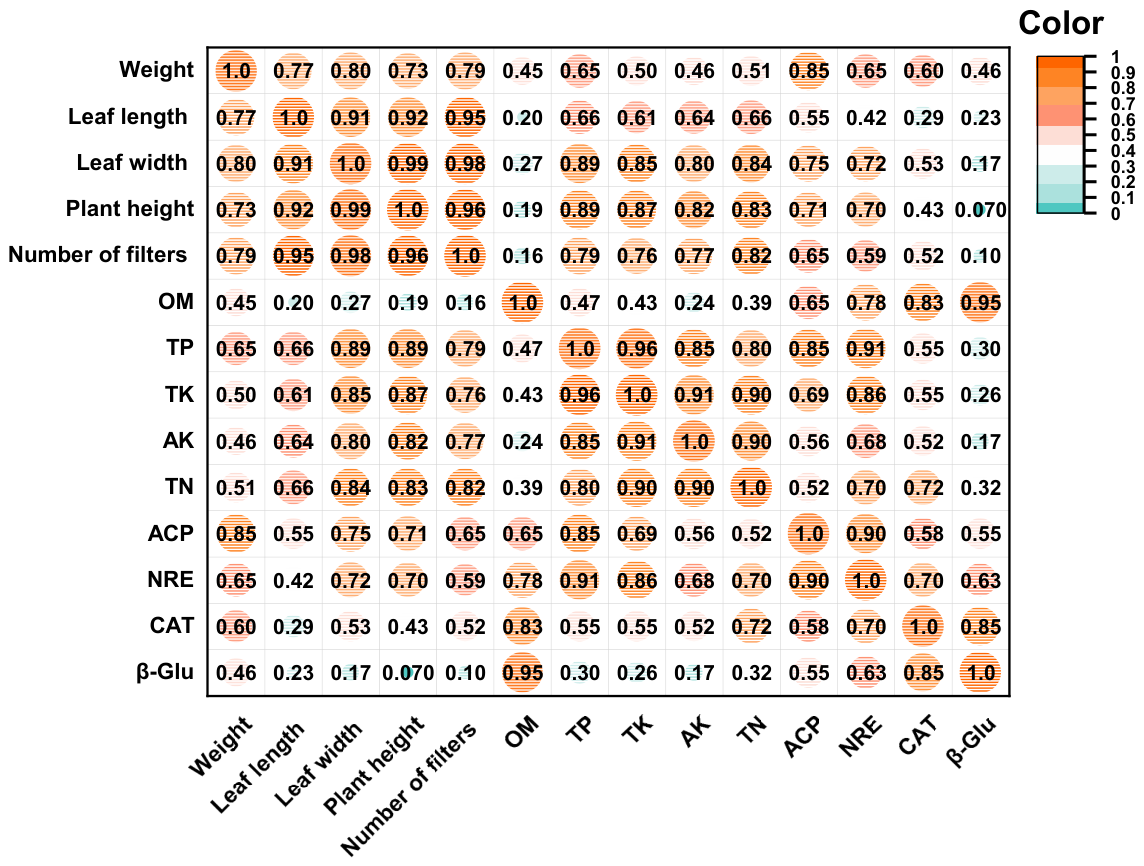

Table 1.
Nutrient contents and pH in the FBs from the different fruits and vegetables.
| Index | OM/(g/L) | NH₄⁺-N/(mg/L) | TP/(mg/L) | DTP/(mg/L) | TK/(mg/L) | |
|
Fruit and vegetable substrates |
||||||
| Garlic | 28.99±3.29 a | 309.81±12.65 a | 327.73±20.12 a | 236.34±18.66 a | 1365.8±34.45 a | |
| Sweet Potato | 22.57±1.13 c | 180.1±12.28 b | 301.1±23.66 b | 227.11±21.12 b | 1143.98±101 cd | |
| AP treatment | 27.43±2.32 b | 160.31±3.82 c | 50.88±3.45 l | 41.8±2.45 i | 819.6±33.49 ef | |
| Persimmon | 18.43±2.34 e | 130.92±5.73 f | 38.81±6.45 m | 28.86±1.45 l | 1002.4±56.93 de | |
| Onion | 7.43±0.89 j | 9.55±0.97 m | 51.66±4.34 k | 38.58±4.34 j | 707.40±37.45 f | |
| Ginger | 6.43±0.87 k | 40.58±3.22 k | 61.58±4.8 f | 80.79±5.09 d | 1245.34±95.69 bc | |
| Chili Pepper | 9.43±1.18 i | 34.78±3.05 l | 67.69±13.09 h | 48.93±3.09 h | 963.19±37.45 de | |
| Tomato | 13.26±0.53 h | 130.32±3.30 g | 13.45±11.26 n | 8.07±1.26 m | 1234.9±109.44 bc | |
| Pumpkin | 20.42±2.24 d | 143.54±1.93 d | 72.55±15.33 f | 51.05±2.33 f | 890.62±45.63 ef | |
| Lettuce | 22.33±2.29 c | 112.94±4.46 j | 82.89±3.45 c | 54.7±3.45 e | 817.62±34.92 ef | |
| Carrot | 15.53±2.15 g | 136.2±30.9 e | 120.48±21.66 e | 73.78±14.66 c | 913.12±27.98 e | |
| Pear | 16.43±1.02 f | 130.84±11.75 g | 67.12±16.45 i | 47.81±6.45 h | 879.20±56.45 ef | |
| Dragon Fruit | 17.53±1.22 e | 109.34±6.45 j | 69.30±13.55 g | 43.59±13.45 i | 1355.89±80.56 ab | |
| Banana | 17.55±2.22 e | 120.16±2.08 h | 52.44±15.34 j | 31.19±5.34 k | 1329.9±146.45 abc | |
Note: Letters denote Duncan’s multiple comparison results (P<0.05). Different letters indicate a significant difference at P < 0.05 level. The same as below.
Table 2.
Enzyme activities in the FBs from the different fruits and vegetables.
| Index | ACP/(mg/mL/h) | PRT/(U/mL) | URE/(U/mL) | CEL/(U/mL) | AMY/(U/mL) | |
|
Fruit and vegetable substrates |
||||||
| Garlic | 358.38±21.6 a | 2.36±0.27 a | 95.26±7.3 a | 28.98±4.54 f | 4.14±0.42 h | |
| Sweet Potato | 87.10±19.09 cd | 1.26±0.19 bc | 17.09±2.08 de | 61.88±3.45 d | 96.55±8.72 a | |
| Apple | 103.89±18.93 c | 0.31±0.02 i | 5.03±0.39 h | 89.08±7.09 a | 8.45±1.04 e | |
| Persimmon | 134.99±18.94 b | 0.47±0.05 gh | 5.09±0.29 h | 86.99±6.32 a | 16.71±2.35 c | |
| Onion | 101.18±20.92 c | 1.32±0.11 b | 41.32±3.5 b | 38.99±4.66 e | 13.87±1.87 d | |
| Ginger | 123.82±17.94 bc | 1.20±0.21 bc | 7.32±1.22 fg | 31.82±4.23 f | 4.61±0.32 h | |
| Chili Pepper | 72.35±13.98 d | 1.25±0.22 bc | 21.20±3.09 d | 12.35±2.54 h | 1.34±0.16 j | |
| Tomato | 45.67±3.8 h | 0.78±0.07 ef | 8.98±1.32 f | 21.88±4.57 g | 1.19±0.53 j | |
| Pumpkin | 119.98±20.92 bc | 0.83±0.11 ef | 5.59±0.41 gh | 39.82±3.65 e | 19.84±2.61 c | |
| Lettuce | 145.98±19.23 b | 1.09±0.14 cd | 32.09±4.22 c | 74.92±4.99 b | 1.32±0.10 j | |
| Carrot | 94.31±13.09 c | 0.79±0.13 ef | 5.79±0.22 gh | 68.77±2.83 c | 12.45±1.55 d | |
| Pear | 89.09±14.09 c | 0.40±0.07 hi | 4.43±0.69 hi | 74.98±4.01 b | 1.56±0.10 ij | |
| Dragon Fruit | 113.90±15.93 c | 0.74±0.08 f | 2.09±0.19 i | 40.92±5.45 e | 5.59±0.62 g | |
| Banana | 102.9±14.09 c | 0.84±0.12 ef | 15.09±1.66 e | 62.83±5.90 d | 23.94±3.17 b | |
Table 3.
Nutrient contents and enzyme activities in the soils by the different treatments on the second pot experiment.
Table 3.
Nutrient contents and enzyme activities in the soils by the different treatments on the second pot experiment.
| Treatment | CK | AP | TO | GA | LE | SP | CF | |
| Index | ||||||||
| TN /(g/kg) |
1.21 ±0.10 d |
1.54 ±0.10 bc |
1.42 ±0.12 c |
1.71 ±0.16 ab |
1.58 ±0.10 b |
1.65 ±0.12 b |
1.78 ±0.15 a |
|
| AN /(mg/kg) |
140.11 ±15.75 d |
159.34 ±11.95 c |
163.23 ±14.08 bc |
170.34 ±12.63 b |
164.23 ±11.66 bc |
163.04 ±19.67 bc |
178.32 ±15.44 a |
|
| TK /(mg/kg) |
988.35 ±111.69 d |
1631.73 ±110.04 c |
1556.55 ±126.32 c |
1715.43 ±154.86 b |
1601.73 ±110.07 c |
1586.53 ±106.13 c |
1834.14 ±132.25 a |
|
| AK /(mg/kg) |
15.90 ±3.63 d |
36.86 ±2.59 c |
36.86 ±2.59 c |
57.01 ±5.15 a |
44.54 ±5.30 b |
44.23 ±4.56 b |
46.18 ±5.05 b |
|
| TP /(mg/kg) |
685.32 ±98.40 c |
1062.32 ±113.40 b |
1086.45 ±137.40 b |
1132.32 ±114.20 b |
1102.30 ±119.34 b |
1029.20 ±113.45 b |
1273.84 ±114.30 a |
|
| AP /(mg/kg) |
14.20 ±2.30 c |
24.46 ±2.60 b |
25.20 ±3.30 b |
31.20 ±3.30 a |
24.40 ±3.20 b |
26.11 ±3.20 b |
27.70 ±2.20 b |
|
| SOM(%) | 1.48 ±0.21 c |
1.72 ±0.43 b |
1.68 ±0.32 b |
2.04 ±0.27 a |
1.81 ±0.34 ab |
1.82 ±0.33 ab |
1.51 ±0.42 c |
|
| ACP /(mg/g) |
11.67 ±1.00 d |
16.32 ±2.34 c |
18.26 ±2.10 b |
24.78 ±2.65 a |
16.22 ±1.76 c |
14.87 ±3.13 c |
18.52 ±3.33 b |
|
| URE / (mg/g/d) |
0.83 ±0.21 c |
1.79 ±0.56 b |
1.72 ±0.32 b |
2.33 ±0.22 a |
1.75 ±0.43 b |
1.64 ±0.35 b |
1.74 ±0.46 b |
|
| CAT /(mg/g) |
0.66 ±0.18 d |
0.88 ±0.21 c |
0.76 ±0.23 c |
1.21 ±0.26 a |
0.97 ±0.25 bc |
1.16 ±0.13 b |
0.79 ±0.24 c |
|
Table 4.
Growth indices and biochemical properties of the leaves of Brassica chinensis by the different treatments on the two pot experiments.
Table 4.
Growth indices and biochemical properties of the leaves of Brassica chinensis by the different treatments on the two pot experiments.
|
Treatment |
CK | AP | TO | GA | LE | SP | CF | ||
| Index | |||||||||
| Tiller number |
First experiment |
5.00±1.00 c | 6.67±0.58 c | 7.33±0.58 b | 8.67±0.58 a | 8.33±0.58 a | 8.33±0.58 a | 9.67±0.58 a | |
| Second experiment |
7.66±0.58 c | 8.66±1 bc | 8.66±0.58 c | 11.00±2.08 b | 8.00±2.08 c | 8.00±1 c | 13.34±1 a | ||
| Plant height/(cm) |
First experiment |
4.37±1.12 c | 5.83±0.20 b | 5.53±0.33 c | 6.72±0.24 a | 5.81±0.41 b | 5.53±0.31 c | 7.56±0.47 a | |
| Second experiment |
6.42±0.5 e | 8.3±0.34 c | 7.9±0.6 d | 9.6±0.5 b | 8.3±0.3 c | 7.9±0.4 d | 10.8±0.4 a | ||
| Leaf length/(cm) |
First experiment |
5.36±0.86 b | 5.53±0.51 b | 5.34±0.60 b | 6.47±0.57 a | 5.57±0.39 b | 5.50±0.42 b | 7.38±0.61 a | |
| Second experiment |
7.66±0.34 c | 7.90±0.37c | 7.63±0.40 c | 9.24±0.43 b | 7.95±0.34 c | 7.85±0.33 c | 10.54±0.34 a | ||
| Leaf width/(cm) |
First experiment |
3.15±0.43 b | 3.76±0.39 b | 3.74±0.51 b | 4.63±0.38 a | 4.01±0.46 a | 3.83±0.42 a | 4.97±0.42 a | |
| Second experiment |
4.50±0.30 e | 5.37±0.55 d | 5.34±0.30 d | 6.62±0.50 b | 5.73±0.30 c | 5.47±0.50 d | 7.10±0.60 a | ||
| Protein content/(mg/g) |
First experiment |
19.15±3.21 a | 25.34±4.22 a | 23.70±5.31 a | 23.49±4.62 a | 24.23±5.62 a | 23.63±4.88 a | 26.21±3.37 a | |
| Second experiment |
22.53±3.12 b | 29.81±2.52 ab | 27.88±3.71 ab | 27.64±3.12 ab | 28.51±2.68 ab | 27.80±3.64 ab | 30.83±3.22 a | ||
| Soluble sugar/(g/kg) |
First experiment |
16.07±5.65 a | 21.39±3.58 a | 20.64±4.22 a | 20.84±3.15 a | 20.60±4.51 a | 20.68±3.82 a | 23.60±3.21 a | |
| Second experiment |
18.9±2.32 c | 25.17±2.16 b | 24.28±3.77 b | 24.52±3.29 b | 24.23±3.18 b | 24.33±2.41b | 27.77±2.8 a | ||
| Chlorophyll/ (mg/g) |
First experiment |
2.16±0.42 a | 3.08±0.22 a | 2.69±0.41 a | 2.96±0.52 a | 2.88±0.46 a | 2.75±0.33 a | 3.24±0.39 a | |
| Second experiment |
2.54±0.03 e | 3.62±0.11 ab | 3.17±0.04 c | 3.48±0.22 b | 3.39±0.04 b | 3.24±0.12 d | 3.81±0.24 a | ||
| Total biomass/(g) |
First experiment |
3.18±0.84 d | 4.10±0.51 c | 4.37±0.53 c | 8.13±0.51 b | 4.45±0.37 c | 4.75±0.44 c | 11.19±0.33 a | |
| Second experiment |
6.43±1.50 c | 6.30±1.20 d | 6.72±1.40 c | 12.50±2.30 b | 6.84±2.10 c | 7.31±1.60 c | 17.21±3.30 a | ||
| Above-ground biomass/(g) | First experiment |
2.86±0.72 c | 3.97±0.33 c | 3.77±0.47 c | 7.74±0.38 b | 3.71±0.51 c | 3.71±0.59 c | 10.53±1.22 a | |
| Second experiment |
4.70±1.00 d | 6.10±0.90 c | 5.80±1.50 c | 11.90±1.20 c | 5.70±1.20 c | 5.70±1.10 c | 16.20±2.40 a | ||
Table 5.
Microbial alpha diversity indices of the soils by the different treatments on the second pot experiment.
Table 5.
Microbial alpha diversity indices of the soils by the different treatments on the second pot experiment.
| Index | ACE | Chao1 | Shannon | Simpson | Coverage | Sobs | |
| Treatment | |||||||
| CK | 1657.28 ±141.96 b |
1650.13 ±142.77 b |
6.72 ±0.06 c |
0.004 ±0.00 bc |
0.999 ±0.001 b |
1843.33 ±140.17 b |
|
| AP | 1685.71 ±240.58 c |
1674.50 ±238.90 c |
6.43 ±0.44 e |
0.008 ±0.008 a |
0.999 ±0.000 b |
1668.33 ±236.58 c |
|
| TO | 1863.50 ±314.45 b |
1836.24 ±298.02 b |
6.50 ±0.24 d |
0.006 ±0.003 ab |
0.997 ±0.002 c |
1809.00 ±280.66 b |
|
| GA | 1885.58 ±185.82 b |
1878.91 ±184.91 b |
6.83 ±0.21 ab |
0.003 ±0.001 cd |
0.999 ±0.000 ab |
1874.33 ±184.11 b |
|
| LE | 2222.23 ±422.91 a |
2199.02 ±406.58 a |
6.83 ±0.41 ab |
0.005 ±0.004 ab |
0.996 ±0.002 d |
2158.00 ±375.72 a |
|
| SP | 2110.64 ±331.36 a |
2103.09 ±326.66 a |
6.90 ±0.20 a |
0.003 ±0.001 bc |
0.997 ±0.002 c |
2068.33 ±297.14 a |
|
| CF | 1883.33 ±116.45 b |
1879.31 ±115.51 b |
6.85 ±0.13 ab |
0.003 ±0.001 d |
0.999 ±0.000 a |
1877.33 ±114.85 b |
|
Note: Diversity indices include Chao1, ACE, Shannon, Simpson, Coverge and Sobs indices. Values are presented as mean ± standard error (n = 3).Values in the same column sharing the same letter(s) are not significantly different.
Disclaimer/Publisher’s Note: The statements, opinions and data contained in all publications are solely those of the individual author(s) and contributor(s) and not of MDPI and/or the editor(s). MDPI and/or the editor(s) disclaim responsibility for any injury to people or property resulting from any ideas, methods, instructions or products referred to in the content. |
© 2026 by the authors. Licensee MDPI, Basel, Switzerland. This article is an open access article distributed under the terms and conditions of the Creative Commons Attribution (CC BY) license (http://creativecommons.org/licenses/by/4.0/).
Copyright: This open access article is published under a Creative Commons CC BY 4.0 license, which permit the free download, distribution, and reuse, provided that the author and preprint are cited in any reuse.


