

Submitted:
19 June 2026
Posted:
22 June 2026
You are already at the latest version
Abstract
Caring for dependent children with chronic illnesses or disabilities is a public health challenge that subjects family caregivers to prolonged physical and emotional stressors. The aim of this study was to quantitatively synthesize the relationship between depressive symptomatology and quality of life in this group. To this end, a systematic review methodology with meta-analysis was used following PRISMA and Cochrane guidelines, consulting databases such as PubMed, CINAHL, PsycInfo and Scopus until February 2026. We included 33 original studies that evaluated family caregivers of children under 18 years of age and provided statistical data of association. The results of the meta-analysis revealed a statistically significant negative association, from moderate to strong, between depressive symptoms and overall quality of life (r = -0.532, maintaining similar values in all the dimensions analyzed (physical, mental, social and environmental) and in the components of the SF-36.In conclusion, this study shows that the increase in depressive symptomatology can severely condition the well-being of family caregivers.
Keywords:
family caregivers
; depressive symptoms
; quality of life
; children
Introduction
The care of children with chronic diseases, disabilities, or developmental disorders represents a complex public health challenge that goes beyond the strictly clinical and family sphere (Masefield et al., 2020). The role ofa familyy caregiver for a dependent child involves prolonged exposure to physical, emotional, and economic demands that often overwhelm individual resources and available coping strategies (Lazarus & Folkman, 1984). This situation places caregivers in a condition of structural vulnerability, where continuous attention to the needs of the child often occurs to the detriment of the self-care and integral well-being of the responsible adult (Pearlin et al., 1990).
This scenario is explained through two fundamental theoretical frameworks. On the one hand, the Lazarus and Folkman Model points out that caregiver stress arises when the perceived demands of the disease exceed their cognitive resources and coping strategies (Lazarus & Folkman, 1984). On the other hand, Pearlin’s model provides a sociological vision, arguing that chronic care acts as a primary stressor that proliferates to other areas, systematically eroding the individual’s self-concept, economic well-being, and social support (Pearlin et al., 1990). Both models show how vulnerability is mediated by both subjesubjective and structural attrition.
The available evidence suggests a higher prevalence of depressive symptomatology in caregivers of dependent children compared with the general population (Scherer et al., 2019). Chronic stressors such as social isolation, persistent uncertainty regarding the course and prognosis of the child’s condition, role overload, and alteration of the personal life project constitute significant risk factors for the development of affective disorders (Pinquart, 2019). The presence of depressive symptoms in caregivers not only affects their mental health but can also negatively impact the quality of care provided, adherence to treatments, and the quality of the caregiver-child bond (Vermaes et al., 2008).
In a complementary way, quality of life (QoL) has been consolidated as a central construct to understand the global impact of prolonged care from a multidimensional perspective (Hamo, 2022; Isa et al., 2016; Organization, 2013). This concept integrates physical, psychological, social, and functional dimensions, offering a holistic vision of caregiver well-being.
Despite the growing volume of research on depression and quality of life in family caregivers of dependent children, the lack of quantitative synthesis limits the generalizability of findings and hinders the formulation of evidence-based interventions. In this sense, the performance of a meta-analysis is justified as a methodological strategy that allows integrating the available results, estimating the size of the effect of the association between both variables, and exploring possible sources of heterogeneity through the analysis of moderating variables.
Therefore, the aim of this meta-analysis is to quantitatively synthesize the existing evidence on the relationship between depressive symptoms and quality of life in family caregivers of dependent children.
Methodology
Design
A quantitative systematic review with meta-analysis was conducted, following the recommendations of PRISMA (Page et al., 2021) and the Cochrane Handbook(Deeks, 2023).
This review has been registered in PROSPERO (Booth et al., 2012) with the Id CRD420251274745.
Search strategy
The systematic search was conducted in the different international databases: PubMed, CINAHL, PsycInfo, Scand from the start of indexing in each database until February 2026. The following Table 1 shows the search strings used in the databases.
Eligibility Criteria
The inclusion criteria established were: (1) original studies, (2) reports on the relationship between depressivee symptoms and quality of life, (3) informal caregivers, (4) of dependent people under 18 years of age, (5) thstatisticalata on the magnitude of the association between depressive symptoms and quality of life.
Data extraction
For data extraction, two review authors (BGS and FSG) extracted data from articles independently using a standardized form, with a 90% agreement percentage.
The following data were collected: author and year, type of design, sample size, average age of family caregivers, length of care, percentage of female caregivers, percentage of caregiver spouses,depressive symptoms scale, quality of life scale, cause of dependency of the people cared for and association size.
Quality assessment of the included studies
The methodological quality of the selected studies was determined by assessing the risk of selection, classification and confounding bias, following the guidelines of Viswanathan et al. (Viswanathan et al., 2013) and Boyle (Boyle, 1998). The evaluation criteria included: (1) the type of sampling for selection bias; (2) the validity and reliability of the instruments for classification bias; and (3) controlling for variables such as support network size, age, and sex for confounding bias. Effective confounding control was considered when allocation mechanisms (stratification or matching) or multivariate statistical adjustments were used. In the latter case, the absence of bias was established if the variation between the size of the crude effect and the adjusted effect was less than 10%, according to Rothman et al. (Rothman, 2008) .
This evaluation out independently by two authors (BGS and FSG), with a percentage of agreement of 90%.
Assessing the quality of the evidence
Following the recommendations proposed by GRADE (Grading of Recommendations Assessment, Development and Evaluation) (Meader et al., 2014), the quality of the evidence was determined from several key domains: the methodological robustness of the included studies (previously described), the presence of inconsistency between the results, the degree of imprecision, and possible publication bias.
Inconsistency was defined as variability in effect estimates between studies, after controlling for the main potential sources of such variation (e.g., sampling errors), which allowed us to explore the level of heterogeneity (as described in the Analysis section). Imprecision was examined based on the impact of sample size, assessed through the breadth of confidence intervals, the number of participants, and the number of events recorded. Similarly, publication bias, which is understood as the probability of the existence of undisseminated studies, was analyzed by inspecting funnel charts and the statistical tests described in the Analysis section.
To assess inconsistency, we considered both the number of studies included in each meta-analysis – classified as small (<5 studies), intermediate (between 5 and 10 studies) or sufficient (>10 studies) – and the average sample size, categorized as small (<100 participants), moderate (100–300 participants), or large (>300 participants).
Analysis
To allow generalizability of the findings to diverse informal caregiver populations, the meta-analysis was run using a random-effects model (Cooper et al., 2019). Interstudy heterogeneity was examined using the Cochran Q test (assuming no heterogeneity with a p-value > 0.10) and the I2 statistic (Higgins et al., 2003). The latter allowed the variability to be categorized as low (25%), moderate (50%) or high (75%). On the other hand, publication bias was assessed following Guyatt et al. (Guyatt et al., 2011) By means of various procedures: the inspection of the funnel diagram (funnel plots), the Egger regression test (Egger et al., 1997) and the technique of Trim and Fill (Duval & Tweedie, 2000) for the estimation of the effect size in a scenario of absence of publication bias. The robustness of the data was verified with sensitivity analyses (sequential exclusion of one study at a time) and subgroup analyses according to the type of quality of life (global, dimensions of the SF-36 or SF-12 Health Questionnaire, physical and mental components, or other dimensions provided by other measurement instruments: physical, menta—l, social or environmental and according to quality criteria.
All statistical processing was performed using Comprehensive Meta-Analysis v.3.3 software.
Results
Description of the search results:
The initial search in the different databases identified a total of 16,184 records (Figure 1). After eliminating 147 duplicates using a bibliographic manager, 16,037 articles were obtained for the initial screening. Of these, 15,925 were discarded after the title and abstract review as they were not relevant. Subsequently, 112 full-text articles were evaluated, of which 79 were excluded because they did not meet the eligibility criteria. Finally, 33 studies were included, all of which could be included in the meta-analysis.
Description of the characteristics of the included studies:
The studies analyzed have a diverse geographical distribution, covering countries in the Americas (USA, Mexico, Colombia, Brazil, Canada), Europe (Germany, Poland, Serbia), Asia (Jordan, Turkey, Bangladesh, Iran, South Korea, Qatar, China, India), Africa (Ghana) and Oceania (Australia). Regarding the methodological design, the vast majority were cross-sectional descriptive, except for a longitudinal study of repeated measures (Stock et al., 2025).
The sample sizes ranged from 20 (Fávero-Nunes & Santos, 2010) and 579 (Medrano et al., 2013) participants (Table 2), focusing the assessment mainly on mothers and fathers as primary caregivers, although some studies included other family members. The populations cared for mostly consist of children and adolescents with autism spectrum disorders (ASD), neuromotor or neuromuscular conditions, chronic diseases and Down syndrome.
For assessing depressive symptomatology, the most recurrent instruments were the BDI or BDI-II, followed by the DASS-21, PHQ-9 and CES-D scales. Quality of life was predominantly assessed using the WHOQOL-BREF and the SF family of questionnaires (SF-36, SF-12, SF-6D), and specialized scales such as CQOLCF, NHP-1, PACQLQ, CQLI-R, Beach Center FQOL Scale and EQ-5D were also applied.
Description of the quality of the included studies
The analysis of the risk of bias of the 33 included studies (Table 3) reveals a consistent pattern in the dimensions of selection, classification, and confounding. About selection bias, all studies presented non-probability sampling. On the contrary, absolute methodological strength was observed in classification bias, where 100% of the studies satisfactorily complied with the categorization and measurement of exposure and outcome variables.
About confounding bias, 90.9% (n = 30) of the studies did not report effective control of confounding variables. However, three works (Albayrak et al., 2019; Driscoll et al., 2009; Taha et al., 2021) theydistinguishedmselves by integrating appropriate adjustments or controls against these factors. Finally, in four studies (Dong et al., 2026; Piovesan et al., 2015; Stock et al., 2025; Toledano-Toledano et al., 2020) This bias could not be assessed due to lack of data.
Description of the results of the meta-analysis.
The results of the different meta-analyses are shown in Table 4.
Global quality of life
Meta-analysis of twenty-six studies revealed a moderate to strong negative association (Figure 2) between depressive symptoms and quality of life (correlation coefficient (r = -0.532; 95% CI =—0.599 ;—0,458; N = 4238; Average N = 163)). Regarding the heterogeneity of the results, an I2 value of 9.51% and a Q statistic of 27.62 (p = 0.32) were found, that the variability observed between studies is low. Regarding publication bias, the analysis of the funnel graph (Figure 3) showed asymmetry, although the Egger test presented a value of 0.73. Finally, the Trim and Fill test gave an adjusted correlation coefficient of -0.532, which suggests the absence of publication bias.
The analysis of subgroups according to the cause of dependence (Table 4) revealed statistically significant associations in all the dimensions evaluated, with combined effect magnitudes similar to each other and to the overall combined effect, thus remaining stable in the different populations of caregivers.
Consistent with the quality criterion of control for confounding variables, correlation coefficients maintained their significance and a similar intensity, suggesting stability in the observed relationships.
Analysis of the components of the SF-36 (PCS and MCS).
When disaggregating quality of life according to the components of the SF-36 questionnaire, similar effects were observed for both the Physical Summary Component (PCS) and the Mental Summary Component (MCS). We found seven studies that used this questionnaire, for the PCS component we found a significant relationship with strong combined effect size (r =—0.544; 95% CI =—0.727;—0.289; N = 503; N mean = 71.86) and for the MCS component we found a significant relationship with strong combined effect size (r =—0.537; 95% CI =—0.717;—0.290; N = 503; Average N = 71. 86).
Quality of life analysis dimensions.
We analyzed studies that studied the different dimensions (environmental, physical, psychological, and social) of quality of life. We identified nine studies for the first three dimensions and eight for the social dimension. We observed a negative association with moderate to strong effect size in all dimensions for environmental quality of life (r =—0.410; 95% CI =—0.518;—0.289), for physical quality of life (r =—0.481; 95% CI =—0.587;—0. 358); psychological quality of life (r =—0.527; 95% CI =—0. 635;—0. 399); and for quality of social life (r =—0.486; 95% CI =—0.604;—0.347).
Discussion
We found a negative statistical association between depressive symptoms and the quality of life of family caregivers of dependent children. This indicates that family caregivers with higher levels of depressive symptoms have a worse quality of life, in any of its dimensions and components.
The results obtained support Pearlin’s Stress Model (3), confirming that depression acts as a critical secondary stressor. Our data suggest that the loss of quality of life is not a direct consequence of physical caregiving but is mediated by depressive symptomatology, which erodes the caregiver’s emotional resources and multiplies the impact of the objective load.
Similarly, under the Lazarus and Folkman Model (2), depression is identified as a factor that alters the cognitive evaluation of the caregiver. The presence of depressive symptoms reduces coping and the perception of self-efficacy; This explains why, faced with similar levels of patient dependence, caregivers with greater depression report a significantly lower quality of life, due to a negative bias in the perception of their living conditions.
First, it should be noted that, after reviewing the literature, no systematic reviews with meta-analyses have been identified that specifically explore the relationship between depression and quality of life in caregiver populations other than the one analyzed here. We know that the various psychological consequences of caregiving do not act in isolation but are deeply interconnected. In this sense, del-Pino-Casado et al. (2021) (del-Pino-Casado et al., 2021) thavealready pointed out the strong association between subjective overload and anxiety. The convergence of these psychological symptoms creates a scenario of vulnerability where depression emerges as a determining factor of general well-being.
About previous literature, we know that caregivers’ quality of life is closely influenced by the demands of care and the associated psychological impact (Rodríguez-Pérez et al., 2017). Although this study incorporates coping as an explanatory variable, its results coincide with our findings in pointing to a significant relationship between emotional distress and poorer quality of life. In this sense, our results expand this evidence by focusing on caregivers of the dependent pediatric population, a less studied group, showing that depressive symptoms are a relevant factor associated with the deterioration of quality of life. However, the particularities of child care, such as parental emotional involvement and the chronicity of the process, could intensify this impact compared to caring for the elderly.
It is necessary to clarify that, although the models of Pearlin and Lazarus and Folkman (Lazarus & Folkman, 1984; Pearlin et al., 1990) support the influence of negative affectivity on the assessment of well-being, the findings of this meta-analysis should be read from the perspective of reciprocity. Since most of the evidence available in the literature comes from cross-sectional designs, it is not possible to determine whether depression precedes deterioration in quality of life or vice versa. From a clinical perspective, a relationship of mutual influence can be observed, the collapse of the dimensions of quality of life due to the chronic demands of family care generates a state of psychological vulnerability that favors the appearance of depressive symptoms, causing a feedback loop of mutual exhaustion (Bell et al., 2001; Brito et al., 2026; Wei et al., 2026).
The available evidence suggests that interventions aimed at caregivers are effective in reducing depressive symptoms and improving the quality of life. In this regard, a stshowedhows significant benefits of social support-based interventions on depressive symptoms in caregivers (Gutiérrez-Sánchez et al., 2023). Consistently, other studies (Chi et al., 2015; Leng et al., 2020; Li et al., 2022; Sörensen et al., 2002) have shown that psychoeducational programs, cognitive-behavioral interventions, and strategies based on e-Health contribute to improving both psychological well-being and quality of life in the caregiver population, reinforcing the importance of implementing this type of approach in this group.
With respect to limitations, we indicate that the design of the included studies is cross-sectional, which prevents confirmation of causality. Although most of them lack probabilistic samples and control for extraneous variables, sensitivity analyses confirm the robustness of the combined effect by finding no significant differences according to quality. As a final limitation, there is a lack of uniformity in the scales to measure depressive symptoms and quality of life.
From a clinical perspective, these findings underscore the urgent need to prioritize interventions specifically aimed at reducing depressive symptoms in family caregivers. In this context, strengthening social support networks should be considered a key complementary strategy to facilitate this objective (53). By mitigating the depressive burden directly, an immediate positive impact is generated on the caregiver’s well-being, which acts as the main engine to raise their quality of life and ensure the sustainability of care at home.
Conclusion
The results obtained suggest that the increase in depressive symptomatology could be associated with a decrease in quality of life in any of its dimensions in family caregivers of children with dependency. Our results support the need for interventions by health professionals focused on preventing or reducing depressive symptoms and consequently improving the quality of life of family caregivers of children with dependency.
In future research, additional longitudinal studies will be necessary to investigate the possible causal relationships between the evolution of depressive symptomatology and quality of life in family caregivers of children and adults.
References
- Al-Dwaikat, T. N.; Ta’an, W. a.; Bataineh, E. N.; Aldalaykeh, M.; ALBashtawy, M. J. F. o. A.; Disabilities, O. D. Quality of Life Psychosocial Determinants for Parents of Children With and Without Autism Spectrum Disorders in Jordan. 2025, 40(3), 154–164. [Google Scholar] [CrossRef]
- Albayrak, I.; Biber, A.; Çalışkan, A.; Levendoglu, F. J. J. o. C. H. C. Assessment of pain, care burden, depression level, sleep quality, fatigue and quality of life in the mothers of children with cerebral palsy. 2019, 23(3), 483–494. [Google Scholar] [CrossRef] [PubMed]
- Atak, E.; Kayabınar, E.; Kayabınar, B.; Mutluay, F. Pilot Study of Physical and Psychosocial Health Outcomes and Caregiver Burden in Mothers of Children with Physical Disabilities in Türkiye: A Cross-Sectional Analysis. Healthcare 2026. [Google Scholar] [CrossRef] [PubMed]
- Bell, C. M.; Araki, S. S.; Neumann, P. J. The association between caregiver burden and caregiver health-related quality of life in Alzheimer disease. Alzheimer disease and associated disorders 2001, 15(3), 129–136. [Google Scholar] [CrossRef] [PubMed]
- Booth, A.; Clarke, M.; Dooley, G.; Ghersi, D.; Moher, D.; Petticrew, M.; Stewart, L. The Fundamentals of PROSPERO: An International Prospective Registry of Systematic Reviews. Syst Rev. 1:2. In 2012. [Google Scholar] [CrossRef] [PubMed]
- Boyle, M. H. J. E. B. M. H. Guidelines for evaluating prevalence studies. 1998, 1(2). [Google Scholar] [CrossRef]
- Brito, L.; Faria, S.; Leite, A.; Pereira, M. G. J. F. i. P. Quality of life and burden during the COVID-19 pandemic: a longitudinal study with family caregivers of persons living with Alzheimer’s disease. 2026, 17, 1662182. [Google Scholar] [CrossRef] [PubMed]
- Chi, N.-C.; Demiris, G. J. J. o. t.; telecare. A systematic review of telehealth tools and interventions to support family caregivers. 2015, 21(1), 37–44. [Google Scholar] [PubMed]
- Cooper, H.; Hedges, L. V.; Valentine, J. C. The handbook of research synthesis and meta-analysis; Russell Sage Foundation, 2019. [Google Scholar]
- Deeks, J. B.; Leeflang, PM; Takwoingi, MM. Cochrane Handbook for systematic reviews of diagnostic test accuracy 2023. [CrossRef]
- del-Pino-Casado, R.; Priego-Cubero, E.; López-Martínez, C.; Orgeta, V. J. P. o. Subjective caregiver burden and anxiety in informal caregivers: A systematic review and meta-analysis. 2021, 16(3), E0247143. [Google Scholar] [CrossRef] [PubMed]
- Doly, E. A.; Mawa, Z.; Hasan, M. N.; Sultana, M.; Sharmin, F.; Rajib, M. A. N.; Gani, S. J. J. o. M. R. Assessment of the Quality of Life and Relationship of Mental Status Among Parents with Cerebral Palsy Children in a Single Centre Study. 2024. [Google Scholar] [CrossRef]
- Dong, Y.; Yuan, J.; Cheng, Y.; Wang, Y.; Pan, W. J. F. i. P. Quality of life and emotional distress among primary caregivers of children with intellectual disabilities: a comparative study in China. 2026, 17, 1750568. [Google Scholar] [CrossRef] [PubMed]
- Driscoll, K. A.; Montag-Leifling, K.; Acton, J. D.; Modi, A. C. J. P. p. Relations between depressive and anxious symptoms and quality of life in caregivers of children with cystic fibrosis. 2009, 44(8), 784–792. [Google Scholar] [CrossRef] [PubMed]
- Duval, S.; Tweedie, R. J. B. Trim and fill: a simple funnel-plot–based method of testing and adjusting for publication bias in meta-analysis. 2000, 56(2), 455–463. [Google Scholar] [CrossRef] [PubMed]
- Egger, M.; Smith, G. D.; Schneider, M.; Minder, C. J. b. Bias in meta-analysis detected by a simple, graphical test. 1997, 315(7109), 629–634. [Google Scholar] [CrossRef] [PubMed]
- Fullwood, K.; Collaro, A.; Power, L.; Chawla, J. J. J. o. A. R. i. I. D. Quality of Life and Mental Health in Caregivers of Children With Down Syndrome and Sleep Problems. 2025, 38(4), E70103. [Google Scholar] [CrossRef] [PubMed]
- Fávero-Nunes, M. Â.; Santos, M. A. d. J. R. L.-A. d. E. Depression and quality of life in mothers of children with invasive developmental disorders. 2010, 18, 33–40. [Google Scholar] [CrossRef] [PubMed]
- Gutiérrez-Sánchez, B.; Orgeta, V.; López-Martínez, C.; del-Pino-Casado, R. J. J. o. C. M. Association between social support and depressive symptoms in informal caregivers of adult and older dependents: a systematic review and meta-analysis. 2023, 12(20), 6468. [Google Scholar] [CrossRef] [PubMed]
- Guyatt, G.; Oxman, A. D.; Akl, E. A.; Kunz, R.; Vist, G.; Brozek, J.; DeBeer, H. J. J. o. c. e. GRADE guidelines: 1. Introduction—GRADE evidence profiles and summary of findings tables. 2011, 64(4), 383–394. [Google Scholar] [CrossRef] [PubMed]
- Hamo, A. Health Habits in Caregivers of Young Children with ASD: Key Factors, Facilitators, and Barriers; Columbia University, 2022. [Google Scholar]
- Higgins, J. P.; Thompson, S. G.; Deeks, J. J.; Altman, D. G. J. b. Measuring inconsistency in meta-analyses. 2003, 327(7414), 557–560. [Google Scholar] [CrossRef] [PubMed]
- Isa, S. N. I.; Ishak, I.; Ab Rahman, A.; Saat, N. Z. M.; Din, N. C.; Lubis, S. H.; Ismail, M. F. M. J. A. j. o. p. Health and quality of life among the caregivers of children with disabilities: A review of literature. 2016, 23, 71–77. [Google Scholar] [CrossRef] [PubMed]
- Jamali, A.; Karimpour, M.; Saneii, S. H.; Farajzadeh, A.; Amini, M. J. F.; Journal, D. Factors affecting the caregiver difficulties in caring of children with cerebral palsy. 2020, 3(1), 1–10. [Google Scholar] [CrossRef]
- Joung, J. W. J. O. P. H.; Perspectives, R. Factors influencing quality of life in caregivers of adolescents with developmental disabilities. 2022, 13(4), 298. [Google Scholar] [CrossRef] [PubMed]
- Kim, K.; Yun, H.; Lee, H.; Song, K.; Van Riper, M.; Choi, E. K. J. J. o. A. N. Factors Affecting the Quality of Life of Parents of Children With Spina Bifida: The Mediating Role of Family Resilience. 2026, 82(2), 1371–1381. [Google Scholar] [PubMed]
- Kokui, D. Quality Of Life Of Caregivers Of Children With Cerebral Palsy In The Accra Metropolis; University of Ghana, 2016. [Google Scholar]
- Konowałek, Ł.; Kotowska-Bąbol, M.; Łukasik, J.; Remiszewski, P.; Wolańczyk, T. J. F. i. P. Quality of life among parents of autistic children: questionnaire validation study and multivariate analysis of associated factors. 2025, 16, 1554368. [Google Scholar] [CrossRef] [PubMed]
- Koyuncu, Z.; Sönmez Kurukaya, S.; Uluğ, F.; Dilek, T. D.; Zindar, Y.; Arslan, B.; Kesik, S. J. M. Quality of Life, Caregiver Burden, and Symptoms of Depression and Anxiety in Parents of Children with Spinal Muscular Atrophy: A Comparison with Healthy Controls. 2025, 61(5), 930. [Google Scholar] [CrossRef] [PubMed]
- Lazarus, R. S.; Folkman, S. Stress, appraisal, and coping; Springer publishing company, 1984. [Google Scholar]
- Leng, M.; Zhao, Y.; Xiao, H.; Li, C.; Wang, Z. J. J. o. m. I. r. Internet-based supportive interventions for family caregivers of people with dementia: systematic review and meta-analysis. 2020, 22(9), e19468. [Google Scholar] [CrossRef] [PubMed]
- Li, Y.; Li, J.; Zhang, Y.; Ding, Y.; Hu, X. J. I. j. o. n. s. The effectiveness of e-Health interventions on caregiver burden, depression, and quality of life in informal caregivers of patients with cancer: A systematic review and meta-analysis of randomized controlled trials. 2022, 127, 104179. [Google Scholar] [CrossRef] [PubMed]
- Loutou, A.; Soudé, R.; Gandonou, E.; Kpadonou, T.; Sogbossi, E. S. J. I. J. o. R. R. Social support, depression, and quality of life among parents of children with cerebral palsy in Benin, West Africa: a cross-sectional case-control study. 2025, 48(2), 113–119. [Google Scholar] [CrossRef] [PubMed]
- López-Márquez, N. G. J. T. C. Relationship between overload, anxiety and depression with quality of life of caregivers of children with disabilities. Question 2014, 8(2). [Google Scholar] [CrossRef] [PubMed]
- Mahmoudi-Gharaei, J.; Mostafavi, S.; Alirezaei, N. J. I. j. o. p. Quality of life and the associated psychological factors in caregivers of children with PKU. 2011, 6(2), 66. [Google Scholar] [PubMed]
- Masefield, S. C.; Prady, S. L.; Sheldon, T. A.; Small, N.; Jarvis, S.; Pickett, K. E. J. M.; journal, c. h. The caregiver health effects of caring for young children with developmental disabilities: a meta-analysis. 2020, 24(5), 561–574. [Google Scholar] [CrossRef] [PubMed]
- Meader, N.; King, K.; Llewellyn, A.; Norman, G.; Brown, J.; Rodgers, M.; Stewart, G. J. S. r. A checklist designed to aid consistency and reproducibility of GRADE assessments: development and pilot validation. 2014, 3(1), 82. [Google Scholar] [CrossRef] [PubMed]
- Medrano, G. R.; Berlin, K. S.; Hobart Davies, W. J. Q. o. L. R. Utility of the PedsQL™ family impact module: assessing the psychometric properties in a community sample. 2013, 22(10), 2899–2907. [Google Scholar] [CrossRef] [PubMed]
- Ones, K.; Yilmaz, E.; Cetinkaya, B.; Caglar, N. J. N.; repair, n. Assessment of the quality of life of mothers of children with cerebral palsy (primary caregivers). 2005, 19(3), 232–237. [Google Scholar] [CrossRef] [PubMed]
- Organization, W. H. WHO traditional medicine strategy: 2014-2023; World Health Organization, 2013. [Google Scholar]
- Page, M. J., McKenzie, J. E., Bossuyt, P. M., Boutron, I., Hoffmann, T. C., Mulrow, C. D.,... Brennan, S. E. J. b. (2021). The PRISMA 2020 statement: an updated guideline for reporting systematic reviews. 372. 2021.
- Payakachat, N.; Tilford, J. M.; Brouwer, W. B.; van Exel, N. J.; Grosse, S. D. J. Q. o. L. R. Measuring health and well-being effects in family caregivers of children with craniofacial malformations. 2011, 20(9), 1487–1495. [Google Scholar] [CrossRef] [PubMed]
- Pearlin, L. I.; Mullan, J. T.; Semple, S. J.; Skaff, M. M. J. T. g. Caregiving and the stress process: An overview of concepts and their measures. 1990, 30(5), 583–594. [Google Scholar] [CrossRef] [PubMed]
- Pinquart, M. J. J. o. p. p. Featured article: Depressive symptoms in parents of children with chronic health conditions: A meta-analysis. 2019, 44(2), 139–149. [Google Scholar] [CrossRef] [PubMed]
- Piovesan, J.; Scortegagna, S. A.; Marchi, A. C. B. D. J. P.-U. Quality of life and depressive symptomatology in mothers of individuals with autism. 2015, 20(3), 505–515. [Google Scholar] [CrossRef]
- Reed, M.; Reaume, S. V.; Ferro, M. A. J. P. Psychometric properties of the Short Form-36 (SF-36) in parents of children with mental illness. 2022, 4(2), 247–257. [Google Scholar] [CrossRef]
- Restrepo, J. E.; Castañeda-Quirama, T.; Gómez-Botero, M.; Molina-González, D. J. N. a. Mental health of caregivers of children with neurodevelopmental disorders during the pandemic. 2023, 15(1), 28–36. [Google Scholar]
- Rodríguez-Pérez, M.; Abreu-Sánchez, A.; Rojas-Ocaña, M. J.; del-Pino-Casado, R. Coping strategies and quality of life in caregivers of dependent elderly relatives. Health Qual Life Outcomes 2017, 15(1), 71. [Google Scholar] [CrossRef] [PubMed]
- Rothman, K. J. G., S. (2008). Modern Epidemiology (Lippincott Williams & Wilkins: Philadelphia, Ed.).
- Santo, E. A. R. d. E.; Gaíva, M. A. M.; Espinosa, M. M.; Barbosa, D. A.; Belasco, A. G. S. J. R. L.-A. d. E. Taking care of children with cancer: evaluation of the caregivers’ burden and quality of life. 2011, 19, 515–522. [Google Scholar] [CrossRef]
- Sarajlija, A.; Đurić, M.; Kisić-Tepavčević, D. J. V. p. Health-related quality of life and depression in Rett syndrome caregivers. 2013, 70(9), 842–847. [Google Scholar] [CrossRef] [PubMed]
- Scherer, N.; Verhey, I.; Kuper, H. J. P. o. Depression and anxiety in parents of children with intellectual and developmental disabilities: A systematic review and meta-analysis. 2019, 14(7), E0219888. [Google Scholar] [CrossRef] [PubMed]
- Shaikhan, F. M.; Makhlouf, M. M. J. S. O. M. Quality of life among caregivers of asthmatic children attending pulmonology clinics at Hamad General Hospital, Qatar. 2020, 8, 2050312120973500. [Google Scholar] [CrossRef] [PubMed]
- Sonune, S. P.; Gaur, A. K.; Shenoy, A. J. J. o. f. m.; & care, p. Prevalence of depression and quality of life in primary caregiver of children with cerebral palsy. 2021, 10(11), 4205–4211. [Google Scholar] [CrossRef] [PubMed]
- Stock, N. M.; Blaso, D.; White, P.; Shepherd, L.; Costa, B.; Edme, K.; Hotton, M. J. J. o. P. P. Longitudinal psychological well-being in caregivers of young children with cleft lip and/or palate. 2025, 50(9), 831–842. [Google Scholar] [CrossRef] [PubMed]
- Sörensen, S.; Pinquart, M.; Duberstein, P. J. T. g. How effective are interventions with caregivers? An updated meta-analysis. 2002, 42(3), 356–372. [Google Scholar] [CrossRef] [PubMed]
- Taha, A. A.; Eisen, A. M.; Abdul-Rahman, H. Q.; Abdul-Rahman, T. Q.; La, S.; Hanes, D.; Zouros, A. J. W. J. o. N. R. Spirituality and quality of life among parents of adolescents with spina bifida. 2021, 43(8), 742–750. [Google Scholar] [PubMed]
- Tekinarslan, I. C. J. P. r. A comparison study of depression and quality of life in Turkish mothers of children with Down syndrome, cerebral palsy, and autism spectrum disorder. 2013, 112(1), 266–287. [Google Scholar] [CrossRef] [PubMed]
- Toledano-Toledano, F.; Moral de la Rubia, J.; Nabors, L. A.; Domínguez-Guedea, M. T.; Salinas Escudero, G.; Rocha Pérez, E.; Leyva López, A. Predictors of quality of life among parents of children with chronic diseases: A cross-sectional study. Healthcare 2020. [Google Scholar] [CrossRef] [PubMed]
- Vermaes, I. P.; Janssens, J.; Mullaart, R.; Vinck, A.; Gerris, J. J. C. c., health, & development Parents’ personality and parenting stress in families of children with spina bifida. 2008, 34(5), 665–674. [Google Scholar] [CrossRef] [PubMed]
- Viswanathan, M.; Berkman, N. D.; Dryden, D. M.; Hartling, L. Assessing risk of bias and confounding in observational studies of interventions or exposures: further development of the RTI item bank. 2013. [Google Scholar] [CrossRef] [PubMed]
- Wang, H.; Wang, Q.; Hu, X.; Han, Z. R. J. J. o. A.; Disorders, D. Mindfulness and stress among parents of children with autism spectrum disorder in China. 2022, 52(5), 2035–2045. [Google Scholar] [PubMed]
- Wei, H.; Zhang, S.; Tao, S.; Li, J.; Liu, X. J. A.-P. J. o. O. N. Caregiver burden, quality of life, and psychosocial outcomes among informal caregivers of patients with glioma: A systematic review and meta-analysis. 2026. [Google Scholar] [CrossRef] [PubMed]
- Willems, L. M.; Schubert-Bast, S.; Grau, J.; Hertzberg, C.; Kurlemann, G.; Wiemer-Kruel, A.; Fiedler, B. J. E. J. o. P. N. Health-related quality of life in children and adolescents with tuberous sclerosis complex and their caregivers: a multicentre cohort study from Germany. 2021, 35, 111–122. [Google Scholar] [CrossRef] [PubMed]
Figure 1.
Flowchart.
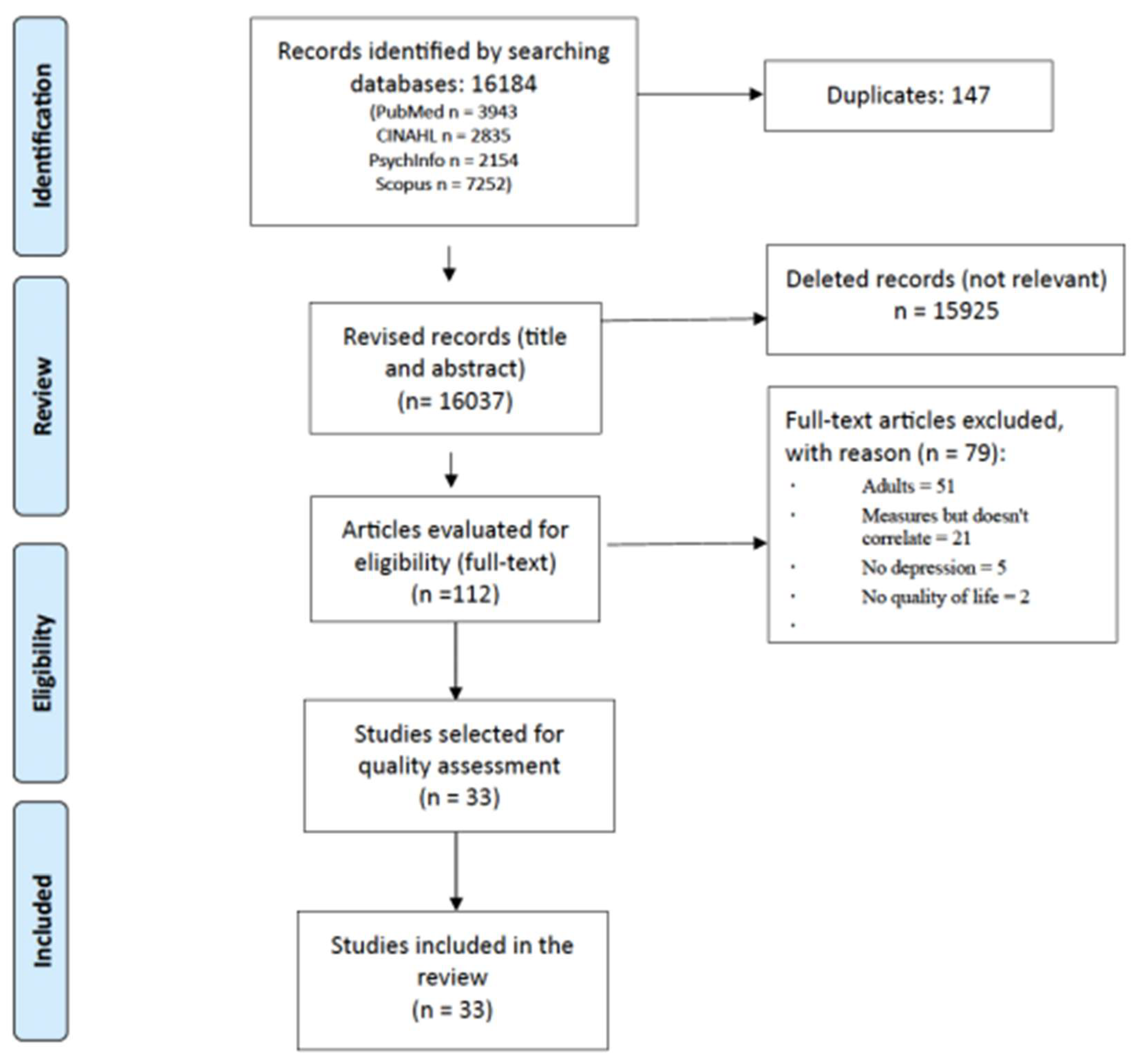
Figure 2.
Forest plot between depressive symptoms and quality of life in caregivers of dependent children.
Figure 2.
Forest plot between depressive symptoms and quality of life in caregivers of dependent children.
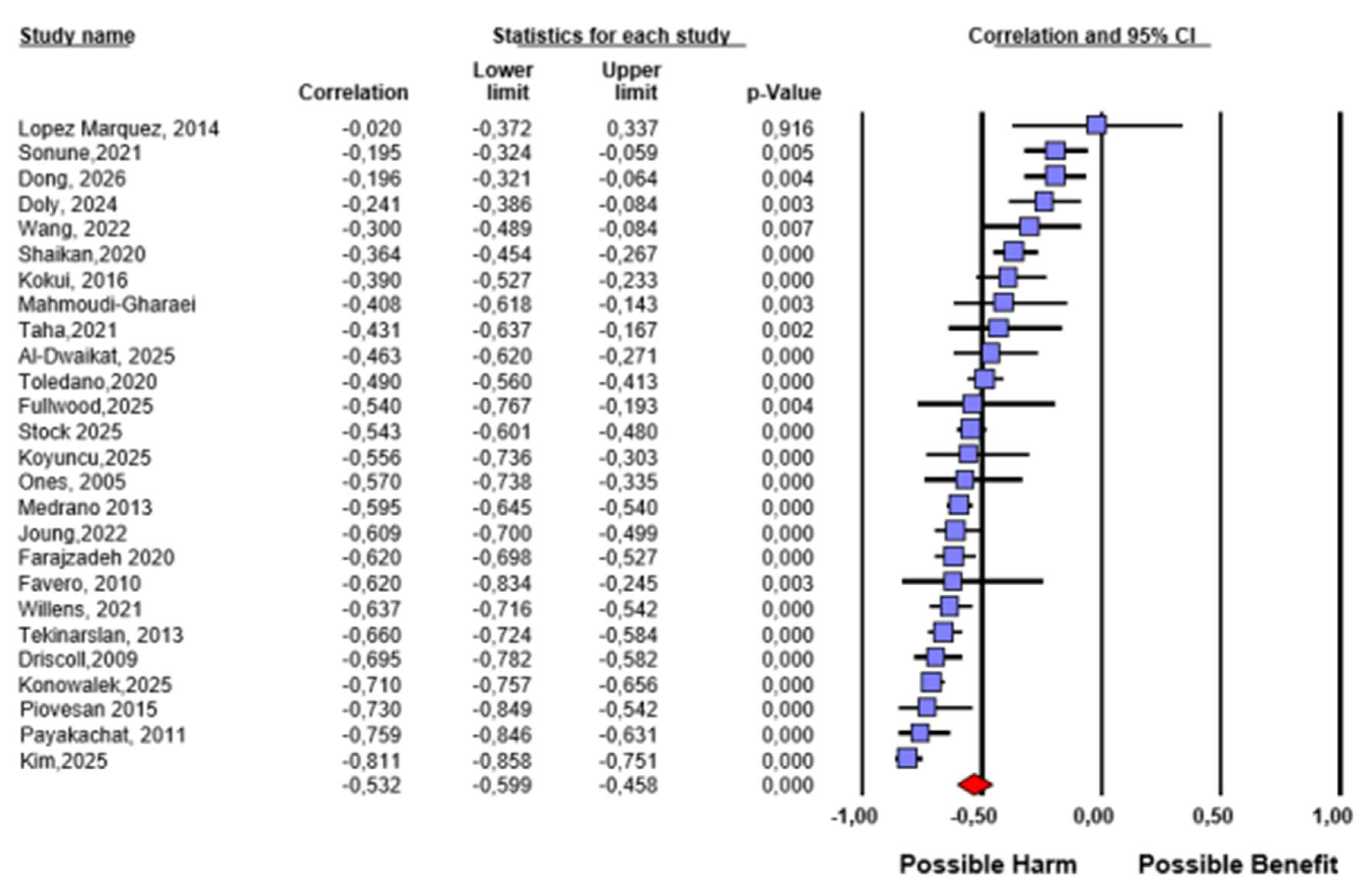
Figure 3.
Funnel plot between depressive symptoms and quality of life of family caregivers of dependent children.
Figure 3.
Funnel plot between depressive symptoms and quality of life of family caregivers of dependent children.
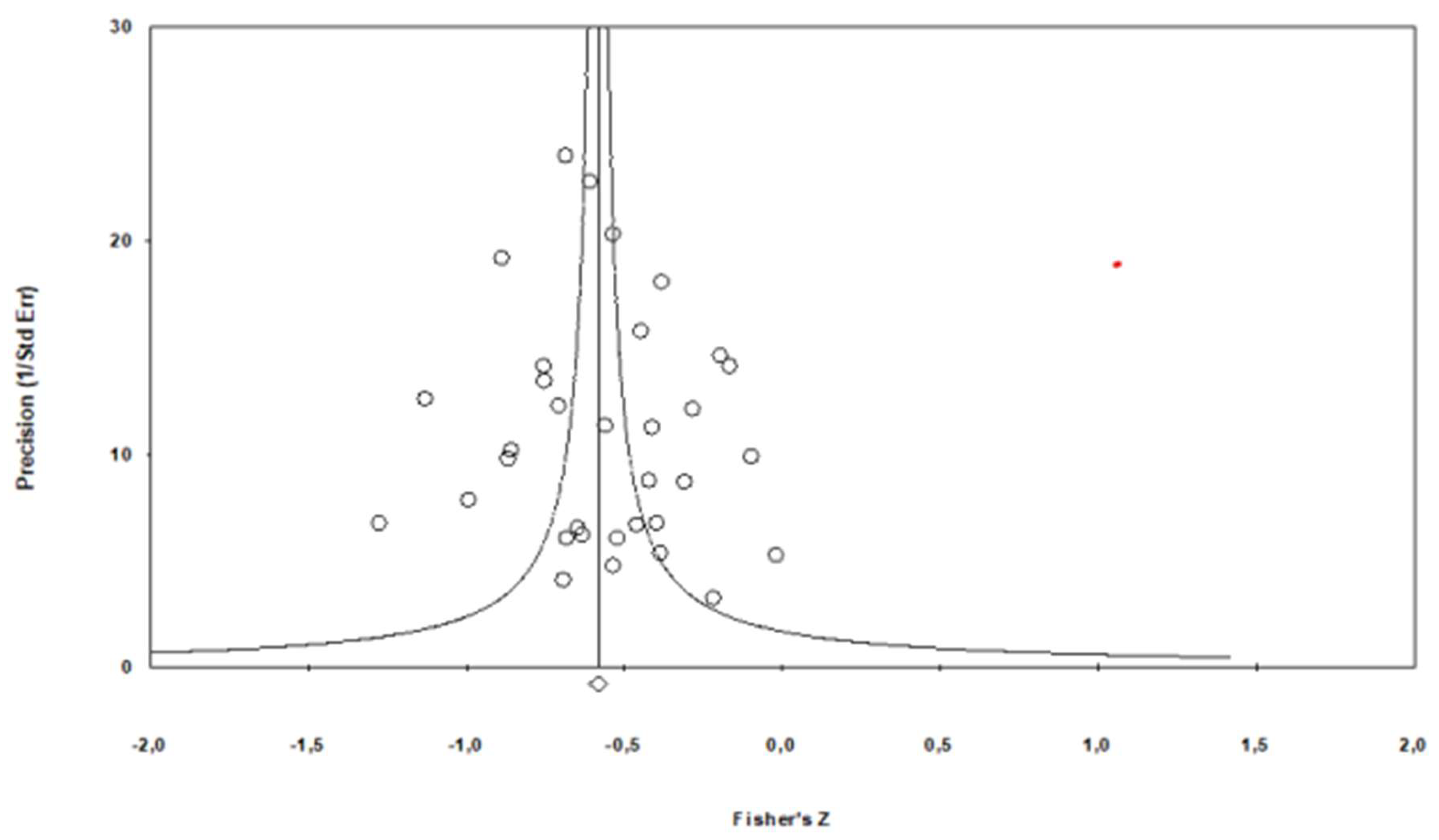

Table 1.
Search strategy.
| Data base | Chain Used |
|---|---|
| PubMed | (Quality of Life[mj] OR quality of life[tiab] OR life quality[tiab] OR QoL[tiab]) AND (Depression[mj] OR Depress*[tiab]) AND (Caregivers[mj] OR caregiv*[tiab] OR care giv*[tiab] OR carer*[tiab]) |
| CINAHL | (MM Quality of Life OR AB quality of life OR AB life quality) AND (MM Depression OR AB Depress*) AND (MM Caregivers OR AB caregiv* OR AB care giv* OR AB carer*) |
| PsycInfo | (MJSUB(Quality of Life) OR AB(quality of life) OR AB(life quality) OR AB(QoL)) AND (MJSUB(Depression) OR AB(Depressive Symptoms) OR AB(Depress*)) AND (MJSUB(Caregivers) OR AB(Caregiv*) OR AB(carer*)) |
| Scopus | (INDEXTERMS(“Quality of Life”) OR TITLE-ABS-KEY(“quality of life”) OR TITLE-ABS-KEY(“life quality”)) AND (INDEXTERMS(“Depression”) OR TITLE-ABS-KEY(“depress*”)) AND (INDEXTERMS(“caregivers”) OR TITLE-ABS-KEY(“caregiv*”) OR TITLE-ABS-KEY(“care giv*”) OR TITLE-ABS-KEY(“carer*”)) |
Table 2.
Description of the studies included in the review.
| Author—Year | Country | Design | N | Recipients of Care | Caregivers Characteristics | Measuring Depressive Symptoms | Measuring Quality of Life |
|---|---|---|---|---|---|---|---|
| Albayrak, 2019 | Türkiye | DT | 101 | Affec. Neuromotor-neuromuscular | Mother | BDI | SF-36 |
| Al-Dwaikat, 2025 | Jordan | DT | 80 | TEA | Both | DASS-21 | WHOQOL-BREF |
| Aparecida, 2011 | Brazil | DT | 32 | Enf. Chronicles | Both | BDI | SF-36 |
| Atak, 2026 | Türkiye | DT | 40 | Affec. Neuromotor-neuromuscular | Mother | BDI | SF-36 |
| Doly, 2024 | Bangladesh | DT | 150 | Affec. Neuromotor-neuromuscular | Both | PHQ-9 | WHOQOL-BREF |
| Dong, 2026 | China | DT | 217 | Sd.Down | Others | HAMD-17 | WHOQOL-BREF |
| Driscoll, 2009 | USA | DT | 122 | Enf. Chronicles | Both | CES-D | CQOLCF |
| Emiro, 2023 | Colombia | DT | 132 | TEA | Others | DASS-21 | SF-36 |
| Farajzadeh 2020 | Iran | DT | 203 | Affec. Neuromotor-neuromuscular | Mother | BDI-II | WHOQOL-BREF |
| Favero, 2010 | Brazil | DT | 20 | TEA | Mother | BDI-II | WHOQOL-BREF |
| Fullwood, 2025 | Australia | DT | 26 | Sd.Down | Others | DASS | WHOQOL-BREF |
| Joung, 2022 | South Korea | DT | 154 | Sd.Down | Mother | Korean Depression and Anxiety Scales | WHOQOL-BREF |
| Kim, 2025 | South Korea | DT | 162 | Affec. Neuromotor-neuromuscular | Both | CES-D | WHOQOL |
| Kokui, 2016 | Ghana (Africa) | DT | 130 | Affec. Neuromotor-neuromuscular | Others | DASS-21 | WHOQOL-BREF |
| Konowalek, 2025 | Poland | DT | 372 | TEA | Both | BDI | WHOQOL |
| Koyuncu,2025 | Türkiye | DT | 42 | Affec. Neuromotor-neuromuscular | Both | HADS | WHOQOL-BREF |
| López Márquez, 2014 | Mexico | DT | 31 | Affec. Neuromotor-neuromuscular | Both | BDI-II | SF-36 |
| Loutou, 2025 | Canada | DT | 50 | Affec. Neuromotor-neuromuscular | Both | PHQ-9 | SF-12 |
| Madeline, 2022 | Canada | DT | 99 | Enf. Chronicles | Both | CES-D | SF-36 |
| Mahmoudi-Gharaei, 2011 | Iran | DT | 49 | Enf. Chronicles | Both | DASS | WHOQOL-BREF |
| Medrano, 2013 | USA | DT | 579 | Enf. Chronicles | Both | HADS | HRQOL |
| Ones, 2005 | Türkiye | DT | 46 | Affec. Neuromotor-neuromuscular | Mother | BDI-II | NHP-1 |
| Payakachat, 2011 | USA | DT | 65 | Affec. Neuromotor-neuromuscular | Both | CES-D | SF-6D |
| Piovensan, 2015 | Brazil | DT | 40 | TEA | Mother | BDI | WHOQOL-BREF |
| Sarajlija, 2013 | Serbia | DT | 49 | Affec. Neuromotor-neuromuscular | Mother | BDI-II | SF-36 |
| Shaikan ,2020 | Qatar | DT | 330 | Enf. Chronicles | Both | BDI | PACQLQ |
| Sonune, 2021 | India | DT | 203 | Affec. Neuromotor-neuromuscular | Mother | Montgomery and Asberg Depression Scale | WHOQOL-BREF |
| Stock, 2025 | United Kingdom | MRL | 525 | Enf. Chronicles | Both | HASD | PedsQL |
| Taha,2021 | USA | DT | 58 | Affec. Neuromotor-neuromuscular | Both | PHQ-9 | CQLI-R |
| Tekinarslan, 2013 | Türkiye | DT | 252 | Autism, cerebral palsy and S.Down | Mother | BDI-II | WHOQOL-BREF–TR |
| Toledano,2020 | Mexico | DT | 416 | Enf. Chronicles | Both | BDI | WHOQOL |
| Wang, 2021 | China | DT | 79 | TEA | Both | DASS-21 | Beach Center FQOL Scale |
| Willems, 2021 | Germany | DT | 184 | Affec. Neuromotor-neuromuscular | Both | BDI | EQ-5D |
- Abbreviations: DT (Descriptive Cross-Sectional), ASD (Autism Spectrum Disorder), MRL: Longitudinal Repeated Measures
- Depression scales: BDI (Beck Depression Inventory); BDI-II (Beck Depression Inventory—Second Edition); DASS (Depression, Anxiety and Stress Scale); DASS-21 (Depression, Anxiety and Stress Scale—21 Items); PHQ-9 (Patient Health Questionnaire—9); CES-D (Center for Epidemiological Studies Depression Scale); HADS (Hospital Anxiety and Depression Scale); K-DAS (Korean Depression and Anxiety Scales); MADRS (Montgomery-Åsberg Depression Rating Scale), HAMD-17 (Hamilton Depression Rating Scale).
- Quality of Life Scale: WHOQOL (World Health Organization Quality of Life); WHOQOL-BREF (World Health Organization Quality of Life—Abbreviated version); WHOQOL-BREF–TR (World Health Organization Quality of Life—Abbreviated version, Turkish version); SF-36 (36-Item Short Form Survey); SF-12 (12-Item Short Form Survey); SF-6D (Short Form 6 Dimension); CQOLCF (Caregiver Quality of Life Index-Cancer); NHP-1 (Nottingham Health Profile—Part 1); PACQLQ (Paediatric Asthma Caregiver’s Quality of Life Questionnaire); CQLI-R (Quality of Life Index—Revised); Beach Center FQOL Scale (Beach Center Family Quality of Life Scale); EQ-5D (EuroQol—5 Dimension), HRQOL (Health Related Quality of Life), PedsQL (Pediatric Quality of Life Inventory Family).
Table 3.
Description of risk of bias of the included studies.
| Author—Year | Selection | Classification | Confounding |
|---|---|---|---|
| Albayrak, 2019a MCS Component |
- | + | + |
| Albayrak, 2019b PCS Component |
- | + | + |
| Al-Dwaikat, 2025 | - | + | - |
| Aparecida, 2011 | - | + | - |
| Atak, 2026 | - | + | - |
| Doly, 2024 | - | + | - |
| Dong, 2026 | - | + | ? |
| Driscoll, 2009a Mother Subgroup |
- | + | + |
| Driscoll, 2009b Father Subgroup |
- | + | + |
| Emiro, 2023 | - | + | - |
| Farajzadeh 2020 | - | + | - |
| Favero, 2010 | - | + | - |
| Fullwood, 2025 | - | + | - |
| Joung, 2022 | - | + | - |
| Kim,2025 | - | + | - |
| Kokui, 2016 | - | + | - |
| Konowalek, 2025 | - | + | - |
| Koyuncu,2025 | - | + | - |
| López Márquez, 2014 | - | + | - |
| Loutou, 2025 | - | + | - |
| Madeline, 2022 | - | + | - |
| Mahmoudi-Gharaei, 2011 | - | + | - |
| Medrano, 2013 | - | + | - |
| Ones, 2005 | - | + | - |
| Payakachat, 2011 | - | + | - |
| Piovensan, 2015 | - | + | ? |
| Sarajlija, 2013 | - | + | - |
| Shaikan ,2020 | - | + | - |
| Sonune, 2021 | - | + | - |
| Stock, 2025 | - | + | ? |
| Taha,2021 | - | + | + |
| Tekinarslan, 2013 | - | + | - |
| Toledano,2020 | - | + | ? |
| Wang, 2021 | - | + | - |
| Willems, 2021 | - | + | - |
Abbreviations: (—) Risk of bias; ( + ) Low risk of bias; ( ? ) Not enough information to evaluate.
Table 4.
Results of the meta-analysis between depressive symptoms and quality of life.
| Global/ | Whole Sample / Subgroups | Combiened Effect | Heterogeinity | Sensitivity | Publication Bias | |||||||||||||
|---|---|---|---|---|---|---|---|---|---|---|---|---|---|---|---|---|---|---|
| Dependent variable | Dimensions | K | N | Average N | r | Lower limit | Upper Limit | Q (df) | p | I2 | Analyses | Funnel | Egger’s | Trim & Fill | ||||
| Criteria | Categories | R max | % | p-Value | r | % | ||||||||||||
|
Quality of Life |
Global | Whole sample | -- | 4238 | 26 | 163,00 | -.532 | -.599 | -.458 | 27.62 (25) | 0.32 | 9.51 | -.532 | 0.00 | Asym. | ,73 | -.532 | 0.00 |
| Type of care-recipient | ASD | 843 | 6 | 140,5 | -.599 | .-706 | -.465 | 5.39 (5) | 0.36 | 7.26 | -.599 | 0.00 | Asym | NV | -.573 | 4.27 | ||
| Sd. Down | 397 | 3 | 132,33 | -.456 | -.708 | -101 | 1.30 (2) | 0.52 | 0.00 | -.456 | 0.00 | NV | NV | -.456 | 0.00 | |||
| Chronic Dis. | 1838 | 6 | 306,33 | -.527 | -.605 | -.438 | 6.44 (5) | 0.26 | 22.39 | -.527 | 0.00 | Asym | NV | -.527 | 0.00 | |||
| Neuromotor-Neuromuscular Imp. | 1264 | 11 | 114,91 | -.517 | -.652 | -.350 | 9.28 (10) | 0.50 | 0.00 | -.517 | 0.00 | Asym | .85 | -.517 | 0.00 | |||
| Control of confounders | No | 4105 | 30 | 136,83 | -.541 | -.608 | -.467 | 25.79 (22) | 0.18 | 14.72 | -.541 | 0.00 | Asym | .68 | -.541 | 0.00 | ||
| Yes | 476 | 5 | 95,2 | -.465 | -.738 | -.060 | 1.47 (2) | 0.47 | 0.00 | -.465 | 0.00 | NV | NV | -.465 | 0.00 | |||
| SF-36 (PCS) | Whole sample | -- | 503 | 7 | 71,86 | -.544 | -.727 | -.289 | 6.75 (6) | 0.34 | 11.21 | -.544 | 0.00 | Asym | NV | -.544 | 0.00 | |
| SF-36 (MCS) | Whole sample | -- | 503 | 7 | 71,86 | -.537 | -.717 | -.290 | 5.91 (6) | 0.43 | 0.00 | -.537 | 0.00 | Asym | NV | -.537 | 0.00 | |
| Environmental | Whole sample | -- | 1282 | 11 | 116.54 | -.410 | -.518 | -.289 | 7.28 (10) | 0.69 | 0.00 | -.410 | 0.00 | Asym | .49 | -.32 | 21.98 | |
| Physics | Whole sample | -- | 1282 | 11 | 116.54 | -.481 | -.587 | -.358 | 5.93 (10) | 0.82 | 0.00 | -.481 | 0.00 | Asym | .97 | -.42 | 11.89 | |
| Psychological | Whole sample | -- | 1282 | 11 | 116.54 | -.527 | -.635 | -.399 | 8.10 (10) | 0.61 | 0.00 | -.527 | 0.00 | Asym | .44 | -.49 | 7.12 | |
| Social | Whole sample | -- | 1262 | 10 | 126.2 | -.486 | -.604 | -.347 | 5.53 (9) | 0.78 | 0.00 | -.486 | 0.00 | Asym | .67 | -.48 | 0.00 | |
Abbreviations: K: number of studies; N: sample size; R: Combined Correlation Coefficient; r max: maximum value of the combined effect for sensitivity analysis eliminating one study at a time; %: percentage of variation from the original combined effect; ASD: Autism Spectrum Disorder; Sd. Down: Down Syndrome; Chronic Dis: Chronic Diseases; Neuromotor-Neuromuscular Imp: Neuromotor-Neuromuscular Impairment; Asym: asymmetric; NV: not valuable (its assessment is not recommended when there are few studies).
Disclaimer/Publisher’s Note: The statements, opinions and data contained in all publications are solely those of the individual author(s) and contributor(s) and not of MDPI and/or the editor(s). MDPI and/or the editor(s) disclaim responsibility for any injury to people or property resulting from any ideas, methods, instructions or products referred to in the content. |
© 2026 by the authors. Licensee MDPI, Basel, Switzerland. This article is an open access article distributed under the terms and conditions of the Creative Commons Attribution (CC BY) license (http://creativecommons.org/licenses/by/4.0/).
Copyright: This open access article is published under a Creative Commons CC BY 4.0 license, which permit the free download, distribution, and reuse, provided that the author and preprint are cited in any reuse.


