

Submitted:
19 June 2026
Posted:
22 June 2026
You are already at the latest version
Abstract
Glypican-4 (GPC4) is a member of the heparan sulfate proteoglycan family and regulates a wide range of growth factor signaling through interactions with heparan sulfate-binding ligands. Pathogenic variants of GPC4 have been identified in human congenital disorders, and dysregula-tion of GPC4 has been reported in human cancer. Therefore, specific anti-GPC4 monoclonal anti-bodies (mAbs) are needed for both basic research and clinical applications. In this study, we estab-lished novel anti-glypican-4 (GPC4) mAbs using a flow cytometry–based high-throughput screening approach. Among the isolated clones, G4Mab-9 (IgG2b, κ) showed specific binding to Chinese hamster ovary-K1 (CHO/GPC4) cells overexpressed GPC4, with no reactivity against pa-rental CHO-K1. Furthermore, G4Mab-9 detected endogenous GPC4 expression in human embry-onic kidney 293FT cells. Specificity analyses demonstrated that G4Mab-9 selectively recognized GPC4 without cross-reactivity with other glypicans in CHO-K1 cells overexpressing them. The dissociation constant (KD) of G4Mab-9 was determined to be 1.4 × 10⁻7 M for CHO/GPC4, indicat-ing low binding affinity. Moreover, G4Mab-9 detected a 33-kDa cleaved fragment of GPC4 by western blotting and stained CHO/GPC4 but not CHO-K1 in immunohistochemistry. Collectively, these results indicate that G4Mab-9 is a valuable tool for GPC4-related basic research and a poten-tial candidate for the development of diagnostic and therapeutic approaches.
Keywords:
glypican-4
; monoclonal antibody
; flow cytometry
; western blotting
; immunohistochemistry
1. Introduction
Glypicans (GPCs) are members of the heparan sulfate proteoglycan family and are tethered to the plasma membrane via a C-terminal glycosylphosphatidylinositol (GPI) anchor [1,2]. GPCs comprise a core protein covalently modified with heparan sulfate (HS) glycosaminoglycan chains, which interact with a wide range of growth factors and morphogens, including Wnt, fibroblast growth factors, bone morphogenetic proteins (BMPs), and Hedgehog (Hh) proteins [3,4]. Through these interactions, GPCs modulate multiple signaling pathways essential for embryonic development and tissue homeostasis [5,6]. In vertebrates, the glypican family consists of six members (GPC1–GPC6) [2]. In humans, pathogenic variants in GPC3, GPC4, and GPC6 have been implicated in the congenital disorder, Simpson–Golabi–Behmel overgrowth syndrome [7,8,9]. Furthermore, pathogenic variants in GPC4 cause Keipert syndrome [10,11,12]. Clinical features of Keipert syndrome include a flat midface, a prominent forehead, a broad nose, hypertelorism, downturned corners of mouth, and digital abnormalities [13]. Some pathogenic variants of GPC4 possess premature termination in the final exon resulting in the loss of C-terminal 50 amino acids including the heparan sulfate modification and GPI anchor sites [12]. Therefore, elucidating the mechanisms by which GPCs regulate signaling pathways is crucial for understanding both development and disease pathogenesis [14].
GPC4 is composed of a core protein that is subjected to endoproteolytic cleavage by a furin-like convertase, intrachain disulfide bonds, heparan sulfate modification, and GPI-anchorage to plasma membrane [15]. GPC4 exhibits a predominant expression in developing kidney and brain [16]. GPC4 functions as a positive regulator of Wnt signaling through multiple mechanisms. GPC4 has been shown to enhance Wnt signaling through recruitment of Wnt ligands in both lipid raft and non-lipid raft membrane microdomains [17]. During gastrulation, GPC4 functions as positive regulator in non-canonical Wnt/PCP signaling [18]. Furthermore, the heparan sulfate chains of GPC4 serve as critical binding platforms for the thrombospondin/basic region domain of R-spondin 3 (RSPO3) to activate Wnt signaling. Mutations in RSPO3 residues predicted to interact with GPC4 impair the signaling capacity [19]. Therefore, GPC4 is a RSPO3 co-receptors that potentiate Wnt signaling.
A growing body of evidence suggests that GPC4 plays context-dependent roles in tumors, acting either as a tumor promoter or a tumor suppressor depending on the tumor type [1]. In pancreatic cancer, GPC4 expression is elevated and has been linked to both cancer stem cell properties and resistance to 5-fluorouracil [20]. These findings suggest that GPC4 contributes to tumor progression and chemoresistance. Genetic studies have identified GPC4 polymorphisms associated with susceptibility to Epstein–Barr virus associated gastric carcinoma and nasopharyngeal carcinoma [21,22]. These observations suggest that GPC4 genetic variation may influence the risk of developing certain EBV-related malignancies. In contrast, reduced GPC4 expression was observed in ovarian and breast cancers suggesting tumor-suppressive functions [23].
Several monoclonal antibodies (mAbs) against GPC4 have been developed for applications such as flow cytometry. However, a limited number of anti-GPC4 mAbs are suitable for flow cytometry, western blotting, and immunohistochemistry (IHC). We previously established the Cell-Based Immunization and Screening (CBIS) method, which combines immunization with antigen-overexpressing cells and high-throughput flow cytometric screening to generate highly specific and versatile mAbs. Using this approach, we successfully developed mAbs against GPC1 [24], GPC2 [25], GPC3 [26], and GPC5 [27] mAbs that are applicable to flow cytometry, western blotting, and IHC. MAbs generated by the CBIS method frequently recognize native conformational epitopes in flow cytometry. Importantly, some of these mAbs also exhibit utility in western blotting and IHC [26]. In the present study, we applied the CBIS method to generate highly versatile anti-GPC4 mAbs and evaluated their applications in multiple experimental platforms.
2. Materials and Methods
2.1. Cell Lines
The human embryonic kidney 293FT cell line was purchased from Thermo Fisher Scientific, Inc. (Waltham, MA, USA). Chinese hamster ovary (CHO)–K1, mouse myeloma P3X63Ag8U.1 (P3U1), and human glioblastoma LN229 cell lines were obtained from the American Type Culture Collection (ATCC, Manassas, VA, USA). These cells were cultured as described previously. [24].
2.2. Plasmid Construction and Establishment of Stable Transfectants
The cDNA of human GPC4 (NM_001448) was obtained from RIKEN RBC (Ibaraki, Japan) and cloned into the pCAG-ble vector (FUJIFILM Wako Pure Chemical Corporation, Osaka, Japan). The plasmid was transfected into LN229 or CHO-K1 cells, and stable transfectants were sorted using an anti-GPC4 mAb (clone A21050B, BioLegend, San Diego, CA, USA) on an SH800 cell sorter (Sony Corp., Tokyo, Japan). The GPC4-overexpressed LN229 (LN229/GPC4) and GPC4-overexpressed CHO-K1 (CHO/GPC4) were maintained in a medium containing 0.5 mg/mL of Zeocin (InvivoGen, San Diego, CA). The other GPCs overexpressed CHO-K1 were established as described previously [27]. The expression of each GPC was confirmed by using an anti-GPC1 mAb (clone 1019718, R&D Systems, Inc., Minneapolis, MN, USA), an anti-GPC2 mAb (clone CT3, Cell Signaling Technology, Inc., Danvers, MA, USA), an anti-GPC3 mAb (clone SP86, Abcam, Cambridge, UK), an anti-GPC5 mAb (clone 297716, R&D Systems, Inc.), and an anti-PA16 mAb, NZ-1 to detect PA16-tagged GPC6.
2.3. Production of Hybridomas
The female BALB/cAJcl mice (CLEA Japan, Tokyo, Japan) were immunized intraperitoneally with LN229/GPC4 cells (1 × 10⁸ cells/injection) and 2% Alhydrogel adjuvant (InvivoGen). After three additional weekly immunizations of LN229/GPC4, a booster injection was administered two days before harvesting the spleen cells from immunized mice. The hybridomas were generated as previously described [24].
2.4. Flow Cytometry and Determination of Dissociation Constant Values
The cells were treated with primary mAbs in blocking buffer [0.1% bovine serum albumin (BSA) in phosphate-buffered saline]. The cells were then stained with anti-mouse IgG conjugated with Alexa Fluor 488 (Cell Signaling Technology, Inc., Danvers, MA, USA). The data were collected using an SA3800 Cell Analyzer (Sony Corp.) and analyzed using FlowJo software (BD Biosciences, Franklin Lakes, NJ, USA). The fitting binding isotherms (horizontal axis, mAb concentration; vertical axis, GeoMean) were created, and the dissociation constant (KD) values were determined using built-in one-side binding models of GraphPad Prism 6 (GraphPad Software, Inc., La Jolla, CA, USA).
2.5. Western Blotting
Western blotting was performed using G4Mab-9 (1 μg/mL), A21050B (1 μg/mL), or an anti-isocitrate dehydrogenase 1 (IDH1) mAb (clone RcMab-1-mG1, 1 μg/mL) as described previously [28].
2.6. Immunohistochemistry Using Formalin-Fixed Paraffin-Embedded Cell Blocks
All IHC procedures were performed using the VENTANA BenchMark ULTRA PLUS (Roche Diagnostics, Indianapolis, IN, USA). The formalin-fixed paraffin-embedded (FFPE) cell sections were stained with G4Mab-9 (0.5 μg/mL) or A21050B (0.5 μg/mL) using the ultraView Universal DAB Detection Kit (Roche Diagnostics).
3. Results
3.1. Development of Anti-GPC4 mAbs
GPC4-overexpressed LN229 cells (LN229/GPC4) were used as immunogens to generate anti-GPC4 mAbs (Figure 1A). Hybridomas were established by fusing splenocytes from LN229/GPC4-immunized mice with P3U1 myeloma (Figure 1B). After hybridoma colony formation, culture supernatants were screened by flow cytometry for preferential reactivity with CHO/GPC4 and absence of reactivity with parental CHO-K1 cells (Figure 1C). Positive hybridomas were then subjected to limiting-dilution cloning to establish hybridoma clones. In total, 14 anti-GPC4 mAb-producing clones were obtained. These clones were further evaluated for their utility in flow cytometry, Western blotting, and immunohistochemistry. Finally, we selected a clone, G4Mab-9 (IgG2b, κ), for subsequent characterization (Figure 1D).
3.2. Specificity of G4Mab-9 Using GPC Family-Overexpressed CHO-K1
We previously established other GPC family-overexpressed CHO-K1 (designated CHO/GPC1, CHO/GPC2, CHO/GPC3, CHO/GPC5, and CHO/GPC6) [27]. The specificity of G4Mab-9 to those cell lines was investigated. As shown in Figure 2A, G4Mab-9 reacted with CHO/GPC4 and did not react with other GPC-overexpressed CHO-K1. Expression of each GPC was confirmed using the specific mAbs (Figure 2B). These results confirmed that G4Mab-9 specifically recognizes GPC4 in GPC family members.
3.3. Flow Cytometry Using G4Mab-9 and a Commercially Available Anti-GPC4 mAb A21050B
We next evaluated the dose-dependent reactivity of G4Mab-9 and a commercially available anti-GPC4 mAb (clone A21050B) against CHO-K1 and CHO/GPC4 by flow cytometry. Both G4Mab-9 and A21050B exhibited dose-dependent binding to CHO/GPC4 over an antibody concentration range of 0.01–10 μg/mL (Figure 3A), whereas neither antibody reacted with parental CHO-K1 cells, even at the highest concentration tested (10 μg/mL) (Figure 3B). We further examined the binding of G4Mab-9 and A21050B to 293FT cells, which endogenously express GPC4. Both antibodies showed dose-dependent reactivity toward 293FT (Figure 4). Collectively, these results demonstrate that G4Mab-9 specifically recognizes GPC4 and that its reactivity is lower than that of A21050B.
3.4. Determination of KD Values of G4Mab-9 and A21050B Using Flow Cytometry
The KD values of G4Mab-9 were next determined using a flow cytometry-based approach. The KD values of G4Mab-9 and A21050B for CHO/GPC4 were 1.4 × 10⁻7 M and 2.3 × 10⁻8 M, respectively (Figure 5). These results indicated that G4Mab-9 exhibits a lower binding affinity for CHO/GPC4 than A21050B.
3.5. Western Blotting Using G4Mab-9 and A21050B
We next examined whether G4Mab-9 is suitable for western blotting of whole-cell lysates from CHO-K1 and CHO/GPC4. G4Mab-9 detected a 33-kDa band in CHO/GPC4, but not in CHO-K1 (Figure 6A left). A faint 60-kDa band was detected by a long exposure (Figure 6A right). In contrast, A21050B mainly detected a 60-kDa band in CHO/GPC4 (Figure 6B). IDH1 detected by RcMab-1-mG1 was used as an internal control (Figure 6C). As shown in Figure 6D, GPC4 is subject to endoproteolytic cleavage by a furin-like convertase [15,29], suggesting that G4Mab-9 can detect a cleaved 33-kDa fragment of GPC4 and A21050B can detect an uncleaved 60-kDa form of GPC4 but not the cleaved fragment in western blotting.
3.6. Immunohistochemistry Using G4Mab-9 and A21050B Using Formalin-Fixed Paraffin-Embedded Cell Blocks
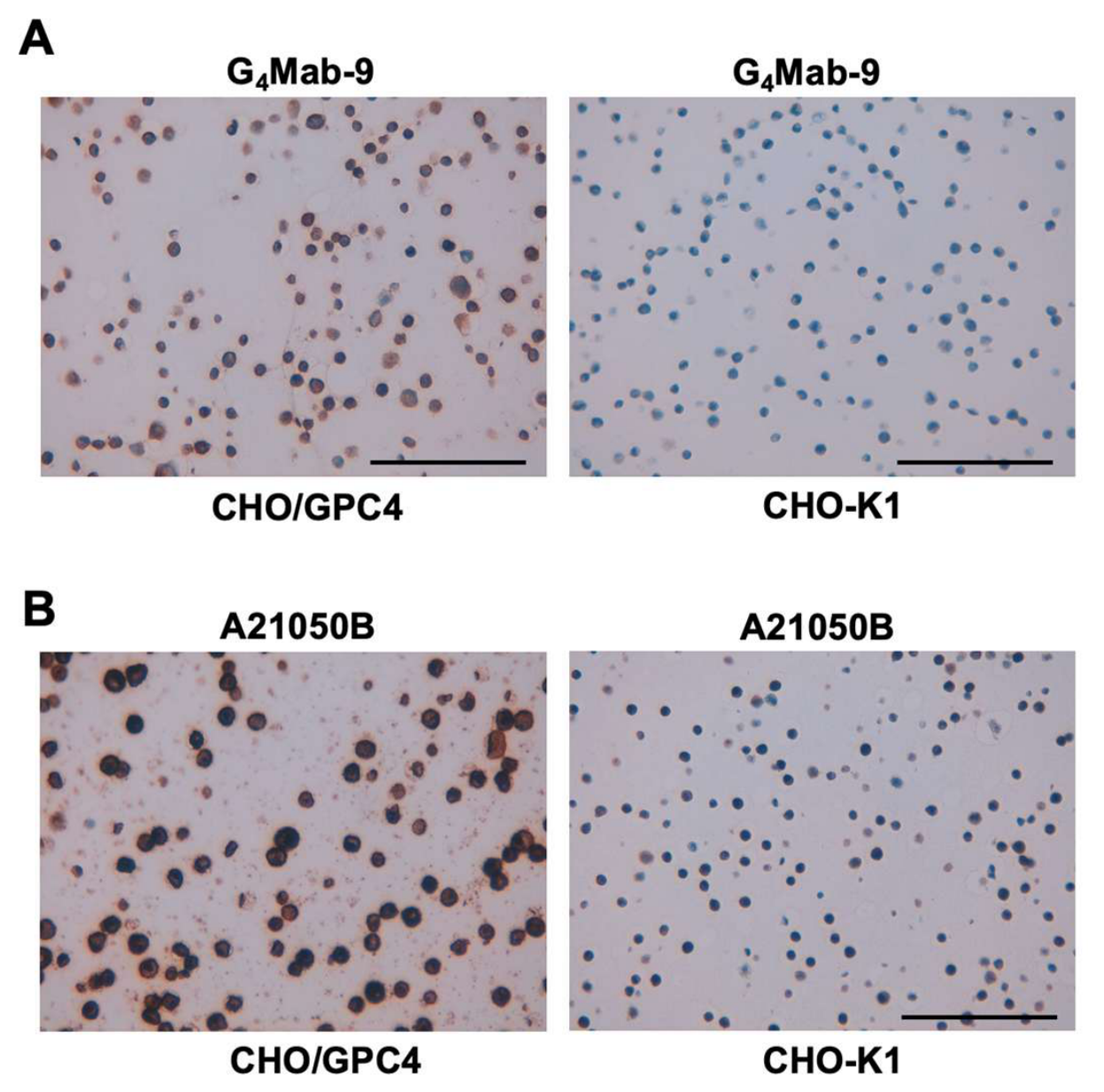
We examined whether G4Mab-9 is suitable for the IHC of CHO-K1 and CHO/GPC4 sections. G4Mab-9 showed membranous and cytoplasmic staining in CHO/GPC4 but not in CHO-K1 at 0.5 µg/mL (Figure 7A). Under the same experimental setting, A21050B could detect the membranous and cytoplasmic staining in CHO/GPC4, and a weak background signal was detected in CHO-K1 (Figure 7B).
4. Discussion
This study characterized a novel anti-GPC4 monoclonal antibody (mAb), G4Mab-9, generated using the CBIS method. Flow cytometric analyses demonstrated that G4Mab-9 specifically recognized GPC4 without cross-reactivity to other glypican family members (Figure 2) and reacted with both exogenous and endogenous GPC4 (Figure 3 and Figure 4). In addition, G4Mab-9 detected GPC4 by western blotting (Figure 6) and stained GPC4-positive cells in immunohistochemistry (IHC) (Figure 7). Among the 14 anti-GPC4 mAbs established in this study, G4Mab-9 exhibited the greatest versatility, being suitable for flow cytometry, western blotting, and IHC analyses, whereas most of the remaining clones were primarily applicable to flow cytometry (http://www.med-tohoku-antibody.com/topics/001_paper_antibody_PDIS.htm). Future studies will focus on the detailed characterization of G4Mab-9, including epitope mapping, which could provide valuable information for the development of diagnosis and GPC4-targeted therapies.
G4Mab-9 mainly recognized the N-terminal 33-kDa fragment of GPC4 and weakly recognized uncleaved 60-kDa GPC4 (Figure 6A). In contrast, A21050B recognized only the uncleaved 60-kDa GPC4, but not the cleaved fragments of GPC4 (Figure 6B). Although several studies showed the results of western blotting in GPC4 without the information of molecular weight, two studies showed the information. In HA-GPC4-overexpressed HeLa S3 and HEK293T, GPC4 was detected at 35-kDa [17]. The 33-kDa fragment of GPC4 by proteolytic shedding or GPI-anchor cleavage was detected by western blotting in astrocyte culture medium [29]. These results suggest that the N-terminal 33-kDa fragment was mainly detected in overexpressed and endogenous contexts, such as G4Mab-9. While it is not clear why A21050B did not recognize the cleaved fragment of GPC4. Although the ratio of uncleaved and cleaved forms could not be determined in CHO/GPC4 and 293FT, the different reactivity to GPC4-positive cells by G4Mab-9 and A21050B in flow cytometry (Figure 3 and Figure 4) and IHC (Figure 7) may be explained by the difference in western blotting.
The functional difference between uncleaved and cleaved GPC4 has not been determined. In GPC3, several studies have investigated this difference. Inhibition of GPC3 cleavage suppressed cell movement during gastrulation. Aberrant development resulted from altered interactions between GPC3 and Wnt ligands [30]. Furthermore, GPC3 cleavage is required for inhibition between GPC3 and Hh ligands [31]. In contrast, GPC3 cleavage does not affect BMP signaling [32]. GPC4 has been suggested to regulate the above signaling pathways, and pathogenic variants have been implicated in human diseases. Therefore, mAbs that distinguish uncleaved and cleaved GPC4 would facilitate the functional analyses of GPC4.
Serum GPC4 levels were reported to be associated with cognitive dysfunction and vascular risk factors in Parkinson’s disease [33] and as a diagnostic and prognostic biomarker in several diseases [34]. These studies employed a sandwich enzyme-linked immunosorbent assay (ELISA) to detect serum GPC4. By investigating the combination between G4Mab-9 and other G4Mabs, a new sandwich ELISA system could be established. By using G4Mab-9 and A21050B in the detection mAb, it may be possible to distinguish the uncleaved and cleaved form of GPC4 in serum. In Keipert syndrome, GPC4 pathogenic variants contain premature termination codons and lose the C-terminal 50 amino acids, suggesting the existence of a secreted form of GPC4 [12]. The ELISA system will aid in detecting GPC4 in patients' serum.
G4Mab-9 detected GPC4 in 293FT (Figure 3); however, G4Mab-9-reactive tumor cell lines in flow cytometry have not been identified. GPC4 was previously identified as a crucial molecule in 5-fluorouracil resistance and in the stem cell–like properties of pancreatic cancer and was detected in some pancreatic cancer cell lines by western blotting [20]. Although we investigated GPC4 expression in pancreatic cancer cell lines using A21050B, we failed to detect endogenous GPC4 by flow cytometry. Further studies are essential to identify the GPC4-positive cancer cell lines in flow cytometry. We already cloned cDNA from the G4Mab-9-producing hybridoma clone and will produce isotype-converted recombinant mAbs. These mAbs will be used in therapeutic applications to evaluate antibody-dependent cellular cytotoxicity and antitumor efficacy against GPC4-positive xenograft tumors. Moreover, IHC with G4Mab-9 will aid in the diagnosis of GPC4-positive tumors.
Author Contributions
Conceptualization, M.K.K. and Y.K.; investigation, G.L., R.I., H.Y., and H.S.; writing—original draft preparation, H.S.; writing—review and editing, Y.K.; project administration, Y.K.; funding acquisition, H.S. and Y.K. All authors have read and agreed to the manuscript.
Funding
This research was supported in part by the Japan Agency for Medical Research and Development (AMED) under Grant Numbers JP26am0521010 (to Y.K.), JP26ama121008 (to Y.K.), JP25ama221153 (to Y.K.), and JP25ama221339 (to Y.K.), and by the Japan Society for the Promotion of Science (JSPS) Grants-in-Aid for Scientific Research (KAKENHI) grant no. 25K10553 (to Y.K.) and 26K02289 (to H.S.).
Institutional Review Board Statement
The animal study protocol was approved by the Animal Care and Use Committee of Tohoku University (Permit number: 2022MdA-001; Approval Date: 1 April 2022) for studies involving animals.
Informed Consent Statement
Not applicable.
Data Availability Statement
The data presented in this study are available in the article.
Conflicts of Interest
The authors declare no conflicts of interest.
References
- Li, N.; Spetz, M.R.; Ho, M. The Role of Glypicans in Cancer Progression and Therapy. J. Histochem Cytochem 2020, 68, 841–862. [Google Scholar] [CrossRef] [PubMed]
- Filmus, J.; Capurro, M.; Rast, J. Glypicans. Genome Biol. 2008, 9, 224. [Google Scholar] [CrossRef] [PubMed]
- Tsao, H.E.; Ho, M. Structural Features of Glypicans and their Impact on Wnt Signaling in Cancer. Proteoglycan Res. 2025, 3. [Google Scholar] [CrossRef] [PubMed]
- Filmus, J. The function of glypicans in the mammalian embryo. Am. J. Physiol. Cell Physiol. 2022, 322, C694–c698. [Google Scholar] [CrossRef] [PubMed]
- Poulain, F.E.; Yost, H.J. Heparan sulfate proteoglycans: a sugar code for vertebrate development? Development 2015, 142, 3456–3467. [Google Scholar] [CrossRef] [PubMed]
- Lin, X. Functions of heparan sulfate proteoglycans in cell signaling during development. Development 2004, 131, 6009–6021. [Google Scholar] [CrossRef] [PubMed]
- Campos-Xavier, A.B.; Martinet, D.; Bateman, J.; Belluoccio, D.; Rowley, L.; Tan, T.Y.; Baxová, A.; Gustavson, K.H.; Borochowitz, Z.U.; Innes, A.M.; et al. Mutations in the heparan-sulfate proteoglycan glypican 6 (GPC6) impair endochondral ossification and cause recessive omodysplasia. Am. J. Hum. Genet 2009, 84, 760–770. [Google Scholar] [CrossRef] [PubMed]
- Veugelers, M.; Vermeesch, J.; Watanabe, K.; Yamaguchi, Y.; Marynen, P.; David, G. GPC4, the gene for human K-glypican, flanks GPC3 on xq26: deletion of the GPC3-GPC4 gene cluster in one family with Simpson-Golabi-Behmel syndrome. Genomics 1998, 53, 1–11. [Google Scholar] [CrossRef] [PubMed]
- Pilia, G.; Hughes-Benzie, R.M.; MacKenzie, A.; Baybayan, P.; Chen, E.Y.; Huber, R.; Neri, G.; Cao, A.; Forabosco, A.; Schlessinger, D. Mutations in GPC3, a glypican gene, cause the Simpson-Golabi-Behmel overgrowth syndrome. Nat. Genet 1996, 12, 241–247. [Google Scholar] [CrossRef] [PubMed]
- Bolat, H.; Aydın, H.; Genç-Akdağ, D.; Gerik-Çelebi, H.B.; Ünsel-Bolat, G. Keipert syndrome beyond classical features: novel GPC4 variant associated with epilepsy but preserved cognition. Neurol. Sci. 2026, 47, 273. [Google Scholar] [CrossRef] [PubMed]
- Kuroda, Y.; Uehara, T.; Enomoto, Y.; Naruto, T.; Matsumura, N.; Kurosawa, K. GPC4 truncating variant associated with Keipert syndrome and lacrimal punctal agenesis. Am. J. Med. Genet A 2024, 194, e63799. [Google Scholar] [CrossRef] [PubMed]
- Amor, D.J.; Stephenson, S.E.M.; Mustapha, M.; Mensah, M.A.; Ockeloen, C.W.; Lee, W.S.; Tankard, R.M.; Phelan, D.G.; Shinawi, M.; de Brouwer, A.P.M.; et al. Pathogenic Variants in GPC4 Cause Keipert Syndrome. Am. J. Hum. Genet 2019, 104, 914–924. [Google Scholar] [CrossRef] [PubMed]
- Nik-Zainal, S.; Holder, S.E.; Cruwys, M.; Hall, C.M.; Shaw-Smith, C. Keipert syndrome: two further cases and review of the literature. Clin. Dysmorphol. 2008, 17, 169–175. [Google Scholar] [CrossRef] [PubMed]
- Filmus, J. Glypicans, 35 years later. Proteoglycan Res. 2023, 1, e5. [Google Scholar] [CrossRef]
- Yoneda, A.; Lendorf, M.E.; Couchman, J.R.; Multhaupt, H.A. Breast and ovarian cancers: a survey and possible roles for the cell surface heparan sulfate proteoglycans. J. Histochem Cytochem 2012, 60, 9–21. [Google Scholar] [CrossRef] [PubMed]
- Watanabe, K.; Yamada, H.; Yamaguchi, Y. K-glypican: a novel GPI-anchored heparan sulfate proteoglycan that is highly expressed in developing brain and kidney. J. Cell Biol. 1995, 130, 1207–1218. [Google Scholar] [CrossRef] [PubMed]
- Sakane, H.; Yamamoto, H.; Matsumoto, S.; Sato, A.; Kikuchi, A. Localization of glypican-4 in different membrane microdomains is involved in the regulation of Wnt signaling. J. Cell Sci. 2012, 125, 449–460. [Google Scholar] [CrossRef] [PubMed]
- Ohkawara, B.; Yamamoto, T.S.; Tada, M.; Ueno, N. Role of glypican 4 in the regulation of convergent extension movements during gastrulation in Xenopus laevis. Development 2003, 130, 2129–2138. [Google Scholar] [CrossRef] [PubMed]
- Dubey, R.; van Kerkhof, P.; Jordens, I.; Malinauskas, T.; Pusapati, G.V.; McKenna, J.K.; Li, D.; Carette, J.E.; Ho, M.; Siebold, C.; et al. R-spondins engage heparan sulfate proteoglycans to potentiate WNT signaling. Elife 2020, 9. [Google Scholar] [CrossRef] [PubMed]
- Cao, J.; Ma, J.; Sun, L.; Li, J.; Qin, T.; Zhou, C.; Cheng, L.; Chen, K.; Qian, W.; Duan, W.; et al. Targeting glypican-4 overcomes 5-FU resistance and attenuates stem cell-like properties via suppression of Wnt/β-catenin pathway in pancreatic cancer cells. J. Cell Biochem 2018, 119, 9498–9512. [Google Scholar] [CrossRef] [PubMed]
- Liu, S.; Liu, W.; Zhao, D.; Zhang, Y.; Zhao, Z.; Luo, B. The Glypican-4 Gene Polymorphism rs1048369 and Susceptibility to Epstein-Barr Virus-Positive and -Negative Nasopharyngeal Carcinoma in Northern China. Oncol. Res. Treat. 2019, 42, 572–579. [Google Scholar] [CrossRef] [PubMed]
- Zhao, D.; Liu, S.; Sun, L.; Zhao, Z.; Liu, S.; Kuang, X.; Shu, J.; Luo, B. Glypican-4 gene polymorphism (rs1048369) and susceptibility to Epstein-Barr virus-associated and -negative gastric carcinoma. Virus Res. 2016, 220, 52–56. [Google Scholar] [CrossRef] [PubMed]
- Vigo-Díaz, N.; López-Cortés, R.; Velo-Heleno, I.; Rodríguez-Silva, L.; Núñez, C. Proteoglycans in Breast Cancer: Friends and Foes. Biomolecules 2025, 15. [Google Scholar] [CrossRef] [PubMed]
- Yamamoto, H.; Suzuki, H.; Tanaka, T.; Kaneko, M.K.; Kato, Y. Development of Highly Sensitive and Specific Monoclonal Antibodies Against Glypican-1 Using the Cell-Based Immunization and Screening Technology. Int. J. Transl. Med. 2026, 6, 18. [Google Scholar] [CrossRef]
- Ishikawa, K.; Suzuki, H.; Ohkoshi, A.; Kaneko, M.K.; Katori, Y.; Kato, Y. An Anti-Glypican-2 Monoclonal Antibody, G2Mab-7, for Flow Cytometry, Western Blotting, and Immunohistochemistry. Preprints 2026. [Google Scholar] [CrossRef]
- Saori, O.; Suzuki, H.; Yukari, O.; Reina, I.; Kaneko, M.K.; Kato, Y. A novel anti-Glypican-3 monoclonal antibody G3Mab-25 for versatile applications. Monoclon. Antib. Immunodiagn. Immunother. 2026. [Google Scholar]
- Kaneko, Y.; Tanaka, T.; Fujisawa, S.; Li, G.; Satofuka, H.; Kaneko, M.K.; Suzuki, H.; Kato, Y. Development of a novel anti-human glypican 5 monoclonal antibody (G(5)Mab-1) for multiple applications. Biochem Biophys. Rep. 2025, 43, 102140. [Google Scholar] [CrossRef] [PubMed]
- Shimizu, K.; Suzuki, H.; Kaneko, M.K.; Kato, Y. Ca(13)Mab-17, a Novel Anti-Cadherin-13 Monoclonal Antibody for Versatile Applications. Antibodies 2026, 15. [Google Scholar] [CrossRef] [PubMed]
- Huang, K.; Park, S. Heparan Sulfated Glypican-4 Is Released from Astrocytes by Proteolytic Shedding and GPI-Anchor Cleavage Mechanisms. eNeuro 2021, 8. [Google Scholar] [CrossRef] [PubMed]
- De Cat, B.; Muyldermans, S.Y.; Coomans, C.; Degeest, G.; Vanderschueren, B.; Creemers, J.; Biemar, F.; Peers, B.; David, G. Processing by proprotein convertases is required for glypican-3 modulation of cell survival, Wnt signaling, and gastrulation movements. J. Cell Biol. 2003, 163, 625–635. [Google Scholar] [CrossRef] [PubMed]
- Capurro, M.; Shi, W.; Izumikawa, T.; Kitagawa, H.; Filmus, J. Processing by convertases is required for glypican-3-induced inhibition of Hedgehog signaling. J. Biol. Chem. 2015, 290, 7576–7585. [Google Scholar] [CrossRef] [PubMed]
- Yan, D.; Lin, X. Opposing roles for glypicans in Hedgehog signalling. Nat. Cell Biol. 2008, 10, 761–763. [Google Scholar] [CrossRef] [PubMed]
- Tatenhorst, L.; Maass, F.; Paul, H.; Dambeck, V.; Bähr, M.; Dono, R.; Lingor, P. Glypican-4 serum levels are associated with cognitive dysfunction and vascular risk factors in Parkinson's disease. Sci. Rep. 2024, 14, 5005. [Google Scholar] [CrossRef] [PubMed]
- Muendlein, A.; Leiherer, A.; Drexel, H. Evaluation of circulating glypican 4 as a novel biomarker in disease - A comprehensive review. J. Mol. Med. (Berl) 2025, 103, 355–364. [Google Scholar] [CrossRef] [PubMed]
Figure 1.
Development of anti-GPC4 mAbs. (A) LN229/GPC4 was intraperitoneally injected into BALB/cAJcl mice. (B) After five immunizations per week, the splenocytes were fused with P3U1 myeloma. (C) Selection of the CHO/GPC4-positive and CHO-K1-negative supernatants of hybridomas. (D) Anti-GPC4-specific mAb-producing hybridoma clones were established by limiting dilution and evaluated in their applications. HS, heparan sulfate.
Figure 1.
Development of anti-GPC4 mAbs. (A) LN229/GPC4 was intraperitoneally injected into BALB/cAJcl mice. (B) After five immunizations per week, the splenocytes were fused with P3U1 myeloma. (C) Selection of the CHO/GPC4-positive and CHO-K1-negative supernatants of hybridomas. (D) Anti-GPC4-specific mAb-producing hybridoma clones were established by limiting dilution and evaluated in their applications. HS, heparan sulfate.
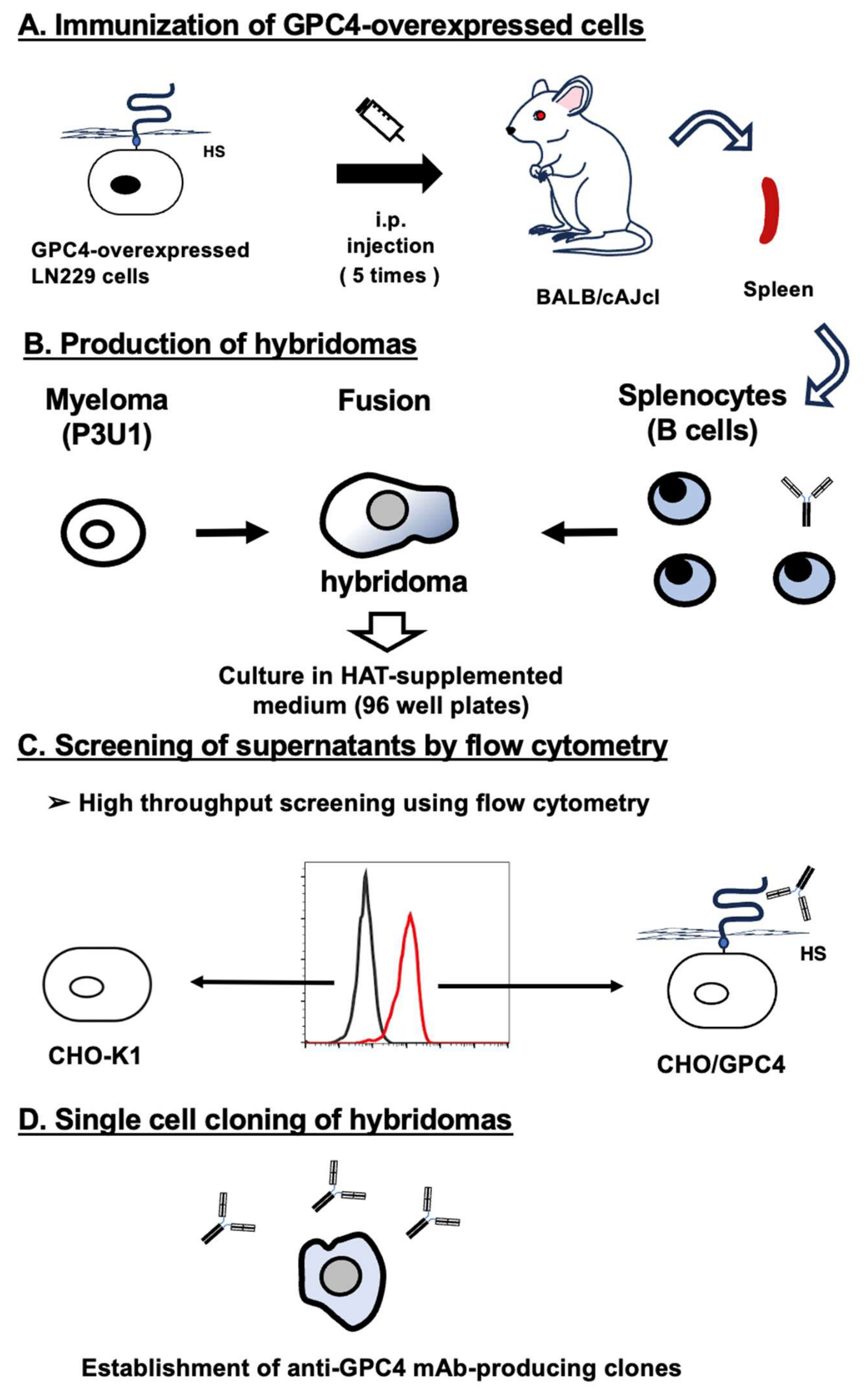
Figure 2.
Specificity of G4Mab-9 in GPCs-overexpressed CHO-K1. (A) GPC1, GPC2, GPC3, GPC4, GPC5, and PA16-GPC6-overexpressed CHO-K1 cells were treated with 1 µg/mL of G4Mab-9 (red) or control blocking buffer (black), followed by treatment with anti-mouse IgG conjugated with Alexa Fluor 488. (B) The expression of each GPC was confirmed by using 1 µg/mL of an anti-GPC1 mAb (clone 1019718), 1 µg/mL of an anti-GPC2 mAb (clone CT3), 1 µg/mL of an anti-GPC3 mAb (clone SP86), 1 µg/mL of an anti-GPC4 mAb (clone A21050B), 1 µg/mL of an anti-GPC5 mAb (clone 297716), and 1 µg/mL of an anti-PA16 mAb, NZ-1. The cells were incubated with the corresponding Alexa Fluor 488-conjugated secondary mAb. The fluorescence data were collected using the SA3800 Cell Analyzer.
Figure 2.
Specificity of G4Mab-9 in GPCs-overexpressed CHO-K1. (A) GPC1, GPC2, GPC3, GPC4, GPC5, and PA16-GPC6-overexpressed CHO-K1 cells were treated with 1 µg/mL of G4Mab-9 (red) or control blocking buffer (black), followed by treatment with anti-mouse IgG conjugated with Alexa Fluor 488. (B) The expression of each GPC was confirmed by using 1 µg/mL of an anti-GPC1 mAb (clone 1019718), 1 µg/mL of an anti-GPC2 mAb (clone CT3), 1 µg/mL of an anti-GPC3 mAb (clone SP86), 1 µg/mL of an anti-GPC4 mAb (clone A21050B), 1 µg/mL of an anti-GPC5 mAb (clone 297716), and 1 µg/mL of an anti-PA16 mAb, NZ-1. The cells were incubated with the corresponding Alexa Fluor 488-conjugated secondary mAb. The fluorescence data were collected using the SA3800 Cell Analyzer.
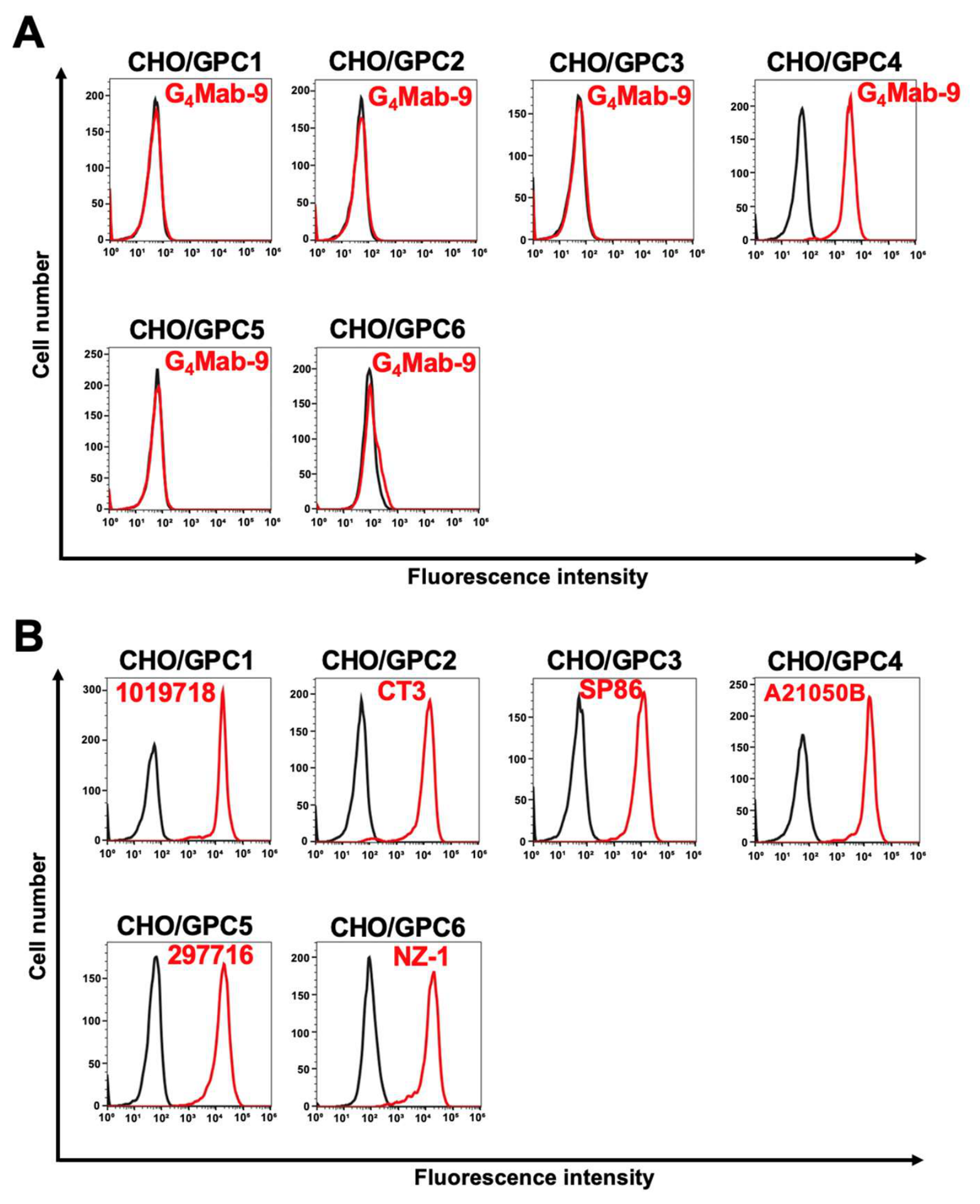
Figure 3.
Flow cytometry analysis of G4Mab-9 and A21050B against GPC4-overexpressed CHO-K1. CHO/GPC4 (A) and CHO-K1 (B) were treated with G4Mab-9 or A21050B at the indicated concentrations (red) or blocking buffer (black). The cells were incubated with anti-mouse IgG conjugated with Alexa Fluor 488. The fluorescence data were collected using the SA3800 Cell Analyzer.
Figure 3.
Flow cytometry analysis of G4Mab-9 and A21050B against GPC4-overexpressed CHO-K1. CHO/GPC4 (A) and CHO-K1 (B) were treated with G4Mab-9 or A21050B at the indicated concentrations (red) or blocking buffer (black). The cells were incubated with anti-mouse IgG conjugated with Alexa Fluor 488. The fluorescence data were collected using the SA3800 Cell Analyzer.
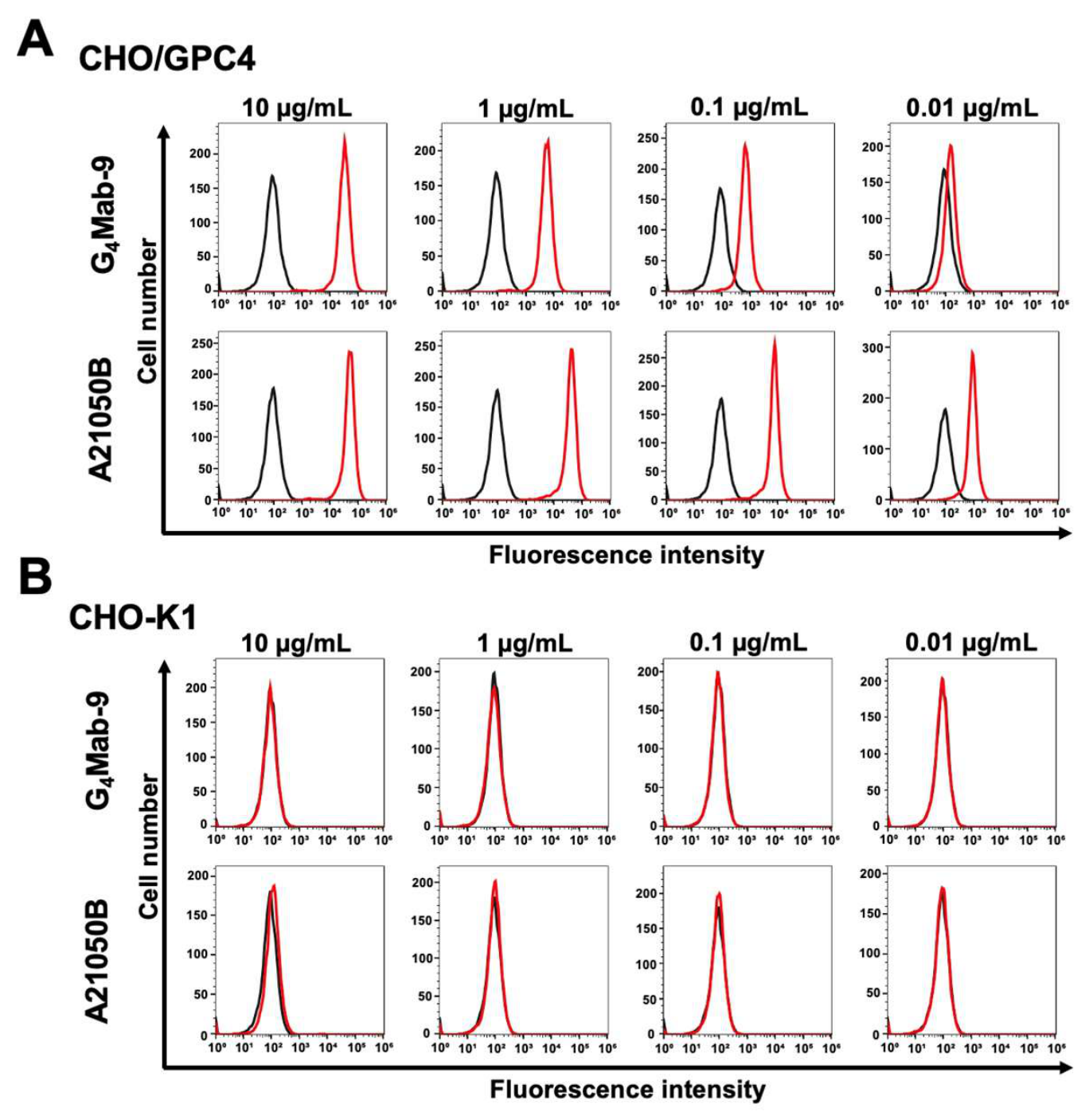
Figure 4.
Flow cytometry analysis of G4Mab-9 and A21050B against endogenous GPC4-positive 293FT embryonic kidney cells. 293FT cells were treated with G4Mab-9 or A21050B at the indicated concentrations (red) or with blocking buffer (black). Cells were incubated with anti-mouse IgG conjugated to Alexa Fluor 488. Fluorescence data were collected using the SA3800 Cell Analyzer.
Figure 4.
Flow cytometry analysis of G4Mab-9 and A21050B against endogenous GPC4-positive 293FT embryonic kidney cells. 293FT cells were treated with G4Mab-9 or A21050B at the indicated concentrations (red) or with blocking buffer (black). Cells were incubated with anti-mouse IgG conjugated to Alexa Fluor 488. Fluorescence data were collected using the SA3800 Cell Analyzer.
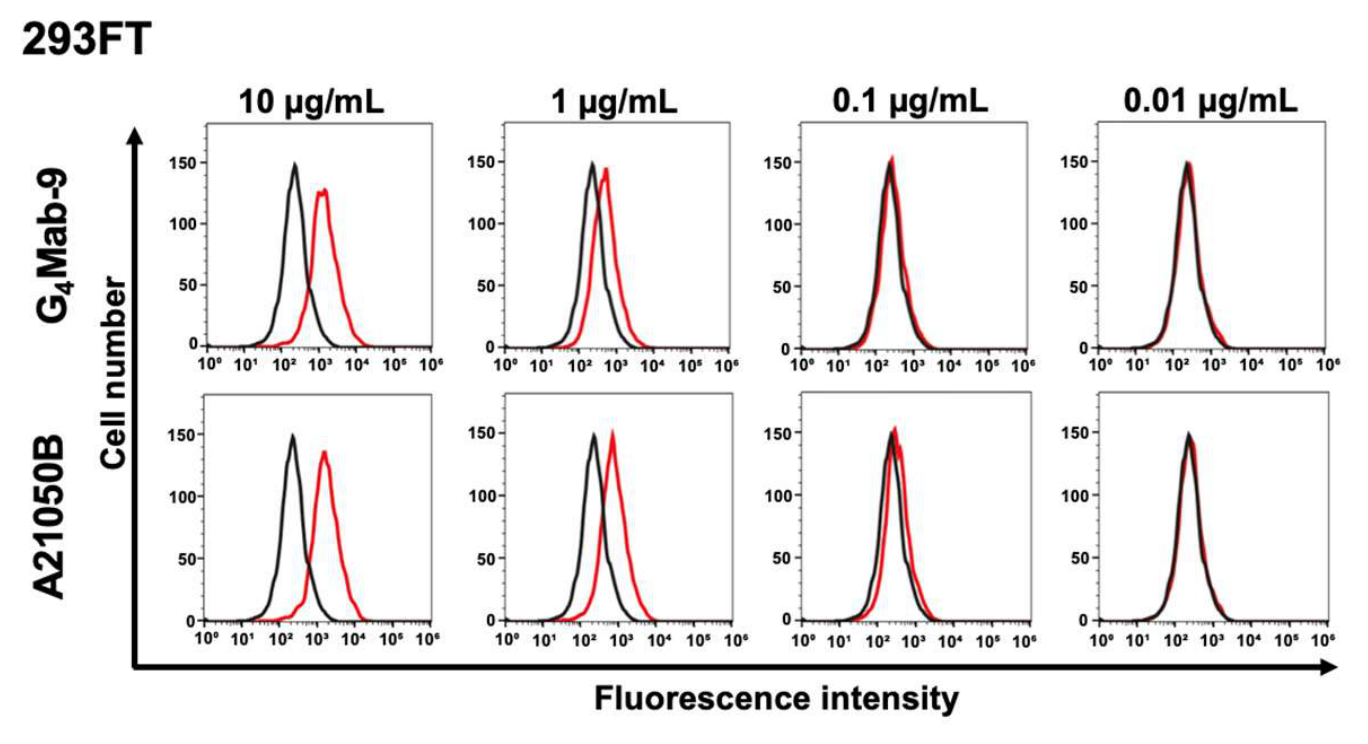
Figure 5.
Measurement of the binding affinity of G4Mab-9 and A21050B. CHO/GPC4 was treated with serially diluted G4Mab-9 or A21050B, followed by anti-mouse IgG conjugated with Alexa Fluor 488. The fluorescence data were analyzed using the SA3800 Cell Analyzer. The KD values were determined using GraphPad PRISM 6.
Figure 5.
Measurement of the binding affinity of G4Mab-9 and A21050B. CHO/GPC4 was treated with serially diluted G4Mab-9 or A21050B, followed by anti-mouse IgG conjugated with Alexa Fluor 488. The fluorescence data were analyzed using the SA3800 Cell Analyzer. The KD values were determined using GraphPad PRISM 6.
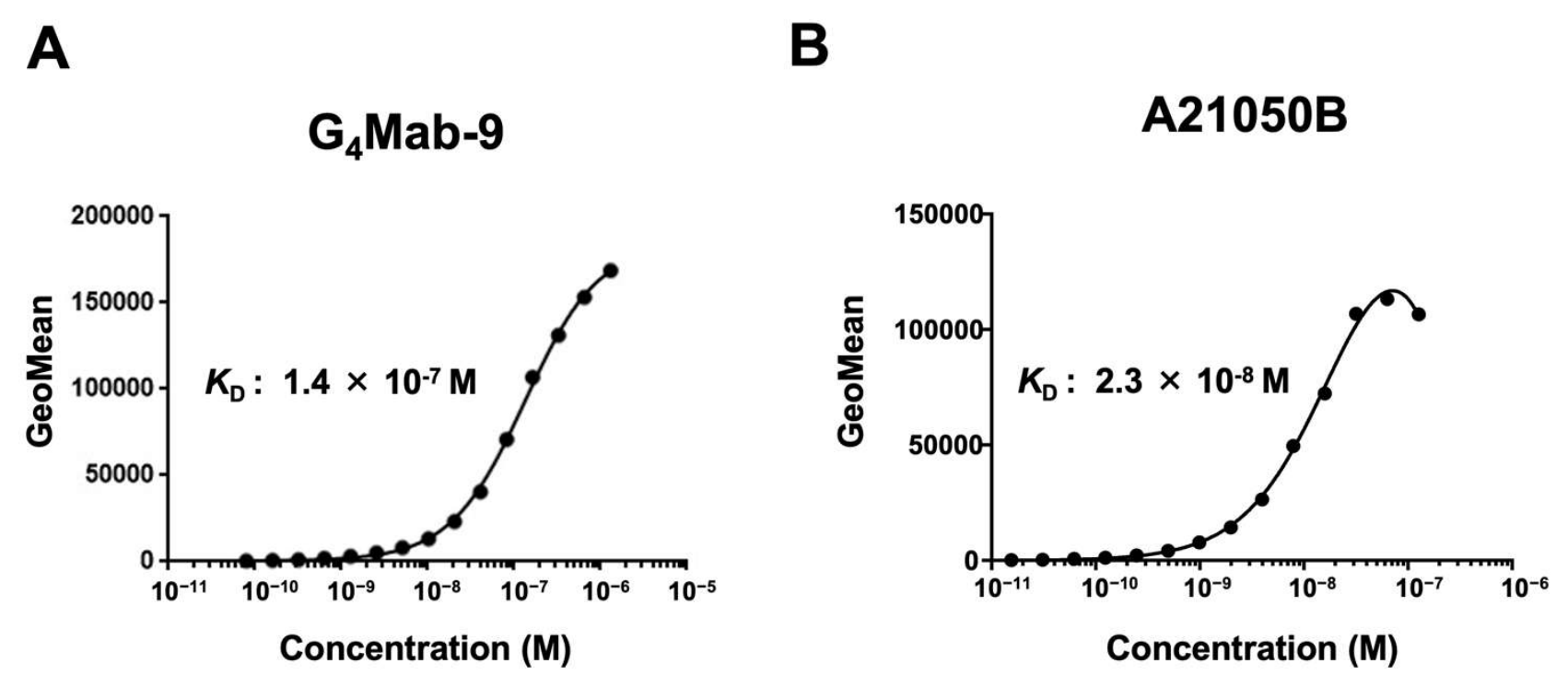
Figure 6.
Western blotting using G4Mab-9. The cell lysates of CHO-K1, CHO/GPC4, and 293FT were electrophoresed and transferred onto polyvinylidene difluoride membranes. The membranes were incubated with 1 μg/mL of G4Mab-9 (A), 1 μg/mL of A21050B (B), or 1 μg/mL of RcMab-1-mG1 (an anti-IDH1 mAb, C), followed by treatment with anti-mouse IgG conjugated with horseradish peroxidase. Note that the exposure time of left side of A and B was the same. (D) Schematic representation of the uncleaved and cleaved forms of GPC4.
Figure 6.
Western blotting using G4Mab-9. The cell lysates of CHO-K1, CHO/GPC4, and 293FT were electrophoresed and transferred onto polyvinylidene difluoride membranes. The membranes were incubated with 1 μg/mL of G4Mab-9 (A), 1 μg/mL of A21050B (B), or 1 μg/mL of RcMab-1-mG1 (an anti-IDH1 mAb, C), followed by treatment with anti-mouse IgG conjugated with horseradish peroxidase. Note that the exposure time of left side of A and B was the same. (D) Schematic representation of the uncleaved and cleaved forms of GPC4.
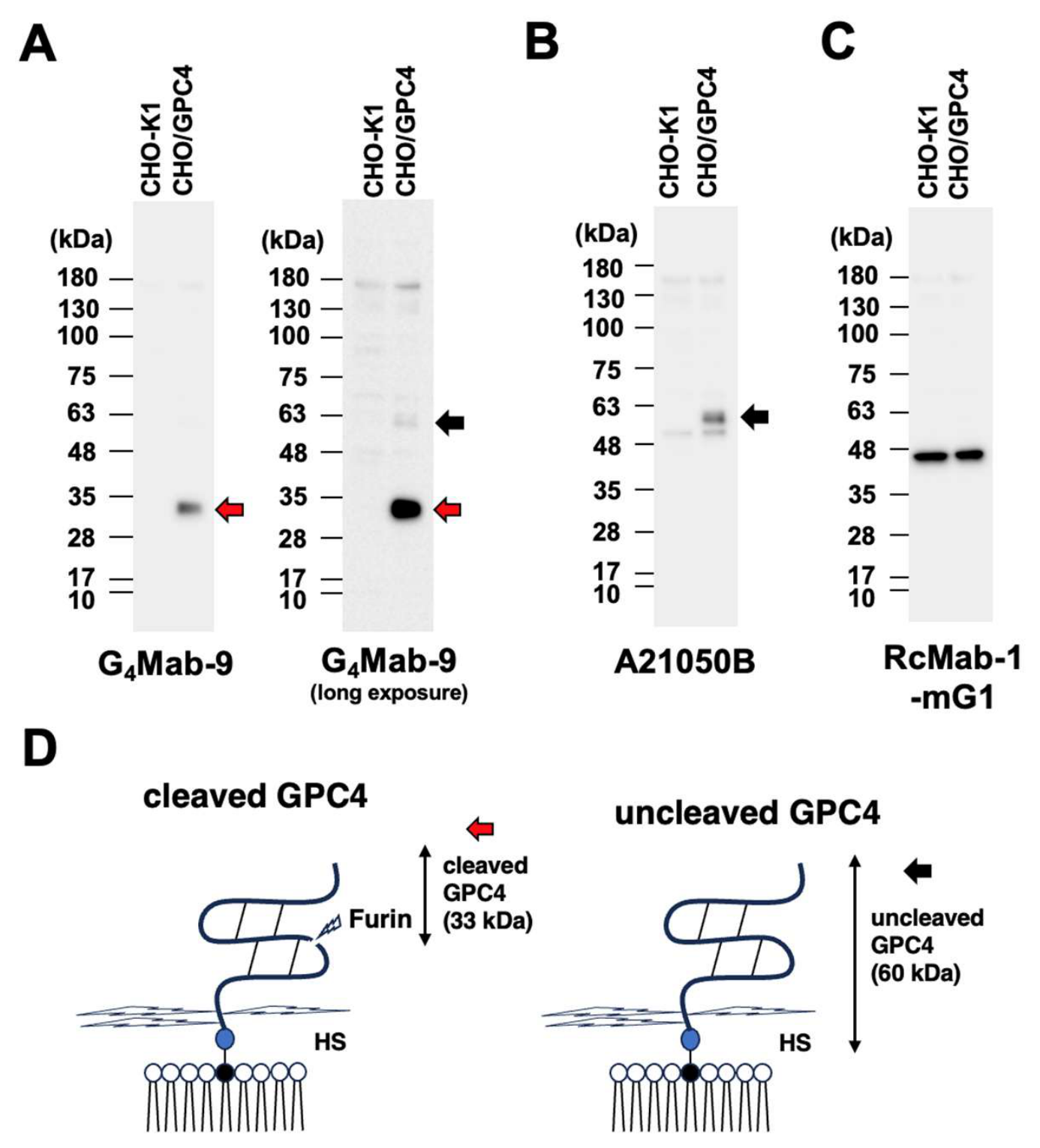
Figure 7.
Immunohistochemistry using G4Mab-9 and A21050B in formalin-fixed paraffin-embedded cell blocks. CHO/GPC4 and CHO-K1 sections were treated with 0.5 μg/mL of G4Mab-9 (A) or 0.5 μg/mL of A21050B (B). All immunohistochemistry procedures were performed using the VENTANA BenchMark ULTRA PLUS with the ultraView Universal DAB Detection Kit. Scale bar = 100 μm.
Figure 7.
Immunohistochemistry using G4Mab-9 and A21050B in formalin-fixed paraffin-embedded cell blocks. CHO/GPC4 and CHO-K1 sections were treated with 0.5 μg/mL of G4Mab-9 (A) or 0.5 μg/mL of A21050B (B). All immunohistochemistry procedures were performed using the VENTANA BenchMark ULTRA PLUS with the ultraView Universal DAB Detection Kit. Scale bar = 100 μm.
Disclaimer/Publisher’s Note: The statements, opinions and data contained in all publications are solely those of the individual author(s) and contributor(s) and not of MDPI and/or the editor(s). MDPI and/or the editor(s) disclaim responsibility for any injury to people or property resulting from any ideas, methods, instructions or products referred to in the content. |
© 2026 by the authors. Licensee MDPI, Basel, Switzerland. This article is an open access article distributed under the terms and conditions of the Creative Commons Attribution (CC BY) license (http://creativecommons.org/licenses/by/4.0/).
Copyright: This open access article is published under a Creative Commons CC BY 4.0 license, which permit the free download, distribution, and reuse, provided that the author and preprint are cited in any reuse.


