
Submitted:
19 June 2026
Posted:
22 June 2026
You are already at the latest version
Abstract
This study aims to explore the barriers to adopting artificial Intelligence (AI) technolo-gies in advancing circular economy business models in socially sustainable construc-tion enterprises. A thematic analysis was applied to extract the barriers within a sys-tematic literature review (SLR) approach. The analyzed articles which constitute the dataset were sourced from bibliographic databases of Scopus, ProQuest, PubMed, Web of Science and Google Scholar. The findings emphasize barriers in areas of digital adoption, efficiency, competitiveness, sustainability, labor skill deficiencies, organiza-tional and budgetary challenges. From the study, overcoming these barriers requires intentional and well-developed investment and changes in internal practices on digital AI upskilling programs, policy incentivization, and partnerships from stakeholders. The findings are expected to aid digital literacy to prioritize AI in circular economy so-cially responsible construction business practices. Even though the results include a conceptual model (which needs validation), it provides significant directions for har-nessing AI in circular business models of construction organizations. The novelty of the study is that it contributes to the comprehensive knowledge of challenges impeding AI-enabled circularity practices in construction businesses.
Keywords:
artificial intelligence
; AI
; barriers
; circular economy
; construction business
; sustainability
1. Introduction
Artificial intelligence (AI) is revolutionizing information sharing and business practices globally [1]. As a key innovation in the Fourth and Fifth Industrial Revolution, AI offers numerous benefits, including enhanced industry models, increased work efficiency, innovation, improved management decision-making, cost reduction, greater company visibility, and improved communication [2]. Additionally, it prioritizes stakeholders in business activities and brings various transformational impacts throughout the digitalization process of businesses [3]. In the construction industry, the literature surrounding AI technologies reveals a complex interplay of technological adoption and achievement of socially sustainable development goals [4]. A key component in this regard is the contribution of AI in circular economy transformation of construction enterprises to be socially responsible to stakeholders and communities where projects are built [5]. The study highlighted the pivotal role of AI digital tools in enhancing circulation of processes and schedule management among project stakeholders to deliver social projects. Fernando, et al. [6] and Rasheed, et al. [7] also recounted the role of AI in promoting socially responsible construction businesses and projects with the focus on ethical practices and supporting marginalized groups. Azarikasmaee [8] and Murugesan, Subramanian, Srivastava and Dwivedi [1] furthered this argument on the importance of maximizing CE in construction enterprises through AI-human resource and building information modelling technology adoption, suggesting that effective implementation can transform circular construction business processes. Dainty, et al. [9] offered an integration approach to digitalization (inclusive of AI) to sustain construction firms, emphasizing that the integration of technology is heavily influenced by financial investment into new technologies. The study drew attention to the discourse for digital engineering and circular economy, advocating for a nuanced understanding that considers the unique operational challenges faced by construction organizations. Furthermore, Jayakodi, et al. [10] and Ghobadi and Sepasgozar [11] investigated the interoperability and usability of AI solutions brings across the construction business lifecycle with circular policies. Their findings reveal significant gaps in AI digital economy highlighting the disconnect between practice and policy, as well as between the architecture, engineering, and construction (AEC) sector and software vendors. The authors argue that, while the concept of digitalization of AI and circular economy remains a promising aspiration, achieving it within the construction domain is fraught with challenges in areas of data compliance and lack of streamlining measures on industry standards.
The third dimensional gap in addition to the AI and circular economy gaps is the socially responsible construction businesses. Although, above-mentioned literature have demonstrated relevant gaps on bridging AI, social sustainability and circular economy, there are two more pressing research gaps that necessitate this study [12]. First, most of the current literature on this topic presents either AI technologies or circular economy for socially sustainable construction business exclusively separate. For instance, Regona, et al. [13] study revealed the adoption opportunities and barriers to AI in the construction industry in general without focusing on social sustainability. On the other hand, studies like Benachio, et al. [14] investigated CE in the construction industry focusing on resource recycling and refurbishment. The study failed to investigate CE, socially responsible construction management and AI. Additionally, Zhang, et al. [15] presented only a systematic review of the impacts of CE in raw material and environmental management of construction companies without the consideration of AI technologies. Second, there are no conceptual models linking AI, socially sustainable construction business, and CE in existing literature of construction businesses. Most of the studies briefly make mention of these concepts without delving deeper into what they present [16]. Practically, there is also a gap in what constitutes socially responsible construction business, and how CE and AI are supporting their realization in practice. From the thorough review of the articles (Appendix 1), it remains unclear the practical frameworks to promote these contemporary concepts by construction enterprises. Against these backdrops, this article aims at investigating the barriers of AI in enhancing CE for socially responsible construction enterprises.
The contributions of this article are twofold. Firstly, it reveals the obstacles of socially sustainable construction businesses in their quest to advance AI digitalization to support circularity of construction business activities. This is important for construction modelling and stakeholder management in overcoming barriers to promote AI and CE to solve social challenges. Insufficient understanding of these barriers on AI digital technologies leads to missed opportunities which ultimately hinders circular innovation and competitiveness in construction firms. Secondly, this article illustrates multifaceted information on the challenges of the three important variables for further studies. The remaining parts are the terminologies, the systematic method of review, findings, implications and conclusion.
2. Overview of Key Terminologies
2.1 Socially Sustainable Construction Business
Conceptually, socially sustainable construction business refers to construction enterprises (also known as construction firms) that include socially responsible measures into the organisational systems and practices [17]. The embedment of the social systems is in-built in every facet of the organisation flowing from the top management to the workers. The core functionality of socially sustainable construction firm is the prioritisation of fair conditions of services to professionals, associated main contractors, subcontractors and interested parties of the organization [18]. Vitorio Junior and Kripka [19] posited that in a socially responsible enterprise, construction executives accentuate on treating employees fairly by providing them fair and working remuneration packages. The matters concerning gender gaps which position women to receive less pay are either minimized or eliminated [20]. Socially accountable construction firms provide safe spaces for construction workers. Safety is a majority priority of the business and form part of the key systems instituted to promote the physical, emotional and mental well-being of workers [21]. The long-term of skills of employees is also essential for these organizations who include social principles in their training modules to transform them to be responsible social actors [22]. Outside the construction businesses, managers and workers are actively encouraged to engage with their communities in the quest to manage the broader stakeholder interests. Using the power-interest stakeholder grid formulated by Mendelow, the interests of every key stakeholder within the community is actively sought after and satisfied through concerted strategies designed between the construction firm and the stakeholders [23]. The design, planning, construction and management of projects seeks to solve societal problems and foster inclusive opportunities to cultural values and needs of indigenous and underrepresented communities in the management of the projects [24].
2.2 Circular Economy
In the construction sector, circular economy (CE) business models are explained in relation to the minimization of waste (inclusive of financial resources) and continuous usage of materials within the stream of the operation of construction firms. This phenomenon is situated in contrast with the linear model of business management where resources are taken, used and disposed of with committed systems to reuse the resources. The fundamental principle of CE is to make maximum recycling and reusing operational materials and logistics. Construction businesses that adopt CE prioritise the safe refurbishing and application of resources in sustainable environment. The deconstruction phase of project is an important actionable area for managerial discussions and strategies to promote circular models. The goal of this initiative is to minimize emissions from fossil fuel products. The concept of closed-loop procurement strategies within construction business to enhance social cohesion and flow of resources. The digitization of CE systems within construction firms enhances the application through material passports and other digital apps. Further, a core function of CE is the social sustainability principles which offers solutions to social problems and rebuild and regenerate wastes for the progress of communities. The promotion of circular precincts has been earmarked to facilitate the transformation of resources to maintain and rehabilitate community projects with scalable innovations and circular business ideas. In conjunction with local councils, construction enterprises advance carbon footprint through net-zero procurements and business strategies. Socially responsible construction organisations extend business long-term social benefits through material and technical support systems.
2.3 Artificial Intelligence
Artificial intelligence has attained an enviable position in construction business modelling and analysis of social contributions where digitalized systems mimic the activities of human intelligence. AI-based technologies have capabilities to assess the patterns of data, model and monitor the progress of social sustainability in business and projects. Ama (2025) and Yen (2024) presented a case for AI in advancing the planning and execution of business ideas which incorporate social functionalities and development measures. In that grit, AI is most profound at the planning and execution of both business and project models within the construction sector. According to PMlogic (2025), most of the project heavy lifting burden are solved and counter measured at these phases where 45 to 70% of project challenges are encountered and overcome. At the operational stages of the project, Caleb (2023) demonstrated AI to be the driving force for the facility management and prediction of risks in the social advancement projects. This is important for office and industrial building tracking and maintenance actions to safeguard stakeholders. The introduction of different AI models such as the generative and agentic AI supports the transition to social capital for environment development and community engagement. Within the generative AI, the socially responsiveness of construction firms increase in relations to translating and understanding communities with their native languages. For instance, IndigenChat, an AI chatboat from Google can identify stakeholder needs together with expansive analytical systems and solutions for easier delivery of social projects. AI-modelled geographical and spatial motivating system ushers’ systems that recognise environmental sustainability, However the role of AI is face with many challenges. For instance, Shennib, et al. [25] recounted the challenges construction firms encounter in circularising the municipal wastes during construction phases of projects. Ghobadi and Sepasgozar [11] identified eleven (barriers) that limit the transformation of construction firms to deliver socially conscious timber-made projects.
3. Research Methodology
3.1 Retrieval of Articles
This study utilized systematic literature review (SLR) approach to search, download, and analyze relevant literature to meet the research aim (goal). The SLR is profoundly in construction management research which supports the extraction and synthesization of data (or information) to understand a phenomenon together with roadmap for future directions [26]. With the research aim set, a comprehensive search for literature began in prominent academic databases (search engines) aided by keywords. As result of the scantiness of studies on this topic, the following three keywords were selected and applied for the literature search based on the research aim: “artificial intelligence”, “circular economy” and “socially sustainable construction business”. The keywords were combined either two or three in the search process taking notice of the subject headings gaining deeper outcomes from the search. Scopus, ProQuest, ScienceDirect, EBSCOhost, PubMed, Cochrane, Web of Science and Google Scholar were the search engines where these keywords were applied. The initial unfiltered outcome of the search revealed 1632 documents from all the search engines.
3.2 Selection of Relevant Articles
To select important articles which meet this study’s aim, the following inclusion criteria were set. 1) The document type preferred was a journal article. Other documents such as books, book chapters, essays, theses and conference papers were deleted from the list of documents. 2) The language of the article should be English. Studies which were published in other languages were not included. 3) The selected article should cover issues concerning “AI”, “CE” and “socially sustainable construction business”. Documents which mentioned or investigated one of the three key concepts were removed. The focus was on studies that comprehensively address issues concerning the three key concepts (see Section 2). Once these selection criteria were agreed upon by the researchers, the assessment of the 1632 documents ensued with the EndNote. First, duplicates of articles that appeared more than once were removed. Summarily, 734 articles were removed as duplicates. Second, screening of the title and the abstracts occurred for 898 (1632 less 734) leading to the deletion of 545 documents. The remaining 353 (898 less 545) were subjected to analysis using the three inclusion and exclusion criteria. Then, the application of the three selection criteria resulted in the removal of 318 documents with the final articles for the analysis being 35.
3.3 Analysis of Articles
The 35 articles (see Appendix 1) were exported to Microsoft Excel. Before the data extraction began, each of the articles was assessed to check the level of methodological risks associated using validated quality assessment tools. Joanna-Briggs Institute (JBI) quality assessment tools were utilized in analyzing the risks of the articles [27]. The results indicated that all the studies were low to no risks favorable to support this research. The data extraction began with the focus on the basic features of the articles such as the year of publication, citations, country of study, publishing source (journal) and research designs were extracted and analyzed. Next, all the articles were read thoroughly by the authors of this study following the thematic literature analysis approach [28]. The goal of the extensive reading and analysis of the papers was to be familiarized with the content of the articles [29]. The authors deeply read every article from title to conclusion and extracted textual data in the form of phrases, statements and keywords together with explanatory notes within Excel. Then, the data extracted in the Excel were coded based on their commonality. Further analysis and observations of the patterns in the codes resulted in forming six themes (Section 4.2) which form the foundation of the barriers on AI in circularity of socially sustainable construction business [30].
4. Results and Discussions
4.1 Description of Selected Papers
- -
- Publication trends
A cursory look at the annual publication distribution, as shown in Figure 1, reveals a unique pattern in studies that examines barriers associated with AI-driven CE construction businesses. The findings show limited study of two publications in 2020. Then, in 2021 and 2022, the number of publications grew to three and four, respectively. As seen in Figure 1, there was an immense increase in publications in 2024, when there were 12 publications, which is 300% more than the year before. However, there was a 20.13% reduction in the number of publications as of June 2026 (when this paper was drafted) with the positive outlook that publications on this topic will increase in future as the concept of AI and CE gain active involvement in construction business modelling. Additionally, this exponential growth pattern aligns with broader trends in AI and CE research, as noted by Danish and Senjyu [31], who identified similar acceleration patterns in AI-enabled circular economy studies post-2023. The findings also suggest that the intersection of AI, circular economy, and sustainable construction business have gained substantial academic attention, potentially driven by increasing social regulations and expansion of tech-savvy social apps in construction management. This trend is also supported by existing studies. For instance, Wang, et al. [32] revealed that when new interdisciplinary subject areas come up, they usually go through a period of latency before research takes off once there is intersectional alignments of interests with academia and industry The high number of publications observed from 2024 indicates that AI in the circular economy, particularly within the construction industry, has moved beyond nascent exploration to established academic inquiry, positioning it as a mature field for continued investigation.
- -
- Sources of Articles
The thirty-five articles were sourced from twenty (20) from which the studies were published, however for sake of analysis, the top five (5) are reported in this section focusing on the impact factors of the journals. Zhao, et al. [33] explained that the impact factor of a journal, the avenue where studies are published, is a key metric of measuring the level of influence of sourcing studies in scientific research. A summary of the impacts of journals, together with the articles, is shown in Figure 2. Journals are assigned impact factors based on citations of the articles within the journals in a period [34]. Thus, the first publisher (journal) carries a higher impact than the second publisher and so forth, in the order the publishers appear in Figure 2. The five (5) topmost publishers as shown in Figure 2 are the “Journal of Business Strategy and the Environment”, “Journal of Building Engineering” and “Journal of Resources, Conservation & Recycling, “Journal of Cleaner Production”, and “Journal of Production and Planning” with impact factors of 13.3, 11.5, 10.9, 10.0 and 6.1 respectively. A noticeable feature of these journals is that they combine business studies, AI and circularity turning construction enterprise management easier [35]. This finding implies that articles on artificial intelligence in circular economy within construction enterprises have been published in reputable journals, indicating the newness and relevance of this topic in construction management research.
- -
- Citation Analysis
Unlike the previous section, this section focuses on the impact factors of top performing published articles. As illustrated in Figure 3, the distribution of the most cited articles with details on the number of citations and the names of the authors. The number of citations of an article is the benchmark for the analysis and indication of significance in a field of study [36] . In this analysis, the citations of thirty (35) selected articles were assessed to show the impact and quality of the article. Figure 4 demonstrates five (5) most cited articles are: Guerra and Leite [37], Çetin, et al. [38], Giorgi, et al. [39],Demirkesen and Tezel [40] and Akinade, et al. [41] with 371, 351, 307, 206 and 182 citations respectively. In summary, citation analyses establish the impact of articles by analyzing the extent of citations in other works. It identifies trends, influential scholars, key works and gauges the trustworthiness of publications by demonstrating the quality of research [42].
- -
- Geographical analysis (country-of-origin)
As shown in Figure 4, the geographical distribution of the selected studies provides valuable insights into research on AI-supported circular economy and socially responsible construction firms. China dominates the countries where studies on this subject were conducted with seven (7) articles (20.6%) which confirms the nation's large-scale investments in both AI technology and social sustainability construction practices, aligned with national strategies for digital transformation and environmental sustainability [43]. Australia's second ranking with six (6) articles confirms intense research activity, possibly fueled by improved social policies and high levels of construction technology adoption [44]. The contributions of developing nations such as Ghana, Nigeria, and Kazakhstan (2 papers each) confirm that AI obstacles in circular economy construction are not solely developed-nation issues, but global challenges necessitating localized solutions [45]. This pattern of distribution confirms that challenges to AI implementation in circular economy for socially sustainable construction enterprise are context-specific, differing widely across varying economic, regulatory, and technological contexts [46]. Also, the contribution of European nations (Netherlands, Poland, UK, Italy, Germany, Denmark) with one and two papers suggesting dispersed research works in this region. The presence of Middle Eastern nations (Jordan, Qatar, UAE) and Turkey suggests that intense urbanization and infrastructure development in these regions are fueling interest in sustainable construction technologies [47]. This pattern of global distribution confirms that AI barriers in circularized social built environment are universal challenges that necessitate region-specific comprehension and solutions, rather than one-size-fits-all solutions.
- -
- Research designs
This section presents the research design employed in the 35 articles. A thorough review of the relevant articles identified four (4) main research designs (method), and the results are illustrated in Figure 5. These methods encompass cross-sectional questionnaires, qualitative interviews, case studies, and a mixture of the preceding designs. As shown in Figure 5, the cross-sectional (survey) questionnaire was the most applied research design at 47%. Questionnaires are important to gather data from a target audience with structured information [48]. A mixture of questionnaires and interviews placed second at 29%. Studies that used only interviews were 22% while case study reviews consisted of 3% of the studies.
4.2 Themes on the Barriers
The summary of the thematic analysis produced six themes about the barriers to AI in circularizing socially sustainable construction businesses, and they include:
Theme 1: Resistance to change
Artificial intelligence (AI) plays a vital role in the circular economy business practices of construction firms, especially in modelling forecasting and business operation models [49]. They contribute also significantly to employment recruitment and selection, as well as monitoring indoor office temperatures. However, these enterprises face resistance challenges in adopting and implementing digitalization which hinder investment into AI and CE technologies. Many construction firms are characterized by their size, with most of the construction companies having fewer or more than 150 employees and a turnover that does not exceed certain thresholds. As a result of the size of construction firms, most of the businesses are family-oriented, and controlled by small, experienced workers who mostly operate with digital experiences. This makes shifting to the adoption and implementation of AI digitalization difficult because some owners perceive AI adoption costly and resist to change their style of business management [50]. For instance, in many developing nations, construction firms account for approximately 15% of GDP but a large number (92%) of the construction firms are small businesses with undemocratic leadership style that are hostile to change to new technologies [51]. These firms prefer the old-fashioned approach of managing the construction businesses with little input embrace emerging technologies. Asiedu, et al. [52] outlined the resistance to accept AI technologies to circular transformation in socially conscious construction enterprises in Ghana due to bottlenecks in the business operations, competition and sustainability targets [49]. The review also pointed to the smaller the size of the construction firm the greater the resistance to integrating AI digital technologies into various aspects of construction management, project execution and customer engagement with very minimal investments into social projects. The reasons for this are many folds. A chunk of the studies attributed this phenomenon to resist any attempt to embrace smart technologies to limited resources, the unavailability of digital technologies and the fear of workers losing their jobs. Hence, owners and managers at the top level of construction enterprises should priority more resource allocation to AI and CE technologies and mobile applications to conform to the changing environment. Workers should be informed and trained to understand the need for innovative technologies to advance the AI and CE agendas. By doing this, the research indicates that perceived usefulness and ease of use of these digital technologies will take away the fears of job losses and misunderstood importance of the role of AI in circular business successes [53]. The internal structure and culture of construction firms should be revised to incorporate AI-driven CE practices, that is, management play a crucial role in the adoption of construction digitalization [54].
Theme 2: Limited awareness and education
Awareness of AI digitalization technologies among construction workers is closely tied to understanding the inevitability of the transition for those industries that wish to prosper [3]. Many construction firms recognize the importance of smart digitalization for sustainable construction but often lack a comprehensive understanding of how to utilize them to meet social and community needs. Additionally, specific technologies and their applications in management decisions. Low awareness of social changes is typically higher in small and mediums scale construction enterprises, especially those in the rural or regional areas that have not previously engaged with digital tools or have received training and support from external sources (stakeholders). Limited access to information about AI digital tools, inadequate skilled personnel, and resistance to change within organizational cultures are major setbacks in the adoption and implementation of AI in construction firms [54]. Many construction employees do not fully understand how AI digitalization can lead to improved employee performance and enhanced social performance to advance societal interests. Therefore, construction companies must invest in their employees through training to elevate the level of awareness regarding the potential of AI technologies and smart digitalization in a broader view in responding to social needs. It is also clear from the literature that there is a gap between the intention and actual implementation of AI tools for circular construction enterprises is attributed to uncertainties and unawareness about the return on investment for digital tools and fear of disrupting existing workflows [55]. The level of awareness of AI usage among construction frontline office workers is variable and strongly influenced by government support, skills availability, and organizational culture which are not favorable to meeting social sustainability targets. Thus, the need for stakeholders; government bodies and industry associations to support awareness campaigns and invest resources into clarifying the benefits and applications of AI digital technologies for sustainable CE in construction [56].
Theme 3: Financial challenges
The adoption of AI-based circular models in addressing social issues within and outside construction firms face severe financial risks due to the cost of purchasing and operating bespoke AI technologies for these purposes [54]. These challenges also arise from various factors including the cost of hiring IT experts to manage the tools and the expenses for training existing employees to use the AI-driven CE technologies. Lu, et al. [57] outlined that financial constraint remains a significant challenge in the implementation of AI digitalization in construction firms due to unavailability of IT infrastructures to work with the new technologies. The high costs associated with maintaining digital tools normally conflict the tight budgets of construction organizations, thus, these companies struggle to allocate sufficient funds for digital initiatives which delays the swift implementation altogether [58]. The successful implementation of digital technologies requires a workforce that is skilled in the implementation of digitalization [59]. However, many construction firms face a shortage of employees with the necessary technical expertise. This skills gap leads to difficulties in effectively utilizing digital solutions thereby resulting in underperformance and wasted investment [60]. There is no cost guidelines and benchmarks on developing and applying AI digital strategies per the articles reviews making it difficult to assess the cost implementation and how it is impacting on the business success of construction firms [61]. Omowole, et al. [62] posited that the challenge of financial investments into smart AI technologies also encompasses technical, cultural, and structural economic barriers which are intertwined with the economic and industrialization status of a country. It was evident from the analysis of the literature that construction firms in rich and heavily industrialized countries are more likely to adopt AI technologies because of the need to tick social indicator boxes. Addressing these challenges requires a concerted effort from the construction business owners and professionals within the construction industry as well as investment in AI apps [63].
Theme 4: Inaccessibility to AI and CE dataset
There are many benefits of adopting AI to support CE to promote social changes within construction firms if there is enough information and data [54]. From improving operational efficiency and customer experience to enhancing agility and creating a competitive edge, AI digitalization is enhanced if there is much data to analyze current stance and essential for transitioning and thriving in a rapidly evolving world. Digitalization data streamlines on AI and CE are lacking within construction offices compounding the difficulties in processing and automating repetitive tasks, which reduces manual errors and saves time [64]. Deficiencies in data availability limit results and minimize enhanced productivity, preventing construction companies from using IT resources more effectively and efficiently. Leveraging digital technologies without data will hinder businesses activities in the construction sector and have negative impacts on the effects of the technologies on inclusivity and intersectionality of customer needs [65]. From the analysis of the articles, there is no empirical and secondary dataset on this topic from social media, email marketing, and e-commerce platforms to improve communication within construction firms, which are tailored to support the trends of customer satisfaction and loyalty. Construction companies that adopt AI solutions often experience a significant decrease in operational costs leading to a reduction in paper usage and physical storage needs contributing to cost savings if there is adequate data to monitor the progress of the work. For instance, Remes, et al. [66] stated that AI technologies can reduce fixed costs by an average of 27% while improving quality and sustainable circular practices by 29%. Insufficient digitalization data impedes construction firms from responding swiftly to changing social demands, market conditions and customer requests [54]. Most firms within the construction sector do not have cloud-based solutions on social indicators which allow for remote access to information and collaboration, compounding the challenges of facilitating quick decision-making and adaptability in operations. Therefore, storing information digitally becomes difficult, particularly in the cloud, which exacerbates the risks associated with physical document management such as loss or damage in office management. Digital solutions without data sets often come with risky security features that cannot protect sensitive data from unauthorized access. Small construction firms are hardly hit by inadequate databases making informed decision making on equity and fair distribution of resources to community projects difficult and unrealizable in the competitive era of AI and sustainability [67].
Theme 5: Lack of circular AI business models
AI-driven CE innovation is significant for construction firms that offer products (physical projects) and services to practically implement ideas which translate into improved outputs [68]. It involves the transformation of creative concepts into tangible outcomes that improve efficiency, effectiveness and address unmet needs [69]. CE business innovation is not limited to technological advancements, but encompasses novel approaches to problem-solving, processes, organizational practices and business model innovations [70]. However, the review of the 35 studies portrays lack of business innovations that embrace change, welcomes ideation and encourages experimentation for AI and CE implementation in social construction enterprises. Demirkesen and Tezel [40] reiterated that construction companies face challenges in practically developing and applying innovative AI ideas with organizational structures. Many small and rural organizations in the construction industry have no access to new technological models concerning digital twins, generative AI and BIM and struggle to design and promote innovations effectively due to inadequate resources and training. The high costs associated with implementing innovative business models on technologies and circular economy is a significant cause for resource-constrained [63]. While construction firms face significant barriers, understanding and addressing these challenges can help them leverage innovation in enhancing their competitiveness and operational efficiency especially when the companies begin to develop CE practice models [71]. Encouraging a culture of innovation, investing in training, and easing access to funding are essential steps for construction firms to thrive in an increasingly competitive construction industry [72]. Rizvi, et al. [73] recommended that construction firms should move away from their traditionally conservative and bureaucratic business models, leading to slow adoption of new technologies and sustainable practice frameworks that address societal problems. Construction enterprises should embrace innovative practices and invest heavily in developing AI-backed CE models which could enhance their operational efficiency and position themselves as leaders in a rapidly evolving and inclusive industry.
Theme 6: Skillset deficiency
AI Digitalization for circularity of social sustainability for construction firms requires human involvement strategy [74]. Although AI is transforming construction business activities, the human position in this transformational agenda cannot be overlooked. Usually, digital transformations have a broad scope, and they are associated with various functions with human elements playing a significant role [75]. In addition, the adaptation of different technologies takes up a significant part of digitalization and traditional web tools are used most often initiated and supported by employees within construction companies [3]. However, the current gap is adequate to meet the growing AI and CE technologies that are being churned out on regular basis from IT giants like OpenAI. There is mismatch between the new technologies and practical skills for construction workers to implement and coordinate the vision, processes and strategies outlined for the various goals, expected developments and related actions towards sustainable development [76]. There is a skillset gap to the goals of construction businesses to digitalize their operating model, launch new products and/or services and use digital channels for interaction with their community leaders and stakeholders [77]. The digital strategy which includes expansive equipment of IT skills must be revolutionized to represent the identity of construction firms in the digital world. Depaoli, et al. [78] presented that rigorous implementation new set of skills are important for the successful completion of the CE transformation. Moreover, success the success of AI-CE technologies depend mainly on the involvement of stakeholders which also equipped to know the importance of CE supported with comprehensive competency skill frameworks [3]. Success of CE application requires improved skills of both leaders and a workforce capable of making changes in existing digitalization systems for operations and project delivery [56]. The implications of poorly prepared employees in relations to skills are minimal outcomes from the sustainable transformation targets of construction companies. In this regard, construction firms should consider carefully and reconstitute their training modules for short and long term technologies considering the different skills and abilities of their workforce [79]. One important step for construction firms is to develop a clear strategy to modernize their workforce from either internal training modules or signing up to online AI-chatbot and management modules. This should include adapting skills for technologies to engage clients. Managerial skills should be designed around advanced technologies, such as artificial intelligence, Internet of Things, cloud technologies and machine learning techniques [80]. Construction firms should also prioritize skills that promote innovation, workplace inclusiveness and sustainability peculiar to the region in which they operate.
4.3 Conceptualization of the Findings
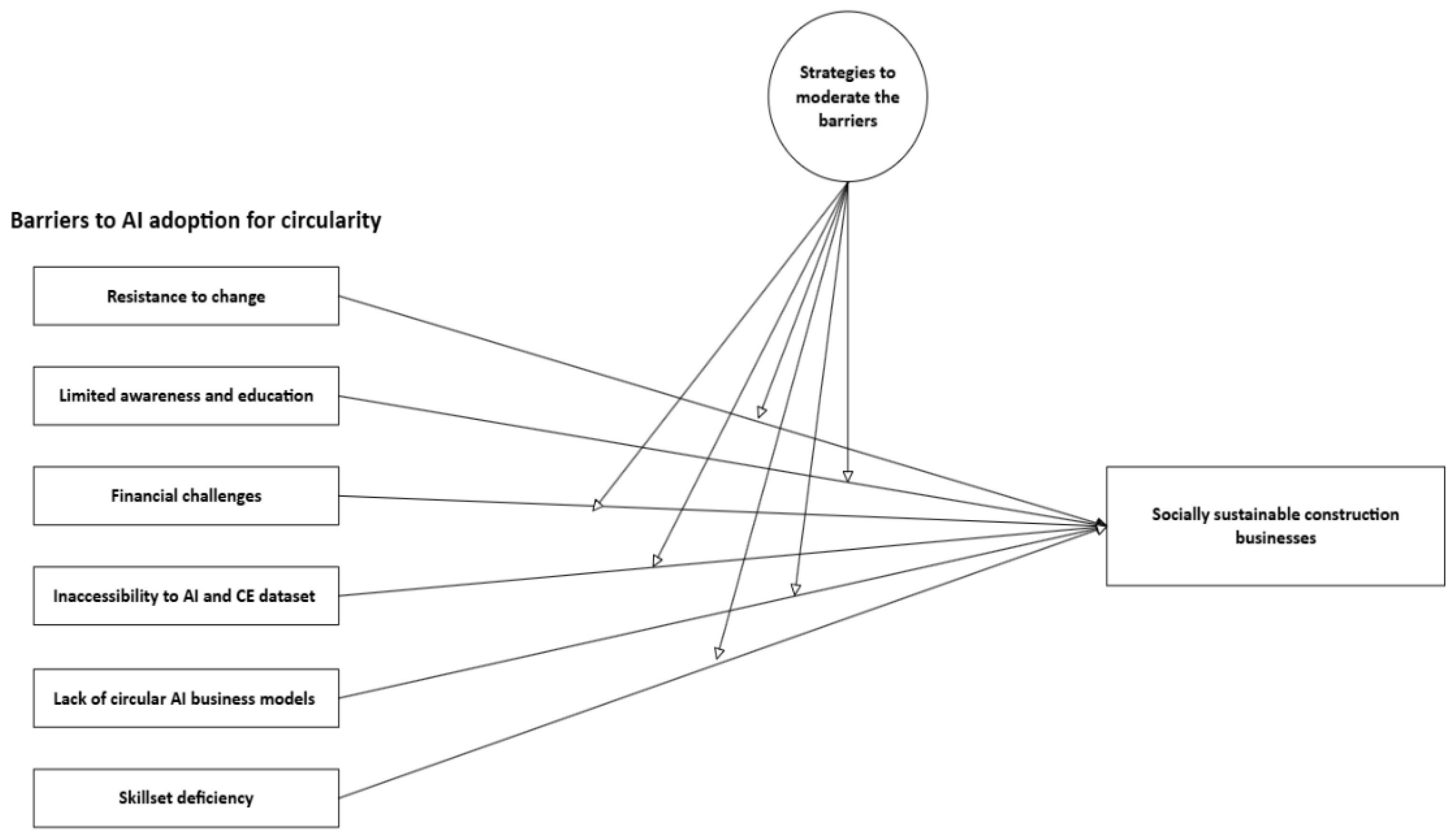
This section brings together the findings presented in Section 4.2 with informed explanations drawn from existing theories leading to formation of conceptual framework. In Figure 6, the independent variables (constructs) which are the key themes on the barriers to AI adoption are hypothesized to pose negative influence on socially sustainable construction businesses, the dependent variable. These challenges are moderated by concerted strategies to overcome the barriers. Beginning with the resistance to adoption to AI for social-friendly construction business has its foundation in Kotter and Schlesinger [81]’s change theory. The theory emphasizes the reasons behind the responses of people under psychology and behavioral stimuli to new technologies. It argues people (in this context construction business owners) are likely to decry smart technologies like AI because they perceive it could take over their place and alter their roles. Rosenbaum and Bartels [82] recounted that these leaders, including employees in construction firms, prefer to maintain the status quo of their jobs, giving them maximum security and shed against technological takeover. The moderating solution to this problem is to provide employees and managers with assurance of job security and signal stability. Grounded in the technology acceptance model, integrating AI in construction business management is perceived to be usefulness for tracking social improvement within the organization settings [83]. The information gap theory [84] offers contextual explanations to the limited awareness, education, data and training on the information and data distribution together with skills on AI digitalization for socially responsible businesses in the construction sector. Santoni de Sio and Mecacci [85] presented systematic examples on why these things happen and measures to improve upon knowledge empowerment together with participation of employees and managers within the participatory action theory. Financial risk remains one of the biggest threats to purchase or develop new technologies such as AI for social changes due to their expenditure compared to traditional models of running construction business [86]. Lastly, the absence of AI-CE based business models limit the achievement of social sustainability in construction business settings.
5. Implications of the study
This study has twofold implications for practice and research. First, the findings from this systematic analysis of articles pertaining to the social sustainability of construction enterprises provide insights into the major challenges facing the adoption of AI to transform the business operations of construction firms. The study provides six themes after rigorous analysis and matching of existing studies which will serve as a foundation to undertake future studies. In Section 4.3, a conceptual framework has been provided which could support investigations into the combination of three concepts in construction businesses. Second, the thematic analysis outcomes together with the interpretation in Section 4.2 provides important information for understanding among practitioners within the construction industry. The results could be considered for new internal policies and changes in existing practices towards inclusion, diversity and fairness within construction organizations. With the insight given in this study, practitioners, managers and key stakeholders should combine their resources to develop practical measures to overcome the six challenges. For instance, the study highlights the correlation between awareness of AI digitalization and the skills available within construction companies. Investing in workforce training is critical for enabling the successful adoption of AI digitalization and improving overall social outcomes of construction firms.
6. Conclusion
AI-driven CE business models which are friendly to social sustainability are increasingly gaining traction in construction enterprises. In this article, the focus was on the barriers to embracing AI for social responsibility in circular construction firms that were analyzed with systematic literature of thirty-five relevant studies. It was evident from the study that there is a growing trend of studies particularly from 2020. Most of the studies have been conducted in the heavily industrialized nations of United States, Australia and China. From the thematic analysis, six key barriers were identified including financial challenges, awareness and education barriers, lack of AI-enabled CE business models, inadequate skillset and data challenges as well as resistance to change. Even though this study sets a foundation for further studies and practices, there are limitations which should be addressed in future work. The study relied on 35 articles and the findings from the analysis, especially the conceptual model in Section 4.3, were not validated with real-world data. Researchers in future studies should consider empirical data sourcing and validation of the model either through questionnaires, interviews or already collected datasets from construction businesses to test the practicality of the results. It was also evident from the study that majority of the relevant studies were conducted in advanced nations with little in developing countries. Even though the world is drawing closer to the 2030 timeline for sustainable development goals (SDGs), construction businesses in developing countries as evidenced in this study have been under-researched concerning attainment of social sustainability. This geographical divide about the challenges faced on AI adoption provides avenue for research with contextual and business operation realities.
Author Contributions
Conceptualization, F.A.D and I.A-F.; methodology, F.A.D; formal analysis, F.A.D, I.A-F, A.S.K. J.N.A.O.; writing—original draft preparation, F.A.D, I.A-F.; writing—review and editing, I.A-F, A.S.K, J.N.A.O.; visualization, J.N.A.O.; supervision, I.A-F. All authors have read and agreed to the published version of the manuscript.
Funding
This research received no external funding
Data Availability Statement
Data is available upon request from the corresponding author
Acknowledgments
Authors are grateful and acknowledge anonymous reviewers and editors for their meaningful contributions that enriched the content of this article.
Conflicts of Interest
The authors declare no conflicts of interest.
Appendix A. Articles Selected for the Review.
| Serial number | Selected Articles |
| 1 | Asiedu, Owusu-Manu, Gyimah, Edwards and Amoakwa [52] |
| 2 | Liu, et al. [87] |
| 3 | Scipioni, et al. [88] |
| 4 | Bamgbose, et al. [89] |
| 5 | Çetin, De Wolf and Bocken [38] |
| 6 | Chen, et al. [90] |
| 7 | Perera, et al. [91] |
| 8 | Wang, et al. [92] |
| 9 | Vollmers and Long [93] |
| 10 | Núñez-Cacho Utrilla, et al. [94] |
| 11 | Akinade, Oyedele, Oyedele, Delgado, Bilal, Akanbi, Ajayi and Owolabi [41] |
| 12 | Górecki, et al. [95] |
| 13 | Giorgi, Lavagna, Wang, Osmani, Liu and Campioli [39] |
| 14 | Alwashah, et al. [96] |
| 15 | Guerra and Leite [37] |
| 16 | Das, Perera, Senaratne and Osei-Kyei [2] |
| 17 | Zhang, et al. [97] |
| 18 | Pittri, et al. [98] |
| 19 | Shao, et al. [99] |
| 20 | Karaca, et al. [100] |
| 21 | Naji, et al. [101] |
| 22 | Oke, et al. [102] |
| 23 | Likita, et al. [103] |
| 24 | Karaca, et al. [104] |
| 25 | Mandičák, et al. [105] |
| 26 | Demirkesen and Tezel [40] |
| 27 | Geng, et al. [106] |
| 28 | Sepasgozar, et al. [107] |
| 29 | Liu, et al. [108] |
| 30 | Ho, et al. [109] |
| 31 | Wang, et al. [110] |
| 32 | Lara, et al. [111] |
| 33 | Alsaadi, et al. [112] |
| 34 | Ghobadi and Sepasgozar [113] |
| 35 | Vijayakumar, et al. [114] |
References
- Murugesan, U.; Subramanian, P.; Srivastava, S.; Dwivedi, A. A study of artificial intelligence impacts on human resource digitalization in industry 4.0. Decis. Anal. J. 2023, 7, 100249. [Google Scholar] [CrossRef]
- Das, P.; Perera, S.; Senaratne, S.; Osei-Kyei, R. A smart modern construction enterprise maturity model for business scenarios leading to Industry 4.0. Smart Sustain. Built Environ. 2025, 14, 23–49. [Google Scholar]
- Stoyanova, M. Good practices and recommendations for success in construction digitalization. TEM J. 2020, 9, 42–47. [Google Scholar] [CrossRef]
- Díaz-Arancibia, J.; Hochstetter-Diez, J.; Bustamante-Mora, A.; Sepúlveda-Cuevas, S.; Albayay, I.; Arango-López, J. Navigating digital transformation and technology adoption: A literature review from small and medium-sized enterprises in developing countries. Sustainability 2024, 16, 5946. [Google Scholar] [CrossRef]
- Samuel, F.; Watson, K. Social value of the built environment. Build. Cities 2023, 4. [Google Scholar] [CrossRef]
- Fernando, M.H.; Perera, B.; Nazar, S.; Ekanayake, B. AI-driven chatbot for social procurement in infrastructure projects: Empowering marginalised communities. Sustainable Development 2026. [Google Scholar]
- Rasheed, K.; Waqas, M.; Saad, S.; Zaland, A.; Ali, Z. Ethical and societal implications of AI in construction. In AI in material science; CRC Press, 2024; pp. 216–238. [Google Scholar]
- Azarikasmaee, Y. Adoption of Building Information Modelling in Construction: The Case of a Small-to Medium-sized Enterprise. Curtin University, 2017.
- Dainty, A.; Leiringer, R.; Fernie, S.; Harty, C. BIM and the small construction firm: a critical perspective. Build. Res. Inf. 2017, 45, 696–709. [Google Scholar] [CrossRef]
- Jayakodi, S.; Senaratne, S.; Perera, S. Circular Economy Business Model in the Construction Industry: A Systematic Review. Buildings 2024, 14, 379. [Google Scholar] [CrossRef]
- Ghobadi, M.; Sepasgozar, S.M. Challenges and benefits of implementing AI in timber construction for circular economy goals. Buildings 2025, 15, 1073. [Google Scholar] [CrossRef]
- Van Tam, N.; Toan, N.Q.; Van Phong, V. Investigating potential barriers to construction digitalization in emerging economies: A study in Vietnam. Int. J. Inf. Manag. Data Insights 2024, 4, 100226. [Google Scholar] [CrossRef]
- Regona, M.; Yigitcanlar, T.; Xia, B.; Li, R.Y.M. Opportunities and adoption challenges of AI in the construction industry: A PRISMA review. J. Open Innov. Technol. Mark. Complex. 2022, 8, 45. [Google Scholar] [CrossRef]
- Benachio, G.L.F.; Freitas, M.d.C.D.; Tavares, S.F. Circular economy in the construction industry: A systematic literature review. J. Clean. Prod. 2020, 260, 121046. [Google Scholar] [CrossRef]
- Zhang, B.; Larsson, J.; Reim, W. Circular Business Models for Construction Companies: A Literature Review and Future Research Directions. Sustainability 2025, 17, 4688. [Google Scholar] [CrossRef]
- Oladimeji, O.; Najjar, M.K.; Soares, C.A.; Haddad, A.N. The influence of building information modelling adoption in the viability of medium, small and micro scale construction firms (MSMSCFs). Buildings 2023, 13, 1087. [Google Scholar] [CrossRef]
- Zhang, Q.; Oo, B.L.; Lim, B.T.-H. Key practices and impact factors of corporate social responsibility implementation: Evidence from construction firms. Eng. Constr. Archit. Manag. 2023, 30, 2124–2154. [Google Scholar]
- Zhang, Q.; Oo, B.L.; Lim, B.T.H. Corporate social responsibility practices by leading construction firms in China: a case study. Int. J. Constr. Manag. 2022, 22, 1420–1431. [Google Scholar]
- Vitorio Junior, P.C.; Kripka, M. Fair wage potential as a tool for social assessment in building projects. Eng. Constr. Archit. Manag. 2021, 28, 1295–1318. [Google Scholar]
- Weaver, R.; Brady, A.M. Building Responsible Projects in New York City: Assessing the Impact of Prevailing Wage Benefits on Workers, Contractors, and the New York City Economy. 2023.
- Lim, B.T.; Loosemore, M. How socially responsible is construction business in Australia and New Zealand? Procedia Eng. 2017, 180, 531–540. [Google Scholar] [CrossRef]
- Wu, C.-L.; Fang, D.-P.; Liao, P.-C.; Xue, J.-W.; Li, Y.; Wang, T. Perception of corporate social responsibility: The case of Chinese international contractors. J. Clean. Prod. 2015, 107, 185–194. [Google Scholar] [CrossRef]
- Lin, X.; Ho, C.M.-F.; Shen, G.Q. For the balance of stakeholders’ power and responsibility: A collaborative framework for implementing social responsibility issues in construction projects. Manag. Decis. 2018, 56, 550–569. [Google Scholar] [CrossRef]
- Denny-Smith, G.; Loosemore, M. Integrating Indigenous enterprises into the Australian construction industry. Eng. Constr. Archit. Manag. 2017, 24, 788–808. [Google Scholar] [CrossRef]
- Shennib, F.; Eicker, U.; Schmitt, K. OpenWasteAI—Open data, IoT, and AI for circular economy and waste tracking in resource-constrained communities. IEEE Technol. Soc. Mag. 2024, 43, 39–53. [Google Scholar] [CrossRef]
- Akomea-Frimpong, I.; Amponsah-Asante, L.; Tettey, A.S.; Antwi-Afari, P. A systematic review of literature on electric vehicle ready buildings. J. Build. Eng. 2025, 100, 111789. [Google Scholar] [CrossRef]
- Buccheri, R.K.; Sharifi, C. Critical appraisal tools and reporting guidelines for evidence-based practice. Worldviews Evid.-Based Nurs. 2017, 14, 463–472. [Google Scholar] [CrossRef] [PubMed]
- Khosravi, M.; Zare, Z.; Mojtabaeian, S.M.; Izadi, R. Artificial intelligence and decision-making in healthcare: a thematic analysis of a systematic review of reviews. Health Serv. Res. Manag. Epidemiol. 2024, 11, 23333928241234863. [Google Scholar] [CrossRef] [PubMed]
- Kukah, A.S.; Akomea-Frimpong, I.; Jin, X.; Osei-Kyei, R. Emotional intelligence (EI) research in the construction industry: a review and future directions. Eng. Constr. Archit. Manag. 2022, 29, 4267–4286. [Google Scholar]
- Braun, V.; Clarke, V. Reflecting on reflexive thematic analysis. Qual. Res. Sport Exerc. Health 2019, 11, 589–597. [Google Scholar] [CrossRef]
- Danish, M.S.S.; Senjyu, T. Shaping the future of sustainable energy through AI-enabled circular economy policies. Circ. Econ. 2023, 2, 100040. [Google Scholar] [CrossRef]
- Wang, Z.; Chen, J.; Chen, J.; Chen, H. Identifying interdisciplinary topics and their evolution based on BERTopic. Scientometrics 2024, 129, 7359–7384. [Google Scholar]
- Zhao, S.; Zhang, P.; Li, W. A study on evaluation of influencing factors for sustainable development of smart construction enterprises: Case study from china. Buildings 2021, 11, 221. [Google Scholar] [CrossRef]
- Dong, P.; Loh, M.; Mondry, A. The" impact factor" revisited. Biomed. Digit. Libr. 2005, 2, 1–8. [Google Scholar] [CrossRef]
- Akomea-Frimpong, I.; Kukah, A.S.; Jin, X.; Osei-Kyei, R.; Pariafsai, F. Green finance for green buildings: A systematic review and conceptual foundation. J. Clean. Prod. 2022, 356, 131869. [Google Scholar] [CrossRef]
- Waltman, L. A review of the literature on citation impact indicators. J. Inf. 2016, 10, 365–391. [Google Scholar] [CrossRef]
- Guerra, B.C.; Leite, F. Circular economy in the construction industry: An overview of United States stakeholders’ awareness, major challenges, and enablers. Resour. Conserv. Recycl. 2021, 170, 105617. [Google Scholar] [CrossRef]
- Çetin, S.; De Wolf, C.; Bocken, N. Circular Digital Built Environment: An Emerging Framework. Sustainability 2021, 13. [Google Scholar] [CrossRef]
- Giorgi, S.; Lavagna, M.; Wang, K.; Osmani, M.; Liu, G.; Campioli, A. Drivers and barriers towards circular economy in the building sector: Stakeholder interviews and analysis of five European countries policies and practices. J. Clean. Prod. 2022, 336, 130395. [Google Scholar] [CrossRef]
- Demirkesen, S.; Tezel, A. Investigating major challenges for industry 4.0 adoption among construction companies. Eng. Constr. Archit. Manag. 2022, 29, 1470–1503. [Google Scholar]
- Akinade, O.; Oyedele, L.; Oyedele, A.; Delgado, J.M.D.; Bilal, M.; Akanbi, L.; Ajayi, A.; Owolabi, H. Design for deconstruction using a circular economy approach: barriers and strategies for improvement. Prod. Plan. Control 2020, 31, 829–840. [Google Scholar] [CrossRef]
- Bu, Y.; Lu, W.; Wu, Y.; Chen, H.; Huang, Y. How wide is the citation impact of scientific publications? A cross-discipline and large-scale analysis. Inf. Process. Manag. 2021, 58, 102429. [Google Scholar] [CrossRef]
- Guan, L.; Li, W.; Guo, C.; Huang, J. Environmental strategy for sustainable development: Role of digital transformation in China's natural resource exploitation. Resour. Policy 2023, 87, 104304. [Google Scholar] [CrossRef]
- Kabirifar, K.; Mojtahedi, M.; Wang, C.C. A systematic review of construction and demolition waste management in Australia: Current practices and challenges. Recycling 2021, 6, 34. [Google Scholar] [CrossRef]
- Thirumal, S.; Udawatta, N.; Karunasena, G.; Al-Ameri, R. Barriers to adopting digital technologies to implement circular economy practices in the construction industry: a systematic literature review. Sustainability 2024, 16, 3185. [Google Scholar] [CrossRef]
- Wuni, I.Y. Drivers of circular economy adoption in the construction industry: A systematic review and conceptual model. Build. Res. Inf. 2023, 51, 816–833. [Google Scholar] [CrossRef]
- Asif, M. Growth and sustainability trends in the buildings sector in the GCC region with particular reference to the KSA and UAE. Renew. Sustain. Energy Rev. 2016, 55, 1267–1273. [Google Scholar] [CrossRef]
- Abildgaard, J.S.; Saksvik, P.Ø.; Nielsen, K. How to measure the intervention process? An assessment of qualitative and quantitative approaches to data collection in the process evaluation of organizational interventions. Front. Psychol. 2016, 7, 1380. [Google Scholar] [CrossRef] [PubMed]
- Ahmadu, H.A.; Abdullahi, A.M.; Badmos, A.M.; Abdullahi, M. Exploring measures for improving Small and Medium Construction Enterprises’(SMCEs) Participation in the Nigerian Public Procurement. Int. J. Real. Estate Stud. 2021, 15, 104–111. [Google Scholar] [CrossRef]
- Saka, A.B.; Chan, D.W. Adoption and implementation of building information modelling (BIM) in small and medium-sized enterprises (SMEs): a review and conceptualization. Eng. Constr. Archit. Manag. 2021, 28, 1829–1862. [Google Scholar]
- Moo, F.; Mohammed, E.E.A.I.A.; Sidik, A. Modeling the Factors Influencing the Growth of Small and Medium Size Construction Firms in Ghana. J. Econ. Sustain. Dev. 2020, 11. [Google Scholar] [CrossRef]
- Asiedu, R.O.; Owusu-Manu, D.-G.; Gyimah, S.; Edwards, D.J.; Amoakwa, A.B. Evaluating the adoption barriers of circular business models in the Ghanaian construction industry. Benchmarking An. Int. J. 2024. [Google Scholar] [CrossRef]
- Joshi, S.; Sharma, M.; Bisht, P.; Singh, S. Explaining the factors influencing consumer perception, adoption readiness, and perceived usefulness toward digital transactions: online retailing experience of millennials in India. J. Oper. Strateg. Plan. 2021, 4, 202–223. [Google Scholar] [CrossRef]
- Chen, Z.-S.; Lu, J.-Y.; Wang, X.-J.; Pedrycz, W. Identifying digital transformation barriers in small and medium-sized construction enterprises: A multi-criteria perspective. J. Knowl. Econ. 2024, 1–37. [Google Scholar] [CrossRef]
- Scholz, R.W.; Bartelsman, E.J.; Diefenbach, S.; Franke, L.; Grunwald, A.; Helbing, D.; Hill, R.; Hilty, L.; Höjer, M.; Klauser, S. Unintended side effects of the digital transition: European scientists’ messages from a proposition-based expert round table. Sustainability 2018, 10, 2001. [Google Scholar] [CrossRef]
- Varshney, D. Digital transformation and creation of an agile workforce: Exploring company initiatives and employee attitudes. In Contemporary global issues in human resource management; Emerald Publishing Limited, 2020; pp. 89–105. [Google Scholar]
- Lu, H.; Pishdad-Bozorgi, P.; Wang, G.; Xue, Y.; Tan, D. ICT implementation of small-and medium-sized construction enterprises: organizational characteristics, driving forces, and value perceptions. Sustainability 2019, 11, 3441. [Google Scholar] [CrossRef]
- Kääriäinen, J.; Pussinen, P.; Saari, L.; Kuusisto, O. Applying the positioning phase of the digital transformation model in practice for SMEs: toward systematic development of digitalization. Int. J. Inf. Syst. Proj. Manag. 2020, 8, 24–43. [Google Scholar] [CrossRef]
- Kohnke, O. It’s not just about technology: The people side of digitization. Shaping the digital enterprise: Trends and use cases in digital innovation and transformation 2017, 69–91. [Google Scholar]
- Witschel, D.; Döhla, A.; Kaiser, M.; Voigt, K.-I.; Pfletschinger, T. Riding on the wave of digitization: Insights how and under what settings dynamic capabilities facilitate digital-driven business model change. J. Bus. Econ. 2019, 89, 1023–1095. [Google Scholar] [CrossRef]
- Ofori, G. Nature of the construction industry, its needs and its development: A review of four decades of research. J. Constr. Dev. Ctries. 2015, 20, 115. [Google Scholar]
- Omowole, B.M.; Olufemi-Philips, A.; Ofadile, O.; Eyo-Udo, N.L.; Ewim, S.E. Barriers and drivers of digital transformation in SMEs: A conceptual analysis. Int. J. Frontline Res. Multidiscip. Stud. 2024, 5, 019–036. [Google Scholar] [CrossRef]
- Deakins, D.; Bensemann, J. Achieving innovation in a lean environment: How innovative small firms overcome resource constraints. Int. J. Innov. Manag. 2019, 23, 1950037. [Google Scholar] [CrossRef]
- Poredi, G. Process Monitoring: Analysis of manual tasks performed in digitalized workflows and their effect on service quality and employee performance. A Case Company Study. 2019.
- Maisarah, F.; Abduh, M.; Wirahadikusumah, R.; Cakravastia, A. Development of the conceptual business model of a third-party logistics provider for Indonesian small contractors. Int. J. Constr. Manag. 2025, 25, 194–203. [Google Scholar]
- Remes, J.; Mischke, J.; Krishnan, M. Solving the productivity puzzle: The role of demand and the promise of digitization. Int. Product. Monit. 2018, 28–51. [Google Scholar]
- Han, H.; Trimi, S. Towards a data science platform for improving SME collaboration through Industry 4.0 technologies. Technol. Forecast. Soc. Change 2022, 174, 121242. [Google Scholar] [CrossRef]
- Omachonu, V.K.; Einspruch, N.G. Innovation: implications for goods and services. Int. J. Innov. Technol. Manag. 2010, 7, 109–127. [Google Scholar] [CrossRef]
- Carayannis, E.G.; Samara, E.T.; Bakouros, Y.L. Innovation and entrepreneurship. Theory Policy Pract. 2015, 218, 978–973. [Google Scholar]
- Foss, N.J.; Saebi, T. Business models and business model innovation: Between wicked and paradigmatic problems. Long. Range Plan. 2018, 51, 9–21. [Google Scholar] [CrossRef]
- Zubari, H.; Sherman, S. Unlocking Innovation Potential: A Pragmatic Approach to Overcoming Barriers and Fostering Collaboration. In Proceedings of the SPE Gas & Oil Technology Showcase and Conference, 2024; p. D021S017R001. [Google Scholar]
- Iyelolu, T.V.; Agu, E.E.; Idemudia, C.; Ijomah, T.I. Driving SME innovation with AI solutions: overcoming adoption barriers and future growth opportunities. Int. J. Sci. Technol. Res. Arch. 2024, 7, 036–054. [Google Scholar] [CrossRef]
- Rizvi, S.; Kukah, A.S.K.; Jin, X.; Perera, S. Impacts of COVID-19 Pandemic on Construction Costs in Australia. In Proceedings of the International Symposium on Advancement of Construction Management and Real Estate, 2023; pp. 505–516. [Google Scholar]
- Ochs, T.; Riemann, U.A. IT strategy follows digitalization. In Encyclopedia of Information Science and Technology, Fourth Edition; IGI Global, 2018; pp. 873–887. [Google Scholar]
- Baslyman, M. Digital transformation from the industry perspective: definitions, goals, conceptual model, and processes. IEEE Access 2022, 10, 42961–42970. [Google Scholar] [CrossRef]
- Feichtinger, G. Digitalization in SME: a framework to get from strategy to action. Wien, 2018.
- Rachinger, M.; Rauter, R.; Müller, C.; Vorraber, W.; Schirgi, E. Digitalization and its influence on business model innovation. J. Manuf. Technol. Manag. 2019, 30, 1143–1160. [Google Scholar] [CrossRef]
- Depaoli, P.; Za, S.; Scornavacca, E. A model for digital development of SMEs: an interaction-based approach. J. Small Bus. Enterp. Dev. 2020, 27, 1049–1068. [Google Scholar] [CrossRef]
- Bouwman, H.; Nikou, S.; De Reuver, M. Digitalization, business models, and SMEs: How do business model innovation practices improve performance of digitalizing SMEs? Telecommun. Policy 2019, 43, 101828. [Google Scholar] [CrossRef]
- Akomea-Frimpong, I.; Dzagli, J.R.A.D.; Eluerkeh, K.; Bonsu, F.B.; Opoku-Brafi, S.; Gyimah, S.; Asuming, N.A.S.; Atibila, D.W.; Kukah, A.S. A systematic review of artificial intelligence in managing climate risks of PPP infrastructure projects. Engineering, Construction and Architectural Management 2023. [Google Scholar] [CrossRef]
- Kotter, J.P.; Schlesinger, L.A. Choosing strategies for change. In Readings in strategic management; Springer, 1989; pp. 294–306. [Google Scholar]
- Rosenbaum, J.M.; Bartels, N. Strategic implementation of artificial intelligence (AI) in construction: an integrated change and innovation management approach. Discov. Civ. Eng. 2026, 3, 49. [Google Scholar] [CrossRef]
- Okoro, C.S.; Nnaji, C.; Adediran, A. Determinants of immersive technology acceptance in the construction industry: management perspective. Eng. Constr. Archit. Manag. 2023, 30, 2645–2668. [Google Scholar]
- Bonfadelli, H. Gap Theory into Perspective. Communication Research and Media Science in Europe: Perspectives for Research and Academic Training in Europe's Changing Media Reality 2003, 289. [CrossRef] [PubMed]
- Santoni de Sio, F.; Mecacci, G. Four responsibility gaps with artificial intelligence: Why they matter and how to address them. Philos. Technol. 2021, 34, 1057–1084. [Google Scholar] [CrossRef]
- Marcos, C.J.L.; Lim, K.A.A.; Abuan, A.F.C.; Paronda, R.L.P.; Dionisio, K.G.C.; Buluran, J.S. Exploring the Efficiency of AI-Assisted Financial Risk Management for Residential Construction Projects: A Literature Review. In Proceedings of the 2025 6th International Conference on Big Data & Artificial Intelligence & Software Engineering (ICBASE), 2025; pp. 1–8. [Google Scholar]
- Liu, Y.; Sun, J.; Zhang, Z.; Wu, M.; Sima, H.; Ooi, Y.M. How AI impacts companies’ dynamic capabilities: Lessons from six Chinese construction firms. Res.-Technol. Manag. 2024, 67, 64–76. [Google Scholar] [CrossRef]
- Scipioni, S.; Russ, M.; Niccolini, F. From barriers to enablers: The role of organizational learning in transitioning SMEs into the circular economy. Sustainability 2021, 13, 1021. [Google Scholar] [CrossRef]
- Bamgbose, O.A.; Ogunbayo, B.F.; Aigbavboa, C.O. Barriers to Building Information Modelling Adoption in Small and Medium Enterprises: Nigerian Construction Industry Perspectives. Buildings 2024, 14, 538. [Google Scholar] [CrossRef]
- Chen, X.; Chang-Richards, A.Y.; Yiu, T.W.; Ling, F.Y.Y.; Pelosi, A.; Yang, N. A multivariate regression analysis of barriers to digital technologies adoption in the construction industry. Eng. Constr. Archit. Manag. 2024, 31, 4281–4307. [Google Scholar]
- Perera, C.S.R.; Francis, V.; Gao, S. Uptake of Industry 4.0 technologies in Australian construction firms. Engineering, Construction and Architectural Management 2025.
- Wang, K.; Xu, X.; Mao, P.; Deng, X.; Cao, D. Digital transformation and organizational readiness: evidence from Chinese construction SMEs with a dynamic managerial capabilities lens. Engineering, Construction and Architectural Management 2025.
- Vollmers, E.E.; Long, T.B. Circular Economy in the Construction Industry: Barriers and Drivers for the Implementation of Circularity in Family-Owned Construction Companies in Germany. Business Strategy and the Environment 2025.
- Núñez-Cacho Utrilla, P.; Górecki, J.; Maqueira, J.M. Simulation-based management of construction companies under the circular economy concept—Case study. Buildings 2020, 10, 94. [Google Scholar] [CrossRef]
- Górecki, J.; Núñez-Cacho, P.; Rutkowska, M. Study on circular economy implementation propensity of construction companies in context of prevailing management styles. Appl. Sci. 2022, 12, 3991. [Google Scholar] [CrossRef]
- Alwashah, Z.; Sweis, G.J.; Abu Hajar, H.; Abu-Khader, W.; Sweis, R.J. Challenges to adopt digital construction technologies in the Jordanian construction industry. Constr. Innov. 2024. [Google Scholar]
- Zhang, J.; Chen, M.; Ballesteros-Pérez, P.; Ke, Y.; Gong, Z.; Ni, Q. A new framework to evaluate and optimize digital transformation policies in the construction industry: A China case study. J. Build. Eng. 2023, 70, 106388. [Google Scholar] [CrossRef]
- Pittri, H.; Godawatte, G.A.G.R.; Esangbedo, O.P.; Antwi-Afari, P.; Bao, Z. Exploring barriers to the adoption of digital technologies for circular economy practices in the construction industry in developing countries: A case of Ghana. Buildings 2025, 15, 1090. [Google Scholar] [CrossRef]
- Shao, Z.; Li, M.; Han, C.; Meng, L. Evolutionary game model of construction enterprises and construction material manufacturers in the construction and demolition waste resource utilization. Waste Manag. Res. 2023, 41, 477–495. [Google Scholar] [PubMed]
- Karaca, F.; Tleuken, A.; Pineda-Martos, R.; Ros Cardoso, S.; Orel, D.; Askar, R.; Agibayeva, A.; Güemez, E.G.; Salles, A.; Varol, H.A. Cultivating sustainable construction: stakeholder insights driving circular economy innovation for inclusive resource equity. Buildings 2024, 14, 935. [Google Scholar] [CrossRef]
- Naji, K.K.; Gunduz, M.; Al-Hababi, H. Mapping the Digital Transformation Maturity of the Building Construction Industry Using Structural Equation Modeling. Buildings 2024, 14, 2786. [Google Scholar] [CrossRef]
- Oke, A.E.; Aliu, J.; Farhana, M.Z.; Jesudaju, O.T.; Lee, H.-P. A capability assessment model for implementing digital technologies in Nigerian heavy construction firms. Smart Sustain. Built Environ. 2024.
- Likita, A.J.; Jelodar, M.B.; Vishnupriya, V.; Rotimi, J.O.B.; Vilasini, N. Lean and BIM implementation barriers in New Zealand construction practice. Buildings 2022, 12, 1645. [Google Scholar] [CrossRef]
- Karaca, F.; Tleuken, A.; Awan, H.H.; Askar, R.; Çidik, M.S.; Iskakova, A.; Turkyilmaz, A.; Laudal, T.; Durdyev, S.; Varol, H.A.; et al. Stakeholder perspectives on the costs and benefits of circular construction. Sci. Rep. 2024, 14. [Google Scholar] [CrossRef] [PubMed]
- Mandičák, T.; Spišáková, M.; Mésároš, P.; Kozlovská, M. Design of economic sustainability supported by enterprise resource planning systems in architecture, engineering, and construction. Buildings 2022, 12, 2241. [Google Scholar] [CrossRef]
- Geng, X.; Lv, L.; Wang, Y.; Sun, R.; Wang, X. Evolutionary Game Research on Green Construction Considering Consumers’ Preference under Government Supervision. Int. J. Environ. Res. Public Health 2022, 19, 16743. [Google Scholar] [CrossRef] [PubMed]
- Sepasgozar, S.M.; Khan, A.A.; Smith, K.; Romero, J.G.; Shen, X.; Shirowzhan, S.; Li, H.; Tahmasebinia, F. BIM and digital twin for developing convergence technologies as future of digital construction. Buildings 2023, 13, 441. [Google Scholar] [CrossRef]
- Liu, J.; Wu, P.; Jiang, Y.; Wang, X. Explore potential barriers of applying circular economy in construction and demolition waste recycling. J. Clean. Prod. 2021, 326, 129400. [Google Scholar] [CrossRef]
- Ho, H.W.L.; Haaker, T.; Yishake, M. Barriers and Opportunities when Transitioning from Linear to Circular Business Models: Evidence from the Construction and Manufacturing Sectors in The Netherlands. Circ. Econ. Sustain. 2025, 5, 1865–1886. [Google Scholar] [CrossRef]
- Wang, W.-Z.; Shang, X.-Y.; Guo, J.; Skibniewski, M.J.; Chen, Z.-S. Unveiling the impact of digital transformation on carbon emissions: evidence from China’s construction enterprises. Enterp. Inf. Syst. 2024, 18, 2437660. [Google Scholar] [CrossRef]
- Lara, J.C.F.; El Fadel, M.; Khalfan, M.M.A. Integrating Industry 4.0 and circular economy in the UAE construction sector: a policy-aligned framework. Built Environ. Proj. Asset Manag. 2025, 15, 535–556. [Google Scholar] [CrossRef]
- Alsaadi, O.; Alpkan, L.; Yildiz, B. Business model innovation as a mediator between construction 4.0 and firm performance: Evidence from Turkish construction companies. Int. J. Innov. Stud. 2025, 9, 77–89. [Google Scholar] [CrossRef]
- Ghobadi, M.; Sepasgozar, S.M.E. Challenges and Benefits of Implementing AI in Timber Construction for Circular Economy Goals. Buildings 2025, 15. [Google Scholar] [CrossRef]
- Vijayakumar, A.; Mahmood, M.N.; Gurmu, A.; Kamardeen, I.; Alam, S. A tool for evaluating the lifecycle social sustainability performance of Australian freeways. Smart Sustain. Built Environ. 2026, 1–41. [Google Scholar] [CrossRef]
Figure 1.
Annual Publication.
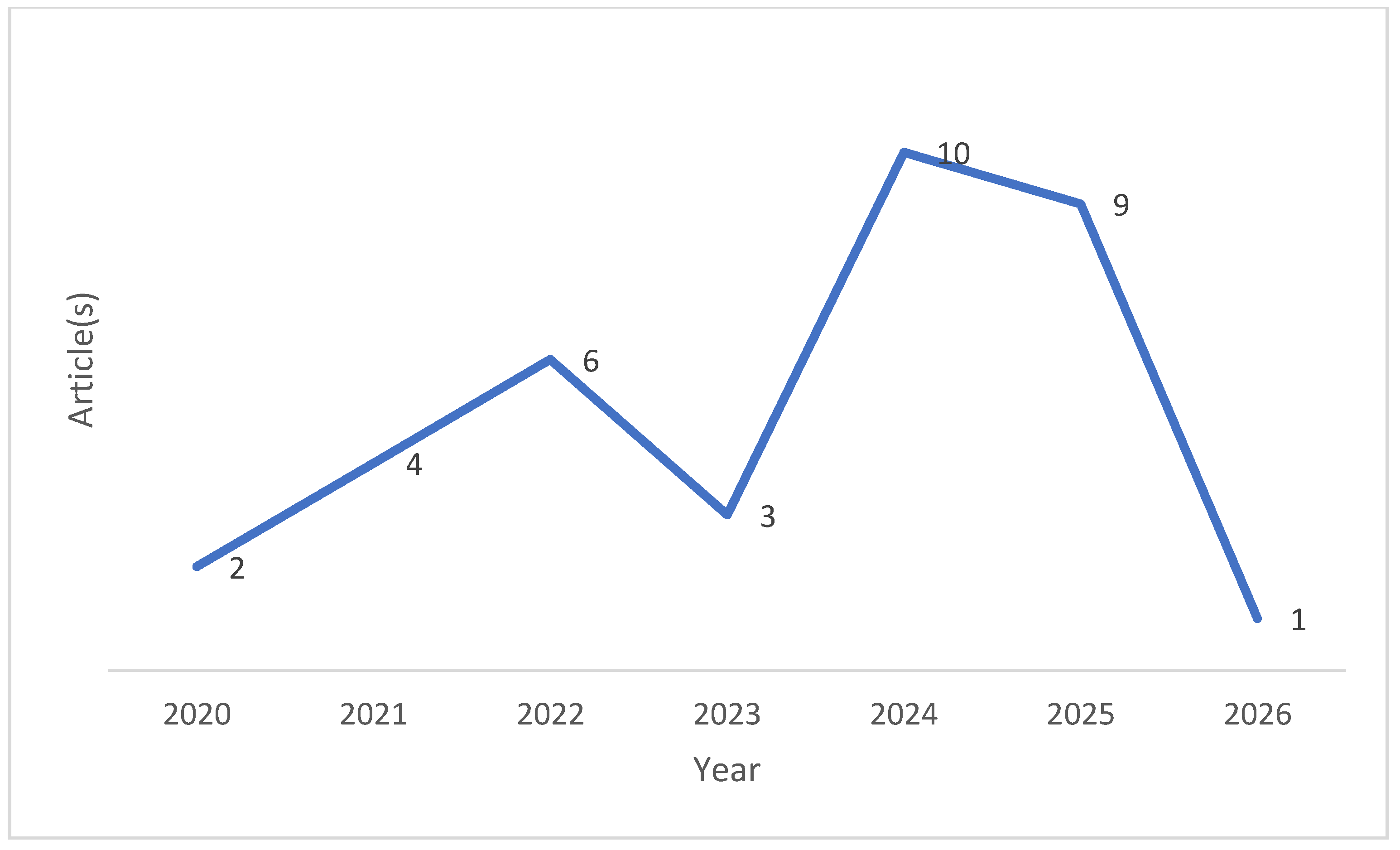
Figure 2.
Journals with impact factors.
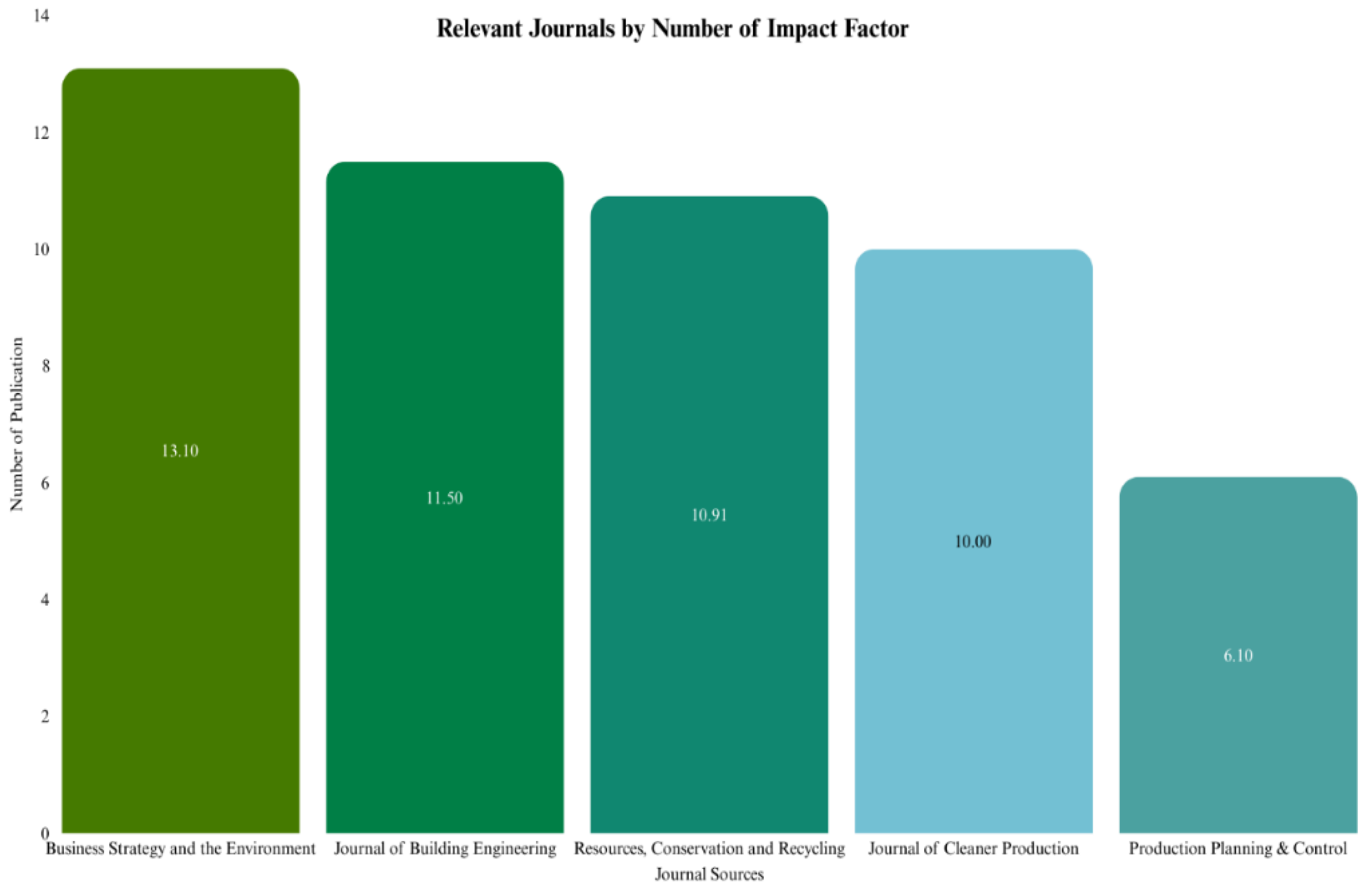
Figure 3.
Article citations.
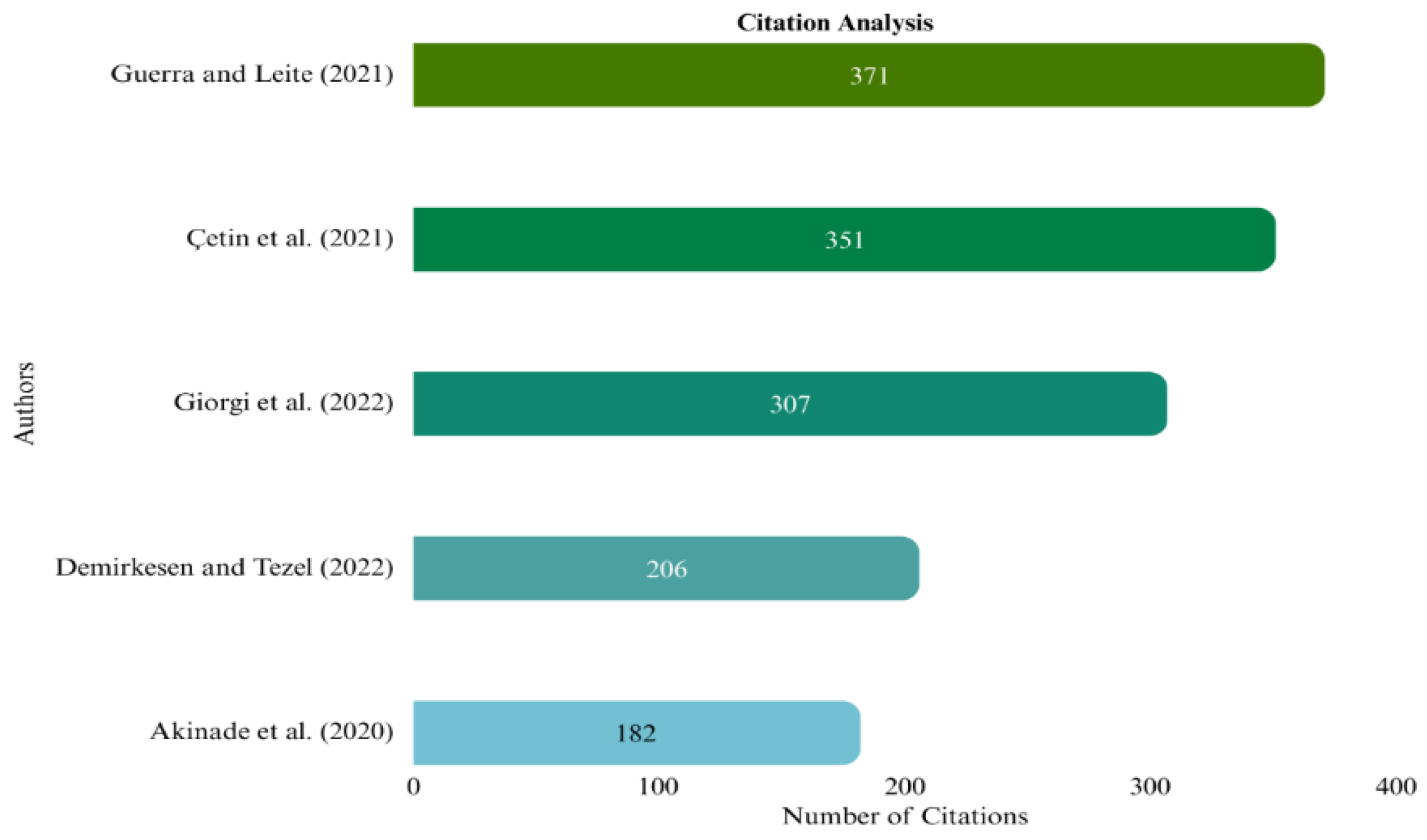
Figure 4.
Country of origin of studies.
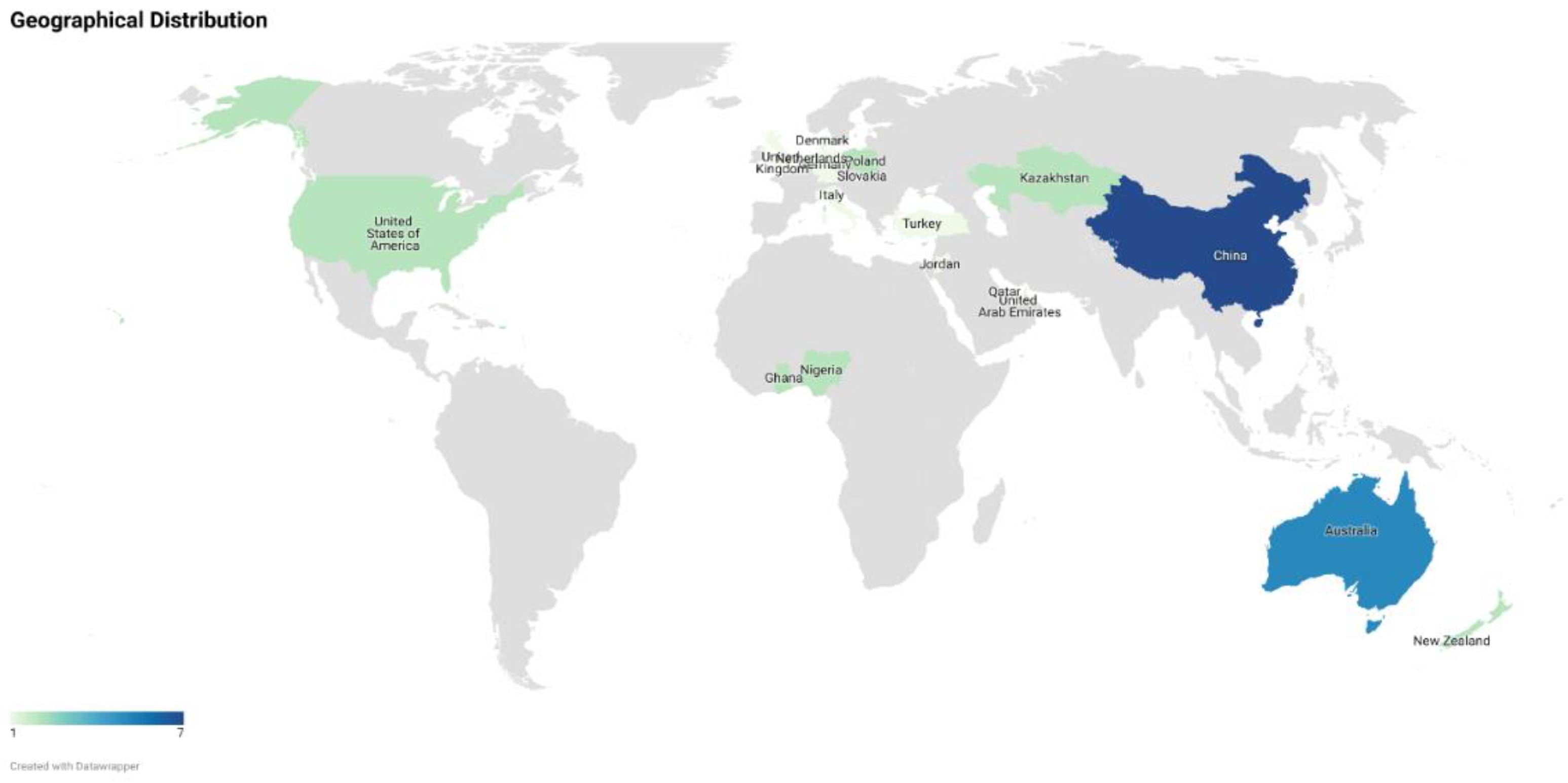
Figure 5.
Research designs within the selected articles.
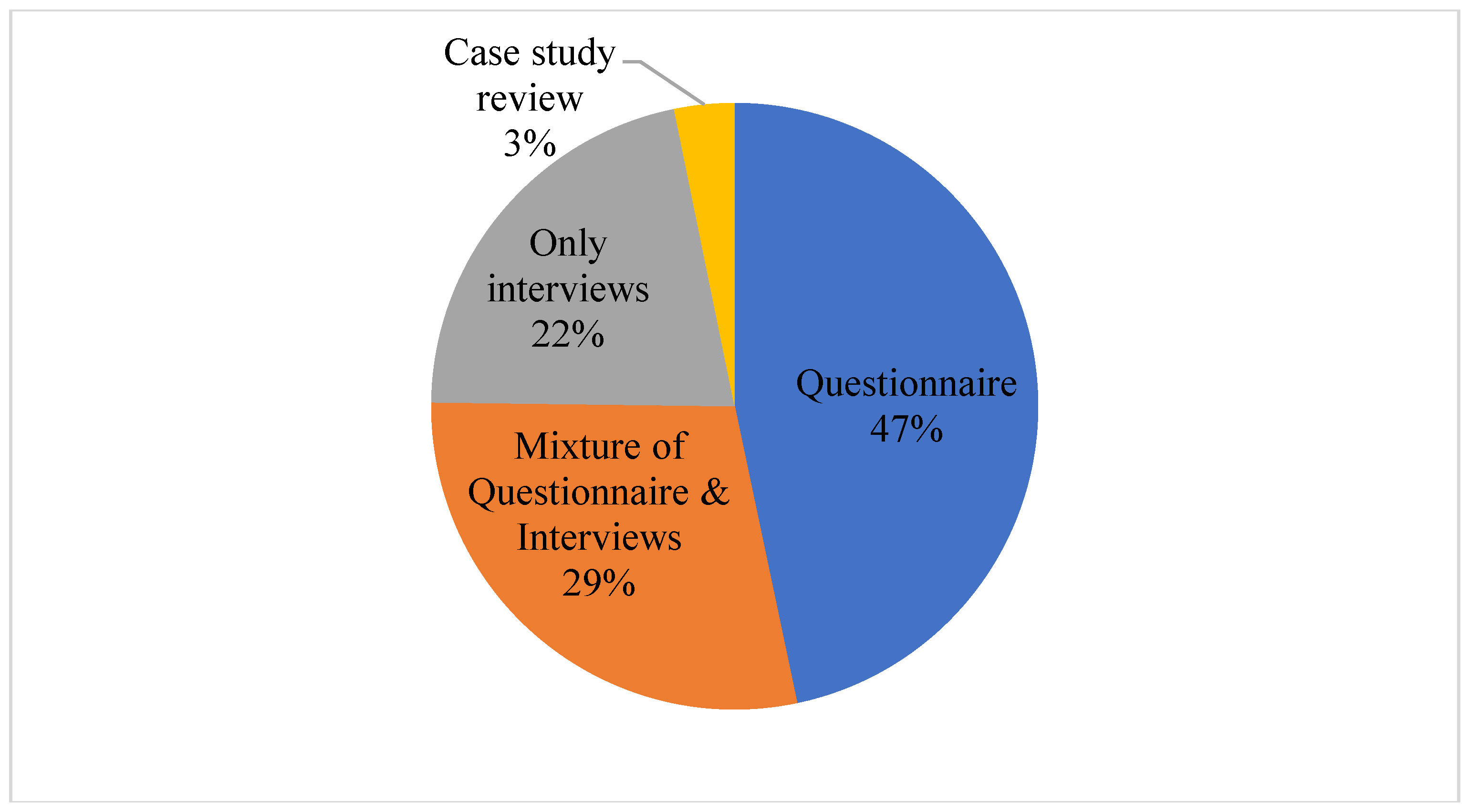
Figure 6.
Conceptual model.
Disclaimer/Publisher’s Note: The statements, opinions and data contained in all publications are solely those of the individual author(s) and contributor(s) and not of MDPI and/or the editor(s). MDPI and/or the editor(s) disclaim responsibility for any injury to people or property resulting from any ideas, methods, instructions or products referred to in the content. |
© 2026 by the authors. Licensee MDPI, Basel, Switzerland. This article is an open access article distributed under the terms and conditions of the Creative Commons Attribution (CC BY) license (http://creativecommons.org/licenses/by/4.0/).
Copyright: This open access article is published under a Creative Commons CC BY 4.0 license, which permit the free download, distribution, and reuse, provided that the author and preprint are cited in any reuse.


