
Submitted:
18 June 2026
Posted:
22 June 2026
You are already at the latest version
Abstract
This study investigated breed-related genetic predisposition on hunting behaviour by comparing Magyar Vizslas and Border Collies using behavioural tests and an online questionnaire. Differences in specific sequences of the hunting behaviour chain were examined with respect to frequency, duration, and latency. Three standardized test situations were conducted with 15 dogs (8 Magyar Vizslas, 7 Border Collies), including reactions to a thrown toy, a play rod, and a running human. Behavioural data were analysed using the Mann–Whitney-U-test for frequencies and randomization tests for duration and latency. Significant breed differences were found for the duration of chasing behaviour: Border Collies exhibited longer chasing durations than Magyar Vizslas in response to a play rod (p = 0.004) and a running human (p = 0.025). To increase sample size, an online questionnaire was issued, completed by 359 dog handlers and then analysed using the Kruskal-Wallis-test. Particularly striking were the findings regarding the behaviour of pointing: Magyar Vizslas showed significantly higher frequencies of pointing behaviour both in response to thrown toys and during wildlife encounters (p < 0,001). Overall, results from both behavioural tests and questionnaire data indicate breed-typical predispositions affecting specific components of hunting behaviour in these two breeds.
Keywords:
genetic predisposition
; hunting behaviour
; herding behaviour
; pointing dogs
; herding dogs
1. Introduction
In order to understand the influence of genetics on dog behaviour, the biological background of breed-typical disposition has to be explored. Genetic influence is not changeable for one dog, but some factors only develop in correspondence with environmental conditions. Therefore, genetic and environmental factors are closely linked, and numerous studies suggest that categorizing behaviours as “innate” or “learned” or attributing them solely to genes or environmental factors is futile [1,2,3]. Even in controlled laboratory settings, separating genetic and environmental influences is challenging, as they interact. On top of that, examining the influence of genetic predisposition is exacerbated, because often multiple genes interact and don’t follow simple inheritance patterns [4].
As dog breeds were and partly are crucial for specific tasks like hunting or herding, their behavioural development reflects the influence of genetics very well. Based on the breeds’ different functions and origins they can be divided into various groups. Dutrow et al. (2022) categorize breeds in “10 major domestic dog lineages”: scent hound, pointer-spaniel, terrier, retriever, herder, sled, African and Middle Eastern, Asian spitz, dingo, sighthound [5]. A study by Parker et al. (2017) examines over 1,300 dogs from 161 breeds, considering factors like migration and geographic separation to understand breed history. Despite the complexity, the study reveals origins, migration effects, and the transfer of traits and disease alleles among breeds, which lead to 23 breed clades [6].
Many studies regarding heritability of behaviour traits are quite sobering. For example, Hradecka et al. (2015) found low within-breed heritabilities (9.3 – 15.4%) in all tested categories, which were behaviour towards environment, herding, hunting, play, and psychical characteristic. According to the authors of this study this is probably due to the many influences on behaviour traits over the whole life of an individual (e.g. quality of maternal milk, food as a puppy, socialization, early experiences and therefore neuronal changes when young) [7]. Besides, there are many difficulties in testing heritabilities because of the influence of the handler and few offspring in dogs. In contrast, heredities of physical characteristics, such as weight and height, are easier to measure and also way higher (40 – 70%) [8] (pp. 56-57). Nevertheless, Gnanadesikan et al. (2020) discovered that specific cognitive traits are highly inheritable between breeds. These are inhibitory control with up to 70% heritability and communication with handler with up to 50%. They stated that these heritabilities must have been increased by domestication, since self-control and focus were important features for the dogs, that were bred for practical reasons [9]. In a publication of the same year, they also found out that these breed-specific cognitive traits are correlated with genetic clusters and identified three significant SNPs in 140 genes associated with the traits inhibitory control, memory and physical reasoning. The identified genes are tied to nervous system development and brain-specific expression and consequently are linked to specific behavioural traits. Hence, the study supports the idea that selective breeding (e.g., for herding vs. hunting) has shaped the cognitive profiles of dog breeds [10]. In another study MacLean et al. (2019) ascertained that the genotype is responsible for half of the differences in behaviour across breeds / breed-groups (e.g. 75% trainability, 68% stranger-directed aggression). These behaviour associated genes play a part in processes involving the nervous system and the brain. They also found that between-breed heritabilities are up to 25 times higher than within-breed heritabilities, probably because different breeds have been selected for particular behavioural characteristics for a long time [11].
However, socialization during puppyhood and adolescence should also be considered an important factor influencing the later development of behaviour, as there are specific periods during which the brain exhibits increased neuroplasticity and is particularly susceptible to environmental influences [12]. Of particular relevance to this study is the socialization period, which is generally assumed to last between approximately 2.5 and 9-13 weeks of age [13]. During this stage, dogs show a heightened willingness to form social bonds. Consequently, early exposure to other animals during this period may reduce the likelihood of these animals being perceived as prey [14]. It should be noted, however, that some studies suggest that in Border Collies the critical period for socialization may begin earlier and extend up to 20 weeks of age [15,16].
In our tests we decided to examine the influence of the genetic predisposition on hunting behaviour, as tests are easily viable and different behaviours can be distinguished very well.
Hunting behaviour in dogs comprises a chain of actions, with wolves typically displaying the entire sequence, while dogs show variations depending on breed groups. The hunting sequence (“Coppinger chain”) includes searching, locating, freezing, staring, stalking, chasing, grabbing, killing, and potentially carrying or eating prey [17]. To investigate the differences in the hunting behaviour chain, two breeds were chosen, Magyar Vizsla and Border Collie. We selected them, because on one side they are very common, so it was feasible to find enough dogs and dog handlers for our examinations, and on the other side they were and partly still are selected for different tasks. The Magyar Vizsla is a pointing dog, originally bred in Hungary for hunting birds, which therefore shows especially freezing, more specifically pointing, when detecting prey and later retrieves it [18]. On the contrary, Border Collies are British herding dogs, bred to herd sheep. Thus, their behaviour includes freezing, stalking and chasing, but the actions of grabbing and killing prey were selected against [17].
These distinctions also appear in their neuronal development. Hecht et al. (2019) looked for underlying neural differences, since the heritability of behavioural differences across breeds is relatively high. Actually, they identified six specific regional brain networks that differ between individual dogs or their breed groups and therefore explain neuroanatomical variation. These differences in brain organization are the result of selection for specific behavioural traits and typically appear on the terminal branches of the phylogenetic tree. The fact that all six networks are associated with at least one specific behaviour (e.g., sight hunting, scent hunting, guarding) demonstrates that the canine brain has been shaped by selective breeding. Unfortunately, in this study there was no Magyar Vizsla, but at least some closely related breeds (German short haired pointer, Weimaraner) [6]. They have a factor loading of +1 for the component, that is significantly related to bird flushing and retrieving and high values for the networks which have high correlation coefficients for sight and scent hunting. Additionally, the two Magyar Vizsla related breeds have a negative factor loading for component 4 that is linked to herding. Based on this research it is likely that the Vizsla’s brain organization is meant for bird flushing and retrieving, sight and scent hunting as against the Border Collie [19].
Consequently, we stated, that the hunting behaviour of Magyar Vizslas and Border Collies vary in different sequences of the behaviour chain “hunting” (appearance and intensity) because of a breed related genetic predisposition. The Border Collie was thought to display stalking and chasing behaviour more frequently and more intensively, whereas the Magyar Vizsla should show more pointing behaviour and this also in a more intense way.
2. Materials and Methods
2.1. Behavioural Observations in Specific Test Situations
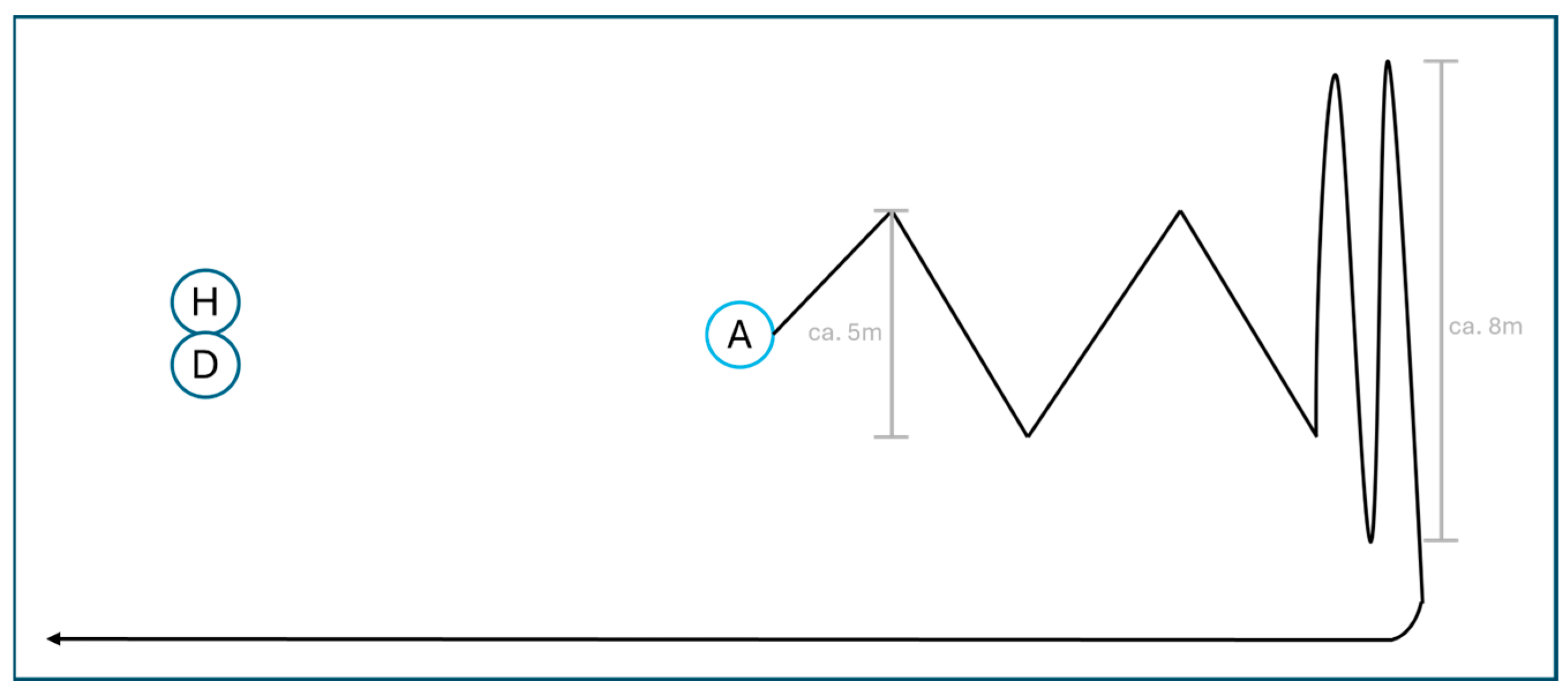
Behavioural observations were conducted using three different tests: Firstly, a helper drew the dog’s attention to a toy and then threw the object, while the handler held the dog on a leash at first and then unleashed it after about 5 seconds. The second test assessed the reaction to a play rod with a structure similar to test 1, but the helper moved the toy rod in circles and figures of eight in an approximate distance of 15 meters from the dog. After few seconds the dog was unleashed, as well. Lastly, the test setup required the helper to run in a specific pattern (Figure A1) away from the dog and past the dog. In this situation the dog was not unleashed. Hereafter, the tests are referred to as “test 1 – toy throwing”, “test 2 – play rod” and “test 3 – running human”. In all tests the dog caregiver was supposed to act neutral towards the dog, meaning no speaking, touching, pulling the leash et cetera, to minimize its influence. For later appraisals the dog was filmed the whole time. Between the three test situations each dog had a break of few minutes, and we decided to conduct test 1 – toy throwing last due to concerns about dogs fixating on their toys and, hence affecting subsequent tests.
15 dogs (8 Magyar Vizslas, 7 Border Collies) were filmed, and their behaviour was analysed afterwards using six categories: locating, freezing, pointing, stalking, chasing, and grabbing & mouthing (definitions of these behaviours in Table 1). We evaluated them by the frequency of a particular behavioural pattern, duration in seconds (except for grabbing, as this did not seem sensible) and latency in seconds. The data were transferred to a table and assessed using IBM SPSS Statistics software version 29.0 for Mann-Whitney-U-Test and the browser versions of StatKey v. 3.0.4 (https://www.lock5stat.com/StatKey/advanced_1_quant_1_cat/advanced_1_quant_1_cat.html) and “P-Value from F-Ratio Calculator” from https://www.socscistatistics.com/pvalues/fdistribution.aspx for randomization test. Mann-Whitney-U-test was employed to calculate p-values for differences between Magyar Vizslas and Border Collies in behaviour frequency, whereas the randomization test was applied for the data on duration and latency. With both statistical tests we looked for significance values below 0.05. Finally, boxplot diagrams, created using Microsoft Excel (Version 2603, Microsoft 365), were used for graphical representation of results.
[20]
2.2. Online Questionnaire
An online survey was created working with SurveyMonkey to gather a larger sample of handlers of Magyar Vizslas and Border Collies (questionnaire: Figure S1, Figure S2). Participants were asked to answer general questions (e.g. age, sex) and behaviour assessment questions using a scale ranging from “(almost) never occurs” to “(almost) always occurs” in various scenarios, which included the dog’s response to a thrown toy, encountering joggers, cyclists, or other fast-moving individuals, and encountering wildlife. Then breed-specific questions were asked, such as whether the Border Collie understood its herding task from the beginning (if it has ever herded) or if the Vizsla knew what to do on a hunt (if it has ever been on a hunt). Distribution efforts included sharing flyers among acquaintances, veterinary practices and dog training schools, promoting it on Instagram accounts, and enlisting the help of influencers and Udo Gansloßer’s team to reach a wide audience. In the end, 359 participants took the survey between August 1st and October 17th, 2022, thereof 310 persons answered all questions and of that 180 were handlers of a Magyar Vizsla and 130 handlers of a Border Collie. The analysis focused on three scaling questions related to fixating, pointing, and chasing behaviour, where we assumed the most differences. For that the Kruskal-Wallis-test (also IBM SPSS Statistics 29.0), which works similar to the U-test but with more variables, was used to compare distinctions between the two breeds. A pie chart was exerted for graphical representation due to the sufficient sample size.
3. Results
3.1. Behavioural Observations
The evaluation of test 1 – toy throwing shows that no values of the Mann-Whitney-U-test (for frequency) or the randomization test (for duration and latency) depict significant differences.

Table 2.
p-values of the differences between Border Collies and Magyar Vizslas in frequency, duration and latency regarding their hunting behaviour in test 1 – toy throwing. Duration and latency were analyzed using a randomization test, while frequency was analyzed using a Mann–Whitney-U-Test. No p-values are <0.05, so there are no statistical significances.
Table 2.
p-values of the differences between Border Collies and Magyar Vizslas in frequency, duration and latency regarding their hunting behaviour in test 1 – toy throwing. Duration and latency were analyzed using a randomization test, while frequency was analyzed using a Mann–Whitney-U-Test. No p-values are <0.05, so there are no statistical significances.
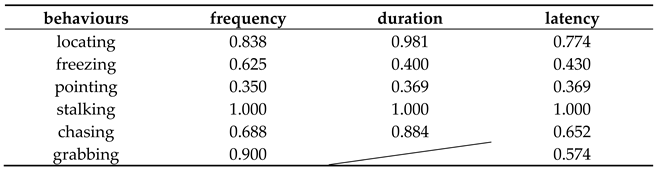
Table 3.
p-values of the differences between Border Collies and Magyar Vizslas in frequency, duration and latency regarding their hunting behaviour in test 2 – play rod. Duration and latency were analyzed using a randomization test, while frequency was analyzed using a Mann–Whitney-U-Test. The blue marked value is p<0.05, which shows a statistically relevant result. The grey marked value shows a tendency, since it’s close to p=0.05.
Table 3.
p-values of the differences between Border Collies and Magyar Vizslas in frequency, duration and latency regarding their hunting behaviour in test 2 – play rod. Duration and latency were analyzed using a randomization test, while frequency was analyzed using a Mann–Whitney-U-Test. The blue marked value is p<0.05, which shows a statistically relevant result. The grey marked value shows a tendency, since it’s close to p=0.05.
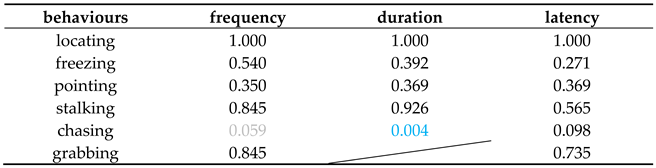
In test 2 – play rod the asymptotic significance of the duration of chasing was high enough and thus, we see relevant distinctions between the two breeds. Also, the p-value of the frequency of chasing is close to the threshold, so you can assume a tendency to breed-differences in frequency as well.
Figure 1.
Boxplot showing the frequency of different behavioural patterns in Magyar Vizslas (Vizsla; n = 8 dogs) and Border Collies (BC; n = 7 dogs) in test 2 – play rod.
Figure 1.
Boxplot showing the frequency of different behavioural patterns in Magyar Vizslas (Vizsla; n = 8 dogs) and Border Collies (BC; n = 7 dogs) in test 2 – play rod.
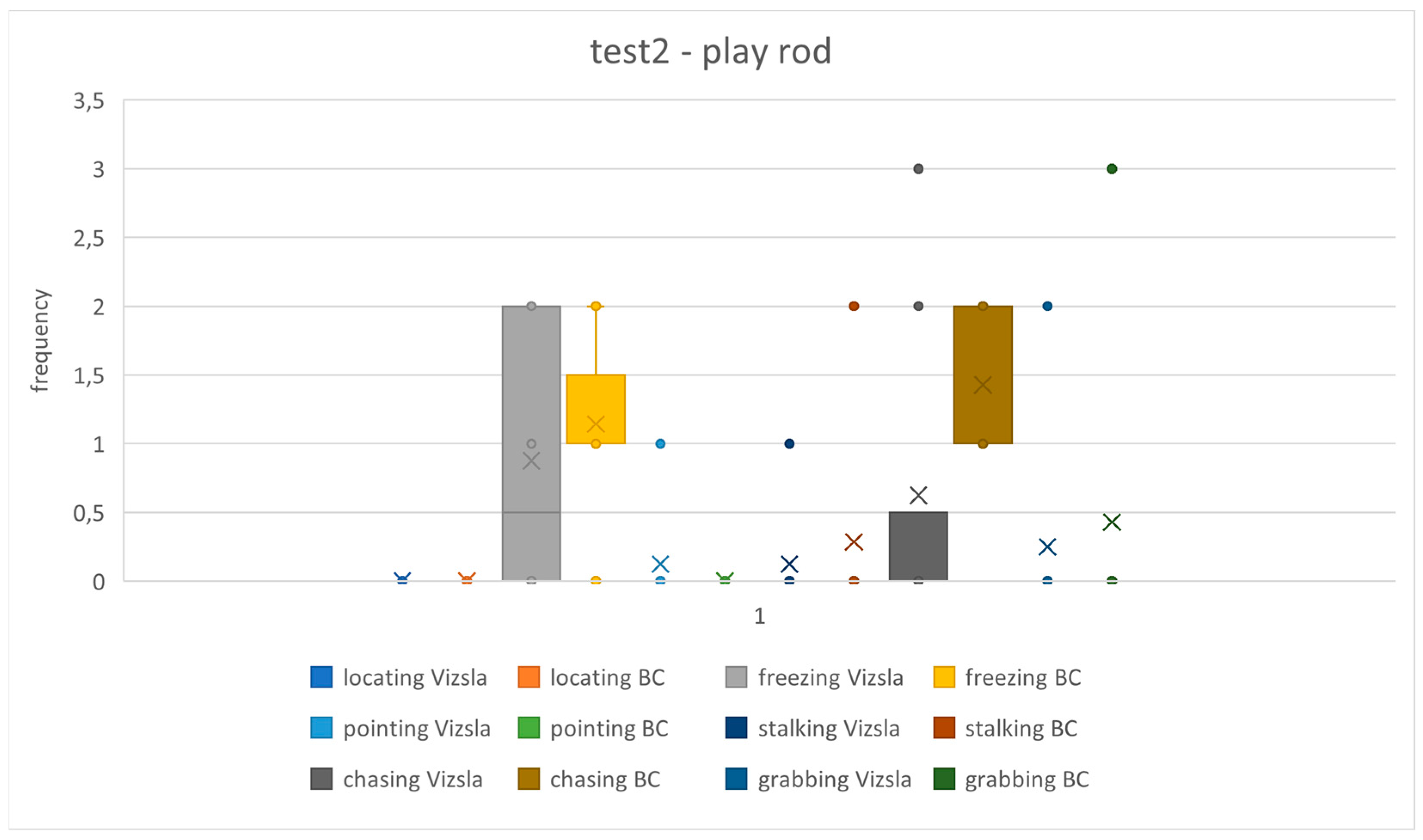
Figure 2.
Boxplot showing the duration of different behavioural patterns in Magyar Vizslas (Vizsla; n = 8 dogs) and Border Collies (BC; n = 7 dogs) in test 2 – play rod.
Figure 2.
Boxplot showing the duration of different behavioural patterns in Magyar Vizslas (Vizsla; n = 8 dogs) and Border Collies (BC; n = 7 dogs) in test 2 – play rod.
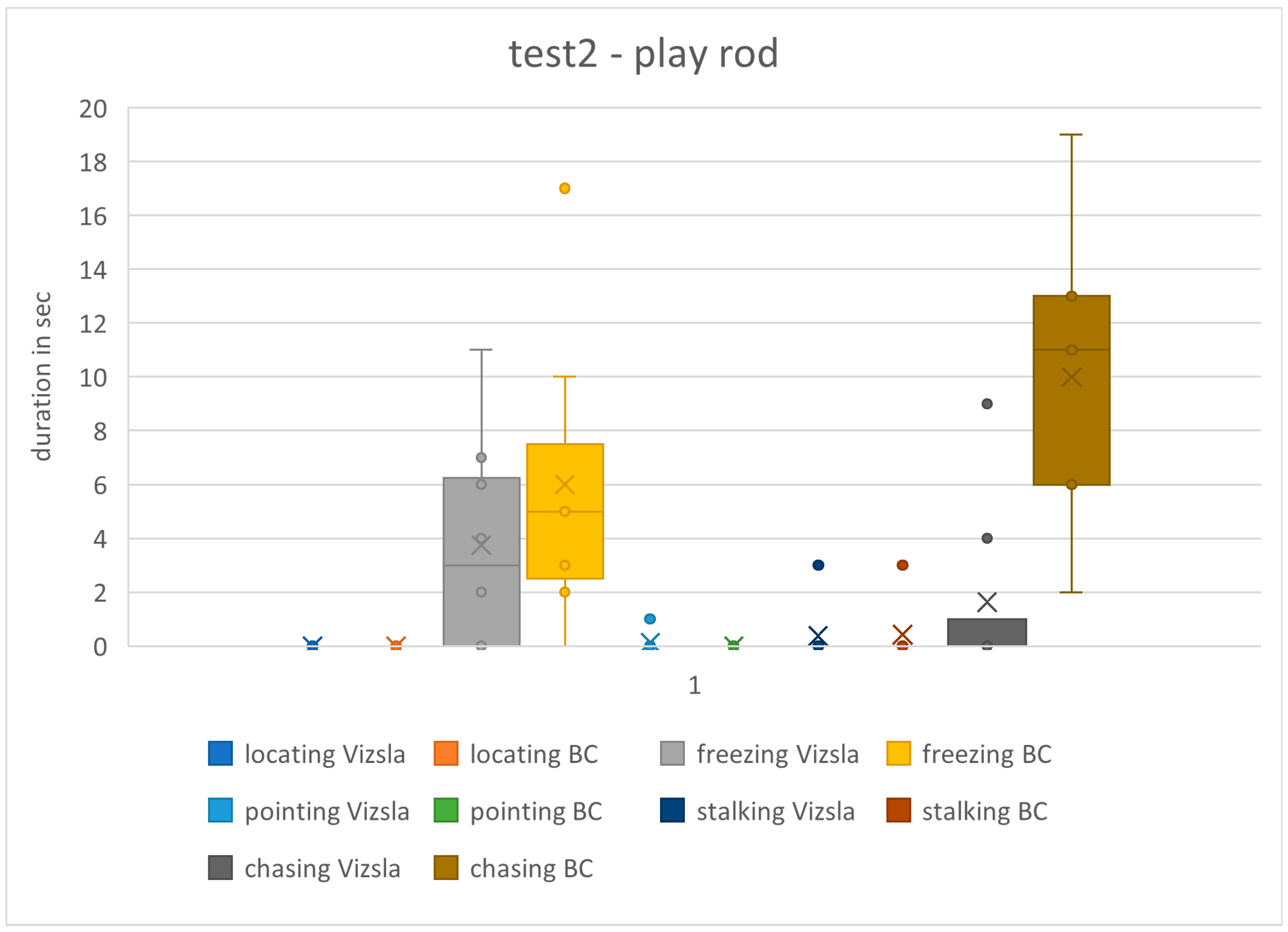
Border Collies feature chasing more often and longer than Magyar Vizslas in test 2 – play rod.
Table 4.
p-values of the differences between Border Collies and Magyar Vizslas in frequency, duration and latency regarding their hunting behaviour in test 3 – running human. Duration and latency were analyzed using a randomization test, while frequency was analyzed using a Mann–Whitney-U-Test. The blue marked value is p<0.05, which shows a statistically relevant result.
Table 4.
p-values of the differences between Border Collies and Magyar Vizslas in frequency, duration and latency regarding their hunting behaviour in test 3 – running human. Duration and latency were analyzed using a randomization test, while frequency was analyzed using a Mann–Whitney-U-Test. The blue marked value is p<0.05, which shows a statistically relevant result.
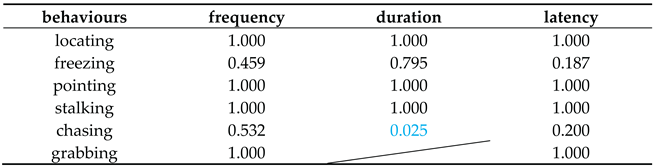
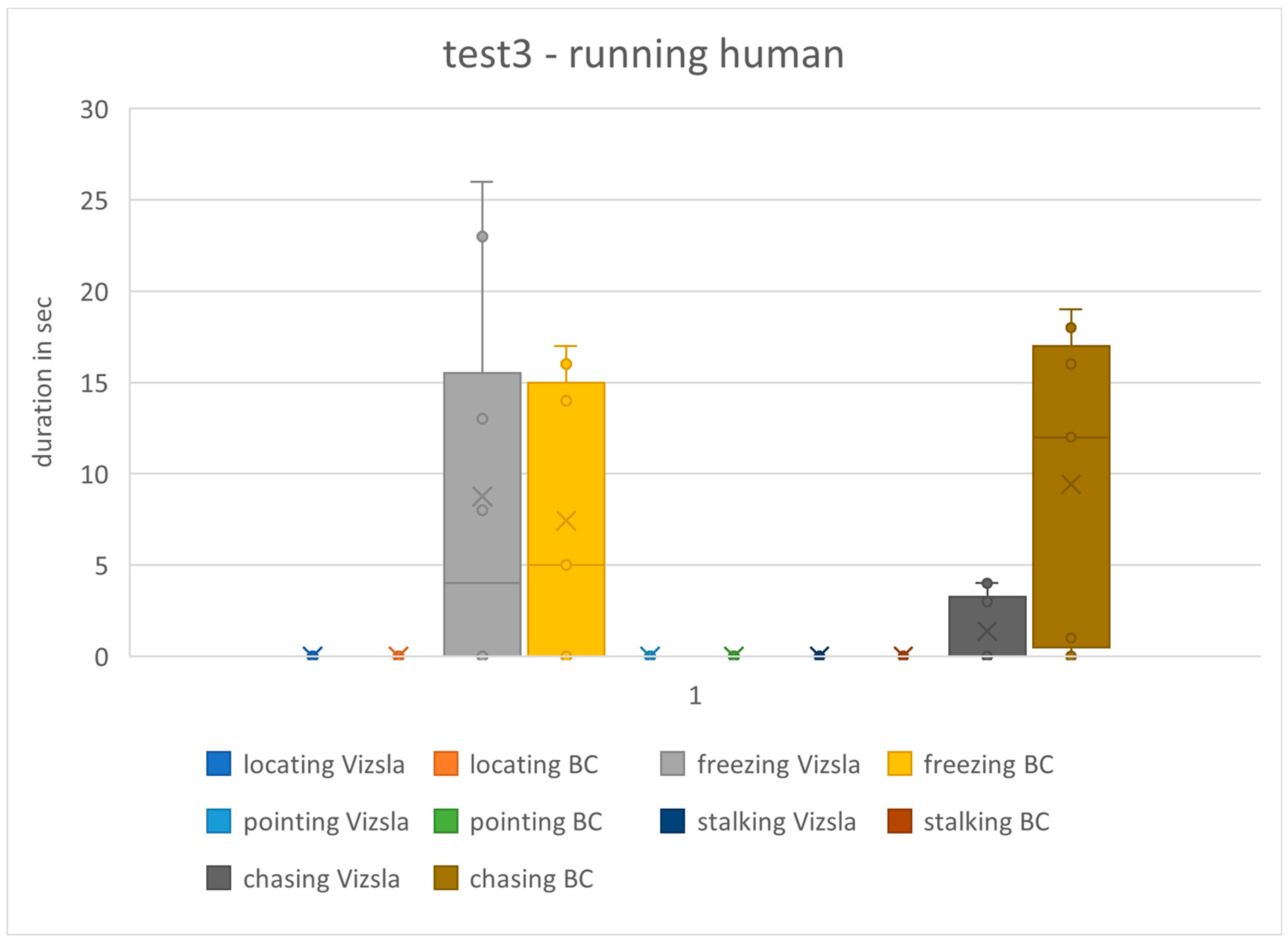
The randomization test displays a statistical significance for the duration of chasing in test 3 – running human, too.
In test 3 – running human as well, the Border Collie reacts more with chasing behaviour than the Magyar Vizsla.
In summary, the results especially show differences in the behaviour pattern of chasing, which Border Collies show enhanced in relation to Magyar Vizslas.
Figure 3.
Boxplot showing the duration of different behavioural patterns in Magyar Vizslas (Vizsla; n = 8 dogs) and Border Collies (BC; n = 7 dogs) in test 3 – running human.
Figure 3.
Boxplot showing the duration of different behavioural patterns in Magyar Vizslas (Vizsla; n = 8 dogs) and Border Collies (BC; n = 7 dogs) in test 3 – running human.
3.2. Online Questionnaire
The first question we evaluated asked for the dog’s reaction to a thrown toy, when the dog is not restricted. Question number two requested the reaction to a fast-moving person (e.g. runners, cyclists) and the third question referred to encountering wildlife, both of them with the permission that the dog is as little limited by the handler as possible. We considered the distinctions in staring, pointing and chasing.
Table 5.
p-values of the differences between Border Collies and Magyar Vizslas in freezing, pointing and chasing in the scaling questions of the online survey. The blue marked values are p<0.05, which shows a statistically relevant result. When additionally in bold letters, the figures are highly significant. The grey marked value shows a tendency, since it’s close to 0.05.
Table 5.
p-values of the differences between Border Collies and Magyar Vizslas in freezing, pointing and chasing in the scaling questions of the online survey. The blue marked values are p<0.05, which shows a statistically relevant result. When additionally in bold letters, the figures are highly significant. The grey marked value shows a tendency, since it’s close to 0.05.
| behaviours | question 1 (toy) | question 2 (person) | question 3 (wildlife) |
|---|---|---|---|
| freezing | 0.087 | 0.336 | 0.011 |
| pointing | <0.001 | 0.645 | <0.001 |
| chasing | 0.247 | 0.616 | 0.061 |
Especially question one (thrown toy) and question three (encountering wildlife) show huge differences. There are statistically highly significant distinctions between the two breeds in their pointing behaviour. When encountering wildlife their reactions also differ statistically significantly in the appearance of freezing behaviour and tendentially also in the occurrence of chasing behaviour. In contrast, no significant differences in the behaviour towards runners and cyclists were visible.
Figure 4.
Pie charts illustrating dog handlers’ responses regarding their dogs’ display of freezing behaviour when encountering wildlife (question 3) (a) answers of Magyar Vizsla handlers (n = 180); (b) answers of Border Collie handlers (n = 130).
Figure 4.
Pie charts illustrating dog handlers’ responses regarding their dogs’ display of freezing behaviour when encountering wildlife (question 3) (a) answers of Magyar Vizsla handlers (n = 180); (b) answers of Border Collie handlers (n = 130).
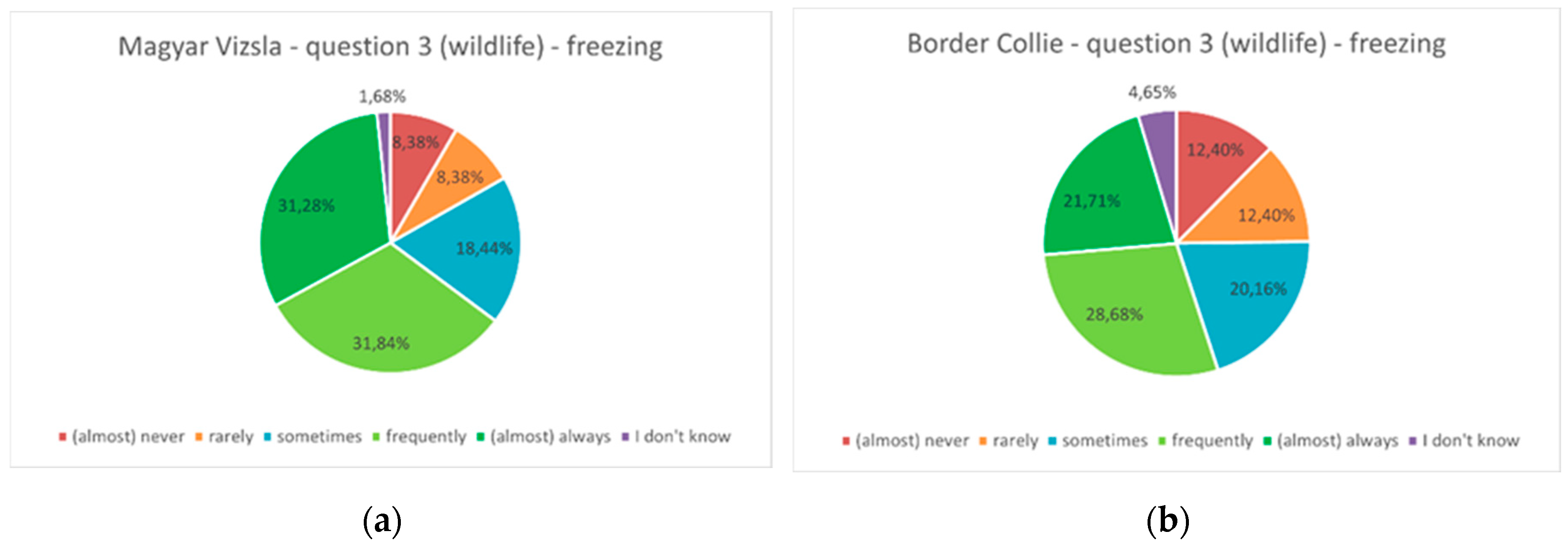
Regarding the question about encountering wildlife (question 3) there is a statistically significant p-value (p=0.011) for the differences in freezing behaviour, as the handlers of Magyar Vizslas replied more often that the behaviour “frequently” and “(almost) always” occurs.
Figure 5.
Pie charts illustrating dog handlers’ responses regarding their dogs’ display of pointing behaviour when a toy is thrown (question 1) (a) answers of Magyar Vizsla handlers (n = 180); (b) answers of Border Collie handlers (n = 130).
Figure 5.
Pie charts illustrating dog handlers’ responses regarding their dogs’ display of pointing behaviour when a toy is thrown (question 1) (a) answers of Magyar Vizsla handlers (n = 180); (b) answers of Border Collie handlers (n = 130).
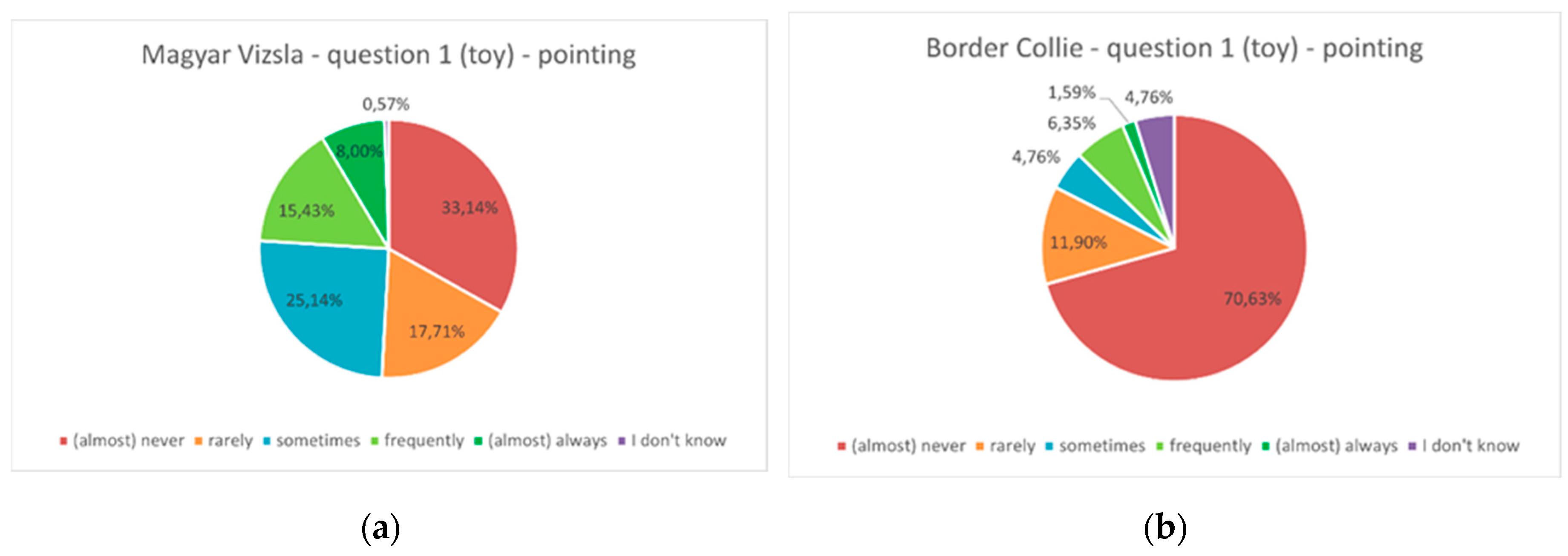
Figure 6.
Pie charts illustrating dog handlers’ responses regarding their dogs’ display of pointing behaviour when encountering wildlife (question 3) (a) answers of Magyar Vizsla handlers (n = 180); (b) answers of Border Collie handlers (n = 130).
Figure 6.
Pie charts illustrating dog handlers’ responses regarding their dogs’ display of pointing behaviour when encountering wildlife (question 3) (a) answers of Magyar Vizsla handlers (n = 180); (b) answers of Border Collie handlers (n = 130).
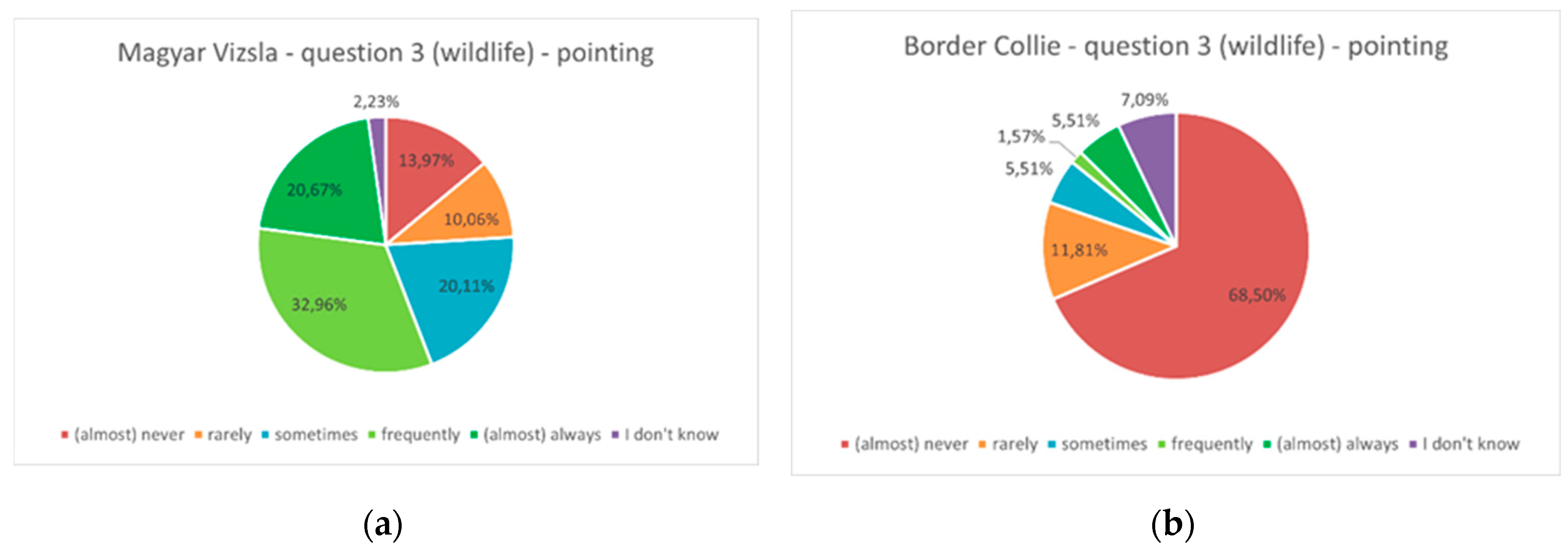
When looking at the pointing behaviour of Magyar Vizslas and Border Collies we see highly significant differences, since Magyar Vizslas point distinctly more often than Border Collies according to the handlers (p < 0,001). In situations with wildlife the Magyar Vizsla shows this behavioural pattern even more.
Figure 7.
Pie charts illustrating dog handlers’ responses regarding their dogs’ display of chasing behaviour when encountering wildlife (question 3) (a) answers of Magyar Vizsla handlers (n = 180); (b) answers of Border Collie handlers (n = 130).
Figure 7.
Pie charts illustrating dog handlers’ responses regarding their dogs’ display of chasing behaviour when encountering wildlife (question 3) (a) answers of Magyar Vizsla handlers (n = 180); (b) answers of Border Collie handlers (n = 130).
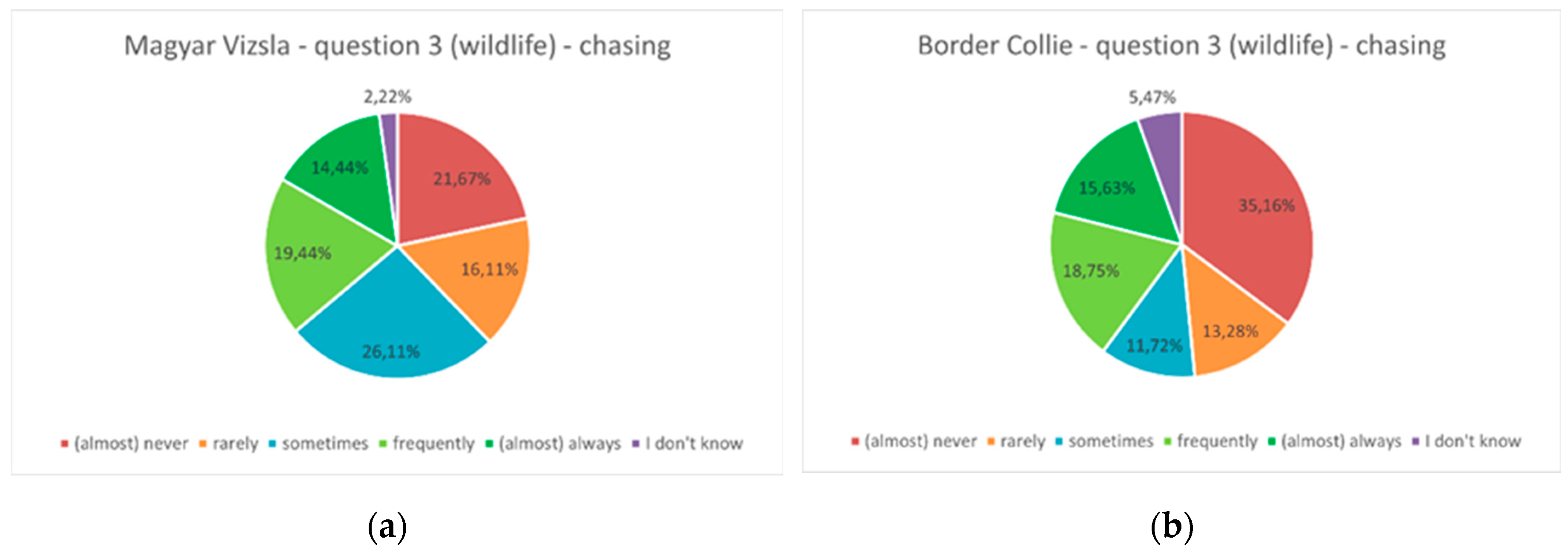
In the analysis of the chasing behaviour we couldn’t find significant distinctions, however Magyar Vizslas tend to chase wildlife more often than the Border Collie.
Taken together, Magyar Vizslas exhibit the behavioural pattern of pointing more often than the Border Collies both in connection with a thrown toy and with wildlife. They show more freezing in reaction to wildlife as well. So, in this examination it appears that Magyar Vizslas react more to wildlife with hunting behaviour at all, freezing, pointing (and chasing).
4. Discussion
The main hypothesis was confirmed through behavioural tests and the online survey, that revealed differences in hunting behaviour between Magyar Vizslas and Border Collies, even in the simplified preliminary test situations. In these behavioural tests Border Collies showed longer (test 2 – play rod, and test 3 – running human) and more frequent (test 2 – play rod) chasing behaviour.
A study by Dutrow et al. (2022), in which they investigated the genetic foundations of the behavioural diversification in dogs, identified ten major canine genetic lineages linked to historical working roles, including herding behaviour, which indicates a genetic predisposition for behavioural patterns like chasing, as a part of herding behaviour. Furthermore, they found that genetic variants driving lineage diversification were mostly non-coding and enriched in neurodevelopmental pathways. Sheepdog-specific loci were especially enriched in axon guidance genes, suggesting herding behaviour is linked to neuronal circuit development. In contradistinction to earlier reports that emphasized morphology, behaviour was found here as a major driver of diversification and therefore these findings highlight the behaviour’s central role in shaping dog lineages [5].
In contrast to the results of the behavioural tests, our survey illustrates that Magyar Vizslas display more chasing behaviour in wildlife encounters, but overall, they show a stronger reaction to wildlife than Border Collies. That supports the findings of Dutrow et al. (2022), since they described, that the pointer-spaniel group, a breed group that contains the Vizsla, has a significant correlation to the C-BARQ factor “predatory chasing” as against the herding dogs [5].
Another hypothesis was that Magyar Vizslas are predisposed to pointing behaviour. This was confirmed by handler assessments in our survey and also observed by Akkad et al. (2015), who investigated the genetic basis of pointing behaviour in pointing breeds (e.g. Large Munsterlander, Weimaraner) by comparing them with non-pointing herding breeds. In their study a region of extended homozygosity on chromosome 22 was consistently identified in pointing dogs (except for German Shorthaired Pointers) but not in herding dogs, other hunting breeds without pointing behaviour and wolves. They also found that breeds with heterozygous genotypes (e.g. German Wachtelhund) may display trainable but not fixed pointing behaviour, suggesting a gene dosage effect and interaction between genetics, training, and environment [21]. As there were no Magyar Vizsla genomes sequenced in this study, it is impossible to say whether Vizslas show consistent homozygosity for the revealed SNPs in the candidate region. But since they are part of the pointer breed group [6], Magyar Vizslas are likely to be at least partially genetically predisposed for pointing behaviour.
However, pointing was barely displayed in our behavioural tests. This could be due to two reasons: Firstly, Magyar Vizslas tend to react stronger to real wildlife than to prey replacements in opposition to the Border Collies, as we noticed. And secondly, pointing behaviour in pointing breeds is often shown at the scent or sight of wildlife, that mostly does not move.
Nevertheless, a study of Morrill et al. (2022) limits our results. They specifically investigated how well breed ancestry predicts individual dog behaviour and found that most behavioural traits are heritable, but despite that, breed explains only about 9% of behavioural variation between individual dogs. They stated that behaviour is highly variable within breeds, because their studies showed that most individual dogs of any breed fall within the average range of the population for all behaviours, no behaviour was exclusive to any breed and was not predicted reliably by breed at the individual level and that behavioural traits are polygenic and environmentally influenced. For physical traits (e.g., size, coat type), breed explains much more variation. The Border Collie for example has higher heritabilities for pricked ear shape and long fur than for biddability, although it is more biddable than other breeds. The same applies to Magyar Vizslas, which have higher heritabilities for dropped ears and short fur than for pointing [1].
Although the heritabilities for physical characteristics are higher, we still found statistically significant behavioural differences between Magyar Vizslas and Border Collies, probably based on genetic variations. But it should be emphasized that discrepancies between the two breeds were explored, focusing on across-breed heritabilities, with individual differences within breeds not extensively considered. Yet exactly these between-breed heritabilities are inherently higher, as MacLean et al. (2019) outlined [11]. The within-breed heritabilities could be examined with bigger samples.
Still, our results match the findings by Bionda et al. (2023), which showed that Italian hunting dogs and shepherd dogs form two clearly distinct genetic clusters, reflecting long-term divergent selection for different working tasks. They found that multiple genomic regions differ significantly between hunting and shepherd dogs and several of these regions contain genes previously associated with hunting or pointing behaviour, indicating selection for specific elements of the hunting behaviour chain. The study as well as our examinations support the idea that distinct sequences of the hunting behaviour chain are differently emphasized across functional dog groups, specifically hunting dogs and herding dogs [22].
We also need to revisit the study of Parker et al. (2017). Referring to their cladogram, the Border Collie is more derived than the Magyar Vizsla, which might also help to explain the more complete sequence and more similar thresholds of the elements of the hunting sequence in Magyar Vizslas [6].
It must be noted that our study could have some issues, since only the differences between Magyar Vizslas and Border Collies were examined. Therefore, it cannot be ruled out that both of them are genetically predisposed for the same behaviour(s). In the further course it would hence be sensible to include more breeds from the same breed groups as well as from different ones. Besides, none of the Border Collies tested came from working lines (selected for performance), potentially affecting test outcomes as they would probably show increased herding behaviour and therefore increased freezing and chasing behaviour. Moreover, sample sizes for behaviour tests were relatively small, on the contrary, the online survey covered a larger population, but relied on subjective handler assessments, raising questions about comparability.
5. Conclusions
Genetic predisposition influences a dog’s behaviour, since this was important for the development of all the different breeds, which were selected for several tasks in the coexistence with humans. However, “innate” and “learned” behaviours can’t be differentiated completely, because environmental factors have a huge impact, too.
However, differences between different breeds or breed groups are detectable very well as we could illustrate with the Magyar Vizsla, a pointing dog, and the Border Collie, a herding dog, in our simplified preliminary test situations. The survey clarified as well that these two breeds differ in their hunting behaviour.
Supplementary Materials
The following supporting information can be downloaded at the website of this paper posted on Preprints.org, Figure S1: original questionnaire; Figure S2: translated questionnaire.
Author Contributions
Conceptualization and methodology, F.B. and U.G.; validation, U.G.; formal analysis and investigation, F.B.; resources, F.B. and U.G.; data curation and writing—original draft preparation, F.B.; writing—review and editing, F.B. and U.G.; visualization, F.B.; supervision, U.G. All authors have read and agreed to the published version of the manuscript.
Funding
This research received no external funding.
Institutional Review Board Statement
Ethical approval was waived because the tests were part of the dog keepers' regular everyday sports activities.
Informed Consent Statement
Informed consent was given by all questionnaire participants.
Data Availability Statement
The raw data supporting the conclusions of this article will be made available by the first author on request.
Acknowledgments
The authors want to give special thanks to the 15 dog handlers who took the time to participate with their Magyar Vizslas or Border Collies in the behavioural tests. We would also like to thank Dr. Carina Kolkmeyer for reviewing and correcting the manuscript and her valuable feedback. During the preparation of this manuscript, the author used ChatGPT (GPT-5.2, OpenAI) to help with the translation from German to English of some passages. The authors have reviewed and edited the output and take full responsibility for the content of this publication.
Conflicts of Interest
The authors declare no conflicts of interest.
Abbreviations
The following abbreviations are used in this manuscript:
| MDPI | Multidisciplinary Digital Publishing Institute |
| BC | Border Collie |
Appendix A
Appendix A.1
Figure A1.
Graphic showing the approximate moving pattern of the test person (A = assistant) in test 3 – running human (D = dog, H = handler).
Figure A1.
Graphic showing the approximate moving pattern of the test person (A = assistant) in test 3 – running human (D = dog, H = handler).
References
- Morrill, K.; et al. Ancestry-inclusive dog genomics challenges popular breed stereotypes. Science 2022, 376(6592), eabk0639. [Google Scholar] [CrossRef] [PubMed]
- Coppinger, R.; Coppinger, L. Dogs: a startling new understanding of canine origin, behavior, and evolution illustrations; Scribner: New York, 2001; 352 pages: illustrations. [Google Scholar]
- Sartore, S.; et al. Genetic and Gene-by-Environment Influences on Aggressiveness in Dogs: A Systematic Review from 2000 to 2024. Animals 2025, 15(15). [Google Scholar] [PubMed]
- Mehl, R., Die Psyche des Hundes. Wie Prozesse im Gehirn das Verhalten steuern; Kosmos: Stuttgart, Germany, 2021.
- Dutrow, E.V.; Serpell, J.A.; Ostrander, E.A. Domestic dog lineages reveal genetic drivers of behavioral diversification. Cell 2022, 185(25), 4737–4755.e18. [Google Scholar] [CrossRef] [PubMed]
- Parker, H.G.; et al. Genomic Analyses Reveal the Influence of Geographic Origin, Migration, and Hybridization on Modern Dog Breed Development. Cell Rep. 2017, 19(4), 697–708. [Google Scholar] [CrossRef] [PubMed]
- Hradecká, L.; et al. Heritability of behavioural traits in domestic dogs: A meta-analysis; Applied Animal Behaviour Science, 2015; pp. 1–13. [Google Scholar]
- Gansloßer, U. Verhaltensbiologie für Hundetrainer. Grundlagen moderner Ethologie; Kosmos: Stuttgart, Germany, 2020. [Google Scholar]
- Gnanadesikan, G.E.; et al. Estimating the heritability of cognitive traits across dog breeds reveals highly heritable inhibitory control and communication factors. Anim. Cogn. 2020, 23(5), 953–964. [Google Scholar] [CrossRef] [PubMed]
- Gnanadesikan, G.E.; et al. Breed Differences in Dog Cognition Associated with Brain-Expressed Genes and Neurological Functions. Integr. Comp. Biol. 2020, 60(4), 976–990. [Google Scholar] [CrossRef] [PubMed]
- MacLean, E.L.; et al. Highly heritable and functionally relevant breed differences in dog behaviour. Proc. Biol. Sci. 2019, 286(1912), 20190716. [Google Scholar] [CrossRef] [PubMed]
- Meredith, R.M. Sensitive and critical periods during neurotypical and aberrant neurodevelopment: a framework for neurodevelopmental disorders. Neurosci. Biobehav Rev. 2015, 50, 180–8. [Google Scholar] [CrossRef] [PubMed]
- Freedman, D.G.; King, J.A.; Elliot, O. Critical period in the social development of dogs. Science 1961, 133(3457), 1016–7. [Google Scholar] [CrossRef] [PubMed]
- Bernauer-Münz, H.; Quandt, C. Problemverhalten beim Hund. Lösungswege für den Tierarzt; Gustav Fischer: Jena, 1995. [Google Scholar]
- Heine, C. Verhaltensontogenese von Welpen der Rasse Border Collie in den ersten acht Lebenswochen; Tierärztliche Hochschule, Dissertation: Hannover, 2000. [Google Scholar]
- Lambrich, M. Vergleichende Verhaltensentwicklung von Junghunden (3.-10. Lebensmonat) der Rasse Border Collie unter verschiedenen Nutzungsbedingungen; Tierärztliche Hochschule, Dissertation: Hannover, 2007. [Google Scholar]
- Coppinger, R.; Feinstein, M.H. How dogs work; University of Chicago Press: Chicago; London, 2015. [Google Scholar]
- Alsen, P. Magyar Vizsla - Praxiswissen Hund. Auswahl, Haltung, Erziehung, Beschäftigung; Kosmos: Stuttgart, Germany, 2020. [Google Scholar]
- Hecht, E.E.; et al. Significant Neuroanatomical Variation Among Domestic Dog Breeds. J. Neurosci. 2019, 39(39), 7748–7758. [Google Scholar] [CrossRef] [PubMed]
- Spitzley, I.; Elsing, N. Ethogramm. unpublished, based on P. Goodman, M.S. und E. Klinghammer (Nr.3, 2002)und Ausdrucksverhalten beim Hund von Dorit U. Feddersen-Petersen (2008).
- Akkad, D.A.; et al. Homozygosity mapping and sequencing identify two genes that might contribute to pointing behavior in hunting dogs. Canine Genet Epidemiol. 2015, 2, 5. [Google Scholar] [CrossRef] [PubMed]
- Bionda, A.; et al. The Shepherd and the Hunter: A Genomic Comparison of Italian Dog Breeds. Animals 2023, 13(15). [Google Scholar] [CrossRef] [PubMed]
Table 1.
Definition of behaviours.
| behaviour | explanation |
|---|---|
| locating | A search behaviour combined with a simultaneous approach pattern. |
| freezing | Rigid staring accompanied by a very stiff body posture. It can be adopted from different positions (standing or lying). |
| pointing | The dog stands on three legs. The head and neck are held level with the back or slightly above or below it. One forelimb is raised and flexed at the carpal joint, as if the dog were pointing at something with its paw. During pointing, the dog looks straight ahead. The stimulus for this behaviour is usually a sound or a movement in the distance that attracts attention. The behaviour may appear frozen briefly. |
| stalking | To creep with a straight back in any gait, in the sense of a stealthy approach: the head is carried at the same level as or lower than the back. The ears are usually erect and directed forward, and the dog fixes its gaze on the object it is stalking. In contrast to a curved body posture, the back is not arched, and the tail is not tucked in. |
| chasing | Pursuit of the prey animal. Instead of chasing, the so-called “mouse pounce” may be performed, in which a strike with the forepaw is executed during the jump. |
| grabbing & mouthing | Holding an object or another dog with the teeth. An item may also be held in the mouth, with repeated readjusting of the grip. |
Disclaimer/Publisher’s Note: The statements, opinions and data contained in all publications are solely those of the individual author(s) and contributor(s) and not of MDPI and/or the editor(s). MDPI and/or the editor(s) disclaim responsibility for any injury to people or property resulting from any ideas, methods, instructions or products referred to in the content. |
© 2026 by the authors. Licensee MDPI, Basel, Switzerland. This article is an open access article distributed under the terms and conditions of the Creative Commons Attribution (CC BY) license.
Copyright: This open access article is published under a Creative Commons CC BY 4.0 license, which permit the free download, distribution, and reuse, provided that the author and preprint are cited in any reuse.