Preprint
Article

This version is not peer-reviewed.

18F‐FDG PET/CT Scans Versus 99mTc‐MDP Bone Scintigraphy for Breast Cancer Patients with Bone Metastases

Submitted:

17 June 2026

Posted:

18 June 2026

You are already at the latest version

Abstract

Background: Breast cancer (BC) frequently disseminates to bone. Technetium 99m methylene diphosphonate bone scintigraphy (99m Tc‐MDP bone scintigraphy) is utilized in the staging work‐up. In detecting lytic bone lesions, bone marrow and soft tissue metastases, 2‐deoxy‐2[fluorine 18] fluoro‐D‐glucose positron emission tomography/computed tomography scan (18F‐FDG PET/CT scans) is superior. We compared bone metastases (BM) detection in both imaging modalities, and its impact on patient management. Method: One hundred BC patients underwent 18F‐FDG PET/CT scan, and 99m Tc‐MDP bone scintigraphy performed within a maximum of six weeks of each other, between January 2017 and September 2024. Comparison based on lesion‐by‐lesion analysis. Changes in stage and management recorded. Results: The median patient age was 55 years. 99m Tc‐MDP bone scintigraphy detected 243 BM and 18F‐FDG PET/CT scans detected 421 BM. Stage and management upgrades, secondary to detected BM, were seen in 22 patients for each imaging modality. 18F‐FDG PET/CT scans additionally detected 5 patients with unsuspected, isolated soft tissue metastases, all resulting in stage and management change (p<0.001). Conclusion: Both 18F‐FDG PET/CT scan and 99m Tc‐MDP bone scintigraphy demonstrated the ability to detect BM in an equivalent number of patients. However, 18F‐FDG PET/CT scan proved superior in overall metastatic assessment, particularly in identifying additional BM and concomitant soft tissue metastases. This broader disease characterization translated into significantly higher rate of management modification compared with 99m Tc‐MDP bone scintigraphy. Contribution: A proposed revision of current BC guidelines reflecting 18F‐FDG PET/CT scan’s validated diagnostic superiority, will reduce financial burden whilst improving patient management and compliance.

Keywords: 
;  ;  ;  ;  ;  ;  

1. Background and Literature Review

1.1. Significance of BC

Female breast cancer (BC) is the most diagnosed cancer worldwide, and the leading cause of cancer-related female death, according to GLOBOCAN 2020. Women from developing countries have a 17% higher mortality rate, than those in developed countries, likely resulting from poor health infrastructure and late-stage presentation of the disease [1]. Rapidly rising incidence rates in Africa and South Africa, are attributed to significant sociocultural and lifestyle changes, due to the growing economy [2]. In KwaZulu-Natal, there is a centralized multidisciplinary management of BC, requiring a diagnostic and staging pathway at the referring hospital. Contributing to the increased morbidity and mortality, is a delay in the care pathway, being almost double the international recommendation [3], delayed presentation of patients from rural areas, and poor socioeconomic status [4].

1.2. Staging

National Comprehensive Cancer Network and 8th edition of American Joint Committee on Cancer guidelines, recommend 2-deoxy-2[fluorine 18] fluoro-D-glucose positron emission tomography/computed tomography scan (18F-FDG PET/CT scan) in BC staging from stage III and IIb onwards, respectively [5,6]. Incorporating prognostic staging (biological markers such as oestrogen receptor, progesterone receptor, human epidermal growth factor receptor two and Ki-67 proliferative index (Ki-67)), allows clinicians to accurately stratify and better serve patients, providing an optimal estimation of the patient’s prognosis [7,8]. A study on the development of isolated bone metastases (BM) in BC patients, concluded that certain factors increase the dissemination risk. These include tumour intrinsic subtype (luminal BC being a greater risk for bone disease), gene signatures, expression of certain cytokines, components of extracellular matrix, age, menopausal status (oestrogen regulating bone), molecular subtypes, histological subtype (ductal/ lobular/ medullar/ tubular/ mucinous), tumor stage and lymph node involvement. Conflicting results among different studies may be attributed to the highly heterogenous populations, study methodology and administered cancer treatment [9]. The pathophysiology of BM reveals bone as an attractive niche for certain tumour cells, due to multiple biochemical, cellular, and physical properties. This dynamic relationship allows for tumour cells to colonize, alter, and hijack the niche, creating a more hospitable microenvironment to interact with osteoblasts and osteoclasts forming osteoblastic and osteoclastic bone lesions and facilitating tumour growth [10]. Locally advanced BC has a higher frequency of BM, with post-mortem studies revealing such involvement in 70% of cases [11]. Despite advances in the diagnosis and treatment of BC, the presence of metastases is incurable. It most frequently disseminates to bone. Preventing morbidity from BM requires accurate, early diagnosis for preliminary staging, planning, treatment monitoring, restaging, and predicting survival.

1.3. Management

Current management of bone metastatic BC, encompasses anti-tumor systemic therapies and bone-targeting agents, aimed at slowing bone resorption, minimizing the risk of skeletal-related events. BM from BC, range across the spectrum, from osteoblastic (with an indolent course) to osteolytic (with aggressive behaviour and rapid growth) and mixed. BM are predominantly osteolytic, with approximately 15 to 20% of cases having an osteoblastic component [12]. More clinical complications are noted with osteolytic metastases [10]. These include refractory pain, pathological fractures, cord or nerve root compression, hypercalcemia and myelosuppression [13]. Reviewing the benefits and drawbacks of imaging modalities can achieve early, accurate diagnosis. A comparative study on 18F-FDG PET/CT scan and bone scintigraphy, for high grade prostate cancer staging, concluded that 18F-FDG PET/CT scans appears similar or better than conventional bone scintigraphy in detecting BM, with potential to be used as the only preoperative staging modality [14]. There is no standardized approach for detecting BM in cancer patients, based on current imaging data. An analysis of imaging techniques, evaluating changes in anatomy and resulting function of BM, in breast and prostate cancer, advocate using new imaging techniques, including 18F-FDG PET/CT scan, challenging the established combination of bone scintigraphy and computed tomography scan (CT scan), in detecting, staging and assessing response of BM [10].

1.3. 99m Tc-MDP Bone Scintigraphy

Bone scintigraphy is time-tested and readily accessible, due to the widespread use of gamma cameras. The osteoblastic response to bone destruction by cancer cells, aids in identifying BM with 99m Tc-MDP bone scintigraphy. The reduced specificity, is due to benign conditions (e.g., osteoarthritis, fractures and inflammation) with osteoblastic response, and the flare response of metastatic bone disease to treatment [11]. The flare phenomenon makes lesions appear more intense than previous scans, due to a transient rise in osteocalcin and alkaline phosphatase bone isoenzymes, usually occurring up to three months after initiation of hormonal or chemotherapy [15]. Bone scintigraphy is better able to visualize osteoblastic BM than 18F-FDG PET/CT scan alone [16,17]; its limitation lying in the detection of lytic BM [15]. Whole-body bone scintigraphy provides rapid imaging for screening of osteoblastic, sclerotic/mixed, and reparative bone formed by osteolytic lesions at a reasonable cost. Incorporating single photon emission computed tomography scan (SPECT/CT scan) to equivocal bone scintigraphy findings, allows further evaluation, improving sensitivity and specificity. The use of bone scintigraphy for evaluating response to therapy, is to measure the associated osteoblastic response, rather than tumor response [15].

1.4. 18F-FDG PET/CT Scan

Fluorodeoxyglucose, a glucose analogue, exhibits heightened tracer absorption in metabolically active tumour cells with a high glucose demand. 18F-FDG PET/CT scan serves to simultaneously provide physiological and anatomical data, with its superior advantages and profitability in detecting lytic and purely marrow metastases compared to 99m Tc-MDP bone scintigraphy [13]. In a study of 234 BC patients, initially evaluated with 18F-FDG PET/CT scan, BM seen in 43 patients, led to upstaging. 99m Tc-MDP bone scintigraphy with or without SPECT/CT, was only performed on patients with suspicious symptoms and no BM on 18F-FDG PET/CT scan. Majority demonstrated a normal bone scintigraphy, with the remaining few cases being diagnosed as benign, on magnetic resonance imaging (MRI). The analysis established no additional benefit of bone scintigraphy, once 18F-FDG PET/CT scan was performed, in BC patients, for BM [11]. In the evaluation of BM, a meta-analysis comparing bone scintigraphy to 18F-FDG PET/CT scan, highlighted that the major strength of 18F-FDG PET/CT scans, is its higher sensitivity and potential for monitoring therapy response [18]. Histological subtype in BC influences the sensitivity of 18F-FDG PET/CT scan, with increased sensitivity in ductal than in lobular breast malignancies [15]. The various subtypes include invasive ductal carcinoma, invasive lobular carcinoma, mixed invasive ductal and lobular carcinoma, inflammatory breast carcinoma of no special type, and others. The findings of upstaged early-stage invasive lobular carcinoma patients, being attributed to its higher prevalence of BM and bone marrow metastases. The rate of upstaging was highest in inflammatory breast carcinoma of no special type [11]. 18F-FDG PET/CT scan is more sensitive in the detection of osteolytic lesions than bone scintigraphy alone [15,16]. It can be employed in equivocal conventional staging (bone scintigraphy and computed tomography) [15]. 18F-FDG PET/CT has a major influence on management after curative BC surgery and should be performed in those with equivocal or suspicious recurrence or metastasis on conventional imaging, including follow-up cases involving elevated tumor markers, according to a meta-analysis. Management change was seen in 45% of cases with equivocal or suspicious recurrence or metastasis on conventional imaging and 52% in cases with elevated tumor markers [19]. This modality proved useful in a prospective study for diagnosing recurrent BC, concluding that there was a high probability in a positive test, and that a negative test ruled out distant metastases [20]. Research suggest the use of 18F-FDG PET/CT compared to conventional imaging, is superior [21]. 18F-FDG PET/CT imaging also plays a role in both prognostication and in radiation therapy planning [22,23].

1.5. Comparison with Other Modalities

An indirect meta-analysis comparing the diagnostic accuracy of 18F-FDG PET/CT and flourine-18 sodium fluoride positron emission tomography/computed tomography scan (18F-NaF PET/CT), deduced that although 18F-NaF PET/CT is more sensitive (98% versus 88%) but less specific (91% versus 99%) than 18F-FDG PET/CT, there was no statistically significant difference, and both methods are accurate for detecting BM in BC patients [24]. In a prospective study of 154 newly diagnosed BC patients, the comparison between the diagnostic performance in detecting BM of 2-deoxy-2[fluorine 18] fluoro-D-glucose positron emission tomography / magnetic resonance imaging (18F-FDG PET/MRI), MRI, CT and 99m Tc-MDP bone scintigraphy concluded the superiority of 18F-FDG PET/MRI and MRI alone over CT and 99m Tc-MDP bone scintigraphy [25]. In a systematic review and network meta-analysis on the accuracy of diagnostic tests in patients with high stage primary BC (stage III or stage IV) or a suspicion of recurrence (staging or restaging), 18F-FDG PET/CT scans (sensitivity: 94% ; specificity: 98%) and MRI (94% ; 93%), both having comparable diagnostic accuracy, outperformed the standard currently used contrast enhanced CT (70% ; 98%) and 99m Tc-MDP bone scintigraphy (83% ; 96%) [26]. Thus, in diagnosing BM in BC patients 18F-FDG PET/CT, 18F-NaF PET/CT and MRI, having similar accuracy with 18F-FDG PET/MRI and MRI alone being superior to CT and 99m Tc-MDP bone scintigraphy.
In view of evidence provided, the study aims to determine the best imaging modality for the detection of BM in BC patients in Kwa-Zulu Natal and the resultant impact on patient management.

1.6. Objectives

To compare the performance of 99m Tc-MDP bone scintigraphy and 18F-FDG PET/CT scan in the detection of number of BM (functional bone changes only, osteoblastic, mixed osteoblastic/lytic and osteolytic).
To evaluate the impact of 99m Tc-MDP bone scintigraphy and 18F-FDG PET/CT scan on patient’s metastatic stage (M) and management.

2. Methods

2.1. Methodology

This observational cross-sectional study had data collected both retrospectively and prospectively with data analysed retrospectively. The study was conducted at a single centre, quaternary state hospital, Inkosi Albert Luthuli Central Hospital in Durban, KwaZulu-Natal, South Africa. Patients with histopathologically confirmed BC who underwent both scans, performed within a maximum of six weeks of each other, between January 2017 and September 2024 at the Nuclear Medicine Department, were included in this study. A flow chart demonstrating the overview of patient selection and results is shown in Figure 1.

2.2. Image Acquisition

The study acquisition per modality was conducted according to the standardized protocols of the Nuclear Medicine Department.
99m Tc-MDP bone scintigraphy was done utilizing Siemens Symbia Evo Excel and Siemens Symbia Intevo. Patients were injected intravenously with approximately 740 megabecquerel of 99m Tc-MDP. Whole-body imaging was acquired after 3 hours, in a 256 by 256 matrix, with a 20% window centred around 140 kilo-electron Volt photopeak, using a low energy high resolution collimator. SPECT/CT on a specified area was added, when any BM were suspected on whole-body planar images, by the attending nuclear medicine physician.
18F-FDG PET/CT scan was conducted on Siemens Biograph Molecular Computed Tomography 2016 and thereafter Siemens Biograph Molecular Computed Tomography 2018 (12 September 2018). Patients were required to have a normal fasting blood glucose level of <10 millimoles per litre and having fasted for at least six hours prior to 18F-FDG injections. An intravenous injection of 2.96 megabecquerel per kilogram 18F-FDG was administered. Patients were rested in a quiet, warm in low light during the radiopharmaceutical uptake time and prior to imaging. After 60 minutes, emission scans were acquired at 0.8 millimetre per second over the chest and 1.2 millimetre per second over the head and legs. Using standard vendor provided reconstruction algorithms, 18F-FDG PET/CT scan images were reconstructed. Non-contrasted CT was used for attenuation and scatter correction as well as diagnosis. It was acquired in helical mode with tube current modulation (140 kilovolt, 59 milliampere-seconds) from the top of the head to mid-thigh during quiet respiration at five-millimetre slice thickness.

2.3. Interpretation

For 99m Tc-MDP bone scintigraphy, the site of any previous bone surgeries/ procedures or trauma were recorded, and SPECT/CT on a specified area was added, when any BM were suspected on whole-body planar images, by the attending nuclear medicine physician.
For 18F-FDG PET/CT scan, clinical history and examination were important to provide information on previous surgery including biopsy sites, use of insulin, level of glycaemia, fasting state and exposure to cold as these may have interfered with interpretation of the scan. Artifacts kept in mind when interpreting the scan which included motion artifact, misregistration, attenuation artifacts (e.g., metal implants) and truncation artifacts. Normal bone variants were also recorded.
The suspected BM were noted. It was differentiated from other causes of tracer uptake in the skeleton such as benign tumours, infections, inflammation, normal variants, et cetera. At least two experienced Nuclear Medicine Physicians and one Nuclear Medicine Registrar assessed these scans. Experienced radiology correlation was required in certain cases to confirm BM.
Using the patients’ initial clinical stage and proposed management plan as the baseline, the final scan result in each modality was noted, and the patient was re-staged. New staging results were analysed along with its influence on patients’ management / therapy to determine the superior imaging modality. A change in management was noted in terms of change from curative chemotherapy/ radiotherapy / surgery to palliative chemotherapy / radiotherapy / surgery or even the complete withdrawal of therapy and a change to palliation (symptomatic management) with / without further investigative modalities being utilized.
Missing data was handled by searching in later documents/ updated patient notes for information not obtained in the initial presentation / clerking form or by obtaining histology results from the national health laboratory service. Missing imaging data lead to exclusion of the respective patient. The remainder of the data that was not available were recorded as missing data. Secondary data collection (demographics, phenotype, histopathological classification et cetera) was analysed to assess the above imaging modalities.

2.4. Data Collection and Statistical Methods

Information was collected on a password-protected excel spreadsheet. The statistical data analysis was conducted in R Statistical computing software of the R Core Team, 2020, version 3.6.3. The results were presented in the form of descriptive and inferential statistics.
Where applicable, the descriptive statistics of numerical measurements were summarized as the minimum, maximum, quartiles, interquartile range, means, standard deviation and the coefficient of variation. In addition, boxplots were used for the visual display of the descriptive patterns. On the other hand, the categorical variables were described as counts and percentage frequencies where multiple bar charts were also used to visually display the categorical variables. Sensitivity and specificity analysis was the main inferential statistical method. 18F-FDG PET/CT scan was utilized as the gold standard except in select cases in which a combination of results (patient age, clinical tumour stage, histology results, laboratory results and other radiological modalities reports made the suspected skeletal lesions / BM seen on 99m Tc-MDP bone scintigraphy though not on 18F-FDG PET/CT scan, accepted as skeletal metastases / BM. This was accompanied by a range of diagnostic features to assess the accuracy of each alternative modality and these included different facets such as the overall diagnostic accuracy, diagnostic odds ratio (likelihood of positively detecting an positive patient), the maximum effectiveness (Youden’s index), Number needed to diagnose until the first positive outcome, Positive and Negative Predictive Values, Likely positive and Negative ratios, Proportion of false positives or negatives, KAPPA coefficient of agreement beyond the one expected by chance alone, McNemar test for any presence of bias and d’prime (the ability to discriminate between infected and uninfected patients). The performance of the alternative modality was further visualized using a receiver operating characteristic curve and summarized by the area under the curve. All the inferential statistical analysis tests were conducted at 5% levels of significance.
To compare the effectiveness (sensitivity, specificity, and accuracy) of BM and change in stage / management between 18F-FDG PET/CT scan and conventional imaging, the McNemar’s test was used. All the inferential statistical analysis tests were conducted at 5% levels of significance.

3. Results

The demographic data shows 55 years being both the median age ((Q1 to Q3) (44 to 66)) and mean age (+/- standard deviation (Coefficient of Variation) +/-13.7(24.8)) of the patients, with majority patients of African descent. With regards to tumour stage(T), 53% (n=53) had T4 lesions, 13% (n=13) had T3 lesions, 27% (n=27) had T2 lesions and 5% (n=5) had T1 lesions. Lymph nodal stage (N) was positive in 84% (n=84) of patients. Whilst 10% (n=10) of patients were already diagnosed with metastases from base hospital investigations, 3% were M0 and the remainder of the patients had an unknown M (Table A1).
The laboratory data revealed a high Ki67 (>/=30%) in more than half the patients (56% (n=56)). Approximately a third of the patients (29% (n=29)) demonstrated low haemoglobin levels (< 120 grams per litre) and almost a third (28% (n=28)) showing elevated alkaline phosphatase levels (> 98 units per litre). Histology showed a predominance of invasive ductal carcinoma, 49% (n=49), followed closely by inflammatory breast carcinoma of no special type, 45% (n=45). Luminal B, 50% (n=50) was the predominant molecular subtype (Table A1).
A total of 243 BM was detected on 99m Tc-MDP bone scintigraphy with 421 detected on 18F-FDG PET/CT scans. These were noted in a total of 35 out of 100 patients with the remainder demonstrating no suspicious BM. Of the 35 patients, only 27 patients were newly diagnosed with BM. Based on a comparison of the initial clinical staging as well as initial plan of management, a new change in stage and management plan, secondary to BM was documented.
Bone lesions, thought likely metastatic in nature, were detected on 30 99m Tc-MDP bone scintigraphy and 30 18F-FDG PET/CT scans. For both scans, this led to a change in management of 22 patients. The other patients (n=8), where already staged initially as M1, with no further change of management.
Most patients had an 18F-FDG PET/CT scan at initial staging. Of the four that were being restaged, BM were detected in only one patient and seen on both imaging modalities (i.e., concordant).
BM detected in an individual participant on both 99m Tc-MDP bone scintigraphy and 18F-FDG PET/CT scan, resulted in change in management in all 17 patients. Most cases demonstrated more BM on 18F-FDG PET/CT scan than 99m Tc-MDP bone scintigraphy with a few demonstrating an equal number. Bone marrow involvement was seen in 3% (n=3) on 18F-FDG PET/CT scan.
In five patients, BM were detected on the 99m Tc-MDP bone scintigraphy and negative on 18F-FDG PET/CT scan, all of which resulted in change in management.
These 99m Tc-MDP bone scintigraphy BM demonstrate no activity and no radiological changes on 18F-FDG PET/CT scans.
Similarly, in five patients, BM were detected on the 18F-FDG PET/CT scan and negative on 99m Tc-MDP bone scintigraphy, which all resulted in change in management.
The BM on 18F-FDG PET/CT scan, comprised of the following: 10 lesions with only PET activity (i.e., no changes on NECT), two lesions that were osteosclerotic and 29 lesions that were osteolytic in nature.
In five patients, only soft tissue lesions/metastases were detected on the 18F-FDG PET/CT scan alone, three lung and two liver lesions, all resulted in change in management.
Overall, 18F-FDG PET/CT scans, in addition to BM, detected bone marrow involvement in 3% (n=3), lung metastases in 15% (n=15), brain metastases in 1% (n=1), liver metastases in 11% (n=11), adrenal metastases in 2% (n=2) and extra-ipsilateral axillary lymph nodal (cervical, internal mammary, mediastinal or intra-abdominal) involvement in 40% (n=40) of patients (Table 1).
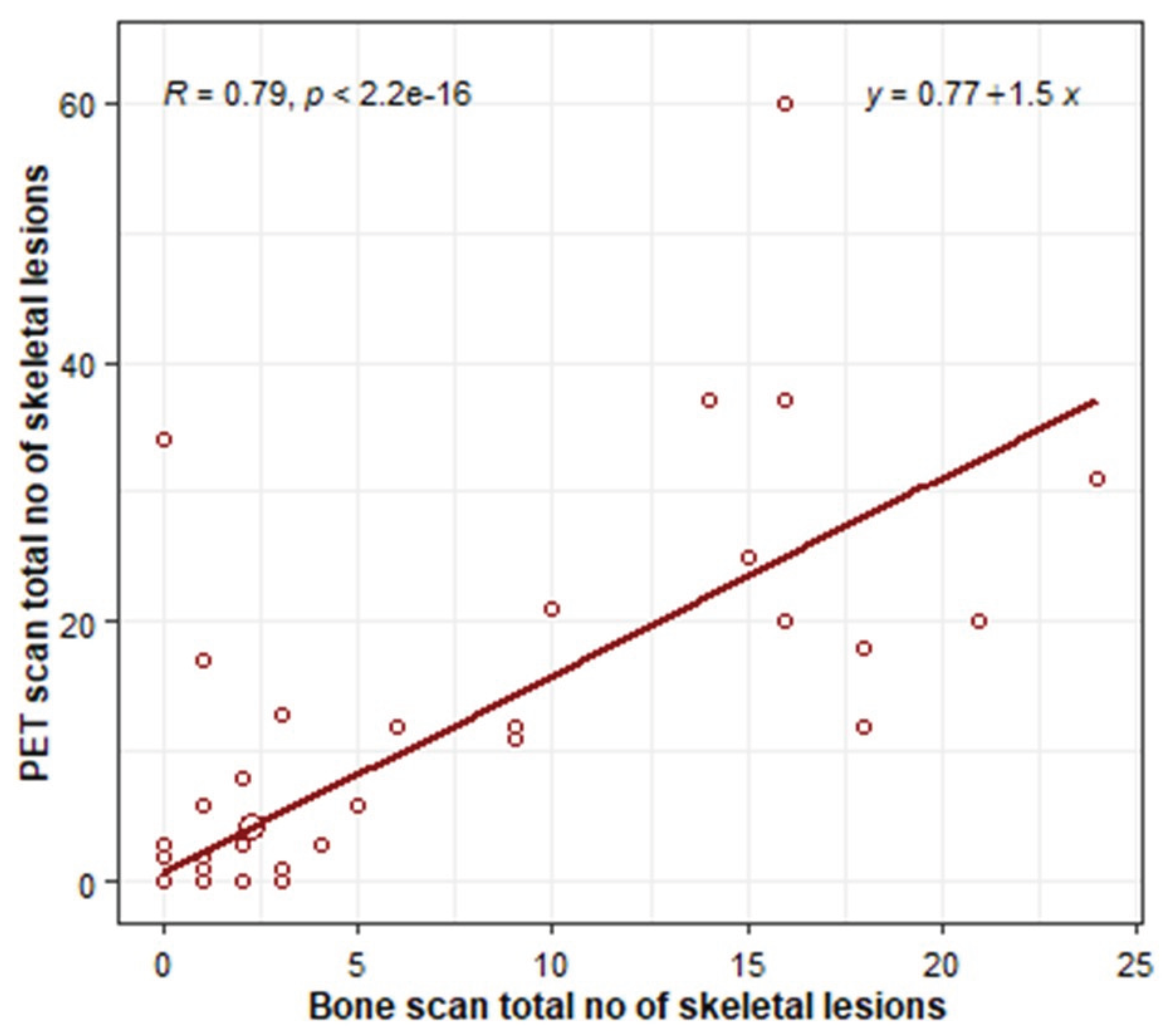
As represented by the scatter plot, a Pearson correlation coefficient was calculated to assess the relationship between BM detected on 99m Tc-MDP bone scintigraphy and 18F-FDG PET/CT scan. There was a significant strong positive relationship between both imaging modalities, R= 0.79, p = <2.2e-16 / <.001 (Figure A1).
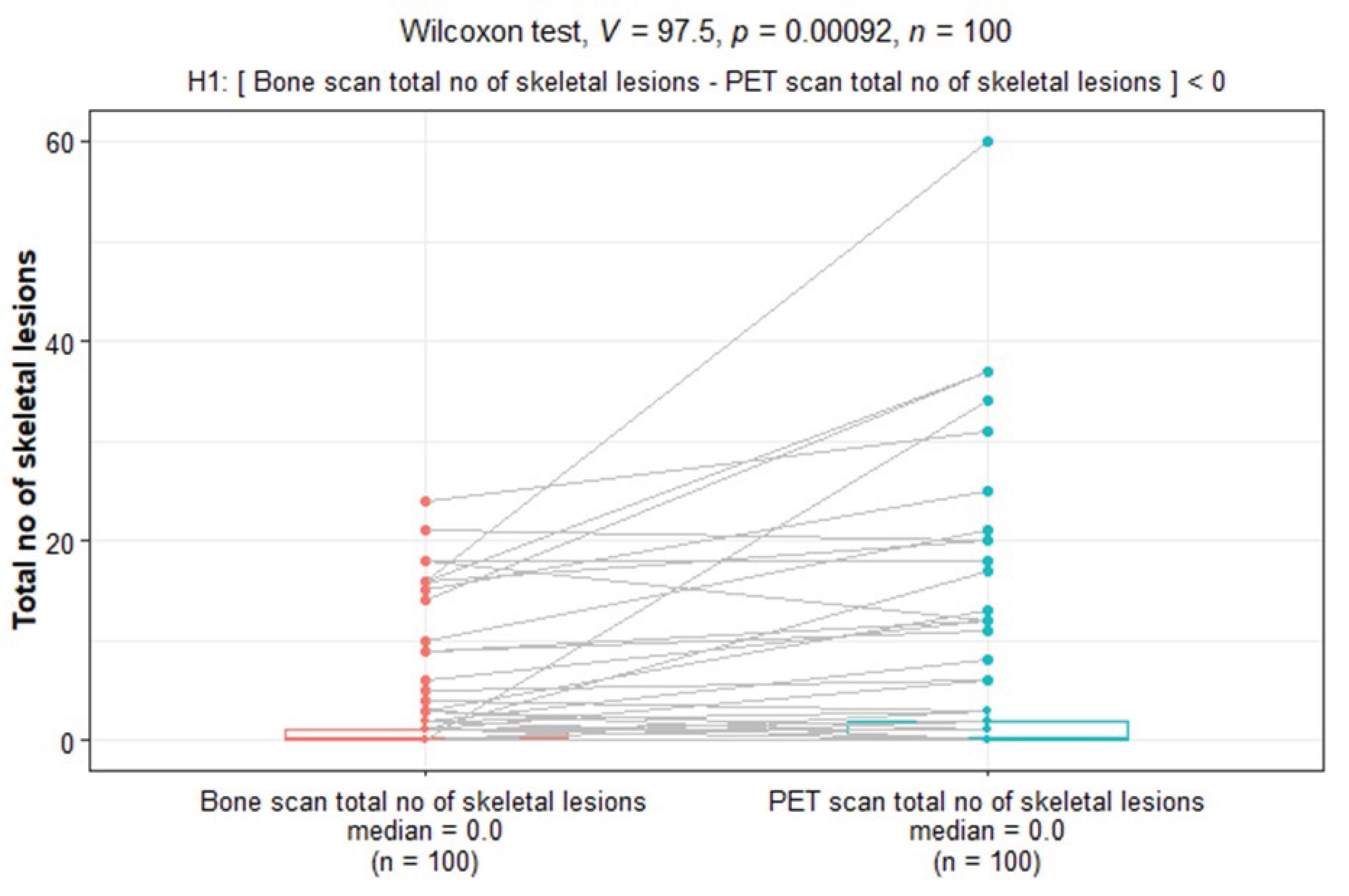
The Wilcoxon test confirmed the above and indicated that the BM detected on 18F-FDG PET/CT scan where significantly higher than that detected on 99m Tc-MDP bone scintigraphy, p = <.001 (Figure 2).
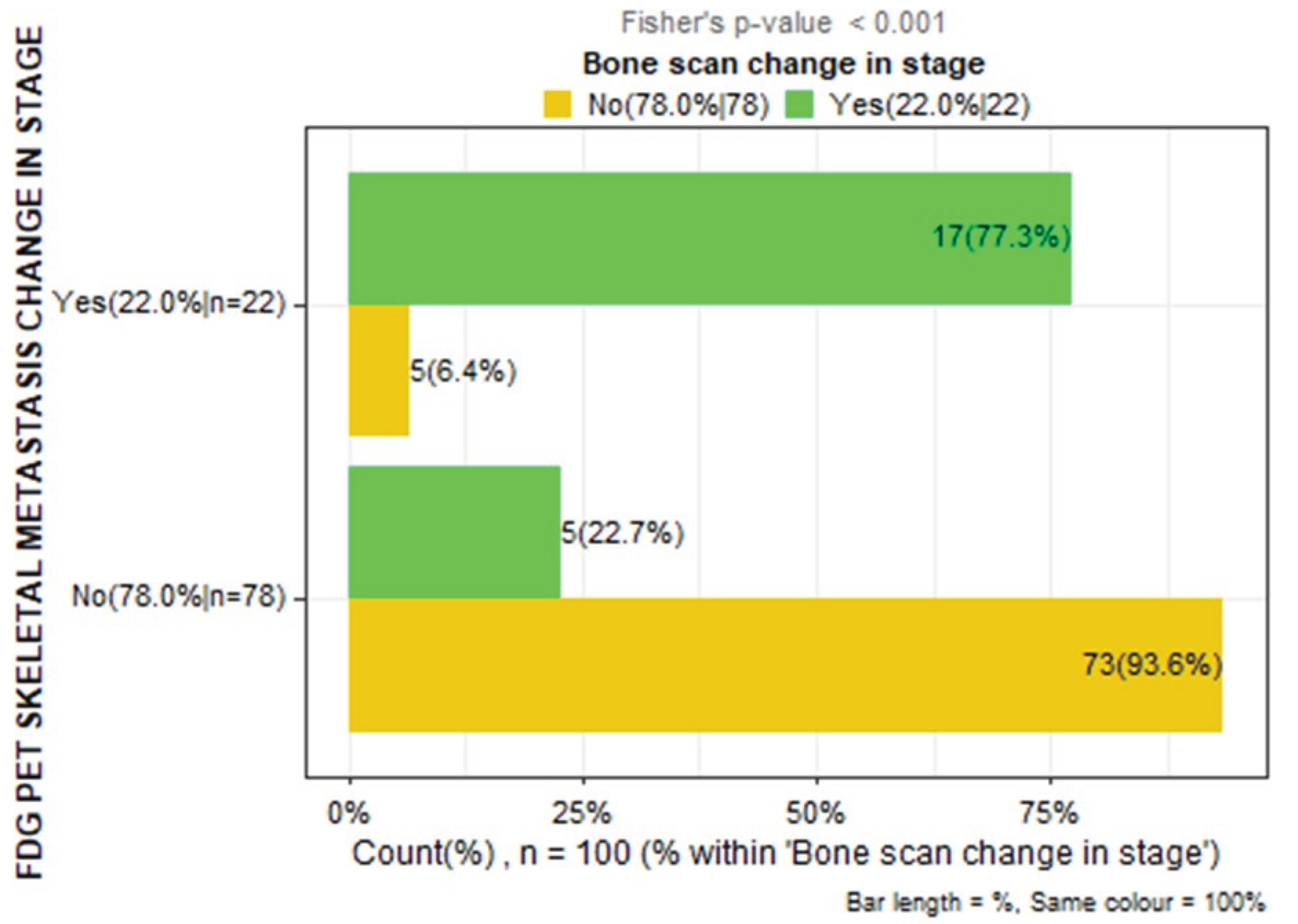
To examine the relationship between change in stage and resultant change in management in patients with BM detected on 18F-FDG PET/CT scan and 99m Tc-MDP bone scintigraphy, a Fisher’s exact test was conducted. The results indicated that there was a significant association between them. The bar graph shows that out of a total of 22 patients with BM detected on 18F-FDG PET/CT scan, 77.3% (n=17) had corresponding BM on 99m Tc-MDP bone scintigraphy, with the remainder, 6.4% (n=5), having a normal bone scintigraphy. Out of a total of 78 patients with no BM detected on 18F-FDG PET/CT scan, 93.6% (n=73) had corresponding normal 99m Tc-MDP bone scintigraphy, with the remainder, 22.7% (n=5), having detected BM. The difference though statistically significant, p < 0.05, has a small impact on outcome, Cohen = 0.3 and Confidence Interval 95% [0.2, 0.4]. The results suggest that in this sample, there is a significant association between BM detected on both imaging modalities.
18F-FDG PET/CT scan being used as the gold standard demonstrates sensitivity, specificity and accuracy of 97%, 94% and 90% respectively.
The same result was seen when examining the relationship between change in stage in patients with BM detected on 99m Tc-MDP bone scintigraphy and 18F-FDG PET/CT scan utilizing the Fisher’s exact test (Figure A2).
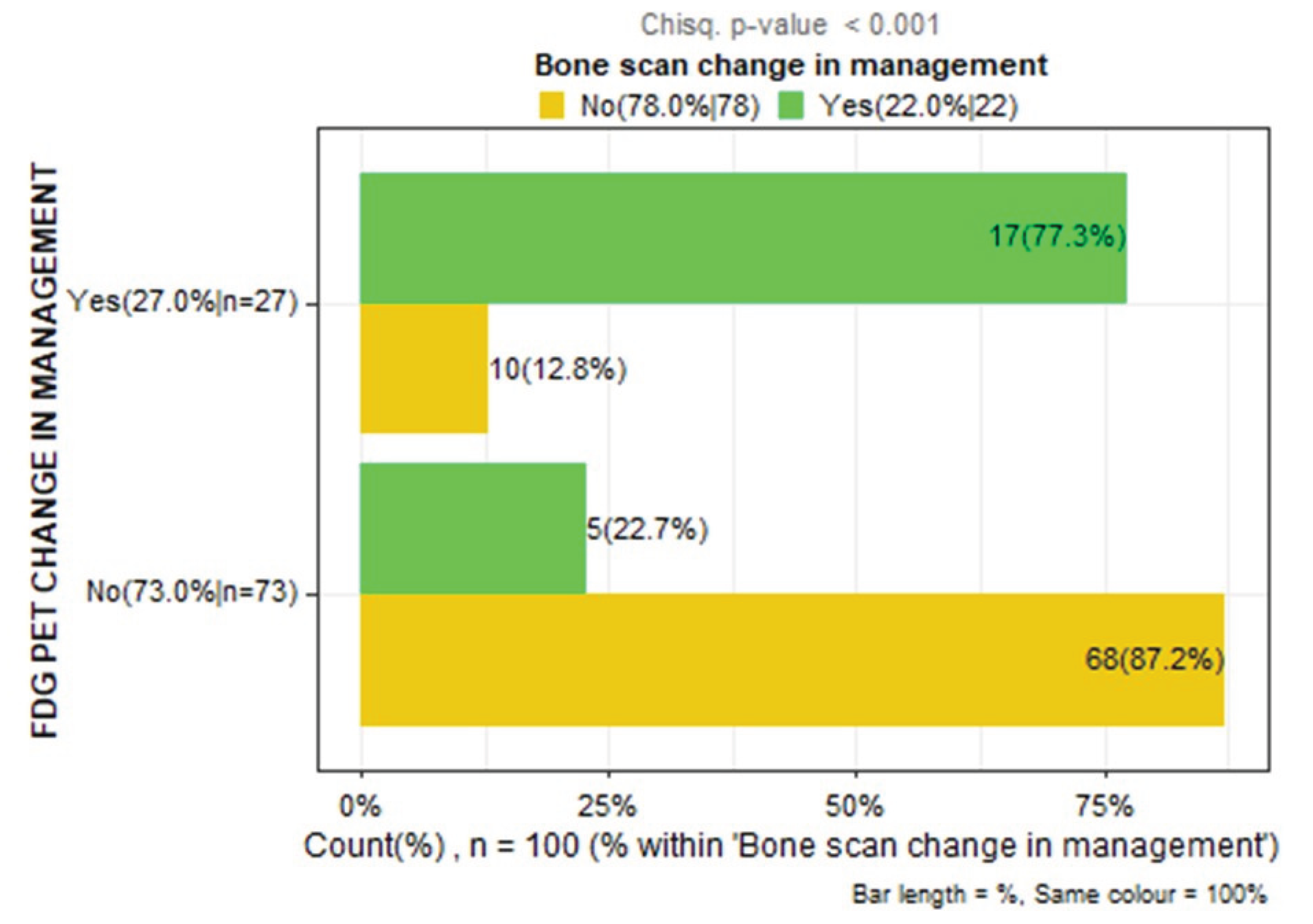
Additionally, on 18F-FDG PET/CT scan, soft tissue metastases alone accounted in an upgrade in metastatic staging in five patients, along with a change in management. However, the overall change in stage and management from 18F-FDG PET/CT scan (from n=22 to n=27) has a small effect size (Cohen = 0.118) and is likely not statistically significant in the given sample of 100 patients. Risk ratio = 1.227 (Figure 3).
Various factors (demographics, laboratory results, histopathology results, et-cetra) specifically associated in the patients who presented with BM in BC are addressed in detail in the discussion section (Table 2). Patients with BM with/without additional soft tissue metastases resulted in change in management (Table 3). In some cases, the primary investigations that were pending (mammogram / chest X-ray / CT staging), were cancelled due to the information provided by the scans and a new management plan concluded.

4. Discussion

BC being the leading cause of cancer related morbidity and mortality in females in South Africa and internationally, poses challenges to the health care system, the individual and the community at large. A significant discrepancy lies in the prevalence, incidence and mortality secondary to BC in low-income, developing countries and particularly in African ethnicities, due to delayed diagnosis and either suboptimal and or delayed treatment, as compared to high-income, developed countries and other ethnicities. Africa has the highest age standardized mortality rate in the world [27].
All study patients being female, a higher median age being 55 years old and most patients being post-menopausal, are in keeping with the known risk factors for BC. About a third of the patients used some form of hormonal contraception, which may have predisposed them to developing BC.
Most patients are of African descent, 57% (n=57), followed by Indian descent, 29% (n=29), European descent, 12% (n=12) and lastly mixed race, 2% (n=2). BC is noted mostly in post-menopausal, 57% (n=57) women, majority of whom were retroviral disease negative, 71% (n=71) and had no family history of a first degree relative with BC, 63% (n=63). Most patients did not use any hormonal contraception prior to diagnosis, 48% (n=48). Left-sided BC, 58% (n=58), predominated in this sample of patients, with only 4% (n=4) having undergone breast resection prior to imaging. Those that had undergone resection prior to therapy, were restaging patients.
Only 21% (n=21) of patients were retroviral disease positive. Of the 27 patients with detected BM, six patients were retroviral disease positive and had a viral load with lower than detectable levels and one patient had a viral load of less than 200 copies/millilitre. In a cohort study on the burden of cancers associated with human immunodeficiency virus in the South African public health sector, during the anti-retroviral era between 2004 and 2014, people living with human immunodeficiency virus were less likely to develop virus-unrelated cancers like BC, in keeping with previous literature [28].
Left-sided BCs were seen in 58 (58%) patients. Of the 27 patients with detected BM, 16 patients had left-sided BC. Although breast is a paired organ, with both sides sharing identical environmental and genetic risk factors that may contribute to cancer development, their differences lie in their tissue structure, blood supply and lymphatic drainage during embryological development, possibly associated with cancer laterality. In a novel study conducted on laterality of BC, it was observed that left-sided BC had a greater proliferative genomic profile, reduced response to neoadjuvant chemotherapy, and slightly worse long-term prognosis compared to right-sided BC [29].
Ki-67, a nuclear protein expressed in proliferating cells and detected by immunohistochemistry, had been proposed as a prognostic marker in hormone receptor positive BC. Currently, clinically it is used for prognosis estimation in early-stage disease and determining need for chemotherapy/ treatment and monitoring during and after neoadjuvant therapy. The international Ki-67 in BC Working Group recommends that T1/T2, N0/N1, oestrogen receptor positive / human epidermal growth factor receptor two negative BC with Ki-67 </= 5% or >/= 30% can withhold or start with chemotherapy without a gene expression assay), as these patients likely have a low or high recurrence score, respectively [30]. More than half the study patients, 56% (n=56) presented with a high Ki-67 of >/=30. Of the 27 patients with detected BM, 20 patients had a high Ki-67 proliferative index.
Tumor-induced immune system activation and inflammation, culminating in the secretion of cytokines and substances emitted from the tumor, can result in cancer related anaemia. Other causes include splenomegaly, destruction of red blood cells, bleeding linked to the tumor, kidney pathologies affecting erythropoietin production, nutritional deficiency, cancer therapy and damage to the bone marrow. Haemoglobin plays an important role in regulating anaemia and is has an established association with tumor hypoxia in cancer. Anaemia is acknowledged to serve as a prognostic indicator for unfavourable outcomes in BC [31]. There were 29 patients that demonstrated lower than normal haemoglobin levels prior to imaging. Of the 27 patients with detected BM, 15 patients had low haemoglobin levels.
Of the 67 patients with recorded serum alkaline phosphatase levels, 28% had elevated levels. Of the 27 patients with detected BM, 11 patients had elevated levels. In a systematic review and meta-analysis on the diagnostic value of serum alkaline phosphatase and bone-specific alkaline phosphatase for BM in BC, it was determined that although not promising, both markers may be useful for particularly the early detection of BM in BC patients [32].
Invasive ducal carcinoma and inflammatory breast carcinoma of no special type were documented in 94 (94%) patients in keeping with the literature regarding histology/ pathological type. Of the 27 patients with detected BM, 14 patients had invasive ductal carcinoma, 10 patients had inflammatory breast carcinoma of no special type, and two patients had invasive lobular carcinoma. Half the patients had luminal B molecular subtype and a quarter with basal-like. Out of the 27 patients with detected BM, the molecular subtypes were as follows: luminal A in two patients, luminal B in 16 patients, basal-like in six patients and Human epidermal growth factor receptor two enriched in one patient. A systematic review and meta-analysis on factors associated with BM in BC, concluded that patients with progesterone receptor positive BC have a relatively lower risk of BM, whereas those with human epidermal growth factor receptor two positive, lymph node metastasis positive, non-lobular or non- ductal BC have a relatively higher risk of BM. Also, an increased risk in BM is seen with increase in T stage, as follows in relation to T1: 1.99 times higher in T2, 4.74 times higher in T3 and 14.57 times higher in T4. According to the expression of oestrogen receptor, progesterone receptor, human epidermal growth factor receptor two, the various subtypes in BC were divided. In the evaluation of the risk of BM in patients with various subtypes of BC, there was no significant difference noted (Luminal A / Luminal B / Human epidermal growth factor receptor two enriched / basal-like). The risk of BM in BC patients with lymph node metastasis was 3.65 times higher than patients without lymph nodal metastasis [33]. In this study staging, 53 (53%) patients had T4, 13 (13%) T3, 27 (27%) T2 and 5 (5%) T1. Of the 84(84%) patients with lymph nodal involvement, N1 in 52 (52%), N2 in 22 (22%) and N3 in 10 (10%) patients. Of the 27 patients with detected bone lesions, T1 staging demonstrated 1 (4%) patient, T2 staging 5 (18%) patients, T3 staging 3 (11%) patients and T4 staging 18 (67%) patients and included 26 patients with lymph nodal.
According to a systematic review and meta-analysis on the proportion of patients who develop BM secondary to BC, 58% had BM at study start, 55% of new metastases during a follow up were BM and in patients with stage I to III BC, 12% developed BM during a median follow up of 60 months [34].
BC most commonly metastasizes to the bone. Early detection of BM influences its significant morbidity and mortality, thereby easing the burden of BC to all involved. Current standards for diagnosing BC BM include CT and bone scintigraphy. The current standard of care/practice at Inkosi Albert Luthuli Central Hospital for patients with confirmed BC involves acquiring 99m Tc-MDP bone scintigraphy, chest X-ray and contrast enhanced CT, as part of the initial work up and restaging and an addition of 18F-FDG PET/CT scans in a select group of patients with equivocal findings. However, recently, due to resource and time constraints, 18F-FDG PET/CT scans had been utilized temporarily, in place of a contrast enhanced CT scan, until available, for decision making at oncology breast multidisciplinary team meetings, to not prolong the waiting period for patient management and treatment. 18F-FDG PET/CT is used only in specific stages/ situations or in cases of equivocal results. BM in BC can vary from osteolytic to osteoblastic and mixed. Bone scintigraphy detects mostly osteoblastic BM with a high degree of sensitivity whereas 18F-FDG PET/CT scan detects predominantly osteolytic and mixed BM. 18F-FDG PET/CT scan has the added advantage of detecting distant soft tissue metastases including lymph nodes, which may upstage a patient and influence therapy planning, management and overall outcome.
In this study, 18F-FDG PET/CT scan was more sensitive in detecting suspected BM than 99m Tc-MDP bone scintigraphy, having identified just under twice the number of BM (421 versus 243) (Figure 4). This was statistically significant for lesion-by-lesion analysis (p< 0.001). However, regarding patient by lesion analysis with a corresponding change in stage and management, both modalities identified the same 17 patients. However, both 18F-FDG PET/CT and 99m Tc-MDP bone scintigraphy, each identified five other patients with BM, as finally agreed upon at the oncology breast multidisciplinary team, resulting in change in stage and management.
On 99m Tc-MDP bone scintigraphy, these focal areas of bone uptake on the five additional patients, did not demonstrate any corresponding radiological change. These may represent an early osteoblastic/ osteosclerotic process (functional change), preceding radiological change.
Regarding the focal uptake seen only on 18F-FDG PET/CT scan on an additional five patients, and not on 99m Tc-MDP bone scintigraphy, 10 lesions demonstrated only PET tracer activity, with no corresponding radiological changes, two lesions were osteosclerotic and 29 lesions were osteolytic in nature. Most BM in BC are osteolytic in nature, with osteoblastic representing around 15 to 20%. Osteolytic lesions are seen usually with more aggressive tumours and are a greater cause of bone- related morbidity [10].
The osteosclerotic lesions were thought to have been missed due to its small size and poor resolution of the 99m Tc-MDP bone scintigraphy gamma camera in comparison to the 18F-FDG PET/CT camera and the current protocol of only acquiring a regional SPECT/CT when a BM is suspected and in the context of the patient’s current history. 18F-FDG PET/CT scan is known to be more sensitive in detecting lytic bone lesions compared to 99m Tc-MDP bone scintigraphy. 99m Tc-MDP bone scintigraphy is more sensitive to osteoblastic/ osteosclerotic lesions.
Additionally, it is well documented in literature that 18F-FDG PET/CT scan is superior to 99m Tc-MDP bone scintigraphy, in detecting pure bone marrow involvement and soft tissue metastases. This was noted in this study and was statistically significant with five patients resulting in a change in stage and management based on 18F-FDG PET/CT scan detecting isolated soft tissue metastases (three cases of lung metastases and two cases of liver metastases) (p<0.05).
There was no statistically significant association seen between the type of bone lesion detected on 18F-FDG PET/CT scan and the histological or molecular subtypes. This may be secondary to a small sample size (Table A2 and Table A3).
In South Africa, the average amount spent on the imaging work-up for BC patients totals to approximately R32832.79 (Contrasted staging CT including brain (R20340.95) +99m Tc-MDP bone scintigraphy with 1 bed SPECT/CT (R10297.22) + chest X-ray (R773.30) + Ultrasound upper abdomen (R1421.32). A contrasted 18F-FDG PET/CT scan, providing similar information, is comparable at R32832.93. Radiation dose for a contrasted 18F-FDG PET/CT scan average at about 11 millisievert to 25 millisievert in total (20 millisievert (diagnostic) or 5 millisievert (low dose) + 6 millisievert (injection)). A diagnostic staging CT radiation dose is about 20 millisievert, 99m Tc-MDP bone scintigraphy with 1 bed SPECT/CT is about 14 millisievert and chest x-ray about 0.1 millisievert (total: 34.1 millisievert per work-up). A 18F-FDG PET/CT scan is a single modality that can be completed in under 2 hours, whereas the current work-up is a combination of investigations requiring multiple visits, contributing to delays in patient management, and sometimes may require an addition investigation such as 18F-FDG PET/CT scan.

5. Conclusion

Both 18F-FDG PET/CT and 99mTc-MDP bone scintigraphy demonstrated the ability to detect bone metastases in an equivalent number of patients, reflecting their interrogation of distinct biological processes: tumour metabolic activity and osteoblastic chemisorption, respectively. However, 18F-FDG PET/CT proved superior in overall metastatic assessment, particularly in identifying additional BM and concomitant soft-tissue distant metastases. This broader disease characterization translated into a significantly higher rate of management modification compared with 99mTc-MDP bone scintigraphy.
In resource-constrained settings such as ours, where patients frequently present with advanced disease and diagnostic delays are common a comprehensive staging at first evaluation is critical. When available, 18F-FDG PET/CT should be considered the preferred modality over 99mTc-MDP bone scintigraphy, as it offers greater diagnostic yield and more meaningful impact on clinical decision-making.

5.1. Methodological Challenges and Study Limitations

Some challenges the study encountered include, but is not limited to:
-
Limited / small sample size.
-
Single public centre.
-
Misinterpretation of the skeletal lesions, confusion between malignant and benign pathologies or equivocal results et cetera. However, at least two experienced Nuclear Physicians oversaw the scan results, minimizing such errors. Radiology reviewed where necessary. It was unethical and or impractical to confirm each skeletal lesion, by either biopsy, follow-up response to therapy or even additional imaging, such as MRI.
-
CT is not routinely performed with bone scintigraphy but routinely performed with PET/CT, therefore more lytic bone lesions may be detected compared to bone scintigraphy.
-
Both imaging modalities are subject to both false positive and false negative findings
-
Both modalities are not routinely acquired for all patients with BC. It may therefore be that those patients who underwent both studies represent a special category of BC patients.
-
Uncontrasted CT used in hybrid imaging.

5.2. Scientific Validity and Fair Selection of Patients

This was achieved because all patients with known BC and eligible for the study, were included. Inkosi Albert Luthuli Central Hospital is the only state-run centre in KwaZulu-Natal offering both imaging modalities, thereby having a good representation of the province’s population. Around 80% of the South African population attend public hospital facilities.

5.3. Risk/Benefit Balance

No previous or foreseeable risks to patients as the scans were part of routine management.
Potential benefits of this study will be for future patients diagnosed with BC.

5.4. Social Value

The study outcome assists in determining the best imaging modality for detection of BM in patients with BC to accurately stage the patient and provide effective management. Therefore, there will be no need to perform both studies. This will improve patient compliance in attending a single study appointment. There is reduction in the radiation dose to the patient by conducting only a single scan with a shortened procedure time. Waiting time between initial assessment, scan and review clinical appointments is minimized. In addition, routine chest X-rays, staging CT scans and abdominal ultrasounds may also possibly be omitted.
An earlier and more accurate management of patients requiring specific therapies can be accomplished. There will be cost reduction for both the patient and state, since only one scan is acquired. Patient will have reduced overall anxiety.

5.5. Study Significance

In addition to the social value of the study, demonstrating the superiority of one specific modality over the other in our setting, will assist in convincing the medical community and policy makers to revise the current guidelines/ standard practices in patients with BC, thereby reducing the financial burden of the patient and health sector and improving treatment along with morbidity and mortality in patients diagnosed with BC.

5.6. Future Research

Studies with a larger sample size and in multiple facilities along with the use of contrasted diagnostic range CT doses for 18F-FDG PET/CT scan can assist with potential bias and provide a more acute representation of the cost/benefit ratio.

Author Contributions

Conceptualization, Maryam Patel and Mariza Vorster; methodology/ formal analysis / supervision / project administration: Maryam Patel, Mariza Vorster and Bawinile Hadebe; software, M Patel.; validation / investigation / resources/ writing (original draft preparation, review and editing), M Patel, Lerwine Harry, Thembelihle Nxasana, Lerato Gabela, Siphelele Masikane, Venesen Pillay, Bawinile Hadebe and Mariza Vorster. All authors have read and agreed to the published version of the manuscript.

Funding

This research received no external funding. The procedures conducted were part of routine management of patients.

Institutional Review Board Statement

The study was conducted in accordance with the Declaration of Helsinki and approved by the Institutional Review Board (or Ethics Committee) of Biomedical Research Ethics Committee (BREC) (BREC/00005463/2023 and 17 April 2023) for studies involving humans, hospital management at IALCH and KwaZulu-Natal Department of Health. Initially, the number of patients that were retrospectively collected from the statistics provided from the hospital staff, after ethics approval was less than adequate. The statistician advised at minimum 100 patients to improve the power of the study. Patients who had come for their normal management (routine scans), and were eligible for this study (fitted the criteria), were added to the study, until 100 patients were reached. .

Data Availability Statement

The data that support the findings of this study are available on request from the first author, Dr Maryam Patel. The data is not publicly available due to the information contained that could compromise the privacy of research participants.

Acknowledgments

A special thanks to Dr Buccimazza, Dr Mallum, their respective medical teams in specialized breast surgery and oncology, as well as the doctors in radiology for providing their expert guidance / supervision in breast cancer patient review and management. The authors thank Mr Partson Tinarwo for conducting the formal analysis including the entire nuclear medicine team at Inkosi Albert Luthuli Central Hospital, for facilitating the procedures required for this study.

Conflicts of interest

The authors declare no conflicts of interest.

Abbreviations

The following abbreviations are used in the manuscript
BC Breast cancer
99mTc-MDP bone scintigraphy Technetium 99m methylene diphosphonate bone scintigraphy
18F-FDG PET/CT scan 2-deoxy-2[fluorine 18] fluoro-D-glucose positron emission tomography/computed tomography scan
BM Bone metastases
Ki-67 Ki-67 proliferative index
CT scan Computed tomography scan
SPECT/CT scan Single photon emission computed tomography scan
MRI Magnetic resonance imaging
18F-NaF PET/CT scan Flourine-18 Sodium Floride positron emission tomography/computed tomography scan
18F-FDG PET/MRI scan 2-deoxy-2[fluorine 18] fluoro-D-glucose positron emission tomography/magnetic resonance imaging
M Metastatic stage
T Tumour stage
N Lymph nodal stage

Appendix

Table A1. Clinicopathological data of 100 BC patients.
Age Mean ± standard deviation (CV%)
Median(Q1-Q3)
n(Min-Max)
55.0±13.7(24.8)
55.0(44.0-66.0)
100(26.0-85.0)
Race according to descent African
Indian
European
Mixed race
57 (57.0%)
29 (29.0%)
12 (12.0%)
2 (2.0%)
Menopause Pre-menopausal
Post-menopausal
Unknown
40 (40%)
57 (57%)
3 (3%)
Contraception Used
Not used
Unknown
34 (34%)
48 (48%)
18 (18%)
Retroviral disease status Negative
Positive
Unknown
71 (71%)
21 (21%)
8 (8%)
Family history of 1st degree relative with BC No
Yes
Unknown
63 (63%)
20 (20%)
17 (17%)
Side of BC Left
Right
58 (58%)
42 (42%)
Resection of BC prior to imaging No
Yes
96 (94%)
4 (4%)
Tumor 1
2
3
4
Unknown
5 (5%)
27 (27%)
13 (13%)
53 (53%)
2 (2%)
Node 01
2
3
Unknown
14 (14%)
52 (52%)
22 (22%)
10 (10%)
2 (2%)
Metastasis M1
M0
Unknown
10 (10%)
3 (3%)
87 (87%)
Ki67 in % (low / intermediate / high) </= 5
6 – 29
>/= 30
Unknown
7 (7%)
31 (31%)
56 (56%)
6 (6%)
ALP level in units per litre (42U/L - 98U/L) Normal
Abnormal (high)
Unknown
39 (39%)
28 (28%)
33 (33%)
Hb level in grams per litre (120g/L - 150g/L) Normal
Abnormal (low)
Unknown
64 (64%)
29 (29%)
7 (7%)
Histology Inflammatory breast carcinoma of no special type Invasive ductal carcinoma Invasive lobular carcinoma
Unknown

45 (45%)
49 (49%)
4 (4%)
2 (2%)
Molecular subtype Basal like
Human epidermal growth factor receptor two enriched
Luminal B
Luminal A
Unknown
25 (25%)
10 (10%)
50 (50%)
12 (12%)
3 (3%)
Table A2.
HISTOLOGY Inflammatory breast carcinoma of no special type (n=45) Invasive ductal carcinoma (n=49) Invasive lobular carcinoma (N=4) p-value
Chisq.
Overall
(n=94)
OSTEOSCLEROTIC 1
(2%)
10
(20%)
1
(25%)
0.116 11
(11%)
OSTEOLYTIC 7
(16%)
7
(14%)
1
(25%)
0.863 14
(15%)
MIXED OSTEOLYTIC/OSTEOSCLEROTIC 3
(7%)
8
(16%)
1
(25%)
0.146 11
(12%)
PET ACTIVITY ONLY 6
(13%)
8
(16%)
1
(25%)
0.684 14
(15%)
Table A3.
MOLECULAR SUBTYPE Basal like
(n=25)
Human epidermal growth factor receptor two enriched
(n=10)
Luminal A
(n=12)
Luminal B
(n=50)
p-value Overall
(n=97)
OSTEOSCLEROTIC 4
(16%)
0(0%) 2
(17%)
6
(12%)
0.621 11
(11%)
OSTEOLYTIC 3
(12%)
0
(0%)
1
(8%)
10
(20%)
0.444 14
(14%)
MIXED OSTEOLYTIC/OSTEOSCLEROTIC 0
(0%)
0
(0%)
3
(25%)
8
(16%)
0.033 11
(11%)
PET ACTIVITY ONLY 4
(16%)
1
(10%)
1
(8%)
8
(16%)
0.970 14
(14%)
Figure A1. Scatter plot assessing the relationship between BM detected on 99m Tc-MDP bone scintigraphy and 18F-FDG PET/CT scan, demonstrating a significantly higher BM detection rate on 18F-FDG PET/CT scans than 99m Tc-MDP bone scintigraphy.
Preprints 219009 g0a1
Figure A2. Bar chart demonstrating the relationship between change in stage in patients with newly detected BM detected on 18F-FDG PET/CT scan and 99m Tc-MDP bone scintigraphy in which 18F-FDG PET/CT scan detected 22 patients with BM which was only concordant to 17 patients with BM detected on 99m Tc-MDP bone scintigraphy.
Preprints 219009 g0a2

References

  1. Sung H, Ferlay J, Siegel RL, Laversanne M, Soerjomataram I, Jemal A, et al. Global cancer statistics 2020: GLOBOCAN estimates of incidence and mortality worldwide for 36 cancers in 185 countries. CA: a cancer journal for clinicians. 2021;71(3):209-49.
  2. Joko-Fru WY, Jedy-Agba E, Korir A, Ogunbiyi O, Dzamalala CP, Chokunonga E, et al. The evolving epidemic of BC in sub-Saharan Africa: Results from the African Cancer Registry Network. International Journal of Cancer. 2020;147(8):2131-41.
  3. Dalwai E, Buccimazza I. System delays in BC. South African Journal of Surgery. 2015;53(2):40-2.
  4. Čačala SR, Gilart J. Factors relating to late presentation of patients with BC in Area 2 KwaZulu-Natal, South Africa. Journal of Global Oncology. 2017;3(5):497-501.
  5. Zhu H, Doğan BE. American Joint Committee on Cancer’s Staging System for BC: Summary for Clinicians. European Journal of Breast Health. 2021;17(3):234.
  6. Paydary K, Seraj SM, Zadeh MZ, Emamzadehfard S, Shamchi SP, Gholami S, et al. The Evolving Role of FDG-PET/CT in the Diagnosis, Staging, and Treatment of BC. Mol Imaging Biol. 2019;21(1):1-10.
  7. Edge SB, Hortobagyi GN, Giuliano AE. New and important changes in BC TNM: incorporation of biologic factors into staging. Expert Review of Anticancer Therapy. 2019;19(4):309-18.
  8. Hortobagyi GN, Edge SB, Giuliano A. New and important changes in the TNM staging system for BC. American society of clinical oncology educational book. 2018; 38:457-67.
  9. Pulido C, Vendrell I, Ferreira AR, Casimiro S, Mansinho A, Alho I, et al. Bone metastasis risk factors in BC. Ecancermedicalscience. 2017;11.
  10. Orcajo-Rincon J, Muñoz-Langa J, Sepúlveda-Sánchez J, Fernández-Pérez G, Martínez M, Noriega-Álvarez E, et al. Review of imaging techniques for evaluating morphological and functional responses to the treatment of BM in prostate and BC. Clinical and Translational Oncology. 2022;24(7):1290-310.
  11. Yararbas U, Avci NC, Yeniay L, Argon AM. The value of 18F-FDG PET/CT imaging in BC staging. Bosnian journal of basic medical sciences. 2018;18(1):72.
  12. Venetis K, Piciotti R, Sajjadi E, Invernizzi M, Morganti S, Criscitiello C, et al. BC with bone metastasis: molecular insights and clinical management. Cells. 2021;10(6):1377.
  13. Dadgar H, Norouzbeigi N, Jokar N, Zareizadeh J, Gholamrezanezhad A, Ahmadzadehfar H, et al. Comparison of 18F-NaF Imaging, 99mTc-MDP Scintigraphy, and 18F-FDG for Detecting BM. World Journal of Nuclear Medicine. 2022;21(01):001-8.
  14. Otis-Chapados S, Goulet CR, Dubois G, Lavallée É, Dujardin T, Fradet Y, et al. 18F-fluorodeoxyglucose positron emission tomography/computed tomography (PET/CT) is accurate for high-grade prostate cancer bone staging when compared to bone scintigraphy. Canadian Urological Association Journal. 2021;15(10):301.
  15. Iagaru A, Minamimoto R. Nuclear medicine imaging techniques for detection of skeletal metastases in BC. PET clinics. 2018;13(3):383-93.
  16. Hansen JA, Naghavi-Behzad M, Gerke O, Baun C, Falch K, Duvnjak S, et al. Diagnosis of BM in BC: Lesion-based sensitivity of dual-time-point FDG-PET/CT compared to low-dose CT and bone scintigraphy. PloS one. 2021;16(11): e0260066.
  17. Nakai T, Okuyama C, Kubota T, Yamada K, Ushijima Y, Taniike K, et al. Pitfalls of FDG-PET for the diagnosis of osteoblastic BM in patients with BC. European journal of nuclear medicine and molecular imaging. 2005;32(11):1253-8.
  18. Shie P, Cardarelli R, Brandon D, Erdman W, AbdulRahim N. Meta-analysis: comparison of F-18 Fluorodeoxyglucose-positron emission tomography and bone scintigraphy in the detection of BM in patients with BC. Clinical nuclear medicine. 2008;33(2):97-101.
  19. Pak K, Yoon H-J, Lim W, Kim HY. Impact of 18F-FDG PET on the management of recurrent BC: a meta-analysis. Clinical and Translational Imaging. 2021;9(3):255-63.
  20. Vogsen M, Jensen JD, Gerke O, Jylling AMB, Asmussen JT, Christensen IY, et al. Benefits and harms of implementing [18F] FDG-PET/CT for diagnosing recurrent BC: a prospective clinical study. EJNMMI research. 2021;11(1):1-11.
  21. Hildebrandt MG, Naghavi-Behzad M, Vogsen M, editors. A role of FDG-PET/CT for response evaluation in metastatic BC? Seminars in Nuclear Medicine; 2022: Elsevier.
  22. il Lee M, Jung YJ, Kim DI, Lee S, Jung CS, Kang SK, et al. Prognostic value of SUVmax in BC and comparative analyses of molecular subtypes: A systematic review and meta-analysis. Medicine. 2021;100(31).
  23. Sakellis CG, Jacene HA, editors. Imaging for Radiation Planning in BC. Seminars in Nuclear Medicine; 2022: Elsevier.
  24. Hu H, Hu X, Liang Z, Yang W, Li S, Li D, et al. Diagnostic performance of (18)F-FDG PET/CT vs. (18)F-NaF PET/CT in BC with BM: An indirect comparative meta-analysis. Oncol Lett. 2024;28(5):546.
  25. Bruckmann NM, Kirchner J, Umutlu L, Fendler WP, Seifert R, Herrmann K, et al. Prospective comparison of the diagnostic accuracy of 18F-FDG PET/MRI, MRI, CT, and bone scintigraphy for the detection of BM in the initial staging of primary BC patients. Eur Radiol. 2021;31(11):8714-24.
  26. Gerke O, Naghavi-Behzad M, Nygaard ST, Sigaroudi VR, Vogsen M, Vach W, et al. Diagnosing BM in BC: A Systematic Review and Network Meta-Analysis on Diagnostic Test Accuracy Studies of 2- [(18)F] FDG-PET/CT, (18)F-NaF-PET/CT, MRI, Contrast-Enhanced CT, and Bone Scintigraphy. Semin Nucl Med. 2025;55(1):137-51.
  27. Momenimovahed Z, Salehiniya H. Epidemiological characteristics of and risk factors for BC in the world. BC (Dove Med Press). 2019; 11:151-64.
  28. Dhokotera T, Bohlius J, Spoerri A, Egger M, Ncayiyana J, Olago V, et al. The burden of cancers associated with HIV in the South African public health sector, 2004-2014: a record linkage study. Infect Agent Cancer. 2019; 14:12.
  29. Abdou Y, Gupta M, Asaoka M, Attwood K, Mateusz O, Gandhi S, et al. Left sided BC is associated with aggressive biology and worse outcomes than right sided BC. Sci Rep. 2022;12(1):13377.
  30. Krystel-Whittemore M, Tan PH, Wen HY. Predictive and prognostic biomarkers in breast tumours. Pathology. 2024;56(2):186-91.
  31. Chen X, Zhou H, Lv J. The Importance of Hypoxia-Related to Hemoglobin Concentration in BC. Cell Biochem Biophys. 2024;82(3):1893-906.
  32. Jiang C, Hu F, Li J, Gao G, Guo X. Diagnostic value of alkaline phosphatase and bone-specific alkaline phosphatase for metastases in BC: a systematic review and meta-analysis. BC Res Treat. 2023;202(2):233-44.
  33. Liu H, Zhang X, Zhang S, Wang X, Yu S. Factors associated with bone metastasis in BC: a systematic review and meta-analysis. Annals of Palliative Medicine. 2021;10(4):4435-52.
  34. Body JJ, Quinn G, Talbot S, Booth E, Demonty G, Taylor A, et al. Systematic review and meta-analysis on the proportion of patients with BC who develop BM. Crit Rev Oncol Hematol. 2017; 115:67-80.
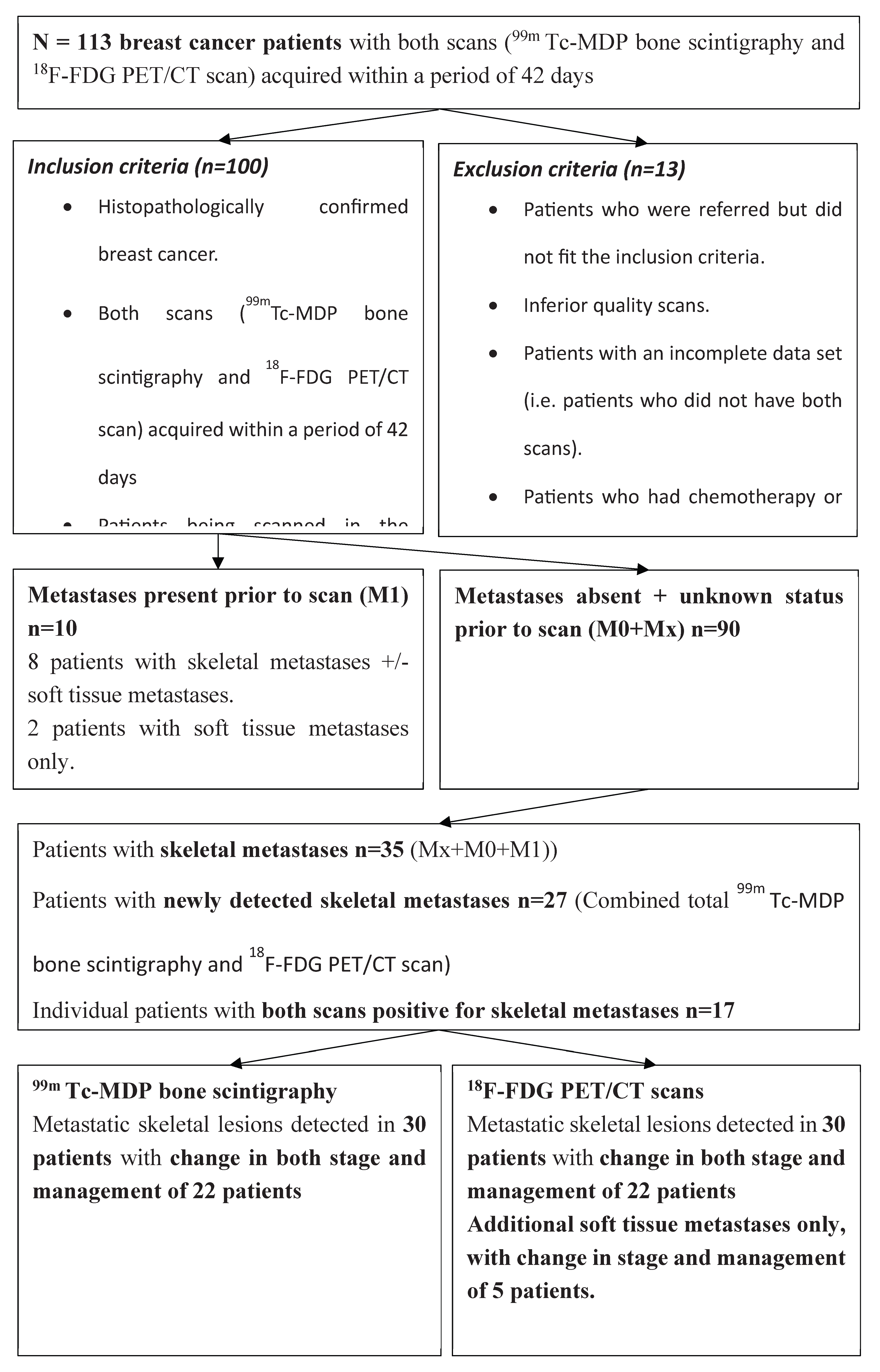
Figure 1. Flow chart: overview of patient selection and results.
Preprints 219009 g001
Figure 2. Paired plot: Wilcoxon test: BM detected on 18F-FDG PET/CT scan where significantly higher than that detected on 99m Tc-MDP bone scintigraphy, p=<.001.
Preprints 219009 g002
Figure 3. Bar chart demonstrating an overall change in management: 18F-FDG PET/CT scan indicating 27% patients with resulting in management change and only 17% corresponding change in management seen on 99m Tc-MDP bone scintigraphy.
Preprints 219009 g003
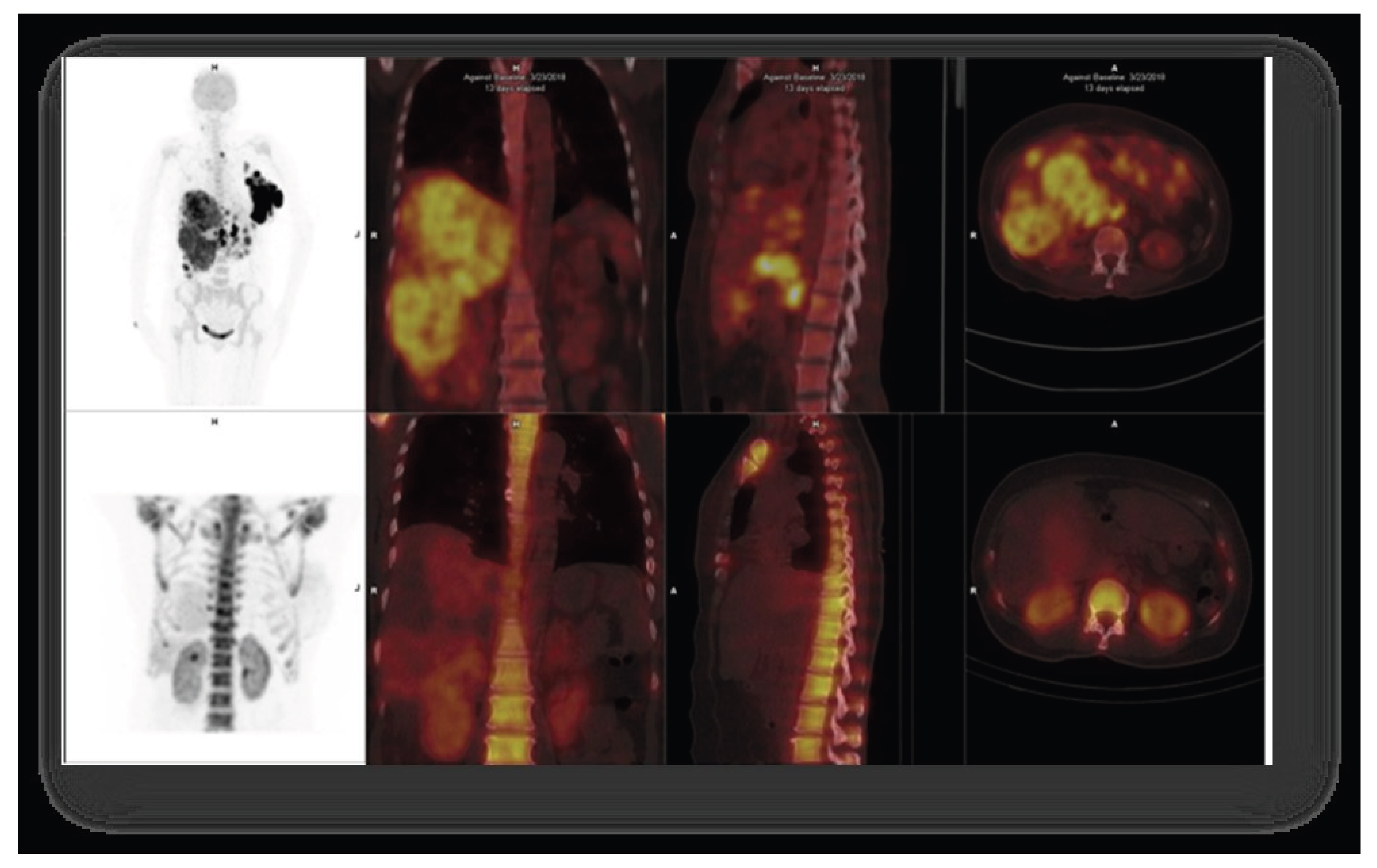
Figure 4. A 63-year-old female with left BC (T4N2Mx / Triple Neg / Ki-67 of 90%): Bone metastases noted on 18F-FDG PET/CT scan compared to 99m Tc-MDP bone scintigraphy. 18F-FDG PET/CT scan: Right parietal and L2 vertebral body BM with no NECT changes. Diffusely increased bone marrow uptake. Significant local spread. Extensive soft tissue metastases (liver and extra-ipsilateral lymph nodes). (Top row). 99m Tc-MDP bone scintigraphy: No obvious BM noted. (Bottom row).
Preprints 219009 g004
Table 1. Imaging data of 100 breast cancer patients.
Total number of BM on 99m Tc-MDP bone scintigraphy 243
Total number of BM on 18F-FDG PET/CT scan 421
99mTc-MDP bone scintigraphy
– change in stage
No
Yes
78 (78%)
22 (22%)
18F-FDG PET/CT scan (BM only)
– change in stage
No
Yes
78 (78%)
22 (22%)
18F-FDG PET/CT scan (overall)
– change in stage
No
Yes
73 (73%)
27 (27%)
99mTc-MDP bone scintigraphy
– change in stage
No
Yes
78 (78%)
22 (22%)
18F-FDG PET/CT scan (BM only)
– change in stage
No
Yes
78 (78%)
22 (22%)
18F-FDG PET/CT scan (overall)
– change in stage
No
Yes
73 (73%)
27 (27%)
18F-FDG PET/CT scan sites of metastases Bone
Lung
Liver
Lymph node
Adrenal
Brain
Bone marrow
35 (35%)
15 (15%)
11 (11%)
64 (64%)
2 (2%)
1(1%)
3(3%)
18F-FDG PET/CT scan BM
(Total: 421 bone lesions)
Osteosclerotic
Osteolytic
Mixed lytic/sclerotic
Only PET activity
47(11%)
181(43%)
127(30%)
66(16%)
Table 2. Various factors (demographics, laboratory results, histopathology results, etc) associated in BC patients with newly detected BM.
Patients with BM that changed management (Total n=27)
Tumor stage T1
T2
T3
T4
1 (4%)
5 (18%)
3 (11%)
18 (67%)
Lymph nodal involvement Yes
Unknown
26 (96%)
1 (4%)
Haemoglobin level Low
Normal
Unknown
15 (56%)
9 (33%)
3 (11%)
Serum alkaline phosphatase level Elevated
Normal
Unknown
11 (41%)
4 (15%)
12 (44%)
Ki-67 proliferative index High (>/=30)
Intermediate (5-30)
Unknown
20 (74%)
4 (15%)
3 (11%)
Histology Invasive ductal carcinoma
Inflammatory breast carcinoma of no special type
Invasive lobular carcinoma
Unknown histology
14 (52%)
10 (37%)
2 (7%)
1 (4%)
Molecular subtypes Luminal A
Luminal B
Basal like
Human epidermal growth factor receptor two enriched
Unknown subtype
2 (7%)
16 (60%)
6 (22%)
1 (4%)
2 (7%)
Table 3. BC patients with newly diagnosed BM with/without additional soft tissue metastases along with the associated change in management.
Number of patients Sites of metastases
New management plan
2 Bone + unilateral adrenal + liver + lung metastases
Palliative/supportive care
1 Bone + bone marrow + lung + liver + brain metastases
Palliative/ supportive care + whole brain radiotherapy
1 Bone + bone marrow + lung metastases
Palliative chemotherapy (aggressive) + bisphosphonates used cautiously + rescue therapy (urgent restoration of haemopoietic function) + intensive management of cytopenias and fever of unknown origin (FUO) + close monitoring of complete blood count (CBC) + biopsy of lung mass +/- stereotactic body radiation therapy (SBRT)+/- change line of chemotherapy to target lung metastases.
1 Bone + bone marrow metastases
Palliative chemotherapy (aggressive) + bisphosphonates used cautiously + rescue therapy (urgent restoration of haemopoietic function) + intensive management of cytopenias and fever of unknown origin (FUO) + close monitoring of complete blood count (CBC)
2 Bone + liver metastases
Palliative chemotherapy (aggressive)+/- change in chemotherapy line (liver directed treatment) + bisphosphonates + close monitoring of liver function tests (LFT’s) and biomarkers (critical for most chemotherapy clearance)
3 Bone+ lung metastases
Palliative chemotherapy (aggressive) + bisphosphonates + biopsy of lung mass (2) / follow up lung imaging (HRCT) (1) +/- stereotactic body radiation therapy (SBRT)+/- change line of chemotherapy to target lung metastases.
1 Single BM
Palliative chemotherapy (aggressive) + bisphosphonates + local XBRT at the single bone metastatic site (Thoracic vertebra)
4 BM and locally advanced primary tumour (T4)
Palliative chemotherapy (aggressive) + bisphosphonates + local XBRT at the primary BC site (painful and prevention of further spread)
3 BM with corresponding bone pain
Palliative chemotherapy (aggressive) + bisphosphonates + local XBRT at the site of painful BM (spinal metastases)
9 Multiple BM
Palliative chemotherapy (aggressive) + bisphosphonates
Disclaimer/Publisher’s Note: The statements, opinions and data contained in all publications are solely those of the individual author(s) and contributor(s) and not of MDPI and/or the editor(s). MDPI and/or the editor(s) disclaim responsibility for any injury to people or property resulting from any ideas, methods, instructions or products referred to in the content.
Copyright: This open access article is published under a Creative Commons CC BY 4.0 license, which permit the free download, distribution, and reuse, provided that the author and preprint are cited in any reuse.
Prerpints.org logo

Preprints.org is a free preprint server supported by MDPI in Basel, Switzerland.

Subscribe

Accessibility

Disclaimer

Terms of Use

Privacy Policy

Privacy Settings

© 2026 MDPI (Basel, Switzerland) unless otherwise stated