
Preprint
Review

This version is not peer-reviewed.

Beyond Nutrition: Innovative Applications of Vitamins as Functional Excipients

Submitted:

08 June 2026

Posted:

17 June 2026

You are already at the latest version

Abstract
Background/Objectives: Traditionally classified as nutrients or micronutrients, vitamins can now be viewed as multi-functional excipients that have considerable potential within the context of pharmaceutical formulation science. Due to their physicochemical characteristics, antioxidant nature, and stabilizing action, vitamins are able to serve functions that go beyond their nutritional applications. These include but are not limited to solubility, increased permeation, controlled release, as well as synergistic stabilization and enhancement of the active ingredient(s). Results: The current work presents the synthesis of information available to date regarding the classification, mechanisms, and excipient properties of vitamins and their role in novel drug delivery systems development. In addition to the conventional classification into water-soluble and fat-soluble, some other classification criteria are used based on the chemical nature of vitamins. Water-soluble vitamins are mainly used to facilitate oxidation and pH adjustments whereas fat-soluble vitamins are mostly employed in lipid-based systems due to solubilizing and antioxidative effects. Conclusion: Vitamin-based mechanisms such as the surfactant effect of TPGS (vitamin E), oxidation and reduction reactions in vitamin C, or hydrotropy in niacinamide illustrate active involvement of vitamins in enhancing bioavailability and improving the formulation. Novel areas of application range from vitamin-functionalized nanocarriers to receptor-targeted ligands and incorporation into 3D-printed drug delivery platforms.
Keywords: 
;  ;  ;  

1. Introduction

Excipients are parts of a medication product that are not the active pharmaceutical ingredient (API). The great majority of pharmaceutical products are made easier to manufacture and use when excipients are added to the formulation. Excipients have a variety of uses, such as supporting the production of drugs, stabilizing the finished product, or adjusting the release and bioavailability of the API. In a formulation, an excipient may serve one or more purposes. Excipients should ideally be non-toxic, pharmacologically inactive, and unaffected by the API or other excipients. Many play crucial roles that impact the pharmaceutical product’s overall effectiveness. Excipients may interact with the physiological environment, other compounds in the formulation, or the active substance(Rowe et al., 2009). The particular excipients to be used, taking into account the route of administration, dosage form, API dose, frequency of dosing, storage temperature, primary packaging, and other factors, will be determined by the physicochemical properties of the API and the target product profile of the pharmaceutical drug product.
Based on the intended use in the final product, excipients are chosen from various excipient classes (van der Merwe et al., 2020). To increase or maintain the solubility of the API in parenteral formulations, excipients such as solubilizers, solvents, co-solvents, surface-active agents, and complexation agents are needed. To maintain the stability of the API, pH modifiers, antioxidants, chelating agents, bulking agents, and cryo- and lyo-protectants are also required (Akers, 2002). Preservatives and antimicrobials are also essential for guaranteeing the safety of parenteral formulations with many uses. In oral pediatric medications, taste-masking chemicals, flavors, and colorants are particularly crucial (Sohi et al., 2004).Additionally, surfactants, complexing agents, and polymers are utilized to control or prolong the drug release profile, while tonicity-adjusting compounds are employed to lessen pain and irritation during injection.
The excipients needed depend on the final medicine product’s shape. Solid oral dosage forms are made with lubricants or glidants to lessen friction in powder blends, disintegrants to help break up the dosage form, binders to improve cohesiveness and integrity of granules and tablets, and fillers or diluents to bulk up a dosage form (Darji et al., 2018). Coating agents, solubility or permeability enhancers, or excipients that change the formulation’s drug release profile can all be added to solid oral dosage forms to increase functionality (Salawi, 2022).
Like parenteral dosage forms, semisolid and liquid oral dosage forms need stabilizers like pH modifiers, antioxidants, chelating agents, and bulking agents in addition to solubilization agents like solvents, cosolvents, surface-active agents, and complexation agents to increase solubility (Akers, 2002). Similarly, appropriate excipient classes are used to choose excipients for topical and local medicinal formulations (Elder et al., 2016). Figure 1 displays examples of excipient classes and functions in different dose forms.
Regulatory agencies oversee the use of excipients in medications. The European Medicines Agency (2007) and the Food and Drug Administration and Department of Health and Human Services (2023a) both define an excipient as any ingredient or substance that is purposefully added to a drug or medicine but is not part of the active substance. According to the European Medicines Agency (2007), excipients are regarded as inactive but may have a known action or effect under specific conditions.
As we cover in this chapter, vitamins are frequently employed as excipients in medicinal formulations. The antioxidant action of vitamin C is the most well-known function of the vitamins. (Rowe et al., 2009) and E. Both compounds are often utilized in pharmaceutical formulations to stabilize the product and increase its shelf life by shielding the API from oxidation. However, as will be covered in detail in the next sections, these and other vitamins can perform other roles that help medication formulations. Any vitamin used as an excipient needs to be accessible at a level appropriate for pharmaceuticals. Although not all of the chemical congeners of vitamins listed in Table 1 are currently accessible with pharmaceutical GMP compliance.

2. Classification of Vitamins in Relation to Excipients

By definition, vitamins are essential micronutrients that perform both physiological functions and, now also being recognized, pharmaceutical technology functions. For example, vitamins have historically been thought of only as functional (active) nutritional agents; however, these same compounds are now being increasingly used as functional excipients (assistive substances) in the stabilization of formulations, improvement of bioavailability, and alteration of the rates of drug release. Therefore, vitamins are classified in excipients science by not only their nutritional classifications but by their physicochemical and technological functional characteristics. This dual classification system (nutritional vs pharmaceutical) helps explain how vitamins can be utilized in the development of advanced drug delivery systems(Erem et al., 2025).

2.1. Solubility-Based Classification of Vitamins

The solubility-based classification of vitamins serves as a logical guide when selecting excipients and formulating pharmaceutical products. In general, vitamins can be classified into either fat-soluble or water-soluble categories; this classification dictates the physicochemical properties of each vitamin and subsequently determines their stability character, as well as the excipients required for formulation(Sugandhi et al., 2023).
The water-soluble vitamins include those of the B complex series (thiamine, riboflavin, pyridoxine, cobalamin, folate, niacin, pantothenic acid and biotin) and vitamin C (ascorbic acid); they are particularly susceptible to hydrolytic and oxidative degradation. Therefore, water-soluble vitamins require the use of stabilizing excipients such as chelators, antioxidants or coatings. An example is ascorbic acid which is highly unstable in aqueous media; therefore, it is usually formulated together with a stabilizer such as sodium metabisulphite or is packaged in moisture resistant excipient to reduce the degradation of ascorbic acid. To promote the stability of water-soluble vitamins and protract their shelf-life, a variety of advanced formulation techniques including lyophilization, microencapsulation and co-processing with hydrophilic polymers (e.g., hydroxypropyl methylcellulose [HPMC] and polyvinylpyrrolidone [PVP]) are used(Sugandhi et al., 2023).
Fat-soluble vitamins, Vitamins A, D, E and K are fat soluble vitamins that demonstrate low solubility in aqueous environments as well as an ability to degrade due to oxidation. Their lipophilic nature requires that excipients (materials that enhance vitamin solubilization/absorption) be used, such as lipid-based carriers (e.g., oils), emulsifiers (e.g., surfactants), and solid dispersions. An example of a vitamin that is commonly formulated in conjunction with lipid nanoparticles and self-emulsifying drug delivery systems (SEDDS) for improved bioavailability is vitamin E. Surfactants such as polysorbates (Tween), Cremophor EL, phospholipids, and cyclodextrins are often employed to improve the solubility of vitamins and/or provide oxidative stability(Andrès et al., 2024).
This classification based on solubility is highly important because it determines the primary function of an excipient - i.e., protect the vitamin against degradation (as is commonly seen with water-soluble vitamins) or enhance the solubility and absorption of fat-soluble vitamins. Thus, it is critical that the relationship between vitamin solubility and excipient functionality is understood in order to create successful pharmaceutical formulations that are ultimately patient focused.

2.2. Functional Classification of Vitamins in Pharmaceutical Formulations

Vitamins can be categorized not just by their solubility but also by their functions in pharmaceutical formulations. They serve many purposes as they provide nutrients and are also used to stabilize, synergize and modify drug delivery systems.
Vitamins often work as antioxidants. Many give up electrons in certain circumstances to stop the oxidation of both active pharmaceutical ingredients (APIs) and excipients. For example, tocopherols, or vitamin E, are excellent antioxidants for lipid-based formulations and can therefore extend the shelf life of soft gelatin capsules by preventing rancidity. Similarly, ascorbic acid, or vitamin C, is an antioxidant employed in aqueous-based formulations to scavenge free radicals and maintain the formulation’s integrity(Darji et al., 2018).
Some vitamins (e.g., riboflavin/vitamin B2) can work as co-stabilizers and/or synergists with other stabilizers to give formulations greater stability. An example is vitamin C preserving the oxidative stability of dosage forms by being combined with a synthetic antioxidant (e.g., BHT) when the two are used in combination. An example of a vitamin (B2) having a positive effect on the stability of a product rests with its use as a photostabilizer. When used in this manner, B2 protects light-sensitive compounds from breaking down and ultimately, improves the stability of a formulation when stored(Ahmad et al., 2015).
Excipient Nutra-Cosmetics: Vitamins not only stabilise excipient properties but they can also act as nutraceutical excipients by providing both technological (for example, using vitamins in dosage forms to help stabilise the preparation) and therapeutic (for example, using vitamins in dosage forms to contribute to the nutritional value of the drug) value. The combination of vitamins in mixture forms of dosage is an example of vitamins that act as both active and stabilizing ingredients, providing a bridge between pharmaceutical use and dietary use (for example, multivitamin tablets) (Gianeti et al., 2012).
Release Modulating Excipient: Several vitamins have been used as release modulating excipients due to their physicochemical properties. As an example of this, Vitamin E succinate has been used as a hydrophobic excipient in matrix systems in order to delay the release of poorly soluble drugs. The use of vitamins to modulate the drug release profile of medications further demonstrates the ability of vitamins to function as an active excipient rather than simply serving as a stabilizing agent during drug delivery to the patient(Bayne et al., 2025).

2.3. Stability Considerations of Vitamins in Pharmaceutical Formulations

The stability of vitamins in a pharmaceutical dosage form is a major consideration when choosing an excipient and deciding how to formulate a successful product. Water soluble vitamins exhibit entirely different degradation pathways compared to fat soluble vitamins because of their different chemical and physical properties. Therefore, in these two categories of vitamins, different approaches must be taken to stabilize each vitamin(ClinicSearch, n.d.). Both water soluble vitamins (B complex and vitamin C) are very susceptible to environmental conditions (moisture, light, and oxygen) and because of that, there are a variety of degradation pathways that are rapid occurrences of hydrolytic degradation and oxidation. The greatest impact of these degradation pathways is that will compromise the therapeutic effectiveness of the vitamin(Coelho et al., 2022). To minimize the effects of these degradation pathways there are many types of protective excipients available. Some of the common approaches to prevent degradation of these vitamins are opaque coatings, which prevent photodegradation; desiccants, which control moisture ingress; and antioxidants, which eliminate the potential for oxidative degradation. As an example, ascorbic acid can often be stabilized by the addition of sodium metabisulfite or by encapsulating it into a moisture resistant matrix(Coelho et al., 2022).
Fat soluble vitamins are more susceptible to oxidative degradation because they are lipophilic in nature. Protective excipients must also provide physical and chemical stability for them. Examples of commonly used excipient types that are used to stabilize fat soluble vitamins are ingredients that provide lipid protection, emulsifying agents, and encapsulation techniques. An example of a type of excipient that stabilizes fat soluble vitamins is tocopherols, which are frequently used to improve the shelf life of the vitamin when they are included in lipid nanocarriers or emulsions(Zeng et al., 2026).
One of the main challenges that afflict both solubility classes of Vitamins are temperature sensitivities. Certain Vitamins will degrade when exposed to high levels of heat, which can occur naturally during certain conventional methods of manufacturing, such as granulation and drying. There are ways to reduce this degradation. Here are examples: excipients can be used as low-temperature processing (e.g., utilizing spray-dry technology in the presence of stabilizers), microencapsulation, and freeze drying. These methods will help maintain Vitamin integrity for manufacturing purposes.
When developing an understanding of the stability profile of Vitamins, it is critical to establish what role excipients have in either protecting against environmental degradation or enhancing the solubility and absorption of these Vitamins. This information is necessary when developing a patient-centric, robust formulation that will ensure that the therapeutic efficacy of these formulations remains intact throughout their shelf life.

2.4. Structural and Physicochemical Properties Influencing the Excipient Potential of Vitamins

The study of vitamins as multifunctional excipients in pharmaceutical formulations has become more popular in the past few years. Traditionally thought to be necessary micronutrients, vitamins possess certain characteristics related to their structure and physicochemical properties. In addition to being nutritional agents, they can also be used as stabilizing agents, antioxidants, solubilizing agents, and permeability-enhancing agents in drug delivery systems. These attributes will determine the ancillary potential of vitamins based upon their respective molecular structure, solubility, polarity, ionization and reaction behaviors, and, therefore, have an effect on the compatibility and performance of vitamins in combination with active pharmaceutical ingredients (APIs) in their application in various dose forms (Chaudhari & Patil, 2012).

2.4.1. Diversity of Structure and Solubility

The diversity of structures of vitamins is what allows them to provide excipient functionality. The water-soluble vitamins (i.e., Vitamin C and the B vitamins) have polar functional groups including –OH, –COOH, and –NH2 which allow for hydrogen-bonding and ionic interactions with APIs and ultimately enhance solubility and dissolution rates in aqueous systems(Rowe et al., 2009). In contrast, the fat-soluble vitamins (i.e., Vitamins A, D, E, and K) have large hydrophobic hydrocarbon chains and aromatic rings which impart lipophilicity (i.e., the ability to dissolve in fats), helping them stabilize fat-based formulations and solubilize poorly soluble drugs. The partition coefficient (log P) of each of the vitamins is a critical parameter when determining the distribution of each vitamin in either aqueous or fatty phases, thus, this measurement is essential for the function of these vitamins as co-solvents and/or emulsifiers in pharmaceutical formulations (“Preformulation Considerations in Pharmaceutical Formulation Process,” 2024).

2.4.2. Antioxidant Capacity and Stability

Animal Vitamins have an important physicochemical characteristic in their antioxidant ability. Vitamins C and E help prevent APIs and excipients from undergoing oxidation destruction. Vitamin C has an enediol structure that acts as a reducing agent in aqueous conditions, scavenging free radicals and shielding unstable drugs from oxidative stress. Vitamin E scavenges free radicals in the lipid phase of emulsions and extended shelf life of emulsions and soft gels. The ability of Vitamin C & E to function in both aqueous and lipid phases qualifies both of these vitamins to act as stabilizing agents(Sinbad et al., 2019). Of significant concern regarding both of these vitamins, is their inability to remain stable due to their sensitivity to light, heat, and oxygen. Therefore, within the pharmaceutical industry various methods of protecting both Vitamin C and Vitamin E in their formulations have been developed such as microencapsulation or combining them with other stabilizers.

2.4.3. Ionization Behavior of Vitamins and pKa Values

The other consideration for the use of Vitamins in excipient manufacturing is the ionization behavior of Vitamins as it relates to their pKa values. Vitamin C (pKa ~4.2) is able to modify the microenvironment pH of the formulation assisting to dissolve weakly alkaline drugs. Niacinamide (derivative of Vitamin B3) is able to form complexes with the active pharmaceutical ingredient (API) and assist to stabilize the complex and increase the permeability of the complex through the physiological membrane(Drummond & Grieser, 1985).
The ionization dependent interactions will be especially important in controlled release formulations, where the dissolution rates can be modified by manipulation of the local pH environment surrounding the API.
Table 2. Comparative Roles of Key Vitamins.
Vitamin Solubility Key Structural feature Excipients
Vitamin C Water-soluble Enediol group Antioxidant, stabilizer, pH modifier
Vitamin E Lipid-soluble Chromanol ring + hydrophobic tail Lipid antioxidant, emulsifier
Vitamin A Lipid-soluble Conjugated double bonds Colorant, antioxidant (limited by instability)
Vitamin D Lipid-soluble Secosteroid structure Stabilizer in lipid formulations
Vitamin B-complex Water-soluble Diverse heterocyclic structures Co-solvents, stabilizers, permeability enhancers
Vitamin K Lipid-soluble Naphthoquinone ring Stabilizer in lipid systems

3. Mechanistic Basis for Using Vitamin as Excipients

As a growing way to improve the pharmacological effectiveness of medicines, the strategic application of vitamins to serve as excipients in pharmaceutical formulations is more widely accepted as being scientifically valid. A good example of an excipient possessing both multi-functional benefits and strong solubilization ability through its characteristics would include Vitamin E TPGS (D-α-tocopheryl polyethylene glycol 1000 succinate). Due to the molecular structure of Vitamin E TPGS, which contains a hydrophobic tocopheryl (vitamin E) portion that is bonded to a PEGylated succinic group, micellery-type particles can be formed that behave like non-ionic surfactants. Furthermore, the amphiphilic nature of TPGS can aid in dissolving poorly water-soluble drugs while also modulating the permeability across the intestinal membrane (e.g., through the inhibition of P-glycoprotein-mediated efflux and alteration of the enterocyte membrane lipids). A combination of solubilization and inhibition of efflux will result in a higher oral bioavailability. In general, there is agreement from clinical studies that TPGS assists in the reduction of food effects when added to solid dosage forms (Bayne et al., 2025; Munnangi et al., 2023).
In a mechanistic sense, ascorbic acid (vitamin C) is a reducing antioxidant and acts as a strong electron donor through its enolic hydroxyl groups and the favorable spin density distribution within the molecule shown Figure 2. These two aspects make it possible for ascorbic acid to quench both dissolved oxygen and reactive oxidative species rapidly. Thus, through redox reactions, ascorbic acid can provide protection from oxidative degradation for compounds that are susceptible to oxidation (e.g., drugs) in a polymeric matrix. Data from several studies have shown that, when included under accelerated conditions, the addition of ascorbic acid reduced the degradation of a labile drug from 31.6% in the control group to just 5.8% when ascorbic acid was included (Santos et al., 2021).The mechanism by which this stabilization occurs is due to its ability to trap radicals before they can react and eventually end the oxidative chain reaction, thus maintaining the chemical integrity of the drug(Munjal et al., 2006).
In terms of mechanism, niacinamide (often referred to as nicotinamide) acts more like a hydrotrope than a traditional surfactant. The degree to which it is able to solubilise an active ingredient is not only due to its concentration but also due to increasing the solute-solvent interaction coefficient and therefore providing a more favourable change in the Gibbs energy of transfer. This decrease in the thermodynamic barrier for dissolution associated with niacinamide results in an increase in the aqueous solubility of drugs that do not dissolve well in water and this effect is reproducibly observed through the use of model systems (Tripathy & Kar, 2013). The hydrotropic mechanism that niacinamide uses to assist in the transfer of drugs to solution does not require mixing to form micelles and therefore distinguishes niacinamide- and hydrotrope-based excipients from those based on surfactants.
Although it has yet to be studied in detail in this capacity, riboflavin (Vitamin B2) has been identified among vitamins used as excipients to enhance the performance of formulations. Specifically, riboflavin serves as a stabilizer, redox modulator or multifunctional additive in oral, parenteral and topical dosage forms. The reviews on excipient innovation include discussions on riboflavin and other vitamins acting as stabilizers and enhancers of formulations, illustrating that vitamins can fulfill roles beyond providing nutrition(Pandey et al., 2014).
Taken together, mechanistic insights illustrate the multiple roles vitamins play in excipient science. For example, vitamin E TPGS is an amphiphilic surfactant that modifies permeability; ascorbic acid provides redox-mediated stabilization; niacinamide provides solubilization through hydrotropy; and riboflavin has multifunctional excipient potential. As such, these examples support a paradigm shift in multifunctional excipients: from being inert vehicle components to active participants in the drug delivery process. Pharmaceutical scientists can use the natural biological properties of vitamins to make formulations that are more stable, soluble, and bioavailable, while also making sure that patients take their medicine as directed.

4. Novel Applications in Advanced Pharmaceutical Products

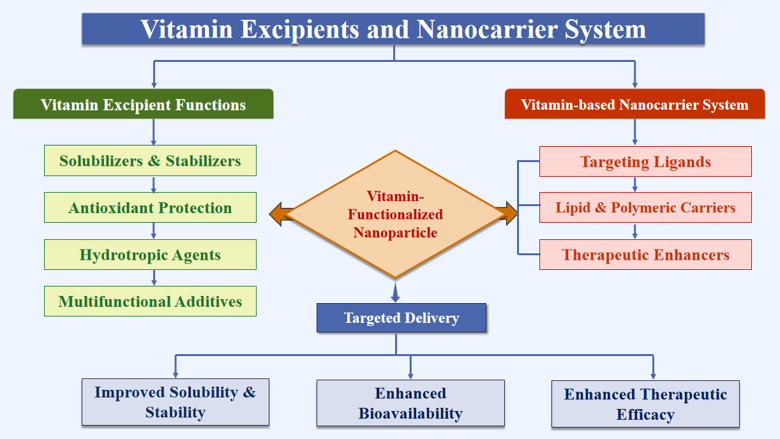
The use of vitamins as new excipients and functional elements in nanotechnology based drug delivery systems indicates a transformative change in the way pharmaceutical products are made. Vitamins are now frequently used (via receptor mediated internalization) as surface targeting ligands on the surfaces of nanocarriers and as components of structure carriers and therapeutic adjuncts in the most progressive nanoformulations. Pharmaceutical products developed with vitamin surface targeting may include metallic nanoparticle systems; organic carriers; radiolabelledtheranostics; encapsulation systems; etc., which all use the intrinsic biochemical properties of vitamins to enhance the uptake; selectivity; and bioavailability of the nanoformulated product.
Ligands:Vitamins are used as surface ligands on the surfaces of nanocarriers (to exploit receptor mediated uptake pathways) to enhance uptake efficiencies. For example, when metallic nanoparticles functionalized with vitamins to promote surface binding to receptors that mediate vitamin internalisation, will increase the efficiency of cellular uptake; thus providing a higher level of antimicrobial and anticancer activity than the non-functionalized state(Nandgaye et al., 2020). Folates and cobalamin target (by virtue of over-expression) folate and cobalamin receptors on neoplastic cells through the conjugation of radiolabeled, folate/b12 probes and thera-nanosystems(Genamo et al., 2025a), thereby developing a structure for combining imaging and therapy. In addition to this receptor-mediated approach, functionalisation with vitamins can also impact the surface charge and redox properties of the surface of the carrier, thus improving biocompatibility by directing drug activity towards receptor-rich tissues(Nandgaye et al., 2020).
Carrier components: Vitamins are useful as structural and lipidic building blocks that could be incorporated into nanocarrier technologies. For example, tocopherols (vitamin E) are added to lipid nanoparticles, solid lipid carriers and lipid-based emulsions to improve the stability of formulations and to increase the loading of lipophilic drugs into these formulations(Basirinia et al., 2026). Additionally, vitamin D and its analogues can be used to improve bioavailability of vitamin D and other drugs, when used in combination with other therapeutic agents, by including vitamin D in polymeric and liposomal nanocarriers(Aggeletopoulou et al., 2024). In choosing between the types of nanocarriers, some examples of the diversity are as follows: lipid nanoparticles, polymeric nanoparticles, liposomes, protein/peptide carriers, and inorganic particulates are all selected based on the specific absorption or release profile of the particular drug or product(Chennamsetty et al., 2026; Genamo et al., 2025a). The methods of nanoencapsulation such as nanoliposomes also provide protection for vitamins and the co-formulated drugs from degradation and first-pass metabolism providing for a controlled release of the drug(s) and improving the pharmacokinetic properties of the drug(s)(Chennamsetty et al., 2026).
Therapeutic enhancers: Vitamins may also serve as ‘active’ adjuvants that enhance therapy. For example, nanocarriers delivering vitamin D have shown to have synergistic anticancer and immunomodulatory activity with other agents(Aggeletopoulou et al., 2024). Additionally, the antioxidant and anti-inflammatory properties of vitamin E are utilized in developing neuroprotective and cardioprotective formulations(Basirinia et al., 2026). Finally, vitamin functionalized nanoparticles also provide additional antimicrobacterial or anticancer activity as a result of improved cellular uptake and modulation of cellular redox/metabolic pathways(Nandgaye et al., 2020).
Advanced pharmaceutical formulations based on specialized vitamins. Examples of clinical use of vitamin-based nanocarriers illustrate their ability to be transferred from laboratory use into therapeutic use. For instance, radiolabeled folate and vitamin B12 nanosystems have been used with oncological theranostics, which combine imaging based on receptor binding targeting and therapy together (Genamo et al., 2025a). In addition, vitamin E-based nanocarriers (solid lipid nanoparticles and liposomes) have been shown to improve the pharmacokinetics and therapy of vitamins by providing stabilization for the carriers, as well as enhancing the antioxidant properties of the nanocarrier(Basirinia et al., 2026). In a separate example, oral vitamin D3-based solutions formulated using nanotechnology have demonstrated much more rapid correction of serum vitamin D levels compared to traditional tablets and capsules, demonstrating that nanoformulation can improve bioavailability(H Madkour, 2021). Nanoliposomes are commonly used to encapsulate vitamins and provide controlled release of encapsulated vitamins (Chennamsetty et al., 2026).
Design Principles and challenges. The selection of a vitamin to include in a nano-formulation is based on the mechanistic properties (either as a receptor target (ligand), lipid compatibility (as a carrier), or biological activity (enhancer)) of the selected vitamin(Aggeletopoulou et al., 2024; Basirinia et al., 2026; Nandgaye et al., 2020). While the information above is encouraging, factors that must be considered during the development of the selected vitamin and nano-formulations include safety, stability when in a physiological environment, scalability, and regulatory pathways for using the selected vitamin as a nanomedicine (Genamo et al., 2025b; Nandgaye et al., 2020). Addressing these issues is essential to translate vitamin-functionalized nanomedicines into clinical use.
Table 3. Representative Applications of Vitamin-Based Nano-formulations in Advanced Pharmaceutical Products.
Application Vitamin used Primary role Key evidence Reference
Vitamin-conjugated metallic nanoparticles for cancer and infection Various (general vitamin conjugation) Targeting ligand and activity enhancer Vitamin functionalization improves uptake and therapeutic efficacy (Nandgaye et al., 2020)
Radiolabeled vitamin nanosystems for oncology theranostics Folate (B9), B12 Targeting ligand for imaging and targeted radiotherapy Radiolabeled vitamin-based probes exploit receptor overexpression in tumors (Genamo et al., 2025b)
Organic vitamin-incorporated nanocarriers Vitamin D Carrier component and therapeutic co-agent Vitamin D encapsulation enhances bioavailability and synergizes with drugs (Aggeletopoulou et al., 2024)
Vitamin E nanoformulations Vitamin E (tocopherols/tocotrienols) Carrier stabilizer and antioxidant enhancer Nanoforms (SLN, NLC, liposomes) improve pharmacokinetics and efficacy (Basirinia et al., 2026)
Oral vitamin D3 solution nanopreparations Cholecalciferol (D3) Nanoformulation to increase absorption and rapid correction Oral nanotech solution produced faster serum 25(OH)D increases than tablets/capsules (H Madkour, 2021)
Nanoliposome encapsulation of vitamins Multiple vitamins Protection and controlled release within lipid vesicles Nanoliposomes are a common encapsulation strategy for vitamin delivery (Chennamsetty et al., 2026)

5.1. FDA Stance on Vitamin as Excipients

21 CFR 210.3(b)(8) about Good Manufacturing Practice in the production, processing, packing, or storage of pharmaceuticals describes the use of excipients in drug products(21 CFR Part 210 -- Current Good Manufacturing Practice in Manufacturing, Processing, Packing, or Holding of Drugs; General, n.d.). In this rule, Inactive components found in the finished pharmaceutical product are known as excipients. The ingredients list has to include any inactive ingredients that are present in the finished product. Before a medicine is approved, both the inactive ingredient and the entire composition of the drug product must be deemed safe. For the purpose of identifying individual products, trace amounts of safe ingredients can be added, and flavors and colors do not need to be expressly identified.Certain requirements may be established based on the kind of product and the nature of the additional material.Inactive chemicals in parenteral products may be identified by name together with a description of their impact (21 CFR Part 211 -- Current Good Manufacturing Practice for Finished Pharmaceuticals, n.d.). This isn’t always necessary, though, and the particular requirements can change based on the kind of parenteral substance.
Manufacturers can consult the FDA’s database of authorized drug products’ inactive ingredients (IID) to determine whether excipients are suitable for use in a new drug formulation(Research, 2026). Because excipients enter the public IID after being utilized in many approved pharmaceutical products, this list only shows a portion of the whole FDA database. The FDA may approve novel excipients for use in medications if they are demonstrated to be safe and effective, even when the IID only contains authorized excipients.

5.2. Toxicological Considerations and Maximum Allowable Limits

Vitamins need toxicity testing when added to pharmaceutical formulations as functional additive or excipient. While vitamins are typically viewed as beneficial, their excessive intake can have undesirable effects and thus must be controlled closely when included as excipients. When conducting toxicology evaluations, the primary areas of concern include dose-related potential risks to consumers, the potential for certain populations to be more susceptible to risk than others (i.e., demographic groups), and potential interactions between excipient and API. For example, an excess of retinol from vitamin A can cause hepatotoxicity and teratogenic effects, while excessive amounts of vitamin D can lead to hypercalcemia and renal toxicity. Similarly, there are reports of sensory neuropathy associated with high doses of pyridoxine (vitamin B6). Likewise, excessive amounts of niacin are associated with flushing and hepatotoxicity. Because of these risks, it is essential to comply with internationally accepted (or issued) ULs (or Tolerable Upper Intake Levels) established to reflect the maximum allowable threshold for daily consumption of any of these substances (EFSA Panel on Dietetic Products, Nutrition and Allergies (NDA) et al., 2017; Institute of Medicine (US) Panel on Micronutrients, 2001).
Regulatory agencies including FDA, EMA and ICMR set ULs to assist with assessing the safety of excipients. Adults have ULs: vitamin A 3,000 µg retinol equivalents, vitamin D 100 µg (4,000 IU), vitamin E 1,000 mg, vitamin C 2,000 mg, and vitamin B6 100 mg. For niacin, there’s a daily limit of 35 mg and for folic acid there’s a daily limit of 1,000 µg to prevent masking vitamin B12 deficiency. Vitamins B12 and K are generally regarded as having low toxicity and, therefore, no established ULs, however extreme care must still be taken with these vitamins if the patient is taking an anticoagulant(Dietary Supplement Fact Sheets, n.d.; EFSA Panel on Dietetic Products, Nutrition and Allergies (NDA) et al., 2017). The pediatric population is especially vulnerable to exposure to excipients because their metabolic pathways and elimination pathways have not matured yet and they have strict limits placed on the use of excipients in their design. Elderly patients may have an increased risk of toxicity because they have an altered pharmacokinetic profile(Schmitt, 2015).
It’s important for excipients that go over dose limits to be evaluated for their safety. In addition to their chemical composition and impurities, there should be an evaluation of how they interact with active pharmaceutical ingredients (API) or co-excipients. For example, degradation and complexation of vitamins can alter drug stability and bioavailability; on the other hand, when used in excess, antioxidants like tocopherol may also interfere with oxidative pathways. Compatibility studies should therefore be performed using techniques like differential scanning calorimetry (DSC), Fourier transform infrared spectroscopy (FTIR), and nuclear magnetic resonance (NMR) to identify undesirable interactions(Dave et al., 2015). Quality by Design (QbD) principles support the organized selection of safe, effective, and regulatory compliant excipients; therefore, QbD is an important consideration in the use of excipients.
Table 4. Summary of Adult Maximum Daily Intake Values for Key Vitamins and Iron Tolerable Upper Intake Values and Toxicity Risk: Daily maximum allowable intake amounts of specific vitamins, and iron for adults, including safety of pharmaceuticals containing these additives.
Vitamin Maximum Allowable
Daily Intake (Adults)
Toxicological Concerns
Vitamin A (Retinol) 3,000 µg (≈10,000 IU) Liver toxicity, teratogenicity, bone demineralization
Vitamin D 100 µg (4,000 IU) Hypercalcemia, kidney damage
Vitamin E 1,000 mg (as α-tocopherol) Increased bleeding risk
Vitamin K No established UL (low toxicity) Rare—interference with anticoagulants
Vitamin C 2,000 mg GI upset, kidney stones
Vitamin B6 (Pyridoxine) 100 mg Neuropathy, sensory nerve damage
Niacin (B3) 35 mg (nicotinic acid) Flushing, liver toxicity at high doses
Folic Acid (B9) 1,000 µg Masking of B12 deficiency
Vitamin B12 No UL (low toxicity) Generally safe
Iron (often co-formulated) 45 mg GI irritation, oxidative stress
Finally, while vitamins are known to have an adverse effect on toxicity when used as an excipient, typical safety assessments will require evaluation based on maximum allowable limits, consideration of patient-specific risk factors, and compatibilty testing in order to mitigate against the risk of adverse events in patients. The regulatory bodies have provided maximum recommended upper limits (UL) that protect patients against the harmful effects of toxicity from these products; therefore, through the use of risk-based approaches to assess excipients, they are able to provide a net positive contribution to the stability of drugs being produced and most importantly, to the therapeutic effect of the product. In the case of the development of high-impactpharmaceuticals, excipient should be selected based on how well they provide functionality in combination with low risk; even when a beneficial nutrient is used as an excipient, if the dosage rate is incorrect, it has the potential of becoming a detrimental substance.
Figure 3. Pathways for Approval of Vitamin-Based Excipients: Comparative overview of FDA, EMA, and IPEC regulatory frameworks, highlighting safety evaluation, classification, and harmonization processes.
Preprints 217583 g003

6. Industrial and Clinical Impact of Vitamins

Vitamins are a major part of translation health interventions, including, but not limited to, public health fortification, industrial formulations, and clinical therapeutic applications. Their most established and commonly accepted purpose is as a method of preventing and correcting vitamin deficiencies, while there is no consensus regarding their effectiveness in preventing chronic diseases. Authorities involved in public health have attempted to use rationing, fortification, and supplementation to reduce widespread deficiencies with a special eye towards the pediatric population at increased risk for developing rickets or stunted growth. When it comes to vitamin D, there is substantial evidence that confirms the above statements. The following fragments convey this notion. Available national standards recommend the routine supplementation of infants with 400 IU/day of vitamin D, as well as providing policy delineation for establishing vitamin D status based on serum 25-hydroxyvitamin D concentrations (>50 nmol/L for sufficiency; <25 nmol/L for deficiency)(Braegger et al., 2013). Incremental dosing is also a common strategy for increasing vitamin D intake among those with limited sun exposure; that is, there are data suggesting that approximately 100 IU/day of vitamin D will increase serum levels by about 1 ng/mL and that doses ≥1000 IU/day will be required to achieve optimal serum vitamin D status for virtually all individuals(Awuchi et al., 2020).
Vitamins play a crucial role in both public health and in manufacturing and commercial uses through their nutritional contributions as well as their ability to serve as excipients providing useful physical and chemical properties. For example, vitamin E is added at levels up to approximately 0.2% alpha-tocopherol to edible oils in order to improve the stability of the oil and to prolong its shelf life from oxidation(Kwaśniewska et al., 2026). In addition, vitamin C (L-ascorbic acid) is used topically in dermaceutical and cosmetic products because oral consumption has limitations for absorption and is believed to target cutaneous outcomes more effectively through dermatic application(Kwaśniewska et al., 2026). Moreover, commercial dietary supplements often contain higher amounts of some micronutrients, such as zinc, vitamin B12, and selenium, than the recommended dietary allowances (RDA); however, they usually still meet the upper tolerable intake levels(Samplaski & Clemesha, 2018). Therefore, this practice by commercial industries indicates that they are attempting to balance the efficacy of a product with consumer expectations and established safety margins from regulatory authorities. Consequently, clinical oversight of the process is very important, as physicians should be aware of the most frequently used product formulations to avoid over- and/or under-use of the nutrients in patients(Youngkin & Thomas, 1999).
Clinically, vitamins are classified as either established drug treatments or upcoming pharmaceutical adjuncts as they accumulate clinical evidence. Vitamin D is essential for maintaining healthy bones and for preventing deficiency. Retinoids (vitamin A derivatives) are widely used in dermatology to treat acne and keratinization disorders, with proven dose-response relations and a clear safety profile. Vitamin C is essential for preventing scurvy, while its use is growing as a topical treatment for photodamage and hyperpigmentation; cutaneous delivery has been shown to be more effective than oral administration in these settings (source: pmc.ncbi.nlm.nih.gov). Riboflavin (B2) is showing promise in terms of providing protection in the context of sepsis, ischemia and cancer, however, it has yet to be validated from a mechanistic and clinical standpoint. On the other hand, emerging adjunctive uses, namely, personalized supplementation for individuals with neurodegenerative disorders, will be considered complementary rather than primary treatments, warranting modest caution prior to robust clinical evidence supporting their use (source: pmc.ncbi.nlm.nih.gov+1).
Table 5. Therapeutic Applications of Selected Vitamins: Summary of established and emerging clinical uses, supporting evidence, and key references relevant to pharmaceutical and nutraceutical contexts.
Vitamin Main therapeutic uses Evidence notes Reference
Vitamin D Prevention/treatment of deficiency to support bone health; routine infant supplementation Pediatric guidance recommends 400 IU/day for infants and uses serum 25(OH)D thresholds to define sufficiency and severe deficiency (Braegger et al., 2013),(Awuchi et al., 2020)
Vitamin A and retinoids Dermatology (acne, disorders of keratinization), systemic and topical agents for multiple skin diseases Retinoids are established pharmacologic agents with distinct dosing and safety profiles for dermatologic indications (Holick, 2008)
Vitamin C Topical treatment for photoaging and hyperpigmentation; prevention of scurvy Topical L-ascorbic acid is often more effective than oral for cutaneous indications and deficiency causes scurvy if untreated (Kwaśniewska et al., 2026)
Riboflavin (B2) Potential protective roles in sepsis, ischemia, anti-inflammatory and anticancer contexts Emerging evidence documents protective effects across conditions, but mechanistic and clinical validation is ongoing (Pettifor & Zlotkin, 2004)
At least from a health outcomes perspective, vitamins appear to have their greatest benefits through deficiency prevention. There is high certainty evidence supporting intervention, e.g., the supplementing of vitamin D for children and having adequate vitamin C to avoid scurvy(Braegger et al., 2013; Kwaśniewska et al., 2026). For chronic disease prevention, however, evidence is conditional—observational and interventional trials have produced contradictory evidence about the effect of high levels of vitamin D on reducing the risk of some cancers and its neuroprotective properties(Awuchi et al., 2020; Prof. Nitin Neharkar et al., 2024). Different studies are affected by their designs and populations. Furthermore, there is little evidence from randomized trials to substantiate claims that vitamins may improve fertility as promoted in commercial markets(Samplaski & Clemesha, 2018). Therefore, the implication to both the clinician and the policymaker is to focus on evidence-based treatment of deficiencies and the use of vitamins with proven therapeutic indications (e.g., retinoids for dermatology) and treat other indications as investigational or adjunctive until verified by quality clinical trials(Braegger et al., 2013; Holick, 2008; Prof. Nitin Neharkar et al., 2024).

7. Future Directions

The principles impacting future vision of vitamins-based excipients will increasingly be defined by the advent of computer-based technologies such as computer-aided design (CAD) and material science along with developments in innovative drug delivery systems in addition to modernized approaches to vitamin-based excipient development through artificial intelligence (AI) and machine learning (ML). AI and ML have the potential to change the excipient development process through computational molecular design of vitamin-based excipients and rational design of vitamin-based excipient molecules based on the predicted physicochemical stability, toxicologic safety, and excipient/API compatibility of the vitamin-based excipients. AI and ML can reduce the amount of empirical experimental trial-and-error testing required, and allow for faster identification of new vitamin-based excipients with improved solubility, permeability, and metabolic stability due to optimizing the physicochemical stability and biocompatibility of the model created through predictive modelling methods. This computational paradigm for vitamin-based excipients will result in formulation efficiencies and regulatory compliance for the excipient based on custom tailored templates based on dosage forms. Seminal findings will be integrated with customized vitamin-based excipient formulations through the use of polymer and lipid materials as the basis for developing a multifunctional excipient system using vitamin-based excipients. Hybrid excipient formulations utilizing biodegradable polymers such as poly(lactic-co-glycolic acid) (PLGA) or polyvinylpyrrolidone (PVP) in combination with lipid carriers such as phosphatidylcholine or triglycerides will provide a vehicle for drug encapsulation efficiency, alter release profiles, and improve overall bioavailability of the hybrid excipient systems through the use of multifunctional excipients in use as vitamin-based excipients using vitamins to serve the dual purpose of providing stabilization of the pharmaceutical formulations while also supplying therapeutic and/or nutritional benefit, creating the potential of vitamin-based excipients to be utilized uniquely for their contributions to pharmaceutical innovation.
In 3D printed dosage forms vitamin-based excipients represent a new frontier in personalized medicine. As a printable binder, stabilizer, or rate controlling compound, vitamins can enable pharmacokinetically optimized, patient-specific drug release profiles. The ability to create layered structures with vitamin–polymer hybrid formulations may allow for precise modulation of release rates, facilitating individualization of therapies and precision dosing. In addition to additive manufacturing, the use of vitamin derivatives will be critical to the development of smart delivery systems. When incorporated into stimuli-sensitive nanocarriers, microneedles, implantable depots and responsive hydrogels, vitamin derivatives can be designed to enable localized delivery upon physiological stimuli related to pH, enzymatic activity or redox gradients. Furthermore, the inherent bioactivity of vitamins can be utilized to develop excipients that stabilize formulations while providing pharmacotherapeutic benefits, thereby linking the functional characteristics of excipients with their respective pharmacologic actions.
Together, these guidelines illustrate the capacity that vitamin derivatives have to offer change in excipients science. Using AI-driven molecular design, synergistic material combinations, additive manufacturing and intelligent drug delivery systems, vitamin-based excipients have the potential to be transformed from passive formulation stabilizers into active enablers of precision, patient-centric therapeutics. The dual function of these materials as both stabilisers and bioactive agents gives them a unique position among next-generation pharmaceutical technologies and will provide a pathway for developing safer, more effective and highly individualized drug delivery systems. The paradigm shift demonstrated in this respects will also serve to emphasize and require true interdisciplinary collaboration among computational modelling, material engineering and clinical pharmacology to achieve the full potential of vitamins as excipients in advanced drug development.

8. Conclusions

Vitamins as functional excipients are changing the face of the pharmaceutical formulation science. Vitamins have historically been viewed as essential micronutrients but now possess diverse physicochemical characteristics including their ability to act as antioxidants and for stabilizing systems, which goes far beyond just nutritional supplementation. As pointed out within this review, there are multiple properties associated with vitamins - all of which contribute directly towards the performance and reliability of pharmaceutical and/or biotechnology products. The dual classification of vitamins as being nutritional and pharmaceutical demonstrates that vitamins have an ability to act both therapeutically and technologically. The mechanism by which vitamins provide bioavailability and stability to preparations is illustrated through vitamin E TPGS’ amphiphilic surfactant characteristics, ascorbic acid’s redox dependent stabilization, niacinamide’s hydrotropic solubilization and the numerous other mechanisms by which a vitamin can play an active role in enhancing bioavailability and stability of pharmaceutical formulations have been evaluated.
Additionally, vitamins are being incorporated into numerous emerging technologies including: nanotechnology-based delivery systems; receptor targeting ligands; advanced forms of excipients; which are all examples of how vitamins will revolutionize pharmaceutical product delivery into a more precise and patient-focused approach. The use of vitamins in nanoformulations, 3D printed dosage forms and intelligent drug delivery systems demonstrate the extent to which vitamins have been utilized as excipients providing functional benefits for both traditional and next generation pharmaceutical technologies.Intrinsic bioactivity makes them not only stabilizing agents but also enhances their use as therapeutic drugs, yielding a synergistic effect in the fields of oncology, neurology, and immunology.
In the near future, the realms of vitamin-based excipients will continue to grow because of the confluence of molecular design via artificial intelligence (AI), synergistic pairing or use with polymer and/or lipid systems, and integration into systems that respond to stimuli. Ultimately, due to these developments, vitamin-based excipients will allow for a reduced level of complexity in preparing formulations, increased levels of safety and effectiveness, as well as an increase in the ability to provide individualized treatment regimens. Although there are many benefits regarding the use of vitamin-based excipients, there are also many challenges that must be resolved prior to their successful implementation in clinical practice, including but not limited to: stability, scalability, and the creation of appropriate regulatory pathways.

Funding

This research received no external funding.

Institutional Review Board Statement

Not applicable.

Data Availability Statement

The data used to support the findings of this study are available from the corresponding author upon request.

Acknowledgments

The authors are thankful to Chairman of Shri Ram Murti Smarak Trust, Sri Dev Murti, for providing all financial assistance during the project.

Use of Artificial Intelligence

During the preparation of this work, the authors used ChatGPT in order to improve readability and grammar. After using ChatGPT, the authors reviewed and edited the content as needed and take full responsibility for the content of the publication.

Conflicts of Interest

The authors declare no conflict of interest.

References

  1. 21 CFR Part 210—Current Good Manufacturing Practice in Manufacturing, Processing, Packing, or Holding of Drugs; General. (n.d.). Retrieved April 20, 2026, from https://www.ecfr.gov/current/title-21/part-210.
  2. 21 CFR Part 211—Current Good Manufacturing Practice for Finished Pharmaceuticals. (n.d.). Retrieved April 20, 2026, from https://www.ecfr.gov/current/title-21/part-211.
  3. Aggeletopoulou, I., Kalafateli, M., Geramoutsos, G., & Triantos, C. (2024). Recent Advances in the Use of Vitamin D Organic Nanocarriers for Drug Delivery. Biomolecules, 14(9), 1090. [CrossRef]
  4. Ahmad, I., Arsalan, A., Ali, S. A., Sheraz, M. A., Ahmed, S., Anwar, Z., Munir, I., & Shah, M. R. (2015). Formulation and stabilization of riboflavin in liposomal preparations. Journal of Photochemistry and Photobiology B: Biology, 153, 358–366. [CrossRef]
  5. Akers, M. J. (2002). Excipient–Drug Interactions in Parenteral Formulations. Journal of Pharmaceutical Sciences, 91(11), 2283–2300. [CrossRef]
  6. Andrès, E., Lorenzo-Villalba, N., Terrade, J.-E., & Méndez-Bailon, M. (2024). Fat-Soluble Vitamins A, D, E, and K: Review of the Literature and Points of Interest for the Clinician. Journal of Clinical Medicine, 13(13), 3641. [CrossRef]
  7. Awuchi, C., Victory, I., Ikechukwu, A., &Echeta, C. (2020). Health Benefits of Micronutrients (Vitamins and Minerals) and their Associated Deficiency Diseases: A Systematic Review. International Journal of Food Sciences, 3, 1–32. [CrossRef]
  8. Basirinia, G., Comelli, A., Alongi, P., Ali, M., Salvaggio, G., Longo, C., Di Raimondo, D., Tuttolomondo, A., & Benfante, V. (2026). Radiolabeled Vitamins and Nanosystems as Potential Agents in Oncology Theranostics: Developed Approaches and Future Perspectives. Journal of Personalized Medicine, 16(1), 36. [CrossRef]
  9. Bayne, A.-C. V., Pessi, J., Bird, J. K., Stemmler, R. T., Frerichs, M., & Besheer, A. (2025). Vitamins as excipients in pharmaceutical products. European Journal of Pharmaceutical Sciences, 206, 107020. [CrossRef]
  10. Braegger, C., Campoy, C., Colomb, V., Decsi, T., Domellöf, M., Fewtrell, M., Hojsak, I., Mihatsch, W., Mølgaard, C., Shamir, R., Turck, D., &Goudoever, J. (2013). Vitamin D in the Healthy European Paediatric Population. Journal of Pediatric Gastroenterology and Nutrition, 56. [CrossRef]
  11. Chaudhari, S. P., & Patil, P. S. (2012). Pharmaceutical Excipients: A review. 1.
  12. Chennamsetty, S., Keerikkadu, M., Shetty, A., &Rathnanand, M. (2026). Advances in Nanoparticle-Based Vitamin Delivery Systems for Precision Nutrition and Improved Bioavailability. AAPS PharmSciTech, 27(3), 162. [CrossRef]
  13. ClinicSearch. (n.d.). Formulation Challenges: Multiple Vitamins and Minerals Dosage Forms. ClinicSearch. Retrieved April 15, 2026, from https://clinicsearchonline.org/article/formulation-challenges-multiple-vitamins-and-minerals-dosage-forms.
  14. Coelho, S. C., Estevinho, B. N., & Rocha, F. (2022). Recent Advances in Water-Soluble Vitamins Delivery Systems Prepared by Mechanical Processes (Electrospinning and Spray-Drying Techniques) for Food and Nutraceuticals Applications—A Review. Foods, 11(9), 1271. [CrossRef]
  15. Darji, M. A., Lalge, R. M., Marathe, S. P., Mulay, T. D., Fatima, T., Alshammari, A., Lee, H. K., Repka, M. A., & Narasimha Murthy, S. (2018). Excipient Stability in Oral Solid Dosage Forms: A Review. AAPS PharmSciTech, 19(1), 12–26. [CrossRef]
  16. Dave, V., Haware, R., Sangave, N., Sayles, M., & Popielarczyk, M. (2015). Drug-Excipient Compatibility Studies in Formulation Development: Current Trends and Techniques. American Association of Pharmaceutical Scientists (AAPS) Formulation Design and Development (FDD) Section Newsletter, 9–15. https://fisherpub.sjf.edu/pharmacy_facpub/212.
  17. Dietary Supplement Fact Sheets. (n.d.). Retrieved April 20, 2026, from https://ods.od.nih.gov/factsheets/list-all/.
  18. Drummond, C. J., & Grieser, F. (1985). The ionization behaviour of DL-alpha-tocopherol (vitamin E) in model membranes: Micelles and vesicles. Biochimica Et Biophysica Acta, 836(2), 275–278. [CrossRef]
  19. EFSA Panel on Dietetic Products, Nutrition and Allergies (NDA), Turck, D., Bresson, J., Burlingame, B., Dean, T., Fairweather-Tait, S., Heinonen, M., Hirsch-Ernst, K. I., Mangelsdorf, I., McArdle, H. J., Naska, A., Nowicka, G., Pentieva, K., Sanz, Y., Siani, A., Sjödin, A., Stern, M., Tomé, D., Van Loveren, H., … Neuhäuser-Berthold, M. (2017). Dietary reference values for vitamin K. EFSA Journal, 15(5). [CrossRef]
  20. Elder, D. P., Kuentz, M., & Holm, R. (2016). Pharmaceutical excipients—Quality, regulatory and biopharmaceutical considerations. European Journal of Pharmaceutical Sciences, Industrial Pharmaceutical Sciences, 87, 88–99. [CrossRef]
  21. Erem, E., Ozkan, G., Şahin-Yeşilçubuk, N., & Kilic-Akyilmaz, M. (2025). Stability, bioaccessibility and bioavailability of vitamins in different delivery systems. Food Chemistry, 492, 145452. [CrossRef]
  22. Genamo, M., Geremew, A., Peace, E., & Carson, L. (2025a). Vitamin—Conjugated Metallic Nanoparticles: Applications for Antimicrobial and Anti-Cancer Drug Delivery. Molecules, 30(21), 4248. [CrossRef]
  23. Genamo, M., Geremew, A., Peace, E., & Carson, L. (2025b). Vitamin—Conjugated Metallic Nanoparticles: Applications for Antimicrobial and Anti-Cancer Drug Delivery. Molecules, 30(21), 4248. [CrossRef]
  24. Gianeti, M. D., Gaspar, L. R., de Camargo Júnior, F. B., & Berardo Gonçalves Maia Campos, P. M. (2012). Benefits of Combinations of Vitamin A, C and E Derivatives in the Stability of Cosmetic Formulations. Molecules, 17(2), 2219–2230. [CrossRef]
  25. H Madkour, L. (2021). Biotechnology of Nanostructures Micronutrients Vitamins for Human Health. Journal of Biomedical Research & Environmental Sciences, 2(5), 358–371. [CrossRef]
  26. Holick, M. F. (2008). Vitamin D and Sunlight: Strategies for Cancer Prevention and Other Health Benefits. Clinical Journal of the American Society of Nephrology : CJASN, 3(5), 1548–1554. [CrossRef]
  27. Institute of Medicine (US) Panel on Micronutrients. (2001). Dietary Reference Intakes for Vitamin A, Vitamin K, Arsenic, Boron, Chromium, Copper, Iodine, Iron, Manganese, Molybdenum, Nickel, Silicon, Vanadium, and Zinc. National Academies Press (US). http://www.ncbi.nlm.nih.gov/books/NBK222310/.
  28. Kwaśniewska, K., Fic, W., & Polak-Szczybyło, E. (2026). Vitamins as Modulators of Neurodegenerative Disease Pathways: Mechanisms and Therapeutic Perspectives. Nutrients, 18(6), 995. [CrossRef]
  29. Munjal, M., ElSohly, M. A., & Repka, M. A. (2006). Polymeric Systems for Amorphous Δ9-Tetrahydrocannabinol Produced by a Hot-melt Method. Part II: Effect of Oxidation Mechanisms and Chemical Interactions on Stability. Journal of Pharmaceutical Sciences, 95(11), 2473–2485. [CrossRef]
  30. Munnangi, S. R., Youssef, A. A. A., Narala, N., Lakkala, P., Narala, S., Vemula, S. K., & Repka, M. (2023). Drug complexes: Perspective from Academic Research and Pharmaceutical Market. Pharmaceutical Research, 1–22. [CrossRef]
  31. Nandgaye, K. M., Kadam, S. B., & Palkar, D. P. J. (2020). Efficacy and Safety of Vitamin D3 (Cholecalciferol) Oral Solution Compared to Tablet and Capsule: A Randomized, Parallel-Design, Active-Controlled Study. Global Journal of Medical Research, 20(B5), 1–6. https://medicalresearchjournal.org/index.php/GJMR/article/view/2163.
  32. Pandey, P., Hamey, R., Bindra, D. S., Huang, Z., Mathias, N., Eley, T., Crison, J., Yan, B., Perrone, R., &Vemavarapu, C. (2014). From Bench to Humans: Formulation Development of a Poorly Water Soluble Drug to Mitigate Food Effect. AAPS PharmSciTech, 15(2), 407–416. [CrossRef]
  33. Pettifor, J. M., &Zlotkin, S. (Eds.). (2004). Micronutrient deficiencies during the weaning period and the first years of life. Karger ; Nestlé Nutrition. Nestlé Nutrition Workshop.
  34. Preformulation considerations in pharmaceutical formulation process. (2024). In Dosage Forms, Formulation Developments and Regulations (pp. 395–441). Academic Press. [CrossRef]
  35. Prof. Nitin Neharkar, Shravani Yeshwant Dalvi, Mayuri Anil Chaudhari, Gaurav Dattatray Chaudhari, & Jeetendra Chaudhary. (2024). Exploring the Vital Role of Vitamins in Disease Prevention and Health Maintenance. International Journal of Advanced Research in Science, Communication and Technology, 493–510. [CrossRef]
  36. Research, C. for D. E. and. (2026). Inactive Ingredients in Approved Drug Products Search: Frequently Asked Questions. FDA. https://www.fda.gov/drugs/drug-approvals-and-databases/inactive-ingredients-approved-drug-products-search-frequently-asked-questions.
  37. Rowe, R. C., Sheskey, P. J., & Quinn, M. E. (2009). Handbook of pharmaceutical excipients (6th ed). Pharmaceutical press.
  38. Salawi, A. (2022). Pharmaceutical Coating and Its Different Approaches, a Review. Polymers, 14(16), 3318. [CrossRef]
  39. Samplaski, M. K., &Clemesha, C. G. (2018). Discrepancies between the internet and academic literature regarding vitamin use for male infertility. Translational Andrology and Urology, 7(Suppl 2), S193-S19S197. [CrossRef]
  40. Santos, K. L. B., Bragança, V. A. N., Pacheco, L. V., Ota, S. S. B., Aguiar, C. P. O., & Borges, R. S. (2021). Essential features for antioxidant capacity of ascorbic acid (vitamin C). Journal of Molecular Modeling, 28(1), 1. [CrossRef]
  41. Schmitt, G. (2015). Safety of Excipients in Pediatric Formulations—A Call for Toxicity Studies in Juvenile Animals? Children, 2(2), 191–197. [CrossRef]
  42. Sinbad, O. O., Folorunsho, A. A., Olabisi, O. L., Ayoola, O. A., & Temitope, E. J. (2019). Vitamins as Antioxidants. Journal of Food Science and Nutrition Research, 2(3), 214–235. https://www.fortunejournals.com/articles/vitamins-as-antioxidants.html.
  43. Sohi, H., Sultana, Y., & Khar, R. K. (2004). Taste Masking Technologies in Oral Pharmaceuticals: Recent Developments and Approaches. Drug Development and Industrial Pharmacy, 30(5), 429–448. [CrossRef]
  44. Sugandhi, V. V., Pangeni, R., Vora, L. K., Poudel, S., Nangare, S., Jagwani, S., Gadhave, D., Qin, C., Pandya, A., Shah, P., Jadhav, K., Mahajan, H. S., &Patravale, V. (2023). Pharmacokinetics of vitamin dosage forms: A complete overview. Food Science & Nutrition, 12(1), 48–83. [CrossRef]
  45. Tripathy, S., & Kar, P. K. (2013). Albendazole Solubilization in Aqueous Solutions of Nicotinamide: Thermodynamics and Solute Solvent Interactions. Oriental Journal Of Chemistry, 29(03), 1103–1109. [CrossRef]
  46. van der Merwe, J., Steenekamp, J., Steyn, D., & Hamman, J. (2020). The Role of Functional Excipients in Solid Oral Dosage Forms to Overcome Poor Drug Dissolution and Bioavailability. Pharmaceutics, 12(5), 393. [CrossRef]
  47. Youngkin, E. Q., & Thomas, D. J. (1999). Vitamins: Common supplements and therapy. The Nurse Practitioner, 24(11), 50, 53, 57-60 passim; quiz 68–69.
  48. Zeng, T., Song, F., Yang, Z., Yan, X., Jiang, L., Li, D., & Huang, Z. (2026). Nanoemulsion Encapsulation of Fat-Soluble Vitamins: Advances in Technology, Bioaccessibility and Applications. Foods, 15(1), 156. [CrossRef]
Figure 1. Vitamin Excipient Classification: A systematic framework highlighting solubility, functional roles, structural properties, mechanistic actions, and advanced applications of vitamins as excipients in pharmaceutical and nutraceutical formulations.
Preprints 217583 g001
Figure 2. Importance of Vitaminsin Excipients Mechanistically: In a diagrammatic fashion depicts the multiple functions of Vitamin E (TPGS), Vitamin C, Niacinamide, and Riboflavin (B²) to promote solubility, stability, and bioavailability to a drug product through their functioning individually as amphiphilic surfactants and permeability enhancers (Vitamin E), redox mediated antioxidant stabilizers (Vitamin C), hydrotropic solubilizers (Niacinamide), and multifunctional stabilizers (Riboflavin).
Preprints 217583 g002
Table 1. Comparative Table: Vitamins as exciepients.
Classification Examples Excipient Role Stability Needs Formulation Strategies
Water-soluble B-complex, Vitamin C Stabilizers, co-stabilizers Sensitive to hydrolysis, oxidation Lyophilization, polymer encapsulation
Fat-soluble A, D, E, K Antioxidants, solubilizers Sensitive to oxidation, poor solubility Lipid carriers, emulsifiers, cyclodextrins
Functional excipients Vitamin E, Vitamin C Antioxidant, nutraceutical Require synergists Nanoparticles, protective coatings
Disclaimer/Publisher’s Note: The statements, opinions and data contained in all publications are solely those of the individual author(s) and contributor(s) and not of MDPI and/or the editor(s). MDPI and/or the editor(s) disclaim responsibility for any injury to people or property resulting from any ideas, methods, instructions or products referred to in the content.
Copyright: This open access article is published under a Creative Commons CC BY 4.0 license, which permit the free download, distribution, and reuse, provided that the author and preprint are cited in any reuse.
Prerpints.org logo

Preprints.org is a free preprint server supported by MDPI in Basel, Switzerland.

Subscribe

© 2026 MDPI (Basel, Switzerland) unless otherwise stated

Accessibility

Disclaimer

Terms of Use

Privacy Policy

Privacy Settings