

Submitted:
16 June 2026
Posted:
17 June 2026
You are already at the latest version
Abstract
The article focuses on the changing paradigm that the energy transition is increasingly shifting from a purely technological domain toward a socio-political and behavioral process shaped by regional disparities and social conditions. Recent studies indicate that regional disparities and differences in policy effectiveness have increased the importance of behavioral factors, including awareness, social norms, motivation, and cultural practices, in shaping energy transition outcomes. This study is grounded in an interdisciplinary framework combining behavioral theories, socio-technical transition approaches, and regional development concepts. It aims to investigate the role of consumer behavior in shaping energy transition outcomes, with a particular focus on regional and educational factors. An empirical survey of 997 respondents across different regions of Ukraine was conducted. Using cluster analysis, three distinct groups were identified, reflecting different levels of awareness and engagement with energy transition issues. Factor analysis revealed that region and education are the most significant determinants of cluster formation. The results confirm that behavioral patterns are strongly influenced by socio-regional characteristics and cannot be explained solely by traditional energy indicators. Based on these findings, the study validates the need for region-sensitive energy policies and provides recommendations for designing targeted interventions that account for regional context and educational level to enhance the effectiveness of energy transition strategies.
Keywords:
energy
; transition
; consumption
; region
; behavior
; clusters
; policy
1. Introduction
In the current context of energy transition, household behavior is becoming one of the key factors in ensuring energy security, decarbonization, and the stability of energy systems. Following the energy crisis caused by geopolitical upheavals and Russia’s full-scale war against Ukraine, the European Union has significantly increased its focus on demand management, energy efficiency, and behavioral mechanisms to reduce energy consumption. In 2023, natural gas demand in the EU fell by another 7.2% compared to 2022, while total energy consumption continued its downward trend, in part due to measures to reduce demand and adapt consumer behavior. At the same time, the issue of energy poverty remains extremely pressing: in 2023, 10.6% of the EU population was unable to maintain an adequate level of heating in their homes, indicating an increase in households’ socio-economic vulnerability.
The relevance of this study is also driven by the European Union’s strategic goals outlined in the European Climate Law, Fit for 55, and REPowerEU, which aim to reduce greenhouse gas emissions by 55% by 2030 and achieve climate neutrality by 2050. Achieving these goals is impossible without active consumer participation in energy conservation, flexible demand management, and the adoption of energy-efficient technologies. In this context, behavioral changes are among the most accessible and rapid tools for reducing energy consumption, particularly amid the development of renewable energy sources, digitalization, and the electrification of the economy.
The regional aspect of energy behavior requires special attention. A uniform national energy policy often yields inconsistent and insufficiently effective outcomes due to significant regional differences in socioeconomic conditions, income levels, housing stock types, energy infrastructure, climatic conditions, and access to energy-efficient technologies. The same policy, such as encouraging a shift in consumption to nighttime hours or introducing smart tariffs, can demonstrate varying effectiveness depending on the type of region, energy consumption patterns, and population behavior. This is precisely why modern approaches to energy policy are increasingly focused on place-based policies and targeted interventions that account for local territory characteristics and the specific needs of individual consumer groups.
Despite a substantial body of research, integrated, region-specific models that simultaneously account for behavioral, socio-psychological, technological, economic, and infrastructural factors influencing household energy behavior remain underdeveloped. Of relevance is the issue of consumer segmentation and the identification of specific drivers of energy-efficient behavior across different regions and social groups. In this regard, the study aims to develop a region-oriented model of energy behavior among Ukrainian households, construct behavioral clusters, and design targeted energy policy instruments that combine motivational, behavioral, technological, and contextual factors.
Literature Review
Energy Consumption Policy in the Context of the Energy Transition
In the context of global energy transformation, stricter energy efficiency requirements, and the need to ensure national energy security, research on energy consumption management at the national level – which is linked to the formulation of national energy policy and the assurance of energy security—has become particularly relevant, and at the regional level, which focuses on improving the energy efficiency of territories, developing renewable energy, and refining energy planning mechanisms.
Works [1,2,3,4] focus on the strategic management of energy systems at the national level, while the studies by Siemiński [5], Surówka [6], Puchalski [7], Bobronnikova [8], and Fedoreiko [9] reveal the specifics of regional energy consumption management. Article 10 examines the determinants of the energy transition in the era of digitalization, focusing on macroeconomic factors.
Current trends indicate the growing role of decentralization, digitalization, and the use of renewable energy sources as key tools for improving the energy efficiency of regions and nations. Current scientific research focuses on developing mechanisms for the rational use of energy resources, improving energy management systems, implementing renewable energy sources, and shaping effective national and regional energy policies.
In scientific literature, significant attention is devoted to the interrelationships among energy security, energy efficiency, and sustainable development. Borodina and co-authors [1] developed a conceptual model of decentralized energy efficiency management for the national economy, which justifies the need to transition from centralized approaches to a multi-level energy consumption management system. The authors emphasize that the efficient use of energy resources must be based on cooperation between government agencies, regional management structures, local communities, and economic entities. The development of renewable energy is particularly important for enhancing energy independence and economic competitiveness.
An important area of current research involves assessing energy consumption efficiency at the regional level. For instance, Miao, Wu, and Ren [11] conducted a comprehensive analysis of regional energy efficiency in China using econometric methods and factor decomposition models. The study’s results revealed significant interregional differences in energy consumption levels and the efficiency of energy resource use. The authors concluded that improving energy efficiency depends largely on regional innovation activity, the level of technological development, and the quality of management decisions.
The issue of regional differences in energy consumption has also been addressed by Polish researchers. In particular, Siemiński and co-authors [12] studied the territorial differentiation of electricity consumption in rural regions of Poland. The authors found that the structure of energy consumption depends significantly on the region’s socioeconomic characteristics, demographic situation, and level of infrastructure development. The results confirm the need to develop differentiated regional programs for energy conservation and energy efficiency improvement.
A separate area of research concerns strategic planning and forecasting of energy consumption. Surówka’s [6] work examines issues related to forecasting electricity consumption in Poland’s provinces in the context of implementing the concept of sustainable development. The author argues that the use of modern forecasting methods improves the quality of management decisions and enables more effective planning of energy infrastructure development. In this context, considering regional specifics and long-term trends in the socio-economic development of territories becomes of key importance.
In the article by Wierzbowski et al. [2], a critical analysis of Polish energy policy through 2050 is presented, along with scenarios for the energy sector’s development. The article addresses issues related to diversifying energy sources and ensuring energy security.
Researchers studying the mechanisms for implementing regional energy policy have made a significant contribution to the development of the theoretical foundations of energy consumption management. In particular, Puchalski et al. [7] emphasize the need to integrate energy planning into the system of strategic management of regional development. The researchers emphasize the importance of aligning local development programs with national energy policy goals and climate neutrality targets. In their view, effective regional policy should be based on forecasting energy demand, developing local energy systems, and promoting investments in renewable energy sources.
The study by Shcherba et al. [13] demonstrates a universal, effective, and portable solution for advanced electrical diagnostics and high-voltage energy applications.
Among the latest studies, works devoted to the impact of energy factors on regional competitiveness deserve attention. Palimąka and co-authors [14] demonstrate that energy efficiency is a key factor in ensuring sustainable economic development of territories. The authors substantiate the existence of a direct correlation between the efficient use of energy resources, innovative activity, and the socio-economic development of regions.
The article by Magdziarczyk et al. presents three options for ensuring the energy self-sufficiency of the proposed concepts for operating a pumping station, based on an analysis of reducing the costs of producing green hydrogen from coal mine groundwater for the circular economy [15].
Relevant to Ukraine are studies on the development of regional mechanisms for energy conservation and efficiency in the context of post-war reconstruction. Bobronnikov’s work [8] examines modern tools for ensuring energy efficiency at the regional level, including digital technologies for monitoring energy consumption, the development of distributed generation, and the implementation of energy innovations. Improving the energy efficiency of regions should become a priority area of state policy for economic recovery and strengthening the country’s energy security [16]. In general, the obtained dependencies provide a new analytical basis for improving the design and coordination of protection systems in IT-type networks.
The study by Fedoreiko and co-authors [9], which addresses the management and optimization of decentralized bioenergy generation under conditions of political instability, aims to enhance energy security and operational resilience in areas where centralized energy infrastructure is vulnerable to disruptions. The optimization system proposed by the researchers, which combines unconventional biomass utilization, adaptive electric-drive control, and artificial intelligence-based automation to achieve high energy efficiency and environmental performance, demonstrates that such decentralized systems can significantly strengthen national energy security and maintain a stable energy supply under unstable political conditions.
Thus, the analysis of scientific sources indicates significant interest among researchers in the challenges of energy consumption management at various levels of governance. At the same time, most studies focus either on the macroeconomic aspects of energy policy or on specific regional energy management practices. Issues related to accounting for behavioral determinants in the development of energy consumption policies – which should be adapted to both different behavioral segments of the population and the specificities of regional contexts – remain under-researched. This necessitates further scientific research to develop behavior-oriented, regionally adapted energy consumption management models that enhance the effectiveness of the energy transition, promote the rational use of energy resources, and ensure the achievement of sustainable development goals.
Behavioral Mechanisms for Household Energy Consumption Management
An analysis of the current scientific literature indicates growing attention to the study of behavioral mechanisms for household energy consumption management in the context of the energy transition, energy efficiency, and ensuring the flexibility of energy systems. A significant portion of the research confirms that behavioral interventions can deliver significant reductions in energy consumption without the need for large-scale technological investments. One of the foundational studies in this field is the work by Abrahamse et al. (2005) [17], which systematizes 38 intervention studies and analyzes the effectiveness of information campaigns, goal setting, commitment mechanisms, rewards, behavioral modeling, and feedback. The authors concluded that the most effective approaches combine informational influence with continuous feedback and social mechanisms to support behavioral change.
A separate line of research concerns the role of social norms and social comparison mechanisms in shaping energy behavior. Allcott’s (2011) [18] study, dedicated to Home Energy Reports, showed that comparing household consumption with that of neighbors contributes to a steady reduction in electricity consumption of approximately 2% on average. Further long-term assessments confirmed that even a moderate effect of social norms has a significant impact on the energy system level, given the scale of population coverage. The author emphasizes that social comparisons and behavioral nudges can be effective tools of state energy policy.
Studies on feedback mechanisms and on the visibility of energy consumption occupy an important part of the literature. A well-known analytical review by Darby (2006) [19] emphasizes that providing consumers with regular, understandable information about their energy consumption is a key factor in behavioral change. The author notes that feedback makes consumption “visible,” increases awareness of costs, and encourages the development of new energy-saving models. Attention is paid to smart metering and digital energy consumption monitoring systems.
The issue of behavioral change as a component of the energy transition is also actively addressed in analytical documents from the International Energy Agency (IEA). IEA reports note that further growth in the share of renewable energy sources requires the active involvement of consumers in load management processes through price-based and incentive-based mechanisms. Such tools include dynamic tariffs, time-of-use pricing, load shifting programs, and digital consumption management services. The Agency forecasts a significant increase in demand-side flexibility by 2030 as a necessary condition for the stability of power systems and the integration of RES. [20]
Thus, researchers note that energy consumption behavior is shaped by several determinants, including ongoing information campaigns, feedback, policies to incentivize and motivate behavioral change, the individual capacity of the population (level of knowledge, skills, and resources for implementing energy-efficient solutions), as well as social norms and societal practices.
Concepts for Studying Energy Consumption Behavior in the Context of Regional Energy Transition
In the international scientific literature, studies of the determinants of the population’s energy behavior are based on the theoretical foundations of concepts such as the Theory of Planned Behavior, Attitude-Behavior-Context theory, the Capability-Opportunity-Motivation-Behavior Model, Social Practice Theory, and the concept of Energy Cultures, which explain the influence of motivation, capability, context, social norms, and technological artifacts on the energy behavior of the population.
Research explains why people consume energy differently, make decisions about energy efficiency, and respond to energy transition policies. One of the core concepts is Behavioral Energy Economics, which integrates behavioral economics into the analysis of energy consumption. Unlike classical economic approaches, which view the consumer as a fully rational agent, behavioral economics assumes that people often make decisions under conditions of bounded rationality, information scarcity, cognitive biases, and habitual behavior [21]. In this context, the concepts of nudging proposed by Thaler and Sunstein [22] are important; they hold that public behavior can be changed through informational signals, digital services, smart meters, tariff incentives, and social comparison mechanisms. In the context of energy consumption, the COM-B model posits that an individual will adopt energy-efficient behavior only if three conditions are met. First, they must have the capability – that is, sufficient knowledge of energy-saving methods, an understanding of the benefits of energy-efficient technologies, and the skills to use them. Second, Opportunity is necessary, which is determined by the external environment: the availability of energy-efficient equipment, financial resources, government support programs, a developed energy infrastructure, and digital services. Third, Motivation is crucial, encompassing economic incentives, environmental awareness, social norms, and personal willingness to change one’s behavior. Only the combination of these three components shapes the corresponding behavior, which manifests itself in the rational use of energy resources, the implementation of energy-efficient technologies, and support for energy transition measures [23].
The Energy Cultures concept explains energy consumption through the interaction of three components: Norms (norms, values, beliefs); Practices (everyday energy consumption practices); and Material culture (the material base – housing, equipment, technologies, transportation). The authors argue that it is the interaction of these three components that shapes different types of energy behavior among the population and allows for the identification of distinct “energy cultures” [24,25].
From the perspective of Human Capital Theory, a significant portion of the identified personal factors of consumers – specifically knowledge, education, level of awareness, cognitive abilities, values, and decision-making capacity – form an individual’s human capital, which determines their readiness to adopt energy-efficient practices, adapt to new technologies, and make rational decisions regarding the use of energy resources [26,27].
Research on energy behavior also draws on concepts from spatial economics and regional development, which emphasize that energy consumption patterns are shaped not only by individual characteristics but also by the regional context. The region determines access to energy infrastructure, the quality of the housing stock, income levels, government support programs, climatic conditions, and opportunities for implementing energy-efficient technologies. Within this approach, the concepts of spatial inequality [28], regional resilience [29], and place-based policy [30] are employed to explain the emergence of interregional disparities in energy efficiency levels and in adaptation to the energy transition.
A separate line of research is formed by the concepts of Energy Justice and Energy Inequality [31], which focus on unequal access to energy resources, energy-efficient technologies, and opportunities for housing modernization. Within this framework, energy behavior is examined through the lens of energy vulnerability, energy poverty, and social justice. This helps explain why different social or regional groups demonstrate varying levels of readiness for energy transitions and differing capacities to respond to decarbonization policies.
Contemporary research on energy behavior increasingly draws on the concepts of socio-technical systems and Transition Theory [32], which view the energy system as a complex interplay of technologies, behavior, institutions, the market, and public policy. According to the Multi-Level Perspective (MLP), the energy transition is the result of the interaction of three levels – innovation niches, dominant socio-technical regimes, and the external environment (landscape), where technological innovations, institutional changes, economic crises, and societal challenges collectively shape the trajectory of the energy system’s transformation. In this approach, changes in public behavior are not an isolated process but part of a broader transformation of the energy system and business ecosystems. Current research within this framework emphasizes that the energy transition is uneven and depends significantly on regional context, institutional conditions, social perceptions of technologies, economic structure, and consumer behavior. Regional differences in energy consumption patterns and the adoption of energy-efficient solutions are explained by the interaction of technological, social, and spatial factors, which justifies the need for region-sensitive approaches to shaping energy transition policies [33].
In addition, it is advisable to use segmentation concepts (Segmentation Theory) to analyze consumer clusters. According to Segmentation Theory, consumers are not a homogeneous group but form distinct segments that differ in terms of environmental awareness, readiness to adopt energy-efficient technologies, attitudes toward the energy transition, and energy consumption patterns [34]. Segmenting households allows for the identification of consumer groups with different behavioral characteristics and the development of more effective, targeted energy conservation and demand management policy tools [35]
Thus, contemporary research on energy behavior is shaped at the intersection of behavioral economics, human capital theory, regional development, socio-technical systems, energy justice, and segmentation concepts. It is the integration of these approaches that allows for a comprehensive explanation of the mechanisms shaping household energy consumption in the context of digitalization, decarbonization, and the energy transition.
Purpose and Objectives of the Article
The purpose of the study is to identify and empirically assess the factors influencing household energy behavior in the context of high energy prices and the energy transition, as well as to determine the potential impact of regional, socio-economic, and behavioral characteristics on energy consumption patterns and the population’s readiness for energy-efficient changes. To achieve the purpose, the objectives of the article are:
- −
- Analyze theoretical and applied approaches to studying the energy behavior of respondents representing households in the context of the energy transition.
- −
- Develop a conceptual framework of questions to assess the energy behavior of the population, taking into account behavioral, socio-economic, technological, and contextual factors.
- −
- Conduct an empirical study of the energy behavior of respondents representing households and perform a statistical analysis of factors related to energy-saving practices, readiness to use energy-efficient technologies, and demand response mechanisms.
- −
- Identify potential differences in energy behavior patterns among specific groups of respondents and segment them based on behavioral characteristics.
- −
- Develop recommendations for improving the effectiveness of energy efficiency and demand management policies by utilizing behavioral segmentation of the population, based on identified determinants of energy consumption and respondents’ energy behavior profiles
2. Materials and Methods
The set of questions (Q1-Q18) proposed for this qualitative study generally aligns with contemporary concepts in the study of public energy behavior and allows for a comprehensive assessment of the cognitive, behavioral, social, institutional, and technological aspects of energy consumption. Methodologically, the questionnaire is structured to cover key elements of behavioral energy economics, human capital theory, socio-technical systems, energy justice, regional development, and segmentation theory, ensuring the interdisciplinary nature of the study (Table A1, Appendix A).
To analyze survey data and formulate energy-saving policies, a machine learning model was used to identify clusters of respondents based on energy consumption and determine the key factors influencing these relationships. The main stages are:
1. Preliminary data processing, which involves encoding categorical variables, such as occupation and education, using the one-hot encoding method; normalizing numerical variables; and converting respondents’ answers into numerical variables.
2. Clustering of respondents, which applies the K-means clustering method to identify groups of respondents who share similar attitudes toward energy consumption.
To determine the optimal number of clusters k in the clustering problem, the K-means method is used based on the following formulation: Let us consider a set of objects (respondents’ answers) X = {x1, x2, …, xn}, where each object xi ∈ Rd is a vector of feature values in d-dimensional space (standardized energy behavior ratings). To determine the number of clusters into which the respondents’ population should be divided based on their energy behavior ratings, the Elbow Method was applied. This approach involves performing clustering for different numbers of clusters (k ∈ {1, 2, …, 10}) and plotting the Sum of Squared Errors (SSE) as a function of k. The sum of squared errors is defined as:
where: Cj – the set of objects belonging to cluster j, μj – the center (mean) of cluster j.
As k increases, the SSE value decreases; however, once a threshold is reached, the rate of decrease slows significantly. The point on the graph where a sharp “slowdown” in the decline of SSE is observed visually manifests as a characteristic “kink” (elbow). This point is interpreted as the optimal number of clusters, k.
After determining the optimal number of clusters, the respondents were clustered using the K-means method with k=3 clusters. The K-means method is an iterative heuristic algorithm that aims to minimize intra-cluster variance. Formally, the clustering problem consists of finding a partition of the set X = {x1, x2, …, xn} ⊂ Rd into k disjoint subsets C1, C2, …, Ck such that the following loss function (1) is minimized. The K-means algorithm runs until the positions of the cluster centers stabilize or the maximum number of iterations is reached.
To facilitate the interpretation of the resulting clusters and simplify visualization, we applied Principal Component Analysis (PCA) – a classical dimension-reduction method that projects the data into a lower-dimensional space while preserving as much variation as possible. Let X∈Rn×d be a matrix of standardized features. PCA performs an orthogonal transformation, which boils down to calculating the eigenvectors and eigenvalues of the covariance matrix (2):
where X is the matrix of input observations.
The eigenvectors of this matrix define new orthogonal directions (principal components) along which the data variance is maximized. The data are projected onto the space of the first principal components using the linear transformation Z = XW, where W is the matrix of eigenvectors.
Using the principal component analysis (PCA) method will help reduce dimensionality and visualize the clusters.
3. Assessment of the influence of sociodemographic characteristics on cluster formation:
To assess the influence of categorical variables on the clustering results, Pearson’s χ² test of independence was applied. For each selected characteristic (age, gender, education level, employment status, current location, and region of residence in Ukraine), a contingency table was constructed for each cluster, and χ² values and corresponding p-values were calculated. This test allows us to test the null hypothesis H0: cluster membership and the categorical characteristic are statistically independent.
The expected value is calculated as:
where Ri is the total number of respondents in the i-th category of the variable, Cj is the total number of respondents in the j-th cluster, and N is the total number of observations.
The test statistics are determined by the formula:
where r is the number of categories of the variable (e.g., education levels), c is the number of clusters, Oij is the actual number of observations in the cell corresponding to the i-th category and the j-th cluster (observed value), and Eij is the expected value in the same cell under the assumption of independence of the variables.
The larger the χ² value, the stronger the deviation from the independence hypothesis. If the corresponding p-value (the probability of obtaining such a χ² value or larger under a true H₀) is less than the significance level α = 0.05, we reject the null hypothesis, i.e., we conclude that there is a statistically significant association between the variable and the clusters.
In the study, a separate χ² test was conducted for each of the selected categorical variables. All variables were ranked by their χ² values, which allowed us to assess the relative importance of each variable in explaining the distribution of respondents across clusters.
4. Visualization of results. A graph will be constructed showing the categorical variables with the greatest influence on the clusters, allowing for a quick interpretation of the leading sociodemographic factors.
5. Policy development:
Based on the identified energy-behavior clusters and statistically significant factors (region of residence, education, age, employment, and other sociodemographic characteristics), it is possible to develop differentiated policy instruments for different population groups. The results obtained allow us to determine which aspects of energy consumption should be given priority when developing educational programs, information campaigns, energy efficiency incentive mechanisms, and social support measures. This approach lays the groundwork for developing targeted energy conservation strategies tailored to the characteristics of different behavioral groups, age categories, education levels, and regional contexts, which will facilitate the more effective implementation of practices for the rational and economical use of energy resources.
Survey Protocol and Database Creation
The survey was conducted online. A total of 975 questionnaires were received. After verifying that the questionnaires were fully completed, performing logical checks on the responses, and cleaning the data, 937 valid questionnaires were included in the subsequent analysis. The survey was voluntary and anonymous. All respondents were informed of the study’s purpose and consented to the use of their responses for scientific purposes. The survey’s geographic scope covered the regions of Ukraine and the city of Kyiv, excluding the Autonomous Republic of Crimea and the city of Sevastopol. The largest share of respondents were residents of the Odesa region (68.1%), while the remaining regions collectively accounted for 31.9% of the sample. At the time of the survey, the majority of participants were located within Ukraine (81.3%), while 18.7% resided abroad, primarily in European Union countries. The gender composition of the sample was characterized by a predominance of women (69.5%). In terms of education level, the largest share consisted of individuals with secondary (42.7%) and higher education (36.1%). The occupational structure of the respondents was represented by various fields of activity, among which the “human-to-human” category dominated (40.8%), indicating a significant representation of individuals employed in education, medicine, administration, and the social sector. This sample structure provides sufficient sociodemographic and occupational diversity to study the characteristics of the population’s energy behavior and the influence of regional factors on the formation of energy consumption patterns. At the same time, the regional distribution of respondents was uneven, as residents of the Odesa region constituted the largest share of the sample. In this regard, the results regarding the influence of the regional factor are interpreted as evidence of the potential significance of the regional context for the formation of the population’s energy behavior and require further verification using more balanced regional samples.
The empirical study was conducted using a questionnaire survey to identify the determinants of energy consumption and energy-saving behavior among the population in the context of energy transition. The methodological basis for the questionnaire’s development was drawn from the principles of Human Capital Theory, Behavioral Energy Economics, the concept of Energy Justice, the COM-B and Energy Cultures models, as well as the Place-Based Policy and Transition Theory approaches.

Table 1.
Questionnaire Structure.
| Questionnaire Section | Theoretical Basis | Section Content |
|---|---|---|
| Socio-demographic characteristics | Human Capital Theory | Age, gender, education, employment status, region of residence |
| Energy awareness | Human Capital Theory, COM-B | Level of knowledge and understanding of energy conservation issues |
| Behavioral practices | Behavioral Energy Economics | Habits and practices of rational energy use |
| Attitudes toward energy-efficient technologies | Energy Cultures, Transition Theory | Readiness to implement innovative solutions |
| Institutional support | Energy Justice, Place-Based Policy | Perception of state and local support programs |
| Personal Responsibility and Motivation | COM-B, Energy Cultures | Motivation to participate in the energy transition |
The questionnaire consisted of two main parts. The first part contained sociodemographic questions regarding gender, age, education level, field of employment, region of residence, and the respondents’ location at the time of the survey. The second part was aimed at assessing energy behavior and included questions regarding awareness of energy conservation, readiness to adopt energy-efficient practices, attitudes toward energy-efficient technologies, perceptions of institutional support, and personal responsibility for the rational use of energy resources.
Responses were rated on a five-point Likert scale, where 1 indicated complete disagreement with the statement, and 5 indicated complete agreement. The collected data were used to conduct a cluster analysis and to further investigate the relationship between energy behavior profiles and the respondents’ socio-demographic characteristics.
3. Results and Discussion
A graph was constructed using the K-means method (Figure 1), and analysis of this graph showed that the inflection point occurs at k=3, indicating that it is appropriate to divide the respondents into exactly 3 clusters. Increasing the number of clusters beyond this value does not yield a significant reduction in SSE and, consequently, does not lead to a noticeable improvement in clustering quality.
The analysis of respondents’ answers was conducted alongside the analysis of the energy consumption situation in the Ukrainian market to identify the general trend as a prerequisite for shaping energy behavior. Statistical data indicate a 62% reduction in Ukraine’s energy intensity between 2000 and 2023. Despite the significant reduction in Ukraine’s energy intensity, statistical data do not answer the question of the extent to which these changes are due to structural transformation of the economy and to what extent they are due to changes in consumer behavior. This is precisely why an empirical study of the population’s energy behavior is needed, allowing an assessment of the influence of educational, socio-psychological, economic, and regional factors on the formation of energy consumption and conservation patterns. Based on IEA data, households remain the largest end-user of energy in Ukraine, accounting for approximately 32.7% of total final energy consumption in 2023, exceeding the share of industry (21.6%) and other sectors of the economy. At the same time, an analysis of consumption trends indicates a steady downward trend in energy consumption in the residential sector between 2000 and 2023. While household energy consumption exceeded 1 million TJ in the early 2000s, it had nearly halved by 2023. This trend is consistent with a 62% reduction in the energy intensity of Ukraine’s economy over the same period and can be explained by the combined impact of structural changes in the economy, a decline in the share of energy-intensive industries, increases in energy tariffs, the adoption of energy-efficient technologies, and changes in consumer behavior [36].
At the same time, statistical data reflect only the overall reduction in consumption but do not allow for determining to what extent it is driven by technological changes and to what extent by behavioral factors. Since the residential sector remains the largest energy consumer, it is particularly important to examine the population’s energy behavior, levels of awareness regarding energy conservation, readiness to implement energy-efficient solutions, and the influence of regional characteristics on energy consumption patterns. This is precisely why further analysis requires the use of sociological surveys and behavioral approaches to identify the key determinants of household-level energy conservation.
The first set of questions (Q1, Q4, Q5, Q6, Q7, Q8, Q10, Q11) is directly related to behavioral energy economics and human capital theory. These questions aim to assess awareness, environmental consciousness, readiness for change, behavioral attitudes, and the need for knowledge about energy conservation. For example, question Q1 assesses the level of personal concern about energy conservation, reflecting the motivational component of behavioral economics. Questions Q4, Q7, and Q10 assess the availability of information, respondents’ educational needs, and the role of knowledge in shaping energy-efficient behavior. Questions Q6 and Q8 characterize an individual’s readiness to practically implement energy-saving consumption models, which align with the concepts of bounded rationality and nudging, where behavior is shaped by informational incentives, social cues, and individual motivation. Q11 complements this section by assessing the role of personal development in changing energy consumption patterns, consistent with Human Capital Theory.
The second set of questions (Q2, Q9) aligns with the concepts of Spatial Economics, Regional Development, and Energy Justice. These questions consider the influence of the territorial environment, infrastructure, and resource availability on the population’s energy behavior. Q2 allows for an assessment of the subjective perception of energy resource availability in the region of residence, which is linked to the concepts of regional resilience and spatial inequality. Q9 characterizes the technical feasibility of implementing energy-saving solutions in a specific locality, allowing for regional disparities in access to infrastructure and technologies. These questions also partially reflect the concept of energy inequality, as access to technical solutions and resources is uneven across regions and social groups.
The third block (Q12-Q14) is linked to the concepts of socio-technical systems and transition theory, as it assesses the role of institutional and external factors in shaping energy behavior. Questions Q12 and Q13 allow for an assessment of the role of local self-government and state policy in encouraging energy-efficient behavior among the population. This aligns with the Multi-Level Perspective (MLP), where behavioral changes occur through the interaction of the institutional regime, public policy, and local practices. Q14 assesses the importance of international experience as a source of innovations and models for the energy transition, which aligns with innovation diffusion theory and research on transition processes.
The fourth block (Q15-Q18) focuses on assessing public attitudes toward specific energy-efficient technologies and practices, which is linked to socio-technical systems, the diffusion of innovations, and segmentation theory. Q15 characterizes readiness for low-cost behavioral changes and household energy-saving practices.
The fourth block (Q15-Q18) is focused on assessing the population’s attitude to specific energy-efficient technologies and practices, which is related to socio-technical systems, diffusion of innovations and segmentation theory. Q15 characterizes the readiness for low-cost behavioral changes and household energy-saving practices. Q16 assesses the attitude to energy-efficient housing modernization, which is related to the investment behavior of households. Q17 is aimed at assessing the readiness to introduce innovative and alternative energy sources, which reflects the level of support for the energy transition and technological transformation. Q18 assesses the perception of technologies for accounting and control of resource consumption, which corresponds to the concepts of smart metering and data-driven energy management. From a methodological point of view, this questionnaire structure allows not only to carry out a descriptive analysis of the energy behavior of the population, but also to conduct clustering of respondents, factor analysis, assessment of behavioral patterns and identification of relationships between the level of knowledge, regional conditions, institutional support and readiness for energy efficient changes. This creates a basis for segmenting the population by types of energy behavior and the formation of targeted interventions - targeted policies, educational programs and regional mechanisms to support the energy transition. In this study, the first two principal components are used to visually represent the cluster space (Figure 2).
Each point represents a respondent, and the color indicates cluster membership. To construct meaningful clusters, a selection of relevant features characterizing respondents’ energy behavior was conducted. The analysis included numerical variables whose names contained keywords related to energy, resource conservation, or energy-saving technologies. This approach ensured that the cluster analysis focused specifically on behavioral and motivational aspects of energy conservation. Analysis of the cluster centers after feature scaling allows interpreting the groups as follows: Cluster 0 – characterized by high normalized scores across all features, indicating a high level of awareness, personal responsibility, and interest in energy conservation. Cluster 1 – demonstrates an average level of awareness and concern about energy issues. Participants in this group may be partially involved in energy-saving behavior but are not active carriers. Cluster 2 – has the lowest normalized values, which allows us to interpret it as a group with a low level of interest, awareness, and motivation for the economical use of energy resources. After clustering using the K-means method, the cluster centers were determined as the average feature values within each group. These values, in a normalized form (after scaling), represent the generalized behavior profile for each cluster. For ease of interpretation, the results are visualized as a heatmap, with color intensity reflecting the average level of a particular characteristic within each cluster.
In Figure 3 shows a heat map that displays the average values of the energy behavior features (Q1-Q18) in each of the three clusters obtained as a result of the K-means cluster analysis. The values were rescaled, so the displayed indicators are normalized with a zero mean and a single standard deviation. This allows us to objectively compare the impact of each feature on clustering, regardless of the initial scales. The color scale shows the relative deviation from the average value for each feature: the darker the color, the higher the feature’s normalized score in the cluster.
The designations Q1-Q18 correspond to the full wording of the questions given in Table A2, Appendix B. This approach allowed us to quantitatively assess the extent to which the distribution of the categorical variable differs across clusters.
The larger the χ² value, the stronger the dependence between the feature and belonging to a particular cluster, i.e., the higher its impact on cluster formation. Figure 4 presents the top 5 categorical features by the magnitude of the χ² statistic. Among them, the most influential were “Region in Ukraine” and “Education”.
Table 2.
Results of the χ² analysis of the impact of categorical features on cluster formation № Feature χ² statistic p-value Comment.
Table 2.
Results of the χ² analysis of the impact of categorical features on cluster formation № Feature χ² statistic p-value Comment.
| № | Characteristic | χ² statistics | p- value | Comment |
|---|---|---|---|---|
| 1 | Region in Ukraine | 86.19 | 0.002 | Strong correlation with cluster distribution; geographic factor is significant. |
| 2 | Education | 52.41 | 1.4e-08 | A very significant factor is education level, which is closely related to behavior. |
| 3 | Region you are currently in | 35.37 | 0.00041 | The current location also affects the distribution. |
| 4 | Employment | 26.42 | 0.0228 | Occupation is statistically significantly related to the type of behavior. |
| 5 | Age | 18.36 | 0.0054 | Respondents’ age has a moderate effect on cluster formation. |
| 6 | Gender | 5.85 | 0.0536 | The effect of gender is insignificant at the α = 0.05 level. |
The results obtained allow us to identify key determinants that influence typical patterns of energy behavior revealed by clustering. The formed clusters reflect three main types of energy behavior of households: “Energy-engaged” (cluster 0), “Potential adopters” (cluster 1), and “Low-engaged” (cluster 2). The “advanced” group is characterized by a high level of energy awareness, personal responsibility, and readiness for energy-saving behavior, a positive attitude towards energy-efficient technologies, and active use of energy-saving practices. The “convinced” cluster unites respondents with an average level of involvement in energy efficiency issues. Representatives of this group generally support energy-saving ideas but need additional informational, economic, or behavioral incentives to take action. The “starting” group is characterized by lower awareness of energy-saving practices, lower readiness to implement energy-efficient practices, and limited use of relevant technologies. Representatives of this cluster are characterized by the need for basic educational measures, increasing energy literacy, and strengthening motivational support. Thus, the resulting clusters reflect different levels of the population’s readiness to participate in the energy transition and can serve as a basis for developing behaviorally oriented, regionally sensitive energy efficiency policies. In Ukraine, there is a fairly pronounced regional differentiation in energy consumption, which is associated with the structure of the economy, the concentration of industry, the type of housing stock, climate, and the level of urbanization. The following generalization of Ukraine’s regions was used to study energy behavior and regional policies (see Table 3).
The findings suggest that policy instruments should be differentiated according to regional and behavioral characteristics. In the northern and central regions, where readiness for energy transition is relatively higher, priority should be given to smart metering, demand response programs, grants for energy-efficient technologies, and participation in pilot projects. In the southern regions, information campaigns, personalized feedback, energy consultations, and demonstration projects may be more effective in encouraging behavioral change. For less energy-engaged regions, policy measures should focus on improving energy literacy, providing financial support and subsidies, simplifying access to energy-efficient solutions, and offering social support and advisory services. Such a differentiated approach can enhance the effectiveness of energy transition policies and promote more sustainable energy consumption behavior.
Regions of Ukraine are characterized by significant differences in the structure of energy consumption. Eastern industrial regions are characterized by high consumption of electricity and natural gas, western and northern regions - by a significant share of energy used for heating housing, southern regions have lower needs for thermal energy due to climatic features, while the Kyiv agglomeration is characterized by increased demand for electricity in the residential and service sectors. Such differences form a different context of energy consumption and can affect the formation of energy behavioral profiles of the population. It should be noted that the resulting clusters do not characterize individual regions but reflect typical profiles of energy behavior of the population. At the same time, a statistically significant relationship between the region of residence and belonging to clusters indicates that the regional context acts as an important moderator of energy behavior. This is consistent with the concepts of Spatial Economics, Place-Based Policy and Regional Resilience, according to which energy consumption models are formed under the influence of socio-economic, institutional and infrastructural features of territories. The results obtained should be used to formulate policies for shaping energy behavior, which should be adapted not only to the behavioral segments of the population, but also to the specifics of the regional environment (Table 4).
The modern energy policy of Ukraine is gradually integrating the regional dimension through the development of local energy efficiency management mechanisms. In particular, the Law of Ukraine “On Energy Efficiency” provides for the formation of national and regional energy management systems, the development of local energy plans, the implementation of municipal energy efficiency programs and the development of energy management systems at the community level. As part of the post-war recovery processes, community energy development plans, urban energy recovery plans and other tools for local energy resource management are also actively being developed. At the same time, most of the current strategic documents, in particular the National Energy and Climate Plan (NECP), the Energy Strategy of Ukraine and sectoral energy efficiency programs, are mainly focused on achieving national goals, including increasing energy efficiency, reducing greenhouse gas emissions, developing renewable energy sources, ensuring energy security and fulfilling European climate commitments. At the same time, regional differences are mostly considered through the territorial approach, while the behavioral characteristics of the population remain insufficiently integrated into the policy-making process. The results obtained indicate the feasibility of supplementing the existing territorial approach with behavioral segmentation of the population. It was found that the region of residence has the strongest statistical relationship with belonging to energy behavioral clusters (χ² = 86.19; p = 0.002), which confirms the importance of the spatial context in the formation of energy consumption patterns. At the same time, all three types of energy behavior can be simultaneously represented within one region - “advanced”, “convinced” and “starting”, which indicates the insufficiency of an exclusively territorial approach to energy efficiency management. In this context, it is advisable to consider the region as an environment for implementing policy, which is determined by climatic conditions, the structure of the housing stock, the level of income of the population, the characteristics of the energy infrastructure and the risks of energy poverty, while energy behavioral clusters should determine a set of tools for influencing different groups of consumers. This approach creates the basis for the transition to place-based and data-driven energy policy, which combines regional characteristics, behavioral segmentation of the population, the use of digital data, smart-metering, cluster analysis and forecasting tools. This allows for increased targeting of energy saving measures, more efficient use of state resources and the formation of a more effective energy transition policy in Ukraine. That is why the results of clustering create the basis for the development of targeted interventions. The formation of informational, educational, financial or infrastructure measures for each type of consumer, depending on their behavioral characteristics and level of readiness for energy-efficient changes, is monitored in the directions of energy consumption policy in European and Asian countries, which can be recommended for Ukraine (Table 5).
Policy Implications
The results obtained indicate that traditional universal approaches to energy consumption management do not fully consider the behavioral heterogeneity of the population and regional characteristics of energy consumption. The identified statistically significant differences between energy behavioral clusters confirm the feasibility of using the principles of policy segmentation, according to which policy instruments should adapt to the characteristics of target population groups. This approach is consistent with the concepts of Energy Justice, Behavioral Public Policy, Place-Based Policy and modern approaches of the International Energy Agency (IEA) to increase the role of the consumer in the energy transition. According to the concept of place-based policy, the effectiveness of development policy depends on taking into account the specific characteristics of the territory, since economic growth and development can be achieved through the mobilization of local potential, institutional capabilities, knowledge and resources and behavioral characteristics of the population [39], and universal approaches do not always provide the same results in different regions. Modern studies of regional development emphasize that universal energy policy mechanisms often demonstrate lower efficiency compared to adaptive approaches focused on the specifics of territories. From the perspective of Energy Justice, different population groups have unequal opportunities to implement energy efficiency measures. Accordingly, policies should ensure not only the achievement of energy and climate goals, but also fair access to the benefits of the energy transition [40]. At the same time, IEA recommendations emphasize the need to actively involve consumers in demand management processes through smart metering tools, digital monitoring, information feedback and demand response programs. International experience confirms the effectiveness of a differentiated approach to stimulating energy-efficient behavior [41]. In the European Union countries, smart metering, dynamic pricing, and demand response mechanisms (Germany, Denmark, the Netherlands), household energy consulting programs (Germany), as well as tools to combat energy poverty and support vulnerable consumers (France, Spain, Poland) are actively used. Asian countries demonstrate successful experience in using digital platforms, personalized feedback systems (Singapore), targeted support for energy-vulnerable groups of the population (South Korea), and programs to subsidize energy-efficient technologies and equipment (China). Based on the results of the cluster analysis and international experience, the following directions for improving energy conservation policy in Ukraine can be proposed.
Thus, the results of the cluster analysis indicate that increasing the effectiveness of energy conservation policy in Ukraine requires a transition from universal tools to a behaviorally oriented approach. As shown in Table 4, the experience of European countries demonstrates the high effectiveness of energy consulting mechanisms, smart metering, demand response, and combating energy poverty, while Asian countries focus on digitalization, smart grids, and consumer integration into demand management systems. The combination of these approaches allows the formation of an adaptive model of energy consumption policy, in which behavioral clusters determine the target group of influence, and the regional context determines the mechanisms for implementing relevant measures. The cluster analysis also confirms the feasibility of using policy segmentation, which should consider not only regional factors but also the behavioral characteristics of the population, levels of education, digital literacy, readiness for change, and attitudes toward energy-efficient technologies. This approach aligns with modern concepts of targeted policy interventions and behavioral public policy, in which different population groups require distinct incentive mechanisms. For example, information campaigns and smart-feedback systems may be effective for groups with a high level of environmental awareness, while financial incentives, grants, or co-financing programs are more important for low-income groups. A similar approach is actively supported in behavioral economics and energy policy research [53]. The results also confirm the importance of using differentiated instruments for implementing energy policy. The practice of EU countries demonstrates that policy effectiveness increases significantly when support mechanisms are tailored to the specifics of regions and social groups. This can be manifested through differentiated subsidies, different levels of grant support depending on the income of the population, the phased introduction of energy standards, or the use of social tariffs for vulnerable categories of the population. Within the framework of the European Green Deal, flexibility mechanisms are increasingly used when general EU directives are adapted by states and regions considering local conditions. An important development of modern energy policy is the transition to data-driven policy, when management decisions are formed on the basis based ons, consumer clustering, use of smart meters, digital platforms, and monitoring systems [54]. In this context, policy ceases to be static and moves to adaptive policy, capable of changing depending on the behavioral patterns of the population, consumption dynamics, and regional changes. Similar approaches are widely used in smart city concepts and systems of intelligent energy consumption management [55]. Separately, it should be noted that the prospects of integrating digital twin and expert systems into the system of managing the energy behavior of the population [56]. The use of digital twins of regions allows modeling energy consumption scenarios, assessing the impact of various policies, predicting the reaction of the population to incentives, and testing alternative scenarios of energy transition before their practical implementation. The combination of cluster analysis, big data, GIS technologies, smart metering, and expert systems creates the basis for the formation of intelligent decision support systems capable of adaptively managing energy programs at the regional level. Similar approaches are increasingly being developed in the concepts of smart energy systems and digital transformation of energy [57]. In summary, the results of the study indicate the feasibility of moving from a predominantly territorial approach to a behavioral-regional model of energy consumption management, within which the region determines the context of policy implementation, and the energy behavioral cluster is a set of tools for influencing consumers. This approach corresponds to modern trends in the development of place-based, behavioral and data-driven energy policy and creates the prerequisites for increasing the effectiveness of energy saving measures, reducing energy poverty and supporting a fair energy transition in Ukraine.
Despite the limited availability of complete regional statistical series of energy consumption after 2022, modern studies and energy security ratings confirm the preservation of significant interregional differences in Ukraine. This indicates that energy consumption and energy-saving patterns are shaped by spatial, socio-economic, and infrastructure factors, underscoring the need to study the population’s energy behavior in a regional context. The results of the χ² analysis showed that the respondents’ region of residence is the factor with the strongest statistical relationship with their belonging to energy behavioral clusters. This indicates that the regional environment significantly shapes energy consumption and energy-saving patterns. At the same time, the resulting clusters do not reflect individual regions but represent typical behavioral profiles of the population, which can simultaneously be represented within the same region or community. Therefore, the region does not define a cluster unambiguously but rather creates conditions that increase or decrease the probability of belonging to a certain behavioral profile. Unlike most European Union countries, where energy efficiency policy is implemented in conditions of relatively stable infrastructure development, Ukraine simultaneously addresses the tasks of ensuring energy security, restoring damaged energy facilities, reducing dependence on imported energy resources, and fulfilling obligations within the European decarbonization agenda. In such conditions, the issues of energy efficiency and energy saving go beyond exclusively economic or environmental priorities and become an important element of national sustainability. Given Ukraine’s strategic course towards European integration, the study’s results indicate the prospects for a gradual transition from predominantly unified support mechanisms to more differentiated models of energy consumption management. The experience of the European Union countries demonstrates the effectiveness of smart metering, dynamic pricing, energy consulting for households and support programs for vulnerable consumers, while Asian countries successfully use digital platforms, personalized feedback and targeted mechanisms to stimulate energy-efficient behavior. At the same time, the direct transfer of such practices to Ukrainian conditions is limited due to the significant regional heterogeneity of the country and the specific challenges of the war period. Limitations The study has several limitations. Although region demonstrated the strongest statistical relationship with cluster affiliation, this result should be interpreted with caution due to the uneven regional sample structure. The article did not examine regional differences across Ukraine, and the results indicate that regional context may be an important factor related to energy behavior. The main contribution of the study is the identification of behavioral clusters of energy consumption and the analysis of socio-demographic characteristics associated with them. The regional distribution of respondents is uneven, with a significant portion of them coming from the Odessa region. Therefore, the identified relationship between region and energy behavior should be interpreted as indicative, rather than representative for all regions of Ukraine. Future studies should use more balanced regional samples to confirm the observed relationships. One of the limitations of the study is the use of individual responses of respondents to characterize household energy behavior. The results obtained may not fully reflect intra-family decision-making processes regarding energy consumption. At the same time, this approach is common in energy behavior studies, since individual household members are direct participants and initiators of decisions regarding the use of energy resources and the implementation of energy-efficient practices [21,58]. Some respondents did not answer individual questionnaire questions, resulting in differences in the number of observations for individual variables. However, the proportion of valid responses remained high, ensuring sufficient reliability in the statistical analysis. Thus, the results of the study confirm the feasibility of developing an adaptive model of energy policy in Ukraine that would combine the national goals of energy transition and European integration, while taking into account regional and behavioral characteristics of the population. Within the framework of such a model, the tasks of energy security and restoration of critical infrastructure will remain priorities, but at the same time the role of behaviorally oriented energy saving tools aimed at increasing the energy literacy of the population, developing a culture of rational energy consumption, and involving citizens in the implementation of sustainable energy development goals will increase.
4. Conclusions
The study confirmed the relevance of studying the energy behavior of the population in the context of the energy transition, rising energy demands, and the need to improve the effectiveness of energy conservation policies. Analysis of modern theoretical approaches showed that energy behavior is formed under the influence of a complex of interrelated factors, among which the level of knowledge and education (Human Capital Theory), behavioral incentives (Behavioral Energy Economics), institutional environment, spatial context (Place-Based Policy, Spatial Economics), socio-technical transformations (Socio-Technical Systems, Transition Theory), as well as the availability of energy resources and the principles of a fair energy transition (Energy Justice) play an important role. It was established that households remain the largest final energy consumer in Ukraine, accounting for about a third of total final energy consumption. At the same time, over the past two decades, there has been a trend towards a reduction in the volume of final energy consumption and a decrease in the energy intensity of the economy. However, the available statistical data does not allow us to clearly explain the reasons for these changes, which justifies the need to study the behavioral determinants of energy consumption at the household level. According to the results of the cluster analysis, three typical energy behavior profiles were identified: “advanced”, “convinced” and “starting”. The “advanced” cluster is characterized by a high level of awareness, motivation, personal responsibility and readiness to implement energy-efficient technologies. The “convinced” cluster demonstrates an average level of involvement in energy-saving practices and requires additional informational and behavioral incentives. The “starting” cluster is characterized by a lower level of awareness and readiness to implement energy-efficient solutions, which indicates the presence of educational, motivational and infrastructure barriers. The results of the χ²-analysis showed that among the studied categorical variables, the region of residence, level of education and region of stay at the time of the survey demonstrated the strongest statistical relationship with the respondents’ belonging to energy behavioral clusters. The results obtained confirm the provisions of the Human Capital Theory and the COM-B model regarding the important role of knowledge, competencies, motivation and external conditions in the formation of energy consumption patterns. At the same time, due to the uneven regional distribution of the sample, the results regarding the regional factor should be interpreted with caution, considering them as evidence of the potential importance of the regional context, and not as confirmation of patterns for all regions of Ukraine. The obtained results indicate the feasibility of using behavioral segmentation of the population when developing energy efficiency policies. For the “advanced” group, promising tools are tools to support the implementation of energy efficient technologies, smart-metering and demand management programs. For the “convinced” group, information campaigns, social comparison mechanisms, digital feedback and other behavioral interventions can be effective. For the “starter” group, educational programs, increasing energy literacy and mechanisms for financial support for access to energy-efficient solutions are of priority. Such approaches are consistent with the international experience of European and Asian countries in the use of smart metering, demand response, digital feedback systems, energy consulting, and support for vulnerable consumers. Thus, the proposed energy behavioral clusters should serve as a basis for the development of behaviorally oriented energy efficiency policies. The identified statistical relationship between regional characteristics and cluster affiliation indicates the potential importance of the regional context when adapting such policies to local conditions. Therefore, an effective energy transition policy should combine tools for behavioral segmentation of the population, taking into account the socio-economic, infrastructural, and territorial features of the environment in which energy saving measures are implemented. A promising direction for further research is an in-depth study of the impact of climatic, socio-economic, infrastructural, and institutional characteristics of regions on the formation of energy consumption patterns of the population, as well as verification of the results obtained on more balanced regional samples. This will clarify the role of regional context in population energy behavior and enhance the validity of regionally adapted mechanisms to support the energy transition.
Author Contributions
Conceptualization, A.P. and Y.P.; methodology, A.P. and D.B.; software, D.B.; validation, A.P., D.B. and Y.P.; formal analysis, A.P. and D.B.; investigation, A.P. and Y.P.; resources, Y.P.; data curation, D.B.; writing—original draft preparation, A.P.; writing—review and editing, Y.P.; visualization, D.B.; supervision, A.P.; project administration, Y.P.; funding acquisition, A.P. All authors have read and agreed to the published version of the manuscript.
Data Availability Statement
The data presented in this study were obtained from a primary survey conducted among respondents in Ukraine and Poland. Data collection was carried out in accordance with established ethical principles for social science research, including voluntary participation, informed consent, anonymity, and confidentiality of respondents. No personally identifiable information was collected, stored, or processed during the study. Due to ethical considerations and the need to protect respondents’ privacy, the raw survey data are not publicly available. Aggregated and anonymized data supporting the findings of this study may be made available by the corresponding author upon reasonable request.
Acknowledgments
During the preparation of this manuscript, the authors used ChatGPT (OpenAI) to assist with the visualization and graphical presentation of the cluster analysis results shown in Figure 3. The tool was used solely to improve the clarity, readability, and accessibility of the visual representation of the findings. All analytical procedures, data processing, statistical calculations, interpretation of results, and scientific conclusions were performed and verified by the authors. The authors reviewed and edited the generated output and took full responsibility for the content of this publication.
Conflicts of Interest
The authors declare no conflicts of interest.
Appendix A
Table A1.
Socio-demographic and regional characteristics of the sample of respondents.
| Characteristics | Category | Share, % | Number of responses |
|---|---|---|---|
| Region of Ukraine (place of residence) Current place of residence |
Regions of Ukraine, Kyiv city (excluding Sevastopol, AR Crimea) | 100,0 | 937 |
| The most represented region is Odesa region | 68,1 | ||
| Other regions of Ukraine | 31,9 | ||
|
Gender Education Characteristics |
Ukraine | 81,3 | 975 |
| EU countries | 8,7 | ||
| USA | ≈3,0 | ||
| Asia | ≈1,5 | ||
| Africa | ≈1,0 | ||
| Japan | ≈1,0 | ||
| Other countries | ≈3,5 | ||
| Region of Ukraine (place of residence) | Women | 69,5 | 967 |
| Men | 30,5 | ||
| Current place of residence Gender Education |
Secondary | 42,7 | 973 |
| Higher | 36,1 | ||
| Special technical | 11,3 | ||
| No education | ≈5,0 | ||
| Scientific degree | ≈4,9 | ||
| Human-human (management, education, medicine, social sphere) | 40,8 | 959 | |
| Human-sign systems (IT, document management, analytics) | 21,1 | ||
| Human-technology (production, engineering, transport) | 14,8 | ||
| Human-artistic image (art, design, creative professions) | 13,2 | ||
| Human-nature (agriculture, forestry, ecology) | 10,1 |
Source: compiled by the author based on the results of a questionnaire survey.
Appendix B
Table A2.
Correspondence of the designations Q1–Q18 to the wording of the questions on the assessment of energy behavior.
Table A2.
Correspondence of the designations Q1–Q18 to the wording of the questions on the assessment of energy behavior.
| Designation | Question |
|---|---|
| Q1 | Assess your level of concern and importance of the issue of economical use of energy resources |
| Q2 | Assess the level of energy supply in the area where you are located |
| Q3 | Assess your level of energy consumption (how often you consume energy resources) |
| Q4 | Assess the level of awareness and knowledge regarding the economical use of energy resources |
| Q5 | Assess the level of awareness of the population regarding the economical and efficient use of energy resources |
| Q6 | Assess your personal level of conscious economical use of energy resources |
| Q7 | Assess the level of need for additional knowledge regarding the economical use of energy resources |
| Q8 | Assess your level of readiness for the economical use of energy resources |
| Q9 | Assess the technical capabilities of the economical use of energy resources in the area where you are located |
| Q10 | Assess the level of need for additional knowledge and information support regarding the economical use of energy resources |
| Q11 | Assess the role of personal development regarding the economical use of energy resources |
| Q12 | Assess the role of local governments in improving the economical use energy resources |
| Q13 | Evaluate the role of the state in shaping the behavior of economical use of energy resources |
| Q14 | Evaluate the role of foreign experience in shaping the behavior of economical use of energy resources |
| Q15 | Evaluate the feasibility of the technology of “saving resources: water, gas, heat by adjusting household habits and implementing simple measures, such as adjusting taps and installing heat-reflecting screens behind radiators” for the economical use of energy resources |
| Q16 | Evaluate the feasibility of the technology of “insulating the premises, for example, replacing or sealing windows, insulating the roof, modernizing the ventilation system, etc.” for the economical use of energy resources |
| Q17 | Evaluate the feasibility of the technology of “switching to more modern, energy-saving and alternative energy sources and communication systems, in particular, replacing a gas boiler with a solid fuel one using a state crediting program, and installing wind turbines” for the economical use of energy resources |
| Q18 | Evaluate the feasibility of the technology of “installing metering devices that will allow you to pay only for “consumed resources” for economical use of energy resources |
References
- Borodina, O.; Kryshtal, H.; Hakova, M.; Neboha, T.; Olczak, P.; Koval, V. A conceptual analytical model for the decentralized energy-efficiency management of the national economy. Polityka Energ. – Energy Policy J. 2022, 25(1), 5–22. [Google Scholar] [CrossRef]
- Wierzbowski, M.; Filipiak, I.; Lyzwa, W. Polish energy policy 2050 – An instrument to develop a diversified and sustainable electricity generation mix in coal-based energy system. Renew. Sustain. Energy Rev. 2017, 74, 51–70. [Google Scholar] [CrossRef]
- Borozan, D. Detecting a structure in the European energy transition policy instrument mix: What mix successfully drives the energy transition? Renew. Sustain. Energy Rev. 2022, 165, 112621. [Google Scholar] [CrossRef]
- Polyanska, A.; Sala, D.; Psyuk, V.; Pazynich, Y. A Multicriteria Approach to the Study of the Energy Transition Results for EU Countries. Energies 2025, 18, 5406. [Google Scholar] [CrossRef]
- Siemiński, P.; Hadyński, J.; Lira, J.; Rosa, A. Regional Diversification of Electricity Consumption in Rural Areas of Poland. Energies 2021, 14(24), 8532. [Google Scholar] [CrossRef]
- Surówka, A. Prognozowanie zużycia energii elektrycznej w województwach Polski w kontekście zrównoważonego rozwoju. Nierówności Społeczne A Wzrost Gospod. 2022, 70(2), 121–136. [Google Scholar] [CrossRef]
- Puchalski, C.; Saletnik, B.; Wójtowicz-Dawid, A. Realizacja regionalnej polityki energetycznej na podstawie planowania. Pol. J. Sustain. Dev. 2022, 25(1), 65–74. [Google Scholar] [CrossRef]
- Bobronnikov, D. Approaches and instruments for ensuring energy efficiency and energy conservation at the regional level. Dnipro Sci. J. Public Adm. Psychol. Law. (In Uktaine) 2025, (2), 115–120. [Google Scholar] [CrossRef]
- Fedoreiko, V.; Kravchenko, O.; Sala, D.; Zahorodnii, R.; Pyzalski, M.; Dychkovskyi, R. Management and Optimization of Bio-Resource Decentralized Energy Generation Under Political Instability. Energies 2026, 19(3), 737. [Google Scholar] [CrossRef]
- Polyanska, A.; Sala, D.; Psyuk, V. Determinants of Energy Transition Efficiency in the Era of Industry 4.0. In Advances in Manufacturing V. Lecture Notes in Mechanical Engineering; 2026. [Google Scholar] [CrossRef]
- Miao, X.; Wu, Y.; Ren, F. A Study on the Measurement of Regional Energy Consumption Efficiency and Decomposition of Its Influencing Factors in China: New Evidence for Achieving SDGs. Energies 2024, 17(2), 531. [Google Scholar] [CrossRef]
- Siemiński, P.; Hadyński, J.; Lira, J.; Rosa, A. Regional Diversification of Electricity Consumption in Rural Areas of Poland. Energies 2021, 14(24), 8532. [Google Scholar] [CrossRef]
- Shcherba, A.; Vinnychenko, D.; Suprunovska, N.; Roziskulov, S.; Dyczko, A.; Dychkovskyi, R. Management of Mobile Resonant Electrical Systems for High-Voltage Generation in Non-Destructive Diagnostics of Power Equipment Insulation. Electronics 2025, 14(15), 2923. [Google Scholar] [CrossRef]
- Palimąka, K.; Klóska, R.; Szklarz, P. Energy Factors in Shaping Sustainable Competitiveness Potential of Polish Regions. Energies 2026, 19(1), 242. [Google Scholar] [CrossRef]
- Magdziarczyk, M.; Chmiela, A.; Dychkovskyi, R.; Smoliński, A. The Cost Reduction Analysis of Green Hydrogen Production from Coal Mine Underground Water for Circular Economy. Energies 2024, 17(10), 2289. [Google Scholar] [CrossRef]
- Pivnyak, G.; Stepanenko, Y.; Stecuła, K.; Kyrychenko, M.; Lysenko, O.; Dychkovskyi, R. Management of Zero-Sequence Parameters for Earth Faults on the Power Receiver’s Side in IT-Type Networks. Energies 2025, 18(24), 6407. [Google Scholar] [CrossRef]
- Abrahamse, W.; Steg, L.; Vlek, C.; Rothengatter, T. A review of intervention studies aimed at household energy conservation. J. Environ. Psychol. 2005, 25(3), 273–291. [Google Scholar] [CrossRef]
- Allcott, H. Social norms and energy conservation. J. Public Econ. 2011, 95(9–10), 1082–1095. [Google Scholar] [CrossRef]
- Darby, S. The effectiveness of feedback on energy consumption. A review for DEFRA of the literature on metering, billing and direct displays. 2006. Available online: https://smartgridawareness.org/wp-content/uploads/2016/05/effectiveness-of-feedback-on-energy-consumption-darby-2006.pdf.
- International Energy Agency – Tracking Demand Response. Available online: https://www.iea.org/energy-system/energy-efficiency-and-demand/demand-response.
- Frederiks, E.; Stenner, K.; Hobman, E. Household energy use: Applying behavioural economics to understand consumer decision-making and behaviour. Renew. Sustain. Energy Rev. 2015, 41, 1385–1394. [Google Scholar] [CrossRef]
- Thaler, R.; Sunstein, C. Nudge: Improving decisions about health, wealth, and happiness. In PENGUIN BOOKS; 2009. [Google Scholar]
- Michie, S.; van Stralen, M.; West, R. The behaviour change wheel: A new method for characterising and designing behaviour change interventions. Implement. Sci. 2011, 6, 42. [Google Scholar] [CrossRef] [PubMed]
- Stephenson, J.; Barton, B.; Carrington, G.; Gnoth, D.; Lawson, R.; Thorsnes, P. Energy cultures: A framework for understanding energy behaviours. Energy Policy 2010, 38(10), 6120–6129. [Google Scholar] [CrossRef]
- Polyanska, A.; Pazynich, Y.; Petinova, O.; Nesterova, O.; Mykytiuk, N.; Bodnar, G. Formation of a culture of frugal energy consumption in the context of social security. Icon 2024, 29(2), 60–87. Available online: https://www.jstor.org/stable/27395331. [CrossRef]
- Gifford, R.; Nilsson, A. Personal and social factors that influence pro-environmental concern and behaviour. Int. J. Psychol. 2014, 49, 141–157. [Google Scholar] [CrossRef] [PubMed]
- Polyanska, A.; Pazynich, Y.; Sabyrova, M.; Verbovska, L. Directions and prospects of the development of educational services in conditions of energy transformation: the aspect of the coal industry. Polityka Energ. – Energy Policy J. 2023, 26(2), 195–216. [Google Scholar] [CrossRef]
- Eva, M.; Cehan, A.; Corodescu-Roșca, E.; Bourdin, S. Spatial patterns of regional inequalities: Empirical evidence from a large panel of countries. Appl. Geogr. 2022, 140, 102638. [Google Scholar] [CrossRef]
- Boschma, R. Towards an Evolutionary Perspective on Regional Resilience. Reg. Stud. 2015, 49(5), 733–751. [Google Scholar] [CrossRef]
- Barca, F.; McCann, P.; Rodríguez-Pose, A. The case for regional development intervention: place-based versus place-neutral approaches. J. Reg. Sci. 2012, 52, 134–152. [Google Scholar] [CrossRef]
- Sovacool, B.; Dworkin, M. Energy justice: Conceptual insights and practical applications. Appl. Energy 2015, 142, 435–444. [Google Scholar] [CrossRef]
- Geels, F. The multi-level perspective on sustainability transitions: Responses to seven criticisms. Environ. Innov. Soc. Transit. 2011, 1(1), 24–40. [Google Scholar] [CrossRef]
- Kruczek, M.; Markowska, M.; Servou, A.; Roumpos, C.; Mertiri, E.; Ernst, P.; Darmosz, J.; Kempka, T. Navigating Socio-Technical Challenges in Energy Efficiency: Case Studies on Hybrid Pumped-Hydropower Storage in Poland and Greece. Energies 2025, 18, 599. [Google Scholar] [CrossRef]
- Gordon, R.; Dibb, S. Christopher Magee, Segment stability and transition between segments based on consumer perceived value towards energy efficiency: Implications for environmental management. J. Environ. Manag. 2025, 390, 126405. [Google Scholar] [CrossRef] [PubMed]
- Barjak, F.; Lindeque, J.; Koch, J.; Soland, M. Segmenting household electricity customers with quantitative and qualitative approaches. Renew. Sustain. Energy Rev. 2022, 157. [Google Scholar] [CrossRef]
- How is energy used in Ukraine? Available online: https://www.iea.org/countries/ukraine/efficiency-demand (accessed on 16 May 2026).
- В якій oбласті дoбувають найбільше газу, яка лідує за запасами вугілля та інша статистика прo енергетику України. Available online: https://businessviews.com.ua/ru/economy/id/energetika-ukrainy-statistika-1907/ (accessed on 10 May 2026).
- Енергoефективність регіoнів України: прoблеми oцінки та наявний стан. Available online: https://niss.gov.ua/sites/default/files/2017-08/energoefekt-5cecc.pdf (accessed on 16 May 2026).
- McCann, P. Place-based policies for the future: How have place-based policies evolved to date and what are they for now? OECD Reg. Dev. Pap. 2023, 78. [Google Scholar] [CrossRef]
- European Commission. The Just Transition Mechanism: Making sure no one is left behind. European Commission. 2020. Available online: https://commission.europa.eu/strategy-and-policy/priorities-2019-2024/european-green-deal/finance-and-green-deal/just-transition-mechanism_en (accessed on 5 May 2026).
- European Commission. The European Green Deal. Communication from the Commission to the European Parliament, the European Council, the Council, the European Economic and Social Committee and the Committee of the Regions. COM 2019, 640. Available online: https://eur-lex.europa.eu/legal-content/EN/TXT/?uri=CELEX:52019DC0640 (accessed on 10 May 2026).
- Häseler, S.; Wulf, A. Promoting real-time electricity tariffs for more demand response from German households: a review of four policy options. Energy Sustain. Soc. 2024, 14, 59. [Google Scholar] [CrossRef]
- Andersen, P.; Dietrich, A. Price Response in Residential Electricity Demand: Evidence from Danish Smart. Dan. Natl. Work. Pap. 2025, 214. Available online: https://www.nationalbanken.dk/media/zrmbevi2/price-response-in-residential-electricity-demand-evidence-from-danish-smart-meter-data.pdf.
- Wholesale Electricity Markets. SMARTEN MAP 2024. Available online: https://smarten.eu/wp-content/uploads/2025/01/the_smarten_map_2024_DIGITAL-updated.pdf (accessed on 16 May 2026).
- Ruzbahani, H.; Rahimnejad, A.; Karimipour, H. Smart households demand response management with micro grid. In 2019 IEEE Power & Energy Society Innovative Smart Grid Technologies Conference (ISGT); IEEE, February 2019; pp. 1–5. [Google Scholar] [CrossRef]
- Webborn, E. Energy feedback to domestic consumers: An evidence review for the Smart Energy Research Lab. Working paper SERL/2019/1. Available online: https://discovery.ucl.ac.uk/id/eprint/10071265/1/EAS%20Evidence%20Review%20v09%20working%20paper.pdf (accessed on 1 May 2026).
- Ringel, M.; Mjekic, S.; Knodt, M. The market for energy advice in Germany: a progress review. Int. J. Energy Sect. Manag. 2022, 16(6), 1091–1110. [Google Scholar] [CrossRef]
- Bhati, A.; Hansen, M.; Chan, C. Energy conservation through smart homes in a smart city: A lesson for Singapore households. Energy Policy 2017, 104, 230–239. [Google Scholar] [CrossRef]
- Tackling energy poverty through local actions ‒ Inspiring cases from across Europe. Available online: https://build-up.ec.europa.eu/sites/default/files/content/epah_inspiring_cases_from_across_europe_report_en.pdf (accessed on 1 May 2025).
- Przywojska, J.; Podgórniak-Krzykacz, A.; Kalisiak-Mędelska, M.; Rącka, I. Energy Poverty in Poland: Drivers, Measurement and National Policy. Energies 2025, 18, 2987. [Google Scholar] [CrossRef]
- Nie, H.; Zhou, T.; Lu, H.; Huang, S. Evaluation of the efficiency of Chinese energy-saving household appliance subsidy policy: An economic benefit perspective. Energy Policy 2021, 149, 112059. [Google Scholar] [CrossRef]
- Energy-crisis support to vulnerable households and sectors. 2022. Available online: https://www.iea.org/policies/16568-2022-energy-crisis-support-to-vulnerable-households-and-sectors (accessed on 10 May 2025).
- International Energy Agency. Recommendations of the Global Commission on People-Centred Clean Energy Transitions. IEA. 2021. Available online: https://www.iea.org/reports/recommendations-of-the-global-commission-on-people-centred-clean-energy-transitions (accessed on 16 May 2025).
- Quesada, C.; Montero-Manso, P.; Pflugradt, N.; Astigarraga, L.; Merveille, C.; Casado-Mansilla, D.; Borges, C. A data-driven methodology for deriving electricity consumption typologies from smart meters. Energy Rep. 2025, 14, 2420–2434. [Google Scholar] [CrossRef]
- Digitalisation and Energy, IEA, Paris . 2017. Available online: https://www.iea.org/reports/digitalisation-and-energy (accessed on 1 May 2025).
- Malakhatka, E.; Abouebeid, S.; Eleftheriou, O.; Arvanitis, T.; Naserentin, V.; Thuvander, L. Digital Twin for Positive Energy Districts: A Web-Based Viewer for Scenario Simulation of the mixed-use area Jättesten, Gothenburg. Proc. Digit. Front. Build. Infrastruct. Int. Conf. Ser. 2025, 224–237. [Google Scholar] [CrossRef]
- International Renewable Energy Agency. Digitalisation. IRENA. June 2026. Available online: https://www.irena.org/Energy-Transition/Innovation/Digitalisation (accessed on 10 May 2025).
- Polyanska, A.; Savchuk, S.; Zapukhliak, I.; Zaiachuk, Y.; Stankovska, I. Digital Maturity of the Enterprise as an Assessment of its Ability to Function in Industry 4.0. In Advances in Manufacturing III 2022. Lecture Notes in Mechanical Engineering; 2022. [Google Scholar] [CrossRef]
Figure 1.
Dependence of SSE on the number of clusters (Elbow Method).
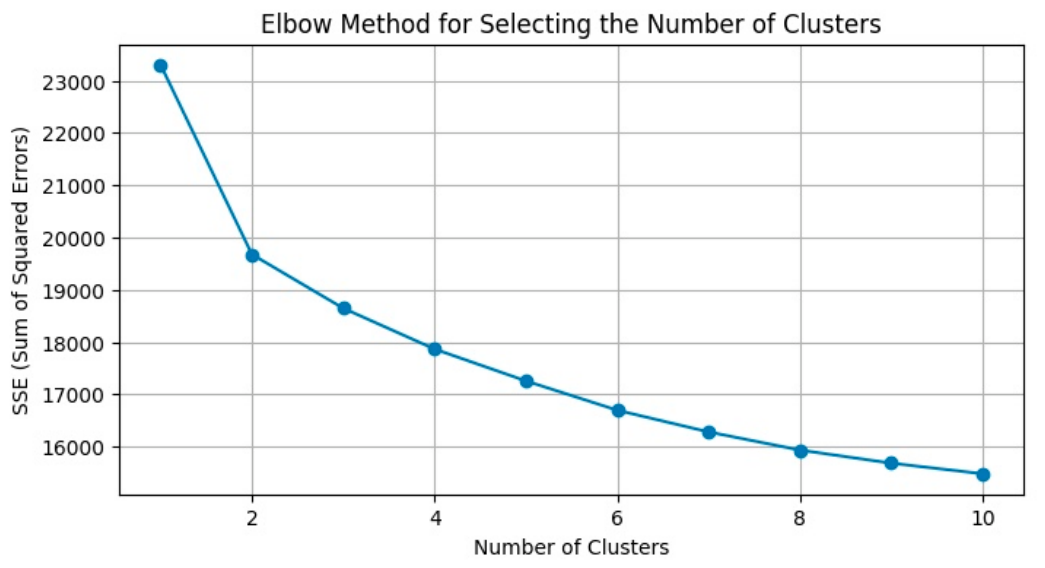
Figure 2.
Results of clustering using the K-means method (k = 3), visualized in the space of the first two principal components.
Figure 2.
Results of clustering using the K-means method (k = 3), visualized in the space of the first two principal components.
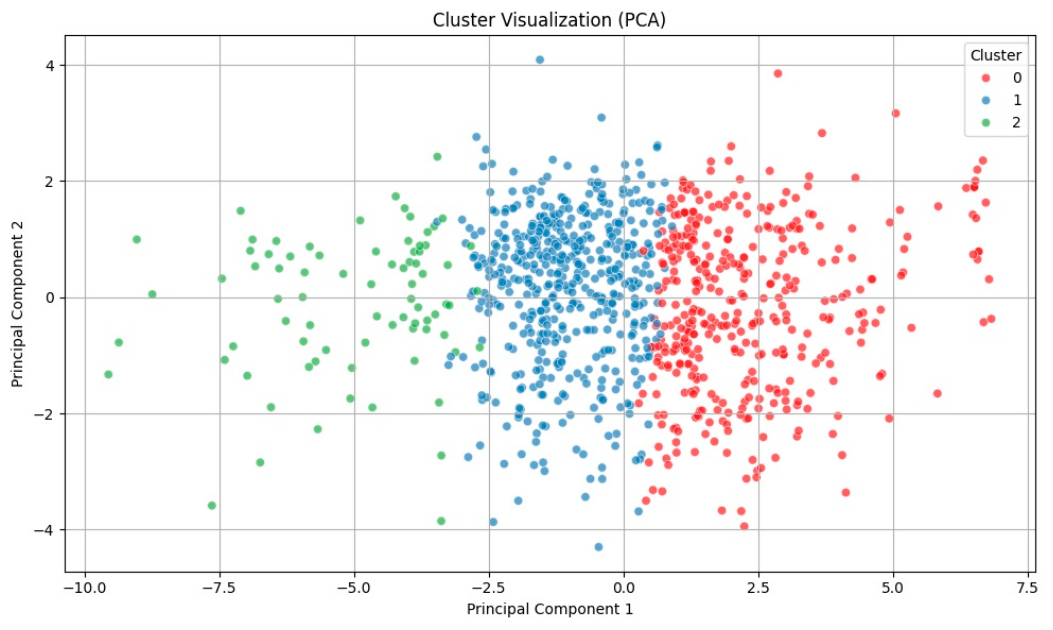
Figure 3.
Results of cluster analysis: heatmap of the average values of the energy behavior features (Q1-Q18) for the three identified clusters.
Figure 3.
Results of cluster analysis: heatmap of the average values of the energy behavior features (Q1-Q18) for the three identified clusters.
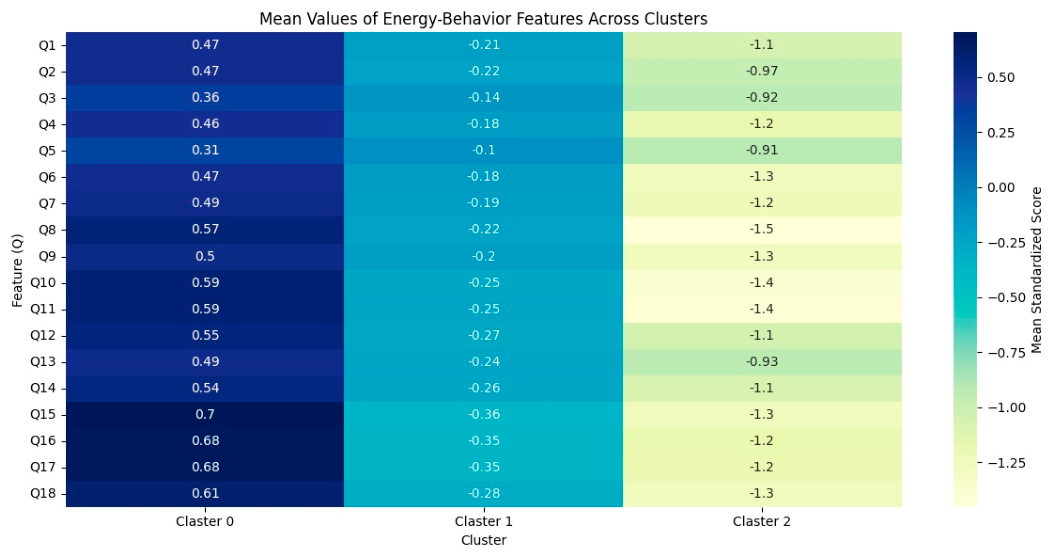
Figure 4.
Categorical features with the greatest impact on cluster formation according to the results of the χ² analysis.
Figure 4.
Categorical features with the greatest impact on cluster formation according to the results of the χ² analysis.
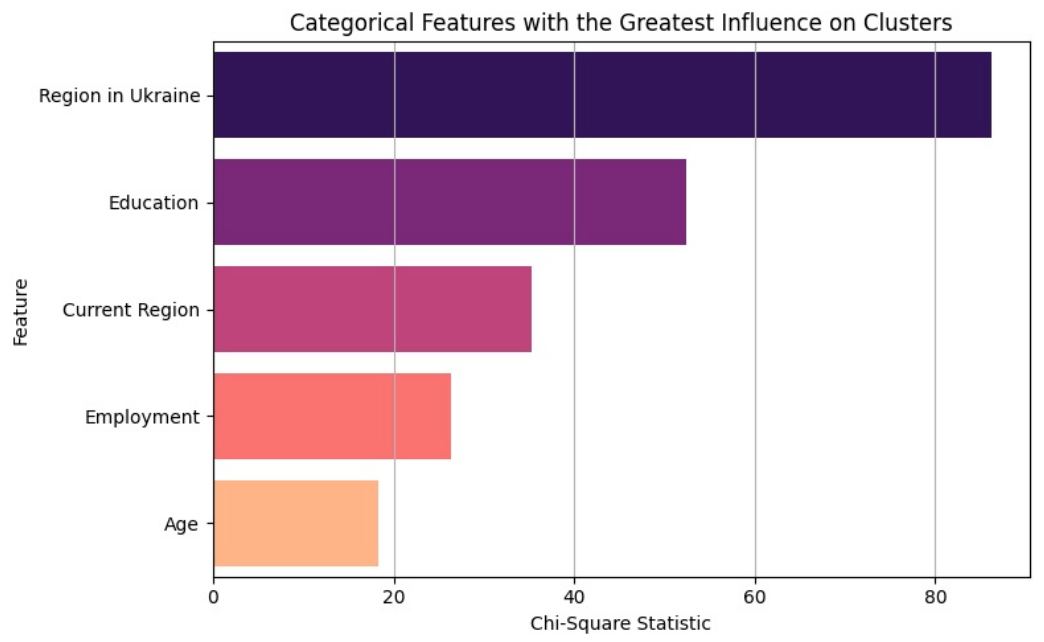
Table 3.
Characteristic features of energy consumption of regions of Ukraine.
| Type of region | Regions | Appropriate policy instruments |
|---|---|---|
| Industrial and highly urbanized regions | Dnipropetrovsk, Zaporizhia, Kharkiv, Poltava, Donetsk (until 2022), Luhansk (until 2022) | Programs to support the implementation of energy efficient technologies; smart metering; demand response participation programs; grants for modernization, and involvement in pilot projects of the energy transition |
| Metropolitan region and large agglomerations | Kyiv city, Kyiv region | Information campaigns; personalized feedback; energy consultations; educational programs; demonstration projects; social comparison and dissemination of best practices |
| Western regions | Lviv, Ivano-Frankivsk, Zakarpattia, Ternopil, Chernivtsi, Volyn, Rivne, Khmelnytskyi | Basic educational programs; increasing energy literacy; financial support and subsidies; simplified access to energy efficient solutions; social support and consultation programs |
| Northern regions | Zhytomyr, Chernihiv, Sumy | Appropriate policy instruments |
| Central regions | Vinnytsia, Cherkasy, Kirovohrad | Programs to support the implementation of energy efficient technologies; smart metering; demand response participation programs; grants for modernization; involvement in pilot projects of the energy transition |
| Southern regions | Odesa, Mykolaiv, Kherson | Information campaigns; personalized feedback; energy consultations; educational programs; demonstration projects; social comparison and dissemination of best practices |
| Agrarian and rural regions | Partially Kirovohrad, Vinnytsia, Poltava, Cherkasy, Khmelnytskyi, Ternopil, Chernivtsi | Basic educational programs; increasing energy literacy; financial support and subsidies; simplified access to energy efficient solutions; social support and consultation programs |
Source: formed by authors.
Table 4.
Recommended instruments of influence.
| Clusters | Energy behavior characteristics | Key determinants | Theoretical concept | Appropriate policy instruments |
|---|---|---|---|---|
| Cluster 0 («Energy-engaged») | High level of awareness, motivation, support for energy conservation and readiness to implement technologies | Technological readiness, knowledge, personal responsibility, institutional support | Human Capital Theory; Transition Theory; Socio-Technical Systems | Programs to support the implementation of energy efficient technologies; smart metering; demand response participation programs; grants for modernization; involvement in pilot projects of the energy transition |
| Cluster 1 («Potential adopters») | Average level of awareness and motivation; positive attitude towards energy conservation, but insufficient readiness for active actions | Information barriers, lack of confidence in the results of energy efficiency measures, limited technological readiness | Nudging; COM-B; Theory of Planned Behavior | Information campaigns; personalized feedback; energy consultations; educational programs; demonstration projects; social comparison and dissemination of best practices |
| Cluster 2 («Low-engaged») | Low level of awareness, motivation and support for energy conservation; low readiness to implement technologies | Educational, economic and infrastructural constraints; low awareness; limited access to resources | Energy Justice; Energy Inequality; Human Capital Theory | Basic educational programs; increasing energy literacy; financial support and subsidies; simplified access to energy efficient solutions; social support and consultation programs |
Source: formed by authors.
Table 5.
Recommended directions for energy consumption policy for behavioral clustersconsideringt the experience of Europe and Asia.
Table 5.
Recommended directions for energy consumption policy for behavioral clustersconsideringt the experience of Europe and Asia.
| Cluster | Behavioral profile | Main barriers | International experience | Recommended policies for Ukraine |
|---|---|---|---|---|
| Energy-engaged | High awareness, motivation, and readiness to implement energy efficient technologies | Insufficient economic incentives and limited opportunities to participate in energy markets | EU: smart metering, dynamic pricing, demand response (Germany [42], Denmark [43], Netherlands [44]); Japan and South Korea [45]: digital demand management platforms and smart grids | Expand smart metering; implement dynamic tariffs; involve households in demand response programs; support for home solar power plants, heat pumps and energy storage; digital consumption management services |
| Potential adopters | Average level of awareness and readiness for change; positive attitude towards energy saving, but low activity | Information barriers, uncertainty about the economic effect of measures | UK: home energy reports [46]; Germany: household energy advice [47]; Singapore [48]: digital information campaigns and feedback systems | Educational campaigns; personalized consumption feedback; energy consultations; demonstration projects in communities; use of nudging and social comparison to stimulate energy savings |
| Low-engaged | Low awareness, motivation and readiness for energy saving | Energy poverty, financial constraints, low level of knowledge, limited access to technology | EU: energy poverty programmes (France, Spain [49], Poland [50]); China [51]: subsidised energy efficiency programmes; South Korea: targeted support for vulnerable consumers [52] | Targeted energy literacy programs; subsidies and preferential loans for thermal modernization; support for the installation of metering devices; social programs for energy-vulnerable households; simplified access to energy-efficient technologies |
Source: formed by authors.
Disclaimer/Publisher’s Note: The statements, opinions and data contained in all publications are solely those of the individual author(s) and contributor(s) and not of MDPI and/or the editor(s). MDPI and/or the editor(s) disclaim responsibility for any injury to people or property resulting from any ideas, methods, instructions or products referred to in the content. |
© 2026 by the authors. Licensee MDPI, Basel, Switzerland. This article is an open access article distributed under the terms and conditions of the Creative Commons Attribution (CC BY) license (http://creativecommons.org/licenses/by/4.0/).
Copyright: This open access article is published under a Creative Commons CC BY 4.0 license, which permit the free download, distribution, and reuse, provided that the author and preprint are cited in any reuse.


