

Submitted:
15 June 2026
Posted:
17 June 2026
You are already at the latest version
Abstract
Adolescent suicide remains a critical public health concern, with rates continuing to rise globally. This study examined the role of strength development in mitigating suicide risk among youth receiving behavioral health services. Utilizing administrative data from a Midwestern state's behavioral health authority, the study analyzed 391 adolescents aged 13–19 years (M = 16.34, SD = 1.51), including 244 girls (62.4%) and 147 boys (37.6%), who presented with recent suicidal ideation or behavior. Strength indicators included family strengths, interpersonal skills, optimism, educational support, vocational skills, talents and interests, spiritual or religious strengths, community involvement, relationship permanence, youth involvement in care, and natural supports. Latent Profile Transition Analyses identified two distinct strength groups: “usable strengths,” representing readily accessible protective factors, and “buildable strengths,” representing strengths requiring further development. Findings indicated that adolescents who transitioned from buildable to usable strengths experienced significantly lower suicide risk. Youth who maintained usable strengths across treatment also demonstrated substantially lower odds of suicide risk. Longer treatment duration was associated with reduced suicide risk, whereas shorter treatment stays corresponded with elevated risk. Logistic regression analyses confirmed that maintaining or developing strengths related to social relationships, community connections, and supportive environments served as significant protective factors. These findings underscore the importance of integrating strength-based, relationship-centered, and community-informed approaches into behavioral health services to support resilience and reduce suicide risk among adolescents.
Keywords:
adolescent suicide risk
; protective strength factors
; relationships
; context
1. Introduction
For almost 60 years, adolescent suicide has been a critical public health concern across the United States (U.S.) and globally (Curtin, 2020). Despite recent declines in some regions, suicide remains a leading cause of death among children, adolescents, and young adults, with important variations across countries and demographic groups (Substance Abuse and Mental Health Services Administration [SAMHSA], 2025; World Health Organization [WHO], 2024). Globally, suicide ranks among the leading causes of death for individuals aged 15–29 years, while in the United States it remains the second leading cause of death among those aged 10–34 years (Centers for Disease Control and Prevention, 2023; WHO, 2024). These trends underscore the urgency of identifying factors that protect youth from suicidal thoughts and behaviors.
Suicide risk is widely recognized as a complex phenomenon shaped by interrelated individual, relational, community, and societal influences (SAMHSA, 2024a). Risk factors include previous suicide attempts, family history of suicidal behavior, mental illness, trauma exposure, substance use, chronic pain, impulsivity, self-injurious behavior, and environmental stressors (Ryan & Oquendo, 2020). Although substantial efforts have been devoted to identifying and predicting suicide risk, the accuracy of prediction remains limited, and prevention efforts have often relied on deficit-oriented frameworks that emphasize pathology and dysfunction (Su et al., 2023; Thangada & Kasoju, 2024).
A broader understanding of suicide emerges from sociological perspectives that emphasize the role of social relationships and community contexts. Durkheim (2005) argued that suicide should not be understood solely as an individual act but as a social phenomenon influenced by the degree of social integration and regulation within families, communities, and institutions. His theory proposed that weakened social bonds and diminished social support increase vulnerability to suicide, whereas stronger connections provide individuals with meaning, belonging, and protection from distress. Contemporary scholars in critical suicidology have extended this perspective by arguing that suicide and suicidal behaviors exist within broader social, cultural, political, and historical contexts rather than arising exclusively from individual pathology (Button, 2016; Cover, 2020; Marsh, 2019; White & Morris, 2019). Together, these perspectives suggest that understanding suicide requires attention not only to risk factors but also to the social, relational, and developmental processes that foster resilience and protection. Contemporary resilience theory, particularly third-generation resilience research, conceptualizes resilience not as a fixed individual trait but as a dynamic, multisystem process involving interactions among individual capacities, family relationships, schools, communities, and broader social systems (Masten, 2014). From this perspective, resilience reflects the ability to maintain or regain adaptive functioning despite significant adversity and has been increasingly recognized as a protective factor against suicidal ideation, suicide attempts, and suicide-related mortality. Recent studies indicate that higher levels of resilience are associated with lower suicidal ideation, reduced psychological distress, and greater recovery following exposure to adverse life events, highlighting the importance of both individual and contextual protective processes in suicide prevention (Alonzo, 2022; Rodríguez-Fernández et al., 2021).
Complementing resilience theory, strengths-based and positive psychology frameworks emphasize the identification and cultivation of personal and environmental assets that support well-being and adaptive functioning (Peterson & Seligman, 2004). Character strengths such as hope, optimism, perseverance, social intelligence, gratitude, spirituality, and meaning have been identified as important protective factors against suicidal thoughts and behaviors (Peterson & Seligman, 2004; Sueki, 2021). Strengths-based approaches, therefore, extend beyond symptom reduction by focusing on the development and utilization of capacities that enable youth to cope effectively with adversity, build supportive relationships, and sustain engagement in meaningful activities. Within behavioral health systems, these strengths often include family support, interpersonal skills, school connectedness, community involvement, relationship permanence, youth participation in care, and natural supports that facilitate access to emotional, social, and practical resources (Devaney et al., 2023; Rasmus et al., 2019).
A growing body of research supports the importance of resilience- and strengths-based interventions in reducing suicide risk among adolescents. Programs such as Sources of Strength have demonstrated improvements in help-seeking behaviors, social connectedness, and perceptions of support from trusted adults, all of which are associated with lower suicide risk (Wyman et al., 2019). Community-driven interventions developed for Indigenous youth have similarly demonstrated that strengthening cultural identity, social support, and collective efficacy can enhance resilience and reduce vulnerability to suicidal behaviors (Allen et al., 2018). More broadly, systematic reviews indicate that adolescents who report stronger family cohesion, supportive peer relationships, school connectedness, optimism, and meaning in life are less likely to experience suicidal ideation and suicide attempts (Arango et al., 2024; Bakken et al., 2024; Marraccini & Brier, 2017).
Strengths-based interventions also provide opportunities to monitor how protective factors develop over time. Within the Child and Adolescent Needs and Strengths (CANS) framework, strengths are conceptualized along a developmental continuum. Usable strengths are those currently accessible and can be readily incorporated into treatment planning, whereas buildable strengths are present but require further development before they can function as effective protective resources (Lyons, 2022). Prior research has shown that youth who develop and sustain strengths over time demonstrate improved behavioral health outcomes and reduced functional impairment (Hong et al., 2021). However, relatively little is known about how transitions between buildable and usable strengths influence suicide risk trajectories among adolescents receiving behavioral health services. Examining these developmental transitions may provide important insights into how resilience-promoting processes and strengths-based interventions contribute to suicide prevention and recovery.
The present study addresses this gap by examining the relationship between strength development and suicide risk among adolescents receiving publicly funded behavioral health services. Using Latent Profile Transition Analysis (LPTA), the study sought to identify distinct strength profiles, examine transitions between profiles over time, and determine whether strength profiles, profile transitions, and treatment duration were associated with suicide risk at the end of treatment. Guided by resilience theory, strengths theory, and prior empirical evidence, we hypothesized that adolescents who maintained usable strengths or transitioned from buildable strengths to usable strengths would exhibit significantly lower suicide risk than those who remained in buildable-strength profiles. We further hypothesized that longer treatment duration would be associated with lower suicide risk.
2. Methods
2.1. Participants
This study used statewide administrative data from a behavioral health authority's database in a Midwestern state, including demographic, assessment, and diagnostic information for service participants. The assessment provided person-level information about individuals’ strengths and needs. In this study, participants included 391 adolescents aged 13-19 who completed an episode of publicly funded behavioral health services during State Fiscal Year 2019. The sample was limited to adolescents who had recent (within the last 30 days) or current suicidal ideation or behavior that required safety planning and intervention. For this study, suicide risk was measured at the end of an episode of behavioral health care. Figure 1 depicts the flow of study samples and how we selected the final analytic sample.
Retrieved data included the initial and the most recent assessment data, which were identified as closed episodes with service completion coded, regardless of whether the adolescents began services before 2019. As illustrated in Figure 1, out of 8,877 total episodes, 6,514 open episodes were excluded, leaving 2,363 episodes with completed services. Episodes rated as “0” or “1” for suicidal risk (n = 1,972) were excluded. At the initial assessment, the primary focus was on episodes rated “2” or “3,” indicating existing risk that interfered with functioning (n = 391).
2.2. Measures
Child and Adolescent Needs and Strengths (CANS). Strengths and suicide risk were measured using the Child and Adolescent Needs and Strengths (CANS; Lyons, 2022), a communimetric assessment designed to support treatment planning, service monitoring, and outcomes management in behavioral health systems. The CANS includes six domains comprising 64 items: youth strengths, life functioning, cultural factors, caregiver needs and resources, behavioral or emotional needs, and risk behaviors. This study focused on the Youth Strengths domain and the Suicide Risk item. The Youth Strengths domain consists of 11 indicators: family strengths, interpersonal skills, optimism, educational setting, vocational functioning, talents and interests, spiritual or religious strengths, community life, relationship permanence, youth involvement in care, and natural supports. Family strengths assess positive family relationships, communication, and emotional support. Interpersonal skills evaluate the youth’s ability to establish and maintain relationships with peers and adults. Optimism reflects positive expectations regarding the future. Educational setting measures the degree of support and engagement within the school environment. Vocational functioning assesses age-appropriate work-related or pre-vocational skills. Talents and interests capture hobbies, abilities, and activities that contribute to a positive sense of self. Spiritual or religious strengths assess access to spiritual support and meaning. Community life reflects connections to community organizations, activities, and institutions. Relationship permanence measures the stability of significant relationships. Youth involvement in care assesses participation in treatment planning and decision-making. Natural supports are unpaid individuals who provide social and emotional support within a youth’s environment.
Each strength item is rated on a four-point scale ranging from 0 (centerpiece strength) to 3 (no identified strength). Consistent with previous CANS research (Lyons, 2009), ratings of 0 or 1 were classified as usable strengths because they are readily available and can be incorporated into treatment planning, whereas ratings of 2 or 3 were classified as buildable strengths because they require further development before functioning as effective protective resources.
Suicide Risk. Suicide risk was measured using the Suicide Risk item within the CANS Risk Behaviors domain. Ratings range from 0 (no evidence of suicide risk) to 3 (dangerous or disabling suicide risk requiring immediate or intensive intervention). The item captures suicidal ideation, planning, intent, and suicide attempts. For this study, ratings of 2 or 3 at discharge were recoded as 1, indicating the presence of clinically significant suicide risk, whereas ratings of 0 or 1 were recoded as 0. Suicide deaths were not included in the outcome measure. The discharge Suicide Risk rating served as the dependent variable in subsequent analyses.
Demographic and Clinical Characteristics. Demographic and clinical variables included age, gender, race, primary psychiatric diagnosis based on ICD-9 classifications, recommended intensity of care, Medicaid enrollment status, and treatment duration. Treatment duration was calculated as the total number of days between the initial and final assessments within the episode of care.
2.3. Procedure
The CANS assessment was implemented statewide by the behavioral health authority to support clinical decision-making, treatment planning, program management, and outcomes monitoring across publicly funded behavioral health services. During State Fiscal Year 2019, the CANS was utilized by 24 state-contracted community mental health centers serving children and adolescents throughout the state.
To ensure consistent administration and scoring, clinicians were required to complete standardized online training and maintain annual certification in the use of the CANS. In addition, supervisors and designated organizational coaches completed advanced training and certification to support local implementation, quality assurance, and ongoing fidelity to the assessment framework. Initial assessments were completed at service entry, with reassessments conducted approximately every six months or at clinically significant transition points to monitor changes in strengths and needs over time.
Based on patterns of assessed needs, the state’s data management system generated recommendations regarding the intensity of care required to support treatment planning and service allocation. For the present study, de-identified assessment and service records were obtained from the statewide database under a data use agreement with the behavioral health authority. Data included demographic information, diagnostic characteristics, treatment history, and CANS assessments completed at intake and discharge. The initial assessment and the most recent assessment within a completed episode of care were extracted for analysis.
The Indiana University Institutional Review Board reviewed the study and determined it to be exempt from human participant oversight because all data were fully de-identified before analysis (IRB #1911059765). All procedures complied with applicable federal regulations governing the protection of human subjects (45 CFR 46) and institutional policies for secondary analysis of de-identified data. Reporting followed the Strengthening the Reporting of Observational Studies in Epidemiology (STROBE) guidelines (von Elm et al., 2007).
2.4. Data Analysis
Latent profile analysis (LPA) was first performed to identify unobserved subgroups at two time points among youth in behavioral health treatment. The best fit of the LPA models was determined by interchangeably comparing multiple indices (i.e., log-likelihood value, Akaike information criterion (AIC), Bayesian information criterion (BIC), Adjusted BIC (ABIC), entropy, and Lo, Mendell, and Rubin likelihood ratio test). Eleven strength items at both the first and last assessments were the primary concerns of the unobserved subgroups. Using latent transition analysis (LTA), we examined different latent classes and their membership changes. In the LTA, transition probabilities based on the estimated model were the primary parameters of interest (e.g., the likelihood that youth classified in the usable strengths group (Class 1) at the initial assessment transitioned to the buildable strengths group (Class 2) at the final assessment).
Finally, logistic regression models were employed to examine the extent to which changes in class membership were associated with suicide risk, controlling for treatment duration, gender, race, and age. Specifically, “useable to useable” included youth who began treatment with identified strengths, which they retained during the course of treatment. “Useable to buildable” referred to youth who began treatment with useable strengths and ended with buildable strengths, which were inaccessible or required development to again become useful to support wellbeing or be used in a plan to address identified needs. “Buildable to useable” referred to youth, whose strengths required development at the beginning of treatment to become useful and, at the end of treatment, were identified as useable.
Additionally, the number of treatment days, gender, race, and age were included in the regression analysis. The number of treatment days during the episode of care was split into four quartiles: shortest stay, short-medium, medium-long, and longest duration. Suicide risk for females was compared with that of males; risks for youth whose gender identity was not available were compared with those of females. Suicide risk for youth who were Black or other races was compared with the suicide risk for White youth. Age was a continuous variable. The analyses were conducted using SPSS 26 and Mplus Version 7.
3. Results
The final analytic sample consisted of 391 adolescents aged 13 to 19 years (M = 16.34, SD = 1.51) who completed a publicly funded behavioral health treatment episode during State Fiscal Year 2019 and presented with recent or current suicide risk at intake. The sample included 244 females (62.4%) and 147 males (37.6%). The racial composition was 76.8% White, 13.1% Black, 5.9% other single race, 0.5% Native American, and 3.4% multiracial.
Participants received services for an average of 402.07 days (SD = 393.71). The most common primary psychiatric diagnoses were depressive disorders (21.5%), including major depressive disorder (single and recurrent episodes), conduct disorders (20.2%), attention-deficit/hyperactivity disorder (18.9%), and reaction to severe stress or adjustment disorder (14.6%). Based on assessed needs and recommended levels of care, supportive community-based services were the most frequently recommended service type (35.8%), followed by intensive community-based services (22.5%). Most participants were enrolled in Medicaid (76.5%). Additional demographic and clinical characteristics are presented in Table 1. Additional details are presented in Table 1.
LPA was conducted to identify strength profiles at two time points: the initial assessment (Wave 1) and the final assessment (Wave 2). The results indicated that the best-fitting model at both waves consisted of two latent classes. At Wave 1, the two-class model showed the best fit according to several fit indices. Specifically, the AIC was 11059.28, the BIC was 11193.96, and the ABIC was 11086.08. Additionally, the model demonstrated a significant likelihood ratio test (LRT = 545.21, p < .01) and an entropy value of 0.77, suggesting a clear separation between the two classes. These findings indicate the presence of two distinct strength profiles at the initial assessment. For the initial assessment, a useable strengths group (39%) and a buildable strengths class (61%) are presented in Figure 1a. The rate of a usable strengths group was 47.8%, and a buildable strengths group was 52.2% at the last assessment, shown in Figure 1b. At Wave 2, the two-class model also provided the best fit, with an AIC of 14973.08, BIC of 15107.76, and ABIC of 14999.88. The LRT statistic was significant (LRT = 694.60, p < .01), and the entropy value increased slightly to 0.81, reflecting a stronger classification of individuals into the two strength profiles at the final assessment. This further supports the presence of two distinct strength profiles at the last assessment (see Table 2).
Overall, the distribution of strength ratings suggested considerable heterogeneity in youths’ access to protective resources at the beginning and end of treatment (Figure 2a & Figure 2b).
The two latent classes were interpreted as a usable strengths profile and a buildable strengths profile. At intake, 39.0% of youth were classified in the usable strengths profile and 61.0% in the buildable strengths profile. By discharge, the proportion of youth classified in the usable strengths profile increased to 47.8%, whereas 52.2% remained in the buildable strengths profile. Youth in the usable strengths profile demonstrated consistently stronger ratings across family strengths, interpersonal skills, optimism, educational support, community involvement, relationship permanence, and natural supports compared with youth in the buildable strengths profile. LTA examined movement between strength profiles over time (Figure 3). Among youth initially classified in the usable strengths profile (n = 140), 92.14% remained in that profile at discharge, while 7.86% transitioned to the buildable strengths profile. Among youth initially classified in the buildable strengths profile (n = 248), 71.77% remained in the buildable strengths profile and 28.23% transitioned to the usable strengths profile. These findings indicate substantial stability among youth with established strengths, while nearly one-third of youth with initially limited strengths demonstrated meaningful improvement during treatment.
The association between strength-profile transitions and suicide risk at discharge was examined using logistic regression (Table 3). Relative to youth who remained in the buildable strengths profile, youth who maintained usable strengths throughout treatment were significantly less likely to exhibit suicide risk at discharge (OR = 0.35, 95% CI [0.19, 0.63], p < .001). Similarly, youth who transitioned from buildable strengths to usable strengths demonstrated substantially lower odds of suicide risk (OR = 0.09, 95% CI [0.02, 0.30], p < .001). In contrast, the transition from usable to buildable strengths was not statistically significant (OR = 0.15, 95% CI [0.02, 1.32], p = .09). Treatment duration was also significantly associated with suicide risk. Compared with youth in the longest treatment-duration quartile, those in the shortest-duration quartile were nearly 12 times more likely to demonstrate suicide risk at discharge (OR = 11.79, 95% CI [4.51, 30.80], p < .001). Youth in the short-to-medium duration quartile were more than four times as likely to exhibit suicide risk (OR = 4.27, 95% CI [1.60, 11.42], p < .001), whereas the medium-to-long duration quartile was not significantly different from the reference group (OR = 1.91, 95% CI [0.67, 5.46], p = .23). No significant associations were observed for gender or race. Compared with females, males demonstrated lower but nonsignificant odds of suicide risk (OR = 0.63, 95% CI [0.35, 1.12], p = .12). Black youth (OR = 1.55, 95% CI [0.65, 3.70], p = .33) and youth from other racial backgrounds (OR = 0.90, 95% CI [0.32, 2.43], p = .85) did not differ significantly from White youth. Age was marginally associated with suicide risk (OR = 0.84, 95% CI [0.70, 1.00], p = .05), suggesting a slight decrease in risk among older adolescents.
Collectively, the findings indicate that maintaining or developing usable strengths and remaining engaged in treatment for longer periods were associated with significantly lower suicide risk at discharge.
4. Discussion
The purpose of this study was to examine whether strength development and transitions in strength profiles were associated with suicide risk among adolescents receiving publicly funded behavioral health services. Consistent with resilience theory, strengths-based perspectives, and prior suicide prevention research, the findings suggest that adolescents who maintained usable strengths or transitioned from buildable strengths to usable strengths were significantly less likely to demonstrate suicide risk at discharge (Bakken et al., 2024; Hong et al., 2021). In addition, longer treatment duration was associated with lower suicide risk, indicating that both the availability of protective resources and sustained engagement in care may contribute to positive behavioral health outcomes.
The strongest predictors of reduced suicide risk were maintaining usable strengths and developing buildable strengths into accessible protective resources. These findings are consistent with previous research demonstrating that improvements in strengths are associated with better behavioral health outcomes and reductions in functional impairment (Hong et al., 2021). Many of the strengths included in this study, such as family strengths, interpersonal skills, optimism, community involvement, relationship permanence, and natural supports, represent social and relational resources that can promote resilience, coping capacity, and adaptive functioning. Adolescents with stronger social connections may have greater access to emotional support, encouragement, problem-solving assistance, and a sense of belonging during periods of distress. These factors have been consistently associated with lower levels of suicidal ideation and behavior (Arango et al., 2024; Bakken et al., 2024).
The findings also support resilience-oriented conceptualizations of suicide prevention. Protective factors appear to function as developmental resources that can be strengthened over time rather than as fixed individual characteristics. Youth who transitioned from buildable strengths to usable strengths may have benefited from enhanced family engagement, improved interpersonal functioning, stronger school connections, and greater access to supportive community relationships. Such changes may increase resilience by helping youth manage adversity, regulate emotions, and maintain hope during periods of psychological distress. Since adolescents spend much of their time within family, school, and community environments, these systems likely play a critical role in strengthening protective factors and reducing suicide risk.
Longer treatment duration was also associated with lower suicide risk. Youth in the shortest treatment-duration quartiles were substantially more likely to remain at risk for suicide than those with the longest treatment engagement. One possible explanation is that longer treatment provides greater opportunities to establish therapeutic relationships, strengthen family participation, enhance coping skills, and connect youth with supportive resources. Active involvement of youth and caregivers in treatment planning may further reinforce treatment engagement and contribute to positive outcomes (Kothgassner et al., 2021; McCauley et al., 2018). In contrast, shorter treatment episodes may reflect barriers to sustained participation, including transportation difficulties, competing family responsibilities, housing instability, scheduling limitations, and limited access to services (Alvarez-Subiela et al., 2022; Branjerdporn et al., 2023; Liu & Wang, 2024).
The findings may also be understood through Durkheim’s sociological perspective, which emphasizes social integration and social regulation as protective mechanisms against suicide (Durkheim, 2005). Youth with stronger family relationships, interpersonal skills, community involvement, and natural supports may experience greater belonging, purpose, and connection, thereby reducing vulnerability to suicidal thoughts and behaviors (Mueller et al., 2021; Wray et al., 2011). The stability of usable strengths observed among many participants suggests that social and relational resources may provide enduring protection against suicide risk. These findings are consistent with prior research using the CANS, which found that relational strengths, including family closeness, interpersonal skills, spirituality, community involvement, relationship permanence, natural supports, and optimism, were associated with lower suicide risk among youth receiving mental health services (Quiroga & Walton, 2014).
No significant associations were observed for race or gender, and age demonstrated only a marginal relationship with suicide risk. Although national surveys have reported demographic differences in suicidal thoughts and behaviors (SAMHSA, 2022, 2023, 2024b), the present study focused on a clinical sample of youth already identified as experiencing elevated suicide risk. Furthermore, the outcome measure assessed suicide risk, including ideation, planning, intent, and attempts, rather than suicide mortality. This distinction may partially explain differences from epidemiological studies reporting higher suicide death rates among males (Miranda-Mendizabal et al., 2019; Oh et al., 2025).
The findings support the integration of strength-based assessment and intervention within adolescent behavioral health services. Routine monitoring of strengths may help clinicians identify protective resources that can be incorporated into treatment planning and suicide prevention efforts. Interventions that strengthen family relationships, interpersonal skills, optimism, school connectedness, community engagement, and natural supports may enhance resilience and reduce suicide risk. The findings also highlight the importance of sustaining youth engagement in treatment long enough for protective strengths to develop and stabilize. Behavioral health systems may therefore benefit from emphasizing both risk reduction and strength development as complementary goals of care.
Several limitations should be considered when interpreting the findings. First, the study utilized administrative data from a single state's publicly funded behavioral health system, limiting generalizability to other populations and service settings. Second, the sample consisted exclusively of youth receiving behavioral health services and therefore may not represent adolescents in the general population. Third, ethnicity data were unavailable, preventing examination of potentially important cultural and ethnic differences. Fourth, information regarding LGBTQ+ identities and other contextual factors associated with suicide risk was not available. Finally, the use of secondary administrative data and the observational study design preclude causal conclusions regarding the relationships among strengths, treatment duration, and suicide risk.
Future research should investigate how specific strengths contribute to reductions in suicide risk and whether particular combinations of strengths provide greater protection than others. Longitudinal studies linking administrative data with Medicaid claims, crisis-service utilization records, and other service data may provide a more comprehensive understanding of pathways to recovery and resilience. Additional research involving racially, ethnically, culturally, and gender-diverse populations is needed to determine the generalizability of these findings. Further examination of how family, school, community, and behavioral health systems interact to support strength development may help inform more effective and socially grounded approaches to youth suicide prevention.
5. Conclusions
This study advances understanding of how psychosocial strengths within youths’ ecological contexts function as protective mechanisms against suicide risk. Findings demonstrate that sustaining or developing usable strengths, particularly those reflecting relational, emotional, and community connections, significantly reduces the likelihood of suicide risk, reinforcing the centrality of strength-based engagement in behavioral health interventions. Prolonged treatment duration further emerged as a critical factor in sustaining these strengths, underscoring the value of consistent, relationship-centered care. While sociodemographic factors such as race, gender, and age showed limited associations, the results emphasize the broader role of social integration and regulation, aligning with Durkheim’s framework that situates suicide within the context of social cohesion and belonging. Collectively, these insights call for a paradigm shift from individually focused, risk-driven interventions toward holistic, community-based, and relationally grounded models of care. Future research integrating administrative data, Medicaid claims, and crisis-service utilization records will be essential to deepening understanding of how systemic, environmental, and regulatory factors interact with strength development to shape trajectories of resilience and suicide prevention among diverse youth populations.
Author Contributions
Dr. Hong conceptualized and developed the theoretical framework in alignment with the research methodology, conducted the statistical analyses, and integrated the analytic results into the interpretation of findings. Dr. Kyere contributed to refining and advancing the theoretical framework to ensure conceptual coherence and methodological rigor. Dr. Walton and Dr. Kim focused on developing the discussion and conclusion sections, synthesizing the study’s implications for research, practice, and policy. All authors reviewed, revised, and approved the final manuscript.
Funding
Not Applicable.
Institutional Review Board Statement
Not applicable.
Informed Consent Statement
Not applicable.
Data Availability Statement
The data supporting the findings of this study are maintained by the Indiana Division of Mental Health and Addiction (DMHA). Access to these data is restricted and governed by DMHA data-use agreements; therefore, the dataset is not publicly available. Data could be made available from the authors upon reasonable request, provided formal approval is obtained from the Indiana DMHA.
Conflicts of Interest
The authors declare no conflict of interest.
References
- Allen, J.; Rasmus, S. M.; Fok, C. C. T.; Charles, B.; Henry, D.; Mohatt, G. V. Multi-level cultural intervention for the prevention of suicide and alcohol use risk with Alaska Native youth: A nonrandomized comparison of treatment intensity. Prev. Sci. 2018, 19, 174–185. [Google Scholar] [CrossRef] [PubMed]
- Alonzo, D. Pros and cons of mental health treatment: Reports from depressed clients with suicidal ideation. J. Ment. Health 2022, 31. [Google Scholar] [PubMed]
- Alvarez-Subiela, X.; Castellano-Tejedor, C.; Villar-Cabeza, F.; Vila-Grifoll, M.; Palao-Vidal, D. Family factors related to suicidal behavior in adolescents. Int. J. Environ. Res. Public Health 2022, 19, 9892. [Google Scholar] [CrossRef] [PubMed]
- Arango, A.; Cole-Lewis, Y.; Lindsay, R.; Yeguez, C. E. Social connectedness and adolescent suicide risk. J. Child Psychol. Psychiatry 2024, 65, 785–797. [Google Scholar] [CrossRef] [PubMed]
- Bakken, V.; Lydersen, S.; Skokauskas, N.; Sund, A. M.; Kaasbøll, J. Protective factors for suicidal ideation: a prospective study from adolescence to adulthood. Eur. Child Adolesc. Psychiatry 2024, 33, 3079–3089. [Google Scholar] [CrossRef] [PubMed]
- Branjerdporn, G.; Erlich, F.; Ponraj, K.; McCosker, L. K.; Woerwag-Mehta, S. What is and what is challenging for the caregivers of young people receiving interventions to prevent suicide? Caregivers' perspectives-A rapid scoping review. Children 2023, 10, 1801. [Google Scholar] [CrossRef] [PubMed]
- Button, M. E. Suicide and social justice: Toward a political approach to suicide. Political Res. Q. 2016, 69, 270–280. [Google Scholar] [CrossRef]
- Centers for Disease Control and Prevention (CDC). WISQARS leading causes of death visualization tool. 2023. Available online: https://wisqars.cdc.gov/lcd/?o=LCD&y1=2023&y2=2023&ct=11&cc=ALL&g=00&s=0&r=0&ry=3&e=0&ar=lcd1age&at=groups&ag=lcd1age&a1=0&a2=199.
- Cover, R. Subjective connectivity: rethinking loneliness, isolation and belonging in discourses of minority youth suicide. Soc. Epistemol. 2020, 34, 566–576. [Google Scholar] [CrossRef]
- Curtin, S. C. State suicide rates among adolescents and young adults aged 10–24: United States, 2000–2018 2020. [CrossRef]
- Devaney, C.; Brady, B.; Crosse, R.; Jackson, R. Realizing the potential of a strengths-based approach in family support with young people and their parents. Child Fam. Soc. Work 2023, 28, 30–40. [Google Scholar] [CrossRef] [PubMed]
- Durkheim, É. Suicide: A study in sociology; Spaulding, J. A.; Simpson, G., Translators; Routledge, 2005. (Original work published 1897). [Google Scholar]
- Hong, S.; Walton, B.; Kim, H.; Lee, S.; Rhee, T. Longitudinal Patterns of Strengths among Youth with Psychiatric Disorders: A Latent Profile Transition Analysis. Child Psychiatry Hum. Dev. 2021. [Google Scholar] [CrossRef] [PubMed]
- Kothgassner, O. D.; Goreis, A.; Robinson, K.; Huscsava, M. M.; Schmahl, C.; Plener, P. L. Efficacy of dialectical behavior therapy for adolescent self-harm and suicidal ideation: a systematic review and meta-analysis. Psychol. Med. 2021, 51, 1057–1067. [Google Scholar] [CrossRef] [PubMed]
- Liu, X. Q.; Wang, X. Adolescent suicide risk factors and the integration of social-emotional skills in school-based prevention programs. World J. Psychiatry 2024, 14, 494–506. [Google Scholar] [CrossRef] [PubMed]
- Lyons, J. S. Transformational collaborative outcomes management: Managing the business of personal change; Springer Nature, 2022. [Google Scholar]
- Marraccini, M. E.; Brier, Z. M. F. School connectedness and suicidal thoughts and behaviors: A systematic meta-analysis. Sch. Psychol. Q. 2017, 32, 5–21. [Google Scholar] [CrossRef] [PubMed]
- Marsh, I. Suicide and Social Justice: Discourse, politics, and experience. In Suicide and Social Justice; Routledge, 2019; pp. 15–31. [Google Scholar]
- Masten, A. S. Global perspectives on resilience in children and youth. Child Dev. 2014, 85, 6–20. [Google Scholar] [CrossRef] [PubMed]
- McCauley, E.; Berk, M. S.; Asarnow, J. R.; Adrian, M.; Cohen, J.; Korslund, K.; Hughes, J.; Harned, M.; Gallop, R.; Linehan, M. M. Efficacy of dialectical behavioral therapy for adolescents at high risk for suicide: A randomized clinical trial. JAMA Psychiatry 2018, 75, 777–785. [Google Scholar] [CrossRef] [PubMed]
- Miranda-Mendizabal, A.; Castellví, P.; Parés-Badell, O.; Alayo, I.; Almenara, J.; Alonso, I.; Blasco, M. J.; Cebrià, A.; Gabilondo, A.; Gili, M.; Lagares, C.; Piqueras, J. A.; Rodríguez-Jiménez, T.; Rodríguez-Marín, J.; Roca, M.; Soto-Sanz, V.; Vilagut, G.; Alonso, J. Gender differences in suicidal behavior in adolescents and young adults: systematic review and meta-analysis of longitudinal studies. Int. J. Public Health 2019, 64, 265–283. [Google Scholar] [CrossRef] [PubMed]
- Mueller, A. S.; Abrutyn, S.; Pescosolido, B.; Diefendorf, S. The social roots of suicide: Theorizing how the external social world matters to suicide and suicide prevention. Front. Psychol. 2021, 12, 621569. [Google Scholar] [CrossRef] [PubMed]
- Muyor-Rodríguez, J.; Caravaca-Sánchez, F.; Fernández-Prados, J. S. COVID-19 fear, resilience, social support, anxiety, and suicide among college students in Spain. Int. J. Environ. Res. Public Health 2021, 18, 8156. [Google Scholar] [CrossRef] [PubMed]
- Oh, S.; Do, R.; Kim, S. Temporal trends in suicide among adolescents and young adults in the United States, Canada, and South Korea: 2001–2023. Prev. Med. 2025, 108399. [Google Scholar]
- Peterson, C.; Seligman, M. E. Character Strengths and Virtues: A Handbook and Classification; American Psychological Association & Oxford University Press: New York, 2004; Reflective Practice: Formation and Supervision in Ministry. [Google Scholar]
- Quiroga, C. V.; Walton, B. Needs and strengths associated with acute suicidal ideation and behavior in a sample of adolescents in mental health treatment: Youth and family correlates. Resid. Treat. Child. Youth 2014, 31, 171–187. [Google Scholar] [CrossRef]
- Rasmus, S. M.; Trickett, E.; Charles, B.; John, S.; Allen, J. The qasgiq model as an indigenous intervention: Using the cultural logic of contexts to build protective factors for Alaska Native suicide and alcohol misuse prevention. Cult. Divers. Ethn. Minor. Psychol. 2019, 25, 44–54. [Google Scholar] [CrossRef] [PubMed]
- Ryan, E. P.; Oquendo, M. A. Suicide risk assessment and prevention: Challenges and opportunities. Focus (American Psychiatric Publishing) 2020, 18, 88–99. [Google Scholar] [CrossRef] [PubMed]
- Southwick, S. M.; Charney, D. S. The science of resilience: Implications for the prevention and treatment of depression. Science 2012, 338, 79–82. [Google Scholar] [CrossRef] [PubMed]
- Su, R.; John, J. F.; Lin, P. I. Machine learning-based prediction for self-harm and suicide attempts in adolescents. Psychiatry Res. 2023, 328, 115446. [Google Scholar] [CrossRef] [PubMed]
- Sueki, H. What character strengths are protective factors for suicidal ideation? A cross-sectional study in Japan. Psychol. Health Med. 2021, 26, 745–754. [Google Scholar] [PubMed]
- Substance Abuse and Mental Health Services Administration. Key substance use and mental health indicators in the United States: Results from the 2021 National Survey on Drug Use and Health (HHS Publication No. PEP22-07-01-005, NSDUH Series H-57). Center for Behavioral Health Statistics and Quality, SAMHSA, 2022. Available online: https://www.samhsa.gov/data/report/2021-nsduh-annual-national-report.
- Substance Abuse and Mental Health Services Administration. Key substance use and mental health indicators in the United States: Results from the 2022 National Survey on Drug Use and Health (HHS Publication No. PEP23-07-01-006, NSDUH Series H-58). Center for Behavioral Health Statistics and Quality. 2023. Available online: https://www.samhsa.gov/data/report/2022-nsduh-annual-national-report.
- Substance Abuse and Mental Health Services Administration. About suicide and suicidal behavior. 2024a. Available online: https://www.samhsa.gov/mental-health/suicidal-behavior/about.
- Substance Abuse and Mental Health Services Administration. Key substance use and mental health indicators in the United States: Results from the 2023 National Survey on Drug Use and Health (HHS Publication No. PEP24-07-021, NSDUH Series H-59). Center for Behavioral Health Statistics and Quality, SAMHSA, 2024b. Available online: https://www.samhsa.gov/data/report/2023-nsduh-annual-national-report.
- Substance Abuse and Mental Health Services Administration. Key substance use and mental health indicators in the United States: Results from the 2024 National Survey on Drug Use and Health (HHS Publication No. PEP25-07-007, NSDUH Series H-60). Center for Behavioral Health Statistics and Quality, SAMHSA. 2025. Available online: https://www.samhsa.gov/data/data-we-collect/nsduh-national-survey-drug-use-and-health/national-releases.
- Su, R.; John, J. R.; Lin, P. I. Machine learning-based prediction for self-harm and suicide attempts in adolescents. Psychiatry Res. 2023, 328, 115446. [Google Scholar] [CrossRef] [PubMed]
- Thangada, M. S.; Kasoju, R. A systematic review of suicide risk management strategies in primary care settings. Front. Psychiatry 2024, 15, 1440738. [Google Scholar] [CrossRef] [PubMed]
- White, J.; Morris, J. Re-thinking ethics and politics in suicide prevention: Bringing narrative ideas into dialogue with critical suicide studies. Int. J. Environ. Res. Public Health 2019, 16, 3236. [Google Scholar] [CrossRef] [PubMed]
- World Health Organization. Suicide. 2024. Available online: https://www.who.int/news-room/fact-sheets/detail/suicide.
- Wray, M.; Colen, C.; Pescosolido, B. The sociology of suicide. Annu. Rev. Sociol. 2011, 37, 505–528. [Google Scholar] [CrossRef]
- Wyman, P. A.; Pickering, T. A.; Pisani, A. R.; Rulison, K. L. Peer-adult network structure and suicide prevention in schools. Am. J. Community Psychol. 2019, 63, 144–157. [Google Scholar] [CrossRef]
Figure 1.
Selection Criteria of the Study Sample.
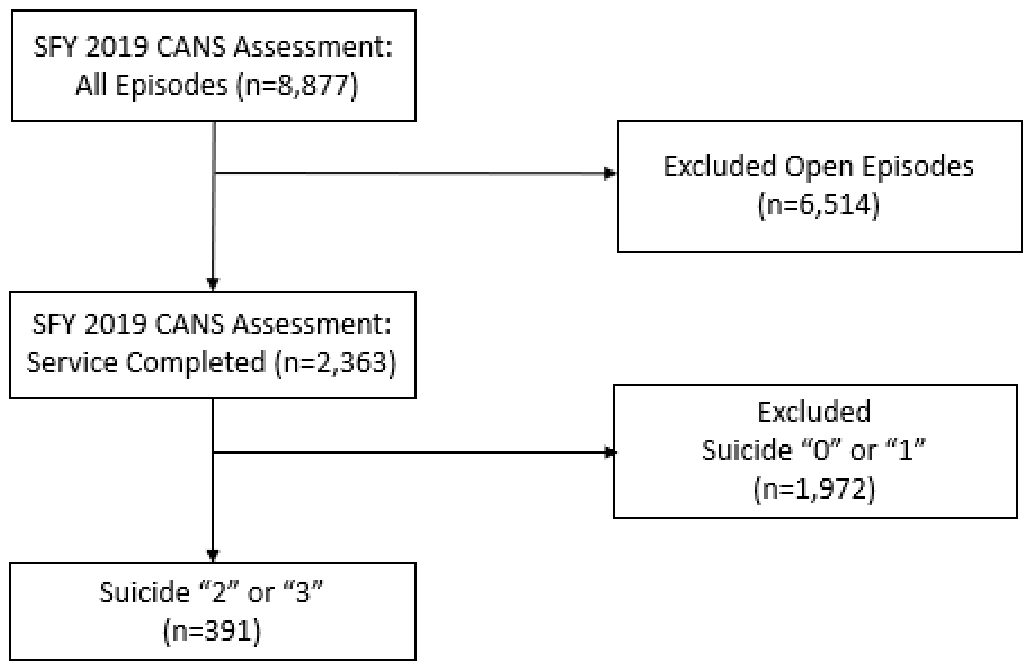
Figure 2.
a Strengths in Two Classes at the Initial Assessment: Class Proportions.
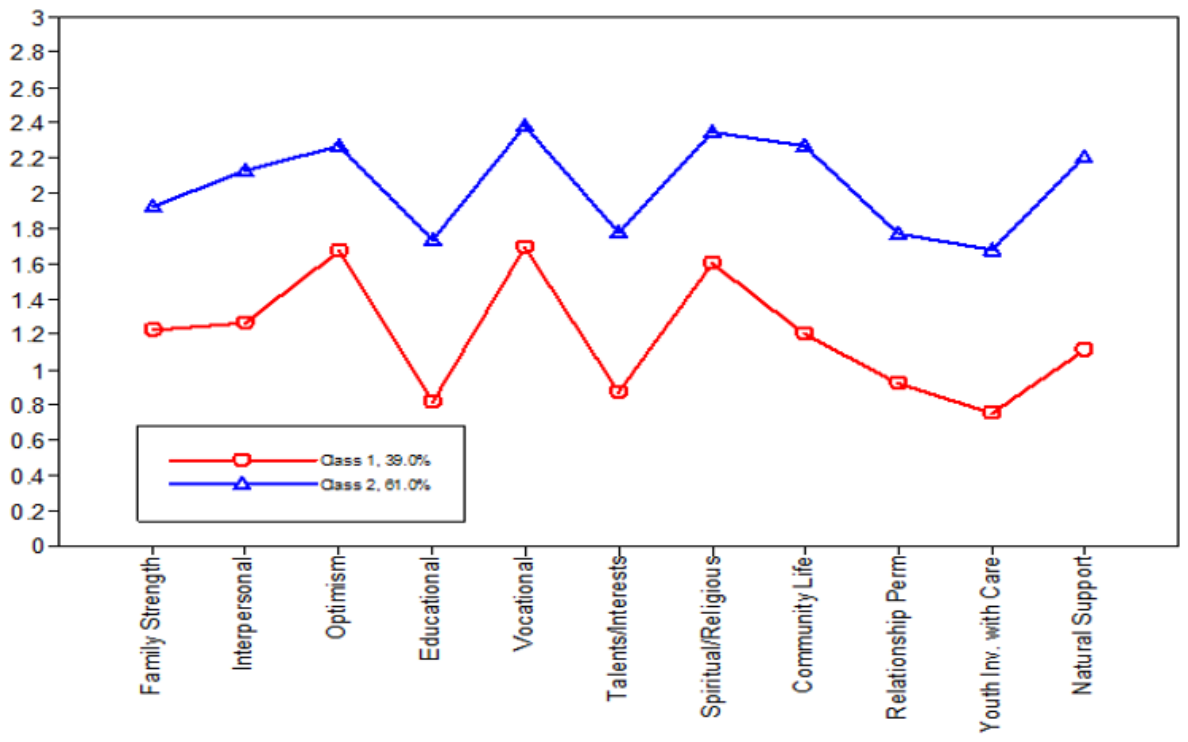
Figure 2.
b Strengths in Two Classes at the Last Assessment: Class Proportions.
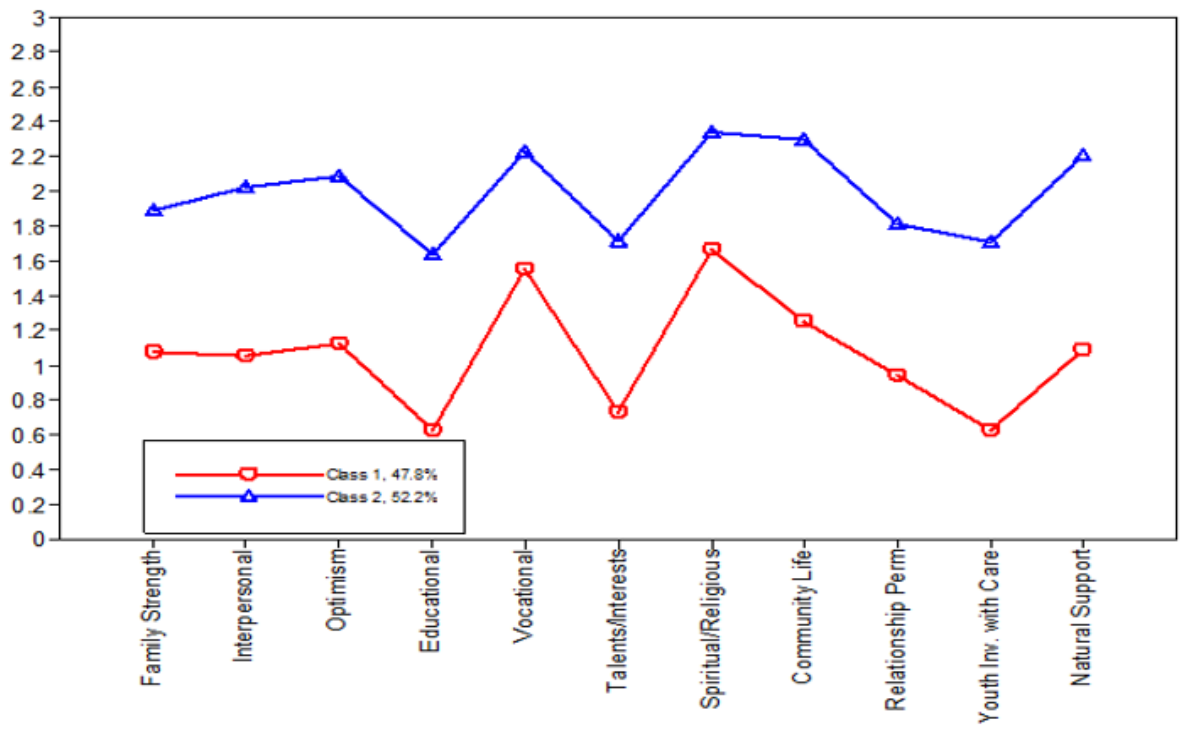
Figure 3.
Final Class Counts and Proportions for the Latent Class Transition.
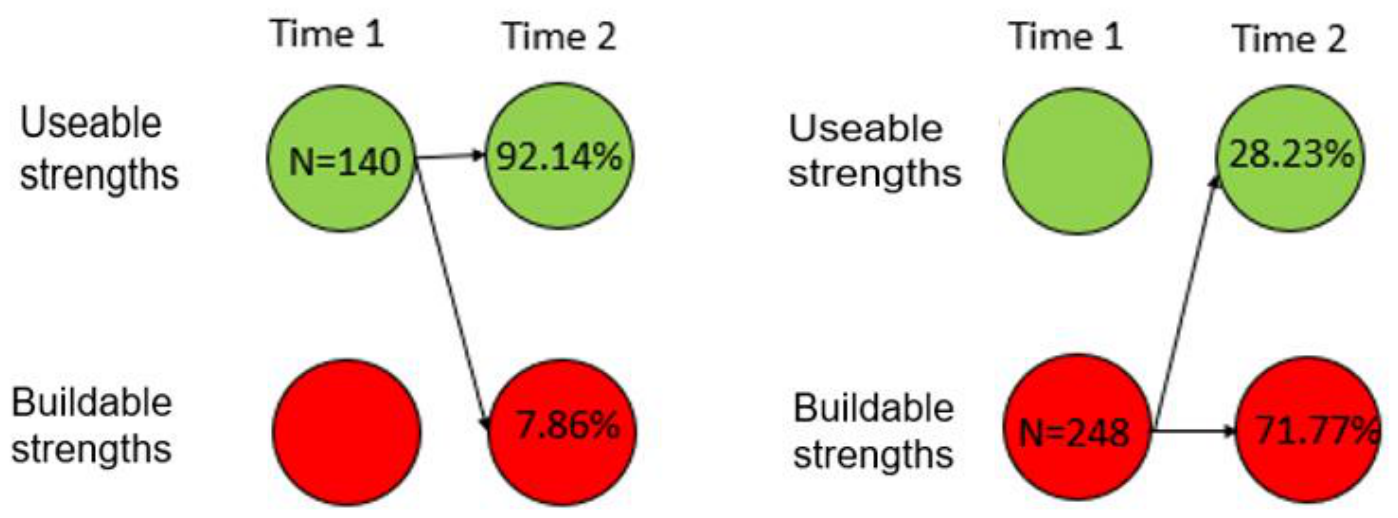

Table 1.
Demographic Information (N=391).
| N | % | ||
|---|---|---|---|
| Gender | Female | 244 | 62.4 |
| Male | 144 | 36.8 | |
| NA | 3 | 0.8 | |
| Race | Native American | 1 | 0.5 |
| Black | 40 | 13.1 | |
| White | 313 | 76.8 | |
| Other single race | 22 | 5.9 | |
| More than one race | 13 | 3.4 | |
| NA | 2 | 0.5 | |
| International Classification of Diseases (ICD) Diagnosis | Attention deficit disorder with hyperactivity | 1 | 0.3 |
| Attention-deficit hyperactivity disorders | 74 | 18.9 | |
| Autistic disorders | 5 | 1.3 | |
| Bipolar affective disorder | 9 | 2.3 | |
| Conduct disorders | 79 | 20.2 | |
| Cyclothymic disorder | 34 | 8.7 | |
| Depressive disorder | 1 | 0.3 | |
| Impulse disorder | 1 | 0.3 | |
| Intermittent explosive disorder | 2 | 0.5 | |
| Major depressive affective disorder, recurrent episode, moderate | 1 | 0.3 | |
| Major depressive disorder, recurrent | 57 | 14.6 | |
| Major depressive disorder, single episode, mild | 26 | 6.6 | |
| Oppositional defiant disorder | 1 | 0.3 | |
| Other anxiety disorders | 29 | 7.4 | |
| Other paraphilias | 1 | 0.3 | |
| Other Specified episodic mood disorder | 1 | 0.3 | |
| Phobic anxiety disorders | 1 | 0.3 | |
| Reaction to severe stress, and adjustment disorders | 57 | 14.6 | |
| Reactive attachment disorder of childhood | 7 | 1.8 | |
| Schizoaffective disorder, depressive type | 2 | 0.5 | |
| Schizophrenia | 1 | 0.3 | |
| Unspecified episodic mood disorder | 1 | 0.3 | |
| Recommended Level of Care | |||
| Outpatient | 2 | 0.5 | |
| Outpatient with limited case management | 48 | 12.3 | |
| Supportive community services | 140 | 35.8 | |
| Intensive community- based services | 88 | 22.5 | |
| Intensive home and community- based services | 67 | 17.1 | |
| High Intensity Services | 46 | 11.8 | |
| Medicaid | Yes | 299 | 76.5 |
| No | 92 | 23.5 | |
| Days in the treatment | First quartile (Q1) | 98 | 25.1 |
| Second quartile (Q2) | 98 | 25.1 | |
| Third quartile (Q3) | 98 | 25.1 | |
| Fourth quartile (Q4) | 97 | 24.8 | |
| Mean | SD | Min/Max | |
| Days in the treatment | 402.07 | 393.71 | 10/3119 |
| Age | 16.34 | 1.51 | 13.07/19.45 |
Note. NA = Missing information.
Table 2.
Latent Profile Analysis: Model Fit Information.
| # of Classes | ||||
|---|---|---|---|---|
| 1 | 2 | 3 | 4 | |
| # of free parameters | 22 | 34 | 46 | 58 |
| Time 1: Initial | ||||
| Loglikelihood | -5772.06 | -5495.64 | -5433.09 | -5389.99 |
| AIC | 11588.12 | 11059.28 | 10958.18 | 10895.98 |
| BIC | 11675.26 | 11193.96 | 11140.38 | 11125.72 |
| ABIC | 11605.46 | 11086.08 | 10994.43 | 10941.69 |
| Entropy | 0.77 | 0.74 | 0.79 | |
| LRT | 545.21** | 123.38* | 85.01 | |
| Time 2: Last | ||||
| Loglikelihood | -7804.70 | -7452.54 | -6470.94 | -6391.21 |
| AIC | 15653.40 | 14973.08 | 13033.88 | 12898.42 |
| BIC | 15740.54 | 15107.76 | 13216.09 | 13128.16 |
| ABIC | 15670.73 | 14999.88 | 13070.13 | 12944.13 |
| Entropy | 0.81 | 0.88 | 0.82 | |
| LRT | 694.60** | 698.49 | 157.70 | |
*p<.05; **p<.01.
Table 3.
ion Model: Suicide Risk.
| B |
S.E. |
Wald |
df |
Sig. |
Exp(B) |
95% CI | ||
|---|---|---|---|---|---|---|---|---|
| Lower | Upper | |||||||
| Transition | 24.82 | 3 | 0.00 | |||||
| useable->useable | -1.05 | 0.31 | 11.89 | 1 | 0.00 | 0.35 | 0.19 | 0.63 |
| useable->buildable | -1.90 | 1.11 | 2.93 | 1 | 0.09 | 0.15 | 0.02 | 1.32 |
| buildable->useable | -2.46 | 0.64 | 14.96 | 1 | 0.00 | 0.09 | 0.02 | 0.30 |
| Days in the treatment | 37.34 | 3 | 0.00 | |||||
| Q1 | 2.47 | 0.49 | 25.37 | 1 | 0.00 | 11.79 | 4.51 | 30.80 |
| Q2 | 1.45 | 0.50 | 8.35 | 1 | 0.00 | 4.27 | 1.60 | 11.42 |
| Q3 | 0.65 | 0.54 | 1.46 | 1 | 0.23 | 1.91 | 0.67 | 5.46 |
| Female | 2.48 | 2 | 0.29 | |||||
| Male | -0.46 | 0.29 | 2.48 | 1 | 0.12 | 0.63 | 0.35 | 1.12 |
| Other | -19.99 | 28126.07 | 0.00 | 1 | 1.00 | 0.00 | 0.00 | |
| White | 1.07 | 2 | 0.59 | |||||
| Black | 0.44 | 0.44 | 0.97 | 1 | 0.32 | 1.55 | 0.65 | 3.70 |
| Other | -0.10 | 0.50 | 0.04 | 1 | 0.84 | 0.90 | 0.34 | 2.43 |
| Age | -0.18 | 0.09 | 3.68 | 1 | 0.05 | 0.84 | 0.70 | 1.00 |
| Constant | 1.19 | 1.60 | 0.56 | 1 | 0.46 | 3.30 | ||
Disclaimer/Publisher’s Note: The statements, opinions and data contained in all publications are solely those of the individual author(s) and contributor(s) and not of MDPI and/or the editor(s). MDPI and/or the editor(s) disclaim responsibility for any injury to people or property resulting from any ideas, methods, instructions or products referred to in the content. |
© 2026 by the authors. Licensee MDPI, Basel, Switzerland. This article is an open access article distributed under the terms and conditions of the Creative Commons Attribution (CC BY) license (http://creativecommons.org/licenses/by/4.0/).
Copyright: This open access article is published under a Creative Commons CC BY 4.0 license, which permit the free download, distribution, and reuse, provided that the author and preprint are cited in any reuse.


