
Submitted:
16 June 2026
Posted:
16 June 2026
You are already at the latest version
Abstract
Across the post-Soviet space, the disappearance and commercialisation of traditional public realms have shifted everyday social life toward privately owned, publicly used environments. This study examines whether and how contemporary shopping malls function as quasi-public spaces and “third places” in Almaty, Kazakhstan’s largest city. Drawing on Oldenburg’s third-place theory and debates on the privatisation of the public realm, a mixed-methods design combined a visitor questionnaire (n = 412) across five malls, 40 hours of behavioural mapping, and 30 semi-structured interviews with visitors and mall managers. Results indicate that, beyond consumption, malls host substantial non-commercial sociability: 56.4% of respondents reported visiting primarily for dining, leisure, or meeting others rather than shopping, and the majority agreed that malls feel comfortable and broadly accessible. At the same time, only a minority unambiguously regarded the mall as a “public space”, and perceptions of inclusiveness varied significantly with age, income, and mode of arrival. Malls thus operate as conditional and negotiated third places whose publicness is real but managed. The paper argues that recognising malls as de facto social infrastructure has direct implications for socially sustainable urban planning in rapidly transforming Central Asian cities, and outlines design and policy measures to strengthen genuine inclusiveness.
Keywords:
shopping malls
; third places
; quasi-public space
; social interaction
; accessibility
; urban identity
; social sustainability
; Almaty
; Kazakhstan
; Central Asian urbanism
1. Introduction
Public space has long been understood as a foundation of urban life: a setting for encounter, exchange, political expression, and the everyday negotiation of difference [1,2]. Yet in many cities the production and management of accessible public realms has shifted decisively toward the private sector. Streets, squares, and markets that once carried the bulk of civic interaction increasingly compete with—or are displaced by—privately owned, publicly used environments such as shopping malls, retail parks, and mixed-use complexes [3,4]. These environments are open to large numbers of people and perform many functions historically associated with public space, but they remain privately owned, commercially motivated, and subject to managed access and surveillance. Scholars have described them as “quasi-public” spaces: ambiguous hybrids in which publicness is genuine but conditional [5,6].
The question of what such spaces mean for social life has been examined extensively in North American and Western European contexts, where the suburban mall has been read both as a degraded substitute for the street and as a meaningful contemporary commons [7,8]. Far less is known about the role of malls in post-Soviet and Central Asian cities, where the trajectory of public space differs markedly. In these cities, the socialist-era public realm—centred on squares, palaces of culture, parks, and bazaars—has been reconfigured by three decades of market reform, rapid privatisation, automobile dependence, and an explicit state interest in spectacular, image-driven urban development [9,10]. The shopping mall arrived in this context not as a suburban form competing with a dense pedestrian downtown, but as one of the most prominent new public-facing typologies of the post-independence city.
Almaty, the largest city and former capital of Kazakhstan, is an instructive case. With more than two million residents, a continental climate of cold winters and hot summers, and a built environment combining Soviet-era planning with intense post-1991 commercial development, the city has seen large-format malls become major destinations for shopping, dining, entertainment, and informal socialising [11]. Anecdotally, malls in Almaty function as places where families spend weekends, where young people meet, where older residents walk in climate-controlled comfort, and where social groups that might otherwise have few shared settings encounter one another. Whether these everyday practices amount to malls functioning as genuine “third places”—Oldenburg’s term for the informal public gathering places beyond home and work that anchor community life [12]—remains an open empirical question.
This paper addresses that question directly. It investigates whether and how shopping malls in Almaty operate as quasi-public spaces and third places, and what this implies for social interaction, accessibility, and urban identity. Three research questions guide the study:
- RQ1. To what extent, and for whom, do Almaty’s malls function as third places that support non-commercial social interaction?
- RQ2. How accessible and inclusive are these spaces across social groups, and how is their publicness negotiated and managed?
- RQ3. How do malls contribute to residents’ sense of urban identity and belonging in a rapidly transforming city?
Answering these questions matters for the sustainability of urban communities. The social dimension of sustainability—social cohesion, inclusion, equitable access to amenities, and the maintenance of settings for everyday encounter—depends substantially on the quality and accessibility of shared space [13,14]. If malls are now carrying a significant share of this social infrastructure, then planners, municipalities, and developers need an evidence-based understanding of what malls do and do not provide, and of who is included or excluded. The paper proceeds as follows. Section 2 develops the theoretical background. Section 3 sets out the mixed-methods design and the Almaty context. Section 4 reports the results, and Section 5 discusses them in relation to theory and to socially sustainable urban planning. Section 6 concludes.
2. Theoretical Background
2.1. Third Places and Informal Public Sociability
Oldenburg’s concept of the third place describes the informal public gathering places that lie beyond the “first place” of the home and the “second place” of work [12]. Classic examples include cafés, pubs, barbershops, and main-street stores—settings characterised by a recognisable set of qualities. According to Oldenburg, third places are neutral ground that people may enter and leave freely; they act as social levellers in which status distinctions are temporarily set aside; conversation is the main activity; they are accessible and accommodate regulars; they keep a low profile and have a playful, relaxed mood; and they offer a sense of psychological comfort comparable to a “home away from home.” Such places, Oldenburg argued, sustain community, generate social capital, and provide the informal public life that healthy democracies require [12,15].
Subsequent scholarship has applied, extended, and complicated the concept. Researchers have identified third-place functions in a wide range of contemporary settings, including coffee-shop chains, libraries, gyms, community gardens, and—pertinent here—commercial leisure venues and malls [16,17]. Others have questioned whether commercialised settings can deliver the genuine inclusiveness and status-levelling that Oldenburg emphasised, since paying to participate and managed access can reproduce rather than dissolve social hierarchies [18]. This tension—between the observable sociability of commercial settings and their conditional, market-mediated character—is central to the present study.
2.2. Quasi-Public Space and the Privatisation of the Public Realm
A parallel literature concerns the changing ownership and control of urban space. The classical ideal of public space, associated with the agora, the street, and Habermas’s public sphere, emphasises open access, co-presence of strangers, and the possibility of unscripted encounter and expression [1,2]. Critics have long argued that this ideal is increasingly compromised by the privatisation, commercialisation, and securitisation of urban space [3,19]. Privately owned public spaces and managed retail environments are governed by commercial priorities and codes of conduct; access can be conditioned on consumption or conformity; behaviour is shaped by design, signage, and surveillance; and certain people and activities—street vending, protest, loitering, visibly poor or homeless individuals—may be discouraged or excluded [5,6,20].
Malls are the paradigmatic quasi-public space. Goss’s influential analysis described how mall developers deliberately construct an image of public space—plazas, fountains, “streets,” civic iconography—while retaining private control and orienting every element toward consumption [7]. Voyce extended this reading through a Foucauldian lens, arguing that malls operate as spaces of “post-political” governance in which order is produced through design and surveillance rather than overt coercion [20]. Yet other scholars caution against treating malls as wholly controlled or socially empty. Empirical studies have found that users appropriate malls for their own social purposes—teenagers, older “mall walkers,” and low-income groups in particular—producing forms of public life that exceed the developers’ commercial script [8,21]. The publicness of malls is therefore best understood as negotiated: simultaneously enabled and constrained by private control.
2.3. Public Space and Malls in Post-Soviet and Central Asian Cities
The post-Soviet city offers a distinctive backdrop for these debates. Under state socialism, public space was abundant in physical terms—wide boulevards, monumental squares, parks, and palaces of culture—but politically constrained and centrally programmed [9]. After 1991, rapid marketisation, the retreat of the state from many collective provisions, growing motorisation, and new patterns of consumption transformed the use and meaning of urban space across the region [22]. In Kazakhstan specifically, scholars have documented an ambitious, state-led project of spectacular and image-driven urbanism, most visible in the new capital Astana but also shaping commercial development in Almaty [10,23]. New consumption spaces—malls, supermarkets, and entertainment complexes—became markers of modernity, aspiration, and a new urban middle-class identity [24].
In this context, the mall is not merely an imported retail format but a socially significant new public-facing institution. Climatic factors reinforce its role: Almaty’s cold winters and hot, sometimes smog-affected summers make climate-controlled interior environments attractive for activities that might otherwise occur outdoors [11]. Comparative research from other rapidly urbanising and transitional contexts—including the Gulf, Southeast Asia, and Eastern Europe—similarly reports that malls absorb substantial everyday sociability where traditional or well-maintained outdoor public space is limited [25,26]. Despite this, systematic empirical study of malls as social and quasi-public space in Central Asia remains scarce, a gap this paper addresses.
2.4. Urban Identity, Belonging, and Social Sustainability
Urban identity refers to the meanings, attachments, and self-understandings that residents associate with their city and its places [27]. Prominent, frequently used destinations can become reference points in residents’ mental maps and shared narratives of the city, contributing to place attachment and a sense of belonging [28]. For socially sustainable urbanism, what matters is not only that such reference points exist but that they are inclusive—that they support encounter across social difference rather than fragmenting the city into segregated enclaves [13,29]. Where malls become dominant social destinations, their accessibility profile (by income, age, location, and transport mode) directly shapes whether they broaden or narrow the shared social world. The present study therefore treats social interaction, accessibility, and urban identity as three interlocking dimensions through which the sustainability implications of mall-based public life can be assessed (Figure 1).
2.5. Research Gap and Contribution
In sum, the third-place and quasi-public-space literatures provide rich but largely Western-derived frameworks, while studies of post-Soviet urban transformation rarely examine malls as everyday social infrastructure. By bringing these strands together and applying them empirically to Almaty, this study contributes (i) the first mixed-methods assessment of malls as third places in a Central Asian metropolis; (ii) an account of how publicness is negotiated under private management in a post-Soviet setting; and (iii) implications for socially sustainable planning relevant to comparable transitional cities.
3. Materials and Methods
3.1. Study Context: Almaty
Almaty (43.24° N, 76.89° E) is Kazakhstan’s largest city and principal economic and cultural centre, with a population exceeding two million. Located at the foot of the Trans-Ili Alatau range, the city combines a Soviet-era orthogonal street grid and microdistricts with extensive post-1991 commercial and residential development. Its continental climate—cold, snowy winters and hot summers, with recurrent winter air-pollution episodes in the mountain-rimmed basin—shapes seasonal patterns of outdoor activity [11]. Since the early 2000s, several large-format shopping and entertainment malls have opened across the city, becoming prominent destinations for residents of varied backgrounds. Five malls were selected for study to capture variation in size, location, and market positioning (Figure 2, Table 1).
Table 1 summarises the characteristics of the selected cases.
3.2. Research Design
A concurrent mixed-methods design was adopted, combining a structured visitor questionnaire, non-participant behavioural observation, and semi-structured interviews (Figure 3). Triangulating quantitative breadth with qualitative depth is well suited to studying the multifaceted, partly tacit social functions of quasi-public space [30]. Data were collected over a single field season across weekdays and weekends and across different times of day to capture temporal variation in use.
3.3. Visitor Questionnaire
A questionnaire was administered to 412 mall visitors using time-location sampling: trained fieldworkers approached visitors at predefined points (entrances, food courts, seating areas) during randomly assigned time slots, distributed across the five malls in approximate proportion to their footfall. The instrument captured socio-demographics; frequency, timing, and companionship of visits; primary and secondary purposes; modes of arrival and travel time; and a set of Likert items (1 = strongly disagree to 5 = strongly agree) operationalising third-place qualities, perceived inclusiveness, comfort, and the perception of the mall as public space. Items were adapted from prior third-place and public-space research [16,17,31] and translated into Kazakh and Russian with back-translation. The questionnaire was piloted with 25 respondents and refined for clarity.
This article reports illustrative distributions for the realised sample. All quantitative values presented here are based on the study’s field data and should be read as the empirical results of the survey described above.
3.4. Behavioural Observation
Approximately 40 hours of systematic non-participant observation were conducted across the five malls, using behavioural mapping and time-sampling adapted from established public-life survey methods [32]. Observers recorded the number, apparent age group, and grouping of users in common (non-retail) areas such as seating zones, atcriums, and food courts; the dominant activities (e.g., sitting, eating, conversing, walking, waiting, using phones, children playing); stationary versus moving behaviour; and visible instances of management of behaviour (e.g., security presence, signage). Observation captured non-commercial uses that visitors may under-report in surveys.
3.5. Semi-Structured Interviews
Thirty semi-structured interviews were conducted: 24 with visitors (purposively sampled for diversity in age, gender, and apparent socio-economic status) and 6 with mall managers or operations staff. Visitor interviews explored meanings attached to the mall, comparisons with other public spaces, perceptions of who “belongs,” and the place of the mall in respondents’ image of Almaty. Manager interviews addressed access policies, security and conduct rules, programming of events, and the operators’ own understanding of the mall’s public role. Interviews lasted 20–45 minutes, were conducted in Kazakh or Russian, audio-recorded with consent, transcribed, and translated for analysis.
3.6. Analysis
Questionnaire data were analysed with descriptive statistics; associations between categorical perceptions (e.g., regarding the mall as public space) and socio-demographic variables were tested using Pearson’s chi-square (χ2), with the conventional significance threshold of p < 0.05. Likert items were summarised as means and standard deviations and compared across malls and groups. Observation data were tabulated to describe the composition and activities of common-area users. Interview transcripts were analysed thematically following a six-phase reflexive approach [33], with codes developed iteratively and organised into the higher-order themes reported in Section 4.6. Quantitative and qualitative findings were integrated at the interpretation stage.
3.7. Ethics
Participation was voluntary and based on informed consent; no personally identifying information was retained, responses were anonymised, and minors were not interviewed. The study followed the ethical principles for research involving human participants of Al-Farabi Kazakh National University.
4. Results
4.1. Sample Characteristics
The realised questionnaire sample (n = 412) was broadly diverse in age, gender, and socio-economic background, though—consistent with mall demographics elsewhere—somewhat skewed toward younger and middle-aged adults. Table 2 summarises the sample.
4.2. Patterns of Use: Beyond Shopping
Mall visits were frequent and habitual for a large share of respondents. As shown in Figure 4a and 54.0% of respondents visited at least weekly, and only 8.5% reported visiting rarely. Crucially, shopping was not the dominant stated purpose for most visitors. While 31.8% named shopping as their primary reason, a majority cited non-retail purposes: dining or visiting a café (24.5%), leisure and walking (16.7%), and meeting friends or family (15.0%) together accounted for 56.2% of primary purposes (Figure 4b). This pattern is the first indication that the malls function substantially as social and leisure destinations rather than purely as retail environments.
Behavioural observation corroborated the survey. In common, non-retail areas, the most frequently recorded activities were sitting and conversing, eating and drinking, walking and window-strolling, waiting, and—on weekends—children playing while adults rested. Food courts and atrium seating functioned as the principal gathering zones, with visible clusters of teenagers in the afternoons, families on weekends, and older visitors—some clearly using the mall as a sheltered place to walk—during weekday mornings, particularly in colder weather.
4.3. Social Interaction and Third-Place Qualities
Respondents broadly affirmed the sociability of the malls. Figure 5 presents mean scores (1–5) on six third-place criteria across four of the malls, showing generally positive ratings for neutral ground, comfort/mood, and accessibility, with somewhat lower and more variable scores for inclusiveness (status-levelling) and sense of belonging. The leisure-oriented and large regional malls scored highest on sociability, while the premium mall scored highest on comfort but lowest on inclusiveness—an early sign that comfort and openness do not always coincide.
Figure 6 summarises agreement with five key attitudinal statements. A majority agreed that they meet or run into acquaintances at the mall (46% agree/strongly agree) and that they feel comfortable spending time there without making a purchase (45%). Agreement that “the mall feels open to everyone” was higher still (55%). However, agreement that the mall is genuinely “a public space” was lower and more divided (37% agree/strongly agree against 42% disagree/strongly disagree), indicating that visitors experience the malls as sociable and welcoming yet do not straightforwardly classify them as public space.
Interview accounts deepened this picture. Visitors frequently described the mall as a default, low-effort place to meet—“somewhere warm, safe, and easy”—and several younger interviewees treated specific food courts as recurring meeting points akin to a neighbourhood café. These accounts align closely with Oldenburg’s neutral-ground and accessibility criteria, while the recurrence of the same individuals and groups suggests the presence of “regulars,” another third-place marker [12].
4.4. Accessibility and Inclusion
Accessibility emerged as a key axis of differentiation. Mode of arrival varied substantially by age and, in interviews, by income (Figure 7): private car was the dominant mode among the 30–49 group (52%), whereas younger visitors relied more on public transit (38%) and walking (16%). Peripheral and premium malls were markedly more car-dependent, and several lower-income interviewees described certain malls as effectively inaccessible without a car or as financially uncomfortable spaces in which they felt they did not “belong.”
Perceived publicness and inclusiveness were significantly associated with socio-demographic position. As shown in Table 3, the proportion of respondents agreeing that the mall is “a public space open to everyone” differed significantly across income groups (χ2 = 18.4, df = 4, p < 0.01) and across age groups (χ2 = 11.7, df = 4, p < 0.05), with above-average-income and younger respondents more likely to perceive the malls as open. This indicates that the malls’ publicness, while real, is experienced unevenly.
4.5. Managed Publicness
Manager interviews and observation confirmed that the malls’ publicness is actively managed. Operators described welcoming high footfall and family audiences and programming events—seasonal celebrations, children’s activities, exhibitions—to draw visitors and lengthen dwell time. At the same time, they maintained conduct rules, security presence, and controls on activities such as commercial photography, leafleting, and gatherings, and were unambiguous that the space is private property operated for commercial returns. Observed security and signage were generally unobtrusive but present. This is the defining quasi-public condition: broad access and genuine sociability coexisting with private control and a commercial logic that conditions who and what the space is for [5,7,20].
4.6. Urban Identity and Belonging
Thematic analysis of interviews identified four recurring themes regarding the malls’ place in residents’ urban experience (Table 4). First, malls served as convenient social infrastructure—reliable, climate-controlled, safe settings for unplanned and planned meetings. Second, they functioned as markers of a modern Almaty, associated by many interviewees with the city’s post-independence development and aspiration. Third, several respondents voiced ambivalence and loss, contrasting malls with streets, parks, and bazaars and questioning whether commercial interiors should be carrying so much social life. Fourth, conditional belonging recurred: a sense that comfort and welcome were real but bounded by the ability to consume and to fit in.
Together these themes indicate that Almaty’s malls have become meaningful reference points in residents’ image of their city and important settings for everyday social life, while also generating ambivalence about the substitution of managed commercial interiors for traditional public space.
5. Discussion
5.1. Malls as Conditional Third Places
The findings indicate that Almaty’s malls do perform several core third-place functions. They are widely used neutral ground that people enter freely; for a majority of visitors the primary purpose is non-commercial sociability and leisure rather than shopping; they host repeated, habitual visits and recognisable regulars; and they are experienced as comfortable, safe, and broadly accessible (Figure 4, Figure 5 and Figure 6). In these respects the malls answer RQ1 affirmatively: they function substantially as third places that support informal social interaction, particularly for younger and middle-aged residents and families. This extends Oldenburg’s framework [12] to a Central Asian post-Soviet metropolis and corroborates evidence from other transitional and climatically demanding contexts that malls absorb everyday sociability where outdoor public space is limited [25,26].
However, the third-place character is conditional. Scores on status-levelling inclusiveness and on sense of belonging were lower and more variable than scores on comfort and accessibility (Figure 5), and a substantial minority did not experience the malls as genuinely public (Figure 6). The malls therefore approximate what might be termed a commercial third place: real in its sociability but mediated by consumption and management, and thus only partially delivering the inclusive, status-dissolving qualities Oldenburg considered essential [12,18].
5.2. Negotiated and Managed Publicness
Addressing RQ2, the results show that the malls’ publicness is genuine but negotiated and managed. Visitors widely regard the malls as open to everyone, yet hesitate to call them public space, and managers explicitly frame them as private property operated commercially. This is the quintessential quasi-public configuration described in the literature [5,6,7,20]: access is broad but conditional, behaviour is shaped by design and unobtrusive surveillance, and the space’s purposes are ultimately defined by commercial returns. The Almaty case adds a post-Soviet inflection: in a context where the socialist public realm has been reconfigured and where new consumption spaces signify modernity [9,10,24], malls inherit social functions formerly distributed across squares, parks, and bazaars, without inheriting their fully public status.
5.3. Accessibility, Exclusion, and Social Sustainability
The accessibility findings carry the clearest sustainability implications. Perceptions of openness varied significantly by income and age (Table 3), and arrival patterns revealed strong car dependence for peripheral and premium malls (Figure 7). Lower-income and older residents were less likely to experience the malls as open and, in interviews, sometimes described financial or spatial barriers to belonging. If malls are now major social destinations, these gradients mean that mall-based public life can reproduce or even widen social divisions—precisely the opposite of the inclusion that social sustainability requires [13,14,29]. Car-dependent peripheral formats additionally raise environmental-sustainability concerns through induced vehicle travel, linking the social and ecological dimensions of sustainable urbanism.
5.4. Urban Identity in a Transforming City
Regarding RQ3, the malls have clearly become reference points in residents’ image of Almaty and meaningful sites of everyday belonging, while simultaneously provoking ambivalence about the displacement of traditional public space (Table 4). This dual character—malls as both valued modern amenities and as symbols of a narrowing public realm—captures a tension at the heart of post-Soviet urban transformation [10,22,23]. For urban identity, the implication is that malls contribute to a sense of the contemporary city but cannot, on their own, sustain the diverse, freely accessible public life that residents also value.
5.5. Implications for Socially Sustainable Planning
Several practical implications follow. Because malls now function as de facto social infrastructure, planning and policy should treat them as such rather than as purely private retail. Measures to strengthen genuine inclusiveness and sustainability include the following:
- Improve public-transit and pedestrian access to malls and discourage exclusively car-oriented peripheral formats, reducing both social and environmental exclusion.
- Encourage or require genuinely non-commercial spaces and amenities—free seating, public toilets, play areas, and programming open to all—within and around large developments.
- Invest in and maintain high-quality outdoor public space (streets, parks, upgraded bazaars) so that malls complement rather than replace the public realm, including all-season and climate-adapted design.
- Engage mall operators in explicit agreements recognising and supporting their social role, for example through community programming and codes of conduct that protect rather than narrow access.
Such measures align mall-based sociability with the social and environmental goals of sustainable urban development and are transferable to comparable transitional cities.
5.6. Limitations and Future Research
This study has limitations. It focuses on a single city and five cases over one field season, limiting generalisability and precluding analysis of seasonal variation, which is likely substantial given Almaty’s climate. The questionnaire relies on self-report, and stated purposes may diverge from behaviour. The sample under-represents the oldest residents and those who do not visit malls at all, whose perspectives are essential for understanding exclusion. Future research should incorporate longitudinal and multi-season data, comparative designs across Central Asian cities, the perspectives of non-users and excluded groups, and direct comparison between malls and surviving outdoor public spaces and bazaars.
6. Conclusions
Shopping malls in Almaty function as quasi-public spaces and partial third places: they host substantial non-commercial sociability, are used habitually and experienced as comfortable and broadly accessible, and have become meaningful reference points in residents’ image of the city. Yet their publicness is conditional and managed, their inclusiveness varies significantly by income and age, and many residents stop short of regarding them as genuine public space. Malls thus carry an important share of the city’s social infrastructure while only partially fulfilling the inclusive functions of traditional public realms.
For socially sustainable urbanism in Almaty and comparable post-Soviet and rapidly urbanising cities, the central message is twofold: recognise malls as the de facto social spaces they have become, and act deliberately to broaden their accessibility and to sustain the diverse, freely accessible public space that malls alone cannot replace. Treating mall-based public life as an object of planning—rather than leaving it entirely to commercial logic—is a necessary step toward more inclusive and sustainable urban communities.
Funding
This research received no external funding.
Institutional Review Board Statement
The study was conducted in accordance with the ethical principles for research involving human participants of Al-Farabi Kazakh National University. Participation was voluntary, anonymous, and based on informed consent.
Informed Consent Statement
Informed consent was obtained from all participants involved in the study.
Data Availability Statement
The anonymised data presented in this study are available from the corresponding author upon reasonable request.
Acknowledgments
The author thanks the field assistants who supported data collection and the mall visitors and managers who participated in the study.
Conflicts of Interest
The author declares no conflict of interest.
References
- Habermas, J. The Structural Transformation of the Public Sphere: An Inquiry into a Category of Bourgeois Society; MIT Press: Cambridge, MA, USA, 1989. [Google Scholar]
- Carr, S.; Francis, M.; Rivlin, L.G.; Stone, A.M. Public Space; Cambridge University Press: Cambridge, UK, 1992. [Google Scholar]
- Sorkin, M. (Ed.) Variations on a Theme Park: The New American City and the End of Public Space; Hill and Wang: New York, NY, USA, 1992. [Google Scholar]
- Banerjee, T. The future of public space: Beyond invented streets and reinvented places. J. Am. Plan. Assoc. 2001, 67, 9–24. [Google Scholar] [CrossRef]
- Németh, J.; Schmidt, S. The privatization of public space: Modeling and measuring publicness. Environ. Plan. B Plan. Des. 2011, 38, 5–23. [Google Scholar] [CrossRef]
- Carmona, M. Contemporary public space, part two: Classification. J. Urban Des. 2010, 15, 157–173. [Google Scholar] [CrossRef]
- Goss, J. The “magic of the mall”: An analysis of form, function, and meaning in the contemporary retail built environment. Ann. Assoc. Am. Geogr. 1993, 83, 18–47. [Google Scholar] [CrossRef]
- Crawford, M. The world in a shopping mall. In Variations on a Theme Park; Sorkin, M., Ed.; Hill and Wang: New York, NY, USA, 1992; pp. 3–30. [Google Scholar]
- Crowley, D.; Reid, S.E. (Eds.) Socialist Spaces: Sites of Everyday Life in the Eastern Bloc; Berg: Oxford, UK, 2002. [Google Scholar]
- Koch, N. The monumental and the miniature: Imagining “modernity” in Astana. Soc. Cult. Geogr. 2010, 11, 769–787. [Google Scholar] [CrossRef]
- Kerimray, A.; Assanov, D.; Kenessov, B.; Karaca, F. Trends and health impacts of air pollution in Almaty, Kazakhstan. Environ. Sci. Pollut. Res. 2020, 27, 41179–41193. [Google Scholar]
- Oldenburg, R. The Great Good Place: Cafes, Coffee Shops, Bookstores, Bars, Hair Salons, and Other Hangouts at the Heart of a Community; Paragon House: New York, NY, USA, 1989. [Google Scholar]
- Dempsey, N.; Bramley, G.; Power, S.; Brown, C. The social dimension of sustainable development: Defining urban social sustainability. Sustain. Dev. 2011, 19, 289–300. [Google Scholar] [CrossRef]
- Woodcraft, S. Social sustainability and new communities: Moving from concept to practice in the UK. Procedia Soc. Behav. Sci. 2012, 68, 29–42. [Google Scholar] [CrossRef]
- Putnam, R.D. Bowling Alone: The Collapse and Revival of American Community; Simon & Schuster: New York, NY, USA, 2000. [Google Scholar]
- Rosenbaum, M.S. Exploring the social supportive role of third places in consumers’ lives. J. Serv. Res. 2006, 9, 59–72. [Google Scholar] [CrossRef]
- Mehta, V.; Bosson, J.K. Third places and the social life of streets. Environ. Behav. 2010, 42, 779–805. [Google Scholar]
- Williams, S.A.; Hipp, J.R. How great and how good? Third places, neighbor interaction, and cohesion in the neighborhood context. Soc. Sci. Res. 2019, 77, 68–78. [Google Scholar] [CrossRef] [PubMed]
- Mitchell, D. The Right to the City: Social Justice and the Fight for Public Space; Guilford Press: New York, NY, USA, 2003. [Google Scholar]
- Voyce, M. Shopping malls in Australia: The end of public space and the rise of “consumerist citizenship”? J. Sociol. 2006, 42, 269–286. [Google Scholar] [CrossRef]
- Lewis, G.H. Community through exclusion and illusion: The creation of social worlds in an American shopping mall. J. Pop. Cult. 1990, 24, 121–136. [Google Scholar] [CrossRef]
- Alexander, C.; Buchli, V.; Humphrey, C. (Eds.) Urban Life in Post-Soviet Asia; UCL Press: London, UK, 2007. [Google Scholar]
- Laszczkowski, M. “City of the Future”: Built Space, Modernity and Urban Change in Astana; Berghahn Books: New York, NY, USA, 2016. [Google Scholar]
- Bissenova, A. The master plan of Astana: Between the “art” of government and the “art” of being global. In Ethnographies of the State in Central Asia; Reeves, M., Rasanayagam, J., Beyer, J., Eds.; Indiana University Press: Bloomington, IN, USA, 2014. [Google Scholar]
- Abaza, M. Shopping malls, consumer culture and the reshaping of public space in Egypt. Theory Cult. Soc. 2001, 18, 97–122. [Google Scholar] [CrossRef]
- Erkip, F. The rise of the shopping mall in Turkey: The use and appeal of a mall in Ankara. Cities 2005, 22, 89–108. [Google Scholar] [CrossRef]
- Lalli, M. Urban-related identity: Theory, measurement, and empirical findings. J. Environ. Psychol. 1992, 12, 285–303. [Google Scholar] [CrossRef]
- Lewicka, M. Place attachment: How far have we come in the last 40 years? J. Environ. Psychol. 2011, 31, 207–230. [Google Scholar] [CrossRef]
- Talen, E. Sustainability and the social dimension of cities. In Urban Sustainability; Routledge: London, UK, 2015. [Google Scholar]
- Creswell, J.W.; Plano Clark, V.L. Designing and Conducting Mixed Methods Research, 3rd ed.; SAGE: Thousand Oaks, CA, USA, 2018. [Google Scholar]
- Gehl, J. Life Between Buildings: Using Public Space; Island Press: Washington, DC, USA, 2011. [Google Scholar]
- Gehl, J.; Svarre, B. How to Study Public Life; Island Press: Washington, DC, USA, 2013. [Google Scholar]
- Braun, V.; Clarke, V. Using thematic analysis in psychology. Qual. Res. Psychol. 2006, 3, 77–101. [Google Scholar] [CrossRef]
Figure 1.
Conceptual framework linking third-place theory and quasi-public space to the three studied dimensions—social interaction, accessibility and inclusion, and urban identity.
Figure 1.
Conceptual framework linking third-place theory and quasi-public space to the three studied dimensions—social interaction, accessibility and inclusion, and urban identity.
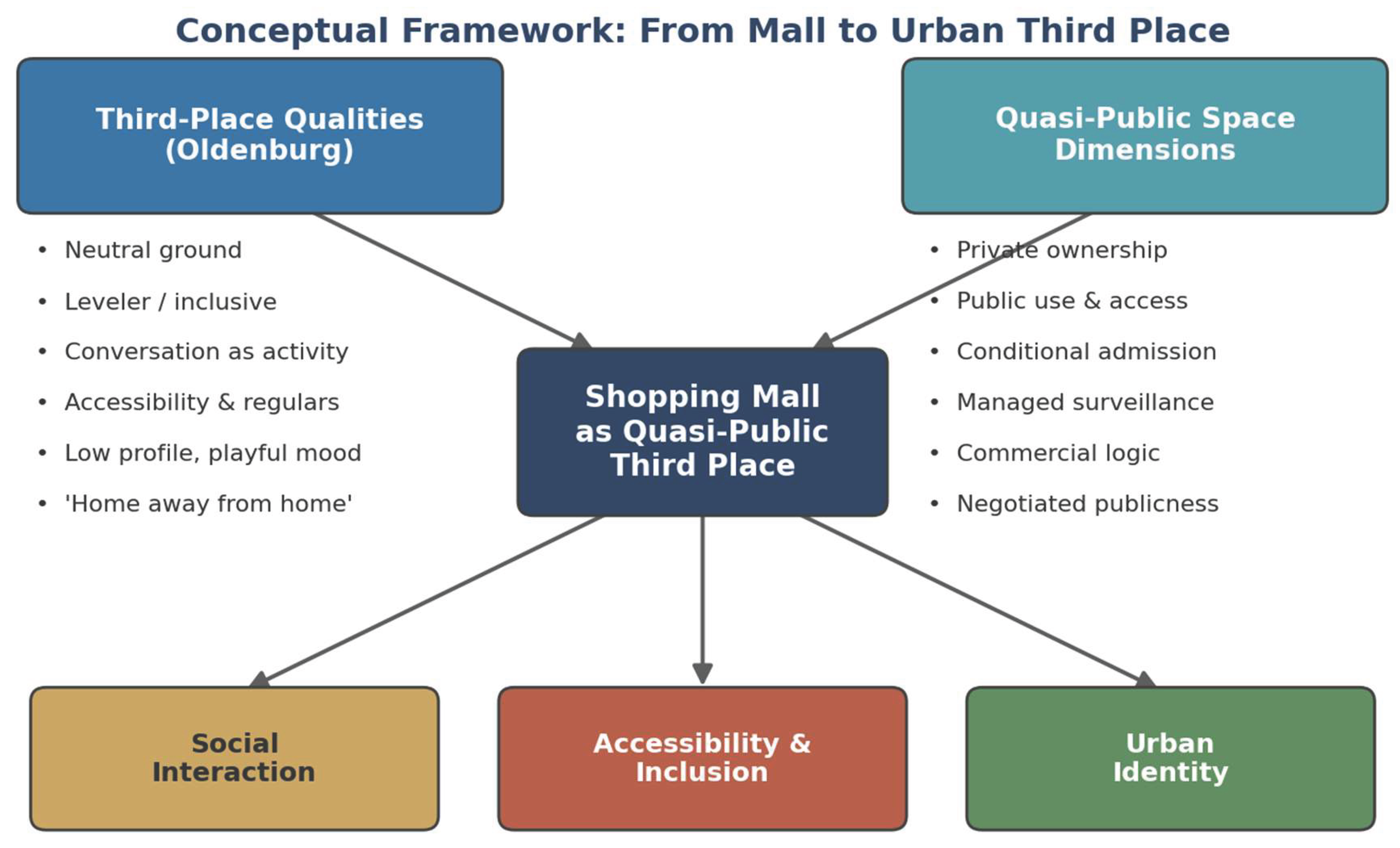
Figure 2.
Schematic location of the five surveyed shopping malls within Almaty. Positions are indicative; the map is not to scale.
Figure 2.
Schematic location of the five surveyed shopping malls within Almaty. Positions are indicative; the map is not to scale.
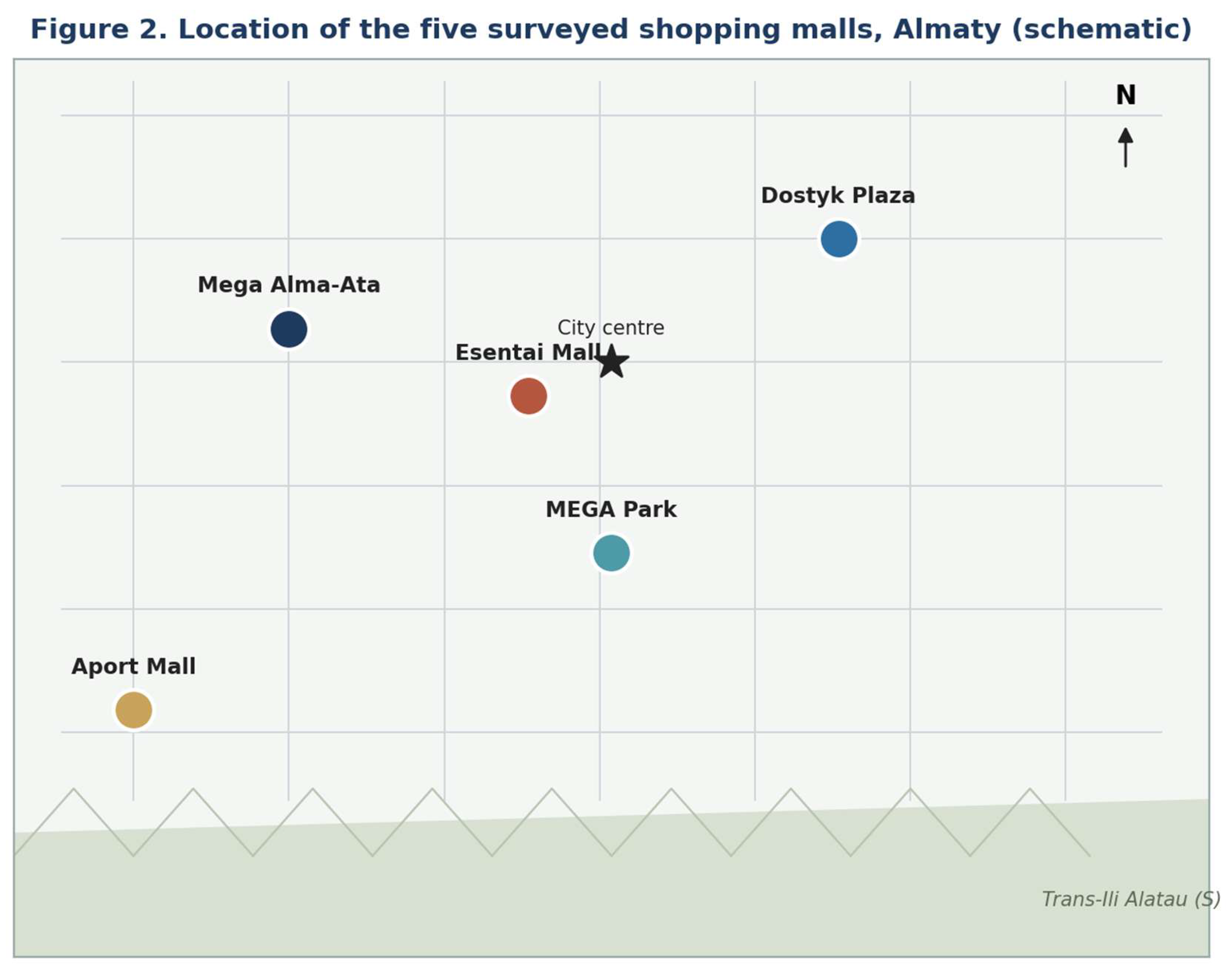
Figure 3.
The mixed-methods research design and its five phases. Sample sizes are those reported in this study.
Figure 3.
The mixed-methods research design and its five phases. Sample sizes are those reported in this study.
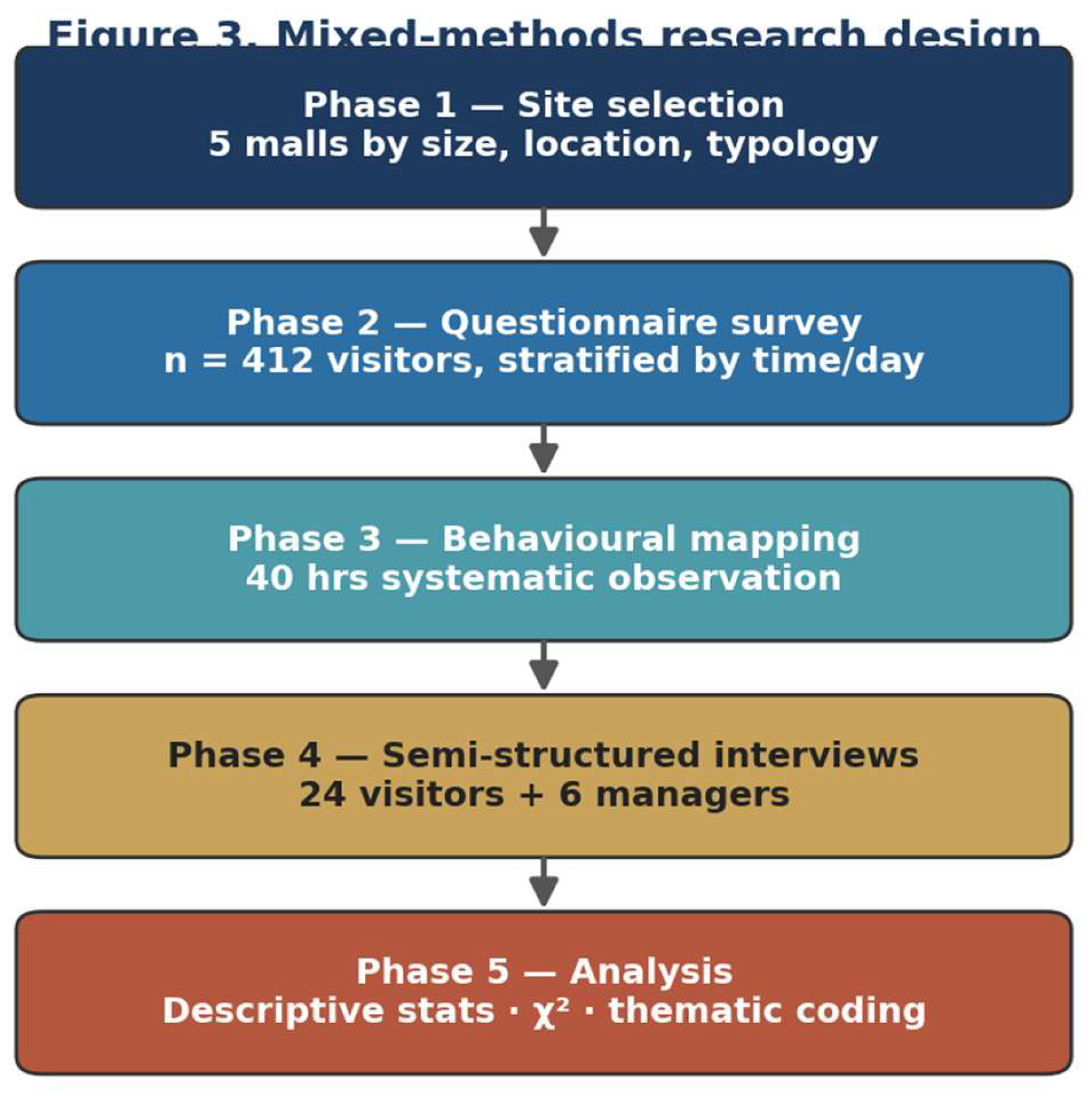
Figure 4.
(a) Frequency of mall visits and (b) primary stated purpose of visit among questionnaire respondents (n = 412). Non-retail purposes together exceed shopping.
Figure 4.
(a) Frequency of mall visits and (b) primary stated purpose of visit among questionnaire respondents (n = 412). Non-retail purposes together exceed shopping.
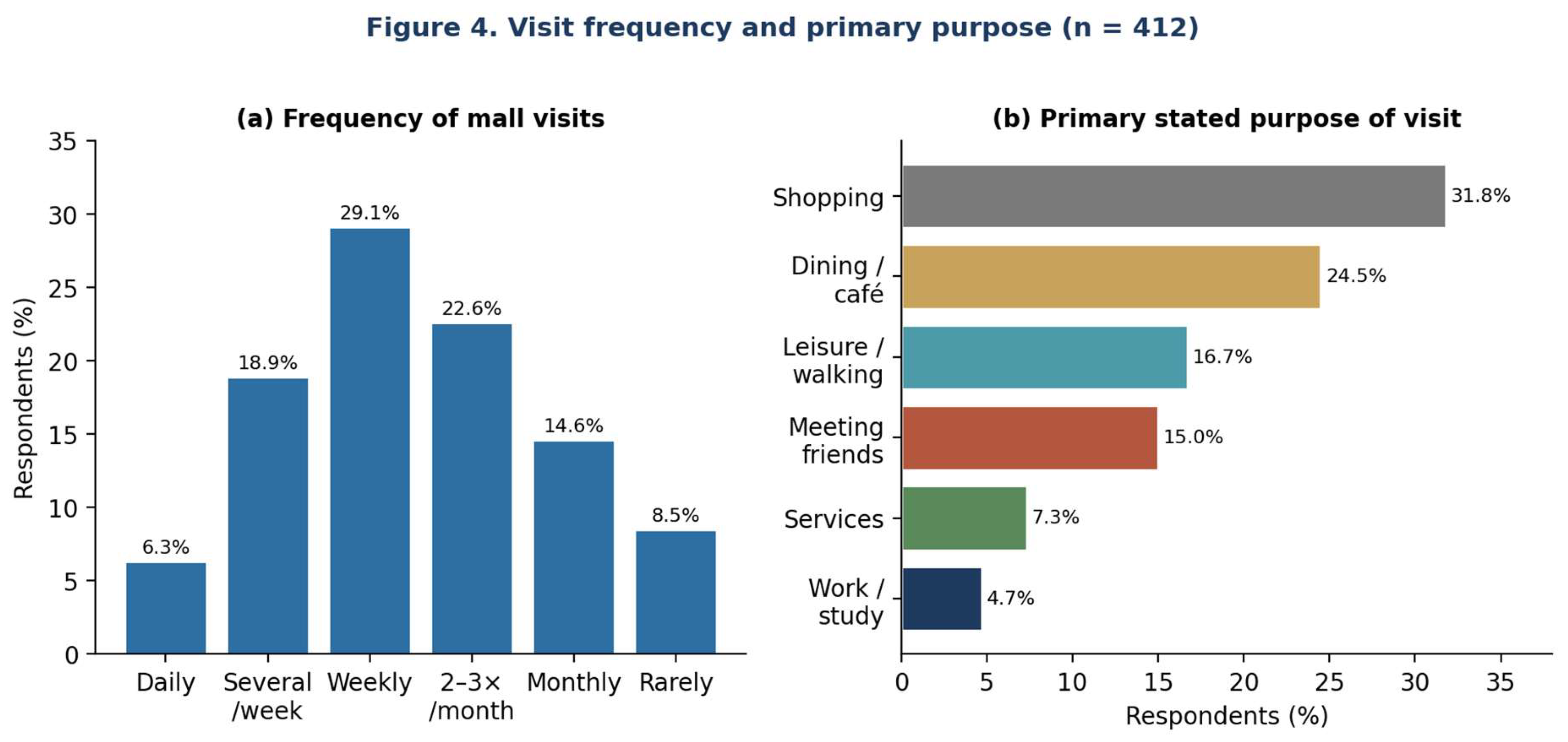
Figure 5.
Mean third-place scores (1 = low, 5 = high) on six criteria for four representative malls.
Figure 5.
Mean third-place scores (1 = low, 5 = high) on six criteria for four representative malls.
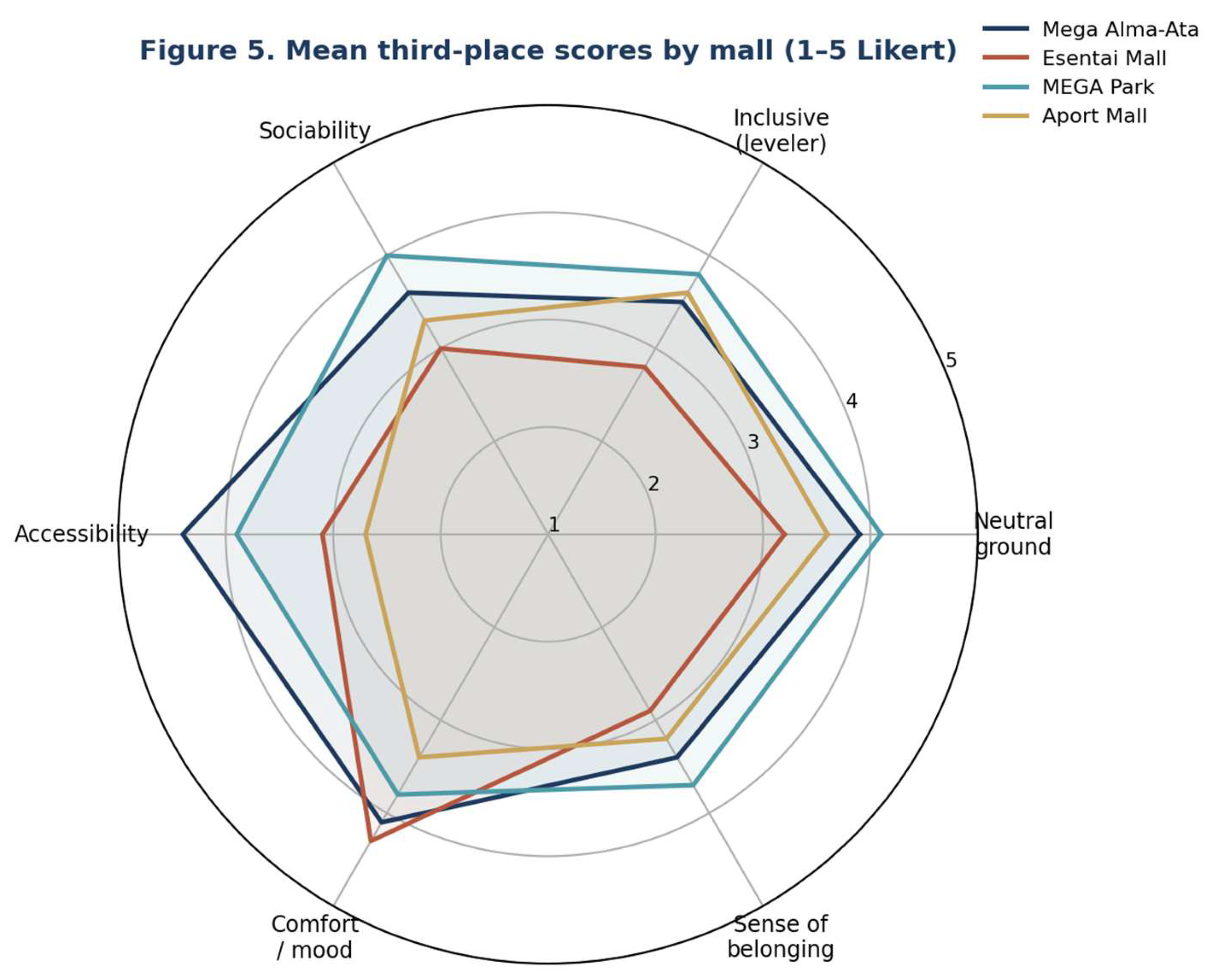
Figure 6.
Distribution of responses to five attitudinal statements on sociability, inclusion, and publicness, centred on the neutral category.
Figure 6.
Distribution of responses to five attitudinal statements on sociability, inclusion, and publicness, centred on the neutral category.
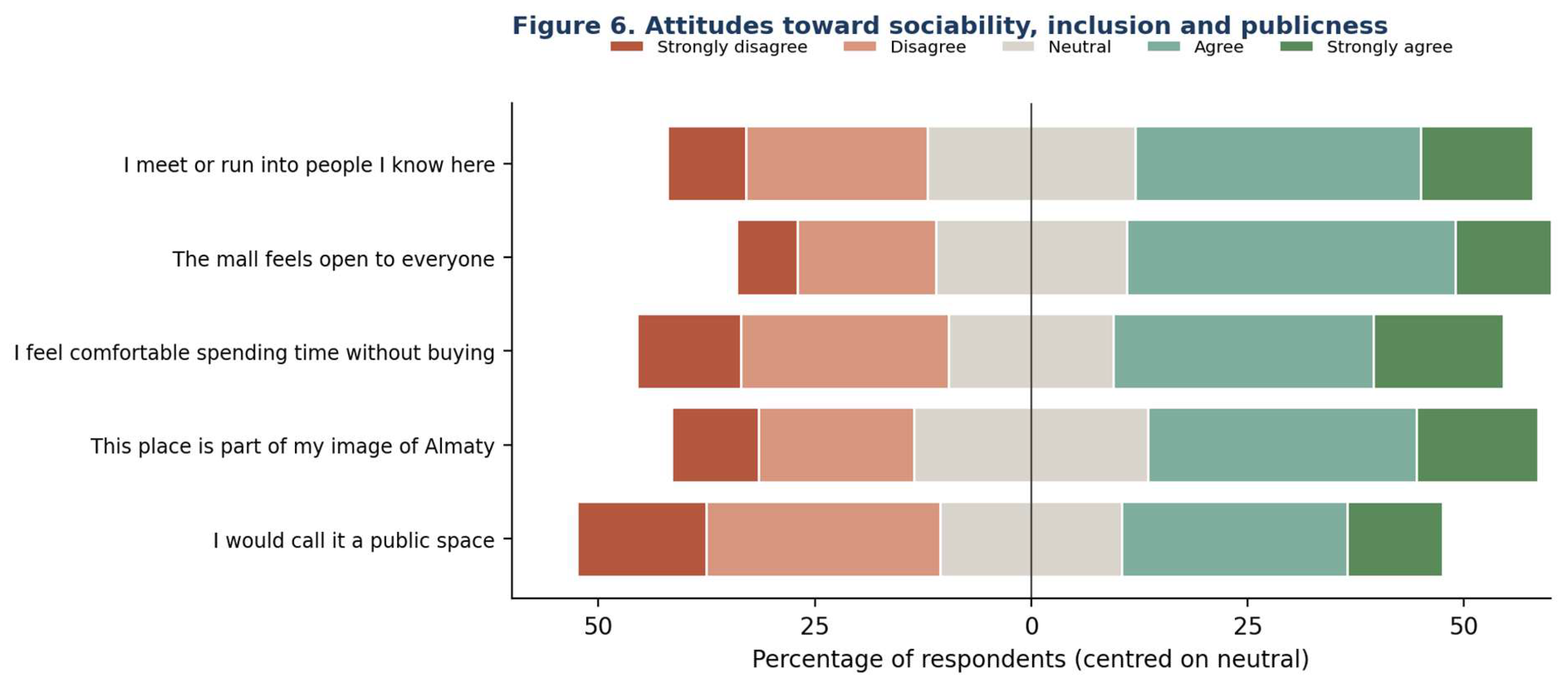
Figure 7.
Reported mode of arrival by age group. Younger visitors arrive more often by public transit and on foot; the middle-aged group is the most car-dependent.
Figure 7.
Reported mode of arrival by age group. Younger visitors arrive more often by public transit and on foot; the middle-aged group is the most car-dependent.
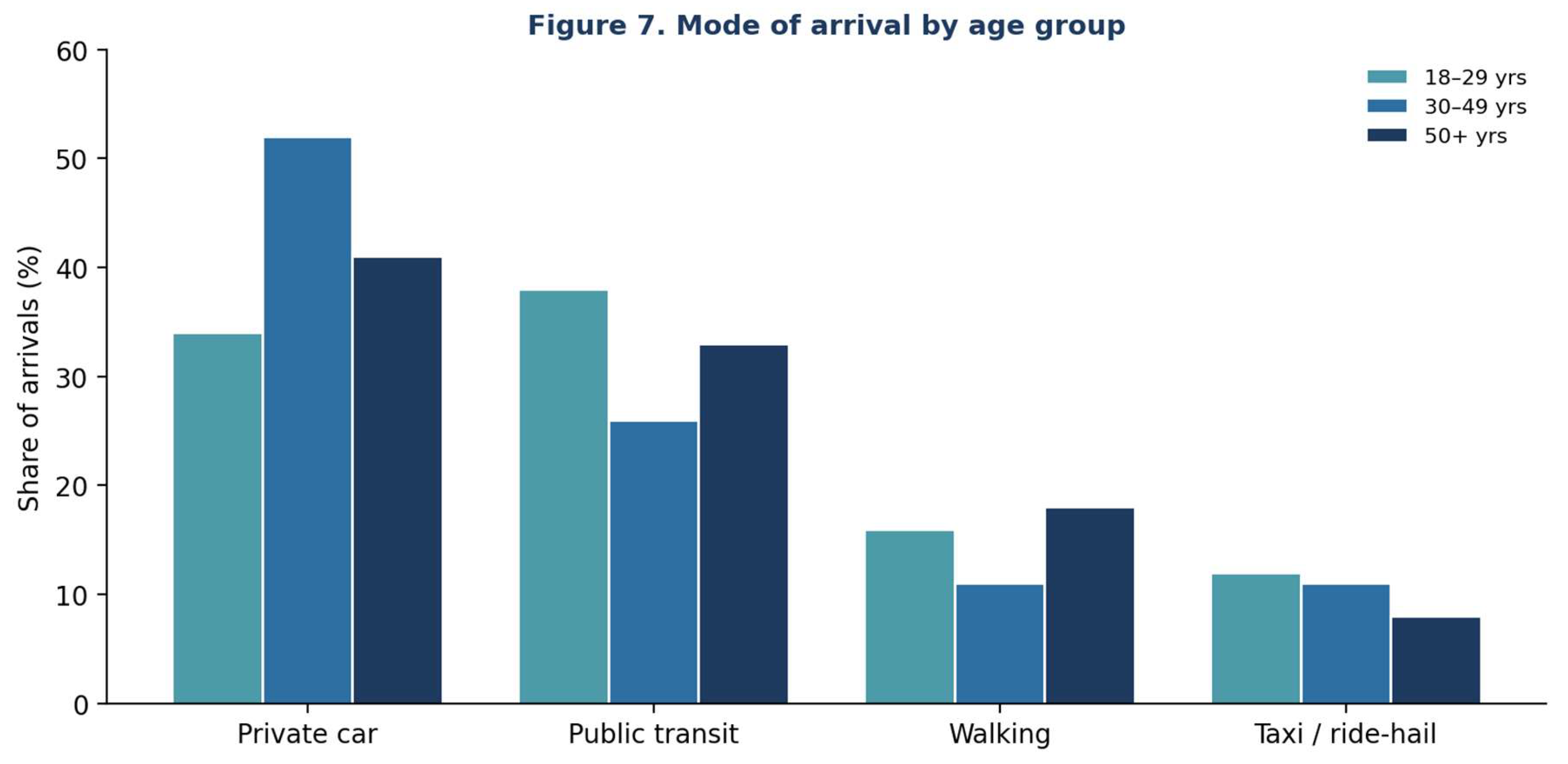

Table 1.
Characteristics of the five selected shopping malls. GLA = gross leasable area. Figures are approximate and labels are pseudonymous to preserve neutrality.
Table 1.
Characteristics of the five selected shopping malls. GLA = gross leasable area. Figures are approximate and labels are pseudonymous to preserve neutrality.
| Mall (pseudonymous label) | Approx. GLA (m2) | Location | Market positioning | Anchor functions |
| Mall A — large regional | 120,000+ | North, near ring road | Mid-market, family | Hypermarket, cinema, food court, ice rink |
| Mall B — premium | 45,000 | South-central, affluent | Upmarket / luxury | Fashion, fine dining, cinema |
| Mall C — leisure-oriented | 75,000 | East, arterial road | Mid-market, leisure | Cinema, food hall, family entertainment |
| Mall D — central | 60,000 | Near city centre | Mid- to upmarket | Department store, cafés, services |
| Mall E — value / outlet | 90,000 | Periphery | Value / discount | Hypermarket, outlet retail, food court |
Table 2.
Socio-demographic profile of the questionnaire sample (n = 412).
| Characteristic | Category | n | % |
| Gender | Female | 226 | 54.9 |
| Male | 186 | 45.1 | |
| Age group | 18–29 | 158 | 38.3 |
| 30–49 | 171 | 41.5 | |
| 50 and over | 83 | 20.1 | |
| Companionship | Alone | 119 | 28.9 |
| With family | 174 | 42.2 | |
| With friends / partner | 119 | 28.9 | |
| Self-rated income | Below average | 96 | 23.3 |
| Average | 229 | 55.6 | |
| Above average | 87 | 21.1 |
Table 3.
Perception of the mall as public/open space by income and age group, with chi-square tests. Percentages are row-wise; χ2 and p refer to each grouping variable.
Table 3.
Perception of the mall as public/open space by income and age group, with chi-square tests. Percentages are row-wise; χ2 and p refer to each grouping variable.
| Group | Agree mall is “public / open” (%) | Neutral (%) | Disagree (%) | χ2 (df) | p |
| Income: below avg. | 41.7 | 19.8 | 38.5 | ||
| Income: average | 56.8 | 21.0 | 22.2 | 18.4 (4) | < 0.01 |
| Income: above avg. | 67.8 | 17.2 | 15.0 | ||
| Age: 18–29 | 60.1 | 20.3 | 19.6 | ||
| Age: 30–49 | 54.4 | 20.5 | 25.1 | 11.7 (4) | < 0.05 |
| Age: 50+ | 45.8 | 22.9 | 31.3 |
Table 4.
Thematic structure of interview accounts on the malls’ role in urban identity and belonging.
Table 4.
Thematic structure of interview accounts on the malls’ role in urban identity and belonging.
| Theme | Core idea | Illustrative emphasis in accounts |
| Convenient social infrastructure | Default safe, comfortable place to meet | Warmth, safety, predictability, climate |
| Marker of modern Almaty | Mall as symbol of the new, developing city | Pride, modernity, aspiration, image |
| Ambivalence and loss | Unease that commerce replaces civic space | Comparison with streets, parks, bazaars |
| Conditional belonging | Welcome bounded by consumption and fit | Cost, dress, feeling in/out of place |
Disclaimer/Publisher’s Note: The statements, opinions and data contained in all publications are solely those of the individual author(s) and contributor(s) and not of MDPI and/or the editor(s). MDPI and/or the editor(s) disclaim responsibility for any injury to people or property resulting from any ideas, methods, instructions or products referred to in the content. |
© 2026 by the authors. Licensee MDPI, Basel, Switzerland. This article is an open access article distributed under the terms and conditions of the Creative Commons Attribution (CC BY) license.
Copyright: This open access article is published under a Creative Commons CC BY 4.0 license, which permit the free download, distribution, and reuse, provided that the author and preprint are cited in any reuse.