

Submitted:
15 June 2026
Posted:
15 June 2026
You are already at the latest version
Abstract
Flacherie is a major bacterial disease compromising silkworm health and cocoon productivity; however, the diversity and genomic features of larva-associated pathogens remain poorly characterized. In the present study, we isolated and characterized a Gram-negative bacterium, designated Pseudomonas sp. RAC1, from the hemolymph of diseased silkworm larvae. The isolate exhibited clear swimming motility, indicating an active flagellar system. Biochemical profiling using the VITEK-2 platform revealed broad metabolic capabilities, including utilization of multiple organic acids and amino-acids, related enzymatic activities, highlighting its adaptability under nutrient-variable host conditions. Chemotaxonomic analysis using fatty acid methyl ester (FAME) profiling further supported its identity within the genus Pseudomonas. Whole-genome sequencing showed a 4.49 Mb GC-rich genome encoding diverse functional pathways related to central metabolism, aromatic compound degradation, and carbohydrate-active enzymes, suggesting strong ecological flexibility. Importantly, genomic screening identified multiple virulence-associated genes and a large repertoire of antimicrobial resistance determinants, dominated by efflux pumps and outer membrane permeability factors, which correlated with phenotypic resistance to all tested antibiotics. In addition, RAC1 contained several mobile genetic elements and three prophage regions, reflecting a highly plastic genome. Pangenome analysis across related Pseudomonas strains indicated an open pangenome, driven largely by accessory and cloud genes. Overall, Pseudomonas sp. RAC1 represents a multidrug-resistant and genomically dynamic strain encoding multiple virulence-associated determinants and resistance factors. These genomic features suggest adaptive potential in host-associated environments and require further experimental investigation to evaluate its role in silkworm larval disease.
Keywords:
comparative genomics
; antibiotic resistance
; efflux pumps
; CAZymes
; silkworm hemolymph
Introduction
The genus Pseudomonas is a versatile bacterium found in soil, marshes, coastal marine habitats, clinical samples, water samples but mostly found to be in environmental samples [1]. The isolation source is also a defining factor the particular habitats risk assessment. Our study isolate is sourced from the hemolymph of silkworm (Bombyx mori L.) larvae collected from sericultural field. Silkworm is a domesticated lepidopteran of major economic and biotechnological importance, i.e., sericulture remains a vital rural livelihood and a source of high-value silk products, with intensive rearing practices making larvae vulnerable to microbial disease and consequential economic loss [2]. Larval hemolymph is both the first line of systemic defense and a reservoir for microbial pathogens when external barriers are breached. Hemolymph contains inducible antimicrobial peptides and enzymatic systems (e.g., phenol oxidase cascade) that limit microbial proliferation, but many bacteria possess specialized strategies to survive and replicate within the hemocoel of insects. Understanding hemolymph-associated pathogens therefore has direct relevance for disease control in sericulture and for using B. mori as an infection model [3,4]. Members of the genus Pseudomonas are acting as opportunistic pathogens with a broad host range and a well-characterized arsenal of virulence determinants. In silkworms, Pseudomonas proteases such as elastase B have been shown to impair prophenoloxidase activation and other immune pathways, facilitating systemic infection. Given their environmental ubiquity and adaptability, Pseudomonas isolates recovered from silkworm hemolymph warrant detailed genomic investigation to evaluate their evolutionary position, metabolic capabilities, and biosafety implications [5,6].
Previously, we reported the draft genome sequence and preliminary genomic resource description of Pseudomonas sp. RAC1 isolated from flacherie-infected silkworm larvae [7]. That earlier study primarily focused on genome assembly, basic annotation, phylogenetic placement, and public deposition of the genomic dataset. However, the ecological adaptability, comparative metabolic potential, genome plasticity, antimicrobial resistance mechanisms, and host-associated functional traits of RAC1 remained unexplored.
In this context, we isolated and characterized Pseudomonas sp. RAC1 from the hemolymph of diseased B. mori larvae. Building upon the previously released genomic resource, the present study performs an expanded comparative and functional genomic investigation to better understand the biological significance of RAC1 within the silkworm-associated environment. We performed comprehensive comparative genomics to assess its taxonomic distinctness, metabolic repertoire, virulence determinants, mobile genetic elements, and antimicrobial resistance pathways. Particular focus was placed on subsystem annotation, secondary metabolite biosynthesis, carbohydrate-active enzymes, and efflux-mediated resistance mechanisms traits that influence persistence within the nutritionally dynamic and immune-reactive silkworm hemolymph. Furthermore, comparative analyses across related Pseudomonas species were conducted to evaluate metabolic diversification, flagellar gene conservation, and accessory genome variability associated with ecological adaptation. This study provides foundational genomic insights into RAC1, offering implications for disease management in sericulture and for using B. mori as a model to study host-pathogen interactions [4,8].
Material and Methods
Sampling and Isolation
Infected fifth instar larvae of Bombyx mori L. were collected in sterile containers from the silkworm rearing facility at Raiganj University, India. The larvae were washed with 70% ethyl alcohol, surface sterilized with 5% (w/v) sodium hypochlorite for five minutes and rinsed three times with sterile deionized water. Hemolymph was extracted into pre-chilled microtubes by rupturing the first abdominal leg of infected larvae (third day of fifth instar) using a sterile, superfine 31G short needle [9]. Haemolymph samples from flacherie-infected Nistari race larvae were spread onto cetrimide agar plates (Cetrimide Agar, Sisco Research Laboratories Pvt. Ltd., India). The inoculated plates were incubated overnight at 35 °C. Following incubation, individual colonies were isolated and transferred to fresh cetrimide plates to obtain pure cultures. These pure cultures were maintained on fresh cetrimide plates and preserved at -80°C in 20% glycerol [7].
Motility Assay
The swim motility assay medium was prepared by supplementing the broth medium with 0.3% agar. The medium was then poured into plates and allowed to solidify. The isolated strain was inoculated from liquid culture onto the plates by puncturing the agar to halfway depth using a sterile needle. The plates were incubated at 37 °C for 24-36 h and monitored for the formation of bacterial halos as an indicator of swimming motility.
Biochemical and Chemotaxonomical Traits
Biochemical traits were determined using the VITEK-2 automated system. Further, the cellular fatty acid composition of RAC1 was analyzed using the MIDI protocol. Fatty acids were extracted, methylated to fatty acid methyl esters (FAMEs), and analyzed by gas chromatography (Agilent 6850) with Sherlock software (MIDI Sherlock™ v6.02, USA). The Aerobic library (RTSBA6 6.21) was used for identification [10].
Genome Data
Isolation, genome sequencing, annotation, and phylogenetic analysis of Pseudomonas sp. RAC1 were previously described [10]. Sequencing reads are available in the NCBI SRA under accession SRR25580540. Reference genomes of related Pseudomonas species, including P. capeferrum WCS358, P. kermanshahensis SWRI100, P. urmiensis SWRI10, P. wayambapalatensis RW3S1, P. xantholysinigenes RW9S1A, P. muyukensis COW39, P. peradeniyensis BW13M1, P. soli LMG 27941, P. maumuensis COW77, P. promysalinigenes RW10S1, P. vlassakiae RW4S2, P. fulva DSM 17717, P. parafulva DSM 17004, P. kurunegalensis RW1P2, P. inefficax JV551A3, P. asiatica RYU5, P. oryzicola RD9SR1, and P. anuradhapurensis RD8MR3, were retrieved from the NCBI RefSeq database.
Genomic Characterization
The comparative genome map of Pseudomonas sp. RAC1 with closely-related species was generated using Proksee BLAST-alignment [11]. Preliminary, gene annotation was performed with Prokka [12]. Furthermore, the assembled genomic data underwent annotation and comparative analysis using the Subsystem Technology tool kit (RASTtk). This process facilitated the prediction of genes associated with risk assessment, including virulence factors, antibiotic resistance genes (ARGs), and potential drug targets. Metabolic pathways were reconstructed and compared across related species using METABOLIC v4.0 [13]. The carbohydrate-active enzymes (CAZymes) were profiled to evaluate carbohydrate utilization potential [14].
Characteristics and Functional Gene Prediction
Antibiotic resistance genes were identified with the deep learning-based tool DeepARG [15] and Comprehensive Antibiotic Resistance Database (CARD) [16]. Further, the CRISPR-Cas system [17], mobile genetic elements [18], bacteriophage specific genes (PHASTEST) [19], Phigaro [20] were predicted using proksee web-based server. Moreover, a curated reference dataset of flagella-associated genes (structural, motor, regulatory, and export genes) was prepared from annotated Pseudomonas reference genomes. Orthologs were identified in each genome using BLAST-based similarity searches (BLASTp/tBLASTn). A binary gene matrix was generated, where detected genes were scored as present (1) and missing genes as absent (0). The resulting presence/absence matrix was visualized as a clustered heatmap in R using the pheatmap package [21].
Pan-Genome Analysis
Pan-genome analysis of RAC1 and related species was performed using the anvi v8 pangenome program [22]. Briefly, the genomes of the species to be compared were downloaded in fasta format from the NCBI genome database. The annotations of the downloaded genomes were performed using the NCBI COG database and transferred to the pangenome database for comparison. The determination of genome ANI similarities was accomplished through the utilization of the pyANI program [23] while the construction of the phylogenetic tree was achieved by employing ANI values. Here, genes that were present in all genomes were designated as core genes, while those present in only one genome were classified as singletons.The ANI similarity cutoff value of 88% was utilized in this study.
Results and Discussion
Biochemical and Chemotaxonomical Analysis
Preliminary isolation of the bacterium and its staining were revealed that the bacteria were gram negative in nature. Further, the bacterial motility assay revealed the swimming motility forming the halo surrounding its inoculation position (Supplementary Figure S1), consistent with the characteristic flagellum-mediated movement reported for multiple Pseudomonas spp. [24]. Flagella-driven swimming plays an important role in environmental fitness and early surface/host colonization, and is commonly regulated through conserved flagellar gene networks in Pseudomonas [25,26].
The biochemical characterization of the Pseudomonas sp. RAC1 by the VITEK-2 automated system reveals that the strain tested positive for GGT and exhibited arylamidase activity towards L-proline and tyrosine, indicating efficient amino acid metabolism and peptide turnover (Supplementary Table S1). Such enzymatic activities are common to Pseudomonas species and contribute to nutrient acquisition in host-associated and nutrient-variable environments [27]. Moreover, the study strain demonstrated the positive utilization of citrate, succinate, malate, and lactate, along with alkalinization of lactate and succinate, reflecting a fully functional tricarboxylic acid (TCA) cycle and respiratory metabolism, which is the ability to utilize as diverse organic acids as carbon and energy sources [28]. Further, the positive utilization of coumarate also suggested the possible capability to metabolize aromatic or plant-derived compounds. Though the biochemical profile of RAC1 supports the strains' metabolic adaptability, capable of persisting in fluctuating environments such as silkworm hemolymph, where nutrient availability and host immune pressures vary dynamically. Comparison of the FAME profile against the TSBA6 library of the Sherlock® MIDI System indicated a closest match to members of the genus Pseudomonas, with a high Similarity Index (typically >0.6 is considered a good match, though the exact value is system-generated). The fatty acid profile of the Pseudomonas sp. RAC1 is consistent with its closely related species. The prevalent fatty acid composition of RAC1 is palmitic acid (16:00) 27.02%, sum in feature 2 14.76%, sum in feature 8 14.21%, and cis-9,10-methylene palmitic acid (17:0 cyclo) 10.35% (Supplementary Table S2). Additionally, the sum in feature 8 content of the RAC1 is aligned with P. soli LMG 27941, further describing the similar genus level fatty acid content. Furthermore, the palmitic acid content of the RAC1 is also aligned with the P. soli LMG 27941 and P. asiatica RYU5. The prevalent fatty acid composition in Pseudomonas possibly could provide the structural integrity, stress protection, membrane fluidity, endotoxin, etc. which is consistent composition for the Pseudomonas genera [29]. The resulting profile is diagnostic for specific microbial groups. The dominance of straight-chain saturated (16:0, 18:0), unsaturated (Summed Features 2, 3, and 8), and cyclopropane fatty acids (17:0 cyclo, 19:0 cyclo ω8c) is a hallmark of Gram-negative bacteria, specifically aligning with the genus Pseudomonas [30]. Furthermore, the other less abundant fatty acid compounds include 18:00, Sum in Feature 3, 19:0 cyclo ω8c, 15:1 ω5c, 17:1 iso ω5c, 12:1 3OH, and 20:2 ω6,9c represents other cellular functions in Pseudomonas spp. While FAME profiling provides robust genus-level identification and suggests a species complex, conclusive species-level designation requires complementary genomic analysis to resolve closely related species within this metabolically versatile and ecologically important genus.
General Genomic Features
The total genome length was 4,494,347 bp, distributed across 38 contigs, with an N50 contig size of 199,969 bp and an L50 value of 7, indicating a moderately contiguous assembly with good genomic coverage. The genome exhibited a G + C content of 63.5%, which is consistent with the high GC-rich nature of Pseudomonas species, typically ranging between 60-67%. A total of 4,116 genes were predicted, including 3,992 coding DNA sequences (CDS), 57 miscellaneous RNAs, 7 rRNAs, 59 tRNAs, and 1 tmRNA. The presence of a complete set of tRNAs and rRNAs suggests a well-represented and functionally competent translational machinery (Supplementary Table S3; Supplementary Figure S2B). The comparison of the RAC1 and its closely related genome sequences was also presented in the form of circular map (Supplementary Figure S2A).
Pseudomonas sp. RAC1 exhibited the highest ANI value of 98.35% and a dDDH value of 86.8% with Pseudomonas boreofloridensis K13, both exceeding the recommended species boundary thresholds of ≥95% for ANI (Figure 1A) and ≥70% for dDDH (Figure 1B) [31,32]. ANI and dDDH values against all other type strains remained below 87% and 30%, respectively, well beneath the accepted species demarcation criteria. Although the genomic indices strongly suggest close relatedness of RAC1 to P. boreofloridensis K13, formal species-level assignment requires congruence between genomic and phenotypic data under the polyphasic taxonomic framework [33]. As comprehensive biochemical and physiological characterization of the type strain of P. boreofloridensis was not available for direct comparative phenotypic analysis, definitive reclassification was not pursued. Accordingly, the isolate is conservatively retained as Pseudomonas sp. RAC1, with genomic data presented here serving as a basis for future formal taxonomic description.
Annotation through the PATRIC database identified 3,242 characterized proteins and 842 putative or hypothetical proteins, indicating that ~79% of the predicted coding sequences could be assigned putative functions based on existing databases. The remaining fraction represents hypothetical proteins, which may include strain-specific or novel functional genes, potentially contributing to niche adaptation or unique metabolic capabilities. Functional mapping through KEGG, a total of 2,291 genes has been assigned to 1,862 unique KEGG numbers using KofamScan. The identified genes were found to be associated with a total of 241 pathways, and 54 complete modules were present. Pathway annotation, revealing the strain’s diverse metabolic potential, including pathways involved in carbon metabolism, amino acid biosynthesis, and environmental adaptability. Such metabolic versatility is a hallmark of the Pseudomonas genus, allowing members to thrive in varied ecological niches, including soil, water, and plant-associated environments.
Screening against the VFDB database revealed the presence of 35 virulence factor genes, suggesting potential roles in host colonization, biofilm formation, motility, and secretion systems. These include genes related to flagellar assembly, Type III and Type VI secretion systems, and quorum sensing, which are critical for Pseudomonas pathogenicity and environmental survival.
Antibiotic resistance profiling revealed 2 resistance genes in CARD and 54 in PATRIC, reflecting intrinsic and acquired resistance mechanisms. These genes likely encode efflux pumps, β-lactamases, and multidrug transporters, which are commonly found in Pseudomonas species and contribute to their well-known multidrug-resistant phenotype. The difference in the number of resistance genes detected between CARD and PATRIC may arise from database coverage and annotation criteria. Analysis against the TCDB database identified 75 transporter genes, encompassing various transporter families involved in nutrient uptake, metal ion transport, and multidrug efflux. The presence of 7 drug target genes predicted through the Therapeutic Target Database (TTD) provides insight into possible molecular targets for antibacterial compound development. Further, genomic information suggested the isolated strain confers resistance to antibiotics mainly through efflux pump.
Overall, the genomic features of Pseudomonas sp. RAC1 are consistent with other Pseudomonas genomes, such as P. aeruginosa PAO1 and P. putida KT2440, in terms of genome size, GC content, and gene number. However, the unique combination of virulence determinants, antibiotic resistance genes, and transport systems highlights its potential ecological flexibility and clinical significance. Additionally, the distribution of subsystems is described, representing key biological and metabolic processes.
Metabolic pathway comparisons revealed that RAC1 harbors a versatile repertoire of functional genes compared with related species (Figure 2). KEGG-based annotation and METABOLIC profiling identified enrichment in pathways for aromatic compound degradation, nitrogen utilization, and secondary metabolite biosynthesis. These traits point to enhanced ecological adaptability, enabling RAC1 to exploit a broad range of environmental substrates and persist in fluctuating conditions during silkworm development.
Carbohydrate-active enzyme (CAZyme) profiling further distinguished RAC1 from its relatives (Figure 3). The genome encoded an expanded set of glycoside hydrolases and polysaccharide lyases, suggesting enhanced capacity to degrade plant-derived polysaccharides. Such metabolic flexibility may facilitate colonization of nutrient-rich host environments while also supporting survival under oligotrophic conditions. The coexistence of oligotrophic traits with broad catabolic versatility indicates an adaptive strategy well suited for feast-and-famine dynamics in the silkworm larvae.
Flagellar-Associated Genes
The comparative analysis of flagellar-associated genes in Pseudomonas sp. RAC1 and closely related species revealed a largely conserved flagellar gene cassette, supporting the maintenance of a functional motility system across this lineage (Figure 4). RAC1 showed strong conservation of core flagellar biosynthesis genes (i.e., flg, fli, and flh components), along with key stator genes (mot), indicating the likely presence of a complete polar flagellum and explaining its observed swimming motility. Although the conserved genes of RAC1 with some flagellar-linked genes intermittently absent across the dataset. This pattern reflects the modular nature of the flagellar system, where conserved structural “core” genes coexist with accessory genes that can be gained or lost, enabling adaptive trade-offs between motility, surface association, and niche specialization [25,34]. Beyond swimming motility, the conserved flagellar gene cassette in RAC1 also suggests roles in surface sensing, early attachment, and biofilm initiation, as flagellar motility is closely tied to biofilm establishment and structure [35]. The hierarchical regulation of flagellar assembly in Pseudomonas (e.g., via FleQ/RpoN) further explains strong conservation due to selective pressure for coordinated expression. Importantly, variation in motor output and spatial regulation genes (e.g., FliL- and FlhF-associated modules) can alter torque, surface motility, and polar placement without eliminating flagellar synthesis, consistent with mechanistic evidence that FliL tunes motor efficiency and FlhF controls polar localization and assembly [36]. Overall, the conserved gene set supports RAC1 as motility-competent, while locus-level differences among related taxa likely reflect niche-driven diversification of the accessory flagellar repertoire.
Antibiotic Resistance Genes
Genomic screening for antibiotic resistance determinants highlighted the multidrug-resistant potential of RAC1 (Figure 5). DeepARG analysis detected a wide array of efflux pumps, β-lactamases, and other resistance factors spanning multiple antibiotic classes. The presence of these genes aligns with RAC1’s isolation from a silkworm larvae affected by flacherie, where antibiotic exposure may have created selective pressure. These findings also reinforce concerns about the dissemination of antimicrobial resistance traits in environmental Pseudomonas populations.
The whole-genome analysis of the Pseudomonas sp. RAC1 revealed a wide array of antimicrobial-resistance (AMR) determinants, suggesting a multifactorial resistance strategy typical of this genus. The detection of the catalase-peroxidase gene katG indicates a potential role in oxidative-stress defense and antibiotic activation, while the presence of multiple target-associated genes such as alr, adl, gyrA, gyrB, folA, and murA implies possible target modification or protection mechanisms (Table 1). The identification of FabG, fabV, and HtdX highlights antibiotic-target replacement pathways that could bypass inhibitory effects of certain antimicrobials. Notably, numerous efflux pump systems, including MexAB-OprM, MexEF-OprN, MexHI-OpmD, MacAB, and MdtABC, were found, which are known to actively export multiple classes of antibiotics and contribute substantially to multidrug resistance in Pseudomonas spp. [37]. In addition, alterations in outer-membrane porins such as OprD, OprF, and members of the OccD/OccK families may reduce membrane permeability, thereby synergizing with efflux systems to limit intracellular antibiotic accumulation [38]. The presence of gidB, GdpD, and PgsA suggests supplementary mechanisms involving ribosomal modification and cell-wall charge alteration, while OxyR likely functions as a regulator influencing oxidative stress and antibiotic resistance gene expression. Collectively, this diverse gene repertoire underlines the genomic potential of Pseudomonas sp. for intrinsic and acquired resistance through efflux, reduced permeability, target modification, and regulatory adaptation-mechanisms that together make this species a formidable opportunistic pathogen and a major clinical concern in antimicrobial therapy.
The genomic sequence of Pseudomonas sp. RAC1 contains multiple copies of mobile genetic elements in their genomic sequence, indicating an actively evolving genome potentially having horizontal gene transfer capability. Multiple copies of integration/excision (27), phage specific genes (59), and transfer (12) specific genes, suggesting ongoing genomic rearrangements and gene flux (Supplementary Figure S3). The presence of these elements is consistent with reports that Pseudomonas species maintain highly plastic genomes driven by IS-mediated recombination and adaptive acquisition of functional genes, including antimicrobial resistance [39].
Prophage prediction and annotation of Pseudomonas sp. RAC1 using PHIGARO identified three bacteriophage-derived genomic regions comprising phage-specific genes and pVOG-supported annotations [20,40]. Two regions were classified as Siphoviridae and one as Myoviridae, indicating exposure of RAC1 to phylogenetically distinct tailed bacteriophages. The largest prophage-like region was detected on contig JAUTXS020000020_1 (nt 5767-39588) and showed a structured gene block dominated by phage-related ORFs. Importantly, the co-localization of terminase and portal genes supports a conserved DNA packaging module, a hallmark of tailed dsDNA bacteriophages [41]. Gene orientation in this region revealed largely co-directional transcription, consistent with modular prophage architecture. Further, a second smaller Siphoviridae-like region occurred on contig JAUTXS020000024_1 (nt 848-7421) and contained mainly tail and assembly-associated genes, suggesting a partial prophage remnant. In contrast, a Myoviridae-like prophage region in the same contig (nt 110900-133621) contained clustered ORFs associated with lysis, capsid/coat, tail, and assembly, indicating retention of key structural and lytic modules typical of tailed phages (Supplementary Figure S4).
Therefore, the presence of multiple prophage regions with conserved genes and directional gene clusters indicates that prophage acquisition has contributed to the genomic diversification of RAC1 and may influence fitness through prophage-encoded accessory functions. The antibiotic susceptibility profile of Pseudomonas sp. RAC1 revealed complete resistance to all 15 antibiotics tested across multiple classes, including β-lactams (ampicillin, penicillin G, amoxyclav, cefoxitin, cephalothin, oxacillin, cloxacillin, methicillin), glycopeptides (vancomycin, teicoplanin), protein-synthesis inhibitors (fusidic acid, linezolid, lincomycin), and nucleic-acid synthesis inhibitors (rifampicin, co-trimoxazole, sulphatriad, nitrofurantoin). This broad-spectrum resistance pattern strongly indicates a robust intrinsic resistance background, characteristic of Pseudomonas spp., which often possess low outer-membrane permeability and multiple multidrug efflux systems that limit antibiotic entry and accumulation [42]. Although the antibiotic panel included representatives from multiple antimicrobial classes, some tested antibiotics are not commonly used for standard antipseudomonal susceptibility assessment; therefore, the observed resistance profile reflects both the detected resistance-associated determinants and the intrinsic resistance mechanisms naturally present in Pseudomonas spp.
The genomic sequence of the RAC1 strain contains two copies of adeF, a component associated with the AdeFGH RND efflux pump family in non-fermenting Gram-negative bacteria. Furthermore, the presence of the outer membrane protein, oprM and oprJ possibly provide further resistance without the presence of the Mex- inner membrane proteins [43]. In Acinetobacter baumannii, adeF overexpression significantly contributes to resistance to chloramphenicol, fluoroquinolones, tetracyclines, and trimethoprim [44]. Moreover, the presence of the mdtABC, marR, emrAB multidrug efflux pump operons and regulators, along with the fsr and abaF genes, indicates a genomic basis for fosfomycin resistance. Collectively, the identified antimicrobial resistance determinants indicate a broad resistance-associated genomic repertoire in RAC1, which may contribute to its persistence and pathogenic potential within the silkworm host environment. Future studies incorporating clinically relevant antipseudomonal antibiotics, including carbapenems, aminoglycosides, fluoroquinolones, polymyxins, and antipseudomonal cephalosporins, will further strengthen the phenotypic resistance characterization of RAC1.
Pangenome Analysis
Pangenome analysis was performed to characterize the genomic diversity across the 18 Pseudomonas strains included in this study. A total of 87,831 genes has been identified across 18 genomes, and 12,892 of these have been designated as gene clusters (Figure 6A). A total of 2,125 genes has been delineated as core genomes which represent the conserved genetic backbone essential for fundamental cellular functions, while 5,379 genes have been identified as singletons. Additionally, accessory genome constituted a substantial proportion of the pangenome, consisting of 7,333 shell genes (36%) and 11,759 cloud genes (57%). Shell genes typically encode niche-adaptive traits or strain-specific variations, whereas cloud genes represent highly variable or horizontally acquired elements, including mobile genetic elements and plasmid-associated loci. The high number of cloud genes indicates considerable genomic plasticity within the Pseudomonas population [8]. Each strain contributed varied number of unique genes to the pangenome.
Pangenome estimation using Heaps’ law gave an α (alpha) value of 0.37 for the 18 Pseudomonas genome (Figure 6B). Since, α < 1, this clearly indicates an open pangenome, meaning new genes continue to appear as more genomes are added [45].
Functional annotation of core genes using revealed enrichment in essential metabolic pathways, including carbohydrate metabolism, amino acid biosynthesis, transcription, translation, and DNA repair. In contrast, accessory genes were predominantly associated with environmental stress response, antimicrobial resistance, virulence factors, transport systems, host-specific cross talking genes, and hypothetical proteins. Cloud genes contained most of the mobile genetic elements, including insertion sequences, prophage-related proteins, and conjugation machinery.
Conclusions
In this study, Pseudomonas sp. RAC1 isolated from the silkworm larvae was confirmed as a Gram-negative, motile bacterium with strong metabolic versatility as evidenced by biochemical profiling and FAME-based chemotaxonomic signatures consistent with the genus Pseudomonas. Whole-genome sequencing revealed a 4.49 Mb GC-rich genome encoding diverse pathways for carbon utilization, aromatic compound degradation, and carbohydrate-active enzymes, supporting ecological adaptability in nutrient-variable host environments. The genome also harbored multiple virulence-associated genes and an extensive repertoire of antimicrobial resistance determinants, predominantly associated with multidrug efflux and reduced membrane permeability, corroborating the observed broad-spectrum phenotypic resistance. Furthermore, the presence of mobile genetic elements and three prophage regions (Siphoviridae- and Myoviridae-like) highlights active genome plasticity and potential horizontal gene transfer. Pangenome analysis indicated an open genome structure dominated by accessory and cloud genes, suggesting continued acquisition of adaptive traits. Overall, Pseudomonas sp. RAC1 represents a genomically flexible, multidrug-resistant Pseudomonas strain with traits that may confer ecological persistence and host-associated fitness in silkworm larval environments. While the genomic repertoire identified here, including virulence-associated genes, AMR determinants, and mobile genetic elements, provides a basis for future investigation of pathogenic interactions, experimental virulence validation remains necessary to substantiate any direct role in disease causation.
Supplementary Materials
The following supporting information can be downloaded at the website of this paper posted on Preprints.org.
Author Contributions
R.M. and A.M. wrote the main manuscript text, A.M., P.M., and A.K.S. prepared figures and tables, H.K, and A.K.M supervise and review the main manuscript. All authors reviewed the manuscript.
Funding
Not applicable.
Conflicts of Interest
None declared.
References
- Silby, M.W.; Winstanley, C.; Godfrey, S.A.; Levy, S.B.; Jackson, R.W. Pseudomonas genomes: diverse and adaptable. FEMS Microbiol. Rev. 2011, 35(4), 652–680. [Google Scholar] [PubMed]
- Hăbeanu, M.; Gheorghe, A.; Mihalcea, T. Silkworm Bombyx mori—sustainability and economic opportunity, particularly for Romania. Agriculture 2023, 13(6), 1209. [Google Scholar] [CrossRef]
- Kinoshita, T.; Inoue, K. Bactericidal activity of the normal, cell-free hemolymph of silkworms (Bombyx mori). Infect. Immun. 1977, 16(1), 32–36. [Google Scholar] [CrossRef] [PubMed]
- Montali, A.; Berini, F.; Saviane, A.; Cappellozza, S.; Marinelli, F.; Tettamanti, G. A Bombyx mori infection model for screening antibiotics against Staphylococcus epidermidis. Insects 2022, 13(8), 748. [Google Scholar] [CrossRef] [PubMed]
- Liao, C.; Huang, X.; Wang, Q.; Yao, D.; Lu, W. Virulence factors of Pseudomonas aeruginosa and antivirulence strategies to combat its drug resistance. Front. Cell. Infect. Microbiol. 2022, 12, 926758. [Google Scholar] [CrossRef] [PubMed]
- Ma, L.; Zhou, L.; Lin, J.; Ji, J.; Wang, Y.; Jiang, H.; Shen, X.; Lu, Z. Manipulation of the silkworm immune system by a metalloprotease from the pathogenic bacterium Pseudomonas aeruginosa. Dev. Comp. Immunol. 2019, 90, 176–185. [Google Scholar] [CrossRef] [PubMed]
- Mondal, R.; Dam, P.; Chakraborty, J.; Shaw, S.; Pradhan, S.; Das, S.; Nesa, J.; Meena, K.; Ghati, A.; Chaudhuri, S.D. Genomic dataset of a multiple-drug resistant Pseudomonas sp. strain RAC1 isolated from a flacherie infected Nistari race of Bombyx mori L. Data Brief. 2024, 54, 110293. [Google Scholar] [CrossRef] [PubMed]
- Corredor, M.; Patiño-Salazar, J.D.; Castaño, D.C.; Muñoz-Gómez, A. The Pangenome of Pseudomonas aeruginosa. In Pseudomonas aeruginosa-New Perspectives and Applications; IntechOpen., 2023. [Google Scholar]
- Nesa, J.; Jana, S.K.; Sadat, A.; Biswas, K.; Kati, A.; Kaya, O.; Mondal, R.; Dam, P.; Thakur, M.; Kumar, A. Antimicrobial potential of a ponericin-like peptide isolated from Bombyx mori L. hemolymph in response to Pseudomonas aeruginosa infection. Sci. Rep. 2022, 12(1), 15493. [Google Scholar] [CrossRef] [PubMed]
- Mondal, R.; Manna, A.; Mandal, P.; Sen, A.; Jangid, K.; Mandal, A.K. Stenotrophomonas raiganjensis sp. nov., an extensively drug-resistant bacterium isolated from Bombyx mori L., described under the SeqCode. Syst. Appl. Microbiol. 2026, 49(2). [Google Scholar] [CrossRef] [PubMed]
- Grant, J.R.; Enns, E.; Marinier, E.; Mandal, A.; Herman, E.K.; Chen, C.Y.; Graham, M.; Van Domselaar, G.; Stothard, P. Proksee: in-depth characterization and visualization of bacterial genomes. Nucleic Acids Res. 2023, 51(W1), W484–W492. [Google Scholar] [CrossRef] [PubMed]
- Seemann, T. Prokka: rapid prokaryotic genome annotation. Bioinformatics 2014, 30(14), 2068–2069. [Google Scholar] [CrossRef] [PubMed]
- Zhou, Z.; Tran, P.Q.; Breister, A.M.; Liu, Y.; Kieft, K.; Cowley, E.S.; Karaoz, U.; Anantharaman, K. METABOLIC: high-throughput profiling of microbial genomes for functional traits, metabolism, biogeochemistry, and community-scale functional networks. Microbiome 2022, 10(1), 33. [Google Scholar] [CrossRef] [PubMed]
- Huang, L.; Zhang, H.; Wu, P.; Entwistle, S.; Li, X.; Yohe, T.; Yi, H.; Yang, Z.; Yin, Y. dbCAN-seq: a database of carbohydrate-active enzyme (CAZyme) sequence and annotation. Nucleic Acids Res. 2018, 46(D1), D516–D521. [Google Scholar] [PubMed]
- Arango-Argoty, G.; Garner, E.; Pruden, A.; Heath, L.S.; Vikesland, P.; Zhang, L. DeepARG: a deep learning approach for predicting antibiotic resistance genes from metagenomic data. Microbiome 2018, 6(1), 23. [Google Scholar] [CrossRef] [PubMed]
- Alcock, B.P.; Huynh, W.; Chalil, R.; Smith, K.W.; Raphenya, A.R.; Wlodarski, M.A.; Edalatmand, A.; Petkau, A.; Syed, S.A.; Tsang, K.K. CARD 2023: expanded curation, support for machine learning, and resistome prediction at the Comprehensive Antibiotic Resistance Database. Nucleic Acids Res. 2023, 51(D1), D690–D699. [Google Scholar] [PubMed]
- Couvin, D.; Bernheim, A.; Toffano-Nioche, C.; Touchon, M.; Michalik, J.; Néron, B.; Rocha, E.P.; Vergnaud, G.; Gautheret, D.; Pourcel, C. CRISPRCasFinder, an update of CRISRFinder, includes a portable version, enhanced performance and integrates search for Cas proteins. Nucleic Acids Res. 2018, 46(W1), W246–W251. [Google Scholar] [CrossRef] [PubMed]
- Brown, C.L.; Mullet, J.; Hindi, F.; Stoll, J.E.; Gupta, S.; Choi, M.; Keenum, I.; Vikesland, P.; Pruden, A.; Zhang, L. mobileOG-db: a manually curated database of protein families mediating the life cycle of bacterial mobile genetic elements. Appl. Environ. Microbiol. 2022, 88(18), e00991-00922. [Google Scholar]
- Wishart, D.S.; Han, S.; Saha, S.; Oler, E.; Peters, H.; Grant, J.R.; Stothard, P.; Gautam, V. PHASTEST: faster than PHASTER, better than PHAST. Nucleic Acids Res. 2023, 51(W1), W443–W450. [Google Scholar] [CrossRef] [PubMed]
- Starikova, E.V.; Tikhonova, P.O.; Prianichnikov, N.A.; Rands, C.M.; Zdobnov, E.M.; Ilina, E.N.; Govorun, V.M. Phigaro: high-throughput prophage sequence annotation. Bioinformatics 2020, 36(12), 3882–3884. [Google Scholar] [CrossRef] [PubMed]
- Kolde, R. Pretty Heatmaps [R package pheatmap version 1.0. 13]. CRAN Contrib. Packag. 2025, 10. [Google Scholar]
- Eren, A.M.; Esen, Ö.C.; Quince, C.; Vineis, J.H.; Morrison, H.G.; Sogin, M.L.; Delmont, T.O. Anvi’o: an advanced analysis and visualization platform for ‘omics data. PeerJ 2015, 3, e1319. [Google Scholar] [CrossRef] [PubMed]
- Pritchard, L.; Cock, P.; Esen, Ö. pyani v0. 2.8: average nucleotide identity (ANI) and related measures for whole genome comparisons. 2019. [Google Scholar] [CrossRef]
- Mohari, B.; Licata, N.A.; Kysela, D.T.; Merritt, P.M.; Mukhopadhay, S.; Brun, Y.V.; Setayeshgar, S.; Fuqua, C. Novel pseudotaxis mechanisms improve migration of straight-swimming bacterial mutants through a porous environment. MBio 2015, 6(2). [Google Scholar] [CrossRef] [PubMed]
- Bouteiller, M.; Dupont, C.; Bourigault, Y.; Latour, X.; Barbey, C.; Konto-Ghiorghi, Y.; Merieau, A. Pseudomonas flagella: generalities and specificities. Int. J. Mol. Sci. 2021, 22(7), 3337. [Google Scholar] [CrossRef] [PubMed]
- Wei, G.; Palalay, J.J.S.; Sanfilippo, J.E.; Yang, J.Q. Flagellum-driven motility enhances Pseudomonas aeruginosa biofilm formation by altering cell orientation. Appl. Environ. Microbiol. 2025, e00821-00825. [Google Scholar]
- Nonomura, Y.; Wang, X.; Kikuchi, T.; Matsui, D.; Toyotake, Y.; Takagi, K.; Wakayama, M. Characterization of three γ-glutamyltranspeptidases from Pseudomonas aeruginosa PAO1. J. Gen. Appl. Microbiol. 2023, 69(3), 150–158. [Google Scholar] [CrossRef] [PubMed]
- Kuo, S.H.; Lau, G.W. Pseudomonas aeruginosa-derived metabolites and volatile organic compounds: impact on lung epithelial homeostasis and mucosal immune response. Front. Immunol. 2025, 16, 1553013. [Google Scholar] [CrossRef] [PubMed]
- Mező, E.; Hartmann-Balogh, F.; Madarászné Horváth, I.; Bufa, A.; Marosvölgyi, T.; Kocsis, B.; Makszin, L. Effect of culture conditions on fatty acid profiles of bacteria and lipopolysaccharides of the genus pseudomonas—GC-MS analysis on ionic liquid-based column. Molecules 2022, 27(20), 6930. [Google Scholar] [PubMed]
- Salvà-Serra, F.; Nimje, P.; Piñeiro-Iglesias, B.; Alarcón, L.A.; Cardew, S.; Inganäs, E.; Jensie-Markopoulos, S.; Ohlén, M.; Sailer, H.-S.; Unosson, C. Description of Pseudomonas imrae sp. nov., carrying a novel class C β-lactamase gene variant, isolated from gut samples of Atlantic mackerel (Scomber scombrus). Front. Microbiol. 2025, 16, 1530878. [Google Scholar] [CrossRef] [PubMed]
- Meier-Kolthoff, J.P.; Auch, A.F.; Klenk, H.P.; Göker, M. Genome sequence-based species delimitation with confidence intervals and improved distance functions. BMC Bioinform. 2013, 14(1), 60. [Google Scholar] [CrossRef] [PubMed]
- Yoon, S.H.; Ha, S.M.; Kwon, S.; Lim, J.; Kim, Y.; Seo; H. Chun, J. Introducing EzBioCloud: a taxonomically united database of 16S rRNA gene sequences and whole-genome assemblies. Int. J. Syst. Evol. Microbiol. 2017, 67(5), 1613–1617. [Google Scholar] [PubMed]
- Vandamme, P.; Pot, B.; Gillis, M.; De Vos, P.; Kersters, K.; Swings, J. Polyphasic taxonomy, a consensus approach to bacterial systematics. Microbiol. Rev. 1996, 60(2), 407–438. [Google Scholar] [CrossRef]
- David, A.; Tahrioui, A.; Tareau, A.S.; Forge, A.; Gonzalez, M.; Bouffartigues, E.; Lesouhaitier, O.; Chevalier, S. Pseudomonas aeruginosa biofilm lifecycle: involvement of mechanical constraints and timeline of matrix production. Antibiotics 2024, 13(8), 688. [Google Scholar] [CrossRef] [PubMed]
- Wei, G.; Palalay, J.J.S.; Sanfilippo, J.E.; Yang, J.Q. Flagellum-driven motility enhances Pseudomonas aeruginosa biofilm formation by altering cell orientation. Appl. Environ. Microbiol. 2025, e00821-00825. [Google Scholar]
- Zhang, L.; Wu, Z.; Zhang, R.; Yuan, J. FliL differentially interacts with two stator systems to regulate flagellar motor output in Pseudomonas aeruginosa. Appl. Environ. Microbiol. 2022, 88(22), e01539-01522. [Google Scholar] [CrossRef] [PubMed]
- Lorusso, A.B.; Carrara, J.A.; Barroso, C.D.N.; Tuon, F.F.; Faoro, H. Role of efflux pumps on antimicrobial resistance in Pseudomonas aeruginosa. Int. J. Mol. Sci. 2022, 23(24), 15779. [Google Scholar] [CrossRef] [PubMed]
- Li, H.; Luo, Y.F.; Williams, B.J.; Blackwell, T.S.; Xie, C.M. Structure and function of OprD protein in Pseudomonas aeruginosa: from antibiotic resistance to novel therapies. Int. J. Med. Microbiol. 2012, 302(2), 63–68. [Google Scholar] [CrossRef] [PubMed]
- Sentausa, E.; Basso, P.; Berry, A.; Adrait, A.; Bellement, G.; Couté, Y.; Lory, S.; Elsen, S.; Attrée, I. Insertion sequences drive the emergence of a highly adapted human pathogen. Microb. Genom. 2020, 6(9), e000265. [Google Scholar] [CrossRef] [PubMed]
- Grazziotin, A.L.; Koonin, E.V.; Kristensen, D.M. Prokaryotic Virus Orthologous Groups (pVOGs): a resource for comparative genomics and protein family annotation. Nucleic Acids Res. 2016, gkw975. [Google Scholar]
- Hegde, S.; Padilla-Sanchez, V.; Draper, B.; Rao, V.B. Portal-large terminase interactions of the bacteriophage T4 DNA packaging machine implicate a molecular lever mechanism for coupling ATPase to DNA translocation. J. Virol. 2012, 86(8), 4046–4057. [Google Scholar] [CrossRef] [PubMed]
- Cristina, M.L.; Sartini, M.; Schinca, E.; Ottria, G.; Casini, B.; Spagnolo, A.M. Evaluation of multidrug-resistant P. aeruginosa in healthcare facility water systems. Antibiotics 2021, 10(12), 1500. [Google Scholar] [CrossRef] [PubMed]
- Zhao, Q.; Li, X.Z.; Srikumar, R.; Poole, K. Contribution of outer membrane efflux protein OprM to antibiotic resistance in Pseudomonas aeruginosa independent of MexAB. A.A.C. 1998, 42(7), 1682–1688. [Google Scholar] [CrossRef] [PubMed]
- Coyne, S.; Courvalin, P.; Périchon, B. Efflux-mediated antibiotic resistance in Acinetobacter spp. Antimicrob. Agents Chemother. 2011, 55(3), 947–953. [Google Scholar]
- Tettelin, H.; Riley, D.; Cattuto, C.; Medini, D. Comparative genomics: the bacterial pan-genome. Curr. Opin. Microbiol. 2008, 11(5), 472–477. [Google Scholar] [CrossRef] [PubMed]
Figure 1.
Pairwise ANI (A) and dDDH (B) values for Pseudomonas sp. RAC1 and its closely related genomes.
Figure 1.
Pairwise ANI (A) and dDDH (B) values for Pseudomonas sp. RAC1 and its closely related genomes.
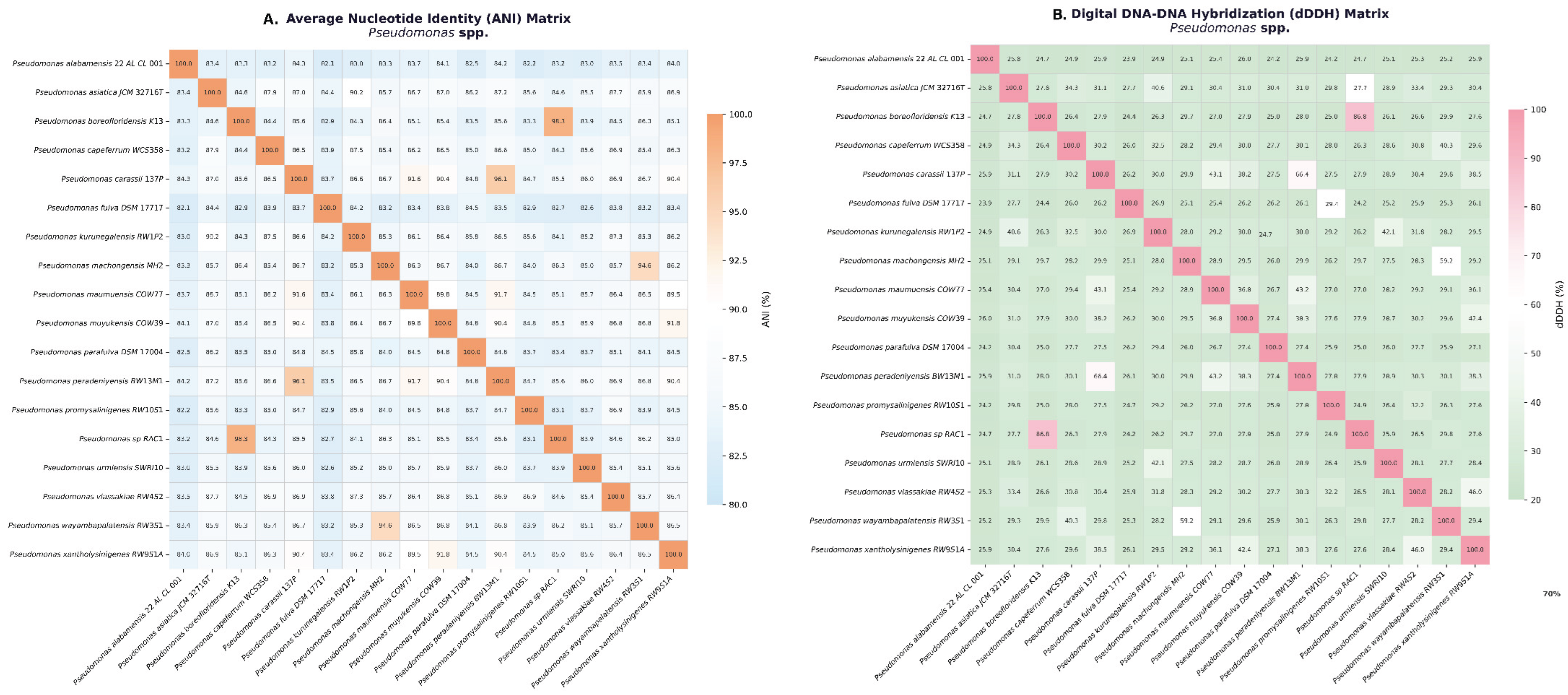
Figure 2.
Heatmap comparing major metabolic pathways in Pseudomonas sp. RAC1 and closely related species based on KEGG annotation and METABOLIC analysis, highlighting enrichment of aromatic compound degradation and secondary metabolite biosynthesis pathways in RAC1.
Figure 2.
Heatmap comparing major metabolic pathways in Pseudomonas sp. RAC1 and closely related species based on KEGG annotation and METABOLIC analysis, highlighting enrichment of aromatic compound degradation and secondary metabolite biosynthesis pathways in RAC1.
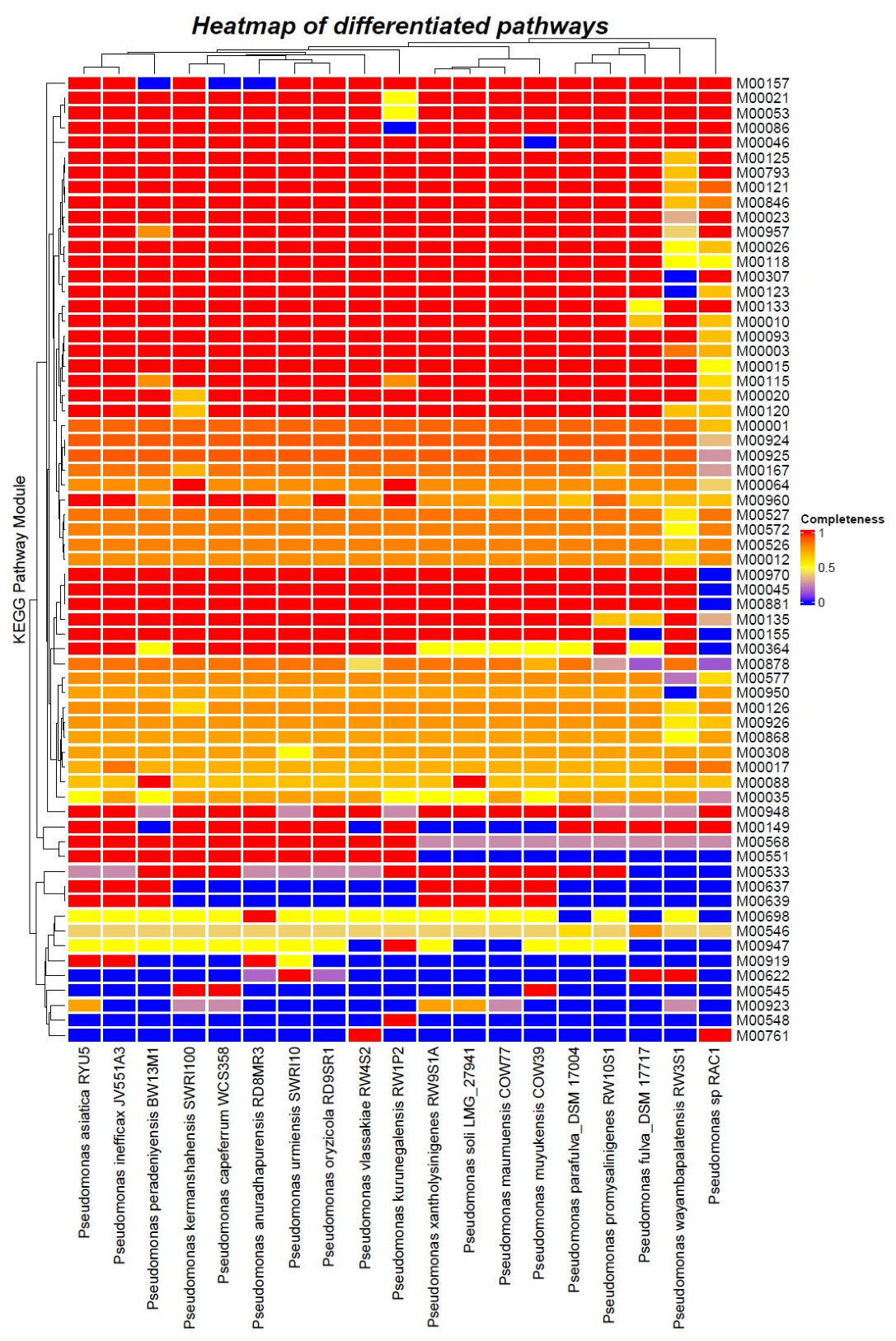
Figure 3.
Carbohydrate-active enzyme (CAZyme) profiles across genomes, demonstrating the expanded carbohydrate utilization potential of RAC1.
Figure 3.
Carbohydrate-active enzyme (CAZyme) profiles across genomes, demonstrating the expanded carbohydrate utilization potential of RAC1.
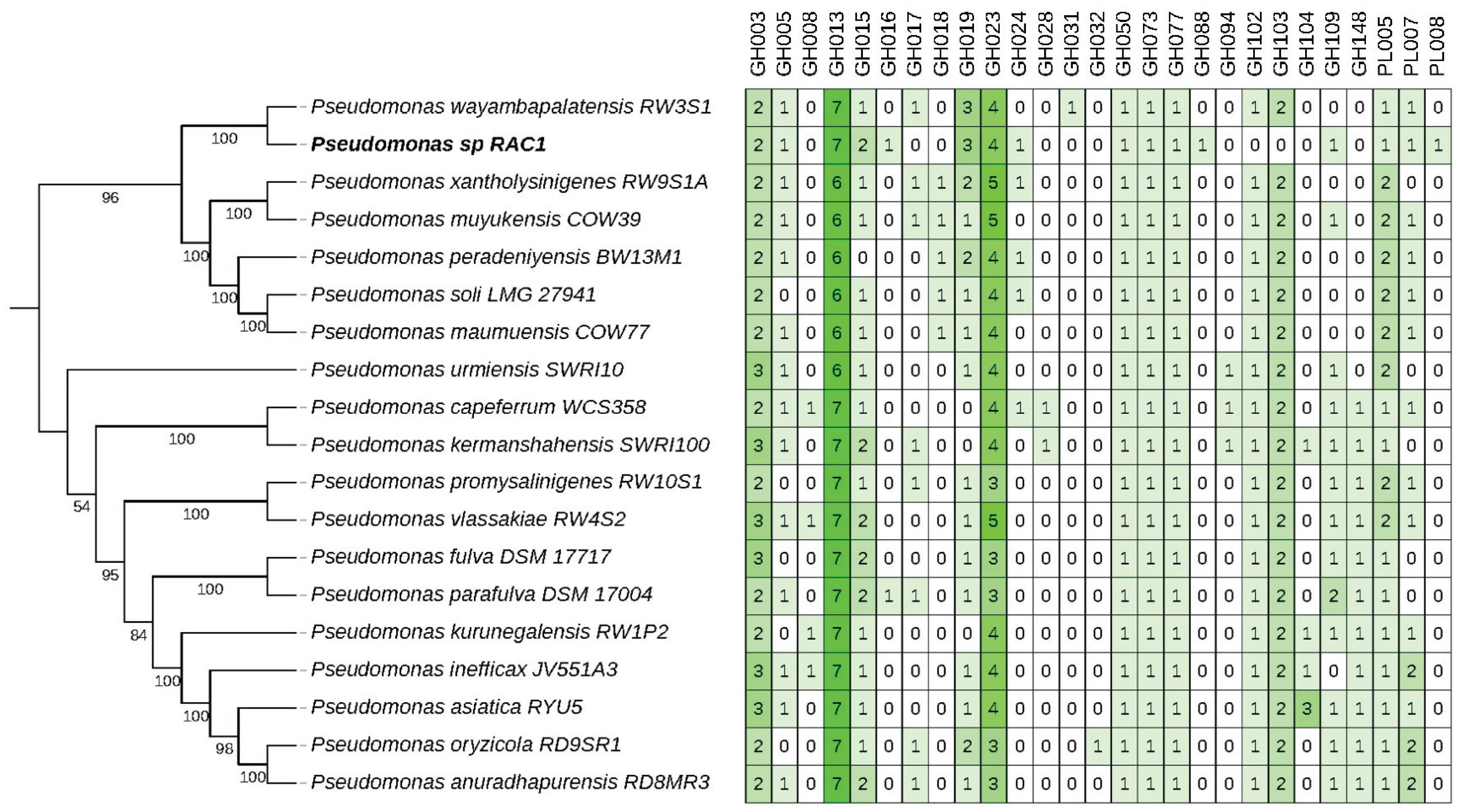
Figure 4.
Comparative distribution of flagellar-associated genes across Pseudomonas spp. The heatmap showing presence (purple) and absence (white) of key flagellar assembly and motility genes across selected Pseudomonas genomes, including the isolate Pseudomonas sp. RAC1 (highlighted).
Figure 4.
Comparative distribution of flagellar-associated genes across Pseudomonas spp. The heatmap showing presence (purple) and absence (white) of key flagellar assembly and motility genes across selected Pseudomonas genomes, including the isolate Pseudomonas sp. RAC1 (highlighted).
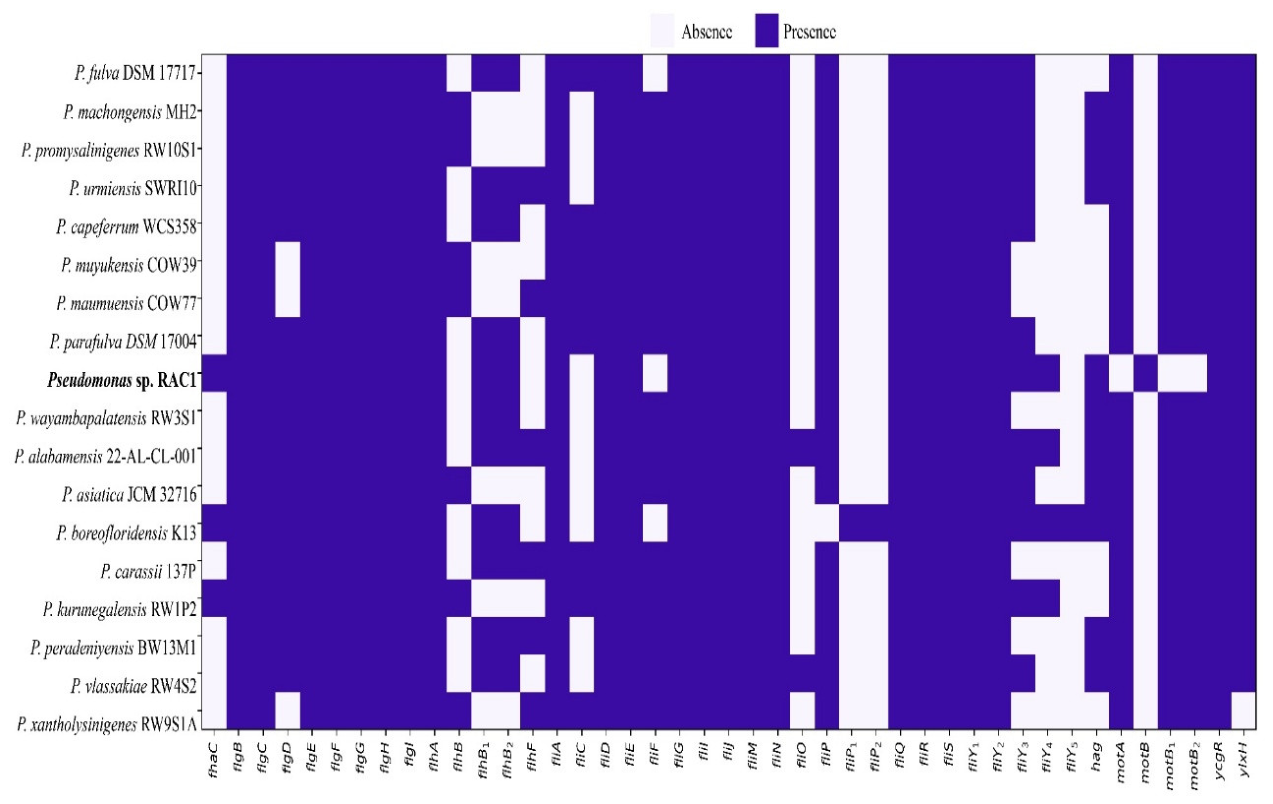
Figure 5.
Distribution of antibiotic resistance genes predicted by DeepARG, highlighting the multidrug-resistant potential of RAC1.
Figure 5.
Distribution of antibiotic resistance genes predicted by DeepARG, highlighting the multidrug-resistant potential of RAC1.
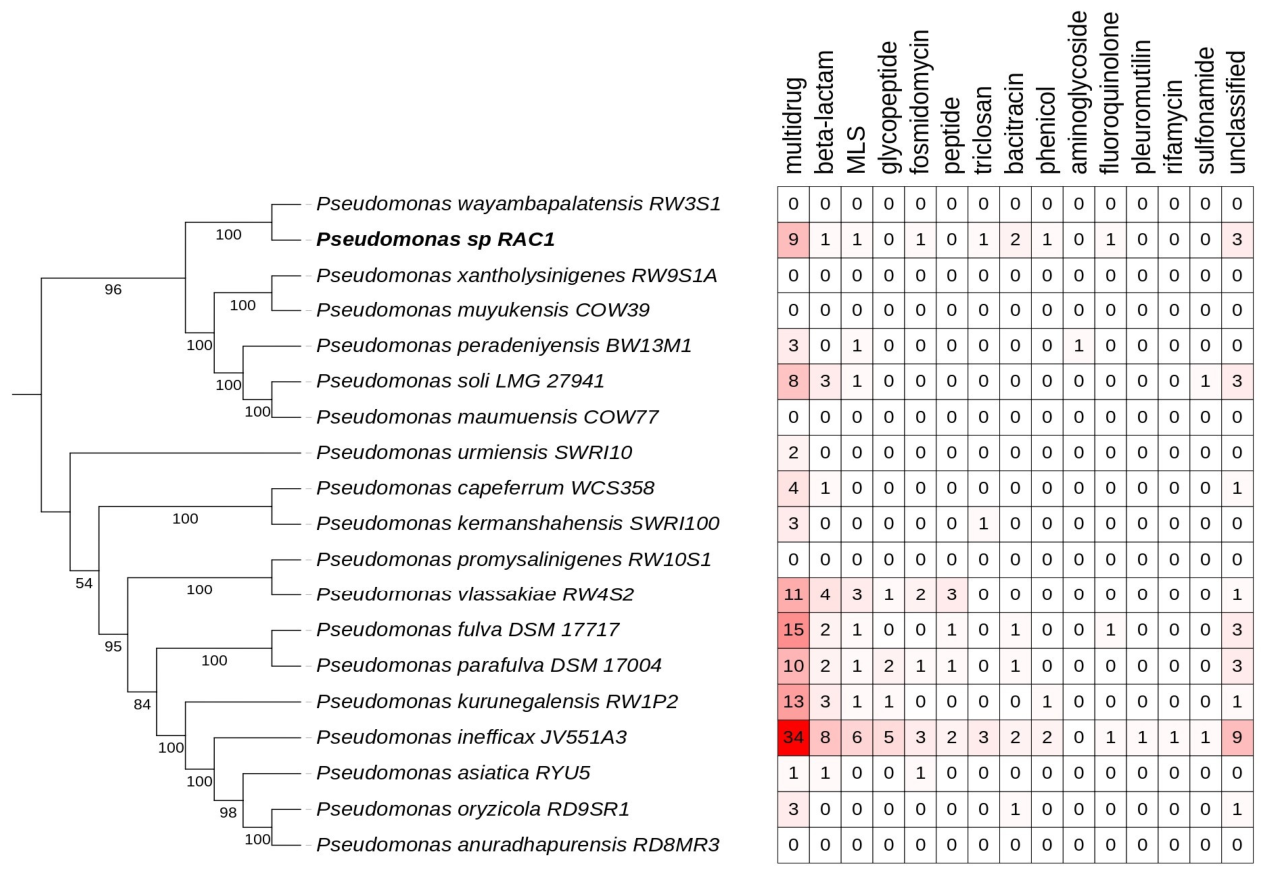
Figure 6.
The pangenome of Pseudomonas sp. RAC1. A Each one of the 12,892 gene clusters is represented by a radius that originates from 18 genomes. Gene clusters are sorted based on the distribution of genomes. The phylogenetic tree in the upper right corner of the figure is calculated according to the ANIb values, and the genomes in the ring are sorted accordingly. SCGs (single-copy gene clusters) and singletons are highlighted. B. Pan and core genome sizes. Blue represents the pan genome size, while the red represents the core genome size.
Figure 6.
The pangenome of Pseudomonas sp. RAC1. A Each one of the 12,892 gene clusters is represented by a radius that originates from 18 genomes. Gene clusters are sorted based on the distribution of genomes. The phylogenetic tree in the upper right corner of the figure is calculated according to the ANIb values, and the genomes in the ring are sorted accordingly. SCGs (single-copy gene clusters) and singletons are highlighted. B. Pan and core genome sizes. Blue represents the pan genome size, while the red represents the core genome size.
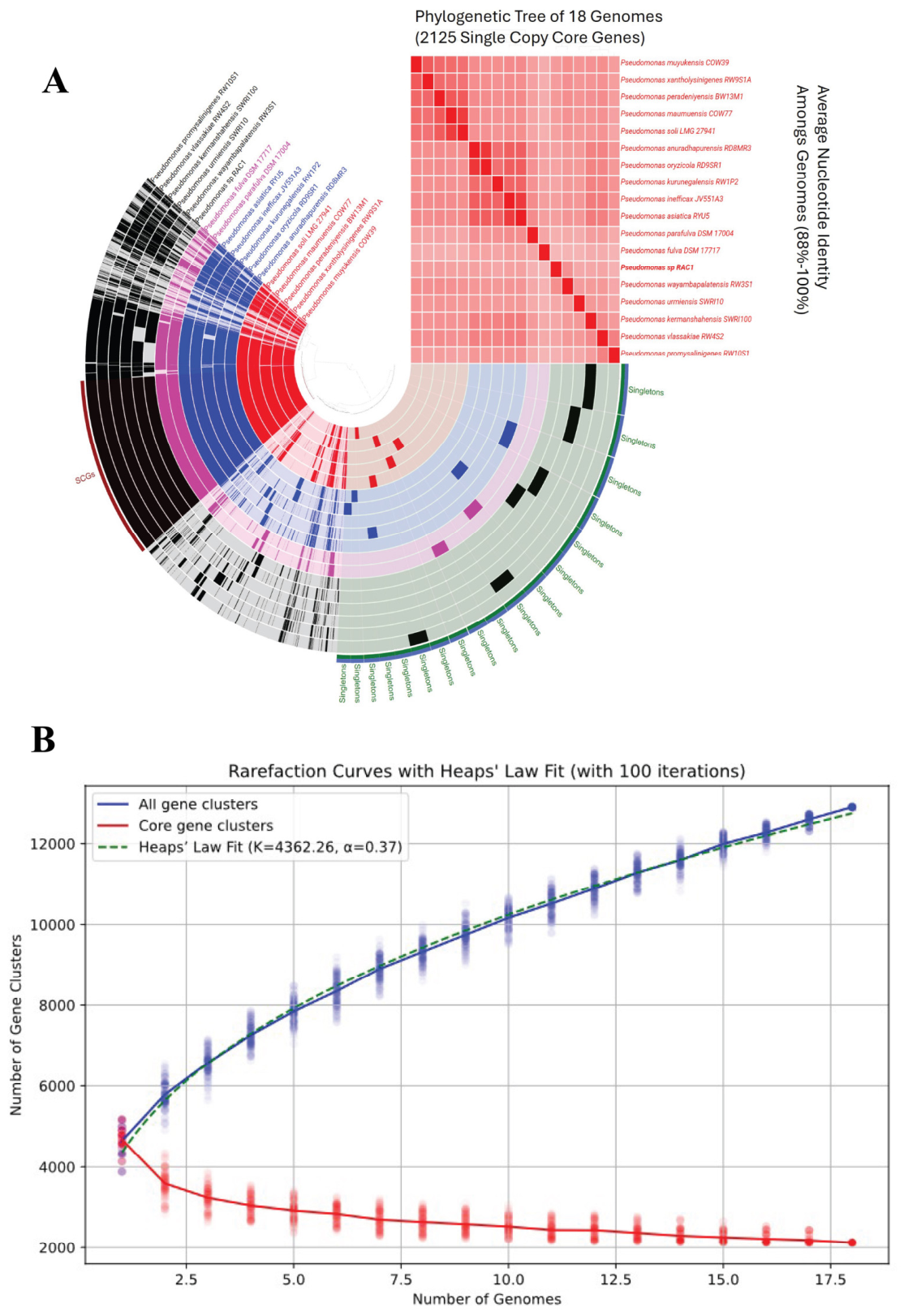

Table 1.
The presence of the antibiotic’s resistance genes in the genomic sequence of Pseudomonas sp. RAC1.
Table 1.
The presence of the antibiotic’s resistance genes in the genomic sequence of Pseudomonas sp. RAC1.
| AMR Mechanism | Genes |
|---|---|
| Antibiotic activation enzyme | KatG |
| Antibiotic target in susceptible species | Alr, Ddl, dxr, EF-Tu, folA, Dfr, folP, gyrA, gyrB, Iso-tRNA, kasA, MurA, rho, S10p |
| Antibiotic target replacement protein | FabG, fabV, HtdX |
| Efflux pump conferring antibiotic resistance | EmrAB-TolC, MacA, MacB, MdtABC-OMF, MdtABC-TolC, MexAB-OprM, MexEF-OprN, MexEF-OprN system, MexHI-OpmD, MexJK-OprM/OpmH, TriABC-OpmH |
| Gene conferring resistance via absence | gidB |
| Protein altering cell wall charge conferring antibiotic resistance | GdpD, PgsA |
| Protein modulating permeability to antibiotic | OccD1/OprD, OccD2/OpdC, OccD3/OpdP, OccD6/OprQ, OccK8/OprE, OprB, OprD family, OprF |
| Regulator modulating expression of antibiotic resistance genes | OxyR |
Disclaimer/Publisher’s Note: The statements, opinions and data contained in all publications are solely those of the individual author(s) and contributor(s) and not of MDPI and/or the editor(s). MDPI and/or the editor(s) disclaim responsibility for any injury to people or property resulting from any ideas, methods, instructions or products referred to in the content. |
© 2026 by the authors. Licensee MDPI, Basel, Switzerland. This article is an open access article distributed under the terms and conditions of the Creative Commons Attribution (CC BY) license (http://creativecommons.org/licenses/by/4.0/).
Copyright: This open access article is published under a Creative Commons CC BY 4.0 license, which permit the free download, distribution, and reuse, provided that the author and preprint are cited in any reuse.