

Submitted:
13 June 2026
Posted:
15 June 2026
You are already at the latest version
Abstract
The rise in the presence and identification of biorefractory pollutants, also known as emerging contaminants (ECs) like microplastics, in the environment has been notable in recent times, attributed to factors such as population growth, changes in lifestyle, and rapid industrialization. A variety of pollutant substances are necessitated suitable remediation. Bioelectrochemical systems (BESs) represent sustainable technologies that can be utilized. In the current bibliometric investigation, the connection between bioelectrochemistry and pollutants in the environment is examined. Data obtained from the Web of Science database were utilized for the bibliometric analysis employing VOSviewer and R. According to the results, a highly integrated and rapidly maturing research landscape, characterized by a clear transition from fundamental technological development to large-scale environmental applications. The study serves as the essential bridge between the two primary pillars of the field: sustainable energy recovery and environmental remediation. The keyword co-occurrence networks illustrate a sophisticated synergy where the oxidative biodegradation of organic pollutants is directly coupled with electricity generation. A key discovery is the inherent synergy between the biodegradation of pollutants and the generation of electricity, which characterizes the contemporary ‘waste-to-energy’ model.
Keywords:
waste-to-energy
; biocatalysis
; bioremediation
; remediation
; microorganisms
; electrochemistry
; emerging contaminants
; constructed wetlands
; wastewater
; soil
; water
; microplastics
Introduction
The occurrence and detection of biorefractory pollutants, or emerging contaminants (ECs) such as microplastics, in the environment have increased recently due to population growth, lifestyle changes, and fast industrialization (Alexiadis et al., 2026; Bu and Ma, 2025; E.Golia et al., 2025;Tziourrou and Golia, 2024, 2025; Ahmad et al., 2021). These ECs might be both natural and synthetic substances that provide a known or suspected risk to human health and the aquatic ecology (Ahmad et al., 2021). Many different types of pollutant substances are released into the environment and require appropriate remediation (Ahmadi et al., 2023). Bioelectrochemical systems (BESs) are environmentally friendly technologies that can be used to remediate pollutants (Ahmadi et al., 2023).
The scientific topics of bioelectrochemistry are: 1. Electrified Biological Interfaces, 2. Electrochemical Biosensors, 3. Biomolecular and Cellular Electric Field Effects and Electroporation, 4. Biofuel Cells and Bioenergetics, 5. Electrochemistry of Membranes, 6. Biomedical Electrochemistry, 7. Photobioelectrochemistry, 8. Electrochemical Biocatalysis, 9. Microbial Electrochemistry, 10. Biocorrosion, 11. Electrochemistry of Biomimetic Systems, 12. Fundamentals of Bioelectrochemistry and 13. Methods of Bioelectrochemistry including Hyphenated and in situ Techniques Techniques, which are currently the main topics of the International Bioelectrochemical Society (http://www.bioelectrochemical-soc.org). The International Bioelectrochemical Society was founded in 1979 at Giulio Milazzo’s suggestion, and it was formally registered in France in 1981 (Supruna and Budnikov, 2022). According to Corona-Martínez et al. (2025), bioelectrochemical system discovery in 1911 (Potter, 1911).
Bioelectrochemistry is a subfield of Chemical Science that studies electrode reactions of redox enzymes and electron-proton transfer and transport involving biomolecules (Pereira et al., 2018). Bioelectrochemical systems (BESs) are devices that use microorganisms as catalysts to transform chemical energy into electrical energy (Corona-Martínez et al., 2025).
In specific, active microorganisms are used in bioelectrochemical procedures to catalyze electrochemical reactions (Wu et al., 2025). Based on an investigation, electron transfer reactions are crucial to the mechanisms by which biological cells absorb and utilize energy, making them fundamental to all biological systems (Bartlett, 2008). These electron transfer reactions take place at surfaces, in electron transport chains where electron transfer takes place in an ordered manner between certain components, and in highly organized ways (Bartlett, 2008). As part of their metabolic activity, electroactive bacteria (EAB) may exchange electrons with conductive materials, allowing for the creation of a variety of bioelectrochemical systems (BESs) (Chavez et al., 2026). Pollutant biosensing, pollutant bioremediation, and sustainable electricity generation are all supported with these systems (Chavez et al., 2026).
Firstly, a novel signal transduction technique for microbial biosensing is provided by the biological system with the electrochemical system (Wu et al., 2025). In other words, the creation of microbial electrochemical biosensors (MEBs) using electroanalytical methods and electroactive microorganisms (EAMs) exhibits potential (Wu et al., 2025). Microbial biosensing utilizes microbial cells or their components as the sensitive elements for target recognition, signal trans-duction, and output (Wang et al., 2024). Microbial biosensing has lately emerged in a number of fields, including environmental monitoring, food analysis, and healthcare, due to the diversity of cell sensory systems and the enlarged toolbox in genetic editing of gene sensory circuits (Wu et al., 2025). Microbial electrochemical biosensors (MEBs) combine electroanalytical methods with microbial cells and micro/nano-electrodes to use the microorganism’s electrochemical signals as an output signal (Wu et al., 2025).
Furthermore, bioelectrochemical systems (BESs) are an extremely complicated new technology that may recover high-value-added products (such nutrients, H2, and CH4) and produce bioenergy (Butti et al., 2016). These systems use microorganisms as catalysts to convert the chemical energy contained in various substrates (such as glucose, acetate, etc.) into electrical energy. These microbes, often referred to as exoelectrogens, have the ability to move electrons from their cells to an external electron acceptor, like an electrode in a bioelectrochemical system (Addagada et al., 2023). BESs have been used in contaminated soil remediation, greenhouse gas mitigation, biosynthesis, and wastewater treatment since their discovery in 1911 (Corona-Martínez et al., 2025).
According to Sun et al. (2020), bioelectrochemical systems (BESs) are regarded as a novel biological technology for eliminating nitrogenous contaminants due to their benefits, including their ability to treat wastewaters with a low C/N ratio and their low energy consumption. As a result, using cathodic biofilms in BESs to carry out biological processes linked to nitrogen removal has received more attention; Previous research has assessed the viability of using BESs to remove nitrogenous chemicals by typical biological processes such as nitrification, denitrification, and anaerobic ammonia oxidation (anammox), either alone or in combination (Sun et al., 2020).
Another study assesses the energy efficiency and trade-offs of a side stream bioelectrochemical anaerobic digestion (SBEAD) system (Jun et al., 2025), in contrast to traditional anaerobic digestion (AD). Moreover, microbial community research revealed that SBEAD promoted the abundance of species that improve methane generation and substrate degradation. According to these results, SBEAD is a scalable method for handling organic waste with high strength in waste-to-energy systems (Jun et al., 2025).
Bioelectrochemical systems (BESs) are acknowledged for wastewater treatment based on a study (Wu et al., 2025). Wastewater treatment facilities owned by municipalities are essential for safeguarding the environment; however, the functioning of these plants requires a significant energy investment (Logan, 2009). Water scarcity and poor quality can be addressed by efficient treatment of wastewater for water reuse (Wu et al., 2025). Traditional techniques have certain drawbacks, including poor effectiveness on stubborn compounds and significant usage of electrical energy. For instance, using aerobic activated sludge to treat 1 cubic meter of wastewater requires 0.6 kWh of energy (Wu et al., 2025). A continuous challenge for sustainability is enhancing the effectiveness of wastewater treatment to lower energy needs and to boost energy recovery from waste materials. To tackle this issue, the primary research objectives consist of enhancing a more energy-saving method to extract dissolved organics from wastewater and minimizing aeration, a significant step that requires a lot of electricity in most public wastewater treatment plants; creating improved methods to harness the energy stored in the organic pollutants of wastewater to generate electrical energy; and bettering the removal or recovery of nutrients (mainly inorganic nitrogen and phosphorus) from wastewater by implementing a process that uses fewer resources (for instance, the aeration needed for nitrification and chemicals for denitrification and the precipitation of phosphorus) (Xiao et al., 2012).
Bioelectrochemical systems (BESs) represent a distinctive category of technology for cleaning wastewater that also provides the benefit of recovering valuable resources during the treatment process (Leicester et al., 2020). Additionally, because of the use of strong microbial biocatalysts in BESs, it is possible to efficiently eliminate emerging contaminants (ECs) in these systems (Ahmad et al., 2021). The efficiency of bioelectrochemical systems (BES) is influenced by several factors, including the biocatalyst, substrate characteristics, salinity, and the applied potential, all of which should be carefully considered (Ahmad et al., 2021).
A system combining photobioelectrochemical processes was developed by Xiao et al. (2012) through the integration of a microbial fuel cell (MFC) into a microalgal bioreactor. This method successfully eliminates organics from a synthetic solution in the MFC and nutrients in the algal bioreactor at the same time, while generating bioenergy in the form of electricity and algal biomass using bioelectrochemical and microbiological processes (Xiao et al., 2012).
Microplastics are persistent contaminants found widely in wastewater treatment (Ren et al., 2023). They not only influence the metabolic functions of microorganisms directly but can also have direct or indirect effects on the environment and human health by absorbing and releasing additional pollutants present in the wastewater (Zeng et al., 2023). Bioelectrochemical systems (BES) are increasingly used for wastewater treatment, combining microbial metabolism with electrochemical reactions (Luo et al., 2023). These systems effectively treat hard-to-remove pollutants thanks to their excellent oxidation and reduction capabilities (Wang and Zhou, 2024). Τhe potential functions of BES in wastewater contaminated with microplastics include BES speeding up the aging and breakdown of microplastics in wastewater, BES enhancing the metabolic functions of microorganisms that degrade microplastics, BES improving the ability of microorganisms to resist microplastics and the harmful substances they release or attract, and BES reducing the combined impact of other pollutants (Wang and Zhou, 2024).
Finally, according to Kronenberg et al. (2017), the state-of-the-art research directions in the field of PAH removal through bioelectrochemical systems (BESs) were identified, providing valuable guidance for researchers in designing future experimental studies with respect to both BES configuration and operating environmental parameters. BES technology has been demonstrated to be a successful in situ approach for the enhanced bioremediation of recalcitrant organic pollutants, such as PAHs, TPHs, and diesel, in contaminated soils, sediments, and aqueous media (Kronenberg et al., 2017). Moreover, evidence from the literature indicates that bioelectrochemical systems (BESs) can address two key constraints associated with the degradation of polycyclic aromatic hydrocarbons (PAHs). In particular, these systems stimulate the growth and metabolic activity of native PAH-degrading microorganisms, while simultaneously enhancing contaminant bioavailability by facilitating their adsorption onto electrode surfaces, where degradation can take place either prior to or following desorption. Bioelectrochemical systems (BESs) are considered a promising technology for PAH bioremediation due to their high pollutant removal efficiency, energy recovery potential, and ability to be integrated into existing treatment technologies (Kronenberg et al., 2017). Moreover, utilizing sediment or soil microbial fuel cells might help reduce the current limitations of in situ bioremediation, such as high costs for treatment after recycling or disposing of added chemicals. Therefore, employing biological electrochemical systems for the bioremediation of PAHs is likely more eco-friendly and poses fewer risks to human health compared to traditional in situ bioremediation methods (Kronenberg et al., 2017).
The objective of this research is to conduct a bibliometric analysis of the scientific literature in the field of bioelectrochemical systems. This study aims to capture the historical development, current status, and future research trends of the field by exploring the most significant thematic axes, scientific collaborations, and the intellectual structure of knowledge. Additionally, it examines the dual role of bioelectrochemical systems in pollutant degradation and the simultaneous production of bioelectric energy.
Methodology
For the current bibliometric article, data from Web of Science (WoS) Core Collection database was utilized. The keywords “bioelectrochemistry” and “pollutants” were used in combination with the Boolean operator “AND”, to identify publications focusing on the intersection of microbiology, electrochemistry and pollutants. The results (76 documents) from Web of Science included various types of scientific records, such as articles, review articles, editorial materials, proceeding papers, meeting abstracts, book chapter and note. The data were collected during the period from 1966 to 2026. The complete bibliographic data of these documents, encompassing full records and cited references, were exported in plain text format.
The dataset was imported into VOSviewer software (version 1.6.20) for the purpose of constructing and visualizing the network (van Eck and Waltman, 2010). To identify the core research themes and their interrelations, a keyword co-occurrence analysis was performed using the full counting method. In order to create a focused and interpretable network map, a minimum occurrence threshold of 5 was set for the keywords. The software grouped frequently co-occurring terms into thematic clusters, with each cluster shown in a different color. In the visualized network, the frequency of keywords is represented by node size, while the spatial distance and link thickness demonstrate the strength of the connections between them.
The visualization of the relationships among authors, keywords, and sources was performed using the R programming environment. In specific, processing was conducted using R (version 4.5.2) with RStudio (version 2026.0.1+403). Bibliographic data were exported from the Web of Science database in plain text format and imported into R using the bibliometrix package. The data was transformed into a structured bibliographic dataframe, facilitating subsequent analysis. A three-field plot was generated to illustrate the connections between AU_CO represents the authors’ countries, AU refers to the authors, and DE denotes the authors’ keywords. This type of visualization facilitates the identification of major research topics, leading authors, and the relationships between countries, authors, and research keywords. The “threeFieldsPlot()” function from the bibliometrix package in R was used to visualize the relationships between countries, authors, and author keywords (Aria and Cuccurullo, 2017). Additionally, Biblioshiny (https://www.bibliometrix.org/biblioshiny/), the web-based interface of the bibliometrix package in R, was employed to facilitate the visualization and interpretation of bibliometric data through interactive science mapping techniques.
Results
The results are divided into three subsections. Initially, the “Keyword-Based Analysis” subsection is introduced, which includes the “Factorial Analysis” of the keywords. Subsequently, a connection is made with the “Analysis of the Relationship Between Keywords and Geographic Distribution”. The method of production is indicated in the caption of each figure.
Keyword-Based Analysis
The relationships among the primary research themes were additionally confirmed through the use of VOSviewer software, which uncovered a dual-cluster network configuration (Figure 1). The green cluster symbolizes the “Energy Generation” sector, mainly incorporating microbial fuel cell technology alongside bioelectricity production. The red cluster includes the “Remediation and Performance” sector, connecting wastewater treatment and biodegradation processes to system efficiency. At the center of this network lies the concept of bioelectrochemistry, which acts as the essential conceptual link connecting both clusters. The strong connections between these two fields validate a thoroughly integrated research methodology, wherein the oxidative degradation of organic pollutants is directly associated with sustainable energy recovery, thereby positioning bioelectrochemistry as the fundamental catalyst for contemporary wastewater treatment strategies.
The temporal development of the research landscape was illustrated through the VOSviewer overlay visualization, which mapped keywords based on their average year of publication (Figure 2). The analysis indicates a notable change in research emphasis over the past four years. Initial studies (around 2020, depicted in purple) concentrated on the technical aspects and power output measurements of microbial fuel cells and their efficiency. By the years 2021 to 2022 (indicated in green), the literature shifted its focus towards the fundamental principles of bioelectrochemistry. Most notably, the present research frontier (2023, highlighted in yellow) is primarily characterized by concepts such as wastewater treatment, biodegradation, and pollutant removal. This temporal trajectory indicates that the field has progressed from optimizing devices at the laboratory scale to an application-focused phase, where bioelectrochemical systems are mainly assessed for their effectiveness in integrated environmental remediation and waste-to-energy processes.
The research field's conceptual density was illustrated through VOSviewer’s density visualization, which created a “heatmap” highlighting the most significant topics (appendix section: Figure S1). The analysis uncovers a core of high density focused on bioelectrochemistry, which acts as the main intellectual foundation relating all aspects of the research. The spatial arrangement distinctly highlights two primary thematic poles: an environmental remediation pole situated on the left, noted for its high-density zones dedicated to wastewater treatment and biodegradation, and an energy recovery pole located on the right, which emphasizes microbial fuel cells and electricity generation. The close proximity and elevated density of these areas illustrate that the field is marked by a substantial level of integration, wherein bioelectrochemical processes are concurrently utilized for waste stabilization as well as sustainable energy generation.
The intellectual mapping of the domain was illustrated via a keyword co-occurrence network, which unveiled three separate thematic clusters that characterize the research landscape (Figure 3). The green cluster signifies the technical foundation of the domain, concentrating on electricity production and the operational efficiency of microbial fuel cells in the context of wastewater treatment. The blue cluster highlights the aspect of environmental microbiology, focusing on the biodegradation of intricate organic pollutants and the metabolic functions of particular electroactive bacteria, including Shewanella oneidensis. Ultimately, a smaller red cluster signifies specialized pathways, encompassing dechlorination and the impact of electrical stimulation on anaerobic degradation processes. The interconnectedness of these clusters, as shown by the dashed lines, illustrates a cohesive research methodology in which bioelectrochemical principles are utilized to connect sustainable energy recovery with advanced environmental remediation.
In order to assess the evolution and maturity of the research domain, a strategic thematic analysis was performed, charting essential concepts according to their centrality (relevance) and density (development) (Figure 4). The strategic maps produced indicate that the domain is marked by a significant level of conceptual stability and a distinct emphasis on energy-focused applications. Electricity generation, bioelectricity generation, and microbial fuel cells are identified as the main “Motor Themes,” situated in the upper-right quadrant. The elevated centrality and density scores indicate that these subjects are not only essential to the research domain but have also attained a significant degree of technical and theoretical maturity, influencing the present scientific direction. In contrast, bioelectrochemistry, degradation, and performance are positioned as “Basic Themes” in the lower-right quadrant, serving as the essential theoretical foundation that underpins more specialized applications. Significantly, the placement of biodegradation—which fluctuates between a fundamental and a mechanical theme across various levels of detail—underscores a growing research trend: the shift from basic organic elimination to the advanced incorporation of pollutant degradation within energy-producing bioelectrochemical systems. Ultimately, the emergence of new concepts like remediation, oxygen reduction, and various metabolisms and technologies, including bio-electro-fenton (as noted by Li et al., 2018), indicates that remediation in the lower-left quadrant is evolving into a diverse frontier. Here, the principles of bioelectrochemistry are progressively being adapted for the treatment of complex and emerging contaminants, thereby effectively connecting sustainable energy production with advanced environmental protection.
The conceptual focus of the literature under examination was illustrated using a word cloud derived from the keywords provided by the authors (Figure 5). The prevalence of the term “bioelectrochemistry” positions it as the primary scientific framework of the dataset. The frequent occurrence of terms like “microbial fuel cell”, “electricity generation”, and “performance” underscores a significant research emphasis on the technological enhancement and energy recovery capabilities of bioelectrochemical systems. Simultaneously, the significance of “degradation”, “biodegradation”, and “wastewater treatment” highlights the practical use of these technologies in environmental remediation. Moreover, the addition of more precise terminology, including “emerging contaminants”, “pharmaceuticals”, and “microbial community”, signifies a broadening research landscape that investigates the metabolic pathways of electroactive microorganisms aimed at eliminating complex and persistent organic pollutants.
The chronological progression of research themes, as illustrated by the Trend Topics analysis, indicates a notable shift from basic technology development to applicable environmental uses (Figure 6). From 2019 to 2021, the research predominantly concentrated on the fundamental aspects of microbial fuel cells and their performance in operation. Between 2022 and 2023, there was a notable shift in focus towards the fundamental scientific mechanisms, characterized by a frequent use of terms like bioelectrochemistry, electricity generation, and degradation, which underscores a commitment to comprehending electron transfer and energy recovery. Significantly, the latest timeframe (2024 – 2025) emphasizes wastewater treatment and pollutant removal as the foremost trending subjects. This progression indicates that the discipline has advanced past the optimization of devices at the laboratory scale and is now transitioning towards large-scale integration and the creation of sustainable solutions for environmental remediation.
Factorial Analysis
The conceptual density map, which is based on factorial analysis, offers a spatial representation of the research intensity in the field (Figure S2). The map illustrates a nucleus of high density (marked in red), signifying a strong thematic focus on electricity generation, bioelectrochemistry, and microbial fuel cells. This “hotspot” indicates that the main scientific efforts focus on enhancing the energy recovery capabilities of bioelectrochemical systems in the context of wastewater treatment. The concept of performance holds the most prominent position within this intricate area, highlighting its significance as the essential standard for contemporary research. In contrast, the conceptual periphery encompasses terms like emerging contaminants, pharmaceuticals, and polychlorinated biphenyl, indicating that although the technological core is firmly established, the field is gradually broadening its focus to include the remediation of specialized and persistent organic pollutants.
Furthermore, the dendrogram (Figure S3) identifies three main clusters (Y axis: 1.0 – 1.5), which signify the leading research fronts (Figure S3). The first cluster emphasizes the generation of bioelectrochemical energy. The second cluster concentrates on system optimization, nitrogen removal processes and the application of constructed wetlands. The third and most extensive cluster pertains to the degradation of complex pollutants, pharmaceuticals, and emerging contaminants through microbial electrolysis cells. Table 1 details the specific keywords associated with each of the three identified clusters, providing a clearer insight into the core research themes of the field. The overall structure of the tree confirms the multidimensional nature of the field, effectively linking environmental remediation with biofuel technology.
The conceptual framework of the research domain was further examined through Multiple Correspondence Analysis (MCA) to illustrate the connections among principal research themes (Figure 7). As depicted in the Conceptual Structure Map, the initial two dimensions account for 45.24% of the overall variance (Dimension 1: 28.05%; Dimension 2: 17.19%). The spatial distribution of keywords uncovers a clear thematic framework: The left section of the map is primarily influenced by the ‘Energy Recovery’ pole, where electricity generation and bioelectricity generation are tightly grouped alongside microbial fuel cells (MFCs) and power output optimization. This suggests that a considerable amount of the literature emphasizes the engineering dimensions and the effectiveness of energy harvesting.
In contrast, the right quadrant signifies the ‘Environmental Remediation’ pole. In this section, biodegradation is located near terms like ‘bioremediation,’ ‘bacteria,’ and ‘dechlorination,’ emphasizing a research focus on the biological degradation of intricate pollutants.
Notably, bioelectrochemistry and “wastewater treatment” are located close to the center of the map. Their strategic position indicates that they function as the essential “conceptual bridge” within the discipline, connecting the oxidative biodegradation of organic substances with the concurrent production of electricity via bioelectrochemical processes. Moreover, the closeness of 'emerging contaminants' and 'pharmaceuticals' to the central-bottom region signifies a developing research frontier that employs bioelectrochemical systems for the management of non-conventional wastewater streams.
The consistency between the hierarchical clustering (dendrogram) and the factorial map (MCA) offers a strong validation of the conceptual framework within the field. The dendrogram organizes the literature into separate thematic clusters according to their proximity, whereas the MCA map elucidates the orientation and central importance of these themes. Both analyses converge on a dual-pole framework: one cluster is energy-oriented, defined by electricity generation and MFC optimization, while the other is remediation-oriented, concentrating on the biodegradation of complex pollutants. The dendrogram demonstrates how particular microbial processes are interconnected within these larger categories, whereas the MCA map indicates that bioelectrochemistry and wastewater treatment are positioned at the core (central coordinates) of the research landscape. This central placement, along with their function as connecting nodes within the hierarchical structure, affirms that bioelectrochemistry serves as the fundamental scientific driver facilitating the combination of sustainable power production with advanced environmental cleanup, effectively defining the current trajectory of the field.
Analysis of the Relationship Between Keywords and Geographic Distribution
The intellectual progression within the research domain visualized through a three-field plot (Sankey diagram), illustrating the interconnections between authors’ countries (AU_CO), prominent authors (AU), and author keywords (DE) (Figure 8). The diagram reinforces the geographical dominance of China, which serves as the primary hub for the field’s leading researchers, such as Liu Y, Wu FC, Liu XH, and Lu SY. These authors demonstrate a significant thematic focus on the combination of constructed wetlands and microbial fuel cells. The width of the connection lines indicates that the strongest intellectual connections are established between Chinese researchers and the advancement of bioelectrochemical technologies for wastewater treatment. In contrast, although nations such as the USA, Iran, and South Africa participate in the network, their engagement is more fragmented, featuring a smaller number of contributors and a narrower scope of subjects. In summary, the three-field plot substantiates that the prevailing research direction is primarily influenced by the Chinese scientific community, which distinctly emphasizes the application of bioelectrochemistry to improve the remediation effectiveness of constructed wetland systems.
An analysis of the geographical distribution of research output was conducted to determine the primary contributors to the field (Figure 9). The global scientific production map demonstrates that the research landscape exhibits a notable concentration of activity in both Asia and North America. China has established itself as the preeminent global leader, showcasing the largest number of publications, with the United States and India following closely behind, both of which sustain a significant presence in research. In Europe, the scientific output is characterized by fragmentation, yet it remains significant, with important contributions from nations including Spain, Italy, Portugal, and the United Kingdom. Moreover, new research centers are being recognized in areas such as South Korea, Canada, and Iran. This spatial distribution indicates that while the scientific interest in bioelectrochemical systems is global, the technical and intellectual leadership is currently centered in major industrialized economies, likely driven by high levels of investment in renewable energy and advanced wastewater treatment technologies.
According to Figure 10, the diagram depicts the temporal progression of scientific output, emphasizing an emerging research domain that remained inactive until 2008 but has undergone significant expansion since 2018. China has experienced a remarkable surge in publications, greatly outpacing other nations since 2020, while India has also seen a significant increase, and the USA demonstrates a more gradual progression. The significant accumulation of data in the past five years highlights the present global trends within the sector, with Asian nations now leading in the generation of new knowledge. The figure depicts the transition from absolute inertia to a period of intense research activity, with Asia (China, India) taking the lead over the West.
The scientific influence and authority of different nations within the research field were evaluated through a total citation analysis (Figure S4). The ranking of the most cited countries demonstrates that China holds a leading position with 337 citations, highlighting its role as the primary intellectual powerhouse of the discipline. France and India demonstrate considerable academic influence, with 144 and 105 citations recorded, respectively. The elevated citation count for France indicates a significant degree of research quality and academic visibility associated with each publication. Other notable contributors consist of Canada and Iran, both of which are demonstrating increasing influence. This distribution of citations indicates that although scientific output is spread across the globe, the primary intellectual progress and the most frequently referenced innovations in bioelectrochemical systems are predominantly driven by prominent research institutions located in Asia and Europe.
The examination of worldwide citation influence highlights the most significant contributions to the research domain (Figure S5). As demonstrated in the ranking, the publication by Kronenberg et al. (2017) in Environmental Pollution is the most cited work, accumulating 144 citations, and serves as a key reference for later research. It is succeeded by notable contributions from Wu et al. (2020) and Liu et al. (2021), which have attracted considerable academic interest. Significantly, the inclusion of very recent works, including those by Wang et al. (2024) and Liu et al. (2023), within the most-cited literature highlights the rapid evolution and high immediacy of the field. The presence of these significant studies in high-impact journals such as Water Research and Journal of Hazardous Materials underscores the interdisciplinary relevance of bioelectrochemical systems in addressing contemporary environmental and energy issues.
Discussion
The comprehensive bibliometric analysis indicates a well-integrated and swiftly evolving research environment, marked by a distinct shift from fundamental technological development to large-scale environmental applications. The geographical and citation analyses highlight China's intellectual dominance, positioning it as the foremost generator of scientific knowledge and the preeminent center of academic influence. Although countries such as France and India exhibit considerable research influence; the ‘Three-Field Plot’ indicates that the strongest links between authors and new topics—particularly the combination of constructed wetlands with microbial fuel cells (MFCs)—are primarily driven by the Chinese scientific community.
At the core of this landscape is bioelectrochemistry, which the factorial and density maps recognize as the fundamental “conceptual hub”. This discipline acts as a crucial link connecting the two main foundations of the field: sustainable energy recovery and environmental remediation. The co-occurrence networks of keywords (derived from both Bibliometrix and VOSviewer) demonstrate a complex interaction in which the oxidative biodegradation of organic pollutants is directly linked to electricity generation. The thematic mapping provides additional clarity regarding this relationship, categorizing energy-related subjects as established “Motor Themes”. In contrast, remediation processes, which are presently classified as “Basic Themes”, demonstrate a significant upward trend towards evolving into key drivers of the discipline.
The temporal analysis, which includes Trend Topics and Overlay Visualization, offers essential insights into the development of the field. Research has progressed past the initial phase (approximately 2019 – 2020) of optimizing performance at the laboratory scale and engineering devices. The present frontier (2023 – 2025) is characterized by a transition towards the removal of emerging contaminants and pharmaceuticals, effectively transforming bioelectrochemical systems from mere power generators into advanced bioremediation tools. This development is demonstrated by the significant citation impact of pivotal studies (e.g., Kronenberg et al., 2017), which established the mechanistic underpinnings for the contemporary, application-focused trends seen today.
Complementary, the combination of bioelectrochemical systems with phytoremediation techniques signifies a promising research direction. Plant roots release organic compounds that support microbial growth, while electroactive microorganisms facilitate pollutant degradation and electricity generation. These synergistic systems have the capability to concurrently enhance soil quality, facilitate vegetation establishment, and reclaim energy from polluted environments.
Recent research has indicated that bioelectrochemical methods could play a role in the remediation of emerging pollutants, such as pharmaceuticals, antibiotic-resistant bacteria, and microplastics. While studies in this field are still relatively limited, initial results suggest that electrically stimulated microbial communities may have improved abilities to degrade complex contaminants and reduce their environmental effects.
Despite their significant potential, numerous challenges persist before large-scale implementation can be considered viable. Factors such as soil heterogeneity, moisture content, electrode configuration, contaminant distribution, and long-term operational stability continue to influence system performance. Economic evaluations and practical demonstrations at the field level are necessary to confirm laboratory results in real-world environmental settings. Nevertheless, ongoing technological advancements and growing scientific interest suggest that bioelectrochemical soil remediation may become an important component of future sustainable environmental management strategies.
Conclusion
The results of the current bibliometric analysis offer a distinct perspective on the historical development. It is determined that the field is marked by significant geographic centralization within China, which serves as the main driver for both scientific production and intellectual impact. In essence, bioelectrochemistry serves as the fundamental domain that effectively connects the two objectives of sustainable energy recovery and environmental remediation. The observed thematic evolution indicates a notable shift from optimizing microbial fuel cells at the laboratory scale to implementing advanced, large-scale applications in wastewater treatment and the elimination of emerging contaminants. Ultimately, the incorporation of bioelectrochemical systems within constructed wetlands stands out as the leading strategic trend, providing a strong and sustainable approach for the advancement of circular, energy-efficient water management infrastructures. This research validates that the domain has attained a level of maturity, indicating that forthcoming initiatives ought to concentrate on expanding these technologies to tackle genuine environmental issues.
A key discovery from the conceptual mapping is the inherent synergy between the degradation of pollutants and the generation of electricity, which characterizes the ongoing “waste-to-energy” model. The significant connectivity observed in the keyword networks indicates that the biodegradation of organic contaminants is the main bio-catalytic process driving the system. In microbial fuel cells, electroactive microorganisms facilitate the oxidation of complex pollutants, using them as sources of electrons. This metabolic process not only facilitates the treatment of wastewater but also concurrently produces a flow of electrons that is harvested as sustainable bioelectricity. The bibliometric findings indicate that this dual functionality represents the primary aim of contemporary research, wherein the system’s efficiency is not merely assessed by its treatment capacity, but rather by its capability to convert the chemical energy contained in waste into a clean, renewable electrical output.
The convergence of findings from different bibliometric methods indicates that the discipline is progressing into a “holistic stage”. Upcoming studies are anticipated to concentrate on the scalability of these systems in wastewater treatment frameworks, where the concepts of bioelectrochemistry will be crucial in realizing the dual objectives of a circular economy: the provision of clean water and the generation of renewable energy.
Furthermore, the expanding focus on emerging contaminants, including pharmaceuticals, antibiotic-resistance genes and microplastics, suggests that bioelectrochemical systems will play an increasingly important role in next-generation environmental management strategies. Future research should prioritize pilot-scale demonstrations, long-term operational assessments, and techno-economic analyses to facilitate the transition from laboratory-scale experimentation to commercial application. By combining pollutant remediation with renewable energy production, bioelectrochemical technologies have the potential to become a cornerstone of sustainable wastewater treatment and environmental restoration in the coming decades.
Beyond the technological and environmental dimensions, the findings of this bibliometric study highlight the growing interdisciplinary nature of bioelectrochemical research. The convergence of microbiology, electrochemistry, environmental engineering, and resource recovery demonstrates that future advancements will increasingly depend on collaborative approaches that integrate scientific innovation with practical implementation. As global concerns regarding water scarcity, pollution, and energy sustainability continue to intensify, bioelectrochemical systems offer a unique platform capable of addressing multiple environmental challenges simultaneously. Their ability to transform waste streams into valuable resources aligns closely with international sustainability goals and circular economy principles.
Supplementary Materials
The following supporting information can be downloaded at the website of this paper posted on Preprints.org.
Author Contributions
P. Tziourrou: Supervision, Investigation, Conceptualization, Writing – Original Draft; S. Girousi: Discussion section, Review & Editing.; E. Golia: Discussion section, Review & Editing.
References
- Addagada, L.; Goel, M.; Shahid, M. K.; Prabhu, S. V.; Chand, S.; Sahoo, N. K.; Rout, P. R. Tricks and tracks in resource recovery from wastewater using bio-electrochemical systems (BES): A systematic review on recent advancements and future directions. J. Water Process Eng. 2023, 56, 104580. [Google Scholar] [CrossRef]
- Ahmad, A.; Priyadarshani, M.; Das, S.; Ghangrekar, M. M. Role of bioelectrochemical systems for the remediation of emerging contaminants from wastewater: A review. 2021, 62(3-4), 201–222. [Google Scholar] [CrossRef] [PubMed]
- Ahmadi, S.; Rezaee, A.; Ghosh, S.; Malloum, A.; Banach, A. A review on bioelectrochemical systems for emerging pollutants remediation: A computational approaches. J. Environ. Chem. Eng. 2025, 11(3), 110021. [Google Scholar] [CrossRef]
- Alexiadis, D.; Golia, E. E.; Vogia, R.; Liava, V.; Pérez-Gimeno, A. Microplastics in Mediterranean Agricultural Soils: Effects on Soil Properties, Metal Accumulation in Plants, and Implications for Sustainable Agroecosystems. Sustainability 2026, 18(6), 2777. [Google Scholar] [CrossRef]
- Aria, M.; Cuccurullo, C. bibliometrix: An R-tool for comprehensive science mapping analysis. J. Inf. 2017, 11(4), 959–975. [Google Scholar] [CrossRef]
- Bartlett, P. Bioelectrochemistry: Fundamentals, Experimental Techniques and Applications; John Wiley & Sons, 2008; Available online: https://onlinelibrary.wiley.com/doi/book/10.1002/9780470753842.
- Bu, Q.; Ma, Y. Emerging Pollutants in the Environment: Occurrence, Fate, Risk Assessment and Degradation Methods. Toxics 2025, 13(7), 521. [Google Scholar] [CrossRef] [PubMed]
- Butti, S. K.; Velvizhi, G.; Sulonen, M. L.; Haavisto, J. M.; Koroglu, E. O.; Cetinkaya, A. Y.; Singh, S.; Arya, D.; Modestra, J. A.; Krishna, K. V.; Verma, A.; Ozkaya, B.; Lakaniemi, A.-M.; Puhakka, J. A.; Mohan, S. V. Microbial electrochemical technologies with the perspective of harnessing bioenergy: Maneuvering towards upscaling. Renew. Sustain. Energy Rev. 2016, 53, 462–476. [Google Scholar] [CrossRef]
- Chavez, M. S.; Chen, W.-C.; Li, S.; Ajo-Franklin, C. M. Bioelectrochemical systems for the detection and removal of environmental pollutants. Curr. Opin. Biotechnol. 98, 103456. [CrossRef] [PubMed]
- Corona-Martínez, D. A.; Martínez-Amador, S. Y.; Rodríguez-De la Garza, J. A.; Laredo-Alcalá, E. I.; Pérez-Rodríguez, P. Recent Advances in Scaling up Bioelectrochemical Systems: A Review. BioTech. 2025, 14(1), 8. [Google Scholar] [CrossRef] [PubMed]
- Golia, E.; Liava, V.; Achilias, D.; Navarro-Pedreno, J.; Zorpas, A.; Bethanis, J.; Girousi, S. Microplastics' impact on soil health and quality: Effect of incubation time and soil properties in soil fertility and pollution extent under the circular economy concept. Waste Manag. Res. 2025, 43(7), 1146–1155. [Google Scholar] [PubMed]
- https. [CrossRef]
- Jun, H.; Yang, H.; Kadam, R.; Park, J. Enhancing Methane Production in a Sidestream Bioelectrochemical Anaerobic Digestion of Sewage Sludge: Focusing on Energy Efficiency and Tradeoffs. Water 2025, 17(24), 3497. [Google Scholar] [CrossRef]
- Kronenberg, M.; Trably, E.; Bernet, N.; Patureau, D. Biodegradation of polycyclic aromatic hydrocarbons: Using microbial bioelectrochemical systems to overcome an impasse. Environ. Pollut. 2017, 231, 509–523. [Google Scholar] [CrossRef] [PubMed]
- Leicester, D.; Amezaga, J.; Heidrich, E. Is bioelectrochemical energy production from wastewater a reality? Identifying and standardising the progress made in scaling up microbial electrolysis cells. Renew. Sustain. Energy Rev. 2020, 133, 110279. [Google Scholar] [CrossRef]
- Li, X.; Chen, S.; Angelidaki, I.; Zhang, Y. Bio-electro-Fenton processes for wastewater treatment: Advances and prospects. Chem. Eng. Journal. 2018, 354, 492–506. [Google Scholar] [CrossRef]
- Logan, B. E. Exoelectrogenic bacteria that power microbial fuel cells. Nat. Rev. Microbiol. 2009, 7(5), 375–381. [Google Scholar] [CrossRef] [PubMed]
- Luo, S.; Zhao, Z. Y.; Liu, Y.; Liu, R.; Liu, W. Z.; Feng, X. C.; Wang, A. J.; Wang, H. C. Recent advancements in antibiotics containing wastewater treatment by integrated bio-electrochemical-constructed wetland systems (BES-CWs). Chem. Eng. J. 2023, 457, 141133. [Google Scholar] [CrossRef]
- Pereira, A. R.; Sedenho, G. C.; C P DE Souza, J.; Crespilho, F. N. Advances in enzyme bioelectrochemistry. An. Acad. Bras. Cienc. 2018, 90, 825–857. [Google Scholar] [CrossRef] [PubMed]
- Potter, M. C. Electrical effects accompanying the decomposition of organic compounds. Proc. Biol. Sci. 1911, 84(571), 260–276. [Google Scholar] [CrossRef]
- Ren, Z.; Guo, H.; Jin, H.; Wang, Y.; Zhang, G.; Zhou, J.; Qu, G.; Sun, Q.; Wang, T. P, N, and C-related functional genes in SBR system promoted antibiotics resistance gene transmission under polystyrene microplastics stress. 2023. [Google Scholar] [CrossRef] [PubMed]
- Sun, J.; Cao, H.; Wang, Z. Progress in Nitrogen Removal in Bioelectrochemical Systems. Processes 2020, 8(7), 831. [Google Scholar] [CrossRef]
- Supruna, E. V.; Budnikov, H. C. Bioelectrochemistry as a Field of Analysis: Historical Aspects and Current Status. J. Anal. Chem. 2022, 77(6), 643–663. [Google Scholar] [CrossRef]
- Tziourrou, P.; Golia, E. E. Plastics in Agricultural and Urban Soils: Interactions with Plants, Micro-Organisms, Inorganic and Organic Pollutants: An Overview of Polyethylene (PE) Litter. Soil Syst. 2024, 8(1), 23. [Google Scholar] [CrossRef]
- Tziourrou, P.; Golia, E. E. Phytoremediation of Co-Contaminated Environments: A Review of Microplastic and Heavy Metal/Organic Pollutant Interactions and Plant-Based Removal Approaches. Soil Syst. 2025, 9(4), 137. [Google Scholar] [CrossRef]
- van Eck, N. J.; Waltman, L. Software survey: VOSviewer, a computer program for bibliometric mapping. Scientometrics 2010, 84, 523–538. [Google Scholar] [CrossRef] [PubMed]
- Wang, B. G.; Zhao, J. M.; Zhang, J. Y.; Wei, T. X.; Han, K.; Gao, T. Electrochemical biosensing interfaced with cell-free synthetic biology. TRAC Trends Anal. Chem. 2024, 176, 117756. [Google Scholar] [CrossRef]
- Wang, H.; Zhou, Q. Bioelectrochemical systems – A potentially effective technology for mitigating microplastic contamination in wastewater. J. Clean. Prod. 2024, 450, 141931. [Google Scholar] [CrossRef]
- Wu, X.; Zhang, J.; Hu, M.; Wei, W.; Wei, T.; Gao, T. Micro- and Nano-Scaled Microbial Electrochemical Biosensing. Small Methods 2025, 10, e01370. [Google Scholar] [CrossRef] [PubMed]
- Xiao, L.; Young, E. B.; Berges, J. A.; He, Z. Integrated Photo-Bioelectrochemical System for Contaminants Removal and Bioenergy Production. Environ. Sci. Technol. 2012, 46, 11459 − 11466. [Google Scholar] [CrossRef] [PubMed]
- Zeng, Q.; Xiang, J.; Yang, C.; Wu, J.; Li, Y.; Sun, Y.; Liu, Q.; Shi, S.; Gong, Z. Microplastics affect nitrogen cycling and antibiotic resistance genes transfer of sediment. Chem. Eng. J. 2023, 454, 140193. [Google Scholar] [CrossRef]
Figure 1.
Keyword co-occurrence network map produced with VOSviewer. The clusters emphasize the strategic grouping of energy-related themes (green) and remediation-related themes (red), with bioelectrochemistry serving as the central connecting node.
Figure 1.
Keyword co-occurrence network map produced with VOSviewer. The clusters emphasize the strategic grouping of energy-related themes (green) and remediation-related themes (red), with bioelectrochemistry serving as the central connecting node.
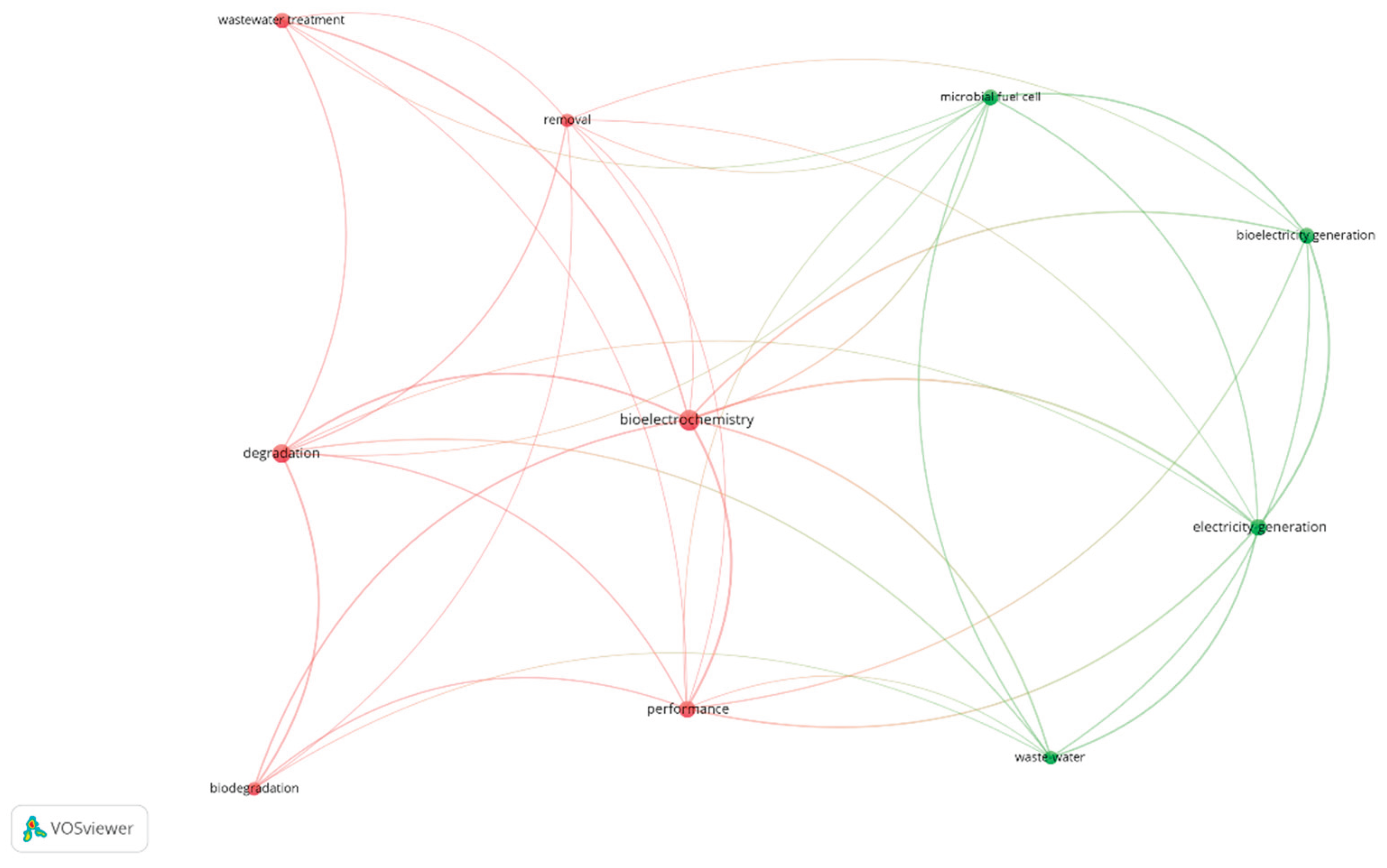
Figure 2.
Overlay visualization of the keyword co-occurrence network. Colors indicate the average year of publication, demonstrating the thematic transition from the performance of Microbial Fuel Cells (MFC) represented in purple to applications in wastewater treatment and biodegradation depicted in yellow. Produced using VOSviewer.
Figure 2.
Overlay visualization of the keyword co-occurrence network. Colors indicate the average year of publication, demonstrating the thematic transition from the performance of Microbial Fuel Cells (MFC) represented in purple to applications in wastewater treatment and biodegradation depicted in yellow. Produced using VOSviewer.
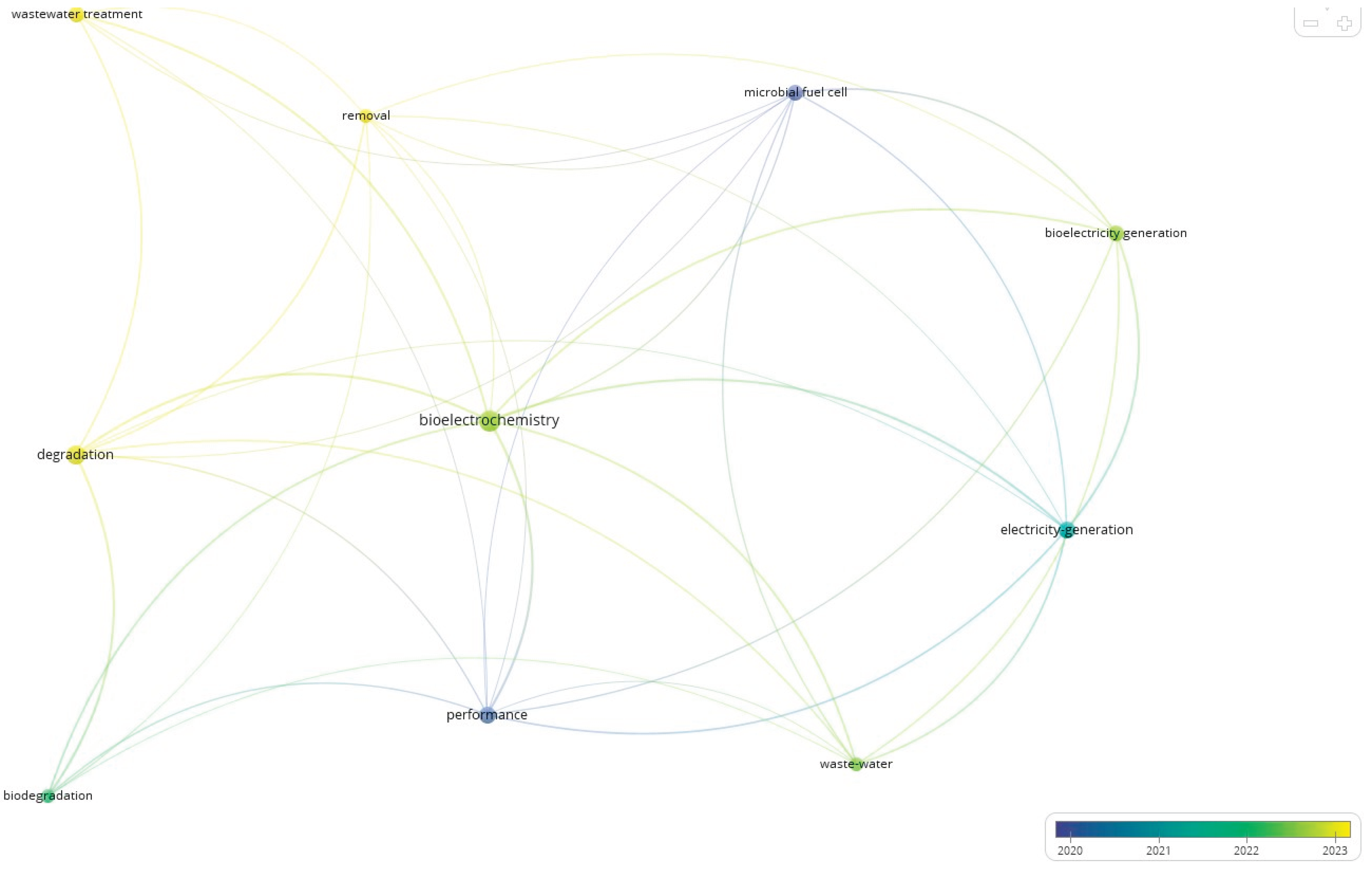
Figure 3.
A keyword co-occurrence network that demonstrates the three primary thematic directions found in the literature. The analysis was conducted using Bibliometrix.
Figure 3.
A keyword co-occurrence network that demonstrates the three primary thematic directions found in the literature. The analysis was conducted using Bibliometrix.
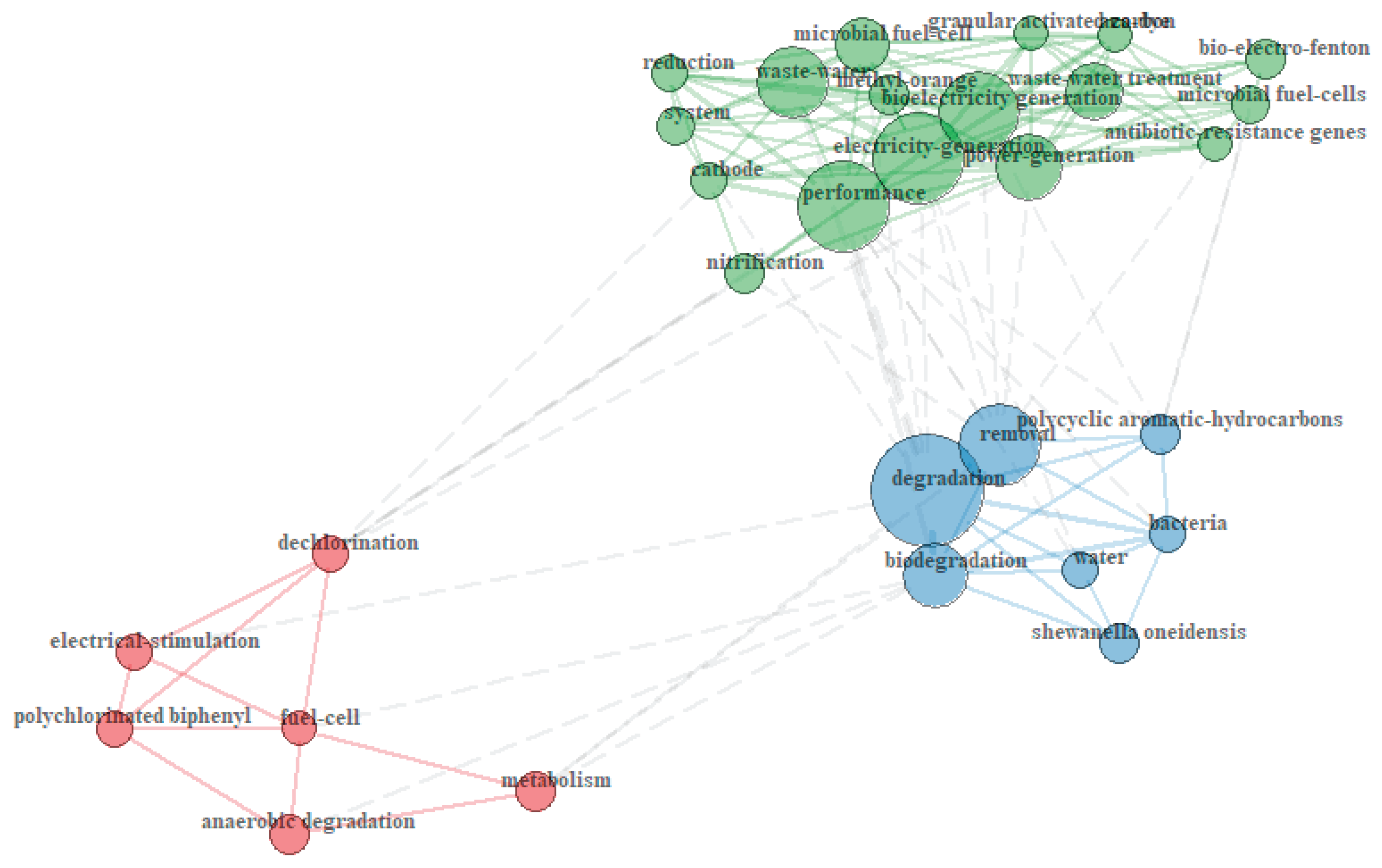
Figure 4.
A thematic map created using author keywords. The dimensions of the bubbles indicate the frequency of the keywords. The analysis was conducted using Biblioshiny.
Figure 4.
A thematic map created using author keywords. The dimensions of the bubbles indicate the frequency of the keywords. The analysis was conducted using Biblioshiny.
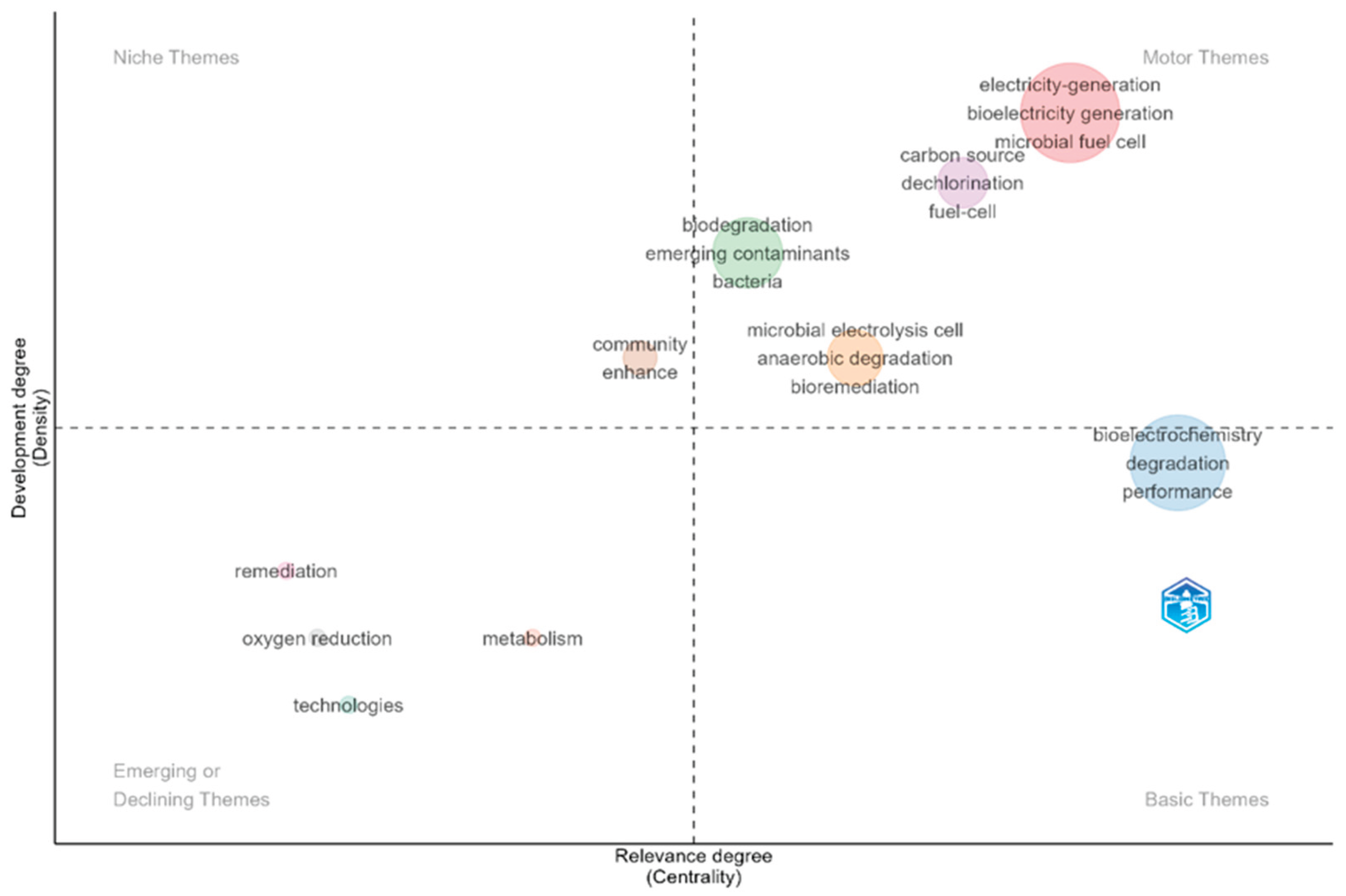
Figure 5.
Keyword Frequency Assessment through Word Cloud. Assessment conducted using Biblioshiny.
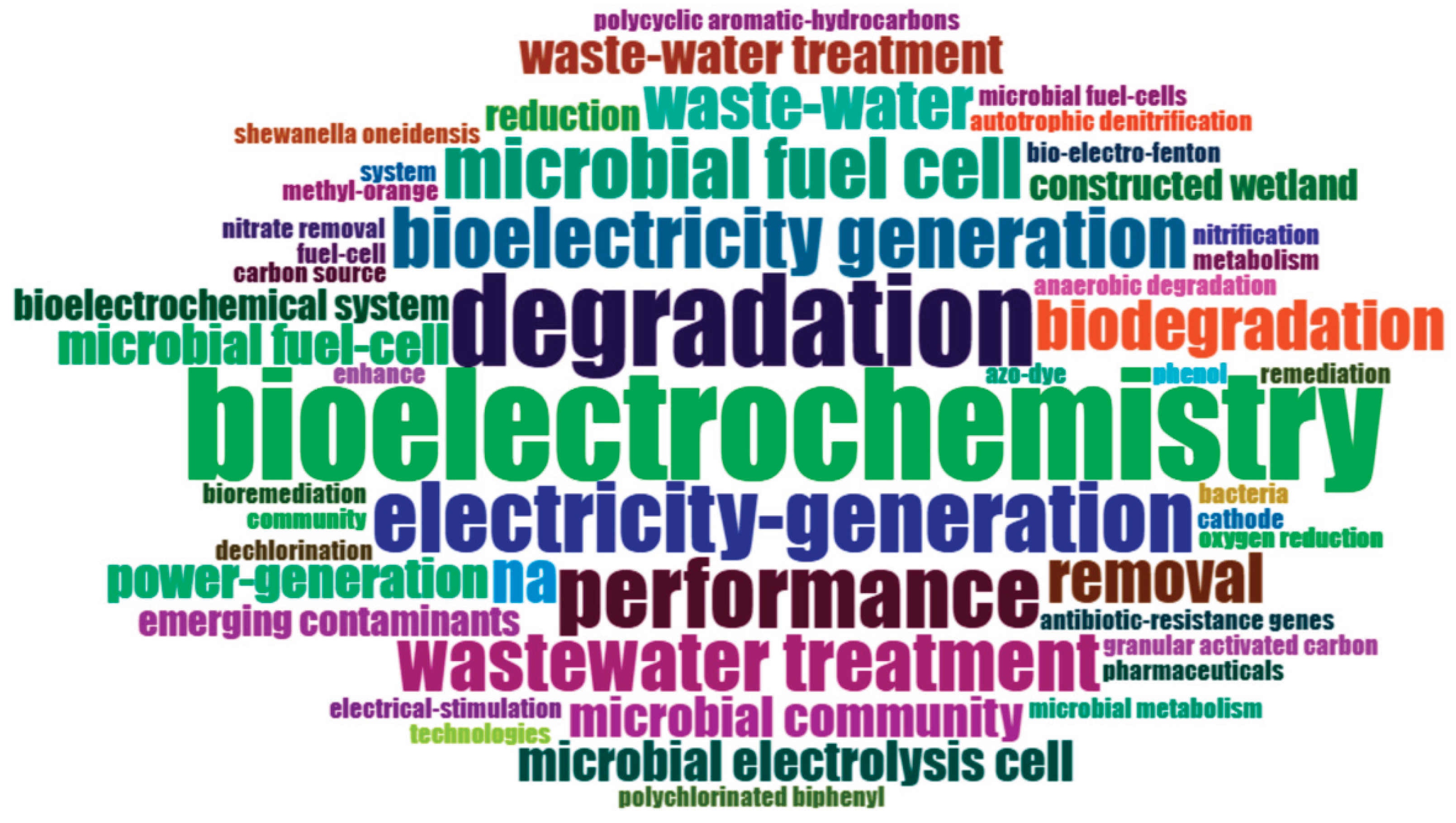
Figure 6.
The chronological evolution of research topics. Analysis conducted using Biblioshiny.
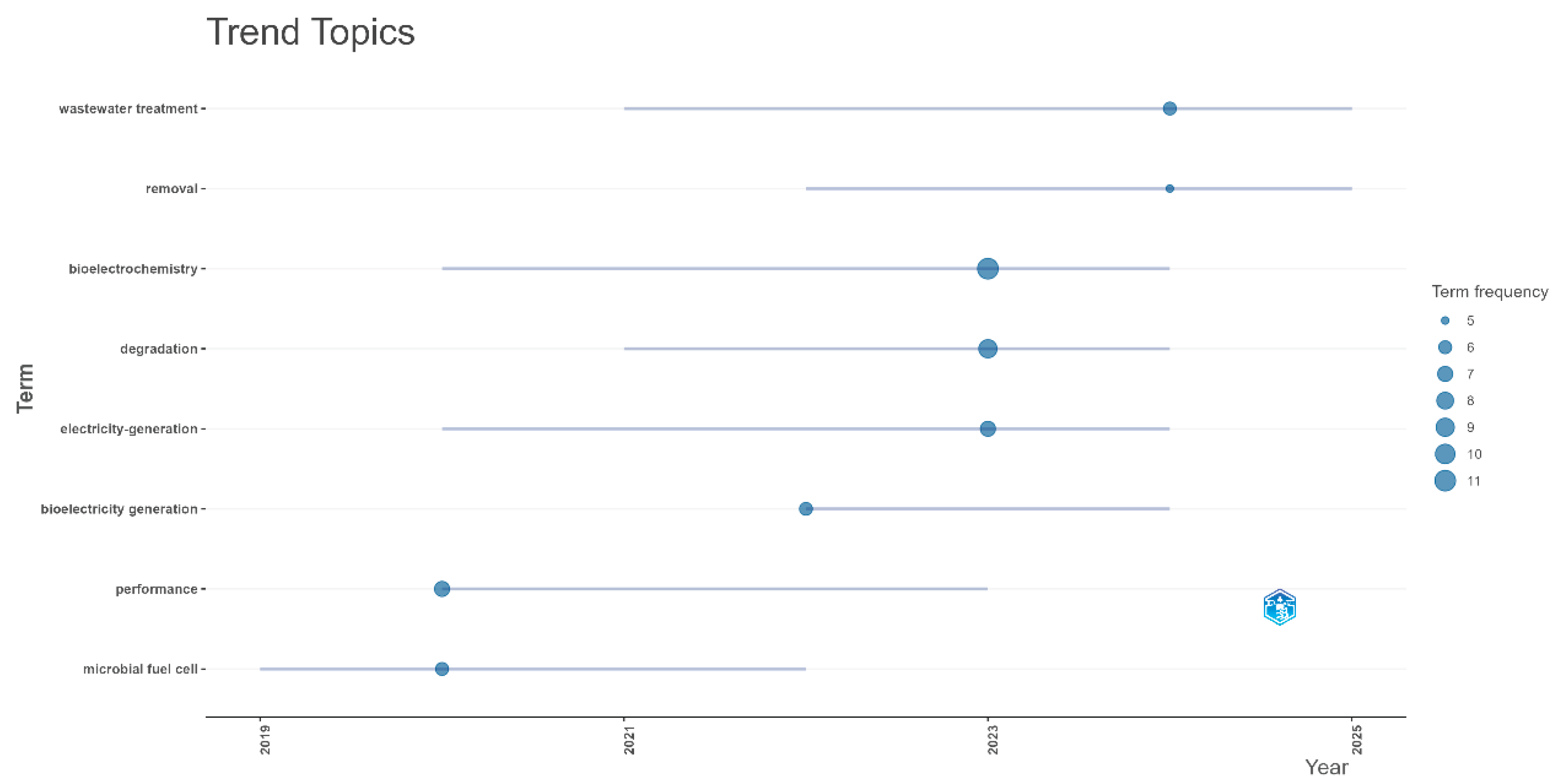
Figure 7.
Conceptual structure map of the research field based on Multiple Correspondence Analysis (MCA) of author keywords [X axis: Dim 1 (28.05%); Y axis: Dim 2 (17.19%)]. Analysis conducted using Biblioshiny.
Figure 7.
Conceptual structure map of the research field based on Multiple Correspondence Analysis (MCA) of author keywords [X axis: Dim 1 (28.05%); Y axis: Dim 2 (17.19%)]. Analysis conducted using Biblioshiny.
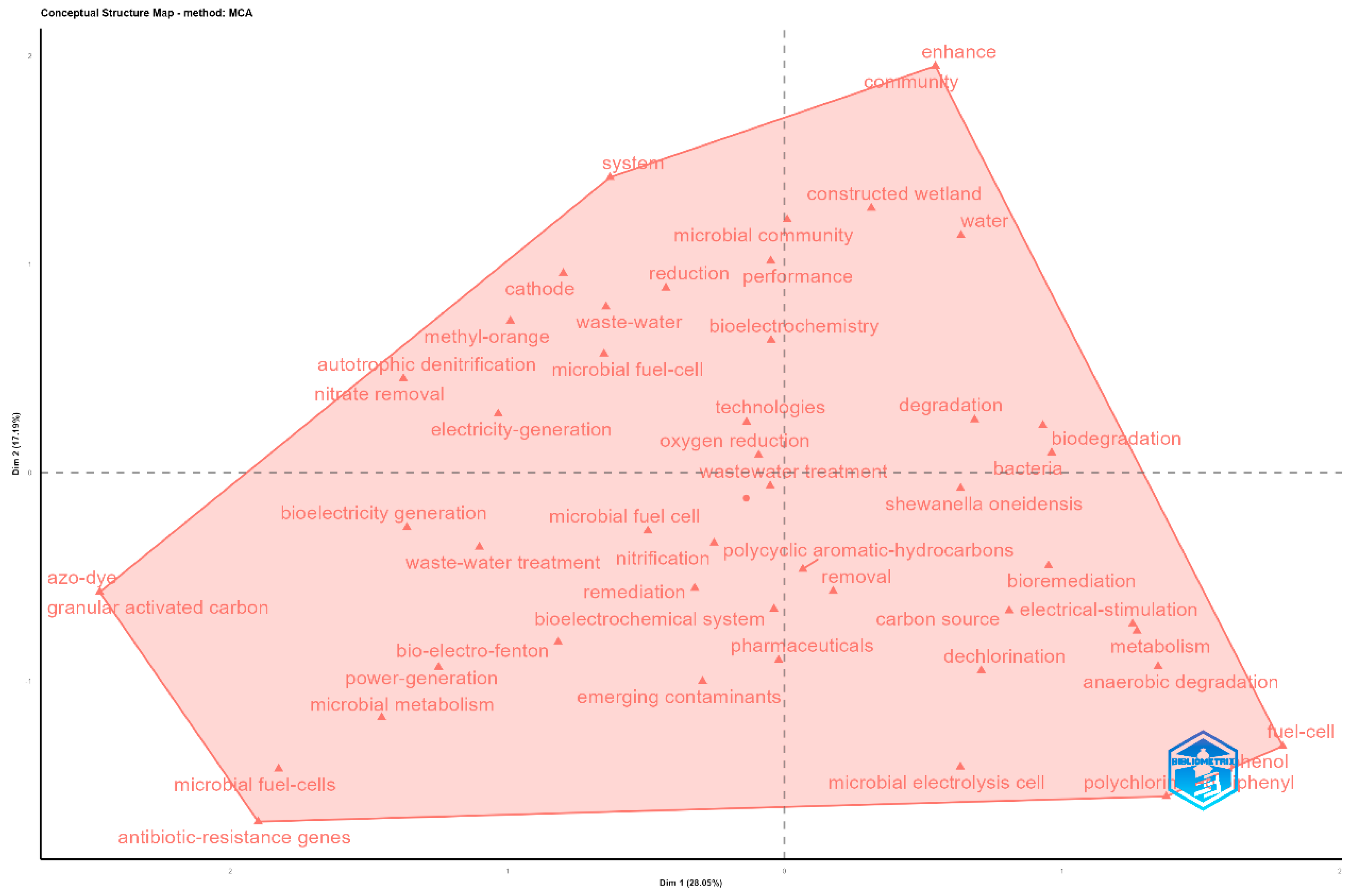
Figure 8.
Three-field plot (Sankey diagram) illustrating the relationship between authors’ countries (AU_CO), authors (AU), and author keywords (DE). The width of the paths represents the strength of the connections between these three entities. China emerged as the dominant contributor to the research field, accounting for the majority of publications and being associated with most of the leading authors. Analysis performed via Bibliometrix.
Figure 8.
Three-field plot (Sankey diagram) illustrating the relationship between authors’ countries (AU_CO), authors (AU), and author keywords (DE). The width of the paths represents the strength of the connections between these three entities. China emerged as the dominant contributor to the research field, accounting for the majority of publications and being associated with most of the leading authors. Analysis performed via Bibliometrix.
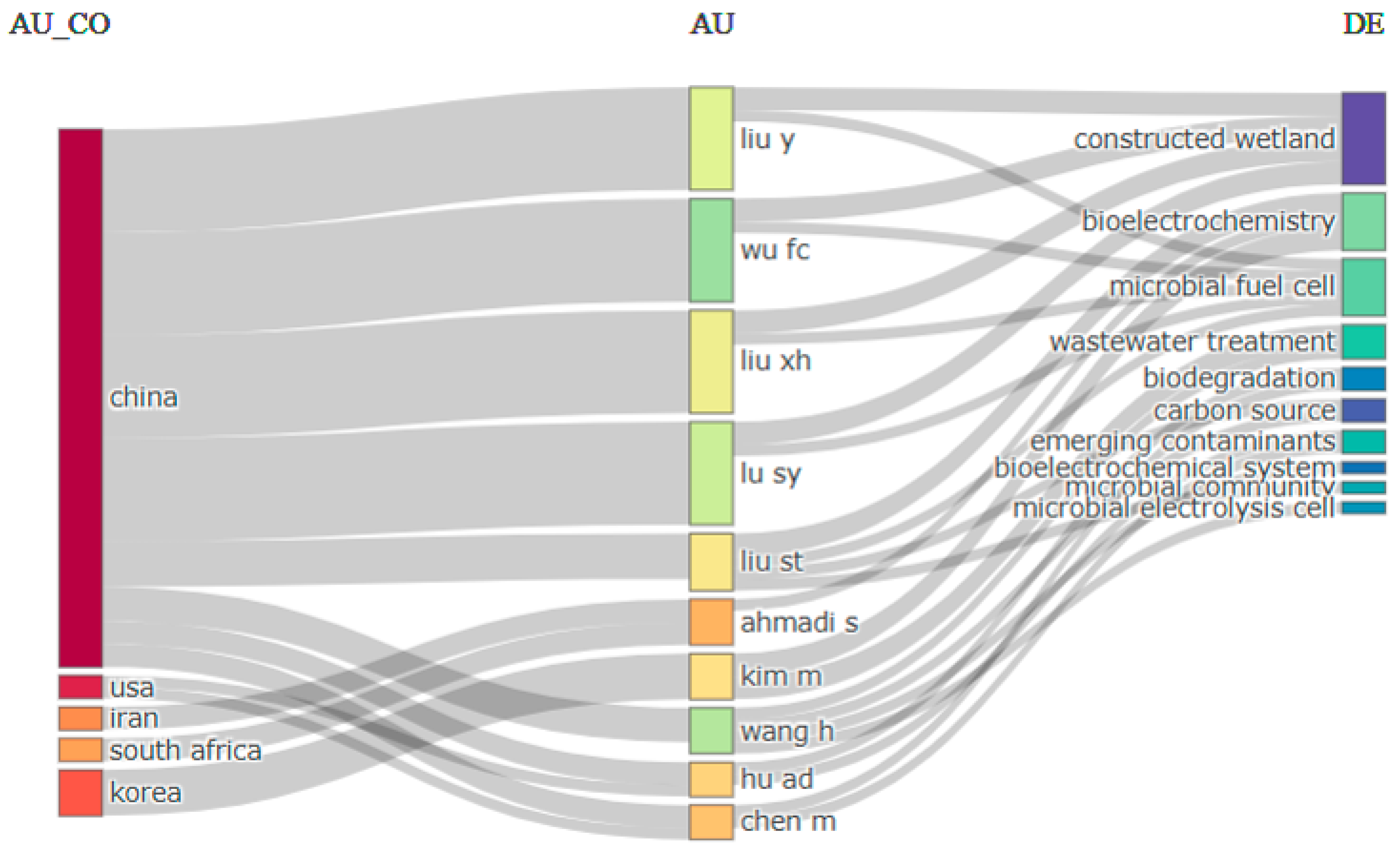
Figure 9.
A global map illustrating the scientific output of countries. Darker shades of blue represent a higher number of publications, while grey areas indicate no recorded data in the analyzed dataset. Analysis performed via Biblioshiny.
Figure 9.
A global map illustrating the scientific output of countries. Darker shades of blue represent a higher number of publications, while grey areas indicate no recorded data in the analyzed dataset. Analysis performed via Biblioshiny.
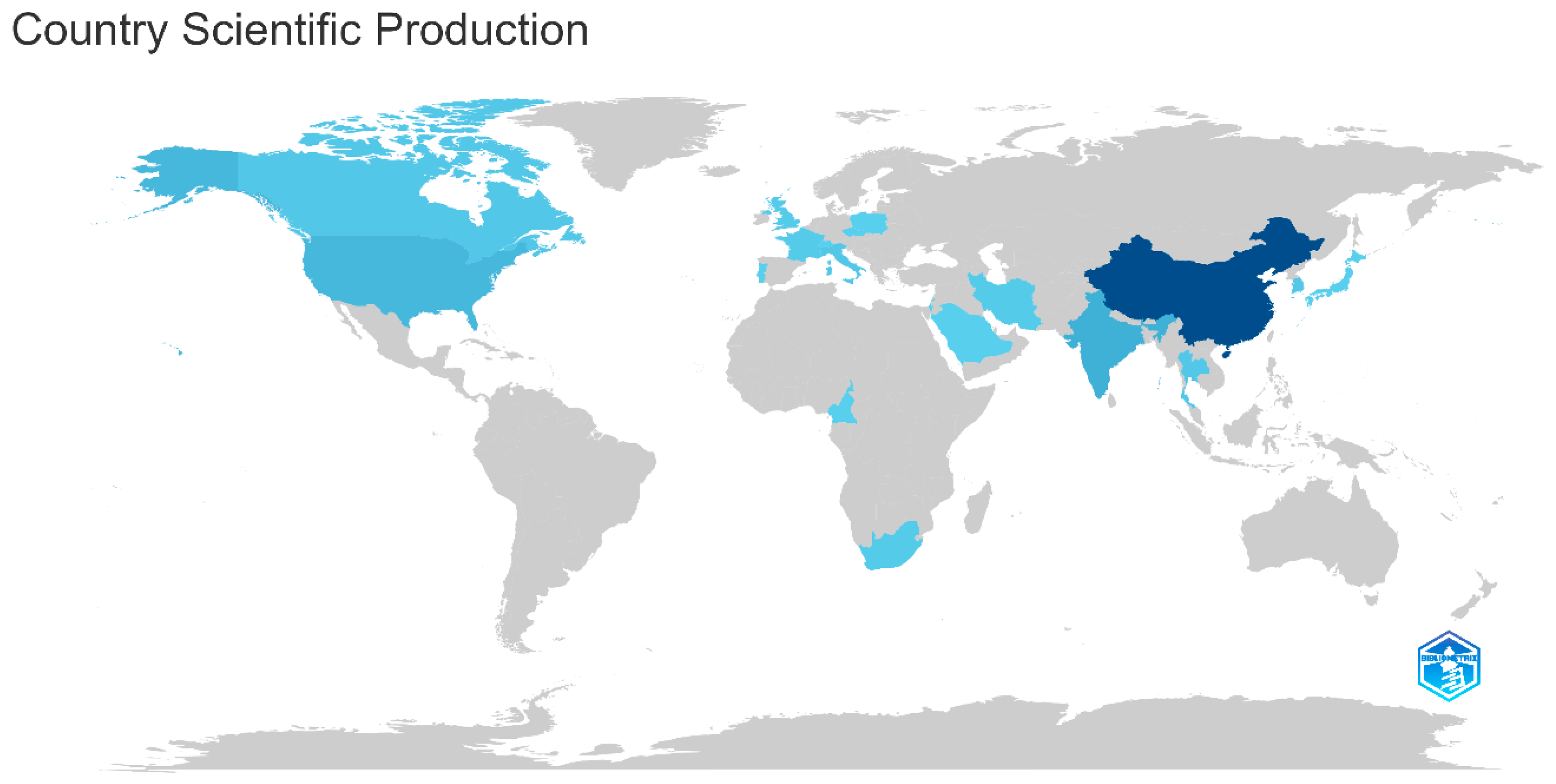
Figure 10.
Temporal evolution of scientific article production by country from 1982 to 2026, emphasizing the recent exponential increase in China’s activity and the emergence of the field on the international scientific stage. Analysis performed via Biblioshiny.
Figure 10.
Temporal evolution of scientific article production by country from 1982 to 2026, emphasizing the recent exponential increase in China’s activity and the emergence of the field on the international scientific stage. Analysis performed via Biblioshiny.
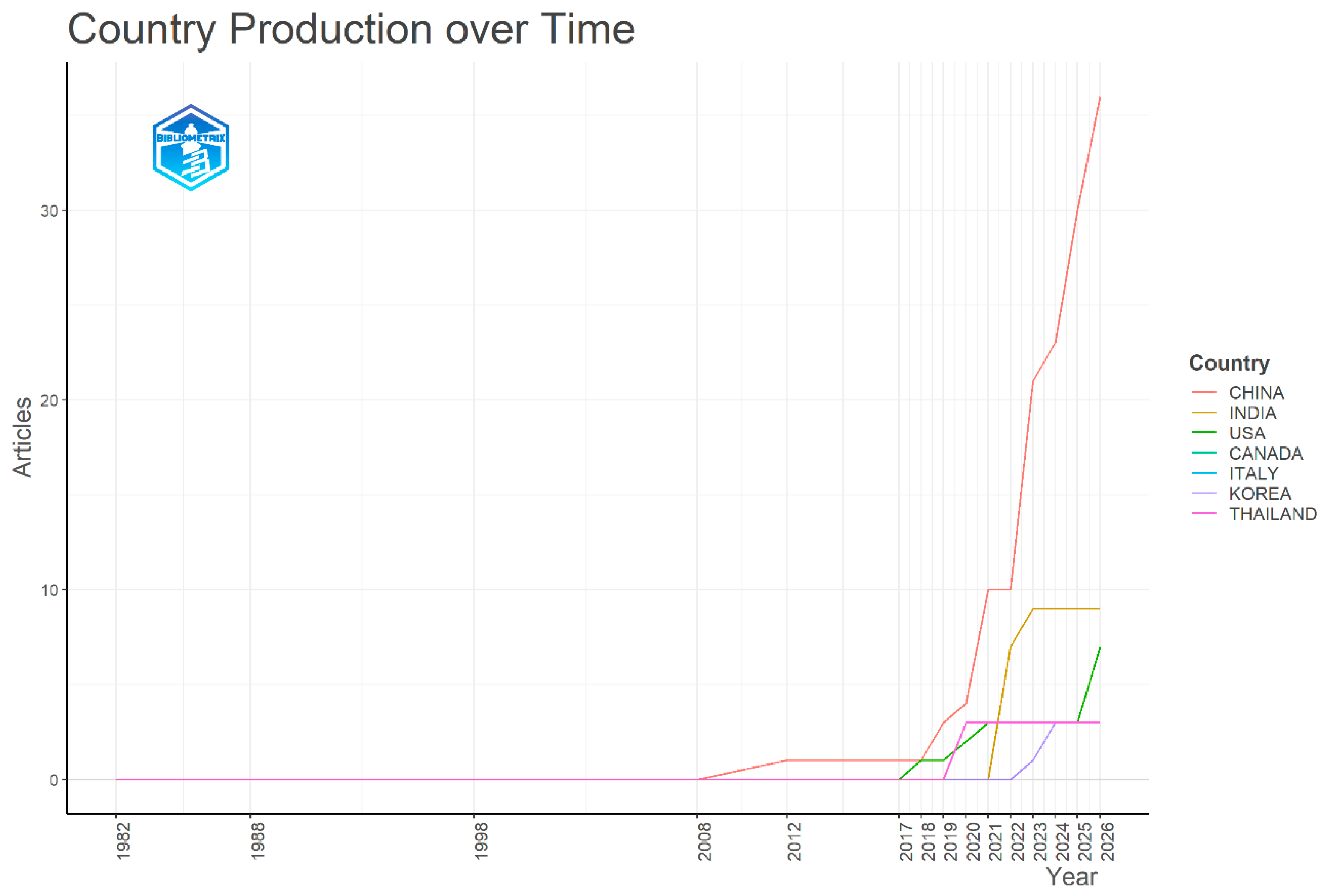

Table 1.
Categorization of keywords into thematic clusters based on hierarchical clustering analysis (see Figure S3).
Table 1.
Categorization of keywords into thematic clusters based on hierarchical clustering analysis (see Figure S3).
| Cluster | General Research Focus | Keywords |
|---|---|---|
| Cluster 1 | Βioelectrochemical energy production | Azo dye, granular activated carbon, antibiotic-resistance gene, microbial fuel cell, bioelectricity generation, wastewater treatment, bio-electro-fenton, power generation, microbial metabolism. |
| Cluster 2 | System optimization, nitrate removal and the application of constructed wetlands |
Electricity generation, autotrophic denitrification, nitrate removal, system, methyl orange, microbial fuel cell, reduction, wastewater, cathode, community, enhance, constructed wetland, water, bioelectrochemistry, performance, microbial community. |
| Cluster 3 | Degradation of complex pollutants, pharmaceuticals and emerging contaminants through microbial electrolysis cells. |
Polychlorinated biphenyl, fuel cell, phenol, microbial electrolysis cell, anaerobic degradation, electrical simulation, metabolism, dechlorination, bioremediation, carbon source, Shewanella oneidensis, degradation, biodegradation, bacteria, technologies, wastewater treatment, oxygen reduction, microbial fuel cell, nitrification, remediation, bioelectrochemical system, removal, polycyclic aromatic hydrocarbons (PAHs), emerging contaminants, pharmaceuticals. |
Disclaimer/Publisher’s Note: The statements, opinions and data contained in all publications are solely those of the individual author(s) and contributor(s) and not of MDPI and/or the editor(s). MDPI and/or the editor(s) disclaim responsibility for any injury to people or property resulting from any ideas, methods, instructions or products referred to in the content. |
© 2026 by the authors. Licensee MDPI, Basel, Switzerland. This article is an open access article distributed under the terms and conditions of the Creative Commons Attribution (CC BY) license (http://creativecommons.org/licenses/by/4.0/).
Copyright: This open access article is published under a Creative Commons CC BY 4.0 license, which permit the free download, distribution, and reuse, provided that the author and preprint are cited in any reuse.


