

Submitted:
13 June 2026
Posted:
15 June 2026
You are already at the latest version
Abstract
Tumor progression emerges from a dynamic interaction between malignant cells and the immune system. The classical cancer immunoediting framework (elimination–equilibrium–escape) does not explicitly address three aspects: the foundational role of innate immunity in early surveillance, the dynamic evolution of immune tolerance, and the temporal heterogeneity of immune escape. Here, we propose a conceptual systems-immunology model in which tumor evolution is governed by two kinetic inequalities: (i) during progression, the effective neoantigen generation rate (r_Ag^eff) exceeds immune clearance capacity (r_clear); (ii) during escape, the tumor mutation rate (r_mut) exceeds the rate of effective immune response establishment (r_resp). We further hypothesize that chronic tumor evolution is shaped by a dynamic balance between T cell progenitor exhaustion (Tpex) accumulation and the strengthening of suppressive immune networks. Based on this framework, we propose a five-phase tumor–immune game model: baseline immune surveillance, acute immune clearance, immune tolerance, immune clearance transition, and immune escape. Transition from tolerance to clearance is modeled as a condition in which d(Tpex)/dt exceeds the growth rate of suppressive network potency for a sufficient duration (τ). If this condition is not met due to insufficient host survival time or dominant tumor growth/mutation dynamics, the system transitions directly into immune escape. This framework provides a phase-matched interpretation of immunotherapy and suggests two therapeutic axes: reducing antigenic evolution and enhancing immune recognition and clearance. All parameters are theoretical constructs and are not intended for clinical application.
Keywords:
tumor immunoediting
; immune oscillation
; Tpex
; T cell exhaustion
; immune tolerance
; systems immunology
; tumor–immune dynamics
; phase transition
1. Introduction
Tumor development reflects a continuous co-evolution between malignant clones and host immunity. The classical immunoediting model [9,10,11] provides a useful conceptual basis but does not fully resolve several dynamic aspects of tumor–immune interaction, including (1) the role of innate immune surveillance in early tumor control; (2) the temporal evolution of immune tolerance; and (3) the heterogeneity of immune escape trajectories, particularly the distinction between reversible dysfunction and terminal exhaustion [4,5,6].
To address these limitations, we introduce a simplified kinetic description of tumor evolution based on two inequalities:
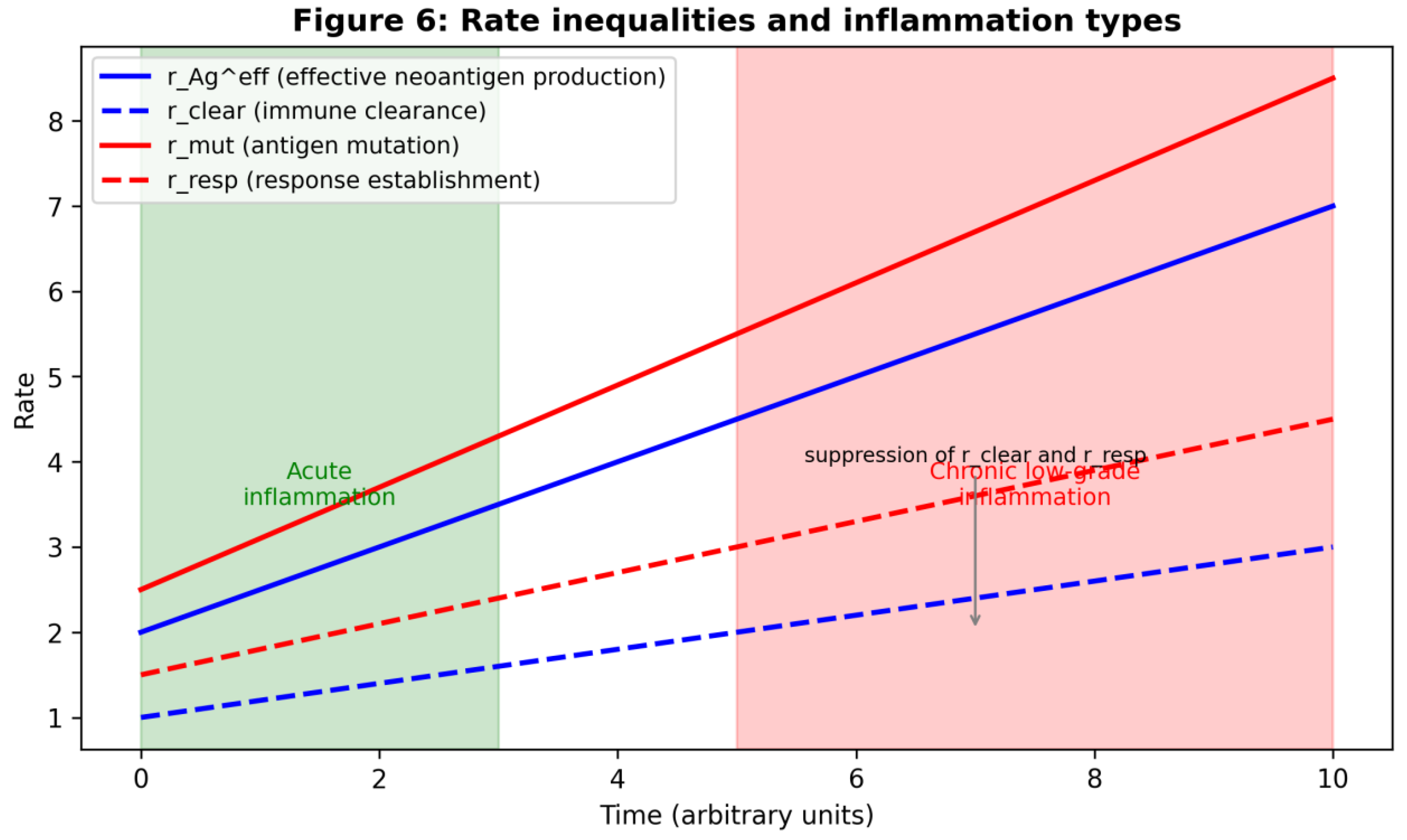
Progression phase: r_Ag^eff > r_clear
Escape phase: r_mut > r_resp
These inequalities are intended as conceptual descriptors of system-level imbalance rather than measurable clinical parameters. In highly immunogenic tumors (e.g., melanoma, MSI-H cancers), the balance between antigenic evolution and immune response may transiently favor immune control, whereas in most solid tumors chronic antigen exposure and tissue-level inflammation shift the system toward progressive immune suppression.
2. Tumor–Immune Dynamical Basis
2.1. Innate Immune Surveillance
Innate immune populations, including NK cells, γδT cells, and NKT cells, provide continuous low-level surveillance against emerging malignant clones. Disruption of this baseline layer may facilitate tumor initiation.
2.2. Adaptive Immunity and Divergent Outcomes
2.3. Immune Oscillation and T Cell Differentiation
Under persistent antigen exposure, CD8+ T cells may undergo a differentiation continuum from progenitor exhausted (Tpex; PD-1+TCF-1+) to intermediate exhausted (Tex-int) and terminally exhausted (Tex-term) states [4,5,6]. In this framework, Tpex emergence is associated with chronic antigen stimulation and is not a feature of acute clearance responses.
We define a conceptual parameter, immune tolerance strength (S):
S = (suppressive network potency) / (Tpex functional reserve)
where suppressive network potency reflects integrated effects of Treg function, MDSC/TAM activity, and suppressive cytokines (e.g., IL-10, TGF-β), while Tpex reserve reflects abundance, self-renewal capacity, and differentiation potential. A critical threshold S* is defined such that:
S > S*: suppression-dominant state
S < S*: effector-dominant state
We hypothesize that system-level transitions depend on both the relative change in these quantities and the persistence time (τ) required for a stable state shift. In chronic antigen stimulation, Tpex are consumed during effector phases and replenished during negative feedback contraction phases, forming a dynamic equilibrium. In HBV infection this equilibrium eventually tilts toward accumulation, leading to immune control; in tumors, because tumor cell proliferation rate (r_p) far exceeds the clearance rate (r_e) generated by Tpex accumulation, net progression occurs.
2.4. Context-Dependent Inflammatory Effects
Acute inflammatory signals (e.g., IL-12, IFN-γ) may promote immune activation, whereas chronic low-grade inflammation associated with hypoxia and necrosis may contribute to sustained immunosuppressive remodeling. Importantly, the impact of inflammation is context-dependent. In chronic viral infection (e.g., HBV), antigenic stability may allow progressive T cell adaptation, whereas in tumors, continuous antigenic evolution and tissue damage may reinforce suppressive feedback loops through coupled regulatory networks (e.g., the CXCL16–CXCR6–TGF-β axis), leading to progressive immunosuppressive stabilization.
Five-Phase Tumor–Immune Game Model

Table 1.
Five phases and their core characteristics.
| Phase | Immune state | T cell state | S relation | Tumor dynamics | Clinical correlate |
| 0 Baseline surveillance | Innate-dominated | Naive T cells | N/A | Elimination of transformed cells | No tumor |
| 1 Acute clearance | Effector-dominated | Teff → Tmem | N/A | Rapid elimination | Transient regression |
| 2 Immune tolerance | Suppression-dominated, intermittent | Tpex may gradually accumulate | S > S* | Persistent growth | Progressive disease |
| 3 Immune clearance transition | Effector-dominated (balance/remission) | S < S* | S < S* | Tumor reduction | Intervention window |
| 4a Early escape | Reversible dysfunction | Teff inhibited, not exhausted | S rises toward S* | Regrowth | ICI conditionally effective |
| 4b Late escape | Immune collapse | Terminally exhausted (Tex-term) | Not applicable | Rapid progression | ICI limited effect |
Phase transition conditions (conceptual):
Phase 0 → 1: innate surveillance escape plus proliferative advantage.
Phase 1 → 2: establishment of a suppressive microenvironment (S > S*).
Phase 2 → 3: d(Tpex)/dt > d(suppressive network)/dt sustained for a sufficient duration τ.
Phase 2 → 4: failure to meet the above condition due to insufficient survival time or overwhelming tumor proliferation/mutation dynamics.
Important note: Phase 3 is not obligatory. In rapidly progressing tumors (e.g., pancreatic cancer, glioblastoma), it may never be reached. The HBV seroconversion (decades) and pregnancy (~40 weeks) are heuristic analogies illustrating that the time scale for tolerance-to-clearance transition varies greatly across antigen systems, but tumor dynamics are not equivalent to chronic viral infection due to continuous antigenic evolution and clonal selection.
Relation to Classical Immunoediting Theory
The proposed framework refines classical immunoediting as follows:
Elimination → Phases 0 and 1
Equilibrium → split into tolerance equilibrium (Phase 2, S > S*) and dynamic equilibrium (Phase 3 balance sub-stage, S ≈ S*)
Escape → Phase 4 (heterogeneous reversible and irreversible states)
Key extensions include explicit incorporation of innate immunity, a dynamic interpretation of immune tolerance, temporal stratification of exhaustion states, and separation of reversible dysfunction from terminal exhaustion. The model also clarifies that under chronic antigen stimulation, T cells differentiate along the exhaustion cascade (Tpex → Tex-int → Tex-term) and that ICI acts by driving Tpex toward Tex-int, not classical Teff.
3. Therapeutic Implications and Testable Hypotheses
3.1. Phase-Matched Intervention Concept (Theoretical, not Clinical)
| Phase | Suggested strategy |
| 0 | Maintain circadian rhythms, enhance NK/γδT function |
| 1 | Intermediate-dose IL-2, therapeutic vaccines; ICI deferred |
| 2 | Modulate suppressive network (Treg function, MDSC inhibitors), low-dose IL-2, anti-inflammatory preconditioning |
| 3 | Pulsed ICI, anti-angiogenesis; avoid overactivation |
| 4a | Reduce tumor load, remove suppression, enhance innate immunity, then ICI + neoantigen vaccine |
| 4b | Lymphodepletion, adoptive cell therapy, IL-2 phase modulation |
WARNING: IL-2 doses, ICI timing, etc., are theoretical examples; not clinically validated.
3.2. Testable Hypotheses
Higher Tpex abundance may indicate a higher probability of entering Phase 3 and better prognosis [4,5,6].
ICI timing dependence: The window of maximal ICI benefit is the initiation and early activation phase (early Phase 2 to early Phase 4a). During the effector peak (Phase 1), marginal benefit is low; during the negative feedback contraction phase (late Phase 2 and late Phase 3), ICI may be ineffective or even accelerate terminal exhaustion [7,8].
Chronic low-grade inflammation may correlate with suppressive network potency (Treg function, MDSC frequency); anti-inflammatory therapy may partially reverse network strengthening [17,18].
Rapidly progressing tumors (pancreatic cancer, glioblastoma) seldom enter Phase 3 due to short survival, high proliferation, and frequent antigen variation. Prolonging survival or early debulking might allow some patients to “live into” Phase 3.
Circadian disruption (shift work) impairs basal immune homeostasis [7,8] and may increase cancer risk.
Poorly differentiated tumors (high mutational burden, high antigenicity) follow a fast-escape trajectory (Phase 1 → Phase 4a → Phase 4b): high initial ICI response but short PFS. Well-differentiated tumors remain longer in Phase 2, with low ICI response but later acquired resistance.
The Tpex accumulation time scale τ could be explored in low-mutational-burden, slow-growing tumors (e.g., papillary thyroid carcinoma) by serial monitoring of Tpex frequency every 6 months for ≥5 years. A sustained annual increase ≥20% followed by tumor shrinkage ≥30% would support the threshold concept. Pregnancy (~40 weeks) and HBV seroconversion (decades) provide heuristic references for diverse τ.
4. Limitations
This model is conceptual and intentionally simplified. Parameters such as S, S*, and τ are theoretical constructs designed to describe qualitative system dynamics rather than clinically measurable biomarkers. The framework does not account for full spatial heterogeneity, metabolic constraints, or multi-organ immune compartmentalization.
5. Conclusions
We propose a five-phase conceptual model of tumor–immune dynamics based on immune oscillations, T cell exhaustion trajectories, and suppressive network evolution. This framework extends classical immunoediting by introducing a temporal and phase-dependent interpretation of immune control and escape. A central hypothesis is that tumor outcome depends on the competition between Tpex accumulation dynamics and suppressive network expansion, constrained by a finite temporal window (τ). The model distinguishes acute clearance (naive → Teff/Tmem) from chronic antigen exposure (Tpex along the exhaustion cascade), corrects the applicability of S, and removes the logically contradictory “progression” sub-stage within the clearance phase. ICI efficacy is reinterpreted as depending on Tpex availability, APC function, and cytokine milieu, and ICI acts by driving Tpex toward Tex-int, not classical Teff. The optimal ICI window is the initiation and early activation phase, whereas the negative feedback contraction phase may be ineffective or detrimental. This framework is a conceptual, falsifiable systems-immunology model, not a validated mechanistic representation of tumor immunity.
Figure 1.
Five-phase state transition diagram. Phase 0→1→2; from Phase 2 two branches: condition (d(Tpex)/dt > d(suppressive network)/dt AND survival ≥ τ) → Phase 3 → Phase 4; otherwise direct to Phase 4.
Figure 1.
Five-phase state transition diagram. Phase 0→1→2; from Phase 2 two branches: condition (d(Tpex)/dt > d(suppressive network)/dt AND survival ≥ τ) → Phase 3 → Phase 4; otherwise direct to Phase 4.
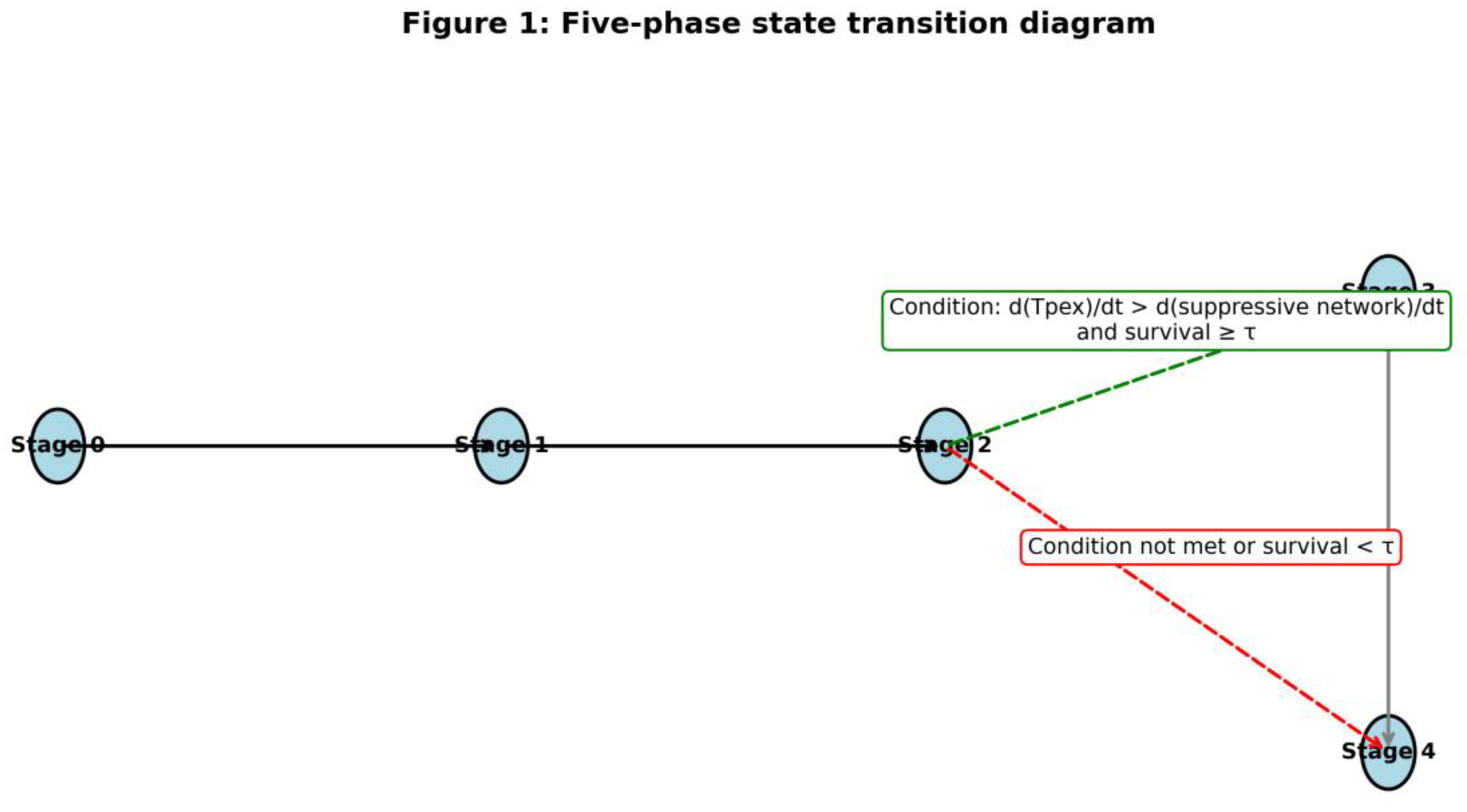
Figure 2.
Innate immune surveillance network under basal homeostasis.
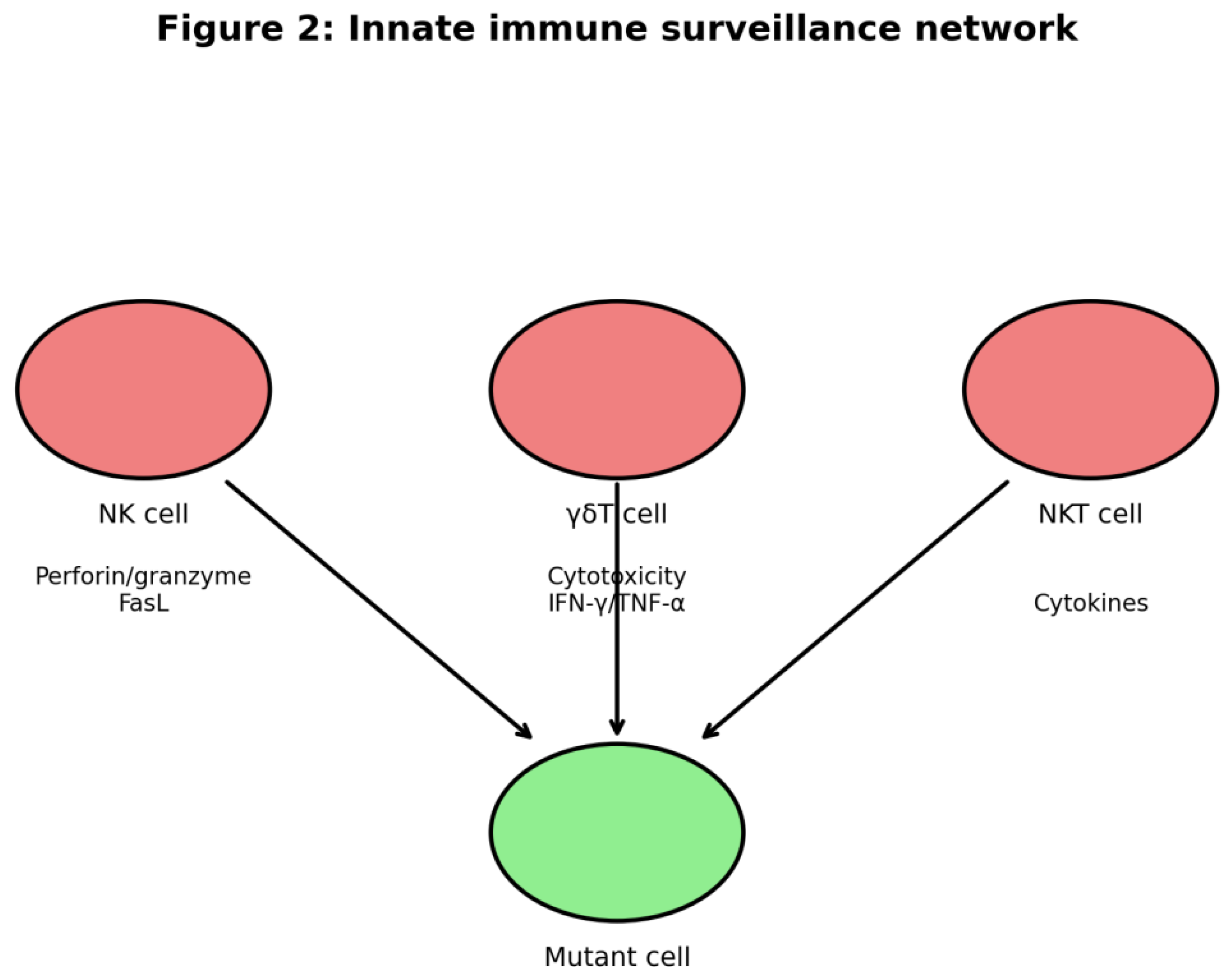
Figure 3.
Tumor burden and S curves in Phase 3 sub-stages (balance: S ≈ S; remission: S < S).
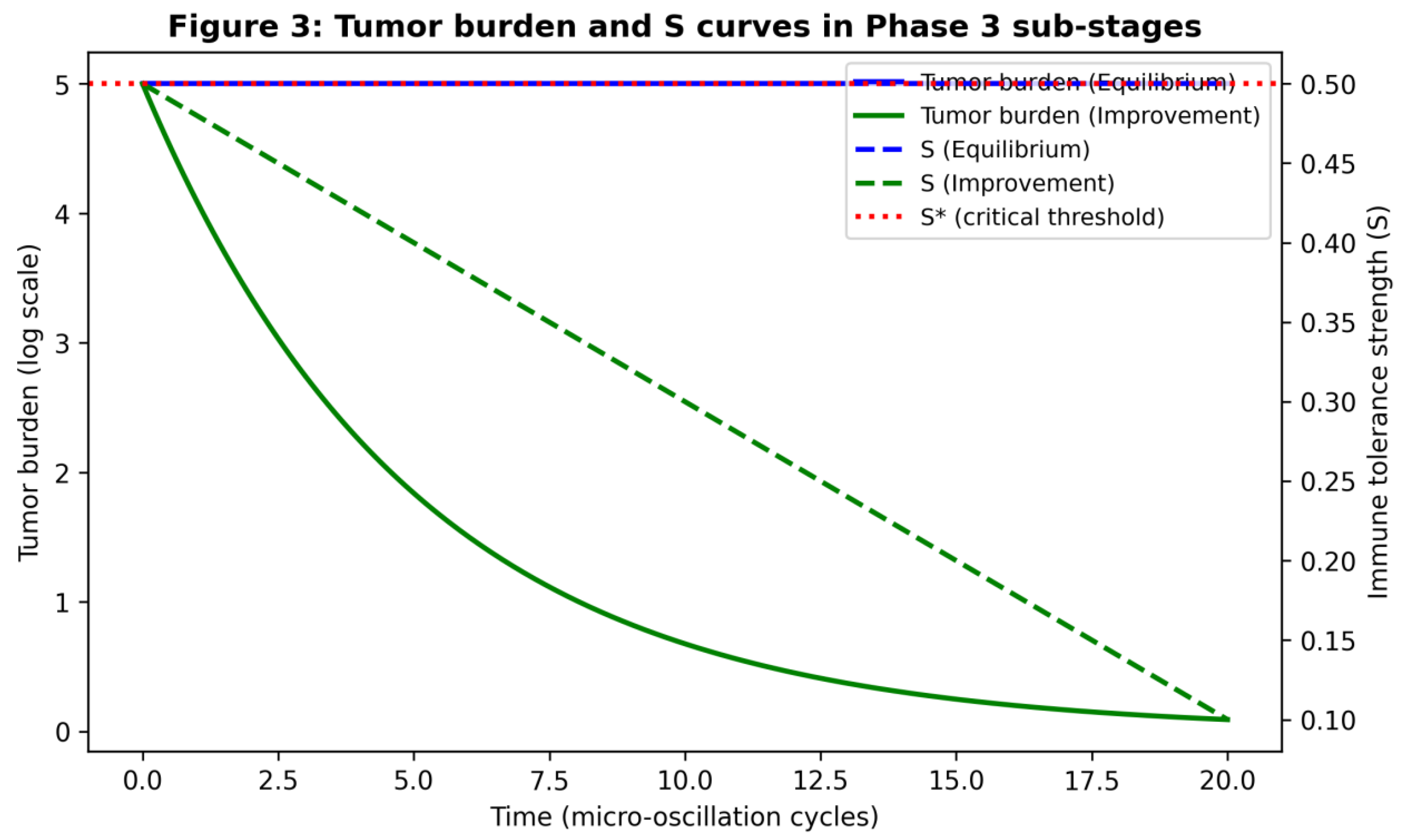
Figure 4.
Comparison of immune cell and suppressive network status between basal homeostasis and tolerance homeostasis.
Figure 4.
Comparison of immune cell and suppressive network status between basal homeostasis and tolerance homeostasis.
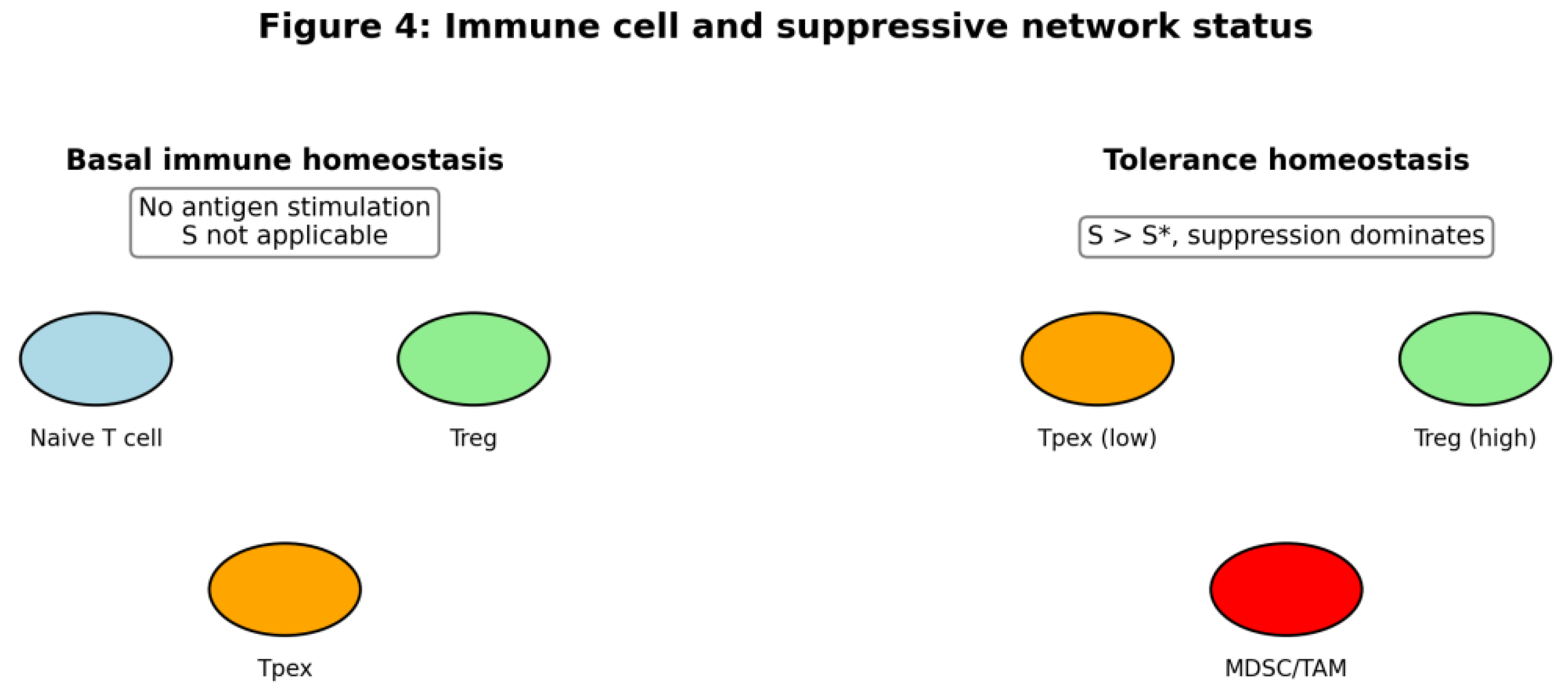
Figure 5.
Stepwise intervention logic for Phase 4 escape (early: three steps; late: four steps).
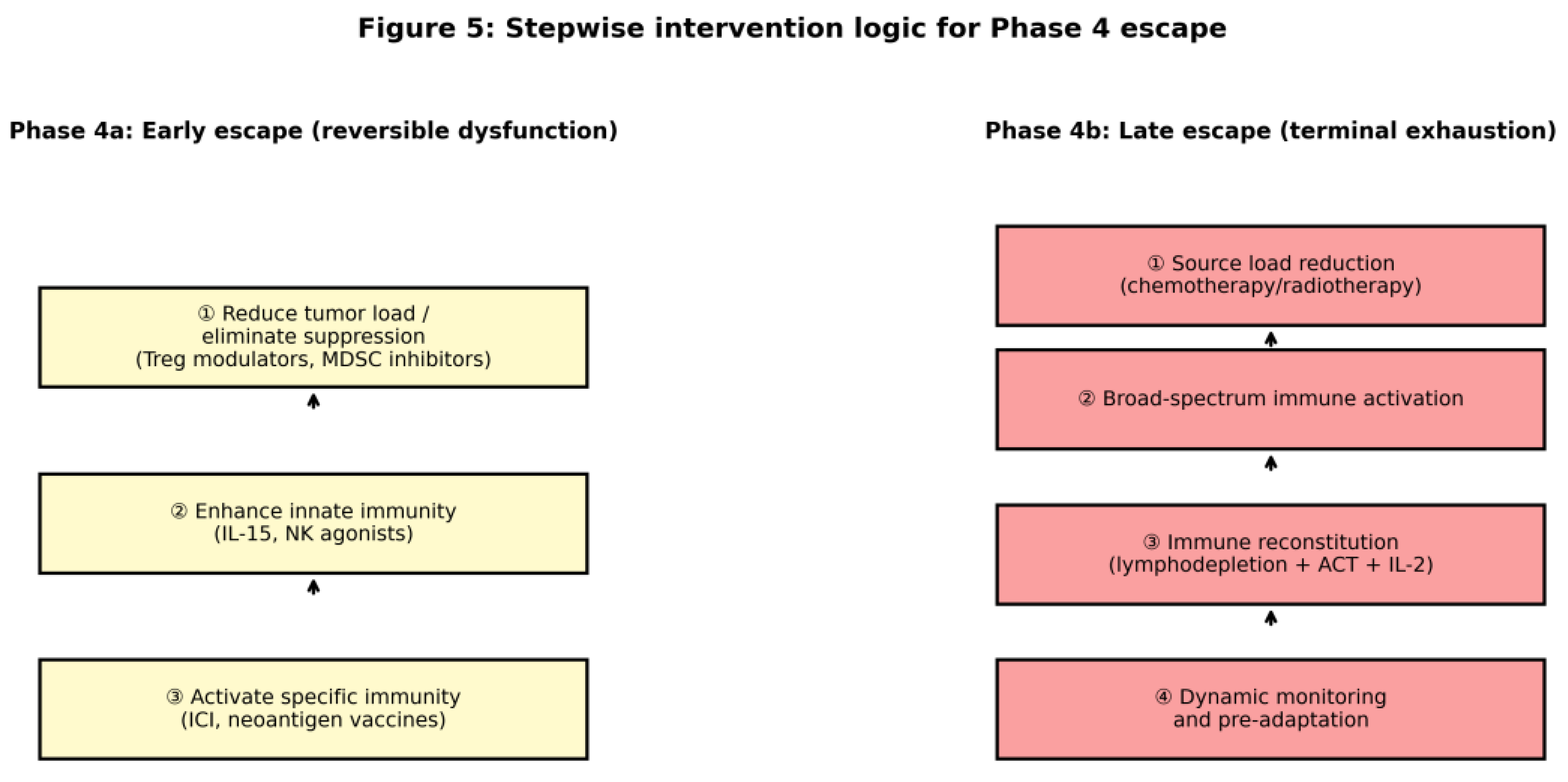
Figure 6.
Rate inequalities and inflammation types: acute (pro-immunity) vs. chronic low-grade (pro-suppression strengthening).
Figure 6.
Rate inequalities and inflammation types: acute (pro-immunity) vs. chronic low-grade (pro-suppression strengthening).
Funding
None.
Acknowledgments
None.
Conflicts of interest
The author declares no conflicts of interest. AI-assisted tools were used for language polishing and literature retrieval; all core concepts and derivations were completed independently.
References
- Sonak, S.S.; Ishwarkar, S.; Nimbarte, C.; et al. Modulation of T Cell Regulation by Interleukin-2 Agonists: Mechanisms and Clinical Implications. Crit. Rev. Immunol. 2025, 45(5), 19–34. [Google Scholar] [CrossRef] [PubMed]
- Paul, P.; Choong, C.; Heinemann, J.; et al. The Lasting Impact of IL-2: Approaching 50 Years of Advancing Immune Tolerance, Cancer Immunotherapies, and Autoimmune Diseases. Immunol. Invest. 2025, 54(5), 589–603. [Google Scholar] [CrossRef] [PubMed]
- Spolski, R.; Li, P.; Leonard, W.J. Biology and regulation of IL-2: from molecular mechanisms to human therapy. Nat. Rev. Immunol. 2018, 18(10), 648–659. [Google Scholar] [CrossRef] [PubMed]
- Heidari-Foroozan, M.; Rezalotfi, A.; Rezaei, N. The molecular landscape of T cell exhaustion in the tumor microenvironment and reinvigoration strategies. Int. Rev. Immunol. 2024, 43(6), 419–440. [Google Scholar] [CrossRef] [PubMed]
- Blank, C.U.; Haining, W.N.; Held, W.; et al. Defining ‘T cell exhaustion’. Nat. Rev. Immunol. 2019, 19(11), 665–674. [Google Scholar] [CrossRef] [PubMed]
- Miller, B.C.; Sen, D.R.; Al Abosy, R.; et al. Subsets of exhausted CD8+ T cells differentially mediate tumor control and respond to checkpoint blockade. Nat. Immunol. 2019, 20(3), 326–336. [Google Scholar] [CrossRef] [PubMed]
- Lichterman, J.N.; Srinivasan, T.; Wang, R.; et al. Timing of immune checkpoint blockade shapes anti-tumor immunity via a clock-dependent chemokine axis. bioRxiv [Preprint] 2025. [Google Scholar] [CrossRef]
- Feng, Y.; Li, Q.; Wang, Y.; Lan, X.; Zhang, L. Circadian clock-driven tumor immunoregulation: Mechanistic insights and new perspectives in therapies. Int. Immunopharmacol. 2026, 170, 116102. [Google Scholar] [CrossRef] [PubMed]
- Dunn, G.P.; Old, L.J.; Schreiber, R.D. The three Es of cancer immunoediting. Annu Rev. Immunol. 2004, 22, 329–360. [Google Scholar] [CrossRef] [PubMed]
- Dunn, G.P.; Bruce, A.T.; Ikeda, H.; et al. Cancer immunoediting: from immunosurveillance to tumor escape. Nat. Immunol. 2002, 3(11), 991–998. [Google Scholar] [CrossRef] [PubMed]
- Schreiber, R.D.; Old, L.J.; Smyth, M.J. Cancer immunoediting: integrating immunity’s roles in cancer suppression and promotion. Science 2011, 331(6024), 1565–1570. [Google Scholar] [CrossRef] [PubMed]
- Budczies, J.; Kazdal, D.; Schirmacher, P.; et al. Tumour mutational burden: clinical utility, challenges and emerging improvements. Nat. Rev. Clin. Oncol. 2024, 21(10), 709–724. [Google Scholar] [CrossRef] [PubMed]
- Łuksza, M.; Sethna, Z.M.; Rojas, L.A.; et al. Neoantigen quality predicts immunoediting in survivors of pancreatic cancer. Nature 2022, 606(7913), 389–395. [Google Scholar] [CrossRef] [PubMed]
- Roerden, M.; Spranger, S. Cancer immune evasion, immunoediting and intratumour heterogeneity. Nat. Rev. Immunol. 2025, 25(5), 353–369. [Google Scholar] [CrossRef] [PubMed]
- Rosenthal, R.; Cadieux, E.L.; Salgado, R.; et al. Neoantigen-directed immune escape in lung cancer evolution. Nature 2019, 567(7749), 479–485. [Google Scholar] [CrossRef] [PubMed]
- Jhunjhunwala, S.; Hammer, C.; Delamarre, L. Antigen presentation in cancer: insights into tumour immunogenicity and immune evasion. Nat. Rev. Cancer 2021, 21(5), 298–312. [Google Scholar] [CrossRef] [PubMed]
- De Sanctis, F.; Bronte, V.; Ugel, S. Tumor-induced myeloid-derived suppressor cells. Microbiol. Spectr. 2016, 4(3). [Google Scholar] [CrossRef] [PubMed]
- Veglia, F.; Sanseviero, E.; Gabrilovich, D.I. Myeloid-derived suppressor cells in the era of increasing myeloid cell diversity. Nat. Rev. Immunol. 2021, 21(8), 485–498. [Google Scholar] [CrossRef] [PubMed]
Disclaimer/Publisher’s Note: The statements, opinions and data contained in all publications are solely those of the individual author(s) and contributor(s) and not of MDPI and/or the editor(s). MDPI and/or the editor(s) disclaim responsibility for any injury to people or property resulting from any ideas, methods, instructions or products referred to in the content. |
© 2026 by the authors. Licensee MDPI, Basel, Switzerland. This article is an open access article distributed under the terms and conditions of the Creative Commons Attribution (CC BY) license (http://creativecommons.org/licenses/by/4.0/).
Copyright: This open access article is published under a Creative Commons CC BY 4.0 license, which permit the free download, distribution, and reuse, provided that the author and preprint are cited in any reuse.


