
Submitted:
14 June 2026
Posted:
15 June 2026
You are already at the latest version
Abstract
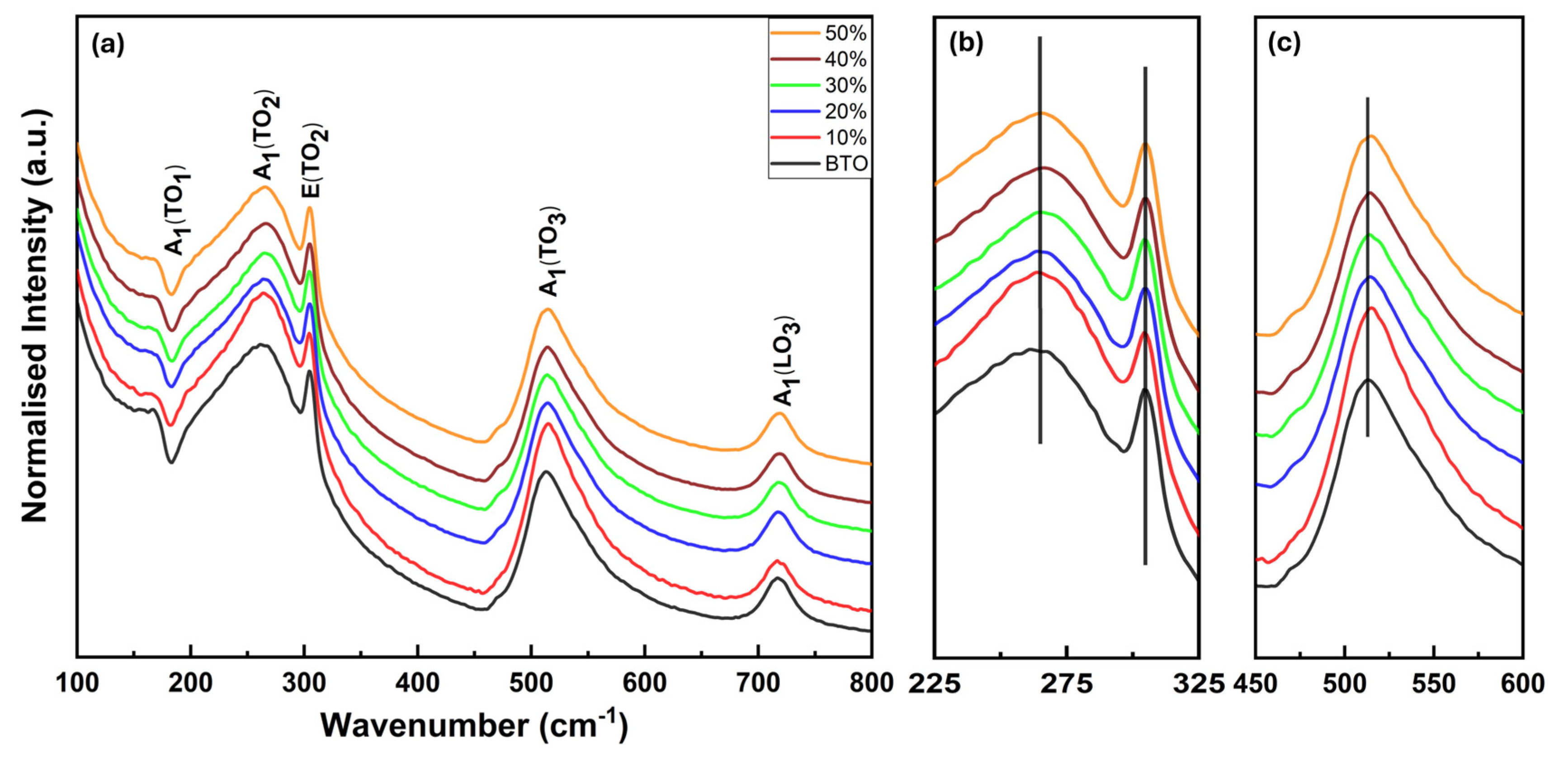
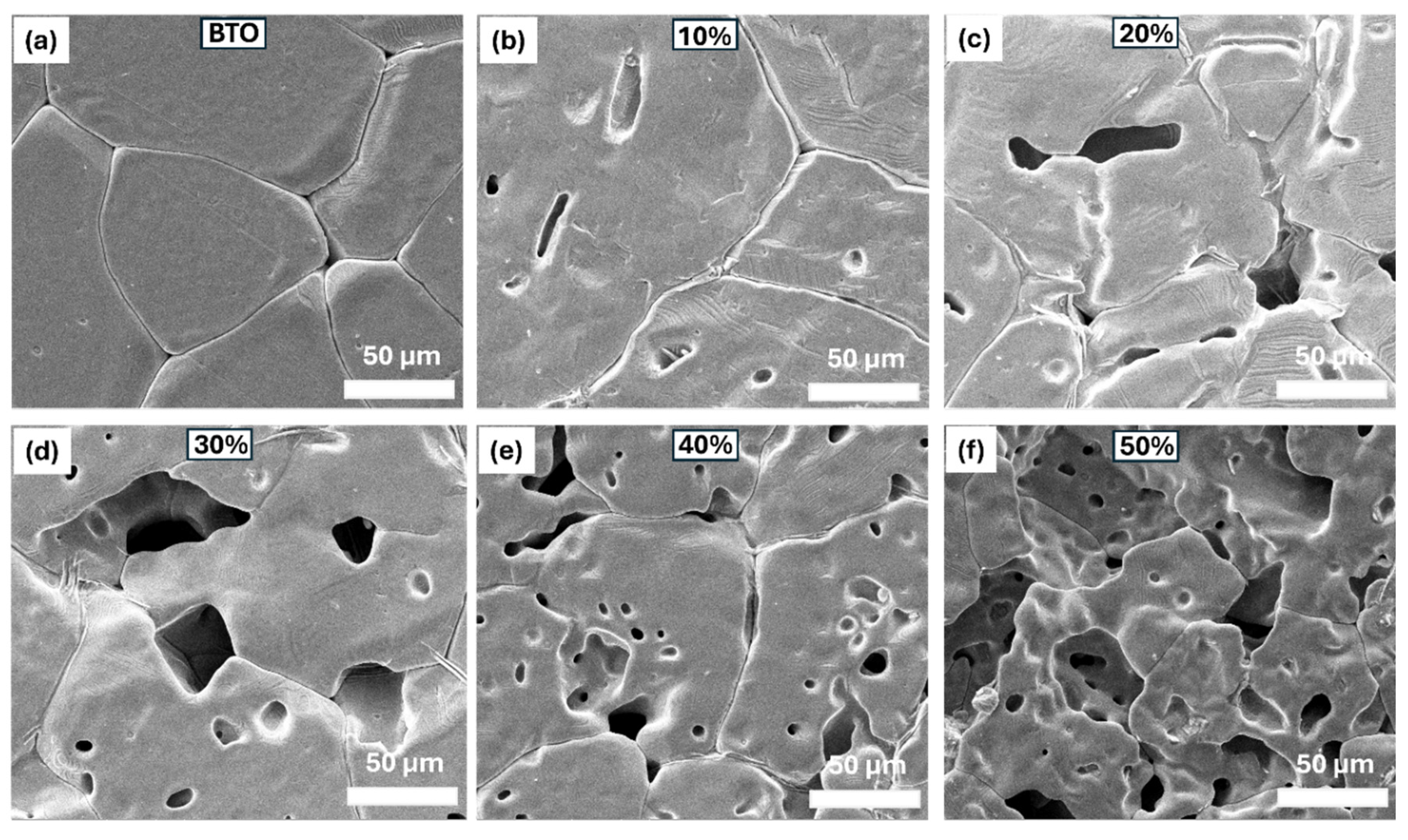
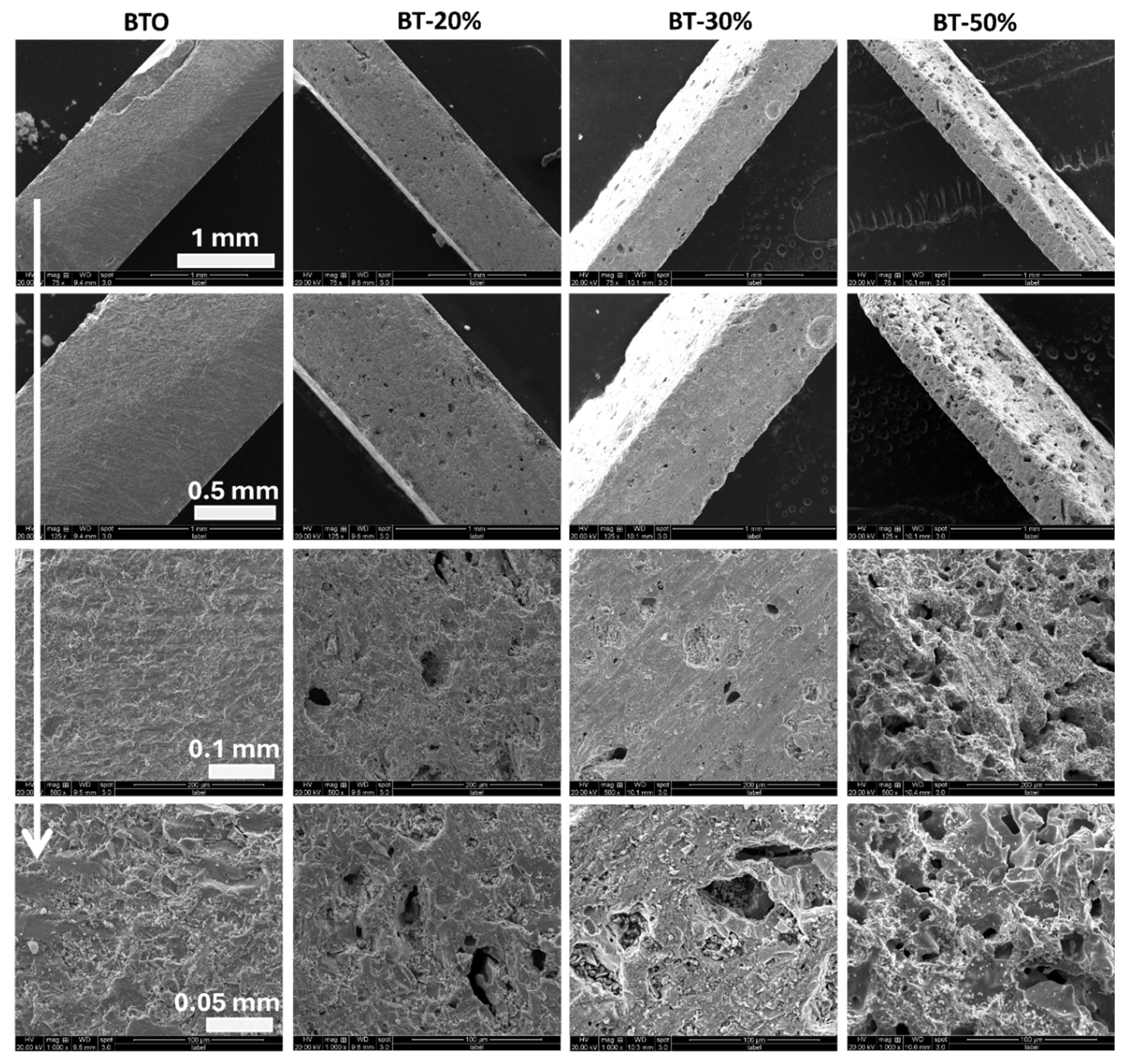
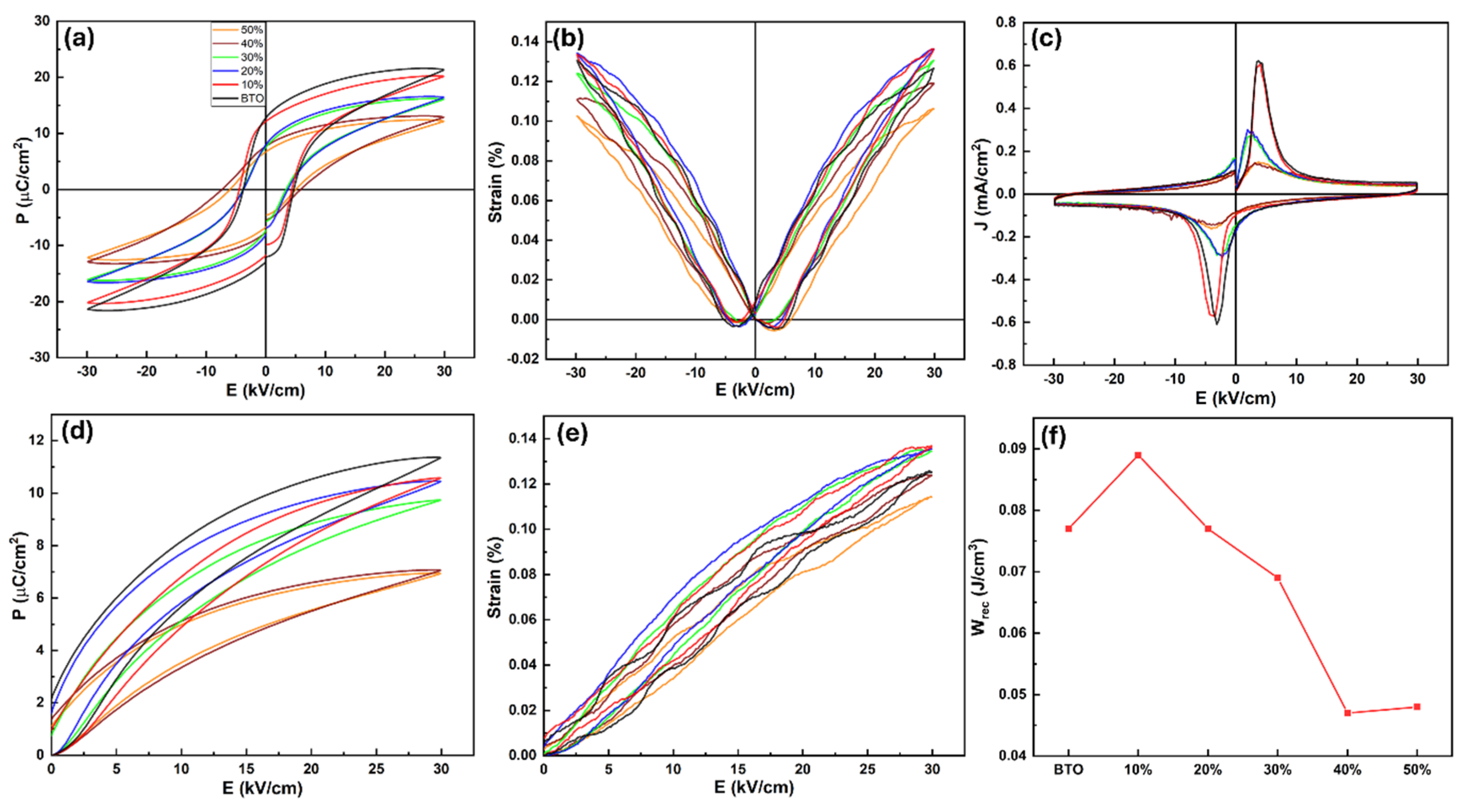
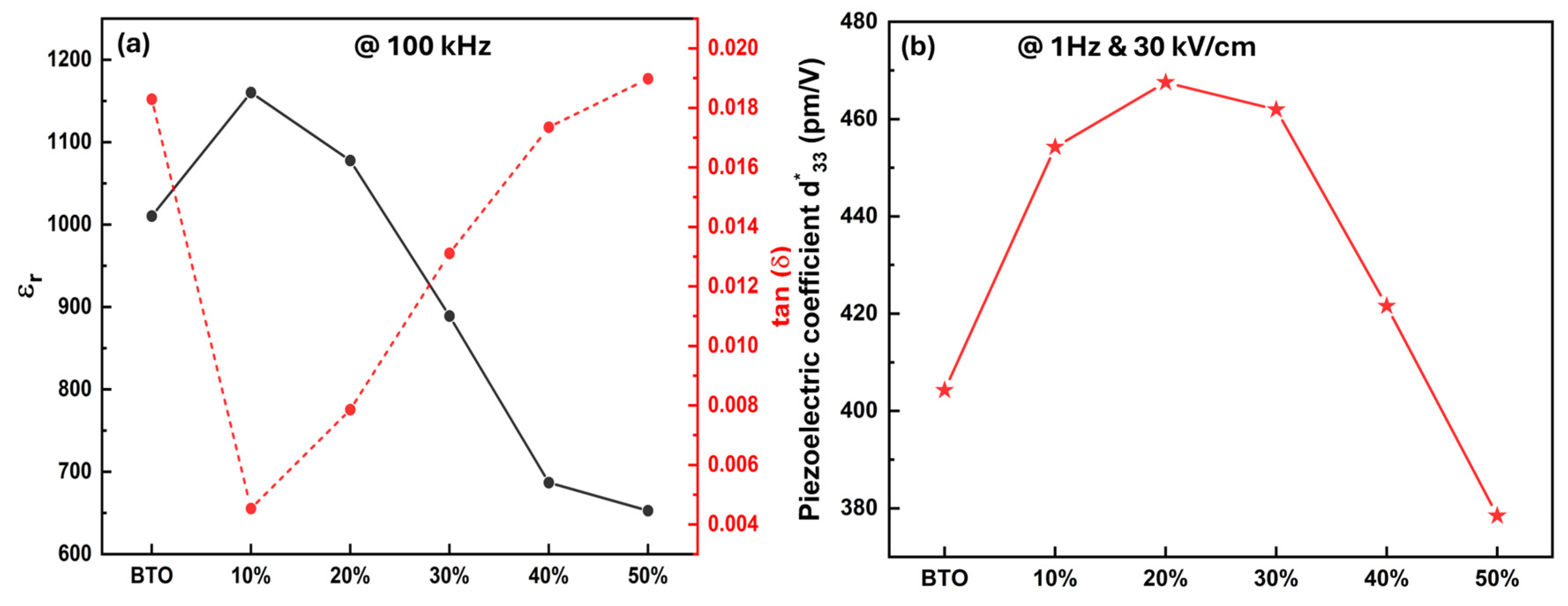
Porous BaTiO3 (BTO) ceramics with controlled porosity were successfully fabricated using a simple and cost-effective sucrose-assisted route. Porosity was introduced by incorporating 10–50 vol% sucrose as a pore-forming agent, followed by sintering at 1350 °C for 2 h. The use of sucrose as an effective pore-forming agent is corroborated by the systematic reduction in bulk density from ~5.92 to ~4.1 g.cm-3. X-ray diffraction and Raman spectroscopy analysis revealed the retention of the tetragonal phase across all samples, indicating that the introduction of porosity does not alter either the average crystal or local structure. Microstructural analysis demonstrated well-developed grains with heterogeneously distributed and interconnected porosity upon sucrose addition, while maintaining good grain connectivity. Electrical characterisation showed a gradual decrease in maximum polarisation (Pmax) from ~21 µC.cm-2 for dense BTO to ~12 µC.cm-2 for 50 vol% sucrose samples. Despite increased porosity, the electric field-induced strain response exhibited only a marginal reduction (~0.137% to 0.10%), indicating preserved electromechanical functionality with enhanced large-signal piezoelectric coefficient ~468 pm.V-1 for the 20 vol% sucrose sample, whereas the 10 vol% counterpart shows the largest ɛRT ~1150 with tan δ = 0.005. These results demonstrate that sucrose-assisted fabrication enables effective porosity engineering in BTO without compromising its ferroelectric nature, offering a promising approach for the development of porous ferroelectric ceramics with tunable electromechanical properties.
Keywords:
1. Introduction
2. Materials and Methods
3. Results and Discussion
3.1. Bulk Density and Porosity
3.2. Phase Purity and Crystal Structure
3.3. Raman Spectroscopy Analysis
3.4. Microstructure Analysis
3.5. High Field Electrical Measurements
3.6. Relative Permittivity and Large-Signal Piezoelectric Coefficient,
5. Conclusions
Supplementary Materials
Author Contributions
Funding
Data Availability Statement
Acknowledgments
Conflicts of Interest
Abbreviations
| BTO | Barium Titanate/BaTiO3 |
| XRD | X-ray diffraction |
| SEM | Scanning electron microscopy |
| EDX | Energy-dispersive X-ray spectroscopy |
| P-E | Polarisation–electric field |
| S-E | Strain–electric field |
| J-E | Current density–electric field |
| Pmax | Maximum Polarisation |
| Pr | Remanent polarization |
| Ec | Coercive Field |
| Wrec | Recoverable energy density |
| Large-signal piezoelectric coefficient | |
| ICDD | International Centre for Diffraction Data |
| GOF | Goodness of fit |
| LCR | Inductance–capacitance–resistance meter |
References
- Zubairi, H.; Lu, Z.; Zhu, Y.; Reaney, I. M.; Wang, G. Current development, optimisation strategies and future perspectives for lead-free dielectric ceramics in high field and high energy density capacitors. Chem. Soc. Rev. 2024, 53, 10761–10790. [Google Scholar] [CrossRef] [PubMed]
- Wang, G.; et al. Electroceramics for High-Energy Density Capacitors: Current Status and Future Perspectives. Chem. Rev. 2021, 121, 6124–6172. [Google Scholar] [CrossRef] [PubMed]
- Sada, T.; et al. High permittivity BaTiO3 and BaTiO3-polymer nanocomposites enabled by cold sintering with a new transient chemistry: Ba(OH)2∙8H2O. J. Eur. Ceram. Soc. 2021, 41, 409–417. [Google Scholar] [CrossRef]
- Chen, Y.; Wang, N.; Ola, O.; Xia, Y.; Zhu, Y. Porous ceramics: Light in weight but heavy in energy and environment technologies. Mater. Sci. Eng. R Rep. 2021, 143, 100589. [Google Scholar] [CrossRef]
- Hammel, E. C.; Ighodaro, O. L. R.; Okoli, O. I. Processing and properties of advanced porous ceramics: An application based review. Ceram. Int. 2014, 40, 15351–15370. [Google Scholar] [CrossRef]
- Zhang, Y.; et al. Enhanced pyroelectric and piezoelectric properties of PZT with aligned porosity for energy harvesting applications. J. Mater. Chem. A. 2017, 5, 6569–6580. [Google Scholar] [CrossRef]
- Roscow, J.; Zhang, Y.; Taylor, J.; Bowen, C. R. Porous ferroelectrics for energy harvesting applications. Eur. Phys. J. Spec. Top. 2015, 224, 2949–2966. [Google Scholar] [CrossRef]
- Bowen, C. R.; Kara, H. Pore Anisotropy in 3-3 Piezoelectric Composites. Mater. Chem. Physics. 2002, 75, 45–49. [Google Scholar] [CrossRef]
- Bowen, C. R.; Perry, A.; Lewis, A. C. F.; Kara, H. Processing and properties of porous piezoelectric materials with high hydrostatic figures of merit. J. Eur. Ceram. Soc. 2004, 24, 541–545. [Google Scholar] [CrossRef]
- Abhinay, S.; Dixit, P.; Mazumder, R. Effect of pore former sucrose on microstructure and electrical properties of porous BZT-0.5BCT ceramics. Ferroelectrics 2020, 557, 18–27. [Google Scholar] [CrossRef]
- Creedon, M. J.; Schulze, W. A. Axially distorted 3–3 piezoelectric composites for hydrophone applications. Ferroelectrics 1994, 153, 333–339. [Google Scholar] [CrossRef]
- Newnham, R. E.; Skinner, D. P.; Cross, L. E. Connectivity and piezoelectric-pyroelectric composites. Mater. Res. Bull. 1978, 13, 525–536. [Google Scholar] [CrossRef]
- Geis, S.; Fricke, J.; Löbmann, P. Electrical properties of PZT aerogels. J. Eur. Ceram. Soc. 2002, 22, 1155–1161. [Google Scholar] [CrossRef]
- Craciun, F.; Galassi, C.; Roncari, E.; Filippi, A.; Guidarelli, G. Electro-elastic properties of porous piezoelectric ceramics obtained by tape casting. Ferroelectrics. 1998, 205, 49–67. [Google Scholar] [CrossRef]
- Rittenmyer, K.; Shrout, T.; Schulze, W. A.; Newnham, R. E. Piezoelectric 3–3 composites. Ferroelectrics 1982, 41, 189–195. [Google Scholar] [CrossRef]
- Zeng, T.; Dong, X. L.; Mao, C. L.; Zhou, Z. Y.; Yang, H. Effects of pore shape and porosity on the properties of porous PZT 95/5 ceramics. J. Eur. Ceram. Soc. 2007, 27, 2025–2029. [Google Scholar] [CrossRef]
- Hu, J.; Zhang, S.; Tang, B. Three-dimensionally ordered macroporous BaTiO3 framework-reinforced polymer composites with improved dielectric properties. SN Appl. Sci. 2021, 3, 52. [Google Scholar] [CrossRef]
- Jiang, Z.; et al. 3D printing of porous scaffolds BaTiO3 piezoelectric ceramics and regulation of their mechanical and electrical properties. Ceram. Int. 2022, 48, 6477–6487. [Google Scholar] [CrossRef]
- Gaur, A.; Chauhan, V. S.; Vaish, R. Porous BaTiO3 ceramic with enhanced piezocatalytic activity for water cleaning application. Surf. Interfaces 2023, 36, 102497. [Google Scholar] [CrossRef]
- Lukacs, V. A.; et al. Structural and functional properties of BaTiO3 porous ceramics produced by using pollen as sacrificial template. Ceram. Int. 2020, 46, 523–530. [Google Scholar] [CrossRef]
- Roscow, J. I.; Topolov, V. Y.; Bowen, C. R.; Taylor, J.; Panich, A. E. Understanding the peculiarities of the piezoelectric effect in macro-porous BaTiO3. Sci. Technol. Adv. Mater. 2016, 17, 769–776. [Google Scholar] [CrossRef] [PubMed]
- Wiecinska, P.; Zurawska, A.; Falkowski, P.; Jeong, D. Y.; Szafran, M. Sweet ceramics: how saccharide-based compounds have changed colloidal processing of ceramic materials. J. Korean Ceram. Soc. 2020, 57, 231–245. [Google Scholar] [CrossRef]
- Zali, N. M.; Mahmood, C. S.; Mohamad, S. M.; Foo, C. T.; Murshidi, J. A. X-ray diffraction study of crystalline barium titanate ceramics. AIP Conf. Proc. 2014, 1584, 160–163. [Google Scholar] [CrossRef]
- Biglar, M.; Gromada, M.; Stachowicz, F.; Trzepieciński, T. Synthesis of barium titanate piezoelectric ceramics for multilayer actuators (MLAs). Acta Mech. Et. Autom. 2017, 11, 275–279. [Google Scholar] [CrossRef]
- Veerapandiyan, V. K.; et al. B-site vacancy induced Raman scattering in BaTiO3-based ferroelectric ceramics. J. Eur. Ceram. Soc. 2020, 40, 4684–4688. [Google Scholar] [CrossRef]
- Deluca, M.; Al-Jlaihawi, Z. G.; Reichmann, K.; Bell, A. M. T.; Feteira, A. Remarkable impact of low BiYbO3 doping levels on the local structure and phase transitions of BaTiO3. J. Mater. Chem. A. 2018, 6, 5443–5451. [Google Scholar] [CrossRef]
- Deluca, M.; Hu, H.; Popov, M. N.; Spitaler, J.; Dieing, T. Advantages and developments of Raman spectroscopy for electroceramics. Commun. Mater. 2023, 4, 78. [Google Scholar] [CrossRef]
- Padurariu, L.; et al. Modifications of structural, dielectric and ferroelectric properties induced by porosity in BaTiO3 ceramics with phase coexistence. J. Alloys Compd. 2021, 889, 161699. [Google Scholar] [CrossRef]
- Carroll, E. L.; Killeen, J. H.; Feteira, A.; Dean, J. S.; Sinclair, D. C. Influence of electrode contact arrangements on Polarisation-Electric field measurements of ferroelectric ceramics: A case study of BaTiO3. J. Mater. 2025, 11, 100939. [Google Scholar] [CrossRef]
- Jian, G.; et al. Enhanced dielectric constant and energy density in a BaTiO3/polymer-matrix composite sponge. Commun. Mater. 2020, 1, 91. [Google Scholar] [CrossRef]
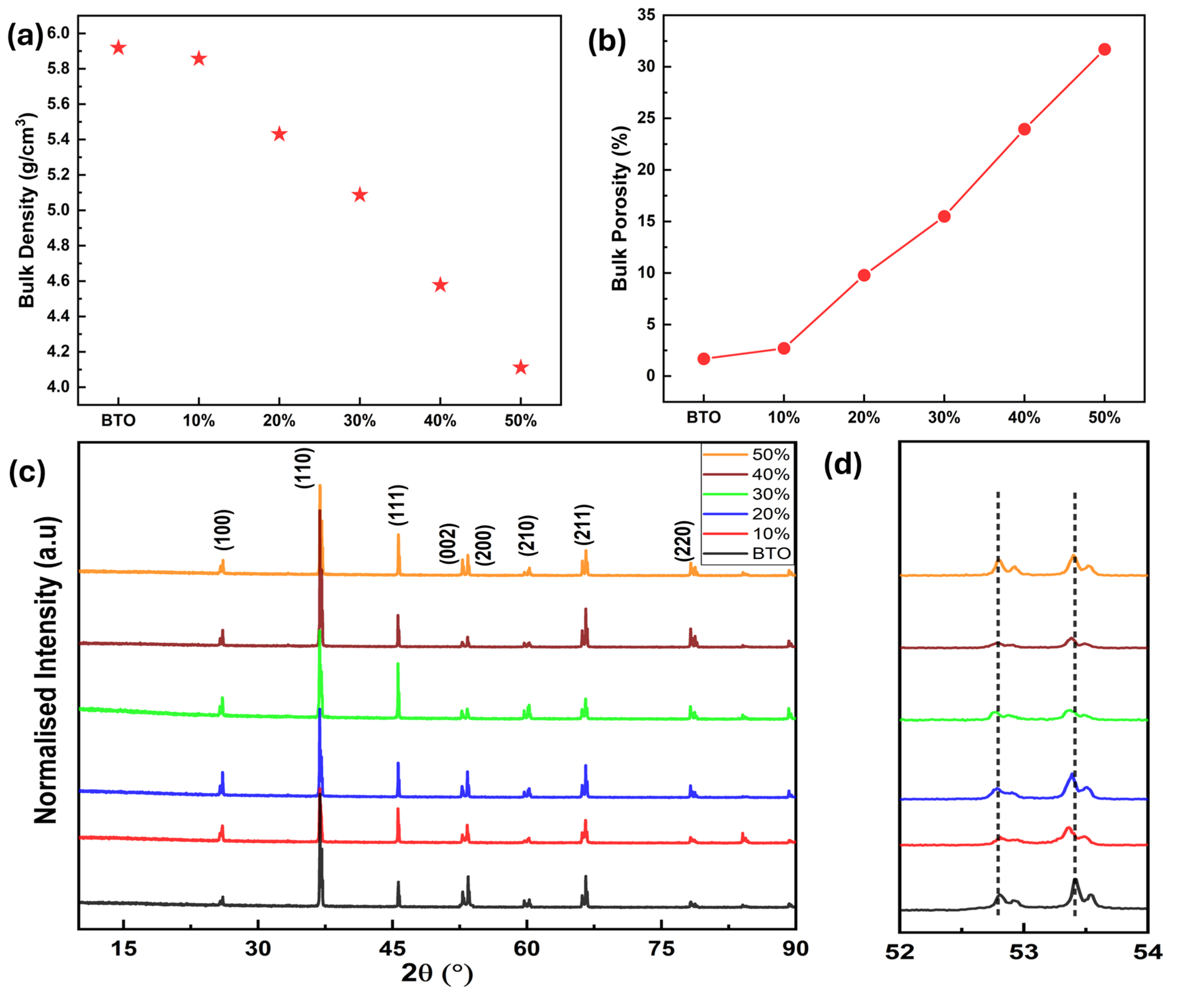

| Composition | Space Group | Lattice Parameters | c/a ratio | Volume (Å) | GOF | |
| a, b (Å) | c (Å) | |||||
| BTO | P4mm | 3.994(9) | 4.036(1) | 1.0104 | 64.38(2) | 1.87 |
| 10% | P4mm | 3.994(3) | 4.035(4) | 1.0102 | 64.36(3) | 2.55 |
| 20% | P4mm | 3.994(6) | 4.036(7) | 1.0104 | 64.37(1) | 2.10 |
| 30% | P4mm | 3.994(8) | 4.036(9) | 1.0105 | 64.38(2) | 1.83 |
| 40% | P4mm | 3.994(6) | 4.036(7) | 1.0105 | 64.38(2) | 2.22 |
| 50% | P4mm | 3.994(6) | 4.036(6) | 1.0105 | 64.38(1) | 1.72 |
Disclaimer/Publisher’s Note: The statements, opinions and data contained in all publications are solely those of the individual author(s) and contributor(s) and not of MDPI and/or the editor(s). MDPI and/or the editor(s) disclaim responsibility for any injury to people or property resulting from any ideas, methods, instructions or products referred to in the content. |
© 2026 by the authors. Licensee MDPI, Basel, Switzerland. This article is an open access article distributed under the terms and conditions of the Creative Commons Attribution (CC BY) license (http://creativecommons.org/licenses/by/4.0/).