

Submitted:
13 June 2026
Posted:
15 June 2026
You are already at the latest version
Abstract
This study evaluated the dose dependent effects of a nodule associated bacterial isolate subsequently identified by whole genome sequencing as Kosakonia cowanii on nodulation, nitrogen status, growth, phenology and yield components of common bean (Phaseolus vulgaris L. cv. Centenario) under greenhouse conditions in northern Ecuador. A randomized complete block design with five treatments and three replicates was used, including three inoculation doses (6×10⁹, 6×104·5 and 6×102·25 CFU mL−1), a non-inoculated control and a nitrogen-fertilized control. Significant differences were detected for plant height, SPAD index, phenological development, nodulation and 100 seed weight. The lowest inoculation dose (T3) produced the strongest biological response, reaching 227.67 nodules plant−1, approximately 6.5 times more than the non-fertilized control, and the highest SPAD value at 60 days after sowing (41.16), exceeding both the non-fertilized control (26.84) and the nitrogen-fertilized treatment (33.14). T3 also achieved the greatest plant height (80.31 cm) and accelerated flowering and pod formation by up to two days compared with higher inoculation doses. Although grain yield did not differ significantly among treatments because of high experimental variability and limited statistical power, inoculated plants-maintained yields comparable to the nitrogen fertilized control while improving seed filling. Whole genome sequencing confirmed the identity of the dominant genome as K. cowanii (ANI = 96.73%; completeness = 99.03%; contamination = 0.63%), supporting the interpretation that this bacterium acts primarily as a plant growth promoting and nodule associated bacterium rather than a classical nitrogen fixing symbiont. These findings highlight the potential of native K. cowanii as a component of sustainable biofertilization strategies for Andean bean production systems.
Keywords:
Kosakonia cowanii
; common bean
; nodulation
; SPAD index
; biofertilization
1. Introduction
Nitrogen (N) is a primary macronutrient limiting the productivity of common bean (Phaseolus vulgaris L.) in Andean agricultural systems, where low availability of assimilable forms restricts vegetative growth, nodulation, and yield [1,2]. This crop is strategically important to the food security of over 400 million people and is a major source of plant protein in both household and commercial contexts [3]. Although atmospheric N2 constitutes approximately 78% of the atmosphere, most plants cannot directly utilize this form and instead rely on mineral nitrogen, specifically NH4+ and NO3− [4,5]. To address this limitation, intensive agriculture has depended on synthetic nitrogen fertilizers; however, frequent and excessive application increases production costs and contributes to environmental issues such as soil acidification, leaching, and N2O emissions [6,7,8]. In Ecuador, beans are extensively cultivated in inter-Andean regions, including Imbabura and Carchi. Consequently, identifying biological alternatives for nitrogen nutrition is a priority to enhance the sustainability and resilience of these production systems [1].
Biological nitrogen fixation (BNF) is a key strategy for Biological nitrogen fixation (BNF) represents a key strategy to reduce reliance on mineral fertilization in legumes [9,10]. In Phaseolus vulgaris L., symbiotic bacteria from the genera Rhizobium, Ensifer, and Bradyrhizobium induce root nodule formation, where nitrogenase converts N2 to NH3 under microaerobic conditions regulated by the host plant [9]. The efficiency of this symbiosis depends on multiple factors, including plant genotype–bacterial strain compatibility, soil conditions, nutrient availability, and competition with native microbial populations [11]. Competition from native rhizobia is particularly important, as these organisms can displace or limit the establishment of inoculated strains, resulting in variable agronomic outcomes across different environments and plant materials [11,12].
Consequently, the isolation and evaluation of bacteria from nodules of local legume crops to identify microorganisms better adapted to specific agroecological conditions has been superseded by recent studies on the nodular microbiome [13]. It is now recognized that legume nodules harbor complex bacterial communities that include non-rhizobial nodule-associated bacteria (NAB) with the potential to act as plant growth-promoting bacteria (PGPR) [14]. These bacteria enhance plant performance through direct mechanisms, including the production of phytohormones, phosphate solubilization, siderophore synthesis, and ACC deaminase activity [15]. Additionally, they exert indirect effects on nodulation by modifying root architecture, altering the rhizosphere microenvironment, or attenuating stress responses that affect plant-rhizobium interaction [16,17,18]. In this regard, NABs do not necessarily replace nitrogen-fixing rhizobia, but they can complement their function and increase the biological efficiency of the symbiotic system. This distinction is important because it avoids attributing a symbiotic function to non-rhizobial bacteria that must be demonstrated experimentally, and it allows for the formulation of more robust hypotheses regarding biostimulation, microbial cooperation, and indirect enhancement of NFB.
Within the Enterobacteriaceae family, the genus Kosakonia has emerged as a group of plant-associated bacteria with agronomically relevant functional attributes. Strains of Kosakonia spp., including Kosakonia cowanii, have demonstrated the ability to produce indoleacetic acid, solubilize phosphate, and synthesize siderophores, which are traits associated with enhanced root growth, nutrient uptake, and plant vigor [14]. While these characteristics do not confirm symbiotic nitrogen fixation, they support the evaluation of Kosakonia as a complementary microorganism in biofertilization strategies. Co-inoculation studies involving growth-promoting bacteria and rhizobia have reported improvements in nodulation, nutrient uptake, and plant growth [18]. Additionally, research on endophytes and nodular bacteria suggests that plant-associated Enterobacterales contribute to soil health and crop resilience under stress conditions [15,17]. Thus, integrating native rhizobia with NAB or PGPR offers a technically viable approach to reducing dependence on synthetic mineral nitrogen [19,20]. This strategy is more practical than attributing the entire process to a single microorganism, as bean productivity results from complex interactions among the host, rhizobia, associated bacteria, and the soil environment.
In the Sierra Norte region of Ecuador, particularly in Imbabura, the bacterial diversity associated with bean nodules is insufficiently characterized. This knowledge gap restricts the utilization of native microorganisms with biofertilizer potential and impedes the development of inoculants tailored to local cultivars and environments. Traditionally, nodular bacteria have been characterized by assessing cultural and physiological traits, such as colony morphology, growth rate in selective media, biochemical test responses, and carbon source utilization. While these methods are useful for preliminary identification, their limited taxonomic resolution can lead to inaccurate classifications, especially when members of the Enterobacteriaceae exhibit phenotypic traits similar to those of laboratory-cultured rhizobia. Identification based solely on colony morphology and biochemical tests often leads to misclassification, particularly when Enterobacteriaceae exhibit growth phenotypes resembling those of rhizobia in culture media [21]. Whole-genome sequencing and genomic taxonomy, using criteria such as the Average Nucleotide Identity Index and tools like GTDB-Tk, provide higher resolution for confirming bacterial identity and support reproducible functional inferences [22]. Additionally, metagenomic studies of DNA extracted directly from nodules have revealed greater bacterial diversity than conventional culture methods, underscoring the need to integrate isolation, classical phenotypic characterization, genomic analysis, and agronomic evaluation [23]. Accurate identification of these communities is essential for designing effective biofertilization strategies and understanding plant-microorganism interactions that influence nitrogen fixation efficiency [24,25]. Therefore, studies that link the genomic identity of isolates with nodulation responses and crop physiological performance offer a more robust foundation than isolated descriptive characterizations.
Within this context, the present study genetically identified a nodular isolate as Kosakonia cowanii and assessed its dose-dependent effects on growth, nodulation, foliar nitrogen status, phenology, and yield components of common bean (variety Centenario) under controlled greenhouse conditions in the Sierra Norte region of Ecuador. The findings suggest that K. cowanii functions as a plant growth-promoting bacterium and indirectly facilitates nodulation associated with native rhizobia, thereby enhancing crop nitrogen status without the use of synthetic mineral nitrogen. This approach enables the evaluation of native non-rhizobial nodule-forming bacteria as potential components of future biofertilization strategies for Andean agroecosystems, while avoiding overestimating their biological role or assuming direct nitrogen fixation in the absence of specific functional evidence.
2. Materials and Methods
2.1. Experimental Site and Environmental Conditions
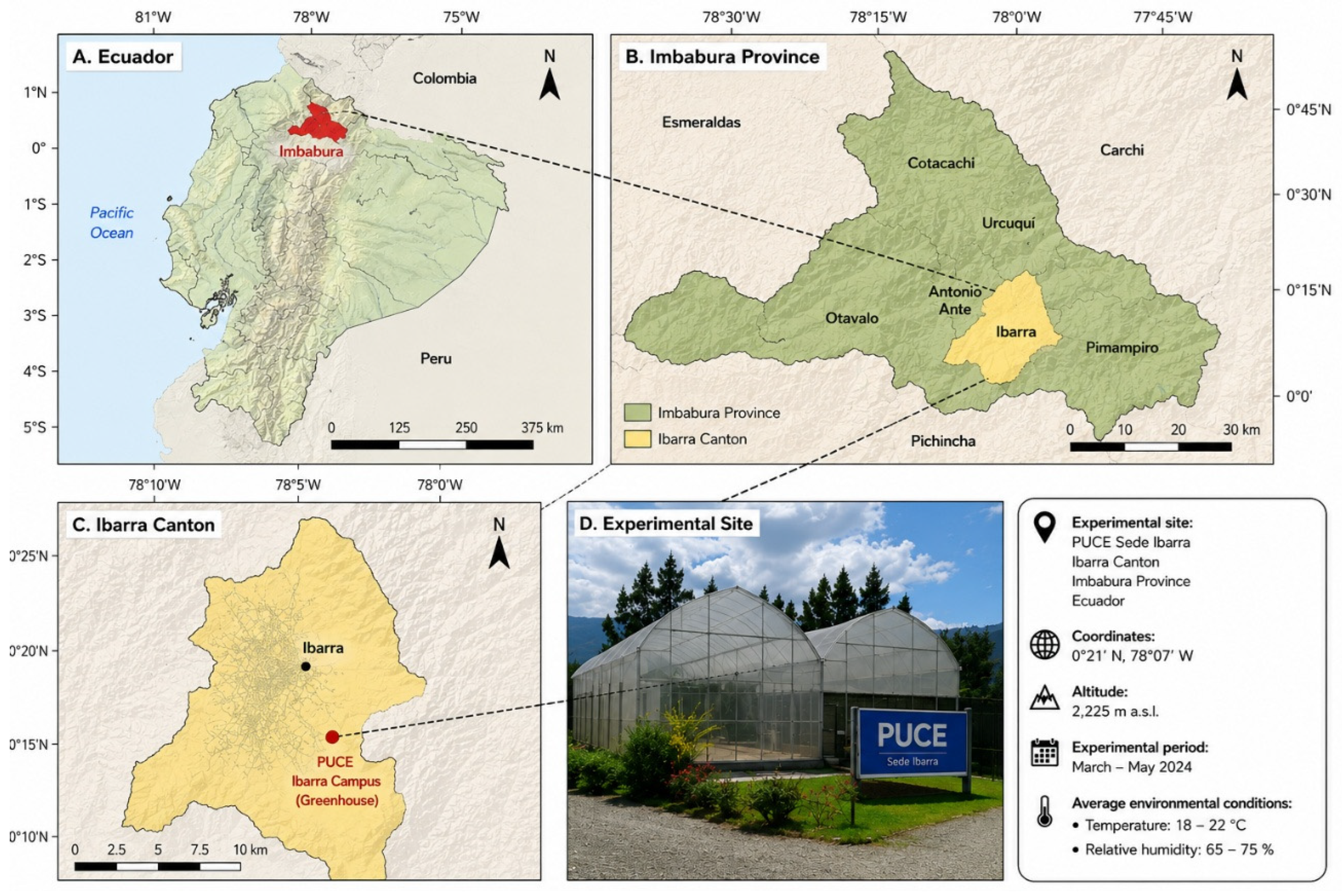
The experiment was conducted under controlled greenhouse conditions at the Pontifical Catholic University of Ecuador, Ibarra Campus, located in the canton of Ibarra, province of Imbabura, Ecuador (0°21′ N, 78°07′ W; 2,225 m a.s.l.), between March and May 2024 (Figure 1). During the experimental period, average temperatures ranged from 18 to 22 °C, and relative humidity ranged from 65 to 75%.
The usable area of the greenhouse was 27.5 m2. Growing conditions were maintained through controlled localized irrigation (1 L h−1 dripper) and periodic monitoring of environmental variables. The use of a protected environment made it possible to reduce the variability associated with external climatic factors—particularly precipitation, temperature, and solar radiation—during the evaluation of the crop’s growth, nodulation, and nitrogen status in response to the bacterial inoculation treatments.
Figure 1.
Study area and location of the greenhouse facility used for the evaluation of Phaseolus vulgaris L. inoculated with Kosakonia cowanii in Ibarra, Imbabura Province, Ecuador. (A) Location of Imbabura Province within Ecuador; (B) location of Ibarra Canton within Imbabura Province; (C) location of the greenhouse facility at PUCE-Ibarra; and (D) greenhouse used during the experimental period.
Figure 1.
Study area and location of the greenhouse facility used for the evaluation of Phaseolus vulgaris L. inoculated with Kosakonia cowanii in Ibarra, Imbabura Province, Ecuador. (A) Location of Imbabura Province within Ecuador; (B) location of Ibarra Canton within Imbabura Province; (C) location of the greenhouse facility at PUCE-Ibarra; and (D) greenhouse used during the experimental period.
2.2. Plant Material
Common beans (Phaseolus vulgaris L.) of the INIAP 484 Centenario variety were used; this variety was developed by the National Program for Legumes and Andean Grains (PRONALEG-GA) of the National Institute of Agricultural Research (INIAP) from a cross between the AMPR5 and CAL 143 lines, which carry genetic resistance to rust (Uromyces appendiculatus), anthracnose (Colletotrichum lindemuthianum), and angular leaf spot (Phaeoisariopsis griseola). This variety exhibits a type I erect growth habit (determinate, bushy, unpruned), uniform maturity, and proven adaptation to the agroecological conditions of the inter-Andean valleys of northern Ecuador, particularly in the provinces of Imbabura and Carchi.
The seeds were obtained from local suppliers specializing in seed production and visually selected to ensure uniformity in size, color, and physical integrity. Prior to inoculation, the seeds underwent surface disinfection by immersion in 70% ethanol for 2 min, followed by 2% sodium hypochlorite for 5 min and three consecutive rinses with sterile distilled water. This procedure was performed to reduce the presence of potentially interfering surface microorganisms and to promote a more controlled interaction between the seed and the inoculated bacterial strain.
2.3. Genomic Characterization and Taxonomic Identification of the Strain Used as Inoculum
The taxonomic identification of the native strain isolated in the Antonio Ante canton, Imbabura province, and used as inoculum was performed via whole-genome sequencing (WGS). Genomic DNA extraction was performed according to standard cell lysis and purification protocols, and its quality and quantity were assessed using a Nanodrop and agarose gel electrophoresis. Paired-end library construction was performed by mechanical fragmentation of the DNA to an average insert size of 500 bp, followed by ligation of universal adapters. Sequencing was performed using Illumina technology. The raw reads obtained were processed via metagenomic assembly on the KBase platform [26], which integrates multiple bioinformatics analysis algorithms and enables the recovery of two high-quality metagenomically assembled genomes (MAGs) [27] (Table 1).
Assembly was performed using SPAdes (St. Petersburg Genome Assembler) in metagenomic mode, employing a hierarchical series of k-mers (21, 31, 55, and 77 nucleotides) to optimize De Bruijn graphs [28]. The assembly parameters used included a minimum coverage of 2× for read retention during initial graph construction, yielding between 45 and 120 contigs with an estimated N50 of 8–12 kb. Metagenomic binning was then performed using MetaBAT2 [29], MaxBin2 [30], and CONCOCT [31], implemented in KBase, and the results were consolidated with the DAS Tool [32] to automatically select the highest-quality bins.

Table 1.
Taxonomic classification and quality metrics of metagenomically assembled genomes (MAGs) recovered via WGS, analyzed using KBase, GTDB-Tk, ANI, and CheckM.
Table 1.
Taxonomic classification and quality metrics of metagenomically assembled genomes (MAGs) recovered via WGS, analyzed using KBase, GTDB-Tk, ANI, and CheckM.
| Bin | Taxonomic Classification (GTDB-Tk) | ANI (%) |
Alignment Fraction | Completeness (%) | Contamination (%) |
|---|---|---|---|---|---|
| bin.002 | Kosakonia cowanii | 96,73 | 0,927 | 99,03 | 0,63 |
| bin.001 | Providencia sp. | 93,16 | - | 100 | 1,11 |
Note: Taxonomic identification was performed using GTDB-Tk. ANI values were calculated relative to the reference genomes deposited in NCBI: GCF_001975225.1 (K. cowanii) and GCF_019343475.1 (Providencia sp.).
The quality of the recovered genomes was verified using CheckM (v1.0.18) [33], a standard tool that quantifies completeness and contamination based on single-copy genes specific to each taxonomic lineage. The taxonomic classification of the MAGs was performed using GTDB-Tk (Genome Taxonomy Database Toolkit) [34] implemented in KBase and supplemented with Average Nucleotide Identity (ANI) and alignment fraction analyses against reference genomes deposited in NCBI.
The genome assigned to K. cowanii (bin.002) exhibited an ANI of 96.73% relative to the reference genome GCF_001975225.1, a value that significantly exceeds the generally accepted threshold for taxonomic delimitation at the species level (ANI > 95%) [22,35]. The alignment fraction reached 0.927, indicating high genomic coverage (92.7%) relative to the reference sequence. The quality metrics obtained using CheckM were: 99.03% completeness and 0.63% contamination, confirming the recovery of a high-quality genome suitable for subsequent functional and comparative analyses [27].
Additionally, a second genome (bin.001) classified as Providencia sp. recovered, with 100.00% completeness and 1.11% contamination. However, the ANI for this bin was 93.16%, below the threshold for reliable species-level assignment (ANI > 95%) [22], so its classification at the genus level was retained. The simultaneous detection of Providencia sp. indicates the coexistence of distinct bacterial populations in the original biological material; however, K. cowanii was the dominant genome recovered during assembly and binning, representing the major population in the inoculum used.
The taxonomic identity was corroborated by a phylogenetic analysis based on reference genomes representative of the genus Kosakonia [36] (Figure 2). Furthermore, the recovered K. cowanii genome clustered with the reference strains UFU187 and CT11-105, forming a well-supported clade that was clearly distinct from K. radicincitans, K. oryzae, K. sacchari, K. pseudosacchari, and K. oryzendophytica.”
The agreement between ANI results, genomic quality metrics, and phylogenomic reconstruction provides robust evidence for assigning the recovered genome to the species Kosakonia cowanii. This confirmation is significant, as several species within the genus exhibit similar phenotypic characteristics and can be difficult to distinguish using conventional microbiological methods based solely on cultural traits and biochemical tests. Furthermore, the close phylogenetic association observed with previously described reference strains of K. cowanii supports the taxonomic consistency of the assignment obtained using GTDB-Tk and ANI. The integration of genomic taxonomy and phylogenomic analysis tools enabled validation of the microorganism’s identity for subsequent agronomic trials.
2.4. Selection and Preparation of the Inoculum
2.4.1. Origin and Selection of the Inoculated Strain
The strain used as inoculum was isolated from root nodules of Phaseolus vulgaris L. collected in the canton of Antonio Ante, Imbabura Province, Ecuador [25]. The isolation was part of a collection of native strains obtained from six cantons in the province (Antonio Ante, Ibarra, Cotacachi, Otavalo, Urcuquí, and Pimampiro), established to identify microorganisms with plant growth-promoting potential associated with bean cultivation.
The selection of the strain used in the present study was based on conventional microbiological criteria, including colony morphology on YMA (Yeast Mannitol Agar) medium, differential Congo Red staining, the ability to grow on Rhizobium Agar medium [37] without combined nitrogen, and bacterial growth kinetics determined spectrophotometrically by optical density at 600 nm (OD600) [38]. The selected strain exhibited vigorous growth and phenotypic characteristics consistent with those of plant growth-promoting bacteria associated with legumes.
2.4.2. Preparation and Adjustment of the Inoculum
The selected strain was cultured in YMB (Yeast Mannitol Broth) [37] liquid medium at 28 °C for 72 hours, under constant orbital agitation at 150 rpm. Cell concentration was estimated by measuring optical density at 600 nm and subsequently verified by plate counting, yielding a bacterial suspension with an approximate concentration of 6.0 × 10⁹ CFU mL−1, which was used as the stock culture for preparing the different inoculation doses.
From the stock culture, three concentrations were prepared by serial dilutions in sterile saline solution (0.9% NaCl) to evaluate the dose-dependent response of bacterial inoculation on culture growth [1,38]:
- T1 (high dose): 6.0 × 10⁹ CFU mL−1.
- T2 (medium dose): 3.16 × 10⁴ CFU mL−1.
- T3 (low dose): 1.07 × 10² CFU mL−1.
Seed inoculation was performed 48 hours prior to sowing, using sterile talc as an adhesive material, at a ratio of 1 mL of bacterial suspension per 2 g of talc and 10 mL of formulation per 100 g of seeds. The procedure was carried out at room temperature (<25 °C) under aseptic conditions [38].
Because pomina is an inert, light, and porous volcanic substrate that is abundant in the Andean region and commonly used in Ecuador for agricultural and horticultural production [39], additional inoculum applications were made directly to the root system at 15, 30, 45, and 60 days after sowing (DAS) [40,41]. Since pomina was used as the substrate in the inoculated treatments, 5 mL of bacterial suspension were applied to each bag at every application. Throughout the experimental period, the bacterial suspensions were stored at a temperature below 4 °C to maintain their microbiological viability [38].
2.4.3. Taxonomic Confirmation of the Strain
The taxonomic identity of the strain used as inoculum was confirmed via whole-genome sequencing (WGS) [22]. The procedures for DNA extraction, sequencing, assembly, functional annotation, and taxonomic classification are described in detail in subsequent sections.
2.5. Experimental Design, Treatments, and Growth Conditions
A completely randomized block design (CRBD) was used with five treatments and three replicates, for a total of 15 experimental units [42]. The blocks were established to control potential sources of microenvironmental variation within the experimental area, associated with differences in light, temperature, and air circulation conditions [42]. Each block included all treatments evaluated, and treatment assignments within each block were randomized, ensuring equal probability of assignment for all experimental units.
The treatments evaluated included three bacterial inoculation rates, absolute control with no inoculation or fertilization, and a control fertilized with mineral nitrogen [1,38]. A detailed description of the treatments, inoculation rates, and substrates used is presented in Table 2.
Irrigation was carried out using a drip system with 2 L h−1 emitters, at a flow rate of approximately 1 L plant−1 h−1. The inoculated treatments (T1–T3) and the fertilized treatment (T5) received soluble fertigation consisting of monopotassium phosphate (MKP) and potassium sulfate (K2SO4) in the morning, calcium oxide (CaO) at noon, and a mixture of boron (B) and magnesium sulfate (MgSO4) in the afternoon. Only treatment T5 received mineral nitrogen in the form of ammonium nitrate, equivalent to a dose of 100 kg ha−1 of N [1,40]. The treatments inoculated with the selected strain did not receive mineral nitrogen fertilization throughout the experimental period.
The corresponding ANOVA statistical model [42] is expressed by Equation 1:
Where,
- where is the observed response for the i-th treatment in the j-th block; is the overall mean; is the effect of the i-th treatment; is the effect of the j-th block; and is the random experimental error associated with the observation .
2.6. Agronomic and Physiological Variables Evaluated
2.6.1. Vegetative Growth Parameters
2.6.2. Determination of Relative Chlorophyll Content Using the SPAD Index
Relative leaf chlorophyll content was determined at 15, 30, 45, and 60 DAP using a portable SPAD-502 meter (Soil Plant Analysis Development; Konica Minolta, Osaka, Japan). Measurements were taken on the third fully expanded leaf from the apex of each plant, with three readings recorded per leaf and the average value subsequently calculated for each experimental unit [44].
2.6.3. Phenology
2.6.4. Nodulation and Biomass Allocation
At 60 DAS, the plants were carefully extracted from the substrate by rinsing with running water to preserve the integrity of the root system and nodules. Subsequently, the total number of nodules per plant was determined by direct counting [40,43].
Once the nodulation assessment was completed, the plants were separated into aerial (stems and leaves) and root fractions. Both fractions were dried in a forced-air oven at 70 °C for 72 h, or until constant weight was reached. The dry biomass of each fraction was determined using an analytical balance with a precision of 0.001 g, and the results were expressed in g plant−1 [45].
2.6.5. Yield Components and Grain Yield
At the crop’s physiological maturity, the main yield components were evaluated, including the number of pods per plant by direct counting, the number of grains per pod by manually counting the grains present in 10 pods randomly selected per experimental unit, and the weight of 100 seeds (g), determined after drying the grain to a moisture content of 12% [1,45].
Grain yield was estimated based on the total weight of grain harvested per experimental unit and subsequently extrapolated to one hectare using the plant density established in the trial, according to Equation 2 [45].
Where,
- GY = Grain yield (kg ha-1)
- GWEU = Grain weight harvested per experimental unit (kg)
- PD = Plant density (plants ha-1)
- NPEU = Number of plants per experimental unit
2.7. Whole-Genome Sequencing and Analysis
Genomic DNA extraction, paired-end library construction, and sequencing were performed using Illumina technology.
Assembly quality was evaluated using standard comparative genomics parameters, including the number of contigs, the N50 statistic, and completeness estimated with BUSCO [46]. Functional annotation of the assembled genome was performed using the RAST (Rapid Annotation using Subsystem Technology) platform, identifying coding sequences (CDS), tRNA and rRNA genes, as well as associated functional categories [47].
Taxonomic classification was performed using GTDB-Tk implemented on the KBase platform [34]. The quality of the recovered genomes was verified with CheckM [33]. The taxonomic identity of the strain was confirmed by calculating the Average Nucleotide Identity (ANI) index, using genomes deposited in NCBI as references [22,35]
Additionally, a targeted search for genes related to symbiosis and plant growth promotion was performed using BLAST, including genes for nodulation (nodA, nodB, and nodC), biological nitrogen fixation (nifH, nifD, and nifK), indoleacetic acid synthesis (ipdC), phosphate solubilization (pqq), siderophore production, and ACC deaminase activity (acdS). The genome accession number will be assigned once the GenBank deposit process is complete [14,18,21,48].
2.8. Statistical Analysis
The data obtained for the agronomic, physiological, and yield variables were analyzed using R software version 4.5.2 (R Core Team, Vienna, Austria) via the RStudio Desktop interface [49]. Prior to analysis, the assumptions of normality of the residuals were verified using the Shapiro–Wilk test and of homogeneity of variances using Levene’s test.
The evaluated variables were analyzed using analysis of variance (ANOVA) under a Randomized Complete Block Design (RCBD), with treatments as a fixed effect and blocks as a random effect. When significant differences were detected between treatments (p < 0.05), means were compared using Tukey’s (HSD) test at a 5% significance level.
To explore the relationships among agronomic, physiological, and yield variables, a Pearson correlation analysis was performed. The correlation coefficients were represented using a correlation matrix and interpreted according to their magnitude and direction, with values of p < 0.05 considered significant.
Additionally, a principal component analysis (PCA) was performed using the individual observations from the experimental units to reduce the dimensionality of the data and describe the multivariate structure of the crop response. Previously, the variables were standardized (mean = 0; standard deviation = 1) to avoid effects associated with differences in scale. The results were represented using biplot diagrams and interpreted based on the contributions of the variables to the principal components and the proportion of variance explained by each component.
The graphical representations and multivariate analyses were performed using specialized packages in the R environment, including ggplot2 for data visualization, corrplot for correlation matrices, and FactoMineR together with factoextra for the analysis and interpretation of principal components. In all cases, a significance level of α = 0.05 was adopted.
3. Results
3.1. Overall Effect of Treatments on Agronomic and Physiological Variables
Analysis of variance revealed that inoculation with Kosakonia cowanii produced differential responses in the evaluated agronomic and physiological variables (Table 3). Highly significant effects were detected on plant height at 60 DAS (F = 23.17; p < 0.001), the SPAD index (F = 61.34; p < 0.001), the number of nodules at 60 DAS (F = 361.00; p < 0.001), and the 100-seed weight (F = 16.47; p < 0.001).
Likewise, significant differences were observed in days to flowering (F = 4.49; p = 0.025), days to pod formation (F = 4.54; p = 0.024), and dry root mass (F = 4.58; p = 0.023). In contrast, dry leaf mass, the number of pods per plant, the number of seeds per pod, and seed yield did not show statistically significant differences among treatments (p > 0.05).
The magnitude of the response varied considerably among the variables evaluated. The number of nodules was the attribute most sensitive to inoculation with K. cowanii (F = 361.00; p < 0.001), followed by the SPAD index (F = 61.34; p < 0.001) and plant height (F = 23.17; p < 0.001) (Table 3). In biological terms, these differences resulted in increases of up to 6.4-fold in nodulation, 53.4% in the SPAD index, and 27.4% in plant height compared to the absolute control, indicating that inoculation primarily affected processes associated with nitrogen acquisition and vegetative growth.
Overall, the results indicate that inoculation with K. cowanii primarily influenced processes associated with nodulation, foliar nitrogen status, and vegetative growth, while variables directly related to final productivity showed a more limited response under the experimental conditions evaluated.
Table 3.
Results of the analysis of variance for the agronomic, physiological, and yield variables evaluated in Phaseolus vulgaris L. inoculated with different doses of Kosakonia cowanii.
Table 3.
Results of the analysis of variance for the agronomic, physiological, and yield variables evaluated in Phaseolus vulgaris L. inoculated with different doses of Kosakonia cowanii.
| Variable | F | p-valor | Significance |
|---|---|---|---|
| Plant height (60 days after sowing) | 23.17 | <0.001 | *** |
| SPAD index (60 days after sowing) | 61.34 | <0.001 | *** |
| Days to flowering | 4.49 | 0.025 | * |
| Days to pod formation | 4.54 | 0.024 | * |
| Number of nodules (60 days after sowing) | 361.00 | <0.001 | *** |
| Dry leaf weight | 1.44 | 0.290 | ns |
| Dry root weight | 4.58 | 0.023 | * |
| Pods per plant | 0.59 | 0.681 | ns |
| Seeds per pod | 0.79 | 0.560 | ns |
| 100-seed weight | 16.47 | <0.001 | *** |
| Grain yield | 0.66 | 0.635 | ns |
Note: DAS = days after sowing. ns = not significant (p > 0.05); * p < 0.05; ** p < 0.01; *** p < 0.001. Plant height, SPAD index, and number of nodules were assessed at 60 DAS.
3.2. Vegetative Response and Nitrogen Status
Inoculation with Kosakonia cowanii promoted vegetative growth and improved the nitrogen status of Phaseolus vulgaris L. plants evaluated at 60 DAS (Table 4). The inoculated treatments exhibited higher values for plant height and SPAD index than the control.
Plant height showed a positive response to bacterial inoculation. Treatment T3 recorded the highest average height (54.20 ± SE cm), followed by T2 and T1, while T4 and T5 had the lowest values. The observed differences were consistent with the pattern detected in the analysis of variance and indicated greater vegetative growth in the inoculated plants.
Similarly, the SPAD index showed the highest values in the inoculated treatments. T3 reached an average value of 39.97 ± SD, followed by T2 (38.40 ± SD) and T1 (36.57 ± SD), while the control treatments recorded significantly lower values. This behavior indicates greater leaf greenness and suggests an improvement in the plants’ nitrogen nutritional status associated with inoculation with K. cowanii.
The results demonstrate that bacterial inoculation favored both vegetative growth and the physiological status of the crop in the advanced stages of development.
The combined response of plant height and the SPAD index suggests that the effects of inoculation were not limited to an increase in vegetative growth but were associated with an improvement in the physiological and nutritional status of the plants. Treatment T3 exhibited the highest values for plant height (80.31 cm) and SPAD index (41.16), exceeding the absolute control by 27.4% and 53.4%, respectively. These results indicate a greater capacity for nitrogen uptake and utilization during crop development and are consistent with the high nodulation subsequently observed in the inoculated treatments.
Table 4.
Effect of treatments on agronomic, physiological, and yield variables of Phaseolus vulgaris L. inoculated with different doses of Kosakonia cowanii.
Table 4.
Effect of treatments on agronomic, physiological, and yield variables of Phaseolus vulgaris L. inoculated with different doses of Kosakonia cowanii.
| Variable | T1 | T2 | T3 | T4 | T5 |
|---|---|---|---|---|---|
| Plant height (cm) | 77.36 ± 2.44 a | 77.60 ± 2.31 a | 80.31 ± 0.25 a | 63.06 ± 2.84 b | 76.76 ± 3.28 a |
| SPAD index | 39.07 ± 1.46 a | 38.33 ± 1.66 a | 41.16 ± 0.34 a | 26.84 ± 1.55 c | 33.14 ± 0.87 b |
| Days to flowering | 43.33 ± 0.55 ab | 43.87 ± 0.40 a | 42.57 ± 0.21 b | 44.03 ± 0.31 a | 43.50 ± 0.70 ab |
| Days to pod formation | 48.10 ± 0.70 a | 48.03 ± 0.31 ab | 46.33 ± 0.31 b | 48.03 ± 0.31 ab | 47.00 ± 1.15 ab |
| Number of nodules | 124.67 ± 9.45 c | 173.33 ± 4.73 b | 227.67 ± 6.43 a | 35.42 ± 1.01 d | 36.50 ± 11.96 d |
| Dry leaf mass (g)* | 7.09 ± 2.66 | 5.38 ± 0.49 | 4.75 ± 1.36 | 5.50 ± 0.72 | 6.68 ± 0.40 |
| Dry root mass (g) | 9.88 ± 1.34 ab | 7.77 ± 2.45 ab | 4.55 ± 1.75 b | 13.28 ± 5.08 a | 12.49 ± 2.21 a |
| Pods per plant* | 13.67 ± 0.38 | 14.44 ± 1.39 | 16.08 ± 1.76 | 12.86 ± 4.86 | 14.44 ± 2.78 |
| Seeds per pod* | 3.93 ± 0.06 | 3.81 ± 0.17 | 3.49 ± 0.34 | 4.24 ± 0.87 | 3.67 ± 0.78 |
| 100-seed weight (g) | 67.33 ± 2.31 a | 65.33 ± 1.15 a | 63.33 ± 3.06 a | 54.67 ± 2.31 b | 62.00 ± 0.00 a |
| Yield (kg ha−1)* | 1170.37 ± 44.44 | 1185.19 ± 51.32 | 1190.12 ± 81.59 | 1071.60 ± 278.87 | 1254.32 ± 98.64 |
Note: Values are expressed as mean ± standard deviation (n = 3). Different letters within the same row indicate significant differences between treatments according to Tukey’s HSD test (p < 0.05). Variables without letters did not show significant differences in the ANOVA. T1 = high-dose inoculation (6.0 × 10⁹ CFU mL−1); T2 = inoculation at medium dose (3.16 × 10⁴ CFU mL−1); T3 = inoculation at low dose (1.07 × 10² CFU mL−1); T4 = absolute control without inoculation or fertilization; T5 = control fertilized with mineral N.
3.3. Crop Phenology
The treatments evaluated produced significant differences in the crop’s phenological dynamics, affecting both the time to flowering and pod formation (Table 4). The earliest response was observed with treatment T3, which reached flowering at 42.57 ± 0.21 days, while the absolute control (T4) required 44.03 ± 0.31 days to reach the same stage. This difference represents an approximate 3.3% reduction in time to flowering.
A similar pattern was observed in pod formation. Treatment T3 reached this stage at 46.33 ± 0.31 days, while T1, T2, and T4 recorded values close to 48 days. Compared to T1, treatment T3 reduced the time to pod formation by approximately 1.77 days, equivalent to a 3.7% decrease.
Although the observed time differences were relatively small in absolute terms, the consistency of the pattern across both variables suggests that bacterial inoculation influenced the crop’s development rate. In particular, the low dose of Kosakonia cowanii (T3) promoted an earlier transition to the reproductive phases, which coincided with the higher SPAD index and vegetative growth values observed previously. These results indicate that the interaction between the inoculated bacterium and the host plant may have favored physiological processes associated with nitrogen acquisition and utilization in the early stages of development.
3.4. Nodulation and Biomass Accumulation
Inoculation with Kosakonia cowanii produced significant effects on nodulation and root biomass of the crop, while above-ground biomass showed no statistically significant differences among treatments (Table 4). The magnitude of the response observed in the number of nodules can be clearly seen in Figure 3, where the inoculated treatments showed substantial increases compared to the controls.
The number of nodules was the variable that showed the greatest response to bacterial inoculation. Treatment T3 registered the highest average nodulation, with 227.67 ± 6.43 nodules per plant, followed by T2 (173.33 ± 4.73 nodules) and T1 (124.67 ± 9.45 nodules). In contrast, the control treatments T4 and T5 registered only 35.42 ± 1.01 and 36.50 ± 11.96 nodules per plant, respectively. In relative terms, T3 increased nodulation by approximately 543% compared to the untreated control and by 524% compared to the fertilized treatment.
Furthermore, the differences observed among the inoculated treatments demonstrate that the inoculum concentration significantly influenced the nodulation response. Although the observed pattern did not show a positive linear relationship between bacterial concentration and the number of nodules, the clear statistical separation between T1, T2, and T3 indicates that the applied cell density substantially modified the magnitude of the crop’s biological response. These results suggest that nodulation efficiency was associated not only with the presence of the microorganism but also with the inoculum concentration used during inoculation.
The observed response showed a clear inverse dose-dependent relationship, in which the lowest bacterial concentration evaluated (T3) was associated with the greatest nodule formation. Additionally, the three inoculated treatments formed statistically distinct groups, indicating that small variations in inoculum concentration were sufficient to significantly modify the plants’ nodulation capacity.
Dry root mass also showed significant differences among the treatments. The highest values were recorded in the control treatments T4 (13.28 ± 5.08 g) and T5 (12.49 ± 2.21 g), while T3 showed the lowest root biomass (4.55 ± 1.75 g).
Treatments T1 and T2 showed intermediate values and were not statistically different from the extreme groups. This suggests that greater nodule formation was not necessarily associated with a proportional increase in total root biomass.
Conversely, dry leaf mass did not show significant differences between treatments (p > 0.05), although the inoculated and fertilized treatments showed a tendency to have higher values than the untreated control. The absence of statistical differences indicates that the effect of inoculation was mainly manifested at the level of symbiotic processes and root development, rather than in the accumulation of shoot biomass during the evaluation period.
Overall, the results demonstrate that inoculation with K. cowanii substantially modified the crop’s nodulation capacity, with the low dose (T3) promoting the most intense symbiotic response. The high magnitude of the effect observed in this variable constitutes one of the strongest pieces of evidence for the biological potential of the evaluated strain to establish beneficial associations with Phaseolus vulgaris.
3.5. Yield Components and Grain Yield
The evaluated treatments produced differentiated responses in some yield components, although these variations did not always translate into significant changes in the final crop productivity (Table 4).
The number of pods per plant did not show significant differences between treatments (p > 0.05), with values ranging from 12.86 to 16.08 pods per plant. Similarly, the number of grains per pod ranged from 3.49 to 4.24 grains, with no statistically significant differences attributable to the inoculation or fertilization treatments.
In contrast, the weight of 100 grains showed significant differences among treatments. The highest values were recorded in T1 (67.33 ± 2.31 g), T2 (65.33 ± 1.15 g), T3 (63.33 ± 3.06 g), and T5 (62.00 ± 0.00 g), which formed the statistically superior group. Conversely, the control T4 presented the lowest weight (100 grains; 54.67 ± 2.31 g) and differed significantly from the other treatments.
Despite the differences observed in individual grain weight, grain yield did not show significant differences among treatments (p > 0.05). Values ranged from 1071.60 to 1254.32 kg ha−1, with T5 having the highest average yield and T4 the lowest. However, the high variability observed between repetitions prevented the detection of statistically significant differences in this variable.
In agronomic terms, the results suggest that inoculation with Kosakonia cowanii favored some attributes associated with the physical quality of the grain, particularly its individual weight, but these effects were not sufficient to significantly modify the final crop productivity under the evaluated experimental conditions. This response contrasts with the marked influence observed on nodulation and nitrogen status, indicating that the physiological benefits derived from inoculation do not necessarily translate into immediate increases in grain yield.
Although no significant differences in final yield were detected (p > 0.05), the inoculated treatments maintained yields comparable to those of the treatment fertilized with mineral nitrogen. Specifically, T3 reached 1190.12 kg ha−1, equivalent to 94.9% of the yield obtained in T5 (1254.32 kg ha−1), despite not receiving mineral nitrogen fertilization. This result suggests that inoculation with Kosakonia cowanii allowed for maintaining production levels like those achieved with conventional nitrogen fertilization.
3.6. Relationships Between Agronomic, Physiological, and Productive Variables
Pearson correlation analysis revealed significant associations between variables related to vegetative growth, nitrogen status, nodulation, and crop yield (Figure 4).
The strongest positive correlations were observed between plant height and the number of nodules (r = 0.81; p < 0.01), as well as between the number of nodules and the SPAD index (r = 0.76; p < 0.01). Plant height also showed a positive association with the SPAD index (r = 0.72; p < 0.01). These results suggest that greater symbiotic activity was closely related to improved nitrogen status in the plants and greater vegetative growth.
Reproductive dynamics also showed significant associations. Days to flowering were positively correlated with days to pod formation (r = 0.88; p < 0.01), indicating that plants that delayed flowering also tended to delay the formation of subsequent reproductive structures.
Among the production variables, the SPAD index showed a significant positive correlation with 100-grain weight (r = 0.69; p < 0.01), suggesting that better nutritional status was associated with greater biomass accumulation in the grain. Similarly, yield was positively correlated with plant height (r = 0.68; p < 0.01), the SPAD index (r = 0.70; p < 0.01), leaf mass (r = 0.63; p < 0.05), and the number of pods per plant (r = 0.71; p < 0.01), demonstrating the combined contribution of vegetative growth and yield components to the final crop productivity.
The most significant negative correlations were observed between the number of nodules and root mass (r = -0.64; p < 0.05), as well as between the number of pods per plant and the number of grains per pod (r = -0.73; p < 0.01). This behavior suggests possible physiological trade-offs between the formation of symbiotic structures, root growth, and the allocation of resources to reproductive components.
Overall, the correlation matrix indicates that nodulation and nitrogen status were the main factors associated with vegetative growth of the crop, while variables related to plant vigor showed a closer relationship with yield than nodulation.
3.7. Multivariate Integration of Agronomic, Physiological and Productive Variables
Principal component analysis (PCA) allowed for the synthesis of the joint variability of the agronomic, physiological, and productive variables evaluated in Phaseolus vulgaris L.
The first two principal components explained 62.64% of the total observed variability, with contributions of 44.10% for principal component 1 (PC1) and 18.54% for principal component 2 (PC2), indicating an adequate representation of the multivariate structure of the data in a two-dimensional space (Figure 5).
PC1 was primarily associated with plant height (0.408), the SPAD index (0.410), the number of nodules (0.380), and the weight of 100 grains (0.341), while days to flowering (-0.310) and days to pod formation (-0.220) showed negative correlations. This configuration indicates that the main gradient of variation in the experiment was related to vegetative vigor, nitrogen status, and the intensity of symbiosis, which were inversely associated with the duration of phenological stages. In agronomic terms, plants with greater nodulation tended to exhibit higher SPAD values, greater vegetative growth, and an earlier transition to reproductive phases.
Principal component 2 (PC2) was dominated by negative loadings associated with yield (-0.506), number of pods per plant (-0.423), and root mass (-0.402), while the number of grains per pod showed a positive loading (0.386). This component represented a second independent dimension of variation, related to the crop’s reproductive components and the distribution of resources among the different vegetative and reproductive structures.
The third principal component (PC3), which explained 12.57% of the total variability, was mainly defined by leaf mass (0.610), number of grains per pod (0.418), and 100-grain weight (0.318), indicating the existence of an additional dimension associated with aboveground biomass accumulation and grain filling. However, its contribution was considerably smaller than that observed in the first two components.
The arrangement of variables in the biplot (Figure 6) showed a close association between plant height, the SPAD index, and the number of nodules, demonstrating that these variables formed a single functional response axis. This pattern coincides with the results of the Pearson correlation analysis, which revealed significant positive associations between these variables. Similarly, the 100-grain weight was located near this group of variables, suggesting that better plant physiological condition was associated with greater biomass accumulation in the grain.
Conversely, flowering and pod formation days were located in opposite directions in the multivariate space, reflecting their inverse relationship with vegetative growth and nodulation. Likewise, root mass deviated from the axis defined by the nodules, reinforcing the previously observed negative correlation between these two variables.
The PCA indicated that the main source of biological variation in the experiment was due to the interaction between nodulation, nitrogen status, and vegetative growth, while variables directly related to yield constituted a secondary dimension of variation. These results suggest that inoculation with Kosakonia cowanii primarily modified physiological and symbiotic processes associated with nitrogen nutrition in plants, which subsequently influenced some yield components, although they did not result in significant increases in final crop productivity under the evaluated conditions.
4. Discussion
4.1. Genomic Characterization and Taxonomic Identification of Kosakonia cowanii
A variety of genomic approaches, including whole-genome sequencing, ANI analysis, GTDB-Tk classification, and quality control, were employed to identify the inoculant strain as Kosakonia cowanii. The ANI value (96.73%) exceeded the accepted species threshold for prokaryotes (>95%). Similarly, the genome also showed high integrity (99.03%) and low contamination (0.63%), supporting its reliability. These results provide the necessary confidence to link the observed agronomic effects to a well-defined taxon, reducing the uncertainty that arises from relying solely on phenotypic or biochemical tests [22]. This is important because traditional methods often misidentify nodule-associated bacteria, especially when Enterobacteriaceae resemble rhizobia on selective media [21,50]. These metagenomic approaches provide consistent taxonomic results through the use of tools like GTDB-Tk and ANI, as they help link genomic identity with functional traits [22,34].
Whole-genome sequencing also revealed that the recovered genome did not contain typical symbiotic nodulation genes (nodA, nodB, nodC) or rhizobial nitrogenase genes (nifH, nifD, nifK). This shifts the focus from classical rhizobial symbiosis to a nodule-associated bacteria (NAB) model with potential as plant growth-promoting rhizobacteria (PGPR) [14,19,50]. This finding opens new avenues for research into biofertilization in Andean agroecosystems.
Having a high-quality MAG of K. cowanii from the Ecuadorian Andes provides a robust genomic reference. It allows for the identification of functional genes using BLAST with databases such as RhizoGene and KEGG, and for comparing the genome with other Kosakonia strains to understand how PGPR genes are conserved and to study how these microorganisms adapt to local agroecosystems. This comprehensive genomic approach is a step forward from previous studies of legume NAB, which primarily focused on function without strong genomic evidence.
4.2. Dose-Dependent Effects on Symbiotic Performance and Nitrogen Status
The interpretation of the observed dose-response effects requires considering that the three concentrations evaluated (T1: ~109 CFU mL−1; T2: ~104 CFU mL−1; T3: ~102 CFU mL−1) represent levels separated by multiple orders of magnitude on a logarithmic scale, an approach widely used in bacterial inoculant evaluation studies, as it allows the detection of biological responses associated with substantial changes in cell density [12,51,52]. Consequently, the results obtained should be interpreted as responses to different ecological thresholds of bacterial establishment, rather than as gradual increases within a linear concentration continuum.
This logarithmic structure is particularly relevant when evaluating non-rhizobial nodular bacteria with PGPR potential, whose effectiveness may be modulated by density-dependence phenomena [41] and by complex interactions with native rhizobia populations present in the system. Native rhizobia populations can displace or limit the establishment of inoculated strains, leading to variable agronomic responses in different soil environments and plant materials [41]. In this context, systematically varying the inoculant density allows for more precise identification of the optimal concentration to maximize symbiotic and indirect benefits without incurring excessive competitive costs or inhibiting native rhizobia populations. Furthermore, this logarithmic design structure reflects the reality of differential bacterial survival on inert substrates: as the initial concentration decreases, selection pressure and bacterial establishment dynamics change qualitatively, not just quantitatively [43].
The superior performance of T3 (low dose) in nodulation (227.67 ± 6.43 nodules, a 543% increase compared to T4) and SPAD index (41.16 ± 0.34, higher than the fertilized control T5: 33.14 ± 0.87) provides evidence that there is an optimal bacterial density for symbiotic efficiency in Phaseolus vulgaris var. Centenario under greenhouse conditions. Excessive concentrations (T1: 6×10⁹ CFU mL−1) can generate: (i) intraspecific competition for limited infection sites in the root tissue, which reduces net infectivity; or (ii) premature activation of autoregulation of nodulation (AON), a molecular mechanism by which the plant limits nodule formation in response to signals of high symbiotic load [41,43]. These phenomena of symbiotic overload were documented in previous meta-analyses that evaluated the responses of various legumes to varying doses of rhizobial inoculants under pot conditions.
This distinction is also relevant for extrapolation to field conditions, where inoculum density is constantly affected by multiple factors: (i) survival in soil, determined by pH, moisture, and competing microbial activity; (ii) competition with native rhizobia, whose population sizes can be several orders of magnitude larger than those of the inoculated strain [53]; and (iii) degradation by abiotic factors (UV radiation, osmotic stress, temperature changes) [40]. Therefore, identifying an optimal dose under controlled conditions provides a quantitative reference for inoculant formulation that, although requiring subsequent adjustments in the field, offers greater accuracy than simply assessing the presence/absence of the bacteria.
4.3. Biomass Allocation Patterns and Carbon Cost of Nodulation
The observed relationship between high nodulation and lower aboveground biomass accumulation in the inoculated treatments suggests a differential redistribution of resources during crop growth. Treatment T3, which exhibited the highest number of nodules (227.67 ± 6.43 per plant), simultaneously showed lower aboveground dry biomass (4.55 ± 1.75 g) than T1 (9.88 ± 1.34 g). Although this association does not necessarily imply a direct causal relationship, it is consistent with the metabolic cost associated with maintaining active nodular structures, which constitute important carbon sinks within the plant-microorganism system [51].
In legumes, the formation and maintenance of functional nodules requires a considerable investment of photoassimilates to sustain the metabolic processes associated with biological nitrogen fixation by symbiotic microorganisms present in the nodule [51]. In this context, the lower biomass accumulation observed in T3 could reflect a preferential allocation of carbon to structures and processes related to biological nitrogen acquisition, rather than to the production of vegetative tissue. This interpretation is consistent with the higher SPAD values recorded in this treatment and with the high nodulation observed during the crop cycle.
On the other hand, the greater root biomass observed in the control treatments T4 (13.28 ± 5.08 g) and T5 (12.49 ± 2.21 g), accompanied by significantly lower nodulation, can be interpreted as an alternative strategy for nutrient acquisition. According to the theory of nitrogen economy in plants [52], the allocation of biomass to roots and specialized nitrogen-acquisition structures responds to the availability of the resource and the efficiency of uptake mechanisms. In the absence of effective nodulation, plants can increase investment in root growth to expand the volume of substrate exploration and compensate for nutritional limitations.
It is particularly relevant that, despite the lower aboveground biomass observed in T3, this treatment maintained a grain yield comparable to that of the treatment fertilized with mineral nitrogen. This behavior suggests that the physiological efficiency of the crop did not depend exclusively on biomass accumulation, but also on the ability to use available resources more efficiently and to maintain an adequate nitrogen status during critical stages of reproductive development. Taken together, these results support the hypothesis that inoculation favored a functional reallocation of resources rather than simply an increase in vegetative growth.
4.4. Yield Component Response
The most relevant finding regarding yield components was the highly significant response of 100-grain weight to the inoculation dose (p = 0.0011), with T1 exceeding the untreated control T4 by 12.666 g (67.333 g vs. 54.667 g; a 23.2% difference). This component, determined primarily during the active grain-filling period when the demand for nitrogen for storage protein synthesis is at its peak [20], suggests that the sustained nitrogen status during the reproductive phase in inoculated treatments provided a continuous supply of available nitrogen, even when mineral nitrogen in T5 proved insufficient.
This interpretation is reinforced by higher SPAD values in T3 (41.16 ± 0.34) than in fertilized T5 (33.14 ± 0.87) at the end of the cycle, indicating a better late foliar nitrogen status in inoculated plants, a favorable physiological condition for N transport to the grains during leaf senescence [44].
The absence of significant differences in pods per plant (p > 0.05) and grains per pod (p > 0.05) is consistent with the literature on the determination of reproductive structures in beans, where these components are mostly defined during flowering and fruit set, stages in which N availability may be less limiting in the short term than during prolonged grain filling [45]. Furthermore, the high coefficients of variation (CV: 54.51% and 44.95%) limit the statistical power of the design [42].
Regarding final grain yield, although T5 showed a higher numerical value (1254.32 ± 98.64 kg ha−1) than T3 (1190.12 ± 81.59 kg ha−1), Tukey’s test did not detect statistically significant differences (p > 0.05). This equivalence is particularly relevant because T3 achieved a comparable yield without mineral nitrogen application, representing an estimated reduction of 100 kg ha−1 of fertilizer nitrogen with the corresponding economic and environmental implications [1,40].
Conversely, T4 (absolute control) recorded the lowest yield (1071.60 ± 278.87 kg ha−1), with a considerably high standard deviation (SD = 278.87 kg ha−1), which significantly contributed to the absence of statistical differences between treatments. This high variability is attributed to the fact that T4 was established in a substrate with organic matter (black volcanic soil: vermicompost: pumice, 50:30:20), which provides endogenous mineralizable nitrogen estimated at 30–80 kg N ha−1 [52], a contribution that was neither directly measured nor controlled. In the context of n = 3 replicates, the observed variance probably reflects differences in substrate mineralization between replicates rather than a reproducible biological effect of the treatment.
4.5. Functional Genomics and Mechanisms of Action of Kosakonia cowanii as a Nodular-Associated Plant Growth-Promoting Bacteria
Genomic confirmation using WGS allowed for a reinterpretation of the observed effects from a more precise and well-founded mechanistic framework. Genomic annotation analysis performed with RASTtk identified 4325 coding features distributed across 28 contigs (total genome size: 4,772,679 nucleotides; GC content: 56.1%), enabling a comprehensive functional characterization of the underlying biological mechanisms. Targeted analysis confirmed the absence of canonical symbiotic nodulation genes (nodA, nodB, nodC) and structural rhizobial nitrogenase genes (nifH, nifD, nifK), as well as nitrogenase regulators (nifA, nifL) [. This deficiency explicitly rules out K. cowanii as a symbiotic nitrogen fixer in the classical sense, confirming its classification as a nodular-associated bacterium (NAB) with a PGPR profile, rather than a classical Rhizobium or Bradyrhizobium-type symbiont. The K. cowanii genome reveals multiple pathways for biostimulation and modulation of the rhizosphere environment: (i) Hormone synthesis and growth regulation; synthesis of indoleacetic acid (IAA) via indolepyruvate, a plant growth regulator that stimulates root proliferation [14,50]; absence of acdS (ACC deaminase): limitation of ethylene degradation, suggesting that stimulation is primarily by IAA and not by the reduction of ethylene-mediated stress. (ii) Phosphate solubilization and mineral availability, indicating a limited but functional capacity for P mobilization and for the assimilation and recycling of ammonium from the soil. (iii) Competition for micronutrient resources: ABC siderophore transport genes and iron acquisition genes that favor rhizosphere colonization. (iv) Hydrogen metabolism and energy recycling. This capacity suggests a potential for recycling H2 produced by symbiotic rhizobia, which indirectly enhances the efficiency of symbiotic fixation through energy recovery. (v) Secondary metabolic pathways: citrate ligases, involved in the regulation of secondary metabolism and in the possible production of antimicrobial or quorum-sensing metabolites.
This suggests certain inferred biological mechanisms, such as (i) complex hormonal and nutritional biostimulation: the presence of ipdC allows the synthesis of IAA, which stimulates root proliferation, creating a larger contact surface for colonization by native rhizobia. In parallel, the mobilization of phosphate (pqq) and siderophores improves the plant’s nutritional status, reducing the overall stress that enhances symbiosis [51,52]. (ii) Indirect facilitation of nodulation and enhancement of endogenous symbiosis: modulation of the rhizospheric microenvironment by secondary metabolites (citrate ligases, possible quorum sensing molecules) favors the selective establishment of native rhizobia present in the soil-root system. H2 recycling by [NiFe]-hydrogenase improves the energy efficiency of symbiotic fixation, reducing the energy required for rhizobia to maintain active symbiosis [19]. (iii) Multipathway synergy: The combination of hormonal biostimulation (ipdC), nutritional enhancement (pqqD/E, siderophores), H2 recycling ([NiFe]-hydrogenase), and metabolic modulation (secondary metabolites) act synergistically to enhance endogenous rhizobial symbiosis, explaining the high nodulation, superior SPAD, and performance comparable to N fertilization without mineral N input in T3.
This comprehensive genomic characterization clearly distinguishes between: (a) classical rhizobia (possessing nodA/B/C and nifH/D/K), which fix N symbiotically, and (b) K. cowanii as an indirect facilitator, whose role is to enhance the effectiveness of endogenous symbiosis.
The experimentally observed indicators—massive nodulation (nodules per plant T3: 42.38 ± 4.62 vs. T4: 15.38 ± 5.76), elevated SPAD (T3: 41.16 ± 0.34 at the end of the cycle), and yield comparable to that of N fertilization (T3: 1190.12 ± 81.59 kg ha−1 vs. T5 fertilized: 1254.32 ± 98.64 kg ha−1, with no significant differences, p > 0.05)—are more consistent with symbiosis facilitation than with direct N fixation.
This comprehensive genomic perspective represents a methodological and conceptual innovation compared to previous studies on NAB in legumes, whose approach was generally limited to functional characterization without rigorous genomic anchoring. The integration of genomic annotation data (RASTtk, 4325 features) with agronomic phenotypes allows for the formulation of precise mechanistic hypotheses, avoiding the overestimation of the direct role of K. cowanii in nitrogen nutrition, and opens the possibility of multicomponent facilitation models of the legume-rhizobium symbiosis.
4.6. Implications for Sustainable Biofertilization in Andean Agroecosystems
The results provide preliminary evidence consistent with the hypothesis that inoculation with low doses of native K. cowanii can be a complementary strategy to synthetic nitrogen fertilization in beans, under controlled greenhouse conditions, in the Northern Highlands of Ecuador. The convergence of physiological (SPAD), symbiotic (nodulation), and productive (100-grain weight, yield equivalent to T5) indicators reinforces the coherence of the finding; however, transferability to field conditions requires experimental validation with a uniform substrate (controlled composition), a greater number of replicates (n ≥ 10), direct quantification of N fixation using isotopic techniques or N balance [10], and evaluation of interaction with native rhizobia populations present in the soil [50,53]. Furthermore, a sustainable intensification strategy [54] can be considered, integrating the design of inoculation systems based on local microorganisms as a key component of the agroecological transition in smallholder farming systems. Co-inoculation of local strains with symbiotic microorganisms has demonstrated potential to significantly improve bean productivity under low-input conditions [1,40]. Future research in the Andean region could explore inoculation strategies with local microbial consortia to optimize the performance of complex bioinoculum under field conditions, expanding upon the potential demonstrated in this study with simple inoculation.
4.7. Methodological Limitations and Validation Perspectives
A significant limitation of the experimental design was the difference in substrate composition between groups: the inoculated treatments (T1–T3) were established in volcanic pumice (100%), while the controls (T4 and T5) were planted in a mixture of black volcanic soil: vermicompost: pumice (50:30:20). This difference introduced a confounding factor that prevented attributing the performance differences solely to the effect of inoculation, regardless of the substrate. However, this limitation does not compromise the internal validity of the main comparison of interest (dose within the inoculated group), since T1, T2, and T3 shared the same substrate and the same basal N conditions. The substrate with organic matter used in the controls provided an estimated 30–80 kg N ha−1 of mineralizable nitrogen in the 0–20 cm horizons, depending on the organic matter content [32], while the pumice used in the inoculated treatments provides negligible total N values, resulting in markedly different basal N availability conditions between the groups.
A second relevant methodological consideration concerns the protocol of periodic reapplication of the inoculum to the substrate every 15 days (at 15, 30, 45, and 60 days after sowing). This practice, justified by the low bacterial survival expected in inert pumice, introduces a structural difference compared to the single seed inoculation protocol, which is the most common standard in the literature [26]. Reapplications increase the accumulated bacterial density throughout the cycle, which is especially relevant in T3 (initial concentration ~1.07 × 10² CFU mL−1), and could have contributed to maintaining infection pressure on the root system during the late reproductive stages of the crop. Consequently, it is not possible, based on the adopted design, to disaggregate the relative contribution of the primary seed inoculation compared to subsequent reapplications in determining the final number of nodules and the observed yield. Future studies should systematically compare the single inoculation protocol with that of multiple reapplications, using an inert substrate [37] and the same concentration range, to quantify the independent effect of each component of the inoculation system on the symbiotic efficiency of Phaseolus vulgaris L.
The small number of replicates per treatment (n = 3) limits the statistical power of the design to detect moderate differences in highly variable variables. Post hoc power analysis showed that pods per plant (CV = 54.51%), grains per pod (CV = 44.95%), and grain yield (CV = 33.03%) had observed power values below 0.30, well below the conventional threshold of 1 −β ≥ 0.80 [42]. Consequently, the absence of significant differences in these variables should not be interpreted as evidence of the absence of a real effect, but rather as the result of a design with insufficient detection capacity [42].
4.8. Genomic Perspective and Reframing of the Biological Mechanism
The integration of WGS with metagenomic analysis in KBase has established a genomic perspective that transcends conventional descriptive characterization. The recovered MAG (K. cowanii, 99.03% completeness, 0.63% contamination) allows for targeted functional annotations by searching for specific genes (ipdC, pqq, siderophore genes, acdS) with BLAST against RhizoGene, KEGG, and the Enterobacterales PGPR genome database to confirm the presence of molecular determinants of biostimulation [14,21,48]. Pangenomic analysis allows for the comparison of the Ecuadorian K. cowanii genome with strains documented in NCBI to evaluate the conservation and variability of PGPR genes and stress resistance. Furthermore, rhizosphere competition can be characterized by evaluating biofilm genes, antibiotics, and signaling molecules that could modulate interactions with native rhizobia populations. Finally, subsequent transcriptomic studies could allow for the analysis of gene expression under co-inoculation conditions with native rhizobia to understand indirect facilitation mechanisms.
This combination of genomics with agronomic characterization constitutes a methodological precedent for future research on native plant growth (NPG) in Andean legumes, where native microbial biodiversity remains insufficiently characterized at the genomic level. This work underscores that the diversity of microorganisms associated with legume nodules in the Andean region transcends classical rhizobia and includes PGPR from the Enterobacteriaceae family with a demonstrable growth-promoting effect [19,21,50], opening opportunities to redefine bioinoculation strategies based on local microbial consortia.
5. Conclusions
The integration of whole genome sequencing, ANI analysis, taxonomic classification using GTDB-Tk, and phylogenomic reconstruction allowed for the highly confident identification of the evaluated bacterial isolate as Kosakonia cowanii, with an ANI of 96.73%, genomic completeness of 99.03%, and a contamination rate of only 0.63%, providing a solid basis for relating the identity of the microorganism to the agronomic responses observed in Phaseolus vulgaris L. Under the conditions of this study, bacterial inoculation produced significant effects on nodulation, foliar nitrogen status, vegetative growth, and crop phenology. The low inoculation dose (1.07 × 10² CFU mL−1) showed the best biological performance, reaching 227.67 ± 6.43 nodules per plant, representing increases of 543% and 524% compared to the untreated control and the fertilized treatment, respectively. This treatment also recorded the highest SPAD index (41.16 ± 0.34) and plant height (80.31 ± 0.25 cm), exceeding the untreated control by 53.4% and 27.4%, respectively, and promoting a physiological response consistent with improved nitrogen acquisition and utilization during the crop cycle. Genomic evidence confirmed the absence of classic symbiotic genes for nodulation (nodA, nodB, and nodC) and biological nitrogen fixation (nifH, nifD, and nifK), ruling out K. cowanii as a strict nitrogen-fixing rhizobium and suggesting that the observed benefits were associated with indirect mechanisms of plant growth promotion and facilitation of symbiosis with native rhizobia. Although no significant differences in final grain yield were detected, treatment T3 reached 1190.12 kg ha−1, equivalent to 94.9% of the yield obtained with mineral nitrogen fertilization, demonstrating the potential of K. cowanii as a nodulation-associated bacterium for the development of biofertilization strategies aimed at improving sustainability and reducing dependence on synthetic fertilizers in Andean agricultural systems.
Funding
This research received no external funding.
Authors’ Contributions
LBS conceived the study and conducted the experimental work. LBS, JVAC, ECPC, and OM participated in methodology development and data acquisition. LB and OM performed the data analysis and interpretation. LB drafted the manuscript. OM reviewed and critically revised the manuscript. All authors have read and approved the published version of the manuscript.
Data availability
The data supporting the findings of this study are available from the corresponding author upon reasonable request. Genomic data will be made publicly available following completion of the deposition process in the corresponding public repository.
Acknowledgments
The authors thank the Universidad Politécnica Estatal del Carchi and the Pontificia Universidad Católica del Ecuador, Sede Ibarra, for their academic and technical support during the development of this research.
Conflicts of Interest
The authors declare no conflict of interest.
References
- Granda-Mora, K.; Correa-Ullauri, C.; Collahuazo-Reinoso, Y.; Robles-Carrión, Á. Commercial Microbial Inoculants with PGPR on Productive and Economic Variables of Common Bean (Phaseolus vulgaris L.). Agron. Mesoam. 2024, 35, e55654. [CrossRef]
- Fageria, N.K.; Baligar, V.C. Enhancing Nitrogen Use Efficiency in Crop Plants. Adv. Agron. 2005, 88, 97–185. [CrossRef]
- Broughton, W.J.; Hernández, G.; Blair, M.; Beebe, S.; Gepts, P.; Vanderleyden, J. Beans (Phaseolus spp.) — Model Food Legumes. Plant Soil 2003, 252, 55–128. [CrossRef]
- Guo, K.; Yang, J.; Yu, N.; Luo, L.; Wang, E. Biological nitrogen fixation in cereal crops: Progress, strategies, and perspectives. Plant Commun. 2023, 4, 100499.
- Weil, R.R.; Brady, N.C. The Nature and Properties of Soils, 15th ed.; Pearson: Upper Saddle River, NJ, USA, 2017.
- Tilman, D.; Cassman, K.G.; Matson, P.A.; Naylor, R.; Polasky, S. Agricultural Sustainability and Intensive Production Practices. Nature 2002, 418, 671–677. [CrossRef]
- Galloway, J.N.; Townsend, A.R.; Erisman, J.W.; Bekunda, M.; Cai, Z.; Freney, J.R.; Martinelli, L.A.; Seitzinger, S.P.; Sutton, M.A. Transformation of the Nitrogen Cycle: Recent Trends, Questions, and Potential Solutions. Science. 2008, 320, 889–892. [CrossRef]
- Vitousek, P.M.; Menge, D.N.L.; Reed, S.C.; Cleveland, C.C. Biological Nitrogen Fixation: Rates, Patterns and Ecological Controls in Terrestrial Ecosystems. Philos. Trans. R. Soc. 2013, 368, 20130119. [CrossRef]
- Oldroyd, G.E.D.; Murray, J.D.; Poole, P.S.; Downie, J.A. The rules of engagement in the legume-rhizobial symbiosis. Annual Review of Genetics. 2009, 45, 119–144. [CrossRef]
- Peoples, M.B.; Brockwell, J.; Herridge, D.F.; Rochester, I.J.; Alves, B.J.R.; Urquiaga, S.; Boddey, R.M.; Dakora, F.D.; Bhattarai, S.; Maskey, S.L.; et al. The contributions of nitrogen-fixing crop legumes to the productivity of agricultural systems. Symbiosis. 2009, 48, 1–17. [CrossRef]
- Thies, J.E.; Singleton, P.W.; Bohlool, B.B. Influence of the size of indigenous rhizobial populations on establishment and symbiotic performance of introduced rhizobia on field-grown legumes. Applied and Environmental Microbiology. 1991, 57, 19–28. [CrossRef]
- Zahran, H.H. (1999). Rhizobium-Legume Symbiosis and Nitrogen Fixation under Severe Conditions and in an Arid Climate. Microbiol. Mol. Biol. Rev. 1999, 63, 968–989. [CrossRef]
- López-López A, Rogel MA, Ormeño-Orrillo E, Martínez-Romero J, Martínez-Romero E. Phaseolus vulgaris seed-borne endophytic community with novel bacterial species such as Rhizobium endophyticum sp. nov. Syst Appl Microbiol. 2010, 33, 322-327. [CrossRef]
- Glick, B.R. Plant growth-promoting bacteria: Mechanisms and applications. Scientifica, 2012, 2012, 963401. [CrossRef]
- Tapia-García E.Y.; Hernández-Trejo V.; Guevara-Luna J.; Rojas-Rojas F.U.; Arroyo-Herrera I.; Meza-Radilla G.; Vásquez-Murrieta M.S.; Estrada-de los Santos P. Plant growth-promoting bacteria isolated from wild legume nodules and nodules of Phaseolus vulgaris L. trap plants in central and southern Mexico. Microbiol. 2020, 239, 126522. [CrossRef]
- Debnath, S.; Chakraborty, S.; Langthasa, M.; et al. (2023). Non-rhizobial nodule endophytes improve nodulation, change root exudation pattern and promote the growth of lentil, for prospective application in fallow soil. Front. Plant Sci 2023, 14, 1152875. [CrossRef]
- Bertalan M.; Albano R.; de Pádua V.; Rouws L.; Rojas C.; et al. Complete genome sequence of the sugarcane nitrogen-fixing endophyte Gluconacetobacter diazotrophicus Pal5. BMC Genomics. 2009, 10, 450. [CrossRef]
- Kumawat, K.C.; Sharma, P.; Sirari, A.; Singh, I.; Gill, B.S.; Singh, U.; Saharan, K. Synergism of Pseudomonas aeruginosa (LSE-2) nodule endophyte with Bradyrhizobium sp. (LSBR-3) for improving plant growth, nutrient acquisition and soil health in soybean. World J. Microbiol. Biotechnol. 2019, 35, 47. [CrossRef]
- Rojas-Solís, D.; García-Hernández, A.; Soto-García, C.; Barrón-Cedeño, A. Enhancing Rhizobium–Legume Symbiosis and Reducing Nitrogen Fertilizer Use Are Potential Options for Mitigating Climate Change. Agriculture. 2024, 13, 2092. [CrossRef]
- Peoples, M.B.; Brockwell, J.; Herridge, D.F.; Rochester, I.J.; Alves, B.J.R.; Urquiaga, S.; Boddey, R.M.; Dakora, F.D.; Bhattarai, S.; Maskey, S.L.; et al. The contributions of nitrogen-fixing crop legumes to the productivity of agricultural systems. Symbiosis. 2009, 48, 1–17. [CrossRef]
- Etesami, H. Root nodules of legumes: A suitable ecological niche for isolating non-rhizobial bacteria with biotechnological potential in agriculture. Curr. Res. Biotechnol. 2022, 4, 78–86. [CrossRef]
- Chun, J.; Oren, A.; Ventosa, A.; Christensen, H.; Ruiz Arahal, D.; da Costa, M.S.; et al. Proposed minimal standards for the use of genome data for the taxonomy of prokaryotes. Int. J. Syst. Evol. Microbiol. 2018, 68, 461–466. [CrossRef]
- Eaton, W.D.; Hamilton, D.A.; Chen, W.; Lemenze, A.; Soteropoulos, P. Use of high throughput DNA analysis to characterize the nodule-associated bacterial community from four ages of Inga punctata trees in a Costa Rican cloud forest. AIMS Microbiol. 2024, 10, 572–595. [CrossRef]
- Mushtaq, S.; Shafiq, M.; Tariq, M.R.; et al. Interaction between bacterial endophytes and host plants. Front. Plant Sci. 2023, 13, 1092105. [CrossRef]
- Ron-Garrido, L.; León-Cadena, R.; Naranjo, H.; Ramírez-Ojeda, M.E.; Castellanos-Serrano, L.; Vinueza-Ojeda, A.C.; Navarrete-Segueda, A.; Estrada-de los Santos, P. (2024). Updating the description of Rhizobium diversity associated with common bean cultivars in the Ecuadorian Andes: A phylogenetic and functional perspective. PLOS ONE. 2024, 19, e0339774. [CrossRef]
- Arkin, A.P.; Cottingham, R.W.; Henry, C.S.; Harris, N.L.; Stevens, R.L.; et al. KBase: The United States Department of Energy Systems Biology Knowledgebase. Nat. Biotechnol. 2018, 36, 566–569. [CrossRef]
- Bowers, R.M.; Kyrpides, N.C.; Stepanauskas, R.; Harmon-Smith, M.; Doud, D.; Reddy, T.B.K.; et al. Minimum Information about a Single Amplified Genome (MISAG) and a Metagenome-Assembled Genome (MIMAG) of Bacteria and Archaea. Nat. Biotechnol. 2017, 35, 725–731. [CrossRef]
- Nurk, S.; Meleshko, D.; Korobeynikov, A.; Pevzner, P.A. metaSPAdes: A New Versatile Metagenomic Assembler. Genome Res. 2017, 27, 824–834. [CrossRef]
- Kang, D.D.; Li, F.; Kirton, E.; Thomas, A.; Egan, R.; An, H.; Wang, Z. MetaBAT 2: An Adaptive Binning Algorithm for Robust and Efficient Genome Reconstruction from Metagenome Assemblies. PeerJ 2019, 7, e7359. [CrossRef]
- Wu, Y.W.; Simmons, B.A.; Singer, S.W. MaxBin 2.0: An Automated Binning Algorithm to Recover Genomes from Multiple Metagenomic Datasets. Bioinformatics 2016, 32, 605 –607. [CrossRef]
- Alneberg, J.; Bjarnason, B.S.; de Bruijn, I.; Schirmer, M.; Quick, J.; Ijaz, U.Z.; et al. Binning Metagenomic Contigs by Coverage and Composition. Nat. Methods 2014, 11, 1144–1146. [CrossRef]
- Sieber, C.M.K.; Probst, A.J.; Sharrar, A.; Thomas, B.C.; Hess, M.; Tringe, S.G.; Banfield, J.F. Recovery of Genomes from Metagenomes via a Dereplication, Aggregation and Scoring Strategy. Nat. Microbiol. 2018, 3, 836–843. [CrossRef]
- Parks, D.H.; Imelfort, M.; Skennerton, C.T.; Hugenholtz, P.; Tyson, G.W. CheckM: Assessing the Quality of Microbial Genomes Recovered from Isolates, Single Cells, and Metagenomes. Genome Res. 2015, 25, 1043–1055. [CrossRef]
- Chaumeil, P.A.; Mussig, A.J.; Hugenholtz, P.; Parks, D.H. GTDB-Tk v2: Memory Friendly Classification with the Genome Taxonomy Database. Bioinformatics 2022, 38, 5315–5316. [CrossRef]
- Richter, M.; Rosselló-Móra, R. Shifting the Genomic Gold Standard for the Prokaryotic Species Definition. Proc. Natl. Acad. Sci. USA 2009, 106, 19126–19131. [CrossRef]
- Janda JM, Abbott SL. The Changing Face of the Family Enterobacteriaceae (Order: “Enterobacterales”): New Members, Taxonomic Issues, Geographic Expansion, and New Diseases and Disease Syndromes. Clin Microbiol Rev. 2021, 2, e00174-20. PMID: 33627443; PMCID: PMC8262773. [CrossRef]
- Vincent, J.M. A Manual for the Practical Study of the Root-Nodule Bacteria; IBP Handbook No. 15; Blackwell Scientific: Oxford, UK, 1970.
- Deaker, R.; Roughley, R.J.; Kennedy, I.R. Legume Seed Inoculation Technology—A Review. Soil Biol. Biochem. 2004, 36, 1275–1288. [CrossRef]
- Pumisacho, M.; Sherwood, S. El cultivo de la papa en Ecuador; INIAP-CIP: Quito, Ecuador, 2002; pp. 1–229.
- Calero Hurtado, A.; Pérez Díaz, Y.; Quintero Rodríguez, E.; Olivera Viciedo, D.; Peña Calzada, K. Efecto de la aplicación asociada entre Rhizobium leguminosarum y microorganismos eficientes sobre la producción del fríjol común. Cienc. Tecnol. Agropecu. 2019, 20, 1–12. [CrossRef]
- Ballesta, R.J.; Pedroza-Sandoval, A. [Article]. Rev. Chapingo Ser. Hortic. 2015. [CrossRef]
- Steel, R.G.D.; Torrie, J.H.; Dickey, D.A. Principles and Procedures of Statistics: A Biometrical Approach, 3rd ed.; McGraw-Hill: New York, NY, USA, 1997.
- Cabrera Romero, C.; Lázaro, Y.; Baños, S.; Izquierdo, M. Efecto de la inoculación de Rhizobium sobre el crecimiento de Phaseolus vulgaris L. en condiciones semicontroladas. Avances 2017, 19, 1–8.
- Carreño Siqueira, J.A., Marques, D.J., Silva, M.C.G. et al. The use of photosynthetic pigments and SPAD can help in the selection of bean genotypes under fertilization organic and mineral. Sci Rep. 2023, 13, 22610. [CrossRef]
- Flores de la Cruz, M.J.; García Esteva, A.; García Nava, J.R.; Kohashi Shibata, J.; Reyes Muro, L. Diferencias fenológicas, morfológicas y de componentes del rendimiento entre una forma silvestre y una domesticada de frijol común. Rev. Mex. Cienc. Agríc. 2018, 9, 137–151. [CrossRef]
- Manni, M.; Berkeley, M.R.; Seppey, M.; Simão, F.A.; Zdobnov, E.M. BUSCO Update: Novel and Streamlined Workflows along with Broader and Deeper Phylogenetic Coverage for Scoring of Eukaryotic, Prokaryotic, and Viral Genomes. Mol. Biol. Evol. 2021, 38, 4647–4654. [CrossRef]
- Aziz, R.K.; Bartels, D.; Best, A.A.; DeJongh, M.; Disz, T.; Edwards, R.A.; et al. The RAST Server: Rapid Annotations Using Subsystems Technology. BMC Genomics 2008, 9, 75. [CrossRef]
- Altschul, S.F.; Gish, W.; Miller, W.; Myers, E.W.; Lipman, D.J. Basic Local Alignment Search Tool. J. Mol. Biol. 1990, 215, 403–410. [CrossRef]
- R Core Team. R: A Language and Environment for Statistical Computing; R Foundation for Statistical Computing: Vienna, Austria, 2025. Available online: https://www.R-project.org/.
- Martínez-Hidalgo, P.; Hirsch, A.M. The nodule microbiome: N2-fixing rhizobia do not live alone. Phytobiomes Journal. 2017, 1, 70–82. [CrossRef]
- Hungria, M.; Nogueira, M.A.; Araujo, R.S. Inoculation of Brachiaria spp. with the Plant Growth-Promoting Bacterium Azospirillum brasilense: An Environmentally Friendly Component in the Integrated Management of Pastures in the Tropics. Biol. Fertil. Soils. 2013, 49, 15–21. [CrossRef]
- Morales-Rubio, M.E.; Valdés-López, O. Autoregulation of Nodulation in Common Bean: A Reevaluation. Plant Signal. Behav. 2020, 15, 1774054. [CrossRef]
- Zahran, H.H. (1999). Rhizobium-Legume Symbiosis and Nitrogen Fixation under Severe Conditions and in an Arid Climate. Microbiol. Mol. Biol. Rev. 1999, 63, 968–989. [CrossRef]
- Pretty, J.; Toulmin, C.; Williams, S. Sustainable intensification in African agriculture. Int. J. Agric. Sustain. 2011, 9, 5–24. [CrossRef]
Figure 2.
Phylogenetic analysis of strain A3 and its evolutionary relationship with representative species of the genus Kosakonia.
Figure 2.
Phylogenetic analysis of strain A3 and its evolutionary relationship with representative species of the genus Kosakonia.
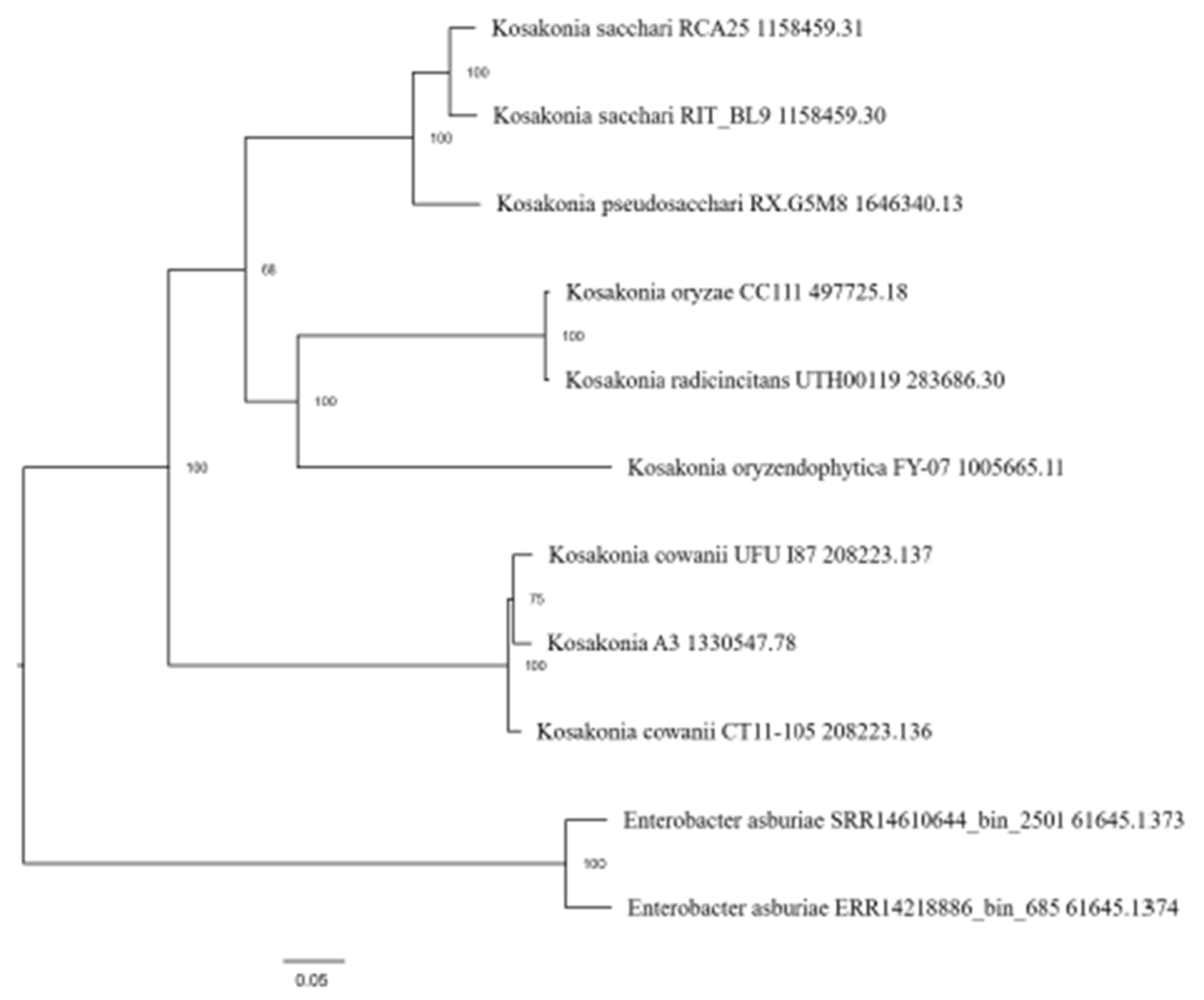
Figure 3.
Effect of different inoculation doses of Kosakonia cowanii on nodule formation in Phaseolus vulgaris L. at 60 days after planting (DAS).
Figure 3.
Effect of different inoculation doses of Kosakonia cowanii on nodule formation in Phaseolus vulgaris L. at 60 days after planting (DAS).
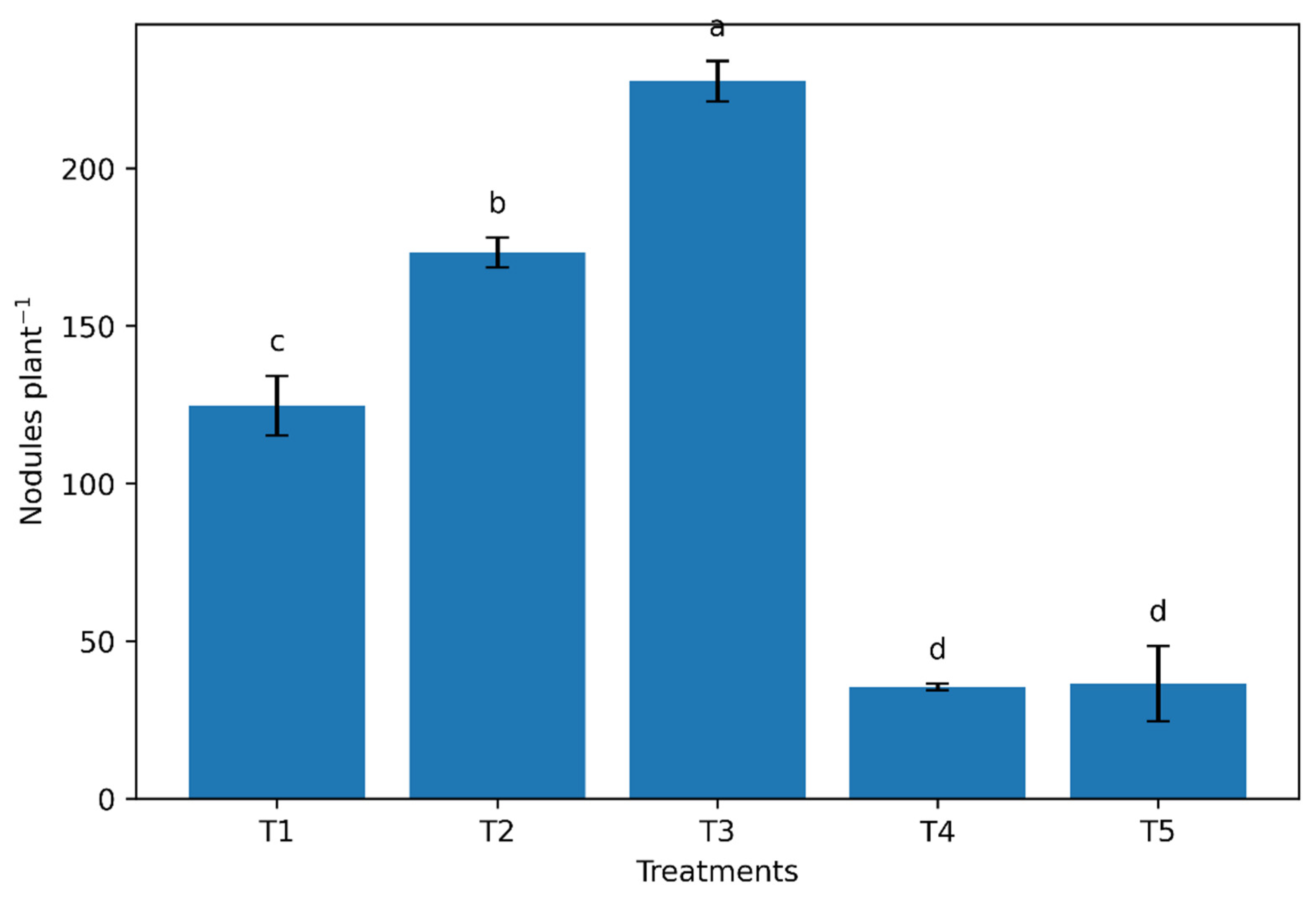
Figure 4.
Pearson correlation matrix among agronomic, physiological and yield-related variables of Phaseolus vulgaris L. inoculated with Kosakonia cowanii.
Figure 4.
Pearson correlation matrix among agronomic, physiological and yield-related variables of Phaseolus vulgaris L. inoculated with Kosakonia cowanii.
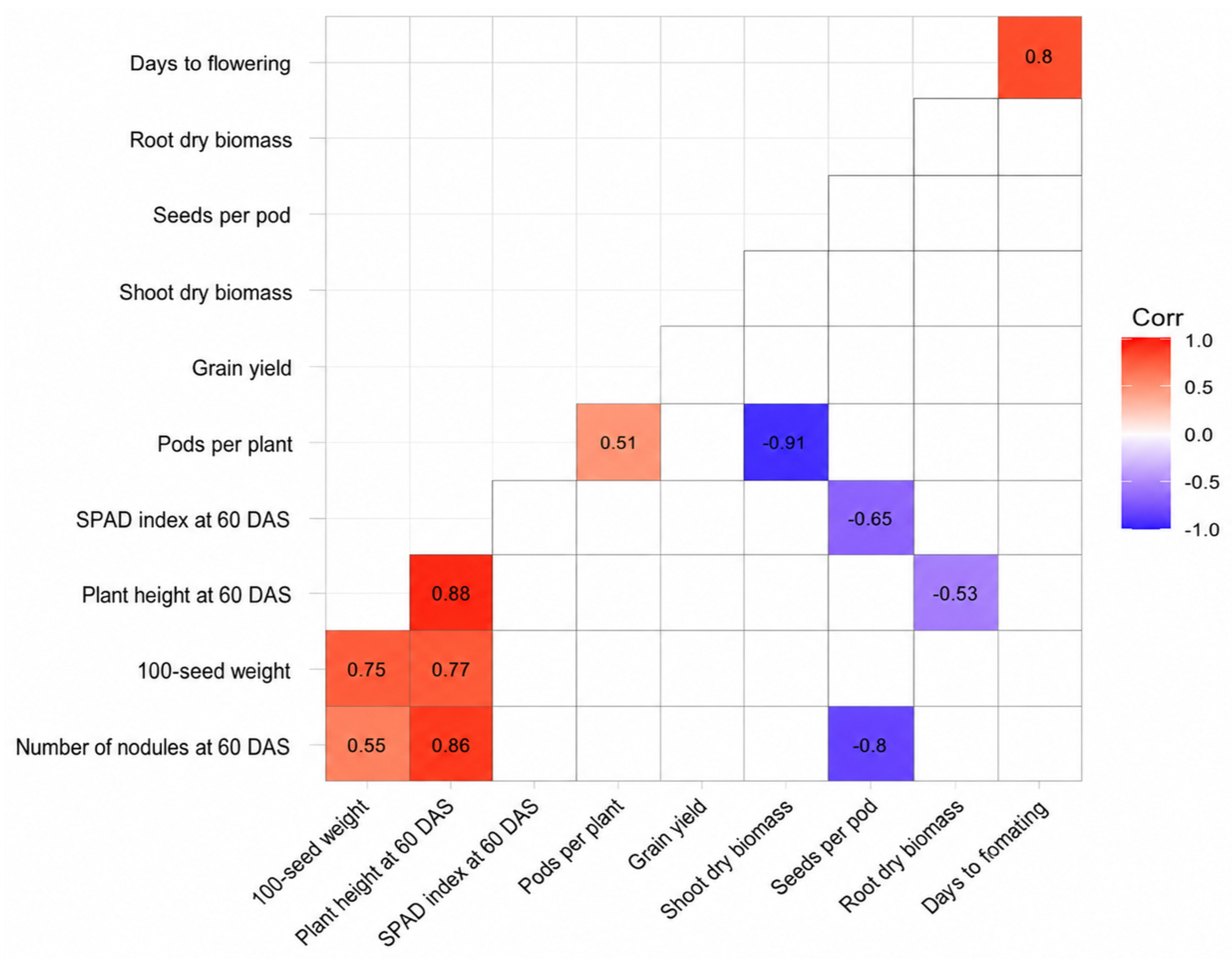
Figure 5.
Principal component analysis of the agronomic, physiological, and productive variables of Phaseolus vulgaris L. inoculated with different doses of Kosakonia cowanii.
Figure 5.
Principal component analysis of the agronomic, physiological, and productive variables of Phaseolus vulgaris L. inoculated with different doses of Kosakonia cowanii.
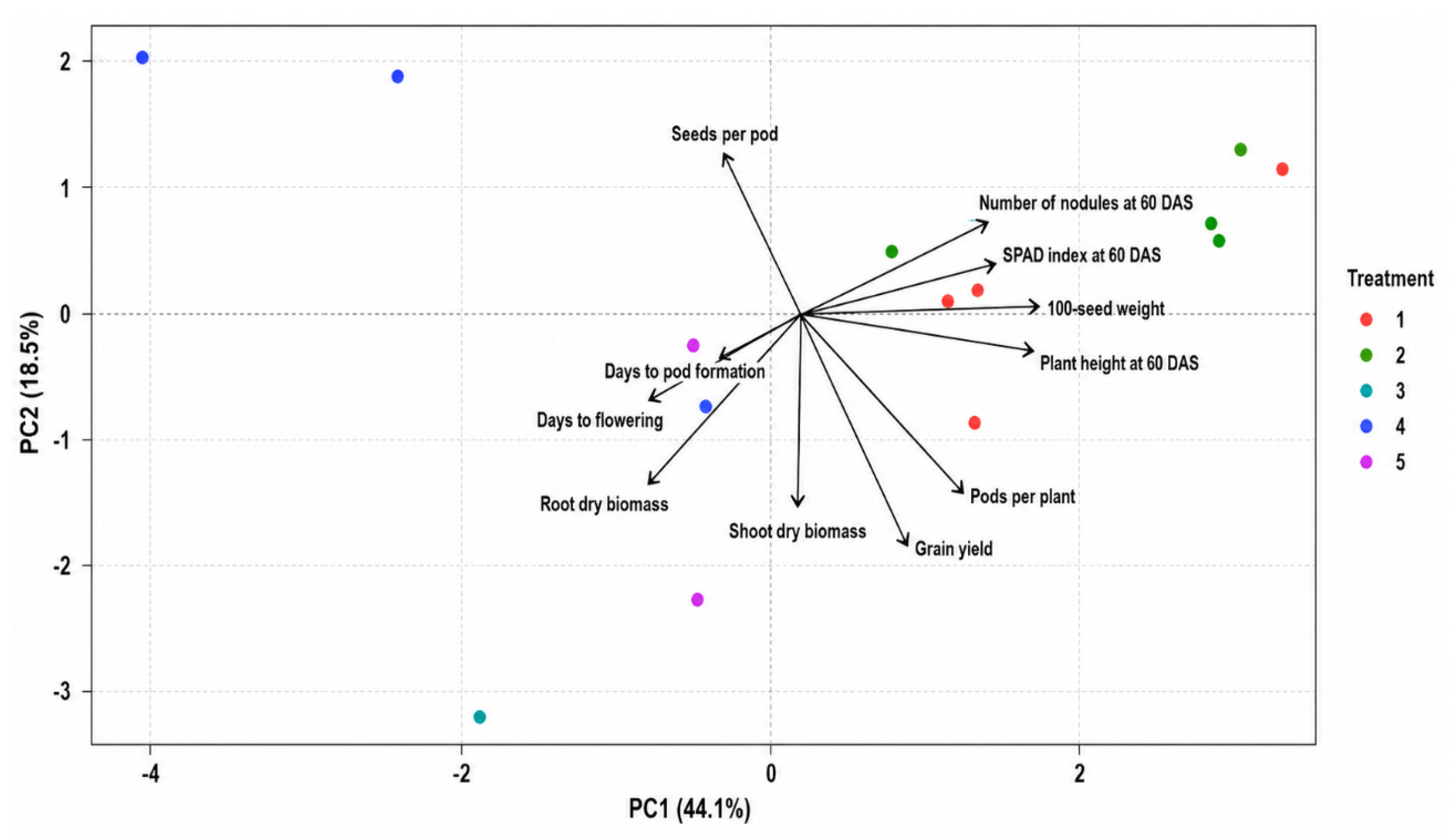
Table 2.
Description of the experimental treatments, inoculation doses, and substrates used in the cultivation of common beans (Phaseolus vulgaris L.).
Table 2.
Description of the experimental treatments, inoculation doses, and substrates used in the cultivation of common beans (Phaseolus vulgaris L.).
| Treatment | Description | Substrate |
|---|---|---|
| T1 | High-dose inoculation (6.0 × 10⁹ CFU/mL) | Pomina (100%) |
| T2 | Medium-dose inoculation (3.16 × 10⁴ CFU/mL) | Pomina (100%) |
| T3 | Low-dose inoculation (1.07 × 10² CFU/mL) | Pomina (100%) |
| T4 | Control (uninoculated, unfertilized) | Black volcanic soil: vermicompost: Pomina (50:30:20) |
| T5 | Fertilized control (100-60-60 kg ha−1 N-P2O5-K2O) | Black volcanic soil: vermicompost: Pomina (50:30:20) |
Note: CFU = colony-forming units; substrate ratios are expressed by volume (v/v/v). The inoculated treatments (T1, T2, and T3) were established in pure volcanic pumice, consisting of material with a particle size between 2 and 5 mm and a nitrogen content of less than 0.01%. This inert substrate minimized interference from native microorganisms and reduced the supply of available nitrogen in the system. The control treatments (T4 and T5), on the other hand, were established in a mixture of black volcanic soil, vermicompost, and volcanic pumice in a 50:30:20 (v/v/v) ratio, which provided a matrix with greater water-holding capacity, higher organic matter content, and greater nutrient availability.
Disclaimer/Publisher’s Note: The statements, opinions and data contained in all publications are solely those of the individual author(s) and contributor(s) and not of MDPI and/or the editor(s). MDPI and/or the editor(s) disclaim responsibility for any injury to people or property resulting from any ideas, methods, instructions or products referred to in the content. |
© 2026 by the authors. Licensee MDPI, Basel, Switzerland. This article is an open access article distributed under the terms and conditions of the Creative Commons Attribution (CC BY) license (http://creativecommons.org/licenses/by/4.0/).
Copyright: This open access article is published under a Creative Commons CC BY 4.0 license, which permit the free download, distribution, and reuse, provided that the author and preprint are cited in any reuse.


