
Submitted:
11 June 2026
Posted:
12 June 2026
You are already at the latest version
Abstract
Urban greenbelts are vital for biodiversity and ecosystem services but face threats from urban expansion. This study assessed the population structure and threats to woody plants in Arusha city's greenbelts (nature areas and riparian forests). Woody plants were sampled across 53 grid cells (200m x 200m) using stratified random sampling and the Braun-Blanquet relief method. Remote sensing processed 2015 and 2022 satellite images. ArcGIS software facilitated field data collection coordinates, the satellite imageries and spatial analyses. Standard plot sizes of 400m² were systematically selected for data collection. Significant differences in tree species diversity and abundance were observed within nature areas (t=18.6, p=0.001; t=5.48, p=0.001) and riparian forests (t=21.4, p=0.001; t=13.8, p=0.001). No significant differences were found between eastern and western nature areas (t=1.06, p=0.338; t=-1.55, p=0.181) while within riparian forests, only species diversity differed significantly (t=2.66, p=0.011). However, tree species abundance differed significantly between nature areas and riparian forests (t=-2.97, p=0.01) with riparian forests having higher abundance of native trees compared to nature areas and with significant abundance of native trees compared to non-native trees (t=14, p=0.001). These findings emphasize on the conservation of Arusha's greenbelts, aligning with SDGs 3 (well-being), 6 (water quality), 11(sustainable cities) and 15 (ecosystem conservation).
Keywords:
greenbelts
; conservation
; city
; nature areas
; riparian forests
; woody plants
; forests
1. Introduction
Greenbelts are physical areas of open space, forest, or undeveloped land with natural vegetation that surround cities [1]. They protect plant and animal species habitats by restricting building in cities [1,2]. These areas support ecosystems by providing habitats for wildlife [3,4]. The concept of greenbelts, which emerged before World War II due to industrialization, was designed to protect farmlands and reinforce city boundaries [5]. Over time, the understanding and implementation of greenbelts have evolved, leading to varied policies tailored to local needs [5,6]. In Europe, studies have shown that urban forests have been challenged by land use changes since the 1990s, with forest resources being exploited for development and technology demands [7].
The concept of greenbelts isn’t exclusive to European countries; it also exists in Africa [8]. Indigenous communities in Africa have long recognized the idea of greenbelts, evident in their use of public and private open spaces like village squares, ceremony grounds, and royal gardens [8]. In many urban areas of African countries, the smaller size of cities allows for easy access to farmland and the countryside. However, rapid population growth and weak urban planning have led to the loss of existing greenbelts and open fields [9]. Some researchers have pointed out that the unchecked urbanization in cities like Nairobi (Kenya) and Kumasi (Ghana) has resulted in significant encroachment on greenbelts, threatening biodiversity and jeopardizing the livelihoods of communities that rely on these ecosystems for resources [10,11]. Furthermore, studies in four major African megacities including Accra (Ghana), Addis Ababa (Ethiopia), Lagos, (Nigeria) and Nairobi (Kenya) highlights the crucial role of urban greenbelts in enhancing climate resilience, demonstrating their capacity to mitigate and improve air quality [12,13].
In Tanzania, similar challenges are evident as urban centers across the country experience rapid growth and face pressures on their greenbelts (Personal Observation). For instance in Dar es Salaam city, encroachment of unauthorized developments on green spaces, has led to pollution and habitat loss [14]. Studies on urban forestry in Tanzania further highlight the critical need to integrate green infrastructure into urban planning to enhance resilience against climate change [15,16]. Collectively, these findings underscore the urgent need for effective management and conservation strategies for greenbelts, particularly in rapidly growing cities like Arusha. Preserving these green spaces is vital for biodiversity conservation and ensuring the sustainability and livability of urban environments in Tanzania.
Like many other African cities, Arusha city is experiencing rapid growth since the 1950s, and has been incorporating greenbelts in its master plans to improve the city’s environmental quality [17]. Despite these efforts, unauthorized developments have encroached on greenbelts, leading to pollution and habitat loss [17]. Arusha’s greenbelts, including nature areas and riparian forests are essential not only for biodiversity conservation but they also provide relief from urban expansion. However, they face significant challenges from urban sprawl and pollution [17]. Despite urbanization, there is limited data on the diversity and distribution of tree species in these greenbelts [18]. Thus, like other African cities’ greenbelts there is information gap regarding plant species diversity and degradation rate in Arusha city’s greenbelt [19]. Therefore this research aims to address the gap regarding woody species population status and threats to nature areas and riparian forests in Arusha city. This information will provide insights into woody plant species status and will inform biodiversity conservation strategies. The findings highlight significant threats to woody plant populations due to urbanization, aligning with several Sustainable Development Goals (SDGs). Goal 3 emphasizes on ensuring healthy lives and promoting well-being, which greenbelts contribute to by providing recreational spaces and improving air quality [20,21]. Goal 6 focuses on clean water and sanitation; healthy riparian forests play a crucial role in maintaining water quality [22]. Goal 11 advocates for sustainable cities and communities, emphasizing the need for effective urban planning that incorporates green spaces [23,24]. Lastly, Goal 15 aims to protect, restore, and promote sustainable use of terrestrial ecosystems [25]; this study underscores the importance of preserving Arusha’s greenbelts for biodiversity conservation.
2. Materials and Methods
2.1. Study Site Description
Arusha city is a tourist’s hub located in northern Tanzania (Figure 1). It lies between 1,160-1,400 m above the sea level. The total population of Arusha city is approximately 416,442 people [26] and has relatively low temperatures averaging about 25ºC. The city has mainly two rainy season i.e., the short rains (October-January) and long rains (March-May) with the mean annual rainfall ranging between 500 and 1200 mm [17]. Arusha lies on the eastern edge of the Great Rift Valley, which is part of a fault in the earth’s crust that stretches about 8,000 km [17]. The types of soil which are dominant in the Arusha are a wide variety of volcanic ash, volcanic tuffs and volcanic gravels (scoria). The city is located on the southern slopes of Mount Meru which is a product of volcanic activity that formed isolated peaks; break up the gentle sloping plains. Some of the key hills include, Themi (1,450m) and Suye (1,450m) [27]. The city is also comprised of Burka, Ngarenaro, Naura, Themi, Olmotonyi, Moivaro, Kijenge, Sombetini, Lemara and Nduruma rivers and numerous small streams [17].
2.2. Data Collection
2.2.1. Sampling Procedure
Arusha city’s green belts cover 39% of the total land and the remaining land is occupied by other land uses (Figure 2). The current Arusha master plan has identified seven (7) nature areas and ten (10) riparian forests within Arusha City, as delineated by the Arusha City Council. 100% sampling was done for all nature areas and riparian forests. All recognized nature areas and riparian forests in Arusha City, with the sizes of each are follows: Nature Areas (Naura City Park: 0.06 km2, Baboon Forest: 0.06 km2, Suye Hill: 0.48 km2 Themi Hill: 0.13 km2, Oldonyumas Hill: 0.18 km2, Burka Forest: 0.22 km2 Ngarenaro Forest: 0.01 km2). Riparian Forests (Olmotoni River Forest: 0.38 km2, Themi River Forest: 0.75 km2, Kijenge River Forest: 0.40 km2, Burka River Forest: 0.44 km2, Nduruma River Forest: 0.17 km2, Ngarenaro River Forest: 0.19 km2, Naura River Forest: 0.35 km2, Sombetini River Forest: 0.06 km2, Lemara River Forest: 0.07 km2 Moivo River Forest: 0.02 km2). To ensure comprehensive coverage and accurate identification of all nature areas and riparian forests in Arusha City, satellite imagery was utilized alongside preliminary field surveys for verification. This process also involved consultations with the Arusha city council officers, who assisted in identifying the boundaries by pointing out the locations of existing beacons.
Stratified random sampling was used to sample woody plant species across nature areas and riparian forests by following Braun – Blanquet relieve method [28]. The basis for employing stratified sampling was to ensure that different ecological zones within the study area were adequately represented, which allows for a more accurate assessment of species diversity and abundance. Specifically, the study area was divided into strata based on habitat types (nature areas and riparian forests) and terrain i.e., hilly and flat areas (eastern and western sections of Arusha city). Grid cells of 200m x 200m were overlaid over the whole of Arusha city boundaries to capture all 25 wards. A Total Grid of 12,954 was obtained. Nature Areas and Riparian Forest covered a total of 879 Grids. To maintain representativeness, at least 6% of the total grid cells in each Nature Areas (133 grids) and Riparian Forest (746 grids) were randomly sampled. Thus, a total of 53 grids for both Nature Areas (8 grids) and Riparian Forests (45 grids) were covered. Field surveys were conducted during wet season in October 2022 [17] .
2.2.2. Satellite Images and Point Sampling
Landsat image of 2015 was acquired from Arusha City Council office. Typically, land cover maps derived from Landsat imagery are updated after every 5 or 10 years [29]. However, the Landsat data sourced for this research reflects a 7-year interval. We specifically used two sets of imagery: the Landsat 8 OLI/TIRS data from 2015 and an image from the SAS Planet software for 2022 both acquired in wet season. Geographic coordinate points to use during field data collection were obtained using a ArcMap 10.8.2 and inputted in handheld Garmin 64sc GPS device [30]. To assess the woody species on field, we systematically selected a standard plot size of 20m x 20m, resulting in a total sample area of 400m2 for each plot [31].
2.3. Data Analysis
ArcMap 10.8.2 was used to process satellite imagery, spatial data analysis and creating detailed maps [32]. Shannon-Wiener diversity index was used to quantify the diversity of tree species at each sampled location, [33] while tree species abundance was computed according to the importance value index formula (IVI) [34], which is calculated as follows:
IVI = (Relative Frequency + Relative Density + Relative Dominance)
where:
- Relative Frequency is the number of times a species is encountered in relation to the total number of species encountered.
- Relative Density is the number of individuals of a species in a given area compared to the total number of individuals of all species.
- Relative Dominance is the total basal area of a species compared to the total basal area of all species in the sampled area.
Student t-test was used to assess the diversity and abundance of trees within nature areas and riparian forests, between eastern and western nature areas and between riparian forests and nature areas. The test was further employed in assessing the abundance of native and non-native tree species in nature areas, riparian forests and between nature areas and riparian forests. All statistical analyses were performed using JAMOVI Software (version 1.2.2). Statistical level of significance was set at p< 0.05.
3. Results
3.1. The Structure and Distribution of Nature Areas and Riparian Forests
A total of seven (7) nature areas and ten (10) riparian forests covering an area of 4km2 were observed. The nature areas (parks, hills and forests) were located mostly in the North East of Arusha City and covered a total area of 1.14 km2 (Figure 3).
Two parks were observed namely Naura city Park and Baboon forest which covered an area of 0.06km2 each. Furthermore three hills namely: Suye, Themi and Oldonyumas (0.48km2, 0.13km2 and 0.18km2 respectively) and two forests i.e., Burka Forest (0.22km2) and Ngarenaro Forest (0.01km2) were observed. Oldonyumas, Themi and Suye hills provided excellent scenic view of Mt. Meru (Figure 4).
Riparian forests were observed along ten rivers that originates from Mt. Meru in Arusha city namely; Themi, Naura, Burka, Ngarenaro, Lemara, Moivo, Nduruma, Olmotonyi, Sombetini and Kijenge rivers (Figure 5). The total forest area covered along these rivers is 2.82km2, with olmotonyi river having the largest coverage of 0.38km2, followed by Themi (0.75km2), Kijenge (0.4km2), Burka (0.44km2), Nduruma (0.17km2), Ngarenaro (0.19 km2), Naura (0.35km2), Sombetini (0.06km2), Lemara (0.07km2), and Moivo (0.02 km2). Acacia seyal, Acacia robusta, Grevillea robusta, Rauvolfia caffra, and Tabernaemontana ventricosa were the dominant tree species found in the riparian forests.
The comparative analysis of Nature areas and Riparian forests from 2015 and 2022 revealed a significant reduction in forest cover across both nature areas (t=5.48, p=0.001) and riparian forests (t=13.8, p=0.001) over the seven-year period specifically; in nature areas, where an approximate of 20% reduction in forest cover was observed.
This reduction is primarily concentrated in the peripheral zones, where urban expansion and agricultural activities specifically farming activities have encroached previously forested land (Figure 6). On the other hand Riparian Forests had an estimated 30% reduction in forest cover. This decline is most evident along the Themi and Olmotonyi rivers, where increased construction and land clearing have significantly altered the landscape (Figure 7). This expansion has led to habitat fragmentation and a decrease in contiguous forested areas. Different constructions which have led to riverbanks erosion were observed along the river banks in Kijenge, Unga Limited, Daraja Mbili, Moshono, Sokon I, Lemara, Sombetini, and Elerai wards (Figure 6).
Increased pollution from both industrial and domestic sources has further degraded the ecological integrity of the riparian habitats. Rivers, especially the Themi and Olmotonyi rivers were found to be polluted from domestic and industrial wastes such as car-washing, dumping of refuse, poor quality discharges from treatment ponds, urban and agriculture runoff and construction related sediment (Figure 8).
3.2. Diversity and Abundance of Tree Species in Nature Areas and Riparian Forests
3.2.1. Tree Species Diversity and Abundance Within Nature Areas
There were significant differences in both tree species diversity and abundance within nature areas (t=18.6, p= 0.001 and t=5.48, p= 0.001 respectively). Tree species diversity and abundance per each nature area were as in Table 1.
3.2.2. Tree Species Diversity and Abundance Between Eastern and Western Nature Areas
We have categorized the nature areas of Arusha City into eastern and western regions based on geographic location and topographical characteristics. The eastern nature areas—comprising Suye Hill, Themi Hill, and Oldonyumas Hill—are elevated sites on hills that rise above the surrounding landscape. In contrast, the western nature areas, including Baboon Forest, Burka Forest, Naura City Park, and Ngarenaro Forest, are situated on relatively flat terrain at lower elevations. This distinction is important for understanding the ecological conditions in each area, as the hilly terrain of the eastern regions may create different microclimates compared to the flatter western areas, potentially influencing biodiversity. However, our study found no significant differences in tree species diversity and abundance were observed between eastern and western nature areas (t = 1.06, p = 0.338 and t = -1.55, p = 0.181 respectively). The highest tree species diversity index was observed at Oldonyumas (2.35) and the smallest at Ngarenaro Forest (1.39). On the other hand, the highest tree species abundance was observed at Burka (267) and the smallest at Suye and Oldonyumas Hill (40 each; Table 1). These results suggest a level of homogeneity in tree species diversity and abundance across both regions.
3.3. Tree Species Diversity and Abundance Within Riparian Forests
There were significant differences in tree species diversity and abundance within surveyed riparian forests (t= 21.4, p = 0.001 and t= 13.8, p = 0.001 respectively). Tree species diversity and abundance per each nature area were as in Table 2.
3.4. Tree Species Diversity and Abundance Between Riparian Forests
While there were significant differences in tree species diversity within riparian forests (t= 2.66, p= 0.011), no significant difference in species abundance were observed between riparian forests (t=0.24, p=0.81). The highest tree species diversity in riparian forests was observed at Kijenge river forest (2.89) and the lowest at Olmotonyi river forest (0.34) while the highest tree species abundance was observed at burka river forest (144) and the lowest at Olmotonyi and Lemara river forest (17 each).
3.5. Tree Species Diversity and Abundance Between Nature Areas and Riparian Forests
While there were no significant differences in tree species diversity between nature areas and riparian forests (t= -0.729, p= 0.47; Figure 8(a)), significant difference was observed in tree species abundance (t= -2.97, p= 0.01; Figure 6(b)).
3.5.1. Occurrence and Distribution of Native and Non-Native Tree Species in Nature Areas and Riparian Forests
A total of 74 and 24 native and non-native trees respectively were identified within nature areas, their proportions were as in Figure 9 (a). Likewise, 344 and 134 native and non-native trees respectively were identified within riparian forests, their proportions were as in Figure 9 (b). The individual native and non-native tree species within nature areas and riparian forests were as in Appendix I respectively.
3.6. Native and Non-Native Tree Species Abundance in the Surveyed Nature Areas and Riparian Forests
Significant difference (t= 4.83, p= 0.001) was observed in the abundance of native and non-native species in nature areas (Figure 8). Majority of nature areas had lower abundance of non-native tree species except for Ngarenaro forest (Nature area) (Figure 10). Similarly, there were significant difference (t= 14, p= 0.001) in the abundance of native and non-native tree species in the surveyed riparian forests with majority of them having higher abundance of native tress compared to non-natives (Figure 10).
3.7. Native Tree Species Abundance Between Nature Areas and Riparian Forests
There were significant differences in the abundance of native trees between nature areas and riparian forests (t= -2.27, p= 0.02). Riparian forest had on average higher abundance of native trees (350±20) compared to nature areas (70±20). The common native tree species that were observed in nature areas and riparian forests are as in Appendix II.
3.8. Non-Native Tree Species Abundance Between Nature Areas and Riparian Forests
There was no significant difference in the abundance of non-native trees between nature areas and riparian forests (t= -0.456, p= 0.65). Riparian forest had on average higher abundance of native trees (130±10) compared to nature areas (20±10). The common non-native tree species between nature areas and riparian forests are as in Appendix III.
4. Discussion
The assessment of the distribution and structure of nature areas and riparian forests within Arusha city has yielded insightful observations pertinent to the cities’ greenbelts conservation and planning. The diversity of tree families that were identified in nature areas (19) and in riparian forests (33) underscore the botanical richness of Arusha’s city urban ecosystem. The predominant tree families such as Apocynaceae and Euphorbiaceae in nature areas, and Anacardiaceae and Moraceae in riparian forests, likely reflect the varied microhabitats within these ecosystems which seem to be influenced by topography and disturbance by human activities [35]. Anthropogenic disturbances, especially the extraction of firewood and land clearing for agriculture activities can significantly affect the stand structure of forests and, in turn, the species composition and tree diversity [36]. The spatial distribution of five nature areas and nine riparian forests in Arusha city, primarily concentrated in the North East side of the city, might be attributed to the historical volcanic activity that shaped the region’s topography. The isolated peaks, such as Oldonyomas, Themi, and Suye Hill, provide not only scenic views but also contribute significantly to the city’s green belts. Meanwhile, the nature areas and riparian forests of the west are imperative for the ecological health of the city, providing a home to some wild animals such as baboons and are essential for ecosystem services. These findings underscore the necessity of incorporating ecological considerations into urban planning, a vital lesson for cities. They highlight the urgent need for urban planners to prioritize the integration of diverse greenbelts and effective management strategies. By doing so, cities can enhance biodiversity and ecosystem resilience, ultimately promoting sustainable urban living.
The dominance of certain tree species such as Acacia seyal and Grevillea robusta in riparian forests is indicative of the species’ adaptability to wetter conditions and their role in stabilizing riverbanks [37]. However, the observed encroachment along riverbanks points towards a growing anthropogenic threat, as seen in other urban settings where development pressures lead to habitat fragmentation and degradation [38]. This encroachment not only contributes to riverbank erosion but also, as it was observed it exacerbates pollution which hinders the ecological integrity of these habitats [39]. The proliferation of invasive species like Lantana camara in the Arusha’s city nature areas and riparian forests is an indication of the environmental pressures faced by these areas. The invasive’s species ability to outcompete native flora due to its high seed production and adaptability [40] can be defeated by the resilient urban-adapted native species [41]. Nonetheless, the role of non-climatic factors, such as soil type and human disturbance, in shaping the current distribution of these ecosystems cannot be overlooked. These findings emphasize on the need for proactive strategies that can mitigate habitat degradation and promote biodiversity in cities facing similar challenges. For instance, rapid urbanization and inadequate planning in cities like Nairobi have led to similar biodiversity losses as observed in Arusha city [10].
The exploration of tree species diversity and abundance in Arusha city’s nature areas and riparian forests revealed a nuanced ecological tapestry that is reflective of both natural processes and anthropogenic influences [11,42]. The significant differences in tree species diversity and abundance within nature areas suggest that specific conditions such as microclimate, soil fertility, and human activity may be affecting these dynamics [42]. These findings indicates the influence of human activities on vegetation structure, composition and diversity of the Arusha city’s nature areas [43]. The lack of significant differences in tree species diversity and abundance between the eastern and western nature areas on the other hand indicates a certain level of homogeneity in biotic conditions across these geographical sections. This homogeneity could be attributed to a similar extent of human intervention and management practices across the city’s nature areas [43]
Moreover, the observed variation within riparian forests for tree species diversity suggests that riparian zones are subject to differential impacts from hydrological regimes and adjacent land use. The highest tree species diversity at Kijenge river forest and the lowest at Olmotonyi river forest may be indicative of varying degrees of anthropogenic disturbance or ecological succession stages, akin to the way species composition and diversity variation due to variation in the degree of anthropogenic disturbance [43]. The observed differences in tree species diversity between riparian forests further corroborate the importance of localized environmental factors and river management practices [44]. However, the lack of significant disparity in species abundance suggests that while species composition varies, the overall capacity of riparian forests to support tree life is relatively uniform. When comparing nature areas with riparian forests, the absence of significant differences in tree species diversity contrasts with the significant differences in abundance this may be due to the differing ecological roles and conservation values these habitats offer and receive within the urban ecosystem, alike with the relationship between species richness and environmental heterogeneity is relatively rare and varies both within and among habitats and environmental variables [45]. These insights can help urban planners and ecologists mainly in Africa to draw valuable lessons and highlighting the need for tailored conservation strategies that account for unique ecological dynamics. As urbanization continues to intensify globally, recognizing the intricate relationships between land use, hydrology, and biodiversity in riparian zones becomes essential. By implementing effective river management practices and fostering native species resilience, cities can enhance ecological integrity and promote sustainable urban environments. This approach not only bolsters local biodiversity but also contributes to broader global efforts in combating habitat degradation and mitigating the impacts of climate change.
The presence and distribution of native and non-native tree species in urban landscapes is critical in understanding the ecological balance and health of nature areas and riparian ecosystems [46,47]. The findings indicate a clear predominance of native tree species in both nature areas and riparian forests. This suggests that native species continue to thrive in their natural habitats despite the pressures of urbanization and the introduction of non-native species. However, non-native species are also present in both types of environments, albeit in lower numbers. The absence of significant differences in the abundance of non-native species between nature areas and riparian forests suggests that these species have managed to establish themselves across different environments, showing a level of adaptability and resilience [48,49]. Nevertheless, the ecological implications of their presence, particularly in terms of competition with native species and potential impacts on ecosystem services, require further investigation and attention.
The higher abundance of native species in riparian forests compared to nature areas could be attributed to the more specialized conditions in riparian zones that favor the survival and propagation of native flora [50]. Riparian forests are known for their role in ensuring water quality, providing wildlife habitat and maintaining ecosystem connectivity [51]. These functions are enhanced by a rich diversity of native species adapted to the unique riparian conditions. It is noteworthy that specific native species such as Acacia robusta, Albizia gummifera, and Rauvolfia caffra as well as non-native species like Mangifera indica and Persea americana, show notable presence in both nature areas and riparian forests (Appendix II and Appendix III). These species may serve as key indicators of the ecological health of these areas and could be a focus for conservation efforts. Meanwhile, the occurrence of non-native species such as Eucalyptus maidenii and Jacaranda mimosifolia raises questions about their impact on local biodiversity and ecosystem processes [52,53,54]. While these species may contribute to the urban tree canopy, their potential to exceed native species, alter soil properties, or affect water availability necessitates a careful evaluation of their role in urban forestry strategies.
We primarily focused on the differences in species diversity and abundance across various nature areas and riparian forests to establish a baseline understanding of the current ecological status of these habitats. Our intention was to highlight the immediate impacts of urban expansion and human activities, which are evidenced by the significant differences observed in tree species diversity and abundance. However, we acknowledge that a more in-depth analysis incorporating additional factors such as site area, topographic features, and proximity to human disturbances could yield valuable insights into the underlying drivers of biodiversity patterns. These factors are indeed critical in understanding how urbanization impacts ecological integrity and species distribution.
To address this gap, we recognize the importance of incorporating a broader range of ecological and anthropogenic variables in future studies. This could involve employing statistical modeling techniques, such as generalized linear models, to analyze these relationships. In future assessments, we will take into account the collection of data on site area, elevation changes, and human disturbance levels (e.g., proximity to roads, urban developments) to facilitate a more holistic analysis of biodiversity factors.
5. Conclusions
This study highlights a significant imbalance between urban development and greenbelt conservation in Arusha city. Immediate management interventions are necessary to address this issue. To achieve this, the study recommends the following: (i) Implementing financial incentives for landowners who conserve greenbelts so that to motivate property owners to maintain natural vegetation [55,56], (ii) Establishing CBCPs can engage local communities in greenbelt stewardship. In Cape Town, South Africa, initiatives like the “Working for Water” program involve local communities in the removal of invasive species and restoration of indigenous plant life, fostering a sense of ownership and responsibility towards local ecosystems [57], (iii) Organizing tree planting events with local schools and community groups can restore biodiversity. The “Green Goal” initiative in Nairobi, Kenya, has successfully engaged schools in tree planting campaigns, leading to the planting of thousands of trees in urban areas and improving local air quality [58,59,60], (iv) Creating a volunteer network to monitor greenbelt health can inform adaptive management practices. In Addis Ababa, Ethiopia, citizen scientists are involved in monitoring urban green spaces, contributing valuable data that guides urban planning and environmental management efforts [61,62], (v) Collaborating with local people to enforce urban planning regulations is essential. In Kampala, Uganda, the city has implemented stricter zoning laws to protect greenbelts from unauthorized developments, demonstrating the importance of enforcing environmental regulations [63,64,65,66], (vi) Encouraging sustainable agricultural practices through workshops on organic farming and agroforestry can mitigate pollution and habitat loss. The “Greening the City” initiative in Dakar, Senegal, promotes sustainable urban agriculture among local farmers, enhancing food security while preserving urban green spaces [67,68,69], (vii) Establishing an invasive species management program is crucial for protecting native flora. In Tanzania, the city has launched an invasive species removal initiative in collaboration with local NGOs, educating the public about the risks associated with non-native species and promoting native plant reintroduction [70,71,72], (viii) Partnering with local universities can enhance research on greenbelt ecological health. For instance, in Lusaka, Zambia, the University of Zambia collaborates with the local government to conduct studies on urban forestry, providing evidence-based recommendations for improved urban green space management [73,74], (ix) Urban forestry plans should include climate-resilient native species to mitigate climate change impacts. In Windhoek, Namibia, urban planners have integrated drought-resistant native species into their landscaping plans, significantly improving the city’s resilience to climate variability [75,76,77]. By implementing these strategies, we can significantly bolster the resilience of Arusha’s greenbelts and promote sustainable urban development. We welcome further discussion on these ideas and potential collaborations to protect our urban green spaces.
6. Limitations
While this study provides valuable insights into the tree species diversity and abundance in Arusha city’s greenbelts, there were several limitations including:
Temporal Constraints: Initially, our intent was to conduct a comparison over a 5–10-year period to capture ecological dynamics more comprehensively. Unfortunately, we faced challenges in obtaining suitable satellite imagery for 2020, which limited our analysis to a 7-year interval between 2015 and 2022. Despite this limitation, the 2022 imagery still provides valuable insights into urban expansion and its potential impacts on biodiversity.
Human Influence: The study acknowledges human disturbances, including urban expansion and pollution. However, the quantification of these disturbances was limited, which may affect the interpretation of their impact on biodiversity. More comprehensive assessments of human activity levels and their specific influences on tree populations would provide a clearer context for the findings.
Environmental Variability: The ecological characteristics of the study area, such as soil types, microclimates, and hydrology, were not examined. These factors can influence plant distribution and growth therefore, comprehensive assessment of the factor’s influence on tree populations is necessary.
Study Scope: The current study focused on generating information on species diversity and abundance across different natural areas as influenced by urbanization and anthropogenic activities. The study does not quantitatively assess how factors such as site area, topographic features, or proximity to human disturbance contribute to biodiversity patterns changes in the study area.
Author Contributions
L.H.M, L.K.M and I.B.M conceptualized the paper and contributed to the design and methodology. L.H.M and I.B.M coordinated the writing, data analysis, and interpretation. All authors participated in the synthesis and writing of the manuscript, provided critical revisions and final approval.
Funding
This research was partially funded by the Centre for Centre for Research, Agricultural Advancement, Teaching Excellence and Sustainability (CREATES).
Data Availability Statement
Data presented in this study are included in the article.
Acknowledgments
The authors acknowledges the Arusha City Council, Centre for Research, Agricultural Advancement, Teaching Excellence and Sustainability (CREATES) for permitting and supporting the research. We appreciate the dedicated research assistants for their diligent work during the field surveys.
Conflicts of Interest
The authors declare that the research was conducted in the absence of any commercial or financial relationships that could be construed as a potential conflict of interest.
Abbreviations
The following abbreviations are used in this manuscript:
| CREATES | Africa Centre for Research, Agricultural advancement, Teaching Excellence And Sustainability |
| GIS | Geographic Information Systems |
| NA | Nature Areas |
| RF | Riparian Forest |
| URT | United Republic of Tanzania |
Appendix A
Appendix A.1

Table A1.
Native tree species within nature areas that were surveyed in Arusha city.
| S/N | Tree Species | RF | NA | Native | Non Native | No RF | No NA | Total |
| 1 | Acacia mearnsii | ✓ | ✗ | ✗ | ✓ | 1 | 1 | |
| 2 | Acacia nilotica | ✓ | ✗ | ✓ | ✗ | 9 | 9 | |
| 3 | Acacia polyacantha | ✓ | ✗ | ✓ | ✗ | 1 | 1 | |
| 4 | Acacia robusta | ✓ | ✓ | ✓ | ✗ | 17 | 1 | 18 |
| 5 | Acacia senegal | ✓ | ✓ | ✓ | ✗ | 2 | 1 | 3 |
| 6 | Acacia seyal | ✓ | ✓ | ✓ | ✗ | 13 | 4 | 17 |
| 7 | Acacia tortilis | ✓ | ✗ | ✓ | ✗ | 3 | 3 | |
| 8 | Acokanthera schimperi | ✓ | ✗ | ✓ | ✗ | 1 | 1 | |
| 9 | Acrocarpus flaxinifolius | ✓ | ✓ | ✓ | 6 | 2 | 8 | |
| 10 | Albizia gummifera | ✓ | ✓ | ✓ | ✗ | 18 | 3 | 21 |
| 11 | Albizia lebbeck | ✓ | ✓ | ✓ | 1 | 2 | 3 | |
| 12 | Albizia schimperiana | ✓ | ✗ | ✓ | ✗ | 1 | 1 | |
| 13 | Allophylus serratus | ✓ | ✗ | ✓ | ✗ | 1 | 1 | |
| 14 | Annona cherimola | ✓ | ✗ | ✓ | ✗ | 1 | 1 | |
| 15 | Annona glabra | ✓ | ✗ | ✓ | ✗ | 1 | 1 | |
| 16 | Annona senegalensis | ✓ | ✗ | ✓ | ✗ | 1 | 1 | |
| 17 | Annona squamosa | ✓ | ✗ | ✓ | ✗ | 2 | 2 | |
| 18 | Artocarpus heterophyllus | ✓ | ✗ | ✗ | ✓ | 1 | 1 | |
| 19 | Balanites aegyptiaca | ✓ | ✗ | ✗ | ✓ | 9 | 9 | |
| 20 | Bauhinia variegata | ✓ | ✗ | ✗ | ✓ | 1 | 1 | |
| 21 | Boscia angustifolia | ✓ | ✗ | ✓ | ✗ | 1 | 1 | |
| 22 | Bridelia micrantha | ✓ | ✓ | ✓ | ✗ | 10 | 1 | 11 |
| 23 | Callistemon citrinus | ✓ | ✗ | ✗ | ✓ | 2 | 2 | |
| 24 | Calodendrum capense | ✓ | ✗ | ✗ | ✓ | 1 | 1 | |
| 25 | Carica papaya | ✓ | ✗ | ✗ | ✓ | 8 | 8 | |
| 26 | Carissa spinarum | ✗ | ✓ | ✓ | ✗ | 1 | 1 | |
| 27 | Casearia battiscombei | ✓ | ✗ | ✓ | ✗ | 1 | 1 | |
| 28 | Casuarina cunninghamiana | ✓ | ✗ | ✗ | ✓ | 1 | 1 | |
| 29 | Celtis africana | ✓ | ✓ | ✓ | ✗ | 8 | 1 | 9 |
| 30 | Citrus limon | ✓ | ✗ | ✗ | ✓ | 5 | 5 | |
| 31 | Clausena anisata | ✓ | ✓ | ✓ | ✗ | 1 | 1 | 2 |
| 32 | Combretum molle | ✓ | ✗ | ✓ | ✗ | 1 | 1 | |
| 33 | Commiphora schimperi | ✓ | ✗ | ✓ | ✗ | 3 | 3 | |
| 34 | Cordia africana | ✓ | ✓ | ✓ | ✗ | 17 | 4 | 21 |
| 35 | Cordia sebestena | ✓ | ✗ | ✓ | ✗ | 1 | 1 | |
| 36 | Croton macrostachyus | ✓ | ✓ | ✓ | ✗ | 7 | 4 | 11 |
| 37 | Croton megalocarpus | ✓ | ✓ | ✓ | ✗ | 10 | 4 | 14 |
| 38 | Cupressus lusitanica | ✗ | ✓ | ✗ | ✓ | 1 | 1 | |
| 39 | Cussonia holstii | ✓ | ✗ | ✓ | ✗ | 2 | 2 | |
| 40 | Delonix regia | ✓ | ✓ | ✓ | ✗ | 2 | 1 | 3 |
| 41 | Ehretria amoena | ✗ | ✓ | ✓ | ✗ | 2 | 2 | |
| 42 | Entandrophragma angolense | ✓ | ✗ | ✓ | ✗ | 1 | 1 | |
| 43 | Eriobotrya japonica | ✗ | ✓ | ✗ | ✓ | 1 | 1 | |
| 44 | Erythrina abyssinica | ✓ | ✓ | ✓ | ✗ | 1 | 1 | 2 |
| 45 | Eucalyptus maidenii | ✓ | ✓ | ✗ | ✓ | 4 | 1 | 5 |
| 46 | Eucalyptus saligna | ✓ | ✗ | ✗ | ✓ | 2 | 2 | |
| 47 | Euphorbia candelabrum | ✓ | ✓ | ✓ | ✗ | 6 | 1 | 7 |
| 48 | Euphorbia nyikae | ✓ | ✗ | ✓ | ✗ | 2 | 2 | |
| 49 | Euphorbia tirucalli | ✓ | ✗ | ✓ | ✗ | 4 | 4 | |
| 50 | Ficus benjamina | ✓ | ✓ | ✗ | ✓ | 1 | 1 | 2 |
| 51 | Ficus bubu | ✓ | ✗ | ✓ | ✗ | 2 | 2 | |
| 52 | Ficus elastica | ✓ | ✓ | ✗ | ✓ | 1 | 1 | 2 |
| 53 | Ficus glumosa | ✓ | ✗ | ✓ | ✗ | 2 | 2 | |
| 54 | Ficus sycomorous | ✓ | ✓ | ✓ | ✗ | 11 | 3 | 14 |
| 55 | Ficus sycomorus | ✓ | ✗ | ✓ | ✗ | 17 | 17 | |
| 56 | Ficus thonningii | ✓ | ✓ | ✓ | ✗ | 3 | 1 | 4 |
| 57 | Filicium decipiens | ✓ | ✗ | ✗ | ✓ | 1 | 1 | |
| 58 | Grevillea robusta | ✓ | ✓ | ✓ | ✗ | 22 | 3 | 25 |
| 59 | Grewia bicolor | ✓ | ✗ | ✓ | ✗ | 1 | 1 | |
| 60 | Jacaranda mimosifolia | ✓ | ✓ | ✗ | ✓ | 10 | 3 | 13 |
| 61 | Kigelia africana | ✗ | ✓ | ✓ | ✗ | 1 | 1 | |
| 62 | Lannea schweinfurthii | ✓ | ✗ | ✓ | ✗ | 2 | 2 | |
| 63 | Leucaena leucocephala | ✓ | ✗ | ✗ | ✓ | 11 | 11 | |
| 64 | Macaranga kilimandscharica | ✓ | ✓ | ✓ | ✗ | 1 | 1 | 2 |
| 65 | Mangifera indica | ✓ | ✓ | ✓ | 12 | 1 | 13 | |
| 66 | Manilkara mochisia | ✓ | ✗ | ✓ | ✗ | 1 | 1 | |
| 67 | Markhamia lutea | ✓ | ✓ | ✓ | ✗ | 13 | 5 | 18 |
| 68 | Maytenus senegalensis | ✗ | ✓ | ✓ | ✗ | 1 | 1 | |
| 69 | Melia azederach | ✓ | ✗ | ✗ | ✓ | 2 | 2 | |
| 70 | Morus alba | ✓ | ✗ | ✗ | ✓ | 5 | 5 | |
| 71 | Newtonia buchananii | ✓ | ✗ | ✗ | ✓ | 1 | 1 | |
| 72 | Olea africana | ✓ | ✗ | ✓ | ✗ | 3 | 3 | |
| 73 | Olea capensis | ✓ | ✓ | ✓ | ✗ | 8 | 3 | 11 |
| 74 | Opuntia vulgaris | ✓ | ✗ | ✓ | ✗ | 2 | 2 | |
| 75 | Pappea capensis | ✓ | ✗ | ✓ | ✗ | 1 | 1 | |
| 76 | Persea americana | ✓ | ✓ | ✗ | ✓ | 11 | 2 | 13 |
| 77 | Pithecellobium dulce | ✓ | ✗ | ✗ | ✓ | 1 | 1 | |
| 78 | Polyalthia longifolia | ✓ | ✗ | ✗ | ✓ | 1 | 1 | |
| 79 | Psidium guajava | ✓ | ✓ | ✗ | ✓ | 13 | 1 | 14 |
| 80 | Rauvolfia caffra | ✓ | ✓ | ✓ | ✗ | 29 | 7 | 36 |
| 81 | Rhus natalensis | ✗ | ✓ | ✓ | ✗ | 1 | 1 | |
| 82 | Rhus vulgaris | ✓ | ✗ | ✓ | ✗ | 1 | 1 | |
| 83 | Schinus molle | ✗ | ✓ | ✗ | ✓ | 1 | 1 | |
| 84 | Senna siamea | ✓ | ✓ | ✗ | ✓ | 6 | 3 | 9 |
| 85 | Senna spectabilis | ✓ | ✓ | ✗ | ✓ | 5 | 3 | 8 |
| 86 | Sesbania sesban | ✓ | ✗ | ✓ | ✗ | 2 | 2 | |
| 87 | Solanum terminale | ✓ | ✗ | ✓ | ✗ | 1 | 1 | |
| 88 | Spathodea campanulata | ✓ | ✗ | ✓ | ✗ | 6 | 6 | |
| 89 | Synadenium grantii | ✓ | ✗ | ✓ | ✗ | 6 | 6 | |
| 90 | Syzygium cuminii | ✓ | ✓ | ✗ | ✓ | 8 | 1 | 9 |
| 91 | Tabernaemontana ventricosa | ✓ | ✓ | ✓ | ✗ | 19 | 6 | 25 |
| 92 | Terminalia mantaly | ✓ | ✗ | ✗ | ✓ | 3 | 3 | |
| 93 | Terminalia prunioides | ✓ | ✓ | ✓ | ✗ | 2 | 1 | 3 |
| 94 | Thevetia peruviana | ✓ | ✗ | ✓ | ✗ | 5 | 5 | |
| 95 | Trema orientalis | ✓ | ✗ | ✓ | ✗ | 3 | 3 | |
| 96 | Trichilia emetica | ✓ | ✓ | ✓ | ✗ | 9 | 3 | 12 |
| 97 | Turraea robusta | ✓ | ✓ | ✓ | ✗ | 2 | 1 | 3 |
| 98 | Vangueria infausta | ✓ | ✓ | ✓ | ✗ | 16 | 6 | 22 |
| 99 | Vepris simplicifolia | ✗ | ✓ | ✓ | ✗ | 1 | 1 | |
| 100 | Warbugia ugandensis | ✓ | ✗ | ✓ | ✗ | 3 | 3 | |
| 101 | Ziziphus mucronata | ✓ | ✗ | ✓ | ✗ | 2 | 2 | |
| TOTAL | 478 | 98 | ||||||
Appendix B
Appendix B.1
Table 1.
The common native tree species in the surveyed nature areas and riparian forests.
| SN | Tree Species | Native RF | Native NA |
| 1 | Acacia robusta | 17 | 1 |
| 2 | Acacia senegal | 2 | 1 |
| 3 | Acacia seyal | 13 | 4 |
| 4 | Albizia gummifera | 18 | 3 |
| 5 | Bridelia micrantha | 10 | 1 |
| 6 | Celtis africana | 8 | 1 |
| 7 | Clausena anisata | 1 | 1 |
| 8 | Cordia africana | 17 | 4 |
| 9 | Croton macrostachyus | 7 | 4 |
| 10 | Croton megalocarpus | 10 | 4 |
| 11 | Delonix regia | 2 | 1 |
| 12 | Erythrina abyssinica | 1 | 1 |
| 13 | Euphorbia candelabrum | 6 | 1 |
| 14 | Ficus sycomorous | 11 | 3 |
| 15 | Ficus thonningii | 3 | 1 |
| 16 | Grevillea robusta | 22 | 3 |
| 17 | Macaranga kilimandscharica | 1 | 1 |
| 18 | Markhamia lutea | 13 | 5 |
| 19 | Olea capensis | 8 | 3 |
| 20 | Rauvolfia caffra | 29 | 7 |
| 21 | Tabernaemontana ventricosa | 19 | 6 |
| 22 | Terminalia prunioides | 2 | 1 |
| 23 | Trichilia emetica | 9 | 3 |
| 24 | Turraea robusta | 2 | 1 |
| 25 | Vangueria infausta | 16 | 6 |
| Total | 247 | 67 | |
Appendix C
Appendix C.1
Table 1.
The common non-native tree species in the surveyed nature areas and riparian forests.
| SN | Tree Species | Native RF | Native NA |
| 1 | Acrocarpus flaxinifolius | 6 | 2 |
| 2 | Albizia lebbeck | 1 | 2 |
| 3 | Eucalyptus maidenii | 4 | 1 |
| 4 | Ficus benjamina | 1 | 1 |
| 5 | Ficus elastica | 1 | 1 |
| 6 | Jacaranda mimosifolia | 10 | 3 |
| 7 | Mangifera indica | 12 | 1 |
| 8 | Persea americana | 11 | 2 |
| 9 | Psidium guajava | 13 | 1 |
| 10 | Senna siamea | 6 | 3 |
| 11 | Senna spectabilis | 5 | 3 |
| 12 | Syzygium cuminii | 8 | 1 |
| Total | 78 | 21 | |
References
- H. Han, C. Huang, K. H. Ahn, X. Shu, L. Lin, and D. Qiu, “The effects of greenbelt policies on land development: Evidence from the deregulation of the greenbelt in the Seoul metropolitan area,” Sustain., vol. 9, no. 7, 2017. [CrossRef]
- L. Worrall et al., “Better Urban Growth in Tanzania; A Preliminary Exploration of the Opportunities and Challenges,” Coalit. Urban Transitions, p. 90, 2017, [Online]. Available: http://www.esrf.or.tz/docs/NCE2017_Better_Urban_Growth_Tanzania_final.pdf.
- L. Naughton, “Collaborative Landuse Planning: Zoning for Conservation and Development in Protected Areas,” An Inst. Res. Educ. Soc. Struct. Rural institutions, Resour. use Dev., no. Rowlands 1933, pp. 1–16, 2007.
- A. Malmer and G. Nyberg, “Forest and water relations in miombo woodlands : need for understanding of complex stand management,” pp. 70–86, 2008.
- S. Macdonald, J. Monstadt, and A. Friendly, “Rethinking the governance and planning of a new generation of greenbelts,” Reg. Stud., vol. 55, no. 5, pp. 804–817, 2020. [CrossRef]
- Sturzaker, J.; Mell, I. Green Belts: Past;present;future? J. Chem. Inf. Model. 2013, 53, 1689–1699. [Google Scholar]
- J. Parviainen, D. Little, M. Doyle, A. O. Sullivan, M. Kettunen, and M. Korhonen, Research in Forest Reserves and Natural Forests in European Countries, no. 16. European Forest Institute, 1999.
- Stahle, A.; Caballero, L. Greening metropolitan growth: integrating nature recreation, compactness and spaciousness in regional development planning. Int. J. Urban Sustain. Dev. 2010. [Google Scholar] [CrossRef]
- Obi, N.; Ibem, E.; Okeke, F. O. Assessment of the Role of Greenbelts in Environmental and Socio-Economic Development of Urban Areas in Southeast Nigeria. Civ. Eng. Archit. 2021, 9, 545–557. [Google Scholar] [CrossRef]
- M. S. Mwiti, “Riparian Zone Conservation in a Changing Urban Land Use Environment: A Case of Nairobi River Basin, Kenya.,” no. March, 2014.
- Godwin Opoku Asare, “Encroachments on Urban Green Spaces: The Case Of Kumasi, Ghana,” vol. 3, no. 5, p. 6, 2021.
- Akomolafe, B.; Clarke, A.; Ayambire, R. Climate Change Mitigation Perspectives from Sub-Saharan Africa: The Technical Pathways to Deep Decarbonization at the City Level. Atmosphere 2024, 15. [Google Scholar] [CrossRef]
- U. Nnezi and A. J. A, “Sustainable urban green infrastructures as a remediation tool for enhanced environment and local air quality for metropolitan Lagos,” no. August, pp. 1051–1062, 2019. [CrossRef]
- Francis, H. S.; Namangaya, A. H.; Mdemu, M. V. Urban green system changes and its impact on access to ecosystem services: A case of Dar es Salaam City, Tanzania. Int. J. Dev. Sustain. 2022, 11, 294–310. Available online: https://isdsnet.com/ijds-v11n9-02.pdf.
- Roy, M.; Shemdoe, R.; Hulme, D.; Mwageni, N.; Gough, A. Climate change and declining levels of green structures: Life in informal settlements of Dar es Salaam, Tanzania. Landsc. Urban Plan. 2017, 180, 282–293. [Google Scholar] [CrossRef]
- Munishi, P. K. T.; Mhagama, M.; Muheto, R.; Andrew, S. M. The role of Urban Forestry in Mitigating Climate Change and Performing Environmental Services in Tanzania. Tanzan. J. For. Nat. Conserv. 2008, 77, 25–34. [Google Scholar] [CrossRef]
- C. S. Alan et al., “Arusha Metropolitan Master Plan Report,” vol. 1, p. 328, 2016.
- CITES Management Authority for Malawi, “Convention on International Trade in Endangered Species of Wild Fauna and Flora; A Proposal to list the species Pterocarpus tinctorius in CITES Appendix II,” 2019, pp. 1–12.
- J. Kimaro and L. Lulandala, “Human Influences on Tree Diversity and Composition of a Coastal Forest Ecosystem : The Case of Ngumburuni Forest Reserve , Rufiji , Tanzania,” vol. 2013, 2013. [CrossRef]
- Hamad, J. H.; Jasim, S. N. Role of green belt in reducing city pollutants. Kirkuk Univ. J. Agric. Sci. 2024, 15, 146–152. [Google Scholar] [CrossRef]
- Obi, N. I.; Nwalusi, D. M.; Ibem, E. O.; Okeke, O. F. Assessment of the role of greenbelts in environmental and socio-economic development of urban areas in southeast Nigeria. Civ. Eng. Archit. 2021, 9, 545–557. [Google Scholar] [CrossRef]
- Dosskey, M. G.; Vidon, P.; Gurwick, N. P.; Allan, C. J.; Duval, T. P.; Lowrance, R. The Role of Riparian Vegetation in Protecting and Improving Chemical Water Quality in Streams. J. Am. Water Resour. Assoc. 2010, 46, 261–277. [Google Scholar] [CrossRef]
- Anguluri, R.; Narayanan, P. Role of green space in urban planning: Outlook towards smart cities. Urban For. Urban Green. 2017, 25, 58–65. [Google Scholar] [CrossRef]
- Kifayatullah, S.; et al. Equitable urban green space planning for sustainable cities: a GIS-based analysis of spatial disparities and functional strategies. Sci. Rep. 2025, 15, 1–17. [Google Scholar] [CrossRef] [PubMed]
- Lepczyk, C. A.; Aronson, M. F. J.; Evans, K. L.; Goddard, M. A.; Lerman, S. B.; Macivor, J. S. Biodiversity in the City: Fundamental Questions for Understanding the Ecology of Urban Green Spaces for Biodiversity Conservation. Bioscience 2017, 67, 799–807. [Google Scholar] [CrossRef]
- U. R. of T. National Bureau of Statistics, “Population Distribution by Administrative Areas, 2012 Population and Housing Census,” Conn. Med., p. 264, 2013.
- Arusha Municipal Council, “Arusha Central Area Redevelopment Plan, Arusha Municipality,” 2001.
- Bezuidenhout, H.; Bredenkamp, G. J.; Theron, G. K.; Morris, J. W. Braun-Blanquet reclassification of the Cymbopogon-Themeda Grassland in the Lichtenburg area, south-western Transvaal. South Afr. J. Bot. 1994, 60, 306–314. [Google Scholar] [CrossRef]
- J. S. Alawamy, S. K. Balasundram, A. Husni, and M. Hanif, “Detecting and Analyzing Land Use and Land Cover Changes in the Region of Al-Jabal Al-Akhdar , Libya Using Time-Series Landsat Data from 1985 to 2017,” 2020.
- C. Ahanonu, “Geospatial Delineation of Arboreal Epiphytes in a Greenbelt,” no. September, 2020.
- Mueller-Dombois, D.; Ellenberg, H. Aims and Methods of Vegetation Ecology. Geogr. Rev. 1974, 66, 114. [Google Scholar] [CrossRef]
- Ahmed Kareem Jebur. Uses and Applications of Geographic Information Systems. Saudi J. Civ. Eng. 2021, 5, 18–25. [CrossRef]
- F. Spellerberg and N. Zealand, “Shannon – Wiener Index,” 2008.
- Tripathi, P.; Singh, B. Species diversity and vegetation structure across various strata in natural and plantation forests in Katerniaghat Wildlife Sanctuary. 2009, 50, 191–200. [Google Scholar]
- Sarr, D. A.; Hibbs, D. E. Multiscale controls on woody plant diversity in western Oregon riparian forests. Ecol. Monogr. 2007, 77, 179–201. [Google Scholar] [CrossRef]
- Phyu Lwin, P.; Kanzaki, M. Species composition, diversity, and stand structure of tropical lower montane forests resulting from various human impacts on the Shan Plateau, eastern Myanmar. Tropics 2017, 26, 71–82. [Google Scholar] [CrossRef]
- KEFRI & JIFPRO, “Re-afforestation and water conservation in drylands,” no. March, p. 82, 2014, [Online]. Available: https://jifpro.or.jp/wp-content/uploads/2017/08/Guideline_for_Researchers_and_Students-ilovepdf-compressed.pdf.
- Adeofun, C. O.; Oyedepo, J. A.; Lasisi, T. I. an Assessment of Urban Encroachment on Ogun River Bank Protection Zone in Abeokuta City, Nigeria. J. Agric. Sci. Environ. 2011, 11, 78–89. Available online: https://www.journal.unaab.edu.ng/index.php/JAgSE/article/view/1315.
- S. S. Mbonaga, A. A. Hamad, and S. L. Mkoma, “Land-Use – Land Cover Changes in the Urban River ’ s Buffer Zone and Variability of Discharge , Water , and Sediment Quality — A Case of Urban Catchment of the Ngerengere River in Tanzania,” 2024. [CrossRef]
- Pyšek, P.; et al. A global assessment of invasive plant impacts on resident species, communities and ecosystems: The interaction of impact measures, invading species’ traits and environment. Glob. Chang. Biol. 2012, 18, 1725–1737. [Google Scholar] [CrossRef]
- B. Ngondya, T. Anna C., P. A. Ndakidemi, and L. K. Munishi, “Invasive plants : ecological effects , status , management challenges in Tanzania and the way forward,” 2017.
- A. ur Rahman et al. Impact of multiple environmental factors on species abundance in various forest layers using an integrative modeling approach. Glob. Ecol. Conserv. 2021, 29. [CrossRef]
- Park, P. M.; Htun, N. Z.; Mizoue, N.; Yoshida, S. Tree Species Composition and Diversity at Different Levels of Disturbance in Popa Mountain Park, Myanmar. Wildl. Conserv. 2011, 43, 597–603. [Google Scholar] [CrossRef]
- Leopoldo, de S.; Fanfarillo, E.; Fiaschi, T.; Maccherini, S.; Bonari, G.; Angiolini, C. Riparian structural vegetation types exhibit differential responses to local community drivers. Hydrobiologia 2025. [Google Scholar] [CrossRef]
- Bar-Massada, A.; Wood, E. M. The richness-heterogeneity relationship differs between heterogeneity measures within and among habitats. Ecography (Cop.) . 2014, 37, 528–535. [Google Scholar] [CrossRef]
- Jang and S. Y. Woo. Native Trees as a Provider of Vital Urban Ecosystem Services in Urbanizing New Zealand: Status Quo, Challenges and Prospects. Land 2022, 11. [CrossRef]
- Castro-Díez, P.; et al. Global effects of non-native tree species on multiple ecosystem services. Biol. Rev. 2019, 94, 1477–1501. [Google Scholar] [CrossRef] [PubMed]
- Gaertner, M.; et al. Landscape and Urban Planning Managing invasive species in cities: A framework from Cape Town, South Africa. Landsc. Urban Plan. 2016, 151, 1–9. [Google Scholar] [CrossRef]
- G. Boy and A. Witt, “Invasive Alien Plants and their Management in Africa.,” pp. 1–184, 2013.
- SEPA, “Riparian Vegetation Management,” p. 47, 2009.
- Randhir, T. O.; Ekness, P. Water quality change and habitat potential in riparian ecosystems. Integr. Med. Res. 2013, 13, 192–200. [Google Scholar] [CrossRef]
- Jagger, P.; Pender, J. The role of trees for sustainable management of less-favored lands: the case of eucalyptus in Ethiopia. For. Policy Econ. 2003, 5, 83–95. [Google Scholar] [CrossRef]
- Joshi, M.; Palanisami, K. Impact of Eucalyptus Plantations on Ground Water Availability in South Karnataka Impact Des Plantations D ’ Eucalyptus Sur La Disponibilite Des Eaux Souterraines Au Sud. Int. Comm. Irrig. Drain. 2011, 255–262. [Google Scholar]
- Durai, M. V.; Ravi, N.; Rishi, R. R.; Shettapanavar, V.; Karnat, N. M. Impacts of Eucalyptus Plantations on Ground Water Resources. 2019, 10, 75–81. [Google Scholar]
- E. B. Ntawuhiganayo and P. Dobie, “Incentives and financing mechanisms for improved landscape management, biodiversity conservation, nature-based solutions and livelihood development.,” 2025.
- E. Zahabu, M. R.E., and Y. M. Ngaga, “Payments for Environmental Services as Incentive Opportunities for Catchment Forest Reserves Management in Tanzania.,” 2004.
- Henderson, Invasive Alien Plants in South Africa. 2020.
- W. Omondi, V. Otieno, D. O. Nyamongo, E. Mattana, A. Hudson, and T. Ulian, “Useful plants for reforestation activities in Kenya : linking environmental challenges to the well-being of local rural communities.,” no. September, pp. 7–11, 2015.
- D. Gitonga et al., “Kenyan Youth Perspectives on Forests,” 2023. [CrossRef]
- A. Report, “Uniting for environmental stewardship.,” 2023.
- E. M. Woldesemayat, “Monitoring Urban Expansion and Urban Green Spaces Change in Addis Ababa : Directional and Zonal Analysis Integrated with Landscape Expansion Index,” pp. 1–19, 2021. [CrossRef]
- Mulatu, T.; Larsen, L.; Yeshitella, K. The impact of land governance and ownership regimes on public green spaces in East African cities: The case of Addis Ababa ( Ethiopia ) and Kampala ( Uganda ). Cities 2025, 156, 105539. [Google Scholar] [CrossRef]
- A. L. Rahim, “Integrating Environmental Protection into Urban Planning in Kampala , Uganda : Challenges , Innovations , and Pathways Forward.,” pp. 1–4, 2025.
- Hellen. Analysing the Law of Urban Development in Uganda from the Lens of Wakiso Town Council. IAA J. Arts Humanit. 2024, 11, 39–45.
- World Bank Group, “Promoting Green Urban Development in African Cities,” 2015.
- M. B. Tukahirwa, “Policies , People and Land Use Change in Uganda A Case Study in Ntungamo , Lake Mburo and Sango Bay Sites Policies , People and Land Use Change in Uganda A Case Study in Ntungamo , Lake Mburo and Sango Bay Sites,” 2002.
- Tamsir, T.; Touré, E. O. Sustainable Management of Green Spaces in the City of Dakar. 2025, 48, 263–275. [Google Scholar] [CrossRef]
- R. White, J. Turpie, and G. Letley, “Greening Africa’s Cities: Enhancing the relationship between urbanization, environmental assets and ecosystem services.,” 2017.
- United Nations Industrial Development Organization, “Sustainable cities initiative for Senegal: Promoting renewable energy and integrated waste management in sustainable industrial parks.”.
- The United Republic of Tanzania Vice President’s Office, “National Invasive Species Strategy and Action Plan (NISSAP) (2019-2029),” Dodoma, 2019.
- Mbise, F.; Makanya, M. T.; Eberehard, D.; Mushi, G.; Mmbaga, N. E. Community Awareness of Invasive Alien Plant Species in Ngorongoro, Manyara, and Tarangire Conservation Areas. 2024, 5, 1–13. [Google Scholar] [CrossRef]
- R. Trevelyan and P. Hulme, “Darwin Initiative – Final Report,” 2005.
- Mpundu, B.; Shen, Y. The Impact of Campus Green Space Physical Environments on Students: A Case Study of Copperbelt University. Curr. Urban Stud. 2024, 493–513. [Google Scholar] [CrossRef]
- Chirwa, B.R.; Phiri, A. Contribution of Community Forest Management Groups to Effective Forest Conservation, A Case Study of the Mwamba Community Forest In Kasama, Zambia. J. Appl. Life Sci. Environ. 2025, 58, 215–231. [Google Scholar] [CrossRef]
- Independent Evaluation Unit, “Independent Evaluation of the GCF’s Result Area ‘Health and Wellbeing, and Food and Water Security’ (HWFW). Country case study report: the Republic of Namibia,” 2025.
- Gaby, B. H.; Christina, A. B. Land Use Policy Urban climate adaptation planning in Windhoek, Namibia: Gaps, challenges, and opportunities for Nature based Solutions. Land Use Policy 2026, 162. [Google Scholar] [CrossRef]
- Republic of Namibia, “Namibia’s Updated Nationally Determined Contribution,” 2021.
Figure 1.
A map of Africa indicating the location of Tanzania and Arusha city.
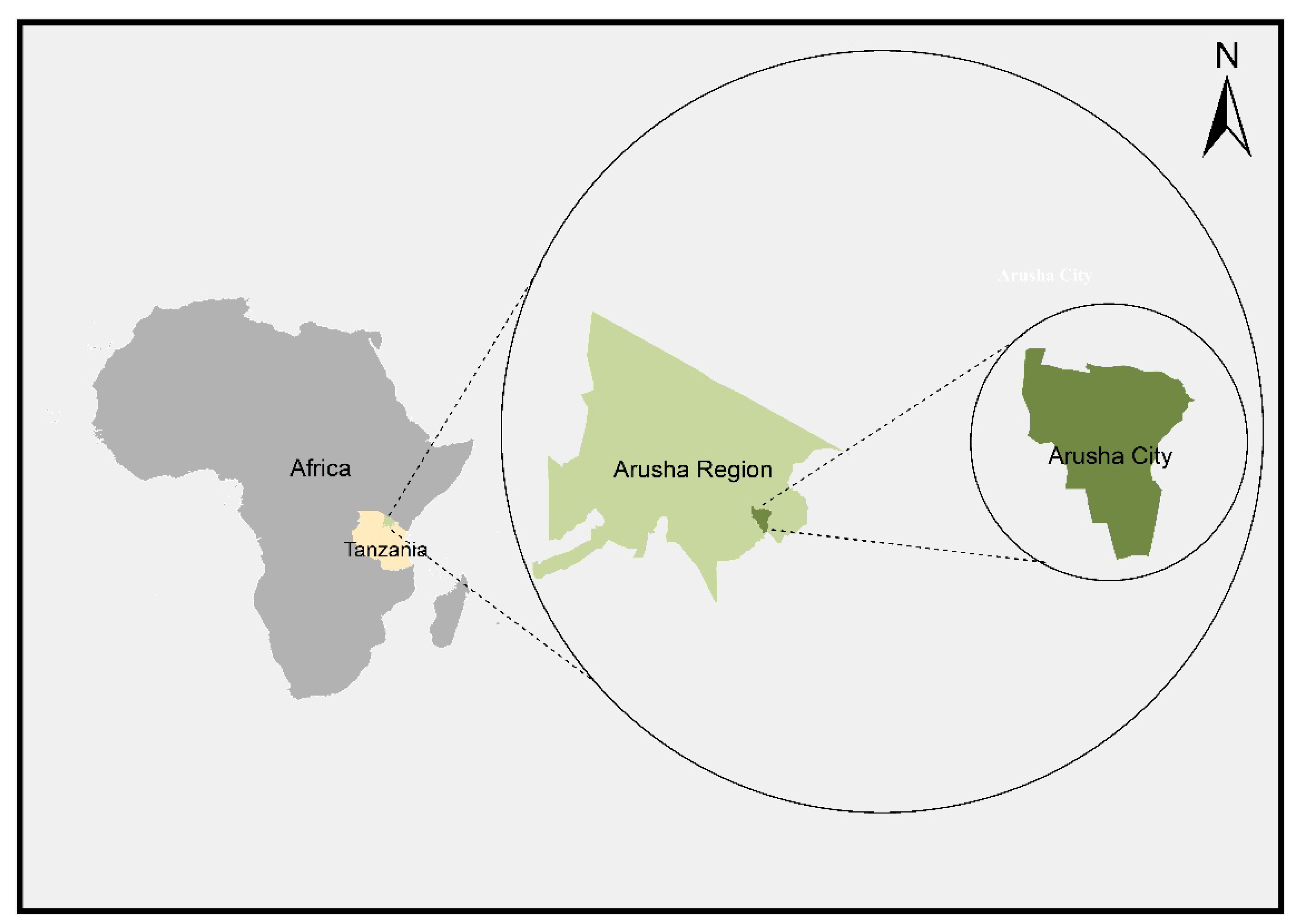
Figure 2.
Arusha City 2015 Broad land use.
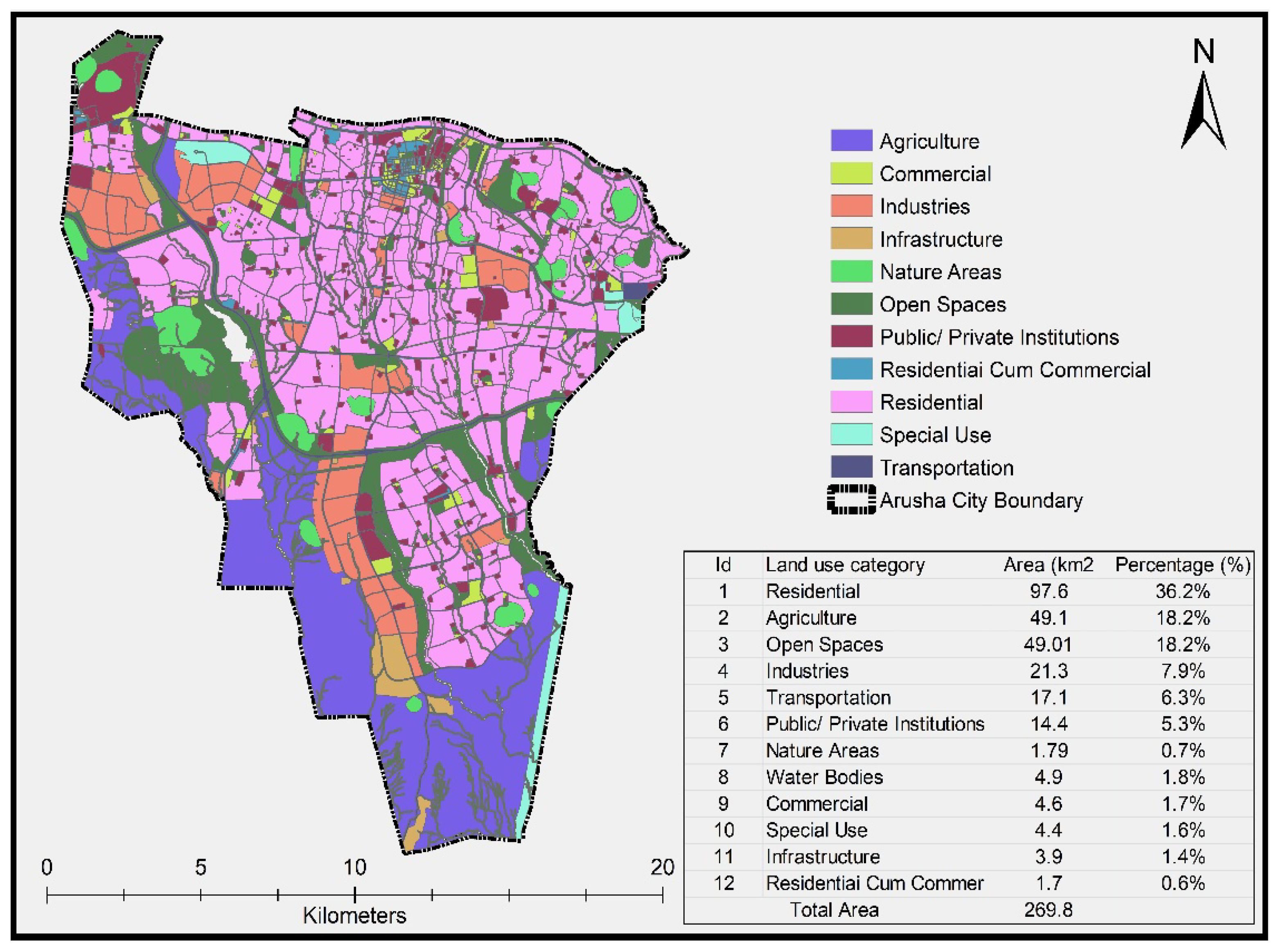
Figure 3.
The observed Nature Areas of Arusha City: 2015-2022.
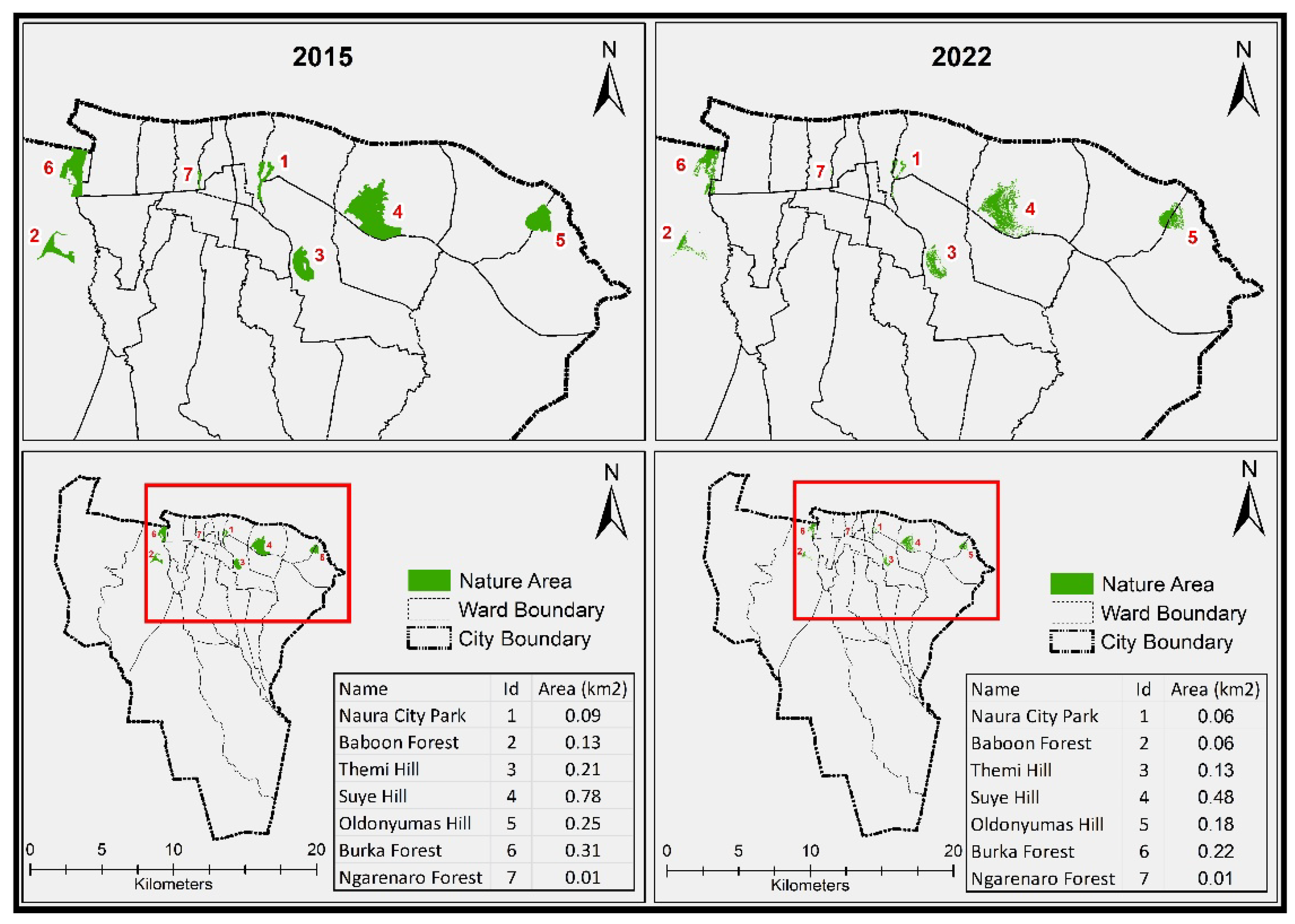
Figure 4.
A view of Mount Meru as seen from Oldonyumas Hill.
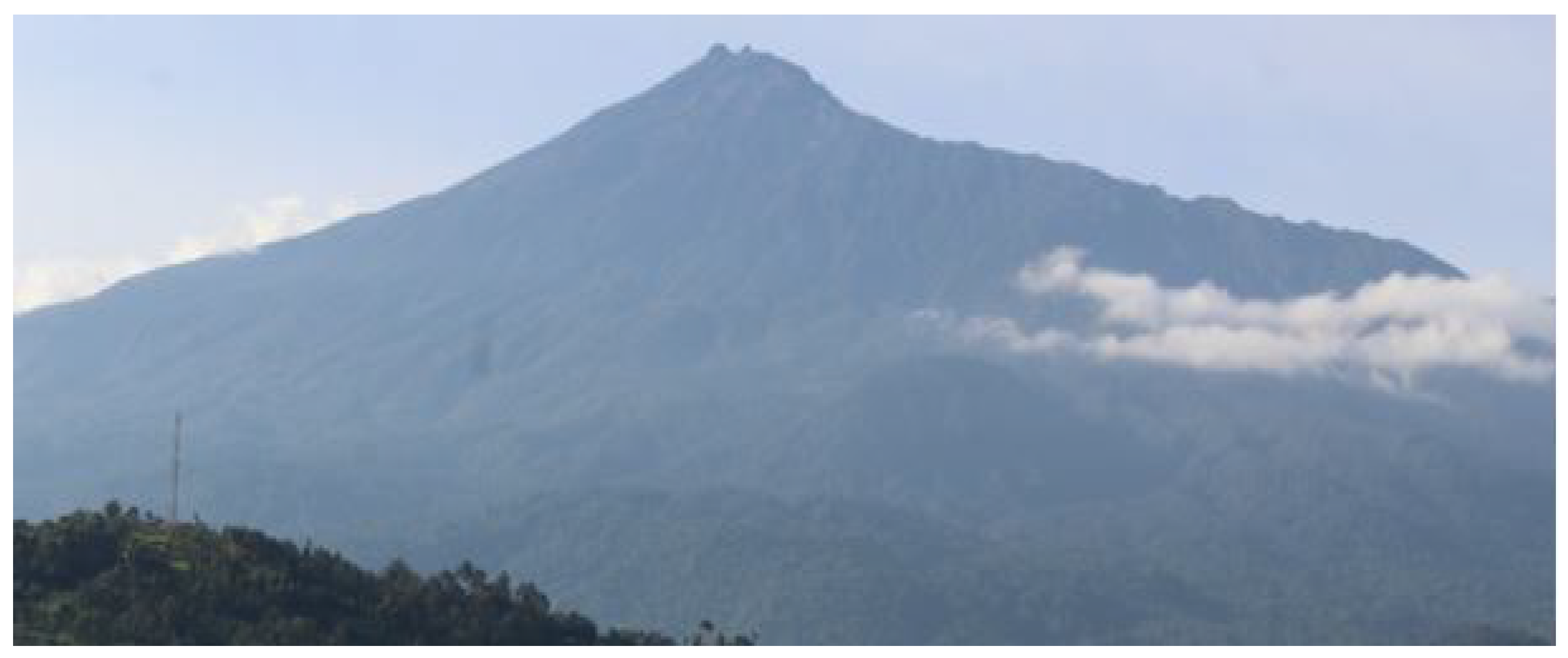
Figure 5.
The observed Riparian Forests of Arusha city: 2015-2022.
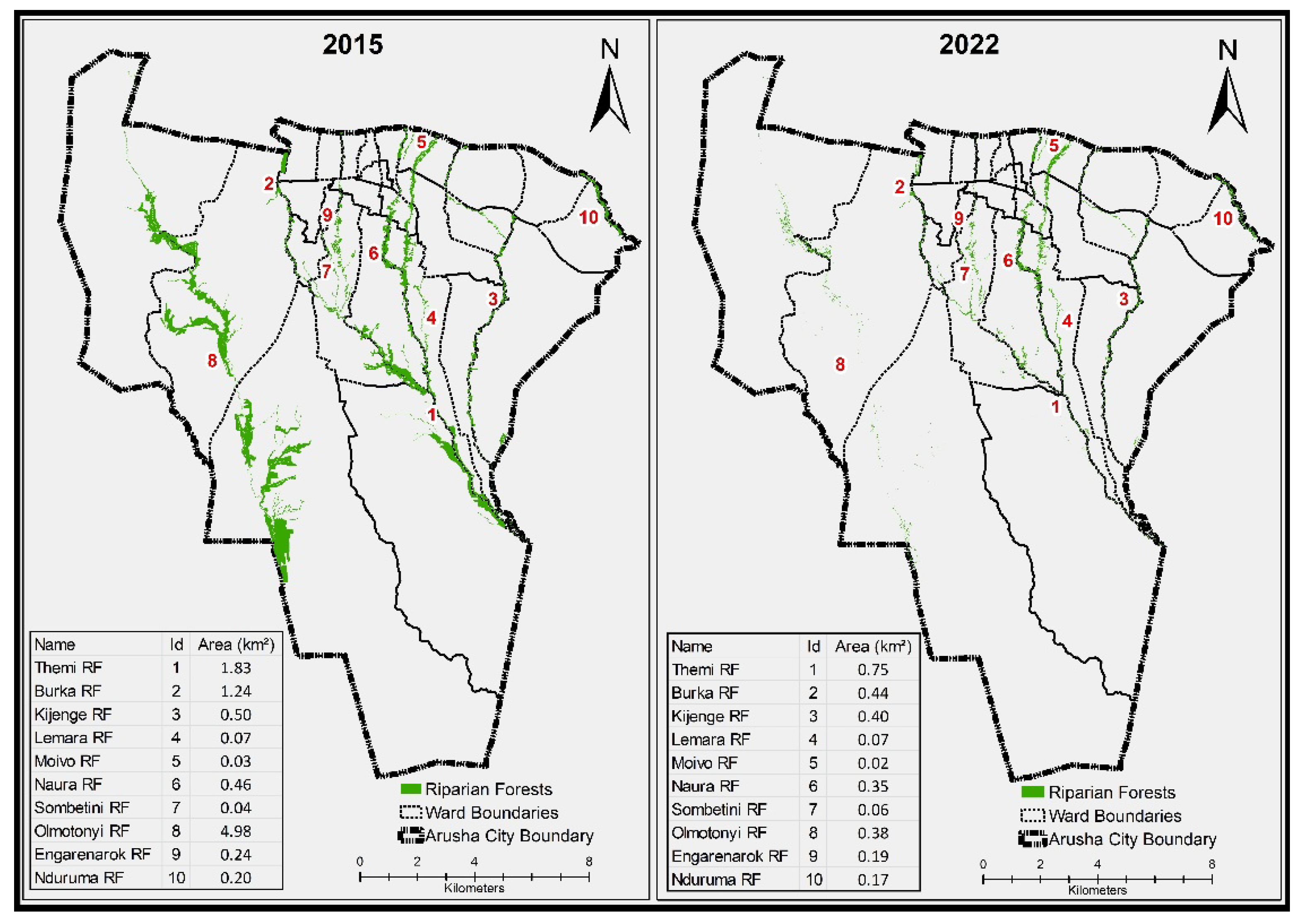
Figure 6.
Land-Use and Nature Areas change in Arusha City: 2015 - 2022.
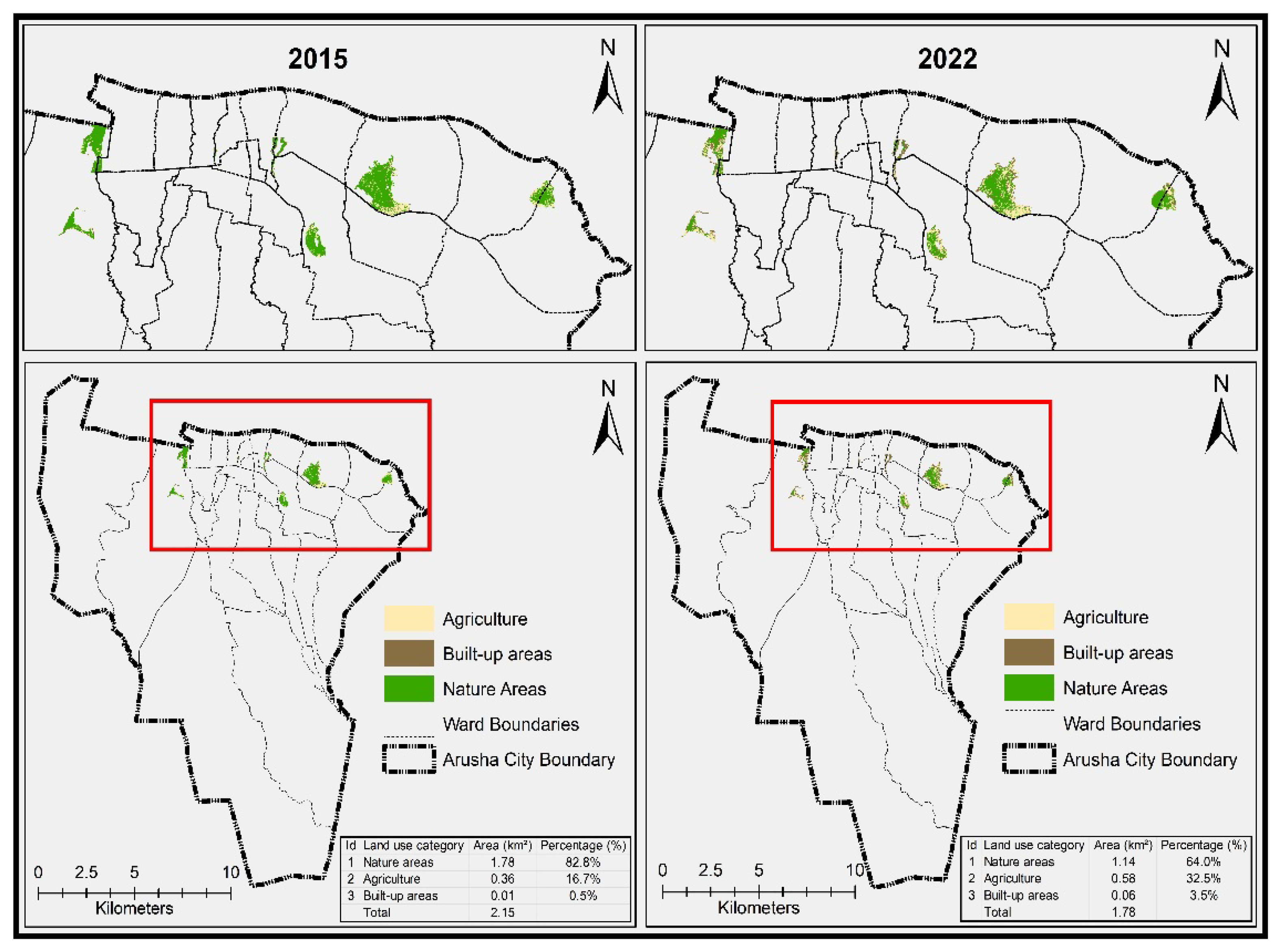
Figure 7.
Land-Use and Riparian Forests change in Arusha City: 2015 - 2022.
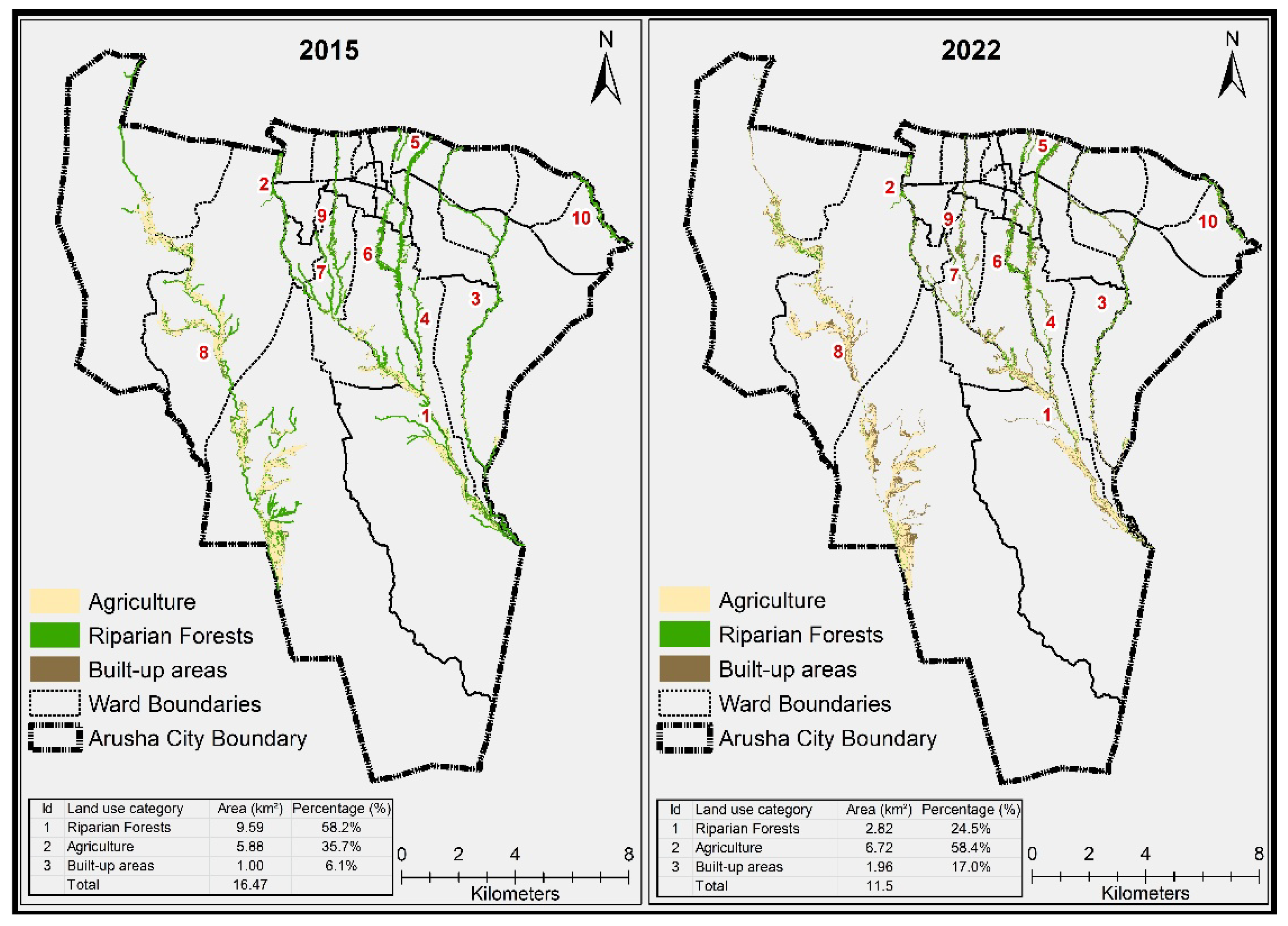
Figure 8.
A and B show buildings constructed along the riparian forests in Arusha city (Sokon I area on the right and Daraja Mbili area on the left). C and D show industrial waste pollution as were observed in Olmotonyi River (C) and domestic waste on the Kijenge River Forest (D). Source: Field survey.
Figure 8.
A and B show buildings constructed along the riparian forests in Arusha city (Sokon I area on the right and Daraja Mbili area on the left). C and D show industrial waste pollution as were observed in Olmotonyi River (C) and domestic waste on the Kijenge River Forest (D). Source: Field survey.
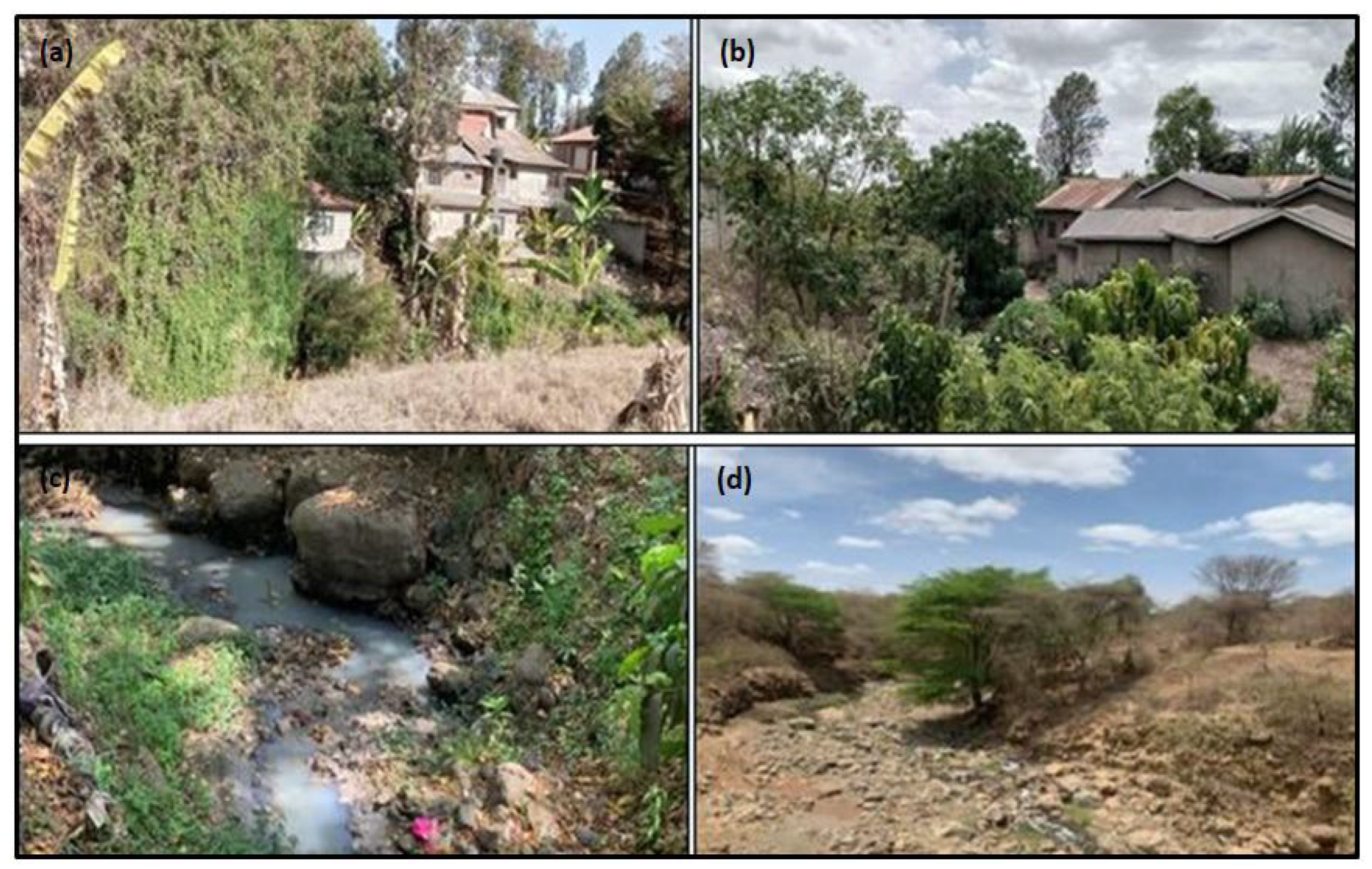
Figure 8.
Tree species diversity surveyed between nature areas and riparian forests (a) and Tree species abundance between nature areas and riparian forests (b) in Arusha city.
Figure 8.
Tree species diversity surveyed between nature areas and riparian forests (a) and Tree species abundance between nature areas and riparian forests (b) in Arusha city.
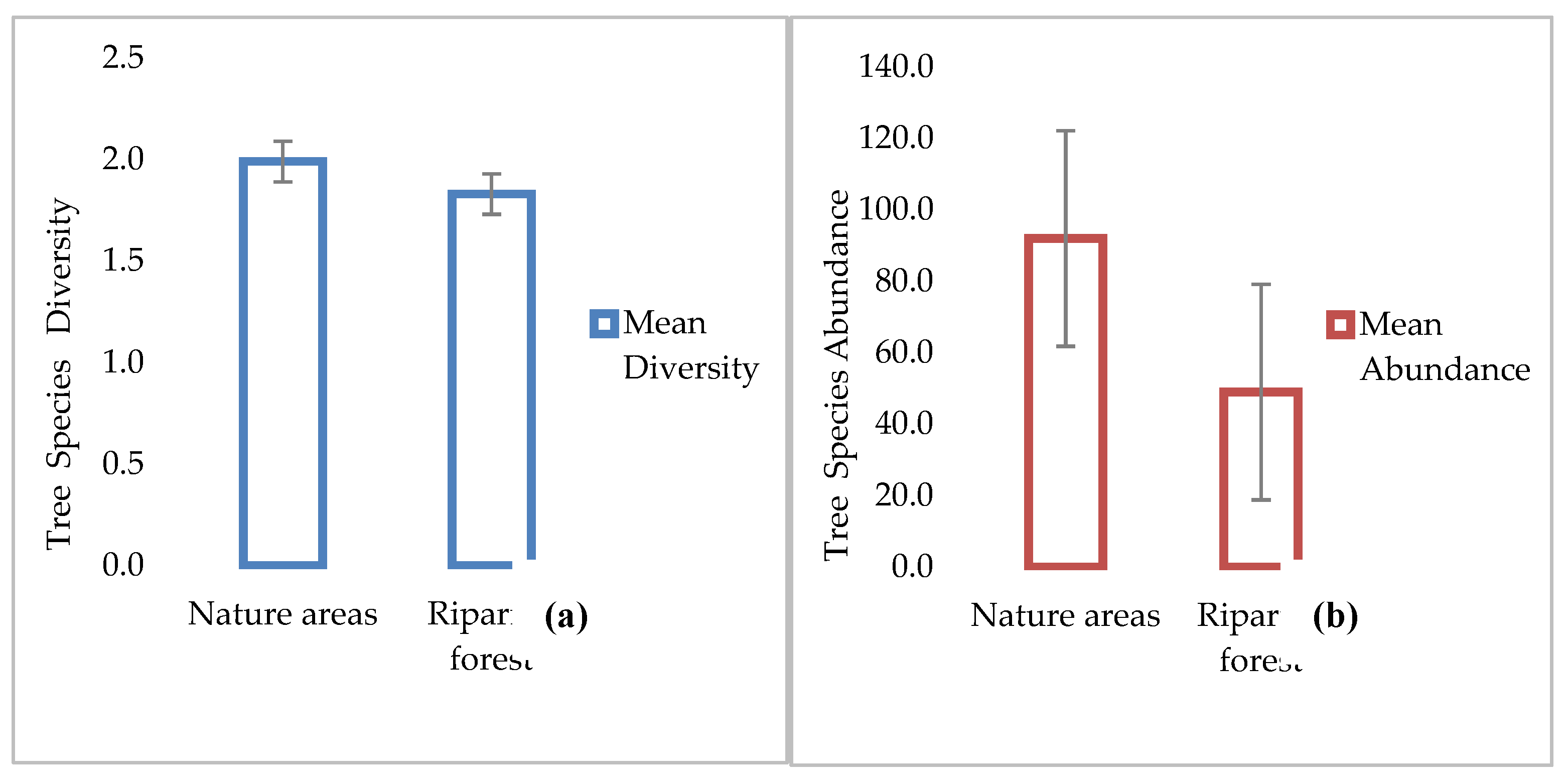
Figure 9.
The proportions of native and non-native tree species in surveyed nature areas (a) and riparian forests (b).
Figure 9.
The proportions of native and non-native tree species in surveyed nature areas (a) and riparian forests (b).
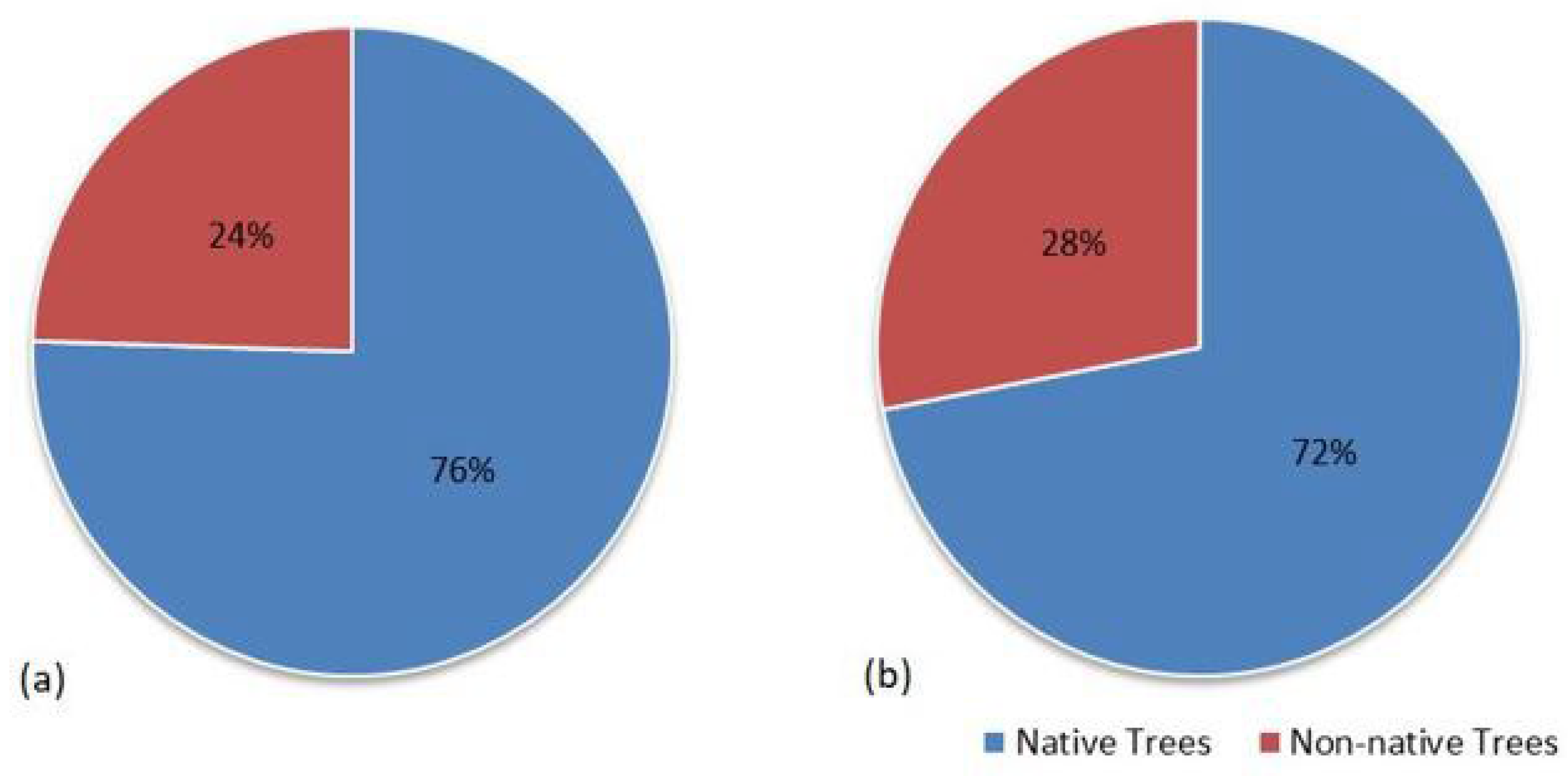
Figure 10.
a) The abundance of native and non-native trees in the surveyed nature areas within Arusha city and b) the abundance of native and non-native trees in the surveyed riparian forests within Arusha city.
Figure 10.
a) The abundance of native and non-native trees in the surveyed nature areas within Arusha city and b) the abundance of native and non-native trees in the surveyed riparian forests within Arusha city.
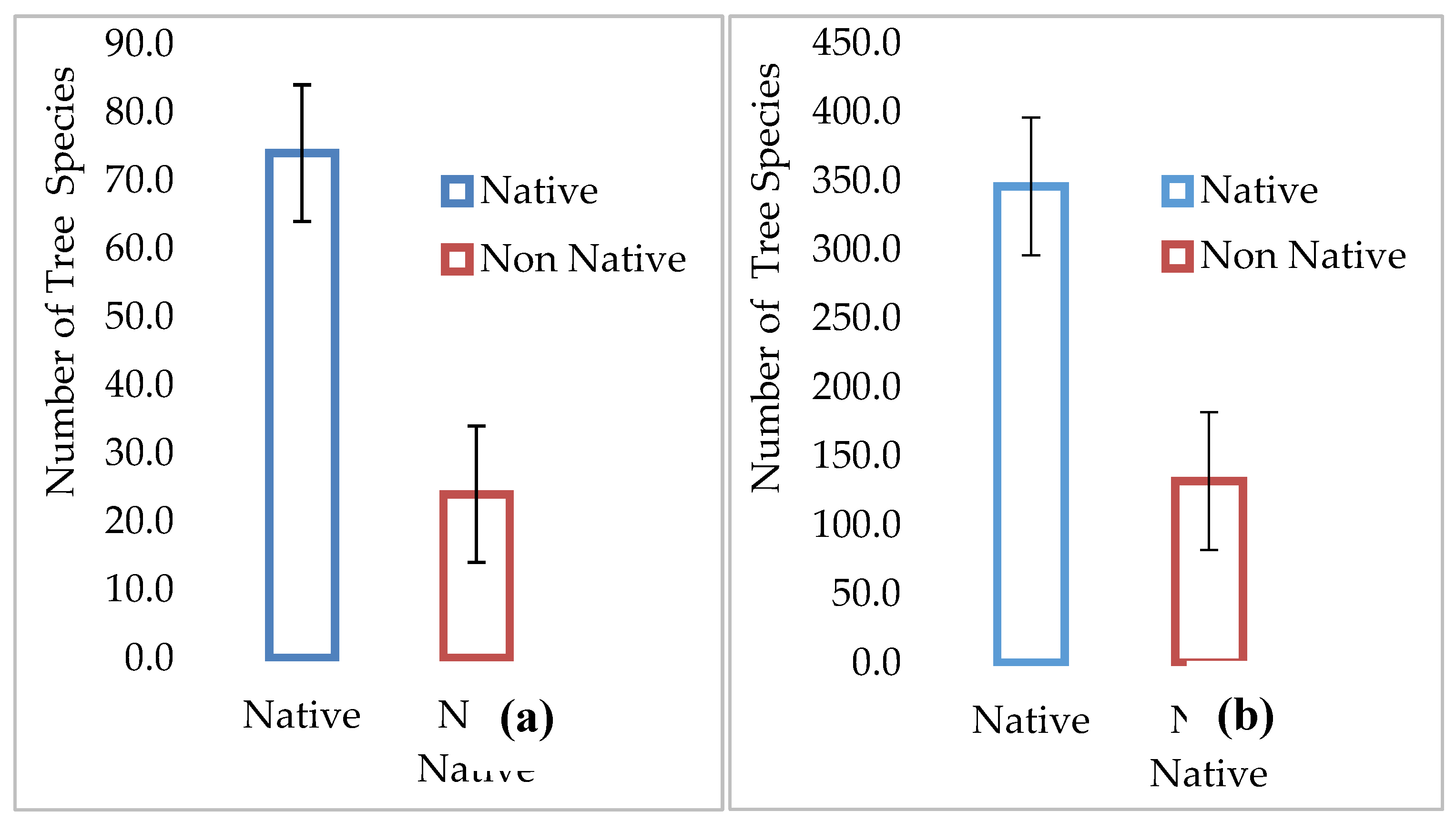
Table 1.
Tree species diversity and abundance within each surveyed nature areas in Arusha city.
| S/N | Nature areas | Mean tree species diversity | Mean tree species abundance |
| 1 | Naura City Park | 2.22 | 73 |
| 2 | Baboon Forest | 1.57 | 88 |
| 3 | Themi Hill | 1.87 | 40 |
| 4 | Suye Hill | 2.14 | 40 |
| 5 | Oldonyumas Hill | 2.35 | 50 |
| 6 | Burka forest | 2.07 | 267 |
| 7 | Ngarenaro forest | 1.39 | 101 |
Table 2.
Tree species diversity and abundance within each surveyed riparian forest in Arusha city.
| S/N | Riparian Forests | Tree species diversity | Tree species abundance |
| 1 | Naura River Forest | 2.29 | 64 |
| 2 | Themi River Forest | 1.91 | 47 |
| 3 | Olmotonyi River Forest | 1.41 | 43 |
| 4 | Sombetini River Forest | 1.97 | 28 |
| 5 | Ngarenaro River Forest | 2.47 | 50 |
| 6 | Nduruma River Forest | 2.42 | 58 |
| 7 | Moivo River Forest | 1.89 | 68 |
| 8 | Lemara River Forest | 1.76 | 17 |
| 9 | Kijenge River Forest | 2.20 | 45 |
| 10 | Burka River Forest | 1.80 | 75 |
Disclaimer/Publisher’s Note: The statements, opinions and data contained in all publications are solely those of the individual author(s) and contributor(s) and not of MDPI and/or the editor(s). MDPI and/or the editor(s) disclaim responsibility for any injury to people or property resulting from any ideas, methods, instructions or products referred to in the content. |
© 2026 by the authors. Licensee MDPI, Basel, Switzerland. This article is an open access article distributed under the terms and conditions of the Creative Commons Attribution (CC BY) license (http://creativecommons.org/licenses/by/4.0/).
Copyright: This open access article is published under a Creative Commons CC BY 4.0 license, which permit the free download, distribution, and reuse, provided that the author and preprint are cited in any reuse.


