

Submitted:
11 June 2026
Posted:
11 June 2026
You are already at the latest version
Abstract
This study presents a GIS-based approach for developing a 3D model to visualize flood dynamics in Binh Chanh area during the 2020–2024 period. The study integrates field survey data, topographic maps, land subsidence data from InSAR, rainfall and tidal records, cadastral spatial data within a Geographic Information Systems (GIS) environment. A Digital Elevation Model (DEM) was generated using Inverse Distance Weighting (IDW) interpolation method, while flood-prone locations were identified through field surveys and overlaid with spatial datasets to construct flood maps. These datasets were subsequently integrated into ArcScene to develop a 3D model representing terrain, subsidence, and flood-affected areas. The results indicate that flooding in Binh Chanh has increased significantly in frequency, depth, and spatial extent, with flooded locations rising from 12 in 2020 to 34 in 2024, maximum flood depths reaching approximately 1.0 m. Areas experiencing moderately high subsidence rates (10–15 mm/year) accounted for the largest proportion of the study area, further increasing flood vulnerability. The developed 3D model effectively visualizes flood dynamics and supports spatial analysis of flood-prone zones. It provides a practical and data-efficient tool for urban planning and flood management in data-scarce environments. The study also proposes strategic solutions to enhance the application of 3D modeling for flood mitigation and sustainable land fund development.
Keywords:
3D model of flooding
; Binh Chanh area
; GIS application
; flood dynamics
; land fund development
1. Introduction
Urban flooding has become a major challenge to sustainable development in rapidly urbanizing regions, particularly in Southeast Asia [1,2,3,4,5]. In Vietnam, major cities such as Ho Chi Minh City (HCMC) are increasingly vulnerable to flooding due to the combined impacts of climate change, land subsidence, rapid urbanization, and insufficient drainage infrastructure [6,7]. These factors contribute to increasing flood frequency, depth, and spatial extent, resulting in substantial economic losses and disruptions to urban life [5,8,9,10,11].
Binh Chanh area, located in the southwestern part of HCMC, is among the most flood-prone areas due to its low elevation and weak geological conditions [12,13,14]. In recent years, flooding has become more severe, with prolonged inundation affecting transportation networks, residential areas, and industrial zones. Land subsidence, driven largely by groundwater extraction and urban development, further intensifies flood risks [12,14,15].
To support flood management and spatial planning, Geographic Information Systems (GIS) and 3D visualization technologies have been increasingly applied [3,16,17,18]. These tools enable the integration of spatial datasets, allowing for the representation of terrain, hydrological conditions, and flood-prone areas in a three-dimensional environment [19,20,21]. Compared to traditional two-dimensional mapping, 3D models provide more intuitive visualization and improved decision-support capabilities [7,22,23,24,25,26,27,28,29,30,31,32].
However, in many developing regions, the application of advanced hydrodynamic models (e.g., Hydrologic Engineering Center’s River Analysis System (HEC-RAS), Storm Water Management Model (SWMM)) is limited due to data constraints and technical complexity. Therefore, there is a need for practical and data-efficient approaches that can support flood analysis and visualization using available datasets.
This study aims to develop a GIS-based 3D model to visualize flood dynamics in Binh Chanh area during the 2020–2024 period. The study (i) analyzes flood trends based on collected data, (ii) constructs a Digital Elevation Model (DEM) and land subsidence maps, (iii) develops flood maps and flood database, and (iv) integrates these datasets into a 3D model to support flood risk assessment and land fund management.
2. Materials and Methods
2.1. Study Area
Binh Chanh area is a suburban area with low terrain, located at the southwestern gateway, connecting HCMC to the Mekong Delta provinces (Figure 1). In 2024, Binh Chanh covers an area of 25,255.99 hectares, of which agricultural land accounts for 64.60%; the land fund established by the local government for urbanization purposes is 1,479.17 hectares [33,34]. In 2023, the district had a population of 839,803 people, with only 2.94% classified as urban residents, while 97.9% of the population was engaged in non-agricultural sectors. The industrial–construction and trade–services sectors together made up 97.9% of the area’s economic structure [35]. During the 2014–2023 period, although Binh Chanh District recorded a low urbanization rate of 3.09% (significantly lower than both HCMC and the national average), it experienced a relatively high urbanization growth rate of 31.38%, which was higher than the national rate of 26.19% and significantly higher than HCMC’s 13.55% [36].
2.2. Data Sources
This study used both primary and secondary datasets. Primary data were collected through field surveys conducted from 2020 to 2024. A total of 34 flood-prone locations were identified, where information on flood depth, duration, and spatial extent was recorded. Geographic coordinates were obtained using GPS devices, and field photographs were collected to validate flood conditions. Secondary data included (i) topographic maps of HCMC (scale 1:2000), (ii) cadastral spatial database, (iii) rainfall data, (iv) tidal level data, (v) land subsidence data derived from InSAR (2014–2024), (vi) land use and urban expansion data. All datasets were standardized into the VN-2000 coordinate system.
2.3. Data Processing and Analysis
GIS-based spatial analysis was conducted using ArcGIS software (Esri, Redlands, CA 92373, USA). The DEM was generated using the Inverse Distance Weighting (IDW) interpolation method. Elevation values were classified into six levels to represent terrain variation. Land subsidence was mapped using interpolation of InSAR-derived data and classified into four levels. Flood maps were developed by overlaying flood point data with cadastral and hydrological layers. Descriptive statistical analysis was applied to evaluate flood trends during 2020–2024, including changes in flood frequency, depth, and affected area.
2.4. 3D Flood Modeling Workflow
The 3D flood model was developed using ArcScene through a multiple-step workflow (Figure 2):
(1) Use DEM to generate a 3D terrain surface.
(2) Integrate flood spatial data (locations, depth, and extent) into the terrain model to represent inundation areas.
(3) Apply visualization techniques to visualize observed flood dynamics.
(4) Validate model through comparison with observed flood events collected during field surveys.
This study focuses on GIS-based visualization rather than hydrodynamic simulation. Unlike hydraulic models such as HEC-RAS or SWMM, the proposed approach emphasizes practical applicability using available data, making it suitable for data-scarce environments.
3. Results and Discussion
3.1. Flood Dynamics and Flood Mitigation in Binh Chanh Area During the 2020–2024 Period
3.1.1. Flood Dynamics in Binh Chanh Area During the 2020–2024 Period
Characterized by low elevation, weak geological conditions, and rapid urbanization, Binh Chanh is particularly prone to flooding and land subsidence. It is among the most severely affected areas by climate change in HCMC [6,12,13,37,38]. Negative environmental events, including flooding, tidal surges, hefty rainfall, and saltwater intrusion, directly affect agricultural production and urban infrastructure [39,40]. Notably, climate change has led to higher temperatures, increased rainfall, and rising water levels, leading to flooding, salinization, and a shrinking agricultural land area, even though the area hosts the largest ornamental plant cultivation zone in HCMC. However, the drainage system has not kept pace with the rapid urbanization, increasing flood damage and placing significant pressure on land management, the environment, and residents’ quality of life. Hence, Binh Chanh should be prioritized in HCMC’s climate change response and adaptation plans.
During the 2020–2024 period, Binh Chanh area was repeatedly affected by severe flooding events, primarily driven by intense rainfall, high tides, and topographic subsidence. Several areas (such as Phong Phu, Binh Hung, Vinh Loc A, and Tan Tuc) are frequently inundated with floodwaters reaching depths of 30 to 50 centimeters, leading to traffic congestion, vehicle breakdowns, and adverse impacts on daily life, transportation, and the local economy. Several major roads such as Nguyen Huu Tri, Tran Van Giau, National Highway 50, and National Highway 1A,… (Figure 3) are frequently subjected to prolonged flooding. Subsidence of nearly 50 centimeters within less than a decade has also significantly lowered ground elevations, severely reducing the area’s natural drainage capacity [37,40,41].
As shown in Table 1, the flooding situation in Binh Chanh became increasingly severe and spatially complex during the 2020–2024 period. Flood frequency, inundation depth, and affected areas showed a clear upward trend, reflecting the combined impacts of rapid urbanization, land subsidence, insufficient drainage infrastructure, and climate change. The number of flooded points increased from 12 in 2020 to 34 in 2024, while the average rainfall and peak tide levels remained relatively stable, indicating that drainage capacity has not been sufficiently improved. Flood depth increased markedly, rising from 0.1 to 0.4 meters in previous years to approximately 1.0 meters by 2024. Similarly, the maximum extent of inundation expanded dramatically – from just over 12,000 m2 to nearly 56,000 m2. The prolonged water recession period, lasting from 2 to 12 hours, reflects ongoing inadequacies in the drainage infrastructure. The primary causes are tidal surges combined with heavy rainfall, occurring in the context of rapid urbanization, land subsidence, and increasingly complex climate change impacts. These findings highlight the urgent need to upgrade drainage infrastructure, strengthen land-use planning regulations, and implement integrated climate adaptation strategies to mitigate the increasing severity of urban flooding in the study area.
These results further suggest that the expansion of flooding in Binh Chanh was not driven solely by rainfall intensity or tidal fluctuation, but by the combined effects of reduced drainage capacity, rapid urbanization, increasing impervious surfaces, changes in canal conveyance, tidal influence, and land subsidence. This interpretation is consistent with the study in District 8, Ho Chi Minh City, where remote sensing and GIS-based hydrological modelling indicated that urbanization, tidal effects, low elevation, and drainage limitations contributed significantly to flood risk [43]. Similar findings were reported in Hung Phu 1 Residential Area, Cai Rang District, Can Tho City, where GIS and SWMM simulation showed that heavy rainfall combined with high tide caused flooding across many urban roads, emphasizing the role of drainage-system performance in urban flood dynamics [44]. At a broader methodological level, GIS-based flood-risk studies also emphasize the integration of elevation, slope, rainfall, land use, soil type, drainage density, and other spatial criteria in identifying flood-prone areas and supporting flood-risk assessment [45,46]. Thus, the observed increase in flood-prone locations reflects the interaction between urbanization pressure, drainage inadequacy, tidal influence, and land subsidence rather than rainfall and tide alone.
Flooding in Binh Chanh is delaying planning projects, limiting land usability, increasing construction costs, and reducing land value; more critically, it negatively impacts urbanization processes and land fund development efforts. At the same time, this phenomenon complicates compensation and site clearance processes and contributes to an increase in land-related disputes and complaints in severely flooded areas. From a socio-economic perspective, flooding disrupts production, goods transportation, and adversely affects the operations of industrial zones. In terms of daily life, residents experience significant disruptions to essential activities, students are prevented from attending school, and water contamination gives rise to a range of public health and psychological concerns. Despite numerous efforts by local authorities, flooding remains widespread, particularly at persistent hotspots such as Quach Dieu, National Highway 50, and National Highway 1A, ... Therefore, it is essential to integrate solutions based on technical, planning, technological, and community approaches to effectively and sustainably address future flooding challenges.
3.1.2. Effectiveness of Flood Mitigation Programs in Binh Chanh Area
Between 2020 and 2024, local authorities implemented multiple flood mitigation policies and infrastructure programs to address increasing flood risks in Binh Chanh area. During this period, 23 legal and administrative documents related to flood control and climate adaptation were issued, including 5 major implementing plans aimed at improving drainage systems, strengthening environmental management, and reducing flood vulnerability (Table 2).
One of the key initiatives implemented during the 2020–2021 period was the campaign entitled “No Littering on Streets and Canals”. This program focuses on reducing drainage blockages, restoring canal functions, addressing encroachment issues, and improving environmental quality [47]. Binh Chanh also simultaneously implemented various tidal prevention and drainage solutions, including (1) construction of embankments, revetments, and tidal control sluices (such as Cay Kho sluice gate, tide prevention gates applying flap gate technology and submersible pumps); (2) upgrading of the drainage system (such as along Nguyen Huu Tri Road and in the Binh Hung resettlement area); (3) planning for 35 detention ponds, pump stations, tide-blocking valves, and identifying land boundaries for flood control infrastructure. Many key infrastructure projects (such as the Ca No wharf, erosion control embankment at Xom Cui Bridge, Area B embankment system, Cay Kho tidal control sluice, and Tran Dai Nghia drainage line, …) have contributed to reducing flooding while supporting socio-economic development in critical areas (including Le Minh Xuan Industrial Park, Pho Cho Cau Xang area, Gia Hoa residential area, Hamlet 5 of Phong Phu, and Binh Hung residential area, …) [48,49]. These solutions have helped reduce flooding in Tan Tuc, Binh Hung, and other areas; improved traffic conditions; attracted investment; and increased land value. The handling of encroachments and constructions illegally has also restored dozens of hectares of public land for infrastructure purposes [49,50,51].
Although still facing pressures from urbanization, waste-related blockages, limited budgets, and climate change, Binh Chanh has leveraged flood control programs to delineate land boundaries, prevent land misuse, and synchronize infrastructure development with land use planning. At the same time, considerable efforts have been undertaken to accelerate data digitization and GIS applications to enhance management efficiency, aiming towards sustainable development [41,49].
3.1.3. Some Solutions to Reduce Flooding in the Binh Chanh Area
Several solutions for preventing and controlling flood issues have been implemented by the local government; however, their effectiveness has been limited. To address the current flooding situation, Binh Chanh needs to implement a coordinated set of solutions presented in Table 3, with priority given to solutions related to the development of flood maps and flood databases.
3.2. Development of the 3D Model to Visualize Observed Flood Dynamics in the Binh Chanh Area
3.2.1. Standardizing Input Data Sources to Develop the 3D Models Visualizing Observed Flood Dynamics in Binh Chanh Area
The input data source used is the topographic map of HCMC. This map was created using the VN-2000 national coordinate and elevation system, Zone 3°, central meridian 105°45′, with a scale factor of 0.9999; it is managed using MapInfo software.
To successfully build the 3D model describing flood dynamics in Binh Chanh, the study used FME Quick Translator software to convert data from MapInfo’s *.tab format to MicroStation’s *.dgn format.
The achieved result is that the input data for the Binh Chanh topographic map, extracted from the HCMC topographic map, has been successfully converted (Figure 4). Next, the topographic map data was edited and standardized using MicroStation v8i to facilitate efficient and seamless use of map layers when transferring to ArcGIS for further processing.
3.2.2. Development of the Digital Elevation Model (DEM) for Binh Chanh Area
The DEM serves as the terrain base for the 3D model illustrating flood dynamics and provides the foundation for developing flood maps. This enables managers to accurately assess the terrain surface and formulate appropriate policies to mitigate the current flooding situation.
The DEM of Binh Chanh was constructed in ArcGIS using the IDW interpolation method to reconstruct the terrain surface from empirical data. This method was selected because it is appropriate for spatial surface reconstruction from available elevation points and suitable for the scale and purpose of the study. The interpolation results produced a Digital Elevation Model with six elevation thresholds, which were automatically classified and represented surface elevations using a color scale (Table 4).
The DEM classification results in Table 4 show that areas below 1.2 m account for 80.30% of Binh Chanh’s total natural area, confirming the predominance of low-lying terrain. Although elevation alone does not determine flooding, it is an important physical factor that can intensify inundation when combined with rainfall, tidal effects, land subsidence, and inadequate drainage. Previous GIS-based flood studies support the use of elevation and DEM as essential inputs for identifying flood-prone areas and assessing urban flood susceptibility. In District 8, HCMC, remote sensing, DEM, and GIS-based hydrological modelling were applied to identify areas exposed to flooding [43]. Similarly, studies in Can Tho, Hoa Binh, and Hanoi incorporated terrain-related and hydrological factors within GIS-, SWMM-, or AHP-based frameworks to evaluate urban flood risk or susceptibility [44,52,53]. International comparative research in Colombo, Auckland, and Valencia also indicates that GIS-integrated multi-criteria analysis and remote sensing are effective for identifying urban flood hazard zones, particularly where low-lying terrain interacts with other flood-driving factors [54]. Therefore, the DEM should be regarded as a fundamental spatial input rather than a standalone flood-risk assessment. Its integration with flooding, drainage, tidal, subsidence, and land-use data provides a basis for 3D flood visualization and climate-adaptive land fund development in Binh Chanh.
The use of IDW interpolation is also methodologically supported by previous research in Hoanh Bo District, Quang Ninh Province, where IDW produced higher accuracy than Kriging for surface water quality mapping [55]. However, for DEM interpolation, Kriging and Natural Neighbor may outperform IDW depending on input data, terrain characteristics and survey-point distribution [56]. Overall, the DEM results provide a reasonable physical basis for explaining flood susceptibility in Binh Chanh. However, because the DEM was generated by IDW interpolation, its accuracy may depend on the density, spatial distribution, and vertical accuracy of input elevation points. Therefore, further DEM accuracy assessment and comparison with alternative interpolation methods are recommended.
Next, administrative boundary and hydrological network data layers were overlaid onto the DEM to represent elevation levels and the river, canal, and creek systems within each administrative unit. The color scale, ranging from light to dark, represents terrain variation from low to high elevations, facilitating a visual assessment of the terrain characteristics. The DEM map (Figure 5) plays a crucial role in comparing elevations across areas, identifying low-lying flood-prone zones, and serving as a basis for developing flood maps for Binh Chanh.
3.2.3. Development of the Land Subsidence Map for Binh Chanh Area
Geological and topographical characteristics, along with the rate of urbanization, directly affect subsidence and flooding conditions in Binh Chanh. This area is in the transitional zone between the high mainland of the Southeast region and the low-lying Mekong Delta plain, with an average elevation of only 1–2 meters above sea level, making it prone to flooding caused by heavy rainfall and tidal surges. The soil foundation is weak, consisting mainly of clayey soil, silty clay, and peat at depths of 10–30 meters, with low load-bearing capacity and high susceptibility to subsidence. The Holocene sediment layer and the high groundwater level further weaken the soil foundation [15]. According to HCMC Department of Natural Resources and Environment (2019) [37], Binh Chanh is one of the fastest-subsiding areas in the city, with a rate of 5–10 mm/year and some locations exceeding 15 mm/year due to weak soil foundations, rapid urbanization, and excessive groundwater extraction [41].
Especially during the 2014–2024 period, urbanization in Binh Chanh accelerated significantly with the development of urban areas, industrial zones, and transportation infrastructure, leading to land-use conversions and groundwater extraction beyond sustainable limits. The infilling of canals and the expansion of impervious surfaces have increased pressure on the underlying soil structure, making land subsidence more complex, especially during the rainy season and high tides, which directly affects residents’ quality of life. The urban expansion diagram for the 2014–2024 period (Figure 6) was constructed by using land inventory and statistical data; combined with subsidence data extracted from differential InSAR [37], providing a scientific foundation for evaluating and interpolating subsidence intensity across Binh Chanh area.
The subsidence map (Figure 7) was generated by applying IDW interpolation to InSAR-derived subsidence values provided by the HCMC Department of Natural Resources and Environment (2019) [37]. In this analysis, the current land-use map and the urban expansion map were used for spatial overlay and interpretation of potential subsidence-related factors, rather than as direct inputs for measuring subsidence.
The results produced a land subsidence classification map with four subsidence-rate levels (Table 5, Figure 7), showing that areas with High and Moderately High subsidence rates were broadly similar in extent. Together, these two levels accounted for 57.19% of the total natural area of the study region, indicating that a substantial proportion of Binh Chanh is affected by relatively high subsidence rates. This is particularly important because, in a predominantly low-lying area, subsidence can further lower ground elevations and aggravate flood exposure when combined with heavy rainfall, tidal influence, and limited drainage capacity. Previous InSAR-based research in Ho Chi Minh City similarly found that subsidence was concentrated in areas affected by urban growth and groundwater extraction and could contribute to increased flooding and water nuisance [57]. Studies in the Mekong Delta also showed that groundwater-related subsidence can increase inundation hazards in low-elevation deltaic environments [58,59].
Although the proportion of Moderately High and High subsidence areas in Binh Chanh is greater than the proportion of high and very high subsidence zones reported in Tehran–Karaj–Shahriyar [60], this comparison should be interpreted cautiously because classification thresholds and analytical methods may differ between studies. Nevertheless, the results indicate that land subsidence represents an important physical constraint that should be considered in flood assessment and climate-adaptive land fund development analysis in Binh Chanh.
3.2.4. Developing a Flood Map (2020–2024) in Binh Chanh Area
Flood maps are thematic maps that depict the extent, severity, duration, and frequency of flooding within a specific area [61]. It is an important tool in disaster management, planning, and sustainable urban development. The map helps identify flood-prone areas, supports the development of response plans and evacuation strategies, guides rational urban spatial planning, and prevents construction in low-lying areas. In addition, the map provides data for damage analysis, environmental assessment, and climate policy planning; at the same time, it supports community awareness, risk reduction, and serves various specialized sectors (such as land management, construction, transportation, natural resources and environment, …).
The flood map of the Binh Chanh area was developed based on parcel layers from the cadastral spatial database, combined with flood point data collected through reports issued by the HCMC Department of Construction and field surveys conducted during the 2020–2024 period (Table 1). In parallel with the successful development of the flood map for the 2020–2024 period in Binh Chanh (Figure 8), the study also developed a comprehensive flood database in ArcGIS (Figure 9). This database provides detailed information on flood points, including average rainfall, tidal peaks, flood depth, length of inundated road sections, flooded area, drainage duration, causes of flooding, as well as the exact locations and real-life images of the flooded sites. This serves as an essential tool for developing 3D models to visualize observed flood dynamics.
Unlike previous studies that primarily used GIS with hydrological modelling, hydraulic simulation, or multi-criteria analysis to identify flood-risk or flood-susceptibility zones [43,44,52], the present study develops a parcel-linked inventory of observed flooding events in Binh Chanh. By connecting recorded flood locations and event-specific attributes with cadastral parcels, the database enables the identification of affected land parcels and road sections and provides traceable empirical information for land fund development analysis. Therefore, the resulting flood map should be interpreted as an observed flood-inventory map that complements, rather than replaces subsequent flood-risk modelling and 3D visualization.
3.2.5. Developing a 3D Model to Visualize Observed Flood Dynamics in Binh Chanh Area During the 2020–2024 Period
The 3D model simulating flood dynamics in Binh Chanh was developed using the ArcScene tool through the process as Figure 2. In which: (1) the step of configuring elevation simulation from the DEM enables the land use status layer to conform to the terrain surface within a 3D environment (Figure 10), supporting the generation of spatial data for flooded zones and providing the basis for modeling flood dynamics; (2) the construction of the database for flooded areas serves as the core element in developing the 3D model that simulates flood dynamics; and (3) the step of configuring flood dynamics establishes parameters that enable flooded zones to be toggled on and off, simulating the visual effect of water rising and receding within the 3D environment.
Based on this process, the study successfully developed a 3D flood dynamics visualization model for Binh Chanh area during the 2020–2024 period (Figure 11 and Figure 12). The model visually represents the spatial relationships among terrain elevation, land subsidence, recorded flooding, road sections, and cadastral parcels. In particular, it enables users to identify locations and parcels affected by observed flooding and to examine how low terrain and subsidence conditions coincide spatially with inundated areas.
Previous studies have developed 3D flood approaches with stronger process-based simulation capabilities. Wu et al. (2019) [62] integrated spatio-temporal GIS with one-dimensional and two-dimensional hydrodynamic models to simulate flood evolution dynamically and visualize water depth, flow direction, flow velocity, and inundated areas for emergency decision support. Similarly, Zhi et al. (2020) [63] coupled urban drainage and flood simulation models with 3D building information to assess urban flood risk from multiple perspectives. In contrast, the model developed in this study does not calculate flood propagation through hydrodynamic equations; rather, it visualizes recorded flood conditions and their spatial relationships with terrain, subsidence, land use, and cadastral parcels. This approach is appropriate for Binh Chanh because it makes practical use of available empirical data while maintaining a direct connection between flood impacts and land management units.
The distinctive contribution of the model is therefore its parcel-based spatial decision-support capability. By identifying flood-affected parcels and road sections and visualizing their relationships with terrain elevation and land subsidence, the model provides an empirical spatial basis for reviewing and adjusting land-use planning, identifying areas that may require restrictions on urban development or land fund development or stricter flood-adaptation requirements, and prioritizing drainage and flood-mitigation investments. Accordingly, the model contributes to a more informed approach to climate-adaptive land management and sustainable land fund development in Binh Chanh. This contribution distinguishes the proposed framework from conventional flood-risk mapping approaches by explicitly linking observed flood impacts to cadastral parcels and land-management units.
3.3. Strategies to Optimize the Use of 3D Modeling for Flood Control and Land Fund Development in Binh Chanh
To maximize the practical value of the developed 3D visualization model, its application should extend beyond the representation of observed flood conditions toward supporting spatially differentiated land fund development decisions. In Binh Chanh, the integrated interpretation of terrain elevation, land subsidence, observed flooding, cadastral parcels and existing urban functions provides a basis for proposing different planning orientations for locations facing different levels of flood-related constraint. The model can support the identification of representative locations where development control, infrastructure investment, conditional development requirements, or further suitability assessment should be prioritized. Based on this application-oriented interpretation, the proposed planning orientation groups and representative locations are presented in Table 6.
Table 6 translates the integrated 3D visualization outputs into an application-oriented framework for sustainable land fund development. Rather than constituting a formal zoning map or a complete quantitative classification of affected land-fund areas, the proposed planning orientation groups identify how the model may support differentiated planning responses in representative locations.
To implement these planning orientations effectively, a series of coordinated solutions should be undertaken, including the following:
Enhance the quality and level of detail of input data: The 3D model can only be accurate when the input data is both comprehensive and up-to-date. Therefore, it is essential to develop a high-resolution database, including a DEM, hydrological and geological data, drainage infrastructure, current land use, and subsidence information. The application of remote sensing technologies, satellite imagery, drones (UAVs), and automated monitoring sensor stations will enable rapid, continuous, and real-time data collection.
Integrate the 3D model with GIS systems and digital land management platforms: Integrating the 3D model with GIS and land management databases enables the overlay of multiple data layers (such as flooding, planning, current land use, population, ...) for analyzing and assessing high-risk areas. This allows local authorities to easily identify restricted or development-limited areas, thereby making appropriate land management decisions and minimizing flood-related damages. For example, the urban spatial orientation map to 2030 was developed by integrating the land use planning map (up to 2030) with flood and subsidence maps (Figure 13). This serves as an important scientific data source, visually reflecting the flood situation and areas of severe land subsidence. At the same time, it functions as a valuable tool for adjusting land use planning, aiming toward the sustainable development of land resources in Binh Chanh during the 2021–2030 period.
Multi-scenario simulation and long-term forecasting: The 3D model should be utilized to simulate various flood scenarios over time (e.g., tidal surges combined with heavy rainfall, 100 cm sea level rise, 20 years of land subsidence, ...) to forecast areas at risk of flooding in the future. This serves as a basis for adjusting land use planning toward climate change adaptation, ensuring long-term and sustainable development.
Application in decision-making and permitting processes: The 3D model should be incorporated into urban planning, construction permitting, and urban development management processes. Using 3D model to assess flood risks before project approval helps limit development in low-lying areas and prioritize drainage infrastructure investment in high-risk zones.
Enhance intersectoral coordination and data sharing: The effectiveness of the model depends on the coordination among various agencies, such as natural resources and environment, construction, urban planning, transportation, and local commune-level authorities. It is essential to establish an open data-sharing mechanism, standardize information across sectors, and ensure regular updates to maintain the model’s accuracy and relevance to real-world conditions.
Training human resources and enhancing operational capacity: To ensure the effective utilization of the 3D model, it is essential to invest in training a team of skilled personnel capable of operating simulation software, analyzing data, and developing scenarios to support planning, flood prevention, and land management. In parallel, it is crucial to provide clear technical documentation and ensure ongoing support from research institutions, academic organizations, and technology enterprises.
The application and enhancement of the effectiveness of the 3D flood dynamics model not only help Binh Chanh become more proactive in flood control but also serve as a strategic tool for land use planning and land fund development in the context of climate adaptation. This serves as an important foundation for the digital transformation of land management and the sustainable development of urban areas in the future.
4. Conclusions
This study developed a GIS-based 3D model to visualize flood dynamics in Binh Chanh area during the 2020–2024 period. The results show a clear increase in flood frequency, depth, and spatial extent, driven by the combined effects of low terrain, land subsidence, rapid urbanization, and climate change. The integration of DEM, land subsidence data, and flood observations enabled the construction of flood maps and a flood database, which were subsequently visualized in a 3D environment. The developed framework contributes to climate-resilient spatial planning by supporting risk-informed land allocation, sustainable urban expansion, and flood-sensitive infrastructure development in rapid urbanizing areas. Although the approach does not incorporate hydrodynamic simulation, it offers a practical solution for flood analysis in data-scarce regions. Future studies should focus on integrating hydraulic modeling and real-time data to enhance the predictive capability of flood simulations.
Author Contributions
Conceptualization, L.D.T.T., T.T.D. and C.X.V.; methodology, L.D.T.T., T.T.D. and C.X.V.; formal analysis, L.D.T.T. and T.T.D.; investigation, L.D.T.T. and K.X.N.; data curation, L.D.T.T. and K.X.N.; writing—original draft preparation, L.D.T.T. and T.T.D.; writing—review and editing, L.D.T.T. and T.T.D.; validation, L.D.T.T. and K.X.N.; visualization, L.D.T.T. and T.T.D.; supervision, T.T.D. and C.X.V. All authors have read and agreed to the published version of the manuscript.
Funding
This research received no external funding.
Institutional Review Board Statement
Not applicable.
Informed Consent Statement
Not applicable.
Data Availability Statement
The data that support the findings of this study are available from the corresponding author upon reasonable request.
Acknowledgments
The authors would like to thank the local authorities and related agencies in Binh Chanh District and Ho Chi Minh City, Vietnam for providing data and supporting the field survey process.
Conflicts of Interest
The authors declare no conflicts of interest.
Abbreviations
The following abbreviations are used in this manuscript:
| DEM | Digital Elevation Model |
| IDW | Inverse Distance Weighting |
| HCMC | Ho Chi Minh City |
| GIS | Geographic Information Systems |
| HEC-RAS | Hydrologic Engineering Center’s River Analysis System |
| SWMM | Storm Water Management Model |
References
- World Bank. Thai flood: Rapid assessment for resilient recovery and reconstruction planning. 2012. Available online: http://documents.worldbank.org/curated/en/677841468335414861 (accessed on 30 May 2025).
- Hallegatte, S.; Green, C.; Nicholls, R. J.; Corfee-Morlot, J. Future flood losses in major coastal cities. Nat. Clim. Change 2013, 3, 802–806. [Google Scholar] [CrossRef]
- Le, N. Q.; Nguyen, V. H.; Do, T. L.; Le, D. Q.; Nguyen, P. D.; Dang, Q. T.; Le, M. D.; Nguyen, T. T. T.; Huynh, T. P. T.; Do, H. H. Research, build and test the urban flood early warning system based on artificial intelligence in Ho Chi Minh City. J. Hydro-Meteorol. 2023, 747, 81–97. [Google Scholar] [CrossRef]
- Nguyen, T. N. Sustainable urban development in Vietnam, adapting to climate change in the period 2021–2030. Communist Review. Available online: https://www.tapchicongsan.org.vn/media-story/-/asset_publisher/V8hhp4dK31Gf/content/phat-trien-do-thi-viet-nam-ben-vung-thich-ung-voi-bien-doi-khi-hau-giai-doan-2021-2030 (accessed on 29 May 2025).
- Ficarra, M.; Mari, R. Weathering the storm: sectoral economic and inflationary effects of floods and the role of adaptation. Available online: https://www.bankofengland.co.uk/-/media/boe/files/working-paper/2025/weathering-the-storm-sectoral-economic-and-inflationary-effects-of-floods-and-the-role-of-adaptation.pdf (accessed on 30 May 2025).
- Hoang, T. T. N.; Doan, T. V.; Le., V. P.; Can, T. V. Calculation of current flooding level and solutions to flooding prevention in Van Thanh area – Ho Chi Minh City. J. Hydro-Meteorol. 2020, 716, 12–25. [Google Scholar] [CrossRef]
- Kim, J. O.; Lee, J. K. Urban Flood Inundation Simulation Based on High-Precision 3D Modeling. J. Coast. Res. 2021, 114, 454–458. [Google Scholar] [CrossRef]
- He, Y.; Rentschler, J.; Avner, P. Mobility and resilience: A global assessment of flood impacts on urban road networks. Available online: https://blogs.worldbank.org/en/developmenttalk/mobility-and-resilience-global-assessment-flood-impacts-urban-road-networks (accessed on 30 May 2025).
- Ngo, M. L.; Le, T. H. Impact of flooding due to climate change on workers’ housing in Ho Chi Minh city - Cases study in Can Gio and Nha Be districts. Available online: https://www.tapchikientruc.com.vn/chuyen-muc/tac-dong-cua-ngap-lut-do-bien-doi-khi-hau-den-nha-o-cua-nguoi-lao-dong-tai-tp-hcm-truong-hop-tai-huyen-can-gio-va-nha-be.html (accessed on 30 May 2025).
- Zanuttigh, B.; Nicholls, R.J.; Vanderlinden, J.-P.; Thompson, R.C.; Burcharth, H.F. Coastal risk management in a changing climate, 1st ed.; Butterworth-Heinemann: Oxford, UK, 2015. [Google Scholar] [CrossRef]
- Genouel, M.; Comby, E.; Le Lay, E.; Biron, P. Urban flooding and the resultant pollution: What French-speaking scientists make of it? Anthropocene 2024, 46, 100436. [Google Scholar] [CrossRef]
- Department of Natural Resources and Environment of HCMC. Climate assessment report in Ho Chi Minh City. 2021a. [Google Scholar]
- Nguyen, V. H.; Nguyen, P. D. Studying on building the flood scenarios in Ho Chi Minh City by the impacts of climate change. J. Hydro-Meteorol. 2021, 729, 1–13. [Google Scholar] [CrossRef]
- Department of Natural Resources and Environment of HCMC. Ho Chi Minh city planning and responding to climate change. Available online: http://donre.hochiminhcity.gov.vn/tintuc/default.aspx?Category=Th%C3%B4ng+tin+t%C3%B4%CC%89ng+h%C6%A1%CC%A3p+trong+li%CC%83nh+v%C6%B0%CC%A3c+m%C3%B4i+tr%C6%B0%C6%A1%CC%80ng&ItemID=4765&Mode=1 (accessed on 05 May 2025).
- People’s Committee of Binh Chanh District. Consolidated explanatory report on the land use planning for the 2021–2030 period in Binh Chanh District. 2025. [Google Scholar]
- Akallouch, A.; Al Mashoudi, A.; Ziani, M.; Elhani, R. GIS application in urban flood risk analysis: Midar as a case study. Open J. Ecol. 2024, 14, 148–164. [Google Scholar] [CrossRef]
- Amatebelle, C. E.; Owolabi, S. T.; Ogundeji, A. A.; Okolie, C. C. A systematic analysis of remote sensing and geographic information system applications for flood disaster risk management. J. Spat. Sci. 2025. [Google Scholar] [CrossRef]
- Leeonis, A. N.; Ahmed, M. F.; Mokhtar, M. B.; Halder, B.; Lim, C. K.; Majid, N. A.; Scholz, M. Importance of Geographic Information System (GIS) application to reduce the impact of flood disasters in malaysia: A Meta-Analysis. Water 2025, 17, 181. [Google Scholar] [CrossRef]
- Climate Resilience Alliance. Flood data mapping and analysis for early warning and urban planning in Vietnam. Available online: https://www.preventionweb.net/publication/flood-data-mapping-and-analysis-early-warning-and-urban-planning-vietnam (accessed on 30 May 2025).
- Sortino Barrionuevo, J. F.; Castro Noblejas, H.; Mérida Rodríguez, M. F. Mapping tools for flood risk rescue and assistance management. Land 2024, 13, 68. [Google Scholar] [CrossRef]
- Nguyen, H. N.; Fukuda, H.; Nguyen, M. N. Assessment of the susceptibility of urban flooding using GIS with an analytical hierarchy process in Hanoi, Vietnam. Sustainability 2024, 16, 3934. [Google Scholar] [CrossRef]
- Fischer-Preßler, D.; Bonaretti, D.; Bunker, D. Digital transformation in disaster management: A literature review. J. Strateg. Inf. Syst. 2024, 33, 101865. [Google Scholar] [CrossRef]
- Baraldo, M.; Di Franco, P. Di G. Place-centred emerging technologies for disaster management: A scoping review. Int. J. Disaster Risk Reduct. 2024. [Google Scholar] [CrossRef]
- Tamang, S. L.; Saikhom, V.; Singh, Ng. R.; Bhutia, Z. T. 3D flood simulation system using RS & GIS. Int. J. Eng. Res. Technol. (IJERT) 2014, 3, 2218–2222. [Google Scholar]
- Zhang, S.; Yuan, R.; Zhang, T. Development and application of a three-dimensional flood simulation platform. In Proceedings of the 11th International Symposium on Ecohydraulics (ISE 2016), Australia; pp. 559–566.
- Department of Science and Technology of HCMC. Integrating flood warning and monitoring into smart urban operations. Available online: https://dost.hochiminhcity.gov.vn/hoat-dong-so-khcn/gan-canh-bao-va-giam-sat-ngap-voi-van-hanh-do-thi-thong-minh/ (accessed on 05 May 2025).
- Elhamamy, W.; Li, R.; Ni, G. Three-Dimensional (3D) Flood simulation aids informed decision making: a case of a two-story underground parking lot in Beijing. Buildings 2024, 14, 3435. [Google Scholar] [CrossRef]
- Carrell, J. Tools and techniques for 3D geologic mapping in arcscene: boreholes, cross sections, and block diagrams. Available online: https://pubs.usgs.gov/of/2014/1167/pdf/ofr2014-1167_carrell-tools-and-techniques.pdf (accessed on 05 May 2025).
- Sufiyan, I.; Alkali, M.; Sagir, I. M. 3D modeling and assessment of flood risk zones using GIS and remote sensing in catchment area Terengganu, Malaysia. Malays. J. Geosci. 2022, 6, 97–100. [Google Scholar] [CrossRef]
- Esri. 3D analyst and ArcScene. Available online: https://desktop.arcgis.com/en/arcmap/latest/extensions/3d-analyst/3d-analyst-and-arcscene.htm (accessed on 05 May 2025).
- Sufiyan, I.; Zakariya, R. Subbasins flood risk simulations using 3D and SWAT in the river catchment of Terengganu. Adv. Res. 2018, 13, 1–16. [Google Scholar] [CrossRef]
- Rees van, E. ArcGIS Pro now features 3D flood simulation capability. Available online: https://www.geoweeknews.com/news/esri-arcgis-3d-flood-simulation-features-gis-software (accessed on 07 May 2025).
- Board of Compensation and Site Clearance of Binh Chanh District. Report on the implementation results of the Compensation and Site Clearance Board’s activities from 2014 to 2024. 2014–2024. [Google Scholar]
- Truong, D. T. L.; Do, T. T. Research on the land fund creation for urbanization in the period 2014–2023 in Binh Chanh District, Ho Chi Minh City. J. For. Sci. Technol. 2024a, 13, 143–154. [Google Scholar] [CrossRef]
- People’s Council of Binh Chanh District. Resolution 151/NQ-HDND dated December 20, 2023 approving the investment project to build Binh Chanh District into a district (or a city belong to Ho Chi Minh City), period 2021–2030. 2023b. [Google Scholar]
- Truong, D. T. L.; Do, T. T. The urbanization process in Binh Chanh District, Ho Chi Minh City. Vietnam J. Agri. Sci. 2024b, 22, 1184–1193. Available online: https://tapchi.vnua.edu.vn/wp-content/uploads/2024/09/tap-chi-so-9.8.pdf.
- Department of Natural Resources and Environment of HCMC. Summary report of the project on management of ground subsidence monitoring network in Ho Chi Minh City. 2019. [Google Scholar]
- Department of Natural Resources and Environment of HCMC. Summary report on the development and updating of the action plan to respond to climate change for the period 2021–2030, with a vision to 2050 in Ho Chi Minh City. 2021b. [Google Scholar]
- Nguyen, T. H. Impact of climate change on Ho Chi Minh City from the perspective of socio-economic development. In Proceedings of the Workshop on “Urban planning in Ho Chi Minh City in the context of climate change and socio-economic development”, Ho Chi Minh City, Vietnam, 16 March 2012. [Google Scholar]
- People’s Committee of Binh Chanh District. Official Letter No. 1530/UBND dated April 29, 2020, regarding the progress report on flood reduction projects in Binh Chanh District in 2020. 2020. [Google Scholar]
- People’s Council of Binh Chanh District. Report No. 591/BC-HĐND dated August 29, 2023 on the results of a thematic survey on flood control work in Binh Chanh District. 2023a. [Google Scholar]
- HCMC Department of Construction (2021, 2022, 2023, 2024). Compilation of flooding hotspots by drainage basin in Ho Chi Minh City.
- Dang, A.T.N.; Kumar, L. Application of remote sensing and GIS-based hydrological modelling for flood risk analysis: a case study of District 8, Ho Chi Minh City, Vietnam. Geomat. Nat. Hazards Risk 2017, 8, 1792–1811. [Google Scholar] [CrossRef]
- Nguyen, N.T.; Nguyen, T.H. Application of GIS and SWMM model to assess urban flooding in Hung Phu 1 Residential Area of Cai Rang District. Sci. Tech. Dev. J.-Sci. Earth Environ. 2024, 8, 953–964. [Google Scholar] [CrossRef]
- Allafta, H.; Opp, C. GIS-based multi-criteria analysis for flood prone areas mapping in the trans-boundary Shatt Al-Arab basin, Iraq-Iran. Geomat. Nat. Hazards Risk 2021, 12, 2087–2116. [Google Scholar] [CrossRef]
- Efraimidou, E.; Spiliotis, M. A GIS-based flood risk assessment using the Decision-Making Trial and Evaluation Laboratory approach at a regional scale. Environ. Process. 2024, 11, 9. [Google Scholar] [CrossRef]
- People’s Committee of Binh Chanh District. Plan 192/KH-UBND dated June 2, 2021 on continuing to implement the Campaign “Ho Chi Minh City residents do not litter on the streets and canals, for a clean city and to reduce flooding” in Binh Chanh District in 2021–2022. 2021b–2022b.
- People’s Committee of Binh Chanh District. Consolidated explanatory report on annual land use plans of Binh Chanh District, Ho Chi Minh City in 2021 and 2022. 2021a–2022a.
- People’s Committee of Binh Chanh District. Report No. 785/BC-UBND on the progress of flood point remediation in Binh Chanh District. 2024. [Google Scholar]
- People’s Committee of Binh Chanh District. Official Letter No. 743/UBND on the proposal for implementing a project to address flooding hotspots in Binh Chanh District. 2023a. [Google Scholar]
- People’s Committee of Binh Chanh District. Plan No. 496/KH-HĐND on the thematic survey of flood mitigation efforts at inundation-prone locations in Binh Chanh District. 2023b. [Google Scholar]
- Nguyen, H.N.; Fukuda, H.; Nguyen, M.N. Assessment of the Susceptibility of Urban Flooding Using GIS with an Analytical Hierarchy Process in Hanoi, Vietnam. Sustainability 2024, 16, 3934. [Google Scholar] [CrossRef]
- Nguyen, T.O.; Bui, M.H.; Vu, T.B.N.; Dinh, T.T. Flood risk mapping using GIS and analytical hierarchy process in Hoa Binh City, Hoa Binh Province, Vietnam. For. Ecosyst. Cond. Clim. Change Biol. Product. Remote Monit. 2025, 11, 25–35. [Google Scholar] [CrossRef]
- Jayawardane, P.; Rajapakse, L.; Siriwardana, C. Comparative urban flood hazard mapping using GIS-integrated multi-criteria decision analysis: A remote sensing approach for Colombo, Auckland, and Valencia. Environ. Earth Sci. 2026, 85, 187. [Google Scholar] [CrossRef]
- Nong, T.H.Y.; Nguyen, H.H. Application of GIS and spatial interpolation algorithm to construct water quality maps in mining areas of Hoanh Bo District, Quang Ninh Province. J. Sci. Technol. 2017, 169, 75–80. [Google Scholar]
- Nguyen, Q.H. A study on the accuracy assessment of surface interpolation methods in bathymetric data editing for seafloor topographic mapping. J. Mar. Sci. Technol. 2025, 83, 190–194. Available online: https://jmst.vimaru.edu.vn/index.php/jmst/article/view/642.
- Minh, D.H.T.; Van Trung, L.; Toan, T.L. Mapping Ground Subsidence Phenomena in Ho Chi Minh City through the Radar Interferometry Technique Using ALOS PALSAR Data. Remote Sens. 2015, 7, 8543–8562. [Google Scholar] [CrossRef]
- Erban, L.E.; Gorelick, S.M.; Zebker, H.A. Groundwater Extraction, Land Subsidence, and Sea-Level Rise in the Mekong Delta, Vietnam. Environ. Res. Lett. 2014, 9, 084010. [Google Scholar] [CrossRef]
- Minderhoud, P.S.J.; Erkens, G.; Pham, V.H.; Bui, V.T.; Erban, L.E.; Kooi, H.; Stouthamer, E. Impacts of 25 Years of Groundwater Extraction on Subsidence in the Mekong Delta, Vietnam. Environ. Res. Lett. 2017, 12, 064006. [Google Scholar] [CrossRef] [PubMed]
- Alesheikh, A. A.; Chatrsimab, Z.; Rezaie, F.; Lee, S.; Jafari, A.; Panahi, M. Land subsidence susceptibility mapping based on InSAR and a hybrid machine learning approach. Egypt. J. Remote Sens. Space Sci. 2024, 27, 255–267. [Google Scholar] [CrossRef]
- Government of Vietnam. Decree No. 114/2018/ND-CP on the management of dam and reservoir safety.
- Wu, Y.; Peng, F.; Peng, Y.; Kong, X.; Liang, H.; Li, Q. Dynamic 3D Simulation of Flood Risk Based on the Integration of Spatio-Temporal GIS and Hydrodynamic Models. ISPRS Int. J. Geo-Inf. 2019, 8, 520. [Google Scholar] [CrossRef]
- Zhi, G.; Liao, Z.; Tian, W.; Wu, J. Urban Flood Risk Assessment and Analysis with a 3D Visualization Method Coupling the PP-PSO Algorithm and Building Data. J. Environ. Manag. 2020, 268, 110521. [Google Scholar] [CrossRef]
Figure 1.
Location of Binh Chanh area in Ho Chi Minh City, Vietnam (The study was conducted in June, 2025).
Figure 1.
Location of Binh Chanh area in Ho Chi Minh City, Vietnam (The study was conducted in June, 2025).
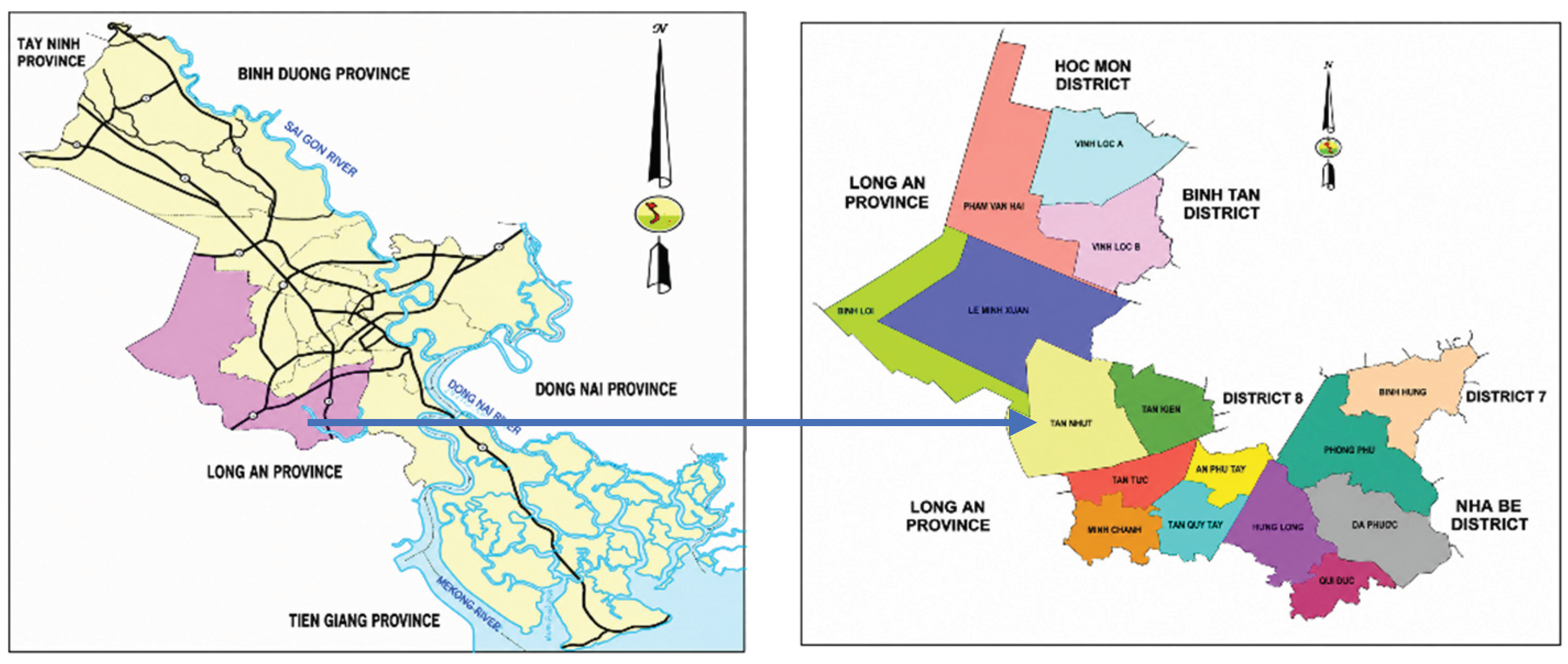
Figure 2.
Implementation process.
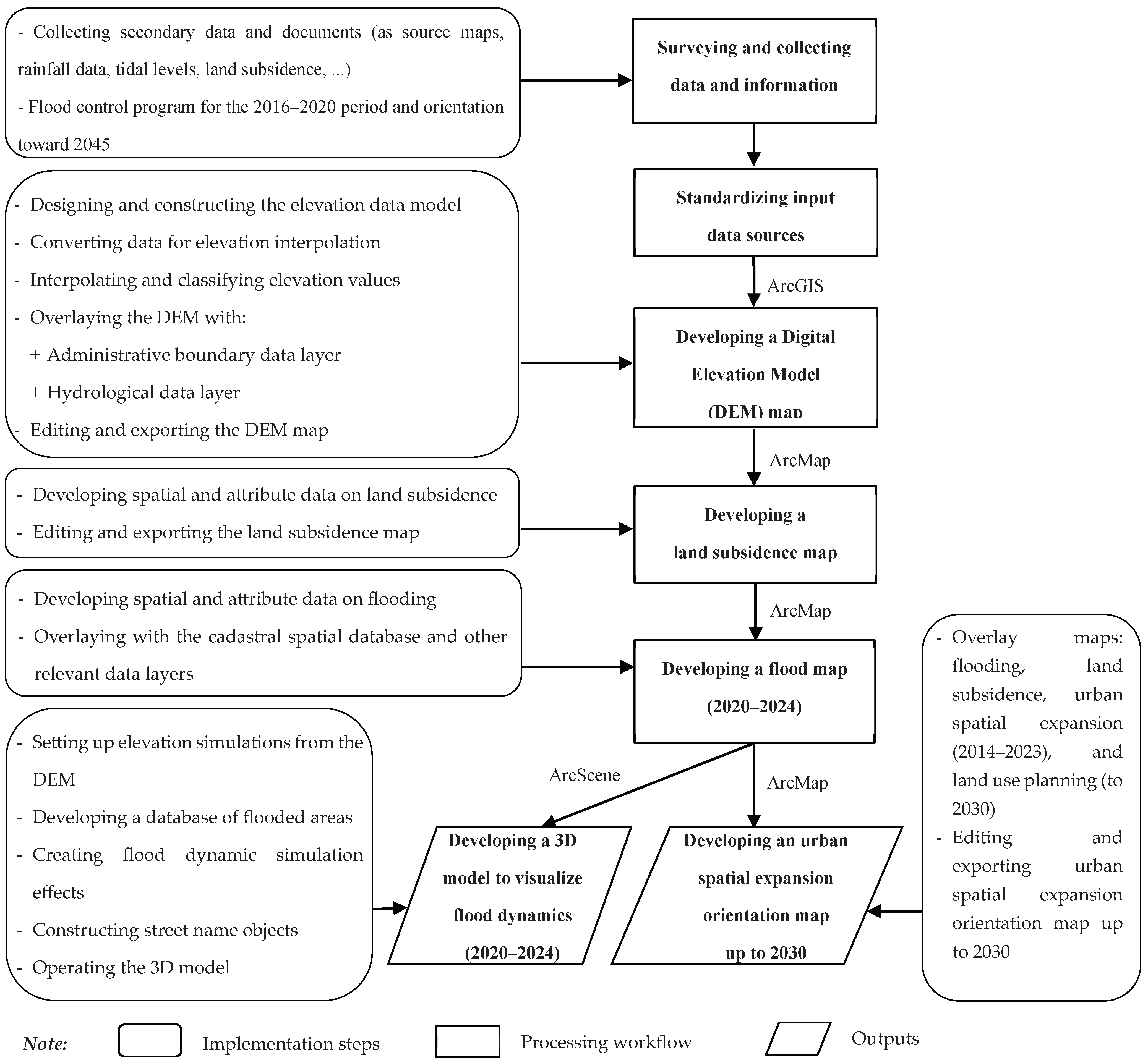
Figure 3.
Prolonged flooding on National Highway No. 50.
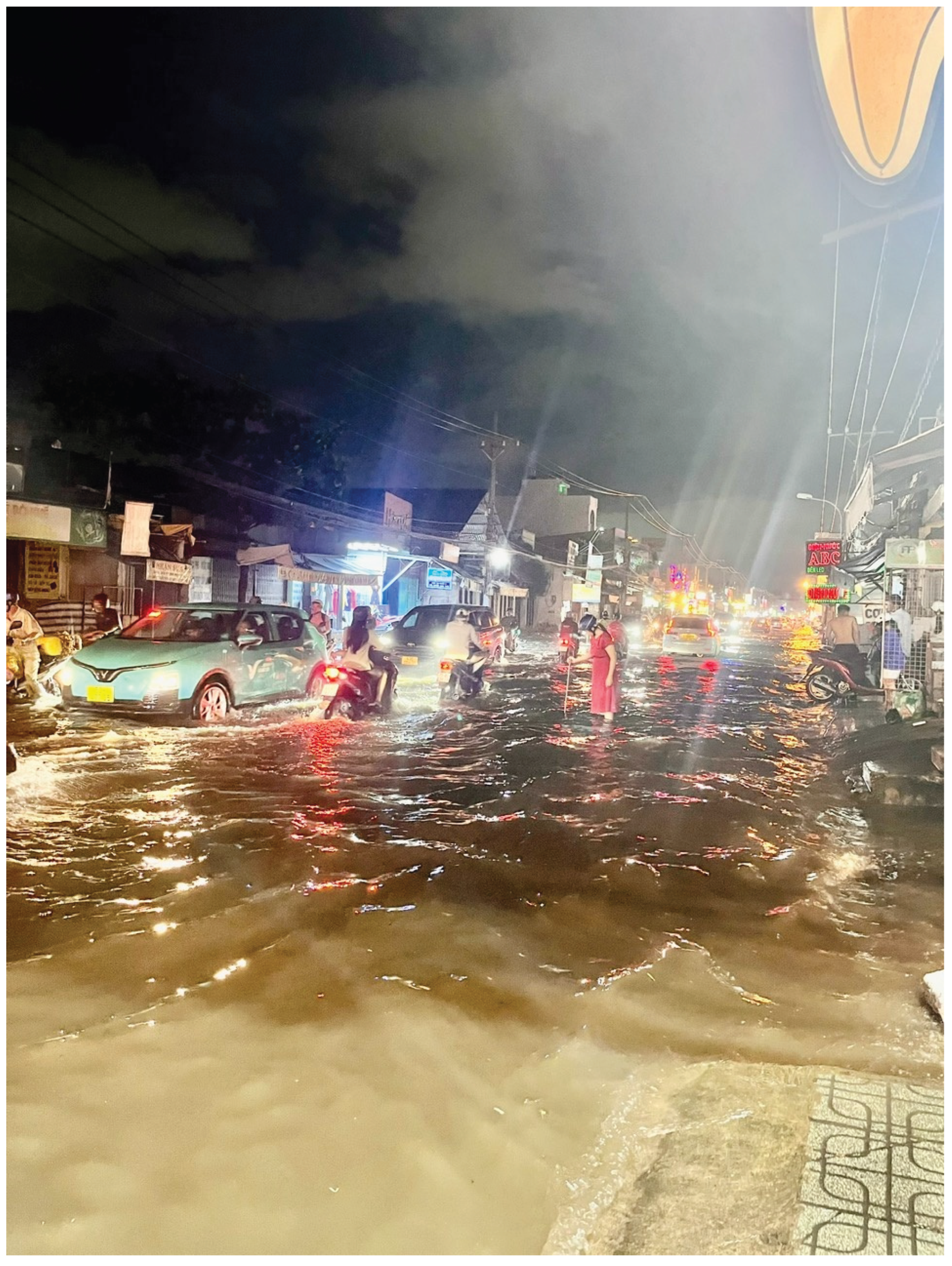
Figure 4.
Data converted into MicroStation in VN-2000 coordinate system.
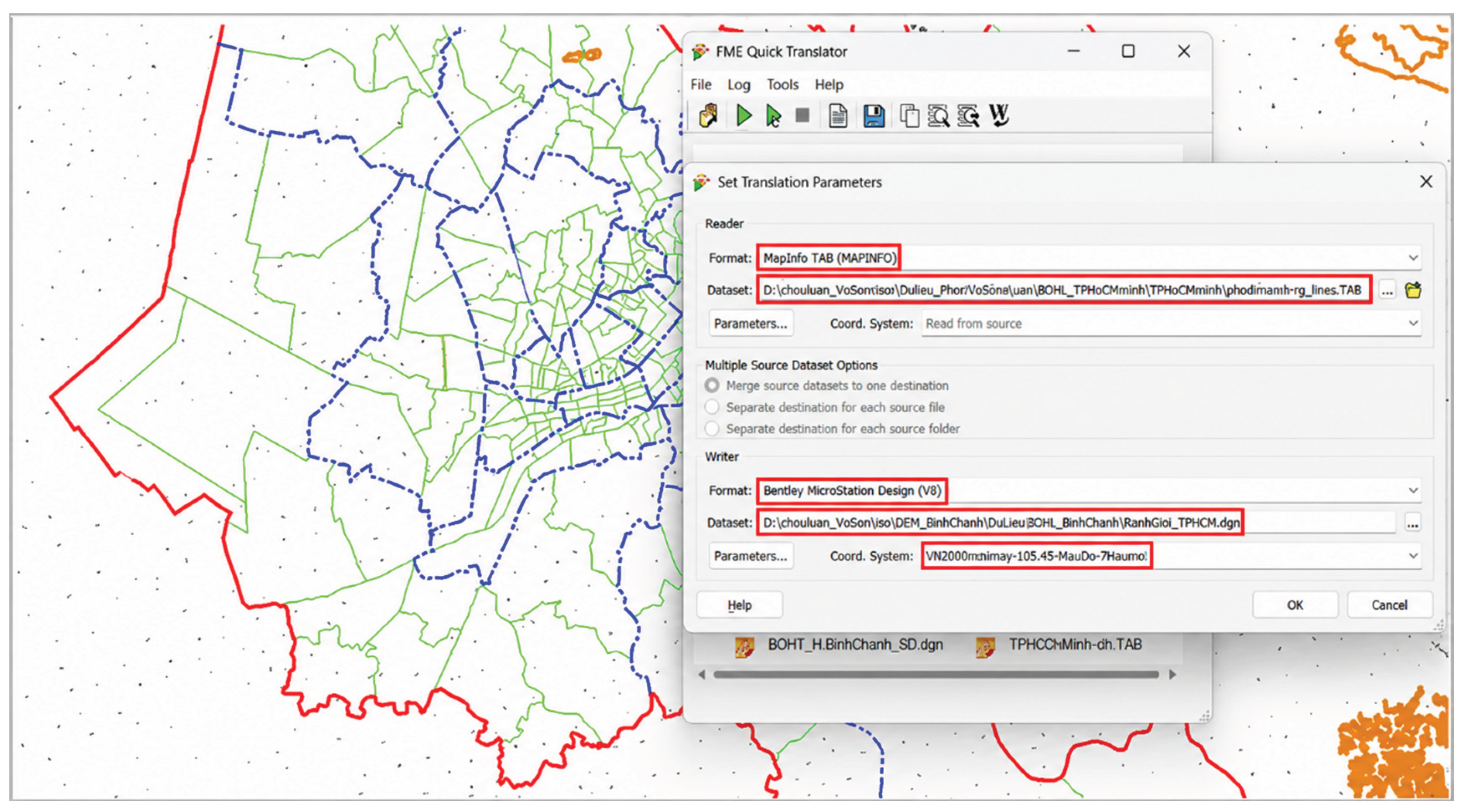
Figure 5.
Digital elevation model map.
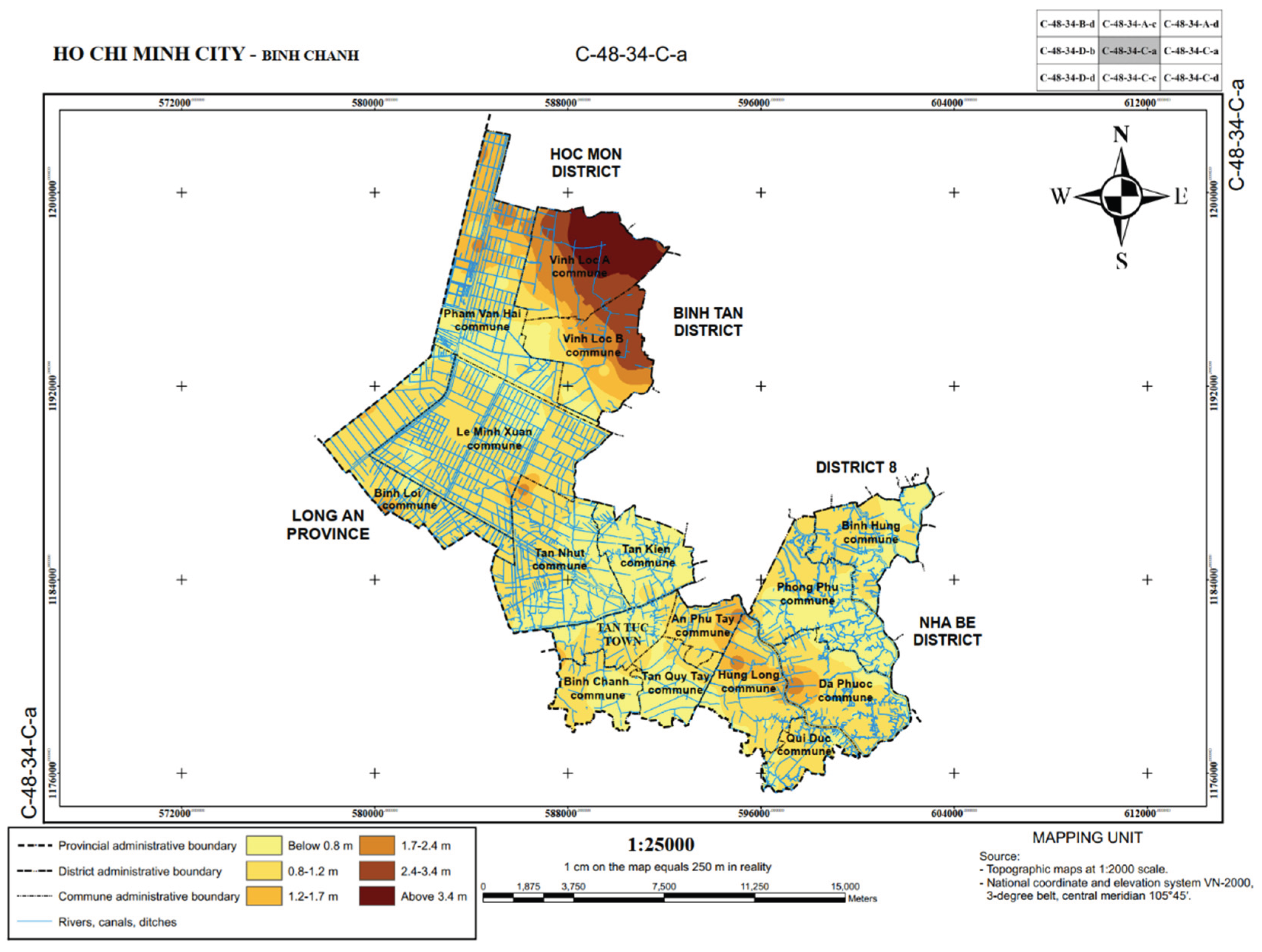
Figure 6.
Urban expansion diagram of Binh Chanh area (2014–2024).
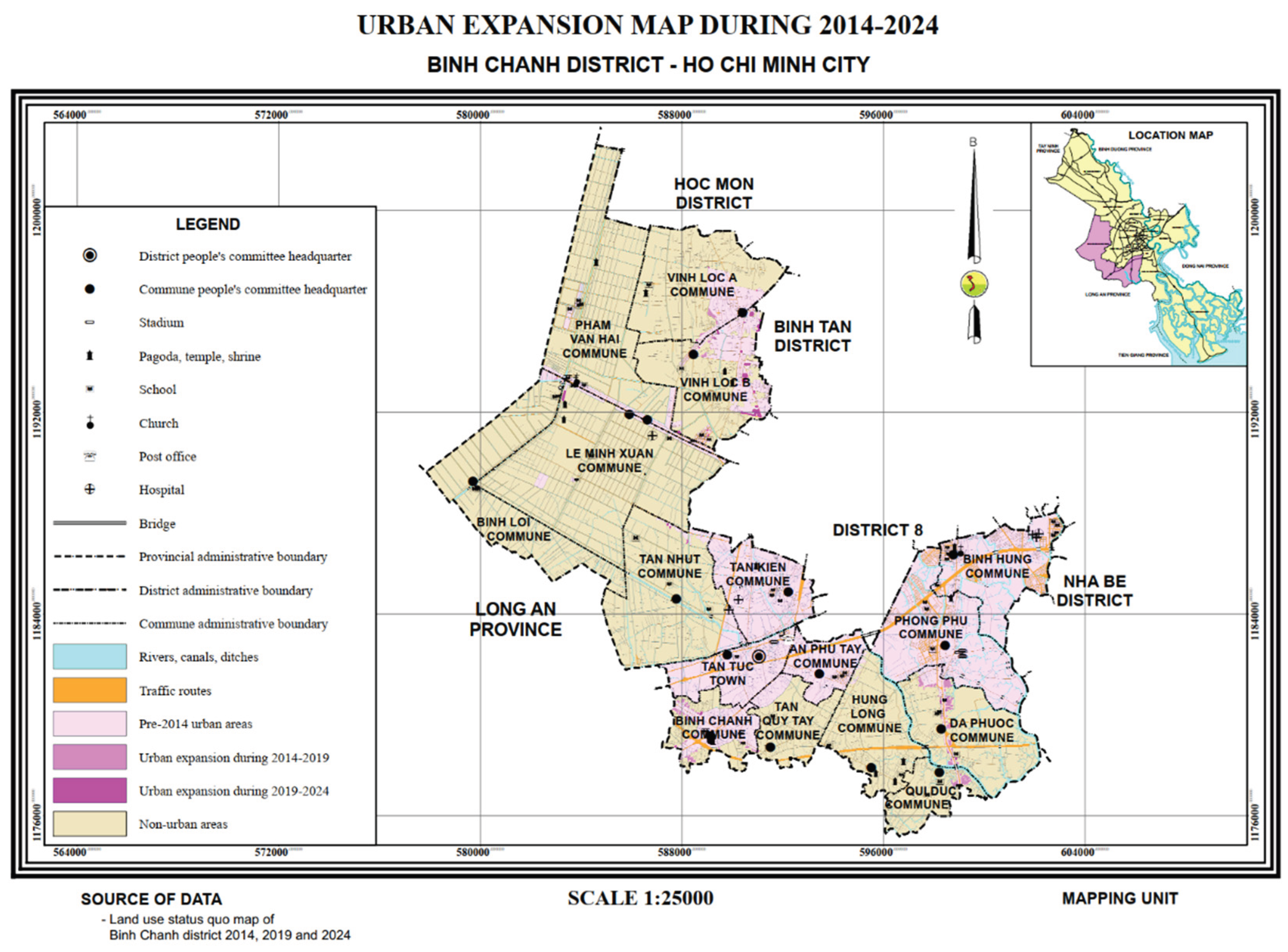
Figure 7.
Subsidence map of Binh Chanh area.
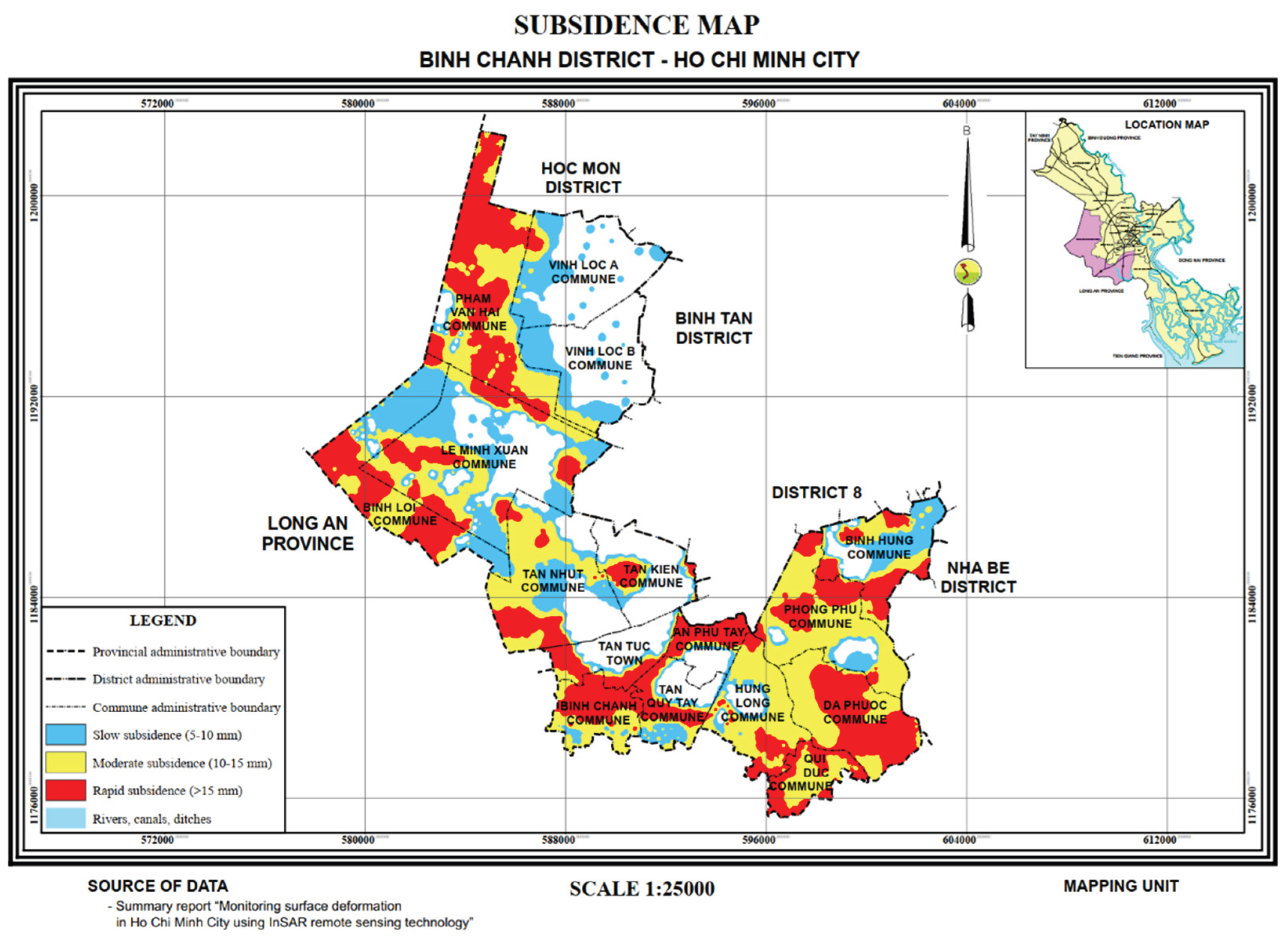
Figure 8.
Flood map of Binh Chanh area (2020–2024).
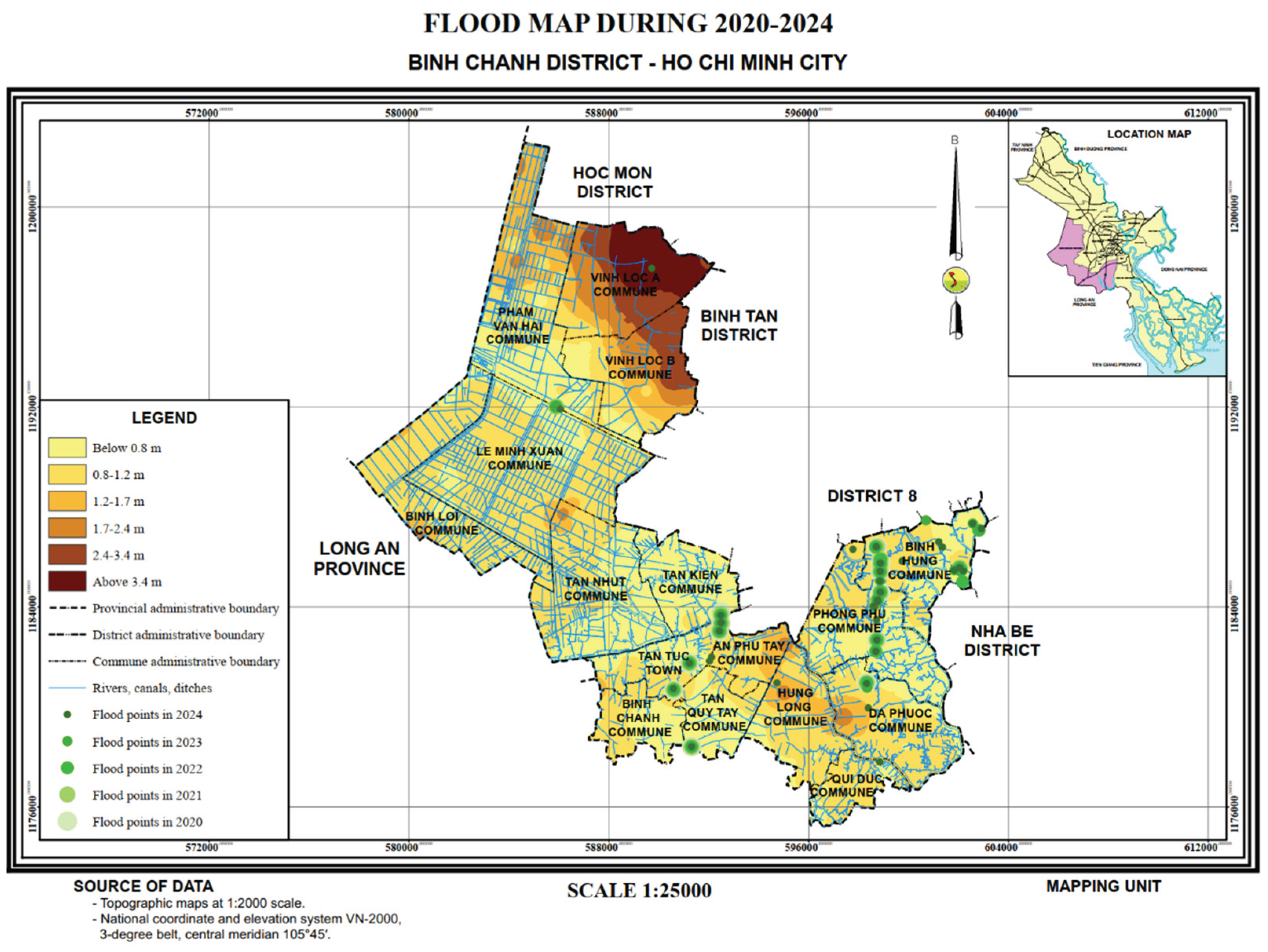
Figure 9.
Flood database in Binh Chanh area (2020–2024).
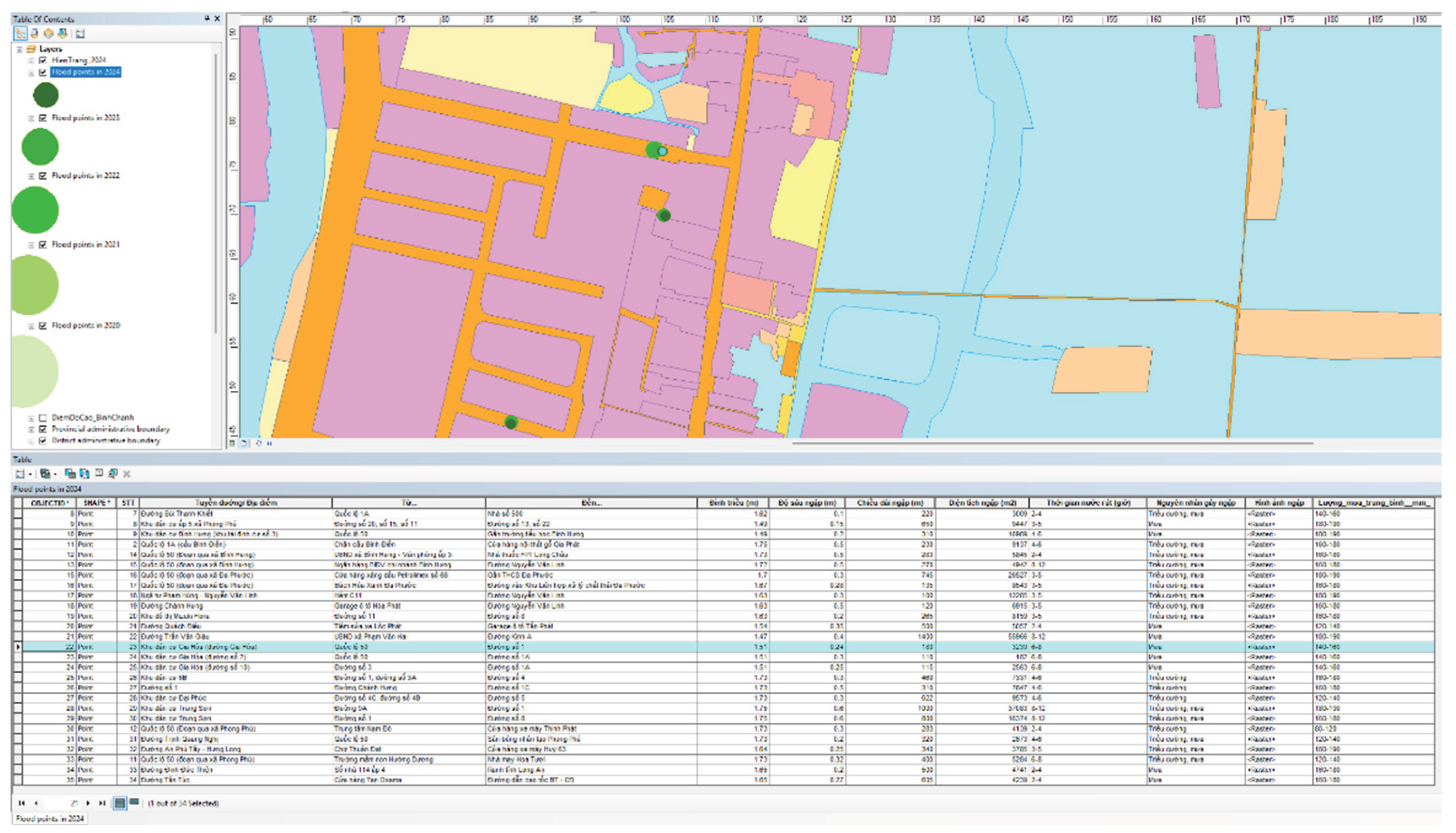
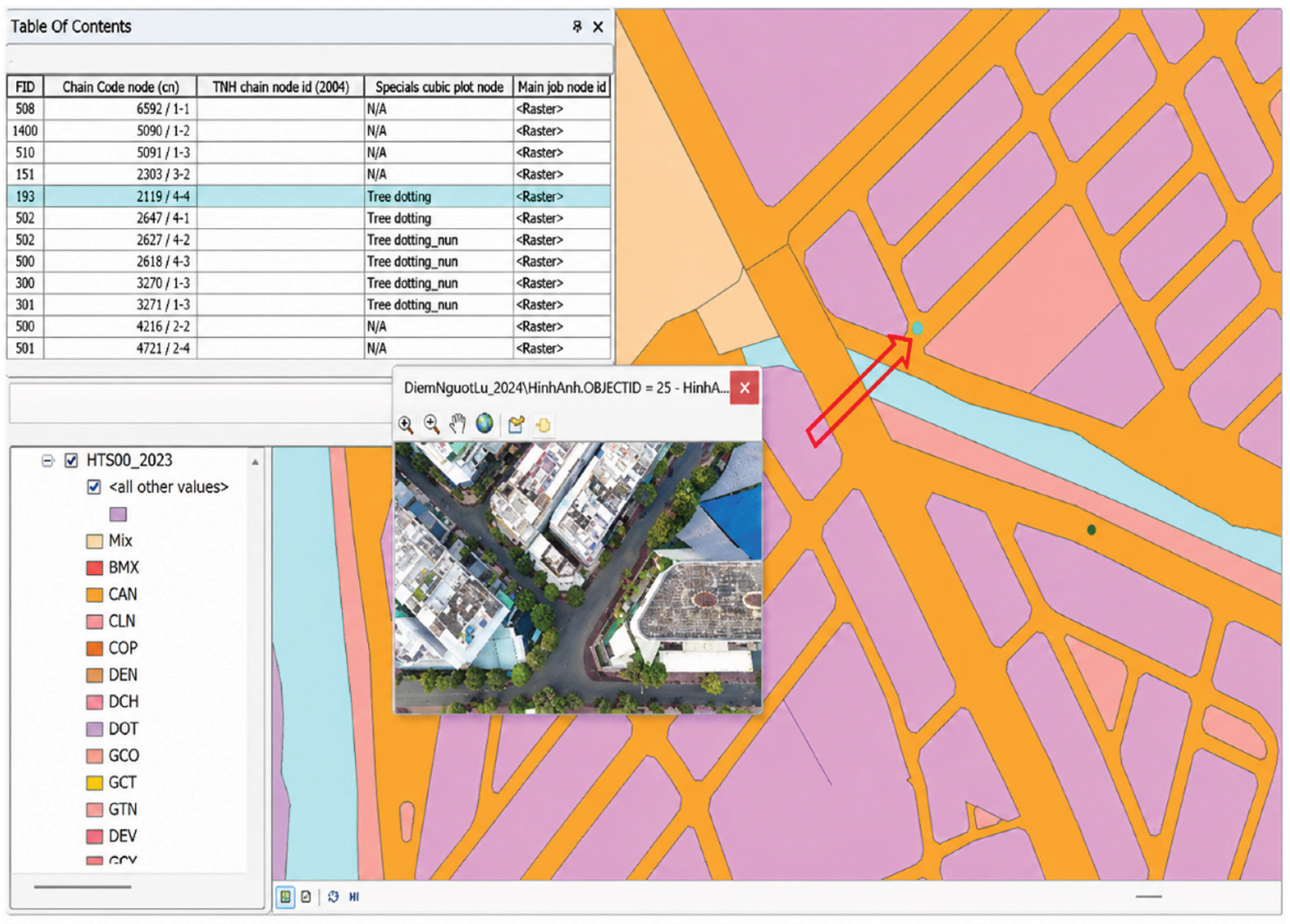
Figure 10.
Elevation simulation results from DEM.
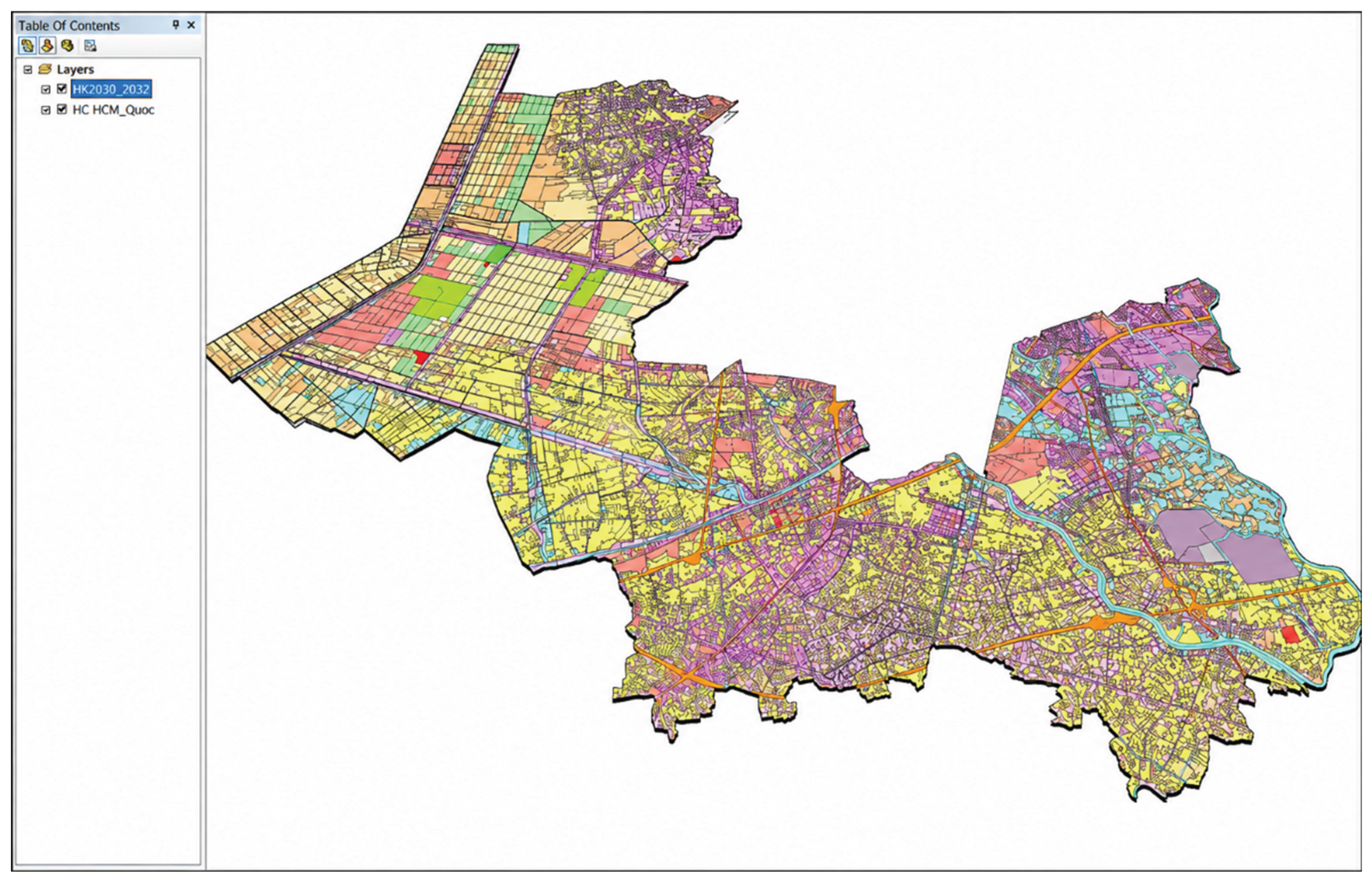
Figure 11.
Flood dynamics on National Highway No. 50, Binh Hung.
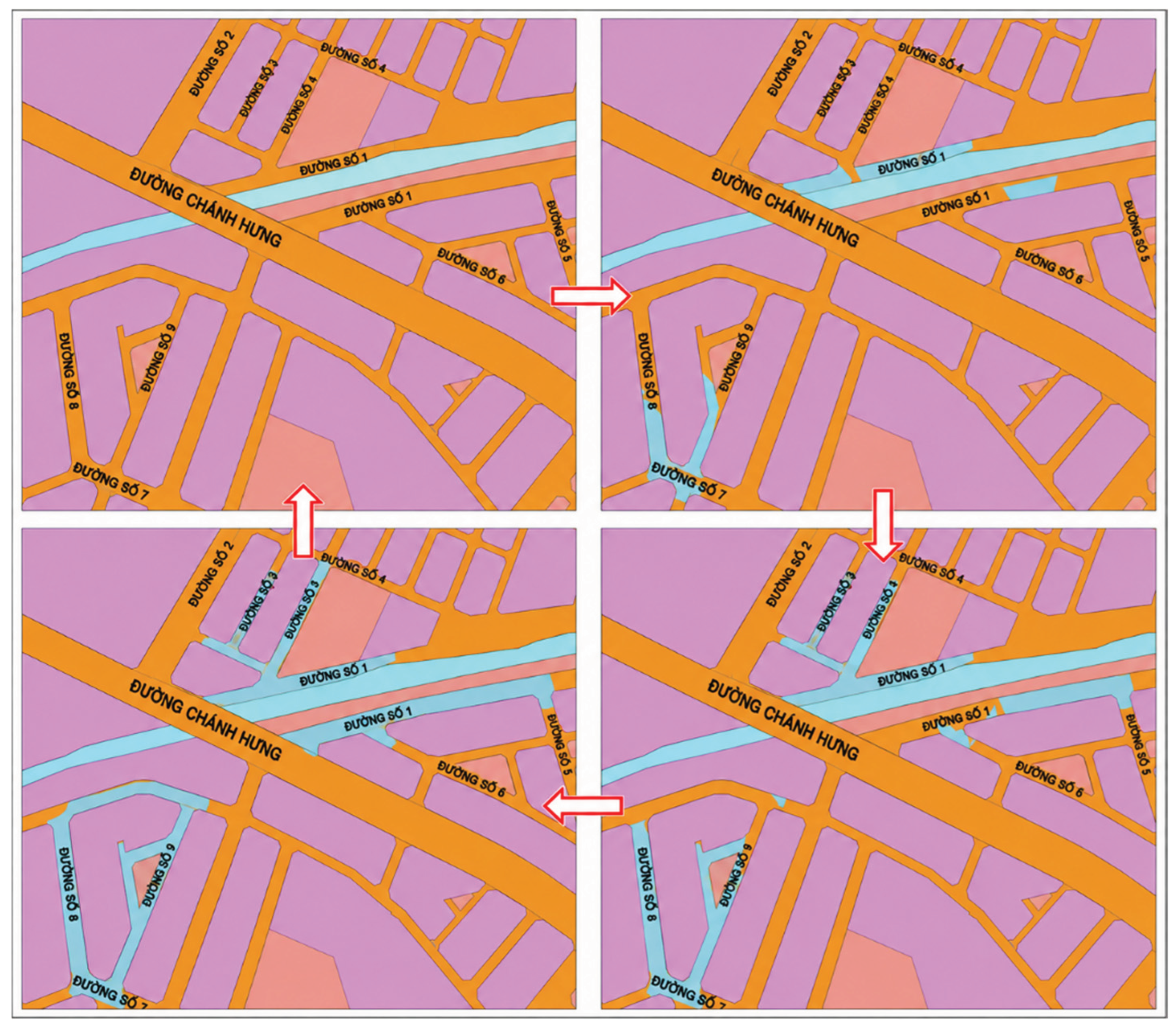
Figure 12.
Flood dynamics at Nguyen Huu Tri junction.
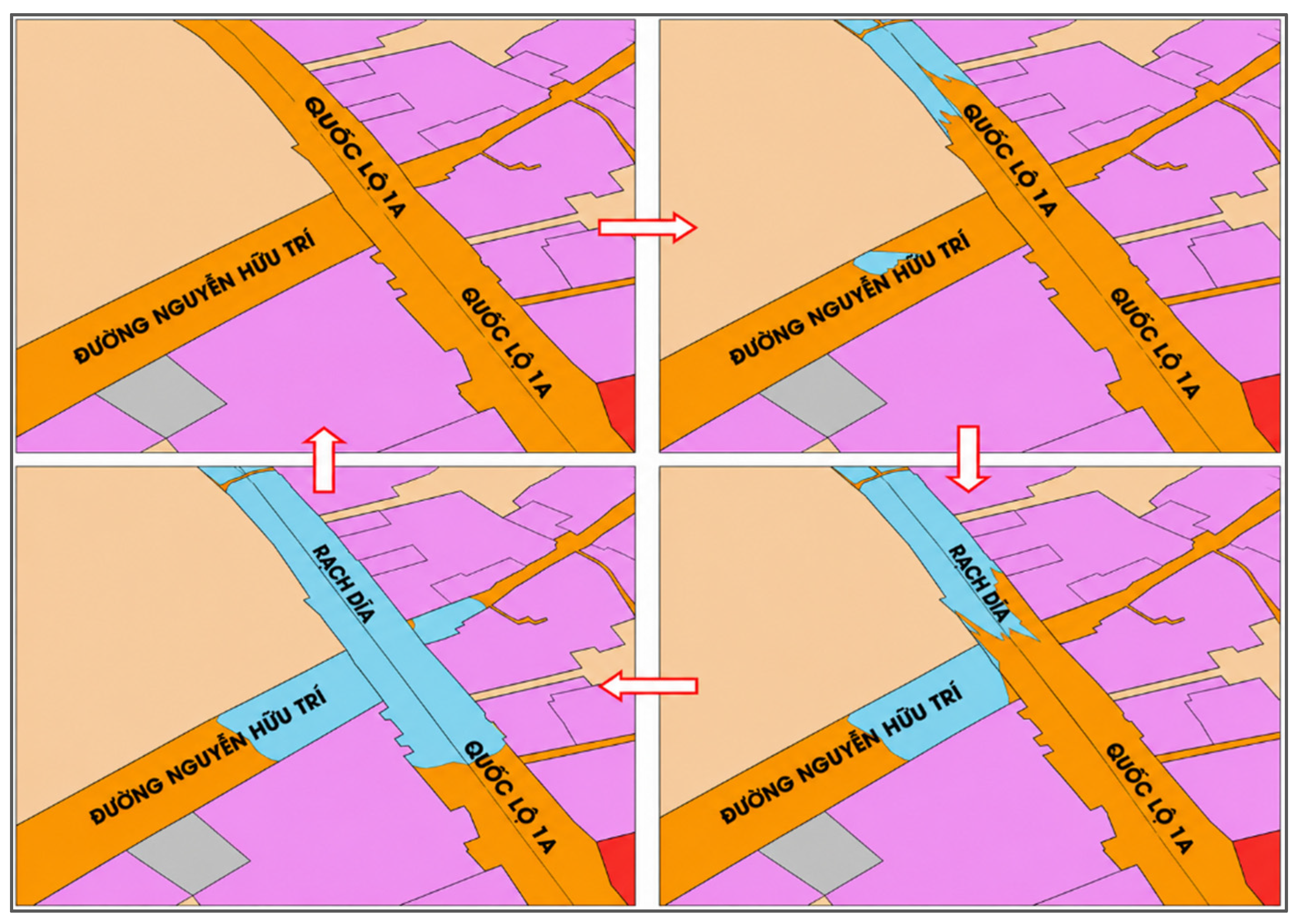
Figure 13.
Urban spatial expansion orientation map of Binh Chanh area to 2030 considering flooding and subsidence.
Figure 13.
Urban spatial expansion orientation map of Binh Chanh area to 2030 considering flooding and subsidence.
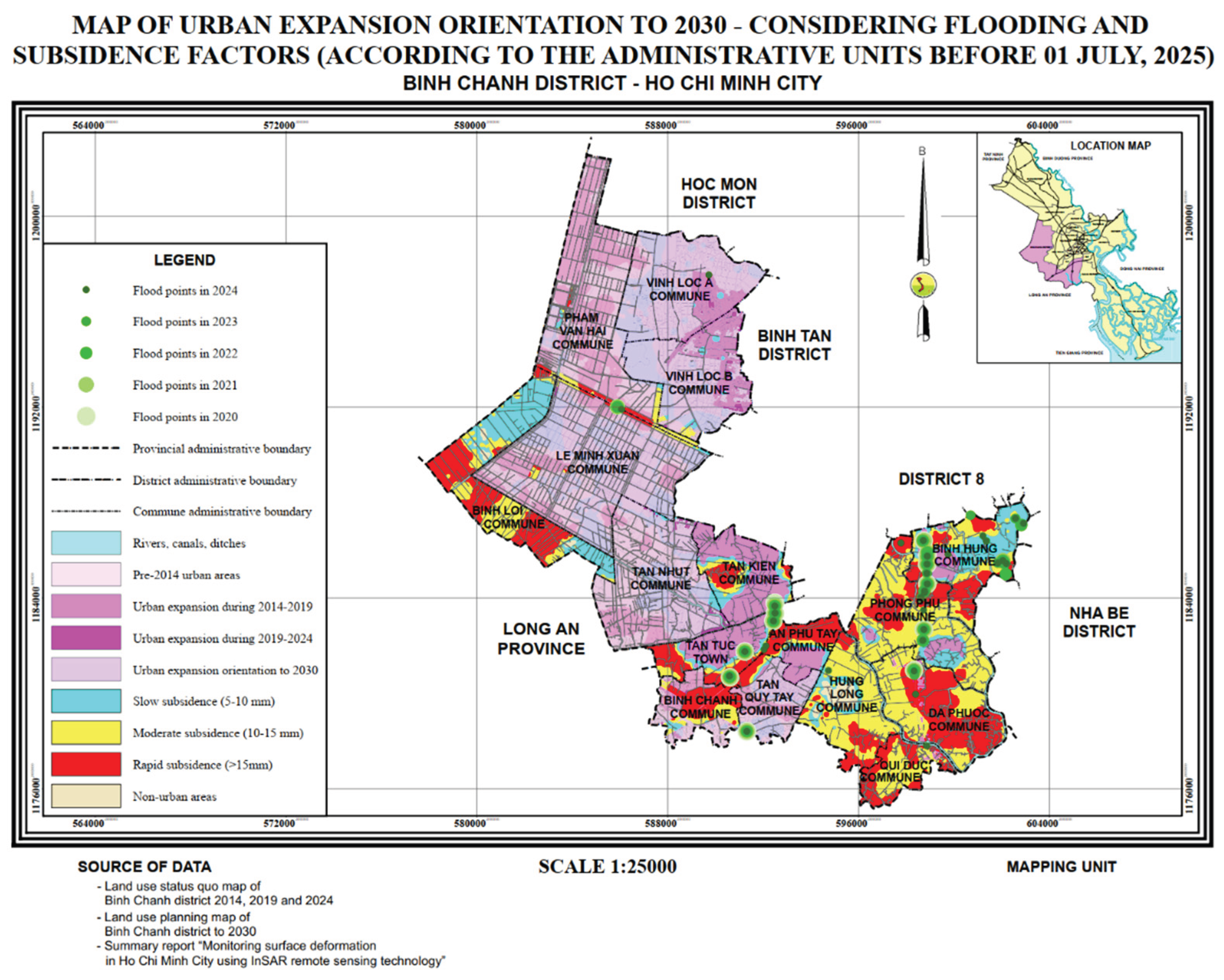

Table 1.
Statistics on the number of flooded locations in Binh Chanh, 2020–2024.
| Year | Number of Flooded Locations | Level of flooding |
Water recession time (hour) |
Flooding causes | ||||
| Average rainfall per event (mm) | Tidal peak (m) | Flood depth (m) | Flooded road length (m) | Flooded area (m2) | ||||
| 2020 | 12 | 80–190 | 1.58–1.74 | 0.1–0.4 | 150–685 | 2,001–12,497 | 2–12 | High tides, heavy rainfall, poor drainage, and land subsidence |
| 2021 | 15 | 40–190 | 1.51–1.78 | 0.1–0.5 | 110–1,200 | 1,508–53,842 | ||
| 2022 | 20 | 80–190 | 1.43–1.73 | 0.1–0.45 | 100–1,200 | 1,816–54,010 | ||
| 2023 | 24 | 40–190 | 1.49–1.75 | 0.1–0.6 | 180–1,200 | 182–54,010 | ||
| 2024 | 34 | 80–190 | 1.49–1.75 | 0.1–1.0 | 110–1,400 | 182–55,966 | ||
(Source: HCMC Department of Construction, 2021–2024 [42]; Field survey).
Table 2.
Summary of plans related to flood control in Binh Chanh area during the 2020–2024 period.
| TT | Plan No. | Content |
| 1 | 159/KH-UBND (April 20, 2020) | Plan to continue implementation and move toward the final review of two years of executing Directive No. 19/CT-TU dated October 19, 2018, by the Standing Committee of the City Party Committee on the campaign “HCMC residents do not litter in the streets and canals, for a clean city and reduced flooding” in 2020 in Binh Chanh area. |
| 2 | 192/KH-UBND (June 2, 2021) | Plan to continue implementing the campaign “HCMC residents do not litter in the streets and canals, for a clean city and reduced flooding” in Binh Chanh area during 2021–2022. |
| 3 | 251/KH-UBND (August 10, 2021) | Communication plan for the HCMC Anti-Flood and Wastewater Treatment Project for the 2020–2045 period and the Flood Control and Wastewater Treatment Plan for 2020–2030 in Binh Chanh area. |
| 4 | 496/KH-HĐND (June 8, 2023) | Thematic survey plan on addressing flood-prone points in Binh Chanh area. |
| 5 | 133/KH-HĐND (June 27, 2024) | Thematic supervision plan on the handling and remediation of flooded areas in Binh Chanh area. |
Table 3.
Summary of solutions to reduce flooding in the Binh Chanh area.
| Group of solution | Specific solution | Timeline | Notes |
| Technical and Infrastructure | Upgrade and expand existing drainage systems | Short-term | Prioritize severe flooding points |
| Construct rainwater detention ponds in residential areas and parks | Long-term | Linked with new urban planning | |
| Install automatic pumping systems at low-lying areas | Short-term | Reduce water drainage time | |
| Raise and reinforce embankments; install tidal gates at outlets | Long-term | Prevent flooding caused by tidal surges | |
| Planning and Management | Review land use planning with flood adaptation focus | Long-term | Combine with traffic and urban planning |
| Control spontaneous urbanization and canal encroachment | Short-term | Increase inspections and violation handling | |
| Regular maintenance and dredging of canal and drainage systems | Short-term | Annual periodicity | |
| Technology and Data | Application of GIS and hydrological–hydraulic modeling for flood analysis and forecasting | Long-term | Support management and decision-making |
| Deploy automated flood warning systems (sensors, cameras, apps) | Short-term to Long-term | Pilot implementations possible | |
| Develop 3D flood maps for flood control, management, and communication | Long-term | Integrate the data of terrain and climate | |
| Community and Social | Promote public awareness on protecting drainage systems | Short-term | Through media campaigns and schools |
| Encourage green infrastructure and permeable materials in urban areas | Long-term | Linked with new urban planning standards | |
| Develop apps for community reporting of flood points | Short-term | Mobilize community participation |
Table 4.
Statistics of elevation classification results.
| No. | Elevation level | Area (ha) | Proportion (%) |
| 1 | I (<0.8 m) | 7,843.29 | 31.05 |
| 2 | II (0.8–1.2 m) | 12,438.16 | 49.25 |
| 3 | III (1.2–1.7 m) | 2,276.58 | 9.02 |
| 4 | IV (1.7–2.4 m) | 1,030.02 | 4.08 |
| 5 | V (2.4–3.4 m) | 908.33 | 3.60 |
| 6 | VI (>3.4 m) | 759.61 | 3.00 |
| Total | 25,255.99 | 100.00 | |
(Source: Author’s compilation).
Table 5.
Statistics of land subsidence level classification results.
| No. | Subsidence Level | Area (ha) | Proportion (%) |
| 1 | Low (<5 mm/year) | 6,326.12 | 25.05 |
| 2 | Moderate (5–10 mm/year) | 4,486.97 | 17.76 |
| 3 | Moderately High (10–15 mm/year) | 7,432.92 | 29.43 |
| 4 | High (>15 mm/year) | 7,009.98 | 27.76 |
| Total | 25,255.99 | 100.00 | |
(Source: Author’s compilation).
Table 6.
Proposed planning orientations based on the integrated 3D visualization outputs in Binh Chanh.
Table 6.
Proposed planning orientations based on the integrated 3D visualization outputs in Binh Chanh.
| Planning orientation group | Representative locations for applying the proposed planning orientation | Basis derived from the study outputs | Proposed planning application |
| Development-restricted or strictly controlled areas | Phong Phu, Binh Hung, Vinh Loc A and Tan Tuc; particularly locations along National Highway 50, Nguyen Huu Tri Road, Tran Van Giau Road and National Highway 1A | These locations were repeatedly recorded as flood-affected areas during 2020–2024, with observed flood depths commonly reaching approximately 30–50 cm and persistent impacts on transport and residential activities | Apply stricter control over new urban development and require flood-adaptation assessment before land conversion or project approval in severely affected locations |
| Infrastructure investment priority areas | National Highway 50 in Binh Hung; the Nguyen Huu Tri corridor; Binh Hung resettlement area; Hamlet 5 of Phong Phu; Tan Tuc; Le Minh Xuan Industrial Park; Pho Cho Cau Xang area; Gia Hoa residential area | These locations are associated with persistent flooding, impacts on transportation, residential or industrial functions, and previously implemented flood-control infrastructure | Prioritize drainage-system upgrading, pumping systems, tidal-control structures, detention ponds and flood-monitoring facilities |
| Conditional development areas | Selected low-lying and/or subsidence-affected locations within Vinh Loc A, Vinh Loc B, Le Minh Xuan, Tan Kien, Tan Tuc, Binh Hung, Phong Phu and Da Phuoc | The integrated DEM, subsidence and 2030 spatial orientation maps indicate the presence of low elevation and/or relatively high subsidence conditions in selected locations | Permit development only where requirements for ground elevation, drainage capacity, subsidence monitoring and flood-resilience measures are satisfied |
Disclaimer/Publisher’s Note: The statements, opinions and data contained in all publications are solely those of the individual author(s) and contributor(s) and not of MDPI and/or the editor(s). MDPI and/or the editor(s) disclaim responsibility for any injury to people or property resulting from any ideas, methods, instructions or products referred to in the content. |
© 2026 by the authors. Licensee MDPI, Basel, Switzerland. This article is an open access article distributed under the terms and conditions of the Creative Commons Attribution (CC BY) license (http://creativecommons.org/licenses/by/4.0/).
Copyright: This open access article is published under a Creative Commons CC BY 4.0 license, which permit the free download, distribution, and reuse, provided that the author and preprint are cited in any reuse.


