

Submitted:
10 June 2026
Posted:
11 June 2026
You are already at the latest version
Abstract
Huanglongbing (HLB), caused by Candidatus Liberibacter asiaticus (CLas) and vectored by Asian citrus psyllid (Diaphorina citri), remains a major constraint to sustainable citrus production. In Florida, individual protective covers (IPCs) have been adopted as an effective psyllid exclusion tool by shielding young trees from this vector of the phloem-dwelling bacterium CLas. Brassinosteroids (BRs), a class of plant steroid hormones, are being explored as a treatment to mitigate HLB and are approved for commercial use in the state. We investigated the effect of IPCs combined with homobrassinolide (HBr) applied as a foliar spray, on CLas titer, canopy volume, tree growth, yield, fruit quality, and defense-related gene expression of the salicylic acid (SA) pathways in ‘Tango’ mandarin grafted on sour orange (SO) or US-942 rootstocks. After being covered with IPCs in the field for three years, trees were subjected to monthly foliar application of HBr upon IPC removal. The experiment included four treatment groups: trees with IPC and HBr spray (IPC HBr+), IPC without HBr (IPC HBr-), no-IPC with HBr (no-IPC HBr+), and no-IPC without HBr (no-IPC HBr-). IPCs effectively delayed bacterial infection for six to nine months after IPC removal, maintaining higher Ct values (lower CLas titers) than in no-IPC trees, confirming the protective effect of IPCs against early CLas colonization. The combination of IPCs and HBr spray significantly enhanced canopy volume, particularly in trees grafted on SO. This effect was sustained over one year and was consistently greater in IPC HBr+ trees than in IPC HBr- and no-IPC HBr+ or HBr- trees, suggesting a synergistic effect of the combined therapy on enhancing tree growth. The tree height and trunk diameter were primarily improved by IPC, regardless of HBr treatment. IPC-treated trees exhibited significantly greater height and trunk diameters (scion and rootstock) than no-IPC trees across one or both rootstocks, indicating that IPCs alone contribute to these horticultural growth improvements. IPC trees also showed reduced preharvest fruit drop compared to the no-IPCs trees, resulting in higher yields, with additional gains observed in IPC HBr+ trees on SO. Fruit quality attributes, including °Brix, titratable acidity, peel color, and size, did not differ significantly among treatments. Importantly, gene expression analysis revealed early and sustained upregulation of key SA pathway genes in IPC HBr+ trees, indicating that HBr effectively activated systemic acquired resistance (SAR), particularly on SO rootstock. This study highlights the complementary roles of IPCs and HBr in the management of HLB. While IPCs provided essential early protection against CLas and promoted long-term horticultural growth, HBr enhanced early canopy development, activated host defense mechanisms, and enhanced yield. The integration of both approaches offers a sustainable and effective strategy to protect young citrus trees, delay CLas infection, and improve tree health and productivity under endemic HLB.
Keywords:
Asian citrus psyllid
; brassinosteroids
; citrus greening
; psyllid exclusion
; systemic acquired resistance
Introduction
Huanglongbing (HLB), also known as citrus greening, is currently the most significant threat to citriculture globally, distributed in over 58 countries of Asia, America, Africa, the Caribbean, and Oceania [1,2,3,4,5]. In Florida, the causative agent of HLB is Candidatus Liberibacter asiaticus (CLas), a phloem-limited bacterium transmitted by the Asian citrus psyllid (Diaphorina citri). The psyllid preferentially colonizes young citrus flush, where it feeds and reproduces, thereby delivering the pathogen into the plant’s phloem [1,2,3,4,5,6]. Over the past two decades, Florida’s citrus production has declined dramatically due to this disease, falling from nearly 300 million boxes in 2003-04 to 14.6 million boxes in 2024-2025, representing a 28% decline compared to 20.3 million boxes in the previous season [7]. Florida’s citrus decline has been driven not only by HLB but also by repeated hurricane damage. In 2022–23, Hurricane Ian caused an estimated $247 million in citrus losses [8]. For 2023–24, UF/IFAS estimated that Hurricane Milton caused citrus production losses in Florida ranging from $23.1 million to $55.2 million [9].
Huanglongbing affects production by increasing tree mortality, reducing fruit yield and quality, and raising costs through greater reliance on insecticides and fertilizers [10]. At the cellular level, CLas-infection induces overproduction of reactive oxygen species (ROS) [11] and callose deposition in phloem sieve tubes, causing death of sieve elements and companion cells [12]. This disruption of phloem transport leads to starch accumulation in chloroplasts and impairs photosynthesis, respiration, and energy metabolism [13,14]. The physiological disruptions caused by infection are expressed through typical symptoms such as shoot yellowing, leaf blotchy mottle, corky vein formation, canopy thinning, tree dieback, deformed and bitter fruit, and a gradual decline in overall tree vigor [15,16,17,18].
Huanglongbing management remains a major challenge due to the unavailability of durable curative solutions. In Florida, strategies to restrict disease propagation, maintain tree vigor, and ensure citrus productivity have centered on integrated management approaches, including management of the insect vector, application of antimicrobial compounds, mainly oxytetracycline hydrochloride (OTC), supplementation of essential nutrients, induction of host defense responses, and the use of plant growth regulators [19,20,21]. Although eradication was initially recommended during the early stages of Florida’s HLB outbreak, most growers deemed it too costly and opted to retain symptomatic trees as long as they continued producing marketable fruit [22]. In a few years, HLB became endemic in the State. This fact compromises tree health in newly planted citrus groves. To protect young citrus trees, growers in Florida have adopted the use of individual protective covers (IPCs), mesh barriers placed over juvenile citrus trees, a sustainable approach to exclude psyllid vector D. citri access during the critical early years of growth, thereby delaying CLas infection, improving tree development, and enhancing fruit yield by reducing insect pressure during the tree’s most vulnerable stage [23,24,25,26,27]. By providing a physical barrier during this susceptible period, IPCs extend the disease-free window and promote robust early growth; however, the protective effect of IPCs is typically limited in duration to less than 3 years, and trees eventually become infected within 12 months of IPC removal [25]. Therefore, developing complementary therapeutic strategies to manage HLB is crucial. While OTC injections are now widely adopted by citrus growers in Florida, this treatment is effective on trees already infected and is primarily applied to mature, fruit-bearing trees [28]. In younger trees previously covered with IPCs and, for this reason, not yet HLB-infected, OTC treatments are not useful, since the trees are essentially HLB-free after IPC removal. However, as soon as the trees are exposed to the environment after IPC removal, they become susceptible to infection.
The use of brassinosteroids (BRs), a group of steroidal plant hormones, has emerged as a new approach to managing and delaying the HLB infection in young citrus trees [29]. BRs exert different roles regulating both development and plant immunity as well as responses to stress [30,31,32]. BRs trigger physiological, horticultural, biochemical, and molecular responses to pathogens [31,32,33]. In citrus, BRs enhance plant immunity by upregulating stress-responsive genes and inducing antioxidant defense molecules, augmenting overall plant resilience [34]. These steroidal hormones have been shown to modulate plant immunity through crosstalk with the salicylic acid (SA)-dependent systemic acquired resistance (SAR) pathway [35,36]. The BRs signaling network contains a functional branch that regulates SA-responsive gene expression via clade I TGAs, thereby influencing plant immune responses [35]. The biosynthesis of SA originates from chorismate through two distinct pathways mediated by the upstream enzymes isochorismate synthase (ICS) and phenylalanine ammonia-lyase (PAL). Chorismate mutase (CM) also plays a critical upstream role by converting chorismate into phenylalanine, which is subsequently transformed by PAL into trans-cinnamic acid, a precursor that is further converted into SA [37,38]. Downstream in the SA pathway, the nonexpressor of pathogenesis-related protein 1 (NPR1) serves as a transcriptional activator of SA-SAR and plays a central role in activating the expression of downstream defense-response genes, such as pathogenesis-related proteins (PRs) [39,40]. In HLB-infected Mexican lime and ‘Valencia’ sweet orange trees grown in Cuba, the foliar application of the epibrassinolide analog of BRs in greenhouse and field trials alleviated greening symptoms and modulated SA pathway via the upregulation of PAL, and also upregulated genes involved in the production of antioxidant molecules including superoxide dismutase (SOD), Glutathione peroxidase (GPX1) and Fatty acid hydroperoxide lyase (HPL)[34]. Foliar spray of homobrassinolide (HBr), another analog of BRs, on newly planted ‘Valencia’ citrus trees in Southwest Florida induced the expression of ICS and PAL genes, as well as the upregulation of NPR-1, while delaying HLB progression [29]. In Florida, HBr is available as a registered formulation for application in commercial citrus groves.
Considering the expansion of mandarin production in Florida and the widely adopted use of IPCs by growers in Florida, we wanted to determine whether combining IPCs with foliar spray of HBr after cover removal can further improve citrus mandarin tree health by mitigating the harmful effects of HLB. There were no studies that have clearly tracked the timing between BRs applications and the onset or duration of citrus mandarin responses, and to the best of our knowledge, there is still limited information regarding the role of BRs analogs in promoting the resilience of citrus.
This study was designed as a continuation of a previous trial where we showed that ‘Tango’ mandarin trees grafted onto sour orange (SO) and US-942 rootstocks benefited from three years of IPC use. IPC trees remained CLas-negative at the end of the three-year IPC use period, whereas no-IPC trees tested positive. Regardless of the rootstock, IPC trees consistently exhibited greater height, canopy volume, chlorophyll index (CI), and leaf area than the no-IPC trees [23]. In the present study, the experiment began in December 2022, upon IPC removal, with monthly HBr foliar sprays on previously IPC-protected and on no-IPC trees. We monitored CLas infection progression after IPC removal, and evaluated horticultural traits, yield, and fruit quality, and HBr’s potential to activate the SA pathway. Our results indicate that combining IPCs and HBr not only delays infection but also supports vigorous canopy development and boosts plant immunity by upregulating genes in the SA pathway, which is critical for maintaining yield potential and prolonging productivity in HLB-endemic areas. These findings reinforce the concept that effective HLB management should integrate strategies that enhance resilience alongside limiting pathogen exposure.
Material and Methods
Plant Material
‘Tango’ citrus mandarin (Citrus reticulata Blanco) was grafted onto either sour orange (C. aurantium L.) or US-942 (Sunki mandarin (C. reticulata) × Flying Dragon (Poncirus trifoliata)) rootstock. These trees were planted in February 2020 at the Southwest Florida Research and Education Center (SWFREC), a research farm located in Immokalee, Collier County, Florida (26°27’51.4”N, 81°26’39.9”W). The study used a randomized complete block design, with five trees per linear plot. Trees were planted in double rows on raised beds at a spacing of 6.7 m (22 ft) between rows and 2.44 m (8 ft) within rows. The soil at SWFREC in Immokalee is fine sand (sandy, siliceous, hyperthermic Arenic Alaquods). The trees were fertilized twice a year with 0.5 pounds of conventional granular fertilizer (8N-4P-8K; Diamond R, Fort Pierce, FL, USA) and irrigated using under-tree microjets. Weeds were managed in the experimental plot as needed using standard grower practices. No insecticide treatments were applied to the trees.
Experimental design: Individual protective covers and homobrassinolide spray
To keep trees free from HLB, IPCs (Tree Defender Inc., Dundee, FL, USA) were installed on half of the trees (referred to as IPC trees) immediately after they were transplanted into the field in February 2020. The other half of the trees remained uncovered (referred to as non-IPC trees) and hence, were exposed to D. citri infection. In December 2022, 35 months after planting, when the IPCs were removed, both IPC and non-IPC trees were divided into two groups: one group was sprayed with HBr (HBr+), and the other group was not sprayed with HBr (HBr-). Four treatments were tested: (i) IPCs HBr+; (ii) IPCs HBr-; (iii) no-IPCs HBr+; and (iv) no-IPCs HBr-, with five biological replicates on both SO and US-942, in a completely randomized block design. Homobrassinolide 0.1% (Repar Corporation, Silver Spring, MD 20914, USA) was applied monthly as a foliar spray using an air-blast sprayer at a concentration of 1 µM in water.
Sampling for the detection of CLas was conducted in May, June, July, and December 2023 for the IPCs HBr+ and IPCs HBr-. For the non-IPCs HBr+ and HBr- trees, CLas detection was assessed in May and December 2023 to confirm that they remained positive, as recorded at the time of IPC removal [23]. Tree height, trunk size, canopy volume, chlorophyll index (CI), and leaf area were measured every six months, starting from the beginning of the HBr spray following IPC removal, during the seasons of 2023 and 2024.
Preharvest fruit drop occurred from September to November 2023 and from August to October 2024 for both seasons. Two harvests were conducted in November 2023 and January 2024 during the first season of 2023, focusing on yield and fruit quality analysis. Immune-related gene expressions linked to the SA pathway, specifically ICS, CM2, PAL, and NPR1, were monitored in leaf tissues collected biweekly, with a focus solely on IPC HBr+ and trees during the first season.
Candidatus Liberibacter asiaticus detection
Candidatus Liberibacter asiaticus was monitored by collecting and freezing five leaves from the canopy of the middle tree within each five-tree plot until analysis. Briefly, 100 mg of leaf petiole portions were chopped, lyophilized using a Free Zone 6 freeze-dry system (Labconco, Kansas City, MO, USA), and pulverized with a mini bead beater (Biospec Products, Inc., OK, USA). Total DNA was extracted using the Wizard Magnetic 96 DNA Plant System kit (Promega Corporation, Madison, WI, USA) according to the manufacturer’s protocol. Real-time polymerase chain reaction (RT-PCR) was conducted with gene-specific primers HLBas/HLBr and the probe HLBp. For normalization, primers COXf / COXr and probe COXp targeting the citrus COX reference gene were used [41]. The RT-PCR assay consisted of 40 cycles with two technical replicates per biological sample. Amplifications were performed on an ABI® PRISM 7500 RT PCR system (Applied Biosystems, Inc., Carlsbad, CA, USA) under the following conditions: initial denaturation at 95 °C for 5 minutes, followed by 40 cycles of denaturation at 95 °C for 30 seconds, annealing at 52 °C for 45 seconds, and extension at 72 °C for 1 minute. Higher Ct values corresponded to lower CLas loads, while lower Ct values indicated higher CLas loads.
Tree height and trunk diameter
The height and trunk diameter (for scion and rootstock) were evaluated in the three middle trees of each plot. Tree height was measured from the soil surface to the top of the canopy, excluding erratic shoots, using a tape measure (Komelon, Waukesha, WI, USA). The trunk diameter (scion and rootstock) was measured 5 cm above and below the graft union, using a Vernier caliper (Fowler High Precision, Auburndale, MA, USA).
Canopy health: Canopy volume, chlorophyll index, and leaf area
The canopy volume was measured from three trees located in the middle of each plot, with measurements taken in two orientations: parallel and perpendicular to the row. The canopy volume was calculated using the formula of Wutscher and Hill (1995) [42]:
Canopy Volume = [Diameter parallel to the row × Diameter perpendicular to the row × Height] / 4.
The CI and leaf area were monitored on mature leaves from each plot, with measurements taken from the tree located in the middle of each plot. The CI was measured from five leaves using a digital chlorophyll meter, the SPAD-502Plus (Konica Minolta, NJ, USA). The leaf area of ten collected leaves was immediately scanned using an Epson scanner (Epson America, Inc., Los Alamitos, CA, USA). The scanned images were then analyzed with RizhoVision Explorer 2.0.3 [43] to determine the area of each leaf.
Preharvest fruit drop and yield
Preharvest fruit drop was assessed biweekly by collecting and counting the fallen fruits beneath each tree. At harvest time, the total number of retained fruits was recorded from each tree and weighed using a digital scale. The yield was expressed as kilograms of fruit per tree. The percentage PFD was estimated using the following formula: Preharvest Fruit Drop (%) = [(Fruit Drop / (Fruit Drop + Total Number of retained Fruits) * 100].
Fruit and juice quality
One day before harvest, ten fruits were randomly collected from each plot. The juice from the fruits was extracted using an electric juicer (VEVOR Commercial Juicer Machine, 110V Juice Extractor, 120W Orange Squeezer, Model 2000A1). Total soluble solids (°Brix) and titratable acidity (TA as a percentage of acid) were measured with a digital refractometer (Hanna Instruments, Smithfield, Rhode Island, USA) and by titrating sodium hydroxide to a phenolphthalein endpoint, respectively. The values of °Brix and percent acid were used to calculate the ratio of °Brix to TA. Fruit peel color was recorded through three separate readings taken around the equatorial circumference of each fruit, utilizing a CR-400 colorimeter (Konica Minolta, Ramsey, NJ, USA). The results are presented as the a*/b* color ratio based on the CIE L*a*b* color system. A negative a*/b* ratio indicates a deeper green color, while positive values correspond to a deeper orange (or red) color [44].
Gene transcript analysis
Five leaves from the most recent hardened-off flush were randomly collected from each middle tree of the five-tree plots. These leaves were then pulverized in liquid nitrogen using a mini bead beater (Biospec Products, Inc., OK, USA). Total RNA was extracted from 0.1 g of fresh leaf tissue using the Quick-RNA MiniPrep Kit (Zymo Research, USA), following the instructions provided in the manual. The RNA was quantified and assessed for purity using a Nanodrop spectrophotometer (BioTek Synergy HTX Multimode Reader). One microgram of total RNA was used to remove genomic DNA and synthesize the first strand of cDNA using the QuantiTect Reverse Transcription Kit (Qiagen, Hilden, Germany).
Quantitative real-time polymerase chain reaction (qRT-PCR) was performed using gene-specific primers designed from citrus sequences obtained from the NCBI database (Table 1). Each qRT-PCR reaction, with three biological replicates and two technical replicates, had a total volume of 10 µl, which included primers for each forward and reverse strand, 1X Perfecta SYBR Green Fast Mix (QuantiTect SYBR Green PCR Kit, Qiagen, Hilden, Germany), and 2 µl of cDNA. The PCR conditions consisted of one cycle at 95 °C for 15 minutes, followed by 40 cycles at 94 °C for 15 seconds, 55 °C for 30 seconds, and 72 °C for 30 seconds. The reactions were conducted using the Applied Biosystems Quant Studio 3 Real-Time PCR System (Thermo Fisher Scientific, Waltham, MA, USA). Glyceraldehyde-3-phosphate dehydrogenase (GAPDH) served as the reference gene to normalize the transcript levels of the target genes. The transcript levels of the respective genes were analyzed using the 2(-ΔΔCt) method.
Statistical analysis
Two-way analysis of variance (ANOVA) was performed to examine the combined effects of IPCs and HBr on bacteria titer and tree growth parameters with rootstock as a factor. The analysis was conducted using GraphPad Prism version 8.0.0 for Windows, developed by GraphPad Software in San Diego, California, USA. All parameters were analyzed across 5 single-tree replications. Before conducting ANOVA, the data were tested for normality and homogeneity of variance. Where differences were significant (P < 0.05), a post-hoc comparison of means was calculated using Tukey’s honest significant difference test (HSD).
Results
CLas detection
The dynamics of CLas in the leaf tissues of ‘Tango’ on SO and US-942 were different (Figure 1). Six months (in May 2023) and seven months (in June 2023), after the removal of IPC, the IPC HBr+ and HBr- trees on SO showed a lower CLas load, with average Ct values of 38.40 and 37.41 in May 2023, and 38.82 and 38.72 in June 2023, respectively, indicating HLB-free plants. In contrast, the no-IPC HBr+ and HBr- trees displayed a higher bacterial load, with average Ct values of 20.82 and 20.04, confirming their status as HLB-infected trees. By eight months post-removal (in July 2023), IPC HBr+ trees exhibited a significantly lower CLas load (average Ct value of 31) compared to the non-IPC HBr+ and HBr- trees (average Ct values of 20.82 and 20.04, respectively). However, at this time, there was no significant difference in CLas titer between the IPC HBr- trees (average Ct value of 28) and the non-IPC HBr+ and HBr- trees. Twelve months after HBr spray and IPC removal (in December 2023), the IPC HBr+ and HBr- trees showed high CLas titers, with average Ct values of 25.31 and 23.91, respectively, confirming that they had become HLB-infected. Despite this, the IPC HBr+ trees still exhibited a significantly lower CLas load than the no-IPC HBr+ and HBr- trees, indicating a slower infection rate in plants subjected to the combined IPC+HBr treatment (Figure 1A).
In the case of the IPC HBr+ and HBr- trees grafted on US-942, six months after IPC removal (in May 2023), these trees exhibited a comparable CLas load (average Ct values of 28.17 and 26.5, respectively) to those of the no-IPC HBr+ and HBr- trees (average Ct values of 20.90 and 26.59, respectively). Seven months later (in June 2023), the IPC HBr+ and HBr- trees showed lower CLas loads (average Ct values of 38.80 and 35.96, respectively) compared to the no-IPC HBr+ and HBr- trees. In both July (average Ct values of 30.52 and 30.23) and December 2023 (average Ct values of 22.91 and 24.06), the IPC HBr+ and HBr- trees again displayed similar CLas loads to those of the no-IPC HBr+ and HBr- trees (average Ct values of 23.25 and 23.46, respectively) (Figure 1B).
Canopy volume
Figure 2 illustrates the effect of using IPCs followed by HBr spray on the canopy volume of ‘Tango’ grafted on either SO or US-942. Six months after the removal of the IPC (in May 2023) and twelve months later (in December 2023), the IPC HBr+ on SO displayed a significantly greater volume compared to IPC HBr- and no-IPC HBr+ and HBr- trees. The canopy volume of the IPC HBr- trees was significantly higher than that of the no-IPC HBr+ or HBr- trees, but this difference was only observed one year (in December 2023) after the removal of IPC (Figure 2A). Eighteen months (in May 2024) and twenty-four months (in December 2024) later, the canopy volume of the IPC HBr+ trees did not show a significant difference compared to that of the IPC HBr- trees. Nevertheless, regardless of the HBr spray, the IPC trees consistently maintained a higher canopy volume than the no-IPC trees (Figure 2A).
Six months after IPC removal (in May 2023), the IPC HBr+ trees grafted on US-942 displayed a canopy volume comparable to that of the IPC HBr- trees. However, at that time, the canopy volume of the IPC HBr+ trees was significantly greater than that of the no-IPC HBr+ and HBr- trees. At this time, there was no significant difference in the canopy volume between the IPC HBr- trees and the no-IPC HBr+ or HBr- trees (Figure 2B).
Twelve months later (in December 2023), the IPC HBr+ trees exhibited a significantly greater canopy volume compared to the IPC HBr- trees, as well as the no-IPC HBr+ and HBr- trees. At that point, the canopy volume of the IPC HBr- trees was also significantly higher than that of the no-IPC HBr+ and HBr- trees. By eighteen (in May 2024) and twenty-four (in December 2024) months post-IPC removal, there was no significant difference between the canopy volumes of the IPC HBr+ and IPC HBr- trees; however, both still had significantly higher volumes than the no-IPC HBr+ or HBr- trees (Figure 2B).
The CI and leaf area data are provided in Supplementary Table S1 for reference. The CI of IPC HBr+ trees, grown on either SO or US-942, showed significant improvement six and twenty-four months after HBr spray and IPC removal. Additionally, the leaf area of IPC HBr+ trees on SO increased for six months following the spray, compared to IPC HBr- trees and no-IPC HBr+ and HBr- trees. However, the leaf area of IPC HBr+ trees on US-942 did not improve relative to IPC HBr- trees. Nonetheless, IPC trees generally exhibited higher leaf area than no-IPC trees, regardless of HBr spray.
Tree height and trunk diameter
Table 2 presents the effects of using IPCs followed by HBr spray on the height and trunk diameter (scion and rootstock) of ‘Tango’ trees on SO or US-942 rootstocks. At six months (in May 2023), twelve months (in December 2023), eighteen months (in May 2024), and twenty-four months (in December 2024) after IPC removal, the IPC HBr+ trees on SO showed no significant differences in height or trunk diameter compared to IPC HBr- trees. However, regardless of the HBr spray, the IPC trees consistently exhibited significantly greater height and trunk diameter than the no-IPC trees. For example, twenty-four months after IPC removal, the height, scion, and rootstock diameter of the IPC HBr+ trees increased by 62%, 57%, and 56%, respectively, compared to the no-IPC HBr+ (Table 2).
After six, twelve, eighteen, and twenty-four months following the removal of IPCs, the IPC trees on US-942 displayed similar heights, regardless of HBr spray. Notably, the IPC trees consistently showed significantly greater height than the no-IPC trees, regardless of the HBr spray. Specifically, twenty-four months after IPC removal, the height of the IPC HBr+ trees was 62% greater than that of the no-IPC HBr+ trees.
The scion diameters of the IPC trees were comparable to those of the no-IPC trees, regardless of the HBr spray. However, the rootstock diameter of the IPC trees was significantly greater than that of the no-IPC HBr+ and HBr- trees at twelve months (in December 2023), eighteen months (in May 2024), and twenty-four months (in December 2024) following the removal of IPCs. For instance, twenty-four months post-removal, the increase in rootstock diameter for the IPC HBr+ trees was 22% greater than that of the no-IPC HBr+ trees (Table 2).
Preharvest fruit drop and yield
During the 2023 season, IPC trees on SO or US-942 exhibited significantly less PFD than non-IPC trees, regardless of HBr spray. For example, the PFD percentage for IPC HBr+ trees was 51 and 44% lower than that of non-IPC HBr+ trees on SO and US-942, respectively (Figure 3A,C). Concomitantly, the yield of IPC trees on both SO and US-942 was significantly higher than that of non-IPC trees. In the 2023 season, IPC HBr+ trees on SO showed a notable yield increase compared to IPC HBr- trees (Figure 3B). However, the yield of IPC HBr+ trees on US-942 was comparable to that of IPC HBr- trees (Figure 3D).
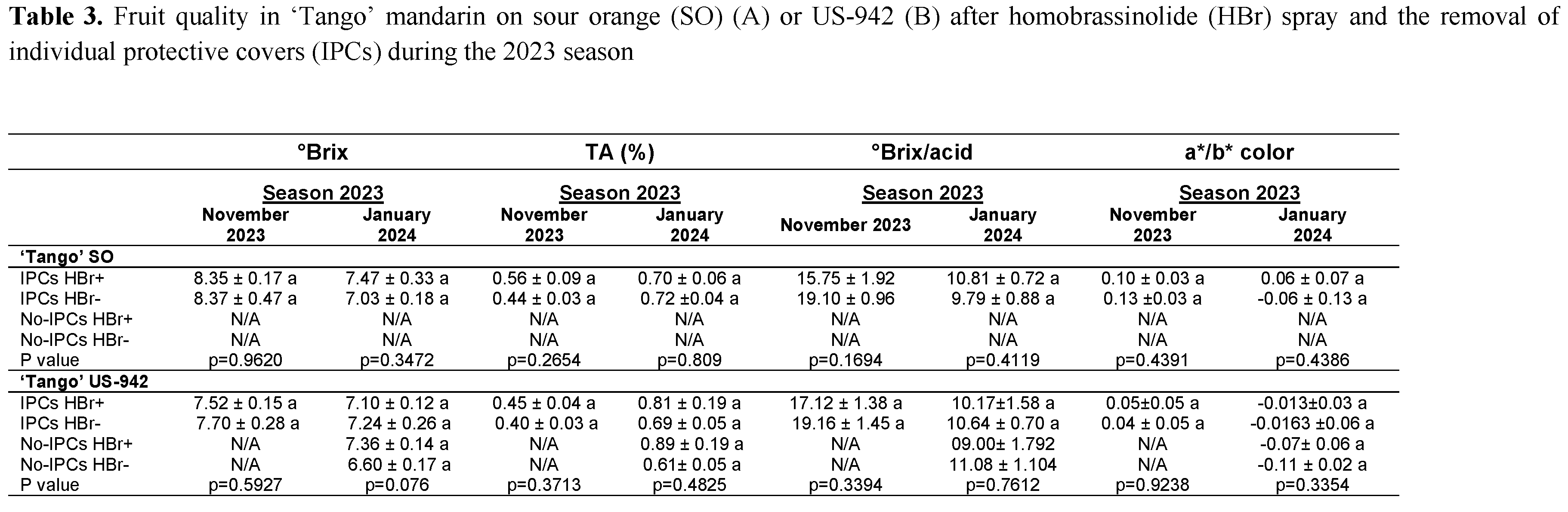
The analyses of °Brix, TA percentage, °Brix-acid ratio, peel color, and fruit size did not show significant improvements in IPC HBr+ trees on either SO or US-942 when compared to IPC HBr- and/or non-IPCs HBr+ and HBr- trees (Table 3). During the season 2024, PFD levels were comparable (not shown).
Graph 942 we investigated the transcriptional response of key genes in the SA biosynthetic pathway (PAL, ICS, and CM2) and downstream defense signaling (NPR1) in IPC and no IPC trees treated with HBr (Figure 4). We did not see any significant change in expression in non-IPC trees (not shown). Fifteen days after the first HBr spray and the removal of IPC (in January 15, 2023), transcription of the ICS, CM2, PAL, and NPR1 genes was up-regulated, reaching levels that were 20-fold, 29-fold, 19-fold, and 30-fold higher, respectively, in IPC HBr+ trees on SO compared to IPC HBr- trees (Figure 4A). Furthermore, after four months (in April 15, 2023), eight months (in August 15, 2023), and nine months (in September 30, 2023) of HBr spray following IPC removal, the transcript levels of PAL, CM2, and NPR1 in IPC HBr+ trees on SO continued to be up-regulated, reaching levels that were 3-fold, 4-fold, and 16-fold higher than those in IPC HBr- trees, respectively (Figure 4B). In contrast, the up-regulation of PAL, CM2, and NPR1 transcript levels in IPC HBr+ trees on US-942 occurred later, as it was observed only six months after the initiation of the HBr spray (in May 15, 2023), but not before, reaching levels that were 5-fold, 5-fold, and 16-fold higher compared to IPC HBr- trees (Figure 4C).
Discussion
Managing HLB remains the most significant challenge the citrus industry faces in Florida, where CLas pressure is high and consistent, and most commercial citrus orchards experience near-total infection by the time trees reach three to four years old [45]. In Florida, management strategies include the exclusion of Asian citrus psyllid, delaying and minimizing CLas infection, and maintaining tree vigor, with growers typically applying up to six insecticide sprays each year, along with trunk-injected OTC [46]. With no effective cure available, integrated strategies to delay infection and prolong citrus tree health are critical for the industry’s survival in the short term. At the same time, newer varieties with more tolerance are actively sought and tested. In recent years, Florida has seen an expansion in mandarin cultivation, as several mandarin cultivars appear to exhibit greater tolerance to HLB than sweet orange. ‘Tango’, a product of selective breeding of the University of California, Riverside’s Citrus Breeding Program, gained significant attention from growers due to its promising performance under challenging disease conditions [47]. It was suggested that foliar application of potassium and boron increased fruit yield, improved fruit size, and reduced HLB symptoms without compromising the internal quality of this cultivar [47]. However, the health and productivity of this variety under HLB-endemic conditions, including the physiological, biochemical, and molecular effects, remain largely unexplored. This study is the first to investigate the effects of IPCs, as a physical barrier, and HBr, as a plant growth regulator, in modulating ‘Tango’ mandarin responses to HLB. Specifically, we evaluated the effects of IPCs and HBr foliar sprays on CLas dynamics, horticultural performance, and host defense activation in juvenile ‘Tango’ mandarin trees grafted onto SO and US-942 rootstocks. Our study builds upon the findings of Gaire et al. (2022, 2023, and 2024), where the authors demonstrated the beneficial effects of IPCs on plant growth and yield of young sweet orange citrus trees [24,25,26], and the study of Pérez-Hedo et al. (2024), where the authors demonstrated the importance of foliar HBr spray in delaying CLas titer [29]. Besides, according to our recent study [23], ‘Tango’ mandarin showed continuous increase in CI and trunk diameters, improved tree height, reduced accumulation of peroxide hydrogen (H2O2), and increased catalase enzyme activity during IPC use, indicating greater adaptability of this cultivar to the IPCs.
In this study, we hypothesized that the combined use of IPC for three years, followed by monthly HBr spray after IPC removal, would improve tree health. Our results revealed that CLas infection was delayed for seven months after IPC removal, with high average Ct values (≥37) confirming that the trees were free of the pathogen for both rootstocks, regardless of HBr spray. These results are consistent with prior studies by Gaire et al. (2022 and 2024), showing that IPCs not only avoid exposure to psyllids but also delay CLas establishment in young citrus orange trees after IPC removal, compared with no-IPC trees [24,25,26]. In this study, we also revealed that while IPC trees on either of the two rootstocks showed a lower CLas titer eight months after IPC removal, ‘Tango’ IPC HBr+ or HBr- trees on US-942 tested positive six months after IPC removal, in contrast to those on SO that tested negative at that time, confirming a variation in CLas dynamics based on rootstock type. This may be attributed to inherent differences in rootstock-mediated defense responses that either limit CLas movement or activity or mitigate the severity of CLas-induced damage. The impact of rootstock on tree tolerance to CLas may partly stem from differences in rootstock capacity to withstand additional stresses or to respond more effectively to treatments under HLB pressure conditions [45].
After one year of monthly HBr sprays post-IPC removal, our study showed that IPC HBr+ trees on US-942 exhibited no significant difference in CLas titer compared with IPC HBr-, no-IPC HBr+, and no-IPC HBr- trees. These results indicate that although US-942 is widely considered more tolerant to HLB than many other rootstocks, its performance may depend on many factors, such as scion compatibility, field conditions, and pathogen pressure. In contrast, ‘Tango’ IPC HBr+ trees on SO showed significantly (p=0.037) lower CLas titer, compared to no-IPC HBr+ and HBr- trees, one year after the HBr spray post-IPC removal, demonstrating an additive beneficial effect of the combined use of IPCs followed by HBr monthly sprays, even though all trees were HLB+. These results suggest that HBr may reduce the pathogen load in IPC trees, thereby mitigating HLB damage. Pérez-Hedo et al. (2024) reported that foliar HBr sprays for six months significantly delayed CLas colonization, with only 25% of HBr-treated trees infected, compared with 100% in untreated trees [29]. In our study, the beneficial effects of HBr foliar spray following IPC removal included improved canopy volume, increased CI and leaf area, modulation of the SA pathway, and increased yield. When combined with IPCs, these effects resulted in even greater trunk diameter and reduced fruit drop compared with no-IPC trees.
Homobrassinolide sprays enhanced the canopy volume of IPC HBr+ ‘Tango’ trees during the first six and twelve months post-IPC removal compared with IPC HBr– and no-IPC HBr+ or HBr– trees. In a recent trial in Florida, young citrus plants grown in pots and foliar treated with HBr exhibited denser lateral branching and larger root systems, supporting sustained vegetative growth [48]. Brassinosteroids promote cell elongation, photosynthetic activity, and vascular development [49], all of which may contribute to canopy expansion and overall tree health. The observed increase in leaf area, limited to IPC HBr+ trees on SO six months after spraying, further emphasizes the importance of early HBr application for preserving photosynthetic capacity, as these trees maintained greater canopy volume at both six and twelve months. On US-942 rootstock, the lack of early leaf area increases in IPC HBr+ trees corresponded with delayed canopy growth, with the beneficial effects of HBr only becoming evident twelve months after IPC removal. Our study suggests that canopy, CI, and leaf area responses of ‘Tango’ mandarin to HBr treatment are rootstock dependent. Considering these results alongside observed fluctuations in CLas colonization, it can be inferred that ‘Tango’ responsiveness to HBr sprays is influenced by rootstock, with SO showing an earlier and more consistent response following IPC removal than US-942.
IPC trees on both SO and US-942 maintained consistently greater canopy volumes than no-IPC trees after twenty-four months. The consistently greater tree height and trunk diameter observed in IPC trees, regardless of HBr treatment, underscores the importance of early protection from Clas during initial vegetative growth. These findings align with recent field trials in Florida, where IPCs promoted thicker trunks in young citrus [26]. According to Qureshi et al. (2014) and Stansly et al. (2014), trees protected from D. citri during their initial growth phase tend to exhibit superior vegetative performance over time [50,51]. Our study suggests that IPCs followed by a monthly HBr spray provided advanced benefits to young ‘Tango’ mandarin trees, establishing robust horticultural traits before and after pathogen colonization. The limited response of ‘Tango’ to HBr in improving trunk diameter can be attributed to the boosts already conferred by IPCs since the time of planting. By preventing early CLas colonization, IPC trees likely preserved systemic physiological integrity, enabling more sustained growth over two years. Collectively, these results reinforce the idea that the physiological benefits of IPCs extend beyond CLas suppression and include long-lasting improvements in tree vigor development.
The improvement in canopy development observed in IPC HBr+ trees, particularly on SO rootstock, was followed by an improvement in yield, one year after foliar HBr spray. Larger canopies improve light interception, photosynthetic activity, and carbohydrate availability, all of which contribute to greater fruit set and yield [52,53]. The beneficial effects of maintaining and/or improving canopy volume in HLB-affected trees have been shown previously. Foliar gibberellic acid applications boosted yield and canopy density in HLB-affected ‘Valencia’ oranges, resulting in source-to-sink balance, thereby promoting fruit growth, increasing fruit size, and enhancing overall tree productivity [54]. The volume of the canopy affects crop development, vigor, and yield potential, with trees exhibiting larger canopy volumes yielding more fruit than those with smaller volumes [55].
IPC-protected trees on SO and US-942 rootstocks produced higher yields than no-IPC trees, underscoring the critical role of IPCs in maintaining canopy health and sustaining yield under HLB pressure. By providing a physical barrier during the most vulnerable stage of tree development, IPCs effectively extend the disease-free window and support higher fruit production for up to three consecutive seasons [24]. Although yield improvement was observed in response to IPCs and/or HBr foliar sprays, our data represent only one production cycle during 2023. In 2024, yield was completely lost due to Hurricane Milton in October 2024.
To the best of our knowledge, the present work is the first to investigate the role of HBr in modulating ‘Tango’ mandarin tree immunity under field conditions. Brassinosteroids promote BR-Insensitive 2 (BIN2) degradation while enhancing the stability of Brassinazole Resistant 1 (BZR1) and TGACG-Binding Factors (TGA4), thereby facilitating the interaction between BZR1 and TGA4 to boost SA accumulation, ultimately strengthening SA-induced SAR [56]. Our study revealed that HBr foliar application in previously IPC-protected trees modulated the SA pathway via both the ICS and PAL pathways in ‘Tango’ grafted on SO. Just 15 days after the first HBr spray post–IPC removal, we observed significant upregulation of ICS, PAL, and CM2 in IPC HBr+ trees on SO compared with IPC HBr- trees. After four and eight months of spray, PAL and CM2 were upregulated in IPC HBr+ of this rootstock, respectively. The early and robust induction of SA-associated ICS, PAL, and CM2 genes in SO suggests that HBr triggers a rapid, strong defense response following IPC removal. Such timely activation likely contributed to delayed CLas progression, sustained canopy growth, and the fruit yield observed in ‘Tango’ IPC trees on SO.
In contrast, the PAL pathway was the only route activated in ‘Tango’ grafted on US-942, and this was after multiple (6) HBr applications. These findings support the role of HBr as an activator of the SA-dependent SAR defense in citrus, and that activation depends on the rootstock. Also, our results suggest that activation depends on tree health, as it occurred only in HLB-free trees, which were previously protected by IPCs. Although SA biosynthetic pathways function concurrently, the ICS pathway is responsible for more than 90% of SA production [57]. The absence of strong ICS activation in IPC HBr+ ‘Tango’ on US-942 likely resulted in only a small percentage of SA synthesis in this rootstock, which may explain a milder effect from HBr spray in terms of CLas dynamics, canopy volume, growth, and yield improvement. However, it has been reported that the ICS and PAL pathways may contribute equally to SA synthesis, depending on the crop [38]. Multi-omics approaches have identified several defense genes associated with HLB tolerance in citrus trees, including the NPR1 [58], Constitutive Disease Resistance (CDR) [59], as well as the upregulation of genes involved in secondary metabolism, such as some in the isoprenoid and flavonoid biosynthesis pathways [60,61]. In this regard, it is important to consider PAL as an upstream enzyme in the phenylpropanoid pathway leading to the synthesis of phenolic compounds such as flavonoids, which are involved in additional defense responses.
Conclusion
Our findings indicate that integrating physical barriers, such as IPCs, and hormonal treatments, such as HBr application, may be an effective strategy to manage HLB during the first years of a citrus tree’s life. The present study confirmed that IPCs serve as an effective frontline defense, eliminating early psyllid feeding and infection risk, while HBr foliar applications may offer additional protection by priming the plant’s immune defense responses after physical covers are removed. Consequently, tree growth and fruit yield are significantly improved. This dual approach is especially relevant for Florida’s high-inoculum environment, where sustaining survival and productivity in young citrus trees remains a critical priority. By combining exclusion with immune stimulation, particularly when tailored to rootstock-scion combinations and regional disease pressure, this combined IPC+ HBr approach appears suitable for growing young citrus trees and maintaining them productive for longer periods of time until they reach the right size, so other therapeutics (i.e., oxytetracycline hydrochloride injections) can be adopted to maintain and further improve fruit production.
Supplementary Materials
The following supporting information can be downloaded at the website of this paper posted on Preprints.org. Supplementary Table S1. Chlorophyll index and leaf area in ‘Tango’ mandarin on sour orange (SO) or US-942 after homobrassinolide (HBr) spray and the removal of individual protective covers (IPCs) during the 2023 and 2024 seasons. Supplementary 1 Figure. Preharvest fruit drop in ‘Tango’ mandarin on sour orange (SO) (A) or US-942 (B) after homobrassinolide (HBr) spray and the removal of individual protective covers (IPCs) during the 2024 season. Bars labeled with different letters are significantly different according to Tukey’s Honestly Significant Difference test at 5%.
Data Availability Statement
The original contributions presented in this study are included in the article/supplementary material. Further inquiries can be directed to the corresponding author(s).
References
- Bové, J. M. Huanlongbing: A destructive, newly-emerging, century-old disease of citrus. J. Plant Pathol. 2006, 88 (1), 7–37.
- Gottwald, T. R.; Graça, J. V. d.; Bassanezi, R. B. Citrus Huanglongbing: The pathogen and its impact. Plant Health Prog. 2007, 8 (1), 31.
- McCollum, G.; Baldwin, E. Huanglongbing: Devastating disease of citrus. In Horticultural Reviews, Janick, J. Ed.; Wiley-Blackwell, 2016; Vol. 44.pp 315–361.
- Ghosh, D.; Kokane, S.; Savita, B. K.; Kumar, P.; Sharma, A. K.; Ozcan, A.; Kokane, A.; Santra, S. Huanglongbing pandemic: Current challenges and emerging management strategies. Plants 2022, 12 (1), 1–57.
- Pérez-Hedo, M.; Hoddle, M. S.; Alferez, F.; Batista, L.; Beattie, G. A.; Chakravarty, S.; Holford, P.; Khamis, F. M.; Ajene, I. J.; Manrakhan, A. Global strategies to manage Huanglongbing (HLB) and its vectors: Insights and implications for the Mediterranean region. Entomol. Gen. 2025, 45 (1), 1.
- Hall, D. G.; Albrecht, U.; Bowman, K. D. Transmission rates of ‘Ca. Liberibacter asiaticus’ by Asian citrus psyllid are enhanced by the presence and developmental stage of citrus flush. J. Econ. Entomol. 2016, 109 (2), 558–563.
- 2024-2025 Citrus summary: Production, price per box and production by county. 2025. Available online: https://data.nass.usda.gov/Statistics_by_State/Florida/Publications/Citrus/Citrus_Summary/Citrus_Summary_Prelim/cit082925.pdf (accessed on 20 July 2025).
- Court, C. D.; Qiao, X.; Saha, B. B.; He, F.; McDaid, K. Estimated agricultural losses resulting from Hurricane Ian. 2023. Available online: https://fred.ifas.ufl.edu/media/fredifasufledu/economic-impact-analysis/reports/FRE-Final-Hurricane-Ian-Report.pdf (accessed on 15 June 2025).
- Hurricane Milton citrus losses could reach $55 million. Available online: https://citrusindustry.net/2024/12/26/hurricane-milton-citrus-losses-reach-55-million/ (accessed on 20 August 2025).
- Dewdney, M. M.; Vashisth, T.; Diepenbrock, L. M. 2023–2024 Florida citrus production guide: Huanglongbing (citrus greening). 2023. Available online: https://journals.flvc.org/edis/article/view/134255/version/70591/138487 (accessed on 12 June 2025).
- Ma, W.; Pang, Z.; Huang, X.; Xu, J.; Pandey, S. S.; Li, J.; Achor, D. S.; Vasconcelos, F. N.; Hendrich, C.; Huang, Y. Citrus Huanglongbing is a pathogen-triggered immune disease that can be mitigated with antioxidants and gibberellin. Nat. Commun. 2022, 13 (1), 529.
- Welker, S.; Levy, A. Comparing machine learning and binary thresholding methods for quantification of callose deposits in the citrus phloem. Plants 2022, 11 (5), 624.
- Achor, D.; Etxeberria, E.; Wang, N.; Folimonova, S.; Chung, K.; Albrigo, L. Sequence of anatomical symptom observations in citrus affected with Huanglongbing disease. Plant Pathol. J. 2010, 9 (2), 56–64.
- Kim, J.-S.; Sagaram, U. S.; Burns, J. K.; Li, J.-L.; Wang, N. Response of sweet orange (Citrus sinensis) to ‘Candidatus Liberibacter asiaticus’ infection: Microscopy and microarray analyses. Phytopathology 2009, 99 (1), 50–57.
- Thakuria, D.; Chaliha, C.; Dutta, P.; Sinha, S.; Uzir, P.; Singh, S. B.; Hazarika, S.; Sahoo, L.; Kharbikar, L.; Singh, D. Citrus Huanglongbing (HLB): Diagnostic and management options. Physiol. Mol. Plant Pathol. 2023, 125, 102016.
- Pandey, S. S.; Hendrich, C.; Andrade, M. O.; Wang, N. Candidatus Liberibacter: From movement, host responses, to symptom development of citrus Huanglongbing. Phytopathology 2022, 112 (1), 55–68.
- Lin, C. Y.; Tsai, C. H.; Tien, H. J.; Wu, M. L.; Su, H. J.; Hung, T. H. Quantification and ecological study of ‘Candidatus Liberibacter asiaticus’ in citrus hosts, rootstocks and the Asian citrus psyllid. Plant Pathol. 2017, 66 (9), 1555–1568.
- Ghosh, D.; Bhose, S.; Mukherjee, K.; Baranwal, V. Sequence and evolutionary analysis of ribosomal DNA from Huanglongbing (HLB) isolates of Western India. Phytoparasitica 2013, 41 (3), 295–305.
- Pérez-Hedo, M.; Hoddle, M. S.; Alferez, F.; Tena, A.; Wade, T.; Shourish, C.; Wang, N.; Stelinski, L. L.; Urbaneja, A. Huanglongbing (HLB) and its vectors: Recent research advances and future challenges. Entomol. Gen. 2025, 1–19.
- Graham, J. H.; Bassanezi, R. B.; Dawson, W. O.; Dantzler, R. Management of Huanglongbing of citrus: Lessons from São Paulo and Florida. Annu. Rev. Phytopathol. 2024, 62 (1), 243–262.
- Yang, C.; Ancona, V. An overview of the mechanisms against “Candidatus Liberibacter asiaticus”: Virulence targets, citrus defenses, and microbiome. Front. Microbiol. 2022, 13, 850588.
- Hall, D. G.; Gottwald, T. R. Pest management practices aimed at curtailing citrus Huanglongbing disease. Outlooks Pest Manag. 2011, 22 (4), 189.
- Ben-Abdallah, S.; Gaire, S.; Albrecht, U.; Batuman, O.; Qureshi, J.; Alferez, F. Individual protective covers differentially affect citrus varieties while protecting young trees against Huanglongbing. JASHS 2025, 150 (6), 348–363.
- Gaire, S.; Albrecht, U.; Batuman, O.; Zekri, M.; Alferez, F. Individual protective covers improve yield and quality of citrus fruit under endemic Huanglongbing. Plants 2024, 13 (16), 2284.
- Gaire, S.; Albrecht, U.; Alferez, F. Effect of individual protective covers on young ‘Valencia’orange (Citrus sinensis) tree physiology. HortScience 2023, 58 (12), 1542–1549.
- Gaire, S.; Albrecht, U.; Batuman, O.; Qureshi, J.; Zekri, M.; Alferez, F. Individual protective covers (IPCs) to prevent Asian citrus psyllid and Candidatus Liberibacter asiaticus from establishing in newly planted citrus trees. Crop Prot. 2022, 152, 105862.
- Alferez, F.; Albrecht, U.; Gaire, S.; Batuman, O.; Qureshi, J.; Zekri, M. Individual protective covers (IPCs) for young tree protection from the HLB Vector, the Asian citrus psyllid. EDIS, 2021. Available online: https://journals.flvc.org/edis/article/view/128895 (accessed on 15 May 2025).
- Archer, L.; Qureshi, J.; Albrecht, U. Efficacy of trunk injected imidacloprid and oxytetracycline in managing Huanglongbing and Asian citrus psyllid in infected sweet orange (Citrus sinensis) trees. Agriculture 2022, 12 (10), 1592.
- Pérez-Hedo, M.; Urbaneja, A.; Alférez, F. Homobrassinolide delays Huanglongbing progression in newly planted citrus (Citrus sinensis) trees. Plants 2024, 13 (9), 1229.
- Aryal, D.; Alferez, F. Brassinosteroids: Biosynthesis, signaling, and hormonal crosstalk as related to fruit yield and quality. Plants 2025, 14 (12), 1865.
- Manghwar, H.; Hussain, A.; Ali, Q.; Liu, F. Brassinosteroids (BRs) role in plant development and coping with different stresses. Int. J. Mol. Sci. 2022, 23 (3), 1012.
- Nolan, T. M.; Vukašinović, N.; Liu, D.; Russinova, E.; Yin, Y. Brassinosteroids: Multidimensional regulators of plant growth, development, and stress responses. Plant Cell 2020, 32 (2), 295–318.
- Barbaś, P.; Bienia, B.; Skiba, D.; Pszczółkowski, P.; Krochmal-Marczak, B. Toward enhanced plant immunity: Unveiling the role of brassinosteroids in abiotic and biotic stress response. Preprints 2024, 2024021187. [CrossRef]
- Canales, E.; Coll, Y.; Hernández, I.; Portieles, R.; Rodríguez García, M.; López, Y.; Aranguren, M.; Alonso, E.; Delgado, R.; Luis, M. ‘Candidatus Liberibacter asiaticus’, causal agent of citrus Huanglongbing, is reduced by treatment with brassinosteroids. PLOS One 2016, 11 (1), e0146223.
- Kim, Y.-W.; Youn, J.-H.; Roh, J.; Kim, J.-M.; Kim, S.-K.; Kim, T.-W. Brassinosteroids enhance salicylic acid-mediated immune responses by inhibiting BIN2 phosphorylation of clade I TGA transcription factors in Arabidopsis. Mol. Plant 2022, 15 (6), 991–1007.
- Park, C. H.; Bi, Y.; Youn, J.-H.; Kim, S.-H.; Kim, J.-G.; Xu, N. Y.; Shrestha, R.; Burlingame, A. L.; Xu, S.-L.; Mudgett, M. B. Deconvoluting signals downstream of growth and immune receptor kinases by phosphocodes of the BSU1 family phosphatases. Nat. Plants 2022, 8 (6), 646–655.
- Mishra, A. K.; Baek, K.-H. Salicylic acid biosynthesis and metabolism: A divergent pathway for plants and bacteria. Biomolecules 2021, 11 (5), 705.
- Lefevere, H.; Bauters, L.; Gheysen, G. Salicylic acid biosynthesis in plants. Front. Plant Sci. 2020, 11, 338.
- Rochon, A.; Boyle, P.; Wignes, T.; Fobert, P. R.; Després, C. The coactivator function of Arabidopsis NPR1 requires the core of its BTB/POZ domain and the oxidation of C-terminal cysteines. Plant Cell 2006, 18 (12), 3670–3685.
- Fan, W.; Dong, X. In vivo interaction between NPR1 and transcription factor TGA2 leads to salicylic acid–mediated gene activation in Arabidopsis. Plant Cell 2002, 14 (6), 1377–1389.
- Li, W.; Hartung, J. S.; Levy, L. Quantitative real-time PCR for detection and identification of Candidatus Liberibacter species associated with citrus Huanglongbing. J. Microbiol. Methods 2006, 66 (1), 104–115.
- Wutscher, H. K.; Hill, L. L. Performance of Hamlin’orange on 16 rootstocks in East-central Florida. HortScience 1995, 30 (1), 41–43.
- Seethepalli, A.; York, L. M. RhizoVision Explorer-Interactive software for generalized root image analysis designed for everyone (Version 2.0.3) Zenodo. 2020. [CrossRef]
- Bai, J.; Baldwin, E.; Plotto, A.; Manthey, J.; McCollum, G.; Irey, M.; Luzio, G. Influence of harvest time on quality of ‘Valencia’ oranges and juice. Proc. Fla. Stare Hart. Soc. 2009, 122.
- Albrecht, U.; Bowman, K. D. Reciprocal influences of rootstock and scion citrus cultivars challenged with Ca. Liberibacter asiaticus. Sci. Hortic. 2019, 254, 133–142.
- Roldán, E. L.; Stelinski, L. L.; Pelz-Stelinski, K. S. Evaluation of tree-injected oxytetracycline and antisense oligonucleotides targeting Candidatus Liberibacter asiaticus in citrus. Pest Manag. Sci. 2025, 81 (3), 1487–1500.
- Foliar potassium and boron can improve mandarin yield and quality. 2022. Available online: https://citrusindustry.net/2022/04/18/foliar-potassium-and-boron-can-improve-mandarin-yield-and-quality/ (accessed on 15 August 2025).
- Alferez, F.; Aryal, D.; Ben Abdallah, S. Brassinosteroids improve HLB-affected tree health and fruit quality. Available online: https://citrusindustry.net/2025/04/16/brassinosteroids-improve-hlb-affected-tree-health-fruit-quality/ (accessed on 20 August 2025).
- Oh, M.-H.; Honey, S. H.; Tax, F. E. The control of cell expansion, cell division, and vascular development by brassinosteroids: A historical perspective. Int. J. Mol. Sci. 2020, 21 (5), 1743.
- Qureshi, J.; Kostyk, B.; Stansly, P. Insecticidal suppression of Asian citrus psyllid Diaphorina citri (Hemiptera: Liviidae) vector of Huanglongbing pathogens. PLOS One 2014, 9, e112331.
- Stansly, P. A.; Arevalo, H. A.; Qureshi, J. A.; Jones, M. M.; Hendricks, K.; Roberts, P. D.; Roka, F. M. Vector control and foliar nutrition to maintain economic sustainability of bearing citrus in Florida groves affected by Huanglongbing. Pest Manag. Sci. 2014, 70 (3), 415–426.
- Syvertsen, J. P., Albrigo, L. G. Seasonal and diurnal citrus leaf and fruit water relations. Bot. Gaz. 1980, 144 (4), 440–446.
- Zaman, F., Vishwakarma, G., Pal, R., Misra, S., Singh, S. Canopy management in fruit crops. In Futuristic Trends in Agriculture Engineering & Food Sciences, IIP Proceedings, 2020; Vol. 2.pp 362–369.
- Singh, S.; Livingston, T.; Tang, L.; Vashisth, T. Effects of exogenous gibberellic acid in Huanglongbing-affected sweet orange trees under Florida conditions—II. Fruit Production and Tree Health. HortScience 2022, 57 (3), 353–359.
- Colaço, A. F.; Trevisan, R. G.; Molin, J. P.; Rosell-Polo, J. R.; Escolà, A. Orange tree canopy volume estimation by manual and LiDAR-based methods. Adv. Anim. Biosci. 2017, 8 (2), 477–480.
- Park, C.-H.; Park, Y. J.; Youn, J.-H.; Roh, J.; Kim, S.-K. Brassinosteroids and salicylic acid mutually enhance endogenous content and signaling to show a synergistic effect on pathogen resistance in Arabidopsis thaliana. J. Plant Biol. 2023, 66 (2), 181–192.
- Chen, Z.; Zheng, Z.; Huang, J.; Lai, Z.; Fan, B. Biosynthesis of salicylic acid in plants. Plant Signal. Behav. 2009, 4 (6), 493–496.
- Arce-Leal Á, P.; Bautista, R.; Rodríguez-Negrete, E. A.; Manzanilla-Ramírez, M.; Velázquez-Monreal, J. J.; Santos-Cervantes, M. E.; Méndez-Lozano, J.; Beuzón, C. R.; Bejarano, E. R.; Castillo, A. G.; et al. Gene expression profile of Mexican lime (Citrus aurantifolia) trees in response to Huanglongbing disease caused by Candidatus Liberibacter asiaticus. Microorganisms 2020, 8 (4), 528.
- Huang, C. Y.; Niu, D.; Kund, G.; Jones, M.; Albrecht, U.; Nguyen, L.; Bui, C.; Ramadugu, C.; Bowman, K. D.; Trumble, J.; et al. Identification of citrus immune regulators involved in defence against Huanglongbing using a new functional screening system. Plant Biotechnol. J. 2021, 19 (4), 757–766.
- Deng, H.; Zhang, Y.; Reuss, L.; Suh, J.; Yu, Q.; Liang, G.; Wang, Y.; Gmitter, F. Comparative leaf volatile profiles of two contrasting mandarin cultivars against Candidatus Liberibacter asiaticus infection illustrate Huanglongbing tolerance mechanisms. J. Agric. Food Chem. 2021, 69 (37), 10869–10884.
- Killiny, N. Metabolite signature of the phloem sap of fourteen citrus varieties with different degrees of tolerance to Candidatus Liberibacter asiaticus. Physiol. Mol. Plant Pathol. 2017, 97, 20–29.
Figure 1.
Leaf cycle threshold (Ct) values in ‘Tango’ mandarin on sour orange (SO) (A) or US-942 (B) after homobrassinolide (HBr) spray and the removal of individual protective covers (IPCs) during the 2023 season. Bars labeled with different letters are significantly different according to Tukey’s Honestly Significant Difference test at 5%.
Figure 1.
Leaf cycle threshold (Ct) values in ‘Tango’ mandarin on sour orange (SO) (A) or US-942 (B) after homobrassinolide (HBr) spray and the removal of individual protective covers (IPCs) during the 2023 season. Bars labeled with different letters are significantly different according to Tukey’s Honestly Significant Difference test at 5%.
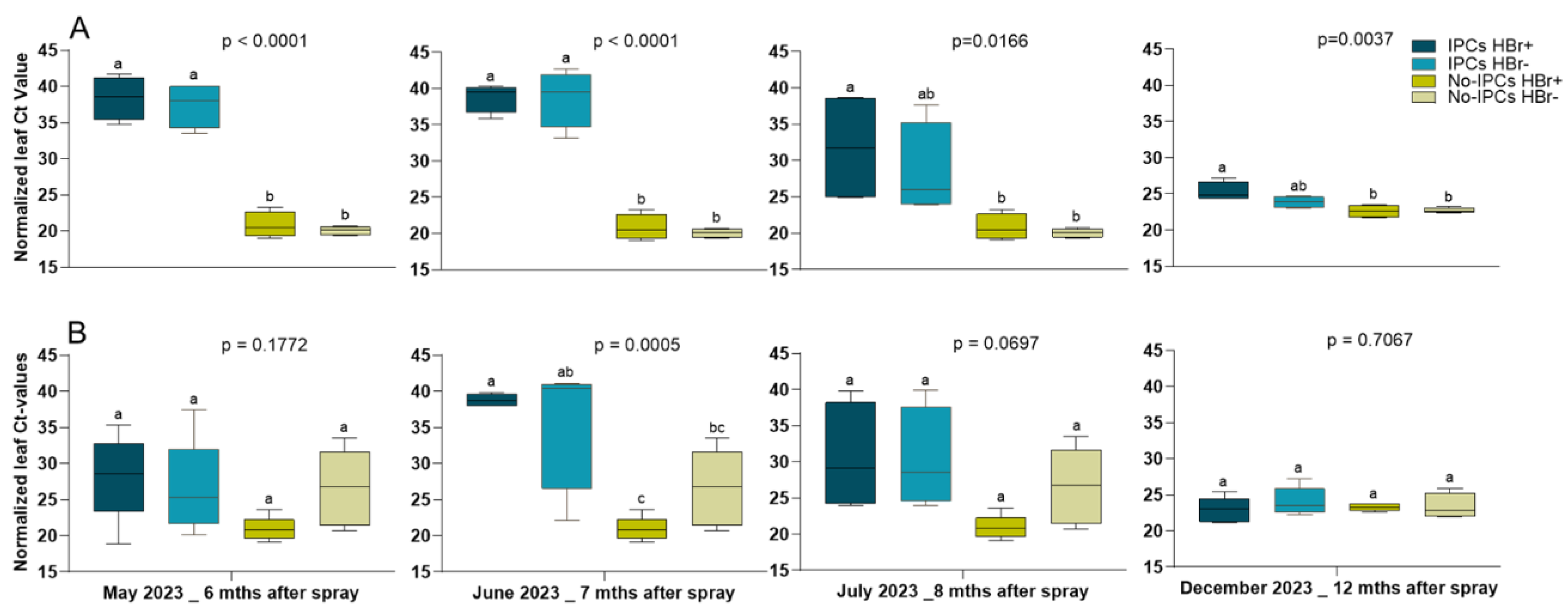
Figure 2.
Canopy volume in ‘Tango’ mandarin on sour orange (SO) (A) or US-942 (B) after homobrassinolide (HBr) spray and the removal of individual protective covers (IPCs) during the 2023 and 2024 seasons. Bars labeled with different letters are significantly different according to Tukey’s Honestly Significant Difference test at 5%.
Figure 2.
Canopy volume in ‘Tango’ mandarin on sour orange (SO) (A) or US-942 (B) after homobrassinolide (HBr) spray and the removal of individual protective covers (IPCs) during the 2023 and 2024 seasons. Bars labeled with different letters are significantly different according to Tukey’s Honestly Significant Difference test at 5%.
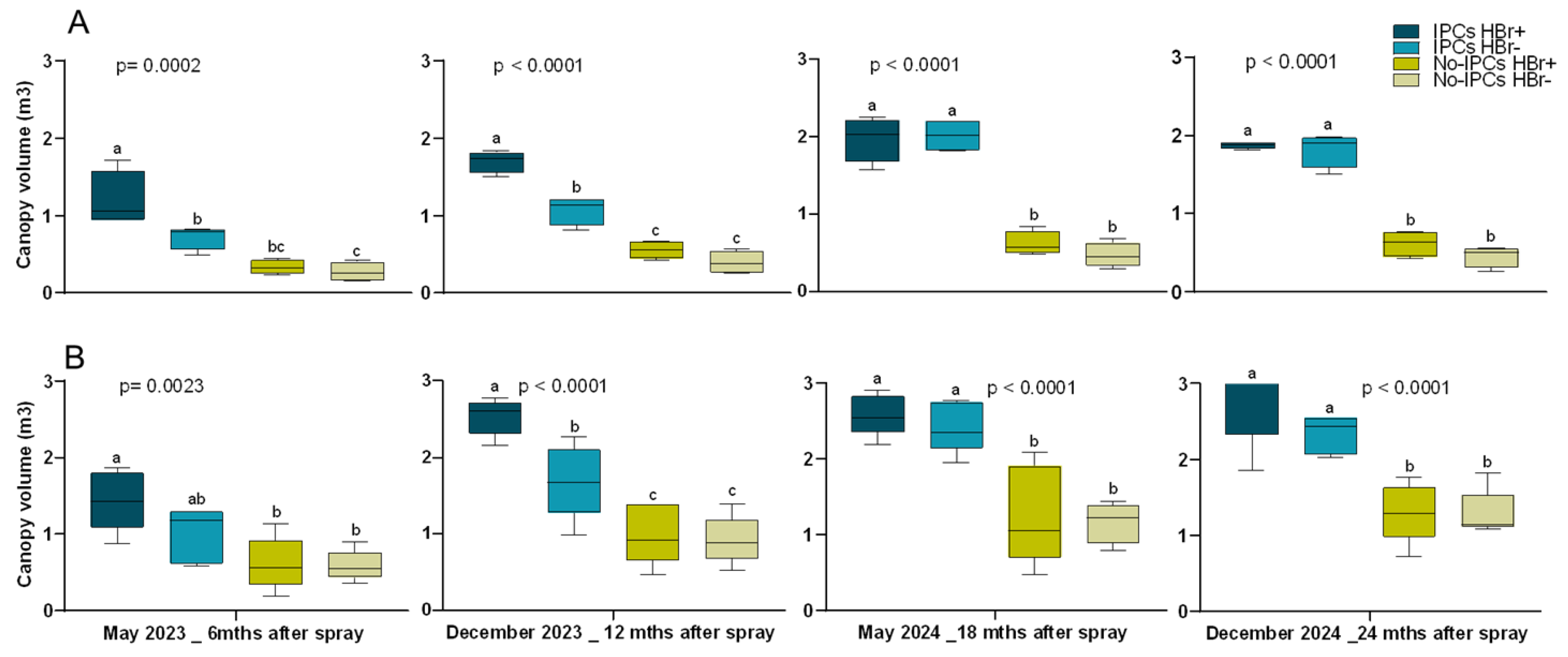
Figure 3.
Preharvest fruit drop and yield in ‘Tango’ mandarin on sour orange (SO) (A, B) or US-942 (C, D) after homobrassinolide (HBr) spray and the removal of individual protective covers (IPCs) during the 2023 season. Bars labeled with different letters are significantly different according to Tukey’s Honestly Significant Difference test at 5%.
Figure 3.
Preharvest fruit drop and yield in ‘Tango’ mandarin on sour orange (SO) (A, B) or US-942 (C, D) after homobrassinolide (HBr) spray and the removal of individual protective covers (IPCs) during the 2023 season. Bars labeled with different letters are significantly different according to Tukey’s Honestly Significant Difference test at 5%.
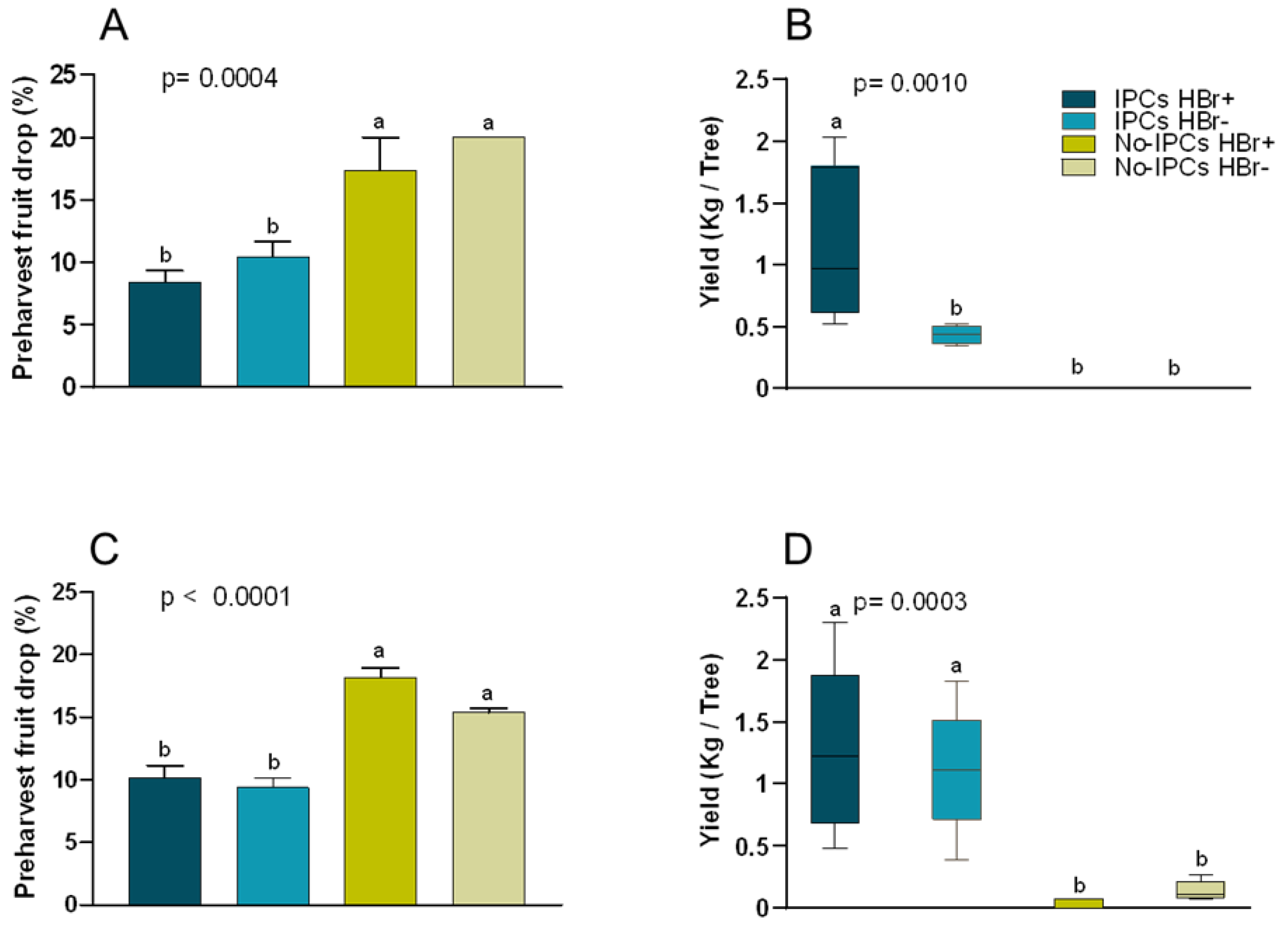
Figure 4.
Fold expression of salicylic acid pathway genes in ‘Tango’ on sour orange (A and B) or US-942 (C) after homobrassinolide (HBr) spray and the removal of individual protective covers (IPCs) during the 2023 season. Isochorismate synthase, ICS; phenylalanine ammonia-lyase, PAL; Chorismate mutase 2, CM2; and NONEXPRESSOR OF PATHOGENESIS-RELATED GENES 1, NPR1. Bars labeled with different letters are significantly different according to Tukey’s Honestly Significant Difference test at 5%.
Figure 4.
Fold expression of salicylic acid pathway genes in ‘Tango’ on sour orange (A and B) or US-942 (C) after homobrassinolide (HBr) spray and the removal of individual protective covers (IPCs) during the 2023 season. Isochorismate synthase, ICS; phenylalanine ammonia-lyase, PAL; Chorismate mutase 2, CM2; and NONEXPRESSOR OF PATHOGENESIS-RELATED GENES 1, NPR1. Bars labeled with different letters are significantly different according to Tukey’s Honestly Significant Difference test at 5%.
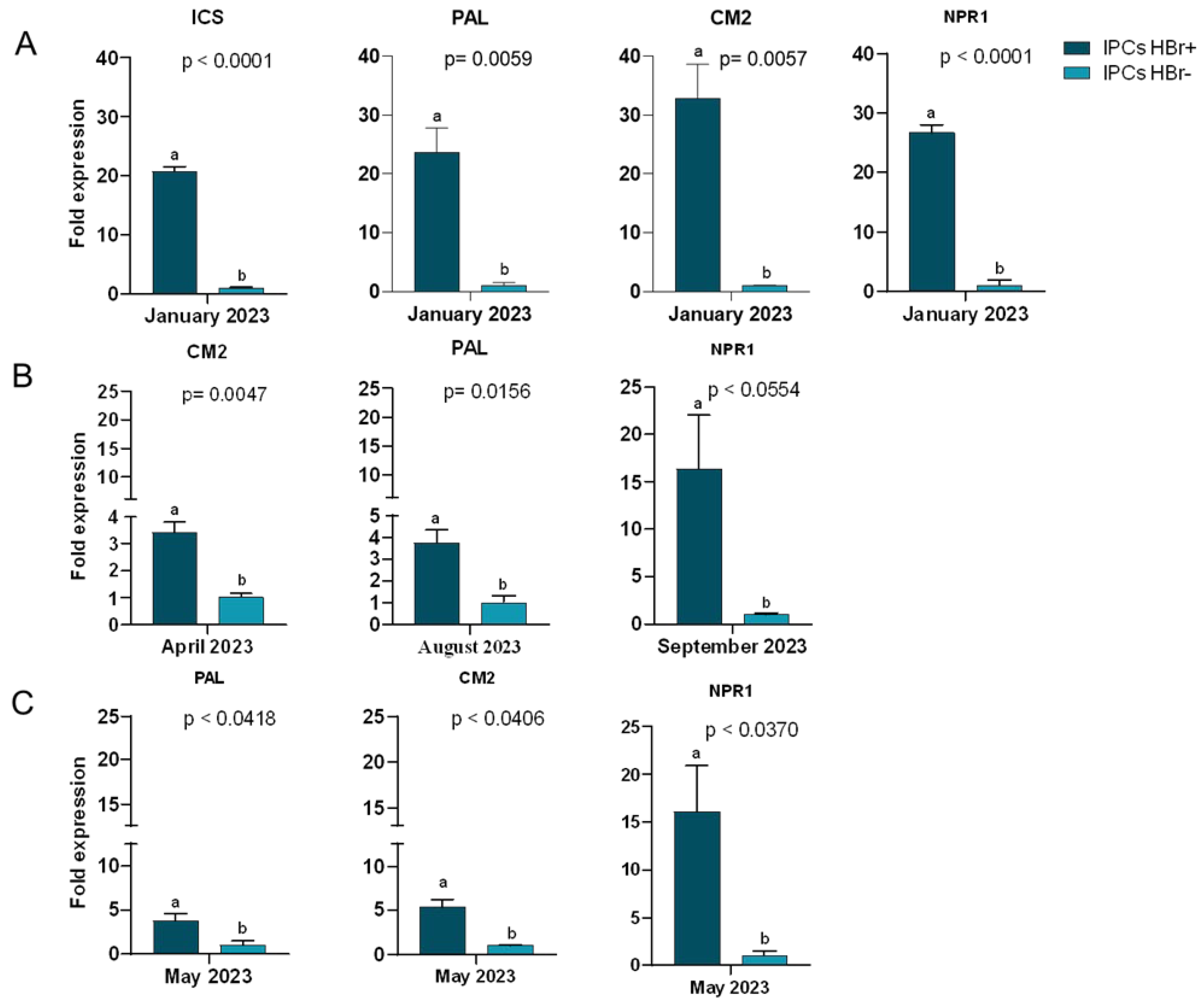

Table 1.
Primer sequences used for the amplification of salicylic acid biosynthesis genes.
| Gene name | Primer sequence forward (5’-3’) | Primer sequence reverse (5’-3’) | Accession# |
| GAPDH | GGAAGGTCAAGATCGGAATCAA | CGTCCCTCTGCAAGATGACTCT | XM_052438402.1 |
| ICS | GGAGGAGGAGAGAGTGAATTTG | GGGTTGCTTCCTTCTACTATCC | XM_052436487.1 |
| CM2 | CCTGGCTTCTCTGGTTCTTT | GAAGGGACTTTCTTCTGGATTCT | XM_006450224.2 |
| PAL | CACATTCTTGGTAGCGCTTTG | AGCTACTTGGCTGACAGTATTC | XM_006481431.4 |
| NPR1 | GTACCTTGAAAACAGAGTTGGACTGG | TGCTCCTCTTGCATTTTGAAAGGTG | XM_006475416.4 |
Table 2.
Tree height and trunk diameters (scion and rootstock) in ‘Tango’ mandarin on sour orange (SO) or US-942 after homobrassinolide (HBr) spray and the removal of individual protective covers (IPCs) during the 2023 and 2024 seasons.
Table 2.
Tree height and trunk diameters (scion and rootstock) in ‘Tango’ mandarin on sour orange (SO) or US-942 after homobrassinolide (HBr) spray and the removal of individual protective covers (IPCs) during the 2023 and 2024 seasons.
| Tree Height (m) | Scion diameter (mm) | Rootstock diameter (mm) | ||||||||||
| Season 2023 | Season 2024 | Season 2023 | Season 2024 | Season 2023 | Season 2024 | |||||||
| ‘Tango’ SO |
May 2023 |
December 2023 |
May 2024 |
December 2024 |
May 2023 |
December 2023 |
May 2024 |
December 2024 |
May 2023 |
December 2023 |
May 2024 |
December 2024 |
| IPCs HBr+ | 2.11 ± 0.08 a | 2.37 ± 0.09 a | 2.30 ± 0.10 a | 2.40 ± 0.09 a | 55.83 ± 1.69 a | 60.14 ± 1.86 a | 65.59 ± 2.54 a | 69.28 ± 1.78 a | 62.37 ± 2.08 a | 66.35 ± 2.95 a | 69.36 ± 2.30 a | 73.38 ± 2.05 a |
| IPCs HBr- | 2.04 ± 0.12 a | 2.19 ± 0.12 a | 2.37 ± 0.14 a | 2.50 ± 0.02 a | 52.38 ± 1.56 a | 55.58 ± 2.22 a | 59.93 ± 4.83 a | 69.18 ± 1.97 a | 59.70 ± 2.88 a | 61.25 ± 6.21 a | 65.88 ± 5.53 a | 74.34 ± 1.09 a |
| No-IPCs HBr+ | 1.3 ± 0.02 b | 1.41 ± 0.04 b | 1.45 ± 0.04 b | 1.48 ± 0.04 b | 35.58 ± 0.47 b | 36.46 ± 0.49 b | 41.42 ± 1.87 b | 44.02 ± 2.01 b | 37.69 ± 1.72 b | 39.19 ± 1.88 b | 43.63 ± 3.49 b | 46.92 ± 3.82 b |
| No-IPCs HBr- | 1.11 ± 0.04 b | 1.23 ± 0.05 b | 1.25 ± 0.06 b | 1.29 ± 0.07 b | 29.25 ± 4.61 b | 35.31 ± 2.50 b | 34.44 ± 2.83 b | 36.81 ± 2.81 b | 34.76 ± 1.61 b | 40.91 ±3.97 b | 44.55 ± 5.18 b | 45.92 ± 3.88 b |
| P value | p<0.001 | p<0.001 | p<0.001 | p<0.001 | p<0.001 | p<0.001 | p<0.001 | p<0.001 | p<0.001 | p=0.0007 | p=0.0014 | p<0.001 |
| ‘Tango’ US-942 | ||||||||||||
| IPCs HBr+ | 2.10 ± 0.06 a | 2.48 ± 0.04 a | 2.48 ± 0.05 a | 2.51 ± 0.07 a | 52.64 ± 2.33 a | 56.65 ± 2.79 a | 62.49 ± 2.70 a | 69.8 ± 2.60 a | 64.91 ± 4.07 a | 73.58 ± 3.30 a | 77.37 ± 2.55 a | 82.17 ± 1.16 a |
| IPCs HBr- | 2.04 ± 0.06 a | 2.26 ± 0.08 a | 2.34 ± 0.09 a | 2.36 ± 0.10 a | 53.8 ± 3.26 a | 57.53 ± 2.35 a | 63.87 ± 3.47 a | 69.81 ± 2.69 a | 61.24 ± 3.05 a | 69.55 ± 2.29 a | 74.17 ± 2.93 ab | 80.7 ± 3.00 a |
| No-IPCs HBr+ | 1.21 ± 0.14 b | 1.40 ± 0.12 b | 1.49 ± 0.11 b | 1.54 ± 0.11 b | 44.66 ± 2.70 a | 49.63 ± 2.18 a | 55.14 ± 2.11 a | 61.00 ± 2.21 a | 50.85 ± 3.62 a | 57.17 ± 3.08 b | 63.18 ± 4.77 bc | 67.2 ± 2.56 b |
| No-IPCs HBr- | 1.26 ± 0.04 b | 1.42 ± 0.07 b | 1.45 ± 0.08 b | 1.5 ± 0.08 b | 46.08 ± 2.67 a | 50.09 ± 2.70 a | 55.07 ± 2.43 a | 61.52 ± 3.11 a | 51.08 ± 3.26 a | 57.69 ± 2.68 b | 59.85 ± 2.87 c | 67.19 ± 2.80 b |
| P value | p<0.001 | p<0.001 | p<0.001 | p<0.001 | p=0.0752 | p=0.0756 | p=0.0637 | p=0.0433 | p=0.0240 | p=0.0014 | p=0.0055 | p=0.0007 |
Disclaimer/Publisher’s Note: The statements, opinions and data contained in all publications are solely those of the individual author(s) and contributor(s) and not of MDPI and/or the editor(s). MDPI and/or the editor(s) disclaim responsibility for any injury to people or property resulting from any ideas, methods, instructions or products referred to in the content. |
© 2026 by the authors. Licensee MDPI, Basel, Switzerland. This article is an open access article distributed under the terms and conditions of the Creative Commons Attribution (CC BY) license (http://creativecommons.org/licenses/by/4.0/).
Copyright: This open access article is published under a Creative Commons CC BY 4.0 license, which permit the free download, distribution, and reuse, provided that the author and preprint are cited in any reuse.


