

Submitted:
10 June 2026
Posted:
11 June 2026
You are already at the latest version
Abstract
Floral yeasts are generally recognized to exhibit high metabolic activities. We isolated 437 yeast strains from 45 flower samples collected from the Beijing Olympic Forest Park, a unique urban ecosystem harbouring diverse plants, which facilitated a thorough survey of floral yeast diversity. Based on sequence analysis of the D1/D2 domain of the large subunit ribosomal RNA gene (LSU rRNA) and the internal transcribed spacer region (ITS), these strains were assigned to more than 70 species, with Starmerella bombicola, Kwoniella ovata and Aureobasidium pini being the dominant taxa. Ten representative strains were characterized comprehensively and identified as two novel genera and four novel species. Integrating molecular data, genome information and phenotypic/physiological traits, the 10 novel yeast strains were described as six novel yeast taxa, including two novel species of two novel genera, Fanglaniella lipolytica gen. nov. sp. nov., and Polychromogenomyces tardus gen. nov. sp. nov., and four novel species as Pseudotremella jasmini sp. nov., Teunia pruni sp. nov., Kurtzmanomyces yulaniae sp. nov., and Trigonosporomyces otomorphus sp. nov. Furthermore, enzyme activity tests confirmed lipase production in all six novel species, and their corresponding lipase-related genes were identified. Our findings highlight the high diversity and potent lipase activity of floral yeasts, suggesting their great potential for microbial manufacturing.
Keywords:
floral yeast
; novel species
; lipase
; Fanglaniella
; Polychromogenomyces
1. Introduction
Lipases are hydrolytic enzymes with broad applications in various industrial sectors [1,2]. They primarily catalyze the hydrolysis of ester bonds in long-chain acylglycerols at the oil-water interface. Lipases could be widely produced by plants, animals, and microorganisms [3]. Notably, microbial lipases are more suitable for industrial use than plant and animal counterparts, owing to their high yield, easy genetic manipulation, versatile catalytic properties, and year-round stable supply unaffected by seasonal fluctuations [4].
Fungi are known to secrete lipases to assimilate lipid substrates from their natural environment. As ubiquitous enzymes, lipases exhibit distinct substrate specificity and strong stability across diverse physicochemical conditions, making them highly valuable for industrial exploitation [5]. Furthermore, many fungal lipases are extracellular, which lowers production costs and gives fungi an advantage over bacteria as enzyme sources. Lipases from ascomycetous yeasts, including Candida rugosa, Yarrowia deformans, Candida albicans, Candida viswanathii, or Yarrowia lipolytica, have been extensively investigated [6,7,8,9]. Lipase-producing basidiomycetes such as Pseudozyma antarctica have also received considerable attention [10].
Currently, microbial diversity associated with floral nectar has become a popular research area, due to its great potential in biocontrol and pollination enhancement [11]. Floral microbiomes harbour a rich diversity of fungi and bacteria, which exert key functions in plant-insect interactions [12,13,14]. Both culture-dependent and culture-independent studies have revealed that nectar microbial diversity at the flower level were dominated by a few yeast and bacterial genera. Among nectar-specialized yeasts, Metschnikowia is the most prevalent genus, followed by Starmerella and Wickerhamiella, all belonging to the phylum Ascomycota. Specifically, Metschnikowia reukaufii is recognized as the most ubiquitous nectar specialist across global ecosystems. Additionally, the generalist genera Aureobasidium (Ascomycota) and Cryptococcus (Basidiomycota) were also widely present in nectar, yet generally occur at lower abundances [15]. As the nectar was an aqueous secretion containing high sugars, amino acids, and trace amounts of many other compounds [16], flowers were considered as a reservoir of lipase-producing yeasts.
This present study investigated yeast diversity associated with flowers in the Beijing Olympic Forest Park. These yeast resources, especially strains with extracellular enzyme activities, held significant potential not only for the exploration of novel enzyme but also for in-depth research into the ecological functions of microorganisms.
2. Materials and Methods
2.1. Sampling and Isolation of Yeast Strains
Flower samples were collected from Beijing Olympic Forest Park, PR China (40.0177°N 116.3861°E) in April 2019 and April 2025. In total, 45 samples representing 21 flower species were acquired including Yulania denudata, Yulania liliiflora, Jasminum nudiflorum, Prunus persica 'Albo-plena', Prunus persica 'Kikumomo' and Syringa oblata, as well as other flower varieties. All samples were collected with sterile tools, placed into sterile plastic bags, kept at 4 °C, and transported to the laboratory for immediate processing.
Approximately 5 g of petal or stamen samples were suspended in 100 mL of sterile 0.5% NaCl solution, vigorously shaken for 10 minutes, followed by soaking for 3 hours. This suspension was serially diluted to a concentration of 10−5, and 200 µl aliquots were plated onto yeast extract-malt extract (YM) agar plates (1% yeast extract, 2% malt extract, 0.4% glucose and 2% agar) and potato dextrose agar (PDA, 0.4% potato extract, 2% glucose and 2% agar) plates. Each medium was supplemented with 100 μg/mL of ampicillin and 100 μg/mL of streptomycin sulfate. The plates were incubated at 25°C until visible colonies formed. Different yeast morphotypes were purified by restreaking on PDA plates. The purified yeast strains were preserved at the China General Microbiological Culture Collection Center (CGMCC) using lyophilization (freeze-drying) and cryopreservation in 10% glycerol at -80°C.
2.2. Molecular Phylogenetic Analysis
Genomic DNA was extracted using a commercial DNA Extraction Kit (Airlab BioDev). The D1/D2 domain of the large subunit (LSU) rRNA gene was amplified by PCR with the primers NL1/NL4, following the protocol of Kurtzman and Robnett [17]. The internal transcribed spacer (ITS) region was amplified using primers ITS1 and ITS4 as described by White et al. [18]. The small subunit (SSU) rDNA was amplified by PCR using primers NS1 and NS4 as described by Schoutteten et al. [19]. All acquired sequences were subjected to BLAST searches against the GenBank database (https://blast.ncbi.nlm.nih.gov). Reference sequences of related type strains were retrieved from GenBank, aligned in MEGA 7.0 [20], and manually edited as needed. Given intragenomic polymorphism within the fungal ITS region [21], phylogenetic analyses of the novel strains were performed using the concatenated D1D2 domain and ITS region, or combined D1D2, ITS and SSU sequences datasets. Phylogenetic trees were constructed using the maximum-likelihood (ML) method [22] in MEGA 7.0. Prior to ML phylogenetic tree reconstruction, the best-fit evolution model was determined via jModeltest using the Bayesian Information Criterion (BIC) [23]. Branch support was assessed by bootstrap analysis with 1,000 replicates [24]. Only bootstrap values greater than 50% were displayed on the phylogenetic trees [25].
2.3. Whole Genome Sequencing and Annotation
Genome sequencing was performed on the Illumina NovaSeq X plus platform at Majorbio Science and Technology Ltd, (China) employing a paired-end sequencing approach. Raw reads were subjected to quality control prior to de novo assembly with SOAP de novo v2.0. The completeness of the draft genome assemblies was assessed using CEGMA. Genomic DNA quality was verified via agarose gel electrophoresis and quantified using a Nanophotometer NP80 Mobile (Implen GmbH). Qualified DNA samples were sent to Majorbio Bio Ltd. (Beijing, China) for whole-genome sequencing. DNA fragmentation was conducted using the Covaris M220 system, and paired-end libraries were sequenced on the Illumina NovaSeq X Plus platform. Raw reads were filtered with NGS QC Toolkit v2.3 to remove vector and adapter sequences. Quality control criteria were defined as: Phred quality score ≥20, and over 80% of each read retained as high-quality bases. Clean reads were then assembled de novo using SOAPdenovo v2.0 [26]. The completeness of draft genome assemblies was evaluated with both BUSCO and CEGMA pipelines [27].
Genome annotation was conducted by homology searches against the NR, Swiss-Prot, Pfam, COG, GO and KEGG databases. Carbohydrate-active enzyme (CAZYme) were also annotated. Virulence-related genes were identified by sequences alignment against the Virulence Factor Database (DFVF) using DIAMOND. Antibiotic resistance genes (ARGs) were predicted from the Comprehensive Antibiotic Resistance Database (CARD; http://arpcard.Mcmaster.ca, V1.1.3). Secreted proteins were predicted using SignalP (http://www.cbs.dtu.dk/services/SignalP). Transporter proteins were annotated via the Transporter Classification Database (TCDB; http://www.tcdb.org/). Transmembrane protein-coding genes were identified usingusing TMHMM (http://www.cbs.dtu.dk/services/TMHMM/).
2.4. Phenotypical Characterization
Morphological, biochemical and physiological characterizations were carried out following standard methods described by Kurtzman et al. [28]. Carbon assimilation was tested in liquid medium of yeast nitrogen base (Difco, 291940), and nitrogen assimilation assays were performed using liquid yeast carbon base (Difco, 239110), with starved inocula employed for the latter [29]. Carbohydrate fermentation was determined with Durham tubes at 25℃ [30]. To observe pseudohyphae formation, pre-cultured strains were cultivated on both corn meal agar (CMA, 2.5% corn starch and 2% agar) and PDA at 25 °C for 2 weeks, employing a cover glass to create an oxygen-limited environment [31]. Temperature tolerance was assessed by culturing strains on YM agar. Cell morphology was examined via light microscopy and scanning electron microscopy (SEM) after incubation on PDA at 25°C for 3 days.
Sexual structure induction was conducted by culturing individually and in combination on YM agar, PDA and CMA at 25°C for up to 2 months with periodic observation [32]. Ballistoconidium production of all novel species was tested via the inverted-plate method on CMA at 25 °C [33]. After incubating for 3 to 14 days, slides were prepared and observed under microscope to detect discharged spores [34].
2.5. Extracellular Enzyme Activity Assays
Extracellular enzyme activities were determined after the strains were cultivated for 2 weeks of growth at 25 °C, following the enzymatic assay procedures described below. 1) Amylolytic activity: strains were grown on YM agar containing 0.2% soluble starch. Plates were overlaid with 1 ml of iodine solution. A clear halo around colonies against a purple background indicated positive enzymatic activity [35]; 2) Cellulase activity: Cultivation was performed on YM agar supplemented with 0.5% carboxymethylcellulose [36]. Plates were flooded with 1 mg/ml Congo red solution and left for 15 min before the dye was poured off. The plates were then soaked in 1 M NaCl solution for another 15 min. A clear halo on the red-stained agar confirmed cellulolytic activity [37]; 3) Protease activity: Protease activity was assessed on YM agar supplemented with 2% casein. After incubation of the strains, a positive reaction was indicated by a clear zone surrounding the colony in the opaque medium [38]; 4) Chitinase activity: Strains were cultured on YM agar with 2.5% purified chitin. Chitinase activity was identified by the formation of a clear halo zone surrounding colonies [39]; 5) Lipase activity: Strains were cultured on medium composed of 1% bacto peptone, 0.5% NaCl, 0.01% CaCl2•2H2 O, 2% agar and 1% Tween 20. Lipase activity was evidenced by a white precipitate encircling colonies [35]; 6) Xylanase activity: Isolates were grown on YM agar containing 0.5% xylan. A clear halo around the colonies indicated positive xylanase activity [40]; 7) Pectinase activity: Strains were cultured on 0.67% YNB medium supplemented with 1% pectin. After following plates with 1% hexadecyltrimethylammonium bromide solution, a clear zone against a red background confirmed pectinase activity [39]; 8) Esterase activity: Strains were cultured on a medium containing 1% bacto peptone, 0.5% NaCl, 0.01% CaCl2•2H2 O, 2% agar and 1% Tween 80 [41]. Esterase activity was determined by the appearance of a white precipitate encircling colonies.
3. Results
3.1. Diversity of Isolated Floral Yeast Strains
A total of 437 yeast strains were isolated from 45 collected flower samples and assigned to 70 yeast species, including 16 ascomycetous and 54 basidiomycetous species. The dominant genera were Starmerlla, Teunia, Kwoniella, Aureobasidium, Vishinazozyma, Cystobasidium, Dioszegia and Cytofilobasidium. Based on ITS, SSU and D1/D2 LSU rDNA sequence comparisons, ten isolates were preliminarily assigned to six putative novel species; phylogenetic reconstruction and polyphasic phenotypic characterizations further validated their novel taxonomic status. Comprehensive data covering isolation source, colonial and cellular morphological characteristics of these novel strains are compiled in Figure 1.
3.2. Phylogenetic Analyses of The novel Yeast Taxa
As the ten novel isolates exhibited significant sequence differences in both D1/D2 domain and ITS regions from all known species, they were proposed as six novel species of two novel genera and four known genera.
Strain CGMCC 2.6218 (original code S2A6) was isolated from the flowers of Prunus persica 'Albo-plena'. Pairwise D1/D2 LSU sequence comparisons revealed identities ranging from 93.60% to 94.46% against the closely related type strains Yurkovia longicylindrica CGMCC 2.5603T (94.46%), Pseudohyphozyma lulangensis CGMCC 2.2612T (94.36%), Glaciozyma watsonii CBS 10986T (94.28%), Chrysozyma griseoflava CBS 7284T (93.68%) and Chrysozyma sambuci CGMCC 2.2618T (93.60%). ITS-based alignments yielded even lower sequence similarities (86%–88%) with representative species of Yamadamyces, Pseudohyphozyma and Fellozyma. Despite the disparate similarity values, BLASTn results consistently affiliated this strain within the class Microbotryomycetes. Combined low interspecific sequence identity and weak phylogenetic nodal support justified the establishment of a novel genus to accommodate CGMCC 2.6218, for which the name Fanglaniella lipolytica gen. nov. sp. nov. is designated. Multiple unpublished NCBI-deposited strains, including NB124-2 (from sorghum roots), S1-5 (from a Xizang plant sample) and JL 221 (from the phyllosphere of Cardamine hirsuta), clustered robustly with CGMCC 2.6218 into a single monophyletic lineage, confirming their conspecific status (Figure 2a).
Strain CGMCC 2.8784 (original code BHBT-Y41) was isolated from Prunus persica 'Albo-plena'. D1/D2 LSU sequence comparison showed 98.45%-98.77% identity between this strain and type strains of Symmetrospora, including S. rhododendri CGMCC 2.2613T, S. salmoneus CGMCC 2.6801T, S. coprosmae CBS 7899T, S. foliicola CBS 8075T and S. oryzicola CBS 7228T. By contrast, ITS BLASTn results yielded pairwise similarities below 90% against all valid Symmetrospora species. Notably, a consistent 30 bp deletion was identified in the LSU sequence of CGMCC 2.8784T when aligned with its Symmetrospora relatives. Maximum-likelihood phylogeny built on concatenated ITS and D1/D2 LSU datasets placed CGMCC 2.8784 as a well-separated outgroup forming an independent monophyletic lineage outside the Symmetrospora clade (Figure 2b). Such molecular evidence firmly supported the establishment of a separate genus distinct from Symmetrospora, for which we propose the name Polychromogenomyces tardus gen. nov., sp. nov.
Strains CGMCC 2.6068 (original code YGRX8-1) and CGMCC 2.6066 (original code YGRX1-2), were recovered from different flower specimens of Jasminum nudiflorum. Their identical D1/D2 LSU and ITS sequences confirmed conspecificity. Sequence alignment results of the D1/D2 and ITS sequences indicated that the two strains exhibited the closest phylogenetic relationship with Pseudotremella lacticolor CBS 10915T. Specifically, they differed from it by 20 nucleotides discrepancies (3.53%, 17 substitutions and 3 indels) across the D1/D2 domain and 68 mismatches (11.67%, 50 substitutions and 18 indels) within the ITS region. In the ML-tree reconstructed based on the concatenated sequences of theD1/D2 domains of LSU rRNA gene and the ITS region, strains CGMCC 2.6068 and CGMCC 2.6066 grouped with unpublished isolates Wu 489 and Wu 648 into a robust monophyletic clade, which further clustered with Pseudotremella lacticolor CBS 10915ᵀ (Figure 2c). The result strongly supported that the two strains represent a novel species, for which the name Pseudotremella jasmini sp. nov. was proposed, with CGMCC 2.6068 designated as the holotype strain.
Four strains, including CGMCC 2.8779 (original code BHBT-P11), CGMCC 2.8780 (original code BHBT-P15), CGMCC 2.8781 (original code JHT-P15) and CGMCC 2.8783 (original code JHT-P17) were recovered from Prunus persica 'Albo-plena' (CGMCC 2.8779 and CGMCC 2.8780) and Prunus persica 'Kikumomo' (CGMCC 2.8781 and CGMCC 2.8783), respectively. These isolates shared identical D1/D2 LSU and ITS sequences or differed by merely one to two nucleotide positions, corroborating their conspecific status. Sequence comparisons of the D1/D2 and ITS regions revealed that they differed from the nearest relative Teunia heritierae CGMCC 2.6856T by 7 nucleotide substitutions (1.25%) within the D1/D2 domain and 15 variable sites (2.65%, 13 substitutions and two indels) across the ITS region. Larger sequence divergence was detected against other congeneric taxa: 8 D1/D2 substitutions (1.57%) plus 33 ITS variations (5.66%, 30 substitutions and 3 indels) relative to Teunia betulicola CGMCC 2.7195T, and 9 D1/D2 substitutions (1.61%) plus 42 ITS polymorphisms (7.05%, 37 substitutions and 5 indels) versus Teunia parabetulicola CGMCC 2.6852T. In the ML phylogenetic tree reconstructed based on the concatenated D1/D2 LSU and ITS region, the four isolated first clustered with the unpublished strain Kwoniella sp. 23 and subsequently formed a well-supported monophyletic clade with their closest relatives in the genus Teunia, Teunia heritierae CGMCC 2.6856T, Teunia betulicola CGMCC 2.7195T, and Teunia parabetulicola CGMCC 2.6852T (Figure 2d) plus two unpublished isolates Kwoniella sp. strain 7 and strain 21A. All aforementioned reference isolates were recovered from tree leaf samples collected in Xizang. Consistently with pairwise sequence divergence and phylogenetic evidence, the four strains constituted a novel species within Teunia. We therefore proposed the name Teunia pruni sp. nov., with CGMCC 2.8783 assigned as the holotype.
Strain CGMCC 2.8812 (original code YLH-Y2) isolated from Yulania liliiflora was phylogenetically affiliated to the genus Kurtzmanomyces. In the concatenated D1/D2 LSU–ITS ML tree, it formed a well-supported subclade with K. nectairei CBS 6405T before grouping consecutively with K. insolitus CBS 8377T, K. shapotouensis CBS 12707T, K. tardus CBS 7421T and K. guiyangensis NYNU 23983T (Figure 2e). Pairwise sequence comparisons against its nearest neighbour K. nectairei CBS 6405T revealed 19 nucleotide substitutions (3.37%) across the D1/D2 domain and 111 variable sites within ITS (17.12%, 93 substitutions plus 18 indels). Such substantial molecular divergence confirmed CGMCC 2.8812 as an undescribed member of Kurtzmanomyces, for which we propose the name Kurtzmanomyces yulaniae sp. nov.
Strain CGMCC 2.6214 (original code S6A3) isolated from the flowers of Prunus persica 'Albo-plena', fell into the Trigonosporomyces lineage and formed a tight subclade with Tri. hylophilus CBS 6226T in the ML phylogenetic tree based on the concatenated D1/D2 LSU and ITS sequences (Figure 2a). Pairwise sequence comparison against this nearest relative revealed 32 nucleotide substitutions (5.34%) in the D1/D2 domain and 88 variable positions in the ITS region (10.95%, 67 substitutions and 21 indels). The considerable molecular divergence robustly supports the establishment of a novel species, Trigonosporomyces otomorphus sp. nov., accommodating strain CGMCC 2.6214.
3.3. Extracellular Enzyme Profiling
Eight extracellular enzyme assays (amylase, cellulase, protease, chitinase, lipase, xylanase, pectinase and esterase) were performed across the six novel yeast species. None of the strains displayed detectable activity for amylase, cellulase, protease, chitinase, xylanase or pectinase. In contrast, all six isolates yielded positive hydrolysis against Tween 20 and Tween 80 substrates, confirming their capacity to synthesize extracellular lipase and esterase (Figure 3).
3.4. Genome Sequence Analysis and Genome Features
The draft genomes of the type strains of six proposed novel species—Fanglaniella lipolytica CGMCC 2.6218ᵀ, Polychromogenomyces tardus CGMCC 2.8784ᵀ, Pseudotremella jasmini CGMCC 2.6068ᵀ, Teunia pruni CGMCC 2.8783ᵀ, Kurtzmanomyces yulaniae CGMCC 2.8812ᵀ, and Trigonosporomyces otomorphus CGMCC 2.6214ᵀ—were sequenced (Table 1), with sequencing coverage depths of 327×, 218×, 108×, 282×, 360×, and 454×, respectively.
Fanglaniella lipolytica CGMCC 2.6218ᵀ had a genome size of 17.6 Mb and a GC content of 55.5%. Its draft genome consisted of 324 contigs (>1000 bp) with a total length of 17,616,076 bp; the largest contig was 802,846 bp, and the contig N50 value was 165,752 bp.
Polychromogenomyces tardus CGMCC 2.8784ᵀ possessed a genome size of 23.5 Mb and a GC content of 54.5%. The draft genome comprised 322 contigs (>1000 bp) totaling 23,477,971 bp, with the largest contig of 852,679 bp and a contig N50 value of 205,933 bp.
Pseudotremella jasmini CGMCC 2.6068ᵀ had a genome size of 21.1 Mb and a GC content of 52%. Its draft genome included 63 contigs (>1000 bp) with a total length of 21,071,928 bp; the largest contig was 2,188,978 bp, and the contig N50 value was 856,280 bp.
Teunia pruni CGMCC 2.8783ᵀ had a genome size of 20.8 Mb and a GC content of 55.5%. The draft genome consisted of 156 contigs (>1000 bp) totaling 20,808,089 bp, with the largest contig of 1,515,199 bp and a contig N50 value of 446,252 bp.
Kurtzmanomyces yulaniae CGMCC 2.8812ᵀ possessed a genome size of 18.2 Mb and a GC content of 56.5%. Its draft genome included 165 contigs (>1000 bp) with a total length of 18,214,608 bp; the largest contig was 1,112,172 bp, and the contig N50 value was 462,428 bp.
Trigonosporomyces otomorphus CGMCC 2.6214ᵀ had a genome size of 12.1 Mb and a GC content of 52.5%. The draft genome comprised 111 contigs (>1000 bp) totaling 12,110,825 bp, with the largest contig of 1,381,140 bp and a contig N50 value of 298,846 bp.
Genomic analysis of the ITS region revealed that strains Pseudotremella jasmini CGMCC 2.6068ᵀ, Trigonosporomyces otomorphus CGMCC 2.6214ᵀ, and Teunia pruni CGMCC 2.8783ᵀ each possessed only one copy of the ITS region, indicating an absence of intragenomic polymorphism that would compromise species delimitation in the present study. The numbers of predicted protein-coding genes in Fanglaniella lipolytica CGMCC 2.6218ᵀ, Polychromogenomyces tardus CGMCC 2.8784ᵀ, Pseudotremella jasmini CGMCC 2.6068ᵀ, Teunia pruni CGMCC 2.8783ᵀ, Kurtzmanomyces yulaniae CGMCC 2.8812ᵀ, and Trigonosporomyces otomorphus CGMCC 2.6214ᵀ were 4,931, 6,495, 7,371, 6,415, 7,842, and 4,553, respectively. Corresponding numbers of predicted tRNA genes were 76, 71, 62, 64, 15, and 99, respectively.
3.5. Genome Annotation and Genes Responsible for Lipase/Esterase
Genome annotation was conducted for all six novel strains, followed by systematic profiling of carbohydrate-active enzymes (CAZymes). As illustrated in Figure 4a, their CAZyme repertoires are dominated by abundant glycoside hydrolase (GH) genes, a conserved trait commonly observed across conventional yeasts. In particular, Teunia pruni CGMCC 2.8783T, Pseudotremella jasmini CGMCC 2.6068T and Polychromogenomyces tardus CGMCC 2.8784T possessed the highest GH copy numbers, implying strong genetic potential for polysaccharide degradation via glycosidic bond cleavage (Figure 4a). Among the identified GH families, GH5 was the most abundant clade, whose core function is the hydrolysis of β-glucan. Another prominent characteristic specific to these novel strains was the widespread distribution of CE10 family members in their genomes (Figure 4b). CE10 enzymes are characterized by broad-spectrum esterase/lipase activity, and they mediated key physiological processes including carbon source utilization, lipid metabolism, and xenobiotic detoxification via a serine hydrolase catalytic mechanism, thereby acting as pivotal enzymes that enable yeast to adapt to heterogeneous environments. Notably, previously reported yeast strains harboring CE10 family members, such as Yarrowia lipolytica YALI0E15568p and Candida tropicalis CEL1. Typically exhibit robust esterase and lipase activities. This finding, to a certain extent, elucidated the underlying mechanism responsible for the lipase and esterase activity exhibited by these strains, further supporting the correlation between the presence of CE10 family genes and the lipolytic capacity of novel yeast isolates.
In order to dig which genes are responsible for the ability of lipase and esterase of these strains. We systematically dug the responsible genes based on the Swiss-Prot and NR. As the results indicated, beyond the CE10 family genes, we additionally identified other candidate genes potentially responsible for the lipase and esterase activities of these strains through systematic screening against the Swiss-Prot and NR databases. As shown in Table 2, all six strains harbored TGL genes encoding triacylglycerol lipase, which mediate the hydrolysis of long-chain fatty acid esters. Moreover, five of these strains, with the exception of Teunia pruni CGMCC 2.8783, carried genes encoding hormone-sensitive lipase (HSLs) (Table 2). These HSLs exhibit broad-spectrum esterase/lipase activity and represent one of the key genes responsible for the degradation of Tween 20/80 by the strains. Besides, Kurtzmanomyces yulaniae CGMCC 2.8812 harbored gene of protein C1039.03 (SPAC1039.03), which was an uncharacterized α/β hydrolase superfamily protein in Schizosaccharomyces pombe, putatively involved in hydrolytic reactions, such as ester/amidase activity and potentially regulated by nutrient or environmental stress. The virulence factor and the antibiotic resistance gene presented in the genome of these novel yeast strains were listed in Tables S3 and S4.
3.6. Taxonomic Description of New Species
Description of Fanglaniella lipolytica gen. nov. sp. nov.
Fanglaniella Y. J. Liao and A.H. Li, gen. nov.
Fungal Names: FN 573040
Etymology: Fang,.lan.i.el'la. N.L. fem. n. Fanglaniella, named in honour of Mr. Fanglan Dai for his outstanding contributions to mycology in China.
Type species: Fanglaniella lipolytica
Fanglaniella lipolytica Y. J. Liao and A. H. Li, sp. nov.
Fungal Names: FN 573041
Etymology: li.po.ly’ti.ca. Gr. neut. n. lipos, fat; Gr. masc. adj. lytikos, dissolving; N.L. fem. adj. lipolytica, dissolving fat or lipid.
Culture characteristics: After growth on PDA for 3 days at 25°C, cells were ovoid to ellipsoidal, 2.7-4.1 µm × 3.6-5.4 µm, and occurred singly or in pairs. Budding was polar. (Figure 1) After 1 month at 25 °C in YM broth cultures, a sediment and a ring were present. On YM agar after 7 days at 25°C, the streak culture was yellowish-cream, butyrous, glistening, and smooth with the entire margin. On Dalmau plates after 2 weeks at 25℃, on CMA, pseudohyphae were not observed. Sexual structures were not observed on 5% MEA, CMA, PDA, YCB and YM agar. On CMA, ballistoconidia were not produced.
Physiological characteristics of the new species are listed in Table 3.
The holotype, CGMCC 2.6218T, was isolated from the flowers of Prunus persica 'Albo-plena' collected from the Beijing Olympic Forest Park, PR China, and has been deposited in a metabolically inactive state in the CGMCC, Beijing, PR China. The ex-type culture has been deposited in the Japan Collection of Microorganisms (JCM), Koyadai, Japan, as JCM 38231. The GenBank/EMBL/DDBJ accession numbers for the 26S rRNA gene D1/D2 domain and the ITS sequence of strain CGMCC 2.6218T are PV981755 and PX225953. The raw genome data of CGMCC 2.6218T have been deposited in GenBank under the BioSample accession numbers SAMN52392630 and the BioProject accession number PRJNA1338043. This Whole Genome Shotgun project has been deposited at DDBJ/ENA/GenBank under the accession JBTBFO000000000.
Description of Polychromogenomyces tardus gen. nov. sp. nov.
Polychromogenomyces Y. J. Liao & A. H. Li, sp. nov.
Fungal Names: FN 573042
Etymology: Po.ly.chro.mo.ge.no.my'ces. Gr. masc. adj. polys, many; Gr. neut. n. chroma, colour; Gr. ind. v. gennao, produce; Gr. masc. n. mykes, fungus; N.L. masc. n. Polychromogenomyces, a yeast that produces many pigments.
Type species: Polychromogenomyces tardus
Polychromogenomyces tardus Y. J. Liao & A. H. Li, sp. nov.
Fungal Names: FN 573043
Etymology: tar'dus. L. masc. adj. tardus, slow, since it grows slower than the other five species.
Culture characteristics: After growth on PDA for 3 days at 25 °C, cells were subglobose, ellipsoidal and oval, 3.4-5.1 µm × 4.8-6.5 µm, single or in pairs. Budding was polar (Figure 1). After 1 month at 25 °C in YM broth cultures, a sediment was present. On YM agar, after 7 days at 25 °C, the streak culture was pink, butyrous, smooth and glistening. The margin was entire. Pseudohyphae not produced on CMA slide cultures after 2 weeks at 25 °C. Sexual structures were not observed on 5% MEA, CMA, PDA, YCB and YM agar. On CMA, ballistoconidia were not produced.
Physiological characteristics of the new species are listed in Table 3.
The holotype, CGMCC 2.8784T, was isolated from the flowers of Prunus persica 'Albo-plena' collected from the Beijing Olympic Forest Park, PR China, and has been deposited in a metabolically inactive state in the CGMCC, Beijing, PR China. The ex-type culture has been deposited in the Japan Collection of Microorganisms (JCM), Koyadai, Japan, as JCM 38239. The GenBank/EMBL/DDBJ accession numbers for the 26S rRNA gene D1/D2 domain and the ITS sequence of strain CGMCC 2.8784T are PV981763 and PX225958. The raw genome data of CGMCC 2.8784T have been deposited in GenBank under the BioSample accession numbers SAMN52395896 and the BioProject accession number PRJNA1338122. This Whole Genome Shotgun project has been deposited at DDBJ/ENA/GenBank under the accession JBTBFQ000000000.
Pseudotremella jasmini Y.J. Liao & A.H. Li, sp. nov.
Fungal Names: FN 573036
Etymology: jas.mi'ni. L. gen. n. jasmini, of Jasminum, since it has been isolated from the flower of Jasminum nudiflorum.
Culture characteristics: After growth on PDA for 3 days at 25 °C, the cells were ellipsoidal to oval, 2.2-3.7 µm × 2.9-4.6 µm, and occurred singly or as budded pairs. Budding was polar (Figure 1). After 1 month at 25 °C in YM broth cultures, a sediment and a ring were present. On YM agar after 7 days at 25 °C, the streak culture was whitish-cream, butyrous, glistening, and smooth with the entire margin. Pseudohyphae not produced on CMA slide cultures after 2 weeks at 25 °C. Sexual structures were not observed on 5% MEA, CMA, PDA, YCB and YM agar. On CMA, ballistoconidia were not produced.
Physiological characteristics of the new species are listed in Table 3.
Physiologically, Pseudotremella jasmini differed from its closest relatives Pse. lacticolor in its ability to assimilate nitrate, ethylamine hydrochloride and cadaverine and inability to assimilate soluble starch, erythritol and citrate. Additionally, Pseudotremella jasmini could grow in a medium supplemented with 50% glucose and grow at 35°C, conditions under which Pse. lacticolor failed to grow.
The holotype, CGMCC 2.6068T, was isolated from the flowers of Jasminum nudiflorum collected from the Beijing Olympic Forest Park, PR China, and has been deposited in a metabolically inactive state in the CGMCC, Beijing, PR China. The ex-type culture has been deposited in the Japan Collection of Microorganisms (JCM), Koyadai, Japan, as JCM 38229. The GenBank/EMBL/DDBJ accession numbers for the 26S rRNA gene D1/D2 domain and the ITS sequence of strain CGMCC 2.6068T are PV981753 and PX225951. The raw genome data of CGMCC 2.6068T have been deposited in GenBank under the BioSample accession numbers SAMN52392628 and the BioProject accession number PRJNA1338041. This Whole Genome Shotgun project has been deposited at DDBJ/ENA/GenBank under the accession JBTBFM000000000.
Teunia pruni Y. J. Liao & A.H. Li, sp. nov.
Fungal Names: FN 573037
Etymology: pru'ni. L. gen. n. pruni, of Prunus, since it has been isolated from the flower of Prunus persica 'Kikumomo'.
Culture characteristics: After growth on PDA for 3 days at 25 °C, cells were ellipsoidal and oval, 3.1-4.8 µm × 4.1-6.2 µm, single or in pairs. Budding was polar (Figure 4). After 1 month at 25 °C in YM broth cultures, a sediment was present. On YM agar, after 7 days at 25 °C, the streak culture was whitish-cream, butyrous, smooth and glistening. The margin was entire. In Dalmau plate culture on CMA, pseudohyphae were not formed. Sexual structures were not observed on5% MEA, CMA, PDA, YCB and YM agar. On CMA, ballistoconidia were not produced.
Physiological characteristics of the new species are listed in Table 3.
Physiologically, Teunia pruni differed from its close relatives Teunia heritierae, Teunia betulicola and Teunia parabetulicola by being able to assimilate galactose, melibiose, raffinose, ribitol, DL-lactate and citrate, but unable to assimilate inulin. In addition, Teunia pruni could grow at 32°C, whereas the aforementioned relatives could not.
The holotype, CGMCC 2.8783T, was isolated from the flowers of Prunus persica 'Kikumomo' collected from the Beijing Olympic Forest Park, PR China, and has been deposited in a metabolically inactive state in the CGMCC, Beijing, PR China. The ex-type culture has been deposited in the Japan Collection of Microorganisms (JCM), Koyadai, Japan, as JCM 38238. The GenBank/EMBL/DDBJ accession numbers for the 26S rRNA gene D1/D2 domain and the ITS sequence of strain CGMCC 2.8783T are PV981762 and PX225957. The raw genome data of CGMCC 2.8783T have been deposited in GenBank under the BioSample accession numbers SAMN51794166 and the BioProject accession number PRJNA1333365. This Whole Genome Shotgun project has been deposited at DDBJ/ENA/GenBank under the accession JBTBFJ000000000.
Kurtzmanomyces yulaniae Y.J. Liao & A.H. Li, sp. nov.
Fungal Names: FN 573038
Etymology: yu.la'ni.ae. N.L. gen. n. yulaniae, of Yulania, since it has been isolated from the flower of Yulania liliiflora.
Culture characteristics: After growth on PDA for 3 days at 25 °C, cells were subglobose, ellipsoidal and globose, 2.6-5.0 µm × 3.2-5.4 µm, single or in pairs. Budding was polar (Figure 4). After 1 month at 25 °C in YM broth cultures, a sediment and a ring were present. On YM agar, after 7 days at 25 °C, the streak culture was whitish-cream to pale yellowish-cream, butyrous, smooth and with an entire margin. Pseudohyphae not produced on CMA slide cultures after 2 weeks at 25 °C. Sexual structures were not observed on 5% MEA, CMA, PDA, YCB and YM agar. On CMA, ballistoconidia were not produced.
Physiological characteristics of the new species are listed in Table 3.
Physiologically, Kurtzmanomyces yulaniae differed from its closest relatives K. nectairei in its ability to assimilate galactose, sucrose, maltose, cellobiose, lactose, raffinose, melezitose, soluble starch, D-ribose, L-arabinose, glycerol, erythritol, methy-α-D-glucoside and salicin and inability to assimilate DL-lactate. Furthermore, Kurtzmanomyces yulaniae could grow in vitamin-free medium, while K. nectairei could not.
The holotype, CGMCC 2.8812T, was isolated from the flowers of Yulania liliiflora collected from the Beijing Olympic Forest Park, PR China, and has been deposited in a metabolically inactive state in the CGMCC, Beijing, PR China. The ex-type culture has been deposited in the Japan Collection of Microorganisms (JCM), Koyadai, Japan, as JCM 38241. The GenBank/EMBL/DDBJ accession numbers for the 26S rRNA gene D1/D2 domain and the ITS sequence of strain CGMCC 2.8812T are PV981765 and PX225959. The raw genome data of CGMCC 2.8812T have been deposited in GenBank under the BioSample accession numbers SAMN52392631 and the BioProject accession number PRJNA1338044. This Whole Genome Shotgun project has been deposited at DDBJ/ENA/GenBank under the accession JBTBFP000000000.
Trigonosporomyces otomorphus Y.J. Liao & A.H. Li, sp. nov.
Fungal Names: FN 573039
Etymology: o.to.mor'phus. Gr. neut.n. ous (gen. otos), the ear; Gr. fem. n. morphè, shape; N.L. masc. adj. otomorphus, ear-shaped, from its colony morphology.
Culture characteristics: After growth on PDA for 3 days at 25 °C, the cells were ellipsoidal or cylindrical, 1.3-2.1 µm × 5.2-19.1 µm, occasionally irregular, and occurred singly, in pairs, short chains (Figure 4). After 1 month at 25 °C in YM broth cultures, a sediment and a ring were present. On YM agar after 7 days at 25 °C, the streak culture was whitish-cream, crispulate, raised, restricted and dull. The margin was lobate. After culturing the strain for 2 weeks in a Dalmau plate on CMA, pseudohyphae were observed. Sexual structures were not observed on YCB, 5% MEA, YM, PDA and CMA. Ballistoconidia were not produced on CMA.
Physiological characteristics of the new species are listed in Table 3.
Physiologically, Trigonosporomyces otomorphus differed from its closest relatives Trigonosporomyces hylophilus in its ability to assimilate sucrose, citrate, inositol and nitrate and its inability to assimilate L-sorbose and D-ribose. Besides, Trigonosporomyces otomorphus could grow in vitamin-free medium and grow at 37 ℃, while Trigonosporomyces hylophilus could not.
The holotype, CGMCC 2.6214T, was isolated from the flowers of Prunus persica 'Albo-plena' collected from the Beijing Olympic Forest Park, PR China, and has been deposited in a metabolically inactive state in the CGMCC, Beijing, PR China. The ex-type culture has been deposited in the Japan Collection of Microorganisms (JCM), Koyadai, Japan, as JCM 38230. The GenBank/EMBL/DDBJ accession numbers for the 26S rRNA gene D1/D2 domain and the ITS sequence of strain CGMCC 2.6214T are PV981754 and PX225952. The raw genome data of CGMCC 2.6214T have been deposited in GenBank under the BioSample accession numbers SAMN52392629 and the BioProject accession number PRJNA1338042. This Whole Genome Shotgun project has been deposited at DDBJ/ENA/GenBank under the accession JBTBFN000000000.
4. Discussion
Flowers serve as a common habitat for yeasts, with the majority of isolates originating from floral nectar, a niche characterized by high cellular density [42,43] yet low species richness [43,44]. Over the past decade, investigations into yeast diversity associated with flowers and their insect visitors have led to the description of more than 50 novel species. These taxa predominantly belonged to the genera Wickerhamiella [45,46,47,48], Metschnikowia [49,50,51,52], Starmerella [53,54,55,56,57,58], Kodamaea [59,60], Naganishia [61], Fonsecazyma [62] and Teunia [63].
Nevertheless, the ecological and evolutionary mechanisms underlying this unique community structure with high density and low richness remain poorly understood. We suppose that nectar, as a high-sugar and hyperosmotic extreme habitat, serves as a powerful environmental filter, allowing only a limited set of yeast lineages with specific physiological adaptations, such as tolerance to elevated osmotic pressure and high sugar concentrations, to successfully colonize. To support this hypothesis, four of six strains examined in this study demonstrated growth under 60% glucose conditions, including Fanglaniella lipolytica CGMCC 2.6218ᵀ, Pseudotremella jasmini CGMCC 2.6068ᵀ, Teunia pruni CGMCC 2.8783ᵀ and Trigonosporomyces otomorphus CGMCC 2.6214ᵀ.
Furthermore, to successfully colonize, compete, and maintain their mutualistic alliance with insects in the nutritionally imbalanced nectar environment, these specialized yeasts probably possess diverse nutrient acquisition mechanisms. Central to such adaptations is the secretion of extracellular enzymes to break down and utilize complex organic compounds in the environment. This functional capacity not only broadens their nutritional niche but also reinforces their key ecological role in floral systems. We hypothesize that extracellular enzymes, including lipases, esterases, and proteases, play distinct roles within the nectar microecosystem. For instance, lipases not only catalyze the hydrolysis of lipids, but also drive reactions crucial for synthesizing volatile aromatic esters, key compounds that attract pollinators. In this way, lipase may be involved in mediating the tripartite interactions among yeast, plants and insects.
In the present study, all six novel species were confirmed to exhibit lipase and esterase activities. Besides validation via physiological experiments, genomic analyses further confirmed these metabolic capabilities. Specifically, CAZyme annotation revealed that all six strains harbor abundant genes encoding enzymes belonging to the CE10 family of CAZymes, which function as broad-spectrum substrate lipases/esterases. Moreover, genes encoding triacylglycerol lipases (TGL) and hormone-sensitive lipases (HSL) were also identified in these novel strains. Collectively, these findings indicated that the long-chain fatty acid ester hydrolysis capacity of these strains was attributed to the combined effects of the CE 10 family, triacylglycerol lipases (TGL) and hormone-sensitive lipases (HSL).
Currently, efficient lipase producers reported in the literature are predominantly concentrated in genera such as Candida, Cryptococcus, Rhodotorula, Yarrowia, Pichia and Saccharomyces [64,65]. Yeasts capable of producing esterase are predominantly reported in genera such as Hanseniaspora, Candida, Metschnikowia, Pichia, Wickeramomyces and Torulaspora [66]. Our finding indicates that the ability to produce lipase and esterase may be more widespread among yeasts than previously recognized. Furthermore, extracellular protease activity was detected in F. lipolytica, Tri. otomorphus and Pse. jasmini, though the activity was relatively weak. It is reported that protease-producing yeasts are mainly found in genera such as Wickerhamomyces, Candida, Metschnikowia, Yarrowia, Rhodotorula and Cryptococcus [67,68]. The enzyme activity profiles of these novel species outline a highly specialized catabolic phenotype, one that prioritizes the acquisition and utilization of lipid and ester resources over protein degradation. This strategy might enable yeasts to efficiently utilize specific resources in the nectar microenvironment while minimizing potential negative impacts on the host flower, thereby better sustaining the mutualistic relationship between the flower and its pollinating insects. Future in-depth investigation into the key roles of yeast extracellular enzymes in micro-ecosystems warrants significant merit.
5. Conclusions
This study focused on a variety flowers samples, which harbor diverse microbial taxa, including ecologically significant yeast species. A substantial number of flower samples were collected from the Beijing Olympic Forest Park. Yeast diversity within these collected samples was analyzed using the dilution-to-spread plating method, leading to the identification of 70 yeast species, which included two novel genera and four novel species. Furthermore, traditional yeast identification was performed for ten newly isolated strains representing six novel species. The results revealed the diversity of floral yeasts in the Beijing Olympic Forest Park. Extracellular enzyme activity assessed revealed that lipase and esterase activities were detected in all six novel species. Further genomic analysis demonstrated that these hydrolytic activities correlate with the synergistic functions of the CE10 family of CAZymes, alongside genes encoding Triacylglycerol lipase (TGL) and Hormone-sensitive lipase (HSL).
Supplementary Materials
The following supporting information can be downloaded at the website of this paper posted on Preprints.org, Figure S1: Distribution Map of Sampling Sites; Figure S2: Neighbor-joining phylogenetic tree showing the phylogenetic position of six novel species based on the D1/D2 domain and ITS region sequence. Table S1: The D1D2 domain and ITS region identification results of the novel strains; Table S2: Taxa used for the phylogenetic analysis, strains information and GenBank accession numbers. The newly generated sequences in the context of the present study are indicated in bold; Table S3: virulence factor presented in the genome of the novel yeast strains; Table S4: Antibiotic resistance gene presented in the genome of these novel yeast strains. Data type: fas. All alignments used for phylogenetic analysis in this research.
Author Contributions
You-Jun Liao: methodology, data curation, formal analysis and writing—original draft; Zi-Xuan Liu: methodology and resources; Ya-Jing Yu: supervision and project administration; Ai-Hua Li: conceptualization, formal analysis, funding acquisition and writing—review and editing.
Funding
The authors gratefully acknowledge financial support from the National Natural Science Funds of China (31970004), the Key Research and Development Project of Xizang Autonomous Region, China (XZ202401ZY0061), the Strategic Biological Resources Capacity Building Project of Chinese Academy of Sciences (KFJ-BRP-017-73) and Science and Technology Major Project of Xizang, China (XZ202501ZY0019).
Institutional Review Board Statement
Not applicable.
Informed Consent Statement
Not applicable.
Data Availability Statement
All gene and genome sequences generated in this study are available in GenBank under the accession numbers provided, with all additional data included in the manuscript and its supplements. The accession numbers for the LSU rRNA gene D1/D2 domains and ITS region of strain CGMCC 2.6218, CGMCC 2.8784, CGMCC 2.6068, CGMCC 2.6214, CGMCC 2.8783 and CGMCC 2.8812 are PV981755 and PX225953, PV981763 and PX225958, PV981753 and PX225951, PV981754 and PX225952, PV981762 and PX225957, PV981765 and PX225959, respectively. Their genome accession numbers are JBTBFO000000000, JBTBFQ000000000, JBTBFM000000000, JBTBFN000000000, JBTBFJ000000000 and JBTBFP000000000, respectively.
Acknowledgments
The authors gratefully acknowledge the help from Dr. Chunli Li for the SEM observation, and the assistance from Prof. Stefano Ventura (Research Institute on Terrestrial Ecosystems, Firenze Unit, Italy) for his advice on nomenclature.
Conflicts of Interest
The authors declare that there are no conflicts of interest.
Abbreviations
The following abbreviations are used in this manuscript:
| CGMCC | China General Microbiological Culture Collection Center |
| CMA | Corn meal agar |
| HSL | Hormone-sensitive lipase |
| ITS | Internal transcribed spacer |
| LSU | Large subunit |
| MEA | Malt extract agar |
| ML | Maximum-likelihood |
| PDA | Potato dextrose agar |
| SEM | Scanning electron microscopy |
| TGL | Triacylglycerol lipase |
| YM | Yeast extract- malt extract |
References
- Yan, J.; Yan, Y.; Madzak, C.; Han, B. Harnessing biodiesel-producing microbes: from genetic engineering of lipase to metabolic engineering of fatty acid biosynthetic pathway. Crit. Rev. Biotechnol. 2017, 37, 26–36. [Google Scholar] [CrossRef] [PubMed]
- Sarmah, N.; Revathi, D.; Sheelu, G.; Yamuna Rani, K.; Sridhar, S.; Mehtab, V.; Sumana, C. Recent advances on sources and industrial applications of lipases. Biotechnol. Prog. 2018, 34, 5–28. [Google Scholar] [CrossRef] [PubMed]
- Sakpuntoon, V.; Limtong, S.; Srisuk, N. Lipase Production by Limtongozyma siamensis, a Novel Lipase Producer and Lipid Accumulating Yeast. J. Microbiol. Biotechnol. 2023, 33, 1531–1541. [Google Scholar] [CrossRef] [PubMed]
- Krastanov, A.; Govindarajan, A.; Daniel, D. Studies on lipase fermentation using Candida cylindracea NRRL Y-17506 in a stired tank bioreactor. Bulg. J. Agric. Sci. 2008, 14, 290–299. [Google Scholar]
- Meunchan, M.; Michely, S.; Devillers, H.; Nicaud, J.M.; Marty, A.; Neuvéglise, C. Comprehensive Analysis of a Yeast Lipase Family in the Yarrowia Clade. PLoS ONE 2015, 10, e0143096. [Google Scholar] [CrossRef]
- Bigey, F.; Tuery, K.; Bougard, D.; Nicaud, J.M.; Moulin, G. Identification of a triacylglycerol lipase gene family in Candida deformans: molecular cloning and functional expression. Yeast 2003, 20, 233–248. [Google Scholar] [CrossRef]
- Hube, B.; Stehr, F.; Bossenz, M.; Mazur, A.; Kretschmar, M.; Schäfer, W. Secreted lipases of Candida albicans: cloning, characterisation and expression analysis of a new gene family with at least ten members. Arch. Microbiol. 2000, 174, 362–374. [Google Scholar] [CrossRef]
- de Almeida, A.F.; Tauk-Tornisielo, S.M.; Carmona, E.C. Acid lipase from Candida viswanathii: production, biochemical properties, and potential application. BioMed Res. Int. 2013, 2013, 435818. [Google Scholar] [CrossRef]
- Fickers, P.; Marty, A.; Nicaud, J.M. The lipases from Yarrowia lipolytica: genetics, production, regulation, biochemical characterization and biotechnological applications. Biotechnol. Adv. 2011, 29, 632–644. [Google Scholar] [CrossRef]
- Tan, T.; Lu, J.; Nie, K.; Deng, L.; Wang, F. Biodiesel production with immobilized lipase: A review. Biotechnol. Adv. 2010, 28, 628–634. [Google Scholar] [CrossRef]
- Álvarez-Pérez, S.; Lievens, B.; de Vega, C. Floral nectar and honeydew microbial diversity and their role in biocontrol of insect pests and pollination. Curr. Opin. Insect Sci. 2024, 61, 101138. [Google Scholar] [CrossRef]
- Mittelbach, M.; Yurkov, A.M.; Nocentini, D.; Nepi, M.; Weigend, M.; Begerow, D. Nectar sugars and bird visitation define a floral niche for basidiomycetous yeast on the Canary Islands. BMC Ecol. 2015, 15, 2. [Google Scholar] [CrossRef]
- Mittelbach, M.; Yurkov, A.M.; Stoll, R.; Begerow, D. Inoculation order of nectar-borne yeasts opens a door for transient species and changes nectar rewarded to pollinators. Fungal Ecol. 2016, 22, 90–97. [Google Scholar] [CrossRef]
- Schoutteten, N.; Yurkov, A.; Spirin, V.; Savchenko, A.; Aime, M.C.; Begerow, D.; Verbeken, A. Examination of mycoparasites reveals a new type of host-parasite interface and rearranges the taxonomy of Occultifur and Microsporomyces (Cystobasidiomycetes, Basidiomycota). Stud. Mycol. 2024, 109, 451–486. [Google Scholar] [CrossRef]
- Álvarez-Pérez, S.; de Vega, C.; Vanoirbeek, K.; Tsuji, K.; Jacquemyn, H.; Fukami, T.; Michiels, C.; Lievens, B. Phylogenomic analysis of the genus Rosenbergiella and description of Rosenbergiella gaditana sp. nov., Rosenbergiella metrosideri sp. nov., Rosenbergiella epipactidis subsp. epipactidis subsp. nov., Rosenbergiella epipactidis subsp. californiensis subsp. nov., Rosenbergiella epipactidis subsp. japonicus subsp. nov., Rosenbergiella nectarea subsp. nectarea subsp. nov. and Rosenbergiella nectarea subsp. apis subsp. nov., isolated from floral nectar and insects. Int. J. Syst. Evol. Microbiol. 2023, 73, 005777. [Google Scholar] [CrossRef] [PubMed]
- Nicolson, S.W. Sweet solutions: nectar chemistry and quality. Philos. Trans. R Soc. Lond. B Biol. Sci. 2022, 377, 20210163. [Google Scholar] [CrossRef]
- Kurtzman, C.P.; Robnett, C.J. Identification of clinically important ascomycetous yeasts based on nucleotide divergence in the 5' end of the large-subunit (26S) ribosomal DNA gene. J. Clin. Microbiol. 1997, 35, 1216–1223. [Google Scholar] [CrossRef] [PubMed]
- White, T.J.; Bruns, T.; Lee, S.; Taylor, J. Amplification and direct sequencing of fungal ribosomal RNA genes for phylogenetics. PCR Protoc. A Guide Methods Appl. 1990, 18, 315–322. [Google Scholar]
- Schoutteten, N.; Yurkov, A.; Leroux, O.; Haelewaters, D.; Van Der Straeten, D.; Miettinen, O.; Boekhout, T.; Begerow, D.; Verbeken, A. Diversity of colacosome-interacting mycoparasites expands the understanding of the evolution and ecology of Microbotryomycetes. Stud. Mycol. 2023, 106, 41–94. [Google Scholar] [CrossRef] [PubMed]
- Kumar, S.; Stecher, G.; Tamura, K. MEGA7: Molecular Evolutionary Genetics Analysis Version 7.0 for Bigger Datasets. Mol. Biol. Evol. 2016, 33, 1870–1874. [Google Scholar] [CrossRef]
- Bradshaw, M.J.; Aime, M.C.; Rokas, A.; Maust, A.; Moparthi, S.; Jellings, K.; Pane, A.M.; Hendricks, D.; Pandey, B.; Li, Y.; et al. Extensive intragenomic variation in the internal transcribed spacer region of fungi. iScience 2023, 26, 107317. [Google Scholar] [CrossRef]
- Felsenstein, J. Evolutionary trees from DNA sequences: a maximum likelihood approach. J. Mol. Evol. 1981, 17, 368–376. [Google Scholar] [CrossRef]
- Posada, D. jModelTest: phylogenetic model averaging. Mol. Biol. Evol. 2008, 25, 1253–1256. [Google Scholar] [CrossRef]
- Felsenstein, J. Confidence limits on phylogenies: an approach using the bootstrap. Evolution 1985, 39, 783–791. [Google Scholar] [CrossRef]
- Liu, S.; Guo, Q.C.; An, Z.R.; Hui, F.L. Danielozyma pruni sp. nov., an asexual yeast species isolated from insect frass. Int. J. Syst. Evol. Microbiol. 2023, 73, 006124. [Google Scholar] [CrossRef]
- Luo, R.; Liu, B.; Xie, Y.; Li, Z.; Huang, W.; Yuan, J.; He, G.; Chen, Y.; Pan, Q.; et al. Erratum: SOAPdenovo2: an empirically improved memory-efficient short-read de novo assembler. GigaScience 2015, 4, 30. [Google Scholar] [CrossRef]
- He, W.; Jiang, R.; Li, S.; Zhang, M.; Zhang, T.; Zhu, X.; Wang, X. Biodegradation mechanism of chlortetracycline by a novel fungal Aspergillus sp. LS-1. Chemosphere 2023, 340, 139792. [Google Scholar] [CrossRef] [PubMed]
- Kurtzman, C.P.; Fell, J.W.; Boekhout, T.; Robert, V. Chapter 7 - Methods for Isolation, Phenotypic Characterization and Maintenance of Yeasts. In The Yeasts (Fifth Edition); Kurtzman, C.P., Fell, J.W., Boekhout, T., Eds.; Elsevier: London, 2011; pp. 87–110. [Google Scholar]
- Chai, C.; Zhu, L.; Liu, J.; Han, X.; Nutaratat, P.; Khuuamwong, P.; Hui, F. Spencerozyma pingqiaoensis sp. nov., a yeast species isolated from the external surface of rice leaves in China. Int. J. Syst. Evol. Microbiol. 2023, 73, 005820. [Google Scholar] [CrossRef] [PubMed]
- Nualthaisong, P.; Sakolrak, B.; Panicharoen, T.; Limtong, S.; Khunnamwong, P. Kodamaea samutsakhonensis f.a., sp. nov., a novel ascomycetous yeast species isolated from wild mushrooms in Thailand. Int. J. Syst. Evol. Microbiol. 2023, 73, 005840. [Google Scholar] [CrossRef]
- Wei, Y.H.; Guo, L.C.; Zhu, H.Y.; Wen, Z.; Yao, S.J.; You, X.L.; Fan, E.D.; Boundy-Mills, K.; Sitepu, I.; Bai, F.Y.; et al. Rhodotorula silvicola sp. nov., a new yeast species from plant-associated substrates and mushroom. Int. J. Syst. Evol. Microbiol. 2025, 75, 006836. [Google Scholar] [CrossRef] [PubMed]
- Jiang, Y.L.; Bao, W.J.; Liu, F.; Wang, G.S.; Yurkov, A.M.; Ma, Q.; Hu, Z.D.; Chen, X.H.; Zhao, W.N.; Li, A.H.; et al. Proposal of one new family, seven new genera and seventy new basidiomycetous yeast species mostly isolated from Tibet and Yunnan provinces, China. Stud. Mycol. 2024, 109, 57–153. [Google Scholar] [CrossRef]
- Li, A.H.; Yuan, F.X.; Groenewald, M.; Bensch, K.; Yurkov, A.M.; Li, K.; Han, P.J.; Guo, L.D.; Aime, M.C.; Sampaio, J.P.; et al. Diversity and phylogeny of basidiomycetous yeasts from plant leaves and soil: Proposal of two new orders, three new families, eight new genera and one hundred and seven new species. Stud. Mycol. 2020, 96, 17–140. [Google Scholar] [CrossRef] [PubMed]
- Wei, X.Y.; Zhu, H.Y.; Song, L.; Zhang, R.P.; Li, A.H.; Niu, Q.H.; Liu, X.Z.; Bai, F.Y. Yeast Diversity in the Qaidam Basin Desert in China with the Description of Five New Yeast Species. J. Fungi 2022, 8, 858. [Google Scholar] [CrossRef] [PubMed]
- Hankin, L.; Anagnostakis, S. The use of solid media for detection of enzyme production by fungi. Mycologia 1975, 67, 597–607. [Google Scholar] [CrossRef]
- Strauss, M.L.; Jolly, N.P.; Lambrechts, M.G.; van Rensburg, P. Screening for the production of extracellular hydrolytic enzymes by non-Saccharomyces wine yeasts. J. Appl. Microbiol. 2001, 91, 182–190. [Google Scholar] [CrossRef]
- Teather, R.M.; Wood, P.J. Use of Congo red-polysaccharide interactions in enumeration and characterization of cellulolytic bacteria from the bovine rumen. Appl. Environ. Microbiol. 1982, 43, 777–780. [Google Scholar] [CrossRef]
- Molnárová, J.; Vadkertiová, R.; Stratilová, E. Extracellular enzymatic activities and physiological profiles of yeasts colonizing fruit trees. J. Basic Microbiol. 2014, 54 Suppl 1, S74–84. [Google Scholar] [CrossRef]
- Carrasco, M.; Rozas, J.M.; Barahona, S.; Alcaíno, J.; Cifuentes, V.; Baeza, M. Diversity and extracellular enzymatic activities of yeasts isolated from King George Island, the sub-Antarctic region. BMC microbiol. 2012, 12, 251. [Google Scholar] [CrossRef]
- Morais, C.G.; Cadete, R.M.; Uetanabaro, A.P.; Rosa, L.H.; Lachance, M.A.; Rosa, C.A. D-xylose-fermenting and xylanase-producing yeast species from rotting wood of two Atlantic Rainforest habitats in Brazil. Fungal Genet Biol. 2013, 60, 19–28. [Google Scholar] [CrossRef]
- Slifkin, M. Tween 80 opacity test responses of various Candida species. J. Clin. Microbiol. 2000, 38, 4626–4628. [Google Scholar] [CrossRef]
- Herrera, C.M.; de Vega, C.; Canto, A.; Pozo, M.I. Yeasts in floral nectar: a quantitative survey. Ann. Bot. 2009, 103, 1415–1423. [Google Scholar] [CrossRef] [PubMed]
- Brysch-Herzberg, M. Ecology of yeasts in plant-bumblebee mutualism in Central Europe. FEMS Microbiol. Ecol. 2004, 50, 87–100. [Google Scholar] [CrossRef]
- Herrera, C.M.; Canto, A.; Pozo, M.I.; Bazaga, P. Inhospitable sweetness: nectar filtering of pollinator-borne inocula leads to impoverished, phylogenetically clustered yeast communities. Proc. Biol. Sci. 2010, 277, 747–754. [Google Scholar] [CrossRef]
- Seike, T.; Takekata, H.; Uchida, Y.; Sakata, N.; Furusawa, C.; Matsuda, F. Wickerhamiella bidentis sp. nov., a novel yeast species isolated from flowers and insects in Japan. Int. J. Syst. Evol. Microbiol. 2023, 73, 005739. [Google Scholar] [CrossRef] [PubMed]
- Avchar, R.; Giri, G.; Thakkar, L.; Sharma, A.; Paulo Sampaio, J. Wickerhamiella lachancei f.a. sp. nov., a novel ascomycetous yeast species isolated from flowers of Lantana camara in India. Int. J. Syst. Evol. Microbiol. 2024, 74, 006365. [Google Scholar] [CrossRef]
- Khunnamwong, P.; Kingphadung, K.; Lomthong, T.; Kanpiengjai, A.; Khanongnuch, C.; Limtong, S. Wickerhamiella nakhonpathomensis f.a. sp. nov., a novel ascomycetous yeast species isolated from a mushroom and a flower in Thailand. Int. J. Syst. Evol. Microbiol. 2022, 72, 005191. [Google Scholar] [CrossRef]
- de Vega, C.; Albaladejo, R.G.; Guzmán, B.; Steenhuisen, S.L.; Johnson, S.D.; Herrera, C.M.; Lachance, M.A. Flowers as a reservoir of yeast diversity: description of Wickerhamiella nectarea f.a. sp. nov., and Wickerhamiella natalensis f.a. sp. nov. from South African flowers and pollinators, and transfer of related Candida species to the genus Wickerhamiella as new combinations. FEMS Yeast Res. 2017, 17, fox054. [Google Scholar]
- Shibayama, K.; Otoguro, M.; Nakashima, C.; Yanagida, F. Metschnikowia miensis f.a., sp. nov., isolated from flowers in Mie prefecture, Japan. Antonie Van Leeuwenhoek 2020, 113, 321–329. [Google Scholar] [CrossRef]
- Avchar, R.; Pontes, A.; Lachance, M.A.; Sharma, A.; Paulo Sampaio, J. Metschnikowia ratanii f.a. sp. nov., an ascomycetous yeast species isolated from flowers of Lantana camara in India. Int. J. Syst. Evol. Microbiol. 2025, 75, 006851. [Google Scholar]
- de Vega, C.; Albaladejo, R.G.; Lachance, M.A. Metschnikowia maroccana f.a., sp. nov., a new yeast species associated with floral nectar from Morocco. Int. J. Syst. Evol. Microbiol. 2018, 68, 2028–2035. [Google Scholar] [CrossRef]
- de Vega, C.; Guzmán, B.; Steenhuisen, S.L.; Johnson, S.D.; Herrera, C.M.; Lachance, M.A. Metschnikowia drakensbergensis sp. nov. and Metschnikowia caudata sp. nov., endemic yeasts associated with Protea flowers in South Africa. Int. J. Syst. Evol. Microbiol. 2014, 64, 3724–3732. [Google Scholar] [CrossRef]
- Shibayama, K.; Miyazaki, Y.; Ikeda, M.; Yamaguchi, K.; Inaba, S.; Yamazaki, A. Starmerella kisarazuensis f.a., sp. nov., a novel yeast isolated from Trifolium pratense flowers. Int. J. Syst. Evol. Microbiol. 2024, 74, 006253. [Google Scholar] [CrossRef]
- Santos, A.R.O.; Leon, M.P.; Barros, K.O.; Freitas, L.F.D.; Hughes, A.F.S.; Morais, P.B.; Lachance, M.A.; Rosa, C.A. Starmerella camargoi f.a., sp. nov., Starmerella ilheusensis f.a., sp. nov., Starmerella litoralis f.a., sp. nov., Starmerella opuntiae f.a., sp. nov., Starmerella roubikii f.a., sp. nov. and Starmerella vitae f.a., sp. nov., isolated from flowers and bees, and transfer of related Candida species to the genus Starmerella as new combinations. Int. J. Syst. Evol. Microbiol. 2018, 68, 1333–1343. [Google Scholar]
- Alimadadi, N.; Soudi, M.R.; Wang, S.A.; Wang, Q.M.; Talebpour, Z.; Bai, F.Y. Starmerella orientalis f.a., sp. nov., an ascomycetous yeast species isolated from flowers. Int. J. Syst. Evol. Microbiol. 2016, 66, 1476–1481. [Google Scholar] [CrossRef] [PubMed]
- Amoikon, T.L.S.; Grondin, C.; Djéni, T.N.; Jacques, N.; Casaregola, S. Starmerella reginensis f.a., sp. nov. and Starmerella kourouensis f.a., sp. nov., isolated from flowers in French Guiana. Int. J. Syst. Evol. Microbiol. 2018, 68, 2299–2305. [Google Scholar] [CrossRef]
- Sipiczki, M. Starmerella syriaca f.a., sp. nov., an osmotolerant yeast species isolated from flowers in Syria. Antonie Van Leeuwenhoek 2015, 107, 847–856. [Google Scholar] [CrossRef] [PubMed]
- Sipiczki, M. Starmerella caucasica sp. nov., a novel anamorphic yeast species isolated from flowers in the Caucasus. J. Gen. Appl. Microbiol. 2013, 59, 67–73. [Google Scholar] [CrossRef]
- Sharma, S.; Arora, A.; Sharma, P.; Singh, S.; Nain, L.; Paul, D. Notable mixed substrate fermentation by native Kodamaea ohmeri strains isolated from Lagenaria siceraria flowers and ethanol production on paddy straw hydrolysates. Chem. Cent. J. 2018, 12, 8. [Google Scholar] [CrossRef] [PubMed]
- Lachance, M.A.; Bowles, J.M.; Starmer, W.T.; Barker, J.S. Kodamaea kakaduensis and Candida tolerans, two new ascomycetous yeast species from Australian Hibiscus flowers. Can. J. Microbiol. 1999, 45, 172–177. [Google Scholar] [CrossRef]
- Zhou, Y.; Jia, B.S.; Zhou, Y.G.; Li, A.H.; Xue, L. Naganishia floricola sp. nov., a novel basidiomycetous yeast species isolated from flowers of Sorbaria sorbifolia. Int. J. Syst. Evol. Microbiol. 2020, 70, 4496–4501. [Google Scholar] [CrossRef]
- Liao, Y.J.; Zhang, X.; Liu, Z.X.; Wang, R.; Yu, Y.J.; Xue, L.; Li, A.H. Fonsecazyma yulaniae sp. nov., a yeast species isolated from flowers. Int. J. Syst. Evol. Microbiol. 2025, 75, 006830. [Google Scholar] [CrossRef]
- Wang, G.S.; Zhou, Y.; Xue, L.; Li, A.H.; Wangmu; Wang, Q.M. Teunia rosae sp. nov. and Teunia rudbeckiae sp. nov. (Cryptococcaceae, Tremellales), two novel basidiomycetous yeast species isolated from flowers. Int. J. Syst. Evol. Microbiol. 2020, 70, 5394–5400. [Google Scholar] [CrossRef]
- Eskandari, A.; Leow, T.C.; Rahman, M.B.A.; Oslan, S.N. Recent insight into the advances and prospects of microbial lipases and their potential applications in industry. Int. Microbiol. 2024, 27, 1597–1631. [Google Scholar] [CrossRef] [PubMed]
- Shah, H.; Zhang, C.; Khan, S.; Patil, P.J.; Li, W.; Xu, Y.; Ali, A.; Liang, E.; Li, X. Comprehensive Insights into Microbial Lipases: Unveiling Structural Dynamics, Catalytic Mechanism, and Versatile Applications. Curr. Microbiol. 2024, 81, 394. [Google Scholar] [CrossRef] [PubMed]
- Cai, W.; Li, B.; Chen, Y.; Fu, G.; Fan, H.; Deng, M.; Wan, Y.; Liu, N.; Li, M. Increase the Content of Ester Compounds in Blueberry Wine Fermentation with the Ester-Producing Yeast: Candida glabrata, Pichia anomala, and Wickerhamomyces anomalus. Foods 2022, 11, 3655. [Google Scholar] [CrossRef] [PubMed]
- Djekrif, S.D.; El Hadef El Okki, A.A.K.; Bennamoun, L.; Djekrif, A.; Nouadri, T.; Gillmann, L. Production Optimization, Partial Characterization, and Gluten-Digesting Ability of the Acidic Protease from Clavispora lusitaniae PC3. Fermentation 2024, 10, 139. [Google Scholar] [CrossRef]
- de Oliveira, J.M.; Fernandes, P.; Benevides, R.G.; de Assis, S.A. Production, characterization, and immobilization of protease from the yeast Rhodotorula oryzicola. Biotechnol. Appl. Biochem. 2021, 68, 1033–1043. [Google Scholar] [CrossRef]
Figure 1.
The isolation sources, colonies on PDA after 7-10 days at 25°C, cell morphology observed by light microscope and SEM after 3 days of growth on PDA at 25°C. (a1-a4) Fanglaniella lipolytica CGMCC 2.6218; (b1-b4) Polychromogenomyces tardus CGMCC 2.8784; (c1-c4) Pseudotremella jasmini CGMCC 2.6068; (d1-d4) Teunia pruni CGMCC 2.8783; (e1-e4) Kurtzmanomyces yulaniae CGMCC 2.8812; (f1-f4) Trigonosporomyces otomorphus CGMCC 2.6214. Scale bars: 10 μm (a3, b3, c3, d3, e3, f3, f4); 5 μm (a4, b4, c4, d4, e4).
Figure 1.
The isolation sources, colonies on PDA after 7-10 days at 25°C, cell morphology observed by light microscope and SEM after 3 days of growth on PDA at 25°C. (a1-a4) Fanglaniella lipolytica CGMCC 2.6218; (b1-b4) Polychromogenomyces tardus CGMCC 2.8784; (c1-c4) Pseudotremella jasmini CGMCC 2.6068; (d1-d4) Teunia pruni CGMCC 2.8783; (e1-e4) Kurtzmanomyces yulaniae CGMCC 2.8812; (f1-f4) Trigonosporomyces otomorphus CGMCC 2.6214. Scale bars: 10 μm (a3, b3, c3, d3, e3, f3, f4); 5 μm (a4, b4, c4, d4, e4).
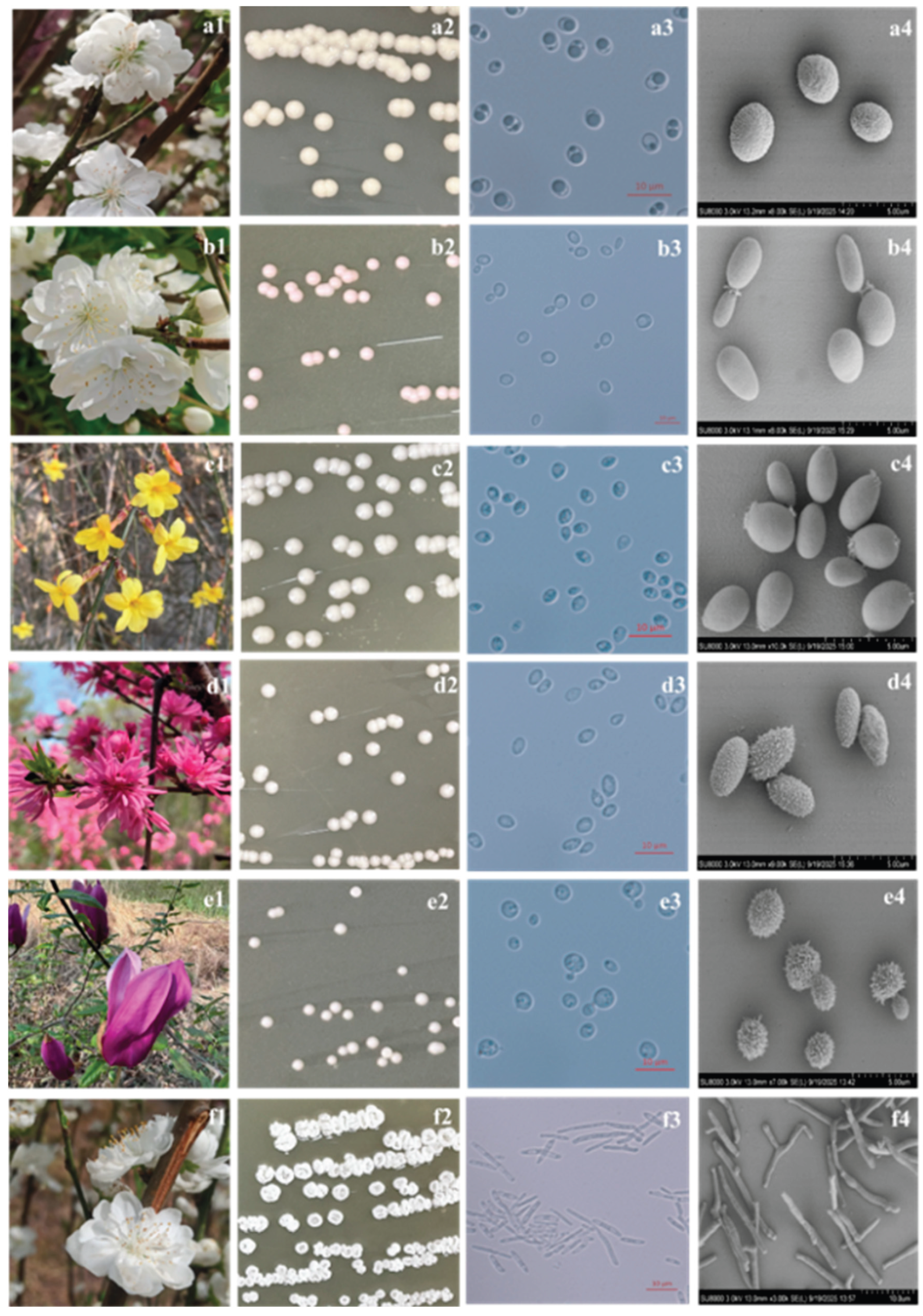
Figure 2.
Maximum likelihood phylogenetic tree based on the concatenated sequences of D1/D2 domain of LSU rRNA and ITS region showing the relationships of these novel strains with their related species. (a) Fanglaniella lipolytica CGMCC 2.6218 and Trigonosporomyces otomorphus CGMCC 2.6214; (b) Polychromogenomyces tardus CGMCC 2.8784; (c) Pseudotremella jasmini CGMCC 2.6068; (d) Teunia pruni CGMCC 2.8783; (e) Kurtzmanomyces yulaniae CGMCC 2.8812. Bootstrap values from 1000 replications are shown at branch points.
Figure 2.
Maximum likelihood phylogenetic tree based on the concatenated sequences of D1/D2 domain of LSU rRNA and ITS region showing the relationships of these novel strains with their related species. (a) Fanglaniella lipolytica CGMCC 2.6218 and Trigonosporomyces otomorphus CGMCC 2.6214; (b) Polychromogenomyces tardus CGMCC 2.8784; (c) Pseudotremella jasmini CGMCC 2.6068; (d) Teunia pruni CGMCC 2.8783; (e) Kurtzmanomyces yulaniae CGMCC 2.8812. Bootstrap values from 1000 replications are shown at branch points.
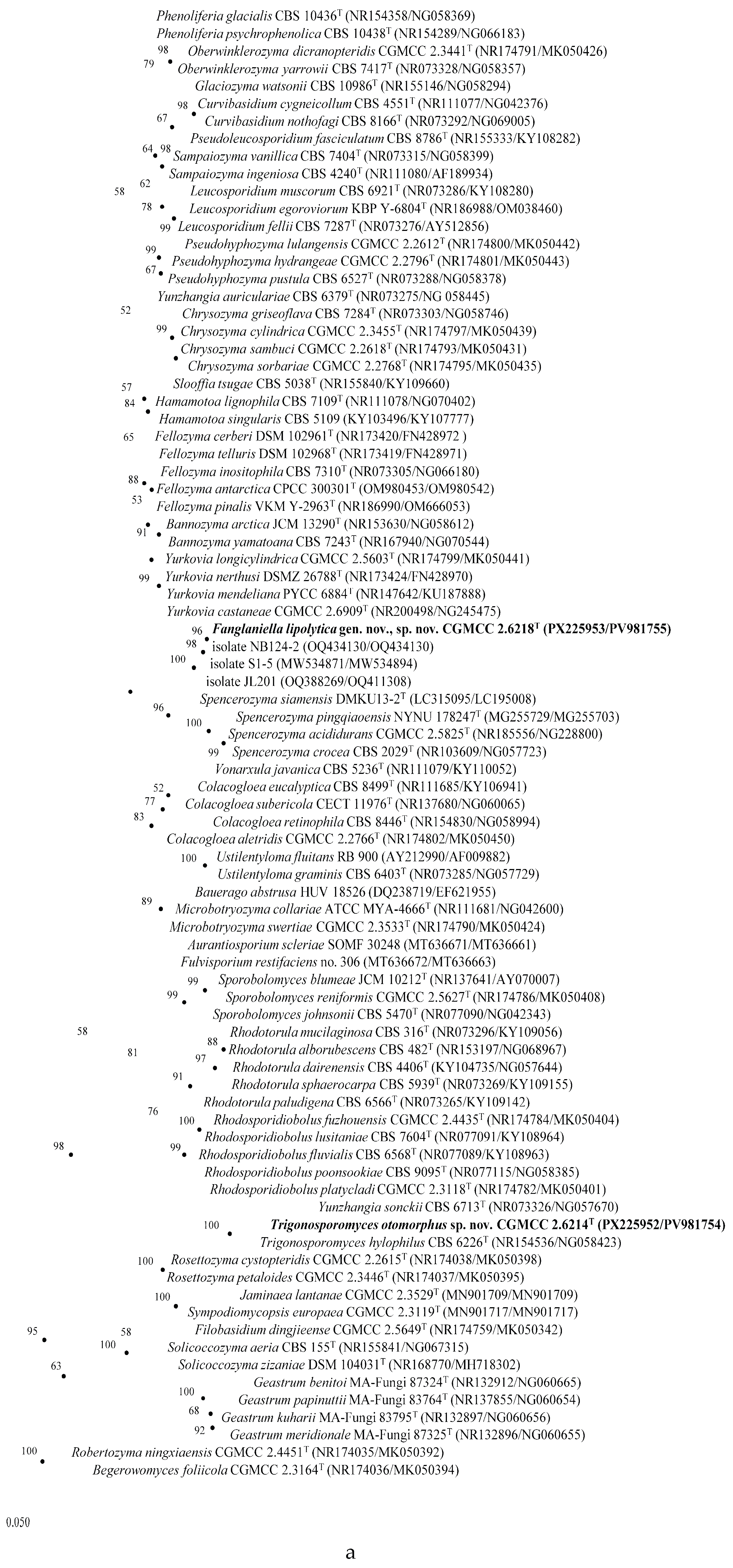
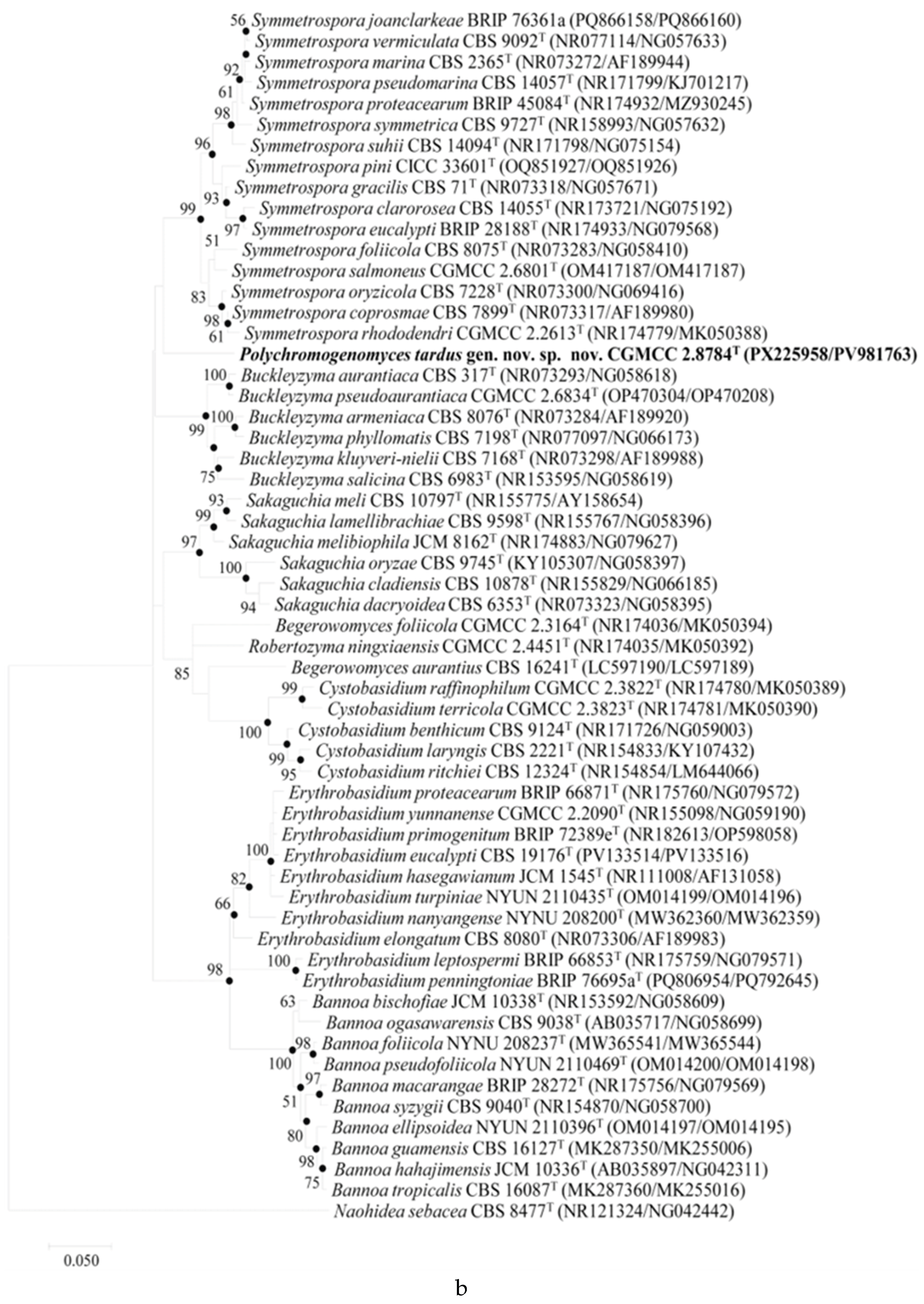
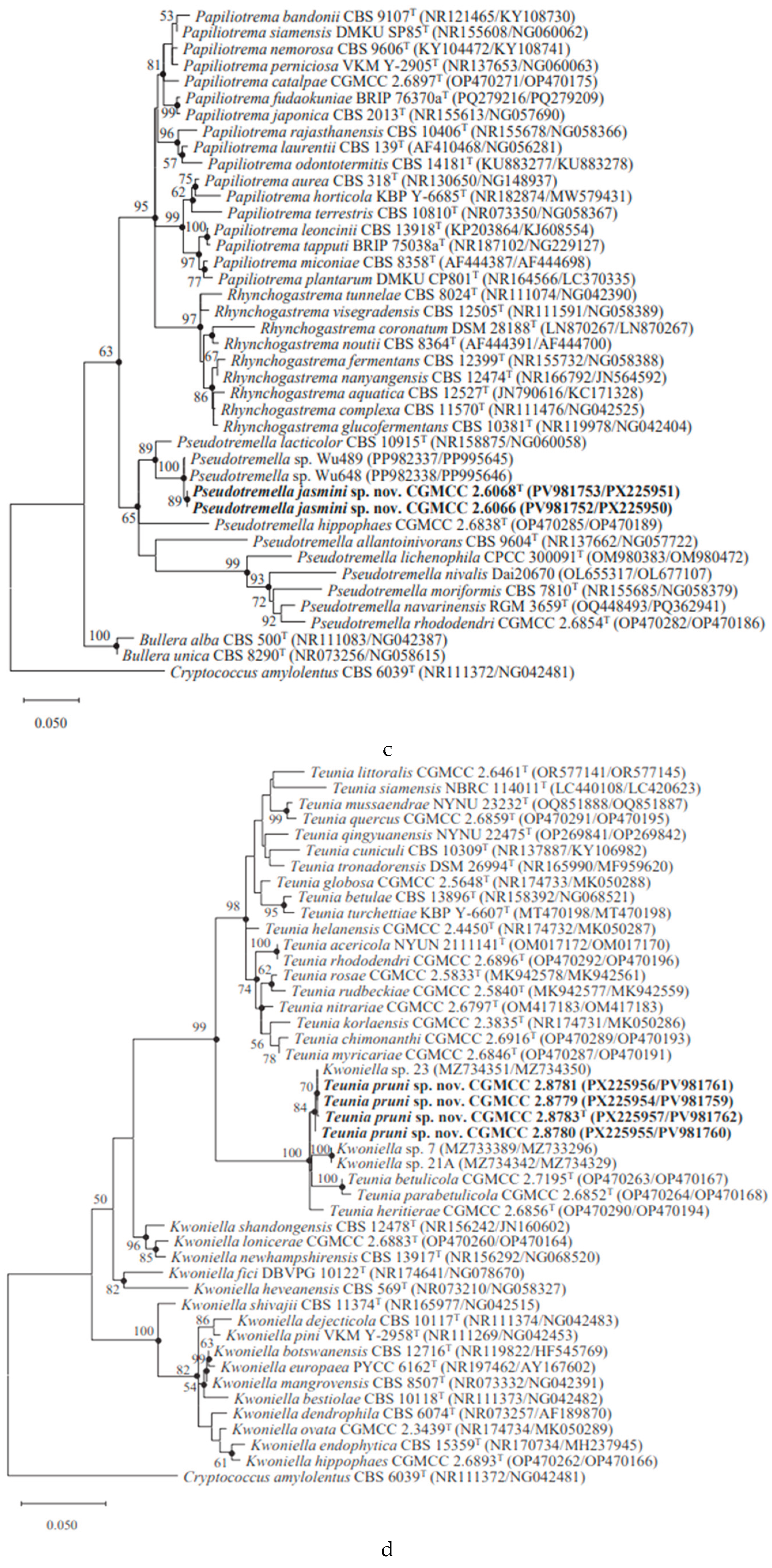
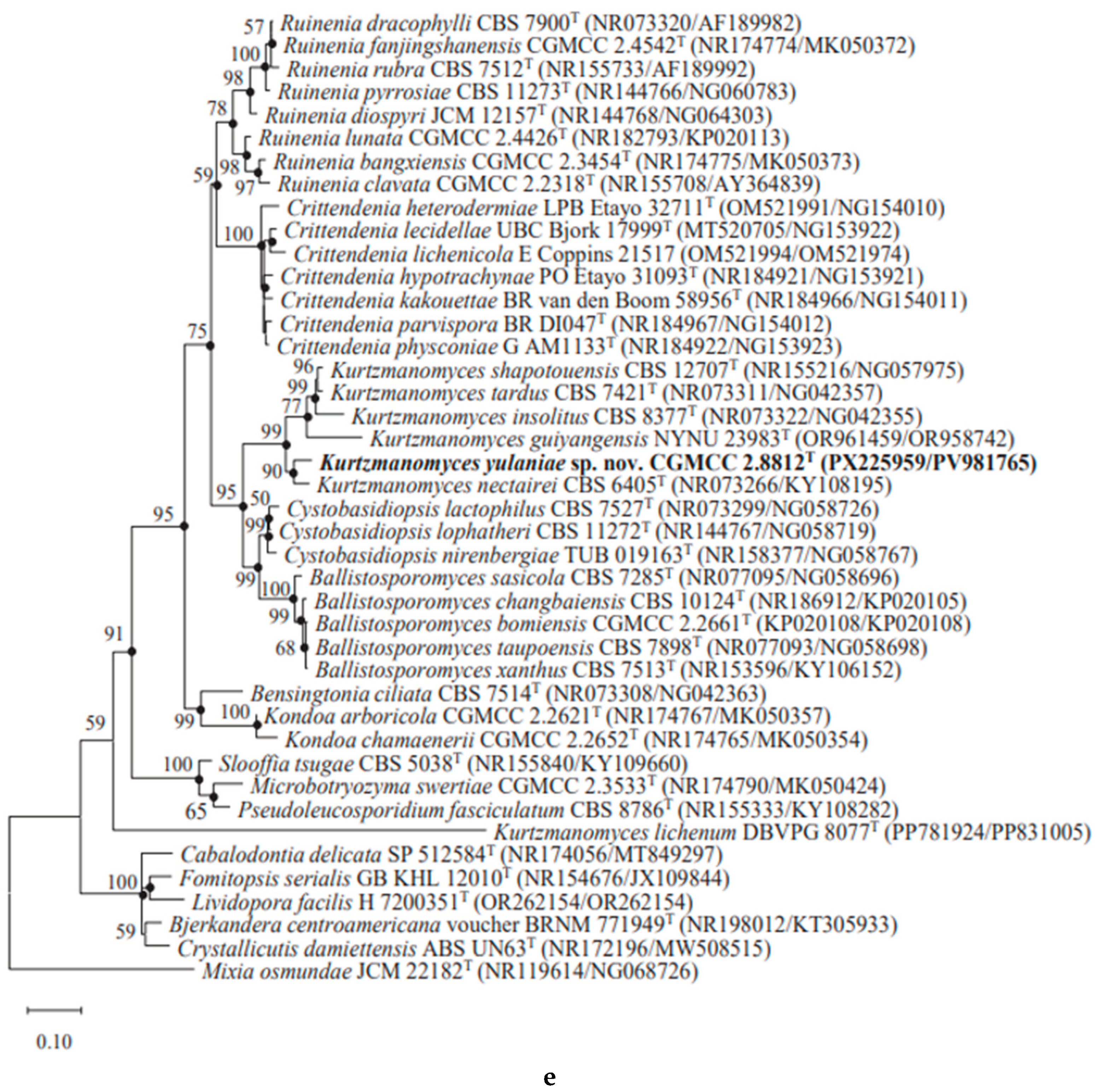
Figure 3.
Extracellular lipase and esterase activity after two weeks of growth. (A): Fanglaniella lipolytica CGMCC 2.6218; (B): Polychromogenomyces tardus CGMCC 2.8784; (C): Pseudotremella jasmini CGMCC 2.6068; (D): Teunia pruni CGMCC 2.8783; (E): Kurtzmanomyces yulaniae CGMCC 2.8812; (F): Trigonosporomyces otomorphus CGMCC 2.6214.
Figure 3.
Extracellular lipase and esterase activity after two weeks of growth. (A): Fanglaniella lipolytica CGMCC 2.6218; (B): Polychromogenomyces tardus CGMCC 2.8784; (C): Pseudotremella jasmini CGMCC 2.6068; (D): Teunia pruni CGMCC 2.8783; (E): Kurtzmanomyces yulaniae CGMCC 2.8812; (F): Trigonosporomyces otomorphus CGMCC 2.6214.
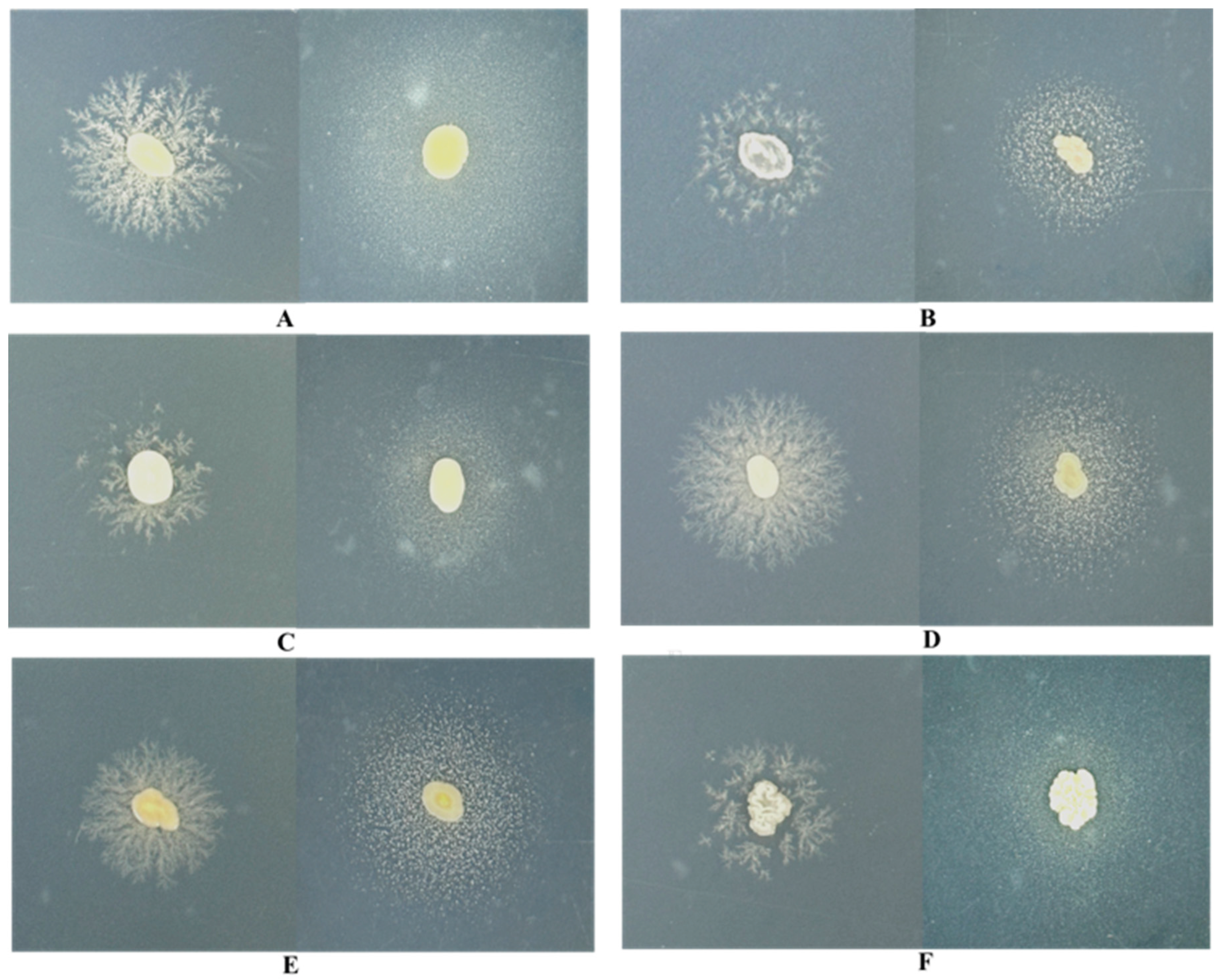
Figure 4.
CAZyme gene family profiles: (a) stacked bar plot of CAZyme category distribution; (b) heatmap of family domain abundance across novel species.
Figure 4.
CAZyme gene family profiles: (a) stacked bar plot of CAZyme category distribution; (b) heatmap of family domain abundance across novel species.
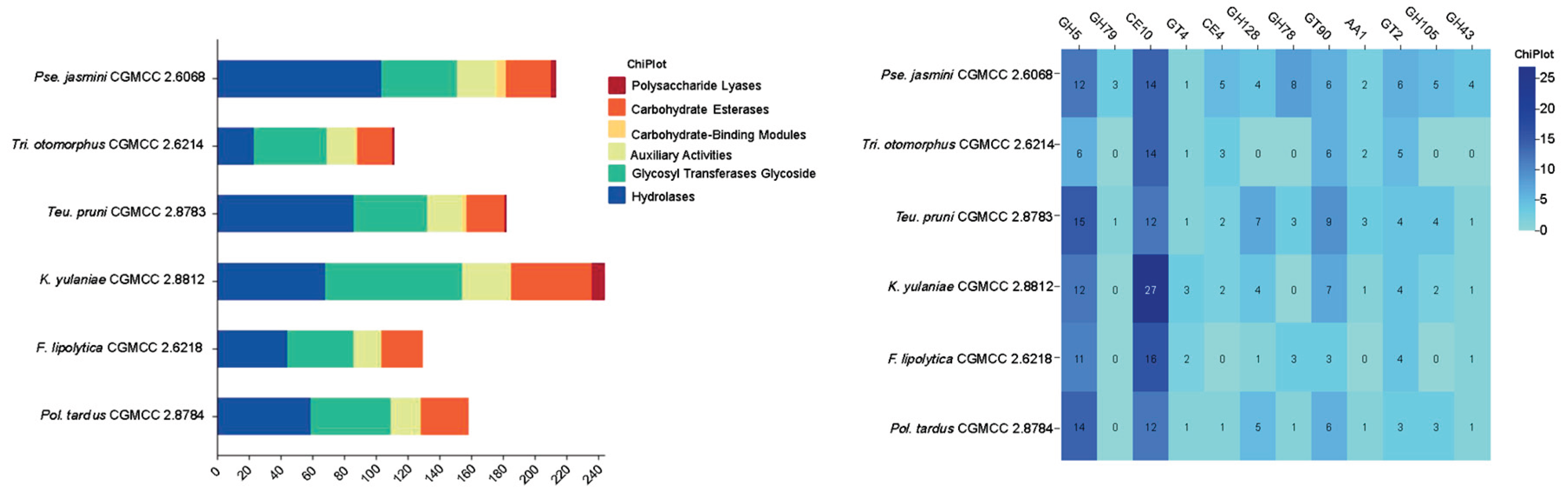

Table 1.
Genome sequence data of the type strains of six novel species.
| Strains | Accession number | Genome size (Mb) |
Sequence depth |
GC content | Gene No. |
| CGMCC 2.6068 | JBTBFM000000000 | 21.1 | 108× | 52% | 7371 |
| CGMCC 2.6214 | JBTBFN000000000 | 12.1 | 454× | 52.5% | 4553 |
| CGMCC 2.6218 | JBTBFO000000000 | 17.6 | 327× | 55.5% | 4931 |
| CGMCC 2.8783 | JBTBFJ000000000 | 20.8 | 282× | 55.5% | 6415 |
| CGMCC 2.8784 | JBTBFQ000000000 | 23.5 | 218× | 54.5% | 6495 |
| CGMCC 2.8812 | JBTBFP000000000 | 18.2 | 360× | 56.5% | 7842 |
Table 2.
Genes potentially linked to lipase and esterase activities in the genomes of six novel species.
Table 2.
Genes potentially linked to lipase and esterase activities in the genomes of six novel species.
| Gene ID | Gene Name | Swiss-Prot Description |
| Fanglaniella. lipolytica CGMCC 2.6218 | ||
| gene2153 | lip | Uncharacterized protein C57A7.05 |
| gene2612 | lip | Lipase B |
| gene3107 | TCL | Triacylglycerol lipase 2 |
| gene2424 | HSL | Hormone-sensitive lipase |
| Polychromogenomyces tardus CGMCC 2.8784 | ||
| gene3033 | TCL | Triacylglycerol lipase 2 |
| gene5698 | TCL | Triacylglycerol lipase 2 |
| gene2736 | HSL | Hormone-sensitive lipase |
| Pseudotremella jasmini CGMCC 2.6068 | ||
| gene2700 | TCL | Triacylglycerol lipase 2 |
| gene5178 | TCL | Triacylglycerol lipase 2 |
| gene5866 | HSL | Hormone-sensitive lipase |
| Teunia pruni CGMCC 2.8783 | ||
| gene2448 | TCL | Triacylglycerol lipase 2 |
| gene2967 | TCL | Triacylglycerol lipase 2 |
| Kurtzmanomyces yulaniae CGMCC 2.8812 | ||
| gene5741 | TCL | Triacylglycerol lipase 2 |
| gene6514 | TCL | Triacylglycerol lipase 2 |
| gene4040 | LIPE | AB hydrolase superfamily protein C1039.03 |
| Trigonosporomyces otomorphus CGMCC 2.6214 | ||
| gene0310 | TCL | Triacylglycerol lipase 2 |
| gene2453 | TCL | Triacylglycerol lipase 2 |
| gene3248 | HSL | Hormone-sensitive lipase |
Table 3.
Physiological and biochemical characteristics of the two novel genera and four novel yeast species.
Table 3.
Physiological and biochemical characteristics of the two novel genera and four novel yeast species.
| F. lipolytica | Pol. tardus | Pse. jasmini | Teu. pruni | K. yulaniae | Tri. otomorphus | |
| Fermentation of | ||||||
| Glucose | - | - | - | - | - | - |
| Galactose | - | - | - | - | - | - |
| Sucrose | - | - | - | - | - | - |
| Maltose | - | - | - | - | - | - |
| Lactose | - | - | - | - | - | - |
| Raffinose | - | - | - | - | - | - |
| Assimilation of carbon compounds | ||||||
| Glucose | + | + | + | + | + | + |
| Galactose | - | + | + | w | w | - |
| L-sorbose | - | + | + | + | - | - |
| Sucrose | + | w | + | + | + | w |
| Maltose | + | w | + | + | + | - |
| Cellobiose | w | + | + | + | + | - |
| Trehalose | + | + | + | + | + | - |
| Lactose | - | - | w | + | + | - |
| Melibiose | - | w | + | + | - | - |
| Raffinose | + | w | + | + | + | - |
| Melezitose | + | w | + | + | + | - |
| Inulin | - | w | w | - | - | - |
| Soluble starch | + | w | - | + | + | - |
| D-Xylose | - | + | + | + | + | - |
| D-Ribose | - | + | w | + | w | - |
| L-Arabinose | - | - | + | + | + | - |
| L-Rhamnose | - | w | + | + | - | - |
| Methanol | - | w | - | - | - | - |
| Ethanol | - | - | + | + | + | + |
| Glycerol | - | + | + | + | w | + |
| Erythritol | - | - | - | - | w | - |
| Ribitol | - | - | + | + | + | - |
| Galactitol | - | - | + | + | - | - |
| D-Mannitol | w | + | + | + | + | + |
| Sorbitol | w | + | + | + | w | + |
| Methyl-α-D-Glucoside | + | w | + | + | + | - |
| Salicin | + | + | + | + | w | - |
| DL-Lactate | w | - | - | + | - | - |
| Succinic acid | + | - | w | + | w | + |
| Citrate | + | - | - | w | - | w |
| Inositol | - | - | + | - | - | + |
| Assimilation of nitrogen compounds | ||||||
| Nitrate | + | w | w | + | + | + |
| Nitrite | - | - | - | - | - | - |
| L-Lysine | + | + | + | + | + | + |
| Ethylamine hydrochloride | + | w | w | + | + | - |
| Cadaverine | + | + | + | + | + | w |
| Creatine | + | w | w | + | w | w |
| Creatinine | + | + | + | + | + | + |
| Other tests | ||||||
| Vitamin-free | + | + | + | + | + | + |
| 50% glucose | + | - | + | + | - | + |
| 60% glucose | + | - | + | + | - | w |
| 10% NaCl + 5% glucose | + | - | + | w | - | - |
| Urease activity | + | + | + | + | + | + |
| Diazonium Blue B | + | + | + | + | + | + |
| Temperature tolerance | ||||||
| 30 °C | + | w | + | + | w | + |
| 32 °C | + | - | + | + | - | + |
| 35 °C | + | - | w | - | - | + |
| 37 °C | - | - | - | - | - | w |
| 40 °C | - | - | - | - | - | - |
Note: +, positive; −, negative; w, weakly positive.
Disclaimer/Publisher’s Note: The statements, opinions and data contained in all publications are solely those of the individual author(s) and contributor(s) and not of MDPI and/or the editor(s). MDPI and/or the editor(s) disclaim responsibility for any injury to people or property resulting from any ideas, methods, instructions or products referred to in the content. |
© 2026 by the authors. Licensee MDPI, Basel, Switzerland. This article is an open access article distributed under the terms and conditions of the Creative Commons Attribution (CC BY) license (http://creativecommons.org/licenses/by/4.0/).
Copyright: This open access article is published under a Creative Commons CC BY 4.0 license, which permit the free download, distribution, and reuse, provided that the author and preprint are cited in any reuse.


