

Submitted:
09 June 2026
Posted:
10 June 2026
You are already at the latest version
Abstract
Phosphate is an essential element for energy metabolism, bone mineralization and chondrocyte function, particularly during growth. Its homeostasis involves complex interactions between dietary intake, renal excretion and hormonal regulation, notably through fibroblast growth factor 23 (FGF23) and growth hormone (GH). The intricate balance of phosphate and its interplay with FGF23 and GH are examined in the context of normal development and disorders such as X-linked hypophosphatemia (XLH) and chronic kidney disease (CKD), which disrupt this balance through mechanisms of hypophosphatemia or hyperphosphatemia. FGF23 emerges as a key regulator, mediating phosphate excretion and vitamin D metabolism, while GH exerts a counter-regulatory effect by promoting phosphate reabsorption and chondrocyte proliferation. This hormonal interaction maintains skeletal integrity but becomes dysregulated in pathological conditions, leading to impaired growth and mineralization. Recent insights into the molecular mechanisms of phosphate transporters and the role of the PHEX gene in FGF23 regulation provide promising avenues for therapeutic interventions. Emerging treatments, including phosphate binders, calcitriol supplementation and anti-FGF23 antibodies such as burosumab, offer potential to address the complications of phosphate dysregulation. However, challenges remain in optimizing therapies for pediatric populations and mitigating adverse effects like vascular calcification. Future research into phosphate homeostasis, transporter dynamics and gene-based approaches holds the promise of advancing clinical outcomes for phosphate-related disorders. This review explores the dual role of phosphate in skeletal growth, highlighting its critical contributions to chondrocyte maturation, apoptosis and hydroxyapatite formation during endochondral ossification.
Keywords:
phosphates
; FGF23 protein
; growth hormone
; hypophosphatemia
; chronic kidney disease
; X-linked hypophosphatemia
; PHEX gene
; bone mineralization
1. Introduction
During childhood and adolescence, skeletal growth requires a continuous and tightly regulated supply of inorganic phosphate. Beyond its classical structural role in hydroxyapatite formation, phosphate acts as a metabolic substrate controlling chondrocyte maturation, apoptosis and energy metabolism within the growth plate. Consequently, the organism must dynamically allocate phosphate between bone mineralization and systemic metabolic demands.
This allocation is coordinated by an endocrine network involving parathyroid hormone (PTH), vitamin D, growth hormone (GH) and fibroblast growth factor 23 (FGF23). Traditionally, GH and its mediator insulin-like growth factor-1 (IGF-1) have been viewed as anabolic regulators that promote phosphate retention to sustain growth, whereas FGF23 has been considered a counter-regulatory phosphaturic hormone preventing phosphate overload. However, emerging experimental and clinical observations challenge this simple antagonistic model. In several pediatric conditions characterized by rapid statural changes or altered mineral metabolism, circulating FGF23 levels increase in parallel with GH/IGF-1 activity and phosphate retention, suggesting a coordinated rather than purely opposing interaction. These findings raise an unresolved biological question: does FGF23 merely protect against hyperphosphatemia, or does it participate in the adaptive redistribution of phosphate required for longitudinal growth? Addressing this question is particularly relevant in disorders such as chronic kidney disease (CKD) and X-linked hypophosphatemia (XLH), where disturbed phosphate handling leads to severe growth impairment despite active GH signaling.
In this review, we propose that phosphate homeostasis during growth is governed by a functional GH–FGF23 axis that regulates phosphate allocation between kidney, bone and growth plate cartilage. We integrate molecular, experimental and clinical evidence to define how this interaction operates in physiological growth and how its disruption contributes to skeletal pathology.
2. Phosphate as a Limiting Substrate for Growth
Phosphate is essential for energy conversion, metabolic regulation, bone health and many other biological processes. Its homeostasis is a rather complex interplay of hormonal regulation, cellular processes and organ interaction controlled by its renal excretion, intestinal absorption and bone storage (Figure 1). These phosphate adjustments are especially determinant for a correct osseous development during the growth period, fibroblast growth factor 23 (FGF23) and growth hormone (GH) being critical players for this process. Since the understanding of mechanisms for maintaining normal body phosphate levels is crucial for managing disorders related to its imbalance, knowledge about its control has been an item of investigation during past years.
At cellular level elevated intracellular phosphate concentrations can activate export pathways, suggesting the existence of intrinsic phosphate-sensing mechanisms [1]. Xenotropic and Polytropic Retrovirus Receptor 1 (XPR1) plays a central role in cellular phosphate efflux, and its activity is modulated by inositol pyrophosphates in kidneys, highlighting an additional layer of intracellular phosphate regulation [2,3,4,5,6,7]. However, systemic phosphate balance is ultimately refined at the renal level, where proximal tubular reabsorption is dynamically adjusted in response to hormonal signals such as FGF23 and PTH [8,9].
FGF23 reduces renal phosphate reabsorption by downregulating the sodium–phosphate cotransporters NaPi-2a and NaPi-2c, through FGFR1–α-Klotho signaling, primarily via ERK1/2 activation [10,11]. This action is closely coordinated with PTH, which also promotes phosphaturia and stimulates FGF23 production in a feedback loop that prevents phosphate overload. Vitamin D further complements this network by enhancing intestinal phosphate absorption while being negatively regulated by FGF23. Together, these mechanisms ensure that circulating phosphate levels remain within a narrow physiological range while adapting to developmental demands.
However, the FGF23 phosphate modulation at the kidney is not an independent process but a corresponding and synergic response to parathyroid hormone (PTH) [9,12,13,14,15,16]. This interdependence is evident in clinical observations where synthetic PTH therapy alone fails to normalize phosphate levels in patients with hypoparathyroidism or familial tumoral calcinosis unless FGF23 co-treatment is administered [12,17,18]. A feedback loop ensures balance, as PTH stimulates FGF23 production, which in turn inhibits PTH secretion [12,17,19,20].
Finally, there is a final player complementing this renal regulatory action of FGF23 and PTH who is vitamin D [21]. The active metabolite calcitriol (1,25-(OH)2D), a vitamin D metabolite, enhances phosphate absorption in the intestines and is itself indirectly regulated by both PTH and FGF23 [22,23]. As seen, there exists a complex interaction of local and systemic factors that ensure that serum phosphate levels are maintained within a narrow range taking also on account a dynamic reservoir for releasing or storing it based on physiological demands which is the bone [12,19,23].
2.1. Phosphate-Dependent Molecular Mechanisms in Long Bones
The growth plate, or epiphyseal plate, is the region of longitudinal bone growth in children and adolescents. It is a cartilaginous structure located at the ends of long bones, responsible for the longitudinal growth of bones during childhood and adolescence. It is composed of chondrocytes arranged in columns that undergo a series of molecular and biochemical changes, leading to their maturation, apoptosis and the eventual calcification of the matrix, which is then invaded by blood vessels and replaced by bone (Figure 2) [5,24,25,26].
Adequate phosphate levels play a crucial role in the development and function of the growth plate due to both its involvement in the proliferation, differentiation and apoptosis of chondrocytes (the cells of the growth plate) and the mineralization of the bone front to ensure adequate growth [27,28]. Insufficient phosphate availability disrupts terminal chondrocyte apoptosis and prevents proper mineralization of the osteoid matrix, resulting in osteoid accumulation and compromised bone structure. Thus, systemic phosphate homeostasis must be precisely aligned with the metabolic needs of the growth plate.
During bone formation, osteoblasts synthesize a primary extracellular matrix rich in randomly oriented type I collagen fibrils. This matrix is remodeled and replaced by a secondary, highly organized collagen scaffold that becomes mineralized via hydroxyapatite deposition—a process requiring sufficient local phosphate concentration. Thus, skeletal elongation depends critically on both adequate mineral supply and coordinated cellular maturation [29,30].
Phosphate regulates growth plate progression through signaling pathways that integrate metabolic and mechanical inputs. The MAPK pathway, particularly ERK1/2, serves as a central regulator of chondrocyte proliferation and differentiation. Activation of the MEK–ERK1/2 cascade drives the G1-to-S phase transition, enabling chondrocyte proliferation and subsequent differentiation [31]. Multiple upstream signals converge on ERK activation. Fibroblast growth factors modulate chondrocyte proliferation and differentiation via the MEK–ERK1/2 and p38 MAPK pathways [10,32,33]. Parallel to this, extracellular matrix sensing contributes to regulation: the interaction between type II collagen and integrin β1 activates ERK1/2 phosphorylation and limits premature hypertrophy by modulating downstream BMP–SMAD1 signaling [33,34,35].
Mechanical loading further influences growth plate behavior. Mechanical stimuli activate c-Raf–dependent ERK signaling, inducing the expression of SOX9, VEGF and c-Myc, genes required for chondrocyte proliferation, vascular invasion and cartilage remodeling and even during inflammatory conditions [36]. These pathways demonstrate that growth plate maturation is not solely genetically programmed but dynamically regulated by environmental and structural cues.
A key transition in endochondral ossification is the apoptosis of hypertrophic chondrocytes, which allows vascular invasion and bone replacement. This process is ERK-dependent and closely linked to mitochondrial apoptotic pathways. Experimental evidence indicates that extracellular phosphate availability directly modulates this step: phosphate deficiency suppresses ERK activation and prevents terminal apoptosis, whereas phosphate restoration triggers mitochondrial apoptosis and normal growth plate maturation [4].
Therefore, ERK signaling functions as a metabolic checkpoint that integrates growth factor signaling, matrix interactions, mechanical stimulation and phosphate availability to determine whether cartilage continues proliferating or progresses toward mineralization. These findings indicate that phosphate functions not only as a structural mineral substrate but also as a signaling metabolite acting as a metabolic checkpoint within the growth plate.
2.2. Endocrine Control of Phosphate Homeostasis in Long Bone Growth
Because skeletal growth imposes substantial phosphate demand, endocrine regulation ensures adequate mineral allocation. During this period, bones play a crucial regulation role, primary thorough osteocytes, which produce and regulate FGF23 [20,37,38]. GH, primarily through IGF-1, enhances renal phosphate reabsorption by increasing NaPi transporters availability and shifts the balance toward phosphate retention. Therefore, it stimulates chondrocyte proliferation and osteoblast activity, increasing skeletal phosphate utilization. At the local level, adequate extracellular phosphate promotes ERK1/2 activation in chondrocytes, facilitating proliferation, hypertrophic differentiation and the mitochondrial apoptotic transition necessary for endochondral ossification. Thus, GH-driven phosphate retention is directly coupled to progression of chondrocyte maturation. In contrast, FGF23 reduces NaPi expression and limits renal phosphate reabsorption and suppresses calcitriol synthesis, reducing systemic phosphate availability. Reduced systemic phosphate availability attenuates ERK activation in terminal hypertrophic chondrocytes, impairing apoptosis and delaying matrix mineralization. Therefore, FGF23-mediated phosphaturia can functionally restrain growth plate maturation when mineral supply becomes limiting.
Together, these mechanisms indicate that the GH–IGF-1 axis and FGF23 do not merely regulate serum phosphate levels but dynamically determine whether sufficient phosphate reaches the growth plate to permit normal chondrocyte maturation and longitudinal bone growth. This axis plays a pivotal role in regulating renal phosphate handling and bone growth, yet many aspects of its modulation during critical growth phases remain poorly understood (Figure 3) [39]. However, the precise mechanism by which GH influences FGF23 production expression remains incompletely understood, necessitating further research [17,40,41].
2.2.1. Fibroblast Growth Factor 23
As mentioned, FGF23 primary action occurs in the proximal tubules of kidneys downregulating the sodium-phosphate cotransporters NaPi-2a and NaPi-2c [12,42,43]. Initial FGF23 signalling begins in the distal convoluted tubule (DCT), where it binds to its receptor FGFR1 and the alpha-Klotho coreceptor. This interaction activates pathways such as ERK1/2 and SGK1, leading to the internalization and degradation of sodium-phosphate cotransporters [43,44,45]. In the distal renal tubules, FGF23 acts on the enzyme with-no-lysine kinase-4 (WNK4), which increases the membrane abundance of the NCC and TRPV5, a calcium-selective ion channel that is constitutively open at physiological membrane potentials and is modulated by Calmodulin in a calcium-dependent manner [46]. This action improves calcium and sodium reabsorption, further demonstrating the influence of FGF23 on renal physiology [45,47]. At the same time, FGF23 reduces the synthesis of active vitamin D (calcitriol; 1,25-(OH)2D3) by inhibiting the enzyme 1α-hydroxylase (Cyp27b1) and promoting its catabolism through 24-hydroxylase (Cyp24), thus decreasing the intestinal absorption of calcium and phosphate (Figure 1) [12,48]. FGF23 also interacts with PTH, potentially inhibiting its secretion by the parathyroid glands, while both hormones act synergistically, targeting Sodium-Hydrogen Exchanger Regulatory Factor-1 (NHERF-1), to enhance renal phosphate excretion, highlighting a complex regulatory relationship [22].
In the bones, FGF23 exerts directly an inhibition of the mineralization processes by a Klotho-independent mechanisms, mediated by Wnt/β-catenin signaling pathways [49,50,51,52], or by Klotho-dependent pathway, as shown in Klotho-deficient mice, in which the absence of FGF23 or α-Klotho, resulted in the accumulation of the mineralization inhibitors osteopontin and pyrophosphate [49,51,53,54]. FGF23 also directly influences the production of Fetuin-A, a protein implicated in bone and cardiovascular disorders, suggesting that FGF23-Fetuin-A interaction subsequently affects osteoblast differentiation [55,56,57]. Sclerostin, another protein secreted by osteocytes, directly stimulates FGF23 synthesis, while PTH also increases FGF23 expression, illustrating a complex interplay between these factors in bone metabolism [56,57]. Furthermore, FGF23 levels increase in response to oxidative stress-induced apoptosis in osteocytes through Mitogen-Activated Protein Kinase (MAP) activation and Factor Nuclear kappa B (NF-kB) signaling, processes that 17β-estradiol can mitigate (56). Proinflammatory cytokines, such as Tumor Necrosis Factor (TNF), Interleukin-1 beta (IL-1β) and bacterial lipopolysaccharide (LPS), further regulate FGF23 production in osteocytes, contributing to hypophosphatemia during inflammatory conditions such as sepsis [58].
There is an indirect mechanism by which FGF23 also affects bone health, consisting in reducing renal phosphate reabsorption and suppressing 1,25-(OH)2D3 synthesis for preventing excessive mineralization. Genes such as PHEX, DMP-1 and ENPP1 also regulate FGF23 production, though the precise molecular mechanisms of their influence on FGF23 remain unclear [53,59,60,61,62].
2.2.2. Growth Hormone
GH is able to enhance tubular phosphate reabsorption. This action occurs when there is an increase in maximal tubular phosphate reabsorption (TmPO4) following administration of GH treatment, indicating its capacity for improving kidney ability to recover phosphate from the urine [39,63]. Its impact on renal phosphate transport takes place through its downstream effector, IGF-1 activates receptors with intrinsic tyrosine kinase activity [64,65]. Studies in hypophysectomized rats, which lack pituitary function, reveal that administration of IGF-1 can reproduce the effects of GH on phosphate reabsorption and mimics GH effects on plasma levels of 1,25-(OH)2D, enhancing phosphate uptake at the proximal renal tubules through a PTH-independent mechanism [39]. These results support IGF-1 as a critical mediator of GH actions (34,63). Moreover, the interplay between GH and the pituitary underscores their coordinated role in regulating systemic growth, as GH influences both skeletal development and phosphate metabolism. Beyond increasing TmPO4, GH administration also elevates the glomerular filtration rate (GFR) and renal plasma flow (RPF) [39,63]. Over bone growth, GH stimulates proliferation and differentiation of osteoblasts, other key cells involved in bone formation. Additionally, GH elevates the production of IGF-1, which further drives bone development by promoting anabolic processes in this tissue [66].
GH plays a central role in controlling circulatory IGF-1 levels through its actions in the liver, mainly during the postnatal period. Studies in multiple animal models have unequivocally demonstrated that the GH/IGF-1 axis plays a central role in the regulation of skeletal acquisition. Insulin-like Growth Factor I (IGF-I) is a central regulator of skeletal growth, acting through both local paracrine signaling within the growth plate and systemic endocrine pathways. Locally, IGF-I is synthesized by chondrocytes in the proliferative and hypertrophic zones, where it promotes cell proliferation and differentiation, thereby supporting longitudinal bone growth. Osteoblasts are the primary source of IGF-I in bone tissue and osteoblast-derived IGF-I acts via autocrine and paracrine mechanisms to enhance osteoblast differentiation and activity, partly through modulation of the Ephrin B2/EphB4 signaling pathway, while also influencing osteoclastogenesis. Moreover, IGF-I contributes to bone remodeling by regulating the RANKL/OPG axis, which controls osteoclast differentiation and resorptive function. Through stimulation of extracellular matrix production and mineralization in osteoblasts, IGF-I plays a critical role in maintaining bone mass and structural integrity, highlighting its importance in skeletal development and bone homeostasis [47].
2.2.3. Interaction Between FGF23 and GH in Longitudinal Growth
Although a direct physiological interaction between GH and FGF23 at the growth plate has not been clearly demonstrated, GH is a key regulator of endochondral ossification, stimulating chondrocyte proliferation, hypertrophic differentiation and extracellular matrix production.
Longitudinal bone growth requires a coordinated balance between chondrocyte maturation and phosphate availability. GH promotes skeletal growth primarily through stimulation of IGF-1, which enhances chondrocyte proliferation, hypertrophic differentiation and osteoblastic activity. These anabolic processes increase phosphate demand in the growth plate and newly forming bone. In contrast, FGF23 decreases systemic phosphate availability by promoting renal phosphate excretion and suppressing calcitriol synthesis, thereby limiting extracellular phosphate excess.
Under physiological conditions, GH and FGF23 act as complementary regulators of phosphate homeostasis. GH promotes renal phosphate retention and skeletal utilization through IGF-1–mediated anabolic activity, whereas FGF23 increases renal phosphate excretion and reduces calcitriol production [51,53,67,68,69,70,71]. This coordinated regulation helps maintain adequate phosphate delivery to the growth plate while preserving systemic mineral balance.
FGF23 has also been implicated in phosphate transport regulation through pathways involving receptors with intrinsic tyrosine kinase activity, including those associated with IGF-1 signaling. Because GH strongly influences bone growth and remodeling, these mechanisms may form part of a broader regulatory network linking phosphate metabolism with IGF-1 and parathyroid hormone (PTH) signaling [72,73]. In this context, elevated FGF23 levels may attenuate the phosphaturic and bone-resorbing effects of PTH, potentially modifying GH-dependent skeletal responses [74].
Overall, the relationship between GH and FGF23 can be viewed as a balance between anabolic demand and mineral availability. Under normal conditions, GH-driven skeletal growth is supported by adequate phosphate supply, whereas in phosphate-wasting states characterized by elevated FGF23, reduced phosphate availability may impair mineralization and growth plate function despite preserved GH activity.
Experimental models illustrate this functional opposition. Studies have shown that FGF23 suppresses osteoprogenitor cell differentiation, thereby counteracting the bone-anabolic actions of growth hormone (GH) and IGF-1 on the skeleton. In Dmp1-knockout mice, loss of Dmp1 causes excessive FGF23 secretion, hypophosphatemia, and impaired bone mineralization, highlighting how chronically elevated FGF23 disrupts skeletal integrity and contributes to rickets-like deformities [47]. In vitro, particularly in the presence of its co-receptor α-Klotho, FGF23 directly inhibits osteoblast differentiation and mineralization capacity. This indicates a cell-autonomous mechanism by which FGF23 reduces bone formation by restraining osteoblastic activity and matrix mineralization [47,75]. Conversely, GH/IGF-1 signaling enhances renal phosphate retention and skeletal mineral deposition, supporting the concept that endocrine growth stimulation requires parallel adaptation of mineral metabolism. Rather than acting as simple antagonists, accumulating data suggest a coordinated regulatory loop: growth-induced increases in IGF-1 are accompanied by rises in FGF23 expression, implying that FGF23 may serve as a buffering signal that prevents hyperphosphatemia during periods of rapid skeletal expansion. In this framework, GH increases phosphate demand, while FGF23 redistributes phosphate to maintain systemic stability.
Clinical studies in children receiving growth hormone (GH) therapy support this adaptive model. In growth hormone deficiency (GHD), GH treatment simultaneously increases IGF-1, FGF23, and soluble Klotho, yet paradoxically enhances tubular phosphate reabsorption and causes mild hyperphosphatemia. Positive correlations between FGF23 levels and height gain indicate that FGF23 activation accompanies—rather than suppresses—accelerated statural growth.
This complex endocrine network is also beginning to be elucidated in children with growth disorders Belceanu et al. [76]followed 42 prepubertal, non-obese children with GHD over one year of GH replacement therapy, monitoring adipokine profiles, acylated/unacylated ghrelin (AG/UAG), FGF23 levels, and body composition. GH treatment produced a marked increase in both plasma FGF23 and serum IGF-1, unexpectedly accompanied by mild hyperphosphatemia that positively correlated with FGF23 upregulation rather than the anticipated phosphaturic effect. The strong positive association among FGF23, IGF-1, and height standard deviation scores (SDS) suggests a novel role for FGF23 in linear growth regulation, possibly by fine-tuning phosphate availability during periods of accelerated statural gain. Notably, despite elevated FGF23 and phosphate levels, total bone mineral density (BMD) remained stable, implying that GH/IGF-1–driven “catch-up” growth may prioritize longitudinal expansion and growth plate dynamics over immediate increments in areal BMD.
Efthymiadou et al. [77] investigated the interaction between the GH/IGF-1 axis and the FGF23/Klotho system in children with growth hormone deficiency (GHD) three months after starting GH therapy. They found significant increases in IGF-1, intact FGF23 (iFGF23), and soluble Klotho (sKlotho), paradoxically accompanied by higher serum phosphate and enhanced tubular phosphate reabsorption. Instead of causing phosphate loss, FGF23/Klotho upregulation occurred alongside phosphate retention, suggesting that GH replacement can transiently override the typical phosphaturic effect of FGF23. Positive correlations among iFGF23, sKlotho, IGF-1, and height standard deviation scores (SDS) support a coordinated endocrine circuit: GH/IGF-1 stimulates growth plate activity while co-regulating FGF23 and Klotho to ensure adequate phosphate for mineralization and linear growth. In this context, FGF23 acts less as a purely phosphaturic hormone and more as a dynamic signal within a bone–kidney–endocrine axis adapted to catch-up growth.
Dong et al. [78] confirmed and refined these findings in children with idiopathic short stature (ISS). rhGH therapy increased IGF-1, Klotho, and FGF23, with strong positive correlations among all three, indicating that GH activates the FGF23/Klotho axis regardless of the cause of short stature. However, unlike in GHD, FGF23 and Klotho levels in ISS did not correlate directly with height SDS, suggesting the pathway’s contribution to linear growth is diagnosis-dependent. In ISS, where endogenous GH is typically normal and defects may lie downstream (e.g., at the IGF-1 or growth plate level), FGF23/Klotho activation likely reflects GH-induced changes in phosphate and vitamin D metabolism rather than driving growth directly.
Together, growing evidence supports that FGF23 is not only a regulator of phosphate and vitamin D homeostasis but also an adaptive component of the GH/IGF-1–dependent skeletal growth program. Its impact on linear growth varies according to the underlying endocrine context, phosphate balance, and growth plate integrity.
3. Contrasting Mechanisms of Phosphate Dysregulation: CKD vs. XLH
Phosphate deregulation is a common denominator in various pathologies that, when they begin in childhood, trigger delayed growth in length (Figure 4).
Both chronic kidney disease (CKD) and X-linked hypophosphatemia (XLH) provide complementary models to study the interactions between fibroblast growth factor 23 (FGF23) and growth hormone (GH) in regulating phosphate metabolism, bone growth, and growth plate dynamics. Although both conditions feature elevated FGF23 levels, their underlying mechanisms and metabolic consequences diverge sharply. In XLH, caused by loss-of-function mutations in PHEX, FGF23 excess is primary and genetic, resulting from impaired proteolytic cleavage that leads to chronic phosphaturia, severe hypophosphatemia, and defective bone mineralization (rickets or osteomalacia) despite preserved glomerular filtration rate (GFR). Here, FGF23 is the primary driver of disease, causing phosphate wasting in the setting of intact renal function. In contrast, in CKD, FGF23 elevation is secondary and adaptive, arising progressively from impaired renal phosphate excretion, reduced 1,25-(OH)2D synthesis, and declining GFR; initially, this represents a compensatory effort to maintain phosphate homeostasis, but as kidney function deteriorates, FGF23 levels become markedly elevated (often hundreds- to thousands-fold) yet fail to prevent hyperphosphatemia due to insufficient nephron mass, while its suppression of 1,25-dihydroxyvitamin D contributes to secondary hyperparathyroidism and renal osteodystrophy. Despite these divergent etiologies—FGF23-driven phosphate loss with intact filtration in XLH versus FGF23 resistance and relative functional deficiency in the setting of global renal failure in CKD—both conditions converge on similar downstream effects: hypophosphatemia (in XLH) or eventual phosphate retention with disrupted mineralization (in earlier CKD stages), growth plate abnormalities, and impaired linear growth.
This pathological divergence highlights that the same hormonal elevation can produce opposing metabolic outcomes depending on the integrity of the kidney–bone axis and the presence of compensatory capacity, yet both models underscore the critical interplay between FGF23 and GH in skeletal development.
3.1. Chronic Kidney Disease (CKD): FGF23 Elevation as a Compensatory Mechanism
CKD is progressive condition characterized by impaired kidney function (glomerular filtration rate (GFR) less than 60 mL/min/1.73 m2 for more than three months), often leading to end-stage renal disease (ESRD) and increased mortality. Mineral and Bone Disorder (MBD) is a common complication and is often referred to as CKD-MBD (chronic kidney disease-Mineral and Bone Disorder) where elevated FGF23 and GH dysregulation frequently coexist in this disorder. CKD supposes a significant public health issue affecting millions worldwide. The global median prevalence of CKD is 9.5% (IQR 5.9–11.7) with the highest prevalence in Eastern and Central Europe (12·8%, 11.9–14.1) [79].
Although less common than in adults, CKD can appear in pediatric population, the most frequent causes being congenital anomalies of the kidney and urinary tract (CAKUT), renal hypoplasia/dysplasia and posterior urethral valves [80,81,82,83]. Premature birth and low birth weight are risk factors for the development of CKD after acute kidney injury (AKI), especially when there is nephron loss and maladaptive repair mechanisms [84,85]
CKD in infancy can have significant long-term health consequences, underscoring the importance of early diagnosis and intervention [83]. Growth impairment is a hallmark of pediatric CKD, arising from elevated FGF23, secondary hyperparathyroidism and resistance to GH/IGF-1 signaling. Elevated FGF23 levels, coupled with secondary hyperparathyroidism, disrupt normal bone mineralization and contribute to skeletal abnormalities (Figure 5) [86].
CKD is characterized by chronically elevated FGF23 levels due to the kidneys’ reduced capacity to excrete phosphate and activate vitamin D. The consequent elevation in FGF23 levels represents an adaptive response to prevent phosphate retention. This compensatory mechanism is crucial for preventing hyperphosphatemia and its associated risks [87,88] and requires the presence of α-Klotho in renal tubules. However, α-Klotho expression decreases as CKD progresses, leading to an FGF23 resistance and a reduction of active vitamin D production, what disturbs calcium homeostasis and stimulate parathyroid hyperplasia resulting in a maintained PTH secretion [89,90,91]. Over time, this adaptive response becomes maladaptive, disrupting mineral metabolism [60,92] contributing to bone disease and vascular calcification [90,91]. This new state, known as secondary hyperparathyroidism [50,62,93,94] can appear simultaneously to other complications like anemia, metabolic acidosis, sustained inflammation and cardiovascular risks [68,95,96,97]. As FGF receptor isoform 4 (FGFR4) is expressed in cardiac myocytes and endothelial cells, FGF23 is linked to cardiac hypertrophy and vascular remodeling in CKD patients, contributing to increased cardiovascular risk and mortality [87]. FGF23 can also directly stimulate production of inflammatory cytokines through the same receptor in hepatocytes, exacerbating chronic inflammation in CKD [98,99]. The negative impact of high circulating FGF23 levels over erythropoiesis contributes to the development of anemia and impairs leukocyte recruitment and host defense mechanisms, increasing susceptibility to infections in CKD patients [100,101,102,103].
Children with CKD develop resistance to GH/IGF-1 signaling. Experimental models using adenine-induced CKD in rats demonstrate that high-dose recombinant human GH (rhGH) partially restores growth plate structure, enhances chondrocyte proliferation and increases longitudinal growth, largely independent of bone mass improvements or normalization of FGF23 levels. GH exerts these effects by stimulating circulator IGF-1 at the growth plate and while functionally opposing the FGF23/α-Klotho axis by promoting phosphate reabsorption in the proximal renal tubule and thereby improving the mineral supply for endochondral ossification, what promotes proximal tubular phosphate reabsorption, partially counteracting the maladaptive FGF23-driven phosphate loss. Therefore, studying the interaction between GH and FGF23 in this population could uncover mechanisms underlying impaired growth and potential therapeutic targets.
Experimental data from an adenine-induced CKD rat model further support these observations. High dose rhGH treatment in this model increases body length, primarily through enhanced chondrocyte proliferation and enlargement of the hypertrophic zone within the growth plate, without inducing parallel improvements in axial bone mass. The CKD animals exhibit markedly elevated serum PTH and phosphate concentrations with preserved normocalcemic and rhGH administration does not significantly modify circulating PTH or FGF23 levels, nor does it substantially improve bone mineral density or overall bone mass. These findings suggest that, in CKD, the principal benefit of GH therapy lies in its direct effects on growth plate dynamics and phosphate handling rather than in rapid normalization of bone quantity or microarchitecture and that these effects occur in a milieu of persistently high FGF23 where GH-driven mechanisms partially counteract, but do not fully reverse, the mineral metabolism derangements.
As seen, decreased glomerular filtration in CKD, affects mineral and bone metabolism, including alterations in calcium, phosphorus, parathyroid hormone, 1,25-(OH)2D and FGF23 [1]. Regular monitoring of serum phosphate and calcium levels is necessary to prevent complications associated with hyperphosphatemia, PTH and FGF23 levels being good indicators of the risk of bone and vascular complications, useful for guiding patient therapy. Effective management of phosphate levels in CKD patients includes a combination of dietary recommendations (reducing phosphate intake while maintaining adequate protein and calcium intake), phosphate binders and modification in programmed dialysis in patients on dialysis. Patient education and emerging pharmacological treatments targeting gastrointestinal phosphate absorption are other additional strategies.
3.2. X-Linked Hypophosphatemia Rickets (XLH): Primary FGF23 Excess
In contrast, XLH represents a primary disorder of FGF23 excess, where mutations in PHEX gene result in renal phosphate wasting, hypophosphatemia, impaired bone mineralization, rickets and growth retardation [70,104,105]. Elevated FGF23 reduces 1,25-(OH) 2D synthesis, limiting intestinal phosphate absorption and contributing to growth plate disorganization [21,64,106] (Figure 1). Structural abnormalities include disrupted columnar arrangement of chondrocytes, impaired hypertrophic zone mineralization, defective apoptosis and reduced vascular invasion.
High FGF23 levels, in XLH, are directly associated with growth impairment and defective bone mineralization (Figure 6). At the growth plate, as phosphate interacts with parathyroid hormone-related peptide (PTHrP) to regulate endochondral bone formation, hypophosphatemia increases PTHrP expression impairing chondrocyte differentiation and apoptosis (120). Therefore, structural and functional changes are observed in the growth plate such as disorganized columnar arrangements of chondrocytes, inadequate terminal differentiation, impaired mineralization of hypertrophy zone and failure in chondrocyte apoptosis. Additionally, phosphate depletion hinders vascular invasion into the epiphyseal growth plate, exacerbating the accumulation of hypertrophic chondrocytes.
Combination of these singularities in pediatric XLH patients, is translated into growth retardation and rickets, which are the main clinical characteristics of hypophosphatemic disorders in children.
Managing phosphate levels in XLH patients is important and includes new treatments like Burosumab, standard care with phosphate and vitamin D supplements and additional therapies like calcimimetics and paricalcitol. Burosumab, a human monoclonal IgG1 antibody targeting FGF23, has shown good results in clinical studies, leading to better phosphate balance and outcomes, while also being generally safe [107]. Recent studies, blocking FGF23 in Hyp mice, showed that MAPK inhibitor (pERK inhibitor -PD0325901-) administration to Hyp mice, increases body weight and circulating levels of 1,25-(OH)2D and phosphate, by renal over-expression of NaPi-IIa [8]. Also, a reduction in serum FGF23 levels is observed in spite of no changes in kidney phosphorus uptake nor 1,25-(OH)2D levels [5].
In XLH disorder, the addition of GH to oral phosphate and 1,25-(OH)2D therapy is used to improve growth in short XLH children, but there is insufficient evidence to recommend combined treatment with rhGH as a routine therapy [4]. Recent findings in Hyp mice, showed that serum phosphate was significantly elevated by GH treatment in contrast to Hyp mice and it was associated with an increment of 1,25-(OH)2D concentrations. On the other hand, it has shown that antagonizing FGF23 activity by administering a MAPK pathway inhibitor resulted not only in the acceleration of growth and improvement of rickets but also in a marked normalization of growth plate structure [108]. This important effect over the growth plate was not found in Hyp mice only treated with GH, suggesting other factors are needed to normalize the growth plate. Moreover, the administration of a MAPK pathway inhibitor plus GH was the most beneficial treatment because of the positive synergistic effect on growth plate and bone structures and stimulated growth more than GH treatment alone, as shown by greater increases in nose-tail and tibia lengths [5,6].
3.3. Primary vs. Secondary FGF23 Excess
Disruption of regulatory balance may lead to impaired bone mineralization and growth abnormalities. Two representative conditions illustrating different mechanisms of phosphate dysregulation are chronic kidney disease (CKD) and X-linked hypophosphatemia (XLH). Although both disorders are associated with elevated FGF23 levels and alterations in phosphate homeostasis, their underlying mechanisms and consequences for skeletal development differ substantially.
In CKD, phosphate imbalance arises as a secondary consequence of reduced renal function, leading to compensatory but ultimately maladaptive increases in FGF23. In contrast, XLH is a primary genetic disorder caused by mutations in the PHEX gene, resulting in excessive FGF23 activity, renal phosphate wasting and persistent hypophosphatemia. These differences lead to distinct effects on growth plate physiology and bone development. Table 1 summarizes the main pathophysiological differences between physiological conditions, CKD and XLH, highlighting alterations in FGF23 levels, phosphate balance, growth plate signaling and linear growth outcomes.
The study of CKD and XLH illustrates how FGF23 and GH interact differently depending on the context of phosphate dysregulation:
- In CKD, GH mainly compensates for peripheral resistance and supports growth plate dynamics, partially mitigating high FGF23 effects without directly lowering its levels.
- In XLH, GH improves growth, but full restoration of growth plate structure requires FGF23 antagonism, reflecting the pathogenic dominance of FGF23 in primary disorders.
Together, these models highlight the importance of context-dependent strategies targeting both GH signaling and FGF23 activity to optimize growth and bone outcomes in pediatric phosphate metabolism disorders. Understanding these interactions could guide the development of personalized therapies that integrate hormonal stimulation with precise modulation of FGF23-mediated phosphate handling.
4. Clinical Challenges and Future Therapeutic Directions
FGF23 and GH are key endocrine regulators of phosphate homeostasis and skeletal growth. FGF23 promotes phosphate excretion and suppresses vitamin D, while GH enhances phosphate retention, stimulates IGF-1, and drives bone growth. However, how these pathways intersect at the growth plate and kidney to balance phosphate and skeletal development remains unclear [77]. Together, they form a coordinated axis: GH increases skeletal phosphate demand by stimulating matrix production and chondrocyte maturation, while FGF23 adjusts renal handling and vitamin D to prevent phosphate excess. When this balance is disrupted—as in phosphate wasting disorders where excess FGF23 limits mineral availability despite anabolic signaling—growth impairment results.
A deeper understanding of the defective molecular mechanisms underlying phosphate imbalance disorders is especially critical at the growth plate of long bones, where alterations in chondrocyte proliferation, hypertrophy and matrix mineralization directly translate into growth failure and skeletal deformities. In this context, Raf kinases have emerged as attractive therapeutic candidates because of their central role in regulating apoptosis, proliferation and vascular invasion within the growth plate microenvironment. Experimental work has highlighted a pivotal role for c-Raf in chondrocytes, underscoring its importance in modulating cell behavior and downstream signaling during endochondral ossification; however, the broader contribution of Raf isoforms in other bone- and kidney-related cell types and across distinct pathological contexts, remains insufficiently explored and may hold untapped therapeutic potential [109].
Moreover, the crosstalk between Raf-kinase signaling and other pathways, particularly its contribution to aberrant ERK1/2 activation, warrants more detailed investigation. Dysregulated ERK1/2 activity is a recurrent feature of several phosphate imbalance disorders and skeletal abnormalities, positioning this pathway as a critical hub in growth plate biology and systemic mineral metabolism. Comprehensive dissection of these signaling interactions could uncover novel, pathway-specific targets for precision therapies in conditions characterized by disturbed phosphate homeostasis, high FGF23 levels and growth plate dysfunction [108].
5. Conclusions
Current evidence supports a demand–buffer model governing phosphate allocation during skeletal growth, in which growth hormone (GH) generates anabolic mineral demand while fibroblast growth factor 23 (FGF23) functions as a dynamic redistribution buffer. In this framework, GH stimulates chondrocyte proliferation, extracellular matrix synthesis, and osteoblast activity, thereby increasing the skeleton’s phosphate requirement for longitudinal growth and mineralization. Concurrently, FGF23 fine-tunes renal phosphate excretion and vitamin D metabolism to prevent systemic hyperphosphatemia during periods of rapid growth while ensuring sufficient circulating phosphate delivery to the growth plate.
This integrated perspective reconceptualizes FGF23 not merely as a phosphaturic hormone but as an adaptive component of the GH-dependent growth program, whose primary function is to maintain systemic mineral homeostasis in the face of heightened anabolic demand. Disruption of this demand–buffer equilibrium underlies the pathophysiology of diverse growth and bone disorders, ranging from XLH and CKD to GHD and ISS, and manifests as defective growth plate function, impaired mineralization, and increased cardiovascular and skeletal morbidity.
Recognizing the convergence of GH and FGF23 signaling on kidney, bone, and growth plate biology underscores the need for integrated therapeutic strategies that concurrently address phosphate burden, FGF23 overactivity, and GH resistance. Accordingly, future research must delineate the context-dependent crosstalk between these pathways across diverse etiologies, ages, and disease stages. This will enable precise, diagnosis-specific interventions that optimize linear growth, bone integrity, and long-term cardiometabolic health in patients with skeletal disorders driven by phosphate imbalance.
Author Contributions
Conceptualization, P.M.R., F.H.G. and H.G.P.; Methodology, P.M.R., F.H.G. and H.G.P.; Software, F.H.G.; Validation, J.R.S., H.G.P and J.M.L.; Formal Analysis, J.R.S., H.G.P., J.M.L. and R.F.; Investigation, P.M.R., F.H.G., J.R.S., J.M.L., R.F.P. and H.G.P; Resources, P.M.R., F.H.G., J.R.S., J.M.L., R.F.P. and H.G.P; Data Curation, F.H.G., R.F. and H.G.P.; Writing – Original Draft Preparation, P.M.R., F.H.G., J.R.S., J.M.L., R.F.P. and H.G.P; Writing – Review & Editing, P.M.R., F.H.G., J.R.S., J.M.L., V.L., R.F.P. and H.G.P; Visualization, F.H.G., J.M.L. and V.L.; Supervision, J.R.S., J.M.L. and H.G.P.; Project Administration, H.G.P.; Funding Acquisition, H.G.P. All the authors have read and agreed to the published version of the manuscript.
Funding
This review has been funded by the Carlos III Health Institute (ISCIII) -projects PI20/00922, PI23/00174- and co-funded by the European Union.
Institutional Review Board Statement
Not applicable.
Informed Consent Statement
Not applicable.
Data Availability Statement
No new data were created or analyzed in this study.
Acknowledgments
The authors would like to thank the Fundación Nutrición y Crecimiento (FUNDNYC) for its support.
Conflicts of Interest
The authors declare no conflicts of interest. The funders had no role in the design of the study; in the collection, analyses, or interpretation of data; in the writing of the manuscript; or in the decision to publish the results.
References
- Leifheit-Nestler, M.; Walter, S.; Walles, F.; Richter, B.; Haffner, D. #1448 Regulation of Renal Phosphate Excretion Independent of FGF23 and PTH. Nephrol. Dial. Transplant. 2024, 39. [Google Scholar] [CrossRef]
- Zhu, S.; Chen, W.; Masson, A.; Li, Y.-P. Cell Signaling and Transcriptional Regulation of Osteoblast Lineage Commitment, Differentiation, Bone Formation, and Homeostasis. Cell Discov. 2024, 10, 71. [Google Scholar] [CrossRef]
- Chen, L.; He, J.; Wang, M.; She, J. Structure and Function of Human XPR1 in Phosphate Export. Nat. Commun. 2025, 16, 2983. [Google Scholar] [CrossRef]
- Wilson, M.S.; Jessen, H.J.; Saiardi, A. The Inositol Hexakisphosphate Kinases IP6K1 and -2 Regulate Human Cellular Phosphate Homeostasis, Including XPR1-Mediated Phosphate Export. J. Biol. Chem. 2019, 294, 11597–11608. [Google Scholar] [CrossRef]
- Zhang, Y.; Ahmadpoor, X.; Lin, H. Roles of Local Soluble Factors in Maintaining the Growth Plate: An Update. Genes . 2023, 14, 534. [Google Scholar] [CrossRef]
- Saiardi, A.; Bhandari, R.; Resnick, A.C.; Snowman, A.M.; Snyder, S.H. Phosphorylation of Proteins by Inositol Pyrophosphates. 2004, 306, 2101–2105. [Google Scholar] [CrossRef]
- Bhandari, R.; Saiardi, A.; Ahmadibeni, Y.; Snowman, A.M.; Resnick, A.C.; Kristiansen, T.Z.; Molina, H.; Pandey, A.; Werner, J.K.; Juluri, K.R.; et al. Protein Pyrophosphorylation by Inositol Pyrophosphates Is a Posttranslational Event. Proc. Natl. Acad. Sci. 2007, 104, 15305–15310. [Google Scholar] [CrossRef]
- Prié, D.; Torres, P.U.; Friedlander, G. Latest Findings in Phosphate Homeostasis. Kidney Int. 2009, 75, 882–889. [Google Scholar] [CrossRef] [PubMed]
- Gattineni, J.; Friedman, P.A. Regulation of Hormone-Sensitive Renal Phosphate Transport; 2015; pp. 249–306. [Google Scholar]
- Andrukhova, O.; Zeitz, U.; Goetz, R.; Mohammadi, M.; Lanske, B.; Erben, R.G. FGF23 Acts Directly on Renal Proximal Tubules to Induce Phosphaturia through Activation of the ERK1/2–SGK1 Signaling Pathway. Bone 2012, 51, 621–628. [Google Scholar] [CrossRef] [PubMed]
- Erben, R.G.; Andrukhova, O. FGF23 Regulation of Renal Tubular Solute Transport. Curr. Opin. Nephrol. Hypertens. 2015, 24, 450–456. [Google Scholar] [CrossRef] [PubMed]
- Bergwitz, C.; Jüppner, H. Regulation of Phosphate Homeostasis by PTH, Vitamin D, and FGF23. Annu. Rev. Med. 2010, 61, 91–104. [Google Scholar] [CrossRef]
- Levi, M.; Gratton, E.; Forster, I.C.; Hernando, N.; Wagner, C.A.; Biber, J.; Sorribas, V.; Murer, H. Mechanisms of Phosphate Transport. Nat. Rev. Nephrol. 2019, 15, 482–500. [Google Scholar] [CrossRef]
- Friedman, P.A.; Mamonova, T. The Molecular Sociology of NHERF1 PDZ Proteins Controlling Renal Hormone-Regulated Phosphate Transport. Biosci. Rep. 2024, 44. [Google Scholar] [CrossRef]
- Sneddon, B.W.; Friedman, P.A.; Mamonova, T. THU393 An Internal NPT2A Cryptic PDZ Motif Is A Novel Regulator of PTH- And FGF23-Sensitive Phosphate Transport. J. Endocr. Soc. 2023, 7. [Google Scholar] [CrossRef]
- Sneddon, W.B.; Ruiz, G.W.; Gallo, L.I.; Xiao, K.; Zhang, Q.; Rbaibi, Y.; Weisz, O.A.; Apodaca, G.L.; Friedman, P.A. Convergent Signaling Pathways Regulate Parathyroid Hormone and Fibroblast Growth Factor-23 Action on NPT2A-Mediated Phosphate Transport. J. Biol. Chem. 2016, 291, 18632–18642. [Google Scholar] [CrossRef] [PubMed]
- Blau, J.E.; Collins, M.T. The PTH-Vitamin D-FGF23 Axis. Rev. Endocr. Metab. Disord. 2015, 16, 165–174. [Google Scholar] [CrossRef] [PubMed]
- Ovejero, D.; Hartley, I.R.; de Castro Diaz, L.F.; Theng, E.; Li, X.; Gafni, R.I.; Collins, M.T. PTH and FGF23 Exert Interdependent Effects on Renal Phosphate Handling: Evidence From Patients With Hypoparathyroidism and Hyperphosphatemic Familial Tumoral Calcinosis Treated With Synthetic Human PTH 1–34. J. Bone Mineral. Res. 2020, 37, 179–184. [Google Scholar] [CrossRef]
- Bergwitz, C.; Jüppner, H. Phosphate Sensing. Adv. Chronic Kidney Dis. 2011, 18, 132–144. [Google Scholar] [CrossRef]
- Lanske, B.; Razzaque, M.S. Molecular Interactions of FGF23 and PTH in Phosphate Regulation. Kidney Int. 2014, 86, 1072–1074. [Google Scholar] [CrossRef]
- Portales-Castillo, I.; Simic, P. PTH, FGF-23, Klotho and Vitamin D as Regulators of Calcium and Phosphorus: Genetics, Epigenetics and Beyond. Front. Endocrinol. . 2022, 13. [Google Scholar] [CrossRef] [PubMed]
- Berndt, T.; Kumar, R. Phosphatonins and the Regulation of Phosphate Homeostasis. Annu. Rev. Physiol. 2007, 69, 341–359. [Google Scholar] [CrossRef]
- Brown, R.B.; Razzaque, M.S. Endocrine Regulation of Phosphate Homeostasis. In Textbook of Nephro-Endocrinology; Elsevier, 2018; pp. 539–548. [Google Scholar]
- Tiffany, A.S.; Harley, B.A.C. Growing Pains: The Need for Engineered Platforms to Study Growth Plate Biology. Adv. Healthc. Mater. 2022, 11. [Google Scholar] [CrossRef]
- Tracy Ballock, R.; O’keefe, R.J.; Chondrocytes. The Biology of the Growth Plate; 2003. [Google Scholar]
- Ağırdil, Y. The Growth Plate: A Physiologic Overview. EFORT Open Rev. 2020, 5, 498–507. [Google Scholar] [CrossRef] [PubMed]
- Penido, M.G.M.G.; Alon, U.S. Phosphate Homeostasis and Its Role in Bone Health. Pediatr. Nephrol. 2012, 27, 2039–2048. [Google Scholar] [CrossRef]
- Penido, M.G.M.G.; Alon, U.S. Hypophosphatemic Rickets Due to Perturbations in Renal Tubular Function. Pediatr. Nephrol. 2014, 29, 361–373. [Google Scholar] [CrossRef]
- Schlesinger, P.H.; Blair, H.C.; Beer Stolz, D.; Riazanski, V.; Ray, E.C.; Tourkova, I.L.; Nelson, D.J. Cellular and Extracellular Matrix of Bone, with Principles of Synthesis and Dependency of Mineral Deposition on Cell Membrane Transport. Am. J. Physiol.-Cell Physiol. 2020, 318, C111–C124. [Google Scholar] [CrossRef]
- Hernández-García, F.; Fernández-Iglesias, Á.; Rodríguez Suárez, J.; Gil Peña, H.; López, J.M.; Pérez, R.F. The Crosstalk Between Cartilage and Bone in Skeletal Growth. Biomedicines 2024, 12, 2662. [Google Scholar] [CrossRef]
- Meloche, S.; Pouysségur, J. The ERK1/2 Mitogen-Activated Protein Kinase Pathway as a Master Regulator of the G1- to S-Phase Transition. Oncogene 2007, 26, 3227–3239. [Google Scholar] [CrossRef]
- Zhang, M.Y.H.; Ranch, D.; Pereira, R.C.; Armbrecht, H.J.; Portale, A.A.; Perwad, F. Chronic Inhibition of ERK1/2 Signaling Improves Disordered Bone and Mineral Metabolism in Hypophosphatemic (Hyp) Mice. Endocrinology 2012, 153, 1806–1816. [Google Scholar] [CrossRef] [PubMed]
- Lavoie, H.; Gagnon, J.; Therrien, M. ERK Signalling: A Master Regulator of Cell Behaviour, Life and Fate. Nat. Rev. Mol. Cell Biol. 2020, 21, 607–632. [Google Scholar] [CrossRef] [PubMed]
- Vargas-Ibarra, D.; Velez-Vasquez, M.; Bermudez-Munoz, M. Regulation of MAPK ERK1/2 Signaling by Phosphorylation: Implications in Physiological and Pathological Contexts. In Post-Translational Modifications in Cellular Functions and Diseases; IntechOpen, 2021. [Google Scholar]
- Lian, C.; Wang, X.; Qiu, X.; Wu, Z.; Gao, B.; Liu, L.; Liang, G.; Zhou, H.; Yang, X.; Peng, Y.; et al. Collagen Type II Suppresses Articular Chondrocyte Hypertrophy and Osteoarthritis Progression by Promoting Integrin Β1−SMAD1 Interaction. Bone Res. 2019, 7, 8. [Google Scholar] [CrossRef]
- Perera, P.M.; Wypasek, E.; Madhavan, S.; Rath-Deschner, B.; Liu, J.; Nam, J.; Rath, B.; Huang, Y.; Deschner, J.; Piesco, N.; et al. Mechanical Signals Control SOX-9, VEGF, and c-Mycexpression and Cell Proliferation during Inflammation via Integrin-Linked Kinase, B-Raf, and ERK1/2-Dependent Signaling in Articular Chondrocytes. Arthritis Res. Ther. 2010, 12, R106. [Google Scholar] [CrossRef]
- Michigami, T. Skeletal Mineralization: Mechanisms and Diseases. Ann. Pediatr. Endocrinol. Metab. 2019, 24, 213–219. [Google Scholar] [CrossRef]
- Mirams, M.; Robinson, B.G.; Mason, R.S.; Nelson, A.E. Bone as a Source of FGF23: Regulation by Phosphate? Bone 2004, 35, 1192–1199. [Google Scholar] [CrossRef]
- Caverzasio, J.; Bonjour, J.-P. Growth Factors and Renal Regulation of Phosphate Transport. Pediatr. Nephrol. 1993, 7, 802–806. [Google Scholar] [CrossRef]
- Oliveira, R.B.; Cancela, A.L.E.; Graciolli, F.G.; Dos Reis, L.M.; Draibe, S.A.; Cuppari, L.; Carvalho, A.B.; Jorgetti, V.; Canziani, M.E.; Moysés, R.M.A. Early Control of PTH and FGF23 in Normophosphatemic CKD Patients. Clin. J. Am. Soc. Nephrol. 2010, 5, 286–291. [Google Scholar] [CrossRef] [PubMed]
- Oliveira, E.A.; Carter, C.E.; Mak, R.H. The Role of Growth Hormone in Chronic Kidney Disease. Semin. Nephrol. 2021, 41, 144–155. [Google Scholar] [CrossRef]
- Martin, A.; David, V.; Quarles, L.D. Regulation and Function of the FGF23/Klotho Endocrine Pathways. Physiol. Rev. 2012, 92, 131–155. [Google Scholar] [CrossRef] [PubMed]
- Balani, S.; Perwad, F. Fibroblast Growth Factor 23 and Phosphate Homeostasis. Curr. Opin. Nephrol. Hypertens. 2019, 28, 465–473. [Google Scholar] [CrossRef] [PubMed]
- Razzaque, M.S.; Lanske, B. The Emerging Role of the Fibroblast Growth Factor-23–Klotho Axis in Renal Regulation of Phosphate Homeostasis. J. Endocrinol. 2007, 194, 1–10. [Google Scholar] [CrossRef]
- Razzaque, M.S. The FGF23–Klotho Axis: Endocrine Regulation of Phosphate Homeostasis. Nat. Rev. Endocrinol. 2009, 5, 611–619. [Google Scholar] [CrossRef]
- Dang, S.; van Goor, M.K.; Asarnow, D.; Wang, Y.; Julius, D.; Cheng, Y.; van der Wijst, J. Structural Insight into TRPV5 Channel Function and Modulation. Proc. Natl. Acad. Sci. 2019, 116, 8869–8878. [Google Scholar] [CrossRef]
- Courbon, G.; Kentrup, D.; Thomas, J.J.; Wang, X.; Tsai, H.-H.; Spindler, J.; Von Drasek, J.; Ndjonko, L.M.; Martinez-Calle, M.; Lynch, S.; et al. FGF23 Directly Inhibits Osteoprogenitor Differentiation in Dmp1-Knockout Mice. JCI Insight 2023, 8. [Google Scholar] [CrossRef] [PubMed]
- Christov, M.; Jüppner, H. Phosphate Homeostasis Disorders. Best Pract. Res. Clin. Endocrinol. Metab. 2018, 32, 685–706. [Google Scholar] [CrossRef]
- Murali, S.K.; Roschger, P.; Zeitz, U.; Klaushofer, K.; Andrukhova, O.; Erben, R.G. FGF23 Regulates Bone Mineralization in a 1,25(OH)2D3 and Klotho-Independent Manner. J. Bone Mineral. Res. 2016, 31, 129–142. [Google Scholar] [CrossRef]
- Guo, Y.-C.; Yuan, Q. Fibroblast Growth Factor 23 and Bone Mineralisation. Int. J. Oral Sci. 2015, 7, 8–13. [Google Scholar] [CrossRef]
- Takashi, Y.; Fukumoto, S. FGF23 beyond Phosphotropic Hormone. Trends Endocrinol. Metab. 2018, 29, 755–767. [Google Scholar] [CrossRef]
- Takashi, Y.; Kawanami, D.; Fukumoto, S. FGF23 and Hypophosphatemic Rickets/Osteomalacia. Curr. Osteoporos. Rep. 2021, 19, 669–675. [Google Scholar] [CrossRef]
- Shimada, T.; Kakitani, M.; Yamazaki, Y.; Hasegawa, H.; Takeuchi, Y.; Fujita, T.; Fukumoto, S.; Tomizuka, K.; Yamashita, T. Targeted Ablation of Fgf23 Demonstrates an Essential Physiological Role of FGF23 in Phosphate and Vitamin D Metabolism. J. Clin. Investig. 2004, 113, 561–568. [Google Scholar] [CrossRef] [PubMed]
- Shimada, T.; Mizutani, S.; Muto, T.; Yoneya, T.; Hino, R.; Takeda, S.; Takeuchi, Y.; Fujita, T.; Fukumoto, S.; Yamashita, T. Cloning and Characterization of FGF23 as a Causative Factor of Tumor-Induced Osteomalacia. Proc. Natl. Acad. Sci. 2001, 98, 6500–6505. [Google Scholar] [CrossRef] [PubMed]
- Mattinzoli, D.; Ikehata, M.; Tsugawa, K.; Alfieri, C.M.; Barilani, M.; Lazzari, L.; Andreetta, P.; Elli, F.M.; Mantovani, G.; Messa, P. FGF23 and Fetuin-A Interaction and Mesenchymal Osteogenic Transformation. Int. J. Mol. Sci. 2019, 20, 915. [Google Scholar] [CrossRef] [PubMed]
- Rhee, Y.; Bivi, N.; Farrow, E.; Lezcano, V.; Plotkin, L.I.; White, K.E.; Bellido, T. Parathyroid Hormone Receptor Signaling in Osteocytes Increases the Expression of Fibroblast Growth Factor-23 in Vitro and in Vivo. Bone 2011, 49, 636–643. [Google Scholar] [CrossRef]
- Lavi-Moshayoff, V.; Wasserman, G.; Meir, T.; Silver, J.; Naveh-Many, T. PTH Increases FGF23 Gene Expression and Mediates the High-FGF23 Levels of Experimental Kidney Failure: A Bone Parathyroid Feedback Loop. Am. J. Physiol.-Ren. Physiol. 2010, 299, F882–F889. [Google Scholar] [CrossRef]
- Mattinzoli, D.; Li, M.; Castellano, G.; Ikehata, M.; Armelloni, S.; Elli, F.M.; Molinari, P.; Tsugawa, K.; Alfieri, C.M.; Messa, P. Fibroblast Growth Factor 23 Level Modulates the Hepatocyte’s Alpha-2-HS-Glycoprotein Transcription through the Inflammatory Pathway TNFα/NFκB. Front. Med. . 2022, 9. [Google Scholar] [CrossRef]
- López, I.; Rodríguez-Ortiz, M.E.; Almadén, Y.; Guerrero, F.; de Oca, A.M.; Pineda, C.; Shalhoub, V.; Rodríguez, M.; Aguilera-Tejero, E. Direct and Indirect Effects of Parathyroid Hormone on Circulating Levels of Fibroblast Growth Factor 23 in Vivo. Kidney Int. 2011, 80, 475–482. [Google Scholar] [CrossRef]
- Hasegawa, H.; Nagano, N.; Urakawa, I.; Yamazaki, Y.; Iijima, K.; Fujita, T.; Yamashita, T.; Fukumoto, S.; Shimada, T. Direct Evidence for a Causative Role of FGF23 in the Abnormal Renal Phosphate Handling and Vitamin D Metabolism in Rats with Early-Stage Chronic Kidney Disease. Kidney Int. 2010, 78, 975–980. [Google Scholar] [CrossRef]
- Yoshiko, Y.; Wang, H.; Minamizaki, T.; Ijuin, C.; Yamamoto, R.; Suemune, S.; Kozai, K.; Tanne, K.; Aubin, J.E.; Maeda, N. Mineralized Tissue Cells Are a Principal Source of FGF23. Bone 2007, 40, 1565–1573. [Google Scholar] [CrossRef]
- Kurpas, A.; Supeł, K.; Idzikowska, K.; Zielińska, M. FGF23: A Review of Its Role in Mineral Metabolism and Renal and Cardiovascular Disease. Dis. Markers 2021, 2021, 1–12. [Google Scholar] [CrossRef]
- Caverzasio, J.; Montessuit, C.; Bonjour, J.P. Insulin-Like Growth Factor I (IGF-I), Possible Mediator of the Stimulatory Effects of Growth Hormone on Renal Phosphate Transport and 1,25-Dihydroxyvitamin D3 Production. Endocrinology 1991, 129, 1494–1498. [Google Scholar]
- Kamenický, P.; Briot, K.; Munns, C.F.; Linglart, A. X-Linked Hypophosphataemia. The Lancet 2024, 404, 887–901. [Google Scholar] [CrossRef] [PubMed]
- Kamenický, P.; Mazziotti, G.; Lombès, M.; Giustina, A.; Chanson, P. Growth Hormone, Insulin-Like Growth Factor-1, and the Kidney: Pathophysiological and Clinical Implications. Endocr. Rev. 2014, 35, 234–281. [Google Scholar] [CrossRef]
- Mahlbacher, K.; Sicuro, A.; Gerber, H.; Hulter, H.N.; Krapf, R. Growth Hormone Corrects Acidosis-Induced Renal Nitrogen Wasting and Renal Phosphate Depletion and Attenuates Renal Magnesium Wasting in Humans. Metabolism 1999, 48, 763–770. [Google Scholar] [CrossRef]
- Haramati, A.; Mulroney, S.E.; Lumpkin, M.D. Regulation of Renal Phosphate Reabsorption during Development: Implications from a New Model of Growth Hormone Deficiency. Pediatr. Nephrol. 1990, 4, 387–391. [Google Scholar] [CrossRef]
- Simic, P.; Babitt, J.L. Regulation of FGF23: Beyond Bone. Curr. Osteoporos. Rep. 2021, 19, 563–573. [Google Scholar] [CrossRef]
- Takashi, Y.; Kosako, H.; Sawatsubashi, S.; Kinoshita, Y.; Ito, N.; Tsoumpra, M.K.; Nangaku, M.; Abe, M.; Matsuhisa, M.; Kato, S.; et al. Activation of Unliganded FGF Receptor by Extracellular Phosphate Potentiates Proteolytic Protection of FGF23 by Its O-Glycosylation. Proc. Natl. Acad. Sci. 2019, 116, 11418–11427. [Google Scholar] [CrossRef]
- Kinoshita, Y.; Fukumoto, S. X-Linked Hypophosphatemia and FGF23-Related Hypophosphatemic Diseases: Prospect for New Treatment. Endocr. Rev. 2018, 39, 274–291. [Google Scholar] [CrossRef]
- Saito, T.; Fukumoto, S. Fibroblast Growth Factor 23 (FGF23) and Disorders of Phosphate Metabolism. Int. J. Pediatr. Endocrinol. 2009, 2009, 1–6. [Google Scholar] [CrossRef]
- Lieberman, S.A.; Holloway, L.; Marcus, R.; Hoffman, A.R. Interactions of Growth Hormone and Parathyroid Hormone in Renal Phosphate, Calcium, and Calcitriol Metabolism and Bone Remodeling in Postmenopausal Women. J. Bone Mineral. Res. 1994, 9, 1723–1728. [Google Scholar] [CrossRef]
- Bianda, T.; Glatz, Y.; Bouillon, R.; Froesch, E.R.; Schmid, C. Effects of Short-Term Insulin-Like Growth Factor-I (IGF-I) or Growth Hormone (GH) Treatment on Bone Metabolism and on Production of 1,25-Dihydroxycholecalciferol in GH-Deficient Adults1. J. Clin. Endocrinol. Metab. 1998, 83, 81–87. [Google Scholar] [CrossRef]
- Wright, N.M.; Papadea, N.; Wentz, B.; Hollis, B.; Willi, S. Increased Serum 1,25-Dihydroxyvitamin D after Growth Hormone Administration Is Not Parathyroid Hormone-Mediated. Calcif. Tissue Int. 1997, 61, 101–103. [Google Scholar] [CrossRef]
- Shalhoub, V.; Ward, S.C.; Sun, B.; Stevens, J.; Renshaw, L.; Hawkins, N.; Richards, W.G. Fibroblast Growth Factor 23 (FGF23) and Alpha-Klotho Stimulate Osteoblastic MC3T3.E1 Cell Proliferation and Inhibit Mineralization. Calcif. Tissue Int. 2011, 89, 140–150. [Google Scholar] [CrossRef]
- Belceanu, A.D.; Bîlha, Ş.C.; Leuştean, L.; Ungureanu, M.C.; Preda, C. Changes in Body Composition, Adipokines, Ghrelin, and FGF23 in Growth Hormone-Deficient Children during RhGH Therapy. Endokrynol. Pol. 2024, 75, 1–9. [Google Scholar] [CrossRef]
- Efthymiadou, A.; Kritikou, D.; Mantagos, S.; Chrysis, D. The Effect of GH Treatment on Serum FGF23 and Klotho in GH-Deficient Children. Eur. J. Endocrinol. 2016, 174, 473–479. [Google Scholar] [CrossRef]
- Dong, H.-H.; Li, M.-M.; Sun, M.; Zhou, R.; Zhang, X.-Y.; Cheng, Y.-Y. Effect of Recombinant Human Growth Hormone on Serum Klotho and Fibroblast Growth Factor 23 in Children with Idiopathic Short Stature. Zhongguo Dan. Dai Er Ke Za Zhi 2023, 25, 1143–1149. [Google Scholar] [CrossRef]
- Bello, A.K.; Okpechi, I.G.; Levin, A.; Ye, F.; Damster, S.; Arruebo, S.; Donner, J.-A.; Caskey, F.J.; Cho, Y.; Davids, M.R.; et al. An Update on the Global Disparities in Kidney Disease Burden and Care across World Countries and Regions. Lancet Glob. Health 2024, 12, e382–e395. [Google Scholar] [CrossRef]
- Harambat, J.; van Stralen, K.J.; Kim, J.J.; Tizard, E.J. Epidemiology of Chronic Kidney Disease in Children. Pediatr. Nephrol. 2012, 27, 363–373. [Google Scholar] [CrossRef]
- Bonthuis, M.; Harambat, J.; Jager, K.J.; Vidal, E. Growth in Children on Kidney Replacement Therapy: A Review of Data from Patient Registries. Pediatr. Nephrol. 2021, 36, 2563–2574. [Google Scholar] [CrossRef]
- Misurac, J. Chronic Kidney Disease in the Neonate: Etiologies, Management, and Outcomes. Semin. Fetal Neonatal Med. 2017, 22, 98–103. [Google Scholar] [CrossRef]
- Vivante, A.; Hildebrandt, F. Exploring the Genetic Basis of Early-Onset Chronic Kidney Disease. Nat. Rev. Nephrol. 2016, 12, 133–146. [Google Scholar] [CrossRef]
- Chaturvedi, S.; Ng, K.H.; Mammen, C. The Path to Chronic Kidney Disease Following Acute Kidney Injury: A Neonatal Perspective. Pediatr. Nephrol. 2017, 32, 227–241. [Google Scholar] [CrossRef]
- Carmody, J.B.; Charlton, J.R. Short-Term Gestation, Long-Term Risk: Prematurity and Chronic Kidney Disease. Pediatrics 2013, 131, 1168–1179. [Google Scholar] [CrossRef]
- Latic, N.; Erben, R.G. Interaction of Vitamin D with Peptide Hormones with Emphasis on Parathyroid Hormone, FGF23, and the Renin-Angiotensin-Aldosterone System. Nutrients 2022, 14, 5186. [Google Scholar] [CrossRef]
- Vogt, I.; Haffner, D.; Leifheit-Nestler, M. FGF23 and Phosphate–Cardiovascular Toxins in CKD. Toxins . 2019, 11, 647. [Google Scholar] [CrossRef]
- Isakova, T.; Wahl, P.; Vargas, G.S.; Gutiérrez, O.M.; Scialla, J.; Xie, H.; Appleby, D.; Nessel, L.; Bellovich, K.; Chen, J.; et al. Fibroblast Growth Factor 23 Is Elevated before Parathyroid Hormone and Phosphate in Chronic Kidney Disease. Kidney Int. 2011, 79, 1370–1378. [Google Scholar] [CrossRef] [PubMed]
- Portillo, M.R.; Rodríguez-Ortiz, M.E. Secondary Hyperparthyroidism: Pathogenesis, Diagnosis, Preventive and Therapeutic Strategies. Rev. Endocr. Metab. Disord. 2017, 18, 79–95. [Google Scholar] [CrossRef] [PubMed]
- Mizobuchi, M.; Ogata, H.; Koiwa, F. Secondary Hyperparathyroidism: Pathogenesis and Latest Treatment. Ther. Apher. Dial. 2019, 23, 309–318. [Google Scholar] [CrossRef] [PubMed]
- Blaine, J.; Weinman, E.J.; Cunningham, R. The Regulation of Renal Phosphate Transport. Adv. Chronic Kidney Dis. 2011, 18, 77–84. [Google Scholar] [CrossRef] [PubMed]
- Wolf, M. Forging Forward with 10 Burning Questions on FGF23 in Kidney Disease. J. Am. Soc. Nephrol. 2010, 21, 1427–1435. [Google Scholar] [CrossRef]
- Rodelo-Haad, C.; Santamaria, R.; Muñoz-Castañeda, J.R.; de Mier, M.V.P.-R.; Martin-Malo, A.; Rodriguez, M. FGF23, Biomarker or Target? Toxins . 2019, 11, 175. [Google Scholar] [CrossRef]
- Muñoz-Castañeda, J.R.; Rodelo-Haad, C.; de Mier, M.V.P.-R.; Martin-Malo, A.; Santamaria, R.; Rodriguez, M. Klotho/FGF23 and Wnt Signaling as Important Players in the Comorbidities Associated with Chronic Kidney Disease. Toxins . 2020, 12, 185. [Google Scholar] [CrossRef] [PubMed]
- Romagnani, P.; Remuzzi, G.; Glassock, R.; Levin, A.; Jager, K.J.; Tonelli, M.; Massy, Z.; Wanner, C.; Anders, H.-J. Chronic Kidney Disease. Nat. Rev. Dis. Prim. 2017, 3, 17088. [Google Scholar] [CrossRef] [PubMed]
- Webster, A.C.; Nagler, E. V.; Morton, R.L.; Masson, P. Chronic Kidney Disease. The Lancet 2017, 389, 1238–1252. [Google Scholar] [CrossRef] [PubMed]
- Grabner, A.; Wolf, M. Kidney to Bone via Bedside to Bench…and Back? J. Clin. Investig. 2020, 130, 1106–1108. [Google Scholar] [CrossRef] [PubMed]
- Hanudel, M.; Jüppner, H.; Salusky, I.B. Fibroblast Growth Factor 23: Fueling the Fire. Kidney Int. 2016, 90, 928–930. [Google Scholar] [CrossRef]
- Singh, S.; Grabner, A.; Yanucil, C.; Schramm, K.; Czaya, B.; Krick, S.; Czaja, M.J.; Bartz, R.; Abraham, R.; Di Marco, G.S.; et al. Fibroblast Growth Factor 23 Directly Targets Hepatocytes to Promote Inflammation in Chronic Kidney Disease. Kidney Int. 2016, 90, 985–996. [Google Scholar] [CrossRef] [PubMed]
- Rossaint, J.; Unruh, M.; Zarbock, A. Fibroblast Growth Factor 23 Actions in Inflammation: A Key Factor in CKD Outcomes. Nephrol. Dial. Transplant. 2016, gfw331. [Google Scholar] [CrossRef]
- Agoro, R.; Montagna, A.; Goetz, R.; Aligbe, O.; Singh, G.; Coe, L.M.; Mohammadi, M.; Rivella, S.; Sitara, D. Inhibition of Fibroblast Growth Factor 23 (FGF23) Signaling Rescues Renal Anemia. FASEB J. 2018, 32, 3752–3764. [Google Scholar] [CrossRef]
- Noonan, M.L.; Ni, P.; Agoro, R.; Sacks, S.A.; Swallow, E.A.; Wheeler, J.A.; Clinkenbeard, E.L.; Capitano, M.L.; Prideaux, M.; Atkins, G.J.; et al. The HIF-PHI BAY 85-3934 (Molidustat) Improves Anemia and Is Associated With Reduced Levels of Circulating FGF23 in a CKD Mouse Model. J. Bone Mineral. Res. 2020, 36, 1117–1130. [Google Scholar] [CrossRef]
- Valdés-Díaz, K.; López-Baltanás, R.; Romero, A.; Membrives, C.; Moreno, J.; Domínguez, C.; Rodríguez, M.; Cabrera, M.; Muñoz-Castañeda, J.; Ortiz, M.; et al. #5517 In Chronic Kidney Disease, Iron Deficiency-Induced Anemia Is Associated with Higher Levels of FGF23 That Are Not Reduced by Iron Administration. In Proceedings of the Nephrology Dialysis Transplantation, 2023. [Google Scholar]
- Goldsweig, B.K.; Carpenter, T.O. Hypophosphatemic Rickets: Lessons from Disrupted FGF23 Control of Phosphorus Homeostasis. Curr. Osteoporos. Rep. 2015, 13, 88–97. [Google Scholar] [CrossRef]
- Athonvarangkul, D.; Insogna, K.L. New Therapies for Hypophosphatemia-Related to FGF23 Excess. Calcif. Tissue Int. 2021, 108, 143–157. [Google Scholar] [CrossRef]
- Fuente, R.; Gil-Peña, H.; Claramunt-Taberner, D.; Hernández, O.; Fernández-Iglesias, A.; Alonso-Durán, L.; Rodríguez-Rubio, E.; Santos, F. X-Linked Hypophosphatemia and Growth. Rev. Endocr. Metab. Disord. 2017, 18, 107–115. [Google Scholar] [CrossRef] [PubMed]
- Barreto, F.C.; Barreto, D.V.; Massy, Z.A.; Drüeke, T.B. Strategies for Phosphate Control in Patients With CKD. Kidney Int. Rep. 2019, 4, 1043–1056. [Google Scholar] [CrossRef] [PubMed]
- Fuente, R.; Gil-Peña, H.; Claramunt-Taberner, D.; Hernández-Frías, O.; Fernández-Iglesias, Á.; Alonso-Durán, L.; Rodríguez-Rubio, E.; Hermida-Prado, F.; Anes-González, G.; Rubio-Aliaga, I.; et al. MAPK Inhibition and Growth Hormone: A Promising Therapy in XLH. FASEB J. 2019, 33, 8349–8362. [Google Scholar] [CrossRef]
- Papaioannou, G.; Petit, E.T.; Liu, E.S.; Baccarini, M.; Pritchard, C.; Demay, M.B. Raf Kinases Are Essential for Phosphate Induction of ERK1/2 Phosphorylation in Hypertrophic Chondrocytes and Normal Endochondral Bone Development. J. Biol. Chem. 2017, 292, 3164–3171. [Google Scholar] [CrossRef]
Figure 1.
Regulation of Phosphate (Pi) metabolism in health. The regulation of phosphate (Pi) metabolism in health involves several key hormonal pathways and mechanisms that control its absorption, reabsorption, excretion, and role in bone mineralization. Key interactions between calcitriol, parathyroid hormone (PTH), fibroblast growth factor 23 (FGF23), and other factors such as IGF-1 and pASARM are highlighted in the primary tissues: small intestine, kidney, liver, bone, and skin. Dashed lines with arrows indicate inhibitory signals, while solid lines with arrows indicate stimulation. Dashed blue lines represent the contribution of Pi to the pool via renal tubular reabsorption, while solid blue lines illustrate Pi contribution through nutritional absorption in the intestine. The red line shows the utilization of Pi for the mineralization process. The following key terms are important: Pi (phosphate), GH (growth hormone), PTH (parathyroid hormone), FGF23 (fibroblast growth factor 23), PTHrP (parathyroid hormone-related protein), PTH1R (parathyroid hormone receptor type 1), IGF-1 (insulin-like growth factor 1), sFRP-4 (Frizzled-related protein 4), pASARM (osteopontin-related extracellular matrix fragments), FGFR1C (fibroblast growth factor receptor 1c), RXR (retinoid X receptor), VDR (vitamin D receptor), and PHEX (phosphate-regulating endopeptidase homolog, X-linked). Cellular stages in bone development are represented by RC (resting chondrocytes), PC (proliferative chondrocytes), PHC (prehypertrophic chondrocytes), HC (hypertrophic chondrocytes), and THCs (terminal hypertrophic chondrocytes). This schematic demonstrates the coordination of these pathways and molecules in regulating phosphate homeostasis and facilitating bone development and mineralization. Created in BioRender. Hernández-García, F. (2025) https://BioRender.com/t59z023.
Figure 1.
Regulation of Phosphate (Pi) metabolism in health. The regulation of phosphate (Pi) metabolism in health involves several key hormonal pathways and mechanisms that control its absorption, reabsorption, excretion, and role in bone mineralization. Key interactions between calcitriol, parathyroid hormone (PTH), fibroblast growth factor 23 (FGF23), and other factors such as IGF-1 and pASARM are highlighted in the primary tissues: small intestine, kidney, liver, bone, and skin. Dashed lines with arrows indicate inhibitory signals, while solid lines with arrows indicate stimulation. Dashed blue lines represent the contribution of Pi to the pool via renal tubular reabsorption, while solid blue lines illustrate Pi contribution through nutritional absorption in the intestine. The red line shows the utilization of Pi for the mineralization process. The following key terms are important: Pi (phosphate), GH (growth hormone), PTH (parathyroid hormone), FGF23 (fibroblast growth factor 23), PTHrP (parathyroid hormone-related protein), PTH1R (parathyroid hormone receptor type 1), IGF-1 (insulin-like growth factor 1), sFRP-4 (Frizzled-related protein 4), pASARM (osteopontin-related extracellular matrix fragments), FGFR1C (fibroblast growth factor receptor 1c), RXR (retinoid X receptor), VDR (vitamin D receptor), and PHEX (phosphate-regulating endopeptidase homolog, X-linked). Cellular stages in bone development are represented by RC (resting chondrocytes), PC (proliferative chondrocytes), PHC (prehypertrophic chondrocytes), HC (hypertrophic chondrocytes), and THCs (terminal hypertrophic chondrocytes). This schematic demonstrates the coordination of these pathways and molecules in regulating phosphate homeostasis and facilitating bone development and mineralization. Created in BioRender. Hernández-García, F. (2025) https://BioRender.com/t59z023.
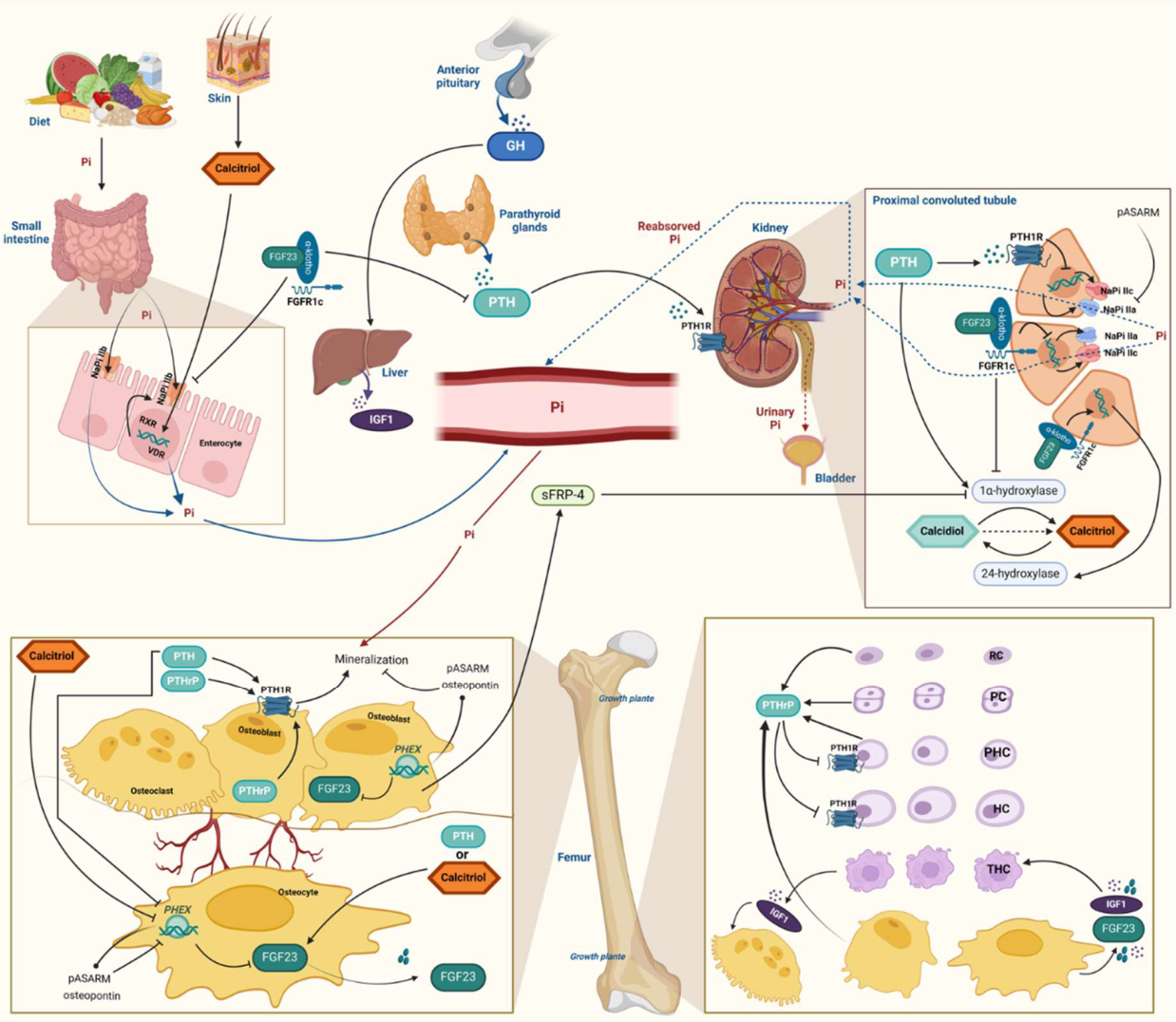
Figure 2.
Grow plate structure. A Longitudinal section of the epiphyseal growth plate of a control mouse. B Differentiation of growth plate zones.
Figure 2.
Grow plate structure. A Longitudinal section of the epiphyseal growth plate of a control mouse. B Differentiation of growth plate zones.
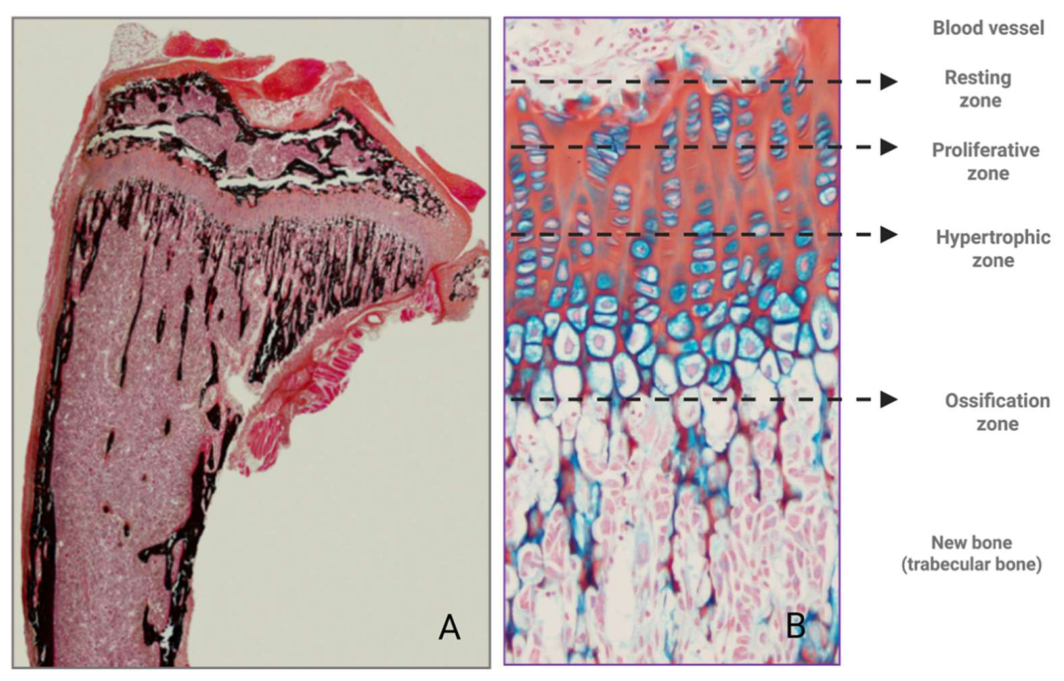
Figure 3.
Conceptual model of GH–FGF23–mediated phosphate allocation during longitudinal growth. Created in BioRender. Hernández-García, F. (2026) https://BioRender.com/114d4tx.
Figure 3.
Conceptual model of GH–FGF23–mediated phosphate allocation during longitudinal growth. Created in BioRender. Hernández-García, F. (2026) https://BioRender.com/114d4tx.
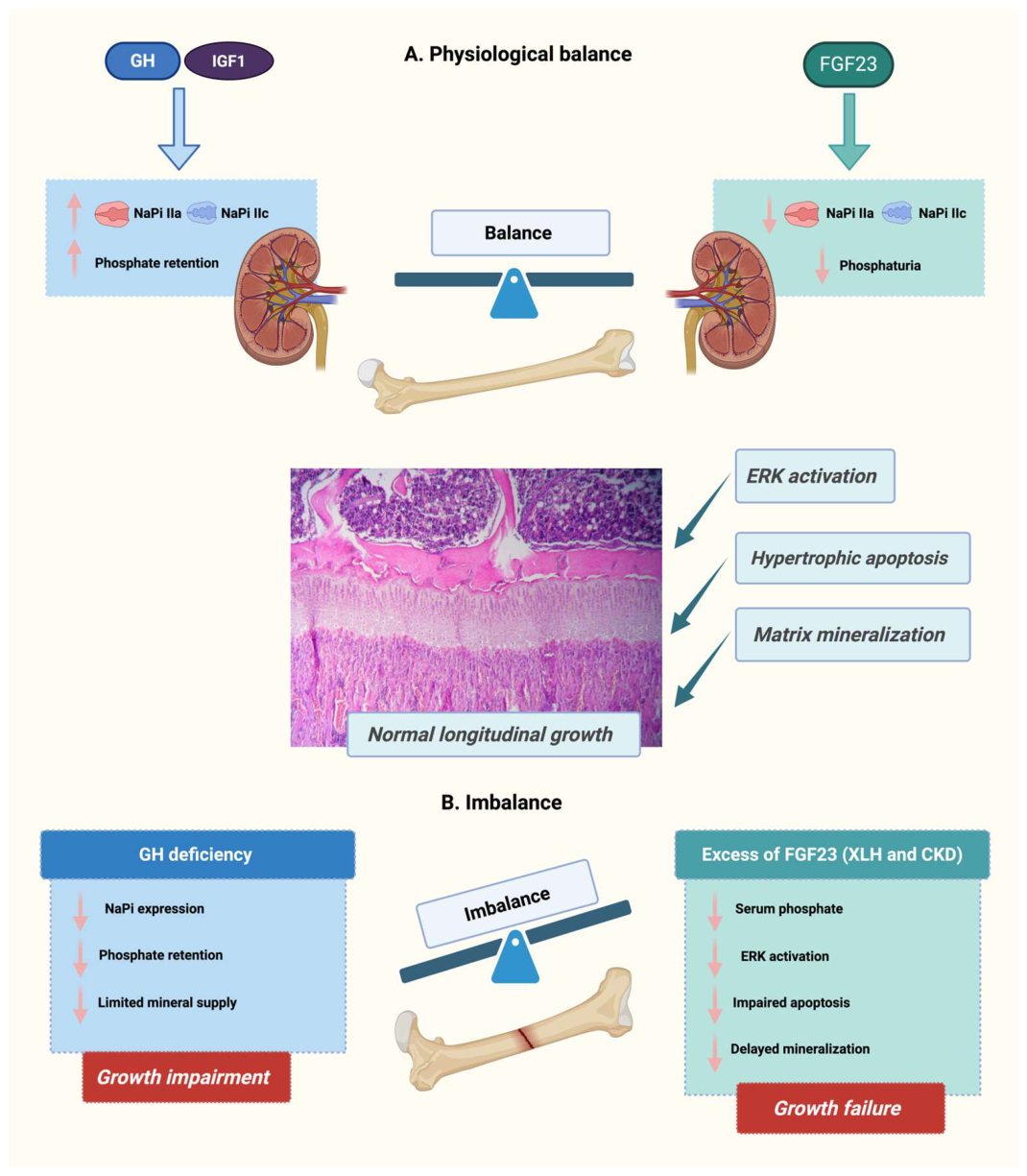
Figure 4.
Comparison between XLH and CKD. Highlighting key differences in phenotype, age of onset, metabolic imbalance, complications, treatments, prognosis and quality of life. Created by BioRender. Hernández-García, F. (2025) https://BioRender.com/m39w400.
Figure 4.
Comparison between XLH and CKD. Highlighting key differences in phenotype, age of onset, metabolic imbalance, complications, treatments, prognosis and quality of life. Created by BioRender. Hernández-García, F. (2025) https://BioRender.com/m39w400.
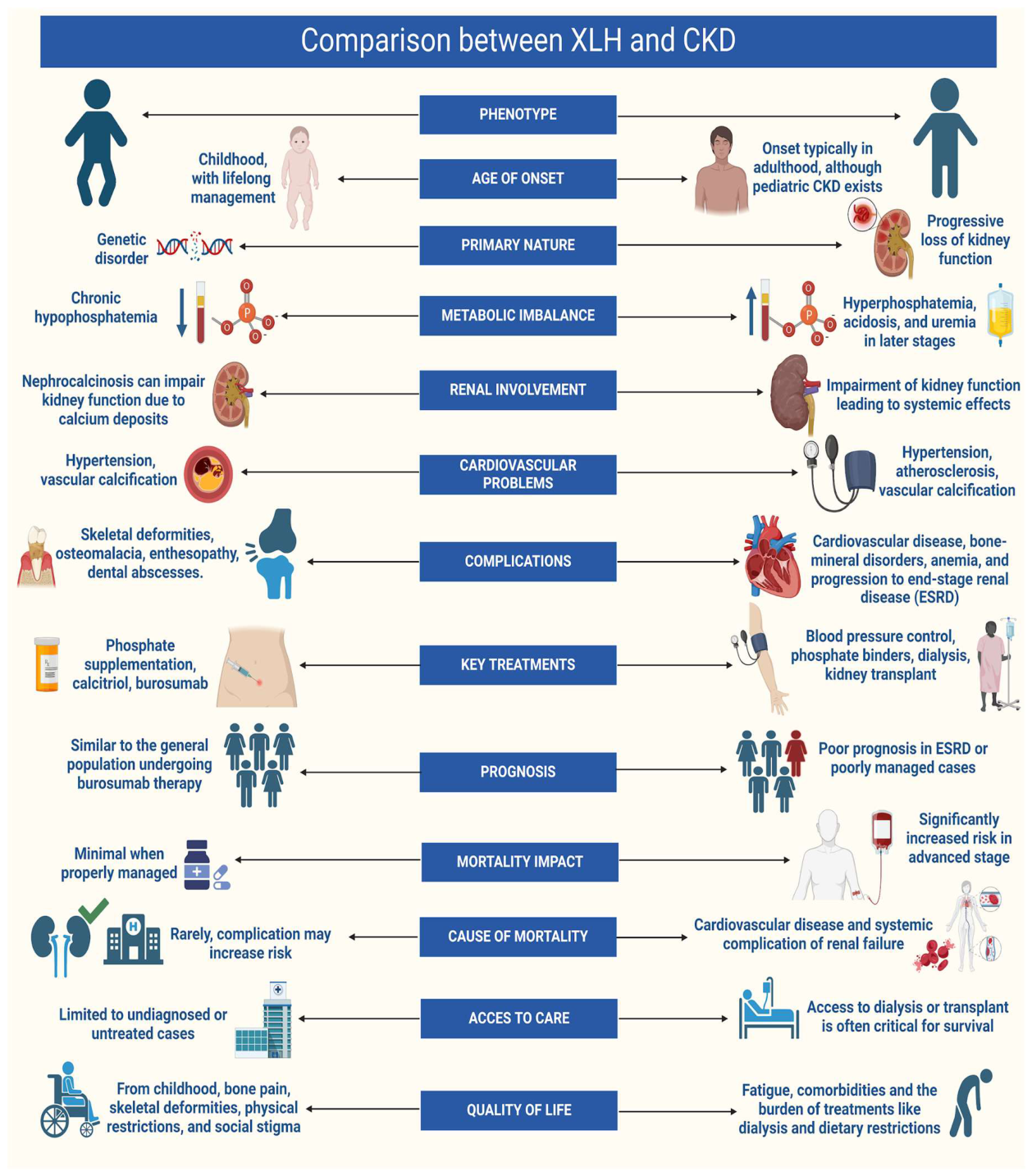
Figure 5.
Micrographs of histological sections of the proximal growth plates of tibias from rats (A-F) and mice (G-I). A is the growth plate of a control rat, B is the growth plate of a rat with chronic kidney disease (CKD) induced by adenine intake (AI) and C is the growth plate of a rat with CKD induced by AI and treated with growth hormone (GH). A-C are stained with hematoxylin and eosin (H/E). D-F are fluorescent images of the growth plates (cartilage matrix emits orange fluorescence and bone matrix emits yellow fluorescence) of a control rat (D), a rat with CKD induced by AI (E) and a rat with CKD induced by AI treated with GH. It could be observed that growth plates from rats with CKD are more irregular and present chondrocytes less organized into vertical columns and that GH treatment partially restores these alterations. G-I are growth plates from mice stained with Alcian blue/acid fuchsin (cartilage matrix stains in blue and bone matrix stains in red) of a control mouse (G) a mouse with a deletion in the PHEX gene (hyp mouse) (H) and a hyp mouse treated with GH (I). The growth plate from the hyp mouse is very irregular, with abnormal orientation of distal chondrocytes and aberrant vascularization of chondro-osseous junction and treatment with GH partially restores the normal structure of the growth plate.
Figure 5.
Micrographs of histological sections of the proximal growth plates of tibias from rats (A-F) and mice (G-I). A is the growth plate of a control rat, B is the growth plate of a rat with chronic kidney disease (CKD) induced by adenine intake (AI) and C is the growth plate of a rat with CKD induced by AI and treated with growth hormone (GH). A-C are stained with hematoxylin and eosin (H/E). D-F are fluorescent images of the growth plates (cartilage matrix emits orange fluorescence and bone matrix emits yellow fluorescence) of a control rat (D), a rat with CKD induced by AI (E) and a rat with CKD induced by AI treated with GH. It could be observed that growth plates from rats with CKD are more irregular and present chondrocytes less organized into vertical columns and that GH treatment partially restores these alterations. G-I are growth plates from mice stained with Alcian blue/acid fuchsin (cartilage matrix stains in blue and bone matrix stains in red) of a control mouse (G) a mouse with a deletion in the PHEX gene (hyp mouse) (H) and a hyp mouse treated with GH (I). The growth plate from the hyp mouse is very irregular, with abnormal orientation of distal chondrocytes and aberrant vascularization of chondro-osseous junction and treatment with GH partially restores the normal structure of the growth plate.
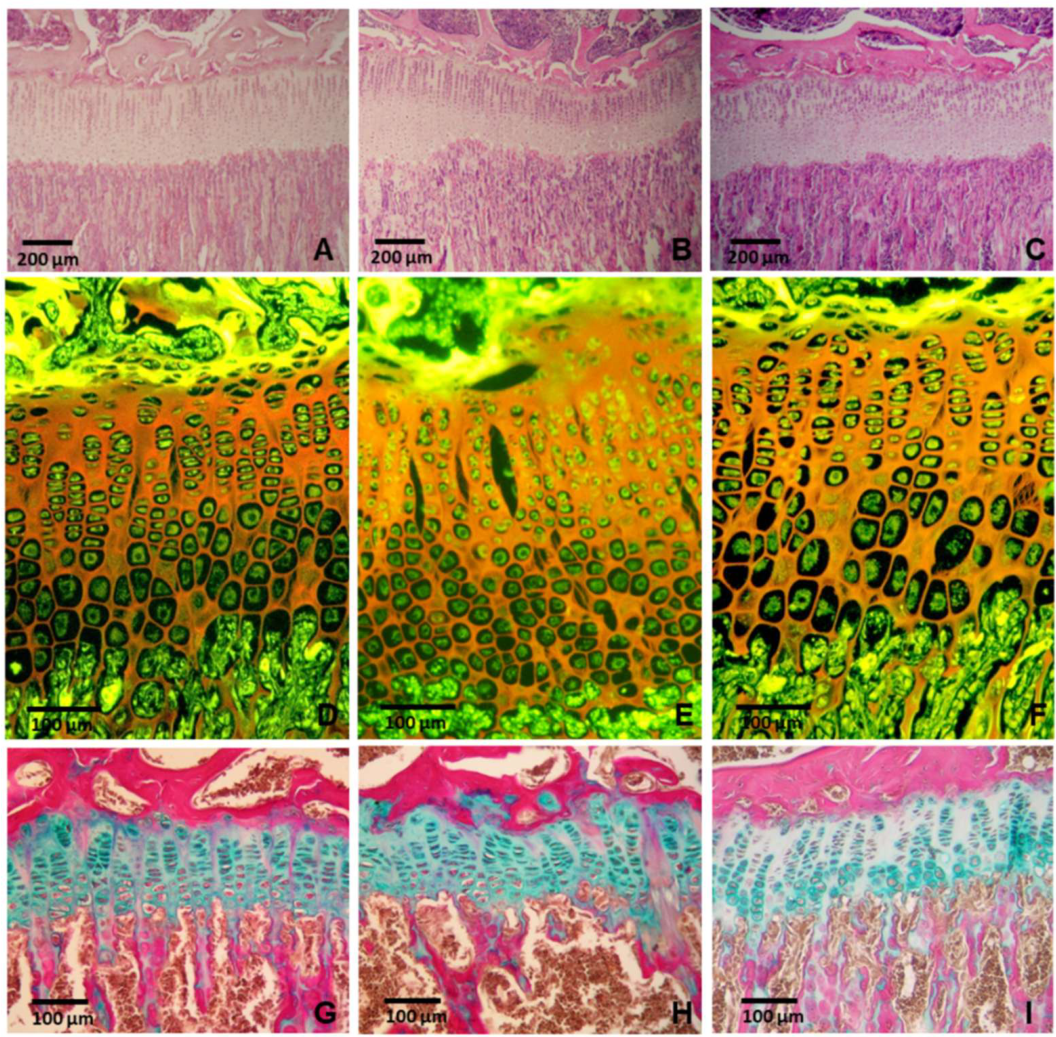
Figure 6.
Micrographs of histological sections of the proximal growth plates of tibias from mice. A is the growth plate of a control mouse and B is the growth plate of a hyp mouse. Both A and B are stained with toluidine blue. The images show severe disruption of the chondrocyte arrangement and vascularization of the growth plate of hyp mice. C-E are confocal-fluorescent images of the growth plates of a control mouse (C) a hyp mouse (D) and a hyp mouse treated with GH (E). Treatment with GH partially restores the normal structure of the growth plate.
Figure 6.
Micrographs of histological sections of the proximal growth plates of tibias from mice. A is the growth plate of a control mouse and B is the growth plate of a hyp mouse. Both A and B are stained with toluidine blue. The images show severe disruption of the chondrocyte arrangement and vascularization of the growth plate of hyp mice. C-E are confocal-fluorescent images of the growth plates of a control mouse (C) a hyp mouse (D) and a hyp mouse treated with GH (E). Treatment with GH partially restores the normal structure of the growth plate.
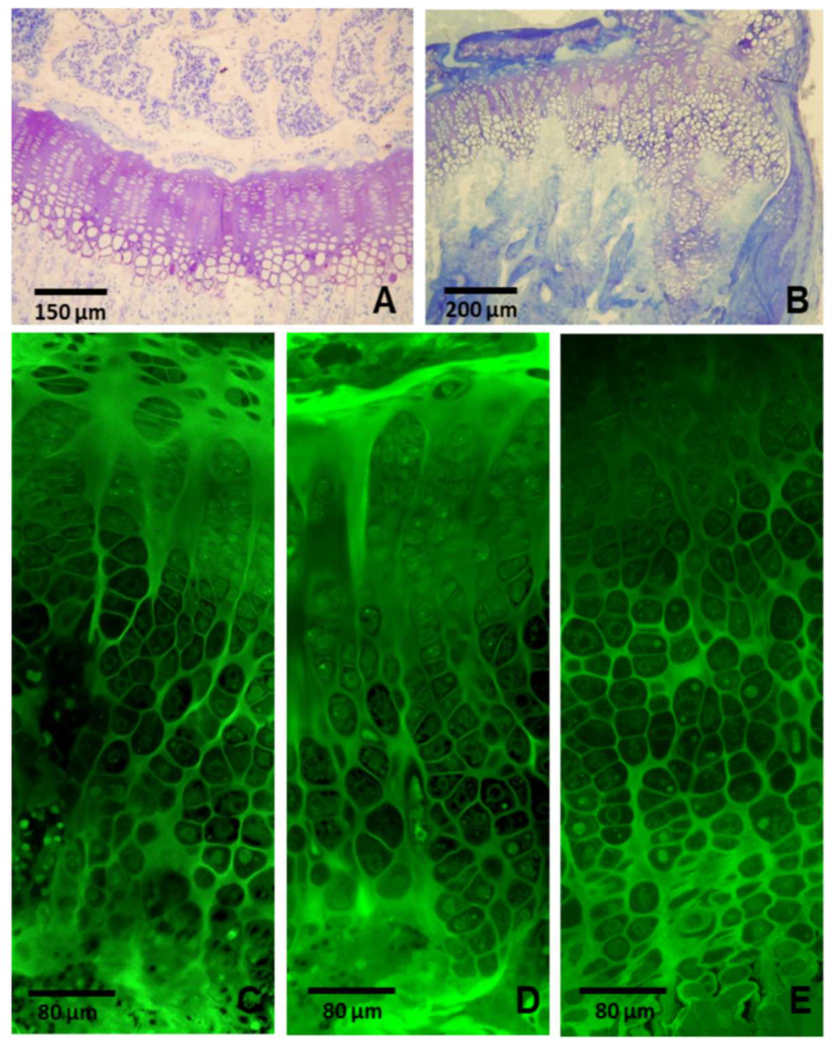

Table 1.
Comparison between physiological conditions, CKD and XLH in pathophysiological aspects.
| Feature | Physiological condition | CKD | XLH |
| FGF23 levels | Adaptive ↑ during growth | ↑↑ (secondary, maladaptive) | ↑↑ (primary, genetic caused by PHEX gene mutations) |
| Serum phosphate | Maintained within normal range | Normal or low | Low |
| GH/IGF-1 activity | Normal ↑ | Resistance | Normal |
|
Growth plate ERK signaling |
Properly activated | Dysregulated | Reduced (phosphate-dependent) |
| Growth | Normal | Short stature | Short stature |
| Chondrocyte maturation | Coordinated proliferation → hypertrophy → apoptosis | Disorganized, delayed apoptosis | Impaired hypertrophy and apoptosis |
| Limiting mechanism | Balanced hormonal control | Hormonal resistance | Mineral substrate deficiency |
| Linear growth outcome | Normal | Growth impairment | Rickets, short stature |
Disclaimer/Publisher’s Note: The statements, opinions and data contained in all publications are solely those of the individual author(s) and contributor(s) and not of MDPI and/or the editor(s). MDPI and/or the editor(s) disclaim responsibility for any injury to people or property resulting from any ideas, methods, instructions or products referred to in the content. |
© 2026 by the authors. Licensee MDPI, Basel, Switzerland. This article is an open access article distributed under the terms and conditions of the Creative Commons Attribution (CC BY) license.
Copyright: This open access article is published under a Creative Commons CC BY 4.0 license, which permit the free download, distribution, and reuse, provided that the author and preprint are cited in any reuse.


