
Submitted:
08 June 2026
Posted:
10 June 2026
You are already at the latest version
Abstract
This paper presents the results of research evaluating the potential of the Zharkent Depression in Southern Kazakhstan as a promising geological structure for identifying natural reservoirs within aquifer formations for long-term underground CO2 storage. Based on seismic and well data integrated with modern geographic information sys-tems (GIS), digital surface models of reflecting horizons correlated with structur-al-stratigraphic complexes were constructed. Structural, lithological, and petrophysical modeling was performed, providing three-dimensional distributions of lithology and porosity, as well as reservoir saturation forecasts. The geological reservoir model was developed using geostatistical analysis principles. The three-dimensional geo-hydrodynamic model is based on numerical methods for estimating reservoir hydrodynamic parameters. The injection dynamics and under-ground gas storage models, including an economic efficiency assessment, were calcu-lated for a long-term period. It was established that the Jurassic aquifers, characterized by thick sandstone sequences with enhanced reservoir properties (porosity and permeability), represent the most favorable environment for carbon dioxide injection and storage. Simulation of the in-jection and storage processes yielded predictive saturation cubes and quantitative characterization of CO2 volume and distribution within the trap under specified injec-tion conditions. The potential volume of injected gas was calculated, and an optimal CO2 storage strategy in the aquifer was determined through the year 2126. The findings indicate that the storage reservoirs in the Zharkent Depression possess a CO2 seques-tration potential comparable to existing global large-scale carbon capture and storage projects.
Keywords:
reservoir
; aquifer
; carbon dioxide
; modeling
; hydrodynamics
; forecast
; storage
; injection
1. Introduction
Reservoir modeling in geological formations involves creating digital prototypes of natural geological environments based on geophysical and geological observations conducted at the Earth’s surface and within the deep layers of the crust. Advanced technologies are now widely used to develop the most reliable models of natural geological reservoirs, with computer modeling being one of the key methodologies [1,2,3,4,5].
The process of modeling natural geological reservoirs in sedimentary complexes for fluid accumulation and recovery involves the development of both static geological and dynamic hydrodynamic models. Geological modeling focuses on reconstructing the geometric parameters of the reservoir and the distribution of petrophysical properties throughout its volume; it serves as the foundation for estimating hydrocarbon (or groundwater) reserves and designing drilling operations. Based on the geological model, a hydrodynamic model is formulated to further study the accumulation and migration of fluids within the investigated space. Ultimately, integrated geo-hydrodynamic modeling provides a comprehensive understanding of the reservoir’s geometry, the reservoir properties (porosity and permeability) of the formations, and the hydrodynamic parameters of the fluid-saturated layers. This approach is essential for designing and monitoring effective fluid extraction strategies (field development), as well as for the selection and preparation of underground reservoirs for gas injection and sequestration [6,7,8,9,10].
Natural reservoirs for carbon dioxide storage must meet specific requirements to ensure long-term and secure CO2 sequestration. These include the presence of a natural trap and an effective cap rock to facilitate the containment of the plume over long geological periods. Detailed investigation of the reservoir’s petrophysical properties (porosity and permeability) is essential to ensure the storage of artificially injected gases [11,12,13,14,15,16]. To address these tasks, global practice utilizes traditional reservoir characterization methodologies originally developed for the exploration and development of oil and gas fields [17,18,19,20].
Currently, Carbon Capture, Utilization, and Storage (CCUS) technologies have not yet been implemented in Kazakhstan. In the Almaty city and Almaty region, annual CO2 emission levels exceed 2 million tonnes due to the high concentration of industrial enterprises, manufacturing plants, and combined heat and power (CHP) plants. These data underscore the critical importance of investigating geological structures to identify suitable reservoirs for underground CO2 injection and storage [21,22]. However, the geological formations (primarily aquifers) for CO2 storage in the Almaty region remain largely unstudied and unevaluated. Therefore, prospecting for suitable reservoirs and assessing the storage potential of aquifers in this region, which records some of the highest CO2 emissions in Kazakhstan, is a vital scientific, practical, and strategic task [23,24].
In this study, the authors conducted a comprehensive investigation of aquifers in Southern Kazakhstan, specifically near the Almaty region, to identify a natural reservoir for technically feasible and economically viable geological CO2 storage. This was achieved through integrated structural-geological modeling and an assessment of hydrodynamic parameters designed to closely represent the real-world conditions of the reservoir.
2. Materials and Methods
Materials
The vast majority of CO2 storage reservoirs globally are represented by deep saline aquifers. To identify and prepare a potential reservoir, it is crucial to establish criteria for selecting the geological structure based on logistical feasibility, aquifer burial depth, and its fluid-flow characteristics [25,26,27,28,29].
Significant groundwater reserves of South Kazakhstan are accumulated in the Zharkent artesian basin, located within the East Ili intermontane depression (Zharkent Depression), which was formed within the large Ili oil- and gas-bearing sedimentary basin [30,31,32].
The structural position of the Zharkent Depression among the folded structures of the Northern Tien Shan, the geomorphological and climatic features of the region, and the presence of thick sandstone sequences within the sedimentary cover section have conditioned the existence of the large Zharkent artesian basin characterized by a closed hydrodynamic regime. The Zharkent Depression is an asymmetric negative structure with a reverse-thrust fault structure in the north, along the South Dzungarian fault zone. The northern and southern parts of the trough exhibit a monoclinal bedding. To the south, the trough is separated from the Ketmen anticlinorium by the North Ketmen fault; to the west, it is bounded by the Chilik-Kemin fault; and to the north, it is separated from the Dzungarian anticlinorium by the South Dzungarian fault. From south to north within the trough, the North Ketmen monocline, the Koktal synclinal sag (trough), and the Penjim synclinal sag (trough) are distinguished [33,34] (Figure 1).
Under such favorable geological conditions, the Zharkent artesian basin was formed as a multi-tiered basin, with its recharge areas situated in the mountainous fringes of the Northern Tien Shan, reaching absolute elevations of up to 3500 m. This area receives a high volume of precipitation and features extensively developed glaciers, which facilitates a continuous subsurface runoff into the depression, where thermal waters are also formed [35,36].
The hydrogeological complexes of the basin were identified during the testing of exploratory and wildcat wells drilled for oil and gas in Permian, Triassic, Jurassic, Cretaceous, and Paleogene sediments. Within the structure, five distinct aquifers (hydrogeological stages) are identified, combined into a single Zharkent artesian basin (Figure 2). Here, a hydrogeological stage is defined as a sedimentary complex sharing uniform hydrogeological parameters, including the reservoir properties of the host rocks, as well as the nature of groundwater occurrence and filtration flows [37,38].
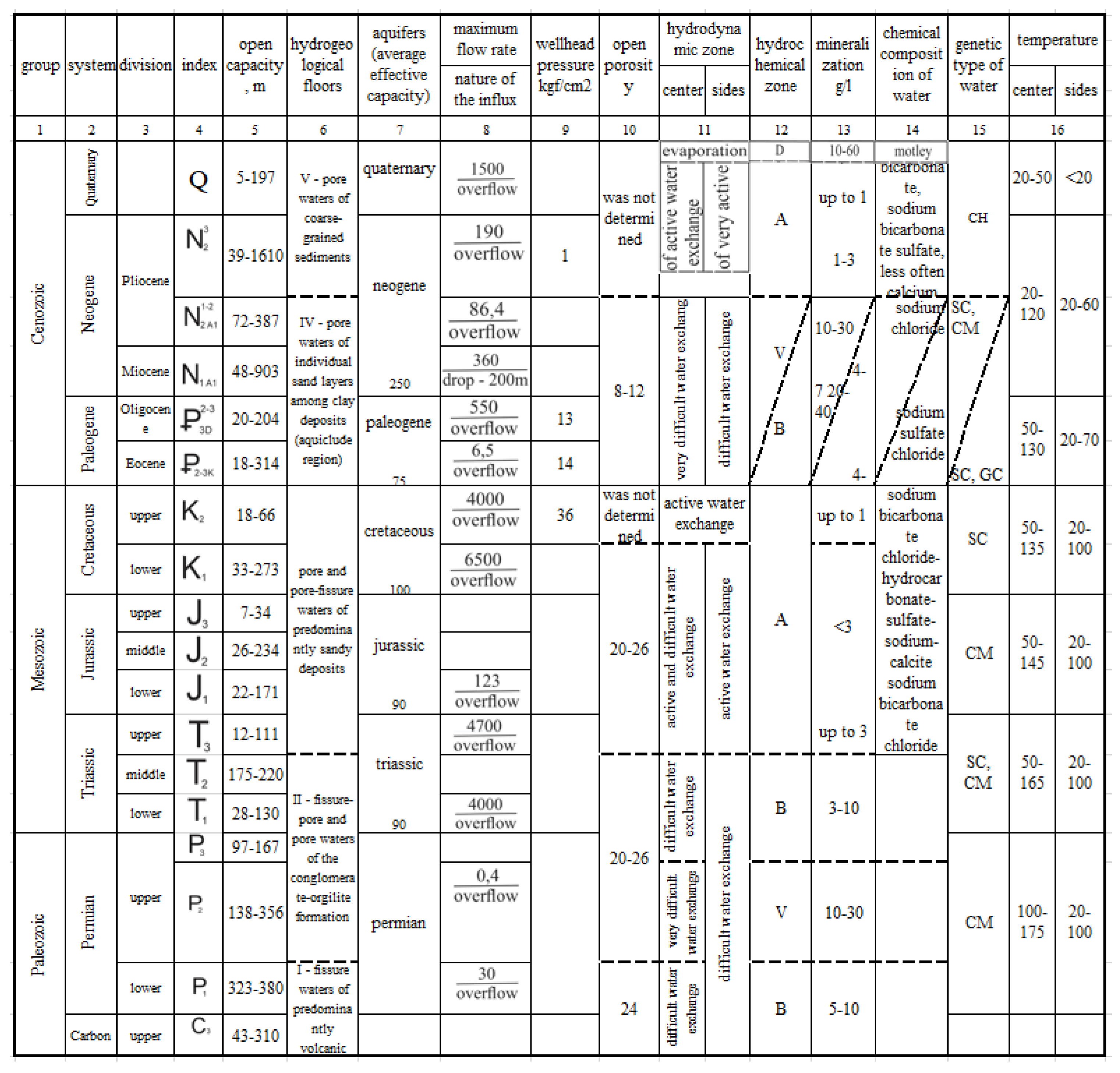
The lowest hydrogeological stage is the Permian-Carboniferous, represented by volcaniclastic and effusive rocks containing fissure-bound (fractured) waters. The Permian-Triassic stage is associated with a conglomerate-siltstone sequence of the same age, characterized by fracture-pore and pore water-bearing capacity. The thick Triassic-Jurassic-Cretaceous complex, predominantly composed of sandstone deposits, contains pore and pore-fracture waters (Figure 3).
The upper stages are represented by Paleogene-Neogene geological complexes, where pore-type waters are confined to rare, locally distributed sandstone deposits, as well as by a thick Upper Pliocene-Quaternary coarse-clastic sequence with abundant pore waters. The Quaternary stage, composed of a sequence of dense, practically impermeable clays with rare sandstone interbeds, is considered a regional aquitard (confining bed) that isolates the Paleozoic-Mesozoic waters from the high-yield fresh groundwaters of the uppermost hydrogeological stage (Table 1).
Figure 2.
Hydrogeological cross-sections of the Zharkent Depression.
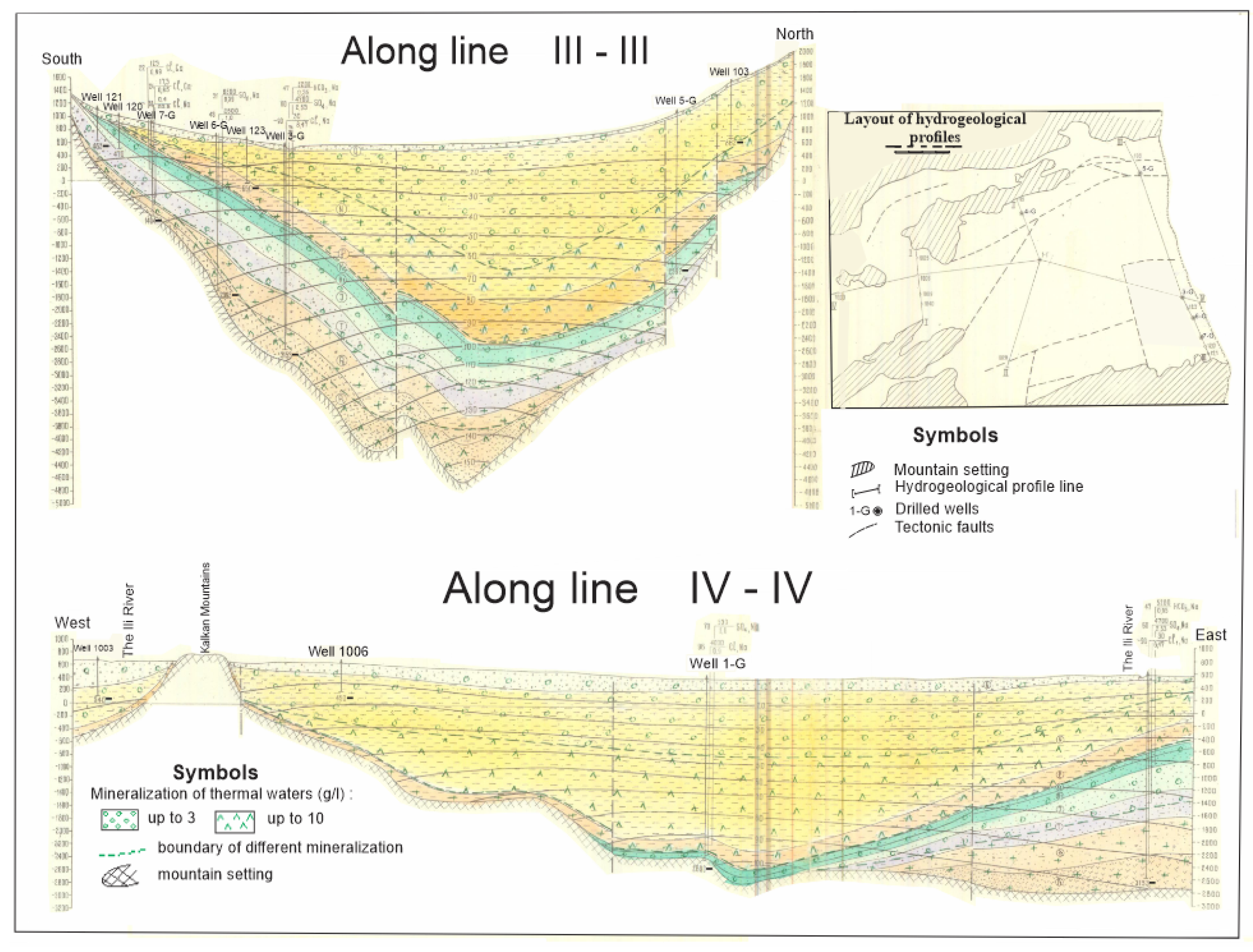
Figure 3.
Map of the Zharkent Depression aquifer system: (a) Jurassic complex, (b) Neogene complex.
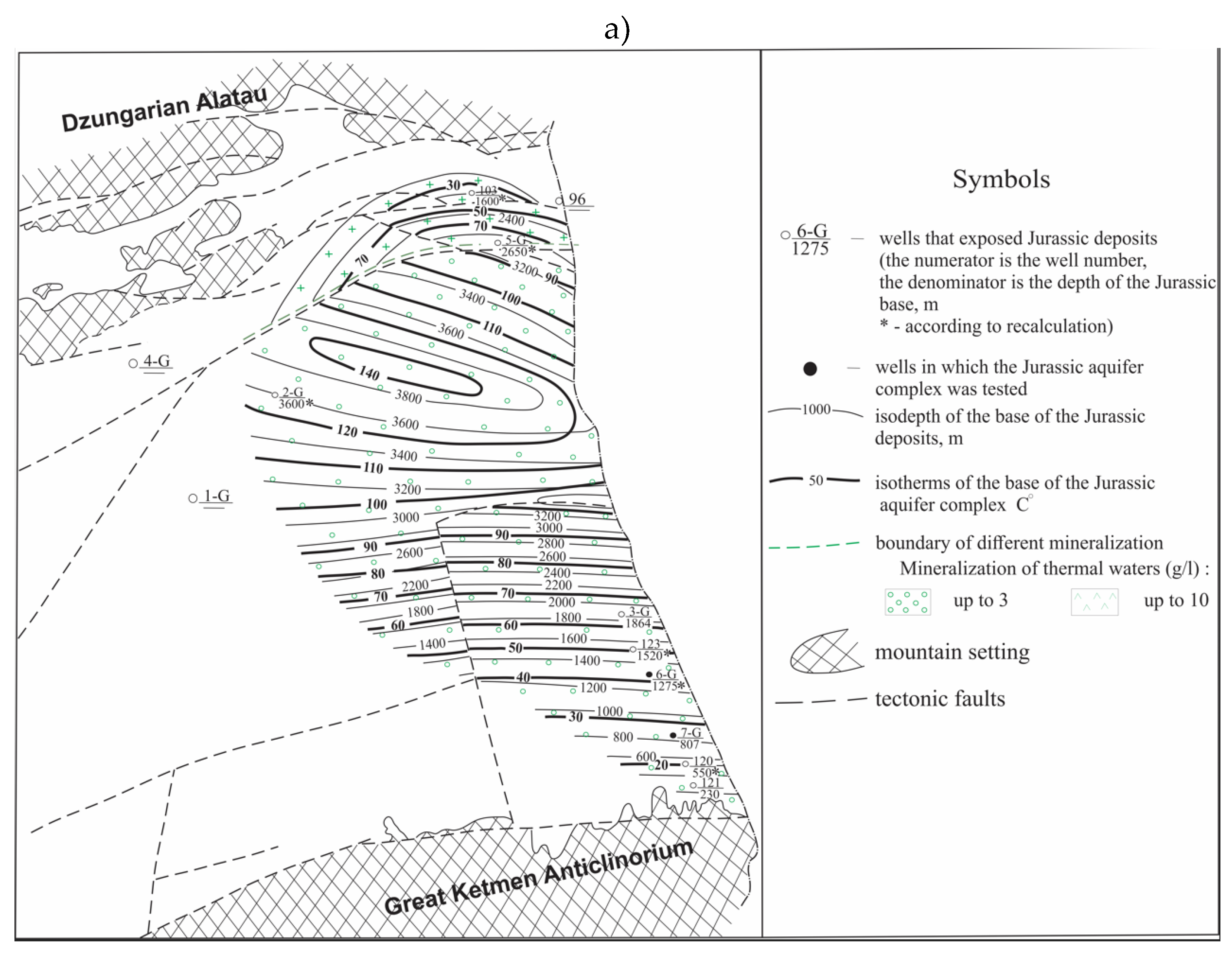
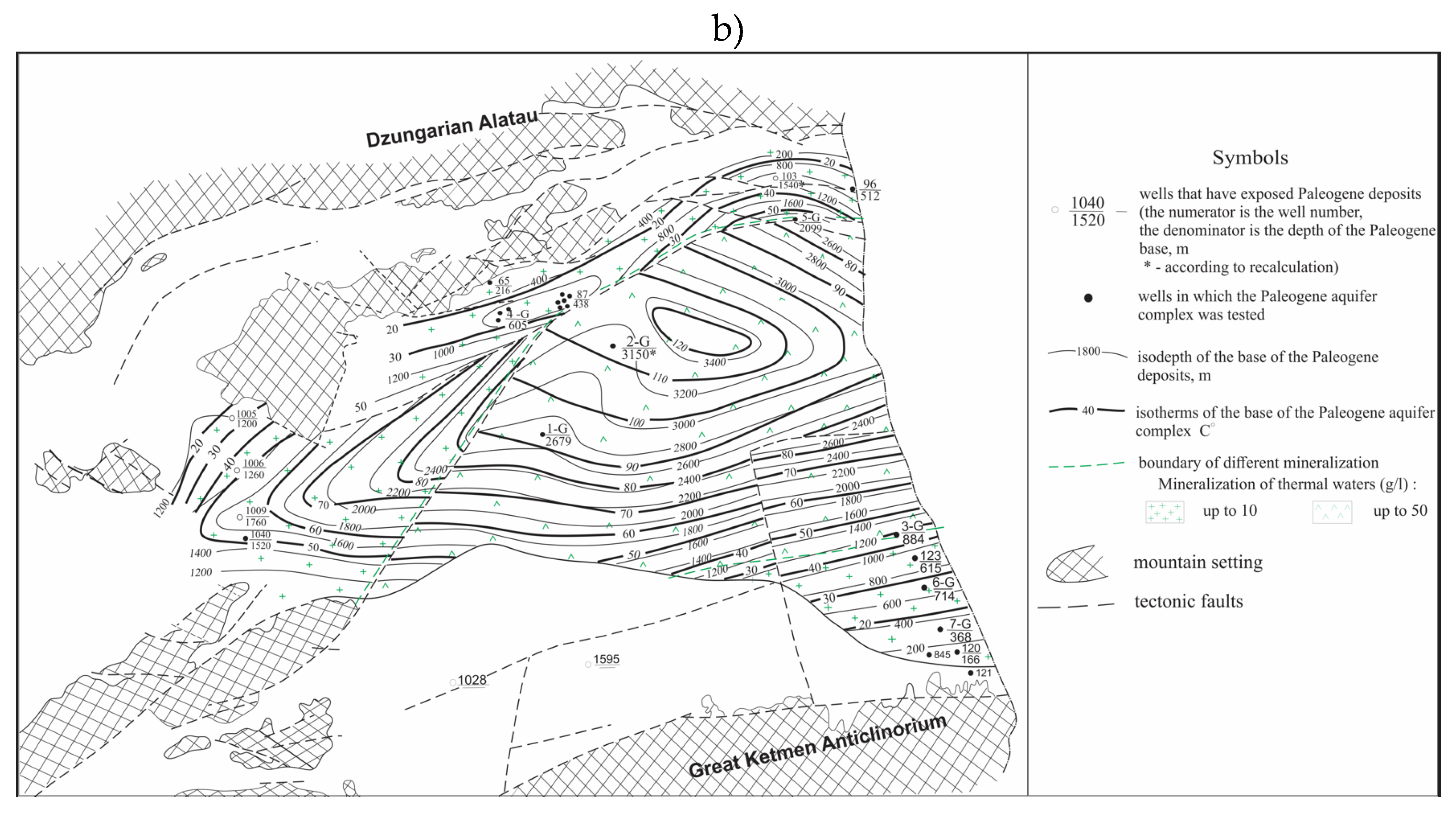

Table 1.
Summary hydrogeological section of the Zharkent artesian basin.
The waters of the Zharkent trough are thermal. A geothermal zone with water temperatures ranging from 75–100 °C and higher (up to 165 °C) begins here at depths of 2800–3600 m; furthermore, this zone occurs deeper in the southern part of the trough (down to 3600 m) than in its central part. [37,39]
A wide range of a priori and digital geological and geophysical data was utilized for reservoir modeling, including a structural framework based on seismic data, a property grid (porosity, permeability), physicochemical fluid properties, well logs, and reservoir hydrodynamic parameters (PVT data) obtained from several wells during drill-stem testing for oil and gas potential.
Reservoir modeling of the geological formations was carried out by constructing a seismogeological model within the Petrel (Schlumberger) geographic information system environment. The geological model incorporated the construction of structural, lithological, and petrophysical models based on geostatistical analysis. The hydrodynamic parameters of the reservoir were obtained from numerical simulation results using the Eclipse software packages. [8,41,55]
Seismic exploration plays a fundamental role in the detailed study of reservoir properties. It provides insights into the internal structure of the reservoir and the variation of reservoir properties in the inter-well space [42,43]. Within the area of the Zharkent Depression, the “Kazakhstancaspishelf” company acquired approximately 1,748 km of full-fold CMP (Common Mid-Point) seismic profiles. The exploratory profile grid spacing was 3–4 km, while a detailed 2×2 km grid of profiles was acquired over individual structures. Good quality data were obtained across the entire area. The analysis and integration of seismic interpretation results, carried out using OpenWorks (Landmark), Kingdom, and Petrel software, allowed for significant refinement and, in several instances, the creation of fundamentally new structural-tectonic models of the architecture and formation of the regional sedimentary complexes.
Within the trough, 22 deep exploratory wells were drilled—the majority of them targeting geothermal waters—which significantly refined the geological structure of the depression. Well drilling was accompanied by core sampling and the extensive application of well logging (wireline logging).
Research Methodology
Modeling the geometric architecture (structural model) and reservoir properties (petrophysical model) of the reservoir was carried out in stages [1,2,3].
Based on the results of seismic data interpretation across the Zharkent trough, five main reflecting horizons were identified, which were used to construct structural maps, including:
- Reflecting horizon I (base of the Pliocene—N2);
- Reflecting horizon II (base of the Miocene-Paleogene—N1-Pg);
- Horizon III (base of the Cretaceous deposits—K1);
- Reflecting horizon IV (base of the Jurassic deposits—J1);
- Reflecting horizon V (top of the Paleozoic—C3-P1).
Modeling the geometric architecture (structural model) and reservoir properties (petrophysical model) of the reservoir was carried out in stages [1,2,3].
Based on the results of seismic data interpretation across the Zharkent trough, five main reflecting horizons were identified, which were used to construct structural maps, including:
- Reflecting horizon I (base of the Pliocene—N2);
- Reflecting horizon II (base of the Miocene-Paleogene—N1–Pg);
- Horizon III (base of the Cretaceous deposits—K1);
- Reflecting horizon IV (base of the Jurassic deposits—J1);
- Reflecting horizon V (top of the Paleozoic—C3–P1).
The aquifers of the Miocene-Paleogene and Jurassic deposits were selected as the most promising targets for reservoir modeling. According to regional data, distinct reservoir beds with thicknesses exceeding 10 m and enhanced fluid-flow properties are clearly identified within these intervals, laterally sealed by continuous, laterally persistent clay complexes. Such conditions fully satisfy the requirements for tight, secure reservoirs necessary for the long-term isolation of chemically active gases, including CO2. [11,44,45,46]
Structural modeling was performed based on the structural maps of the reflecting horizons. To construct the structural surfaces, a convergent interpolation algorithm was utilized, incorporating stratigraphic well tops data. [7,9]
Structural maps of the tops of reflecting horizons II and III were used as a trend for the horizon top (Figure 4). The creation of digital surface models for these reflecting horizons significantly increased the accuracy of the geological modeling and the subsequent evaluation of reservoir properties.
For structural modeling, the vertical cell size was determined based on the degree of lithological heterogeneity of the section and the minimum interbed thicknesses of 0.4 m, which needed to be preserved in the detailed geological grid. Such grid dimensions are optimal for constructing geological models because, on the one hand, they are comparable to the sampling interval of well logging curves, and on the other hand, they provide a reasonable number of cells from a computational runtime perspective [10,18,40]. Summary information regarding the grid dimensions of the geological models for each of the modeled horizons is presented in Table 2.
Following the determination of the horizon geometry, the reservoir properties of the rocks were evaluated within the aquifers obtained from the simulation. The greatest difficulties arose when reconstructing the geometry of complexly structured lithological complexes in areas complicated by numerous tectonic faults of various orders [47]. Special attention was paid to the Jurassic thermal aquifer complex, which is confined to multi-grained (heterogranular) sandstones and subdivided into two horizons: the Lower Jurassic and Middle Jurassic, both of which were penetrated by wells and tested for oil and gas potential. Reservoirs account for up to 70% of the stratigraphic section here. Clays developed at the top of the Lower Jurassic and at the base of the Middle Jurassic, with a total thickness starting from 220 m, act as a regional aquitard (confining bed) between the reservoirs of the Lower and Middle Jurassic thermal aquifer horizons [37,39] (Figure 5).
Facies and petrophysical modeling incorporated the simulation of both lithology and porosity parameters.
The lithology cube is the foundational grid in the three-dimensional geological model, as its values directly determine the presence or absence of a reservoir in the 3D space. As a result of modeling the Jurassic aquifer, a discrete lithology parameter “Facies” was obtained and subsequently upscaled onto the three-dimensional grid using the upscaling procedure available in the Petrel software. The trend cube for distributing lithological heterogeneity within the 3D grid was constructed using the Sequential Indicator Simulation (SIS) method [48,49]. Consequently, averaging yielded the final lithology cube, which is characterized by the predominance of sandstone deposits (reservoir rocks) and minor clay complexes (non-reservoir rocks) (Figure 6).
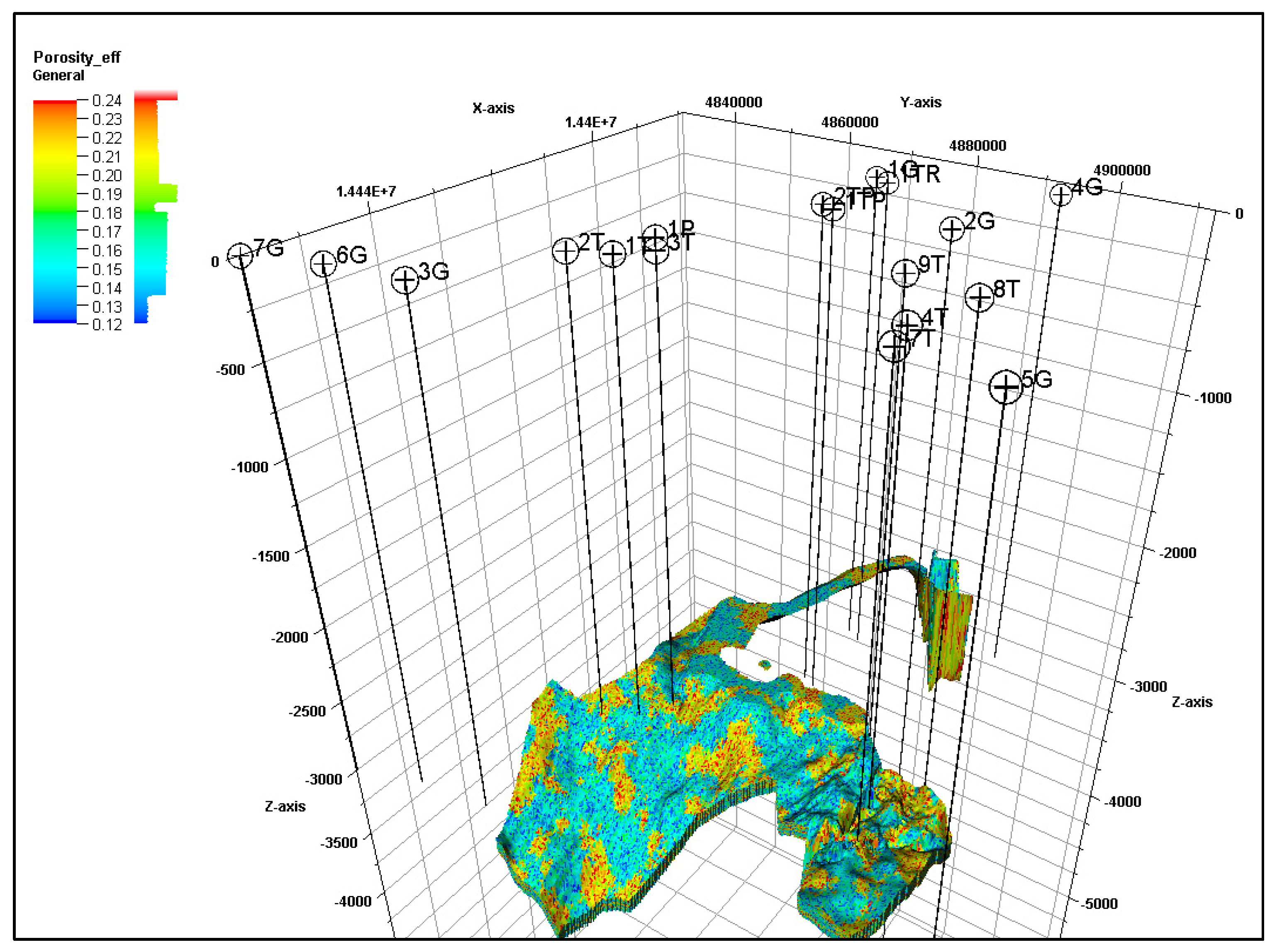
The porosity cube was calculated based on well logging data within permeable interbeds, the spatial distribution of which was constrained by the facies modeling results. Clays were assigned a zero porosity value, whereas the inter-well distribution of porosity within the sandstone sequences was simulated using a stochastic approach via the Sequential Gaussian Simulation (SGS) method, starting from the cut-off value and above [50,51] (Figure 7).
To construct the hydrodynamic model, the following parameters were selected based on the testing results of individual wells drilled to evaluate the oil and gas potential of the sedimentary complexes in the Zharkent Depression. The simulation target is a stratigraphically trapped (screened) aquifer within the Jurassic deposits (Zharkent formation). The grid cell dimensions for the simulation were set to 200×200 m with a cell height of 1 m, resulting in a total of 145,885 active cells. During the simulation process, the calculated initial reservoir pressure of 255.7 bar at a datum depth of 2,600 meters and a reservoir temperature of 88.6 °C were utilized. According to well logging data, the porosity of the Jurassic sandstones varies from 12% to 22.5% (with an average value of 18.5%), and the permeability ranges from 3.3 to 300.2 mD (with an average of 127.6 mD). The rock compressibility was assumed to be 1.28*10-4 1/bar. Based on well data, the aquifer is 100% saturated with formation water possessing a salinity of 2,450 ppm. The target depth of the reservoir was established at 2,600–2,700 m.
Figure 6.
Three-dimensional lithological distribution of the Jurassic aquifer.
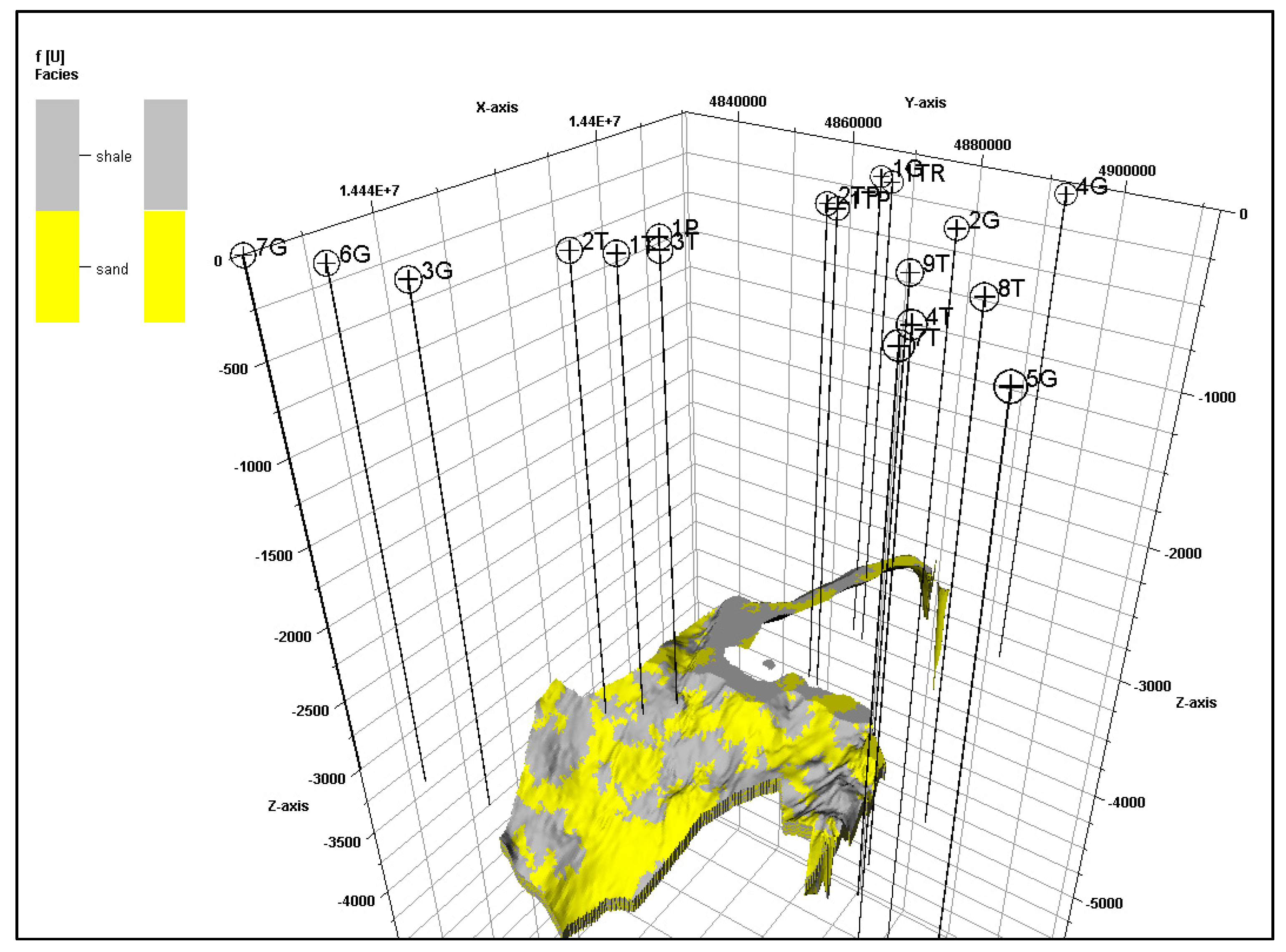
Figure 7.
Three-dimensional porosity (PORO) distribution of the Jurassic aquifer.
The reservoir properties were assigned by populating the data from available wells using a stochastic approach [52]. Due to the scarcity of core data, certain uncertain parameters, such as rock compressibility and relative permeability curves, were adopted by analogy with the CO2 storage project in the Frio Formation (USA). The Frio Formation is a major Oligocene, sand-rich, fluvio-deltaic system widely developed in the US Gulf Coast basin, characterized by thick, faulted salt domes and regional saline aquifers. This formation has been extensively studied, and it features ubiquitous high-porosity sandstones that are favorable for CO2 storage.
The phase behavior of the fluid system—carbon dioxide and formation water (CO2–H2O)—was modeled in the Eclipse 300 compositional module (Compositional) using the cubic Peng–Robinson equation of state (PR EOS) [53]. The model incorporates two components: CO2 and H2O. The equation of state is applied to calculate the density, compressibility factors, phase equilibrium, and the solubility of CO2 in the aqueous phase. The calculation was performed under reservoir conditions: a pressure of 255 bar, a temperature of 88.6 °C, and a burial depth of 2,600–2,700 m. Under these specified parameters, CO2 is in a supercritical state. The density of CO2 within the considered range varies from 650 to 865 kg/m3, and its viscosity ranges from 0.05 to 0.11 mPa*s. For the formation water with a salinity of 2,450 ppm.
The solubility of CO2 in water was calculated via phase equilibrium determined by the equation of state. Under the specified conditions, the solubility is approximately 3–4 wt.% of CO2 in water. The compressibility of CO2 under reservoir conditions is significantly higher than that of water, which influences the pressure development and the propagation dynamics of the gas phase within the reservoir.
Relative permeability curves were defined using a Corey-type correlation. The Corey model is widely applied in reservoir simulation to describe phase permeabilities when complete experimental data are unavailable, or to approximate laboratory-measured relative permeability curves [55].
The irreducible (residual) water saturation was assumed to be 0.15, and the residual gas saturation was set to 0.05. The Corey exponents are 2.5 for the aqueous phase and 2.0 for the gas phase. The endpoint relative permeability to gas in the absence of water was taken as 0.5, and that to water was set to 1.0. The adopted relative permeability curves for the gas–water system are presented in Figure 8.
Capillary pressure was neglected in the simulation. At average formation permeability values ranging from 3 to 300 mD and burial depths exceeding 2,500 m, the influence of capillary forces on macromedium (macro-scale) CO2 migration is significantly lower than that of gravitational and viscous forces, which justifies their exclusion at the regional assessment stage.
As a result of the simulation, a coupled geological and hydrodynamic model of the potential reservoir was constructed, for which the environmental parameters favorable for carbon dioxide injection and storage were justified and defined. The boundary conditions for the reservoir model were established as follows: the upper and lower boundaries are confined by impermeable clays, the trap is stratigraphically sealed (screened) to the west, and it is tectonically sealed to the north. A no-flow boundary condition was assigned to the tectonic faults, while a hydrostatic pressure corresponding to the regional aquifer was maintained at the remote lateral boundaries.
Results
The authors performed calculations of the CO2 injection volume under the scenario of commissioning a single injection well in 2027 (Figure 9). The simulation period spans from 2027 to 2126 (Table 3).
Well control is planned based on the surface gas flow rate at a target level of 600,000 m3/day, with a bottomhole pressure constraint set at 306.1 bar. This limit corresponds to 50% of the lithostatic (overburden) pressure, thereby preventing fracture initiation (the average density of the overlying sedimentary rocks is assumed to be 2.4 g/cm3).
Table 3.
Forecasted technological performance indicators of the project.
| Year | Annual gas injection volume, million m3 | Cumulative gas injection volume, million m3 |
| 2027 | 219 | 219 |
| 2037 | 219 | 2411 |
| 2047 | 219 | 4602 |
| 2057 | 188 | 6664 |
| 2067 | 165 | 8411 |
| 2077 | 147 | 9958 |
| 2087 | 133 | 11350 |
| 2097 | 121 | 12612 |
| 2107 | 110 | 13763 |
| 2117 | 101 | 14818 |
| 2126 | 94 | 15694 |
As a result of modeling the gas injection and storage process, reservoir saturation cubes were obtained, which are necessary for the quantitative characterization of the volume and distribution of CO2 within the trap under the specified injection conditions (Figure 10 and Figure 11). The model incorporates the following physical processes: two-phase fluid flow, gravity segregation, CO2 dissolution in water, rock and fluid compressibility, and residual gas trapping. Geochemical reactions, heat transfer, and geomechanical effects were not considered within the scope of this study.
The calculations established the forecasted reservoir parameters: the average reservoir pressure at the end of the simulation period will reach 307.11 bar, and the target injection rate of 219 million m3 (434 thousand tonnes) per year is expected to be maintained until 2050 (Figure 12). Concurrently, the total cumulative volume of injected CO2 by the end of 2126 will amount to 15.7 billion m3 (31.3 million tonnes).
Conclusion
Reservoir simulation of the Zharkent Depression aquifer encompasses geological modeling of the trap to determine its geometry and reservoir properties (porosity and permeability), alongside the evaluation of the geomechanical and hydrodynamic parameters of both the reservoir and adjacent horizons, and the delineation of the vertical and lateral migration areas of the storage site. It is forecasted that the primary mechanisms of CO2 injection and trapping within the reservoir rock formations operate sequentially over a long-term period. Concurrently, structural and hydrodynamic gas trapping emerge as the most critical factors contributing to carbon dioxide containment in the reservoir from the very onset of the injection process. The presence of these factors within the potential reservoir establishes the selection criteria and the advantages of the considered formation as a storage site for gas injection, specifically for CO2.
To date, commercial CCUS projects are non-existent in Kazakhstan, yet the country’s potential for subsurface carbon dioxide utilization and storage is substantially high, though not fully assessed. The research findings indicate that a massive potential for subsurface CO2 storage exists within the Jurassic aquifer formations of the Zharkent Depression in Southern Kazakhstan, which is comparable to large-scale, successfully implemented international gas injection and storage projects. The identified and technically evaluated aquifer intended for subsurface CO2 storage suggests a reservoir capable of a potential gas injection volume ranging from 1 to 5 million m3 annually. This will facilitate a significant mitigation of environmental impact, reducing the annual volume of carbon dioxide (CO2) emissions in Almaty and the Almaty region by 20% to 80%.
Author Contributions
Conceptualization, S.A.I. and A.V.L.; methodology, S.A.I., A.V.L. and D.S.K.; software, A.V.L. and Y.N.N.; validation, S.A.I., D.S.K. and R.G.T.; formal analysis, A.V.L., N.N.S. and N.K.S.; investigation, S.A.I., A.V.L., D.S.K., Y.N.N. and N.K.S.; resources, S.A.I.; data curation, A.V.L., N.N.S., R.G.T. and N.K.S.; writing—original draft preparation, A.V.L.; writing—review and editing, S.A.I. and A.V.L.; visualization, A.V.L. and Y.N.N.; supervision, S.A.I.; project administration, S.A.I. and D.S.K.; funding acquisition, S.A.I. All authors have read and agreed to the published version of the manuscript.
Funding
This research has been funded by the Science Committee of the Ministry of Science and Higher Education of the Republic of Kazakhstan (Grant No. AP23490423).
Data Availability Statement
Acknowledgments
The authors would like to acknowledge the administrative and technical support provided by Satbayev University. Special thanks are due to the technical staff of the research project AP23490423 for their assistance in data organization and coordination. During the preparation of this manuscript, the authors used Gemini 3 Flash (Google) for the purposes of technical translation, formatting the bibliography according to MDPI standards, and refining the academic style of the English text. The authors have reviewed and edited the output and take full responsibility for the content of this publication.
Conflicts of Interest
The authors declare no conflicts of interest. The funders had no role in the design of the study; in the collection, analyses, or interpretation of data; in the writing of the manuscript; or in the decision to publish the results.
Abbreviations
| GIS | Geographic information systems |
| CCUS | Carbon Capture, Utilization, and Storage |
| CHP | Combined heat and power plants |
| CMP | Common Mid-Point |
| SIS | Sequential Indicator Simulation |
| PR EOS | Peng-Robinson equation of state |
References
- Bilibin, S.I. Tekhnologiya sozdaniya i soprovozhdeniya trekhmernykh tsifrovykh geologicheskikh modeley neftegazovykh mestorozhdeniy [Technology for Creating and Maintaining Three-Dimensional Digital Geological Models of Oil and Gas Fields]. Abstract of Doctor of Technical Sciences Dissertation, Moscow, Russia, 2010; p. 45. (In Russian).
- Le Ravalec, M.; Doligez, B.; Lerat, O. Integrated reservoir characterization and modeling. In Integrated Reservoir Characterization and Modeling; IFPEN: Rueil-Malmaison, France, 2014; Chapter 1. [CrossRef]
- Belkina, V.A.; Bembel, S.R.; Zaboeva, A.A.; Sankova, N.V. Osnovy geologicheskogo modelirovaniya (chast 1): uchebnoe posobie [Fundamentals of Geological Modeling (Part 1): A Textbook]; Tyumen State Oil and Gas University (TyumGNGU): Tyumen, Russia, 2015; p. 168. (In Russian).
- Badyanov, V.A. Metody kompyuternogo modelirovaniya v zadachakh neftepromyslovoy geologii [Computer Modeling Methods in Petroleum Geology Problems]; Shadrinsk Printing House: Tyumen, Shadrinsk, Russia, 2011; p. 135. (In Russian).
- Bulygin, D.V.; Ganiev, R.R. Geologicheskie osnovy kompyuternogo modelirovaniya neftyanykh mestorozhdeniy [Geological Foundations of Computer Modeling of Oil Fields]; Kazan University Publishing House: Kazan, Russia, 2011; p. 356. (In Russian).
- Metodicheskie rekomendatsii po kontrolyu kachestva postroeniya tsifrovykh geologicheskikh modeley terrigennykh kollektorov [Guidelines for Quality Control of Digital Geological Models of Terrigenous Reservoirs]; LUKOIL: Moscow, Russia, 2006; p. 138. (In Russian).
- Modelirovanie neftyanykh i gazovykh mestorozhdeniy. Uchebno-metodicheskoe posobie [Modeling of Oil and Gas Fields. A Guidelines Manual]; Kazan Federal University: Kazan, Russia, 2020; p. 80. Available online: geo.kpfu.ru (accessed on 2 June 2026). (In Russian).
- Lucia, F.J. Postroenie geologo-gidrodinamicheskoy modeli karbonatnogo kollektorov: integrirovannyy podkhod [Constructing a Geological and Hydrodynamic Model of a Carbonate Reservoir: An Integrated Approach]; Izhevsk Institute of Computer Science, RCD: Moscow, Izhevsk, Russia, 2010; p. 384. (In Russian).
- Druetta, P.; Tesi, P.; De Persis, C.; Picchioni, F. Methods in Oil Recovery Processes and Reservoir Simulation. Adv. Chem. Eng. Sci. 2016, 6, 351–373. [CrossRef]
- Dou, B.; Gao, H.; Fan, B.; Ren, L. Modeling Natural Gas Productivity Recovery from a Hydrate Reservoir Well. Engineering 2013, 5, 375–381. [CrossRef]
- Bachu, S. Screening and ranking of sedimentary basins for sequestration of CO2 in geological media in response to climate change. Environ. Geol. 2003, 44, 277–289. [CrossRef]
- Gunter, W.D.; Benson, S.; Bachu, S. The role of hydrogeological and geochemical sequestration in sedimentary basins for reliable geological storage of carbon dioxide. Geol. Soc. Lond. Spec. Publ. 2004, 233, 129–145. [CrossRef]
- Gordon, O. Carbon capture: Where is it working? 2022. Available online: https://www.energymonitor.ai/tech/carbon-removal/carbon-capture-where-is-it-working/?cf-view (accessed on 2 June 2026).
- Osipov, A.V.; Mustaev, R.N.; Monakova, A.S.; Bondareva, L.I.; Dantsova, K.I. Mechanisms and options for carbon dioxide utilization and burial in the Earth’s interior. Proceedings of Higher Educational Establishments. Geology and Exploration 2022, 64, 40–53. (In Russian). [CrossRef]
- United Nations Economic Commission for Europe (UNECE). Geologicheskoe khranenie CO2 v stranakh Vostochnoy Evropy, Kavkaza i Tsentralnoy Azii: pervichnyy analiz vozmozhnostey i politiki [Geological Storage of CO2 in Eastern Europe, Caucasus and Central Asia: An Initial Analysis of Opportunities and Policies]; Report; UNECE: Geneva, Switzerland, 2021; p. 45. (In Russian).
- Al-Dabagh, M.M. Reservoir Modelling. Petroleum and Mining Engineering Lecture Materials. Available online: https://uomosul.edu.iq/en/petroleumengineering/wp-content/uploads/sites/8/2023/09/Petroleum-System-Modeling.pdf (accessed on 2 June 2026).
- Al Rassas, A.; Ren, S.; Sun, R.; Zafar, A.; Moharam, S.; Guan, Z.; Ahmed, A.; Alomaisi, M. Application of 3D Reservoir Geological Model on Es1 Formation, Block Nv32, Shenvsi Oilfield, China. Open J. Yangtze Oil Gas 2020, 5, 61–77. [CrossRef]
- Ugbor, C.C.; Umejuru, I.; Nwokocha, C.S. Three-Dimensional Modelling and Volumetric Analysis Using Seismic and Well Log Data at DINO Oil Field, Niger Delta Basin Nigeria. J. Geosci. Environ. Prot. 2025, 13, 68–87. [CrossRef]
- Li, H.; Zhang, W.; Liu, B.; Wang, X.; Liu, X. A Novel Simulation Framework for Predicting the Formation Parameters Variation in Unconsolidated Sandstone Reservoir. J. Geosci. Environ. Prot. 2019, 7, 151–167. [CrossRef]
- Salimbaeva, R.A. Environmental problems of South Kazakhstan and their impact on the construction of the economic belt along the New Silk Road. International Journal of Applied and Fundamental Research 2015, 12–6, 1105–1108. Available online: https://applied-research.ru/ru/article/view?id=8093 (accessed on 2 June 2026). (In Russian).
- Kobegenova, K.N.; Sadykova, D.A.; Medeuova, G. Ecological condition of the city of Almaty. Euroasia J. Math. Eng. Nat. Med. Sci. 2020, 7, 295–302. Available online: https://euroasiajournal.org/index.php/ejas/article/view/57 (accessed on 2 June 2026).
- Veselov, V.V.; Panichkin, V.Y. Geoinformatsionno-matematicheskoe modelirovanie gidrogeologicheskikh usloviy Vostochnogo Priaraliya [Geoinformation and Mathematical Modeling of Hydrogeological Conditions of the Eastern Aral Sea Region]; Kompleks: Almaty, Kazakhstan, 2004; p. 426. (In Russian).
- Abuov, Y.; Lee, W. CO2 storage capacity of Kazakhstan. In Proceedings of the EGU General Assembly 2020, Online, 4–8 May 2020; EGU2020-21554. [CrossRef]
- Abuov, Y.; Seisenbayev, N.; Lee, W. CO2 storage potential in sedimentary basins of Kazakhstan. Int. J. Greenh. Gas Control 2020, 103, 103185. [CrossRef]
- Bachu, S. Screening and ranking of sedimentary basins for sequestration of CO2 in geological media. Environ. Geol. 2003, 44, 277–289. [CrossRef]
- IPCC. Ulavlivanie i khranenie dvookisi ugleroda [Carbon Dioxide Capture and Storage]; Special Report of the Intergovernmental Panel on Climate Change; IPCC: Geneva, Switzerland, 2005. Available online: https://www.ipcc.ch/site/assets/uploads/2018/03/srccs_spm_ts_ru-1.pdf (accessed on 2 June 2026). (In Russian).
- Gordon, O. Carbon capture: Where is it working? 2022. Available online: https://www.energymonitor.ai/tech/carbon-removal/carbon-capture-where-is-it-working/ (accessed on 2 June 2026).
- Osipov, A.V.; Mustaev, R.N.; Monakova, A.S.; Bondareva, L.I.; Dantsova, K.I. Mechanisms and options of the utilization and burial of carbon dioxide in the earth interior. Proc. High. Educ. Establ. Geol. Explor. 2022, 64, 40–53. [CrossRef]
- United Nations Economic Commission for Europe (UNECE). Geologicheskoe khranenie CO2 v stranakh Vostochnoy Evropy, Kavkaza i Tsentralnoy Azii: pervichnyy analiz potentsiala i politiki [Geological Storage of CO2 in Eastern Europe, Caucasus and Central Asia: An Initial Analysis of Potential and Policies]; Report; UNECE: Geneva, Switzerland, 2021; p. 45. (In Russian).
- Absametov, M.K.; Kasymbekov, D.A.; Murtazin, E.Z. Prospects for the development of hydrogeothermal and hydrogeomineral resources of Kazakhstan. Bull. Tomsk. Polytech. Univ. 2014, 325, 110–118. (In Russian).
- Vdovukhina, T.V.; Iskakova, G.K. Vodnye resursy Kazakhstana i ikh ispolzovanie [Water Resources of Kazakhstan and Their Utilization]; Almaty, Kazakhstan, 1995; p. 233. (In Russian).
- Akhmedsafin, U.M.; Dzhabasov, M.X.; Sydykov, Z.S.; Shlygina, V.F. Regionalnye gidrogeologicheskie issledovaniya v Kazakhstane [Regional Hydrogeological Investigations in Kazakhstan]; Nauka: Alma-Ata, USSR, 1971; p. 250. Available online: https://www.geokniga.org/books/36728 (accessed on 2 June 2026). (In Russian).
- Ozdoev, S.M.; Popov, V.A.; Tleuberdi, N. Conditions of formation of rocks in the history of geological development of the Ili Hollow in connection with the prospects of oil and gas. News Oil Gas Repub. Kaz. 2019, 3, 6–13. Available online: http://neft-gas.kz/f/sm_ozdoev_va_popov_n_tleuberdi.pdf (accessed on 2 June 2026).
- Sidorenko, A.V., Ed. Geologiya SSSR. Tom XL: Yuzhnyy Kazakhstan. Kniga 1 & Kniga 2 [Geology of the USSR. Volume XL: Southern Kazakhstan. Book 1 & Book 2]; Nedra: Moscow, USSR, 1971; pp. 288, 286. (In Russian).
- Geologicheskaya karta Kazakhskoy SSR. Masshtab 1:500000. Seriya Yuzhno-Kazakhstanskaya. Obyasnitelnaya zapiska [Geological Map of the Kazakh SSR. Scale 1:500,000. South Kazakhstan Series. Explanatory Note]; Alma-Ata, USSR, 1981; p. 248. (In Russian).
- Kalugin, O.A.; Kan, S.M.; Tleuova, Z.T. Some features of modern state of thermal mineral waters of Southern Kazakhstan. News Natl. Acad. Sci. Repub. Kaz. Ser. Geol. Tech. Sci. 2015, 5, 105–109.
- Resursy podzemnykh vod Kazakhstana. Tom III: Mineralnye i termalnye lechebnye (teploenergeticheskie) podzemnye vody / Spravochnik [Groundwater Resources of Kazakhstan. Volume III: Mineral and Thermal Therapeutic (Heat and Power) Groundwater / Reference Book]; Almaty, Kazakhstan, 1999; p. 180. (In Russian).
- Akhmedsafin, U.M.; Shlygina, V.F.; et al. Iliyskiy artezianskiy basseyn [The Ili Artesian Basin]; Nauka KazSSR: Alma-Ata, USSR, 1980. (In Russian).
- Bondarenko, N.M.; Kan, S.M.; Mukhamedzhanov, S.M.; et al. Gidrogeotermicheskie resursy yuga i severo-vostoka Kazakhstana [Hydrogeothermal Resources of the South and Northeast of Kazakhstan]; Nauka: Almaty, Kazakhstan, 1988; p. 127. (In Russian).
- Mukhamedzhanov, M.A. Actual problems of hydrogeology and environmental geoscience of Kazakhstan. News Natl. Acad. Sci. Repub. Kaz. Ser. Geol. Tech. Sci. 2014, 3, 134–140.
- Murtazin, E.; Kan, S.; Vyalov, V.; Kurmangaliyeva, S.; Suldina, O.; Kalugin, O. To the question of using geothermal waters of the Zharkent artesian basin. News Natl. Acad. Sci. Repub. Kaz. Ser. Geol. Tech. Sci. 2014, 6, 55–61.
- Fan, Y.; Kong, L. Geological modeling with Petrel software for reservoir characterization. Open Access Libr. J. 2023, 10, e110106. [CrossRef]
- Wietzerbin, L.; Mallet, J.L. Parameterization of complex 3D heterogeneities: A new CAD approach. SPE Reserv. Eng. 1993. SPE-26423-PA. [CrossRef]
- Landa, E.; Reshetova, G.; Tcheverda, V. Modeling and imaging of multiscale geological media: Exploding reflectors revisited. Geosciences 2018, 8, 486. [CrossRef]
- Dubrule, O. Ispolzovanie geostatistiki dlya vklyucheniya v geologicheskuyu model seysmicheskikh dannykh [Geostatistics for the Integration of Seismic Data into Geological Models]; EAGE: Houten, The Netherlands, 2007; p. 296. (In Russian).
- Solomon, S. Khranenie uglekislogo gaza: geologicheskaya i ekologicheskaya bezopasnost — issledovanie na primere gazovogo mestorozhdeniya Sleipner v Norvegii [Carbon Dioxide Storage: Geological and Environmental Security—A Case Study of the Sleipner Gas Field in Norway]; Bellona Foundation: Oslo, Norway, 2007; p. 128. (In Russian).
- Barrufet, M.A.; Bacquet, A.; Falcone, G. Analysis of the storage capacity for CO2 sequestration of a depleted gas condensate reservoir and a saline aquifer. J. Can. Pet. Technol. 2010, 49, 23–31. [CrossRef]
- Bachu, S.; Adams, J.J. Sequestration of CO2 in geological media in response to climate change: Capacity of deep saline aquifers to sequester CO2 in solution. Energy Convers. Manag. 2003, 44, 3151–3175. [CrossRef]
- Babasafari, A.A.; Ghosh, D.P.; Ratnam, T.; Rezaei, S. Geological reservoir modeling and seismic reservoir monitoring. In Seismic Imaging Methods and Applications for Oil and Gas Exploration; Elsevier: Amsterdam, The Netherlands, 2022; Chapter 5, pp. 179–285. [CrossRef]
- Mangazeev, V.P.; Belozerov, V.B.; Koshovkin, I.N.; Ryazanov, A.V. Method of mapping lithofacies features of a terrigenous reservoir in a digital geological model. Neftyanoe Khozyaystvo [Oil Industry] 2006, 5*, 66–70. (In Russian).
- Duan, K.; Kwok, C.Y.; Ma, X. DEM simulations of sandstone under true triaxial compressive tests. Acta Geotech. 2017, 12, 495–510. [CrossRef]
- Atto, Y.D.S.R.; Yao, N.F.; Kouadio, K.E.; Ilboudo, M.; Monde, S. Petrophysical Evaluation and Reservoir Quality of the Upper Cretaceous Sedimentary Formations of Block CI-M in the Ivorian Offshore Basin. Open J. Geol. 2025, 15, 523–541. [CrossRef]
- Strebelle, S.B.; Journel, A.G. Reservoir modeling using multiple-point statistics. In Proceedings of the SPE Annual Technical Conference and Exhibition, New Orleans, Louisiana, USA, 30 September–3 October 2001. SPE-71324-MS. [CrossRef]
- Peng, D.Y.; Robinson, D.B. A New Two-Constant Equation of State. Ind. Eng. Chem. Fundam. 1976, 15, 59–64. [CrossRef]
- Essiagne, F.H.; Kra, K.L.; Camara, M.; Kouadio, K.E. Assessing the Impact of Reservoir Heterogeneity on Carbon Capture and Storage Feasibility through Numerical Simulation. Open J. Geol. 2025, 15, 1312–1329. [CrossRef]
- Corey, A.T. The Interrelation Between Gas and Oil Relative Permeabilities. Producers Monthly 1954, 19, 38–41.
- Krogstad, S.; et al. Numerical simulation of CO2 storage in saline aquifers using ECLIPSE compositional model. Int. J. Greenh. Gas Control 2018, 76, 120–135. [CrossRef]
Figure 1.
Structural-tectonic map of the Zharkent Depression along the Paleozoic basement surface.
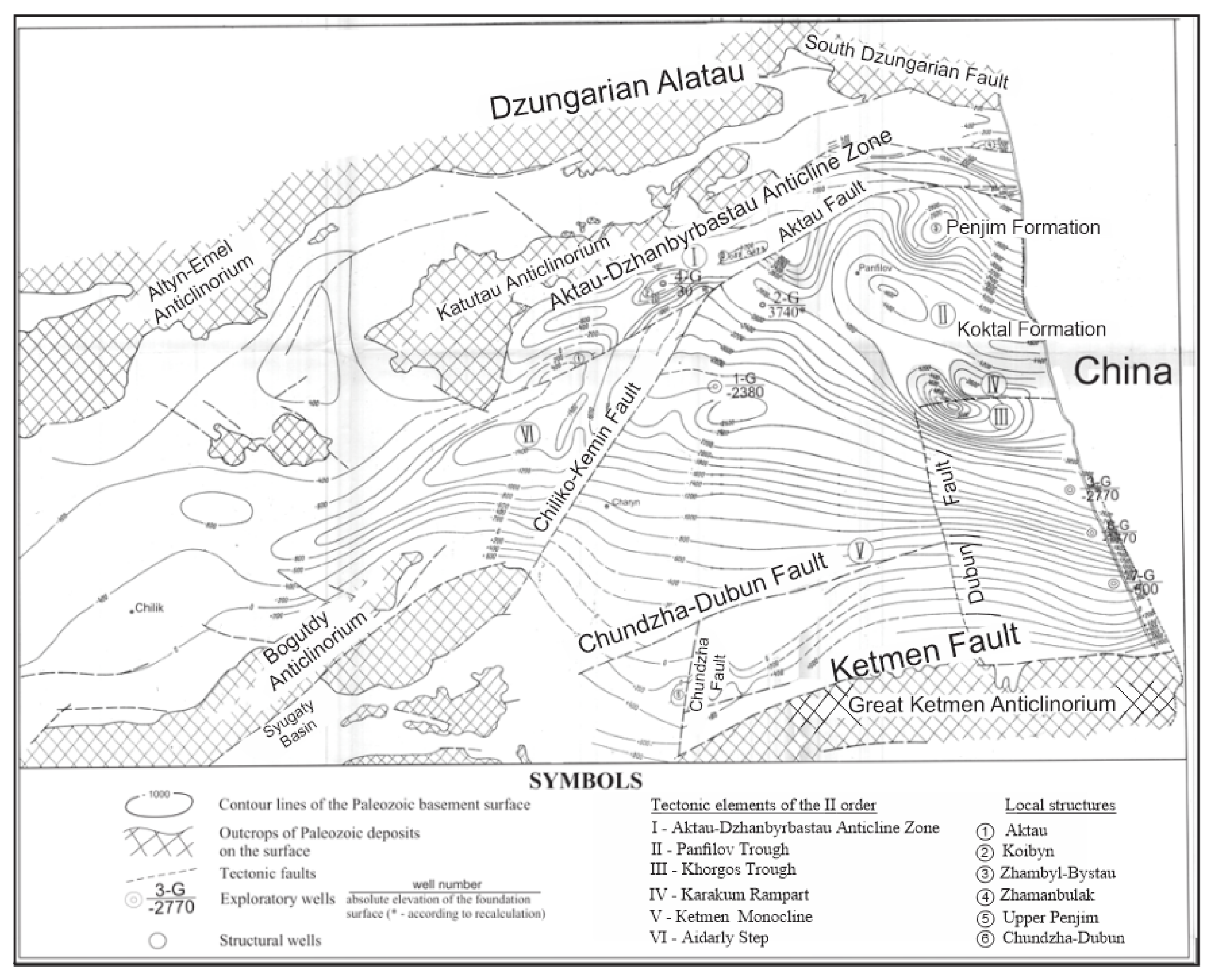
Figure 4.
Digital elevation models of reflecting horizons based on 2D seismic reflection data (CDP-2D interpretation): (left) Reflecting Horizon II—base of the Miocene-Paleogene (N1–Pg); (right) Reflecting Horizon IV—base of the Jurassic deposits (J1).
Figure 4.
Digital elevation models of reflecting horizons based on 2D seismic reflection data (CDP-2D interpretation): (left) Reflecting Horizon II—base of the Miocene-Paleogene (N1–Pg); (right) Reflecting Horizon IV—base of the Jurassic deposits (J1).
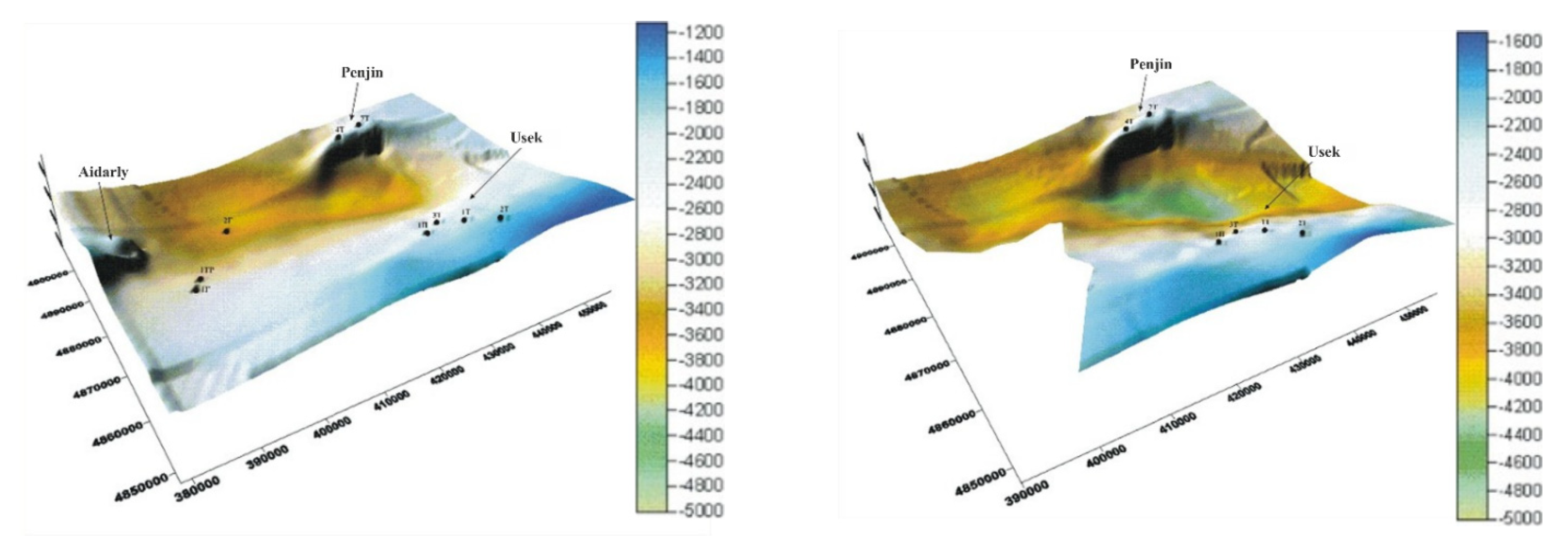
Figure 5.
Structural-tectonic model of the Zharkent Depression.
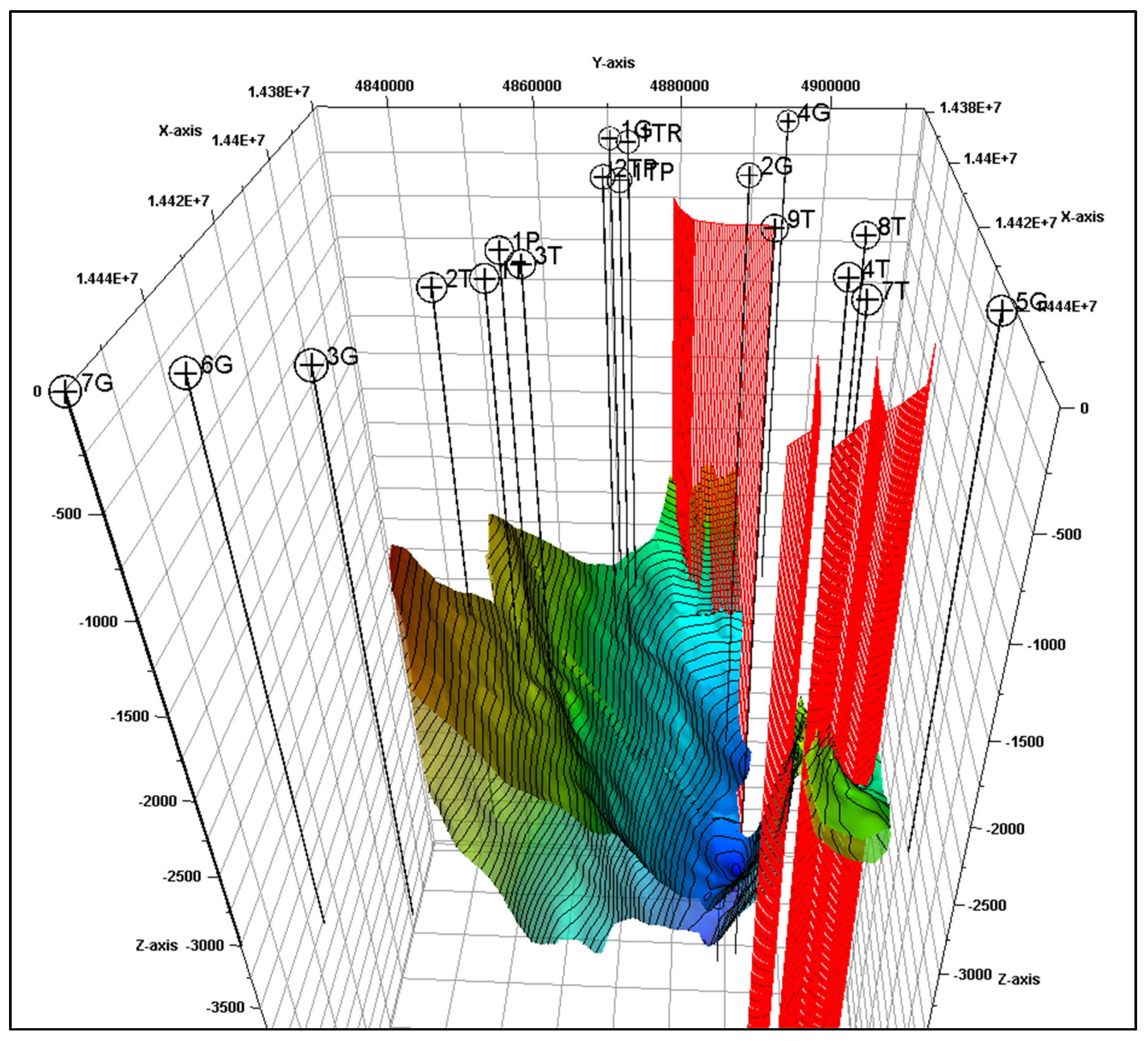
Figure 8.
Gas–water relative permeabilities.
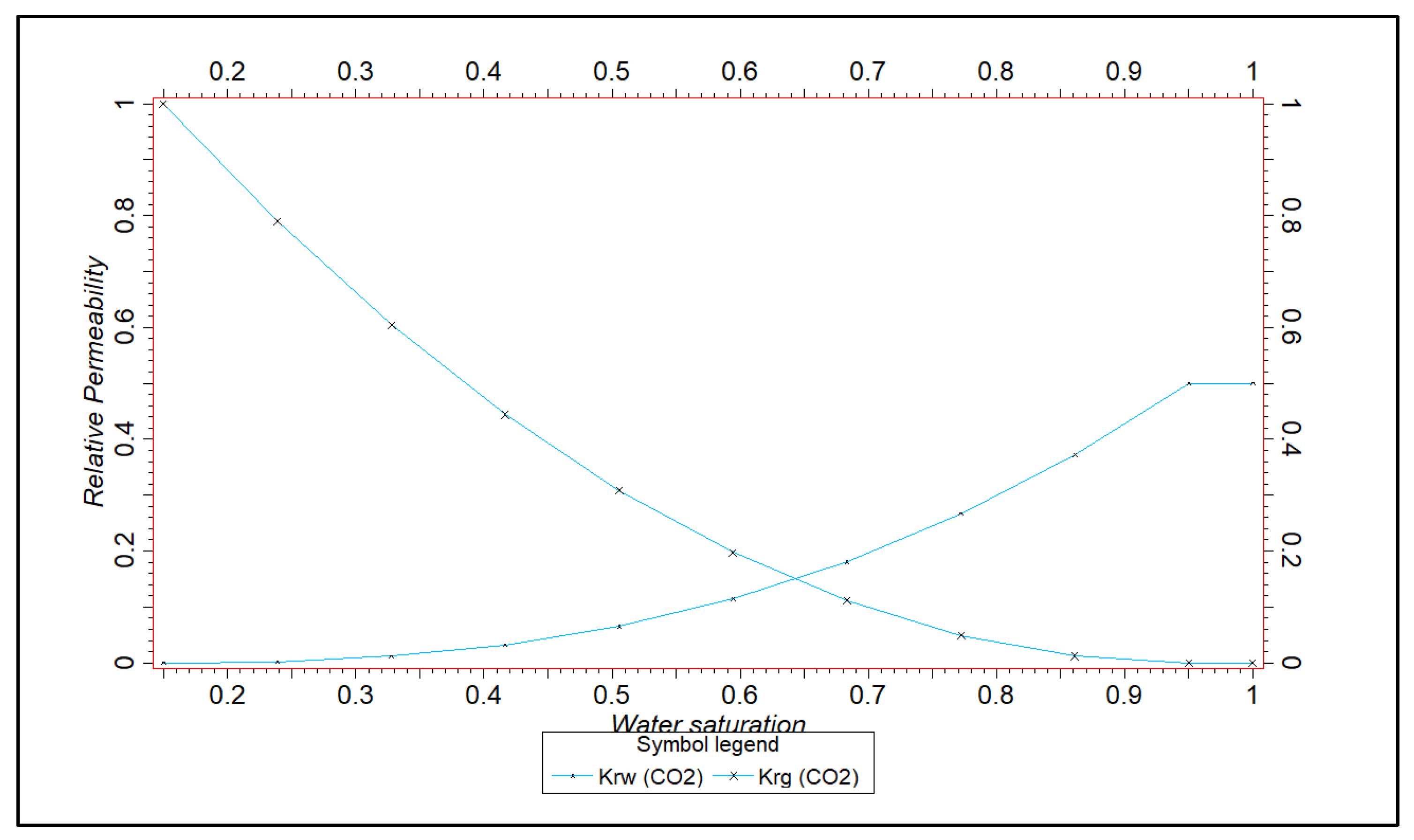
Figure 9.
Reservoir model of the Jurassic aquifer with the location of the proposed CO2 injection well.
Figure 9.
Reservoir model of the Jurassic aquifer with the location of the proposed CO2 injection well.
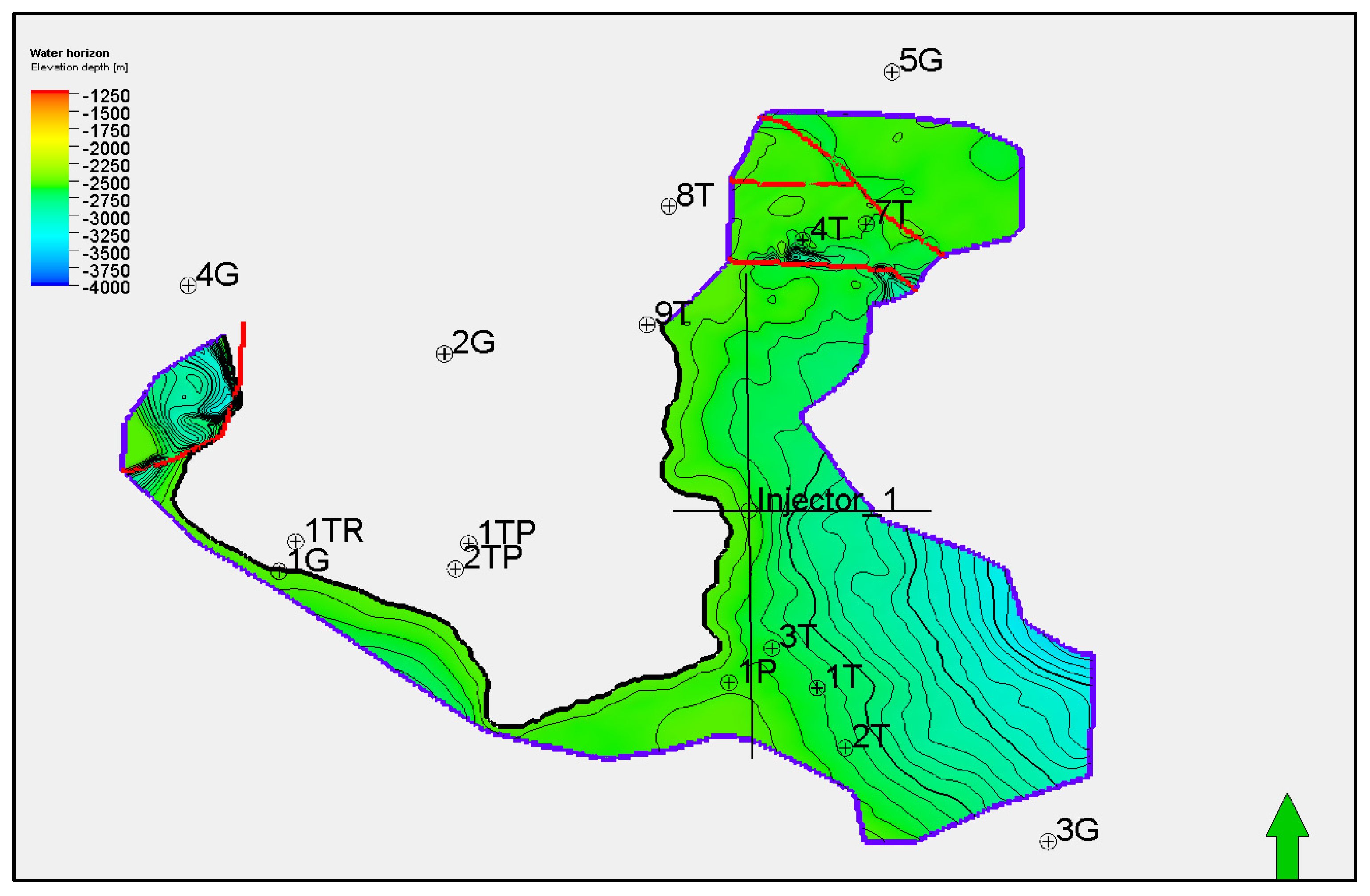
Figure 10.
Gas saturation at the initial state and after 10, 50, and 100 years: cross-section along line I.
Figure 10.
Gas saturation at the initial state and after 10, 50, and 100 years: cross-section along line I.
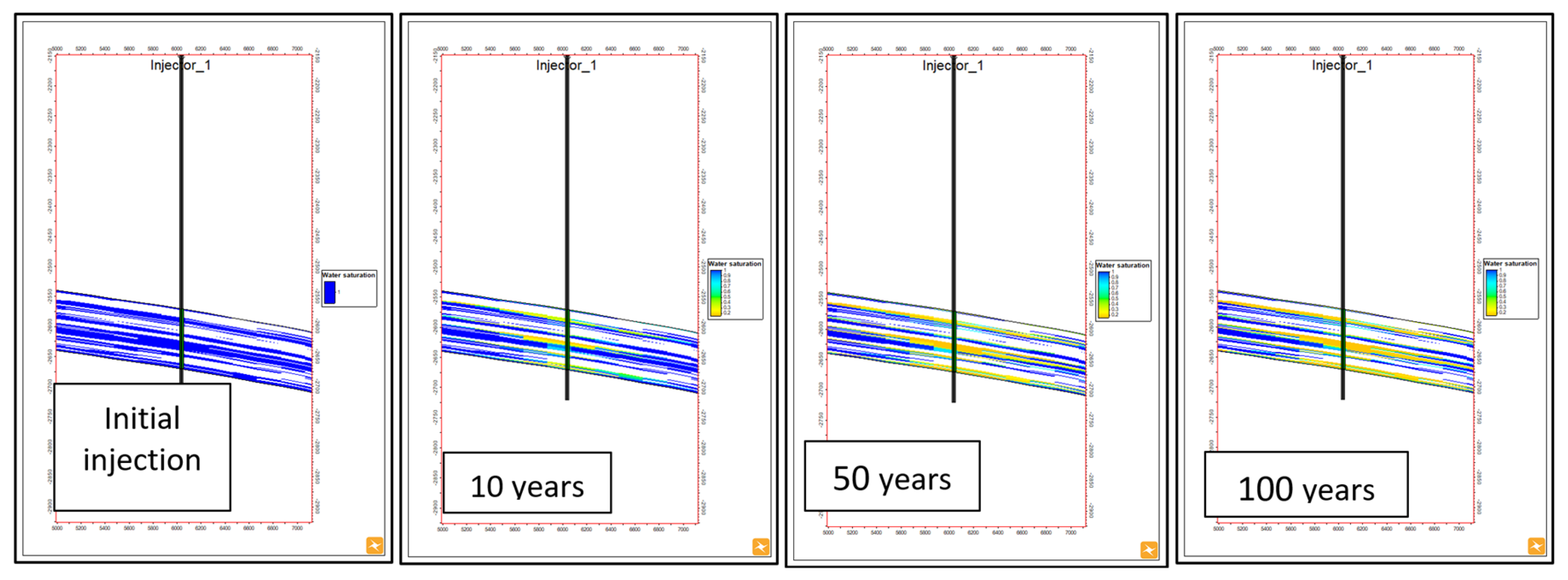
Figure 11.
Gas saturation at the initial state and after 10, 50, and 100 years: cross-section along line II.
Figure 11.
Gas saturation at the initial state and after 10, 50, and 100 years: cross-section along line II.
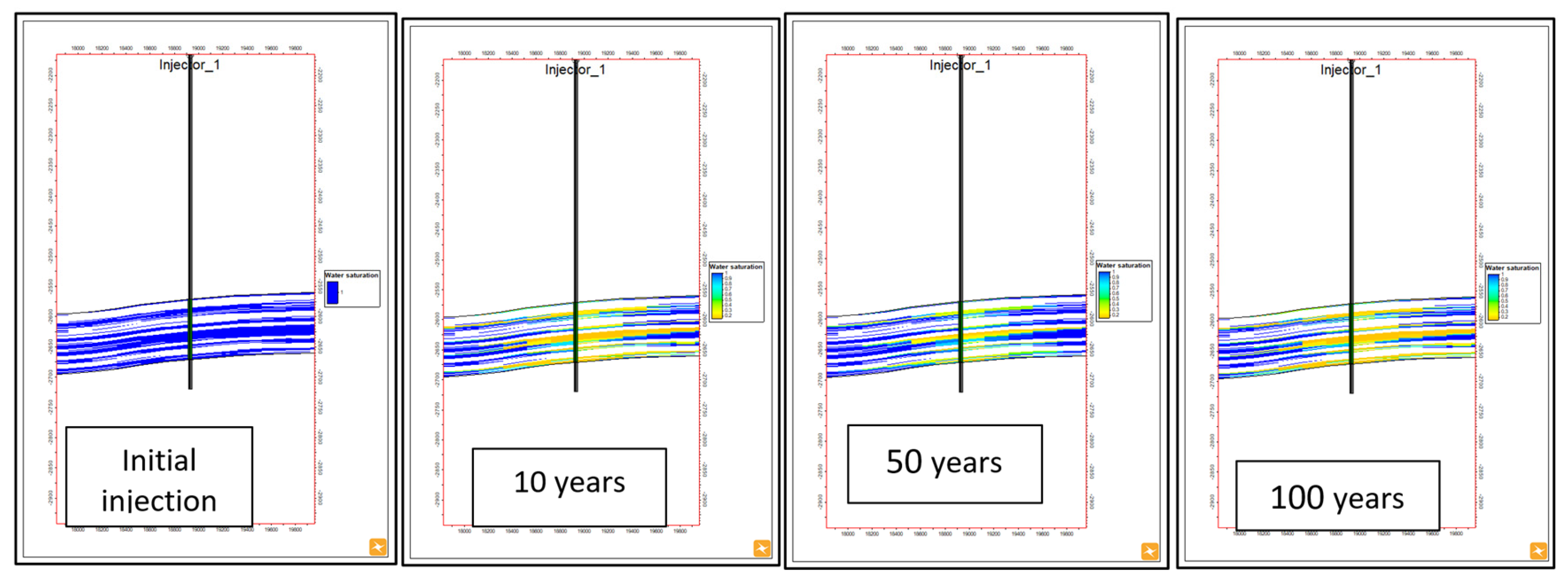
Figure 12.
Forecast profile of CO2 injection.
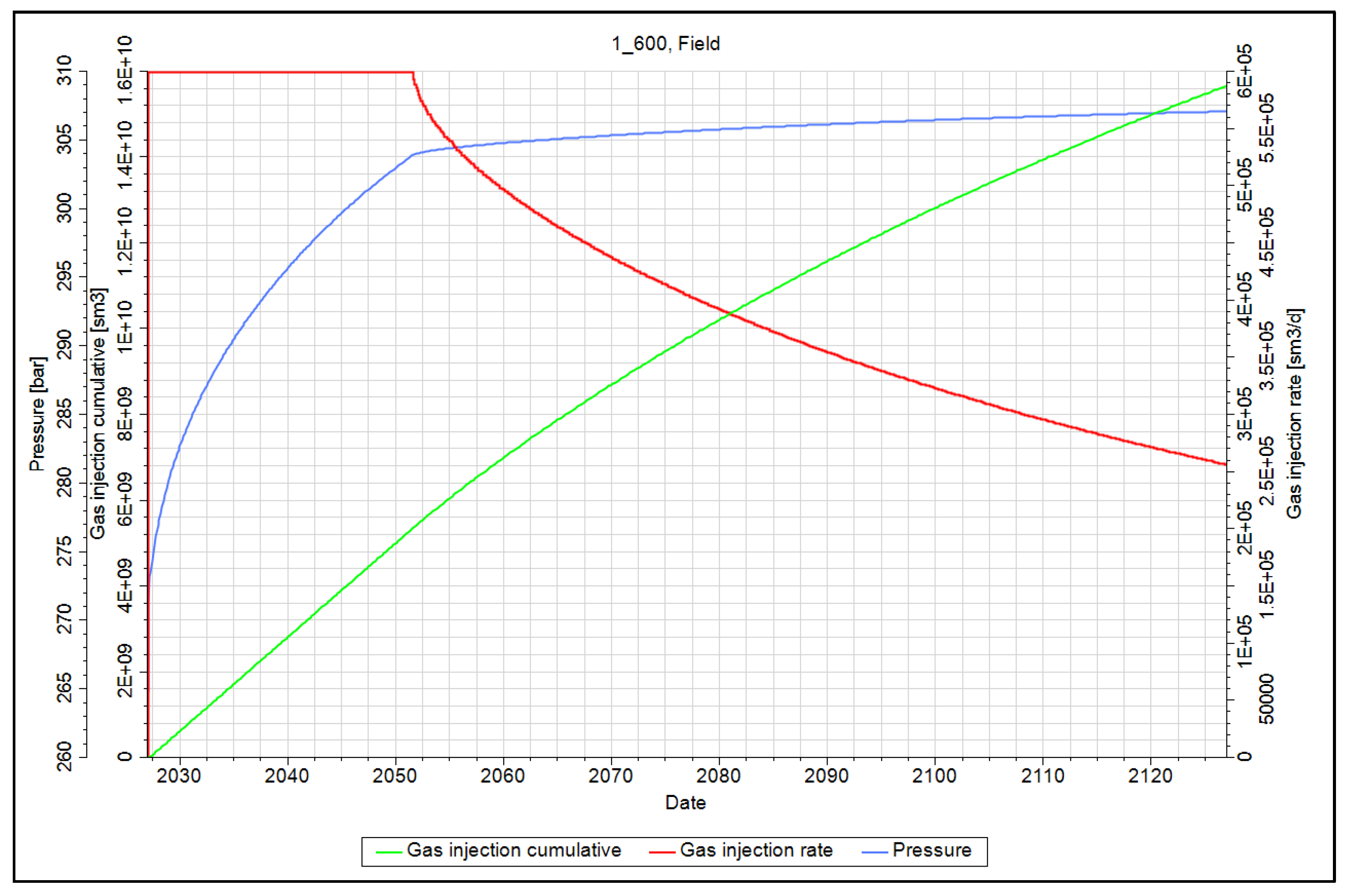
Table 2.
Input data for 3D modeling.
| Grid Parameter | Grid dimensions |
| Total number of cells | 22772496 |
| Depth | Miocene-Paleogene: -1235 m to -3631 m Jurassic deposits: -1566 m to -3700 m |
| Reservoir thickness | 15 m |
| Porosity | Miocene-Paleogene: 17-30% Jurassic deposits: 12-22% |
Disclaimer/Publisher’s Note: The statements, opinions and data contained in all publications are solely those of the individual author(s) and contributor(s) and not of MDPI and/or the editor(s). MDPI and/or the editor(s) disclaim responsibility for any injury to people or property resulting from any ideas, methods, instructions or products referred to in the content. |
© 2026 by the authors. Licensee MDPI, Basel, Switzerland. This article is an open access article distributed under the terms and conditions of the Creative Commons Attribution (CC BY) license (http://creativecommons.org/licenses/by/4.0/).
Copyright: This open access article is published under a Creative Commons CC BY 4.0 license, which permit the free download, distribution, and reuse, provided that the author and preprint are cited in any reuse.


