

Submitted:
08 June 2026
Posted:
10 June 2026
You are already at the latest version
Abstract
The anisakid nematode Sulcascaris (S.) sulcata is one of the most frequently reported pathogenic parasite of gastrointestinal tract of sea turtles, with wide diffusion in warm marine ecosystems of Pacific, Atlantic, and Mediterranean basin. Sea turtles, including the Mediterranean loggerhead turtle (Caretta caretta), act as definitive hosts by ingesting infected bivalve and gastropod molluscs with fourth- larval stage. Infected sea turtles typically develop ulcerative gastritis and chronic mucosal inflammation. We molecularly characterized 19 anisakid nematodes collected from the gastric tract of stranded C. caretta (n = 19) along the Adriatic and Ionian coasts and examined at local Zooprophylactic Institutes. Stomach samples from 5 severely infested turtles were also submitted to histological analysis. Species identification was performed through two conventional PCRs targeting MT-CO1 and MT-CO2; sequencing of 35 amplicons confirmed their identity as S. sulcata species revealing high genetic homogeneity. Phylogenetic analyses showed no clustering by geographic origin or host. The pathological examination revealed mucocatarrhal gastritis with ulcerative lesions, while histological analysis showed chronic gastritis characterized by lymphocytic infiltration. These findings refine current knowledge on S. sulcata distribution and host–parasite dynamics, with implications for marine turtle health and intermediatehost ecology.
Keywords:
Sulcascaris sulcata
; Caretta caretta host
; mitochondrial markers
; Adriatic/Ionian sea
1. Introduction
Nematodes of the family Anisakidae are among the most widespread helminths in marine ecosystem [1]. Among the members of this family is included Sulcascaris sulcata, a pathogenic parasite of esophagus and stomach of marine turtles where it causes ulcerous gastritis with different degree of severity, commonly due to the intensity of the infestation [2].
S. sulcata (Rudolphi, 1819) is actually the only recognized species within the genus, with a second yet-to-be-validated Sulcascaris species from Japan [3].
The adult forms of S. sulcata naturally mature in gastric lumen of loggerhead Caretta caretta), Kemp’s ridley epidochelys kempii) and green (Chelonia mydas) turtles widely distributed in temperate and tropical marine waters of Atlantic, Pacific and Indian Oceans and also in Mediterranean Basin where loggerhead sea turtle represent the most common species and it is widespread over the enter basin [4,5,6,7,8] ; various marine bivalve and gastropod species serve as intermediate hosts in the developmental cycle of this nematode [5,9].
The life cycle of S. sulcata was experimentally elucidated by Berry and Cannot [9]. Parasite’s eggs are shed in marine environment with sea turtle feces; after two moults in the egg, the third stage larvae hatch spontaneously on sea-bed and they become infective for intermediate hosts (bivalve molluscs and gastropods) when ingested through inhalation in the siphon. Within about four months in the molluscs, larvae moult to the fourth stage and they are able to infect marine turtles via ingestion attaching specifically to the esophago-gastric junction. Subsequently, they complete maturation in definitive hosts with eggs deposition about 6 months after infection. In natural settings, the full cycle may require up to two years [9]. To date, the zoonotic potential of S. sulcata has not been demonstrated, and no evidence exists of human infection, as current studies describe the parasite exclusively in marine hosts; however, the failed experimental infection of different fish species, chickens and cats with fourth stage larvae [9] may not exclude this possibility due to the close relationship of S.sulcata with zoonotic anisakid parasite [10].
Through the molecular identification of the parasite, the present study provides new information on the S. sulcata infestation in loggerhead (Caretta caretta) coming from scarcely indagated areas of North West (NE) Adriatic and Northern Ionian Sea; it also adds biometric data and evidences on the pathological alterations related to the S.sulcata positive C. caretta population indagated in the course of the study.
2. Materials and Methods
2.2. Specimen and Data Collection
A total of 19 anisakid nematodes preserved in 70% ethanol were molecularly analysed to verify their belonging to the S. sulcata species. The parasites had been previously isolated from the oesophagus and stomach of stranded or found-dead Mediterranean loggerhead sea turtles (Caretta caretta); the subjects have been collected along the North-West Adriatic and Northern Ionian coasts (Apulia and Marche region) in the period December 2020 - June 2024 and necropsied in the laboratories of the local Zooprophylactic Institutes. During the post-mortem examination, biometric data (curved carapace length (CCL), weigh, sex), discovery site and collection date were registered for each sea turtle. Samples of stomach from a set of selected subjects presenting severe infestation were subjected to histological analysis by standardized protocol using hematoxylin–eosin staining.
2.3. Parasite Processing and Tissue Sampling
Each parasite specimen was extracted from the test tube, miscoscopically observed for presence of cephalic end and tail and measured in length. Subsequently, a tissue fragment of caudal part (approximately 50 mg) from each parasite specimen was excised using sterile instruments and submitted to molecul analyses to confirm the identity of the collected nematodes.
2.4. Molecular Analyses
Genomic DNA was extracted from adult nematodes (n=19) using a commercial Maxwell RSC PureFood GMO and Authentication kit (Promega, USA) on the Maxwell RSC Extraction System (Promega, USA), following the manufacturer’s instructions.
DNA concentration and purity were assessed using a spectrophotometer NanoPhotomerter ®N60 (Implen, Germany), and samples were stored at −20 °C until further processing.
Molecular identification of nematodes was performed by amplifying the mitochondrial CO1 gene and CO2 gene. Gene amplification protocols were adapted from the methodology described by Marcer et al. [8] (Table 1).
PCR reactions were carried out in a final volume of 20 µL containing 1x Platinum II PCR Buffer, 10mM dNTP mix, 0.2 µM of each primer (table x) 0.04 U/µL of Platinum II Taq Hot-Start DNA Polymerase (ThermoFisher Scientific), 3 µL of DNA and water nuclease free to volume of reaction. We applied thermal protocols depending on the target to be amplified: cycling condition for MT-CO1 region comprised an initial denaturation at 94 °C for 2 min, followed by 35 cycles of denaturation (94 °C, 30 s), annealing (50 °C, 30 s), and extension (68 °C, 30 s), with a final extension at 68 °C for 5 min; cycling condition for MT-CO2 region comprised an initial denaturation at 94 °C for 2 min, followed by 50 cycles of denaturation (94 °C, 30 s), annealing (48 °C, 30 s), and extension (68 °C, 45 s), with a final extension at 68 °C for 5 min. The PCR products were visualized using the QIAxcel Advanced system (Qiagen, Hilden, Germany) and then the positive products were purified using enzyme “Exo-SaP IT” kit (ThermoFisher Scientific, Waltham, MA, USA) according to the manufacturer’s protocol.
2.5. Sequencing and Data Analysis
Sequence reactions were carried out using BigDye 3.1 Ready reaction mix (Life Technologies, Thermo Fischer Scientific Carlsbad, CA, USA) according to the manufacturer’s instructions. The sequenced products were separated with a 3130 Genetic Analyzer (Life Technologies, Thermo Fischer Scientific Carlsbad, CA, USA). Electropherograms were imported, analysed and assembled using Bioedit v 7.2 [11]. In addition, NCBI GenBank was searched for the presence of public MT-CO1, MT-CO2 nucleotide sequences [12]. Resulting FASTA sequences were quality checked and aligned with those under-study; consequently, three multi-alignments were generated and submitted to phylogenetic analyses. Briefly, alignments were submitted to IQ-TREE web-server[13,14], for automatic nucleotide substitution model selection and maximum likelihood-based phylogenetic analysis. Then, consensus trees with branch support were generated, based on 1000 bootstrap alignments. Phylogenetic trees were further evaluated and edited by means of Itol [15].
3. Results
2.6. Morphological and Diagnostic Findings
All of the collected nematodes were intact and they exhibited lengths between 56 and 108 mm (Figure 1) suggesting adult forms of anisakid parasite.
All of the 19 stranded loggerhead sea turtles were from the Adriatic Sea (Marche coasts n=6 and Apulia coasts n= 12), except one subject from the Northern Ionian Sea (Apulia coasts n=1), as shown in the map (Figure 2). Out of a total of 19 sea turtles, 9 (9/19) individuals had a CCL ranging from 70 cm to 79 cm, 8 (8/19) had a CCL ranging from 60 to 69 cm and in two (2/19) turtles the CCL measured 40 cm (Table 2). Macroscopic examination of the gastric chambers predominantly revealed chronic mucocatarrhal-hemorrhagic inflammation, characterized by marked mucosal edema and hyperemia. In specimens where, parasitic elements showed stronger adhesion and anchorage to the organ, the inflammatory process progressed to marked coagulative necrosis, with extensive tissue loss and the development of multiple crateriform ulcers (Figure 3a and 3b). Histologically, the lesions were characterized by mucosal thinning up to complete erosion, coagulative necrosis, lympho-macrophagic inflammatory infiltration with nodular and/or diffuse distribution, vascular engorgement, and hemorrhages (Figure 4a and 4b)
2.7. Molecular and Phylogenetic Analyses
Amplification and sequencing of the MT-CO1 and MT- CO2 regions yielded a total of 35 consensus sequences (18 for MT- CO1 and 17 for MT- CO2). BLAST analyses showed that all sequences corresponded to S. sulcata, with similarity values exceeding 99% for both molecular markers. All newly generated sequences are currently being submitted to GenBank (Accession No. PZ299361- PZ299369 and PZ299370- PZ299378 for MT-CO1 and PZ281678-PZ281694 for MT-CO2). A total of 59 MT-CO1 ortholog sequences were retrieved, processed and submitted to phylogenetic analyses (18 from this study, plus one outgroup sequence). Regarding MT-CO2, the total sequence set consisted of 118 items, 17 of which from this study and 101 collected from NCBI (one outgroup) The phylogenetic analysis of the mitochondrial markers MT-COI and MT-CO2 demonstrated a marked genetic homogeneity across all generated sequences, with no detectable structuring or clustering according to geographic provenance or host species, as illustrated in Figure 5 and Figure 6. The complete metadata associated with all analyzed specimens are provided in the Supplementary Material Table S1 and Table S2.
4. Discussion
The molecular findings of this study provide a comprehensive characterization of adult specimens of S. sulcata; their presence in the examined turtles confirms both infestation and active completion of the parasite’s life cycle in Mediterranean loggerhead turtle population. Particularly, the obtained results add further baseline data on the distribution of the S. sulcata infestation in individuals came from Adriatic and Ionian coasts, in addition to data reported in previous studies [2,8,16,17,18]. From an ecological and epidemiological perspective, S. sulcata is confirmed a well-established parasite within Mediterranean C. caretta populations, such as also demonstrates the contribute herein. The life cycle of this parasite, which involves sea turtles as definitive hosts and bivalve and gastropod molluscs as intermediate hosts, is tightly linked to the trophic ecology of turtles in neritic habitats, as well as those of Mediterranean basin coasts. According to available bibliographic data, the prevalence of S. sulcata infection in Mediterranean loggerhead turtles ranges around 20% [2,19]; however, higher values are usually reported in subjects feeding in Adriatic comparated to Tyrrhenian Sea up 30% [18]. Indeed, the shallow neritic zone of the Adriatic Sea is characterized by a high macrofaunal biomass dominated by sedentary invertebrates and it constitutes one of the most extensive and ecologically significant foraging areas for loggerhead sea turtles in the Mediterranean basin. This region supports dense assemblages of bivalves and gastropods which represent key trophic resources for C. caretta and play a central role as intermediate hosts in the transmission dynamics of several helminth parasites, including the S.sulcata nematode [18]. Particularly, the occurrence of S. sulcata larvae was molecularly confirmed in Mediterranean mussels (Mytilus galloprovincialis) farmed along the Thyrrenian coast (Gulf of Naples, Campania region) and remains of these mollusc species were found in the gastric lumen of S. sulcata positive sea turtles from the same areas; this leads to hypothesis of a close correlation between consumption of mussels and presence of S.sulcata in sea turtles from the same area [20]. Recent data confirm that mussels appear be a consistent dietary component of C.caretta; furthermore, in the Adriatic they resulted the most common ingested mollusk, due to adaptative feeding behavior of the sea turtles and of their interaction in mussel farms, with a evident increase in presence in the period 2018-2021 [21]. Previous observations also conducted in our laboratories through the post mortem examination of stranded C.caretta turtles from Apulia coasts confirms this trend in the period 2017-2020. Most likely, mollusc species of the family Pectinidae have been also reported infested with S. sulcata larvae in the Northern Adriatic Sea [22] , including Pecten jacobaeus and Aequipecten opercularis such as confirmed by Marcer et al. [8]. It suggests to acquire more detailed information on the presence of S. sulcata larvae in Mediterranean edible molluscs from areas where it is completely lacking, such as the Apulia region where both mollusc farms and S.sulcata positive sea turtles occur. Infact, areas characterized by high molluscan productivity may act as transmission hotspots, whereas individuals frequenting more pelagic habitats may experience lower exposure Although ecological and distributional data provide a clear understanding of the parasite’s transmission dynamics, the biological relevance of S. sulcata infestation becomes fully evident when considering the lesions, it induces in affected turtles. For this reason, pathological assessment is essential to evaluate the impact of the parasite at the individual level. Observations also demonstrate that the parasite’s burden tends to increase with host (i.e., sea turtle) size and age, suggesting cumulative exposure over time [2]. In our experience the cases of severe infestation with a very large amount of S.sulcata nematodes usually occurred in adult turtles having CCL around 70 cm. In these subjects, a number of free parasites appeared in aggregation occupying a large portion of the gastric lumen and esophageal cavity; in addition, S. sulcata specimens firmly planted by the buccal capsule into the gastric mucosa and sub-mucosa were more easily observed after washing of the parasitized digestive tract. In these cases, a marked mucocatarrhal hemorrhagic gastritis with focal to multifocal raised ulcerous lesions was the most frequently observed gross pathological change. Microscopically, the most common alterations ranged from atrophic gastritis with dense lymphocytic infiltrates in the lamina propria to extensive mucosal and submucosal necrosis, confirming the parasite’s capacity to induce substantial tissue damage in sea turtles (Figure 3a and Figure 3b). Previous studies also report similar pathological pictures related to the parasite [2]. Because the morphological identification of both larval and adult forms of the parasite requires personnel with adeguate expertise, molecular tools may represent a rapid and reliable approach to confirm species identity and to explore genetic variability within circulating populations.
The obtained sequences based on MT-CO1 and MT-CO2 markers showed >99% similarity to S. sulcata. However, the phylogenetic signal that can be extracted from these markers is strongly influenced by the composition of the available reference datasets. For MT-CO1, all sequences retrieved from public databases originated from Italy, limiting the geographic breadth of inference for this locus. In contrast, MT-CO2 was represented by a larger number of sequences derived from multiple regions worldwide, providing a broader—though still incomplete—overview of the species’ mitochondrial diversity. Despite these differences in dataset composition, phylogenetic reconstruction based on both MT-CO1 and MT-CO2 did not reveal any distinct clustering among our sequences or between our sequences and those previously published. Notably, sequences obtained from sea turtle hosts—including those generated in the present study—and sequences derived from intermediate hosts (bivalve and gastropod molluscs) did not segregate into separate clades. This absence of host-associated structuring suggests that S. sulcata populations circulating across different stages of the life cycle are genetically homogeneous at the mitochondrial level for the regions and markers examined—a pattern we expected, given the biology of the parasite and the limited variability typically observed in these loci. The lack of phylogeographic or host-related patterns may also reflect restricted sampling (particularly for MT-CO1) and the still modest number of sequences available in public repositories. In this context, the set of MT-CO1 and MT-CO2 sequences generated in the present study represents a substantial contribution to the existing genetic resources for S. sulcata. Considering the scarcity of MT-CO1 sequences and the relatively small, though more geographically diverse, MT-CO2 dataset, our results significantly expand the reference framework for future comparative, phylogenetic, and epidemiological investigations.
5. Conclusions
Overall, our findings draw attention to the presence and distribution of S.sulcata infestation in loggerhead turtles inhabiting not previously indagated areas of Adriatic and Ionian Sea; they also strongly suggest useful investigation on the intermediate hosts of the parasite in the same areas.
It is important to underscore the usefulness of integrating molecular and histopathology diagnostics to achieve accurate identification and assessment of parasitic infections in marine turtles and its impact on the health status of the subjects, considerated vulnerable species within the Mediterranean basin [23].
The limited and uneven representation of S. sulcata sequences in genetic databases, , highlights the need for expanded sampling and sequence deposition across different geographic areas and definitive and intermediate host. Such efforts will be essential to improve future epidemiological studies.
Supplementary Materials
The following supporting information can be downloaded at the website of this paper posted on Preprints.org, Table S1: Metadata for MT-CO1 Sequences Used in Phylogenetic Analyses and Table S2: Metadata for MT-CO2 Sequences Used in Phylogenetic Analyses.
Author Contributions
Conceptualization, M.G.C. and M.A.C.; methodology, M.G.C., S.C, A.P.,I.P. and M.A.C; software, M.G.C., S.C..; validation, M.G.C., S.C.,A.P.,A.B. and M.A.C..; formal analysis, M.G.C., A.P., and A.B.; investigation, M.G.C., S.C, A.P., A.B., A.D.C, S.P.G., E.B., F.C.,I.P. and M.A.C, ; resources, A.P.,A.B., and M.A.C .; data curation, M.G.C., A.P., S.C. and M.A.C; writing—original draft preparation, M.C.G.; writing—review and editing, M.G.C., S.C., A.P., A.B., L.M. and M.A.C.; visualization, M.G.C. and M.A.C.; supervision, M.A.C.; All authors have read and agreed to the published version of the manuscript.
Funding
This research received no external funding.
Institutional Review Board Statement
Ethical review and approval were not required for this study, as it involved only deceased vertebrate examined post-mortem.
Informed Consent Statement
Not applicable.
Data Availability Statement
The mitochondrial sequences generated in this study have been deposited in GenBank and are publicly available under the accession numbers listed in the Supplementary Materials.
Acknowledgments
During the preparation of this manuscript, the authors used Zotero for reference management and bibliographic organization.
Conflicts of Interest
The authors declare no conflicts of interest.
References
- Giarratana, F.; Panebianco, F.; Muscolino, D.; Beninati, C.; Ziino, G.; Giuffrida, A. Effect of Allyl Isothiocyanate against Anisakis Larvae during the Anchovy Marinating Process. J. Food Prot. 2015, 78, 767–771. [Google Scholar] [CrossRef] [PubMed]
- Santoro, M.; Marchiori, E.; Iaccarino, D.; Uberti, B.D.; Cassini, R.; Di Nocera, F.; Cerrone, A.; Galiero, G.; Marcer, F. Epidemiology of Sulcascaris Sulcata (Nematoda: Anisakidae) Ulcerous Gastritis in the Mediterranean Loggerhead Sea Turtle (Caretta Caretta). Parasitol. Res. 2019, 118, 1457–1463. [Google Scholar] [CrossRef] [PubMed]
- Sata, N.; Nakano, T. Molecular Analysis of Larvae Suggests the Existence of a Second Species of Sulcascaris (Nematoda: Anisakidae: Anisakinae) in the Japanese Moon Scallop (Ylistrum Japonicum) from Japanese Waters. Parasitol. Int. 2023, 92, 102674. [Google Scholar] [CrossRef] [PubMed]
- Sprent, J.F.A. Ascaridoid Nematodes of Amphibians and Reptiles: Sulcascaris. J. Helminthol. 1977, 51, 379–387. [Google Scholar] [CrossRef]
- Lichtenfels, J.R.; Bier, J.W.; Madden, P.A. Larval Anisakid (Sulcascaris) Nematodes from Atlantic Molluscs with Marine Turtles as Definitive Hosts. Trans. Am. Microsc. Soc. 1978, 97, 199. [Google Scholar] [CrossRef] [PubMed]
- Greiner, E. Parasites of Marine Turtles; 2013; pp. 427–446. ISBN 978-1-4398-7307-6. [Google Scholar]
- Margaritoulis, D.; Argano, R.; Baran, I.; Bentivegna, F.; Bradai, M.; Camiñas, J.; Casale, P.; Metrio, G.; Demetropoulos, A.; Gerosa, G. Loggerhead Turtles in the Mediterranean Sea: Present Knowledge and Conservation Perspectives. In Loggerhead Sea Turtles; Bolten, A.B., Witherington, B.E., Eds.; Smithsonian Institution Press: Washington DC, 2003; pp. 175–198. [Google Scholar]
- Marcer, F.; Tosi, F.; Franzo, G.; Vetri, A.; Ravagnan, S.; Santoro, M.; Marchiori, E. Updates on Ecology and Life Cycle of Sulcascaris Sulcata (Nematoda: Anisakidae) in Mediterranean Grounds: Molecular Identification of Larvae Infecting Edible Scallops. Front. Vet. Sci. 2020, 7, 64. [Google Scholar] [CrossRef] [PubMed]
- Berry, G.; Cannon, L. The Life History of Sulcascaris Sulcata (Nematoda: Ascaridoidea), a Parasite of Marine Molluscs and Turtles. Int. J. Parasitol. 1981, 11, 43–54. [Google Scholar] [CrossRef]
- Mattiucci, S.; Cipriani, P.; Levsen, A.; Paoletti, M.; Nascetti, G. Molecular Epidemiology of Anisakis and Anisakiasis: An Ecological and Evolutionary Road Map. In Advances in Parasitology; Elsevier, 2018; Vol. 99, pp. 93–263. ISBN 978-0-12-815192-1. [Google Scholar]
- Galadima Dagona, A. BioEdit: A User-Friendly Biological Sequence Alignment Editor and Analysis Program for Windows 95/98/NT. Nucleic Acids Symposium Series. 1999, 1999. [Google Scholar]
- Available online: https://Www.Ncbi.Nlm.Nih.Gov/Nuccore/?Term=sulcascaris+sulcata (accessed on 02/25/26).
- Available online: http://Iqtree.Cibiv.Univie.Ac.at/ (accessed on 02/25/2026).
- Trifinopoulos, J.; Nguyen, L.-T.; von Haeseler, A.; Minh, B.Q. W-IQ-TREE: A Fast Online Phylogenetic Tool for Maximum Likelihood Analysis. Nucleic Acids Res. 2016, 44, W232–235. [Google Scholar] [CrossRef] [PubMed]
- Available online: https://Itol.Embl.de/ (accessed on 08/04/2026).
- Gentile, A.; Amato, T.; Gustinelli, A.; Fioravanti, M.L.; Gambino, D.; Randazzo, V.; Caracappa, G.; Vicari, D.; Arculeo, M. Helminth Infection of the Loggerhead Sea Turtle Caretta Caretta along the Coasts of Sicily and the North West Adriatic Sea. Animals 2021, 11, 1408. [Google Scholar] [CrossRef] [PubMed]
- Marangi, M.; Carlino, P.; Profico, C.; Olivieri, V.; Totaro, G.; Furii, G.; Marzano, G.; Papini, R.A. First Multicenter Coprological Survey on Helminth Parasite Communities of Free-Living Loggerhead Sea Turtles Caretta Caretta (Linnaeus, 1758) from the Adriatic Sea and Northern Ionian Sea. Int. J. Parasitol. Parasites Wildl. 2020, 11, 207–212. [Google Scholar] [CrossRef] [PubMed]
- Gračan, R.; Buršic, M.; Mladineo, I.; Kučinic, M.; Lazar, B.; Lackovic, G. Gastrointestinal Helminth Community of Loggerhead Sea Turtle Caretta Caretta in the Adriatic Sea. Dis. Aquat. Org. 2012, 99, 227–236. [Google Scholar] [CrossRef] [PubMed]
- Manfredi, M.T.; Piccolo, G.; Meotti, C. Parasites of Italian Sea Turtles. II. Loggerhead Turtles (Caretta Caretta [Linnaeus, 1758]). Parassitologia 1998, 40, 305–308. [Google Scholar] [PubMed]
- Santoro, M.; Marchiori, E.; Palomba, M.; Degli Uberti, B.; Marcer, F.; Mattiucci, S. The Mediterranean Mussel (Mytilus Galloprovincialis) as Intermediate Host for the Anisakid Sulcascaris Sulcata (Nematoda), a Pathogen Parasite of the Mediterranean Loggerhead Turtle (Caretta Caretta). Pathogens 2020, 9, 118. [Google Scholar] [CrossRef] [PubMed]
- Di Renzo, L.; Mariani, G.; Matiddi, M.; Silvestri, C.; Chiesa, S.; Petochi, T.; Marino, G.; Pizzurro, F.; Fazio, S.; Rossi, E.; et al. First Survey on Sea Turtles’ Interactions in Mussel Farms in Italy. Animals 2025, 15, 2909. [Google Scholar] [CrossRef] [PubMed]
- Lazar, B.; Gračan, R.; Katić, J.; Zavodnik, D.; Jaklin, A.; Tvrtković, N. Loggerhead Sea Turtles ( Caretta Caretta ) as Bioturbators in Neritic Habitats: An Insight through the Analysis of Benthic Molluscs in the Diet. Mar. Ecol. 2011, 32, 65–74. [Google Scholar] [CrossRef]
- Casale, P.; Margaritoulis, D. Sea Turtles in the Mediterranean: Distribution, Threats and Conservation Priorities; 2010; ISBN ISBN 978-2-8317-1240-6. [Google Scholar]
Figure 1.
Sulcascaris sulcata specimen undergoing morphometric assessment (total length ≈ 80 mm).
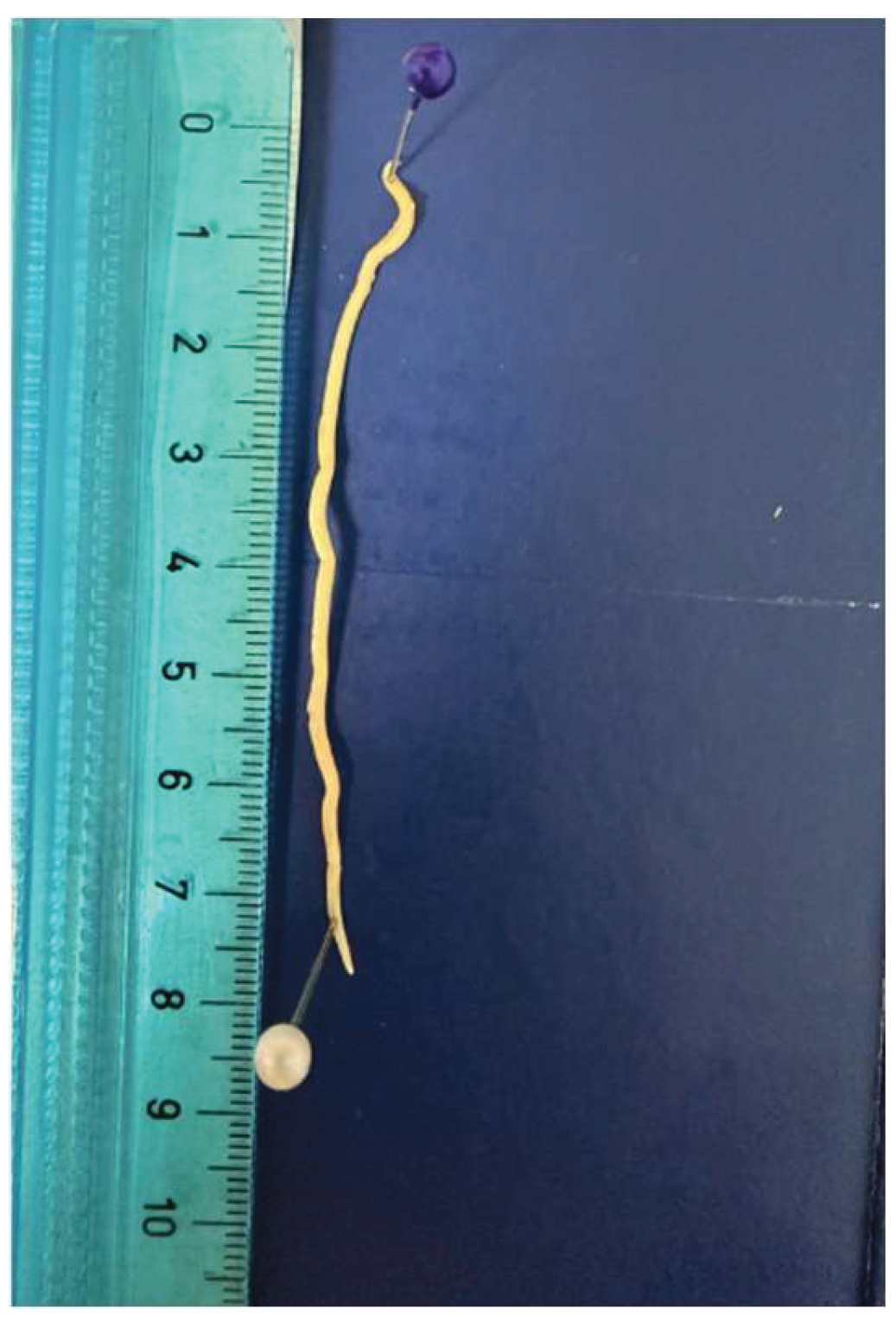
Figure 2.
Recovery and stranding sites (Green markers points) of the examined Caretta caretta along the coasts of the Marche and Apulia regions. Map scale 1: 8000000; Inset map scales 1: 1000000. Georeferenced map generated using QGIS 3.40.15.
Figure 2.
Recovery and stranding sites (Green markers points) of the examined Caretta caretta along the coasts of the Marche and Apulia regions. Map scale 1: 8000000; Inset map scales 1: 1000000. Georeferenced map generated using QGIS 3.40.15.
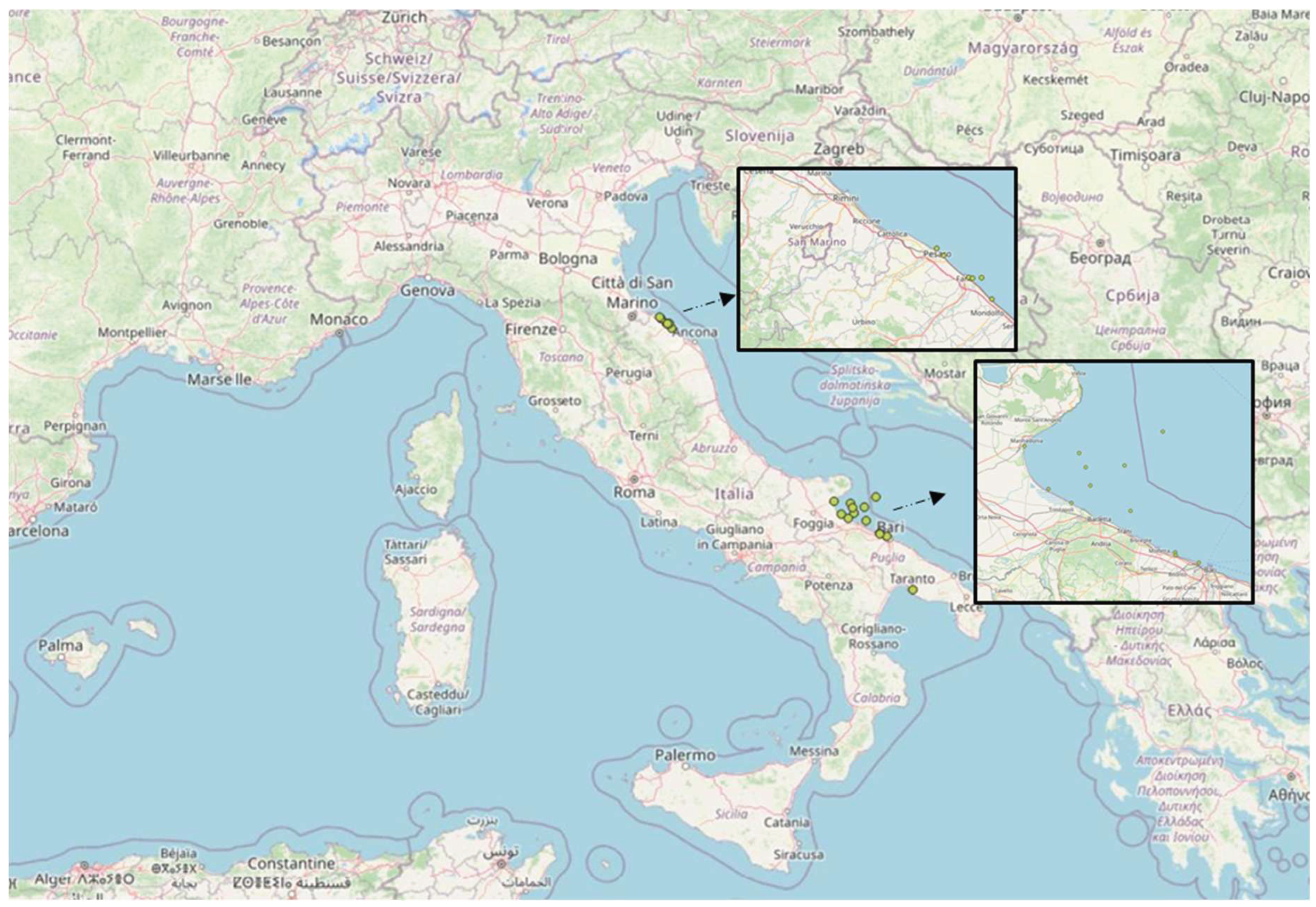
Figure 3.
Pathological changes by Sulcascaris sulcata infestation in the stomach (n=2) of Mediterranean loggerhead turtles: (a) mucocatarrhal hemorrhagic gastritis and (b) multiple crateriform ulcers are associated to the presence of parasites.
Figure 3.
Pathological changes by Sulcascaris sulcata infestation in the stomach (n=2) of Mediterranean loggerhead turtles: (a) mucocatarrhal hemorrhagic gastritis and (b) multiple crateriform ulcers are associated to the presence of parasites.
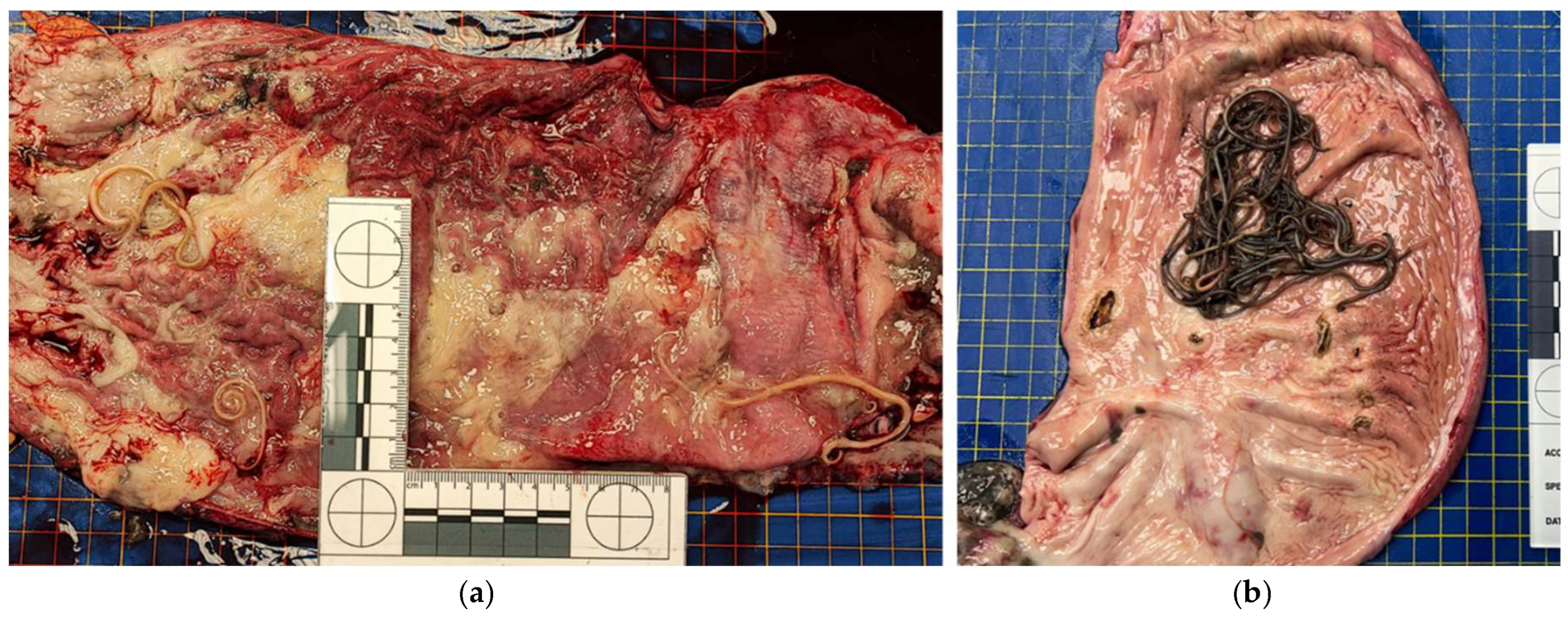
Figure 4.
Histological sections of the stomach of Caretta caretta infested by Sulcascaris sulcata. (a) Detail of the gastric mucosa showing superficial coagulative necrosis and marked hyperemia. (b) Mucosal erosion with loss of the epithelial lining and prominent lympho-macrophagic infiltration.
Figure 4.
Histological sections of the stomach of Caretta caretta infested by Sulcascaris sulcata. (a) Detail of the gastric mucosa showing superficial coagulative necrosis and marked hyperemia. (b) Mucosal erosion with loss of the epithelial lining and prominent lympho-macrophagic infiltration.
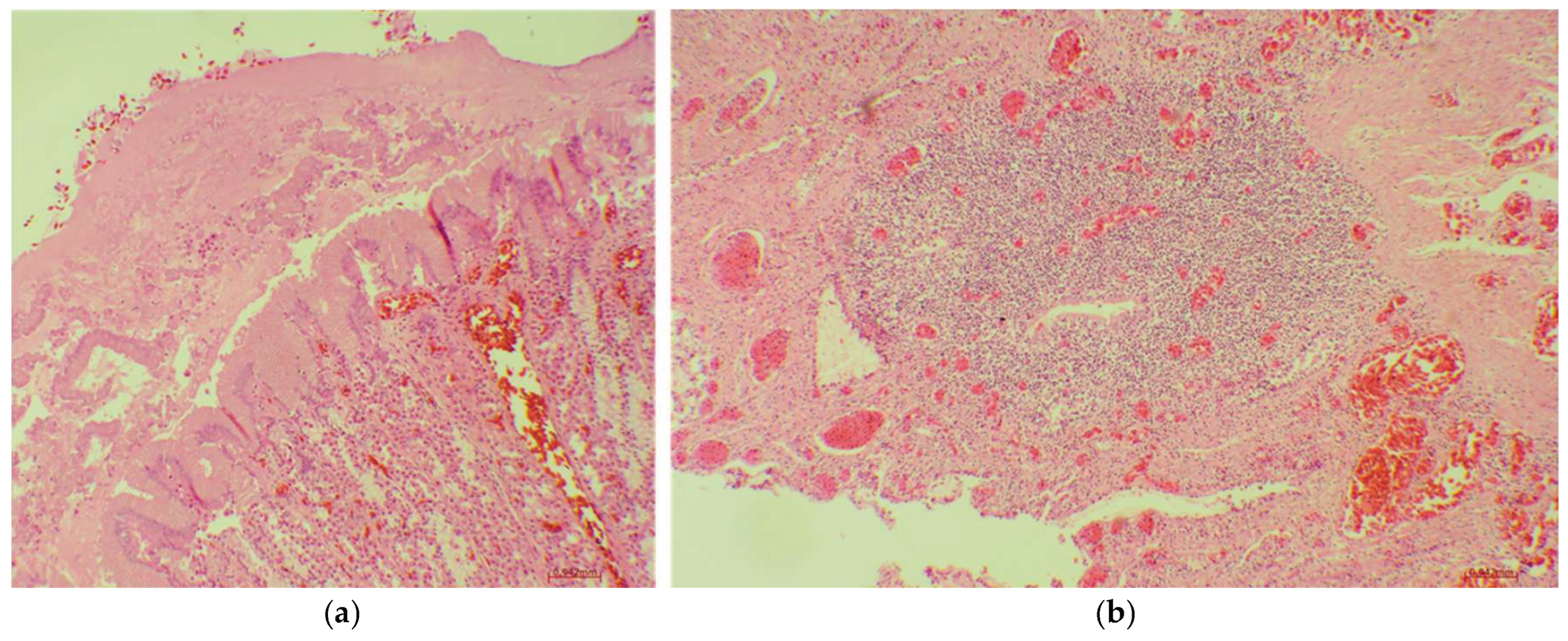
Figure 5.
Phylogenetic reconstruction based on the extended MT-CO1 alignment.
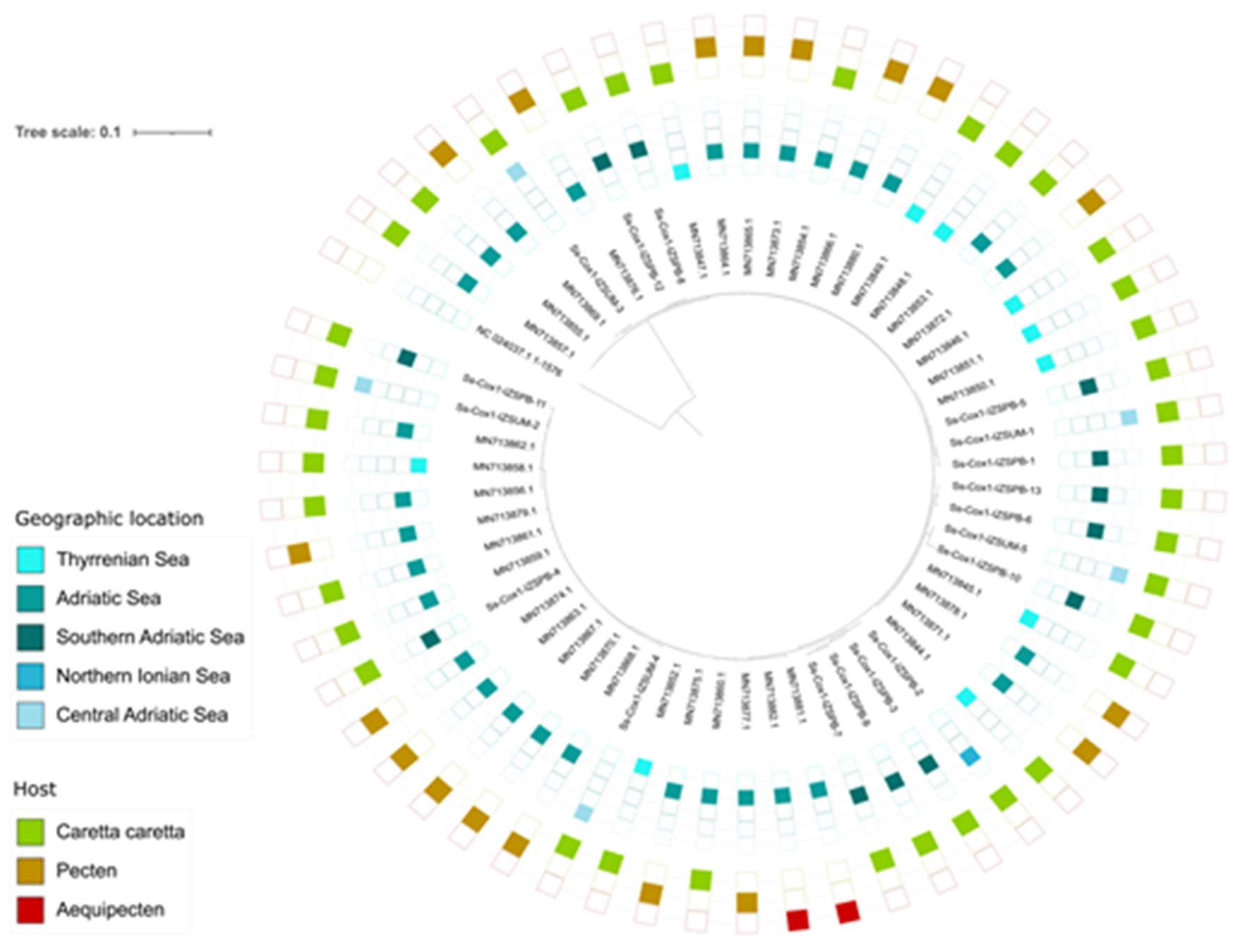
Figure 6.
Phylogenetic reconstruction based on the extended MT-CO2 alignment.
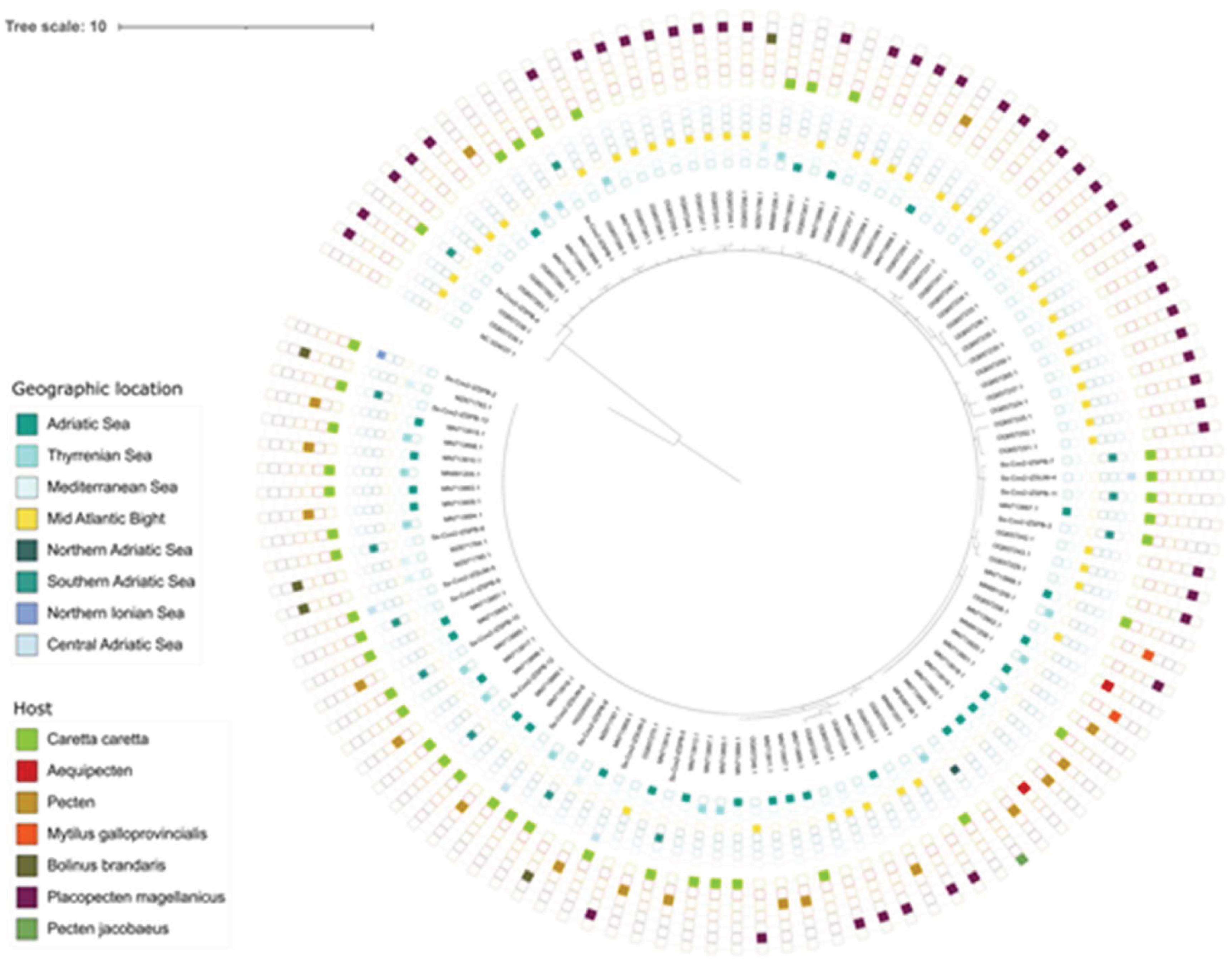

Table 1.
Oligonucleotide sequences used.
| Name | Target region | Sequence (3’-5’) | Size | Reference |
| JB3_Forward | MT-CO1 | TTTTTTGGGCATCCTGAGGTTTAT | 710 | [8] |
| JB4_Reverse | TAAAGAAGAACATAATGAAAATG | |||
| 211 Forward | MT-CO2 | TTTTCTAGTTATATAGATTGRTTYAT | 610 | |
| 210 Reverse | CACCAACTCTTAAAATTATC |
Table 2.
Summary of biometric data and recovery places of the sea turtles (Caretta caretta) examined in the study.
Table 2.
Summary of biometric data and recovery places of the sea turtles (Caretta caretta) examined in the study.
| ID |
Weight kg |
CCLn-t cm |
Gender | Site coordinates | Municipality | Year |
| CcIZSPB_1 | 45,7 | 73,5 | female | 41.45171,16.23941 | Mattinata (FG) | 2024 |
| CcIZSPB_2 | 40 | 69 | female | 40.45913, 17.24854 | Taranto (TA) | 2023 |
| CcIZSPB_3 | 25 | 62 | female | 41.19340, 16.67986 | Giovinazzo (BA) | 2024 |
| CcIZSPB_4 | 39,6 | 79 | female | 41.15343, 16.80242 | Bari (BA) | 2023 |
| CcIZSPB_5 | 48 | 74 | female | 41.60360, 15.89706 | Siponto (FG) | 2022 |
| CcIZSPB_6 | 26 | 56 | female | 41.65992, 16.61517 | Manfredonia (FG) | 2023 |
| CcIZSPB_7 | 18,6 | 54,5 | female | 41.57685, 16.18116 | Zapponeta (FG) | 2024 |
| CcIZSPB_8 | 42 | 71,5 | female | 41.52217, 16.21538 | Margherita di Savoia (BAT) | 2024 |
| CcIZSPB_9 | 55,2 | 79 | female | 41.38428, 16.14100 | Margherita di Savoia (BAT) | 2024 |
| CcIZSPB_10 | 47,2 | 72 | female | 41.52927, 16.41677 | Bisceglie (BAT) | 2024 |
| CcIZSPB_11 | 27,7 | 62 | female | 41.43855, 16.02186 | Margherita di Savoia (BAT) | 2024 |
| CcIZSPB_12 | 48,6 | 74 | female | 41.18271, 16.68226 | Giovinazzo (BA) | 2024 |
| CcIZSPB_13 | 28,7 | 60 | female | 41.35400, 16.44775 | Margherita di Savoia (BAT) | 2024 |
| CcIZSUM_1 | n/a* | 65 | female | 43.84554, 13.02786 | Fano (PU) | 2024 |
| CcIZSUM_2 | n/a* | 40 | n/a* | 43.90466, 12.93360 | Pesaro (PU) | 2022 |
| CcIZSUM_3 | n/a* | 79 | female | 43.78662, 13.11461 | Fano (PU) | 2021 |
| CcIZSUM_4 | n/a* | 70 | female | 43.84472, 13.07608 | Fano (PU) | 2020 |
| CcIZSUM_5 | n/a* | 40 | n/a* | 43.84333, 13.04239 | Fano (PU) | 2020 |
| CcIZSUM_6 | n/a* | 58 | male | 43.92434, 12.90775 | Pesaro (PU) | 2023 |
* Information not applicable (n/a) due to poor preservation of the carcass or limitations related to field operations.
Disclaimer/Publisher’s Note: The statements, opinions and data contained in all publications are solely those of the individual author(s) and contributor(s) and not of MDPI and/or the editor(s). MDPI and/or the editor(s) disclaim responsibility for any injury to people or property resulting from any ideas, methods, instructions or products referred to in the content. |
© 2026 by the authors. Licensee MDPI, Basel, Switzerland. This article is an open access article distributed under the terms and conditions of the Creative Commons Attribution (CC BY) license (http://creativecommons.org/licenses/by/4.0/).
Copyright: This open access article is published under a Creative Commons CC BY 4.0 license, which permit the free download, distribution, and reuse, provided that the author and preprint are cited in any reuse.