

Submitted:
05 June 2026
Posted:
09 June 2026
You are already at the latest version
Abstract
Abstract
Objective: This study aims to report a clinical case involving posterior fixation combined with anterior transoral plate osteosynthesis in the management of chronic Gehweiler Ⅲb atlas fracture-dislocation, thereby providing a reference for similar cases.
Methods: A patient with atlas fracture-dislocation secondary to fall injury underwent surgical intervention. Preoperative diagnosis confirmed Gehweiler Ⅲb fracture with right atlantoaxial lateral mass dislocation. The treatment protocol involved posterior reduction, instrumentation, and anterior transoral screw-plate fixation.
Results: The postoperative recovery proceeded without complications, with significant alleviation of cervical pain. The most recent follow-up assessment revealed favorable osseous consolidation and appropriate stabilization of the internal fixation apparatus. The VAS score decreased from 4 preoperatively to 0 postoperatively, the NDI decreased from 64% to 16%, concurrent with notable enhancement in patient quality of life.
Conclusions: The implementation of combined posterior fixation and anterior transoral plate osteosynthesis demonstrates significant efficacy in ameliorating clinical manifestations and facilitating osseous consolidation in cases of chronic Gehweiler Ⅲb atlas fracture-dislocation. This surgical strategy demonstrates favorable therapeutic outcomes for refractory atlas fractures and warrants clinical application in analogous scenarios, but still requires extensive clinical verification.
Keywords:
Atlas fracture
; internal fixation
; transoral approach
; osteosynthesis plate
; case report
Introduction
Upper cervical spine injuries resulting from falls, diving accidents, or vehicular collisions typically occur due to external forces transmitted to the craniocervical complex [1]. The biomechanical principle underlying atlas burst fractures was initially described by Jefferson: when vertical compressive loading (axial force) is applied to the atlas, the force transmission pathway becomes altered, resulting in outward displacement of bilateral lateral masses[2].
The classification principles for atlantoaxial fractures are diverse[3], and the management of atlas fractures primarily involves conservative treatment (external fixation) versus surgical intervention (internal fixation), though therapeutic strategies remain controversial [4]. For stable atlas fractures, conservative management is widely regarded as the preferable option[5]. However, unstable fractures often demonstrate poor clinical outcomes with external fixation alone. Traditional surgical approaches predominantly rely on posterior atlantoaxial fusion or occipitocervical fixation, which achieve satisfactory stability but restrict cervical mobility. Given the pivotal role of the atlantoaxial complex in cervical rotation, posterior instrumentation frequently leads to reductions in postoperative quality of life. Anterior transoral approaches have gained increasing attention in recent decades. The earliest documented transoral intervention dates to 1917, when Kanavel successfully extracted a bullet fragment from the anterior arch of the atlas via this route[6]. While the transoral approach for upper cervical spine access was first proposed in 1935[7], the technique for anterior transoral internal fixation was not established until 2004 by Michael Ruf [8]. Although the transoral approach provides direct access to the anterior spinal column of the upper cervical vertebrae through straightforward exposure and minimal tissue dissection, its clinical implementation remains limited due to the low prevalence of upper cervical pathologies requiring anterior intervention; anatomical complexity of the craniocervical junction; challenges posed by the oropharyngeal microenvironment and technical demands in postoperative management (infection control, airway maintenance). These factors collectively hinder its widespread adoption in routine practice.
Despite considerable research on surgical approaches for atlas fractures, no consensus exists regarding the optimal management of irreducible chronic atlas fractures with lateral mass dislocation. This study presents a novel therapeutic strategy employing posterior fixation combined with anterior transoral plate osteosynthesis in a patient with chronic Gehweiler IIIb atlas fracture-dislocation. The achieved favorable outcomes, documented through meticulous case reporting and literature review, provide critical clinical insights for managing such complex pathologies.
Case Presentation
History and Physical Examination
The patient details were de-identified. A 50s male patient presented with neck pain and restricted mobility for 25 days following a traumatic fall incident. The injury occurred when the patient, under alcohol intoxication, experienced a descent down stairs, resulting in head collision with a wall, resulting in immediate severe head and neck pain. No extremity paralysis or loss of consciousness was reported. Initial assessment at a local hospital diagnosed "fractures involving both the anterior and posterior arches of the atlas vertebra." The patient declined surgical intervention and opted for conservative management utilizing cervical cervical brace immobilization. Due to persistent symptoms, the patient was admitted for further therapeutic intervention. The patient's medical history was unremarkable except for a 30-year history of smoking and alcohol consumption.
Specialized physical examination revealed significantly restricted neck and right shoulder movement, mild leftward head tilt, no obvious superficial or deep sensory deficits in the limbs, mild weakness (grade 4) of the intrinsic hand muscles, and preserved muscle strength in other limb muscle groups. Bilateral radial periosteal reflexes, biceps reflexes, and triceps reflexes were hyperactive. Hoffmann's sign was negative bilaterally, Babinski's sign was positive on the left and negative on the right. Preoperative laboratory and imaging studies confirmed the diagnosis of: "Gehweiler type Ⅲb atlas fracture[9]; right atlantoaxial lateral mass joint dislocation; lacunar cerebral infarction; carotid atherosclerosis; lower extremity atherosclerosis; hepatic steatosis; left hepatic lobe cyst; and right rotator cuff injury." The VAS score of neck pain was 4, and the NDI was 64%.
Imaging Findings
Cervical X-ray (open-mouth projection) demonstrated asymmetric atlantodental intervals along with degenerative alterations in the cervical spine. CT imaging revealed a displaced fracture at the transitional zone between the right anterior arch and lateral mass of the atlas with concomitant atlantoaxial dislocation, along with a left posterior arch fracture. MRI showed complete rupture of the transverse atlantal ligament (TAL), mild cervical disc protrusion, and no evidence of spinal cord compression (Figure 1).
Hospital Management
Following admission, the patient received symptomatic management including analgesics and neurotrophic agents. Preoperative oral preparation was performed using chlorhexidine mouthwash and oral metronidazole. Skull traction was initiated for fracture reduction, commencing at 4 kg and subsequently incremented to 8 kg. Post-traction imaging demonstrated partial correction of the head tilt deformity (Figure 2). However, cervical CT under traction revealed persistent atlantoaxial dislocation, confirming an irreducible status (Figure 3). A 3D-printed atlantoaxial complex was generated for preoperative planning.
Operative Technique
The surgical procedure incorporated posterior atlantoaxial open reduction in conjunction with internal fixation (ORIF) with anterior transoral atlantoaxial ORIF. Under general anesthesia with endotracheal intubation, the patient was positioned in a prone orientation with cervical flexion stabilized by a Mayfield head clamp under continuous 8 kg skull traction, achieving partial reduction (Figure 4A).
Posterior Approach
A midline incision from C1 to C3 exposed the C1 posterior arch, C2 spinous process, laminae, and bilateral lateral masses. Pedicle screw entry points were prepared using a drill guide, followed by pilot hole tapping and K-wire placement under X-ray guidance. Four pedicle screws (C1 and C2) were inserted bilaterally with satisfactory positioning confirmed intraoperatively (Figure 4B). Visible hyperplastic fibrous tissue and local non-healing was found on the left C1 posterior arch fracture site, remove fibrous tissue adhesions, smooth the fractured ends of the posterior arch fracture, rotate the fractured bone ends to reduce the lateral mass joint dislocation. After achieving adequate hemostasis, explore the lateral mass joint space on the dislocated side to confirm reduction. Pre-contoured titanium rods were secured to the screw heads using locking caps. The left C1 posterior arch fracture site, was decorticated with a high-speed burr. Autologous cancellous bone harvested from the right posterior iliac crest, combined with synthetic bone graft, was implanted across the prepared C1-C2 fusion bed. A closed suction drain was placed prior to layered closure.
Anterior Transoral Approach
After repositioning supine with neck extension, bilateral soft palate retraction provided exposure of the posterior pharyngeal wall. Thorough irrigation with povidone-iodine solution preceded a midline longitudinal incision (3.5cm) through the pharyngeal mucosa. The anterior longitudinal ligament and longus colli muscles were divided to expose the C1 anterior arch and upper C2 vertebra. Intraoperative exploration confirmed the anterior arch fracture, accompanied by two fracture lines, and the detached bone fragments have formed fibrous adhesions. Fibrotic tissue was meticulously debrided using curettes. After fracture site decortication, cancellous autograft and allograft were packed into the defect. A pre-bent locking plate was anchored to the anterior arch using self-tapping locking screws under fluoroscopic guidance (Figure 4C). Mucosal closure was performed in layers. Total operative time: 5 hours; intraoperative blood loss: 300 ml.
Postoperative Care
The patient was transferred to the ICU with an endotracheal tube following surgical intervention. Upon restoration of consciousness and demonstration of adequate spontaneous respiratory function, the patient was discharged from the ICU. Hospital-acquired pneumonia developed during the convalescent period and was successfully managed with antibiotic therapy. Follow-up imaging confirmed satisfactory implant positioning (Figure 5). The neck pain VAS score decreased from 4 preoperatively to 2, and the patient regained independent ambulation capabilities, with satisfactory wound healing and gait improvement observed prior to discharge.
Postoperative Follow-Up
During the initial three months follow-up period, the patient's oral and posterior cervical incisions demonstrated satisfactory healing. The patient's VAS score decreased to 0, and the NDI decreased to 16%. Cervical open-mouth radiographs demonstrated improved symmetry of the atlantodental intervals compared to preoperative measurements. Cervical CT revealed that the fracture line at the junction of the anterior arch and the lateral mass had almost completely healed. Osseous fusion was observed at the dorsolateral graft site of the posterior arch, and no signs of implant loosening detected during the nine-month follow-up period (Figure 6). The patient demonstrated positive clinical recovery, complete wound healing, and full resumption of regular activities, with no occurrence of serious complications (Figure 7).
Discussion
Atlas burst fractures were first described by Jefferson in 1920[10]. Due to the atlas's unique force [2], fracture fragments typically displace outward, rarely encroaching on neural structures. Current management strategies for atlas fractures remain controversial [11]. Conservative external immobilization is often used for stable fractures with intact TAL [3,8], but 20% - 80% of patients have residual neck pain after long - term immobilization [3]. A long-term follow-up of Jefferson fracture patients revealed incomplete restoration of pre-injury health status compared to population norms [12]. Furthermore, delayed reduction in unstable injuries with concomitant ligamentous disruption may lead to irreversible atlantoaxial incongruity, joint stiffness, and exacerbated pain [13], challenging the rationale for conservative prioritization. Spence proposed lateral mass displacement >6.9 mm on radiographs as a criterion for TAL incompetence and fracture instability [14], though Dickman et al. contested this, noting concordance in only 39% of cases[15]. Recent systematic reviews highlight persistent ambiguity in defining upper cervical instability, emphasizing the necessity of advanced imaging for conclusive assessment [16]. In our case, MRI confirmed TAL avulsion without bony involvement (Dickman Type I injury) [15]. As the TAL is the primary stabilizer against anterior C1-C2 translation [17], its midsubstance failure (Type I) precludes effective external stabilization. The concomitant anterior arch-lateral mass junction fracture, posterior arch fracture-dislocation, and Gehweiler Ⅲb classification collectively indicated mechanical instability.
For unstable atlas fractures, posterior C1-C2 fusion techniques (e.g., Goel, Magerl, Harms, Wright) remain mainstream [1,11,18]. Emerging posterior approaches, including C1 laminar hooks with C2 screws [19] and robot-assisted percutaneous lag screw fixation [20] have shown efficacy. However, C1-C2 fusion inevitably compromises cervical rotation. Recent trends favor motion-preserving C1 standalone fixation [18,21,22,23,24], with a prospective multicenter study demonstrating superior long-term pain relief and functional outcomes compared to fusion [25]. Nevertheless, posterior-alone fixation inadequately stabilizes anterior arch fractures [4]. Innovative posterior unilateral compression screw techniques for anterior arch fixation have been explored [26] yet have not achieved widespread clinical adoption. Anterior transoral approaches enable direct anterior column reconstruction, with evolving fixation strategies ranging from rod-screw constructs to plate systems and unilateral lag screws [4,6,27,28,29,30]. This minimally invasive route minimizes myofascial disruption, and meticulous perioperative protocols effectively mitigate infection risks. However, isolated C1 fixation carries inherent redislocation risks [18], and evidence remains limited by small cohorts and paucity of comparative studies [31], furthermore, there is a notable absence of long-term follow-up data regarding fixation intensity.
No consensus exists for optimal Gehweiler IIIa/IIIb fracture management[18]. Prior research recommended atlanto - axiale fusion [9]. Our patient’s longitudinal anterior arch-lateral mass split with posterior arch fracture-dislocation (Gehweiler Ⅲb) exhibited translational instability, for which some advocate C1-C2 fusion as the gold standard, particularly in elderly patients[32]. Bhandutia et al. posit that while standalone C1 fixation offers motion-preserving potential, its benefits are maximized in younger patients with isolated injuries or low-complexity polytrauma, particularly when considering potential revision surgeries. For elderly patients, posterior C1-C2 fusion remains the gold standard[31]. According to Denton H’s research, C1-2 fusion remains the optimal solution for unstable type Ⅲb fractures, as the rupture of the transverse atlanto-occipital ligament leads to atlantal instability[18]. Radiomorphologically, this patient's fracture pattern bears similarity to the atlas fracture subtype described by Bransford et al. [33], which is frequently associated with delayed cock-robin deformity and intractable pain. Despite aggressive cranial skull traction (8 kg) applied to the patient, reduction of the lateral mass joint was not achieved. This was attributed to fibrous scar tissue ingrowth at the fracture ends, which was confirmed intraoperatively. Given the patient's refractory chronic irreducible atlas fracture after failed conservative treatment, we used an aggressive surgical strategy: combined posterior C1 - 2 arthrodesis with iliac autograft and anterior transoral locking plate - screw fixation. Distinct from previously reported transoral lateral mass screw techniques[4,6,8], our approach translates orthopedic trauma principles to spinal reconstruction through multiplanar rigid fixation, compared with specialized devices that require special customization, transoral plate osteosynthesis are more readily available, inexpensive, and demonstrate excellent fixation effects. Multiple compression screws engaged both fracture fragments and intact bone, achieving anatomical reduction. To mitigate stress concentration at the anterior construct, concomitant posterior C1-2 fusion was performed. Early follow-up demonstrated favorable biomechanical and clinical outcomes. Although this surgical strategy involves fixation and fusion of the patient's C1-C2, which limits the patient's cervical range of motion to some extent, for the patient's specific injury condition and chronic disease course, the requirement for rigid fixation and bone fusion outweighs the pursuit of range of motion.
The patient developed hospital-acquired pneumonia following surgical intervention as a consequence of a documented smoking history and endotracheal intubation. Infection represents a significant clinical challenge in transoral anterior cervical spine procedures, attributable to suboptimal wound healing characteristics of the posterior pharyngeal wall and the presence of oral bacterial colonization. Such infectious complications may result in internal fixation failure, thereby necessitating comprehensive perioperative oral hygiene protocols. Patients utilize chlorhexidine and Anerdian mouth rinses postoperatively, with intraoperative Anerdian irrigation administered at 15-minute intervals. Although prior clinical reports indicate favorable prognostic outcomes, meticulous monitoring for potential complications associated with prolonged intubation remains imperative. Tracheal extubation should be promptly implemented upon restoration of alertness, resolution of laryngeal edema, and establishment of spontaneous breathing patterns, followed by subsequent transfer to a general ward setting.
Conclusion
The characteristic of this case report lies in the innovative application of orthopedic trauma principles through an anterior transoral locking plate-screw construct, which provides robust rigid fixation for chronic atlas fractures, solving the problem that the anterior arch required a specially customized internal fixation device. When combined with posterior C1-2 arthrodesis, this hybrid strategy represents an optional surgical solution for managing irreducible chronic atlas fracture-dislocations, achieving both anatomical stabilization and biomechanical durability during the short-term follow-up after the surgery, which could be considered in highly selected, refractory cases managed in specialized centers.
Statements and Declarations
The article follows the CARE reporting guideline. This study was conducted in accordance with the Declaration of Helsinki. Ethical approval was not required for this case report because it involves the retrospective analysis of clinical data from a single patient with non-interventional observational nature, and the patient's personal information has been de-identified.
Informed Consent
Written informed consent for the publication of all clinical data, images, and other personal details included in this article was obtained from the patient.
Conflicts of Interest
The author(s) declared no potential conflicts of interest with respect to the research, authorship, and/or publication of this article.
Acknowledgments
None.
Funding statement
This study was supported by Tianjin Health Science and Technology Foundation (No. TJWJ2025QN049).
References
- Marcon RM, Cristante AF, Teixeira WJ, et al (2013) Fractures of the cervical spine. Clinics 68:1455–1461. [CrossRef]
- Gebauer M, Goetzen N, Barvencik F, et al (2008) Biomechanical analysis of atlas fractures: A study on 40 human atlas specimens. Spine 33:766–770. [CrossRef]
- Kakarla UK, Chang SW, Theodore N, Sonntag VKH (2010) Atlas fractures. Neurosurgery 66:A60–A67. [CrossRef]
- Ma W, Xu N, Hu Y, et al (2013) Unstable atlas fracture treatment by anterior plate C1-ring osteosynthesis using a transoral approach. Eur Spine J 22:2232–2239. [CrossRef]
- Hu Y, Ma W, Xu R (2009) Transoral osteosynthesis C1 as a function-preserving option in the treatment of bipartite atlas deformity: A case report. Spine 34:E418–E421. [CrossRef]
- Keskil S, Göksel M, Yüksel U (2017) Transoral screw and wire fixation for unstable anterior ½ atlas fracture. J Craniovertebral Junction Spine 8:364–368. [CrossRef]
- Yakdan SM, Greenberg JK, Krishnaney AA, et al (2023) Transcervical, retropharyngeal odontoidectomy - anatomical considerations. J Craniovertebral Junction Spine 14:393–398. [CrossRef]
- Ruf M, Melcher R, Harms J (2004) Transoral reduction and osteosynthesis C1 as a function-preserving option in the treatment of unstable jefferson fractures: Spine 29:823–827. [CrossRef]
- Kandziora F, Scholz M, Pingel A, et al (2018) Treatment of atlas fractures: Recommendations of the spine section of the german society for orthopaedics and trauma (DGOU). Glob Spine J 8:5S-11S. [CrossRef]
- Allam E, Zhou Y (2015) Bipartite atlas or jefferson fracture? A case series and literature review: Spine 40:E661–E664. [CrossRef]
- Mead LB, Millhouse PW, Krystal J, Vaccaro AR (2016) C1 fractures: A review of diagnoses, management options, and outcomes. Curr Rev Musculoskelet Med 9:255–262. [CrossRef]
- Dvorak MF, Johnson MG, Boyd M, et al (2005) Long-term health-related quality of life outcomes following jefferson-type burst fractures of the atlas. J Neurosurg Spine 2:411–417. [CrossRef]
- Hein C, Richter H-P, Rath SA (2002) Atlantoaxial screw fixation for the treatment of isolated and combined unstable jefferson fractures - experiences with 8 patients. Acta Neurochir (Wien) 144:1187–1192. [CrossRef]
- Spence KF, Decker S, Sell KW (1970) Bursting atlantal fracture associated with rupture of the transverse ligament. J Bone Joint Surg Am 52:543–549.
- Dickman CA, Sonntag VK (1997) Injuries involving the transverse atlantal ligament: Classification and treatment guidelines based upon experience with 39 injuries. Neurosurgery 40:886–887. [CrossRef]
- Liao S, Jung MK, Hörnig L, et al (2020) Injuries of the upper cervical spine—how can instability be identified? Int Orthop 44:1239–1253. [CrossRef]
- Ishak B, Glinski A von, Dupont G, et al (2021) Update on the biomechanics of the craniocervical junction, part II: Alar ligament. Glob Spine J 11:1064–1069. [CrossRef]
- Denton H, McDonnell JM, Curran J, et al (2024) Isolated C1 arch fractures: C1-2 fusion vs. C1 osteosynthesis – surgical strategies for potentially unstable injuries. Eur Spine J 33:3904–3914. [CrossRef]
- Guo X, Ni B, Wang M, et al (2009) Bilateral atlas laminar hook combined with transarticular screw fixation for an unstable bursting atlantal fracture. Arch Orthop Trauma Surg 129:1203–1209. [CrossRef]
- Niu H-G, Zhang J-J, Tao H, et al (2023) Robot-assisted percutaneous lag screw osteosynthesis for C1 lateral mass fractures: Case series and technical note. World Neurosurg 172:66–70. [CrossRef]
- Bentz GP, Agrawal RR, Lambrechts MJ (2025) Floating C1 lateral mass fracture treated with C1-ring osteosynthesis: A case report with a step-by-step surgical guide. JBJS Case Connect 15:. [CrossRef]
- Jo K-W, Park I-S, Hong JT (2011) Motion-preserving reduction and fixation of C1 jefferson fracture using a C1 lateral mass screw construct. J Clin Neurosci Off J Neurosurg Soc Australas 18:695–698. [CrossRef]
- Zhang Y, Zhang J, Yang Q, et al (2018) Posterior osteosynthesis with monoaxial lateral mass screw-rod system for unstable C1 burst fractures. Spine J 18:107–114. [CrossRef]
- Niu H-G, Zhang J-J, Yan Y-Z, et al (2024) Direct osteosynthesis in the treatment of atlas burst fractures: A systematic review. J Orthop Surg 19:129. [CrossRef]
- Yan L, Du J, Yang J, et al (2022) C1-ring osteosynthesis versus C1–2 fixation fusion in the treatment of unstable atlas fractures: A multicenter, prospective, randomized controlled study with 5-year follow-up. J Neurosurg Spine 37:157–165. [CrossRef]
- Keskil S, Göksel M, Yüksel U (2016) Unilateral lag-screw technique for an isolated anterior 1/4 atlas fracture. J Craniovertebral Junction Spine 7:50–54. [CrossRef]
- Zou X, Ouyang B, Wang B, et al (2020) Motion-preserving treatment of unstable atlas fracture: Transoral anterior C1-ring osteosynthesis using a laminoplasty plate. BMC Musculoskelet Disord 21:538. [CrossRef]
- Tu Q, Chen H, Li Z, et al (2021) Anterior reduction and C1-ring osteosynthesis with jefferson-fracture reduction plate (JeRP) via transoral approach for unstable atlas fractures. BMC Musculoskelet Disord 22:745. [CrossRef]
- Zou X, Yang H, Deng C, et al (2023) The use of a novel reduction plate in transoral anterior C1-ring osteosynthesis for unstable atlas fractures. Front Surg 10:1072894. [CrossRef]
- Tinner C, Aregger FC, Deml MC (2023) Transoral unilateral lag screw osteosynthesis for coronal split fracture of the lateral mass of the atlas – case report, operative technique and review of the literature. Brain Spine 3:101761. [CrossRef]
- Smith RM, Bhandutia AK, Jauregui JJ, et al (2018) Atlas fractures: Diagnosis, current treatment recommendations, and implications for elderly patients. Clin Spine Surg Spine Publ 31:278–284. [CrossRef]
- Kandziora F, Schnake K, Hoffmann R (2010) [injuries to the upper cervical spine. Part 2: Osseous injuries]. Unfallchirurg 113:1023–1039; quiz 1040. [CrossRef]
- Bransford R, Falicov A, Nguyen Q, Chapman J (2009) Unilateral C-1 lateral mass sagittal split fracture: An unstable jefferson fracture variant: clinical article. J Neurosurg Spine 10:466–473. [CrossRef]
Figure 1.
Preoperative imaging studies: (A) Cervical spine anteroposterior and lateral radiographs; (B) Cervical spine MRI showed complete rupture of the TAL, mild cervical disc protrusion, and no evidence of spinal cord compression,; (C) Cervical spine CT revealed a displaced fracture at the transitional zone between the right anterior arch and lateral mass of the atlas with concomitant atlantoaxial dislocation, along with a left posterior arch fracture,the red arrow shows the atlantoaxial dislocation.
Figure 1.
Preoperative imaging studies: (A) Cervical spine anteroposterior and lateral radiographs; (B) Cervical spine MRI showed complete rupture of the TAL, mild cervical disc protrusion, and no evidence of spinal cord compression,; (C) Cervical spine CT revealed a displaced fracture at the transitional zone between the right anterior arch and lateral mass of the atlas with concomitant atlantoaxial dislocation, along with a left posterior arch fracture,the red arrow shows the atlantoaxial dislocation.
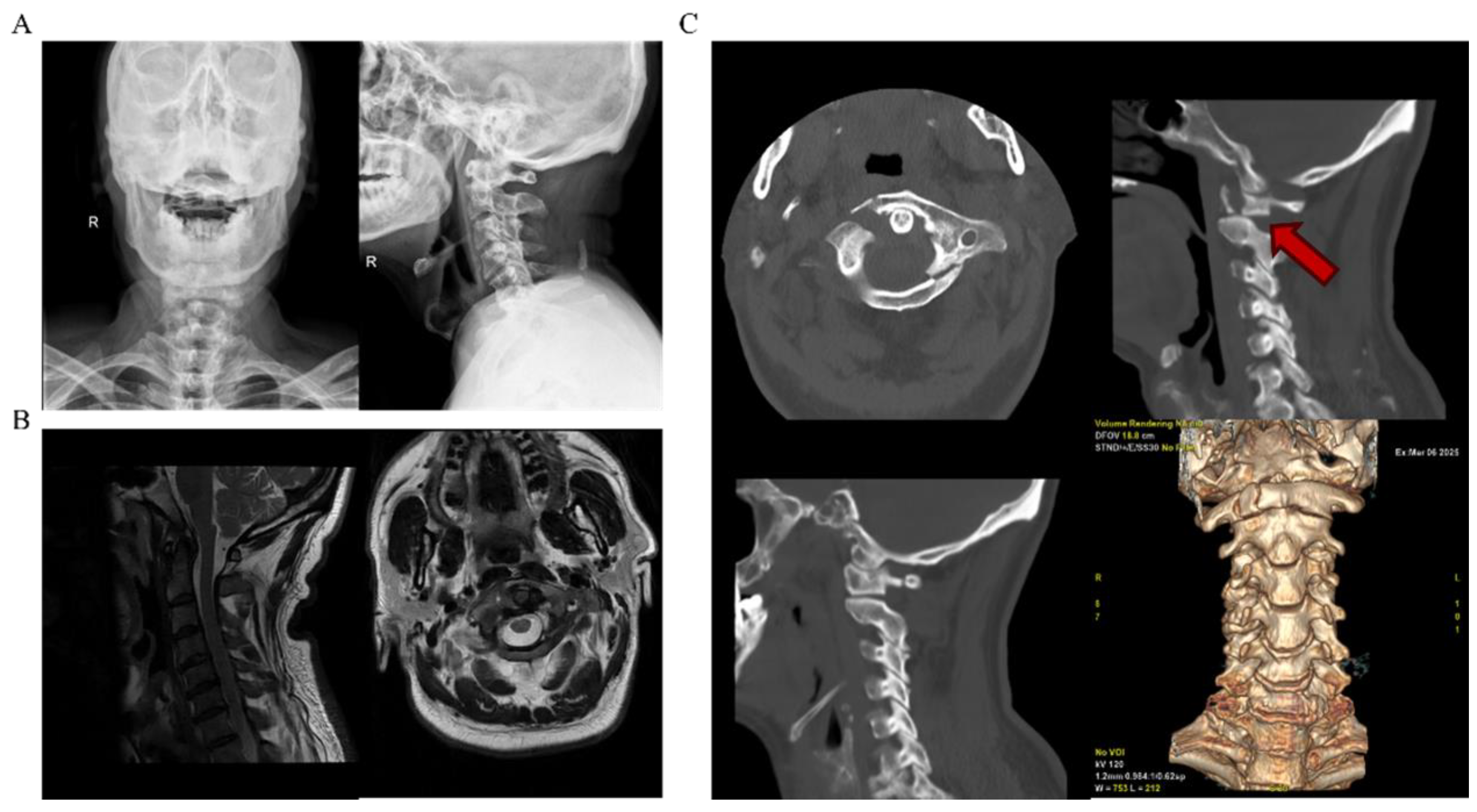
Figure 2.
Clinical photographs of the patient before traction (left) and after 1 week of 8 kg skull traction (right).
Figure 2.
Clinical photographs of the patient before traction (left) and after 1 week of 8 kg skull traction (right).
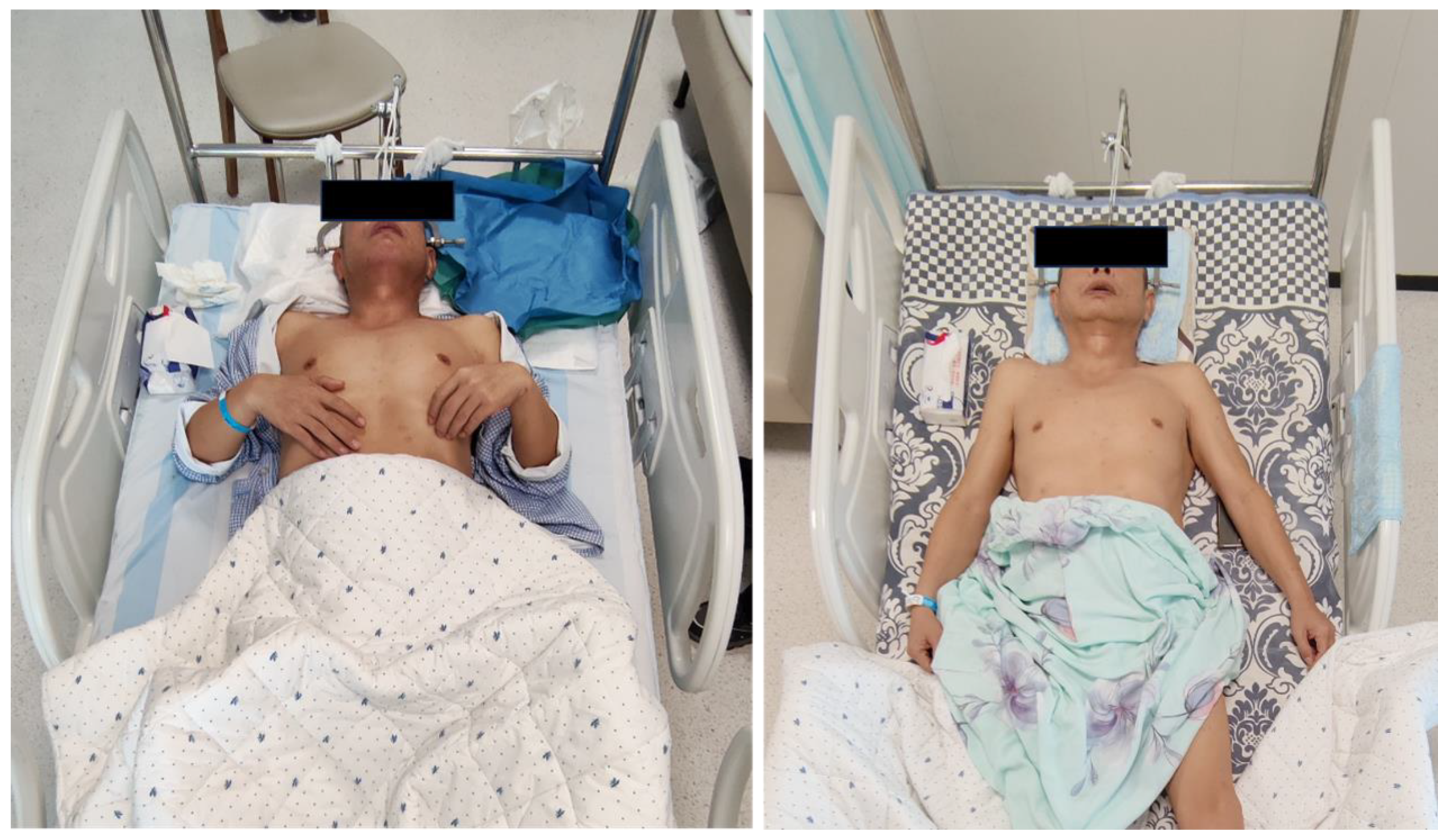
Figure 3.
CT imaging of Pre-traction (A) and post-8 kg traction (B).
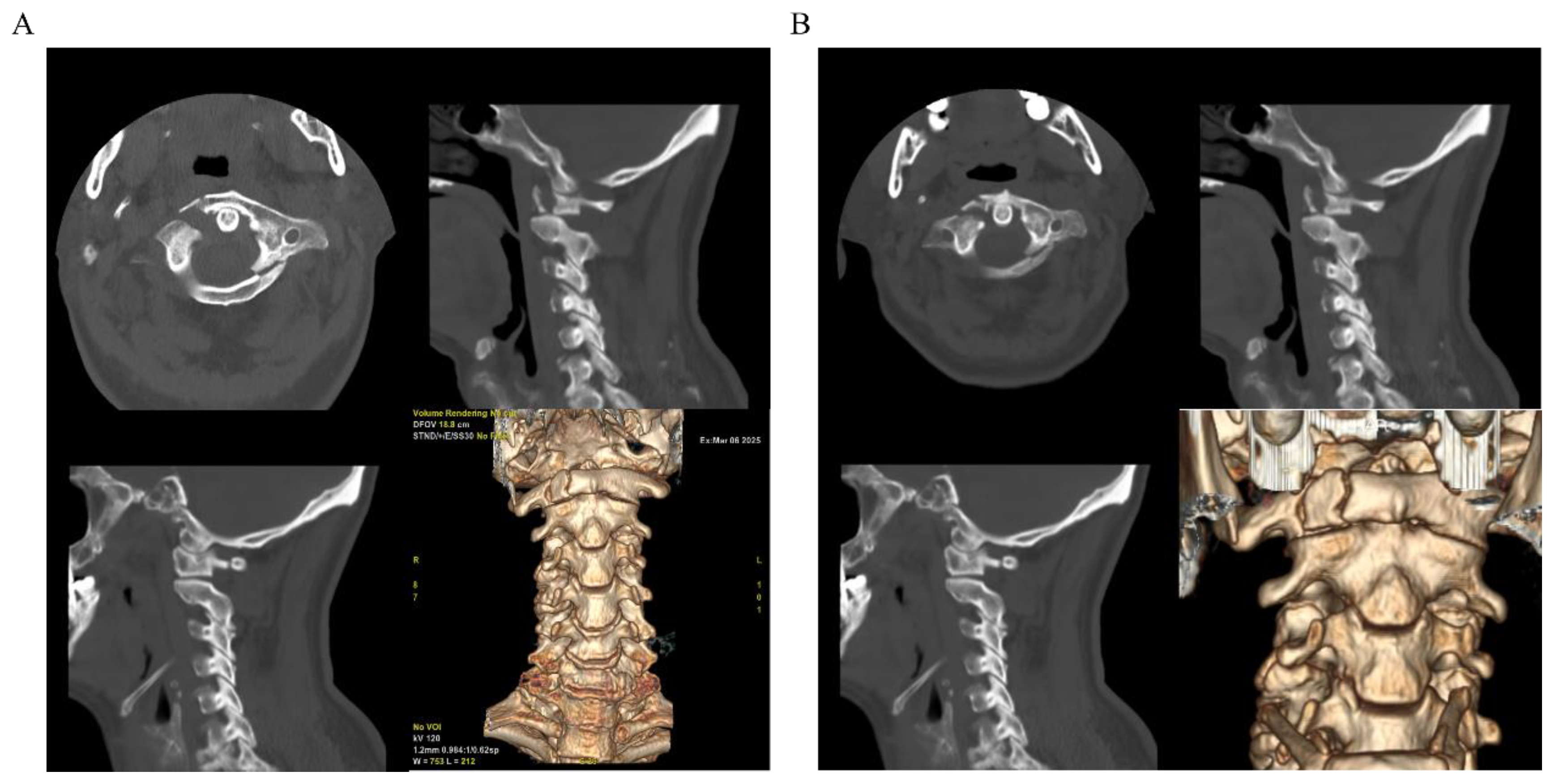
Figure 4.
Intraoperative imaging studies: (A) Pre- and post-traction lateral cervical radiographs; (B) Lateral cervical radiograph during posterior internal fixation; (C) Anterior approach intraoperative imaging.
Figure 4.
Intraoperative imaging studies: (A) Pre- and post-traction lateral cervical radiographs; (B) Lateral cervical radiograph during posterior internal fixation; (C) Anterior approach intraoperative imaging.
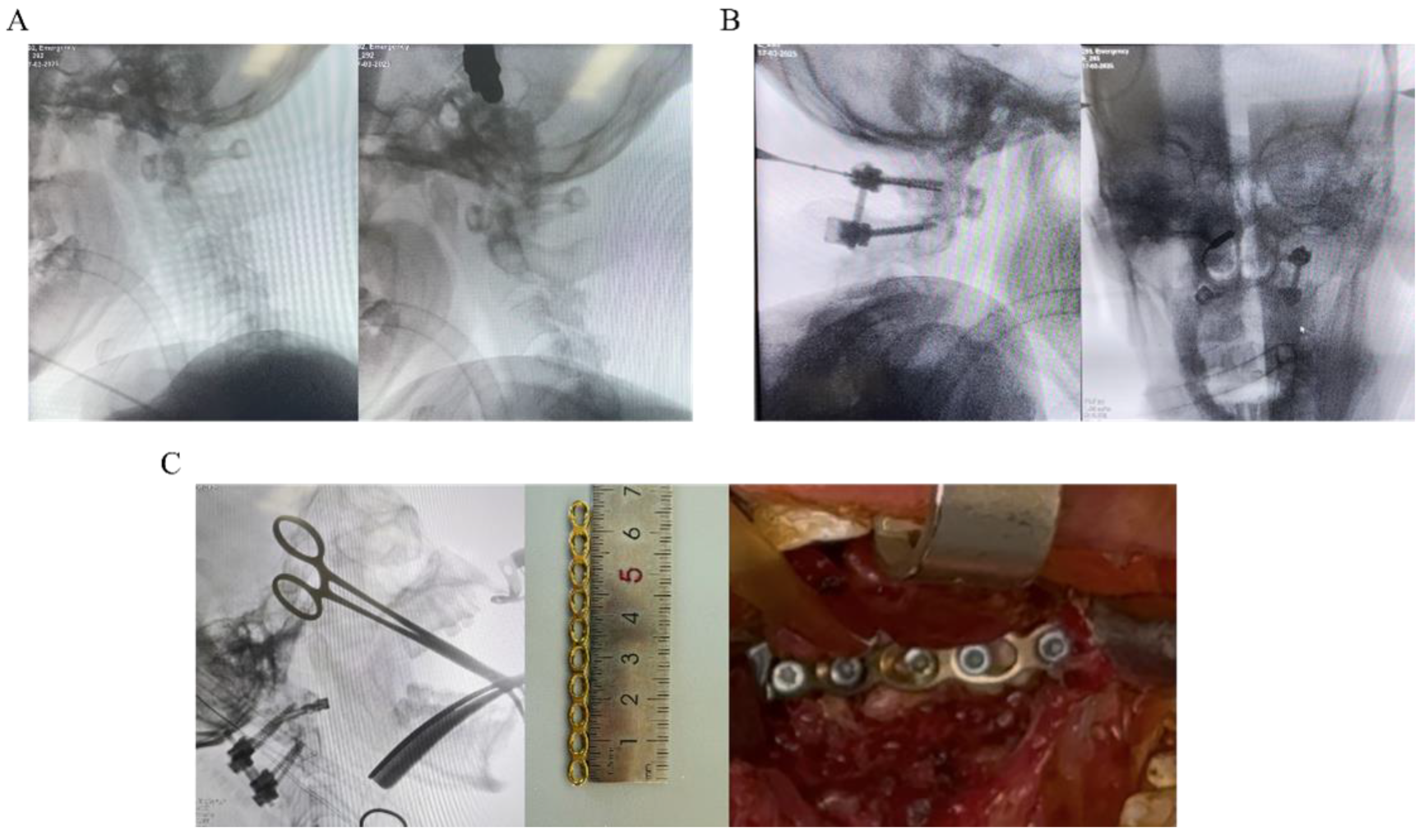
Figure 5.
Postoperative imaging studies: (A) Cervical spine anteroposterior and lateral radiographs; (B) Postoperative 3D reconstruction CT image; (C) Postoperative cervical CT.
Figure 5.
Postoperative imaging studies: (A) Cervical spine anteroposterior and lateral radiographs; (B) Postoperative 3D reconstruction CT image; (C) Postoperative cervical CT.
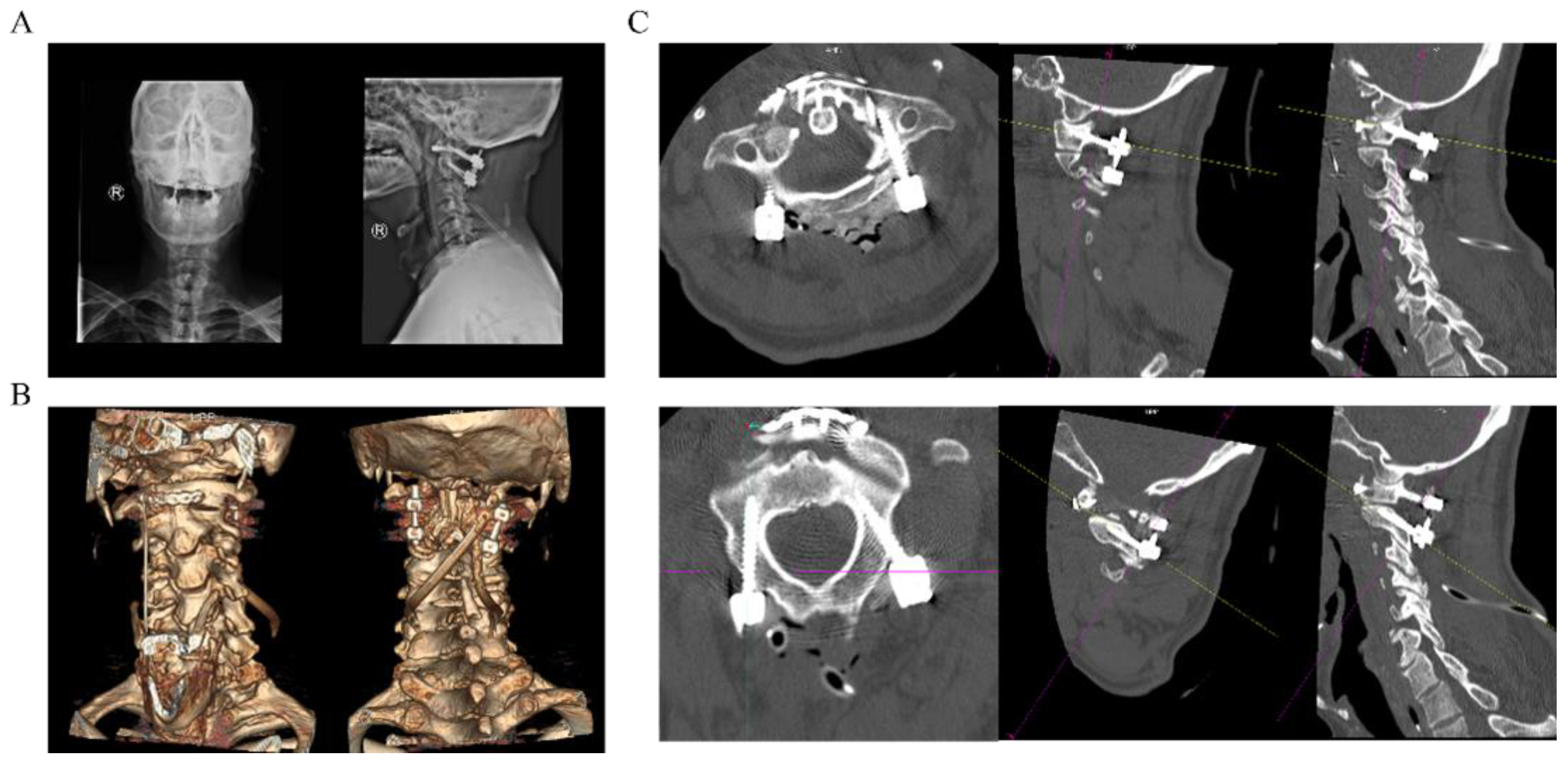
Figure 6.
Follow-up imaging: (A) Cervical spine anteroposterior and lateral radiographs at one month; (B) Atlas CT at one month; (C) Cervical spine anteroposterior and lateral radiographs at two month; (D) Atlas CT at two month; (E) Atlas CT at three month; (F)Atlas CT at nine month.
Figure 6.
Follow-up imaging: (A) Cervical spine anteroposterior and lateral radiographs at one month; (B) Atlas CT at one month; (C) Cervical spine anteroposterior and lateral radiographs at two month; (D) Atlas CT at two month; (E) Atlas CT at three month; (F)Atlas CT at nine month.
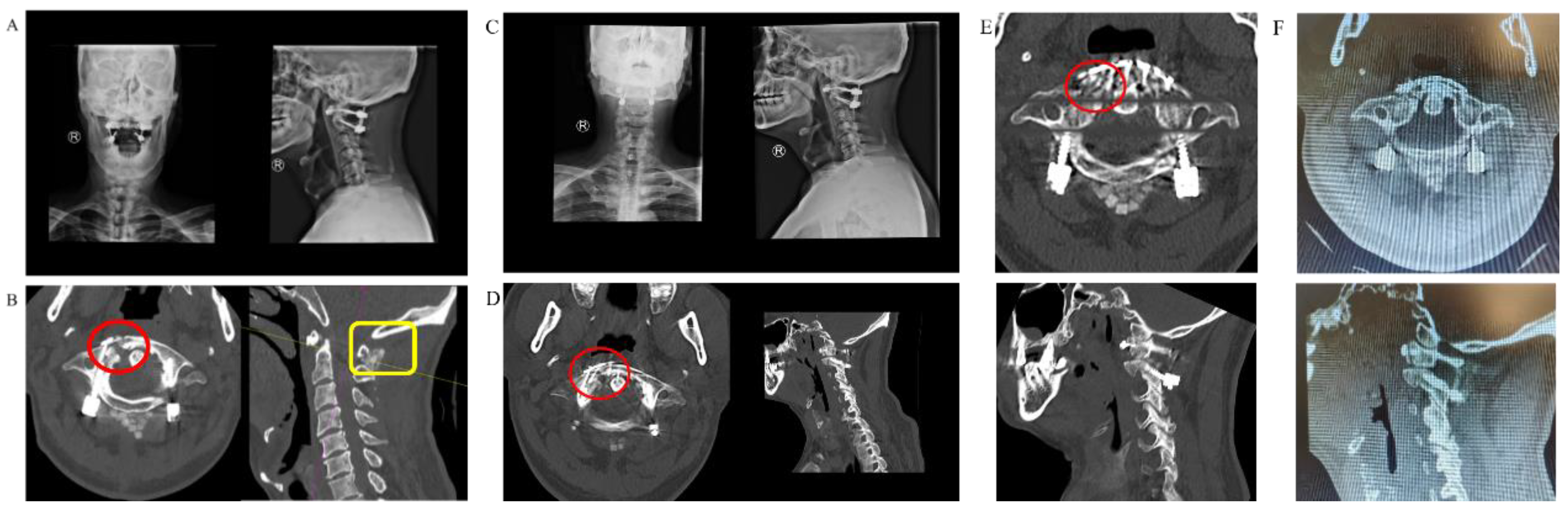
Figure 7.
The time line of patient’s treatment.

Disclaimer/Publisher’s Note: The statements, opinions and data contained in all publications are solely those of the individual author(s) and contributor(s) and not of MDPI and/or the editor(s). MDPI and/or the editor(s) disclaim responsibility for any injury to people or property resulting from any ideas, methods, instructions or products referred to in the content. |
© 2026 by the authors. Licensee MDPI, Basel, Switzerland. This article is an open access article distributed under the terms and conditions of the Creative Commons Attribution (CC BY) license (http://creativecommons.org/licenses/by/4.0/).
Copyright: This open access article is published under a Creative Commons CC BY 4.0 license, which permit the free download, distribution, and reuse, provided that the author and preprint are cited in any reuse.


