

Submitted:
07 June 2026
Posted:
09 June 2026
You are already at the latest version
Abstract
Despite chitosan proven biocidal potential, there is a lack of consensus regarding the influence of its key physicochemical parameters, degree of deacetylation (DD) and molecular weight (MW), on its antimicrobial efficacy. The aim of this study was to quantitatively synthesize available literature data and statistically model the influence of chitosan DD and MW on the minimum inhibitory concentration (MIC). A PRIS-MA-guided literature review (2016–2026) across four major databases extracted 127 independent in vitro experiments, Gram-positive/negative bacteria and fungi. Physi-cochemical correlations were analyzed using multiple linear regression. Insoluble polymer fractions (here set as DD < 60%) critically interfere with MIC determination due to restricted diffusion and were strictly excluded from analyses. For the optimized group of soluble chitosans (N=108, R²=0.36), DD was the dominant factor determining biocidal activity (p < 0.0001) – every 1% increase in DD reduces the logMIC by an average of 0.040. Contrary to some literature assumptions, a statistically significant (p = 0.029) negative directional coefficient for MW (-0.00038) demonstrated that a higher MW further enhances the biocidal effect. In summary, maximizing chitosan antimicrobial activity requires high DD polymers, and rigorous standardization (excluding insoluble fractions) is essential for the proper design of new biomaterials.
Keywords:
chitosan
; molecular weight (MW)
; degree of deacetylation (DD)
; antimicrobial activity
; antibacterial
; antifungal
; in vitro
; MIC
1. Introduction
1.1. Chitosan: Important Natural Polysaccharide
1.1.1. From Chitin to Chitosan—Origin and Structural Composition
Chitin is the second most abundant natural polymer after cellulose, occurring naturally as structural material in the shells of marine crustaceans, exoskeleton of arthropods, the cell walls of fungi, and even in some invertebrates [1,2,3,4]. The first references confirming its isolation by boiling chitin in a concentrated solution of potassium hydroxcide (KOH) date back to 1859 [5,6]. However, while Rouget was the first to isolate this substance, he did not coin its moder name. The term “chitosan” was introduce decades later, in 1894, by the scientist Felix Hoppe-Seyler [7]. Chitin is a linear polysaccharide composed of glucose-derived monomers: 2-N-acetyl-D-glucosamine, linked by β-1,4 bonds. It is worth noting that chitin can naturally occur in three allomorphic forms: most commonly as alpha (α) and beta (β), and less commonly as gamma (γ), which is a structural hybrid of α and β forms [5,8].
The enzyme chitin deacetylase (CDA) catalyzes the process of removing acetyl groups (deacetylation) from N-acetylglucosamine residues, leading to the formation of chitosan with varying degrees of deacetylation (DD) [9]. Enzymatic deacetylation, in particular when carried out under the influence of fungal CDA, allows the production of chitosan with a significantly high degree of deacetylation and controlled molecular weight. Chitosan is obtained from chitin through alkaline deacetylation, typically by treating crustacean shell-derived chitin with a 40–50% sodium hydroxide (NaOH) or potassium hydroxide (KOH) solution at temperatures above [10,11]. This process converts acetamide groups in chitin into amine groups, requiring subsequent washing and drying to pro-duce chitosan. Then, as a result of the removal of acetyl groups from N-acetylglucosamine meres, new glucosamine meres are formed [5]. Deacetylated chitin is referred to as chitosan when the degree of deacetylation, i.e. the percentage of restored amino groups (-NH2), exceeds 50%. The chemical structure of chitin and chitosan is illustrated in Figure 1.
1.1.2. Characteristics of Chitosan
Chitosan has attracted widespread interest in the scientific world due to its unique qualities: biocompatibility, antimicrobial properties, as well as antioxidant and hemostatic effects, and consequently established use in various fields of medicine [12,13,14] . Specifically, its antimicrobial properties have enabled chitosan to be used in modern wound dressings, which still remains an important area of research interest to this day. A correlation among molecular weight (MW) and degree of deacetylation (DD) of chitosan and its antimicrobial properties has been implied nevertheless, the literature data on this issue are highly divergent (). For example, according to Zheng and Zhu, low MW corresponds to increased activity against Gram-negative bacteria (mainly E. coli), while high MW is, in their view, more beneficial for combating Gram-positive bacteria (S. aureus) [15,16].
It should be mentioned that a higher degree of deacetylation (DD) is associated with a greater number of positively charged amino groups (-NH3+) along the chitosan macromolecule. This allows for stronger interaction with the negatively charged surface of microorganism cells, which results in greater antimicrobial properties [15,17,18,19]. However, the optimal combination of MW and DD values for which antimicrobial activity would reach its maximum have not yet been defined.
1.2. The Antibiotic Crisis—Looking for Alternatives to Classic Antibiotic Treatment
According to the WHO, drug resistance is considered one of the key threats to public health [20]. Furthermore, the Food and Drug Administration (FDA) has approved only 17 systemic antibiotics since 2010 until 2021. It should be emphasized that the vast majority of newly introduced pharmaceuticals are only modifications of existing drugs, rather than innovative active substances with a new mechanism of action [21]. Despite the growing problem of antimicrobial resistance (AMR) the number of new products approved is dramatically low. Futhermore, in 2021-2022, FDA and European Medicines Agency (EMA) did not approve a single completely new antibiotic. In the last 5 years, most newly introduced preparations are not new classes of drugs, but modifications of older structures (mainly cephalosporins) or combinations of old antibiotics with new β-lactamase inhibitors [22,23,24]. Growing multidrug resistance (MDR), hospital-acquired infections, and the emergence of “superbugs” have indirectly contributed to increased morbidity and mortality. It has also been shown that infections caused by MDR bacteria often result in emergency and early treatments failure, which leads to longer hospitalization and thus to a significant increase in the healthcare cost. The World Bank estimates that MDR could result in result in additional healthcare costsod $1 trillion by 2050, as well as in losses In gross domestic product (GDP) [20,25].
1.3. Identification of Research Gaps and the Objective of the Study
Despite the large number of publications and growing interest in the issue, scientific literature is characterized by considerable heterogeneity in terms of study design, methodology, chitosan extraction and preparation methods, analytical techniques, and reporting of results. Furthermore, the literature contains many contradictory conclusions. Lack of standardisation, including insufficient reporting of chitosan synthesis processes and research methods used, combined with contradictory results, makes it difficult to draw clear conclusions. The authors of publications often omit essential data on the properties of the biopolymer used, such as MW, DD, or details of the production and processing, even though the established methodologies are available, see for instance [26]. This makes it problematical to broadly compare the results of individual microbiological studies and reliably evaluate their credibility. Moreover, some studies omit important physicochemical parameters (such as temperature, incubation time, pH, type of medium), and sometimes do not even provide satisfying information on the species of organism used to assess antimicrobial properties. Therefore, it is crucial to examine the antimicrobial properties of chitosan more thoroughly, determine the MW and DD ranges with optimal activity, and ultimately implement products based on this material into common clinical practice. Those constitutes a serious limitation in the interpretation of results and hinders the conduct of reliable systematic reviews and meta-analyses. These observations impelled the authors of this paper to arrange a narrative literature review. This study systematically, critically and concisely analyzes the current scientific literature, presenting the results—influence of chitosans degree of deacetylation and molecular weight on antimicrobial properties—in a comparative and visual manner, and also identifies trends and directions in which new, more methodologically refined research on the antimicrobial properties of chitosan should proceed.
2. Materials and Methods
2.1. Literature Review Draft
A narrative literature review with elements of systematic searching was undertaken to identify and critically analyze studies with a particular concentration on the antimicrobial nature of chitosan relative to its molecular weight (MW) and degree of deacetylation (DD). The following review is exploratory and comparative in nature, and its aim is to establish a research group consisting of the most methodologically homogeneous in vitro studies, enabling correlations to be drawn between the physicochemical parameters of chitosan, namely DD and MW, and the observed antimicrobial activity. Due to the high heterogeneity of the analyzed data and the character of the paper, a formal systematic review (with PROSPERO registration) was not conducted; however, a strictly structured procedure for identification, selecting, and extracting data was applied. The process of identifying and selecting publications is presented in the form of a PRISMA-style flow diagram—Figure 2.
Identification and selection of publications for this narrative review with meta-analysis was conducted in accordance with the PRISMA scheme, covering four main databases: Scopus, Web of Science, PubMed/MEDLINE, and Embase. After removing 2,238 duplicates, 3,334 records were initially scanned. Then, in a two-stage selection process, involving analysis of titles and abstracts and subsequent evaluation of 213 full texts, studies that did not meet the criteria were rejected, among other reasons, due to the lack of an appropriate MIC determination methodology, the use of chitosan mixtures or antimicrobial additives, or incomplete and flawed physicochemical characterisation of the polymer. Finally, 15 articles were selected for narrative synthesis, from which a total of 127 individual research trials (N = 127) were extracted and subsequently subjected to assessment. Among them, 108 samples that met all quality and methodological criteria were included in the quantitative synthesis, which enabled detailed statistical modelling to be carried out.
2.2. Timeframe and Databases Analyzed
The systematic literature search covered studies published in specialist literature over the last 10 years, analyzing scientific articles from January 1, 2016, to February 1, 2026. The search was conducted in the following databases: PubMed/MEDLINE, Scopus, Embase (OVID), and Web of Science Core Collection.
The chronological scope was chosen in order to take into account contemporary research on chitosan, which was carried out using relatively modern manufacturing and analytical methods. The authors also noticed a significant increase in interest in chitosan and its antimicrobial properties over the last decades. To capture the trend the dynamics of publications between 1996 and 2026 are presented in Figure 3., a composite chart The left axis shows the annual number of articles in individual databases, while the line (right auxiliary axis) shows the total cumulative number of publications in the period under study. The analysis shows a marked exponential increase in interest in chitosan in scientific literature.
2.3. Strategy for Search
The search strategies were based on a combination of keywords, synonyms, and controlled terms (e.g. MeSH), in-cluding: (i) chitosan and its synonyms, (ii) antimicrobial activity, (iii) bacteria and/or fungi, (iv) physicochemical parameters (DD, MW).
Search strategies were tailor-made for each database, keeping in mind the syntax and indexing system. Logical operators were used to narrow down the results to in vitro studies on “pure chitosan” and to exclude publications on chitosan with additives in the form of nanoparticles or ions (e.g., silver, gold), antibiotics or fungicides, composites, and other substances whose addition may have a significant effect on antibacterial or antifungal activity. The complete search strategy is presented in Supplementary Table S1.
Furthermore, a manual search of the reference lists of publications eligible for review (backward snowballing) was conducted to identify additional articles that could meet the inclusion criteria for the study.
The following search restrictions were applied: (i) articles published in English only, (ii) full texts available, (iii) published in peer-reviewed scientific journals.
2.4. Eligibility Criteria
Only studies, in form of original articles presenting authors’ own research data, meeting the following eligibility criteria were included in this narrative review with elements of a systematic literature review: (i) in vitro experimental study, (ii) evaluation of antimicrobial activity against bacteria (Gram-positive or Gram-negative) or fungi, (iii) use of “pure chitosan,” which we define as a polysaccharide that is not chemically modified and not enriched with additional substances with potential antimicrobial activity, (iv) clearly defined molecular weight (MW) in the form of a specific numerical value or convertible range, (v) clearly defined degree of deacetylation (DD) or degree of acetylation (DA), (vi) chitosan molecular weight >=5kDa, (vii) the minimum inhibitory concentration (MIC) test was used, and (viii) available in English.
Meanwhile, publications were excluded in which: (i) chitosan with a molecular weight of less than 5 kDa (e.g., nanochitosan) was used, (ii) chitosan was combined with a substance with potential antimicrobial properties (antibiotic, Ag ions, natural substances with antimicrobial significance), (iii) had missing MW, DD/DA, or both variables, (iv) did not perform reliable antimicrobial activity tests, (v) were in vivo studies, (vi) analyzed viruses, protozoa, or other organisms that were not bacteria or fungi, (vii) available in a language other than English, and (viii) review articles, conference proceedings, and grey literature.
2.5. Article Selection Process
All records obtained in the database search process were exported to a bibliography management program Mendeley Cite, where deduplication was performed. This was followed by a two-stage selection process:
1. Analysis of titles and abstracts,
2. Analysis of full texts.
The selection was carried out by two independent reviewers (K.C. and M.R.). In case of any discrepancies, decisions were made by a third reviewer (K.K.K.). The entire selection process is presented in the PRISMA flow diagram Figure 2.
2.6. Data Extraction
Data from publications included in this narrative literature review were extracted into a structured spreadsheet by two independent reviewers. Any discrepancies were re-verified and reconciled until consensus was reached.
The following variables were analyzed: (i) molecular weight of chitosan (MW), (ii) degree of deacetylation (DD) or acetylation (DA), (iii) form and purity of chitosan, (iv) presence of additives, (v) microorganism species, (vi) selected method of antimicrobial activity, (vii) a test for evaluating antimicrobial properties other than the MIC test was used, (viii) experimental conditions (including pH, temperature, incubation time, medium), (ix) chitosan concentration, and (x) methods for determining MW and DD (DA).
2.7. Data Normalization and Transformation
If DD was specified in the study, the virgin value was entered as a decimal fraction. It is worth noting that in some papers the authors used the degree of acetylation (DA) instead of the degree of deacetylation (DD); therefore, the following conversion was applied: DD = 1—DA. DA specified as a percentage was converted to a decimal fraction before calculation.
All MW values were converted to kilodaltons (kDA, which corresponds to kg/mol in the SI system, where 1 Da = 1g/mol). In the case of ranges, the minimum, maximum, and median values were used. Values given as Mn, Mw, Mv, or other types of averages were retained in their original form and interpreted with caution.
Data consistency was checked after conversion. Inconsistent, ambiguous, or unobtainable values were marked in the spreadsheet and included only in descriptive form.
2.8. Grouping and Analysis
The research group was divided according to regna and Gram staining into: (a) Gram-positive bacteria, (b) Gram-negative bacteria, (c) Fungi. The analysis was exploratory in nature and included an assessment of the relationship between MW, DD, and MWxDD and antimicrobial activity. Data visualization (bubble charts, heat maps—see below) was used. Due to the heterogeneity of the methods and the data obtained, no formal meta-analysis was performed.
2.9. Assessment of Research Quality (Risk of Bias)
A formal assessment of publication bias was not performed. Instead, methodological quality was assessed narratively using a proprietary checklist covering key elements of the research experiment (including MW, DD, pH, temperature, chitosan concentration, experimental method, control conditions).
The classification was based on the percentage of control elements met. The studies were divided into: (i) high (>=70%), (ii) medium (50-69%), (iii) low quality (<50%).The quality assessment was not a formal criterion for exclusion from the review, but it did influence the interpretation of the results.
2.10. Quantitative Synthesis and Statistical Modelling
Quantitative synthesis and statistical modelling were performed using Microsoft Office LTSC Professional Plus 2024 (with the Analysis ToolPak module) and Statistica 8 software. Statistical tests used:
-Pearson’s linear correlation analysis (heat map),
-Multiple linear regression:
- Snedecor’s F-test (Analysis of Variance—ANOVA), F = 1.71 × 10^(−11) < 0.001, highly significant for N = 108
- Student’s t-test (for the regression coefficient,
MWmean p-value = 0.0293 <0.05 Statistically significant
DD% p-value = 5.63×10⁻¹² <0.05 Highly significant
Intercept p-value = 2.91×10⁻²⁷ <0.05 Highly statistically significant
Given the considerable methodological heterogeneity of the included studies, formal meta-analysis was replaced by rigorous data exploration and predictive modelling. The level of statistical significance was set at p = 0.05.
During the first stage, the overall relationships between variables were assessed using Pearson’s correlation matrix and visualisation in the form of heat maps (Figure 5, Figure 7) and three-dimensional bubble charts (Figure 6). This analysis allowed for a preliminary determination of the relationship between the physicochemical properties of chitosan and its antimicrobial activity.
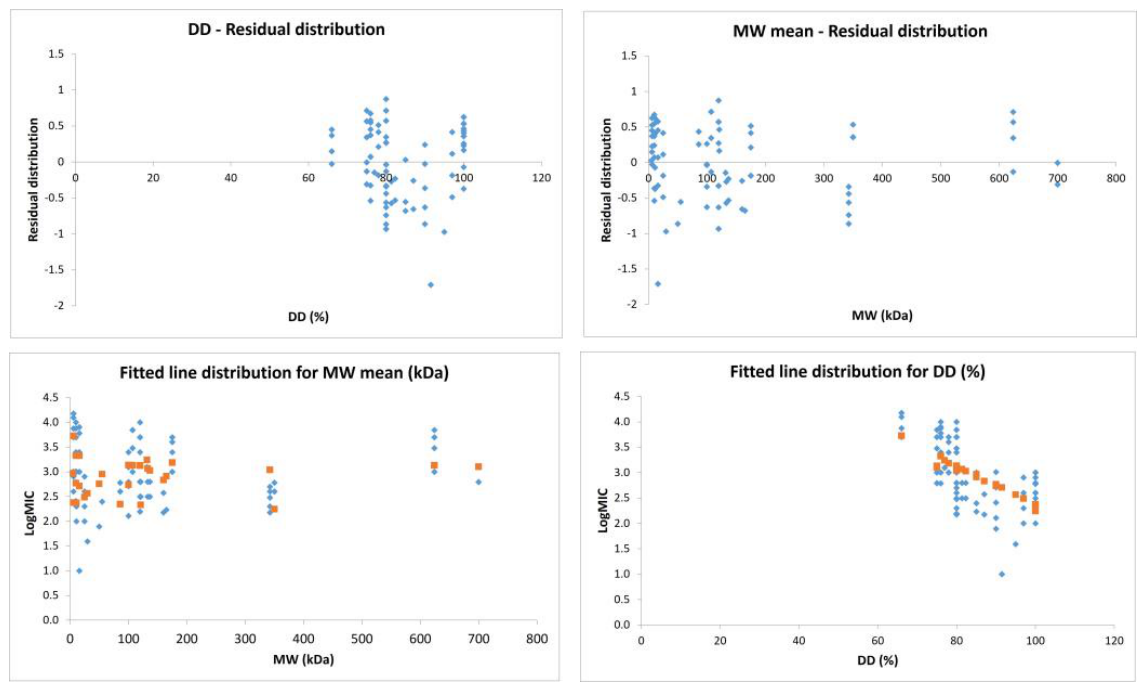
The main research tool was multiple regression. To ensure the physicochemical correctness of the model, samples with chitin characteristics (DD < 60%) were excluded, and the final fit was performed for the soluble chitosan fraction (N = 108). The dependent variable was the logarithmic MIC value (LogMIC), while the explanatory variables were the degree of deacetylation (DD) and the mean molecular weight (MW mean). The quality of the fit and the fulfilment of the model assumptions were confirmed on the basis of diagnostic graphs (Figure 8, Figure 10). The influence of DD on biocidal activity was illustrated by a scatter plot with a trend line (Figure 9).
3. Results
3.1. Structure of the Studied Microorganism Population
This narrative literature review included 15 of individual original scientific articles that met all inclusion criteria, resulting in 127 individual records on chitosan with a specific molecular weight (MW) and degree of deacetylation (DD), tested in vitro on a selected organism, with the obtained MIC result of antimicrobial activity. Please refer to the Methodology section below.
Within the analysed group of 127 cases, 120 involved bacteria, including: 63 cases (49.6%) relating to Gram-positive bacteria and 57 (44.9%) relating to Gram-negative bacteria. Furthermore, the study included 7 samples (5.5%) relating to fungi. The classification of microorganisms is presented in Supplementary Table S2.
Out of the samples tested, 31 (24.4%) were studies on S. aureus, 21 (16.5%) concerned E. coli, 8 (6.3%) P. aeruginosa, 6 (4.7%) S. mutans, 5 (3.9%) B. subtilis, and 5 (3.9%) C. albicans. A comprehensive quantitative and percentage analysis of the tested strains is presented in Table 1.
3.2. Impact of Molecular Weight (MW) and Degree of Deacetylation (DD) & DD) on Antimicrobial Activity
Physical and chemical parameters analysis, with particular emphasis on MW and DD, revealed considerable diversity in chitosan samples used in the studies considered. Regarding the degree of deacetylation (DD), the most numerous group were those with high DD, in the range: 80–84.9% (n = 35) and 75–79.9% (n = 31), which accounted for more than half of all samples tested. It should be noted that extreme values with very high DD: 95-100% (n = 23) also represented a substantial group, whereas samples with a low DD <10% (n = 15) accounted for a minority in the following analysis. In terms of molecular weight (MW), we observed a clear trend in researchers’ preference for low molecular weight chitosans—the dominant group consisted of chitosans with a molecular weight of below 30 kDa (n = 39). The second largest group was in the medium molecular weight range of 100–150 kDa (n = 34), whereas chitosans with a high molecular weight (>500 kDa) were analysed much less frequently (n = 13). The detailed breakdown of subpopulations is shown in Figure 4.
3.3. Demonstration of the Impact of Physicochemical Properties on Antimicrobial Activity
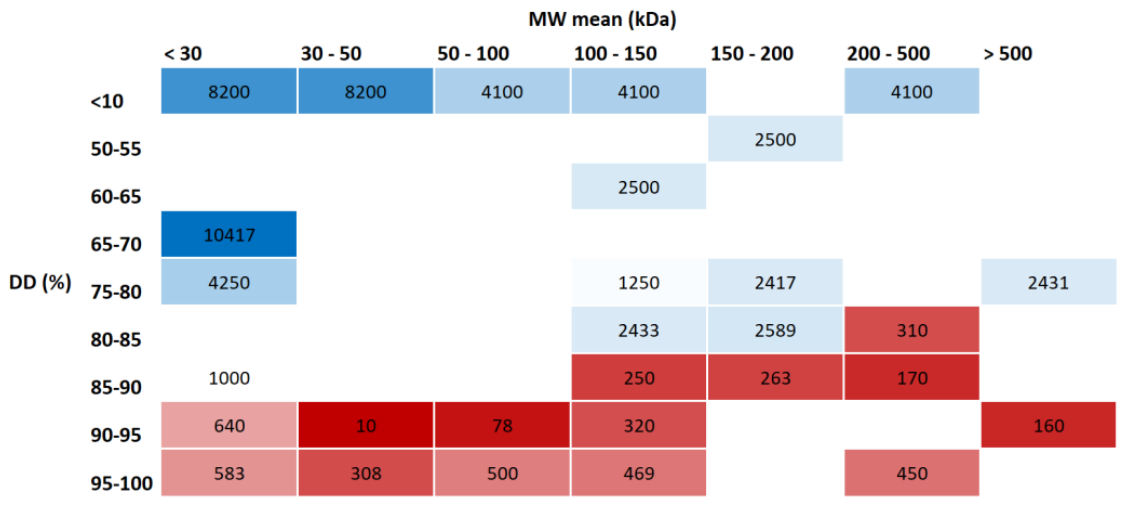
Multi-dimensional analysis of the gathered data was performed to obtain the relationships between molecular weight (MW), degree of deacetylation (DD), and the antimicrobial activity of chitosan. During the first stage, overall trends in the variability of minimum inhibitory concentration (MIC) were assessed in relation to the physicochemical parameters of the polymer. This allowed the identification of areas with the highest biocidal activity. The generated heat map (Figure 5) shows both the density of data and the intensity of the combined influence of MW and DD parameters on the effectiveness of the tested preparations.
Figure 5.
Global trends in the antimicrobial activity of chitosan depending on its physicochemical properties (MW & DD)—heatmap visualization. Heatmap representing MIC values in mg/L. The lower MIC values (highest antimicrobial activity) are marked in red, while the highest MIC values (lowest antimicrobial activity) are highlighted in blue. The remaining white areas indicate a lack of data—no samples were found in the analyzed population for a given degree of deacetylation (DD) and molecular weight (MW). MIC values were entered in the appropriate fields. For clarity, the articles were grouped according to DD (%) and MW (kDa).
Figure 5.
Global trends in the antimicrobial activity of chitosan depending on its physicochemical properties (MW & DD)—heatmap visualization. Heatmap representing MIC values in mg/L. The lower MIC values (highest antimicrobial activity) are marked in red, while the highest MIC values (lowest antimicrobial activity) are highlighted in blue. The remaining white areas indicate a lack of data—no samples were found in the analyzed population for a given degree of deacetylation (DD) and molecular weight (MW). MIC values were entered in the appropriate fields. For clarity, the articles were grouped according to DD (%) and MW (kDa).
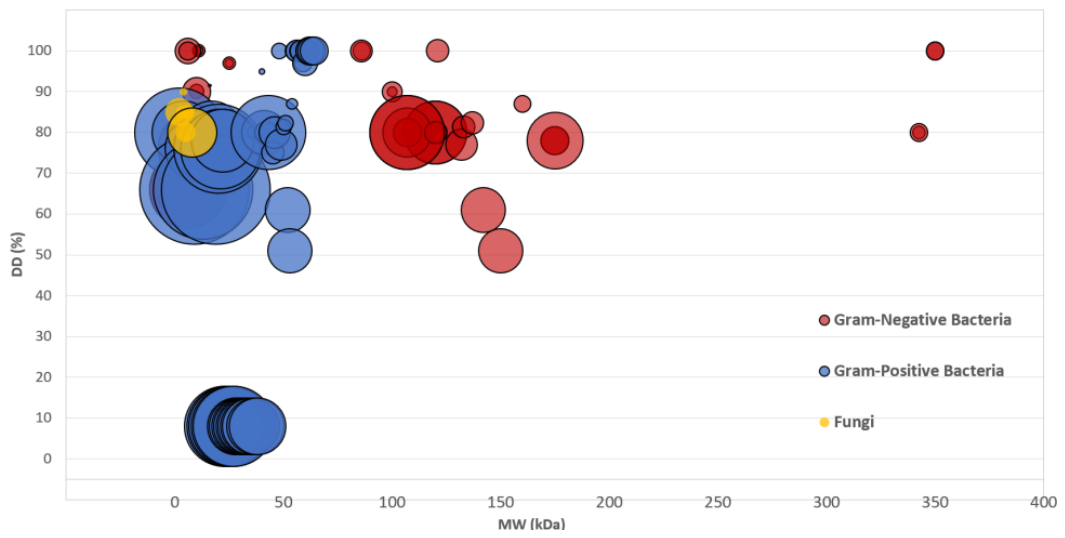
Furthermore, taking into account the considerable diversity of the microorganism populations studied (section 2.1), the analysis was extended to include the specific characteristics of individual microorganism groups. Due to fundamental differences in cell wall composition, a three-dimensional model of activity distribution was developed (Figure 6). This visualization enables simultaneous assessment of the interactions between MW, DD, and MIC, with a clear discrimination between Gram-positive, Gram-negative, and fungal microorganisms. Such representation of data makes it easier to observe whether the preferred parameters of chitosan differ depending on the target microorganism type.
Figure 6.
Three-dimensional distribution of chitosan activity: Effect of MW and DD on MIC, accounting for group specificity (Gram-Positive bacteria vs Gram-negative bacteria vs fungi). Bubble chart illustrating the correlation between the degree of deacetylation (DD in %) and molecular weight (MW in kDa) with respect to MIC value—smaller bubbles representing greater antimicrobial activity (lower MIC). Data points divided into three groups according to organism type: blue—Gram-positive bacteria, red—Gram-negative bacteria, and yellow—fungi.
Figure 6.
Three-dimensional distribution of chitosan activity: Effect of MW and DD on MIC, accounting for group specificity (Gram-Positive bacteria vs Gram-negative bacteria vs fungi). Bubble chart illustrating the correlation between the degree of deacetylation (DD in %) and molecular weight (MW in kDa) with respect to MIC value—smaller bubbles representing greater antimicrobial activity (lower MIC). Data points divided into three groups according to organism type: blue—Gram-positive bacteria, red—Gram-negative bacteria, and yellow—fungi.
3.4. Statistical Analysis of Factors Determining the Highest Antimicrobial Activity
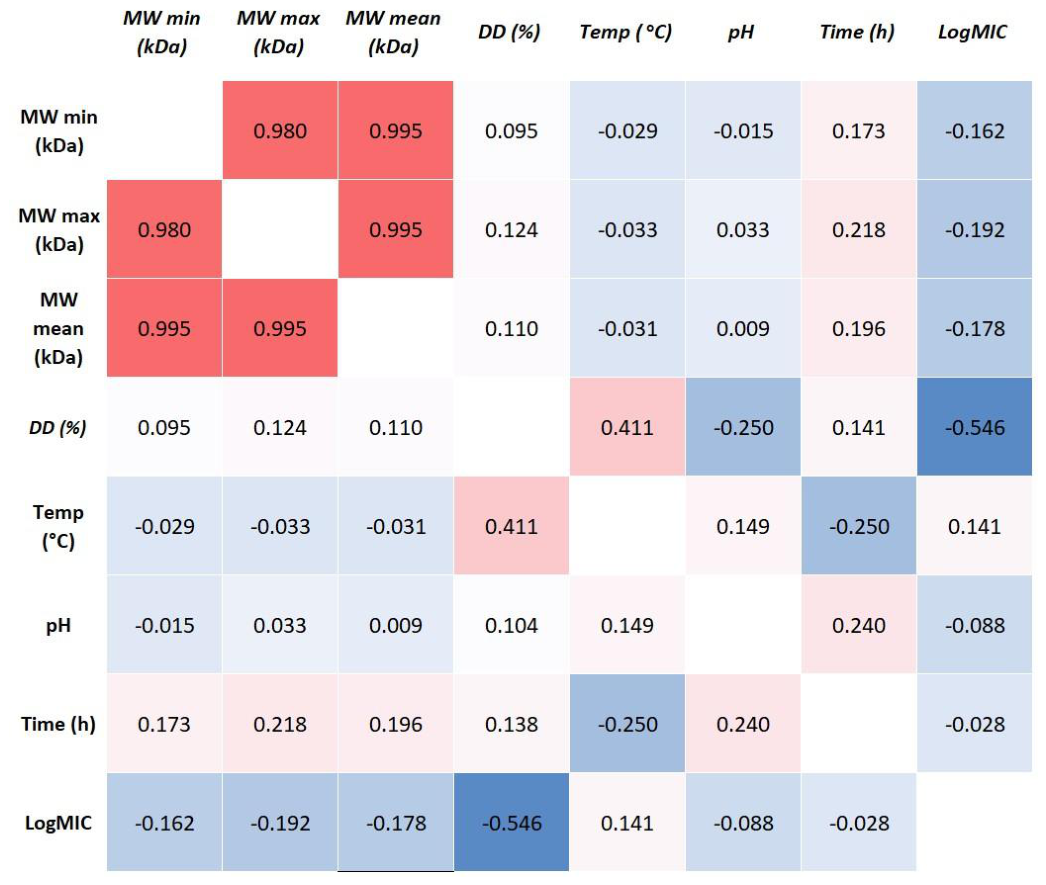
Precise values of correlation coefficients for the tested variables: MW min, MW max, MW mean, DD, temperature, pH, incubation time and LogMIC are presented in Figure 2. Owing to the small correlation coefficients for pH (-0.087), temperature (0.14) and incubation time (-0.028), these factors were not further analysed, as insufficient number of published data did not allow to withdraw constructive conclusion. Only MW mean (kDa), DD (%) and LogMIC (antimicrobial activity indicator) were qualified for regression analysis.
Figure 7.
Visualisation of correlations across variables (Heatmap).
Multiple regression analysis (N = 127, R² = 0.32) yielded only the impact of DD on MIC as statistically highly significant (p < 0.0005). A negative regression coefficient of –0.011 supports the findings of several previous studies that the higher the degree of deacetylation, the stronger the antimicrobial activity (lower MIC) [27]. Detailed results of the multiple regression are presented in Figure 8. Comparing predicted values (orange squares) with the actual observed LogMIC values (blue diamonds) visualizes the model’s goodness-of-fit and confirms the primary influence of DD over MW on the predicted outcomes.
Figure 8.
Series of diagnostic graphs of multiple regression for MW and DD (N=127).
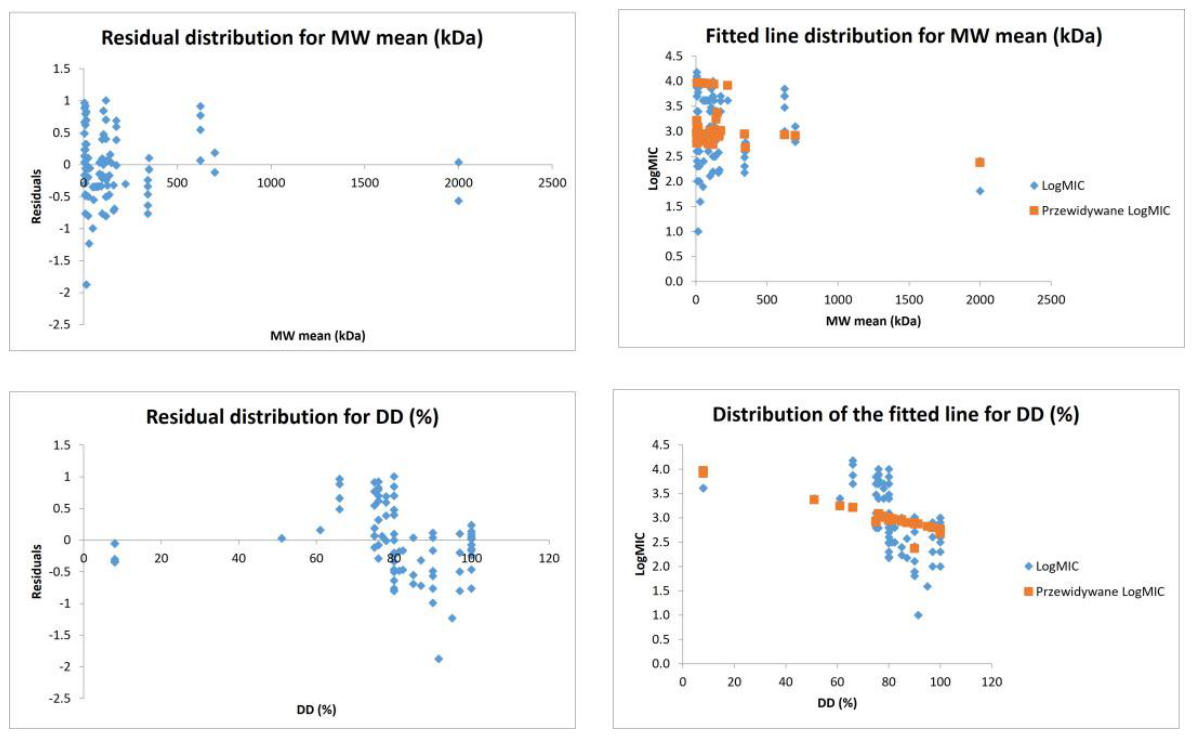
Figure 8, which displays the residual distributions and the fitted line plots for both mean molecular weight (MW mean) and degree of deacetylation (DD). In the fitted line plots, the ‘Predicted LogMIC’ values represent the expected antimicrobial activity estimated by the multiple regression model for each sample, based on its specific combined parameters.
Prior to determining the final regression model and plotting the trend line, it was necessary to introduce a key physicochemical distinction in the analyzed data set. For this reason, all samples with DD < 60% were excluded from further statistical analysis. The final trend fit was performed only for the soluble chitosan fraction (DD > 60%). It should also be emphasized that there is a methodologically related issue with samples for which DD is reported in the literature as 100%. From a physicochemical point of view, achieving absolutely complete deacetylation is questionable, except for specific oligosaccharides or materials synthesized in a controlled manner. After excluding the insoluble fraction, multiple regression analysis was performed again for a narrowed group of 106 samples. The analysis shows that the degree of deacetylation (DD) is still essentially more important for the antimicrobial activity of chitosan than the size of the molecules (MW).
Regardless of its potentially low value, the quality of the model (R² = 36%) can be considered satisfactorily high, especially in the case of a heterogeneous research sample, comprising various microbiological studies conducted on diverse organisms: Gram-positive and Gram-negative bacteria, as well as fungi. The remaining 64% of the variance is accounted for by factors not included in the analysis. These are, among others, microbial strain characteristics (e.g., cell wall architecture), additional polymer properties (chitosan origin, synthesis method, degree of deacetylation), and methodological variability inherent to biological tests (random error in MIC and DD measurements).
The derived regression equation is as follows:
logMIC ≈ 6,35 − 0,040 × DD − 0,00038 × MW
Statistically, each 1% increase in the degree of deacetylation (DD) decreases logMIC by 0.019. Molecular weight (MW) may also marginally reduce logMIC, and the refined analysis indicates that this effect is statistically significant, rather than coincidental. A graphical representation of the effect of DD(%) on LogMIC, together with a trend line, is presented in Figure 9.
Figure 9.
Scatter plot of DD (%) over LogMIC with trend line (N=108). Scatter plot showing the correlation between the logarithm of the minimum inhibitory concentration (LogMIC) and the DD (%) value for the test sample (N = 108). The red dashed line represents a linear trend function, indicating a clear negative correlation between the analyzed parameters (an increase in the DD% value is associated with a decrease in the LogMIC value).
Figure 9.
Scatter plot of DD (%) over LogMIC with trend line (N=108). Scatter plot showing the correlation between the logarithm of the minimum inhibitory concentration (LogMIC) and the DD (%) value for the test sample (N = 108). The red dashed line represents a linear trend function, indicating a clear negative correlation between the analyzed parameters (an increase in the DD% value is associated with a decrease in the LogMIC value).
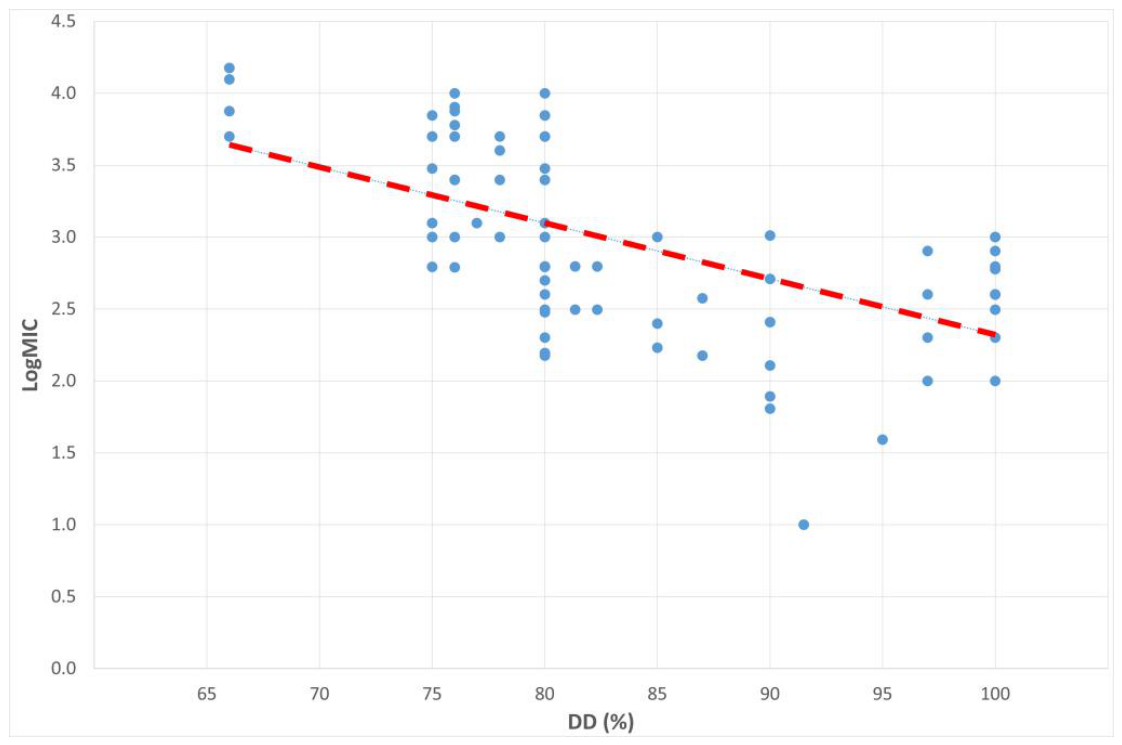
Figure 10.
Series of diagnostic graphs of multiple regression for MW and DD (N=106).
3.5. Statistical Assessment of Activity Predictors and Dualistic Mechanism of Action
Eliminating insoluble chitosan fractions from the analysis allowed for developing a statistically high-significant multiple regression model (F = 31.68; p < 0.0001). The adjusted R2 value indicates that molecular weight (MW) and degree of deacetylation (DD) account for over 36% of the overall variance in antimicrobial activity.
Analysis of independent variables confirmed the critical role of DD (p=1.9*10-11 < 0.0001). Each 1% increase in DD led to a mean reduction in logMIC of 0.040 (95% CI: 0.029–0.050). Interestingly, extracting of the dataset from insoluble chitin also revealed a statistically significant effect of MW (p = 0.156). Therefore, based on the derived dependency, for exemplary chitosan of 100 kg/mol molecular weight, one may expect the MIC values 3,51, 3,11 and 2,71 chitosans of DD 70%, 80% and 90%, respectively.
Table 2 shows the predicted logMIC values, which resemble the experimentally determined values for the samples analyzed. As shown in Table 2, a linear trend is clearly observable for both independent variables. A higher degree of deacetylation (DD) consistently leads to a significant decrease in the predicted logMIC values across all analyzed molecular weights (MW). Similarly, an increase in MW from 50 to 400 kDa further enhances the antimicrobial activity (lowers the logMIC), although the effect of DD seems to be more noticeable than that of MW within the tested ranges.
4. Discussion
The increasing need of new antimicrobial agents is undeniable. Growing resistance to antimicrobial agents weakens or negates the effect of commonly used biocidal and biostatic substances, posing a serious threat to nowadays healthcare [28,29,30]. In this context, understanding the exact physicochemical parameters that dictate the efficacy of alternatives like chitosan is crucial.
Based on the definition, biopolymers with a degree of deacetylation (DD) below 60%—including samples with a DD of 5% or 10%—exhibit properties characteristic of chitin rather than chitosan. Their primary characteristic is almost complete insolubility in standard aqueous solutions R.A.A. Muzzarelli (Ed.), Natural Chelating Polymers, Pergamon Press, New York, 1973, p. 83.;). In the context of analyzing the results of in vitro microbiological tests, such as the determination of the minimum inhibitory concentration (MIC), insolubility means that there is practically no diffusion of the material into the medium. Consequently, the mechanism of interaction of this fraction with bacterial or fungi cells is physically incomparable to the action of soluble chitosan. Therefore, there is no justification for creating a common model for both groups, and doing so could introduce a specific methodological error.
Once the insoluble fraction has been removed, it becomes apparent that the diffusion is essential for biological systems. Such results strongly suggest that the free diffusion of macromolecules in the medium is a prerequisite for the predictability and effectiveness of chitosan’s biocidal activity. Furthermore, analysis of the soluble fraction reveals a direct effect on the degree of deacetylation. A higher DD, reflecting a more significant number of free amino groups, strengthens the electrostatic interaction of the polymer with bacterial cells, which is expressed in a systematic decrease in the LogMIC value. The negative slope of the trend line confirms that an increase in the percentage of –NH₂ groups directly translates into increased bactericidal potency of soluble chitosan, consistently lowering the minimum inhibitory concentration observed in individual samples. Given that the strains studied are relatively diverse biologically, the fact that this clear linear trend persists exclusively in the soluble fraction is a particularly compelling finding, confirming that the presence of protonated amino groups remains the primary factor determining antimicrobial efficacy once diffusion barriers are eliminated.
While DD plays a primary role, the data indicate that after simultaneously adjusting for MW and DD for the soluble fraction (here, DD > 60%) it appears that molecular weight has a significant, albeit minor effect on the antimicrobial properties of chitosan (p = 0.029, well below the 5% threshold). The literature often assumes that lower molecular weight promotes higher antimicrobial activity, but the quantitative synthesis and statistical modelling showed the opposite trend [16,31].
The negative directional coefficient (-0.00038) implies that higher molecular weights may additionally, yet to a small extent, enhance the biocidal effect. Our study enriches and clarifies the already complex scientific consensus. In contrast to these findings, the study by Hui et al. does not reveal a clear trend suggesting that composites of chitosan with low or high MW had different antimicrobial effects (https://doi.org/10.1016/j.jmbbm.2023.106136). Other authors suggest that chitosans with low to medium MW (4-10 kDa) exhibit the strongest antibacterial activity, while oligomers are almost inactive, and chitosans with very high MW may exhibit reduced bioactivity, with few exceptions [19,27,32]. However, confirming the potential of larger molecules, it has been noted that chitosan has a stronger antibacterial effect than its oligoderivatives [33]. The mechanism behind this phenomenon is not fully understood. However, two hypotheses dependend on the chain lenght may be considered:
- Low molecular weight (LMWC): demonstrates an ability to penetrate the cell walls of microorganisms and the cell membrane due to its smaller hydrodynamic volume. Once inside the cytoplasm, LMWC interacts electrostatically with negatively charged intracellular macromolecules, such as DNA and RNA, thereby directly inhibiting transcription, protein synthesis, and key metabolic pathways [34,35].
- High molecular weight (HMWC): abundant positively charged amino groups in HMWC interact electrostatically with the negatively charged cell wall. This leads to the formation of a dense polymer coating disordering normal cell metabolism, and its action focuses on binding essential metals, preventing the flow of nutrients and modifying cell permeability [34,35].
5. Conclusions
Insoluble polymer fractions (set as DD < 60%) interfere with MIC determination and had to be excluded from the study to ensure free diffusion. The degree of deacetylation (DD) is the main factor determining the biocidal activity of soluble chitosan (p < 0.0001), and the data analysis revealed that every 1% increase in DD statistically reduces the LogMIC value by an average of 0.040 (95% CI: 0.029–0.050). Molecular weight (MW) has also a statistically significant effect on antimicrobial properties (p = 0.029). It must be noted that this analysis considered average MW without accounting for molecular weight distribution (polydispersity), which undoubtedly affects MIC results; however, most literature sources omit distribution data, making such an inclusion currently unfeasible. By filling the identified knowledge gaps regarding the precise physicochemical parameters dictating optimal efficacy, this study provides a concrete framework that facilitates the targeted design of advanced biomaterials. Ultimately, our findings enable researchers and engineers to consciously tailor chitosan-based formulations for specific applications requiring reliable biocidal, bactericidal, or antifungal properties.
Supplementary Materials
The following supporting information can be downloaded at the website of this paper posted on Preprints.org.
Author Contributions
Conceptualization: K.C., M.R., K.K.K. and R.A.W.; methodology: K.C., M.R., K.K.K. and R.A.W.; formal analysis: K.C. and M.R.; investigation: K.C., M.R. and K.K.K.; data curation: K.C. and M.R.; writing—original draft preparation: K.C. and M.R.; writing—review and editing: K.C., M.R., K.K.K. and R.A.W.; visualization: M.R.; supervision: K.K.K. and R.A.W. All authors have read and agreed to the published version of the manuscript.
Funding
This research received no external funding.
Institutional Review Board Statement
Not applicable.
Informed Consent Statement
Not applicable.
Data Availability Statement
The data presented in this study are available in the article and supplementary material.
Conflicts of Interest
The authors declare no conflict of interest.
References
- Moussian, B. Chitin: Structure, Chemistry and Biology. In Targeting Chitin-containing Organisms; Advances in Experimental Medicine and Biology, 2019; pp. 5–18. [Google Scholar]
- Shinnerl, H.E.; Banks, I.J.; Dilger, R.N. A comparative review of chitin occurrence and quantification methodologies with applications to insect sourced materials. Carbohydr. Polym. 2026, 371. [Google Scholar] [CrossRef]
- Muzzarelli, R.A.A.E. Natural Chelating Polymers; Pergamon Press: New York, 1973; p. 83. [Google Scholar]
- Zikakis, J.P.E. Chitin, Chitosan and Related Enzymes; Academic Press: Orlando, 1984; p. XVII. [Google Scholar]
- Rinaudo, M. Chitin and chitosan: Properties and applications. Prog. Polym. Sci. 2006, 31, 603–632. [Google Scholar] [CrossRef]
- Rouget, C. Des substances amylacées dans le tissu des animaux, spécialement les Articulés (Chitine). Comptes Rendus Hebd. Séances Acad. Sci. 1859, 48, 792–795. [Google Scholar]
- Hoppe-Seyler, F. Ueber Chitin und Cellulose. Berichte Der Dtsch. Chem. Ges. 2006, 27, 3329–3331. [Google Scholar] [CrossRef]
- Kaya, M.; Mujtaba, M.; Ehrlich, H.; Salaberria, A.M.; Baran, T.; Amemiya, C.T.; Galli, R.; Akyuz, L.; Sargin, I.; Labidi, J. On chemistry of γ-chitin. Carbohydr. Polym. 2017, 176, 177–186. [Google Scholar] [CrossRef] [PubMed]
- Grifoll-Romero, L.; Pascual, S.; Aragunde, H.; Biarnés, X.; Planas, A. Chitin Deacetylases: Structures, Specificities, and Biotech Applications. Polymers 2018, 10. [Google Scholar] [CrossRef]
- Tharanathan, R.N.; Kittur, F.S. Chitin — The Undisputed Biomolecule of Great Potential. Crit. Rev. Food Sci. Nutr. 2003, 43, 61–87. [Google Scholar] [CrossRef]
- Synowiecki, J.; Al-Khateeb, N.A. Production, Properties, and Some New Applications of Chitin and Its Derivatives. Crit. Rev. Food Sci. Nutr. 2003, 43, 145–171. [Google Scholar] [CrossRef] [PubMed]
- Kołodziejska, M.; Jankowska, K.; Klak, M.; Wszoła, M. Chitosan as an Underrated Polymer in Modern Tissue Engineering. Nanomaterials 2021, 11. [Google Scholar] [CrossRef]
- Gu, R.; Sun, W.; Zhou, H.; Wu, Z.; Meng, Z.; Zhu, X.; Tang, Q.; Dong, J.; Dou, G. The performance of a fly-larva shell-derived chitosan sponge as an absorbable surgical hemostatic agent. Biomaterials 2010, 31, 1270–1277. [Google Scholar] [CrossRef]
- Jayakumar, R.; Prabaharan, M.; Sudheesh Kumar, P.T.; Nair, S.V.; Tamura, H. Biomaterials based on chitin and chitosan in wound dressing applications. Biotechnol. Adv. 2011, 29, 322–337. [Google Scholar] [CrossRef]
- Mellegård, H.; Strand, S.P.; Christensen, B.E.; Granum, P.E.; Hardy, S.P. Antibacterial activity of chemically defined chitosans: Influence of molecular weight, degree of acetylation and test organism. Int. J. Food Microbiol. 2011, 148, 48–54. [Google Scholar] [CrossRef] [PubMed]
- Zheng, L.-Y.; Zhu, J.-F. Study on antimicrobial activity of chitosan with different molecular weights. Carbohydr. Polym. 2003, 54, 527–530. [Google Scholar] [CrossRef]
- Kou, S.; Peters, L.; Mucalo, M. Chitosan: A review of molecular structure, bioactivities and interactions with the human body and micro-organisms. Carbohydr. Polym. 2022, 282. [Google Scholar] [CrossRef] [PubMed]
- Li, J.; Wu, Y.; Zhao, L. Antibacterial activity and mechanism of chitosan with ultra high molecular weight. Carbohydr. Polym. 2016, 148, 200–205. [Google Scholar] [CrossRef]
- Younes, I.; Sellimi, S.; Rinaudo, M.; Jellouli, K.; Nasri, M. Influence of acetylation degree and molecular weight of homogeneous chitosans on antibacterial and antifungal activities. Int. J. Food Microbiol. 2014, 185, 57–63. [Google Scholar] [CrossRef]
- Antimicrobial resistance. Available online: https://www.who.int/news-room/fact-sheets/detail/antimicrobial-resistance.
- Chahine, E.B.; Dougherty, J.A.; Thornby, K.-A.; Guirguis, E.H. Antibiotic Approvals in the Last Decade: Are We Keeping Up With Resistance? Ann. Pharmacother. 2021, 56, 441–462. [Google Scholar] [CrossRef]
- Zasheva, A.; Batcheva, E.; Ivanova, K.D.; Yanakieva, A. Differences in Patient Access to Newly Approved Antibacterial Drugs in EU/EEA Countries. Antibiotics 2024, 13. [Google Scholar] [CrossRef]
- Sartori, M.; Toppo, S.; Lavezzo, E. Molecular resistance mechanisms to newly approved antibiotics (2017–2025) in WHO priority pathogens. Front. Microbiol. 2026, 16. [Google Scholar] [CrossRef] [PubMed]
- Antibacterial agents in clinical and preclinical development: an overview and analysis. In World Health Organization; 2024.
- Birlutiu, V.; Birlutiu, R.-M. An Overview of the Epidemiology of Multidrug Resistance and Bacterial Resistance Mechanisms: What Solutions Are Available? A Comprehensive Review. Microorganisms 2025, 13. [Google Scholar] [CrossRef] [PubMed]
- Czechowska-Biskup, R.J.; Rokita, Diana; Ulański, Bożena; Rosiak, Piotr; Janusz M. Determination of Degree of Deacetylation of Chitosan. In Progress on Chemistry and Application of Chitin and Its Derivatives; 2012; Volume XVII. [Google Scholar]
- Eickelpasch, K.; Lemke, P.; Sreekumar, S.; Chilukoti, N.; Moerschbacher, B.M.; Richter, C. A bioactivity matrix for antimicrobial activities of chitosans: A review. Int. J. Biol. Macromol. 2025, 299. [Google Scholar] [CrossRef]
- Akram, F.; Imtiaz, M.; Haq, I.u. Emergent crisis of antibiotic resistance: A silent pandemic threat to 21st century. Microb. Pathog. 2023, 174. [Google Scholar] [CrossRef]
- Martens, E.; Demain, A.L. The antibiotic resistance crisis, with a focus on the United States. J. Antibiot. 2017, 70, 520–526. [Google Scholar] [CrossRef]
- Marston, H.D.; Dixon, D.M.; Knisely, J.M.; Palmore, T.N.; Fauci, A.S. Antimicrobial Resistance. Jama 2016, 316. [Google Scholar] [CrossRef]
- Shin, Y.; Yoo, D.I.; Jang, J. Molecular weight effect on antimicrobial activity of chitosan treated cotton fabrics. J. Appl. Polym. Sci. 2001, 80, 2495–2501. [Google Scholar] [CrossRef]
- Másson, M. The quantitative molecular weight-antimicrobial activity relationship for chitosan polymers, oligomers, and derivatives. Carbohydr. Polym. 2024, 337. [Google Scholar] [CrossRef] [PubMed]
- Jeon, Y. Antimicrobial effect of chitooligosaccharides produced by bioreactor. Carbohydr. Polym. 2001, 44, 71–76. [Google Scholar] [CrossRef]
- Hemmingsen, L.M.; Škalko-Basnet, N.; Jøraholmen, M.W. The Expanded Role of Chitosan in Localized Antimicrobial Therapy. Mar. Drugs 2021, 19. [Google Scholar] [CrossRef]
- Ke, C.-L.; Deng, F.-S.; Chuang, C.-Y.; Lin, C.-H. Antimicrobial Actions and Applications of Chitosan. Polymers 2021, 13. [Google Scholar] [CrossRef] [PubMed]
Figure 1.
Chemical Structure of chitosan. The repeating monosaccharide units are represented by N-acetyl-2-amino-2-deoxy-D-glucose (A) and 2-amino-2-deoxy- D-glucose (D). Chitosan A < B.
Figure 1.
Chemical Structure of chitosan. The repeating monosaccharide units are represented by N-acetyl-2-amino-2-deoxy-D-glucose (A) and 2-amino-2-deoxy- D-glucose (D). Chitosan A < B.
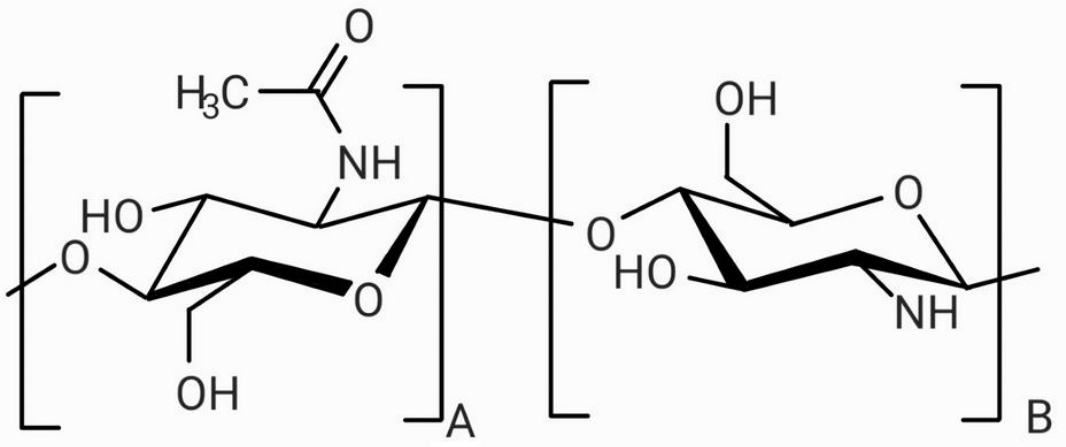
Figure 2.
Flow diagram of the identification and selection of articles.
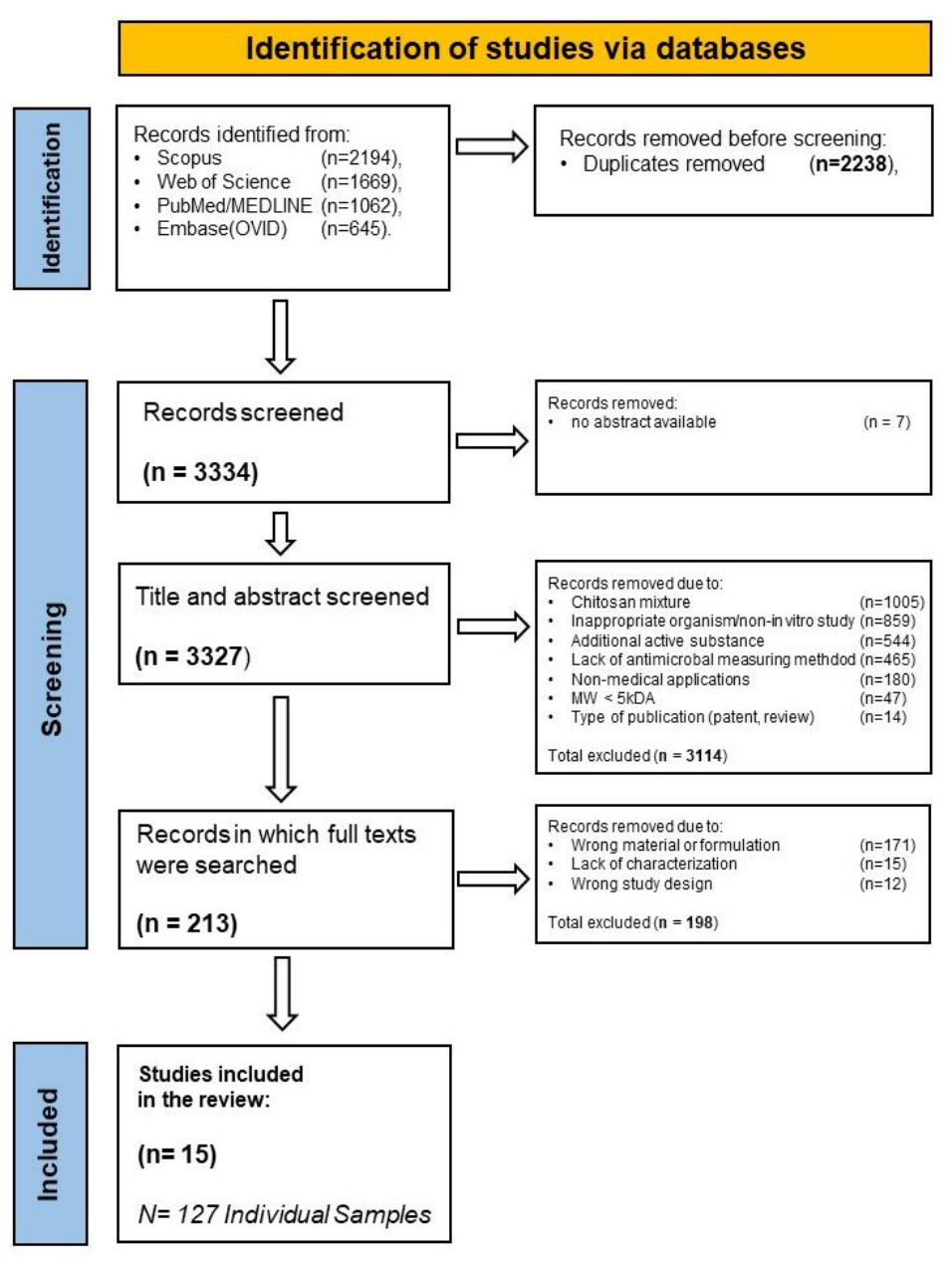
Figure 3.
Trends in publications on antimicrobial chitosan research (1996-2026). The shaded areas represent the annual article count published in specific databases, with the pink patterned area showing the total summary for each year. The solid dark blue line represents the cumulative number of articles over the entire period (1996–2026).
Figure 3.
Trends in publications on antimicrobial chitosan research (1996-2026). The shaded areas represent the annual article count published in specific databases, with the pink patterned area showing the total summary for each year. The solid dark blue line represents the cumulative number of articles over the entire period (1996–2026).
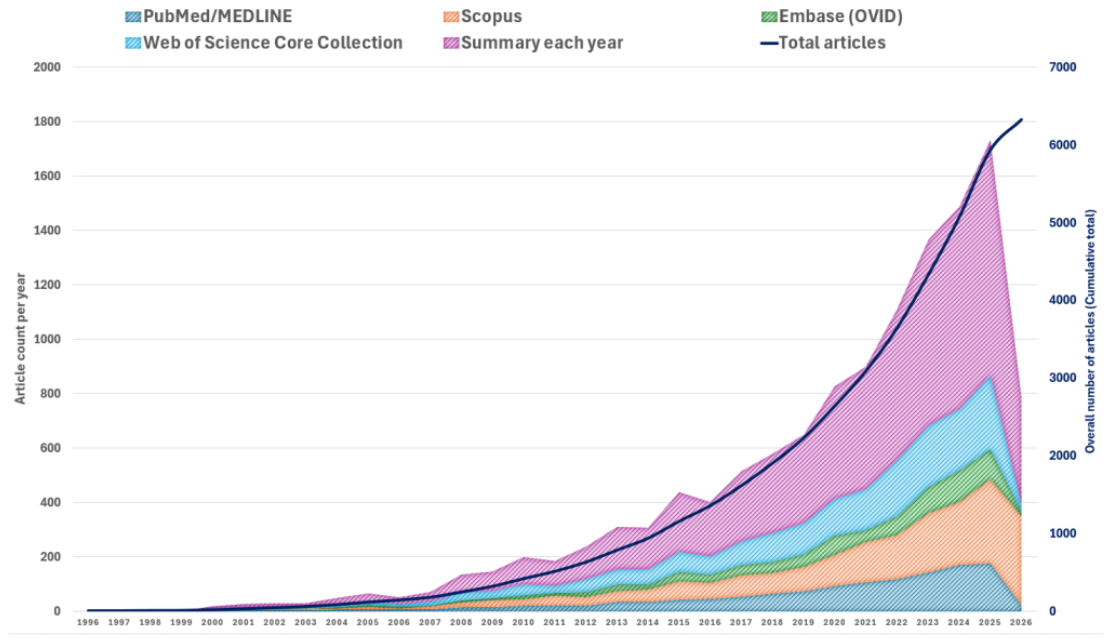
Figure 4.
Distribution of Specific Ranges of Deacetylation Degree and Molecular Weight in the Analyzed Sample Population. Distribution of specific ranges of deacetylation degree (in percentage, upper diagram) and molecular weight (in kg/mol = kDa, lower diagram) in the analyzed sample population. Bar length reflects the percentage share of a particular group in the total analyzed pool (N=127), and the numerical values at the ends of the bars represent the number of samples (n) within a given ran.
Figure 4.
Distribution of Specific Ranges of Deacetylation Degree and Molecular Weight in the Analyzed Sample Population. Distribution of specific ranges of deacetylation degree (in percentage, upper diagram) and molecular weight (in kg/mol = kDa, lower diagram) in the analyzed sample population. Bar length reflects the percentage share of a particular group in the total analyzed pool (N=127), and the numerical values at the ends of the bars represent the number of samples (n) within a given ran.
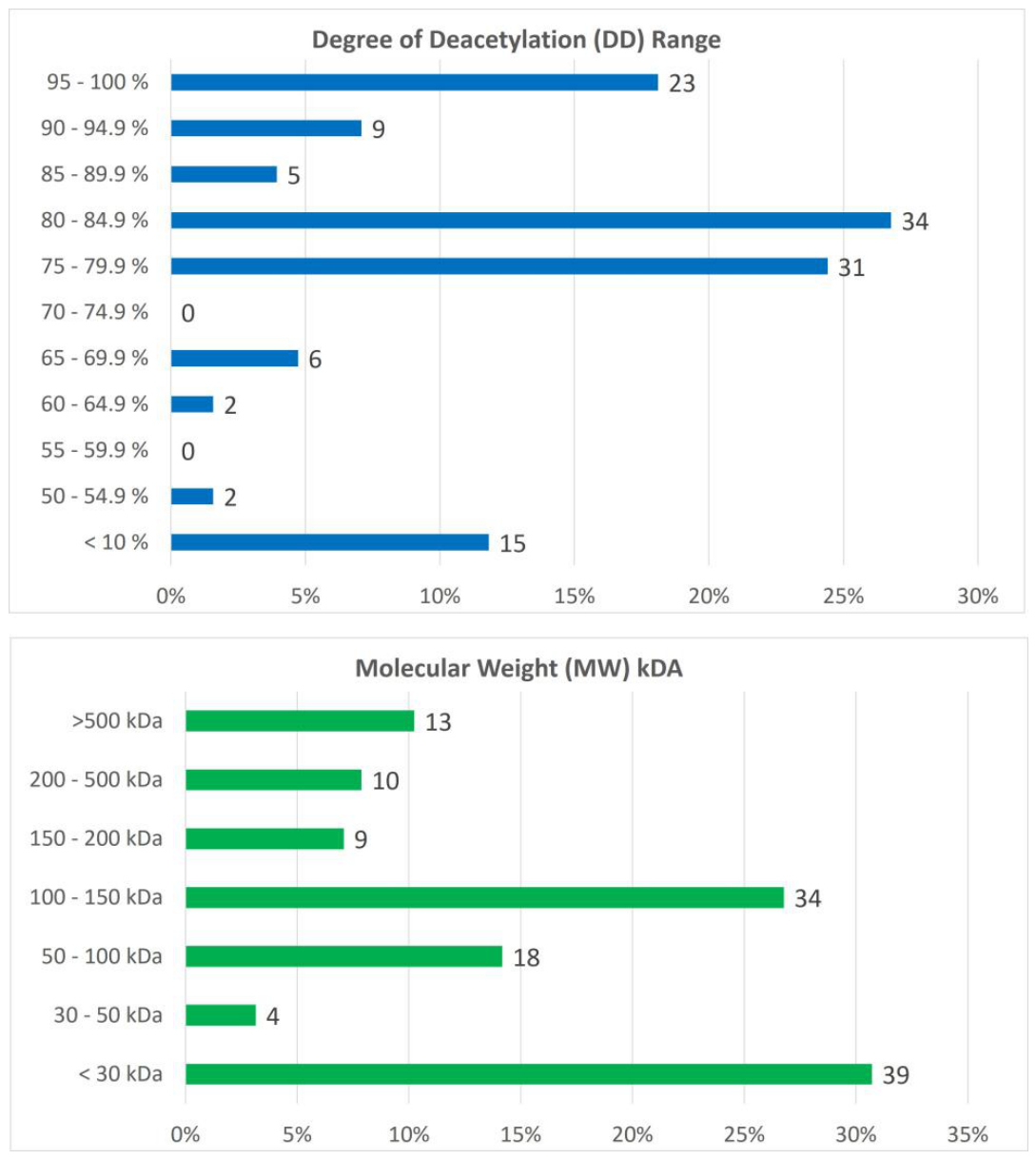

Table 1.
Quantitative and percentage analysis of the tested strains at the species level.
| No. | Genus Name | Species Epithet | Gram Staining | Number of Samples | Percentage Share |
| 1 | Staphylococcus | aureus | Positive | 31 | 24.4% |
| 2 | Escherichia | coli | Negative | 21 | 16.5% |
| 3 | Pseudomonas | aeruginosa | Negative | 8 | 6.3% |
| 4 | Streptococcus | mutans | Positive | 6 | 4.7% |
| 5 | Bacillus | subtilis | Positive | 5 | 3.9% |
| 6 | Candida | albicans | N/A | 5 | 3.9% |
| 7 | Roseburia | intestinalis | Negative | 4 | 3.1% |
| 8 | Bacteroides | thetaiotaomicron | Negative | 4 | 3.1% |
| 9 | Streptococcus | sobrinus | Positive | 4 | 3.1% |
| 10 | Bacteroides | vulgatus | Negative | 4 | 3.1% |
| 11 | Clostridium | beijerinckii | Positive | 4 | 3.1% |
| 12 | Faecalibacterium | prausnitzii | Positive | 4 | 3.1% |
| 13 | Clostridium | paraputrificum | Positive | 4 | 3.1% |
| 14 | Others | 23 | 18.1% | ||
| TOTAL | 127 | 100% |
Table 2.
Predicted logMIC values derived from the multiple regression model for the soluble chitosan fraction (DD ≥ 60%) across selected molecular weights (MW).
Table 2.
Predicted logMIC values derived from the multiple regression model for the soluble chitosan fraction (DD ≥ 60%) across selected molecular weights (MW).
| MW (kDa)\ DD (%) | 50 | 100 | 200 | 400 |
| 60 | 3.93 | 3.91 | 3.87 | 3.80 |
| 65 | 3.73 | 3.71 | 3.67 | 3.60 |
| 70 | 3.53 | 3.51 | 3.47 | 3.40 |
| 75 | 3.33 | 3.31 | 3.27 | 3.20 |
| 80 | 3.13 | 3.11 | 3.07 | 3.00 |
| 85 | 2.93 | 2.91 | 2.87 | 2.80 |
| 90 | 2.73 | 2.71 | 2.67 | 2.60 |
| 95 | 2.53 | 2.51 | 2.47 | 2.40 |
| 100 | 2.33 | 2.31 | 2.27 | 2.20 |
Disclaimer/Publisher’s Note: The statements, opinions and data contained in all publications are solely those of the individual author(s) and contributor(s) and not of MDPI and/or the editor(s). MDPI and/or the editor(s) disclaim responsibility for any injury to people or property resulting from any ideas, methods, instructions or products referred to in the content. |
© 2026 by the authors. Licensee MDPI, Basel, Switzerland. This article is an open access article distributed under the terms and conditions of the Creative Commons Attribution (CC BY) license (http://creativecommons.org/licenses/by/4.0/).
Copyright: This open access article is published under a Creative Commons CC BY 4.0 license, which permit the free download, distribution, and reuse, provided that the author and preprint are cited in any reuse.


