

Submitted:
05 June 2026
Posted:
08 June 2026
You are already at the latest version
Abstract
Durio zibethinus Murr., commonly known as durian or the "King of Fruits," is prized for its strong aroma, spiny rind, and unique flavor. With global demand rising, it has become a key export, especially for Thailand, which led the market in 2024 with US$4.4 billion in revenue. However, breeding efforts are hindered by limited genetic diversity research, long generation times, and environmental sensitivity. These challenges are compounded by weak enforcement of intellectual property protections under Thailand’s Plant Variety Protection Act (PVP), which limits incentives for breeders. To address this, Thailand has turned to Geographical Indications (GIs) to protect and promote region-specific varieties. By 2024, 17 GI designations were granted across 16 provinces, including the notable Monthong durian from Pakchong in Nakhon Ratchasima. Although classified under the Monthong group, genetic similarity was observed, while notable phenotypic variation exists among varieties. These differences may be attributed to specific agronomic or genetic traits, warranting investigation into the cultivation characteristics that influence consumer-related qualities and preferences. Strengthening supply chain standards through good agricultural practices, GIs, genetic profiling, and international certification would support sustainable economic growth, improved farmer revenues, and long-term global competitiveness in the durian industry.
Keywords:
durian varieties
; breeding challenge
; intellectual property
; geographical indications (GIs)
; plant variety protection act (PVP)
; genetic similarity
; Monthong
1. Introduction
Durian, the “King of Fruits,” is scientifically known as Durio zibethinus Murr. The common name is derived from the Malaysian word 'duri', meaning 'thorn'. D. zibethinus is a diploid with monoecious and outcrossing with a chromosome number of 2n=2x=56. The genome size is around 730 Mbp https://www.ncbi.nlm.nih.gov/datasets/genome/GCF_002303985.1/). However, genome size varies across varieties at a certain level [1]. Durian is classified in the Malvaceae family and the genus Durio, which includes primarily shrubs and small trees. Out of about 30 species in this genus, only nine are considered edible: Durio zibethinus [2], D. oxleyanus [3], Durio dulcis, D. graveolens, D. kutejensis [4], D. testudinarius [5], D. grandifloras, D. oblongus [6], and D. lowianus [7].
Durian trees produce large spiny fruits with a sectional endocarp that has a unique taste and distinctive aroma. They are believed to have originated in Southeast Asia, specifically in the Malay Archipelago. Their planting areas expanded into India, Sri Lanka, Myanmar, Thailand, Vietnam, the Philippines, China (Hainan), tropical northern Australia, and Papua New Guinea [8].
In Thailand, evidence of the durian can be found in a book by Monsieur de la Loubère, published in French in 1793, describing his diplomatic mission to negotiate a trade agreement with Thailand during the reign of King Narai the Great in the Ayutthaya era. The book mentions durian as a popular fruit in the region and notes that it is widely cultivated in Thailand due to the country’s tropical climate, characterized by hot, humid weather, which is ideal for durian cultivation and fruit production [9]. Most durian trees were historically cultivated in gardens and consumed within households, regardless of their suitability for market conditions. However, the varieties have undergone continuous improvement to become the durian we consume today.
Although Thai durian is expected to face greater challenges in the future, Thailand still has several advantages over its competitors, particularly its large production volume and widely recognized fruit quality. In the eastern region of Thailand, durian is primarily cultivated in three provinces: Chanthaburi, Rayong, and Trat, accounting for 52% of the total durian production. The southern region followed this at 41%; the northern and northeastern regions were 3.4%; and the central and western regions were 1.5% [10] (Figure 1).
Domestic and international consumption of durian has increased substantially, resulting in increased demand for the fruit in Thailand. Although limited information is available for durian production in each country, Thailand ranks as the top durian exporter. At the same time, China is the world’s largest importer of durian, with approximately 15.6 billion kilograms valued at nearly USD 7 million in 2024. The Durian Global Trade Overview 2023 reported that 94 percent of world shipments (2020-2022) originated from Thailand, with China holding the largest market share at 40 percent. Successfully breeding new plant varieties with desirable traits relies on starting with genetically diverse parent plants. Therefore, a thorough understanding of the varieties' history and characteristics is necessary for effective breeding strategies. Fruit tree breeding is challenging and time-consuming due to the long production cycle and the influence of external factors, including pests and environmental conditions.
The Thai Plant Variety Protection Act (PVP) B.E. 2542 (1999) [11] is a set of provisions designed to protect the rights of plant breeders and to secure intellectual property rights for the ownership of new plant varieties. However, the (1) low standards for eligibility, (2) short-term protection, (3) inadequate protection to breeders’ rights, and (4) problems related to compulsory licensing provision cause the Thai PVP law to provide insufficient and inadequate protection.
Geographical Indications (GIs) are a form of intellectual property that identifies a product as originating from a specific geographic location and possessing qualities, reputation, or other characteristics that are essentially attributable to that place of origin [12]. GIs are commonly applied to agricultural products, foodstuffs, handicrafts, and industrial products. The primary purpose of GI is to protect the reputation of regional products, promote their unique characteristics, and prevent unauthorized use that might mislead consumers about their origin or quality [13]. Although Thailand has several durian varieties, limited research has examined the genetic similarities or differences among them. This information may be useful for selecting breeding pairs to create new, more promising varieties or for determining whether variations in fruit characteristics, such as taste, color, and texture, across different growing areas are due to environmental factors. A case study revealed genetic similarities among Monthong durian cultivated in the Pakchong district of Nakhon Ratchasima Province, a GI-registered area. This information can serve as a reference to support PVP and GI in enhancing future competitiveness.
2.1. Markets and Demands
Durian has evolved from a traditional Southeast Asian fruit into a globally traded, high-value commodity. Durian is commercially produced in several countries, including Thailand, Vietnam, Malaysia, Indonesia, and the Philippines, each contributing significantly to the global durian market. The surge in international interest is primarily driven by strong demand from China and emerging markets in Western countries [14].
Among producing countries, domestic consumption remains robust. In Thailand, for instance, the Monthong is preferred in the local markets, while in Malaysia, Musang King is strongly favored. Between 2015 and 2024, Thailand’s domestic demand grew at an average annual rate of 11.50%, increasing from 0.26 million tons in 2015 to 0.69 million tons in 2024. During the same period, domestic demand in Malaysia and Indonesia also increased by 5.46% and 7.69% per year, respectively, according to [14,15,16] data.
Internationally, durian exports have expanded significantly, driven by major importing markets such as China, Hong Kong, Taipei (Chinese), and Singapore. China has emerged as the world’s largest import market, with durian imports valued at USD 6.99 billion and totaling 1.56 million tons, accounting for 95.49% of the global import value and 93.13% of the global import volume. Between 2015 and 2024, Chinese imports increased at an average annual rate of 10.49% [14]. Over the same period, the average global market price of durian nearly tripled from USD 1.40 per kilogram in 2015 to USD 4.37 per kilogram in 2024.
Thailand continues to dominate global durian exports, particularly to China, where the fruit is perceived as a luxury item and a popular gift. Between 2015 and 2024, Thailand’s durian export value surged from USD 387 million to USD 3.72 billion, growing at an average annual rate of 28.59%. However, Thailand’s share of global export value declined to 53.60% in 2024, down from a peak of 81.15% in 2021. Vietnam has become the second-largest exporter, with export values rising dramatically from USD 24.68 million in 2015 to USD 2.98 billion in 2024, reflecting an annual growth rate of 70.37%. Consequently, Vietnam’s global market share increased from 3.34% in 2015 to 42.95% in 2024. In contrast, nearly all durian fruit produced in Malaysia and Indonesia is consumed domestically.
The intensifying global demand has spurred competition among countries that produce durian. Malaysia has built a strong international presence through the strategic branding of the Musang King variety, backed by robust intellectual property rights and geographical indication protections. Vietnam benefits from geographical proximity and favorable trade agreements with China. Moreover, Malaysia is poised to expand fresh durian exports to China following the signing of a bilateral agreement in June 2024 [17], complementing its existing exports of frozen pulp and whole frozen fruits. This competitive landscape underscores the importance of varietal branding, quality assurance, and intellectual property protection for sustained market success.
Key drivers of durian market growth include rising disposable incomes among Asia’s expanding middle class and trade facilitation enabled by liberalized agreements. Scientific research has also contributed to the demand for durian by highlighting its health benefits, including antioxidant activity, anti-cancer potential, cardiovascular protection, anti-diabetic properties, improved digestive health, blood pressure regulation, and enhanced mental well-being [18]. Durian products are increasingly recognized as functional foods, potentially supporting the management of glycation-related disorders, including diabetes [19]. Additionally, durian’s unique taste and the emergence of innovative products such as quick-frozen and dried durian are attracting consumers seeking exotic fruit experiences [20].
Effective marketing strategies, including product diversification, livestreaming promotions, e-commerce platforms, consumer education campaigns, and strategic business partnerships, have further strengthened durian’s positioning as a premium product and distinctive gift, boosting its appeal and acceptance. Expanding online distribution channels has also increased access to durian in non-traditional markets [20,21]. According to [20], the fresh durian market is projected to grow at a compounded annual growth rate (CAGR) of 7.6% from 2024 to 2030. [22] estimates a CAGR of 7.9% through 2032, while [21] forecasts that the market will reach USD 12.34 billion by 2035, growing at a CAGR of approximately 4.04% from 2025 to 2035.
These emerging market trends provide crucial direction for durian breeding programs across producing countries. Consumer preferences increasingly emphasize sweetness, moderate aroma, extended shelf life, attractive appearance, and high flesh-to-seed ratios. Breeding initiatives must focus on these desirable attributes to meet diverse market demands. Moreover, developing varieties with consistent quality and distinct characteristics is crucial for supporting branding strategies and facilitating access to international markets. Continued investment in research and development that aligns with market preferences is critical to sustaining global competitiveness.
A market-oriented approach to durian breeding is essential for maintaining international competitiveness among producing nations. Strategic priorities must include varietal differentiation, quality consistency, and robust intellectual property protection. By aligning production with evolving global market demands, durian-producing countries can ensure long-term sustainability and profitability in this growing sector.
2.2. Key Factors in High-Quality Production
Producing top-quality durian depends on several factors, such as appropriate varieties for the specific planting area, particularly those that can resist or tolerate to root and stem rot. In addition to ideal environmental conditions, including soil quality, water sources, year-round climate, high humidity, mild temperatures, light morning fog, minimal temperature fluctuations, and effective pest management, these factors also significantly affect durian’s growth.
2.3. Environmental Impact and Cultural Practice
Countries suitable for durian commercial production are located between latitudes 12° north and 12° south of the equator. Plants also grow well between 27°C and 30°C, with humidity levels of 75-80%. Growth is impeded when temperatures exceed 46°C or fall below 22°C. If the temperature falls below 10°C, plants can suffer chilling injury, leading to leaf drop. Ideal conditions include well-distributed and exceeding 3,000 mm annual rain precipitation; otherwise, an irrigation system is required [23].
In northern Thailand, durian cultivation is influenced by a climate characterized by hot summers, cold winters, and seasonal rains, shaped by monsoon patterns. These conditions lead to a higher incidence of root and stem rot compared to the drier northeastern region. However, the Northeast can occasionally experience intense rainfall, increasing the risk of Fusarium-induced stem rot, particularly after prolonged dry weather. Such weather patterns can weaken the roots of durian trees, increasing their vulnerability to disease. Conversely, Thailand's eastern and southern regions benefit from similar climatic conditions conducive to durian growth, influenced by monsoon winds and overlapping rain belts. The salinity of groundwater in these areas mimics the original growing conditions of durian trees found in Indonesia, Malaysia, and southern Myanmar, countries where durian was historically introduced, along with Thailand, during the Ayutthaya period.
Flower thinning is carried out several times, followed by fruit thinning, to ensure that the number of fruits produced is appropriate for the tree’s overall vigor and to increase fruit size. This strategy prevents overproduction, which could stress the tree and negatively affect flowering and fruiting in subsequent years.
2.4. Diseases and Pest Management
Durian trees are susceptible to various diseases, which cause damage, yield reduction, and lower fruit quality. Major diseases affecting durian cultivation include root and stem rot from Phytophthora, Fusarium-caused stem, branch, root rot, and leaf blight from Rhizoctonia. These diseases posed significant problems for durian production, and because of their diverse origins across different fungal types, the approaches for preventing and managing them varied. Moreover, environmental conditions and orchard management practices play crucial roles in the outbreak and spread of these diseases. Diseases often begin by infecting weakened roots, where pathogens may remain dormant before spreading to other parts of the plant, such as branches. Environmental conditions, especially during periods of leaf sprouting, can enable pathogens to affect young leaves or be transported by wind, leading to root, branch, or fruit rot.
The most common insect pests attacking durian in Thailand are oligophagous, e.g. psyllids (Allocarsidara malayensis (Crawford)), leaf hopper (Amrasca durianae Hongsaprug), shot hole borer (Xyleborus fornicates (Eichhoff)), fruit borer (Conogethes punctiferalis (Guenee)), seed borer (Mudaria luteileprosa Holloway), Long horned beetles (Batocera rufomaculata De Geer), Mealy bugs (Planococcus minor (Maskell) and Planococcus lilacinus (Cockerell)), scale insects (Aulacaspis vitis Green), thrips (Scirtothrips dorsalis Hood) and spider mite (Eutetranychus africanus (Tucker)) [24]. In 1995, a survey on chemical use for pest control in the Eastern region of Thailand found that growers applied pesticides on average every 15 days, which only addressed immediate problems and caused several negative consequences. These include pesticide resistance, new and re-emerging diseases, environmental pollution, and health risks to farmers and consumers [24]. Therefore, the most effective approach is integrated pest management in durian orchards.

Table 1.
Effective monitoring and control strategies for integrated pest management in durian orchards.
Table 1.
Effective monitoring and control strategies for integrated pest management in durian orchards.
| Diseases | Insect pests |
| Preparing the planting area: Good drainage is essential to prevent flooding during heavy rains, and adjusting the soil pH is recommended before replanting after rubber or oil palm trees. | Selection of resistant varieties: less favored by pests or that exhibit tolerance, suffering minimal damage while yielding sufficient quality and quantity compared to susceptible counterparts in similar pest-infested conditions |
| Introducing Durian Cuttings: Disease-free cuttings treated with fungicides to minimize risks. | Cultural Practices for Pest Management: techniques such as flooding fields to eliminate pests before planting, soil tillage, and destruction of infested plant debris to mitigate pest presence. |
| Pre-Planting Preparations: Mix one part urea with ten parts lime in the planting hole area, maintain soil moisture for 10 days, and apply a fungicide such as quintozene before planting. Planting on raised mounds is advisable for improve drainage and reduce saturated soil around the root crowns of durian trees. | Mechanical Pest Management Techniques: Limiting thrips and whitefly populations with sticky yellow traps and bagging fruit can effectively reduce fruit fly damage. Mating disruption using pheromones and baits can be effective for managing scales and mealybugs. |
| Pruning Infected Branches: Regularly prune diseased branches to limit their spread. | Application of Plant Extracts: Several plant-derived extracts demonstrate potential as insect repellents and insecticides. Organic farming regulations permit the use of natural plant substances, with specific exceptions, such as tobacco. |
| Avoid Root Disturbance: Refrain from activities that disturb roots during wet periods to prevent root damage. | Use of Petroleum Oils and White Oils: These oils impede pest respiration by obstructing their breathing pores and diminishing oxygen levels. Research has shown their efficacy against various pests, although they require careful application to prevent phytotoxicity. |
| Treating Disease Symptoms: If symptoms occur on the trunk, remove the affected bark and apply a suitable fungicide, such as fosetyl-aluminum or metalaxyl. | Biopesticides and Natural Enemies: This strategy involves employing specific microorganisms to target particular pest species and encouraging beneficial organisms, such as predatory beetles and parasitic wasps, to help control pest populations. |
| Managing Leaf Rust and Algal Leaf Spot: High humidity conditions cause several fungal diseases. Copper oxychloride can be used to control the outbreaks. | Chemical Control: Integrating pesticides while monitoring pests and conditions; however, this should be done judiciously, ensuring that the chemicals selected are registered for the specific pest and use on durian and endorsed by agricultural authorities. |
| Controlling Leaf Blight: Leaf blight appears in humid, densely canopied areas. Copper oxychloride is effective for controlling this disease. | Alternative Substances: Additional options may include oils derived from plants or animals, sulfur, silicates, sodium bicarbonate, and wood vinegar. |
2.5. Soil and Nutrient Management
Durian trees can adapt to a wide range of soil types, from loamy to sandy, and from acidic to mildly alkaline. Typically, soil pH ranges from 4 to 5 in Thailand's dominant growing regions. To achieve high yields, it is essential to provide adequate nutrient levels in the correct quantities and with precise fertilizer formulation. An organic manure or compost is typically incorporated into the planting area before planting to enhance soil quality and tilth.
Over the past 15 years, dolomite (CaMg(CO3)2) applications have been used to adjust and balance soil acidity. Nutritional feeding at various stages of plant growth should be conducted in conjunction with soil analysis to maintain optimal nutrient levels. Maintaining adequate soil moisture during dry periods is mandatory for keeping durian trees healthy and free from drought stress. A reliable irrigation system with a quality water supply is necessary, especially during the dry periods. Site selection for new plantings should prioritize well-drained soils and a high-quality water source.
In Thailand, the soil application of chemical fertilizers for durian trees is similar to that recommended for other fruit trees; however, the recommendations are based on farmer practices rather than fertilizer and yield trials and have been used throughout the country for a long time with success. In general, larger amounts of soil and foliar fertilizers are used in durian orchards compared to other fruit trees due to the higher crop value potential. The chemical fertilization practices generally consist of three primary fertilizer formulations (N-P2O5- K2O), which are: 1) pre-flowering: 8-24-24 to promote flowering, 2) fruit development: 13-13-21 to improve fruit sweetness and growth, and 3) post-harvest: 15-15-15. Growers still have the misconception that a high soil phosphorus content leads to flower formation. The 15-5-20 or 15-5-25 fertilizer formulas, based on crop nutrient removal data and soil nutrient losses, are recommended for durian during both vegetative and reproductive growth, rather than the three primary fertilizer formulations commonly used by growers. The new fertilizer formulations have a significantly lower P and higher K content than traditional formulations. The higher K demand by durian fruit was also reported in Australia [25].
[26,27] studied the chemical properties of nutrient concentrations in orchard soil and durian leaves. Their findings indicated that prolonged use of these three fertilizer formulations led to excessive soil phosphorus accumulation, resulting in micronutrient deficiencies, particularly zinc (Zn). Unfortunately, granulated fertilization could not solve the problem; therefore, foliar fertilization seems to be the choice for growers, which increases costs. Moreover, symptoms of Magnesium (Mg) deficiency are commonly observed in acidic soil; applying dolomitic lime can correct Mg deficiency and raise soil pH.
There is limited data on the relationship between fertilizer application and durian yield. [27] found that varying nitrogen application rates (1,000, 1,500, and 2,000 grams of N per tree per year) and potassium application rates (2,000 and 3,000 grams of K2O per tree per year) did not have any significant impact on the yield of Monthong durians. This lack of effect may be due to management practices in durian orchards that aim to regulate fruit production so it does not exceed a certain limit. Determining the optimal fertilizer rate for durian orchards can be difficult due to high soil fertility. In tropical fruit tree species, a poor relationship has been reported between leaf nutrient levels, fertilizer input, and yield [28,29]. Other factors, such as management practices and weather conditions, may play a more significant role in determining yield [25].
2.6. Genetic Availability
The genus Durio is native to Southeast Asia, with Borneo Island in Indonesia being recognized as the primary center of diversity for Durio species [30,31]. Approximately 30 Durio species have been identified, many of which are native to Indonesia and Malaysia [32,33,34]. The most widely recognized and consumed species globally is Durio zibethinus. Other notable species, such as D. oxleyanus, D. graveolens, and D. kutejensis, also play significant roles within the durian family and are found in specific regions across Southeast Asia [35]. Although the Durio genus comprises numerous species, only nine are known to produce edible durian. These include D. zibethinus, D. dulcis, D. grandiflorus, D. graveolens, D. kutejensis, D. lowianus, D. macrantha, D. oxleyanus, and D. testudinarum [2,3,4,5,6,7].
Southern Thailand's diverse ecosystems, ranging from tropical rainforests to mountainous terrains, create an ideal environment for a variety of plant species, including the indigenous durian. The region's proximity to Borneo, the native habitat of the durian, has facilitated the introduction and development of unique durian varieties. Historical records indicate that indigenous durian varieties were introduced to Thailand from Malaysia in 1787 [36,37]. Subsequently, six durian species have been identified in the region [38].
Table 2.
The Durio species across provinces in Southern Thailand.
| Durian species | Province found |
| D. griffithii | Ranong, Yala, and Narathiwat |
| D. malaccensis | Ranong and Narathiwat |
| D. pinangianus | Ranong, Yala, and Narathiwat |
| D. lowianus | Trang |
| D. mansoni | Ranong, Phang Nga, and Chumphon |
| D. zibethinus (the common cultivated durian) | throughout the region |
The indigenous Thai durian, particularly D. zibethinus, exhibits high genetic diversity due to natural cross-pollination and a self-incompatibility mechanism [39,40,41,42]. This genetic diversity is further enhanced by traditional propagation methods, in which seeds are planted in mountainous regions, resulting in substantial genetic variation. Research by [42] suggests that most semi-wild durian trees in southern Thailand are highly self-incompatible, although the degree of incompatibility varies across species and varieties. This finding was supported by an experiment on the D24 variety in Malaysia, which found that cross-pollination resulted in a 54-60% fruit set, while self-pollination yielded less than 5% [43]. Conversely, the Monthong variety of D. zibethinus demonstrated no self-incompatibility; self-pollination within the same tree resulted in a higher fruit set than open-pollination [44].
Indigenous durians are highly valued in local communities for their small fruit size, strong and distinctive aroma, large seeds, and creamy pulp with a soft to semi-firm texture. The pulp color varies from white to pale or golden yellow. Local farmers have cultivated these durians for generations, selecting them for their exceptional taste, rich pulp color, and distinctive aroma. Annual regional competitions help identify superior varieties, resulting in a wide variety of local types with unique traits that enhance their commercial value (Figure 2).
In Thailand, [45,46] classified durian varieties into six main groups based on fruit shape, leaf form, and spine characteristics: Kob, Thongyoi, Kanyo, Kampun, Luang, and a miscellaneous category. Over 600 accessions of indigenous and local durians in southern Thailand have been documented in terms of origin and fruit characteristics [47,48,49,50,51,52,53]. Among these, several varieties show potential for commercial development, as seen in the successful cases of Salika from Phang Nga in the South, Long Laplae and Lin Laplae from the North, and Puangmanee from the East. However, further research and strategic promotion are needed to increase public recognition.
2.7. Breeding Challenges: Benefits and Pitfalls
Durian varieties have been collected and banked from across Thailand, with the most extensive collection housed at the Chanthaburi Horticultural Research Center, which maintains over 600 accessions. Additionally, more than 200 accessions have been collected from southern research centers [54]. Ongoing surveys and collections aim to build a diverse germplasm pool. Durian germplasm conservation is crucial for preserving the genetic diversity of the durian species, which underpins the development for new varieties with desirable traits, such as disease resistance, improved yield, and enhanced fruit quality. This conservation effort helps ensure the sustainability of durian cultivation amid challenges such as climate change and pest outbreaks. In addition to D. zibethinus, the southern region is home to a variety of wild and semi-wild durian species that grow in remote, undisturbed forest areas. These species often exhibit traits distinct from those of domesticated varieties, making them invaluable genetic resources for the selection and breeding of new varieties. These species, especially when used as rootstocks, express resistance to root diseases, improve environmental adaptability, and introduce novel traits into cultivated durians [55]. However, many of these wild and semi-wild populations are at risk of extinction due to habitat loss and limited research, underscoring the urgency of conservation efforts (Figure 3).
Indigenous durian varieties contribute significantly to agricultural sustainability and food security. They are well-adapted to local environmental conditions, reducing the need for chemical inputs and enhancing resilience to pests and diseases. Additionally, these varieties often possess unique flavors and nutritional profiles, catering to niche markets and supporting local economies.
2.8. Rootstock Benefits
Durian can be propagated through seed or grafting. While seed propagation is a natural process, it can result in genetic variation, leading to inconsistent traits. Grafting, however, is preferred in commercial cultivation because it ensures uniformity and retains desirable traits from the parent tree. Grafting typically involves joining a scion section of a desirable variety to a rootstock selection from a different individual, allowing them to form vascular connections and grow as one plant. The rootstock plays a critical role in grafting, significantly influencing plant growth and overall productivity [56,57,58]. Rootstocks provide the root system, which is essential for absorbing water and nutrients, supporting more vigorous growth, and higher productivity. They can also control the size of the grafted plant, particularly for dwarf or semi-dwarf varieties, making management and harvesting more efficient [59,60]. Furthermore, a robust rootstock can impart resistance to diseases, pests, and soil-borne pathogens, even if the scion is susceptible. Rootstocks also enhance tolerance to environmental stresses, such as drought and salinity, which may be absent in the scion. The appropriate rootstock also enhances fruiting, increases yields, and improves fruit quality, thereby contributing to the success of grafting [61]. The positive effects of rootstocks, particularly in enhancing drought tolerance and disease resistance, are well-documented in various grafted fruit crops, such as stone fruits, avocados, and citrus [62,63,64], contributing to longer tree lifespan and sustained productivity.
In Thailand, approximately 85% of durian orchards utilize indigenous durian and certain wild species as rootstocks due to their large seeds and superior tolerance to environmental stress. Most rootstocks are still propagated by seed, resulting in high genetic variability that can impact graft compatibility, growth rates, and stress tolerance. Grafting failures often result from physiological or anatomical mismatches between the scion and genetically variable seedling rootstocks, particularly those derived from wild sources. To address this issue, several practices can be implemented.
Using clonal or vegetative parts to propagate rootstocks rather than seedlings helps reduce genetic variability and improve compatibility [65,66]. In fruit crops, nucellar adventive polyembryony is important, as it enables the production of genetically uniform, true-to-type seedlings similar to those obtained through vegetative propagation [67,68]. Polyembryony is a heritable trait, although the underlying genetic mechanisms remain poorly understood [69]. In durian, polyembryony has been reported in D. lowianus [36], suggesting its potential for producing uniform planting material. In addition, the tissue culture offers the potential for producing uniform clonal rootstocks; further research and refinement are required for its commercial viability.
2.9. Long Life Cycle
Over 200 durian varieties have been recorded in Thailand, but only a few are commonly grown for commercial purposes. Prominent varieties include Monthong, Chanee, Kanyao, Kradumthong, and Puangmanee. Most commercial durian varieties are the result of selection rather than formal breeding programs. Farmers typically select trees that exhibit desirable traits, such as good flavor, firm texture, appealing flesh color, or resistance to pests and diseases [34] and [70].
Durian is a perennial fruit tree with a long lifespan (80 to 150 years) and a lengthy juvenile phase, during which it takes 4 to 6 years to bear its first fruit [71,72]. Durian breeding programs have relied on outcrossing and selection to generate new varieties, often involving multiple generations, including parental lines, F1, and F2. A decade or more would be required to breed new durian varieties. To date, the durian breeding program has been conducted as a long-term national initiative by the Department of Agriculture (DOA), which was initiated in 1956 to survey and collect durian germplasm [73]. To date, DOA has a collection of ~800 durian accessions growing in its field gene bank. Durian breeding programs typically involve five key steps: germplasm collection and characterization, parental line selection, hybridization, hybrid selection, and multiple-location growing trials, followed by market testing [73]. Historically, it took more than five decades to develop a few varieties of durian. Even the first released hybrids in 2006 (Chanthaburi 1 to 3) were developed through hybridization from 1986 to 1990, and nearly two decades were required for multi-location trials and market testing [70]. Developing a new durian variety is not easy, especially given the significant challenge of its long-life cycle.
2.10. A Case Study in Genetic Similarity for GI-Durian
The Monthong variety, which belongs to the Kampan group, is favored among consumers in Thailand and abroad, especially in China. It became attractive due to its superior taste, mild aroma, thick flesh, flat seeds, and excellent post-harvest qualities, characterized by a relatively slow ripening process. Therefore, other varieties forthcoming must offer consumer-desired characteristics and good post-harvest quality to compete in the market according to the criteria established by Monthong.
Pakchong Kaoyai Durian (Monthong) in Nakhon Ratchasima province is one of the GI products registered under the GI Protection in 2021. Most durian trees were bought and transplanted from Thailand's central, eastern, and southern regions. However, growers in Pakchong claimed that their durian offered unique characteristics, including meat quality (dry, firm, with fewer fibers, and a light-yellow color), taste (sweet and creamy), and better aromatic flavors (mild aroma). These enhanced fruit characteristics are influenced by where they are grown, allowing them to double their prices due to market demand.
[74] have been conducted more studies to support the durian-GI in Thailand. Genotypic data of 38 Monthong durian samples (30 DNA samples from 24 orchards in Nakorn Ratchasima province, compared to 8 samples from 6 orchards in other provinces, including Nonthaburi (MT-26) from the Central region, Prachub Kirikan (MT-27 and MT-28) and Petchaburi (MT-30) from the Southern region, and Rayong (MT-31) from the Eastern region, were analyzed to assess genetic relationships. A total of 19,593 diallelic SNP loci were obtained after quality filtering, with no missing data observed. Genetic dissimilarity among individuals was calculated using the Simple Matching Dissimilarity Index, based on allelic data under diploid assumptions, utilizing DARwin version 6.0 software [75]. A pairwise dissimilarity matrix was generated, and Unweighted Pair Group Method with Arithmetic Mean (UPGMA) clustering was applied to construct the phylogenetic tree (Figure 4). To evaluate the reliability of the tree topology, 1,000 bootstrap replicates were performed during the dissimilarity analysis [76]. The resulting dendrogram was visualized using DARwin, and branch support values were annotated where applicable. The tree structure was interpreted to explore genetic differentiation and grouping patterns among durian varieties. The distribution of pairwise genetic dissimilarity values was skewed towards lower values, with a mean of 0.21054, indicating moderate genetic differentiation among the 38 durian samples. Most comparisons fell within the 0.1–0.4 range, suggesting a relatively close genetic relationship within the population. At the same time, a few outliers exhibited substantial genetic divergence, consistent with the presence of distinct varieties such as Musang King.
Although UPGMA assumes a constant mutation rate across all lineages (molecular clock assumption) and the true origin of these durian samples remains unknown, this method is still considered appropriate for examining overall genetic differentiation among the studied samples. The results demonstrated that the Monthong (MT) durian samples predominantly clustered together into a clearly defined group. Within this group, however, extensive branching was observed, indicating considerable genetic variation among Monthong samples collected from different genetic sources.
In contrast, KY (Kanyao), OC (Ochee), CH (Chanee), TT (Tabtim), PMN (Puangmanee), LoLL (Long Laplae), and LiLL (Lin Laplae) exhibited clear genetic divergence from the Monthong group, while MSK (Musang King) was distinctly separated from both Monthong and other Thai durian varieties. This pattern is consistent with the expected evolutionary separation, as Musang King originates from a different genetic lineage outside of Thai durian varieties.
Within the Monthong cluster, the degree of genetic similarity among samples varied considerably. A subgroup consisting of MT-5, MT-24, MT-21, MT-8, MT-1, MT-3, and MT-23 showed more than 99% genetic similarity (calculated based on substitutions per site or the proportion of differing SNP loci). Conversely, MT-9 showed the greatest genetic divergence within the Monthong group, differing by up to 15.81%. Given the low likelihood of such extensive divergence arising from natural mutation alone, it is hypothesized that MT-9 may have undergone genetic introgression from another durian variety within the orchard.
2.11. Plant Variety Protection (PVP)
Thailand has historically been an agricultural powerhouse in Southeast Asia. However, its agricultural sector now faces a range of structural challenges, including rural depopulation, labor shortages, stagnant productivity growth, and urban expansion. Smallholder farmers, in particular, struggle to access high-quality planting materials and advanced technologies needed to improve yields and crop quality. To support innovation and enhance competitiveness in the agricultural sector, Thailand leverages several forms of intellectual property rights (IPR), including Plant Variety Protection (PVP), Geographical Indications (GI), and trademarks. Each of these mechanisms serves a distinct role: PVP secures breeders' rights over newly developed plant varieties; GI protects the identity and reputation of region-specific products such as durian; and trademarks facilitate branding and consumer recognition. Among these, PVP plays a particularly vital role by incentivizing the development of improved crop varieties that align with Thailand’s vision of an innovation-driven agricultural economy.
The Plant Variety Protection Act B.E. 2542 (1999) [11] establishes the legal framework for granting breeders’ rights, offering protection for 12 years for most field crops and vegetables, 17 years for trees and vines, and up to 27 years for specific long-lived perennials. While 103 species are currently recognized under this act, their practical implementation and enforcement remain limited. High-value horticultural crops, particularly small fruits and vegetables, receive less attention than staple crops, such as rice. Compounding this is Thailand’s non-membership in the International Union for the Protection of New Varieties of Plants (UPOV), which deters foreign breeders from introducing elite varieties due to insufficient legal safeguards. For instance, many temperate fruits, such as strawberries, cherries, and peaches, remain excluded from PVP coverage, leading breeders to fear unauthorized reproduction and discouraging legal market entry.
Even for species covered under the current law, enforcement is weak. Once protected plant material enters informal circulation, it is often propagated and distributed by nurseries without legal consequences. Legal proceedings to assert breeders’ rights are typically costly, complex, and slow. Moreover, the lack of certified seedling databases and the widespread use of DNA fingerprinting severely hamper traceability. As a result, unauthorized propagation becomes commonplace and disincentivizes long-term investments in plant breeding, particularly for perennial species that may take 7–10 years to evaluate. Some breeders of annual crops have mitigated these risks through vertical integration, controlling seed production, propagation, and sales within a single system. However, this model is not easily applied to perennial fruit crops. A case in point is the widespread unauthorized cultivation of Japanese sweet potato varieties in Thailand, such as ‘Silk Sweet,’ ‘Beni Haruka,’ and ‘Anno Imo.’ Imported initially as food, these varieties are frequently sprouted and grown as planting material, bypassing both quarantine and intellectual property regulations. Once domesticated, they are sold under ambiguous names, such as “Japanese sweet potato,” which obscures breeder identity and origin.
These systemic weaknesses are further exacerbated by a complex and time-intensive PVP registration process, particularly for perennial crops. While vegetables may require 2–3 years to complete the Distinctness, Uniformity, and Stability (DUS) tests and administrative processes, fruit trees can take up to 5–7 years to complete these tests and undergo the necessary administrative processes. Additional delays often stem from quarantine protocols for imported seedlings, further hindering the legal introduction of foreign germplasm. These obstacles not only increase the cost and risk for breeders but also reduce opportunities for early market penetration. As illustrated in Figure 5, the timeline for quarantine, breeder’s rights registration, and seedling production in Thailand reveals critical delays. Streamlining this process through regulatory and institutional reform is essential if Thailand is to remain competitive in global horticultural innovation. Compared to vegetables and small fruits, durian presents a unique case as it requires extended evaluation periods due to its long breeding cycle. However, it has seen successful PVP registrations due to strong domestic demand and public-sector breeding efforts.
Since 2011, only 10 varieties have been registered for Thailand Plant Variety Protection (PVP). One variety, Tabtim Chan, was a cross between Puang Manee and Monthong. In contrast, the other nine varieties in the Chantaburi series introduced as new commercial varieties were a cross between Chanee and Nokyib. This suggests that fruit tree breeding is time-consuming. However, research and breeding efforts are underway to develop new varieties with improved fruit quality. The development of these varieties focused on improving taste, increasing yields, and enhancing resistance to Phytophthora palmivora [34].
To move forward, Thailand must adopt a set of coordinated reforms to strengthen its plant variety protection and seedling certification systems. Expanding the list of protected species under the PVP Act, particularly to include high-value temperate fruits, would promote foreign and domestic breeding investments. Aligning national policies with UPOV standards would ensure the mutual recognition of breeders’ rights and facilitate international cooperation. Equally critical is the establishment of a centralized, transparent nursery certification system that holds seedling producers accountable and enhances quality assurance. Enforcement mechanisms should be bolstered by offering affordable DNA verification services and accessible legal pathways for resolving IPR violations. Ultimately, reforming Thailand’s PVP and nursery systems is a key to achieving broader agricultural transformation, enhancing climate resilience, reducing pesticide use, and attracting the next generation of farmers. A robust IPR framework is not only a legal instrument but also a cornerstone for fostering innovation, trust, and sustainable growth in the agricultural sector.
2.12. Geographical Indication (GI) Protection
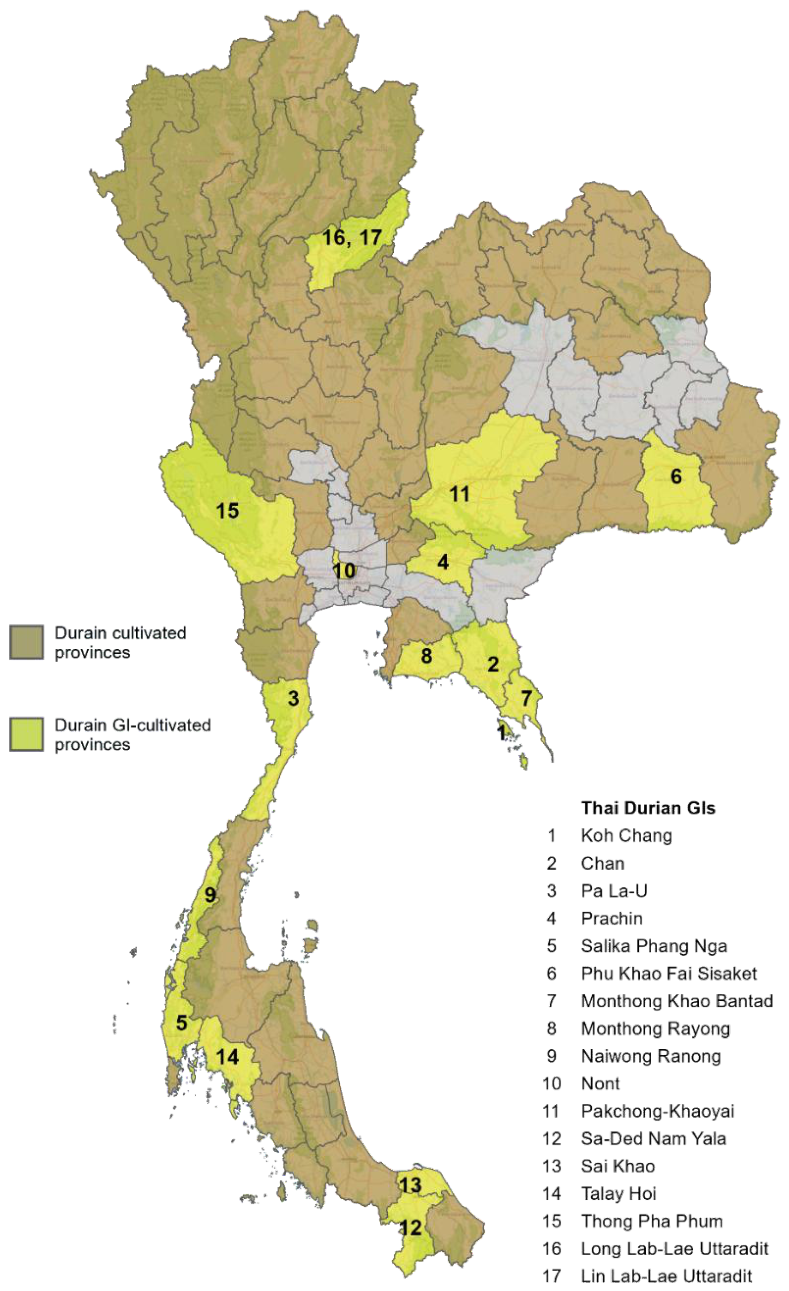
Thailand is the world's most successful producer and exporter of durian. Durian cultivation has experienced rapid growth in the country, driven by increasing consumer demand and expanding export opportunities. The area dedicated to durian farming has expanded from 121,036.48 hectares to 251,385.92 hectares in the last decade, with the number of provinces involved increasing from 49 to 59 out of 77 (Figure 6) [77].
To enhance the value of agricultural products depending on their distinctiveness, the Department of Intellectual Property (DIP), Ministry of Commerce. Thailand issued the rules and announced “Geographical Indication (GI) Protection” in 1991, with an additional definition in 2003 [78].
Growers can create ideal growing conditions based on their natural geographical location to generate economic opportunities and enhance competitiveness by promoting high-quality products. Thailand is renowned for its diverse durian varieties, with several officially registered varieties under the Geographical Indication (GI) system. Notable Thai GI durians include Nonthaburi durian, Chanthaburi Monthong durian, and Sisaket Volcanic Area durian, recognized for their distinctive taste and quality [13]. However, issues have arisen regarding the unauthorized use of Thai durian varieties in other countries. Several Thai durian varieties, such as Monthong and Chanee, have been widely cultivated in various countries, raising concerns about branding when foreign-grown durians are marketed under Thai names [79]. This raises the need for stronger GI protection and international agreements to prevent the misrepresentation of Thai-origin durians in foreign markets.
2.13. GI System Comparison in Thai Durian, French Grapevines, and Japanese Green Teas
Thai durians, French grapevines, and Japanese green teas all hold Geographical Indication (GI) status (Table 1), but the strategies used to achieve and maintain this status differ significantly. French grapevines, primarily Vitis vinifera, are integral to the globally celebrated Appellation d'Origine Contrôlée (AOC) and Appellation d'Origine Protégée (AOP) wines. The interplay between genetics, environment, and management practices distinguishes each wine region in France. The diversity of grape varieties, including Pinot Noir, Chardonnay, Cabernet Sauvignon, and Merlot, contributes to a wide range of flavor profiles. The terroir, encompassing climate, soil composition, and topography, significantly influences the grape metabolomic profiles, resulting in variations in polyphenol, tannin, and acid content. Additionally, stringent AOC regulations govern vineyard practices, including pruning, yield limits, fermentation, and aging techniques, to preserve quality and maintain regional typicity [80,81].
Japanese green tea GIs focus on cultivar specificity, environment, and traditional processing methods. The genetic diversity within Japanese tea varieties, including Yabukita, Saemidori, and Okumidori, shapes the flavor profiles, which range from umami-rich to sweet and amino-acid-rich types. The environment, including altitude, mist coverage, and soil pH, affects the accumulation of catechins, theanine, and caffeine. Traditional techniques, such as the shading methods used in the production of Gyokuro and Kabusecha, enhance chlorophyll and amino acid synthesis, thereby boosting the umami-centric flavor profile [82,83].
French wines and Japanese teas benefit from scientific profiling to authenticate GI products. Metabolomics identifies unique chemical markers, such as anthocyanins and volatile aroma compounds, in wines [84], as well as polyphenol and caffeine profiles in teas [83]. Additionally, genomic methods, including DNA fingerprinting for grapes and DNA barcoding or RFLP-based techniques for tea, validate authenticity and regional provenance, reinforcing product credibility in global markets. In Japanese green tea, polymorphisms generated by sequence-tagged site restriction fragment length polymorphism (STS-RFLP) analysis have successfully distinguished processed tea products from different cultivars [85], while restriction fragment length polymorphism (RFLP) of phenylalanine ammonia-lyase (PAL) DNA has been used to differentiate green tea cultivars at the genetic level [86], supporting traceability and cultivar authentication alongside GI protection.
By learning from the successful strategies employed by France and Japan, Thailand can strengthen its GI protection for durians. Building international collaborations, reinforcing legal frameworks, and utilizing scientific profiling will bolster Thailand's GI system. Incorporating metabolomic profiling and variety authentication will enhance the credibility of Thai durians and protect them against fraudulent marketing in international markets.
Table 3.
French grapevines and Japanese green teas comparison to Thai Durian GIs.
| Feature | French grapevines | Japanese Green Teas | Thai Durian GIs |
| Primary crop | Vitis vinifera (Grapevines) | Camellia sinensis (Tea) | Durio zibethinus (Durian) |
| Notable GIs | Bordeaux AOC, Champagne AOC | Uji Tea GI, Shizuoka Tea GI | 17 locations (Figure 6) |
| Genetics (G) | specific grape varieties (e.g., Pinot Noir, Merlot) | distinct tea varieties (e.g., Yabukita, Saemidori) | Thai durian varieties (e.g., Monthong, Chanee, Kradum) |
| Environment (E) | climate, soil, and altitude define terroir and flavor | altitude, mist coverage, and soil acidity affect polyphenol content | climate, soil composition, aroma, and texture |
| Management (M) | vineyard practices, fermentation, barrel aging | shade-growing, steaming, and rolling techniques | orchard management, ripening techniques, post-harvest handling |
| Metabolomics use | identifies anthocyanins, tannins, and aroma compounds | measures theanine, catechins, and caffeine | analyzes volatile sulfur compounds, sugar-acid balance |
| Genomic use | DNA fingerprinting for grape identity & terroir | DNA barcoding to confirm tea varieties | genetic markers for durian aroma genes & disease resistance |
| Regulatory framework | AOC/AOP controlled production standards | GI-protected varieties & processing | GI laws under the Thai DIP (Department of Intellectual Property) |
The French grapevine system offers a comprehensive model for protecting and maintaining value in agricultural products through a synergistic use of intellectual property tools. At the genetic level, Plant Variety Protection (PVP) safeguards specific grape varieties such as Cabernet Sauvignon and Merlot, ensuring the preservation of their genetic identity. At the regional level, Geographical Indication (GI) exemplified by the Bordeaux AOC protects the concept of terroir, which is the product of environmental conditions and traditional management practices, including regulated viticulture and enology. Finally, trademarks such as Château Margaux convey brand identity through distinct names, logos, and labeling, often accompanied by the AOC emblem, which reinforces consumer trust and market recognition.
This integrated approach (PVP × GI × Trademark) can be adapted to protect the unique genetic varieties, regional characteristics, and market branding of Thai durian. By applying similar layers of protection, Thailand can enhance the credibility, traceability, and economic value of its durian exports while mitigating the risk of unauthorized use or misrepresentation in international markets.
As of 2024, Thailand has registered 28 fruit types under the Geographical Indications (GI) system, spanning 40 provinces nationwide. This progress reflects ongoing efforts to protect and promote agricultural products with unique regional characteristics, thereby enhancing the competitiveness of Thai durians through the application of Geographical Indication and quality standards. However, there are no requirements for genetic data or metabolic profiles for registering GI products in Thailand.
3. Conclusions and Future Perspectives
Thailand’s position as the world’s top durian exporter is driven by rising demand, especially from China, which imported 15.6 billion kilograms in 2024. However, sustaining this growth requires addressing challenges in production and breeding. Durian cultivation relies on specific environmental conditions, including high humidity and nutrient-rich soil, as well as effective pest and disease management. Indigenous durian varieties, prized for their unique characteristics, provide genetic diversity essential for breeding programs. However, the long-life cycle of durian trees complicates this process.
To ensure continued market leadership, Thailand must modernize its agricultural policies by strengthening Plant Variety Protection (PVP) systems and nursery certification processes. Aligning national policies with international frameworks, such as UPOV [87], would facilitate genetic innovation and international collaboration. Additionally, implementing Geographical Indication (GI) protections for unique regional varieties can enhance traceability, preserve genetic integrity, and increase market value, as seen with the Pakchong Kaoyai Monthong durian.
Last year, the market landscape for Thai fresh durian in China experienced a significant shift. What was previously considered a monopoly is now transitioning into an oligopolistic market structure. This change is primarily attributed to emerging competition from neighboring countries, particularly Vietnam, which entered the Chinese market for the first time in September 2024 and secured a notable 34.59% share of the durian market.
In response to this evolving competitive economic environment, Thailand must place greater emphasis on improving product quality throughout the durian supply chain. These include the breeding of hybrid durian varieties tailored to consumer preferences, as well as promoting local and indigenous durian varieties as premium, GI-certified products. Establishing product identity through technological verification and obtaining international certification can elevate these varieties to the status of rare and exclusive items, valued not only for their superior taste and quality but also for their cultural and regional narratives.
Acknowledgments
This publication is a technical report of the Hub of Knowledge in Modern Agricultural Science for High-Value Crops, Center for Agricultural Biotechnology (CAB), Kasetsart University, financially supported by the National Research Council of Thailand (NRCT). This is the token of the collaboration between CAB and Tsukuba Plant Innovation Research Center of University of Tsukuba, Japan.
References
- Ji, X.; Zhong, Y.; Zheng, D.; Xie, S.; Shi, M.; Wang, X.; Liu, F.; Feng, X.; Wang, H. Chromosome-scale haploid genome assembly of Durio zibethinus KanYao. Sci. Data 2025, 12, 384. [CrossRef]
- Murray, J.A. Systema vegetabilium, 13th ed.; 1774; p. 581.
- Griffith, N. Calcutta Journal of Natural History, and Miscellany of the Arts and Sciences in India 1845, 5, 115.
- Hasskarl, J.C. Catalogue Horticulture Bogor 1858, 1, 100.
- Beccari, O. Durioneae. Malesia 1889, 3, 202–260.
- Masters, M.T. Durio. Bot. J. Linn. Soc. 1875, 14, 499–503.
- Scortechini, B. Durio lowianus. J. Proc. Asiat. Soc. Bengal 1891, 60, 51.
- United Tropical Fruit. The King of Fruits. Available online: https://www.unitedtropicalfruit.com/.
- Hiranpradit, H. Thai Encyclopedia for Youth No. 28: Durian; Bangkok, Thailand, 1969; 40 p. (in Thai).
- Government Data Catalog. Available online: https://gdcatalog.go.th/dataset/gdpublish-26-05.
- The Plant Variety Protection Act B.E. 2542 (1999) Thailand, PVPA. Available online: https://www.doa.go.th/pvp/.
- WIPO. World intellectual property indicators 2024. Available online: https://www.wipo.int/web-publications/world-intellectual-property-indicators-2024-highlights/en/geographical-indications-highlights.html.
- Department of Intellectual Property (DIP). Annual Report 2023; Ministry of Commerce: Bangkok, Thailand, 2023. Available online: https://www.ipthailand.go.th/images/26669/public_relations/e-book_AR2023/AR_DIP_2023.pdf.
- Trademap. Import values and quantities of 081060 fresh durians. Available online: https://www.trademap.org/.
- Statista. Durian production volume Malaysia 2014-2023. Available online: https://www.statista.com/statistics/1000876/malaysia-durian-production/.
- Statista. Durian production volume Indonesia 2014-2024. Available online: https://www.statista.com/statistics/706504/production-of-durian-in-indonesia/.
- Nguyen, D. Malaysia fetches $5.5M from fresh durian exports to China. VNEXPRESS. Available online: https://e.vnexpress.net/news/business/economy/malaysia-fetches-5-5m-from-fresh-durian-exports-to-china-4854542.html.
- Ali, M.M.; Hashim, N.; Aziz, S.A.; Lasekan, O. Exploring the chemical composition, emerging applications, potential uses, and health benefits of durian: A Review. Food Control 2020, 113, 107189. [CrossRef]
- Pitipong, T.; Huang, D.; Martinez-Ayala, A.L.; Ramos-Zambrano, E.; Robles-Sánchez, R.M.; Lubinska-Szczygeł, M.; Gorinstein, S. Impact of postharvest processing on the health benefits of durian-derived products. Food Chem. 2025, 470, 142713. [CrossRef]
- Bytebridge. Comprehensive analysis of the global durian market. Available online: https://bytebridge.medium.com/comprehensive-analysis-of-the-global-durian-market-ddbbbfe1ab1c.
- Market Research Future. Global fresh durian market overview. Available online: https://www.marketresearchfuture.com/reports/fresh-durian-market-41609 (accessed on 16 March 2026).
- DataHorizzon Research. The durian fruit market is expected to reach USD 47.5 billion by 2032. Available online: https://finance.yahoo.com/news/durian-fruit-market-reach-usd-120000401.html.
- Ketsa, S.; Wisutiamonkul, A.; Palapol, Y.; Paull, R.E. The durian. In Horticultural Reviews; John Wiley & Sons, Ltd.: Hoboken, NJ, USA, 2020; pp. 125–211.
- Department of Agriculture (DOA). Plant germplasm database for durian; Plant Variety Protection Office, Ministry of Agriculture and Cooperatives: Bangkok, Thailand, 2019. Available online: https://www.doa.go.th/pvp/wp-content/uploads/2019/12/Durian.pdf.
- Diczbalis, Y.; Westerhuis, D. Durian and mangosteen orchards-North Queensland nutrition survey; RIRDC Publication No 05/163; Rural Industries Research and Development Corporation: Barton, ACT, Australia, 2005.
- Poovarodom, S.; Mairaing, S.; Ketsayom, P.; Twinteung, N.; Prasittikhet, J. Seasonal variations in nutrient concentrations of durian (Durio zibethinus Murr.) leaves. Acta Hortic. 2001, 564, 235–239. [CrossRef]
- Poovarodom, S.; Mairaing, S.; Ketsayom, P.; Twinteung, N.; Prasittikhet, J. Plant analysis as a means of diagnosing nutritional status and fertilizer recommendations for durian; Final Report; Thailand Research Fund: Bangkok, Thailand, 2001. (In Thai with English abstract).
- Poovarodom, S.; Chatopte, W. Boundary line approach in specifying durian nutrient standards. In Proceedings of the 17th World Congress of Soil Sciences, Bangkok, Thailand, 14–21 August 2002.
- Diczbalis, Y.; Alvero, G. Nutrition management of Australian longan and rambutan orchards. Acta Hortic. 2005, 665, 301–310. [CrossRef]
- Mendoza, D.R. Natural distribution of durians in the Philippines. Philipp. J. For. 1941, 4, 27–35.
- Lim, T.K. Durian diseases and disorders; Tropical Press: Kuala Lumpur, Malaysia, 1990.
- Zeven, A.C.; Zhukovsky, P.C. Dictionary of cultivated plants and their centre of diversity excluding ornamentals, forest trees and lower plants; Centre for Agricultural Publishing and Documentation: Wageningen, Netherlands, 1975.
- Morton, J.F. Fruits of warm climates; Echo Point Books and Media: Miami, FL, USA, 1987; 505 p.
- Somsri, S. Durian in Thailand: a successful story; Asia-Pacific Association of Agricultural Research Institutes: Bangkok, Thailand, 2018; 86 p.
- Sujang, G.B.; Ramaiya, S.D.; Lee, S.Y.; Zakaria, M.H. Characterization of indigenous Durio species from Sarawak, Borneo: relationships between chemical composition and sensory attributes. Peer J. 2024, 12, e17688. [CrossRef]
- Bhusiri, S. Durian in Thailand; Horticultural Club, Kasetsart University: Bangkok, Thailand, 1970; 299 p.
- Vangnai, V. Status report on genetic resources of durian in Thailand (IPGRI Project No. B06); IPGRI Regional Office for Asia, the Pacific and Oceania: Singapore, 1996; 16 p.
- Smitinand, T. Thai plant names (Botanical names-vernacular names); Royal Forest Department: Bangkok, Thailand, 1980.
- Valmayor, R.V.; Coronel, R.E.; Ramires, D.A. Studies on floral biology, fruit set and fruit development in durian (Durio zibethinus Murr.). Philip. Agric. 1965, 58, 355–366.
- Shaari, A.R.; Abidin, M.Z.; Osman, M.S. Some aspects of pollination and fruit set in durian, Durio zibethinus Murr. cultivar D24. Teknol. Buah-Buahan 1985, 1, 1–4.
- Lim, T.K.; Luders, L. Durian flowering, pollination and incompatibility studies. Ann. Appl. Biol. 1998, 132, 151–165. [CrossRef]
- Bumrungsri, S.; Sripaoraya, E.; Chongsiri, T.; Sridith, K.; Racey, P.A. The pollination ecology of durian (Durio zibethinus, Bombacaceae) in southern Thailand. J. Trop. Ecol. 2009, 25, 85–92. [CrossRef]
- George, S.T.; Pillai, K.R.; Lim, K.H.; Tham, S.; Abidin, M.Z. Recent developments in assisted cross-pollination to enhance yield of durian clone D24. In Recent Developments in Durian Cultivation; MARDI: Serdang, Malaysia, 1994; pp. 63–70.
- Jutamanee, K.; Sirisuntornlak, N. Pollination and fruit set in durian ‘Monthong’ at various times and with various methods of pollination. Acta Hortic. 2017, 1186, 121–126. [CrossRef]
- Boonyakome, C. Knowledge about durian; Kasetsart University: Bangkok, Thailand, 1955; 100 p.
- Hiranpradit, H.; Jantrajoo, S.; Lee-Ungulasatian, N.; Polprasid, P. Group characterization of Thai durian, Durio zibethinus Murr. Acta Hortic. 1992, 321, 263–269. [CrossRef]
- Pichakum, A.; Phaukinsang, N. Plenty of native durian cultivars in Thailand; Wutthiphan Kanpim Limited Partnership: Bangkok, Thailand, 2020; 275 p.
- Nualsri, C.; Nakkanong, K.; Duangpan, S.; Soparat, J.; Rukkun, R.; Chantanaorapin, A. Assessment genetic diversity of local durian for selection, conservation and propagation; Research report submitted to National Research Council of Thailand, 2018.
- Nualsri, C.; Nakkanong, K.; Maneerat, T.; Taochan, N.; Pichakum, A.; Thongkao, S.; Sopin, W. Research for improvement of the quality of local durian production in Yala Province; Research report submitted to Thailand Science Research and Innovation: Bangkok, Thailand, 2020.
- Nualsri, C.; Nakkanong, K.; Onthong, J.; Plodpai, P.; Duangpan, S.; San-in, P.; Pangchan, W.; Thepsuriyawong, S.; Baukeaw, P. Evaluation of the diversity of local durian cultivars in the Khlong Saeng watershed, Ban Ta Khun District, Surat Thani Province, for the purposes of selection, conservation, and propagation; Research report submitted to Electricity Generating Authority of Thailand: Bangkok, Thailand, 2021.
- Arunberkfa, N.; Nualsri, C.; Nakkanong, K.; Duangpan, S.; Plodpai, P. Research, survey, selection, and genetic diversity analysis of indigenous durian in deep-south of Thailand; Research report submitted to The Agricultural Research Development Agency (Public Organization), Thailand, 2018.
- Arunberkfa, N.; Nualsri, C.; Nakkanong, K.; Duangpan, S.; Ratanamanee, P. Research, survey, selection, and genetic diversity analysis of indigenous durian in deep-south of Thailand; Research report submitted to The Agricultural Research Development Agency (Public Organization): Bangkok, Thailand, 2021.
- Department of Agriculture (DOA). The diversity of native durian in the upper southern region of Thailand; Ministry of Agriculture and Cooperatives: Bangkok, Thailand, 2021. Available online: https://www.doa.go.th/share/attachment.php?aid=3006.
- Asia-Pacific Association of Agricultural Research Institutions (APAARI). Durian in Thailand: A Success Story. Available online: https://www.apaari.org/web/wp-content/uploads/downloads/2018/Durian_A_SuccessStory_24-08-2018.pdf.
- Tan, X.Y.; Misran, A.; Cheong, K.; Daim, L.D.; Ding, P.; Dek, M.S. Postharvest quality indices of different durian clones at ripening stage and their volatile organic compounds. Sci. Hortic. 2020, 264, 109169. [CrossRef]
- Bowman, K.D.; Albrecht, U. Rootstock influences on health and growth following Candidatus Liberibacter asiaticus infection in young sweet orange trees. Agronomy 2020, 10, 1907. [CrossRef]
- Ollat, N.; Peccoux, A.; Papura, D.; Esmenjaud, D.; Marguerit, E.; Tandonnet, J.P.; Bordenave, L.; Cookson, S.J.; Barrieu, F.; Rossdeutsch, L.; Lecourt, J.; Lauvergeat, V.; Vivin, P.; Bert, P.F.; Delrot, S. Rootstocks as a component of adaptation to environment. In Grapevine in a Changing Environment; John Wiley & Sons Ltd.: Chichester, UK, 2016; pp. 68–108.
- Morel, M.; Cookson, S.J.; Costa, J.D.; Ollat, N.; Marguerit, E. Role of the rootstock and its genetic background in plant mineral status assessed by petiole analysis and deficiency symptoms. Viticulture 2024. [CrossRef]
- Simons, R.K. Graft-union characteristics as related to dwarfing in apple (Malus domestica Borkh.). Acta Hortic. 1986, 160, 57–66. [CrossRef]
- Atkinson, C.J.; Else, M.A. Understanding how rootstocks dwarf fruit trees. Compact Fruit Tree 2001, 34, 45–49.
- Martins, V.; Silva, V.; Pereira, S.; Afonso, S.; Oliveira, I.; Santos, M.; Ribeiro, C.; Vilela, A.; Bacelar, E.; Silva, A.P. Rootstock affects the fruit quality of ‘Early bigi’ sweet cherries. Foods 2021, 10, 2317. [CrossRef]
- Sharma, N.; Sharma, S.D.; Kumar, D. Selection of stone fruit rootstock for drought tolerance and amenability to clonal multiplication. Biol. Forum 2009, 1, 36–46.
- Kellam, M.K.; Coffey, M.D. Quantitative comparison of the resistance to Phytophthora root rot in three avocado rootstocks. Phytopathology 1985, 75, 230–234. [CrossRef]
- Arjona-López, J.M.; Gmitter, F.G.; Romero-Rodríguez, E.; Grosser, J.W.; Hervalejo, A.; López-Herrera, C.J.; Arenas-Arenas, F. Susceptibility of novel promising citrus rootstocks to white root rot. Plants 2022, 11, 3388. [CrossRef]
- Kotze, J.M.; Darvas, J.M. Integrated control of avocado root rot. California Avocado Society Yearbook 1983, 67, 83–86.
- Sharma, Y.; Singh, S.K.; Thakur, N. Clonal propagation in apple. Int. J. Agric. Sci. 2013, 9, 423–428.
- Kumar, K.; Srivastav, M.; Singh, S.K.; Singh, A.; Sharma, N. Studies on extent of polyembryony in salt tolerant mango rootstocks. Indian Journal of Horticulture 2018, 75, 139–140. [CrossRef]
- Reshma, U.R.; Simi, S. Screening of mango landraces for polyembryony and confirmation of seedling origin using microsatellite markers. Agric. Sci. Dig. 2021, 42, 128–136. [CrossRef]
- García, R.; Asíns, M.J.; Forner, J.; Carbonell, E.A. Genetic analysis of apomixis in citrus and poncirus by molecular markers. Theor. Appl. Genet. 1999, 99, 511–518. [CrossRef]
- Somsri, S.; Vichitrananda, S.; Kengkat, P.; Koonjanthuk, P.; Chunchim, S.; Sesuma, S.; Jintanawongse, S.; Salakphet, S. Three decades of durian breeding program in Thailand and its three newly recommended F1 hybrids. In Proceedings of the International Workshop on Tropical and Subtropical Fruits, Chiang Mai, Thailand, 2007; Acta Hortic. 787, pp. 77–88.
- Subhadrabandhu, S.; Ketsa, S. Morphology, genetics and cultivars. In Durian: King of Tropical Fruit; CABI Publishing: Wallingford, UK, 2001; pp. 25–40.
- Pinsorn, P.; Sirikantaramas, S. From omics to orchard: the role of omics in durian cultivation. Curr. Plant Biol. 2025, 100466. [CrossRef]
- Somsri, S. Production, diversity and utilization of durian in Thailand. In Proceedings of the International Symposium on Durian and Other Humid Tropical Fruits, Chanthaburi, Thailand, 2015; Acta Hortic. 1186, pp. 1–14.
- Chomdej, O.; Tongyoo, P.; Mahatheeranont, S.; Kittiwachana, S.; Sangwanangkul, P.; Imsabai, W. Durian+ model: research and development for premium durian production; Research report submitted to Office of the Permanent Secretary, MHESI, Thailand, 2022.
- Perrier, X.; Jacquemoud-Collet, J.P. DARwin software. Available online: http://darwin.cirad.fr/darwin.
- Perrier, X.; Flori, A.; Bonnot, F. Data analysis methods. In Genetic diversity of cultivated tropical plants; Hamon, P., Seguin, M., Perrier, X., Glaszmann, J.C., Eds.; Enfield Science Publishers: Montpellier, France, 2003; pp. 43–76.
- Office of Agricultural Economics. Agricultural Statistics Dataset. Available online: https://gdcatalog.go.th/dataset/gdpublish-dataset-12-15/resource/6187bda8-65b2-4c48-98e8-bacc9f9a7422.
- Geographical Indication Protection Act B.E. 2546 (2003). Available online: https://internationalipcooperation.eu/sites/default/files/2018-06/TH_GI-act-eng_0.pdf.
- Food and Agriculture Organization (FAO). Durian global trade overview 2023. Available online: https://openknowledge.fao.org/server/api/core/bitstreams/84bbf2cb-d119-48c2-b4f1-f22bf802a7af/content.
- Van Leeuwen, C.; Seguin, G. The concept of terroir in viticulture. J. Wine Res. 2006, 17, 1–10. [CrossRef]
- Meloni, G.; Swinnen, J. The political economy of european wine regulations. J. Wine Econ. 2013, 8, 244–284. [CrossRef]
- Yamashita, H.; Tanaka, Y.; Umetsu, K.; Morita, S.; Ono, Y.; Suzuki, T.; Takemoto, T.; Morita, A.; Ikka, T. Phenotypic markers reflecting the status of overstressed tea plants subjected to repeated shade cultivation. Front. Plant Sci. 2020, 11, 556476. [CrossRef]
- Yamashita, H.; Katai, H.; Ohnishi, T.; Morita, A.; Panda, S.K.; Ikka, T. Tissue-dependent variation profiles of tea quality-related metabolites in new shoots of tea accessions. Front. Nutr. 2021, 8, 659807. [CrossRef]
- Billet, K.; Salvador-Blanes, S.; Dugé De Bernonville, T.; Delanoue, G.; Hinschberger, F.; Oudin, A.; Courdavault, V.; Pichon, O.; Besseau, S.; Leturcq, S.; Giglioli-Guivarc’h, N.; Lanoue, A. Terroir Influence on polyphenol metabolism from grape canes: a spatial metabolomic study at parcel scale. Molecules 2023, 28, 4555. [CrossRef]
- Kaundun, S.S.; Matsumoto, S. Identification of processed Japanese green tea based on polymorphisms generated by STS-RFLP analysis. J. Agric. Food Chem. 2003, 51, 1765–1770.
- Matsumoto, S.; Kiriiwa, Y.; Takeda, Y. Differentiation of Japanese green tea cultivars as revealed by RFLP analysis of phenylalanine ammonia-lyase DNA. Theor. Appl. Genet. 2002, 104, 998–1002. [CrossRef]
- UPOV Publication no: 221 (E). International convention for the protection of new varieties of plants; 1991; 24 p. Available online: https://www.upov.int/edocs/pubdocs/en/upov_pub_221.pdf.
Figure 1.
Durian distribution and production in Thailand; A) Growing area, B) Harvest area, C) Yield and D) Yield per area (Created by Yamjabok) [10].
Figure 1.
Durian distribution and production in Thailand; A) Growing area, B) Harvest area, C) Yield and D) Yield per area (Created by Yamjabok) [10].
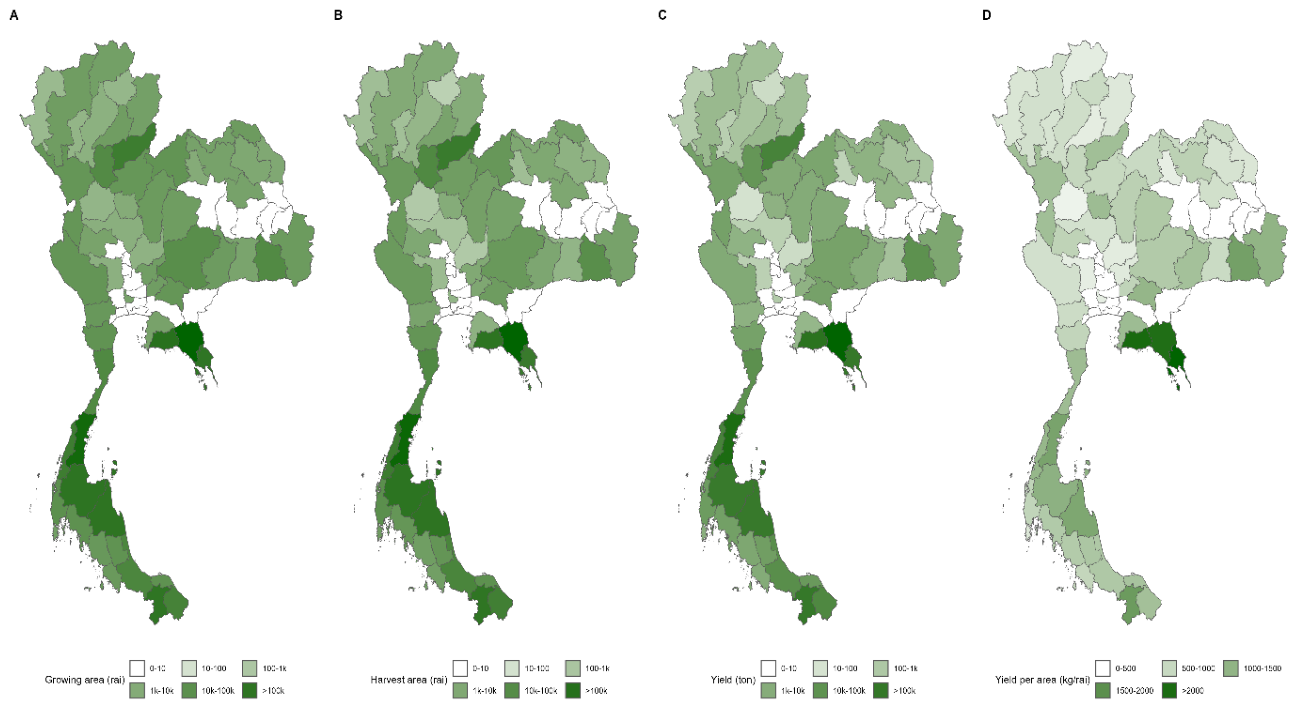
Figure 2.
Selected indigenous durians from southern Thailand with recorded origin and traits. (Reprinted with permission from: [50,51,52].
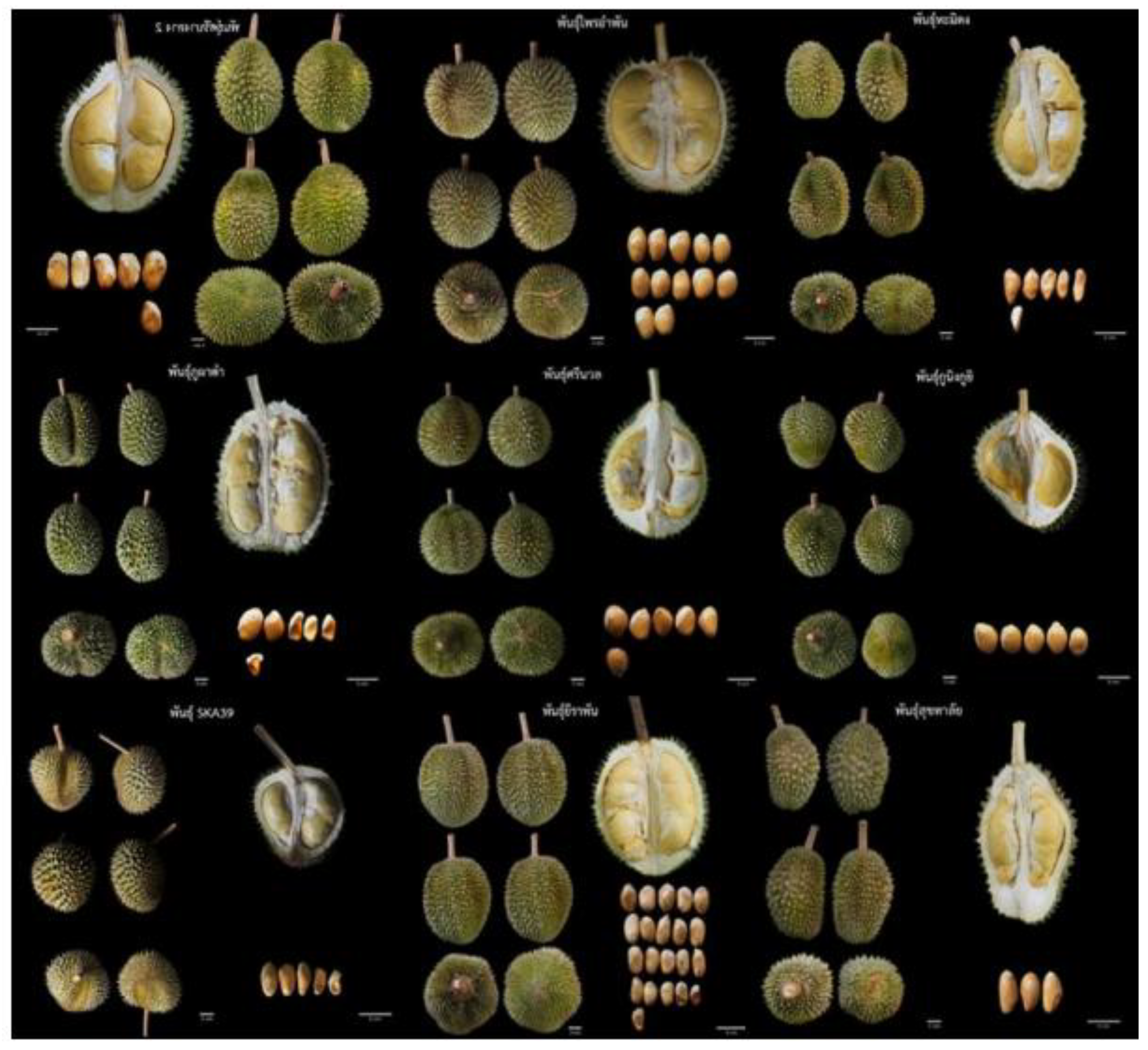
Figure 3.
Some of the wild durians found in southern Thailand require further clarification of their species. (Photographed by Nualsri).
Figure 3.
Some of the wild durians found in southern Thailand require further clarification of their species. (Photographed by Nualsri).
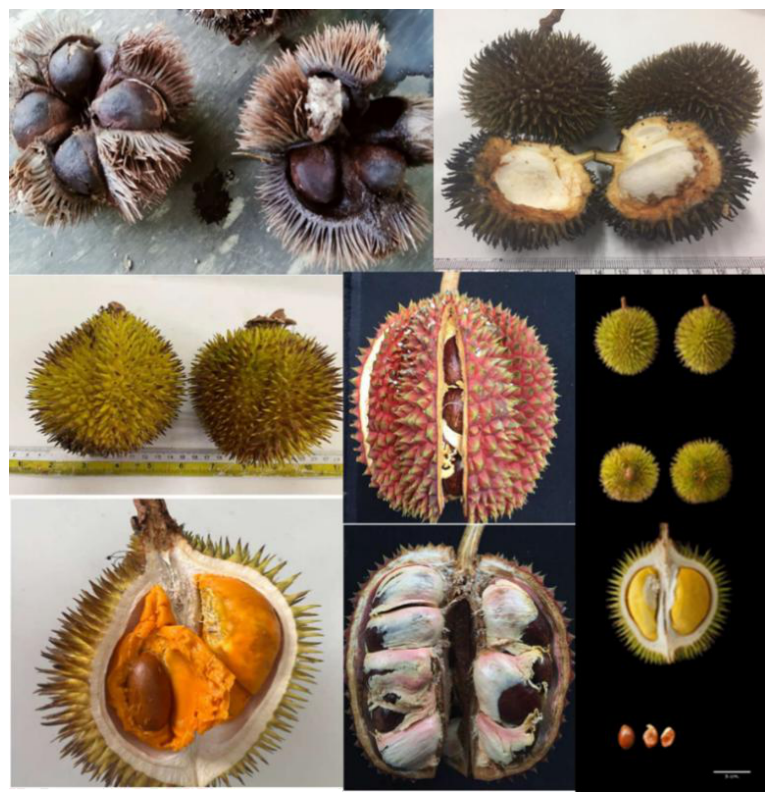
Figure 4.
UPGMA dendrogram showing the phylogenetic relationship among commercial durian (Durio zibethinus) varieties Monthong (MT), Kanyao (KY), Ochee (OC), Chanee (CH), Tabtim (TT), Puangmanee (PMN), Long Laplae (LoLL), Lin Laplae (LiLL), and Musang King (MSK) based on SNP markers (Created by Thongyoo).
Figure 4.
UPGMA dendrogram showing the phylogenetic relationship among commercial durian (Durio zibethinus) varieties Monthong (MT), Kanyao (KY), Ochee (OC), Chanee (CH), Tabtim (TT), Puangmanee (PMN), Long Laplae (LoLL), Lin Laplae (LiLL), and Musang King (MSK) based on SNP markers (Created by Thongyoo).
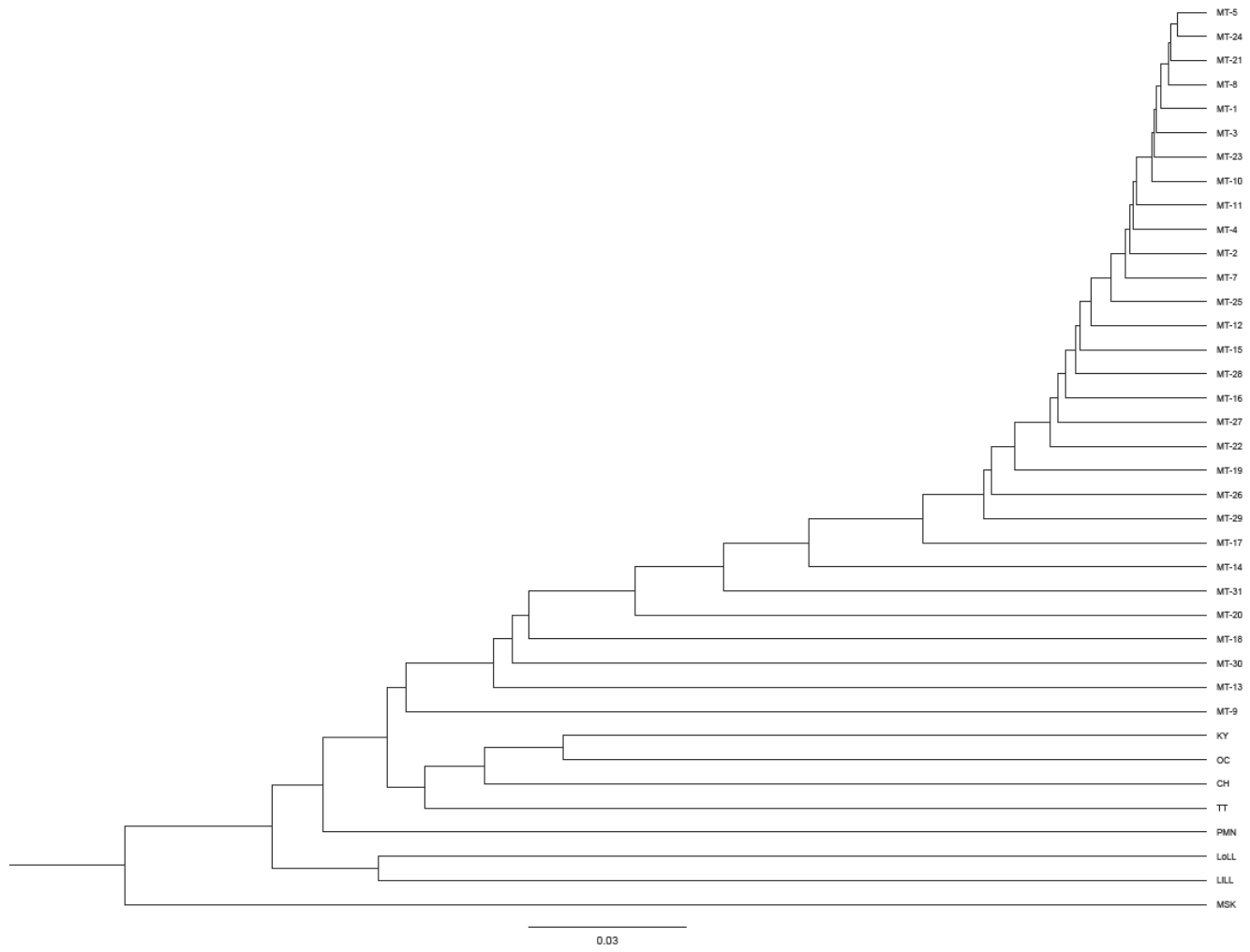
Figure 5.
Timeline of quarantine procedures for seedlings, breeder's right application and registration, and seedling production for breeder's rights application in Thailand (Created by Watanabe).
Figure 5.
Timeline of quarantine procedures for seedlings, breeder's right application and registration, and seedling production for breeder's rights application in Thailand (Created by Watanabe).
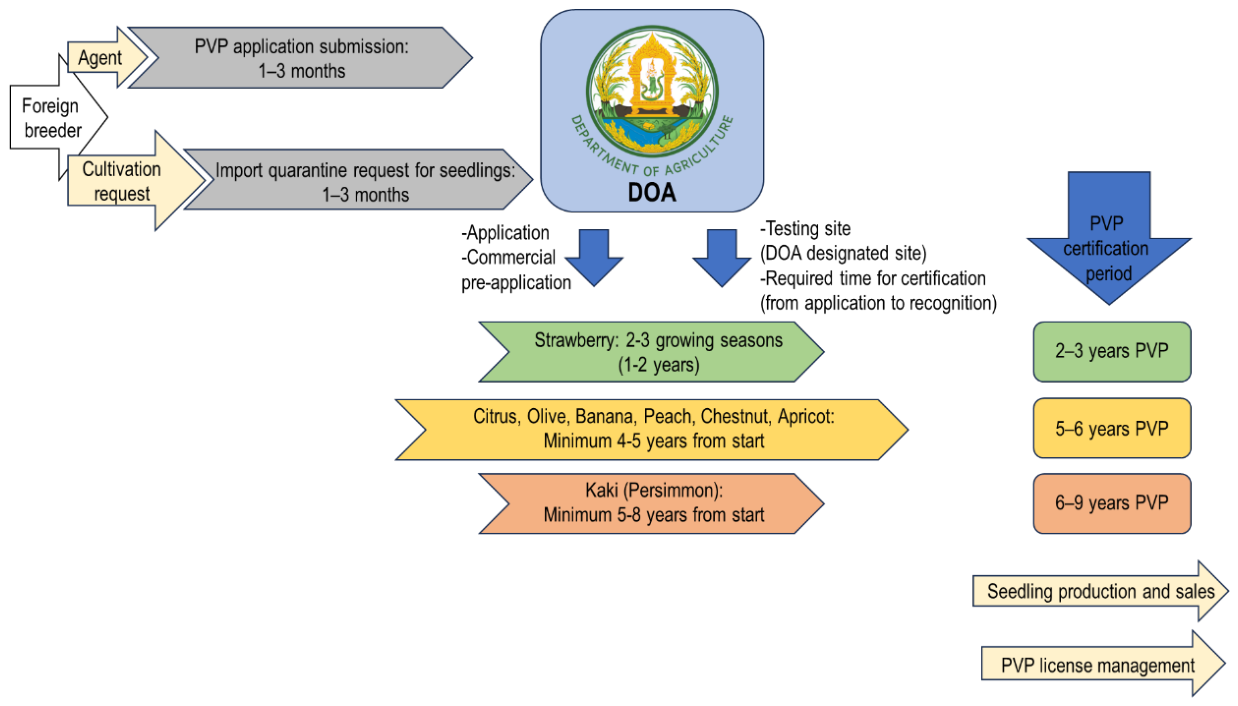
Figure 6.
Thailand map for durian Geographical Indication (GI) (Created by Yamjabok).
Disclaimer/Publisher’s Note: The statements, opinions and data contained in all publications are solely those of the individual author(s) and contributor(s) and not of MDPI and/or the editor(s). MDPI and/or the editor(s) disclaim responsibility for any injury to people or property resulting from any ideas, methods, instructions or products referred to in the content. |
© 2026 by the authors. Licensee MDPI, Basel, Switzerland. This article is an open access article distributed under the terms and conditions of the Creative Commons Attribution (CC BY) license (http://creativecommons.org/licenses/by/4.0/).
Copyright: This open access article is published under a Creative Commons CC BY 4.0 license, which permit the free download, distribution, and reuse, provided that the author and preprint are cited in any reuse.


