

Submitted:
06 June 2026
Posted:
08 June 2026
You are already at the latest version
Abstract
Light acutely affects human alertness, cognitive performance, and neural activity. These effects are often attributed to melanopic stimulation mediated by short-wavelength-sensitive, melanopsin-containing intrinsically photosensitive retinal ganglion cells. However, long-wavelength exposure, brightness-related mechanisms, visual-task demands, and individual differences may also influence observed alerting responses. This structured evidence synthesis evaluated whether melanopic stimulation alone is sufficient to explain spectrum-dependent alerting effects. Studies were tiered by evidentiary role, and quantitative pooling was restricted to clearly defined light contrasts, alertness-relevant outcomes, and extractable effect sizes. Separate analyses were conducted for behavioral performance, subjective alertness or sleepiness, EEG/physiology, and field or operational evidence. In inverse-variance models restricted to strict primary evidence, light condition showed a moderate association with behavioral performance, r = 0.355, 95% CI [0.189, 0.501]. Red or long-wavelength behavioral contrasts, r = 0.402, 95% CI [0.171, 0.591], and short-wavelength or high-melanopic contrasts, r = 0.306, 95% CI [0.061, 0.516], were both positive, but overlapping confidence intervals did not support subgroup differences. The strict subjective model was inconclusive, whereas the strict red-light EEG model produced the largest estimate. Overall, the evidence supports melanopic relevance but does not provide a clean confirmation of melanopic sufficiency; red and long-wavelength findings remain small but unresolved empirical signals.
Keywords:
light spectrum
; alertness
; spectral sensitivity
; non-image-forming effects
; red light
; melanopic stimulation
1. Introduction
Light exposure is one of the most powerful environmental signals affecting human physiology and behavior. Beyond supporting vision, light influences circadian phase, melatonin secretion, pupil responses, sleep propensity, mood, cognition, and alertness.[1,2] These non-image-forming effects have become central to lighting research because they provide a biological basis for designing lighted environments that support human health and performance.
The acute alerting effects of light are especially important in contexts where vigilance is vulnerable, including night work, early morning awakening, post-lunch dips, prolonged cognitive work, and visually demanding tasks. Light exposure has been associated with reduced sleepiness, faster reaction time, improved psychomotor vigilance, changes in sustained attention, and altered electroencephalographic activity.[3,4] These effects are not limited to long-term circadian entrainment. In many studies, alerting responses emerge during or shortly after light exposure, suggesting that light can influence alertness through acute neurophysiological and perceptual pathways. Recent reviews have emphasized that increasing exposure to LED and screen-based light has expanded the relevance of non-image-forming light responses, including effects on circadian timing, melatonin suppression, alertness, cognition, mood, and sleep.[5] However, much of this literature still treats short-wavelength or melanopic stimulation as the dominant explanatory axis, leaving unresolved whether melanopic stimulation is sufficient to explain spectrum-dependent alerting effects across behavioral and neurophysiological outcomes.
Much of the current interpretation of light-induced alertness centers on melanopic stimulation. This emphasis is biologically plausible. Intrinsically photosensitive retinal ganglion cells contain melanopsin, are strongly sensitive to short-wavelength light, and project to brain regions involved in circadian regulation and arousal.[6,7] Short-wavelength and blue-enriched light have repeatedly been shown to suppress melatonin, alter EEG activity, and improve alertness-related outcomes, particularly at night or under sleep pressure.[4,8,9] As a result, melanopic metrics have become increasingly important in lighting research and practice.[6,10,11] Animal and translational work further suggests that spectral effects on sleep and arousal are more complex than a simple short-wavelength dominance model. Wavelength-dependent responses may involve melanopsin-dependent signaling as well as rod/cone input to ipRGC pathways, with effects shaped by irradiance, duration, timing, and species-specific sleep-wake organization.[12]
However, the relationship between melanopic stimulation and alertness is not fully resolved. Several findings complicate a melanopic-only interpretation. Long-wavelength or red light has produced alertness-related EEG and behavioral effects in some laboratory studies, despite weak expected melanopic stimulation. Subjective sleepiness, behavioral performance, and EEG markers also often diverge, suggesting that alertness is not a unitary outcome. In addition, spectra that differ in melanopic content can also differ in photopic illuminance, brightness perception, cone excitation, rod excitation, visual comfort, pupil response, and task visibility. Field and workplace studies add another layer of complexity because they often change spectrum and intensity together, making it difficult to assign effects to melanopic stimulation alone.[10,11] These complications matter because melanopic metrics are increasingly used as practical predictors of biological lighting effects. If melanopic stimulation is treated as a sufficient explanation for acute alertness, lighting interventions may overlook other relevant pathways. Cone-mediated input, rod contribution under low-light conditions, brightness-related arousal, chromatic perception, visual-task demands, circadian phase, homeostatic sleep pressure, and individual differences may all shape the observed response.[9,10,11,12] Distinguishing these influences is essential for both theory and application.
Previous reviews have synthesized the alerting effects of light across wavelength, intensity, timing, and outcome domain, including evidence that short-wavelength light is most consistently alerting at night and that long-wavelength exposure may affect daytime or neurophysiological alertness under some conditions.[4,13] While these reviews establish the breadth of the light-alertness literature, this manuscript aims to answer a narrower mechanistic question: is melanopic stimulation sufficient to explain spectrum-dependent alerting effects, or do red and long-wavelength effects, subjective-objective dissociations, visual-task factors, and field-study complexity point to additional pathways or moderators? To address this, we combined structured evidence classification with targeted quantitative analysis. This allowed mechanistically focused studies, secondary controlled studies, field interventions, and contextual boundary evidence to be interpreted according to the kind of inference each could support.
2. Methods
This study was conducted as a structured evidence synthesis with targeted quantitative analysis. It was designed to evaluate whether melanopic stimulation is sufficient to explain spectrum-dependent alerting effects, or whether non-melanopic spectral pathways or moderators also contribute to behavioral and neurophysiological alertness. The review was not designed as an exhaustive systematic review of all light-alertness studies. Instead, the evidence base was assembled to capture empirical studies that could clarify how acute alerting responses to light should be interpreted. Studies were evaluated not only for whether light affected alertness, but also for whether the light contrast could distinguish short-wavelength or melanopic effects from long-wavelength, photopic, cone-mediated, rod-mediated, brightness-related, or visual-task effects. Because the literature spans multiple disciplines and includes both controlled laboratory and field studies, evidence was organized into tiers so that mechanistically specific evidence was not pooled indiscriminately with translational or visually confounded evidence. The evidence synthesis and analysis workflow are illustrated in Figure 1.
2.1. Literature Search and Screening
Literature was identified through a structured keyword-based search using Google Scholar, selected as the primary discovery platform because relevant studies are distributed across biomedical, psychological, lighting, engineering, occupational-health, display-science, and human-factors literatures. The search was designed to identify empirical studies relevant to the mechanistic question rather than to enumerate all studies on light and alertness.
Search terms included combinations of terms related to light exposure, spectral composition, wavelength, melanopic stimulation, alertness, sleepiness, vigilance, reaction time, psychomotor vigilance, EEG, cognitive performance, and field lighting interventions. Specific terms included “light exposure,” “lighting,” “alertness,” “sleepiness,” “vigilance,” “psychomotor vigilance,” “PVT,” “reaction time,” “EEG,” “cognitive performance,” “spectrum,” “wavelength,” “blue light,” “short-wavelength light,” “red light,” “long-wavelength light,” “melanopic,” “melanopsin,” “ipRGC,” “CCT,” “blue-enriched light,” “blue-blocking,” “shift work,” “night work,” and “workplace lighting.”
Studies were screened for inclusion if they reported empirical data linking light exposure to alertness-relevant outcomes. Eligible outcomes included subjective alertness or sleepiness, psychomotor vigilance, reaction time, sustained attention, cognitive performance, EEG indices of alertness, ocular or physiological correlates of alertness, and field measures of work-related alertness or performance. Studies were eligible for mechanistic consideration when the light exposure involved wavelength, spectral power distribution, short-wavelength content, long-wavelength content, melanopic stimulation, CCT, illuminance, display spectrum, or an applied lighting intervention relevant to alertness.
To strengthen coverage of indexed biomedical and occupational-health literature, three targeted PubMed/MEDLINE audit searches were conducted after the initial evidence table was assembled. These searches focused on: (1) red or long-wavelength alertness evidence, (2) blue, short-wavelength, blue-enriched, or melanopic alertness evidence, and (3) field or translational lighting interventions in shift-work, workplace, or operational settings. The searches used combinations of spectral terms including “red light,” “long-wavelength light,” “blue light,” “short-wavelength light,” “blue-enriched light,” “melanopic,” and “melanopsin,” combined with alertness-relevant terms including “alertness,” “sleepiness,” “vigilance,” “psychomotor vigilance,” “PVT,” “reaction time,” “EEG,” “cognitive performance,” “shift work,” “night shift,” “workplace,” and “light intervention.” These targeted PubMed searches returned 88 record appearances across the three branches: 19 red/long-wavelength records, 42 blue/short-wavelength records, and 27 field/translational records. After de-duplication across branches, 73 unique PubMed records were screened using the same eligibility and tiering criteria as the main evidence synthesis.
The final classified evidence set contained 50 unique records organized across four evidence-role tables. One study[14] was cross-referenced in both the primary and secondary tables because it served both as spectral sensitivity evidence and as boundary evidence for melanopic interpretation. The evidence tables are: Table A1, summarizing primary mechanistic and sensitivity evidence, Table A2, summarizing secondary controlled evidence, Table A3 summarizing field and translational evidence, and Table A4 summarizing contextual, boundary, and non-pooled evidence, and can be located in the appendix. Table A1, Table A2 and Table A3 describe the structure the main tiered synthesis. Table A4 retains studies that clarify interpretation of melanopic sufficiency, red- or long-wavelength effects, melatonin-alertness dissociation, visual-task confounding, bedtime or sleep-adjacent effects, and background context. Quantitative analyses were restricted to studies with extractable effect-size and variance information; studies without suitable quantitative information were retained for narrative or contextual interpretation when they addressed the review question.
2.2. Evidence Classification and Methodological Appraisal
Included studies were classified by evidentiary role before quantitative synthesis. This classification was necessary because the studies differed substantially in spectral specificity, exposure timing, outcome type, ecological validity, and statistical reporting. Studies were therefore not treated as a single interchangeable pool of light-alertness effects. Instead, each study was assigned to an evidence tier based on how directly it informed the central mechanistic question and whether its results were suitable for quantitative pooling.
Primary studies were defined as those with direct wavelength, spectral, short-wavelength, long-wavelength, or melanopic-relevant contrasts and alertness-relevant outcomes. Secondary controlled studies included controlled laboratory, display, CCT, illuminance, melanopic-contrast, daytime, post-lunch, or low-light studies that were relevant to alertness but less specific mechanistically. Field and translational studies were retained to evaluate whether laboratory patterns extended to workplace, shift-work, driving-related, or operational settings. Contextual and boundary studies were retained when they clarified interpretation but were unsuitable for pooling because of visual-task confounding, indirect alertness relevance, insufficient extractable statistics, or limited mechanistic isolation. Reviews, non-alertness studies, non-ocular exposure studies, and studies without relevant light manipulation were excluded from quantitative synthesis.
Because this review was designed as a structured evidence synthesis with targeted quantitative analysis, a conventional risk-of-bias tool was not applied. Instead, studies were appraised using domains directly relevant to the mechanistic question. These domains (summarized in Table 1) included spectral specificity, melanopic interpretability, control of photopic illuminance and brightness, exposure timing, outcome relevance, visual-task confounding, ecological validity, and quantitative extractability. They were used to determine whether each study was eligible for strict quantitative pooling, sensitivity analysis, narrative synthesis, contextual interpretation, or exclusion from quantitative analysis. Study-level tier assignments, quantitative use, strict primary model eligibility, and the main reasons for exclusion from strict pooling are provided in Table A3 (appendix). Strict primary eligibility therefore reflected both mechanistic relevance and availability of usable variance information; studies that were relevant but had insufficient extractable variance information were retained for sensitivity, descriptive, or narrative interpretation.
Visual-task confounding was evaluated by considering whether spectral conditions could plausibly alter stimulus visibility, display luminance, contrast, chromatic adaptation, pupil size, or visual fatigue. Studies with strong visual-task confounding were excluded from strict pooling or retained only for contextual interpretation; studies with lower or unavoidable visual-task dependence were interpreted as alertness-relevant performance evidence rather than pure arousal evidence.
The appraisal was not used to assign a single quality score. A single score would obscure the tradeoffs that are central to this literature. Older studies involving light and vigilance often have strong mechanistic relevance but limited α-opic reporting and small samples, whereas field studies have greater ecological validity but weaker mechanistic isolation. To preserve these distinctions, studies were assigned to the evidence tiers defined in Table 2.
Following this appraisal, the strict quantitative models were limited to studies with the clearest mechanistic contrasts and extractable alertness outcomes. Studies with relevant but less isolated contrasts were retained for sensitivity or tier-specific synthesis. Studies with substantial visual-task confounding, indirect alertness relevance, or insufficient extractable statistics were retained for contextual interpretation or excluded from quantitative pooling.
2.3. Statistical Analysis
Effect sizes were extracted or derived for alertness-relevant outcomes when a study provided a clearly defined light contrast and a usable statistical estimate. Outcomes were coded into four families: behavioral performance, subjective alertness or sleepiness, EEG or physiological measures, and field or translational outcomes. Behavioral outcomes included PVT reaction time, lapses, Go/No-Go reaction time, sustained attention, and related cognitive-performance measures. Subjective outcomes included KSS, Stanford Sleepiness Scale, visual analog alertness ratings, and similar self-report measures. EEG and physiological outcomes included alpha, theta, beta, alpha-theta, P300, and related neurophysiological indices of alertness.
As the included studies varied substantially in design, outcome reporting, light exposure timing, and statistical format, the quantitative synthesis was conducted as a targeted meta-analysis rather than a single omnibus model. Effects were pooled within evidence tiers and outcome families. This approach prevented subjective, behavioral, EEG, and field outcomes from being treated as interchangeable measures of the same construct.
For studies reporting t statistics, effect sizes were converted to correlation coefficients using:
The sign of r was assigned based on the direction of the contrast. For studies reporting F statistics with one numerator degree of freedom, effect sizes were converted using:
For studies reporting Cohen’s d, effects were approximated as:
For studies reporting partial eta squared, effects were approximated as:
with the sign assigned from the reported direction of the contrast. When an outcome was directionally coded such that lower values indicated greater alertness, such as KSS, PVT reaction time, EEG alpha, EEG theta, or (α+θ)/β, the sign was recoded so that positive values consistently represented greater alertness, faster performance, or reduced sleepiness. Effects were then Fisher-z transformed before pooling:
Pooled estimates were back-transformed to r for interpretation:
For the primary strict models, confidence intervals were estimated using inverse-variance weighting on the Fisher-z scale. Sampling variances were reconstructed as
when participant-level sample size could be assigned from the extraction tables or study reports. Denominator degrees of freedom from repeated-measures, mixed-model, or trial-level analyses were not treated as participant sample sizes. Random-effects models were estimated using DerSimonian-Laird estimation. Because estimated between-effect heterogeneity was zero for the strict primary models, the resulting weights were equivalent to fixed-effect inverse-variance weights. Given the small number of coded effects in these models, zero between-effect variance was not interpreted as evidence of true homogeneity. The resulting confidence intervals describe uncertainty around the reconstructed pooled estimates, not the full range of effects expected across future studies.
For secondary, field, and broader sensitivity models, Fisher-z means were treated as descriptive summaries rather than conventional inverse-variance meta-analytic estimates. This avoided assigning disproportionate precision to effects derived from repeated observations, mixed models, trial-level analyses, digitized figures, omnibus tests, partial eta squared, or studies with incomplete participant-level variance information. These descriptive summaries were used to evaluate pattern consistency across evidence tiers, not to make inferential claims about pooled effect sizes.
A descriptive sensitivity analysis was conducted to evaluate whether the strict primary findings depended on extraction threshold. Mechanistically relevant effects classified as digitized, sensitivity, or null-sensitivity effects were added to the strict primary set when they addressed the same outcome family but lacked sufficient certainty for inverse-variance weighting. For comparability, strict-only and expanded sensitivity sets were summarized using unweighted Fisher-z means and back-transformed to r. Studies were retained as narrative or contextual evidence when they were relevant to the mechanistic question but unsuitable for pooling because of visual-task confounding, field implementation complexity, insufficient extractable statistics, overlapping outcomes, or indirect relevance to alertness.
For interpretation, pooled and descriptive effects were considered alongside individual study direction, outcome family, exposure timing, light contrast, and mechanistic specificity. Particular attention was given to cases where melanopic or short-wavelength stimulation improved alertness, cases where long-wavelength or red light produced alertness-related effects, and cases where melatonin suppression, subjective sleepiness, behavioral performance, and EEG markers dissociated.
3. Results
The empirical evidence synthesis included studies organized into 16 primary mechanistic studies, 18 secondary controlled studies, and 15 field/translational studies. Since one study contributed to more than one evidentiary tier, these corresponded to 51 study-tier assignments. The quantitative effect-size database included 89 coded effect rows from 41 unique studies.
3.1. Primary Mechanistic Evidence
The primary mechanistic and sensitivity studies are summarized in Table A1 (appendix). Only a subset provided enough quantitative information for strict inverse-variance pooling.
3.1.1. Behavioral Performance
The strict primary behavioral model included five extractable effects from studies with relatively direct spectral contrasts and behavioral performance outcomes. Using Fisher-z inverse-variance weighting with reconstructed participant-level sample sizes, the pooled association was moderate in magnitude, r = 0.355, 95% CI [0.189, 0.501]. Red or long-wavelength behavioral contrasts were positive in magnitude, r = 0.402, 95% CI [0.171, 0.591], as were short-wavelength or high-melanopic contrasts, r = 0.306, 95% CI [0.061, 0.516].
These subgroups are not stable enough to support a ranking of spectral conditions. The number of effects was small, the studies differed in timing, task, and comparator condition, and the confidence intervals overlapped substantially. The subgroup estimates therefore should not be read as evidence that red or long-wavelength light produced stronger behavioral effects than short-wavelength or high-melanopic light. The more defensible inference is that measurable behavioral effects were present in both spectral groupings, including under red or long-wavelength conditions where melanopic stimulation was expected to be relatively low. However, as reaction time and accuracy can also be influenced by contrast, pupil size, brightness perception, chromatic adaptation, and task visibility, these behavioral effects cannot be attributed uniquely to alertness mechanisms. Since most of the behavioral outcomes were visually mediated, these effects should be interpreted as alertness-relevant performance outcomes rather than pure measures of neurophysiological arousal.
3.1.2. Subjective Alertness and Sleepiness
The strict subjective model included two extractable primary effects. Using Fisher-z inverse-variance weighting with reconstructed participant-level sample sizes, the pooled estimate was small-to-moderate in magnitude but statistically inconclusive, r = 0.264, 95% CI [-0.076, 0.549]. Because the confidence interval crossed zero and the model included only two effects, this result should not be interpreted as clear evidence for a subjective alerting effect in the strict primary evidence. Instead, the subjective model highlights an important dissociation: self-reported alertness and sleepiness were less consistently responsive than behavioral performance and EEG/physiological measures.
3.1.3. EEG and Physiological Alertness Markers
The strict red-light EEG model included three extractable effects from red or long-wavelength exposure studies. Using Fisher-z inverse-variance weighting with reconstructed participant-level sample sizes, this model produced the largest pooled estimate among the strict primary analyses, r = 0.629, 95% CI [0.383, 0.792]. This pattern is consistent with reductions in low-frequency EEG activity after red or long-wavelength exposure.
This estimate should be interpreted as an interesting, but weak signal. Therefore, the red-light EEG evidence is best interpreted as evidence that the current literature is not cleanly resolved by melanopic stimulation alone, rather than as a definitive demonstration that melanopic input was absent or irrelevant in those contrasts. The strict primary inverse-variance estimates are summarized in Figure 2, and exact model estimates, confidence intervals, and brief interpretations are provided in Table 3.
A descriptive sensitivity analysis was conducted to evaluate whether the strict primary pattern depended strongly on the extraction threshold. For comparability, strict-only and strict-plus-sensitivity sets were summarized using unweighted Fisher-z means. For behavioral outcomes, the strict-only descriptive estimate was r = 0.414 (k = 5). After adding primary-tier digitized, sensitivity, and null-sensitivity effects, the expanded descriptive estimate was r = 0.445 (k = 9). Because one sensitivity effect from Chellappa et al. (2011) was based on an omnibus or interaction-derived estimate and was likely inflated, an additional conservative sensitivity check excluded that effect; the expanded behavioral estimate was then r = 0.351 (k = 8). For EEG/physiological outcomes, the strict-only descriptive estimate was r = 0.639 (k = 3), and the expanded sensitivity estimate was r = 0.576 (k = 7). For subjective outcomes, the strict-only descriptive estimate was r = 0.245 (k = 2), while the expanded sensitivity estimate was r = 0.491 (k = 5). However, this subjective sensitivity set included approximate and omnibus-derived effects and should be interpreted cautiously. Overall, the sensitivity analysis did not remove the presence of positive behavioral and EEG/physiological effects, but it confirmed that the magnitude of the estimates is sensitive to extraction rules and should not be interpreted as pathway-specific evidence. The results of the sensitivity analysis are summarized in Table 4.
3.1.4. Interim Conclusion: Primary Mechanistic Evidence
The primary mechanistic evidence supports melanopic relevance, but it does not provide a clean confirmation of melanopic sufficiency. Short-wavelength and high-melanopic light can improve alertness-related outcomes, particularly under conditions of sleep pressure or circadian vulnerability. However, long-wavelength red light also produced measurable behavioral and EEG effects under conditions where melanopic stimulation should be relatively weak. These effects should be interpreted cautiously because the strict primary models contained a small number of coded effects and several older mechanistic studies had incomplete α-opic characterization. In contrast, the strict subjective model was statistically inconclusive, reinforcing the need to distinguish subjective sleepiness from behavioral and EEG-based alertness outcomes. The primary evidence is therefore more consistent with a multi-component interpretation in which melanopic input contributes to alertness, while cone-mediated, rod-mediated, visual-arousal, or other non-melanopic mechanisms remain plausible contributors depending on timing, intensity, outcome domain, and task context.
3.2. Secondary Controlled Evidence
Secondary controlled studies expanded the evidence base beyond narrowband spectral manipulations. These included CCT contrasts, illuminance manipulations, low-illuminance melanopic tuning, blue-enriched polychromatic light, display-based melanopic manipulations, and afternoon or post-lunch protocols. Since variance inputs and mechanistic isolation were inconsistent across secondary studies, these estimates are presented as descriptive summaries of pattern consistency rather than inferential inverse-variance meta-analytic effects. The controlled secondary studies are summarized in Table A2. Extractable effects were coded when a defensible difference was available. Effects derived from nonparametric ANOVA-type statistics were retained only as flagged approximate sensitivity effects and were not treated as strict primary inverse-variance inputs. Contextual and boundary studies that inform interpretation but are not treated as core secondary controlled evidence are summarized in Table A4.
3.2.1. Behavioral Performance
The broad secondary behavioral sensitivity model included 16 effects and produced a descriptive pooled estimate of r = 0.378. A more conservative version, with post-lunch effects were excluded, yielded r = 0.348 across 13 effects. These estimates were similar in magnitude to the strict primary behavioral model, although the secondary models were more heterogeneous. Effects came from studies that differed substantially in exposure duration, spectrum, illuminance, task type, and timing. Several secondary studies supported the relevance of melanopic or blue-enriched stimulation. For instance, a study reported lower KSS sleepiness, faster auditory oddball reaction time, and EEG changes under high m-EDI light and another reported a smaller post-viewing PVT reaction-time increase and changes in attention-related eye-movement metrics under higher melanopic display images.[16,17] Song and colleagues[18] found that blue-enriched white light improved sustained-attention accuracy during simulated night-shift work, while working memory was unchanged and sleepiness differed mainly late in the shift. Meckschrat and colleagues[19] however, found no significant red-versus-blue differences in reaction time or KSS after wake-up, suggesting that spectral differences may be difficult to detect when alertness is also changing with sleep-inertia dissipation.
However, important caveats were also introduced. For example, Qin and colleagues[16] increased rhodopic EDI alongside melanopic EDI, making rod contribution difficult to exclude under low-light conditions. Zhu and colleagues[17] found that higher melanopic display images increased attention and alertness-related metrics but also increased visual fatigue markers. These findings support melanopic relevance while cautioning against a more melanopic is always better interpretation.
3.2.2. Subjective Outcomes in Secondary Studies
The descriptive secondary subjective core remained weak, r = 0.149 across 4 effects. A broader subjective and boundary model produced a modest estimate, r = 0.284 across 10 effects, but this model combined more heterogeneous contrasts and should be interpreted as a pattern summary rather than a stable subjective-alertness estimate. The small core estimate reflects the repeated pattern that subjective sleepiness and objective alertness measures do not always change together. Within the secondary controlled evidence, a study reported a significant PVT reaction-time effect but a non-significant KSS effect, while another showed limited subjective change despite EEG-related effects.[17,19]
3.2.3. EEG and Physiology in Secondary Studies
The secondary EEG model, also incorporating additional physiological evidence collected from controlled studies, produced a descriptive pooled estimate of r = 0.457. These findings generally supported the idea that light can modulate neurophysiological alertness markers, but the direction and strength depended on spectral composition, timing, fatigue state, and analysis region. A study showed reduced temporal theta and lower occipital (α+θ)/β ratio under high m-EDI light.[16] Several post-lunch and daytime studies also showed EEG sensitivity to spectral or CCT manipulations even when subjective alertness was weak or unchanged.[20,21,22] Another study provided a useful counterpoint: cone-modulated flickering light at matched melanopic background levels did not show strong evidence for additional melatonin suppression or subjective alertness effects, suggesting that non-melanopic contributions should not be assumed to reflect a simple cone-mediated pathway.[23]
3.2.4. Individual-Difference and Boundary Evidence
Contextual and boundary studies (summarized in Table A4) showed that light-alertness effects may vary by participant characteristics. Chellappa and colleagues found that low-illuminance blue-enriched evening light improved PVT reaction times in men but not women, and that brightness perception predicted men’s PVT performance and frontal NREM slow-wave activity.[24] Beaven and Ekström found that blue-light effects on visual reaction time were stronger in blue-eyed participants.[25] These findings suggest that participant traits and perceptual factors, including sex, eye pigmentation, and brightness perception, may moderate alertness responses. van de Werken and colleagues also provided a complementary boundary case: short-wavelength attenuated polychromatic white light during nighttime work produced only small melatonin suppression, while addition-task performance and subjective sleepiness were broadly maintained relative to full-spectrum light. However, subjective activation and distal-proximal skin-temperature patterns shifted toward the dim-light condition, again suggesting that melatonin suppression, subjective state, physiological activation, and task performance do not move as a single coupled response.[26]
3.2.5. Visual-Task and Display Confounding
The secondary evidence also highlighted the need to separate alertness from visual performance. A study showed that melanopic display-image manipulations affected brightness perception and visual fatigue in addition to PVT and eye-movement outcomes.[17] Another showed that colored lighting altered reaction time and accuracy in ways that were strongly entangled with task visibility, background color, stimulus color, and contrast.[27] These studies are not central mechanistic evidence, but they are important for interpretation. Many alertness outcomes use visual tasks, and spectral manipulations can change visibility, contrast, pupil size, brightness perception, accommodation, and fatigue. Apparent reaction-time effects may therefore include both arousal and visual-performance components.
3.2.6. Interim Conclusion: Secondary Controlled Evidence
The secondary controlled evidence supports light-related effects on alertness and performance, but the pattern is more consistent for behavioral and physiological outcomes than for subjective sleepiness. This tier supports melanopic relevance while also showing that melanopic stimulation and melatonin suppression do not reliably predict subjective sleepiness, behavioral vigilance, physiological activation, and task performance as a single coupled response.
3.3. Field and Translational Evidence
The field/translational tier included 15 studies. These studies were not pooled because the interventions differed substantially in exposure geometry, spectral composition, illuminance, timing, duration, comparator condition, and outcome structure. Instead, they were interpreted qualitatively as translational evidence for whether spectrally targeted or higher-melanopic lighting can improve alertness-relevant outcomes in operational settings. The studies in this category are summarized in Table A3 (appendix).
The field/translational evidence came primarily from workplace and operational studies involving night-shift workers, nurses, industrial operators, police or security personnel, and simulated or real workplace lighting interventions. Outcomes included KSS, PVT, attention tasks, work errors, fatigue, sleep quality, actigraphy, and subjective functioning. These studies support applied plausibility, but their intervention structures and outcome measures were too heterogeneous for a single interpretable pooled field estimate.
Evidence generally supported the practical value of lighting interventions or measured circadian-effective light exposure for alertness, performance, sleep, or circadian alignment. For example, a 2017 study reported better KSS, working memory, sustained attention, and melatonin suppression under 17,000 K lighting relative to baseline or 6500 K lighting.[28] Viola and colleagues reported improved self-reported alertness, performance, and sleep quality under blue-enriched workplace lighting.[29] These findings are useful for applied lighting design, but they do not isolate whether the observed benefits were driven by melanopic stimulation, photopic illuminance, timing, visual comfort, workplace context, or combinations of these factors.
Interim Conclusion: Field and Translational Evidence
The field evidence supports the practical usefulness of lighting interventions for alertness and performance, especially in night-shift and workplace contexts. It does not isolate melanopic stimulation as the sole active mechanism. Blue-enriched workplace interventions often increased both melanopic content and photopic illuminance, while shift-work studies included operational variability, changing workload, prior sleep, and social or environmental factors. The translational evidence is therefore useful for design and workplace intervention, but not sufficient as isolated evidence for melanopic sufficiency.
3.4. Cross-Tier Synthesis
Across evidence tiers, melanopic and short-wavelength stimulation often appeared to enhance alertness-related outcomes, especially under conditions of high sleep pressure, circadian vulnerability, or fatigue. At the same time, a small set of red or long-wavelength behavioral and EEG findings could not be clearly explained by a simple melanopic-only interpretation. These findings should be interpreted cautiously because they include a limited number of studies and amongst them several older ones which lacked complete α-opic characterization, and some behavioral outcomes were visually mediated. Figure 3 summarizes how the primary mechanistic, secondary controlled, and field/translational evidence contribute to the overall inference.
Outcome families also differed in sensitivity. EEG and behavioral outcomes were often more responsive than subjective sleepiness, while field, display, and visual-task outcomes were more strongly shaped by brightness, visibility, contrast, fatigue, and contextual factors. The distribution of extracted effects from the primary mechanistic and secondary controlled evidence is shown in Figure 4. This figure is intended to show how effect magnitudes vary across outcome families and evidence types, rather than to provide an additional pooled estimate. Field/translational studies are not shown because they were interpreted qualitatively.
4. Discussion
This analysis examined whether melanopic stimulation is sufficient to explain spectrum-dependent alerting effects of light. The evidence supports melanopic relevance, particularly under short-wavelength, high-melanopic, night-time, or fatigue-sensitive conditions, but it does not (yet) offer a clean test of melanopic sufficiency. A small set of red and long-wavelength behavioral and EEG findings remains unresolved with respect to a melanopic-only interpretation, while subjective-objective dissociations, visually mediated task outcomes, field-study complexity, and incomplete α-opic characterization limit pathway-specific inference. The contribution of this paper is therefore the organization of heterogeneous light-alertness evidence around the narrower question of whether melanopic stimulation should be treated as a sufficient explanation (not characterizing a new alertness pathway).
The inverse-variance reconstruction supports this cautious interpretation. Behavioral effects remained moderate, the strict subjective estimate was statistically inconclusive, and the largest pooled estimate was observed for red-light EEG outcomes, although that model was based on only three effects. These findings challenge a strictly melanopic-only interpretation, but they do not establish a definitive alternative mechanism or quantify the relative contributions of melanopsin, cones, rods, brightness perception, task visibility, circadian phase, or sleep pressure. The mechanism remains incompletely resolved.
4.1. Interpretation Across Evidence Tiers
The primary mechanistic studies provide the clearest test of the central question because they used relatively direct spectral contrasts. The most relevant signal in this tier was the presence of measurable alertness-related effects under red or long-wavelength conditions, especially reductions in alpha, alpha-theta, or theta activity. This does not imply that red light is more effective than blue light, or that melanopic stimulation is unimportant. Rather, it indicates that the available primary evidence is not cleanly resolved by a simple melanopic-only account, especially given that short-wavelength and high-melanopic light also improved alertness-related outcomes under conditions of sleep pressure or circadian vulnerability.
Secondary controlled evidence broadened this interpretation by showing that melanopic content often covaries with other biologically and perceptually relevant stimulus properties, including illuminance, perceived brightness, rhodopic stimulation, visual comfort, and task visibility. Field and translational studies further supported the practical value of lighting interventions for alertness, performance, sleep, and circadian alignment, but rarely isolated spectrum from timing, workload, prior sleep, spatial distribution, or workplace context.
The overall pattern fits a multi-component interpretation better than a melanopic-only explanation. Melanopsin-mediated ipRGC responses likely contribute under many short-wavelength and high-melanopic conditions, while cone input, rod input, brightness perception, visual-task demands, color-associated arousal, and downstream visual-nonvisual interactions remain plausible contributors or moderators. The current evidence cannot partition these pathways quantitatively. The contribution and limitation of each evidence tier are summarized in Table 5.
4.2. Methodological Implications
A key methodological implication is that alertness effects should not be inferred from melanopic content alone when other stimulus dimensions change simultaneously. Many studies varied melanopic stimulation alongside photopic illuminance, perceived brightness, rhodopic stimulation, CCT, visual comfort, or task visibility. This is particularly important because many alertness outcomes are visually mediated. Reaction time, Go/No-Go performance, PVT metrics, and display-based attention outcomes may reflect both alertness and visual performance, since spectral changes can alter contrast, pupil size, brightness perception, chromatic adaptation, and visual fatigue. These constraints explain why the pooled estimates should be interpreted as structured evidence summaries rather than pathway-specific estimates.
4.3. Implications for Future Research
Future studies need cleaner separation between melanopic stimulation from other photoreceptor and perceptual channels. Experiments should report complete α-opic quantities and, where possible, use metameric or near-metameric conditions that selectively vary melanopic stimulation while holding photopic illuminance, chromaticity, brightness perception, and cone excitation as stable as possible.
Long-wavelength conditions deserve the same experimental rigor usually reserved for short-wavelength light. They should not be treated only as controls because they are mechanistically informative. Comparing short-wavelength, long-wavelength, and polychromatic conditions under matched photopic and controlled α-opic conditions would help determine whether red-light effects involve cone and/or rod involvement, brightness-related arousal, color-associated responses, or downstream interactions between visual and nonvisual pathways.
Future studies should also measure multiple alertness domains and moderators in the same participants. Subjective sleepiness, behavioral performance, and EEG physiology often diverged in the present synthesis, so studies that include only KSS, only PVT, or only EEG may capture different parts of the alertness response. Sex, eye pigmentation, chronotype, prior light history, sleep pressure, circadian phase, age, lens density, and baseline light sensitivity should be treated as design variables rather than post hoc explanations.
4.4. Limitations of the Present Synthesis
The search strategy was structured and keyword-based, but it was not designed as a fully exhaustive systematic review. Google Scholar was used as the primary discovery platform, with targeted checking against PubMed/MEDLINE and Scopus where available. The resulting set of reviewed studies is appropriate for a mechanistic evidence review, but it should not be interpreted as a complete census of all light-alertness studies.
The quantitative synthesis was constrained by inconsistent reporting across studies. Many papers did not provide means, standard deviations, within-subject correlations, complete contrast statistics, or participant-level variance inputs. Inverse-variance confidence intervals were therefore reconstructed only for the strict primary models where participant-level sample sizes could be assigned with reasonable confidence. Secondary and field estimates were treated as descriptive pattern summaries rather than conventional weighted meta-analytic estimates. The strict primary models should therefore be interpreted as the subset of mechanistically relevant evidence with sufficient reported information for inverse-variance estimation, not as a complete ranking of study quality or mechanistic importance.
Heterogeneity across the included studies further limited interpretation. Studies differed in timing, exposure duration, light level, spectral composition, outcome measures, comparator conditions, and participant characteristics. Older mechanistic studies were especially valuable for direct spectral comparisons but often lacked complete α-opic characterization, while newer studies often reported stronger photometry but manipulated several lighting dimensions simultaneously. Models with two to five coded effects also provide limited information about between-study variance. Prediction intervals were not estimated because the strict primary models contained too few effects for reliable heterogeneity estimation; if estimated robustly, they would likely be wide and could include null or small effects.
Incomplete α-opic characterization was especially important for the red and long-wavelength interpretation. Several studies central to the posed research question reported wavelength, illuminance, or irradiance but did not provide complete melanopic, rhodopic, S-cone, M-cone, and L-cone quantities. α-opic quantities were not reconstructed for studies without published SPDs or sufficient radiometric information because estimates based only on nominal wavelength, CCT, or photopic illuminance would require additional assumptions about spectral bandwidth, calibration, and corneal exposure geometry. This limitation weakens pathway-specific attribution and is one reason the findings are interpreted as questioning melanopic sufficiency rather than proving a specific non-melanopic mechanism.
Visual-task dependence remains another important limitation. Reaction time, Go/No-Go performance, display-based attention, and PVT outcomes can be affected by visibility, contrast, pupil size, brightness perception, color adaptation, and visual fatigue. Although studies with strong visual-task confounding were excluded from strict pooling, this remains an interpretive limitation across the literature. The synthesis also could not quantify the relative contributions of melanopsin, cones, rods, brightness perception, circadian phase, homeostatic sleep pressure, and prior light history.
5. Conclusion
This analysis does not identify a single definitive mechanism for the acute alerting effects of light. Its main contribution is to organize the heterogeneous light-alertness literature around melanopic sufficiency rather than around a simple ranking of spectral conditions. Melanopic and short-wavelength stimulation are clearly important, and controlled and field studies show alertness-related benefits under blue-enriched, high-CCT, or higher-melanopic conditions. However, the available evidence does not provide a clean confirmation of melanopic sufficiency. A small set of red and long-wavelength behavioral and EEG findings remains unresolved under a simple melanopic-only interpretation, but these findings are not sufficient to establish a specific alternative pathway.
Subjective-objective dissociations, visual-task dependence, field-study complexity, and incomplete α-opic characterization further limit the ability of the current literature to test melanopic sufficiency cleanly. The field does not yet quantify the relative contribution of melanopsin, cones, rods, brightness perception, visual-task effects, color-associated arousal, circadian phase, prior light history, or homeostatic sleep pressure. Future work should move beyond broad CCT or blue-enriched comparisons toward experiments that selectively manipulate melanopic, cone, and rod stimulation while controlling photopic illuminance, brightness perception, chromaticity, and visual-task demands. Until better-controlled evidence is available, melanopic stimulation should be interpreted as a major contributor to light-induced alertness, not as a complete explanation for it.
Supplementary Materials
The following supporting information can be downloaded at the website of this paper posted on Preprints.org.
Author Contributions
Conceptualization – AG; Data Curation – JH, PP; Formal Analysis – AG, JH, PP; Funding Acquisition – AG; Investigation – JH, PP; Methodology – AG; Project Administration – AG; Resources – AG; Software – N/A; Supervision – AG; Validation – AG, JH, PP; Visualization – AG, JH; Writing (original) – AG, PP; Writing (review and editing) – AG.
Funding
This research study was funded by institutional funds provided to the first author (AG) by the University of Cincinnati.
Data availability statement
The data presented in the manuscript are openly available in Open Science Framework at https://doi.org/10.17605/OSF.IO/KUJDT.
Acknowledgements
LLMs (ChatGPT 5.5 and Claude Sonnet 4.6) were used in preparation of this manuscript. Their use was restricted to polishing, proofreading, and creating the folder that was uploaded to the data repository.
Declaration of conflicting interest
The authors declared no potential conflicts of interest with respect to the research, authorship, and/or publication of this article.
Ethical considerations
Ethical approval was not required/not applicable to this research work.
Consent to participate
Not applicable.
Consent for publication
Not applicable.
References
- Daneault, V.; Dumont, M.; Massé, É.; Vandewalle, G.; Carrier, J. Light-sensitive brain pathways and aging. J. Physiol. Anthropol. 2016, 35, 9. [Google Scholar] [CrossRef] [PubMed]
- Fisk, Angus S.; Tam, Shu K. E.; Brown, Laurence A.; Vyazovskiy, Vladyslav V.; Bannerman, David M.; Peirson, Stuart N. Light and Cognition: Roles for Circadian Rhythms, Sleep, and Arousal. Frontiers in Neurology [Internet]. 2018, 9. Available online: https://www.frontiersin.org/journals/neurology/articles/10.3389/fneur.2018.00056/full (accessed on 2 June 2026).
- Lok, Renske; Smolders, Karin C. H. J.; Beersma, Domien G. M.; de Kort, Yvonne A. W. Light, Alertness, and Alerting Effects of White Light: A Literature Overview. J. Biol. Rhythm. 2018, 33, 589–601. [Google Scholar] [CrossRef] [PubMed]
- Souman, Jan L.; Tinga, Angelica M.; Te Pas, Susan F.; Van Ee, Raymond; Vlaskamp, Björn N.S. Acute alerting effects of light: A systematic literature review. Behav. Brain Res. 2018, 337, 228–39. [Google Scholar] [CrossRef] [PubMed]
- Campbell, Islay; Sharifpour, Roya; Vandewalle, Gilles. Light as a Modulator of Non-Image-Forming Brain Functions—Positive and Negative Impacts of Increasing Light Availability. Clocks Sleep. 2023, 5, 116–40. [Google Scholar] [CrossRef]
- Lucas, Robert J.; Peirson, Stuart N.; Berson, David M.; Brown, Timothy M.; Cooper, Howard M.; Czeisler, Charles A.; et al. Measuring and using light in the melanopsin age. Trends Neurosci. 2014, 37, 1–9. [Google Scholar] [CrossRef]
- Zele, Andrew J.; Feigl, Beatrix; Smith, Simon S.; Markwell, Emma L. The Circadian Response of Intrinsically Photosensitive Retinal Ganglion Cells. PLoS ONE 2011, 6, e17860. [Google Scholar] [CrossRef]
- Lockley, Steven W.; Evans, Erin E.; Scheer, Frank A.J.L.; Brainard, George C.; Czeisler, Charles A.; Aeschbach, Daniel. Short-Wavelength Sensitivity for the Direct Effects of Light on Alertness, Vigilance, and the Waking Electroencephalogram in Humans. Sleep. 2006, 29, 161–8. [Google Scholar]
- Rahman, Shadab A.; Flynn-Evans, Erin E.; Aeschbach, Daniel; Brainard, George C.; Czeisler, Charles A.; Lockley, Steven W. Diurnal Spectral Sensitivity of the Acute Alerting Effects of Light. Sleep. 2014, 37, 271–81. [Google Scholar] [CrossRef]
- Houser, Kevin W.; Esposito, Tony. Human-Centric Lighting: Foundational Considerations and a Five-Step Design Process. Frontiers in Neurology [Internet]. 2021, 12. Available online: https://www.frontiersin.org/journals/neurology/articles/10.3389/fneur.2021.630553/full (accessed on 2 June 2026).
- Spitschan, Manuel. Time-Varying Light Exposure in Chronobiology and Sleep Research Experiments. Frontiers in Neurology [Internet]. 2021, 12. Available online: https://www.frontiersin.org/journals/neurology/articles/10.3389/fneur.2021.654158/full (accessed on 2 June 2026).
- Bourgin, Patrice; Hubbard, Jeffrey. Alerting or Somnogenic Light: Pick Your Color. PLoS Biol. 2016, 14, e2000111. [Google Scholar] [CrossRef]
- Noor, Mahya Cheshmeh; Revell, Victoria; Mehdizadeh Saradj; Fatemeh; Yazdanfar, Seyed-Abbas. The impact of wavelength on acute non-visual responses to light: A systematic review and meta-analysis. Brain Res. 2023, 1816, 148470. [Google Scholar] [CrossRef]
- Rahman, Shadab A.; St. Hilaire, Melissa A.; Lockley, Steven W. The effects of spectral tuning of evening ambient light on melatonin suppression, alertness and sleep. Physiol. Behav. 2017, 177, 221–9. [Google Scholar] [CrossRef] [PubMed]
- Chellappa, Sarah Laxhmi; Steiner, Roland; Blattner, Peter; Oelhafen, Peter; Götz, Thomas; Cajochen, Christian. Non-Visual Effects of Light on Melatonin, Alertness and Cognitive Performance: Can Blue-Enriched Light Keep Us Alert? In PLoS ONE; Herzog, Michael H., Ed.; 2011; Volume 6. [Google Scholar]
- Qin, Bang; Wu, ZhongQiang; Yang, XiaoFei; Li, Dan; Wu, PeiYu; Chu, YiZhou; et al. Lighting-based alertness enhancement in low-light environments: Spectral modulation effects and psychophysiological evidence. Build. Environ. 2025, 285, 113589. [Google Scholar] [CrossRef]
- Zhu, Nianfang; Tu, Yan; Wang, Lili; Shi, Yunyang. Melanopic Contribution of Display Image to Alertness, Attention, Brightness Perception, and Visual Fatigue. IEEE Photonics Journal. 2025, 17, 1–13. [Google Scholar] [CrossRef]
- Song, Yanping; Lv, Xinrui; Qin, Wei; Dang, Weimin; Chen, Zhizhong; Nie, Jingxin; et al. The Effect of Blue-enriched White Light on Cognitive Performances and Sleepiness of Simulated Shift Workers: A Randomized Controlled Trial. J. Occup. Environ. Med. 2021, 63, 752–9. [Google Scholar] [CrossRef]
- Mekschrat, Liza; Straßer, Torsten; Ghassabei, Shiwa; Schmalbach, Bjarne; Niedling, Mathias; Petrowski, Katja. Light Exposure on Alertness after Wake-Up in Healthy Men: Comparing Dim, Bright, Red, and Blue Light. Neuropsychobiology 2024, 83(5–6), 183–92. [Google Scholar] [CrossRef] [PubMed]
- Luo, Xue; Ru, Taotao; Chen, Qingwei; Hsiao, Fan-Chi; Hung, Ching-Sui; Yang, Chien-Ming; et al. Temporal Dynamics of Subjective and Objective Alertness During Exposure to Bright Light in the Afternoon for 5 h. Frontiers in Physiology [Internet]. 2021, 12. Available online: https://www.frontiersin.org/journals/physiology/articles/10.3389/fphys.2021.771605/full (accessed on 27 May 2026).
- Baek, Hongchae; Min, Byoung-Kyong. Blue light aids in coping with the post-lunch dip: an EEG study. Ergonomics 2015, 58, 803–10. [Google Scholar] [CrossRef]
- 22. Askaripoor; Taleb; Motamedzade; Majid; Golmohammadi; Rostam; Farhadian; Maryam; Babamiri, Mohammad; Samavati, Mehdi. Effects of light intervention on alertness and mental performance during the post-lunch dip: a multi-measure study. Ind. Health 2019, 57, 511–24. [Google Scholar]
- Fazlali, Fatemeh; Lazar, Rafael; Yahya, Faady; Epple, Christian; Spitschan, Manuel; Stefani, Oliver; et al. Lack of strong evidence for cone photoreceptors’ contribution to human melatonin suppression and alerting response to light. iScience [Internet]. 2025, 28. Available online: https://www.cell.com/iscience/abstract/S2589-0042(25)01244-1 (accessed on 3 June 2026).
- Chellappa, Sarah L.; Steiner, Roland; Oelhafen, Peter; Cajochen, Christian. Sex differences in light sensitivity impact on brightness perception, vigilant attention and sleep in humans. Sci. Rep. 2017, 7, 14215. [Google Scholar] [CrossRef]
- Beaven, C. Martyn; Ekström, Johan. A Comparison of Blue Light and Caffeine Effects on Cognitive Function and Alertness in Humans. PLoS ONE 2013, 8, e76707. [Google Scholar] [CrossRef]
- van de Werken, Maan; Giménez, Marina C.; de Vries, Bonnie; Beersma, Domien G. M.; Gordijn, Marijke C. M. Short-wavelength attenuated polychromatic white light during work at night: limited melatonin suppression without substantial decline of alertness. Chronobiol. Int. 2013, 30, 843–54. [Google Scholar] [CrossRef]
- Sánchez-Lacambra, Marcos; Orduna-Hospital, Elvira; Arcas-Carbonell, María; Sánchez-Cano, Ana. Effects of Light on Visual Function, Alertness, and Cognitive Performance: A Computerized Test Assessment. Applied Sciences [Internet]. 2024, 14. Available online: https://www.mdpi.com/2076-3417/14/15/6424 (accessed on 28 May 2026).
- Motamedzadeh, Majid; Golmohammadi, Rostam; Kazemi, Reza; Heidarimoghadam, Rashid. The effect of blue-enriched white light on cognitive performances and sleepiness of night-shift workers: A field study. Physiol. Behav. 2017, 177, 208–14. [Google Scholar] [CrossRef]
- Viola, Antoine U; James, Lynette M; Schlangen, Luc JM; Dijk, Derk-Jan. Blue-enriched white light in the workplace improves self-reported alertness, performance and sleep quality. Scand. J. Work Environ. Health 2008, 34, 297–306. [Google Scholar] [CrossRef] [PubMed]
- Cajochen, Christian; Münch, Mirjam; Kobialka, Szymon; Kräuchi, Kurt; Steiner, Roland; Oelhafen, Peter; et al. High Sensitivity of Human Melatonin, Alertness, Thermoregulation, and Heart Rate to Short Wavelength Light. J. Clin. Endocrinol. Metab. 2005, 90, 1311–6. [Google Scholar] [CrossRef]
- Revell, Victoria L.; Arendt, Josephine; Fogg, Louis F.; Skene, Debra J. Alerting effects of light are sensitive to very short wavelengths. Neurosci. Lett. 2006, 399, 96–100. [Google Scholar] [CrossRef] [PubMed]
- Figueiro, Mariana G; Bierman, Andrew; Plitnick, Barbara; Rea, Mark S. Preliminary evidence that both blue and red light can induce alertness at night. BMC Neurosci. [Internet] 2009, 10(1). Available online: https://bmcneurosci.biomedcentral.com/articles/10.1186/1471-2202-10-105 (accessed on 17 July 2025). [CrossRef]
- Sahin, Levent; Figueiro, Mariana G. Alerting effects of short-wavelength (blue) and long-wavelength (red) lights in the afternoon. Physiol. Behav. 2013, 116–117, 1–7. [Google Scholar] [CrossRef]
- Sahin, Levent; Wood, Brittany M.; Plitnick, Barbara; Figueiro, Mariana G. Daytime light exposure: Effects on biomarkers, measures of alertness, and performance. Behav. Brain Res. 2014, 274, 176–85. [Google Scholar] [CrossRef]
- Figueiro, Mariana G.; Sahin, Levent; Wood, Brittany; Plitnick, Barbara. Light at Night and Measures of Alertness and Performance: Implications for Shift Workers. Biol. Res. Nurs. 2016, 18, 90–100. [Google Scholar] [CrossRef]
- Šmotek, Michal; Vlček, Přemysl; Saifutdinova, Elizaveta; Kopřivová, Jana. Objective and Subjective Characteristics of Vigilance under Different Narrow-Bandwidth Light Conditions: Do Shorter Wavelengths Have an Alertness-Enhancing Effect? Neuropsychobiology 2019, 78, 238–48. [Google Scholar] [CrossRef]
- Sunde, Erlend; Pedersen, Torhild; Mrdalj, Jelena; Thun, Eirunn; Grønli, Janne; Harris, Anette; et al. Alerting and Circadian Effects of Short-Wavelength vs. Long-Wavelength Narrow-Bandwidth Light during a Simulated Night Shift. Clocks Sleep. 2020, 2, 502–22. [Google Scholar] [CrossRef] [PubMed]
- Bjerrum, Louise Bruland; Visted, Endre; Nordhus, Inger Hilde; Osnes, Berge; Bjorvatn, Bjørn; Kambestad, Oda Bugge; et al. Light of both high and low melanopic illuminance improves alertness and attention during daytime. Sci. Rep. 2025, 15, 45238. [Google Scholar] [CrossRef]
- Plitnick, B.; Figueiro, M.G.; Wood, B.; Rea, M.S. The effects of red and blue light on alertness and mood at night. Light. Res. Technol. 2010, 42, 449–58. [Google Scholar] [CrossRef]
- Łaszewska, Kamila; Goroncy, Agnieszka; Weber, Piotr; Pracki, Tadeusz; Tafil-Klawe, Małgorzata; Pracka, Daria; et al. Daytime Acute Non-Visual Alerting Response in Brain Activity Occurs as a Result of Short- and Long-Wavelengths of Light. J. Psychophysiol. 2018, 32, 202–26. [Google Scholar] [CrossRef]
- Lin, J.; Westland, S. Effect of long-wavelength light on electroencephalogram and subjective alertness. Light. Res. Technol. 2020, 52, 763–74. [Google Scholar] [CrossRef]
- Okamoto, Yosuke; Rea, Mark S.; Figueiro, Mariana G. Temporal dynamics of EEG activity during short- and long-wavelength light exposures in the early morning. BMC Res. Notes 2014, 7, 113. [Google Scholar] [CrossRef]
- Ru, Taotao; de Kort, Yvonne A. W.; Smolders, Karin C. H. J.; Chen, Qingwei; Zhou, Guofu. Non-image forming effects of illuminance and correlated color temperature of office light on alertness, mood, and performance across cognitive domains. Build. Environ. 2019, 149, 253–63. [Google Scholar] [CrossRef]
- Grant, Leilah K.; Kent, Brianne A.; Mayer, Matthew D.; Stickgold, Robert; Lockley, Steven W.; Rahman, Shadab A. Daytime Exposure to Short Wavelength-Enriched Light Improves Cognitive Performance in Sleep-Restricted College-Aged Adults. Frontiers in Neurology [Internet]. 2021, 12. Available online: https://www.frontiersin.org/journals/neurology/articles/10.3389/fneur.2021.624217/full (accessed on 27 May 2026).
- Lok, R.; Woelders, T.; van Koningsveld, M. J.; Oberman, K.; Fuhler, S. G.; Beersma, D. G. M.; et al. Bright Light Increases Alertness and Not Cortisol in Healthy Men: A Forced Desynchrony Study Under Dim and Bright Light (I). J. Biol. Rhythm. 2022, 37, 403–16. [Google Scholar] [CrossRef] [PubMed]
- Figueiro, Mariana G.; Sahin, Levent; Roohan, Charles; Kalsher, Michael; Plitnick, Barbara; Rea, Mark S. Effects of red light on sleep inertia. Nat. Sci. Sleep. 2019, 11, 45–57. [Google Scholar] [CrossRef]
- van der Meijden, Wisse P.; te Lindert, Bart H. W.; Ramautar, Jennifer R.; Wei, Yishul; Coppens, Joris E.; Kamermans, Maarten; et al. Sustained effects of prior red light on pupil diameter and vigilance during subsequent darkness. Proc. R. Soc. B Biol. Sci. 2018, 285, 20180989. [Google Scholar] [CrossRef]
- Barba, Antonio; Padilla, Francisca; Luque-Casado, Antonio; Sanabria, Daniel; Correa, Ángel. The Role of Exercise-Induced Arousal and Exposure to Blue-Enriched Lighting on Vigilance. Front. Hum. Neurosci. [Internet] 2018, 12. Available online: https://www.frontiersin.org/journals/human-neuroscience/articles/10.3389/fnhum.2018.00499/full (accessed on 23 July 2025). [CrossRef]
- Blume, Christine; Niedernhuber, Maria; Spitschan, Manuel; Slawik, Helen C; Meyer, Martin P; Bekinschtein, Tristan A; et al. Melatonin suppression does not automatically alter sleepiness, vigilance, sensory processing, or sleep. Sleep. 2022, 45, zsac199. [Google Scholar] [CrossRef] [PubMed]
- Scott, Hannah; Guyett, Alisha; Manners, Jack; Stuart, Nicole; Kemps, Eva; Toson, Barbara; et al. Circadian-informed lighting improves vigilance, sleep, and subjective sleepiness during simulated night-shift work. Sleep. 2024, 47, zsae173. [Google Scholar] [CrossRef] [PubMed]
- Sletten, Tracey L; Raman, Bhairavi; Magee, Michelle; Ferguson, Sally A; Kennaway, David J; Grunstein, Ronald R; et al. A Blue-Enriched, Increased Intensity Light Intervention to Improve Alertness and Performance in Rotating Night Shift Workers in an Operational Setting. Nat. Sci. Sleep. 2021, 13, 647–57. [Google Scholar] [CrossRef]
- Figueiro, M.G.; Kalsher, M.; Steverson, B.C.; Heerwagen, J.; Kampschroer, K.; Rea, M.S. Circadian-effective light and its impact on alertness in office workers. Light. Res. Technol. 2018, 51, 171–83. [Google Scholar] [CrossRef]
- Niu, Shu-Fen; Lu, Yu-Ying; Lin, Yu-Chieh; Liu, Kuei-Fen. Effectiveness of light intervention on daytime sleepiness, fatigue, and sleep quality among female shift-working nurses - A randomized control trail. Appl. Nurs. Res. 2025, 86, 152017. [Google Scholar] [CrossRef]
- Bessman, Sara C; Harrison, Elizabeth M; Easterling, Alexandra P; Snider, Michelle N; Preilipper, Sebastian M M; Glickman, Gena L. Hybrid effectiveness-implementation study of two novel spectrally engineered lighting interventions for shiftworkers on a high-security watchfloor. Sleep Adv. A J. Sleep Res. Soc. 2023, 4, zpad051. [Google Scholar] [CrossRef]
- Cyr, Mariève; Artenie, Despina Z.; Al Bikaii, Alain; Lee, Virginia; Raz, Amir; Olson, Jay A. An evening light intervention reduces fatigue and errors during night shifts: A randomized controlled trial. Sleep Health J. Natl. Sleep Found. 2023, 9, 373–80. [Google Scholar] [CrossRef]
- Hébert, Marc; Lavigne, Andrée-Anne; Auclair, Julie; Martin, Jeanne-Sophie; Francis, Kimberley; Gagnon, Justine Dumoulin; et al. A Blue-Enriched Light Intervention Counteracts the Alertness Decrement Among Mine Workers on Extended 12-Hour Night Shift Periods. J. Occup. Environ. Med. 2023, 65, 584–9. [Google Scholar] [CrossRef] [PubMed]
- Aarts, Mariëlle P. J.; Hartmeyer, Steffen L.; Morsink, Kars; Kort, Helianthe S. M.; de Kort, Yvonne A. W. Can Special Light Glasses Reduce Sleepiness and Improve Sleep of Nightshift Workers? A Placebo-Controlled Explorative Field Study. Clocks Sleep. 2020, 2, 225–45. [Google Scholar] [CrossRef]
- Weisgerber, Denise M.; Nikol, Maria; Mistlberger, Ralph E. Driving home from the night shift: a bright light intervention study. Sleep Med. 2017, 30, 171–9. [Google Scholar] [CrossRef]
- Figueiro, Mariana G.; Steverson, Bryan; Heerwagen, Judith; Kampschroer, Kevin; Hunter, Claudia M.; Gonzales, Kassandra; et al. The impact of daytime light exposures on sleep and mood in office workers. Sleep Health 2017, 3, 204–15. [Google Scholar] [CrossRef]
- Rahman, Shadab A.; Shapiro, Colin M.; Wang, Flora; Ainlay, Hailey; Kazmi, Syeda; Brown, Theodore J.; et al. Effects of Filtering Visual Short Wavelengths During Nocturnal Shiftwork on Sleep and Performance. Chronobiol. Int. 2013, 30, 951–62. [Google Scholar] [CrossRef]
- Van de Putte, Eowyn; Kindt, Sara; Bracke, Peter; Stevens, Michael; Vansteenkiste, Maarten; Vandevivere, Lore; et al. The influence of integrative lighting on sleep and cognitive functioning of shift workers during the morning shift in an assembly plant. Appl. Ergon. 2022, 99, 103618. [Google Scholar] [CrossRef]
- Sahin, L.; Figueiro, M.G. A 24-hour lighting scheme to promote alertness and circadian entrainment in railroad dispatchers on rotating shifts: A field study. Light. Res. Technol. 2022, 54, 441–57. [Google Scholar] [CrossRef]
- He, S.; Yan, Y. Impact of advance light exposure on assembly-line workers’ subjective work alertness and sleep quality. Light. Res. Technol. 2023, 55, 105–28. [Google Scholar] [CrossRef]
- Pan, Rong; Zhang, Guimei; Deng, Fangyi; Lin, Weifeng; Pan, Jiyang. Effects of red light on sleep and mood in healthy subjects and individuals with insomnia disorder. Front. Psychiatry [Internet] 2023, 14. Available online: https://www.frontiersin.org/journals/psychiatry/articles/10.3389/fpsyt.2023.1200350/full (accessed on 27 May 2026). [CrossRef]
- Papamichael, Christiana; Skene, Debra J.; Revell, Victoria L. Human Nonvisual Responses to Simultaneous Presentation of Blue and Red Monochromatic Light. J. Biol. Rhythm. 2012, 27, 70–8. [Google Scholar] [CrossRef]
- Higuchi, Shigekazu; Fukuda, Tomomi; Kozaki, Tomoaki; Takahashi, Masaya; Miura, Nobuhiko. Effectiveness of a Red-visor Cap for Preventing Light-induced Melatonin Suppression during Simulated Night Work. J. Physiol. Anthropol. 2011, 30, 251–8. [Google Scholar] [CrossRef]
- Santhi, Nayantara; Horowitz, Todd S.; Duffy, Jeanne F.; Czeisler, Charles A. Acute Sleep Deprivation and Circadian Misalignment Associated with Transition onto the First Night of Work Impairs Visual Selective Attention. PLoS ONE 2007, 2, e1233. [Google Scholar] [CrossRef]
- Sasseville, Alexandre; Martin, Jeanne Sophie; Houle, Jérôme; Hébert, Marc. Investigating the contribution of short wavelengths in the alerting effect of bright light. Physiol. Behav. 2015, 151, 81–7. [Google Scholar] [CrossRef]
- Li, Yanjie; Fang, Weining; Qiu, Hanzhao; Wang, Jianxin. The non-visual effects of correlated color temperature on the alertness, cognition, and mood of fatigued individuals during the afternoon. Int. J. Ind. Ergon. 2024, 101, 103589. [Google Scholar] [CrossRef]
- Chen, Quan; Pan, Zelei; Wu, Jinchun; Xue, Chengqi. An Investigation into the Effects of Correlated Color Temperature and Illuminance of Urban Motor Vehicle Road Lighting on Driver Alertness. Sensors [Internet]. 2024, 24. Available online: https://www.mdpi.com/1424-8220/24/15/492 (accessed on 28 May 2026).
Figure 1.
Evidence classification architecture.
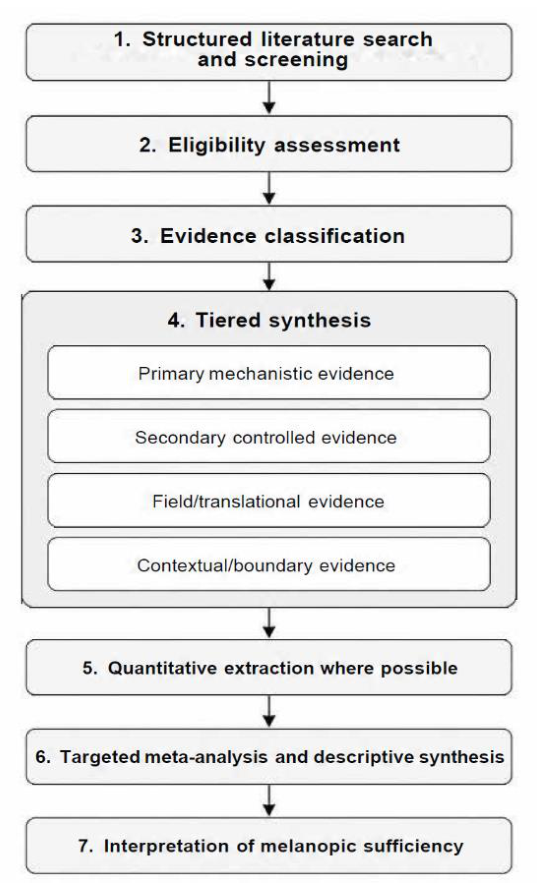
Figure 2.
Strict primary inverse-variance estimates for mechanistically focused light-alertness effects.
Figure 2.
Strict primary inverse-variance estimates for mechanistically focused light-alertness effects.
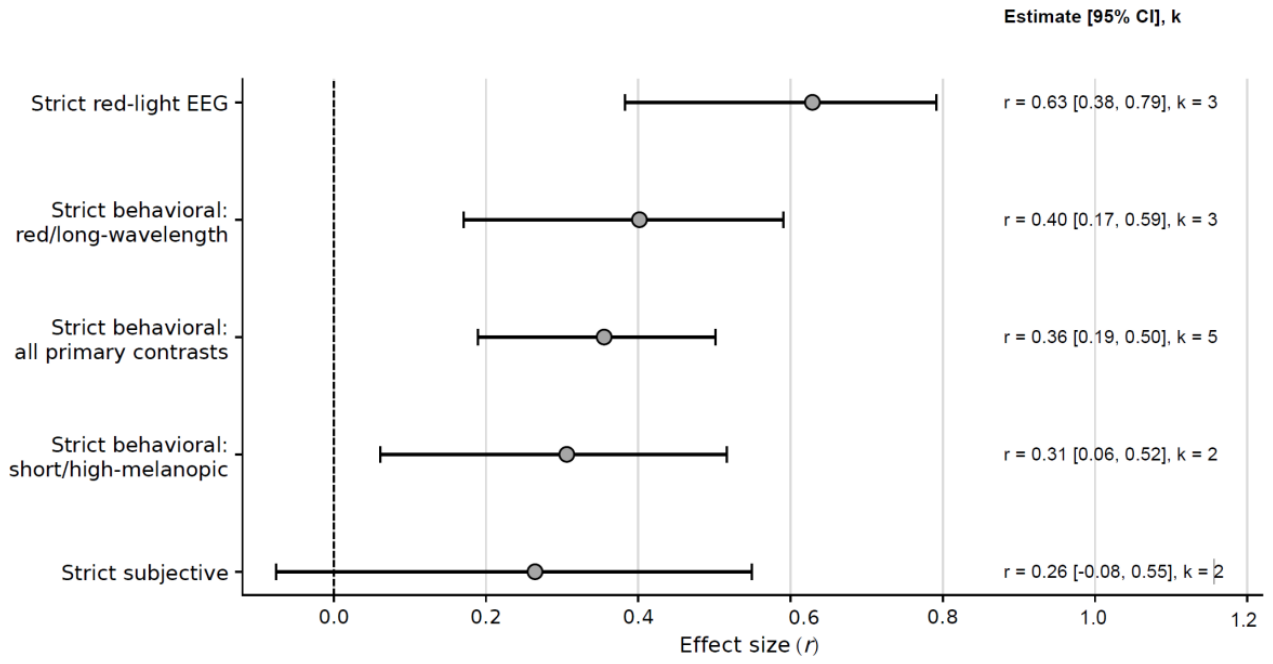
Figure 3.
Cross-tier evidence integration for light spectrum effects on alertness.
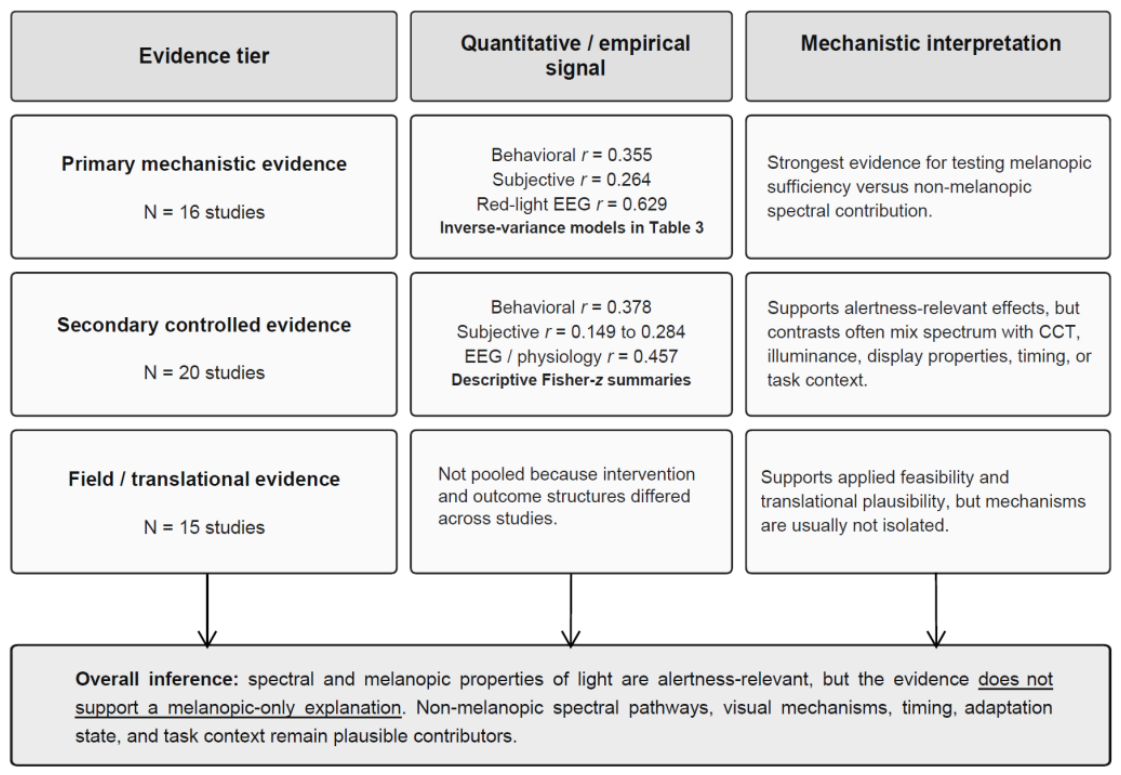
Figure 4.
Distribution of extracted effect sizes from primary mechanistic and secondary controlled evidence by outcome family.
Figure 4.
Distribution of extracted effect sizes from primary mechanistic and secondary controlled evidence by outcome family.
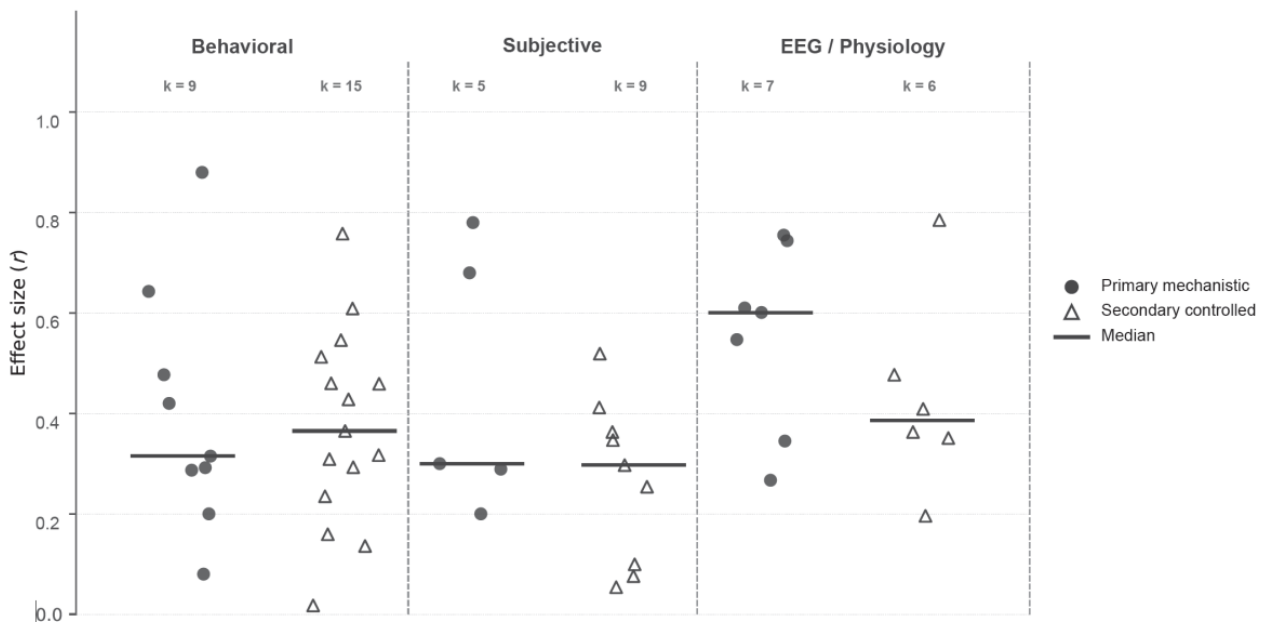

Table 1.
Methodological appraisal domains used to classify evidence.
| Domain | Appraisal question | Why it matters for this review | Use in synthesis |
|---|---|---|---|
| Spectral specificity | Did the study directly manipulate wavelength, SPD, melanopic contrast, or short-wavelength content? | Determines whether the study can address melanopic sufficiency rather than general light exposure. | High specificity favored primary or secondary mechanistic classification. |
| Photopic matching | Were illuminance or other photometric quantities comparable across conditions? | Prevents spectral effects from being confused with intensity or brightness effects. | Poor matching moved studies toward sensitivity or narrative interpretation. |
| α-opic reporting | Were melanopic, rhodopic, S-cone, M-cone, and L-cone-opic quantities reported or estimable? | Allows mechanistic comparison across photoreceptor channels. | Complete α-opic data strengthened mechanistic interpretation. |
| Outcome family | Was the outcome subjective, behavioral, EEG/physiological, or field-based? | Alertness measures do not respond equivalently across domains. | Outcomes were pooled separately by family. |
| Visual-task confounding | Could RT, accuracy, or visual-task performance be affected by contrast, stimulus color, display luminance, pupil response, chromatic adaptation, visual fatigue, or visibility? | Visual performance effects can mimic alertness effects. | Strong confounding excluded studies from strict pooling or limited them to contextual interpretation. |
| Circadian/homeostatic control | Were time of day, prior sleep, sleep pressure, light history, and circadian phase controlled or measured? | Light effects depend on circadian phase and sleep pressure. | Stronger control increased confidence in mechanistic interpretation. |
| Design strength | Was the design within-subject, counterbalanced, adequately controlled, and sufficiently powered? | Reduces participant variability and order effects. | Stronger designs were prioritized for quantitative synthesis. |
| Statistical extractability | Were means, SDs, test statistics, standardized effects, or digitizable figures available? | Determines whether effect sizes can be derived consistently. | Limited reporting moved studies to narrative or sensitivity tiers. |
| Ecological validity | Did the study reflect workplace, shift-work, display, or operational lighting conditions? | Indicates translational relevance beyond laboratory settings. | High ecological validity supported Field / translational interpretation, not strict mechanistic pooling. |
Table 2.
Evidence-tier definitions used for synthesis and interpretation.
| Evidence tier | Definition | Main strengths | Main limitations | Use in synthesis |
|---|---|---|---|---|
| Primary mechanistic | Studies with direct wavelength, spectral, short-wavelength, long-wavelength, or melanopic-relevant contrasts and alertness-relevant outcomes. | Strongest relevance to melanopic versus non-melanopic mechanisms; several within-subject designs; EEG and behavioral outcomes available. | Small samples; incomplete α-opic reporting in older studies; limited extractable means/SDs; some effects available only through test statistics or figures. | Used for strict mechanistic pooling when extractable; otherwise retained as mechanistic sensitivity or narrative evidence. |
| Secondary controlled | Controlled studies involving CCT, illuminance, melanopic contrast, daytime exposure, post-lunch dip, low-light conditions, displays, or task-based lighting contrasts. | Broader coverage across contexts and outcomes; useful for testing whether primary patterns generalize. | Spectrum often changed alongside illuminance, brightness, rhodopic stimulation, visual comfort, or task visibility. | Used for sensitivity models and narrative interpretation, not combined with strict primary models. |
| Field / translational | Workplace, shift-work, driving-related, or operational lighting studies. | Strong practical relevance; captures applied alertness and performance contexts. | Spectrum, intensity, timing, workload, prior sleep, and environmental context are usually confounded. | Analyzed separately to assess translational consistency. |
| Contextual / boundary | Studies that clarify interpretation but are not suitable for pooling, including blue-filtering, visual-task confounding, melatonin-only, subjective-objective dissociation, or exposure-pathway boundary studies. | Helps explain why the evidence does not reduce to a single mechanism. | Often not poolable; may lack clean spectral contrasts, extractable alertness statistics, or direct acute-alertness outcomes. | Used to interpret mechanisms, limitations, and boundary conditions. |
| Background / excluded | Reviews, non-alertness studies, non-ocular exposure studies, or studies without relevant light manipulation or outcomes. | Useful for context or rationale. | Do not directly test the review question. | Used only for background framing when relevant; not included in quantitative synthesis. |
Table 3.
Strict primary inverse-variance models summarizing behavioral, subjective, and EEG effects.
Table 3.
Strict primary inverse-variance models summarizing behavioral, subjective, and EEG effects.
| Model | k | Pooled r | 95% CI | Interpretation |
|---|---|---|---|---|
| Strict behavioral: all primary contrasts | 5 | 0.355 | 0.189 to 0.501 | Moderate overall behavioral association |
| Strict behavioral: red/long-wavelength | 3 | 0.402 | 0.171 to 0.591 | Moderate behavioral association for long-wavelength contrasts; not statistically distinguishable from the short/high-melanopic subgroup |
| Strict behavioral: short/high-melanopic | 2 | 0.306 | 0.061 to 0.516 | Positive behavioral estimate under short-wavelength or high-melanopic conditions; small number of effects |
| Strict subjective | 2 | 0.264 | -0.076 to 0.549 | Smaller and imprecise subjective estimate; confidence interval crosses zero |
| Strict red-light EEG | 3 | 0.629 | 0.383 to 0.792 | Largest strict primary estimate, but based on three effects with incomplete α-opic characterization; hypothesis-generating rather than definitive |
Note: Because the strict primary models included few coded effects, these estimates were used to evaluate whether the available mechanistically focused evidence was consistent with melanopic sufficiency, not to establish stable subgroup differences or definitive pathway-specific effects.
Table 4.
Descriptive sensitivity analysis evaluating the influence of extraction threshold on primary-effect patterns.
Table 4.
Descriptive sensitivity analysis evaluating the influence of extraction threshold on primary-effect patterns.
| Outcome family | Strict inverse-variance estimate | Strict-only descriptive estimate | Expanded sensitivity descriptive estimate | Interpretation |
|---|---|---|---|---|
| Behavioral | r = 0.355, k = 5 | r = 0.414, k = 5 | r = 0.445, k = 9; r = 0.351, k = 8 (excluding one likely inflated omnibus effect) | Positive pattern remains, but magnitude depends on extraction rules |
| Subjective | r = 0.264, k = 2 | r = 0.245, k = 2 | r = 0.491, k = 5 | Sensitivity estimate is unstable; subjective evidence remains less secure |
| EEG/physiology | r = 0.629, k = 3 | r = 0.639, k = 3 | r = 0.576, k = 7 | Positive pattern remains, but still hypothesis-generating |
Note: The strict inverse-variance estimates are the weighted estimates reported in Table 3. The strict-only descriptive estimates use the same study set but are calculated as unweighted Fisher-z means for comparison with the expanded sensitivity sets. Therefore, strict inverse-variance and strict-only descriptive estimates are not expected to be identical.
Table 5.
Evidence tiers differed in pathway specificity, translational relevance, and ability to test melanopic sufficiency.
Table 5.
Evidence tiers differed in pathway specificity, translational relevance, and ability to test melanopic sufficiency.
| Evidence tier | Main contribution | Main limitation | Implication for melanopic sufficiency |
|---|---|---|---|
| Primary mechanistic evidence | Provides the clearest test of the central question because studies used relatively direct spectral contrasts and extractable alertness-relevant outcomes. Red or long-wavelength behavioral and EEG effects remained evident in strict inverse-variance models. | Small number of effects, limited sample sizes, incomplete α-opic characterization in older studies, and heterogeneity in timing, task, and comparator condition. | Supports melanopic relevance while leaving melanopic sufficiency unresolved. Red or long-wavelength effects, especially EEG effects, are difficult to reconcile with a simple melanopic-only account, but incomplete α-opic characterization prevents definitive pathway attribution. |
| Secondary controlled evidence | Extends the evidence across CCT, illuminance, blue-enriched polychromatic light, low-light melanopic tuning, display-based manipulations, and post-lunch or daytime protocols. | Melanopic content often covaried with photopic illuminance, rhodopic stimulation, perceived brightness, visual comfort, task visibility, or display characteristics. | Supports melanopic relevance while showing that alertness outcomes also depend on brightness, rods, visual-task demands, fatigue state, and individual differences. |
| Field and translational evidence | Demonstrates practical relevance of lighting interventions for alertness, performance, sleep, and circadian outcomes in workplaces, night-shift settings, and operational contexts. | Rarely isolates spectrum from intensity, timing, spatial distribution, workload, prior sleep, environmental context, or intervention implementation. | Supports the applied value of melanopic-rich or circadian-effective lighting, but does not identify melanopic stimulation as the sole active mechanism. |
| Cross-tier interpretation | Across tiers, behavioral and EEG outcomes were more consistently responsive than subjective sleepiness, and red or long-wavelength effects persisted in several mechanistically informative contexts. | The literature does not yet permit quantitative partitioning of melanopsin, cone, rod, brightness, circadian, and homeostatic contributions. | The overall evidence is more consistent with a multi-component interpretation than with melanopic stimulation as a complete explanation. Non-melanopic pathways or moderators remain plausible, but their relative contributions are not yet quantified. |
Disclaimer/Publisher’s Note: The statements, opinions and data contained in all publications are solely those of the individual author(s) and contributor(s) and not of MDPI and/or the editor(s). MDPI and/or the editor(s) disclaim responsibility for any injury to people or property resulting from any ideas, methods, instructions or products referred to in the content. |
© 2026 by the authors. Licensee MDPI, Basel, Switzerland. This article is an open access article distributed under the terms and conditions of the Creative Commons Attribution (CC BY) license (http://creativecommons.org/licenses/by/4.0/).
Copyright: This open access article is published under a Creative Commons CC BY 4.0 license, which permit the free download, distribution, and reuse, provided that the author and preprint are cited in any reuse.


