
Submitted:
05 June 2026
Posted:
08 June 2026
You are already at the latest version
Abstract
Background/Objectives: When presented with chronic osteomyelitis of the diabetic foot (DFO), clinicians, patients and their families have two options: rational use of antibiotics or direct surgery. Methods: We conducted a narrative, scientific literature review and administered questionnaires to DFO experts to investigate the factors indicating conservative, antibiotic-based therapy vs. direct surgery to treat DFO. Results: If large necrotic areas and destructed bone are present, providers may opt for a direct surgical amputation or internal resection of the infected bone (conservative surgery). Alternatively, they can choose conservative (targeted) antibiotic therapy lasting several weeks, with minimal soft tissue debridement, off-loading and iterative professional wound care. Conclusions: It is difficult to decide between the two treatments. The rationale for choosing either approach is complex, involving many clinical aspects to consider, which we discuss in this article.
Keywords:
rational use of antibiotics
; diabetic foot osteomyelitis
; surgical resection
; antibiotic treatment
; rational decision
1. Introduction
The optimal first-line therapy for (chronic) diabetic foot osteomyelitis (DFO) is one of the most debated issues in the treatment of new foot syndromes [1,2]. The rationales for first-line systemic antibiotic use or direct, first-line surgical resection are complex and highly influenced by the local medical or surgical culture and tradition. In the last two decades, many research groups have advocated for strict, conservative antibiotic therapy for selected DFO cases, with or without minimal debridement, to halt infection and bone destruction [3,4]. Indeed, systemic antibiotic treatment, guided by microbiological bone culture results, appears to be as safe and as effective as surgery, but only in select patients with uncomplicated DFO [4], e.g., when the infection is limited to the forefoot [5,6]. Furthermore, local conditions are not the only parameters determining the initial management. The reasons for choosing first-line antibiotic therapy usually extend beyond objective decisions to include the patient’s compliance, preferences, living conditions, nutritional status, walking ability and expectations, as well as familial opinions, religious beliefs and soft tissue compromise. The surgeons’ experience and preferences, hospital policy, financial burdens, reimbursement policies, availability of a (timely) revascularization facility, local skin perfusion, lack of plastic surgery for coverage, and advanced destruction of the foot may equally play a decisive role in the complicated decision [7]. Not all of these additional rational arguments in favor of antibiotic use are, per se, evidence-based in terms of scientific evaluation.
Amputations are not an ideal solution either. In the short term, they result in inconveniences such as the need for hospitalization, leave from work, complications in the perioperative period in an already frail population and surgical site infections; further, the procedure is irreversible. Although cosmetic implications are likely to be minimal for the majority of patients, negative outcomes are possible. In the long term, amputations may predispose the patient to new ulceration and infection by shifting their weight-bearing mechanics, putting new areas of the foot at risk [1,7,8,9]. As for the conservative approach, there is no guarantee of definitive success, e.g., in the case of progressive ischemia or postsurgical wound dehiscence [10]. Additionally, in patients who fail to respond to conservative therapy, below-knee amputation (major amputation) is the salvage strategy [9]. International guidance, which is sufficiently evidence-based regarding antibiotic regimens, cannot offer a firm recommendation for the individual decision between a first-line conservative or direct surgical approach [11].
There is a third (intermediate) rational option: starting conservatively and proceeding to bone resection in case of therapeutic failure. Indeed, in resource-rich settings, physicians and patients can try the conservative approach first, in combination with professional wound care, revascularization and mandatory off-loading, and switch to surgery if necessary. There is often no urgent need to decide on the individual approach to treatment, especially in chronic cases without major soft tissue involvement. This lack of emergency, which is frequently mingled with wishful thinking, may convince doubtful clinicians to first “try conservatively”. However, the downside of this sequential approach is the need for iterative wound debridement, prolonged outpatient visits and transport, increased healthcare costs, possible selection for (Gram-negative) multi-resistant germs [12] and a substantial risk of antibiotic-related adverse events in 5-15% of cases [13], followed by resorting to surgery in case of (anticipated) failure.
We performed a narrative literature review of studies in favor of first-line and rational antibiotic treatment versus surgical amputation for DFO and surveyed select experts in Switzerland and internationally. This research is part of a doctoral thesis, embedded in a quality-of-care project aiming to streamline the decision-making process for the first-line approach to treating DFO in elderly patients.
2. Results
2.1. Literature Review
I.G., I.U. and S.F. reviewed the literature published until 31 August 2023 (it is summarized in Table 1 (short version) and detailed in Table A1 (complete version)). In total, this review of the scientific literature yielded 118 papers reporting original data (Table A1). The majority of studies are from resource-rich countries in North America (n=39; 33%), Europe (n=67; 57%) and Asia (n=9/118; 8%). In these publications, international collaboration among authors was frequent, in contrast to papers from other regions. We identified 32 articles from the Mediterranean region (27%) and ten from resource-poor countries. Almost all were published in the 21st century in surgical (34%) or general medical (65%) (infectiology or endocrinology) journals, and all are written in English. Most of the surgical publications originated from Spain (Int J Low Extrem Wounds) or the US (Foot Ankle Surg or Foot Ankle Int), probably because of the preferences of (inter)national opinion leaders. Papers published in medical journals had mixed authorship, with the majority authored by groups comprising infectious disease physicians, microbiologists and surgeons. Often, the first author was the least experienced of the group. The opinion leader was the last or second-to-last author. For the purpose of completeness, we also acknowledge the numerous texts available on the internet, written in different languages by a variety of professionals, patients or journalists, that we could not include because they are not framed in the “academic way” or present purely (repetitive) opinions without any personal experience. Table 1 ranks the different clinical parameters in favor of direct surgery or the medical approach according to the rational conclusions of the international publications.
2.2. Section Title
The expert groups produced no clear unanimous recommendations. There were more recommendations for direct amputation than for the conservative approach (Table A1). When reporting their conclusions, the experts were more in favor of direct surgery than conservative first-line therapy. However, the latter was nearly always acknowledged as a possible alternative. Frequently cited parameters in favor of the direct surgical approach were severe ischemia, gangrene, sepsis, major soft tissue losses or metatarsal head DFO [14]). In contrast, many groups advocated a conservative approach in the case of forefoot osteitis without exposed bone. Interestingly, we could not determine the maximal extent of bone destruction (cortical lysis or bone loss, sequestrum) or the extent of (lockable) skin breakdown to “allow” a conservative treatment. Surprisingly, the pathogens (e.g., fungi, multi-resistant microorganisms) or an enhanced immune-suppression beyond the diabetes itself (e.g., concomitant dialysis, alcoholism, organ transplantation, immune-suppressive drugs) remained unmentioned as a decisive role.
2.3. Online Questionnaires Administered via REDCap™
Following the literature review, we surveyed 24 arbitrarily selected experts for their professional opinion (via the on-line software REDCap™; Figure 1). The expert group comprised ten active infectious disease physicians and fourteen orthopedic surgeons with long-lasting clinical and academic experience in DFO management, with whom we have collaborated in the past. Three (13%) were women. The foreign experts were older than their Swiss counterparts. Among 80 experts contacted, 21 (26%) responded after the first invite in August 2023, and 3 responded after the second invite in November 2023. We grouped the experts according to whether they worked in Switzerland or abroad, in order to detect particularities and potential biases outside and within Switzerland. The answers were complete in over 90% of the returned questionnaires. The experts took approximately 10 to 15 minutes to complete the survey, according to our verification with five colleagues.
2.4. Summary of the External Experts’ Opinions, Including Figures
In summary, the experts’ opinions aligned with the literature (to which they themselves have contributed considerably). The general consensus was that the conservative approach can be attempted for forefoot DFO compared to hindfoot infections. Compared to the international experts, the Swiss surgeons and infectious disease physicians (and possibly the patients) were less hesitant to amputate in cases of long-lasting foot ulcers, sepsis or patients with a history of low compliance (Figure 2). Similarly, the Swiss experts were prone to choosing first-line amputation for DFO cases with major tissue loss and consecutive difficulties with primary closure. In contrast, these soft tissues deficiencies were less important to the foreign experts (Figure 3), who probably assigned greater weight to secondary wound closure with or without plastic surgery. The opinions among the Swiss experts were not considerably different, so we may have detected a possible opinion bias among Swiss experts.
2.5. Patients’ Wishes
In the Swiss experts’ opinion, the patient’s preference is an important factor in the initial therapeutic decision, with a prevalence of 93.75%, and for 68.25% of experts, the wishes of the patients’ relatives would influence the decision. Among the international specialists, 100% would follow the patient’s wishes, and the preferences of the patient’s relatives and the referring physician would also influence the decision for 80% and 60% of experts, respectively. We ignore the impact of patients and families’ preferences after the failure of the first-line approach, as this was not part of our study questions. For the professionals, the failure of a strict first-line conservative approach often led to an ultimate surgical solution.
2.6. Factors in Internist’s Decision
Multi-morbidity and frailty “predict” a conservative approach, according to the opinion of 505 of experts and 80% international experts. In Switzerland, experts favor direct resection in case of the presence of local ischemia (or necrosis). In contrast, according to most foreign experts, dry ischemia predicts the conservative approach. For both national and international experts, advanced peripheral neuropathy has no influence on the treatment decision (56.25% vs. 80% in favor of surgery). Renal failure and/or dialysis have no influence on the decision in Switzerland, while foreign experts are divided fifty-fifty on that matter.
2.7. Surgical Factors in Decision
Previous (toe) amputation has no influence on Swiss experts’ decisions (62.5%). Internationally, such a past history is a significant element predisposing 80% of experts to choosing the conservative approach. In both groups, the presence of soft tissue abscesses favors medical treatment with bone-sparing surgery (56.25% Swiss vs. 60% international). The presence of a cellulitis or erysipelas with underlying DFO does not influence the decision (31.25% national vs. 40% international, respectively) in favor of amputation. In the presence of biomechanical (architectural) disturbances, both the Swiss and international experts recommend limb-preserving surgery and, if not possible, amputation.
The most striking differences are for recommendations in cases of sepsis sensu stricto and exposed bone. Sepsis frequently triggers amputation in Switzerland, even if the patient has been stabilized. Foreign experts, especially the ID physicians, are less categoric (Figure 2). In the presence of sepsis, 75% of the national specialists would favor primary amputation, while the remaining 25% would prefer preserving surgery that is limited to the (iterative) debridement of soft tissues. Internationally, 40% would opt for direct amputation. However, 20% of foreign specialists would prefer a first-line medical approach in the absence of rapidly spreading soft tissue infections such as necrotizing fasciitis or (gas) gangrene. Likewise, the majority of Swiss specialists, 75%, prefer primary amputation/bone resection in the presence of a gangrene (infected necrosis). Among international specialists, 60% would perform limb-/bone-sparing surgery, while the other 40% would favor primary amputation/bone resection, like the Swiss experts.
2.8. Presence of Exposed Bone
While in most studies, exposed bone predicts the direct surgical approach, the international experts surveyed are more reluctant to choose this option. Swiss specialists favor amputation, with a majority of 81,25%, in case of exposed bone, while only 20% of international experts would amputate. Among them, 60% would prefer limb-sparing or bone-sparing surgery. Similarly, among the national experts, a positive probe-to-bone test predisposes 62.5% to choose amputation, independent of the extent of bone destruction or lysis. Among the international experts, 40% prefer the conservative approach when the underlying bone is viable, 20% tend toward amputation or limb/bone-sparing surgery, and for the remaining 20%, it does not influence their treatment decision. In the presence of considerable/progredient soft tissue loss (not necessarily with exposed bone), both the Swiss and foreign experts would opt for direct resection (75% vs. 60%, respectively).
2.9. Other Aspects of the Decision
The experts also spontaneously mentioned other aspects we did not specifically ask about. Internationally, the availability of skilled and experienced surgeons, as well as rehabilitation facilities, would influence the decision between the two initial approaches. The Swiss participants repeatedly emphasized the importance of an interdisciplinary conference or any multidisciplinary decision-making processes. Another element is vascular disease. According to many experts, clinicians should address vascular pathologies before scheduled surgery. If there is a striking improvement after reperfusion, then bone-sparing surgery, as a second-line decision, is preferred.
3. Discussion
DFO is difficult to treat, with two major therapeutic approaches (antibiotic treatment versus resection). The rationale for each individual decision is usually complex, multidisciplinary and multifaceted. Indeed, the final outcome can be very different depending on several patient-, wound- and infection-specific factors [15]. DFO management usually requires a multidisciplinary approach involving a wide variety of medical, surgical and other healthcare professionals, as well as patient compliance [1,8]. Guidelines from the Infectious Disease Society of America (IDSA) [1] and the International Working Group on the Diabetic Foot (IWGDF) [11] provide many evidence-based recommendations for multiple aspects of DFO. However, they do not provide in-depth guidance regarding the first-line approach. The updated IWGDF/IDSA guidelines from 2023 recommend considering antibiotic treatment without surgery in cases of uncomplicated forefoot DFO [11]. However, in cases involving increasing ulcer sizes, higher wound grades and arterial calcifications in the foot, the literature points to a surgical approach [7,16,17,18,19,20,21,22].
As updated guidelines on this particular topic have not been issued in Switzerland, we conducted a narrative literature review on the most critical factors determining the choice of a conservative or surgical approach to DFO. Based on these results, we prepared a questionnaire that was administered to leading experts in the fields of infectiology and orthopedic foot surgery. Aside from the patient’s preference, the three most influential variables favoring first-line surgical amputation are exposed bone, large areas of soft tissue loss (that cannot be closed by flap) and the presence of gangrene (Table 1). The only factor clearly favoring a conservative approach is forefoot (toe) DFO. Faglia et al. state that “A higher rate of transtibial amputation is found when osteomyelitis involved the heel instead of the midfoot or forefoot in diabetic patients” [16], which has ben confirmed by other groups [18]. The same is true of sesamoid osteitis, which frequently recurs if not surgically resected [19,20].
Another important aspect is peripheral vascular (arterial) disease. If successful revascularization is improbable, many surgeons refrain from amputation. This decision may also take into account transcutaneous oxygen pressure, a semi-objective factor, although its predictive value for uneventful wound healing is biased by many skin conditions, such as edema, and lacks a strong scientific evidence in terms of predicting success [23]. In the landmark paper by Tone et al. on the duration of systemic antibiotic administration for conservatively treated DFO, patients were excluded in the case of absent anterior and posterior pedal pulses during Doppler arterial examination [24]. Notably, the experts we interviewed did not spontaneously emphasize these detailed parameters, as we did not specifically ask them about vascular aspects. Other variables seem less important. Indeed, there are many important parameters in treating DFO that do not influence the decision between conservative treatment and direct resection. These include microorganisms present in the bone, the antibiotic resistance of the pathogens, the duration of antibiotic administration, the cost of appropriate antibiotic agents, the size and duration of the underlying ulcer, the degree of polyneuropathy and laboratory results [25].
In a specific opinion paper, Prof. Lipsky proposed six (surgical) aspects in favor of a conservative approach “patient is too medically unstable for surgery; poor postoperative mechanics of foot is likely (e.g., with mid- or hindfoot infections); no other surgical procedures on foot are needed; infection is confined to small, forefoot lesion; no adequately skilled surgeon is available; surgery costs are prohibitive for the patient; patient has strong preference to avoid surgery) and another six against (foot infection is associated with substantial bone necrosis, foot appears to be functionally non-salvageable, and patient was already non-ambulatory; patient is at particularly high risk for antibiotic-related problems; infecting pathogen is resistant to available antibiotics; limb has uncorrectable ischemia (precluding systemic antibiotic delivery); patient has strong preference for surgical treatment”. These latter recommendations are obviously ID-based. While they perfectly encompass the antibiotic aspects, they may not be fully relevant to the surgical clinical mindset [26].
In 2019, another expert group led by Prof. Lázaro Martínez (podiatry, surgery) published twelve (other) criteria for the medical approach (There is no persisting sepsis associated with DFO. Patient can receive and tolerate appropriate antibiotic therapy. The degree of bone destruction has not caused irretrievable compromise to foot mechanics. The patient prefers to avoid surgery. The patient’s comorbidities confer high risk to surgery. There are no contraindications to prolonged antibiotic therapy. Surgery is not otherwise required in adjacent soft tissue infection or necrosis. Infection is confined to small forefoot lesions that are easily off-loaded. Patients have good vascular status that allows drug spreading and tissue availability. No adequately skilled surgeon is available. Operating room and other surgical facilities are not available. Surgery cost prohibits the patient from undergoing the surgery), and five favoring surgery: DFO with systemic toxicity associated with soft tissue infection; substantial cortical destruction, osteolysis, macroscopic bone fragmentation (sequestration), or necrotic bone seen on X-ray; visible, chronically exposed trabecular bone identified within a forefoot ulcer; open or infected joint space, and prosthetic heart valves) [27]. The number of recommendations is too high, but the review also mentions a widespread belief that open toe articulations must be resected and that patients with prosthetic heart valves (presumably also pacemakers) should be treated surgically for infection [27]. The open joint issue was also addressed by Prof Aragón-Sánchez [20] and colleagues, who state that bony surfaces in the interphalangeal and metatarsophalangeal joints are covered with a layer of hyaline cartilage or fibrocartilage within a joint cavity that contains synovial fluid, lined with a synovial membrane and reinforced by a fibrous capsule and ligaments. To reach a joint, the infection must go through the capsule, and significant destruction of this fibrous tissue, which is poorly vascularized, is frequently observed. This means that infection may remain in this fibrous tissue if not carefully removed. Another consequence is that when the joint is involved, it should be assumed that the infection affects both bones [20].
Prof. Aragón-Sánchez also stated the following in 2015: Surgery is required when the bone is protruding through the ulcer; there is extensive bone destruction seen on x-ray or progressive bone damage on sequential x-ray while undergoing antibiotic treatment, and the soft tissue envelope is destroyed; and there is gangrene or spreading soft tissue infection. Moreover, it is necessary to have a surgeon with diabetic foot expertise available, because in cases in which osteomyelitis is associated with a bone deformity, surgery is an appropriate treatment [20]. This agrees with our own clinical experience. In 2021, a more rigorous systematic review examined the scientific evidence supporting medical versus surgical treatment for the management of DFO [22]. That review included six clinical trials with a total of 308 participants; the conclusions were that a) the lack of homogeneity in the treatments applied in the studies complicated attempts to perform meta-analyses and to analyze the rates of DFO remission or complication between two types of treatments and b) that the available evidence is insufficient to identify the best option to cure DFO [22].
Our work has important limitations. a) We conducted an opinion survey instead of analyzing composite original data. b) We chose a classical medical and surgical review and questionnaire design. A different design, such as that used in psychology or psychiatry, would give further weight to the certitude of an opinion. c) We assessed the opinions of experts working in resource-rich countries. Accordingly, financial, political and resource-related issues were not considered in the choice of first-line approach. It is very likely that the opinions and practices of experts working in resource-poor settings would be more influenced by local reimbursement politics, resource availability and potentially greater variability in patients’ beliefs and opinions [28]. d) Formally, we assessed opinions specifically concerning conservative treatment vs. surgical resection/amputation; as a result, we cannot comment on other techniques such as excessive curettage [29] without resection or percutaneous partial bone excision [30]. e) We concentrated on the conditions present at the time of a given DFO episode. Beyond this crucial time period, when a therapeutic decision is pending, there are chronic circumstances known from the patient’s past that are generally valid for medical decisions; these include the patient’s co-morbidities [31] (e.g., dementia), general adherence to drug therapies [32] and willingness to wear an uncomfortable cast after surgery [33]. Although important, the discussion of general medical compliance was beyond the scope of this manuscript. f) Finally, there is one difference between medical and surgical DFO treatment that is not important for the immediate treatment of DFO but may play a preventive role in the future. In contrast to antibiotic treatment that only addresses the infection, surgical intervention treat the current episode while preventing future problems, e.g., by performing a tenotomy on non-infected toes [30,34] or by correcting an advanced pathological foot architecture due to long-standing neuropathy [35].
4. Materials and Methods
4.1. Setting
Balgrist University Hospital is a referral orthopedic center. We aim to streamline and facilitate the timely management of DFOs through multiple (inter)-national research projects. In our policlinic, we regularly discuss the best approach to treating DFO in the context of patient comorbidities and the condition of the affected foot. Although we shortened the administration of systemic antibiotic use in several retrospective [36] and prospective–randomized trials [37], we are less confident about the correct indications for surgery at the first diagnosis of DFO. This research was performed as part of a doctoral thesis.
4.2. Literature Review
I.G., S.F. and I.U. performed an extensive narrative literature review by searching PubMed and Google Scholar using the MeSH terms “antibiotic”, “amputation”, “resection”, “conservative”, “diabetic foot osteomyelitis”, or “guidelines” in different combinations in German and English. They summarized the findings in Word™ (Table A1) and Excel™ data files by breaking the information down into 18 variables frequently encountered in the literature: renal failure, patient comorbidities, limb ischemia, peripheral neuropathy, prior amputation, abscesses, exposed bone, degree of bone destruction, ulcer size/wound grade, gangrene, necrosis, severity of soft tissue infection, soft tissue loss, systemic infection/sepsis, drug interactions and side effects of the antibiotic therapy, biomechanical foot deformities and localization of DFO. We excluded case reports, papers reporting only a widespread opinion and articles addressing diagnostic or epidemiological issues of DFO (Table 1, Table A1). This review took approximately 180 hours. We ended the search on 31 August 2023.
4.3. Questionnaires
Based on our own experience and the literature review, we organized relevant clinical questions into an online questionnaire using REDCap™ (Research Electronic Data Capture) software with the help of UCAR (Unit for Clinical and Applied Research). We created a German version (for domestic use) and an English version (international use; Figure 1). The questionnaire was composed of four direct questions (yes or no), 24 four-item scaled questions, and 1 free-text answer. Before emailing the invited experts twice in 2023, we comprehensively validated the questionnaire at Balgrist uncertainties. We choose eighty experts, working in infectious diseases, vascular surgery, diabetology and orthopedic foot surgery, with whom we had some degree of professional and/or academic collaboration in the past. Many were active at the 2023 International Guidelines on the Diabetic Foot (IWGDF) [11]. To recruit experts in Switzerland, we send the REDCap™ link to colleagues known for their long-lasting engagement in national diabetic foot problems [38]. We did not contact professionals who were experts in other specific aspects of diabetic foot treatment, such as off-loading, orthoses, wound debridement, education, physical therapy, microbiology, insurance, reimbursement and revascularization.
4.4. Statistical Analyses
We used only descriptive statistical analyses in this review.
Supplementary Materials
The following supporting information can be downloaded at the website of this paper posted on Preprints.org, Extended summary of the literature review.
Author Contributions
Conceptualization: I.G., M.S., F.W.A.W., and I.U. Methodology: I.G. and I.U. Validation: I.G. and I.U. Investigation: I.G,; F.S.,. and I.U. Resources: M.F. and I.U. Data curation: I.G., F.S., M.S., and I.U. Data collection: I.G., F.S., M.S., F.W.A.W., and I.U. Data analysis: I.G., and I.U.; Analysis verification: I.U. Writing: original draft preparation, I.G., S.F., A.F., M.S., F.W.A.W., and I.U. Writing—review and editing, I.G., J.A.S.,B.A.L., and M.F.; Visual, I.G., I.U.; Supervision: I.U. and M.F. Project administration: I.G., M.S., I.U., and M.F. All authors have agreed to the published version of the manuscript. This publication is part of the doctoral thesis of I.G., supervised by I.U. and M.F.
Funding
This research received no external funding.
Institutional Review Board Statement
Not applicable.
Informed Consent Statement
Not applicable.
Data Availability Statement
Key data are available upon reasonable scientific request to the corresponding author.
Acknowledgments
We thank Ms. Corina Früh from the Unit for Clinical and Applied Research (UCAR) at Balgrist University Hospital for her invaluable help.
Conflicts of Interest
The authors declare no conflicts of interest.
Congress Participation
Parts of this manuscript were presented at the 84th Swiss National Annual Congress for Orthopedic Surgery and Traumatology (swissorthopaedics), 26-28 June 2024, in Ecublens/Lausanne, and at the 33rd National Annual Meeting of Infectious Diseases, 28-30 August 2024, in Berne, Switzerland.
Abbreviations
The following abbreviations are used in this manuscript:
| DFO | Diabetic foot osteomyelitis |
Appendix A

Table A1.
provides details of our literature review.
| References | Country and Specialty | Treatment | Clinical Factors | ||||||||||||||||
|---|---|---|---|---|---|---|---|---|---|---|---|---|---|---|---|---|---|---|---|
| Renal failure | Limb ischemia | Peripheral neuropathy | Previous amputation | Abscess | Exposed bone | Ulcer size/ wound grade |
Gangrene | Necrosis | Severity of soft tissue infection | Bone destruction | Soft tissue loss | Severity infection/ sepsis | Drug interactions and side effects of the antibiotic therapy | Foot alterations | Localization | ||||
| forefoot | heel | ||||||||||||||||||
| 1 | Italy, endocrinologist | conservative | |||||||||||||||||
| surgical | x | x | x | x | x | x | x | ||||||||||||
| 2 | Turkey, infectiologist | conservative | x | ||||||||||||||||
| surgical | x | x | x | x | x | x | x | ||||||||||||
| 3 | USA, internal specialist and emergency medicine | conservative | |||||||||||||||||
| surgical | x | x | |||||||||||||||||
| 4 | USA, infectiologist | conservative | X, non-persisting (-72h) | X, if too unstable for surgery | x | ||||||||||||||
| surgical | x | x | X | x | x | x | x | x | X, persisting /life or limb threatening | x | x | ||||||||
| 5 | USA, infectiologist | conservative | |||||||||||||||||
| surgical | x | x | X(widespread) | x | x | x | |||||||||||||
| 6 | China (meta-analysis of English studies), endocrinologist | conservative | |||||||||||||||||
| surgical | x | x | x | ||||||||||||||||
| 7 | France, infectiologist | conservative | |||||||||||||||||
| surgical | x | x | x | x | x | ||||||||||||||
| 8 | Korea, pharmacist | conservative | |||||||||||||||||
| surgical | x | x | x | x | x | ||||||||||||||
| 9 | USA, infectiologist | conservative | |||||||||||||||||
| surgical | x | ||||||||||||||||||
| 10 | Switzerland (review of English and French language), infectiologist | conservative | |||||||||||||||||
| surgical | x | x | x | x | |||||||||||||||
| 11 | Italy, endocrinologist | conservative | |||||||||||||||||
| surgical | x | x | x | x | |||||||||||||||
| 12 | UK, endocrinologist | conservative | |||||||||||||||||
| surgical | x | x | x | x | |||||||||||||||
| 13 | USA, infectiologist | conservative | |||||||||||||||||
| surgical | x | x | x | x | |||||||||||||||
| 14 | France, infectiologist | conservative | X, if to unstable for surgery | X, postoperative | x | ||||||||||||||
| surgical | x | x | x | x | x | ||||||||||||||
| 15 | UK/Italy, orthopedic surgeon | conservative | x | ||||||||||||||||
| surgical | x | x | x | ||||||||||||||||
| 16 | USA/UK, infectiologist | conservative | |||||||||||||||||
| surgical | x | x | x | x | x | ||||||||||||||
References
- Lipsky, B.A.; Berendt, A.R.; Cornia, P.B.; Pile, J.C.; Peters, E.J.G.; Armstrong, D.A.; Deery, H.G.; Embil, J.M.; Joseph, W.S.; Karchmer, A.W.; Pinzur, M.S.; Senneville, E. 2012 Infectious Diseases Society of America clinical practice guideline for the diagnosis and treatment of diabetic foot infections. Clin. Infect. Dis. 2012, 54, 132–173. [Google Scholar] [CrossRef] [PubMed]
- Lavery, L.A.; Peters, E.J.; Armstrong, D.G.; Wendel, C.S.; Murdoch, D.P.; Lipsky, B.A. Risk factors for developing osteomyelitis in patients with diabetic foot wounds. Diabetes. Res. Clin. Pract. 2009, 83, 347–352. [Google Scholar] [CrossRef]
- Truong, D.H.; Bedimo, R.; Malone, M.; Wukich, D.K.; Öz, O.; Killeen, A.L.; Lavery, L.A. Meta-Analysis: Outcomes of Surgical and Medical Management of Diabetic Foot Osteomyelitis. Open. Forum. Infect. Dis. 2022, 9, ofac407. [Google Scholar] [CrossRef]
- Cortes-Penfield, N.W.; Armstrong, D.G.; Brennan, M.B.; Fayfman, M.; Ryder, J.H.; Tan, T.W.; Schechter, M.C. Evaluation and Management of Diabetes-related Foot Infections. Clin. Infect. Dis. 2023, 77, 1–13. [Google Scholar] [CrossRef]
- Aragón-Sánchez, J.; Lipsky, B.A. Modern management of diabetic foot osteomyelitis. The when, how and why of conservative approaches. Expert. Rev. Anti. Infect. Ther. 2018, 16, 35–50. [Google Scholar] [CrossRef]
- Senneville, E.; Robineau, O. Treatment options for diabetic foot osteomyelitis. Expert. Opin. Pharmacother. 2017, 18, 759–765. [Google Scholar] [CrossRef]
- Zhou, S.; Schmidt, B.M.; Henig, O.; Kaye, K.S. Deferring Amputation in Diabetic Foot Osteomyelitis: Doing More Harm Than Good? Open. Forum. Infect. Dis. 2021, 8, 84. [Google Scholar] [CrossRef]
- Tardáguila-García, A.; Sanz-Corbalán, I.; García-Alamino, J.M.; Ahluwalia, R.; Uccioli, L.; Lázaro-Martínez, J.L. Medical Versus Surgical Treatment for the Management of Diabetic Foot Osteomyelitis: A Systematic Review. J. Clin. Med. 2021, 10, 1237. [Google Scholar] [CrossRef]
- Miller, W.; Berg, C.; Wilson, M.L.; Heard, S.; Knepper, B.; Young, H. Risk Factors for Below-the-Knee Amputation in Diabetic Foot Osteomyelitis After Minor Amputation. J. Am. Podiatr. Med. Assoc. 2019, 109, 91–97. [Google Scholar] [CrossRef] [PubMed]
- Lavery, L.A.; Reyes, M.C.; Najafi, B.; Coye, T.L.; Chung, J.; Siah, M.C.; Tarricone, A.N. The infected diabetic foot: Incidence and risk factors for dehiscence after surgery for diabetic foot infections. Wound. Repair. Regen. 2025, 33, 13235. [Google Scholar] [CrossRef] [PubMed]
- Senneville, É.; Albalawi, Z.; van Asten, S.A.; Abbas, Z.G.; Allison, G.; Aragón-Sánchez, J.; Embil, J.M.; Lavery, L.A.; Alhasan, M.; Öz, O.; Uçkay, I.; Urbančič-Rovan, V.; Xu, Z.R.; Peters, E.J.G. IWGDF/IDSA guidelines on the diagnosis and treatment of diabetes-related foot infections (IWGDF/IDSA 2023). Diabetes. Metab. Res. Rev. 2024, 40, 3687. [Google Scholar] [CrossRef]
- Saltoğlu, N.; Sürme, S.; Ezιrmιk, E.; Kadanalι, A.; Kurt, A.F.; Özdemir, M. Ş.; Ak, O.; Altay, F.A.; Acar, A.; Çakar, Z.S.; Tülek, N.; Kιnιklι, S. KLİMİK Society, Diabetic Foot Study Group. The Effects of Antimicrobial Resistance and the Compatibility of Initial Antibiotic Treatment on Clinical Outcomes in Patients With Diabetic Foot Infection. Int. J. Low. Extrem. Wounds. 2023, 22, 283–290. [Google Scholar] [CrossRef]
- Soldevila-Boixader, L.; Murillo, O.; Waibel, F.W.A.; Huber, T.; Schöni, M.; Lalji, R.; Uçkay, I. The Epidemiology of Antibiotic-Related Adverse Events in the Treatment of Diabetic Foot Infections: A Narrative Review of the Literature. Antibiotics. . 2023, 12, 774. [Google Scholar] [CrossRef]
- Tardáguila-García, A.; Sanz-Corbalán, I.; Molines-Barroso, R.J.; Álvaro-Afonso, F.J.; García-Álvarez, Y.; Lázaro-Martínez, J.L. Complications associated with the approach to metatarsal head resection in diabetic foot osteomyelitis. Int. Wound. J. 2019, 16, 467–472. [Google Scholar] [CrossRef]
- Efejuku, T.; Chokshi, S.N.; Jupiter, D.; Chen, J.; Panchbhavi, V.K. Retrospective Study Analyzing Risk Factors of Foot and Ankle Amputation in Patients with Diabetes Diagnosed with Osteomyelitis. Foot. Ankle. Orthop. 2022, 7, 2473011421s00185. [Google Scholar] [CrossRef]
- Faglia, E.; Giacomo Clerici, G.; Caminiti, M.; Curci, V.; Somalvico, F. Influence of osteomyelitis location in the foot of diabetic patients with transtibial amputation. Foot Ankle Int. 2013, 34, 222–227. [Google Scholar] [CrossRef] [PubMed]
- Carmena-Pantoja, M.; Álvaro-Afonso, F.J.; García-Morales, E.; García-Álvarez, Y.; Tardáguila-García, A.; Lázaro-Martínez, J.L. The Influence of Arterial Calcification on Clinical Outcomes in Patients with Diabetic Foot Ulcer Complicated by Osteomyelitis Treated by Surgery. Int. J. Low. Extrem. Wounds. 2023, 22, 480–488. [Google Scholar] [CrossRef] [PubMed]
- Zeun, P.; Gooday, C.; Nunney, I.; Dhatariya, K. Predictors of Outcomes in Diabetic Foot Osteomyelitis Treated Initially With Conservative (Nonsurgical) Medical Management: A Retrospective Study. Int. J. Low. Extrem. Wounds. 2016, 15, 19–25. [Google Scholar] [CrossRef] [PubMed]
- Mauler, F.; Wanivenhaus, F.; Böni, T.; Berli, M.C. Nonsurgical Treatment of Osteomyelitis of the Hallux Sesamoids: A Case Series and Literature Review. J. Foot. Ankle. Surg. 2017, 56, 666–669. [Google Scholar] [CrossRef]
- Aragón-Sánchez, J.; Lázaro-Martínez, J.L.; Alvaro-Afonso, F.J.; Molinés-Barroso, R. Conservative Surgery of Diabetic Forefoot Osteomyelitis: How Can I Operate on This Patient Without Amputation? Int. J. Low. Extrem. Wounds. 2015, 14, 108–131. [Google Scholar] [CrossRef]
- Allahabadi, S.; Haroun, K.B.; Musher, D.M.; Lipsky, B.A.; Barshes, N.R. Consensus on surgical aspects of managing osteomyelitis in the diabetic foot. Diabet. Foot. Ankle. 2016, 7, 30079. [Google Scholar] [CrossRef]
- Tardáguila-García, A.; Sanz-Corbalán, I.; García-Alamino, J.M.; Ahluwalia, R.; Uccioli, L.; Lázaro-Martínez, J.L. Medical Versus Surgical Treatment for the Management of Diabetic Foot Osteomyelitis: A Systematic Review. J. Clin. Med. 2021, 10, 1237. [Google Scholar] [CrossRef]
- Zingg, M.; Lacraz, A.; Robert-Ebadi, H.; Kressmann, B.; Glauser, F.; Waibel, W.F.A.; Berli, M.C.; Uçkay, I. Transcutaneous Oxygen Pressure Values Often Fail to Predict Stump Failures after Foot or Limb Amputation in Chronically Ischemic Patients. Clin. Surg. 2019, 4, 2366. [Google Scholar]
- Tone, A.; Nguyen, S.; Devemy, F.; Topolinski, H.; Valette, M.; Cazaubiel, M.; Fayard, A.; Beltrand, É.; Lemaire, C.; Senneville, É. Six-week versus twelve-week antibiotic therapy for nonsurgically treated diabetic foot osteomyelitis: a multicenter open-label controlled randomized study. Diabetes. Care. 2015, 38, 302–307. [Google Scholar] [CrossRef]
- Crisologo, P.A.; Malone, M.; La Fontaine, J.; Öz, O.; Bhavan, K.; Nichols, A.; Lavery, L.A. Are Surrogate Markers for Diabetic Foot Osteomyelitis Remission Reliable? J. Am. Podiatr. Med. Assoc. 2021, 111. [Google Scholar] [CrossRef] [PubMed]
- Lipsky, B.A. Treating diabetic foot osteomyelitis primarily with surgery or antibiotics: have we answered the question? Diabetes. Care. 2014, 37, 593–595. [Google Scholar] [CrossRef]
- Lázaro-Martínez, J.L.; García-Álvarez, Y.; Tardáguila-García, A.; García-Morales, E. Optimal management of diabetic foot osteomyelitis: challenges and solutions. Diabetes. Metab. Syndr. Obes. 2019, 12, 947–959. [Google Scholar] [CrossRef] [PubMed]
- Hassanin, A.; Feeney, E.; Varman, R.; Kellegher, E.; Gahan, T.; O’Donoghue, A.; Dowdall, J.; Hurley, H.; Barry, M.C.; Elmallah, A. Predictors of Successful Antibiotic Treatment of Osteomyelitis in Diabetic Forefoot Infection. J. Vasc. Surg. Venous. Lymphat. Disord. 2019, 7, 902–913. [Google Scholar] [CrossRef]
- Kmari-El-Ghazouany, S.; Tardáguila-García, A.; López-Moral, M.; García-Madrid, M.; García-Álvarez, Y.; Lázaro-Martínez, J.L. Comparative Analysis of Bone Resection Versus Bone Curettage in Diabetic Foot Osteomyelitis. Int. J. Low. Extrem. Wounds. 2023, 24, 15347346231206448. [Google Scholar] [CrossRef]
- Moosa, S.R.; Allan, A.H.; Younes, A.N.; Bakri, F.G.; Younes, N.A. Percutaneous Partial Bone Excision in the Management of Diabetic Toe Osteomyelitis. Foot. Ankle. Int. 2023, 44, 836–844. [Google Scholar] [CrossRef] [PubMed]
- Schmidt; B, M.; Keeney-Bonthrone, T.P.; Hawes, A.M.; Karmakar, M.; Frydrych, L.M.; Cinti, S.K.; Pop-Busui, R.; Delano, M.J. Comorbid status in patients with osteomyelitis is associated with long-term incidence of extremity amputation. BMJ. Open. Diabetes. Res. Care. 2023, 11, e003611. [Google Scholar] [CrossRef]
- Sanz-Corbalán, I.; Tardáguila-García, A.; García-Álvarez, Y.; López-Moral, M.; Álvaro-Afonso, F.J.; Lázaro-Martínez, J.L. Evaluation of Adherence to the Oral Antibiotic Treatment in Patients With Diabetic Foot Infection. Int. J. Low. Extrem. Wounds. 2024, 23, 397–402. [Google Scholar] [CrossRef] [PubMed]
- Riopelle, A.; LeDuc, R.; Wesolowski, M.; Schiff, A.P.; Pinzur, M.S. Risk of Complications With the Total Contact Cast in Diabetic Foot Disorders. Foot. Ankle. Spec. 2021, 14, 25–31. [Google Scholar] [CrossRef] [PubMed]
- Kearney, T.P.; Hunt, N.A.; Lavery, L.A. Safety and effectiveness of flexor tenotomies to heal toe ulcers in persons with diabetes. Diabetes. Res. Clin. Pract. 2010, 89, 224–226. [Google Scholar] [CrossRef]
- Reimer, H.; Ketfi, M.; Boulmont, M. Diabetic foot: is preventive surgery possible? Zentralbl. Chir. 1999, 124, 33–35. [Google Scholar] [PubMed]
- Lesens, O.; Desbiez, F.; Theïs, C.; Ferry, T.; Bensalem, M.; Laurichesse, H.; Tauveron, I.; Beytout, J.; Aragón-Sánchez, J. Working Group on Diabetic Osteomyelitis. Staphylococcus aureus-Related Diabetic Osteomyelitis: Medical or Surgical Management? A French and Spanish Retrospective Cohort. Int. J. Low. Extrem. Wounds. 2015, 14, 284–290. [Google Scholar] [CrossRef]
- Lázaro-Martínez, J.L.; Aragón-Sánchez, J.; García-Morales, E. Antibiotics versus conservative surgery for treating diabetic foot osteomyelitis: a randomized comparative trial. Diabetes. Care. 2014, 37, 789–795. [Google Scholar] [CrossRef]
- Peter-Riesch, B.; Czock, A.; Uçkay, I. Interdisciplinary Expert Group on the Diabetic Foot. Swiss interdisciplinary guidance on good practices for acute and complicated diabetic foot syndromes. Swiss. Med. Wkly. 2021, 151, 30045. [Google Scholar] [CrossRef] [PubMed]
Figure 1.
The questionnaire.
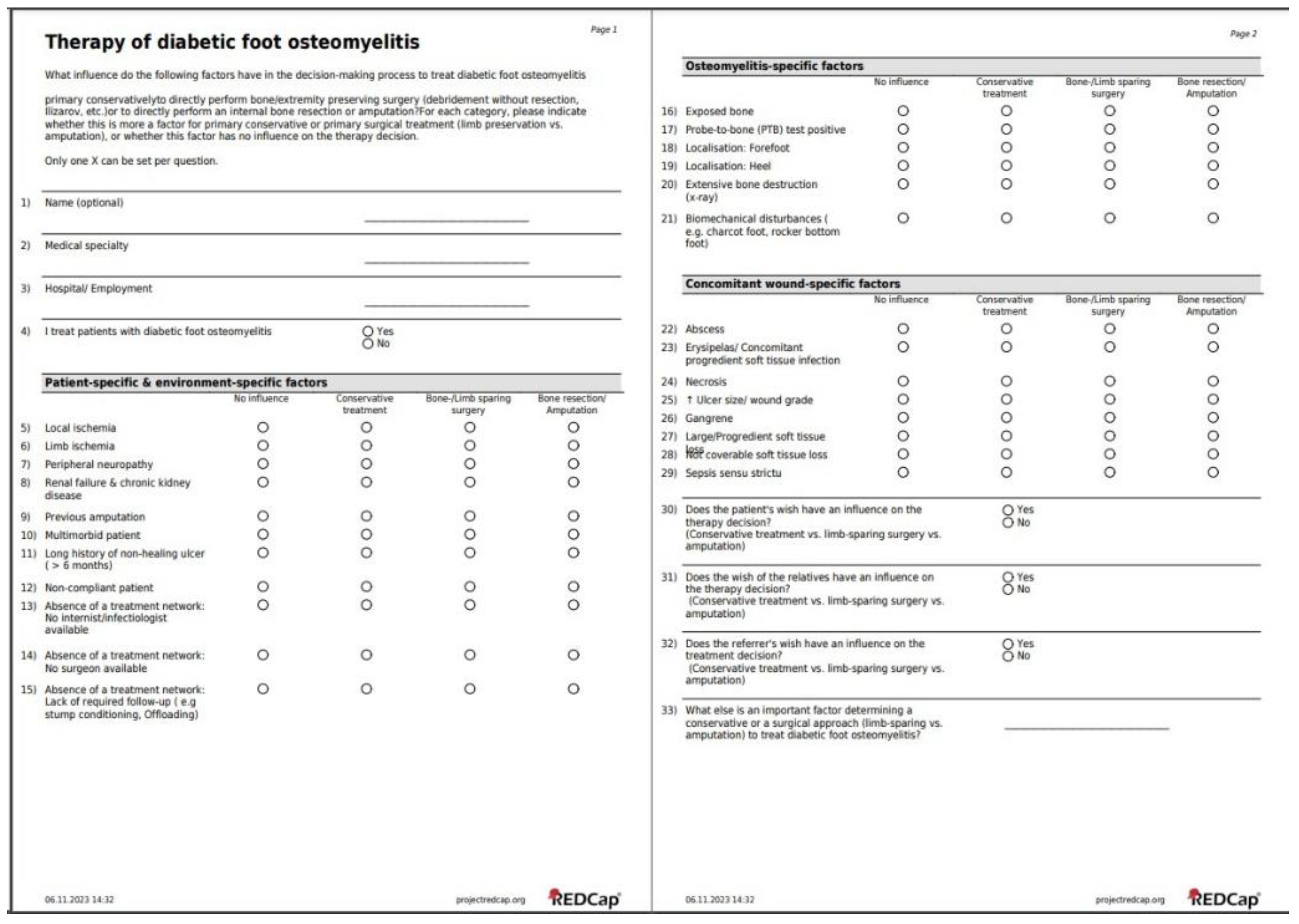
Figure 2.
caption.
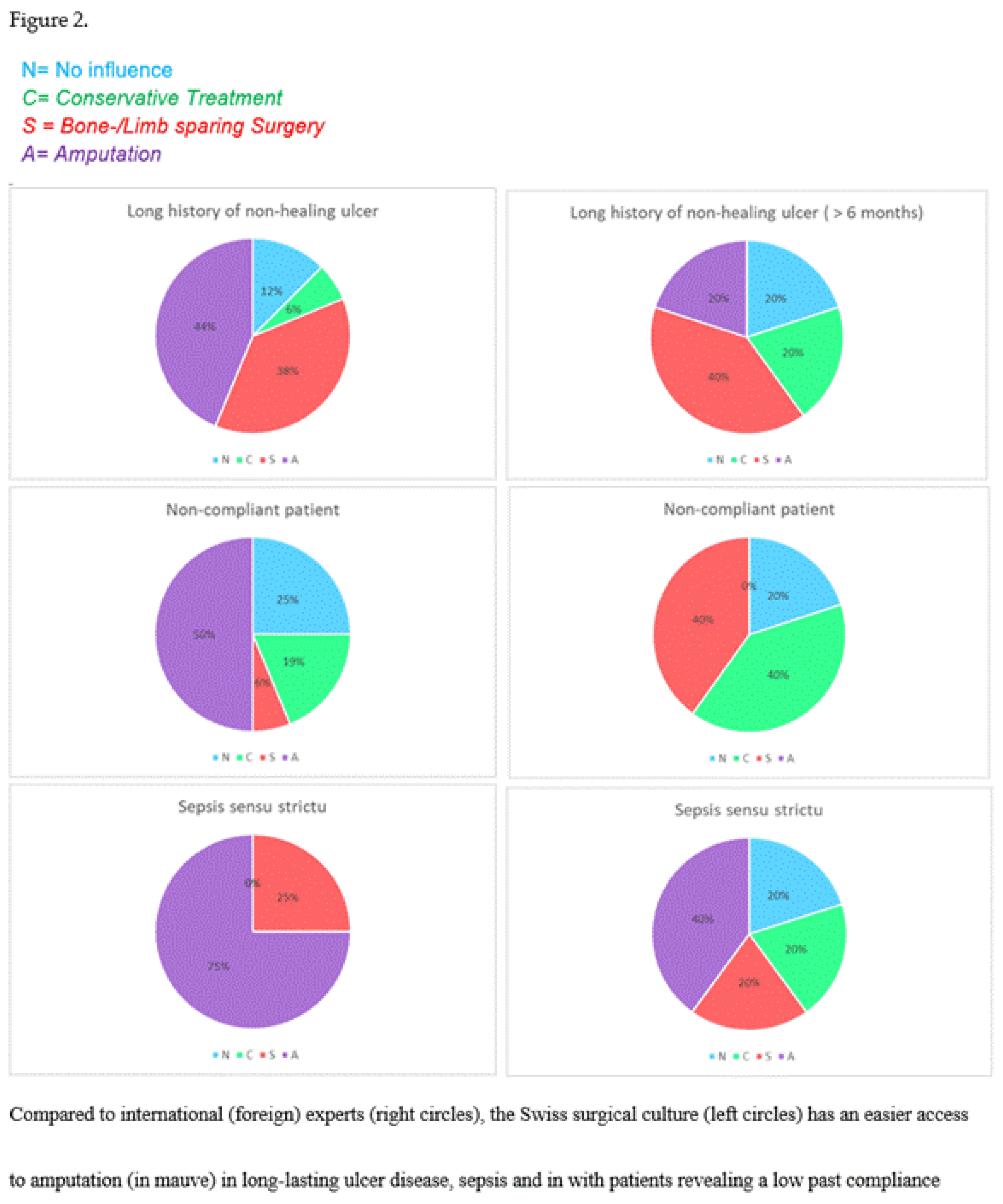
Table 1.
The five most frequently expressed opinions are indicated in bold and underlined.
| 118 articles | Ischemia | Gangrene, necrosis | Frail Patient |
Sepsis |
Soft Tissue | Bone Destruct. | Side effects* | Bone exposed to air |
Tissue loss | Ulcer Size | Past Resection |
Major Foot Deformities | Infection in Hindfoot |
|---|---|---|---|---|---|---|---|---|---|---|---|---|---|
| Conservative | 5 | 3 | 9 | 7 | 6 | 1 | 9 | 0 | 6 | 1 | 2 | 5 | 1 |
| Surgery | 51 | 44 | 36 | 35 | 25 | 21 | 17 | 13 | 15 | 13 | 10 | 10 | 13 |
| Ranking | 1. | 2. | 3. | 4. | 5. | 6. | 7. | 8. | 9. | 10. | 10. | 11. | 12. |
| Proportions | 91% | 94% | 80% | 83% | 81% | 95% | 65% | 100% | 71% | 93% | 83% | 67% | 93% |
Disclaimer/Publisher’s Note: The statements, opinions and data contained in all publications are solely those of the individual author(s) and contributor(s) and not of MDPI and/or the editor(s). MDPI and/or the editor(s) disclaim responsibility for any injury to people or property resulting from any ideas, methods, instructions or products referred to in the content. |
© 2026 by the authors. Licensee MDPI, Basel, Switzerland. This article is an open access article distributed under the terms and conditions of the Creative Commons Attribution (CC BY) license (http://creativecommons.org/licenses/by/4.0/).
Copyright: This open access article is published under a Creative Commons CC BY 4.0 license, which permit the free download, distribution, and reuse, provided that the author and preprint are cited in any reuse.


