

Submitted:
05 June 2026
Posted:
05 June 2026
You are already at the latest version
Abstract
Background: Management of post-extraction sockets with buccal dehiscence in the esthetic zone remains clinically challenging, particularly when immediate implant placement is indicated. Conventional approaches often rely on guided bone regeneration (GBR) with biomaterials, which may increase surgical complexity and morbidity. This case report evaluates the clinical and radiographic outcomes of a fully autologous approach combining leukocyte- and platelet-rich fibrin (L-PRF) and connective tissue graft (CTG) in conjunction with immediate implant placement. Methods: A 50-year-old healthy patient presenting with a fractured maxillary lateral incisor and buccal bone dehiscence underwent atraumatic extraction, immediate implant placement, and simultaneous site management using L-PRF membranes and CTG. Clinical and radiographic evaluations were performed at baseline (T0) and after 12 months (T1). Cone-beam computed tomography (CBCT) was used to assess horizontal bone thickness (HBT) at multiple apico-coronal levels and vertical evaluation parameters, including nasal floor–crest distance (NF–AC) and buccal dehiscence height (BDH). Clinical outcomes included keratinized tissue width (KT), gingival thickness (GT), and patient-reported outcome measures (PROMs). Results: Radiographic analysis demonstrated increased HBT at all levels (+1,4 mm at 12 mm, +3,1 mm at 15 mm, +3,2 mm at 18 mm, and +2,6 mm at 21 mm). NF-AC showed a marked increase (+2,7 mm) and substantial reduction of the buccal dehiscence defect. Clinically, KT increased by +2,0 mm and GT by +1,8 mm. Healing was uneventful, with minimal postoperative discomfort and high patient satisfaction. Conclusions: Within the limitations of a single case, the combined use of L-PRF and CTG with immediate implant placement resulted in favorable clinical and radiographic outcomes, suggesting that a fully autologous, biologically driven approach may represent a viable alternative to conventional GBR in selected cases. Further controlled studies are required to confirm these findings.
Keywords:
alveolar ridge preservation
; buccal dehiscence
; L-PRF
; connective tissue graft
; CTG
; immediate implant placement
1. Introduction
Immediate implant placement following tooth extraction represents a widely adopted clinical strategy aimed at reducing overall treatment time and preserving tissue volumes [1].
However, this approach presents significant challenges, particularly in anterior regions with high aesthetic demands, where even minimal alterations to the alveolar bone contour and soft tissue architecture can compromise the functional and aesthetic outcome of the final restoration [2,3].After tooth extraction, alveolar bone resorption occurs rapidly and significantly, resulting in a loss of ridge volume that can jeopardize both implant stability and the aesthetic profile [2,4].
Indeed, the presence of a buccal osseous dehiscence is a frequently encountered clinical condition, and immediate implant placement introduces additional challenges with respect to achieving predictable bone regeneration and ensuring long-term stability [5] .
From an implant–periodontal perspective, in this case the management of peri-implant soft tissues represents a critical scenario. Recent studies have shown that the quality and quantity of peri-implant keratinized mucosa are strongly correlated with the risk of mucositis and peri-implantitis, directly influencing the biological stability of the implant and the final aesthetic outcome [6,7] . In particular, the absence of at least 2 mm of peri-implant keratinized tissue has been associated with higher levels of inflammation, increased marginal bone loss, and greater plaque accumulation [8].
To address the challenges associated with post-extraction ridge resorption, guided bone regeneration (GBR) techniques have become widely used in clinical practice. These techniques typically employ resorbable or non-resorbable membranes in combination with xenogeneic or synthetic biomaterials, aiming to promote new bone formation by excluding soft tissue ingrowth [3,9]. However, GBR is not without limitations: the procedures can be technically demanding, costly, and associated with risks such as membrane exposure and postoperative complications. Additionally, the use of non-autologous biomaterials may delay the healing process [10] .
In this context, the use of autologous biological materials has gained increasing interest. Particular emphasis has been placed on platelet concentrates, such as leukocyte- and platelet-rich fibrin (L-PRF).
L-PRF is a second-generation platelet concentrate characterized by a three-dimensional fibrin matrix that entraps platelets and leukocytes, capable of releasing a variety of growth factors and cytokines — including TGF-β, PDGF, VEGF, EGF, IGF-1, IL-1β, IL-4, IL-6, and TNF-α. These biological mediators promote neoangiogenesis, stimulate fibroblast proliferation, and enhance epithelial cell migration, thereby facilitating tissue healing. Such properties result in accelerated wound closure, more effective hemostasis, and faster, aesthetically favorable scar remodeling [11].
It is now well established that the use of L-PRF enhances both hard and soft tissue healing and regeneration through the gradual release of growth factors. However, L-PRF membranes present an inherent limitation: their rapid resorption reduces their capacity to stabilize the clot and protect the regenerative site over the medium term.
To overcome this limitation and to ensure the preservation of the peri-implant soft tissues, the addition of a connective tissue graft (CTG) harvested from the palate can serve as a biological membrane, stabilizing the soft tissue contour, increasing vestibular thickness, and improving the quality of peri-implant mucosa [6,7]
In parallel, a recently introduced approach—the Periosteal Inhibition (PI) technique—has shifted the focus from promoting bone regeneration to preventing bone resorption [12]. This technique is based on the biological concept that post-extraction bone loss is largely mediated by osteoclast precursor cells originating from the periosteum. By placing a high-density polytetrafluoroethylene (d-PTFE) membrane between the periosteum and the buccal bone plate, the migration of these precursor cells is physically inhibited, thereby preventing their differentiation into mature osteoclasts and reducing osteolytic activity on the external bone surface. As a result, alveolar ridge dimensions may be preserved without the need for heterologous bone grafting materials, representing a paradigm shift in post-extraction management [12].
Building on this concept, the aim of the present case report was to evaluate the clinical and radiographic effectiveness of bone regeneration using autologous materials—specifically L-PRF membranes combined with a connective tissue graft—in association with immediate implant placement in a post-extraction site presenting buccal dehiscence in the aesthetic zone. Postoperative healing, implant survival, and the stability of regenerated bone volumes were assessed through clinical follow-up and cone-beam computed tomography (CBCT) at 12 months. Additionally, the study investigated the increase in keratinized tissue width (KT) and gingival thickness (GT) observed after the intervention at the 12-month follow-up.
2. Materials and Methods
2.1. Study Setting and Ethical Considerations
The study was conducted at the Unit of Periodontology and Oral Hygiene, University “G. D’Annunzio” of Chieti-Pescara (Italy). All procedures were performed in accordance with the ethical principles of the Declaration of Helsinki and written informed consent was obtained from the patient for the scientific and educational use of clinical data.
2.2. Clinical Presentation, Case Management, and Outcomes
A 50-year-old male patient, non-smoker, in good general health (American Society of Anesthesiologists classification I), with excellent oral hygiene, a stable periodontal condition, and no history of systemic or local conditions impairing bone or soft tissue healing, presented with Grade II mobility of tooth 1.2 associated with a periapical cystic lesion and vertical root fracture. Extraction of tooth 1.2 followed by immediate implant placement and simultaneous bone regeneration was planned. Clinical follow-up examinations were performed at baseline (T0) and 12 months postoperatively (T1). During the healing phase, the patient underwent regular maintenance visits for oral hygiene and periodontal assessment.
The primary outcome was horizontal bone thickness (HBT) obtained through alveolar ridge preservation (ARP) using L-PRF and CTG. Secondary outcomes included the gain in GT and KT, as well as patient-reported outcome measures (PROMs) assessing postoperative comfort: number of analgesics taken during the first postoperative week (AU), self-reported pain (D), Overall Treatment Satisfaction (OTS), and Patient-Related Esthetic Score (PRES).
2.2.1. Radiographic Measurements
2.2.1.1. Image Alignment and Standardization Protocol
For longitudinal assessment, CBCT volumes were standardized through a voxel-based reorientation protocol to ensure reproducibility between baseline (T0) and follow-up (T1). All datasets were reoriented using a three-dimensional coordinate system grounded on the anatomy of the hard palate, selected as a stable intra-subject reference across time.
Specifically, multiplanar reconstructions (MPR) were adjusted as follows: the median sagittal plane was aligned with the palatal midline bisector, defined by the line connecting the anterior nasal spine (ANS) and posterior nasal spine (PNS); the axial plane was oriented parallel to the palatal plane; and the coronal plane was automatically derived as orthogonal to both sagittal and axial planes. This approach ensured consistent spatial orientation and maximized voxel correspondence across different time points. In the sagittal view, the palatal midline (ANS–PNS axis) provides a reliable anatomical guide for correcting head pitch and defining the plane of symmetry. Finally, in the coronal view, once sagittal and axial orientations are standardized, the coronal plane, set perpendicular to both, benefits from the bilateral symmetry of the palatal vault, allowing correction of roll deviations and ensuring comparability of left–right measurements.
This validation step ensured the spatial superimposability of the analyzed sections and confirmed the reliability of the comparative measurements.
All analyses were performed using dedicated imaging software NNT- NewTom®. (Figure 2).
2.2.1.2. Morphometric Analysis and Linear Measurements
After reorientation of the axes as described above, the distance between the ANS and a predefined reference axis, positioned at 10.3 mm, was measured to standardize section positioning and enhance the reproducibility of measurements across time points. To standardize the measurements, the reference baseline (RBL) was positioned perpendicular to a line tangent to the nasal floor (NF). The vertical measurement, corresponding to the vertical extent of the dehiscence, was defined as the distance between the most coronal point of the buccal bone and the line tangent to the nasal floor, measured along the RBL (NF-AC). (Figure 3).
HBT was measured in the bucco-palatal direction at predefined apico-coronal levels along a RBL. Measurements were performed at 12, 15, 18, and 21 mm on the reference scale, progressing from the apical to the coronal aspect of the ridge (Figure 4).
The same measurement protocol was applied to the T0 and T1 datasets, allowing quantitative comparison of dimensional changes over time and assessment of peri-implant bone remodeling. The measurement strategy was defined in accordance with previously published CBCT-based morphometric approaches for immediate implant evaluation by Jin et al. [13] .
2.2.2. Clinical Measurements
- GT: Measured using the bone sounding technique with a #15 K-file inserted until bone contact. The distance between the file tip and a silicone stop (fixed with cyanoacrylate) was measured using a digital caliper (Newaner®, accuracy 0.1 mm). The measurement point was determined using a custom-fabricated resin stent supported on the adjacent teeth, incorporating a guide hole positioned 3 mm apical to the gingival margin of the tooth of interest prior to extraction. The same stent was consistently employed at T1 to ensure reproducibility of the measurements.
- KT: Measurements were obtained using a UNC-15 periodontal probe, from the most apical portion of the gingival margin to the mucogingival junction, on the tooth at T0 and on the implant at T1.
- PROMs: The patient reported the number of analgesics taken during the first postoperative week and pain levels, assessed using a Visual Analog Scale (VAS). At the 12-month follow-up, esthetic satisfaction was evaluated using the PRES [14]assessed with a VAS based on standardized preoperative (T0) and postoperative (T1) photographs. The OTS was assessed whether the patient would undergo the procedure again, considering esthetic outcomes and perceived pain (yes/no).
2.3. Pre-Surgical Phase
Before surgery, the patient received oral hygiene instructions, supragingival scaling, and professional polishing. The use of an electric toothbrush with pressure control and ultra-soft bristles was recommended. At the two-week re-evaluation, baseline (T0), clinical measurements were recorded.
2.4. Surgical Technique
After achieving adequate local anesthesia with 4% articaine and 1:100,000 epinephrine, an envelope intrasulcular flap was performed extending to adjacent teeth, without vertical releasing incisions, to preserve the interdental papillae and optimize vascularization (Figure 5a).
A full-thickness flap was raised to expose the buccal bone defect without surpassing the mucogingival junction (Figure 5b-c).
Atraumatic extraction of tooth 1.2 was performed to preserve the residual alveolar walls and minimize trauma. Thorough curettage of the periapical lesion was performed to eliminate the granulation tissue. A transmucosal implant (Waymix Geass®, 3.8 × 13 mm) was placed following the manufacturer’s protocol, achieving primary stability with an insertion torque >35 N/cm. A delayed loading protocol was adopted (Figure 5d-f).
2.4.1. L-PRF Membrane Preparation
L-PRF membranes were prepared according to Choukroun’s protocol [15]. Thirty milliliters of venous blood were drawn into three 10 mL tubes without anticoagulant and centrifuged at 3000 rpm for 10 minutes (IntraSpin™, Intra-Lock System Europa SpA, Salerno, Italy). The resulting fibrin clots were compressed in an L-PRF Box (Xpression™ Kit) for 120 seconds under ~100 g pressure. Two membranes were superimposed to achieve a ~2 mm thickness and inserted into the defect, while a third was positioned over the buccal bone defect (Figure 6a).
2.4.2. Connective Tissue Graft Harvesting
Two horizontal and two vertical incisions were made on the palatal mucosa distal to the upper premolars. A partial-thickness flap was elevated, leaving the periosteum intact. The harvested graft was de-epithelialized extra-orally to achieve ~1 mm thickness and shaped to fit the recipient site, where it was placed to stabilize the flap and augment vestibular soft tissue thickness. The flap was repositioned for complete coverage and secured with 5-0 PGA resorbable sutures (Hu-Friedy, Milan, Italy) (Figure 6b-e).
2.5. Postoperative Management
The patient received antibiotic therapy (amoxicillin/clavulanic acid 1 g every 12 hours for 6 days) and ketoprofen 80 mg as needed. Chlorhexidine mouth rinses 0.20% (Dentosan 0.20, Johnson & Johnson, Pomezia, Italy) and topical gel with chlorhexidine 1% (Corsodyl gel, GlaxoSmithKline Consumer Healthcare S.p.A.-Baranzate, Italy) were prescribed twice daily for 15 days. The patient was instructed to avoid brushing or trauma at the surgical site for at least 4 weeks. Follow-up visits were scheduled at 1 and 2 weeks for suture removal, monthly for the first 6 months, and finally at 12 months (T1) for the final evaluation.
Throughout the 12-month follow-up period, no complications were observed in either hard or soft tissues. The peri-implant tissues remained clinically healthy, with no evidence of inflammation, mucositis, or peri-implant bone loss.After 6 months, the implant was loaded (Figure 7a-c).
3. Results
3.1. Radiographic Analysis
Radiographic evaluation revealed measurable dimensional changes between T0 and T1, indicating a favorable hard tissue response at the treated site.
HBT demonstrated a consistent increase across all evaluated apico-coronal levels. Specifically, HBT increased from 2.4 mm to 5.2 mm at 21 mm (+1.4 mm), from 4.2 mm to 7.4 mm at 18 mm (+3.2 mm), from 5.5 mm to 8.6 mm at 15 mm (+3.1 mm), and from 8.8 mm to 10.2 mm at 12 mm (+1.4 mm). The most pronounced horizontal gains were observed in the mid-apical regions, whereas less change was detected at the coronal level (Figure 4a-b).
The NF–AC increased from 10.3 mm at T0 to 13.0 mm at T1, corresponding to a gain of +2.7 mm. Furthermore, the buccal dehiscence present at baseline appeared to be markedly reduced at the 12-month evaluation, suggesting substantial defect resolution (Figure 4a-b).
Overall, the radiographic findings indicate a non-uniform pattern of bone remodeling, characterized by greater dimensional gains in the mid-apical region of the ridge. This pattern is consistent with a favorable regenerative response, with improved ridge dimensions and partial restoration of the buccal bone profile (Table 1).
3.2. Clinical Outcomes and PROMs
Regarding soft tissue parameters, the KT increased from 3.0 mm to 5.0 mm, with a gain of +2.0 mm, while the GT increased from 1.4 mm to 3.2 mm, with a gain of +1.8 mm (Table 1).
The patient assumed only two doses of ketoprofen 80 mg during the two days following the surgical procedure. Thereafter, no further analgesics were required.
Pain was reported only on the first postoperative day (VAS = 7), decreased substantially on the second day (VAS = 3), was almost absent by the third day (VAS = 1), and completely resolved by the fourth day.
With regard to PRES, the subject assigned the maximum score (VAS = 10), stating that — based on the minimal discomfort experienced — he would undergo the same surgical procedure again (OTS: yes).
4. Discussion
This clinical report demonstrates the 12-month effectiveness of a fully autologous regenerative protocol combining L-PRF and CTG for the management of a post-extraction socket with buccal dehiscence and simultaneous immediate implant placement in the esthetic zone. The proposed approach was designed to enhance biologic healing while avoiding the use of heterologous biomaterials and reducing surgical complexity.
A standardized CBCT-based protocol enabled reproducible assessment of both horizontal and vertical dimensional changes. The use of stable anatomical landmarks, fixed reference planes, and multi-level measurements allowed consistent site matching over time and is in line with previously validated methodologies [13], supporting the reliability of the present findings.
The radiographic analysis revealed measurable dimensional changes between baseline and the 12-month follow-up, indicating a favorable hard tissue response. HBT increased at all evaluated apico-coronal levels, with gains of +2,6 mm at 21 mm, +3,2 mm at 18 mm, +3,1 mm at 15 mm, and +1,4 mm at 12 mm. Greater dimensional increases were observed in the mid-apical part of the ridge.
NF-AC measurements showed an increase of +2,7 mm, together with a marked reduction of the buccal dehiscence defect.
This pattern is consistent with the physiologic dynamics of post-extraction remodeling, which predominantly affect the coronal portion of the alveolar ridge due to bundle bone resorption and facial plate remodeling [16]. From a clinical standpoint, the relative stability observed coronally may therefore reflect modulation of physiologic resorption rather than true bone gain, particularly in sites presenting with buccal dehiscence. [2,17].
The biologic rationale underlying the present protocol is based on the complementary roles of L-PRF and CTG.
L-PRF provides a fibrin matrix that supports cell migration and angiogenesis through the sustained release of growth factors, thereby promoting early wound stability [11,18]. In parallel, CTG contributes to mechanical stabilization of the healing site and enhances soft tissue thickness, which is critical in preventing collapse of the facial profile. This combined effect is particularly relevant in compromised sites, where both vascular supply and tissue support are key determinants of regenerative outcomes[6,19].
The observed increase in KT and GT further supports the clinical relevance of this approach. Adequate peri-implant soft tissue dimensions have been associated with improved plaque control, reduced mucosal inflammation, and more stable marginal bone levels [6,7]. In particular, a keratinized tissue width ≥2 mm has been proposed as beneficial for long-term peri-implant tissue stability, especially in esthetically demanding areas [6,7,20,21,22]. Furthermore, in agreement with previous studies, the use of CTG in conjunction with immediate implant placement appears to positively influence peri-implant soft tissue conditions, including gingival biotype and keratinized tissue width, both of which are key determinants of long-term esthetic outcomes [23,24,25] The increase in soft tissue thickness may also play a protective role against crestal bone resorption, as previously suggested in the literature [23,24,25,26,27]. (Figure 8a-b).
In this perspective, the present approach transcends the conventional objective of ARP alone. By combining L-PRF with a CTG, the technique not only promotes clot stabilization and supports early wound healing, but also actively modulates the peri-implant soft tissue environment. The CTG, acting as a biologic scaffold, enhances tissue thickness and keratinization, thereby reinforcing the soft tissue seal and mitigating the risk of peri-implant complications.
Notably, in this case report the CBCT evaluation suggested that the buccal aspect of the implant was not completely covered by bone; as evident from Figure 4b, although the NF–AC distance increased after treatment, the crestal bone level did not reach the most coronal portion of the implant.
Indeed, the primary aim of our technique was to evaluate whether a connective tissue graft could function similarly to a dPTFE membrane [12] in providing periosteal inhibition. Therefore, it may be hypothesized that, if autogenous or xenogeneic bone graft material had been placed beneath the PRF membrane and the connective tissue graft, we might have achieved not only inhibition of buccal bone resorption, but also a further increase in HBT values, including at the level of the implant platform.
However, the implant was not clinically probeable (Figure 9a-c). This finding supports the hypothesis that the thickness and quality of the connective tissue graft may provide an effective biologic seal, limiting bacterial infiltration and contributing to implant stability despite incomplete radiographic bone coverage [20,23]. Although immediate implant placement may contribute to partial preservation of socket architecture, it does not prevent physiologic resorption of the facial bone plate, particularly in the presence of pre-existing defects [17]. Therefore, adjunctive strategies aimed at stabilizing the wound environment and enhancing the peri-implant soft tissue architecture appear necessary to preserve ridge contour in such clinical scenarios [28].
From a mechanistic standpoint, this concept shows parallels with the PI approach [12], which seeks to limit external bone resorption by preventing osteoclastic activity originating from the periosteum. When placed in contact with the facial bone, CTG may counteract resorptive processes indirectly by enhancing angiogenesis, clot stability, and soft tissue sealing. These biologically driven strategies may therefore converge toward a common objective, namely the preservation of the facial bone contour following extraction and implant placement and may position this approach as a potential alternative technique for ARP. Moreover, from a clinical standpoint, this approach may be particularly indicated in sites presenting with mild-to-moderate buccal dehiscence defects, where soft tissue support and vascularization are critical determinants of healing. Conversely, in large or non-contained defects, conventional GBR may remain the preferred treatment due to its superior ability to maintain space and support bone regeneration [29,30]. Compared with GBR, which remains the reference treatment for buccal defects, the present autologous approach avoids the use of grafting materials and barrier membranes, potentially reducing technique sensitivity, healing time, and biomaterial-related complications [29,31]. These findings are partially in line with previous clinical studies reporting that CTG does not necessarily promote new bone formation but may exert a preservative effect on existing alveolar bone by maintaining biologic sealing effect, hydration and supporting the stability of the blood clot during early healing phases [32].
The present report is limited by its single-case design and lack of a control group, which precludes definitive conclusions. In addition, CBCT-based linear measurements, although clinically informative, do not allow discrimination between true bone regeneration and compensatory remodelling. Furthermore, the relatively short 12 follow-up period does not allow conclusions regarding the long-term stability of peri-implant tissues. Future controlled clinical studies with larger sample sizes and extended follow-up are required to validate these findings.
5. Conclusions
Within the limitations of a single case report with a 12-month follow-up, the combined use of L-PRF and CTG in conjunction with immediate implant placement resulted in favorable clinical and radiographic outcomes in the management of a post-extraction socket with buccal dehiscence in the esthetic zone. These findings substantiate the hypothesis that a biologically driven, fully autologous approach may constitute a viable alternative in selected clinical settings, potentially reducing the complexity and biomaterial-related risks associated with conventional GBR [29,31], while capitalizing on the regenerative and angiogenic potential of L-PRF [11,33] and the phenotype-stabilizing and augmentative properties of CTG [6,19,34].
However, well-designed controlled clinical trials with larger cohorts and extended follow-up periods are required to confirm its predictability, establish comparative effectiveness, and clearly define the indications and limitations of this protocol.
Author Contributions
G.B., M.S. and G.M. are co-first authors, being equally responsible for conceptualization, methodology, writing the original draft, editing, and reviewing the study. G.D.P. and A.F. contributed to data curation, writing the original draft, and reviewing the study. S.D.G., C.C. and M.D.B were responsible for data curation and writing original draft. M.P. contributed to conceptualization, supervision, writing original draft, and reviewing. All authors have read and agreed to the published version of the manuscript.
Funding
This research received no external funding.
Institutional Review Board Statement
Ethical review and approval were waived for this study due to of retrospective and descriptive nature of an anonymized single clinical case report.
Informed Consent Statement
Informed consent was obtained from all subjects involved in the study.
Conflicts of Interest
The authors declare no conflicts of interest.
References
- Seyssens, L.; De Lat, L.; Cosyn, J. Immediate implant placement with or without connective tissue graft: A systematic review and meta-analysis. J. Clin. Periodontol. 2021, vol. 48(no. 2), 284–301. [Google Scholar] [CrossRef]
- Araújo, M. G.; Lindhe, J. Dimensional ridge alterations following tooth extraction. An experimental study in the dog. J. Clin. Periodontol. 2005, vol. 32(no. 2), 212–218. [Google Scholar] [CrossRef]
- Schrott, A.; Riggi-Heiniger, M.; Maruo, K.; Gallucci, G. Implant Loading Protocols for Partially Edentulous Patients with Extended Edentulous Sites—A Systematic Review and Meta-Analysis. Int. J. Oral Maxillofac. Implant. 2014, vol. 29, 239–255. [Google Scholar] [CrossRef] [PubMed]
- Needleman, I.; Worthington, H. V.; Giedrys-Leeper, E.; Tucker, R. Guided tissue regeneration for periodontal infra-bony defects. Cochrane Database Syst. Rev. 2006, no. 2. [Google Scholar] [CrossRef]
- Avila-Ortiz, G.; Chambrone, L.; Vignoletti, F. Effect of alveolar ridge preservation interventions following tooth extraction: A systematic review and meta-analysis. J. Clin. Periodontol. 2019, vol. 46 Suppl 21, no. S21, 195–223. [Google Scholar] [CrossRef]
- Tavelli, L.; Zucchelli, G.; Stefanini, M.; Rasperini, G.; Wang, H. L.; Barootchi, S. Vertical soft tissue augmentation to treat implant esthetic complications: A prospective clinical and volumetric case series. Clin. Implant Dent. Relat. Res. 2023, vol. 25(no. 2), 204–214. [Google Scholar] [CrossRef] [PubMed]
- Zucchelli, G.; Mazzotti, C.; Mounssif, I.; Mele, M.; Stefanini, M.; Montebugnoli, L. A novel surgical-prosthetic approach for soft tissue dehiscence coverage around single implant. Clin. Oral Implant. Res. 2013, vol. 24(no. 9), 957–962. [Google Scholar] [CrossRef]
- Zucchelli, G.; et al. , Classification of facial peri-implant soft tissue dehiscence/deficiencies at single implant sites in the esthetic zone. J. Periodontol. 2019, vol. 90(no. 10), 1116–1124. [Google Scholar] [CrossRef]
- Dahlin, C.; Linde, A.; Gottlow, J.; Nyman, S. Healing of bone defects by guided tissue regeneration. Plast. Reconstr. Surg. 1988, vol. 81(no. 5), 672–676. [Google Scholar] [CrossRef]
- Barootchi, S.; Tavelli, L.; Majzoub, J.; Stefanini, M.; Wang, H. L.; Avila-Ortiz, G. Alveolar ridge preservation: Complications and cost-effectiveness. Periodontol. 2000, vol. 92(no. 1), 235–262. [Google Scholar] [CrossRef] [PubMed]
- Miron, R. J.; Fujioka-Kobayashi, M.; Sculean, A.; Zhang, Y. Optimization of platelet-rich fibrin. Periodontol. 2000, vol. 94(no. 1), 79–91. [Google Scholar] [CrossRef]
- Nguyen, V.; von Krockow, N.; Pouchet, J.; Weigl, P. Periosteal Inhibition Technique for Alveolar Ridge Preservation as It Applies to Implant Therapy. Int. J. Periodontics Restor. Dent. 2019, vol. 39(no. 5), 737–744. [Google Scholar] [CrossRef]
- Jin, Y.; Deng, C.; Yang, X.; Man, Y.; Hu, C. Immediate Implant Placement in the Esthetic Zone: A Multi-Variate Analysis of Influencing Factors. Clin. Implant Dent. Relat. Res. 2025, vol. 27(no. 1). [Google Scholar] [CrossRef]
- Balice, G.; et al. Treatment of Multiple RT1 Gingival Recessions Using a Coronally Advanced Flap Associated with L-PRF or Subgingival Connective Tissue Graft from Maxillary Tuberosity: A Randomized, Controlled Clinical Trial. Dent. J. 2024, vol. 12(no. 4). [Google Scholar] [CrossRef]
- Choukroun, et al. Platelet-rich fibrin (PRF): A second-generation platelet concentrate. Part IV: Clinical effects on tissue healing. Oral Surgery, Oral Medicine, Oral Pathology, Oral Radiology and Endodontology 2006, vol. 101(no. 3). [Google Scholar] [CrossRef] [PubMed]
- Van Der Weijden, F.; Dell’Acqua, F.; Slot, D. E. Alveolar bone dimensional changes of post-extraction sockets in humans: a systematic review. J. Clin. Periodontol. 2009, vol. 36(no. 12), 1048–1058. [Google Scholar] [CrossRef] [PubMed]
- Araújo, M. G.; Hürzeler, M. B.; Dias, D. R.; Matarazzo, F. Minimal invasiveness in the alveolar ridge preservation, with or without concomitant implant placement. Periodontol. 2000, vol. 91(no. 1), 65–88. [Google Scholar] [CrossRef]
- Balice, G.; et al. , Treatment of Unfavorable Intrabony Defects with Autogenous Bone Graft in Combination with Leukocyte- and Platelet-Rich Fibrin or Collagen Membranes: A Non-Inferiority Study. Medicina 2024, vol. 60(no. 7). [Google Scholar] [CrossRef] [PubMed]
- Zucchelli, G.; et al. , Autogenous soft tissue grafting for periodontal and peri-implant plastic surgical reconstruction. J. Periodontol. 2020, vol. 91(no. 1), 9–16. [Google Scholar] [CrossRef]
- Zucchelli, G.; et al. , 5-year outcomes after coverage of soft tissue dehiscence around single implants: A prospective cohort study. Eur. J. Oral Implantol. 2018, vol. 11(no. 2), 215–224. Available online: https://pubmed.ncbi.nlm.nih.gov/29806668/ (accessed on Mar. 19 2026).
- Araujo, M. G.; de Souza, D. F. N.; Souza, L. de P. S. S.; Matarazzo, F. Characteristics of healthy peri-implant tissues. Br. Dent. J. 2024, vol. 236(no. 10), 759–763. [Google Scholar] [CrossRef] [PubMed]
- Perussolo; Matarazzo, F.; Dias, D. R.; Oliveira, R. P.; Araújo, M. G. The effect of brushing discomfort on peri-implant health in sites exhibiting inadequate keratinized mucosa width: A cross-sectional study. Clin. Oral Implant. Res. 2022, vol. 33(no. 12), 1212–1223. [Google Scholar] [CrossRef] [PubMed]
- Migliorati; Amorfini, L.; Signori, A.; Biavati, A. S.; Benedicenti, S. Clinical and Aesthetic Outcome with Post-Extractive Implants with or without Soft Tissue Augmentation: A 2-Year Randomized Clinical Trial. Clin. Implant Dent. Relat. Res. 2015, vol. 17(no. 5), 983–995. [Google Scholar] [CrossRef]
- Esposito; Maghaireh, H.; Grusovin, M. G.; Ziounas, I.; Worthington, H. V. Interventions for replacing missing teeth: management of soft tissues for dental implants. Cochrane Database Syst. Rev. 2012. [Google Scholar] [CrossRef]
- Kan, J. Y. K.; Yin, S.; Rungcharassaeng, K.; Zucchelli, G.; Urban, I.; Lozada, J. Facial implant gingival level and thickness changes following maxillary anterior immediate tooth replacement with scarf-connective tissue graft: A 4-13-year retrospective study. J. Esthet. Restor. Dent. 2023, vol. 35(no. 1), 138–147. [Google Scholar] [CrossRef]
- Cairo, F.; Barbato, L.; Tonelli, P.; Batalocco, G.; Pagavino, G.; Nieri, M. Xenogeneic collagen matrix versus connective tissue graft for buccal soft tissue augmentation at implant site. A randomized, controlled clinical trial. J. Clin. Periodontol. 2017, vol. 44(no. 7), 769–776. [Google Scholar] [CrossRef] [PubMed]
- Araújo, G.; Lindhe, J. Ridge alterations following tooth extraction with and without flap elevation: an experimental study in the dog. Clin. Oral Implant. Res. 2009, vol. 20(no. 6), 545–549. [Google Scholar] [CrossRef]
- De Souza, A. B.; Papaspyridakos, P.; Weber, H. P.; Vazouras, K.; Matarazzo, F. Effect of dental implant therapy on the preservation of orofacial tissues: A systematic review and meta-analysis. Clin. Oral Implant. Res. 2023, vol. 34 Suppl 26, no. S26, 240–256. [Google Scholar] [CrossRef]
- Segovia-Chamorro, J.; Faúndez-Moreno, N.; Valenzuela-Lezana, M.; Oñate, H. Vertical bone augmentation with guided bone regeneration. A scoping review. J. Oral Res. 2022, vol. 11(no. 2), 1–28. [Google Scholar] [CrossRef]
- Durante-Lacambra, R.; Taheri, R. B.; Leco-Berrocal, M. I.; López-Carriches, C. Influence of connective tissue grafts on implants in the aesthetic area: A systematic review. Are connective grafts essential? J. Clin. Exp. Dent. 2024, vol. 16(no. 6), e772. [Google Scholar] [CrossRef]
- Dahlin, C.; Linde, A.; Gottlow, J.; Nyman, S. Healing of bone defects by guided tissue regeneration. Plast. Reconstr. Surg. 1988, vol. 81(no. 5), 672–676. [Google Scholar] [CrossRef] [PubMed]
- Utku, F. S. The consequences of dehydration-hydration on bone anisotropy and implications on the sublamellar organization of mineralized collagen fibrils. J. Biomech. 2020, vol. 104. [Google Scholar] [CrossRef]
- Miron, R. J.; et al. , Use of platelet-rich fibrin in regenerative dentistry: a systematic review. Clin. Oral Investig. 2017, vol. 21(no. 6), 1913–1927. [Google Scholar] [CrossRef] [PubMed]
- Zucchelli, G.; Mazzotti, C.; Mounssif, I.; Mele, M.; Stefanini, M.; Montebugnoli, L. A novel surgical-prosthetic approach for soft tissue dehiscence coverage around single implant. Clin. Oral Implant. Res. 2013, vol. 24(no. 9), 957–962. [Google Scholar] [CrossRef] [PubMed]
Figure 2.
Standardization of CBCT section. A. Baseline; b.12-months follow up.
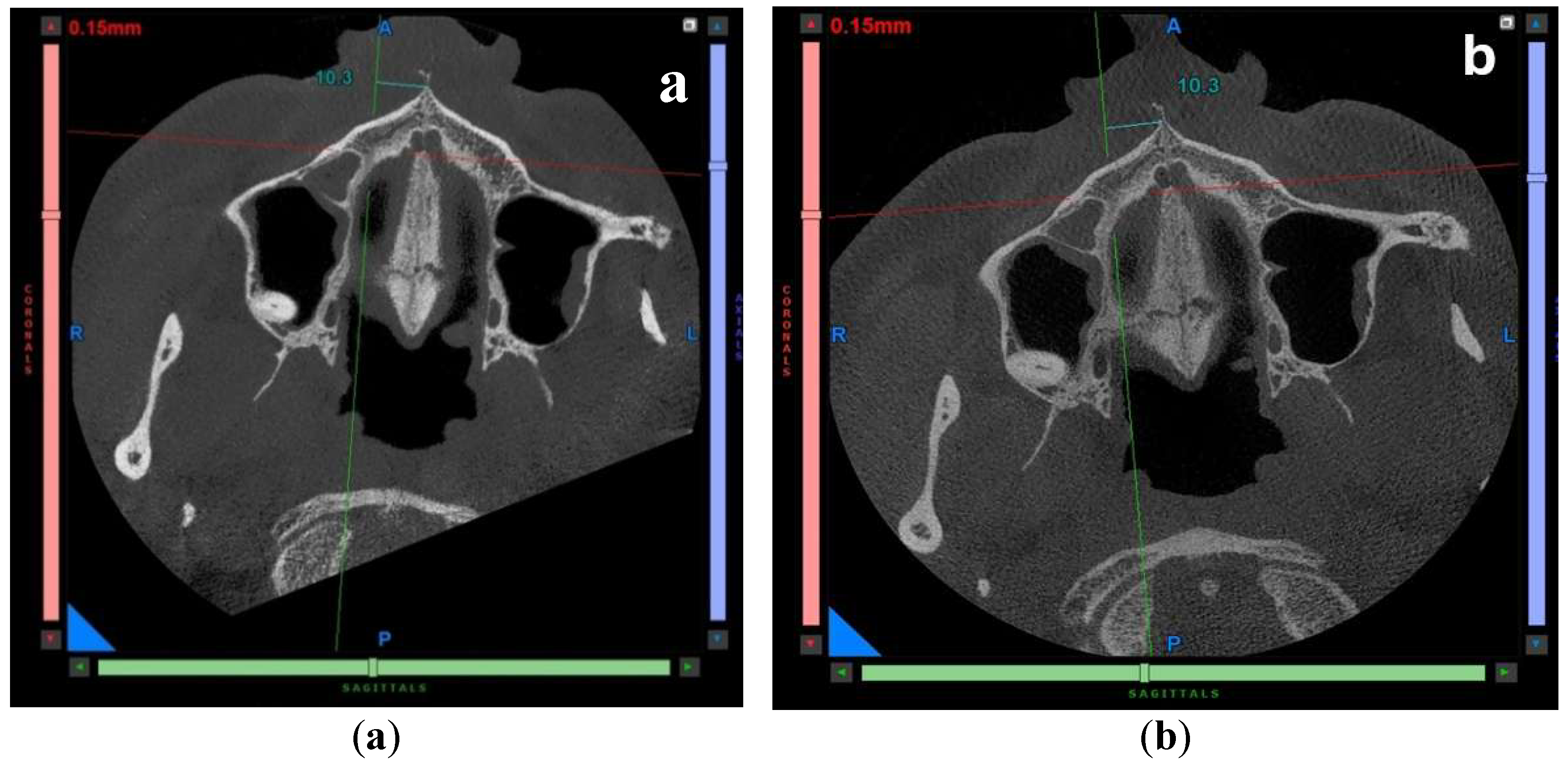
Figure 3.
Standardized CBCT-based morphometric analysis at baseline (T0) and post-implant placement (T1). Sagittal CBCT sections oriented perpendicular to the long axis of the tooth (a) and implant (b). Measurements were standardized using a line parallel to the nasal floor (NF) and a perpendicular vertical reference baseline (RBL) on which the most coronal point of the buccal bone was measured.
Figure 3.
Standardized CBCT-based morphometric analysis at baseline (T0) and post-implant placement (T1). Sagittal CBCT sections oriented perpendicular to the long axis of the tooth (a) and implant (b). Measurements were standardized using a line parallel to the nasal floor (NF) and a perpendicular vertical reference baseline (RBL) on which the most coronal point of the buccal bone was measured.
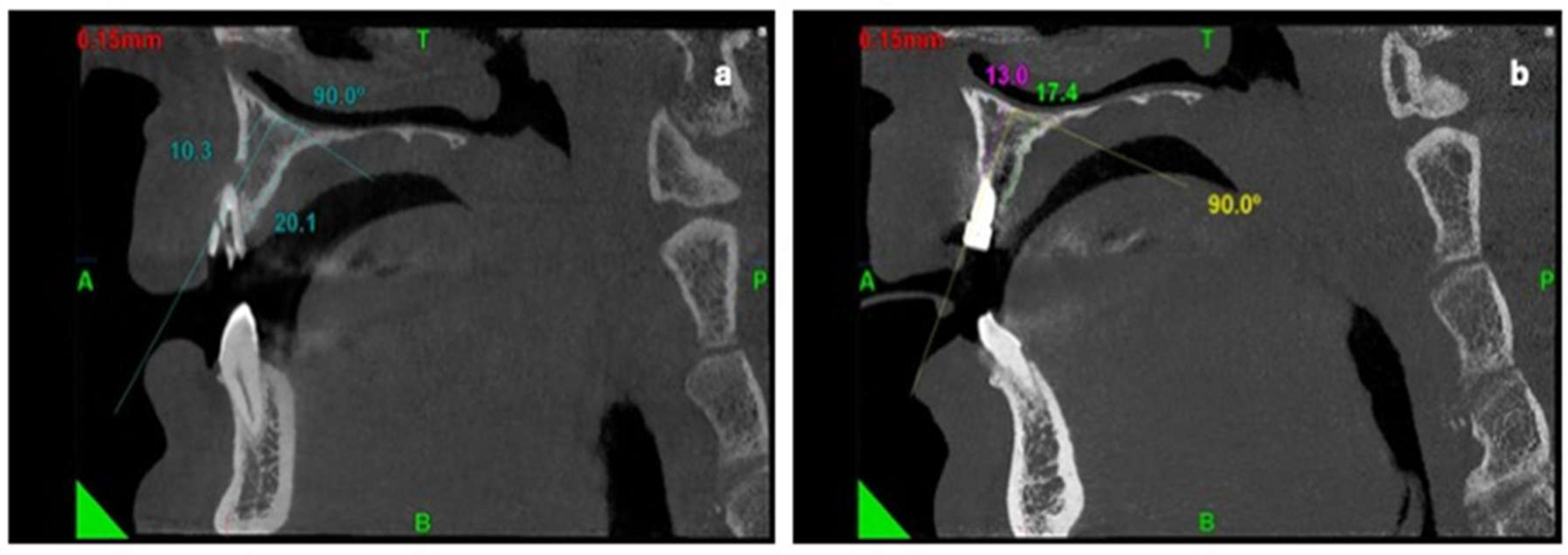
Figure 4.
CBCT-based horizontal and vertical morphometric measurements at tooth (a) and implant (b) sites. Horizontal bone thickness (HBT) was assessed in the bucco-palatal direction at 12, 15, 18, and 21 mm on the reference baseline (RBL). The vertical measurements were evaluated as the distance nasal floor–crest distance (NF–AC) and the buccal visible bone.
Figure 4.
CBCT-based horizontal and vertical morphometric measurements at tooth (a) and implant (b) sites. Horizontal bone thickness (HBT) was assessed in the bucco-palatal direction at 12, 15, 18, and 21 mm on the reference baseline (RBL). The vertical measurements were evaluated as the distance nasal floor–crest distance (NF–AC) and the buccal visible bone.
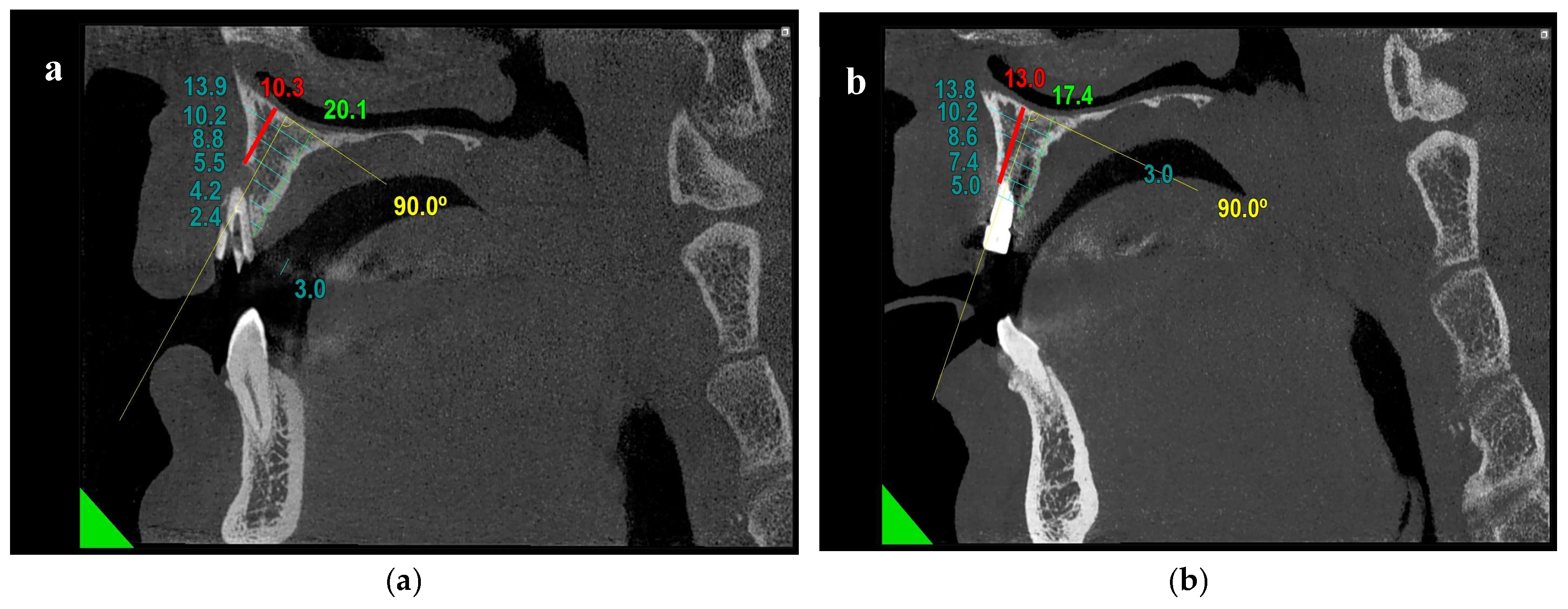
Figure 5.
a-f. Surgical procedure. (a) Preoperative clinical view showing the fractured maxillary lateral incisor 1.2. (b) Full-thickness flap elevation clearly exposing the pronounced buccal dehiscence defect. (c) Occlusal view after atraumatic extraction and thorough debridement, highlighting the extent of the buccal defect. (d) Implant insertion. (e) Immediate implant placement achieving primary stability despite the buccal dehiscence. (f) Occlusal view of the surgical site, illustrating the extent of the buccal defect following implant placement.
Figure 5.
a-f. Surgical procedure. (a) Preoperative clinical view showing the fractured maxillary lateral incisor 1.2. (b) Full-thickness flap elevation clearly exposing the pronounced buccal dehiscence defect. (c) Occlusal view after atraumatic extraction and thorough debridement, highlighting the extent of the buccal defect. (d) Implant insertion. (e) Immediate implant placement achieving primary stability despite the buccal dehiscence. (f) Occlusal view of the surgical site, illustrating the extent of the buccal defect following implant placement.
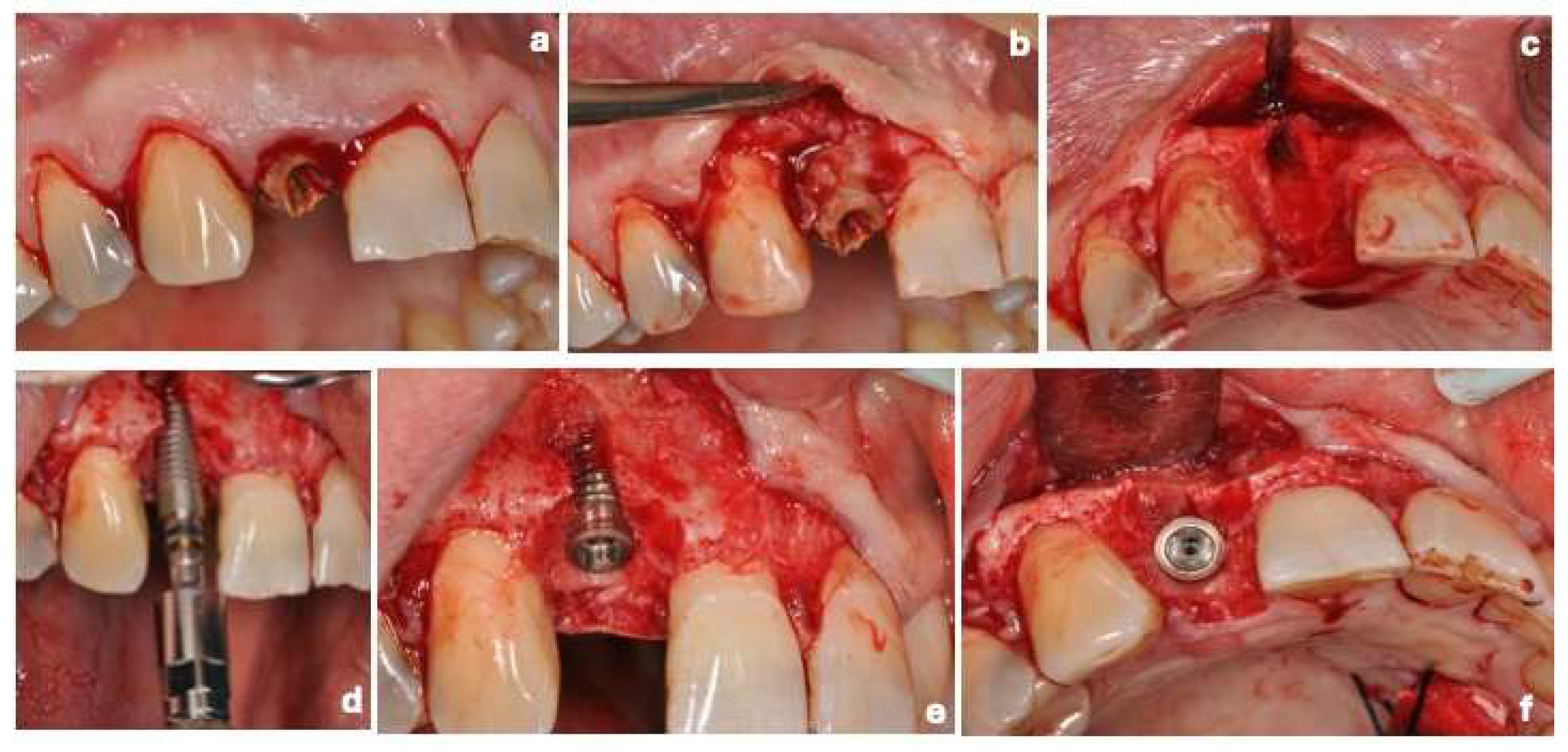
Figure 6.
a–e. Grafting and soft tissue management. (a) Placement of the L-PRF membranes over the buccal aspect of the implant site to compensate for the dehiscence defect. (b) Placement and stabilization of the connective tissue graft (CTG) (c) Adaptation of the flap over the grafted area. (d) Suturing and primary closure of the surgical site. (e) Occlusal view illustrating the final stabilization of the soft tissues.
Figure 6.
a–e. Grafting and soft tissue management. (a) Placement of the L-PRF membranes over the buccal aspect of the implant site to compensate for the dehiscence defect. (b) Placement and stabilization of the connective tissue graft (CTG) (c) Adaptation of the flap over the grafted area. (d) Suturing and primary closure of the surgical site. (e) Occlusal view illustrating the final stabilization of the soft tissues.
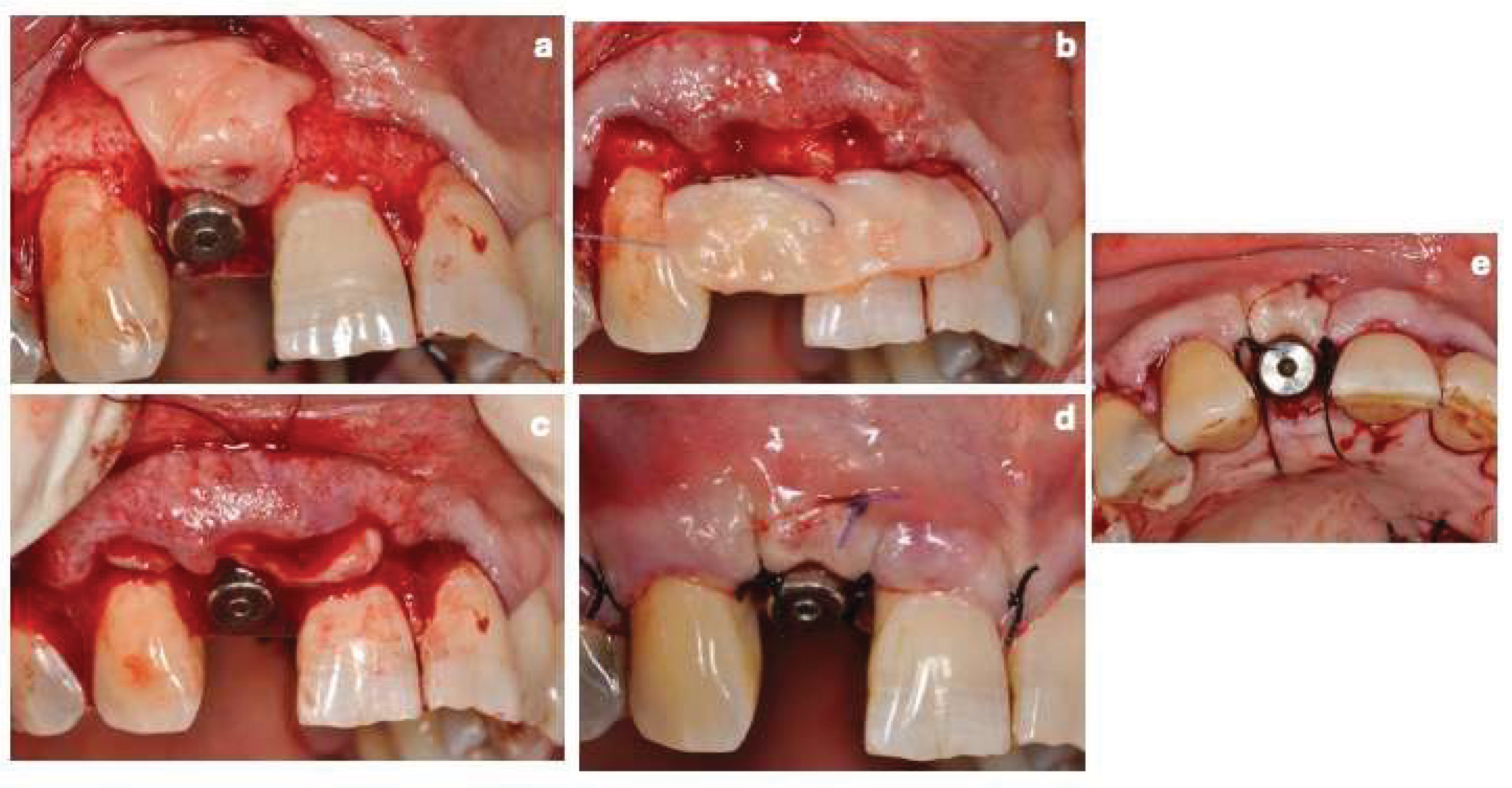
Figure 7.
a-c. Clinical outcomes at 12-month follow-up. (a) Frontal view showing stable peri-implant soft tissues and favorable esthetic integration. (b) Occlusal view demonstrating adequate contour and thickness of the peri-implant tissues. (c) Final clinical view after placement of the definitive crown, highlighting harmonious integration with the surrounding dentition and stable peri-implant soft tissue conditions.
Figure 7.
a-c. Clinical outcomes at 12-month follow-up. (a) Frontal view showing stable peri-implant soft tissues and favorable esthetic integration. (b) Occlusal view demonstrating adequate contour and thickness of the peri-implant tissues. (c) Final clinical view after placement of the definitive crown, highlighting harmonious integration with the surrounding dentition and stable peri-implant soft tissue conditions.
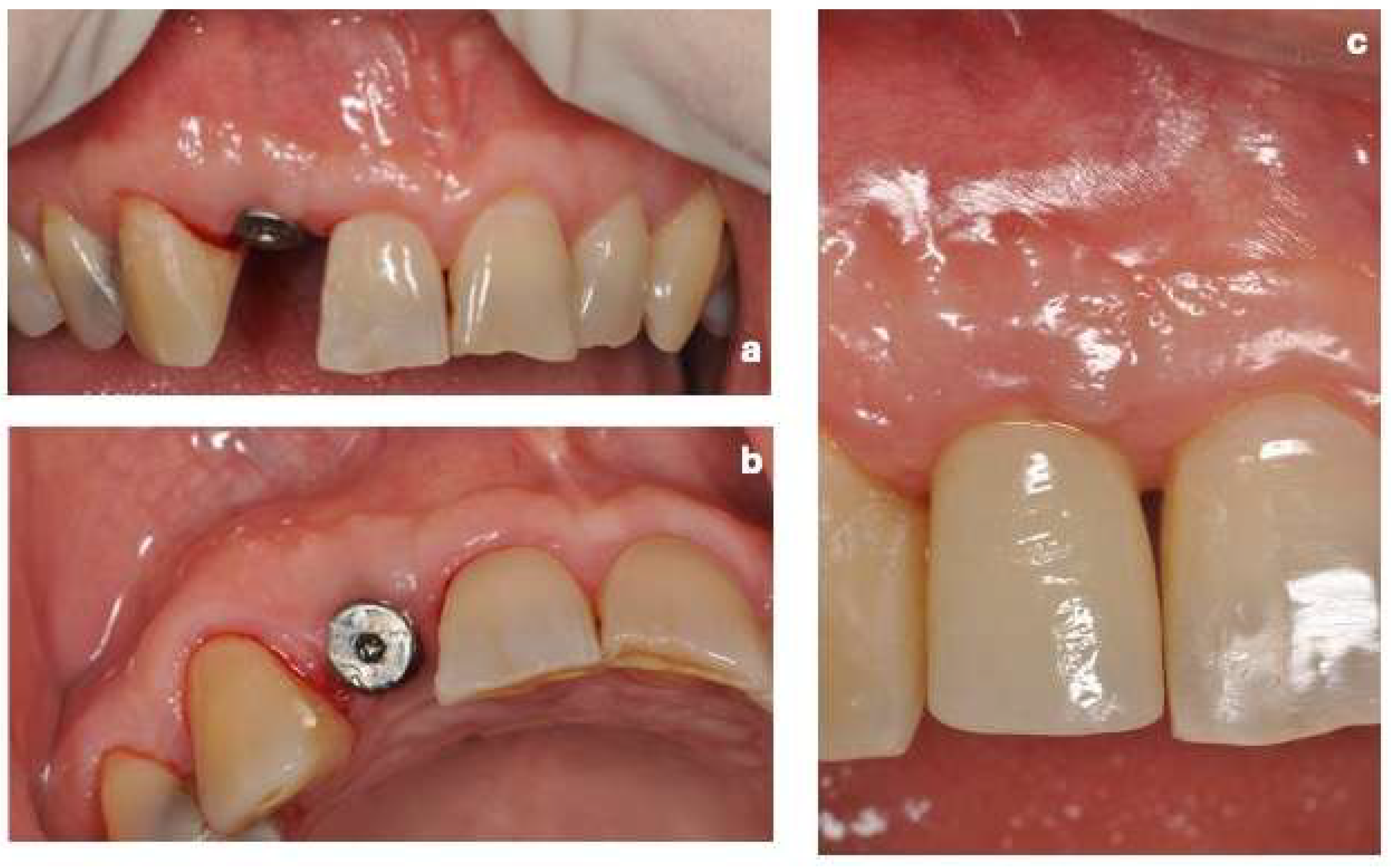
Figure 8.
a–b. Soft tissue augmentation outcome at follow-up. (a) Lateral view highlighting the increased thickness of the peri-implant soft tissues following CTG placement. (b) Occlusal view demonstrating improved soft tissue volume and contour, reflecting the effectiveness of the soft tissue augmentation procedure.
Figure 8.
a–b. Soft tissue augmentation outcome at follow-up. (a) Lateral view highlighting the increased thickness of the peri-implant soft tissues following CTG placement. (b) Occlusal view demonstrating improved soft tissue volume and contour, reflecting the effectiveness of the soft tissue augmentation procedure.
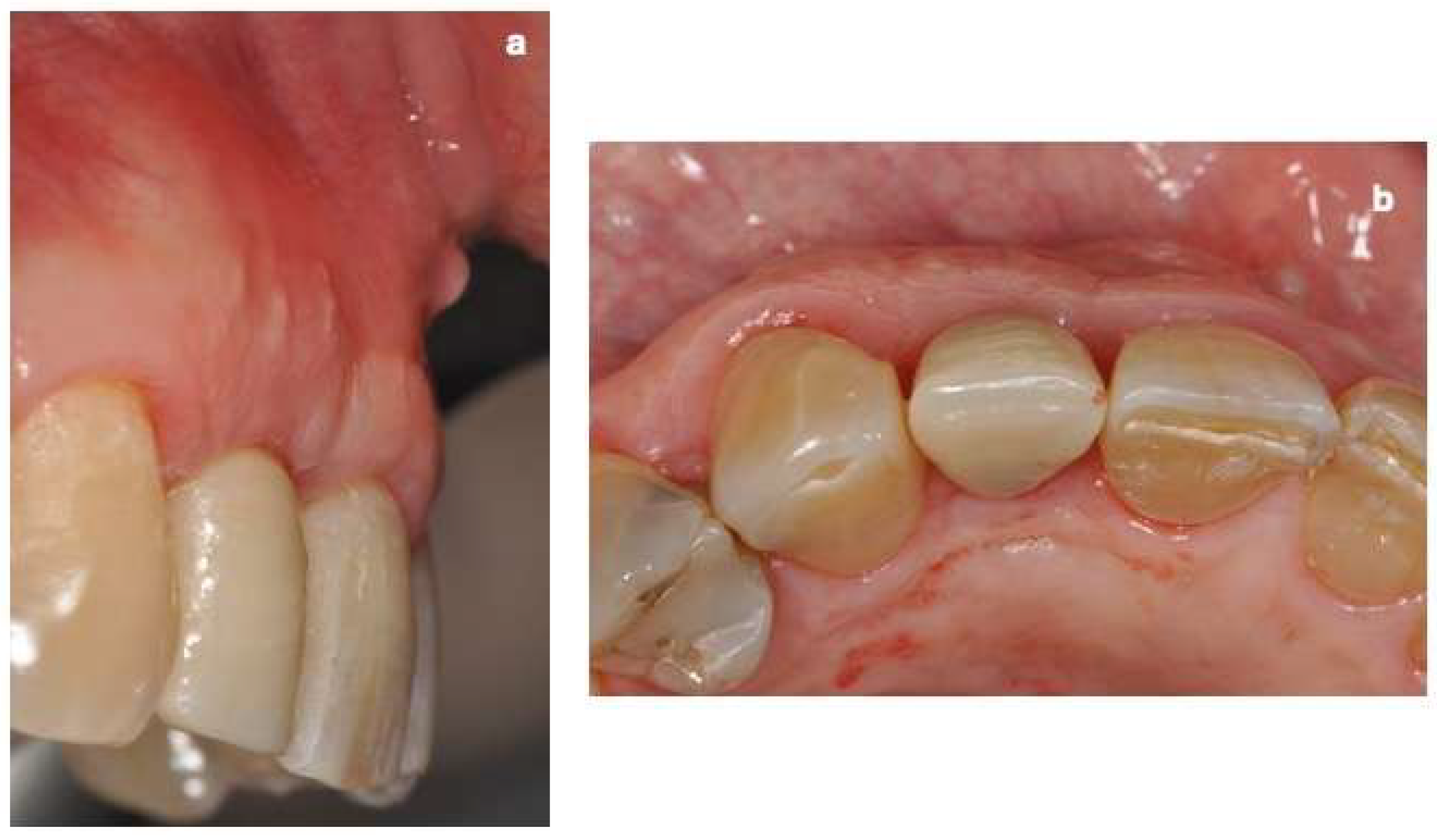
Figure 9.
a–c. Clinical probing assessment at 12-month follow-up. (a–c) Periodontal probing of the buccal aspect of the implant site demonstrating the absence of probe penetration, despite incomplete radiographic buccal bone coverage. This finding suggests the presence of a stable soft tissue seal.
Figure 9.
a–c. Clinical probing assessment at 12-month follow-up. (a–c) Periodontal probing of the buccal aspect of the implant site demonstrating the absence of probe penetration, despite incomplete radiographic buccal bone coverage. This finding suggests the presence of a stable soft tissue seal.
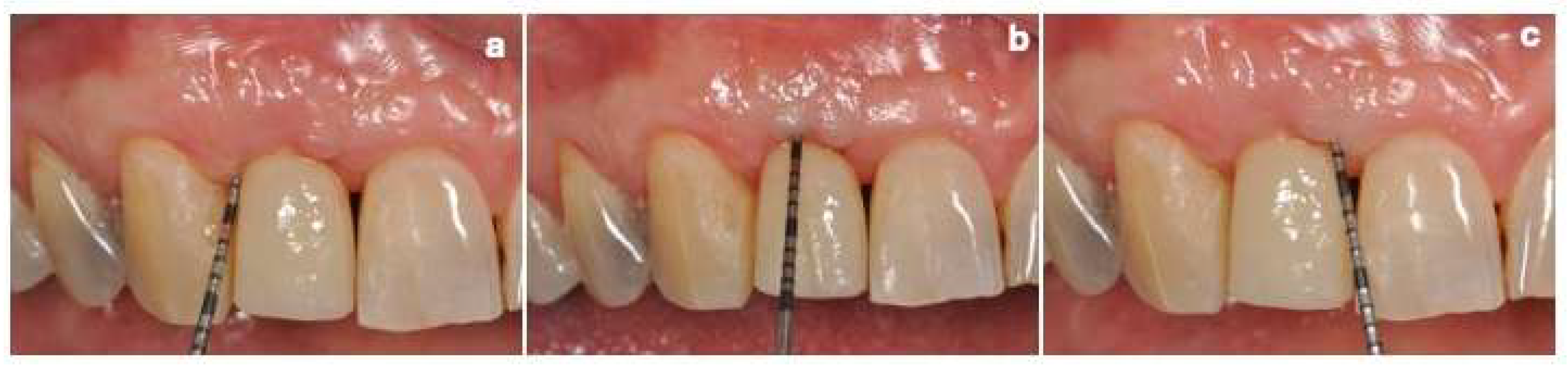

Table 1.
Radiographic and clinical outcomes measured at baseline (T0) and 12 months (T1), with corresponding dimensional gains.
Table 1.
Radiographic and clinical outcomes measured at baseline (T0) and 12 months (T1), with corresponding dimensional gains.
| Parameters | Baseline | 12 month follow up | Gain |
| Radiographic outcomes | |||
| HBT 21 mm | 2,4 mm | 5,0 mm | 2.6 mm |
| HBT 18 mm | 4,2 mm | 7,4 mm | 3,2 mm |
| HBt 15 mm | 5,5 mm | 8,6 mm | 3,1 mm |
| HBT 12 mm | 8,8 mm | 10,2 mm | 1,4 mm |
| NF-AC | 10,3 mm | 13,0 mm | 2,7 mm |
| Clinical Outcomes | |||
| KT | 3 mm | 5 mm | 2 mm |
| GT | 1,4 mm | 3,2 mm | 1,8 mm |
Disclaimer/Publisher’s Note: The statements, opinions and data contained in all publications are solely those of the individual author(s) and contributor(s) and not of MDPI and/or the editor(s). MDPI and/or the editor(s) disclaim responsibility for any injury to people or property resulting from any ideas, methods, instructions or products referred to in the content. |
© 2026 by the authors. Licensee MDPI, Basel, Switzerland. This article is an open access article distributed under the terms and conditions of the Creative Commons Attribution (CC BY) license (http://creativecommons.org/licenses/by/4.0/).
Copyright: This open access article is published under a Creative Commons CC BY 4.0 license, which permit the free download, distribution, and reuse, provided that the author and preprint are cited in any reuse.


