

Submitted:
04 June 2026
Posted:
05 June 2026
You are already at the latest version
Abstract
Incretin-based therapies produce robust weight loss in obesity and type 2 diabetes mellitus (T2DM), but a substantial proportion of weight lost is lean body mass (LBM), raising concern about sarcopenia and functional decline. Hypogonadal men with obesity and T2DM are particularly predisposed to muscle loss. Whether concurrent anabolic therapy can preserve skeletal muscle mass (SMM) during incretin-mediated weight loss remains unknown. This retrospective case series reports on the results of 93 hypogonadal men (BMI ≥30 kg/m², testosterone <400 ng/dL) with (N=45) or without (N=48) T2DM were treated for obesity with or without T2DM at a single outpatient clinic. All patients received weekly tirzepatide, testosterone cypionate, and lifestyle coaching emphasizing resistance exercise and high-protein nutrition. Body composition was measured by multi-frequency segmental bioelectrical impedance analysis, and grip strength by dynamometry, at baseline and 3, 6, and 12 months. Laboratory measures included hemoglobin A1c (HbA1c), high sensitivity-CRP (hs-CRP), and LDL cholesterol. Patient-reported outcomes were assessed using the PROMIS Global Health 10. Over 12 months, body mass decreased by 20.9-22.6 kg (18-20%) and fat mass declined 16.6-17.1 kg (38-40%). LBM decreased 4.0-6.1 kg, considerably less than reported with incretin monotherapy. SMM increased by 1.6-3.7 kg (4-12%), and grip strength improved 5.7-7.1 kg (18-21%). In diabetic patients, HbA1c fell from 10.1% to 5.8%. LDL cholesterol decreased by 20% and hs-CRP declined 43-53%. PROMIS physical and mental health scores improved significantly by 13-16% in both groups. In hypogonadal men with obesity, a comprehensive program combining tirzepatide, testosterone, resistance exercise, and lifestyle coaching produced substantial fat loss and cardiometabolic improvements while simultaneously increasing SMM and grip strength over 12 months. These findings suggest that concurrent anabolic therapy and resistance exercise may attenuate the lean mass loss typically associated with incretin therapies, though prospective randomized trials are needed to confirm these results.
Keywords:
body composition
; hypogonadism
; resistance training
; skeletal muscle mass
; testosterone
; tirzepatide
1. Introduction
Obesity and type 2 diabetes mellitus (T2DM) frequently co-occur with male hypogonadism, forming a self-reinforcing triad of metabolic dysfunction. Approximately one-third to one-half of men with obesity or T2DM have low testosterone levels, a prevalence that rises when both conditions coexist [1]. The resulting hypogonadism promotes further fat accumulation, insulin resistance, and loss of lean mass in a perpetuating cycle that worsens cardiometabolic risk [1]. Tirzepatide, a dual glucagon-like peptide-1 (GLP-1) receptor and glucose-dependent insulinotropic polypeptide (GIP) agonist, has demonstrated robust weight reduction of 15–21% and marked improvements in glycemic control and lipid profiles in large clinical trials [2,3]. However, approximately 25% of the weight lost with tirzepatide is lean body mass (LBM) rather than fat mass (FM), raising concern about sarcopenia and functional decline, particularly in populations already predisposed to muscle loss such as hypogonadal men [4]. Testosterone replacement therapy increases LBM, FM, and attenuates diet-induced muscle loss in men with obesity and hypogonadism [5], yet no study has examined whether concurrent testosterone therapy can preserve LBM or skeletal muscle mass (SMM) during incretin-mediated weight loss. This retrospective case series describes 12-month outcomes in hypogonadal men with obesity, with and without T2DM, treated with tirzepatide plus testosterone cypionate and supported by weekly lifestyle coaching.
2. Materials and Methods
2.1. Eligibility
This series included ninety-three hypogonadal men treated for obesity with (N = 45, mean age 48.3 years, range 40.3 to 58.8 years) or without (N = 48, mean age 49.3 years, range 40.5 to 59.8 years) T2DM at a single outpatient clinic comprised this retrospective case series. The study adhered to the Declaration of Helsinki. The case series used de-identified data generated during routine clinical care, and formal IRB approval was not necessary. Patients were included if they were between the ages of 40–60 years, had a BMI ≥ 30 kg/m2, and a serum testosterone < 400 ng/dL along with a positive Androgen Deficiency in the Aging Male (ADAM) screening questionnaire [6], indicating symptomatic hypogonadism [7,8]. Patients were excluded from this series if they had prostate-specific antigen (PSA) ≥ 4.0 ng/mL, polycythemia, active infection, malignancy, advanced cardiovascular disease, metal implants, or were planning to conceive during the treatment period.
2.2. Clinical Laboratory Testing, Grip Strength, and Body Composition
Hemoglobin A1c (HbA1c), serum testosterone, high-sensitivity C-reactive protein (hs-CRP), a complete blood count, comprehensive metabolic panel, lipid panel, and PSA were measured at all time points. After initiating treatment with testosterone labs were drawn as close to the treatment trough value as possible, and testosterone labs > 36 h from the 7-day trough were excluded from analysis. Patients were classified as non-diabetic (hemoglobin A1c < 6.5%) or diabetic (hemoglobin A1c ≥ 6.5% cohort). A Jamar digital dynamometer (Patterson Medical, Warrenville, IL) measured grip strength in the dominant hand. An InBody 270 system (InBody, Cerritos, CA) measured body composition.
2.3. Medication
Patients were prescribed tirzepatide (Mounjaro or Zepbound) starting at a dose of 2.5 mg weekly. For obese non-diabetic patients, the dose was increased as tolerated, contingent on weight loss plateauing at the current dose. For T2DM patients, the dose was increased based on both weight loss progress and glycemic control. Dose adjustments were made at follow-up or coaching visits. All patients who were in the cohort for the full year had reached a dose of 12.5 mg or 15 mg of tirzepatide. Of the 45 T2DM patients, 36 were taking metformin or a sulfonylurea with inadequate glycemic control (HbA1c > 7.0%), and their antidiabetic medication was discontinued before initiating tirzepatide. Non-diabetic patients were not taking any weight-loss medication. Testosterone cypionate was delivered intramuscularly starting at 100 mg weekly, with the dose adjusted based on symptom resolution and tolerance.
2.4. Outcomes
Patients completed the PROMIS Global Health 10 to assess general physical and mental health outcomes [9]. Raw scores were converted to T-scores for analysis.
2.5. Coaching
To improve treatment adherence, interactive weekly coaching sessions were conducted in-person or over SMS messaging. The topics of coaching sessions are listed in Table 1. Patients received adherence reminders and weekly education covering topics including physical activity, diet, obesity, glycemic control, metabolism, hypogonadism, cardiovascular disease, fitness, and healthy aging. Patients were instructed to consume 150–200 g of protein daily and to perform more than 150 min of weekly exercise, with 60–70% consisting of resistance training. For simplicity and convivence, coaching around protein intake focused on absolute amounts instead of g protein per kg body weight.
2.6. Physical Activity
Self-reported average physical activity was quantified on an ordinal scale: 1, no moderate or vigorous activity; 2, <150 min of moderate or <75 min of vigorous weekly activity; 3, 150–300 min of moderate or 75–150 min of vigorous weekly activity; 4, >300 min of moderate or >150 min of vigorous weekly activity.
2.7. Statistics
Continuous outcomes were analyzed with a linear mixed effects model (α = 0.05) that included glycemic group, time, and the group by time interaction as fixed effects and a random intercept for each patient, estimated by restricted maximum likelihood. For each outcome, we compared non-diabetic and diabetic patients at each time point, and also compared all pairs of time points within each glycemic (non-diabetic or diabetic) group. Multiple comparisons were controlled using the Holm-Sidak method. Physical activity scores (α = 0.05) were compared with Mann-Whitney U tests between groups and Wilcoxon signed-rank tests within groups, with Holm-Sidak corrections. Analyses were performed in Python 3.12 with statsmodels 0.14 and SciPy 1.17. Values presented are estimated marginal mean ± 95% confidence interval.
3. Results
Ninety-three men were included, N = 48 without T2DM (−T2DM) and N = 45 with T2DM (+T2DM). By 12 months N = 40 non-diabetic and N = 36 diabetic patients remained in follow-up.
3.1. Body Mass and Composition
Both groups experienced considerable changes in body composition over 12 months (Figure 1). Body mass decreased 22.6 kg (20%) in non-diabetics and 20.9 kg (18%) in diabetics, with parallel reductions in BMI, transitioning from class II obesity to class I obesity and overweight (Figure 1A,B). FM decreased 16.6 kg (40%) in non-diabetics and 17.1 kg (38%) in diabetics, body fat percentage fell approximately 9 percentage points in both groups, with body fat percentage and adiposity indices declining in concert (Figure 1C–G). LBM decreased 6.1 kg in non-diabetics (8%) and 4.0 kg in diabetics (5%) (Figure 1F,G). SMM increased, by 1.6 kg in non-diabetics (4%) and 3.7 kg in diabetics (12%) (Figure 1H,I). Grip strength improved 7.1 kg in non-diabetics (21%) and 5.7 kg in diabetics (18%) (Figure 1J).
3.2. Laboratory Measures
HbA1c fell in diabetics by 43%, from 10.1% to 5.8%, converging with non-diabetics by 12 months (Figure 2A). Testosterone rose considerably, with treatment trough levels approximately doubling from baseline (Figure 2B). For hs-CRP, levels fell below the high-risk threshold in both groups, by 43% in non-diabetics and 53% in diabetics (Figure 2C). LDL cholesterol decreased about 20% in both groups, entering the near-optimal range (Figure 2D).
3.3. Patient-Reported Outcomes and Physical Activity
PROMIS physical and mental component scores improved in both groups over 12 months, by 16% and 14% in non-diabetics and 13% and 15% in diabetics, with no between-group differences at any time point (Figure 3). Self-reported physical activity shifted toward higher categories in both groups, with over 75% of patients engaging in regular physical activity and up to 63% engaging in over 150 min of regular exercise weekly (Figure 4).
4. Discussion
Incretin-based therapies have transformed the treatment of obesity and type 2 diabetes, with considerable reductions in FM along with marked improvements in glycemic control, lipid profiles, and inflammation, while reducing the burden of cardiovascular, kidney, and liver disease [10]. However, a consistent limitation of all weight-loss interventions, including incretin therapies, is the loss of SMM [11]. Preserving or increasing muscle tissue during obesity treatment is important because increased SMM is associated with better insulin sensitivity and glycemic control, lower cardiometabolic risk, improved physical function, reduced frailty risk, and greater long-term weight maintenance after fat loss [11]. Men with hypogonadism are at greater risk of developing obesity and T2DM, and having disproportionately greater impacts of these diseases on their health [1]. To address this gap, we developed a structured, biologically informed clinical treatment program for obesity and T2DM integrating four complementary strategies: (i) tirzepatide for robust FM reduction and glycemic control; (ii) testosterone to promote muscle hypertrophy and oppose atrophy; (iii) resistance exercise emphasizing progressive overload to further potentiate muscle protein synthesis; and (iv) weekly lifestyle coaching centered on high-protein nutrition (150–200 g/day) and behavioral adherence. This multimodal approach was designed to shift the composition of weight loss towards FM while preserving or increasing SMM. In the present cohort, we achieved clinically relevant reductions in FM, glycemic load, LDL, and inflammation while improving SMM, strength, and quality of life.
4.1. Body Composition and Strength Changes
An important consideration when interpreting body composition changes during weight loss is the distinction between LBM and SMM. LBM encompasses not only skeletal muscle (45–60%) but also organs, total body water, glycogen-associated water, connective tissue, and other nonfat soft tissues (40–55%) [12]. This distinction is clinically consequential during weight loss, as reductions in water, glycogen, organ mass, and adipocyte stroma that accompany a shrinking body habitus are captured within the lean mass compartment [12]. Some healthy reduction in LBM is expected during weight loss, as organs, connective tissue, and fluid volumes contract proportionally with overall body size [13]. When measuring changes in body composition during weight loss, many studies use dual x-ray absorptiometry (DXA), which has high accuracy in measuring LBM and FM, but cannot distinguish SMM from LBM [14]. MRI and CT are the most accurate in vivo methods for quantifying SMM [15] but have practical limitations in a clinical setting. The present study measured LBM and SMM using a multi-frequency segmental bioelectrical impedance analysis (BIA) device. BIA shows strong agreement with reference standards, with SMM correlating well with MRI (r = 0.97) and BF correlating well with DXA (r = 0.89) [16,17].
The magnitude of total weight reduction observed here is broadly consistent with the 15–21% reductions reported in large clinical trials [2,3]. However, the body composition profile diverges markedly from those trials. In obese non-diabetic men, tirzepatide reduced DXA-measured lean mass by 10% alongside a 36% reduction in fat mass [4]. For overweight to obese diabetic subjects treated with tirzepatide, MRI analysis demonstrated a 5.5% reduction in thigh muscle volume which was proportional to changes in body weight, suggesting that tirzepatide does not cause muscle loss beyond what would be expected from weight reduction alone [18]. The differential effects of incretin therapeutics on LBM versus SMM have been further supported by preclinical studies. In obese male mice treated with semaglutide, body mass decreased by 9%, with 10% reductions in both FM and LBM [19,20]. Semaglutide reduced the wet mass of solid organs by 33%, with an 8% reduction in wet mass of muscles, but no change in muscle fiber cross-sectional area, fiber type distribution, or maximum isometric force was observed [19]. Consistent with these observations, in obese patients treated with semaglutide for 6 months, there was no change in grip strength despite a 5% reduction in SMM [21].
Outside of incretin therapy, there is robust evidence that supports the role of resistance exercise and testosterone in favorably modifying body composition during weight loss. At the biochemical level, resistance exercise activates mechanotransduction through the mTORC1 pathway, whereby mechanical loading stimulates phosphorylation of p70S6K and 4E-BP1 to increase ribosomal biogenesis and muscle protein synthesis, while simultaneously suppressing muscle protein breakdown through Akt-mediated phosphorylation and nuclear exclusion of FoxO transcription factors, which prevents upregulation of the E3 ubiquitin ligases MuRF1 and atrogin-1 [22,23]. Testosterone binds to the androgen receptor (AR) to activate similar pathways as resistance exercise, while transcriptionally upregulating multiple genes involved in myogenesis and muscle contractility and blocking expression of atrophy-related genes [24,25,26].
A meta-analysis of 114 trials found that resistance training during caloric restriction was the most effective strategy for reducing fat mass while maintaining lean mass, whereas caloric restriction without resistance training resulted in significant lean mass loss [27]. Resistance training was also the only exercise modality associated with fat-free mass gains during caloric restriction, while aerobic exercise and no exercise groups both lost lean mass [28]. In a controlled trial of men undergoing a 40% energy deficit with concurrent resistance and high-intensity interval training, a high-protein diet produced a net gain of 1.2 kg in lean body mass alongside a 4.8 kg reduction in fat mass over 4 weeks, demonstrating that body recomposition is achievable during caloric restriction with appropriate protein intake and exercise stimulus [29]. Testosterone therapy provides complementary benefits. In the absence of concurrent exercise or dietary intervention, hypogonadal men treated with 125 mg/week of testosterone enanthate for 52 weeks, LBM increased by 7% (4.0 kg) and BF decreased by 10% (3.9 kg), while grip strength improved by 11.3% (0.8 kg) and upper and lower body muscle 1-repetition maximum strength increased by 8–14% (5.3–12.9 kg) [30]. In another study, hypogonadal men receiving 125 mg/week of testosterone enanthate gained 5.5% (3.5 kg) LBM, with 5–7% increases (150 to 200 N) in leg-press strength [31]. Meta-analyses of 48 studies assessing the impact of exercise alone, testosterone alone, or combined therapy found that exercise alone improved both LBM and muscle strength, testosterone alone also improved LBM and strength, and their combination produced greater gains in LBM and strength than either intervention in isolation, although the effects were diminished with advanced age [32,33]. In a 56-week RCT that combined testosterone with a very low energy diet (640 kcal/day transitioning to 1350 kcal/day after 10 weeks) and moderate-intensity exercise in obese hypogonadal men, compared with placebo injection testosterone produced a 45% greater reduction in fat mass (−9.6 kg testosterone vs. −6.5 kg placebo) and attenuated LBM loss by 85% (−0.6 kg testosterone vs. −4.0 kg placebo) [34]. This indicated that the weight loss in testosterone-treated men was almost exclusively due to loss of body fat while total body weight loss did not differ between groups [34]. Collectively, these data demonstrate that resistance exercise preserves muscle function and attenuates lean mass loss, testosterone shifts the composition of weight loss toward fat, and the combination may produce additive benefits.
4.2. Hemoglobin A1c Changes
Across the SURPASS phase 3 program, tirzepatide reduced HbA1c by 1.9–2.6 percentage points from baseline values of 7.9–8.5%, with 31–52% of participants reaching euglycemia at 40–52 weeks [35,36]. In the current study, we observed a 4.3 percentage point reduction in HbA1c, from a mean of 10.1% to 5.8%, with 42% of subjects reaching euglycemia. The higher baseline HbA1c likely reflects differences in patient selection and clinical setting relative to trial sites. In the current study we had 12 patients who were newly diagnosed with T2DM and 36 who had inadequately managed T2DM in primary care, while clinical trials are typically conducted at specialized centers where clinicians are highly motivated to optimize glycemic management. The HbA1c reductions observed here likely reflect several factors affecting insulin signaling and skeletal muscle glucose uptake.
Patients with obesity and T2DM often have an accumulation of intramuscular adipose tissue (IMAT) that can contribute to insulin insensitivity and elevated HbA1c. IMAT accumulates in obesity and T2DM through aberrant adipogenic differentiation of fibro-adipogenic progenitors, which impair skeletal muscle insulin signaling by releasing ceramide and diacylglycerol (DAG) into the local muscle microenvironment [37,38,39]. Ceramide and DAG activate PKCθ and NFκB pathways that block PI3K/Akt signaling downstream of the insulin receptor [37,38,39]. Tirzepatide can reduce IMAT through GLP-1R-mediated AMPK activation in skeletal muscle to promote beta-oxidation of accumulated fatty acids and apoptosis of fibro-adipogenic cells, while the GIPR component reduces the systemic lipid overflow that drives ectopic muscle fat deposition by improving postprandial triglyceride clearance into dedicated adipose depots and enhancing fasted-state lipolysis via hormone-sensitive lipase activation [40,41]. Consistent with this finding, the SURPASS-3 MRI substudy identified a 5.1% reduction in IMAT in patients treated with tirzepatide [18].
Patients in the current study were encouraged to engage in regular resistance exercise, which can activate GLUT4 translocation through a contraction-mediated pathway that is entirely distinct from insulin signaling, relying instead on calcium/calmodulin-dependent protein kinase II (CaMKII), AMPK, and downstream Rab-GTPase/SNARE machinery, resulting in increased glucose disposal and reduced HbA1c [42,43]. A meta-analysis of 43 studies identified that resistance exercise results in a 0.6 percentage point reduction in HbA1c in patients with T2DM [44]. Testosterone interacts with insulin signaling through both non-genomic and genomic pathways. Upon binding to the AR, testosterone activates PI3K through non-genomic AR interactions, engaging the canonical insulin signaling pathway to promote GLUT4 translocation, intramyocellular glucose uptake, and glycogen synthesis via GSK3β inhibition [45,46]. At the genomic level, activated AR upregulates the expression of several genes involved in insulin signaling, including insulin receptor β subunit, IRS-1, Akt, and GLUT4 [47]. Testosterone therefore enhances insulin sensitivity both by amplifying PI3K signaling downstream of the insulin receptor, and by increasing levels of proteins involved in insulin sensing and signal transduction in muscle cells [45,46,47]. Consistent with the biochemical effects of testosterone, a meta-analysis of 18 RCTs found that testosterone reduced HbA1c by 0.7–0.8 percentage points in men with T2DM [48]. The considerable improvement in HbA1c in this study is therefore likely due to the pharmacological actions of tirzepatide and testosterone, along with the physiological effects of resistance exercise.
4.3. Inflammation and LDL Changes
CRP declined 43–53% in both groups, falling below the average-risk cardiovascular threshold. CRP is transcribed in hepatocytes primarily through IL-6–driven JAK–STAT3 signaling, with TNF-α and IL-1β amplifying this response via NF-κB co-activation of the CRP promoter [49]. Each component of the treatment program targets this inflammatory cascade through distinct mechanisms. Tirzepatide suppresses the TLR4/NF-κB/NLRP3 inflammasome pathway and promotes anti-inflammatory M2 macrophage polarization in adipose tissue, with meta-analyses showing a 33% reduction in hs-CRP partly independent of weight loss [50,51,52,53]. Testosterone reinforces this effect by stabilizing IκBα to prevent NF-κB nuclear translocation and reducing macrophage TLR4 expression, consistent with observational data demonstrating an inverse association between testosterone and CRP in men with obesity [54,55,56]. Resistance exercise further attenuates systemic inflammation by stimulating muscle-derived myokine release that triggers anti-inflammatory IL-10 and IL-1ra production while downregulating NF-κB activity [57]. These convergent anti-inflammatory mechanisms likely contributed to the magnitude of CRP reduction observed across both cohorts, and the transition from the high to average risk category is clinically meaningful given the well-established association between elevated CRP and increased risk of cardiovascular events, metabolic disease progression, and all-cause mortality [58].
LDL cholesterol decreased approximately 20% in both cohorts, transitioning from borderline-high to near-optimal levels. In the SURPASS trials, tirzepatide reduced LDL cholesterol by 5–8% in patients with T2DM, with the largest reductions seen in the high-cardiovascular-risk SURPASS-4 population [36,59]. The LDL reductions observed in the present cohort substantially exceed those reported with tirzepatide monotherapy, suggesting additive contributions from the other program components. At the molecular level, testosterone suppresses hepatic PCSK9 through AR-mediated signaling, thereby increasing hepatic LDL receptor density and enhancing LDL breakdown [60]. Resistance exercise reduces PCSK9 and SREBP-2/LDLR expression in hepatocytes, providing a further modest but consistent LDL-lowering effect of 6–13 mg/dL [61,62,63]. The approximate 20% LDL reduction observed here is clinically meaningful, as both cohorts transitioned from the borderline-high category at baseline to the near-optimal range [64] by 12 months.
4.4. Health Outcomes and Coaching
The improvements in PROMIS physical and mental health scores and the shift toward higher self-reported physical activity categories are clinically meaningful and likely reflect the combined effects of weight loss, improved body composition, testosterone-mediated improvements in energy and mood, and the weekly coaching intervention [9,65,66]. Weekly outreach, delivered primarily over SMS with some in-person sessions, provided a low-burden coaching touchpoint that reinforced medication adherence, nutrition goals, resistance training, physical activity, self-monitoring, medication dose adjustments, and early identification and management of side effects or behavioral barriers. This ongoing contact may have contributed to the observed improvements in obesity and diabetes outcomes, as text message-based behavioral interventions have been shown to produce modest but significant improvements in weight loss, BMI, physical activity, and glycemic control, including reductions in HbA1c among patients with diabetes [67,68].
4.5. Limitations
Several limitations warrant consideration. The retrospective, single-center design without a control group precludes causal inference, and the independent contributions of tirzepatide, testosterone, and lifestyle coaching cannot be disentangled. Body composition was assessed by BIA rather than DXA or MRI, which may be less precise for tracking lean mass changes. BIA is most accurate for detecting changes at the group level [69], which is the level of analysis employed in the present study. Additionally, BIA estimates are sensitive to hydration status, and the large shifts in total body water that accompany rapid weight loss and testosterone-induced fluid retention could influence the lean mass estimates in opposing directions, potentially underestimating fat loss while overestimating lean mass gains [70]. Despite these limitations, the use of a single device across all patients and time points in the present study ensured internal consistency. The observed improvements in grip strength further support the interpretation that SMM gains reflect genuine hypertrophy [71]. The cohort was exclusively male and ranged from 40 to 60 years of age, limiting generalizability to women and other age groups. Attrition over 12 months (17% in non-diabetics, 20% in diabetics) may introduce survivorship bias. We did not track diet or physical activity using accelerometry or detailed logs, limiting insight into more detailed dietary or activity parameters.
5. Conclusions
This retrospective case series demonstrates that a comprehensive treatment program combining tirzepatide, testosterone cypionate, resistance exercise, and high-protein lifestyle coaching produced substantial fat mass reductions and improvements in glycemic control, LDL cholesterol, and systemic inflammation in men with obesity and hypogonadism, with and without T2DM, while simultaneously increasing skeletal muscle mass and grip strength over 12 months. Unlike prior incretin trials, in which 25% or more of weight lost was lean mass, the present cohort gained skeletal muscle and strength while losing fat, suggesting that concurrent anabolic therapy and structured lifestyle intervention can shift the composition of weight loss away from lean mass and toward fat. These findings were consistent across both non-diabetic and diabetic subgroups, with diabetic patients achieving a 4.3 percentage point reduction in HbA1c to near-euglycemic levels. The absence of a control group and the retrospective design preclude causal attribution to any single intervention, and prospective randomized trials are needed to isolate the independent and combined contributions of each program component. Nonetheless, these results provide a clinical rationale for integrating anabolic pharmacotherapy with incretin-based weight loss strategies in hypogonadal men and support the feasibility of preserving musculoskeletal health during aggressive obesity treatment.
Author Contributions
Conceptualization, CLM and TMA; formal analysis, CLM; resources, CLM and TMA; data curation, CLM and TMA.; writing—original draft preparation, CLM; writing—review and editing, CLM and TMA. All authors have read and agreed to the published version of the manuscript.
Funding
This research received no external funding.
Institutional Review Board Statement
Not applicable.
Informed Consent Statement
Not applicable.
Data Availability Statement
Not applicable.
Acknowledgments
Not applicable.
Conflicts of Interest
Tariq Awan receives compensation from Arthrex for activities unrelated to this work.
Abbreviations
The following abbreviations are used in this manuscript:
| ADAM | Androgen Deficiency in the Aging Male |
| Akt | Protein kinase B |
| AMPK | AMP-activated protein kinase |
| AR | Androgen receptor |
| BF | Body fat |
| BIA | Bioelectrical impedance analysis |
| BMI | Body mass index |
| CaMKII | Calcium/calmodulin-dependent protein kinase II |
| CRP | C-reactive protein |
| CT | Computed tomography |
| DAG | Diacylglycerol |
| DXA | Dual-energy X-ray absorptiometry |
| FM | Fat mass |
| FoxO | Forkhead box O |
| GIP | Glucose-dependent insulinotropic polypeptide |
| GIPR | Glucose-dependent insulinotropic polypeptide receptor |
| GLP-1 | Glucagon-like peptide-1 |
| GLP-1R | Glucagon-like peptide-1 receptor |
| GLUT4 | Glucose transporter type 4 |
| GSK3β | Glycogen synthase kinase 3 beta |
| HbA1c | Hemoglobin A1c |
| hs-CRP | High-sensitivity C-reactive protein |
| IκBα | Inhibitor of kappa B alpha |
| IL-1β | Interleukin-1 beta |
| IL-1ra | Interleukin-1 receptor antagonist |
| IL-6 | Interleukin-6 |
| IL-10 | Interleukin-10 |
| IMAT | Intramuscular adipose tissue |
| IRS-1 | Insulin receptor substrate 1 |
| JAK | Janus kinase |
| LBM | Lean body mass |
| LDL | Low-density lipoprotein |
| LDLR | Low-density lipoprotein receptor |
| MRI | Magnetic resonance imaging |
| mTORC1 | Mechanistic target of rapamycin complex 1 |
| MuRF1 | Muscle RING-finger protein 1 |
| NF-κB | Nuclear factor kappa B |
| NLRP3 | NLR family pyrin domain-containing 3 |
| PCSK9 | Proprotein convertase subtilisin/kexin type 9 |
| PI3K | Phosphoinositide 3-kinase |
| PKCθ | Protein kinase C theta |
| PROMIS | Patient-Reported Outcomes Measurement Information System |
| PSA | Prostate-specific antigen |
| RCT | Randomized controlled trial |
| SMM | Skeletal muscle mass |
| SMS | Short message service |
| SNARE | Soluble N-ethylmaleimide-sensitive factor attachment protein receptor |
| SREBP-2 | Sterol regulatory element-binding protein 2 |
| STAT3 | Signal transducer and activator of transcription 3 |
| T2DM | Type 2 diabetes mellitus |
| TLR4 | Toll-like receptor 4 |
| TNF-α | Tumor necrosis factor alpha |
| +T2DM | With type 2 diabetes mellitus |
| −T2DM | Without type 2 diabetes mellitus |
References
- Wittert, G.; Grossmann, M. Obesity, type 2 diabetes, and testosterone in ageing men. Rev. Endocr. Metab. Disord. 2022, 23, 1233–1242. [Google Scholar] [CrossRef]
- Jastreboff, A.M.; Aronne, L.J.; Ahmad, N.N.; Wharton, S.; Connery, L.; Alves, B.; et al. Tirzepatide Once Weekly for the Treatment of Obesity. N. Engl. J. Med. 2022, 387, 205–216. [Google Scholar] [CrossRef] [PubMed]
- Garvey, W.T.; Frias, J.P.; Jastreboff, A.M.; Roux, C.W.L.; Sattar, N.; Aizenberg, D.; et al. Tirzepatide once weekly for the treatment of obesity in people with type 2 diabetes (SURMOUNT-2): A double-blind, randomised, multicentre, placebo-controlled, phase 3 trial. Lancet 2023, 402, 613–626. [Google Scholar] [CrossRef]
- Look, M.; Dunn, J.P.; Kushner, R.F.; Cao, D.; Harris, C.; Gibble, T.H.; et al. Body composition changes during weight reduction with tirzepatide in the SURMOUNT-1 study of adults with obesity or overweight. Diabetes Obes. Metab. 2025, 27, 2720–2729. [Google Scholar] [CrossRef] [PubMed]
- Barnouin, Y.; Armamento-Villareal, R.; Celli, A.; Jiang, B.; Paudyal, A.; Nambi, V.; et al. Testosterone Replacement Therapy Added to Intensive Lifestyle Intervention in Older Men With Obesity and Hypogonadism. J. Clin. Endocrinol. Metab. 2020, 106, 1096–1110. [Google Scholar] [CrossRef] [PubMed]
- Morley, J.E.; Charlton, E.; Patrick, P.; Kaiser, F.E.; Cadeau, P.; McCready, D.; et al. Validation of a screening questionnaire for androgen deficiency in aging males. Metabolis 2000, 49, 1239–1242. [Google Scholar] [CrossRef]
- Khera, M.; Adaikan, G.; Buvat, J.; Carrier, S.; El-Meliegy, A.; Hatzimouratidis, K.; et al. Diagnosis and Treatment of Testosterone Deficiency: Recommendations From the Fourth International Consultation for Sexual Medicine (ICSM 2015). J. Sex. Med. 2016, 13, 1787–1804. [Google Scholar] [CrossRef]
- Khera, M.; Torres, L.O.; Grober, E.D.; Morgentaler, A.; Miner, M.; Jones, T.H.; et al. Male hypogonadism: Recommendations from the Fifth International Consultation on Sexual Medicine (ICSM 2024). Sex. Med. Rev. 2025, 13, 548–573. [Google Scholar] [CrossRef]
- Terwee, C.B.; Peipert, J.D.; Chapman, R.; Lai, J.-S.; Terluin, B.; Cella, D.; et al. Minimal important change (MIC): A conceptual clarification and systematic review of MIC estimates of PROMIS measures. Qual. Life Res. 2021, 30, 2729–2754. [Google Scholar] [CrossRef]
- Nauck, M.A.; Tuttle, K.R.; Tschöp, M.H.; Blüher, M. Glucagon-like receptor agonists and next-generation incretin-based medications: Metabolic, cardiovascular, and renal benefits. Lancet 2026, 407, 892–908. [Google Scholar] [CrossRef]
- Cava, E.; Yeat, N.C.; Mittendorfer, B. Preserving Healthy Muscle during Weight Loss. Adv. Nutr. 2017, 8, 511–519. [Google Scholar] [CrossRef]
- Prado, C.M.; Gonzalez, M.C.; Norman, K.; Barazzoni, R.; Cederholm, T.; Compher, C.; et al. Methodological standards for body composition—An expert-endorsed guide for research and clinical applications: Levels, models, and terminology. Am. J. Clin. Nutr. 2025, 122, 384–391. [Google Scholar] [CrossRef] [PubMed]
- von Haehling, S.; Sato, R.; Langer, H.; Khan, M.S.; Coats, A.J.S.; Evans, W.; et al. Muscle Loss in Obesity Therapy as a Therapeutic Target: Trial Design and Endpoints for Regulatory Discussions. J. Cachexia Sarcopenia Muscle 2025, 16, e70147. [Google Scholar] [CrossRef]
- Buckinx, F.; Landi, F.; Cesari, M.; Fielding, R.A.; Visser, M.; Engelke, K.; et al. Pitfalls in the measurement of muscle mass: A need for a reference standard. J. Cachexia Sarcopenia Muscle 2018, 9, 269–278. [Google Scholar] [CrossRef]
- Mitsiopoulos, N.; Baumgartner, R.N.; Heymsfield, S.B.; Lyons, W.; Gallagher, D.; Ross, R. Cadaver validation of skeletal muscle measurement by magnetic resonance imaging and computerized tomography. J. Appl. Physiol. 1998, 85, 115–122. [Google Scholar] [CrossRef]
- Bosy-Westphal, A.; Jensen, B.; Braun, W.; Pourhassan, M.; Gallagher, D.; Müller, M.J. Quantification of whole-body and segmental skeletal muscle mass using phase-sensitive 8-electrode medical bioelectrical impedance devices. Eur. J. Clin. Nutr. 2017, 71, 1061–1067. [Google Scholar] [CrossRef] [PubMed]
- Xu, L.; Cheng, X.; Wang, J.; Cao, Q.; Sato, T.; Wang, M.; et al. Comparisons of Body-Composition Prediction Accuracy: A Study of 2 Bioelectric Impedance Consumer Devices in Healthy Chinese Persons Using DXA and MRI as Criteria Methods. J. Clin. Densitom. 2011, 14, 458–464. [Google Scholar] [CrossRef]
- Sattar, N.; Neeland, I.J.; Leinhard, O.D.; Landó, L.F.; Bray, R.; Linge, J.; et al. Tirzepatide and muscle composition changes in people with type 2 diabetes (SURPASS-3 MRI): A post-hoc analysis of a randomised, open-label, parallel-group, phase 3 trial. Lancet Diabetes Endocrinol. 2025, 13, 482–493. [Google Scholar] [CrossRef]
- Rout, S.; Karasawa, T.; Watanabe, S.; Chaix, A.; Drummond, M.J.; Funai, K.; et al. Females are protected from semaglutide-induced muscle loss in ob/ob mice. bioRxiv 2026. [Google Scholar] [CrossRef]
- Karasawa, T.; Choi, R.H.; Meza, C.A.; Rout, S.; Drummond, M.J.; Chaix, A.; et al. Unexpected effects of semaglutide on skeletal muscle mass and force-generating capacity in mice. Cell Metab. 2025, 37, 1619–1620. [Google Scholar] [CrossRef]
- Xiang, J.; Ding, X.-Y.; Zhang, W.; Zhang, J.; Zhang, Y.-S.; Li, Z.-M.; et al. Clinical effectiveness of semaglutide on weight loss, body composition, and muscle strength in Chinese adults. Eur. Rev. Méd. Pharmacol. Sci. 2023, 27, 9908–9915. [Google Scholar] [CrossRef]
- Goodman, C.A. Role of mTORC1 in mechanically induced increases in translation and skeletal muscle mass. J. Appl. Physiol. 2019, 127, 581–590. [Google Scholar] [CrossRef]
- Gumucio, J.P.; Sugg, K.B.; Mendias, C.L. TGF-β Superfamily Signaling in Muscle and Tendon Adaptation to Resistance Exercise. Exerc. Sport Sci. Rev. 2015, 43, 93–99. [Google Scholar] [CrossRef]
- Dueweke, J.J.; Awan, T.M.; Mendias, C.L. Regeneration of Skeletal Muscle After Eccentric Injury. J. Sport Rehabil. 2017, 26, 171–179. [Google Scholar] [CrossRef]
- Gumucio, J.P.; Mendias, C.L. Atrogin-1, MuRF-1, and sarcopenia. Endocrine 2013, 43, 12–21. [Google Scholar] [CrossRef] [PubMed]
- Bhasin, S.; Wang, C.; Chandra, M.S.; Gagliano-Jucá, T.; Jasuja, R. Mechanisms of Testosterone’s Anabolic Effects on Muscle and Function: Controversies and New Insights. Endocr. Rev. 2025, 47, 280–300. [Google Scholar] [CrossRef]
- Lopez, P.; Taaffe, D.R.; Galvão, D.A.; Newton, R.U.; Nonemacher, E.R.; Wendt, V.M.; et al. Resistance training effectiveness on body composition and body weight outcomes in individuals with overweight and obesity across the lifespan: A systematic review and meta-analysis. Obes. Rev. 2022, 23, e13428. [Google Scholar] [CrossRef] [PubMed]
- Lahav, Y.; Yavetz, R.; Gepner, Y. Resistance training as a key strategy for high-quality weight loss in men and women. Front. Endocrinol. 2025, 16, 1725500. [Google Scholar] [CrossRef] [PubMed]
- Longland, T.M.; Oikawa, S.Y.; Mitchell, C.J.; Devries, M.C.; Phillips, S.M. Higher compared with lower dietary protein during an energy deficit combined with intense exercise promotes greater lean mass gain and fat mass loss: A randomized trial. Am. J. Clin. Nutr. 2016, 103, 738–746. [Google Scholar] [CrossRef]
- Borst, S.E.; Yarrow, J.F.; Conover, C.F.; Nseyo, U.; Meuleman, J.R.; Lipinska, J.A.; et al. Musculoskeletal and prostate effects of combined testosterone and finasteride administration in older hypogonadal men: A randomized, controlled trial. Am. J. Physiol.-Endocrinol. Metab. 2014, 306, E433–E442. [Google Scholar] [CrossRef]
- Bhasin, S.; Travison, T.G.; Storer, T.W.; Lakshman, K.; Kaushik, M.; Mazer, N.A.; et al. Effect of Testosterone Supplementation With and Without a Dual 5α-Reductase Inhibitor on Fat-Free Mass in Men With Suppressed Testosterone Production: A Randomized Controlled Trial. JAMA 2012, 307, 931–939. [Google Scholar] [CrossRef]
- Andrews, M.A.; Magee, C.D.; Combest, T.M.; Allard, R.J.; Douglas, K.M. Physical Effects of Anabolic-androgenic Steroids in Healthy Exercising Adults. Curr. Sports Med. Rep. 2018, 17, 232–241. [Google Scholar] [CrossRef] [PubMed]
- Falqueto, H.; Júnior, J.L.R.; Silvério, M.N.O.; Farias, J.C.H.; Schoenfeld, B.J.; Manfredi, L.H. Can conditions of skeletal muscle loss be improved by combining exercise with anabolic–androgenic steroids? A systematic review and meta-analysis of testosterone-based interventions. Rev. Endocr. Metab. Disord. 2021, 22, 161–178. [Google Scholar] [CrossRef]
- Fui, M.N.T.; Prendergast, L.A.; Dupuis, P.; Raval, M.; Strauss, B.J.; Zajac, J.D.; et al. Effects of testosterone treatment on body fat and lean mass in obese men on a hypocaloric diet: A randomised controlled trial. BMC Med. 2016, 14, 153. [Google Scholar] [CrossRef]
- Rosenstock, J.; Wysham, C.; Frías, J.P.; Kaneko, S.; Lee, C.J.; Landó, L.F.; et al. Efficacy and safety of a novel dual GIP and GLP-1 receptor agonist tirzepatide in patients with type 2 diabetes (SURPASS-1): A double-blind, randomised, phase 3 trial. Lancet 2021, 398, 143–155. [Google Scholar] [CrossRef]
- Block, C.D.; Bailey, C.; Wysham, C.; Hemmingway, A.; Allen, S.E.; Peleshok, J. Tirzepatide for the treatment of adults with type 2 diabetes: An endocrine perspective. Diabetes Obes. Metab. 2023, 25, 3–17. [Google Scholar] [CrossRef]
- Shulman, G.I. Ectopic Fat in Insulin Resistance, Dyslipidemia, and Cardiometabolic Disease. N. Engl. J. Med. 2014, 371, 1131–1141. [Google Scholar] [CrossRef] [PubMed]
- Petersen, K.F.; Dufour, S.; Morino, K.; Yoo, P.S.; Cline, G.W.; Shulman, G.I. Reversal of muscle insulin resistance by weight reduction in young, lean, insulin-resistant offspring of parents with type 2 diabetes. Proc. Natl. Acad. Sci. USA 2012, 109, 8236–8240. [Google Scholar] [CrossRef]
- Buras, E.D.; Converso-Baran, K.; Davis, C.S.; Akama, T.; Hikage, F.; Michele, D.E.; et al. Fibro-Adipogenic Remodeling of the Diaphragm in Obesity-Associated Respiratory Dysfunction. Diabetes 2018, 68, 45–56. [Google Scholar] [CrossRef]
- Regmi, A.; Aihara, E.; Christe, M.E.; Varga, G.; Beyer, T.P.; Ruan, X.; et al. Tirzepatide modulates the regulation of adipocyte nutrient metabolism through long-acting activation of the GIP receptor. Cell Metab. 2024, 36, 1534–1549.e7. [Google Scholar] [CrossRef] [PubMed]
- AL-Noshokaty, T.M.; Abdelhamid, R.; Abdelmaksoud, N.M.; Khaled, A.; Hossam, M.; Ahmed, R.; et al. Unlocking the multifaceted roles of GLP-1, Physiological functions and therapeutic potential. Toxicol. Rep. 2025, 14, 101895. [Google Scholar] [CrossRef] [PubMed]
- Pataky, M.W.; Yu, C.S.; Nie, Y.; Arias, E.B.; Singh, M.; Mendias, C.L.; et al. Skeletal muscle fiber type-selective effects of acute exercise on insulin-stimulated glucose uptake in insulin-resistant, high-fat-fed rats. Am. J. Physiol. Endocrinol. Metab. 2019, 316, E695–E706. [Google Scholar] [CrossRef]
- Richter, E.A.; Hargreaves, M. Exercise, GLUT4, and Skeletal Muscle Glucose Uptake. Physiol. Rev. 2013, 93, 993–1017. [Google Scholar] [CrossRef]
- Wang, J.; Fan, S.; Wang, J. Resistance training enhances metabolic and muscular health and reduces systemic inflammation in middle-aged and older adults with type 2 diabetes: A meta-analysis. Diabetes Res. Clin. Pract. 2025, 229, 112941. [Google Scholar] [CrossRef]
- BASUALTO-ALARCÓN, C.; JORQUERA, G.; ALTAMIRANO, F.; JAIMOVICH, E.; ESTRADA, M. Testosterone Signals through mTOR and Androgen Receptor to Induce Muscle Hypertrophy. Med. Sci. Sports Exerc. 2013, 45, 1712–1720. [Google Scholar] [CrossRef]
- Baron, S.; Manin, M.; Beaudoin, C.; Leotoing, L.; Communal, Y.; Veyssiere, G.; et al. Androgen Receptor Mediates Non-genomic Activation of Phosphatidylinositol 3-OH Kinase in Androgen-sensitive Epithelial Cells*. J. Biol. Chem. 2004, 279, 14579–14586. [Google Scholar] [CrossRef] [PubMed]
- Dandona, P.; Dhindsa, S.; Ghanim, H.; Saad, F. Mechanisms underlying the metabolic actions of testosterone in humans: A narrative review. Diabetes Obes. Metab. 2021, 23, 18–28. [Google Scholar] [CrossRef] [PubMed]
- Li, S.; Zhao, Y.; Yang, Y.; Wang, X.; Nie, M.; Wu, X.; et al. Metabolic Effects of Testosterone Replacement Therapy in Patients with Type 2 Diabetes Mellitus or Metabolic Syndrome: A Meta-Analysis. Int. J. Endocrinol. 2020, 2020, 4732021. [Google Scholar] [CrossRef]
- Bode, J.G.; Albrecht, U.; Häussinger, D.; Heinrich, P.C.; Schaper, F. Hepatic acute phase proteins—Regulation by IL-6- and IL-1-type cytokines involving STAT3 and its crosstalk with NF-κB-dependent signaling. Eur. J. Cell Biol. 2012, 91, 496–505. [Google Scholar] [CrossRef] [PubMed]
- Masson, W.; Lobo, M.; Nogueira, J.P.; Barbagelata, L.; Touzas, P.; Frías, J.P. Anti-inflammatory effects of tirzepatide: A systematic review and meta-analysis. Rev. Endocr. Metab. Disord. 2026, 27, 5–15. [Google Scholar] [CrossRef]
- Liu, Q.; Zhu, J.; Kong, B.; Shuai, W.; Huang, H. Tirzepatide attenuates lipopolysaccharide-induced left ventricular remodeling and dysfunction by inhibiting the TLR4/NF-kB/NLRP3 pathway. Int. Immunopharmacol. 2023, 120, 110311. [Google Scholar] [CrossRef]
- Xia, Y.; Jin, J.; Sun, Y.; Kong, X.; Shen, Z.; Yan, R.; et al. Tirzepatide’s role in targeting adipose tissue macrophages to reduce obesity-related inflammation and improve insulin resistance. Int. Immunopharmacol. 2024, 143, 113499. [Google Scholar] [CrossRef]
- Wilson, J.M.; Lin, Y.; Luo, M.J.; Considine, G.; Cox, A.L.; Bowsman, L.M.; et al. The dual glucose-dependent insulinotropic polypeptide and glucagon-like peptide-1 receptor agonist tirzepatide improves cardiovascular risk biomarkers in patients with type 2 diabetes: A post hoc analysis. Diabetes Obes. Metab. 2022, 24, 148–153. [Google Scholar] [CrossRef]
- Keller, E.T.; Chang, C.; Ershler, W.B. Inhibition of NFκB Activity through Maintenance of IκBα Levels Contributes to Dihydrotestosterone-mediated Repression of the Interleukin-6 Promoter*. J. Biol. Chem. 1996, 271, 26267–26275. [Google Scholar] [CrossRef] [PubMed]
- Cutolo, M.; Capellino, S.; Montagna, P.; Ghiorzo, P.; Sulli, A.; Villaggio, B. Sex hormone modulation of cell growth and apoptosis of the human monocytic/macrophage cell line. Arthritis Res. Ther. 2005, 7, R1124. [Google Scholar] [CrossRef] [PubMed]
- Rettew, J.A.; Huet-Hudson, Y.M.; Marriott, I. Testosterone Reduces Macrophage Expression in the Mouse of Toll-Like Receptor 4, a Trigger for Inflammation and Innate Immunity. Biol. Reprod. 2008, 78, 432–437. [Google Scholar] [CrossRef] [PubMed]
- Sallam, N.; Laher, I. Exercise Modulates Oxidative Stress and Inflammation in Aging and Cardiovascular Diseases. Oxidative Med. Cell Longev. 2016, 2016, 7239639. [Google Scholar] [CrossRef]
- Pearson, T.A.; Mensah, G.A.; Alexander, R.W.; Anderson, J.L.; Cannon, R.O.; Criqui, M.; et al. Markers of inflammation and cardiovascular disease: Application to clinical and public health practice: A statement for healthcare professionals from the Centers for Disease Control and Prevention and the American Heart Association. 2003.
- Prato, S.D.; Kahn, S.E.; Pavo, I.; Weerakkody, G.J.; Yang, Z.; Doupis, J.; et al. Tirzepatide versus insulin glargine in type 2 diabetes and increased cardiovascular risk (SURPASS-4): A randomised, open-label, parallel-group, multicentre, phase 3 trial. Lancet 2021, 398, 1811–1824. [Google Scholar] [CrossRef] [PubMed]
- Yuefeng, Y.; Zhiqi, L.; Yi, C.; Keyu, Z.; Heng, W.; Yuying, W.; et al. Testosterone Deficiency Promotes Hypercholesteremia and Attenuates Cholesterol Liver Uptake via AR/PCSK9/LDLR Pathways. Int. J. Endocrinol. 2022, 2022, 7989751. [Google Scholar] [CrossRef]
- Paluch, A.E.; Boyer, W.R.; Franklin, B.A.; Laddu, D.; Lobelo, F.; Lee, D.; et al. Resistance Exercise Training in Individuals With and Without Cardiovascular Disease: 2023 Update: A Scientific Statement From the American Heart Association. Circulation 2024, 149, e217–e231. [Google Scholar] [CrossRef]
- Eckel, R.H.; Jakicic, J.M.; Ard, J.D.; de Jesus, J.M.; Miller, N.H.; Hubbard, V.S.; et al. 2013 AHA/ACC Guideline on Lifestyle Management to Reduce Cardiovascular Risk A Report of the American College of Cardiology/American Heart Association Task Force on Practice Guidelines. J. Am. Coll. Cardiol. 2014, 63, 2960–2984. [Google Scholar] [CrossRef] [PubMed]
- Dwiputra, B.; Santoso, A.; Purwowiyoto, B.S.; Radi, B.; Ambari, A.M. The effect of resistance training on PCSK9 levels in patients undergoing cardiac rehabilitation after coronary artery bypass grafting: A randomized study. BMC Cardiovasc. Disord. 2023, 23, 549. [Google Scholar] [CrossRef] [PubMed]
- Morris, P.B.; Ballantyne, C.M.; Birtcher, K.K.; Dunn, S.P.; Urbina, E.M. Review of Clinical Practice Guidelines for the Management of LDL-Related Risk. J. Am. Coll. Cardiol. 2014, 64, 196–206. [Google Scholar] [CrossRef]
- US Preventive Services Task Force; Curry, S.J.; Krist, A.H.; Owens, D.K.; Barry, M.J.; Caughey, A.B.; et al. Behavioral Weight Loss Interventions to Prevent Obesity-Related Morbidity and Mortality in Adults. JAMA 2018, 320, 1163. [Google Scholar] [CrossRef] [PubMed]
- Snyder, P.J.; Bhasin, S.; Cunningham, G.R.; Matsumoto, A.M.; Stephens-Shields, A.J.; Cauley, J.A.; et al. Effects of Testosterone Treatment in Older Men. N. Engl. J. Med. 2016, 374, 611–624. [Google Scholar] [CrossRef] [PubMed]
- Skinner, R.; Gonet, V.; Currie, S.; Hoddinott, P.; Dombrowski, S.U. A systematic review with meta-analyses of text message-delivered behaviour change interventions for weight loss and weight loss maintenance. Obes. Rev. 2020, 21, e12999. [Google Scholar] [CrossRef] [PubMed]
- Pirouzmand, N.; Ko, G.S.; Godoy, L.C.; Haldenby, O.; Jackevicius, C.A.; Jubran, A.; et al. Text messaging interventions are associated with reductions in HbA1c among patients with diabetes: A systematic review and meta-analysis. BMJ Open Diabetes Res. Care 2025, 13, e005218. [Google Scholar] [CrossRef]
- Verdich, C.; Barbe, P.; Petersen, M.; Grau, K.; Ward, L.; Macdonald, I.; et al. Changes in body composition during weight loss in obese subjects in the NUGENOB study: Comparison of bioelectrical impedance vs. dual-energy X-ray absorptiometry. Diabetes Metab. 2011, 37, 222–229. [Google Scholar] [CrossRef]
- Cornier, M.-A.; Després, J.-P.; Davis, N.; Grossniklaus, D.A.; Klein, S.; Lamarche, B.; et al. Assessing Adiposity. Circulation 2011, 124, 1996–2019. [Google Scholar] [CrossRef]
- Bohannon, R.W. Muscle strength. Curr. Opin. Clin. Nutr. Metab. Care 2015, 18, 465–470. [Google Scholar] [CrossRef]
Figure 1.
Body mass, body composition, and grip strength over 12 months of tirzepatide treatment in obese men without (−T2DM) and with (+T2DM) type 2 diabetes mellitus. (A) Body mass, (B) body mass index, (C) fat mass, (D) body fat percentage, (E) fat mass index, (F) lean body mass, (G) lean body mass index, (H) skeletal muscle mass, (I) skeletal muscle mass index, (J) grip strength, (K) grip strength index. Values are means with 95% confidence intervals from a linear mixed effects model. Post-hoc sorting: a, different from 0 months within the same glycemic (−T2DM or +T2DM) group; b, different from 3 months; c, different from 6 months; *, different between −T2DM and +T2DM at the same time point. At baseline N = 48 (−T2DM) and N = 45 (+T2DM), declining over follow-up to N = 40 (−T2DM) and N = 36 (+T2DM) at 12 months.
Figure 1.
Body mass, body composition, and grip strength over 12 months of tirzepatide treatment in obese men without (−T2DM) and with (+T2DM) type 2 diabetes mellitus. (A) Body mass, (B) body mass index, (C) fat mass, (D) body fat percentage, (E) fat mass index, (F) lean body mass, (G) lean body mass index, (H) skeletal muscle mass, (I) skeletal muscle mass index, (J) grip strength, (K) grip strength index. Values are means with 95% confidence intervals from a linear mixed effects model. Post-hoc sorting: a, different from 0 months within the same glycemic (−T2DM or +T2DM) group; b, different from 3 months; c, different from 6 months; *, different between −T2DM and +T2DM at the same time point. At baseline N = 48 (−T2DM) and N = 45 (+T2DM), declining over follow-up to N = 40 (−T2DM) and N = 36 (+T2DM) at 12 months.
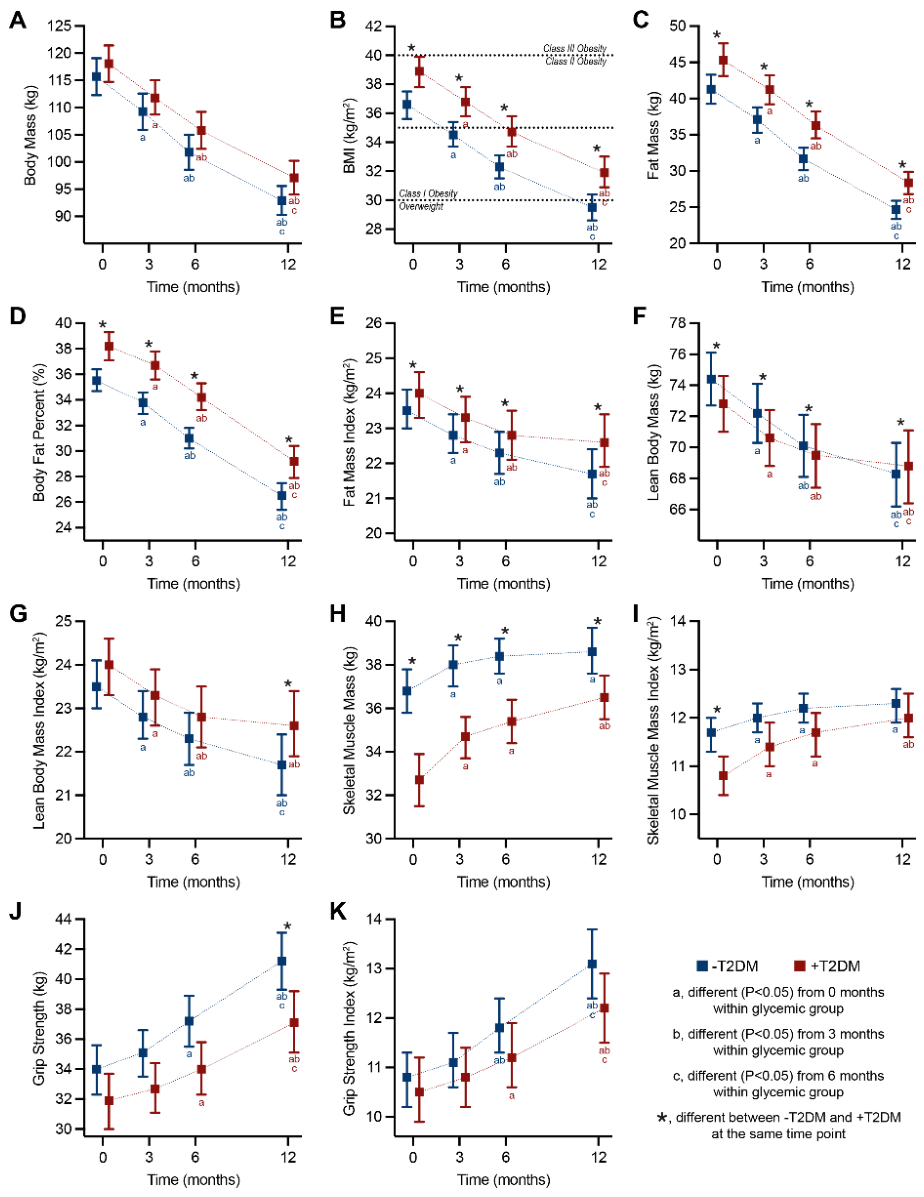
Figure 2.
Glycemic, hormonal, inflammatory, and lipid measures over 12 months of tirzepatide treatment in obese men without (−T2DM) and with (+T2DM) type 2 diabetes mellitus. (A) Hemoglobin A1c, (B) testosterone, (C) high-sensitivity C-reactive protein (HS-CRP), (D) LDL cholesterol. Reference lines mark clinical thresholds. Values are means with 95% confidence intervals from a linear mixed effects model. Post-hoc sorting: a, different from 0 months within the same glycemic (−T2DM or +T2DM) group; b, different from 3 months; c, different from 6 months; *, different between −T2DM and +T2DM at the same time point. At baseline N = 48 (−T2DM) and N = 45 (+T2DM), declining over follow-up to N = 40 (−T2DM) and N = 36 (+T2DM) at 12 months. For testosterone, samples sizes ranged from N = 22 to N = 48.
Figure 2.
Glycemic, hormonal, inflammatory, and lipid measures over 12 months of tirzepatide treatment in obese men without (−T2DM) and with (+T2DM) type 2 diabetes mellitus. (A) Hemoglobin A1c, (B) testosterone, (C) high-sensitivity C-reactive protein (HS-CRP), (D) LDL cholesterol. Reference lines mark clinical thresholds. Values are means with 95% confidence intervals from a linear mixed effects model. Post-hoc sorting: a, different from 0 months within the same glycemic (−T2DM or +T2DM) group; b, different from 3 months; c, different from 6 months; *, different between −T2DM and +T2DM at the same time point. At baseline N = 48 (−T2DM) and N = 45 (+T2DM), declining over follow-up to N = 40 (−T2DM) and N = 36 (+T2DM) at 12 months. For testosterone, samples sizes ranged from N = 22 to N = 48.
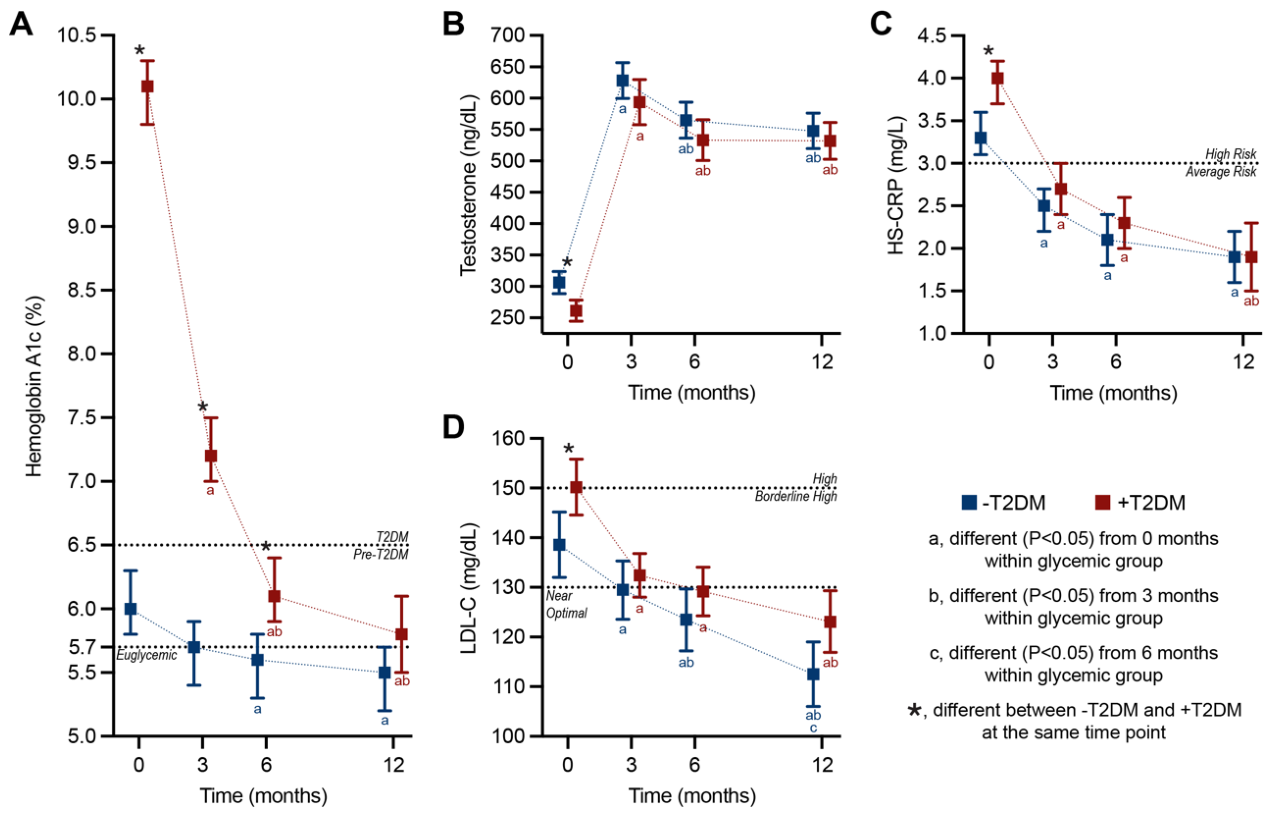
Figure 3.
Patient-reported outcome measures over 12 months of tirzepatide treatment in obese men without (−T2DM) and with (+T2DM) type 2 diabetes mellitus. (A) PROMIS Global Health 10 physical component summary score and (B) PROMIS Global Health 10 mental component summary score. Values are means with 95% confidence intervals from a linear mixed effects model. Post-hoc sorting: a, different from 0 months within the same glycemic (−T2DM or +T2DM) group; b, different from 3 months; c, different from 6 months; *, different between −T2DM and +T2DM at the same time point. At baseline N = 48 (−T2DM) and N = 45 (+T2DM), declining over follow-up to N = 40 (−T2DM) and N = 36 (+T2DM) at 12 months.
Figure 3.
Patient-reported outcome measures over 12 months of tirzepatide treatment in obese men without (−T2DM) and with (+T2DM) type 2 diabetes mellitus. (A) PROMIS Global Health 10 physical component summary score and (B) PROMIS Global Health 10 mental component summary score. Values are means with 95% confidence intervals from a linear mixed effects model. Post-hoc sorting: a, different from 0 months within the same glycemic (−T2DM or +T2DM) group; b, different from 3 months; c, different from 6 months; *, different between −T2DM and +T2DM at the same time point. At baseline N = 48 (−T2DM) and N = 45 (+T2DM), declining over follow-up to N = 40 (−T2DM) and N = 36 (+T2DM) at 12 months.
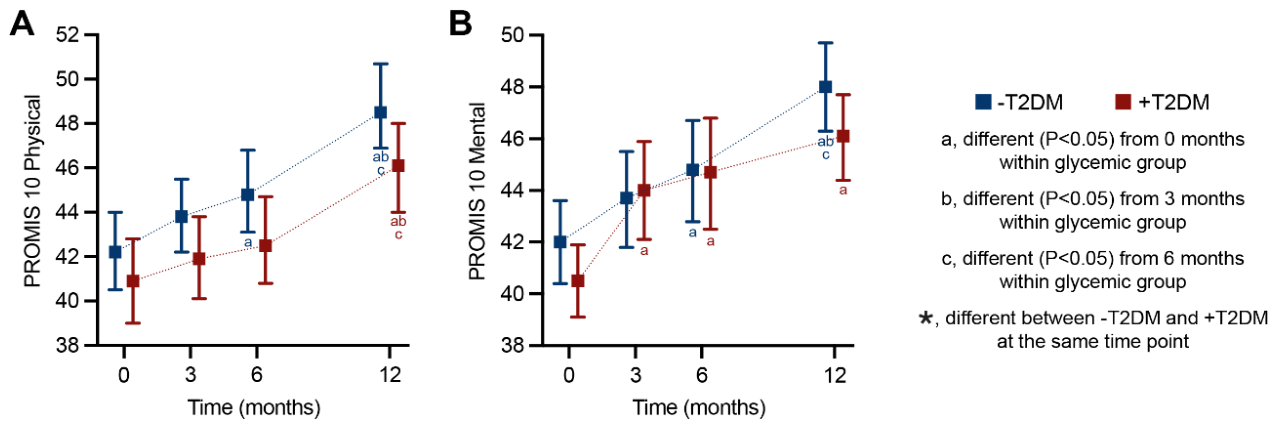
Figure 4.
Self-reported physical activity over 12 months of tirzepatide treatment in obese men without (−T2DM) and with (+T2DM) type 2 diabetes mellitus. Stacked bars show the percentage of patients in each activity category at each time point. Differences between groups were tested with Mann-Whitney U tests and differences within groups with Wilcoxon signed-rank tests, with Holm-Sidak corrections. Post-hoc sorting: a, different from 0 months; b, different from 3 months; c, different from 6 months; *, different between −T2DM and +T2DM at the same time point. At baseline N = 48 (−T2DM) and N = 45 (+T2DM), declining over follow-up to N = 40 (−T2DM) and N = 36 (+T2DM) at 12 months.
Figure 4.
Self-reported physical activity over 12 months of tirzepatide treatment in obese men without (−T2DM) and with (+T2DM) type 2 diabetes mellitus. Stacked bars show the percentage of patients in each activity category at each time point. Differences between groups were tested with Mann-Whitney U tests and differences within groups with Wilcoxon signed-rank tests, with Holm-Sidak corrections. Post-hoc sorting: a, different from 0 months; b, different from 3 months; c, different from 6 months; *, different between −T2DM and +T2DM at the same time point. At baseline N = 48 (−T2DM) and N = 45 (+T2DM), declining over follow-up to N = 40 (−T2DM) and N = 36 (+T2DM) at 12 months.
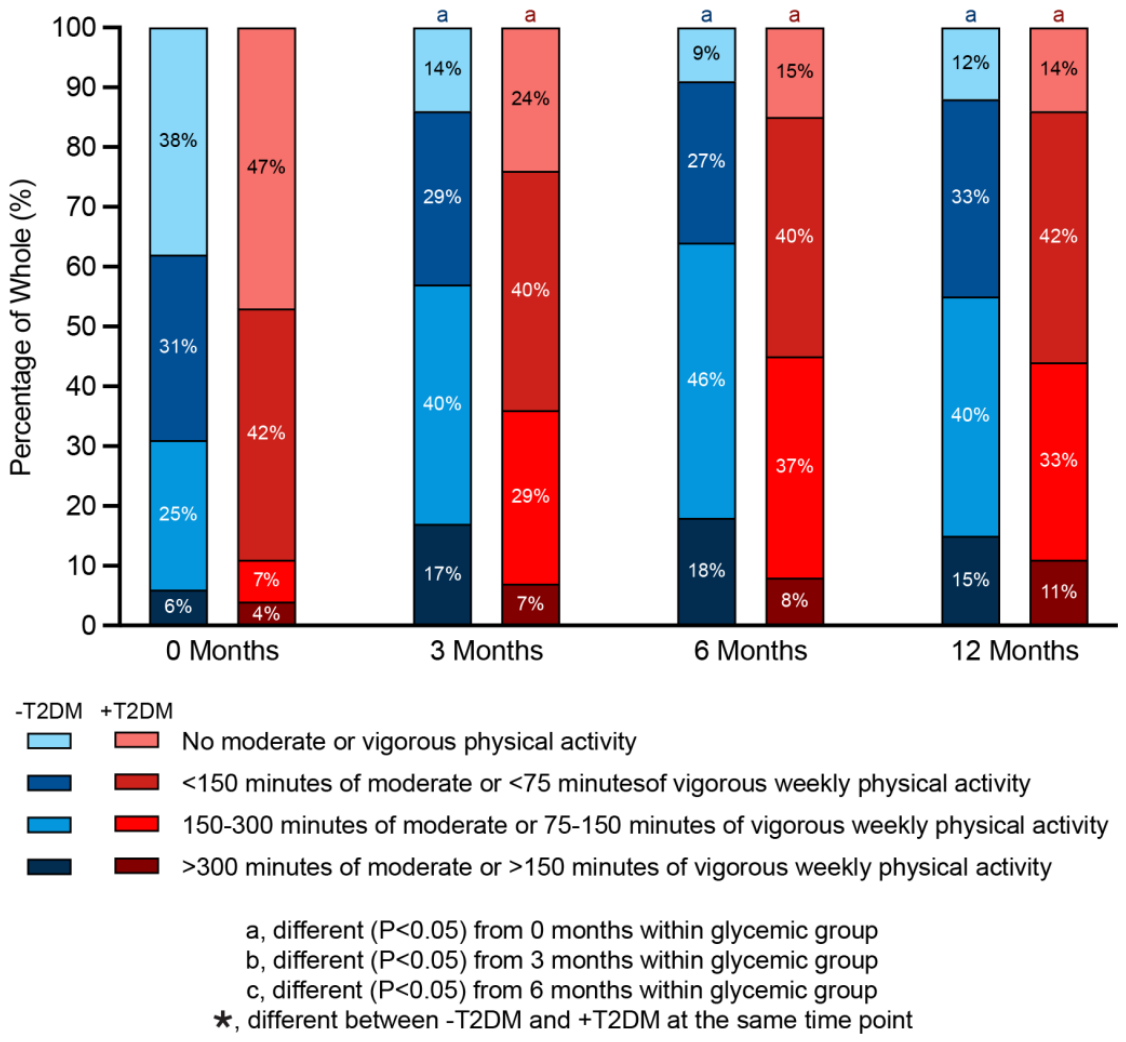

Table 1.
Topics for coaching curriculum. Educational topics covered in weekly coaching sessions delivered in-person or via SMS messaging.
Table 1.
Topics for coaching curriculum. Educational topics covered in weekly coaching sessions delivered in-person or via SMS messaging.
| Topic | Number of Sessions |
|---|---|
| Exercise | 16 |
| Exercise selection, progression, and program design | 4 |
| Mobility, flexibility, and injury prevention | 2 |
| Optimizing athletic performance | 3 |
| Recovery | 2 |
| Science of aerobic fitness | 2 |
| Science of muscle hypertrophy | 3 |
| Nutrition | 14 |
| Caloric deficits | 2 |
| General macros | 2 |
| Hydration | 1 |
| Meal prep and planning | 1 |
| Optimizing blood sugar | 1 |
| Pre- and post-exercise nutrition | 2 |
| Protein prioritization | 4 |
| Supplements | 1 |
| Pharmacology | 3 |
| How GLP-1 medications work | 1 |
| Other obesity and diabetes medications | 1 |
| Testosterone | 1 |
| Healthy aging | 6 |
| Cardiovascular health | 3 |
| Gut health | 1 |
| Maintaining cognitive fitness | 1 |
| Osteoporosis | 1 |
| Lifestyle | 13 |
| Alcohol | 1 |
| Blood pressure | 1 |
| Blood sugar and continuous glucose monitors | 1 |
| Erectile function, libido, and sexual performance | 2 |
| Stress and anxiety | 3 |
| Sleep | 3 |
| Work-life balance | 2 |
Disclaimer/Publisher’s Note: The statements, opinions and data contained in all publications are solely those of the individual author(s) and contributor(s) and not of MDPI and/or the editor(s). MDPI and/or the editor(s) disclaim responsibility for any injury to people or property resulting from any ideas, methods, instructions or products referred to in the content. |
© 2026 by the authors. Licensee MDPI, Basel, Switzerland. This article is an open access article distributed under the terms and conditions of the Creative Commons Attribution (CC BY) license (http://creativecommons.org/licenses/by/4.0/).
Copyright: This open access article is published under a Creative Commons CC BY 4.0 license, which permit the free download, distribution, and reuse, provided that the author and preprint are cited in any reuse.


