

Submitted:
04 June 2026
Posted:
05 June 2026
You are already at the latest version
Abstract
Focus stabilization systems can use various types of actuators, depending on the lens mounting method. One method involves magnetically mounting the lens and levitating it using a magnetic field generated by an external solenoid. The lens itself is rigidly connected to a permanent magnet or electromagnet, which creates a force that holds the lens suspended and compensates for the gravitational force. This actuator has guide rods to prevent the lens from moving horizontally; at least one such rod is present. This rod creates a dry friction force, which leads to nonlinearity in the mathematical description of this actuator. This "dead zone" nonlinearity hinders high stabilization accuracy, since the actuator does not provide ultra-small displacements at low electric field stimuli. The best achievable accuracy in this case is 0.5 µm. Another method of mounting the actuator involves holding the lens on two taut strings. This mounting method is characterized by a strong tendency of the actuator to oscillate. In this case, the transient process is characterized by a large number of damped oscillations before the stabilization error becomes sufficiently small. These issues are analyzed using mathematical modeling and solved using numerical optimization. Recommendations are proposed to overcome these challenges, achieving lens positioning accuracy significantly lower than 0.5 µm. The results are validated by simulation.
Keywords:
stabilization
; actuators
; feedback
; PID
; optimization
; simulation
; autofocus
1. Introduction
The development of optical measurement and machine vision systems is also focused on increasing the speed of recording fast processes. Under these conditions, automatic focusing systems are also sometimes required to improve performance. The development of such systems can be based on the automatic focusing and tracking systems widely used in optical disk drives, but new systems are also required to achieve higher performance than existing systems. Therefore, the selection of actuator design for such systems and controller design are once again becoming relevant.
The topic of autofocus remains relevant. The paper [1] proposes multifocal lenses and changes in the configuration of the lens itself. The paper [2] proposes various autofocus algorithms. The paper [3] discusses the technologies, materials, and designs of various actuators that can be applied to various purposes. The paper [4] proposes and discusses various methods for detecting a focus violation situation for automatic focus systems. The paper [5] proposes a modified optical scheme to improve the accuracy of autofocus in existing optical systems. The proposed system uses lens shifting to transform the incident light into non-parallel light, providing a focus shift and avoiding strong deformation of the light spot near the focal point of the lens. The paper [6] discusses actuators based on the pneumatic effect. The paper [7] presents two adaptive optics systems: one system uses a fast-response prism for tilt correction, and the second system is based on a multi-actuator deformable lens
Known focus stabilization systems have used various types of actuators and lens mounting methods. One method involves magnetically levitating the lens using a magnetic field generated by an external solenoid. The lens itself is rigidly connected to a permanent magnet or electromagnet, creating a force that holds the lens suspended, which compensates for the gravitational force. This actuator incorporates guide rods to prevent the lens from moving horizontally; at least one such rod is present. This rod creates a dry friction force, leading to nonlinearity in the mathematical description of this actuator. This “dead zone” nonlinearity hinders high stabilization accuracy, since the actuator cannot achieve ultra-small movements under low electric field influences. The best achievable accuracy in this case is 0.5 µm. Another actuator mounting method involves holding the lens on two taut strings. This mounting method is characterized by a strong tendency of the actuator to oscillate. In this case, the transient process is characterized by a large number of damped oscillations before the stabilization error becomes sufficiently small. These issues are analyzed using mathematical modeling and solved using numerical optimization. Recommendations are proposed for overcoming these issues, achieving lens positioning accuracy significantly lower than 0.5 µm. The results are validated by simulation.
This article presents the results of modeling in the VisSim 5.0 e program [8], the modeling conditions are: the integration method is the simple Euler method, the time sampling step is 0.02 seconds, the optimization method is Powell Method, the rationale for this choice is given in publications [9,10,11], which are freely available. A single step jump (Heaviside function) with a delay equal to the time sampling step, 0.02 seconds, is fed to the system input. The deadband width is 0.3.
Let’s consider two types of actuators. A stretched-string actuator, hereafter “Object 1,” is shown schematically in Figure 1. Lens 1, mechanically connected to electromagnets 3, is maintained in equilibrium by two strings 5 positioned parallel to stage 6. These strings can be positioned horizontally or vertically. When current is applied to the electromagnets, a force is generated that causes the lens to move up or down, depending on the direction of the current. A disadvantage of the string actuator is its tendency to oscillate at the resonant frequency of the strings used.
The rod actuator, hereinafter referred to as “object 2,” is shown in a simplified form in Figure 2. It is distinguished by the fact that lens 1 with movable electromagnets 3 is maintained in equilibrium by an initial current in the electromagnets, creating a force that completely counterbalances the gravitational force. To raise the lens, this current must be increased, and to lower it, this current must be decreased. If a faster downward movement is required, a current in the opposite direction can be applied. To prevent the movable part of the actuator from shifting horizontally, one or more guide rods 7 are used, passing through loops 8 or through openings in the structural elements of the movable part of the actuator. A disadvantage of the rod actuator is the “dry friction” nonlinearity caused by the friction of loops 8 against rods 7.
A stretched-string actuator is described by a second-order link with a significant tendency to oscillate at the resonant frequency. A pure delay link may also be present in the model of such an actuator, but the delay value is much smaller than the time constants of the minimum-phase link in the model of this actuator.
The advantage of suspending a lens on a string actuator is that its mathematical model contains no explicit nonlinearity near the equilibrium point. Any small displacement of the string-suspended actuator can be achieved by an appropriate force, such as the attractive or repulsive force generated by current flowing in a stationary coil, provided that a permanent magnet or electromagnet is rigidly connected to the lens. A disadvantage of this actuator is its strong tendency to oscillate multiple times at the resonant frequency.
A model of such an actuator can be a transfer function of the following type:
Here is the coefficient, is the time constant, is the damping coefficient, is the delay value, is the argument of the Laplace transform.
For example, for numerical simulation, one can select a transfer function with the following numerical values of its parameters:
Suspending a lens in a magnetic field with its direction of movement fixed by one or more guide rods exhibits a “dry friction” nonlinearity. This means that extremely small lens movements cannot be achieved with a correspondingly small applied magnetic force, as the lens movement requires overcoming friction. Only if the force from the magnetic coil exceeds this dry friction force will the lens begin to move. This complicates achieving a small stabilization error, as a small magnetic force will not move the lens until it exceeds the friction force. Consequently, the lens will undergo excessive movement when subjected to a force sufficient to initiate movement. An equilibrium state with small movements for precise tracking will be a problematic regime for such an actuator. From here on, such an actuator will be referred to as a “rod actuator.”
Such an object can be modeled by connecting two elements in series, the first of which is a filter, for example, of the second order, without a significant tendency to oscillate due to a sufficiently large damping coefficient, and the second element is a nonlinear element describing dry friction.
The transfer function of the first element has the same form as in equation (1), but the magnitude of is significantly larger, and the delay value may be smaller. For example, the following model of this part of the actuator could be defined:
Here we adopted zero delay () because, as a rule, in such actuators, delay is significantly less of a problem than the nonlinearity of dry friction. The simplest, but not the most accurate, mathematical model of dry friction is a dead-end link, which is described by the following dependence of the output signal on the input signal :
Here is the deadband half-width. Nonlinearity (4) is called a deadband nonlinearity. This nonlinearity does not accurately describe dry friction, but it is available in VisSim 5.0 e software, allowing for the simplest possible modeling of a system with this nonlinearity.
Figure 3 shows the response to a single step jump of the actuator – according to model (2), Figure 4 shows the response of the actuator according to model (3), (4) to the same step jump.
Typically, a rod-mounted actuator is made of materials and quality that minimize dry friction. For example, the rod is made of a material with a polished nickel coating, and the holes in the rod are made of a material with good sliding properties, such as fluoroplastic, and also with a surface that is as smooth as possible. If the dry friction is significantly smaller than the permissible tracking error, then this effect can be neglected. In our study, we are interested in a situation where the quantity in model (4) is commensurate with the permissible stabilization error; otherwise, this effect can be ignored.
Actuator selection was a critical issue in the development of optical disk drives, and rod actuators were ultimately the preferred choice. However, similar issues arise in high-precision laser systems, which require higher autofocus accuracy. Therefore, theoretical analysis of these actuator selection issues remains relevant.
It is worthwhile to investigate by simulation the question of which of the two types of actuators is the better solution and which is more problematic, or whether the tendency to oscillate, inherent in string actuators, or the nonlinearity, inherent in rod actuators, is the greater problem.
2. Materials and Methods
VisSim 5.0 e software or any version of this software is recommended. The choice is dictated by the availability of this program and its ideal suitability for solving problems of this class, as it allows for modeling objects with a wide variety of mathematical descriptions, obtaining transient process graphs, and performing optimization to calculate the best controller settings for given object models using specified optimization objective functions.
The solution involves calculating controllers for each of the actuator models under consideration, as well as their modifications, to provide a more comprehensive understanding of the problem. The proposed calculation is performed using numerical optimization. In this case, it is proposed to use traditional sequential PID controllers; the transfer function of such controllers has the following form:
Here is the coefficient of proportional connection, is the coefficient of integrating connection, is the coefficient of differentiating connection.
We will also consider the possibility of a controller with an additional link containing double differentiation. The transfer function of such a PIDD controller is as follows:
We will calculate the controllers in the following way. In the project, as shown in Figure 5, there is a model of the system, including an object, a controller at its input (1) or (3), (4) with specific numerical parameters. At the input of the object there is a controller (5) or (6) connected in series with it. The output of the object is connected through the negative input of the adder to the input of the controller, and the reference signal V(t) is fed to the positive input of this adder. Also, between the output of the object and the negative input of the adder, in some variants of the study, we will include an additional adder, to the second input of which we will apply the disturbance H(t), characteristic of the system, which, as a rule, has the form of a harmonic signal. The task of such a system is to best suppress the influence of the disturbance signal H(t) and most accurately transmit the reference signal V(t) to the output Y(t).
The system also includes a cost function calculator F(T), where T is the virtual simulation time of the transient process. This cost function is analyzed by the optimizer, which, based on the obtained cost function values, calculates new controller parameter values for a new transient process run. By repeating this iterative procedure using one of three optimization algorithms built into the software, the optimizer finds the coefficient values at which the cost function attains its minimum values.
The simplest version of the cost function is calculated as the integral of the error modulus, multiplied by the time from the beginning of the transient process:
If this results in a system with a transient process characterized by a large number of oscillations or with a large overshoot, then it is advisable to add a term to the cost function that increases sharply due to the sections of the transient process when the error increases:
Here is the weighting coefficient, is the positive part of the function , that is, the maximum of the two functions in the curly brackets.
When several elementary cost functions, such as (7) and (8), are used together, the total cost function is equal to their sum:
Based on experience with cost functions, the following modifications can be suggested. In cost function (8), we recommend using the square root of the positive part of the product of the error and its derivative:
The motivation for using the square root is that in this case, the cost function maintains a linear dependence on the test signal. Taking all recommendations into account, the cost function can be recommended as the sum of functions (10) and (11):
If the error decay in the resulting system is not fast enough, the square of this value can be used in the cost function (7) instead of the multiplier :
The method also involves selecting controllers from options (5) or (6) and selecting cost functions, for example, from options (7), (9), (10), (11), as well as changing the weighting factor in (8) or in (10) and changing the simulation time to obtain the most attractive transient process.
3. Results
3.1. System Response to a Step Jump
Figure 6 shows the transient processes in a system using only an integral controller, since the coefficients of the proportional and derivative relationships are set to zero. Figure 7 shows the result of numerical optimization of a system with a PID controller and this object. The result of optimization of a system with a PID controller with a complex cost function (11), at , yields virtually the same result; the process coincides with the process in Figure 7.
The system with a rod actuator is shown in Figure 8. This transient process should be rated very highly according to formal criteria, since there is no overshoot in it.
Based on a comparison of the transient processes in Figure 7 and Figure 8, we can make a preliminary conclusion that an object of type (3), (4) is more preferable for use as an actuator; however, we will conduct additional research to obtain more substantiated conclusions.
However, further research shows that response to a step change in the target is not a sufficient criterion for the high quality of a designed automatic control or stabilization system. Indeed, the primary purpose of an automatic focusing system is to quickly maintain high-precision focusing, so oscillation-free target execution is not as important as disturbance suppression, which can be examined using harmonic disturbances as an example. Therefore, let’s consider the response of such systems to the simultaneous application of a step change in the target and a harmonic disturbance. The system must ensure the best possible target repetition and disturbance suppression.
3.2. System Response to Step Change and Harmonic Disturbance
To examine how a system with a controller will suppress harmonic disturbance, we apply harmonic disturbance to the output of object (3), (4) through a summator, for example, with an amplitude and an oscillation period equal to. The oscillation period in various model experiments must be further varied for a more complete study of the resulting system. The change in amplitude is also significant, but only when studying a system with a nonlinear object, such as object 2 (3), (4). Figure 9 shows the result of modeling the system under the influence of such disturbance. It is evident that feedback does not suppress this disturbance at all.
To achieve better disturbance suppression, one can try optimizing the system under conditions where both a step reference and harmonic disturbance are present as test signals. Figure 10 shows the result of system optimization under these conditions. This results in a 50% reduction in disturbance suppression, but also introduces overshoot .
For comparison, we will optimize the controller under the same conditions for Object 1. The optimization result is shown in Figure 11. The transient response shows that the overshoot in this case is , while disturbance suppression is not achieved. Even in the initial portion of the transient response, there is a slight increase in the amplitude of these oscillations. However, over time, the amplitude of this oscillation levels out to the disturbance amplitude. There is also a reverse overshoot of 5%.
It was hypothesized that if an object exhibits a high tendency to oscillate with a sudden change in the input signal, the optimization procedure tends to provide deep suppression of these oscillations and is insufficiently effective in suppressing harmonic disturbance. In the next experiment, it was decided to smooth out the step change using an input filter with the following transfer function:
Figure 12 shows the optimization results for the system with object 1. It’s clear that the system itself is prone to oscillations, which occur with an amplitude of approximately 0.5% of the reference jump. Furthermore, the noise suppression is not very strong.
Figure 13 shows the result of optimizing the system using only object 2.
3.3. Modeling of Nonlinearity of the Dry Friction Type
Previously, dry friction nonlinearity was studied using an inadequate model. Dead-zone nonlinearity is characterized by the absence of a signal at the object’s output when the input signal is smaller in magnitude than a predetermined limiting value. This adequately describes only the initial moment of the actuator’s movement from its initial equilibrium point. However, if the actuator has already begun to move, it can continue to move under the influence of a relatively small force. When changing direction, a force must again be generated to overcome the frictional moment. For example, with a harmonic input signal, such an object will exhibit some delay at the output when the derivative of the input signal changes, but once the object starts moving, it will continue to move, repeating the specified value.
We have developed a model based on standard blocks from the VisSim software, which provides the described transient process. This model includes derivative calculation blocks, limiting amplifiers, relay blocks, modulus calculation blocks, sample-and-hold devices, and adders. Figure 14 shows this model, as well as the signal at its output when a harmonic signal is applied to its input. The main element in the dry friction model is the sample-and-hold device (bottom center of Figure 14, designated “S&H”). If signal on one the input is zero i.e. , then this device transmits the signal at its input “x” to the output; if , then the output signal of this device retains its previous value. In order to generate the corresponding control signal , a circuit is used containing a short pulse generator for a change in the sign of the input signal, as well as a circuit for comparing the signal increment from the moment of its sign change with the threshold value, which in this case is taken as the value . The upper circuit contains a series-connected differentiator, relay, differentiator, and rectifier, which generates a short pulse when the input signal changes sign. This pulse controls the operation of the second sample-and-hold device, which stores the input signal at the moment its derivative changes sign. This stored value is then subtracted from the input signal in the subtractor, the difference is rectified, and the value is subtracted from it . The result is fed to the relay and then to the limiter below. The relay and limiter together form a comparator, generating a logical “one” if the input signal is positive, and a logical “zero” if the input signal is negative. This signal controls the operation of the sample-and-hold device, which ultimately generates the output signal. This device generates an output signal in accordance with the operation of the “dry friction” nonlinearity; the output signal of this device is shown in Figure 14.
Taking into account the new scheme for modeling “dry friction”, the structure of object 2, which should model the actuator on the rod, has the form shown in Figure 15, that is, a series connection of the linear part in the form of a filter, a dry friction model and a delay link.
Using the new model of object 2, the controller was optimized under the conditions of a step jump smoothed by a filter as a reference and harmonic disturbance at the output of the object; the result is shown in Figure 16. The result is unsatisfactory, since under the action of disturbance at the output of the object, oscillations of various shapes appear with an amplitude reaching half the amplitude of the disturbance; the overshoot is 19%.
In the next experiment, the model delay was reduced tenfold to . The optimization result and the transient response in the system under these conditions are shown in Figure 17. This result is only slightly better, no more than that: residual oscillations amount to about a third of the disturbance amplitude, and overshoot is reduced to 13%.
An experiment was also conducted with a nonlinear plant model with no delay at all. The optimization result for the system with this plant is shown in Figure 18. The result is virtually identical to the result obtained with delay . In this process, overshoot is also approximately 13%, and residual oscillations account for approximately a third of the disturbance oscillations. Based on this, it can be concluded that nonlinearity is the primary problem.
It can also be assumed that the amplitude of residual oscillations depends on the dry friction threshold. To test this assumption, in the following experiment, the dry friction threshold was reduced tenfold to . The optimization result is shown in Figure 19.
This result appears more appealing; however, it’s worth noting the excitations that occur with each change in the sign of the derivative of the perturbation applied to the object’s output. This phenomenon is best examined in the error signal with a larger ordinate scale, as shown in Figure 20.
3.4. Study of a String Actuator with a High Oscillation Tendency Model with PID Controller
Let us return to the consideration of an object with a transfer function that is more prone to oscillations than the previously considered object:
Here, the damping coefficient is . We also use a filter with a time constant 10 times shorter at the step generator output. The optimization result of this system is shown in Figure 21.
Figure 22 shows the error in this system on a larger scale along the ordinate axis. Under the same conditions, disturbance suppression is much more significant, and no oscillation spikes are observed. With an disturbance oscillation period of approximately 62.83 seconds (and an amplitude of 0.1 units), the residual amplitude is units.
As the frequency of the disturbance increases, the response to it at the system output increases.
3.5. Results of Optimization with High-Frequency Perturbation of a System with a String Actuator Using a PIDD Controller
Let us consider a mathematical model of a string actuator with a high tendency to oscillate and with a small delay (100 times smaller than the time constant of the oscillating object, which corresponds to reality or is even somewhat larger than the actual value of the delay).
We’ll optimize the system with only the first object (18); the result is shown in Figure 33. Without disturbance, the system’s output signal is exactly the same. Figure 34 shows the system’s output signal with a disturbance frequency twice as high. Figure 35 shows the system’s output signal with a disturbance frequency twice as high.
As the disturbance frequency increases, the noise at the system output increases and, unfortunately, starting at a certain frequency, even exceeds the disturbance itself in amplitude. At a sufficiently high frequency, this high-frequency oscillation is present with an amplitude of up to 1.2 units, resulting in a 12-fold increase in the disturbance, as shown in Figure 36.
This effect does not occur when using a PID controller according to equation (5). In this case, at the resonant frequency, the amplitude of the high-frequency oscillation at the system output only doubles. However, oscillation suppression at relatively low frequencies remains equally effective, with results completely analogous to those shown in Figure 34 and Figure 35.
With object 2, which contains a “dry friction” type nonlinearity, such successful disturbance suppression was not achieved. In all cases, when the sign of the disturbance derivative changes, the output signal contains a burst of high-frequency oscillations, the amplitude of which is close to in the mathematical model of this nonlinearity.
3.6. Study of the Usefulness of a Filter at the Input of a System
This series of experiments examines the results of system optimization when a step reference is applied to the system input without using a low-pass smoothing filter. In this case, the system’s tendency to oscillate manifests itself largely in its response to the step reference. Therefore, the error in processing the harmonic disturbance by the system contributes less to the cost function than the error due to the step response. Figure 37 shows the result of such optimization for the nonlinear plant discussed above using a PID controller. The double differentiation path is not used, as it leads to significant oscillations.
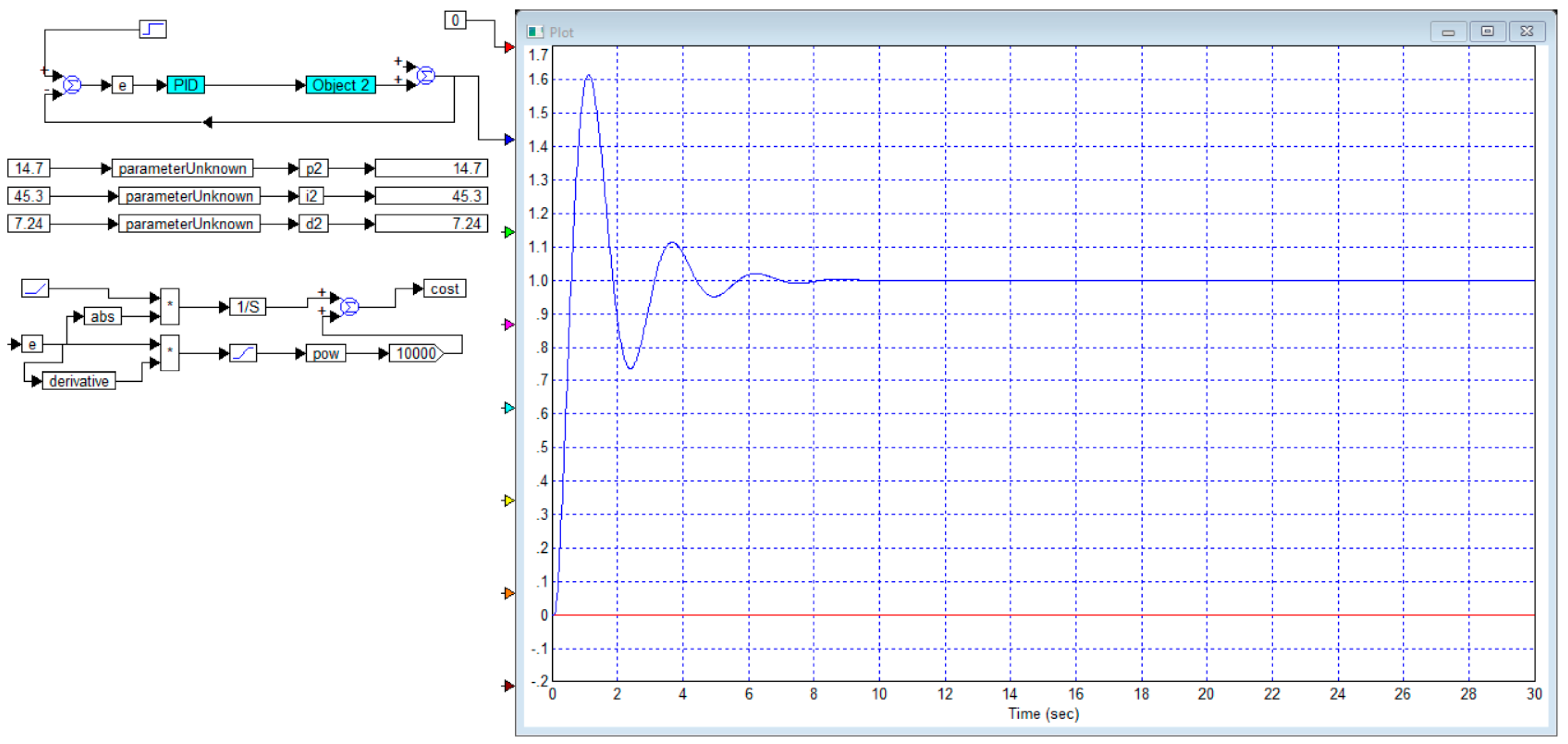
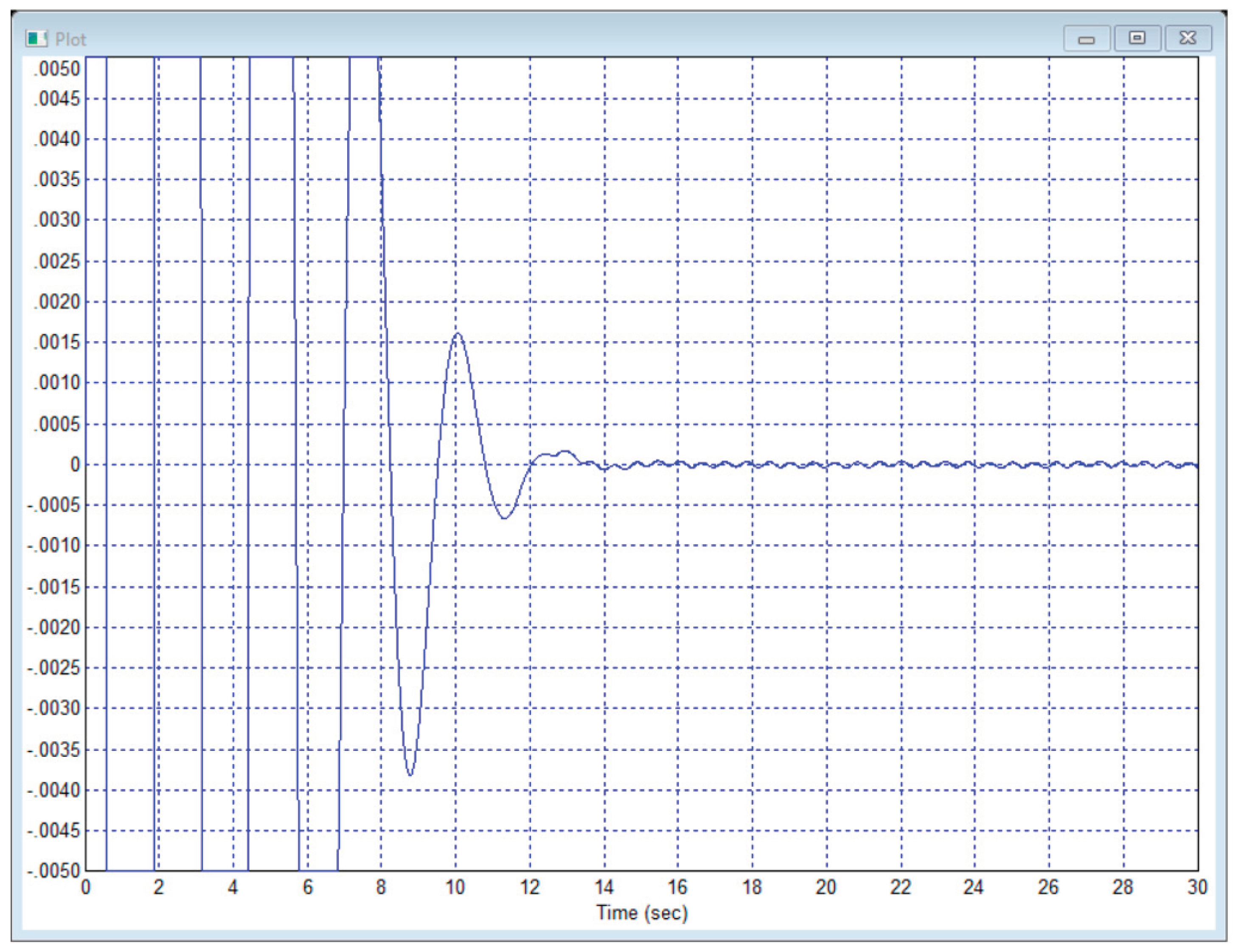
Figure 37.
Result of system optimization without using a smoothing filter at the output of the step signal generator: the resulting system has significant overshoot at the level of 61%.
Figure 37.
Result of system optimization without using a smoothing filter at the output of the step signal generator: the resulting system has significant overshoot at the level of 61%.
Figure 38.
Error signal in the system shown in Figure 37.
4. Discussion
All experiments show that a string actuator has advantages over a rod actuator if the dry friction nonlinearity in the rod actuator is commensurate with the permissible control (and stabilization) error. If the magnitude of this nonlinearity is significantly (10 times or more) smaller than the permissible system error, then its influence can be neglected, provided the controller is correctly designed to ensure the required dynamic and static characteristics of the system as a whole.
Achieving the best system response to a step disturbance does not guarantee that the system will effectively suppress harmonic disturbance. To effectively suppress harmonic disturbance, it is advisable to simulate the effect of such disturbance during modeling, for example, using a harmonic signal fed to the plant output through a summator. In this case, it is highly advisable to smooth the step discontinuity using a low-pass filter to produce a signal smooth enough that unwanted artifacts in the system response, such as overshoot and oscillations, do not significantly affect the cost function. Only in this case will the cost function depend primarily on the residual error from the disturbance, which will ensure the design of a controller that provides the best harmonic disturbance suppression.
A string actuator retains all the advantages over a rod actuator. The tendency of a string actuator to oscillate is not a major problem if the characteristic frequency of the strings’ natural oscillations significantly exceeds the expected characteristic frequency of the disturbance. If the resonant frequency of a string actuator is close to the expected frequency of the disturbance, then the string actuator must be modified to meet this requirement. This modification can be achieved by changing the string material, its tension, its length, and its thickness. Damping elements can also be used.
Author Contributions
Conceptualization, V.Z. and L.D.; methodology, V.Z and V.D.; software, V.Z.; validation, V.D., L.D. and V.Z.; formal analysis, L.D.; investigation, V.D.; resources, L.D.; data curation, V.D.; writing—original draft preparation, V.Z.; writing—review and editing, L.D.; visualization, V.Z.; supervision, V.Z.; project administration, V.D.; funding acquisition, V.Z. All authors have read and agreed to the published version of the manuscript.
Funding
The work was carried out with the support of the Ministry of Education and Science of the Russian Federation (within the framework of state assignment No. 075-00609-26) and using data obtained at the unique scientific installation “Seismic infrasound complex for monitoring the Arctic cryolithozone and complex for continuous seismic monitoring of the Russian Federation, adjacent territories and the world.” This project was supported by a grant from the Ministry of Science and Higher Education, topic number FWGU-2026-0005. This work was accomplished within the Center of Competence for Mechatronics and Clean Technologies “Mechatronics, Innovation, Robotics, Automation and Clean Technologies” – MIRACle, with the financial support of contract no. BG16RFPR002-1.014-0019-C01.
Conflicts of Interest
The authors declare no conflicts of interest.
References
- Li, S.; Liu, L.; Xing, H.; Li, Z.; Cheng, Y. Adaptive Varifocal Lenses Based on Dielectric Elastomer Actuator. Photonics 2025, 12, 227. [Google Scholar] [CrossRef]
- Werner, T.; Carrasco, J. Validating Autofocus Algorithms with Automated Tests. Robotics 2018, 7, 33. [Google Scholar] [CrossRef]
- Mercorelli, P. Actuator Technologies and Control: Materials, Devices and Applications. Actuators 2026, 15, 218. [Google Scholar] [CrossRef]
- Jang, J.; Yoo, Y.; Kim, J.; Paik, J. Sensor-Based Auto-Focusing System Using Multi-Scale Feature Extraction and Phase Correlation Matching. Sensors 2015, 15, 5747–5762. [Google Scholar] [CrossRef] [PubMed]
- Hung, J.-H.; Tu, H.-D.; Hsu, W.-H.; Liu, C.-S. Design and Experimental Validation of an Optical Autofocusing System with Improved Accuracy. Photonics 2023, 10, 1329. [Google Scholar] [CrossRef]
- Kommuri, K.D.; Van Beek, F.E.; Kuling, I.A. Fabrication and Characterization of Pneumatic Unit Cell Actuators. Actuators 2024, 13, 45. [Google Scholar] [CrossRef]
- Schiavon, M.; Vanzo, A.; Campaci, K.; Marulanda Acosta, V.; Bonora, S. Multi-Actuator Lens Systems for Turbulence Correction in Free-Space Optical Communications. 2025, 12, 870. [Google Scholar] [CrossRef]
- VisSim official Web. Available online: https://www.vissim.no/.
- Zhmud, V.; Dimitrov, L. Some Approaches to Designing Adaptive Systems. Appl. Sci. 2026, 16, 3812. [Google Scholar] [CrossRef]
- Zhmud, V.; Dimitrov, L. Control of Linear Multichannel Objects with Numerical Optimization. Appl. Sci. 2025, 15, 8927. [Google Scholar] [CrossRef]
- Zhmud, V. Controlling of Multichannel Objects with Non-Square Transfer Function. Automation 2025, 6, 27. [Google Scholar] [CrossRef]
Figure 1.
String-based actuator: 1 – lens, 2 – light beam, 3 – moving electromagnets, 4 – fixed magnets or electromagnets, 5 – strings, 6 – photodetector or other scene onto which the beam should be focused 2.
Figure 1.
String-based actuator: 1 – lens, 2 – light beam, 3 – moving electromagnets, 4 – fixed magnets or electromagnets, 5 – strings, 6 – photodetector or other scene onto which the beam should be focused 2.
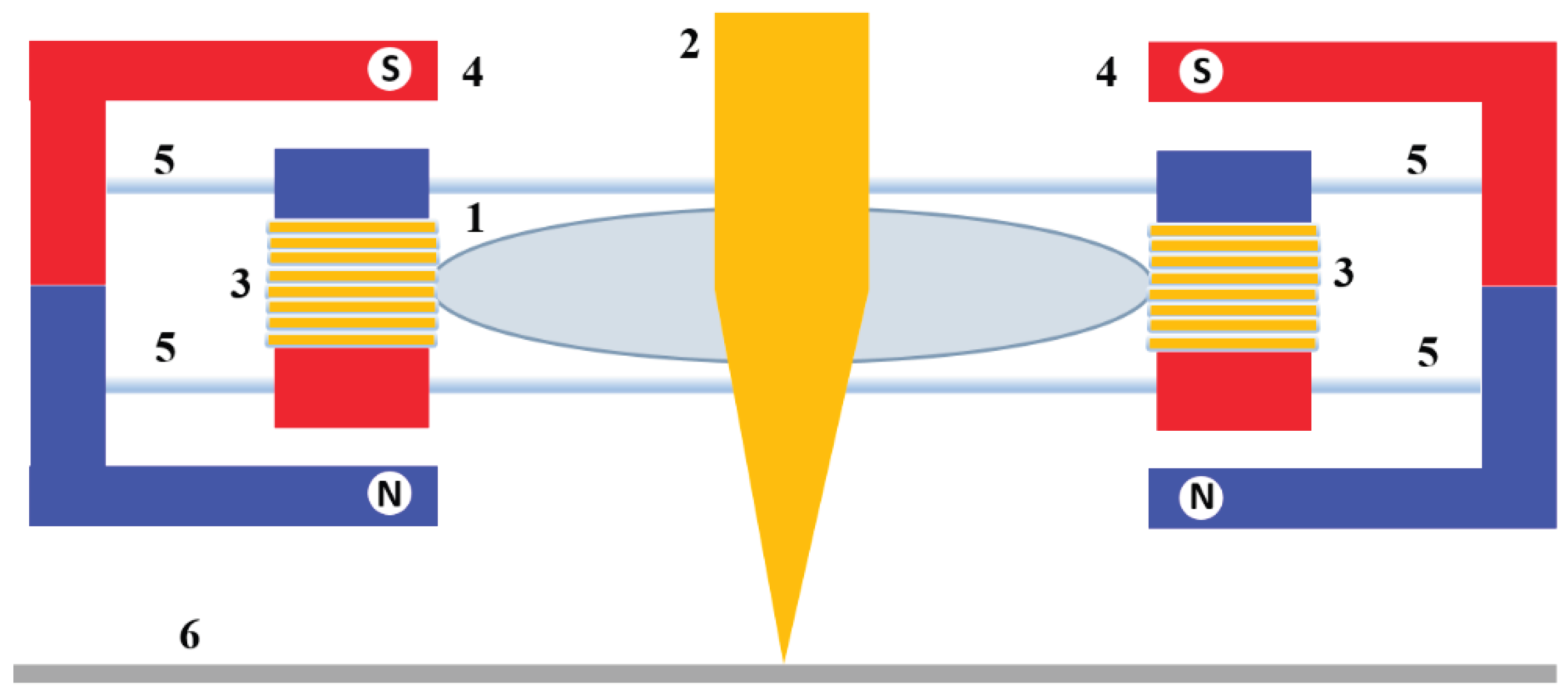
Figure 2.
String-based actuator: 1 – lens, 2 – light beam, 3 – moving electromagnets, 4 – fixed magnets or electromagnets, 6 – photodetector or other scene onto which beam 2 should be focused, 7 – guide rods, 8 – loops holding the moving structure.
Figure 2.
String-based actuator: 1 – lens, 2 – light beam, 3 – moving electromagnets, 4 – fixed magnets or electromagnets, 6 – photodetector or other scene onto which beam 2 should be focused, 7 – guide rods, 8 – loops holding the moving structure.
Figure 3.
Response of the string actuator (2) to a step change in the input signal.
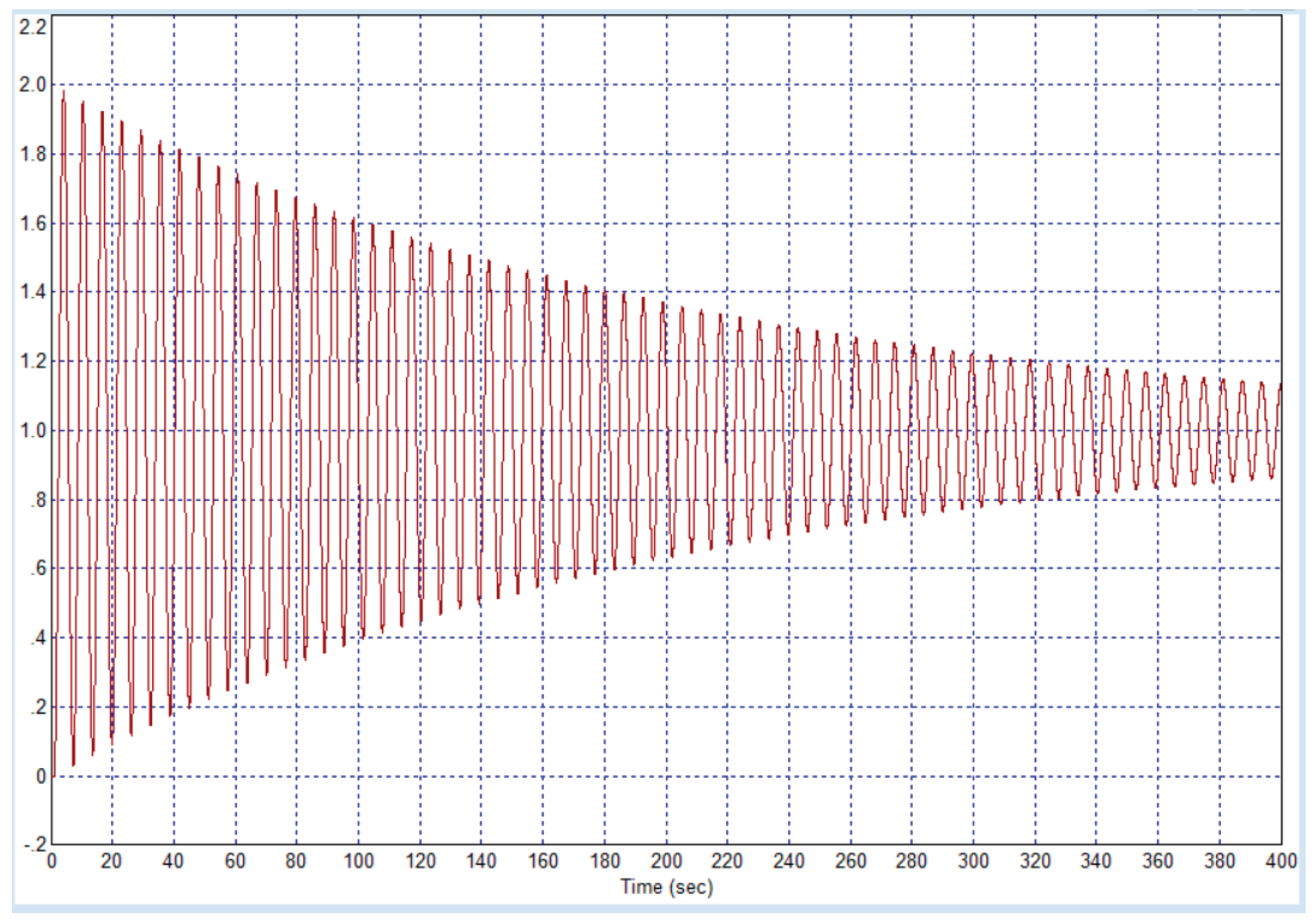
Figure 4.
Only the response of the actuator on the rod (3), (4), where .
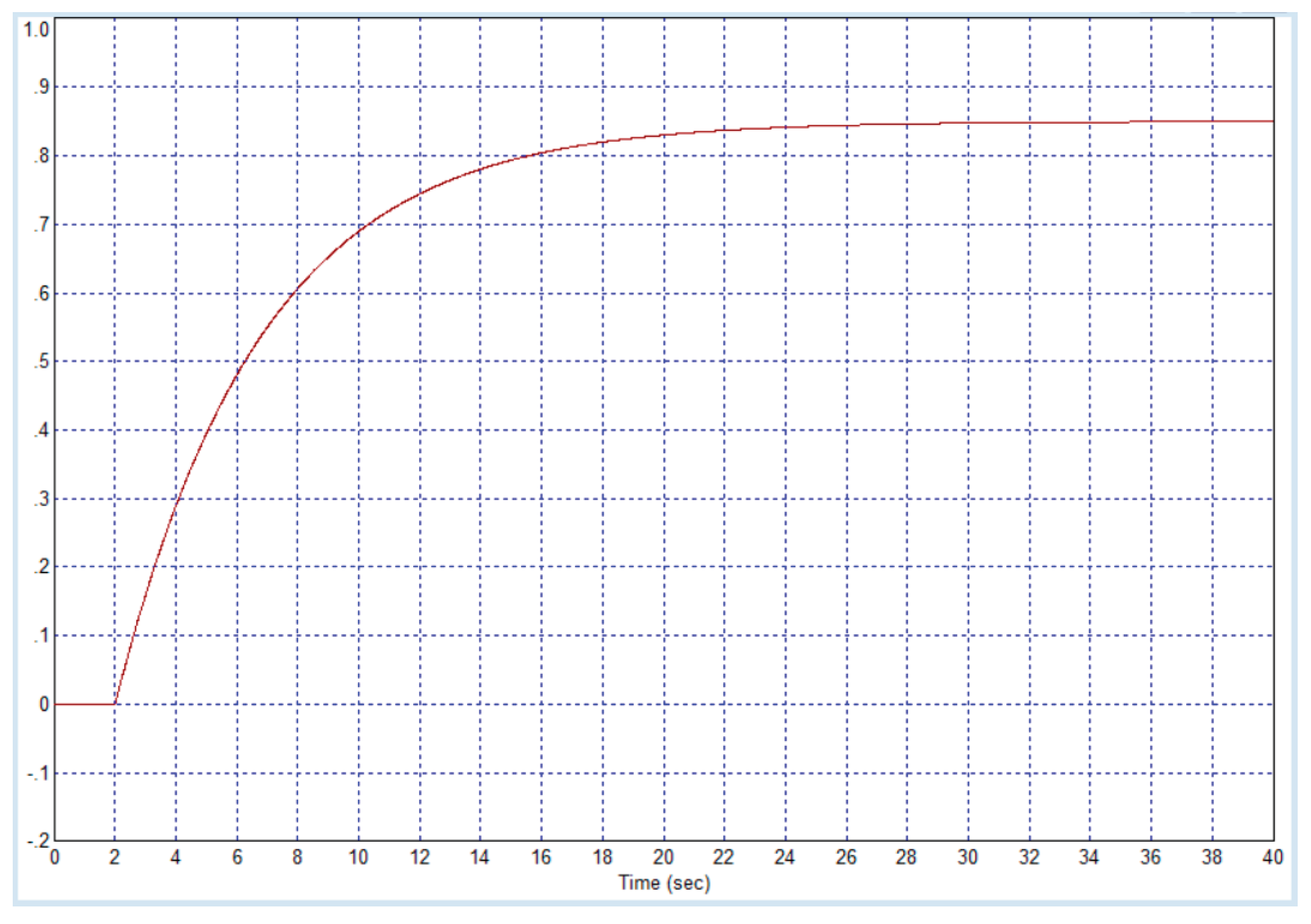
Figure 5.
Typical diagram of a system with a controller and feedback.
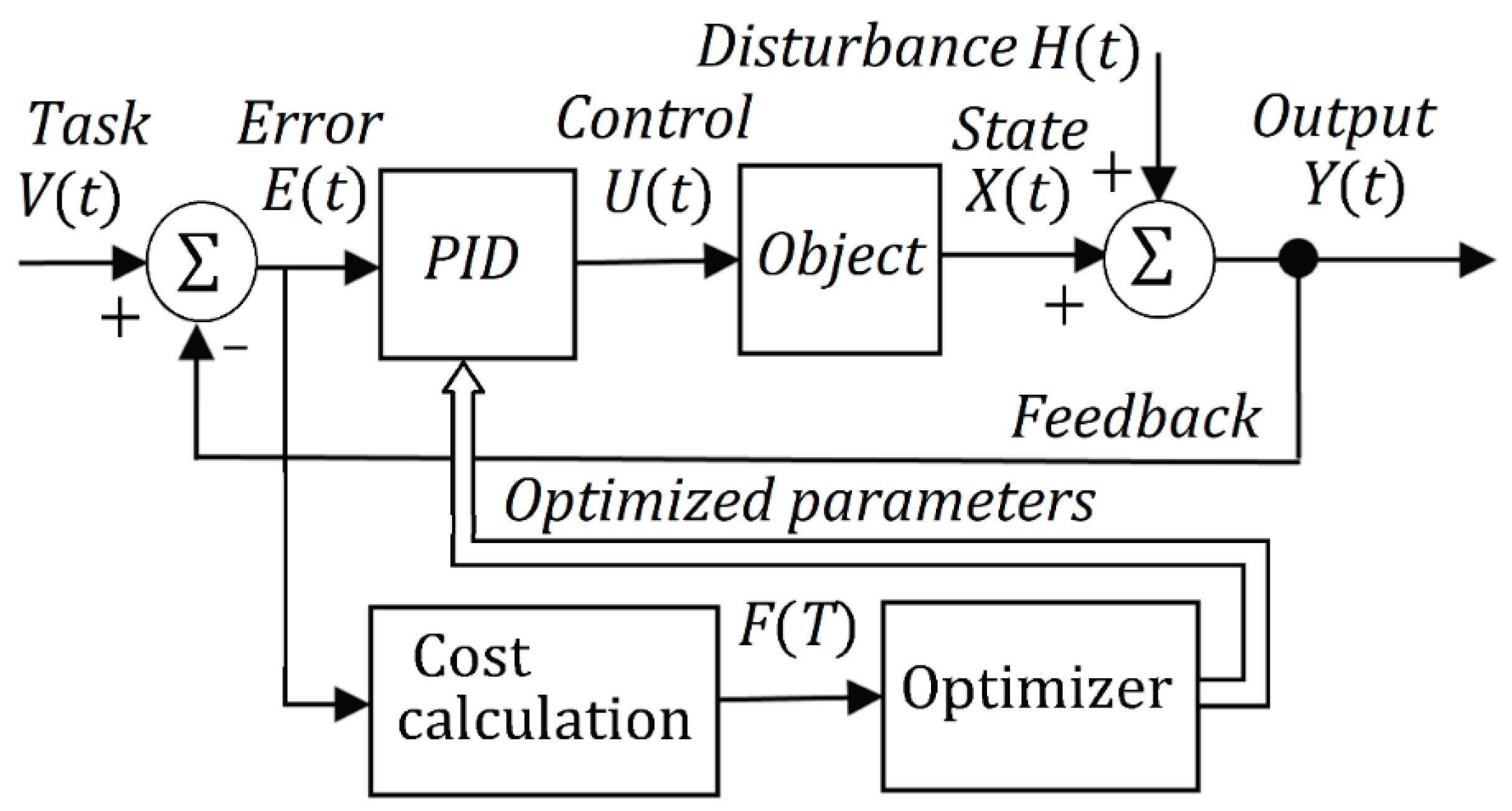
Figure 6.
Response of the system with an object (2) and an integral controller (the remaining PID controller coefficients are zero).
Figure 6.
Response of the system with an object (2) and an integral controller (the remaining PID controller coefficients are zero).
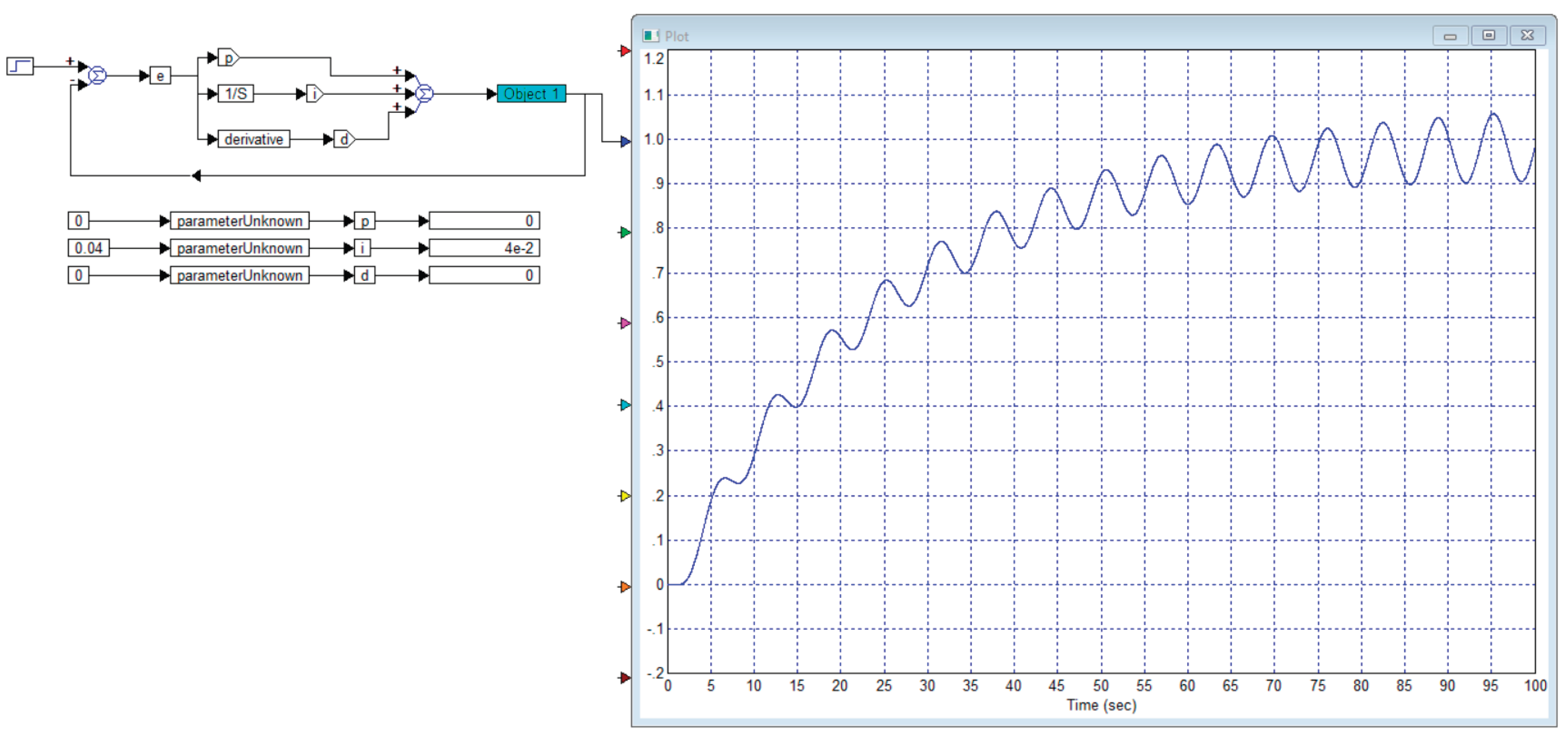
Figure 7.
Result of optimization of the system with object (2) PID controller (5) using a simple cost function (7): overshoot , process duration
Figure 7.
Result of optimization of the system with object (2) PID controller (5) using a simple cost function (7): overshoot , process duration
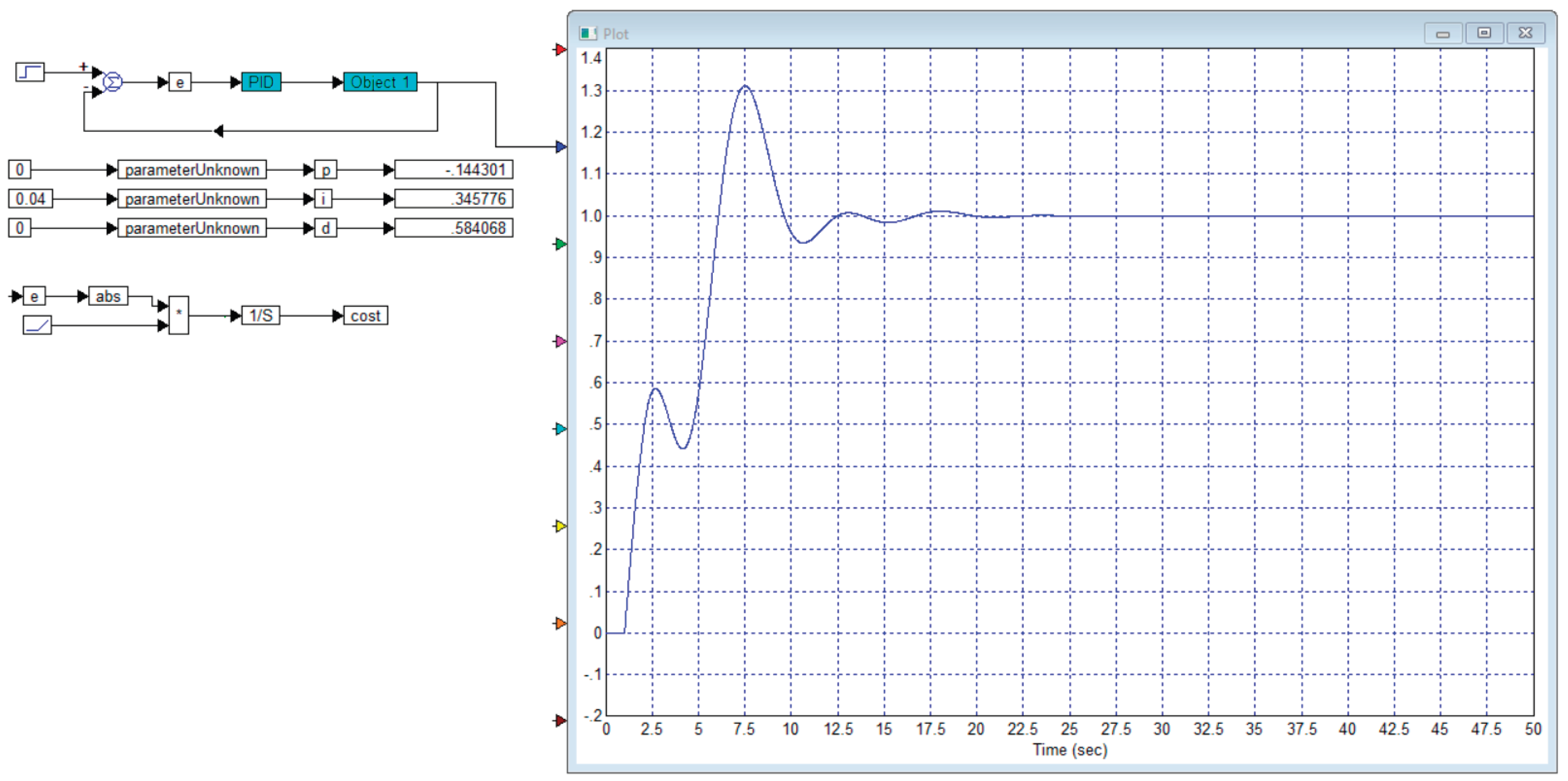
Figure 8.
Result of optimization of the system with the object (3), which has the nonlinearity “dead zone” (4) and with the PID controller (5): there is no overshoot, , the duration of the process
Figure 8.
Result of optimization of the system with the object (3), which has the nonlinearity “dead zone” (4) and with the PID controller (5): there is no overshoot, , the duration of the process
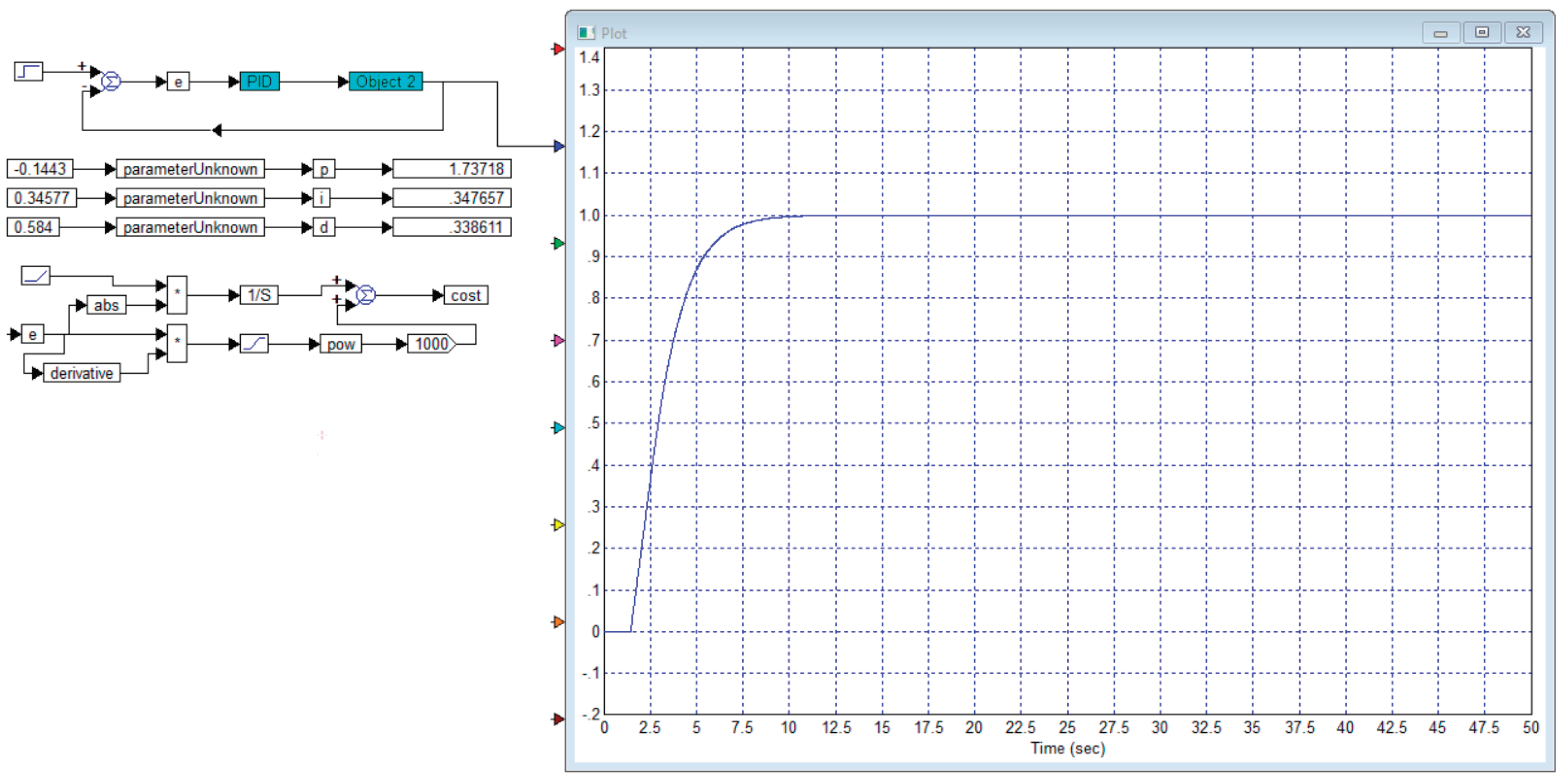
Figure 9.
Illustration of the lack of disturbance suppression by the resulting system shown in Figure 8: line 1 is disturbance; line 2 is the output signal in the system.
Figure 9.
Illustration of the lack of disturbance suppression by the resulting system shown in Figure 8: line 1 is disturbance; line 2 is the output signal in the system.
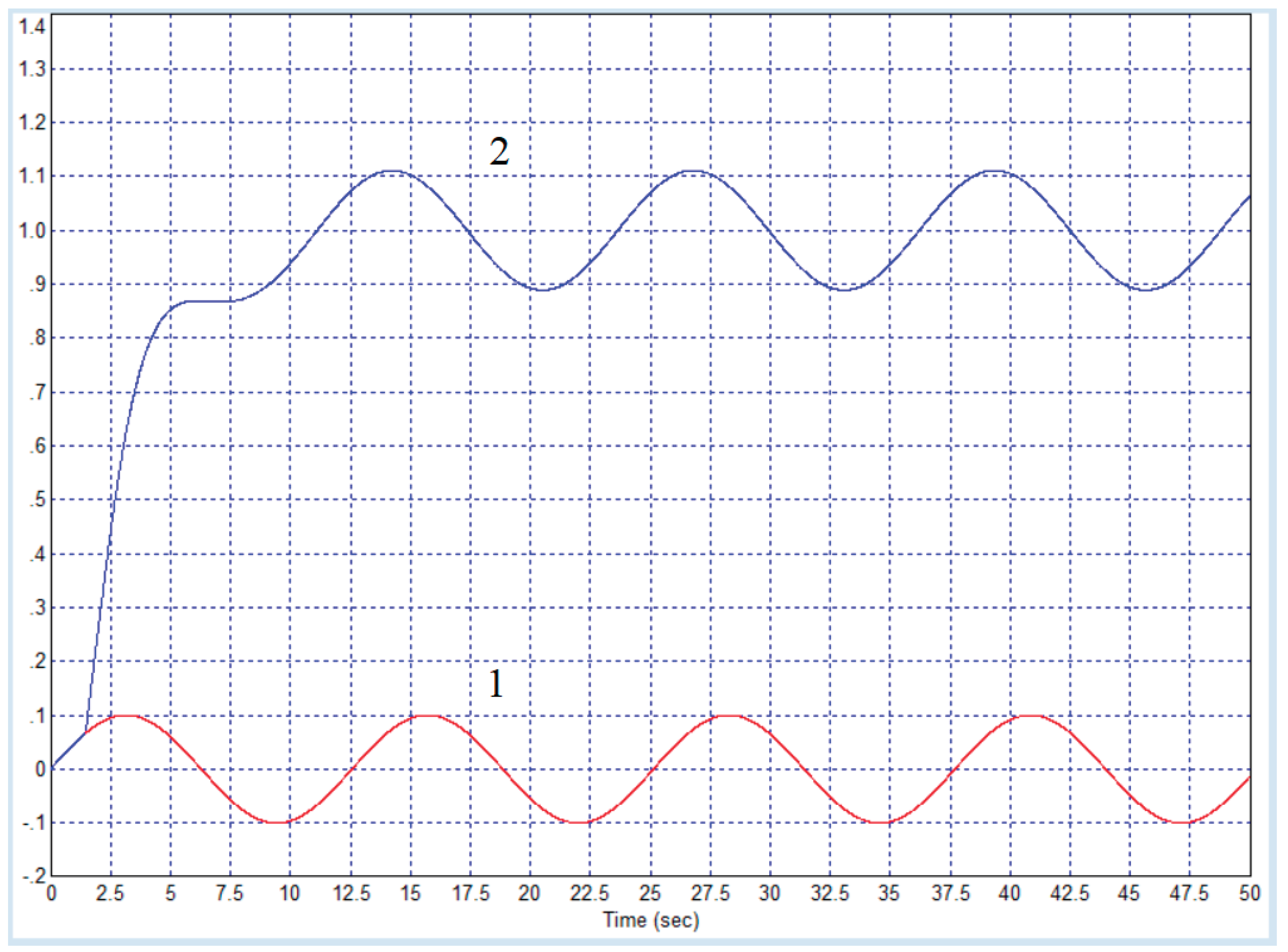
Figure 10.
Optimization result in the presence of disturbance with Object 2: overshoot is 70%, disturbance suppression is two times.
Figure 10.
Optimization result in the presence of disturbance with Object 2: overshoot is 70%, disturbance suppression is two times.
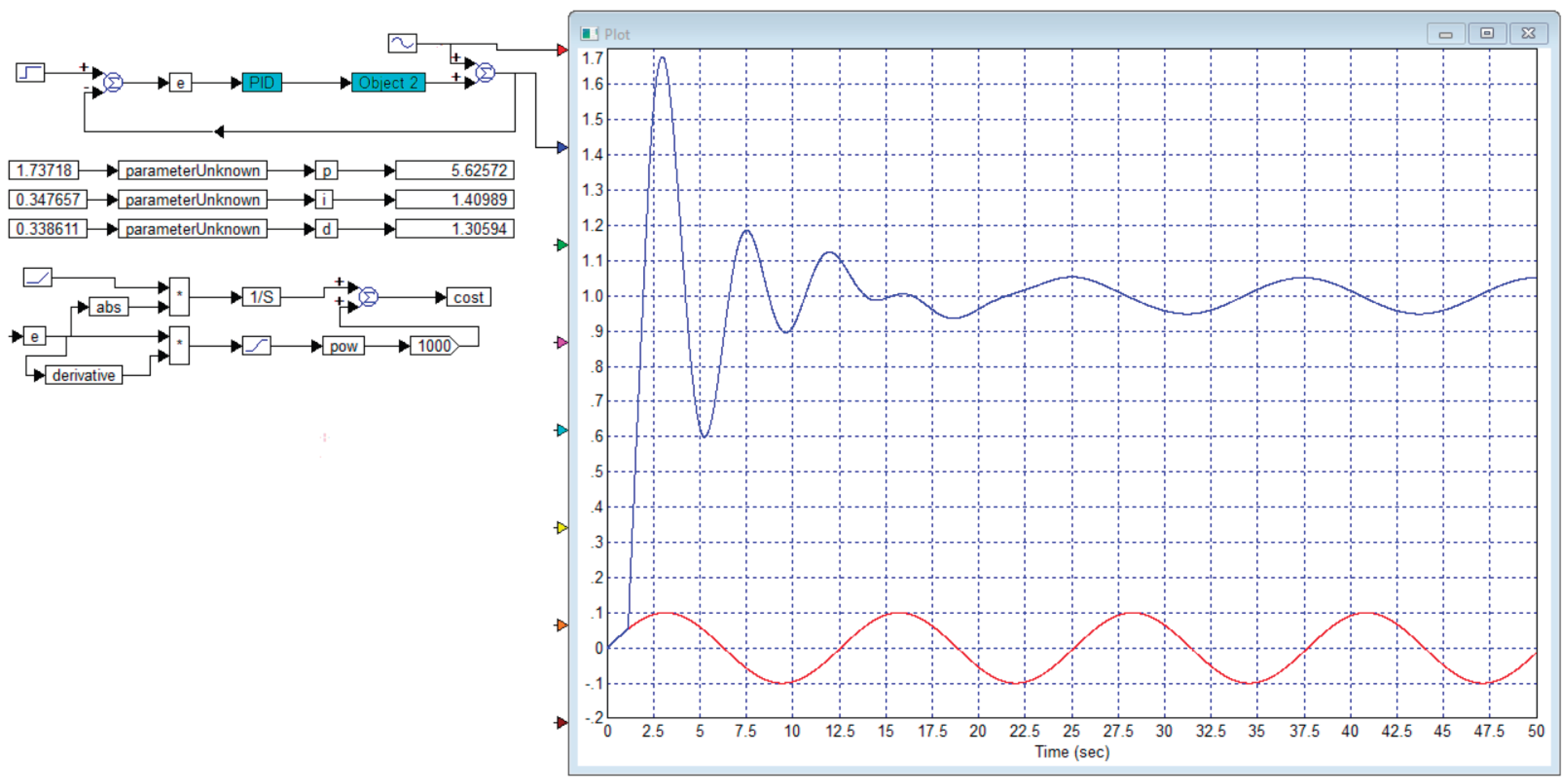
Figure 11.
Optimization result in the presence of disturbance with Object 1: overshoot 24%, no oscillation suppression.
Figure 11.
Optimization result in the presence of disturbance with Object 1: overshoot 24%, no oscillation suppression.
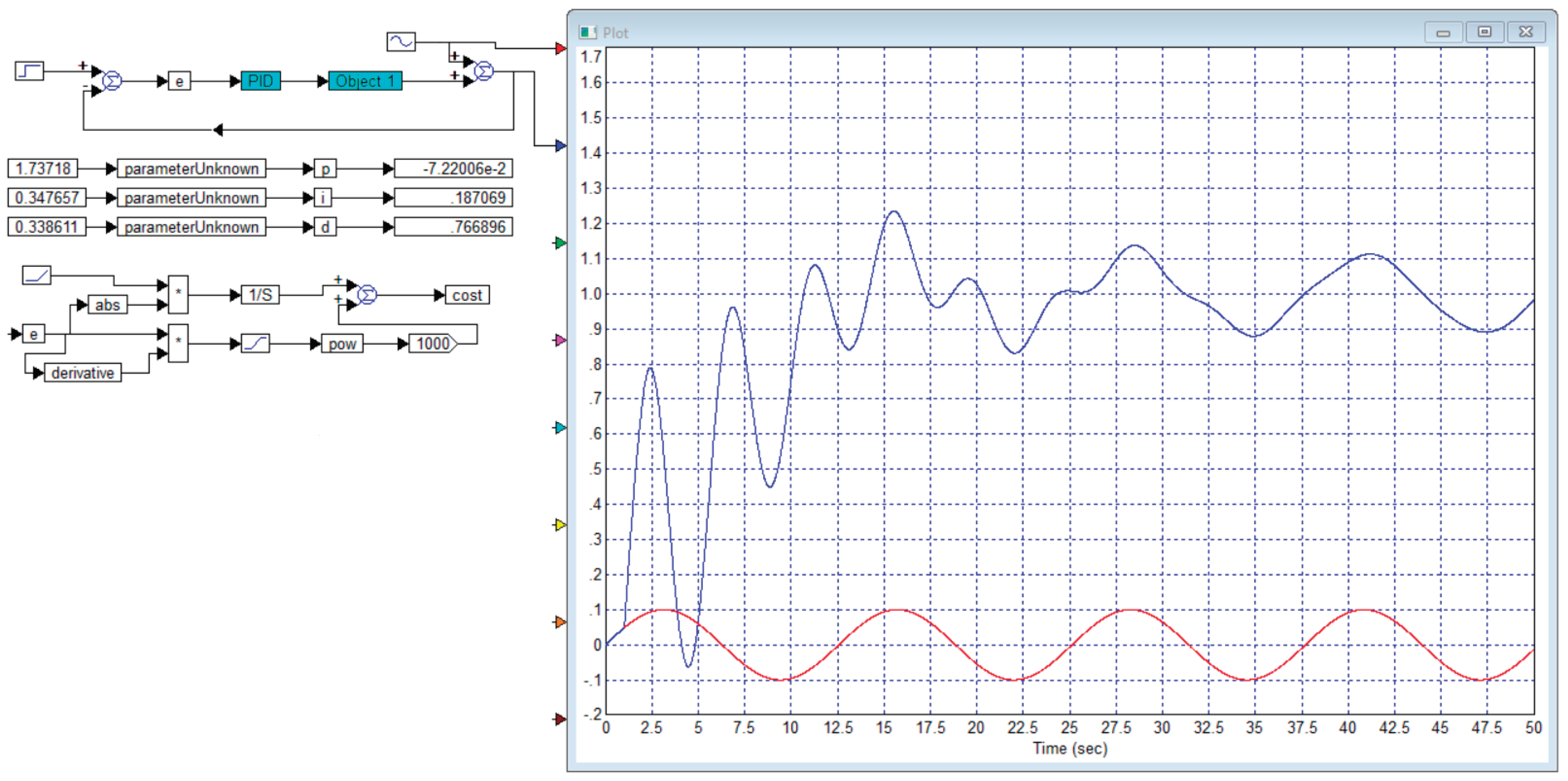
Figure 12.
Result of optimization of the system in which object 1 is used.
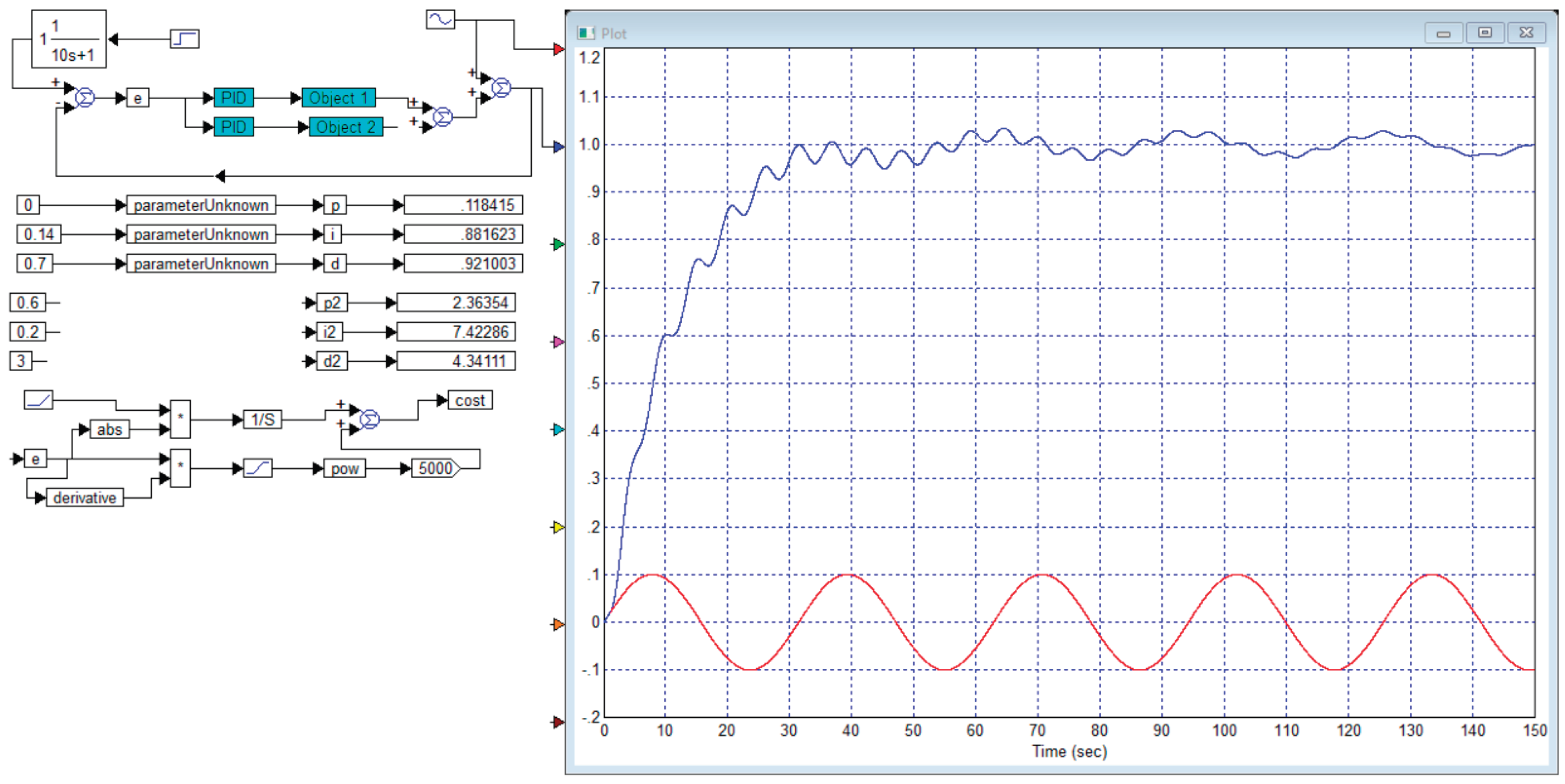
Figure 13.
Result of optimization of the system in which object 2 is used.
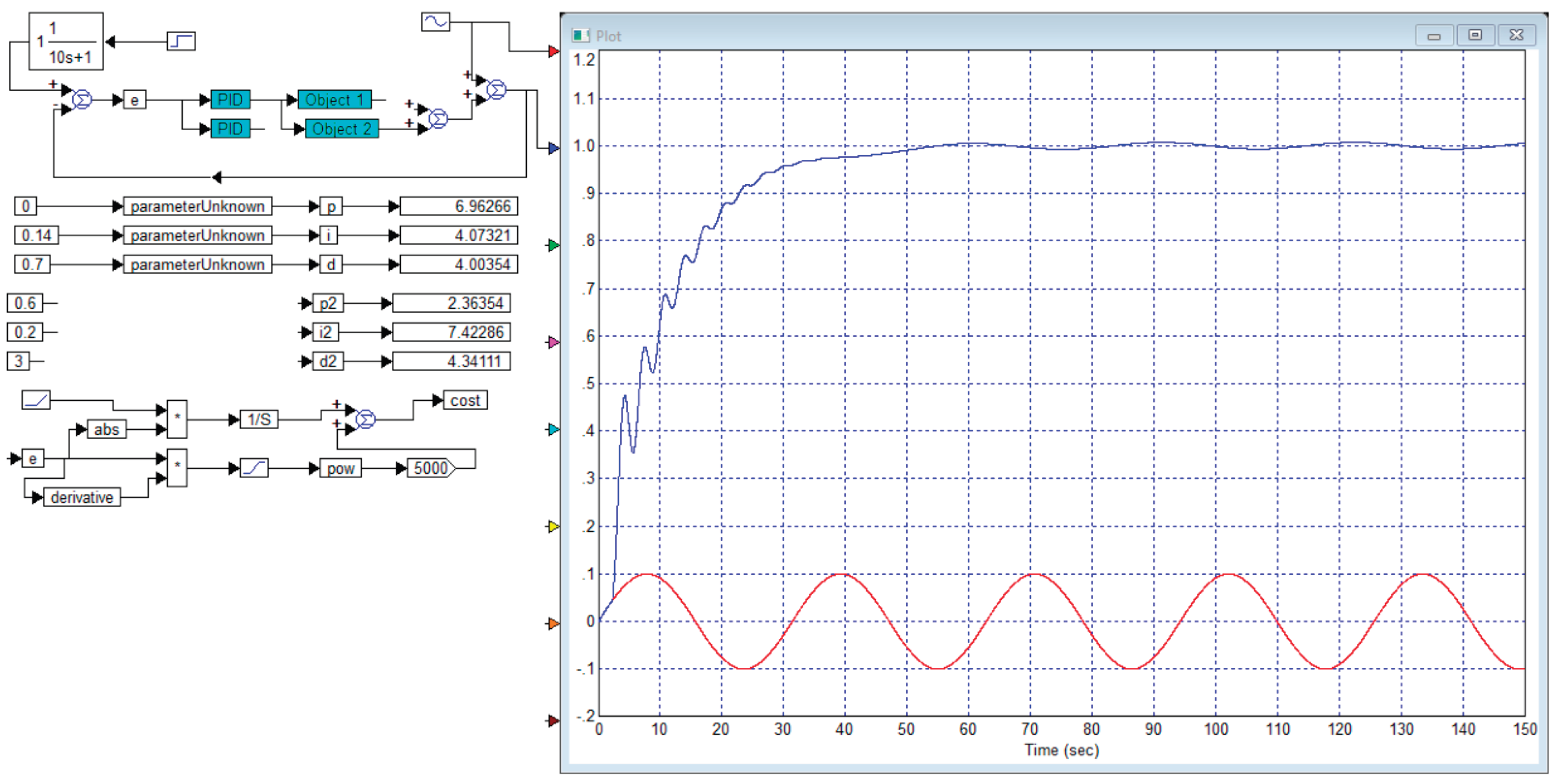
Figure 14.
Modeling of dry friction type nonlinearity.
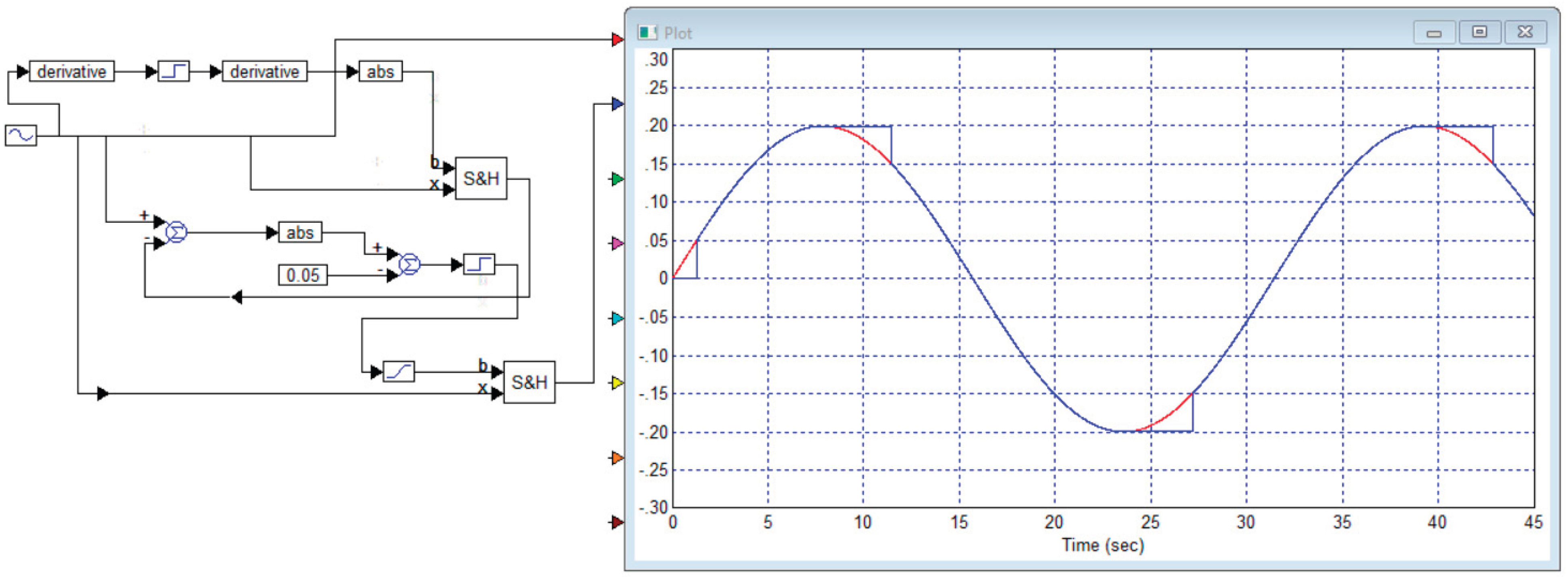
Figure 15.
Updated rod actuator model using the updated dry friction nonlinearity model.
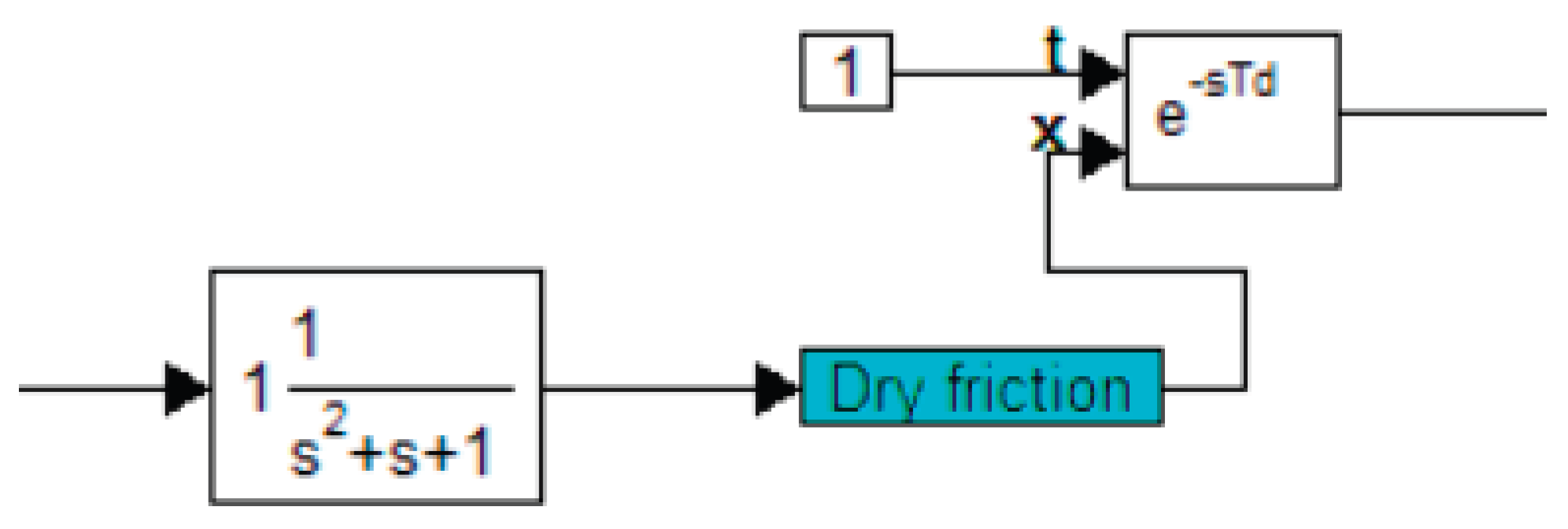
Figure 16.
Result of optimization of the actuator model with dry friction nonlinearity.
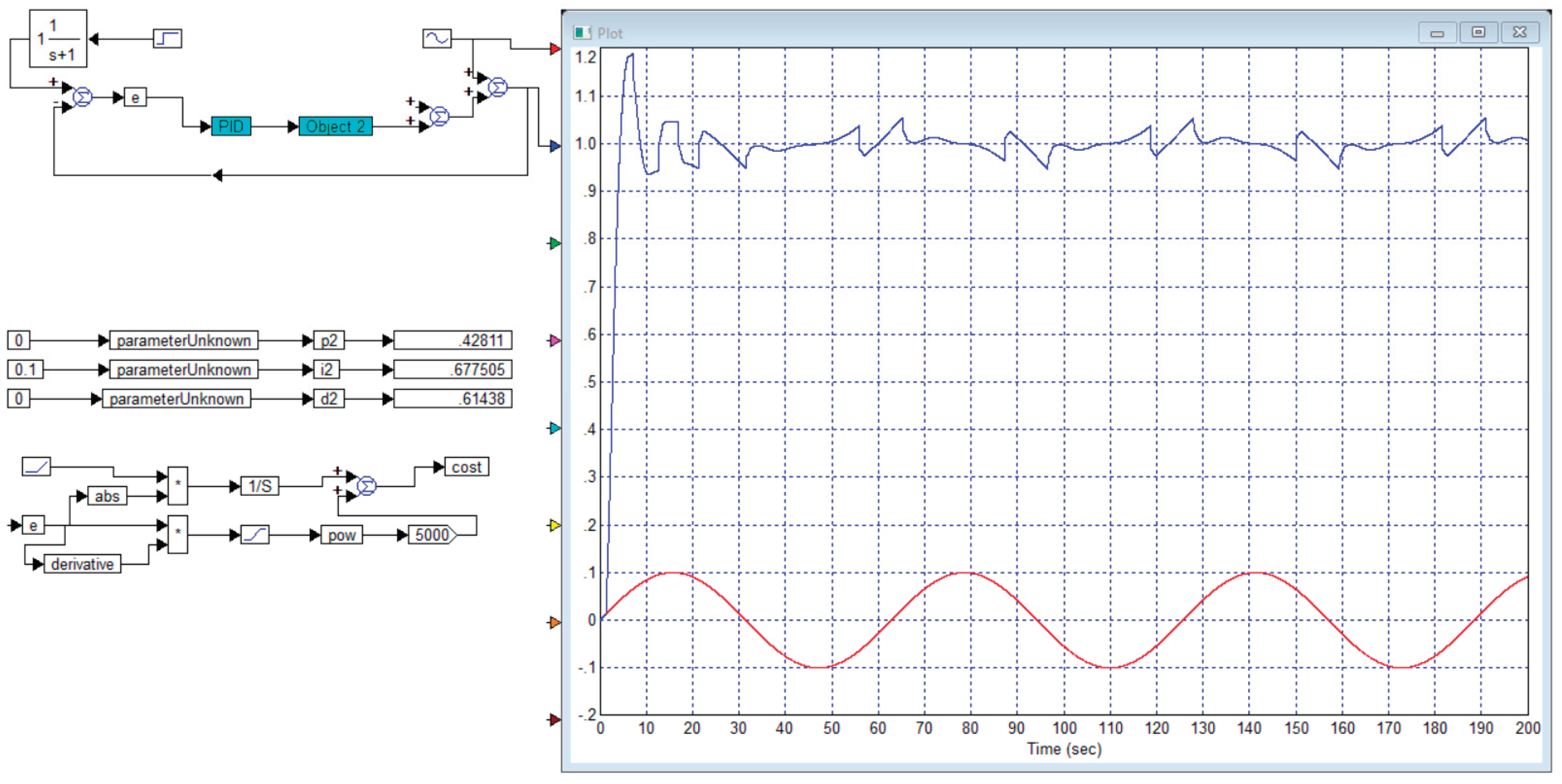
Figure 17.
Optimization result under the same conditions as in Figure 37, with the delay value in the object model reduced tenfold to .
Figure 17.
Optimization result under the same conditions as in Figure 37, with the delay value in the object model reduced tenfold to .
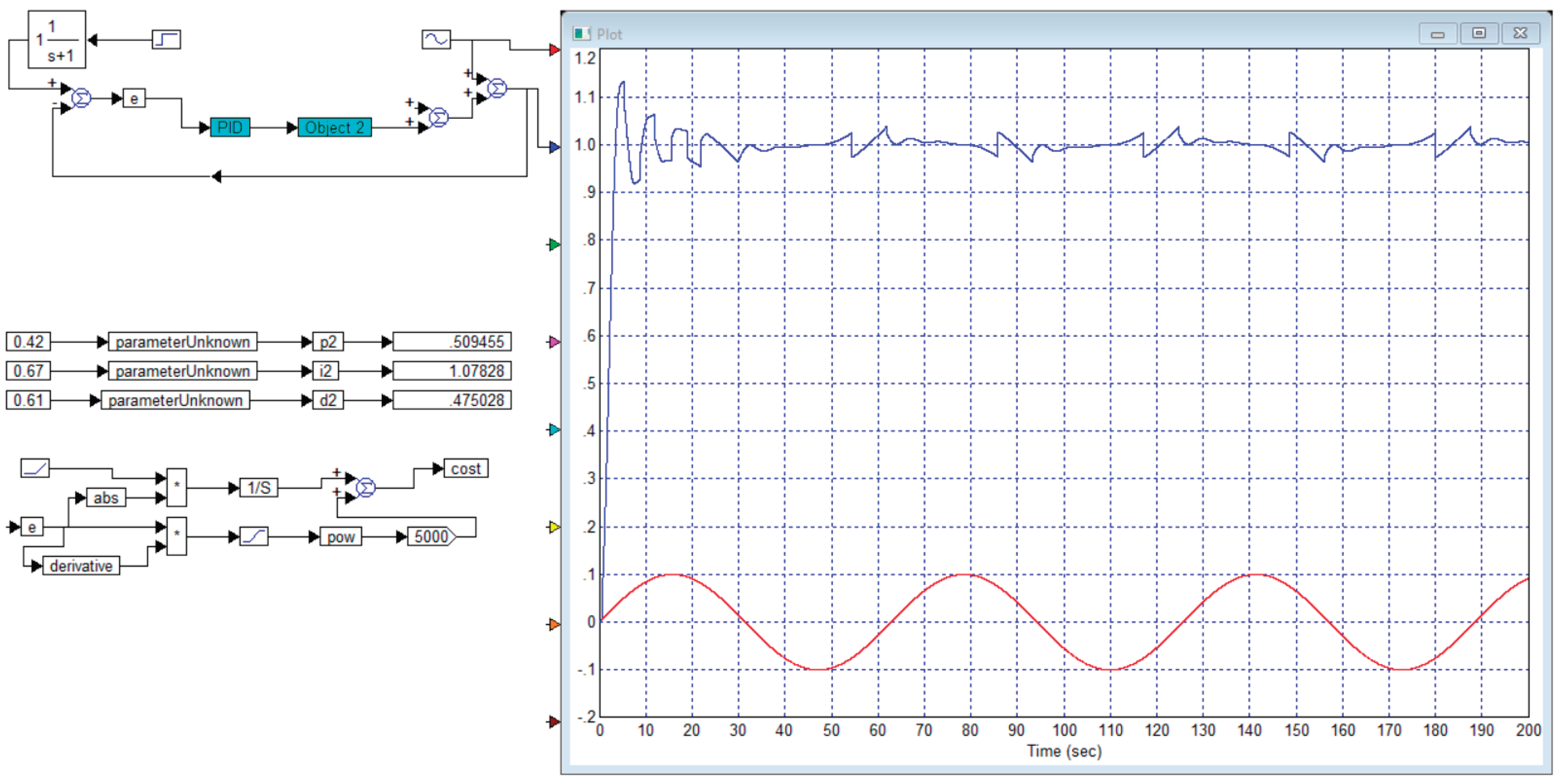
Figure 18.
Result of optimization of the system with object 2 in the absence of delay in its model.
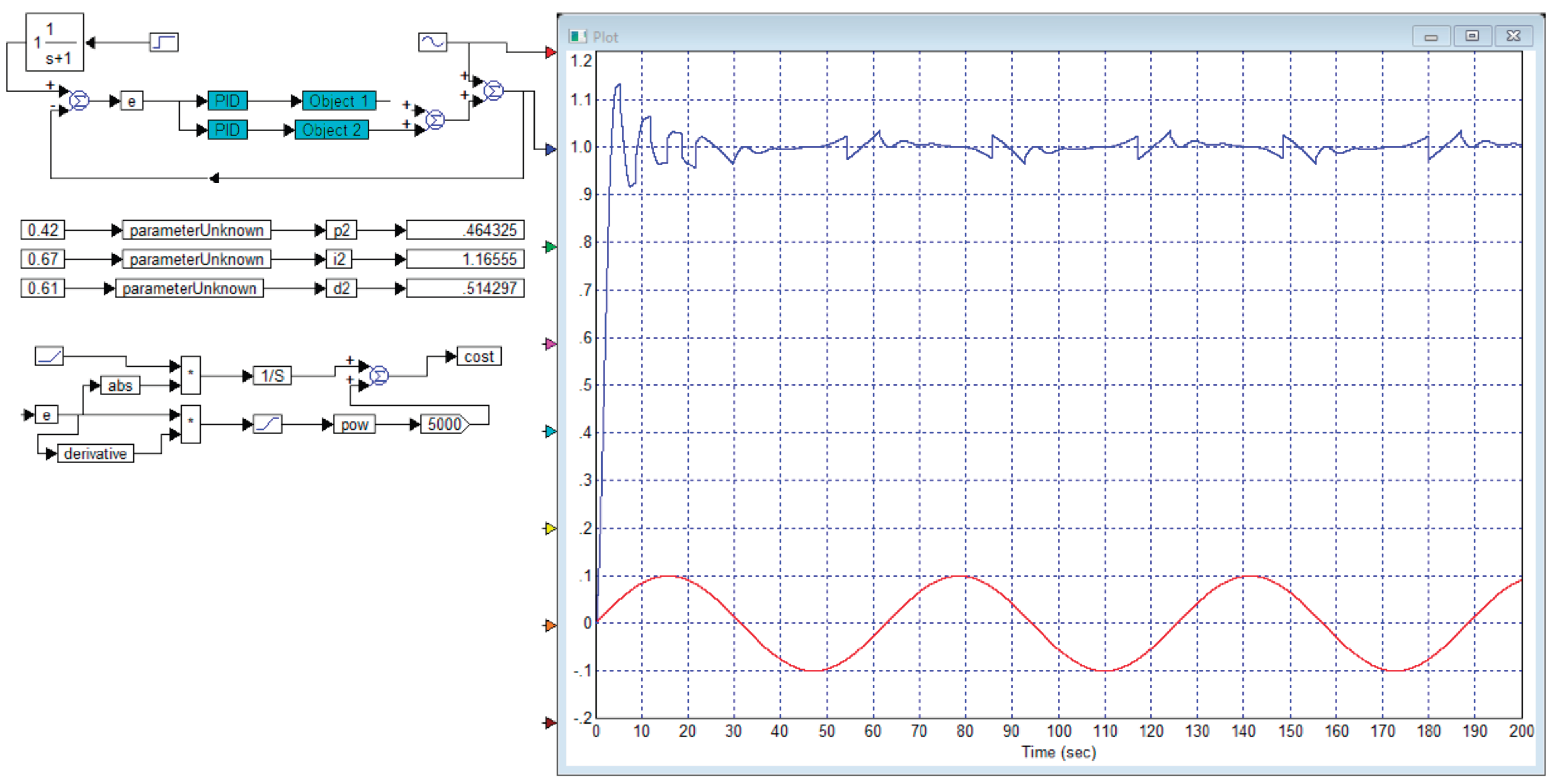
Figure 19.
Result of system optimization with the dry friction threshold reduced tenfold to a value
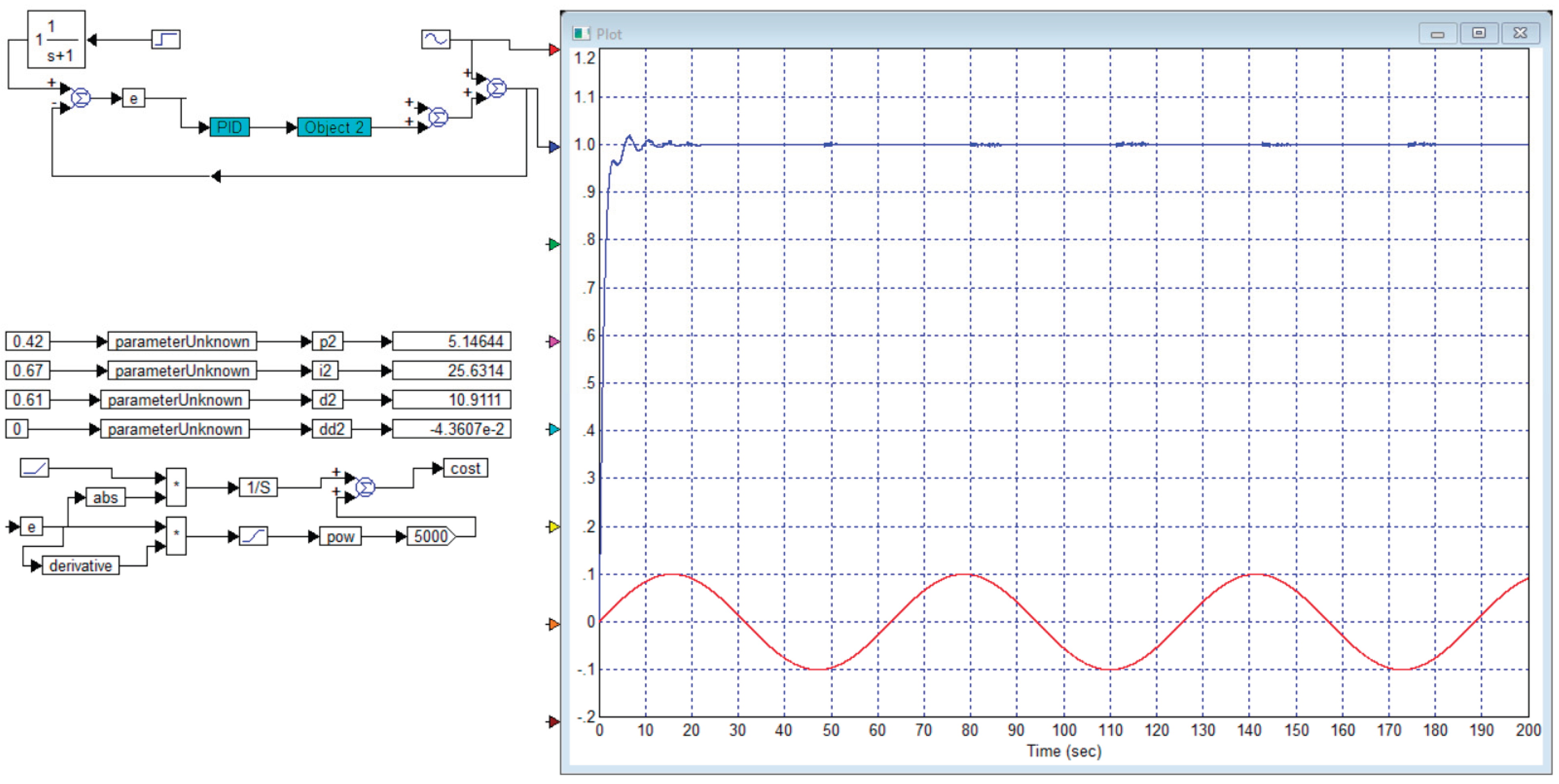
Figure 20.
Error signal zoomed in on the ordinate axis in the system shown in Figure 38.
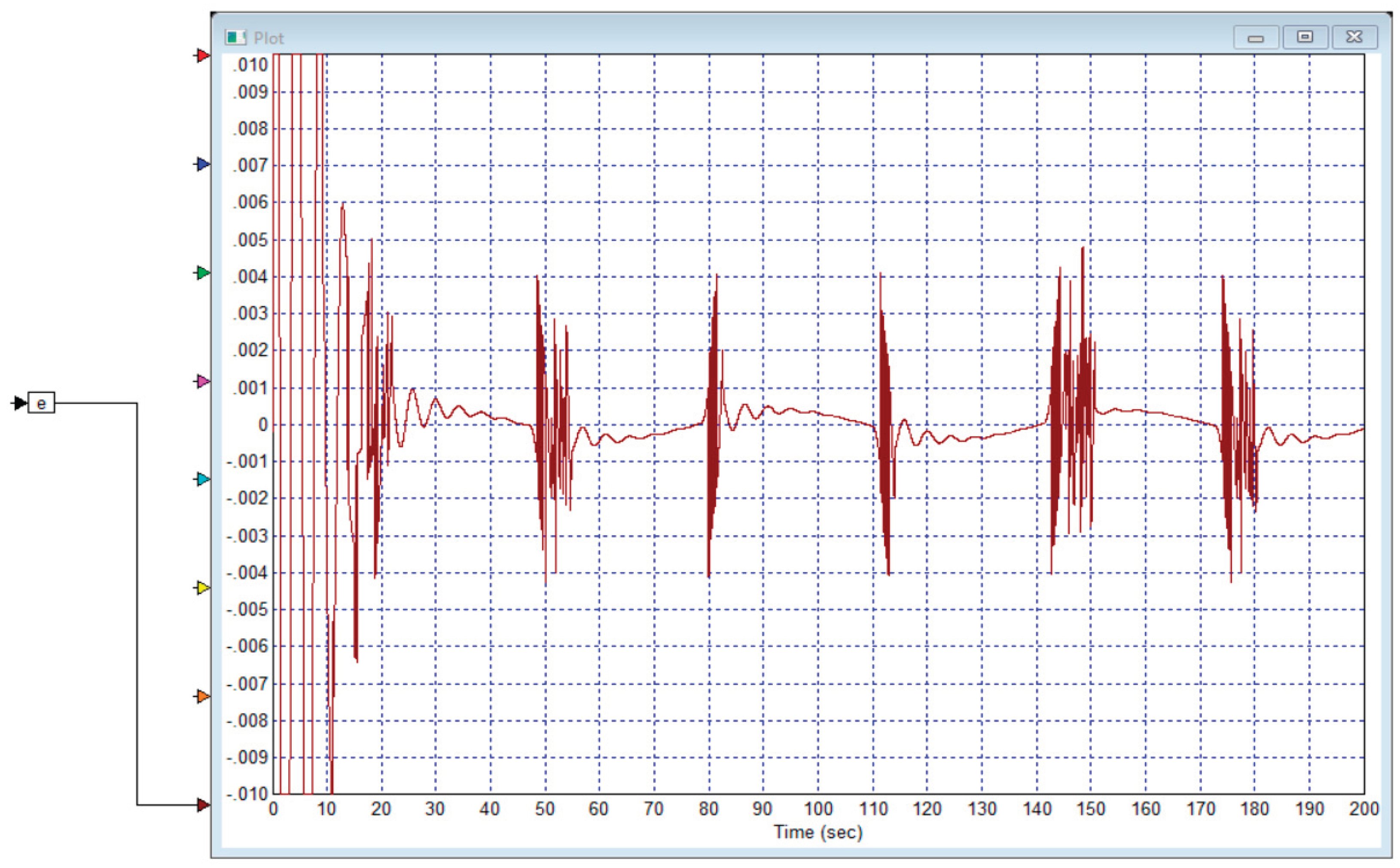
Figure 21.
Result of optimization of a system with an object (14) under the influence of a filter-smoothed jump and harmonic disturbance and the transient process under these conditions: line 1 is the disturbance, line 2 is the output signal of the system.
Figure 21.
Result of optimization of a system with an object (14) under the influence of a filter-smoothed jump and harmonic disturbance and the transient process under these conditions: line 1 is the disturbance, line 2 is the output signal of the system.
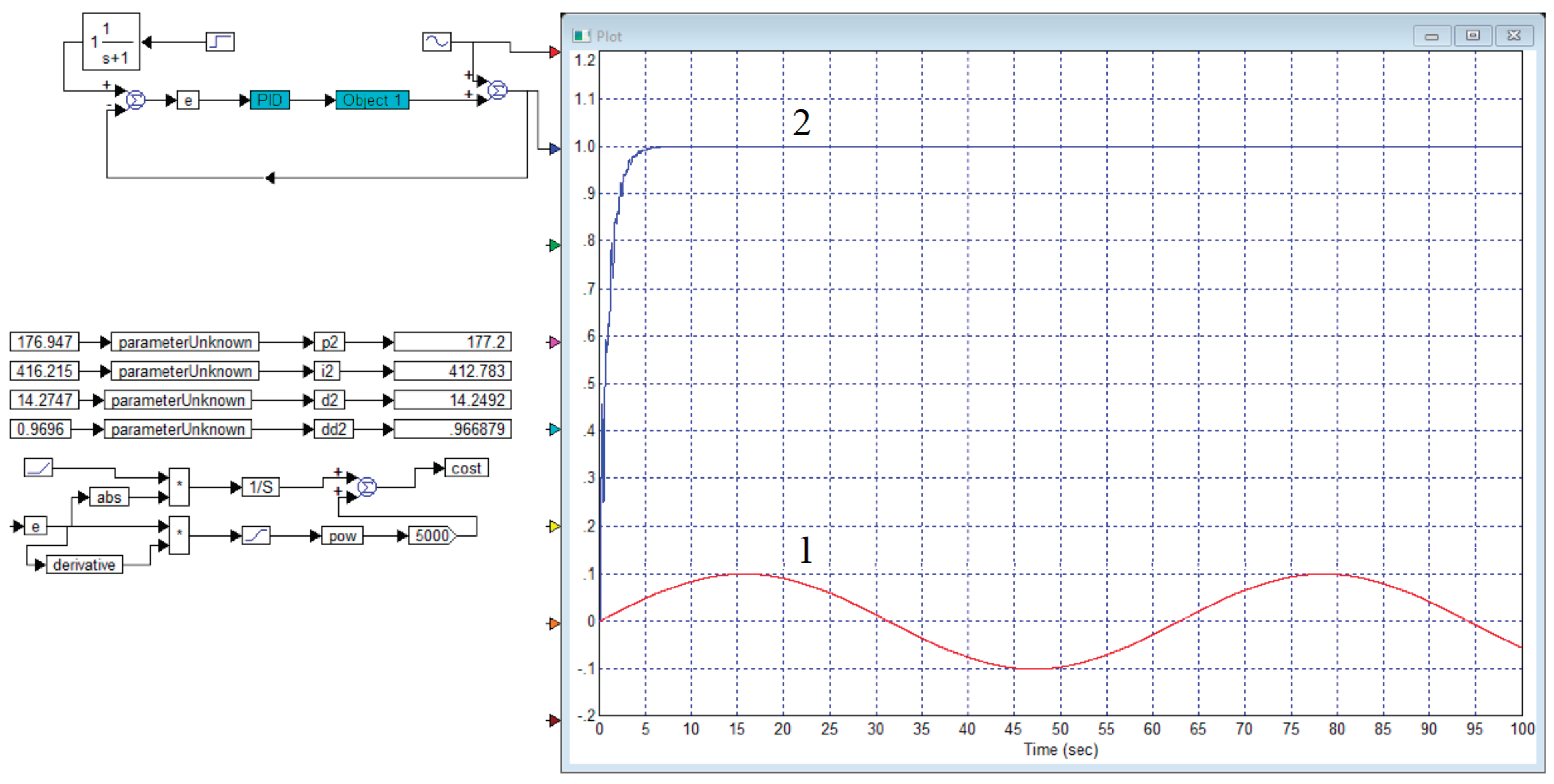
Figure 32.
Error in the system according to Figure 31 with object (14).
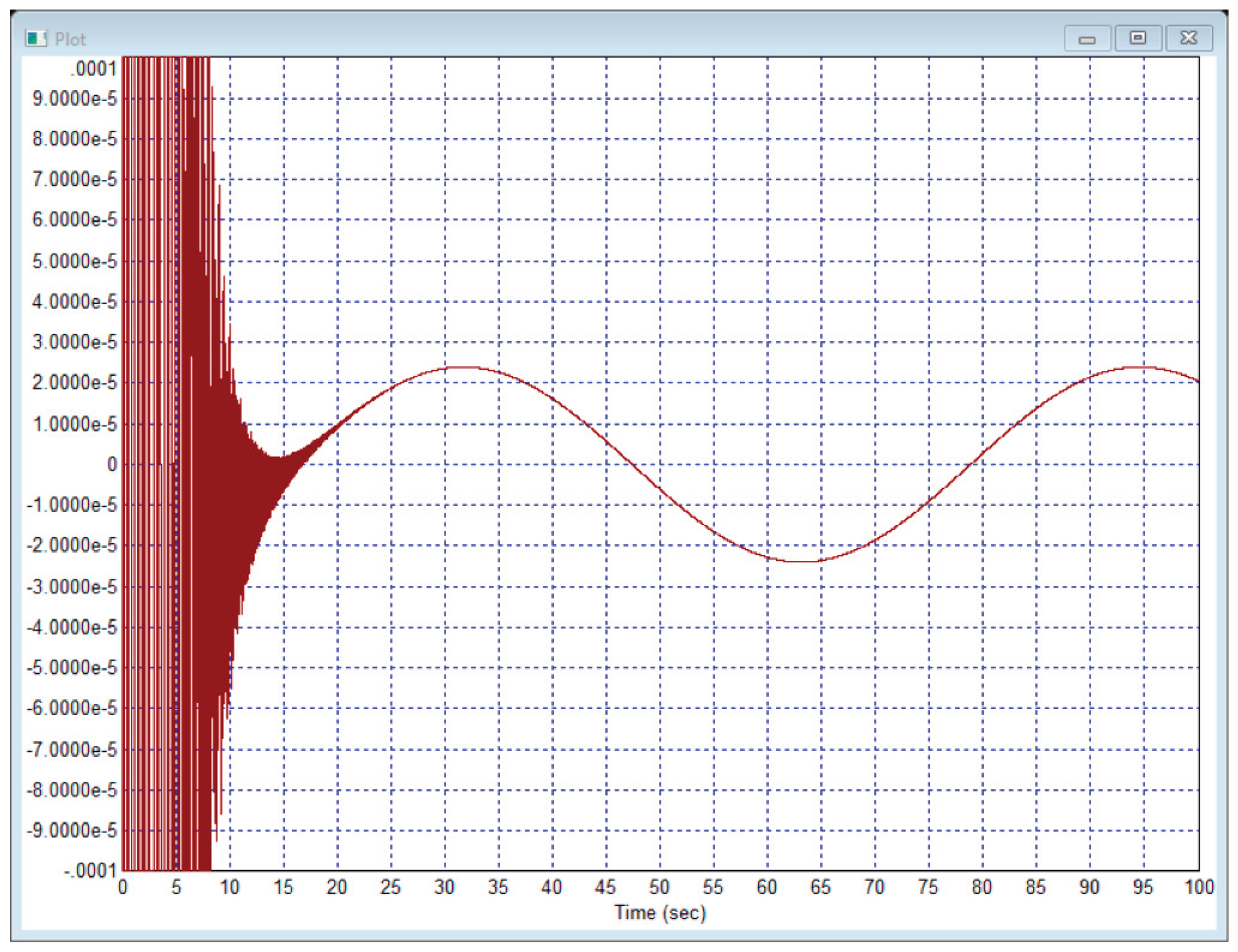
Figure 33.
New optimization of the object (15) under disturbance conditions, deep disturbance suppression is achieved: line 1 – disturbance, line 2 – output signal of the system.
Figure 33.
New optimization of the object (15) under disturbance conditions, deep disturbance suppression is achieved: line 1 – disturbance, line 2 – output signal of the system.
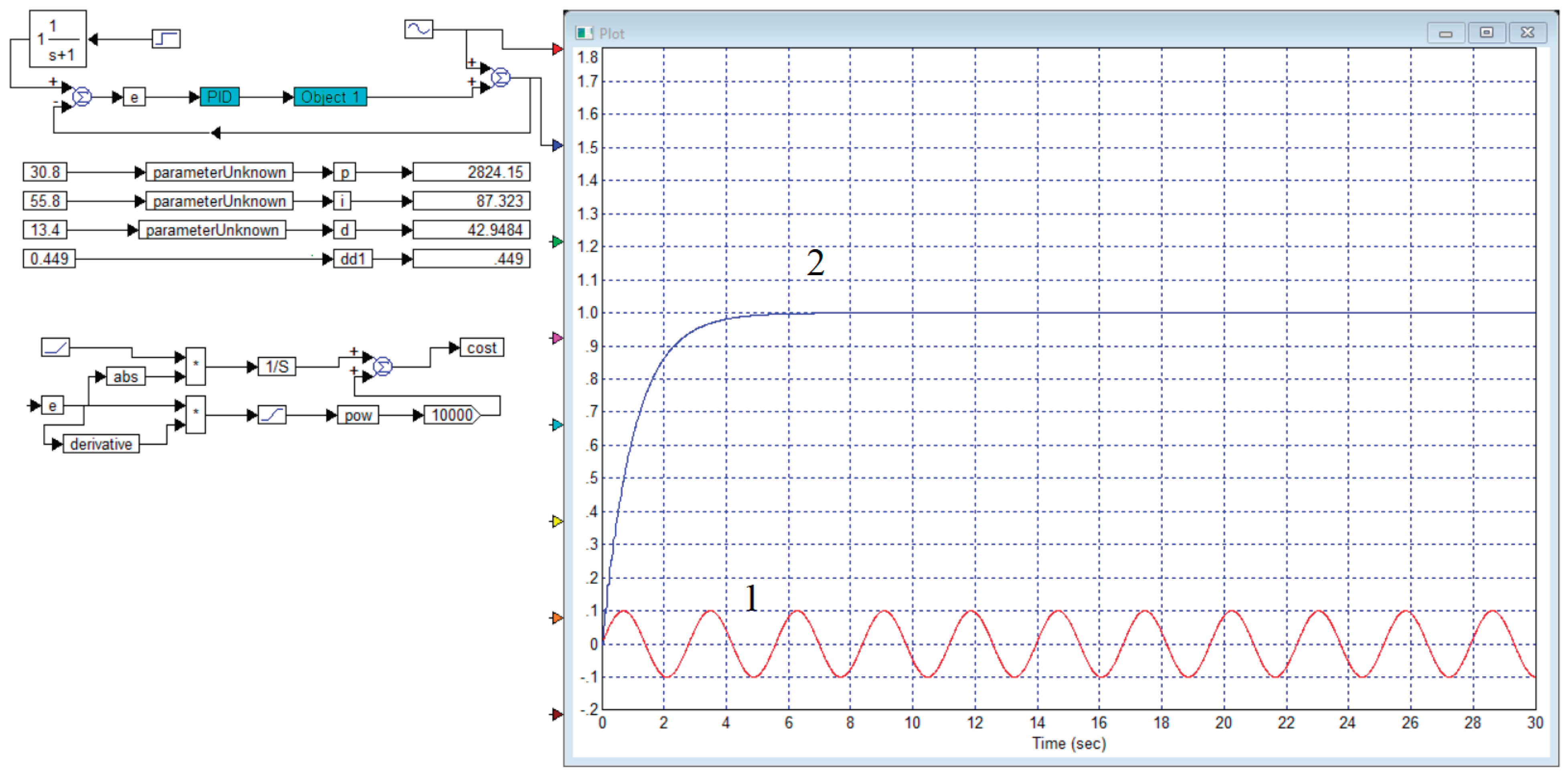
Figure 34.
Transient process in the system according to Figure 33 with a disturbance with a frequency twice that during optimization.
Figure 34.
Transient process in the system according to Figure 33 with a disturbance with a frequency twice that during optimization.
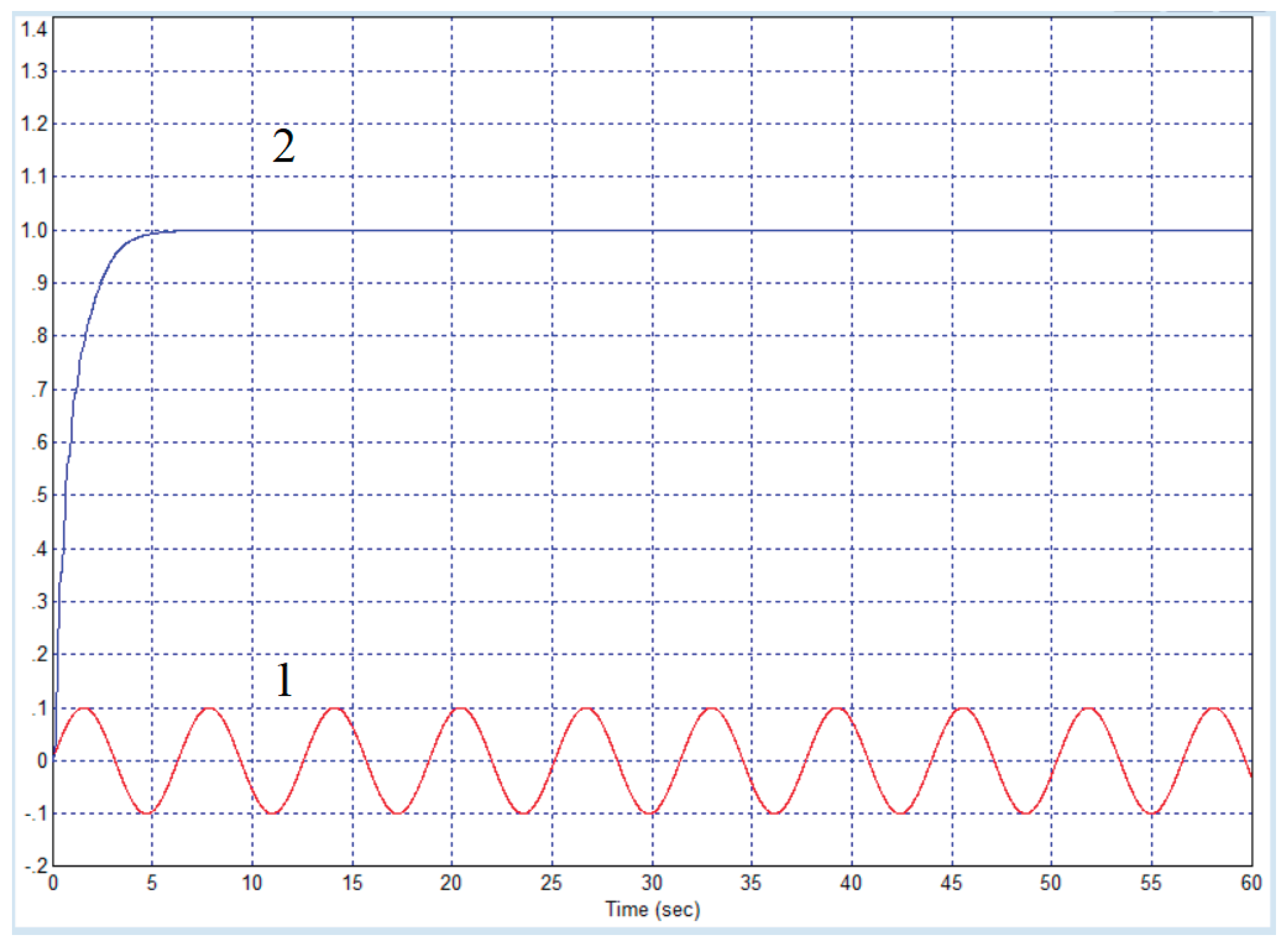
Figure 35.
Transient process in the system according to Figure 33 with actual disturbance with a frequency four times greater than during optimization.
Figure 35.
Transient process in the system according to Figure 33 with actual disturbance with a frequency four times greater than during optimization.
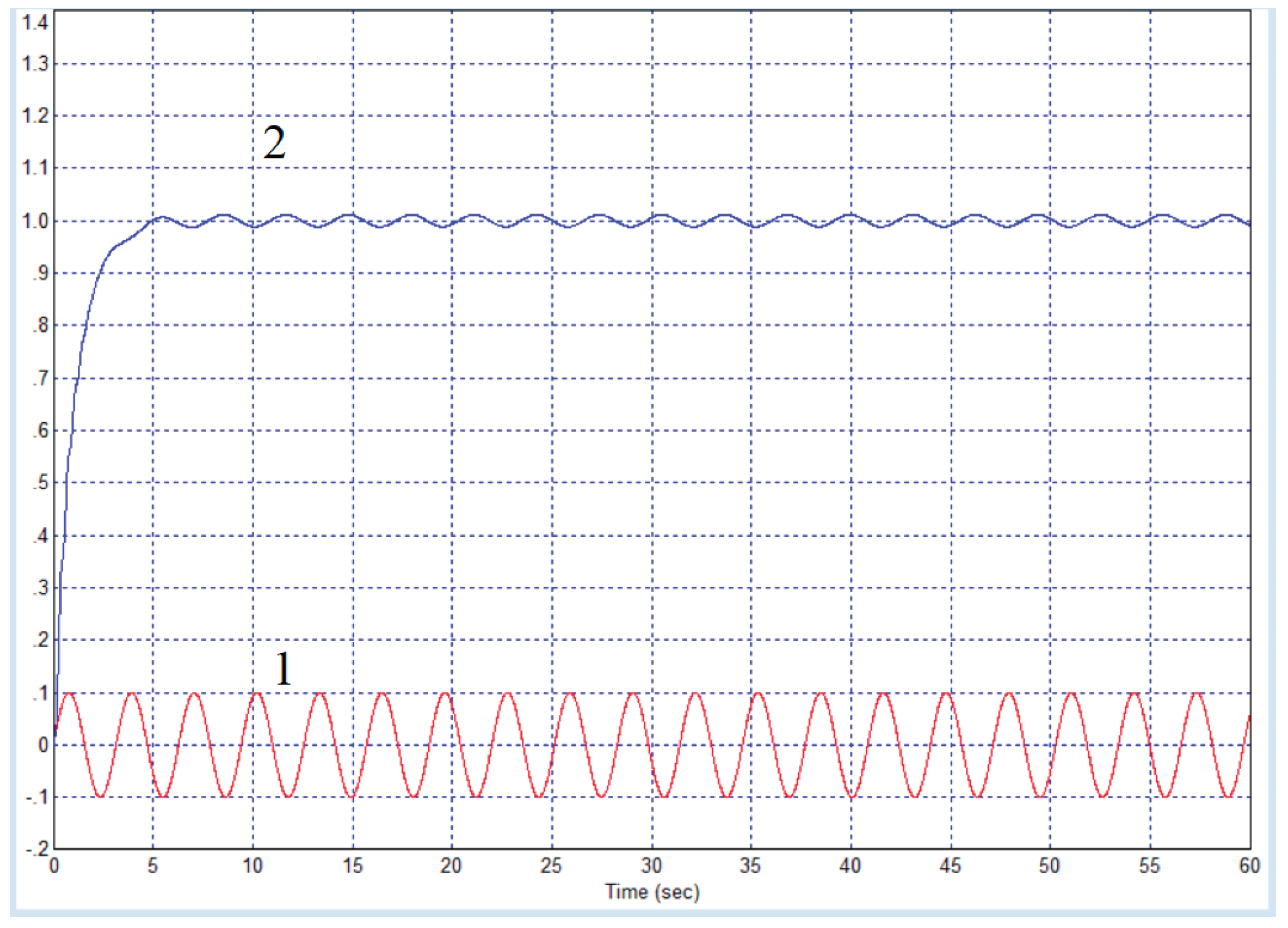
Figure 36.
Output signal in the same system at the disturbance frequency at which the greatest disturbance gain occurs.
Figure 36.
Output signal in the same system at the disturbance frequency at which the greatest disturbance gain occurs.
Disclaimer/Publisher’s Note: The statements, opinions and data contained in all publications are solely those of the individual author(s) and contributor(s) and not of MDPI and/or the editor(s). MDPI and/or the editor(s) disclaim responsibility for any injury to people or property resulting from any ideas, methods, instructions or products referred to in the content. |
© 2026 by the authors. Licensee MDPI, Basel, Switzerland. This article is an open access article distributed under the terms and conditions of the Creative Commons Attribution (CC BY) license (http://creativecommons.org/licenses/by/4.0/).
Copyright: This open access article is published under a Creative Commons CC BY 4.0 license, which permit the free download, distribution, and reuse, provided that the author and preprint are cited in any reuse.


