

Submitted:
04 June 2026
Posted:
05 June 2026
You are already at the latest version
Abstract
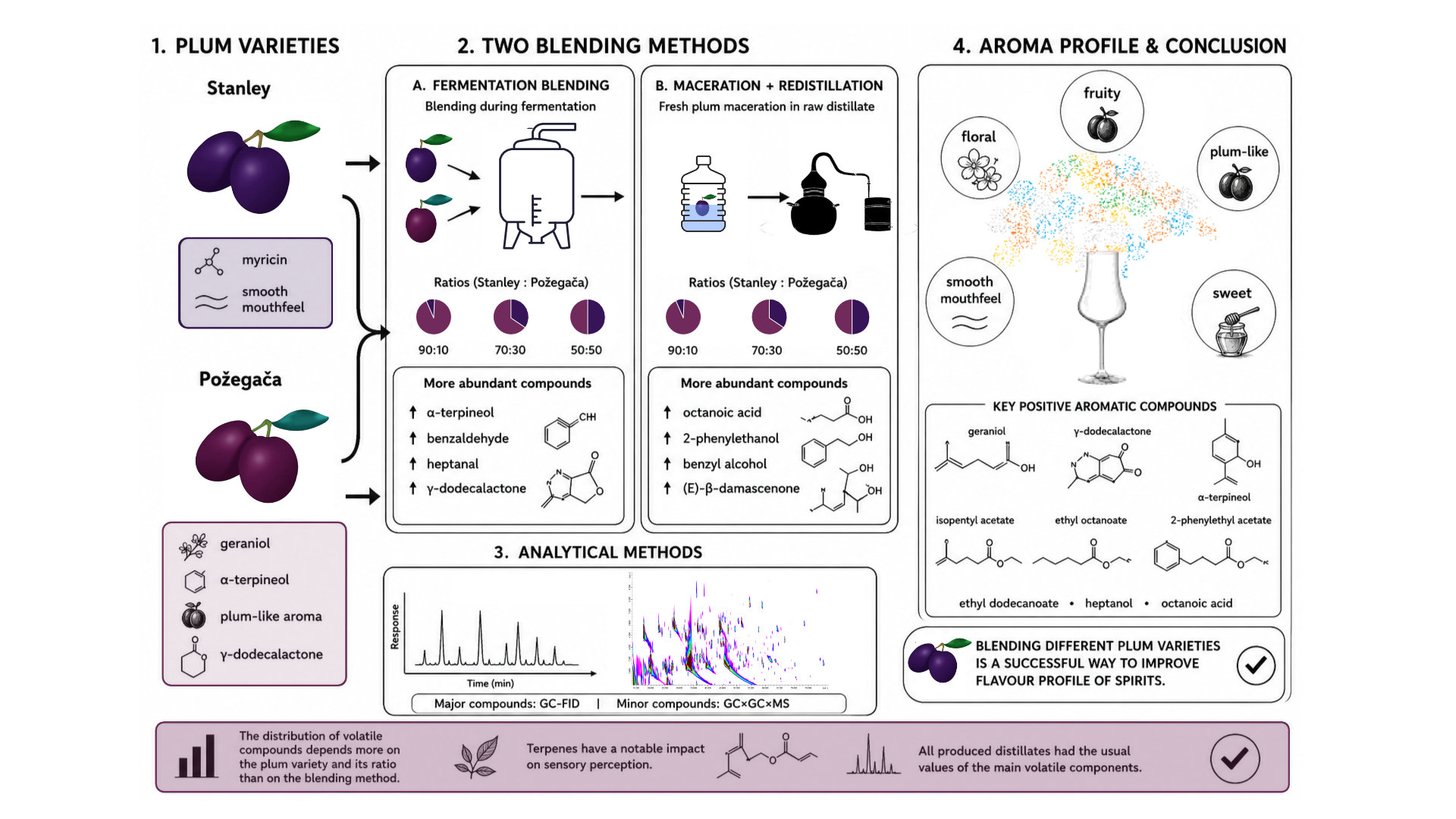
This study looked at the distribution of major and minor volatile components in distillates created by combining two plum types, Stanley and Požegača. Two methods of blending were used: (i) during fermentation and (ii) by macerating fresh Požegača in raw Stanley distillate and then redistilling the mixture. Plums were combined in three different ratios: 90:10, 70:30, and 50:50. The blending was done to enhance the plum aroma of the drinks. Major volatile components were measured by GCxFID analysis, while minor components were measured using GCxGCxMS. All produced distillates had the usual values of the main volatile components. Compared to the blending procedure, the distribution of minor volatile components in the samples varied more according to the plum variety and its ratio in the blend. Nevertheless, samples made by fermentation mixing had higher concentrations of α-terpineol, heptanal, benzaldehyde, and γ-dodecalactone. Fresh plum maceration yielded significantly higher concentrations of benzyl alcohol, 2-phenylethanol, octanoic acid, and (E)-β-damascenone. The sensory perception of spirits is significantly influenced by terpenes. Stanley spirits are distinguished for myrcene, which gives them a pleasing mouthfeel. Geraniol α-terpeneol and γ-dodecalactone, which are more typical for Požegača spirit, have a positive impact on the plum like odour of spirits. Isopentyl acetate, ethyl octanoate, 2-phenylethyl acetate, ethyl dodecanoate, heptanol, and octanoic acid were other positive aromatic compounds. Blending different plum varieties is a successful way to improve the flavour profile of spirits.
Keywords:
plum spirits
; aroma compounds
; fermentation
; maceration
1. Introduction
In the production of fruit spirits, beyond ensuring compliance with health and safety standards—which are fundamental to all food products and that are determined by jurisdictions—the primary objective is to obtain a spirit that is aromatic, clean, and sensory pleasing. To achieve this, producers employ a variety of techniques aimed at enhancing and intensifying the product’s aromatic profile. These include the selection of highly aromatic fruit varieties (Satora et al., 2017; Popović et al., 2019; Balcerek et al., 2023; Belak et al., 2024), selection of yeasts and managing all aspects of alcoholic fermentation (Fejzullahu et al., 2021; Mitev et al., 2023; Balák et al., 2024; Januszek et al., 2024; Schon et al., 2024), the use of different types of separation aroma compounds (Wang et al., 2024a) different distillation equipment (Arrieta-Garay et al., 2013; Matias-Guiu et al., 2016; Kokoti et al., 2023; Xiang et al., 2025), adjustment of distillation parameters, (Puentes et al., 2018; Zejak et al., 2024; Gao et al, 2024) storage conditions (Matias-Guiu et al., 2020), filtration (Puškaš et al., 2013) and aging the distillate in wooden barrels to enrich it with additional, desirable aromatic compounds (De Rosso et al., 2009; Smailagić et al., 2021; Silvello et al., 2021; Liubko et al., 2024).
In the Balkan countries, šljivovica (plum spirit) is a traditional spirit. The reputation of šljivovica has been largely shaped by the traditional variety Požegača, known for its exceptionally rich aromatic profile (Durr, 2010). However, it is well known that this variety is highly susceptible to the plum pox virus, which has led to its widespread removal from orchards. Požegača can still be found in small-scale plantations. Initially, it was replaced by the Stanley variety, while in recent years, increasing attention has been given to varieties developed by the Fruit Research Institute in Čačak. Nevertheless, Stanley remains a widely grown variety. Although its aromatic qualities are not on par with Požegača, it is still capable of producing high-quality spirits (Spaho et al., 2013), especially when blending with other aromatic plum varieties (Popović et al., 2016).
This study aimed to enhance the aromatic profile of spirits produced from the Stanley plum by adding the more aromatic Požegača variety. Similar research has been conducted on apple spirit, where such methods proved to be justified (Spaho et al., 2023). The specific aim of the study was to investigate the dynamics of primary aroma compounds transfer from the plum fruit into the distillate. For this purpose, Požegača plums were added to Stanley in two different ways. In the first method, Požegača was added prior to fermentation. In the second method, fresh Požegača fruit was added to raw Stanley distillate, followed by its maceration and then re-distillation.
2. Materials and Methods
2.1. Material
Plum fruits, analysed in this study, were obtained from two varieties: Stanley and Požegača. Fruits from Požegača were collected from plum orchards located in southern Bosnia, near the town of Konjic and labelled as P. Fruits from the variety Stanley were harvested from plum orchards located in northeastern Bosnia, close to the city of Gradačac. The plums were harvested at optimum maturity. Immediately after the harvest, plums were transported to the Faculty of Agriculture and Food Science in Sarajevo. The plums were weighed, washed and basic parameters, such as Brix degree and pH value, were determined using a digital refractometer and digital pH meter. In the experiment, a total of 150 kg of Stanley was used with 16.8 0 Brix and pH 3.65 and 50 kg of Požegača with 18.6 0Brix and pH 3.78.
2.2. Experimental Design
The experimental design included several steps (Figure 1), starting with the production of a distillate using exclusively Stanley plums. The obtained Stanley distillate served as the control sample. To observe the effect of primary Požegača aroma on the aroma quality of Stanley distillate, two treatments designated as fermentation (F) and maceration (M) were explored. The first treatment involved the production of monovarietal plum spirits of Stanley and Požegača marked with S and P. In the second treatment, Požegača fruits were mixed with Stanley fruits before fermentation. Požegača plums were added to Stanley in three different ratios of 10%, 30% and 50% based on the amount of Stanley. Fermentation lasted 10 days. The aim of this treatment is to determine how well Požegača aroma compounds are transferred from fresh fruit during fermentation.
In the third treatment, crushed fresh Požegača fruits were added to the raw Stanley distillate, collected after the first distillation. To maintain comparable experimental conditions, fresh Požegača plums were incorporated at 10%, 30%, and 50% (v/v) relative to the distillate volume. The maceration period was set to 10 days, corresponding to the duration of the previously conducted fermentation. After ten days of maceration, raw distillates were redistilled. The objective of this treatment was to assess the efficiency of aroma compound transfer from fresh Požegača plums, while excluding alterations occurring during fermentation. All described procedures were performed in triplicate for each treatment.
2.3. Fermentation
Plum samples, with stone, were roughly crushed and mixed according to the experimental design. Fermentation was carried out in 10 litres plastic vessels holding 7.8 kg of fruit substrate. All the vessels were closed with flo tap with an airlock on the top. The plums were fermented in a total of twenty-four vessels. All fermentations were carried out in the same way, which included the correction of mash adding phosphoric and lactic acids at 150 mL hL-1 of each, thus achieving a pH value of the substrate of around 3. The pH was adjusted with the aim of inhibiting bacterial contamination (Versini et al., 2009). After those, mashes were inoculated with commercial dry yeast (Uvaferm) selected from the Saccharomyces cerevisiae species, in amounts of 20 g hl-1 of fruit mash. Fermentation was carried out at the temperature of 19 ± 1 0C and rate of fermentation was monitored every day by hand refractometer. The fermentation was continued until the concentration of sugar decreased to 4 0Brix. All the fermentations lasted for 10 days.
2.4. Distillation
Immediately after the alcoholic fermentations were finished, the fermented mashes were distilled in a traditional copper alembic pot without a dephlegmator and in a volume of 10 L. The pot still was heated by direct fire fuelled by natural gas. During the distillation, regulation of the flame and water in the condenser were kept constant, so the flow rate was kept at approximately 25 mL min-1.
The distillation was run as a double stage. The aim of the first distillation was to exhaust, as much as possible, the alcohol from the fermented mash. The volume of the raw distillate per distillation, collected after the first stage, was between 2.8 and 3.0 L, with alcohol content of 25 to 27% v/v, depending on how rich the alcohol fermented mash was. The second stage of distillation was carried in order to intensify and purify the alcohol. In the second distillation, raw distillate was separated into three fractions: the head (1% of the volume of the raw distillates); the heart (collected after the head, until the alcohol content decreased to 40% v/v); the tail (collected after heart, until the alcohol content decreased up to 5% v/v). The alcohol content was determined every 5 min during distillation using alcoholmeter. The volume of heart fraction ranged from 400 to 430 mL with alcohol content of 63% v/v to 61% v/v, respectively. Only the heart fractions were used for the analysis.
2.5. Maceration
After first stage distillation of Stanley the raw distillate, containing 25% v/v alcohol, was used for the maceration of fresh plums. Based on the volume of Stanley’s raw distillate, fresh Požegača fruits were added in percentages of 10%, 30%, and 50%. Plums were roughly crushed before addition, but without breaking the plum stones. The mixtures were stored in 5 litre dark glass bottles. In order to provide analogous conditions, the maceration of aroma compounds was carried out after 10 days (same time as the fermentation lasted) at the temperature of 19 ±1 0C. After the maceration, all samples were redistilled. Redistillation was conducted using the previously described methodology. The volume of heart fractions was 400 ±10 ml with alcohol content of 61 ±1% v/v.
2.6. Chemical Analyses
2.6.1. GC- FID Analysis
In order to determine a major fermentative volatile aroma compound which is mostly formed during alcohol fermentation gas chromatography with flame ionization detection (GC-FID, 260 °C) was used. Approximately 100 µL were filled in 2 mL glass vials with micro inserts and screw cap with a PFTE lined silicon septum. Aliquots of 1 µL were injected in split mode using a split liner with deactivated glass wool at 220 °C on an Agilent 5890 GC with 7673 liquid autosamplers. Separation was done of a polar Macherey-Nagel Optima Wax column with 0.32 mm inner diameter and a film thickness of 0.25 µm. The following temperature program was used: 40 °C (3 min) @5 °C/min to 70 °C (0 min) and @15 °C/min to 240 °C Carrier gas was Helium 5.0 with a column head pressure of 70 kPa (35.6 cm/s linear velocity). All samples were analysed in duplicate. All samples were analysed in duplicate.
2.6.2. Comprehensive GCxGC-MS
Sample preparation by head space solid phase microextraction (HS-SPME)
A sample of 10 µL of each distillate was transferred by micro capillaries (Hirschmann ring caps, Eberstadt, Germany) into 20 mL headspace vials. After the addition of glass coated magnetic stir bars, magnetic crimp caps with a polytetrafluoroethylene (PTFE)-lined silicone septum were used to close the vials. The volatile fraction was enriched on a 2 cm stable flex 50/30 µm Divinylbenzene/Carboxen/PDMS SPME fibre (Supelco, Bellefonte, PA, USA) for 20 min at 60 ◦C. Desorption took place directly in the heated injection port of a GC-MS system at 270 ◦C with a 0.75 mm inner diameter SPME liner.
For improved sensitivity and chromatographic resolution, a comprehensive two dimensional GC system with a Zoex cryogenic modulator was used. A Shimadzu QP2010 ultra system was equipped with a ZOEX cryogenic loop modulator and the following column combination
1st dimension column: 30 m Phenomenex ZB5MS*0.25 mm id*0.25 µm df
2nd dimension column: 2.5 m Phenomenex ZB50*0.15mm id*0.15µm df
Carrier gas: helium 5.0, 91.9 kPa column head pressure, linear velocity; Injector: Optiv IV splitless, 280 °C with 0.75 mm SPME liner. Temperature program: 40 °C (1 min)@2 °C/min to 230 °C (0 min) @20 °C/min to 290 °C (2 min). Modulator: 280 °C, Modulation frequency: 8 s, hot pulse jet 350 ms; Data acquisition: scan; Scan range: 35-280 amu with 50 scans/s; Detector: 280 °C; Detector Voltage: 1kV
2.7. Sensory Analysis
The average samples from the three repetitions per each experimental modality were tested. A sensory analysis of samples was performed by a panel of 12 qualified testers with extensive experience in sensory assessment of distillates. The samples were coded and a balanced order was performed. The following four attributes were examined: odour (typicality and intensity of plum smell in nose, the cleanliness); aroma (typical aroma of the distillate in its intensity and quality in nose and on the palate); mouthfeel (refers to the physical and tactile sensations perceived in the mouth during tasting independently of aroma and flavour, usually warming or burning sensation); persistence (character of plum and length of the aftertaste). Evaluation sheets were used in accordance with the rules of the European Competition of Fruit Distillates, ‘DESTILLATA’, Wien and a scale from 5 to 1 was applied.
2.8. Statistical Analyses
Average values of major fermentative aroma compounds were compared using Student’s t-test (P < 0.05) to assess whether significant differences exist between monovarietal plum spirits. Additionally, for each sensory quality characteristic, statistically significant influence (P< 0.05) between monovarietal Stanley distillate and other experimental samples was tested by one-factor ANOVA. The accessors were accounted for as repetitions. Differences among averages were tasted by LSD test at a significance level of 95%. Multivariate analyses by PCA were performed to establish relationships between spirit samples and their sensory attributes. The partial least-squares (PLS) regression was used for visualizing the overall relationships between the sensory attributes and volatile compounds (VOCs).
All statistical analyses were performed with the statistical package StatBox 6.7(Grimmersoft, Paris, France).
3. Results and Discussion
3.1. Major Fermentative Aroma Volatile Compounds in Monovarietal and Blended Plum Spirits Determined by GC-FID
The main volatile components were measured to ascertain the methanol level and to provide a general understanding of the quality of produced distillates. Methanol, ethyl acetate and higher alcohol, particularly n-propanol, iso-butanol and amyl alcohol are the major volatile compounds (VOCs) in the fruit spirits from a quantitative point of view (Wang et al., 2024a). These compounds are formed during alcoholic fermentation. Despite the fact that plums and other fruits also contain ethyl acetate, amyl alcohol, and iso-butanol (Pino and Quijano 2012; Lin et al., 2023), alcoholic fermentation is mainly responsible for their origins in spirits. That’s why they belong under the category of fermentative aroma. The concentration of major fermentative volatile compounds in the monovarietal plum spirits is shown in Figure 2.
Methanol is the most dominant among the main fermentative volatile compounds and it is predominant compound in plum spirits (Coldea et al., 2011; Zajek et al., 2025). Because of its toxicity, government regulations limited its content. The European Union’s methanol standard for plum spirits is 12 g/L a.a. what is 480 mg/100 mL of 40% ethanol (Regulation EU 2019/787). In all tested distillates, the content of methanol is significantly lower than the regulatory limit. Methanol formation occurs from pectin during fermentation; thus, its concentration is directly contingent upon the pectin content in the fruit. The content of methanol is significantly higher in Stanley plum spirit than in Požegača plum spirits. Similar results were shown in the investigation of Nikićević and Tešević (2005) but opposite with results of Spaho et al. (2022) where Požegača had higher methanol content than Stanley spirits. It is obvious that additional factors, such as the year of plum harvest or the duration of fermented must storage, can affect the methanol content (Zhang et al., 2012; Arrieta-Garay et al., 2026).
Ethyl acetate is the second most prevalent fermentative component in plum distillate samples. It is one of the leading secondary products of alcoholic fermentation and is the most abundant ester in fruit spirits. In this study distillate from Požegača contains a statistically higher amount of ethyl acetate than distillate from Stanley. The same results are published by Spaho et al. (2013). The study of Popović et al. (2009) confirmed that Požegača distillate had higher concentration of ethyl acetate than distillate of plum varieties developed in Čačak. The same authors concluded that higher concentration of ethyl influence favourably the freshness of the distillate aroma. An increased ethyl acetate content detracts from the flavour of spirits, giving them a sharpness and glue-like smell.
Among the higher alcohols, n-propanol has slightly higher concentration compared to amyl alcohol, while iso-butanol appears in the lowest concentration. It is not unusual for n-propanol to be the most abundant higher alcohol in plum spirits (Coldea et al., 2011; Spaho et al., 2013; Pielech-Przybylska et al., 2016; Balák et al, 2024; Srdjenović Čonić et al., 2024). Nevertheless, this concentration of higher alcohols in tested distillates, even n-propanol, is not too high to negatively affect the distillate’s quality. Ratio of n-propanol/iso butanol as well as amyl alcohols/ isobutanol should be greater than 1 as such it can be used as a quality indicator of beverages (Balcerek, et al.,2013). Thanks to high concentration of n-propanol the ratio of amyl alcohols/1-propanol is < 1 for booth tested distillates. These results are in accordance with results of Satora and Tuszynski (2010) and Pielech-Przybylska et al. (2016). However, investigation of Satora et al. 2008 indicates that the plum spirits contained more propanol than isobutanol, without any influence on quality of the beverage. Even more, higher alcohols such as n-propanol and amyl alcohols are preferred for the aroma of plum spirits, according to Ivanović et al. (2021).
The amounts of the main volatile aromatic components in the blended spirits were also determined. According to the experiment, the enrichment with aromatic components from Požegača was done in two ways: fermentation (Figure 3A) and maceration (Figure 3B).
Increasing the amount of Požegača added to Stanley during fermentation reduced the content of all measured compounds except ethyl acetate, as shown in Figure 2A. This is consistent with the findings displayed in Figure 1, which shows that the distillate from pure Požegača has a lower concentration of fermentative compounds than the distillate from pure Stanley. In contrast to fermentation, the concentrations of fermentative volatile compounds do not differ significantly in samples produced by maceration of Požegača in raw Stanley distillate (Figure 2B). These values largely correspond to those observed in the monovarietal Stanley distillate. As Požegača did not undergo fermentation in these samples, it could not have influenced the measured concentrations. Samples obtained by maceration of Požegača in the raw distillate exhibited a significantly lower concentration of ethyl acetate compared to those in which Požegača was co-fermented with Stanley. This reduction is likely attributable to the volatility of ethyl acetate, which may have partially evaporated during the 10-day maceration period conducted in non-hermetically sealed vessels. It is well known that ethyl acetate is quickly depleted from the mash, thanks to its high relative volatility at low ethanol concentrations (Yagishita et al., 2023). Furthermore, concurrent hydrolysis of ethyl acetate during maceration may have additionally contributed to its decreased concentration in the macerated samples.
3.2. Volatile Compounds in Monovarietal and Blended Plum Spirits Determined by Comprehensive Two-Dimensional Gas Chromatography-Mass Spectrometry GCxGC-MS
Plum spirits consist of a huge number of VOCs that belong to very different chemical classes. Volatile compounds are the basis of spirits flavour and determine their quality. In addition to the major volatile compounds, spirits contain a very large number of minor compounds that can be highly important for the overall perception of quality. This is because some of them have an exceptionally low detection threshold, so even at very low concentrations they can contribute to the aromatic profile due to their high odour activity value- OAV (Zanghelini et al., 2024). Because of this complexity of the alcoholic matrix, minor components are increasingly being determined using comprehensive two-dimensional gas chromatography–mass spectrometry (GC×GC-MS). The results of GcxGCxMS are expressed as average peak areas. Stacked bar plot illustrating the relative abundance of major volatile chemical classes across samples (Figure 4).
Esters, alcohols, and aldehydes are the most prevalent classes of volatile minor compounds in plum spirits; acids, terpenes, and other constituents make up less than 15% (Figure 3a). Furthermore, compared to Požegača distillate, Stanley distillate has a higher concentration of aldehydes, while the proportion of all other compounds is higher in Požegača distillate. The impact of variety on the overall composition of the samples can be seen in the composition of their mixtures. When more Požegača is added, the proportion of aldehydes decreases, and the proportion of all other minor volatile components increases. However, the fermentation and maceration processes of adding Požegača to Stanly resulted in a higher total amount of minor volatile components than monovarietal distillates (Figure 4b). During the maceration of fresh plums in the raw distillate, there was a significant increase in the proportion of higher alcohols. In contrast, samples blended during fermentation showed a higher proportion of total esters and aldehydes.
The relative abundance of individual components within the chemical classes is presented using stacked diagrams in Figure 5 (a–f). Ester class comprised the largest number of individual esters, totalling 12 compounds (Figure 5a). In this regard, the Stanley distillate samples were richer in 2-phenylethyl acetate. Therefore, all blended samples in fermentation containing a higher proportion of Stanley showed higher contents of 2-phenylethyl acetate. In contrast, samples blended during maceration showed a decrease in the content of this ester. The distribution of ethyl hexanoate, ethyl decahexanoate, ethyl octanoate, and ethyl decanoate was slightly higher in the Požegača distillate, as reflected in increased levels of these esters in blended samples with increasing proportions of Požegača. The distribution of benzyl acetate and ethyl (E)-cinnamate also showed higher values in the Požegača distillate; however, a significant increase in these compounds was observed only in samples blended during maceration. In contrast to cinnamate, an increase in ethyl dodecanoate was detected only in samples blended during fermentation. The Požegača distillate contained a particularly elevated amount of isopentyl acetate; however, this was not reflected in increased levels in the blended samples, neither during fermentation nor during maceration. The same trend was observed for ethyl salicylate. It appears that the concentrations of these compounds were suppressed by Stanley. The general conclusion is that the monovarietal Požegača sample was richer in esters, which has contributed to the increase in the total content of individual esters in blended samples containing higher proportions of Požegača in the mixture. Furthermore, samples obtained by blending during fermentation exhibited increased ester levels, unlike samples produced by maceration of fresh Požegača in raw Stanley distillate. These samples showed ester contents comparable to those of the monovarietal distillates.
The major acids in plum are weak organic acids such as citric, malic, and quinic acid, but these acids are not of particular interest in spirit production because they are non-volatile. The most abundant volatile acid in plum fruit is hexadecanoic acid, followed by dodecanoic, decanoic, and octanoic acids (Pino and Quijano, 2012). A relatively small number of acids were identified in the plum spirit samples, namely only four acids (Figure 5b). A low number of acids in plum spirits has also been reported by Satora et al. (2016), Popović et al. (2023, 2026), and Wang et al. (2024a). The most abundant acid in all samples was octanoic acid, which was also the case in plum spirit samples of the Čačanska rodna variety as well as in grape spirit samples (Popović et al., 2026; Wang et al., 2024a). The monovarietal Stanley distillate contained a higher amount of hexanoic acid compared to the Požegača sample. In the fermentation-blended samples, it was observed that the content of this acid increased with a higher proportion of Stanley in the mixture. In contrast to Stanley, the monovarietal Požegača distillate was characterized by an exceptionally high content of octanoic acid, while n-decanoic and isovaleric acids were also present. These acids were likewise detected in the maceration-blended samples, particularly octanoic acid, which may indicate their enhanced extraction from the Požegača fruit during the maceration process.
The aldehyde content represented a relatively high proportion of the overall volatile profile of the plum spirit samples (Figure 5c) This is mainly due to the high levels of benzaldehyde and furfural, which are well known to be abundant in plum brandies (Vyviurska et al., 2017; Balek et al., 2024). The Stanley distillate was characterized by higher levels of benzaldehyde and furfural, which were also reflected in the blended samples of Stanley and Požegača. It was observed that with an increasing proportion of Stanley in the mixture, the contents of both furfural and benzaldehyde increased. This trend was consistent for samples blended both during fermentation and maceration. Other authors have also reported higher benzaldehyde levels in Stanley spirits compared to Požegača (Popović et al., 2019; 2023), as well as somewhat higher furfural levels in Stanley spirits compared to other plum varieties (Satora et al., 2017). Filatova et al. (2022) find furfural one of the main markers responsible for reliable classification of plum spirits. Among the other aldehydes, nonanal was the most abundant, particularly in Požegača distillates. This aldehyde is typical for plum spirits (Durr, 2010). Other aldehydes, including heptanal, hexanal, decanal, and octanal, were also more abundant in the Požegača distillate compared to Stanley. A clear pattern was observed, showing an increase in these aldehydes with a higher proportion of Požegača in the mixture, regardless of the blending method.
A total of six minor volatile higher alcohols were detected in the tested samples (Figure 5d). The two most abundant alcohols in the monovarietal distillates were 1-hexanol and 2-phenylethanol, followed by 1-octanol, 1-decanol, benzyl alcohol, while heptanol showed the lowest content. Other authors have also reported that 1-hexanol and 2-phenylethanol were the most abundant minor alcohol in Stanley distillates compared to distillates from other plum varieties (Zajac et al., 2025). Popović et al. (2009) found that Požegača brandy contains higher levels of hexanol and 2-phenylethanol compared to brandies produced from varieties developed in Čačak. In the present study, the Požegača distillate showed a higher overall content of minor higher alcohols compared to the Stanley distillate. Therefore, there are more minor higher alcohols in blended samples that contain more Požegača. An especially increased content was observed in samples obtained by maceration of Požegača fruit in raw Stanley distillate, with a pronounced distribution of 2-phenylethanol and benzyl alcohol. A similar result was reported by Spaho et al. (2021) in a study on apple distillates, where samples obtained by extraction of fresh apple in raw distillate contained slightly higher levels of 2-phenylethanol compared to samples produced by blending apples during fermentation. 2-phenylethanol is formed through the degradation of phenylalanine in yeast via the Ehrlich pathway and represents a typical secondary product of fermentation. However, its presence in plum fruit was already reported by Ismail et al. (1981 a,b), while Nunes et al. (2008) noted that it is highly abundant in candied plum fruit. Lin et al. (2023) further reported that, among other compounds, 2-phenylethanol is responsible for orchid and fruity aromas in traditional plum varieties such as Xiangli from the Sichuan region. 2-phenylethanol is an aroma active component with an odour threshold (OT) greater than 2 for Požegača spirits while the OT is slightly lower for Stanley spirits (Popović et al., 2023). 2-phenylethanol is responsible for the rose-like odour. Benzyl alcohol is formed as a by-product of fermentation as well as through the decomposition of aromatic compounds originating from the stone (seed) and peel of the fruit. This alcohol is also present in plum fruit. Although Pino and Quijano (2012) did not detect benzyl alcohol in plums, Chai et al. (2012) did report its presence. Nunes et al. (2008) even stated that benzyl alcohol is the most dominant alcohol in candied plum fruit. Benzyl alcohol acts as an active aroma compound because it has a very high odour threshold OT -over 10,000 (Januszek and Satora 2021). Benzyl alcohol contributes to the floral scent in small quantities, while in larger quantities it can enhance the impression of balsamic and phenolic notes. The increased content of 2-phenylethanol and benzyl alcohol in maceration treatment may be due to their increased extraction from the fruit during fruit maceration. Interestingly, benzaldehyde is more abundant in Stanley distillate, while benzyl alcohol and benzyl acetate, which are formed by the reduction of benzaldehyde primarily through natural metabolic processes during fermentation, are more abundant in Požegača distillate. Interestingly, the content of 1-hexanol does not show any distribution pattern that would indicate either variety or blending method. This alcohol is important for the fresh fruit aroma and is formed in plant tissues (Balcerek et al., 2023), so it was expected to behave similarly to 2-phenylethanol and benzyl alcohol, i.e., to be more concentrated in samples obtained by maceration.
A total of seven terpenes were identified in the distillate samples (Figure 5e), along with two compounds classified as “others”, namely γ-dodecalactone and β-damascenone (Figure 5f). The terpene group is highly important for the aromatic profile of fruit brandies. These compounds are generally considered desirable components. Among all chemical classes of volatile compounds, the primary aroma of the raw material is most strongly influenced by this group (Dieguez et al., 2003). This is due to their strong contribution to fruity and floral notes and their high odour activity values (OAV). For this reason, these compounds are classified as aroma-active components (Pino and Quijano, 2012). Compounds from this group can often serve as aroma markers for distinguishing (a) production processes, where linalool and β-damascenone were identified as key markers (Wang et al., 2024b); (b) the type of fruit used, where α-terpineol was characteristic of plum brandy and raspberry spirits (Bajer et al., 2017); and (c) plum varieties, where myrcene was particularly characteristic of the Chrudimer plum variety (Vyviurska et al., 2017).
In this study, the monovarietal Požegača distillate was characterized by a significantly higher terpene content compared to the Stanley distillate, mainly due to elevated levels of α-terpineol and linalool. Linalool is present in relatively high concentrations in plum fruit and has been described as a fragrant, plum-like aroma terpenoid (Isamil et al., 1981b). Januszek and Satora (2024) identified linalool, p-cymene, geraniol, and geranyl acetone as the dominant terpenoids in plum musts. In the blended distillates, the content of α-terpineol increased with an increasing proportion of Požegača in the mixture. A similar trend was observed for linalool, but only in samples blended during fermentation, whereas this pattern was not observed in samples produced by maceration of fresh Požegača. Geraniol content decreased in the blended samples as the proportion of Stanley in the mixture decreased. Trans-linalool oxide showed a stable content across all samples, while nerol was more pronounced in samples with a higher proportion of Požegača. It can be observed that the total terpene content was higher in samples produced during fermentation compared to those obtained by maceration. One possible explanation is the transformation of terpenes during maceration time due to oxidation and other enzymatic and non-enzymatic reactions occurring during time, which may have led to a reduction in their content. Since maceration was followed by redistillation, these changes in terpene composition were further accentuated. Studies conducted by Blagoeva (2020) on Muscat wine distillates confirmed that terpenoids are reduced by 50–60% after three months of wine storage.
Regarding lactones, γ-dodecalactone was found to be more characteristic of Požegača, and its content increased with a higher proportion of Požegača in the blend. Gómez et al. (1993) identified γ-dodecalactone as the main lactone in Japanese plum (Prunus salicina). In contrast, (E)-β-damascenone showed an opposite behaviour. This compound was more abundant in Stanley distillates, and its content decreased with a reduction in the proportion of Stanley in the blends. Notably, (E)-β-damascenone showed a pronounced increase in samples where fresh Požegača was macerated in raw Stanley distillate. This enhancement may be attributed to acid hydrolysis occurring during maceration, as the addition of fresh plum likely altered the acidity of the system due to the presence of non-volatile acids in the fruit. (E)-β-demascenone is a highly odoriferous compound with a powerful and pleasant fragrance. Owing to its very low sensory threshold in aqueous systems, it contributes stewed apple, fruity–floral, and honey-like sensory attributes. Tomasino, and Bolman (2021) states that β-damascenone may act as an aroma enhancing compound.
To provide a clearer insight into the dynamics of volatile aroma compounds according to the production treatment used for distillate production, Figure 6 was prepared.
Blending of Stanley and Požegača in fermentation, a higher average amount of hexanoic acid was extracted, whereas n-decanoic acid was detected only in samples obtained by maceration. Esters were generally present at comparable levels in both treatments (Figure 6a). However, slightly higher concentrations of certain esters such as isopentyl acetate, ethyl octanoate, and 2-phenylethyl acetate were observed in samples produced by blending in fermentation. In contrast, examination of the relative proportions (Figure 6b) shows that maceration-derived samples contained a higher percentage of benzyl acetate, ethyl (E)-cinnamate, and ethyl hexadecanoate.
Minor higher alcohols were also present at broadly similar concentrations across both treatments. On average, 1-hexanol was slightly more abundant in samples produced by fermentation blending, whereas the concentrations of 2-phenylethanol and benzyl alcohol were substantially higher in samples obtained by maceration of fresh plum in raw distillate. Due to these elevated levels of the latter two alcohols, the total content of minor volatile compounds was higher in the maceration treatment compared to blending in fermentation (Figure 4).
Compounds from the aldehyde, terpene, and “other” groups also showed no major fluctuations between the two treatments. However, given that these compounds generally have very low sensory thresholds—particularly terpenes, lactones, and ketones—even small differences may be significant. Furthermore, α-terpineol, heptanal, benzaldehyde, and γ-dodecalactone were more abundant in samples produced by blending in fermentation. On the other hand, maceration of fresh plum resulted in a higher concentration of several compounds compared to fermentation blending, including citronellol, linalool, trans-linalool oxide (furanoid), nonanal, and (E)-β-damascenone.
3.3. The Effect of Blending Stanley and Požegača on Sensory Attributes Obtained Distillates
The findings from the chemical analyses were further supported by sensory analysis. Four attributes were evaluated by 12 experienced panellists. The results of sensory evaluation are shown in Table 1.
The sensory evaluation results indicated that odour was the most highly rated attribute among all analysed samples. The odour of all spirits was clean, no off Flavors. Odour was evaluated as a distinctly fruity scent with strong notes of plum. Depending on the blend’s composition, the aroma’s perception already varied. The spirits obtained solely from Požegača were judged as having a statistically significantly better scent than the monovariant spirits from Stanley. The combinations of these two types also showed this. A higher rating for aroma was given to spirits mixtures containing more Požegača, and there was no difference in the process by which the varieties were blended. However, the spirits with up to 10% Požegača in the blend didn’t significantly differ from spirits produced from Stanley, indicating that a tiny amount of Požegača does not enhance aroma. In general mouthfeel is the worst scored attribute, warmth and harshness were noticeable. Although the Stanley spirits have the best score for mouthfeel, there is no statistically significant difference between it and the Požegača spirits and spirits obtained by fermentation of mixture 90% Stanley and 10% Požegača. The remaining samples were generally analysed without statistically significant changes but it’s evident that spirits with more Stanley in the combination performed better, particularly when blending in the fermentation. Persistence is a sensation that refers to how long the flavours and aromas linger in mouth and persistence covers length, fullness, complexity and harmonization of flavour but also flavour profile changes over time. As it can be seen the persistence was scored high with small differences between the samples. Spirits obtained by blending plums in ratio 50:50 have the best persistence regardless of the blending method used. Equally good ratings were given to samples of pure Požegača as well as to samples blended through maceration.
To gain insight into the relationship between sensory quality and the content of minor volatile compounds across all samples included in this study, multivariate analyses were performed. Principal component analysis (PCA) was used to classify and differentiate the samples according to their sensory attributes (Figure 7a), while partial least squares (PLS) regression was applied to evaluate the relationships between VOCs profiles and sensory attributes (Figure 7b).
The PCA plot shows that the spirit samples are divided not only by the variety of plum and its proportion in the mixture, but also by the treatment that was applied. As a result, the monovariant Stanley sample stood out from the others, indicating that blending is an effective method of enhancing this plum variety’s scent in spirits. Both Stanley’s spirits and the spirits in which Stanley is represented by 90% have good mouthfeel. The spirits that were obtained by blending during fermentation are grouped into a cluster of positive sensory attributes. The Požegača variety clearly contributed to a richer plum-like odour and aroma in this blending, while Stanley improved the mouthfeel. A distinctive feeling of persistence is seen in spirits obtained by macerating fresh Požegača in raw distillate from Stanley.
The PCA plot shows that the spirit samples are divided not only by the variety of plum and its proportion in the mixture, but also by the treatment that was applied. As a result, the monovariant Stanley sample stood out from the others, indicating that blending is an effective method of enhancing this plum variety’s scent in spirits. Both, spirits from pure Stanley and the spirits in which Stanley is represented by 90% have good mouthfeel. The spirits that were obtained by blending during fermentation are grouped into a cluster of positive sensory attributes. The Požegača variety clearly contributed to a richer plum-like odour and aroma in this blending, while Stanley improved the mouthfeel. A distinctive feeling of persistence is seen in spirits obtained by macerating fresh Požegača in raw distillate from Stanley.
The impact of individual volatile components on the sensory quality of spirits becomes more apparent when PLS data (Figure 7b) are combined with PCA. Many VOCs are characteristic for the aroma plum but the discussion focused on key markers that showed the most pronounced contribution to sample discrimination in PLS analysis and were most relevant for the interpretation of the observed variability. As such, it is evident that the Stanley spirit has a more pronounced mouthfeel, and myrcene was identified as an essential minor component for this sensory characteristic. Both γ-dodecalactone, which was more prevalent in the spirit from Požegača, and isopentyl acetate are crucial for the sense of smell. The aroma is also determined by two terpenes α-terpineol, which was more present in the spirit of Požegača, and geraniol, which was more present in the spirit of Stanley (Figure 5e,f). The above terpenes and lactone are primary aromatic components because they mainly originate from fruit. It has been demonstrated that different spirits have varying concentrations of these terpenes, which directly affects how the variety affects the final spirit’s sensory qualities. By blending Stanley and Požegača, it is possible to enhance the sensory properties of spirits. The sensations of aroma and persistence share a common group of compounds that contribute to their perception. In addition to the terpenes, the esters isopentyl acetate, ethyl octanoate, 2-phenylethyl acetate, ethyl dodecanoate, heptanol are particularly important for aroma. Octanoic acid is also important for persistence.
4. Limitations
The Požegača plum variety used in this study has limitations because it is not widely available. Nonetheless, the study offers a useful framework for using another variety of aromatic plums. The focus of this research was on measuring minor volatile compounds that are more strongly associated with the primary aroma. As a result, the impact of these compounds was carefully examined, but the impact of the mayor fermentative compounds was considered without additional investigation. Notwithstanding these drawbacks, this work offers a solid foundation for further investigation.
5. Conclusions
Blending plum varieties have proven to be a successful way to improve the sensory impresion of the resulting plum spirits. The aroma of spirits obtained from less aromatic plums can be enhance by adding a more aromatic variety. However, it shown that for the beneficial impact to be apparent, the addition of an aromatic plum variety must be greater than 10%. Blending Stanley and Požegača plums before fermentation proved to be a more effective treatment for enhancing the aroma of the produced plum spirits. This was particularly effective when the aromatic plum variety added at a proportion of 50%. Another plum blending treatment involved the maceration of fresh Požegača fruits in raw Stanley distillate, followed by redistillation. This aroma-enhancement treatment was less effective compared to blending plums during fermentation. When less than 30% of plums macerated in the raw distillate, aroma enhancement was less effective than fermentation treatment. Only with a higher proportion of Požegača used in maceration were distillates obtained with improved aroma compared to monovarietal Stanley plum brandy. It has shown that the primary aromatic components, above all terpenes: myrcene, α-terpeniol, geraniol and the lactone γ-dodecalactone, are important for the differentiation of plum spirits. In this sense, the influence of the variety is stronger than the way in which they are mixed.
Some of the minor volatile compounds showed distinct distribution dynamics, even though the majority balanced in both treatments. While hexanoic acid, 2-phenylethyl acetate, α-terpineol, heptanal, benzaldehyde, and γ-dodecalactone showed very minor increases, the concentrations of isopentyl acetate, ethyl octanoate, and 1-hexanol increased significantly during the fermentation treatment. 2-phenylethanol and benzyl alcohol increased significantly when fresh plums macerated in raw distillate. Citronellol, linalool, trans-linalool oxide (furanoid), benzyl acetate, ethyl (E)-cinnamate, ethyl hexadecanoate, and (E)-β-damascenone showed smaller increases. Even though maceration blending yielded elevated levels of minor volatile compounds, it did not enhance the sensory qualities of the resulting spirits. Spirit samples produced by blending during fermentation received slightly higher sensory ratings. Fermented plum has a stronger plum-like odour than fresh plum macerated in raw distillate.
Author Contributions
Conceptualization, N.S. and M.B.; methodology, N.S.; validation, N.S. and M.S.M.; formal analysis, E.L.; investigation, N.S. and M.S.M.; resources, P.D. and O.M.; data curation, N.S.; writing—original draft preparation, N.S., and P.D.; writing—review and editing, N.S., M.B. and P.D.; visualization, N.S.; supervision, N.S.; funding acquisition, N.S., and P.D. All authors have read and agreed to the published version of the manuscript.
Funding
This research received no external funding”.
Institutional Review Board Statement
Not applicable.
Informed Consent Statement
Not applicable.
Data Availability Statement
The original contributions presented in this study are included in the article. Further inquiries can be directed to the corresponding author.
Conflicts of Interest
The authors declare no conflicts of interest.
References
- Arrieta-Garay, Y.; López-Colom, C.; Bargalló-Guinjoan, C.; Rodríguez-Bencomo, J. J.; Orriols, I.; López, F. Aromatic characterization of Trepat grape pomace distillates. Beverages 2026, 12(3), 29. [Google Scholar] [CrossRef]
- Arrieta-Garay, Y.; Rodríguez-Bencomo, J. J.; Pérez-Correa, J. R.; López-Vázquez, C.; Orriols, I.; López, F. Aromatically enhanced pear distillates from Blanquilla and Conference varieties using a packed column. J. Agric. Food Chem. 2013, 61(20), 4936–4942. [Google Scholar] [CrossRef]
- Bajer, T.; Bajerová, P.; Surmová, S.; Kremr, D.; Ventura, K.; Eisner, A. Chemical profiling of volatile compounds of various home-made fruit spirits using headspace solid-phase microextraction. J. Inst. Brew. 2017, 123(1), 105–112. [Google Scholar] [CrossRef]
- Balak, J.; Drábová, L.; Ilko, V.; Maršík, D.; Jarošová Kolouchová, I. Preliminary investigation of fruit mash inoculation with pure yeast cultures: A case of volatile profile of industrial-scale plum distillates. Foods 2024, 13, 1955. [Google Scholar] [CrossRef]
- Balak, J.; Drábová, L.; Mat’átková, O.; Doležal, M.; Marsík, D.; Jarošová Kolouchová, I. Differences in volatile profiles and sensory characteristics in plum spirits on a production scale. Fermentation 2024, 10, 235. [Google Scholar] [CrossRef]
- Balcerek, M.; Pielech-Przybylska, K.; Dziekońska-Kubczak, U.; Bartosik, A. Effect of apple variety and selected technological treatments on the quality of apple distillate. Foods 2023, 12, 4494. [Google Scholar] [CrossRef]
- Balcerek, M.; Pielech-Przybylska, K.; Patelski, P.; Sapińska, E.; Księżopolska, M. The usefulness of intermediate products of plum processing for alcoholic fermentation and chemical composition of the obtained distillates. J. Food Sci. 2013, 78(5), S770–S776. [Google Scholar] [CrossRef]
- Blagoeva, N.; Bazhlekova, I.; Spasov, H.; Kostov, G. Influence of enzyme maceration and alcoholic fermentation temperature on the terpenes concentration in Muscat wine distillates. Bulg. J. Agric. Sci. 2020, 26, 1069–1075. [Google Scholar]
- Chai, Q.; Wu, B.; Liu, W.; Wang, L.; Yang, C.; Wang, Y.; Fang, J.; Liu, Y.; Li, S. Volatiles of plums evaluated by HS-SPME with GC–MS at the germplasm level. Food Chem. 2012, 130(2), 432–440. [Google Scholar] [CrossRef]
- Coldea, T. E.; Socaciu, C.; Pârv, M.; Vodnar, D. Gas-chromatographic analysis of major volatile compounds found in traditional fruit brandies from Transylvania, Romania. Not. Bot. Horti Agrobot. Cluj.-Napoca 2011, 39(2), 109–116. [Google Scholar] [CrossRef]
- De Rosso, M.; Cancian, D.; Panighel, A.; et al. Chemical compounds released from five different woods used to make barrels for aging wines and spirits: Volatile compounds and polyphenols. Wood Sci. Technol. 2009, 43, 375–385. [Google Scholar] [CrossRef]
- Diéguez, S. C.; de la Peña, M. L. G.; Gómez, E. F. Approaches to spirit aroma: Contribution of some aromatic compounds to the primary aroma in samples of orujo spirits. J. Agric. Food Chem. 2003, 51(25), 7385–7390. [Google Scholar] [CrossRef] [PubMed]
- Dürr, P.; Dürr, P.; Gössinger, M.; Hagmann, K.; Albrecht, W.; Pulver, D.; Scholten, G. Rohstoffe in der Obstbrennerei. In Technologie der Obstbrennerei; Verlag Eugen Ulmer, 2010; pp. 95–127. [Google Scholar]
- Fejzullahu, F.; Kiss, Z.; Kun-Farkas, G.; Kun, S. Influence of non-Saccharomyces strains on chemical characteristics and sensory quality of fruit spirit. Foods 2021, 10, 1336. [Google Scholar] [CrossRef] [PubMed]
- Filatova, M.; Bechynska, K.; Hajslova, J.; Stupak, M. A comprehensive characterization of volatile profiles of plum brandies using gas chromatography coupled to high resolution mass spectrometry. LWT – Food Sci. Technol. 2022, 167, 113864. [Google Scholar] [CrossRef]
- Gao, Y.; Yang, Q.; Jin, G.; Yang, S.; Qin, R.; Lyu, L.; Yao, X.; Zhang, R.; Chen, S.; Xu, Y. Aroma compound changes in the Jiangxiangxing Baijiu solid-state distillation process: Description, kinetic characters and cut point selection. Foods 2024, 13, 232. [Google Scholar] [CrossRef]
- Gomez, E.; Ledbetter, C. A.; Hartsell, P. L. Volatile compounds in apricot, plum, and their interspecific hybrids. J. Agric. Food Chem. 1993, 41(10), 1669–1676. [Google Scholar] [CrossRef]
- Ismail, H. M.; Williams, A. A.; Tucknott, O. G. The flavour of plums (Prunus domestica L.). An examination of the aroma components of plum juice from the cultivar Victoria. J. Sci. Food Agric. 1981a, 32, 613–619. [Google Scholar] [CrossRef]
- Ismail, H. M.; Williams, A. A.; Tucknott, O. G. The flavour components of plums: An examination of the aroma components present in the headspace above four cultivars of intact plums (Marjorie’s Seedling, Merton Gem, NA 10 and Victoria). J. Sci. Food Agric. 1981b, 32, 498–502. [Google Scholar] [CrossRef]
- Ivanović, S.; Simić, K.; Tešević, V.; Vujisić, L.; Ljekočević, M.; Gođevac, D. GC-FID-MS based metabolomics to assess plum brandy quality. Molecules 2021, 26(5), 1391. [Google Scholar] [CrossRef]
- Januszek, M.; Satora, P. How different fermentation type affects volatile composition of plum jerkums. Appl. Sci. 2021, 11(10), 4658. [Google Scholar] [CrossRef]
- Januszek, M.; Satora, P.; Pater, A.; Wajda, Ł. The role of keeving in modulating fermentation and the flavour profiles of apple brandy. Biomolecules 2024, 14, 1322. [Google Scholar] [CrossRef]
- Kokoti, K.; Kosma, I. S.; Tataridis, P.; Badeka, A.; Kontominas, M. G. Volatile aroma compounds of distilled “tsipouro” spirits: Effect of distillation technique. Eur. Food Res. Technol. 2023, 249, 1173–1185. [Google Scholar] [CrossRef]
- Lin, Z.; Li, B.; Liao, M.; Liu, J.; Zhou, Y.; Liang, Y.; Yuan, H.; Li, K.; Li, H. The physicochemical attributes, volatile compounds, and antioxidant activities of five plum cultivars in Sichuan. Foods 2023, 12(20), 3801. [Google Scholar] [CrossRef]
- Liubko, M.; Duda, A.; Tarko, T. The influence of active compounds of wood chips made from various wood species on the antioxidant, physicochemical and sensory properties of apple brandies. Acta Univ. Cibiniensis. Ser. E Food Technol. 2024, 28(2), 195–206. [Google Scholar] [CrossRef]
- Matias-Guiu, P.; Rodríguez-Bencomo, J. J.; López, F.; Orriols, I. Aroma compounds evolution in fruit spirits under different storage conditions analyzed with multiway ANOVA and artificial neural networks. J. Food Process Eng. 2020. [Google Scholar] [CrossRef]
- Matias-Guiu, P.; Rodríguez-Bencomo, J. J.; Orriols, I.; Pérez-Correa, J. R.; López, F. Floral aroma improvement of Muscat spirits by packed column distillation with variable internal reflux. Food Chem. 2016, 213, 40–48. [Google Scholar] [CrossRef] [PubMed]
- Mitev, P.; Ginev, M.; Galabova, M.; Melnyk, I. Influence of grape processing technology on the characteristics of the obtained distillates. BIO Web Conf. 2023, 58, 01015. [Google Scholar] [CrossRef]
- Nikicevic, N.; Tešević, V. Possibilities for methanol content reduction in plum brandy. J. Agric. Sci. 2005, 50, 49–60. [Google Scholar] [CrossRef]
- Nunes, C.; Coimbra, M. A.; Saraiva, J.; Rocha, S. M. Study of the volatile components of a candied plum and estimation of their contribution to the aroma. Food Chem. 2008, 111, 897–905. [Google Scholar] [CrossRef]
- Pielech-Przybylska, K.; Balcerek, M.; Nowak, A.; Patelski, P.; Dziekońska-Kubczak, U. Influence of yeast on the yield of fermentation and volatile profile of ‘Węgierka Zwykła’ plum distillates. J. Inst. Brew. 2016, 122(4), 612–623. [Google Scholar] [CrossRef]
- Pino, J.; Quijano, C. E. Study of the volatile compounds from plum (Prunus domestica L. cv. Horvin) and estimation of their contribution to the fruit aroma. Food Science and Technology 2012. [Google Scholar] [CrossRef]
- Popović, B. T.; Mitrović, O. V.; Leposavić, A. P.; Paunovc, S. A.; Jevremović, D. R.; Nikicević, N. J.; Tešević, V. V. Chemical and sensory characterization of plum spirits obtained from cultivar Čačanska Rodna and its parent cultivars. J. Serbian Chem. Soc. 2019, 84, 1381–1390. [Google Scholar] [CrossRef]
- Popović, B.; Gavrilović-Damnjanović, J.; Mitrović, O.; Ogašanović, D.; Nikićević, N.; Tešević, V. Major volatile components and sensory characteristics of plum brandies produced from plum cultivars developed in Čačak. Acta Hortic. 2009, 825, 575–582. [Google Scholar] [CrossRef]
- Popović, B.; Mitrović, O.; Korićanac, A.; Leposavić, A.; Jevremović, D.; Nikićević, N.; Tešević, V. Improving the aroma of plum spirit obtained from small fruits of plum cultivar ‘Čačanska Rodna’. Acta Hortic. 2026, 1450, 183–190. [Google Scholar] [CrossRef]
- Popović, B.; Mitrović, O.; Nikićević, N.; Tešević, V.; Urošević, I.; Miletić, N.; Milojević, S. Influence of Different Pre-Distillation Steps on Aromatic Profile of Plum Spirits Produced by Traditional and Modified Methods. Processes 2023, 11(3), 863. [Google Scholar] [CrossRef]
- Popović, B.; Nikićević, N.; Tešević, V.; Urošević, I.; Mitrović, O.; Kandić, M. Senzorni kvalitet trosortnih šljivovica. Zb. Rad. 2016, 21(24), 705–710. [Google Scholar]
- Puentes, C.; Joulia, X.; Vidal, J.-P.; Esteban-Decloux, M. Simulation of spirits distillation for a better understanding of volatile aroma compounds behavior: Application to Armagnac production. Food Bioprod. Process. 2018, 112, 31–62. [Google Scholar] [CrossRef]
- Puškaš, V.; Miljić, U.; Vasić, V.; Jokić, A.; Manović, M. Influence of cold stabilisation and chill membrane filtration on volatile compounds of apricot brandy. Food Bioprod. Process. 2013, 91(4), 348–351. [Google Scholar] [CrossRef]
- Regulation (EU) 2019/787 of the European Parliament and of the Council of 17 April 2019 on the definition, description, presentation and labelling of spirit drinks, the use of the names of spirit drinks in the presentation and labelling of other foodstuffs, the protection of geographical indications for spirit drinks, the use of ethyl alcohol and distillates of agricultural origin in alcoholic beverages, and repealing Regulation (EC) No 110/2008.
- Satora, P.; Tuszyński, T. Influence of indigenous yeasts on the fermentation and volatile profile of plum brandies. Food Microbiol. 2010, 27(3), 418–424. [Google Scholar] [CrossRef] [PubMed]
- Satora, P.; Kostrz, M.; Sroka, P.; Tarko, T. Chemical profile of spirits obtained by spontaneous fermentation of different varieties of plum fruits. Eur. Food Res. Technol. 2017, 243, 489–499. [Google Scholar] [CrossRef]
- Schön, A.; Switulla, J.; Luksch, L.; Pesl, J.; Kölling, R.; Einfalt, D. Impact of nitrogen supplementation and reduced particle size on alcoholic fermentation and aroma in nitrogen-poor apple and pear mashes. Beverages 2024, 10, 93. [Google Scholar] [CrossRef]
- Silvello, G. C.; Bortoletto, A. M.; Castro, M. C.; Alcarde, A. R. New approach for barrel-aged distillates classification based on maturation level and machine learning: A study of cachaça. LWT-Food Sci. Technol. 2021, 140, 110836. [Google Scholar] [CrossRef]
- Smailagić, A.; Stanković, D. M.; Vranješ Đurić, S.; Veljović, S.; Dabić Zagorac, D.; Manojlović, D.; Natić, M. Influence of extraction time, solvent and wood species on experimentally aged spirits – A simple tool to differentiate wood species used in cooperage. Food Chem. 2021, 346, 128896. [Google Scholar] [CrossRef] [PubMed]
- Spaho, N.; Blesić, M.; Kurtović, M.; Borovac, B. Content of harmful chemical compounds that may persist in plum spirits. Sci. Study Res. Chem. Chem. Eng. Biotechnol. Food Ind. 2022, 23(4), 307–320. [Google Scholar]
- Spaho, N.; Dürr, P.; Grba, S.; Velagić-Habul, E.; Blesić, M. Effects of distillation cut on the distribution of higher alcohols and esters in brandy produced from three plum varieties. J. Inst. Brew. 2013, 119(1), 48–56. [Google Scholar] [CrossRef]
- Spaho, N.; Gaši, F.; Leitner, E.; Akagić, A.; Blesić, M.; Meland, M. Improving the flavor profile of apple spirits using traditional cultivars. ACS Food Sci. Technol. 2023, 3(3), 414–427. [Google Scholar] [CrossRef]
- Srdjenović Čonić, B.; Kladar, N.; Kusonić, D.; Bijelić, K.; Torović, L. A chemometric exploration of potential chemical markers and an assessment of associated risks in relation to the botanical source of fruit spirits. Toxics 2024, 12(10), 720. [Google Scholar] [CrossRef]
- Tomasino, E.; Bolman, S. The potential effect of β-ionone and β-damascenone on sensory perception of Pinot Noir wine aroma. Molecules 2021, 26(5), 1288. [Google Scholar] [CrossRef]
- Versini, G.; Franco, M. A.; Moser, S.; Barchetti, P.; Manca, G. M. Characterisation of apple distillates from native varieties of Sardinia island and comparison with other Italian products. Food Chem. 2009, 113(4), 1176–1183. [Google Scholar] [CrossRef]
- Vyviurska, O.; Matura, F.; Furdíková, K.; Špánik, I. Volatile fingerprinting of the plum brandies produced from different fruit varieties. J. Food Sci. 2017. [Google Scholar] [CrossRef]
- Technology 54(13), 4284–4301. [CrossRef]
- Wang, X.; Cui, W.; Han, S.; et al. Comparative analysis of sensory properties and chemical composition in grape spirits: Pervaporation separation vs. distillation. Food Chem. 2024a. [Google Scholar] [CrossRef]
- Wang, X.; Cui, W.; Guo, W.; Sun, B.; Huang, M.; Li, J.; Li, H.; Meng, N. Separation techniques for manufacturing fruit spirits: From traditional distillation to advanced pervaporation process. Compr. Rev. Food Sci. Food Saf. 2024b, 23(1), e13278. [Google Scholar] [CrossRef]
- Xiang, X.; Cai, H.; Shi, J.; Liu, Z.; Wu, G.; Zhou, P.; Li, J.; Shi, Y.; Duan, C.; Lan, Y. Investigation of the impact of characteristic volatiles in head distillate on wine spirit’s aroma perception through integrated sensory methods. Food Chem. 2025, 489, 144944. [Google Scholar] [CrossRef]
- Yagishita, M.; Kölling, R.; Einfalt, D. Introducing a simple method to investigate relative volatilities of flavour compounds in fruit brandies. Beverages 2023, 9, 32. [Google Scholar] [CrossRef]
- Zanghelini, G.; Giampaoli, P.; Athès, V.; Vitu, S.; Wilhelm, V.; Esteban-Decloux, M. Charentaise distillation of cognac. Part I: Behavior of aroma compounds. Food Res. Int. 2024, 178, 113977. [Google Scholar] [CrossRef] [PubMed]
- Zejak, D. B.; Popović, B. T.; Leposavić, A. P.; Spalević, V. R.; Tešević, V. V. Chemical characterization and differentiation of Montenegrin plum spirits obtained by two techniques of traditional batch distillation. J. Serbian Chem. Soc. 2024. [Google Scholar] [CrossRef]
- Zhang, H.; Woodams, E. E.; Hang, Y. D. Factors affecting the methanol content and yield of plum brandy. J. Food Sci. 2012, 77, T79–T82. [Google Scholar] [CrossRef]
Figure 1.
Schematic representation of the experimental design and the corresponding treatment protocol.
Figure 1.
Schematic representation of the experimental design and the corresponding treatment protocol.
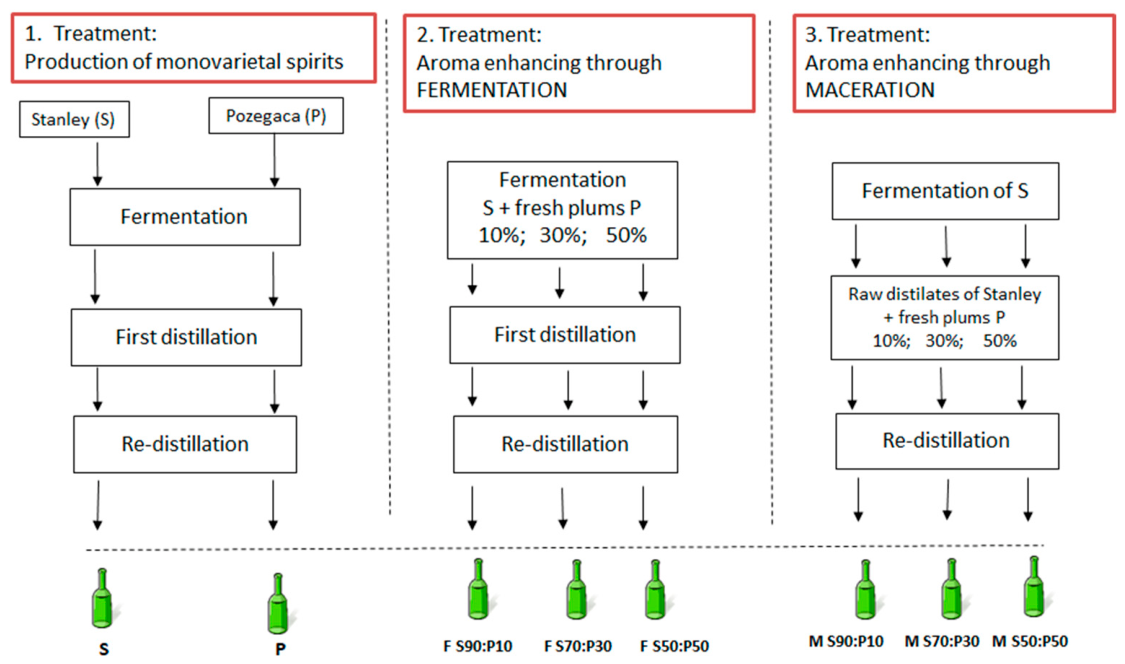
Figure 2.
Content of main fermentative volatile compounds (g/L a.a.) in monovarietal plum spirits obtained from Stanly (S), Požegača (P) whereas * indicate a significant difference according to t-test—Student’s t-test (p<0,05).
Figure 2.
Content of main fermentative volatile compounds (g/L a.a.) in monovarietal plum spirits obtained from Stanly (S), Požegača (P) whereas * indicate a significant difference according to t-test—Student’s t-test (p<0,05).
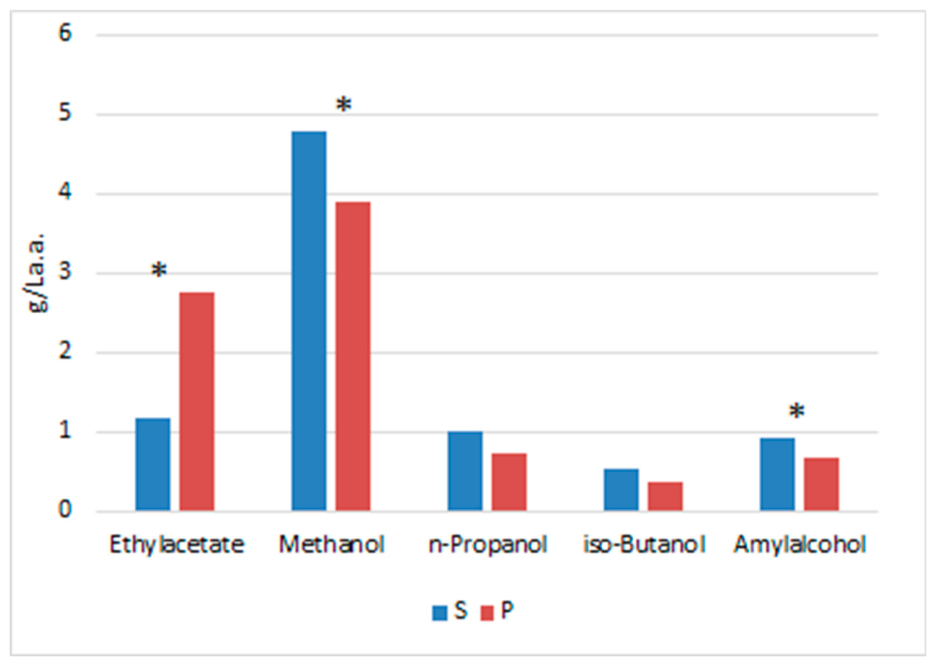
Figure 3.
Average content of main fermentative volatile compounds (g/L a.a.) in blended plum spirits obtained by mixing Stanley (S) with Požegača in three different ratios: S90:P10, S70:P30, S50:P50. Where A denotes blending plums by fermentation, and B denotes blending fresh plums by maceration in raw distillate.
Figure 3.
Average content of main fermentative volatile compounds (g/L a.a.) in blended plum spirits obtained by mixing Stanley (S) with Požegača in three different ratios: S90:P10, S70:P30, S50:P50. Where A denotes blending plums by fermentation, and B denotes blending fresh plums by maceration in raw distillate.
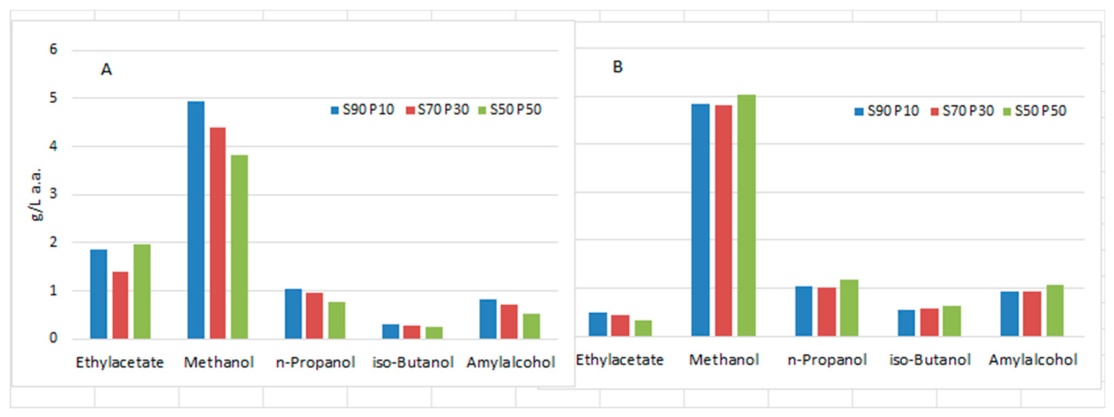
Figure 4.
Dynamics of the relative abundance of chemical classes expressed as average peak areas (a) and their normalized percentage concentrations (b) across samples: monovarietal plum spirits from Stanley (S) and Požegača (P) and spirits obtained by their blending during fermentation (F) and during maceration (M) where Požegača was added to Stanley in three different ratios: S90:P10, S70: P30, S50:P50.
Figure 4.
Dynamics of the relative abundance of chemical classes expressed as average peak areas (a) and their normalized percentage concentrations (b) across samples: monovarietal plum spirits from Stanley (S) and Požegača (P) and spirits obtained by their blending during fermentation (F) and during maceration (M) where Požegača was added to Stanley in three different ratios: S90:P10, S70: P30, S50:P50.
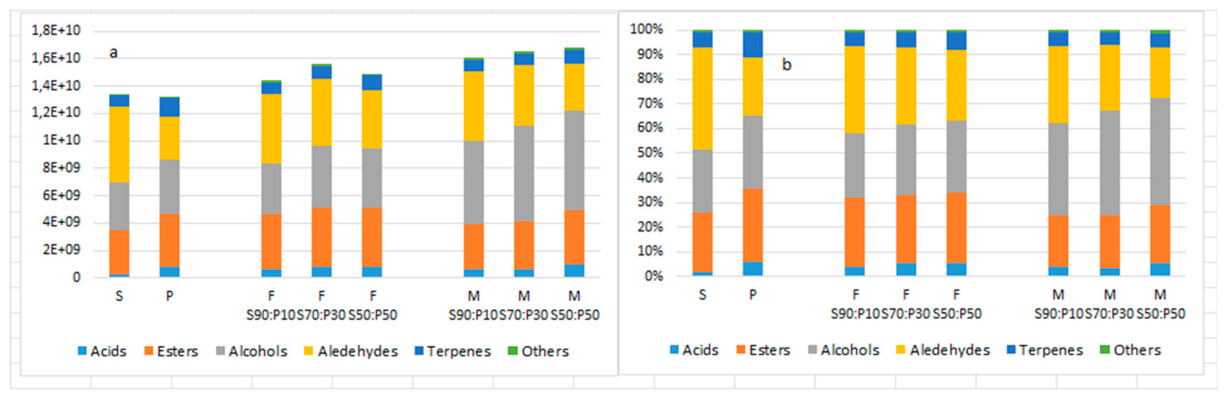
Figure 5.
Dynamics of the relative abundance of different volatile minor compound classes: (a) acids, (b) esters, (c) alcohols, (d) aldehydes, (e) terpenes and (f) other.
Figure 5.
Dynamics of the relative abundance of different volatile minor compound classes: (a) acids, (b) esters, (c) alcohols, (d) aldehydes, (e) terpenes and (f) other.
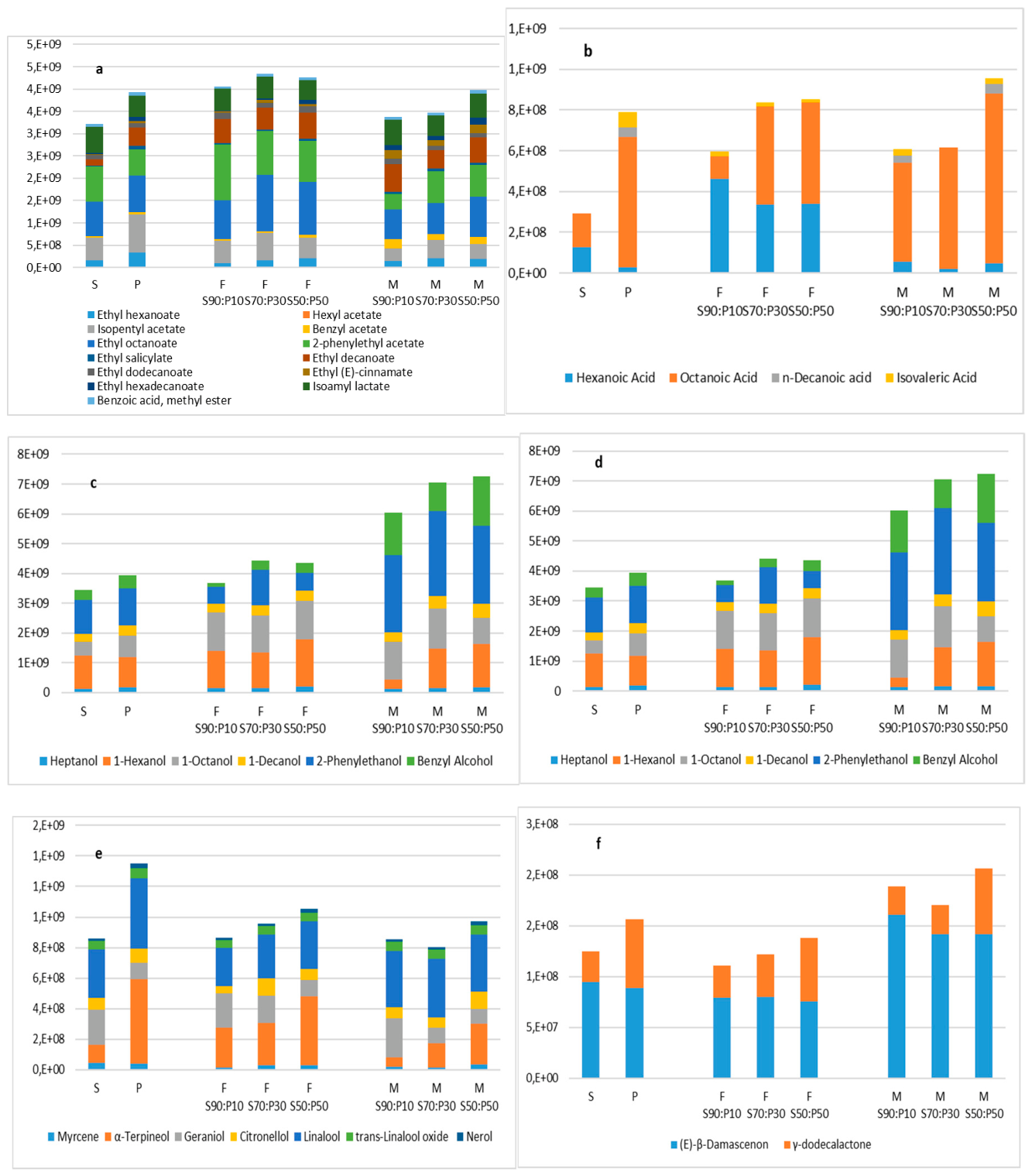
Figure 6.
Relative distribution of VOCs in plum spirits produced by plum blending during fermentation and maceration, expressed as (a) average peak areas and (b) relative percentage contents.
Figure 6.
Relative distribution of VOCs in plum spirits produced by plum blending during fermentation and maceration, expressed as (a) average peak areas and (b) relative percentage contents.
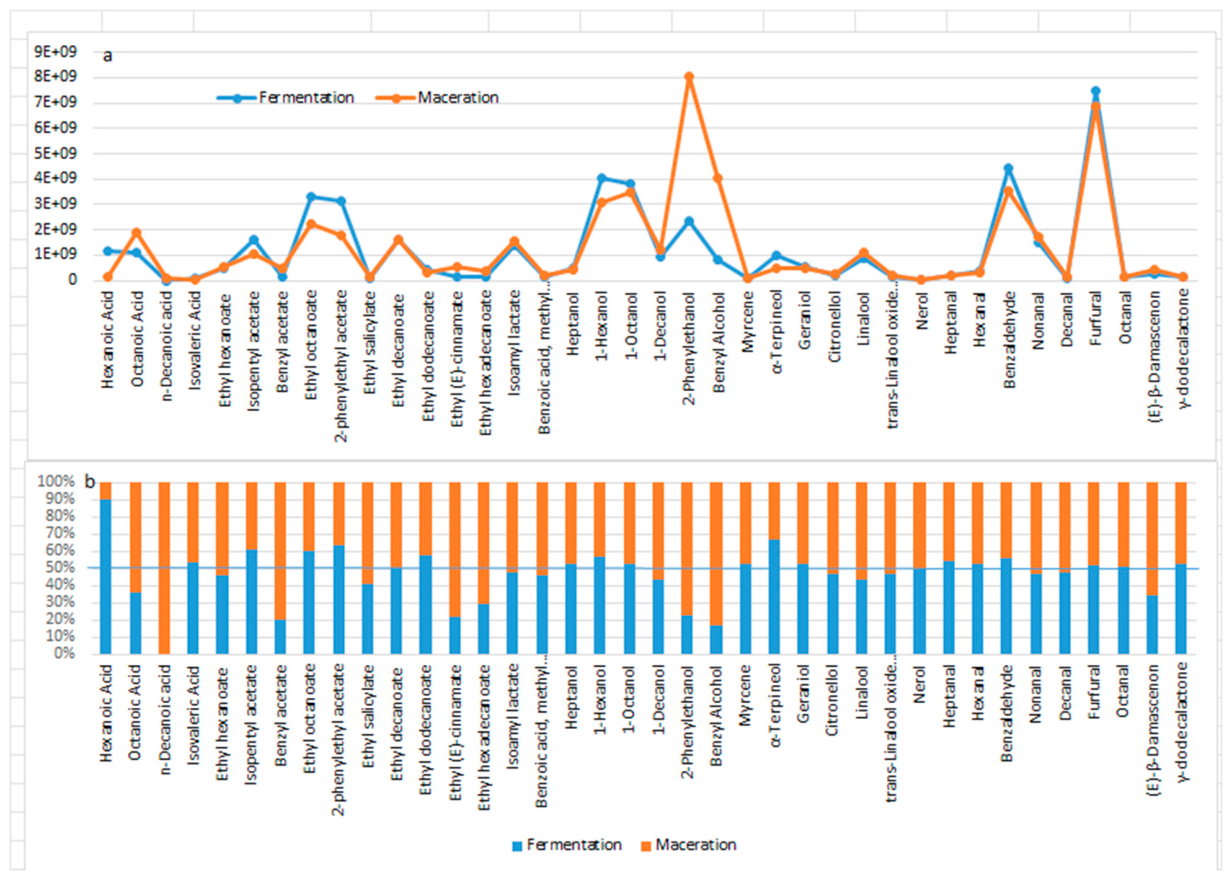
Figure 7.
Principal component analysis (PCA) based on sensory attributes of spirit samples, including monovarietal plum spirits of the Stanley and Požegača varieties and spirits produced by blending Požegača and Stanley in fermentation (F) and maceration (M) in three ratios: 10:90, 30:70, and 50:50 (a); partial least squares (PLS) regression between sensory attributes and minor VOC profiles (b).
Figure 7.
Principal component analysis (PCA) based on sensory attributes of spirit samples, including monovarietal plum spirits of the Stanley and Požegača varieties and spirits produced by blending Požegača and Stanley in fermentation (F) and maceration (M) in three ratios: 10:90, 30:70, and 50:50 (a); partial least squares (PLS) regression between sensory attributes and minor VOC profiles (b).
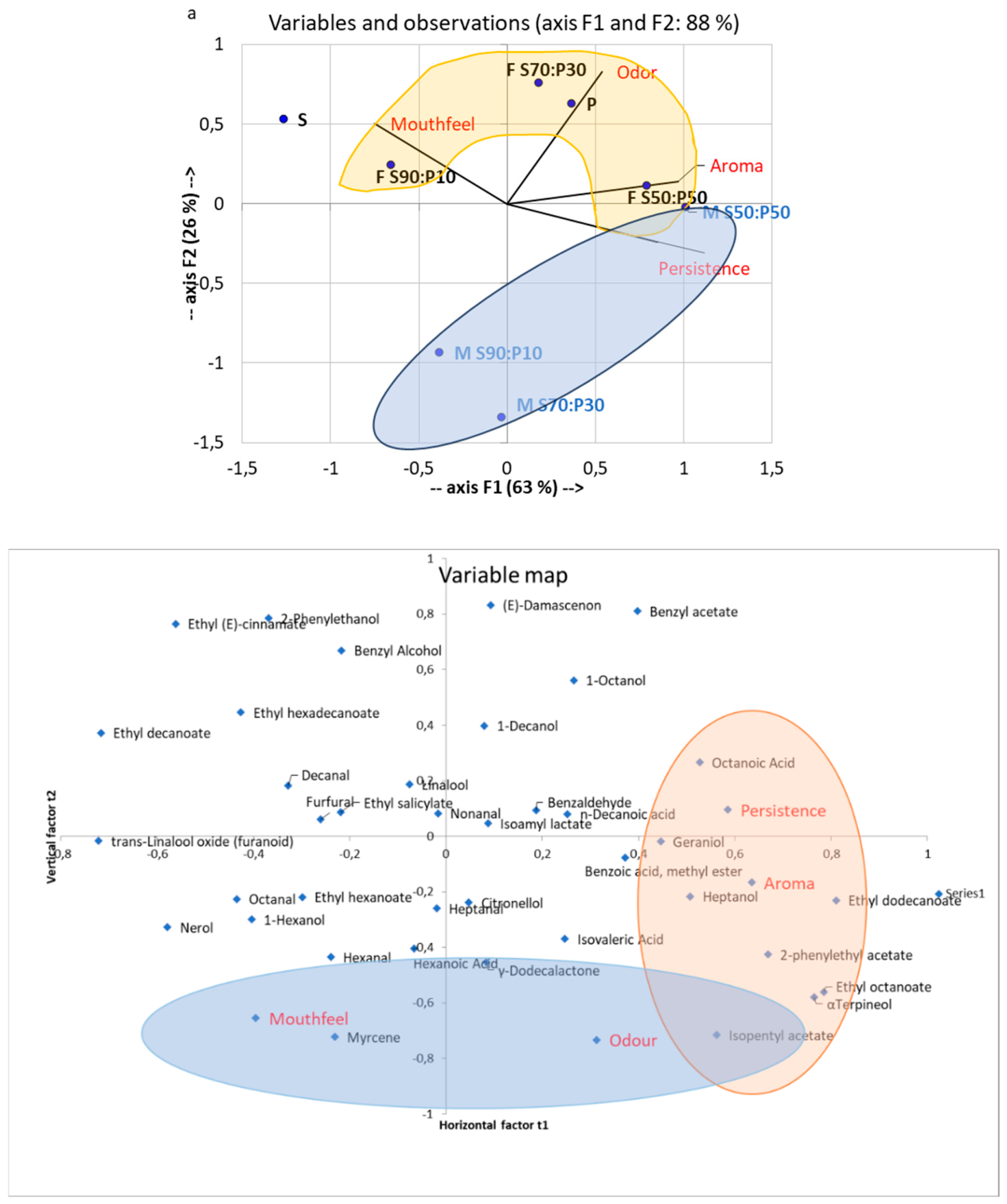

Table 1.
Average sensory scores (n = 12) of monovarietal plum spirits obtained from Stanley and Požegača varieties and their blended variants. F indicates blending during fermentation, whereas M indicates blending of fresh Požegača fruit with raw Stanley distillate. Three different blending ratios were evaluated. .
Table 1.
Average sensory scores (n = 12) of monovarietal plum spirits obtained from Stanley and Požegača varieties and their blended variants. F indicates blending during fermentation, whereas M indicates blending of fresh Požegača fruit with raw Stanley distillate. Three different blending ratios were evaluated. .
| Attributes | S | P | F S90:P10 | F S70:P30 | F S50:P50 | M S90:P10 | M S70:P30 | M S50:P50 |
| Odour | 4,58 | 4,75 | 4,67 | 4,83 | 4,75 | 4,42 | 4,42 | 4,75 |
| Aroma | 3,92c | 4,67a | 4,17bc | 4,50ab | 4,67a | 4,17bc | 4,45ab | 4,75a |
| Mouthfeel | 4,33a | 3,92ac | 3,92ac | 3,67bc | 3,67bc | 3,58bc | 3,58bc | 3,42b |
| Persistence | 4,00a | 4,42ab | 4,00a | 4,08a | 4,67b | 4,17ab | 4,42ab | 4,50ab |
Values with different letters within the sensory attribute are significantly different (Lsd test for p<0,05).
Disclaimer/Publisher’s Note: The statements, opinions and data contained in all publications are solely those of the individual author(s) and contributor(s) and not of MDPI and/or the editor(s). MDPI and/or the editor(s) disclaim responsibility for any injury to people or property resulting from any ideas, methods, instructions or products referred to in the content. |
© 2026 by the authors. Licensee MDPI, Basel, Switzerland. This article is an open access article distributed under the terms and conditions of the Creative Commons Attribution (CC BY) license (http://creativecommons.org/licenses/by/4.0/).
Copyright: This open access article is published under a Creative Commons CC BY 4.0 license, which permit the free download, distribution, and reuse, provided that the author and preprint are cited in any reuse.


