

Submitted:
04 June 2026
Posted:
05 June 2026
You are already at the latest version
Abstract
Brackish water aquaculture provides good livelihoods for many coastal regions in the world. However, it also creates nutrient-rich wastewater that poses a risk of eutrophication if untreated. Researching the use of plants to absorb nutrients and harvest biomass is a trend of many recent studies. This study evaluated the efficiency of Sesuvium portulacastrum L. in an integrated system with Litopenaeus vannamei shrimp under a salinity gradient from 5 to 25‰. During the 28-day experiment, plant growth, shrimp performance, and nitrogen/phosphorus mass balances were assessed. Results showed that S. portulacastrum exhibited strong adaptability, with dry biomass increasing by 2.0–3.3 times. Tissue nutrient analysis showed significant accumulation capacity, with total nitrogen ranging from 19,735 to 29,433 mg kg⁻¹ DW and phosphorus from 1,099 to 1,912 mg kg⁻¹ DW. The integrated system performance was optimal at 10‰ salinity, and the system reached the highest total nitrogen removal efficiency of 46.98%. The calculated areal nitrogen removal rate achieved by this model was 383 mg N m⁻² day⁻¹. Although it is a salt-tolerant plant, high salinity (≥20‰) reduced the nutrient absorption efficiency. These findings confirm that integrating S. portulacastrum into recirculating aquaculture systems (RAS) at moderate salinity (5–15‰) is a feasible strategy to harvest plant biomass.
Keywords:
Sesuvium portulacastrum
; Litopenaeus vannamei
; constructed wetland
; saline wastewater
; circular aquaculture
Introduction
In Vietnam, brackish-water shrimp production reached 1,106.9 thousand tons in the first ten months of 2024, of which white-leg shrimp accounted for 798.9 thousand tons, confirming the dominant role of L. vannamei in the national shrimp sector [1]. The Mekong Delta remains the national production hub, while on the global scale, Vietnam ranks among major producers such as India, Thailand, Indonesia, and Ecuador. Thailand’s shrimp output is projected to reach about 280,000 tons in 2024, Indonesia between 265,000–275,000 tons [1], and Ecuador currently leads the world with approximately 1.2 million tons in 2024 and over 719,000 tons recorded in the first half of 2025 [2]. However, rapid shrimp aquaculture expansion generates large volumes of nutrient-rich wastewater. Increasing production scale raises wastewater discharge and nutrient loading.
Shrimp aquaculture effluents are typically enriched with dissolved inorganic nitrogen (DIN), including ammonia (NH₃/NH₄⁺), nitrite (NO₂⁻), and nitrate (NO₃⁻), largely derived from uneaten feed residues and metabolic excretion of cultured organisms. In intensive and super-intensive systems, nitrogen loading can increase rapidly, frequently exceeding the assimilative capacity of receiving water bodies and thereby promoting eutrophication [3,4]. Among these nitrogen forms, ammonia is highly toxic to aquatic organisms even at relatively low concentrations, whereas nitrate, although less immediately toxic, tends to accumulate due to incomplete denitrification under suboptimal environmental conditions [5].
The effectiveness of conventional wastewater treatment systems in removing nitrogen is often limited under saline and brackish conditions. Elevated salinity has been shown to inhibit the activity of nitrifying and denitrifying microbial communities, thereby reducing ammonia oxidation rates and disrupting nitrogen transformation pathways [6,7]. Therefore, nitrogen removal efficiency in traditional systems is unstable under the effects of salinity, dissolved oxygen, and carbon supply [5]. Alternative treatment strategies are required to maintain efficient nitrogen removal under variable aquaculture salinity conditions.
Conventional wastewater treatment and the potential of constructed wetlands
Current methods for shrimp pond wastewater treatment primarily rely on sedimentation tanks, oxidation ponds, or combined filtration–settling systems [8]. However, these conventional systems often operate inefficiently under saline or brackish conditions, where elevated concentrations of chloride (Cl⁻) and sodium (Na⁺) ions inhibit microbial activity and reduce the effectiveness of biological nitrogen and phosphorus removal [9]. In addition, conventional mechanical systems have high energy, maintenance, and monitoring costs. These systems are unsuitable for small-scale or household shrimp farms in the Mekong Delta [10]. CWs are particularly promising for brackish environments, where halophytic plants can thrive and assist in nutrient removal. CWs can use halophytic plants for nutrient removal in brackish environments. However, studies on CW performance under multi-salinity gradients in halophyte-shrimp co-cultivation systems are limited [11]. This study therefore aimed to address this gap by assessing the nitrogen uptake capacity of Sesuvium portulacastrum in multi-salinity constructed wetland systems compatible with Litopenaeus vannamei shrimp culture.
Potential of Sesuvium portulacastrum for saline wastewater treatment
Sesuvium portulacastrum L. (commonly known in Vietnam as “Sam biển”) is a perennial halophytic herb belonging to the family Aizoaceae. It is widely distributed along tropical and subtropical coastlines and is characterized by its creeping growth habit and extensive root system. The species demonstrates strong tolerance to salinity, drought, and nutrient-poor sandy substrates, reflecting its high ecological plasticity [12]. Owing to specialized halophytic adaptations—particularly efficient osmotic regulation and salt-exclusion mechanisms—S. portulacastrum can survive and grow across a broad salinity gradient, from freshwater conditions up to highly saline environments exceeding 40‰ [13].
In addition to its high salinity tolerance, S. portulacastrum demonstrates strong nutrient assimilation capacity, with effective uptake of nitrogen (N) and phosphorus (P), as well as accumulation of heavy metals such as Zn²⁺, Cu²⁺, and Fe²⁺ in saline substrates [13]. Recent studies have reported nitrogen removal efficiencies of 300–400 mg N m⁻² day⁻¹ in halophyte-based systems, which are substantially higher than those achieved by conventional wetland macrophytes such as Phragmites australis (~15–30 mg N m⁻² day⁻¹) or mangrove species including Rhizophora apiculata (~30–50 mg N m⁻² day⁻¹) [14,15,16]. Moreover, S. portulacastrum has proven effective in treating effluents from Litopenaeus vannamei shrimp culture and tilapia-integrated recirculating aquaculture systems (RAS), achieving over 90% removal of total nitrogen and phosphorus while improving water quality and shrimp growth S. portulacastrum can be integrated into constructed wetlands for brackish and saline aquaculture wastewater due to its salt tolerance and biofilter efficiency. This species removes excess nutrients and supports microbial and aquatic habitats [13].
This study evaluated the nutrient removal efficiency of S. portulacastrum in Litopenaeus vannamei shrimp effluent under varying salinities of 5‰, 10‰, 15‰, 20‰, and 25‰.
2. Material and Methods
Experimental Materials and Setup
The halophytic plant Sesuvium portulacastrum was collected from the coastal area of Ly Nhon, Can Gio District, Ho Chi Minh City, Vietnam, where the natural salinity is approximately 65‰. Uniform cuttings of 8 cm in length were selected and transplanted onto floating rafts (25 × 40 cm) made of foam sheets lined with wet absorbent fabric, with each raft containing 84 plants. Prior to the experiment, the plants were acclimated for 14 days in diluted seawater supplemented with Masterblend 5–12–25 and calcium nitrate (15.5–0–0) nutrient solution. The average initial plant height was 9.2 ± 1.5 cm, and the mean fresh weight was 2.0 g per plant. White-leg shrimp (Litopenaeus vannamei) were obtained from a certified hatchery. Healthy individuals free of visible diseases, with an average initial body weight of 1.2 ± 0.3 g, were stocked at a density of 200 individuals per cubic meter (100 shrimp per 0.5 m³ tank) to simulate intensive farming conditions.
Source water from the salt pans was diluted with freshwater to achieve the target salinities. Prior to use, the water was disinfected with 6 mg L⁻¹ KMnO₄ and allowed to settle for 72 hours to remove suspended solids and reduce microbial load. Trace minerals were added to maintain nutrient balance, including zinc sulfate (~6.0 mg Zn²⁺ m⁻³), ferrous sulfate (~4.95 mg Fe²⁺ m⁻³), manganese sulfate (~1.95 mg Mn²⁺ m⁻³), copper sulfate (~1.5 mg Cu²⁺ m⁻³), and cobalt sulfate (~0.10 mg Co²⁺ m⁻³). The initial water parameters were adjusted to pH 7.6 ± 0.2 and dissolved oxygen (DO) above 6 mg L⁻¹ with continuous aeration. The S. portulacastrum rafts were deployed first, and the shrimp were stocked after a 3-day plant acclimation period. Background concentrations of nitrogen species (NH₄⁺, NO₂⁻, NO₃⁻) in the treated water were within acceptable ranges for aquaculture. Evaporative losses were compensated daily using tap water stored for at least 24 hours to eliminate residual chlorine. Preliminary measurements confirmed that background concentrations of nitrogen and phosphorus in this supplemental water were negligible, and therefore did not affect the system nutrient balance.
Experimental Design
The experimental design and system configuration are illustrated in Figure 1.
The experiment was conducted in the greenhouse of the Institute of Environment and Resources, Ho Chi Minh City, under natural light averaging over 8 hours per day. The setup consisted of five constructed wetland (CW) systems at salinities of 5‰, 10‰, 15‰, 20‰, and 25‰. Each treatment had three replicates (3 tanks per salinity), using a total of 15 tanks with an effective volume of 0.5 m³ each. For each salinity, influent water was prepared in a 1.5 m³ batch, mixed, and distributed evenly into the three replicate tanks. Each tank had two floating rafts containing 84 S. portulacastrum plants on the water surface, and Litopenaeus vannamei shrimp were cultured in the water column below (Figure 1). Continuous aeration was provided to each tank using a 35 W air pump (65 L·min⁻¹) to maintain dissolved oxygen stability. Salinity was maintained within ±0.5‰ through daily monitoring and adjustment. Evaporative losses of 1.2–1.5 L per tank per day were compensated daily by adding freshwater to maintain stable volume and salinity.
Analytical Methods
Water quality parameters, including pH, dissolved oxygen (DO), salinity, cation exchange capacity (CEC), ammonium (NH₄⁺), nitrite (NO₂⁻), nitrate (NO₃⁻), and total nitrogen (TN), were monitored periodically throughout the experiment. Salinity, pH, and alkalinity were measured weekly to monitor the effects of evaporation and water replenishment. Salinity was maintained within ±0.5‰ of target levels by adding freshwater. Plant growth parameters (biomass, leaf vitality, and root development) and shrimp health status were also recorded.
Chemical analyses followed standard methods. Biochemical oxygen demand (BOD₅) was determined by the dilution and seeding method (TCVN 6001-1:2008 / ISO 5815-1:2003). Chemical oxygen demand (COD) was analyzed using the dichromate method (SMEWW 5220C). Ammonium (NH₄⁺) was determined by the phenate method (4500–NH₃), nitrite (NO₂⁻) by diazotization (4500–NO₂⁻), and nitrate (NO₃⁻) by cadmium reduction (4500–NO₃⁻). Total nitrogen (TN) and total phosphorus (TP) were measured using a UV–Vis spectrophotometer after persulfate digestion.
Plant samples were collected at the end of the experiment. One floating raft (84 plants) was harvested from each tank, pooling 252 plants per salinity level. The harvested plant material was washed, oven-dried to constant weight, ground, and homogenized. A 1 g subsample was used for chemical analysis. All measurements were conducted in triplicate (n = 3), and results are expressed as mean ± standard deviation (SD).
Biomass measurements were conducted at the beginning and end of the experiment. Shrimp biomass was recorded as total fresh weight (g) per tank. The dry biomass of S. portulacastrum was calculated using a fresh-to-dry weight conversion factor. For this, representative fresh plant samples were collected and oven-dried at 60 °C to constant weight to determine the moisture content, which was then applied to calculate the total dry biomass in each treatment.
Data Analysis
The nutrient removal efficiency (R, %) and biomass-specific removal efficiency (E, mg g-1) were calculated using the following formulas:
R = ((C0 - Ct) / C0) * 100
E = ((C0 - Ct) * V) / B
where C0 and Ct are the initial and final concentrations (mg L-1); V is the water volume (L); and B is the plant biomass (g).
The nutrient mass balance (nitrogen and phosphorus) was calculated as:
Xin = Xfeed
Xout = Xwater + Xplant + Xshrimp
Xresidual = Xin - Xout
where X represents nitrogen (N) or phosphorus (P). Xin is the total nutrient input from feed; Xwater is the nutrient remaining in the water column; Xplant is the nutrient accumulated in plant biomass; and Xshrimp is the nutrient retained in shrimp biomass. Xresidual is the unaccounted fraction, including gaseous emissions and unmeasured pathways.
All data were processed using Microsoft Excel 2021.
3. Results and Discussion
Physico-Chemical Parameters and Biomass Production
During the 28-day experiment, pH and dissolved oxygen (DO) remained within suitable ranges for Litopenaeus vannamei growth (pH 7.4–8.2; DO > 6 mg L⁻¹) across all treatments. The experimental values for all measured water quality parameters on Day 1 and Day 28 are summarized in Table 3.1.

Table 3.
1. Initial (Day 1) and final (Day 28) concentrations of water quality parameters across salinity treatments.
Table 3.
1. Initial (Day 1) and final (Day 28) concentrations of water quality parameters across salinity treatments.
| Day 1 (input) Salinity (‰) |
Day 28 (output) Salinity (‰) |
||||||||||
| Parameters | Units | 5 ‰ | 10 ‰ | 15 ‰ | 20 ‰ | 25 ‰ | 5 ‰ | 10 ‰ | 15 ‰ | 20 ‰ | 25 ‰ |
| BOD₅ | mg L⁻¹ | 3 | 4 | 8 | 9 | 11 | 33.0 ± 1.63 | 57.0 ± 1.63 | 69.0 ± 1.41 | 81.7 ± 4.92 | 90.3 ± 4.11 |
| COD | mg L⁻¹ | 8 | 9 | 16 | 19 | 21 | 66.3 ± 4.11 | 114.7 ± 2.05 | 129.7 ± 3.86 | 185.3 ± 8.34 | 184.3 ± 6.80 |
| Ammonium (NH₄⁺) | mg L⁻¹ | <0.03 | <0.03 | <0.03 | <0.03 | <0.03 | <0.03 | <0.03 | <0.03 | <0.03 | <0.03 |
| Nitrite (NO₂⁻) | mg L⁻¹ | <0.03 | <0.03 | <0.03 | <0.03 | <0.03 | <0.03 | <0.03 | <0.03 | <0.03 | <0.03 |
| Nitrate (NO₃⁻) | mg L⁻¹ | 2.1 | 2.2 | 2.1 | 2.2 | 2.2 | 3.7 ± 0.03 | 4.4 ± 0.24 | 3.4 ± 0.05 | 4.5 ± 0.31 | 11.2 ± 0.29 |
| Total Nitrogen | mg L⁻¹ | 3.1 | 3.4 | 3.6 | 3.66 | 3.75 | 4.4 ± 0.19 | 5.3 ± 0.16 | 10.4 ± 0.35 | 15.3 ± 0.94 | 16.3 ± 0.37 |
| Total Phosphorus | mg L⁻¹ | 0.32 | 0.46 | 0.54 | 0.63 | 0.72 | 1.4 ± 0.06 | 1.4 ± 0.04 | 1.5 ± 0.02 | 2.9 ± 0.27 | 3.3 ± 0.24 |
| Copper (Cu) | mg L⁻¹ | <0.03 | <0.03 | <0.03 | <0.03 | 0.031 | <0.03 | <0.03 | <0.03 | <0.03 | <0.03 |
| Zinc (Zn) | mg L⁻¹ | <0.03 | <0.03 | <0.03 | <0.03 | <0.03 | <0.03 | <0.03 | <0.03 | <0.03 | <0.03 |
| Calcium (Ca) | mg L⁻¹ | 64 | 72.96 | 86 | 95.5 | 106 | 73.7 ± 2.05 | 95.4 ± 2.02 | 117.0 ± 10.03 | 113.0 ± 7.48 | 122.0 ± 6.38 |
| Magnesium (Mg) | mg L⁻¹ | 198 | 229.6 | 265 | 298.4 | 331.8 | 204.2 ± 2.29 | 235.8 ± 3.53 | 254.3 ± 20.04 | 281.7 ± 36.06 | 337.3 ± 6.55 |
| PH | 7.4 – 7.8 | 7.4 – 7.8 | 7.4 –7.8 | 7.4 –7.8 | 7.4 – 7.8 | 7.4 –7.8 | 7.4 – 7.8 | 7.4 – 7.8 | 7.4 – 7.8 | 7.4 – 7.8 | |
| DO | mg L⁻¹ | ≥6.0 | ≥6.0 | ≥6.0 | ≥6.0 | ≥6.0 | ≥6.0 | ≥6.0 | ≥6.0 | ≥6.0 | ≥6.0 |
| Salt | ‰ | 5.0 – 5.5 | 10 –10.5 | 15 – 15.5 | 20 – 20.5 | 25 – 25.5 | 5.0 – 5.5 | 10 – 10.5 | 15 – 15.5 | 20 – 20.5 | 25 – 25.5 |
| Alkalinity | mg L⁻¹ | 120 – 140 | 120 – 140 | 120 – 140 | 120 – 140 | 120 – 140 | 120 – 140 | 120 – 140 | 120 – 140 | 120 – 140 | 120 – 140 |
Note: Input values represent single measurements from the homogeneous stock solutions. Output values on Day 28 are expressed as mean ± standard deviation (SD) (n = 3). Values below the detection limit (LOD = 0.03 mg L⁻¹) are reported as <0.03. Salinity, pH, DO, and alkalinity are presented as controlled operational ranges.
Biomass production and total feed input were also quantified to support the mass balance analysis. The growth data for shrimp and S. portulacastrum, along with the feed input for each treatment, are summarized in Table 3.2. These measurements are used to evaluate the nutrient removal efficiency and transformation processes under different salinity conditions.
Table 3.
2. Biomass production and feed input under different salinity treatments.
| Parameter | Unit | 5 ‰ | 10 ‰ | 15 ‰ | 20 ‰ | 25 ‰ |
| Initial shrimp biomass | g (fresh weight) | 68.56 | 68.56 | 68.57 | 65.2 | 65.2 |
| Final shrimp biomass | g (fresh weight) | 402.33 ± 59.00 | 434.47 ± 46.00 | 411.50 ± 59.00 | 359.00 ± 50.00 | 320.37 ± 52.00 |
| Initial plant biomass (S. portulacastrum) | g (dry weight) | 27.99 | 30.67 | 30.52 | 37.17 | 39.32 |
| Final plant biomass (S. portulacastrum) | g (dry weight) | 92.15 ± 9.20 | 84.17 ± 8.40 | 74.08 ± 7.40 | 82.12 ± 8.20 | 77.36 ± 7.70 |
| Total feed input | g (dry weight) | 571.2 | 571.2 | 571.2 | 571.2 | 571.2 |
The results in Tables 3.1 and 3.2 show salinity-dependent variations in water quality and biomass production. pH and dissolved oxygen remained stable across all treatments, but BOD and COD increased during the 28-day experiment. Nitrogen concentrations were characterized by low levels of NH₄⁺ and NO₂⁻ alongside an accumulation of NO₃⁻. Shrimp and S. portulacastrum biomass production also varied across the salinity gradient. The variations of these specific parameters are analyzed in the following sections.
Variation of Bod and Cod
As shown in Figure 2, both BOD and COD increased over the 28-day experimental period. BOD rose from 3–11 mg L⁻¹ to 33–90 mg L⁻¹, while COD increased from 8–21 mg L⁻¹ to 66–184 mg L⁻¹. This trend shows the accumulation of organic matter in the system, including dissolved and particulate fractions from uneaten feed and shrimp excreta.
The measured COD values include a contribution from microbial biomass. During COD analysis, unfiltered samples are subjected to strong oxidation conditions, which oxidizes intact microbial cells and increases the total oxygen demand. Therefore, the increase in COD reflects both residual organic substrates and the development of microbial biomass within the system.
Across salinity treatments, BOD increased with salinity. COD rose from 5‰ to 20‰ and remained at a similar level at 25‰. These patterns indicate that elevated salinity, particularly ≥20‰, was associated with higher accumulation of oxygen-demanding organic matter.
Recent studies show that rising salinity reduces organic matter mineralization by suppressing freshwater heterotrophs and shifting microbial communities toward slower-growing halophiles [13,17]. This shift helps explain the higher BOD and COD observed at ≥20‰, a pattern also reported in saline aquaculture wetlands where osmotic stress inhibits key degraders, including nitrifiers and denitrifiers [6]. Although halophyte wetlands such as S. portulacastrum can stabilize organic loading, they cannot fully offset reduced microbial activity under elevated salinity [18]. The elevated BOD and COD values observed at ≥20‰ are consistent with findings that rhizosphere oxygenation may only partially maintain aerobic microsites under saline stress[19]. The results show that salinity regulates organic degradation efficiency in brackish aquaculture effluents. pH and dissolved oxygen (DO) remained stable within optimal ranges across all treatments, while ammonium and nitrite concentrations remained low, showing stable nitrification and control of toxic nitrogen forms. In contrast, BOD and COD increased with rising salinity, particularly at 20‰, which indicates reduced biodegradation efficiency. Nitrate accumulation occurred at higher salinities, showing partial inhibition of nitrogen transformation pathways. Additionally, nutrient removal efficiency and biological performance (plant growth and shrimp biomass) peaked at 10‰ salinity and declined at higher salinity levels. These patterns confirm that salinity determines overall system performance.
Transformation of Nitrogen Species
As shown in Figure 3, ammonium (NH₄⁺) and nitrite (NO₂⁻) concentrations remained below the detection limit (<0.03 mg L-1) across all treatments throughout the experiment. This indicates no accumulation of these toxic nitrogen forms. Low levels of NH₄⁺ and NO₂⁻ show nitrogen transformation or rapid assimilation, but specific pathways were not resolved due to analytical limitations. In contrast, nitrate (NO₃⁻) concentrations increased from 2.1–2.2 mg L-1 to 3.4–11.2 mg L-1 by the end of the experiment. The highest value occurred at 25 permil, showing accumulation of oxidized nitrogen under elevated salinity. Because microbial communities were not analyzed, this profile represents an indirect indication of nitrification and nitrate accumulation rather than direct evidence of specific microbial taxa [5].
Based on the mass-balance framework, nitrogen was partitioned among shrimp biomass, plant biomass, residual water, and an unaccounted fraction. Gaseous emissions and sediment-associated nitrogen were not measured, so the residual fraction serves as an operational estimate.
The nitrogen profiles indicate that nitrifying communities remain active at moderate salinities, but efficiency decreases at 20–25 permil, leading to NO₃⁻ accumulation [20,21,22]. Halotolerant nitrifying communities can remain active under saline and ionic stress, though the specific microbial groups were not identified involved [20,21]. Plant tissue data support the role of S. portulacastrum as a nitrogen sink through root uptake and biomass accumulation. The remaining nitrogen fraction is associated with unmeasured pathways, including denitrification and sediment retention [19]. These results show that plant-associated processes contribute to nitrogen stabilization in brackish aquaculture effluents.
Growth performance of S. portulacastrum
As shown in Figure 4, the growth response of S. portulacastrum varied across salinity treatments. After 28 days, mean dry biomass increased in all groups, rising from 0.33–0.47 g to 0.88–1.10 g per plant, which is a 2.0–3.3-fold increase. The highest biomass gain was at 5 permil (233%), followed by 10 permil (170%), while at 25 permil the increase was 96%. This indicates a reduction in growth rate as salinity increased. The relative growth rate (RGR) values for 5, 10, 15, 20, and 25 permil were 0.0416, 0.0327, 0.0283, 0.0304, and 0.0252 g g-1 day-1, respectively. These data show that low to moderate salinity (5–10 permil) was optimal for plant growth, while higher salinity (>20 permil) induced osmotic stress, reducing dry matter accumulation. Growth at 5–10 permil was linked to stable intracellular Na+/K+ ratios, enzyme activity, and photosynthetic performance [23]. The development of thicker roots with fine root hairs under low salinity improved nutrient uptake efficiency, especially for nitrogen [24,25]. Additionally, the high fresh-to-dry leaf mass ratio observed shows an increased leaf area index (LAI) and photosynthetic capacity, which is consistent with previous studies [26]. At higher salinities (20–25 permil), biomass accumulation slowed due to reduced total protein synthesis and suppressed Rubisco activity, leading to decreased carbon assimilation [27]. S. portulacastrum maintained positive biomass gains, which confirms its salt tolerance and adaptive mechanisms as a halophyte species [28].
One-way ANOVA showed significant differences among salinity treatments (p < 0.05). Growth was higher at 5–10‰ than at 20–25‰, with the highest response observed at 10‰.
The RGR values ranged from 0.03 to 0.04 g g⁻¹ day⁻¹. These results provide initial growth data for S. portulacastrum under brackish wastewater conditions in this study.
The reduction in dry biomass at higher salinities (>20 permil) aligns with the growth-survival trade-off hypothesis in halophyte physiology. Although S. portulacastrum survives in high-salt environments, biomass accumulation increases at low-to-moderate salinities (5–10 permil) rather than in fresh water or hypersaline conditions. This growth response is consistent with findings by [29,30,31], where optimal halophytic growth occurs at salinities where the metabolic cost of osmoregulation is balanced by ion availability for turgor maintenance.
Specifically, the suppression of dry mass at 25 permil is due to the diversion of photosynthetic energy toward defense mechanisms. At high salinity, plants allocate carbon resources to synthesize compatible solutes, such as proline and glycine betaine, and maintain ion homeostasis through Na+ exclusion. This limits the synthesis of structural cell wall components like cellulose and lignin, reducing dry matter yield [32,33]. The decline in RGR indicates that osmotic stress induced partial stomatal closure, which restricted CO2 uptake and limited carboxylation efficiency by Rubisco. This trend occurs in Sesuvium species under ionic stress [28]. Conversely, the growth at 5–10 permil indicates that moderate Na+ levels act as a nutrient that stimulates cell expansion and facilitates nitrate uptake. This matches the high nitrogen removal efficiency observed in this study. The development of root systems with fine hairs at these levels supports this, as efficient nutrient acquisition increases shoot biomass. The RGR values in this study (0.03–0.04 g g-1 day-1) are comparable to growth rates reported for other brackish-water halophytes [34].
As shown in Figure 5, the total nitrogen (N) content in dried tissues ranged from 19,735 to 29,433 mg kg-1, increasing from 5 to 25 permil salinity. This trend shows the capacity of the species for nitrogen uptake under salt stress. The higher N concentrations at high salinities (20–25 permil) are due to the accumulation of nitrogenous compatible solutes, such as proline and amino acids, for osmotic adjustment [13,35] In contrast, total phosphorus (P) content ranged between 1,099 and 1,912 mg kg-1, decreasing as salinity increased. A temporary rise in P content occurred at 20 permil before declining at 25 permil. This variation indicates an interaction between salinity and ionic transport, where high external Cl- levels antagonize phosphate uptake or trigger internal redistribution [13]
The N:P ratio ranged from 10.3 to 26.8 among treatments, indicating changes in the relative accumulation of nitrogen and phosphorus under different salinities. The physiological basis of this variation was not directly examined in this study.
Growth Performance of Litopenaeus Vannamei
As shown in Figure 6, after 28 days of culture, the mean body weight (MBW) of shrimp ranged from 3.61 to 4.62 g per individual, with growth decreasing as salinity increased. The highest MBW was at 10 permil (4.62 g/shrimp), which is 28% higher than the 25 permil group (3.61 g/shrimp). Total biomass followed the same pattern, reaching 434.47 g per tank at 10 permil and decreasing to 320.37 g at 25 permil. This shows a negative relationship between salinity and shrimp growth.
The final mean body weight varied among treatments (F = 43.89, p < 0.001). Tukey's post-hoc test showed that the 10 permil group was higher than all other treatments, while the 5–15 permil groups were higher than those at >=20 permil. These results show that moderate salinity (~10 permil) provides optimal conditions for L. vannamei growth, due to reduced osmotic stress and lower energetic costs for ionic regulation. At higher salinities, the metabolic demand for maintaining ionic homeostasis diverts energy away from growth processes, reducing biomass accumulation.
The SGR peaked at 10–15 permil and decreased at salinities >=20 permil. This trend relates to the balance between osmotic regulation and energy allocation. At moderate salinities (10–15 permil), the reduced osmotic gradient minimizes the energetic cost of maintaining ionic equilibrium, leaving more energy for growth. Under higher salinity conditions, increased osmotic pressure and ionic stress elevate maintenance energy requirements and reduce metabolic efficiency, decreasing growth and biomass accumulation.
The SGR was highest at 10–15‰ and decreased at ≥20‰. Shrimp body weight was also highest at 10‰. This indicates that moderate salinity supported better shrimp growth under the tested conditions, while higher salinity reduced growth performance. The S. portulacastrum system maintained low NH₄⁺ and NO₂⁻ levels and stable DO, which helped maintain suitable water conditions for shrimp culture. These findings match previous reports identifying the 10–15 permil salinity range as optimal for Litopenaeus vannamei culture [36]. These results also align with studies on integrated multi-trophic aquaculture, where halophyte integration improves system performance across salinities of 10–20 permil [36,37]. The compatibility of S. portulacastrum within this salinity range confirms the potential of this integrated system for shrimp production and wastewater treatment.
Nitrogen and Phosphorus removal efficiency of the integrated system
As shown in Figure 7, phosphorus in the integrated shrimp-plant system was partitioned into three components: uptake by shrimp, uptake by S. portulacastrum, and residual losses. Across all salinity levels, shrimp accounted for 15–22% of phosphorus assimilation, while the halophyte assimilated 3–5%.
The 72. to 80%, was the residual fraction, which occurs through mineral precipitation and sedimentation under saline conditions. This pattern across salinities shows that abiotic pathways are the primary driver of phosphorus removal in the system, while biological uptake plays a minor role.
These results show that shrimp performance contributes to phosphorus retention, whereas S. portulacastrum provides a smaller uptake pathway. The high residual fraction shows the influence of physicochemical mechanisms on phosphorus dynamics in brackish aquaculture environments.
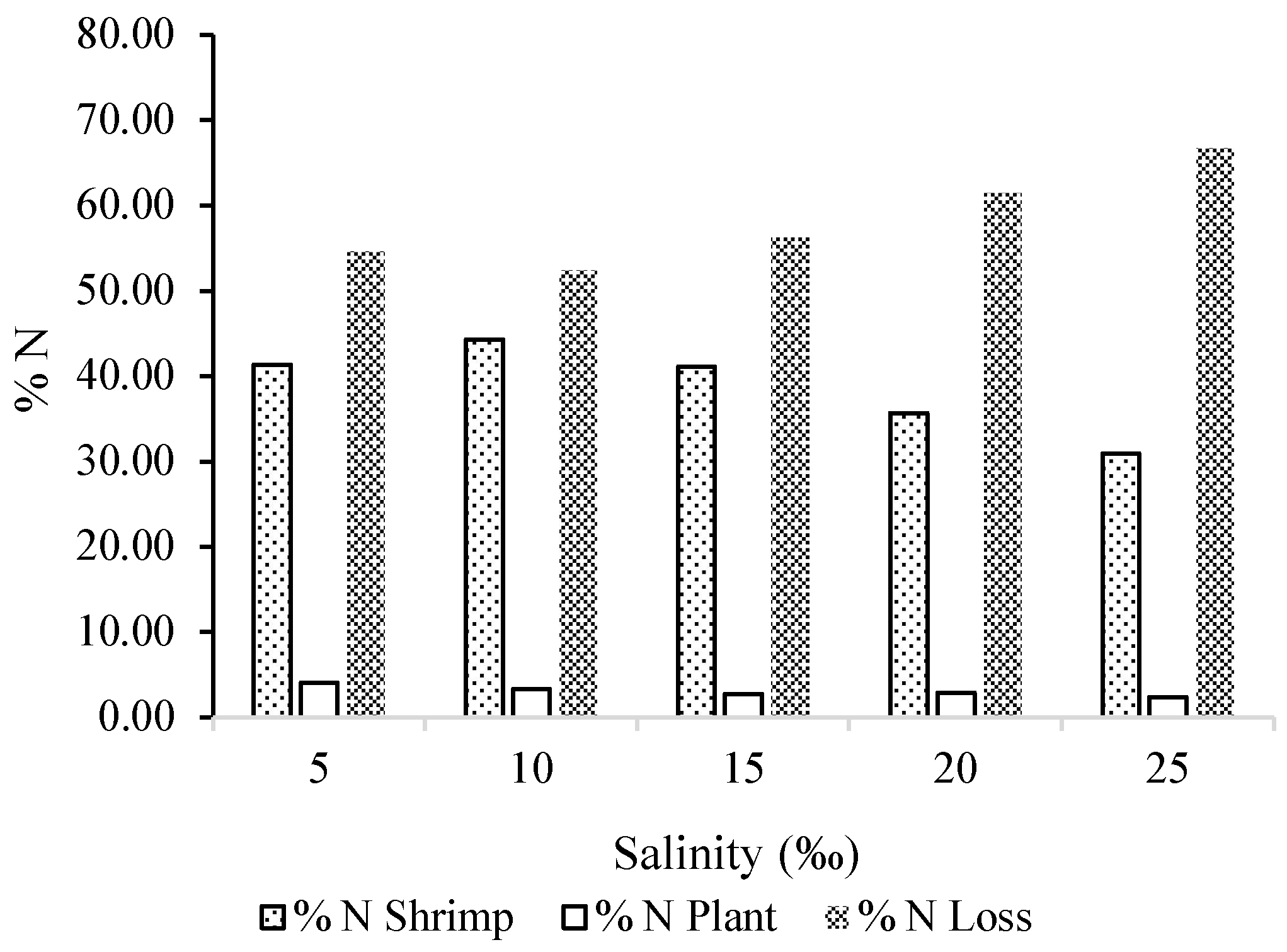
As shown in Figure 8, nitrogen within the system was partitioned into three pathways: assimilation by L. vannamei, uptake by S. portulacastrum, and residual losses. Shrimp acted as the main nitrogen sink, accounting for 30.84–43.61% of total nitrogen output across salinity levels. S. portulacastrum assimilated 2.40–4.04% of the total nitrogen, acting as a complementary sink for dissolved inorganic nitrogen in the water column. Residual nitrogen losses ranged from 52.35% to 65.12%, increasing with salinity and peaking at 25 permil. This trend relates to microbial denitrification, volatilization, or sediment accumulation under salinity stress.
The system achieved its highest removal efficiency at 10 permil (46.98%), which decreased to 33.24% at 25 permil. This indicates that moderate salinity facilitates biological assimilation and microbial transformation. The areal nitrogen removal rate for S. portulacastrum in this study was 383 mg N m-2 day-1, which is higher than values reported for conventional wetland species (20–50 mg N m-2 day-1) [14]. This variation relates to the different experimental conditions between studies.
Total nitrogen (TN) and phosphorus (TP) removal performance
The integrated system showed removal efficiencies of 45.6% for TN and 38.2% for TP. Calculated as areal removal rates, S. portulacastrum removed approximately 1,398 kg N ha-1 yr-1, which is higher than values reported for mangrove species. For example, Rhizophora apiculata achieves removal rates of 109.43–173.55 kg N ha-1 yr-1 and 5.47–8.12 kg P ha-1 yr-1 in aquaculture environments [38].
These results show the potential of S. portulacastrum as a biofilter for Recirculating Aquaculture Systems (RAS) and coastal aquaponic setups. The species assists in nutrient remediation and wastewater management in saline aquaculture zones in Vietnam.
Model performance and mechanisms of eutrophication control
This study demonstrates the nutrient-removal capacity of constructed wetlands using S. portulacastrum under brackish aquaculture conditions. Nitrogen removal reached 46.98% at 10 permil, with an average TN removal of 45.6% across all treatments. These results show that moderate salinity supports shrimp growth, plant uptake, and nitrogen retention. Although data in shrimp-farm wastewater settings are limited, these findings match reports showing that S. portulacastrum is suitable for remediation in saline and eutrophic environments [13].
This performance is due to the salinity tolerance and biomass accumulation of this Vietnamese S. portulacastrum ecotype, which maintained nutrient uptake across a salinity range of 5–25 permil. Specifically, at moderate salinities (10–15 permil), nitrogen uptake reached 3.8 mg N g-1 biomass. This uptake is higher than the values reported for Phragmites australis (~2.0 mg N g-1) or Rhizophora apiculata (~1.8 mg N g-1) under similar conditions [39].
Three mechanisms explain this remediation efficiency. First, root networks enhance biofilm attachment and microbial nitrification-denitrification coupling in the rhizosphere [40]. Second, ion sequestration occurs via cortical structures and active ion-transport systems [27]. Third, root exudates supply labile carbon for denitrifying bacteria and maintain stable rhizosphere pH [41].
This pattern indicates nitrogen turnover by salt-tolerant microbial communities in brackish environments. Therefore, the metabolic rates observed represent active biogeochemical turnover rather than pollutant accumulation. In conclusion, the nitrogen-removal efficiency of the S. portulacastrum wetland system was stable throughout the rearing cycle. The 10–15 permil salinity range provides an operational window for designing pilot-scale systems (>=10 m3), supporting nutrient management strategies in brackish aquaculture.
Comparative nitrogen removal capacity and mechanistic insights
To facilitate cross-system comparison, nitrogen removal was standardized per unit surface area. S. portulacastrum showed a mean nitrogen removal rate of 383 mg N m-2 day-1. This performance is higher than conventional wetland species, including Phragmites australis (~20 mg N m-2 day-1) and Rhizophora apiculata (~30–48 mg N m-2 day-1) [14].
This removal efficiency relates to the plant's bioaccumulation capacity. Nitrogen and phosphorus concentrations in dried tissues ranged from 19,735–29,433 mg N kg-1 (1.97–2.94% DW) and 1,099–1,912 mg P kg-1 (0.11–0.19% DW), respectively. These tissue values are higher than those recorded for P. australis (0.3–1.3% N) and R. apiculata (0.78–1.66% N).
Beyond direct uptake, S. portulacastrum increases nitrogen removal via rhizosphere modulation. The root system of S. portulacastrum provides surface area for microbial colonization. Coupled with continuous aeration, this root architecture generates aerobic-anoxic microgradients for nitrification-denitrification. Aeration alleviates redox constraints, promoting ammonium oxidation while preventing the formation of anaerobic toxic byproducts.
Consequently, the system's efficiency is due to three factors: (i) tissue nitrogen demand for halophytic osmoregulation; (ii) a rhizosphere supporting microbial consortia; and (iii) redox dynamics via aeration. These factors support the use of S. portulacastrum for constructed wetlands in recirculating aquaculture systems. Additionally, the harvested nitrogen-rich biomass serves as a source for animal feed production.
Nutritional potential of Sesuvium portulacastrum biomass
As reported in previous studies, the crude protein content of S. portulacastrum ranges from 6.4% to 20.1% [13]. This level is close to or higher than maize and sweet potato, but lower than soybean [42]. Therefore, S. portulacastrum may be considered a supplementary protein source in saline or wastewater-based systems.
In this study, nitrogen accumulation in plant biomass was observed, but biomass composition was not analyzed. Thus, published data were used only to discuss its possible nutritional value. Further studies are needed to confirm its protein content and suitability as a feed ingredient.
From a practical viewpoint, the floating-raft system allowed direct plant cultivation and biomass harvesting from shrimp ponds. Observations also showed that raft-covered ponds had water temperatures up to 1°C lower than uncovered ponds at midday peak.
4. Conclusions
Floating-raft cultivation of Sesuvium portulacastrum L. directly on shrimp-farm ponds was technically feasible and allowed plant biomass to be harvested from the system. The plant removed nitrogen from shrimp-farm wastewater under brackish conditions, with the highest removal recorded at 10‰ salinity. At this level, total nitrogen removal efficiency reached 46.98%, with an areal removal rate of 383 mg N·m⁻²·day⁻¹. Plant growth decreased at 20–25‰, but survival was maintained across the tested salinity range.
Author Contributions
Conceptualization, D.P.Q.; methodology, D.P.Q. and N.T.T.; experimental setup, shrimp culture, water-quality monitoring and laboratory analysis, D.P.Q., N.T.T., T.L.V., V.T.B. and L.T.T.; data curation, D.P.Q. and T.L.V.; formal analysis, D.P.Q.; writing—original draft preparation, D.P.Q.; writing—review and editing, D.P.Q. and V.T.B.; supervision, D.P.Q.; project administration, D.P.Q. All authors have read and agreed to the published version of the manuscript.
Funding
This research was funded by Vietnam National University Ho Chi Minh City (VNU-HCM), grant number C2024-24-05.
Institutional Review Board Statement
Not applicable.
Informed Consent Statement
Not applicable.
Data Availability Statement
The data supporting the findings of this study are available from the corresponding author upon reasonable request.
Use of Artificial Intelligence
During the preparation of this manuscript, the authors used ChatGPT and Gemini for English language editing, grammar checking, and formatting support. The tool was not used to generate research data, perform experiments, or conduct statistical analysis. The authors reviewed, edited, and verified all content and take full responsibility for the final version of the manuscript.
Conflicts of Interest
The authors declare no conflict of interest.
References
- Tridge. Thai shrimp production is expected to reach 290 000 tons in 2024. Tridge. Available online: https://www.tridge.com/news/thai-shrimp-production-is-expected-to-reach-290000-tons-in-2024.
- Shrimp Insights. Ecuador sets new records in H1 2025 and eyes 1.5 million MT milestone. Shrimp Insights. Available online: https://www.shrimpinsights.com/byte/ecuador-sets-new-records-h1-2025-and-eyes-15-million-mt-milestone?utm_source=chatgpt.com.
- Anh, H.T.H.; Shahsavari, E.; Bott, N.J.; Ball, A.S. Options for Improved Treatment of Saline Wastewater From Fish and Shellfish Processing. Front. Environ. Sci. 2021, 9, 689580. [Google Scholar] [CrossRef]
- Srivastava, A.; Parida, V.K.; Majumder, A.; Gupta, B.; Gupta, A.K. Treatment of saline wastewater using physicochemical, biological, and hybrid processes: Insights into inhibition mechanisms, treatment efficiencies and performance enhancement. J. Environ. Chem. Eng. 2021, 9, 105775. [Google Scholar] [CrossRef]
- Jiang, S.; Chen, S.; Song, J.; Fan, Y.; Xiong, J.; Chen, Y.; Lin, Z.; Wang, S. Impact of salinity on nitrogen removal pathways and microbial community dynamics in a coupled partial nitrification-short-cut sulfur autotrophic denitrification system. J. Water Process. Eng. 2025, 72, 107355. [Google Scholar] [CrossRef]
- Wu, Z.-C.; Lai, C.-Y.; Zhao, H.-P. Salinity acclimation of nitrifying microorganisms: Nitrification performance, microbial community, osmotic adaptation strategies. J. Hazard. Mater. Adv. 2024, 15, 100448. [Google Scholar] [CrossRef]
- Deng, S.; Pan, W. The Dilemmas and Challenges of Tail Water Treatment Technology for Land-Based Marine Aquaculture in China: A Review. Sustainability 2025, 17, 9593. [Google Scholar] [CrossRef]
- Iber, B.T.; Kasan, N.A. Recent advances in Shrimp aquaculture wastewater management. Heliyon 2021, 7, e08283. [Google Scholar] [CrossRef] [PubMed]
- Monclús, L.; Shore, R.F.; Krone, O. Lead contamination in raptors in Europe: A systematic review and meta-analysis. Sci. Total. Environ. 2020, 748, 141437. [Google Scholar] [CrossRef] [PubMed]
- Tymków, P.; Jóźków, G.; Walicka, A.; Karpina, M.; Borkowski, A. Identification of Water Body Extent Based on Remote Sensing Data Collected with Unmanned Aerial Vehicle. Water 2019, 11, 338. [Google Scholar] [CrossRef]
- Vogeler, C.S.; Möck, M.; Bandelow, N.C. Shifting governance cooperatively – coordination by public discourses in the German water-food nexus. J. Environ. Manag. 2021, 286, 112266. [Google Scholar] [CrossRef]
- Mann, A.; Lata, C.; Kumar, N.; Kumar, A.; Kumar, A.; Sheoran, P. Halophytes as new model plant species for salt tolerance strategies. Front. Plant Sci. 2023, 14, 1137211. [Google Scholar] [CrossRef]
- Zhang, W.; Wang, D.; Cao, D.; Chen, J.; Wei, X. Exploring the potentials of Sesuvium portulacastrum L. for edibility and bioremediation of saline soils. Front. Plant Sci. 2024, 15, 1387102. [Google Scholar] [CrossRef] [PubMed]
- García-Ávila, F.; Patiño-Chávez, J.; Zhinín-Chimbo, F.; Donoso-Moscoso, S.; del Pino, L.F.; Avilés-Añazco, A. Performance of Phragmites Australis and Cyperus Papyrus in the treatment of municipal wastewater by vertical flow subsurface constructed wetlands. Int. Soil Water Conserv. Res. 2019, 7, 286–296. [Google Scholar] [CrossRef]
- Sari, R.W.W.; Jamarun, N.; Arief; Pazla, R.; Yanti, G.; Ikhlas, Z. Nutritional Analysis of Mangrove Leaves (Rhizophora apiculata) Soaking with Lime Water for Ruminants Feed. In IOP Conference Series: Earth and Environmental Science; May 2022, Institute of Physics, May 2022. [Google Scholar] [CrossRef]
- PSenff, P.; Lavik, G.; Teichberg, M.; Kunzmann, A. Nutrient removal and nitrogen recovery from aquaculture effluents by the edible halophyte Sesuvium portulacastrum (L.) in hydroponics and in sand substrate. Mar. Biol. Res. 2024, 21, 24–37. [Google Scholar] [CrossRef]
- Li, X.; Chen, C.; Leng, A.; Qu, J. Advances in the Extraction, Purification, Structural Characteristics and Biological Activities of Eleutherococcus senticosus Polysaccharides: A Promising Medicinal and Edible Resource With Development Value. Front. Pharmacol. 2021, 12, 753007. [Google Scholar] [CrossRef] [PubMed]
- Galecio Mio, J.J.; Dionicio, R.I.T.; Castañeda-Olivera, C.A. Salinity Reduction in Agricultural using Sesuvium Portulcastrum and Aptenia Cordifolia. Chem. Eng. Trans. 2025, 117, 1207–1212. [Google Scholar] [CrossRef]
- Mustafa, A.; Syah, R.; Paena, M.; Sugama, K.; Kontara, E.K.; Muliawan, I.; Suwoyo, H.S.; Asaad, A.I.J.; Asaf, R.; Ratnawati, E.; et al. Strategy for Developing Whiteleg Shrimp (Litopenaeus vannamei) Culture Using Intensive/Super-Intensive Technology in Indonesia. Sustainability 2023, 15, 1753. [Google Scholar] [CrossRef]
- Jiang, S.; Chen, S.; Song, J.; Fan, Y.; Xiong, J.; Chen, Y.; Lin, Z.; Wang, S. Impact of salinity on nitrogen removal pathways and microbial community dynamics in a coupled partial nitrification-short-cut sulfur autotrophic denitrification system. J. Water Process. Eng. 2025, 72. [Google Scholar] [CrossRef]
- Costigan, E.M.; Bouchard, D.A.; Ishaq, S.L.; MacRae, J.D. Short-Term Effects of Abrupt Salinity Changes on Aquaculture Biofilter Performance and Microbial Communities. Water 2024, 16, 2911. [Google Scholar] [CrossRef]
- Jeong, D.; Cho, K.; Lee, C.-H.; Lee, S.; Bae, H. Effects of salinity on nitrification efficiency and bacterial community structure in a nitrifying osmotic membrane bioreactor. Process. Biochem. 2018, 73, 132–141. [Google Scholar] [CrossRef]
- Flowers, T.J.; Colmer, T.D. Salinity tolerance in halophytes. New Phytol. 2008, 179, 945–963. [Google Scholar] [CrossRef] [PubMed]
- Zhang, D.; Cai, A.; Wang, L.; Mai, W.; Tian, C. Sodium enhances photosynthetic capacity to alleviate potassium deficiency in the euhalophyte Suaeda salsa. Plant Physiol. Biochem. 2025, 229, 110687. [Google Scholar] [CrossRef]
- Lynch, J.P.; Galindo-Castañeda, T.; Schneider, H.M.; Sidhu, J.S.; Rangarajan, H.; York, L.M. Root phenotypes for improved nitrogen capture. Plant Soil 2023, 502, 31–85. [Google Scholar] [CrossRef]
- Adhikari, B.; Olorunwa, O.; Brazel, S.; Barickman, T.; Bheemanahalli, R. Impact of salt stress on physiology, leaf mass, and nutrient accumulation in romaine lettuce. Photosynthetica 2023, 61, 342–353. [Google Scholar] [CrossRef]
- Lokhande, V.H.; Nikam, T.D.; Patade, V.Y.; Ahire, M.L.; Suprasanna, P. Effects of optimal and supra-optimal salinity stress on antioxidative defence, osmolytes and in vitro growth responses in Sesuvium portulacastrum L. Plant Cell Tissue Organ Cult. (PCTOC) 2011, 104, 41–49. [Google Scholar] [CrossRef]
- Slama, I.; Ghnaya, T.; Savouré, A.; Abdelly, C. Combined effects of long-term salinity and soil drying on growth, water relations, nutrient status and proline accumulation of Sesuvium portulacastrum. Comptes Rendus Biol. 2008, 331, 442–451. [Google Scholar] [CrossRef] [PubMed]
- Mann, A.; Lata, C.; Kumar, N.; Kumar, A.; Kumar, A.; Sheoran, P. Halophytes as new model plant species for salt tolerance strategies. Front. Plant Sci. 2023, 14, 1137211. [Google Scholar] [CrossRef] [PubMed]
- Abid, M.; Rafay, M.; Hussain, T.; Sabir, M.A.; Khalid, M.; Madnee, M.; Makki, H.A.; Qasim, M.; Taha, E.I.; Bekhit, M.M.; et al. RETRACTED ARTICLE: Salinity effects on growth, biomass production, and genetic resources for phytoremediation potential of halophyte species in the desert. Genet. Resour. Crop. Evol. 2024, 72, 3107–3122. [Google Scholar] [CrossRef]
- Rosales-Nieblas, A.C.; Yamada, M.; Murillo-Amador, B.; Yamada, S. Exploring Salinity Tolerance in Three Halophytic Plants: Physiological and Biochemical Responses to Agronomic Management in a Half-Strength Seawater Aquaponics System. Horticulturae 2025, 11, 623. [Google Scholar] [CrossRef]
- Singh, P.; Choudhary, K.K.; Chaudhary, N.; Gupta, S.; Sahu, M.; Tejaswini, B.; Sarkar, S. Salt stress resilience in plants mediated through osmolyte accumulation and its crosstalk mechanism with phytohormones. Front. Plant Sci. 2022, 13, 1006617. [Google Scholar] [CrossRef]
- Arif, Y.; Singh, P.; Siddiqui, H.; Bajguz, A.; Hayat, S. Salinity induced physiological and biochemical changes in plants: An omic approach towards salt stress tolerance. Plant Physiol. Biochem. 2020, 156, 64–77. [Google Scholar] [CrossRef]
- Yuan, F.; Xu, Y.; Leng, B.; Wang, B. Beneficial Effects of Salt on Halophyte Growth: Morphology, Cells, and Genes. Open Life Sci. 2019, 14, 191–200. [Google Scholar] [CrossRef] [PubMed]
- Caparrós, P.G.; Ozturk, M.; Gul, A.; Batool, T.S.; Pirasteh-Anosheh, H.; Unal, B.T.; Altay, V.; Toderich, K.N. Halophytes have potential as heavy metal phytoremediators: A comprehensive review. Environ. Exp. Bot. 2022, 193, 104666. [Google Scholar] [CrossRef]
- Jaffer, Y.D.; Saraswathy, R.; Ishfaq, M.; Antony, J.; Bundela, D.S.; Sharma, P.C. Effect of low salinity on the growth and survival of juvenile pacific white shrimp, Penaeus vannamei: A revival. Aquaculture 2020, 515, 734561. [Google Scholar] [CrossRef]
- Chu, Y.-T.; Brown, P.B. Sustainable Marine Aquaponics: Effects of Shrimp to Plant Ratios and C/N Ratios. Front. Mar. Sci. 2021, 8, 771630. [Google Scholar] [CrossRef]
- Quoc, D.P.; Anh, T.P.; Trang, L.T.; Anh, D.D. Investigating the application of the aquaponic paradigm to Litopenaeus vannamei farming. IOP Conf. Ser. Earth Environ. Sci. 2024, 1391, 012010. [Google Scholar] [CrossRef]
- Nguyen, L.T.; Le, N.Q.; Duong, V.; Tran, C.; Hong, S.; No, K.; Lee, S. Pseudo wastewater treatment by combining adsorption and phytoaccumulation on the Acrostichum aureum Linn. plant/activated carbon system. Int. J. Phytoremediat. 2020, 23, 300–306. [Google Scholar] [CrossRef]
- Gao, L.; Zhou, W.; Wu, S.; He, S.; Huang, J.; Zhang, X. Nitrogen removal by thiosulfate-driven denitrification and plant uptake in enhanced floating treatment wetland. Sci. Total. Environ. 2018, 621, 1550–1558. [Google Scholar] [CrossRef]
- Wang, Y.; Wang, S.; Zhao, Z.; Zhang, K.; Tian, C.; Mai, W. Progress of Euhalophyte Adaptation to Arid Areas to Remediate Salinized Soil. Agriculture 2023, 13, 704. [Google Scholar] [CrossRef]
- Messina, M. Soy and Health Update: Evaluation of the Clinical and Epidemiologic Literature. Nutrients 2016, 8, 754. [Google Scholar] [CrossRef]
Figure 1.
Experimental design and schematic configuration of the constructed wetland–aquaculture system under different salinity treatments.
Figure 1.
Experimental design and schematic configuration of the constructed wetland–aquaculture system under different salinity treatments.
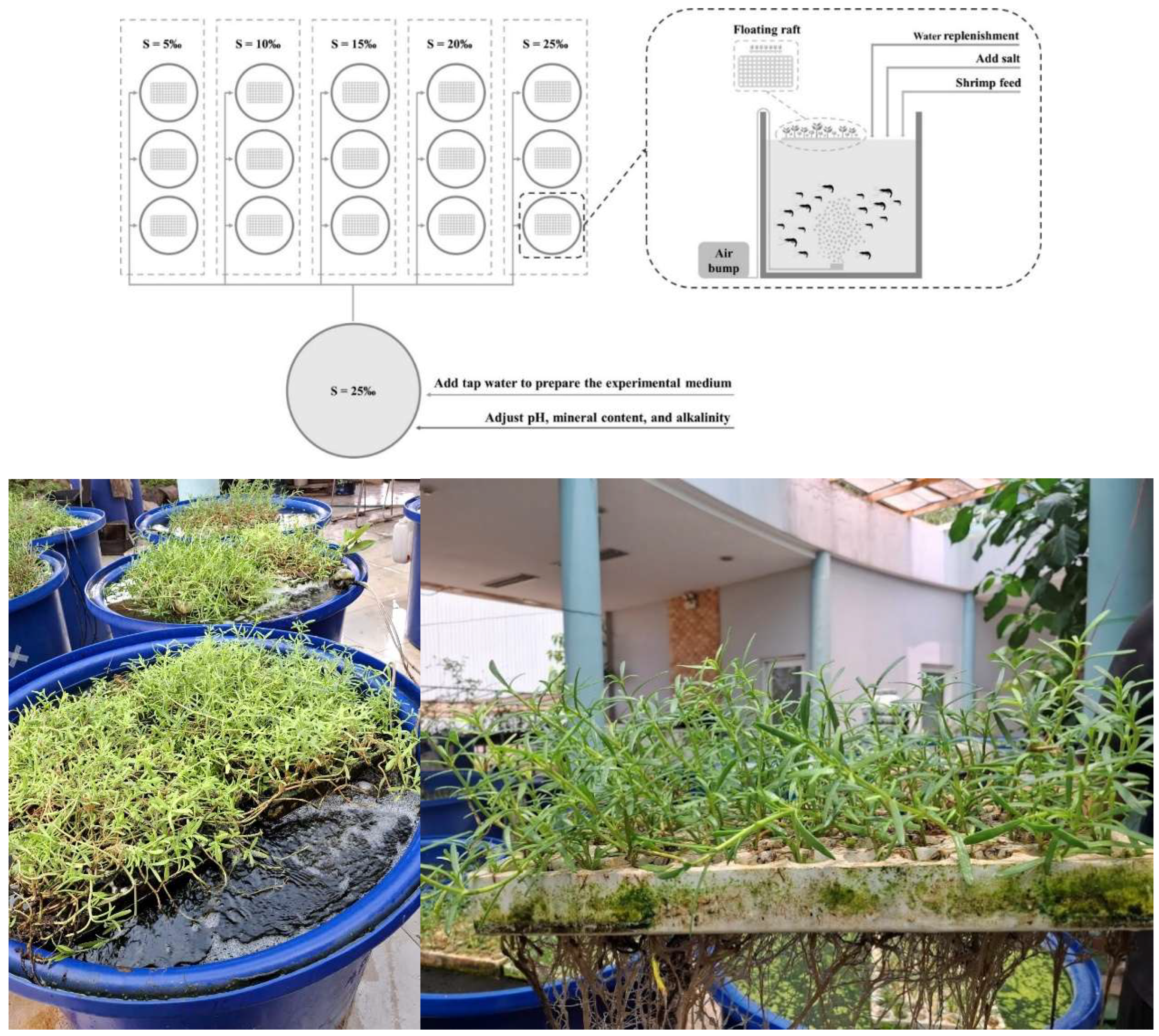
Figure 2.
BOD and COD concentrations at different salinity levels (5–25‰) measured on Day 0 and Day 28. Values are presented as mean ± SD (n = 3).
Figure 2.
BOD and COD concentrations at different salinity levels (5–25‰) measured on Day 0 and Day 28. Values are presented as mean ± SD (n = 3).
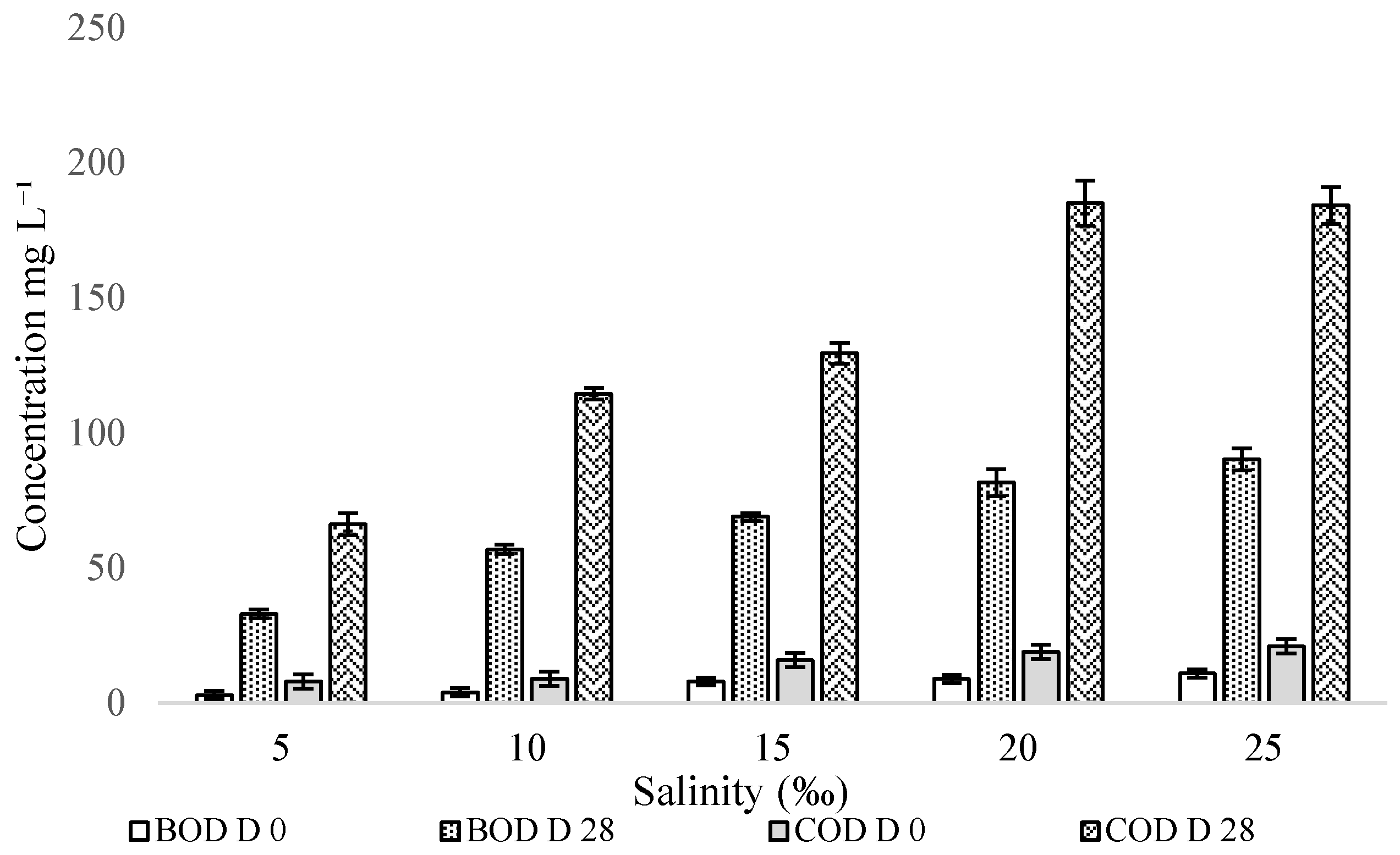
Figure 3.
Concentrations of dissolved inorganic nitrogen forms NO₃⁻, TN, and TP after 28 days under different salinity levels. Values are presented as mean ± SD (n = 3).
Figure 3.
Concentrations of dissolved inorganic nitrogen forms NO₃⁻, TN, and TP after 28 days under different salinity levels. Values are presented as mean ± SD (n = 3).
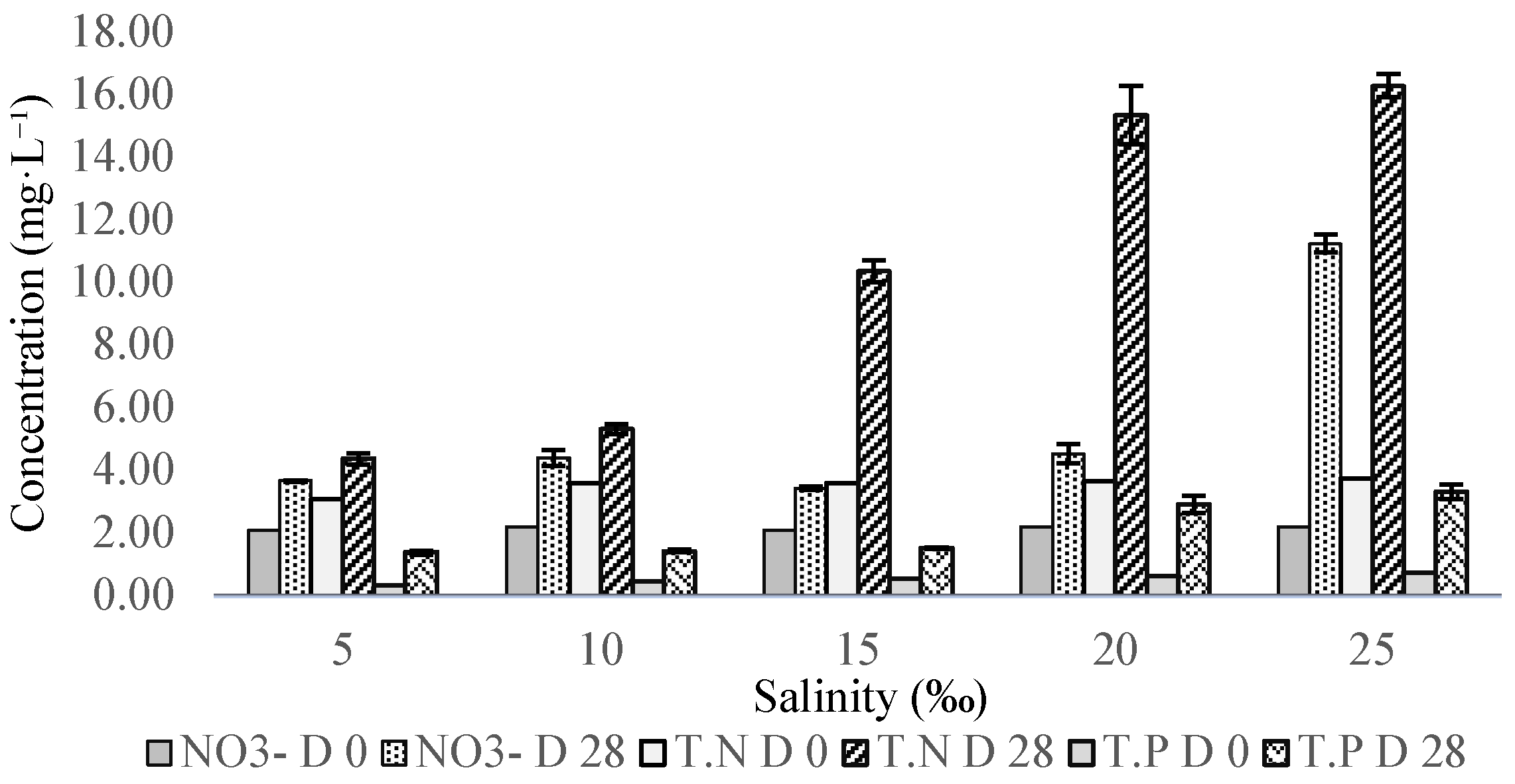
Figure 4.
Dry biomass of S. portulacastrum under different salinity levels after 28 days.
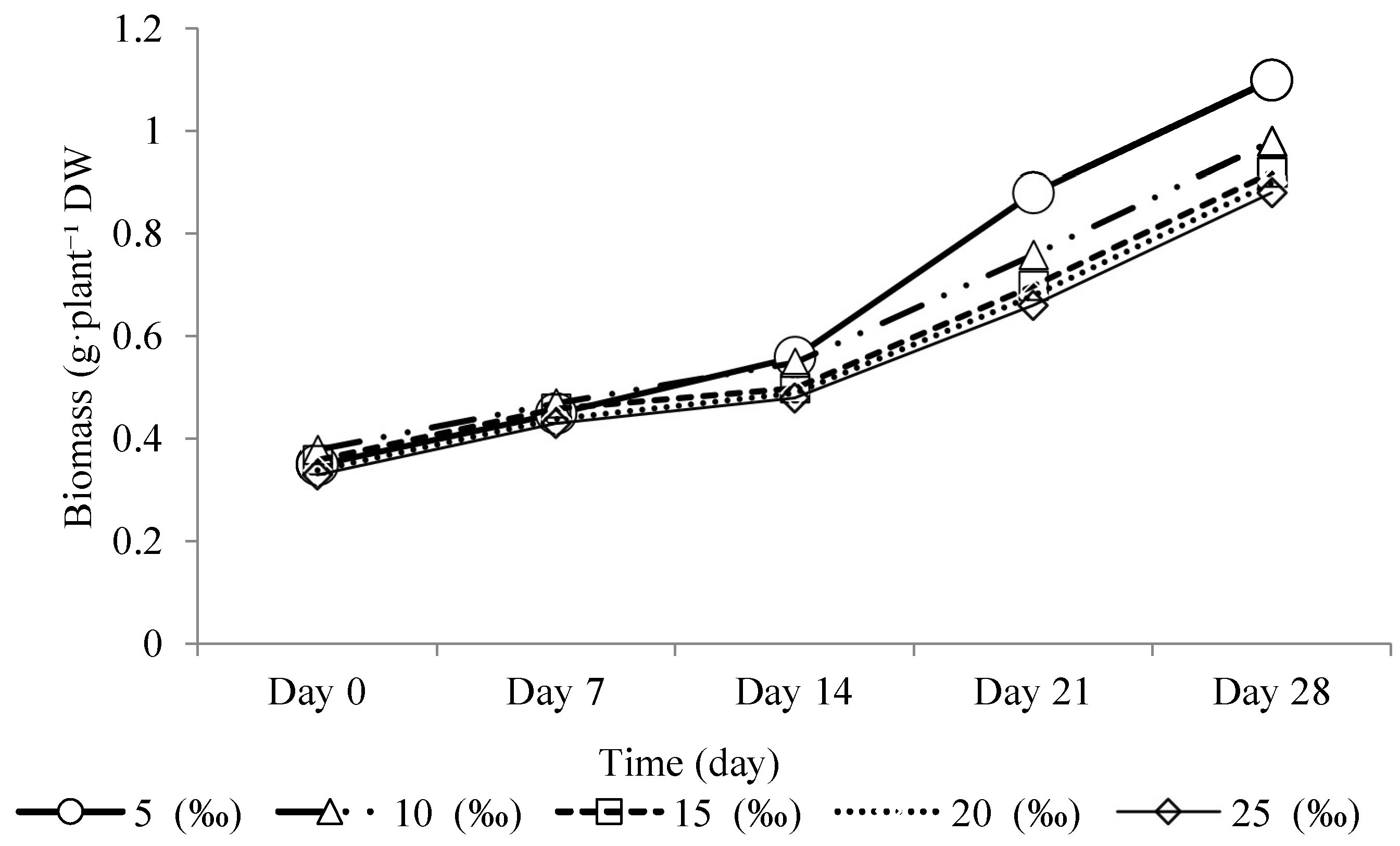
Figure 5.
Total nitrogen and total phosphorus concentrations in plant tissues under different salinity levels. Values are expressed as mean ± SD of three analytical replicates measured from a homogenized composite sample for each salinity treatment.
Figure 5.
Total nitrogen and total phosphorus concentrations in plant tissues under different salinity levels. Values are expressed as mean ± SD of three analytical replicates measured from a homogenized composite sample for each salinity treatment.
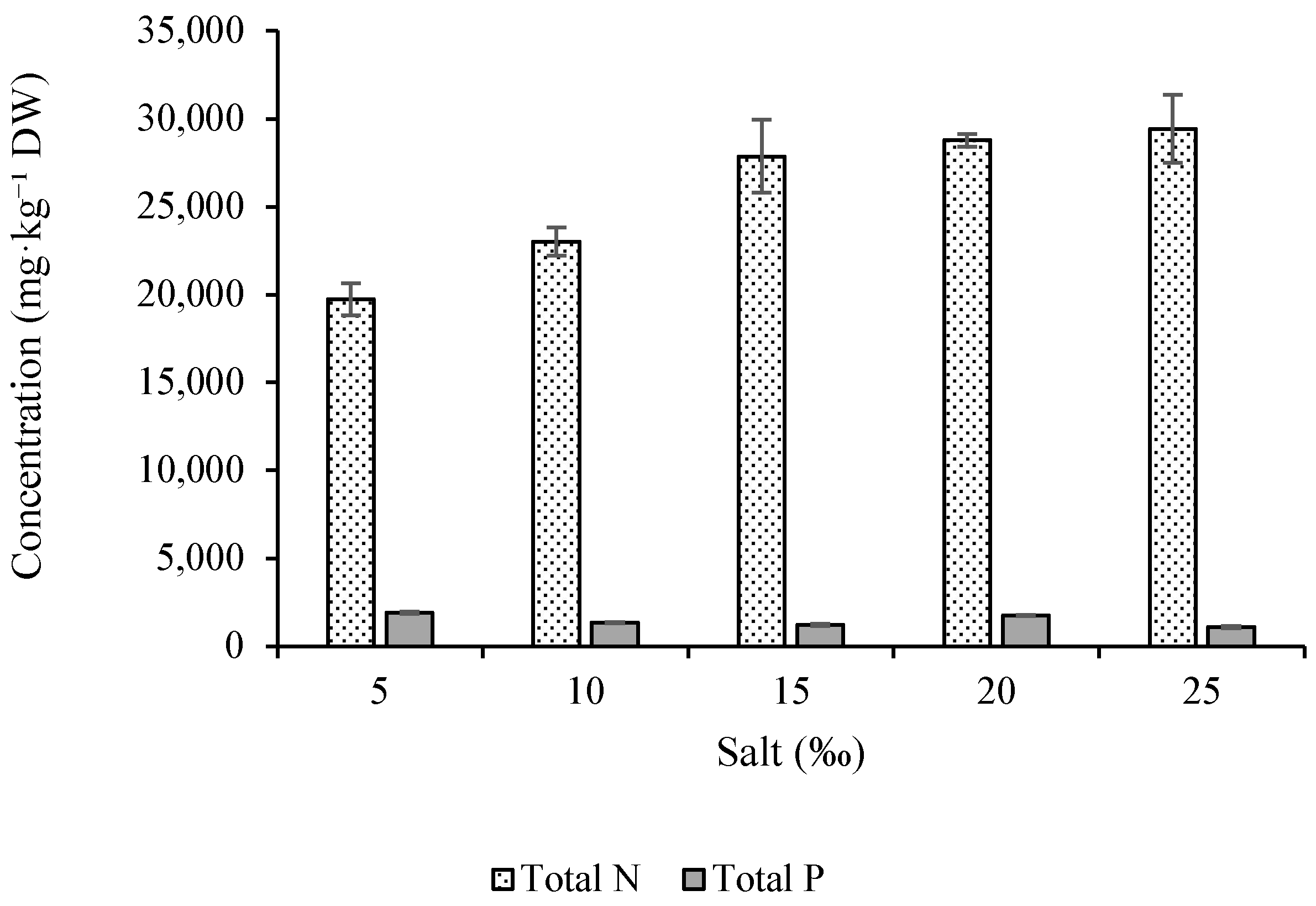
Figure 6.
Mean body weight (MBW) of shrimp under different salinity levels after 28 days.
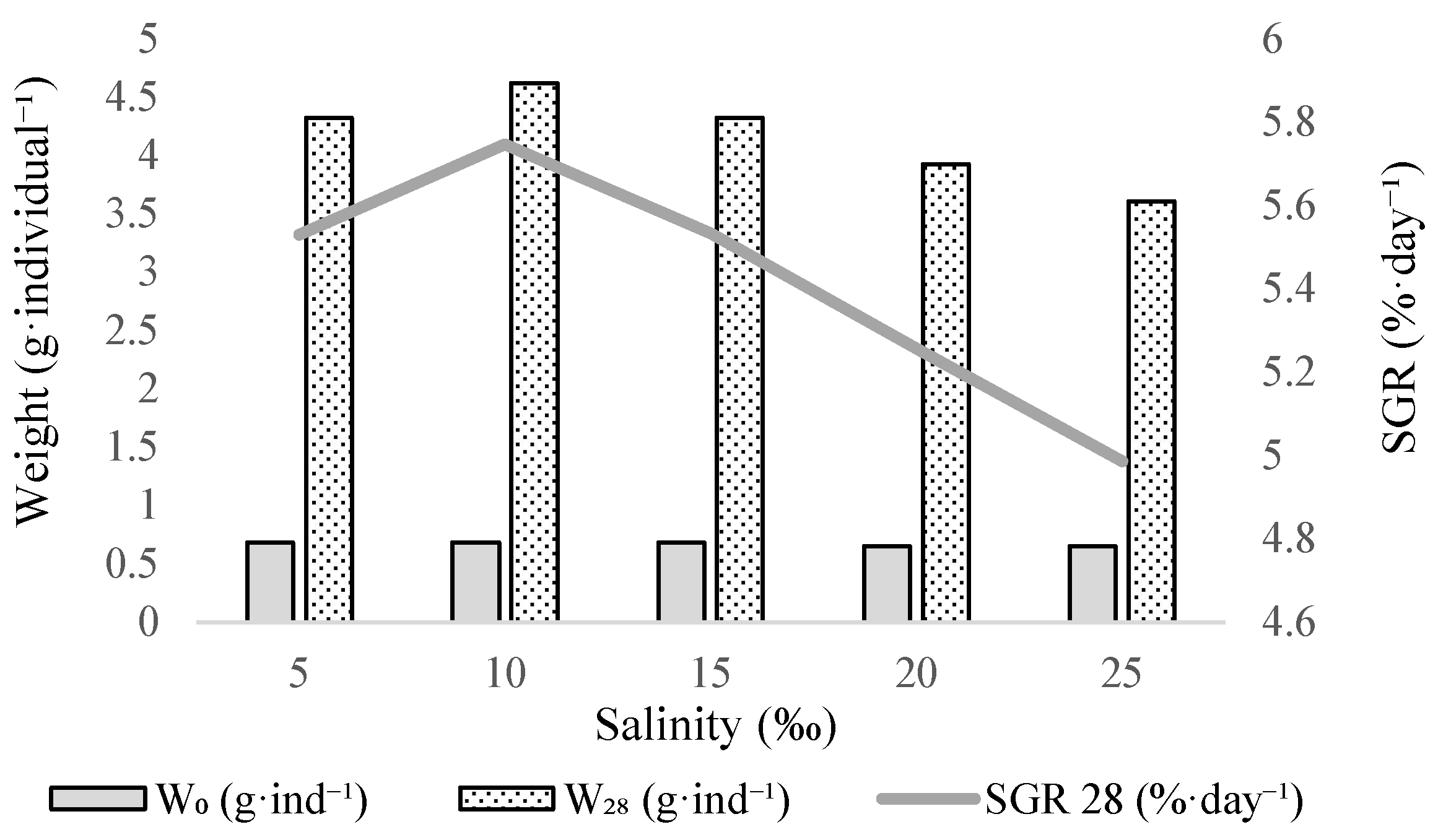
Figure 7.
Phosphorus absorption efficiency of the integrated shrimp–plant system under different salinity levels (5–25‰).
Figure 7.
Phosphorus absorption efficiency of the integrated shrimp–plant system under different salinity levels (5–25‰).
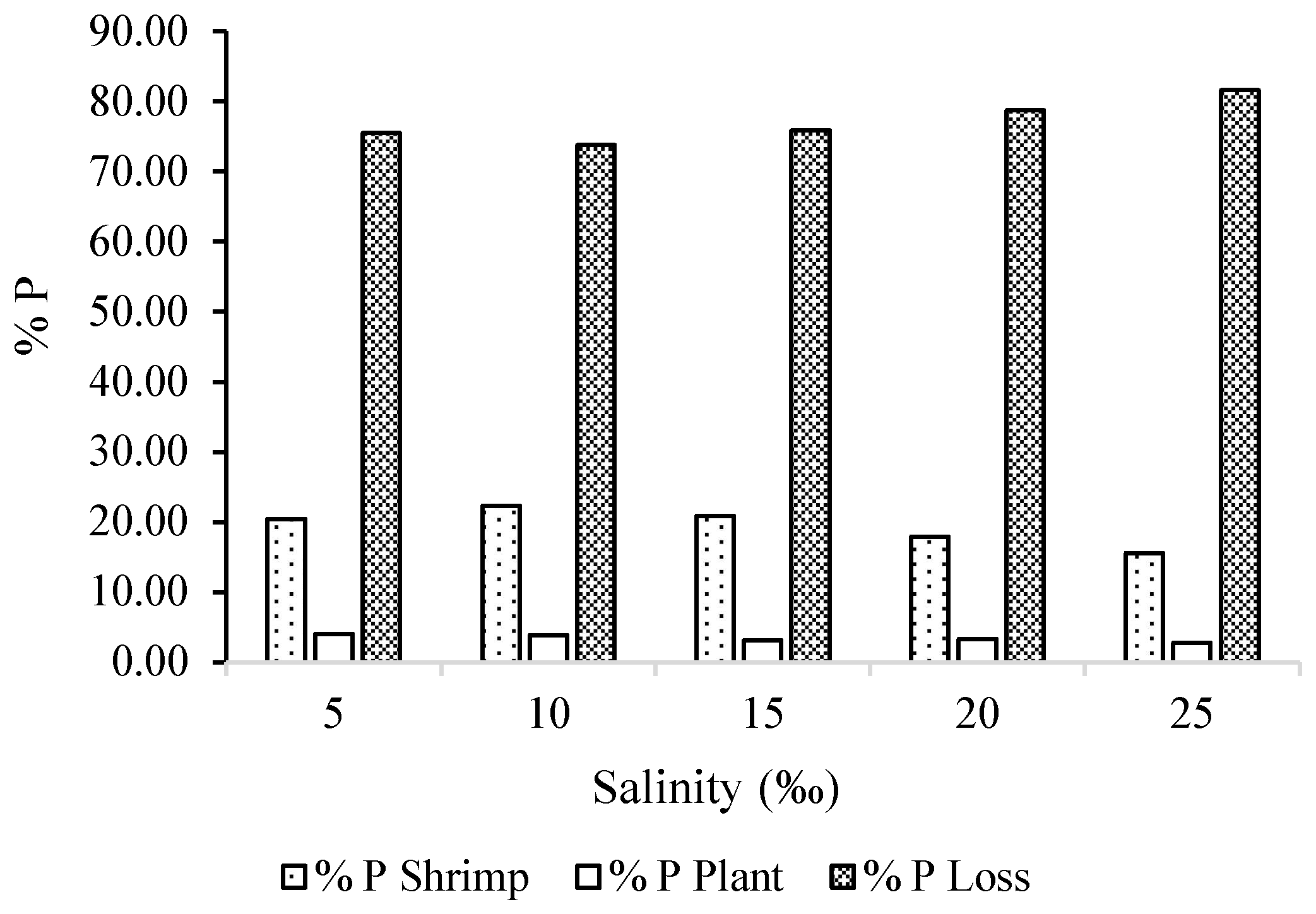
Figure 8.
Nitrogen mass balance partitioning in the integrated shrimp–plant system.
Disclaimer/Publisher’s Note: The statements, opinions and data contained in all publications are solely those of the individual author(s) and contributor(s) and not of MDPI and/or the editor(s). MDPI and/or the editor(s) disclaim responsibility for any injury to people or property resulting from any ideas, methods, instructions or products referred to in the content. |
© 2026 by the authors. Licensee MDPI, Basel, Switzerland. This article is an open access article distributed under the terms and conditions of the Creative Commons Attribution (CC BY) license (http://creativecommons.org/licenses/by/4.0/).
Copyright: This open access article is published under a Creative Commons CC BY 4.0 license, which permit the free download, distribution, and reuse, provided that the author and preprint are cited in any reuse.


